CHICAGO — Just a few days ago, new Dodgers pitcher Tarik Skubal was on the other side, on a mid-market Detroit Tigers team that had hoped to unseat the Dodgers from the top of the league, before a disappointing season made them sellers at the trade deadline.
Still, with that perspective, he wasn’t going to entertain any talk about the Dodgers ruining baseball.
“I don’t really sympathize with people that blame the Dodgers for anything they’ve done,” Skubal said from the Barrel Room at Wrigley Field on Monday. “They’ve developed a really good organization. They draft well. They acquire talent really well. They retain talent. It’s a winning organization. Now the complaints seem to be [happening] because they’ve won the last two World Series. I don’t think it was like that three years ago. So I don’t really sympathize with people that are complaining. Because the Dodgers do all the right things.”
Skubal didn’t want to talk about his impending free agency. And he said he did not have any conversations with Tigers president of baseball operations Scott Harris about preferring to be traded to the Dodgers. Before the trade, he told Tigers reporters that he wanted to remain with the only team he’d known and compete for a championship there.
“Initial reaction, there was a lot of emotions,” Skubal said. “I spent eight years with the Detroit Tigers. That place will always be special to me no matter what. In the same breath, I’m excited to be here with these guys. When you watch them from across the way, see them do their thing on TV, you just have a lot of respect because they play the game the right way.
“The entire focus of this organization is on winning championships and that is my entire focus — playing baseball — so we’re very much aligned. I’m ready to go out there and compete and give this organization and city everything that I’ve got.”
The Dodgers put the final touches on their trade deadline, adding catching depth as Dalton Rushing went on the 10-day injured list with a sprained left elbow. The Dodgers added two backstops they’re already familiar with in Ben Rortvedt and Hunter Feduccia. They also added left-hander Kris Bubic, who is dealing with a shoulder injury.
It was clear all along, however, that Skubal was going to be the biggest splash of the deadline — for any team, really. And fuel for frustrated baseball fans upset about the Dodgers acquiring another star player.
“I think the Dodgers have done a fantastic job in player development,” said Cubs president of baseball operations Jed Hoyer, who also engaged in trade talks for Skubal. “They have a really good farm system, and Scott [Harris] did the best thing you could do for the Tigers and got a lot of talent back. And obviously they did the best thing for their team.
Dodgers pitcher Tarik Skubal throws in the outfield before the team’s game against the Chicago Cubs at Wrigley Field on Monday.
(David Banks / Associated Press)
“And he’s an incredible pitcher. I mean, there’s no question about that. And I guess we’ll see firsthand. But I know there’s been a reaction around baseball about it, but they put themselves in positions to do that deal, and they did, and that’s exactly what they should be doing.”
Skubal had accepted by the end of his last start that he was going to be moving on.
“Losing that game kind of felt like that was kind of it for me in Detroit,” he said. “So not surprised, but that didn’t make the news any easier because I love a lot of those people there. I’ve got a lot of respect about what they do and how they go about their business. A lot of those guys are like my best friends on and off the field. I wish those guys nothing but the best. I’ll be rooting for them, unless we’re playing.”
He officially starts a new chapter Tuesday, taking the mound for the Dodgers at Wrigley Field.
“They’ve been a pretty good baseball team without me,” he said. “So I’m going to show up and kind of be a chameleon in a sense and fit right in with these guys and just jell with them. They’ve got the winning recipe. They know what it takes to win.”
A cluster of fast-moving wildfires has devastated the outskirts of Spokane, Washington state, with 65,000 people told to leave their homes. More than 700 buildings have been destroyed as the fires spread from surrounding vegetation into residential neighbourhoods, posing an unprecedented threat to lives and property.
The blazes have become the top firefighting priority in the US because of their scale and the danger they pose to communities. While no deaths have been confirmed, authorities say it will take time to assess the full extent of the damage as search teams begin entering the hardest-hit areas.
Recommended Stories
list of 1 itemend of list
The evacuation orders expanded from about 4,000 people on Sunday to 65,000 by Monday, highlighting the speed at which the fires spread into populated communities.
Here is what to know:
What is happening in Spokane, Washington?
Spokane, Washington’s second-largest city, is at the centre of one of the state’s most destructive wildfire emergencies in recent history after three fast-moving wildfires erupted on its northern outskirts over the weekend. Fanned by strong winds and fueled by exceptionally dry vegetation, the fires have burned more than 8,000 acres (3237 hectares) and spread from surrounding forests and grasslands into residential neighbourhoods, forcing approximately 65,000 people to evacuate, according to the Spokane Valley Fire Department.
Hundreds of buildings, most of them homes, have already been destroyed, with aerial surveys suggesting many more may have been damaged. Entire neighbourhoods have been reduced to charred rubble, with some properties left standing only as brick chimneys.
The scale of the disaster has overwhelmed local resources, prompting one of the largest firefighting operations in the state, with more than 1,000 firefighters deployed from across the region.
A handout photo made available by the Spokane Valley Fire Department shows the Fairview Fire northeast of Spokane, Washington [EPA]
Despite the massive response, the fires remain uncontained, and officials say it could take days to fully assess the destruction. While no deaths have been confirmed, authorities initially received nearly 300 reports of missing people after the evacuations, though that number has since fallen significantly as families have been reunited. Emergency shelters have been opened across Spokane, and officials are urging residents not to return to evacuated areas or fly drones, which can disrupt critical aerial firefighting operations.
Firefighters are taking advantage of a brief period of cooler temperatures and lighter winds, but forecasters warn that hotter, drier and windier weather is expected to return later this week, raising fears that the fires could spread even further.
Washington is experiencing one of its worst wildfire seasons in more than three decades, with about 450,000 acres (182,000 hectares) burned so far this summer. More than 250,000 acres have burned in recent major fires alone.
A handout photo made available by the Spokane Valley Fire Department shows the Fairview Fire northeast of Spokane, Washington [EPA]
What caused the fires?
Local news outlets have reported that the Spokane County Sheriff’s Office announced on Monday evening that a 37-year-old had been arrested on suspicion of arson in connection with the fire.
However, experts say the conditions that allowed the fires to spread so rapidly were already in place.
Washington has been experiencing severe drought and an unusually low winter snowpack, leaving vegetation exceptionally dry and highly flammable. Those conditions have been compounded by periods of extreme heat, low humidity and strong winds, creating an environment in which even a small ignition can quickly grow into a fast-moving wildfire.
Scientists have also linked increasingly severe wildfire seasons across the western US to human-caused climate change, which has contributed to hotter temperatures, longer droughts and drier landscapes. While climate change does not directly ignite wildfires, it makes them more likely to spread rapidly and become more destructive once they start.
Why are the Washington wildfires so severe?
The Washington wildfires have become particularly severe because several factors have converged, allowing the blazes to spread rapidly.
Multiple large fires burning simultaneously: Spokane is dealing with three major wildfires at once, while dozens of other significant fires are burning across the western US. Managing multiple large incidents simultaneously has made it harder to concentrate resources on a single fire.
The fires advanced rapidly into populated communities: Driven by strong winds, the flames jumped roads and rivers, allowing them to move from forests and grasslands into residential neighbourhoods. More than 700 buildings have been destroyed, making the fires far more difficult to contain as they threaten homes, businesses and critical infrastructure.
Firefighting resources are stretched: More than 100 new wildfires have been reported across 15 US states over a single weekend, placing extraordinary pressure on national firefighting resources. Although more than 1,000 firefighters have been deployed to Spokane, emergency officials say aircraft, equipment and personnel are being shared across multiple emergencies.
An ongoing threat despite improved weather: Firefighters have benefitted from a brief period of cooler temperatures and lighter winds, but officials warn that hotter, drier and windier conditions are expected to return. With the fires still not contained, there is a significant risk that they could grow further or ignite new areas.
What role are drought, heat and climate change playing?
Scientists say drought, extreme heat and climate change are making wildfire seasons longer, more frequent and more destructive across the western US.
Drought dries out vegetation, turning forests and grasslands into fuel that can ignite and burn more intensely.
Heat and low humidity accelerate fire spread by drying vegetation even further and creating conditions in which flames can move rapidly across the landscape.
Climate change amplifies these conditions, as rising global temperatures are increasing the likelihood of prolonged droughts, more frequent heatwaves and longer fire seasons, making large, destructive wildfires more likely once they ignite.
A Virgin Mary statue remains untouched in front of a burned-out residential home in the Balboa neighborhood of Spokane, Washington, on August 2, 2026 (AFP)
What is the weather forecast for midweek?
The weather is expected to worsen again by midweek.
While Monday and Tuesday offered a brief, helpful window of cooler temperatures and calmer winds, the midweek forecast calls for a return of:
Extremely high temperatures, particularly on Thursday, with highs forecasted up to 37 degrees Celsius (99 degrees Fahrenheit). On Monday, it was at 22C (72F).
Low humidity (very dry conditions).
Gusty winds with speeds up to 26 km/h.
Because the fires remain completely uncontained, authorities are keeping evacuations in place. They warn that the worst outcome would be letting residents return to their homes, only to have to evacuate them again 24 to 48 hours later when the hot, windy weather returns.
Washington’s entire congressional delegation is awaiting a response from President Donald Trump regarding their request for an expedited emergency declaration to deliver immediate federal relief to displaced families.
Are other states also fighting wildfires?
According to the National Interagency Fire Center, most of the fire activity in the US remains concentrated across the country’s northwest.
Right now, the major fires are mostly grassland burns in Idaho, Oregon and Utah, as well as fires in Florida’s Everglades National Park, in addition to new fires reported in Left Creek in Wyoming, Antelope Creek Fire in Nevada and the Sand Creek and Middle Coulee fires in Montana.
A lightning-caused fire that has burned more than 530 square miles (about 1,370 sq km) of grassland in western Idaho and eastern Oregon continued to grow on Monday. The area is home to cattle ranches, and authorities said the fire is threatening more than 600 homes and 800 other structures.
In central Utah, a blaze quadrupled in size more than the weekend to nearly 109 square miles (282 sq km) by Monday afternoon. More than 100 cattle have died, according to law enforcement.
There seem to be more significant upgrades from a number of teams this year, McLaren’s being the latest. Will the top four teams be bringing many more in the second half of the season or is there a limit to what they can do? – Richard
All the F1 teams headed into 2026 knowing that the season would be defined by development.
When there is a new rule set, this is always the case. The longer a set of rules exists, the more a) the car designs converge; b) teams get into diminishing returns.
But at the start, progress comes faster and in bigger steps, and that explains the fluctuation in form between the top teams so far this season.
Typically, a team will bring an upgrade, their competitiveness will increase, but then it will shift as other teams bring their own upgrades.
The longer a team leaves it between upgrades, the more they fall back.
That’s why McLaren, for example, made a leap forward with their Miami upgrade, but slowly slipped back as Mercedes and Ferrari brought their own big developments in Canada and Spain.
Then, McLaren leapt forwards – even more than they expected – with their Hungary upgrade. And they have another due in Zandvoort. And more to come after that.
Ferrari, Mercedes and Red Bull also have developments to come after the summer break.
McLaren team principal Andrea Stella said in Hungary: “I still believe that if we want to be in a position to fight for victories consistently in the future, we need to keep our focus on delivering more upgrades. That is the plan, but we are not naive. We know that this will be the plan for all the teams.
“Like it’s always been in this 2026 season, it’s a matter of a race of upgrades. And the good news is that McLaren is now back in this race of upgrades while fighting for the lead.
“But I expect that the car that will be the best car at the end of the season will keep adding tenths of a second in the next 11 races, probably as much as half a second. So definitely a lot of work ahead of everyone, not only McLaren.”
The limiting factor is the cost cap – all teams are restricted to spending no more than $215m on racing and development this season.
This means teams have to be strategic in how they deploy their new parts, “rather than just throwing it in at every grand prix, like in the past”, as Mercedes team boss Toto Wolff put it in Hungary.
He added: “We’re bringing upgrades, we’re closely monitoring how much we can bring. At the moment, cost cap-wise, we’re in a good spot. We’ve tried to have it a little bit more second-half-of-the-season weighted, and we’ll see if that’s enough.”
Why don’t McLaren make their own engines? They often seem to struggle because they rely on others’ (Mercedes) power units, who are also a direct competitor. Surely McLaren have the expertise and they could benefit their road car industry and their F1 car if they became a works team. – Jack
Making a Formula 1 engine is a highly specialised enterprise. It’s also extremely expensive. The manufacturers supplying engines to F1 this year have all spent hundreds of millions of pounds developing their power-units.
Apart from Red Bull, all are car manufacturers who have wider automotive companies to offset the cost, and expertise on which to lean.
There is now an engine budget cap, set at $190m in a company’s inaugural year, and $148.5m after that.
McLaren is a road-car manufacturer. But it does not build engines. It outsources its engines to a UK company called Ricardo.
The plans for the next F1 engine, due in either 2030 or 2031, are still being formalised, and there is considerable debate about them.
However, one aspect all stakeholders are agreed upon is for the costs to come down, perhaps even to the point where becoming a supplier of customer engines becomes a viable business proposition, which is not the case at the moment.
McLaren have proved they can win titles as a customer team, but they have also had frustrations with their Mercedes relationship this year. They have discovered how customer teams are on the back foot when it comes to maximising the operations of such complex engines at the start of a new regulation cycle.
As for the future, McLaren Racing chief executive officer Zak Brown said at the Monaco Grand Prix: “Priority one is to stay with Mercedes. They’ve been a great partner. Any time a new regulation comes out, we’ll take a look and see, is it something technically that’s interesting? Is it something fiscally that makes sense?
“We’ll go through that process when that happens. But sitting here right now, we’re extremely happy with Mercedes and we anticipate continuing with them.”
Cassie Plummer left Coronation Street on Monday night but her exit has left behind a trail of mystery and now spoilers have revealed what happens next on the ITV soap
Cassie left Coronation Street on Monday night’s episode
Coronation Street spoilers have revealed what happens next following the sudden exit of Cassie Plummer. The former drug addict, played by Claire Sweeney, was introduced when the bosses of the long-running soap decided to completely rewrite history and install her as Tyrone Dobbs’s long-lost biological mum in 2023.
But in scenes that aired on Monday night, Cassie left Weatherfield – seemingly for good – as she chose to get in the car with Ross Wilkes when he offered her a lift to the train station. Introduced last month as the long-lost biological dad of Tyrone, Cassie knew he was trouble as soon as he turned up, but it was only when put under pressure that she revealed that he had paid her for sex when she was underage.
Ross has already made his mark as the latest villain to turn up in the Manchester backstreet, and viewers know that after striking up a relationship with Tracy Barlow (Kate Ford), he spiked her drink and put her in hospital but has let everyone think that Cassie was the one who did it. Cassie announced on Monday that she had got a job cleaning a cruise ship, and was heading to the train station.
Ross offered her a lift, and she accepted. But whilst in the car, Cassie threatened to go to the police about what Ross had done to her all those years ago. She then began to feel unsafe and tried to get out, but he locked the door and told her they were going “on a little drive.” That was the last time Cassie was seen, and Tyrone later announced to Ross that Cassie had left Weatherfield.
Earlier in the day, Fiz had presented Cassie with a photograph of Tyrone and the kids and an envelope full of cash, but at the very end of the episode, Ross took the photo from his pocket and created a mystery about just where Cassie had ended up.
Now, in scenes set to air this coming week, Ross tells Fiz and Tyrone he wants to move nearby, but Fiz quickly closes down the conversation.
Steve asks Ross where he dropped Cassie off, but Ross feigns ignorance until Steve reveals how he saw Cassie get into his car, forcing him to change his story claiming he took her to Piccadilly Station. Also, in scenes yet to air, Ross tells Hope to help herself to a tenner from his wallet but Hope finds something else which leaves Fiz suspicious.
Viewers have instantly become worried that Cassie did not make it to her new job at all, and are concerned that she might even be dead.
One fan wrote on X, formerly known as Twitter: “Oh s*** is Cassie dead???” and another said: “Cassie getting in the car with Ross, they’re gonna leave us hanging for months over what he’s done to her, I bet!”
A third wrote: “I well like Cassie I’ll be sad if she never comes back,” and, on Reddit, another fan said: ” Feel like he’s deffo killed her. But think they’ve done it this way so that they can bring her back again if they wanted to. “
In real life, actress Claire Sweeney, who found fame when she starred on Brookside, chose to leave so she could take on the role of Miss Hannigan in the current UK tour of the musical Annie, and replaced former Strictly Come Dancing star La Voix in the show in early July.
Claire has previously starred in other musicals like 9 to 5, Tell Me On A Sunday and Chicago. But she recently recently explained that she loved her time at Corrie but always wanted to take on the part of the villainous orphanage proprietress, who has previously been played on stage by the likes of her soap co-star Jodie Prenger, as well as Hi-de-Hi icon Su Pollard, the late Paul O’Grady and British acting legend Sheila Hancock.
She told The Mirror: “You’re part of a family at Coronation Street, you feel safe and protected and leaving is like stepping out into the big, wide world again. It feels like I’ve broken up with a boyfriend I’m still in love with. I’ve loved Corrie and leaving bears no reflection on the job, the people and the work.
“It was just that my phone pinged and it was the producer of Annie saying ‘right, do you want to do Miss Hannigan.’ I’d been hounding him for years for this part and I just thought – ‘if I don’t do it now, it might never come again.’ But I think it’s the hardest job I’ve ever had to leave and my exit is very sad; I had a little weep over my leaving scenes. I got quite emotional.”
Holcim CFO Steffen Kindler on executing a regional spinoff, AI value creation, and team leadership.
This article appears in the July/August issue of Global Finance Magazine.
Steffen Kindler has served as Holcim’s CFO since 2023. He brings with him two decades of finance leadership experience from his time at Nestlé. He now guides the financial strategy of the Swiss multinational building materials giant, which generated CHF15.7 billion (approximately $19.7 billion) in net sales last year.
Holcim, listed on the SIX Swiss Exchange, commands a global footprint with more than 45,000 employees. It operates across 43 markets in Europe, Latin America, Asia, the Middle East, and Africa.
Global Finance: What do you consider your main achievements since joining Holcim?
Steffen Kindler: A major achievement was helping drive the decision to split Holcim into a North American company and a rest-of-the-world company, and then successfully executing the spinoff. We completed a financial carve-out, established the new company’s finance organization, and listed the North American entity on the New York Stock Exchange. Since then, both companies have operated smoothly and separately.
Another major achievement was defining a standalone company strategy and equity story. We identified where we want to grow, how we want to allocate capital, the financial KPIs we want to be measured against, and our people plan. The strategy was very well received by the financial markets, reflected in strong share price appreciation throughout 2025.
Since then, the focus has been on executing that strategy quarter after quarter, demonstrating progress on both the strategy and our financial results, and earning the confidence and support of shareholders and stakeholders.
GF: Why did you split off the North American entity?
Kindler: The logic was sustainability and different market environments. In Europe, decarbonizing the product portfolio and production process was a key driver of our strategy and financial success. In the U.S., customers were more focused on volume growth, and the sustainability strategy was not as relevant. We felt the regions were hindering each other more than helping.
GF: Holcim expects AI to generate CHF200 million in recurring EBIT by 2028. How so?
Kindler: We began exploring AI more than three years ago and felt we were leading in that area. Technology has now matured to the point that we can reliably say it is creating value. Rather than focusing on savings or restructuring, we see AI as a value-creation tool.
Key applications include predictive maintenance, where AI anticipates machine breakdowns, and commercial sales where AI analyzes large amounts of data to optimize our offers to customers for all types of building projects. We are already seeing tangible benefits of roughly CHF30 million this year, even before scaling these programs further.
GF: Can you provide details on how you expect to achieve that EBIT goal?
Kindler: Holcim said that roughly half of the CHF200 million AI benefit will come from additional profit and the other half from cost avoidance. Predictive maintenance helps avoid losses by reducing breakdowns, while AI supporting the commercial teams creates additional value by giving them better insights, faster project proposals, and the ability to participate in more projects. It gives commercial teams insights into how the different inputs of an offer were determined and reduces the manual work involved in bidding. By automating data analysis and proposals, teams can evaluate more projects and focus on judgment and decision-making rather than information gathering.
GF: How important is it to have a strong finance team?
Kindler: I cannot do a job of this scale on my own: the team is everything. I spend about a third of my time on people-related topics, including succession planning, coaching, and career development. We have a structured process for discussing talent, open jobs, strengths and weaknesses, and career paths with regional CFOs and direct reports. It is also important to keep people motivated by giving them interesting roles, exposure, and support through an open-door approach.
Tiziana Barghini is a contributing writer based in New York.
This winding path has been used for centuries – and is just as popular today.
This is one of the oldest roads in Britain(Image: Getty)
A winding road which meanders through Oxfordshire, Wiltshire, Berkshire and Buckinghamshire is thought to be the oldest in Britain. The Ridgeway is an ancient path which has provided safe routes through the country for centuries.
The road follows a ride of chalk hills for 139 kilometres to reach Ivinghoe Beacon in northwest London. This same route is the one that travellers, farmers and soldiers have walked for more than 5,000 years.
Nowadays, the road is popular with cyclists and walkers as well as people who use mobility scooters.
Along the trail, walkers can gaze out over wide views of rolling chalk hills and find all kinds of archaeological marvels.
There are Iron Age forts, as well as the White Horse of Uffington, which is thought to be the oldest hill figure in Britain.
The White Horse is carved into the chalk hillside and is an incredible 374 feet in length. According to the BBC it’s thought to date back to 1,000BC in the late Bronze Age.
The path also takes walkers past Wayland’s Smithy – a Neolithic ruin that is thought to have once been the home of Wayland, the Saxon god of metalworking.
It’s an atmospheric area.
The visible ruin is actually a secondary structure – the original, which lies beneath the stones, is thought to have been a burial structure where 14 people were interred between 3460 and 3400 BC.
Wayland’s Smithy was constructed on top of the burial site, and has remained there over the centuries.
The track fluctuates between the wide open chalk paths along the hillside and the deeply embedded lanes between ancient beech trees.
Once you are East of the Thames, The Ridgeway travels through the sun-dappled woodland and the intimate hills and valleys of the Chilterns – an Area of Outstanding Natural Beauty.
The walk is rich in history, but also makes for a stunning walk. You don’t have to tackle the whole thing at once – there are plenty of circular routes dotted along the trail, and multiple places to start and finish.
We could talk about Sept. 30, 1984, the date Mike Witt threw the Angels’ lone perfect game. Or June 9, 2009, the date the Angels drafted the best player in franchise history, Mike Trout. Or July 29, 2018, the date Vladimir Guerrero became the first player to wear an Angels cap on a Hall of Fame plaque.
Or, if you care to look at it from a cynical angle, that fateful fall day in 1979 when then-general manager Buzzie Bavasi said he could replace Nolan Ryan, who had just gone 16-14 in his final year in Anaheim, with “two 8-7 pitchers.”
This isn’t about trivia. This is to say that Monday might well be remembered as one of those significant dates in Angels history.
In recent years, the Angels have deluded themselves and their fans with such beliefs as: they had assembled a young core that could win; Shohei Ohtani really wanted to stay; and the universally and consistently poor rankings of their minor-league system should be dismissed.
On Monday, John Mozeliak changed all that. The Angels’ interim general manager traded seven players off the major-league roster ahead of the trade deadline, including five within the final nine hours. Mozeliak imported nine prospects, only one of which will report to the major-league team.
It was one thing for owner Arte Moreno and new team president Molly Jolly to recruit Mozeliak six weeks ago and promise that he could embark on a desperately overdue rebuild.
To see it actually come to fruition? Maybe there really are Angels in the outfield.
“What’s really impressive for me is just the amount of trust I’ve been granted,” Mozeliak said.
The Angels finished in last place last year, and the year before that. They are on pace to lose 100 games this season, for the first time in franchise history. Their postseason drought is about to hit 12 years, the longest in baseball.
But now there is a plan, not just a bunch of ifs and hopes, even if the Angels might have to take another step back to take two steps forward.
“I would say we took a step forward today,” Mozeliak said on a videoconference after the trade deadline passed.
Prospects! Tell me more!
Arjun Nimmala takes part in batting practice for the Toronto Blue Jays on July 14, 2023.
(Vaughn Ridley / Getty Images)
The only top-50 prospect the Angels acquired: shortstop Arjun Nimmala, 20. The Toronto Blue Jays swapped him and two other minor leaguers for pitcher José Soriano. Mozeliak said Nimmala is about two years from the majors.
The only prospect coming to the majors: catcher/designated hitter Moises Ballesteros, whom Mozeliak said would DH in two of the next three games.
That means Jorge Soler won’t be the DH for the moment. Who was traded?
Soriano, outfielder Jo Adell, catcher Logan O’Hoppe and relievers Ryan Zeferjahn, Brent Suter, Kirby Yates and Chase Silseth. All but Suter and Yates were under the Angels’ control beyond this season.
And who was not traded?
In addition to Soler, pitcher Reid Detmers and shortstop Zach Neto (“We definitely listened to offers, but we were not comfortable with the offers we received”) and first baseman Nolan Schanuel (“He was asked about, but not to the level of others”).
Mozeliak had said last month that a Trout trade was “not happening.” He said Monday that he had invited Trout to observe the team’s war room ahead of the trade deadline.
“He’s the face of this franchise,” Mozeliak said. “From where I stand, from being around him, we want to get this better for him, and for others. Our fans want to see winning.”
Mozeliak had said the Angels should not need a total rebuild because the resources available to a major-market team should mitigate the need to tank and just play kids. Does he believe the Angels could be better next season?
Hear it from him: “We need to remain disciplined and patient to a process and not just try to rush some people to the big leagues. … If they’re not ready, and we’re not ready to compete with that group, that’s where we’re going to augment using more of the free-agent model.”
This is starting to sound like a long-term plan. Is Mozeliak here for the long-term, as most inside the industry believe he is?
Mozeliak insists he hasn’t decided if he wants to stay, and he hasn’t yet met with Moreno and Jolly to discuss the matter. But he said two things that stuck out to me.
One: “It’s fun being back in the game. I didn’t realize how much I missed it.”
Two: “We have made a difference. Change has been real.”
Aug. 4 (UPI) — The U.S. military’s strikes on alleged drug-smuggling boats in the Caribbean and eastern Pacific may have killed people not involved in drug trafficking, said Sen. Tim Kaine after reviewing classified documents on the operation.
The senior Democratic lawmaker from Virginia and a member of the Senate Armed Services and Foreign Relations committees sent President Donald Trumpa letter Monday urging him to examine whether military leaders exceeded his orders by targeting people the Justice Department did not say could be legally targeted and killed.
“And once you have done so, I urge you to halt this illegal, costly and ineffective operation,” Kaine said.
Since the first strike on Sept. 2, the U.S. Southern Command has killed at least 221 people in 66 publicly acknowledged attacks, according to UPI’s count based on military press releases.
Human rights and legal experts have widely condemned the strikes as illegal extrajudicial killings carried out by the military in what is ostensibly a law enforcement matter. The Trump administration argues that it is in “armed conflict” with the drug cartels.
Little information about the strikes has been made public because much of it is classified. SOUTHCOM has responded to UPI’s requests for information on the planning and execution of these strikes by stating it does not comment on ongoing operations.
In July 2025, Trump authorized the Department of Defense through a still-classified directive to us military force against organizations he selected in a classified target list.
In September, after the strikes began, the Justice Department’s Office of Legal Counsel issued an opinion providing legal support for the operation, and stipulating who could be targeted in the attacks. That opinion remains classified, as does an October order from the Pentagon that contains targeting criteria SOUTHCOM is to use in carrying out these strikes.
Kaine said he had reviewed the classified documents, which often include descriptions of the targets and their activities during the kinetic operations. He said the documents make clear “that the United States is engaged in violent and fatal attacks against people far beyond those whom the OLC opinion claimed could be lawfully targeted.”
“In other words, a careful review of the available evidence suggests that the United States has killed individuals who are not involved in narcotrafficking,” he said.
“They are murder victims.”
At least some of those killed in the strikes have been credibly described as fishermen who were not involved in drug trafficking. Colombian President Gustavo Petro has accused Trump of murdering Colombian fisherman Alejandro Carranza in an early September attack. The families of two men killed in October are also suing the Trump administration for damages, saying their loved ones were killed as they were heading home to Trinidad and Tobago after working as fishermen and farmers in nearby Venezuela.
Kaine’s letter follows a report by The Washington Post that found the fatal strikes have failed to curb the amount of cocaine entering the United States.
SOUTHCOM’s Operation Southern Spear, which includes the boat-strike campaign, had incurred $647 million in obligations through March, according to a Pentagon inspector general report.
The Navy currently plans to acquire 19 VPM-equipped Virginia class SSGNs, according to a press release the service put out today. The first boat in this class to feature the VPM will be the future USS Arizona, which is actually the second Block V subvariant being built. The first Block V version, the future USS Oklahoma, will lack a VPM, but the other 10 boats in this batch are expected to have this feature.
【P1】 The submarine currently under construction appears to be USS Arizona (SSN-803), the second Block V Virginia-class attack submarine. 【P2】 is likely the Virginia Payload Module (VPM), a key feature of the Block V variant.
Block VI Virginia class submarines are also expected to have VPMs, as well as other upgraded capabilities. However, last week, the Navy announced a new monster $76.6 billion contract award for nine Block VI boats, as well as five additional Columbia class nuclear ballistic missile submarines, or SSBNs. This creates a discrepancy of one submarine (11 Block Vs together with nine Block VIs, for a total of 20, not 19) when it comes to the stated SSGN plans. One possible explanation might be that the outlier is a planned one-of-a-kind seabed espionage subvariant. TWZ has reached out to the Navy for clarification.
A graphic from a General Dynamics Electric Boat presentation in 2022 showing the planned evolution of the Virginia class beyond the Block V subvariant, including the planned one-of-a-kind seabed espionage boat. General Dynamics Electric Boat
Regardless, the decision to formally recategorize Virginia class submarines with VPMs as SSGNs is significant.
“This reclassification is a clear acknowledgment of the increased lethality VPM brings to the undersea fight,” Navy Vice Adm. Rob Gaucher, Director of Submarine Programs, said in a statement. “These VPM-equipped SSGNs will ensure the Navy continues to dominate the undersea domain for decades to come. By integrating this additional payload capacity, we will have the ability to surge strike power to assure our allies, deter aggression, outmatch any adversary, and give our Fleet commanders an incredibly versatile, hard-hitting instrument of national power.”
A briefing slide offering a general look at the Virginia Payload Module (VPM) that will be incorporated in Block V Virginia class submarines. USN
“Reclassifying Virginia Payload Module-equipped submarines as SSGNs accurately reflects the extraordinary strike capacity, operational flexibility, and global reach these platforms bring to the Fleet,” Navy Adm. Daryl Caudle, Chief of Naval Operations (CNO), the service’s top office, also said in his own statement. “These submarines will provide our Nation with a powerful and persistent deterrent, expand options for our combatant commanders, and ensure the Navy remains ready to fight and win whenever and wherever called upon.”
Virginia class submarines with VPMs do have significantly greater magazine depth than their predecessor. Block I and II boats had vertical launch system (VLS) arrays capable of firing a dozen Tomahawks. Block III and IV versions have a pair of Virginia Payload Tubes (VPT) in place of the earlier VLS configuration, but with the same number of tubes (12) for Tomahawks.
The Block III Virginia class submarine USS John Warner seen at its commissioning ceremony with one of its two Virginia Payload Tubes open. USN
VPM-equipped types will be able to carry 28 more Tomahawks for a total load of 40. Using different inserts, future Virginia class SSGNs will be able to carry other munitions in those tubes. This includes the aforementioned IRCPS hypersonic missiles. The Navy is also now looking to acquire a surface-to-air missile designed to be fired vertically from these submarines, which you can read more about here.
A slide from a 2021 Navy briefing providing a visual overview of the IRCPS program, including the Advanced Payload Module (APM) insert that will allow those missiles to be fired from the VPM’s tubes. The Navy is also working to arm its Zumwalt class destroyers with IRCPS missiles. The Navy’s program also shares a common missile and other elements with the U.S. Army’s ground-based Dark Eagle weapon system. USN
It should be noted here that all Virginia class submarines have four 21-inch torpedo tubes, which also offer another option for launching Tomahawks. They can also be used to fire Harpoon anti-ship cruise missiles, as well as launch and recover uncrewed underwater vehicles (UUV). It’s also possible, if not highly probable, that the VPMs will be capable of launching (and potentially recovering) other payloads, including additional uncrewed platforms.
Some existing Virginia class submarines can be fitted with Dry Deck Shelters (DDS) on top of their hulls for deploying special operations forces, swimmer delivery vehicles (SDVs), and other assets, as well. That is a capability that could be carried over to the enlarged SSGNs.
All of this brings us to the matter of the Ohio SSGNs. These boats are best known for being able to carry up to 154 Tomahawks at once, though they more typically deploy with loads of around 100 of those missiles. However, these submarines, which were converted from Ohio class SSBNs, are really multi-mission platforms. Beyond their ability to launch barrages of dozens of Tomahawks, they can act as motherships for special operations forces and uncrewed platforms, as well as serve as underwater intelligence fusion nodes and command centers. You can read more about their capabilities in this past War Zone feature.
A graphic offering a very general overview of the full breadth of features found on Ohio class SSGNs. USN
“This transition [in categorization from SSN to SSGN] comes at an important moment as USS Georgia, one of the Navy’s four Ohio class guided-missile submarines, begins the inactivation process after more than four decades of exceptional service,” CNO Caudle also said in his statement today. “Georgia and her sister ships proved the enduring value of combining undersea stealth with unmatched clandestine strike capability. The next generation of Virginia class SSGNs builds on that legacy with greater survivability, adaptability, and sustained combat power.”
USS Georgia returned home from its final scheduled operational patrol last month. It is now scheduled to be formally inactivated next year.
At the same time, as TWZ has noted for years, the VPM-equipped Virginia class boats will not be a one-for-one replacement for the Ohio class SSGNs, at least based on what is publicly known about the former’s expected capabilities. Just in terms of missile launch capacity, each one of the converted Ohios is equal to roughly four Block V/VI Virginias. This means the Navy will need to field 16 new Virginia SSGNs before it fills the gap left by the retirement of USS Georgia and its three sisters, and can then start adding capacity with three additional boats. The Navy is facing a broader deficit in VLS capacity across its surface and subsurface fleets in the coming years, due also in part to the impending retirement of the last of its Ticonderoga class cruisers.
USS Georgia seen after its final return to Naval Submarine Base Kings Bay in Georgia in July 2026. USN/Petty Officer 1st Class Travis Alston
It is unclear what other capabilities the Block V and VI Virginia class submarines might have that will help make up for the loss of the specialized intelligence gathering and command and control tasks currently performed by the Ohio class SSGNs. As noted, some existing Virginia class submarines also perform the special operations support mission, but on a more limited level.
“By putting high-volume, long-range precision strike capabilities directly into the hands of the Fleet, these SSGNs will serve as a vital cornerstone for Distributed Maritime Operations and high-end warfighting,” the Navy’s press release today says. “Once operational, these highly survivable platforms will be dynamically employed across crucial global theaters – providing persistent forward presence, reinforcing robust alliance deterrence, and standing ready to project decisive combat power at a moment’s notice.”
On top of all this, the Navy does not expect the full fleet of 19 Virginia SSGNs to be in service until Fiscal Year 2038, at the earliest. This will be nearly a decade after the last Ohio SSGNs sail into mothballs. Concerns are regularly voiced now about the ability of General Dynamics Electric Boat and Newport News Shipbuilding (a division of Huntington Ingalls Industries) to keep up with demand for submarines in this class. There is even more pressure on the program with the addition of plans to sell some of those boats to Australia as part of the trilateral Australia-United Kingdom-United States (AUKUS) defense pact. The Navy is hoping to see the Virginia class production rate eventually rise to two per year, but is not expecting that to come until sometime in the 2030s.
If nothing else, the Navy has at least outlined more of a formal plan to supplant the Ohio class SSGNs with what it has now dubbed Virginia class SSGNs.
‘I miss my camels. I miss the sun. I miss the vast emptiness of the desert plains …” These are my thoughts as I trudge through thick conifer plantations and my fifth consecutive hour of rain at the start of the Affric Kintail Way in the Scottish Highlands.
My last big adventure was a world first. I became the first recorded person to walk the full length of Saudi Arabia, north to south, from Jordan to Yemen. It took three years to organise, then 112 days of walking half a marathon a day, and I had a backup team plus Juicy and Lulu, my naughty but nice camels.
It was a fantastic, life-enhancing, often brutal, endeavour but it is over. Adventurers have got to adventure though, and I was looking for something cheap in my own country that needed little organisation or backup. I am a proud Scot and, even though I spend so much time away, I feel a strong emotional pull to my homeland, an almost physical attachment to the landscape and the thousands of ancestors who have walked it before me.
There are an abundance of long-distance walking trails in Scotland, and after many happy hours checking out the options on Walk Highlands, I settle on the Affric Kintail Way. It’s a doable distance – 44 miles (71km) in four days; easy to get to and from by bus from Edinburgh; and according to my brother, Robbie, Glen Affric is one of the most beautiful areas of the country.
Alice Morrison and a guide crossing the Saudi desert. Photograph: Alice Morrison
Preparations are simple. I buy a map, read all the information on the dedicated website, download the route on the AllTrails app and pack my rucksack. I’m doing it solo, self-supported and wild camping, so need to take everything with me but also keep my pack as light as possible. In the end it weighs around 12kg, which is not bad. My luxury is four Ferrero Rocher chocolates given to me by my mum – one for each evening.
The bus drops me off at Drumnadrochit and I walk straight up into the forests. The rain is constant, but I enjoy the sharp smell of the conifers and the sound of the cuckoos. There’s plenty of up, but the way is easy to follow along the Forestry Commission tracks. I keep checking my weather app, which promises a half-hour break in the rain, as it is so much better to pitch a tent in the dry. It comes to 6pm and I get my tent up just before the rain starts again. I’ve done a respectable 5 miles or so since the bus dropped me off, in about four hours.
The next morning, I drop down into Cannich and history is waiting for me after a long pull up out of the village. My plan is to walk about 11 miles today. Comar Wood Dun is about 250m off the path. It is a jumble of stones perched at a lookout point over the strath. Once, it was a drystone fortified house and home to a family and their animals between 400BCE and 200AD. Life must have been so hard. It is cold and wet even in June. Barley was the main crop, grown in small clearances in the wood, augmented with meat and milk from the livestock.
One of the great pleasures for me of walking in these wild places, whether it is the Highlands of Scotland or the deserts of the Arabian peninsula, is finding these echoes from the past and wondering what life was like then. Were the people happy? Were there compensations for this hard life? How did they deal with all the extremes of nature that we have managed to smooth out with our air conditioning and heating? By hiking and camping, I am trying to get closer to them in some way.
The writer on the Affric Kintail Way. Photograph: Alice Morrison
I spend the night beside Dog Falls and the morning is another haul through the forests. Sitting in my midge net at the Glen Affric car park overlooking the inlet to Loch Beinn a’Mheadhoin, hunger kicks in and I wolf down a roll, a big bag of Revels and my emergency veggie sausage rolls – a large chunk of my provisions.
I’ve been walking steadily up and down through woodlands, interspersed with farmland. This area is one of the UK’s most ancient natural woodlands – more than 10,000 years old – and is dominated by gnarly Scots pines and silvery birch.
My heart yearns for the open spaces, though, and I’m glad when it starts to open up and I see the hills rise on either side of Loch Affric. I’m alone almost all of the time: in four days, I meet just eight people. It’s just me and the green of the hills and the deep black of the loch between them. My heavy pack hurts my shoulders, and my feet are sore from the hard tracks, but I feel so alive. I relish the adventure of being on my own, self-reliant and with no one to worry about or answer to.
When the rain stops and the sun comes out, the grassy uplands glow almost neon-bright. I stop to drink peaty water from a burn and fantasise about living in the tiny wooden hut on the sandy shores of the loch. It’s my third night of camping and the best so far, just me and the geese, but I feel completely safe and relaxed within nature.
The next day, my fourth on the trail, I’m on a mission. I need to get some provisions from the Glen Affric hostel and do a solid 10 miles so that I only have a shortish walk the day after to catch the bus. I hike as fast as I can until I finally see the hostel ahead – this tiny outpost is among Scotland’s most remote hostels. I put out my tent to dry on their fence and get to the door. “Shut between 10.00 and 17.00”.
Wild camping above Loch Affric. Photograph: Alice Morrison
Disconsolate, I sit at the side and contemplate my life choices. Then, a woman shrieks as she sees me unexpectedly – Chrissie, who runs the hostel and kindly lets me in to buy chocolate, crisps and a fizzy drink. Sugar and fat consumed, I feel whole again and happily share a story of camels and Saudi hospitality for the sound art project she is doing. She is recording poems, stories and songs from people who stay in the hostel for an exhibition.
I continue onwards, struggling on the ups. With a couple of miles to go, my pack feels as if it’s full of rocks. I try to focus on the waterfalls all around me, dashing loudly down the rocks to meet the rivers Affric and Croe.
I walk down to a small, flat clearing beside one of them. It’s the perfect camp spot, but if I stop now I’ve failed to reach my 10-mile goal. The sun comes out and I see there’s even a flat rock to sit on. I throw my manufactured goals and failure guilt to the wind and pitch my tent.
No billionaire is richer than I am that night in that place. I sit on my rock looking out over the peaks and listening to the music of the water. Tomorrow, I will eat my porridge and walk out by the river to the bus and everyday life. But for tonight I am queen of the world.
Celebrity Hunted is back with a new set of stars heading out on the run in the UK
22:09, 03 Aug 2026Updated 22:22, 03 Aug 2026
Former Love Island stars Toby Aromolaran and Chris Taylor are taking on this year’s Celebrity Hunted (Image: CHANNEL 4)
Celebrity Hunted viewers all had the same response as the new series of the show began.
The programme – which sees stars going on the run and trying to stay hidden as they are hunted by experts – last aired in early 2025, so fans were thrilled as it returned on Channel 4.
The show’s latest run, in aid of Stand Up To Cancer, sees celebs such as Strictly stars Amy Dowden and Carlos Gu, EastEnders‘ Brian Conley and his daughter Lucy and TV star siblings Scarlette and Stuart Douglas trying to hide from the Hunters. Love Islanders Chris Taylor and Toby Aromolaran, presenters and disability advocates JJ Chalmers and Sophie Morgan and comedians Jen Brister and Laura Smyth are also trying to evade capture by Ray Howard and his team.
“So happy Celebrity Hunted is back,” one person wrote on X as the series started.
“The best time of the year is back and I can’t wait,” someone else wrote on the platform, which was formerly Twitter.
“We are so back,” said another, as one fan exclaimed: “Bring it on!” as another view said simply: “Finally.”
“Great to have a new series of Celebrity Hunted!” said someone else. “It’s a show that even after 11 years on air (*civilian and celeb series*) it’s always a must watch. It seems like the civilian series is now aired every 16/22 months. @Channel4 any news about a 2027 civilian series?”
Somebody else quipped: “If I ever become a celebrity, Celebrity Hunted better still be around. It looks like so much fun.”
The celebrities on the show have been tasked with vanishing into mainland Britain, cutting themselves off from their lives – and their fame.
“For 14 relentless days they must stay hidden, think fast and trust no one because the moment they leave a trail, the hunt is on,” said a synopsis.
“Pursuing them is Ray Howard and his elite team of Hunters drawn from policing, military and intelligence backgrounds. They have the full arsenal of the modern state at their disposal including CCTV, ANPR, Facial Recognition, helicopters, drones, search dogs, cyber investigations and media appeals. Every clue, every sighting and every mistake can mean a capture.
“In a world where almost every movement leaves a footprint, can these celebrity fugitives escape the glare of the spotlight and remain under the radar or will the Hunters bring every fugitive into custody before the 14 days are up?”
While viewers were delighted to see the show return, one posted a message on social media questioning whether it was “set up” after the opening sequence, which saw the stars being tracked by helicopters.
They asked: “Has there ever been a more set up show As if the flight plans for these 3 helicopters weren’t submitted to the Civil Aviation Authority (CAA) weeks ago and are all flying at the legal mandated speed, height and distance between them in London.”
“Obsessed with how fake this is now,” joked someone else, as another viewer wondered: “Hang on… heading east when the lone heli stops the pair but that looks suspiciously like Westminster Bridge under them even though they’ve just flown over the city…”
Welsh Fire claim their fourth win in five matches in this season’s Hundred as a well-crafted half-century from Matt Short helps them defeat Southern Brave by six wickets in Cardiff.
Bodycam footage from firefighters shows the speed needed to put out the blaze sweeping through the northwestern US. More than 60,000 people have fled their homes as wildfires raged near Spokane, Washington for a third straight day.
Weekly insights and analysis on the latest developments in military technology, strategy, and foreign policy.
Here’s TWZ’s weekly carrier tracker monitoring America’s flattop fleet, including deployed Carrier Strike Groups (CSG) and Amphibious Ready Groups (ARG), using publicly available open-source information. Check out last week’s report here.
USS George Washington dropped anchor off the coast of Da Nang, Vietnam, on July 30, beginning a five-day port call. The carrier entered the South China Sea the prior week and conducted operations southwest of Luzon, Philippines, from July 24 to 28. This marks the fourth time a U.S. aircraft carrier has visited the country since normalizing relations in 1995 and the first time since 2023. The crew aboard GeorgeWashington welcomed the local community, hosting public tours and participating in local events. Guided-missile cruiser USS Robert Smalls and destroyer USS Shoup also arrived alongside the flattop.
“While our ship represents the high-end capabilities of the U.S. Navy, our visit here to Vietnam supports a U.S.-Vietnam relationship that continues to grow stronger across an increasingly broad range of subjects, reflecting our shared interest in a free and open Indo-Pacific,” the commanding officer of George Washington, Capt. Nicholas DeLeo, said. “Our Sailors are excited to step ashore, learn about Vietnam’s rich culture, and work side-by-side with the community here in Da Nang. It is through these personal connections that we build the trust necessary for a peaceful and prosperous region.”
USS George Washington (CVN 73) pulls into Da Nang, Vietnam, for a scheduled port visit, July 30, 2026. U.S. Navy photo by Mass Communication Specialist 3rd Class Juan Cordova. Seaman Juan Cordova
The Theodore Roosevelt CSG returned to Pearl Harbor, Hawaii, on July 28, after completing the at-sea phase of exercise Rim of the Pacific (RIMPAC) 2026. The large-scale exercise, which successfully concluded on July 31, brought 30 nations, 30,000 personnel, 30 surface ships, five submarines, and nearly 200 aircraft together to execute 2,400 sorties and respond to 5,000 scenario-based operational problem sets.
“No single nation can ensure security in the Pacific alone,” the commander of the RIMPAC Combined Task Force, Vice Adm. Jeff Jablon, said. “The network of allies and partners in the region is an asymmetric advantage. The work participating nations do at RIMPAC builds the combined and joint ability to deter conflict and supports all nations in exercising their sovereign rights and freedoms in the maritime domain.”
USS TheodoreRoosevelt departed Pearl Harbor over the weekend and will head back to San Diego before deploying, likely to replace the Abraham Lincoln CSG in the Middle East, depending on how negotiations with Iran play out in the near term. Less than two weeks remain on the 60-day timetable initially agreed upon in the Memorandum of Understanding signed by both countries on June 17.
USS Theodore Roosevelt (CVN 71) passes the USS Arizona Memorial while departing Joint Base Pearl Harbor-Hickam, Aug. 1, 2026. U.S. Navy photo by Mass Communication Specialist 3rd Class Alexia Mezick. Seaman Alexia Mezick
In the Middle East, U.S. forces, led by USS Abraham Lincoln and USS George H.W. Bush, “continue to strictly enforce the U.S. blockade against Iran,” U.S. Central Command (CENTCOM) posted on X this morning. To date, CENTCOM has redirected 44 commercial vessels, disabled two by force, and boarded another two to ensure compliance. The pace of redirections is ramping up, with more vessels turned around in the past week (27) than in the first two combined (17). In audio released with the update, dock landing ship USS Comstock, part of the three-ship Boxer ARG – the only amphibious group in the region – issued a simple warning: “If you do not comply, we will compel compliance with force.”
Sailors conduct flight operations aboard USS George H.W. Bush (CVN 77), July 29, 2026. U.S. Navy photo. Seaman Apprentice Lucas Krug
Overall, three U.S. carriers are deployed, three are working up or at homeport in various states of readiness, four are in maintenance, and one is being used for training. One amphibious ready group is deployed, five are training or in port, and three are in maintenance availabilities.
Note: Positions are general approximations. Non-deployed LHA/LHD amphibious warships are not shown.
Contact the author: ian.ellis-jones@teamrecurrent.io
BROOKLYN Beckham and wife Nicola Peltz enjoyed a luxury stay at his godfather Elton John’s £15m Nice villa after narrowly avoiding an awkward run-in with estranged parents David and Victoria.
Sir Elton, 79, and husband David Furnish, 63, invited the couple over to stay and the vibe looked relaxed from pictures shared to the couple’s Instagram pages.
Brooklyn Beckham and Nicola Peltz reunited with Elton John at his £15m mansionCredit: instagram.com/brooklynpeltzbeckhamThey looked smitten as they spent the weekend with close friends including the famous singerCredit: instagram.com/nicolapeltzbeckham
In one Brooklyn, 27, looks carefree as he lays on the grass while in another he smiles beside Nicola, 31, who beamed with her arm wrapped around Elton.
Furnish commented: “So lovely having you both to stay with us……”
Sign up for the Showbiz newsletter
Thank you!
He also wrote on Nicola’s collection of snaps: “Such a lovely time we all spent together.”
The American actress could be seen admiring a lily pond and outdoor tenniscourts.
Brooklyn looked carefree as he lays on the grass while in another he smiles beside NicolaCredit: instagram.com/brooklynpeltzbeckhamThe couple lived it up on Elton’s super yacht off the shore of St TropezCredit: instagram.com/nicolapeltzbeckhamVictoria and David Beckham spent time relaxing on their own vessel on the French RivieraCredit: GettyBrooklyn is still refusing to speak to his parentsCredit: instagram.com/brooklynpeltzbeckham
Before the villa stay, the couple lived it up on Elton’s super yacht off the shore of St Tropez.
David, 51, and Victoria, 52, had the same idea and spent time relaxing on their own vessel at the lavish location on the French Riviera.
The two warring factions were photographed minutes apart when they ventured onto dry land for a spot of shopping and a bite to eat.
Despite numerous olive branches, Brooklyn is still refusing to speak to his parents, who he accused of “hijacking” his wedding to Nicola in 2022 and caring more about Brand Beckham than family members themselves.
Meanwhile, it has been claimed by theDaily Mailthat things between them were tense before he and Nicola tied the knot.
A source told the publication: “Indeed, relations had become so fraught between Brooklyn and his parents – because of tensions with his fiancee Nicola – that I can reveal that they weren’t actually on speaking terms for some three months before the young couple married in Palm Beach, in April 2022.”
Fulham have signed Gonzalo Garcia and Cesar Palacios from Real Madrid on five-year deals.
Garcia, 22, made 39 appearances for the Spanish giants last term, scoring eight goals in all competitions.
The forward, who won his first cap for Spain in June, will reunite with new Fulham manager Alvaro Arbeloa, for a reported fee of around £34m, with the pair having worked together at the Bernabeu.
“I’m very grateful, very happy to be here,” Garcia said.
“I have to thank the board and Arbeloa for the trust they’ve put in me, and I’m very, very excited to start.”
The highly rated striker, joint-top scorer at the Club World Cup last summer, will be joined at Craven Cottage by former Real team-mate Palacios.
The 21-year-old attacking midfielder also arrives on a contract that runs until the summer of 2031, although the club has the option to extend the agreements for both players by a further 12 months.
Palacios made five appearances for Real’s senior side – all from the substitutes bench – and has played for Spain at under-20 level.
Elderly people line up to receive free meals outside the Tapgol Park in Seoul, South Korea, 10 July 2026. According to the Ministry of the Interior and Statistics, the proportion of Seoul’s 9.3 million residents aged 65 or older has exceeded 20 percent, and it is projected that one in three Seoul residents will be 65 or older by 2040. JEON HEON-KYUN/ EPA
July 28 (Asia Today) — South Korea’s elderly population exceeded 20% of the country’s total population for the first time in 2025, while the share of working-age residents fell below 70%, government data showed Tuesday.
The figures illustrate the accelerating transformation of South Korea’s population as low birth rates and rapid aging reduce the number of children and economically active adults.
South Korea’s total population stood at 51.817 million as of Nov. 1, up 12,000, or 0.02%, from a year earlier, according to the 2025 Population and Housing Census released by the National Data Agency.
The number of South Korean nationals declined by 50,000, but the foreign population increased by 70,000, preventing the country’s total population from falling.
Population growth has continued to slow. After declining in 2021 and 2022 during the COVID-19 pandemic, the population increased 0.2% in 2023 and 0.1% in 2024. Growth slowed to 0.02% in 2025.
The number of South Korean nationals has fallen for five consecutive years since 2021, largely because of the country’s persistently low birth rate.
The foreign population rose 3.2% to 2.11 million, driven partly by increases in international students and seasonal workers. Foreign residents accounted for 4.1% of the total population.
Elderly population rises sharply
The number of people age 65 and older increased by 601,000, or 5.9%, to 10.723 million.
Older residents accounted for 20.7% of the population, exceeding the 20% threshold for the first time.
A country is generally classified as a super-aged society when at least 20% of its population is age 65 or older.
By comparison, the population age 14 and younger fell by 196,000 to 5.225 million, representing 10.1% of the total.
The number of older residents was more than twice the number of children.
South Korea’s working-age population, defined as people ages 15 to 64, decreased by 393,000 to 35.87 million.
The group accounted for 69.2% of the population, falling below 70% for the first time since the current census series began in 2015.
The decline could increase pressure on South Korea’s labor market, pension system and healthcare services as fewer working-age people support a growing elderly population.
People in their 50s were the country’s largest age group, accounting for 16.7% of the population. Those in their 60s represented 15.3%, followed by people in their 40s at 14.8%.
South Korea’s median age rose 0.6 year to 46.8.
Nearly 3 in 10 adults unmarried
The census also showed continuing changes in South Korea’s marriage patterns.
Of the country’s 43.234 million South Korean nationals age 18 or older, 12.789 million, or 29.6%, had never married.
The number of unmarried adults increased by 54,000, or 0.4%, from a year earlier.
The never-married rate among people in their 30s stood at 54.7%, meaning more than half of South Koreans in that age group had not married.
Among people in their 40s, the rate was 21.9%.
Seoul recorded the country’s highest never-married rate at 37.1%, while South Jeolla Province had the lowest at 22.2%.
Mauricio Pochettino has agreed to extend his tenure as coach of the United States men’s soccer team for another four years through the 2030 World Cup. The 54-year-old Argentinian took the US to the round of 16 at this year’s finals.
It’s been seven years since Mahershala Ali was announced as Marvel’s Blade, but the acclaimed actor says that his involvement in the project is officially dead and buried.
According to the two-time Oscar winner, if the project does get off the ground, it won’t be with him. Ali told GQ during an interview published on Friday that he has “moved on” from the plan to play the iconic vampire hunter that Wesley Snipes made famous in the ‘90s and early aughts.
“If they wanted to do it, we would’ve done it,” Ali told GQ.
Last month, Marvel Studios President Kevin Feige told the “Happy Sad Confused” podcast that he wasn’t proud to have let the project slip through his fingers, saying, “I am feeling like a gigantic loser and failure that we didn’t get off the ground with Mahershala.”
In the same interview, Feige said he was very excited to have gotten Snipes back “for a time” as Blade in “Deadpool & Wolverine.”
In Snipes’ scene in the 2024 Marvel hit, he may have answered any lingering questions on the matter just before blowing up a building with a missile launcher: “There’s only been one Blade,” he said, “there’s only ever gonna be one Blade.”
The project had notably gone through a slew of writers and directors; writer-director Bassam Tariq stepped away in 2022, work was stalled due to the writers’ strike in 2023, and the project just couldn’t seem to get its bearings amid all the brouhaha. During Ali’s interview with GQ, the outlet asked if “Blade” was any closer to becoming a reality.
“Not with me. The best way I can answer this question is, when I look at what is for me, is it was either this or that — and I’ll take this,” he said, referring to “Your Mother Your Mother Your Mother,” his forthcoming action-adventure film penned and directed by Tariq that hits theaters Sept. 25.
“No offense to them. I’ve been doing this professionally for pushing 30 years now, and one thing I’ve learned is that what is for you is for you and what is not is not,” he continued. “For whatever reason, that project is not for me. If they wanted to do it, we would’ve done it. So I have to move on, and I have moved on. ‘Your Mother Your Mother Your Mother’ feels very much in alignment with the type of work I want to be known for. I don’t really want to be known for remakes. I’d love to do original work that resonates with people and impacts them in unique ways.”
Though Ali seemed to be at peace with what happened with “Blade,” he still threw some shade Marvel’s way.
“Again, you had me under contract, they have billions of dollars, if they wanted to do the movie, we would’ve done the movie,” he said. “So we’re not doing the movie.
“When I look at this and ‘Blade,’ I couldn’t have done both, and the reason this even exists is because that project fell apart and Bassam had the time, space, energy and focus to go and write this and then re-approach me,” he continued. “And I was able to use those skills that I had been working on for over a year training for ‘Blade.’ In that way, I feel creatively redeemed on some level, just in my own journey between me, myself and I. But I feel ready to move on from the ‘Blade’ questions. Those questions are for them. They didn’t want to do it, so they should answer that question.”
All of that momentum, and the staggering amount of talent on the roster, have overshadowed the Dodgers’ recent poor play. A clean slate against the Chicago Cubs at Wrigley Field was a chance to set a new tone after being swept by the Boston Red Sox at home. Instead, they lost 10-5 to open the three-game series.
“This is a playoff-contending team,” manager Dave Roberts said of the Cubs before the game. “We’ve got to play well. Like I said [Sunday], we got outplayed. Outcompeted against. So we need to play better. We’re going to play better this series. I don’t know the results, but we will play with more urgency.”
The Dodgers (69-44) essentially played out that prophecy to begin the game. Against left-hander Matthew Boyd, Shohei Ohtani and Andy Pages hit back-to-back singles, and Tommy Edman roped a three-run homer to left.
Then Boyd settled in. He got out of the inning with three straight fly outs — Cubs fans enthusiastically booing Kyle Tucker, who was never expected to re-sign with the team when he hit free agency after one season in Chicago, when he flied out to right field.
Dodgers left-handed All-Star Justin Wrobleski struggled. For the second start in a row, he surrendered four home runs.
The first three came with men on base, expediting the damage. And they came from all over the Cubs lineup. In the first inning, No. 2 hitter Seiya Suzuki lined a fastball into the stands for two runs. The next inning, it was No. 9 hitter Kevin Alcántara who put the Cubs (64-49) ahead with a two-run blast. In the third, cleanup hitter Carson Kelly jumped on a slider for a two-run shot.
Dodgers star Shohei Ohtani, right, is tagged out by Chicago Cubs first baseman Michael Busch, left, on a pickoff at first base in the second inning Monday.
(David Banks / Associated Press)
Wrobleski finally threw a hitless fourth, working around a leadoff walk to briefly stymie the Cubs’ offensive push. Then in the fifth, he threw a sinker down the middle to left-handed hitter Michael Busch, who drove it out for a solo homer.
Busch, a former Dodger, coincidentally is part of the Skubal trade tree. The Cubs acquired him and reliever Yency Almonte for pitching prospect Jackson Ferris and outfield prospect Zyhir Hope. Hope was part of the trade package for Skubal.
Roberts pulled Wrobleski after Busch’s home run. The seven earned runs he gave up tied a season high. But this time, he only pitched 4⅓ innings, compared to the 8⅔ innings he threw against the Atlanta Braves on May 10.
The Dodgers countered with a one-run rally in the fourth, and Teoscar Hernández hit a solo home run onto Waveland Ave. in the sixth inning.
The Cubs, however, squashed thoughts of a potential comeback with a three-run rally in the sixth against Edgardo Henriquez and Tanner Scott.
The Trump administration just escalated restrictions on Havana warning that Cuba remains a ‘threat to national security’. A former US policy advisor told Al Jazeera’s ‘This is America’ that he agrees, with Cuban intelligence being among ‘the best’, there is reason for concern.
Ouagadougou, Burkina Faso – Captain Ibrahim Traore, a 38-year-old army officer who seized power in a 2022 coup, has become one of Africa’s most recognisable leaders, hailed by supporters as a symbol of sovereignty and resistance to foreign influence.
But while his image has grown across the continent, his rule has also been marked by increasing restrictions on political activity, persistent insecurity and questions over whether his message of national renewal can translate into lasting change.
In April, Traore told Burkinabe people to “forget about democracy”, arguing that the country was in a revolutionary phase rather than a democratic one. The remark came after his government extended the military-led transition and dissolved political parties, signalling that a return to civilian rule was no longer an immediate priority.
The contrast between Traore’s growing international reputation and the realities inside Burkina Faso has become one of the defining questions of his presidency.
Burkina Faso has been at the centre of the Sahel’s security crisis for nearly a decade, with armed groups linked to al-Qaeda and ISIL (ISIS) expanding across large parts of the country and overwhelming successive governments.
Why has Traore become so popular?
Traore’s appeal extends well beyond Burkina Faso because he has tapped into wider frustration across parts of Africa over foreign military intervention, economic dependence and political elites seen as disconnected from citizens.
Since taking power in a coup in September 2022, he has expelled French troops, strengthened ties with Russia, promoted local industry and agriculture, and presented economic self-reliance as a national priority. His government has joined other military-led governments in the Sahel region moving away from traditional Western security partnerships.
His speeches frequently invoke the legacy of former revolutionary leader Thomas Sankara, who ruled Burkina Faso from 1983 until his assassination in 1987 and who remains a symbol of anti-imperialism and self-reliance across Africa.
Supporters argue that Traore has restored national pride and challenged a system in which Burkina Faso remained politically and economically dependent on external powers.
“What’s happening in Burkina Faso is a genuine decoupling of legitimacy from performance,” Kabir Adamu, a security analyst and founder of Beacon Consulting Limited in Nigeria, told Al Jazeera. “Traore has restructured the security architecture around sovereignty rather than efficacy.”
Adamu said measures such as the creation of the Volunteers for the Defence of the Homeland, Burkina Faso’s withdrawal from the Economic Community of West African States (ECOWAS) and closer security ties with Russia have resonated with a population exhausted by years of foreign-backed military efforts that failed to stop the spread of armed groups.
A Burkinabe diplomat based in Ghana, who requested anonymity because they were not authorised to speak publicly, said Traore’s appeal reflects a desire among some citizens for a leader who appears less influenced by external powers.
“I have followed the speeches of Western leaders for decades,” the diplomat told Al Jazeera. “Traore is the first leader in years who looks like he isn’t reading from their script.”
The diplomat said some supporters view criticism from Western governments as evidence that Burkina Faso’s attempt to pursue a more independent path challenges established relationships.
What has changed under his government?
Traore has sought to turn his sovereignty message into policy, with his government prioritising local production, state control of strategic sectors and reduced dependence on foreign partners.
Officials say Burkina Faso has increased investment in agriculture, particularly in staple crops such as rice and maize, while encouraging local manufacturing and processing industries. The government has also promoted infrastructure projects and sought greater national involvement in strategic economic sectors.
Ibrahim Traore’s relationship with Muslim leaders has come under strain as his government tightens control over religious affairs. [File: Stanislav Krasilnikov/RIA Novosti via AP]
Supporters argue that these measures are laying the foundations for greater economic independence and ensuring that national resources are directed towards domestic development rather than external interests.
The government has also expanded the Volunteers for the Defence of the Homeland programme, a government-backed civilian force created to support the military in areas where the state has struggled to maintain security.
Has security improved?
This remains the central test of Traore’s presidency.
He came to power promising to reverse the deterioration in security that had plagued Burkina Faso for years. Successive governments struggled to contain armed groups linked to al-Qaeda and ISIL (ISIS) that expanded across the Sahel following instability in neighbouring Mali.
Since 2022, the military has intensified operations across the country and repeatedly announced the recapture of towns and strategic positions. Government officials say security has improved in several areas and that the state has regained ground previously controlled by armed groups.
“Traore’s presidency is ultimately judged by whether security has improved,” Mustapha Bature Sallama told Al Jazeera. He is a private investigator and security and intelligence specialist from Ghana who is based near the Ghana–Burkina Faso border.
Sallama said Burkina Faso continues to face serious threats from armed groups linked to Jama’at Nusrat al-Islam wal-Muslimin (JNIM), al-Qaeda’s affiliate in the Sahel, and ISIL’s West Africa Province (ISWAP), with millions of people requiring humanitarian assistance, more than two million displaced and limited independent verification of official security claims.
He added that Burkina Faso and Ghana maintain intelligence cooperation to monitor cross-border threats and prevent the spread of armed group violence into the region.
Despite government claims of progress, Burkina Faso remains one of the countries most affected by armed group violence. Attacks continue across multiple regions, civilians are regularly killed and humanitarian organisations report that millions of people require assistance.
More than two million people remain displaced and access to many affected areas is limited. Independent verification of military claims has also become increasingly difficult as access for journalists, researchers and humanitarian groups has narrowed.
What about political freedoms?
Traore’s government has increasingly moved beyond a military transition towards a broader consolidation of power.
In January, authorities dissolved political parties and suspended political activities, arguing that they fuelled division during a period of national crisis. The move followed an earlier extension of the military transition, effectively postponing a return to electoral politics.
The tightening of state control has also extended beyond politics. Last month, Traore publicly declared that “the battle has begun” against Muslim scholars he accused of promoting religious extremism, following the adoption of a new Religious Freedoms Law and the arrest of several prominent Sunni clerics.
The confrontation was significant because many Muslim leaders had previously been viewed as part of Traore’s support base. Critics warned that the measures risked weakening religious independence and freedom of expression, while authorities argued that extraordinary steps were necessary during a national security emergency.
Rights groups have also raised concerns over restrictions affecting political parties, journalists and civil society organisations.
So does the record match the reputation?
Traore’s rise has been built on a powerful message: that Burkina Faso should have greater control over its security, resources and political direction.
For many supporters, he represents a generation of African leaders willing to challenge former colonial powers, reject Western security frameworks and demand greater control over national resources. In a region where frustration with foreign intervention has been growing, that message has resonated strongly.
But the strength of Traore’s image has also created a difficult test: whether symbolic victories can translate into improvements in people’s daily lives.
If the measure is sovereignty, political messaging and the ability to inspire supporters, Traore has achieved remarkable influence in a short period and become one of Africa’s most recognisable political figures.
If the measure is security, humanitarian conditions and political freedoms inside Burkina Faso, the picture is far more complicated. Armed violence continues, displacement remains widespread and questions remain over whether military rule can deliver lasting stability.
Traore has proved highly effective at turning sovereignty into a powerful political message. The question now is whether that message can deliver the security and justice that many Burkinabe people expect.
“We are proud to see a leader who stands up to the West and wears our traditional clothes. That pride is real,” a youth leader in Ouagadougou, who requested anonymity because of concerns for their safety, told Al Jazeera.
“But pride doesn’t feed a family, and it doesn’t protect a village. We want Captain Traore to be a symbol of strength, but we also need him to be a symbol of safety and justice here at home.”



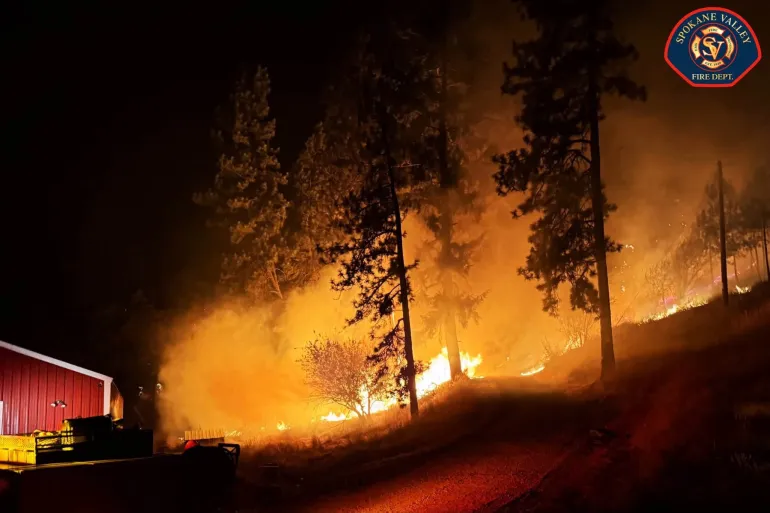
![A handout photo made available by the Spokane Valley Fire Department shows the Fairview Fire northeast of Spokane, Washington [EPA]](https://i0.wp.com/occasionaldigest.com/wp-content/uploads/2026/08/14192119-1785811036.jpg?w=640&ssl=1)
![A handout photo made available by the Spokane Valley Fire Department shows the Fairview Fire northeast of Spokane, Washington [EPA]](https://i0.wp.com/occasionaldigest.com/wp-content/uploads/2026/08/14192121-1785811148.jpg?w=640&ssl=1)







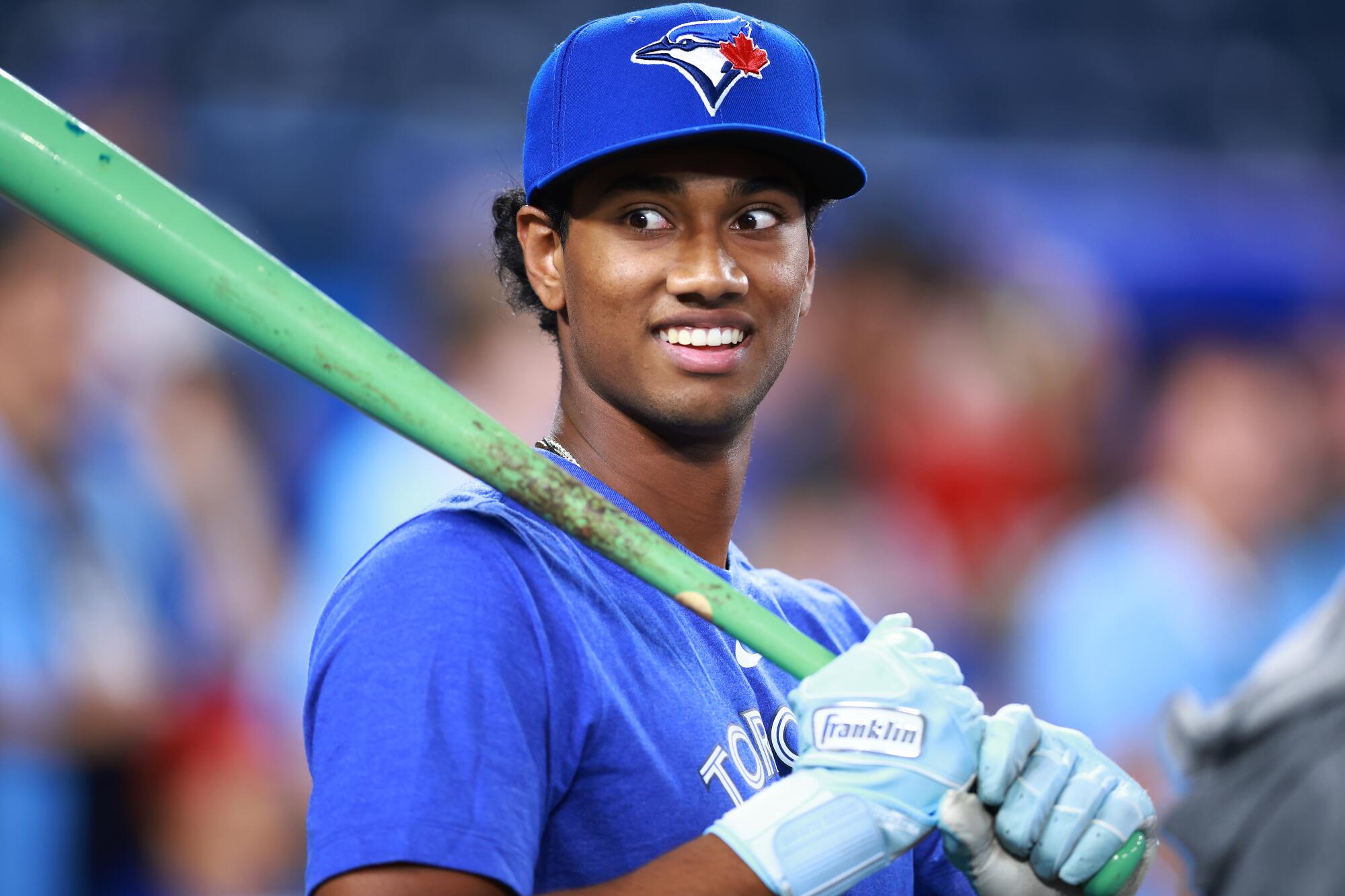










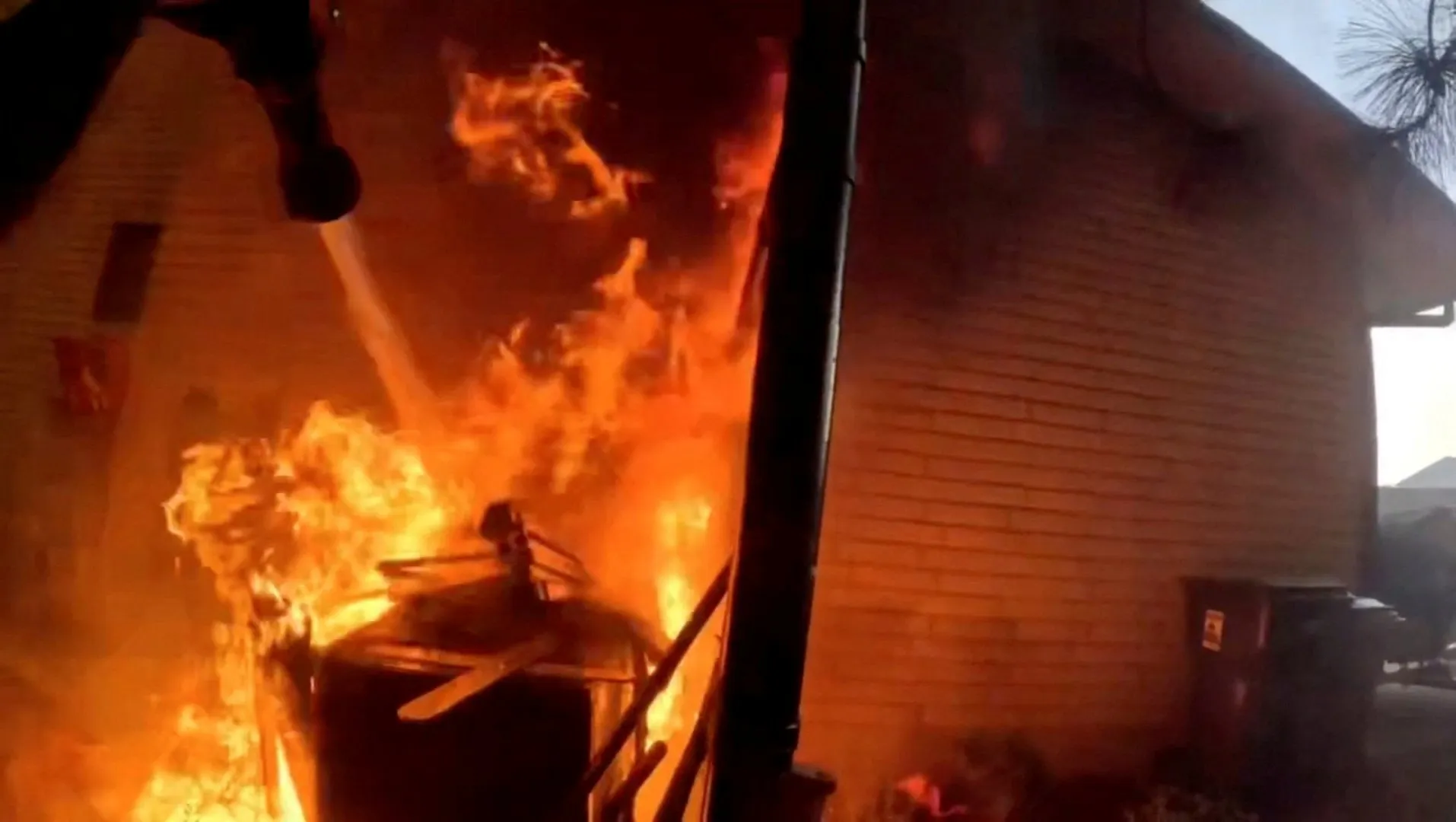














![Captain Ibrahim Traore’s relationship with Muslim leaders has come under strain as his government tightens control over religious affairs. [File: Stanislav Krasilnikov/RIA Novosti via AP]](https://i0.wp.com/www.aljazeera.com/wp-content/uploads/2025/09/ap_68b6dc86197ff-1756814470.jpg?w=640&ssl=1)