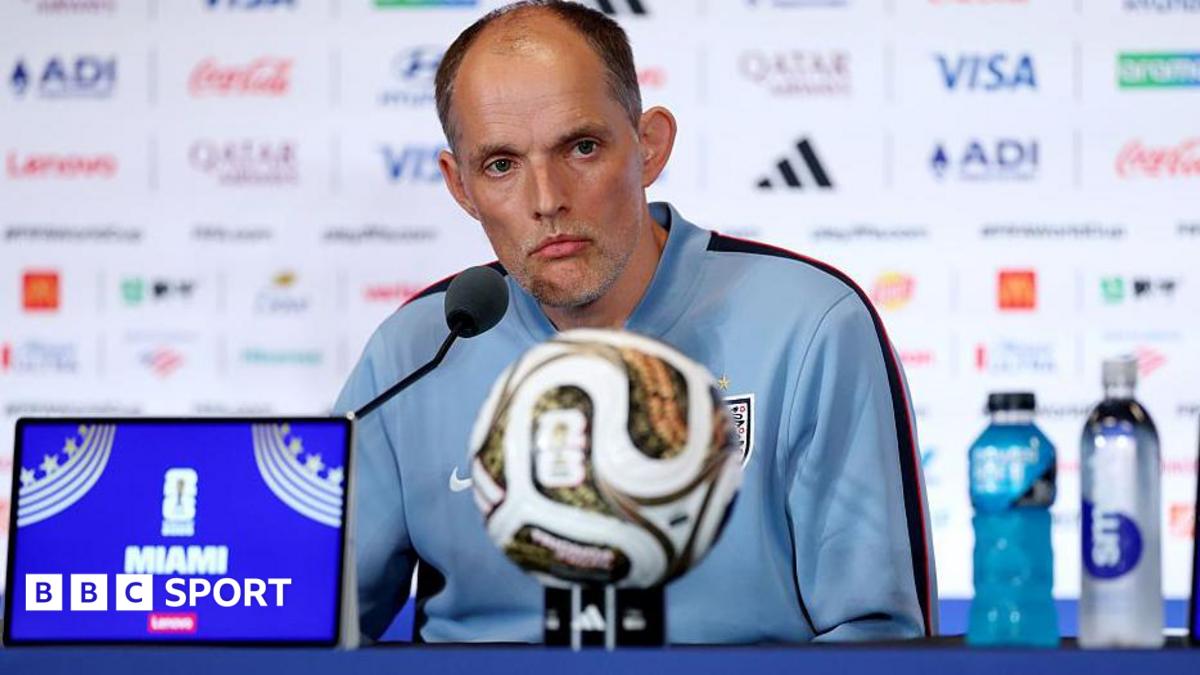
Asked about how he viewed the last 35 minutes of the game having had time to reflect, Tuchel said he felt “the same way – that we were too passive”.
“If you’re asking if I regret my decision, if this is the question, then I don’t regret my decisions,” he added.
“I felt that the momentum switches in the match. And I tried to help my team…
“I took several decisions, trusting my instinct, my intuition, my experience, trusting my competitiveness, and I took the decision in order to help the team and get the result. We didn’t get the result.
“So I take, of course, the responsibility and for these decisions. I would regret if I didn’t help. I would regret if we didn’t react.”
Tuchel said he was not willing to engage “in this kind of game” over who is to blame.
“No problem,” he said. “This is the deal that you sign up for, but I will not engage.
“For me, there is no-one to blame. If you need someone to blame, I take the responsibility. I’m the head coach.”
Asked why England’s record goalscorer Kane played so deep in the latter stages, he said: “What do you mean? Like in the last 30 minutes?
“Why we defended in a deep block. Well, that’s what you do if you defend in a block. We were not active enough.”
Tuchel said Argentina had “played with a lot of momentum after our goal”.
“They had a lot of offensive changes, and a lot of offensive positions,” the 52-year-old added.
“We could not stop the crosses, and we could not stop the runners into the box.
“So we decided to play a back five, to have more width in the field, to be closer to the guys who cross.
“We just became too passive, and Argentina, by the way, found another gear and they found the total flow.
“We played in the semi-final against the reigning world champions.
“We were 85 minutes 1-0 up. We played against the best player in the world, and we lost 2-1, which is painful.”
Tuchel was asked if he had studied data which showed England’s physical performance levels against Argentina were lower than the DR Congo game in the same stadium earlier in the tournament.
He said “even if we don’t want to admit it because it feels like an excuse”, the Mexico game with 10 men in the altitude of the Azteca Stadium and the heat against Norway in Miami “cost us more than we maybe thought”.
“The players literally gave everything physically [in] every single match. If you see this data drop, there must be a reason behind it, because the motivation was through the roof,” he said.
The only thing you might have in common with a World Cup football player is posting on Instagram as soon as you’re back home from a social gathering. Or, in the case of Erling Haaland, while you’re still in the dressing room after a win.
Football’s biggest stars are giving an insider look into the World Cup, their training, and personal lives at the six-week tournament through social media, and for some of them, their following has grown by tens of millions. Their on-pitch heroics, popularity, and personal stories have led them to overnight social media stardom during the World Cup.
Of course, football icons like Cristiano Ronaldo, Lionel Messi, and Neymar have seen an exponential rise in their Instagram following as well. But the 2026 World Cup wasn’t the first rodeo for these veterans, who have an evergreen social media boom outside the tournament.
Al Jazeera Sport takes a look at some of the biggest social media stars from this World Cup:
Erling Haaland — Netherlands
The goofy, witty and relatable six-foot-five-inch (195cm) Viking has been one of the World Cup’s most loveable personalities on the pitch and online.
The 25-year-old Norwegian striker, like many Gen Z social media users, seems to be chronically online when he’s not leading his country to new World Cup heights.
From candid Snapchat stories to Instagram posts right after winning to taking a taxidermied raccoon on the plane ride home, Haaland has become a social media phenomenon this World Cup.
It’s all thanks to his authentic posting style, compared with more carefully curated accounts that PR firms manage for similar high-profile personalities.
Of Haaland’s Instagram following of more than 70 million, 29 million were added in the past 30 days, according to analytics tool Social Blade. He is projected to reach 75 million after the World Cup final and nearly 322 million by the end of the year.
Vozinha — Cape Verde
One of the best feel-good stories of the tournament belongs to Vozinha, the Cape Verde goalkeeper whose heroics kept some of the world’s best teams from scoring a single goal against the island nation — all of which his mother eventually saw in person after she finally received a US visa to attend the World Cup.
He leapt, dived and executed a string of saves in Cape Verde’s tournament opener against Spain to end the match in a shock 0-0 draw. By the time he opened his Instagram a few hours later, his following surged from 500,000 to nearly five million.
It currently sits at 29.3 million followers, and the initial hype around him still stands as his posts garner millions of likes and interactions.
The 40-year-old joked how most people couldn’t even point out Cape Verde on a map before the World Cup, but his team’s standout performance in the group stages and knockout match helped change that.
Jude Bellingham — England
Good looks, loveable personality, Golden Boot contender — is there anything Jude Bellingham isn’t great at? And a massive 50 million Instagram following, of course.
The English midfielder’s World Cup journey may have ended in disappointment earlier this week, but there’s a lot to be said about a player whose fans sing “Hey Jude” for him after leading his team to victory at previous World Cup stages before the semifinal loss.
Bellingham, 23, has gained nearly nine million followers in the past 30 days, according to Social Blade, but his online popularity spiked by three million in October, when he opened up about his struggles with mental health.
Lamine Yamal — Spain
The teen sensation has been on the up and up since bursting to stardom two summers ago with Spain’s UEFA 2024 win, and his social media reflects the cool, candid, level-headed personality he carries on and off the pitch.
The 19-year-old’s Instagram feed is a mix of post-match photos, brand partnerships, multiple trophy wins and pictures with family members with whom he shares a close relationship.
His younger brother, Keyne, has become something of a celebrity at the World Cup, too, with his endearing antics as Yamal shepherds the three-year-old around the stadium pitch or watches him try — and fail — at golf.
The Barcelona striker could see his popularity gain new heights — and more Instagram followers, which currently number 49.6 million — after this Sunday’s World Cup final as Spain take on Messi’s Argentina.
Social media has already been fawning over the full-circle moment that began with a now-viral photo of Messi and Yamal in 2007 for a UNICEF fundraising shoot.
Keyne, the little brother of Lamine Yamal, is seen on the screen during the FIFA World Cup 2026 quarterfinal match between Spain and Belgium at Los Angeles Stadium on July 10 [David Ramos/Getty Images/AFP]
Tim Payne — New Zealand
Payne’s viral moment may have come before the World Cup, but it was touching nonetheless.
The New Zealand defender’s Instagram following exploded late in May after an Argentinian influencer decided he was the least-known player at the World Cup.
Valen Scarsini, known as “elscarso” on Instagram and TikTok, made a video encouraging his audience to give the Wellington Phoenix and All Whites defender’s account likes, comments and follows.
Payne’s Instagram following grew from fewer than 5,000 before the campaign to about 5.8 million, turning the 32-year-old into one of the tournament’s most unlikely viral stars.
He even addressed the outpouring of love in a video on Instagram, and eventually met up with Scarsini at the team’s hotel in Boca Raton, Florida, ahead of the World Cup.
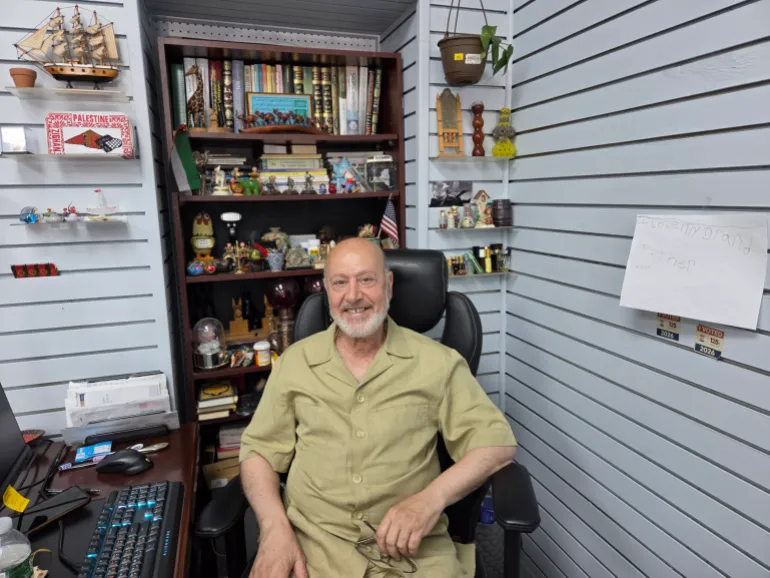
New York, United States – Zein Rimawi says he’s not much of a football fan, but when asked for his pick for the FIFA World Cup final, Rimawi blurted: “Spain.”
“You don’t need to finish the question,” the 72-year-old told Al Jazeera.
Recommended Stories
list of 3 itemsend of list
Sitting in his office in the Bay Ridge neighbourhood of New York with a Palestinian flag behind him, Rimawi said football cannot be separated from politics.
“I support countries that support our causes, especially the Palestinian cause,” added Rimawi, who serves as the chair of the Arab American Federation nonprofit.
His support for Spain, who will face off against Argentina for football’s most prized trophy on Sunday, echoes the sentiments of many among the large Arab American community.
The neighbourhood is nicknamed Little Palestine, but in reality, it is a melting pot of Arab-American and other immigrant communities from across the world.
With the final taking place in neighbouring New Jersey, World Cup fever is raging in Bay Ridge.
Palestinian restaurants, Yemeni cafes, Lebanese grocery stores and corner shops all have the flags of the participating teams displayed.
While the tournament has been a festival of football, Rimawi called it a “political summit”.
So Spain, which recognised the State of Palestine in 2024 and has been a vocal critic of Israel’s genocidal war on Gaza, is a natural choice for Arab fans, he argued.
“I didn’t know who Hossam Hassan was,” he said, referring to Egypt’s head coach.
“But when he raised the Palestinian flag, I instantly became a fan.”
Zein Rimawi speaks to Al Jazeera in Brooklyn, New York, on July 17, 2026 [Ali Harb/Al Jazeera]
‘We’re for Spain with all our hearts’
Across 5th Avenue at Al Reef Bakery, Talal Abdraboh had a similar take.
He said Spain’s support for Palestinians and the Arabs’ presence in Andalusia for centuries make the team endearing to fans in the community.
“It’s not about bias against Argentina. If any team that’s not Arab were facing Spain, we would support Spain,” he said.
“We’re for Spain with all our hearts.”
The bakery has a large mural of the Dome of the Rock in Jerusalem and another featuring a Palestinian woman baking with the words of Palestinian poet Mahmoud Darwish, “I long for the bread of my mother.”
“The Arab community was immersed in this World Cup, especially when Arab teams were playing,” Abdraboh told Al Jazeera as he cut a loaf of bread into vertical strips.
“All the Arab fans were raising the Palestinian flag. So, when any Arab team was playing, we were cheering for them as Palestinians.”
A record eight Arab teams participated in the 2026 tournament, with Morocco going the farthest before losing to France in the quarterfinals.
Egypt made it to the round of 16, but they crashed out after squandering a two-goal lead against Argentina amid a series of controversial refereeing decisions that included ruling out an Egyptian goal for a soft foul in the build-up after a VAR review.
Palestinian American business owner Mahmoud Kasem at his restaurant in Brooklyn, New York, July 17 [Ali Harb/Al Jazeera]
Arab unity
For many Arab New Yorkers, the tournament showcased the community’s unity.
Mahmoud Kasem, the owner of Al-Aqsa Bakery, installed a large TV screen outside his restaurant and gave out free falafel for major Arab teams’ matches, attracting people from across Bay Ridge.
“Not everything is about business. I love soccer. Across the Arab world, we are infatuated with the game. I wanted to create a beautiful atmosphere as we do in Palestine. Put a TV outside and tell people, ‘Come and watch,’” Kasem told Al Jazeera.
“The beauty of it is seeing the Palestinians, the Lebanese, the Moroccans, the Jordanians, everyone get together. I love unity. I love community and being all together.”
He added that he wishes Arab leaders would follow the example of people in the diaspora and eliminate borders and disputes.
Kasem said he convinced police officers who complained about his show partially closing down the street to drop their grievances, invoking the celebrations that took place across the city when the New York Knicks won the NBA championship.
Like many people in Bay Ridge, Kasem is hoping for a Spanish win on Sunday. He highlighted Arab and Spanish cultural, linguistic and musical similarities and lauded the positions of the government in Madrid.
“When Palestine was bombed, they took a stance. When Lebanon was bombed, they took a stance,” he told Al Jazeera. “They stand with humanity. They stand with freedom.”
Kasem added that many Palestinians support Real Madrid and Barcelona in club football.
Beyond the Spanish government, many Spanish celebrities and footballers have expressed solidarity with Palestine.
Last year, the Basque side Athletic Club – home to Spain’s goalkeeper Unai Simon and winger Nico Williams – officially called for an end to the genocide in Gaza.
Kasem said politics should stay out of football, but it was FIFA that politicised the sport after handing US President Donald Trump its inaugural Peace Prize and suspending Russia over the invasion of Ukraine while refusing to ban Israel for the genocide in Gaza.
Pro-Palestine graffiti in the Bay Ridge neighbourhood of Brooklyn, New York, July 17 [Ali Harb/Al Jazeera]
Argentina-Israel vibes
Some fans have linked the Argentinian team to Israel because of the pro-Israel policies of the government of President Javier Melei.
Israeli Prime Minister Benjamin Netanyahu has also expressed support for Argentina. Israeli flags were also spotted during Argentina’s match with Egypt.
But the Argentinian team and players have not taken a position on the conflict.
In 2018, Argentina cancelled a friendly match with Israel in Jerusalem after pressure from Palestinian rights activists.
So some Arab Americans are still backing Argentina, arguing that the magic that Lionel Messi produces transcends politics.
Karim Bouzeraa, a 24-year-old barber in Bay Ridge, said the Israeli flags do not represent Argentinian football.
“Messi is a legend,” he told Al Jazeera. “Twenty years of competition is not something easy. We’ve seen other legends, but no one with the same longevity.”
Bouzeraa said regardless of who’s cheering for whom in the final, it was heartwarming to see Arab fans get behind all of their teams in the tournament.
“At the end of the day, we are all Arabs – one blood. Hopefully in the next World Cup we see many Arab teams, so we can support them,” he said.
Coronation Street star Tracy Shaw, who was diagnosed with breast cancer earlier this year, has enjoyed an afternoon out with a fellow soap legend from the ITV show
20:48, 17 Jul 2026Updated 20:48, 17 Jul 2026
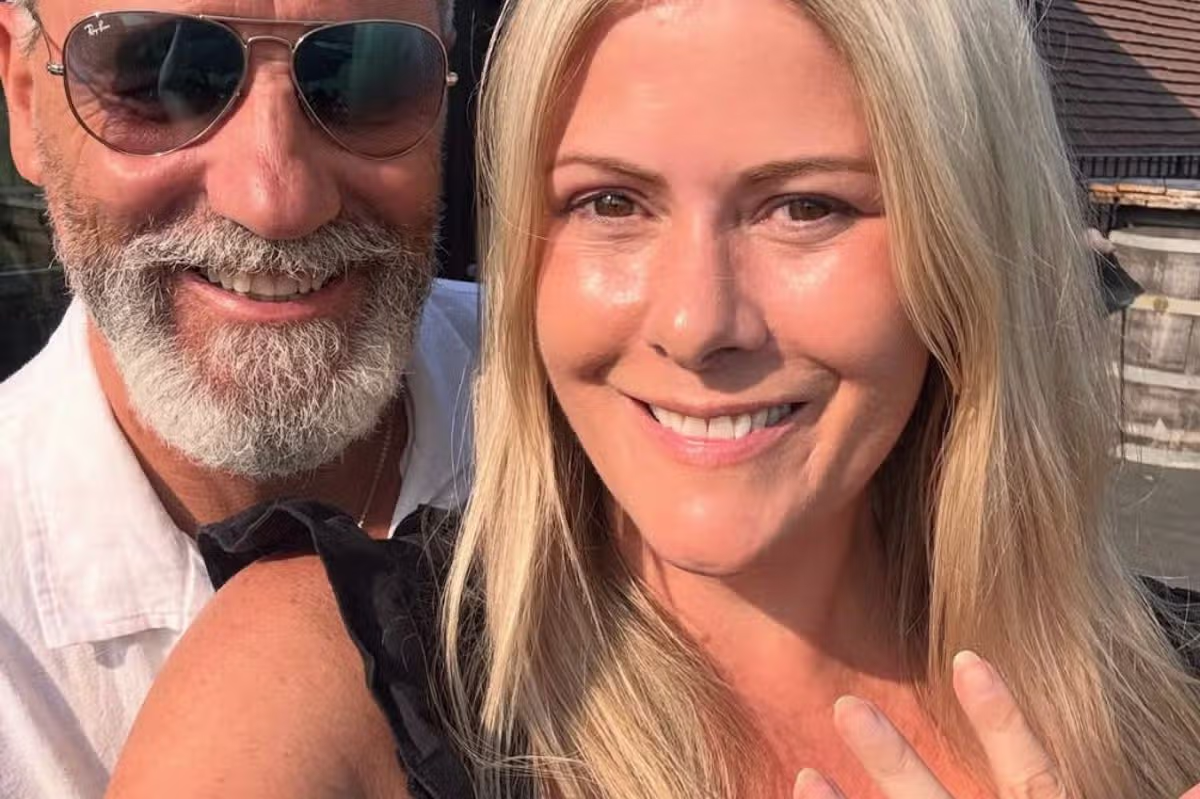
Coronation Street legends Tracy Shaw and Sally Ann Matthews have reunited (Image: tracy.k.shaw/Instagram)
Tracy Shaw has enjoyed a leisurely afternoon with Sally Ann Matthews amid her cancer battle. The actress, 52, who played Maxine Peacock on Coronation Street from 1995 until 2003, announced she had been diagnosed with breast cancer earlier this year and has been keeping fans up to date ever since.
On Friday afternoon, Tracy shared a photo of herself and Sally Ann, 55, who played Jenny Bradley on the ITV soap on and off for almost 40 years, onto Instagram after they spent the afternoon catching up. Whilst the pair’s Weatherfield alter-egos never crossed paths on screen, the actresses met when they both starred in a tour of the play Mum’s The Word in 2010.
She wrote: “Never stopped laughing #sallyannmatthews. Meet for an hr Brunch led to lunch 3 hrs of glorious laughter. Homemade ginger biscuits, and sunflowers , I was spoilt. We met on tour years ago and we haven’t stopped laughing since. Love you Sal.”
Tracy then shared the picture to her Instagram Story, and in the background , she added the Cyndi Lauper classic Girls Just Wanna Have Fun.
“Good morning everyone. I’ve put some makeup on because I’m going to meet a friend who is going to collect me and we’re gonna go for a drink. I wanna share about how when you are at home and then you go out…do you remember the COVID days?
Earlier in the day, Tracy became emotional as she said she was getting ready to go out with a friend and it struck her just how how it felt to be leaving the house after so long indoors.
She said: “All of a sudden we started going out in the world…that’s how it feels and I feel really emotional about meeting my friend because I haven’t seen her for so long and I’ve just spent some time putting makeup on but I’ll probably cry so that’ll come off and I do feel like a painted doll! But anyway, I can’t wait to show you more and tell you more. Have a beautiful morning!”
Tracy, who also enjoyed a brief pop career with a cover of the Lonnie Gordon track Happenin’ All Over Again before going on to appear in Casualty, Doctors and a string of theatre productions over the years, previously told her followers that she was “all over the place” thanks to all the side effects of chemotherapy, and various things stopped her venturing far from home.
“Because of all the medications, thrush, and shingles, I’m all over the place. The smallest things can affect us and this, setting myself, starting the day, listening to the birds and seeing the sunrise and be amongst nature at its best.
“Also, it’s really hot and I have to get the dogs out and I’ve been really locked in the chemo land of not being able to go out because there isn’t a toilet that can actually take what I need now. That’s a bit frank but that’s the truth.
“So, today, we’ve gone to their favourite park and that will be them for the day, and me for the day. I just wanna say hello to everyone. Stay cool.”
If you have been affected by this story, advice and support can be found at Breast Cancer Support.
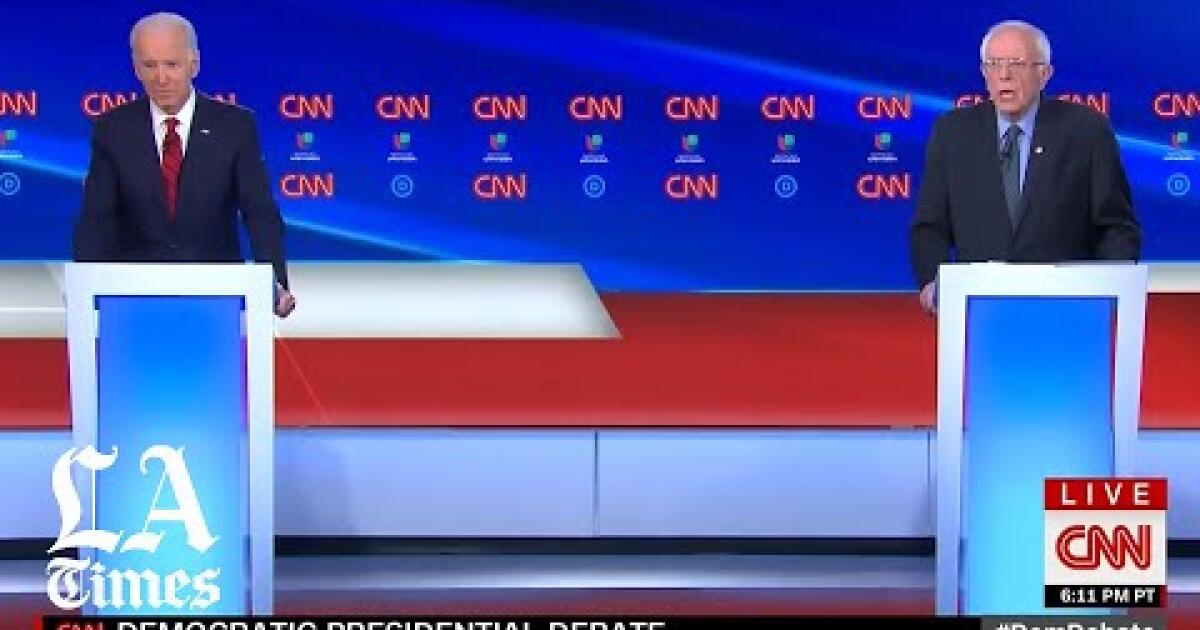
Joe Biden said Sunday that he would pick a woman to run as his vice president.
“I commit that I will, in fact, pick a woman to be vice president,” Biden said at the Democratic presidential debate in Washington. “There are a number of women who are qualified to be president tomorrow. I would pick a woman to be my vice president.”
Sanders did not make the same commitment when pressed by a moderator.
“In all likelihood, I will” select a woman as running mate, Sanders said.
“For me, it’s not just nominating a woman, it is making sure we have a progressive woman, and there are progressive women out there,” Sanders said.
Biden also committed to nominating a black woman to serve on the Supreme Court, which would be a first in the nation’s history.
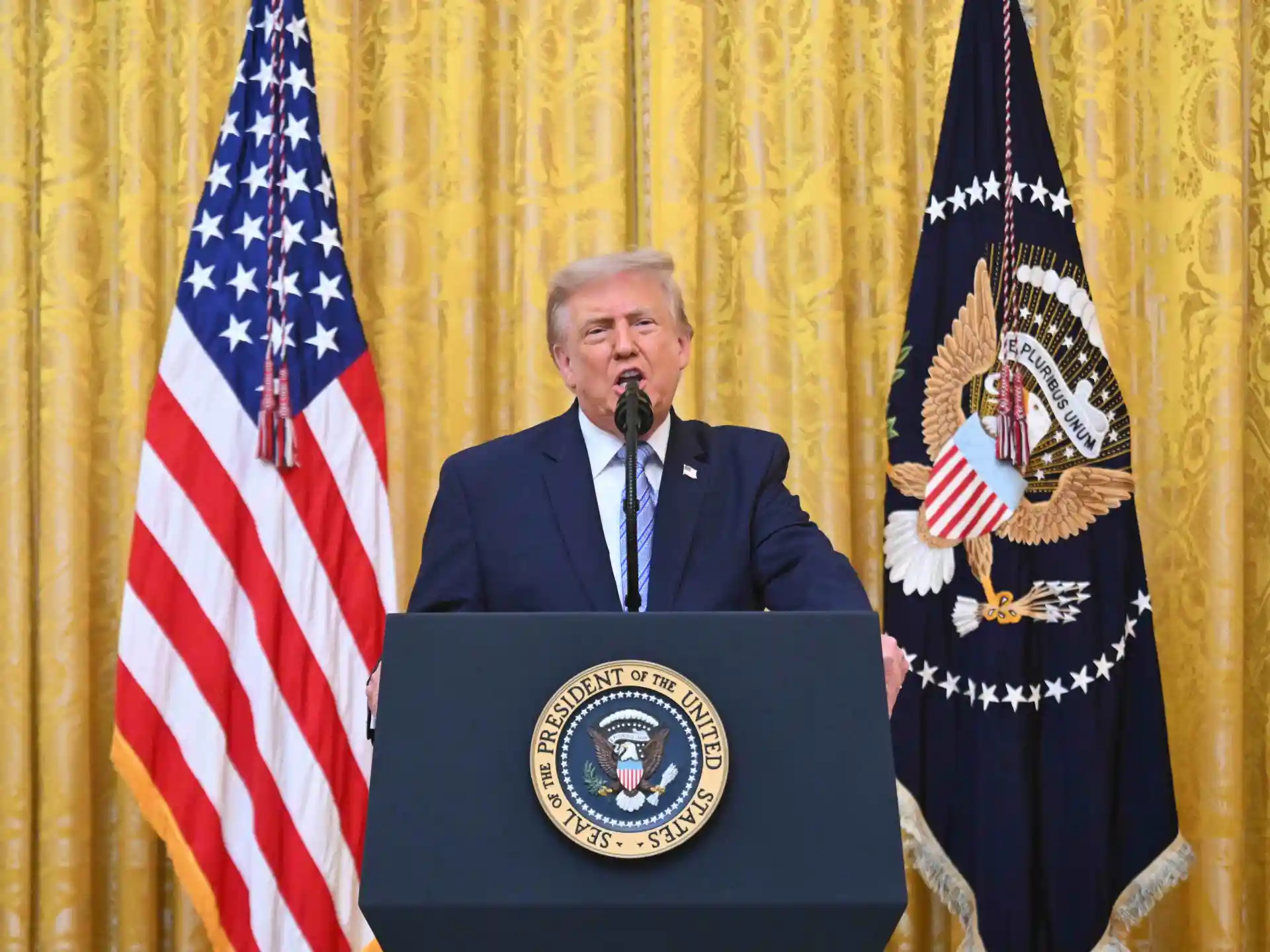
United States President Donald Trump has joined criticism of England’s tactics in their World Cup semi-final loss to Argentina, by questioning Harry Kane’s second-half “defensive” role.
Manager Thomas Tuchel’s second-half substitutions have been criticised by pundits and supporters following the 2-1 defeat, as Argentina scored two late goals to set up Sunday’s final against Spain (20:00 BST).
Tuchel reverted to a back five and made a number of defensive-minded substitutions in the closing stages as Lionel Messi inspired a dramatic comeback.
“You have a great player in England who I’ve played golf with. And he is Harry [Kane] who has been fantastic,” said Trump.
“I think they perhaps made a mistake when they made him a defensive player. What do I know about soccer? They took the lead, and they took their best player and put him on defence.
“We got to be a little offensive, right. But no, I’m not going to call it, what do I know about coaching? But that was a little unusual.”
Tuchel was quick to brush off Trump’s criticisms when mentioned to him in a news conference later.
Balogun, 25, was set to miss his side’s last-16 tie against Belgium after being shown a straight red card for a foul on Bosnia-Herzegovina defender Tarik Muharemovic in the previous round.
But Fifa made the shock decision to suspend the automatic one-match ban for 12 months, leading to widespread criticism.
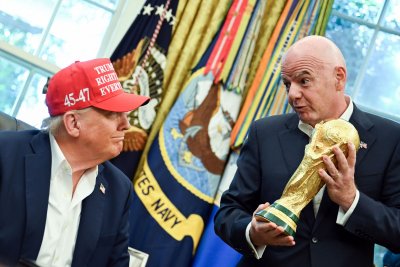
Trump said: “This has been a tournament like no other. Filled with fierce competition, unforgettable moments. Probably the most unforgettable is when they gave that gentleman… is it a red card?
“And I was forced to call Gianni [Infantino]. I said ‘Gianni, I’d like to make a recommendation. Let the guy in the game!’ No, I didn’t say that. I said I’d like to wage a complaint.
“And actually I had no idea what was going to happen, but you know it is so much better the way it worked out because there is no controversy. [Belgium] won the game and our team had all of its players. You made another great decision if you think about it, but you’ll never get credit for it.”
Trump also thanked Fifa president Infantino and described the World Cup in the US, Mexico and Canada as “the most successful sporting event, maybe in the history of the world”.
Infantino said the World Cup had “exceeded expectations”.
“The American dream, Mr President, came to reality. We united the world in America,” he said.
“This is not just the greatest World Cup of all times, it is the greatest human, social and cultural event that mankind has ever witnessed and we are all part of it and for this I thank you very much, Mr President.”
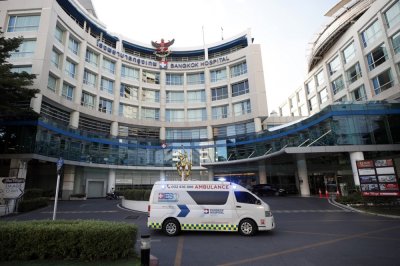
epa11732729 An ambulance drives past a building of Bangkok Hospital in Bangkok, Thailand, 21 November 2024. Australia’s Prime Minister Anthony Albanese told the Parliament that two young Australian tourists died after drinking suspected tainted methanol alcohol in Laos’ Vang Vieng tourist city, while the Australia’s Department of Foreign Affairs and Trade states confirmed to provide consular assistance for two Australians families in Thailand after the two tourists have been transported to Thailand for medical treatments. EPA-EFE/RUNGROJ YONGRIT
July 17 (UPI) — Laos authorities have charged the owner of a distillery whose methanol-laced alcohol killed six travelers, officials said Friday.
The mass poisoning claimed the lives of two Australian teenagers, two Danish women, a British woman and an American man in November 2024.
The tourists became ill and quickly died after consuming alcohol from a popular local bar in Van Vieng.
It was later discovered the drinks were tainted with methanol.
The Laos distillery owner was charged with selling food products harmful to health and operating an illegal business, according to the Danish authorities.
“The charges carry a penalty ranging from three months to four years’ imprisonment, as well as a fine,” Denmark’s Ministry of Foreign Affairs said in a statement to Australia’s ABC.
“The case will formally remain open for 15 years, meaning that more serious charges carrying higher penalties such as negligent manslaughter may still be brought if sufficient evidence can be established.”
But relatives of the victims, as well as government officials, have expressed frustration at the charges, which could see the distillery owner in jail for as few as three months.
“The Australian Government is deeply frustrated and bitterly disappointed that authorities in Laos are not pursuing the most serious charges in relation to the methanol poisoning deaths of Australian citizens Holly Bowles and Bianca Jones,” said Penny Wong, the Australian foreign minister, in a statement. “This devastating news will only add to the immense pain and grief suffered by the families and friends of Holly and Bianca.”
Mark Jones, father of victim Bianca, said feeling “furious would be an understatement.”
“I don’t have words for the disgust that I have with what the Laos authorities are suggesting is meant to be justice for the deaths of six tourists,” he told ABC.
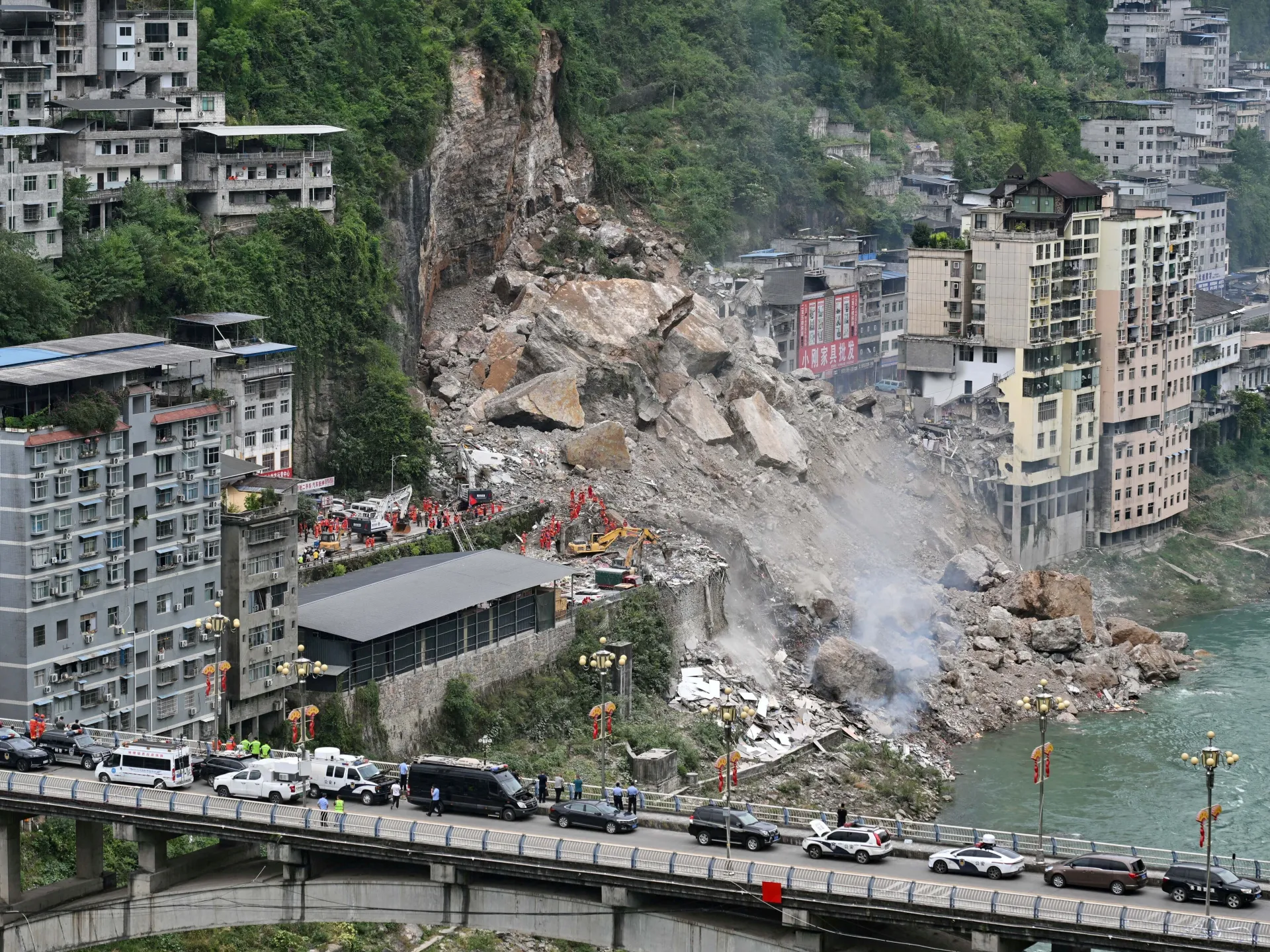
A landslide on the outskirts of the southwestern Chinese city of Chongqing has killed at least eight people and left 34 missing. 10 residential buildings have been buried, forcing more than a thousand residents to evacuate.
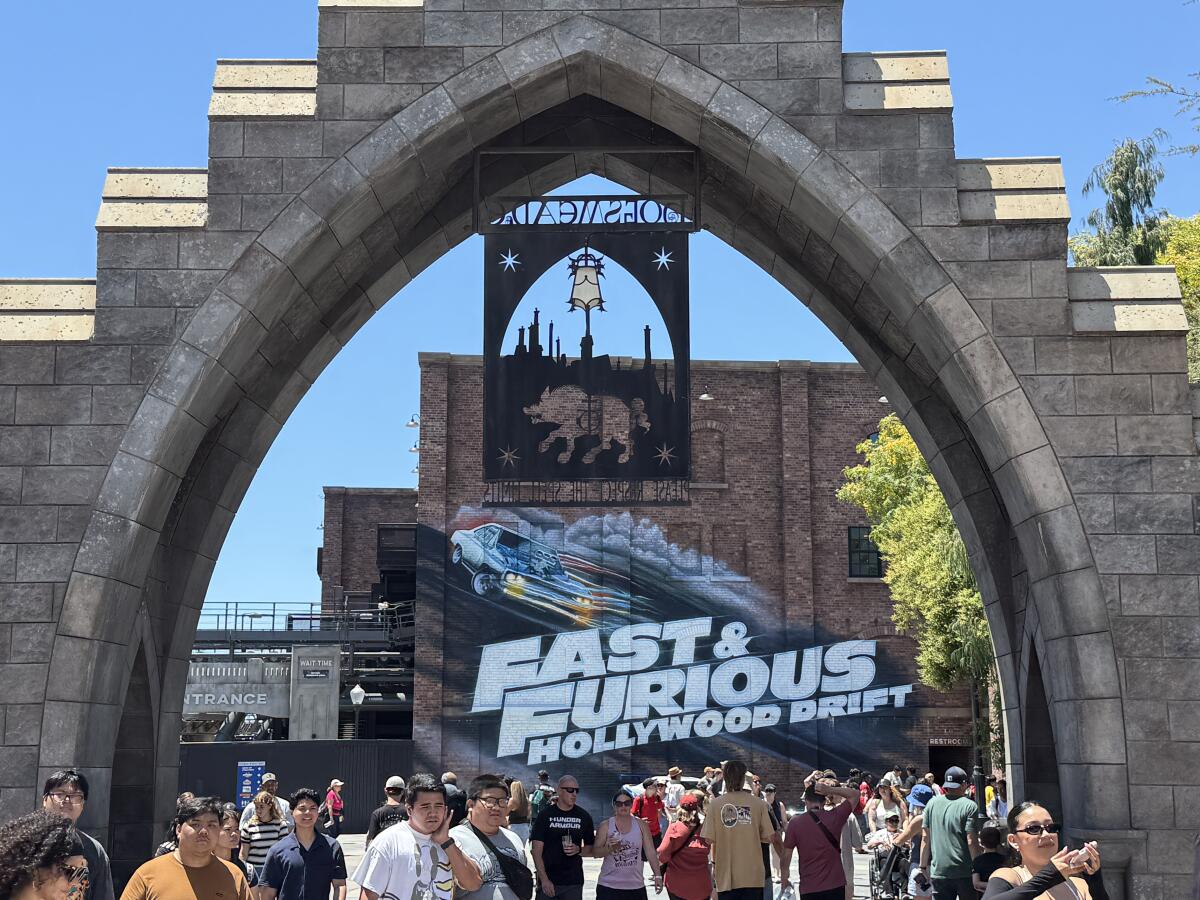
Universal Studios Hollywood has long been slated to have the biggest theme park opening of 2026 with its new high-speed coaster, Fast & Furious: Hollywood Drift. But with no officially announced opening date, questions have started to intensify and rumors have begun to swirl as to what may be causing the park to go radio silent on what is expected to be its centerpiece attraction.
According to Universal, there is no need for concern.
Yet speculation has zeroed in on the potential noise of the coaster as being a problem for residents of the nearby of Toluca Lake. Rumors were fueled Friday by Fox 11 Los Angeles reporting, via a since-deleted post on social media network X that Hollywood Drift’s opening had been delayed at least until the end of year due to neighborhood complaints. Videos of audible screams of riders on the coaster have gone viral in recent weeks.
A spokesperson for Universal said reports that the coaster’s opening is postponed until the end of 2026 are “not accurate” and disputed the notion that the coaster has been delayed. Fast & Furious: Hollywood Drift, the spokesperson said, is still on target to open before the end of summer.
“We expect to announce an opening date soon,” read an official statement from the company. “The information online is incorrect.”
The summer season lasts through the end of September. The park begins its popular fall Halloween Horror Nights on Sept. 3. Tickets for the latter are currently on sale, and Universal is promising access to Hollywood Drift for those who purchase its line-skipping express pass, which starts at $259.
Sources familiar with the coaster’s operations have also disputed the notion that noise is a cause for the coaster having not yet opened, instead pointing to more routine mechanical issues that have arisen during its test and adjustment phase. One theme park insider, however, stressed that when Hollywood Drift does open, it will likely be considered a “top-5, or top-10 coaster, in the world.”
The view of Fast & Furious: Hollywood Drift from Universal Studios Hollywood’s Wizarding World of Harry Potter.
(Todd Martens / Los Angeles Times)
Fast & Furious: Hollywood Drift is unique in that it is a 72 mph ride with vehicles created to rotate 360 degrees through multiple inversions. Designed to mimic the feel of stunt cars, its four-seated vehicles will twist and turn through banks in the track in an effort to create a drifting sensation.
Universal’s own website earlier this summer posted June 26 as an opening date, and while that was once the targeted launch, the date was quickly removed from the site. Universal began hosting media for walkthroughs of the coaster in May.
Fast & Furious: Hollywood Drift has been in the works for than a decade. Built essentially on a cliff between the park’s upper and lower lots, the ride’s existence is a feat of engineering, and Universal has described it as among the most intense attractions in its global park portfolio.
Before land was moved, Universal began a series of tests to track how noise would travel through the surrounding neighborhood. Universal placed speakers on the old special effects and stunt buildings to see how ride screams traveled down the hill.
Ultimately, the tracks would be complemented with multiple sound walls and shields, the latter clear structures designed to block coaster rumbles and audience screams. And because the cars can rotate 360 degrees, Universal can in theory direct rider yells away from the studio below and the neighborhood nearby. The actual track has been filled with pea gravel, designed to minimize noise from any reverberations.
“It’s incredibly quiet,” said Jon Corfino, the lead creative at Universal Studios Hollywood. “We were able to do that by putting materials inside portions of the track to deaden the sound. I’m not sure we would have needed it, but it was important to do the right thing. It’s pea gravel and rocks. It’s quieter than I ever thought it was going to be.”
Fast & Furious: Hollywood Drift isn’t the only notable coaster slated to open in Southern California this year. Buena Park’s Knott’s Berry Farm initially intended to launch its reimagined Montezooma’s Revenge, now known as Montezooma: The Forbidden Fortress, on Monday. Late last night, the park indefinitely delayed its public unveiling, with a spokesperson citing additional fine-tuning that surfaced during its final days of testing.
The delay is not expected to be a prolonged one.
“We appreciate everyone’s understanding and look forward to welcoming media and guests in the coming days when we can showcase the attraction exactly as intended,” read a statement from the park. Montezooma: The Forbidden Fortress has been in development for the past four years.
“F.N.B.’s second quarter earnings per share grew 17% year-over-year to $0.42 with net income of $149 million.” (Chairman, President & CEO Vincent J. Delie)
“Our results included another quarter of
Seeking Alpha’s Disclaimer:This article was automatically generated by an AI tool based on content available on the Seeking Alpha website, and has not been curated or reviewed by humans. Due to inherent limitations in using AI-based tools, the accuracy, completeness, or timeliness of such articles cannot be guaranteed. This article is intended for informational purposes only. Seeking Alpha does not take account of your objectives or your financial situation and does not offer any personalized investment advice. Seeking Alpha is not a licensed securities dealer, broker or US investment adviser or investment bank.
The provided text outlines the historical significance of Constitution Day in South Korea, which commemorates the formal adoption of the nation’s founding legal document on July 17, 1948. It explains that following the end of World War II and the country’s subsequent liberation from Japanese control, a democratic election led to the creation of a unicameral legislative system. The source details how President Syngman Rhee officially enacted the constitution, paving the way for the establishment of the Republic of Korea shortly thereafter. Additionally, the text contrasts these events with the nearly simultaneous formation of the Democratic People’s Republic of Korea in the north under Kim Il-sung. Beyond these historical insights …
SACRAMENTO — Gov. Arnold Schwarzenegger’s office in charge of protecting California against terrorism has tracked demonstrations staged by political and antiwar groups, a practice that senior law enforcement officials say is an abuse of civil liberties.
The Times obtained reports prepared for the state Office of Homeland Security in recent months that contain details on the whereabouts and purpose of a number of political demonstrations throughout California.
The source of the information is listed in some cases as federal law enforcement agencies, including the Immigration and Customs Enforcement agency, an investigative arm of the U.S. Homeland Security department.
Political activities cited in the reports include:
* An animal rights rally outside a Canadian consulate office in San Francisco to protest the hunting of seals.
* A demonstration in Walnut Creek at which U.S. Rep. George Miller (D-Martinez) and other officials spoke against the war in Iraq.
* A Women’s International League for Peace and Freedom gathering at a courthouse in Santa Barbara in support of an antiwar protester — a 56-year-old Salinas woman — facing federal trespassing charges.
California Atty. Gen. Bill Lockyer’s office learned of the monitoring activity more than two months ago. On Friday, a spokesman condemned the actions, saying they violated the groups’ constitutional right of free speech.
“When people exercise their 1st Amendment rights to rally, march and protest, they should not have to worry that intelligence officials are watching them or their activities are in any way being painted with the terrorism brush,” Lockyer spokesman Tom Dresslar said in an interview.
“That kind of conduct by anti-terrorism intelligence agencies threatens civil liberties, runs counter to our values and violates this office’s policy regarding criminal intelligence gathering,” Dresslar said.
The Times obtained two of the reports, which were compiled daily. The state homeland security office declined to release others.
The office is a 53-person operation that grew out of the Sept. 11 attacks and is financed primarily by federal money. Officials there said the details about the rallies were reported by SRA International, a company hired to provide counter-terrorism analysis.
The officials said such information made it into only the two reports that The Times obtained, out of 60-some daily intelligence reports produced since March.
No reports were produced before March, said Chris Bertelli, spokesman for the state office. When officials in the agency learned of the practice, he said, they ordered it stopped.
Copies of the reports were shared with the California Highway Patrol and the attorney general’s office. Nothing else was done with the information about the demonstrations, Bertelli said.
The reports are on the letterhead of a California anti-terrorism partnership that includes the homeland security office, the attorney general and the Highway Patrol.
Dresslar said staffers in Lockyer’s office saw the reports and raised concerns with their superiors, who complained to the Office of Homeland Security.
“When we discovered their existence, we informed OHS officials that we had absolutely no use for that kind of information,” Dresslar said. “Collecting information on protests has no legitimate anti-terrorism intelligence function. None. No intelligence agency has any need to maintain this kind of information.”
The reports obtained by The Times contain summaries of news articles about the war in Iraq, animal rights activists and terrorism. One has a section titled “Upcoming California Protests,” followed by summaries of the demonstrations. Each includes an entry for “officer safety issues.” No issues are cited.
One group whose antiwar rally was in the reports criticized the state agency’s practice.
“It seems like a waste of taxpayer dollars and a creeping invasion of our 1st Amendment rights to demonstrate and speak,” said Devlin Donnelly, assistant coordinator for the Chico Peace and Justice Center, which held a rally in Chico in March calling for an end to the war in Iraq.
Schwarzenegger had “no information and no knowledge that this was happening,” said Adam Mendelsohn, the governor’s communications director. “The governor feels that this particular information gathering is totally inappropriate and unacceptable.”
Anti-terrorism ideas from the state homeland security office have stirred qualms before.
Past and present members of the attorney general’s office said they were troubled by a meeting at the security office last September in which federal and state officials discussed ways to prevent Islamic militants from recruiting prison inmates. In attendance were officials from the FBI, the state Department of Corrections and Rehabilitation and various local law enforcement agencies, according to documents obtained by The Times.
One account of the meeting is provided in a whistle-blower complaint filed by a former high-ranking official in the attorney general’s office, Edward Manavian.
The complaint says homeland security information analyst William Hipsley proposed monitoring private conversations in state prisons between inmates and Islamic clergymen and, citing a potential national security threat from Iran, getting a list of Iranians living in California.
State law makes it a felony to eavesdrop on conversations between a person in custody and his attorney, doctor or religious advisor.
Brian Parriott, a spokesman for the state prison system, said it is not the corrections department’s practice to listen in on private conversations between inmates and visitors from the clergy.
And Mark Schlosberg, a policy director for the ACLU’s San Francisco office, said it is discriminatory to compile databases on broad groups of people based on national origin without any specific link to criminal activity.
“It’s contrary to our constitutional protections and our systems, and it’s also ineffective in terms of law enforcement,” Schlosberg said.
The state homeland security office denied Manavian’s version of events and issued rebuttals from Hipsley and a staff member who also attended.
In a written statement, Hipsley said that he never suggested “Muslim clerics offices be ‘bugged’ ” and that the subject of Iran never came up.
George Aradi, an assistant deputy director for information analysis, concurred in a separate statement.
Manavian was demoted in February. In his complaint, he said that happened in part because he refused to cooperate with “attempts to violate the civil rights of citizens in this state.”
He resigned in April. His complaint is pending before the state Personnel Board, and a hearing is scheduled in late July.
Lockyer’s office publicly criticized the monitoring actions after an inquiry from The Times.
But Allen Benitez, assistant chief of the attorney general’s criminal intelligence bureau, had told one of his bosses in a memo April 18 that the security office was gathering information on “political groups” and protests. He voiced concerns that such tracking “may not be allowed under the law.”
Lockyer’s office handled the matter privately with the security office, Dresslar said.
Questions about the office come at a time when assessments by nonpartisan reviewers have concluded the state is unprepared for a terrorist attack or natural disaster.
Schwarzenegger casts himself as being immersed in efforts to prepare California for disaster, making repeated public visits to the state’s emergency command center outside Sacramento, where he has watched over exercises simulating what would happen in a disaster, such as an earthquake or flood.
But a report by the legislative analyst’s office last year said California lacks “a unified strategic approach to homeland security.”
And more recently, the state’s Little Hoover Commission watchdog agency issued a report saying it is unclear who would take charge in the event of an emergency or terrorist attack.
EAST RUTHERFORD, N.J. — The spotlight on Sunday’s World Cup final will shine brightest on two men, one playing the last game of his sixth tournament and the other the final game of his first.
Argentina’s Lionel Messi, 39, is arguably the greatest player in World Cup history, having played more games, scored more goals and collected more assists than anyone who has gone before him. If Argentina wins Sunday, he’ll match another record as captain of the first team to win back-to-back titles in 64 years.
Spain’s Lamine Yamal, who turned 19 on Monday, may be the heir to all that. He’s already scored 56 goals and won seven major trophies for club and country; Messi had 11 goals and four trophies at the same age.
But these are more than just two ships passing in the night. If fact, this isn’t even their first meeting, although neither remembers the day they were introduced in 2007.
Messi was a shaggy-haired 20-year-old, just beginning his unparalleled career with Barcelona while Yamal was a cherubic 3-month-old, just beginning his life. They came together after Yamal’s mother, Sheila, won a raffle run by a local newspaper and Barcelona’s shirt sponsor, the children’s charity UNICEF. She was told the child would pose with an unnamed first-team player for a photo that would appear in a fundraising calendar.
When she carried her son into the dressing room at Barcelona’s stadium for the photo shoot, Messi appeared, having been chosen by chance. The pictures of a clearly uncomfortable Messi helping Sheila bathe her son in a blue plastic tub were published, then forgotten, until Yamal helped Spain win the 2024 European Championship. After the tournament Yamal’s father, Mounir Nasraoui, posted the picture online with the caption “The beginning of two legends.”
Lionel Messi, then 20, helps bathe Lamine Yamal, who was 3 months old, with help from Yamal’s mother, Sheila Ebana, during a photo shoot in September 2007 in Barcelona.
(Joan Monfort/Associated Press)
“It’s unbelievable,” Yamal’s teammate Mikel Merino said Friday. “The first time I saw it, I thought it was AI. It’s funny how life works sometimes. You have these situations you think is scripted by someone. But it’s just how life works, the coincidences of life.”
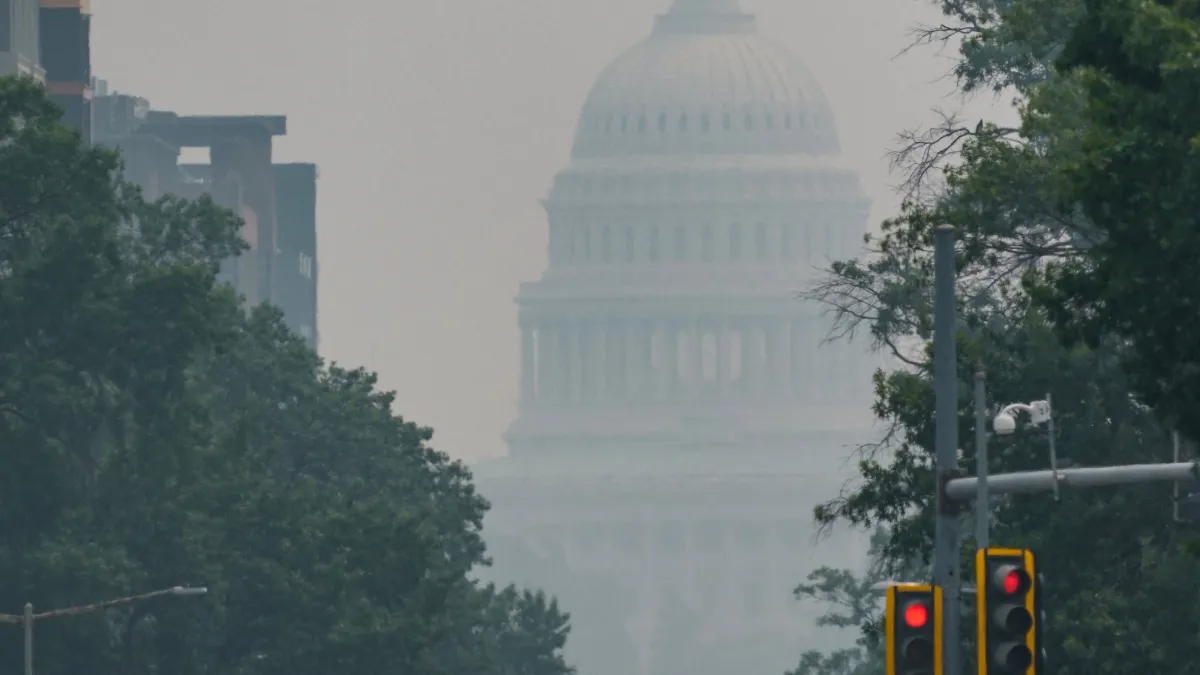
That they’ll meet again Sunday afternoon at MetLife Stadium seems more like destiny than coincidence, but who wins the reunion may be decided, in part, by factors other than the play on the field. Smoke from nearly 900 wildfires burning in Canada have blanketed a large swath of the U.S., from Chicago to New York, resulting in poor air quality that forced the postponement of one MLS game Thursday.
The sky above the open-air stadium in East Rutherford, N.J., was noticeably clearer Friday and could improve even more with the heavy rains forecast for Saturday. If those rains linger, however, that could also affect what is shaping up to be a battle of the ages.
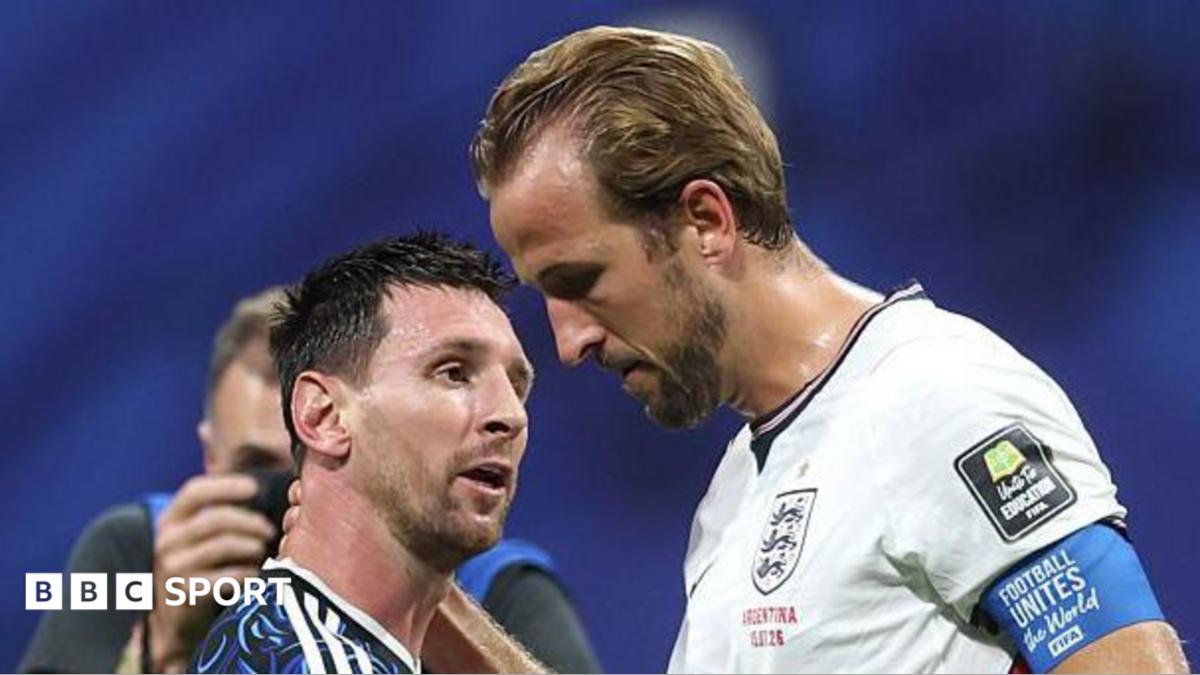
Messi has carried Argentina into its third World Cup final since 2014, matching France’s Kylian Mbappé with a tournament-best eight goals and leading all players with 12 goal contributions. Four of his scores either tied the game or put Argentina in front and in Wednesday’s frantic comeback win over England, Messi assisted on the tying and winning goals seven minutes apart.
He seems guaranteed to win his third Golden Ball, which goes to the tournament’s outstanding player. He’s already the only player to win the award twice.
Yamal now plays at Barcelona, Messi’s home for 17 years, and he’s proven to be the same kind of game-changing left-footed playmaker, leading the team in goals (24) and assists (17) in all competition and winning La Liga’s player of the year award this season. Last year, at 18, he finished second in the voting for the Ballon d’Or, an award Messi won eight times.
He’s been quieter in the World Cup, with just a goal in seven games, but Spain has never lost a match he’s played in, going 21-0-6.
Yamal’s father was born in Morocco and his mother in Equatorial Guinea before moving to Catalonia with their families as children. Yamal grew up in a working-class, largely immigrant neighborhood the Spanish newspaper El País described as “forgotten, isolated and stigmatized.” His parents separated when he was 3 and while both remained present in his life, it was his paternal grandmother, Fatima, who sacrificed to support the boy, managing his daily routine to make sure he attended training sessions.
That devotion paid off when Yamal, then just 7, was invited to live and train at Barcelona’s famed La Masia academy, the same academy the Argentina-born Messi had entered at 13. When Yamal signed his first long-term contract with the team 14 months ago — a contract that could pay him more than $45 million a year in wages, bonuses and sponsorships, making him the team’s best-paid player, as Messi once was — he was given the No. 10 shirt Messi wore.
“In every match he shows that he is the best player in history,” Yamal told a Spanish newspaper. “If someone has doubts, it is because they are looking for them. There is nothing more to say there. For me, he is the best.”
Spain forward Lamine Yamal controls the ball during a World Cup quarterfinal against Belgium at SoFi Stadium on July 10.
(Ronaldo Bolanos/Los Angeles Times)
The comparisons and the praise flatter him, said Messi, who then used the same words to describe Yamal as the best.
“There is a new generation of footballers who are very good and who have many years ahead of them. But if I have to choose one because of age, for what he has done so far and for the future he may have, it is Lamine,” he told the Spanish sports journal Diario Sport in May.”There’s no doubt, for me, he’s the best.”
For all the similarities, there are differences. Yamal plays with much more speed and street-football flair and is far more prolific than Messi was at the same age. And while a young Messi focused almost entirely on soccer, Yamal has learned to speak three languages fluently and, unlike Messi, hasn’t kept his politics hidden, waving a Palestinian flag during the club’s parade through Barcelona celebrating its La Liga title last May.
And remember that charity calendar photo with Messi? The one that raised money for UNICEF? Last month Yamal became a goodwill ambassador for the group, focusing on the right to play and supporting children living through humanitarian emergencies.
Turns out some pictures are worth more than a thousand words.
Political analyst Eric Ham argues President Donald Trump’s renewed focus on election security and his push for the SAVE Act are attempts to expand federal authority over US elections ahead of November’s midterms.
Weekly insights and analysis on the latest developments in military technology, strategy, and foreign policy.
As renewed fighting between the U.S. and Iran has entered a seventh day with no signs of letting up, the Pentagon appears to be sending more forces to the region. The move comes as the conflict took a sharp turn overnight, with both sides carrying through on threats to hit infrastructure targets. That marks a major change from the previous tit-for-tat barrages as the two sides continue to struggle for control over the Strait of Hormuz.
“The Trump administration notified Israel it is sending dozens more refueling planes to the country ahead of a potential expansion of military operations against Iran,” Axios reported, citing three U.S. and Israeli officials.
“Israeli officials say the U.S. wants to send several dozen more refueling planes in the coming days, bringing the number of planes to the same level it had at the beginning of the war,” Axios added. “Israeli officials say the U.S. military prefers operating the refueling planes from Ben Gurion Airport, because other air bases in the region are more exposed to Iranian attacks and less safe for U.S. planes. At the moment, the Iranians are still deterred from launching attacks on Israel, because it will likely trigger a massive retaliation.”
This move comes after Israel placed a limit of 20 on the number of tankers at Ben Gurion Airport due to the impact all those jets were having on passenger air service operations. There are currently about 30 KC-46 Pegasus and KC-135 Stratotanker aerial refueling jets at the airport. There had been about 75 refuelers and cargo planes there during the height of Operation Epic Fury.
It remains unclear how that issue will be resolved, however, boosting the number of tankers in Israel will certainly give the U.S. greater flexibility in being able to refuel aircraft attacking and surveilling Iran. As we noted yesterday, there was a concern that moving aircraft around to other bases farther away could cause sortie rates and durations for receiver aircraft missions to suffer in a sudden crisis.
Scoop: The Trump administration notified Israel it is sending dozens more refueling planes to the country ahead of a potential expansion of military operations against Iran, three U.S. and Israeli officials said. My story on @axioshttps://t.co/EcVDTCUq5z
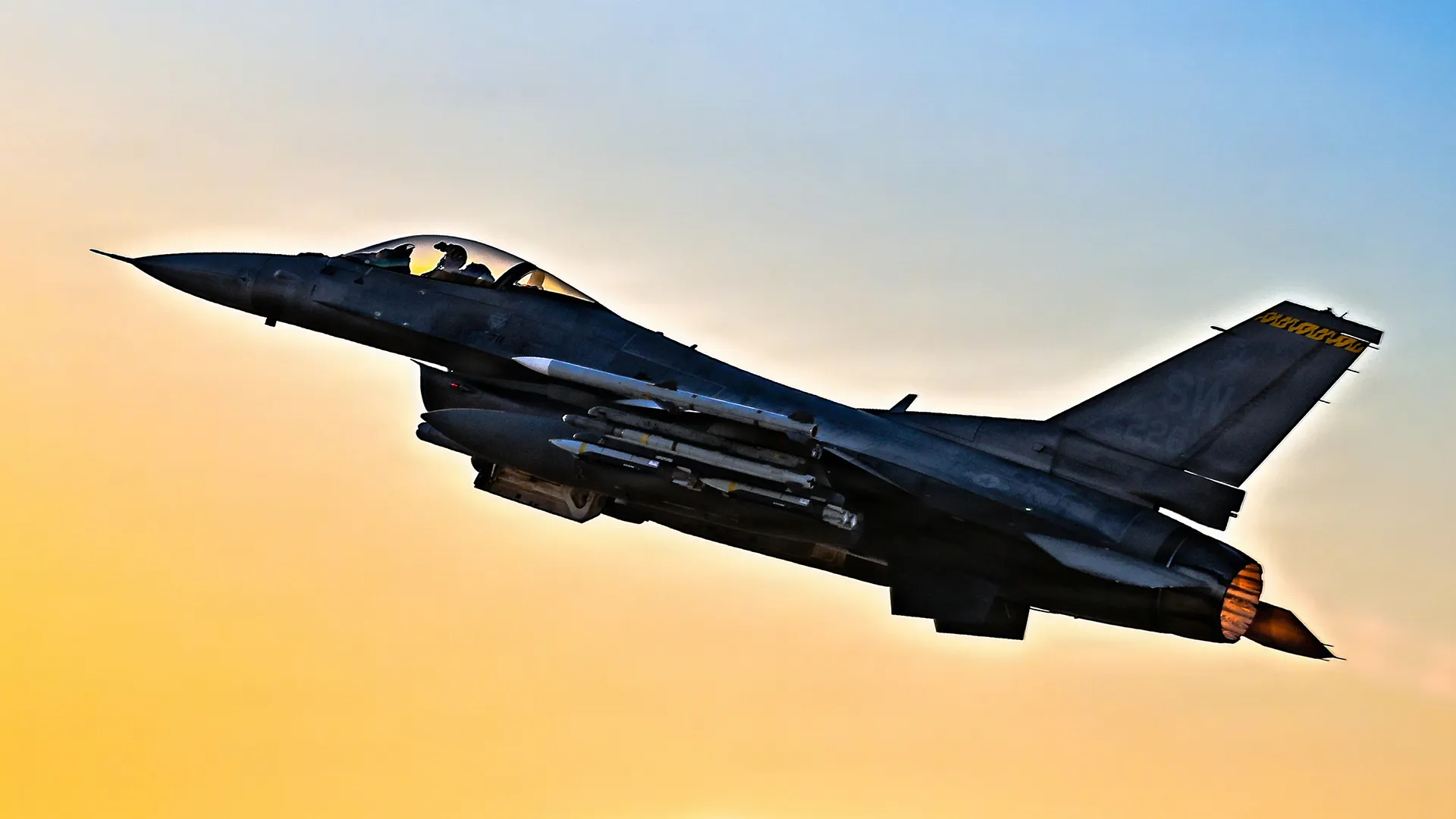
In addition, more combat jets appear to be headed back to the Middle East. According to online open-source flight trackers, at least 12 F-16 Fighting Falcons are heading to Muwaffaq Salti Air Base in Jordan from Spangdahlem Air Base in Germany. Whether this is a plus-up or a routine rotation is unclear, but either way it shows that the U.S. is continuing to add assets to the region.
Meanwhile, as we have noted in earlier reporting, the U.S. has already returned F-22 Raptors that were flying out of Ovda Air Base in Israel back to the United States. Other aircraft, such as A-10s and F-15Es, have also returned home from or have been replaced in the CENTCOM region. So clearly there is a lot of shifting of aviation assets taking place even amid current operations.
Going for GOLD: 4 flts of 3x “SP” F-16CJ (TABOR11,21,31,41) are inbound to Muwaffaq Salti AB, Jordan (OJMS) from Spangdahlem AB, Germany (ETAD). 4x KC-135R/T “GOLD” team tankers are up to support the movement.
Video of Massive US airforce airlift activity above Europe today towards bases in the Middle East in particular the transfer of many fighter jets to Jordan and Israel.
Friday afternoon, CENTCOM announced a new wave of strikes on Iran.
“CENTCOM launched a round of strikes against Iran at 3 p.m. ET today for the seventh consecutive night,” the command stated on X. “The strikes are designed to continue degrading Iranian military capabilities at the Commander in Chief’s direction.”
CENTCOM launched a round of strikes against Iran at 3 p.m. ET today for the seventh consecutive night. The strikes are designed to continue degrading Iranian military capabilities at the Commander in Chief’s direction.
Last night, American forces struck several bridges and energy plants in the southern part of the country, according to Iranian media. In retaliation, Iran hit several targets across the region, including what Kuwait says is a desalination plant, another step up the escalation ladder. In this arid part of the world, countries rely heavily on desalination plants to provide potable water.
🇺🇸🇮🇷 US targets in Iran tonight:
• A total of 5-6 bridges in Hormozgan province were targeted:
• Chabahar maritime tower was targeted (again) and destroyed by the US
Officials in Hormozgan province, where Bandar Abbas is the capital, say six bridges were hit in the latest attacks, along key transport routes linking the city with surrounding towns, Al Jazeera reported. Bandar Abbas, which has a key naval base on the Strait of Hormuz and is frequently targeted, was also reportedly struck again.
Former CENTCOM commander Joseph Votel told us that while it “may be possible” that the U.S. is preparing for a ground invasion of southern Iran, “I don’t really think that is what this is about. I think our kinetic targeting is principally focused on elimination of IRGC capacity to influence the Strait of Hormuz or attack our partners in the region.”
Friday morning, U.S. Central Command (CENTCOM) declined to comment on the claims that it struck bridges, referring us to its X post from the previous night.
“U.S. forces, including fighter jets, aerial drones, and warships, launched precision munitions that hit dozens of Iranian military targets such as coastal surveillance and air defense sites, military logistics infrastructure, and maritime capabilities,” the command wrote. “This was the sixth consecutive night of U.S. strikes against Iran. At the Commander in Chief’s direction, CENTCOM is further degrading Iranian military capabilities and holding Iran accountable for recent attacks on commercial shipping.”
Several videos emerged on social media showing the destroyed and damaged bridges.
American strikes tonight hit three important road bridges near the port city of Bandar Abbas in southern Iran.
A fuel truck was passing through one of the bridges at the moment of the attack, causing the vehicle to get struck and catch fire. pic.twitter.com/8j7py2JRGs
— Status-6 (War & Military News) (@Archer83Able) July 16, 2026
Bridges in the southern Iranian port city of Bandar Khamir in Hormozgan province appeared heavily damaged after US strikes, aerial footage published Friday by IRGC-affiliated Tasnim News showed. Iran said at least five bridges, a railway junction near Bandar Abbas and the… pic.twitter.com/d0aBCPqHUv
— Iran International English (@IranIntl_En) July 17, 2026
CENTCOM on Friday did acknowledge destroying the Chah Bahar Shahid Kalantari Port surveillance tower.
It was “part of a maritime surveillance network along Iran’s Gulf of Oman coastline used for decades by the Islamic Revolutionary Guard Corps (IRGC) to track and target commercial vessels transiting the Strait of Hormuz,” the command stated on X. “The destruction of the tower directly degrades IRGC’s ability to coordinate attacks on innocent civilian crew members. Furthermore, the strike protects freedom of navigation in regional waters for all vessels, except for ships attempting to violate the ongoing U.S. naval blockade against Iran.”
On July 16, U.S. forces successfully destroyed the Chah Bahar Shahid Kalantari Port surveillance tower, part of a maritime surveillance network along Iran’s Gulf of Oman coastline used for decades by the Islamic Revolutionary Guard Corps (IRGC) to track and target commercial… pic.twitter.com/CgBNvgOFf9
Meanwhile, as we noted earlier in this story, officials in Kuwait said one of the country’s power and water desalination plants “was attacked as a result of the Iranian aggression…leading to a fire and damage to the plant’s facilities and several electricity generating units.”
“The fire is now under control and repairs are ongoing,” the Kuwait government added.
Kuwait announces one of its power and water desalinization plants “was attacked as a result of the Iranian aggression…leading to a fire and damage to the plant’s facilities and several electricity generating units.” The fire is now under control & repairs are ongoing. https://t.co/MrFcwkeTHrpic.twitter.com/LoxTCM4v92
Officials in Bahrain said its air defenses intercepted and destroyed several Iranian aerial attacks on Friday.
“The General Command of the Bahrain Defense Force announces that Iran is continuing its systematic, hostile approach through its attacks,” the Bahrain Defense Force stated on Instagram. “The General Command clarifies that, with strong will and high combat readiness, the air defense systems with Bahrain’s defense force, intercepted and destroyed a number of treacherous Iranian air strikes today, Friday, July 17, 2026. The General Command assures that all its weapons and units are at the highest readiness and on defensive readiness to protect the kingdom.”
🔴 Bahrain’s air defenses intercepted and destroyed several Iranian aerial threats on Friday
🔴 The army condemned Iran’s targeting of civilians and private property as a violation of international law
There were also claims from Iran that it again struck Al Udeid Air Base in Qatar, the largest U.S. installation in the region. The IRGC Aerospace Force claimed it destroyed several aerial refueling jets as well as radars, however, it provided no visual evidence. When we asked about the claim, CENTCOM declined comment.
🔴In the 15th wave of Op. Nasr 2, the IRGC Aerospace Force carried out a heavy surprise attack on the US Al Udeid Air Base in Qatar, completely destroying a long-range radar system and several US strategic aerial refueling aircraft, while several others sustained severe damage. pic.twitter.com/TJkl8P1OB4
Satellite imagery emerged on social media purporting to show the destruction of two hardened storage facilities and a warehouse at the Zayed Military City in Abu Dhabi. The scale of the damage appears to show what could be the results of an Iranian missile or drone strike.
UAE authorities, however, chalked it up to a mishap.
On Monday, UAE authorities claimed “firefighting teams of the UAE armed forces dealt with a fire which broke out in one of the warehouses of the Zayed Military City,” according to Khaleej Times. “The fire was caused by the burning of some wood and old ammunition, the country’s Ministry of Defense reported.”
🇦🇪 Sentinel-2L imagery and enhanced satellite imagery from @SoarAtlas show that two hardened storage facilities and a warehouse at 24°29’44.87″N 54°58’57.10″E inside Zayed Military City in Abu Dhabi were completely destroyed.
Iran struck eastern Syria on Friday, Iranian state media and a Syrian military source said, Reuters reported. It was the first known attack by Tehran on Syrian territory since a regional war erupted earlier this year.
The IRGC said it attacked a U.S. special operations command center at al-Tanf in Syria in retaliation for the killing of Iranian soldiers in Iranshahr, state media reported.
IRGC Launches Surprise Attack on Enemy in Syria’s Al-Tanf Region
The IRGC conducted a surprise attack on the enemy special operations command center in the Al-Tanf region of Syria in retaliation for the blood of martyred Iranian soldiers from the previous night in Iranshahr. pic.twitter.com/vVkvKTBJv1
CENTCOM declined to comment when we asked about it, but minutes later posted a denial on X of any American casualties.
“CLAIM: Iranian forces claim they attacked al-Tanf Garrison in Syria and captured or killed American troops in the process. FALSE,” the command stated. “FACTS: No U.S. troops in the region have recently been killed or captured.”
🚫 CLAIM: Iranian forces claim they attacked al-Tanf Garrison in Syria and captured or killed American troops in the process. FALSE.
CENTCOM declined to say if any U.S. troops had been killed or injured in any overnight attacks. According to the Pentagon’s casualty website, there have been 14 troops killed and 427 wounded since the launch of Epic Fury Feb. 28.
The Department of Defense has updated its official casualty figures for Operation EPIC FURY, reporting 13 additional wounded in action (WIA), including 10 U.S. Army and 3 U.S. Navy personnel.
The latest round of strikes came after President Donald Trump promised to strike infrastructure and the Iranians promised to retaliate.
“We’re going to hit them very hard tomorrow night,” Trump proclaimed in an interview with Fox News on July 15. “We’re going to hit them very hard the night after, and then next week it gets really bad for them, because next week comes the power plants. Next week comes the bridges. We’re going to knock out all their power plants. We’re going to knock out all their bridges unless they get to the table and negotiate.”
PRESIDENT TRUMP: “Ultimately, we’ll hit energy targets in Iran. Next week comes the bridges. We’re going to knock out all of their power plants. We’ll knock out all of their bridges unless they get to the table and negotiate” pic.twitter.com/CwbiDxHcwx
Last night, Trump claimed “…we are winning big in Iran and you will see the fruits of that labor very, very shortly.”
Amid the renewed fighting, the number of transits in the Strait of Hormuz reached a three-week low, according to a MarineTraffic.com post on X, falling to eight yesterday, down from 15 the day before.
Meanwhile, the per barrel price of Brent crude hit a new high for the past 30 days on Friday, reaching almost $87.
Hormuz traffic reaches three week low
MarineTraffic data indicate confirmed crossings through the monitored Strait of Hormuz zone fell to eight on 16 July, down from 15 a day earlier and marking a three week low. Seven of the eight transits followed the Iranian route, with no… pic.twitter.com/mEXVxsx40d
Meanwhile, a new threat to oil exports from the region is looming. Iran has asked the Houthi rebels of Yemen, one of its main proxies, “to stand ready to close the Red Sea oil route if the United States strikes Iranian power infrastructure,” Reuters reported, citing three sources. “The idea has been discussed within the Islamic Republic’s leadership, and the message has been conveyed to Iran’s Houthi allies.”
As we have previously explained, a Houthi shut down of the Bab el-Mandeb (BAM) strait, a narrow stretch of water between Yemen and Djibouti, would choke off a flow of oil exports from Saudi Arabia, especially to the east, and from southern Gulf states west, exacerbating the above-mentioned spike in oil prices. Having both straits closed at once is something of a ‘sum of all fears’ scenario for the global energy marketplace.
🔊 Iran asked the Houthis to stand ready to close the Red Sea gateway. ‘That has the potential to severely exacerbate what is already the worst energy supply disruption in history.’ Commodities and energy editor Simon Webb on Reuters World News https://t.co/cuyI7h2PSepic.twitter.com/k6TYgVoHOJ
It is unknown whether the U.S. and Iran will return to the bargaining table as both nations careen to a resumption of all-out war. We will continue to monitor this situation and provide updates when warranted.
Roger Hawes and Janey Smith are engaged, three years after they found fame, and love, on the first series of Davina McCall’s hit ITV dating series My Mum Your Dad
21:17, 17 Jul 2026Updated 21:18, 17 Jul 2026
Roger Hawes and Janey Smith have revealed they are engaged(Image: Instagram/Janeybombshell)
Roger Hawes and Janey Smith are engaged. The TV stars found fame when the signed up to appear on My Mum Your Dad, which follows Davina McCall as she oversees two single parents try to find love, have been one of the programme’s biggest success stories and appeared all the way back in the very first series when it aired in 2023.
On Friday, the couple took to Instagram to share the news that they are to wed after Roger popped the question just ahead of the weekend.
Roger became a widower when he lost his first wife and it was their daughter Jess who sent off his application off for the show, which was axed in early 2025, in the first place. Meanwhile, Janey went on the show with her son Will, and the happy news comes just weeks after Janey was rushed to hospital.
At the time, she explained in an Instagram post: “They did a CT scan straight away and found my appendix had blown and needed surgery asap. I was in hospital for a week as the infection had filled my stomach.”
After their romance blossomed, the pair made a joint appearance on Loose Women together in 2024, where Roger explained: “It didn’t show on the show itself but she just came in and I obviously liked what I saw straight away.”
“We just hit it off; she just said randomly, ‘What am I like?’ and I said, ‘I know what you’re like!’ And everybody else was just looking at us and we were just off in our own little world!”
At the time, Janey also admitted just how emotional it had been to see her love story play out on screen. She said: “When you see it, it’s like ‘oh no, don’t set me off.’ It was a very emotional time. There was anxiety, it was a big thing. It does take you back. It’s an outer body experience really.”
She also recounted the pivotal advice from her father as she explained: “We like Roger, don’t push him away,” which led her to tackle her personal issues head-on during a live TV appearance.
She added: “They said, ‘So why are you here?’ and I could feel it coming, I wasn’t going to say anything but I thought, ‘I’ve got to be honest here,’ I know I’ve pushed people away in the past. There’s some traits in me and adopted people that you carry and never address it.”
Reflecting on her candid moment, she expressed pride: “I felt for the first time in my life, ‘Well done Janey, you’ve just gone and said it on live TV.’ You don’t even tell people you meet but thank goodness I did.”
Janey previously admitted that she never worried Roger would leave her even though her son was concerned he might not be ready for another relationship after losing his wife.
She said: “It’s funny, I didn’t worry about that with him. With Roger what you see is what you get. He’s definitely a one-woman man and just not out to hurt me at all. I remembermy son [William] being a bit worried that Roger wasn’t quite ready to date yet, but I think because Roger had gone through his own form of grief, we helped each other.
“The only worry I had early on was similar to my son’s – I didn’t want to be an experiment for someone to dip their toe back in.
After achieving enlightenment, Buddha gave his first sermon in the Deer Park in Isipatana, India and founded the Buddhist sangha (monkhood) about 2,500 years ago.
In the sermon, which is known as ‘Setting the Wheel of Dhamma in Motion’, the Buddha first spelt out the Four Noble Truths and the Noble Eightfold Path.
In His First Sermon, the Buddha said, “I teach one thing and one thing only: suffering and the end of suffering,” which is the ultimate goal of Buddhism. The Buddha presented and explained this very doctrine in his major discourses. In this First Sermon at Deer Park, He taught the Four Noble Truths: the existence of suffering, the cause of suffering, that the cause of suffering can end, and the path to the end of suffering.
“Avoiding extremes, the Buddha has realised the Middle Path: It gives vision, it gives knowledge, and it leads to calm, to insight, to enlightenment, to Nirvana. And what is that Middle Path? It is simply the Noble Eightfold Path, namely, right view, right thought, right speech, right action, right livelihood, right effort, right mindfulness, right concentration. This is the Middle Path realised by the Buddha, which gives vision, which gives knowledge, and which leads to calm, to insight, to enlightenment, and to Nirvana.”
COLUMBIA, S.C. — Sen. Darline Graham (R-S.C.) has privately expressed interest in running for a full U.S. Senate term after getting appointed as a temporary replacement for her late brother, Lindsey Graham, according to three people familiar with the deliberations.
The people, who were not authorized to speak publicly, said she has started having conversations about a potential campaign.
Plans for Lindsey Graham’s funeral were also announced Friday. There will be a service in Washington on July 28 and more in South Carolina on July 29.
Darline Graham’s eventual decision could dramatically shake up the scramble to fill her late brother’s seat after he died last weekend. The filing period for a special primary runs from July 21-28, and the primary is scheduled for Aug. 11.
Several other noteworthy politicians — including Reps. Russell Fry, Nancy Mace and Ralph Norman, as well as Lt. Gov. Pamela Evette — have been eyeing a run.
Darline Graham’s conversations were first reported by Semafor.
South Carolina Gov. Henry McMaster appointed Darline Graham to serve the remainder of her brother’s term, which ends in January.
The first woman to represent the state in the Senate, Darline Graham called it “such an honor,” as dozens of her brother’s staffers and campaign advisors stood behind her, some with eyes glassy from welling tears.
“Lindsey has always been there for me. And now, I will be there for him,” she said.
Lindsey Graham died on Saturday at age 71. A preliminary report from the medical examiner said he suffered a tear in his aorta.
He never married or had a family of his own, but his sister was often by his side for the political touch points of his career, speaking at events and appearing in some of his campaign ads.
In his announcement on Monday, McMaster made no reference to her as a placeholder or symbolic appointment.
However, a person familiar with McMaster’s thinking but unauthorized to speak publicly said the governor, in selecting Darline Graham, had never contemplated that she would run for the seat herself.
Sen. Tim Scott, another South Carolina Republican, said he would not endorse any candidate in the primary because he also serves as chairman of the National Republican Senatorial Committee.
But, he said, “as Tim Scott, the voter of South Carolina, I might indeed wade into the water at some point.”
“I think the truth of the matter is that Darline has so far been off to a remarkable start,” Scott told reporters, asking about her as a possible special primary contender. “ ‘Why not her?’ would be my question.”
When he died, Lindsey Graham had millions in his campaign account and was expected to raise much more heading into the general election. But those aren’t funds that Darline Graham could directly access, if she were to run, according to Bradley A. Smith, a former chairman of the Federal Election Commission.
Under federal rules, Lindsey Graham’s campaign would be limited to transferring just $2,000 to a potential Darline Graham candidacy. However, Smith said there is no limit on how much it could transfer to the National Republican Senatorial Committee, which could — thanks to a Supreme Court decision last month — “spend an unlimited amount in coordination with Darline’s campaign.”
“It can’t be earmarked for Darline’s campaign, but in those circumstances I’m sure that the party will make sure she’s not short of cash,” said Smith, now serving as a professor at Capital University Law School in Ohio.
Kinnard and Kim write for the Associated Press. Kim reported from Washington.
NEW YORK — Shohei Ohtani was at the top of the Dodgers’ lineup Friday against the New York Yankees, five days after receiving an injection in his left knee. And he’s penciled in to pitch against the Philadelphia Phillies on Wednesday.
Ohtani received an orthovisc shot in his knee to lubricate the joint and relieve irritation, manager Dave Roberts said, and did not have it drained.
“It gives him some relief in his knee which we were hoping to get,” Roberts said. “Then the four days off with no activity which gives it a chance to settle in.”
Ohtani was expected to be in the lineup for all three games against the Yankees. He planned to play catch and throw off the mound in the coming days, and the team would monitor his response before finalizing pitching plans.
Taking the mound Wednesday would give Ohtani more recovery time heading into the team’s day off. When asked if Ohtani would shoulder two-way duties Wednesday, Roberts said, “We’ll see when we get there.”
Dodgers star Shohei Ohtani hits his 300th career home run against the Colorado Rockies at Dodger Stadium on July 7.
(Eric Thayer / Los Angeles Times)
When it isn’t possible to have Ohtani pitch before a day off, Roberts would like to rest him the following day.
“It’s all contingent on how his knee is feeling,” Roberts said of Ohtani’s second-half workload. “I think we are certainly more prepared to back off on the workload if it calls for it. But Shohei wants to be out there as much as he possibly can.”
Asked if Ohtani would need offseason surgery, Roberts said: “I would highly doubt that.”
Coming out of the break, the Dodgers shuffled their rotation to have Roki Sasaki, Emmet Sheehan and Yoshinobu Yamamoto face the Yankees in that order.
That leaves left-handed starters Eric Lauer and Justin Wrobleski (not necessarily in that order), to face the Phillies before Ohtani would take the mound.
Smith shut down
The Dodgers are shutting down catcher Will Smith from all baseball activities for a week as he continues to deal with a lingering neck injury. That pushes his return timeline back to at least August, if not later.
“It was flaring up, wasn’t recovering — however you want to word it,” Roberts said. “He didn’t feel like he was making any improvement.”
Smith has been sidelined since early June because of what he described as an inflamed disk. He initially treated it with rest and then an injection. But it still was bothering him during his latest buildup.
“I talked to the trainer, Thomas [Albert], today and he said that Will doesn’t feel any pain,” Roberts said. “Now with that, I think we’re in a much better spot.”
Dodgers utility player Kiké Hernández (strained left oblique) was set to begin a rehab assignment with triple-A Oklahoma City on Friday. And left-hander Blake Snell was scheduled to take the mound for two innings Saturday in his first minor-league rehab start since undergoing surgery to remove loose bodies in his elbow.
Air quality concerns
The MLB schedule got off to a smoky start out of the All-Star break. With wildfires in Canada raising air-quality concerns in the Northeast and Midwest on Thursday, the New York Mets’ game at Citizens Bank Park in Philadelphia was moved up an hour.
The smoke cleared over Yankee Stadium on Friday afternoon.
“I know that the players got a players’ union text that says it’s a full go,” Roberts said. “They feel good about it. The league feels good. I haven’t heard anything otherwise.”
2027 schedule
With a lockout widely expected to start Dec. 1 and no guarantee of an agreement in time to preserve the 2027 season, take MLB’s schedule announcement Thursday with a grain of salt.
Should collective bargaining negotiations wrap up in time, however, the Dodgers are set to open the season at Dodger Stadium on March 25 against the Atlanta Braves.
They end the season on the road, facing a pair of division rivals in the Colorado Rockies and Arizona Diamondbacks from Sept. 21-26.
July 17 (UPI) — President Donald Trump on Friday told FIFA officials they should pick the United States to host another World Cup, so long as they don’t include Canada or Mexico.
“You should choose the United States of America again,” Trump said during a FIFA World Cup reception at Trump Tower in New York, Politico reported. “This time we will leave Canada and Mexico out.”
The next World Cup, in 2030, will be co-hosted by Morocco, Portugal and Spain, followed by Saudi Arabia in 2034.
FIFA has not yet selected a host for the 2038 tournament.
Trump added FIFA should “pick somebody else for the next one and that will take some of the anger, hatred and steam out of everyone,” Politico reported.
Trump has close ties to FIFA President Gianni Infantino.
The president earlier this month said he spoke with Infantino to ask for a reversal of a red card suspension to U.S. soccer star Folarin Balogun.
After Trump’s call, FIFA followed suit and allowed Balogun to play in the following match against Belgium.
“You made another great decision,” Trump told Infantino of the reversal on Friday. “You’ll never get credit for that.”
It made no difference: the U.S. soccer team was eliminated in a 4-1 loss to Belgium.
The World Cup comes to a close on Sunday. Trump said he would be present for the final match between Spain and Argentina.
United States President Donald Trump has threatened to impose additional tariffs against Canada, as a penalty for the wildfire smoke that has clouded cities across North America.
On Friday, Trump complained about the air quality on social media, as officials in Canada continue to battle 896 active blazes across the country.
Recommended Stories
list of 3 itemsend of list
Roughly 200 are burning in the province of Ontario, where Premier Doug Ford said 81 are still out of control. Trump, however, blamed the fires on Canadian governance.
“We are holding Canada responsible for the fact that they are not properly maintaining their Forests, and Brush,” Trump wrote.
“The United States is being unnecessarily invaded by filthy, polluted, and unhealthy air, the quality of which is dangerous, and totally unacceptable!”
He pledged to call Prime Minister Mark Carney, accusing the Canadian leader’s government of negligence.
“The cost is incalculable,” Trump added, saying the expense would be added to existing tariffs against Canadian exports to the US.
The post is the latest example of the US president wielding the threat of heightened tariffs to impose a wide range of demands on foreign countries.
Since returning to the White House for a second term in January 2025, Trump has ratcheted up pressure against Canada, using tariffs as a means of pressuring the country to increase border security and change trade practices he considered unfair.
Trump has also pushed Canada to cede its sovereignty and become the “51st” US state.
Scientists have attributed the proliferation of wildfires across North America to a range of factors, including hot and dry conditions worsened by climate change.
But the right-wing Trump has repeatedly blamed left-leaning and centrist politicians for mismanagement when powerful wildfires erupt.
Trump, for example, repeatedly attacked California Governor Gavin Newsom when his state was fighting wildfires around the city of Los Angeles in 2025.
He blamed the fire destruction on the state’s approach to water management and its endangered species protections.
“I will demand that this incompetent governor allow beautiful, clean, fresh water to FLOW INTO CALIFORNIA! He is the blame for this,” Trump wrote at the time, though experts say his accusations had little basis in fact.
During his first term, Trump also attacked California, saying that the state should have raked its forest floors to prevent wildfires.
“I said, you’ve got to clean your floors. You’ve got to clean your forests,” Trump told a rally in 2020.
Scientists say that multiple factors can contribute to large wildfires, including heightened heat, drought and overly repressive fire policies that prevent natural burns, resulting in overgrown landscapes.
The risk of damage is also heightened by the increasing number of people living in areas where the wildlands meet urban development.
In mid-July, Ontario saw its largest conflagration of the year so far, when several smaller fires merged in Wabakimi Provincial Park, destroying First Nations communities.
Ford, Ontario’s premier, said on Friday morning that 10 communities had been evacuated.
He thanked leaders across Canada, as well as in US states like Massachusetts and Minnesota, for providing support.
“Neighbours have each other’s backs, which is why Ontario has always been there for our American partners in their time of need,” he wrote on social media.
But Republicans, including Trump and US Representative Bill Huizenga of Michigan, have used the recent blazes to criticise Canada for its fire policy.
“Canada’s inability to mitigate, contain, and prevent its wildfires must be addressed,” Huizenga wrote on social media on Thursday. “These annual fires significantly harm not only our health and quality of life, but also our economic prosperity.”
On Friday, Trump reiterated his position that Canada’s fires could have been prevented through debris removal.
“Canada has refused to engage in basic Forest Management and Debris Removal, knowing that such refusal will lead to exactly this result,” Trump wrote.
“This is Willful Negligence, and becoming a yearly occurrence, costing the United States Billions of Dollars, which cost of this pollution must of necessity be added to the TARIFFS Canada is currently paying.”
The wildfire smoke has prompted concerns about the viability of hosting the FIFA World Cup final in New Jersey this weekend.
But the Trump administration itself has faced pushback over its wildfire preparedness.
The New York Times reported on Friday that the Trump administration had slashed funding for wildfire research, including laboratories that study the effects of wildfire smoke on human health.
When you walk into a room with Los Primos del Este, the happy-go-lucky guys immediately make you feel like part of the family. What they first cultivate with silly banter and lighthearted ad-libs eases into a more vulnerable, introspective atmosphere, comparable to a cathartic therapy session.
When I met the norteño-sax band in at Interscope Records — the major label that signed them in early 2023 — it was just a couple of hours before the official release of Los Primos’ new album, “Dulce Amargo,” on Thursday.
For a young band of players in their early 20s, they play it cool; “Dulce Amargo” is their eighth LP to date. The project feels thoroughly chiseled to their refined sonic tastes (influenced by Julión Álvarez, Legado 7 and Remmy Valenzuela) inflected with raw, sentimental lyricism and a wailing saxophone that commands each track with the spirit of an electric guitar.
“Play it back to back and actually start understanding the sound more and realize there’s new sounds being created,” said lead vocalist Geovanni Flores. “Because a lot of people get stuck in their old ways.”
Made up of five members — Flores, bassist and supporting vocalist Ariel Jesus Lopez, accordionist Juan Luis Hernandez, drummer Alejandro Tellez and saxophonist David Tellez — the group has built a steady momentum in the música mexicana genre. They’ve championed the resurgence of norteño-sax, a subgenre that fuses the accordion sounds of norteño music with an invigorating alto saxophone, made popular by legendary groups like Conjunto Primavera.
Since forming in 2017, the North Carolina-based band has gained over 2 million listeners on Spotify through catchy norteño-sax songs like “No Es Mentira (Version Norteña),” “Poema” and “Mami” — drawn together by a polka-like beat that has made them a staple of Mexican dance venues.
In 2024 alone, the subgenre grew by 39% in both the U.S. and Mexico, per Spotify.
Los Primos del Este formed in 2017 out of North Carolina.
(Arwen Clemans / Los Angeles Times)
The band took a few years to find its groove. Its 2020 debut album, “PDE,” experimented more with the prickly, sad sierreño sound popularized by acts like Eslabon Armado and DannyLux — as well as trap-infused corridos tumbados with a thumping tololoche. Still, this was music one could bop their head to, even if dance parties were limited during the global pandemic. With norteño-sax, the group could incorporate contemporary dating themes into songs that bring people physically closer to one another on the dance floor.
“There’s been a sense of maturity that’s happened within the group. In the past, we would just make music to make music and release it,” said Flores. “ We thought about every single detail now, even down to the album cover.”
Before getting into the thick of their recent music catalog, Los Primos del Este quickly unfurled details of the album cover, which shows the group sprawled across the flatbed of a white truck. The image was inspired by Alejandro Cartagena, a Dominican Republic-born Mexican creative who photographed carpooling laborers on the flatbeds along a highway in Monterrey, Mexico, in 2012. The project was a visual representation of how everyday people — often marginalized individuals — navigate transit in a sprawling suburban area.
Such an open stance on community issues appears to be a norteño-sax speciality. In 2000, their forefathers Conjunto Primavera previously told The Times that they make music for working-class audiences: “Wealthy people don’t like what we do.”
“Personally, I found myself in the bed of a truck at one point, low-income, trying to make something out of nothing,” said Lopez. “That’s the world I grew up in, and that’s the world I wanna show everybody. It’s not all sweet, you know?”
The band also nods to injustices faced by immigrant communities — including the recent fatal shootings of 52-year-old Lorenzo Salgado Araujo and 26-year-old Johan Sebastian Duran Guerrero by Immigration and Customs Enforcement agents in Texas and Maine, respectively.
“We’re willing to take the heat,” said Lopez, referring to the band’s pro-immigrant stance. “The community looks at us as a negative presence, but in reality, we’re hard-working, dedicated family people.”
It is both that honesty and vulnerability that are etched into the 14-track LP “Dulce Amargo,” which translates to “bittersweet” in English. The band shared that each member contributed details of his own personal experience to the brainstorming sessions — a process they likened to therapy.
“We were comfortable enough with each other to let [our] stories be heard,” said Lopez. “In the Latino community, there is kinda like that stereotype [that] you have to be strong. I think this message goes out to everybody — if you’re feeling something, specifically the men, it’s OK to just let it out.”
(Arwen Clemans/Los Angeles Times)
The hazy love melody “Tremenda,” for example, underscores an intense yearning for connection. Written after Lopez was starstruck by a woman, its first lyrics begin in wondrous marvel: “Tal vez fue tu mirada,” or, “Perhaps it was your gaze.”
“What’s the first thing you do when you look at somebody? I look at the eyes,” said Lopez. “They say the eyes are the doors to the soul.”
Alejandro Tellez’s contribution came with the punchy “Linda Sonrisa,” that pleads for someone to realize the realities of the mistreatment they’re facing with another lover.
“How many times are you gonna let him do you wrong until you realize that you have the right guy in front of you?” said Alejandro Tellez in a sing-song twang. “That’s a story that I went through in high school.”
For Flores, the EDM-fused, echoing melody “Mejor Sin Ti,” struck a personal chord; could a relationship be the only thing standing in your way to personal success? “Some people do hold you back, some people tie you down — that’s what I felt,” said Flores.
Hernandez gets a bit teary-eyed when talking about his favorite song, “Sentimientos,” a whirling polka-driven ballad about an avoidant situationship, he said. “To me, it’s like we both kinda love each other already, but we’re kind of afraid to say it,” he explained. “A lot of people are afraid of falling in love again, so that song hits close to home.”
The concept behind “Mereces Mejor,” a trance-inducing ode with floating melodies that implores a loved one to recognize their self-worth, was inspired by David Tellez’s own experience with unrequited love: “She’s trying to go to the bad guy, and I’m over here giving everything I got.”
As the five artists prepare to take their new album on the road — including an upcoming performance at the Lone Star State’s Truck Show Texas Fest on July 25 — they want to make clear that norteño-sax is not a stagnant subgenre. Like most of música mexicana, it, too, is evolving, both in sound and lyricism, encapsulating today’s complex dating culture. Their emotional vulnerability is welcome in a field flooded with artists that may otherwise shrink away from such honesty — perhaps due to the stigma of mental health issues in the Latino community, especially among men.
“We understand that changing the sound may not be for everybody, but we’re making music for the next generation,” said Lopez. “Who knows? Maybe their parents might end up liking this too.”