There’s still no vaccine for the Bundibugyo strain of the virus as the country struggles for control in infected areas.
Published On 30 Jul 202630 Jul 2026
The Ebola outbreak in the Democratic Republic of the Congo (DRC) has killed more than 1,500 people, as the spread of the virus continues to outpace response efforts, new statistics have revealed.
DRC has now recorded 3,442 cases of the virus and 1,521 deaths, a government update said on Thursday. The data marks a 50 percent increase in the death toll over the past week, with authorities continuing to struggle to rein in the outbreak in the east of the country, where decades of conflict with rebel groups have left government control and infrastructure lax or absent.
Recommended Stories
list of 4 itemsend of list
The Africa Centres for Disease Control and Prevention (Africa CDC) said that the sharp rise since last week partly reflects a backlog of cases and deaths that had not yet been confirmed or recorded.
The lack of a proven vaccine for Bundibugyo, which is the rarest of the four variants of Ebola known to affect humans, and the fact the epidemic is unfolding in an area of active hostilities between armed groups, producing a shortage of public health resources, has helped to allow the virus to spread “like wildfire”, a public health consultant who helped establish Africa CDC told Al Jazeera earlier this month.
Africa CDC added that delays in contact tracing, difficulties accessing affected areas, and mistrust from communities have hindered an effective response.
The outbreak is mostly concentrated in eastern Congo’s remote Ituri province, which accounts for nearly 90 percent of cases, but five other provinces have confirmed cases, including one of the country’s largest cities, Kisangani.
Neighbouring Uganda declared itself free of Ebola on Tuesday following the discharge of the country’s last patient in mid-June.
Africa CDC Director-General Dr Jean Kaseya said 63 percent of confirmed deaths in the last two weeks occurred outside treatment centres.
This is largely due to the “unsafe handling of infected bodies” by residents, including touching the remains of the deceased, whose bodies remain highly infectious.
Earlier this month, some healthcare workers in Ituri went on strike over unpaid wages and unsafe working conditions, which has also impeded efforts to hold back the disease’s rapid spread.
In Ituri’s Nyakunde health zone, international partners supporting the Ebola response had to temporarily relocate after a July 15 attack on a hospital and a treatment centre, prompted by a patient’s death. Officials said this disrupted surveillance, contact tracing and supplies.
Despite the accelerated death toll in DRC, the World Health Organization has said the risk of a global spread remains low because Ebola does not travel through the air, making it much harder to spread than respiratory viruses.
Cases detected outside the DRC have so far been quickly identified and contained without leading to sustained transmission, the agency said.
KATIE Price has made a rare reference to her infamous feud with Victoria Beckham – 26 years after their war over Dane Bowers.
During the latest episode of her podcast The Katie Price Show, the 48-year-old shared her surprising true feelings about Victoria, 52.
Katie made a rare comment about her infamous feud with VictoriaCredit: Louis Wood News Group Newspapers LtdThe women went to war in 2000 over Katie’s then-boyfriend Dane BowersCredit: Samir Hussein/^WireImage
Speaking to sister Sophie, 36, Katie insisted she is completely over their fall-out and would even welcome the chance to bump into her.
She said: “I’ve got no issue with Victoria.
Sign up for the Showbiz newsletter
Thank you!
“There’s no feud between us. Well, I don’t know if she has one against me. If I saw her, I’d say hello, I haven’t got a problem.”
In 2000, when Katie was still working as her glamour model alter-ego Jordan, the famous women went to war over Katie’s then-boyfriend Dane, 46.
Victoria teamed up with Dane for her debut solo single after leaving Spice GirlsCredit: Alamy Stock PhotoKatie has confessed their close working relationship made her paranoidCredit: Richard Young
After Spice Girl Victoria and Another Level singer Dane launched their solo careers, they teamed up with True Steppers for garage anthem Out of Your Mind.
It was Victoria’s first single after Spice Girls split and Katie later confessed their close working relationship during the mammoth promotional trail for the track sparked insecurities about her relationship with Dane.
Writing in her autobiography Being Jordan, she said: “I thought something was going on, I thought, ‘is he obsessed with her?’”
Katie also took aim at Victoria during interviews, criticising her for wearing a fake lip ring during performances with Dane.
And Posh was no better during the catfight, firing back: “Jordan does full frontals with her crotch and t**s out and she says I’m a bad influence by wearing a fake ring? I think she’s vile.”
Things between the warring women came to a head when, according to Katie, Victoria turned mean girl when she visited the players lounge at Manchester United, where Posh’s husband David, 51, played at the time.
Katie maintains to this day that, upon spotting her, Victoria launched into a rendition of Who Let The Dogs Out.
In 2024 Katie dragged up the past during an episode of her podcast, saying: “I remember them days with Victoria Beckham.
“When she sang Who Let The Dogs Out at me in the Manchester United Lounge.”
One market strategist is urging Wall Street not to bet against the economic productivity gains of artificial intelligence (AIQ) (AIEQ), drawing a direct parallel to the delayed economic data of the 1990s tech boom.
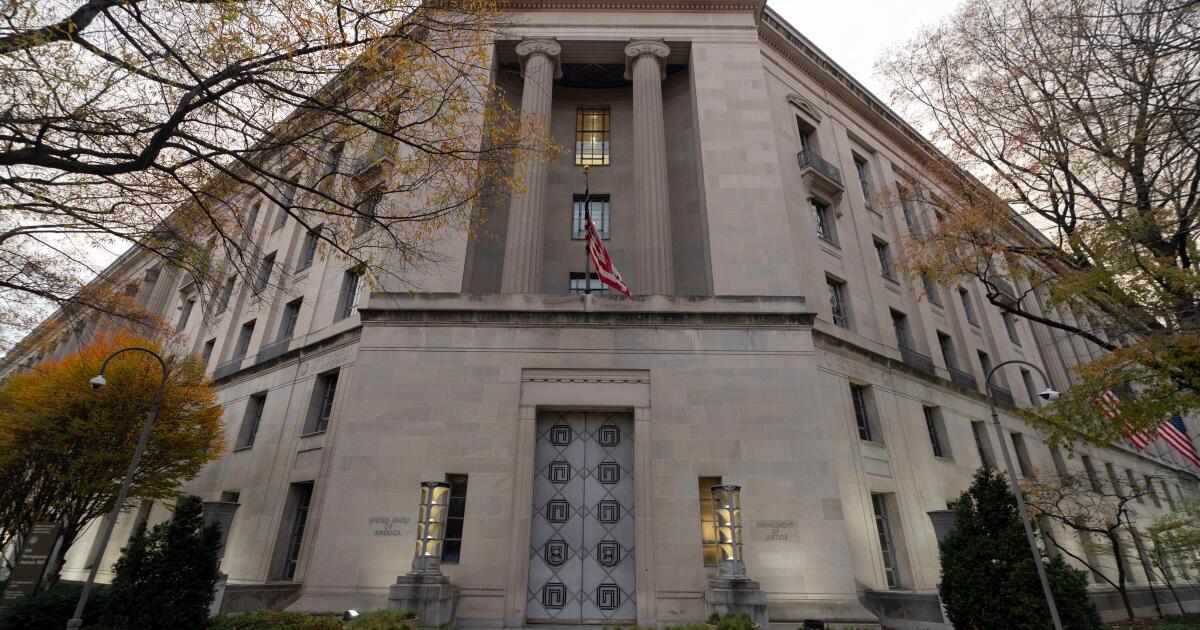
WASHINGTON — The Trump administration’s activation of a long-dormant court to seek an Afghan woman’s deportation violates her constitutional rights, a defense lawyer argued Thursday at a hearing for the first case to be heard in the obscure court since its creation 30 years ago.
Attorney Matthew Farley urged the chief judge of the Alien Terrorist Removal Court to dismiss the case against Nazira Haji Zada and immediately release his client. Judge Joan Ericksen denied Farley’s requests but said Zada’s lawyers can renew them as the case proceeds in the nation’s capital.
“This entire scheme is in violation of due process and unconstitutional,” said Farley, an assistant federal public defender.
The court, established in 1996, had never received a petition until this month, when the Justice Department filed an application seeking Zada’s removal. The court has a specific authority to conduct deportation proceedings for individuals whom the Department of Justice classifies as “alien terrorists.”
FBI agents arrested her Tuesday at her Fort Worth home. She is not charged with any crimes.
An FBI memo dated July 15 said it “developed information” that she is an Islamic State supporter who had her children pledge their loyalty to the terrorist group. The memo says she “supported” a plot by relatives to carry out an ISIS-inspired attack in the United States.
Court filings identify her as the mother and mother-in-law of two Afghan men who were convicted in Oklahoma for their roles in the 2024 election day plot. Her son, Abdullah Haji Zada, was sentenced in November to 15 years in prison and court records show he previously agreed to be removed from the U.S. after his release.
Kunzelman and Tucker write for the Associated Press.
World number two Jeeno Thitikul leads the first round of the AIG Women’s Open by two shots after hitting a spectacular seven-under 64 at Royal Lytham & St Anne’s.
More than 1,500 migrants have reached Spain’s North African enclave of Ceuta by sea over the past week, many swimming from Morocco using wetsuits and inflatables. Local authorities say reception centres are overwhelmed and have called for an emergency response.
Climate change has helped southern Europe’s likelihood of wildfires double since 1981, say researchers.
Published On 30 Jul 202630 Jul 2026
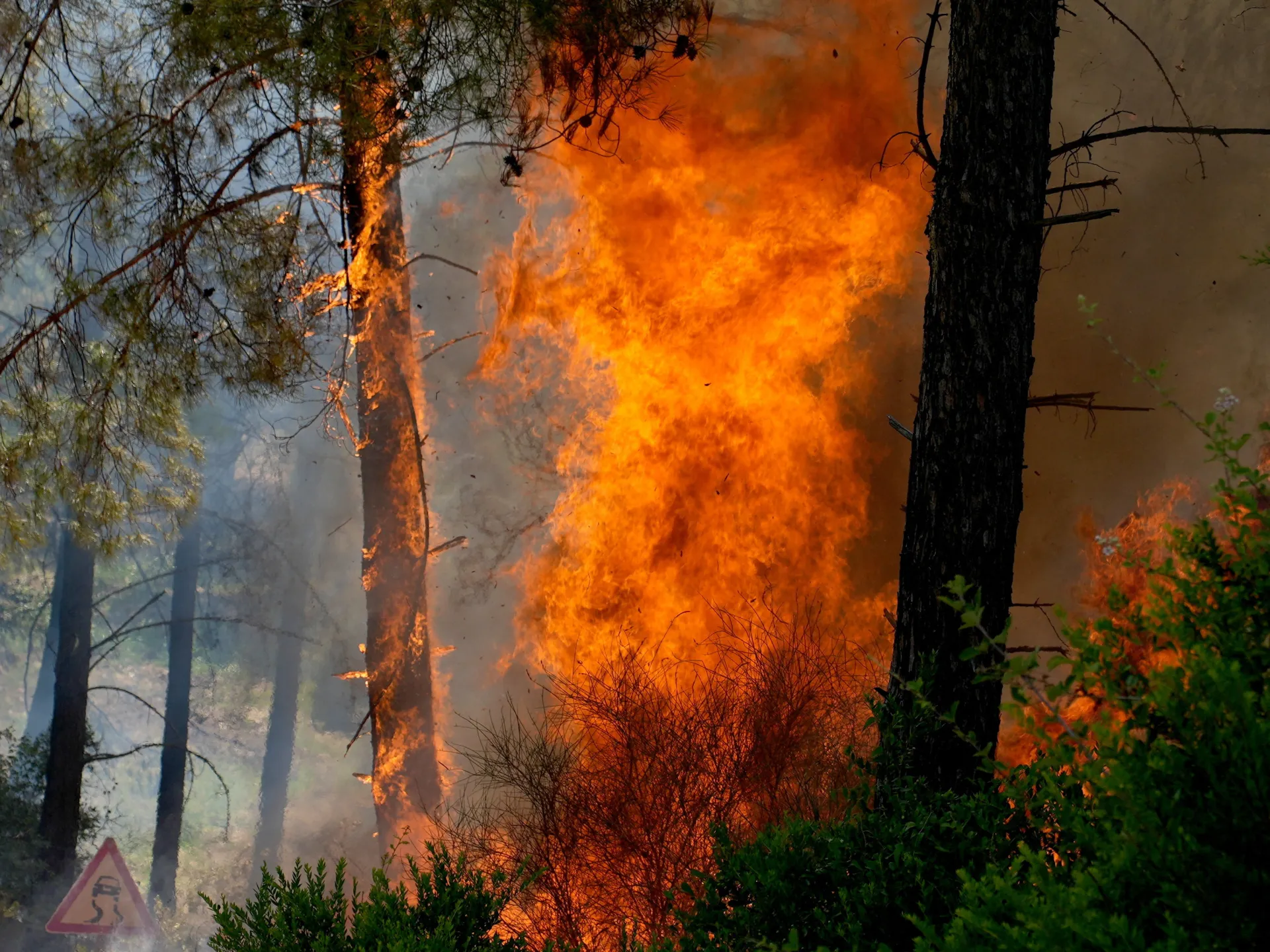
Southern Europe is “becoming more flammable,” with the number of summer days featuring conditions likely to produce fires having more than doubled since 1981, according to a new report.
The study, published on Thursday in the Scientific Reports journal, said that this “major intensification” of fire-prone weather is driven by climate change. It noted that these effects are especially pronounced in France and Spain, which have been battling some of their largest blazes since records began in recent weeks.
The steep increase in the frequency of fire weather – characterised by searing temperatures, low humidity, dryness, and strong winds – “can only be attributed to global warming,” said study co-author Raul Cordero.
European countries are enduring an above-average season for wildfires, and have already overtaken 2025, which was a record-breaking year for destructive blazes.
Cooling weather and rain helped to calm the worst of the fires in France and Spain on Thursday.
France told 84,000 evacuees in the southwest of the country that it was now safe to go home, as France’s largest wildfire since 1949 pulled back.
Spain ended its state of national emergency as wildfires threatening areas near Madrid – the largest Spain has experienced since records began in 1961 – began to come under control.
However, as high temperatures moved eastwards, fires were being fought in Greece, Turkiye, and the United Kingdom.
In Greece, two firefighters died on the island of Crete on Wednesday, the fire department said, as several fires started around the country, fanned by gale-force winds. Another died in a separate fire in the Peloponnese region as the blazes continued into Thursday.
“We have difficult days ahead of us,” Greek Prime Minister Kyriakos Mitsotakis said.
Firefighters in Turkiye have been battling at least 115 fires across the country, although at least 110 were under control, according to the country’s agriculture minister.
An enormous wildfire has forced evacuations and prompted road closures in eastern England. The fire at Dunwich Heath, a significant biodiversity site, is one of the largest the region has seen.
Educating Yorkshire is set to return to Channel 4 for a brand new series, with Headteacher Matthew Burton and the students of Thornhill Community Academy back on screens once again.
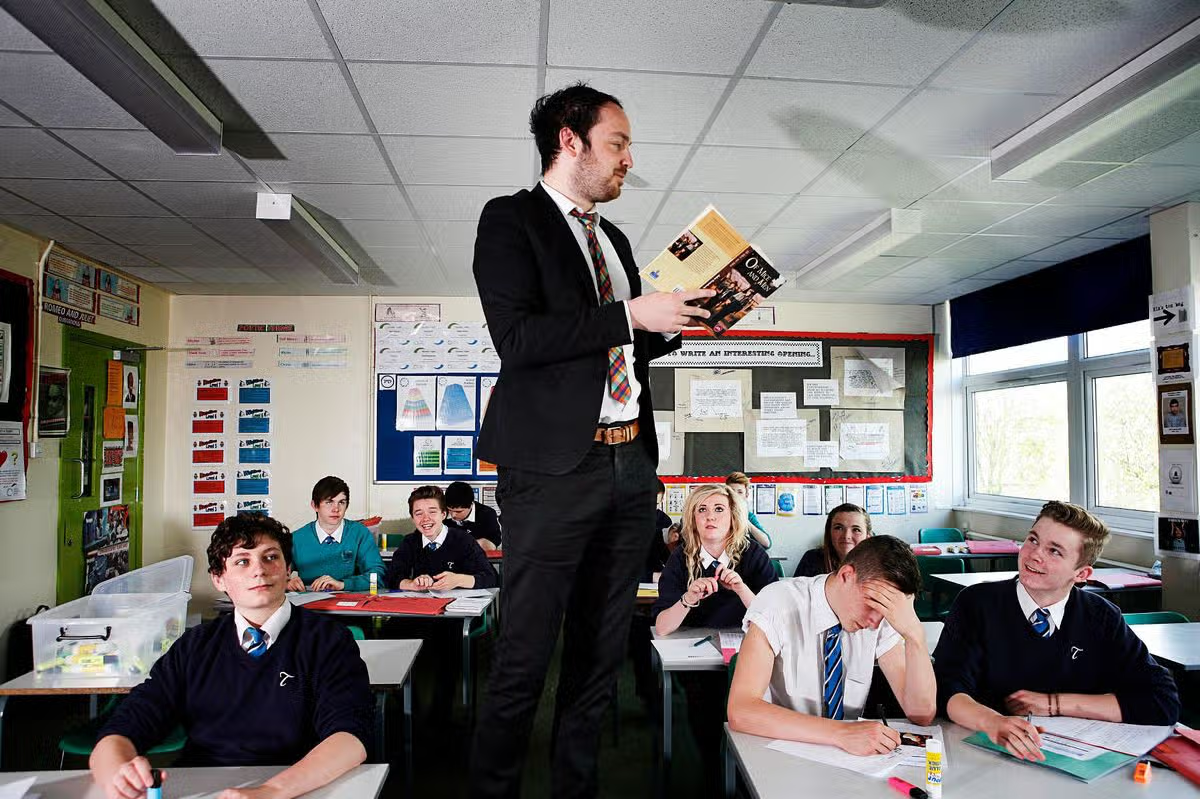
Mr Burton teaching students in Educating Yorkshire in 2013(Image: Channel 4/PA)
Channel 4 has confirmed that one of British television’s most celebrated documentary series is making its return.
Educating Yorkshire has been given the green light for a brand new run, and fans will be thrilled.
More than a decade on from its debut, the Channel 4 show that captured the hearts of the nation is heading back to Thornhill Community Academy in Dewsbury, West Yorkshire, where cameras will once again follow the staff and pupils navigating the highs and lows of school life.
Burton, who remains at the helm of Thornhill, will be front and centre once again in the new series.
After more than a decade off air, the show staged a remarkable comeback in 2025, earning a BAFTA nomination and pulling in a staggering 8.7 million viewers across linear and streaming platforms.
People were quick to praise the show’s comeback at the time, with one person commenting: “This is brilliant!!”
Another added: “Im so over the moon this is back absolutely brilliant. Ive watched Mr Burton and Mushy episodes over again . Its been too long – welcome back . No doubt there will be lots of laughs and tears – love it love it love it.”
Someone else wrote: “I can not wait for the new series of Educating Yorkshire.” While another commented: “Omggggg is he back!?!? That teacher is the reason I want to teach in the first place.”
Channel 4 revealed that the programme attracted 8.7 million viewers across linear and streaming platforms, proving a particular hit with younger audiences and securing a 28% share of 16-34s.
The show has clearly left a lasting impression, with three in ten viewers aged between 16 and 34 saying Educating Yorkshire had inspired them to consider pursuing a career in education or youth work.
Grace Reynolds, Exec Producer, commented: “The extraordinary teachers and staff help the students navigate some of the most important years of their lives.
“While headlines often focus on the challenges facing teenagers today, our experience making the series tells a different story. Spend time in Thornhill and you’ll find resilience, compassion, ambition and optimism. If it reminds us of anything, it’s that the future is in remarkably good hands.”
No broadcast date has yet been confirmed for the new series.
Educating Yorkshire is available to watch on Channel 4.
I am not someone who regularly goes out on a weekday.
But when I heard just how ideal the viewing conditions will be for the upcoming Perseid meteor shower, I texted multiple friends, inviting them on a late-night adventure into the woods. That’s exactly my kind of party.
The Perseid meteor shower, which can produce up to 100 meteors an hour in its most active period, is expected to peak from the evening of Aug. 12 into the early morning of Aug. 13. Last year during the shower’s peak, the moon was 84% full.
That’s part of what makes this year special. The night sky will be at its darkest during the Perseids peak because we’ll have the new moon, the lunar phase when our moon’s illuminated side faces the sun.
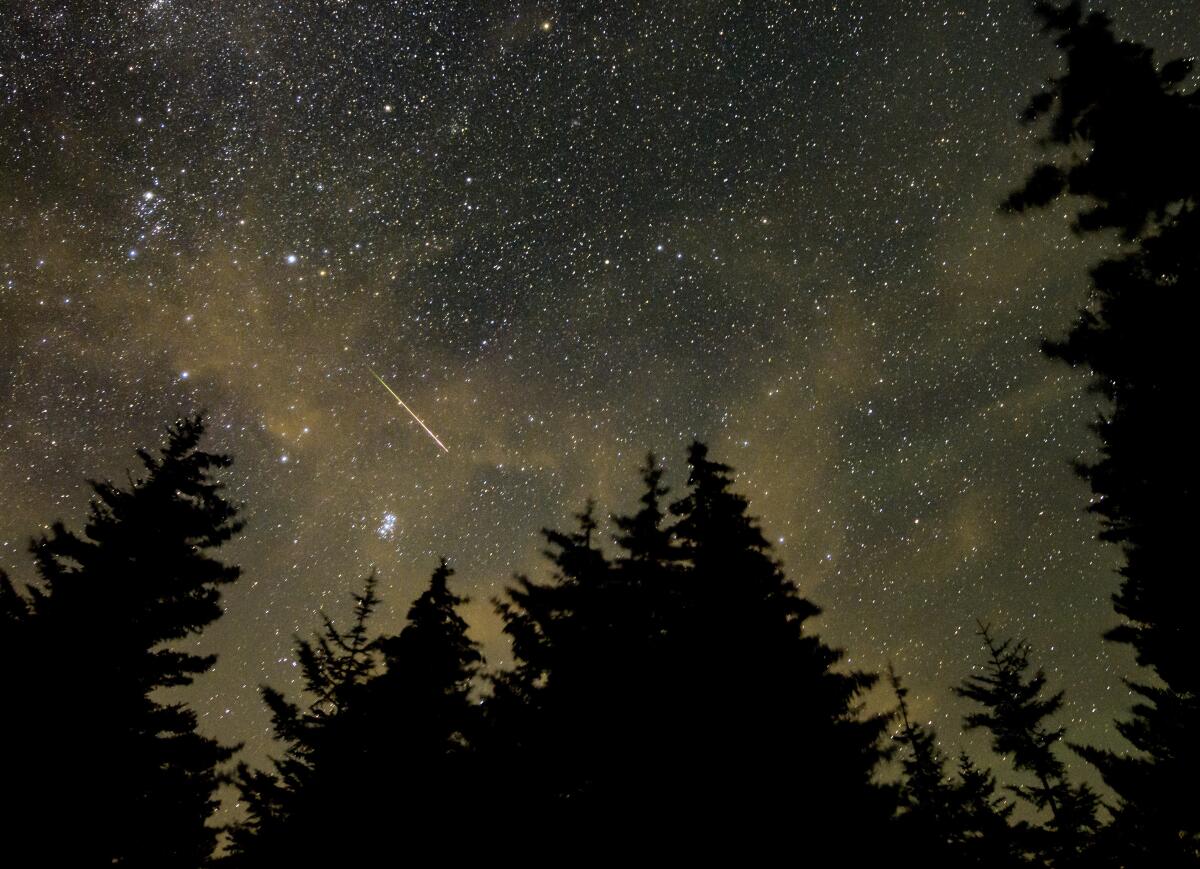
In this 30-second camera exposure, a meteor streaks across the sky during the annual Perseid meteor shower in West Virginia in 2021.
(Bill Ingalls / Associated Press)
In this edition of The Wild, our weekly outdoors newsletter, I will explain not only where near L.A. you can drive, hike or camp for the best viewing of this meteor shower, but also, thanks to a conversation with an astrophotography expert, how you can get better photos regardless of whether you’re using your cellphone or dedicated camera.
You are reading The Wild newsletter
Sign up to get expert tips on the best of Southern California’s beaches, trails, parks, deserts, forests and mountains in your inbox every Thursday
By continuing, you agree to our Terms of Service, which include arbitration and a class action waiver. You agree that we and our third-party vendors may collect and use your information, including through cookies, pixels and similar technologies, for the purposes set forth in our Privacy Policy such as personalizing your experience and ads.
First, though, let’s talk about what exactly a meteor shower is and why they occur.
🌑 Tips for viewing the Perseid meteor shower 🌃
I spoke to Bruce Betts, chief scientist at the Pasadena-based Planetary Society, a member-financed group focused on advancing space science.
Betts explained that Earth gets hit every night by an estimated 100 tons of material, equivalent to about 13 Randy’s Donuts signs blasting into the planet (which is a fun visual). This means there are meteors every night, around 10 an hour in a place with no light pollution.
A meteor shower occurs when Earth is moving through a debris field left by a comet. But nothing hitting Earth is thankfully as large as a 25-foot-high fiberglass doughnut.
“It’s mostly small-sized stuff — sand-sized, pebble-sized, dust-sized,” Betts said. “It’s going to burn up hundreds of thousands of feet up in the atmosphere. When you see it fizzle out, it’s way up there typically.”
I cannot be the only person who, learning this information, felt surprised that tiny specks of space dust can produce such dazzling experiences for us earthlings. But these particles are moving incredibly fast — tens of thousands of miles per hour — and as they move through our atmosphere, they’re heating up and vaporizing.
In the case of the Perseid meteor shower, you’re watching debris left behind by the comet Swift-Tuttle as it neared perihelion, its closest approach to the sun.
Earth orbits through that debris field every August. The Perseid meteor shower is named as such because as you’re watching, it appears as if the meteors are emanating from a point in the constellation of Perseus called the radiant point.
Meteors streak across the sky, seen above the Temple of Zeus during the Perseid meteor shower near Cavdarhisar, Turkey, in 2025.
(Emrah Gurel / Associated Press)
🌃 Getting the best Perseid-viewing experience 💫
To see the most meteors during the Perseids, you have to get to a point where you’re looking through less atmosphere, which around L.A. includes smog, smoke, clouds and, of course, light.
“The real problem is light pollution,” Betts said. “And that is, lights on the surface that are then reflecting off particles and stuff, a technical term, in the atmosphere. If you can get above that stuff, you start seeing better.”
Betts compared it to being in a bright room where there’s a dim light on. You won’t notice the dim light until you turn the rest of the lights off, and suddenly, that dim light is the brightest thing in the room.
During the Perseids peak, you don’t have to escape the light pollution of L.A. to see meteors. From outside your home, you will probably still see the largest blasts of light between 9 and 11 p.m. This is best for anyone who must be at their workplace at 8 a.m. for a meeting that could have been an email.
For the rest of us, let’s dive into where the best spots near L.A. are.
The 2023 Perseid meteor shower, as seen from Sequoia National Forest.
(Preston Dyches / NASA)
🏔️ Where to view the Perseids near L.A. 🌠
Below you’ll find my recommendations for spots that should provide good opportunities for viewing the Perseids. Please take good care when driving mountain or unfamiliar roads, and make sure someone outside your party knows where you’re headed and when you’ll be back. A meteor shower is still viewable when stranded with a flat tire, but far less fun!
Mt. Wilson Observatory: Located about an hour northeast of downtown L.A. in the San Gabriel Mountains, the observatory has a large paved parking lot at about 5,650 feet elevation that features nice views of the surrounding area. The only caveat is that the main gate usually closes at 5 p.m. in the summer, so you’ll need to park inside before then.
The Vetter Mountain Lookout: The lookout, at about 5,900 feet elevation, is reachable via a 5-mile round-trip hike and offers stunning panoramic views of the San Gabriel Mountains. The trailhead is about an hour drive northeast of downtown.
Chilao Campground: Also about an hour drive from downtown, this large first-come, first-served campground sits at 5,300 feet and offers great views of the night sky. Nearby Mt. Hillyer, which can be reached via a 6.4-mile round-trip hike from near the Chilao Visitor Center, could also be a nice spot to observe the meteor shower.
Crystal Lake Recreation Area and Campground: Crystal Lake is a 120-site first-come, first-served campground north of Azusa (about 1½- to two-hour drive northeast from downtown). At 5,539-feet elevation, it’s a great spot to camp and take in the shooting stars.
Mt. Pacifico Campground: This is a rustic 10-site campground that sits at 7,100-feet elevation and is deep in the San Gabriel Mountains. It’s about a 1½-hour drive from downtown L.A. and involves taking narrow mountain roads. High-clearance vehicles are required to make the final mile into the campground.
Musch Trail Camp: Musch Trail Camp is a small but charming campground in the Santa Monica Mountains. Located in Topanga State Park, it has picnic tables and a small restroom with flush toilets and sinks. It’s around a 45-minute drive mostly west from downtown.
Leo Carrillo State Park: Along with its hiking trails and campground, the park in Malibu features 1.5 miles of beach, where you can watch the sunset before the sky darkens enough to see the meteor shower.
Red Rock Canyon State Park: A two-hour drive from downtown L.A., this park has colorful desert cliffs and a 50-site campground with great views of the night sky.
McGill Campground/Chula Vista Walk-In Campground: A two-hour drive from L.A., either of these campgrounds in Los Padres National Forest will provide you with a memorable experience, as the area is known for its stargazing. McGill is mostly by reservation while Chula Vista is a walk-in spot with first-come, first-served sites. If not prepared to camp, you can also watch nearby from the Mt. Pinos parking lot, but it’ll likely be quite crowded during the Perseids, as it is the closest darkest spot to L.A.
Or, you could try a spot where you can safely and legally drive and/or hike into that you recall being fairly dark at night. There are online tools that can help you find your own spot, including light pollution maps.
Regardless of where you go, please remember to practice the Leave No Trace principles, including packing out any trash you bring, not taking anything from the forest that you didn’t bring and not playing loud music, as it not only bothers hikers but also the animals who live in our natural areas.
A Perseid meteor appears at the top left of the frame in this 25-second exposure, as seen from White Tank Campground in Joshua Tree National Park in 2024.
(Raul Roa / Los Angeles Times)
📸 How to photograph the Perseid meteor shower 🤩
Many of us have tried and failed to take photos of the night sky. I spoke to accomplished astrophotographer Jeremy Evans, a delegate for Dark Sky International who affirmed that it’s no easy task to capture the beauty of celestial bodies.
“Carl Sagan said astronomy can be a humbling and character-building experience because it is a little overwhelming to look up at that vastness of the sky and either explore it, photograph it [or] study it, [regardless of] whether through a telescope, camera or naked eye,” Evans said.
Here’s what Evans, who has photographed the Perseids for the past 20 years, recommends (after you’ve found the darkest area possible to view the shower).
1. Point your camera to the southwest
Perseus, the constellation that the upcoming meteor shower is named after, will rise in the northeast between 9 and 10 p.m., depending on your latitude.
Photographing a meteor shower can feel like a game of Whac-A-Mole, Evans said. Instead of trying to chase meteors across the sky all night, set your camera to face the southwest for the Perseids.
“Most of the [Perseids] meteors, based on my experience, fly from northeast to southwest, so I like to have my camera pointing toward the southwest, and catch those meteors flying overhead and into my frame,” Evans said. “The good thing about that is, when they start burning up and giving you that trail of ionized gases, they’re usually flying over the southwest at that point. You can point your camera to the northeast, but you might not get the fire balls and the tails.”
2. Adjust your camera’s settings
If using a dedicated camera (as opposed to a phone camera), turn off image stabilization. Otherwise, you might be plagued with blurry images all night.
Choose a wide lens. Evans generally recommends using a wide lens with a focal length between 14 and 24 mm. “You can use a fish eye,” Evans said. “However, a fish eye will show most of the night sky, but then the meteors are going to appear a lot smaller.”
Determine your shutter speed. Some astrophotographers use the “500 rule,” an equation that helps them figure out the ideal shutter speed. It’s essentially dividing your camera lens’ focal length into 500 to get your shutter speed. For Evans, that’s often 500 divided by 24, which he rounds down to equal a 20-second exposure. (If your shutter speed is too slow, the stars can come out blurry)
Turn off the flash.
Turn off your camera’s auto focus. You will need to manually adjust your lens, as your camera most likely won’t be able to automatically focus on the starry sky. (More on that below.)
Turn on shutter delay. If you don’t have an external remote, turn on the setting that allows for a multi-second delay after you press the button. This allows your camera to stabilize after you press the shutter. Wiggling camera = bad pics.
3. Set up your tripod.
Evans said a tripod is arguably your most important piece of equipment, and it’s worth investing in if you’re wanting to regularly practice astrophotography. Cheap tripods are often flimsy and can fall over and wiggle from a light breeze.
That said, I’ve taken good images of the stars by propping my DSLR up using soup cans on a metal bear box while out camping. I’ve also used boulders, including during a recent trip to capture the aurora. Really, whatever you’re using just needs to be as solid and unmoving as your least favorite relative’s political beliefs.
4. Use this trick to focus your camera.
Evans recommends pointing your camera at a bright object at least a quarter mile away, like a street light or other fixed object. You could also use a bright star or, if setting up early enough, Venus. Regardless, use this distant object to manually focus your lens.
If your DSLR has a “Live View” option, you can magnify the bright object using that feature, making it even easier to focus on the object. When you zoom back out, the object should be a fine point of light.
“And then be careful not to bump your lens,” Evans said.
5. Pack enough battery power.
Evans recommends bringing at least two batteries for your DSLR if you don’t own an external power source for your camera.
If your battery is more than 2 years old, it’s likely lost a significant amount of its capacity, Evans said. In that case, you’ll want to ideally pack a third battery, depending on how long you plan to stay out.
“When you’re taking a series of photographs in the day, you’re using a shutter speed of 1/500 of a second on average, and then when you go from 1/500 of a second to keeping that shutter open for 20 seconds, you’re using a lot more power,” Evans said, meaning a battery that usually lasts for several days might only provide enough battery to shoot night photography for, at most, a few hours.
🌠🌑🌃
Betts and Evans told me that they hope that people going out to view the Perseids results in more people not only enjoying the night sky but also wanting to protect it, namely from light pollution. I hope so too.
And I hope wherever you go, you witness the beauty of shooting stars burning in the night sky. It’ll be arguably the most fun you can have on a Wednesday night in August.
3 things to do
A great blue heron.
(Lois A. Sheppard)
1. Wander the wetlands in Seal Beach The Los Cerritos Wetlands Land Trust will host a guided nature walk from 8 to 10 a.m. Saturday in Seal Beach. Guests will learn about the Los Cerritos Wetlands, looking for herons and other birds who frequent the area. Close-toed shoes are required. Register at eventbrite.com.
2. Care for oaks near Calabasas The Resource Conservation District of the Santa Monica Mountains needs volunteers from 9 a.m. to noon Saturday in Topanga State Park to tend to fire-damaged oak trees. Participants will water, weed and mulch oak trees, and plant acorns to replace trees that have died. Attendees should wear durable shoes and bring drinking water. Register at eventbrite.com.
3. Cycle along Slauson in South L.A. T.R.U.S.T. South LA, People for Mobility Justice and Metro will host a community bike ride along the Slauson rail-to-rail bike path from 6 to 9 p.m. Tuesday. The group will meet in front of Augustus F. Hawkins Nature Park. At registration, guests can request a voucher for a Metro bike if unable to bring their own. Register at docs.google.com.
The must-read
Jackie, an internet-famous bald eagle, sits on an egg in her nest shared with partner Shadow in Big Bear.
(Friends of Big Bear Valley)
As of Monday, Jackie, the beloved Big Bear eagle, appears to be improving. In mid-July, Jackie was rescued by L.A. County’s San Dimas Raptor Rescue team and transported to Ojai Raptor Center for emergency care. Fans of Jackie, one half of the avian power couple whom thousands of people regularly view via live webcams near their nest, have since anxiously waited for news. “She is eating on her own, her energy and alertness have noticeably improved, and she has become much more feisty during feedings,” the Ojai Raptor Center posted on social media.
Happy adventuring,
P.S.
Cool new feature alert! Times digital subscribers can now save trails highlighted in our hiking guides directly to their profiles on latimes.com. This allows subscribers to create their own curated lists of not only hiking trails but also restaurants, music venues and more. For example, you could save whale-watching sites, trails and beaches you wanted to check out, and then use the map function to see which spots are close to each other. And if you’re feeling especially spunky, you could throw some restaurants into the mix. I am personally excited to play around with this new feature because the No. 1 thing I like to do after a hike is eat, and our food writers are always finding great spots. Have fun out there!
For more insider tips on Southern California’s beaches, trails and parks, check out past editions of The Wild. And to view this newsletter in your browser, click here.
WASHINGTON — With three months remaining until election day, there is now little the Trump administration can do to bring relief to Americans battered by years of stagnant wages and steep inflation before they hit the polls, experts say — complicating midterm campaigning for Republicans and sharpening the opportunity for Democrats to win back some control in Washington.
That’s in part because the Trump administration has very few levers to turn the tide in such a short period, and has shown little interest in using those it does have, experts said. Rather, President Trump has persisted in waging war in Iran and pushed forward with new tariffs on trade partners despite both contributing to soaring costs for food, gas and other basic necessities.
Other options, such as issuing rebate checks for consumers or releasing strategic oil reserves, would be costly in the long run, experts said.
“There isn’t much available on a 14-week clock that doesn’t cost more later than it delivers now,” said Patrick Harker, professor at the University of Pennsylvania Wharton School and former president of the Federal Reserve Bank of Philadelphia.
The Federal Reserve on Wednesday also declined to use its primary tool for reducing inflation — increasing interest rates — by instead holding rates steady. Trump had not supported a rate increase, instead pressuring the central bank to lower rates, which can lower borrowing costs but increase inflation.
Some factors driving up costs are virtually impossible to resolve in the near term, such as damage to oil refining capabilities in the Middle East as a result of the war in Iran. Others are already baked into pricing to come as a result of tariffs and fuel costs, including for groceries, experts said.
Incumbent parties often suffer midterm losses when voters are broadly pessimistic about the economy, as they are now despite remarkable resilience in the U.S. labor market and strong stock returns.
Consumer prices declined in June for the first time in six years, largely thanks to a decline in gas prices as the Iran war appeared headed toward a resolution — which is no longer the case.
New data Thursday showed the U.S. economy growing at a sluggish 1.5% pace from April through June. It also showed consumer spending and inflation slowing down. But slowing inflation has not meant lower costs.
As the Iran war entered its sixth month this week, average gas prices nationally climbed back above $4 a gallon. On Wednesday, the price of Brent crude oil rose to $90 a barrel as the U.S. and Iran carried out new strikes.
The White House did not respond to a request for comment. However, Trump asserted Wednesday that the economy is strong — citing in part new U.S. automobile plants as evidence — while slamming the Federal Reserve’s decision to leave interest rates unchanged.
“They want to keep rates up, but we will fight through this,” Trump told reporters at an Oval Office event. “We have things that are going on in our country in the likes of which no one has ever seen.”
As Democrats have seized on the economy as the midterms’ defining issue, Trump has promised improvements but also called affordability concerns a “hoax.” Last week, he rejected the notion that he should rethink his unpopular Iran strategy because of the looming midterms.
“No, the election — I can’t think about that having to do with this,” he said before renewing attacks last week. “I think people are very impressed.”
Jonathan Nagler, a New York University professor who studies how the economy shapes politics, said it is impossible to predict how voters will feel about the economy three months from now, because there are so many variables.
But data make clear that “the better the economy is, the better the incumbent does,” and voters will blame Trump and his party for their economic woes if they persist, Nagler said — particularly with gas prices, which are “a non-trivial expense” that is “super directly tied to Trump.”
“Democrats can draw a very straight line from a decision by Trump to go to war with Iran, and gas prices rising. That is just very, very easy to explain to people in a pretty convincing way,” Nagler said. “Democrats can try to say, ‘Hey, there should be some accountability here.’”
Diane Swonk, chief economist at KPMG, said inflation has compounded for years “to make the level of prices too high for too many,” and is clearly the biggest economic issue facing many Americans.
“And that’s not likely to change in the next few months, where you still not only have some of the spillover effects of the war in Iran to play out — most notably in terms of the fall harvest and food prices, which will go well into 2027 — but also just the on-again, off-again truces and the damages to refining capacities,” she said.
All of that is adding to “simmering” service sector inflation and Trump’s latest tariffs, which mean “more paperwork, more costs, and another bump in prices in the pipeline,” Swonk said.
Harker said the administration has no good options for bringing down prices by November. Reducing tariffs takes time to filter down to shelf prices, so that can’t offer a quick fix even if Trump were to decide to cut them, he said.
The biggest variable between now and November is energy, Harker said, and no economic tool allows the administration to control what happens in the Persian Gulf. Even if Trump’s war with Iran were to end, economists say it would take a significant amount of time for gas prices to come down.
The Fed could decide to raise rates in September, but Harker said that would take time to filter through the economy and would do “nothing” ahead of November.
On the campaign trail, Trump promised to immediately “reverse the disastrous effects of [President] Biden’s inflation and rebuild the greatest economy in the history of the world,” one where “incomes will skyrocket, inflation will vanish completely, jobs will come roaring back, and the middle class will prosper like never, ever before.”
A recent CNN poll found that 65% of Americans believe Trump’s policies have worsened economic conditions in the country, while less than a quarter — 22% — said they had improved conditions, and that 67% believe Trump’s choices in Iran hurt the U.S.
The poll found Trump had a 34% approval rating, matching a career low from the end of his first term, and that his support fell even lower on key issues: to 28% on Iran, 25% on inflation and 21% on gas prices.
A recent Pew Research Center survey found most Americans aren’t feeling great about the economy — with 24% rating economic conditions as excellent or good, 41% rating them as “only fair,” and 35% rating them as poor. It also found that voters want candidates running for Congress in November to talk about economic issues.
Democrats see the poll numbers as an opportunity to win over swing voters, which becomes more urgent as the campaign enters its fall stretch.
House Democratic Leader Hakeem Jeffries (D-N.Y.) last week placed blame for rising costs squarely on Trump‘s tariffs, his “reckless war of choice” in Iran, and cuts to healthcare made in last year’s federal spending package.
Vidhya Jeyadev, a spokesperson for Majority Democrats, which is focused on growing the party, said Democrats now have an opportunity to bring in Republican voters disillusioned with the president’s handling of the economy.
“We need to tie what people are feeling day to day — rising rent, groceries, utility costs — directly to the choices that Trump and Republicans have made,” Jeyadev said.
Many Republican leaders have acknowledged economic challenges while defending Trump’s policy decisions.
They have broadly backed the war in Iran as a necessary step to halt Iran’s nuclear ambitions. House Speaker Mike Johnson (R-La.) recently defended Trump’s tariffs, too, acknowledging some sectors have experienced “challenges” as a result, but saying “all that’s settling out as we go into this election cycle.”
Swonk said some economic indicators do show a surprisingly strong economy that benefits the rich.
However, “there’s a reason people are upset, and that’s because inflation, much like stock returns, has compounded — but not everybody has stock returns. Everybody feels inflation. And that drives a larger wedge between the haves and the have-nots,” she said.
“What anyone really cares about is the prices that went up didn’t come back down, and their wages didn’t keep up with it,” Swonk said. “It doesn’t feel like you can do as many things as you once did. And that’s hard.”
Billy Ray Smith Jr. became embedded in the San Diego sports community as an exceptional linebacker who lived up to his billing as a first-round draft pick and played all of his 126 NFL games with the Chargers from 1983 to 1992, long before the franchise moved to Los Angeles.
Despite being Texas-raised and Arkansas-educated, Smith Jr. became synonymous with San Diego by spending the rest of his life in the sunny SoCal city as a sportscaster, radio host and big-hearted, larger-than-life personality.
Smith Jr. died Wednesday at age 64, his family saying in a statement that he “faced his long journey with dementia caused by CTE with unmatched bravery, dignity, and strength.”
“It is with profound sadness that we share the loss of our beloved Billy Ray Smith Jr., who passed away peacefully surrounded by family,” the statement said. “Billy Ray brought so much joy, light, and laughter to the world as a devoted father, husband, son, and loyal friend.”
Chronic traumatic encephalopathy (CTE) is a progressive brain disease characterized by mood disturbances and cognitive decline. It is linked to repeated head impacts and traumatic brain injuries, and has been found posthumously in numerous athletes in contact sports.
According to the Mayo Clinic, CTE cannot be diagnosed definitively during life. However, clinical criteria has been developed for traumatic encephalopathy syndrome (TES), symptoms that occur together and are associated with CTE.
A diagnosis of CTE requires evidence of degeneration of brain tissue that can only be seen during an autopsy. Through 2022, the Boston University CTE Center studied the brains of 376 former NFL players and diagnosed 345 with CTE, a rate of 91.7%.
The list of former NFL players diagnosed with CTE includes another legendary Chargers linebacker, Junior Seau, who died in 2012 of a self-inflicted gunshot wound at 43. Smith played alongside Seau from 1990-1992.
Their friendship endured after Smith Jr. retired and moved into broadcasting. He was a speaker at Seau’s public memorial service.
Smith Jr. was born Aug. 10, 1961, in Fayetteville, Ark., the son of longtime NFL defensive lineman Billy Ray Smith, and grew up in Plano, Texas. The year he was born, his father registered a career-high 13.5 sacks for the Baltimore Colts.
Smith Jr. followed his father’s footsteps to the University of Arkansas, and was twice named a unanimous All-American and voted into the College Football Hall of Fame. The Chargers drafted Smith Jr. with the fifth overall pick in 1983.
He moved from defensive end to linebacker in San Diego and by 1987 was named the team’s most valuable player. Smith Jr. finished his career with 26.5 sacks, 15 interceptions and 14 fumble recoveries.
He soon moved behind a microphone, teaming with Scott Kaplan on a popular radio show on the Mighty 1090, a station that went off the air in 2019.
“He loved being part of San Diego,” Kaplan told the San Diego Union-Tribune. “Yeah, he was the fifth overall pick and he played 10 years and, yeah, was the face of the defense before he handed it off to Junior Seau. But he was the guy who never left San Diego.
“He was loved because people knew Billy Ray. It wasn’t like other star athletes; they knew him because they had seen his whole life, from the time he was in his early 20s, play out on local television. And he never left.”
Smith Jr. worked on TV as a sportscaster and sports director for KGTV while also making appearances on Fox Sports and local Chargers broadcasts.
He met his wife, broadcaster Kimberly Hunt, during a United Cerebral Palsy telethon while still a Chargers player. They married in 1990, had a daughter, Savannah, two years later and celebrated their 36th anniversary in June. Hunt, an Emmy Award winner, is currently in her 18th year as the KGTV news evening anchor.
“Through decades of volunteer service and charitable leadership, Billy Ray has generously supported youth programs, veterans, healthcare initiatives, and numerous nonprofit organizations, helping strengthen the fabric of the San Diego community,” the San Diego Nice Guys said earlier this year.
“Together, Kimberly Hunt and Billy Ray Smith represent the very best of San Diego —individuals whose professional excellence is matched only by their kindness, humility, and dedication to improving the lives of others.”
Smith Jr. came to San Diego as a fearsome linebacker who made two Pro Bowls, yet he transcended football through his infectious personality and devotion to his adopted city.
“He had that big smile, that huge laugh, that rip-your-arm-off handshake,” Kaplan said. “B.R. did everything right. There was not one part of him that was a lie, a secret, not one skeleton in the closet. He really, really lived a life that he could be very proud of.”
Citizen vigilantes patrol Ghana’s streets, fighting an opioid crisis. We meet those taking the law into their own hands.
Ghana is facing an opioid addiction crisis, with a flood of cheap, synthetic drugs destroying lives and communities. In the northern city of Tamale, a group of civilians, frustrated by what they see as the inaction of local authorities, are taking the law into their own hands. The ‘anti-drug task force’ patrols the streets, seeking out dealers and users and meting out its own brand of justice. Some government officials condemn the vigilantes, while others embrace them as a useful tool in the fight against illegal drugs. As word spreads about the success of Tamale’s task force, some question whether civilians can properly replace state services – and warn about the dangers of vigilante justice.
The tightening restrictions have forced the Cuban government to effectively ration care.
In February, Havana announced a package of emergency energy-saving measures. Among them was the suspension of all non-essential medical services across the island.
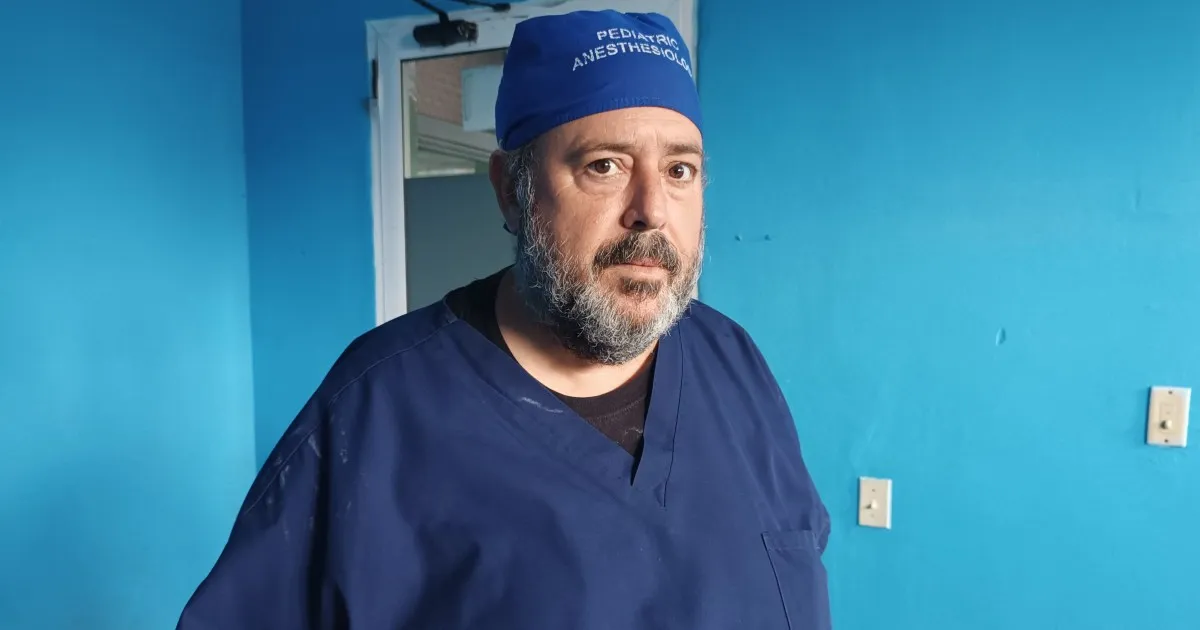
But non-essential does not mean unimportant. Fernandez, the paediatric anaesthesiologist, explained that preventive healthcare plays a major role in saving lives.
Under normal conditions, he said, preventive healthcare helps doctors catch potentially fatal conditions like appendicitis sooner.
But in recent months, Fernandez has observed patients arriving at his hospital in a “worsened” condition than they might otherwise have had.
“All the appendicitis cases we treat now present complications,” he said. “They demand more resources and antibiotics – supplies we don’t have.”
Deaths in Cuba have also escalated as years of increasing restrictions take effect.
Just last month, the Cuban Ministry of Public Health (MINSAP) reported that survival rates for childhood cancer dropped from 85 percent to 65 percent amid the oil blockade.
Infant mortality has also steadily climbed. In 2017, at the start of Trump’s first term, Cuba had an infant mortality rate of four for every 1,000 live births. That figure climbed to 7.7 in 2024, just before Trump’s second term, and reached 9.9 in 2025.
The maternal mortality rate similarly rose to 44.1 deaths for every 100,000 live births by the end of 2025, up from 40.6 the previous year.
Lilian Delgado, an obstetrician and gynaecologist at Cuba’s main maternity hospital, explained that the escalating humanitarian crisis has triggered a sharp rise in premature births and severe morbidity among pregnant women.
“Conditions are far from ideal at all the levels of the system,” Delgado noted. “There are shortages everywhere.”
The decision to prioritise emergency care can be deceptive. A wide range of medical procedures are considered “elective”. But just because they do not rise to the level of an emergency does not mean they are optional.
Typically, in Cuba, emergency surgeries are those that need to be urgently completed within 48 hours. Other necessary surgeries often fall into the “elective” category.
Mastectomies – a common breast cancer treatment – are among the surgeries often categorised as elective. So too are some organ transplants.
Healthcare advocates point out that, if certain elective surgeries are postponed too long, they too can result in deadly conditions.
More than 100,000 Cubans are currently on waiting lists for elective or reconstructive surgeries, a backlog MINSAP credited to the US sanctions.
Among those waiting are 5,152 cancer patients and approximately 12,000 children. Delgado said some of her patients have been languishing on such lists for months.
“Our surgical services are severely hampered by a lack of supplies,” she explained. “We have more women suffering from serious complications, and our operating rooms have become tied up with emergency cases, making it impossible to perform elective surgeries.”
Hospitals in Cuba largely have backup generators to weather the increasingly frequent power outages. But accessing even emergency medical care is tough when the fuel blockade is affecting basic services like transportation.
“Ultimately, if you have a cancer patient and cannot operate due to a number of factors – such as a nationwide blackout forcing the suspension of surgeries – then, whether you intend to or not, you are directly condemning that patient to death,” Delgado said.
The oil embargo has cost “human lives, both directly and indirectly”, she added.
KATIE Price has revealed son Harvey is getting his first tattoo aged 24 – leaving sister Sophie horrified.
The former glamour model, 48, was discussing her plans for more ink during the latest episode of her podcast when she told how her eldest son has been asking for his own tattoo.
Sophie was horrified by Katie’s decision to allow Harvey to get a tattooCredit: Katie Price./YouTube/BackgridHarvey lives with ADHD, autism, genetic condition Prader-Willi Syndrome, and septo-optic dysplasia, which causes blindnessCredit: WireImage
Speaking on The Katie Price Show, she said: “Harvey keeps asking… he wants a little frog done [on his hand]. A tiny little frog.”
Sophie, 36, made her feelings on the subject instantly clear, saying: “No. Don’t let Harv have a tattoo.”
Sign up for the Showbiz newsletter
Thank you!
Mum-of-five Katie replied: “But he really wants one.”
Shaking her head, Sophie said: “No. Don’t do that to him, Kate.”
After a pause, Katie explained how she and children Junior, 21, and Princess, 19 – who she shares with ex-husband Peter Andre – were planning to also have frogs, famously Harvey’s favourite animal, inked on them.
Harvey lives with ADHD, autism, genetic condition Prader-Willi Syndrome, and septo-optic dysplasia, which causes blindness.
Defending her decision to allow Harvey to have the tattoo, Katie said: “He is 24, he is a man. I know he’s got complex needs.
“Harvey knows what a tattoo is because he sees them on me and has seen me get them done.
“Where do we stand on this? Because if he wants it, why can’t he?”
Sophie argued: “But Harv’s mental age isn’t 24, is it? It’s a lot younger. So I would think of it in that respect. He can’t make a decision without you or someone else there.”
Katie confessed that she is struggling with where to draw the line when it comes to Harvey’s capability to make certain decisions.
She said: “This is a good conversation. If it was him signing a form, then no.”
Katie then explained how Harvey is very aware of his popularity on social media, where he has 348,000 followers, and revealed he asks for his artwork to be posted on the platform for his fans.
Clearly wanting to allow Harvey to live as normal a life as possible, Katie also shared plans to take him to Ibiza after he expressed a desire to go to a nightclub.
WASHINGTON — The American Dream may not be dead for many Black Americans, but it is further away than at any point since the Civil Rights Movement, warns a report by the National Urban League.
Released on Thursday, the annual “State of Black America” report grimly describes Black Americans ‘ economic and political prospects as having worsened due to policy changes from President Trump’s administration, according to a copy obtained by the Associated Press.
The report contends that the challenges it highlights for Black communities are warning signs for the prosperity of all Americans.
“It may be the focus is us, but the impact is not just us,” said Marc Morial, president and CEO of the National Urban League. “While they have targeted and focused on Black Americans, these attacks are going to impact broadly working Americans, poor Americans, aspirational middle-class Americans, and this is what this report points to.”
Tracing the arc of American history, the Urban League describes Black Americans’ struggle for emancipation from slavery and equal economic and political rights as a gruesome but optimistic part of the American story.
Now, the report says, the Trump administration is at odds with the goals and achievements of the Civil Rights Movement, citing the overhaul of the Justice Department’s Civil Rights Division and the Equal Employment Opportunity Commission, as well as the president’s focus on overhauling voting laws through the Safeguard American Voter Eligibility Act, as examples of rollbacks of long-sought civil rights policies.
The report’s authors offer policy and strategy recommendations for civil rights groups aiming to combat the Trump administration.
“The civil rights community must consolidate its legal resistance and turn courtroom wins into durable policy,” the report says. “The movement must build economic infrastructure that doesn’t depend on the goodwill of any one administration.”
The AP reached out to the White House for comment on the report.
Report contributors include a potential Democratic presidential contender
This year’s report includes contributions from members of Congress, and policy and legal experts, as well as some media personalities.
U.S. Senators Angela Alsobrooks, Lisa Blunt Rochester and Raphael Warnock all contributed to the report, as well as Maryland Gov. Wes Moore and Baltimore Mayor Brandon Scott. Minneapolis Mayor Jacob Frey contributed a video message to the report.
Moore, who is widely viewed as a potential 2028 presidential contender, submitted an essay focused on closing the racial wealth gap and Black Americans’ history of economic advancement in the face of adversity.
“With wisdom and grit, my mom was able to lift me and my family to a higher rung on the economic ladder. But too often wisdom and grit aren’t enough,” Moore wrote.
He later called closing the racial wealth gap “a matter of moral clarity” but cautioned that “government alone cannot close the racial wealth gap. It’s going to take all of us,” referencing the private sector and civil society.
Report blasts ‘economic assault’ on Black Americans
Whether corporate America and major nonprofits are still willing to participate is an open question. The report condemns the Trump administration’s efforts to roll back diversity initiatives and economic advancement projects in the private sector, and expresses frustration with companies that cooperated with an “economic assault” on Americans, especially Black Americans.
“This has been a campaign of coercion and oppression directed at these institutions who have been out here working hard to, if you will, change America,” Morial said. “The important thing about companies is that every company has not bent the knee. Some may have done some cosmetic changes. Some have been in full and complete retreat.”
The DEI rollbacks are a jarring reversal for the Urban League, which held sway in the Biden White House on economic and social policies. The report lauds President Biden’s administration for signing a sweeping COVID-19 stimulus package, as well as laws supporting minority small businesses and a bipartisan infrastructure bill.
“Not every promise was kept, and the current administration is pushing to roll our wins back, but these wins serve as a blueprint for what is possible through sustained advocacy and a clear vision,” the authors write. The agenda, the Urban League declares, was “the most consequential federal investments in Black America since the Great Society.”
The organization and its civil rights allies now find themselves in a strikingly different political environment under the Trump administration.
“Looking at our current political landscape, the calls for racial healing and righting of this nation’s wrongs in the aftermath of the murder of George Floyd feel like a fever dream,” the report reads.
But the study also acknowledges that Black Americans have overcome more dire and discriminatory moments.
Latest Black America report is the Urban League’s 50th edition
The Urban League’s inaugural 1976 report on the state of Black America was described by the New York Times at the time as “a profoundly depressing document” that laid out the persistent disparities between the economic outlooks of Black and white Americans, a decade after the Civil Rights Movement’s crowning achievements were signed into law.
The report was established as a response to that year’s State of the Union address by President Ford and the Democratic response, neither of which mentioned the economic outlooks for Black Americans. The report offered policy recommendations on crime, education, housing, social services and general economic policy.
“It is a document that does not attempt to cover up the seriousness of the situation black people find themselves in,” the authors wrote at the time. Several of its recommendations were later taken up by President Carter, who was elected to the White House months after the report’s release.
This year’s 50th anniversary document echoes the frustration found in the inaugural report. While Morial acknowledged that the Urban League’s assessments may lead to pessimism, he urged Americans concerned about civil rights and economic progress to respond at the ballot box and with their pocketbooks.
“We cannot be dejected. We cannot be cynical. We must act,” Morial said. “We have to fight to make sure that those that are really trying to kill the essence of the American dream don’t win.”
Hearts’ players were on the brink of history and immortality. It was nine minutes away.
Four decades of Old Firm dominance was that close to toppling. The season-long league leaders were drawing with holders Celtic in Glasgow as the game crept into the 87th minute.
It looked like they were just about to hold until Daizen Maeda struck to trigger bedlam in Paradise.
Ugly scenes followed Celtic’s third deep into injury time as Hearts headed straight for the team bus, eventually reemerging outside Tynecastle with tears spilling from their faces.
Since then, the backbone of that team has been deconstructed. Boss Derek McInnes has departed for Tynecastle, taking with him captain and talisman Lawrence Shankland, as well as midfield controller Cammy Devlin.
Wouter Vrancken has arrived from Sint-Truiden and the Belgian has suffered a tumultuous start.
A 6-0 hiding from Sturm Graz sent Hearts tumbling out of Champions League qualifying, with the Tynecastle support looking at the club’s analytical approach to signings to somehow hoist them back to the lofty heights they hit last term.
“Hearts just look as if it’s just a new squad flung in together, with the manager too, trying to find their way,” said former striker Ryan Stevenson.
“You don’t get time in football, it’s game after game after game.
“If you don’t get results, we all know what Tynecastle is like. It can be electric, but can they deal with the stadium turning? Are they big enough characters to deal with that?
“If they don’t play well, I would give it to mid-September, and it would not be nice.”
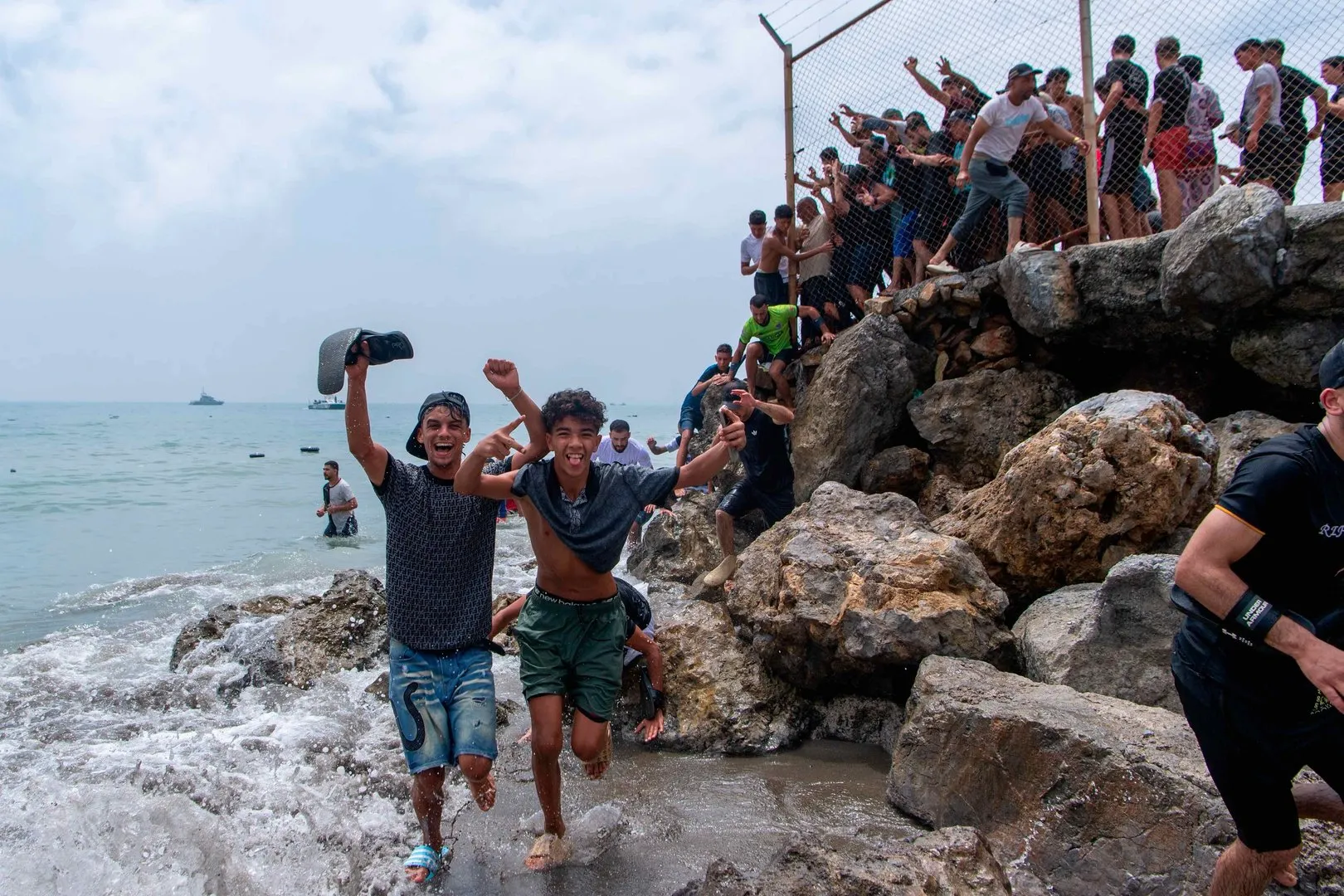
Estimates of up to 2,000 migrants have entered Spain’s territory of Ceuta in recent days in attempts to reach Europe.
Published On 30 Jul 202630 Jul 2026
Authorities in Ceuta have raised the alarm after thousands of migrants breached the border to the North African Spanish enclave from neighbouring Morocco in recent days.
The government of Ceuta said on Thursday that between 1,500 and 2,000 people had entered in the last 10 days. Hundreds more were estimated to have arrived on Thursday, prompting regional President Jesus Vivas to declare an “absolute humanitarian and social emergency” and call on Madrid to send troops to reassert control of the border.
Recommended Stories
list of 4 itemsend of list
Spain’s Interior Ministry rejected calls to declare a national emergency, saying such a measure does not cover migration crises, but promised additional resources.
Footage showed some of the migrants shouting “Viva Espana!” as they entered the territory, many of them having travelled by water from the Moroccan side on inflatable devices.
Crowds were shown walking around the breakwaters onto local roads, reported The Associated Press news agency. State news agency EFE said others had crossed by the border by land, scaling fences.
Migrant rights activist Zakaria Zarroqui told the Reuters news agency that the surge in migrant numbers was similar to one that occurred in May 2021, when some 10,000 Moroccan and sub-Saharan youths entered the enclave within days.
“The situation remains out of control as we speak,” Zarroqui said, adding that people were still flocking to the Moroccan city of Fnideq in an attempt to cross the border.
Ceuta, together with Melilla — another autonomous Spanish city in North Africa — represents the European Union’s only land border with Africa. Both cities often experience surges in attempted crossings by people seeking to migrate to Europe.
Earlier this month, Spain’s Supreme Court ruled that migrants intercepted at sea while attempting to reach Ceuta or Melilla cannot be returned to Morocco.
“It has been a slow trickle since the Supreme Court’s ruling, but today has been an explosion,” a Guardia Civil spokesperson told Reuters.
Spain’s Interior Ministry said it was working closely with Morocco to address the surge in irregular arrivals, blaming people-smuggling networks for exploiting the Supreme Court’s ruling and encouraging undocumented migration.
Interior Minister Fernando Grande-Marlaska is expected to visit Ceuta on Friday to evaluate the situation.
GDP grew by 1.5 percent in the second quarter following a 2.1 percent increase in first quarter.
Published On 30 Jul 202630 Jul 2026
Economic growth in the United States slowed in the second quarter amid a growing trade deficit and tensions between the US and Iran which weighed on global fuel prices.
The US Gross Domestic Product (GDP), a measure of goods and services, grew by 1.5 percent between April and June, marking a slowdown from 2.1 percent growth in the first quarter of 2026, according to the Commerce Department’s Bureau of Economic Analysis report released on Thursday.
Recommended Stories
list of 4 itemsend of list
Consumer spending saw a bump of 3.2 percent for the quarter, both on the back of generous tax refunds from US President Donald Trump’s ‘One Big Beautiful Bill Act’ as well as heightened petrol prices that cost consumers.
Fuel prices are on the upswing after a brief reprieve. The average price for a gallon of petrol (3.78 litres) is $4.09, up from $3.84 this time last month, according to the American Automobile Association (AAA), which tracks daily petrol prices. By comparison, the average price was $2.98 when the US and Israel first struck Iran on February 28 .
Analysts also point to the artificial intelligence spending boom as a reason for the surge, even as those are heavily import reliant and contributing to trade deficits.
“Overall, the economy continues to rely on technology investment,” Rachel Ziemba, adjunct senior fellow at the Center for a New American Security, told Al Jazeera.
That will likely continue into third-quarter reports, which will take into account the month of July. On Monday, it was reported that Nvidia is in talks to make a $250m investment in OpenAI.
However, there are concerns about how long such investments will last amid questions over circular financing propping up the sector.
“Data centres continue to drive investment and economic growth, increasing the sector’s role in the economy while raising questions about its sustainability,” Ziemba said.
Meanwhile, the Personal Consumption Expenditure Price (PCE) Index report, one of the US Federal Reserve’s key metrics for gauging the rate of inflation, increased 3.7 percent on an annual basis for the month of June after a 4.1 percent surge in May.
The slowdown was marked by a brief retreat in petrol prices last month before they climbed higher again over the past month.
“Today’s report is a snapshot of an economy under a ceasefire that no longer exists. Even with last month’s temporary inflation relief, prices are still elevated and families are saving less as they try to keep up,” Alex Jacquez, a member of the National Economic Council under former US President Joe Biden, said in a note provided to Al Jazeera.
US markets are on the upswing in midday trading, largely driven by an increase in Microsoft stock amid better-than-expected sales and growth in cloud services. Markets have also risen following the PCE and GDP reports.
The tech-heavy Nasdaq is up 2.6 percent, with the S&P 500 following at 1.2 percent and the Dow Jones Industrial Average up 0.5 percent.
Gold prices, which are typically considered a safe investment during economic uncertainty, extended their gains by 1.9 percent to $4,108.30 per ounce after rising 2 percent on Wednesday.
Ted Lasso star Annette Badland played villain Babe Smith in EastEnders for three years, and her portrayal was so convincing that the BBC received serious death threats on her behalf
Annette Badland in EastEnders as Aunt Babe(Image: BBC)
BBC bosses issued a rare “red alert” safety warning to former EastEnders actress Annette Badland after a crazed fan sent death threats that were deemed credible by security experts.
The individual behind the chilling threats was never definitively identified, Annette said. Speaking on Sally Lindsay’s podcast, Annette explained on Sally Lindsay’s podcast: “Because I was leaving, they racked up my villainy and I actually got thrown out of, literally, thrown out of the pub by Danny and cursed them.
“But I had death threats. I got the call from the BBC security saying, ‘We’re getting death threats. There are red alert code words in this, so we have to take it seriously’.”
She was warned that she should only leave her house if it was absolutely necessary, and that if she did go out, she shouldn’t tell anyone where she was going.
Annette says she was effectively under house arrest throughout the six-week investigation: “They eventually traced it to just outside Liverpool. It was in a school, but they didn’t think it was a child. But because it was a public computer they didn’t feel they could get much further.”
Despite that harrowing conclusion to her EastEnders tenure, Annette says she cherished her time on the BBC soap. She holds particularly warm memories of Danny Dyer, whom she describes as “bright, kind-hearted…and daft.”
She recalled Danny’s extraordinary generosity, revealing he taught her to “say the C-word,” which proved tremendously useful when she moved on to Ted Lasso and was handed a script riddled with crude language. She joked: “I said to myself, ‘I’ve worked with Danny Dyer, I can do this’.”
Ironically, however, that “very funny” scene ended up on the cutting-room floor and has never been seen by the public.
It was an unscripted moment, early in her EastEnders stint, that made the show’s writers recognise that in Babe Smith, they had the foundations of a truly iconic villain: “I had a scene with Tim [Timothy West, who played Stan Carter on the show] and he was watching the television.
“I’d been in love with him when I was young and he’d married my sister and I didn’t like that – that was the cause of all my pain and anguish.
“It wasn’t scripted,” Annette added, “but I picked up the remote control and turned the television off. I told him what I thought, put the telly back on, and left. And I think they thought, ‘Ooh, she can be nasty’.”
What followed was three years packed with drama, reaching its peak when Babe was locked inside a freezer and left for dead by an unknown attacker, who was ultimately unmasked as Lorna Fitzgerald’s Abi Branning.
In a dramatic farewell, Babe was caught red-handed stealing from the Queen Vic’s safe, but it was her savage outburst at Linda [Kellie Bright] – branding her a “stuck-up cow” – that saw Mick Carter finally remove her from the pub, and banish her from Walford for good.
WHEN it comes to coastal destinations, you might not have heard of Cooden Beach.
But with interest rising, it might be a spot that could soon take your fancy – not to mention it has a beachside terrace, hotel and nearby adventure play park.
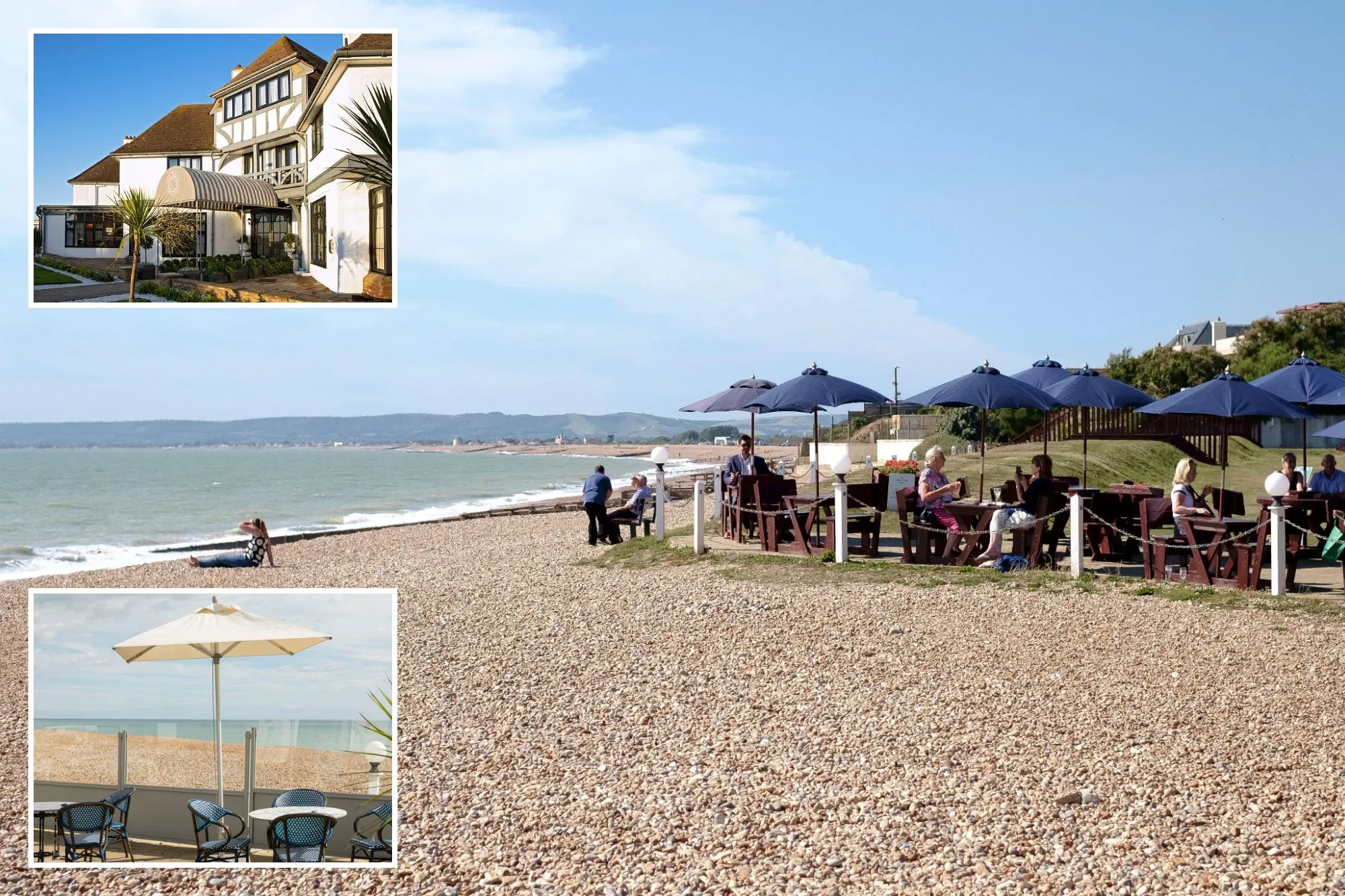
The Relais Cooden Beach & Spa is right next to Cooden BeachCredit: TripadvisorIts suntrap terrace looks out across the beachCredit: Ace Media
Google search data shows searches for Cooden Beach have jumped by 120 per cent in the past month.
Not to mention that other searches like “Cooden Beach hotel menu” and “Cooden Beach hotel restaurant” have risen by more than 5,000 per cent.
Sign up for the Travel newsletter
Thank you!
Cooden Beach in East Sussex is a simple spot in that it has no loud amusement parks to speak of, or arcades.
It’s ideal for anyone looking for a simple beach break rather than a resort.
The pebble beach is half-an-hour drive away from Eastbourne – but is much quieter, especially in the summer months.
One gem of the seaside town is the boutique coastal hotel that opened almost 100 years ago.
Saying that, it’s very modern with one of the most popular spots being its Seaview Terrace which on the beach with views across the shingle shore.
One visitor said “on a sunny day it looks and feels like the Med!”
Another called it “East Sussex’s best kept secret”.
Along with its beachfront terrace, it has bedrooms with sea views and a modern wellbeing thermal spa with heated loungers, rooms for treatments and a gym.
Tables and sun umbrellas from the Cooden Beach Hotel sit on the shore beachCredit: Alamy
There’s even a hot tub that looks out over the sea and beach-facing sauna.
Cosy Double rooms start from £110 per night and Family Rooms start from £190 per night.
The beach is on the outskirts of Bexhill-on-Sea which is known as the birthplace of British motor racing as it hosted the first automobile races in the country.
It also has a long seafront promenade and a huge De La Warr Pavilion where there are often art exhibitions and events.
For anyone heading to the seaside for a summer break, there’s also a nearby adventure park – and you get 10 per cent off if you stay with the hotel.
Called Knockhatch Adventure Park – it’s a play paradise for kids with jumping pillows, a pirate ship ride, huge water slides, a splash park and boating lake.
Knockhatch has a huge adventure playground with a castleCredit: KNOCKHATCHThere are water slides and an indoor soft play centre tooCredit: Facebook/Knockhatch Adventure Park
There are animal encounters in the owl sanctuary and a huge Dragon Castle playground to explore.
Inside there’s the Froggies soft play centre which is a multi-level play area with slides, ball-pools, a spider tower and tunnels.
The play park has lots of top reviews – one visitor wrote on Google: “Fantastic day out. So much to do we couldn’t fit it all in.”
Another said: “One of the best parks I have visited in a long while.”
Day tickets to Knockhatch Adventure Park start from £20.46.
You don’t have to book in advance but it’s advised to get a ticket before arrival to guarantee entry.
A POPULAR European city break destination is set to get a new airport within the next decade.
Plans are currently underway in Portugal to build a new airport near Lisbon, around 31 miles from the centre of the city.
Lisbon is set to get a new airportCredit: ANA Aeroportos de PortugalIt is set to cost £7.63billion and will host up to 56million passengers a yearCredit: ANA Aeroportos de Portugal
Estimated to cost €8.9billion (£7.63billion), Luís de Camões Airport would feature two runways, with the possibility of adding two more in the future.
There will be 120 aircraft parking spots, 64 gates and 76 bridges at the airport, allowing it to handle up to 56million passengers a year, rising to 85million by 2082.
Sign up for the Travel newsletter
Thank you!
Included in the plans is also a new high speed rail network, that would connect the airport to Lisbon in 26 minutes.
The new airport would replace Humberto Delgado Airport and is planned to open in 2037, but could be as early as 2034.
In a YouTube video showing what the new airport could look like, a spokesperson states: “From the moment you arrive at the terminal, every stage of the journey is designed to be simple, intuitive, and comfortable.
“Featuring smart, innovative solutions and technology that ensures a seamless experience with information always at hand.
“An airport that is more efficient, better connected, more intuitive, and distinctly Portuguese.”
Alongside the new airport, Portugal is investing €400million (£343million) in its existing airports including Porto, Faro and Funchal airports.
There will be two runways which could be increased to four in the futureCredit: ANA Aeroportos de PortugalOther airports across Portugal are also set for upgradesCredit: ANA Aeroportos de Portugal
At Funchal Airport, the terminal is due to be extended.
Then at Porto there will be 14 new aircraft positions and at Faro, there will be new boarding gates as well as an expanded check-in area.
Back in March, TravelSupermarket found that the Portuguese capital was home to the cheapest five-star European city holidays, costing under £310 per person.