Bamako, Mali – An unprecedented battlefield partnership between a separatist movement and an al-Qaeda affiliate has transformed the conflict in northern Mali, shifting the military balance and deepening divisions over how, if at all, the war can end.
When the Azawad Liberation Front (FLA) and Jama’at Nusrat al-Islam wal-Muslimin (JNIM) launched a joint offensive on April 25, 2026, the conflict entered a phase unlike any before.
A war that had long pitted the Malian state against multiple armed groups gave way to a coordinated campaign stretching from Kidal and Anefis to Tilemsi, Gao and Sevare, posing the most serious challenge to the Malian army in years and to Russia’s Africa Corps, the Kremlin-backed force that replaced the Wagner Group in Mali.
Since then, the fighting has been marked by simultaneous assaults, ambushes, drone strikes and attacks on military convoys, with all sides claiming significant battlefield gains.
Bamako says it is working to restore state authority and dismantle what it calls a “terrorist alliance” between the FLA and JNIM.
The FLA says it remains committed to independence for Azawad, the name separatists use for northern Mali, while JNIM portrays the war as part of a campaign to “liberate” Mali and overthrow the government, which it accuses of relying on Russian forces.
More significant than the offensive itself, however, is the unprecedented military cooperation between a nationalist separatist movement and an al-Qaeda affiliate.
Their political ambitions remain fundamentally different, yet their cooperation has already reshaped the conflict and could have far-reaching implications for security across the Sahel.
The partnership emerged after the collapse of the 2015 Algiers Peace Agreement, which sought to end years of fighting between Bamako and northern armed groups through greater decentralisation and political representation, but whose implementation repeatedly faltered.
Successive military coups after 2020 reshaped Mali’s political leadership and security strategy. The Economic Community of West African States (ECOWAS) suspended Mali and imposed sanctions, while Russia deepened its military role by deploying the Wagner Group in late 2021.
After Russia folded the Wagner Group’s operations into the state-controlled Africa Corps, renewed fighting left neither the government nor northern armed groups able to impose a lasting settlement.
How the alliance took shape
On paper, cooperation between the FLA and JNIM appears unlikely. The FLA traces its roots to northern separatist movements that declared the independence of Azawad during the 2012 rebellion, a claim never recognised by the Malian state or the international community.
Colonel Mohamed Issa, centre, one of the FLA’s most prominent military commanders [Photo: Courtesy of the Azawad Liberation Front (FLA)]
It presents itself as a secular nationalist movement seeking independence for Azawad, while JNIM seeks to overthrow governments it considers illegitimate and establish governance based on its interpretation of Islamic law.
Yet senior officials from both groups told Al Jazeera those ideological differences have been set aside to confront a common enemy.
Colonel Mohamed Issa, a senior FLA officer, said the movement remained committed to an independent Azawad, arguing that previous peace agreements repeatedly collapsed because successive governments in Bamako failed to honour them.
Negotiations, he said, would only be acceptable if they recognised Azawad’s right to separate.
Issa rejected suggestions of an ideological alliance, describing the relationship as a battlefield arrangement against a common enemy.
He said the JNIM-affiliated fighters operating alongside the FLA were exclusively Azawadis rather than members of the group’s wider regional network, arguing they were motivated primarily by defending their communities against the Malian army and what he described as Russian “mercenaries”.
Suleiman, a senior JNIM field commander who requested that only his first name be used for security reasons, described the relationship in broader terms.
He said the group approved operational coordination with the FLA after internal consultations because fighters on both sides largely came from “one people” caught up in the same conflict and because their liberation goals had become “relatively unified”.
He also claimed the FLA had accepted Islamic legal arbitration by local religious scholars, one of JNIM’s core objectives, a point the FLA itself did not raise. Bamako, meanwhile, has described the relationship as a “JNIM/FLA terrorist alliance” that threatens Mali’s sovereignty.
The differing accounts illustrate both the strength and the fragility of the arrangement. For now, shared battlefield interests appear to outweigh ideological differences. Whether that remains true as the conflict evolves is far less certain.
A shifting balance of power
The partnership has altered not only the battlefield but the way the war is fought.
FLA officials say working alongside JNIM has enabled both groups to divide responsibilities and pool expertise in attacks on military bases and supply convoys.
A destroyed vehicle at the site of recent fighting in northern Mali [Photo: Courtesy of the Azawad Liberation Front (FLA)]
Bamako disputes casualty figures released by the armed groups and insists its forces retain the initiative. Even so, the conflict has become markedly more sophisticated, with simultaneous attacks across distant locations, engagements lasting several days and ambushes targeting reinforcements before they reach the front lines.
Drones have assumed an increasingly prominent role, serving not only as reconnaissance platforms but increasingly as strike weapons against vehicles and military positions. Malian forces, backed by Russia’s Africa Corps, continue to rely heavily on air power, yet months of sustained fighting suggest neither side has secured a decisive advantage.
The war economy
Long-established financing and trafficking networks continue to sustain both sides.
JNIM sources describe a funding model built on regional commercial networks, organised zakat collections and resources accumulated over years, including proceeds linked to earlier al-Qaeda kidnapping-for-ransom operations.
The FLA says it relies primarily on donations organised by tribal leaders, traders and community associations.
Officials from both groups also acknowledged that individuals linked to the movements participate in illicit economies, including trafficking across the Sahara, although the extent to which those activities finance the war remains difficult to verify.
Weapons have proved as important as funding. Arms have flowed across the Sahel since the collapse of Libya in 2011, providing armed groups with a steady source of equipment.
The latest fighting has opened another supply channel: weapons and military vehicles captured from Malian forces now form an increasingly important part of both groups’ arsenals.
Can either side win?
There is little to suggest the conflict is nearing an end.
The Malian army retains a clear advantage in air power, backed by Russia’s Africa Corps. Yet the FLA and JNIM continue to mount coordinated operations across much of northern Mali.
An armed man carries a weapon in a desert area of northern Mali, where government forces and armed groups have been fighting for control of territory [Photo: Courtesy of the Azawad Liberation Front (FLA)]
The military standoff reflects a wider political deadlock. Bamako remains committed to preserving Mali’s territorial integrity, the FLA insists on independence for Azawad and JNIM continues to seek the overthrow of the government.
None has shifted position since the latest fighting began, and nothing on the battlefield has yet forced any of them to do so.
Those competing objectives also cast doubt on how long the two groups can continue fighting together. Their partnership rests on a common enemy rather than a shared political vision, making its future uncertain.
A war without an endgame
Three months into the latest offensive, northern Mali remains locked in a conflict with no obvious end in sight. The partnership between the FLA and JNIM has reshaped the military landscape, while Bamako continues to reject any outcome that could weaken Mali’s territorial integrity.
What began as a confrontation between the state and separate armed movements has evolved into a conflict shaped by competing visions of sovereignty, separatism, rule by al-Qaeda-linked armed groups and the involvement of external powers.
Unless those competing ambitions – territorial unity, independence and regime change – are addressed alongside the fighting, a negotiated settlement is likely to remain elusive.
Whatever happens next, the partnership forged in April 2026 has already changed the course of the war in northern Mali. Whether it endures or fractures under the weight of its competing ambitions, it has created a new military and political reality whose consequences are likely to extend well beyond Mali’s borders.
Kyiv says Russian strikes killed six, including a child at a supermarket, as Moscow says Ukrainian strikes killed four.
Published On 27 Jul 202627 Jul 2026
Russian forces have killed at least six people in Ukraine, according to officials, after launching ballistic missile attacks on the capital, Kyiv, and strikes on other regions, including a supermarket in the northern city of Chernihiv.
The attacks on Sunday came as Russian officials said that Moscow-occupied areas of Ukraine had also come under fire, with four people killed in a Ukrainian drone strike on the occupied city of Horlivka.
Recommended Stories
list of 3 itemsend of list
Ukraine’s air force said Russia had launched seven ballistic missiles and 136 drones at Ukraine overnight. Kyiv, Chernihiv, Zaporizhzhia and Kharkiv cities were all hit.
In northern Chernihiv, officials said a Russian drone hit a supermarket, killing two people, including a nine-year-old girl, and wounding 25 others.
Ukrainian President Volodymyr Zelenskyy described the attack as a “deeply cynical drone strike on an ordinary supermarket”.
In the eastern city of Kharkiv, one person was killed and 16 others required medical attention after a daytime drone attack, the local mayor said.
“This is deliberate Russian terror with absolutely no military justification,” Zelenskyy said.
Separately, Regional Governor Ivan Fedorov said a glide bomb attack killed one person and wounded six in the southern city of Zaporizhzhia, which has been under heavy bombardment in recent months.
In Kyiv, Mayor Vitali Klitschko said one blaze had broken out on the seventh and eighth floors of a multistorey apartment block in a central district after the overnight missile attack. Three people were wounded in the capital, and images released by the state emergency services showed vehicles in flames.
In Sloviansk, one of several targets of Russia’s slow advance through eastern Ukraine’s Donetsk region, the national oil and gas company Naftogaz said two of its employees died in a Russian attack while trying to help residents affected by an earlier strike.
In Horlivka, a city in the Russian-occupied part of the Donetsk region, Russian-installed Mayor Ivan Prikhodko said four civilians had been killed in a Ukrainian drone strike. Prikhodko later said a Ukrainian drone hit an emergency vehicle, injuring three medics and another resident.
At least 12 people, including two children, were also hurt in a Ukrainian drone attack on Belgorod, a Russian city close to the Ukrainian border, Russian authorities reported.
The attacks came a day after Moscow said a Ukrainian strike on a Russian-occupied town on the Azov Sea killed 12 people.
Both Moscow and Kyiv deny targeting civilians in the war that started with Russia’s full-scale invasion of its neighbour in February 2022. But civilian casualty rates have climbed sharply in 2026 in both Russia and Ukraine, according to the United Nations.
Analysts say this is because of the growing use of short-range drones, glide bombs, and intensified strikes on infrastructure in both Russia and Ukraine.
UN officials say 1,396 civilians have been killed and 7,978 wounded in Ukraine in the first six months of 2026. In Russia, 250 civilians have been killed and 1,596 injured.
United States-led talks on ending fighting have stalled. The Kremlin occupies swaths of eastern and southern Ukraine and has repeatedly said it intends to seize the rest of eastern Ukraine by force.
Emmerdale viewers were quick to react when Gabby Thomas collapsed on Sunday night’s episode, signalling the start of yet another issue-based plot on the ITV soap
Gabby Thomas collapsed on Sunday night’s episode of Emmerdale
Gabby Thomas collapsed on Sunday night’s episode of Emmerdale, prompting the start of another issue-based storyline on the ITV soap.
The waitress, who has been played by Rosie Bentham since 2016, has become obsessed with the quality of food and been seen to be anti-medicine in recent weeks.
On the latest episode of the Yorkshire-based serial, Gabby was listening to social media videos claiming that certain healthy foods were the opposite, a horrified Dawn found her collapsed on the floor. A visit to the doctor ruled out a pregnancy, and she also explained to Manpreet just how little she was eating.
Later on, she told Dawn had stopped taking the pill, claiming that most medicines were ” packed full of chemicals” that she believes are harmful to the human body, so Dawn raised the alarm with her partner Billy. When Gabby found this out, she raged at Dawn: “How dare you! Billy’s told me you were practically wetting yourself to tell him that I’m not on the pill any more.
“You just can’t handle the fact that you’re not the centre of his world any more,” but Dawn ignored the insult and told Gabby that she was just very worried about her. Still furious, Gabby took it upon herself to visit Dawn’s fiance Joe and claim that his partner “still has a thing” for Billy.
She told him: “She’s having secret meetings with Billy behind my back.Trying to stir the pot, get in between us. And I have to say to myself, why on earth would she want to do that? So I really think you should probably ask yourself the same question.”
All of this is part of a brand new issue-based storyline exploring the topic of orthorexia, an eating disorder which embeds itself when an individual which becomes fixated on the quality of the food they consume rather than the quantity.
Reacting to the new episode, fans flooded social media and appeared to be divided on the latest storyline. One fan wrote on Reddit: “Orthorexia is a serious illness and while I do support them raising awareness about it, they’re again not doing an issue-based plot justice.
“They’re again making the central character in the storyline (in this case Gabby) come off as too unlikable and unsympathetic just like Cain in the prostate cancer storyline. I can guarantee you viewers came out of today’s episode siding with Dawn and not feeling bad for Gabby. I certainly did.”
Another said: “Gabby has ‘Orthorexia’….nope Id never heard of it either,” and a third said: “I’m loving this feud again build up between gabby and dawn.”
A fourth wrote: “I take issue with issue based stories that make characters deeply unlikeable. I ended up being Team Dawn today.
“I think Thomas will be the one who ends up seriously sick either not taking medicine for a sickness or the food will give him deficiencies. I can’t stand Gabby in this, she is being written to be deeply unlikeable when the story should be more effective.”
If you’re worried about your health or the health of somebody else, you can contact SEED eating disorder support service on 01482 718130 or on their website, here.
Emmerdale airs weeknights at 8pm on ITV1 and ITVX.
SAN FRANCISCO — Mike Trout had his first four-hit game in more than five years, Jorge Soler and Jo Adell homered and the Angels beat the San Francisco Giants 4-3 on Sunday to snap a three-game skid and avoid a series sweep.
Angels starter José Soriano (9-6) allowed an unearned run in five innings. The 27-year-old right-hander gave up three hits, walked three and had five strikeouts. Mitch Farris got the final two outs for his first career save.
San Francisco, which had its four-game home win streak snapped, is the only team in MLB without a series sweep of three-plus games this season.
Trout’s first four-hit game since April 26, 2021, moved him past Tim Salmon on the Angels’ career doubles and singles lists. He went four for four with a double and three singles.
Trout’s double was his 340th, moving past Salmon for second on the franchise list behind Garret Anderson’s 489. Trout also is now fourth on the Angels’ all-time list with 1,014 singles, trailing Anderson (1,572), Darin Erstad (1,082) and Brian Downing (1,062).
Trout’s four-hit game was the 21st of his career and raised his average to .247.
Soler hit a leadoff homer, Nolan Schanuel walked and Adell’s 446-foot home run gave the Angels a 4-0 lead in the fourth inning.
Luis Arraez had an RBI groundout in the fifth and added a two-run double in the ninth for the Giants. Drew Cavanaugh went two for two and walked twice.
Carson Whisenhunt (2-1), who was recalled from triple-A Sacramento, gave up four runs and had seven strikeouts in five innings.
Up next for the Angels: RHP Walbert Ureña (6-7, 2.78 ERA) starts Tuesday in the opener of a three-game home series against Houston. The Astros have not named a starter.
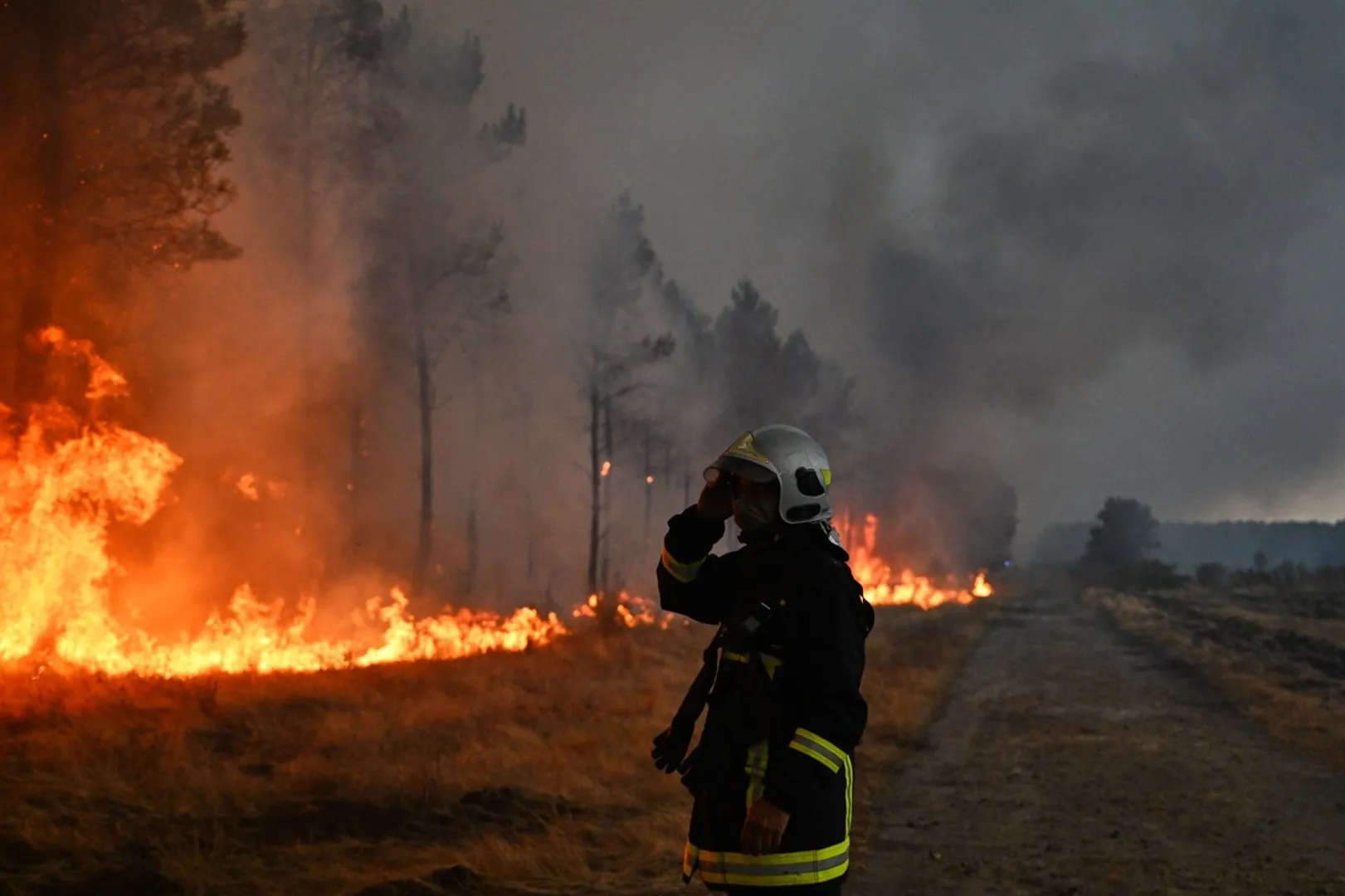
Wildfires in southwestern France are continuing to burn near the city of Bordeaux. Tens of thousands have been evacuated from surrounding regions, and across the southwest of France a total of around 220,000 have been evacuated.
Shein says it swung to a quarterly loss as its sales slowed after US President Donald Trump removed an import duty exemption on small packages.
It also comes as uncertainty remains over the tit-for-tat US-China tariffs wars, which is currently paused.
The fast-fashion giant, which has its headquarters in Singapore but was founded in China, said it lost $99m (£74.1m) in the first three months of the year, compared with a net income of $395m a year earlier.
The announcement is part of the firm’s preparations ahead of its stock market debut in Hong Kong, although the filing did not give any details on the size, timetable or pricing of the planned initial public offering (IPO).
“In response to the increased duties and taxes, we are pursuing a wide range of options, including increasing our prices in the US market to offset a portion of the increased costs,” Shein said in the filing.
The company also said the Iran war had hit demand, increased costs and caused delays of deliveries in some markets.
The first-quarter figures also partly reflected a paper loss of $328m due to an accounting change for special investor shares. The shares can be turned into ordinary stock later, and their value can change before a listing.
The filing showed that in the year to the end of March 2026 Shein had 281 million active customers – a rise of more than 16% on a year earlier – who placed a total of more than one billion orders.
On 10 July, the China Securities Regulatory Commission (CSRC) gave Shein approval for a Hong Kong share sale after failed attempts to list in New York and London.
The Hong Kong share listing is expected to take place in the coming months.
That order, which came into effect on 29 August 2025, broadened an earlier presidential action which specifically targeted cheap products from China and Hong Kong to cover the rest of the world.
The so-called de minimis exemption had allowed goods valued at $800 or less to enter the US without paying any tariffs. US consumers relied on the exemption to buy cheap goods from online commerce sites like Shein and Temu.
The White House said the global exemption was being used to “evade tariffs and funnel deadly synthetic opioids” to the US.
“The removal of the US de minimis exemption has had an adverse impact on our sales in the US and the overall growth of our net revenues,” Shein said in the filing.
Samantha Morton didn’t mean to start humming during that scene in “The Odyssey,” the scene everyone is talking about, when, as the sorceress Circe, she turns Odysseus’ men into pigs, literally molding them into their true savage selves.
It wasn’t in the script. It just happened. And when Morton was done, she looked over to director Christopher Nolan, waiting for him to say something like, “Maybe try it without the humming, Samantha.”
But Nolan didn’t say anything, so Morton did it again and the music that was swirling inside her head, which she remembers now as a symphony of glass harmoniums and theremin, kept coming out as Circe went about her witchy business, altering her gluttonous guests, who are busy slurping and gulping down her stew.
“These are sounds that can make you go mad, apparently,” Morton, 49, tells me, reclining on her bed at the Hotel Chelsea in New York. “So to transform the men, the magic came not just from my hands but from my sounds.”
Samantha Morton as Circe in “The Odyssey,” directed by Christopher Nolan.
(Melinda Sue Gordon / Universal Pictures)
Morton unabashedly believes in magic. How else, she asks, can you explain how a girl who was shuttled between children’s homes and a dozen foster families, only to be living on the streets of Nottingham, England, at the age of 14 with a criminal record, be here talking with me now, sipping green tea at the Chelsea?
“That’s got to be guardian angels and love — and not that I suddenly became good at acting and got a job,” says Morton, a veteran who’s been at it for 35 years, dazzling audiences and stealing scenes for the likes of Steven Spielberg, Jim Sheridan and, now, Nolan. “I’ve always believed that anything is possible and there’s no doubt in here,” and she pats her heart, “because I’ve always felt this immense love for me from another entity.”
When Morton heard that Nolan wanted to meet her for “The Odyssey,” she says she wept. If that sounds dramatic, she makes no apologies. She likens it to being an athlete who qualifies to represent their country at the Olympics. She’d spent decades honing her craft for that phone call. When it came, she flew to Los Angeles in January 2025 during the wildfires, embarking on what would become the best job interview of her life.
I ask her what she remembers about that meeting.
“I think it went really well,” Morton answers, laughing.
Morton told Nolan she hadn’t read “The Odyssey,” which, when you quit school at the age of 12, makes sense. Flying back home to England — she and her husband live in East Sussex with their children, 18-year-old daughter Edie and 12-year-old son Teddy — she recalled that, yes, she knew a bit of “The Odyssey” from having seen it parodied on an episode of “The Simpsons.” (“We’re ‘Simpsons’ mad in our house,” she says. “Like, mad.”)
But Morton doesn’t believe in bogging herself down in research, not since starring in a British TV production of “Jane Eyre” when she was 19 and carried around a heavily highlighted copy of the Charlotte Brontë book, despairing whenever the adaptation deviated from the novel. From that point on, she stuck to the script and her own imagination.
“That’s got to be guardian angels and love — and not that I suddenly became good at acting and got a job,” says Morton of her career. “I’ve always believed that anything is possible.”
(Ebru Yildiz / For The Times)
Thinking about Circe, Morton recalled going to the library with her dad (“We had nothing and were beyond poor, but he always had a library card,” she says) and finding the Howard Pyle fairy-tale book “King Stork.” She remembers being mesmerized by the story’s wicked witch. She recalls other witches from folk tales like Baba Yaga, frightening characters but also, she says, “women possessing an innocence that had been eroded over the years by the harshness of life.”
Morton does a playful verbal evasion when discussing the nuts-and-bolts aspects of shooting the scene where Circe transforms Odysseus’ men, saying that back in the day when behind-the-scenes features were prevalent on DVDs, she routinely declined to participate.
“I didn’t mean to be tricky, but it was like: This is my private moment. This is for me,” she says. “I do like the idea of a little mystery.”
But then a beat later, she laughs it off and dives in, remembering that her husband showed her an Instagram post from Nolan’s set revealing how the movie’s Cyclops was, in fact, a puppet.
“Oh my gosh — I love puppets!” Morton raves, and off she goes, telling me how much she adores Jim Henson and how “The Dark Crystal” is one of her all-time favorite films.
What she will say about her “Odyssey” scene is that there were no digital effects. Everything was real and “in camera” and that she was so in the zone that she barely remembers any of it, only flashes.
“That’s not CGI,” Morton says. “That’s human brilliance and a connectivity of me as a performer, almost dancing and feeling one. And not to say that it was sexual, but I wanted it to be very sensual when she’s with the men and the animals, just like, you know, that she’s almost one with them.”
“What was lovely about that,” Morton begins and then stops, wondering if she should draw back the curtain on the creative process. She goes ahead. “There was a day on set when Chris was like, ‘OK,’ and he put his hand in because I was a little scared. It’s like that scene in ‘Raiders of the Lost Ark’ where he puts his hand in the thing, and you’re like, ‘Oh no!’ I was a little nervous, but Chris did it first. I think he actually cut his finger.” She giggles. “You know, he’s going to go in first, like getting into the cold water in the sea. I felt protected and supported in that whole process.”
When Odysseus’ men arrive at Circe’s home, hungry, asking to be fed, Circe seems frightened — understandably so. She’s alone, and these soldiers have a history of pillaging and taking what they want. And yet, she’s a powerful sorceress. Is Circe really scared or tricking them to lure them in?
“I played that like she was genuinely frightened because she was caught off-guard,” Morton says. “I also wanted to play somebody that was all ages, so I played her like a 16-year-old girl in that scene. And then in other scenes, I’m playing her as a 90-year-old woman or a 49-year-old woman or a sister or a mother, a grandmother. I just wanted her to be ageless.”
Morton, looking out for Circe, stresses that transforming Odysseus’ men was not purely vengeful.
“It’s not just hate,” she says. “It’s not just harm. It’s not just anger. It’s almost like a Zen master within the goddess role of the teaching as well. ‘Be careful what you wish for,’ gluttony, greed, all of these things.”
There’s a righteous feminist rage underneath the scene as well, a modernization that brings “The Odyssey” fiercely and disturbingly up to date. It’s another reason why people leave are leaving the theater talking about Morton.
“In some weird way, the film lived or died over that character,” says director Nolan of Morton’s Circe, a creation of pure acting and no digital sorcery. “She was the fulcrum.”
(Ebru Yildiz / For The Times)
Nolan thinks “The Odyssey,” in some weird way, “lived or died over that character — she was the fulcrum.” He told The Times that “after one of her takes, the crew gave her a great round of applause.” Emma Thomas, Nolan’s producing partner and wife, later recalled that the last time that had happened was with Heath Ledger on “The Dark Knight.”
Morton makes a point of telling me how much Ledger meant to her, having been cast opposite him (and Odysseus himself, Matt Damon) more than 20 years ago in Terry Gilliam‘s 2005 fantasy adventure “The Brothers Grimm.” Miramax chief Harvey Weinstein overruled Gilliam, dropping Morton from the film because, in his eyes, she wasn’t attractive enough.
“And Heath fought for me with such kindness and compassion,” Morton says. “He’s up there with Philip Seymour Hoffman for me. There’s something otherworldly personal about what they gave, such sincerity and vulnerability and an absolute dedication to craft. They leave a mark on your heart.”
It’s not the first time Morton has invoked the heart in our conversation. She brought her son, Teddy, to New York for the premiere of “The Odyssey” because she wanted to show him the place where her creative spirit was born. Morton first came to New York as a teen to do press for “Emma,” returned a year later to promote “Jane Eyre” and then couldn’t bring herself to leave, “sofa-surfing” at friends’ apartments so she could immerse herself in the city.
“New York stole my heart,” Morton says. It’s where she first got into literature, devouring Charles Bukowski, roaming the aisles at the St. Mark’s Bookshop, checking out movies from Kim’s Video and gobbling hash browns and eggs over easy at the Waverly Diner.
Not long after, Morton scored the role that would land her the first of two Oscar nominations (for now, at least), playing the mute laundress in Woody Allen’s “Sweet and Lowdown.” The production put her up in a Greenwich Village apartment and when it ended, she moved to the East Village.
Only the diner remains but Morton still plans on touring the Village with Teddy, showing off all of mom’s old haunts and, yes, having a cup of soup at the Waverly.
“Life is good right now,” Morton says, smiling. “Who knows? Maybe I’ll indulge in some hash browns.”
The provided text details the historical origins and independence of the Republic of Liberia, highlighting its unique connection to the United States. It describes how the American Colonization Society established the settlement for free Black individuals in the early 19th century, eventually leading to the formation of Africa’s first modern republic in 1847. The source emphasizes that many national symbols, including the capital city of Monrovia and the Liberian flag, were directly inspired by American leaders and political design. Despite facing early challenges such as disease and territorial disputes, the nation successfully …
It looked like Mayo would be on the end of another defeat when David Clifford – widely considered one of the greatest players of his generation, perhaps even of all time – netted to put Kerry in control in the early stages.
But Mayo dug deep and fought back, and trailed by a single point at half-time.
Things changed four minutes after the restart when Darragh Beirne finished off a flowing move to put Mayo into a lead they would not relinquish.
Kerry, as great champions do, never folded and there was a late scare as the pressure grew, but Mayo were not to be denied in a three-point victory.
The tears and emotion at the final whistle meant everything.
Manager Andy Moran, a former Mayo player and in his first year in charge, went to his wife and family in the stands.
The new generation, such as Beirne and the superb Aussie Rules-bound Kobe McDonald, soaked in every moment on the Croke Park pitch.
There was over 80,000 people in attendance, and for those in green and red, plus the many neutrals in attendance, there was barely a dry eye in the house.
While the so-called ‘curse’ is one thing, Mayo also wore a special white jersey in a final for the first time since 1951 due to a clash between the green home kit of Kerry. Perhaps it was fate.
“To every man, women, boy and girl in Mayo, wherever you are, dream big things,” said captain Jack Coyne, who delivered one of the all-time great speeches before lifting the Sam Maguire.
“Anything is possible and we’ve shown it today. I’m over the moon.”
UN Secretary-General Antonio Guterres toured the notorious former ‘Assad prison’ in Sednaya during the first visit by a serving UN chief to Syria since 2009. Known as the Assad regime’s flagship prison, Sednaya was dubbed Syria’s ‘slaughterhouse’ where thousands were tortured and killed.
Coronation Street’s Jodie Ramsey has finally confessed to Shona that she attacked Sarah Platt on the night of Theo’s murder and now fans think this could finally spell the end for the controversial character
21:40, 26 Jul 2026Updated 21:40, 26 Jul 2026
Fans think Jodie Ramsey could be about to leave Coronation Street
Jodie Ramsey confessed to her sister Shona that she attacked Sarah Platt on Sunday night’s episode of Coronation Street. Earlier this year, her long-lost sister, who had never been mentioned before, turned up in the programme’s crossover with Emmerdale, arriving tied up in the back of a van.
Ever since her arrival, Jodie (Olivia Frances Brown), who was first seen tied up in the back of a van, has been shrouded in mystery, although it is quite clear that there is something sinister about her. In the four months since she made her debut, Jodie has been stealing various items that belong to neighbours – the most recent of which was a gun – and also tried to pass herself off as Shona at the hospital.
Viewers have known for months that Jodie attacked Sarah on that fateful night in April, just moments after the factory supervisor, who has been played by Tina O’Brien since 1999, killed the abusive Theo Silverton by hitting him over the head with a pole.
Whilst David, Shona’s husband, was visiting his sister in prison, she told him that she believed Jodie had hit her over the head to stop her seeing what was in her box.
Back at number eight, Shona had dragged a confession out of Jodie and raged at her: “I’m starting to doubt whether or not you were even kidnapped. OK, all right, so you hit her.
“Then what? Well, I mean, you know, you see her lying on the ground, you realise you’ve just attacked David’s sister. Did you check her pulse? Did you do mouth-to-mouth?”
Jodie begged for forgiveness, and then twisted things around as she said: “You know, when you think about it… ..by not saying owt, well, I was actually protecting Sarah,” to which Shona laughed in disbelief. At her wits’ end, Shona told Jodie to get out of the house, telling her she didn’t care where she ended up.
Later on, Shona was clearly worried when her sister hadn’t turned back up and was constantly ringing her. As David’s daughter Lily looked around the house to try to find her confiscated gaming console, she stumbled upon Jodie’s trinket box and discovered the gun that her mysterious long-lost step aunty had stolen and stashed away some weeks ago.
Reacting to the explosive scenes, fans predicted this could finally spell the end of Jodie now that Shona is edging ever closer to realising something is clearly not right.
One fan wrote on X: “Really hope Jodie gets put away soon…not sure why she’s there, and what happened to her dad?”
Another said: “Hoping it’s the end of Jodie soon,” but a third remained unconvinced this was all leading to Jodie’s exit as theyd ranted: “Soap is unbelievable so Shona has found out Jodie has attacked Sarah and you watch in a few weeks they will be friends again and living together.
“Imagine that happening in real life would be completely different. Before people say it’s not real #Corrie was meant to portray life!”
They say that the Rio Carnival is the greatest show on Earth as the streets of Rio de Janeiro explode in a riot of colour and noise as partygoers from across the world welcome the onset of Lent in early spring. That tradition had made its way from medieval Europe via Africa to the Americas during the age of exploration and the slave trade.
It wasn’t just Brazil that began a tradition of Carnival. From Louisiana in the USA, across the Caribbean and into South America, different geographic, ethnic and religious influences shaped each Carnival to form its unique identity.
Take the Saba Summer Festival as an example. Part of the Kingdom of the Netherlands, Saba is a tiny island only five square miles nestled in the northeastern Caribbean, yet its colourful and exuberant annual festival packs enough “spice per mile” to compete with the grandest of carnivals!
According to Saba Tourism Bureau, Carnival, also known as Saba Summer Festival has been taking place since 1975. It’s held in July as many Sabans living abroad, in particular students furthering their education elsewhere, return home for the Summer holidays. The Saba Summer Festival may use terms familiar to Lent Carnivals such as Jouvert and Last Lap, but the focus here is on having fun rather than a last splurge before the austerity of Lent.
The public holiday for Carnival Monday replaced Whit Monday, which is no longer observed as a public holiday.
Highlights of the festival include the Opening Night Jump-Up, which is when islanders parade through the street, dancing and revelling in the joy of the celebration, live concerts, various competitions, comedy shows, costume competitions, and the costumed parades that take place on the final Saturday and Sunday.
Britain’s Francesca Jones made it back-to-back wins on the Challenger Tour by successfully defending her title at the Palermo Ladies Open.
The top seed beat Fiona Ferro 6-0 4-6 7-6 (8-6) in two hours and 43 minutes.
Jones, who had dropped one set all tournament, took the opener in just 21 minutes.
The 25-year-old then fought back from 3-0 down to lead 4-3 in the second, but Ferro reeled off three straight games to level the match.
A tight deciding set went all the way to a tie break, where the French seventh seed spurned match point at 6-5, allowing Jones to close out victory.
It was her fourth career win on the Challenger Tour and second in eight days, following a victory at the ATV Rome Open.
“We both deserved to win. It was a close match until the end, and we did everything we could,” said Jones, who beat Anouk Koevermans of the Netherlands to win the title in 2025.
Bradford-born Jones will rise from 113 to 110 in the WTA rankings on Monday following this success.
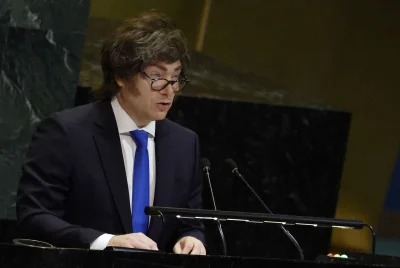
July 26 (UPI) — Brazil’s foreign ministry has summoned Argentina’s ambassador after inflammatory remarks delivered by Argentinian President Javier Milei about Brazilian counterpart Luiz Inácio Lula da Silva over the weekend.
Argentinian diplomat Julio Bitelli must go to Brasilia on Sunday or early Monday to meet with Brazilian leaders in wake of Milei’s harsh attacks on Lula during the national convention of Brazil’s Liberal Party, or PL, in São Paulo on Saturday, diplomatic sources told the O Globo newspaper.
Milei used hisspeech to denounce what he called the “tragedy of socialism” in Latin America, singling out the Lula and Minister Alexandre de Moraes of the Supreme Federal Court for intense criticism while praising PL presidential candidate Flavio Bolsonaro.
The Argentine leader hailed Bolsonaro as the only candidate who can stop Lula, saying that “there is no one else capable of stopping Lula” and his effect on the country or confronting criminal and drug trafficking organizations.
“Do not allow your future to be stolen. We are counting on you, Flavio, to stop this socialist garbage,” said Milei.
The Argentinian leader also slammed de Moraes for prohibiting him from visiting former president Jair Bolsonaro in a Brasilia prison where the ex-president is serving a 27-year prison sentence for leading a 2022 coup attempt against Lula.
“I was not allowed to visit my unjustly imprisoned friend,” said Milei, a declared ally of the Bolsonaro family.
Flavio Bolsonaro, son of the imprisoned former president, launched his formal bid challenging Lula at the PL convention, declaring, “This the beginning of the toughest battles of our life. A fight between good and evil.”
Reactions to Milei’s attacks reverberated throughout Brazil in Sunday.
Workers’ Party president Edinho Silva said the Argentine leader had crossed a line with the attacks.
“No public authority in Brazil is above criticism, as long as it is made in the appropriate manner and at the right time,” he said in a social media post. “However, it is unacceptable for a foreign head of state to come to our country and address its constitutional powers in disrespectful terms.”
It is no surprise that the current president of Argentina “behaves in this way,” he added. “After all, there are not a few recent situations in which he has shown himself not up to the office he holds.”
Brazilian Supreme Court President Luiz Edson Fachin, meanwhile, similarly pushed back, reaffirming the autonomy of the country’s judiciary.
Iran’s supreme leader calls for ‘absolute, unconditional termination’ of Israel’s attacks on Lebanon amid reports of renewed diplomacy.
Published On 26 Jul 202626 Jul 2026
Iran’s Supreme Leader Mojtaba Khamenei has said that peace between Tehran and the United States is contingent on Israel stopping its attacks on Lebanon.
Khamenei made the statement in a post on X on Sunday.
Recommended Stories
list of 3 itemsend of list
Iran “has designated the preservation of Lebanon’s territorial integrity, and the absolute, unconditional termination of the Zionist regime’s aggression as the primary condition for any agreement to ending the imposed war against the aggressive US,” he wrote.
Khamenei also voiced his support for the Lebanese group Hezbollah, its former leader, Hassan Nasrallah, and the people of southern Lebanon – the focal point of Israel’s attacks – in a series of posts.
“The Islamic Republic of Iran considers the defense of these oppressed yet powerful mujahideen [of Hezbollah] to be its strategic mandate,” Khamenei said.
Iran has insisted on an end to Israeli strikes on Lebanon a precondition for ending the war, enshrining that demand in the first clause of the Memorandum of Understanding signed between the two countries in June.
That agreement has since collapsed amid a dispute over the Strait of Hormuz.
Lebanon was drawn into the conflict in March after Hezbollah launched strikes on northern Israel, citing both the killing of then-Supreme Leader Ali Khamenei on the war’s first day, February 28, and Israel’s near-daily bombardment of Lebanese territory – attacks it says violated a ceasefire that had ended an earlier round of hostilities in 2024.
On June 26, following the signing of the US-Iran MoU, Lebanon and Israel signed a US-mediated framework agreement stipulating a phased Israeli withdrawal from occupied Lebanese territory, but without a timetable for the withdrawal.
Instead, it said Israel will withdraw from occupied territories once Hezbollah is disarmed.
Iran and Hezbollah, which was not a party to the talks, have rejected the deal.
While the first phase is Israel’s withdrawal from three “pilot zones”, the Lebanese army said on Sunday that Israeli forces are obstructing the process, including by refusing to withdraw from designated territories.
As of Sunday, Israel was still bulldozing, shelling and conducting combing operations with machineguns across large areas of southern Lebanese territory it is occupying.
At least 4,329 people have been killed, while 37 Israeli soldiers and four Israeli civilians have died in the latest round of violence in Lebanon.
Israel violated a previous ceasefire between Hezbollah and Israel more than 10,000 times, according to UN peacekeepers.
Mojtaba Khamenei is the son of the former Iranian Supreme Leader Ali Khamenei. He was selected as supreme leader after the US and Israel’s assassination of his father.
Khamenei’s statement on Lebanon comes as war spreads into Yemen, with reports of an exchange of attacks between the Houthis and Saudi Arabia.
Universal Studios has issued a stern warning after an unauthorized copy of its hit film “The Odyssey” was leaked over the weekend.
“We became aware of the unauthorized posting of the film and immediately initiated takedown protocols,” the studio said in a statement. “We take copyright infringement seriously and will pursue all appropriate remedies to protect our content and intellectual property rights.”
The studio was responding to a post on X that shared a high-quality copy of the Christopher Nolan film. The post was viewed more than 2.1 million times before a takedown notice replaced the copy of the film.
The post was shared Saturday on X at 2:25 p.m. Pacific, and the account was suspended within three hours, according to Variety.
“The Odyssey” continues to be a top attraction for filmgoers, drawing huge crowds on its second weekend. Demand for advance tickets caused AMC’s app to crash in June. At the time, users on social media said wait times had reached an hour.
The film in its second weekend pulled in $87 million, acccording to Rentrak, a data analytics company that tracks box office sales.
WASHINGTON — The Trump administration has acknowledged in court documents that it canceled $7.6 billion in grants for hundreds of clean energy projects “based solely on the political identity of the grant recipient’s state,” including California and 15 other states that voted for Kamala Harris in the 2024 presidential election.
The statement, included in a court filing last week in a lawsuit over the canceled funding, contradicts repeated assertions by Energy Secretary Chris Wright and other officials that the projects were canceled because they did not adequately advance the nation’s energy needs or had other problems that made them a poor investment of taxpayer dollars.
The Department of Energy said in the filing Wednesday that “DOE accepts that the inclusion of grants … was based solely on the political identity of the grant recipient’s state, i.e., whether the recipient’s location and/or place of performance was in a Blue State or a non-Blue State. DOE will not contend that it looked beyond the prime grantee(s) to consider the political identity or geographic distribution of downstream beneficiaries of the grant funds.”
The agency also said that it “accepts that the differential treatment resulting in the October 2025 termination of Blue State grants and the non-termination of non-Blue State grants was not based on a rational connection between the recipient’s location and/or place of performance and DOE’s past or current agency priorities.”
Democrats and environmental groups seized on the court filing, saying the administration had “weaponized” the federal government to kill good jobs and punish working families because of their political views.
A ‘corrupt abuse of power’
“This administration has now admitted in court what has long been obvious: it terminated nearly 300 cost-cutting energy projects for no reason other than the fact that the states they were in did not vote for the president in the 2024 election,” Rep. Marcy Kaptur of Ohio and Sen. Patty Murray of Washington state said in a joint statement. Both are high-ranking Democrats on the House and Senate appropriations committees, respectively.
“Weaponizing the federal government like this is outright un-American, and it’s hardworking families already struggling with sky-high costs who are suffering the consequences of this corrupt abuse of power,” Kaptur and Murray said.
They called on congressional Republicans to join them in holding the Trump administration “accountable for the President’s failure to look out for all Americans.”
The Energy Department announced in October that 321 funding awards across 223 projects were terminated, saying that after review, they “did not adequately advance the nation’s energy needs or were not economically viable.”
The cuts, part of broader attacks from President Trump on climate programs and clean energy funding, slashed federal support for projects to build battery plants, develop hydrogen technology, upgrade the electric grid and capture carbon dioxide emissions.
Russell Vought, the White House budget director, highlighted the cutbacks in a social media post, saying that money “to fuel the Left’s climate agenda is being cancelled.”
The Energy Department did not immediately respond to a request for comment.
Projects from many states were cut
Projects that were cut were located in California, Colorado, Connecticut, Delaware, Hawaii, Illinois, Maryland, Massachusetts, Minnesota, New Hampshire, New Jersey, New Mexico, New York, Oregon, Vermont and Washington. All 16 targeted states supported Harris, but Wright said the cuts were “business decisions” based on whether the projects were a good use of taxpayer money or not.
The cuts were immediately challenged in court, and more than two dozen Democratic members of Congress, led by California Sens. Adam Schiff and Alex Padilla and Rep. Zoe Lofgren, wrote a letter to the Energy Department’s acting inspector general requesting a formal investigation. The department’s internal watchdog launched an investigation in December.
Government lawyers had previously confirmed in a court filing late last year that the selection of grants in fact “was influenced by whether a grantee’s address was located in a State that tends to elect … Democratic candidates in state and national elections (so-called ‘Blue States’).”
That filing came in a separate suit filed by clean-energy groups and the city of St. Paul, Minn., over the canceled funding. The most recent admission came in a case called Thakur vs. Trump that’s been ongoing since spring 2025. Federal lawyers acknowledged that they used keywords related to diversity, gender and COVID-19 to screen for projects that ran afoul of the Trump administration’s priorities.
Holly Bender, chief program officer for the Sierra Club, said the latest court filing shows “the Trump administration is brazenly admitting to a vindictive approach to cancelling much-needed energy infrastructure that ignores the job losses, air pollution and increasing bills that people are experiencing everywhere.”
Instead of “building the energy projects we desperately need,” billions of American taxpayer dollars are “going to line the pockets of a small handful of fossil fuel company CEOs,” Bender said, citing nearly $3 billion pledged by the Trump administration to cancel offshore wind projects in favor of fossil fuel projects such as natural gas and coal.
American rookie Jackson Koivun held his nerve to beat Scottie Scheffler by three strokes and claim his first PGA Tour win at the 3M Open on Sunday.
Playing in just his third tournament since turning professional, Koivun surged into a three-shot lead on Saturday during a round of 10-under 61.
The 21-year-old then stretched his lead to five in the final round at TPC Twin Cities in Minnesota, before world number one Scheffler applied pressure.
The four-time major winner began the back nine with three straight birdies, then claimed two more in the final three holes to finish with an eight-under 63 and trail compatriot Koivun by two strokes.
Former world amateur number one Koivun could have wobbled at that point, with holes left to play, but instead he made his fifth birdie of the day at 16 before wrapping up a five-under 66 to finish on 25 under par overall.
“I had some nerves coming down 18,” said Koivun. “All throughout the crowd I kept hearing ‘Scottie’s coming, Scottie’s coming’.
“I just tried to tune that out and keep playing the golf I knew I could and was able to find some good putts coming down the stretch.”
American trio Denny McCarthy, Brian Harman and Chandler Phillips finished five strokes behind Koivun, in a tie for third with Japan’s Hideki Matsuyama.
France and Spain have deployed thousands of firefighters, and neighbouring countries have sent help.
Wildfires are ravaging many parts of western and southern Europe, with France and Spain among the hardest hit.
The World Health Organization has warned that climate change is contributing to the frequency and intensity of the fires. This is clear in the record temperatures and successive heatwaves seen across the continent since May. France and Spain have deployed thousands of firefighters, and neighbouring countries have sent assistance. Authorities say the situation is unprecedented.
Recommended Stories
list of 4 itemsend of list
So, what will it take to extinguish the flames?
Presenter: Per Nyberg
Guests:
Eduardo Rojas – chairman of the board at the Programme for the Endorsement of Forest Certification
Soraya Fettih – global campaigns coordinator at 350.org, an international environmental organisation focused on addressing the climate crisis
Laurie Laybourn – executive director of Strategic Climate Risks Initiative, a non-partisan think tank
Weekly insights and analysis on the latest developments in military technology, strategy, and foreign policy.
Lockheed Martin has unveiled the PAC-3 Adapted Capability Effector (ACE), a lower-cost interceptor for the Patriot surface-to-air missile system. By leveraging the existing PAC-3 fire-control architecture and Integrated Battle Command System (IBCS), the company says the new interceptor will cost less than half as much as the in-production PAC-3 Missile Segment Enhancement (MSE) while providing a high-volume option for defeating aircraft, cruise missiles, and shorter-range ballistic missile threats. Based on the ballpark figure provided by Lockheed Martin, a single PAC-3 ACE missile would cost around $2.5 million, compared to roughly $5 million for the PAC-3 MSE. The announcement comes as Patriot missile stocks are under immense pressure globally and after the U.S. Army made its hunt for lower cost interceptors official.
“American and allied warfighters need a solution that is battle-tested and budget-smart, and PAC-3 ACE delivers exactly that by building on the unrivaled performance of the PAC-3 MSE,” said Tim Cahill, president, Lockheed Martin Missiles and Fire Control. “As we look to partner with our allies, we can further enhance resiliency and ensure our forces can swiftly counter emerging threats today and tomorrow.”
.@LockheedMartin introduces PAC‑3 ACE™ – a low‑cost, high‑performance interceptor built on the trusted PAC‑3® family. Designed for our allies, it delivers rapid‑field capability against short‑range ballistic, cruise and air‑breathing threats. pic.twitter.com/YW87z3Mq9f
— Lockheed Martin Europe (@LMEuropeNews) July 20, 2026
Lockheed Martin said the PAC-3 ACE is designed to provide allied forces with a “rapidly fielded complement to existing Patriot interceptors.” The company plans to work with U.S. and European industrial partners on development and production, with the goal of expanding manufacturing capacity and strengthening the resilience of the transatlantic defense industrial base. The idea of the new missile as a complementary effector is especially noteworthy, indicating that the PAC-3 MSE would be reserved for the most challenging or high-risk threats, while the PAC-3 ACE can be used for everything else.
Other than the price point, it’s unclear to what degree the PAC-3 ACE missile differs from the PAC-3 MSE. A rendering released by Lockheed Martin — seen at the top of this story — appears to show a shorter, more compact interceptor. Coupled with the substantially lower cost, the new missile will offer a more degraded capability set than the MSE. This could include shorter range, lower ceiling, and a reduced ability to engage the most advanced threats Patriot batteries face. Notably missing in the rendering is the PAC-3 MSE Attitude Control Section — the ring of tiny rocket motors that wraps around its forward section — that gives it enhanced agility. Sacrificing exactly this kind of feature could lower costs in exchange for capability. In addition, the new missile may not feature the PAC-3 MSE’s “Lethality Enhancer” warhead, for instance, and could just provide a strictly hit-to-kill capability or some other warhead solution to save on cost. Using a less advanced seeker is also highly probable. We have reached out to the company for additional details.
It is notable, however, that the ability to engage short-range ballistic missiles, at least to a degree, is inherited from the PAC-3 MSE.
PAC-3 Missile: How The System Works
Patriot’s ability to engage short-range ballistic missiles in their terminal phase has never been more important, particularly in light of the ongoing conflict with Iran, the war in Ukraine, and the continuing spread of those weapons worldwide. A lower-cost interceptor that can perform that mission for at least some threat profiles would help make missile defense more sustainable in future conflicts.
Overall, the concept behind the PAC-3 ACE suggests that Lockheed Martin is looking to offer a missile that’s closer to the PAC-3 Cost Reduction Initiative (CRI), which is no longer in production.
We do know that the PAC-3 ACE will leverage existing Patriot weapon system hardware, including the PAC-3 fire-control system and the IBCS. These measures should ensure that the process of developing, testing, and deploying the new missile can be accelerated considerably. Essentially, PAC-3 ACE will provide existing PAC-3 operators with a new common interceptor that can slot straight into the air defense system.
Northrop Grumman Integrated Air Missile Defense Battle Command System (IBCS) Flight Test
Northrop Grumman’s IBCS was designed from the start with a modular, open-systems approach to make it easier to integrate new systems and functionality as time goes on. You can read more about IBCS in detail in this past TWZ feature.
Having access to a significantly cheaper alternative to the PAC-3 MSE effector, while maintaining many of its capabilities in terms of the kinds of threats it can target, is a big deal.
An infographic showing the key features of the MSE variant of the PAC-3 missile. Lockheed Martin
A cheaper effector means the cost-per-kill against man target types can be significantly lower. It also helps increase magazine depth, with operators able to buy larger stocks of missiles, addressing a problem that has been encountered in war zones, in particular Ukraine, where Patriot effectors have been expended at such a rate that the supplies have gotten close to being totally exhausted. Recent operations have reinforced the importance of maintaining sufficient inventories of interceptors and other high-demand munitions to meet both operational and strategic requirements — for example, a future high-intensity conflict against China. Under a contract with the Pentagon inked in January, Lockheed is already committed to boosting annual production of the PAC-3 MSE to 2,000, an increase from roughly 600.
When it comes to the cost of the PAC-3 MSE, each interceptor comes with a price tag of approximately $5.3 million, according to the Army’s latest proposed budget for the 2027 Fiscal Year. In the past, a single missile cost around $4 million.
A PAC-3 interceptor seen at the moment of launch. U.S. DoD
Just as critical as cost is speed and scalability of production. PAC-3 ACE has been adapted with this in mind, and drawing upon production facilities outside the United States will also help. Having plentiful supplies of Patriot missiles will only become more critical once they are introduced by the U.S. Navy as well as the Army. The Navy is now working to integrate PAC-3 MSE into the Mk 41 Vertical Launch System (VLS), adding a valuable new anti-air interceptor to its sea-based arsenal, but also further increasing demand that the PAC-3 ACE could help meet.
Back in May, TWZreported on how the U.S. Army’s Low Cost Interceptor (LCI) initiative was looking for proposals for a new effector for the Patriot with a unit cost under $1 million. This amounts to about a fifth of the price of a single PAC-3 MSE missile.
Like the PAC-3 ACE, the U.S. Army said it was looking for a missile that can be integrated into existing M903 trailer-based launchers and leverage the service’s IBCS network. The M903 is already capable of accommodating newer PAC-3 series interceptors, including the MSE variant, as well as older PAC-2 types that remain in use.
A graphic showing various load configurations for the M903 launcher, as compared to the previous M901 and M902 launchers. Lockheed Martin
As we noted at the time, the goal of acquiring an anti-air interceptor capable of engaging everything from lower-tier air-breathing threats to SRBMs, at no more than $1 million per missile, is ambitious.
The Army has already stated that the LCI missile and missile subsystem competition is intended to result in multiple awards that can lead to multiple different yet affordable missile interceptor solutions. PAC-3 ACE could be part of that equation for the U.S. Army if the higher price point is deemed acceptable, but clearly the concept will have considerable value for any of the more than a dozen Patriot operators, especially those facing the reality of limited magazine depth in conflict situations. Having a lower-cost effector available could also open the PAC-3 up to additional markets, too.
Even if PAC-3 ACE falls short of the Army’s ambitious sub-$1 million interceptor target, it underscores a reality that has become impossible to ignore. The era of relying exclusively on premium, very high-cost interceptors is giving way to a more layered approach, where lower-cost missiles can absorb a significant share of engagements against cruise missiles, drones, and other less demanding targets. If Lockheed Martin can deliver on its roughly half-price Patriot missile offering while still providing highly relevant capabilities, PAC-3 ACE could become an important addition to the growing effort to make high-end air defense more sustainable in prolonged conflicts.
KATIE Price was left feeling stunned as she reunited with a club bouncer that she kissed on a night out 30 years ago.
Katie, 48, shared a clip reminiscing about her Wednesday nights at London’s China White back in the day.
Katie Price was left feeling stunned as she reunited with a club bouncer that she kissed on a night out 30 years agoCredit: Instagram/theratedshowofficialKatie shared a clip of her discussing her nights out in China White which she visited every Wednesday without failCredit: Instagram/theratedshowofficial
Speaking with the hosts of The Rated Show, Katie explained: “I loved it there.”
One of them replied “Ask her how and why the day she came down is so memorable.”
Sign up for the Showbiz newsletter
Thank you!
“What did I f***ing do now? What didn’t I do?” laughed Katie.
“I’m the doorman that you kissed at China White’s,” he said.
Katie was shocked after he revealed who he wasCredit: Instagram/theratedshowofficialKatie seen leaving nightclub China White back in 2003Credit: GettyKatie recently shared a snap on Instagram without her wedding ringCredit: wesleeeandrews/instagramKatie has vowed to quiz her husband over his offer to sell a sex tape of themCredit: wesleeeandrews/instagram

![Colonel Mohamed Issa, centre, one of the FLA's most prominent military commanders [Photo: Courtesy of the Azawad Liberation Front (FLA)]](https://i0.wp.com/occasionaldigest.com/wp-content/uploads/2026/07/COL-Mohamed-Issa-1785041292.jpeg?w=640&ssl=1)
![A destroyed vehicle at the site of recent fighting in northern Mali [Photo: Courtesy of the Azawad Liberation Front (FLA)]](https://i0.wp.com/occasionaldigest.com/wp-content/uploads/2026/07/Mali-army-3-1785041272.jpeg?w=640&ssl=1)
![An armed man carries a weapon in a desert area of northern Mali, where government forces and armed groups have been fighting for control of territory [Photo: Courtesy of the Azawad Liberation Front (FLA)]](https://i0.wp.com/occasionaldigest.com/wp-content/uploads/2026/07/FLA2-1785041279.png?w=640&ssl=1)