Elize: Shadows of a Woman tells the true story of Elize Matsunaga, who murdered and dismembered her husband.
Elize Matsunaga ultimately confessed to killing her husband(Image: NETFLIX)
Everything you need to know about what happened to Elize Matsunaga and her daughter
Netflix’s new crime drama Elize: Shadows of a Woman is a chilling retelling of a real-life Brazilian murder case. The series explores the true story of Elize Matsunaga, who shocked Brazil in 2012 when she shot and dismembered her husband, Marcos Kitano Matsunaga, after discovering his infidelity.
Netflix describes the drama as showing how “a former escort discovers her wealthy husband’s infidelity and struggles to cope as betrayal poisons their marriage.” The series, which is a fictionalised retelling of the true story, follows on from the 2021 documentary Elize Matsunaga: Once Upon a Crime, which featured her first interview after the crime.
Matsunaga, a trained nurse, had hired a private investigator to gather evidence of her husband’s cheating before confronting him about the affair. The confrontation had fatal consequences, and after the tragic event, she initially reported her husband missing but confessed to the murder weeks later.
Convicted in 2016, she was sentenced to almost 20 years in prison, later reduced to 16 years in 2019. Having served 10 years, Matsunaga has been on parole since 2022. The Netflix documentary reveals the Matsunaga family wishes to disassociate themselves by “removing Elize’s surname.”
Matsunaga had a daughter, who was only one year old when the murder occurred, and she was keen to keep in contact with her only child. However, her daughter remains in the care of Marcos’ parents with full custody. Tragically, Elize has had no contact with her daughter since the crime and has not even seen photographs of her.
CXMT’s shares surged 472% in their market debut and were trading up 462% by early afternoon in Asia, making it the most valuable company listed on a mainland Chinese exchange, with a market capitalisation of about 3.3 trillion yuan (approximately €415 billion). Even so, its market capitalisation remains below that of South Korean and US memory chipmakers Samsung Electronics, SK Hynix and Micron Technology.
ADVERTISEMENT
ADVERTISEMENT
CXMT is among a growing number of chipmakers that have benefited enormously from the artificial intelligence boom. The company has also prospered as China pushes for greater self-sufficiency in advanced technologies while grappling with restricted access to cutting-edge chipmaking equipment under US-led export controls.
The company raised at least $8.6 billion (approximately €7.3 billion) in the offering, which was priced at 8.66 yuan (about €1.10) a share, in its listing on the Shanghai Stock Exchange’s Nasdaq-like STAR Market, also known as the Science and Technology Innovation Board.
It was mainland China’s second-largest initial public offering after Agricultural Bank of China’s 2010 dual listing in Shanghai and Hong Kong, which raised $22.1 billion (approximately €18.8 billion).
Founded in 2016 in the eastern city of Hefei, CXMT is one of the world’s largest makers of DRAM, or “dynamic random access” memory chips, a kind of semiconductor used in everything from AI servers to autos and consumer electronics like smartphones and personal computers.
“CXMT plays a critical role in China’s AI push, particularly in the face of US export controls,” Kyle Chan, a fellow at the Brookings Institution and an expert in China’s technology policies, said. US restrictions have also barred China from importing powerful HBM, or high-bandwidth memory chips – a type of DRAM chip.
The company’s revenue surged to 50.8 billion yuan (approximately €6.4 billion) in the first three months of 2026, up more than 700% year on year as booming demand driven by the rapid adoption of artificial intelligence fuelled growth.
Soaring use of AI has led to a global memory chip shortage, driving up prices for some computers and smartphones. One big question, Chan said, is whether CXMT could help with the broader shortage.
CXMT is seen as China’s best shot at developing its own cutting-edge HBM chips to power Chinese AI models, Chan said. But it also faces many challenges, including supply chain bottlenecks in scaling up manufacturing capacity, since its access to the world’s most best chipmaking tools is highly restricted, forcing it to depend on Chinese equipment makers.
According to Counterpoint Research, a technology research firm, CXMT was the world’s fourth biggest DRAM memory chipmaker in 2025 by shipments, taking up roughly 8% of the global market. Samsung Electronics accounted for 36%, SK Hynix 29% and Micron about 24%.
In the first three months of this year CXMT accounted for approximately 9% of global shipments. By 2028, its market share is forecast by Counterpoint Research to reach about 11%. But the research firm estimated CXMT will likely need at least a 15% global market share to be competitive in the long term.
“Trade restrictions on tools are remaining as the key challenge for CXMT,” MS Hwang, a research director at Counterpoint who specialises in memory semiconductors, said. Some US lawmakers have also recently called for President Donald Trump’s administration to block American companies from buying CXMT’s memory chips over national and economic security concerns.
CXMT, among many other Chinese companies, has been designated by the Pentagon as having links to the Chinese military. Beijing has rejected such designations in most cases.
CXMT’s public share offering followed South Korean chipmaker SK Hynix’s $26.5 billion (approximately €22.5 billion) Nasdaq listing earlier this month.
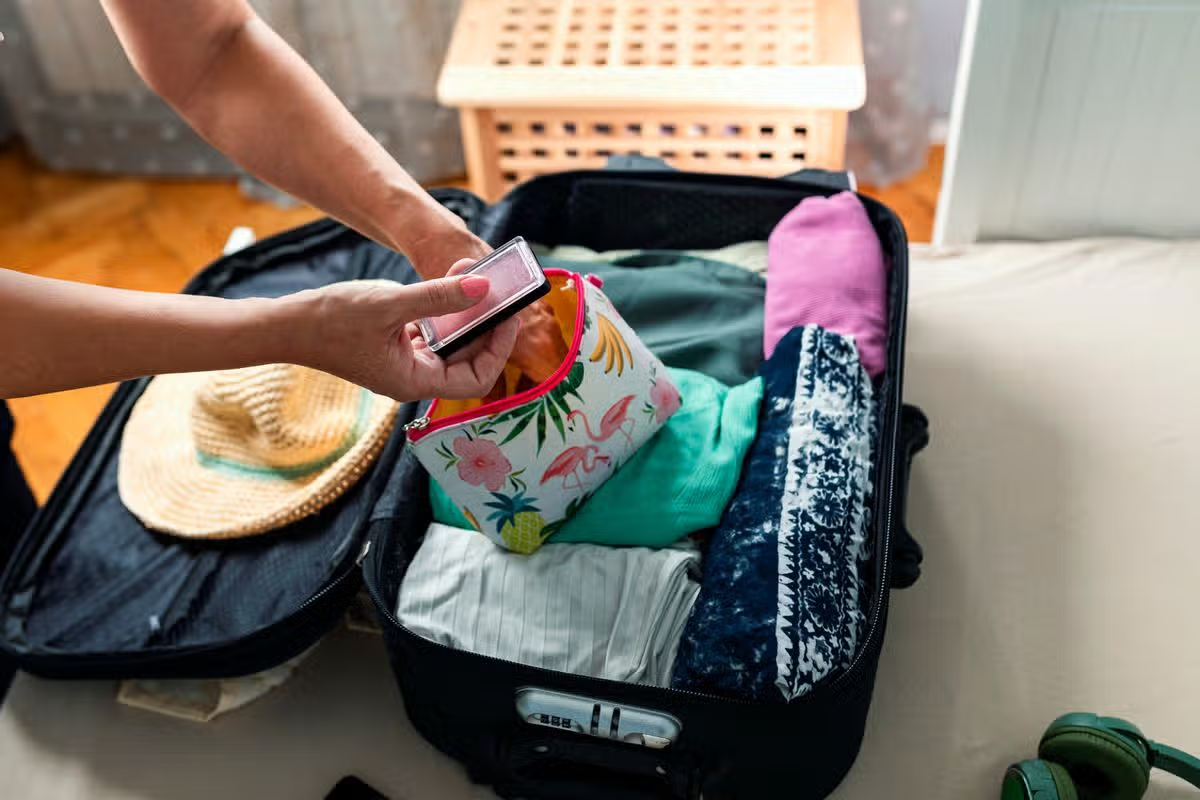
There are some items that are best kept in your hand luggage for safe keeping, so make sure these items don’t end up in your big suitcase when you go away for your summer holidays this year
Some items are better packed in your hand luggage(Image: Getty Images)
No matter how many times you go on holiday, packing is always an awkward task, as you need to balance the lack of space with the essentials.
And if you have checked luggage in addition to a cabin bag, you may be tempted to throw most of the things you own into your hold baggage. This means you have less stuff to carry around the airport and onto the plane with you.
But there are some things you should never put in checked luggage, and it’s not just the obvious stuff like weapons and flammable items. Here are five items to never send to the hold.
1. Prescription medication
Overall, less than 1% of hold luggage goes missing, and usually it’s simply misdirected, so it will eventually make its way to you. But while you try to retrieve your bag, it’s a good idea to have supplies of essential items.
Prescription medication is better taken as hand luggage, as it’s much less likely to go missing. If there’s a delay with your hold bag getting back to you, you won’t need to worry about missing vital doses of your meds.
If you do lose your medication when travelling, visit a local pharmacy for advice, as they may be able to arrange an emergency supply.
2. Batteries and electronics
Because of the risk of items such as power banks catching fire, items with lithium batteries, such as power banks and vapes, can’t be placed in hold luggage and must be taken onboard with you.
Some airlines have limits on how many Personal Electronic Devices (PEDs) can be taken onboard, with Jet2 and Ryanair restricting the number to 15 per passenger. Ryanair also has a limit of 20 lithium batteries or power banks, each up to 100Wh, in hand baggage.
3. Valuable items
If you have jewellery, cash or other expensive items, you may be nervous about carrying them around in your backpack at the airport. However, it’s not a good idea to leave valuables in your checked-in bags.
There’s a risk of damage to items in transit, and while it’s rare, theft from bags does happen by airport staff. While travel insurance does cover lost baggage, it usually has a limit and policies have an excess to pay, meaning you may not be able to claim enough to cover valuable items.
4. Swimwear
When you’re on the way to a sunny beach holiday, you may want to pack swimwear in your hand luggage rather than your big suitcase. This means that if there is a delay in getting your bag to you, you can at least spend some time on the beach or by the pool while you wait for your bag to arrive.
It also means that if you can’t check into your room straight away when you arrive, you can just change into your swimwear and enjoy some sunshine while you wait for your room to be ready.
5. Phone charger and adapter
Once you arrive at your destination, your phone battery is going to be as low as your energy levels, and you won’t want to be scrambling through your suitcase to find your charger.
Ensure you’ve got your phone charger and adapter for the country you’re visiting in your hand luggage so you can get plugged in as soon as you arrive.
Have a story you want to share? Email us at webtravel@reachplc.com
The town beat well-known destinations like Bamburgh, Brighton, St Ives and Whitstable to be crowned the winner
Tynemouth Castle and Priory’s ruins date back to the 7th century(Image: TraceyAPhotos via Getty Images)
A coastal town with a population of 60,000 has dethroned other popular destinations as the most charming the UK has to offer.
Bamburgh and Seahouses have seen their days of glory and renown, but now it’s time to give some love to another spot in the North East, which was recently named the most charming seaside destination by Lonely Planet magazine, just nine miles from Newcastle.
Tynemouth is an easy and accessible weekend day-trip destination, recognised for its sandy beaches, scenic walks, lively independent-shop scene, food, and attractions.
For the ultimate day out in Tynemouth, go on a Saturday or Sunday and pay a visit to Tynemouth Market, held inside the old Victorian metro station beneath a striking glass roof. There, stalls sell everything from vintage clothing to antiques.
From there, it’s a short walk to the main attraction – Tynemouth Priory and Castle, a headland ruin dating back to the 7th century that towers over the North Sea.
The place is Tynemouth’s most famous postcard, giving visitors a great view of the sea.
After looking around and learning some of the town’s history, it’s time to head downstairs to King Edward’s Bay, a sheltered cove where you’ll find some of the best seafood in the area, and get to lounge around if you manage to find a spot – it tends to get pretty busy during the summer months.
But for a proper swim, the place locals recommend is Longsands Beach, a mile-long stretch that regularly pulls top marks from visitors.
But if you’re not the sitting-down-and relaxing-by-the-sea kind, you’ll find some more active fun in Hadrian’s Cycleway – a 174-mile coast-to-coast route that begins right here in Tynemouth.
Nearby, the Lord Collingwood Monument offers one of the best free viewpoints in town, described by a visitor on TripAdvisor as having privileged views of “the docks at North Shields, the priory, and the castle.”
Families and people of all ages can also enjoy Tynemouth Park, home to an unexpectedly popular attraction. One online reviewer said they’d “had an enjoyable time playing the 18-hole dinosaur-themed crazy golf courses”.
Then, in July, Tynemouth gets ready for its big event. Every year, almost 100,000 visitors come to town for the Mouth of Tyne Festival, a free event that culminates in an open-air concert staged right at the Priory ruins.
Over the years, iconic headliners have included Sam Fender, Bryan Ferry, Elbow, and Paloma Faith.
You can reach Tynemouth from London in 3 hours and 20 minutes by train, or 5 to 6 hours by car. From Manchester, the journey takes under three hours by either mode. From Edinburgh, it’s about two hours by train or car.
Maja Lardner scored her first NWSL goal and scored again on a second-half header to give Racing Louisville a 2-1 win over Angel City at BMO Stadium on Sunday.
The rookie opened the scoring in the 24th minute for Louisville (3-10-3) after midfielder Katie O’Kane’s long-range effort bounced through Angel City’s penalty area. Lardner touched the loose ball past goalkeeper Angelina Anderson.
Kayla Fischer sent a lofted ball to Lardner in the 55th minute, which she headed past Anderson.
Sveindis Jonsdottir scored for Angel City (7-7-1) in the 80th minute when defender Sophia Mattice sent a long ball forward.
Islamabad, Pakistan – Pakistan-administered Kashmir, formally known as Azad Jammu and Kashmir (AJK), has spent the summer under an unofficial state of emergency.
Since early June, nearly 40 people have been killed in clashes between protesters and security forces, with sit-ins and road blockades regular features in the region over this period.
Recommended Stories
list of 4 itemsend of list
Banks remained shut for two weeks. Mobile and internet services remain suspended across most of the territory. Poonch division, which borders India and has been the epicentre of the unrest, was effectively sealed off for weeks, disrupting the supply of flour and other essentials to a region that depends heavily on them.
The Jammu Kashmir Joint Awami Action Committee (JAAC), the movement behind the protests, was banned by the local government on June 5, days before a planned demonstration.
Its leadership has since been arrested, has gone underground or has continued organising from sit-in camps in Rawalakot, the administrative headquarters of Poonch division.
Its demands, once centred on subsidised flour and cheaper electricity, have expanded to 38 points, chief among them the abolition of 12 assembly seats reserved for Kashmiri refugees.
All of this is unfolding as the region prepares to vote. Elections for the 45-seat Legislative Assembly, originally scheduled for July 27, have been split across three dates.
Mirpur division votes as planned, Muzaffarabad division and the 12 seats reserved for Kashmiri refugees follow on August 2, while Poonch division, where tensions remain highest, goes to the polls on August 10.
JAAC’s leadership is not on the ballot and has urged supporters to boycott the vote.
Of all the movement’s demands, one issue has proved impossible to resolve: the 12 refugee seats. The government says they cannot be touched without a constitutional amendment. JAAC wants them abolished outright.
Between those two positions lies a legal argument stretching back nearly a century, and a more fundamental question: who gets to decide who governs Muzaffarabad?
A dozen seats, one dispute
Of the AJK Legislative Assembly’s 45 elected seats, 33 are filled from constituencies within the territory.
The remaining 12 are reserved for refugees from Indian-administered Kashmir who now live in different parts of Pakistan.
People chant slogans as they walk during a protest and shutter-down strike called by the banned Joint Awami Action Committee (JAAC), an alliance of civil society groups, in Neelum Valley, Pakistan-administered Kashmir, June 21, 2026 [Naseer ud Din/Reuters]
The arrangement traces its roots to electoral arrangements introduced in 1960, reinforced through laws in 1964 and 1970, before being formalised in AJK’s 1974 Interim Constitution and reaffirmed by the constitution’s 13th Amendment in 2018.
Chaudhry Muhammad Ibrahim Zia, a former chief justice of the AJK Supreme Court, said the basis for the seats goes back further still, to the AJK government’s founding declaration of October 24, 1947, which he said reflected “the collective will of the people of the State of Jammu and Kashmir”.
Refugee representation, he told Al Jazeera, has “a firm historical basis” rooted in that document. He rejects any suggestion that the seats are unconstitutional.
“They have both historical grounding and constitutional support,” he said. “These seats cannot be described as unconstitutional.”
Pakistan-administered Kashmir’s electorate has grown from 3.2 million voters in 2021 to more than 3.8 million this year, according to Election Commission figures.
Within that, the 12 refugee constituencies account for roughly 439,000 registered voters, scattered across cities including Lahore, Rawalpindi and Sialkot, rather than concentrated in a single geographical area like AJK’s territorial constituencies.
And that’s a problem, says Kashif Abbasi, a JAAC committee member.
“This election is meant for people who actually live in AJK,” he told Al Jazeera. “These 12 seats sit outside AJK’s jurisdiction. This doesn’t happen anywhere else.”
From flour to the assembly floor
JAAC’s demands were not always centred on the refugee seats. Its original charter was almost entirely economic, focusing on subsidised flour, electricity at cost price, and a share in the benefits from the Mangla and Neelum-Jhelum hydropower projects.
The refugee seats first appeared in the group’s expanded charter, submitted in October 2025.
Even then, JAAC did not initially seek their outright abolition. In written proposals submitted on May 30 this year, the group offered two alternatives.
It proposed retaining symbolic refugee representation until the Kashmir dispute is permanently resolved or replacing the 12 assembly seats with four seats in the AJK Council, the Islamabad-chaired body that exercises legislative authority over AJK’s federal-facing affairs.
The 14-member council, chaired by Pakistan’s prime minister, oversees subjects including electricity, banking and parts of taxation, areas that largely fall outside the AJK assembly’s authority. The territory has no representation in Pakistan’s national parliament.
“Our suggestion was that these seat-holders should instead be given representation on the Kashmir Council, and that their assembly seats be eliminated, with that money used elsewhere in the territory,” Khawaja Mehran, a member of JAAC’s core committee, told Al Jazeera recently.
Both proposals were rejected at an All-Parties Conference in Muzaffarabad on June 3.
Constitutional barrier
In June, the AJK Supreme Court addressed the issue directly.
The court held that the seats are protected under AJK’s constitution and can only be abolished through a formal constitutional amendment. They cannot be removed through executive action or public pressure.
A constitutional amendment, the judges wrote, is “a solemn constitutional act, not a concession to be wrested from a government under duress”.
Zia, the former AJK chief justice, said the opinion changed little about the existing legal position.
“These seats simply cannot be abolished without a proper constitutional process,” he told Al Jazeera, adding that, with the outgoing assembly’s term having ended, no such process is possible until a new legislature is elected.
The government’s account
Abdul Majid Khan, AJK’s former finance minister and himself from a refugee family, rejects the idea that the seat holders form an unaccountable political bloc.
A view of Muzaffarabad, the capital of Pakistan-administered Kashmir, on July 15, 2026. The unrest in the city follows the recent banning of the Jammu Kashmir Joint Awami Action Committee (JAAC), with authorities maintaining heightened security and restrictions on internet and phone services across the region [Amiruddin Mughal/EPA]
He points instead to the size of the territory’s budget. AJK’s roughly 310 billion rupees (about $1.1bn) budget last year, he said, far exceeds the development funds allocated to the 12 refugee constituencies – nowhere near enough, in his view, to make them the powerful bloc JAAC describes.
“These are people who migrated for a larger cause,” Khan told Al Jazeera, referring to Kashmiris who fled Jammu, across the border, during the violence of 1947 following the partition of the subcontinent and settled across Pakistan in the decades that followed.
Refugee representation, he said, has existed since AJK’s first parliamentary election in 1975, when the territory’s first prime minister was himself from a refugee family.
At the June 3 conference that rejected JAAC’s proposals, AJK Prime Minister Faisal Mumtaz Rathore said any decision on the seats “can only be taken by the elected representatives in the House”, adding that most of JAAC’s other demands had already been met.
Pakistan’s Defence Minister Khawaja Asif told the National Assembly on June 11 that the future of the 12 refugee seats should be decided by voters, not under pressure from street protests.
He urged JAAC to contest the issue in the election rather than demand its resolution beforehand, asking: “How could you exclude them from the electoral process?”
A senior government official in Poonch, whose division has witnessed the worst of the unrest, took an even harder line.
“This is no longer a rights movement,” the official told Al Jazeera, requesting anonymity since he was not allowed to speak to the media, adding that the protesters were not only “challenging the authority of the state”, but also provoking the public through “inflammatory speeches and actions”.
Who holds power?
In mid-July, JAAC leader Umar Nazir Kashmiri told supporters at a sit-in in Rawalakot, Poonch division, that the group had written directly to army chief Field Marshal Asim Munir after concluding that its concerns were not reaching him “through official channels”.
He thanked Munir by name for “understanding the grievances of the people of Kashmir”.
Shaheen was more direct. “We believe real authority currently sits with Rawalpindi,” he told Al Jazeera, referring to Pakistan’s military establishment rather than the civilian government. “That’s why we’re forced to negotiate through that channel, since nobody else actually holds the authority.”
Ershad Mahmud, a Canada-based researcher on Kashmiri displacement and politics, said that “Islamabad’s bureaucracy, military and intelligence establishment have reduced AJK’s elected leadership to a largely symbolic role”.
The current crisis, he told Al Jazeera, has once again shown that the local leadership “lacks the authority to negotiate a political settlement with its own people”.
People approach a vehicle at a makeshift checkpoint during a protest and shutter-down strike called by the banned Joint Awami Action Committee (JAAC), an alliance of civil society groups, in Neelum Valley, Pakistani Kashmir, on June 21, 2026 [Naseer ud Din/Reuters]
Unmet promise?
The dispute over the refugee seats is unfolding within a framework that predates Pakistan-administered Kashmir itself.
Under a United Nations Commission for India and Pakistan resolution adopted on January 5, 1949, and endorsed by the UN Security Council, Kashmir’s final status was to be determined “through the democratic method of a free and impartial plebiscite”.
Nearly 80 years later, that has yet to happen on either side of the Line of Control.
Mahmud, who is also the author of Poonch: Identity, Politics and Resistance, argues the refugee seats endure partly because they continue to serve Islamabad’s interests.
“They let Pakistan maintain its position that AJK represents the entire former State of Jammu and Kashmir, not merely the territory it administers,” he told Al Jazeera. “And allows Pakistan-based political parties to influence government formation in Muzaffarabad.”
Islamabad, he said, treats the seats “as an instrument of its Kashmir policy and political influence”.
Hassan Kamal Wattoo, a Lahore-based constitutional lawyer, argues that giving greater autonomy to AJK “strengthens Pakistan’s case on the international stage”.
“There is no tension between real autonomy for AJK and an eventual plebiscite,” he told Al Jazeera.
Anam Zakaria, a historian and author of Between the Great Divide: A Journey into Pakistan-Administered Kashmir, however, argued that there was a deeper contradiction within AJK’s constitutional framework.
On the one hand lies India’s “longstanding and ongoing systemic violence and human rights abuses in [Indian-administered] Kashmir”, she said, arguing that nothing Pakistan has done or does in the part of Kashmir it administers can be compared with what’s happened in Indian-administered Kashmir, where tens of thousands of people have been killed in violence involving armed rebels and security forces since 1989.
At the same time, she pointed out, candidates seeking public office in Pakistan-administered Kashmir must first swear allegiance to AJK’s accession to Pakistan.
That requirement, she told Al Jazeera, also “in itself contradicts the right to self-determination” and sidelines Kashmiris who hold a different vision for the region’s future.
President Donald Trump has paused attacks on Iran for the second night in a row to give diplomacy more time, the US ambassador to the UN said.
Speaking to Fox News on Sunday, ambassador Mike Waltz said the president was “giving talks some space, he’s giving it a little bit of room”.
An Iranian army spokesperson said on Sunday that Tehran had halted “retaliatory” attacks in the region in response.
The pause follows nearly two weeks of daily US strikes and tit-for-tat attacks, effectively unravelling the ceasefire struck in June.
Asked whether Trump had decided against escalation for now, Waltz told NBC: “I wouldn’t go that far at all. The president is keeping all options on the table.”
Waltz also rejected reports in the New York Times, external that administration officials had warned expanding hostilities could dangerously drain a diminished stockpile of air defence munitions.
“The US military… has everything that it needs to conduct this campaign as effectively as it needs to be,” he said.
As of Sunday evening, Trump had not spoken publicly on the latest developments, but earlier posted computer-generated images on his Truth Social account that depicted US military planes bombing Iranian ships and Kharg island.
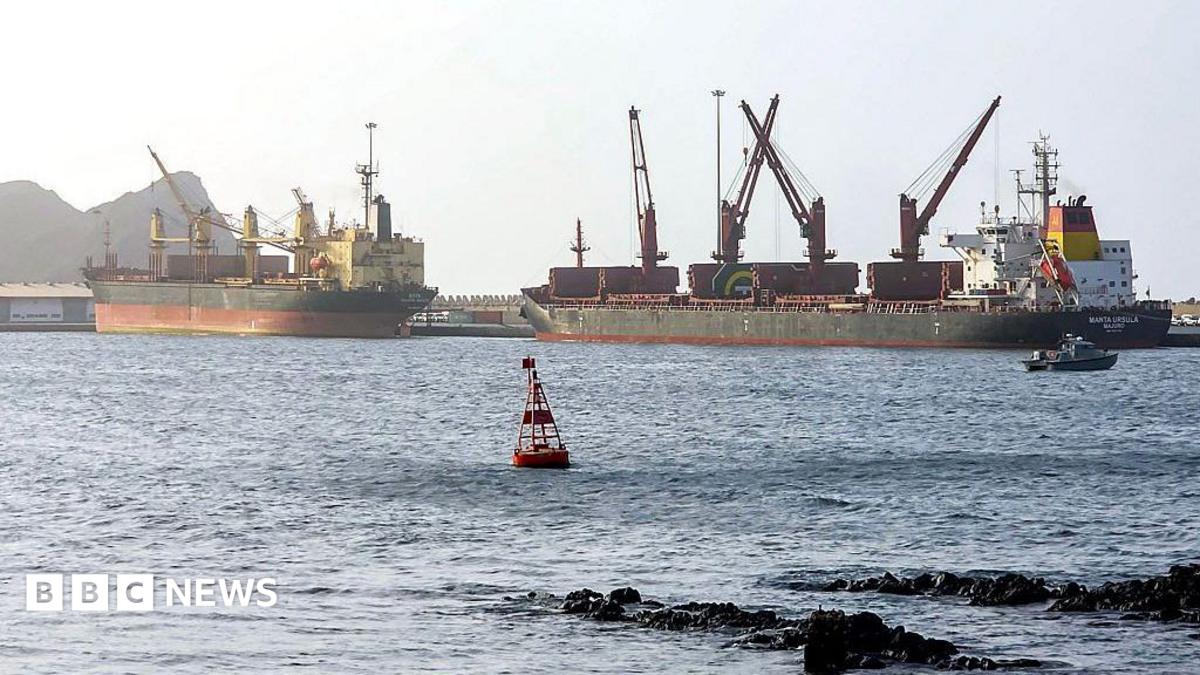
Meanwhile, Iran and Oman held several rounds of technical talks in Tehran on Friday and Saturday to discuss management of the Strait of Hormuz, according to Iranian foreign ministry spokesman Esmail Baghaei.
Disputes over control of the strait reignited US-Iran tensions earlier this month and it remains a major block to permanently ending the war.
Iran and the US signed a memorandum of understanding in June to halt military operations and reopen the strait, as well as to reach an agreement to end the war over the following 60 days.
But after Iranian forces attacked tankers in the Strait of Hormuz on 13 July, the US resumed airstrikes on the country and reinstated its naval blockade on Iranian ports.
Iran retaliated with attacks on US military facilities and bases across the Middle East, killing four American soldiers. The US strikes have since killed dozens of people, according to Iran’s health ministry.
In the UK, new Defence Secretary Wes Streeting said he would meet his US counterpart Pete Hegseth in the coming week to discuss the strait, which is one of the world’s key transport routes for oil, liquid natural gas and other essential commodities.
“When it comes to securing maritime freedom and free commercial shipping in the Strait of Hormuz, that’s where we are absolutely aligned,” Streeting told the BBC.
Earlier this week, oil prices hit $100 a barrel for the first time since May, as the renewed fighting stoked fears over global energy supplies.
As the war nears its fifth month, it remains largely unpopular in the US, with a new poll from CBS/YouGov suggesting 57% of Americans are frustrated about the conflict and only 19% optimistic.
Thousands of people have been killed across the Middle East since the US-Israeli war with Iran began in February, official figures show, with the vast majority coming from Iran and Lebanon.
President Trump is set to meet Israeli Prime Minister Benjamin Netanyahu in the White House on Tuesday.
GEMMA Atkinson has shown off her washboard abs in a thong bikini after her fiancé Gorka Marquez made a cheeky joke about her job.
The soap actress left fans’ jaws on the floor as she soaked up the sun on holiday.
Gemma Atkinson flaunted her jaw-dropping figure in a post on InstagramCredit: instagramThe 41-year-old threw up a peace sign as she showed off her washboard absCredit: instagram
Fans couldn’t get over how stunning the former soap star lookedCredit: instagramGorka recently made a joke that Gemma got famous by ‘flashing her t*ts’Credit: Gemma Atkinson
The former Hollyoaks star and model sizzled in the slew of photos, which showed off her light-hearted side.
She looked fresh out the water with her damp locks clinging to her back.
The mum-of-two captioned the post: “Vitamin D, time on a beach & family = Bliss!”
Fans could not get over Gemma’s sexy snaps and they took to the comments to share their thoughts.
“Looking incredible! Absolute body goals,” wrote one fan.
Another fan said: “Wow Gem looking absolutely gorgeous.”
Strictly pro Diane Buswell penned: “Stun,” followed by a red heart and fire emoji.
Meanwhile, another fan wrote: “Your figure is incredible! You look amazing and so happy.”
Gorka also commented the heart eyes emoji under Gemma’s post after he made a daring joke on their podcast Lost In Translation.
Gemma, 41, was asked by a fan: “What is Gemma Atkinson famous for?”
Ex-Strictly Come DancingprofessionalGorka, 35, couldn’t resist jumping in with: “Flashing her t*ts. Actually no, sorry, actress…”
Laughing, Gemma replied: “I’ve done every soap you can imagine, my darling.
“I run a business and I was FHM’s Sexiest Woman back in the day. Your dad will know.”
Most generative AI projects in finance fail. Here’s what it means for CFOs and their future hires.
Mid-market finance chiefs aren’t hiring like they used to. A Gartner survey of more than 300 finance executives shows that while companies are pouring more money into artificial intelligence tools, the share of CFOs planning to expand headcount has fallen.
“Four out of five were either freezing capacity or headcount or reducing capacity in their team,” Alok Ajmera, chief executive officer at Prophix, told Global Finance in a phone interview.
While CEOs and boards pressure their teams to show productivity gains from generative AI, results have been uneven, Ajmera added.
The GenAI Reality Check
Another Gartner estimate shows that more than 90% of generative AI proof-of-concept projects in finance departments failed to generate incremental value. This “staggering amount,” Ajmera said, curdles AI enthusiasm into AI skepticism.
“A lot of projects from an AI perspective felt really good on paper, but have not actually materialized the value … in real life,” he added.
He attributed the shortfall to a mismatch between the technology and finance work itself.
“This is not a probabilistic exercise, this is a deterministic exercise,” Ajmera said. “You can’t be 99% accurate with your numbers. You have to be 100% accurate.” CFOs remain comfortable using AI for reporting, commentary and analytics, he said, but “extraordinarily uncomfortable” letting it touch journal entries or adjust numbers directly.
Shifting Skills, not Mass Layoffs
Ajmera pushed back on warnings of mass AI-driven unemployment, including recent comments from Amazon founder Jeff Bezos, saying “the Doomerism view has been overhyped.” He pointed to software engineering — home to agentic coding, the most monetized AI use case to date — as evidence. “We have hired more engineers in 2026 than we did in 2025,” despite productivity tools making individual engineers more efficient, he said.
He predicted finance will see similar skill displacement rather than outright job losses. “I would not be surprised in a couple of years if we start seeing finance operations engineers” managing AI agents on staff. Slower hiring, Ajmera added, is not the same as letting people go.
Ajmera also described a broader consolidation trend, as companies unwind software sprawl built up earlier this decade. He cited a mid-market manufacturer in the Midwest whose cloud application count grew “from five or six applications to 25 or 30” before Prophix helped consolidate roughly nine or 10 of those tools onto a single platform.
Looking ahead, Ajmera said he expects more caution from CFOs. “There’s a lot of caution in the air,” he said, predicting longer purchasing cycles and heavier scrutiny of technology spending amid broader economic uncertainty.
Anthony Noto covers corporate finance and private credit. Contact him at anoto@gfmag.com
An inquest has opened into the death of devoted dad Jeremy Paynter, pictured here in 2016
A devoted father described as an “incredible” dad and an “honest giant of a man” died in a tragedy while on holiday in Spain. Former UK champion powerlifter Jeremy Paynter, from Seabrook, near Hythe, was in Alcudia, Mallorca, on June 28.
An opening hearing at Oakwood House in Maidstone was told the 45-year-old had been out on a personal water craft, commonly known as a jet ski, with his partner, Emily Hill, when the craft overturned while stationary. Coroner Patricia Harding said: “The information before the court is that he was on a trip, on a stationary vehicle with his partner, wearing life jackets, when it tipped and they fell into the water.
Coroner Patricia Harding said: “The information before the court is that he was on a jet ski trip, on a stationary jet ski with his partner, wearing life jackets, when it tipped and they fell into the water. He pushed his partner back onto the jet ski but struggled to get on himself.”
The hearing was told Mr Paynter, who was born in New Zealand, was eventually pulled from the water onto nearby rocks as an air ambulance was called to the scene. Despite the efforts of emergency services, he could not be revived. A preliminary post-mortem examination carried out in Spain recorded the cause of Mr Paynter’s death as asphyxia.
The senior finance manager leaves behind a seven-year-old daughter and has been remembered by friends, family and former colleagues as a loving father whose warmth and generosity touched countless lives. His ex-wife, Cathrine Spencer, a former England rugby player, paid tribute to him in a heartfelt LinkedIn post.
She wrote: “Jeremy was an incredible Dad to our amazing daughter. Jeremy was larger than life in every way. He made such an incredible, positive impact on everyone he met. I hope that he is looking down now and finally understands how much he is loved by so many people.”
Tributes have continued to pour in from those who knew him professionally and personally. Jo Hobbs wrote: “Such shocking and sad news. I have many fond memories from the time I worked with Jeremy, it was an honour to have met him. An amazing character who I will forever remember and I feel privileged to have known him.”
Former colleague Kenneth Louis Juan said: “He was a constant source of encouragement, always pushing us to strive for greater things and assuring us of his unwavering support in achieving our dreams. He was not only a leader who cared deeply for his team as colleagues, but also as family. Jeremy, you will truly be missed.
“My deepest condolences to his bereaved family. May you find comfort in the legacy of kindness, guidance, and care he has left behind.”
Others described Mr Paynter as an “honest giant of a man” and “an amazing person with such incredible knowledge, empathy and compassion”. The inquest was adjourned for a full hearing at a date yet to be fixed, when the circumstances surrounding Mr Paynter’s death will be examined in greater detail.
The rules are simple. Each day there’s a new footballer and the challenge is to guess who they are in as few attempts as possible.
After each wrong guess you unlock a new clue. Guess the answer after as few clues as possible to score more points.
Three is a good score, four or five points is exceptional.
So take part and return for more tomorrow.
Today’s player and clues set by BBC Sport’s Adam Millington.
After more quizzes? Go to our dedicated Football Quizzes and Sports Quizzes pages and sign up for notifications to get the latest quizzes sent straight to your device.
July 27 (UPI) — Two locations of a Jewish-owned Toronto bakery chain were damaged overnight, authorities said Sunday, as the incidents are being investigated by Toronto Police Service’s Hate Crime Unit.
The Toronto Police Service said both locations suffered broken windows, but only one appeared to be the result of gunfire.
“At this time, investigators are examining whether the incidents are connected and working to identify those responsible,” the Toronto Police Service said in a statement.
“There have been no reported injuries.”
Founded in 1979, Kiva’s Bagel has three locations in the city.
Duty Insp. Scott Bradbury told reporters that the incidents occurred overnight, sometime between the stores’ closing Saturday and opening Sunday, when police received calls from employees reporting the damage.
Toronto police said they received a report at 8:12 a.m. EDT of a broken window apparently struck by gunfire at the Kiva’s location at Young Street and St. Clair Avenue West. Evidence of a shooting was located, police said, adding there were no reported injuries.
About 20 minutes later, police said they received a report of a broken window at the Kiva’s location at Bathurst Street and Steeles Avenue West.
“We understand that this is concerning for those that work and live in this area, especially members of the Jewish community, and we have all the resources available to thoroughly investigate this matter,” Bradbury said.
“Members of our Hate Crime, members of our guns and gangs integrated task force and our divisional units are here canvassing the area. So members of the public can be aware that there’s going to be an increased presence of police in that area conducting our investigation.”
Toronto Mayor Olivia Chow described the incidents as “vile and unacceptable.”
“We all have a responsibility to stand against hate,” she said in an online statement.
“I will always stand with Toronto’s Jewish community against anti-Semitism.”
The incident come after Toronto recorded a sharp decline in reported hate crimes last year.
Toronto police recorded 231 hate-motivated occurrences last year, down nearly 48% from 443 in 2024.
Anti-Jewish occurrences, however, remained the most frequently reported category of hate crime, with 81 incidents, accounting for 35% of all hate crimes and 82% of all religiously motivated hate crimes.
However, police in May said there had been a “concerning” 40% increase in reported hate crimes so far in 2026, compared with the same period last year.
Israeli Foreign Minister Gideon Sa’ar said in a statement Sunday that he was following the incidents involving the Kiva’s locations “with concern.”
“While thankfully none were injured, this is the latest attack in a long and horrifying line of violence and intimidation against the Canadian Jewish community,” he said online.
“The Canadian government must confront this anti-Semitic violent wave!”
Ifugao, Philippines – At first light, the village of Batad begins to stir to life beneath the towering cliffs surrounding its amphitheatre-like rice terraces, a UNESCO World Heritage Site.
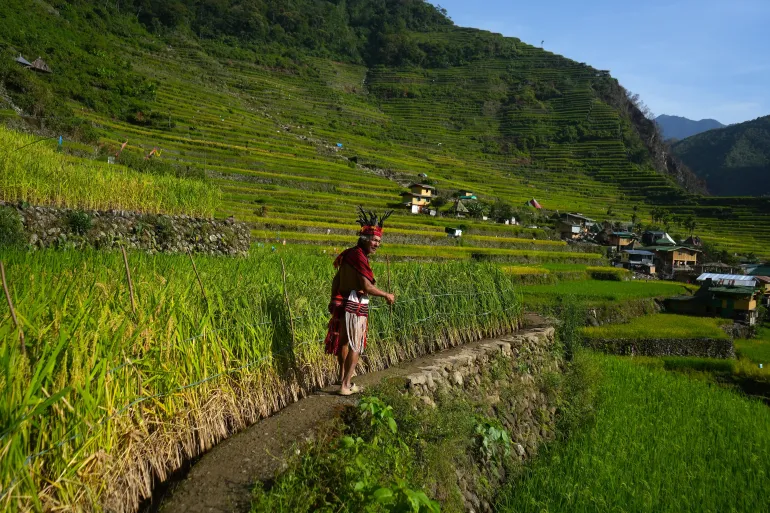
Apu Penneng, an Ifugao elder who owns one of the village’s largest tracts of ricefields, struts with youthful confidence along a narrow and steep path in this highland community 1,100 metres (3,608ft) above sea level.
Dressed in a traditional loincloth, shawl and headgear, he is heading for the Tanig, an elaborate morning ritual before the harvest begins. At a courtyard next to rows of huts, dozens of village women also gather for the Bullogan chi Munbotoh, the procession to the harvest site.
Against the glow of the rising sun, the centuries-old terraces finally come in full view as if cascading from the sky. The fields of Tinawon rice grains, moist from the drizzle the night before, glimmer like morsels of gold ready for picking.
But the otherwise majestic landscape is punctuated by the sight of collapsed earth and boulders, right in the middle of the terraces.
Village elder Apu Penneng, who is regarded as the custodian of his family’s vast rice paddies in Batad, heads to the harvest site during this year’s Tinawon rice harvest festival [Ted Regencia/Al Jazeera]
In November last year, Super Typhoon Fung-wong triggered a landslide that killed two locals and demolished one of the centuries-old canals irrigating the rice paddies. About 2.2 hectares (5.4 acres) of rice fields were damaged, affecting 150 farmers.
“It was the worst we’ve seen here,” Apu Penneng calmly said, as he pointed to a deforested patch of land above the terraces. From afar, it looked like it had been slashed with a giant blade.
The wreckage has been an unwelcome reminder for villagers of the destructive nature of extreme weather conditions, which have been increasing in frequency in recent years.
Batad was also struck with landslides in 2011, 2023 and 2025. With the emerging threat of this year’s Super El Nino, a climate phenomenon that increases global temperatures and drives more extreme weather and rainfall patterns, the Ifugao people worry about more damage to come.
A wide crack marking the path of a deadly landslide in November 2025 remains visible in the upper left corner of the terraces, as dozens of female residents of Batad join in the Bullogan chi Munbotoh, the traditional procession to the harvest site [Ted Regencia/Al Jazeera]
Across the world, 80 percent of UNESCO’s World Heritage Sites are facing climate-induced stress, according to an August 2025 study published in the scientific journal Nature.
The study found that UNESCO sites in low and middle-income countries receive the least conservation support, making them even more vulnerable to harsh climatic conditions. It added that in tropical monsoon areas, those conditions include record-breaking heatwaves, extended droughts and sudden drenching rainfall – much like what struck Batad in November 2025.
“Climate change is really aggravating the situation on the ground,” said lawyer Marlon Martin, head of the Save the Ifugao Terraces Movement (SITMO).
For the rice terraces to stay intact and stable, the soil needs to maintain a certain level of moisture year-round. But because of recent bouts of dry spells, deep cracks have developed, making the terraces prone to erosion, said Martin.
“When sudden bursts of rain occur, the water would seep into the cracks too abruptly, resulting in erosion” and even soil collapse, he added, warning that the Super El Nino could only mean more trouble ahead.
Batad resident Joel Langihon, 52, arranges piles of rocks and mud to fortify a damaged portion of his family’s rice paddy that was washed out as a result of Super Typhoon Fung-wong last November [Ted Regencia/Al Jazeera]
According to Steve Baccay, head of Ifugao’s Provincial Agriculture and Environment Office, an equivalent of $500,000 is needed for the restoration work in Batad following last November’s landslide.
Since the disaster, Batad residents themselves have come together a few times to do voluntary communal work called bachang to fix the demolished irrigation canal.
The social welfare and labour departments have also extended emergency food and cash assistance to affected farmers. However, additional national government aid is unlikely until the next fiscal year.
Climate change is nothing new, and for centuries people in Ifugao have adapted to the changes using Indigenous engineering techniques to protect the terraces, said Martin. But for Batad to withstand more frequent and more extreme weather, national intervention is needed, he added.
Batad village chairman Romeo Heppog (standing left) said it is crucial for the Philippine government to allocate enough funds to speed up the repair of the rice terraces [Ted Regencia/Al Jazeera]
For Batad village chief Romeo Heppog and his family, the rice terraces are not just a source of their livelihood, but part of their identity and their way of life.
Organising the annual rice harvest festival is his way of honouring their ancestors and renewing their “sacred oath” to preserve the terraces for the generations to come, he said.
At the Tanig pre-harvest sacred ritual, Heppog watches closely alongside Apu Penneng as Apu Buy-a Nadyug, Batad’s chief Indigenous priest known as Mumbaki, leads the harvest rituals, including the pouring and drinking of fresh rice wine.
Tinawon, meaning ‘once a year’, is Batad’s heirloom organic rice harvested only once annually [Ted Regencia/Al Jazeera]
Hunched on the ground next to a pair of wooden Bulul, which embody invisible spiritual beings of the Ifugaos, the octogenarian Apu Buy-a Nadyug recites verses seeking blessings and protection for the harvest.
With the help of another village elder, Apu Penneng then leads the slaughter of chickens as a symbolic offering to Ifugao ancestors and the spiritual beings.
In one of the final acts of the hour-long sacred ritual, Mumbaki Apu Buy-a Nadyug then scrutinises the guts of the chicken, and pronounces another year of “bountiful harvest”.
Apu Penneng and Heppog then lead the banging of gongs signifying merriment and the start of the joyful harvest.
Apu Buy-a Nadyug [centre], the chief Indigenous priest of Batad, joins two other village elders during the Tanig, a blessing ritual before the start of the harvest festival [Ted Regencia/Al Jazeera]
For a moment, the worries of the villagers of Batad are drowned out by the loud rhythmic sound that has been passed from generation to generation.
Apu Penneng then proceeds to his ricefield for the harvest. Amid the uncertainties for his community, his face beams with pride as he gazes at the panoramic view of Batad.
From a distance, the 2,702 metres (8,865ft) Mount Amuyao, the country’s 10th highest peak, towers over Batad, as if guarding it from the threats of nature.
“We will get through this,” said Apu Penneng.
Marlon Martin, head of the Save the Ifugao Terraces Movement, said Batad farmers need regular subsidies to encourage them to continue farming while also financially sustaining their families [Ted Regencia/Al Jazeera]
JENNIFER Lopez’s marriage to Ben Affleck was a “publicity stunt” engineered to revive her star power, her first husband has claimed.
The Latina pop diva, 57, wed actor Ben in 2022 — exactly 20 years after the superstar couple infamously called off their first wedding.
Jennifer Lopez’s marriage to Ben Affleck was a ‘publicity stunt’, her first husband has claimedCredit: GettyOjani Noa claims J-Lo tried to wed Ben to revive her star powerCredit: Getty
But in an exclusive interview, Cuban-born personal trainer Ojani Noa, 52, said: “That marriage was a publicity stunt. She needed people to talk about her again.”
Jennifer married Ojani in February 1997, following a whirlwind romance.
Sign up for the Showbiz newsletter
Thank you!
Ojani, who lives in Florida, has said the seeds of her diva behaviour were sown long before she became a household name.
He said: “She was emotional when I did romantic things and insecure about her acting.”
J-Lo married Ojani in February 1997, following a whirlwind romanceCredit: Rex FeaturesLopez and Affleck married in 2022 and split in 2024Credit: Getty
Ojani scoffs at the carefully manufactured working-class narrative, alleging that the Jennifer he met had lived a remarkably comfortable, middle-class life.
And he says the Jennifer he knew was a “sweet naive young woman”.
He said: “She was working on a TV show at 18. She had money and her mum was a teacher. She is a fake.”
Shares of China’s leading memory chipmaker, CXMT, formerly ChangXin Memory Technologies, surged more than 500% in their Shanghai market debut on Monday, highlighting strong investor demand for China’s semiconductor sector.
CXMT raised 57.92B yuan ($8.6B) by selling shares at 8.66 yuan apiece
It was a glimpse of an old couple sharing a tender moment in the bustling horchatería that drew me into one of Valencia’s most storied culinary traditions. As he sipped his milky horchata de chufa and a white crescent moon appeared on his coiffed moustache, they shared a soft laugh and she dabbed it away from his upper lip.
“There’s no fixed time to drink horchata,” the lady said. “As long we have at least one every day.”
In Valencia, this refreshing, creamy, non-alcoholic drink is so beloved it is nicknamed “white gold”, and grand parlours dedicated to making it are still going strong in the city’s most sought-after locations. These often historic, traditional places are called horchaterías (or orxateriasin Valencian) and there are dozens dotted around the region.
Production is authorised in 16 towns in the Valencia region, with the quaint town of Alboraya (Alboraia in Valencian), about 45 minutes’ walk from Valencia old town, acknowledged as its birthplace and global capital. Here, buried in the low-lying, fertile fields around the town, you’ll find the drink’s principal ingredient: the chufa.
Chufas, known as tiger nuts in English, have been cultivated in Valencia for more than 1,000 years. They look like wooden raisins but taste nutty and slightly sweet when eaten raw. Tiger nuts are not actually nuts, but tubers of a grass-like plant from the sedge family. Valencia’s agricultural zone north of the city produces 5.3m to 8m kilograms of dried tiger nuts a year. Most of the harvesting takes place in spring to ensure ample supply for the balmy summer months.
‘The horchata is darker, creamier and richer than most’ … a table at Horchatería De Santa Catalina in Valencia.
To turn the wrinkly tubers into horchata, chufas are cleaned, soaked and crushed, then mixed with water. Nowadays, cinnamon, lemon or orange zest and sugar are added to boost the flavour.
Alboraya is also the birthplace of horchata’s companion: the farton, a long, cigar-shaped pastry glazed with sugar, created in the 1960s by the Polo family to dip in and mop up every last drop of horchata from the bottom of the glass. Some stay loyal to its humble predecessor, rosquilletas (breadsticks), which are less absorbent but an intriguingly salty, anise-flavoured counterpart to horchata’s sweetness nonetheless.
Leaving Alboraya with a bellyful of the indulgent combination, I weighed the task of finding the perfect horchatería. It felt wrong to split up horchata from its farton, so I would consider both. Horchaterías tend to offer three versions of horchata: líquida (liquid), granizada (semi-frozen slush) or mixta (a blend of liquid and slush). It would be the traditional classic líquida for me.
In Valencia, there are hundreds of places serving horchata and fartons, but I wanted tradition and old-world charm – places that exist only to make horchata, not as an afterthought to spiced lattes or ice-cream. After sifting out the cafes, coffeehouses and ice-cream parlours, a handwritten list on a single sheet of A4 remained.
Horchatería Fabián
It’s early evening in the old town, and the narrow shopping alley leading to my first stop, family-run Horchatería Fabián, is filled with tourists and an after-work crowd. Past bustling taverns and restaurant terraces, I glimpse its entrance and the date it was founded: 1975. Sounds promising, but something is missing. Where are the customers?
Although the place is empty, the staff are distracted and cold. The horchata they unwillingly produce is over-sweet, almost artificial tasting, and the farton is parched and crumbles on to the plate. Horchata seeps into its pores nicely when I dip it into the glass, but the overriding sensation is a numbing sweetness.
I slink out of the unwelcoming room, back on to the busy street and into a local tavern, fearing my high expectations for this jaunt are misplaced. Horchata €3, 4/10 Farton €1, 3/10
Horchatería Daniel
The next day, I spy the queue spilling out of the glass-panelled room at Horchatería Daniel. This is arguably the most well-known horchatería company in Valencia, founded in 1949 and still a family business, with three locations in Valencia.
I visit all three. The original, and the largest, is in Alboraya, decked with wooden tables and a constant flow of regulars. In its basement, production of horchata and fartons begins at 5am for here and its other locations – one in the famous Mercado de Colón and the third in a grand parlour in the centre of the old town, near to Plaza de la Reina.
That’s where I wait now, warmed by the evening sun, before I’m shuffled into a grand, airy room and handed a glass from a cluttered tray.
I can barely hear myself think over the noise of chatter and glasses clinking. The horchata is creamy and only moderately sweet. Together with the traditional farton, it’s easy to see why this is still one of the most popular horchaterías in town. Giddy, I order its newest farton creation – coated in a layer of chocolate, raspberries and crushed pistachios. Its dry interior and disjointed melange of flavours bring me back down to earth. Stick with the old favourites here and you can’t go wrong. Horchata €1.95, 6.5/10 Farton 85 cents, 6/10
Horchatería Santabárbara
South from the old town the streets widen out into sun-filled, palm-lined avenues leading to the suburb of Montolivet, where neighbourhood favourite Horchatería Santabárbara has been in situ for four years.
Most tables are busy, but this does not deter the manager, Rafa, from skipping between them to pat regulars on the back and run through each step of horchata production with wide-eyed tourists. By the time he reaches our table, my glass – which is refreshing but a little too sweet – is empty.
“Try this,” Rafa commands, passing me a new glass. “This is the original horchata, no sugar, no nothing. Just chufa and water.” It’s a revelation. The overburdening sugary aftertaste is gone, and what’s left is a clean, refreshing natural drink that sings above the mediocrity of the sweetened version. Pair it with its spongy, glazed farton and you’ll want to join the sea of smiling regulars coming back for more. Horchata €2.50, 7/10 Farton 80 cents, 6.5/10
Horchatería de Santa Catalina
In the shadow of the stunning 17th-century baroque bell tower of the Santa Catalina Church in the old town, Horchatería de Santa Catalina is the grandest of them all.
A tight entrance decorated with ceramic tiles from Manises opens into a grand dining room packed with marble tables. A curved wooden staircase leads into an equally beautiful room upstairs – both are heaving when I arrive in the evening.
A chilled white glass and a longer farton dusted with icing sugar arrives on the table. Like the locals around me, I don’t hesitate. The farton melts in my mouth, while the horchata is darker, creamier and richer than most. It is a delightful combination. The place itself is a class act in one of the city’s most beautiful neighbourhoods. Horchata €4, 8/10 Farton €1.55, 6.5/10
Horchatería Mari Toñi
North of the river in residential La Saïdia is another neighbourhood favourite, Horchatería Mari Toñi. It’s just a few minutes from artsy Benimaclet and on the way to Alboraya, if you’re leaving from the old town.
Opening at 6.15am, it’s the first place in town to get a horchata and stays busy until it closes 15 hours later. Fartons are freshly made each morning and initially they look dry. The sugar glazing seems to wilt rather than crack. But the first bite proves looks aren’t everything – they are light and fluffy, perfectly porous to the creamy horchata produced in this charming, authentic location. Horchata €3, 6/10 Farton 80 cents, 7.5/10
On the move? The takeaway alternative
Horchatería Mon Orxata.
In more than 20 visits to different Valencian horchaterías, I watched as horchata was decanted into unbranded buckets and large flasks, conducted away from the main floor. In Alboraya, at both Horchatería Panach and Horchatería El Sariers, at least 10 litres of horchata were transported out by three families in under 10 minutes.
In the city, two standout takeaway alternatives emerged. Across most central plazas in Valencia, Món Orxata is bringing back a lost 400-year-old tradition of selling unpasteurised horchata from street carts. Its horchata is clean, crisp and one of the most refreshing on the hottest of days.
Pair it with the orange-infused farton, made with fermented dough by award-winning Valencia-born pastry chef Migue Señorís at Gelática Ice Concept near the coast, and enjoy both during a sunset walk along the city’s beach. Món Orxata horchata €3.30, 7/10 Gelática Ice Concept farton €1.90, 8.5/10
He introduced Bowen to wheelchair racing, in which she immediately won medals, before she found a passion for throwing.
“I had just started shot put, discus and javelin when Covid happened. I went back after and was thrown into a competition and I won best performer,” she said.
“So I was like, ‘oh, I’m okay at it’ and then I just kept going and fell in love with it.”
It is hard to imagine there will be many spectators at Glasgow’s Scotstoun Stadium more proud than Bowen’s parents who still regard themselves “lucky” to have her.
“We nearly lost her at 13 months old, but she’s here and doing amazing,” said her mother Anne.
“Growing up, she wanted to be like her siblings and would say, ‘they can ride a bike, why can’t I ride a bike?’ So she did.”
Bowen’s determination is only matched by the efforts of her parents to make sure their daughter can achieve her potential in the sport.
Her father Martin built a specially adapted bicycle so she could ride with her family, then moved onto bigger things when he built a campervan to ensure his daughter could to travel to athletics competitions.
“She has just come on so well. Nothing has ever been an obstacle for her,” said Martin.
“Whatever you put ahead of her, she’ll try and do it and if she can’t do it, she’ll get around it.”
Now Bowen hopes she can make her parents proud when they cheer her on in Glasgow.
“It’s the biggest competition I’ve ever done and I’m just happy to be there,” she said.
“It would mean the world to me to win a medal but just being there, I’m so thankful.”
Protesters shut roads and ministries in Tripoli as a civil disobedience campaign over power cuts spreads to more areas.
Published On 27 Jul 202627 Jul 2026
Protesters in Libya’s capital, Tripoli, have shut down roads and public buildings across the city as a civil disobedience campaign, launched over prolonged power cuts and high electricity rates, spread to more districts.
Crowds blocked the coastal road in Janzour, west of Tripoli, late on Sunday, and gathered outside the West Tripoli power station, closing the local municipal council building in protest at the prolonged outages.
Recommended Stories
list of 4 itemsend of list
Videos posted online, verified by Al Jazeera shows, protesters burning tyres and closing down major roads elsewhere in the capital.
The footage also shows protesters unloading a truck loaded with dirt in front of the Ministry of Foreign Affairs in the district of Sater Turba in Tripoli to close it.
The mostly young protesters also shut the offices of state telecoms operator Libyana in the district of Souq Al-Jumaa, according to the DPA news agency, carrying banners criticising Prime Minister Abdulhamid al-Dabaiba.
The campaign was launched by the Souq Al-Jumaa Movement, which has opposed the Government of National Unity since May 2025. It said its aim was to “completely paralyse the government” rather than disrupt ordinary life.
It called for accountability over alleged corruption and for the dissolution of Libya’s existing political institutions, including the government, the House of Representatives, the State Council and the Presidential Council.
The unrest also spread to the district of Tajoura, where the Tajoura Families and Youth Movement said it would begin a full boycott of state institutions from Monday, rejecting both the unity government and the House of Representatives.
It said in a statement that the call was in protest against the deterioration of services, citing the decline in electricity, water, education and health services, alongside continuing fuel and liquidity crises and medicine shortages, while “officials are preoccupied with political conflicts”.
There was no immediate comment from the Government of National Unity.
Blackouts in Tripoli and other areas have reached up to ten hours a day, prompting the state-run General Electricity Company to reinstate load-shedding measures after two years of relative network stability.
The outages have compounded existing public frustration over inflation, currency instability, fuel and liquidity shortages, and Libya’s protracted political deadlock.
Separately, Massad Boulos, the White House adviser for African affairs, said he had held a “productive call” with Dabaiba on Sunday to discuss steps toward Libyan unification, including security cooperation between the country’s eastern and western factions.
“We also reviewed opportunities to further coordination and interoperability between Libyan forces and Africom,” Boulos said on X, adding that Washington remained committed to supporting Libya’s unification “in order to achieve durable peace, stability and prosperity”.
UK Prime Minister Andy Burnham told Laura Kuenssberg his dog Axel will be staying in Greater Manchester and will not be moving to No 10 Downing Street.
Burnham revealed he does not think his poodle-mix would get along with Larry the cat, who has lived at the residence for 15 years.
Watch Panorama Andy Burnham: The Laura Kuenssberg Interview on iPlayer from 06:00BST, and on BBC One at 20:00BST on Mon 27 Jul 2026.
Coronation Street fans will see Cassie Plummer take extreme action to expose Ross Wilkes on Monday, while there’s good news for the Platts and Sam confides in Idris
20:31, 26 Jul 2026Updated 20:31, 26 Jul 2026
Coronation Street fans will see Cassie Plummer take extreme action to expose Ross Wilkes(Image: ITV)
After Sunday night’s drama-filled episode of Coronation Street, three spoilers for the next episode tease what happens next.
While the episode drops on ITVX on Monday morning, it’s not airing until 8:30pm on ITV1 that sam evening. But if you want a glimpse of what’s happening int he latest visit to Weatherfield, look no further.
Three key things happen tonight in the fallout to Sunday’s episode, where Cassie Plummer grew tired of people worshiping newcomer Ross Wilkes. We also saw Shona Platt fume at her sister Jodie Ramsay over her lies, kicking her out.
Then there was Sam settling in after returning home from hospital. The drama continues on Monday evening, with some good news for Shona and her husband David Platt.
Shona and David finally bring their baby daughter Harper home, after months in hospital. Before Harper was born, doctors warned Shona and David that there was a mass on the baby’s neck.
Amid discussions over whether to have surgery, Shona went into labour after a car crash during the Corriedale crossover. Harper was very poorly for a while, and has been gradually getting better in hospital over the past few months.
Monday will see Harper brought home, with her family ready to welcome her. But Sam is left upset when he’s not given the chance to hold his baby cousin, with David reluctant.
Jodie also makes a return, with a bombshell for Shona – but will all be forgiven? Speaking of Sam, he’s still getting back on track after he was recently hospitalised, after suffering with his mental health.
He had a breakdown, and after experiencing psychosis he’s been having treatment. On Monday, we see him opening up to Leanne Battersby’s new man Idris Nazir.
Idris shares his own experience with anxiety and how he overcame it as a teen. Sam appreciates the chat with Idris, feeling much better after sharing his worries with him.
The third big spoiler for Monday is Cassie’s plot against Ross. Cassie will drop a bombshell later in the week about Ross, the father of her son Tyrone.
Before that, we know she’s tried to set him up by exposing his past. Monday could be the moment this happens, after the mystery message she got on her phone on Sunday.
Monday’s spoilers reveal that Cassie takes a call from one of Ross’s exes, a woman named Alison. Ross overhears and recognises her name.
Cassie summons Steve, Tyrone, Tracy and Ross to the Rovers and introduces them to Alison Shave, Ross’s ex-girlfriend and reveals how Ross stole money from her and threatened her. How will Ross react, and is he finally exposed?
Synopsys (SNPS) has expanded its collaboration with Nvidia (NVDA) to introduce new agentic AI capabilities, headlined by an autonomous chip verification agent that speeds time-to-validated RTL by up to 50x while boosting coverage by 20%.
Demonstrating Synopsys’ first fully autonomous computer-aided engineering
England’s Adam Ramsay-Peaty will have the chance to defend his men’s 50m breaststroke title at the Commonwealth Games after qualifying third fastest for the final.
The 31-year-old, who broke down in tears after taking bronze in the 100m on Saturday night, finished second in his semi-final with a time of 26.82 seconds.
World record holder Ramsay-Peaty will have to close the gap to South Africa’s Michael Houlie – who set the pace with 26.61 – when he races in the final on Monday at 20:07 BST.
Australia’s 100m breaststroke gold medallist Sam Williamson and Jersey’s silver medallist Filip Nowacki will also line up in the final.
“I think I’ve still got a little bit more to grow. I think there was a massive lesson in yesterday,” three-time Olympic gold medallist Ramsay-Peaty told BBC Sport.
“I can’t change anything obviously, so we have to get over it. I also know the trajectory I have to be on now and it’s a little bit different to what I thought it was.
“I’ve also got to remind myself that I haven’t swam a championships in two years. I put a lot of expectation on myself coming into this games.
“But as you know, the best athletes in the world, you don’t do it in training, you have to actually compete well and that is a skill on its own and we have to get used to that.
“I’m enjoying it and we’ll have to see what that result is tomorrow.”
Ramsay-Peaty’s team-mate Max Morgan finished sixth in the same semi-final race and was eliminated.





















![Batad village chairman Romeo Heppog [standing left] said it is crucial for the national government of the Philippines to allocate enough funds in order to speed up the repair of the rice terraces following the November 2025 landslide.](https://i0.wp.com/www.aljazeera.com/wp-content/uploads/2026/07/PHOTO5-1784532889.jpg?w=640&ssl=1)

![Apu Buy-a Nadyug [centre], the chief indigenous priest of Batad, joins two other village elders during the Tanig, a blessing ritual before the start of the harvest festival.](https://i0.wp.com/www.aljazeera.com/wp-content/uploads/2026/07/PHOTO2-1784532893.jpg?w=640&ssl=1)