Extreme weather disrupted the US’s 250th anniversary celebrations, forcing evacuations, cancellations and delays. Despite setbacks including a National Mall evacuation and a fireworks display setting the Brooklyn Bridge on fire, Trump called the day ‘one of the most joyous and glorious’ in US history.
But England do not have to remove direct play from their game entirely.
By managing the space and speed of the game, they can pick their moments to release the likes of Noni Madueke, Anthony Gordon, Marcus Rashford and Jude Bellingham.
If England do opt to play more slowly, they will also be hoping these ‘boring’ spells of play work to silence the Mexican home crowd.
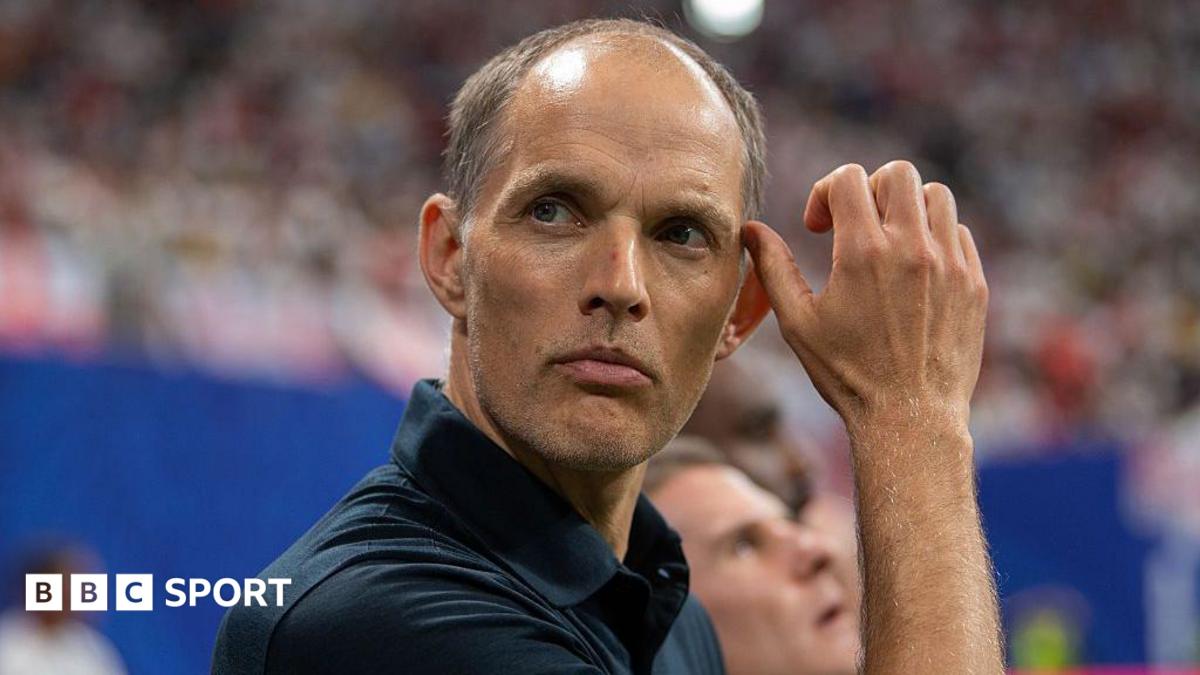
The decision to pick a squad of similar profiles might be one of the more astute decisions Tuchel has made as England boss when it comes to this game too.
With a tactical plan in mind, making five substitutions that do not alter the dynamic of the game greatly, but instead reinforce the plan with freshness and energy as Mexico begin to tire could be the difference.
This could indeed be a match full of mini-games and picking moments in which to change things will be key.
Tuchel, as we’ve seen throughout his club career, and most recently against DR Congo, has a knack for getting mid-game tweaks right but the many variables of the game against Mexico make this one of his toughest challenges yet.
A WIZZ AIR pilot-in-training has revealed all about what it is like to work for the airline including the flying tips and tricks you need to know.
Having joined Wizz Air back in 2024 as cabin crew, Sebastien Harrison is now training to be a pilot through Wizz Air’s Cabin Crew to Captain programme.
Sign up for the Travel newsletter
Thank you!
And from spending years in the air, he has loads of tips for travellers.
When it comes to flying itself, the 20-year-old had many tips including where the best place to sit on Wizz Air planes.
He said: “The best seats in the plane for turbulence are on or about row 15; this is because if the plane is pitching up or dowduringne turbulence in the middle of the plane there is least movement.”
And for nervous fliers, Sebastien says: “If you are a first-time or nervous flyer, let the crew know as soon as you board.
“They are excellent at providing reassurance and will check in on you throughout the flight.”
And when it comes to managing tiredness when you reach your destination, Sebastien recommends not napping before your bedtime so you get solid sleep and avoid “pushing back the tiredness”.
He added: “Go to the gym at maybe 5pm because it’s going to make you tired and then you can go to sleep a bit earlier.”
And of course, there are a number of destinations Seb is excited to see and recommends visiting.
He revealed: “I’m very excited for the Greek destinations like Santorini, because obviously it’s an island with very beautiful weather and beautiful scenery.”
And if you want to head to a really unique destination then Seb recommends Tromso in Northern Norway.
He shared: “It’s in the Arctic Circle and it’s very beautiful, set in a valley surrounded by mountains.
“It is some of the best scenery I’ve seen in the world.
“You can see the Northern Lights, head skiing, spot whales and see reindeer – it’s just a very interesting place with loads to do.”
He added that the destination is also super unique because in the summer you get midnight sun, and in the winter you get polar night, where the sun remains below the horizon between late November and mid-January.
For a more beachy destination, Sebastien suggests heading to Catania in Sicily – which is Italy‘s sunniest destination.
He said: “There’s a volcano which you can see from the airport and the beaches are really cool.”
Having grown up only 10 minutes from Glasgow Airport in Scotland, Seb knew he wanted to one day become a pilot.
He said: “As a child I was always excited to literally leave the earth – you’re defying gravity.
“I think being able to literally fly planes is very rewarding.”
Then in 2024, his dream of working on planes came true as he got a job as Wizz Air cabin crew.
He said: “Being cabin crew has been a very useful experience.”
“Obviously I went into cabin crew knowing that I wanted to become a pilot and I just thought as cabin crew I would have the opportunity to speak to pilots a lot and really gain a lot of insight about the job.
“I knew that if I was cabin crew, I’d kind of see the job firsthand – it’s a very sociable job being cabin crew too.
“When I’m a pilot, it’s probably going to make me a better pilot as well because I’m going to understand what the cabin crew do as well, but some pilots they don’t 100 per cent appreciate it.”
“At the moment we’re only doing classroom theory training and we’re in the classroom for about four hours a day on average.
“There’s quite a lot of testing maybe about two or three tests a week just to make sure that you’re progressing – there’s 13 theory exams that you have to pass in total across around two years.”
RIGHT on the front and offering gorgeous views, Weymouth’s elegant Hotel Prince Regent is a focal point for tourists who flock to be beside the seaside.
Venture inside, and there are 75 comfy bedrooms with a cosy lounge that’s ideal for whiling away the afternoon. It’s the perfect home away from home.
Sign up for the Travel newsletter
Thank you!
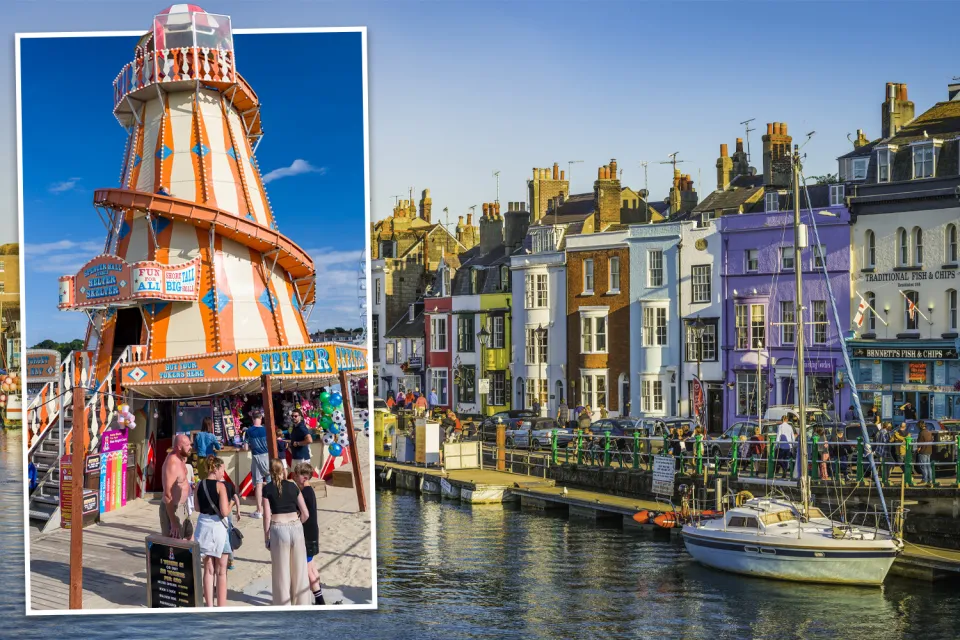
The town’s colourful waterfront harbourCredit: GettyEnjoy a ride on the old-fashioned Helter Skelter in Weymouth’s amusement parkCredit: Getty
And best of all, I was chauffeured straight to the front door by coach.
This Georgian-style property is one of several charming hotels bookable through Daish’s Holidays, a UK coach-break specialist for the over-sixties.
It certainly helps to remove all the faff from transportation, food and entertainment.
Stays include pick-up from a number of accessible spots around the UK (or you can drive yourself), plus there’s regular entertainment and half-board accommodation, meaning lunch is the only meal you need to spend on.
My Weymouth base is handy for the Esplanade, which runs for well over a mile to the harbour.
A stroll along here into the old town and colourful working port area takes ten minutes or so with lots of seats and shelters along the way, or you can grab the bus from the stop just outside.
Bikes are not allowed in the summer, making it a pleasure to stroll.
Be sure to enjoy time in the old town and admire the wonderfully preserved buildings, including The Tudor House Museum on the south of the harbour.
The Nothe Fort stands guard nearby and it’s a gentle climb from the old town – or a steeper climb by steps – but well worth a visit for the views and a peep into the history of the place.
If walking is big on your list then you’re in luck as this area is on the famous Jurassic coast, with fossils dating back 185 million years.
I consider myself to be a bit of an old fossil, so it was apt that I treated myself to a local souvenir, a tiny fossilised local ammonite – a mere 175million years old. I came away feeling I am a spring chicken in comparison!
If you’re feeling a little peckish, the fishing harbour has great pubs and restaurants with lots of outdoor tables.
The boats land their catch on the dockside where you will find a wonderful fresh fish market.
They will even ice pack some for taking home should you wish.
Keep your eyes peeled for the road bridge.
Built in 1930 to connect the north and south side of the harbour, it opens up every two hours to allow taller boats to enter the marina.
In high season there is also a rowboat ferry service you can use instead of taking the bridge.
In the evening there was no need to leave the hotel, as the nightly entertainment in the Crown Ball Room was top-notch with a mix of very good singers, as well as bingo and quizzes.
Before heading home, I couldn’t resist a ride on the old-fashioned Helter Skelter in Weymouth’s amusement park.
I last slid down one when I was under 11, so I was not surprised when the ticket man gave me a look.
Excited, I carried the mat up and whizzed down.
Although it is just as high, the ride seemed to have shrunk over the years.
So, of course, I had to go up one more time, just because I could.
GO: WEYMOUTH
SHORT breaks start from £319 in total for self-drive stays or £339 including coach pick up.
Until I went to Oslo recently, the best cinnamon roll I’d ever eaten was in Chicago — at the venerable Swedish-American diner Ann Sather, where a milky sugar glaze used to be drizzled onto the still-warm, pillowy pastry right at the table. (These days the rolls are glazed in the kitchen after they’re baked.)
Los Angeles, of course, also has show-stopping cinnamon rolls. This spring, Food senior editor Danielle Dorsey, with help from Stephanie Breijo, Jenn Harris and Angela Osorio, put together a guide to 11 of L.A.’s most intriguing cinnamon rolls, including the hip-hop-inspired over-the-top creations at All About the Cinnamon, the sweet-savory buns with honey and sesame seeds at Modu and the tallboy “cinnamon goo”-filled rolls topped with caramel-toffee sauce from SweetBoy. Harris also recommends the especially decadent cinnamon roll served during brunch at Baltaire in Brentwood, where the cake-size roll is wheeled out on a cart and “slathered with frosting at the table.”
In Oslo, however, I discovered a cinnamon bun that stripped away the excess and let the essence of the spiced dough reveal itself.
Daegens, a tiny cafe and bakery hidden away in Oslo’s pretty Lilleborg neighborhood, is run by Anta Stinnerbom, a young entrepreneur who spent several months sharpening his coffee knowledge and barista skills at the acclaimed roastery Tim Wendelboe and is now deep into his explorations of sourdough baking. It’s the sourdough, in fact, that gives the Daegens cinnamon bun its character.
Baker and barista Anta Stinnerbom at his Daegens cafe in Oslo.
(Laurie Ochoa / Los Angeles Times)
Even more than Stinnerbom’s cardamom bun — which some praise as the best in Oslo — the more elemental cinnamon notes, enhanced with lemon zest and juice, allow the sourdough’s multifaceted dimensions to come through. Not just tang, but the taste of time.
When you can’t decide between Anta Stinnerbom’s cardamom bun, front, or cinnamon bun at Daegens in Oslo … get both.
(Laurie Ochoa / Los Angeles Times)
Daegens’ BMO (bolle med ost), which the Oslo bakery makes with a good seeded sourdough roll topped with fresh butter and cheese.
(Laurie Ochoa / Los Angeles Times)
The discovery of a great sourdough cinnamon bun is just one of the reasons I love to travel.
Lately, I’ve been absorbed in the world of Norwegian writer Karl Ove Knausgaard, both for his most recent novel, “The School of Night,” which features a grand-scale narcissist captured in a Faustian downfall, and for “So Much Longing in So Little Space,” which documents the author’s search for the meaning of art through his encounters with the work of Edvard Munch. At Oslo’s boldly vertical, 13-story Munch museum and Bergen’s more contemplative Munch collection at the Kode museum’s Rasmus Meyer galleries, I was able to see for myself the wild stylistic leaps taken by the artist before and after “The Scream,” including the paintings he did for the women’s cafeteria at Oslo’s Freia chocolate factory.
But it was only after the first of many good meals in Oslo that I started to get a feel for the city. As I wrote in the introduction to our new collection of summer vacation dining guides, traveling with an eater’s mindset gives us a deeper understanding of places we’ve read about in cookbooks and novels or seen in movies and paintings. Wandering markets, eating at food stalls, sitting among locals and fellow travelers at the restaurants that embody a city or its surrounding countryside … these are the ways we absorb the rhythm of a place. Its flavors and ways of living are revealed to us over dinner or even a simple morning coffee accompanied by a beautifully baked cinnamon bun.
If you go …
(Giacomo Bagnara / For The Times)
For those of us lucky enough to write about food for a living, each vacation is a chance to add one more spot on our individualized maps of the world’s great places to eat. And this year, we’re sharing our personal maps and notes on places we’ve loved during our wanderings with readers.
Given that these suggestions are not meant to be definitive — they are our personal favorites — we know that there are many other worthy places to explore. We’d love to hear from you if you have your own personal picks. We’ve built a form for entering your favorites from around the world and will publish the results in the coming weeks.
We’ve also introduced a new way to save your favorite recommendations and build your own custom guides. Times senior product manager Jeff Poirier explains the new feature, which includes maps and is as simple to use as hitting the “save” button on any individual entry.
Introducing …
Los Angeles Times cooking editor Cody Reiss
(Stephanie Breijo / Los Angeles Times )
We are thrilled to introduce our new cooking editor Cody Reiss, who learned most of what he knows about cooking professionally at Alice Waters’ Chez Panisse Cafe in Berkeley and did time behind the counter at Murray’s Cheese in New York. He also had a part in Eva Victor‘s “Sorry, Baby” and played himself in the very funny “narrative cooking short” “Breakfast for Liz.” Read more about Cody in his hello to readers, which describes the teaching approach he’s aiming for in the food videos he’ll be doing. And check out the videos he released this week on why you should throw away your salt shaker and how to cut a tomato. Finally, with Cody taking over our Cooking Newsletter — which is moving from Sundays to Fridays so that you can have more time to plan your weekend cooking — now is an excellent time to sign up for the free weekly dispatch if you’re not already a subscriber. This week, he provides two crucial lessons on salt and why you might be using it wrong.
Chilaquiles heaven
Chilaquiles, molletes and salsas at Taquearte in Pico Rivera.
(Jason Armond / Los Angeles Times)
Restaurant critic Jenn Harris’ latest review is about Pico Rivera’s Taquearte, which happens to be one of my favorite places to get chilaquiles and a loaded Mexico City-style taco campechano, which made our 101 Best L.A. Tacos list. I first heard about Taquearte from my mom and her friend Pablo. (She went to high school in Pico Rivera and lives in nearby Whittier.) Harris bookmarked the place when Eater’s Bill Esparza wrote about the chilaquiles as L.A.’s best. Harris wholeheartedly agrees and loved how “the chips … were noticeably thin, delicate but sturdy enough to retain their crunch. They hovered in a magical state of limbo between wet and dry, crisp and wilted.”
Gil, who is credited with helping the late Joe Miller‘s now-closed Joe’s Restaurant in Venice gain a Michelin star, and went on to co-found the much-missed Tacos Punta Cabras and Hamburguesas Punta Cabras, as well as the pop-up Supper Liberation Front, established the Alta California restaurants Mírame in Beverly Hills, which closed in 2023, and the still-running Mírate in Los Feliz, which Gil left after a legal dispute. He also established the rooftop raw bar Mother of Pearl, which is closed at the moment, and the teppanyaki restaurant Maison Kasai, both at the downtown L.A. dining collection Level 8.
Chef Katsuya Uechi in 2016 at the 10th anniversary celebration of the Brentwood location of Katsuya.
(Michael Kovac / Getty Images for Katsuya)
Late last week, we also got word that Katsuya Uechi, the sushi master whose name has become synonymous with the global Katsuya brand, has died at the age of 67.
“The Okinawa-born chef altered the DNA of the L.A. sushi scene with his innovative, genre-bending creations,” writes Melody Xu of the chef who first came to prominence for many L.A. diners at Sushi Katsu-ya in Studio City, which he opened in 1997. “Spicy tuna crispy rice, which he debuted in the early 2000s, has since become a modern staple in sushi restaurants across the U.S.”
You’re reading Tasting Notes
Our L.A. Times restaurant experts share insights and off-the-cuff takes on where they’re eating right now.
By continuing, you agree to our Terms of Service, which include arbitration and a class action waiver. You agree that we and our third-party vendors may collect and use your information, including through cookies, pixels and similar technologies, for the purposes set forth in our Privacy Policy such as personalizing your experience and ads.
Also …
Amid the puestas of Olvera Street in downtown Los Angeles.
(Etienne Laurent/For The Times)
Many were hoping that the World Cup would provide an incentive for downtown Los Angeles’ city leaders and other stakeholders to invest in the area’s infrastructure. But it’s sobering to read reporter Angela Osorio’s look at the sad state of downtown’s once-bustling Olvera Street — with even taquito mecca Cielito Lindo facing a precarious financial situation that has left it shuttered … we hope only temporarily.
Melody Xu talked with the owners of some of L.A.’s prominent Venezuelan restaurants about how they are connecting people and fundraising for survivors of the twin earthquakes. At publication time, the parents of Full Arepas’ Kelly Montano, writes Xu, “who were on vacation in La Guaira when the quakes happened, [were] among the more than 40,600 people still unaccounted for.”
“For the first time in its history,” writes Stephanie Breijo, the Michelin Guide awarded a Mexican restaurant three stars.” That honor went to Val Cantú‘s Californios in San Francisco. Breijo has all of the news from the announcement of Michelin’s California guide, including the new two-star designation for Los Angeles’ Kato.
And Hailey Branson-Potts has the story of the beer queen of Mendocino County, Lost Coast Brewery’s Barbara Groom, one of the country’s first female microbrew owners, who turns 80 this year.
Eat your way across L.A.
Like what you’re reading? Sign up to get it in your inbox every week.
By continuing, you agree to our Terms of Service, which include arbitration and a class action waiver. You agree that we and our third-party vendors may collect and use your information, including through cookies, pixels and similar technologies, for the purposes set forth in our Privacy Policy such as personalizing your experience and ads.
Can you tell the story of America in 10 movies? Maybe so — at least a version of it — if you stick to moments of serious national friction and those rare instances when a filmmaker meets the mood with a true vision. If you want tearjerkers about red, white and blue triumph, this is not your list (although the Space Race drama “The Right Stuff” always does the trick). Meanwhile, our current state of disunity and division will find its own expressions in time; start with “Civil War,” though it’s a bit too soon. Instead, we thought about historical pivot points and built a list of classics, along with a few alternatives for each title.
The Great Depression
Henry Fonda, left, in the 1940 film “The Grapes of Wrath,” directed by John Ford.
(20th Century-Fox)
‘The Grapes of Wrath’ (1940)
America is a broken place in John Ford’s poetically charged adaptation of the Steinbeck novel: a downbeat landscape of Oklahoma dust storms, long shadows and the teetering sight of a car turned into a truck transporting a family westward. This will always be one of those essential movies about a particular national dream — not just a myth — of emerging from economic catastrophe and being reborn in the promised land of California. Ford, with the instincts of a showman, foregrounded hope on the horizon via inspired performances by Henry Fonda and Jane Darwell’s pragmatic Ma Joad getting the final word (“We keep a’coming…”). But there is still so much darkness in “The Grapes of Wrath,” especially in its scenes of John Qualen’s Muley Graves, crumpled on the ground, suddenly a squatter on his own piece of land. He’s no match for the bulldozers. As long as the idea remains that property gets its purpose from those tending it, working it, nourishing it and dying on it, the film will never become a relic. Its binding values of labor and community remain relevant, even if today’s Hollywood rarely speaks to them. — Joshua Rothkopf
See also: “Modern Times,” “Sullivan’s Travels,” “Bonnie and Clyde”
Postwar optimism
Michael Hall, from left, Teresa Wright, Myrna Loy and Fredric March in the 1946 movie “The Best Years of Our Lives.”
(Samuel Goldwyn Productions)
‘The Best Years of Our Lives’ (1946)
World War II ended with ticker-tape parades and soaring expectations. William Wyler’s sweeping drama arrived just as America was beginning to reckon with what coming home actually meant. Harold Russell, a real-life veteran who lost both hands during the war, plays a sailor struggling to imagine a future with the woman he loves. Dana Andrews is a decorated bombardier who returns to the same soda fountain job he held before the war, discovering that military heroism doesn’t necessarily translate into peacetime opportunity. The movie became one of the biggest hits of 1946 because it understood a challenge facing millions of Americans: The war had given the country a common purpose but peace meant each person had to find their own. Yet for all its honesty about that dislocation, the film remains remarkably hopeful. Its faith that people can rebuild their lives and start over feels almost radical today. Seen from the distance of eight decades, it feels like a dispatch from a country that had just survived a catastrophe and still believed its best days lay ahead. — Josh Rottenberg
See also: “It’s a Wonderful Life,” “Miracle on 34th Street,” “Giant”
Capitalism, unchecked
Daniel Day-Lewis in the 2007 movie “There Will Be Blood,” directed by Paul Thomas Anderson.
(Paramount Vantage)
‘There Will Be Blood’ (2007)
“I drink your milkshake — I drink it up!” Oil man Daniel Plainview’s deranged metaphor, allegedly taken from congressional transcripts from the 1920s Teapot Dome scandal in which Interior Secretary Albert Fall defended the practice of directional oil drilling, a.k.a. drainage, became a catchphrase when “There Will Be Blood” arrived in 2007. Elon Musk probably has a T-shirt in the back of a drawer emblazoned with the line. It epitomizes the American ethos of extracting resources that belong to someone else and then brutally bragging about the beatdown. Paul Thomas Anderson’s movie is part history lesson, part horror film, which, when it comes to chronicling the American experience, feels like the perfect blend. The oil man’s exploits take place more than a century ago, but seem particularly relevant now with Musk newly minted as the world’s first trillionaire and income inequality rapidly widening. Plainview confesses, “I have a competition in me. I want no one else to succeed.” It neatly sums up the endgame in which we find ourselves — and his vanquishing of the preacher Eli speaks to what we worship in the United States. He’s finished and sometimes it feels like we are too. — Glenn Whipp
See also: “The Wolf of Wall Street,” “WALL-E,” “Sorry to Bother You”
Post-Vietnam/Watergate cynicism
‘Nashville’ (1975)
Ronee Blakley in the 1975 movie “Nashville,” directed by Robert Altman.
(Paramount Pictures)
Could one movie capture the breadth of emotions around this year’s 250th anniversary celebrations as well as Robert Altman did the bicentennial? As the country was still reeling from the assassinations and discord of the 1960s, the despair of Vietnam and the scandals of Nixon and Watergate, there was a soul-baring uncertainty to what it even meant to be an American. With 24 main characters interwoven around the town of Nashville, home of country music and intersecting political undercurrents, the film tries to make sense of the chaos. While the conspiracy thrillers of the 1970s are seen as the most direct response to the moral malaise of the moment, Altman finds an unexpected way to gild his innate skepticism with a light filigree of hope, a complex quilt of characters capturing the contradictions inherent in the American identity. And yet as cynical and beaten-down as the film’s viewpoint can often be, there is still a spark of decency and perseverance. That is the America that Altman celebrates, even as he lets no one off the hook. Few films capture the hum of life in all its maddening beauty quite like this one. — Mark Olsen
See also: “Blow Out,” “The Conversation,” “The Parallax View”
‘Network’ (1976)
Robert Duvall, Faye Dunaway and William Holden in the 1976 movie “Network,” directed by Sidney Lumet.
(MGM Studios / Getty Images)
Much has been made over the years about how prescient this film was, as if screenwriter Paddy Chayefsky and director Sidney Lumet saw the constrictive dangers of corporate consolidation in the distance and came back to warn us. But if these rumbling premonitions have remained true across multiple eras of an ever-evolving media landscape, have we really learned anything? Perhaps we really do live in a “demented slaughterhouse of a world,” as the unhinged newsman Howard Beale says in one of his apocalyptic broadcasts, and have all along. Maybe what “Network” nails most of all is apathy: that even the most righteously committed can have their heads turned from their true goals and then struggle to get back on track. What may be most shocking rewatching the film today is the suspicion that some current media figures see the maneuverings of villainous executives played by Robert Duvall and Faye Dunaway and somehow think that they were the heroes of the story all along. Not even Lumet or Chayefsky would have predicted that. — Mark Olsen
See also: “Broadcast News,” “The Insider,” “Nightcrawler”
Gentrification and racial tensions
Spike Lee, left, and Danny Aiello in the 1989 movie “Do the Right Thing.”
(Universal Pictures)
‘Do the Right Thing’ (1989)
Spike Lee’s masterpiece was met with hand-wringing when it arrived in theaters 37 summers ago, with white critics fretting how “urban audiences” would react to its shocking ending of brutality and angry protest. “If some audiences go wild, [Lee] is partly responsible,” critic David Denby wrote in New York Magazine. Nobody rioted. “Do the Right Thing” made some people uncomfortable because it told truths from a Black perspective that they did not want to accept. That unwillingness to have hard conversations and learn from them remains evident today as we prepare to celebrate our nation’s 250th birthday without an honest reckoning of the anguish that lies beneath the storybook version of America’s founding. The paradox is that Lee’s movie is itself that conversation, its characters engaging in a series of arguments, evenhanded and empathetic, about how race affects the lives we lead in America. Until our country engages in that dialogue, nothing will change. For a moment, the Black Lives Matter movement signaled a willingness to grapple with the past. But the pendulum swung and we’re back to days of “Driving Miss Daisy” denial. But “Do the Right Thing” remains with us, its urgency and relevance undiminished, waiting for an America open to listen and live up to its idealized aspirations. — Glenn Whipp
See also: “Get Out,” “12 Years a Slave,” “Fruitvale Station”
The rise of the yuppies
Roddy Piper, left, and Keith David in the 1988 movie “They Live,” directed by John Carpenter.
(Universal Pictures)
‘They Live’ (1988)
“I believe in America,” the guy says, but we’re not in the private office of some all-powerful Corleone. Rather, this is a working man in a plaid shirt and denim. As the sun sets on his sad L.A. tent city (inspired by the real-life Justiceville), he only wants what everyone else wants: a hard day’s work for fair pay and the chance to get ahead. “It’ll come,” he says, serenely. He doesn’t know he’s in a John Carpenter movie — Roddy Piper was never put to better on-screen use — and that those keeping him down are, in fact, aliens hypnotizing us into an unseeing stupor as they carve up the world’s resources. Released at the tail end of Reaganomics, Carpenter’s most politically forward thriller now feels like a decoder ring for ’80s-era greed, detachment, complacency and ruthlessness. Carpenter meant us to to see his bug-eyed space invaders as yuppies. He also intended us to question whether we were selling each other out, just to join the “human power elite” for a tiny piece of pie. “They Live” looms just on the other side of appreciated. Many genre films say what our more prestigious dramas can’t about the creeping forces that are changing America; this one still feels like it’s getting away with murder. — Joshua Rothkopf
See also: “American Psycho,” “Invasion of the Body Snatchers,” “After Hours”
’80s women in the workplace
Harrison Ford, left, Melanie Griffith and Sigourney Weaver in the 1988 movie “Working Girl.”
(20th Century Fox)
‘Working Girl’ (1988)
Mike Nichols’ zeitgeisty hit opens on a shot of the Statue of Liberty hoisting her torch like a paycheck. Down by her green toes, Melanie Griffith’s Staten Island secretary Tess McGill ferries to Manhattan to type memos for important men. Tess has a job, not a career. But 1988 was the first year that female undergraduates outnumbered men on college campuses. Even without a degree, Tess is ambitious to climb the corporate ladder — once she swaps out her practical white sneakers for a pair of pumps. The script by Kevin Wade throws up hurdles of sexism and class snobbery, never sugarcoating how Tess’ male co-workers treat her like a blow-up doll. (Critics dismissed Griffith, too, until this performance earned her an Oscar nomination.) Yet note how her Ivy League-educated boss Katharine (Sigourney Weaver) isn’t immune to harassment either; she’s just mastered how to parry her colleagues’ advances. Fantastic as it is, “Working Girl’s” core flaw is that Tess can’t snag her seat at the conference table until she yanks Katharine out of it. Weaver said that when she showed the script to real-life working girls on Wall Street, they asked, “This awful secretary steals your man, wears your clothes, takes your office — who’s going to sympathize with her?” Millions did and still do. — Amy Nicholson
See also: “9 to 5,” “Baby Boom,” “Silkwood”
Digital alienation
Justin Timberlake, left, and Jesse Eisenberg in the 2010 movie “The Social Network,” directed by David Fincher.
(Merrick Morton / Columbia TriStar )
‘The Social Network’ (2010)
In 2010, Apple introduced the iPad, Instagram launched its app and Silicon Valley still looked to many tech-besotted Americans like a force for progress. At a moment when technology companies were promising to bring people closer together, David Fincher’s acerbic drama about the founding of Facebook had a darker theory about why people wanted to connect in the first place. Aaron Sorkin’s screenplay traces Facebook’s creation back to a very old human desire: getting noticed by the people who matter. Instead of celebrating innovation, the movie unfolds through lawsuits and broken friendships. At Harvard, Jesse Eisenberg’s Mark Zuckerberg fixates on the exclusive final clubs that won’t quite accept him. It’s a surprisingly sour approach for a Facebook origin story. Years before social media became a political battleground, Fincher was focused on something more basic — the fear that everyone else had been invited to a party you couldn’t get into. The movie ends with Zuckerberg alone at a computer, refreshing the Facebook page of the woman who dumped him and waiting for her to accept his friend request. More than 15 years later, it’s still hard to think of a better image for the loneliness and insecurity lurking beneath our connected lives. — Josh Rottenberg
See also: “Her,” “Eighth Grade,” “Ingrid Goes West”
Post-9/11 anxieties
A scene from the 2004 movie “Team America: World Police,” directed by Trey Parker.
(Melinda Sue Gordon / Paramount Pictures)
‘Team America: World Police’ (2004)
To add drama to the ennui over the 2000 U.S. presidential campaign, “South Park” creators Trey Parker and Matt Stone pledged to immediately produce a silly sitcom about the winner. “That’s My Bush!” ran for eight episodes in the spring of 2001, with plans to spin off into a feature called “George W. Bush and the Secret of the Glass Tiger.” But the Sept. 11 attacks changed everything, including the work of satirists. Parker and Stone pivoted to “Team America: World Police,” a bomb-throwing comedy about our country’s napalm-strength combination of naiveté and swagger. To prevent an attack hailed as “9/11 times a thousand,” a squadron of puppet commandos blows up the planet themselves. The dark joke is these marionettes aren’t behaving much differently than the action heroes who have shaped the national id — it’s a through-the-looking-glass lens into our Hollywoodized view of the globe, down to the Parisian streets made of cobblestone croissants. At once straight-faced, sacrilegious and scatological, “Team America” needed nine tries to eke past the MPAA. Yet in divided times, it was a unifier. The political spectrum from Kim Jong Il to Alec Baldwin got equally savaged and the film’s eff-yeah patriotic theme song (“Rock and roll! The internet! Slavery!”) could even be heard blaring from real-life tanks in Fallujah. — Amy Nicholson
See also: “Eddington,” “Idiocracy,” “Harold & Kumar Escape From Guantanamo Bay”
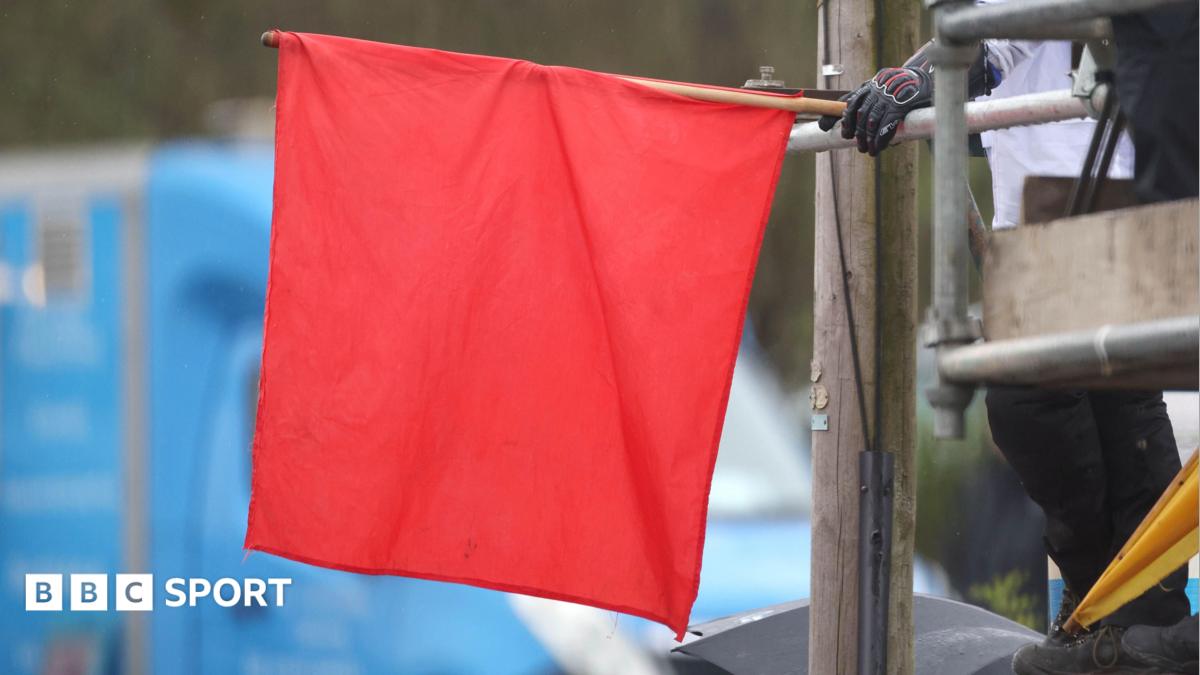
The Skerries 100 motorcycle road race has been abandoned after a fatal accident on Sunday.
The incident happened in the Junior Support race, which was the second race of the day.
A statement from the Loughshinny Motorcycle Supporters Club, which organises the races, said it “regrets to announced a competitor has sadly passed away following a tragic accident that occurred during a race”.
The organisers added the rider’s next of kin were being informed and more details would be released.
The Skerries 100, which takes place in County Dublin, was returning for the first time in four years after road racing was impacted by rising insurance costs in the Republic of Ireland.
Northern Ireland rider William Dunlop was the last rider to lose their life at the Skerries 100 in 2018.
On Saturday, his brother Michael, who has a record 36 wins at the Isle of Man TT, won the opening race at the 2026 races before the fatal accident.
The fatality is the third death at a road race on the island of Ireland in 2026.
On Friday, Irish rider James Walsh passed away after an accident at the Tandragee 100 road race in Northern Ireland six days earlier.
In May, Czech Republic rider Kamil Holan died in an accident in Superbike qualifying at the North West 200 international road race at Station Corner.
Later that month, English rider Dan Ingham was killed in an accident during a practice session at the Isle of Man TT.
Indonesian troops have recovered the body of American pilot Nicholas Goselin from the restive Papua region after he was killed by separatist ‘Bakusip’ rebels last week. The operation involved a 10-member team and three helicopters.
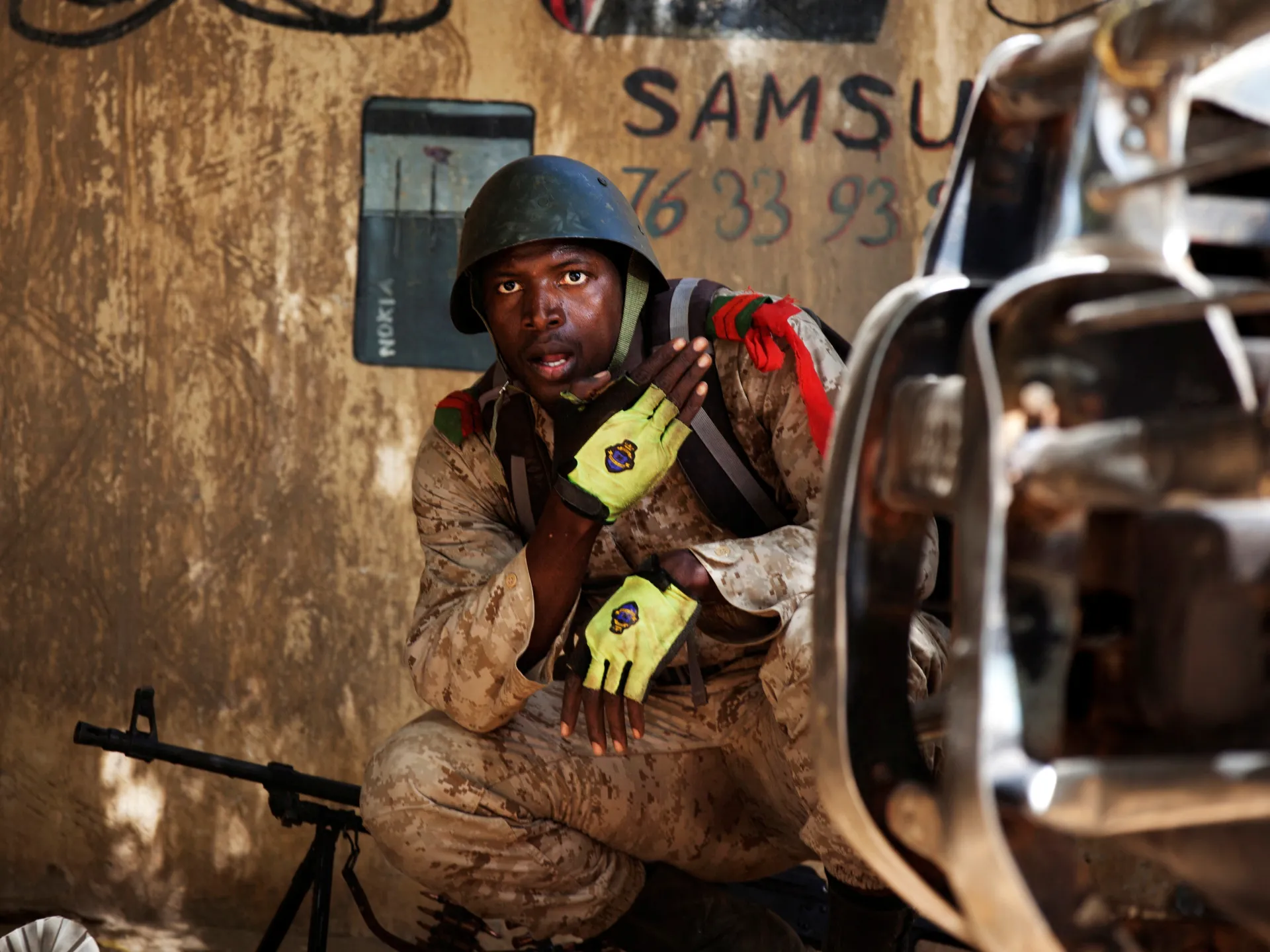
Armed groups in military-run Mali have launched renewed coordinated attacks in several towns across the country.
The assaults on Saturday targeted army positions, including a base used by its troops and Russian forces.
Recommended Stories
list of 3 itemsend of list
A separatist Tuareg-led group and a regional al-Qaeda affiliate claimed responsibility for the attacks, which took place more than two months after the capital, Bamako, and several other locations were targeted in a coordinated assault by the same groups.
Here’s what to know:
Where did the attacks take place?
In an initial statement, the Malian army confirmed attacks on five positions: in Aguelhok, Anefis and Gao in the north; Sevare in central Mali; and Kenieroba in the south.
The army later said the situation was “totally under control”, adding that 20 “terrorists” were killed in Sevare and six in Gao. One pro-government fighter was killed in Gao and four others were wounded, it said.
In a separate statement later on Saturday, the army said it had also repelled attacks in the central towns of Konna and Somadougou with the help of Africa Corps, a Russian-backed paramilitary group.
Videos posted on the Africa Corps’ Telegram channel on Sunday purported to show a drone attack targeting a rebel position in Anefis and a Russian soldier on top of a building at a base in Aguelhok. The footage could not be independently verified.
In Kenieroba, a major prison complex where members of Mali’s political opposition are held reportedly came under attack.
Who was behind the attacks?
A spokesperson for the Tuareg-dominated rebel group, the Azawad Liberation Front (FLA), told the Reuters news agency it was involved in the attacks.
The al-Qaeda-linked group Jama’at Nusrat al-Islam wal-Muslimin (JNIM) also claimed responsibility, saying in a statement it had attacked and taken control of at least seven positions held by the army or pro-government fighters. The claims could not be independently verified.
Who are these groups?
JNIM was formed in 2017 as a coalition between the Saharan branch of al-Qaeda in the Islamic Maghreb and Malian armed groups Ansar Dine, Katina Macina and al-Mourabitoun.
It is led by Iyad Ag Ghali, who founded Ansar Dine in 2012, and has fighters across the border areas of Mali, Niger and Burkina Faso.
JNIM’s main goal is to capture and control territory and to expel Western influences in its region of control. Some analysts suggested that JNIM may be seeking to control major cities and, ultimately, to govern the country as a whole.
The FLA was formed in 2024 from a coalition of separatist forces in northern Mali. Led by Alghabass Ag Intalla, it is engaging in the latest in a series of rebellions by the Tuareg fighting for self-determination and independence.
While often at odds, fighters from the two groups or their predecessors have also partnered on occasion to fight common enemies, namely Mali’s government and its allies.
In late April, they were behind a series of coordinated attacks that targeted locations across Mali and killed Defence Minister Sadio Camara.
What is Mali’s security situation?
Since gaining independence in 1960, Mali has experienced alternating cycles of political stability and instability, punctuated by rebellions, financial woes and military coups.
In 2012, ethnic Tuareg separatists, allied with fighters from an al-Qaeda offshoot, launched a rebellion that took control of the country’s north.
But the al-Qaeda-linked fighters swiftly pushed out the Tuareg rebels and seized key northern cities, triggering French military intervention in early 2013 at the request of the government.
In September 2013, Ibrahim Boubacar Keita was elected as Mali’s president. Under his government, the United Nations brokered a peace deal between the government and northern Tuareg groups fighting for an independent Azawad in 2015.
Keita was deposed in a military coup in August 2020 after months of mass protests over severe economic woes and the poor security situation.
In September that year, retired colonel and former Defence Minister Bah Ndaw was sworn in as interim president and coup leader Assimi Goita as vice president to lead a transitional government.
In May 2021, Goita seized power in a second coup and pledged to restore security. His government cut ties with Mali’s former colonial ruler, France, and expelled French forces and UN peacekeepers.
In December 2021, Goita invited the Russian mercenary group Wagner to support the military government in its fight against armed groups.
In June last year, Wagner said it would withdraw from Mali after more than three and a half years deployed there, but Russian mercenaries have remained in the country under the banner of the Africa Corps.
Alex Vines, the Africa programme director at the European Council on Foreign Relations, told Al Jazeera the recent attacks have squeezed the control of Malian authorities into “securitised enclaves and corridors”.
“This has not improved overall security,” he said, noting that armed groups in the country have been coordinating their military action rather than competing with each other.
“In this context, foreign military support has limited success,” he added.
‘SHREKKING’, or being rejected by someone less attractive, is the latest bollocks Gen Z dating term, so what’s next? Any of these five are reasonable contenders.
Tescoing
Tescoing will refer to those relationships where you want to go out with someone more high-maintenance but you’re too poor. Instead, you’ll resort to whoever is convenient yet still offers a reasonable romantic experience. It won’t feel incredible, but at least you’re not dating the human equivalent of Happy Shopper.
Librarying
You’d be forgiven for thinking that librarying will refer to dates that are kept hush-hush. Not so. Instead, it will describe people who forget they have a date, then keep renewing their sweetheart’s interest at the last minute before incurring incremental emotional fees. Currently this is described with the words ‘lazy’, ‘forgetful’ and ‘twat’.
Adrian Chilesing
Inspired by his deranged newspaper columns, Adrian Chiles-ers are those people who attract you against your better judgement with the weird shit they come out with. One day they’ll be banging on about their frustrations with cheese rinds, the next they’ll be waxing lyrical about their fascination with Punch and Judy. You’ll never figure them out, and that’s part of their strange appeal.
Chessing
Dates that move in specific, pre-determined ways will be referred to as chessing. These relationships will also be slow-moving, a bit of a headache, and your friends will get bored of waiting to see if they actually go anywhere. After what feels like forever, they will grind to a halt and both parties will walk away in a huff.
Uber Eatsing
This will refer to those times where someone arranges for a date to arrive at their front door, before hooking up with them then feeling bloated and ashamed the next morning. Said hook-ups will be sworn off, unless the singleton in question hasn’t had them round for a few months and they’ve had a tough week at work.
Viewers need to be quick if they want to catch the harrowing tale exploring the “twisted depth of maternal love”
The film tells the story of two young girls found abandoned(Image: Universal Pictures)
There are now just days left to stream a film viewers believe “everyone should watch” once in their lifetime.
Currently available on Netflix, the story centres around two children, Victoria and Lily, who are found abandoned in a dilapidated house in the woods years after the death of their parents. Experts are left completely baffled as to how they have survived with seemingly no food or resources around them.
The sisters are brought in to a safe facility where they are monitored by childhood behaviourists who believe they have likely been alone for five years.
In order to reintroduce them into society, the girls are taken in by their uncle Lucas (Nikolaj Coster-Waldau) and his partner Annabel (Jessica Chastain) who intend to provide them a safe and loving environment at home. However, they soon learn there is more to the case than first meets the eye.
The film in question is 2013 horror, Mama, which will be leaving Netflix at the end of the month. Viewers have until July 25 to stream it before it’s gone for good.
As per the official synopsis: “Annabel and Lucas are faced with the challenge of raising his young nieces that were left alone in the forest for five years…. but how alone were they?”
Alongside Oscar-winner Chastain and Game of Thrones alum Coster-Waldau, the cast also includes revered horror actor Javier Botet. Mama was directed by Andy Muschietti, famed for his work on the IT horror franchise, with Guillermo Del Toro also on board as an executive producer.
Content cannot be displayed without consent
At time of writing the film has a Rotten Tomatoes score of 63 per cent from critics and 55 per cent from audiences.
“Mama expands a chilling short film into a full-length feature exploring the dark, twisted depth of maternal love,” penned one viewer, as a second declared: “Everyone should watch this movie at least once.”
“This is actually a pretty good movie,” said another. “I don’t understand the hate from some critics. I haven’t seen this movie in many years, but it has aged very well. It also has a lot of great scenes and creepy moments.”
Meanwhile a fourth watcher added: “I don’t know what it is about it, but this film somehow stuck with me. In my opinion, it does not get the credit it is due. Very atmospheric movie.”
Mama is now streaming on Netflix. It will leave the platform on July 25.
The high school football season is more than a month away, but fans seeking an early preview of teams with top quarterbacks, top receivers and top defensive backs have come to appreciate the annual Edison Battle at the Beach seven-on-seven passing tournament that is taking place on Saturday.
It’s the unofficial kickoff to teams getting serious because so many quality teams compete from 9 a.m. through the early afternoon in Huntington Beach, with food, music and lots of banter among parents. You know how much players like to rise up against players with better “star” rankings than them, and this is the tournament to see it play out.
It’s not about wins and losses — it’s about players testing themselves against great competition. This tournament has built credibility by showcasing teams competing at a high level, then shaking hands afterward.
Schedule for Edison passing tournament on July 11. My official start to high school football season. It’s that entertaining. pic.twitter.com/RsoSfcoCCy
Mission Viejo has won the last two tournaments at Edison, but the Diablos are spending the summer trying to figure out who will start at quarterback. Sophomore Brett Burnor and senior Nash McElree, a transfer from Texas, are competing. Could coach Chad Johnson really alternate quarterbacks like he did two years ago with Luke Fahey and Drai Trudeau?
“You never know,” he said.
The Trinity League is represented by St. John Bosco, Santa Margarita, Orange Lutheran, JSerra and Servite. Corona Centennial and its new quarterback, Jaden Jefferson, a transfer from L.A. Cathedral, is entered, along with San Diego’s likely No. 1 team, Cathedral Catholic, which boasts the No. 1 player in the state in USC commit Honor Fa’alave-Johnson. His appearance alone should attract plenty of Trojans fans, particularly for the 10:30 a.m. game against the likely No. 1 team in California, St. John Bosco.
Palos Verdes has four-year starter Ryan Rakowski at quarterback and standout defensive back Jalen Flowers. Rancho Cucamonga gets to show off many of its top skill-position players.
One interesting trend is that this tournament will feature some very good tight ends, a position that has become increasingly important in college football and the NFL but not so much in high school football in the era of spread offenses.
Mission Viejo’s Johnson said he has three tight ends with college offers, another rarity. He could join the Rams with his three-tight-end formation. He intends to use them against defenses that use odd-number fronts this fall. One of his most improved players is tight end Luke Karby, a Duke commit. Another is Arizona commit Max Markofski, who is 6 feet 4 and 228 pounds. Santa Margarita has tight end Luke Gazzaniga, a Kansas commit. Jaylin Smalls of Rancho Cucamonga is 6-4, 230 pounds and moving up recruiting boards.
July 11. Hayden Koo of Tustin vs. Bosco defensive backs at Edison. Bring the cameras. Let’s see who wins the battle. https://t.co/hthFjAJYgZ
This is the first opportunity for early clues as to how first-year coaches are doing at JSerra, Los Alamitos, Servite, Orange Lutheran, Long Beach Poly and Oaks Christian.
One of the always-interesting scenes is Edison coach Jeff Grady refusing to take the easy road when making the bracket, so he scheduled his team to open up against St. John Bosco at 9 a.m., perhaps hoping the Braves show up a little sleepy. Running back Maliq Allen has returned to the Braves after spending the spring at Inglewood.
Ocean View also is hosting a 32-team passing tournament in Huntington Beach on Saturday. San Clemente, San Juan Hills, Huntington Beach, Downey and Carson are the teams to watch.
Fearsome duo
Long Beach Poly might have the most decorated cornerback duo in JuJu Johnson, a UCLA commit, and Donte Wright, a Miami commit. Just watching them cover receivers on Saturday at Edison should be a highlight in itself. Johnson was injured last season, but few have raised their profile in the offseason more than him.
Poly is in Pool C and the duo gets to take on receivers from Capistrano Valley, San Diego Lincoln, Servite and Santa Margarita.
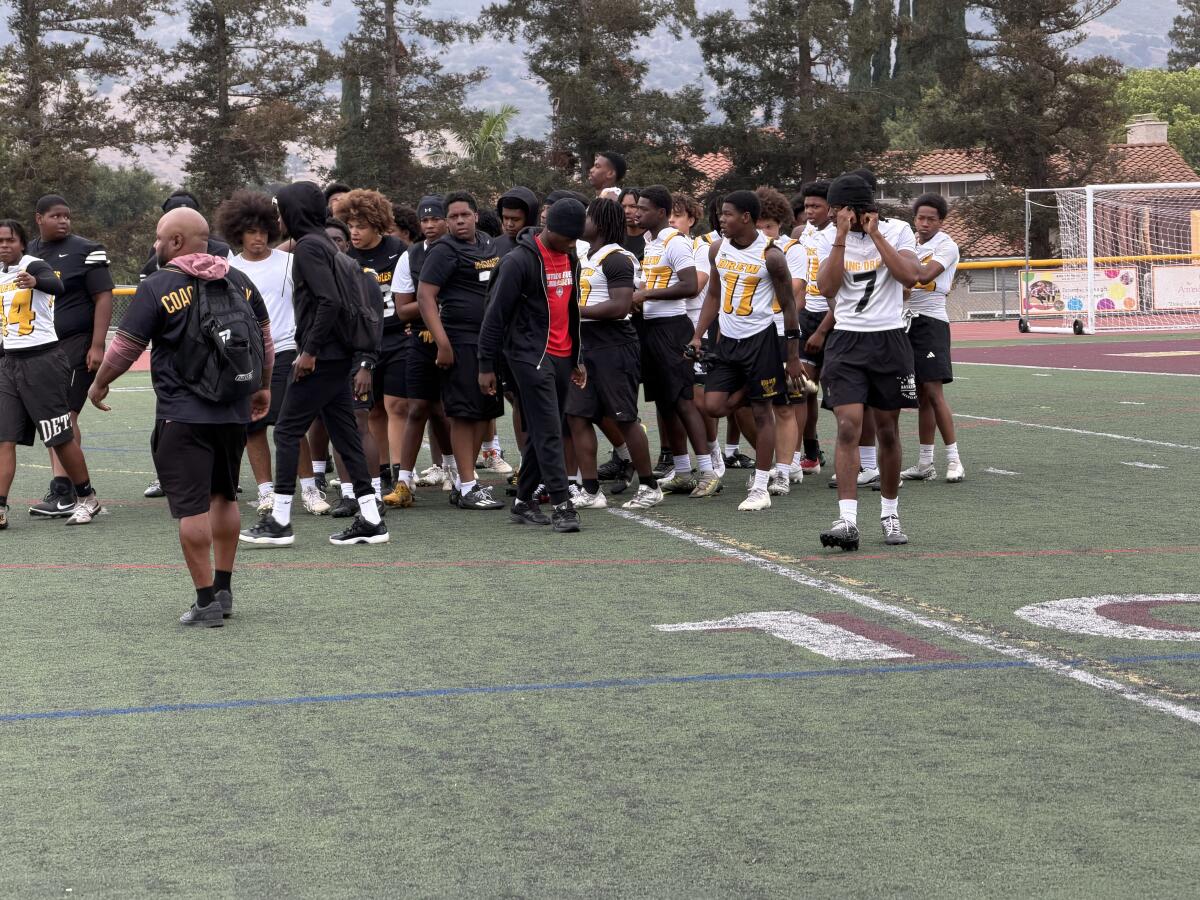
King/Drew fearing no one
King/Drew players participating in the Simi Valley tournament.
(Eric Sondheimer / Los Angeles Times)
This has been a fruitful summer for King/Drew of the City Section. The Golden Eagles have been driving around willing to play seven-on-seven against top Southern Section opponents, including visits to West Hills and Simi Valley.
It’s the same strategy Carson and Birmingham have taken to prepare for City Section play during the regular season. If you can compete with Southern Section teams, then you’ll do just fine against City Section opponents.
Makeo Smith, a 6-4, 265-pound sophomore lineman, figures to receive lots of attention after contributing as a freshman.
A factory of Celltrion in South Korea. The biopharmaceutical company saw its second-quarter profit surge more than 77% from a year ago. Photo by Celltrion
July 3 (UPI) — South Korea’s biopharmaceutical company Celltrion said Friday that its sales amounted to $840 million in the second quarter of this year, up 35.2% from a year earlier.
The firm noted that its operating income for the April-June period jumped 77.3% year-on-year to reach $280 million, lifting its operating profit margin to 33% from 25% a year ago.
Celltrion attributed the solid performance to an improved product mix and lower manufacturing costs. In particular, its newly launched products accounted for more than 60% of total revenue during the latest three months.
On the cost side, Celltrion said that profitability has gotbetter following the completion of post-merger integration. In late 2023, the Incheon-based company, located west of Seoul, merged with its sales affiliate, Celltrion Healthcare.
Celltrion expects growth momentum to strengthen in the second half, when the biosimilar industry typically benefits from increased government procurement deliveries and year-end inventory replenishment.
The company also plans to further broaden its pipeline of biosimilars and novel drugs beyond its current portfolio.
“This performance shows that our efforts to expand new products and improve profitability are beginning to deliver meaningful results, “Celltrion said in a statement.
“We expect stronger participation in major national tenders and continued growth from new products, which will be reflected more fully in the second half,” it added.
The share price of Celltrion rose 3.96% on the Seoul bourse on Friday, while the benchmark KOSPI gained 5.76%.
Farage served as Reform’s honorary president between March 2021 and June 2024. On 3 June 2024, he confirmed he was returning as party leader and standing in the general election. He became Clacton MP in July 2024.
Under parliamentary rules, new MPs must declare financial interests and “registrable benefits” received in the 12 months before their election.
The guidelines say purely personal gifts or benefits do not need to be registered.
When he became an MP, Farage registered a £9,253 trip to Belgium in April 2024 donated by Cottrell, and later added a £15,276 donation from Cottrell for a US domestic flight he provided in December 2024.
A spokesman for Farage said: “It comes as no surprise that the Sunday Times has chosen to publish this baseless and contrived story, covering a period of time when Nigel Farage was not even an active politician let alone an elected one, given that the newspaper backed the Labour Party at the last general election.
“Contrary to the story’s tone, no parliamentary rules have been broken.”
A source said Reform paid for Farage’s security and staff after his return to politics.
The source also denied Farage received accommodation from Cottrell – saying the MP did not stay at the London property.
The Parliamentary Standards Commissioner, Daniel Greenberg, is currently investigating whether Farage broke the rules over the £5m gift from British cryptocurrency investor Christopher Harborne in early 2024.
Farage has said Harborne gave him the money to pay for his personal security, adding the gift was “purely private” and “wasn’t political in any sense at all”.
Lib Dem MP Josh Babarinde has asked Greenberg to “get to the bottom” of the latest allegations linked to Farage’s support from Cottrell.
Babarinde has also asked Greenberg to confirm whether he will investigate the claims as part of the existing inquiry or as a separate matter.
A Labour Party spokesperson said: “Nigel Farage and Reform are engulfed in a huge and growing scandal.
“These new allegations of secret payments from a wealthy convicted criminal are on top of the ongoing scandal of his secret £5m gift from a crypto billionaire.
“How much money has he been given, what did his donors get in return, and why has he tried to cover them up and avoid legitimate questions?”
Responding to Jenrick’s interview, Labour said Reform “can’t shrug this scandal off and hope it goes away”.
I HAVE normally necked far too much Ouzo the night before to rise with the sun during a holiday in gorgeous Greece.
But my eyes are being opened, literally, to a much more wholesome and healthy way to start the day here on the island of Crete.
Sign up for the Travel newsletter
Thank you!
This Crete resort right on the beach has lagoon pools and island day trips, pictured Old Venetian HarbourCredit: GettySteve Corbett takes to the blue MedCredit: Supplied
While my downward dog should arguably be put down, as my balance has gone walkies, the sound of the Cretan Sea gently lapping at the shore does make a sunrise yoga session surprisingly satisfying.
Never mind sinking sambuca shots, this is how holidays should be — relaxing, restful and geared towards recuperation.
I’m staying at Giannoulis Santa Marina Plaza, a 4* adults-only hotel tailored to a quieter and more authentic Cretan vacation.
Superbly serene, with a calming, child-free environment, it’s right on the golden, sandy, Blue Flag-rated Agia Marina beach.
My double room is small but comfortably formed, with an ensuite bathroom, TV and compact balcony to enjoy the sunrise over Kri-Kri island (more on that later).
With just 51 rooms and suites at this boutique hotel, even at full occupancy you’ll always get a sun bed.
The food is as good as you’d expect in Greece — super souvlaki, terrific tzatziki, outstanding olive oil — but the jewel in the crown is the hospitality.
From reception staff to the waiters and cleaners, this family-run resort is full of welcoming faces, attentive and always ready with a friendly “kalimera” (good morning) or “kalispera” (good evening).
The majority of guests are couples, over 50, enjoying the easy-going vibe.
By day, the only activity is people rising from a sun lounger for a refreshing dip in the pool or sea.
By night, it’s all about a game of cards on your balcony or a casual al fresco dinner by candlelight.
Crucially, this tranquil base is only 20 minutes — by bus, right outside the hotel, or taxi — from Chania, Crete’s charming old town, where ancient architecture meets a more modern city.
It’s an easy-on-the-eye cultural hub, with shops carved into honey-coloured stone walls, restaurants, cute cafes and churches.
After a few relaxed hours searching for souvenirs down its narrow, cobbled streets and snapping away at the beautiful Venetian harbour and 16th-century lighthouse, it’s time for a change of location, as I head west along the coast to Giannoulis’s sister hotel, Cavo Spada.
A much larger complex, with 150 deluxe rooms and suites, this sporty 5* leisure and spa resort is more suited to active holidaymakers. With tennis and padel courts, an assault course, a running track and indoor and outdoor gyms kitted out with top-quality equipment, its facilities are so good that the Swedish Olympic team use it for their training camps.
You can take part in a calendar of events ranging from spinning to body combat.
Sprawling pool is great for relaxing eveningsCredit: SuppliedCavo Spada offers excellent dining facilitiesCredit: Supplied
But that’s not my idea of a holiday.
Instead, I take advantage of the all-inclusive board to sample the decent cocktail menu at the bar overlooking the huge lagoon pool at the heart of the resort.
After over-exerting my right arm with the repeated lifting of a pina colada from table to mouth, I head to the on-site spa for a full-body massage, followed by a sauna and steam room.
Clearly a gem of a resort for keep-fit couples, it’s also a good option for families, with a kids’ outdoor playground and indoor play room.
And it’s just a short taxi ride from Kolymbari port, where I clamber aboard a catamaran for a half-day at sea. Destination — Kri-Kri island.
Our deckhand tells us of the ancient Greek mythology that Kri-Kri — AKA Thodorou island — was created when a massive sea monster and its child were turned to stone by Crete’s protector Poseidon, God of the Sea.
Now it’s a breeding ground for the protected Kri-Kri wild goat.
And while anchoring up for some paddleboard play and a snorkel in clear azure water, it’s fun to see if you can spot any of the cliff-climbing goats.
Having worked up an appetite thanks to all that, well, relaxing, back at the hotel’s Azzuro restaurant I really get stuck into a sensational a-la-carte option with Michelin star-worthy food.
After another cocktail workout (my right arm really is doing the heavy lifting on this break), I educate myself with two mainstays of Greek culture.
A complimentary olive-oil tasting session (FYI: trust the Cretan chef and store your olive oil in the fridge) is followed by wine-tasting with the hotel’s maitre d’.
I could quite easily finish a bottle of the white — an indigenous Vidiano.
But like I have done since arriving in Crete, I’m taking it easy — I’ve got another yoga session at sunrise.
Relax in style at Cavo Spada spaCredit: Supplied
GO: Crete
GETTING/STAYING THERE: Seven nights’ half-board at Giannoulis Santa Marina Plaza is from £913pp, including flights from Birmingham on October 20, transfers and 20kg hold luggage.
Seven nights’ half-board at Giannoulis Cavo Spada Sports & Leisure Resort is from £782pp including flights from Bournemouth on October 9, transfers and 20kg hold luggage.
Taylor Swift was in tears during her wedding to Travis Kelce, it has been revealedCredit: GettyThe couple tied the knot at Madison Square Garden on FridayCredit: EPA
When asked if the couple cried, Robin replied: “Oh they cried… and they laughed, and they danced and they hugged and they kissed.”
Speaking to LBC news, she was then asked what the reception’s dinner was like.
Not giving too much away, Robin said there was “lots” of food and nice cake.
Taylor and Travis said “I do” on Friday in what guests have called a “deeply moving” ceremony just 10 months after the couple announced their engagement in August 2025.
Taylor’s aunt says the star ‘cried, laughed, danced, hugged and danced’ during their big dayCredit: GettyThe couple are yet to share pictures from inside the lavish nuptialsCredit: Getty
In an unusual move, the pair chose to have actor Adam Sandler officiate the proceedings while also ditching the traditional bridesmaids and groomsmen.
Instead, they had members of their families by their sides with the groom having his brother and former Philadelphia Eagles star Jason Kelce as best man and Taylor having her brother Austin be her man of honor.
In another unusual wedding detail, Swift reportedly walked down the aisle to a strings rendition of one of her own songs while Jason and Kylie Kelce’s daughters scattered petals.
At around 7:30pm, Travis and Taylor’s marriage was confirmed with huge purple screens reading “JUST&T MARRIED!” lit up outside of Madison Square Garden, roughly an hour after Taylor’s SUV was spotted pulling into the venue.
After the ceremony, the couple threw a fairytale-esque party on the lower level of MSG with the theme reportedly mixing Alice in Wonderland and Wizard of Oz.
Ed Sheeran, Karlie Kloss, Dakota Johnson, Bradley Cooper, Zoe Kravitz, Erin Andrews, Matthew Stafford and Graham Norton were all seen arriving to the day.
Brentford are nearing a move for Burnley forward Jaidon Anthony for a £15m fee rising to £17m with add-ons.
The 26-year-old is ready to sign a four-year contract with an option for an extra year and his medical is provisionally scheduled for Monday.
Anthony contributed nine goals and four assists across 38 appearances in all competitions last season, although that was not enough to prevent the Clarets from being relegated.
The Brentford move appeals to Anthony, who is from London and began his career in Arsenal‘s academy, while Bees manager Keith Andrews considers him a good fit for his style of play.
Anthony left Arsenal in 2016 without making an appearance for the senior team but then established himself at Bournemouth after loan spells at Weymouth and Leeds United.
He joined Burnley on loan from Bournemouth in 2024, with the move made permanent last summer following promotion to the Premier League, triggering an £8m obligation-to-buy clause.
Burnley were relegated after one season in the top flight and face West Ham in their first game back in the Championship on 16 August.
Brentford narrowly missed out on European qualification, finishing ninth on goal difference, and play Tottenham in their opening Premier League fixture.
Elyas Abu Safia says his father can barely breathe or speak after more than 555 days in Israeli prison.
Published On 5 Jul 20265 Jul 2026
The son of a prominent Palestinian doctor abducted and held by Israel without charge has issued an urgent appeal for his father’s release, warning that his health has sharply deteriorated after more than 555 days in prison, as a rights group warned that his life was in danger.
Elyas Abu Safia, the son of Dr Hussam Abu Safia, said in a video message on Sunday that his father, the director of Kamal Adwan Hospital in northern Gaza, showed signs of severe abuse after Israeli authorities transferred him to solitary confinement in a maximum-security prison.
Recommended Stories
list of 3 itemsend of list
“The day before yesterday, the lawyer Nasser Odeh managed to visit my father, where he told us painful details about this visit,” said Elyas, who is also a doctor.
“My father was unable to breathe. My father was unable to speak,” he said, adding: “His face was disfigured from the marks of torture and pain, and the blood he endured inside the prison, especially after the last court session held in Jerusalem.”
Israeli forces arrested Abu Safia at work on December 27, 2024, as they intensified their attacks on northern Gaza’s healthcare system as part of the genocidal war against Palestinians in Gaza. Two months earlier, an Israeli drone attack killed another of his sons, Ibrahim, at the entrance of the hospital where he worked.
Elyas accused Arab and Muslim leaders of abandoning his father.
“You deprived us even of your voices, your solidarity and your support, which should have been there from the start of the detention,” he said.
“But sadly, your silence is a betrayal and a crime, and complicity in torturing my father and the hostages inside Israeli prisons,” he added.
‘The most shocking testimony’
Physicians for Human Rights Israel warned that Abu Safiya’s life is in immediate danger after his transfer to the Rakefet section of Nitzan prison.
The group said lawyer Nasser Odeh visited Abu Safia on July 2 and documented severe injuries, signs of assault, difficulty breathing and repeated loss of consciousness. It said guards brought him into the visit with his hands and feet bound and surrounded him with masked officers.
Odeh also saw fresh bruises and injuries on Abu Safiya’s head, around his eyes, ears and neck. The wounds were so severe that the lawyer struggled to recognise him, the group said.
“The information we received raises serious and immediate concerns for Abu Safiya’s life. The lawyer’s testimony is among the most shocking we have heard since the beginning of the war: a man detained without charge tells his lawyer that he believes they will kill him, after he arrived for the visit injured, suffering from difficulty breathing, and on the verge of losing consciousness,” Naji Abbas, director of the Prisoners and Detainees Department at Physicians for Human Rights, told the official Palestinian news agency Wafa.
Israeli authorities have not filed charges against Abu Safia. They classified him as an “unlawful combatant”, a designation Israel has used to hold Palestinians for prolonged periods without trial.
Physicians for Human Rights has demanded his release, along with other imprisoned Palestinian doctors. In March, United Nations experts also called on Israel to free Abu Safia immediately and ensure he receives medical care.
He is one of 14 Palestinian doctors from Gaza currently held by Israel without charge.
Europe’s defense transformation is not a spending problem that more money will solve, rather it’s a doctrinal crisis, and the gap between the warfare Europe has been preparing for and the warfare Ukraine has demonstrated reveals that the continent’s most urgent investment is not in platforms but in fundamentally rethinking how its armies plan, target, and fight.
The Wake-Up Call That Came From an Exercise Field in Estonia
At Exercise Hedgehog 2025 in Estonia, roughly ten Ukrainian drone operators spent a day systematically destroying nearly twenty NATO armored vehicles in a simulated engagement. NATO forces tried to hide under tree lines. They parked armored vehicles in visible positions. They built command stations in exposed terrain. They did everything that Ukrainian soldiers have long since learned will get you killed. The Ukrainian operators, accustomed to battlefields where drone saturation is double what the exercise permitted, found it straightforward.
The exercise was designed to test readiness and interoperability. What it revealed instead was that NATO forces have not been forced by the realities of war to adapt the way Ukraine has. Movement patterns, command structures, and the basic assumptions about how to survive on a modern battlefield, all of it was calibrated for a threat environment that no longer exists. NATO’s deputy supreme allied commander in Europe, Air Chief Marshal Sir Johnny Stringer, said it plainly at a defense conference in London last week: “The threat we face is at 360 degrees.” The German army’s commander, Lieutenant General Christian Freuding, went further, saying that land warfare is “fundamentally changing” and that Europe must “fundamentally adapt how we will fight.” These are not politicians speaking. They are the senior military officials responsible for defending the continent, and they are saying, as clearly as their institutional language permits, that Europe is preparing for the wrong war.
To read the full analysis, please subscribe to our MD Briefing here
Stay ahead of the geopolitical week.
MD Briefing delivers expert analysis across five global fronts — the Indo-Pacific, energy, geoeconomics, European security, and the Middle East — every Monday morning. Free.
Donny Hathaway had already been expounding on the splendors and indignities of American life by the time he got to the Troubadour in West Hollywood in the last week of August 1971.
A classically trained pianist with a declamatory voice shaped by his years in the church, Hathaway closed Side 1 of his 1970 debut with an original called “Tryin’ Times” — “Maybe folks wouldn’t have to suffer,” he sang, “if there was more love for your brother” — and finished the LP with a stately rendition of Nina Simone’s “To Be Young, Gifted and Black.” Months after the album was released, he dropped a joy bomb of a holiday single, “This Christmas,” that unapologetically made space for a Black experience in the yuletide-industrial complex.
Donny Hathaway performs at Mister Kelly’s in Chicago in 1971.
(Val Mazzenga / Chicago Tribune / Tribune News Service via Getty Images)
Yet Hathaway captured something indelibly American during his week of shows at the Troubadour, which were recorded (along with a later gig at New York’s Bitter End) for the singer’s classic “Live” album that came out in February 1972. On an LP full of spine-tingling performances, the undeniable high point is Hathaway’s take on Carole King’s “You’ve Got a Friend” — a clear-eyed if optimistic portrait of resilience and cultural exchange.
King — who’d made her name in the 1960s as half of a prolific Brill Building songwriting duo with her husband, Gerry Goffin — wrote “You’ve Got a Friend” after leaving Goffin and moving to Los Angeles with her two young daughters. Here she remade herself as a low-key singer-songwriter dispensing wise yet unflashy tunes about love, home and family — part of a gentle resetting of pop’s mood after the turmoil of the previous decade.
Cut like the rest of the album at A&M Studios on La Brea Avenue, “You’ve Got a Friend” helped drive King’s 1971 “Tapestry” LP to sales of more than 10 million copies and to a boatload of trophies (including album, record and song of the year) at the Grammy Awards; the singer’s pal James Taylor, whom she’d performed with for the first time in late 1970 at the Troubadour, topped Billboard’s Hot 100 with his own cover of “Friend” featuring background vocals by Joni Mitchell.
On the advice of Atlantic Records’ Jerry Wexler, Hathaway also recorded “Friend” as a studio duet with Roberta Flack, a fellow Howard University alum; their take sat in the Top 20 of Billboard’s R&B chart as Hathaway began his run at the Troubadour — popular enough that the audience on “Live” erupts at the sound of Hathaway’s opening organ lick.
Carole King at A&M Studios in Los Angeles in 1970.
(Jim McCrary / Redferns via Getty Images)
Indeed, the crowd is really the thing in this live version of “You’ve Got a Friend.” Hathaway and his band — including guitarist Phil Upchurch, bassist Willie Weeks and 16-year-old Fred White (soon to be of Earth, Wind & Fire) on drums — are cooking, to be clear; the groove is funky and viscous, and Hathaway’s vocal is gorgeous, not least in his nimble ad-libs.
But it’s his interplay with the few hundred folks in the room that elevates the recording to a deeply moving piece of art.
For King (and Taylor), the song’s promise of unflagging support is an intimate one-to-one matter; their renditions use homey acoustic arrangements to create a picture of two people exchanging confidences. In Hathaway’s hands, “Friend” is about community: Before he even asks them to, the audience takes over for him on lead vocals in the song’s chorus, a congregation in all but name.
Given the proximity to the civil rights movement, it’s impossible to hear Hathaway’s “You’ve Got a Friend” as disconnected from the struggles of Black people. At the Troubadour (as in his and Flack’s duet), he nixes the song’s second verse to arrive more quickly at the bridge, in which he describes a cold world filled with those who’d “hurt you and try to desert you” — even “take your soul if you let them.”
As Emily J. Lordi notes in her 2016 book about “Donny Hathaway Live,” the crowd lays back during the bridge before rejoining Hathaway for the song’s second chorus; the decision, somehow spontaneous and collective at once, is an expert bit of record-making on the part of an audience that, according to legend, hadn’t been told the concert was being taped.
“From this perspective,” Lordi writes of Hathaway’s fans — some number of whom had surely availed themselves of the Troubadour’s bar, as she points out — “they are not stealing the show so much as they are holding him up, ensuring he won’t sing the duet alone.” Together, performer and audience are turning back (not that they necessarily had a choice) to the ugly truths that singer-songwriter music sometimes sought to move past.
In this way, Hathaway’s “Friend” becomes a reinvention of a reinvention — an act of moral imagination about as American as it gets.
This wasn’t the only instance of a Black soul singer interpreting a tune King had written as a single mom newly arrived in L.A.: In May 1972, the Isley Brothers released a sultry cover of “It’s Too Late”; a month after that, Aretha Franklin’s live “Amazing Grace” album mashed up “You’ve Got a Friend” with “Precious Lord, Take My Hand,” completing the gospel-ification that Hathaway had begun in a bastion of white rock culture temporarily remade as an African American church.
Yet in Hathaway’s “Friend” you can hear the whole story American music tells about identity and belonging (and about commercial ambition).
“This might be a record here,” Hathaway tells the crowd near the end of the song, and so it was — a document of adaptation, a testament to borrowing, a bulwark against pretty fictions.
You turned 250 on Saturday and, honestly, you don’t look a day over 249. (Ha ha.)
Seriously, it’s perfectly understandable why there’s more gray on your scalp and deeper worry lines on your face. This last year has been another challenging one, to say the least. (And we thought the one cataloged 12 months ago in this space was rough.)
The country is caught up in an unpopular, on-again, off-again war with Iran that was recklessly launched by President Trump with far more swagger than foresight. In an utterly predictable move, Iran choked off the the Strait of Hormuz, a vital passageway for the world’s oil, sending gasoline prices skyrocketing. Though they’ve fallen since the announcement of a shaky ceasefire agreement, the cost of filling up is still significantly higher than a year ago.
The ground beef served up at many July 4 cookouts costs 75 cents a pound more than it did a year ago. A package of hamburger buns is up 15 cents. The price of hot dogs and other picnic staples have also increased, along with just about every other item at the grocery store.
Chew that over with your corn on the cob. (Up roughly 2.5% from July 2025.)
Meanwhile, Trump enriched himself to the tune of $2.2 billion during his first year in office alone. Treating the U.S. treasury like his personal cash cow, the president has lavished hundreds of millions of taxpayer dollars on vanity projects such as a personally kitted out Air Force One — a “gift” from Qatar that Trump plans to keep after retirement — and a gilded White House ballroom, rising where the demolished East Wing used to stand. Plans are underway for a grand, marble arch in Washington celebrating, well, you know who.
But, heck, if it’s any consolation on this star-spangled holiday weekend, the country has been through worse. Much worse. And you, America, have not only survived but in many ways grown stronger by surmounting obstacles, facing down your flaws and overcoming some knee-buckling, soul-crushing challenges.
But it’s worth noting that earlier court majorities held that Black Americans — “beings of an inferior order,” in the words of the wretched Dred Scott decision — could be denied citizenship, that racial segregation was constitutional and that compulsory sterilization based on eugenics was perfectly fine from a legal standpoint.
That ugly, sordid history won’t necessarily make anyone feel better about the current state of affairs, nor should it. But it does offer some perspective and, with it, hope.
This weekend is best celebrated honoring the country’s many good things and the bright, shining place that America aspires to be, with liberty and justice for all. So chin up! Have another slice of birthday cake, America, and don’t worry about the calories — you really do look terrific for 250!
Going forward it’s up to us, your citizens, to keep working toward that more perfect union mentioned in the preamble to the Constitution. Whatever ails you, America, the remedy resides with we the people and the power we hold, particularly at the ballot box.
England famously found itself on the wrong side of World Cup history at Azteca Stadium, surrendering Diego Maradona’s iconic “Hand of God” goal and another strike known as the tournament’s “most beautiful goal.”
Maradona and eventual champion Argentina eliminated England 2-1 in the quarterfinals of the 1986 World Cup, leaving the Brits to stew over their link to a soccer legend.
England will return to Azteca Stadium on Sunday to take on World Cup co-host Mexico in a round-of-16 match kicking off at 5 p.m. PDT and airing on Fox and Telemundo.
England coach Thomas Tuchel said during interviews before their departure for Mexico that this will be a way to “make amends” with the stadium that hosted a goal Maradona punched in with his fist, and “karma will come back for us.”
Argentina’s Diego Maradona punches the ball past England goalkeeper Peter Shilton to score his “Hand of God” goal during a 1986 World Cup match at Azteca Stadium.
(Getty Images / Getty Images)
“It’s one of the most beautiful, most exciting matchups you can have — playing Mexico at the Azteca,” Tuchel said during a news conference after defeating the Democratic Republic of the Congo in the round of 32.
But the road to Azteca Stadium hasn’t been easy for England.
England enters this matchup after a hard-fought victory over Congo. The African team took the lead and had chances to extend it, but ultimately paid dearly for squandering those opportunities. Top England scorer Harry Kane stepped up with two decisive goals that helped his team advance. It was England’s first World Cup victory after trailing 1-0 since the 1966 final, which the English team won as a tournament host.
The English have to contend with not only the ghost of Maradona’s two goals, but also the altitude in Mexico City, which is about 7,350 feet above sea level.
Mexico has lost only two of 89 matches at Azteca Stadium, winning 70 and tying 17. The last time it lost an official match there was a 2-1 defeat to Honduras in a 2013 World Cup qualifier.
“There will be many obstacles — the altitude will be a major disadvantage because we can’t acclimate to it,” Tuchel said. “Let’s hope that when we face difficulties along the way, we’ll find the answers.”
Mexico players celebrate after the team’s World Cup win over Ecuador at Azteca Stadium on Tuesday.
(Luke Hales/Getty Images)
Tuchel noted his team got accustomed to heat and humidity while training in the United States.
“At the end of the day, it’s a soccer game,” said England’s Marcus Rashford, who also plays for Manchester United. “We’ve all been playing soccer since we were kids, and we’ve played in different environments and under different conditions — some more difficult than others, some in terrible places. But it’s up to us to find a way to win and to work as a team.”
England expects to face an intense atmosphere, with the majority of more than 80,000 fans backing Mexico.
“It’s one of the great stadiums in soccer. Playing there is a blessing. Mexico is probably the favorite. They’re at home, playing on their home turf; it will be a big challenge for us, but we’ll be ready,” England’s Marc Guehi told the BBC.
The match also will pose a significant challenge for the Mexican team, which has not conceded a goal during the World Cup but will face an English side that excels in aerial play, with lethal scorers like Kane and Jude Bellingham. Mexico’s defensive performance has been credited to the direction of Rafa Márquez, a former Barcelona player who is one of Mexico’s assistant coaches.
“They’re high-caliber players who can make a difference at any moment, and we have to take advantage of playing at home and maintain our current level of play because no one has given us anything for free,” said veteran backup goalkeeper Guillermo Ochoa, another key voice supporting Mexico’s defensive effort.
Less than 72 hours before the game, FIFA explored moving the evening kickoff to noon local time — a change that would have completely disrupted the sporting, logistical and emotional planning of both teams.
FIFA first weighed the unprecedented change reportedly because of the threat of thunderstorms. The Athletic and media outlets covering both teams later reported security concerns after the death of four Mexico fans during round-of-32 postgame celebrations triggered the potential change, but both team pushed back, and Mexico’s security officials assured FIFA they could keep fans safe. FIFA relented and did not change the start time.
Mexico’s Álvaro Fidalgo celebrates after scoring against Czechia during a World Cup match at Azteca Stadium on June 24.
(Silvia Izquierdo / Ap Photo/silvia Izquierdo)
“No one wants a celebration — such an important moment, a once-in-a-lifetime moment — to turn into a sad occasion because of certain things. We don’t want anyone to lose a loved one,” Mexico midfielder Álvaro Fidalgo said.
Contrary to what many experts expected, Mexico has breezed through the group stage and the second round at home. Coach Javier Aguirre has eased some of the pressure on himself by leading the team to its fifth World Cup match — a feat Mexico had not achieved in eight consecutive World Cups. Two of those failed attempts came under Aguirre’s leadership: in 2002, when Mexico lost to the United States, and in 2010, when it lost to Argentina — both in the round of 16.
“We’ll try to keep this momentum going at home,” Aguirre said. “We’ll try to play a complete game.”
With the support of its fans and a sense of hope that grows with every game, the Mexican team will seek to match its best performances from 1986 and 1970 — World Cups it hosted, though with fewer participating teams.
Mexico’s Raúl Jiménez celebrates after scoring against South Africa during a World Cup match at Azteca Stadium on June 11.
(Carl Recine / Getty Images)
“We have to let them know that we’re just as good,” said Raúl Jiménez, Mexico’s leading scorer. “That we can compete on equal terms, we can play a good game, and we have the support of the fans. It doesn’t matter which goalkeeper is in front of us — if we put it in the corner, no goalkeeper can stop it.”
Advancing past England would mark the first time Mexico defeated a past champion in a knockout round, and it also would be the first time the team strung together two knockout-round victories in a World Cup, after beating Ecuador in the round of 32.
Mexico defeated past champions France and Germany in 2010 and 2018, respectively, but those wins came in the group stage.
“It’s a match everyone always dreams of. Being in the round of 16 at the Azteca — not just saying it, but even thinking about it — is incredible,” Fidalgo said. “We have to rise to the occasion.”