Month: July 2026

Taylor Swift’s new mum-in-law Donna Kelce breaks silence on ‘magical’ wedding

AS the weekend draws to a close, more details of the celebrity wedding of the decade have been spilled – this time by the mother-of-the-groom.

Taylor Swift‘s new mother-in-law Donna Kelce has spoken about her son’s wedding to the global pop sensation, which took place on Friday.

Details of Taylor Swift and Travis Kelce’s wedding have been spilled by the mother-of-the-groom (the couple are pictured in May) Credit: Getty
Donna Kelce admitted she can’t reveal too much, but offered a glimpse into the nuptials that unfolded in New York City Credit: INSTAGRAM/MACYS

The mum of Travis Kelce admitted she can’t reveal too much, but offered a glimpse into the Madison Square Garden nuptials that unfolded in New York City.

Speaking to Macy’s during their 50th Fourth of July Celebration, Donna, 73 said: “I really can’t say a heck of a lot except it was magical, man!

“Magical!” she then repeated, as she burst out into a smile, clearly having fond memories of her son and superstar daughter-in-law’s special day.

Guests have been totally tight-lipped since the ceremony, which saw them asked to sign NDAs ahead of the blockbuster event, which was attended by 1,000 guests.

SWIFT SADNESS

Taylor Swift’s beloved teacher-turned-bodyguard dies on her wedding day


TAYLOR’S TEARS

Taylor Swift’s aunt reveals star was in tears during wedding to Travis Kelce

travis kelce mother donna kelce doesn’t talk about the wedding to taylor swift Credit: Instagram/Macys
New York Police Department vehicles were stationed outside Madison Square Garden ahead of the event on Friday Credit: AP
At around 7:30pm, Travis and Taylor’s marriage was confirmed with huge purple screens reading “JUST&T MARRIED!” Credit: Reuters
Crowds of fans lined the streets, desperate for a glimpse Credit: EPA

In further new details, the reception is said to have turned into a “game’s night” of sorts in the evening, with guests taking home luxury raffle prizes.

Among the party favours were Cartier watches and designer handbags, as reported by TMZ.

The biggest prize up for grabs, however, was a 1970 Chevrolet Chevelle with the license plate “JUST&T MRD”, according to an insider. The classic car is a replica of the one they were spotted in on their first date.

The source revealed that guests “were invited to play games throughout the evening, earning raffle tickets for a chance to win an array of prizes.”

After 16 full-length albums, a batch of brutal breakups, and a record-breaking world tour, Taylor, 36, locked down her prince charming in what guests have called a “deeply moving” ceremony just 10 months after the couple announced their engagement in August 2025.

The pair chose actor-comedian Adam Sandler to officiate the proceedings while also ditching the traditional bridesmaids and groomsmen.

Instead, members of their families were by their sides with the groom’s brother and former Philadelphia Eagles star Jason Kelce as best man and Taylor’s brother Austin as her man of honor.

The news of this detail quashed fan speculation about who might be chosen to assist the bride down the aisle, such as Selena Gomez and Gigi Hadid.

Eagle-eyed Swifties also thought they had caught a glimpse of the bridemaids dresses when Taylor’s childhood best friend, Abigail Anderson, and Laura Kruk, the fiancée of New York Giants wide receiver Juju Smith-Schuster, stepped out in the same $795 gown, but it seems this was purely coincidence.

In another unusual wedding detail, Swift reportedly walked down the aisle to a strings rendition of one of her own songs while Jason and Kylie Kelce’s daughters scattered petals.

At around 7:30pm, Travis, 36, and Taylor’s marriage was confirmed with huge purple screens reading “JUST&T MARRIED!” lit up outside Madison Square Garden, roughly an hour after Taylor’s SUV was spotted pulling into the venue.

Both the bride and groom were dressed in Christian Dior, it was later confirmed by Taylor’s PR.

Source link

Unused Vacation Time a Growing Problem for State

When attorney Janice Rogers Brown left her job as Gov. Pete Wilson’s legal adviser last year to become a justice on the state’s 3rd District Court of Appeal, she cashed out the vacation, personal leave and holiday time accumulated in her years in state service.

Her unused 138 days off were converted into a lump sum payment of $52,359 when she moved to the judiciary, according to payroll records obtained from the state controller’s office.

“When I was in the governor’s office, I didn’t get much time off,” said Brown, who had earlier worked for the state attorney general.

The jurist was one of thousands of state employees who accumulate their vacations–and eventually cash them out–rather than use them.

While there is no question that they are entitled to the money–courts have ruled that the time is a vested right–the vast accumulation of vacation and leave time represents a sizable liability for state government.

As of June 30, California taxpayers owed their government employees more than $1.1 billion in accumulated vacation time, according to a controller’s office estimate.

And the amount is growing.

“We have given leave time as a benefit when we didn’t have cash,” said Patricia Pavone, chief of benefits and training for the state Department of Personnel Administration. “Now it’s coming back to haunt us. It’s borrowing in the future. Instead of a liability in 1991, we have it in 2001 in higher dollars when people retire.”

State policies that put a cap on the amount of leave time that can be accrued and eventually cashed out are not observed uniformly. A department computer survey of 72,000 state employee records found that 6,665 had accumulated vacation and leave time in excess of their limits.

More than 100 employees have accrued the equivalent of half a year’s pay or more, according to the study, and one unidentified individual has saved up more than 2,000 hours–the equivalent of a year’s pay.

As Pavone and others point out, unused leave time is cashed out at a worker’s final salary, which in most cases has risen with cost of living adjustments and promotions.

“The system is far too generous,” said one former high-level executive branch appointee, who cashed out a sizable amount of accumulated time when he left government. He asked not to be identified. “If you added the state holidays, the floating holidays, the annual leave hours, you can accumulate enormous amounts of time. You can take a reasonable or small amount of vacation and leave state service and have an enormous accumulation.”

Official state policy and negotiated employee contracts set the maximum at 50 days of vacation time, or 80 days for employees who decide to forgo sick days in exchange for a more generous “annual leave” system.

In contrast, federal government policy allows workers to carry only 30 days of accrued leave time into the next year. And several states also have a 30-day limit, including Florida, Arizona, Nevada and Washington, according to a survey conducted by Workplace Economics Inc. of Washington, D.C.

Many private businesses along with the federal government take a “use it or lose it” approach to vacation time, limiting their future liability by putting a cap on the amount that an employee can carry over into the next year.

However, California is legally unable to enforce its relatively generous limits, officials say. To take away excess time that has not been used at the end of the year would require a change in state law and would be subject to labor negotiations, said Pavone’s boss, personnel administration director David J. Tirapelle.

Instead, supervisors are supposed to sit down with their employees and set up vacation schedules that will ensure that vacation time is used.

“We want employees to take their vacations,” said Department of Personnel Administration spokeswoman Shirley McCall. “It’s there to use, not to accumulate for financial purposes.”

Generally, the higher the employees’ rank in the bureaucracy, the more likely that they will exceed the cap, department statistics show.

The highest ranking employees, people such as the governor’s former legal adviser, Justice Brown, say they find it almost impossible to get away for more than a few days at a time because of the demands of their jobs.

And career employees in certain departments–Emergency Services, Caltrans and the California Highway Patrol–find it difficult to use up their time as fast as they accumulate it.

When four ranking Highway Patrol officers left their jobs last year–to retire or because of disability–they took with them lump sum payments totaling $245,800 in vacation and compensatory time.

For example, former chief deputy Harry T. Adair cashed out 46 weeks of accumulated time worth $82,894.

Lynn Newquist, commander of personnel services for the CHP, said her agency tries to comply with state policy. “The commanders review vacation and annual leave balance usually around June 1 of each year and usually encourage employees to plan on time off,” she said.

But a broad exception to the state leave policy is made to allow for natural emergencies and public calamities, she said. And the unused time can accumulate quickly.

New state employees start earning as much as 16.5 days off a year–10.5 days of vacation plus six additional days if they decide to trade sick days, which cannot be cashed out, for added “annual leave” days.

After the third year, they begin to earn 22.5 days of leave time annually. The amount of annual leave time continues to climb in increments to a maximum of 30 days after 25 years.

Few private employers have been quite so magnanimous with benefits, according to a 1993 survey conducted by the U.S. Chamber of Commerce. Only one in 10 companies surveyed offered their workers more than 20 vacation days off each year–even after 20 years of service.

And in an effort to balance the state budget during California’s lean recession years, state workers in 1991 were given one additional day off a month in exchange for a 5% pay cut. For most workers, the additional days were given for a year and a half, until the pay cut was restored. For many of the governor’s appointees, however, the pay cut remains in place, and they continue to accumulate the added time. (This added leave time does not count toward the state’s 80-day limit.)

“The theory is since we couldn’t give them a pay raise, we should give them a day off instead,” said Wilson press secretary Paul Kranhold.

But large numbers of state workers simply banked the time, waiting for the day when they would leave government service and cash it out.

There are a number of reasons why state workers find it easy to accumulate leave time rather than use it.

For one, the state is generous with paid holidays–13 per year. Only six other states observe that many, according to the Workplace Economics survey.

And many have been able to accumulate large amounts of compensated time off–or “comp time”–for working extra hours or on weekends. This is time that they can use in place of leave time for their vacations.

The top salaried state employees, including the governor’s top appointees and attorneys, are generally not eligible for comp time, although exceptions can be made in recognition of several days of unusually arduous work, said Edmund Brehl, labor relations counsel for the Department of Personnel Administration.

But this year the state auditor reported that a number of supervisors, managers and attorneys working for the Department of Fish and Game and the legal division at the Department of Transportation had been banking sizable amounts of comp time, in violation of state policy. The employees were using the time instead of vacation leave. One unnamed Caltrans attorney had banked almost a half a year’s worth of comp time–the equivalent of $43,891, the auditor’s report said.

Other Caltrans employees have been allowed to accumulate vacation time far in excess of state limits.

When former Caltrans district director Jerry B. Baxter left his $85,900-a-year post in Los Angeles last year for a top-paying job at the Metropolitan Transportation Authority, he cashed out his vacation time.

The 161 days of leave time that he had accumulated in his 35 years with the department entitled him to a lump sum payment of $56,730.

Caltrans spokesman Jim Drago said part of the problem has been downsizing the agency. “As we’ve been reducing the size of the department, the opportunity for other people to take vacation time gets reduced,” he said.

Top employees at other departments say they find they cannot break away for prolonged vacations. Charles S. Poochigian, the governor’s former appointments secretary, said he rarely was able to get away for a vacation for more than a few days at a time while working for Wilson or for Gov. George Deukmejian.

“I’m not claiming I was overworked and underpaid,” said Poochigian, who last year ran successfully for the Assembly from Fresno. “I think the compensation was quite good given the job opportunity and satisfaction. But there are few opportunities for time off when you work for the governor or the Speaker of the Assembly, people at that level.”

Last year, Poochigian said he used up leave time in his successful campaign for the Legislature. But he still had enough left over after seven years of government service to receive a lump sum of $26,770 for his unused time.

When James W. Robinson left his job as Atty. Gen. Dan Lungren’s communications director last year, he cashed out his remaining vacation time–118 days and six hours–for $45,384. He had accumulated the time over more than a decade in government, starting under Gov. Deukmejian.

In a recent interview, Robinson told a reporter: “If you’re suggesting that a person in a relatively high-level, high-pressure job can quickly accumulate a lot of time that can then be cashed out in what sounds like big amounts, that’s absolutely right. That’s the way the system is set up.”

Source link

Wimbledon 2026 results: Naomi Osaka stuns Aryna Sabalenka in superb performance to reach quarter-finals

A resurgent Naomi Osaka stunned world number one Aryna Sabalenka in a brilliant performance to reach the Wimbledon quarter-finals for the first time.

Japan’s Osaka out-served, out-hit and out-thought her fellow four-time Grand Slam champion to win 6-2 7-6 (7-2) on Centre Court.

This is Sabalenka’s earliest exit at a Grand Slam since the 2022 French Open, and the first time she has exited one in straight sets for 122 matches.

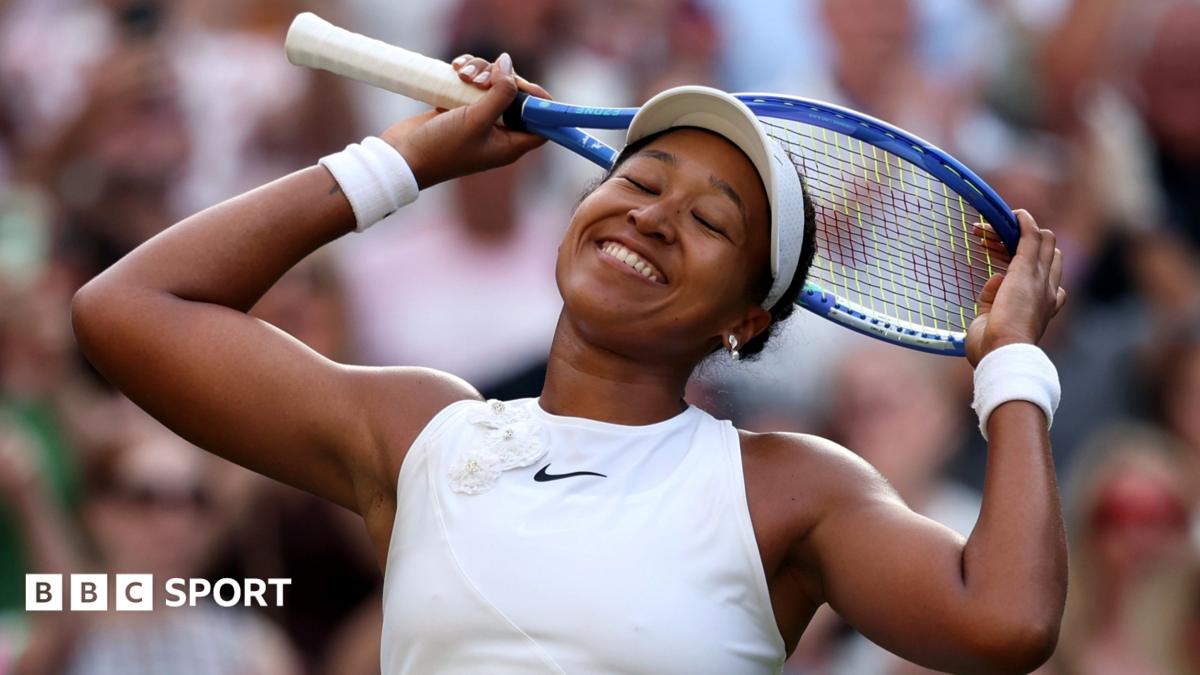
But she fell to an inspired performance by Osaka, who held her racquet to her head in disbelief after clinching victory on her second match point.

It is a first Wimbledon last-eight appearance for Osaka, who also reached the second week of the French Open for the first time last month.

“It’s been a long time since I had so much fun on the court,” said Osaka.

“To do it here means a lot.”
This was the fourth time in three months that the two big-hitters had met, with Sabalenka winning the previous three encounters.

This time Osaka was dominant throughout, matching Sabalenka pace-for-pace and moving well around the court.

Sabalenka made a hasty exit afterwards as her search for a first Grand Slam of the year continues.

Osaka will go on to face Czech 10th seed Karolina Muchova for a place in the semi-finals.

Muchova’s victory over 2024 champion Barbora Krejcikova means there will be a different women’s singles champion for the 10th tournament in a row.

Source link

Lawmaker McGovern: Americans need to ‘fight for the soul’ of the US | Politics

The left is rising because Americans ‘want more from the Democrats’, US Representative Jim McGovern argues.

Progressive Democratic politicians who refuse to take donations from pro-Israel groups have won several party primary elections across the United States.

Democratic Congressman Jim McGovern tells host Steve Clemons that the left is rising because Americans “want more from Democrats”.

“Right now, we’re doing a lot of bad things all around the world, and people need to protest,” McGovern says. On US policy ranging from Cuba to Israel, he argues that Congress has become “just a rubber stamp on whatever this president wants to do”.

“We need to fight for the soul of this country,” McGovern adds.

Source link

‘Totally single’ Brooks Nader pushes out her sizeable chest and stuns in two piece in Venice after Taron Egerton fling

BROOKS Nader stunned as she showed off her enviable figure during a trip to Venice with friends after it was revealed she’s ‘totally single’ following her fling with Taron Egerton. 

The model, 29, took to social media to share snaps from the trip, posing up a storm in the stunning location. 

Brooks stunned as she pushed out her chest while posing in Venice Credit: Instagram
She then showed off her enviable figure by slipping into a revealing two-piece Credit: Instagram

In one set of photos, Brooks was seen in a simple black dress and sunglasses with the view of a canal in the background. 

She made the most of her assets and pushed out her chest for the snaps before gazing out at the water. 

Brooks then slipped into a blue and white polka dot two piece and flashed her toned tummy for the camera. 

She added: “Obsessed with this vintage set from the 1950s.”

‘MAGICAL DAY’

Brooks Nader goes totally nude in a waterfall on dream trip to Croatia


BAY-BE!

Brooks Nader risks wardrobe malfunction as she nearly spills out of plunging top

It comes after she and Taron were snapped on a romantic date earlier this year Credit: FilmMagic
But Brooks says she’s ‘single, having fun, always’ Credit: Instagram

It comes after friends insisted Brooks is not in a relationship despite her and actor Taron, 36, being spotted out for a romantic dinner earlier this year

Instead she is said to be focusing on her role in the upcoming Baywatch reboot.

A pal told TMZ: “Brooks is totally single right now. She’s been going out on dates and having fun, but her main focus is Baywatch.

“Brooks is currently filming both Baywatch and Love Thy Nader in LA right now. Her main focus is on work.”

And Brooks is determined to let people know she is still on the market, telling the outlet: “I’m just single, having fun, always.”

In March an insider said of Brooks and Taron’s romance: “She likes hanging out with him. She’s just enjoying it for what it is, but she’s definitely into him.”

They added that she found him “very charming with his British accent”.

Source link

California bill aims to help discharged transgender troops

U.S. Navy sailor Chase Humes is moving back to his dad’s house in Texas.

Last month, the 25-year-old was notified that his “voluntary separation” from the Navy, which he’d applied for in May 2025, had been approved — he would be released from service. He and his wife must be out of their military housing in San Diego by mid-July.
Humes, a transgender man who’s been taking testosterone for seven years, was among at least 1,000 service members who chose to leave on their own terms rather than face involuntary separation following the military’s February 2025 ban on transgender service members. By choosing a voluntary separation, he’s been approved for an “honorable discharge,” which preserves access to benefits like Veterans Affairs healthcare that others worry they might not have access to.
Humes is one of about 4,200 transgender service members the Department of Defense estimates have been diagnosed with gender dysphoria and could be subject to the policy. Advocates say the transgender service member population could exceed 15,000, according to a UCLA study from 2014.
A new California bill, Assembly Bill 1775, is intended to assist people who don’t have the certainty of Humes’s honorable discharge and worry about their future prospects if they were forced out of the military. Proponents say the bill, by San Diego Democratic Assemblymember Chris Ward, could help people who are given less than honorable discharge for hiding their transgender identity by helping them restore access to services.

In the meantime, service members like Humes are scouting their next move. The sailor and his wife have been searching for jobs near his dad’s house outside Houston. They can’t afford to start their life in San Diego, despite having fallen in love with the city’s accepting atmosphere.
“The whole reason I joined was for a better future for myself and my family, and it just got torn away,” Humes said of the separation.

Over a year in limbo

Among the flurry of executive orders President Trump issued at the start of his second term was the Prioritizing Military Excellence and Readiness order.

It rescinded President Biden’s policy permitting transgender people to openly serve in the forces, and asserted that gender dysphoria and using pronouns different than one’s biological sex at birth were inconsistent with the country’s “high standards for troop readiness, lethality, cohesion, honesty, humility, uniformity, and integrity.”

What followed the Jan. 27, 2025 order was a series of legal challenges, some of which are still ongoing. Last month, a federal appeals court ruled that Trump’s ban on transgender people in the military was likely unconstitutional, allowing a group of 28 plaintiffs from across the country to continue serving while their case proceeds.
Transgender troops were faced last spring with the choice of either voluntarily leaving the military, and in some cases receiving separation pay, or saying nothing and hoping they were not found out and “involuntarily separated” from the forces.

A close-up of a wedding ring on a left ring finger

Humes is choosing to voluntarily leave the Navy after the Trump administration announced a policy banning transgender troops.

(Adriana Heldiz / CalMatters)

Kat Koehlmoos, who was in active duty for eight years and is now in an inactive Army Reserve status, said the military chain of command does not know she is transgender.
“Anyone could use my testimony today to report me to the Army Reserves here, and they would be required to take action to involuntarily discharge me from the U.S. military,” she told lawmakers during a hearing on the legislation last month.
Koehlmoos is a board member for SPARTA Pride, which advocates for transgender service members and co-sponsored the legislation. She said the bill came about in part because supporters are concerned the federal government might replicate the actions it took during its “don’t ask, don’t tell” policy, which allowed gay, lesbian and bisexual troops to serve if they concealed their sexual orientation. Some 2,000 troops were given less than honorable discharges in connection to the policy, and were shut out of some veterans’ benefits, according to a class-action lawsuit that was settled in 2025.

Koehlmoos said the group anticipates some people who are “involuntarily separated” under the 2025 transgender ban will be punished by the Department of Defense for not complying with the law.

“They may pursue other charges: accusing them of falsifying records or lying on federal documents, and attempt to get them a less than honorable discharge because of that,” she said, although SPARTA Pride does not know of any such cases so far.
If that happened in California, Ward’s bill would help those people qualify for expedited professional licensing in civilian careers like contracting and nursing and prioritize them for discharge upgrades as well as housing and support services.

Ward said he believes the benefits of all service members should be secured, whether they leave voluntarily or involuntarily.

“They have served honorably, and this was a separation that was involuntary, and they would deserve the full benefits that they otherwise would have been due had they been cisgender,” he said.

Unknown number affected

It’s unclear how many people could be affected by the legislation. Ward has repeatedly told fellow lawmakers that 2,900 of the federal government’s estimated 4,200 transgender troops — 69% — are either from California or are currently stationed in California. In an emailed statement in response to a question from CalMatters, Ward said the figures were mistakenly adopted after conversations with veterans’ advocates, and he would no longer use them to describe the number of affected California service members.
The bill would also require the state’s Department of Veterans Affairs to create a new housing and supportive services grant for veterans, which Ward said would fill a gap in existing housing support for veterans experiencing imminent homelessness. But the budget Gov. Gavin Newsom signed Monday does not include funding for that program.
Instead, it directs $2 million toward the state’s existing Veteran’s Military Discharge Upgrade Grant Program, which provides legal assistance for veterans fighting for a discharge upgrade.
As Humes prepares to leave San Diego, Ward’s bill is still pending in Sacramento. The legislation has cleared policy committees in both houses and awaits a hearing in the Senate appropriations committee.
Koehlmoos said the moment is stressful for most transgender troops — those being removed voluntarily, who have few options; the people who haven’t notified the chain of command, who may be living in fear; and the service members who will delay their transition, or never transition, because of the federal government’s ban on transgender troops.

“For me that’s heartbreaking, because that really is putting your life on hold,” she said.

Kate Wolffe writes for CalMatters.

Source link

British Grand Prix result: Charles Leclerc wins dramatic race from George Russell and Lewis Hamilton

Leclerc now looked locked in for victory, but there was great doubt over second place.

Hamilton, who earlier had a five-second penalty for moving before the lights went out at the start, was 20 seconds back from his team-mate, but Verstappen was closing in and Russell was going with the Dutchman, having dropped back with a pit stop on lap 34 forced by a slow puncture.

But on lap 48, Verstappen spun off at Stowe. Red Bull team principal Laurent Mekies said the rear wing did not close properly, meaning Verstappen had less downforce as he turned in, causing his loss of control.

Verstappen’s off brought out the safety car, and initially it looked as if there would be a short blast to the finish with the Ferrari drivers contesting victory on fresh tyres.

But Russell did not pit, so he would have taken any restart between them, which would have delayed Hamilton’s charge, even by a few seconds.

But Verstappen had crashed with only four laps to go, and there was doubt about whether the incident would be cleared in time.

As the cars came around to approach the start of the final lap, the timing screen initially said the safety car would pull in, but a few seconds later that message was replaced by another saying it would stay out.

The full post-race FIA statement said: “The safety-car period regulation states that one lap must be completed following the unlapping procedure.

“This process was followed by race operations. The ‘safety car in this lap’ message was displayed erroneously due to a software error.”

The safety-car finish guaranteed Leclerc’s first win since the 2024 US Grand Prix in Austin.

Russell’s podium was his first at his home race and he said: “Really pleased to be standing here, even though it was a very lucky race. I had the puncture but I was lucky to get the safety car at the end.”

Hamilton said: “I just didn’t have it today. I jumped the start, got a five-second penalty but Charles had the pace on me today. I struggled with the balance of the car. I gave it everything and I am grateful to be up here.”

Lando Norris took fourth for McLaren after a solid but quiet race as the world champions wait for upgrades due at the Hungarian Grand Prix this month.

Red Bull’s Isack Hadjar was fifth, followed by the Racing Bulls of Liam Lawson and 18-year-old British rookie Arvid Lindblad.

Norris’ team-mate Oscar Piastri dropped to the back after being involved in a first-lap incident and recovered to 11th, behind the Audi of Gabriel Bortoleto and Alpine’s Franco Colapinto and Pierre Gasly.

Source link

Illegal fireworks cause fire in Los Angeles; man critically injured

One man was critically injured in a fire in Los Angeles Friday after illegal fireworks went off, setting two vehicles on fire in a motel parking lot. File Photo by Stuart Palley/EPA

July 5 (UPI) — One man was critically injured in a fire in Los Angeles Friday after illegal fireworks went off, setting two vehicles on fire in a motel parking lot.

The 22-room Crescent Inn motel in the Wilmington neighborhood of Los Angeles was completely evacuated from the incident. Los Angeles Fire Department Assistant Chief Carlos Calvillo said first responders discovered a wounded man near the burning BMW when they arrived on the scene.

“This is a good example of messing with illegal fireworks, fireworks in general, extremely dangerous,” he said. “This person’s body was severely traumatized from this incident.”

Investigators said commercial grade fireworks were found near the burning vehicles.

Emergency responders were called to a report of two vehicles on fire at about 8:30 p.m. PDT Friday. The Los Angeles Police Department also responded to the scene.

A single family home next to the motel was also evacuated. Twelve people, including two children, were displaced by the fire.

The cause of the fireworks going off has not been determined. Fire officials say they believe the man was smoking in the BMW.

Source link

50 Houthi fighters killed in renewed clashes in Yemen | Houthis

NewsFeed

Yemeni government officials say the Houthis launched a surprise offensive targeting army barracks in southern Hodeidah as fighting intensifies across western Yemen.
The renewed clashes come as both sides seek to regain territory and strengthen control over the strategic Red Sea coast.

Source link

EastEnders signs Casualty star Jason Durr for Linda Carter love storyline

EastEnders is set to welcome a new face to Walford later this summer as Casualty’s Jason Durr makes an appearance and is set to strike up a close bond with Linda Carter

EastEnders is set to welcome a Casualty legend in the coming weeks. Actor Jason Durr, who starred in the BBC medical drama as David Hide, will be making his first appearance in Walford later this summer.

But his arrival in Albert Square will see him cross paths with local businesswoman Linda Carter [Kellie Bright], and it’s fair to say that the pair will see sparks between them both. Durr is taking on the role of Clive, a local councillor, when things start to heat up in the Square.

Local residents will be joining forces to save the Community Centre, Walford’s hub, which is at risk of redevelopment. Linda, who’s known for not shying away from airing her thoughts, leads the charge as things start to heat up.

But while planning to save the Community Centre, she and Clive strike up an instant friendship as he backs the campaign. But both Linda and Clive soon realise that there is more than just a feeling of friendship between them both.

Speaking about joining EastEnders, Jason said: “Few shows command their place in the national conversation quite like EastEnders, so I’m delighted to be joining the cast as Clive Masters.

“Working with the wonderful Kellie Bright has been an absolute joy and pleasure from day one. All the cast, crew and production staff have been incredibly generous, welcoming and good humoured. I’m excited for audiences to meet Clive and see what’s in store.”

And it’s set to be an exciting time for Linda, who has endured her fair share of heartache in recent years. Her soulmate and husband, Mick Carter (Danny Dyer), died after Janine Butcher’s (Charlie Brooks) secrets were unravelled, resulting in a feud on the coast. She also battled alcoholism and murdered Keanu Taylor (Danny Walters), following a fight at the Queen Vic as she attempted to save her best friend, Sharon (Letitia Dean).

The Mirror understands that Jason has already started filming his scenes, which will air later this summer. His role comes three years after Jason walked away from Casualty, having left Holby City three years prior.

His character, David, left Wyvern’s emergency department after the death of his colleague, Robyn (Amanda Henderson). At the time, Jason said he was planning to spend more time with his family, as well as explore other opportunities in the industry. His role was open for a possible return in the future.

Confirming his exit on social media, he shared a snap of himself, alongside the caption: “After 6 yrs playing the wonderfully complex #NurseDavidHide @bbccasualtyofficial I’ve hung up my scrubs.

“I’ve forged firm friendships, learnt to pronounce Uvulopalatopharyngoplasty & had my squeamishness thoroughly challenged! Here’s to new adventures (hopefully with less blood & guts).”

Over the course of his time on the show, Jason’s character David was at the centre of a string of huge storylines. One included the death of his teen son, Ollie, who, with a friend, Rob, set out to carry out a mass shooting at their school.

He’s also appeared in the likes of Lewis, Midsomer Murders, Above Suspicion and Shakespeare & Hathaway.

Like this story? For more of the latest showbiz news and gossip, follow Mirror Celebs on TikTok, Snapchat, Instagram, Twitter, Facebook, YouTube and Threads.


Source link

Bazoumana Toure transfer news: Why Newcastle are spending £43m on forward

Toure’s positivity translates on to the field.

The rapid winger certainly tried to make things happen at Hoffenheim, who narrowly missed out on qualifying for the Champions League last season.

Of the forwards playing in the Bundesliga in 2025-26, Toure ranked first for successful crosses (39), joint-second for assists (nine), joint-third for dribbles completed (48) and fourth for chances created (45) and big chances created (11).

However, he is far from a maverick.

“You see his qualities with the ball, his speed and his hard work,” Besara said. “But the thing that amazed me was he could take directions from the coaches and the players, and do it directly on the pitch.

“I remember previously he had scored some goals for Hammarby, but he had not scored a header at the time.

“The day before a game, our coach [Kim Hellberg] said, ‘Bazou, I want you to go to the first post and head the ball’. He went on to score two headers in that game.

“He’s really adaptable at taking tactical advice.”

Toure’s ability to quickly process information has been key to the improvements he has made out of possession, too.

Toure came out on top in 152 duels and won the ball back 127 times in his final league campaign at Hoffenheim.

The Premier League is another step up, though.

Toure is still raw and needs to work on various areas of his game, including his finishing.

He will also need time to adjust to the league’s physicality and intensity, and the system Newcastle head coach Eddie Howe uses.

But the winger will be able to fall back on recent experience after repeatedly adapting to new environments over the years.

“I know he will be really successful,” Besara said. “Mark my words.”

Source link

Trump hypes achievement in weather-dampened America 250 speech

July 5 (UPI) — President Donald Trump called the United States’ 250 years an “unmatched achievement” during his Fourth of July speech in Washington, D.C., on Saturday.

Trump’s address was delayed late into the evening due to severe storms that caused a two-hour evacuation of the National Mall. The storms followed on the back of a heatwave on the east coast.

The president took to the podium at 11:15 p.m. EDT. His speech echoed his past speeches, touting the “golden age of America,” repeating unfounded claims of election fraud and calling for the passage of the SAVE Act in Congress.

“We want to keep America great, and we will do so by approving the Save America Act,” Trump said. “You won’t have cheating on the elections anymore. It’s very simple.”

As Trump listed off a series of U.S. military achievements, he included the January operation to abduct Venezuelan President Nicolas Maduro and the war in Iran, which he compared to the sinking of the Spanish Armada in the Anglo-Spanish War in 1588.

“Much like our recent victory, by sinking the entire Iranian navy,” Trump said. “One hundred and fifty-nine ships to the bottom of the sea, all done in just a moment’s time.”

Trump also focused his attention on communism, which he called a threat to the United States.

“We don’t want communists in our country,” Trump said. “It never worked and it never will work.”

Spectators watch as fireworks light up the night sky over the National Mall for the Fourth of July as America 250 celebrations continue in Washington on July 4, 2026. Photo by Bonnie Cash/UPI | License Photo

Source link

Syria delays first session of transitional parliament without explanation | News

The transitional parliament aims to draft a new elections law during its 30-month term.

Syrian authorities have postponed the first meeting of the new transitional parliament, days after announcing the inaugural session had been scheduled for Monday.

“The convening of the first session of the people’s assembly has been postponed to a date to be determined later,” state television reported on Sunday, citing an electoral official and without specifying a reason.

Recommended Stories

list of 3 itemsend of list

Syria’s new authorities dissolved the country’s rubber-stamp legislature after toppling longtime ruler Bashar al-Assad in December 2024, following almost 14 years of civil war which killed about half a million people.

In March 2025, new President Ahmed al-Sharaa signed a temporary constitution that will be in force for a five-year transitional period.

In October, local committees appointed by the electoral commission, which was in turn appointed by al-Sharaa, began selecting two-thirds of the 210 members of the new parliament, with Sharaa to appoint the remaining third.

He appointed 70 members this week.

Druze-majority Suwayda province in the south has still not designated its members, after sectarian bloodshed there last year.

Electoral authorities have said the selection process would be held there when conditions are “appropriate”.

The selection process was held in formerly Kurdish-run areas of the north and northeast earlier this year after authorities in the capital Damascus assumed control there and signed a deal on integrating Kurdish institutions into the state.

The new parliament will have a 30-month term and work on a new elections law while preparing the ground for a popular vote, according to the head of the electoral committee, Mohammed Taha al-Ahmad.

Source link

A diverse group of writers tackle the nation’s identity crisis

• American playwrights, recognizing that identity is more complicated and slippery than ideology, have been shedding fresh light on what it means to be an American.
• Writers such as Young Jean Lee, Tarell Alvin McCraney, Quiara Alegría Hudes, Branden Jacobs-Jenkins, Jeremy O. Harris, Ayad Akhtar, and Bess Wohl have been creating drama from the multidimensional, intersectional realities of characters whose backgrounds refuse to be compartmentalized into a single category.

The American democratic experiment stands on shaky ground. Not since the Civil War have these proverbially United States been so disunited. As the nation throws itself a grand old 250th birthday bash in Washington, the mood in much of the country is more funereal than festive.

All-out partisan warfare has sown chaos. Republican legislators, taking their lead from a president who sees half the nation as his personal enemy, have put their own party’s interests over the republic’s. Staying in office has become the only thing that matters. The values imparted to me throughout my public school education — equal opportunity, impartial justice, respect for expertise, basic honesty — have been abandoned by a new breed of politician that has turned governance itself into a blood sport.

Where can one turn for reassurance that America’s best years are still ahead? Would you believe me if I said the theater? I’m not toeing the line for my field. I’m merely calling attention to a development that’s been gaining strength since I first reported on it in 2015. A cohort of playwrights, breathtakingly diverse demographically as well as aesthetically, has been rejuvenating American theater.

These writers aren’t on a sociological mission. They’re not trafficking in grievance or appealing to a particular political base. They let their plays do the talking. And they’ve been trying to have a conversation that isn’t hijacked by the most doctrinaire voices in the room.

From an institutional perspective, the American theater is in bad shape. The triple whammy of the COVID-19 closures, inflation and technological disruption has left everyone hurting. The Mark Taper Forum had to suspend programming for more than a year, smaller companies still in operation are producing fewer shows, and producers everywhere are gravitating toward the bankably familiar.

But despite this difficult terrain, it has been a boom time for American playwriting. For more than a decade, I’ve been teaching a course at the California Institute of the Arts called American Drama Now, and each year the selection of plays has become harder to whittle down. I designed the seminar partly around theater offerings in Los Angeles to connect students to recent developments in the field and to consolidate awareness that something special is happening in the American theater.

The current generation of playwrights has revealed itself to be remarkably resilient and independent. It has had no other choice. By the time many of these rising talents were accruing debt in graduate writing programs, the dream of a sustainable career in the nonprofit theater had already gasped its last breath.

When Wendy Wasserstein, Tony Kushner, Craig Lucas and Jon Robin Baitz emerged in the late 1970s and ’80s, it was still imaginable that a chosen few playwrights could make a living via the regional theater circuit, that constellation of companies founded as an alternative to the Broadway model.

That prospect was growing dimmer a few years later when playwrights such as Suzan-Lori Parks and Lynn Nottage came into prominence. But hope was still alive in the late 1990s and early 2000s. Regional theaters such as Seattle Rep, the Guthrie, the Goodman and Baltimore Center Stage remained committed to their missions while New York nonprofit companies continued to hold the line off-Broadway.

When did the picture change? In 2009, “Outrageous Fortune: The Life and Times of the New American Play” was published by the Theatre Development Fund, and one of the key findings in this study written by Todd London with Ben Pesner and Zannie Giraud Voss is that “there is no way to view playwriting as anything but a profession without an economic base.” A chasm had opened between the network of increasingly corporate-minded nonprofit theaters and the artists this system was built to serve.

The situation has grown bleaker in the last decade and a half as commercial pressures have ramped up and media consolidation and digital shortsightedness have obliterated arts coverage. Yet there’s been an unexpected upside. Theater artists who have come of age in this period have been released from the burden of having to conform to notions of regional theater respectability.

Instead of worrying about the timid taste of subscription audiences, these dramatists have been writing for themselves and their communities, dreaming up plays that don’t have to fit into institutional slots or stay within the staid bounds of traditional proscenium house decorum. The irony is that in not trying to pass muster with more conservative theatergoers (and their fastidious institutional guardians), playwrights have been winning over not just critics but also formerly squeamish artistic directors and perennially nervous Broadway producers.

The playwrights who appear regularly on the syllabus in American Drama Now — Young Jean Lee, Tarell Alvin McCraney, Annie Baker, Branden Jacobs-Jenkins, Samuel D. Hunter, Martyna Majok, Jeremy O. Harris, Will Arbery, Jackie Sibblies Drury, Quiara Alegría Hudes, Ayad Akhtar, among them — are of different ages, sensibilities and backgrounds. What they share is an appreciation of the complexities and contradictions in being an American.

The politics of identity for them is a lived experience. And as dramatists, they’re uniquely positioned to appreciate the conflicted loyalties and communal tensions of American life in dramatic rather than dogmatic terms. Whatever agendas they may personally espouse, these writers are too alert to the messiness of history and human nature to be rigidly ideological in their work.

The ongoing war between woke and anti-woke factions is a fatuous melodrama best left to the satirists. The goal of playwrights grappling seriously with what it means to be an American today isn’t to score social media points but to shed light on the fractured reality of our collective experience.

Three men around a coffee table in the play "Straight White Men."

Characters in plays by Young Jean Lee, such as “Straight White Men,” are often “trying on masks to see what might prove effective in a given situation.”

(Lawrence K. Ho / Los Angeles Times)

Identity is not a fixed fact but a raucous collision of parts. No single category can contain the Whitmanesque multitudes jockeying for position inside us. Race, religion, ethnicity, gender, age, sexuality, class, disability and geography don’t line up in perfect political harmony, and each social marker tells only a fraction of the whole story. (Money, the great unequalizer, may be the most taboo subject of all.) “We are not only but also,” the sociologist and cultural historian Todd Gitlin wrote in his 1995 book “The Twilight of Common Dreams: Why America Is Wracked by Culture Wars.” We also overlap and often even clash with ourselves.

Discussion around identity can be dangerous. How can anyone be expected to navigate the minefield? Tribalists and traditionalists have controlled the terms of the battle, one by simplifying, the other by denying, the way privilege has shaped our compound selves.

Playwrights know better. They understand the way oppression, which falls disproportionately on the marginalized, has warped all of us. History, whether acknowledged or not, is etched in our souls.

It is a long-held tenet of the theater that the most interesting characters, like the most interesting people, are defined by their schisms and paradoxes. (How else could Hamlet have maintained his centuries-long hold?) Dramatists are more cognizant than ever of the sociopolitical import of these contradictions and they’ve been chronicling the way this historically freighted baggage emerges in the drama of everyday life.

All the world is indeed a stage and all its inhabitants merely stock players, as Jaques lays out in “As You Like It.” Hegel described Shakespeare’s characters as “free artists of their own selves.” The truth where we and our contemporary stage surrogates are concerned is somewhat more constrained. Culture and representation largely determine the range of our performance possibilities.

Zarah Mahler, Grace Kaufman and Melora Hardin in the play "Appropriate."

Plays such as Branden Jacobs-Jenkins’ “Appropriate” reexamine “the canon of great American family dramas … to uncover the stories that have been suppressed.”

(Craig Schwartz)

Jacobs-Jenkins has recognized perhaps more acutely than any of his peers the way dramatic forms have locked us into set scripts about our lives. He tackles genres — adapting a Dion Boucicault melodrama in “An Octoroon,” reexamining the canon of great American family dramas in “Appropriate” — to uncover the stories that have been suppressed in the dominant white middle-class narratives that would prefer not to think of themselves as political.

Lee’s standout identity plays — “Straight White Men,” “The Shipment” and “Songs of the Dragons Flying to Heaven” — reject the illusion of stable, coherent characters propagated by psychological realism. The figures in her uncategorizable works are in experimental flux, trying on masks to see what might prove effective in a given situation. Even “Straight White Men,” which uses the old home-for-the-holidays genre as a springboard, can’t help spinning away from the drama’s droll hyper-naturalism toward something resembling performance art. (Not even straight, white men want to be confined to a box, even a relatively plush one.)

The cast of "Fairview" at Rogue Machine, sitting at a dining room table.

“Fairview,” by Jackie Sibblies Drury, “theatricalizes the experience of the white gaze.”

(Jeff Lorch)

In “Fairview,” Jackie Sibblies Drury theatricalizes the experience of the white gaze, ultimately reversing the comfortable position white theater audiences have traditionally held. Bess Wohl’s “Liberation,” this year’s most decorated play, reanimates the history of the 1970s feminist movement by questioning what it could be leaving out of the picture. “The Balusters,” by David Lindsay-Abaire, brings the current culture wars to the stage with unique sensitivity through the squabbles of a neighborhood association torn between protecting its town’s heritage status and coming to terms with the more pluralistic demands of the 21st century.

“Fairview,” “Liberation,” and “The Balusters” are extremely funny plays that also happen to be deadly serious. If philosophy begins in wonder, trenchant social drama seems to start in laughter.

What do theatergoers want? They don’t just want to look; they also want to be seen. Isn’t that what any of us wants when gazing into the mirror held up to nature, as Hamlet describes the theater? To be granted a more expansive view of ourselves and others?

E pluribus unum, the motto of the United States, is so fundamental that it’s printed on our currency. There’s perhaps no place where the truth of this phrase — out of many, one — is more regularly realized than at the theater, where strangers transform over the course of a show into that mysterious organism we call an audience.

Gitlin ends “The Twilight of Common Dreams” with a plea: “For too long, Americans have busied themselves digging trenches to fortify their cultural borders, lining their trenches with insulation. Enough bunkers! Enough of the perfection of differences! We ought to be building bridges.”

A coalition mindset doesn’t mean denying history or pretending that America has been a level playing field. It’s been anything but in this “melting pot where nothing melted,” to quote the rabbi whose eulogy sets Kushner’s “Angels in America” in motion. But history happens to all of us, not just a select few. And to be an American is to be embroiled in the great democratic experiment that has been defined by division from the beginning. Empathy, the nuclear fusion of playwriting, is expanded when we’re allowed to take in more of our patchwork selves. Today’s dramatists have been extending a generous invitation to their compatriots: We’ll show you our complexity, if you’ll show us yours.

Source link

July 5th is, Above All, A Civilian Holiday

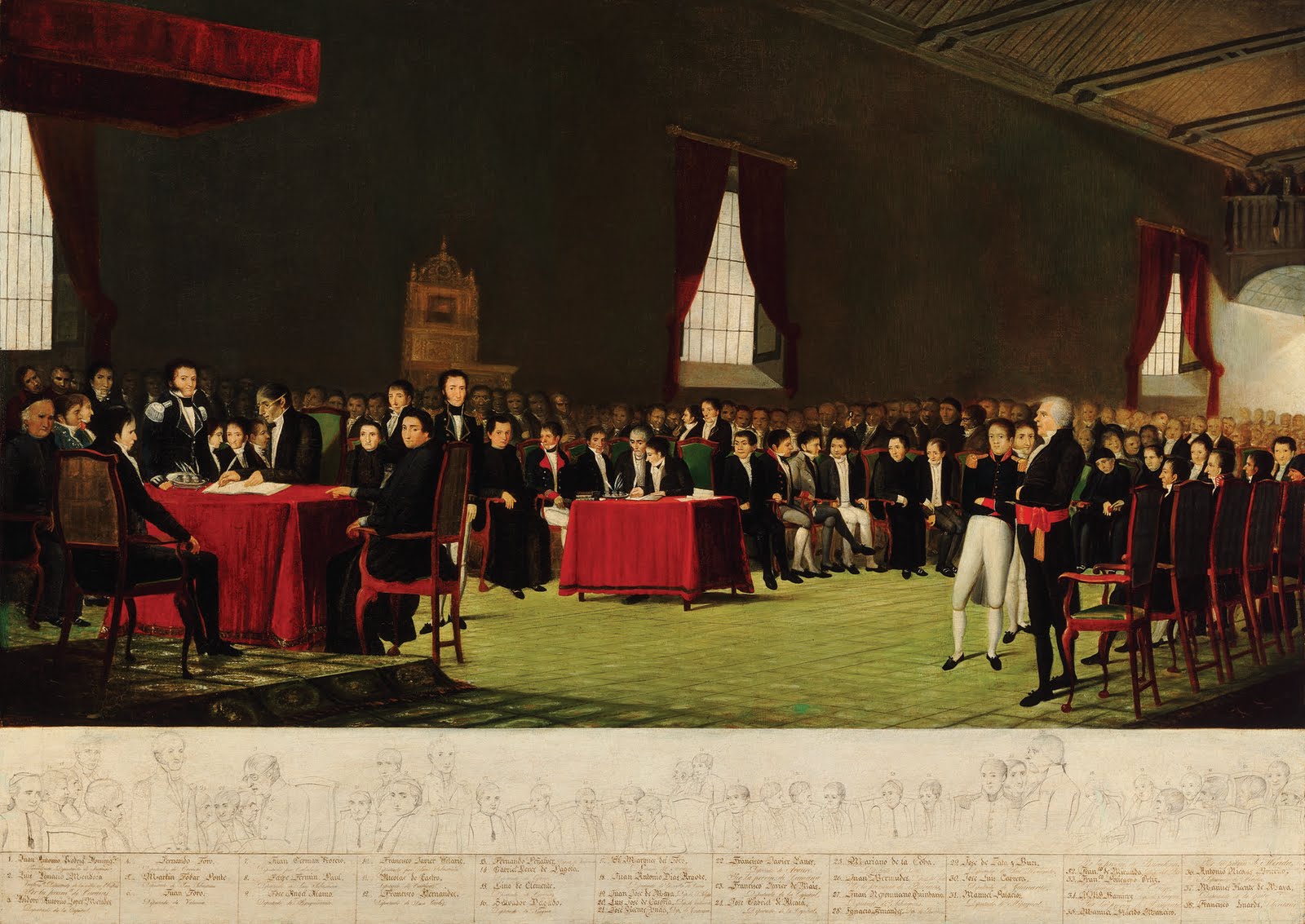
July 5, 1811, is rightly remembered as one of the key dates in our republican history. It commemorates nothing less than the Declaration of Independence from the Spanish Monarchy, and is the central act of the political and legal process of independence that began on April 19, 1810, and led to the promulgation of Venezuela’s first Constitution on December 21, 1811.

On March 2, 1811, the General Congress of Venezuela was convened, becoming the first Parliament in our republican history. That General Congress, meeting in what was then the chapel of the Santa Rosa de Lima Seminary in Caracas, had as its fundamental mission the drafting of the 1811 Constitution. However, two months after beginning its sessions, the nascent Republic felt the need to issue a formal declaration of independence from the Spanish Crown, thus clarifying the political separation of the previous three hundred years. Once the Congress had decided to move towards a republican government—after refusing on April 1810 to obey the French regime that had invaded Spain—it was incompatible with that decision not to make an unrestricted declaration of independence from the Crown.

In the sessions of July 3, 4, and 5, the problem, which was certainly not insignificant, was openly addressed, among other reasons because it was necessary to convince those who were not entirely convinced of the legitimacy or timeliness of the process. Ultimately, the declaration of independence required to substantiate the reasons for declaring independence.

Therefore, the Act of Independence will be a very well-founded argument for the reasons why independence is being declared. The first paragraph will establish the context in which the declaration of independence will be justified:

“In the name of Almighty God, we, the representatives of the United Provinces of Caracas, Cumaná, Barinas, Margarita, Barcelona, ​​Mérida, and Trujillo, which form the American Confederation of Venezuela on the southern continent, assembled in Congress, and considering the full and absolute possession of our rights, which we justly and legitimately recovered on April 19, 1810, as a consequence of the events in Bayonne and the occupation of the Spanish throne by the conquest and succession of another new dynasty established without our consent, wish, before exercising the rights of which force had deprived us for more than three centuries, and which the political order of human events has restored to us, to make known to the world the reasons that have arisen from these same events and authorize the free exercise that we are about to make of our sovereignty.”

On July 5th, as the culmination of debates that had begun on July 3rd, independence was declared within the Congress. Later, in another session, the drafting of an Act to record the decision was decided. Therefore, although independence was declared by Congress on July 5th, the Act that justified it politically and legally was only read, approved, and signed on July 7th, having been drafted by Juan Germán Roscio and Francisco Isnardi.

The declaration of independence is a central element in our independence process, as it reflected the motivation behind the decision to sever political ties with the Monarchy under which these territories had lived for three centuries.

Indeed, the declaration of independence, from the perspective of the political and legal process that independence entailed, lies at the very heart, even temporally, of the first part of that process, which, at least in this initial and fundamental stage, was essentially civil. This stage begins with the events of April 19, 1810, and continues, among other events, with the establishment of the General Congress of Venezuela, and then proceeds, also among other events, with the Declaration of the Rights of the People of 1811 and the Constitution of 1811, of December 21.

Also from this perspective, it is worth noting that the Declaration of Independence occurred within the context of the first constituent process in our republican history. In fact, it can be pointed out that this constituent process, which began on April 19, 1810, and whose first stage culminated on December 21, 1811, is not only our first constituent process, but the only genuine constituent process that has existed in Venezuela. 

In the institutional history of Venezuela, only one truly constituent process can be identified, the constituent process of 1811. During this process, the most important political transformation of our history took place.

This paragraph from the Declaration of Independence summarizes the truly constituent decision:

“In consideration of all these solid, public, and irrefutable political reasons, which so strongly persuade us of the need to recover the natural dignity that the course of events has restored to us, and in the exercise of the imprescriptible rights that peoples possess to dissolve any pact, agreement, or association that does not fulfill the purposes for which governments were instituted, we believe that we cannot and should not maintain the ties that bound us to the government of Spain, and that, like all the peoples of the world, we are free and authorized to be independent of any authority other than our own, and to assume among the powers of the earth the equal place that the Supreme Being and nature assign to us and to which the succession of human events and our own good and utility call us.”

The Declaration of Independence is particularly clear in the final paragraph of the Act:

“We, therefore, in the name and with the will and authority vested in us by the virtuous people of Venezuela, solemnly declare to the world that its United Provinces are, and from this day forward, in fact and in law, free, sovereign, and independent States, and that they are absolved from all submission and dependence on the Crown of Spain or on those who claim or may claim to be its agents or representatives, and that as such a free and independent State, it has full power to adopt the form of government that is in accordance with the general will of its people, to declare war, to make peace, to form alliances, to arrange treaties of commerce, boundaries, and navigation, and to perform all other acts that free and independent nations perform.”

Thus, July 5th is a date to commemorate an essentially civil event, one of the few that has occurred since in our republican history: faced with the political situation resulting from the Napoleonic invasion of Spain, Venezuelans questioned the legitimacy of their submission to that Crown. The independence process was, therefore, in its origins, a question based on ideas and on the concern for the legitimate and correct path to follow as a nation.

For this reason, a military celebration on July 5th is actually a historical anachronism. The main celebration of July 5th should take place in the National Assembly, the successor to the General Congress of Venezuela, where independence was declared and the Act of Independence was signed.

Source link

World Cup 2026: England players’ sleep undisturbed by Mexico fans letting off fireworks outside hotel

Mexico supporters attempted to wake up England players with music and fireworks close to their hotel the night before the sides’ last-16 World Cup tie, but were moved back by police.

Footage published on social media appears to show a group of fans chanting, playing music and letting off fireworks on a street nearby England’s hotel in Mexico City.

Early indications from the England camp are it had minimal impact on the players.

Police in riot gear have been lining the streets immediately surrounding the hotel, with anyone attempting to get close being moved away.

The increased security presence comes because Ecuador – beaten 2-0 by Mexico in the World Cup last 32 – lodged a noise complaint with world governing body Fifa after fans with loudspeakers, motorbikes and horns disrupted their sleep last week.

The World Cup co-hosts play England at Mexico City’s Azteca Stadium on Sunday evening local time (01:00 BST, Monday).

On Saturday, the team were met with a mixture of cheers and jeers from fans as they left their hotel for training under enhanced security measures.

England boss Thomas Tuchel dismissed concerns over his side’s treatment in Mexico, saying it had been “nicer” than he expected and that home fans were “friendly and respectful”.

Source link

Stacey Solomon brings along her ‘baby daddy’ ex to ‘special date day’ with husband Joe Swash

STACEY Solomon made it a real, er, family affair on Sunday as she headed to Silverstone for the British Grand Prix with her husband Joe Swash and her ex, Dean Cox.

The TV personality shares eldest son Zachary, 18, with Dean, whom she had a romance with as a teenager.

Stacey Solomon has revealed she brought her ex-boyfriend along for a ‘date day’ with husband Joe Swash Credit: instagram/@staceysolomon
Stacey and Joe headed to Silverstone together on Sunday

Before heading to the F1 event, Stacey told fans she was going on a ‘special date day’ with husband Joe.

And when they arrived to Silverstone, the star filmed herself walking in as she explained that the couple had also brought along her dad – a big racing fan – for the fun.

“It’s not a date day without bringing your dad,” laughed Stacey as she dubbed Joe a ‘third wheel’.

She then revealed that it wasn’t just her dad who was there, but her ex Dean, too.

BROTHERLY LOVE

Ryan Thomas visited pal Jake Hall’s parents after star’s heartbreaking death


BACK TO IT

Lionel Richie shares health update after worrying hospital dash

Dean’s wife was also there with the couple Credit: instagram/@staceysolomon
While Stacey brought her dad along too Credit: instagram/@staceysolomon
Stacey shares eldest son Zach with Dean Credit: Instagram / @staceysolomon
Dean has a close co-parenting relationship with Stacey and even appeared on her show, Stacey & Joe Credit: BBC

“Do you know who is really important to bring on a date day with your husband? Your last baby daddy and his wife,” said Stacey as she filmed herself with Dean.

Laughing, she panned the camera through the group and said: “Zach’s dad, Zach’s stepmum, my dad are all on this date with us.”

“Gooseberry,” said Joe as he interjected while laughing.

As well as Zach, Stacey is a mum to son Leighton from another previous relationship, and shares three children with Joe.

She has maintained a strong co-parenting relationship with Dean since they welcomed Zach as teenagers.

He even appeared on her TV show, Stacey & Joe, for a one-off as they discussed her teen pregnancy.

The racing reunion comes just days after Stacey revealed their son Zach has headed off to America for the summer.

The teenager has moved stateside to take part in Camp America, with his famous mum admitting it ‘hurt her heart’ to drop him off at the airport.

She said in an Instagram post: “It hurt my heart to drop you off this morning but I know you’re going to have the best time ever, and that camp is so lucky to have our Zachary in their lives for the summer.

“Good luck my darling boy. To the moon and stars and back again.

“Please tell me why I really wanted him to do this experience & I am so happy for him but also so my gut is in knots??”

Source link

Super League: Wakefield Trinity 48-6 Castleford Tigers – nine-try Trinity boost top-four hopes

Betfred Super League Magic WKND

Wakefield (20) 48

Tries: Scott 2, Johnstone 2, Hamlin-Uele 2, Walmsley, Smoothy, Rourke Goals: Sinfield 6

Castleford (0) 6

Tries: Qareqare Goals: Weaver

Wakefield Trinity ran in nine tries as they thrashed Castleford Tigers to boost their Super League top-four hopes at Hill Dickinson Stadium.

Daryl Powell’s side climbed to third on 24 points after recording six wins in their past seven games.

Castleford were a mess and Wakefield took full advantage as Cameron Scott, Tom Johnstone and Caleb Hamlin-Uele each scored twice.

Lachlan Walmsley, Tyson Smoothy and Josh Rourke also went over, before Jason Qareqare replied a minute before time to avoid total humiliation for Castleford.

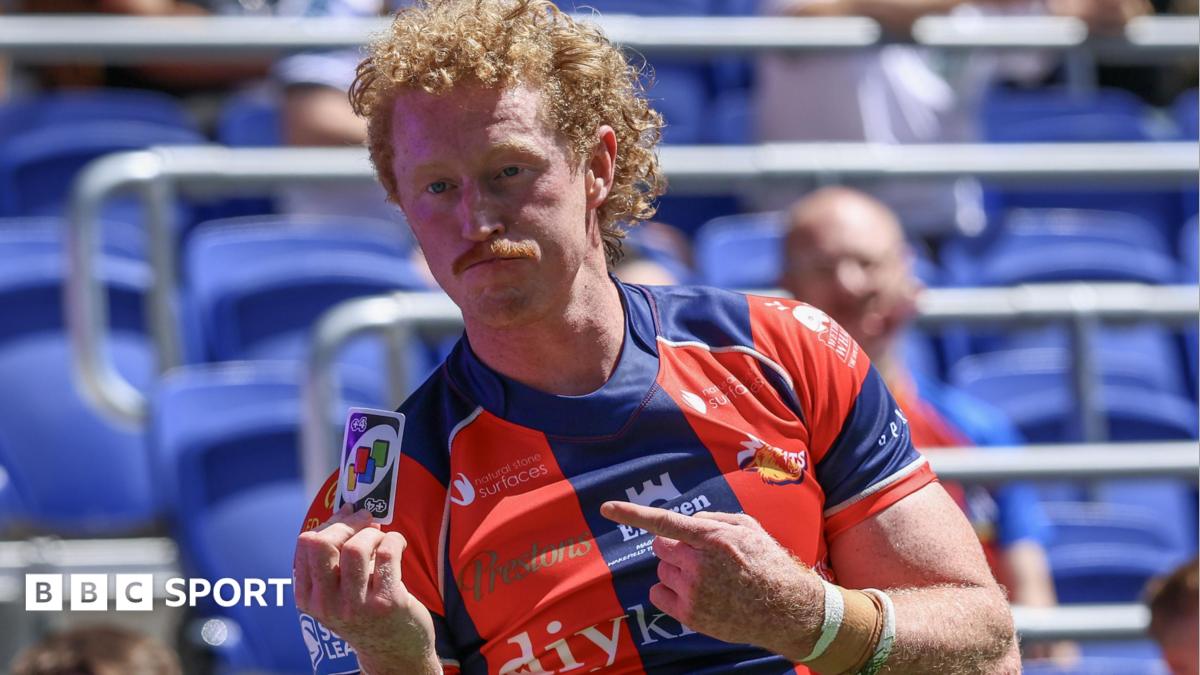
Scotland international Walmsley marked his spectacular one-handed finish in the corner by pulling out an Uno +4 card from his sock, with £180 being donated to the Motor Neurone Disease Association by sponsors for every try celebration during Magic Weekend.

As majestic as Wakefield were, Castleford gave them a massive helping hand and Walmsley caught Jake Trueman’s kick and laid the ball off for Scott to go over in the right corner for their first score in the third minute.

It was one-way traffic and Trinity had two tries ruled out before winger Johnstone crossed in the left corner in the 16th minute.

Hamlin-Uele came off the bench to score their third try when he powered through two tackles to go over near the posts.

They were almost scoring at will as Castleford made mistake after mistake while missing 44 tackles.

Wakefield extended their lead to 20-0 when Scott collected Jack Sinfield’s pass and broke inside to go over for his second score.

They were enjoying themselves as Walmsley showed following his acrobatic try in the right corner after 47 minutes to make it 24-0.

Not to be left out, Trinity’s forwards got in on the act and Smoothy smashed through the Castleford defence to score by the posts on 51 minutes.

Hamlin-Uele scored his second try – and he will hardly record an easier one all season – as he walked through two Castleford tackles to go over.

Johnstone bagged his second try on 65 minutes when Wakefield passed the ball along their backline from a scrum, before Rourke caught Sinfield’s kick to crash over for their ninth try.

Qareqare, though, continued his hot streak with a 10th try in seven games, but it provided little consolation for ninth-placed Castleford.

Source link