Ukraine appeared to have begun large-scale strikes against Russian shadow tankers attempting to supply occupied Crimea with fuel, as an energy crisis on the peninsula worsens.
At the same time, Ukraine has continued to cause fuel shortages in Russia itself, striking refineries deep inside the country, including, for the first time, the Omsk refinery in Siberia, Russia’s largest, 2,500km (1,553 miles) from the Ukrainian border.
Recommended Stories
list of 4 itemsend of list
Ukraine’s Unmanned Systems Forces commander Robert Brovdi said his forces had struck 19 Russian tankers, a cargo ship and a ferry between July 6 and 8, including nine tankers on the night of July 7.
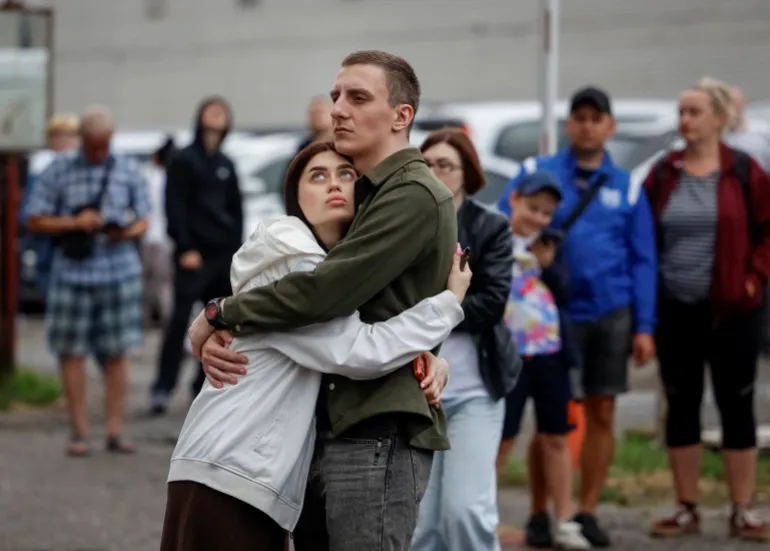
Residents stand near an apartment building hit by a Russian drone strike in Kyiv, Ukraine, July 8, 2026 [ [Reuters]
Ukrainian Navy spokesman Dmytro Pletenchuk told newspaper Suspilne that Russia had rerouted fuel supplies to Crimea after Ukraine deprived it of overland routes.
“They had few options left. It’s either a land corridor or a sea connection,” Pletenchuk said. “As far as we know, they don’t use the Kerch Bridge for such transportation in the necessary volumes,” he said, referring to the bridge connecting Crimea to Russia.
Ukraine detonated a truck on the bridge in 2022, setting alight a fuel train that had been travelling alongside it and demonstrating the risk of using the bridge for large volumes of fuel.
Ukraine pivoted to attacking Crimea in the past few weeks after disabling the oil offloading terminal at Novorossiysk, on the opposite Russian coast, Ukrainian President Volodymyr Zelenskyy told the Financial Times.
“We were slowing down the militarisation of our peninsula occupied by Russia,” he said. “We cut off the logistics and took control of the fuel and energy complex. We showed what it means to operationally control the sky at a specific point, at a specific time.”
The Ukrainian Presidential Office in Crimea said these strikes had caused “a management crisis on the peninsula”.
In Sevastopol, fuel has stopped being sold to civilians, and more than a dozen Crimean regions are suffering from electricity blackouts.
Ukraine continued strikes on the peninsula in the past week, destroying seven Sukhoi aircraft and two sheds containing Shahed aerial drones at the Saky airfield on July 3, the Kerch oil transhipment terminal on July 6 and three hangars at the Guardsman airfield on the same day.
Ukraine also kept up pressure on Russia, launching what mayor Sergei Sobyanin said was its largest strike on Moscow in two years.
More than 400 Ukrainian drones were downed while heading for the city on July 7, which was the first day of a NATO summit in Ankara.
“When our drones weren’t flying to Moscow and St Petersburg, [Russian president Vladimir] Putin didn’t think much about it. He understood that the war was far from the Kremlin,” Zelenskyy told the Financial Times.
“When not a hundred drones, but a thousand would start flying to Moscow, and when he would feel and see this, he would be advised to move somewhere beyond the Urals. This would be a moment like a new page on the path to ending the war.
A rescuer hands a cat named Boniya, found under the rubble of an apartment building damaged by a Russian missile strike a day earlier, to Anastasia Sorokina, a friend of the cat owner in Kyiv, Ukraine, July 7, 2026 [Sergiy Karazy/Reuters]
Ukraine struck several energy targets during the week, furthering its twin goals of starving Russia of petrol and export revenue from oil.
The SBU said it struck and set alight the St Petersburg oil terminal on July 4, which it described as “one of the largest oil product transshipment terminals in the Baltic region”. Zelenskyy posted video purporting to show the terminal in flames.
On Sunday, Ukraine’s General Staff said its forces had struck the Slavneft Yanos refinery in Yaroslavl, 700km (430 miles) from Ukraine, the Ust-Luga refinery on the Baltic Sea, and the Omsk Refinery. Russia’s defence ministry said it had shot down 613 of 625 Ukrainian drones detected in the airspace overnight.
Ukraine’s Air Force said that Russia had lost 42.7 percent of its refining capacity over the past year, and suffered $13.5bn of damage to oil infrastructure.
These strikes have cumulatively caused petrol and diesel shortages in the Russian market, with consumers in urban hubs lining up to fill their cars.
During the week, Ukraine also struck the Kremny EL Group in Bryansk, which it said manufactured microchips, semiconductors and other electronics for the armed forces.
Rescuers working at a site of a Russian missile and drone strike on the previous day, during which a residential building was heavily damaged, amid Russia’s attack on Ukraine, are seen through broken glass, in Kyiv, Ukraine, July 7, 2026 [Alina Smutko/Reuters]
Zelenskyy said the air war would prove “decisive”, because in 2026 Ukraine’s ground troops had effectively stopped Russia’s slow advance of the last two years.
Independent assessments have suggested that Russia gained a total of 97 square kilometres (37 square miles) in the first six months of the year.
“The war is ongoing, but the front line is no longer moving. When the front line is almost not moving, and the enemy cannot invade by sea, the sky remains,” Zelenskyy said.
US President Donald Trump handed Zelenskyy a major victory at the NATO summit in Ankara on Wednesday, saying he would license Ukraine to produce interceptor missiles for anti-air systems.
Zelenskyy has been campaigning for a licence to build Patriot interceptors, which he believes Ukraine can do faster and more cheaply than the US or European manufacturers.
But Zelenskyy said Patriots ultimately are not the answer for European air defence, announcing his intention to develop FREYA, a Ukrainian-designed anti-ballistic system like Patriot “but with a higher production capacity and at a lower cost”.
Is Russia losing?
Zelenskyy’s commander-in-chief warned against dismissing Russia too easily.
“It’s still too early to talk about a qualitative turning point in the war,” Oleksandr Syrskii wrote on his Telegram messaging channel. “The aggressor is showing signs of exhaustion, but retains significant offensive potential,” adding that Russia “plans to extend the front line, which already exceeds 1,250 kilometres (777 miles).”
Putin relaunched the narrative that Moscow will overrun the eastern Ukrainian region of Donetsk, four-fifths of which Russia already controls.
In a televised meeting with his top generals on July 3, Putin was told that Russia has seized 3,000sq km (1,160sq miles) of Ukraine so far this year, and “liberated” 133 settlements. His commander in chief, Valery Gerasimov, also claimed to control the cities of Kupiansk in Kharkiv, and Kostiantynivka in Donetsk.
The Institute for the Study of War, which uses geolocated footage to assess advances, estimated that Russian forces have a presence in 2.4 percent of Kupiansk and 37 percent of Kostiantynivka – and most of that in the form of infiltrations, not firm control.
The Ukrainian military has estimated the number of Russian servicemen in Kostiantynivka at between 100 and 250.
Putin was told that Russian forces seized 636sq km (245sq miles) of Ukraine in June alone. The ISW estimates the real number at 30sq km (11sq miles).
Kostiantynivka is politically important to the Kremlin because it is the first of four heavily fortified cities, including Kramatorsk and Sloviansk, which Moscow must seize to take control of Donetsk – which Putin considers a puppet state and has repeatedly prioritised.
“The capture of Kostyantynovka by the troops of the South battlegroup opens a direct road for further advance to Kramatorsk and Sloviansk, other fortified areas in the Donbas, and is, of course, the key to liberating the entire territory of the Donetsk People’s Republic,” Putin said.
The Donbas includes Donetsk and Luhansk, which Putin mistakenly claimed to have taken in its entirety.
“I understand that we should no longer speak of the Slovyansk-Kramatorsk-Kostyantynovka line, but simply of the Slovyansk-Kramatorsk line,” Putin told the gathering.
A EUROPEAN theme park that mums have compared to Disneyland is getting a new ride that will be the first of its kind at the park.
Efteling theme park in Kaatsheuvel, Netherlands is getting a €50million (£42.6million) new ride in 2029.
Efteling theme park has announced it will open a new rollercoasterCredit: Efteling
The new ride, called Missie Luminar, is themed around the challenge of travelling at the speed of light and will be the theme park’s first suspended launch rollercoaster.
This means all the seats will hang beneath the track.
Sign up for the Travel newsletter
Thank you!
The rollercoaster will start by launching passengers out of a ‘science lab,’ before they go on a mission with a goal of breaking through the light barrier.
The ride will last two minutes, with parts of the ride focusing on science experiments and discoveries from the 19th century.
Fons Jurgens, CEO of Efteling, said: “Missie Luminar will be a fantastic addition to our collection of thrill rides. This type of roller coaster is new to Efteling.
“The top speed reaches 80 km/h, but it may feel even faster. All of this creates excitement from start to finish.
“It will be a truly unique and distinctive experience, even more so because of its location.
“Missie Luminar completes the Island of the Five Senses themed area.
The ride will be the park’s first suspended launch coasterCredit: Efteling
“Visitors will see the vehicles racing past as soon as they enter Efteling, setting the tone for their day at the park.
“We still have a little while to wait, but we’re looking forward to seeing our visitors’ first reactions.”
Guests have previously compared Efteling to Disneyland, with one saying: “If you are travelling to the Netherlands, we highly encourage visiting Efteling. I prefer it now to Disney because of the variety it offers.”
Another said it was a “European twist” on Disneyland.
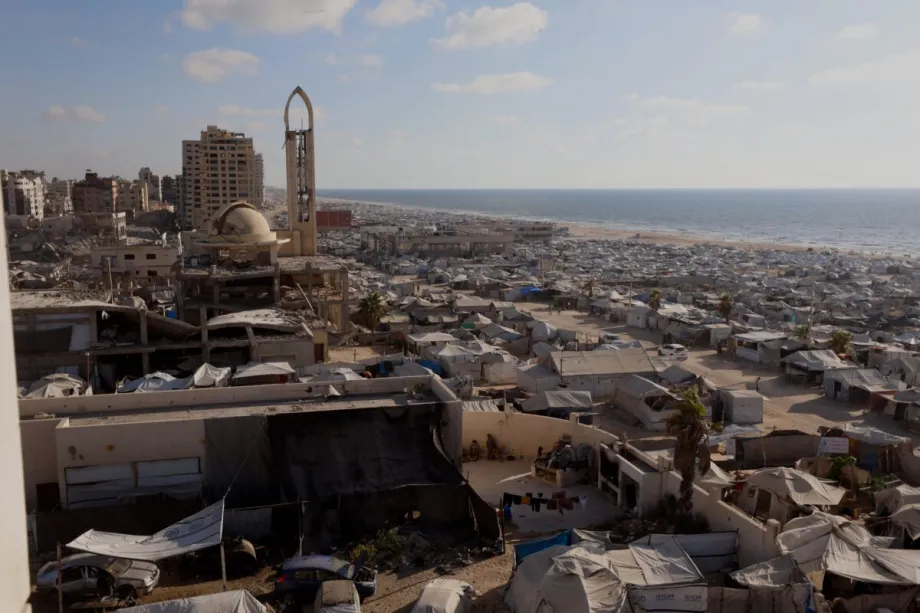
A Palestinian family in the northern Gaza town of Jabalia has been reunited with their son after believing for a year that he had been killed by Israeli army fire, only to discover he had been held in an Israeli prison throughout that time.
Inside the family’s home, which was damaged by Israeli bombardment, relatives broke down in tears of joy as 23-year-old Hamada Al-Banna returned unexpectedly after they had lost hope of ever seeing him again.
His family had believed that Hamada and his brother, Adham, were shot dead by Israeli forces while on their way to collect food aid during the peak of the famine that hit the Gaza Strip in the summer of 2025.
On Monday, Israeli authorities released Hamada along with 16 other Palestinian detainees. The International Committee of the Red Cross transferred them to Al-Aqsa Martyrs Hospital in Deir al-Balah in central Gaza before he returned to his family in the north of the territory.
His mother, Widad, fainted after hearing her son’s voice for the first time in a phone call following his release. Hours later, she collapsed again as she embraced him when he arrived home.
An Anadolu correspondent witnessed the family’s emotional reunion, in a story reflecting the suffering of hundreds of Palestinian families who remain unaware of the fate of their relatives since the start of Israel’s military campaign in Gaza on 8 October 2023.
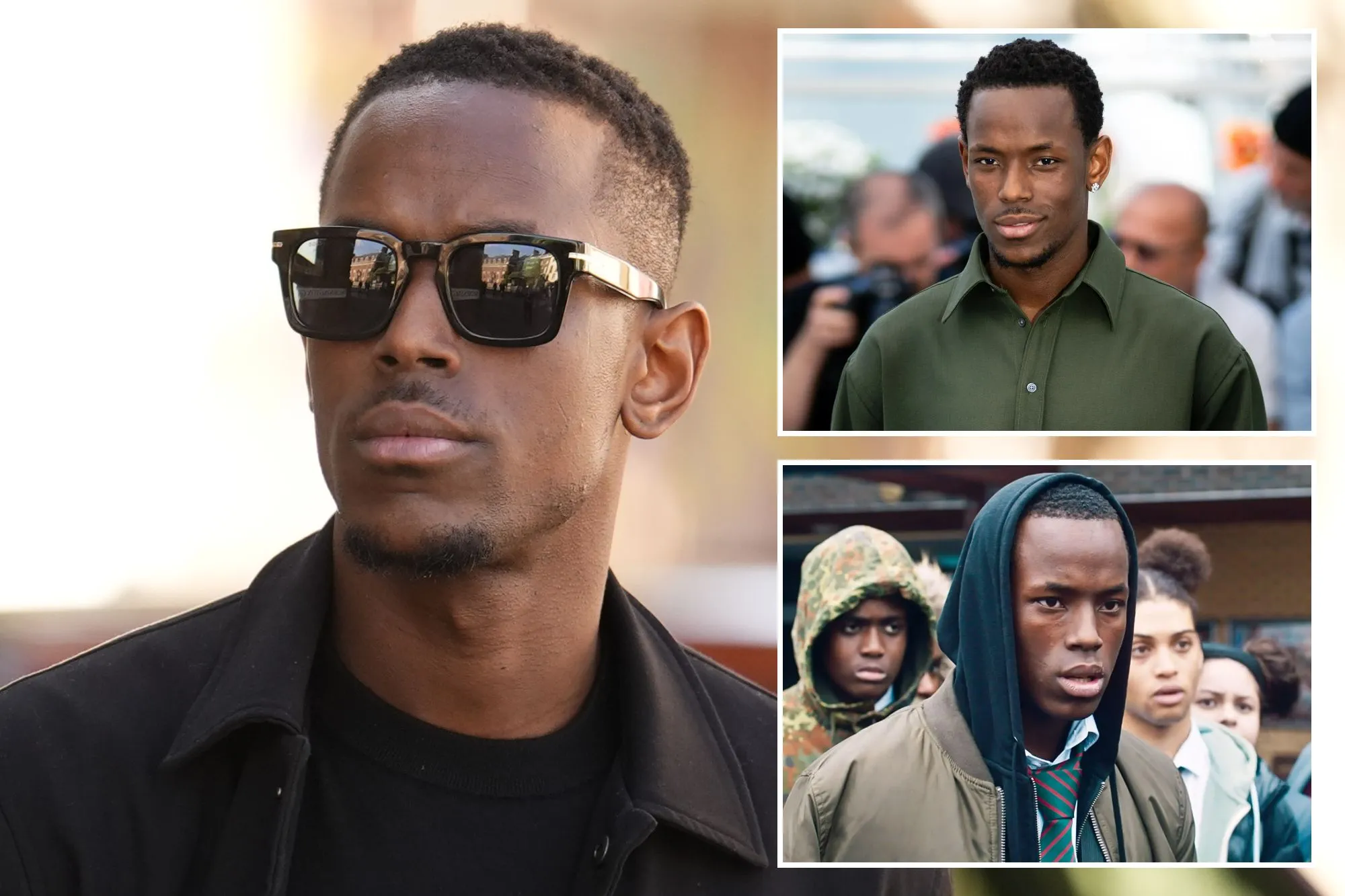
BAFTA-winning actor Micheal Ward has been found not guilty of raping a woman in the back of a car after a party.
The star, 28, was accused of repeatedly assaulting a woman in his friend’s car after meeting her at his New Year’s fancy dress event.
Micheal Ward, seen at a previous court appearance, allegedly raped the woman in a carCredit: PAThe actor starred in the third season of Top BoyCredit: Alamy
He has been found not guilty by jurors at Snaresbrook Crown Court.
Ward denied two counts of rape, two counts of assault by penetration and one count of sexual assault after the east London party in 2023.
Sign up for the Showbiz newsletter
Thank you!
The Jamaican-born actor made his name as one of the stars of cult hit Blue Story in 2019 and won the Rising Star prize at the BaftaFilmAwards the following year.
Judge Rosa Dean, in her jury directions, said: “This is a case where two young people had sex in the back of a car and your job is to decide if there was consent.”
The prosecution suggested he thought only about “his own pleasure come what may” and the alleged victim felt “pressured”.
In contrast, Ward stressed they had consensual sex and she was a willing and “active participant” in everything they did.
Ward told the court he and the woman flirted, had foreplay, enjoyed “passionate” kisses, and that an intimate act between them would not have happened if she did not want it.
Ward, from Cheshunt, Hertfordshire, met the woman for the first time at an “all-white party” at Infinity Lounge nightclub in Gants Hill, East London, in January 2023.
Ward starred alongside Olivia Coleman in Empire of LightHe has also worked as a modelCredit: Getty
The court heard the pair kissed and hugged in a Mercedes outside the party, and later had an intimate encounter in another Mercedes outside an after-party event.
The judge said: “The prosecution case is that she did not consent to any sexual activity beyond kissing. Things moved out of control. She felt pressured.”
The prosecution suggested Ward “did not care less”.
Tracy Ayling, KC, prosecuting, said: “Micheal Ward was unknown personally to her at the time. She knew him to be an actor and had seen him on TV and in films. She knew it was his party.
“They met for the first time outside the party and he asked for her snapchat handle which she gave to him. She accepts in her interview that she was flattered that he had asked for her details.
“During the course of the evening, she said that she had seen him intermittently; at one point he touched her bottom as he walked past her.
“He asked her if the three friends were doing anything after the event and invited her to an afterparty.”
She and her friends then went to an afterparty in Stratford but got a “weird vibe” so decided not to stay long.
Ward poses with his Bafta award for Rising Star Award in 2020Credit: ReutersThe actor denied all of the alleged offencesCredit: Getty
Jurors heard she then bumped into Ward, who asked her where she was going.
The woman told him they were leaving as they had a long drive home but he suggested that she walked up to the Mercedes that was parked further up the road so that he could talk to her again, the court heard.
Ms Ayling said: “She said she was given specific instructions to walk behind him, and not to talk to anyone en route.
“Mr Ward then invited her to climb into the back seat with him claiming that he just wanted to kiss her a bit more.”
The woman said they could do that in the front seat but Ward allegedly became “quite impatient” and told her to “stop wasting time” and get into the back.
Ms Ayling continued: “She said that she felt a bit pressured, but she did what he asked.”
Snaresbrook Crown Court heard the woman “didn’t really feel like I had a choice”. She told police: “He said: ‘If I tell you to do it, you do it’.”
The court was told Ward then allegedly pulled down her trousers and knickers before raping her.
Jurors heard the actor then orally raped her then started talking “as though nothing had happened”.
Of the defence case, the judge said: “At the time she actively consented.
“This was not submission. Her friends were nearby, available and in telephone contact.
“She made a conscious decision to step into the car and was in control of her actions.
“All of her actions suggest she was consenting.”
Ward was arrested on January 18, 2023 and told police in a prepared statement: “I deny the allegation of rape. I want to put on record that we had consensual foreplay and consensual sex.”
Ward’s first on-screen appearance came in 2016 in movie Brotherhood.
His breakout role was in 2019 when he starred as Jamie in Netflix’s third series of Top Boy.
He also appeared in the Sam Mendes drama Empire of Light alongside Olivia Colman.
The star was nominated for the Bafta Award for Best Actor in a Supporting Role for the film.
He also won a Bafta Rising Star Award for his performance in British musical crime drama Blue Story.
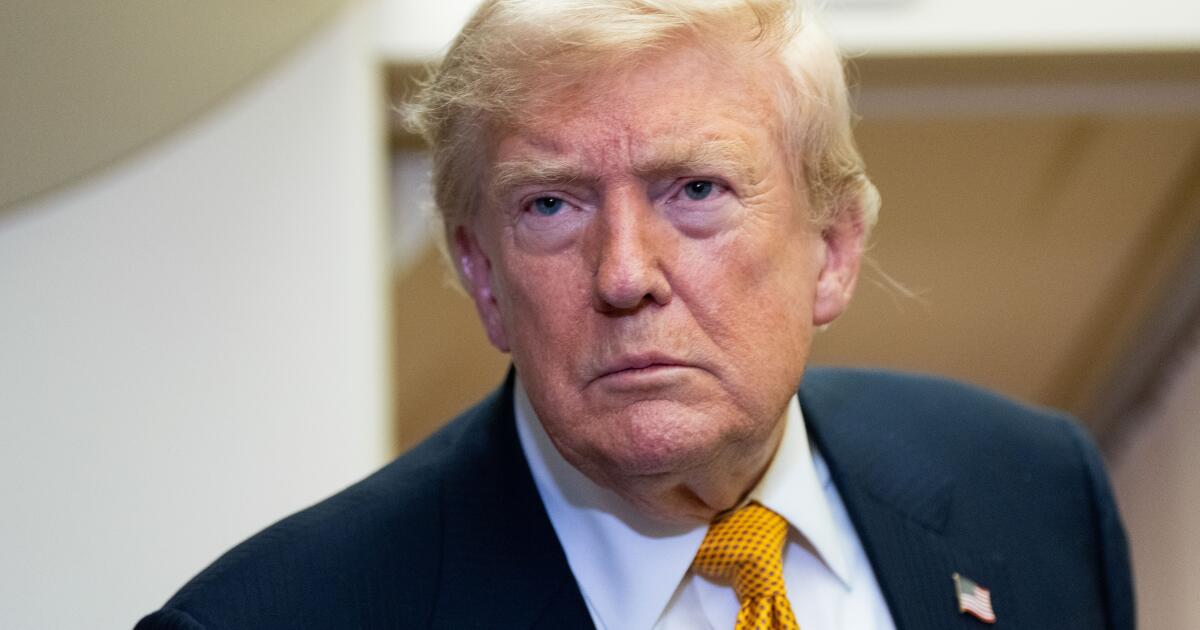
President Trump has ousted members of a bipartisan federal election commission that resisted his efforts to require would-be voters to document their U.S. citizenship before registering.
The White House on Friday confirmed the executive action against members of the Election Assistance Commission, which distributes federal grants to states, oversees the testing of voting systems and maintains the national voter registration forms.
It’s the latest move in the Republican president’s effort to expand White House influence over how U.S. elections are conducted and comes after a recent U.S. Supreme Court ruling that gave the president new personnel authority to fire members of independent agency boards.
“The President, and head of the Executive Branch, reserves the right to remove individuals that may not be totally aligned with the important task of securing America’s elections and ensuring every legal vote is counted. The Slaughter decision gives the President precedence to do so,” said a White House statement to AP.
The president removed the commission’s two Democratic members, Thomas Hicks and Benjamin Hovland. The panel’s Republican member, Christy McCormick resigned. Former Republican commissioner Donald Palmer already had left his post voluntarily earlier this year.
The changes were first reported by VoteBeat, a news outlet that covers elections and voting across the U.S.
While the White House statement did not offer a specific reason for Trump’s action, the commission has previously declined to change the national voter registration form to require documentation of an applicant’s U.S. citizenship, as Trump’s urged in a sweeping March 2025 executive order on U.S. elections. A federal judge blocked the order, ruling it exceeds the president’s authority since the U.S. Constitution grants authority over elections management and oversight to Congress and the states. The administration has indicated it will appeal.
It was not clear whether Trump planned to nominate new members immediately or leave the positions vacant — a move that, months ahead of midterm elections, could prevent the agency from distributing new grants to state or local elections offices and, at the least, complicate its role in overseeing testing and certification of voting systems around the country.
“The Administration from the start has been working across all agencies and local partners to safeguard elections from fraud and abuse, and investing in a strong infrastructure to sustain that mission especially in the midterm elections,” the White House said.
Congress created the four-member commission as part of the Help America Vote Act, a bipartisan law signed by Republican President George W. Bush in 2002. The act requires the commission to include two Democrats and two Republicans, nominated by the president and confirmed by the Senate. Hicks and McCormick were appointed by President Barack Obama. Trump appointed Hovland during his first presidency.
According to VoteBeat, Hicks and Hovland were notified of their removal by an email signed by Morgan DeWitt Snow, the deputy director of presidential personnel in the Executive Office of the President.
World number one Scottie Scheffler misses the cut for the first time in 79 tournaments as he bogeys the final hole of his second round of the Scottish Open.
July 10 (UPI) — A bipartisan housing bill that swept the House and Senate is set to become law at midnight Friday if President Donald Trump doesn’t veto it, and he said Friday morning on social media that he won’t sign it.
The 21st Century Road to Housing Act was passed on June 29 by a wide margin of Democrats and Republicans in both chambers of Congress, but the president canceled a signing ceremony at the last minute and said he wouldn’t sign it until Congress passed Trump’s pet project, the SAVE America Act, which they don’t have the support to do.
“I will not sign the Housing Bill, which has been fully approved by Congress and sent to the White House, in PROTEST over the fact that the United States Senate is not capable of passing THE SAVE AMERICA ACT, which is polling at 97% with the Republican Party, and very high with the non-politician Dumocrats,” he wrote.
He didn’t mention a veto, but it’s still a possibility.
“The Act states, quite simply, that to Vote a person must show PHOTO VOTER I.D., PROOF OF CITIZENSHIP, AND THAT THERE WILL BE NO MORE CROOKED, CORRUPT, & DESTABILIZING MAIL-IN BALLOTS (EXCEPTIONS for Military, Disabled, Illness, and Travel!). THE SAVE AMERICA ACT’S non-passage is CRAZY, and a serious threat to any politician who votes against it! If the Dumocrats, or any RINO (or worse!) working with them, do not allow a positive Vote on SAVE AMERICA, TERMINATE THE FILIBUSTER, and pass this, and every other Bill that true Republicans have ever dreamt of (In addition to the upcoming Budget BOMB and the 1929 catastrophic style DEBT CEILING BILL!). The Dumocrats will TERMINATE THE FILIBUSTER, if and when they ever get the chance to do so, in their very first hour – And I will no longer be able to call them Dumocrats again! The title of DUMB will revert to the Republicans who allowed this horrible calamity to happen to our Party, and our Nation, itself! MAKE AMERICA GREAT AGAIN!” he wrote.
If the president vetoes the bill, Congress will likely have the votes to override it. It would need a two-thirds majority to pass the override in the House and Senate.
“This is the exact kind of bill they want to point to and say Republicans are working on issues that their voters care about, and Democrats would want the same,” Julian Zelizer, a history and public affairs professor at Princeton University, told The Washington Post. “That’s not the signal that the administration is sending.”
Since the bill passed and Trump refused to sign it, he has called it “a yawn.”
“To me, compared to the SAVE America Act, everything is a big yawn,” he said.
The SAVE Act is an election bill that would require voters to prove they are citizens when registering to vote. Critics argue that it would disenfranchise too many voters because of the types of proof it would require.
The housing bill includes measures that modernize building standards, encourage renovating older homes, encourage communities to build more housing with funding and grant programs, local governments to reform restrictive zoning policies around building housing and effectively ban private equity from buying up single-family homes. Critics of the bill say it doesn’t go far enough, but they acknowledge it’s a good first step.
It’s the first bipartisan measure that’s passed this Congress.
Some Democrats have been publicly pushing the president to sign the bill.
“It’s been sitting on President Trump’s desk long enough. Sign the bill,” Sen. Amy Klobuchar, D-Minn., posted on X.
Sen. Mark Kelly, D-Ariz., said on X, “Republicans and Democrats worked together to pass a bill to build more housing and stop hedge funds from buying up single-family homes, but Trump is holding it hostage. He needs to stop playing games and sign the bill so more Americans can finally afford homes.”
Olympic canoeist David Hearn departs the Moultrie Courthouse after pleading not guilty to damaging the Lincoln Memorial Reflecting Pool on Thursday. Hearn was indicted on July 2 on one count of destruction of property of more than $1,000 for allegedly damaging the Reflecting Pool, carrying a maximum penalty of 10 years in prison if convicted. Photo by Bonnie Cash/UPI | License Photo
SEASIDE towns – the UK sure does have a fair few, but with so many stunning spots, it is easy for others to be forgotten about or even bashed.
This is the case for Bognor Regis this week, as it has been named the WORST seaside town in the UK.
Bognor Regis was recently named the worst seaside town in the UK – but I don’t agreeCredit: Alamy
If you really want to see some of the UK’s best beaches, check out some of our best £9.50 Holidays.
In research carried out by Which?, towns were voted on by more than 5,300 people focusing on a range of criteria including the quality of the beaches, scenery, food and drink, accommodation, tourist attractions, shopping and value for money.
Sign up for the Travel newsletter
Thank you!
Bognor Regis scored just 41 per cent overall, achieving one star in all categories, bar one.
Having visited just last week, and on a number of occasions before, I think (or rather, I know) they’ve got it wrong.
Bognor Regis is actually the sunniest spot in the UK – and what is not to love about that?
Tie this in with its long-stretching beach with miles of sea views and it’s hard not to love.
The main beach (known as East Beach) is unbeatable. While it is a pebble beach, there is plenty of space to put up a deck chair and enjoy the waves crashing on the stones.
Though, if you do want to go on a walk but avoid the pebbles, running along the beach is a nice flat esplanade.
You can head to the long pebble beach and soak up the sunshineCredit: Cyann FieldingAlong the beach you will find Luna Hut Sauna and the pierCredit: Cyann Fielding
Sat at the edge of the beach you will also find a number of things to do.
For example, you can head to the pier which is full of arcade machines and instead of your usual keyring prizes, you can bag a Jellycat (I tried and failed to get the seagull).
Also along the beach you will find Luna Hut Sauna Bognor Regis where you can head straight from the sea to the sauna and then sit looking out at the ocean.
You can choose between a half-an-hour session and an hour-and-a-half session, costing from £8 per person.
You can also pick up an ice cream for a couple of quid, or fish and chips for under a tenner – prices that are getting harder to find these days.
Alternatively, you can head to West Beach, which is west of the town centre and is normally less crowded.
For something free to do, visit the Bognor Regis Museum which has lots of exhibits on local history, fossils, vintage cameras and even an extensive radio collection.
And would it even be a proper trip to Bognor Regis if you didn’t go to Butlin’s?
You can head to Butlin’s even just for a dayCredit: Cyann FieldingAt the park, there is a huge swimming complex as well as soft play for little onesCredit: Cyann Fielding
Butlin’s Bognor Regis is home to a wealth of things to do – with the most recent experience being a claw machine which claimed the Guinness World Record title for the biggest in the world.
For little ones, there are soft play areas, fairground rides and a tonne of shows.
Bigger kids can also enjoy PlayXperience, can only be found at Butlin’s Bognor Regis and boasts escape rooms, crazy golf, VR games and more.
On my last visit, I spent hours jumping between the different experiences, getting competitive at interactive darts and losing the crazy golf game along the way.
Another great attraction at the resort is the Splash Waterworld, which has a splash area with tipping buckets for little ones and slides for older kids.
What makes this all even better is that you don’t have to stay to enjoy all of this – you could just book a day ticket.
These tickets will be 15 per cent cheaper from July 17 until September 1 as well, thanks to the Government’s Great British Summer Savings scheme.
It takes less than two hours to reach Bognor Regis on the train from LondonCredit: GettyAnd while there make sure to check out the station bookshopCredit: Refer to source
As for the town centre, which admittedly it is a little run down in places and with a horde of chain stores, there are still some gems including places for a good bite to eat and others for a cheap pint.
For example, you could go to The Hatter’s Inn, a Wetherspoons pub with pints of Worthington’s creamflow for just £1.99.
And for a bite to eat, check out Bonito Lounge which serves a range of feel-good, comfort dishes including fish and chips with a drink for £12.09 and bottomless coffee refills for £1.89.
The building is covered in plants and it has some lovely outdoor seating to ensure you’re making the most of being in the sunniest spot in the UK.
It doesn’t take long to reach the seaside destination from London either – it takes under two hours on the train, direct.
And if you do happen to be coming by train, make sure to head into the station’s bookshop for a tonne of cheap, second hand books.
So ignore the ‘stats’ that say its the worst town – it has all the charm of seaside towns gone by, with cheap prices, great pubs, and fantastic holiday parks to boot.
Three wins to go. How can your team reach the final and win the World Cup 2026? Click here to find out.
Who: Norway vs England What: FIFA World Cup 2026 – Quarterfinals Where: Miami Stadium, Miami Gardens, Florida, the United States When: Saturday, July 11, at 5pm (21:00 GMT) How to follow: We will have all the build-up on Al Jazeera Sport from 18:00 GMT before our live text commentary stream.
Recommended Stories
list of 3 itemsend of list
Four weeks ago, if you told Norwegians their team would be in the World Cup quarterfinals, they might have laughed it off. But this weekend, the Scandinavian country is set to break new ground.
Norway’s dream run in North America enters a new chapter when the tournament’s dark horses take on title contenders England for a place in the semifinals.
It took Norway a whopping 28 years to return to the sport’s biggest stage, and they have made their mark in style – from their traditional Viking row celebrations capturing global attention to striker Erling Haaland becoming the internet’s darling.
A lethal presence in the box and a goofy, no-nonsense personality off the pitch, Haaland has become somewhat of an all-round entertainer for viewers. His exemplary goal-scoring figures make you almost forget he’s playing in his debut World Cup – and next up, the towering striker will go toe-to-toe with England’s Harry Kane, another number nine who delivers when it matters most.
How did Norway and England reach the round of 16?
Norway finished second in Group I with six points, beating Senegal and Iraq and losing to France. They started their knockout phase with a late 2-1 win over the Ivory Coast before stunning Brazil by the same scoreline to reach the quarterfinals for the first time.
England topped Group L with seven points, beating Croatia and Panama and drawing with Ghana. They needed a second-half comeback to beat the Democratic Republic of the Congo in the round of 32 and knocked out cohosts Mexico 3-2 in a scintillating last-16 contest at the iconic Azteca Stadium.
England players celebrate after reaching a third consecutive quarterfinal [Paul Childs/Reuters]
Pressure firmly on England
The chants of “It’s Coming Home” were louder than ever when England’s fighting spirit – against the background of high altitude, history and a red card – steered them to victory against the home side Mexico.
Sharing 10 of the team’s 11 goals between them, the dynamic duo of Kane and Jude Bellingham has kept England alive in the title race, especially at a time when there are defensive deficiencies in the squad.
The in-form side, which also boasts more World Cup experience than Norway, are deemed favourites to reach the semifinals for the first time since 2018.
“We’ve been here a few times,” said England winger Bukayo Saka. “But the best team on the day is going to be the team that wins, so we’re aware of that and that’s where our focus is.”
England’s leaky defence – which has kept only two clean sheets in five games – will face its toughest test yet against Haaland, whose seven goals rank him third in the Golden Boot race, only behind Lionel Messi and Kylian Mbappe.
Haaland: The most recognisable face at the World Cup
In their first World Cup since 1998, Norway, a nation of just more than five million people, has exceeded expectations.
After stunning the record five-time world champions Brazil to reach their first-ever quarterfinal, Norway will be eager to take down another giant and extend their fairytale run.
As much as their success has been a team effort, the spotlight has centred on their poster boy, Haaland – the blond, pony-tailed, 1.95-metre- (6ft4-) tall striker and a new social media sensation.
With his nonchalant replies in news conferences, awkward post-match selfies on Snapchat and a glittering collection of luxury handbags, the striker has drawn attention for more than just his goal-scoring prowess. In fact, “Haaland mania” has reached a fever pitch during the course of the World Cup.
Instagram is flooded with AI-generated and animated videos of him, stitched with his now-famous song “Ha-ha-ha-Haaland”.
“It’s important to joke around … I like to joke a little bit, and I like to have fun,” Haaland said. “That’s a key for my daily life – to joke around and, of course, train well and prepare well.”
Haaland’s top-notch preparation has delivered outcomes that even the 25-year-old did not expect.
“To be in the quarterfinals with Norway in the World Cup is quite surprising, even for me,” he said.
“Just to be able to play in the World Cup is, for me, a huge honour, and it was a huge goal for me in my career. To be able to be here and play on the biggest stage with my Norwegian friends against the best teams in the world, it’s really special.”
Norway vs England predictions
The Opta supercomputer gives England a 50.4 percent likelihood of winning in regulation time, while Norway’s chances of winning are 25.1 percent.
The model estimates a 24.6 percent probability of the game going to extra time.
What time is Norway vs England?
Norway: NRK1, NRK2, TV 2 (11pm, Central European Summer Time)
United Kingdom: STV, STV Player, ITV1, ITVX (10pm, British Summer Time)
To check the TV listings for your country, head to FIFA’s TV listing schedule here.
Who will the winner face in the semifinals?
The winner of the Norway vs England match will play Argentina or Switzerland in the semifinals in Atlanta on Wednesday.
Norway vs England: Head-to-head
Norway and England have never met at the World Cup, but have previously faced each other 12 times. England have won seven times, Norway twice, while three matches ended in a draw.
Their most recent encounter came in a 2014 international friendly, which England won 1-0 at Wembley.
Norway vs England: Team news
England will be without defender Jarell Quansah after he was handed a two-match ban for picking up a red card in the game against Mexico. He will miss the quarterfinal and a potential semifinal should England advance.
Centre-back Marc Guehi has a slight hamstring strain and will be assessed later on Friday to see if he is fit to play, while Reece James remains doubtful with a hamstring injury.
Defensive midfielder Jordan Henderson has been ruled out of the rest of the tournament with a broken wrist.
Vogue Williams has shared a ‘threatening’ private message sent to her by Lee AndrewsCredit: YouTubeThe star read it on her podcast, My Therapist Ghosted Me, with Joanne McNallyCredit: YouTube/My Therapist Ghosted Me
After hearing the criticism about his relationship, Lee took to his social media and said he would be sharing a video of his own to expose “fake boxers, sneaky DJs, famous-for-nothing presenters, desperate exes, and desperate reality-relevant goons making money on my name and slandering my relationship with lies and gossip” at 10pm.
Vogue joked that 10pm was too late for her to stay up now she’s pregnant with her fourth child.
Sign up for the Showbiz newsletter
Thank you!
The star then messaged Lee about it privately, asking if the release could be brought forward to 8pm, and she surprisingly ended up receiving a response from him.
Reading out Lee’s message, she joked that the pair are now “friends” after he seemed to ease his defensive stance.
Lee said: “Oh, he said, ‘haha, I didn’t schedule it, but I’ll see what I can do. Congrats on the baby to both of you.
Lee has been feuding with the duo onlineCredit: Lee Andrews/FacebookKatie Price pictured with husband LeeCredit: Instagram/@wesleeeandrews
“There are a few other things coming your way, but nothing detrimental.
“More on the gist of the recent events. Take good care.”
Co-host Joanne laughed at Lee’s response, then said to Vogue: “Did he just congratulate you on your baby and then threaten you in the same message? This is a wild morning.”
But Vogue didn’t appear too fazed by it, replying: “It’s nothing detrimental. More in the gist of recent events. I’ll be like, ‘It’s all in the name of fun, Lee, isn’t it?’.”
The remark comes after Vogue and Joanna slammed Lee for being a “clout chaser”.
Cadiz (CDZI) up 7% pre-market Friday after saying the U.S. Bureau of Land Management issued a final decision approving the right-of-way grant allowing the company to begin construction on converting its 220-mile Cadiz Northern Pipeline from natural gas
Over two weeks have passed after the June 24 Venezuelan earthquakes. The main concerns at the moment are coping with the human and material costs of the disaster, while laying down the work ahead for what looks to be a slow path to recovery. Meanwhile, a recent news report that is curiously connected to the seismic event itself caught attention.
A video recorded by renowned Venezuelan geologist Franck Audemard, along with staff from Funvisis (the Venezuelan Foundation for Seismological Research), denounced that a high-precision GPS monitoring device, used to track movements along the Boconó Fault, was missing from its location at “La Chicharronera”, by the Morón-Barquisimeto highway (part of the Cimarrón-Andresote Highway), inside a piece of land owned by the former Major League Baseball player Melvin Mora.
“In the year 2013, we installed equipment in the rock that we have behind us”, says Audemard in the video. “This equipment is a global positioning device, which was sown in a giant rock to follow the movement of the Boconó Fault, which was responsible for the first of the two earthquakes of June 24th, 2026… The equipment that was registering on that rock has disappeared, it’s no longer in the location where it was.”
“Therefore, we are making this public call to the person who put it into safety to be kind enough to return at least the sensor from such equipment… The data being registered there is vital to what’s currently happening in the central, center-west part of the country.”
Funvisis issued its first report about the quakes several hours after its Colombian and US counterparts did.
Audemard publicly asked whoever has this equipment or sensor to deliver it to any public office or entity nearby. He and the Funvisis staff were visiting the area of one of the two quakes’ epicenters in Veroes municipality, Yaracuy state. In the small town of Palmarejo, a 300-meter crack opened up. There was serious material damage but no loss of life. Unfortunately, there were at least 15 people dead at the neighboring Juan José Mora municipality (Morón) in Carabobo state.
Audemard didn’t explain, though, the mystery of when Funvisis realized that one of its most important monitoring stations ceased to transmit data, assuming it’s true that it stopped because someone stole the equipment. It’s like they are using this story to justify the lack of response from the Venezuelan seismological agency Funvisis, which issued its first report about the June 24th quakes several hours after its Colombian (SGC) and North-American (USGS) counterparts did.
In recent days, Audemard spoke to several media outlets about what caused the earthquakes. Worth recommending is this long interview with Colombian private TV channel Caracol, in which he explains how the Boconó Fault accumulated enough energy to provoke a 7-7.5 earthquake based on a study he helped with in 2017. He has written articles on the Boconó Fault as well.
At first glance, this news report could be considered as not that relevant in the large scale of things with all what’s happening around us. But it cannot be dismissed either, as it reflects some of the criticisms regarding the management of seismic monitoring in Venezuela by Funvisis, the entity in charge since 1972, and its state of declining operability at the time of the recent quakes.
1% of former capacity
An article published on the Spanish website of Deutsche Welle (DW) on June 26 offers a picture of how the country found itself at such a moment by interviewing two local experts on the matter. One of them was Raúl Estévez, the founder of the Geophysics Laboratory at the University of Los Andes (ULA) and the Seismological Network of the Venezuelan Andes.
Estevez told DW that “the occurrence of these earthquakes wasn’t totally unexpected”, adding that specialists noticed for some time “a seismic breach” in Western Venezuela. “We expected the next big quake to happen there and with a magnitude of seven or more… We knew that.”
“We used to have between 250 and 300 seismological stations all across the country. In Mérida alone, we had around 25. Funvisis only has 3 to 5 functioning stations.”
As for Funvisis and the situation of the national seismic monitoring system, Estévez said that “politics went above everything else and neglected all the institutions that did seismology”.
A week after the DW piece was published, Estévez and three of his ULA colleagues held a forum in Mérida state titled “The Earth Shakes: analysis and challenges after the June 24th earthquake.”
Estevez said that the operativity of Funvisis is minimal: “We used to have between 250 and 300 seismological stations all across the country. In Mérida alone, we had around 25. Funvisis only has 3 to 5 functioning stations. The infrastructure is gone because we didn’t get resources.”
Chavista official Francisco Garcés became one of the most visible public faces of the official disaster response.
He also pointed to the lack of enough specialized personnel during the forum event in Merida and in his interview with DW. “The next generation of seismologists had to leave the country, not because they wanted to but because simply there were not enough resources to survive”.
Related to this, Estévez told DW that because of our lack of capacity we are more dependent on foreign institutions like the United States Geological Service (USGS). “…as a good part of the monitoring is from stations outside of Venezuela, any seismic activity information can only be inferred.”
“Mistakes are paid dearly”
Another callback is that many Venezuelans were able to know about the quakes right before they happened through their phones thanks to Google’s Android Earthquake Alert System.
Going back to DW’s article, the other local expert consulted didn’t directly address any issues regarding Funvisis. Which is somewhat curious as that person was its former head Francisco Garcés, who held the position between 2009 and 2010.
Instead, he mostly focused on how singular the June 24th quakes were: “It isn’t normal to suffer two consecutive earthquakes of this magnitude. This is extraordinary in any part of the world”. Yet, he acknowledged the lessons to be learned from this disaster: “Mistakes are paid dearly.”
The June 24 doublet was not an ordinary seismic event, but there must be serious reflection on the State’s failures when it comes to monitoring and reporting.
Garcés has become one of the most visible public faces of the official response to the disaster by giving multiple media interviews explaining in detail the causes and impact of the earthquakes.
Now, he was given a double new role by Delcy Rodríguez: first up, as the Chairman of the new Presidential Commission for the Evaluation of Housing Habitability and General Infrastructure, which will be in charge of reviewing houses and other kinds of structures like roads and bridges. The other role is of Transportation Minister, a position he already occupied between 2010 and 2011.
Garcés has already met with the national civil engineering guild (Colegio de Ingenieros de Venezuela) to unify the technical criteria to be used for the ongoing round of inspections. He has also explained the traffic light-style methodology to identify the state of any given infrastructure.
It’s true that what happened on June 24th was not an ordinary seismic event. But as the nation begins to pull itself back on its feet, there has to be serious reflection on the failures in properly monitoring and reporting these kinds of natural disasters. I agree with what Mr. Audemard just told State TV channel VTV about having a “seismic culture”, but that has to come along with proper preparation by the authorities who should be in charge of helping us when it’s needed.
Get the latest on L.A.’s teams in the daily Sports Report newsletter.
By continuing, you agree to our Terms of Service, which include arbitration and a class action waiver. You agree that we and our third-party vendors may collect and use your information, including through cookies, pixels and similar technologies, for the purposes set forth in our Privacy Policy such as personalizing your experience and ads.
World Cup spurs grass/artificial turf NFL debate
From A.J. Perez: FIFA’s natural grass transformation of SoFi Stadium and six other NFL stadiums with artificial surfaces for this summer’s World Cup reignited the debate over grass versus synthetic turf.
Las Vegas Raiders owner Mark Davis long ago took a side in the fight.
“I just always felt that football should be played on grass,” Davis told The Times. “That’s for safety purposes, No. 1. I want it to look like a game was played even if it’s an indoor field. You see grass stains and everything else. I wasn’t going to a stadium without it being grass once I knew that capability was there. Obviously, it added a lot of cost, but it’s worth it.”
FIFA spent millions to lay new grass atop all 11 NFL stadiums and most of the other five stadiums that hosted World Cup games in Mexico and Canada — and some NFL players see this summer’s temporary changeover as the league’s touch-grass moment.
“The NBA league office informed us that as a result of the ongoing investigation involving the Clippers, we would assume the risk of any potential outcome of the investigation impacting Kawhi,” the Raptors said. “In light of this, we will wait until the league’s investigation is complete.”
The teams last month finalized a trade to send Leonard to Toronto for forward Brandon Ingram, shooting guard Gradey Dick, two first-round draft picks, a pick swap and two second-round picks. Leonard spent the last seven seasons with the Clippers after leading the Raptors to the 2019 NBA championship.
Kentucky, Michigan and Gonzaga had courted Kusturica, a 6-foot-9 Serbian who is among the top 17-year-old players in Europe. Recruiting websites listed Kusturica as a five-star prospect, and college basketball analysts at Field of 64 and other outlets project Kusturica could be a top-five 2028 NBA draft pick.
UCLA announced it received a signed grant-in-aid agreement from Kusturica, who will join the Bruins for the upcoming season.
From Austin Knoblauch: Rams offensive lineman Alaric Jackson is not facing charges related to his arrest last month on suspicion of domestic violence, the Los Angeles City Attorney’s office confirmed.
“Charges are not filed against the respondent at this time, however, the case stays open throughout the length of the statute of limitations. It can be re-evaluated if there are further developments,” said Ivor Pine, a spokesperson for the Los Angeles City Attorney’s Office.
Pine said the matter has been assigned for a City Attorney hearing, a pre-filing diversion that is an alternative to misdemeanor prosecution.
The Ducks have matched the Philadelphia Flyers’ offer sheet for center Leo Carlsson, keeping their rising young star at an extraordinary cost.
The Ducks announced their decision Thursday on the 21-year-old Carlsson, who is now the NHL’s highest-paid player under the five-year, $90-million deal extended by the Flyers one week ago.
“It’s going to be a special feeling, having this pressure,” said Carlsson, who wasn’t told the Ducks were matching the offer sheet until shortly before the decision was made public. “I always wanted to be a Duck. It’s my home, too. I’m just super excited to be back.”
Although he didn’t produce points at a rate commensurate with his new salary during his first three seasons, almost everyone believes Carlsson can become one of the best centers in hockey, so his deal might eventually look downright affordable.
He scored 67 points in 70 games last season despite being limited for a lengthy stretch by a leg injury, and he added 11 points in 12 games during his first postseason experience.
Wyatt Langford lined a shot off the wall in left field to bring home Alejandro Osuna in the ninth inning, lifting Texas to a 7-6 victory over the Angels after the Rangers blew a five-run lead Thursday night.
Langford struck out three of his first four times up as the designated hitter after getting activated from the 10-day injured list in his return from a left hamstring strain.
Osuna led off the ninth with a single and went to second on pinch-hitter Nicky Lopez’s sacrifice bunt. Langford lined a 1-and-1 fastball from former Texas closer Kirby Yates (0-4) over Jose Siri’s head for the winning single.
Jo Adell had a tying, pinch-hit single to cap a five-run seventh a night after homering twice in the Angels’ 13-1 victory.
1926 — Bobby Jones wins the U.S. Open golf tournament for the second time with a 293 total.
1951 — Britain’s Randy Turpin defeats Sugar Ray Robinson in 15 rounds to win the world middleweight title and give Robinson his second loss in 135 bouts.
1960 — UEFA European Championship Final, Parc des Princes, Paris, France: Viktor Ponedelnik scores in extra time as Soviet Union beats Yugoslavia, 2-1.
1971 — Lee Trevino rebounds from a double-bogey on the next to last hole with a birdie on the final hole to win the 100th British Open by one stroke over Lu Liang-Huan. Trevino, who won the U.S. Open a month earlier, is the fourth golfer to win both championships in the same year, joining Bobby Jones (1926, 1930), Gene Sarazen (1932), and Ben Hogan (1953).
1976 — Johnny Miller shoots a 66 in the final round to beat 19-year-old Spaniard Seve Ballesteros by six strokes to take the British Open. Ballesteros, who starts the final round two strokes ahead of Miller, shoots a 74 and ends tied for second place with Jack Nicklaus.
1992 — The Major Soccer League, the only major nationwide pro soccer competition in the United States, folds after 14 seasons.
1999 — Team USA wins the Women’s World Cup over China in sudden death. The Americans win 5-4 in penalty kicks, with defender Brandi Chastain kicking in the game winner.
2010 — Paula Creamer wins her first major tournament, never giving up the lead during a steady final round of the U.S. Women’s Open. Creamer shoots a final-round 2-under 69 for a 3-under 281 for the tournament.
2010 — Spain wins soccer’s World Cup after an exhausting 1-0 victory in extra time over the Netherlands. In the end, it’s Andres Iniesta breaking free and scoring a right-footed shot from 8 yards just past the outstretched arms of goalkeeper Maarten Stekelenburg.
2011 — The United States advances to the semifinals after one of the most exciting games ever at the Women’s World Cup in Dresden, Germany. The U.S. beat Brazil 5-3 on penalty kicks after a 2-2 tie. Abby Wambach scores a thrilling goal to tie it in the 122nd minute, and goalkeeper Hope Solo denies the Brazilians again.
2016 — Andy Murray wins his second Wimbledon title by beating Milos Raonic 6-4, 7-6 (3), 7-6 (2) on Centre Court.
2016 — Brittany Lang wins her first career major at the U.S. Women’s Open when Anna Nordqvist touches the sand with her club in a bunker for a two-stroke penalty in the three-hole aggregate playoff. The penalty occurs on the second hole of the playoff and is not delivered to the players until they were on the final hole after officials review replays in the latest controversy at a USGA event. Lang seals the win with a short par putt on the final playoff hole, while Nordqvist makes bogey to lose by three shots.
2017 — An independent review of the scoring in Manny Pacquiao’s contentious WBO welterweight world title loss to Jeff Horn confirms the outcome in favor of the Australian. A Philippines government department asked the WBO to review the refereeing and the judging of the so-called “Battle of Brisbane” in Australia on July 2 after Horn, fighting for his first world title, won a unanimous points decision against Pacquiao, an 11-time world champion. The WBO said three of the five independent judges who reviewed the bout awarded it to Horn, one awarded it to Pacquiao and one scored a draw.
2021 — Ashleigh Barty of Australia wins Wimbledon defeating Karolina Pliskova of the Czech Republic 6-3, 6-7, 6-3.
2022 — Wimbledon Men’s Tennis: Novak Đoković wins 4th straight and record equaling 7th Wimbledon singles title with a 4-6, 6-3, 6-4, 7-6 win over Nick Kyrgios of Australia; Đoković now has 21 Grand Slam titles.
Compiled by the Associated Press
This day in baseball history
1917 — Ray Caldwell of New York pitched 9 2-3 innings of no-hit relief as the Yankees beat the Browns 7-5 in 17 innings in St. Louis.
1932 — The Philadelphia A’s defeated Cleveland 18-17 in an 18-inning game in which John Burnett of the Indians had a record nine hits. Jimmie Foxx collected 16 total bases, and Eddie Rommell of the A’s pitched 17 innings in relief for the win, despite giving up 29 hits and 14 runs.
1934 — Carl Hubbell struck out Babe Ruth, Lou Gehrig, Jimmie Foxx, Al Simmons and Joe Cronin in succession, but the AL came back to win the All-Star game 9-7 at the Polo Grounds as Mel Harder gave up one hit in the last five innings.
1936 — Philadelphia’s Chuck Klein hit four home runs in a 9-6 10-inning victory over the Pirates, and it wasn’t in the cozy Baker Bowl. He hit them in Pittsburgh’s spacious Forbes Field, including the game-winning three-run shot in the 10th off Bill Swift. Klein almost homered in the second inning when he sent Pirates outfielder Paul Waner to the wall in right to haul in a long fly ball.
1947 — Don Black of the Cleveland Indians pitched a 3-0 no-hitter over the Philadelphia A’s in the first game of a twin bill.
1951 — The NL hit four homers en route to an 8-3 triumph at Detroit, giving the league consecutive All-Star victories for the first time.
1968 — The American League and National League agreed to split into two divisions in 1969. The twelve teams in each league will be divided and play a best-of-five games League Championship Series to determine the pennant winner.
1982 — Larry Parrish of the Texas Rangers hit his third grand slam in seven days, off Milt Wilcox in the first game of a doubleheader against Detroit. The Rangers beat the Tigers 6-5. Parrish had hit his first on July 4 and his second on July 7.
2001 — Cal Ripken upstaged every big name in the ballpark, hitting a home run and winning the MVP award in his final All-Star appearance to lead the American League over the Nationals 4-1. Derek Jeter and Magglio Ordonez connected for consecutive home runs as the AL won its fifth in a row.
2007 — Seattle’s Ichiro Suzuki went 3-for-3 with an inside-the-park home run to lead the American League to a 5-4 victory over the National League in the All-Star game.
2009 — Jonathan Sanchez pitched the majors’ first no-hitter of the season, recording a career-high 11 strikeouts in San Francisco’s 8-0 win over the San Diego Padres. The only runner the Padres managed came on an error by third baseman Juan Uribe in the eighth.
2012 — San Francisco’s Melky Cabrera and Pablo Sandoval keyed a five-run blitz against Justin Verlander in the first inning that powered the NL to an 8-0 romp over the American League in the All-Star game.
2013 — David Ortiz doubled in his first at-bat to become baseball’s career leader in hits as a designated hitter and hit a two-run homer an inning later, leading Boston Red Sox to an 11-4 victory over Seattle. Ortiz entered the night tied with Harold Baines for the most hits as a DH.
2014 — Derek Jeter, playing his final regular-season game in Cleveland, went 2 for 4 in the 1,000th multi-hit game of his career. Cleveland scored nine runs in its last two innings at bat to rally past New York with a 9-3 win.
2019 — The independent Atlantic League introduces a “robot umpire” to call balls and strikes at its annual all-star game in York, PA.
2022 — In the 8th inning of their game against the White Sox, Tigers outfielder Robbie Grossman drops a routine fly ball hit by Luis Robert and is charged with his first error since June 13, 2018, ending the longest errorless streak by any player at any position in major league history after 440 games. Worse, the error proves costly as Robert later comes around to score in a 4-2 ChiSox win.
2023 — Vladimir Guerrero Jr. wins the annual Home Run Derby, held this year at T-Mobile Park in Seattle, WA, by defeating Randy Arozarena in the final round. His father, Hall of Famer Vladimir Guerrero, had won the event in 2007, and Vladito had finished runner-up in his first participation as a rookie in 2019.
Compiled by the Associated Press
Until next time…
That concludes today’s newsletter. If you have any feedback, ideas for improvement or things you’d like to see, email me at houston.mitchell@latimes.com. To get this newsletter in your inbox, click here.
Chinese President Xi Jinping, seen here at a reception in Beijing’s Great Hall of the People in September 2025, met with North Korean Premier Pak Thae Song on Friday, Chinese media reported. File Photo by Kremlin Press Office/UPI | License Photo
Chinese President Xi Jinping met North Korea‘s premier in Beijing on Friday ahead of an event marking the 65th anniversary of the signing of a friendship treaty between the two nations, news footage aired by Chinese state broadcaster CCTV showed.
North Korean Premier Pak Thae-song arrived there earlier in the day for a three-day visit to attend the event commemorating the treaty anniversary at the invitation of China’s Communist Party, according to the report.
The Treaty of Friendship, Cooperation and Mutual Assistance was signed July 11, 1961, by late North Korea founder and former leader Kim Il-sung and then Chinese Premier Zhou Enlai.
The Korean Central News Agency (KCNA), Pyongyang’s state media, reported on Pak’s planned visit to Beijing the previous day, without specifying a detailed schedule.
North Korean leader Kim Jong-un and Chinese President Xi Jinping held summit talks in Pyongyang last month and vowed to strengthen bilateral ties through expanded exchanges across multiple sectors, from economy to culture, as well as more frequent high-level visits.
At that time, Xi stressed the importance of marking the anniversary, fueling speculation that the two countries would hold a large-scale event.
In socialist nations like North Korea and China, anniversaries that fall on five- or 10-year intervals carry particular significance and are typically celebrated with grand events. High-level official visits and exchanges of congratulatory messages had been widely expected.
South Korea’s unification ministry said at a briefing earlier in the day it will “closely monitor” related developments in Beijing.
According to the ministry, this marks the first time in seven years that a North Korean government delegation has been dispatched to Beijing in celebration of the treaty’s anniversary.
The ministry also noted that North Korea has elevated the rank of its chief delegate to premier this year from vice chairman of the Standing Committee of the Supreme People’s Assembly back in 2019.
Copyright (c) Yonhap News Agency prohibits its content from being redistributed or reprinted without consent, and forbids the content from being learned and used by artificial intelligence systems.
DUA Lipa has been all over the world – according to her Instagram posts, from Italy to France, and of course, Albania.
In fact Dua’s love of the Albanian Riviera has resulted in soaring popularity – and for good reason.
Ksamil on the Albanian Riviera has Maldives-looking beachesCredit: Alamy
It might not be the first place that comes to your mind when looking for a holiday – but parts of Albania have incredible beaches with beautiful seaside towns.
And it’s getting more popular too with statistics revealing that tourists visiting Albania nearly doubled from 6.4million in 2019 to 11.7million in 2024.
Sign up for the Travel newsletter
Thank you!
It’s no surprise that certain destinations have become more popular – some look like they belong in the Maldives.
One spot that has featured on Dua Lipa‘s social media is the pretty village Ksamil which is made up of four islands.
The village is in the south of Albania very close to Corfu – in fact on a clear day you can see across to the island.
Ksamil has white-sand beaches, turquoise waters, and offshore islands that you can swim to from the mainland.
There are more private rentals than big hotels in Ksamil – and on Booking.com they start from as little as £51 per night in September.
The easiest way to get to Ksamil is actually to fly into Corfu Airport and take a quick ferry crossing across.
Another spot that Dua Lipa has highlighted is the seaside village, Dhermi, which in the summertime is called a ‘bustling seaside paradise’.
It has pebbled beaches, beach clubs, a historic old town, and one of the biggest attractions is Pirates’ Cave.
Albania is much easier to visit from the UK – and fights take as little as three hoursCredit: AlamyDua Lipa has been highlighting Albania on social mediaCredit: Alamy
Visitors can explore the natural sea cave by boat – and as the name suggests, it was used by pirates.
They used the sea cave to store stolen goods and hide their ships in the 17th and 18th centuries.
For larger resort towns, Sarandë is a popular one, and known as the ‘city’ of the Riviera.
It’s surrounded by the blue waters of the Ionian Sea with seafood restaurants and cheap beer, with pints as little as £1.30.
Popular coastal spots in the area include Pulebardha Beach which visitors have described as “magnificent”.
Another is Plazhi Pasqyra or Mirror Beach, which one local called their “favourite beach in the area” with “beautiful underwater reefs.”
Lots of beaches on the Riviera have white sand and bright blue watersCredit: AlamyPints in certain spots are under £2Credit: Alamy
It’s cheap too, for example, a room at Kalemi’s Beachside Hotel in Sarandë can be book for as little as £45 per night in September.
Albania is hot during the summer months too with July and August temperatures reaching highs of 38C.
Getting there doesn’t take long either, flights from the UK to Tirana are just over three hours.
Or if you fancy getting to Ksamil, a flight to Corfu takes three hours 10-minutes followed by an hour sailing.
With Jess, not her real name, your Gen X TikTok beauty influencer baffled as to why they haven’t put stem cells in her night cream
GETTING older is a natural process and nothing to be ashamed of. And if you believe that, please exit the dating market and go to an open space to die.
But, in a 21st century so aging for those of us unfortunate enough to be born in the last one, it’s not just women who need to be eternal. It takes only 3.14 seconds for a woman to clock your weird gnome features and suboptimal height. Ample time to fix it with make-up products like these.
All men want to be taken seriously on the world stage, and who’s taken more seriously than JD Vance? When those dark-rimmed peepers lock on you, he’s exactly like the Red Light Green Light girl inSquid Game, only with more arbitrary deaths.
You too can wield power like this with JD’s go-to kohl pencil: L’Oreal’s Black Death Vector Injector in shade Erotic Necrotic, currently available on subscription only. But to enter the lottery to be put on the waiting list is only £85 a month!
And you’re rightly embarrassed about your weak jawline. But you can go from Gail Platt to R-Pattz in seconds with the actor’s own line in men’s contouring: The Bat-Mandible Structural Reconstruction Protocol, available on the darknet for just 22 bitcoin.
As for the hair loss? Hey, it happens to all men apart from the rich, famous ones. Have you considered going to Turkey? Then normal people wouldn’t have to see you.
Also, if you’re a Gen X man? Stop going on about the 90s, they weren’t that great, it’s creepy that you listen to Olivia Rodrigo, we can all tell you drink, getting your nipple pierced was a mistake then and is a mistake now and stop dating 20somethings.
I’m here like I always was, waiting to be claimed like a hold-all full of Primark underwear at a lost luggage auction, only much, much dirtier. You should never have left me.
BOOKING something to look forward to doesn’t have to mean breaking the bank.
In fact, you can jet off to trendy European capitals or unwind at a spa hotel in the British countryside for less than you’d think.
From European holidays to mystery breaks and spa staycations, here’s Wowcher’s top travel dealsCredit: Getty
We’ve rounded up a selection of the best Wowcher travel deals on offer right now, starting from £89 with options both in the UK and abroad.
Whether you want to hop on the Eurostar to the canals of Amsterdam, pop over to Paris for a 4* getaway, or take the ultimate £99 gamble on a mystery holiday, we’ve got you covered.
Sign up for the Travel newsletter
Thank you!
Wowcher Mystery Holiday – £99
With a Wowcher mystery holiday you could land anywhere from Disneyland Paris to MiamiCredit: Alamy
This famous travel gamble lands you return flights and a minimum 3-star hotel stay for £99pp, with 100+ worldwide destinations in the mix.
While you could bag a sunny beach escape to Ibiza or a chic city break to Rome, the real jackpot is landing a long-haul trip to New York, Bali or the Maldives.
Other destinations where you could land a mystery holiday include Disneyland Paris, Thailand and Miami.
Book a £99 Wowcher Mystery Holiday
4* Peak District Countryside Spa Stay – £89
Take a relaxing trip to the Peak District and stay in a spa hotel for £89ppCredit: Alamy
Escape to the spectacular hills of the Peak District with this four-star spa staycation for two.
Situated on the edge of Staffordshire, this bargain break at The Three Horseshoes Country Inn includes a cosy overnight stay, a cooked breakfast, and access to the spa.
Nearvy, explore rock formations at The Roaches, go paddle-boarding at Rudyard Lake, or visit Alton Towers Resort, which is a 20-minute drive away.
Book a 4* Peak District Countryside Spa Stay from £89pp
4* Paris Getaway with Hotel, Flights, and Breakfast – £119
Stay two nights in Paris with return flights included for £119ppCredit: Getty
Whisk yourself away to Paris on a stylish, four-star city break from £119pp which includes return flights from your pick of nine UK airports, plus a two night stay and a delicious daily breakfast to fuel your sightseeing.
Stay at the sleek 4* Best Western Plus Suitcase Paris – La Défense, which has beautifully-designed contemporary rooms and a relaxing lounge bar.
Ticking off landmarks like the Eiffel Tower and the Louvre is totally effortless too, thanks to a metro station just 300 meters from the hotel door with direct routes straight into the city centre.
Book a two-night city break to Paris from £119
Northampton Stay at Staverton Park Hotel & Golf Club – £104
This package Wowcher deal at a country club includes a two-course dinner, breakfast and a glass of wineCredit: Wowcher
Treat yourself to a countryside retreat with a stay at the Staverton Park Hotel & Golf Club, starting from just£104 for two people which includes delicious two-course dinner or buffet access, a complimentary glass of wine each, and a full breakfast.
You’ll also enjoy unlimited access to the on-site gym and sauna, plus handy perks like a 2pm early check-in and an 11am late check-out to stretch your relaxation time.
Golf fans can even tee off on the PGA European-tour standard course, while the hotel sits just a short drive away from the beautiful Daventry Country Park and the iconic Silverstone Circuit.
Book a stay at Staverton Park Hotel & Golf Club for £104
Amsterdam Eurostar Break with Hotel Stay – £139
Book a two-night city break in Amsterdam for £139 with WowcherCredit: Getty
Hop aboard the Eurostar for a seamless two-night city break to Amsterdam, with return Eurostar tickets plus a stay at the modern ibis Amsterdam City West, which places you close to the vibrant Westerpark.
Getting around the capital will be easy, too, with a metro station a five-minute stroll from the hotel door.
From there, a quick ride drops you right at Amsterdam Centraal, putting bucket-list attractions like the Van Gogh Museum and beautiful canal cruises within easy reach.
There is almost no landscape across the West African Sahel that cannot be accessed from the back of a motorcycle. That is why terrorists operating in the region prize them so highly. In various terror operations, motorcycles are used not only as vehicles, but as weapons, and even as a form of currency.
In April, terrorists abducted five residents from their farms in Anka, Zamfara State, in Nigeria’s North West, and demanded a ₦3.8 million ransom. After the affected families managed to raise the money and paid it, the abductors issued another demand: they were to return with motorcycles before the hostages would be released.
“They told the families that they would kill the victims if they did not bring a motorcycle,” Ciroma Ade* said. He was tasked with travelling to parts of Sokoto, or somewhere else, to buy the motorcycles and deliver them to a location that would be communicated to him later, in his experience, usually around Gurusu Forest between Anka and Gusau.
It was not the first time he had made the run. Over time, he unintentionally became a ‘middleman’ in the motorcycle ransom economy. He was also one of its victims. In 2024, he bought motorcycles to secure the release of many of his relatives. Buying a ransom vehicle is never straightforward because the region is now more conscious of its purchase, and many vendors will no longer sell the vehicle in that part of the country.
Sometimes the terrorists arrange for an anonymous ‘middleman’ to travel far, often to the trading hubs in Kano, to source motorcycles on their behalf. Ciroma has his own networks. He knows which traders to approach in Sokoto or Zuru, in Kebbi State, despite the growing difficulty of buying the machines.
Over the years, he has repeatedly relied on those contacts to secure abducted villagers, including many of his relatives. Once the motorcycles were purchased, the terrorists would arrange a meeting point for delivery. He did the same this time. Most of the time, the hostages returned alive. The terrorists appeared to understand the continuing value of keeping captives alive; they were useful leverage for future negotiations.
This time was different. The victims were killed anyway.
An emerging trend has taken hold across parts of northern Nigeria. Terrorists have created a self-sustaining system in which motorcycles have become a form of ransom. Each abduction helps replenish the very machines used to carry out the next one. The motorcycle has become both the means of violence and its reward.
HumAngle learned that terrorists in the region frequently use commercially available motorcycles, especially Honda models, for their durability, availability, and suitability for rough terrain. They ride them into battle, use them to swarm a target, and conduct large-scale operations like mass abductions.
Ciroma, for one, knows this too. As one of the reluctant middlemen who helped bring ransom motorcycles into the system, he believes his community has become both a source of motorcycles for terrorists and one of the least safe places in the country.
While researching how motorcycles have become inseparable from conflict in the Sahel, I could not find many stories that told the tales of war from the motorcycle’s perspective. Almost every day brings reports of non-state armed groups using motorcycles to attack villages, ambush troops, abduct civilians, or simply move from one place to another. Yet the motorcycle itself rarely occupies the centre of those stories.
Conflict reporting understandably focuses on bloodshed, casualties, military operations, and the growing sophistication of insurgents’ weaponry. Compared with assault rifles, rocket launchers, or improvised explosive devices, motorcycles appear almost mundane. But this overlooks one of the constants of modern insurgency.
Across Nigeria’s conflict theatres, and much of the wider Sahel, the motorcycle is present regardless of the group, geography, or operation. It functions simultaneously as a transport, a logistics platform, an escape vehicle, and a weapon. There should be a literature that treats it as the protagonist rather than merely part of the scenery.
This is what we are attempting to do.
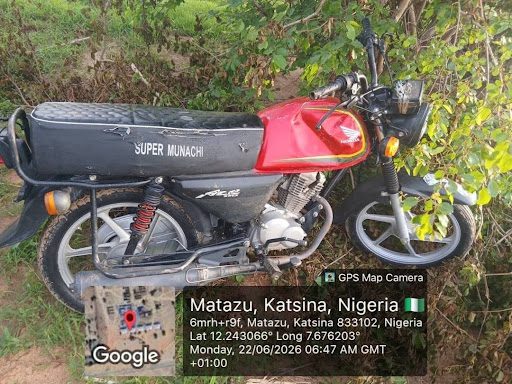
A motorcycle recovered by the Nigerian army after a raid in the Matazu Forest in Katsina State.
Ciroma had just returned from the cemetery, where he and other villagers buried five people killed by the terrorists, when he heard that a journalist wanted to know about the motorcycle ransom economy. He spoke passionately about the suffering of his community.
During his final assignment, he deliberately delayed delivering the motorcycles until every option had been exhausted. After the victims were killed, he sold the motorcycles and distributed the proceeds back to their families.
As he told members of his community, he wanted nothing more to do with the “thieves”, including playing a part in the supply chain that sustained them.
If soldiers were willing to follow the motorcycle tracks into the forests, he said, he would guide them himself. He knew the routes. He knew the delivery points. Together with the local vigilantes, they could reach the camps where he had previously delivered motorcycles. “They could clear the thieves out,” he said.
The rider
Back in Abuja, I needed more perspective if I was going to write this story.
I left my estate and approached a commercial motorcyclist waiting by the roadside. He eyed me suspiciously. He wanted no association with terrorists, even if it meant nothing more than answering a journalist’s questions.
Get our in-depth, creative coverage of conflict and development delivered to you every weekend.
Subscribe now to our newsletter!
Standing nearby was another rider, Musa Abba. He waved me over, introduced himself, and agreed to speak, but only off camera. I asked him what it felt like to ride his bike every day.
“There is no place I cannot reach with this machine,” he said.
Musa trusts his motorcycle more than anything else. He kicked the engine to life and gestured for me to climb on. He had decided the interview would be better conducted while we were moving.
As I settled in behind him, my thoughts drifted, not to motorcycles, but to horses. I found myself thinking about how civilisations across the ancient world discovered the extraordinary power of a mounted rider. Horses became indispensable: first for farming and transport, then, most significantly, for war. They were the all-important multipurpose machines of their age.
They could hardly have imagined that one day a two-wheeled machine would replicate the power of a cavalry many times over. Perhaps they wondered about it. Back then, even with other machines of war, such as the horse-drawn cart, the camel caravan, and eventually some mechanised infantry, the role of the rider in battle remained central.
Motorcycles have inherited that role.
Some recent research has begun to recognise this. Analysts have documented the emergence of a ransom economy in which insurgents increasingly demanded motorcycles instead of cash. Communities are taxed to replace bikes lost during military operations. The most in-depth literature was compiled by the Global Initiative, an international think tank that interviewed people across the West African Sahel and found that motorcycles were stolen and trafficked over the years to sustain transnational criminal operations in Mali, Niger, Burkina Faso, and the Republic of Benin.
Not much was said about Nigeria in the report. However, the Nigerian Army has, in press statements, documented the seizure of thousands of motorcycles in counterinsurgency operations in Nigeria. Beyond those records, evidence also lies along the routes connecting illicit smuggling and trafficking hubs, with networks tracing back to the organised trans-Saharan trade from the 8th to the 16th centuries. Today, those same corridors still carry motorcycles used for smuggling and for slipping along clandestine routes that let riders avoid conventional roads and border checkpoints.
The motorcycle is now so woven into life across West Africa, the Sahel, and the Lake Chad Basin that the mobility it provides sustains entire communities, and many people in the lower and middle classes cannot imagine life without it.
As we continued the ride, Abba said, “When it is time to work, the only road I cannot enter is a place I am not allowed to work.”
File: Civilians across the country, especially in rural areas, also depend on motorcycles for mobility through rough terrain. Photo provided by Huzaifa Shehu, a resident of Magami in Zamfara State,
The war machine
How does a bike measure up to the cavalry? Scottish engineer James Watt coined the term ‘horsepower’ in the late 18th century, defining one horsepower as the daily output of a strong working horse. In reality, a horse sustains only about half that output over the course of a day.
I wondered whether the rider ever feels limited by terrain, and what it must feel like to have such command of the road.
“Surely you cannot climb rocks with it,” I said in Hausa, pointing at a hill we were riding past. “There is no place I cannot reach with this machine,” he repeated over the soft rush of wind. “Wannan karfe ne,” he continued. This is metal.
His Hausa made the argument sound more emphatic.
“It is not like rubber-rubber,” he went on, referring to the flashier plastic-bodied motorcycles. “A bike like this,” he said, gesturing at his motorcycle, “is the most durable of them all. You don’t need to maintain it much, and it doesn’t consume as much fuel as most other brands. You can change the oil just once in a while if you like. It can go anywhere, enter almost anywhere, and its second-hand value is even better than rubber-rubber [brands].”
Abba went on and on about what makes a motorcycle valuable in everyday life, and in doing so, he laid out exactly what makes it valuable to a terrorist across the conflict zones of Nigeria.
Measured by sustained power output, a Honda CG125 delivers roughly the equivalent of about 16 working horses. By that measure, a single terrorist on a motorcycle is riding with the power of about 16 horses at a time.
What we found
Over months of work, we built a database by measuring hundreds of military operations conducted over the past decade, logging every reported incident of motorcycle seizure and the count attached to it. Between February 2015 and November 2025, the Nigerian Army reportedly seized at least 2,607 motorcycles across 300 separate encounters. Taken together, this aggregated press data describes the logistical philosophy of the terror groups that the troops fight.
The seizure records also reveal distinct phases. At various points, different armed groups appear to have dominated motorcycle use, and there were periods when almost every operation reported by the military involved recovering bikes. Yet the headline figure of 2,607 motorcycles over ten years tells only part of the story.
In the early years of military engagement in the insurgency, the totals were driven by a handful of major discoveries, followed by long runs of tens of operations, each yielding only a single vehicle. These recoveries were not sustained by patrol pressure; they came when a campaign stumbled on a cache.
Over time, however, the army evolved its tactics. It pushed deeper into the terror enclaves in the forests, adopting specialised strategies, including the so-called strangulation strategy of the late 2010s, which was designed to starve the groups of the fuel and resources that kept their motorcycles running, and in many ways they set up the clearance operations that produced the few thousand vehicles in the record.
The earliest phase of this campaign against the motorcycle is unclear in the data. In late 2015 and 2016, at the peak of the Boko Haram insurgency, motorcycles were still being treated as secondary characters in the war. At the time, Boko Haram could field a 15-gun-truck convoy against a Forward Operating Base in Borno, sustain multi-wave assaults with machine guns and specialised Type-36 hand grenades in a single engagement, and then publish videos of the attack to showcase its strength and firepower.
Counterinsurgency reports from the period mention motorcycles only in passing. The focus was on weapons recovered, fighters neutralised, and territories retaken. But the bikes grew more prominent as larger caches began to appear in the record around 2017. Most seizure events still involved a single motorcycle, but occasionally the numbers jumped to a few or to a large cache, almost always the product of a one-off encounter or an ambush on a terrorist base.
As the military expanded its operations deeper into the forest to dislodge the groups, recoveries increased, especially in the northeastern region. I designate this as the first of two eras of riders, as the aggregated data reveal the core role of motorcycles in the wars.
The era of riders
On Feb. 17, 2016, soldiers of the 7 Division Garrison, on a clearance mission, entered Gulumba in Bama Local Government Area in Borno State. They found what they described as a small city where they had expected a makeshift camp. Inside were medical supplies stored in a field hospital, a sizable market, two logistics trucks, a grinding machine, and an industrial 100KVA Mikano generator. The most important find, though, was the transport garage of 180 motorcycles and 750 bicycles. In a single operation, at least 930 potential combatants were denied transport that day.
The period between 2016 and 2017 belonged to Boko Haram’s riders. Operation Lafiya Dole, a counterinsurgency operation of the Nigerian government, alone accounts for 57 per cent of all seizures in the dataset, with 1,792 motorcycles across 96 records, almost all recovered during camp-clearance operations in Borno. That works out to an average of 19.7 motorcycles per recorded operation.
Viewed over the full 2015–2025 period, the distribution of motorcycle seizures tells the story of two distinct conflicts. The first peaks in 2016; the second begins to emerge after 2022.
The defining year is 2016. Alone, it accounts for almost half of all motorcycles recorded in the dataset: roughly 1,300 bikes recovered across just 86 records, an average of 17 per record, far above any other year. This was the peak of Operation Lafiya Dole’s deepest push into Boko Haram’s territorial strongholds in Borno, where large-scale camp clearances dismantled the insurgency’s mobile logistics in bulk.
The pattern continued into 2017. Although the database contains only 10 records for that year, it accounts for 331 bikes, carried almost entirely by a single cache of 301 bikes recovered at Njibulwa, an insurgent enclave in Borno State.
After that, the numbers collapsed. Between 2018 and 2022, annual recoveries averaged just 49 motorcycles.
The second era of riders
Then there was another uptick in 2023, but it is a different case from 2016. This time, the centre of gravity shifted westwards. Kaduna led the increase, accounting for 88 recovered motorcycles, mostly linked in military reports to “terrorists”. The change reflected the growing prominence of motorcycle-riding armed groups in north-western Nigeria from around 2020 onwards.
Unlike the Boko Haram years, recoveries were no longer dominated by massive camp clearances. Instead, the database settles into a consistent pattern of around five to eight motorcycles per record, with a steady climb. The groups they were recovered from were labelled by the security forces as “bandits”, not Boko Haram.
After 2022, the number of seizure records rose sharply, even as the number of motorcycles recovered in each operation remained relatively low. Instead of discovering large transport depots, security forces were finding motorcycles in small clusters during repeated engagements. Operation Shaaran Daji became the leading source of recoveries in the northwestern region, signalling that the motorcycle had become embedded not in large insurgent camps but in dispersed, highly mobile armed networks.
The informal motorcycle networks through the Sahel
There are dirt roads in the desert that cross international borders and run through the Sahel’s sands, following routes that have connected communities for centuries. Many trace the arteries of the trans-Saharan trade, linking illicit hubs of smuggling and trafficking through networks first established hundreds of years ago. These pathways did not disappear as modern states emerged across the Sahel. Instead, they evolved alongside them. Most still exist today, at least as part of a broader web of formal and informal routes connecting contemporary roads to historical trading corridors that continue to facilitate cross-border movement.
Consider the recent ruins of Metele, which is comparatively recent than the historical networks, a Borno town brought down to rubble by the Boko Haram insurgency and abandoned for years, and crumbling into building blocks. After a decade of silence, the one thing that has only grown more visible is the roads, and in particular the ones made by motorcycle tracks. These have deepened with continued use, suggesting activities likely by insurgents operating in the area.
Metele and hundreds of villages in northern Borno around it have been abandoned, leaving only insurgent camps and military bases that occasionally clash in the parts where these routes link them. Yet the old roads have only grown deeper, and new paths have opened across the empty ground, as seen in the satellite imagery below.
Satellite imagery showing motorcycle track junctions 2km from the ruins of Metele. At least two of these networks lead through the abandoned community. Imagery: Google Earth Pro.
Let’s follow the Metele tracks eastward and see where it leads. It runs for about eight kilometres of the bike route, crossing onto the shore of an island in Lake Chad, and continuing from there across the flat terrain of the island, with many sub-tracks splitting off toward different corners, while the main track presses on east, along the shore and onto a much larger island with road networks also branching off on every side and onto other islands. We stop here because this island matters for a particular reason. Among its thousands of tracks sits a largely isolated compound in the island’s north.
In May 2026, US forces, working with Nigerian Army intelligence, carried out an airstrike on that compound and killed a senior ISWAP commander, Abu Bilal Al-Minuki. The site was geolocated using video of the strike released by United States Africa Command (AFRICOM).
Al-Minuki served as a liaison between ISWAP’s various commands across the Lake Chad Basin and the wider Islamic State organisation. Different factions of the group operate on multiple fronts, with administrative functions carried out in locations such as this island. Senior commanders often gathered in secluded places like these, whether in forest compounds in Sambisa or in camps scattered across the islands of Lake Chad.
When fighters enter Nigeria, they may arrive by boat from neighbouring islands, or blend in with ordinary travellers using the road network. Once inside the theatre of conflict, however, the motorcycle becomes the preferred means of movement. It allows commanders to visit training camps, inspect fighters on different fronts, and travel rapidly between operational bases.
Imagery: Google Earth Pro.
The compound and the road network on the island were not present in the previously available satellite imagery of the area, which was taken about five years ago. The tracks show significant activity. Imagery: Google Earth Pro
These tracks travel far and wide, meeting at certain points across the Sahel. They run north into Lake Chad, or northwest toward the Niger Republic. Cross-border routes make neighbouring communities, places like Diffa in Niger, feel as close as the other side of the street. The motorcycle gives its riders command at border crossings, and they hardly worry about checkpoints on official roads unless they intend to attack the location and run into state forces on either side.
Here, the border itself counts for far less. This indistinguishable, landlocked frontier has been reshaped by centuries of informal movement, by daily life that transcends the very idea of nationality. These places have long borne the brunt of regional security forces unable to fully command the area, and in a geography this vast, with so many options and pathways, smuggling and trafficking are barely a challenge.
The network of informal motorcycle routes is still more intricate. Some lead into the ruins of the hundreds of villages, like Metele, abandoned across the area. The ruins of Metele is within 50 kilometres of the nearest fringe of communities where people still live. The tracks also connect to minor and major roads leading to inhabited areas, giving the motorcycles access for incursions.
Eventually, these routes connect to every community in the region. Across the flatlands of Metele and Lake Chad through the desert of the border country, the motorcycle is highly effective, and this is why it is such a powerful weapon in the typical insurgent arsenal, despite the secondary attention it tends to receive next to the AK-47s and rocket launchers recovered alongside it in a raid.
The forest route
You will rarely hear about motorcycle–riding terrorists being caught at a military checkpoint, on their way to an operation or simply travelling. For anyone who knows the terrain, there is often no need to cross a major road on most journeys in the region.
The forests of Sambisa, Kyumbana, Mando, and the Mandara Mountains welcome the tyres of the war machine. HumAngle has previously reported on fighters travelling, moving, even migrating to another state through the interconnected, ungoverned forest reserves of the region, which give them multi-state reach and the ability to turn up in almost any part of the country.
Lines illustrating the generic route linkage through ungoverned forest hotspots that motorcycle-riding terrorists use to move across northern Nigeria. Map illustrated by Mansir Muhammed/HumAngle
Once through the forests and the mountain wilderness of the northeastern region, riders reach the other end of the country, though not necessarily in one go. They drop down now and then onto the main road, sometimes to refuel; there are reports of the military intercepting them and warning filling stations not to serve them. They settle for a while in certain towns, or in camps near towns, using the towns as supply bases before picking up the trail back into the wilderness and on toward their destination.
The machines are useful throughout the journey, should they wish to travel from the northeast to the northwest. In 2022, HumAngle reported how fighters from the forests of the northwestern region, such as the Birnin Gwari and Kamuku forests, often travel through towns, stopping at communities where they are repeatedly reported to assault local residents, particularly women, often sexually, before continuing toward an operation elsewhere. The very sight of them on their bikes has already terrified those communities into compliance with whatever they demand. It has become a kind of tradition in Kaduna, in Niger, and even in Kwara State when these riders come into town.
From this end, too, groups like the Lakurawa have been reported riding into Nigeria. Locals often describe them as Arab-looking non-Nigerians entering through the porous borders in the northwest, and a similar pattern is evident along the Lake Chad Basin on the other side of the north. Recent reporting has confirmed the group as a faction of the Islamic State operating in West Africa, and in Nigeria in particular.
They move through the Sahara along a network of ancient routes and illicit hubs where trafficking and underground resources are available to anyone on the road. This underworld of hubs and crossings is what lets riders pass between countries.
The Sahel underworld
When the collapse of Muammar Gaddafi’s regime released Libya’s vast weapons stockpiles into the region, it was this same illicit Sahelian underworld that carried many of those weapons into West Africa, including Nigeria.
Before he was killed, the terrorist kingpin Halilu Sububu was reported to ride with his gang across this terrain, loaded with gold sourced from the artisanal mining pits they controlled, and to return to Nigeria with weapons traded for that gold. Those weapons became the lifeblood of banditry in the country’s northwestern region and made Sububu the chief arms supplier to the various groups there.
His advantage was not simply access to weapons, but access to the routes. He reportedly knew how to travel to the Sahel and return with arms without significant interference. His command of the motorcycle corridors enabled his network to move across borders with relative ease. The same routes connected him to weapons originating from the post-2011 Libyan arms outflow, and even allowed combat vehicles acquired by his organisation to be delivered through the network.
Smuggling routes link arms trafficking networks through illicit hubs and border crossings at the West African end of the trans-Saharan network. Map by Mansir Muhammed/HumAngle
Critical transit and logistics networks span multiple border regions across the Sahel and West Africa, including the Burkina Faso–Côte d’Ivoire border, the Côte d’Ivoire–Mali–Burkina Faso tri-border area, and the Ghana–Burkina Faso frontier, where Hamile, Tumu, and Bawku serve as key crossing points. Further north, Ansongo in Mali, Arlit and Agadez in Niger, and numerous settlements across the Mali–Niger–Burkina Faso tri-border region function as centres for acquiring, consolidating, and redistributing illicit resources.
Perhaps the most famous network that leads into northern Nigeria is the one from Libya. It crosses through illicit hubs and artisanal mining sites, most of which are controlled by armed groups. The network of arms smuggling runs from Libya, usually from the desert oasis of Sabha; the journey flows through Fazzan in southern Libya and crosses the infamous Salvador Pass into the Republic of Niger, where illicit hubs and mining networks link to Sokoto, Borno and Zamfara states, connecting through Niger Republic routes from Agadez, Maradi, Tahoua, following ancient trade routes that continue to shape movement today.
These hubs share a profile of remote geography, thin state presence, weak governance, and established illicit trade networks that move goods and people across borders.
Motorcycles rule in this terrain.
The same network used to bring weapons into West African Sahel states is also used to move gold to Dubai. Map by Mansir Muhammed, based on the following sources: Illicit hub mapping in West Africa 2025 byLyes Tagziria and Lucia Bird, and The West Africa–Sahel Connection by Mangan and Matthias Nowak.
Of middlemen and motorcycle bans
We met another middleman, Abu Dogara*. Unlike Ciroma, he was not interested in sharing his experience, as his job still leaves a bad taste in his mouth. He answered mostly with short replies, with the occasional long clarification about the details of his involvement in the motorcycle ransom economy.
Earlier, we talked about the middlemen: the mostly anonymous intermediaries who know how to secure the motorcycle for victims’ families when all other options are lost. Abu was a middleman, at least until terrorists abducted his sister-in-law. He wanted me to understand that the last time he was on the job, he had not dealt with the terrorists himself. They had taken his younger brother’s wife, so it was his brother who spoke to them. He had played the same role as always, travelling to buy the motorcycles.
As awareness of the terrorists’ reliance on motorcycles has grown, buying one anywhere near the axis has become increasingly difficult. Most of the people we spoke to about sourcing a ransom vehicle named far-off places like Kano, Kebbi, and even Lagos. This is part of what has driven the rise of the anonymous middleman, sometimes known to the kidnappers, and sometimes hired by the victim’s family.
Abu travelled to Sokoto to buy the bikes. He searched and found nothing. An issue he hadn’t faced before. But finally, he met a vendor with a single one in stock, a Honda, exactly the kind the kidnappers wanted. The vendor let him have his last one, but warned that they were getting harder and harder to find in the area.
Across northern Nigeria, state governments have introduced strict motorcycle bans and usage restrictions to counter-terrorism and “banditry”. Niger State went so far as to ban motorcycle sales outright, specifically targeting high-capacity models such as Hondas, which are frequently demanded as ransom. Elsewhere, the measures range from outright commercial bans to localised movement restrictions, all intended to disrupt terrorist logistics. Katsina and Zamfara states have also introduced night-time curfews and complete movement bans in forested areas.
Abu does not like to dwell on the last job. He remembers only that the motorcycle cost more than ₦2 million, and that finding it was painfully difficult. At one point, he even asked his brother to persuade the kidnappers to accept cash instead. They refused. In the end, the Honda he bought in Sokoto secured his sister-in-law’s freedom.
In Kano and Kebbi, the approach moved away from banning sales altogether, focusing instead on restricting how the bikes can be ridden to stop criminals from using them for quick getaways and remote logistics. Many sources we spoke with named Kano, Kebbi (Zuru), and Sokoto as sources for the machines, with Kano and Kebbi most consistently described as the last resort.
The Motorcycle Regulatory Framework in Northern Nigeria.
The machine they cannot beat
To replace the motorcycles seized by the troops, terrorist groups tax the very communities near where those seizures take place. In one incident, terrorists taxed a community that had narrowly escaped a planned terror attack, saved only because soldiers happened to be in the village at the time. In another, one kingpin abducted a district head and party chieftain in a village in Zamfara, saying that his confiscated motorcycles were the reason for his actions, and he must be compensated.
Across much of Nigeria’s North, attacks launched from the back of a motorcycle are becoming more common. The country is still dealing with motorcycle-facilitated crises at both extremes. It is the one insurgent tactic the Nigerian security forces have not been able to beat. Not with trenches on the battle fronts of the northeastern region, nor in the communities across the country where these raids have become a regular part of recent reporting.
The Nigerian Army has itself adopted motorcycles for parts of the same war. Boko Haram deserters recruited to support counterinsurgency operations ride ahead of advancing troops on motorcycles, scouting for ambushes, improvised explosive devices, and landmines. The machine has become indispensable to both sides.
For many survivors, the sound of a motorcycle engine will always bring up the worst of their memories.
The names of the middlemen have been changed to protect their identities.
JOHN Bishop has revealed that he and wife Mel have secretly renewed their wedding vows after “tough times’ in his marriage.
The comedian, 59, admitted that his marriage had “failed” and “everything had gone s***” before he found a particular musician that helped him heal the problems in his relationship.
John Bishop and wife Melanie secretly renewed their wedding vowsCredit: GettyThe comedian revealed that he turned to a certain musician to help him through ‘low’ timesCredit: Getty
John, who has been married to Mel for 33 years, said he really connected to artist David Gray’s music during his lowest times.
Speaking on stage at Silver Clef on Thursday, John said: “Tonight I could never imagined that I’d get the opportunity to say thank you to this artist.
Sign up for the Showbiz newsletter
Thank you!
“My marriage had failed, everything had gone s*** and like most men I had no-one to talk to, and the magic of songs is that you listen to them and you hear what that artist is feeling and you hear what that artist thinks of the world.”
John said he was introduced to the singer’s 1998 album White Ladder, which is David’s fourth studio album.
John credits singer David Gray’s music for pulling him through some difficult timesCredit: SplashThe couple gave their marriage another go after they almost signed their divorce papersCredit: Getty – Contributor
The stand-up comic said that the Babylon singer became a “constant part of his life” and pulled him through some difficult times.
John continued: “Somebody gave me White Ladder and I listened to it and I realised sometimes there’s an artist that sings songs that tells you what you are thinking and feeling of the world, so when I was at my lowest I was introduced to David Gray and he’s been a constant part of my life ever since.
“I would say 90 per cent of the gigs that I do afterwards I get in the car, I put my headphones on and I listen to David Gray.”
John then dropped the news that he secretly renewed his wedding vows with Mel and even played one of the artist’s biggest tracks, Sail Away
“He [David] was there at the lowest point of my life but then when me and my wife reconciled and then went on to renew our wedding vows we played Sail Away as we walked down the aisle,” John added.
“He’s been there at the highest point of my life.”
John married Melanie in 1993 and they had three boys — Joe, now 29, Luke, 27 and Daniel, 25. But the stresses of life led the couple to split up for 18 months — and they almost signed their divorce papers in 2000.
While performing at an open night, John made a gag about missing his soon-to-be former wife so much that he kept her “severed head in the fridge”.
But unbeknown to the Liverpool-born comedian, she was right there in the audience.
The remarkable tale of John’s stand-up career and marriage inspired a movie directed byHollywoodstarBradley Cooper, which was released in January.
John said about his marriage: “There was no huge fight or a revelation about someone else. We just grew apart.
“Maybe it had something to do with having three kids so quickly.
“For six years there was always someone in the house in nappies. Our marriage just faded.”
Feeling “depressed”, he went to the Frog And Bucket Comedy Club in Manchester, which has helped launch the careers of acts including Peter Kay and Jack Whitehall.
He did not want to pay the £4 entrance fee, so put himself down on the list of comedians for the open mic night.
John recalled: “I clambered up on stage, picked up the microphone and thought, what on Earth am I doing here? I had no jokes, and absolutely no material. I just talked about life.”
The audience laughed as he riffed on his marriage woes, so John was invited back to perform again.
One of the routines would make the audience go, “Aww!” — when he spoke about splitting up from his wife. He would then tell them: “Don’t worry, we haven’t divorced — I’ve just killed her.
“But I knew I would miss her so I’ve kept her head in the fridge for three months.”
Melanie turned up with workmates for one of those gigs in 2000, and when John saw her afterwards he started to apologise for his jokes.
To his surprise, she said: “The man I saw on stage was the man I married. Where did he go?”
The couple went for marriage counselling at Relate and are still together today, 25 years later.
John said: “The pain we had in our relationship, it sounds cliched but it made us stronger.”
It then took John another six years to give up his job in pharmaceutical sales in order to become a comedian full-time at the age of 40.
The decision was the right one because he is now one of the nation’s most popular funnymen.
Global oil demand will fall by one million barrels a day in 2026, the IEA said on Friday, making it the first annual contraction since 2020, when Covid lockdowns grounded aviation and shuttered industry.
ADVERTISEMENT
ADVERTISEMENT
The comparison flatters this year’s decline in one respect, since demand collapsed by around eight million barrels a day at the height of the pandemic, but it underlines how severely the closure of the Strait of Hormuz has damaged the global economy.
The contraction is “highly skewed in both product and regional terms”, the agency noted in its monthly report.
Earlier IEA analysis traced the sharpest losses to Asia’s import-dependent economies and to petrochemical feedstocks such as naphtha and liquefied petroleum gas, whose supply chains run through the Strait of Hormuz.
At the time of writing, the front month contract on Brent crude, the international benchmark, was trading at around $76 a barrel, roughly 6% higher than before the US and Israel launched strikes on Iran in late February, and far below the peaks near $120 reached in March at the height of the conflict.
The US benchmark, WTI, was trading lower at around $72 a barrel.
June’s fragile rebound
Supply improved sharply last month, if from a desperately low base.
Global production jumped by 4.1 million barrels a day in June to 98.8 million as the partial reopening of the Strait of Hormuz allowed Gulf producers to restart shut-in wells, though output was still running 9.4 million barrels a day beneath its pre-war level.
Gulf exports, counting cargoes rerouted around the strait, climbed by 6.5 million barrels a day to 16.1 million. Before the fighting began in late February, the region shipped an average of 24 million barrels.
Global oil inventories grew for the first time since US and Israeli strikes on Iran ignited the conflict, halting months of record drawdowns, although stockpiles in the wealthiest economies shrank further as buyers held back from importing.
The truce unravels
The IEA’s forecasts rest on an assumption now under visible strain which is that a ceasefire holds and the Strait of Hormuz gradually reopens.
On that basis, global supply would contract by 3.7 million barrels a day this year, leaving production 860,000 barrels a day short of demand, before expanding by 7.5 million next year and tipping the market into surplus.
Stronger output elsewhere and weaker demand than expected before the war could still restore a surplus by the end of the year, allowing countries to rebuild depleted reserves, the IEA noted.
This week brought the second and far larger breach of last month’s truce.
After Iranian forces struck three commercial vessels on Monday and Tuesday, US Central Command hit more than 80 targets across Iran, including air defences, coastal radar and over 60 Revolutionary Guard small boats, while Washington revoked the licence permitting Iranian oil exports.
Iran fired drones and missiles at Bahrain and Kuwait, causing no major damage, and US President Donald Trump has since declared the ceasefire over.
Tehran insists the only safe passage is the route it sets in the Strait of Hormuz as traffic fell to 13 tankers on Wednesday, against an average of 33 a day the previous week, according to shipping data from Kpler.
The UK is home to some of the most beautiful beaches in the world, but if you’re looking for a quieter spot to soak up the sun, these twin villages are hidden gems well worth a visit
These quiet twin villages are a beautiful part of the country(Image: ianwool via Getty Images)
When the sun makes an appearance across the UK, the nation boasts plenty of remarkable attractions, from beautiful white sandy shores kissed by sparkling waters to quaint cobblestone lanes and idyllic villages. The summer break provides the perfect opportunity to explore some of Britain’s most popular seaside towns and countryside escapes.
Whether you’re drawn to the enduring allure of the Cotswolds or the seaside appeal of places like Weymouth, Scarborough, St Ives or Whitby, one thing is certain – these well-loved destinations will be packed with visitors.
However, if you’d prefer to enjoy the splendour of the British Isles without wrestling through crowds of tourists and social media fans, there’s a secret gem in Cornwall that offers breathtaking views, tranquil shores and a completely peaceful environment.
Nestled on the South-east coastline, the twin villages of Cawsand and Kingsand have everything you could want for a fantastic staycation and more.
Located on the less busy Rame Peninsula, often called Cornwall’s ‘forgotten corner’, these delightful villages are officially recognised as areas of outstanding natural beauty (AONB).
This pristine part of the country serves as a natural sanctuary that somehow avoids the summer throngs.
The scenic villages have maintained their peaceful atmosphere despite being encircled by bustling tourist hotspots. These delightful fishing settlements, with their winding lanes and sandy beaches, remain a well-kept secret away from the usual tourist trail.
And they’re steeped in heritage that encompasses the ancestral homes of Mount Edgcumbe, Port Eliot, and Antony House. Intriguingly, these two villages once formed part of different counties, renowned for their historic rivalry and as a refuge for smugglers.
Today, Cawsand Bay provides a sanctuary for families, walkers, swimmers, and kayakers, with its east-facing shingle-and-sand shore peppered with rock pools and inlets. Its sheltered waters make it a safe and stunning spot for all.
Tourists coming to enjoy the beaches are always close to authentic Cornish cuisine, with local pubs and shops just moments from the sandy expanse.
Kingsand, the adjacent village, is a concealed gem with cottage-lined lanes that rival the charm of Polperro and Port Isaac. Retaining much of its genuine character, Kingsand was formerly a flourishing fishing village, and traces of the old pilchard cellars and boat stores can still be discovered along the seafront.
This peaceful part of the peninsula, nestled beneath the coastal path, is a popular spot for walkers and birdwatchers, stretching all the way to the striking Rame Head, topped with a 14th-century chapel. Seafood lovers should make a beeline for the Devonport Inn in Kingsand, while The Bay Bar in Cawsand provides a peaceful setting for a drink, boasting a view that simply can’t be beaten.
The trip to these twin villages is a delightful experience in itself. As you wind your way for miles alongside sand and sea, the breathtaking views across Whitsand Bay offer a glimpse of the spectacular scenery that awaits.