WASHINGTON — The sudden death of Sen. Lindsey Graham, the veteran South Carolina Republican lawmaker, is scrambling the state’s U.S. Senate race as Republicans face a fast primary election to replace him on the ballot.
Graham, 71, who died Saturday after what the D.C. medical examiner called an aorta rupture, was seeking a fifth term in the Senate. Even as his political allies publicly mourned his loss, jockeying began over the vacancy, and President Trump signaled an intention to weigh in.
“I have somebody that I think would be great, but I don’t want to say it now because it’s just, you know, it’s too soon with Lindsey,” Trump, who ordered American flags to be lowered to half-staff in Graham’s honor, said Sunday on NBC News’ “Meet the Press.” “I don’t want to even talk about anybody, but I do have somebody that I think is really good.”
Graham’s death eats into Republicans’ voting majority in the Senate, as does the absence of Sen. Mitch McConnell of Kentucky, who has been hospitalized for weeks. It adds new uncertainty for the GOP at a time when the party is contending with Trump’s declining popularity among Americans and tensions have been high among Senate Republicans at odds with Trump.
Graham’s death creates the second major shakeup of a Senate race in a week, following Democratic candidate Graham Platner’s dropping out in Maine. Like that state’s Democrats, South Carolina Republicans now face a snap process for choosing a new nominee four months before the November midterms.
But whereas Maine Democrats are expected to decide Platner’s replacement at a convention in two weeks, South Carolina Republican voters will choose Graham’s replacement next month at the ballot box.
Whether the absence of an incumbent could tighten the race or force the GOP to funnel extra money into it remains to be seen. South Carolina is a reliably red state and Graham’s seat was not widely seen as competitive; the race has been rated as solidly Republican by Cook Political Report.
“I expect we’ll have a good November,” said Drew McKissick, chairman of the South Carolina Republican Party, but, he added: “You never take anything for granted, and that’s the last thing I would do in a situation like this.”
McKissick remembered Graham as dedicated to helping his party across levels and in sometimes little-noticed ways, assisting county organizations and down-ballot candidates.
“His time [was] spent on so many issues that were incredibly important to our party,” McKissick said. “He was a staunch pro-life senator with no equal.”
To replace him on the November ballot, the party must hold a special election, according to state election law. Republicans who want to vie for the seat will be able to file starting July 21, and the primary election will be Aug. 11, with a possible Aug. 25 runoff.
Graham was opposed by Democrat Annie Andrews, a pediatrician, who in a statement Sunday called the senator “a man of great faith who proudly served our nation.”
“I hope that South Carolinians will join me in setting partisanship aside and offering gratitude to Senator Lindsey Graham for his service to the great state of South Carolina,” Andrews wrote.
Because it is now an open seat, that changes the race, said Jay Parmley, executive director of the South Carolina Democratic Party.
It will require the “rejiggering” of campaign strategy built around opposing Graham, but the Democrats’ big-picture approach of countering Trump and MAGA Republican values will stand regardless of who becomes the new nominee, Parmley said. He predicted the race would be competitive.
“This absolutely is in play,” Parmley said of the seat. “I think it was in play before … but now, I think it’s game on.”
Democrats must retain their seats in three competitive states and flip seats in at least four others. The party has largely focused on Maine, Alaska, Iowa, North Carolina, Ohio and Texas for possible flips.
South Carolina remains a stretch for Democrats, so Graham’s death likely doesn’t change the party’s calculus, said Democratic strategist Andrew DeStefano.
“The math is still very clear and doable,” DeStefano said. “I would rather be Dems than Republicans right now, even with the Senate math and even playing in some tough states.”
Under South Carolina law, Gov. Henry McMaster, a Republican, can appoint someone to fill Graham’s vacant seat until January. In a statement, McMaster said Graham was “irreplaceable,” calling him “the fiercest of fighters for South Carolina and America.”
If a member of the South Carolina congressional delegation were to be appointed to the seat, it would erode the party’s slim margin in that chamber — something some House Republicans were reportedly seeking to avoid. At least one, Rep. Joe Wilson, said Sunday he had told Trump would not seek the seat in order to preserve the House majority.
In Kentucky, McConnell is set to retire at the end of this term, and a race is underway to fill his vacant seat in November. If he were to die before the new session of Congress begins in January, it could set off a legal fight over an untested Kentucky state law requiring a special election to fill a Senate vacancy, but would not affect the November race.
On Sunday, McConnell said in a statement he had been hospitalized after a fall. Little information had been released from his office about his condition, causing questions to swirl. “Just tell us what’s going on,” Kentucky Gov. Andy Beshear, a Democrat, urged Saturday on X.
In Maine, Democrats last week announced a July 25 convention where 601 county delegates and state party members will select a nominee to replace Platner.
“The circumstances are different between the two states,” said David Farmer, a Maine-based Democratic strategist, “but it’s certainly shaping up to be a strange midterm election with enormous stakes for the country.”
The Dodgers needed to turn things around Sunday to wrap up the first half on a high note. Manager Dave Roberts said as much the night before.
“When you give teams free bases, extra outs, it’s hard to win a game, regardless of the opponent,” he said. “Emmet [Sheehan] needs to go out there and throw the baseball well tomorrow. We’ve got to find a way to win a game tomorrow to feel somewhat better about going into the break.”
Instead, the Dodgers fell to the Arizona Diamondbacks 5-3, swept for the first time this season. It was Arizona’s first sweep at Dodger Stadium since September 2017.
Perhaps the break is coming at a good time.
“I guess,” Roberts said. “Gives guys a reset. … We’ve got some good teams coming up and we’ve got to play good baseball.”
Sheehan at least did his job, holding the Diamondbacks to three runs in 5⅓ innings. It was clear from the first at-bat that his pitch count could limit how deep he pitched into the game. Sheehan won a 14-pitch battle to strike out Ketel Marte.
The right-hander then struck out the side and was efficient enough to pitch into the sixth. He exited after his pitch count reached 101.
Max Muncy swings at a pitch in the seventh inning.
(Ronaldo Bolaños / Los Angeles Times)
Shohei Ohtani sparked the offense with his ninth leadoff home run of the season — and 22nd overall — on a two-hit day. But he’ll get treatment this week instead of playing in the All-Star Game.
It wasn’t a clean defensive game for the Dodgers. In the midst of the Diamondbacks’ two-run fifth, All-Star center fielder Andy Pages tracked a long fly back to the wall but missed the catch as the ball bounced off his glove for an error.
In the sixth, the tying run scored when All-Star third baseman Max Muncy’s throw to the plate hit Geraldo Perdomo in the back as he ran home for another error.
“Just a slump,” Muncy said. “You go through slumps both offensively and defensively, mentally. It’s just one of those stretches for us right now, and I think everyone’s ready for the break.”
Regardless of some sloppiness, the Dodgers have had a successful season going into the break.
“Just flush it,” Roberts said. “We’re still in a really good spot. Don’t let it carry over to the second half.”
They have the best record in the majors (61-36) and an 11½-game lead in the National League West. They also had six players selected as All-Stars.
So, as Major League Baseball pauses play and honors some of the best performers in each league, now’s a good time to hand out our first-half awards.
The US has launched a new wave of strikes on Iran targeting what it says is Tehran’s ability to threaten shipping in the Strait of Hormuz. US President Donald Trump has declared the waterway open while Iran insists it is closed leading to a further escalation of attacks, as Heidi Zhou Castro reports from Washington DC.
In the 16th century, Montenegro emerged as a semi-autonomous region within the Ottoman Empire. A series of rebellions against Turkish control resulted in Montenegro gaining its independence on July 13th 1878 under the Treaty of Berlin.
Montenegro thus became the 27th independent state in the world, and a principality ruled by Nicholas I. It became a kingdom in 1910, before unifying with Serbia in 1918. It subsequently formed part of Yugoslavia and only regained full independence in 2006.
The date of July 13th has added significance in Montenegro as it was on this day in 1941 that the people of Montenegro began their uprising against the Nazi German occupation during the second world war.
Despite this date marking Montenegro’s first independence, it is not Independence Day, which is instead celebrated on May 21st and marks the result of the 2006 referendum for independence from Serbia.
MODEL Lila Moss is helping others to feel much boulder.
The 23-year-old daughter of fashion icon Kate Moss posed on rocks in Athens in a black Burberry swimsuit.
Lila Moss poses on rocks in Greece for shoot promoting Burberry swimwearCredit: Instagram/lilamoss/BurberryLila has been praised for having her Type 1 diabetes monitors on show, raising awarenessCredit: Instagram/lilamoss/Burberry
Lila, whose father is creative director Jefferson Hack, has been praised for having her Type 1 diabetes monitors on show, raising awareness.
Lila Grace Moss was born on September 29, 2002, in London, UK.
Sign up for the Showbiz newsletter
Thank you!
Her parents split two years after Lila was born, but they’ve still both managed to spend time with their daughter.
Marc first met Lila on a trip to Formentera in 2008 when she was just six years old.
He broke the news on Instagram writing: “At just 6 years old, Lila’s strong character, demeanour and great beauty was already very apparent.
“The next time I saw Lila was in August of 2011 at Kate’s wedding (to now ex-husband Jamie Hince), her character was even more dynamic and her beauty even greater.”
Sen. Lindsey Graham, the prominent Republican from South Carolina who served in the Senate for more than two decades, died after suffering an aortic dissection, his office said Sunday.
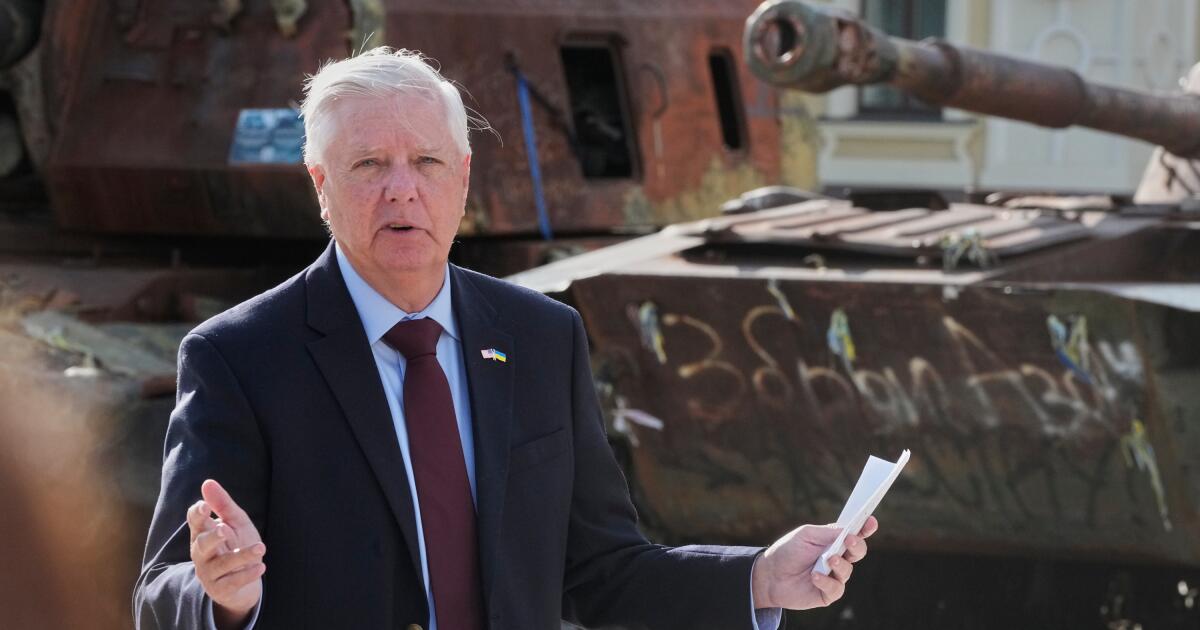
Graham died unexpectedly Saturday night, his office announced, shortly after he had returned to Washington after a trip to Ukraine.
In a statement, his spokesperson said a preliminary report from the medical examiner for the District of Columbia found that the 71-year-old senator died of aortic dissection due to arteriosclerotic cardiovascular disease. With aortic dissection, a tear occurs in the wall of the aorta.
According to the Mayo Clinic, aortic dissection is not very common, and its symptoms may be mistakenly attributed to other health conditions. It usually affects men in their 60s and 70s. If the blood from the dissection travels outside the artery, the condition is often fatal.
A former military lawyer who reached the rank of colonel in the Air Force, Graham ran for the Republican nomination for president in 2016. Initially a cutting, vocal critic of then-candidate Donald Trump during the election, Graham became one of the president’s staunchest allies after Trump’s election.
“Senator Lindsey Graham, one of the greatest people and Senators I have ever known, is dead!” Trump posted on his social media platform, Truth, on Sunday. “He was always working, and was a true American Patriot.”
Graham was known as a C student in high school, and was the first member of his family to attend college. His mother died while he attended the University of South Carolina, and his father died of a heart attack during Graham’s first semester of law school.
He served as a judge advocate in the Air Force, eventually becoming the chief prosecutor for the Air Force in Europe.
He was first elected to serve as senator for South Carolina in November 2002.
In a social media post on X, Vice President JD Vance described Graham as one of the most powerful lawmakers, and recalled an incident where he and Graham got into a shouting match over a funding bill for the war in Ukraine.
Later the same day, he wrote in the post, Graham was advocating for rail legislation that Vance supported.
“That was Lindsey Graham,” he wrote. “He fought like hell for the things he believed in, and he was just as willing to go to bat for you when it counted.”
Graham had been scheduled to appear on NBC’s “Meet the Press” on Sunday to discuss his trip to Ukraine. Instead, President Trump appeared in his stead, where he said the senator had been “like a member of the family.”
Trump called into several Sunday news programs to discuss Graham’s death, and said he had spoken to Graham on Saturday evening.
Trump told CNN’s Jake Tapper that the South Carolina senator had said he was “tired.”
One month after the world number one suffered a seismic shock at the French Open, another upset was brewing.
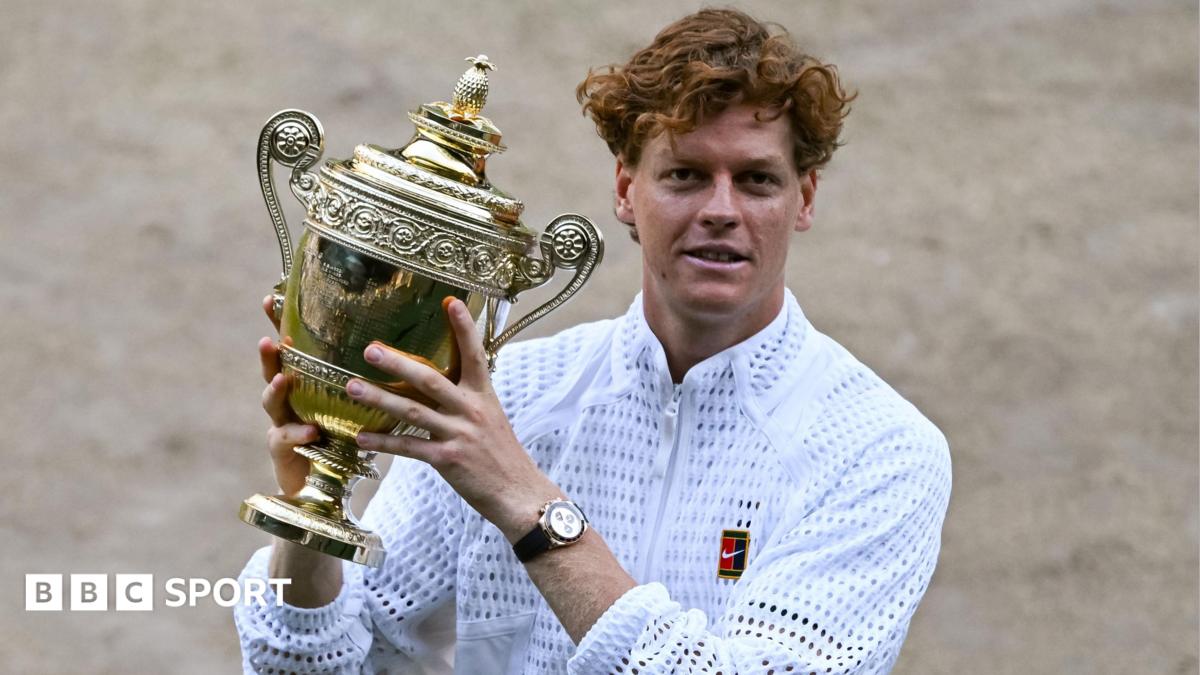
Confronted with unwanted history, Sinner would have to come from behind to beat Miomir Kecmanovic in five sets and avoid becoming only the third defending Wimbledon men’s champion to lose in the first round.
The 24-year-old’s durability in marathon encounters has long been a concern, with Sinner having lost eight of his previous nine matches that went the distance.
There had also been a shattering event in Paris for the second year in a row.
Sinner arrived at Wimbledon having not competed since his extraordinary collapse in the French Open second round, when he lost to Argentine Juan Manuel Cerundolo from two sets and 5-1 up.
He had recovered from a far greater catastrophe to triumph at the All England Club in 2025, taking revenge on rival Carlos Alcaraz just 35 days after losing their epic Roland Garros final from two sets and three championship points up.
But now his physical resilience was under the spotlight – and the early signs at Wimbledon offered encouragement to those eyeing his throne.
Both junctures would have taken others months to recover from. For Sinner, they became catalysts for greater heights.
“This one means a lot because it was a tough one after Paris, again,” Sinner said.
“Last year was also tough. But coming here, I tried to put myself in the best position to be as competitive as possible.
“We put in a lot of long days, sacrificing a lot to be in this position.”
July 12 (UPI) — A major heat dome expanded from the interior West into the Upper Midwest on Sunday on its way to smothering the East later this week, forecasters said.
The heat in the East is expected to be shorter and less intense than the early July heat wave, but parts of the West are coming within a few degrees of all-time record highs.
Dangerous heat is also gripping even the Desert Southwest, where communities are used to extreme temperatures. The pattern will raise the risk of heat exhaustion, heatstroke and heat-related deaths.
Motorists are urged to carry plenty of water with them in the event of a breakdown.
Temperatures climbed well above 100 degrees Fahrenheit across much of the Great Basin, the Cascades and Sierras east to the western Rockies, eastern Washington, eastern Oregon, Nevada, Idaho, Utah, western Colorado and northern Arizona this weekend.
The building heat dome has already pushed season-high temperatures into the 110s in Phoenix, Las Vegas and Palm Springs, Calif.
The heat expanded north this weekend, bringing highs of 106 in Salt Lake City, 107 in Bismarck, N.D., and 110 in Billings, Mont. Those temperatures are 10-25 degrees above historical averages during what is typically the hottest part of the year.
As the heat shifts east into the north-central United States early this week, some daily record highs will be challenged. As the hot air spreads east of the Rockies into more humid air, AccuWeather RealFeel Temperatures will run as much as 10-15 degrees higher than the actual air temperature.
While the North American monsoon will begin to temper the heat across parts of the West with increasing clouds and thunderstorms, multiple days of 90-degree heat are forecast across the Midwest, including Minneapolis, Chicago, Detroit and Cleveland.
Minneapolis and Chicago can expect at least four consecutive days with highs at or above 90.
“Temperatures will peak in the mid- to upper 90s in the Interstate 95 cities of the mid-Atlantic and New England during the heat surge this week,” AccuWeather Vice President of Forecast Operations Dan DePodwin said. “While high temperatures will still create dangerous conditions, the heat will be somewhat less intense and shorter-lived than the early July heat wave.”
Humidity levels with the heat in the Midwest and Northeast this week will be significantly lower when compared to the week of Independence Day.
As rights advocates decry the detention of United States Congressman Ro Khanna by armed Israeli settlers, Israel and its allies are launching political attacks to discredit the progressive legislator.
Israeli officials have already ruled out apologising to Khanna or holding the settlers accountable. Instead, several have gone on the offensive against the congressman.
Recommended Stories
list of 3 itemsend of list
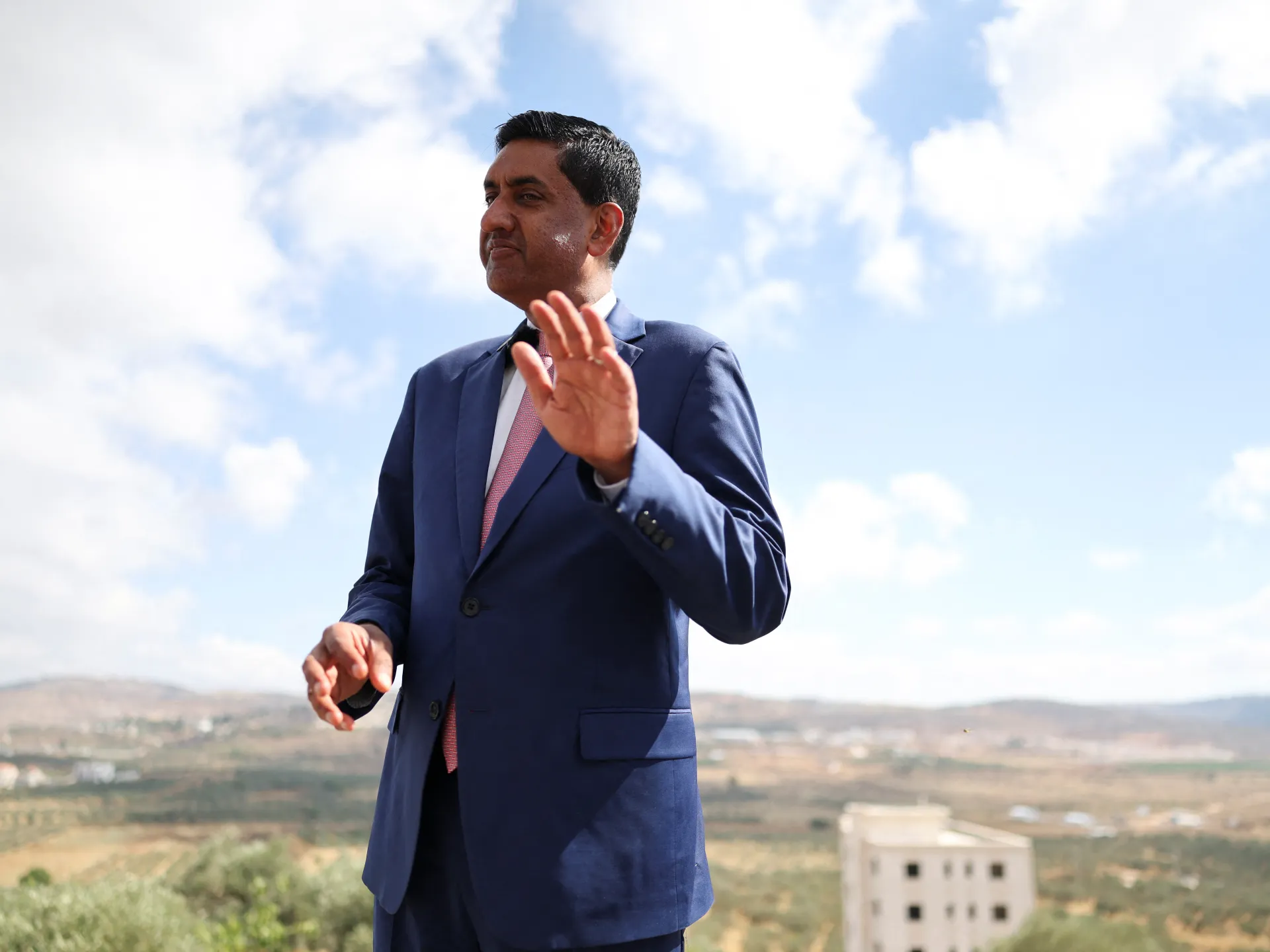
Khanna said he was travelling to a Palestinian village in the occupied West Bank on Wednesday when armed settlers stopped his van for 20 minutes. The settlers were later joined by Israeli soldiers who continued to block the road.
The whole ordeal lasted more than an hour, according to Khanna, and was only resolved after he reached out to the US embassy in Israel.
On Sunday, Michael Leiter, Israel’s ambassador to the US, appeared to blame Khanna for the mistreatment he received, saying that the California Democrat had failed to coordinate his trip with the Israeli government.
“He decided to coordinate his trip not with Israel, but with Palestinian activists and with J Street,” Leiter told CBS News, referencing a Jewish nonprofit.
Leiter went on to claim, without evidence, that Khanna may have waited to release his video of Wednesday’s incident to distract from his support for politician Graham Platner.
Platner dropped out of the Senate race in Maine on Friday amid sexual misconduct allegations. Khanna published his video on Saturday.
“Maybe this had more something to do with his support of Graham Platner beforehand and the difficulties he had with that, and trying to shift the focus to something else. Perhaps? I’m asking a question,” Leiter said.
Khanna is not backing down, however. He said he did inform Israel of his travel and has called for the arrest of settlers who held up his van.
Khanna responds
The Israeli military has disputed Khanna’s version of the events, saying that it “dispersed” civilians who were blocking the road. But in an appearance on Sunday with NBC News, Khanna refuted that account.
“The [Israeli military] is lying,” Khanna said.
“What happened was unprecedented. They had violent settlers detain American citizens, including an American government official. You had these settlers brandishing M4s [rifles], kicking the tyres of our van, laughing at us, mocking at us, videotaping us.”
He added that the Israeli military participated in blocking their path and detaining them.
“How dare they mistreat people with an American passport that way?” Khanna said.
Pro-Israel politicians, however, claimed that Khanna provoked his own detention by carrying out a political stunt.
“Sounds like another plea for publicity. Anything to get in front of the camera. Why else would you be there? It isn’t your country,” Republican Congressman Greg Murphy wrote in a social media post.
Critics were quick to point out that Murphy’s first trip as part of a congressional delegation was to Israel.
Khanna also responded to Murphy, urging him to be on “Team America” and join the push for any settlers and soldiers who mistreat US citizens to face consequences.
“I would be calling for that if you had been in our shoes,” Khanna said.
Conservative commentator Tucker Carlson was among those who came to Khanna’s defence. He criticised Mike Huckabee, the US ambassador to Israel, for failing to speak out about the incident.
“An American member of congress is threatened by foreign terrorists carrying American rifles, backed by a foreign military paid for by American taxpayers, and the US ambassador to that country says not a word in defense of his own countryman,” Carlson wrote on the social media platform X.
“It’s too much, too insulting and humiliating to America.”
Still, many pro-Israel figures in the US expressed scepticism about Khanna’s experience. David Friedman, a former US envoy to Israel, accused Khanna of “self-victimization”.
Friedman argued, without evidence, that Khanna had purposely entered a restricted zone to provoke the incident.
“As was entirely predictable, he was asked a few questions and sent on his way. But he got the photo op and all he needed for his pre-conceived false narrative,” Friedman said in a social media post. “Well played Ro.”
Several other pro-Israel advocates echoed that take.
Attacks on US citizens
Israel’s military and settler presence in the occupied West Bank is illegal under international law.
The International Court of Justice (ICJ) ruled in 2024 that the Israeli occupation of the Palestinian territory, including Gaza, is unlawful.
“Israeli settlements in the West Bank and East Jerusalem, and the regime associated with them, have been established and are being maintained in violation of international law,” the top United Nations tribunal said.
Israeli settlers – often under the protection of the Israeli military – regularly attack Palestinian communities in the West Bank, ransacking farms and property and assaulting people who come in their way. That includes Americans.
One year ago, for instance, Israeli settlers beat 20-year-old US citizen Sayfollah Musallet to death.
Three weeks later, another American citizen, a father of five from Chicago named Khamis Ayyad, was also killed in a settler attack.
No suspects have been charged with crimes after the two attacks.
Despite well-documented abuses against US citizens, Israel was added to the US visa waiver programme in 2023, allowing Israelis to travel visa-free to the US.
Israel is the largest cumulative recipient of US military aid in history, having received more than $21bn in the last two years alone.
Stephen Libby quit his job as a cyber security consultant after winning The Traitors UK and a source has now claimed fans might see him join the Stricly Come Dancing cast
22:55, 12 Jul 2026Updated 22:56, 12 Jul 2026
Stephen Libby is reportedly in talks to join Strictly Come Dancing
The Traitors star Stephen Libby is said to be in talks to join the upcoming season of Strictly Come Dancing.
The 32-year-old former cyber security consultant, best known as the co-winner of Series 4 of The Traitors UK, became a fan-favourite on the BBC show due to his strategic gameplay, highly expressive “poker face”, and distinctive 1970s-inspired vintage fashion choices. Stephen and his fellow contestant Rachel Duffy made history as they became the first-ever Traitor duo to successfully split the prize money in the UK version, taking home £47,875 each.
Following his high-profile win, Stephen left his career in cyber security to pursue entertainment full-time. It has now been claimed that the Scottish TV star, originally from the Isle of Lewis in the Outer Hebrides and now based in London, might be joining Strictly Come Dancing.
According to a source, the Strictly casting team believe Stephen could be “a great it” for the show – and if he doesn’t make the cut for this year, he might be considered for 2027, especially if he continues being so popular. Speaking to The Sun, the insider said: “The Strictly casting team have met with Stephen and think he could be a great fit.
“Stephen was hugely popular on The Traitors and since leaving Ardross Castle he has built up a very big fan base. The BBC are always keen to utilise their talent and Stephen is ideal.”
The source added: “No final decision has been made yet but if Stephen doesn’t make the cut this year, he’ll be a key target for the 2027 series – especially if his profile continues to grow as it has.”
Since winning The Traitors, Stephen landed a prominent role on ITV’s This Morning – his assignments included flying to Los Angeles to host red-carpet fashion segments at the Oscars and Elton John’s Academy Award party. Signed by United Agents, he is also booking regular corporate speaking gigs to discuss strategy, human behaviour, and trust.
The Strictly presenting team for the upcoming season will be hosted by a brand-new trio – Emma Willis, Josh Widdicombe, and Johannes Radebe – who are taking over from Tess Daly and Claudia Winkleman. The expert judging panel features returning favourites Shirley Ballas, Motsi Mabuse, Anton Du Beke, and Craig Revel Horwood.
The BBC has officially begun announcing the celebrity cast ahead of the autumn launch on BBC, with social media star Cach Mercer, TV personality Dani Dyer, actor Lacey Turner, singer and actor Delta Goodrem, and celebrity hairstylist Chris Appleton confirmed to be among the contestants.
The Mirror has contacted the BBC and Stephen Libby’s representatives for comment.
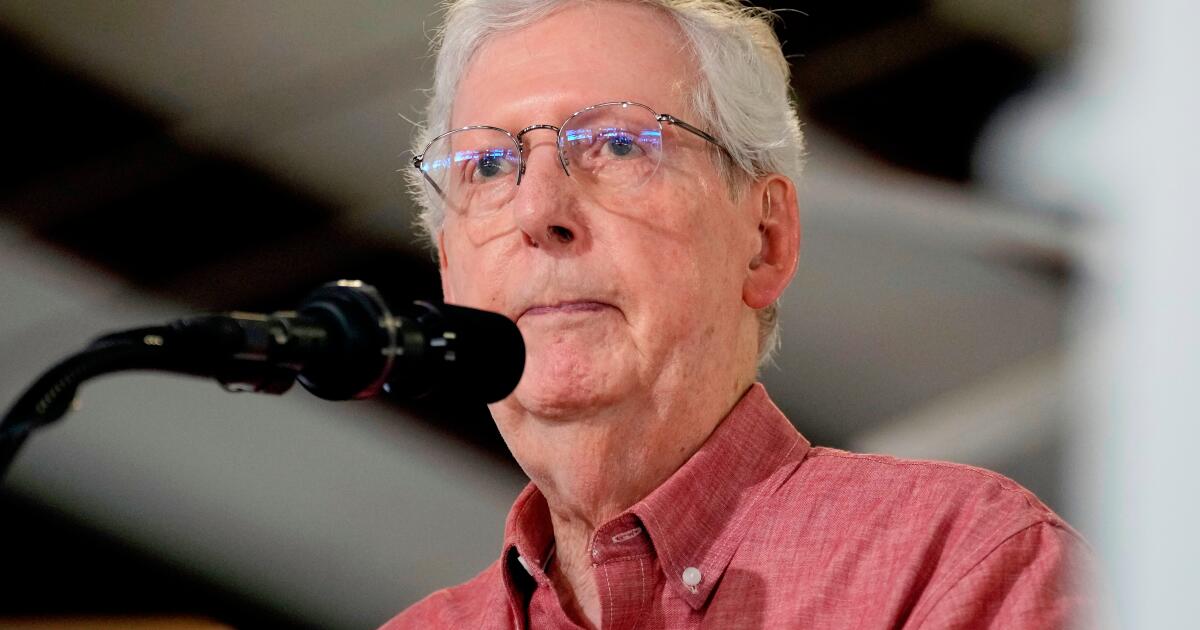
WASHINGTON — Sen. Mitch McConnell on Sunday revealed for the first time that a fall led to his hospitalization, breaking the silence about his condition after weeks of speculation about the Kentucky Republican’s health.
McConnell, 84, said in a statement that he has undergone a battery of tests as doctors try to determine what led to his fall. He explained the long silence about his condition by saying that “folks of my generation often hesitate to share the vulnerability that comes with growing older.”
“Even in the public eye, I feel that same instinct — I can’t help it,” he said.
McConnell said he is now in a rehabilitation center and will not be returning to the Senate “quite yet.” He said he continues to work with his staff on Senate business in the meantime.
The statement included a smiling picture of the senator with his wife, Elaine Chao, a tacit response to speculation online that McConnell had died or was incapacitated.
It comes following his hospitalization on June 14. McConnell’s office for weeks provided little information, saying only that he was “receiving excellent care” and recovering.
As his hospital stay grew longer, speculation about his condition became so intense that Kentucky Gov. Andy Beshear, a Democrat, took the extraordinary step of asking that McConnell update the public about his health in a “transparent manner.”
Arsenal want to sign Atletico Madrid’s Julian Alvarez, Aston Villa hijack Newcastle‘s move for Johan Manzambi, and Pep Guardiola is on the shortlist to become Italy manager
Arsenalare attempting to sign Atletico Madrid and Argentina striker Julian Alvarez, 26, before pre-season begins. (Independent), external
Bayern Munich remain confident they will tie England striker Harry Kane, 32, down to a new long-term contract despite growing interest from some of Europe’s biggest clubs including Real Madrid. (TeamTalk), external
Sunderland are aiming to make Roma’s 23-year-old Argentinian winger Matias Soule their first signing of the summer. He is valued at around €35m (£30m) (Northern Echo), external
The Israeli military has released video showing huge explosions and detonations in villages in southern Lebanon. Israel says they were targeting Hezbollah infrastructure and tunnels. Meanwhile a US military delegation has met with Lebanon’s army in Beirut to discuss Israel’s planned withdrawal from a ‘pilot zone’ in occupied territory.
Washington has ramped up its military presence following the recent earthquakes. (Venezuelanalysis)
On June 24, the collision of the South American tectonic plate with the Caribbean one caused a major release of energy from the depths of the Earth, leaving a trail of destruction in Venezuela. The 7.2- and 7.5-magnitude earthquakes that rocked the country caused thousands of deaths and the collapse of hundreds of structures.
While we try to process the trauma and return to something that resembles “normalcy,” Venezuela, already battered by years of sanctions and the recent US military attack, now faces the challenge of rebuilding itself in the broadest sense of the word and in an ever more complicated context. With that in mind, we have to start by asking: who is in charge of the country and its future?
Using the natural disaster as the perfect excuse, US forces have taken over operations at La Guaira port and the Simón Bolívar International Airport. US servicemen have set up shop in the air traffic control tower, surveillance drones fly over Caracas, and US helicopters patrol the disaster areas on their own.
This dangerous trend did not start on June 24. In recent months, in unapologetic fashion, the US has been setting the Venezuelan political agenda, notwithstanding the subtle or absurd efforts to conceal it.
For instance, at the end of May, US Secretary of State Marco Rubio announced that Acting President Delcy Rodríguez would visit India to negotiate oil deals. Rubio openly offered Venezuelan crude to India as part of its campaign against Russian exports. The Venezuelan Foreign Ministry pretended not to have heard anything and confirmed the trip two weeks later.
Back in February, the Venezuelan government denied rumors that businessman and recent minister Alex Saab had been detained, only to surrender him to US agencies months later. And despite having all that time to come up with a proper explanation, the official line was that authorities supposedly “found out” that Saab is Colombian and had a fake Venezuelan ID. In Venezuela, sometimes the chutzpah reaches such extremes that people prefer to just move on. Many officials promised we would soon know more details about the Saab case, including his collaboration with US agencies, but we’re still waiting.
Later, in June, the government’s quick-response “Miraflores al Momento” social media account put a “fake news” label on a news story about the alleged presence of US military forces in southeast Bolívar state. Then, days later, Trump himself broke the news that the Southern Command in coordination with the CIA had killed alleged Tren de Aragua leader Héctor “Niño” Guerrero in Bolívar state. The extrajudicial killing spree that began last year in the Caribbean, always sadistically bragged about by Trump and his goons, had reached Venezuelan soil.
In response, the Venezuelan government had no alternative but to put out its own statement, reporting a “joint operation” and praising its success. After years of preaching about the danger represented by the CIA, it is now welcome to operate freely in Venezuela as if it’s the most natural thing in the world.
Niño Guerrero was not executed for our safety, but rather to clear the way for Western mining corporations. No one has said this explicitly but it’s not hard to connect the dots. What’s next? Private security contractors like in Iraq? What’s certain is that we won’t be the ones enjoying those gold profits. It’s substituting one mafia for another, except this one is white-collared.
Another example of a political agenda decided far away from Caracas is a new “dialogue” process with an opposition faction headed by Dinorah Figuera, president of a way-beyond-expired opposition-majority National Assembly, elected in 2015. Through an avalanche of communiqués, we were told that this process will set up “an agenda with concrete milestones and schedules” to “strengthen democracy.”
Figuera means nothing to 99 percent of Venezuelans and she confessed she came to meet National Assembly President Jorge Rodríguez on the instructions of the US State Department. She is the perfect example of the rottenness spawning from Washington, heading a “parliament” years after its term ended because the US still recognized it as Venezuela’s “sole legitimate authority” and there were still hundreds of millions of dollars in Venezuelan assets abroad to manage, or pilfer… She didn’t clarify much about the upcoming negotiations, beyond platitudes about “coexistence” and “democracy”.
Once more it was up to Washington to offer details. In its own statement, the State Department announced the talks aimed to rebuild “democratic institutions,” appoint a new electoral council, establish “guarantees” for political participation and the “protection” of civil liberties for open political debate.
Of course, no tale of US influence over Venezuelan politics could be complete without María Corina Machado. The far-right leader is getting antsy while on the sidelines, with no moves to play except trying to get Trump’s attention. For example, after the killing of Niño Guerrero, she wrote that “all these achievements were unthinkable six months ago. Therefore, we recognize and thank President Trump.”
Having been left out of the recent dialogue initiative, notwithstanding the repeated coronation ceremonies from her acolytes, Machado saw a golden opportunity to recoup political capital with the natural disaster in Venezuela. She has a comms apparatus standing at the ready for photo ops and video testimony, showing how she is somewhere and the government is not. But the Trump administration showed little appetite for this kind of circus, and despite Machado being airborne to Curaçao en route to Venezuela, ordered her to turn around.
The explanation is simple: the White House is not done in terms of tying down with shamefully anti-sovereign energy deals and burying us in debt until the second coming of Christ. As such, it is not the time for turmoil.
And though certain Machado aides announced that she would defy Trump, the truth is that she has stood pat, at least for now, while waiting for Washington winds to change.
At the end of the day, Rodríguez, Figuera, Machado, and many others are fighting for their place in the spotlight. But the Trump administration is the one writing the script, and even more so after the earthquakes. Though the tale may seem farcical at times, it is ultimately a tragedy for the Venezuelan people.
Jessica Dos Santos is a Venezuelan university professor, journalist and writer whose work has appeared in outlets such as RT, Épale CCS magazine and Investig’Action. She is the author of the book “Caracas en Alpargatas” (2018). She’s won the Aníbal Nazoa Journalism Prize in 2014 and received honorable mentions in the Simón Bolívar National Journalism prize in 2016 and 2018.
The views expressed in this article are the author’s own and do not necessarily reflect those of the Venezuelanalysis editorial staff.
Don Iwerks, an Academy Award-winning special effects pioneer whose innovations transformed film and Disney theme parks, died peacefully Thursday at the age of 96, the Walt Disney Co. announced.
For Disney and his own studio, Iwerks Entertainment, Iwerks helped develop technologies and techniques like Circle-Vision, the 360-degree camera behind “America the Beautiful” and other early Disney attractions, and the 3-D effects used in attractions like Captain EO and the Star Tours ride.
“There was a ‘can-do’ attitude I learned from Walt and my father,” Iwerks said, according to a statement shared by the Disney Co. “Walt gave everyone a feeling that they were creating things that others had never thought of before, of being a part of history.”
Born July 24, 1929, Iwerks received his first camera at age 14 as a gift from his father, animator Ub Iwerks.
The elder Iwerks met fellow artist Walt Disney when both men were teenagers working at a Kansas City, Mo., art studio. They would go on to work together at the Disney Brothers Cartoon Studio, where Iwerks designed and animated “Plane Crazy,” the first Mickey Mouse cartoon.
After a stint at his own animation studio, Ub returned to Disney as a special effects engineer, pioneering techniques like the 360-degree motion-picture camera.
“He was absolutely my inspiration because he was technically minded. He made my childhood and formative years one of the greatest times of my life,” Don Iwerks told The Times in 1998.
The Iwerks family moved to the San Fernando Valley in 1936, where Don graduated from Van Nuys High School in 1947.
He served as a photographer in Germany during the Korean War and joined his father at Disney following his 1952 discharge from the U.S. Army. An allergic reaction to chemicals used to develop film led to his transfer to the company’s Studio Machine Shop, where he spent the next 34 years.
Don spent three months in the Bahamas manning underwater cameras for the 1954 Disney film “20,000 Leagues Under the Sea.” He then worked as the camera technician on “A Tour of the West,” an original Tomorrowland attraction at the soon-to-be opened Disneyland. The immersive 360-degree film was shot on the Circarama camera system his father invented.
Together, Don and Ub developed technologies like the “endless loop” system that enabled a single film print to run for up to 10,000 performances with minimal intervention and refinements to the photography processes used in “Mary Poppins” (his favorite of the Disney films) and other movies.
His own hands were used as the model for those of the Abraham Lincoln Audio-Animatronics figure in “Great Moments with Mr. Lincoln,” which opened at Disneyland in 1965. The “Iwerks Hands” now appear on similar figures at Disney parks around the world, according to his family.
In 1986, he co-founded Iwerks Entertainment, which soon became a major player in the film and theme park industries. The company specialized in large-format films and created the 3-D projection system used in the Terminator rides at Universal Studios parks in Hollywood and Florida.
His innovations were honored with the Academy of Motion Picture Arts and Sciences’ honorary Gordon E. Sawyer Award and an Academy Scientific and Technical Award, among other prizes.
“It’s very obvious that computers are playing a big role in motion pictures today. The digital technology in film is able to put elements of scenes together on a film and have them look lifelike. It’s hard to know where that will go,” Iwerks said in a 1998 interview.
“My view is that technology should support a good story and add to it. Technology for technology’s sake?” he said with a shrug. “You still need good films.”
Iwerks is survived by his wife of 54 years, Betty; his sons, Larry and John; John’s wife, Chris; his daughter Leslie, and great-nephew,Mike, both of whom have also worked for Disney, according to an obituary shared by his family. His daughter Tamara preceded him in death.
“Like his father, he was a humble genius, a consummate problem solver, and delighted in sharing knowledge, encouraging others, and approaching every challenge with confidence and grace,” his family said in the statement from Conejo Mountain Funeral Home in Ventura.
Both Don and Ub Iwerks are commemorated in a storefront window on Main Street U.S.A. in Disney World’s Magic Kingdom. Located above the Main Street Bakery, the window is a lasting tribute to a family who made some of the park’s magic possible.
“Iwerks-Iwerks Stereoscopic Cameras,” the lettering reads. “No Two Exactly Alike.”
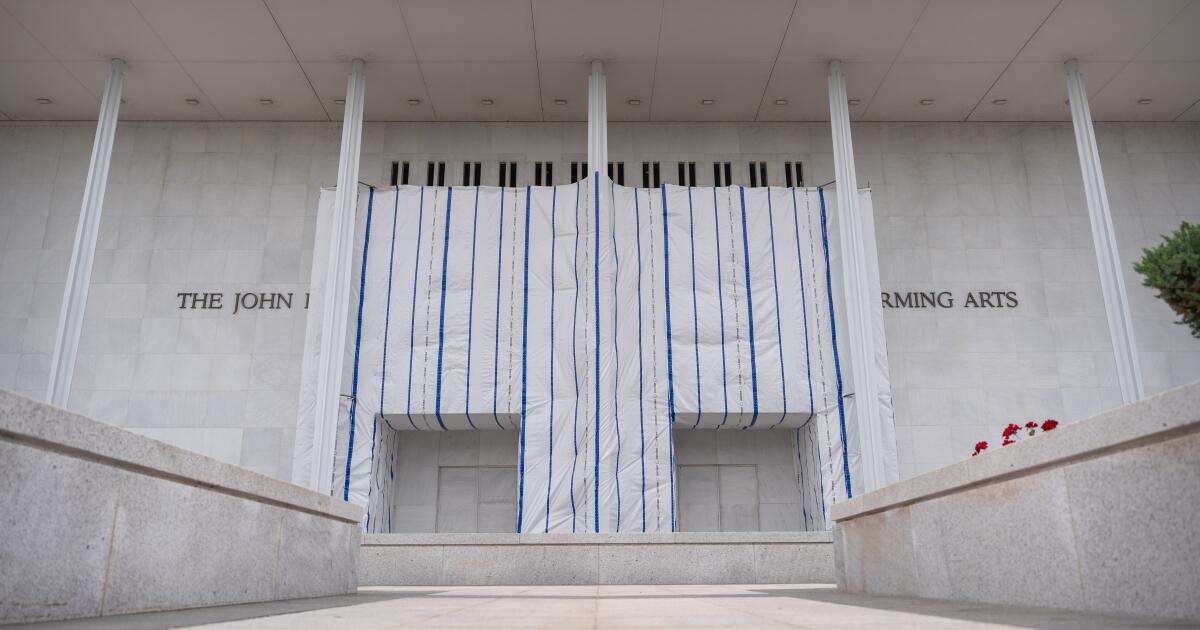
A Democratic senator alleges that whistleblowers have detailed several problems stemming from rushed or improper reconstruction of the Kennedy Center, adding a new layer to the travails of the arts complex after President Trump tried to seize control of it and its name.
Sheldon Whitehouse of Rhode Island said in a release Saturday that he had received a whistleblower disclosure from the Government Accountability Project, a nonprofit whistleblower protection group, alleging that “the Center rushed a series of renovations driven by the President’s aesthetic whims and his desire to star in a series of televised events in December.”
“The Center’s subservience to the President’s desires and its corner-cutting contracting practices have resulted in steel columns that are rusting through fresh paint, a reflecting pool that may have to be torn out and rebuilt, and a brand-new bathroom floor torn out over an offending tile color,” Whitehouse said. “This is waste, and it treats a national memorial to President Kennedy as if it were a private renovation project.”
Whitehouse released a letter he wrote to the Kennedy Center’s executive director, Matt Floca, seeking answers by July 23. He said the whistleblower report included “firsthand accounts of multiple former Center project managers, supported by contemporaneous documents and photographs.” He also included an 83-page appendix full of internal center documents, emails and photos of apparently shoddy construction.
The allegations in the letter include that the center rushed work before it was authorized by Congress because it wanted it to be complete for Trump to accept the so-called FIFA Peace Prize that the soccer federation awarded him.
In doing so, the letter alleges, the center didn’t follow required contracting guidelines and wasted money replacing a bathroom because the president didn’t like the color and inking no-bid contracts. One $8-million contract to replace the concert hall’s floor went to a firm with no experience in concert halls, Whitehouse contended.
The Kennedy Center did not immediately respond to a request for comment.
Trump seized control of the arts and culture venue named for President Kennedy at the beginning of his second term. Trump ousted the center’s leadership and replaced it with a Board of Trustees that named him chairman and added his name to the building.
Democrats sued to remove it, and a federal judge ruled that Trump’s name must come off the venue, noting that only Congress has authority to rename it. Trump also tried to close the center for two years, only to be ordered by the court to keep it open.
Many artists have boycotted the venue in protest of the president’s actions.
MEXICO CITY — After what may have been the most important game in the Mexican national team’s World Cup history, coach Javier Aguirre hugged each of his 26 players.
The embraces weren’t to celebrate a victory. They were hugs of gratitude, encouragement and, above all, resignation.
Minutes earlier, the players paraded around Azteca Stadium — traditionally an impenetrable fortress — to applaud El Tri fans with tears in their eyes. Mexico had just lost 3-2 to England, extinguishing the hope that it could parlay its World Cup co-host role into the deepest tournament run in the country’s history.
The goal was to advance to the quarterfinals for the first time since 1986 and, above all, to show the world that Mexican soccer finally had taken the leap that had been demanded for so long — defeating a past world champion, England, that hadn’t looked particularly dominant. But reality, once again, hit hard as the loss became Mexico’s eighth defeat in the round of 16 since 1994.
This time, Mexico had the support of its fans, playing on home soil. And it wasn’t enough.
“I’m satisfied with the work we’ve done, but when you lose — and I’ve lost a lot in my career — you never quite get over it,” Aguirre said. “It’s very painful because dreaming gives us hope; losing this way hurts a lot.”
Mexico fans show their support before their team faced England in a Round of 16 World Cup match at Azteca Stadium on July 5.
(Richard Pelham / Getty Images)
After weeks of celebrations following wins over South Africa, South Korea, Czechia and Ecuador, Mexico failed the test against England, ranked fourth in the world. El Tri dominated possession but could not convert it into goals, while the English were clinical, led by Jude Bellingham, Harry Kane, Anthony Gordon, Bukayo Saka and goalkeeper Jordan Pickford.
For Aguirre, the loss reopened a familiar wound. In the 2002, Mexico lost 2-0 to a U.S. squad led by Landon Donovan in what many consider the most painful defeat in the country’s World Cup history. This defeat to England very well could rival it.
“I would have liked to win five games, to leave home with five victories. That hurts — it hurts a lot,” Aguirre said. “A loss is a loss. Our opponent didn’t make the same mistakes we did.”
Judging Aguirre solely on the end of this World Cup run would be simplistic given what he inherited. Two years ago, he was asked to lead the struggling team for the third time. When he arrived, Mexico was ranked 17th in the world and had not won the Nations League. He leaves with Mexico ranked in the top 10 and as Nations League champion and two-time defending Gold Cup champion.
This World Cup wasn’t the disaster that Qatar was four years ago, when Mexico was eliminated in the group stage. This summer, Mexico secured its first knockout-round victory since 1986, advanced to a fifth World Cup match for the second time and swept three games during the group stage without conceding a goal — something no other Mexican team achieved.
In 22 months at the helm — having taken over in 2024 following Jaime Lozano’s failure at the Copa América, where Mexico failed to advance past the group stage — Aguirre achieved something that went beyond the scoreboard by uniting players previously accused of having too much ego and preferring not to sacrifice to help the team.
At this World Cup, that squad gave its all — body and soul — and rebuilt a relationship with the fans that had seemed broken since the 2024 Copa América. Thousands of fans filled the Ángel de la Independencia, the Zócalo and other squares across the country, as well as watch parties in cities like Los Angeles.
“We managed to restore the pride of being part of the national team — for the national anthem and for its people. It’s a privilege to be here, and they know it,” Aguirre said of his players. “I think we’ve returned to a Mexican identity.”
Green jerseys were seen all over Mexico as people set aside their differences to cheer on El Tri.
“Mexico was the best host of the three. It had the best atmosphere — it’s a country that truly loves soccer,” Mexico City native Santiago Mondragón said before the England match.
Mexico had standout and inspired performances from Erik Lira, Gilberto Mora and Roberto Alvarado, but its lineup struggled to keep pace with English players trained at elite European clubs.
Mora, just 17 years old and with tremendous potential, made a mistake on the play leading to England’s second goal. Alvarado, who provided strong passes to Raúl Jiménez and was solid in defense throughout the tournament, lost track of Bellingham on the first goal. Raúl Rangel, who was outstanding against South Korea and who three years ago was playing for Tapatío in the Mexican expansion league, stepped too far forward on the penalty kick that sealed the match, minutes after an English player was sent off in the second half. Edson Álvarez, who did not have a good season with Turkey’s Fenerbahce because of an injury, received little playing time and made a serious mistake marking Kane, which led to Gordon’s breakaway on the play that resulted in the penalty kick.
Mexico’s Raúl Jiménez gets tangled with England’s Ezri Konsa while going for the ball during a World Cup Round of 16 match at Azteca Stadium on July 5.
(Francois Nel / Getty Images)
Following the loss, many in Mexico still are wondering why, despite having a one-man advantage for 36 minutes —plus 11 minutes of stoppage time — the team was unable to tie England. Aguirre replaced Mora and goal-scorer Julián Quiñones, bringing on an attacking lineup that focused on sending in crosses, which the English defense easily cleared.
While it’s possible a few changes could have shifted the match in Mexico’s favor, there were limits to how much the technical staff could get out of the roster.
El Tri lacks sufficient depth to assemble a truly competitive 26-man roster, as players such as Álvarez and Santiago Giménez didn’t arrive at their best form, and players such as Brian Gutiérrez weren’t ready for the pressure of a tournament of this magnitude, in need of more time to develop.
Mexico lacked game-changing players capable of breaking down tight defenses — the role Hirving Lozano played in 2018 or Giovani Dos Santos in 2014. The lack of creativity that showed against Saudi Arabia in 2022 flared up late against England.
Thanks to Jiménez and Quiñones, the team did show firepower, scoring 10 goals in five matches, but it lacked depth to break down a well-organized English defense.
The talent pool has been hindered by the Mexico club system.
Mexico’s Julián Quiñones is tossed in the air by teammates as they celebrate a Round of 32 World Cup win over Ecuador at Azteca Stadium on June 30.
(Kevin C. Cox / Getty Images)
Liga MX owners maintain a narrow view of domestic soccer, prioritizing foreign signings over the development of local players and promotion and relegation remain abolished — removing competitive pressure that is the backbone of English leagues.
Top Mexican players continue to be overvalued by their home clubs, which makes it difficult for European clubs to sign them when there are cheaper options with more impressive résumés.
“This was the opportunity; that’s why it’s frustrating, that’s why it’s sad,” Mexican journalist Javier Alarcón said of El Tri’s World Cup exit. “With the Mexican federation and its owners, there isn’t much hope.”
Rafael Márquez, a former FC Barcelona star and one of the greatest players in Mexican national team history, is succeeding Aguirre after serving as one of his assistant coaches. Márquez has formed a close bond with players, who tossed the 47-year-old former defender in the air after one of their World Cup wins, and is familiar with all the reasons Mexico continues to hit the same World Cup wall.
“Rafa is a great guy, a great coach,” said Aguirre, who noted that the team’s average age has dropped and that more and more players are playing in Europe. “Hopefully he can do better than we were able to.”
Israel’s military has attacked several places across Gaza, with Palestinians filming flames and smoke rising over Gaza City as a nine-year-old girl was killed by Israeli gunfire in central Gaza.
-17 T Kim (Kor); -15 MW Lee (Aus); -13 R MacIntyre (Sco),M Fitzpatrick (Eng),J Keefer (US), K Nakajima (Jpn); -12 M Thorbjornsen (US), R McIlroy (NI); -11 SW Kim (Kor), V Perez (Fra)
Selected others: -9 T Fleetwood (Eng), V Hovland (Nor); -4 J Rahm (Spa), -2 J Thomas (US)
————————————————
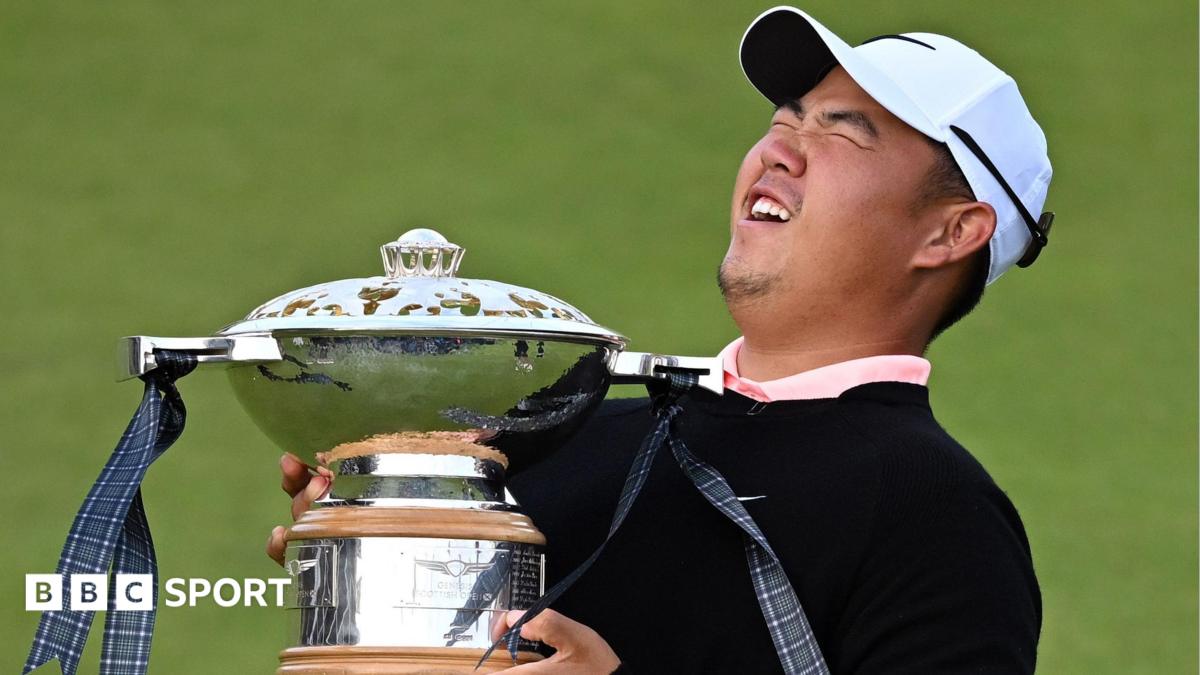
Tom Kim’s drought is over. The South Korean shed tears of joy and relief after excelling on a compelling final day at the Genesis Scottish Open to claim his first title in three years.
Kim has endured a form and confidence crisis since his previous victory – as well as plummeting down the world rankings – but served a reminder of his talents with a faultless 64 to finish 17 under at the Renaissance Club.
The 24-year-old has sought counsel from Tiger Woods during the dark times and revealed the 15-time major winner was among the first to congratulate him on this long-awaited victory.
He triumphed by two shots, with Min Woo Lee the runner-up as crowd favourite Bob MacIntyre faltered in pursuit of a second home title, ending four adrift alongside Matt Fitzpatrick.
MacIntyre, Lee and Fitzpatrick had shared the lead after the fog-disrupted third round, but it was Kim who surged from one back for a brilliant win. He was the only player in the field to avoid a bogey in the fourth round.
“I can’t really wrap my mind over it,” said an emotional Kim of his win. “It’s really special and I’m just at a loss for words.
“Obviously I’ve had a tough couple years. I got to taste a lot of that humble pie and I got to really learn about myself and I’m still trying to grow, still trying to learn.
“I’m definitely appreciating this more now than I did a couple years ago, which is really cool. I thought about my family, all the people around my corner that have suffered with me and also celebrated with me and kind of remembering all those people really brought tears to my eyes.
“Obviously on TGL being on Tiger’s team, I’ve been able to ask him questions on certain things. He’s been really helpful a lot of the time. This was my first win in three years, and the first person that texted me was Tiger Woods. Shows you the person he is and how much he cares.”
As well as a winner’s prize of £1.2m, Kim secures a place in next year’s Masters at Augusta National.
Rory McIlroy’s third-round 73 left the world number two with too big a deficit to overcome despite matching Kim’s closing six-under 64, the lowest score of the day.
Americans Michael Thorbjornsen and Johny Keefer, who tied for seventh and third respectively, will make their Open Championship debuts next week, while the other spot at Royal Birkdale goes to Frenchman Victor Perez.
Love Island fans have taken to social media with celebratory posts as original couple Lola and Sean chose to self-dump after a public vote and a feud with Julia
Lola Deal and Sean Fitzpatrick(Image: ITV/Shutterstock)
Love Island fans have decided shared their shock after Lola and Sean, who have been together since the beginning, dumped themselves from the villa. Fans, who had been pushing for the couple to leave amid a feud with Julia, were excited to see them head out of the villa.
Taking to social media after the couple volunteered to leave, one fan said: “SEAN AND LOLA TAPPING OUT I DID NOT EXPECT THIS #loveisland #loveislanduk.”
“Wait they actually dumped Sean and Lola?? wtf oh my goddddd #loveislanduk,” said another.
Many felt that it was time for the couple to leave with one viewer sharing: “It was honestly their time to leave.” Others were a bit more ecstatic, with another saying: “War is over, Lola and Sean are gone.”
A third said they were “so happy” Lola had left the villa and hoped she would look back at her feud with Julia and how her behaviour, which included telling Julia to “be scared” to talk to her and refusing to join a peace chat amongst the girls, could be seen as “nasty”.
A fourth jokingly said “Pack those bags angel”, referring to the nickname Lola gave everyone. Meanwhile, several mentioned the England World Cup win from Saturday and implied Lola and Sean leaving was on the same level. “What a time to be British,” said one fan.
But some were on Lola and Sean’s side, respecting them for taking the decision to leave. As one fan said: “Fair play to Lola and Sean they weren’t actually playing a game and left. The other couples would NEVER.”
A second said that “no one deserves to be done dirty” the way Lola and Sean had been and that they hoped Lola really had found love, as she thought she had. A third said they respected the couple for leaving when the point was to get to the end as a couple and win the prize money.
The exit comes after a public vote. At the end of Friday’s episode, Julia and Lorenzo were voted the favourite couple. This came after several episodes of strife between Julia and Lola – Casa girl Julia had briefly hit it off with Sean, and when Lola found out she was livid.
Fans slammed Lola for her reaction to Julia, with many saying it was overly harsh and even Sean telling her not to be “petty” when she wanted to say Julia was only in the villa for “air time”.
So when a vote came up for fans to pick their favourite couple, they rallied behind Julia and voted her couple the best. The bottom three were Lola and Sean, Mica and Samraj and Martha and Jordan.
In Sunday’s episode, Julia and Lorenzo were told to pick a couple to send home, but before they could, Lola and Sean stepped forward to volunteer to go home. They said they’d found what they wanted and were happy to head home.
Lorenzo teared up as he agreed to send Lola and Sean home. Sean later said that it would’ve felt “selfish” for him and Lola to stay when they’d been together since the start and were already exclusive.