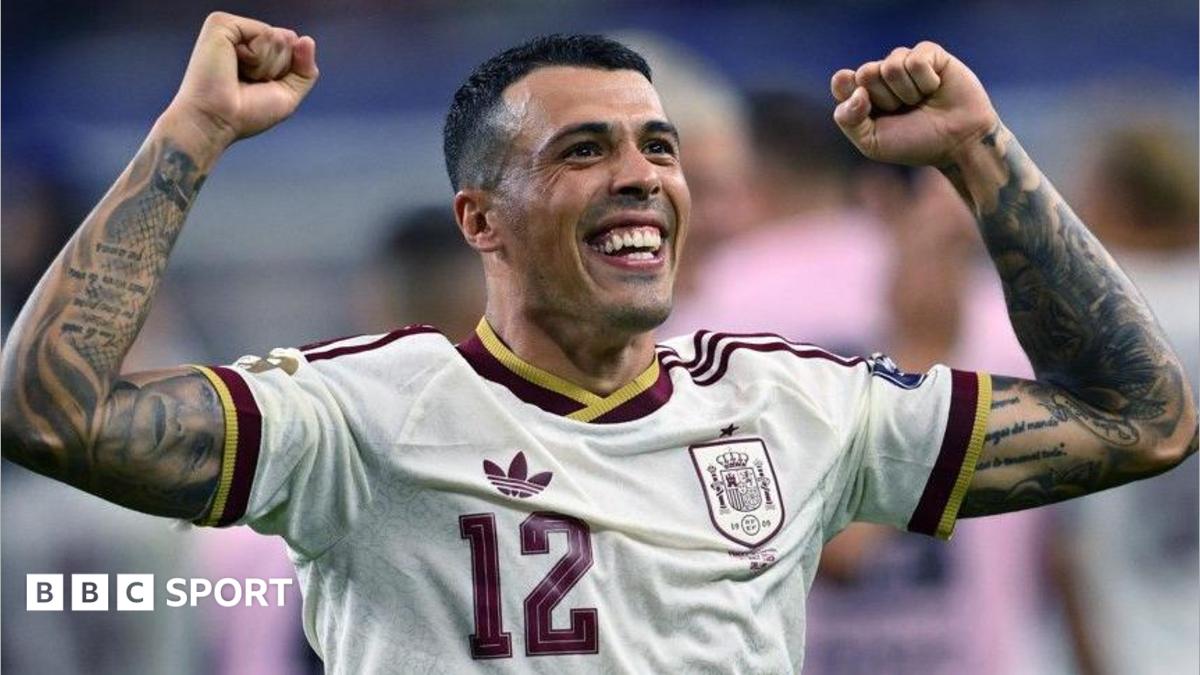
Spain produced an absolute masterclass in control to secure their place in just their second World Cup final – leaving the rest of the world stunned at how France were blown away.
Les Bleus went into Tuesday’s eagerly anticipated semi-final as overwhelming favourites having cruised through the tournament, with the likes of Kylian Mbappe, Ousmane Dembele and Michael Olise making them an attacking force to be feared.
But while many were questioning how France could be beaten, Spain reminded everyone why they are European champions and unbeaten in a record-equalling 37 matches by running out 2-0 winners.
Luis de la Fuente’s men have rather flown under the radar at this World Cup – even failing to beat debutants Cape Verde in their opening match – and teenage superstar Lamine Yamal has scored just one goal.
But they appear to have hit peak form at the right time and, having kept a clean sheet in six of their seven games, can expect to be favourites for Sunday’s World Cup final, where they will face either Argentina or England.
France, meanwhile, must prepare for the third-place play-off after being frustrated by a midfield masterclass and managing just three attempts on target.
“Spain scalped France – they flattened France,” said former Premier League champion Chris Sutton, who was at the game for BBC Radio 5 Live.
“We have given France so much praise in this tournament, but they were swatted aside by silky Spain. In the main, Spain have outfought and outplayed this French team.”
Roy Keane – another Premier League winner – said on ITV: “France were not playing as a team. Brilliant individuals not playing as a team.
“Spain have been absolutely brilliant – an absolute joy to watch.”
When De la Fuente was appointed Spain boss in December 2022, some referred to him as: “Luis de la Who?”
Spain – world champions under Vicente del Bosque in 2010 – are used to being led by high-profile personalities, and de la Fuente was viewed as a low-key federation appointment after his time in charge of the nation’s under-19s, under-21s and under-23s.
But the 65-year-old has given an emphatic response to the doubters.
Having led Spain to a Nations League triumph in 2023 and Euro 2024 glory, he has now guided them to the World Cup final.
If England win in Atlanta on Wednesday, they will set up a repeat of the European Championship final of two years ago.
The striker says FIFA’s decision to suspend his one-match ban led to ‘a lot of outside noise’ before USA’s knockout match.
Published On 15 Jul 202615 Jul 2026
US striker Folarin Balogun says he expected “a lot of controversy” after FIFA suspended his one-game ban at the World Cup following United States President Donald Trump’s request to review the decision.
Balogun was sent off during his team’s 2-0 win over Bosnia and Herzegovina in the last 32, but FIFA controversially suspended his ban for a one-year probationary period. The striker has spoken about the incident for the first time in an interview with CBS Mornings on Tuesday.
Recommended Stories
list of 4 itemsend of list
“My initial reaction was I was happy to be back in the team. But when I kind of started to reflect, I knew it was going to cause a lot of controversy,” he said.
“I could almost see within my teammates a bit of nerves because it was something that’s so unique.
“But the closer we got to the game, I tried to just focus as best as I could. But it was difficult – a lot of outside noise, and that’s hard to avoid.”
Balogun received the red card for stepping awkwardly on the right ankle of Bosnia’s Tarik Muharemovic in a 2-0 win for the USA in their round-of-32 match, triggering an automatic one-game suspension.
FIFA’s decision to suspend that ban – leading to Falogun playing in the game against Belgium – caused a furore in the football world, and accusations that the body bent its rules to please Trump.
The global football body announced that it had suspended the red card after the US president urged FIFA chief Gianni Infantino to review the case.
The decision prompted criticism from Belgium’s football association, Europe’s top football body, a former FIFA boss, multiple top former players, and many others. Critics argued that overturning a red card suspension after direct political intervention undermined the integrity of the tournament and set a dangerous precedent.
Balogun conceded that the saga led to a confusing few days for him. After the red card, he took on a supporting role in training to try to keep the team’s morale high before finding out he was cleared to play.
“We found out on the team bus. Everybody was like screaming and shouting,” Balogun said. “It was a pretty intense bus ride to the practice field.”
The US striker said it was not hard to separate “the emotion from the job at hand” ahead of the match against Belgium.
“We’re all professionals, so it’s not something I think was too difficult to be able to separate once we kind of got over the initial announcement that I’d be back in the team,” Balogun added.
The USA lost 1-4 to Belgium, with Balogun struggling to influence the game, following a fine overall tournament in which he scored three goals.
This article examines the historical significance and origins of Bastille Day, France’s national holiday celebrated every July 14th. It details how the 1789 storming of the Bastille prison acted as a catalyst for the French Revolution, eventually leading to the collapse of the monarchy and the execution of King Louis XVI. The text explains that this event serves as a powerful symbol of liberty and the triumph over autocratic rule. Additionally, it notes that the date was officially designated as a national holiday in 1880 to honor both the initial uprising and the subsequent unity of the French people. Beyond historical analysis, the source provides a snapshot of modern headlines, ranging from global political up …
ONCE the golden couple of Hollywood, Brad Pitt and Angelina Jolie’s multi- million-pound divorce battle rumbled on longer than they were man and wife.
And ten years since proceedings first started, the bitterness between those involved shows no sign of slowing down.
Brad Pitt and Angelina Jolie’s multi-million-pound divorce battle rumbled on longer than they were man and wifeCredit: Rex FeaturesAngelina and Brad with kids Zahara, Maddox, Vivienne, Shiloh, Knox and Pax in the month their divorce beganCredit: Fame Flynet
Brad, 62, watched in horror this week as the final steps were taken to remove any trace of him from the once-glorified “Brangelina” clan.
In a brutal move, his children Maddox, 24, and Zahara, 21, have both filed court papers to officially change their surname from Jolie-Pitt to just Jolie.
Sign up for the Showbiz newsletter
Thank you!
Siblings Shiloh, 20, and Vivienne, 18, have already turned their backs on the Pitt name, while Knox, 18, has also dropped it from informal documents and is estranged from Brad.
This leaves only Pax, 23, still using the Pitt surname.
Insiders say that Brad has been left privately “devastated” by the decision.
A source said: “One by one, his children, who he was once so close to, have removed their connection to him.
“He really wonders if he’ll ever rebuild bridges with his shattered brood now.”
It is the latest twist in the family saga, following on from allegations of physical abuse, financial coercion and severe family PTSD as well as a Father’s Day Instagram post from Pax calling Brad a “world-class a**hole”.
It all helps cement Brad and Angelina’s divorce as perhaps the most toxic the entertainment world has ever seen.
In September, it will have been a decade since Maleficent star Angelina, 51, first filed for divorce from movie heart-throb Brad.
Their relationship started not long after they met on the set of 2005 film Mr & Mrs Smith, when Brad was still married to Jennifer Aniston.
They wed in 2014 but, less than two years later, in September 2016, they split in explosive fashion.The former couple had previously adopted Maddox, Zahara and Pax before having Shiloh, Vivienne and Knox.
But Brad, who was once inseparable from all six kids, has now been well and truly frozen out.
Legal notices published in the Los Angeles Daily Journal yesterday reveal that both Maddox and Zahara have filed petitions to change their surnames.
If approved, the changes will become official in court, with Maddox’s hearing set for September 14 and Zahara’s two weeks later.
Zahara has publicly gone by Zahara Jolie since starting university.
Angelina and Zahara, who has filed court papers to officially change her surname from Jolie-Pitt to just JolieCredit: GettyLegal notices published in the Los Angeles Daily Journal yesterday reveal that both Maddox and Zahara have filed petitions to change their surnamesCredit: AP
Shiloh legally dropped “Pitt” after turning 18 in 2024, while Vivienne was credited simply as “Vivienne Jolie” as a production assistant for the Broadway show The Outsiders.
Pax is the only one still using the Pitt surname, but he has an incredibly difficult relationship with his dad, who he once claimed made his younger siblings “tremble in fear”.
Brad’s relationship with his children seemed to change for ever after an ill-fated flight in 2016, which also marked the end of the high-profile showbiz marriage.
The couple are said to have tried to keep their blistering rows from the children, but that became impossible in the confines of a private jet.
In a report filed by the FBI about the incident, Angelina claimed Brad yelled at her before pulling her into the toilet, where he pushed her against the wall and punched the ceiling repeatedly.
It is also alleged that when one of their kids tried to protect their mum, Brad “choked one of the children and struck another in the face”.
It has long been rumoured that it was Maddox who was assaulted.
The report said Brad then poured beer on his family as they tried to sleep.
Brad, who was once inseparable from all six kids, has now been well and truly frozen outCredit: GettyBrad and Anjelina in 2015Credit: Getty
The incident led to an investigation by children’s services, with Angelina being awarded temporary full custody and Brad only allowed supervised visits. He was later fully cleared.
Just days later, Angelina filed for divorce, citing irreconcilable differences.
Pax’s private Instagram post on Father’s Day 2020 suggests the kids experienced problems before and after the plane incident.
He wrote: “You time and time again prove yourself to be a terrible and despicable person.
“You have no consideration or empathy toward your four youngest children, who tremble in fear when in your presence.
“You will never understand the damage you have done to my family because you’re incapable of doing so.”
Brad later confirmed that his boozing had become a problem, revealing he had visited Alcoholics Anonymous groups.
He said: “I had taken things as far as I could take it, so I removed my drinking privileges.
Brad and new love Ines de Ramon last monthCredit: GettyFrom left: Pax Thien Jolie-Pitt, Angelina Jolie, Zahara Marley Jolie and Maddox Chivan Jolie-PittCredit: Getty
“You had all these men sitting around being open and honest in a way I have never heard.
“It was this safe space where there was little judgment, and therefore little judgment of yourself. It was actually really freeing just to expose the ugly sides of yourself.
“There’s great value in that.”
The confession did nothing to quell the animosity between the parties, though.
And while the divorce might have been finalised in 2024 — after eight agonising years — another legal fight is still rumbling on.
The former lovers are locked in an acrimonious $350million court battle, known as the War Of The Rosés, over Angelina’s decision to secretly sell her stake in their Chateau Miraval vineyard and home for $64million to Russian booze tycoon Yuri Shefler in 2021.
A source said: “Ines wants to have a life together — with possibly children in the future — without the albatross that is the eight-year War Of The Rosés.”
While Angelina’s attorneys have filed explosive allegations in court, she has kept a mostly dignified silence.
In 2020, the actress turned human rights advocate addressed the ugly split in a rare interview with Vogue.
She said: “I separated for the wellbeing of my family. It was the right decision.
“I continue to focus on their healing.”
During another interview, when asked if she worried about the safety of her children, she said: “Yes, for my family. My whole family.”
And during the Press tour for her 2021 Marvel film Eternals, in which she played Thena, a warrior battling memory loss and a fantasy-world version of PTSD, she revealed that she had been diagnosed with the condition.
She said: “I had talked to the director about experiencing PTSD myself a few years ago and my own fears about not being strong enough to protect those that I love.”
And while Brad might have moved on, Angelina, who was widely once considered one of the world’s most beautiful women, remains single.
Last month, she said: “To be candid, I haven’t dated since I divorced a decade ago.
“So I kind of get in my head that that aspect of me is not centered in my life if I’m focusing on my children, my family.”
It is true that all six children have certainly been caught up in the crossfire of their parents’ decade-long war, with the sorry saga serving as a cautionary tale to other Hollywood couples on the cusp of divorce.
Now, as the February 2027 trial over the battle for the French vineyard looms, peace still seems a long way off.
And while Brad might still be fighting over his financial future, his legacy with his family appears to be long gone.
Investors step in to close Africa’s critical $80B infrastructure financing gap.
Gulf investors are rapidly reshaping Africa’s investment landscape, committing billions of dollars to ports, transport corridors, logistics, renewable energy, and critical minerals as governments across the continent seek new sources of long-term development finance.
The shift gathered momentum in June, when sovereign wealth funds (SWFs), commercial banks, development finance institutions, institutional investors, and corporate issuers launched the Africa–Middle East Corridor. Debuted during the Global Banking & Markets Middle East 2026 conference in Dubai, the initiative aims to mobilize capital for infrastructure, deepen Africa’s debt capital markets, and expand cross-border investment between the Gulf and Africa.
The launch comes at a critical moment for the continent. According to the African Development Bank (AfDB), Africa requires approximately $170 billion annually to finance infrastructure, yet current investment totals only $80 billion to $90 billion, leaving an annual financing gap approaching $80 billion.
The Gulf is positioning itself to help close the deficit.
Investors from Gulf Cooperation Council (GCC) countries announced 73 foreign direct investment (FDI) projects worth more than $53 billion across Africa in 2023, reflecting a decisive shift toward fewer but significantly larger investments concentrated in renewable energy, logistics, critical minerals, transport and digital infrastructure.
China Cuts Back
The changing investment landscape also reflects a broader shift in global capital flows.
For nearly two decades, Chinese policy banks financed much of Africa’s modern infrastructure expansion, underwriting railways, highways, ports, airports and power projects across the continent. Yet, according to the Boston University Global Development Policy Center, Chinese policy bank lending fell from a peak of $28.8 billion in 2016 to $2.1 billion in 2024. Annual lending regularly exceeded $10 billion between 2012 and 2018, but Beijing has increasingly pivoted from sovereign-backed megaprojects to smaller, commercially driven investments.
That retreat has created space for Gulf SWFs, export credit agencies, and commercial banks to expand their presence across Africa.
The United Arab Emirates has emerged as Africa’s fourth-largest foreign investor. Between 2019 and 2023, Emirati investments exceeded $110 billion, including an estimated $70 billion directed at renewable energy.
Several flagship transactions illustrate the scale of that commitment. ADQ’s $35 billion Ras El-Hekma development in Egypt ranks among the largest FDI deals ever concluded on the continent. DP World now operates six African ports and logistics facilities, while Abu Dhabi Ports has secured concessions in Egypt, Angola, and the Republic of Congo, strengthening Gulf influence over strategic maritime trade routes linking Africa with Europe, Asia, and the Middle East.
Renewable energy has become a major pillar of Gulf investment in Africa.
Masdar, Abu Dhabi’s state-owned renewable energy company, has committed $10 billion to develop 10 gigawatts (GW) of renewable energy capacity across sub-Saharan Africa by 2030. Infinity Power, a joint venture between Masdar and Egypt’s Infinity, is now Africa’s largest pure-play renewable energy company, operating 1.3GW of generation capacity in Egypt, South Africa, and Senegal, with a further 16GW under development. Saudi Arabia’s ACWA Power, one of the Middle East’s largest private power developers, continues to expand its renewable energy portfolio in Morocco, Egypt, and South Africa, while Gulf investors are increasingly financing green hydrogen, battery storage, and electricity transmission projects across the continent.
Gulf Capital Steps In
Commercial banks, too, are increasing their African presence.
In March, First Abu Dhabi Bank announced plans to establish its first representative office in Lagos, making Nigeria its West African hub. The lender has already participated in financing the $1.13 billion Lagos – Calabar Coastal Highway, signaling growing Gulf interest in African project finance and structured lending.
“Gulf capital is increasingly vital to Africa because of a strategic alignment of economic needs,” says Phumlani Majozi, senior economist and executive director at the African Markets Institute. “As traditional Western and Chinese funding slows, African countries require enormous investment for infrastructure, energy, and digital transformation, while Gulf states are actively diversifying beyond hydrocarbons. The relationship is evolving from aid-based engagement into long-term commercial integration.”
The trend represents a structural shift rather than a temporary investment cycle, Majozi says, driven by long-term economic diversification strategies such as Saudi Vision 2030 and the UAE’s ambition to become a global investment and logistics hub.
Private-sector advisers see the relationship as rooted in geography and commercial history.
“The Middle East is Africa’s closest neighbor. Trade between the two regions stretches back thousands of years,” said Jacqueléne Coetzer, founder and CEO of Jacqueléne Global Consulting. “Africa and the Gulf do not need to discover entirely new markets; they need to rediscover one another.”
Gulf investors are targeting critical minerals in the Democratic Republic of Congo and Zambia, agriculture in Ethiopia, renewable energy in Kenya and South Africa, logistics in Egypt and Nigeria, and financial services through Mauritius, Coetzer says.
Africa’s bargaining position is also strengthening.
The African Continental Free Trade Area (AfCFTA) is creating a $3.4 trillion integrated market spanning 54 economies. The continent controls roughly 30% of the world’s critical minerals, including copper, cobalt, lithium, and manganese — resources central to the global energy transition.
Individual countries are strengthening their ties across the regions as well. Kenya’s Comprehensive Economic Partnership Agreement (CEPA) with the UAE, signed in January 2025, was the first such agreement between the UAE and a mainland African country. The accord improves business access to both countries’ markets by expanding investment protection and providing a framework for deeper cooperation in trade, logistics, financial services and digital commerce.
“Africa’s leverage has never been stronger,” Majozi argues. “The continent possesses roughly 30% of the world’s critical minerals, the world’s youngest workforce and the AfCFTA’s $3.4 trillion integrated market. The challenge is converting that structural advantage into negotiating power.”
If the Africa–Middle East Corridor succeeds in converting investment commitments into bankable projects, it could become one of the principal channels through which Gulf capital finances Africa’s next generation of infrastructure, industrialization, and capital-market development.
Charles Wachira is a contributing writer based in Kenya.
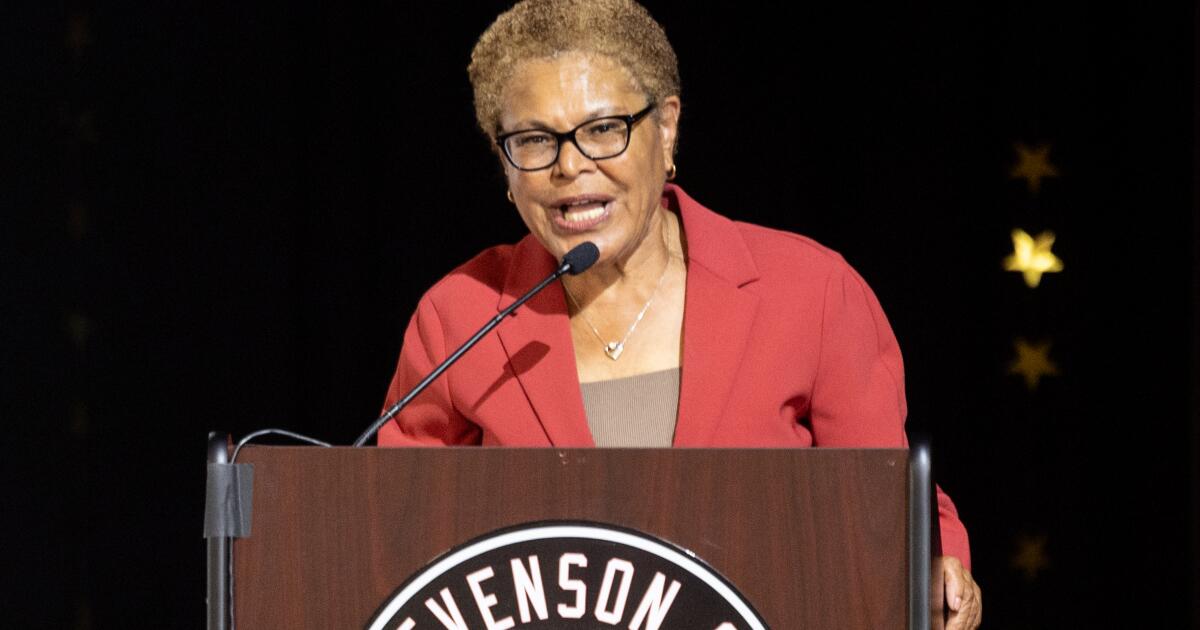
A top spokesperson for Los Angeles Mayor Karen Bass left her administration Monday after a brief tenure, joining a growing list of communications aides who have departed over the past nine months.
Kolby Lee, who started as Bass’ director of communications in February, said he was resigning to spend time with family and loved ones.
“I’m very grateful to Mayor Bass for giving me the opportunity to be part of her team and serve the people of Los Angeles,” Lee said in a statement.
Bass’ communications office said in a statement to The Times, “We thank Kolby for his contribution to the office and wish him and his family well.” Bass is running for reelection against City Councilmember Nithya Raman.
The departures began in October, when Zach Seidl, Bass’ longtime deputy mayor of communications, left for the private sector.
Press secretary Clara Karger left in January after working for the mayor for nearly three years.
Bass then brought on Amanda Crumley to replace Seidl. But Crumley lasted little more than a month, leaving in March.
Lee started as communications director shortly before Crumley’s departure, serving for about five months.
Robb was not paid by the city for his work and served in an unofficial role providing comments on important issues, including Bass’ involvement in damage control surrounding the 2025 Palisades fire.
Lee provided comment to The Times in a story published Saturday about Robb’s work for the Bass administration at the same time that he is a crisis communications consultant for Lineage Logistics, the company whose Boyle Heights warehouse erupted in flames last month, inundating the area with toxic smoke and rotting food odors.
Folarin Balogun insists that the red card controversy surrounding him during the World Cup was not the reason the U.S. lost 4-1 to Belgium in the round of 16.
But, the breakout American star said Tuesday on NBC’s “Today” show, “it didn’t help.”
“As an athlete, you go into a game that’s already difficult enough with everything that goes on, the pressure,” Balogun said. “So to have more pressure, not just internally [but also] from almost the whole footballing world, was difficult. But it’s not an excuse. We were disappointed with the way it ended, but there’s still a lot to be proud of.”
Balogun, a birthright U.S. citizen whose Nigerian parents live in England, scored his third goal in four World Cup games during a 2-0 win over Bosnia and Herzegovina on July 1 in Santa Clara. But he also received a straight red card for stomping on the ankle of Bosnian center back Tarik Muharemović, meaning the top-scoring American player would have to miss the next game.
It was a controversial call, with some feeling the red card was unwarranted since Balogun’s action didn’t seem intentional.
The only other time a red-card suspension was overruled during a World Cup was in 1962, when Brazilian attacker Garrincha was allowed to play in the final after Brazil’s prime minister lobbied on his behalf.
“My initial reaction was, I was happy to be back in the team,” Balogun said Tuesday on “CBS Mornings.” “But when I kind of started to reflect, I knew it was going to cause a lot of controversy.”
He was correct about that. Although Infantino insisted that the FIFA Disciplinary Committee makes its decisions independently, the reversal caused outrage among many in the soccer world. Belgium submitted an appeal, but it was rejected hours before the game.
Amid all that, the U.S. had to prepare for Belgium — first without and then with Balogun in the mix. He told CBS the situation was “confusing” for all involved.
“I could almost see within my teammates a bit of nerves, because it’s something that is so unique,” Balogun said. “But the closer we got to the game, I tried to just focus as best as I could, but it was difficult. A lot of outside noise, and that’s hard to avoid.”
He added, though, that he and his teammates were “able to separate the emotion from the job at hand,” and the distractions didn’t contribute to the disappointing loss.
“We’re all professionals, so it’s not something I think was too difficult to be separate once we kind of got over the initial announcement that I’d be back in the team,” Balogun said. “I think you saw definitely it was a difficult game against Belgium, and that can kind of overshadow whether we were focused or not. … I know we had full concentration going into the game.”
Weekly insights and analysis on the latest developments in military technology, strategy, and foreign policy.
For several months, Israel’s Ben Gurion Airport was so packed with U.S. Air Force aerial refueling tankers deployed for the fight against Iran that officials in Jerusalem complained about the toll that presence was taking on airport operations. The issue came to a head on Tuesday, when Israel’s Transportation Minister placed a limit on how many of these jets can land at Ben Gurion Airport. The move comes despite an increase in fighting between the U.S. and Iran and with several Arab nations coming under fire from the Islamic Republic. Tuesday afternoon, U.S. Central Command (CENTCOM) announced a new round of strikes against Iranian targets as the naval blockade on that nation’s ports is being restored.
While an anonymously sourced Israeli news story stated that U.S. and Israeli officials are irate about this decision, three experts we spoke with suggest that despite ratcheted-up kinetic actions, the restrictions on tanker operations at Ben Gurion will be more of an inconvenience to U.S. forces than a major problem.
At issue is the tension faced by a very busy international airport operating at the peak of summer travel season, while also having to host dozens of American tankers deployed for high-tempo combat operations that are currently not happening.
“Hundreds of thousands of plane tickets were bought by Israelis to fly and enjoy their summer vacation,” Miri Regev said earlier on Tuesday. “We promised that we will enable commercial flights and we will not cancel a single ticket because of American refueling planes.”
“Therefore I have given instructions that we will not allow any U.S. refueling tankers to land at Ben Gurion Airport beyond the agreed number of 20 planes, and the remaining planes will land at Air Force bases.”
Israeli Transportation Minister Miri Regev responds to the US delaying plans to relocate military refueling aircraft that have been in Ben Gurion international airport pic.twitter.com/h6Hp0gnIVk
As we reported in the past, the U.S. Air Force began sending tankers to Ben Gurion in the lead-up to the U.S.-Israeli war on Iran that began Feb. 28.
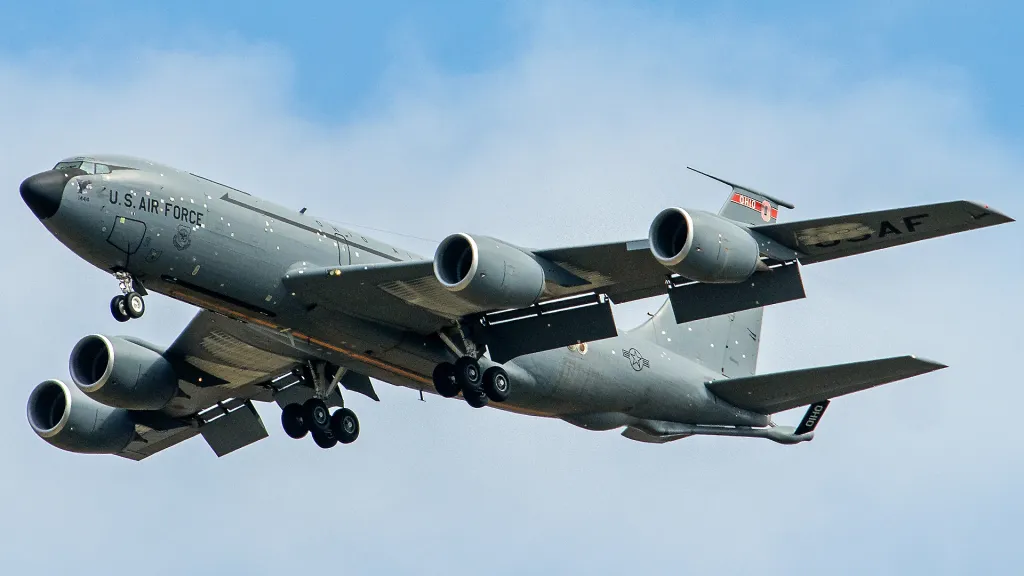
Nine KC-46 Pegasus and five KC-135 Stratotanker aerial refueling jets arrived at Ben Gurion in the days before hostilities began. The number of U.S. Air Force tankers, as well as the service’s cargo jets, at the airport has grown tremendously since then.
“A fleet of about 75 U.S. refuelers and cargo planes had parked at Ben Gurion Airport for many months, as part of the US military buildup in the region prior to the war,” the Times of Israel reported on Tuesday. “Following the partial removal of the tankers in recent weeks, more than 30 US refueling planes are estimated to be stationed at Ben Gurion Airport, crowding out civilian aircraft and creating a shortage of parking spaces.”
In our previous reporting, we noted that dozens of U.S. Air Force refueling aircraft deployed to Ben Gurion Airport had been expected to stay in Israel at least until the end of this year, though those plans now appear to be in flux.
Satellite imagery indicates the US has withdrawn 32 of the roughly 60–72 aerial refueling tankers it had stationed at Israel’s Ben Gurion Airport, leaving about 32 as of early July 2026.
Meanwhile, there are alternatives for the dozen or so KC-135s and KC-46s that now need a new home. The Air Force can operate tankers from several other bases in Israel as well as across the region. However, bases closer to Iran have come under dense Iranian fire and five tankers were reportedly damaged in an Iranian long-range strike on Prince Sultan Air Base in Saudi Arabia in March. Operating far forward during war time, such as at the traditional hub for these operations, Al Udeid Air Base in Qatar, isn’t possible due to the extreme risk posed by Iranian standoff weapons. Other bases, like Muwaffaq Salti Air Base in Jordan is already packed with aircraft with little room for dozens of tankers.
A KC-135 Stratotanker, riddled with shrapnel from an Iranian attack, lands at Mildenhall Air Base in the U.K. in May. (Aviation photographer Andrew McKelvey)
As we noted earlier in this piece, the tanker limit reportedly upset U.S. and Israeli officials alike.
“Senior officials at U.S. Central Command have contacted the IDF’s top brass and Israel’s defense establishment in recent hours following the Transportation Ministry’s decision Tuesday not to allow additional American refueling aircraft to land at Ben-Gurion Airport,” according to Israel’s Ynet news outlet. “According to sources familiar with the details, the Americans were angered by the decision and made clear that it directly harms the operational needs of U.S. forces operating in the region amid the escalation with Iran. They said the refueling aircraft are a vital component of the regional deterrence and defense array.”
TWZ cannot independently confirm Ynet‘s reporting. Earlier in the day, Navy Capt. Tim Hawkins, CENTCOM’s spokesman, told us that the command “will continue working with our Israeli partners to best position U.S. aircraft to support operations.”
Hawkins declined to elaborate.
“Israel is a strong military ally, and we appreciate the warm hospitality for American forces as we work shoulder to shoulder in promoting regional security and stability,” Hawkins stated.
Meanwhile, as we have noted in earlier reporting, the U.S. has already returned F-22 Raptors that were flying out of Ovda Air Base in Israel back to the United States. Other aircraft, such as A-10s and F-15Es, have also returned home from or have been replaced in the CENTCOM region. So clearly there is a lot of shifting of aviation assets taking place even amid current operations.
Ten F-22 Raptors arrived at RAF Fairford on July 10 from Ovda Air Base in Israel, where they took part in Operation Epic Fury. (@Saint1Mil) (@Saint1Mil)
A former senior U.S. Air Force leader acknowledged the tensions inherent in operating military aircraft for combat operations out of a civilian airport. However, Ben Gurion is considered one of the most important airfields in the region, the former official told us.
Ben Gurion’s location, situated just to the southeast of Tel Aviv, roughly in the center of the country, is a big factor, both in terms of geography and Israel’s vaunted integrated air defense system (IADS), the former leader added.
Ben Gurion Airport. (Google Earth)
Still, he suggested that the new limits at Ben Gurion don’t automatically mean a restriction in U.S. air operations against Iran or in support of partner forces.
Given the existing options in the region, CENTCOM and the Air Force will be looking at what runway, ramp space, and equipment availability there is elsewhere.
“Flow control is something we’re always concerned about during combat operations,” he explained, adding that planners will consider distance to where the tankers have to orbit, proximity to potential threats, and the capacity to launch sorties.
“They really work in advance to create the best mix of protection, survivability, and an operational envelope,” the former senior leader noted.
U.S. Air Force F-16 Fighting Falcon aircraft maneuver after receiving fuel from a KC-135 Stratotanker in the U.S. Central Command area of responsibility May 23, 2026. (U.S. Air Force photo by Tech Sgt Tiffany A. Emery) Tech. Sgt. Tiffany Emery
Retired Air Force Col. Troy Pananon, who once commanded Mildenhall Air Base, a tanker installation in the U.K., surmised that the Ben Gurion restrictions will have limited effects.
“I would say the base has an impact on the overall plan, but it doesn’t limit the ability to execute,” said Pananon, who was quick to point out he has no inside information about current operations. “Tanker planners can and should modify the plan to ensure there is enough fuel airborne in the AOR to accommodate the requirements for the receivers servicing the designated targets for the day. In other words, if they are limited in capacity at base A, they can or will supplement from base B, or adjust loiter times or targets.”
“Air campaigns by nature are a fluid event and stresses the importance of planners, leadership and C2 [command and control,” he added.
A U.S. Air Force KC-135 Stratotanker refueling aircraft taxis at a base in the Middle East, April 30, 2026. (U.S. Air Force photo by Master Sgt. James Cason) Master Sgt. James Cason
Israel is carrying out a balancing act when it comes to Ben Gurion, a high-ranking IDF official told us.
The airport “is effectively Israel’s only major international civilian airport,” he noted. “Haifa and Ramon handle only a very small fraction of Israel’s civilian air traffic. Operationally, Ben Gurion can accommodate roughly 20 U.S. Air Force refueling tankers. Beyond that number, the impact on civilian aviation becomes significant.”
However, “at the same time, Ben Gurion is arguably the safest airport in the region for U.S. aircraft,” the IDF official pointed out. “That is why discussions are currently focused on finding the right balance between parking tankers at Ben Gurion and dispersing them among Israeli Air Force bases. In my view, this is fundamentally an operational, economic and civil aviation issue, not a political one.”
U.S. Air Force Boeing KC-135 Stratotanker aerial refuelling aircrafts are seen on the tarmac at Ben Gurion Airport in Tel Aviv. (Photo by Gil Cohen-Magen/picture alliance via Getty Images) picture alliance
The issue of U.S. Air Force tankers at Ben Gurion interfering with civil aviation is not new.
“The presence of the aircraft—not the U.S. military—is causing significant operational difficulties at Ben Gurion Airport, as they are parked almost everywhere possible at the airport,” Israel’s N12 News reported on X back in May.
בישראל התקבלו מסרים מהאמריקנים שלפיהם עשרות מטוסי התדלוק המוצבים בנמל התעופה בן גוריון צפויים להישאר בארץ לפחות עד סוף השנה האזרחית. נוכחות המטוסים שלא הצבא האמריקני מעוררת קשיים משמעותיים בתפעולו של נתב”ג, שכן הם חונים כמעט בכל מקום אפשרי בנמל@Dean_Fisher_
How long the limitations at Ben Gurion last remains an open question, especially should Israel find itself at war again with Iran.
As we pointed out in previous reporting, the KC-46s and KC-135s now at Ben Gurion alone are a tanker force far larger than what the Israeli Air Force (IAF) has in its inventory today. Each KC-46 also carries more fuel to offload to receivers than a KC-707 or a KC-135. During Epic Fury, when both the U.S. and Israel were attacking Iran, U.S. tankers gassed up IAF jets.
One of the IAF’s KC-707s seen refueling an F-15. (IAF)
All this being said, in a time of war, these restrictions would be quickly lifted and civilian flights would decline. While moving aircraft around to other bases and still providing the majority of the refueling capacity available before the tankers’ exodus from Tel Aviv will certainly be possible, sortie rates and durations for receiver aircraft could still suffer in a sudden crisis. Seeing as these are tankers, their availability and proximity to their ‘customers’ has downstream effects. It comes down to how much gas is available in the sky at any given time versus the needs of the air operation. Luckily, America’s tanker crews and planners are masters at juggling their assets to make sure any changes in basing has a minimal impact on commanders’ needs.
The Israeli Transportation Minister’s decision comes as the prospects for a diplomatic settlement of the tensions between the U.S. and Iran seem dimmer than at any point since a ceasefire was agreed to on April 8.
As we noted earlier in this piece, CENTCOM forces “began launching an additional round of strikes on Iran to continue degrading Iranian capabilities used to attack commercial shipping in the Strait of Hormuz,” the command stated on X. “The strikes are taking place as American forces prepare to resume the naval blockade against Iranian ports and coastal areas. The blockade goes into effect at 4 p.m. ET.”
At 3 p.m. ET today, U.S. Central Command forces began launching an additional round of strikes against Iran to continue degrading Iranian capabilities used to attack commercial shipping in the Strait of Hormuz. The strikes are taking place as American forces prepare to resume the…
Meanwhile, Israeli Prime Minister Benjamin Netanyahu “warned Iran on Tuesday against launching future attacks on Israel, saying Tehran would face a far harsher response than in previous confrontations,” the Jerusalem Post reported on Tuesday.
“Do not count on it being quiet if you attack us,” Netanyahu said while speaking at the Negev Conference in Dimona. “Do not count on a rerun; this will be a different event, much more powerful.”
Prime Minister Netanyahu, today, at the Negev Conference in Dimona – in a message to Iran’s leaders: “We are prepared for any scenario. I can tell you only one thing, and I will say this to the leaders of Iran: Do not count on it being quiet if you attack us. Do not count on a… pic.twitter.com/tbgRd7PNon
— Prime Minister of Israel (@IsraeliPM) July 14, 2026
Given all this, it does not appear there will be much of a reduction in the need for U.S. Air Force aerial refueling tankers in the Middle East. However, where they will be based remains in flux.
Palermo is located on the northern coast of Sicily and is the capital of the autonomous region of Sicily.
Rosalia was a devout Christian hermit who lived in a cave on Mount Pellegrino, a few miles north of Palermo. Rosalia died in the cave in 1166 and although she was revered during her life for her piety and had been associated with some miracles, Rosalia wasn’t in line for sainthood… yet.
Our story now rolls forward almost 500 years to 1624. While Sicily was being ravaged by a recurrence of the Plague (Black Death), a Palermo soap seller had a dream. In the dream, Rosalia told him to bring her bones to the city and parade them around the streets. Her remains were found buried in her cave, brought back to Palermo and carried around the city three times, freeing Palermo from the Plague.
In honour of the miracle of saving the city, Urban VIII added Saint Rosalia’s name to the Roman Martyrology on July 15th 1625, and this is the date celebrated in Palermo, even though her actual feast day is September 4th. St. Rosalia then became the patron saint of Palermo, replacing Saints Agatha, Christina, Nympha and Olivia, who had been patron saints for different parts of the city.
All of this has led to the famous annualFestinoin Palermo, the most important festival of the year in Palermo and a truly unique spectacle. On the evening of July 14th, a statue of Rosalia (known as Santuzza, the “Little Saint”) is paraded through the main streets of Palermo on a massive and elaborate boat-shaped chariot, that is made each year. Pulled by oxen, the chariot is joined by colourful dancers, with cries of “Viva Palermo and Santa Rosalia” (long live Palermo and Santa Rosalia) from the crowd driving the procession on from the old town to the marina, where a large fireworks display takes place.
On July 15th, Saint Rosalia’s relics are paraded around Palermo before returning to their resting place in the Cathedral, where they are blessed by the Archbishop of Palermo.
LEE Andrews’ ex has taken a savage swipe with a cringey video of him – as the conman is sent BACK to jail in Dubai.
Wellbeing and fitness coach Alana Percival dated self-styled businessman Lee, 43, before he wedKatie Price, 48,in awhirlwind romance.
Lee Andrews’ ex Alana Percival has shared an unseen cringe message from him that he sent her during their relationshipCredit: larnaapercival/InstagramAlana dated lee right before he wed Katie PriceCredit: Click News and Media
The fitness guru said she was ‘glad’ Lee was back behind barsCredit: InstagramIn one video, Lee claimed he was off to the ‘royal office’ in DubaiCredit: larnaapercival/Instagram
Referring to our exclusive story today, where we revealed that Lee was back in a Dubai jail, she penned: “Well… that’s some genuinely good news… Delighted to hear lee is back to central prison. Where he belongs!
“Looking back through old messages has been eye opening. It’s incredible what you notice with hindsight …things that didn’t add up, stories kept changing, and claims that don’t sit right.
“This is just one about meeting the royal family? … the man is so delusional.”
Alana ended the caption with: “Funny how clarity comes with time. Once you start connecting the dots, you can’t unsee them. There’s a lot to come.”
Lee is now married to former pin-up KatieCredit: wesleeeandrews/instagramLee proposed to Alana in the same way that he asked Katie to marry himCredit: Click News and Media
Lee connected with Alana on Facebook in March last year and she explained how he “love bombed” her with cash transfers, Louis Vuitton bags and Cartier jewellery.
The conman even popped the question to the fitness guru in September 2025, in the exact same way as he proposed to Katie this January.
Speaking about Katie to The Sun earlier this year, Alana expressed: “I just worry for her welfare.
“I worry he’ll maybe end up getting her arrested or a flight ban. He obviously has no remorse toward anyone.”
In her exclusive interview, Alana added: “Katie should run for the hills. Lee is a liar, a narcissist and I think he’s a manipulator.
“Once I tried to leave him, he told me had a heart condition and was living on borrowed time.
“Lee doesn’t know what’s fact and what’s fiction.
“It’s worrying because I think he believes his own lies.”
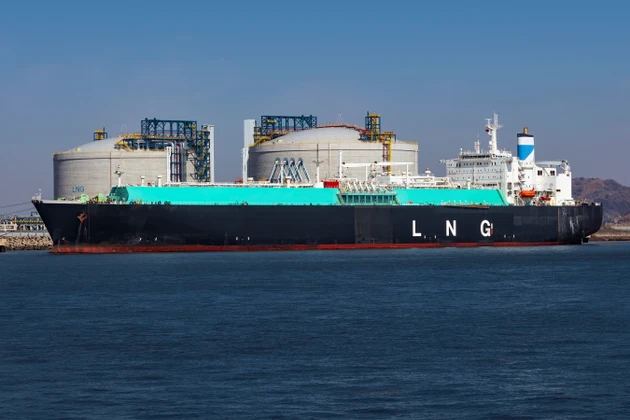
The Shell-led (SHEL) LNG Canada venture said Tuesday it reached a deal for five First Nations to have an equity option to invest as much as C$1B (~US$710M) to acquire infrastructure in Canada’s biggest liquefied natural gas project as a major
WASHINGTON — Christopher J. Boyce, whose sale of CIA satellite secrets to Soviet agents was one of the nation’s gravest espionage crimes of the 1970s, pleaded before a Senate panel Thursday for improvements in U.S. security procedures and for other young persons to avoid his fate.
In an emotional, hourlong statement, the 31-year-old Boyce said his 21 months of spying at TRW Inc. offered no “James Bond” thrills and brought him “only depression and a hopeless enslavement to an inhuman, uncaring foreign bureaucracy.”
“As we sit here, a half-dozen, perhaps a dozen, perhaps more Americans are operatives of the KGB,” the former Californian told the Senate Governmental Affairs permanent investigations subcommittee, which is examining how federal security clearances are granted.
‘None Are Happy’
“Perhaps some of them have been in place for years. I tell you that none of them are happy men or women,” he said during testimony described by Sen. William S. Cohen (R-Me.) as “one of the most powerful and poignant statements we have ever heard.”
Boyce, who is serving a 68-year prison sentence for espionage and for robbing banks after escaping from the Lompoc Federal Correctional Institution in 1980, said that “for whatever reason a person begins his involvement . . . the original intent and purpose becomes lost in the ignominy of the ongoing nightmare.”
Although Boyce took the witness stand in his defense during his 1977 spy trial, his Senate testimony Thursday–in which he paused to fight back tears four times–provided his fullest statement to date on his actions and reflections as a Soviet collaborator.
He told senators that he had received a top-secret clearance from the government in 1975 after only a cursory investigation in which he was never interviewed about his anti-Establishment attitudes, which were well known among his friends.
Boyce said the government interviewed only his parents and some of their acquaintances, “who lived in another world” and knew nothing of his opinions.
Smoked Marijuana at 16
“Had the investigators asked any of my friends what I thought of the U.S. government, and in particular the CIA, I would never have gotten the job,” Boyce said. “Had they asked, they would have learned that I had first begun smoking ‘pot’ at 16 and that I had experimented with a variety of other drugs.”
He said he was hired only because his father, a former FBI agent, knew a top security official at the company.
At the Redondo Beach-based TRW, where Boyce worked as a clerk assigned to a highly sensitive satellite project, plant security was “a joke–almost laughable,” making it easy to photograph thousands of documents to pass on to Soviet agents, he said.
Boyce–who testified before the subcommittee while guarded by a dozen federal marshals–described the informal atmosphere and lax security at TRW and said his co-workers never suspected he was cooperating with the Soviets.
Parties in ‘Black Vault’
“We regularly partied and boozed it up during working hours within the ‘black vault,’ ” the super-secret room housing the CIA satellite project, he said. “Bacardi rum was usually stored behind the crypto machines.”
Boyce said a code-destruction machine similar to a blender “was used for making banana daiquiris and Mai Tais. On occasion, the project security manager would join us for a drink on the house.”
Boyce, whose case was recounted in the best-selling book “The Falcon and the Snowman” and in a subsequent film, said he understood that TRW has tightened security in recent years. Witnesses from the company confirmed this in later testimony.
Monkey Badge
So lax was security at TRW, Boyce said, that “my immediate supervisor once made a security badge with a monkey’s face on it and, to everyone’s amusement, used it to come in and out of the building.”
With tears in his eyes, Boyce said he no longer is “a rebellious 21” and agreed to testify “in the hope that I am performing a constructive act.”
He concluded: “I only wish that before more Americans take that irreversible step, they could know what I now know, that they are bringing down upon themselves heartache more heavy than a mountain.”
ARLINGTON, Texas — In a World Cup boasting a galaxy of stars, a lunch-bucket team of blue-collar everymen may wind up outshining them all.
Spain punched its ticket to the final Tuesday by smothering France 2-0 at AT&T Stadium, running its unbeaten streak to 37 games while eliminating a team that had run roughshod through the tournament.
And it wasn’t even close. France came into the game with 16 goals, second only to Argentina in the tournament, then failed to put a shot on goal in the first 81 minutes
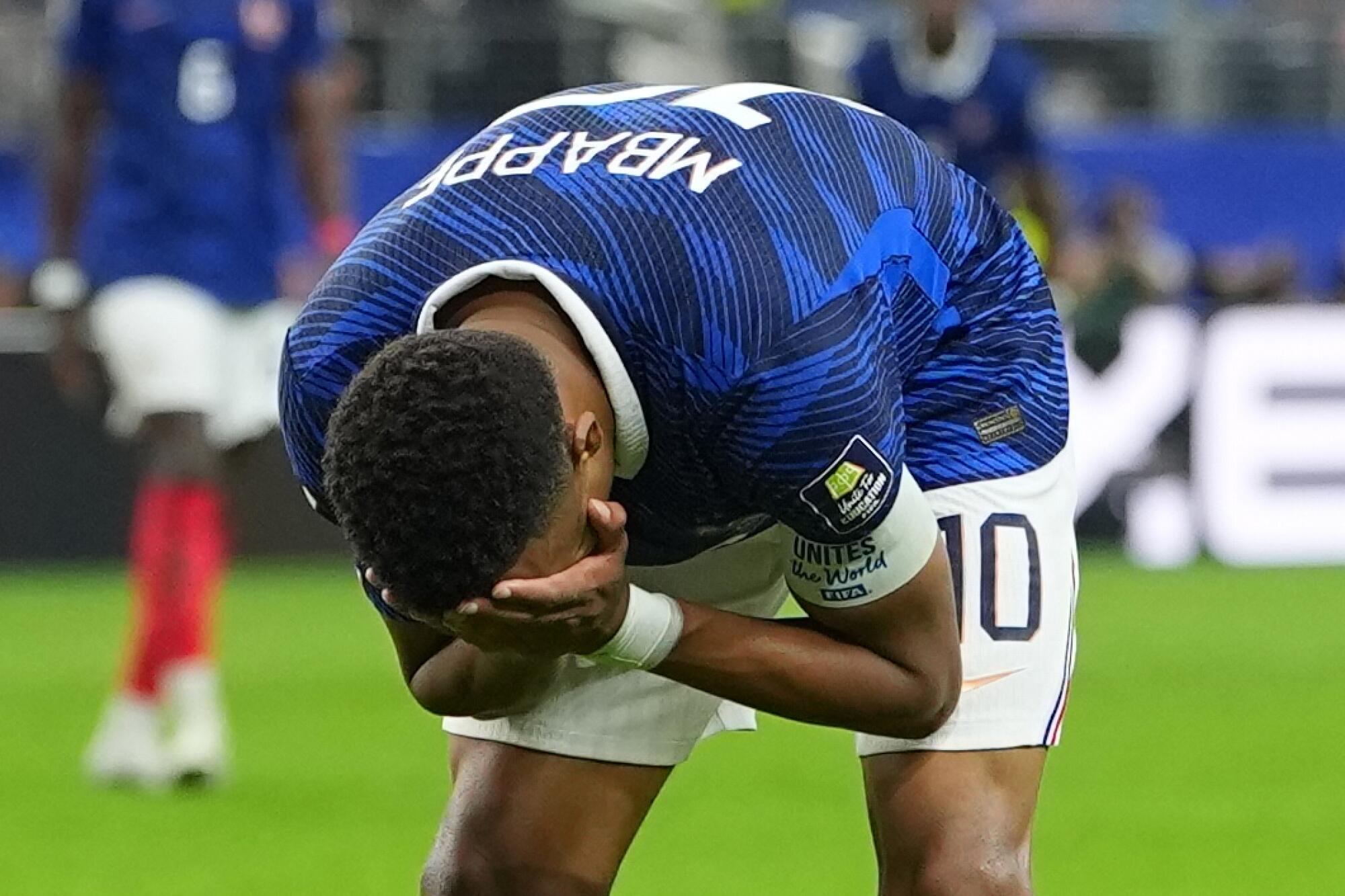
It had Kylian Mbappé, who is tied with Lionel Messi for the scoring lead this summer and was the Golden Boot winner four years ago in Qatar. He was all but invisible until, frustrated, he felled Spanish keeper Unai Simón with a cheap shot in the final minutes, drawing a well-deserved yellow card.
France couldn’t even score into an open net, with Desire Doue lining a low shot right at a rapidly retreating Simón, who had come well off his line and left the goal unattended. For Simón, Tuesday’s clean sheet was his sixth in seven games in this tournament.
Spain will meet the winner of Wednesday’s second semifinal between England and reigning champion Argentina on Sunday at MetLife Stadium in East Rutherford, N.J.\
France’s Kylian Mbappé reacts after losing to Spain during a World Cup semifinal in Arlington, Texas, on Tuesday.
(Julio Cortez / Associated Press)
“Whoever comes, comes,” teenage center back Pau Cubarsí said in Spanish. “I don’t think I want any of them. Let it be God’s will. We’re going to New York and then we’ll figure out who needs to come.”
Winning with defense may not be attractive, but it’s certainly been effective. And for Spain, the approach certainly fits with its team-first mentality.
“There was some talk that our defense and goalkeeping weren’t up to par. But I think we’ve silenced a lot of critics,” Cubarsí said. “We’ve only conceded one goal and we’re in the final.
“This is a team effort, both those who play and those on the bench.”
Added right back Pedro Porro: “We’re just continuing to work with humility. We’ve been doing things right and building on our strengths. We’ve also been correcting the things we haven’t done well. We’re just taking it step by step.”
It wasn’t so much that France played poorly, although they did. It was that Spain forced them to play that way.
France had never trailed in the tournament, but it fell behind in this one on Mikel Oyarzabal’s successful penalty shot in the 22nd minute. Lucas Digne was called for the foul when he chested down an errant pass from Spain’s Marc Cucurella on the edge of the 18-yard box, then reached out his left boot to control it, only to catch the leg of Spain’s Lamine Yamal who was charging in from the blind side.
Salvadoran referee Iván Barton immediately pointed to the spot and Oyarzabal stepped up and obliged, beating French keeper Mike Maignan into the side netting at the right post for his fifth goal of the tournament. The score was the first Maignan had allowed in the knockout rounds, snapping a 360-minute scoreless streak and it would be all Spain would need to get to the final for the first time since 2010, when it won its only World Cup.
Spain goalkeeper Unai Simon makes a save in front of France’s Theo Hernandez during a World Cup semifinal in Arlington, Texas, on Tuesday.
(Jessica Tobias / Associated Press)
Maignan didn’t do any better on the second shot he faced, this one coming 13 minutes into the second half when Porro came in alone on the keeper, then used his right foot to flick the ball by the goalkeeper to double Spain’s lead.
“My son couldn’t come today because he’s feeling a little under the weather with a fever,” said Porro, who dedicated his goal to the boy. “It was a mix of emotions because he couldn’t be here, and then his dad scored a goal.
“I wanted to look out at the stands and the only people there were my partner, my father-in-law and my physical therapist.”
For Porro, the goal was a measure of redemption as well. There were doubters when coach Luis de la Fuente named him to the World Cup team and those critics grew louder when De la Fuente made him a starter.
But those critics fell notably silent Tuesday.
“I don’t have to prove anything to anyone,” Porro said. “Obviously, I never imagined — not even in my wildest dreams — that I’d be playing in this World Cup the way I am.
Spain’s Pedro Porro celebrates after beating France during a World Cup semifinal Tuesday in Arlington, Texas.
(Florencia Tan Jun / Getty Images)
“But it’s also thanks to my teammates, and thanks to the coach for the confidence he’s shown in me from the very beginning.”
Spain hasn’t lost a game in the knockout phase of a World Cup since 2006 — when it fell to France — playing to draws in the round of 16 in the last two tournaments before being eliminated both times on penalties. They didn’t let it come down to that this time.
“We’re in a final. It’s a once-in-a-lifetime experience,” said Cubarsí, 19. “Maybe I’m still too young for everything I’m going through right now. But soccer is something to be enjoyed. Opportunities will come your way if you’re willing to make sacrifices and all that.”
For French coach Didier Deschamps, meanwhile, the loss marked his penultimate game with a team he’s taken to two World Cup finals in 15 years as coach. He had earlier announced he would be stepping aside after the tournament. Instead of capping raucous Bastille Day celebrations in France with a trip to the World Cup final, Deshamps and his squad will travel to Miami to play in the third-place game.
Some players knelt at the final whistle, head down, staring at the turf.
“There’s obviously a lot of disappointment,” Deschamps said. “The players are devastated because we had high hopes. Even so, we have to be realistic and acknowledge that today we were a step behind technically against a team that played very well.
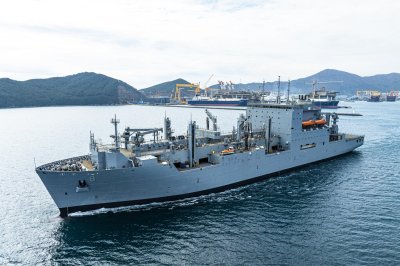
The USNS Wally Schirra departs Hanwha Ocean’s Geoje shipyard after completing approximately six months of maintenance work. Photo courtesy of Hanwha Ocean
July 14 (Asia Today) — The U.S. Navy has asked major South Korean shipbuilders for information about their ability to design and build destroyers and fleet support vessels, potentially opening the world’s largest naval market to South Korea’s shipbuilding industry.
The requests for information mark a significant step in Washington’s effort to address shipyard capacity constraints and strengthen its maritime industrial base with help from key allies.
The development comes as South Korea and the United States expand cooperation under MASGA, short for Make American Shipbuilding Great Again, a bilateral initiative intended to revitalize U.S. shipbuilding through investment, workforce development, technology cooperation and naval vessel maintenance.
The prospective U.S. market could dwarf South Korea’s recent efforts to win Canada’s next-generation submarine program, estimated by the industry at about 60 trillion won, or approximately $43 billion. Long-term U.S. naval construction and modernization spending could reach about 1.6 quadrillion won, or roughly $1.2 trillion, according to industry estimates cited in South Korea.
U.S. Navy examines Korean shipbuilding capacity
Naval News reported Friday that the U.S. government had issued two requests for information involving destroyer-class surface combatants and medium-sized fleet tankers.
HD Hyundai Heavy Industries and Hanwha Ocean responded to requests covering both destroyers and support vessels. Samsung Heavy Industries submitted information concerning fleet replenishment ships, an area in which it has extensive commercial tanker-building experience.
A request for information is an early market-research procedure rather than a formal order or bidding process. It allows a U.S. government agency to assess potential suppliers, technical capabilities, prices and delivery schedules before deciding whether to proceed with a procurement program.
The inquiries are nevertheless notable because U.S. law and defense procurement rules generally require Navy vessels and major hull components to be built in American shipyards.
Changes to existing law or a congressionally approved national security exemption would probably be required before a U.S. warship could be constructed at a South Korean yard.
The outreach reflects growing concern about delays, workforce shortages and limited production capacity within the U.S. shipbuilding industry. The U.S. Government Accountability Office has repeatedly reported that Navy shipbuilding programs are running years behind schedule and billions of dollars over budget.
U.S. policymakers are also seeking ways to respond to China’s rapidly expanding naval and commercial shipbuilding capacity.
Korean companies highlight destroyer experience
HD Hyundai Heavy Industries and Hanwha Ocean have experience designing and constructing some of the South Korean Navy’s most advanced surface combatants.
South Korea’s Sejong the Great-class and Jeongjo the Great-class destroyers use the U.S.-developed Aegis combat system, which is also installed aboard the U.S. Navy’s Arleigh Burke-class destroyers.
That experience could make South Korean shipbuilders attractive partners in vessel design, component manufacturing or joint production, although U.S. technical, security and domestic-content requirements would remain major obstacles.
South Korea’s latest Aegis destroyers displace more than 8,000 tons and incorporate advanced radar, missile defense and stealth-related technologies.
HD Hyundai Heavy Industries has also been developing export-oriented destroyer designs and has pursued partnerships with U.S. defense contractors and shipbuilders.
Hanwha Ocean has established a direct foothold in the United States through its acquisition of Philly Shipyard in Pennsylvania. The company has announced plans to expand the yard’s capacity and introduce South Korean production technology.
The company has also completed maintenance work on U.S. Military Sealift Command support ships at its Geoje shipyard in South Korea.
The USNS Wally Schirra, a Lewis and Clark-class dry cargo and ammunition ship, entered the Geoje facility in September 2024 for maintenance, repair and overhaul work. The ship departed after approximately six months of repairs.
Such projects allow South Korean yards to demonstrate their ability to meet U.S. Navy technical standards and delivery requirements, while helping Washington reduce maintenance backlogs.
MASGA moves from proposal to implementation
The Navy inquiries come as the two governments seek to turn MASGA into a broader industrial partnership.
South Korea proposed the initiative as part of trade and security negotiations with the Trump administration. The package includes investment in American shipyards, training for U.S. workers, supply-chain development and maintenance services for U.S. naval vessels.
South Korea and the United States signed a memorandum in May establishing a bilateral shipbuilding partnership initiative and plans for a Korea-U.S. Shipbuilding Partnership Center in Washington.
The program is expected to support cooperation among government agencies, shipbuilders, research institutions and equipment suppliers in both countries.
U.S. officials have increasingly acknowledged South Korea’s mass-production capabilities. U.S. Army Secretary Daniel Driscoll praised South Korean defense manufacturing during a congressional hearing in April, citing Hanwha as an example of an effective industrial production model.
The U.S. administration has also pushed for faster construction of commercial and naval vessels as part of its effort to restore the country’s maritime industrial capacity.
Legal and political barriers remain
Despite the growing cooperation, an RFI does not guarantee that South Korean shipyards will receive orders for U.S. Navy vessels.
Congress would have to address laws that restrict foreign construction of naval vessels. U.S. labor unions and domestic shipbuilders could also resist proposals they believe would transfer American jobs or defense production overseas.
A possible compromise could involve South Korean companies investing in U.S. yards, supplying ship components or jointly constructing vessels in both countries rather than building complete American warships in South Korea.
South Korean shipbuilders could also provide designs and production management systems while final assembly takes place at an American facility.
Industry specialists said the South Korean government will need a coordinated strategy involving the presidential office, defense and industry ministries and diplomatic officials if Korean companies are to secure a meaningful role.
They said technical competitiveness alone may not be sufficient because major defense contracts are also shaped by alliance politics, domestic employment considerations and long-term security relationships.
South Korean companies recently faced difficulties in European and Canadian defense competitions despite offering competitive prices, technology and local production plans.
The prospective U.S. programs therefore represent both a major commercial opportunity and a test of Seoul’s ability to coordinate industrial policy with security diplomacy.
For South Korean shipbuilders, the immediate goal is not necessarily the full construction of U.S. destroyers at Korean yards. Securing design work, component orders, maintenance contracts or joint-production projects would still mark an important expansion of the country’s naval defense industry.
The Navy’s decision to formally examine South Korean capabilities indicates that cooperation once considered politically difficult is now under active consideration.
Millions of England supporters up and down the country are gearing up for the big match tonight, but what happens if you are due to be flying while the match is being aired?
Passengers are asking the all important World Cup question(Image: Bloomberg via Getty Images)
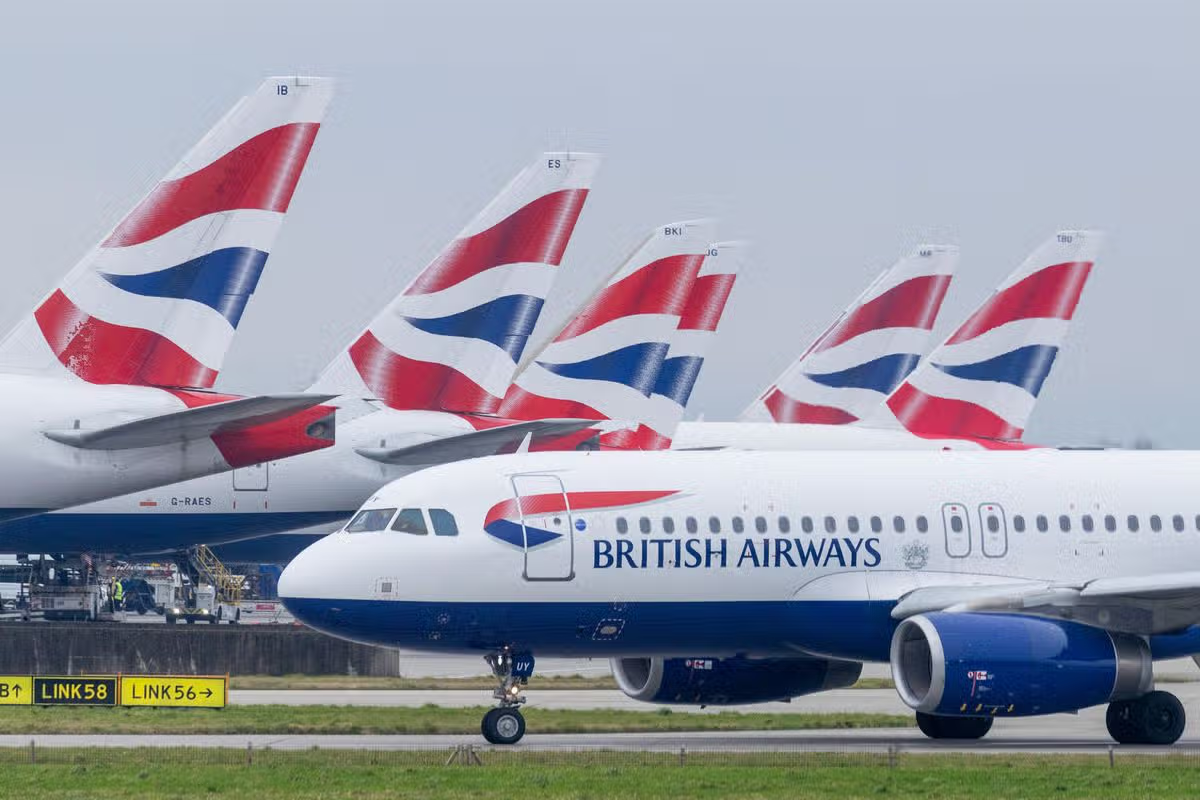
British Airways has issued an improtant update for passengers hoping to watch the World Cup match tonight.
England will take on Argentina in the semi-finals with a place in the World Cup up for grabs. England supporters up and down the country are gearing up for the big match tonight, with a number of celebrities looking forward to backing their country – incluidng Joe Wickes.
Joe Wickes, widely known as “The Body Coach,” is a British fitness expert, author, and television presenter famous for his high-intensity interval training (HIIT) workouts and recipe books. He gained international prominence as the “PE teacher to the nation” by hosting free daily online exercise classes for children and families during the global pandemic lockdown.
But, now Joe is asking the all important question. Will British Airways passengers be able to watch the match? He took to X yesterday to ask the airline. He asked: “Hey @British_Airways will I be able to watch the @England match on my flight tomorrow?”
British Airways responded: “Hi Joe, for legal reasons we’re unable to stream live sporting events, unfortunately. However, I’m sure the crew will keep you informed of the score throughout your flight.” They added: “We’re sure the crew will be just as eager to keep an eye on events. Have a safe flight.”
Around 30,000 Three Lions supporters will pack in to the 67,382-capacity Mercedes-Benz stadium in Atlanta, US, hoping to see Thomas Tuchel’s boys win one of the nation’s biggest games in recent memory. Back home, an audience of up to 25 million will tune in on TV, and thousands more will flock to hospitality venues or join crowds across the country for the potential grudge match.
Content cannot be displayed without consent
The match has been classed as the “highest risk in the tournament” by the Federal Bureau of Investigation. They issued their warning fearing trouble between the set two sets of fans in one of the biggest rivalries in world football.
Hundreds of extra police were drafted in to Atlanta on Monday and there will be a much bigger presence inside the stadium and at the sold-out fanzone. Police have designated some bars as “England only” or “Argentina only” to try to prevent any confrontations.
Michael Owen has explained why he believes both England and Argentina will find it tough to beat Spain should they reach the World Cup final. In a post on X he wrote: “Brilliant performance from Spain. France had the individual stars but this Spanish team never looked like getting beat.England or Argentina will have to up their game massively to beat this lot.”
Follow our live blog for all the latest World Cup updates by clicking here.
Activists say Moroccan authorities are intensifying repression of critical voices and the Gen Z protest movement.
Published On 14 Jul 202614 Jul 2026
Politically outspoken Moroccan artist, rapper, and filmmaker Mehdi El Youbi has been arrested in Casablanca, days after being barred from returning to France, where he has been based since 2017.
El Youbi, better known by his stage name Mehdi Black Wind, was detained on Monday night after being questioned by Morocco’s National Brigade of Judicial Police in Casablanca, according to a statement from a group of his friends and supporters.
Recommended Stories
list of 4 itemsend of list
“After a day of questioning, his family were informed at around 9pm that he had been taken into police custody and was due to appear before the public prosecutor on Wednesday”, the statement said. “According to the latest information, his arrest is believed to be linked to his artistic views and posts on social media.”
El Youbi, born in 1992, is widely known in Morocco and across North Africa for his rap songs heavily influenced by US hip-hop. He rose to prominence in the early 2010s, at the same time as the Arab Spring, with songs that caught the attention of the authorities for their politically engaged lyrics.
“When I return home, I’m afraid of being arrested or banned from the country,” El Youbi told French music magazine Mosaique Magazine in December 2025. “Many people try to depoliticise art or sport, but I believe that every committed artist, every activist, or anyone who takes risks lives between boldness and fear.”
El Youbi is “the best rapper in North Africa and it’s not close”, Algerian journalist Maher Mezahi said on X.
Mehdi El Youbi was arrested in Morocco, days after being barred from returning to Marseille, France, where he’s been based since 2017. [Courtesy of supporters of Mehdi El Youbi]
Omar Radi, a Moroccan investigative journalist and human rights activist who was previously jailed in Morocco for criticising a judge, told Al Jazeera that El Youbi is “the most outspoken and politically direct Moroccan rapper”.
“There is a deliberate attempt to stamp out any possibility of criticism of the government or police methods, whether within civil society and the press, or in artistic circles or amongst football supporters,” Radi said.
El Youbi’s detention comes a day after the arrest of Moroccan journalist Ali Lmrabet, which was condemned by the Committee to Protect Journalists, and two weeks after Zineb Kharroubi, a leading figure in the Gen Z 212 activist movement, was given a six-month suspended prison sentence after being found guilty of “incitement to commit crimes or offences by electronic means”.
A supporter of El Youbi said that these developments reflect “intensified repression linked to the Gen Z movement”, referring to the youth-led protest movement that emerged last year in Morocco demanding better health services and education reforms.
El Youbi is due to appear before the public prosecutor on Wednesday morning. His supporters said they were concerned that he may have to appear without a lawyer, as lawyers in Morocco are currently on strike.
Emmerdale spoilers for next week tease big twists with new faces, a break-in and danger for one icon, and two characters team up to take down Dr Todd – but will it work?
It’s another big week ahead on Emmerdale(Image: ITV)
It’s another big week ahead on Emmerdale, with new spoilers teasing exits, danger and twists.
Kim tasks Ross with investigating an intruder at Home Farm. Ross questions Moira, who sends him packing, before he turns his attention towards Robert. Things get heated between Ross and Aaron as a result, and Serena intervenes.
Serena takes the opportunity to tell Robert a full explanation about John and it is enough to persuade Robert to let her stay, despite Aaron’s concern. With Robert injured, Aaron offers Serena a job on the farm, but she seems preoccupied with getting Ross onside – so what is she up to, and why is she trying to get close to Ross?
Back at Home Farm, Kim realises a USB stick was taken. Elsewhere, Charity is left utterly defeated to learn the CPS won’t be pursuing Todd’s case due to a lack of evidence. Mack and Vanessa team up to ensure Todd doesn’t get away with it.
Believing they could uncover buried complaints at the hospital, Vanessa and Jacob meet privately with the HR Rep. As Charity goes to confront Vanessa over her plan, she bumps into Helen, another of Todd’s victims.
When Charity reveals how Todd raped her, it clearly strikes a chord with Helen, but will it aid Charity’s case? Claudette encourages Kev to return to his job at the café, while Nicola tries to convince everyone that Kev quitting was for the best.
With Lewis’ birthday approaching, Kev attempts to make up for missed years with gifts, but he unsettles Lewis, leaving Ross concerned. Kev is left stressed when an old friend, Steve, rocks up.
Gabby distracts Billy so she doesn’t have to eat the meal he’s prepared for her, while Dawn is clearly not happy about Billy and Gabby dating each other. Dawn, meanwhile, is thrilled when her wedding dress arrives.
Finally, Cain is holding onto hope for his dog Monty’s health and seeks a second vet opinion following Monty’s cancer diagnosis. Kyle is struggling at Cadets, but feels he can’t ask Cain about it due to his dad’s dismissive attitude.
As Cain learns that Monty’s tumours are inoperable, it’s too much to take in. Cain tries to avoid Moira and asks Kyle to go camping with him, only for Kyle to invite Graham.
As the trio set off, tensions escalate, resulting in Cain storming off. But as darkness draws in, Cain falls down a hillside and traps his leg. It’s another unmissable week for the show, with much more set to air.
Earnings Call Insights: Kestra Medical Technologies (KMTS) Q4 fiscal 2026
Management View
“We concluded fiscal 2026 with another strong quarter” and “Revenue was $28.6 million” alongside “over 6,300 prescriptions written for the ASSURE system,” Brian Webster said (Founder, President, CEO & Director Brian Webster).
Seeking Alpha’s Disclaimer:This article was automatically generated by an AI tool based on content available on the Seeking Alpha website, and has not been curated or reviewed by humans. Due to inherent limitations in using AI-based tools, the accuracy, completeness, or timeliness of such articles cannot be guaranteed. This article is intended for informational purposes only. Seeking Alpha does not take account of your objectives or your financial situation and does not offer any personalized investment advice. Seeking Alpha is not a licensed securities dealer, broker or US investment adviser or investment bank.
WASHINGTON — U.S. Immigration and Customs Enforcement has temporarily ordered officers to avoid, in most cases, making vehicle stops in the wake of two deadly shootings.
The tactical shift comes a day after an ICE officer shot and killed a Colombian man in Biddeford, Maine, and a week after an ICE officer fatally shot another man in Houston. Both men were driving at the time of the shootings, and the incidents have renewed criticism over the agency’s immigration enforcement tactics.
Multiple news outlets and a former federal immigration official said early Tuesday that the order allows for exceptions if officers are executing a criminal warrant and working with partner law enforcement agencies. The directive, later confirmed by a top official, is a temporary pause while ICE officers receive more training on vehicle stops.
An ICE spokesperson said that the agency wouldn’t discuss law enforcement tactics but that “we are always evaluating our procedures to keep our officers safe and criminals off our streets.”
But on Fox News on Tuesday afternoon, Tom Homan, a top White House immigration official, said the decision to halt most vehicle stops was made by Homeland Security Secretary Markwayne Mullin and top ICE leadership. But he emphasized that “it’s not a policy change, it’s a temporary pause” while officials review the incidents and decide whether training could be improved.
Homan said the pause won’t affect ICE arrests. He said officers could, in some instances, make an arrest before someone gets into their vehicle or after they arrive at their destination.
“I think it’s going to be a short pause,” he said. “I’m confident that ICE is well trained in vehicle stops and you’re going to see us keep moving forward.”
Reacting to ICE’s policy change, Rep. Christian Menefee (D-Texas) said in a statement that training won’t solve the agency’s deeply ingrained issues.
“Immigration enforcement shouldn’t be heavily militarized and chasing people through our streets,” he said. “The American people deserve competent leadership and law enforcement that is transparent, accountable, and worthy of the public’s trust.”
Sen. Susan Collins (R-Maine) said she had urged Mullin to “cease all non-urgent vehicle stops” in the wake of the Biddeford shooting.
“I am encouraged that the Department has agreed to do so,” she wrote on X.
Hundreds of people protested in Biddeford on Tuesday over the killing Monday of Johan Sebastián Durán Guerrero, a 26-year-old Colombian. Protests similarly broke out in Houston last week after the killing of Lorenzo Salgado Araujo, a 52-year-old from Mexico.
The Department of Homeland Security alleged that the men killed in both incidents resisted arrest and that the officers fired their weapons defensively as the men attempted to flee. Neither man was the intended target of the ICE officers.
Local officials in Houston and Biddeford are calling for independent investigations into the shootings. In both instances, the officers involved were not wearing body cameras.
Homeland Security said the officer who shot Durán Guerrero was “fearing for public safety.” The agency said Salgado Araujo had “weaponized his vehicle in an attempt to run over an ICE law enforcement officer.”
Durán Guerrero’s shooting marked at least the ninth such death since President Trump began his immigration crackdown. In a scathing post on X, outgoing Colombian President Gustavo Petro called the shooting an assassination “at the hands of the U.S. government.”
Durán Guerrero is survived by his wife and young daughter. Advocacy groups said he was authorized to work in the U.S.
Daniel Boucher, who lives near where Durán Guerrero was shot, said he “clearly heard the victim say, ‘I tried to stop.’”
The two shootings come as immigration arrests have surged again amid a Trump administration push to carry out its mass deportation agenda. Over five days at the end of June, ICE arrested more than 10,000 people.
While sources within World Cup organisers Fifa suggest the break will be around 20 minutes, it is understood that one option is for the normal 15-minute half-time break and then the planned 11-minute show.
The laws of the game, governed by Ifab (the International Football Association Board), state that players are entitled to a half-time break “not exceeding 15 minutes”.
Half-time of last year’s Club World Cup final, also organised by Fifa and held in New Jersey, lasted a total of 24 minutes due to a performance featuring Coldplay, J Balvin, Doja Cat, Tems and Emmanuel Kelly.
Justin Bieber was last week added to the bill for Sunday’s performance which, along with the headliners, also includes Burna Boy, Gustavo Dudamel and the PS22 Chorus featuring Coldplay, with singer Chris Martin having curated the show.
The World Cup final will kick-off at 15:00 local time (20:00 BST) and there will be a closing ceremony starting at 13:30 local time (18:30 BST).
Tom Cruise, Laura Pausini, Nicole Scherzinger, Robbie Williams and IShowSpeed are set to perform as part of the ceremony, with Jennifer Hudson to sing the United States’ national anthem.























![Mehdi El Youbi was arrested in Morocco, days after being barred from returning to Marseille, France, where he’s been based since 2017. [Courtesy of supporters of Mehdi El Youbi]](https://i0.wp.com/www.aljazeera.com/wp-content/uploads/2026/07/photomehdi3-1784059195.jpeg?w=640&ssl=1)