Scottish Rugby has imposed a 12-month ban on Alloa RFC president Alan Stewart attending matches following an after-dinner speech, described as “racist, homophobic and sexist” by some present.
Stewart has also been suspended from holding any role within the game over the same time period.
Multiple objections were made following remarks by Stewart during Musselburgh RFC’s annual dinner on 18 April and an independent disciplinary panel has upheld a misconduct complaint.
Stewart, who can appeal against the decision, has also been instructed to undergo equality, diversity and inclusion training.
Charges against Musselburgh RFC and their president were not upheld.
In April, the board of Musselburgh RFC issued an apology to those who attended, saying: “We particularly wish to recognise and acknowledge the hurt caused to our women’s team, who we are extremely proud of and to whom we are committed to providing a safe and nurturing environment.”
The club criticised the “very poor judgement of the speaker” and said he had sent a written apology.
In a statement issued at the same time, Scottish Rugby said it is “committed to equality, diversity and inclusion at every level of the game”, adding: “There is no place for discriminatory behaviour in our sport, or in wider society.”
BBC Scotland has approached Stewart and Alloa RFC for comment.
1 of 2 | Rep. Nancy Mace, R-S.C., failed to advance in the Republican primary for South Carolina governor on Tuesday, falling out of the top two vote-getters to state Attorney General Alan Wilson and President Donald Trump’s choice Lt. Gov. Pamela Evette. File Photo by Bonnie Cash/UPI | License Photo
June 10 (UPI) — Maine Democrat Graham Platner secured his party’s nomination to challenge Sen. Susan Collins in November and Rep. Nancy Mace, R-S.C., failed to advance in her gubernatorial bid.
Primaries in Maine, Nevada, South Carolina and North Dakota shed some light on where voters stand heading into November’s midterms. Platner’s victory in Maine, running on a progressive platform seeking to shake up the establishment, came in spite of a series of controversies during his campaign.
Platner received nearly 75% of votes in his primary as of Tuesday. Among his main challengers was Maine Gov. Janet Mills, who suspended her campaign when pre-primary polls showed Platner with a commanding lead.
“Over the last nine months I have seen Mainers come together behind a vision to take back our power from corporations and billionaires,” Platner said Tuesday.
Democrats have targeted Collins’ seat as a key to earning a majority in the Senate.
“Over the past year, we have created a path to win a Democratic Senate majority and put a stop to the chaos and damage of the Trump administration by defeating the Republicans who enable his harmful agenda,” Senate Minority Leader Chuck Schumer and Sen. Kirsten Gillibrand, chair of the Democratic Senatorial Campaign Committee, wrote Tuesday. “In November, Maine voters will elect Graham Platner, and we will win a Senate majority.”
Trump’s endorsement in South Carolina’s gubernatorial race advanced to a June 23 runoff. State Lt. Gov. Pamela Evette and Attorney General Alan Wilson were the top two vote-getters on Tuesday but neither surpassed the 50% threshold. Trump endorsed Evette over Mace, who has often aligned with Trump throughout her career.
Mace was one of the few Republicans to criticize Trump and his administration over the release of files related to the investigation into convicted sex trafficker Jeffrey Epstein.
“I chose to expose the abusers of children. And apparently, I chose wrong if the goal was winning an election,” Mace posted on social media on Tuesday. “I’m at peace with that. Because when a candidate is OK with corruption and cover-ups — something is broken. That’s not a political opinion. That’s a moral emergency.”
The race for Republican Sen. Lindsey Graham‘s Senate seat in South Carolina has been set as the incumbent earned more than 50% of the vote to avoid a runoff election later this month. Graham will be challenged by Annie Andrews, a pediatrician who ran for Congress in 2022.
President Donald Trump discusses renovations to the Lincoln Reflecting Pool and makes an announcement on coal in the Oval Office at the White House on Thursday. Photo by Samuel Corum/UPI | License Photo
For the Islamic State (IS) and its West Africa Province (ISWAP), the third week of May 2026 began with a compound disaster and ended with a theology lesson. The group faced one of its most shocking moments, at least in West Africa or, more specifically, Nigeria.
With its headquarters in Nigeria, ISWAP has been the most active wing of the Islamic State globally, claiming more attacks than any other IS province since its central operations in Iraq and Syria were largely overpowered. Following the call for its members to migrate to Africa, ISWAP has, in the past two years, temporarily overran Nigerian military installations, including at least one super camp. The group was enjoying relative success when a turning point came: one of its most important first-generation commanders was killed.
The operation that killed Abu Bilal Al-Minuki between midnight and 4 a.m. on May 16 was described by the Nigerian military as “meticulously planned and highly complex”. It not only left the terrorist dead, but it also caused a crisis of morale that ISWAP’s propaganda machine would spend the following days trying to contain through a theological message.
Ahmad Salkida, a leading conflict analyst who has been observing the situation since it emerged, described the killing of Al-Minuki as a “serious disruption” to the activities of ISWAP in the Lake Chad region.
Airstrikes and special forces raids followed. More people were killed, and confusion reportedly descended. The operations, according to some reports, may also have killed the likely successor to Al-Minuki, another terrorist commonly known as Ba Shuwa, opening a new and, perhaps, unplanned chapter in the insurgency.
By May 19, Nigeria’s Defence Headquarters reported that 175 ISWAP and Boko Haram militants had been killed since the joint offensive began. According to the report, at least 20 died in a single engagement. By the time Nigerian authorities stopped counting, the joint operation had become the most lethal week the group had faced in years.
The theology of a bloody week
Within that catastrophic week, the Islamic State released its Al-Naba newsletter with a pointed editorial. Although it did not mention Al-Minuki or the numerous fighters killed, the editorial retold a story of a battle that happened 14 centuries ago to boost the morale of a group in disarray.
Reports suggest there was internal suspicion, even before the death of Al-Minuki, that some fighters may have leaked information leading to his death, driven by internal discontent over the unequal treatment between foreign fighters who migrated to the ISWAP and the local fighters in Nigeria. However, the editorial tried to shift away from that and present the losses as a normal sacrifice.
Screenshot from the IS weekly Al-Naba released after the death of Al-Minuki
Everything in the editorial is deliberate. The piece opens on Talha ibn Ubaydullah, a companion of the Prophet Muhammad, at the Battle of Uhud. The selection is pointed in ways that any reader with a classical Islamic education would immediately recognise.
Uhud was a near-disaster for early Muslims because of an internal division. It was a battle in which archers abandoned their positions, turning a momentary advantage into a rout that left dozens of companions dead and the Prophet himself wounded.
What Islamic tradition preserved, and what the Al-Naba propaganda wanted to convey from that valley, however, was not only the memory of tactical failure but of individual men who placed their bodies between the Prophet and death – an important sacrifice for the existence of Islam.
The editorial tells ISWAP fighters who have fallen into fear, confusion, or doubt after the loss of Al-Minuki and other fighters that a similar situation occurred during the Battle of Uhud. However, because the Prophet’s companions believed they were fighting for Islam, they did not see it as a problem.
In essence, the message is that they may ultimately be killed, suffer injuries, or even think they have already achieved victory and begin collecting spoils of war, only for circumstances to turn against them. Yet, regardless of whatever hardships or setbacks they face, they should not regard themselves as having lost, because they are fighting for their religion.
“Your role, O my mujahid brother, is to make your chest a sanctuary for the religion of Islam and guard it with your body,” the editorial reads.
This is a recognisable pattern in IS editorial strategy. After senior commanders are killed, Al-Naba invokes early Islamic battles such as Badr, Uhud, and Khandaq as mirrors, casting present losses as the preconditions for eventual triumph. The rhetorical architecture is consistent and has appeared after every major command-level strike against the organisation. What changes each time is only the particular story pulled from the tradition.
In 2019, when Abubakar Al-Baghdadi, the former leader of Islamic State, died, Al-Naba compared the situation with that of early Muslims after the death of Prophet Muhammad, in which many of his companions fell into disbelief until they were calmed by the first caliph Abu Bakr As-Siddiq. Al-Naba issue 207 argued that if Islam could survive the death of the Prophet Muhammad, the Islamic State could also survive the death of Al-Baghdadi.
The choice of Talha in the recent issue of Al-Naba, specifically after the death of Al-Minuki, adds a layer to the editorial. Talha survived Uhud and fought many more campaigns. The editorial addresses not only those who died but also those who lived through the week. The message to fighters still alive in the Lake Chad Basin, still holding ground, is legible between every sentence.
“It is the duty of my mujahid brother to walk those same paths in defence of the religion of Islam, its honour, and its sovereignty,” the editorial says.
The crisis of succession
The theology in the Al-Naba editorial could steady nerves or explain deaths. It could also transform defeat into sacrifice. However, it could not answer the practical question now hanging over the movement: who would lead after Al-Minuki?
For years, ISWAP’s resilience has rested on its ability to survive leadership decapitation. Commanders and factional leaders have died, been assassinated, or removed. Yet the organisation endured because a pool of experienced first-generation figures remained available to absorb the shock. However, this time may be different.
Get our in-depth, creative coverage of conflict and development delivered to you every weekend.
Subscribe now to our newsletter!
A HumAngle analysis observed that Al-Minuki’s most likely successor was Ba Shuwa. However, he too may have been killed in the subsequent strikes; if confirmed, the movement would lose not only its most influential commander but also the man widely expected to replace him.
Al-Minuki belonged to a shrinking class of terrorists who entered the movement before the 2009 uprising transformed Boko Haram from a fringe extremist religious organisation into a regional insurgency. He embodied institutional memory, battlefield experience, and personal relationships that spanned multiple generations of fighters.
Ba Shuwa, although younger in status within the movement, still belonged to that older ecosystem. Their simultaneous deaths would accelerate a transition that many inside ISWAP had anticipated but few expected to happen so suddenly. The names now circulating inside insurgent circles to replace Al-Minuki and Ba Shuwa show the scale of that transition.
Among the strongest contenders, as HumAngle gathered, is Abu Salem, a commander who grew up entirely within the insurgency’s wartime environment. He reportedly combines military authority with religious credentials, a combination that carries considerable weight inside ISWAP’s hierarchy.
Another frequently mentioned figure is Bana Chingori, long regarded as a close associate of Ba Shuwa and an influential commander in his own right.
However, beneath the movement’s ideological claims lies a complex web of battalion loyalties, personal networks, ethnic affiliations, and historical rivalries. Fighters speak the language of the caliphate, but leadership legitimacy is often negotiated through social structures that long predate the insurgency itself. The question is not merely who is capable of leading, but who can command obedience across the various factions that make up the movement.
This is where the editorial in Al-Naba becomes more interesting. The Islamic State understands that leaders can be replaced. What is more difficult to replace is cohesion.
The editorial’s invocation of Uhud was not simply a sermon about perseverance. It was also an attempt to create continuity at a moment when continuity is under threat. By reminding fighters that early Muslims endured confusion after battlefield losses yet remained united, the editorial implicitly addresses the danger of fragmentation.
For nearly a decade, ISWAP distinguished itself from rival jihadist factions partly through its ability to maintain organisational discipline. While Boko Haram under Abubakar Shekau frequently splintered under pressure, ISWAP developed bureaucratic structures capable of surviving individual losses. The current transition will test those structures more severely than any succession crisis since the death of Abu Musab al-Barnawi and the removal of other senior figures from the Muhammad Yusuf generation.
The paused migration
Beyond the succession question lies another bigger development. ISWAP has announced that the flow of fighters migrating from Iraq and Syria to Nigeria has been effectively paused.
For years, the Islamic State’s call for migration to Africa was one of ISWAP’s most reliable sources of experienced foreign fighters. Foreign fighters who had trained and fought in the central theatre arrived in Lake Chad with tactical knowledge, ideological authority, and direct personal connections to IS central command.
Al-Minuki himself was a product of that ecosystem. The suspension reflects the bigger issue that ISWAP is facing, in which local ISWAP members feel foreigners are given more priority in the insurgency, and they’re being relegated. This, according to some sources, was one of the reasons that opened a loophole that led to the intelligence leading to the killing of Al-Minuki.
Al-Naba issue 550 addressed the question of migration indirectly. The editorial, titled “Africa Between Yesterday and Today”, spoke in the past tense about those who had already made the journey. “Those who came before you from Iraq walked this path,” the editorial told terrorists currently in Africa, “and they carried the weight of this religion on their shoulders.”
Screenshot from Al-Naba 550th issue.
The joint US-Nigeria strike that killed Al-Minuki demonstrated a targeting capability that ISWAP had not previously faced at this intensity in the Lake Chad theatre. The use of American intelligence assets alongside Nigerian special forces created a surveillance environment that makes the movement of senior figures, especially those arriving from abroad, significantly more dangerous than before.
For IS central, sending experienced insurgents into a degraded environment risks losing irreplaceable assets to an adversary that has now demonstrated it can find and kill the most protected figures in the organisation. The pause in migration is both a strategic retreat and a rational response to changed targeting conditions.
The commanders now being discussed as replacements for Al-Minuki are men who grew up entirely inside the Nigerian insurgency. Whatever their capabilities, they appear to lack the cross-theatre experience and IS central relationships that figures as Al-Minuki carried. The migration pause has narrowed the field of who can credibly lead it.
Tomorrow marks the start of Emmy nominations voting, and we’re marking the occasion with with not one but two issues this week.which means twices as many series, and stories, to catch up with. So let’s get to it!
Cover stories
(Christina House / Los Angeles Times)
It’s rare for an awards roundtable to spark a real debate, but the thoughtful group of actors to appear on our 2026 Emmy Drama Roundtable — Katherine LaNasa (The Pitt”), Billy Magnussen (“The Audacity”), Zahn McClarnon (“Dark Winds”), Tom Pelphrey (“Task”), Michelle Pfeiffer (“The Madison”) and Karolina Wydra (“Pluribus”) — captured my attention with their layered conversation about runaway production.
Considering the economic boon Hollywood has brought to popular shooting locales like Atlanta and New Mexico, the dire consequences for the L.A. film industry and the increasing threat from production zones overseas, the group didn’t agree on one diagnosis, much less solution, to the problem. But in their conversation, these top names in the industry all showed deep concern about what such changes mean for showbiz’s shrinking middle class. “Our crew doesn’t get to go — the people that we know that we need, that we work with, that we make these things with,” as Pelphrey acknowledged. “We get to go wherever the f— we want, actors, directors, but the crew doesn’t.”
(Christina House / Los Angeles Times)
For the guests on our 2026 Emmy Limited Series/TV Movie Roundtable — which included Jamie Bell (“Half Man”), Linda Cardellini (“DTF St. Louis”), Camila Morrone (“Something Very Bad Is Going to Happen”), Michael Peña (“All Her Fault”), Andrew Rannells (“Miss You, Love You”) and Constance Zimmer (“Love Story”) — there’s no predicting which performances will resonate with viewers — or when.
The 2002 live-action adaptation of “Scooby-Doo,” in which Cardellini starred as Velma, has taken on cult status since its premiere, and enjoyed a revival of interest as a new Netflix version announced the cast. Rannells (“Girls”) and Zimmer (“Entourage”) have each seen their roles in epochal HBO comedies revisited by younger generations, who are often viewing the series through a very different lens. Peña, whose comedic flatulence on an “Eastbound & Down” blooper reel is now a viral meme, even wonders if he’ll be remembered for that over more serious fare like “Crash” and “World Trade Center.”
“Is that going to be your In Memoriam thing?” Rannells jokes.
At least Peña, laughing, takes it in stride: “Can you imagine?”
Digital cover: ‘The Boys’
(Bexx Francois / For The Times)
There’s plenty to chew on in contributor Max Gao’s digital cover story on Prime Video’s twisted superhero satire after the conclusion of five gloriously gory seasons, but my personal favorite feature may be the sidebar of memorable from key cast members. Chace Crawford’s on-set snacks of choice? Check. Jack Quaid’s surprising craftiness? Also check. Karen Fukuhara’s struggles with nausea? Ditto. If you are already missing “The Boys” and want to re-live it vicariously through some of its central figures, be sure to read the full piece, which already includes creator Eric Kripke and actors Laz Alonso and Erin Moriarty.
The mayor is in
(Ebru Yildiz/For The Times)
Speaking of double duty, Welsh actor Matthew Rhys showcases his range this season in two very different performances, last fall as a real estate scion suspected of killing his wife in Netflix’s “The Beast in Me” and right now as the put-upon mayor of a possibly cursed island town in Apple TV’s “Widow’s Bay.” One man is menacing, the other faintly absurd, but Rhys embraces the challenges of each role with aplomb — in particular, his physical comedy in the latter has gotten several big laughs out of me.
As contributor Emma Fraser reveals in her interview with Rhys, though, there is one stage direction capable of sending a chill up his spine: dance. “That still makes me shudder,” he says of a line-dancing scene in “The Americans” from 8 years ago. Let’s hope Widow’s Bay doesn’t have an underground swing dancing club.
Other features of the festival include chill out zones and a number of VIP areas.
Little other details have been revealed about the festival yet.
Visitors can even camp right near the runwayCredit: Wikipedia
Visitors can book camping passes for £103, which allow for a pitch with up to 10 people (so £10.30 per person) or a camper van.
And with each camping pass, one weekend festival pass is included (so other guests camping at the pitch will need to purchase their own festival ticket).
A regular weekend pass costs from £37 per person or you can get four for £112.50.
If you fancy heading to the festival for just one day, you can do so for £22 and kids go free.
And the festival will have a cheap shuttle bus from Thanet Parkway Station if travelling to the festival via train.
Manston Airport closed back in 2014 and was used as a former RAF base and a regional hub, flying Brits abroad from the 1960s.
However, there are current talks to see if the airport could reopen, with the return of flights scheduled for 2029 – however this will be for cargo aircraft only.
Initially, the airport planned to reopen in 2025, but this has been pushed back.
AN iconic UK pier could be forced to close after its owner collapsed into liquidation.
The future of historic landmark, which dates back to 1866, remains uncertain.
Sign up for the Travel newsletter
Thank you!
The future of Eastbourne Pier remains uncertain after its operator recently collapsed into liquidationCredit: AlamyThe iconic pier dates back to the Victorian era and features cafes, gift shops, and a live music venueCredit: Alamy
Lions Pier Limited, which operates Eastbourne Pier, was issued a compulsory winding-up order last month.
Local hotelier Abid Gulzar, who is listed as the firm’s sole director on Companies House, was handed the order on May 12, 2026 following a petition filed on March 25, 2026.
As a result, Lions Pier Limited and the future of the pier is now in the hands of the Official Receiver.
Compulsory liquidation is typically triggered by an unpaid creditor, with the court appointing the Official Receiver to take complete control of the process.
The Official Receiver is responsible for investigating the reasons behind the company’s failure and assessing the director’s conduct, which could lead to a director disqualification order and further sanctions.
Gulzar purchased Eastbourne Pier in October 2015, before going on to acquire nearby Hastings Pier, which he entered into voluntary liquidation in 2023.
Two of the businessman’s hotel firms, Chatsworth Hotels Ltd and Lion Hotels Ltd, were also put into voluntary liquidation in 2017.
The hotelier carried out extensive renovation works at Eastbourne Pier, including the construction of four new replacement buildings.
Now, the collapse of Lions Pier Limited has resurfaced questions over the ownershop of the pier’s physical structure.
If Lions Pier Limited is deemed the owner, the Official Receiver could move to sell the pier as part of the liquidation process.
However, if Gulzar holds the freehold separately, as was the case with Hastings, he may retain control of the asset despite the company’s collapse.
A spokesperson for Eastbourne Borough Council told The Argus: “We are monitoring the situation at Eastbourne Pier very closely.
“It is an iconic and much-loved seafront attraction, and we hope the Official Receiver can secure an outcome that ensures it remains open and restored for residents, visitors and businesses based on the pier.
“While the pier has always been in private ownership, council officers routinely check its general condition and these checks will continue.”
Eastbourne Pier was transformed into a defensive stronghold during World War II in the event of invasion, with part of the decking removed to deter enemy landings and machine guns installed in the theatre.
Nowadays, the pier proves a popular tourist attraction for those visiting the UK’s sunniest town, offering cafes, gift shops, arcades, and a live music venue.
The Sun has reached out to Abid Gulzar via the Official Receiver for comment.
LA28 reserved the first Olympic tickets for locals. To kick off the second round of ticket sales, it’s a sponsorship connection that could help fans get to the front of the line.
Before the second Olympic ticket drop officially begins Aug. 10, LA28 announced Wednesday there will be a presale for Visa cardholders that will run from July 29-31.
Visa has sponsored the Olympics for 40 years and is the only credit card accepted for payment in Olympic zones. For a chance to be selected for the presale, fans need to first confirm their status as a Visa cardholder. Fans who have already registered can log into their existing LA28 ticket account, check the “Visa presale box” and save changes. New registrants must select the Visa cardholder option during the registration process. All ticket sales during the presale must be completed with a Visa credit card.
Fans can register for the second ticket drop at tickets.la28.org until July 22. Those who already registered for Drop 1 but weren’t selected or didn’t purchase their full 12-ticket allotment do not have to sign up again and are automatically entered into the lottery for Drop 2, which will run from Aug. 10-20.
Fans who are randomly selected for the Visa presale will be notified of their time slot on July 27. Those who aren’t selected for the presale remain eligible for a time slot in Drop 2. Email notifications for Drop 2 time slots will go out from Aug. 6-7.
The second ticket drop will offer tickets across all Olympic sports at a range of price points, LA28 said in a statement, subject to inventory availability. Prices start at $28 for individual tickets, but of the total 1 million $28 Olympic tickets, half were scooped up during the Drop 1 presale that was reserved for locals living near venue cities in Southern California and Oklahoma City.
April’s ticketing debut frustrated fans who were surprised by high prices, a 24% service fee on every ticket and limited inventory for key events. Still, LA28 sold 4 million tickets across 85 countries, a historic number that had International Olympic Committee officials giddy for the potential of the 2028 Games.
“What we thought we were going to sell, and what we thought we were going to get for people who registered for interest, we exceeded those by magnitudes,” LA28 Chief Executive Officer Reynold Hoover told The Times on June 4 after IOC members visited L.A. “We were able to set Olympic records in terms of sale, but I think the broader picture about all of that is people want to be a part of something really big and be part of something here in L.A., a part of history.”
LA28, the organizing committee behind L.A.’s first Olympics in 40 years, expects to generate $2.5 billion in ticketing and hospitality to support what has been advertised as a privately funded Games. The estimated $7.1-billion operations budget is also buoyed by $2.5 billion in expected sponsorship revenue. LA28 already has $2 billion in domestic partnership money.
The United States and Iran engaged in some of the most intense fighting overnight since all-out hostilities in the ongoing US‑Israeli war on Iran were halted with a Pakistan‑mediated temporary ceasefire on April 8.
A comprehensive peace agreement remains elusive as Iran and the US have exchanged a series of proposals and counterproposals in the weeks since that pause. After a string of smaller escalations, however, the US struck targets in Iran following the downing of a US Apache helicopter close to the Strait of Hormuz on Tuesday, and Iran retaliated by hitting US military bases in the Gulf.
The US military said it targeted communications and radar facilities. Iranian officials, however, said civilian infrastructure was also damaged, including two water reservoirs.
If correct, this is the first reported strike on civilian infrastructure in Iran in several weeks, but it comes at a time when Iran is facing a severe water shortage.
Which targets have been hit in Iran?
The US launched waves of attacks starting late on Tuesday following the downing of the helicopter in the Strait of Hormuz. The US described the attacks as “self-defence strikes” and a “proportional response to unjustified Iranian aggression”.
While an official US inquiry into what caused the helicopter to crash has yet to conclude, US President Donald Trump quickly blamed Iran, which he said had deliberately shot it down.
“I have just been informed by our Great Military that last night the Iranians shot down one of our highly sophisticated Apache Helicopters while patrolling over the Strait of Hormuz. There were two pilots involved, both are safe and uninjured,” Trump wrote on social media.
“Nevertheless, the United States must, of necessity, respond to this attack.”
Iran’s Islamic Revolutionary Guard Corps (IRGC) said US strikes, which hit targets including Sirik, Jask, Minab, Qeshm Island and the port of Bandar Abbas, had caused major damage to a telecommunications tower in the town of Sirik and destroyed two water reservoirs there.
Iran’s West Asia News Agency (WANA) news outlet reported on Wednesday, citing “available reports”, that two concrete water storage reservoirs in the Bamani district in the Sirik County of Hormozgan Province, in southern Iran, 1,012km (629 miles) from the capital, Tehran, had been hit in the US attacks.
The IRGC claimed attacks on US military bases in Bahrain, Kuwait and Jordan in retaliation.
Has the US hit Iran’s water infrastructure before?
Yes. On March 7, while missiles were flying across the region in an all-out war between Iran and the US-Israel, Iranian Foreign Minister Abbas Araghchi accused the US of striking a desalination plant on Qeshm Island off the coast of Iran in the Strait of Hormuz. The strike reportedly cut off the water supply to 30 villages.
“Water supply in 30 villages has been impacted. Attacking Iran’s infrastructure is a dangerous move with grave consequences. The US set this precedent, not Iran,” Araghchi wrote in an X post.
A desalination plant converts seawater into water suitable for drinking, irrigation and industrial use. These facilities are particularly critical in areas such as the Gulf, where freshwater is scarce.
[Al Jazeera]
Why is this significant?
The reservoirs that were struck provide drinking water to more than 20,000 residents in the city of Kouhestak and 10 surrounding villages. WANA reported initial estimates for damages amounting to $780,000 to $830,000.
Iran was already facing a multiyear drought and decline in precipitation before the US-Israeli war on Iran started. After years of poor agricultural practices and mismanagement, Iran’s main water supplies, including its reservoirs, rivers and groundwater reserves, continued to run dry.
According to Aqueduct data from the World Resources Institute, which tracks global water risk, Iran’s baseline water stress is classified as “extremely high” – meaning the country uses more than 80 percent of its renewable water resources in a typical year.
Last year marked Iran’s fifth consecutive year of drought. In November 2025, the water crisis was so dire that Tehran’s Amir Kabir Dam only held 8 percent of its capacity, while across the country, 19 major dams had run dry.
[Al Jazeera]
Is this a war crime?
Isa Bozorgzadeh, spokesman for Iran’s water industry, claimed the US strike on the water reservoirs is a war crime, WANA reported.
International humanitarian law classifies water infrastructure, including drinking water installations, treatment plants and pipelines, as civilian property which is not deemed a legitimate target during war.
The Berlin Rules on Water Resources, drafted by the International Law Association (ILA) and adopted in 2004, are a set of non‑binding international legal principles about how countries should use, share and protect water.
The Berlin Rules prohibit countries at war from destroying water installations “if such actions would cause disproportionate suffering to civilians”.
Four Brazilian players and four members of their coaching staff were sent off during a dramatic encounter in Fortaleza.
Published On 10 Jun 202610 Jun 2026
Brazil were shown eight red cards during a chaotic 1-0 defeat to the United States women’s national team in a friendly in Fortaleza.
Brazilian coach Arthur Elias and three of his assistant coaches were sent off, while Bia Zaneratto and Tarciane were also dismissed. Two other players were shown red cards after the full-time whistle on Tuesday evening.
Recommended Stories
list of 3 itemsend of list
Sophia Wilson’s shot deflected off Isabela and snuck past Brazilian goalkeeper Lorena in the 63rd minute for the lone goal of the game before a crowd of more than 55,000 fans in northern Brazil. The hosts had no shots on goal, while the US had six.
Brazil manager Elias and several assistants were dismissed from the technical area during the second half.
Brazil then went down to nine in stoppage time after attacker Zaneratto was dismissed after picking up a second yellow card for pushing Emily Sonnett.
Moments later, her teammate, Tarciane, was shown a straight red for elbowing Wilson.
The chaos continued after the full-time whistle, with Brazil’s Kerolin and Ludmila both shown red cards for dissent.
Sophia Smith celebrates with teammates after the opening goal during the international friendly match between Brazil and the US [Brad Smith/Getty Images]
It was the second of two matches in Brazil for the Americans, with the US losing 2-1 in the opener on Saturday in Sao Paulo.
Dudinha appeared to hurt her right knee in a collision with Sonnett in the 30th minute and was stretchered off the field in obvious pain. The 20-year-old forward, who plays for the San Diego Wave in the National Women’s Soccer League, returned to the bench in the second half on crutches.
The matches in Sao Paulo and Fortaleza were played at stadiums that will be used next June and July for the Women’s World Cup. The US will start their qualification campaign in November.
AFTER taking a break from music to focus on her acting career, Ariana Grande made a triumphant return to the stage this weekend.
She kicked off her first tour in seven years with a show in Oakland, California, in front of 20,000 fans. In August, she will play ten sold-out nights at London’s O2 Arena. But among the celebrations, she’s sparked concerns from those close to her, who have been blindsided by the news of her break-up with her Wicked co-star Ethan Slater.
Ariana Grande is back in the spotlight after kicking off her Eternal Sunshine TourCredit: GettyAriana Grande is back on stage despite suffering yet more heartbreakCredit: instagram/@stubhub
In a cruel twist of fate, hours after she wrapped up that first show, news broke that she had split from Ethan after three years together.
After being burned multiple times while growing up in the spotlight, I’m told Ariana keeps her circle so small that many in her wider team had no idea she was single once more.
A source tells me: “Some artists have Zoom calls with their wider teams almost weekly to keep everyone across what is happening in their lives, in case stories break.
“But with Ariana, it’s all on a need-to-know basis.
“She fully understands the interest in her life and openly channels her personal experiences into her music and art, but at the same time, she has no desire to give a running commentary about what goes on off-stage.
“Her break-up with Ethan is a prime example of that.
“Many of her wider team thought they were still together until the news broke.
“There has been no big ‘gotcha’ moment; things have simply run their course.”
To make matters worse for the superstar, the toxic side of the internet immediately began to speculate en masse about Ari’s body image during her latest performance.
It is a topic she has repeatedly asked fans to drop and was so upset by previous speculation about weight loss that she felt forced to speak out online.
Posting on TikTok in 2023, Ariana said: “I just wanted to address your concerns about my body and talk a little bit about what it means to be paid such close attention to.
“The body that you’ve been comparing my current body to was the unhealthiest version of my body.
“I was on a lot of antidepressants and drinking on them and eating poorly, and at the lowest point of my life, when I looked the way you consider me healthy.
“But that in fact wasn’t my healthy. You never know what someone is going through, so be gentle with each other.”
Ari also used the lead single from her 2024 album to tell fans to back off.
On Yes, And? she sings: “My face is sitting, I don’t need no disguise. Don’t comment on my body, do not reply. Your business is yours, and mine is mine.”
She added in November 2024: “I love my fans. I love them always, but I think they can sometimes hurt my feelings, and sometimes I don’t like them — but I love them always.”
In my experience, Ariana has always been sweet and kind.
I met Ariana when she was attending the 2025 Baftas. That year, the glitzy bash was brimming with A-list stars, with Timothée Chalamet, Selena Gomez, Cynthia Erivo, Pamela Anderson, and Demi Moore all in attendance.
Despite arguably being the biggest name in the room, Ari seemed almost overwhelmed by the hysteria around her and was surprisingly shy.
Senior Showbiz Reporter Jack Hardwick crossed paths with Ariana at the 2025 BaftasAriana Grande poses on the red carpet at the 2025 Baftas in LondonCredit: Getty
When I was making my way to an unplanned toilet break after enjoying one too many glasses of bubbles, I bumped into Ari being escorted to another part of the venue for official photos.
It was just her, her chaperone, and me in our part of the corridor. Being a fan, I shamelessly saw my chance and took it.
Keen not to make eye contact with her security, who I knew would rebuff my request, I smiled at the superstar, quickly telling her how I had supported her career for years and asked for a selfie.
Ariana immediately took pity on me, thanking me and saying “of course” to a quick snap.
Clearly on a tight schedule, her chaperone tried to move her on.
“No, no, it’s okay,” she sweetly told him, before we got into position and posed for a few pictures.
After a brief chat about the evening ahead, where she was nominated for Best Actress in a Supporting Role for her performance as Glinda in Wicked, we went our separate ways.
Someone at her level could easily be cold and uninterested—believe me, I’ve met enough stars like that over the years.
But despite a decade of torrid luck, Ariana clearly hasn’t let the industry jade her.
Ari has endured more in the last few years than most of us will in a lifetime.
In 2017, 22 people were killed and more than 1,000 were injured when her concert at the Manchester Arena was bombed in a horrific terror attack.
The following year, her former boyfriend, rapper Mac Miller, tragically died from an accidental overdose shortly after their break-up.
Ethan Slater and Ariana Grande attend The National Board of Review Annual Awards GalaCredit: GettyAriana Grande wowed during the opening night of her first tour in seven yearsCredit: Instagram/arianagrande
The singer then endured intense, highly unfair harassment from online trolls blaming his passing on her.
While reps insist there was no overlap in either relationship, the fact that both she and Ethan were married when they first met on the set of Wicked fuelled the rumour mill once again.
As is so often the case, it was Ariana, the woman, who became the lightning rod for abuse, while Ethan largely escaped scot-free.
The Wicked press tours were also pounced on as an opportunity for mass speculation about her changing image.
Speaking to the Sun, fashion designer and singer Laura Marshall says: “Often changes in body image aren’t surface-level; they are the side effects of a deeper pain that manifests in control.
“Being questioned in this way makes it so much worse.
“Speculating doesn’t help. Judging doesn’t help. Showing kindness and compassion is the only way to handle it.”
Before her split from Ethan, Ariana had finally begun to find inner peace and confidence once more.
Her eighth album, Petal, is set for release on July 31, penned about finding life again after something “cold and challenging.”
Ariana explained: “Petal is something that is full of life and growing through the cracks of something cold and hard and challenging.
“It’s definitely from a place where I have been maybe too shy or polite to tap into before. This kind of just feels like, ‘f*** it.’
“It was about breaking up with all different kinds of negative attachments—whether it’s my own monsters in my own head, external voices, or things that no longer serve me.”
The lead single, Hate That I Made You Love Me, has already given Ari her eighth UK No.1 single since 2020’s Positions.
I can’t imagine having to go on stage while navigating a break-up at any point, let alone performing a show explicitly based on my own past heartbreaks and traumas.
And the new show has it all.
A truly spectacular pop concert packed with hit after hit, interspersed with thought-provoking interludes hinting at Ariana Grande’s turbulent past decade.
The production is based on her seventh album, Eternal Sunshine, which chronicled the breakdown of her marriage to Dalton Gomez and her finding love with actor Ethan Slater.
During the opening night, she broke down in tears, seemingly overcome with emotion at being back on stage after previously admitting she thought she would never tour again.
I hope for Ari’s sake that spectators and fans think twice before speculating en masse as she continues to take to stages around the world.
After everything she’s been through, the fact that she even wants to perform is remarkable. At the very least, she deserves kindness.
People with hidden disabilities tend to use this as a way of making others aware
Hundreds of airports and airlines do recognise the lanyards(Image: Getty)
Travel can be made easier for some people living with an invisible disability or health condition by wearing a ‘Sunflower Lanyard’. Hundreds of airports around the world recognise it and what it may mean for some passengers – but not every airport is the same.
The Sunflower Lanyard isn’t recognised everywhere. Although many airlines and airports around the world support it, some international airports and locations ask you to use their own specific hidden disability programs or badges to get access to special fast-track lanes, priority boarding, or customised assistance.
Employees at participating venues are trained to recognise the lanyard and offer specific help, such as using simpler language, giving you extra time to process information, or guiding you to a quieter space. But, not every part of the world will instantly recognise or understand the lanyard.
On the Hidden Disabilities Sunflower website, it says: “It’s a misconception that people living with a disability don’t want to, or can’t travel. They do and they can. Globally, one billion people live with some sort of disability, and while some experience a disability that is visible, for many it is not visible.”
The system is designed for any condition that isn’t immediately obvious to others, including conditions like neurodivergence, mental health, sensory impairments, and chronic conditions, to name a few. The lanyard does not reveal your specific medical condition or disability.
What parts of the world accept and follow the Sunflower system?
According to the Hidden Disabilities Sunflower website, hundreds of airports and airlines do recognise the lanyards. As of April 2026, the number was around 325 – but checking the specific airport’s accessibility page can give more details such as finding out if staff can provide free Sunflower lanyards and where to collect them.
Because the lanyard operates on an “opt-in” basis for businesses, an airport will not recognise it unless its staff have been explicitly trained to do so. Holiday hotspot Spain made headlines because its airport authority (Aena) rolled out its own alternative system.
Most other non-participating airports simply do not recognise the lanyard at all, instead of replacing it with a local version. Outside of a few specific exceptions (such as Singapore Changi, Tokyo Haneda, and select major airports in India), the scheme is not widely adopted or understood by security staff across Asia and Africa.
What isthesystem
The Hidden Disabilities Sunflower lanyard system is an initiative that allows people to discreetly let others know that they have a non-visible disability and may need additional support, time, or help. Wearing the bright green lanyard that features yellow sunflowers indicates to trained staff that you have a hidden condition.
Anyone who feels they have a non-visible disability can use the lanyard. You do not need to show medical records or a doctor’s letter to get or wear one.
The system is designed for any condition that isn’t immediately obvious to others, including conditions like neurodivergence, mental health, sensory impairments, and chronic conditions, to name a few. For more information, click here.

Lisa said: “The small town sits at the centre of the island of Djerba —which was used as a filming location for Star Wars — just off the south coast of Tunisia.
“And at its heart is Djerbahood, the passion project of a famous French art gallery owner who convinced some of the world’s best street artists to travel to Djerba, and its inhabitants to allow their walls to be daubed.
“Now, more than 250 murals and sculptures have transformed the heart of the neighbourhood.”
Temperatures in July and August sit at an average of 28.5C.
Not to mention that you can get here for cheap too with easyJet flights starting from £45.13.
Package holidays which depart from both London and Manchester from £471.
easyJet has holidays in Seville for less from less than £200Credit: AlamyeasyJet has put together a list of ‘sun-guaranteed’ destination for the lowest pricesCredit: Alamy
Seville in Spain is another cheap spot with barely any rain.
It has an average temperature of 28.3C in the summer and an average of just 0.4 days of rainfall.
The capital of the Andalusia region is easily walkable with flamenco dancing in the streets and up to 75 per cent of sunshine.
One of the biggest and most well-known landmarks in Seville is Plaza de España.
It’s a huge semi-circular plaza stretching over 50,000 square metres with four bridges sitting over a canal decorated with brightly coloured mosaics.
In the middle of the city is the enormousSeville Cathedral– which is the biggest Gothic cathedral in the world.
You can get easyJet flights from £44.99 and package holidays from £174.
Sharm el Sheikh is known for its great weather and water sportsCredit: Alamy
The Red Sea resort of Sharm El Sheikh comes third on the list and has no rainfall during the summer months with average temperatures of 31.2C.
Just five hours away from the UK, the Egyptian destination is known for having beautiful beaches and water activities like snorkelling.
easyJet offers flights from £125.99 and holidays from £639.
Kos in Greece and Marrakesh in Morocco also rate highly as sun-guaranteed destinations with up to an 89 per cent average chance of sunshine during the peak summer.
Kevin Doyle, easyJet UK’s Country Manager, said: “The British weather is famously unpredictable, but now is a great time to escape the grey and chase the rays as our fantastic value fares to hundreds of fair weather destinations are still available this summer with flights from just £38.49, and packages from just £174.
“And customers can continue booking with confidence as we operate our flights and holidays as normal this summer.
“Our Book with Confidence Promise guarantees that the cost of flights and holidays will stay fixed after booking, meaning customers can trade the brolly for the beach knowing their hard-earned break and sunshine are protected.”
The complete list of ‘sun-guaranteed’ destinations wih easyJet flights and package holidays…
Djerba, Tunisia Flights from £45.13 Holidays from £471
Seville, Spain Flights from £44.99 Holidays from £174
Sharm El Sheikh, Egypt Flights from £125.99 Holidays from £639
Kos, Greece Flights from £47.99 Holidays from £668
Dalaman, Turkey Flights from £59.49 Holidays from £275
Larnaca, Cyprus Flights from £67.49 Holidays from £539
Marrakech, Morocco Flights from £38.49 Holidays from £476
Hurghada, Egypt Flights from £152.99 Holidays from £753
Paphos, Cyprus Flights from £64.99 Holidays from £748
Izmir, Turkey Flights from £50.99 Holidays from £761
A TOWN in Hertfordshire that has been compared to southern France has just had an upgrade to its lido.
The outdoor pool in Hitchin has reopened for the summer season with some new upgrades.
Sign up for the Travel newsletter
Thank you!
The 90-year-old Hitchin Lido has undergone upgradesCredit: Google mapsHitchin Lavender has been compared to looking like the south of FranceCredit: Alamy
The 50 metre heated lido on the outskirts of the town first opened in 1938 and reopened on 23 May this year for the swim season.
It has an art deco design and is surrounded by sunbathing terraces; there’s also a lawned area for picnicking.
Prior to it reopening for this year’s summer season, Hitchin Lido had upgrades to its changing rooms including new cubicles, lockers, sinks, tile flooring and mirrors.
The funding was given to the lido from a former swimmer, Hazel Jacobs, who left money in her will after passing away two years ago.
Paul Francis, general manager at Hitchin Lido, said: “We are truly grateful to Hazel for this wonderful gift to the Lido.
“The refurbishment has transformed the facilities for our visitors, with new lockers, improved changing rooms and a much fresher environment for everyone to enjoy.”
It’s recommended to book tickets in advance to the lido as it can get very busy during the summer.
Tickets for adults start from £5.80 and children from £2.90.
The Hertfordshire town has been compared to the south of France in recent years thanks to its European-style attraction that’s beencalled “Little Provence” by visitors.
Hitchin Lavender is just outside of the town and is a pretty lavender field that one visitor said “feels like France rather then Hitchin!”
Hitchin Lido has a baby pool, picnic area and places to sunbatheCredit: Tripadvisor
This year, Hitchin Lavender opens on June 20 and closes on August 7.
She said: “When it comes to looking like France, I’d say the market square is one of the only parts that does, however it reminds me more of a town in somewhere northern like Normandy, rather than the south.
“There were food and drink vans pitched up on the sides with a few seats dotted around, a large clock and a corn exchange building with a cupola and weather vane – which I have seen in France.”
Alice compared Hitchin to northern FranceCredit: Alamy
She added: “Another hint of France was the tall houses and bars with the classic-looking wooden timber beams and window frames (although this trait is arguably both French and English).
“There are at least five bakeries though, which I’ll grant the TikTokers is a key factor in all French towns.”
Hitchin is known for its bustling food and drink scene from Hermitage, which is a restaurant, cocktail bar, bagel shop, and oyster bar all under one roof.
A MUM was forced to cancel her flight after discovering her son doodled a dinosaur in her passport just hours before a work trip abroad.
The distraught parent shared the stressful experience online, along with photos of the ballpoint scribbles, captioned: “I hate dinosaurs!”
Sign up for the Travel newsletter
Thank you!
A mum in Malaysia was forced to change her flight after her son drew dinosaurs in her passportCredit: Jam PressOfficials declared the passport damaged and not valid for travelCredit: Jam Press
“I feel like crying. My flight is tonight,” she said.
“I was packing, and my little one was busy scribbling on my passport. I didn’t notice when he got hold of it.
“This morning I was running around queuing at immigration.
“I’m hoping I don’t have to declare the passport as damaged.”
The woman then went to the Immigration Department in Kajang, Malaysia before being sent to Putrajaya.
Unfortunately, her worst fears were realised.
Officials told her her passport was damaged and not valid for travel.
To make matters worse, as it was a weekend, she could not get a replacement until Monday.
She said: “I’m now on the way to Kuala Lumpur International Airport to ask Qatar Airways if I can change my ticket to Monday night.
“Please pray that everything is made easier.”
Fortunately, she was able to change her flight to Monday – though at a not insignificant price of £114.
Accepting the outcome, she wrote: “To those asking about the little one who scribbled on the passport, he’s still smiling without any sense of guilt and still saying, ‘Let’s go to the airport!’
“Please pray that our affairs are made easier as we continue our 11,977km journey soon… amen.
“Also, thank you to the immigration officer in Putrajaya who was on duty this morning and helped us accept fate with more calmness.
“God willing, there is a blessing in it.”
This is not the first time passport issues have caused last-minute travel chaos.
Briton Chantelle Cameron will meet American Mikaela Mayer in a light-middleweight world title unification bout in Birmingham on 29 August.
Cameron, 35, beat Michaela Kotaskova to win the vacant WBO title in April and is aiming to add Mayer’s WBC and WBA belts to her collection.
Fellow Briton Caroline Dubois is also on the all-female Most Valuable Promotions card at BP Pulse, when she defends her WBC and WBO lightweight belts against American Amelia Moore.
Northampton fighter Cameron has 22 wins from 23 fights as a professional, including a victory over Ireland’s Katie Taylor in 2023.
“I’ve always said I want the biggest fights in women’s boxing, and there isn’t a bigger fight right now than me against Mikaela Mayer,” Cameron said.
“We’re both top-five pound-for-pound fighters, we’re both world champions, and we’re both coming to win.”
Mayer, 35, last fought in October when beating Mary Spencer and has a record of 22 wins in 24 bouts.
Dubois, 25, is yet to lose in 14 fights – winning 13 and drawing one – and has picked up five stoppage victories along the way.
The Londoner put on a classy performance to become a unified lightweight champion when beating fellow Briton Terri Harper on points in April.
“I am looking forward to representing the UK on this card and defending my unified title,” Dubois said.
“The goal is to fight for more belts at the end of the year so I need to focus and take care of business with a big win in Birmingham.”
Moore, 36, will be aiming to pull off a major upset in just her fifth fight as a professional.
Mexican President Claudia Sheinbaum cast doubt Tuesday on her attendance at the Fan Fest organized in the Zocalo for the World Cup, pending developments in the demonstrations by teachers and other groups protesting in the city center. Photo by Sashenka Gutierrez/EPA
June 10 (UPI) — Mexican President Claudia Sheinbaum cast doubt whether she will attend the 2026 World Cup Fan Fest on Thursday because of demonstrations by teachers from the National Coordinator of Education Workers.
During her press conference Tuesday, the president said her being there would depend on “how what is happening with the teachers and some other groups develops, because I obviously have to pay attention to that.”
The highly anticipated World Cup opening ceremony in Mexico City and the game between Mexico and South Africa, are scheduled at 1:30 p.n. local time at Banorte Stadium, renamed from Azteca Stadium for the tournament.
The event will be held as social protests seek to capitalize on the tournament’s international attention to publicize demands related to human rights, pensions, public services and labor conditions.
Among the most visible movements those formed by teachers from the National Coordinator of Education Workers, who have maintained a protest camp for weeks in Mexico City’s Zócalo. They have erected blockades at different locations to demand repeal of reforms to the pension system for state employees and salary increases.
The demonstrations have impacted streets, public buildings and areas linked to the operation of the World Cup.
Mexico City’s Secretariat of Citizen Security reported about 6,000 teachers are participating in demonstrations in areas near the stadium. Although the federal government maintains that fully reversing the reform would carry a high fiscal cost, union leaders have warned they will continue protesting until they receive a favorable response.
Political analysts agree that the 2026 FIFA World Cup has become the main battleground for the public narrative in Mexico — a phenomenon in which social tensions are colliding directly with government efforts to project stability abroad.
One example will be the mobilization of groups representing relatives of missing persons, known as “searching mothers.” Thousands of women plan to march on the same day as the opening ceremony under the slogan, “Do not play with our pain,” to denounce a crisis involving more than 134,000 people who are missing or whose whereabouts remain unknown in the country.
The organizations have begun to post photographs and missing-person notices around the stadium and have announced activities aimed at drawing attention to the issue before the millions of viewers who will follow the tournament around the world.
Amnesty International said it will act as an observer of the protest.
“As tens of millions of people around the world prepare to tune in to what FIFA describes as ‘the biggest opening ceremony on the planet,’ in Mexico thousands of brave women will seize the opportunity to take to the streets and remind the world that their loved ones remain missing,” said Edith Olivares Ferreto, executive director of Amnesty International Mexico.
“The Interior Ministry works permanently on the issue of missing persons, is permanently engaged in search efforts in a way that has never been done before and also with prevention at the moment a person finds themselves in this situation,” Sheinbaum said Tuesday.
“Therefore, the issues are being addressed. If they want to demonstrate, then they should do so peacefully.”
Neighborhood organizations have also joined the protests.
With slogans that oppose gentrification and evictions and protest water shortages, anti-World Cup groups contend that projects associated with the tournament have deepened structural problems in different neighborhoods of the capital.
They have been joined by farmers’ organizations, transport workers and retired members of the judiciary, who have called for demonstrations on strategic routes leading to the stadium.
The protests also coincide with questions about infrastructure that must deal with the tournament.
In recent days, users reported water leaks at recently renovated stations on Metro Line 2, one of the main transportation routes for fans attending the opening match. Rainfall also caused delays on the rail network because of speed restrictions implemented for safety reasons.
La estación #BellasArtes de la línea 2 del @MetroCDMX se encuentra saturada para el transborde y el cambio de anden. En el cambio de anden la escalera eléctrica está fuera de servicio por los trabajos de remodelación.
Against this backdrop, federal and local authorities announced a security operation that involves more than 10,000 personnel to safeguard the opening ceremony, guarantee the movement of teams and fans, and prevent incidents around the stadium and the FIFA Fan Festival in the Zócalo.
A NEW airline has revealed plans to launch flights to some dream holiday hotspots.
Global Airlines – which is the UK’s newest airline – is planning on adding flights from the UK to the Maldives before Christmas.
Sign up for the Travel newsletter
Thank you!
Global Airlines has revealed that it plans to launch flights to the Maldives from the UK before the end of the yearCredit: Getty
Speaking with Metro, the airline’s founder, James Asquith, said: “Ask anyone in the UK, do you want to go to the Maldives? I think everyone would say: ‘I’d love to, it’s my dream holiday, or I want to go there on honeymoon.’
“And it’s so underserved from the UK.”
The Maldives is known for being a popular destination for British tourists, with flights taking around 11 hours to reach the islands which feature pretty white sand beaches and famous bungalows hanging over crystal clear waters.
There are currently direct flights already from the UK to the Maldives, including from London Heathrow with British Airways.
Asquith also shared that the Maldives is just one of a number of long-haul destinations being considered and that the airline is looking to launch flights from a number of UK regional airports such as Manchester and Birmingham.
In addition to the latest flight route news, the airline is currently buying another plane.
The UK airline currently only has one plane and is in the process of getting anotherCredit: Alamy
The airline’s only plane at the moment, is an A380 – the world’s largest passenger plane.
The airline’s founder revealed that Global isn’t focusing on short-haul routes but instead, on flights to America and transatlantic destinations.
Though he also joked that they might give “a crack or two” at flying to Honolulu in Hawaii, which usually takes between 15 and 16 hours.
The airline already previously launched a route last year; however, only two flights took off and since then, there have been no other flights.
After initially launching in 2022, Global Airlines wanted to start flying from London Gatwick by 2023 and have around 100 planes flying across Europe by 2025.
However, due to several delays, only two commercial flights have flown to date, which were between Glasgow and New York in May 2025.
Since then, Global Airlines’ only plane has remained at Tarbes Airport in France, in a storage hangar.
Asquith mainly blames the delays on maintenance check wait times, but he remains confident that the Maldives route will be up and running before 2027.
Weekly insights and analysis on the latest developments in military technology, strategy, and foreign policy.
A U.S. Air Force KC-135 tanker appeared in the United Kingdom this weekend with a new antenna on top of the rear of the fuselage. The service has several efforts underway to improve the communications networking capabilities of all of its tankers and cargo planes, including ones that leverage Starshield, the government-focused cousin of SpaceX’s Starlink. This has become an especially critical priority for future survivability and effectiveness of the aging KC-135 fleet.
A stock picture of a KC-135 tanker taking off from RAF Mildenhall in 2025. USAF/Staff Sgt. Kevin Long
Ledda told TWZ that online flight tracking data says this particular KC-135 is serial number 63-7976, but that this might not be correct. The plane is largely devoid of markings, preventing easy confirmation. Two years ago, the Air Force’s Air Mobility Command (AMC) began removing serial numbers and other unique identifying markings from tankers and other aircraft as an operational security measure, as you can read more about here.
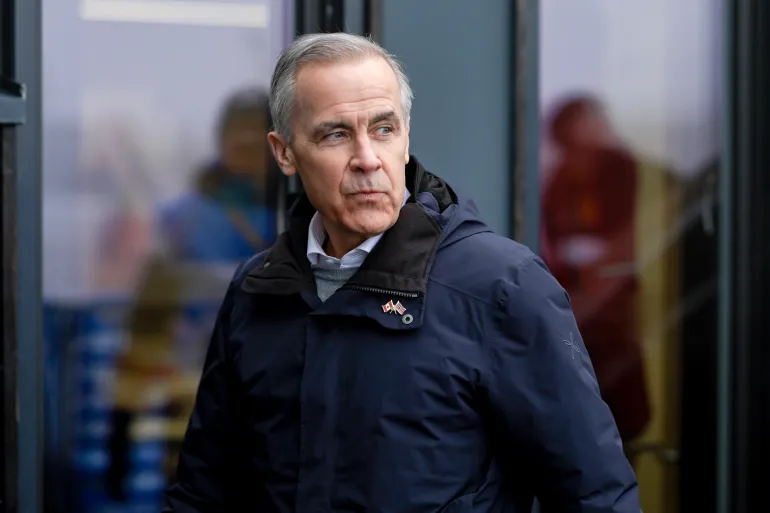
Ledda also told us that this is the first time he has seen a KC-135 with the new dorsal antenna, despite regularly photographing tankers of this type at Mildenhall. The base is home to the Air Force’s 100th Air Refueling Wing, which flies the KC-135, but is also a regular staging point for temporary deployments and a stop-over for aircraft just passing through.
A picture of the same antenna on top of a KC-135 had emerged online in April, but where and when it was taken are unclear. This may or may not be the same aircraft seen at Mildenhall this weekend. It is unknown how many Air Force KC-135s may have received this modification so far, and TWZ has reached out to the Air Force for more information. At the beginning of Fiscal Year 2026, the Air Force had 368 KC-135s in inventory, in total. At least a portion of that fleet is set to remain in service through 2050.
A close-up look at the dorsal antenna on the KC-135 seen this weekend at RAF Mildenhall. Alessandro Ledda
The antenna has a very roughly trapezoidal shape with a mostly flat top. There is a single small blade that sticks up at the rear, as well. The size and shape are broadly reflective of ‘hump’ style antennas associated with high-bandwidth satellite communications (SATCOM) suites seen on large military and commercial aircraft. In both pictures we have seen of this installation on the KC-135 so far, the new antenna is also mounted right behind a much smaller existing platter-shaped type typically used to support ultra-high-frequency SATCOM links.
Back in April, the possibility was raised that the new antenna for the KC-135 could be tied to Airlift/Tanker Open Mission Systems (ATOMS) and/or its successor, MAF NEXUS, both developed by the Sierra Nevada Corporation (SNC). MAF here stands for Mobility Air Forces, a collective term for the Air Force’s tanker and airlifter fleets, and the personnel that support them.
ATOMS is “a Starshield-based BLOS [beyond line of sight] satcom system SNC has been installing on a handful of [KC]-135s, [C]-17s, [KC]-46s, [C]-130s. Saw a C-17 getting it last week in Dayton,” Aviation Week‘s Brian Everstine wrote on X, speaking generally, in a thread discussing the first picture of the new antenna for the KC-135 that had emerged. ATOMS is “now transforming to Air Mobility Commands [sic] ‘MAF Nexus.’”
Elements of at least one iteration of ATOMS are seen, at center, inside a C-17 cargo plane during a briefing for senior officials in 2025. USAF/Staff Sgt. Joshua T. Crossman
As noted, Starshield is a more secure, government-centric offshoot of SpaceX’s Starlink space-based network. Starshield and Starlink have been in increasing use across the U.S. military on aircraft, as well as warships and in various contexts on the ground, for years now, as TWZ has explored on several occasions in the past.
The size and shape of the antenna on the KC-135 at Mildenhall is, broadly speaking, in line with commercial Starlink antennas used on airliners and other civilian aircraft.
An example of a commercial Starlink antenna for use on aircraft, in this case integrated onto a Beechcraft King Air turboprop. AeroMech Incorporated
“The SNC solution for ATOMS, originally provided as a Quick Reaction Capability (QRC) in just six months, delivers enhanced situational awareness through multidomain networking and datalink,” SNC had explained in a press release in August 2025. “The system’s ability to provide a Common Operating Picture improves data interpretation and bolsters decision advantage, strengthening AMC’s effectiveness by leveraging multiple communications paths and sensors to seamlessly share data.”
That release followed the conclusion of the Air Force’s Mobility Guardian 2025 exercise, in which ATOMS “played a pivotal role” by “demonstrating its ability to provide seamless data management and communications solutions on multiple aircraft platforms, including the C-17, KC-135, KC-46 and C-130, as well as numerous ground nodes.”
The Air Force’s 2027 Fiscal Year budget request highlights at least two other potentially relevant communications upgrade efforts for the service’s KC-135, specifically, which could also make use of Starlink/Starshield.
A row of US Air Force KC-135 tankers. USAF
There is the “Hybrid SATCOM capability,” which involves “the employment of Multi-Band, Multi-Orbit SATCOM terminals to switch between different government and commercial constellations,” according to official budget documents. This is tied to another project called MAF Connectivity focused on developing a “path forward as the tanker needs to be able to connect to the Joint fight to close kill chains and logistics chains.”
For MAF Connectivity, “possible capabilities include, but are not limited to, intelligent gateways, antennas, radios, software updates, crew displays, and multiple aperture array housings,” the budget documents also note. An “increment 1 first prototype installation” was also scheduled to be completed in the second quarter of Fiscal Year 2026, which began on January 1 and ended on March 31.
The antenna could be part of a different effort, as well. The Air Force has fielded a number of roll-on/roll-off communications and networking suites for the KC-135 over the years, but in an ad hoc manner and on a relatively limited scale. Last year, the Air National Guard also announced the demonstration of a new communications and data-sharing node packaged inside a heavily modified underwing Multipoint Refueling System (MPRS) pod, but the extent to which that capability may now be available for operational use is unclear. KC-135 and KC-46 tankers use unmodified MPRS pods to transfer fuel to receivers via the probe-and-drogue method.
A repurposed Multipoint Refueling System (MPRS) pod containing a communications and data-sharing package, seen under the wing of a Utah Air National Guard KC-135. MSgt Nicholas Perez/Utah Air National Guard
As an aside, a Boeing 757 called Trailblazer (N-number N473AP), which defense contractor L3Harris uses as a testbed, also recently emerged with a new elongated dorsal fairing. Trailblazer’s new addition is similar in some broad strokes, but also distinctly different from the antenna seen on the KC-135 at Mildenhall this weekend. One of L3Harris’ major business areas is satellite communications systems, including for the U.S. Air Force. TWZ has reached out to the company for more information about this development.
For years now, the Air Force has been trying to more deeply integrate new communications and networking capabilities onto the KC-135, as well as other tankers and aircraft across the MAF. Senior service officials have also described this as a gateway to enabling other new capabilities down the road, including ones to help better protect tankers and airlifters from future threats. TWZ has previously highlighted this as a path to airborne control for “loyal wingman” type drones and other uncrewed aerial systems, something the Air Force has already been experimenting with to differing degrees.
“I gotta keep modernizing the tanker force,” Air Force Lt. Gen. Rebecca Sonkiss told TWZ and others at a roundtable at the Air & Space Forces Association’s annual warfare symposium in February. “If I was going to parcel out the things we care about in that, though, it’s connectivity and survivability. So those are the things that we really care about in that effort.”
“There’s various ways to get after survivability,” she continued. “It starts with being connected so that you have battlespace awareness, and then it continues on to how do we protect those assets.”
Sonkiss’ official title is Deputy Commander of AMC. However, she has been serving as the interim head of the command since her predecessor, Gen. John Lamontagne, became Vice Chief of Staff of the Air Force in January.
Air Force Lt. Gen. Rebecca Sonkiss speaks at the 2026 AFA Warfare Symposium. USAF/Capt. Christian Little
“The single biggest contributor to survivability in a big airplane is connectivity. The biggest contributor is not having a 12-hour-old Intel brief that you’re relying on to get you through the mission,” retired Air Force Gen. Michael “Mini” Minihan, who led AMC from October 2021 to November 2024, told TWZ in an interview in February, as well. “So real-world updates, real-time updates, just like our fighters and our bombers enjoy. Battle management that gets after maneuver and not just kill chain. Those things matter.”
“The reality is that the car I rented right now, driving from the airport to my hotel room, has more connectivity in it than the overwhelming majority of the mobility fleet. So connectivity matters,” he also told us at that time.
New communications and networking suites could enable AMC’s KC-135, as well as the rest of the command’s fleets, to serve as essential ‘translators’ between disparate networks and waveforms in the future. Providing a link between low probability of interception/low probability of detection (LPI/LPD) datalinks that stealthy aircraft use, such as the Multifunction Advanced Data Link (MADL) and Intra-Fighter Data Link (IFDL), and more general-purpose ones, would be especially valuable. IFDL is currently only found on the F-22 Raptor, while all variants of the F-35 fighter (and future B-21 Raider bombers) use MADL, and the two cannot ‘talk’ to each other directly, which has long created challenges. Upgraded tankers could serve as important parts of a beyond-line-of-sight mesh-like network that incorporates other kinds of line-of-sight links like Link16. In this way, they could help relay data to and from forward battle management and other command and control nodes, including ones in the air.

An F-22, in front, flies together with an F-35A, at rear. USAF
In addition, improved connectivity stands to provide additional operational and safety benefits across the MAF.
“According to the Air Force, the tankers’ ability to access tactical data links could increase mission success in contested environments by improving survivability, agility, and situational awareness for command-and-control elements and aircrews,” the Congressional Research Service (CRS) wrote in a report published in January. “The connectivity could provide aircrews with such information as potential threats, fuel availability, and safer landing sites. In addition, tanker aircraft could serve as a backup information conduit for other aircraft in a degraded communications environment.”
The points here have become a broader topic of discussion after two KC-135s collided over Iraq in March during the opening weeks of Operation Epic Fury against Iran. One of the aircraft crashed, killing all six onboard. The other tanker involved was able to land in Israel despite suffering severe damage. At the time of writing, the Air Force has not yet shared any official determinations as to the chain of events that led to that fatal incident.
“We should never put mobility crews, especially tanker crews, in a position during combat operations where they have to choose between being seen by everyone, including the enemy, or being seen by no one, including the joint force and civil aviation,” Minihan subsequently wrote in a post on LinkedIn. “Mobility force connectivity now. Write the damn check.”
“Most KC-135s [sic] communications networks are ‘not the type of battle space awareness that shows you where the red is, where the blue is, and the actions that are being taken in real time in a conflict,’”Defense One reported in March, citing an interview with retired Air Force Gen. Jacqueline Van Ovost, who previously served as head of U.S. Transportation Command (TRANSCOM). “All you have is the intelligence you took off with when you got the brief two hours prior to take off.”
All this being said, the Air Force is still years away from integrating more robust communications and networking capabilities onto the entire KC-135 fleet.
“Over the course of about the next six years, you’ll see the full fleet of KC-135s fully connected,” Lt. Gen. David Tabor, Deputy Chief of Staff for Plans and Programs, told members of Congress at a hearing last month.
The appearance of the KC-135 with the added antenna at Mildenhall does point to new progress on key connectivity upgrades for Air Force tankers and airlifters. At the same time, improved communications and networking capabilities are increasingly critical now, and it remains to be seen when they become more commonplace across the KC-135 fleet.
Special thanks again to Alessandro Ledda for sharing the picture of the KC-135 seen at Mildenhall this weekend with us.
THE world’s BIGGEST bouncy castle is coming to the UK – and it won’t just be for kids.
‘Mega Bounce’ is set to open at Braintree Village in Essexnext month, and will run until the end of the summerholidays.
Sign up for the Travel newsletter
Thank you!
Inside will be giant slides, obstacle courses, sports challenges and, of course, dedicated bouncing arenasCredit: Jam Press/Mega BounceIt will run for six weeks
The massive attraction spans 2,500 square metres – the size of two football pitches – and is more than eight metres tall.
Inside will be giant slides, obstacle courses, sports challenges and, of course, dedicated bouncing arenas.
And outside of it will be other entertainment zones with food vendors, games such as giant Jenga and Connect 4, and music.
Visitors will also find giant Jenga, Connect 4, ping-pong, food stalls and drink vendors throughout the event arena.
There will be day-time quieter sessions designed for guests who prefer a more relaxed environment, before moving into all-ages sessions featuring music, lighting effects and entertainment throughout the day.
And it’s not just aimed at children – during the six-week run, a number of adult-only sessions will launch.
Once family sessions finish each evening, there will be adults-only events featuring DJs, karaoke, a fully stocked bar and even foam parties..
Josef O’Sullivan, centre director at Braintree Village, said: “After the success of The Monster at Braintree Village last summer, we wanted to come back with something even bigger and better this year.
Tickets will last for one hour sessionsCredit: Jam Press/Mega Bounce
“Mega Bounce making its UK debut here at Braintree Village is incredibly exciting, and we expect to see visitors from far and wide.”
The bouncy castle was previously in Dubai.
Mr O’Sullivan added: “We’re certain that this is going to be one of the best attractions available in the country over the summer holidays.”
Visitors booking a bounce session will get unlimited access to the attraction during a 60-minute slot.
General admission tickets are priced at £18, with discounts available for larger groups and members of Braintree Village’s PLUS+ rewards scheme.
THE grovelling sentences a man comes out with when writing a covering letter disgust him to his core, it has emerged.
Self-hating jobseeker Rubin, not his real name, can barely look at himself in the mirror after typing out sentences like ‘I am a proactive self-starter with a commitment to excellence and growth’ in a professional covering letter.
He said: “I would never sincerely say something like ‘my goals are in alignment with your corporate values’. No self-respecting person would.
“But thanks to the sick capitalist society we live in and my inability to win the lottery, I’m forced to churn out ridiculous word salad that even ChatGPT would be ashamed of. I’m only applying for a minimum-wage position, for Christ’s sake.
“Each cap-in-hand, jargon-stuffed sentence is an assault on my worth as a human being. I hope to God my wife and kids never read it. They’d move out, change their names, and never contact me again. And that would be the right thing to do.
“I shouldn’t even have to write a sodding covering letter anyway, all of the relevant information is in my f**king CV. Maybe if I just write that they’ll admire my balls-to-the-wall honesty?”
Employer Martin Bishop said: “The worst part is we won’t even read it. The job ad was merely a formality and we’ve already hired internally.”
He had a heart-tugging origin story that saw him transform from a has-been television star into one of the thousands of residents who lost their home in last year’s Palisades fire. He faced an unpopular incumbent in Mayor Karen Bass. He was powered by a vigorous social media presence and an angry electorate thirsty for change.
He was able to capitalize on those conditions to outraise his main rivals, Bass and city council member Nithya Raman, and transform his candidacy from an afterthought into a national story. Running as a Republican in a super-blue city like L.A. put him at an automatic disadvantage — one that might have been extremely difficult to overcome in the end. But the Pratt posse started to feel like a bona fide movement the more it thundered on, the type of revolt against the old guard that in previous eras led to the passage of Proposition 13 and the recall of Gov. Gray Davis — the type of movements that forever alter California politics.
Pratt, however, faced an apparently insurmountable obstacle.
Pratt.
With almost all votes counted, he’s going to finish in third place with about 26% of the electorate — the same slice Donald Trump received in 2024 — while Bass and Raman proceed to face each other in November. Political strategists will teach his failed attempt to their clients as a cautionary tale of how a candidate blew every advantage they had when they couldn’t afford to lose one.
Pratt’s first mistake was thinking that Angelenos wanted a campaign of wanton rage. Yes, many residents are furious at the state of the city. Yes, they want change. Yes, the angry Angeleno archetype is a real phenomenon that flares up in local elections to smack back at the powers that be.
But L.A. is not MAGAlandia — running from the right on apocalyptic, whiny messaging will only get you the few Republicans that remain in the city and some disaffected liberals. Pratt didn’t run as a MAGA candidate, but it’s hard to say he didn’t run like one — even as he swore he was running for everyone.
He took every opportunity to ridicule progressives in a city where four democratic socialists sit on the city council, one of them — Raman — has a good chance of becoming the next mayor, and five of the six candidates endorsed by the local chapter of the Democratic Socialists of America either won outright or are moving on to the general election.
Instead of making overtures to that side of the populist coin, Pratt recorded videos obsessing over Bass’ trip to communist Cuba in the 1970s, a well-known fact he treated as revelatory and which made Pratt sound like he was stuck in a John Birch Society meeting circa 1965. His dismissal of Raman as “stupid” and the mayor as “Basura” — trash — came off as facile juvenilia at a time when we already have the Big Juvenile Delinquent running things in the White House. Ridiculing homeless people as “zombies,” “vagrants” and “bums” only riled up the worst elements of the city and turned off anyone with a heart.
Keith Casey of Casey’s Family BBQ serves up food as L.A. mayoral candidate Spencer Pratt hosts a campaign “block party” event on 10th Avenue in Los Angeles on May 20.
(Robert Gauthier / Los Angeles Times)
Pratt undoubtedly attracted votes from a good amount of non-MAGA people fed up with various problems afflicting L.A. But many of the supporters who brayed the loudest on his behalf were the same people already doing daily propaganda on social media for a failed, hate-filled president and his baleful cronies.
Pratt acted like he believed the AI-generated videos created by fans that cast him as a comic-book hero was real life instead of forgetting that he was a novice trying to take on two experienced politicians. While Bass and Raman trekked across the city during the primary, Pratt limited his public appearances mostly to the Westside and random encounters with supporters he posted on social media. The few times he appeared outside those safe spaces came off as safari expeditions in a mysterious city the 42-year-old lifelong Angeleno obviously didn’t know.
Take the South L.A. block party he hosted last month. Instead of having something thoughtful to say about the state of Black L.A. or how its political leaders continue to neglect the region, all Pratt seemed to take away from that afternoon was that it was in the territory of the Rollin’ 60s Neighborhood Crips, a detail he shared ad nauseum on social media and to the press — as if kicking it with gang members would fix L.A. or gain him any votes or grant some kind of street cred.
That self-centered cluelessness ended up torpedoing Pratt’s best campaign moment. In the one debate he participated in, Pratt put Bass on the defensive, turned Raman into a tongue-tied mess, kept his answers sharp and relatable, and even earned the praise of the moderators. He should’ve demanded more gatherings like that to flex his mastery of television cameras, make his case to as many Angelenos as possible and showcase the self-proclaimed Pratt Daddy as someone willing to take on hard questions anytime, anyplace, from anyone.
Instead, Pratt declined an invite to their only other scheduled debate and never bothered with the forums civic groups across the city held in order for their members to hear from candidates. Instead, Pratt flew out to New York the week before election day to appear on Fox News.
Sticking to largely sycophantic media who lobbed softball questions hardened his ceiling. Pratt needed to proselytize — not preach to the choir.
The thing is, Pratt made some strong points about the inefficiencies of L.A.’s political status quo and the outrage that is having tens of thousands of people live on our streets. And there’s something appealing about an outsider crashing City Hall, which is way too beholden to sclerotic lifers who can be as clueless about what the city needs as Pratt turned out to be.
Instead, he platformed people who saw L.A. as a hellhole — or “shithole,” as Trump likes to call certain places. It was hard to see what some of Pratt’s loudest and most strident supporters actually thought was worth preserving in the city — but not why they felt he was their man.
In the wake of his loss, Pratt sure hasn’t push back against unfounded claims by too many of his followers and Trump, Vice President JD Vance and House Speaker Mike Johnson that Democrats somehow rigged the election against him. Quite the contrary, Pratt has insinuated on social media that they’re onto something.
That last point reinforces the ultimate reason Pratt could never become L.A.’s next mayor: He really doesn’t believe in L.A.
Angelenos don’t mind haters — it’s the type of city that frustrates residents even on its best days. But one insult residents won’t brook is someone who doesn’t have confidence in better days ahead for the city no matter how dire things may be.
Angelenos can spot a phony from far away — and Spencer, you’re turning out to be phonier than the fake drama on any of the television shows you ever appeared in.
You vowed to leave L.A. if you didn’t win the race for mayor. Maybe you should stay and try to righteously pressure Bass and Raman to make much needed changes. If you do, urge your followers to do the same instead of them pouting and sitting out the mayor’s race.
But if you don’t, well, maybe you never really loved L.A. as much as the City of Angels, warts and all, deserves. And you kind of need to really love L.A. to really fix what ails it.