In-play, in-picture adverts will not be part of ITV’s coverage of the Nations Championship in July, but the 20-second slots, shown before a scrum, are set to return for the November Tests and next year’s Six Nations.
The abundance of opportunities in ITV’s schedule in July, with an expanded 48-team football World Cup dominating the airwaves, means advertisers’ spending has been directed elsewhere.
During their debut at this year’s Six Nations, the scrum slots, one of which was available per half, were bought up by blue-chip companies such as Samsung and Virgin Atlantic.
During the segments, audio from the stadium dipped, the screen was split in half and an advert was played in the right-hand part of the screen. Some viewers criticised the concept as intrusive.
Six Nations chief executive Tom Harrison said the adverts may be “a little bit uncomfortable” for viewers in the UK who, unlike those in the US and Australia, are only used to adverts appearing around, rather than during, play.
The Nations Championship pits the northern hemisphere teams who compete in the Six Nations – England, Ireland, Scotland, Wales, France and Italy – against southern hemisphere sides South Africa, New Zealand, Australia and Argentina, plus invited sides Fiji and Japan.
It starts on Saturday with six games, with a further six on 11 July and 18 July before concluding in November.
WASHINGTON — The Supreme Court on Tuesday struck down Watergate-era limits on how much political parties can spend in a coordinated campaign with their candidates.
By a 6-3 vote, the court said the restrictions on parties and their campaign ads violate the 1st Amendment.
Justice Brett M. Kavanaugh said the court was restoring broad free speech protections for parties and their candidates.
“For nearly 200 years after the ratification of the 1st Amendment, parties could spend freely to support their candidates during campaigns and could do so in coordination with the candidates,” he wrote. “Notably, no one suggests ‘that these elections were not functional or that they were marred by corruption’.”
The decision is a victory for the National Republican Senatorial Committee and is likely to give a boost to Republicans this year in their bid to maintain control of Congress.
That’s because the national Republican committees that support their Congressional candidates have $230 million available to spend this year, while the struggling Democratic committees have less than $120 million.
The party funding limits were challenged in 2022 in a lawsuit filed by JD Vance, who was then running in Ohio for a Senate seat, along with the Republican party committees.
Republicans argued these restrictions on parties were outdated and unwise in an era when “SuperPACs” can raise and spend huge amounts of money to promote candidates because they are independent.
If so, they asked, why shouldn’t the parties be free to raise money and coordinate their campaign ads with the candidates?
Under the current limits, the Federal Election Commission says an individual donor may give only $3,500 to a candidate seeking a federal office, but $132,900 to the national party committees.
Since the 1970s, however, federal election law has limited the parties from funding the campaigns of their candidates on the grounds that it could allow wealthy donors to buy influence.
But the court’s conservatives have repeatedly ruled that campaign money is protected as free speech under the 1st Amendment.
In the Citizens United case of 2010, they struck down the laws that restricted election spending by individuals, companies, unions and other groups.
Left standing were the rather low limits on direct contributions to candidates as well as the limits on how much parties could contribute to directly support candidates.
The limitations on parties and how they support their candidates have been disputed for decades.
The Supreme Court upheld the limits by a 5-4 vote in 2001 and said these “coordinated expenditures” were more like contributions than independent spending, and therefore, could be limited to protect against corruption.
Two years ago, the Biden administration defended the law, and an appeals court upheld it based on the court’s 2001 decision.
Rather than defend the law, the Trump administration sided with the GOP and said the party limits should be struck down.
In dissent, Justice Elena Kagan looked back to the history of the Watergate era.
“For over half a century, a federal statute has guarded against actual and apparent quid pro quo corruption in our political system by limiting the amount of money a donor can contribute to a candidate,” she said. “The law’s theory is simple: A candidate may be induced to trade official acts for campaign contributions—and the bigger the contribution, the stronger both the candidate’s temptation and the public’s suspicion.
“But today, the court rewrites the rules, to allow circumvention of the contribution limits … and ushers back in the same opportunities for quid pro quo corruption that the contribution limits were meant to check.”
Justices Sonia Sotomayor and Ketanji Brown Jackson agreed.
The Democratic National Committee and attorney Marc Elias had stepped in to defend the limits.
He said the parties are free to speak in favor of their candidates but he argued that allowing them to “subsidize the campaign expenses of their candidates” is a contribution that can be regulated.
Otherwise, the “potential for actual or apparent corruption is is obvious,” he said.
The ruling is another election-year boost for the GOP.
The US Supreme Court has blocked President Donald Trump’s executive order to end birthright citizenship for all individuals born on US soil, ruling that children born in the country remain entitled to citizenship under the Constitution.
IT can be tough to find a great deal for a family break during the summer holidays.
But there are some destinations that have even dropped in price by as much as £117 on average.
Sign up for the Travel newsletter
Thank you!
Holiday prices have dropped at some destinations in Europe and the USACredit: loveholidays Westgate Town Center Resort in Florida has holidays from £579ppCredit: Unknown
loveholidays has found the destinations where prices have dropped the most – and lots of these places are just mere hours from the UK.
Head of Aviation Gavin Brewer reveals that the price of a week-long package holiday has actually fallen across several destinations since the conflict in the Middle East began.
He said: “There isn’t a blanket trend of rising holiday costs across the board, and there are still bargains to be found.”
The loveholidays expert revealed that the place that has seen the biggest holiday price drop is the USA.
Seven-night packages during summer are down by £117 per person on average.
Closer to home for Brits is Bulgaria which is down £60pp.
Prices for holidays to Montenegro have dropped by around £53pp and prices for Turkey have gone down by £35pp.
Gavin adds: “There are still plenty of affordable getaways available this summer.
“If price is your main priority, a great way to find the best deal is to search our platform for holidays based on your budget alone.”
Here are some of the best deals we’ve found…
Ramada By Wyndham Hotel & Water Park, USA
Ramada by Wyndham Hotel has an enormous waterpark with plenty of slidesCredit: Unknown
Who said a family holiday to Florida has to be expensive?
This hotel in Kissimmee has a huge waterpark with a lazy river, swimming pools and waterslides.
A seven-night holiday to Ramada By Wyndham Hotel & Water Park between August 12-19 starts from £549pp.
The deal is for a family of four and includes return flights from London Heathrow to Orlando International.
Westgate Town Center Resort, USA
Westgate Town Center Resort is close to Disney Resort and has water playCredit: loveholidays
The Westgate Town Center Resort is one mile from Disney – but has plenty to do onsite too.
It has 14 outdoor swimming pools and the Shipwreck Island waterpark.
A seven-night break to Westgate Town Center Resort between 14-21 August starts from £579pp.
The deal is for a family of four and includes return flights from London Heathrow to Orlando International.
Hotel Flamingo, Bulgaria
Hotel Flamingo has lots of activities for children and playgrounds tooCredit: loveholidays
The four-star Hotel Flamingo is well-suited to families as it has an outdoor swimming pool and children’s area.
For children there’s a kids’ club, children’s playground with entertainment and activities too – plus there’s restaurant, cafe and poolside snack bar.
You can stay at the Hotel Flamingo from August 14-21 from £459pp.
The deal is for a family of four and includes return flights from Glasgow to Bourgas with full board.
Premier Fort Beach Sveti Vlas, Bulgaria
There’s lots of place to eat and enjoy the Bulgarian sunshine at this hotelCredit: Unknown
If you want to splash out a little more, but still not spend a fortune – Premier Fort Beach is a good choice.
The kids will love splashing about in the pool and making the most of the waterslides.
You can stay at the Premier Fort Beach Sveti Vlas from August 14-21 from £619pp.
The deal is for a family of four and includes return flights from Glasgow to Bourgas with full board.
Arvala Apartments, Montenegro
Arvala Apartments has lovely city views from the holiday homesCredit: Unknown
This spot is another great place for families as it’s made up of 15 apartments close to Slovenska Beach.
It’s near Budva Old Town too full of shops and restaurants.
You can stay at the Arvala Apartments from August 10-18 from £439pp.
The deal is for a family of four and includes return flights from Manchester to Tivat.
Hotel Danica, Montenegro
The more peaceful Hotel Danica is close to the beach in MontenegroCredit: loveholidays
This peaceful hotel in Montenegro is close to a beach and within walking distance to the town centre.
It has an outdoor swimming pool with plenty of sunloungers and has a restaurant serving lunch and dinner.
You can stay at the Hotel Danica from August 10-17 from £509pp.
The deal is for a family of four and includes return flights from London Gatwick to Podgorica – and includes breakfast.
Arabella World, Turkey
Kids will love the outdoor pool and waterslides at Arabella WorldCredit: loveholidays
In Antalya, Arabella World is perfect for any families who love splashing about in the pool on holiday.
It has an outdoor and indoor pool as well as waterslides and there’s a private beach too.
You can stay at Arabella World Hotel from August 21-28 from £439pp.
The deal is for a family of four and includes return flights from Glasgow Antalya – and it’s all-inclusive.
The Lumos Deluxe Resort Hotel, Turkey
The five-star hotel in Antalya has offers for under £600pp – and it’s all-inclusiveCredit: loveholidays
This five-star resort in Antalya has it all – it’s set on a private beach and has an enormous swimming pool with a dedicated children’s pool too – not to mention lots of kids’ clubs and activities.
There are three restaurants as well as snack bars at the beach and by the pool.
You can stay at The Lumos Deluxe Resort Hotel from August 15-22 from £599pp.
The deal is for a family of four and includes return flights from Edinburgh to Antalya – and it’s all-inclusive too.
MYSTERIOUS 250-year-old tunnels are set to open for the first time as a brand new attraction.
The abandoned tunnels will form the backdrop to an immersive virtual reality experience.
Sign up for the Travel newsletter
Thank you!
The glass museum showcases more than 400 years of glassmaking historyCredit: UnknownThe immersive exhibit with use virtual reality and projectionsCredit: Stourbridge Glass Museum
Stourbridge Glass Museum, in Dudley, has revealed plans to permanently open its historic glassmaking tunnels to the public.
The tunnel network, located beneath the White House Glass Cone site, will form part of a brand new immersive exhibit.
Visitors will be able to view Stourbridge‘s more than 400 years of glassmaking history through VR, animation and projection-mapping technology, which will show the glassmaking process from start to finish.
Although the museum occasionally runs tours of the tunnels, this will be the first time guests will be able to fully immerse themselves underneath the museum.
Visitors will be able to view the whole glassmaking process from start to finishCredit: Stourbridge Glass MuseumThe tunnels will undergo extensive health and safety checks prior to opening to the publicCredit: Stourbridge Glass Museum
Alexander Goodger, the director of the Stourbridge Glass Museum, said: “This is just one part of our new phase of capital development designed to boost the site for locals, expand the offer, give it a wider appeal and bring in tourists to the area who then go on to stay in hotels and eat in restaurants, regenerating the area.
“We want to bring in investment for the Black Country’s heritage.”
The tunnels originally existed as storage for glassmaking materials, as well as to control heat and support the glass cone’s production processes.
As a result, extensive health and safety improvements, including signage, accessibility and lighting, will have to be carried out by the museum to ensure a “safe and free-flowing visitor experience”.
The Stuart crystal factory, which previously stood at the site of the museum, was a major manufacturer of English cut glass until its closure in 2001.
The entire area, which was once considered “the heart of Britain‘s traditional Glass Quarter”, suffered the loss of the four major companies by the late 90s and early 2000s, with only a few glassworks remaining today.
Search under way for suspect who fled scene after explosive device placed at entrance to residential building wounded three, authorities say.
Published On 30 Jun 202630 Jun 2026
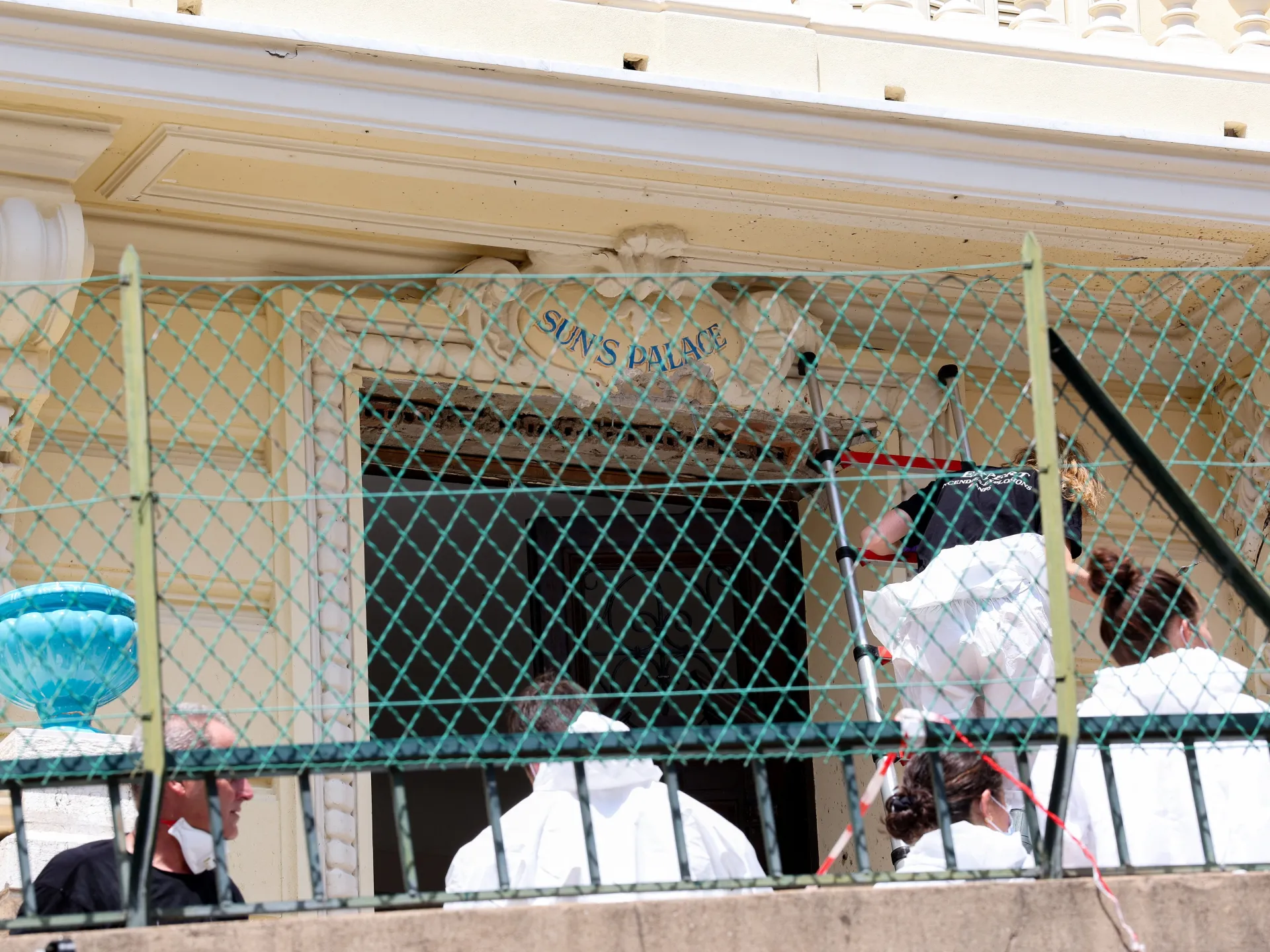
Authorities in Monaco say at this stage have ruled out “terrorism” as a motive in an explosion that left three people wounded.
The powerful blast took place at the entrance to a residential building on Monday evening, after a man had apparently left a package there.
Prosecutor Stephane Thibault told reporters on Tuesday the suspect who fled on foot acted alone and remained at large.
security-camera footage showed the suspect walking in a street wearing a black jacket, light-coloured trousers, white shoes and a black hat that partly conceals his face.
Police have opened an attempted murder probe but are not qualifying it as a “terrorism” investigation, said Thibault, adding that the motive remained unclear.
‘Caught in the explosion’
One of the three injured is a woman in life-threatening condition, while her partner and a 13-year-old child suffered less severe injuries but remain in the hospital. Thibault did not provide their identities.
Media reports identified Ukrainian construction tycoon Vadym Yermolaiev as being among the injured. Ukrainian news site Ukrainska Pravda said he was targeted by Ukrainian sanctions in 2023 for alleged ties to Russia.
The three victims were “apparently returning home peacefully” in the early evening, according to surveillance footage, Christophe Mirmand, the minister of state for Monaco, told French news broadcaster LCI
“They were caught in the explosion as they crossed the threshold of their apartment building,” he said.
Ukraine’s Foreign Ministry said it was in touch with authorities in Monaco, saying the explosion wounded three people of Ukrainian descent, who are members of one family. It did not name them, but said Ukrainian authorities are checking their citizenship.
Yermolaiev, a multimillionaire Monaco resident, has been subject to sanctions from Ukraine since December 2023, which Ukrainian security services reportedly said stemmed from his alcohol business activity in Russian-occupied Crimea.
Monaco is a microstate with a population of 38,000 people, where many ultra-wealthy people reside. It is considered to be one of the safest places in the world, with an extensive surveillance network of thousands of security cameras covering most public spaces.
It’s been about a month into the all-important summer box office season, and already, there is a noticeable boost in optimism.
I wrote last week about how the massive debut of Walt Disney Co. and Pixar’s “Toy Story 5” was a promising sign; many analysts and movie theater operators believe the summer’s theatrical revenue could finally reach pre-pandemic levels.
The cinema business has been propelled by the likes of Paramount Pictures and Miramax‘s “Scary Movie,” Universal Pictures’ “Disclosure Day” and, of course, A24’s “Backrooms” and Focus Features’ “Obsession.”
With more potential blockbusters on the way, my colleagues David Viramontes, audience editor for arts and entertainment, and Cerys Davies, who covers the business of the entertainment industry, joined me to give our best predictions for how this summer will shape up.
What will be the biggest movie of the summer?
Masunaga: After seeing how family movies — specifically, PG-rated films — were the winners of the last two years, I think we’ll be seeing “Toy Story 5” emerge at the top. The movie has already brought in more than $585 million worldwide less than two weeks after it opened, and if its billion-dollar-grossing predecessors are any indication, this franchise may still have a long life at the box office.
Viramontes: After the R-rated, three-hour drama “Oppenheimer” made nearly $1 billion at the worldwide box office in 2023, it would be professional malpractice not to pick Christopher Nolan’s “The Odyssey” as the biggest movie of the summer — and possibly the year. 70-millimeter IMAX screenings were sold out a year in advance and premium format tickets are still hard to come by in Los Angeles. Not to mention tentpole movies like this attract repeat viewings and even encourage viewers to seek out screenings in every format. And we haven’t even talked about how the film boasts one of the most stacked casts in recent history.
Davies: In an effort to play it safe, I’m going to pick a family movie and bet on “Toy Story 5.” Think about the dog days of summer — when the air gets heavy, a sense of inexplicable boredom takes over and it’s almost too hot to do anything. Deep down, you know the only reprieve is sitting in the comfort of your local theater chain’s air conditioning. But, at this point, you already saw “The Odyssey” with all your friends at the earliest available IMAX showing. What else will scratch that box office itch? I’m willing to bet it’ll be none other than the familiar faces of Woody, Jessie and Buzz Lightyear, as they fend off technology in their home.
You’re reading the Wide Shot
Samantha Masunaga delivers the latest news, analysis and insights on everything from streaming wars to production — and what it all means for the future.
By continuing, you agree to our Terms of Service, which include arbitration and a class action waiver. You agree that we and our third-party vendors may collect and use your information, including through cookies, pixels and similar technologies, for the purposes set forth in our Privacy Policy such as personalizing your experience and ads.
Which movie’s marketing campaign will be the talk of the summer?
Masunaga: The marketing for “The Odyssey” has been less overt than that of other summer releases, giant Trojan horse in Venice Beach notwithstanding. But a film helmed by Nolan and starring a plethora of A-list actors basically markets itself. After all, both official trailers for the film have garnered more than 30 million views on YouTube.
Viramontes: I’m prepared for Spider-Man to be everywhere. From buses and billboards to talk shows and TikTok, the movie will reach full saturation. While “Brand New Day’s” marketing campaign hasn’t reached fever pitch just yet, I’m prepared to be inundated with activations, posters and commercials for the four-quadrant fave that’s poised to be one of Marvel’s biggest successes in years.
Davies: A massive orange monster named Irene with dozens of eyeballs has nearly engulfed the historic Carney’s restaurant on Sunset. A giant inflatable “Rich” minion, sporting a goatee and a blinged out chain, popped up on Fairfax. And minions have taken over Wendy’s frosty machines with a new banana flavor. At this point, Universal and Illumination could put a minion on every Los Angeles street corner, and I wouldn’t grow tired of them. (The ominous, goggle-wearing eye overlooking the 101 freeway just isn’t enough.)
What will be the biggest wild card of the summer?
Masunaga: The biopic “Young Washington” could make waves. Distributed by Provo, Utah-based Angel Studios, the movie has the backing of the studio’s 2 million Angel Guild members, who determine its slate and get other perks, including free movie tickets. That support proved crucial for 2023’s “Sound of Freedom,” which ended up grossing more than $250 million worldwide, and could end up being a factor here, too.
Viramontes: “The End of Oak Street” has been teasing a dinosaur adventure in trailers, but can the mystery box movie starring Anne Hathaway and Ewan McGregor attract audiences? There’s also potential counter programming to blockbuster hopefuls dotted throughout the summer with “Teenage Sex and Death at Camp Miasma.” But I’m putting my money on “Evil Dead Burn.” Horror movies put butts in seats, and this summer doesn’t have many other straight-down-the-middle scares in store for audiences.
Davies: There’s an Anthony Bourdain biopic called “Tony” hitting theaters in August. These days, it feels like Hollywood will make a biopic about just anyone, but something about seeing Dominic Sessa channel the chef’s undying passion for food and effortless swag on screen seems irresistible. Plus today’s audiences love stories about intense kitchens (“The Bear”) and debatable biopics (“Michael”) — let’s see what happens when the two marry.
Both Warner Bros.-owned DC Studios’ “Supergirl” and Sony Pictures‘ “Spider-Man: Brand New Day” are part of this summer’s lineup. Will we see a turnaround from the recent superhero fatigue at the box office?
Masunaga: This past weekend marked a disappointing debut for “Supergirl,” which brought in just $37.1 million in the U.S. and Canada and about $62.6 million worldwide on a reported budget of $170 million. Box office analysts had been expecting a domestic opening of about $47 million to $50 million. On the other hand, pre-sales for “Spider-Man: Brand New Day” have been extremely strong. Not every superhero movie prints money anymore, so even with a potentially big haul for “Spider-Man,” I don’t know that it’ll signify a complete turnaround for the genre as a whole.
Viramontes: If there’s any superhero with enough pull to rescue the genre from fatigue after “Supergirl’s” poor performance, it’s your friendly neighborhood box office king Spider-Man.
Davies: Tom Holland’s Spider-Man definitely has the potential to cure superhero fatigue, at least for a few months. But as soon as the internet’s favorite couple, Zendaya and Holland, stop walking red carpets and doing press together, audiences are likely to put superhero movies on the back burner once again.
Analysts and theater owners have predicted that this summer’s box office will reach pre-pandemic levels. Will that momentum continue for the rest of the year?
Masunaga: Yes. The lineup of movies this year is more plentiful and varied than in years past, and with massive blockbusters slated for the holiday season, I think it’s very possible we could see a year-end domestic box office total of $9 billion or more.
Viramontes: Yes. We’ll have an action horror in September with “Resident Evil,” Zach Cregger’s follow-up to “Weapons.” In October, Tom Cruise’s long-awaited “Digger” might hit pay dirt. Following that in November is the new “Hunger Games” movie, “Sunrise on the Reaping.” And I don’t even have to mention “Avengers: Doomsday” and “Dune: Part Three,” the juggernauts waiting for us in December, do I?
Davies: Given the overall excitement from audiences of all ages and the variety this summer’s box office has to offer, this season will definitely be the one to do it. When Christopher Nolan, Spider-Man, the minions and the toys from “Toy Story” join forces, there’s no stopping them.
“The Pitt” and its economic effect on California
As film and TV production has fled the Golden State in search of cheaper locales, HBO Max medical drama “The Pitt” stands out as a major contributor to California’s economy.
My colleague Meg James wrote about the economic impact of the show, which films almost entirely on the Warner Bros. lot in Burbank and has provided jobs for about 1,000 people. The show’s first season alone contributed $125 million to California’s gross domestic product, according to an estimate from Oxford Economics.
“We’re old men who didn’t want to go away from our homes any longer,” series star Noah Wyle, who also serves as an executive producer and writer on the show, said, half-joking. “We’ve all been plying our trades out of state, chasing tax credits and being away from our families for a really long time.”
Stuff We Wrote
Film shoots
Number of the week
Disney and Pixar’s “Toy Story 5” continued its dominance this weekend, pulling in $70 million in the U.S. and Canada to stay on top at the box office.
The animated film has now grossed more than $585 million worldwide in less than two weeks. The haul for “Toy Story 5” helped push Disney past the $3-billion mark at the global box office, making it the first studio so far this year to hit that milestone.
What I’m watching
I feel like I’m always catching up on shows, and this week was no exception. I’m just now starting Season 2 of Netflix’s “A Man on the Inside,” which continues the hilarious exploits of retired engineering professor-turned-private-investigator Charles, played by Ted Danson. As a fan of “The Good Place,” I’ve loved the similar humor of this latest Michael Schur show.
WASHINGTON — The Supreme Court on Tuesday upheld the Constitution’s promise that all those born here are citizens of the United States, regardless of the status of their parents.
In a 6-3 decision, the justices rejected President Trump’s plan to revise the Constitution by executive order and to end citizenship at birth for newborns whose parents were here illegally or temporarily.
Chief Justice John G. Roberts spoke for the court to reject Trump’s proposed limits on birthright citizenship.
“Citizenship, then and now, was the right to have rights — to freely participate in our political community,” he said. “The Framers of the 14th Amendment extended that promise to ‘every free-born person in this land.’ We keep that promise today.”
Justices Sonia Sotomayor, Elena Kagan, Amy Coney Barrett and Ketanji Brown Jackson joined in full. Justice Brett M. Kavanaugh concurred in the outcome based on the federal law that incorporates birthright citizenship.
But the outcome was closer than most had predicted.
Justices Clarence Thomas, Samuel A. Alito and Neil M. Gorsuch dissented in agreement with Trump.
The decision is the second major defeat for Trump from a conservative court that usually supports broad presidential power.
In February, the court struck down Trump’s sweeping worldwide tariffs, his signature economic policy. Roberts said Congress, not the president, has the power to raise revenue and impose taxes, including duties on imports.
In April, Trump came to the court to hear the arguments over birthright citizenship. He sat in the gallery while the justices posed steadily skeptical questions to his solicitor general.
He left after an hour having heard enough to know he was likely to lose.
It was the rare Supreme Court case which was decided based simply on the words of the Constitution.
The justices, both conservative and liberal, say they look to what the Constitution says and how its words were originally understood.
The 14th Amendment adopted in 1868 says: “All persons born or naturalized in the United States and subject to the jurisdiction thereof are citizens of the United States and of the State where they reside.”
In its place, the Reconstruction Congress adopted the broad view of citizenship based on the place of birth, not parentage, that had been part of English law for centuries.
In the 19th Century, it was understood that the only exceptions to this rule of birthright citizenship were for the children of foreign diplomats, foreign troops on American soil or, for a time, Native Americans who lived on tribal reservations.
In 1924, Congress extended full citizenship to all Native Americans who were born in this country.
The Supreme Court had also confirmed the broad understanding of birthright citizenship in 1898. The justices upheld the U.S. citizenship of Wong Kim Ark who born in San Francisco to Chinese parents who later returned to China.
“The 14th Amendment affirms the ancient and fundamental rule of citizenship by birth within the territory,” the court said then. “In clear words and in manifest intent, [it] includes the children born, within the territory of the United States, of all other persons, of whatever race or color.”
Congress added birthright citizenship to the immigration laws in 1952.
“The privilege of United States citizenship is a priceless and profound gift,” he wrote, and in the future, it will not extend to newborns whose parents are in this country unlawfully or temporarily, such as on tourist, student or work visa, he said.
His proposal was quickly blocked by judges as unconstitutional, and it never went into effect.
In his appeal, Trump’s attorney argued that judges have been “misreading” the phrase “subject to the jurisdiction.” He said this refers to “political allegiance.”
By that standard, the children of temporary visitors and unlawful immigrants are not citizens because they and their parents “not completely subject to the United States’ political jurisdiction,” according to the administration.
Trump could have proposed legislation on tariffs and birthright citizenship and urged the Republican-led Congress to adopt new laws. Instead, he chose to try to change the law and revise the Constitution by executive order.
Before the Supreme Court, Trump’s attorney pointed to the surge of illegal immigration in recent decades.
“We’re in a new world now,” he said, one that calls for new restrictions on citizenship.
“It’s a new world. It’s the same Constitution,” responded Roberts.
The coach of former Sheffield United player Maddy Cusack had called her a “psycho” and was playing mind games with her before her death, an inquest has heard.
Cusack, 27, was found unconscious by her father David at their family home in Horsley, Derbyshire, on 20 September 2023 and died the same day.
An inquest at Chesterfield Coroner’s Court heard on Tuesday that Jonathan Morgan had made comments about Cusack’s weight and her relationship while he was Sheffield United’s women’s team manager.
Grace Riglar, who played for the team and was in a relationship with Cusack, said Cusack was “anxious” about Morgan joining the club after her experience of working with him at Leicester City.
At the inquest, she said: “I think it was stuff she told me about her previous experience prior to Jonathan coming to Sheffield.
“I think she said that they played a game against a team while Jonathan was the manager. She had done something on the pitch and Jonathan called her a psycho from the sideline.
“I don’t think she let anyone know those types of comments affected her, but they did and they made her uncomfortable.”
She told the inquest Morgan joining United was a big cause of Cusack’s stress.
If you have been affected by any of the issues raised in this article, help is available through the BBC Action Line
Riglar added Cusack thought the coach had made a “personal attack” on her by not putting her in the starting line-up for matches.
She said: “She was used to starting every game, she was an important member of the team. When Jonathan came, she was in and out from the starting team a bit.
“Her going from starting, to being on the bench quite a lot… she saw that as a setback. That impacted her a lot.
“I just think she almost felt like it was a bit of a personal attack, and that Jonathan was playing mind games with her by starting her one week and dropping her the next.
“She just felt those little things were intentional.”
Union members of Korea Zinc and Home Plus hold a joint press conference in Seoul on Tuesday to criticize MBK Partners’ management of Home Plus and its takeover bid for Korea Zinc. Photo by Tae-gyu Kim/UPI
SEOUL, June 30 (UPI) — The labor unions of Home Plus and Korea Zinc on Tuesday blasted MBK Partners, one of Asia’s leading private equity funds, over its troubled ownership of the former and the attempt to take over the latter.
“Although we are workers from different workplaces, we are all suffering in the face of the same capital greed. Korea Zinc and Home Plus are no different,” Home Plus union leader Ahn Soo-yong told a joint press conference in Seoul.
“Home Plus has now entered rehabilitation proceedings and stands on the brink of liquidation. But throughout this entire process, MBK, which should be held accountable, is evading responsibility,” she added.
MBK Partners acquired Home Plus from Tesco in a $5 billion deal in 2015. However, the discount chain entered a court-led rehabilitation program in early 2025 after years of mounting losses. MBK tried to sell Home Plus for more than a year with little success.
Against this backdrop, Home Plus has steadily reduced its store network in recent years. The retailer operated more than 140 hypermarkets across the country at its peak in the mid-2010s, but now has just 67 remaining.
“The hardship facing Home Plus is by no means a problem unique to Home Plus,” Korea Zinc union head Lee Eun-seon said.
“If MBK succeeds in taking control of Korea Zinc, the job insecurity and workplace destruction now being experienced by Home Plus workers will inevitably become the grim reality for Korea Zinc employees as well,” he said.
Korea Zinc has been locked in a prolonged control battle with MBK, which teamed up with zinc manufacturer Young Poong early last year to pursue a takeover bid. The two sides clashed at shareholders’ meetings in 2025 and 2026 in a series of heated proxy battles.
The share price of Korea Zinc fell 4% on the Seoul bourse on Tuesday, while the broad KOSPI rose 0.97%. Neither MBK nor Home Plus is publicly listed.
THE WORLD CUP is well underway with some of England’s top stars already breaking football records – but where do these guys get to when they aren’t kicking around a ball?
Prior to the 2026 World Cup, the England head coach told the England team to head off on their post-season holidays to either the US or Caribbean so they could get used to the time zone and heat for the World Cup.
Sign up for the Travel newsletter
Thank you!
The team jetted off to West Palm Beach in Florida and stayed at the luxury Belgrove Resort and Spa.
But each player has also been to a whole host of other spots across the globe – and you might even be surprised by some.
Harry Kane
Lapland, Finland
Over Christmas last year the England captain headed to Lapland in Finland with his family.
His wife, Katie Goodland, shared some snaps on her Instagram showing the family enjoyed dog sledding, spotting reindeer in the snow, heading on fairy light-lit walks among the trees etc.
On one night they even saw the Northern Lights and Kane’s kids enjoyed snowmobiling as well.
In addition, while in Lapland you can head off to Santa Claus Village and send postcards home.
Alternatively, families can have a go at making gingerbread.
Flights to Rovaniemi in October from £22 per way.
Jordan Pickford
Dubai, UAE
Back in January, Jordan Pickford and his wife were spotted flying back from Dubai.
The United Arab Emirates city is well known for its warm climate as well as its architecture such as the Burj Khalifa.
From the city you can also head out to the desert to try sand surfing or dune buggying.
You could fly from the UK to Dubai for £156 per way in July.
Jude Bellingham
Cannes, France
Four weeks ago, Jude posted some snaps of a lavish holiday in Cannes, France, with his 20-year-old brother, Jobe Bellingham.
The duo, along with other friends, enjoyed time on yachts as well as heading to La Mome – a fine dining restaurant that is famous for its foccacia dipped in olive oil and serving up fresh, local seafood.
One of the images appears to show Hôtel Martinez, which is a five-star Art Deco hotel on the Boulevard de la Croisette.
Inside, the hotel has yacht-inspired rooms and boasts a two-star Michelin restaurant.
Rooms cost from around £1,400 a night.
Flights to Nice Côte d’Azur Airport cost from £23 in July.
Dubai, UAE
The pro footballer also recently visited Dubai in the United Arab Emirates.
In the city, make sure to visit the Dubai Frame, which is a 150-metre structure with one side framing Old Dubai and the other side framing New Dubai.
You can even walk across a glass bridge on the structure.
You could fly from the UK to Dubai for £156 per way in July.
Jordan Henderson
Lapland UK
Jordan Henderson has previously visited LaplandUK, showing fans you don’t have to travel far to have a magical time.
The midfielder at Brentford enjoyed the experience alongside his family, seeing reindeer and of course visiting Santa.
LaplandUK now has two experiences in the country, with the original in Ascot and a more recently opened site in Manchester.
Tickets to the experience tend to range between £65 and £195 per person, but included in that you get to hang out with the elves and even make your own toy.
Declan Rice
Dubai, UAE
While the pro footballer often visits Dubai for warm-weather training camps, Declan Rice also heads on holiday to the popular spot.
And over the years he has visited the city on many occasions, sometimes even with other pros such as Mason Mount.
While in Dubai, make sure to head to some of the city’s beaches such as Kite Beach which is a great spot for watersports as well as beach volleyball.
Alternatively, head to Sunset Beach, which is known for having a more relaxed vibe and being the ideal stop to watch the sunset.
You could fly from the UK to Dubai for £156 per way in July.
Marcus Rashford
Barcelona, Spain
Last year, Marcus Rashford shared a few snaps of a holiday in Barcelona.
The holiday pics make sense considering the star plays as a forward for La Liga club Barcelona.
But Barcelona is a great city to visit – you can head down the famous La Ramblas and spot human statues.
And of course, enjoy some of the local restaurants serving tapas.
The Spanish city is also home to many designs by the famous architect Antoni Gaudí, including the Sagrada Familia – the tallest church in the world, that has been built over the past century.
Flights from the UK to Barcelona cost as little as £15 one-way in July.
Bukayo Saka
Lagos, Nigeria
Saka was born in London to Nigerian parents yet often heads to Nigeria in the summer.
He has previously been seen visiting Lagos and Kwara State.
Lagos is Africa’s largest city and is home to around 24million people.
The coastal city is home to the Nike Art Gallery, which spans across five floors and is home to thousands of contemporary and traditional Nigerian artworks.
Make sure to head to the Lekki Conservation Centre too, where you will find Africa’s longest canopy walkway with wetlands home to monkeys and tropical birds.
And for a beach day, stop by Elegushi Beach where you’ll also find a number of beach clubs and oceanfront restaurants.
One-way flights to Lagos from the UK cost from £263 in July.
Ollie Watkins
Lake Como, Italy
Back in 2024, Aston Villa and England strikerOllie Watkins proposed to Ellie Alderson at the Mandarin Oriental on Lago di Como.
The five-star resort hotel can be found in the village of Blevio, which is on the eastern side of Lake Como.
Across the hotel, you will find nine villas with a total of 75 rooms and suites.
There are also two villas with balconies overlooking the lake and with views of the Alps.
The hotel also has a huge spa with an indoor pool and another infinity pool outside on the edge of the lake.
A room costs from £1,162 per night.
But there are many other nice spots to visit and stay nearby.
For example, just down the road you could stay at Casa Giulietta Caronti, which also boasts views of the lake.
The B&B even has seven new suites with hot tubs inside, costing from just £112 per night.
You’d also be just a few minutes from downtown Como and Cernobbio.
Flights to Milan cost from £15 per way in July.
Estelle Manor, The Cotswolds
Estelle Manor is a Grade II listed country estate and hotel in Oxfordshire – which Watkins recently posted a pic of himself at on Instagram.
The hotel only opened in 2023 but has become well-known for its stylish rooms and Walled Garden.
There are also four restaurants onsite, as well as a kid’s club.
Rooms at the hotel cost from £575 per night.
But if that is outside of your budget, don’t worry as the Cotswolds is home to an abundance of pretty places to stay.
For example, you could head down the road to the Artist’s Residence near South Leigh.
The pretty pub with rooms boasts a thatched roof and dates back to the 16th century.
Inside the rooms feature a whimsical vibe, with minibars and Nespresso coffee machines.
Some rooms even have vaulted ceilings and free-standing bath tubs.
And staying costs a fraction of the price compared to Estelle Manor, with rooms from £153 per night.
Villa Ephrussi de Rothschild in Saint-Jean-Cap-Ferrat, France
The Villa Ephrussi de Rothschild overlooks the Mediterranean Sea and is the very spot Watkins got married at.
Built between 1907 and 1912, the villa is home to a massive collection of art as well nine themed gardens.
The villa was even designed to mimic the deck of a cruise ship, with visitors able to see the sea whichever side of the villa they are on.
The villa is open to the public to visit adult tickets costing €18 (£15.51) and children’s tickets costing €12 (£10.34).
Flights to Nice Côte d’Azur Airport cost from £23 per way in July.
Positano, Amalfi Coast, Italy
In another Instagram post, Ollie Watkins was recently spotted in Positano on the Amalfi Coast.
The town is famous for its pastel-coloured buildings stagger across the cliffs.
When visiting you can head to a number of beach clubs as well.
Make sure to walk along the waterfront and head to the 300-metre beach to soak up the sunshine.
For a quieter spot, drop by Fornillo Beach which is a secluded pebble cove.
Flights to Naples Airport cost from £31 per way in July.
Capri, Italy
The famous footballer was also spotted staying in another luxury Italian hotel – Jumeirah Capri Palace.
Found in Anacapri on the island of Capri, the hotel boasts a unique medical spa as well as a Michelin-starred restaurant.
There are also two pools at the hotel, an outdoor terrace with panoramic views and a fancy wine cellar.
Though, it will set you back around £3,444 per night.
Instead, a short drive away you could stay at Hotel Belvedere e Tre Re, which directly looks over the beach and glistening turquoise water.
And it costs from £216 a night instead of a few grand.
It is also closer to another spot the star was spotted at as well – Da Paolino Lemontrees.
The famous restaurant is known for its tables that sit directly under hundreds of real lemon trees.
Open since the 1970s, the much-loved restaurant often attracts celebs with other notable figures that have dined there including Beyonce and Mariah Carey.
Make sure to visit the dessert room, which has an entire buffet dedicated to all things sweet including traditional Italian desserts and lemon-infused treats.
Flights to Naples Airport cost from £31 per way in July.
This picturesque English gem boasts rich history, stunning stone houses and scenic nature walks that keep drawing visitors from around the globe
The village is located in Wiltshire and boasts Somerset as its neighbour(Image: Getty)
When it comes to getting away, sometimes a staycation is the ideal choice. Not only do you avoid the hassle of travelling to and from the airport, sidestep delays and save a small fortune on parking fees, but the UK really is quite remarkable.
One English village has previously been named among the finest in the world. In 2021, FBM Holidays named Castle Combe in Wiltshire as the prettiest place in the UK.
Meanwhile, property experts handpicked the location as part of The Daily Mail’s list of 24 villages to live in 2025.
Castle Combe boasts a fascinating history and is utterly charming thanks to its stone cottages and scenic countryside walks.
The village itself sits on the borders of Gloucestershire, Berkshire, Dorset to the south and Somerset, so you can expect to be immersed in breathtaking scenery.
Castle Combe is not only beautiful but has also appeared in numerous films, including The Wolf Man, Stardust and War Horse. Not to mention it featured in the original Dr Doolittle film and featured in popular TV show Downton Abbey.
Things to do in Castle Combe, Wiltshire
St Andrew’s church is among the must-see attractions, with the building dating back to the 13th century.
It features a faceless clock which ranks as one of the oldest functioning clocks in Britain. The church holds a Google rating of 4.6 online, with one visitor commenting: “Very picturesque church from the outside. We had a wander around inside.
“It’s free to get in but with a suggested £1 donation which is reasonable. There’s a faceless clock inside which I’ve never seen before!”
Another wrote: “Was not able to go inside but nice to walk around outside. A typical English village church in a very nice setting.”
A third simply commented: “St Andrews Church is set in the beautiful village of Castle Combe.”
Another historic landmark in Castle Combe is The Market Cross, which dates back to the 14th century.
Visitors flocking to the site have awarded it an impressive 4.4 Google rating, with one traveller writing: “Nice historical place. Really preserved well and very scenic.”
Another commented: “Great when you finally get to take a photo with no people sitting all around it.”
A third said: “Scenic, dreamy, beautiful place, almost hidden away. We had a great experience, visited on a weekday, it was decently crowded. It could be difficult to find a parking spot especially, on weekends. Nevertheless, I recommend this place.”
A flight attendant has shared a hygiene warning for passengers who wear certain clothes on a plane – and the reason involves what really goes on with airplane seats between flights
15:57, 30 Jun 2026Updated 15:57, 30 Jun 2026
She has shared her advice on social media (stock image)(Image: rparys via Getty Images)
Taking to social media to share her advice, the cabin crew member explained that aircraft seats aren’t always as spotless as passengers might hope – despite being cleaned between flights. She said: “Since everyone gets fuming mad at me when I say, don’t wear shorts when you travel… coming from a flight attendant.”
The crew member then revealed exactly what she had witnessed during just a single shift.
She added: “Guess how many diapers got changed on the seats yesterday on my one flight. Guess how many? Four.
“Guess how many announcements we made for people not to do that? Three. People don’t care.”
According to the flight attendant, every single nappy she witnessed being changed that day was soiled.
She added: “Guess how many of those diapers were poopy? All four. They change them on the seat.
“And you wanna rub your skin on there. You do. You’re dying to enjoy your staph infection. Just don’t say I didn’t warn you.”
Her remarks swiftly ignited fierce debate online, with scores of travellers admitting they had never stopped to consider what might have taken place on their seat before they boarded.
Reacting to the clip, one viewer wrote: “I will never wear shorts and I will never wear flared pants… that’s not water on the bathroom floor.
Content cannot be displayed without consent
“My lululemon yoga pants aren’t going to soak up that floor juice! Black leggings only – year round!”.
Another user added: “And the real issue is all airlines not having a proper place for parents to change their baby!”
A third commented: “I’ve had people change them on the tray table and acted shocked when I told them to not do that and gave them wipes to clean it up.”
While a further user added: “I never thought of wearing shorts. But I’ll definitely wipe my seat with Lysol now.”
A MAJOR ferry operator has announced a raft of changes – with one major route set to close permanently.
This comes as the French carrier firm announced a substantial cost-cutting plan.
Sign up for the Travel newsletter
Thank you!
The popular route is expected to be closed in the following monthsCredit: Alamy
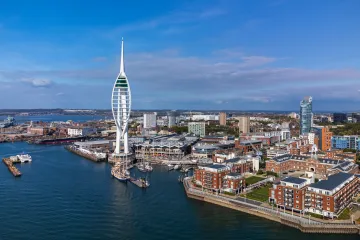
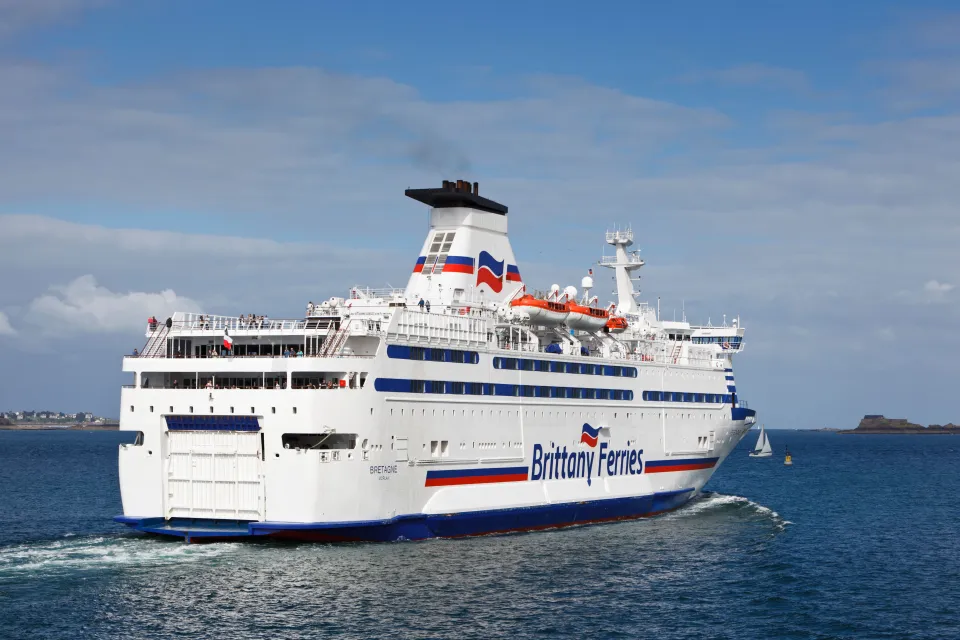
Brittany Ferries is reportedly considering closing the Le Havre to Portsmouth route in Autumn this year, as the company faces financial pressures.
The popular route, which has operated as a “no-frills” service since 2014, offers one departure daily for passengers and vehicles.
By ceasing the service, French-outlet Le Marin reported that the company is expected to save more than €20million (£17million).
Two ships in its fleet will also be sold – the Barfleur, which travels between Poole to Cherbourg and the Cotentin, which runs from Cherbourg to Rosslare.
As a result, the Poole to Cherbourg route will be stopped, and replaced with a daily service from Portsmouth to Cherbourg.
The Cherbourg to Rosslare route will continue operating via other vessels.
Christophe Mathieu, CEO Brittany Ferries, told the Portsmouth News: “Brittany Ferries has a track record in adapting its business to long- and short-term challenges.
“But we have to be realistic. We need to adapt and that means a plan to secure a future that will continue to bring opportunities for all those who live and work in the regions we serve.
“We have informed our ports and will work with everyone affected on this plan for the future.”
The company’s financial trouble began following a loan taken out during the pandemic.
Although half the debt has already been paid off, the carrier company continues to face a £27 million bill, as the remaining debt has been further burdened by the EU’s Emission Trading System tax.
A UK airport is going back on the market just months after its first sale fell through.
The 350-acre site, which has suffered millions in losses at the expense of the taxpayer, is up for grabs for a second time.
Sign up for the Travel newsletter
Thank you!
A UK airport is going up for sale for a second timeCredit: Facebook/thephobicflyerThe initial sale of the aviation hub fell throughCredit: Alamy
Gloucestershire Airport in Staverton was put up for sale last year by joint owners Cheltenham Borough Council and Gloucester City Council, with an asking price of £25million.
However an agreed deal with the preferred bidder fell through, after the terms of the proposal changed.
The councils have now agreed to put the airport on the market for a second time and are said to be “hopeful” that it can be successfully sold.
Estate agent, Savills, has been appointed to head up the process.
It’s hoped a buyer who can offer growth and investment for the space will be found.
Gloucestershire Airport has been hailed as a “vital economic and aviation asset for our county and region” by the City Council.
It’s also been confirmed that there has been “considerable interest from potential investors” in recent weeks, making it the “right time” to put the airport back up for sale.
The airport is still in operation, with the Cheltenham-based site offering charter services for private jets and helicopters.
Flying lessons are also operated from the airport as well as gift experiences like hot air balloon flights.
Speaking on the decision during a recent council meeting, Rowena Hay, leader of Cheltenham Borough Council, said: ”We are hopeful this renewed sale process will attract the right partner for the airport’s future, which remains our key priority.
“We will work with partners and stakeholders to update as the new sale process proceeds.”
The app said it will be rolling out usernames gradually, in a move meant to improve privacy.
Published On 30 Jun 202630 Jun 2026
Change is coming for some three billion users of the world’s favourite messaging platform, WhatsApp.
The social media app owned by Meta will allow users to be identified by usernames instead of phone numbers, it said on Monday. WhatsApp is used in more than 180 countries and 60 languages, the platform says.
Recommended Stories
list of 3 itemsend of list
Users will soon be able to reserve unique handles, with a wider rollout planned for later this year.
The move is designed to improve privacy on the platform amid longstanding scrutiny over its data protection practices.
So what is changing, and how can you grab a handle no one else has?
What change has WhatsApp announced?
Users will soon be able to swap the phone numbers displayed on WhatsApp with usernames, the company said. Under the new system, which will commence later this year, users will be able to choose to be “findable” and contacted by their handles only.
The app said it has already begun allowing some users to reserve unique usernames before a bigger rollout later this year.
Why is WhatsApp making this change?
The messaging platform said the change is designed to improve privacy features, for which it and its parent company Meta have come under scrutiny in the past.
“We have designed this as a core privacy feature,” Alice Newton-Rex, WhatsApp’s vice president of product, told reporters.
According to the company, there will be no public directory of usernames and no autocomplete suggestions, meaning users will need to know someone’s exact username to reach them for the first time.
“When someone new walks into your life – a classmate, a neighbour, someone you meet at an event – sharing a phone number can feel like a big step,” a WhatsApp company blog post stated.
“That’s because a phone number is personal and it’s tied to so many parts of your life. Sometimes you just want to chat without handing over your digits.”
The company told one user on X that it has added multiple new features to help users defend themselves from scammers.
Optional username keys – or short numbered codes – can be added, which would mean people can only contact a user if they have both their username and its key, for example.
WhatsApp also said it will limit the number of new people any one account can contact as a guard against spam accounts, and that its systems can now detect and block “abuse patterns”.
How will the new usernames work?
Companies, organisations and creators with existing accounts on Meta’s other social media platforms – Instagram and Facebook – will have the opportunity to claim their usernames as handles on WhatsApp as well.
Usernames will have to be three to 35 characters. To prevent impersonation, WhatsApp will hold back usernames for high-profile people or groups, such as celebrities, public figures and government entities.
To reserve a specific username, WhatsApp said a user must download the latest version of WhatsApp, go to the Settings tab, the Account tab, and then the Username tab.
The reservation must be done with a smartphone – it cannot be done on WhatsApp Web or Desktop.
When will this change come into effect?
WhatsApp said it will roll out usernames gradually over the coming months and will notify users on WhatsApp when the new feature is available in their country. It has not given specific timelines.
To be prepared, the company told users to “make sure you have the latest version of WhatsApp downloaded and keep an eye on your app”.
What are WhatsApp’s current privacy features?
WhatsApp’s current privacy settings are limited to blocking individual users and silencing unknown callers.
She’s filling in for Joy Behar on ABC’s “The View.” Appearing alongside Meryl Streep in “The Devil Wears Prada 2.” Starring in a CNN documentary. Preparing a national tour. And churning out four podcasts most weeks featuring long-form interviews and commentary.
It’s a ubiquity born of more than three decades chronicling the technology industry with a professed indifference to power that vaulted her into a rare echelon of journalism celebrity.
She harnessed that reputation to persuade rivals Steve Jobs and Bill Gates to appear onstage together and make Mark Zuckerberg so uncomfortable under questioning that he broke out into a sweat. She had Elon Musk’s cellphone number — the two aren’t currently speaking — and often texts tech and business leaders.
She’s betting the influence that made her a Silicon Valley force will translate into politics as podcasts supplant traditional media as a destination for candidates seeking attention.
During President Donald Trump’s second Republican term, potential Democratic presidential candidates ranging from California Gov. Gavin Newsom and former Vice President Kamala Harris to onetime Transportation Secretary Pete Buttigieg and former White House chief of staff Rahm Emanuel have appeared on Swisher’s shows. She expects that roster to grow.
“We get called by all the presidential candidates,” the 63-year-old Swisher said in an interview at her home in a leafy corner of Washington, where her trademark high self-regard was on display. “We’re going to get to all of them.”
Swisher is hardly the only podcaster talking politics. Conservatives like Megyn Kelly and Tucker Carlson and some liberals like the former Barack Obama aides who host “Pod Save America” have larger audiences. They’re all dwarfed by Joe Rogan.
But Swisher, who has evolved from a traditional print journalist to business owner and podcast host, has few rivals who can match her technology expertise and connect those observations to the broader political debate.
“When I first went on her podcast when I just got into Congress in 2017, she was very well respected in tech circles,” said Rep. Ro Khanna, the California Democrat whose district includes Silicon Valley. “But now she’s emerged as a larger cultural force, especially at a time where there’s such anger at the tech billionaires and tech arrogance.”
Interviews that produce revealing moments
When she’s not on the road, Swisher typically records from a basement studio in the Washington home she shares with her wife and children and a cat named Lovely. The conversations on her interview podcast “On with Kara Swisher” are often referenced later on “Pivot,” which she co-hosts with entrepreneur Scott Galloway.
They frequently produce revealing moments, as when Newsom filled in for Galloway on “Pivot.” Swisher derided him for being too easy on Steve Bannon when the longtime Trump aide appeared on Newsom’s own podcast.
“You had an opportunity to engage,” Swisher pressed. “Why not engage?”
Swisher pushed Buttigieg on why he took so long to say President Joe Biden, a fellow Democrat, shouldn’t have sought reelection. Buttigieg said he wasn’t consulted.
“Sure, but you have eyes,” Swisher responded.
In an interview, Newsom said Swisher calls him out.
“She’ll send me missives unsolicited,” he said. “She’s usually right, and it drives me crazy.”
Even Sen. Thom Tillis of North Carolina, a rare Republican to go on her show, said it was a worthwhile experience despite being pressed on whether his willingness to speak out against the Trump White House emerged only after he opted against reelection.
“If you’re a politician, you should be able to walk up anywhere and hold your own,” Tillis said, adding, “You may end up having an opportunity, like in my experience, to give a completely different perspective.”
‘Pivot’ was initially focused on tech and business
Shaping the political conversation wasn’t the objective when “Pivot” launched in 2018. Galloway, who hosts his own “Prof G” and “Raging Moderates” podcasts, recalled the idea for “Pivot” was to focus on the intersection of technology and business.
“Show me a big business or tech story, and I’m going to show you a political overlay,” Galloway said.
The expansion converges with a sense of urgency among Democrats to be more aggressive on digital platforms, where audiences are increasingly concentrated.
“The single most important quality that every candidate needs to have is the ability to talk and the ability to talk anywhere,” said Teddy Goff, the co-founder of Precision Strategies and the digital director for Obama’s 2012 presidential campaign.
Democrats are still stung by Rogan’s nearly three-hour Trump interview in the final weeks of the 2024 campaign. Rogan who doesn’t consider himself a journalist, has said Harris’ campaign didn’t agree to his terms. Harris has described being spurned by Rogan.
The podcasts add up to influence and financial success.
Galloway said “Pivot,” which is effectively a joint venture between himself, Swisher and Vox Media, will be a $15 million to $20 million business this year, with a staff of just five.
“Podcasts are the NBA,” Galloway said. “There’s a small amount of people making a lot of money.”
A goal to be popular ‘among the entire populace’
While Swisher largely hosts Democrats, she hopes to soon bring on additional Republicans and said she texted Steve Hilton’s wife, a former Google executive, in hopes of booking him shortly after he advanced in California’s governor’s race.
“What we’re going for is to be popular among the entire populace,” she said. “So that people who don’t feel they want to be in a constant state of anger, whether it’s on the left or the right, can have a place to go.”
But her barbed comments about Trump and other Republicans could complicate that goal. Swisher describes her work as “reported analysis.”
“We don’t shy away from our faults,” Swisher said. “We don’t shy away from our biases. You know, we don’t shy away from things that most people try to.”
DETROIT — Jerry Esters proudly displays the American flag each day on his Detroit home. A few miles away, Yvonne Pistochini says there is no scenario under which she would allow the Stars and Stripes to cast its shadow where she lives.
Both are Black.
For Esters, the flag represents the opportunities that allowed the great-great-grandson of slaves to find success and flourish. Pistochini, 79, simply says the America identified by the flag is not the same country she saw growing up.
Republicans and older, white adults are especially likely to say they fly the American flag, while younger Democrats and Black adults are more likely to say they don’t fly it. Views of the flag — and whether it’s a unifying or divisive symbol — track with other deep divisions among Americans, who see their country’s history and accomplishments very differently.
“A lot of Black Americans see the flag as a symbol of both inclusion and exclusion,” said Matthew Delmont, professor of American history at Dartmouth College. “Black Americans, more so than white Americans, also understand the flag can be used to justify a version of patriotism that is rooted in exclusion, with the flag being used to say ‘you don’t belong here.’”
The survey of 2,596 adults was conducted April 16-20. It suggests that older white Americans, especially Republicans, are more likely to see the flag as unifying.
About half of U.S. adults said they display the flag at home throughout most of the year, or during holidays. About 7 in 10 Republicans and about 6 in 10 Americans ages 60 and older fly the flag at least during holidays.
About 6 in 10 Democrats and independents, on the other hand, say they “never” fly the U.S. flag. That includes the vast majority, 75%, of Democrats under 45.
Opportunities worth fighting for
Esters, a 64-year-old retired clay sculptor for a Detroit automaker, flies three American flags at his Sherwood Forest home on the city’s west side.
“When these homes were built, Black men like me, my mother and my family … we couldn’t even buy these homes,” he said. “To me, that’s one reason I fly the flag. We went through a lot to be able to own nice homes, and this is what we fought for.”
The other reason is Moriah Martin, Esters’ great-great-grandmother, who was born into slavery.
“I’m kind of living out her dreams — what I did for a living, having a business, having a nice home,” he said. “I think that’s the American way, but we got to fight for it and we, as Blacks, fought for it.”
He’s in the minority among Black adults, according to the survey, which found that only about 3 in 10 Black adults say they ever display the American flag, compared with about half of white and Hispanic adults.
Pistochini says current divisions over political leanings and perspectives, and inequality of opportunities for the poor and people of color are not what she believes the flag should stand for. People confuse flying it with being patriotic, she added.
“Just because you fly a flag doesn’t make you a patriot,” Pistochini said. “If there was patriotism, we would not have all this. We can’t look at (what’s going on) and say this is America.”
For country and freedom
Ben Gaskins, chair of political science at Lewis & Clark College in Portland, Oregon, says the flag is an important symbol of patriotism for many Americans.
“It is those who are older people, who are white and people who are more conservative,” Gaskins said. “They take it as more central to their identity.”
Nancy Hansen, a 73-year-old retired Customs and Border Protection clerk in Culvertson, Montana, believes “you have to be for the country, no matter what” and that the flag means “freedom.”
“Freedom to live where we want to live, travel where we want to travel, raise our kids where we want to raise our kids,” said Hansen, who is white and identifies as Republican.
Each year around July 4, the American Legion posts flags outside businesses and homes in Culvertson, including Hansen’s home.
Linda and Greg Cunningham also equate the flag with freedom.
The white, conservative Pontiac, Michigan, couple are going all out this summer. The exterior of their home northwest of Detroit is awash in red, white and blue. The flag sits atop a flagpole just feet from their door.
“It’s no political thing, at all,” said Linda Cunningham, 63. “It’s our freedom. I love the American flag. I love the whole concept of it. I love America. I know there’s so much going on in the world, right now, and I know everyone has their own views, and I’m just sad that politics have to be brought into the flag.”
Flag as a ‘painful reminder’
Of those who took the survey, 47% see the flag as a “more unifying” symbol. About 16% call it a “more divisive” icon, while 36% say it’s neither divisive nor unifying.
Only 22% of Black adults see the flag as a unifying symbol, compared with 55% of white adults and 42% of Hispanic adults.
“It’s a painful symbol. It’s a reminder of what we could be and how it’s failed to live up to that for Black people, for Indigenous people and people of color,” said Allison Wiltz, a Black author and founder of Writers and Editors of Color.
Paul Walthour, 71, occasionally flies the flag outside his Minneapolis-area home on special occasions and some holidays. Walthour says that when he’s away from home and at his cabin, the flag goes up each morning and is taken down at the end of the day.
“This is antiquated, perhaps,” said Walthour, who is white and a retired advertising agency creative director. “I feel it’s a symbol that you’re proud to be an American.”
“Unfortunately, I kind of think it’s kind of a symbol of dividing more than uniting,” added Walthour, who identifies as a Democrat. “The people who fly it on the far right have one kind of feeling about it, and the people who fly it on the left have a different kind of feeling about it.”
The AP-NORC poll of 2,596 adults was conducted April 16-20 using a sample drawn from NORC’s probability-based AmeriSpeak Panel, which is designed to be representative of the U.S. population. The margin of sampling error for adults overall is plus or minus 2.6 percentage points.
Williams, Sanders and Parwani write for the Associated Press. Sanders and Parwani reported from Washington.
Welcome back to The Times’ Lakers newsletter, where we’re buckling up for what will surely be a bumpy free agency period.
Free agency negotiations can officially begin today at 3 p.m. PDT, but there have already been several eyebrow-raising moves. Blockbuster trades between Milwaukee and Miami, Charlotte and Minnesota, and Memphis and Portland are three massive shots during the offseason transaction salvo.
And those weren’t even technically free agency transactions.
Now the real fun begins.
All things Lakers, all the time.
Get all the Lakers news you need in Thuc Nhi Nguyen’s weekly newsletter.
By continuing, you agree to our Terms of Service, which include arbitration and a class action waiver. You agree that we and our third-party vendors may collect and use your information, including through cookies, pixels and similar technologies, for the purposes set forth in our Privacy Policy such as personalizing your experience and ads.
Golden (State) reunion?
They already won an Olympic gold medal together. The mere concept of LeBron James and Stephen Curry playing together for an NBA championship is the stuff of ticket-selling, TV-viewership legend.
With James being what many consider the best free agent in this class, the superstar will be at the center of nearly every phone call through the Lakers’ El Segundo facility this summer. Between retirement, returning and relocating, James has plenty of choices for his future. Teams are starting to line up with their offers.
Signaling what will be a frenetic week, Draymond Green opted out of his contract, ESPN reported Monday morning, sending alarm bells across the league that the Warriors could be cooking up cap magic to potentially lure James to the Bay Area.
The idea was that with a restructured deal with Green, Golden State could offer the $15 million non-taxpayer mid-level exception to James. They could then try to pull off a trade to bring Anthony Davis for a “Big 4.” Eyeball emojis were wide open on the platform formerly known as Twitter.
One NBA executive told my colleague Broderick Turner that James could play for the Lakers on a one-year, $30-million deal if the team wants to offer that much. It would still be a significant pay cut from the $52.6 million James made last year.
The 41-year-old is already the first active NBA player to reach billionaire status, according to Forbes. How much will a few million dollars matter to him?
During his twilight NBA years, James, according to the now-infamous statement to ESPN from his agent Rich Paul last year, wants to prioritize winning. There’s no guarantee that staying with the Lakers would make them the top team to overtake the San Antonio Spurs or Oklahoma City Thunder, but there is some proof of concept. Raise a mental banner for that 16-2, Luka-Austin-LeBron stretch.
In the West, at least, the top teams are trending young. The Thunder were the youngest team ever to win a title in 2025. The Spurs figure to be a championship contender for a long time behind Victor Wembanyama, 22, Stephon Castle, 21, and Dylan Harper, 20. The Timberwolves’ controversial trade for LaMelo Ball in exchange for fan favorite Naz Reid to Charlotte also netted Minnesota one of the league’s biggest young stars.
James, Davis, Curry and Green would be a star-studded zag toward experience when the rest of the league is zigging toward youth. The Warriors already flirted with “The Expendables” ensemble strategy with Curry, Green, Al Horford and Jimmy Butler last year.
Sequels are rarely better than the original, and in this case, the original wasn’t even that good.
By already agreeing to a four-year, $185-million deal with Austin Reaves, the Lakers are getting close to running back their own roster. As expected, Deandre Ayton opted into his $8.1 million player option.
After the 27-year-old’s up-and-down play last year, simply getting Ayton back will not stop questions regarding the Lakers’ center position.
While watching a thrilling NBA Finals and the highly anticipated Western Conference finals showdown between the Spurs and Thunder, the league saw the importance of shooting. Free-agent sharpshooters Rui Hachimura and Luke Kennard are on the market, and defensive stopper Marcus Smart will leave a hole in the Lakers’ roster after opting out. The 32-year-old guard greatly outplayed his $5.9-million option and is deserving of a multi-year deal.
When it came to his own future, James was vague at the end of the season. James’ on-court influence could persist for years, whether in L.A. or somewhere else. But his decisions won’t necessarily be his own.
James mentioned conversations with his family as important steps in the offseason process. Maybe just as important as the opportunity to chase a fifth championship is the chance for the father of three to fulfill his family responsibilities.
This month, James was celebrating the 10-year anniversary of the Cavaliers’ championship with teammates, a trip that overlapped with Father’s Day. When he returned, his daughter Zhuri handed him a handwritten golf-themed card: “You are the best by par” she wrote inside.
“When you retire,” the page-long note James posted on Instagram read, “I can’t wait for you to be at all of my games like I was at yours.”
James, he wrote on social media, instantly cried.
Rock the vote
Setting the LeBron James of it all aside, which unrestricted free agent would you most want to return to the Lakers next season? Slide into my inbox at thucnhi.nguyen@latimes.com with your answer!
Rui Hachimura
Marcus Smart
Luke Kennard
Jaxson Hayes
Favorite thing I ate this week
Khinkali (Georgian soup dumplings) from Cheeseboat in Manhattan.
(Thuc Nhi Nguyen / Los Angeles Times)
I’ve recently seen social media posts of people trying to eat food from as many countries as possible without leaving a single major city. I may adopt this as a new NBA road trip side quest, and we can now add Georgia to the travel menu.
While in New York City for the draft, I stopped at Cheeseboat, a family-run Georgian restaurant in the Hell’s Kitchen area of Manhattan. It’s named after Georgia’s traditional khachapuri bread that is shaped like an open boat and filled with delicious melted cheese, but my favorite dish we had was the khinkali soup dumplings filled with ground beef, spices and herbs. I just love dumplings, and because you use your hands to eat them — picking them up by the little dough handle is advised — they’re a little less fussy than the Chinese xiao long bao.
Zulu community members in Durban participate in a national day of protest on Tuesday demanding the repatriation of undocumented immigrants to their home countries with marches also held in Johannesburg and other major cities. Photo by Stringer/EPA
June 30 (UPI) — Security forces across South Africa were braced Tuesday for demonstrations coinciding with anti-immigrant and vigilante groups’ self-declared deadline for undocumented migrants to leave the country, amid fears that the protests could turn violent.
Tuesday’s events follow weeks of rallies that have been blamed for inciting violence against migrants in the country, both illegally and legally, by people who believe they are taking jobs from South Africans, carrying out criminal offenses and overburdening schools, hospitals and other essential services.
March and March, one of the anti-migrant organizations, had used the threat of the protests to try to force the “immediate massive deportation of all illegal foreigners currently in the country” by June 30.
However, President Cyril Ramaphosa’s direct appeals for cool heads and for demonstrators not to engage in “intimidation, threats or ultimatums” appeared to have been heard with the Police Ministry reporting that, apart from some looting, the protests went off mostly without incident.
In Johannesburg, five people were arrested for allegedly looting a foreign-owned store in Soweto township while windows of apartments in Yeoville, home to many migrants from other African countries, were smashed by brick-hurling protesters, police said.
Five people were also arrested in Hammarsdale in KwaZulu-Natal province after they allegedly broke into a shop there.
Ramaphosa met leaders of the protests on Monday, ordering them not to resort to violence while acknowledging that the immigration system needed fixing.
“Some foreign nationals who live in South Africa are here lawfully. They work, study, raise families, invest in our economy and contribute positively to our society. They too are entitled to the protection of our laws and our Constitution. The right to protest and freedom of expression does not allow people to threaten or intimidate others, or to engage in acts of vandalism or violence,” he wrote in his weekly blog.
Ramaphosa’s intervention came too late for many immigrants, frightened into leaving by the violence and anti-migrant sentiment in the country.
At least three foreign nationals have been killed in violent attacks in the past month: two Mozambicans when a mob razed a shanty settlement in the Western Cape and a Malawian man at another encampment near Durban during a march against undocumented immigrants that forced hundreds of migrants to flee to the safety of churches and mosques.
Nigeria evacuated 269 of its citizens on Monday — taking the number it has flown home to date to about 600 — with more flights planned over the next few days.
Gardener Kauga Nyirenda told CNN two men turned up at his home threatening to kill him if he didn’t go back to his native Malawi.
“They asked me: ‘When are you going to leave the country? We want to fix our country. If you don’t leave now, you’re going to leave in a coffin because we don’t need anyone after 30th of June,'” said Nyirenda.
In the run-up to Tuesday, about 25,000 others have been sent back to their home countries, mostly elsewhere in Africa, with about 50,000 people detained as illegal migrants since January, according to government agencies, with many of those in temporary camps for their own safety, pending repatriation processing.
Malawi has repatriated about 7,000 of its citizens. Ghana, Mozambique and Zimbabwe have also been laying on air and road repatriation transport for their nationals.
Official figures show there are at least three million documented foreign nationals in South Africa.
Troops in landing craft approach Omaha Beach on D-Day in Normandy, France, on June 6, 1944. D-Day was the largest seaborne invasion in history and turned the tide of World War II. Photo by UPI | License Photo
A NEW Mediterranean-style pop-up beach club is coming to the UK.
The new venue will be bringing summer vibes to Bournemouth with dining domes, beach beds, sunloungers and DJs.
Sign up for the Travel newsletter
Thank you!
Palm will open on Bournemouth seafront for the summerCredit: Seventa EventsThe popular UK beach will have a new attraction until SeptemberCredit: Getty
Called ‘Palm’, the Ibiza-style club will open on Bournemouth’s seafront next month.
The seaside town is one of the most sought-after when the sun shines as the golden sandy beach stretches on for seven miles.
For those who know the area, Palm will be a few paces away from Bournemouth Pier on the old WestBeach Restaurant site.
The beach club will be open all day starting at 9am with breakfast and coffee.