Shoppers looking to ‘travel in style’ could do just that with the latest travel deal at Home Bargains
Take a look at the latest deal at Home Bargains(Image: Home Bargains)
Home Bargains is helping shoppers prepare for their summer holidays with a “spacious yet compact” cabin bag that meets the hand luggage requirements of several major UK airlines. The discount retailer, which has over 600 stores nationwide, claims it is “perfect for your adventures”.
It may be renowned for its affordable homeware and furnishing deals, but Home Bargains’ range extends far beyond side tables, lamps and ornaments. From garden accessories and beauty buys to travel essentials, shoppers can find plenty of wallet-friendly options.
Take the Salisburys Carry-On Cabin Lightweight Backpack, for instance, which retails for a more-than-affordable £9.99. It comes in black, and boasts a very simple aesthetic to suit various tastes.
Describing the product, Home Bargains said: “Travel light and in style with the Salisburys Carry-On Cabin Lightweight Backpack in sleek black! Perfect for your adventures, this spacious yet compact backpack is designed for easy packing and effortless carrying.
“Every Salisburys product has been designed, manufactured and extensively tested to stand the rigours of today’s travel. Every Light Luggage product has been designed, manufactured and extensively tested to stand the rigours of today’s travel.”
According to Home Bargains, the cabin bag measures approximately 45 x 30 x 15cm, making it suitable for use with the cabin luggage allowances of most major airlines, namely easyJet, British Airways, Virgin Atlantic and KLM. Please note, it could be too long for Ryanair, Wizz Air and Jet 2.
Weighing around 760g, it features multiple zipped compartments for organising belongings, a fully lined interior and a lightweight construction designed for travel. Interested shoppers can find out more, and view additional product images, on the Home Bargains website.
It’s available both in-store and online as Home Bargains offers standard delivery across the UK mainland from £3.95, while orders over £100 qualify for free delivery. A £10 delivery fee applies to larger furniture items, and most standard parcels are expected to arrive within four working days.
Home Bargains is also selling the Salisburys Under Seat Bag which will also set you back £9.99. The product description reads: “Meet the Salisburys Under Seat Bag – your perfect travel companion!
“With its spacious zipped compartments and sleek design, it’s ideal for keeping your essentials close at hand while you jet off on your next adventure. Salisburys presents its broadest line-up of tried and tested luggage solutions with contemporary features to help the modern tourist navigate the hurdles of twenty-first century travel.
“Salisbury Under Seat Bags solve modern travel issues of the check-in case. A fantastic size bag that is versatile for the needs of your modern travel. Large open zipped storage compartment with small zip side pouch.”
A savvy shopper has shared the travel essentials she found in Poundland, including 100ml travel-size suncreams and shampoos that are perfect for those travelling with only hand luggage
08:03, 27 Jun 2026Updated 08:03, 27 Jun 2026
She shared what she’d managed to find that would make life a lot easier when travelling (stock image)(Image: Ray Orton via Getty Images)
The prospect of travelling with only hand luggage can fill many holidaymakers with anxiety, prompting them to fork out for hold luggage when their liquids won’t fit in a carry-on bag. The reason, of course, is that when passing through airport security, liquids are restricted to 100ml — which can be a real headache, given that many suncreams come in 250ml bottles, or, even more frustratingly, 125ml — just over the limit.
However, a savvy traveller named Sham has flagged that Poundland stocks “100ml suncreams,” meaning you’ll have “no stress at security” as your liquids will be fully compliant with rules and regulations. Getting through airport security with hand luggage only can actually be a doddle with the right products in tow — and also spares you the nail-biting wait at the baggage carousel, desperately hoping your suitcase has made it to your destination in one piece.
She noted that the mini products are priced at £2, quipping: “We know Poundland’s not all a pound anymore.” Sham revealed that the store stocks suncream, sprays, and even travel-sized shampoos and conditioners — ideal for those heading away long enough to need a hair wash.
She also spotted towel clips for just £1, so you needn’t worry about your towel taking flight if your destination turns out to be a touch on the breezy side. Rounding things off, there was a Malibu fake tan that Sham said she was keen to try before her holiday, adding that she’d heard great things about it — and at just £2, it seemed well worth a go.
In the comments section, one user wrote: “Ah, I need to get to Poundland! Going away soon, so these would be perfect.”
Content cannot be displayed without consent
A second chimed in: “Buying s**** to take on holiday is the most British thing ever. You don’t need half that s***, it will be left in the bag in the hotel the whole holiday.”
However, Sham hit back: “It saves a right packet taking the small ones, perfect amount for your hol.” And there’s no denying that SPF is absolutely essential.
NHS advice on keeping yourself safe in the sun
Sunburn increases your risk of skin cancer. And it does not just happen on holiday. You can burn in the UK, even when it’s cloudy.
There’s no safe or healthy way to get a tan. A tan does not protect your skin from the sun’s harmful effects. Aim to strike a balance between protecting yourself from the sun and getting enough vitamin D from sunlight.
Spend time in the shade when the sun is strongest. In the UK, this is between 11am and 3pm from March to October.
You can also check the UV index on a weather app or website. If it’s three or higher, consider protecting your skin.
Make sure you:
spend time in the shade between 11am and 3pm
never burn
cover up with suitable clothing and sunglasses
take extra care with children
keep babies under six months out of direct sunlight
use at least factor 30 sunscreen – make sure to use enough and re-apply frequently
Do not rely on sunscreen alone to protect yourself from the sun. Wear suitable clothing and spend time in the shade when the sun’s at its hottest.
When buying sunscreen, the label should have:
a sun protection factor (SPF) of at least 30 to protect against UVB
at least four-star UVA protection
UVA protection can also be indicated by the letters “UVA” in a circle, which indicates that it meets the EU standard.
Make sure the sunscreen is not past its expiry date. This is marked by a symbol of an open jar, an M and a number, which shows how many months the sunscreen will last once it’s been opened. Do not spend any longer in the sun than you would without sunscreen.
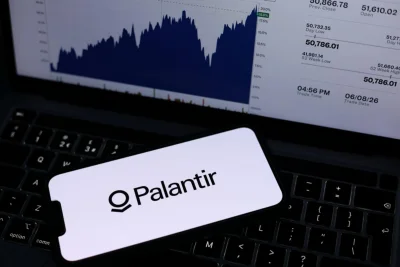
The Palantir logo is displayed on a mobile phone alongside a stock market graph displayed on a laptop screen in Liverpool, Britain, 09 June 2026. Photo by ADAM VAUGHAN / EPA
June 26 (Asia Today) — Japan’s Defense Ministry plans to expand the use of artificial intelligence in the Self-Defense Forces’ command-and-control operations, potentially bringing AI into the process through which commanders assess battlefield conditions and direct military units.
The move would mark a new stage in Japan’s defense transformation, shifting its focus beyond acquiring more weapons and equipment toward digitally supported battlefield decision-making.
The Asahi Shimbun reported Friday, citing multiple government officials, that Prime Minister Sanae Takaichi’s government plans to include the expanded use of command-and-control AI in three revised national security documents expected by the end of the year.
The documents are the National Security Strategy, National Defense Strategy and Defense Buildup Program.
The Defense Ministry is also considering including some related expenses in its fiscal 2027 budget request, according to the report.
Japan has used AI for some defense-related functions, but it has not placed the technology at the center of the Self-Defense Forces’ operational command structure.
A command-and-control system allows commanders to assess enemy threats, friendly forces, unit locations and intelligence assets before planning operations and issuing orders.
AI could rapidly organize and analyze large volumes of surveillance, reconnaissance, communications and sensor data before presenting commanders with possible courses of action.
One system reportedly under consideration is the Maven Smart System developed by U.S. data analytics company Palantir Technologies.
Maven analyzes information from satellites, drones, radar systems, battlefield sensors and intelligence reports. It can identify potential threats and targets and help commanders compare possible operational responses.
The U.S. Defense Department has expanded its use of the system and is moving to establish it as a formal long-term military program.
Adopting Maven could improve interoperability between the Self-Defense Forces and the U.S. military, allowing them to process and share operational information more quickly during joint missions.
The proposal, however, has also raised questions about data control, technological dependence and Japan’s authority over its own military command systems.
Command and control is not an ordinary administrative function. It is the highest-level structure through which a government decides how and when to use military force.
Reliance on software and algorithms supplied by a foreign private company could require Japan to establish clear rules covering military data management, access to source technology, system control, wartime operating authority and alternatives in the event of a malfunction or service disruption.
The introduction of foreign software would not formally transfer command authority to the company or the United States. Japanese commanders would retain responsibility for operational decisions.
The debate instead centers on how much of the information-processing infrastructure behind those decisions should depend on technology that Japan does not fully own or control.
Calls for domestically developed defense AI have consequently grown within Japan’s government and ruling-party circles.
One proposal would allow Japan to use a U.S. system initially while developing an independent platform through Japanese technology companies and the country’s defense industrial base.
Japan could eventually replace the foreign system or operate domestic and U.S. technologies together.
Developing a military-grade AI command system capable of immediate operational deployment would be difficult, however. A combined approach using both American and Japanese technology is therefore considered more likely in the near term.
The Defense Ministry identified seven priority areas for military AI in a policy issued in 2024: target detection and identification, intelligence collection and analysis, command and control, logistics, unmanned systems, cybersecurity and administrative efficiency.
The policy states that AI should assist rather than replace human judgment and that meaningful human involvement must be maintained.
The ministry has since established a team to accelerate AI adoption and has called for greater cooperation with Japanese defense companies and technology startups.
Japan’s consideration of command-and-control AI also carries implications for South Korea.
During a conflict or regional emergency, information sharing and operational coordination among the U.S. military, the Self-Defense Forces and South Korea’s military could become increasingly rapid and automated.
AI-assisted command systems could improve coordination in responding to North Korean missile launches, Chinese military activity or a crisis in the Taiwan Strait.
The same technology could also accelerate errors.
Incorrect intelligence, incomplete data or biased algorithms could cause an AI system to present commanders with misleading threat assessments or inappropriate operational choices.
Human commanders would remain responsible for final decisions, but the speed and complexity of AI-supported operations could make errors more difficult to identify before action is taken.
Japan’s plan therefore represents more than a military technology upgrade. It raises broader questions about who controls defense data, how allied systems should be connected and who bears responsibility when AI influences a military decision.
Cape Verde’s stunning debut headlines the team list for the World Cup knockouts, which begin on Sunday in Los Angeles.
Published On 27 Jun 202627 Jun 2026
The 48-team FIFA World Cup is nearing the end of the group stage matches and moving towards the knockout stages, beginning on Sunday.
Only 32 teams will advance to the next round of football’s most prestigious tournament. The 2026 iteration in North America is the first time 48 teams have featured, and some debutants have already left their mark.
Here’s what you need to know about the round of 32:
Cape Verde players celebrate after the 0-0 draw during the FIFA World Cup 2026 Group H match with Saudi Arabia at Houston Stadium on June 26, 2026 in Houston, Texas [Michael Steele/Getty Images/AFP]
What is the format of the World Cup knockouts?
The top two teams in each of the 12 groups, along with the eight best third-place finishers, advance to the knockouts.
The knockout phase begins with the round of 32, introduced at the World Cup following the tournament’s expansion from 32 to 48 teams.
Then comes the round of 16, followed by the quarterfinals, semifinals and a playoff for third place. The final is on July 19.
The stage-wise breakdown of the tournament’s knockout schedule is:
Round of 32: June 28 to July 3
Round of 16: July 4–7
Quarterfinals: July 9–11
Semifinals: July 14–15
Bronze medal match: July 18
Final: July 19
South Africa players celebrate after the match at Estadio Monterrey, Mexico on June 24, 2026 [Daniel Becerril/Reuters]
Which teams have qualified for the round of 32?
So far, 26 teams have punched their ticket to the knockouts. They include:
⚽️ Colombia
⚽️ Argentina
⚽️ France
⚽️ Norway
⚽️ Germany
⚽️ USA
⚽️ Mexico
⚽️ Switzerland
⚽️ Canada
⚽️ Brazil
⚽️ Morocco
⚽️ South Africa
⚽️ Ivory Coast
⚽️ Bosnia and Herzegovina
⚽️ Ecuador
⚽️ Netherlands
⚽️ Japan
⚽️ Sweden
⚽️ Australia
⚽️ Spain
⚽️ Cape Verde
⚽️ Paraguay
⚽️ Egypt
⚽️ England
⚽️ Ghana
⚽️ Portugal
FIFA World Cup 2026: Round of 32 full schedule
Sunday, June 28
South Africa vs Canada, 12pm (19:00 GMT) — Los Angeles Stadium, USA
Monday, June 29
Brazil vs Japan, 12pm (17:00 GMT) — Houston Stadium, USA
Germany vs Paraguay, 4:30pm (20:30 GMT) — Boston Stadium, USA
Netherlands vs Morocco, 7pm (01:00 GMT+1) — Estadio Monterrey, Mexico
Tuesday, June 30
Ivory Coast vs Norway, 12pm (17:00 GMT) — Dallas Stadium, USA
France vs Sweden, 5pm (22:00 GMT) — New York New Jersey Stadium, USA
Mexico vs 3C/3E/3F/3H/3I, 7pm (02:00 GMT+1) — Mexico City Stadium, Mexico
Wednesday, July 1
USA vs Bosnia and Herzegovina, 5pm (01:00 GMT+1) — San Francisco Stadium, USA
1L vs 3EHIJK, 12pm (16:00 GMT) — Atlanta Stadium, USA
1G vs 3AEHIJ, 1pm (20:00 GMT)— Seattle Stadium, USA
Thursday, July 2
Spain vs 2J, 12pm (19:00 GMT) — Los Angeles Stadium, USA
2K vs 2L, 7pm (23:00 GMT) — Toronto Stadium, Canada
Switzerland vs 3EFGIJ, 8pm (03:00 GMT+1) — Vancouver Stadium, Canada
Friday, July 3
Australia vs 2G, 1pm (18:00 GMT) — Dallas Stadium, USA
Argentina vs Cape Verde, 6pm (22:00 GMT) — Miami Stadium, USA
1K vs 3DEIJL, 8:30pm (01:30 GMT+1) — Kansas City Stadium, USA
The Sheep Detectives is a charming murder mystery film that arrived on the streaming service back on June 24, reports the Express.
The film centres on a flock of sheep assisting a bumbling police officer in solving the murder of their cherished shepherd George Hardy (portrayed by Hugh Jackman).
Expect unruly, talking sheep and abundant countryside chaos that makes Jeremy Clarkson’s Easycare sheep appear positively angelic. The Sheep Detectives features an impressive ensemble including Succession’s Nicholas Braun, Nicholas Galitzine from Purple Hearts and Masters of the Universe, Booksmart’s Molly Gordon, The Whale’s Hong Chau, and Emma Thompson.
The stellar line-up also includes Veep’s Julia Louis-Dreyfus, Bryan Cranston from Breaking Bad, The I.T. Crowd’s Chris O’Dowd, One Battle After Another actress Regina Hall, Patrick Stewart, Game of Thrones’ Bella Ramsey, and Brett Goldstein.
Despite its fantastical concept, the film holds a 95 per cent Fresh rating on Rotten Tomatoes and garnered glowing reviews on IMDb.
One viewer declared in their 10/10 review that The Sheep Detectives is “an absolute must see”.
The user explained: “The Sheep Detectives is a clever, charming, sweet, heartwarming and hilarious romp with a very intelligent script and an excellent ensemble cast (both the voice cast and the on screen live action actors).”
They added: “The biggest pleasant surprise of 2026 so far.”
A second reviewer gave the film a 9/10 rating, writing: “This is a brilliant piece of work. It is almost perfect and is the most fun I have had in the cinema this year. An absolute A+ movie. I can’t think of a single way this movie could be made better.”
Get 30 days of Prime Video totally free
This article contains affiliate links, we will receive a commission on any sales we generate from it. Learn more
TV lovers can get 30 days’ free access to binge great shows like Clarkson’s Farm by signing up to Amazon Prime. Just remember to cancel at the end and you won’t be charged.
A third viewer also awarded 9/10 stars, commenting: “This is an amazing film that gets you emotional and talks about grief and how we handle things while also telling us and showing us how do we deal with the grief of losing loved ones when it happens to us?”.
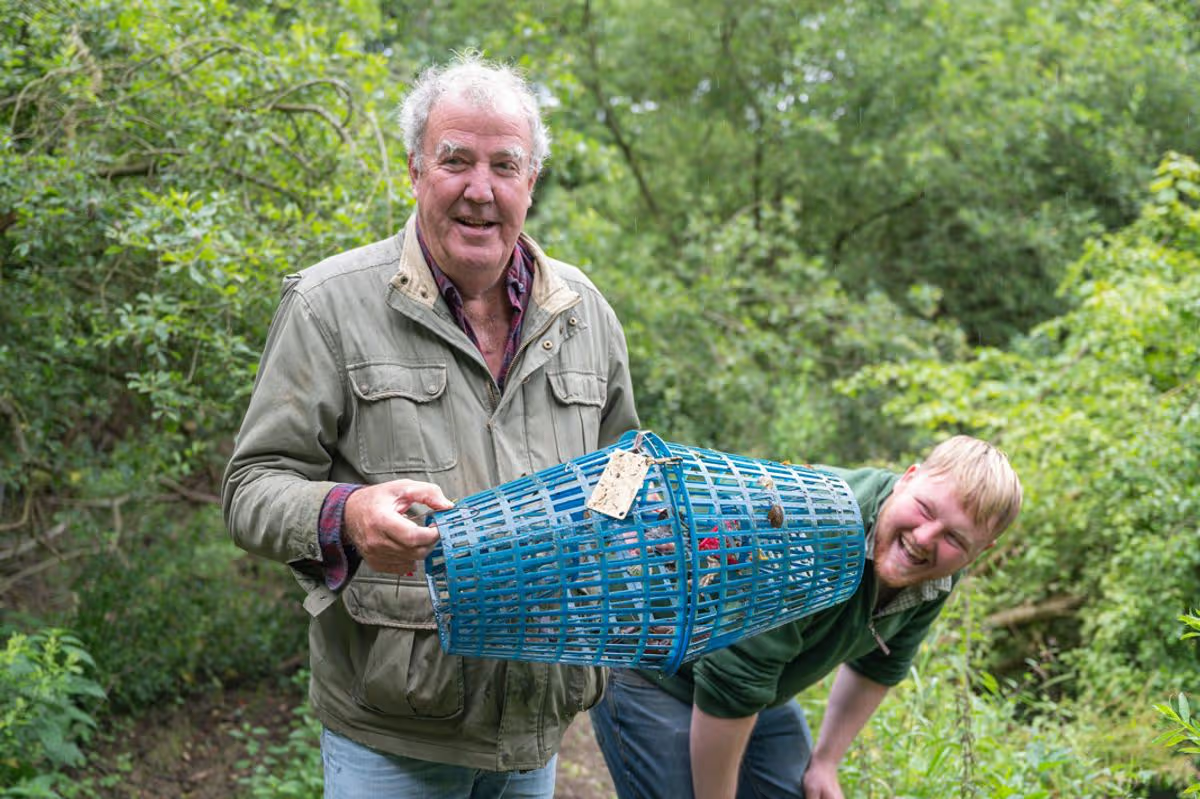
Clarkson’s Farm favourite Kaleb Cooper sat down with lead actor Jackman to chat about the film, even introducing some lambs into the mix — which behaved impeccably for the X-Men legend, yet proceeded to kick the farmhand square in the face before defecating on him.
Content cannot be displayed without consent
The much-loved Clarkson’s Farm star wrestled with a troublesome lamb before telling Hugh: “This is bad, you’re holding a sheep perfectly fine.”
Hugh quipped about the sedate lamb in his arms: “That’s because he knows he’s loved.”
The Sheep Detectives is streaming on Prime Video now
Clarkson’s Farm Season 5 is streaming on Prime Video now.
I didn’t realise I was a fussy eater until I left Denmark. During 12 years of living Danishly, with regular trips to the capital, I just … liked most things. Danes specialise in high-quality, organic produce, eaten as close to its natural state as possible. Denmark has very specific, diverse climatic conditions, making seasonal eating a science. Forget root vegetables in autumn and strawberries in summer – we’re talking micro seasons, week to week, with cabbage, kale, apples, potatoes, berries and rye a speciality. None are around for long, but when they are, they’re fabulous – and the seasonal Nordic diet has been proven to be as healthy as the renowned Mediterranean diet and better for the planet. No wonder Copenhageners look so smug.
But the city’s food scene hasn’t always been so good. Many who grew up in the 1970s and 1980s report being reared on canned food and frozen vegetables, with pork and potatoes, smørrebrød (open sandwiches) or junk food making up much of the offerings. (You’re never far from a pølservogn, or “hot dog wagon”, in Copenhagen – doling out bright red wieners baked in their own bready prophylactic.)
New wave … Kødbyens Fiskebar sits in the heart of the Meatpacking District. Photograph: Kødbyens Fiskebar
The capital’s culinary offerings finally got a facelift when Copenhagen was made European capital of culture in 1996. Then came Noma. Chefs René Redzepi and Claus Meyer turned a former warehouse in Christianshavn into a restaurant in 2003, named after a combination of the Danish words nordisk (Nordic) and mad (food). Noma eschewed the Mediterranean bias in fine dining at the time in favour of homegrown Danish produce. The following year, they brought together fellow chefs to develop a set of principles to help Nordic food move forward. Just as Dogme ’95 took things back to basics in film, the New Nordic Kitchen Symposium vowed to focus on the raw materials of cooking – using local, often foraged, seasonal produce.
After an 18-hour-long workshop, chefs formulated the New Nordic Kitchen manifesto. It’s outline: to express “purity, freshness, simplicity and ethics” by prioritising “ingredients and produce whose characteristics are particularly excellent in our climates”, and helping to “promote Nordic products and producers”. And it worked – encouraging everyone to up their game and influencing chefs globally. Copenhagen began hoarding Michelin stars (30 at last count), but in the kitchen, pressure built. Redzepi acknowledged as far back as 2015 that he had been a bully who “yelled and pushed people”, then in March this year he resigned from Noma amid allegations of physical and verbal abuse.
Noma alumni … Propaganda is run by former Noma chef Youra Kim. Photograph: Giulia Fontana/Propaganda, Copenhagen
What made Redzepi’s fall so spectacular was that it collided with Noma’s image as a progressive, sustainably driven, Danish restaurant. There’s no doubt that Noma helped normalise ideas of seasonality, foraging and ingredient-led storytelling in fine dining (sometimes it was more of a Ted Talk than a meal), but innovation can’t come at the cost of accountability. There’s hope that Redzepi will act as a cautionary tale for other chefs contemplating how to run their kitchens – with Noma alumni now heading up dozens of restaurants in the city, from Propaganda (run by Youra Kim, former chef), to Kødbyens Fiskebare (Anders Selmer, former restaurant manager) and the ubiquitous Bæst (Christian Puglisi, former sous chef).
Today, there’s still an emphasis on quality and attention to detail – from ingredients to cutlery, crockery and even candlesticks. Service culture has improved (you might get a smile now) and restaurants book weeks in advance, so it pays to plan ahead. Eating out in Copenhagen isn’t cheap, mind, but every bakery allowed to thrive in the city will have affordable options. And there’s nothing like biting into some dense, buttered rye topped with whatever’s in season as the sun bounces off the water that slices the city (hard recommend: Aamanns). .
Copenhagen is more relaxed than other capitals and more human in scale, dominated by four- to six-storey buildings, and biking Vikings outnumbering cars in the city. With hyper-local menus, climate-conscious cooking and a devotion to detail, it is still, in the words of Danny Kaye, “wonderful”.
Travelling to Copenhagen – what to do when you’re not eating
Imposing … Copenhagen’s iconic city hall. Photograph: arcady_31/Getty Images/iStockphoto
Where to stay
Steps from food market Torvehallerne, stylish Kong Arthur Hotel prides itself on offering a local feel with morning saunas and a social running club for guests. Double rooms start at £202 per night, two-night minimum stay. In Nordhavn, the newly opened Hotel Frihaven has 28 rooms and is well located for a morning swim. Double rooms start at £170. For a budget option, Next House, close to the foodie-orientated Meatpacking District in Vesterbro, has compact double rooms from £138.
Things to do
A forager’s delight … the beach at Amager. Photograph: Heini Kettunen/Alamy
If you don’t fancy going on a packed tourist-boat trip to see the city, take a bike ride or walk around the Harbour Circle Route instead, via some of the best Danish architecture and numerous swimming spots.
Speaking of swimming, the city’s floating pools are free for everyone – and something of a local obsession. Islands Brygge Harbour Bath has the largest and most central pool.
If you needed more incentive, the CopenPay initiative rewards visitors who participate in climate-friendly activities. Arrive by bike or metro, help with some gardening or bring a water bottle: all earn rewards such as drinks, free tours or a coffee.
If you want to bump into a Danish chef in the wild, try foraging in the Amager Strand area. The app VildeMad introduces the edible Danish landscape and has foraging guides to follow.
Copenhagen has a vibrant vintage shopping scene. Elmegade in Nørrebro is a great place to start. If you’re in the city on a Sunday, look out for flea markets. It’s a tradition to set up impromptu markets across the city, selling anything from vintage furniture to clothes.
Stop by Alma in Frederiksberg for a spot of supermarket tourism. The independent grocer is on a par with Waitrose and stocks specially produced chocolate from Michelin-starred restaurant Alchemist on its shelves.
Have you even been to Copenhagen if you don’t return with a biscuit tin? For the best iteration of the souvenir, head to Juno the Bakery, where they sell buttery cookies in chic containers. And yes, you can repurpose the tin for a sewing kit afterwards.
Places to see
Haunting … Cisternerne in Frederiksberg Park. Photograph: Design Pics Inc/Alamy
Amusement park Tivoli Gardens dates back to 1843 and is a classic day out with family-friendly attractions, thrill rides, arcades and parading peacocks in its lush gardens. Restaurants are – surprisingly – outstanding, including a pop-up that hosts some of the country’s most acclaimed chefs.
Copenhagen’s art scene is particularly exciting this year. At Arken, scrapwood artist Thomas Dambo’s first major exhibition Garbage Man displays his enormous and charming trolls, while at Cisternerne, Marina Abramović’s Seven Deaths offers a haunting experience.
The Coastal Route train line is a lovely trip once you’ve had your fill of wandering historic streets and hygge in the city. Take it to the Louisiana Museum of Modern Art or continue to Helsingør, home to the castle where Shakespeare set Hamlet
Halfway through a turbulent year, a clear pattern has emerged across global markets: anything tied to the physical build-out of AI has soared, while several other assets that investors traditionally turn to in uncertain times have stumbled.
ADVERTISEMENT
ADVERTISEMENT
War in the Middle East, political upheaval and an oil-price spike formed the backdrop, yet stock markets in several regions still pushed to fresh record highs.
According to Dan Coatsworth, head of markets at AJ Bell, companies on the receiving end of the AI spending boom were the standout investments of the first half, while Bitcoin proved “a shocker” and gold lost its shine.
It is, Coatsworth noted, a remarkable run of events for only half a year’s worth of trading.
The most spectacular gains came from an unglamorous corner of the technology world: the firms that make memory chips.
As demand for AI computing collided with tight supply, prices surged and took shares with them. SanDisk led the US market with a gain of over 850% in six months, while Western Digital, Micron Technology and Seagate Technology all more than tripled in value, a pace of return that would ordinarily take many years to achieve.
The driver is the vast quantity of high-speed memory and storage needed to train and run AI systems as the largest technology companies race to expand their data centres.
Other US equities that soared on the back of the AI trade include Intel, Dell, Advanced Micro Devices (AMD) and Applied Materials, which all rose between 150% and 280% year to date.
The rush also lifted emerging markets, where Asian chipmakers such as TSMC and SK Hynix carry heavy weight, helping South Korea’s KOSPI double in value, Japan’s Nikkei 225 climb roughly 40% and the MSCI Emerging Markets index rise by around 27%.
In Europe, the FTSE 100 gained 7% in the first half of the year, France’s CAC 40 rose 5%, while Germany’s DAX gained 2%. Meanwhile, the MSCI India index fell 5% and Hong Kong’s Hang Seng lost 6%.
Notably, the memory rally has begun to unwind in recent days, with several of the same names caught in a sharp technology sell-off.
The fallen favourites, takeovers and the trades that cooled
The flipside was brutal for yesterday’s winners.
Previous AI darlings Meta and Microsoft were left behind, down 14% and 24% respectively on a total-return basis, as heavy AI spending turned the technology giants into more capital-hungry businesses and investors stopped paying a premium for them.
Microsoft now trades at its cheapest level in a decade, leaving both it and Meta valued more modestly than McDonald’s, an outcome few would have predicted at the height of the “Magnificent 7” craze.
Elsewhere, the assets many expected to lead disappointed.
Gold took investors on a volatile ride. After surging to a record high of $5,594.82 an ounce on 29 January, the precious metal lost around 28% from its peak despite the geopolitical turmoil that would normally send investors flocking to safe-haven assets. Instead, its appeal was undermined by higher bond yields and cash rates, which offer an income that a gold bar cannot.
Bitcoin fared worse still, falling 28% since the start of the year as enthusiasm for crypto drained away and money rotated towards technology shares instead.
In the UK, takeovers did much of the heavy lifting.
Six FTSE 100 companies, among them Glencore, Schroders and Segro, attracted bid interest in the first half, a sign that buyers still see value in British blue chips even after a three-year re-rating.
Housebuilders such as Persimmon struggled against a sluggish property market, while tech-adjacent names like Experian and RELX were swept up in fears about AI disruption.
One trade that conspicuously cooled was defence.
After a storming 2025, the likes of BAE Systems, Germany’s Rheinmetall and America’s Palantir all gave ground, as the good news on rising military budgets looked fully priced in and investors drifted elsewhere.
This article does not constitute financial advice. Always do your own research and invest according to your specific circumstances.
Our Mirror writer Georgia Reina discovers Portugal’s Alentejo region and its world-class food, wine and slow living
The unspoilt Portuguese region that’s home to incredible food, wine and history(Image: Calum Davidson 2011 Getty)
When you picture Portuguese getaways, you’re almost certainly thinking of city escapes in Lisbon or the golden sandy shores of the Algarve. However, if you’re after a holiday that combines sun-drenched heritage with a chilled-out, easygoing vibe — not to mention exceptional wine — the true gem lies an hour and a half inland.
You may not have come across Alentejo yet, but next year the region’s historic centre, the town of Évora, will claim the spotlight as the European Capital of Culture. It delivers the perfect small-town appeal with a rustic flavour.
Wandering its cobbled lanes, I instantly sensed it’s the lively sort of place where everyone appears to know each other, effortlessly swapping banter across open windows and sunlit squares.
There is a philosophy in Alentejo, an idea the locals embrace, called vagar. Literally meaning ‘to drift’, it’s the deeply rooted Portuguese practice of slow living.
Vagar is about taking things easy, relishing a leisurely lunch, enjoying a fine glass of red, and allowing the day to unfold without any frantic urgency. It became the spirit of our trip.
Where to stay
In the town centre, I stayed at the five-star M’ar De Ar Aqueduto, a contemporary design hotel set within a 16th-century palace. It has a captivating history, with a former life as a medical facility and monks residing just across the lane.
Its standout feature is the stunning garden pool, positioned directly beneath the soaring stone arches of the city’s renowned aqueduct. A short drive from town in Viana do Alentejo, Moagem Industrial Lodge is a masterclass in industrial-chic design.
Set within a converted historic grain mill, the property preserves its original machinery and rustic character while providing entirely modern comforts. An ideal place to embrace the region’s more relaxed rhythm.
The architecture of Évora is a tribute to its history, with treasures around every corner. The city is awash with brilliant white buildings designed to deflect the Iberian sun, adorned with striking yellow and blue (a traditional choice intended to repel evil spirits, though it apparently also works as a natural insecticide).
History effortlessly blends into contemporary life; nowhere more evident than at the Aqueduto da Água de Prata (Silver Water Aqueduct). This 12km wonder has homes, cafés, and shops cleverly tucked into the narrow spaces beneath its soaring stone arches.
At the city’s highest point sits the iconic 1st-century Roman Temple – formerly the ancient city centre. Yet Évora’s Roman heritage is also concealed right beneath your feet.
As we entered the grand, iron-framed City Hall, we uncovered the Roman bath complex – discovered during renovations in 1987 and beautifully preserved within the municipal building. But no visit is truly complete without experiencing Évora’s most bizarre attraction: the Chapel of Bones (Capela dos Ossos).
Constructed by 17th-century Franciscan monks, its walls and columns are carefully adorned with thousands of human skulls and shin bones. Standing there, taking it all in, was a powerful reminder of mortality I won’t ever forget.
Eat, drink, be merry
Évora’s culinary scene is renowned – local produce refined through generations of tradition. We began with an icon – doces conventuais (convent sweets).
Born from a 16th-century sugar boom originating in Brazil, inventive nuns blended sugar with egg yolks to create indulgent delicacies like Pão de Rala. On the savoury front, I don’t need to suggest a specific restaurant – the streets are packed with charming trattorias to choose from.
At virtually all of them, the highlight is pork – not just in main courses (succulent suckling pig), but even in puddings, where crispy, salty crackling is combined with sweetness – and it simply works. Complete your meal with Queijo de Évora, a sharp sheep’s milk cheese, or enjoy a glass of Marquês de Borba Late Harvest – now my go-to dessert wine.
What really places Évora and Alentejo on the international stage, though, is its wine. If you can schedule your trip around the Évora Wine Festival in late May, you’re in for an absolute delight (although tastings are on offer throughout the year).
The festival transforms the historic squares into vibrant celebrations with crowds enjoying rich, fruity reds and sunshine whites. During my tastings, I absolutely adored the Comenda Grande Rosé – a wonderfully dry, balanced wine with intense raspberry aromas and a crisp acidity that virtually demands to be enjoyed on a sun-drenched terrace.
The striking Quinta do Quetzal ‘Arte’ Red completely captivated me too, with its intricate blend of wild berries and rich spices, which complements pork dishes superbly. For a white, the lively Porta da Ravessa is pure Alentejo sunshine bottled, delivering an incredibly fresh, tropical burst of citrus that serves as the perfect local aperitif.
It is this remarkable, authentic viniculture that continues to cement the region’s standing as an absolute essential destination for food lovers and wine enthusiasts alike.
Beyond the city walls
Venturing beyond Évora for a day excursion, I’d suggest making the journey up to the medieval village of Monsaraz. Sitting high atop a hilltop overlooking the Spanish frontier, this ancient, walled museum-village appears frozen in time.
It boasts narrow, twisting lanes bordered by striking slate and whitewashed houses, all converging towards a magnificent 14th-century castle constructed by King Dinis. Strolling along its peaceful ramparts provides panoramic vistas across the golden Alentejo plains and the glistening waters of the Alqueva reservoir beneath – an ideal spot to embrace the purposeless wandering of Portuguese vagar at sunset.
Sciver-Brunt first injured her calf on 29 April, suffering what was then described by England as a “minor” tear when playing in domestic cricket.
She subsequently sat out series against New Zealand and India at the start of the international summer before returning for England’s World Cup warm-up matches.
The England captain came through warm-ups against Australia and India and the first match of the World Cup against Sri Lanka but reported ‘tightness’ in a win over Ireland 10 days ago.
She has not played since and England will either play their semi-final on Tuesday or Thursday next week, depending on other results.
“The one thing you need is time,” Worth said.
“You need time to allow the muscle to repair and then strengthen in the right way. Those timelines are tight, particularly given a history of previous injuries in the same area, but not impossible.”
Calf injuries are a regular issue for cricketers. England’s leading wicket-taker James Anderson had calf problems in the latter part of his career.
Worth said this is because of issues specific to cricket, like batters having to sprint from a standing start or bowlers slamming their front foot into the crease in their delivery stride, and the make-up of the muscle.
“You have two different types of tissue that come together,” he said. “You have your calf which is the upper bit and then the Achilles tendon.
“Wherever there are two types of tissue in terms of composition, that is often where there is a weak point.
“Things like taking a run, going from 0 to 100mph, are really difficult to replicate in rehabilitation.
“You have the immediate calming down on inflammation but tendons like load and need to strengthen.
“It is very difficult to get the balance between working the muscle enough and not pushing it too far.
“Quite often calf injuries are tricky because you feel like you have done the work and you put them back onto the field in a match situation and something goes again.”
A view of the Bank of Korea headquarter building in Seoul, South Korea, 15 June 2026. Photo by JEON HEON-KYUN / EPA
June 26 (Asia Today) — South Korean banks are restricting mortgages and personal loans months earlier than usual as rapid household debt growth threatens to exhaust their annual lending quotas.
The country’s five largest commercial banks – KB Kookmin, Shinhan, Hana, Woori and NH NongHyup – recorded household loan growth through May that exceeded targets agreed upon with financial regulators, according to banking industry data released Friday.
Their combined household loan balance increased from 767.296 trillion won ($496.4 billion) at the end of April to 770.823 trillion won ($498.7 billion) at the end of May.
The one-month increase was 3.527 trillion won ($2.3 billion).
Mortgage growth slowed, but personal credit borrowing rose rapidly as a strengthening stock market encouraged more investors to borrow money to buy shares.
Outstanding personal credit loans at the five banks increased by 2.174 trillion won ($1.4 billion), from 104.341 trillion won ($67.5 billion) in April to 106.515 trillion won ($68.9 billion) in May.
Banks have responded by reducing loan limits, restricting online applications and suspending products that allow borrowers to receive larger mortgages.
Hana Bank will suspend enrollment Wednesday in mortgage insurance and guarantee programs that allow banks to lend without deducting an amount reserved to protect tenants’ small security deposits.
Without the programs, the maximum mortgage available for an apartment may fall by about 55 million won ($35,600) in Seoul and 48 million won ($31,100) in Gyeonggi Province.
KB Kookmin Bank suspended the programs Friday, while NH NongHyup Bank had already stopped offering them.
Industrial Bank of Korea also stopped accepting some individual loan applications submitted through outside loan consultants.
Banks have also reduced unsecured credit limits.
Hana Bank and Woori Bank lowered their personal credit loan limits to 100 million won ($64,700).
Shinhan Bank is reducing the limits on revolving credit lines by as much as 20% when customers renew them.
Online lenders KakaoBank, Kbank and Toss Bank have also reduced limits on personal loans and revolving credit accounts and restricted some new lending.
Banking officials said the restrictions began unusually early this year.
Banks ordinarily introduce stronger lending controls around October or November as they approach their annual household loan limits.
This year, however, regulators set substantially lower growth targets and banks are attempting to prevent a rush of applications late in the year.
One banking official said loan applications and inquiries increased after the government signaled that it would continue tightening household debt controls.
Some borrowers are seeking loans earlier because they fear financing will become more difficult later in the year, the official said.
Annual lending restrictions are not new in South Korea.
Banks sometimes receive permission to issue additional loans if their annual limits are exhausted earlier than expected. In other cases, borrowers must delay loans until the following year.
Lee Eun-hyung, a researcher at the Korea Research Institute for Construction Policy, said banks have repeatedly adjusted lending levels to comply with annual debt-management targets.
“Whether additional lending capacity is provided at the end of the year depends on the government’s policy direction and market conditions at that time,” Lee said.
Banking officials said additional lending allocations appear unlikely this year because the government remains focused on controlling household debt and stabilizing the real estate market.
Easing restrictions while housing prices remain elevated could further stimulate demand, they said.
The possibility that banks could exhaust their quotas early has prompted some prospective borrowers to accelerate home purchases or seek loan approval before further restrictions are introduced.
The US has struck Iran for the first time since the two sides reached a Memorandum of Understanding on June 17. The US says it hit Iranian military sites amid claims Iran’s forces attacked a commercial ship in the Strait of Hormuz.
I Will Find You stars Gilmore Girls legend Milo Ventimiglia and Severance icon Britt Lower.
Hayley Anderson Screen Time TV Reporter
21:51, 26 Jun 2026Updated 21:52, 26 Jun 2026
I Will Find You: Official Netflix trailer
Harlan Coben fans have yet another Netflix thriller to get excited about.
I Will Find You has gone down a storm with Netflix subscribers with the eight-part thriller still topping the streamer’s most-watched charts.
But that doesn’t come as too much of a surprise given that it’s based on another best-selling Harlan Coben novel, following in the footsteps of Run Away earlier this year.
But the author and Netflix showrunner doesn’t let the grass grow for very long as he’s now busy bringing to life another of his books for the small screen. And this time, it’s one of Coben’s most “iconic” characters who has starred in a whopping 12 of the author’s novels.
Watch Unchosen on Netflix
This article contains affiliate links, we will receive a commission on any sales we generate from it. Learn more
Harlan Coben’s Myron Bolitar novels initially began in 1995 with the release of Deal Breaker, delving into the titular character’s world as a sports agent.
Bolitar was an NBA superstar but was forced to switch careers and so now represents other sporting heroes but often finds himself “investigating blackmail attempts, murder and more”.
The new adaptation is also going to be co-showrun, co-written and co-executive produced by Lincoln Lawyer and Big Little Lies creator David E Kelley and Suits writer and co-producer Kyle Long.
Myron Bolitar is currently in development with an expected release date window sometime in late 2027.
Netflix’s Head of Series US and Canada Jinny Howe described Bolitar as Coben’s “most personal and iconic character”.
She continued: “Bringing this story to the screen has been a big priority for us, and we knew that finding the right creative partners was essential.
“It’s been a dream to collaborate with David E. Kelley — a true master of the genre, and the talented Kyle Long on this series.
“This is a major milestone for our partnership, and we look forward to many more years of working together.”
But before viewers can get excited about Myron Bolitar, another Coben drama will be released in early 2027, once again starring Fool Me Once actress Michelle Keegan.
Based on his 2007 novel of the same name, The Woods will see Keegan’s character investigate the 20-year-old disappearance of a barrister’s sister whose traumatic past soon comes to light.
Keegan will be joined by Behind Her Eyes’ Tom Bateman, Mobland star Mandeep Dhillon and Small Prophets actor Pearce Quigley.
Harlan Coben dramas are available to watch on Netflix.
Uzbekistan’s largest-ever public market transaction has highlighted growing investor interest in the country and its economic reforms, while shifting attention to the next stage of developing its financial markets.
ADVERTISEMENT
ADVERTISEMENT
The listing of the National Investment Fund of Uzbekistan, managed by Franklin Templeton, raised more money than all previous IPOs in the country combined over the past 30 years, according to Marius Dan, Central Asia CEO at Templeton Global Investments.
For investors and market operators, the transaction has drawn attention to a wider issue: how Uzbekistan develops the rules, institutions and market depth needed to support capital markets, debt financing, venture capital and private investment.
“What investors really want to know is that they’ll put their money in and that they will get their money back,” Julia Hoggett, chief executive of the London Stock Exchange, told Euronews.
Hoggett said investors usually begin by looking at a country’s fundamentals, including currency stability, inflation, economic growth, population trends and assets, before turning to the regulatory environment.
Building the infrastructure behind investment
Uzbekistan is preparing new financial legislation as it seeks to expand the range of financing available to companies and investors.
Laziz Kudratov, the country’s minister of Investment, Industry and Trade, told Euronews that legislation establishing the Tashkent International Financial Centre is expected to be signed soon.
The project would create a separate jurisdiction based on common law principles. Kudratov said the aim is to give foreign financial companies a legal environment based on international standards rather than requiring them to operate solely through local legislation.
He also said the planned jurisdiction would include 50 years of tax incentives, including exemptions from corporate income tax, value-added tax (VAT), property tax and customs duties.
The government is also preparing legislation covering alternative investment structures, including venture capital, private equity and limited partner-general partner investment models.
“We are also coming up with a new law on alternative investments,” Kudratov said. “It will create a framework to protect venture capital, LP and GP investment, and private equity investment in Uzbekistan.”
Dan said the National Investment Fund listing showed that international investors were willing to participate when transactions were structured in the right way.
Dan said Uzbekistan’s capital market would need more companies, greater liquidity and more foreign institutional investors in the coming years.
He said continued listings of state-owned enterprises, both within and outside the National Investment Fund’s portfolio, would be important in broadening the investment universe.
Local debt markets are also beginning to attract more attention, he said, with retail investors looking more closely at investment opportunities inside Uzbekistan.
Kudratov said reforms introduced since 2017 had changed the investment environment through tax reforms, currency liberalisation and the removal of restrictions on profit repatriation.
“Any investor can come, invest and get their revenues out of the country within one day,” he said.
For Hoggett, investor confidence also depends on a proven track record.
“You can’t change things overnight and say people need to believe it. They need the evidence to see it,” she said.
Broadening participation
The growth of local debt markets and the entry of more retail investors are early signs that Uzbekistan’s financial market is beginning to widen beyond foreign institutional capital, according to Dan.
Hoggett said public markets can play a wider role by opening investment opportunities to more participants.
“The public markets are democratising,” she said.
Hoggett added that private companies are often owned by a relatively small group of investors, while public markets allow a broader range of investors to access company growth. That wider access comes with stronger disclosure requirements for issuers.
For Uzbekistan, broader participation would mean more than attracting foreign capital. It would also involve creating opportunities for domestic investors to participate in the growth of listed companies, debt markets and other financial products.
Governance and market discipline
Governance remains central to the development of Uzbekistan’s capital markets.
Dan said several companies within the National Investment Fund’s portfolio had already introduced board-level changes, including the appointment of independent directors.
“Corporate governance is key,” he said.
He described stronger oversight of state-owned companies as part of improving their operations.
Hoggett said public markets also impose discipline on companies seeking capital.
“The first rule of doing an IPO is meet your estimates, hit what you say you’re going to do,” she said.
That requires companies to build systems, controls, accounting capacity, finance teams and planning processes, she said. Hoggett added that such structures can help companies operate at scale and grow faster.
Defenseman Brandt Clarke has agreed to a five-year, $37 million deal to stay with the Kings.
The Kings announced the deal Friday for Clarke, the eighth overall pick in 2021 who has grown into the new cornerstone of their defense.
Clarke had career highs of eight goals and 32 assists while playing in all 82 regular-season games last season for the Kings, who lost in the first round of the Stanley Cup playoffs for the fifth consecutive year. He was third in the NHL with 185 blocked shots, and he finished fourth on the LA roster in scoring.
The 23-year-old Clarke spent parts of the past four seasons with the Kings, but has been an NHL regular for only two years. Kings general manager Ken Holland still saw enough to lock down the mobile defenseman through the 2030-31 season.
The Kings hired Peter Laviolette as their head coach earlier this month, and Clarke’s offensive skill fits well into the team’s possible evolution away from its traditional defense-first mentality to a more aggressive club under Laviolette.
Clarke was the Kings’ most prominent restricted free agent heading into the summer, but Holland also must make decision on unrestricted free agents Andrei Kuzmenko and Scott Lawton.
SMEs and Startups Minister Han Seong-sook attends a meeting of the emergency economic headquarters at the government complex in Seoul, South Korea, 22 May 2026. Photo by YONHAP / EPA
June 26 (Asia Today) — South Korea plans to create an investment and procurement system aimed at producing homegrown security technology companies comparable to U.S. data analytics company Palantir Technologies, the government said Friday.
The Ministry of SMEs and Startups announced the strategy with the Defense Ministry and Korea AeroSpace Administration during a meeting on future security innovation companies at the Blue House.
The plan seeks to accelerate the transfer of advanced civilian technology into national defense and security.
The government aims to develop five security technology companies valued at more than 1 trillion won ($651 million) and 50 companies with annual sales exceeding 100 billion won ($65.1 million) by 2030.
It will designate five strategic sectors covering drones and robotics, defense artificial intelligence and semiconductors, advanced sensors and materials, aerospace technology and cybersecurity and quantum communications.
Officials described the initiative as an effort to cultivate a “Korean Palantir,” referring to the U.S. company known for software that integrates and analyzes large volumes of defense and intelligence data.
The phrase is a policy description rather than the name of a company the government plans to establish.
Investment vehicle modeled on In-Q-Tel
The ministry plans to establish a government-backed investment organization modeled on In-Q-Tel, the nonprofit strategic investor created to support technologies relevant to U.S. intelligence agencies.
The proposed organization would make direct investments in early-stage security technology companies to address funding shortages.
The government also plans to support the establishment of a technology-focused asset management company tentatively called Korea Strategic Technology Partners.
Through government and private investment vehicles, officials aim to create as much as 10 trillion won ($6.5 billion) in strategic technology financing over the next five years.
The money would provide growth capital to startups and smaller companies developing technologies with potential defense, intelligence, aerospace or cybersecurity applications.
Faster research and procurement
South Korea also plans to introduce a special research and development program modeled on the U.S. Other Transaction Authority system.
The system would connect research, testing and government purchasing under a faster contracting process intended for rapidly changing technologies.
Selected companies could receive as much as 10 billion won ($6.5 million) each over five years.
The Defense Ministry and Korea AeroSpace Administration plan to create procurement systems capable of placing some advanced weapons or technologies into initial service within one year.
The government also plans to expand access to defense data through a catalog showing what information may be available to approved companies.
Aerospace authorities will support the development of core technology for a national space data center and platforms that allow businesses to use satellite information.
The strategy reflects the government’s view that traditional defense procurement moves too slowly for technologies such as artificial intelligence, drones, robotics and cybersecurity software.
Support for smaller technology companies
Minister of SMEs and Startups Han Seongsook said the global security industry is shifting rapidly from traditional hardware toward software, data and artificial intelligence.
“The government will provide bold and rapid support so startups and small venture companies with flexible and creative technologies can become leaders in security innovation,” Han said.
The government also plans to protect companies’ intellectual property rights and allow technologies developed through public programs to be adapted for civilian markets.
Officials said the strategy would help smaller companies enter a defense industry that has traditionally been dominated by large manufacturers and hardware-centered weapons programs.
The ministries plan to form an interagency committee, pursue special legislation and revise contracting rules to support the initiative.
CENTCOM said the strikes were “a powerful response to yesterday’s attack on a commercial ship that was transiting the Strait of Hormuz.” The command added that “U.S. aircraft struck Iranian missile and drone storage locations and coastal radar sites after Iran hit M/V Ever Lovely on June 25 with a one-way attack drone. The Singapore-flagged cargo ship was exiting the Strait of Hormuz along the Omani coast at the time of Iran’s attack.”
That incident “clearly violated the ceasefire,” the command proclaimed. “Furthermore, Iran’s dangerous behavior undermined freedom of navigation as commerce increasingly flows through the vital international trade corridor.”
U.S. Central Command (CENTCOM) has now confirmed that aircraft carried out strikes earlier today, June 26, against Iranian missile and drone storage locations as well as coastal radar sites, in retaliation for yesterday’s drone attack on a commercial shipping vessel in the Strait… pic.twitter.com/ZT1uxie6Uv
IMO pauses evacuation plan. “I have been informed of an attack today in the Gulf of Oman. Seafarer safety remains paramount. To ensure coordinated approach & navigational safety, the IMO evacuation plan will be paused until further clarity.” – @IMOSecGenhttps://t.co/UtvKjTtG5Npic.twitter.com/29m2lMkt1V
— International Maritime Organization (@IMOHQ) June 25, 2026
Earlier on Friday, President Donald Trump told reporters “We’ll find out,” when asked if Iran faced any consequences for the ship attack.
Asked if he considered the ceasefire to still be in place, the president said: “I don’t like the fact that they took a shot yesterday. Actually, four, we knocked down three at a ship, not an allied ship, but a ship, a very expensive ship, and it was fine, but it took a little beating. They shouldn’t be doing that. You’ll find out.”
I was surprised the US did not respond to Iranian drone attack against EVER LOVELY last night.
There was no immediate military response from Iran, a U.S. official told us. However, as we have reported in the past, these kinds of attacks have resulted in tit-for-tat kinetic actions between the two nations. We also do not know the level of command and control the Iranian government has over hardline IRGC elements and if these kinds of attacks are occurring independent of the government leadership’s wishes.
In its post on X, CENTCOM said its forces CENTCOM forces “continue to provide safe passage coordination and support to commercial vessels transiting the strait. The U.S. military remains present and vigilant to ensure all aspects of the agreement with Iran are adhered to, obeyed, and in full force and effect.”
The U.S. and Iran continue to negotiate over a future peace deal, but many sticking points remain, including how the country’s nuclear material will be dealt with and future nuclear operations monitored.
This is a developing story.
UPDATE: 5:56 PM EDT –
After the U.S. airstrikes, Iran reiterated that it will continue to hold at risk shipping in the Strait that does not follow its rules for transit.
“Iran has repeatedly stated that the situation in the Strait of Hormuz will not return to what it was before the U.S. attack on Iran,” the official Iranian IRIB media outlet stated on X. “Any transit through the Strait must follow the routes announced by Iran; otherwise, the security of vessels cannot be guaranteed.”
🚨 Iran has repeatedly stated that the situation in the Strait of Hormuz will not return to what it was before the U.S. attack on Iran. Any transit through the Strait must follow the routes announced by Iran; otherwise, the security of vessels cannot be guaranteed.
— IRIB (Islamic Republic of Iran Broadcasting) (@iribnews_irib) June 26, 2026
UPDATE: 8:05 PM EDT-
The IRGC Navy claims it “struck American military targets in the region in retaliation for earlier aggression against Iranian coastal areas,” the official Iranian Press TV media outlet reported.
“The force made the remarks in a statement issued on Friday, saying its reprisal ‘targeted the deployment sites of the US terrorist military in the region,’” the outlet added.
However, there was no visual proof provided of any attack.
A BRIT music legend, 70, has been ‘admitted to hospital’ with a mystery illness as he reschedules gigs last-minute.
Bruce Foxton – the bassist and backing vocalist of The Jam – was set to play a gig in Kidderminster on Friday evening.
Sign up for the Showbiz newsletter
Thank you!
A Brit music legend, 70, has been ‘admitted to hospital’ with a mystery illness as he reschedules gigs last-minuteCredit: SplashBruce Foxton was a member of The JamCredit: Rex
But in a post on social media, it was revealed Bruce had fallen ill and would have to reschedule the performance.
The post by AGMP Concerts read: “Due to illness, the Bruce Foxton concerts this weekend are being rearranged.
“Tonight’s concert in Kidderminster has now been cancelled. Tomorrow’s Lincoln show (Saturday 27th June) has moved to Friday 15th January 2027.
“Thanks for your understanding. We look forward to seeing you in the new year.”
Bruce had to cancel a performance in Kidderminster on Friday evening and reschedule one set for Saturday after falling illCredit: RexThe Jam had a whole host of hits in the late 70s and early 80sCredit: Getty
Meanwhile another post on X from a fan claimed: “Bruce’s show in Kidderminster tonight has been cancelled and not rescheduled due to the fact he has been admitted into hospital.
“Let’s hope it’s not too serious for this absolute legend.”
Bruce’s fans were quick to comment, with one writing: “Get well soon Bruce. Take a break sir, we’d prefer a happy healthy retired Bruce than a pushing himself to the limit to the detriment of his health Bruce.”
Another added: “Sending u my love Legend…TIME2RELAX NOW U WORKED YOUR A*** OFF….We have memories Bruce..enjoy your life now..we all love u and now time to enjoy your memories xx.”
A third commented: “Get well quickly Bruce. Such a great bass player, seen him in The Jam, Stiff Little Fingers and of course From The Jam.”
Bruce first came to prominence in the 1970s in The Jam before pursuing a solo career when the band broke up.
In 1990 he joined Stiff Little Fingers and was with the band until 2007, before he joined Rick Buckler and members of his tribute band, the Gift, to tour under the name From the Jam.
The Sun Online has reached out to a representative for Bruce for comment.
The Angels have fired general manager Perry Minasian midway through their sixth consecutive disappointing season under his leadership.
The last-place Angels appointed former Cardinals GM John Mozeliak to be their interim general manager and baseball operations consultant on Friday. Mozeliak will oversee day-to-day baseball operations while assisting the search for the next GM, team president Molly Jolly said in a news release.
“Perry has been a valued leader who worked tirelessly over the last six years to strengthen our baseball operations department,” Jolly said. “I am grateful for his dedication, insight and many contributions to our organization.”
Minasian took over the Angels’ front office in November 2020, but the long-struggling franchise has made no discernible progress during his tenure under mercurial owner Arte Moreno.
The Angels’ streaks of 10 straight losing seasons and 11 straight non-playoff seasons are both the longest in the majors, and its farm system is still considered to be among the majors’ worst, just as it was when Minasian arrived.
The biggest transaction of his tenure occurred when Shohei Ohtani left the Angels after six seasons for the Dodgers in late 2023, the Angels failing to trade Ohtani for prospects before Ohtani became a free agent.
Minasian’s flurry of moves before and after the 2023 trade deadline seemed chaotic. The Angels kept Ohtani — a decision Moreno had a big hand in — and dealt away several prospects in an attempt to push for the playoffs.
But the Angels went 8-19 that August and fell so far out of contention that they placed several players on waivers in order to bring their payroll under the luxury tax threshold.
After holding the majors’ worst record for much of the current season, the Angels are tied for last in the AL standings at 34-48 heading into their game against the Athletics on Friday night at Angel Stadium. Los Angeles lost a franchise-record 99 games in 2024, its first season after losing two-time AL MVP Ohtani.
The Angels never won more than 77 games or finished higher than third in the AL West during Minasian’s tenure.
Minasian clashed with respected manager Joe Maddon early in his tenure, eventually leading to Maddon’s firing amid an epic losing streak in the 2022 season. After Phil Nevin and Ron Washington also failed to hold the managerial job for more than two seasons, Minasian hired first-time manager Kurt Suzuki from his own front-office staff last fall, giving him a one-year deal with the acknowledgment that their fates were tied.
Ray Montgomery served as interim manager in 2025.
A reduction in payroll forced Minasian to supplement this year’s team with low-cost players — several returning from major injuries — such as pitchers Alek Manoah, Jordan Romano, Drew Pomeranz, Kirby Yates and Brent Suter, outfielder Josh Lowe and infielders Yoan Moncada and Adam Frazier.
Most of the moves didn’t pan out, as Romano and Pomeranz were released, and Manoah, Lowe and Moncada have been busts.
The largest free-agent deal signed by Minasian was a three-year, $63 million contract for left-hander Yusei Kikuchi before 2025. Kikuchi was an All-Star last season but has been sidelined since late April because of a shoulder injury.
Minasian also signed reliever Robert Stephenson to a three-year, $33 million deal before 2024, but the right-hander is out for this season because of another elbow injury.
Jolly and Mozeliak are scheduled to speak at a news conference on Saturday.
Minasian is a former Rangers clubhouse attendant who rose to positions in the front offices of the Atlanta Braves and the Toronto Blue Jays as a protege of Alex Anthopoulos.
Minasian had never interviewed for a GM job before he was chosen to replace Billy Eppler by Moreno, who has repeatedly hired GMs with little to no prior experience in the job during his two decades of ownership.
Mozeliak left the Cardinals last fall after three decades with St. Louis, including the past 18 in charge of baseball operations.
June 26 (UPI) — The U.S. Centers for Disease Control and Prevention on Friday increased its response level to the Ebola outbreak in the Democratic Republic of the Congo and Uganda.
In an update to reporters, Satish Pillai, the Ebola response incidence manager at the CDC, said public health officials were concerned about the rapid increase in and geographic spread of cases of the deadly virus. She said the CDC has upgraded its response to Level 1, making it a top priority.
“Elevating the response level reflects the urgency, scale and complexity of the outbreak, and allows [the] CDC to bring additional resources to support the coordination and operational needs of our response,” Pillai said.
The World Health Organization has confirmed more than 1,000 cases of Ebola and more than 260 deaths from the disease since the outbreak, which began in May. Most of the cases have been reported in eastern DRC, with a smaller number of cases spreading across the border into Uganda.
This Ebola outbreak has been linked to the Bundibugyo virus, making it particularly challenging to treat. Unlike the Ebola-zaire strains of the virus, there are no approved approved therapeutics or vaccines for the Bundibugyo strain, the WHO said.
Ebola was first identified in central Africa in 1976. The virus, which has a two- to 21-day incubation period, causes fever, fatigue, muscle pain, headache, sore throat, vomiting, diarrhea, rash, and, in some cases, internal and external bleeding. It can be transmitted from animals to humans and in human-to-human contact, including sexual intercourse.
While there’s no proven treatment specifically for the virus, people can survive through treatment of the symptoms, including oral and intravenous fluids, and immune and drug therapies.
White House Border Czar Tom Homan speaks during the Faith and Freedom Coalition 2026 Road to Majority Policy Conference at the Washington Hilton on Friday. Photo by Bonnie Cash/UPI | License Photo
Rescue workers in one Caracas neighbourhood say no help has arrived, two days after twin quakes tore through the city. Al Jazeera’s Noris Soto says aftershocks are making the search for survivors harder and rescue efforts are turning to the recovery of bodies.
NEW YORK — David Clayton-Thomas, the lead singer of Blood, Sweat & Tears, whose husky, high-strung tenor on “Spinning Wheel,” “And When I Die” and other hits helped make the so-called brass rock band among the most popular acts of the late 1960s, has died at age 84.
Spokesperson Eric Alper said that Clayton-Thomas died peacefully Wednesday at St. Michael’s Hospital in Toronto. Alper did not cite a specific cause of death.
Clayton-Thomas was a onetime street fighter and petty thief from Canada who briefly became a rock superstar, the front man of a nine-member group that sold millions of records and won two Grammys for “Blood, Sweat & Tears,” which beat out the Beatles’ “Abbey Road” for best album of 1969. Calling out amid a jazzy parade of horns, keyboards and percussion, Clayton-Thomas’ urgent shout was a signature voice of the era, preaching love on the Motown cover “You’ve Made Me So Very Happy,” a lasting legacy on Laura Nyro’s “And When I Die” and a cool head on his own “Spinning Wheel.” Meanwhile, Blood, Sweat & Tears helped inspire a wave of horn-led bands, among them Chicago, the Electric Flag and Ten Wheel Drive.
“A lot of the guys [in Blood, Sweat & Tears] would play a Broadway show matinee, then go up to Harlem and play Latin music or R&B and funk at night, or come down to the Village and play pure jazz the next night,” Clayton-Thomas told Bestclassicbands.com in 2023. “I was just a blues player: Give me three chords and I’ve got a song.”
At its peak, Blood, Sweat & Tears’ appeal was so broad it helped lead to the band’s downfall.
Hip enough to perform at the 1969 Woodstock festival, where they were among the highest paid acts, they also were known enough to the establishment to tour Eastern Europe the following year on behalf of the State Department. When Clayton-Thomas and other band members denounced the Communist regimes on the other side of the Cold War, Rolling Stone’s David Felton wrote that “the State Department got its money worth.” Counterculture Yippies would turn up at a 1970 Blood, Sweat & Tears show at Madison Square Garden, carrying obscene banners outside and dumping manure by the front gate.
The band had practical reasons for going along with the government: Clayton-Thomas, who had allegedly wielded a gun at his girlfriend, had been denied a green card and faced deportation. But after topping the charts in 1970 with the album “Blood, Sweat & Tears 3,” their appeal soon faded. A burned-out Clayton-Thomas left the group in 1972, and neither he nor the remaining musicians ever regained their old stature. Blood, Sweat & Tears would continue recording over the next few years, and even briefly reunited with Clayton-Thomas, who went on to release more than a dozen solo albums and tour on his own for decades.
Beginning under a licensing agreement reached in 1984, Clayton-Thomas toured as “Blood, Sweat Tears” for 20 years with a revolving roster of bandmates. A 1994 Times review of a show at the Coach House in San Juan Capistrano reported that “BS&T’s formula has legs, that its music has withstood the test of time. Indeed, in a world full of today’s pop harmonic minimalism, the sound of trumpets, trombones, guitar and sax backing a singer somehow seems fresh, even if it has been around for so long,” and Clayton-Thomas “still has all the enthusiasm and buzz-saw roughness that gave his voice its distinctive quality way back when.”
In 2005, BS&T re-formed (without Clayton-Thomas, who continued his solo career) and has toured since with various lead singers.
Clayton-Thomas was inducted into the Canadian Music Hall of Fame in 1996. “Spinning Wheel,” covered by everyone from James Brown to TV star Barbara Eden, was voted into the Canadian Songwriters Hall of Fame a decade later.
Born David Henry Thomsett on Sept. 13, 1941, in Kingston upon Thames, near London, and raised near Toronto and Ottawa, he was the son of a Canadian World War II veteran and of a pianist-entertainer who helped inspire her son’s interest in music. Thomsett was lucky to have the chance. He fought violently with his father, was living in the streets by his mid-teens and by age 20 was serving time in a reformatory for vagrancy, assault and other crimes.
An old guitar, left behind by a fellow inmate, changed his life. He taught himself to play and began spending extensive time in the early 1960s around Toronto’s Yonge Street music “strip,” where peers included the American rockabilly star Ronnie Hawkins, a mentor to Robbie Robertson and other future members of the Band and a guide for Thomsett early in his career.
Eager to reinvent himself, he changed his last name to Clayton-Thomas while leading his own groups. In the mid-’60s, he released such albums as “Sings Like It Is” and had a hit single with the antiwar rocker “Brainwashed.” He would also befriend a rising star, Joni Mitchell, whose childlike “Circle Game” helped inspire “Spinning Wheel,” and the venerable John Lee Hooker, who would indirectly contribute to Clayton-Thomas’ breakthrough in the U.S.
The band Blood, Sweat & Tears, including David Clayton-Thomas, far right, from the documentary “What the Hell Happened to Blood, Sweat & Tears?”
(Sony Music Archives)
Hooker had encouraged Clayton-Thomas to move to New York, where the American bluesman had an engagement at the Cafe Au Go Go in Greenwich Village. When Hooker unexpectedly departed for a tour of Europe, club owner Howard Solomon needed a replacement and recruited Clayton-Thomas.
“So I played him a couple songs on the guitar,” Clayton-Thomas told Bestclassicbands.com. “He said, ‘Do you have a band?’ I said, ‘Sure,’ and went out into Greenwich Village looking for anybody carrying a guitar case or even looking like a musician, and we put together a little band and we opened there that night. We ended up staying there for several months.”
Around the same time, session man-producer Al Kooper was looking to form a jazz-rock group and was joined by such musicians as guitarist Steve Katz, drummer Bobby Colomby and horn players Randy Brecker and Jerry Weiss. They called themselves Blood, Sweat & Tears, releasing the debut album “Child Is Father to the Man” early in 1968. Although praised by Rolling Stone publisher Jann Wenner as “a fine, exemplary group,” members were torn between those allied with Kooper and those who thought his vocals too weak to attract a substantial audience.
By the end of the year, Kooper and others had departed, and the band was seeking a new singer. After Judy Collins saw Clayton-Thomas perform, she recommended him to Colomby.
“I got home and just a couple of days later, Bobby Colomby called me up and said, ‘Hey, Kooper’s gone. We got four guys left out of the nine. And we still got a record contract with Columbia. Do you want to come down and try out for the band?’ ” Clayton-Thomas told Bestclassicbands.com. ”I said, ‘You’re damn right.’ I knew [bassist] Jim Fielder real well and I knew they were superb musicians. So I was on the next plane. We had a rehearsal that afternoon, an audition, and it was instant magic. We just knew right off the bat.”
Clayton-Thomas is survived by his daughters, Ashleigh Clayton-Thomas and Christine Graham.