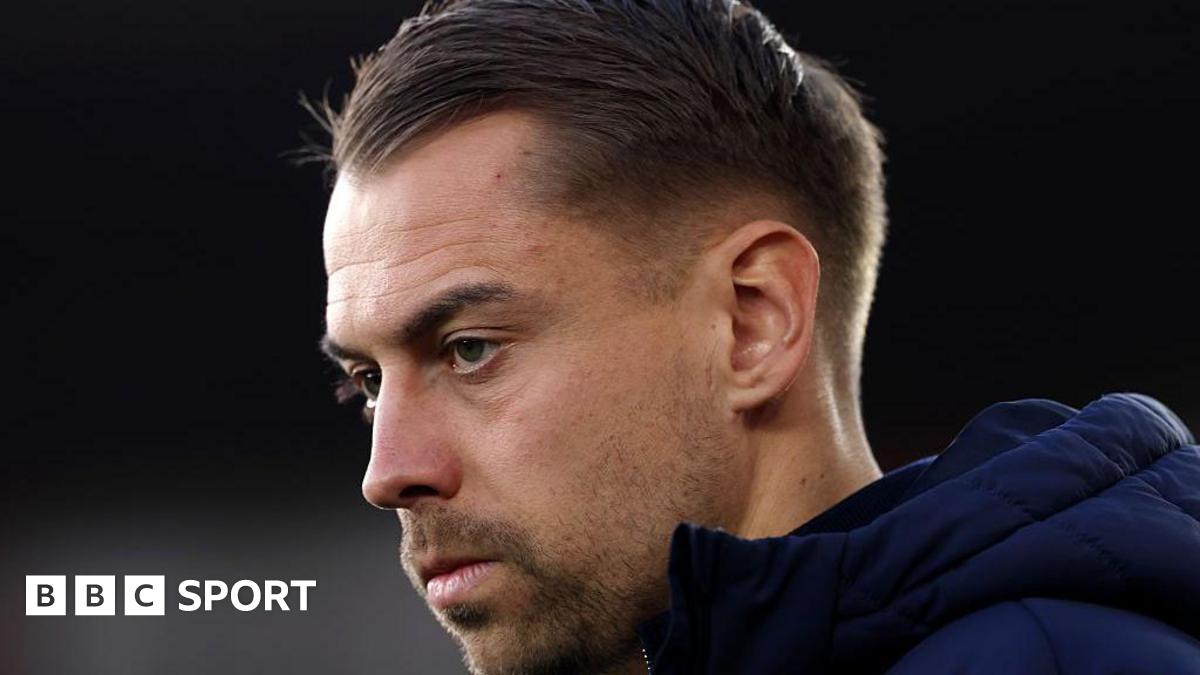
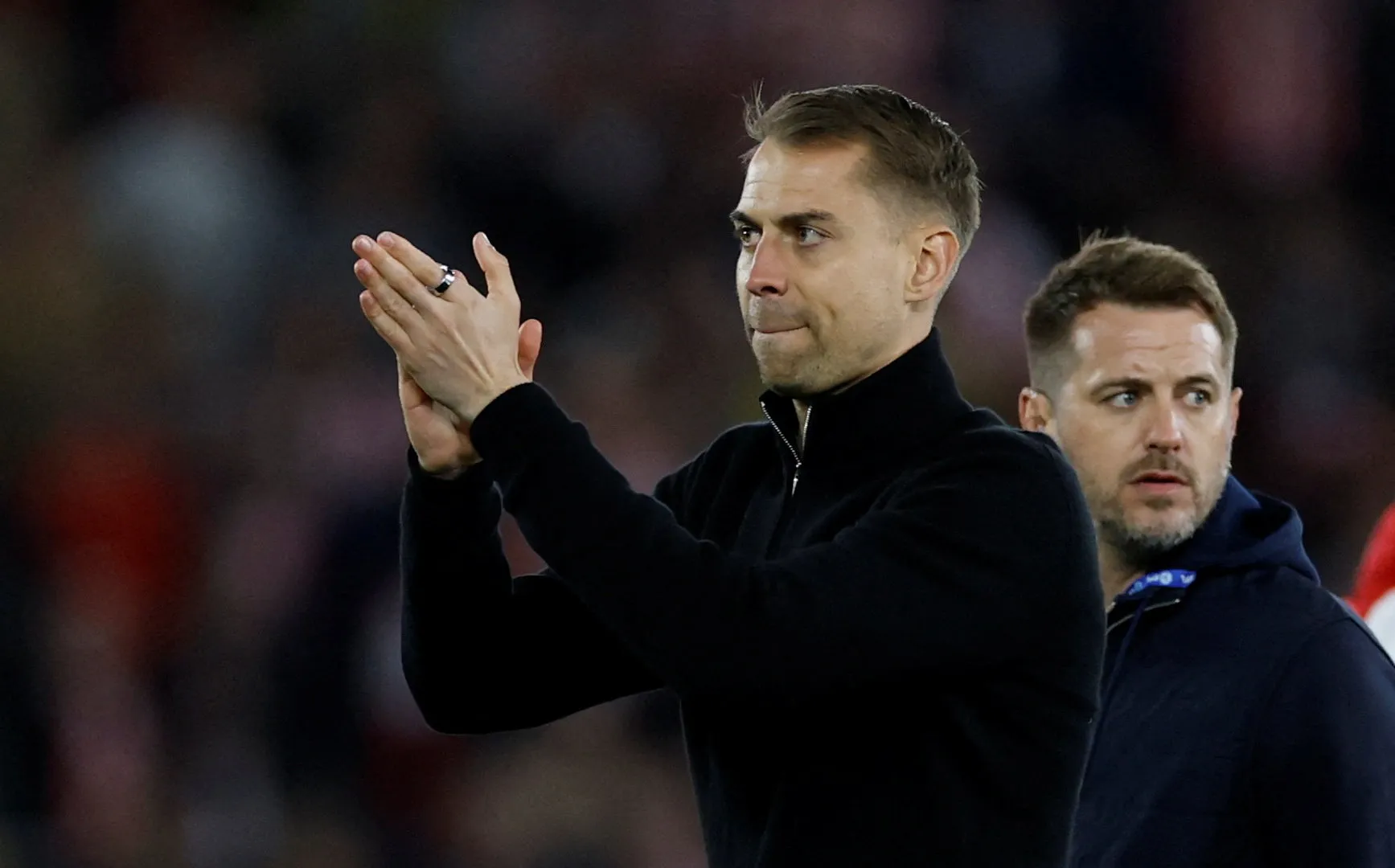
For those associated with the club, the desire to watch a successful team next season is blended with a need to shake off the damage Eckert’s actions have caused.
One of the more egregious conclusions drawn by the EFL investigation into Southampton’s practices was that the young analyst intern who was caught spying outside Middlesbrough’s training ground had raised concerns about the task he was given, but was put “under extreme pressure” to carry it out by more senior personnel, including Eckert.
In many workplaces, a senior staff member pressuring a junior colleague into performing a task which violates industry rules would be met with a swift and significant punishment.
But Solak told BBC Sport that the intern was at fault for not kicking up more of a fuss, saying: “I believe that our junior intern felt personally it’s wrong, and he didn’t feel right for doing this, and I think he should have expressed that stronger.”
Solak insisted he has subsequently offered the intern analyst a full-time job with the club.
But the treatment of a young, inexperienced member of staff has raised concerns about the club’s culture.
“The club has lacked in terms of leading on the problem, and sorting out their own mess,” Tessem adds.
“I hope they have all learned a very harsh lesson. When you’ve been caught red handed, you need to take responsibility for the situation.”
If Southampton do manage to keep Eckert in his job, then the question of whether the club really has learned that lesson will continue to be asked.
Southampton back Tonda Eckert despite missing out on a playoff final for a Premier League place due to spying scandal.
Published On 2 Jun 20262 Jun 2026
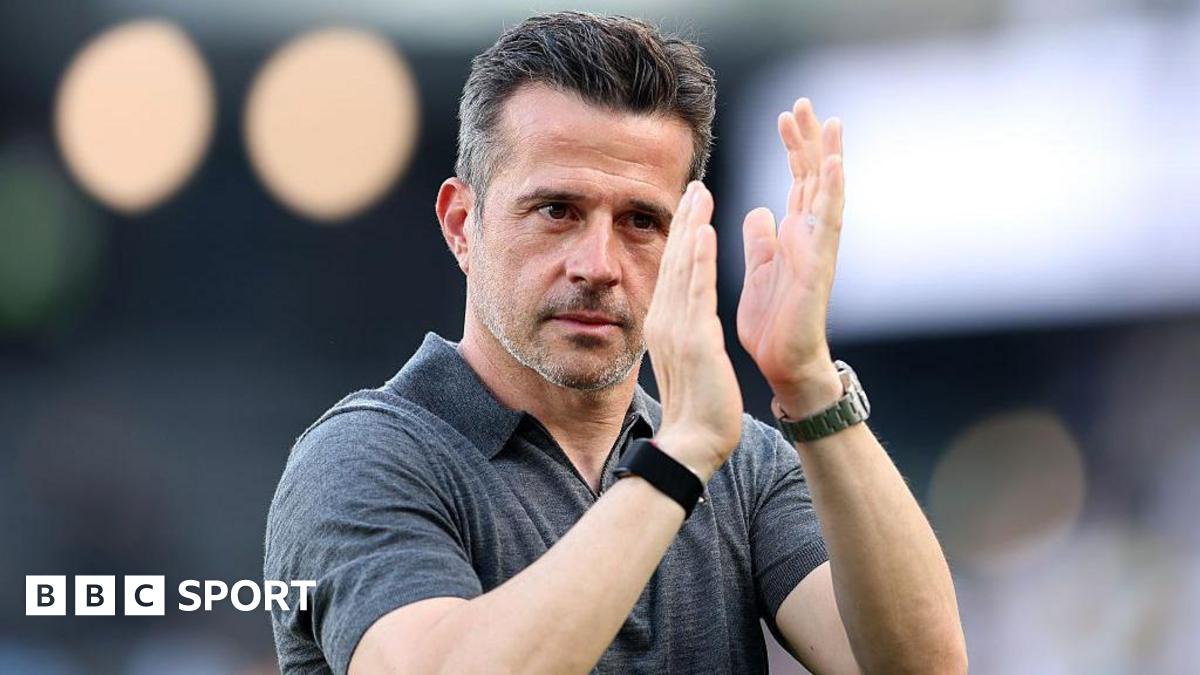
Southampton manager Tonda Eckert has apologised for orchestrating the “spygate” scandal that led to the club’s expulsion from the Championship playoffs, as owner Dragan Solak insisted that he would not sack the German.
“For everything that’s happened, I do want to apologise, and I hold my hand up because as a head coach I am responsible for everything that has happened in this football club,” Eckert said in a video statement on Tuesday.
Recommended Stories
list of 4 itemsend of list
The Saints were kicked out of last month’s playoff final after admitting they had observed a training session held by semifinal opponents Middlesbrough, as well as two other similar incidents during the season.
They also received a four-point deduction that will be applied to the 2026-27 Championship table, while the Football Association has opened its own investigation and could yet charge Eckert.
An independent disciplinary commission of the English Football League (EFL) ruled that there had been a “contrived and determined plan from the top down to gain a competitive advantage” through spying missions.
It said Eckert had authorised the tactics, highlighting the “particularly deplorable” use of junior members of staff to conduct clandestine operations.
Southampton beat Middlesbrough 2-1 over two legs in the playoff semifinals, but Boro were reinstated, going on to lose in the final to Hull City, who were promoted to the Premier League.
The prize for the winners of the final is regarded as the most lucrative in world football, with the winners joining the richest domestic league in the world. Hull will receive an estimated 200 million pounds ($268m) in extra income.
Eckert, who was appointed head coach in December, put out an eight-minute video statement about the scandal on Southampton’s social media channels.
The 33-year-old said: “I am devastated that after six months of building that relationship [with fans] back up, the season has come to an end, come to an end that couldn’t have left us in a worse place than we are in right now.”
He claimed that observing other teams was routine in other countries, though he admitted that this was not an excuse for his actions in the English second tier.
“When I worked in Italy for over four years, every starting lineup that we’ve chosen for the games was always out in the media before games,” he said.
“And the reason is that our training sessions, especially the ones before games, have always been observed from the media and have always been observed from opponent teams that we came up against.
“[Pep] Guardiola has spoken about this in his time at Bayern Munich, that it has been common practice in Germany to observe training sessions, knowing that other teams would do the same.”
Many had anticipated Eckert would lose his job after Southampton’s expulsion from the playoffs, but chairman Solak gave robust backing to Eckert in his own post on the club’s channels on Tuesday.
“Tonda’s period as our head coach has been a success so far. Our form during 2026 has been remarkable, and we believe he is the man to take us forward,” Solak said.
“As a board, we are fully behind him, and together we only have one objective – we want promotion back to Premier League.”
Solak told the BBC separately that Tonda had been subject to a witch-hunt in the media, saying he believed the club had been “over-sentenced”.
The Serbian, whose media company acquired a majority stake in the south-coast club in 2022, said: “I believe Tonda that he didn’t know that it was the rule that he was breaking.
“My personal opinion, and the opinion of the board, is that he is a manager who deserves to be backed by us and to be supported by us.”
Ryanair passengers may not know about this(Image: Bradley Caslin via Getty Images)
A Ryanair rule change could see some holidaymakers charged around £55 extra at the airport. The budget airline is well known for its no-frills approach, regularly slapping on extra fees for things like luggage and choosing your seat in advance.
Currently, passengers travelling on standard tickets are only allowed one small personal item as hand luggage without incurring any additional costs. Should that item be larger than the permitted dimensions, it will need to go into the aircraft hold, at an extra charge.
While plenty of travellers are well aware of this policy, there is another Ryanair requirement that could leave you out of pocket. Anyone flying with Ryanair must check in online. Passengers can then store their boarding pass on a mobile phone or tablet.
In November 2025, Ryanair has moved to “100% digital boarding passes via its app, eliminating paper passes to reduce costs, improve service, streamline rebooking, and save 300 tonnes of paper annually”. Online check-in opens 60 days before departure for those who have bought allocated seats, or 24 hours beforehand for passengers happy to accept a free seat assignment.
Regardless of seating preferences, the online check-in window shuts two hours before the scheduled departure time. Once online check-in has been completed, boarding passes are issued, and passengers are required to save a digital copy. Failing to check in online will land you with an airport check-in fee of £55, or the euro equivalent.
To sidestep this charge, make sure you have a valid boarding pass in hand before setting off for the airport, reports Chronicle Live. For those travelling without a smartphone or tablet, Ryanair will issue a free boarding pass, so long as online check-in has been completed before arriving at the airport.
Ryanair said it will send passengers a reminder to check in online shortly before their scheduled departure.
IN one of Norfolk’s best seaside towns is a pier over 100 years old – and it could soon undergo a huge revamp.
On what will be the year of its 125th anniversary, the Pavilion Theatre in Cromer is being considered for an upgrade worth millions.
Sign up for the Travel newsletter
Thank you!
The Pavilion Theatre on Cromer Per could undergo a revamp worth millionsCredit: AlamyThe theatre sits at the very end of the pier in the seaside townCredit: Alamy
The Pavilion Theatre sits on the end of Cromer Pier and hosts shows throughout the year from tribute acts to vintage festivals.
It also reportedly shows the “world’s only remaining full-season end-of-pier variety show”.
Now, the local North Norfolk District Council (NNDC) is considering making improvements to the theatre at the predicted cost of £2.4million.
The Grade-II listed pier itself was built in 1901 as was the theatre which at the time was originally a bandstand.
It was converted into the enclosed pavilion it is today in 1905 with several repairs made throughout the years.
The most famous performances there have been by the likes of Paul Daniels, Ken Dodd and Cannon and Ball.
Possible upgrades to the theatre include installing new heating and cooling systems, upgrading lighting and sound, and refurbishing the theatre’s 440 seats.
As for the wider town, Cromer on the north coast of Norfolk is actually considered one of the best in the UK.
Last year when The Times totted up its ‘best seaside towns in the UK’ from Cornish harbours to a good old British resort, Cromer made the list.
Coming second, just below Aldeburgh in Suffolk, The Times said Cromer is the “real deal” a “traditional port town with a Victorian pier, pastel-tinted beach huts, a bucket-and-spade beach.”
Cromer is considered one of the best seaside towns in the UKCredit: Alamy
Travel Reporter Jenna Stevens, who hails from Norfolk, has given her verdict on the town.
She said: “Cromer mixes old-school seaside town tradition with trendy places to eat and shop, meaning this is a staycation spot that will please the whole family.
“The town’s real showstopper is Cromer Pier, which dates back all the way to 1391. The original jetties built over the years have been washed away by storms and rebuilt, but the pier you see today has jetted out over the water since the Victorian era.
“Perched at the end of the pier is the Pavilion Theatre, which puts on shows from Beatles tribute acts to Mamma Mia-themed parties.
“Plus it’s well worth a visit to catch the Cromer Pier Show with dazzling guests with high-production singing, dancing and comedy.
“Cromer is also home to a pristine, Blue Flag beach, which attracts sunbathers for its flat, golden sands, surfers for its waves and wild foragers for its fresh cockles and mussels.”
Cromer Pier stretches out to seaCredit: Alamy
Jenna continued: “And when it comes to seafood, you can’t miss out on trying some delicious Cromer Crab. You’ll find this famous Brown Crab cropping up on menus all the way along the North Norfolk coast, so what better place to try some than the town in which they were freshly caught?
“However the charm of this seaside town isn’t all found at the pier, it’s recently become a lot trendier, too. In the lanes behind the seafront, Cromer has recently seen a wave of new vintage shops, cool cafes and quirky art galleries arrive.
“Pop into Grey Seal Coffee for a smooth flat white in a beachy, boho setting, or have a nosey in Cromer Artspace to admire local artists’ landscapes.
“For a memorable bite to eat, Norfolk Crumble has captured the love of locals, whipping up tasty pots of crumble loaded with toppings like popcorn and banoffee, as well as ice-cold thickshake.”
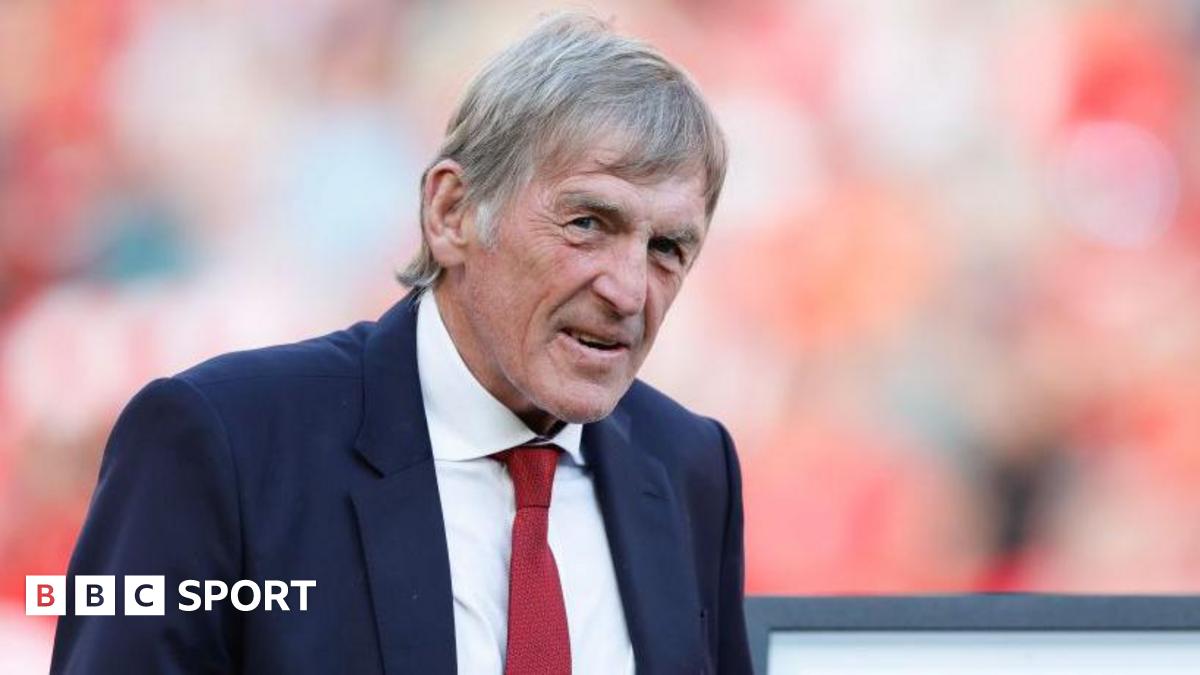
Scotland, Liverpool and Celtic great Sir Kenny Dalglish is undergoing treatment for cancer.
The former forward and manager wanted to keep the news private but confirmed the diagnosis after accidentally sharing the news initially in an “inadvertent social media post”.
“I am currently undergoing treatment for cancer,” Dalglish, 75, wrote on social media. “Unlike my mobile phone use, the treatment is going well.
“Ideally, this would have remained private because that’s the way it should be, but my useless technology skills have forced my hand.
“Obviously I did not mean to make this matter public so I would appreciate it if the privacy of my family and myself are respected.
“As ever, thank you to the wonderful medical staff who have shown incredible care and discretion, not just for me but for many, many others. They are a credit to themselves.”
Dalglish scored 167 goals in 320 appearances for Celtic between 1969 and 1977 before going on to make 515 appearances for Liverpool.
The legendary forward scored 30 goals in 102 caps for Scotland.
In a statement, Liverpool said: “The support, best wishes and love of everyone at Liverpool FC are, and will be, with Sir Kenny and his family.
“The club would also like to underscore his request for privacy moving forward.”
Sit at a table with a bunch of actors and it inevitably becomes an impromptu acting class, one in which even theMichelle Pfeiffer is leaning over to observe. At least that’s what happened on a recent afternoon when The Envelope gathered six actors from some of this season’s most talked about television series for its 2026 Emmy Drama Roundtable.
It all began when Pfeiffer (“The Madison”) shared that, while studying acting, she couldn’t grasp the technique created by Sanford Meisner, which trains actors to stop overthinking and encourages them to listen and respond actively to their scene partners. The revelation immediately activated Katherine LaNasa (“The Pitt”), who beckoned Tom Pelphrey (“Task”) to join her in a spontaneous application. (Both had studied the method.)
“I like your jacket,” LaNasa said, locking eyes with Pelphrey.
“You like my jacket?” he replied playfully.
“I do like your jacket … You’re smiling at me.”
The exchange, which had a flirtatious energy, continued for a minute, before Pelphrey and LaNasa emphasized that it’s essentially looking at and listening to what the other person is doing.
“Somehow I was doing it wrong and I didn’t understand why I was doing it wrong,” Pfeiffer said.
This openness and encouragement carried the entire conversation, which brought together Pfeiffer, who plays Stacy Clyburn, a wealthy New York City matriarch whose life is upended by the tragic death of her husband, which compels her to move to Montana; LaNasa, who brings depth to the burnout plaguing steadfast, straight-talking charge nurse Dana Evans; Pelphrey, in his turn as Robbie Prendergast, a sanitation worker who robs drug houses at night to provide for his family; Zahn McClarnon, who stars as Det. Joe Leaphorn, a stoic man battling his past and the loss of his son in “Dark Winds”; Billy Magnussen, who portrays Duncan Park, the eccentric and profit-hungry CEO of a tech company in “The Audacity”; and Karolina Wydra, who plays Zosia, the eternally cheerful liaison to a utopian, hive-minded collective in “Pluribus.” Read on for excerpts from our discussion.
I know all your characters are going through some personal things, but if you were to transform into them for 24 hours, what would you do with that day?
Magnussen: I live with Duncan daily because I think your job as an actor is to check the morality of the character you’re playing. And at the same time, you have to question your own morality, see where you stand, to then deal with that character. Duncan’s a really messed-up guy, and doing it for five months … I was on set 16 hours a day every day. I was with him nonstop. And his temperament and pace was just out of this world. It’s exhausting. So what would I do? I would try to go to a spa, personally, because it’s exhausting.
Wydra: Do you find that it gets blurry after a little while?
Magnussen: I still know who Billy is.
McClarnon: But there’s times where you can’t see that line between [fiction and] reality, just moments. I’ve found myself in those moments where I know the difference, obviously, but I’m so emotionally attached to Deanna Allison, who plays my wife on the show, where I can’t separate them anymore. It’s not like 24 hours, but just moments where I’m like, “Wait a second, where am I? Am I in the show? Is this Joe Leaphorn or is this Zahn?” Usually in the middle of the season, it starts to get a little blurry for me.
Magnussen: Do you think it’s the job, though, to keep it separated? Or do you guys believe in Method acting?
Wydra: Rhea Seehorn, who is on “Pluribus,” who’s incredible, who’s my partner in crime, she gave me a book about Method [acting] — the Method and what really Method was. And it’s not what we think it is. We all do Method acting, but it’s not staying in the character and living in the character forever. … And that’s what people think Method is, is that you never break the character, you take the character home, but it’s not. It’s building a world. Building it, personalizing it.
Pfeiffer: Isn’t that what we all do? Some actors will go live on the ranch. They won’t take a bath for six months. They really take it to another level, which I’m not willing to do … From the minute I commit to something, it’s right there [in my head], I’m thinking about it. It can be a year away, and it’s right here torturing me, which is I think why I’m a bit of a commitment-phobe. My agents always call me “Dr. No” because I know no matter what, even if I’m not consciously aware of it, it’s there just badgering me.
LaNasa: I have found that people want Dana, want my character, in real life. And it’s cool because she’s very comforting to people. But I had an experience recently in New York where this table of girls, they were having some party, and someone said, “Oh, you mean a lot to us.” And I said, “Oh, are they nurses?” Well, some of them are. And then they asked at the end of their dinner would I take a picture. And then one girl told the other people to leave and then she told me her illness journey. And I had breast cancer. She was going through breast cancer. And it was really interesting. And it was the most meaningful that I’d ever felt about taking a character home where it’s like … I think I spoke about my wellness journey because I was playing the role. It ended up coming up through the press. … And for some reason, because I was Dana in someone’s mind, it meant something. And I thought, “Well, this was actually useful. This breaking of that wall between character and person was actually useful.”
Tom, you get the call that you’re cast as Robbie in “Task.” What’s the first thing you do to figure him out?
Pelphrey: When I read the first two episodes, I felt like I understood Robbie’s soul perfectly, but I knew that I would have to break my ass to get that accent right. So that was where I focused most of my conscious energy and discipline and time, was just [on the] technical, just on the accent. The fun part was, because he would be my age, thinking about growing up in Philly at that time and who his heroes would be, having ideas for tattoos, stuff like that. We had more time than you get sometimes before we had to start filming because we knew and then the writers’ strike happened. I had a lot of months to sit with him and emotionally and spiritually. And I’d just become a father. Obviously [with] Robbie, everything he does is for his kids.
Pfeiffer: It changes everything. It opens your heart.
Pelphrey: I was a new person. And I understood him in that regard perfectly and I couldn’t have before. I could have imagined it and now I knew for sure.
For “The Audacity,” Billy, you spoke with some tech folks. What did you come to understand about what they’re after as innovators versus what you’re after as a creative?
Magnussen: Listen, no one’s a villain in their own story. I believe that from Day 1, these people probably came to the Valley with genuine ideas. The genesis of their idea was to connect and really bring something powerful and important to society and people. And, “Oh wait, we’re making a lot of f— money.” And through that lens, you start being blinded by this humanity that’s around you or caring for people around you rather than a bottom line. When you’re in an incestuous pool or in a small bubble, culture is created. And like Facebook, their slogan was “Move fast and break things.” Being a bull in a china shop is not a good idea anywhere, but for some reason that was the culture. People just started doing that more and more and breaking things and breaking things and breaking things. I don’t think they started off that way, but the culture just bred them to become this way. I personally relate that to, I don’t want to say Hollywood or the entertainment world, but we’ve seen the toxicity. And we’ve been slowly trying to filter that out, I think, of Hollywood. But when you have a microclimate kind of culture feeding in toxic behavior and rewarding toxic behavior over and over again, it breeds it. So you start to have to scrape away that cancer. But again, the genesis of all these ideas were pure. We were 6 years old just dreaming to be something or being like, “I could do this.”
Pfeiffer: Pretending to be something else, other than what we were.
Magnussen: I empathize with that. I don’t think people are bad. I just think they’re lost sometimes.
Karolina, your character in “Pluribus,” Zosia, is carrying the weight of almost every person in the world. What do you remember about those discussions with [creator] Vince Gilligan and how he helped you unpack this character and the relationship with Carol, Rhea [Seehorn]’s character?
Wydra: I took a break for five years from acting before Zosia came into my life. I walked away at 39 to have kids and my agent and my manager dropped me and it was really terrifying to also be a woman and turning 40, to have children at that time. When Lou [her second son] was maybe a year-and-a-half [old], I got the itch of like, “God, I miss acting so much. How am I ever going to come back? How am I going to get an opportunity?” And I was 43 at the time and out of nowhere I got an email being like, “Hey, there’s this thing …” from a commercial agent that I was on their roster, but I did not work with them. And they said, “There’s this audition.” And I go, “OK.” I read it and I said, “Who wrote it?” And she said, “Vince Gilligan for Apple TV.” I went, “What? OK.” And I didn’t know anything about the project and it was always my dream to work with Vince from when I saw “Breaking Bad.”
Long story short, I’m here and the whole journey has been so wild, so insane. When I first would talk to him about Zosia, I was like, “God, how am I going to tackle the world and someone that has the highest emotional intelligence, someone that does all these different things? And how do you see the Others? How do you want them to move about the world and the complexities of who they are?” Vince is such a beautiful human being. He’s like, “They’re just happy and content.” You go, “OK, yeah, but … what else?” For me, Zosia is extremely spiritual. Meditation was my key, my go-to to get into that zone of connection to humanity, not in the physical but very spiritual way where, [if] you meditate enough, the ego gets lifted and you truly feel connected, and you feel one with everyone. And the wild thing, I think the greatest gift, was becoming a mother; I understood what it means, unconditional love. Because my heart lives outside my body all the time. And so becoming a mother was a gift to play Zosia, because I unconditionally love Carol. And now, no matter what she throws at me, I just love her, and take care of her, and I want to nurture her.
Michelle, you get the call from Taylor Sheridan, who also created “Landman” and “Yellowstone.” He says he wants to meet with you and he wants to do it on his turf in Texas, not yours. There’s no script. What does someone like Taylor Sheridan say to someone like Michelle Pfeiffer that will get her to agree to the show?
Pfeiffer: Well, he gave me a lot of tequila.
LaNasa: Writing this down: Tequila, check.
Pfeiffer: I got a call that he wanted to meet with me, that he had an idea for something, “But you have to come to Texas.” And I said, “Is there anything? Is there an outline? Is there a paragraph?” “No, no. He wants to explain it to you in person.” I had to stay the night in Fort Worth and then met with him and he gave me tequila, and then after a while I had to stop drinking. He gave me a very rough outline of the show, of the character … She’s been with the love of her life for 50 years. It’s the marriage that we all dream of having. And he dies suddenly, tragically, and … all of a sudden the rug is really just emotionally and psychologically pulled out from underneath them. And it’s how do you rebuild a life and it’s the study of grief. He said that I had committed that night, which I did not. I’d had a few cocktails. We went back and forth a little bit about [the fact] that I really would like to read something. And he said, “Well, I would really like to cast this before I write anything.” Then I realized I wasn’t going to win this battle and I reached out to Helen Mirren [who starred in Sheridan’s “1923”], who I don’t know, but I figured she doesn’t suffer fools and she would give me the truth about what it’s like to do this. She couldn’t have spoken [more] highly of everything. She said the scripts are wonderful. The production is wonderful. And loves Montana. And so I took a leap of faith. I never do that.
What stands out to you about his process versus then working with your husband, David E. Kelley, also a prolific writer, who adapted “Margo’s Got Money Troubles”?
Pfeiffer: I couldn’t be luckier working for two of the most talented and prolific writers in the history of television. [They’re] not that much different. I purposefully didn’t want to bug David because it’s not like we had any hard-and-fast rules about not working together, but we weren’t really actively seeking it out because that can get a little dicey, just looking at it from afar. I really cherish my marriage, and our family, and I just didn’t want to mess it up. I really mostly went to the director and every now and then I might throw a little something his way. And [with] Taylor … I would go through Christina [Alexandra Voros], our director, because he’s just not honestly that accessible because he’s got a bit going on. I personally don’t like to spend my time trying to rewrite things. It’s more interesting to me to try to make something work and then I end up finding something I never would’ve decided. It just takes you to a new place and it’s so much more interesting than anything I would have conjured up.
Zahn, you’re not only the lead in “Dark Winds,” but also an executive producer and directing episodes. I know there was a moment where your character was supposed to shoot someone in the face early on. And you felt strongly, “My character’s not someone that would do this.” Talk to me about leaning into speaking your mind.
McClarnon: There’s not a lot of Native characters on television. The foundation of that character obviously comes from Tony Hillerman’s books. So the foundation was set for that character. And when I got to a point in the season where I’m supposed to kill a man, shoot him in the head in the middle of the desert — first off, I didn’t see that in the books. And I know it’s television and we want drama and all that stuff, but also, to be honest with you, I want Native kids — see, I’m going to cry now — to have something to look up to. We grew up with these stereotypes and we grew up with these tropes of Native Americans. The only one I can really remember that I really looked up to was Will Sampson in “One Flew Over the Cuckoo’s Nest” because he was playing a trope, but he becomes the hero at the end of the story. It’s one of my favorite films. So when it came to that point where the writer said, “He’s going to kill this rich white man in the desert and shoot him in the head,” morally, I think Joe Leaphorn is more than that.
And it was simple. I sat down with the showrunner [John Wirth] and we talked about it, and we went back and forth for about a week. And I’m so glad that I have access to somebody like that. I have access where they’re not telling me, “No, this is the way it’s written. This is what you’re going to do.” So yeah, we decided not to shoot the guy in the head, where I’d just leave him out in the desert to fend for himself.
Katherine, you’ve talked to nurses and medical professionals in the making of “The Pitt,” but you were also a patient during your breast cancer journey, interacting with them a lot from the other side. What is something that they’ve told you or even something you observed in that time that really spoke to you about what they’re going through on the day to day in these jobs?
LaNasa: It’s funny, I’d always wanted to work with John Wells. I go through this period of all this unemployment, and then I get this job for John Wells. I had had cancer a year before and then had complications up to like six months before. It wasn’t until I got to the emergency room set that I was like, “Oh, this whole period … ” — the spirituality of that. I really believe that we need to be grateful for our life while we’re living it, no matter what’s going on. Because I still have my children, and I have nature, and I have my husband, and cooking, and my dog, and so many wonderful things. And I was really trying to hold onto that. It’s always this idea that maybe something is for a reason or whatever — now I’m going to cry. The fact that that was so purposeful, that I understood so deeply what it was to be a patient, what it was to be terrified going into the emergency department. I also understood how much it mattered when a nurse took a little extra time and was a little bit kind.
Pfeiffer: You’re going to make me cry.
LaNasa: And there was one particular nurse — I had my cancer, went through my radiation and then [went] back and forth, back and forth [to the ER]. And there was a week, the second trip to the ER [they thought I might have multiple sclerosis]. “Now do I have MS on top of having had cancer?” And I had a breakdown in the ER. And she’s like, “Listen, first six months after cancer are really bumpy, and it’s not going to stay like this. Do you need an Ativan?”
Magnussen: Did not see that turn.
LaNasa: It was that human touch. Or when they would come and give you a warm blanket or something. There’s a nurse, Kathy Garvin at County, who told me she wouldn’t do the job that she does being the [emergency department] charge nurse if it wasn’t in a county hospital. She wants to do that hard work for people that really need her. For the most underprivileged, for the unhoused. And I try to honor that in the story and to just bring that to life — their generosity and their humility.
The Envelope’s 2026 Emmy Drama Roundtable: From left, Zahn McClarnon, Michelle Pfeiffer, Tom Pelphrey, Katherine LaNasa, Billy Magnussen and Karolina Wydra.
There’s a lot of discussion in the industry right now about runaway production and can L.A. rebuild and what’s lost. I’m curious how you feel about this topic.
Magnussen: I live in Georgia and … one of our biggest exports as Americans is our culture. And if we just keep it isolated to Hollywood, I think we lose out at expressing everything we are as Americans.
McClarnon: We shoot on the Tesuque Pueblo. There’s 19 pueblos in New Mexico. We have taken over their old casino and we’ve converted it into a soundstage. We use their back lot. We obviously help out the tribe with renting the place out. And so I like shooting in New Mexico and supporting the local community, especially local Natives.
Pfeiffer: I think there’s room for all of it. We shot [a movie] in London that took place in Los Angeles. And it’s ridiculous that our entire industry has left. Los Angeles is really hurting. And a lot of people are hurting. All those jobs, all of those restaurants where people used to eat, people used to shop. And I think to not give the same sort of tax incentives that other states are doing — look, if it takes place in Georgia, you should go to Georgia. But I think Los Angeles was really built on the movie [industry].
LaNasa: I have a 34-year-old and a 12-year-old. I remember with my 34-year-old, even just being a young, starting-out mother, I would be like, “Well, I’m not going out of town. I have a child.” I would never go do a TV show out of town. I had a kid and the kid was in school and I needed to provide consistency for that child. And then with my second one, that was impossible. We would just not have been able to work. But it’s really hard on families. We are actors and we’ve come here to pursue the industry. We’ve moved here and we’ve risked something … L.A., for all of its problems, is a city of dreamers. It’s a city of people that came to pursue their art. And I am one of those people. And so in a way, I wasn’t really a citizen like the other citizens of Atlanta. I was outside. I didn’t have my community.
Magnussen: I know, but that’s the thing I have an issue with is this idea that, “It’s only there.”
Pelphrey: I’ll say this. Love that we get to film all over our beautiful country. Would love to keep the jobs in this country. That would be the nice part. Because when everybody’s like, “Oh great, we can go to Belarus or London.” Guess what? All of us get to go. Our crew doesn’t get to go — the people that we know that we need, that we work with, that we make these things with. We get to go wherever the f— we want, actors, directors, but the crew doesn’t.
As the voters deliver their ballots to neighborhood drop-off sites and others wait to vote in person Tuesday, Times reporters fanned out across the city to ask residents whom they planned to support for mayor.
Here is a sample of what voters said about their preferred candidate.
‘The other choices were not worth my vote’
Steven Travers 57 Glassell Park Self-employed
Voter Steven Travers told The Times that he didn’t feel like there were many options for him in the mayoral election this year, except for the incumbent Karen Bass.
Shopping at Vons in Echo Park, Travers said, “Just what I’ve seen of her, and you know, the way she speaks, she seems to be OK.”
“I guess she’s done an OK job since she’s been the mayor,” Travers said. “The people she’s running against, I mean, there’s really nobody else that I think I would want to be in that position.”
This decision to vote for Bass, despite the wide field of options, came down to how she had handled homelessness in the city and Travers’ neighborhood of Glassell Park, where there had been homelessness issues “for a period of time.”
The issue, Travers said, has been lessened and “certain areas things are getting a little bit cleaned up. And I’m assuming that she’s, you know, part of that whole thing.”
Travers also said that “anybody involved in politics in Los Angeles” seems to always talk about homelessness “more than anything else” and that Bass “seems to be trying to maybe do something about it.”
Simply put, “The other choices were not worth my vote,” Travers said.
Looking for a more humane L.A.
Zorah Archie-Winston 22 View Park Recent USC graduate
Zorah Archie-Winston said that she’s probably voting for Nithya Raman for mayor.
“If I had to choose, like, right now, I think I’m leaning more towards Raman,” Archie-Winston said.
One of the main reasons for that, she said, is Raman’s personality and the humanity she brings to the table.
The 22-year-old View Park resident said that the unhoused population is something she feels very passionately about, and she believes Raman shares that.
“We could have, like, a lot more of a compassionate view on the unhoused population and those adjacent,” Archie-Winston said.
She said she’s been following along with Raman’s journey on the L.A. City Council and looks forward to seeing what the candidate could do as mayor, especially for tenancy rights.
“I think there are a lot of resources and things that are really inaccessible to those who are struggling to live in L.A. for one reason or another, and I think that’s something Raman will be able to help with,” Archie-Winston said.
‘He might be our only saving grace’
Ann Raljevich 66 Westchester Medical biller
Ann Raljevich, a 66-year-old medical biller, says Spencer Pratt could be the city’s hero in the mayoral race.
“I think he might be our only saving grace,” said Raljevich, of Westchester.
Under the city’s current leadership, Raljevich tells The Times, she said she hasn’t seen change in the city. She said she still sees the same unkempt streets, drug addicts around town and high sales taxes.
“Being in the medical field — the drugs bring on the schizophrenia and bring on all the other things, and I mean, I see it when I drive in and out of town,” Raljevich said. “I see it everywhere.”
Raljevich said she also admired that Pratt was from Southern California and graduated from USC.
She said the fact that he hasn’t directly declared a political party affiliation shows that he doesn’t care what people think and is just here to do the job.
“He never really came out to say whether he’s a Republican or a Democrat,” Raljevich said. “He’s just for the people.”
Benfica are looking to appoint a successor to Jose Mourinho, who has left the club and signed a three-year deal to become Real Madrid’s new head coach.
Mourinho, 63, took over at Benfica for a second spell in September and led them to third place in the Primeira Liga.
Silva joined Fulham in July 2021 from Everton and guided them back to the Premier League in his first season, following the club’s relegation to the Championship a year earlier.
The Cottagers finished 11th in the top flight last season, level on 52 points with Chelsea.
The countdown to the FIFA World Cup 2026 has entered the single-figure mark, with the tournament getting under way in nine days in Mexico City.
The biggest edition of the World Cup, with 48 nations and 104 games, will be hosted by three countries for the first time, as the United States and Canada share the honours with Mexico.
Recommended Stories
list of 3 itemsend of list
All 48 teams heading to the tournament have released their final 26-man squads, marking possible final appearances for greats like Lionel Messi and Cristiano Ronaldo.
Young stars looking to dethrone the icons, including Spain’s Lamine Yamal and Brazil’s Endrick, will look to make their mark in their first appearance at the global event.
Here are all 48 World Cup squads for the FIFA World Cup 2026:
Midfielders: Houssem Aouar, Nabil Bentaleb, Hicham Boudaoui, Fares Chaibi, Ibrahim Maza, Yassine Titraoui, Ramiz Zerrouki
Forwards: Mohamed Amine Amoura, Nadir Benbouali, Adil Boulbina, Fares Ghedjemis, Amine Gouiri, Riyad Mahrez, Anis Hadj Moussa
Argentina World Cup squad
Goalkeepers: Emiliano Martinez, Geronimo Rulli, Juan Musso
Defenders: Leonardo Balerdi, Gonzalo Montiel, Nicolas Tagliafico, Lisandro Martinez, Cristian Romero, Nicolas Otamendi, Facundo Medina, Nahuel Molina
Midfielders: Leandro Paredes, Rodrigo De Paul, Valentin Barco, Giovani Lo Celso, Exequiel Palacios, Alexis Mac Allister, Enzo Fernandez
Forwards: Julian Alvarez, Lionel Messi, Nicolas Gonzalez, Thiago Almada, Giuliano Simeone, Nicolas Paz, Jose Manuel Lopez, Lautaro Martinez
The World Cup 2026 will be Lionel Messi’s swansong [File: Gustavo Garello/AP]
Australia World Cup squad
Goalkeepers: Patrick Beach, Paul Izzo, Mathew Ryan
Defenders: Aziz Behich, Jordan Bos, Cameron Burgess, Alessandro Circati, Milos Degenek, Jason Geria, Lucas Herrington, Jacob Italiano, Harry Souttar, Kai Trewin
Midfielders: Cameron Devlin, Ajdin Hrustic, Jackson Irvine, Connor Metcalfe, Aiden O’Neill, Paul Okon-Engstler
Goalkeepers: Patrick Pentz, Alexander Schlager, Florian Wiegele
Defenders: David Affengruber, David Alaba, Kevin Danso, Marco Friedl, Philipp Lienhart, Phillipp Mwene, Stefan Posch, Alexander Prass, Michael Svoboda
Midfielders: Christoph Baumgartner, Carney Chukwuemeka, Florian Grillitsch, Konrad Laimer, Marcel Sabitzer, Xaver Schlager, Romano Schmid, Alessandro Schopf, Nicolas Seiwald, Paul Wanner, Patrick Wimmer
Forwards: Marko Arnautovic, Michael Gregoritsch, Sasa Kalajdzic
Belgium World Cup squad
Goalkeepers: Thibaut Courtois, Senne Lammens, Mike Penders
Defenders: Timothy Castagne, Zeno Debast, Maxim De Cuyper, Koni De Winter, Brandon Mechele, Thomas Meunier, Nathan Ngoy, Joaquin Seys, Arthur Theate
Midfielders: Kevin De Bruyne, Amadou Onana, Nicolas Raskin, Youri Tielemans, Hans Vanaken, Axel Witsel
Forwards: Charles De Ketelaere, Jeremy Doku, Matias Fernandez-Pardo, Romelu Lukaku, Dodi Lukebakio, Diego Moreira, Alexis Saelemaekers, Leandro Trossard
Bosnia and Herzegovina World Cup squad
Goalkeepers: Nikola Vasilj, Martin Zlomislic, Osman Hadzikic
Defenders: Sead Kolasinac, Amar Dedic, Nihad Mujakic, Nikola Katic, Tarik Muharemovic, Stjepan Radeljic, Dennis Hadzikadunic, Nidal Celik
Midfielders: Amir Hadziahmetovic, Ivan Sunjic, Ivan Basic, Dzenis Burnic, Ermin Mahmic, Benjamin Tahirovic, Amar Memic, Armin Gigovic, Kerim Alajbegovic, Esmir Bajraktarevic
Defenders: Alex Sandro, Bremer, Danilo, Douglas Santos, Gabriel Magalhaes, Ibanez, Leo Pereira, Marquinhos, Wesley
Midfielders: Bruno Guimaraes, Casemiro, Danilo Santos, Fabinho, Lucas Paqueta
Forwards: Endrick, Gabriel Martinelli, Igor Thiago, Luiz Henrique, Matheus Cunha, Neymar Jr, Raphinha, Rayan, Vinicius Jr
Brazil’s forward Neymar has found himself in the five-time champions’ World Cup squad despite recent injuries [File: Mauro Pimentel/AFP]
Canada World Cup squad
Goalkeepers: Dayne St Clair, Maxime Crepeau, Owen Goodman
Defenders: Alistair Johnston, Derek Cornelius, Richie Laryea, Niko Sigur, Joel Waterman, Luc de Fougerolles, Moise Bombito, Alphonso Davies, Alfie Jones
Midfielders: Stephen Eustaquio, Ismael Kone, Tajon Buchanan, Mathieu Choiniere, Ali Ahmed, Nathan Saliba, Liam Millar, Jacob Shaffelburg, Jonathan Osorio
Attackers: Jonathan David, Cyle Larin, Tani Oluwaseyi, Promise David
Forwards: Gilson Benchimol, Jovane Cabral, Dailon Livramento, Ryan Mendes, Nuno da Costa, Garry Rodrigues, Willy Semedo, Helio Varela
Colombia World Cup squad
Goalkeepers: Camilo Vargas, Alvaro Montero, David Ospina
Defenders: Davinson Sanchez, Jhon Lucumi, Yerry Mina, Willer Ditta, Daniel Munoz, Santiago Arias, Johan Mojica, Deiver Machado
Midfielders: Richard Rios, Jefferson Lerma, Kevin Castano, Juan Camilo Portilla, Gustavo Puerta, Jhon Arias, Jorge Carrascal, Juan Fernando Quintero, James Rodriguez, Jaminton Campaz
Forwards: Juan Camilo Hernandez, Luis Diaz, Luis Suarez, Carlos Gomez, Jhon Cordoba
Defenders: Josko Gvardiol, Duje Caleta-Car, Josip Sutalo, Josip Stanisic, Marin Pongracic, Martin Erlic, Luka Vuskovic
Midfielders: Luka Modric, Mateo Kovacic, Mario Pasalic, Nikola Vlasic, Luka Sucic, Martin Baturina, Kristijan Jakic, Petar Sucic, Nikola Moro, Toni Fruk
Forwards: Ivan Perisic, Andrej Kramaric, Ante Budimir, Marco Pasalic, Petar Musa, Igor Matanovic
(Standby: Lovro Majer, Franjo Ivanovic, Dion Drena Beljo, Ivan Smolcic, Karlo Letica, Adrian Segecic, Luka Stojkovic)
Defenders: Dylan Batubinsika, Gedeon Kalulu, Steve Kapuadi, Joris Kayembe, Arthur Masuaku, Chancel Mbemba, Axel Tuanzebe, Aaron Wan-Bissaka
Midfielders: Brian Cipenga, Meshack Elia, Gael Kakuta, Edo Kayembe, Nathanael Mbuku, Samuel Moutoussamy, Ngal’ayel Mukau, Charles Pickel, Noah Sadiki, Aaron Tshibola
Forwards: Cedric Bakambu, Simon Banza, Fiston Mayele, Yoane Wissa, Theo Bongonda
Ecuador World Cup squad
Goalkeepers: Hernan Galindez, Moises Ramirez, Gonzalo Valle
Defenders: Piero Hincapie, Willian Pacho, Pervis Estupinan, Felix Torres, Joel Ordonez, Jackson Porozo, Angelo Preciado, Yaimar Medina
Midfielders: Moises Caicedo, Alan Franco, Kendry Paez, Gonzalo Plata, Pedro Vite, Jordy Alcivar, Denil Castillo, John Yeboah, Nilson Angulo, Alan Minda
Forwards: Enner Valencia, Kevin Rodriguez, Jordy Caicedo, Anthony Valencia, Jeremy Arevalo
Egypt World Cup squad
Goalkeepers: Mohamed El Shenawy, Mostafa Shobeir, El Mahdy Soliman, Mohamed Alaa
Midfielders: Rouzbeh Cheshmi, Saeid Ezatolahi, Mehdi Ghaedi, Saman Ghoddos, Mohammad Ghorbani, Alireza Jahanbakhsh, Mohammad Mohebi, Amir Mohammad Razzaghinia, Mehdi Torabi, Aria Yousefi
Forwards: Ali Alipour, Dennis Dargahi, Amirhossein Hosseinzadeh, Mehdi Taremi, Shahriar Moghanlou
Iraq World Cup squad
Goalkeepers: Fahad Talib, Jalal Hassan, Ahmed Basil
Defenders: Hussein Ali, Manaf Younis, Zaid Tahseen, Rebin Sulaka, Akam Hashem, Merchas Doski, Ahmed Yahya, Zaid Ismail, Frans Putros, Mustafa Saadoon
Midfielders: Amir Al Ammari, Kevin Yakob, Zidane Iqbal, Aimar Sher, Ibrahim Bayesh, Ahmed Qasim, Youssef Amyn, Marko Farji
Forwards: Ali Jassim, Ali Al Hamadi, Ali Yousef, Aymen Hussein, Mohanad Ali
Ivory Coast World Cup squad
Goalkeepers: Yahia Fofana, Mohamed Kone, Alban Lafont
Goalkeepers: Yazid Abulaila, Noor Bani Attiah, Abdallah Al Fakhouri
Defenders: Mohammad Abu Hashish, Abdullah Nasib, Hussam Abu Dhahab, Yazan Al Arab, Mohammad Abu Alnadi, Salem Obaid, Saed Al Rosan, Ehsan Haddad, Anas Badawi
Midfielders: Amer Jamous, Noor Al Rawabdeh, Rajaei Ayed, Ibrahim Sadeh, Mohannad Abu Taha, Nizar Al Rashdan, Mohammad Al Dawoud, Mahmoud Mardahi
Forwards: Mohammad Abu Zraiq, Ali Olwan, Mousa Al Tamari, Odeh Fakhoury, Ibrahim Sabra, Ali Azaizeh
Mexico World Cup squad
Goalkeepers: Raul Rangel, Guillermo Ochoa, Carlos Acevedo
Defenders: Jorge Sanchez, Israel Reyes, Cesar Montes, Johan Vasquez, Jesus Gallardo, Mateo Chavez, Edson Alvarez
Midfielders: Erik Lira, Orbelin Pineda, Alvaro Fidalgo, Brian Gutierrez, Luis Romo, Obed Vargas, Gilberto Mora, Luis Chavez
Forwards: Roberto Alvarado, Cesar Huerta, Alexis Vega, Julian Quinones, Guillermo Martinez, Armando Gonzalez, Santiago Gimenez, Raul Jimenez
Morocco World Cup squad
Goalkeepers: Yassine Bounou, Munir El Kajoui, Ahmed Reda Tagnaouti
Defenders: Noussair Mazraoui, Anas Salah-Eddine, Youssef Bellammari, Achraf Hakimi, Zakaria El Ouahdi, Nayef Aguerd, Chadi Riad, Redouane Halhal, Issa Diop
Midfielders: Samir El Mourabet, Ayoub Bouaddi, Neil El Aynaoui, Sofyan Amrabat, Azzedine Ounahi, Bilal El Khannouss, Ismael Saibari
Defenders: Kristoffer Vassbakk Ajer, Fredrik Bjorkan, Henrik Falchener, Sondre Langas, Torbjorn Heggem, Marcus Holmgren Pedersen, Julian Ryerson, David Moller Wolfe, Leo Ostigard
Midfielders: Thelonious Aasgaard, Fredrik Aursnes, Patrick Berg, Sander Berge, Oscar Bobb, Jens Petter Hauge, Antonio Nusa, Andreas Schjelderup, Morten Thorsby, Kristian Thorstvedt, Martin Odegaard
Forwards: Erling Haaland, Alexander Sorloth, Jorgen Strand Larsen
Panama World Cup squad
Goalkeepers: Orlando Mosquera, Luis Mejia, Cesar Samudio
Defenders: Cesar Blackman, Jorge Gutierrez, Amir Murillo, Fidel Escobar, Andres Andrade, Edgardo Farina, Jose Cordoba, Eric Davis, Jiovany Ramos, Roderick Miller
Midfielders: Anibal Godoy, Adalberto Carrasquilla, Carlos Harvey, Cristian Martinez, Jose Luis Rodriguez, Cesar Yanis, Yoel Barcenas, Alberto Quintero, Azarias Londono
Forwards: Ismael Diaz, Cecilio Waterman, Jose Fajardo, Tomas Rodriguez
Defenders: Juan Caceres, Gustavo Velazquez, Gustavo Gomez, Junior Alonso, Jose Canale, Omar Alderete, Alexandro Maidana, Fabian Balbuena
Midfielders: Diego Gomez, Mauricio Magalhaes, Damian Bobadilla, Braian Ojeda, Andres Cubas, Matias Galarza, Alejandro Gamarra
Forwards: Gustavo Caballero, Ramon Sosa, Alex Arce, Isidro Pitta, Gabriel Avalos, Miguel Almiron, Julio Enciso, Antonio Sanabria
Portugal World Cup squad
Goalkeepers: Diogo Costa, Jose Sa, Rui Silva
Defenders: Tomas Araujo, Joao Cancelo, Diogo Dalot, Ruben Dias, Goncalo Inacio, Nuno Mendes, Matheus Nunes, Nelson Semedo, Renato Veiga
Midfielders: Samuel Costa, Bruno Fernandes, Joao Neves, Ruben Neves, Bernardo Silva, Vitinha
Forwards: Francisco Conceicao, Joao Felix, Goncalo Guedes, Rafael Leao, Pedro Neto, Goncalo Ramos, Cristiano Ronaldo, Francisco Trincao
Qatar World Cup squad
Goalkeepers: Salah Zakaria, Meshaal Barsham, Mahmoud Abunada
Defenders: Boualem Khoukhi, Pedro Miguel, Sultan Al Brake, Al Hashmi Al Hussain, Ayoub Al Alawi, Issa Laye, Lucas Mendes, Homam Al Amin
Midfielders: Ahmed Fathi, Jassim Gaber, Assim Madibo, Abdulaziz Hatem, Karim Boudiaf, Mohammed Mannai
Forwards: Almoez Ali, Akram Afif, Tahsin Mohammed, Edmilson Junior, Ahmed Al-Janehi, Ahmed Alaa, Hassan Al Haydos, Mohammed Muntari, Yusuf Abdurisag
Saudi Arabia World Cup squad
Goalkeepers: Nawaf Al Aqidi, Mohamed Al Owais, Ahmed Alkassar
Defenders: Saud Abdulhamid, Jehad Thakri, Abdulelah Al Amri, Hassan Tambakti, Ali Lajami, Hassan Kadesh, Moteb Al Harbi, Nawaf Boushal, Ali Majrashi, Mohammed Abu Alshamat
Midfielders: Ziyad Al Johani, Nasser Al Dawsari, Mohamed Kanno, Abdullah Al Khaibari, Alaa Al Hejji, Musab Al Juwayr, Sultan Mandash, Ayman Yahya, Khalid Al Ghannam
Forwards: Salem Al Dawsari, Abdullah Al Hamdan, Feras Al Brikan, Saleh Al Shehri
Scotland World Cup squad
Goalkeepers: Craig Gordon, Angus Gunn, Liam Kelly
Defenders: Grant Hanley, Jack Hendry, Aaron Hickey, Dom Hyam, Scott McKenna, Nathan Patterson, Anthony Ralston, Andy Robertson, John Souttar, Kieran Tierney
Midfielders: Ryan Christie, Findlay Curtis, Lewis Ferguson, Tyler Fletcher, Ben Gannon-Doak, John McGinn, Kenny McLean, Scott McTominay
Forwards: Che Adams, Lyndon Dykes, George Hirst, Lawrence Shankland, Ross Stewart
Forwards: Arda Guler, Baris Alper Yilmaz, Can Uzun, Deniz Gul, Irfan Can Kahveci, Kenan Yildiz, Kerem Akturkoglu, Oguz Aydin, Yunus Akgun
Uruguay World Cup squad
Goalkeepers: Sergio Rochet, Fernando Muslera, Santiago Mele
Defenders: Guillermo Varela, Ronald Araujo, Jose Maria Gimenez, Santiago Bueno, Sebastian Caceres, Mathias Olivera, Joaquin Piquerez, Matias Vina
Midfielders: Maximiliano Araujo, Giorgian de Arrascaeta, Rodrigo Bentancur, Agustin Canobbio, Nicolas de la Cruz, Emiliano Martinez, Facundo Pellistri, Brian Rodriguez, Juan Manuel Sanabria, Manuel Ugarte, Federico Valverde, Rodrigo Zalazar
Forwards: Rodrigo Aguirre, Federico Vinas, Darwin Nunez
USA World Cup squad
Goalkeepers: Chris Brady, Matt Freese, Matt Turner
Defenders: Max Arfsten, Sergino Dest, Alex Freeman, Mark McKenzie, Tim Ream, Chris Richards, Antonee Robinson, Miles Robinson, Joe Scally, Auston Trusty
Midfielders: Tyler Adams, Sebastian Berhalter, Weston McKennie, Cristian Roldan, Brenden Aaronson, Christian Pulisic, Gio Reyna, Malik Tillman, Tim Weah, Alejandro Zendejas
Forwards: Folarin Balogun, Ricardo Pepi, Haji Wright
The FIFA World Cup begins on June 11. You can follow the action on Al Jazeera’s dedicated World Cup 2026 page with all the latest news, match build-up and live text commentary, and keep up to date with group standings, real-time match results and schedules.
Technology stocks led a broad market rally across China and Hong Kong on Tuesday as investors poured into artificial intelligence related companies despite continuing uncertainty surrounding developments in the Middle East.
The strongest gains came from major technology firms including Tencent and Meituan, helping push Hong Kong’s technology index to one of its biggest daily advances in months. The rally reflected growing investor confidence in China’s technology sector, particularly in artificial intelligence, even as markets monitored fragile diplomatic efforts and ceasefire discussions involving regional conflicts.
The performance highlights an increasingly important theme in global markets: investors are weighing geopolitical risks against the powerful growth narrative surrounding artificial intelligence and technology innovation.
Background
Chinese technology stocks have experienced a volatile few years marked by regulatory scrutiny, slowing economic growth, property market challenges, and shifting investor sentiment.
However, the global artificial intelligence boom has provided a fresh catalyst for the sector.
As major technology companies race to develop AI models, digital assistants, and enterprise applications, investors have increasingly focused on firms capable of benefiting from the next phase of technological transformation.
At the same time, geopolitical developments continue to influence market sentiment. Escalating tensions in the Middle East, concerns about energy prices, and broader uncertainty in global financial markets have periodically weighed on risk assets.
Against this backdrop, Tuesday’s rally suggests that technology driven growth expectations remain a dominant force in investor decision making.
What Happened?
Major Chinese and Hong Kong equity indices posted strong gains:
Hong Kong’s Hang Seng Index rose 2.5 percent.
The Hang Seng Tech Index surged 4.7 percent.
China’s STAR 50 Index gained 1.6 percent.
The ChiNext Index climbed 2.7 percent.
The CSI300 advanced 1.5 percent.
The Shanghai Composite Index increased 0.4 percent.
Technology stocks were the primary drivers of the rally.
Tencent shares jumped more than 10 percent following reports that the company is moving closer to launching an artificial intelligence agent integrated into WeChat, China’s largest social media and messaging platform.
Meituan also gained strongly after investors reacted positively to signs that intense competition in China’s food delivery industry may be beginning to ease.
The rally extended beyond technology, with artificial intelligence related shares and non ferrous metal companies also recording significant gains.
Tencent’s AI Push Captures Investor Attention
Why Tencent’s Move Matters
The strongest market reaction centered on Tencent.
Reports suggesting that the company is nearing the launch of an AI agent for WeChat generated excitement because of the platform’s enormous user base of approximately 1.4 billion people.
If successfully deployed, such an AI assistant could become one of the largest consumer facing artificial intelligence applications in the world.
The development is significant because AI competition is increasingly shifting from standalone chatbots toward integration within existing digital ecosystems.
Companies that already possess massive user networks may have advantages in scaling AI services rapidly.
The Strategic Importance of WeChat
WeChat occupies a unique position within China’s digital economy.
The platform combines messaging, payments, shopping, business services, entertainment, and social networking into a single ecosystem.
Integrating AI directly into this environment could significantly enhance user engagement while creating new revenue opportunities through advertising, commerce, and premium services.
Investors appear to be viewing Tencent’s AI ambitions as a potentially transformative growth driver.
Why Meituan’s Gains Matter
Signs of Competitive Stabilization
Meituan’s rise may appear surprising given its latest quarterly loss.
However, investors focused less on earnings and more on indications that subsidy driven competition in China’s rapid delivery sector is beginning to moderate.
For much of the past year, food delivery companies have engaged in aggressive pricing battles designed to capture market share.
While beneficial for consumers, these strategies have pressured corporate profitability.
Evidence that the competitive environment is stabilizing could improve future earnings prospects across the sector.
Shift Toward Profitability
Investors often reward companies when they believe industry conditions are becoming more rational.
For Meituan, expectations of reduced subsidy spending may be viewed as a pathway toward stronger margins and improved financial performance.
The AI Investment Narrative Continues
Artificial Intelligence Remains a Global Theme
One of the most important lessons from Tuesday’s rally is that artificial intelligence continues to dominate market thinking.
Despite geopolitical uncertainty, investors remain eager to identify companies positioned to benefit from AI adoption.
This trend is not limited to the United States.
Chinese technology firms are increasingly being evaluated based on their ability to develop competitive AI products, infrastructure, and services.
Zhipu AI’s Listing Plans
Another development attracting attention was the announcement that Zhipu AI intends to pursue a domestic stock market listing in Shanghai.
The move highlights growing confidence among Chinese AI firms and demonstrates the sector’s increasing importance within China’s capital markets.
A successful listing could further strengthen investor interest in domestic AI development.
The Middle East Factor
Why Investors Remain Cautious
Although technology optimism drove markets higher, geopolitical developments remain a significant source of uncertainty.
Investors continue monitoring negotiations involving the United States, Iran, Israel, and regional actors.
Potential disruptions to energy markets remain a key concern because rising oil prices can increase inflation pressures and slow economic growth globally.
Markets Are Balancing Two Competing Forces
Current market behavior reflects a balancing act.
On one side are geopolitical risks, including conflict, energy market volatility, and diplomatic uncertainty.
On the other side is enthusiasm surrounding technological innovation and artificial intelligence.
Tuesday’s rally suggests that, at least for now, investors believe technology driven growth opportunities outweigh immediate geopolitical concerns.
Analysis: Why China’s Technology Sector Is Regaining Momentum
The significance of Tuesday’s rally extends beyond a single trading session.
It reflects a broader reassessment of China’s technology sector.
For several years, investors viewed Chinese technology companies primarily through the lens of regulatory risk, slowing growth, and geopolitical tensions.
Today, artificial intelligence is changing that narrative.
Investors increasingly see Chinese firms as participants in a global technological transformation rather than merely domestic internet companies.
Tencent’s gains illustrate this shift particularly well.
The market reaction was not driven by short term earnings or cost cutting measures. Instead, it was driven by expectations regarding future technological capabilities and growth potential.
Another important factor is capital flows.
China remains one of the few major emerging markets attracting investment across equities, bonds, and currencies simultaneously. This provides a supportive backdrop for asset prices even when external risks remain elevated.
At the same time, investors should not ignore underlying challenges.
China’s economy continues to face pressures from weak consumer demand, property sector difficulties, and slower growth compared with previous decades.
Artificial intelligence enthusiasm may boost valuations, but sustained market strength will ultimately require broader economic improvement.
Nevertheless, Tuesday’s performance suggests that global investors increasingly view China’s technology sector as a key participant in the AI revolution rather than merely a recovery story.
Future Scenarios
Scenario One: AI Momentum Continues
Technology companies successfully launch new AI products and attract additional investment.
This could drive further gains across China’s technology sector and strengthen market sentiment.
Scenario Two: Economic Weakness Limits Gains
Artificial intelligence enthusiasm remains strong, but broader economic challenges constrain corporate earnings and consumer spending.
Technology stocks continue rising, though at a slower pace.
Scenario Three: Geopolitical Risks Reemerge
Escalating tensions in the Middle East or worsening global economic conditions trigger risk aversion.
Investors shift away from growth assets, leading to increased market volatility.
What’s Next?
Investors will closely watch Tencent’s progress in launching AI features for WeChat and monitor adoption rates if the product is introduced.
Attention will also focus on upcoming earnings reports, AI related announcements, and developments surrounding Zhipu AI’s planned listing.
Beyond technology, markets will continue evaluating geopolitical developments in the Middle East and their potential impact on energy prices and global investor sentiment.
The interaction between technological optimism and geopolitical uncertainty is likely to remain one of the defining themes for financial markets throughout the coming months.
Conclusion
Tuesday’s rally demonstrates that artificial intelligence remains one of the most powerful forces shaping global investment decisions. Strong gains in Tencent, Meituan, and other technology companies highlight growing confidence in China’s ability to participate in the next phase of AI driven innovation.
While geopolitical risks continue to create uncertainty, investors appear increasingly willing to look beyond short term tensions and focus on long term technological opportunities. Whether this momentum can be sustained will depend not only on AI breakthroughs but also on the broader health of China’s economy and the stability of the global geopolitical environment.
Venezuela Fury has shown off her post-honeymoon glowCredit: TikTok/@parisvenezuelaThe teenager has been branded ‘a model in the making’ by her fansCredit: TikTok/@parisvenezuela
In a new TikTok video uploaded to her page, Venezuela can be seen posing in a strapless pink corset and matching miniskirt.
She was standing by a white wall, which really made her tan pop and stand out.
In the video, Venezuela mimed along to a song and posed for the camera while showing off her figure.
She wore her long hair down and cascading over her shoulder, with bright red lipstick on her lips and barely any eye makeup.
Venezuela and husband Noah headed to Marbella for their incredible honeymoon last monthCredit: TikTok/@parisvenezuelaThey jetted off to Spain after saying ‘I do’ at their stunning weddingCredit: Splash
A source previously revealed to us: “Tyson and Paris gave Venezuela and Noah a wedding present of £5million to kick-start their life, obviously, they were over the moon.
so there were some mixed feelings – but it’s up to Tyson and Paris.
“Tyson also paid for the honeymoon and got them a traditional gypsy wagon as a sentimental gift. Tyson’s got one in his front yard.”
We were also previously told: “Venezuela wants to start her married life in the traditional style of a traveller, just like her parents did.
“She has lived in luxury since she was born, but is willing to swap her home comforts to go and live in a static caravan.”
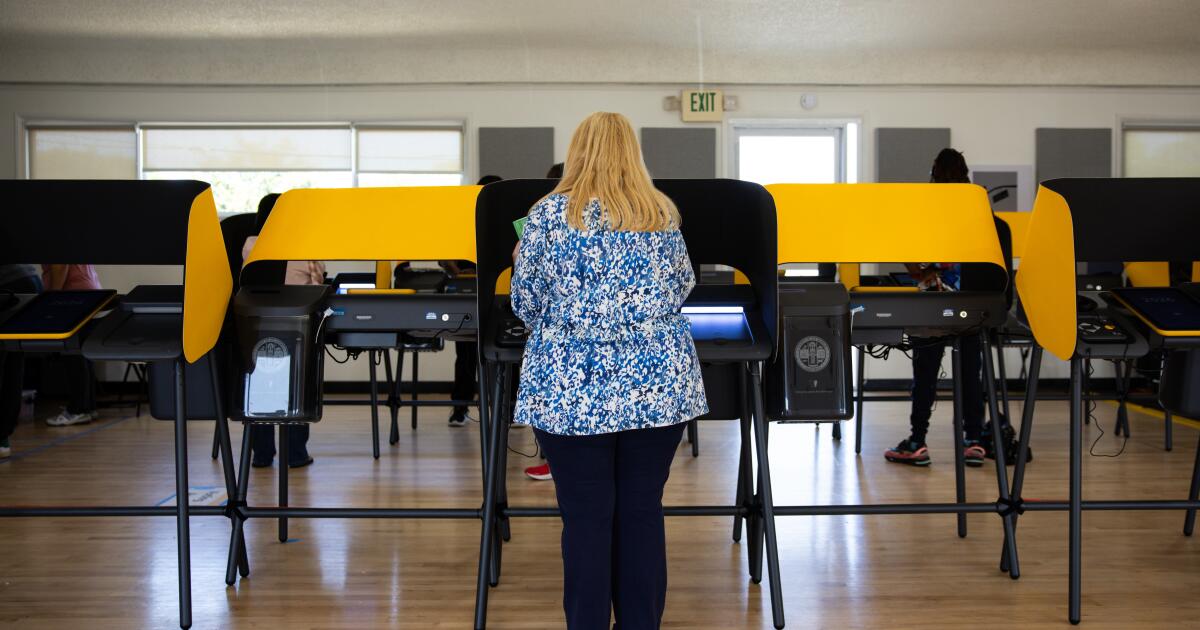
California voters are deeply divided over the trustworthiness of state elections heading into Tuesday’s primary, with most Democrats but less than half of Republicans expressing confidence in the electoral process, according to a new poll.
The polarized view follows a years-long campaign by President Trump and his Republican allies to question the legitimacy of American elections, especially in California and other blue states. It also follows robust efforts from liberal leaders, elections officials and voting rights experts to denounce Trump’s claims as baseless.
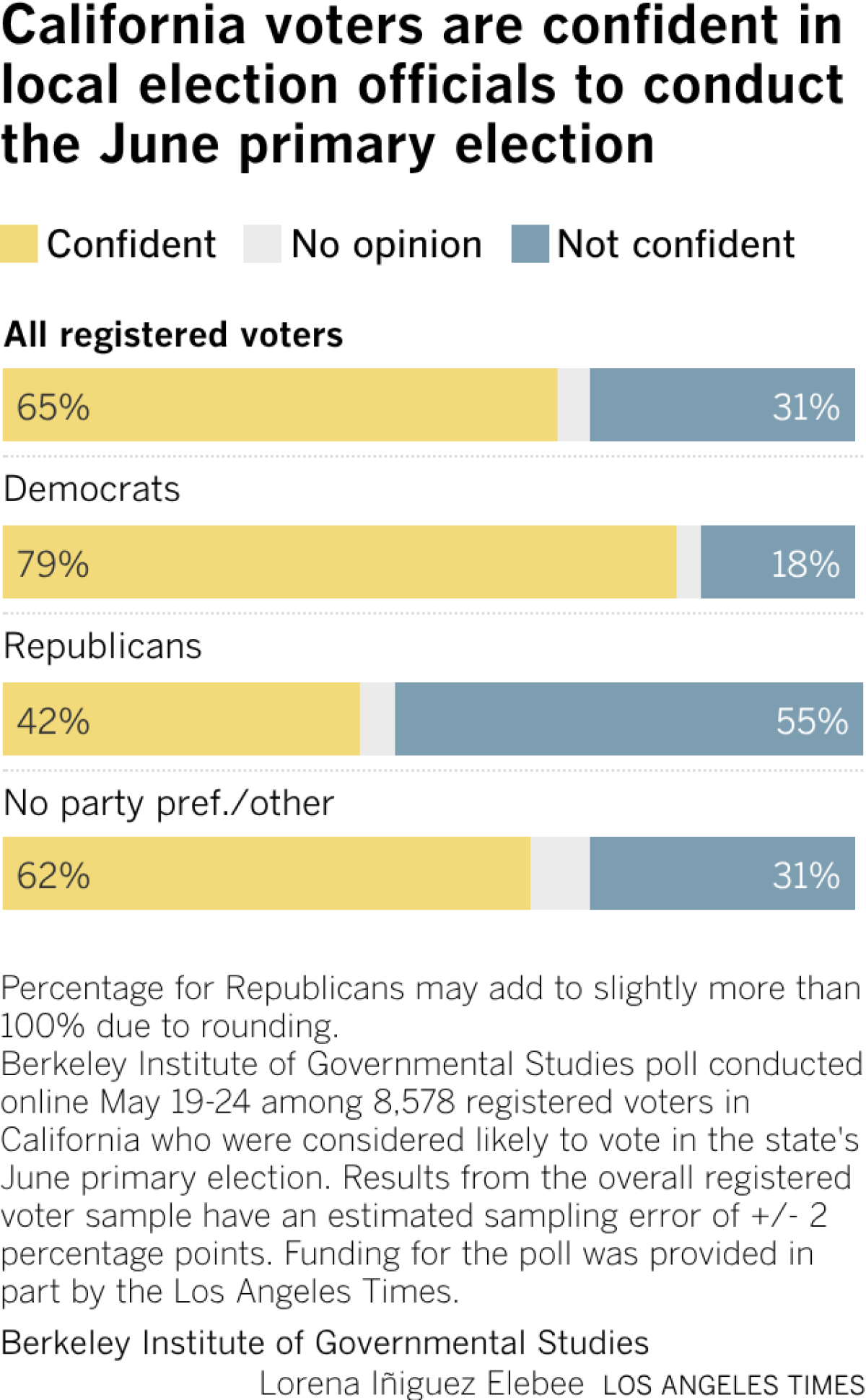
Overall, registered voters in the state — which skews heavily Democratic — expressed confidence in local election officials by a 2-to-1 margin, with 65% expressing confidence and 31% expressing a lack of confidence, according to the poll released Tuesday by the UC Berkeley Institute of Governmental Studies and co-sponsored by The Times.
However, those figures shift dramatically when sorted by political party, and even more when parsed by partisan leaning.
For example, 79% of Democratic voters expressed confidence in local officials running a secure and fair election, compared to 62% of independent voters and 42% of Republican voters, the poll found.
While 82% of voters who identified as strongly liberal expressed confidence, just 38% of voters who identified as strongly conservative did so.
A volunteer assists Melani Hurwitz at a polling location Monday at the Cal State Long Beach Walter Pyramid.
(Eric Thayer / Los Angeles Times)
“It’s clearly a partisan issue, and it is being promoted by the president and others who are his followers,” said Mark DiCamillo, the director of Berkeley IGS polls. “Strong conservatives and the Republicans are the least confident, and a lot of them are saying [they are] not at all confident. That’s a pretty extreme statement.”
Rick Hasen, an election law expert and director of the Safeguarding Democracy Project at UCLA Law, said he expected Republican confidence to be even lower given Trump’s decade of undermining trust in elections, especially in liberal, diverse states such as California. But he said neither Trump’s narrative nor public sentiment about election security — which generally shows voters are more confident “when their side wins” — reflects reality, which is that “our elections are administered well.”
“There’s very little evidence of manipulation or of fraud or even of incompetence,” Hasen said. “Anyone who looks objectively would see that there are numerous safeguards to ensure we have free and fair elections in California.”
Trump has long contended without evidence that voter fraud is pervasive among undocumented immigrants and in states, such as California, that use mail ballots, and blamed his 2020 loss to Joe Biden on such fraud despite experts rejecting the claim and Trump’s own allies and lawyers being unable to prove it.
A voter casts their vote inside the Westchester Family YMCA Annex on Monday.
(Kayla Bartkowski / Los Angeles Times)
Since returning to the White House last year, Trump has tried to implement strict new requirements for voter ID and proof of citizenship and to limit or bar mail-in voting, and called for greater federal or Republican Party control over state-run elections. In February, he said that “Republicans ought to nationalize the voting” in “at least 15 places” where they lose.
Democratic leaders, elections experts and voting rights advocates have all pushed back. They’ve backed their assurances that the state’s elections are safe with lawsuits to block Trump’s efforts to assert federal control. They also warn that his administration may try to intervene anyway, including by sending federal immigration agents to polling locations or intercepting or invalidating mailed ballots.
Last week Gov. Gavin Newsom signed a bill barring federal agents and other law enforcement from interfering with local and state elections officials or confiscating ballots, voter rolls or voting machines without a warrant. Newsom said California voters were experiencing “legitimate anxiety” over election integrity given the threats from the Trump administration and the recent actions of Riverside County Sheriff Chad Bianco — a MAGA-backed Republican candidate for governor who recently seized hundreds of thousands of ballots as part of what he said was an investigation into potential fraud in last year’s election.
An election worker collects extracted vote by mail ballots to be tallied at the Los Angeles County Registrar-Recorder/County Clerk Ballot Processing Center in City of Industry.
(Gary Coronado / For The Times)
Newsom said he expects Trump to interfere with the upcoming election as well because “every single thing that Donald Trump is saying only suggests that he will do more, not less, to intimidate and to impact the outcome of this election,” but that the state stands ready to respond.
California Atty. Gen. Rob Bonta last week said that his office is preparing for “all different types of scenarios” involving federal interference, from ballots being seized to immigration agents showing up at polling locations.
“We are currently monitoring any potential risks or threats, and we’re ready for any possibility,” he said.
Sen. Alex Padilla (D-Calif.) last week blasted the U.S. Postal Service for issuing a proposed rule to implement Trump’s mail ballot changes, despite the ongoing litigation. In April, Rep. Nancy Pelosi (D-San Francisco) helped convene a pair of “shadow hearings” in California where fellow House Democrats and a panel of experts shot down Trump’s claims about widespread fraud and expressed confidence in state elections.
A Berkeley IGS Poll from a year ago found that California voters support requiring first-time voters to show ID to prove citizenship in order to register, and that most supported requiring a government ID every time a voter casts a ballot. However, another Berkeley IGS Poll from last month found that strong majorities of California voters believe American democracy is under attack or being “tested.”
Dean Logan, head of the L.A. County registrar-recorder/county clerk’s office, said that overall confidence, “despite a sometimes volatile state and national narrative,” was “gratifying.”
“Election officials take connection to their community seriously. We recognize that our job is to facilitate their voting experience, and that voter participation is key to election security,” Logan said. “Regardless of party affiliation, our role as election officials focuses on the function and process of ensuring the voice of the electorate is heard and that compliance with the election laws adopted in our state is achieved.”
Jesse Salinas, president of the California Assn. of Clerks and Elections Officials and the registrar of voters in Yolo County, said local elections officials are “proud to be a steady source of trust at a consequential moment,” and stand ready to “open our doors to any voter who wants to see firsthand how our elections work and to answer any questions they may have.”
Times staff writer Iris Kwok contributed to this report.
Swansea City midfielder Ethan Galbraith said his calf injury is “all good” after being included in Northern Ireland’s squad for friendlies with Guinea and France.
Galbraith had not played since the friendly draw with Wales at the end of March, which came after Northern Ireland’s World Cup play-off defeat by Italy.
In April, Swansea boss Victor Matos said he would prefer the 24-year-old was rested for June’s international window, but Galbraith said he had conversations with his club manager and the medical team.
Having missed the remainder of Swansea’s Championship campaign, Galbraith said he had been “ticked off” by the club’s medical team to link up with Northern Ireland.
Northern Ireland face Guinea in Spain on Thursday before facing France in Les Bleus’ World Cup send-off in Lille on 8 June.
“I’m happy to able to come to camp”, Galbraith said.
“I spent six or seven weeks just with a physio, so that was quite long just training by myself but it is all good now.
“When you spend time off the pitch it’s obviously frustrating. So having these games is absolutely brilliant for everyone, but coming off the back of an injury, it’ll be good to get back out there.”
After an impressive first season at Swansea, where he has been deployed at right back as well as in midfield, Galbaith has been linked with a move to the Premier League, as well as Championship rivals Wrexham, but he says his focus is on his current club.
“It’s nice when you see people are saying that you are doing good things, but at the moment I’m a Swansea player and will just try and focus on Swansea.”
52-year-old Ryan McFarland killed six of his family members and later took his own life when confronted by the police in Muscatine in the US state of Iowa.
POD hotels the latest hotel trend taking over – and another one has just landed in the UK’s capital.
Also known as capsule hotels, Japan started the trend back in the late 1970s.
Sign up for the Travel newsletter
Thank you!
A new pod-based hotel has opened in central LondonCredit: OtherWanderOtherwander in Soho features both single and double pods or nestsCredit: Cyann Fielding
The main idea? Maximise space at the hotel and cut costs – and for guests this means a cheaper stay.
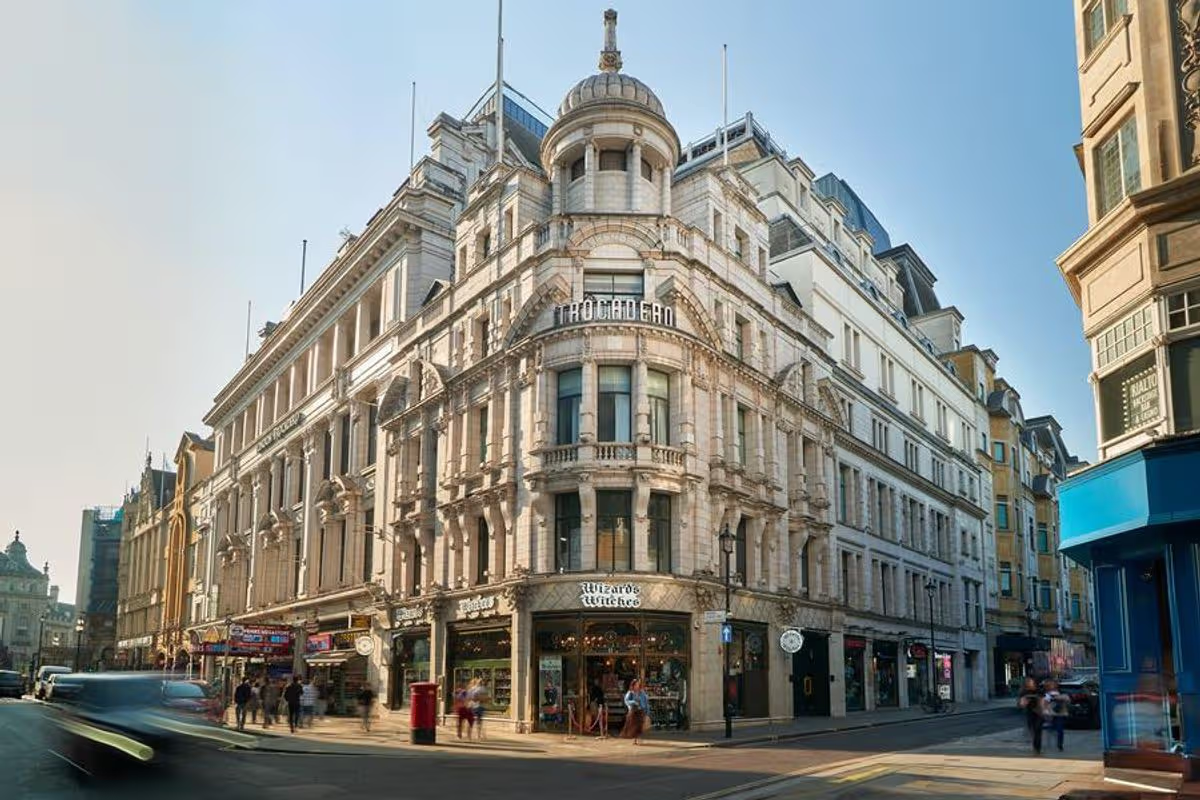
Otherwander has just opened in the very heart of Soho, approximately 30 seconds away from Oxford Street’s Elizabeth Line entrance.
As far as location goes, you can’t get much better with most of London‘s top spots within walking distance.
Stepping inside, I felt as if I had entered a swanky London office with a huge multicoloured LED screen and clinical white entry gates.
Before you arrive, Otherwander will send you a text with your pod (or nest as they like to call them) number as well as email you your Wanderpass, which is essentially your key to everything – getting into the hotel, getting into the lift, getting into your dorm and getting into your own nest.
You then use your Wanderpass to get through these gates.
To get in and around the hotel, you use your very own Wonderpass QR codeCredit: Cyann FieldingThe pass will even get you into your nestCredit: Cyann Fielding
Once on the other side, you’ll find the social area – which for a budget hotel is both surprisingly big and stylish (more on this space later).
To get to the floors with the pods – all 566 of them – you hop in the lift – once again scanning your Wanderpass.
Each floor is separated into different ‘dorms’, each packed with about 40 nests (which makes finding your own feel a little like going on a treasure hunt).
Once I eventually found my dorm and entered, it felt like a corridor of lockers, with the square doors actually being the doors to each nest.
When you book, you can opt between an upper or lower pod; I opted for an upper pod, which feels more like climbing into a UFO.
You can also choose between a double (£80 per night or £40 per person, per night) or a single (£70 per night).
In each dorm, there are a mix of single and double nestsCredit: Cyann FieldingSingle nests cost from £70 per nightCredit: OtherWander
I was surprised to find my upper double not boxy nor claustrophobic, despite being only the width of a standard double bed.
On either side of the bed is a handy elasticated pocket for your phone or book, with a USB and USB-C charging point next to each as well.
Down one side of the bed, you’ll find the air conditioning control system and lighting options including a reading light, night light and even surprise option, mine was colour-changing so ideal for post-club vibes.
You’ll also find a shelf, complete with a strap to secure your backpack or cabin-sized suitcase and three hooks for coats, jackets or towels.
On the other wall, the final feature is a rail with two towels on – though if you want another, you can rent one from a vending machine in the corridor, for £5 a time.
There is also a slight design flaw – a handy ‘wet tray’ is great for your shoes but if you pop your water bottle in its designated slot, you block the door from opening or closing.
As for the bed itself, while it a bit firm, was comfortable and the bedding felt as plush as you get in a more premium hotel.
The pod room didn’t feel stuffy either, despite the small space thanks to a high-tech purifying system too.
Double pods – like I stayed in – cost from £80 per night, which is equal to £40 per personCredit: Cyann Fielding
As for the door, it self-locks when you shut and on the back there is a small mirror, which was ideal for doing my makeup in the morning, as well as a QR code in case you need to communicate with staff.
If you start to feel a bit claustrophobic, there is a small window in the door with a shutter for privacy.
Being a pod hotel, don’t expect your own private bathroom.
You’ll have to head out to the main corridor on your floor where you’ll find men’s, women’s and mixed-gender bathrooms.
Downstairs there is also a social areaCredit: Cyann Fielding
The real test of this came at 3am when I had to crawl out of my pod backwards down the ladder and shuffle to the toilet, awaking all the motion-sensored lights and having to open my phone with blurry eyes, just to scan my Wanderpass to get back in.
The bathrooms do feel like a slice of luxury though, with terrazzo- style tiles lining the sinks and walls and music being played from the ceiling.
Each rain shower has heaps of room, so your items are safe from getting wet and there’s also free soap and shampoo.
Vanity areas are then kitted out with hairdryers and shaving sockets.
In the social area there are a few bookcases as well if you want to chill and read somethingCredit: Cyann Fielding
If you fancy being social, back downstairs you’ll find the hotel’s ‘guest-exclusive social hub’ with warm yellow lighting adding a glow to the space and complementing the burnt orange modular sofas.
It is the ideal space to hang out with other guests, work or even snuggle into a corner with a book – which you can pick up from shelves around the space.
There are even plans for live DJ drop ins in the future.
Fancy a pint? The back wall features several vending machines full of everything you could possibly want – even Moet champagne.
There are also a couple of coffee machines and if you have forgotten something, there’s even a vending machine with essentials from make- up wipes and deodorant to umbrellas and Uno cards.
If you have bigger luggage you don’t want to store in your nest, there are lockers you can rent on site.
The funky design throughout and clever lighting really does make you feel as if you are in a luxury space ship.
There’s also a number of vending machines with everything from Moet champagne to Uno cardsCredit: Cyann Fielding
At no point did I feel like I was steps away from the busiest street in the UK as it was completely silent (albeit there were very few guests in my dorm, so this might be different on busier days).
But while the hotel is a huge bargain, the rise of pod hotels in the city means there are other options that pip it to the post when it comes to being the cheapest in the city.
If sharing a double with someone, £40 each isn’t terrible – but £70 for a single pod – which obviously are much smaller – seems rather steep.
Other alternatives in London include a single pod at Zedwell’s Capsule Hotel in Piccadilly for £32, while a double room with an ensuite and breakfast included at Zedwell Soho for £77.
Not only that, but if you have a large suitcase (which many tourists do) the price will increase to pay for it to be stored.
If you fancy the novelty of a pod hotel – go for it – but if you are wanting to save cash, I think you can find better bargains elsewhere.
LOOKING back on all of her recent holidays, Helen Dalling recalled all the amazing adventures she had in such a short amount of time.
Over the course of one year, she managed to do more travelling that many could wish to do in a lifetime – and she did it without breaking the bank.
Sign up for the Travel newsletter
Thank you!
Helen enjoyed the sunshine on the beach in Palma, SpainCredit: Jam Press/Helen DallingAn overnight trip to Amsterdam worked out at just £290 per personCredit: Jam Press/Helen Dalling
Seven countries, £2,000 spent, and more memories made than anyone could dream of.
It all started when Helen decided to see how many new places she could visit for as cheap as possible – and managed to keep costs low while making the most of each new adventure.
She did this by making each trip as short as possible, with some being ‘extreme day trips’ – where you fly in and out of a country within the same 24 hours – and others being just an overnight stay.
And despite packing in a full holiday experience each time, the total cost came in at around £1,600 including flights, airport parking, any hotels, sightseeing, food and drink, and spending money.
An overnight trip to Budapest cost Helen just £191Credit: Jam Press/Helen DallingHelen and her friend, Alina, jetted off to Palma recently for £120 eachCredit: Jam Press/Helen Dalling
“I’ve always loved travelling but as I’m getting older and I’ve got kids and I work full-time, I thought ‘I’m not going to see enough countries in the world,” Helen, who is from Milton Keynes, said.
“‘If I don’t start going to see a few of them, I need to do them quick and cheap’.
“That’s really why I started doing it.”
While Helen started her extreme day tripping in 2024, it was in 2025 that she really went all out – visiting seven new countries throughout the year. She headed to Paris, Budapest, Geneva, Split in Croatia, Prague, Amsterdam and several places in Spain in 2025.
The 55-year-old stayed just hours in some places, and spent the night in others, and visited most with friends, while others she headed to alone.
She added: “I went to seven brand new countries.
“That’s what I really wanted to do, I thought ‘I’ve never been to Hungary so let’s go to Budapest’.”
Cost breakdown for Helen’s 2025 trips
Paris – £139 (extreme day trip) Budapest – £191 (overnight) Alicante – £62 (extreme day trip) Malaga – £118 (extreme day trip) Geneva – £182 (extreme day trip) Split – £315 (overnight) Prague – £165.11 (overnight) Amsterdam – £290 (overnight) Geneva – £138 (extreme day trip) Total – £1,600.11
Helen says she tries to keep costs as low as possible, by regularly searching for bargains on the websites of different airlines she knows fly from her nearest airport, Luton.
She added: “When I went to Paris, I was basically just browsing on New Year’s Day, not doing much else and I spotted that you could get a flight to Paris for £13, one way and £12 the other.
“I just booked it – and then when I told a friend, she booked it too and came with me.
“The Budapest flights were about £8.99 each way, you can’t even get them that cheap anymore.
“I’ve done others that were £15-£20 return; I just book them – when I see the price, I just go for it.”
While Helen does some of her trips solo, she often has friends tag along for the day.
She says she treats her trips as “an opportunity to catch up with a friend.”
She added: “Instead of going to London for lunch, let’s go somewhere for the day.
“I did Geneva twice last year, but the second one I did at Christmas was with a real old friend of mine who is really into her food.
“So we went and did a foodie trip to the Christmas markets in Geneva and just went for the day, she’d never done one.
“Everybody that I’ve done one with has said ‘oh my God, that was amazing’.
“I’ve got a bit of a queue of people wanting to go as well, but only so much money.”
Of all her trips in 2025, Helen says her adventure to Budapest, which cost £191 for an overnight stay, was the best – particularly for its Thermal Baths.
She said: “We just fell in love with Budapest.
“Every time we did something else afterwards, I just said to my friend ‘it’s not Budapest though, is it? It’s not Budapest.’
“It was February when we did that but the sky was blue and we had the best time.
“It was super cheap and everything just worked.
“It was so lush.
“We were just sat in these massive pools of boiling hot water with the cold air on our skin, just going ‘this is amazing.’”
Helen shows no signs of slowing down with her bargain trips either, having already undertaken several in 2026.
She recently visited Palma, Mallorca with a friend, for under £120 each.
They spent the day exploring the city, visiting a sky bar restaurant for lunch, heading to the beach to swim and even stopping for iced coffee at a beach bar.
Most recently, Helen spent the night in Lithuania, and even visited Albania for the day.
She added: “ I’m always buzzing after a day trip.
“I would definitely do it again, it’s a great way to visit countries you’d never visit by going on one holiday a year.
“Last year I visited seven new countries and it’s liberating.”
Now, the fee change is being criticised, with passengers and drivers calling it “disgusting” and “mad”.
Meanwhile, taxi operators are being forced to warn customers that the charge will be part of their cab bill when rides are booked.
Mark Streeter, boss of Norwich’s Courtesy Taxis, told Norwich Evening News: “The main annoyance from our side is that we tell customers it’s an extra £5 or so, and now it’s gone up with no warning. So either the customer or the driver has to pay more than expected.”
Norwich Airport has responded to explain that the drop-off fee increase is a result of growing business costs and worsening energy prices.
A spokesperson for Norwich Airport told The Sun: “We understand that no one welcomes increased charges. But our airport group is facing sharp rises in costs, including a tripling of business rates, higher employment costs such as National Insurance and rising energy costs.”
Admitting that there is no choice but to rely on the public to absorb some of the growing costs, the spokesperson added: “At the same time, we continue to invest millions of pounds in maintaining the airport infrastructure needed to provide an essential public service in our regions.
“We cannot keep absorbing these increased costs without passing some of the additional burden on to our customers.”
Norwich’s change in drop-off policy comes alongside Stansted Airport‘s similar changes.
The London airport took its 15-minute express drop-off charge from £7 to £10 in March, with stays of up to 30 minutes now costing £28 instead of £25.
Meanwhile, London Gatwick‘s fee for a 10-minute drop-off now costs £10, up £5 from when it was first introduced in 2021.
She shared how to make the most of your luggage allowance when travelling as a family
Stacey Solomon said parents need to be ‘prepared for any eventuality’(Image: 2025 Jeff Spicer/Getty Images)
TV star Stacey Solomon shared a handful of essentials parents should pack before a flight in a previous partnership with Jet2. She said: “When I’m packing hand luggage, it’s one of those things that I really need to think about because I know, when you’re on a flight with kids, you just want to be prepared for any eventuality.”
Stacey’s hand luggage “staples” when travelling with kids include a variety of things that can keep little ones occupied and make the flight go a lot smoother for the parents and other passengers.
Packing your own snacks is an excellent way to keep kids occupied, save money on airport prices, and avoid limited options once in the air. Make sure that it follows airport security rules (such as no liquids over 100ml).
Bringing any games to play can help keep little ones occupied without the need for devices. Stacey suggested card games, as they avoid the need for fiddly plastic pieces or dice flying about the cabin.
She said: “Another thing I love bringing in [the kids] hand luggage is sticker books. My kids will sit and do sticker books for ages. They love colouring, but if you don’t want to pick up pencils from under everyone’s seat the entire flight, go with stickers – it’s a better option!”
Content cannot be displayed without consent
Another thing to remember for a fun memory is a cuddly toy. Stacey said that Jet2 has a “really cute” offer for a free ‘Teddy Passport’ that can be filled out in the airport.
The scheme was launched in October 2023, and it’s still offered in 2026. Simply ask one of the check-in agents at the desk when you arrive to drop off your bags, and they will provide you with a complimentary passport.
A Jet2 spokesperson said: “After receiving a teddy bear passport, holidaymakers can then give their teddy’s passport to Cabin Crew when boarding. As well as being a fun start to the holiday, parents have reported that it has helped their children feel a sense of independence and given them some understanding about the process of travelling overseas from a young age.”
Stacey’s top tips for packing
Make a list: Stacey says to keep a list of everything you want and need to take away with you. Following a list means you will not forget things, overpack or potentially leave something behind at home. She said: “I know exactly what I’ve got if I refer to my list.”
Use packing cubes: Stacey said that she “genuinely swears by these” and they can be bought from places like Amazon, Argos, Dunelm, Primark and more. In her Jet2 video, the mum of five had her items sorted into categories such as cosmetics and sun safety.
Plan crease-free outfits: By not worrying if clothes will end up wrinkled, Stacey said items can be packed much tighter in a suitcase and can therefore mean extra room. She joked: “Stop going on holiday in linen – you’ll be ironing the whole time!”
In the 1990s this iconic building was the ultimate destination for kids and teenagers before it was abruptly abandoned, and it’s now set to get one of the city’s largest
The iconic building was left abandoned for years(Image: Criterion Capital)
If you were a child in the 90s, or just a kid at heart, then there was one place you would have no doubt wanted to visit on a trip to the capital. London Trocadero, an iconic building set at 30 Shaftesbury Avenue has had many different uses over the years, but among millennials it’s perhaps best known for its time as the ultimate indoor amusement park.
From 1996 to 2011, the Trocadero was home to SegaWorld, later renamed to Funland, a sprawling seven-floor, neon-lit complex that was accessed by a long enclosed ‘Rocket Escalator’. It’s perhaps best remembered for the huge indoor drop ride in the centre, and the floor after floor of coin operated arcade machines from the golden era of gaming.
However, after closing, the venue’s future remained uncertain, and the building lie abandoned for many years. The space had a variety of uses over the years, until 2025 when the Zedwell Piccadilly took over a large part of it, creating a pod hotel with 728 windowless rooms and a large rooftop bar.
Now, there are plans to turn part of the building into a giant branch of JD Wetherspoon, creating one of the largest branches in the capital, and the pub chain’s first-ever venue in London’s Theatreland.
The new pub will be called Piccadilly Hall, taking its name from a historic hall which gave Piccadilly Circus its name back in the 17th-century. It’ll span over 3,600 square feet, offering a massive 280 covers, and will open from 7am until midnight seven days a week.
The venue will serve Wetherspoon’s breakfasts and all-day food and drink menus, and is expected to attract theatre audiences, tourists, and locals thanks to its central location. At the moment, there’s no confirmed opening date for this new London branch.
Earlier this year, Wetherspoon opened its first branch outside of the UK, offering British pub food and Spanish favourites to travellers passing through Alicante-Elche Miguel Hernández Airport near Benidorm. The chain also expanded its portfolio with four new branches opening within Haven holiday parks.
Other upcoming openings for the brand include The Sir Ronald Wates in Guildford, which will have the distinction of being the first university-owned Spoons set on a University of Surrey campus. A large branch will also open in Edinburgh in September named The William Chambers, in a building that was once a multi-storey bar and club.
Founder and chairman of JD Wetherspoon, Tim Martin, said: “We are delighted to be opening our first venue in Theatreland in partnership with Criterion Capital. The West End is one of the world’s great hospitality destinations, attracting millions of visitors each year, and we believe this site is exceptionally well suited to the Wetherspoon model of offering good-quality food and drink at reasonable prices in well-managed and historically interesting buildings.”
He added: “We look forward to becoming part of this vibrant area of the West End.”
Have a story you want to share? Email us at webtravel@reachplc.com
Suggestions that criticism of the State of Israel is anti-Semitic in Australia risk hardwiring a dangerous confusion. Questioning the behaviour of a foreign state is not the same as denigrating or attacking a people who may have links with that state. The State of Israel is represented by its embassy in Canberra, not by the Jewish community in our cities and suburbs.
But the knee-jerk reaction to the attack on a Jewish celebration in Sydney is solidifying that confusion. On December 14, 2025, as Jewish families gathered near Sydney’s Bondi Beach to celebrate Hanukkah, two gunmen opened fire, killing 15 people and injuring many others in one of the worst attacks in Australia’s history. In response, the federal government set up a Royal Commission on Antisemitism and Social Cohesion, led by former High Court justice Virginia Bell. On April 30, 2026, the commission delivered its interim report, raising serious concerns about how we define anti-Semitism.
The commission has adopted the International Holocaust Remembrance Alliance (IHRA) working definition of anti-Semitism. The IHRA offers examples that include criticism of Israel as evidence of anti-Semitism. But such a broad definition collapses critical commentary on Israel’s policy in Gaza, its treatment of Palestinians in the West Bank and Israeli officials’ dehumanising comments about Palestinians into a racist attack on Australia’s Jews. How does that make sense to anyone?
This is not an abstract question. The blurring of these categories acts as a brake on public debate. It narrows the range of permissible language used to describe Israel’s conduct in Gaza, where Australians have watched entire neighbourhoods destroyed and tens of thousands of civilians killed.
The official line from governments in relation to Israel is that Israel has a “right to exist” and an obligation to defend its citizens, which appears to give Israel carte blanche to decimate the entire Gaza Strip and kill tens of thousands of Palestinians. But no other state enjoys this exceptional treatment. No other state can do what it wishes simply because it has a “right to exist”. Australia has that right, but that right has never shielded governments in Canberra from fierce criticism, whether over First Nations dispossession, offshore detention or climate inaction. When Prime Minister Kevin Rudd apologised to the Stolen Generations in 2008 for the wrongs past governments had done to Aboriginal and Torres Strait Islander people, Australia’s legitimacy as a state was not under threat. Rudd was reflecting the public mood by distancing his government from the policies of the past. It was not seen as challenging Australia’s right to exist.
Yet in debates about Israel, the invocation of the “right to exist” and anti-Semitism operates as a conversation stopper. It closes the door to a frank discussion about the State of Israel and its behaviour. We cannot talk about occupation, apartheid and war crimes because that is anti-Semitic. This is a troubling precedent that insulates Israel from moral and political accountability.
The commission was established in response to a real and deeply upsetting surge in anti-Semitic violence. But its framework could cast suspicion on genuine inquiry into the behaviour of Israel. It entrenches a form of exceptionalism that actually weakens Australia’s democratic norms.
A liberal society must be able to draw a clear line: hatred, discrimination or violence against Jews is anti-Semitic and unacceptable; criticism of a foreign government is not.
There is also a cost to Jewish Australians when that line is blurred. Public debate routinely treats “the Jewish community” as a single, pro-Israel bloc, represented by a handful of bodies. This is simply not true. Many Australian Jews are alarmed to see the destruction of Gaza in their name. Some have mobilised against Israel’s actions.
To assume unanimous Jewish support for Israeli actions is to deny Jewish Australians their agency. Worse, it risks casting Jewish dissenters as inauthentic. If the policy settings shaped by this commission casts such voices as anti-Semitic, they will be erased twice over: excluded from the definition of the community and penalised for speakingup. This is silencing dissent, masquerading as protection.
If public institutions reinforce the idea that criticism of Israel is criticism of Jews, they risk feeding anti-Semitism.
Images of Gaza’s destruction on the news have galvanised global public opinion. Many young Australians have marched for an end to Israeli policies and freedom for Palestine. The message that such protests against Israel are anti-Semitic could not be any more counter-productive and harmful for Australian democracy. That will only breed resentment against the Australian political system for ignoring what everyone sees on their TV screens, and, dangerously, feed the very anti-Semitic narratives the commission should be challenging. Those who already hold anti-Semitic views will feel confirmed in their belief that Jews act collectively through Israel. The commission cannot afford to fall into this trap.
To the credit of the Australian Broadcasting Corporation (ABC) and the Special Broadcasting Service (SBS), they have avoided the conflation of Israel and Jewish people and have not adopted the IHRA definition. The interim commission report has not embraced the most heavy-handed proposals in circulation; there is no rush to ban protest slogans or criminalise political expression. There is room for optimism that the commission can still address the issue in its final report.
Here are the standards it needs to uphold to protect social cohesion in Australia:
First, an unambiguous distinction between anti-Semitism and criticism of Israel. Second, a recognition of the diversity of Jewish opinion, including among those who oppose Israel’s actions, and the inclusion of those voices in efforts to combat anti-Semitism. Third, a defence of political space for Palestinians and their allies to describe their experiences of occupation, dispossession and siege in their own terms, while rejecting any dehumanising or racist language about Jewish people.
Anti-Semitism in Australia is a threat to the Jewish community (regardless of political views) and the very foundation of our social cohesion. But seeking to address the scourge of anti-Semitism by conflating critical views of the State of Israel with hatred of Jews will only make matters worse. Such approach will suppress debate, limit freedom of speech and inquiry that has already led to self-censorship at our universities and entrench the very confusion that sustains anti-Semitism.
The views expressed in this article are the author’s own and do not necessarily reflect Al Jazeera’s editorial stance.
The Strictly Come Dancing icon has taken part in BBC’s Who Do You Think You Are? where she learns about her lineage.
At one point, Amy is left in tears as she hears of a family member who suffered from breast cancer and died at a young age, leaving several children behind.
The Welsh dancer is left devastated, as she reflects on her own cancer battle, having been diagnosed with breast cancer in May 2023 and suffering health setbacks as she underwent treatment.
Elsewhere during the programme, Amy learns of a 13-year-old who was shot dead in an awful accident.
After hearing of a rumour of a murder from her mum’s side of the family, Amy begins her journey in west Wales, where she seeks to find out if her ancestor was the victim or the perpetrator.
“Was there a murder, was one of my family involved? Detective Dowden on a mission,” Amy declares.
She meets her distant cousin Wyn at his home in Ceredigion, where he shows Amy a family Bible that belonged to her three-times great-grandfather.
Inside it, she reads the name Elinor Jenkins, with information revealing that she was shot dead by the “cruel man Offley Owen” in November 1888, when she was just a teenager.
“Why would somebody want to shoot a 14-year-old girl?” Amy wonders, shocked to hear the distressing news of her ancestor’s murder.
“When I heard of this mysterious death, I didn’t think it would be somebody within our family who was killed, I assumed one of our family members shot somebody. I was not expecting this and not expecting a child,” she says.
Elinor was Amy’s three-times great aunt, and was killed at a nearby farm, Berthlwyd, where she worked as a servant.
The dancer meets historian Dr Angela Muir, who confirmed that Elinor was actually aged 13, and was working at the farm with a 17-year-old boy called Offley Owen.
She reads newspaper reports that detail what happened, revealing that Elinor had been sent to fetch water before a witness heard Owen saying “I’ve shot Nelly dead”.
Owen had taken up the gun “with a purpose of showing her”, but was unaware it was loaded, and was supposedly being playful.
He did, however, tragically kill her, with Elinor being shot in the mouth.
“This is awful,” Amy says. “That would have been an instant death.” The historian agrees, saying: “It’s quite horrific.”
However, Amy finds it difficult to believe the death came about as an accident. She wonders: “He obviously had intention to use that gun,” adding: “To me, this was planned.”
Amy hears about the coroner’s inquest that took place after Elinor’s death, leaving her “confused”.
The reports eventually confirmed that Owen was charged with manslaughter, and would have been tried in the assizes court in Carmarthen.
“I’m horrified by what I’ve read, it’s going to take a little time to process it,” Amy admits.
In Carmarthen, Amy meets another historian who explains that Owen pleaded not guilty at court and the prosecution announced they would call no witnesses.
She’s stunned to discover that Owen was discharged, which would often happen in cases like these during those times, as the court took into account that he had never been in trouble with the law before.
“Some part of me is not satisfied with this,” Amy says, hearing that the victim’s family didn’t get justice after the tragedy.
Seeking comfort after hearing of the outcome, Amy travels to a church in Blaenpennal, where Elinor was laid to rest.
She says: “At first when I heard that he was found not guilty, I was like, how did the family move on? How did they start to process the grief? But it does seem like it was an accident and I guess, after time, they started to forgive.”
She learns that Elinor was remembered “as a young person of more than ordinary ability”, and also that a valley near the farm where she lost her life is now named after her.
Amy says: “I never realised that a member of my family has landscape named after her, I think that’s something quite special, really touching.”
Amy Dowden’s episode of Who Do You Think You Are? airs on Tuesday 2 June at 9pm on BBC One and iPlayer
(Bloomberg) — UK mortgage approvals unexpectedly rose in April as the housing market displayed ongoing resilience to the economic fallout from war in Iran. Read More