Britain’s Jack Draper says he is “devastated” after withdrawing from Wimbledon just 24 hours before his first-round match with a long-term arm injury.
Draper, fresh off a run to the Eastbourne semi-finals last week, was due to face American sixth seed Taylor Fritz on Centre Court on Tuesday.
However, the arm problem that stopped him playing for most of the past year has once again prevented him from competing in a Grand Slam.
“There have been a lot of painful moments in the last 12 months, but this one is definitely the absolute worst,” Draper said.
It is the second significant injury blow for British interest, following Emma Raducanu’s withdrawal on Sunday because of a stress fracture in her right leg.
Draper spoke to media at Wimbledon on Sunday and gave no indication he was struggling again with the bone bruising in his serving arm.
However, Draper did say he felt the amount of injuries suffered by leading players is “pretty worrying”.
Police say several people also injured while the suspected shooter has been arrested.
Published On 29 Jun 202629 Jun 2026
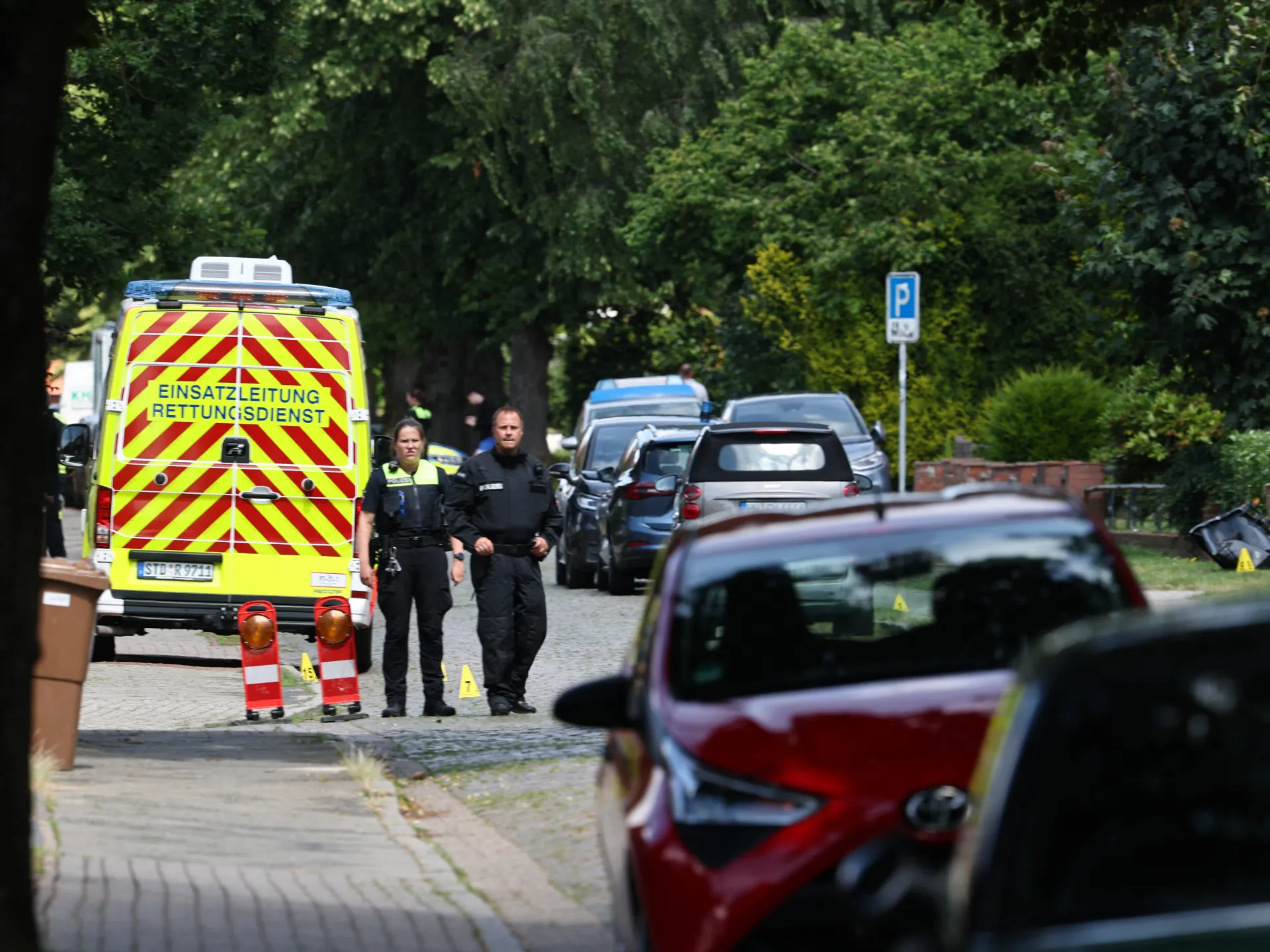
Five people have been killed and others wounded in a shooting at a youth welfare centre in the northern German city of Stade, according to police.
Two suspects were detained following the shooting on Monday, one of whom is believed to be the alleged attacker. The motive is not clear.
Recommended Stories
list of 3 itemsend of list
“Homicides involving multiple victims occurred at a youth welfare facility,” police said. “Five people were fatally injured and additional individuals sustained injuries.”
Police in Stade said a major operation was being conducted on Dankersstrasse, a street south of the city centre. People were urged to avoid the area and follow the instructions of the emergency services.
Stade is about 40km (25 miles) from Hamburg with a population of half a million.
Two more airports could ditch the need for Brits to register their biometric details when entering the Schengen area in the hope of avoiding ‘disaster’ this summer
14:38, 29 Jun 2026Updated 14:39, 29 Jun 2026
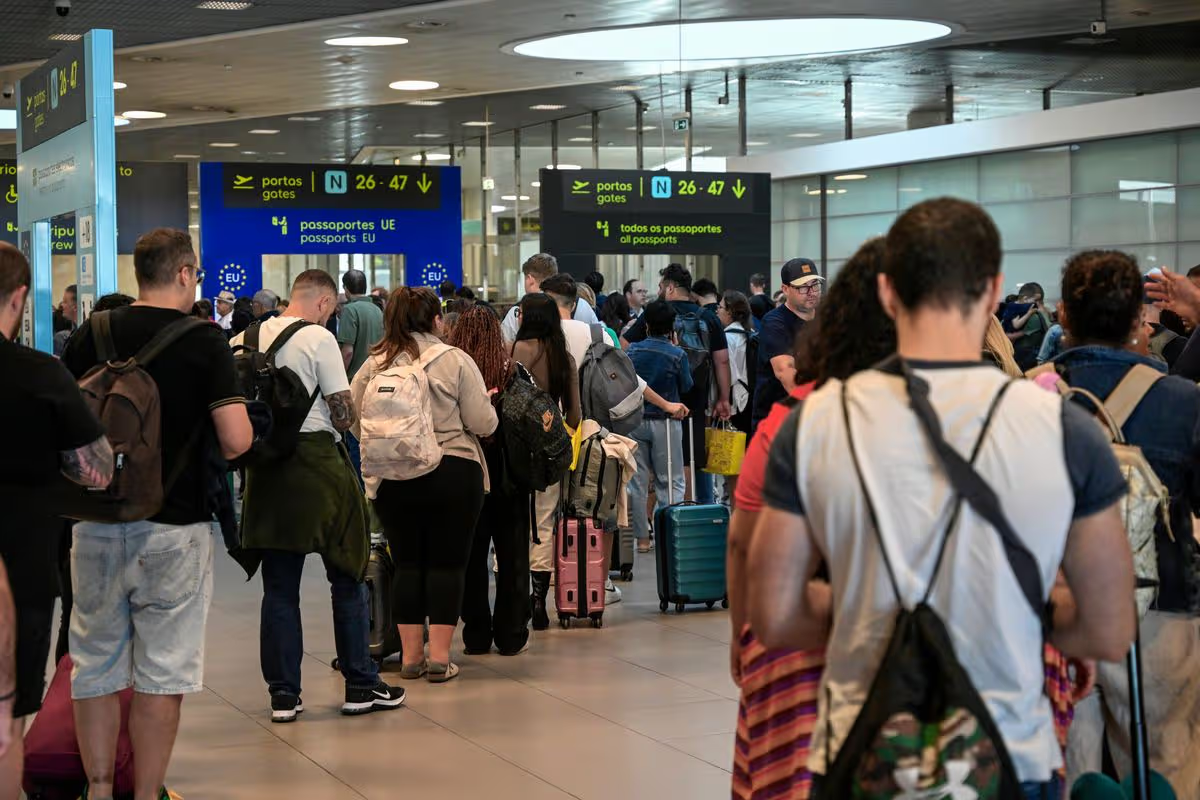
Two more airports could scrap the Entry/Exit System (EES) for Brits amid summer concerns(Image: Getty Images)
The EU’s new travel rules have caused growing concerns for the peak travel season, prompting a number of destinations to look at options to waive them for holidaymakers.
The European Union’s (EU) Entry/Exit System (EES) was fully rolled out on 10 April 2026, requiring all Brits heading to the Schengen area to “create a digital record” and register their biometric details, including fingerprints and a photograph. While it’s been successful in many countries, it continues to cause significant travel disruption at European airports.
There have been reports of Brits being asked to submit their biometric information again, despite having already provided it on their first visit to the Schengen zone. Holidaymakers have also been stuck in gruelling queues lasting up to four hours as they attempt to navigate the digital border system, with missed flights and ruined holiday plans.
In an attempt to ease the travel chaos, particularly during peak travel times, Greece opted to waive the EU requirement for Brits to provide fingerprints and facial scans at airport border controls earlier this year. In an official statement, the Greek Embassy confirmed: “In the framework of the implementation of the Entry/Exit System, as of 10 April 2026, British passport holders are exempt from biometric registration at Greek border crossing points.”
Now, it appears that Rome Fiumicino Airport and Rome Ciampino Airport could join Greece in waiving the EU requirements in a bid to avoid “disaster” during the peak summer travel months.
Aeroporti di Roma Chief Executive Officer Marco Troncone told the Financial Times, “We are very worried for the summer”, and said his concerns were an “eight or nine” out of 10. He added: “The process proves to be incompatible with the peak volumes that we are going to face. So the only way is to open up the valve. There is no way that we can deliver 100% of the enrolment.”
While Rome is yet to make such a change, Greece remains the only country to have officially eased the EU requirements for British travellers. However, an EU official has indicated that European airports could relax EES requirements until September this year.
Uku Särekanno, Deputy Executive Director of Frontex, which helps to manage the external borders of the EU, said earlier this month: “We have until the end of the summer, the possibility during the tourism season to lift the biometric controls or the biometric registration temporarily.
“If there is a peak hour, you see that there are hundreds of people queuing, their queues are getting too long, then member states still have the possibility to lift biometric registration. The EU has considered, for the period of summer, to make sure that there is still some relief for the worst-case scenario.”
The new digital border system is required for the initial arrival at the airport border within the Schengen zone and has replaced the traditional manual passport-stamping process. Once the initial registration is complete, the EES remains valid for three years.
Countries in the Schengen area include: Austria, Belgium, Bulgaria, Croatia, Czechia, Denmark, Estonia, Finland, France, Germany, Greece, Hungary, Iceland, Italy, Latvia, Liechtenstein, Lithuania, Luxembourg, Malta, Netherlands, Norway, Poland, Portugal, Romania, Slovakia, Slovenia, Spain, Sweden, and Switzerland. Meanwhile, the EES system is not needed for travel to the Republic of Ireland and Cyprus, as neither falls within the Schengen area.
The Foreign Office confirmed the EES change for Greece on its travel advice page. It read: “Greek authorities have indicated that they will not collect biometric data (fingerprints and photos) for UK travellers as part of EES. Follow the advice of authorities on the ground. If you are resident in Greece, make sure to show your residence documentation at passport control to ensure you are not registered in EES.”
Some of the major mainland airports in Greece include: the International Airport of Athens, Thessaloniki International Airport, Kalamata International Airport and Aktion National Airport. Meanwhile, those on the islands include Corfu International Airport, Kefalonia International Airport and Zakynthos International Airport.
Do you have a travel story to share? Email webtravel@reachplc.com
Families heading abroad for the summer have been warned
Parents have been told to keep small children within arms-reach (Image: Getty)
With countless families anxiously awaiting their summer break at the beach, the holidays could end in tragedy for some if they don’t heed some advice. The Foreign, Commonwealth and Development Office (FCDO) has updated its travel guidance for Spain, urging parents to put their children’s safety first particularly in swimming pools and beaches at the popular holiday destination this summer.
In the update on June 26, the Foreign Office issued specific advise for each swimming location and highlighted a sad but startling truth parents should keep in mind even while trying to relax on holiday: “Every year, people drown in the sea and in swimming pools in Spain.”
According to the Royal Life Saving Society UK, an average of 82 UK citizens drown each year while they are abroad.
Swimming pools
The Foreign Office advised parents to always keep an eye on their children, regardless of their age, while they are in or near swimming pools. For small children, the office urged parents to keep them no further than arms-reach away even if they are able to swim or there is a lifeguard nearby.
Beaches
The Foreign Office advised: “Take care when swimming in the sea. Always supervise children and keep small children within arms-reach. Some beaches, especially around Spanish islands, may have strong undercurrents.”
In the ocean, there are a few more concerns that both everyday beachgoers and parents may need to keep in mind when swimming to avoid serious injuries. This includes hidden rocks, shallow depths, strong undertows and waves coming into shore further and quicker than expected.
The warning continued: “Many beaches have a flag system. Make sure you understand the system and follow any warnings (a red flag means you must not enter the water). Take extra care and get local knowledge if there are no lifeguards, flags or signs.”
The Royal Life Saving Society UK recommends a few simple steps to avoid having an emergency in the water. Including keeping children within arms-reach as it notes: “86% of child drownings occur in the absence of adult supervision.”
Before you head into the water, the experts recommend:
Review local safety notices and learn what the signs and flags mean
Look out for potential hazards in your surroundings and warn the rest of your group
Wear brightly coloured swimwear so you can be seen underwater
Never use inflatables in open water as it can easily be blown out to sea
Take extra care when intoxicated around water and never enter the water whilst under the influence
The FCDO provides travel advice for more than 220 countries and territories across the globe, covering everything from entry requirements and safety risks to health precautions and local regulations.
School’s (almost) out … and with a long summer stretching ahead, we want you to share fun activities that will help others fill the family diary. We’d love to hear about your favourite summer days out and adventures in the UK. Perhaps it’s a trip to an outdoor sculpture park or gallery, a great picnic spot by a river, a small theme park or coastal hike to a quiet cove.
The best tip of the week, chosen by Tom Hall of Lonely Planetwins a £200 voucher to stay at a Coolstays property – the company has more than 3,000 worldwide. The best tips will appear in the Guardian Travel section and website.
Keep your tip to about 100 words
If you have a relevant photo, do send it in – but it’s your words we will be judgingfor the competition.
We’re sorry, but for legal reasons you must be a UK resident to enter this competition.
The competition closes on Monday 6 July at 10am BST
Your responses, which can be anonymous, are secure as the form is encrypted and only the Guardian has access to your contributions. We will only use the data you provide us for the purpose of the feature and we will delete any personal data when we no longer require it for this purpose. For alternative ways to get in touch securely please see our tips guide.
If you’re having trouble using the form click here. Read terms of service here and privacy policy here.
With ₦2.759 million standing between Pious Umokoro* and graduation, his dream of building a better life for himself hangs in the balance. The chance to attend a private university felt like a blessing, but four years of relentless effort, sleepless nights, and hope are at risk if he cannot secure the funds.
Given his family’s financial struggles, Pious’s best chance at higher education was through the Presidential Amnesty Programme (PAP) scholarship at Novena University in Delta State, South South Nigeria. Trapped in a deceitful slot system that promised him the PAP scholarship, he is now unable to pay the outstanding fees demanded by the university.
PAP was established in 2009 by the Nigerian federal government to address militancy in the Niger Delta region, offering scholarships, vocational training, and peacebuilding schemes. One of PAP’s initiatives is a fully funded scholarship programme that covers tuition, monthly stipends, books, and accommodation for both undergraduate and postgraduate beneficiaries. The scholarship scheme is meant to be life-changing for those lucky enough to receive it, but a confusing selection process and sharp practices have put the chances of many hopeful participants at risk.
According to the Foundation for Partnership Initiatives in the Niger Delta (PIND), militancy in the region arises from communal conflicts, gang clashes related to cults, armed confrontations with security forces, separatist agitations, and natural disasters. However, the PAP initiative provides opportunities for young people – ex-agitators and individuals from impacted communities – to eradicate militancy and armed violence in the region.
A dream deferred
Pious is the youngest of his parents’ four children. After losing his father at the age of two, his family moved from South West Nigeria to North Central. His mother, a retired nurse, became the family’s breadwinner, taking over her late husband’s frozen-food business to support her children. Unfortunately, the business began to decline, making things more difficult for them.
In 2012, pressure from their extended family in Delta State prompted his mother to relocate, driven by fears of the insurgency in the northern region. His mother registered him in a private school, but did not have the financial means to support his education there for long, which eventually led to his transfer to a government school.
The extended family promised to set up a chemist shop for his mother after she returned, but they could only pay her rent for a few months for a one-bedroom apartment. “The support stopped coming from family members, and my mother started to look for another job. Her salary was not enough to support us. So she eventually started farming, mostly cassava for our own consumption and occasional pepper farming, which she does to date,” he told HumAngle.
She raised money for her son to take the Basic Education Certificate Examination (BECE) by working on people’s farms. “The good thing is that the secondary school I attended was free. You just handle things like books and uniforms,” he recalled.
Despite the presence of many oil companies, the community in Delta State remained underdeveloped, and it took time for Pious’ family to adjust. After finishing secondary school in 2017, a church member introduced him to a teaching job paying ₦8,000 per month. Eventually, he took another job at a depot where he was paid ₦10,000. He would later find yet another job, which he held until 2021.
“I started working to raise money to do a computer training. I ended up saving nothing for the computer I wanted to learn,” he said.
Over the years, he had taken the Joint Admissions and Matriculation Board (JAMB) exam twice. On his first attempt, he applied to Ahmadu Bello University, Zaria, in the country’s northwestern region, but was not admitted. When he took the second exam, he encountered a technical problem due to a mistake by the person in charge of his registration. He went to a JAMB centre in Asaba, but couldn’t rectify the error. It was around that time that the Novena University opportunity came through a church member who worked in the school. The church member noticed that he had been at home since finishing secondary school and decided to get him the scholarship slot so he could reach his full potential. His excitement at the time seemed to have stopped him from spotting the red flag early enough, as he never received any formal letter indicating that he had secured the PAP scholarship, nor did he apply for it through any formal process.
“The church member who introduced me worked in the school. I was taken to the Dean of Student Affairs’ office, where I collected my admission letter,” he recounted.
Applications for this programme are submitted online through the official PAP portal, where successful candidates undergo a written aptitude test and an oral interview. Pious only became aware of the PAP scholarship through the church member. He was aware that companies, especially oil companies, and sometimes government organisations, offer scholarships, but he never had the chance to apply for any. He said he was clueless and had assumed the procedure he followed was the norm, meaning he didn’t explore the right application channel.
“Novena rarely did anything online. There was no student portal. When you resume, you will buy seven files, photocopy your documents into them, and then submit them to six offices. The system was fully manual, and we did that process for two years,” he noted, adding that he never received an email or any kind of digital message from PAP, and there was no direct interaction between the students and the scholarship scheme.
Schooling in fear
Pious and several other students in his shoes claimed the only evidence they had for being beneficiaries of the PAP scholarship was a mention of the programme on their admission form, specifically the student records update form, where PAP was listed as their sponsor. They received a temporary clearance each year, which granted them access to school facilities.
But the so-called scholarship came with so many uncertainties. Although they were not paying school fees, there were many other expenses, and the accommodation they were provided was not very good. “The hostels they put us in were not good, but we did not have to pay for them,” he said.
The school also prohibited activities such as cooking, making it compulsory for students like Pious, who were already struggling, to buy food. He said he persisted because he knew that he could not support himself in any other school. Even when he was starving, he poured everything he could into the school and eventually finished with a very good result.
“I didn’t want to let down the church member who helped me, or my family. So I put in everything, and my efforts paid off. This is why it is so painful that I am not allowed to graduate,” he told HumAngle.
Due to a lack of direct communication with the school, students like Pious must rely on rumours or seek confirmation from those who secured their scholarship slots for them, albeit through the back door.
After graduating in 2025, he was trying to gather the ₦200,000 required for his final clearance when the news officially came from the students who had started the clearance process. “A little before graduation, we started hearing stories of what could happen from previous amnesty students [PAP scholarship beneficiaries], who said that at one point they were told that amnesty [PAP] did not pay their dues,” he said.
Get our in-depth, creative coverage of conflict and development delivered to you every weekend.
Subscribe now to our newsletter!
Pious refused to name the church member who had “given him the scholarship opportunity” at the university. In 2022, some of the supposed scholarship recipients staged a protest, stopping staff from entering the university premises. The protest also stalled lectures and other activities until the university management intervened.
“I don’t understand why they didn’t inform us when they weren’t receiving any money from amnesty,” Pious complained.
Scholarship for sale?
During separate interviews with HumAngle, several students who claimed to be recipients of the PAP scholarship, such as Favour David*, admitted they had to pay large sums to “buy” the opportunity, despite warnings on PAP’s website that the scholarship requires no payment from beneficiaries. Now, they find themselves in a muddle.
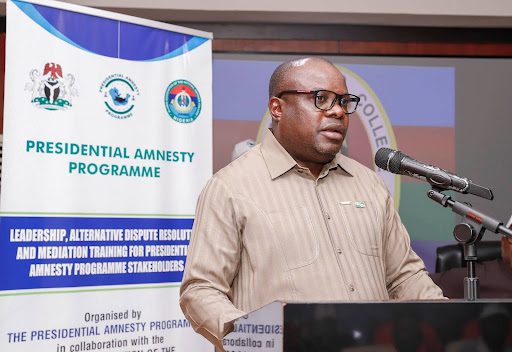
PAP Administrator Dennis Otuaro. Photo: Presidential Amnesty Programme/Facebook
“My mum got information from where she works that someone was selling [PAP scholarship] slot for ₦200,000. He promised her a monthly stipend of ₦70,000, along with full tuition payment. So she didn’t hesitate to buy it for me,” Favour confessed. He had gotten his provisional admission letter at the university premises, where he also signed “many forms”. Like other students, he had gotten a temporary clearance slip instead of school fees receipts.
“We were made to sign lots of forms, among them was a clause stating that if amnesty does not pay our tuition, we are paying it ourselves later,” Favour noted.
It appears that some other students, like Pious, failed to pay attention to that clause, as noted in one of the documents they had signed. While speaking to HumAngle, Pious said he had only just noticed that such a clause existed in one of his signed documents.
“We filled out countless forms, and many of them contained those kinds of clauses, including the hostel forms. I only filled in the form once, and my attention didn’t go there,” he claimed. “I remembered I was called by the man who brought me to fill in the form, which we returned to him immediately, told us to pay attention to the name of the clan we were registered under, and that was the only name where that clan name appeared.”
The clan names refer to leaders of militant groups who worked with the PAP to represent their communities and were given slots to distribute to their followers.
For Favour, the red flags were obvious from the beginning. Some past beneficiaries of the scholarship also left midway after spotting what they described as “red flags”, but many just kept moving because they had invested too much to stop.
“Some people paid over ₦500,000 for their slot. Personally, I would have dropped out as well, but my mom disagreed, having lots of hope in our pitiful government. Now we have debts in millions on our heads, no promised stipend, no school fees paid, nothing but insults and humiliation,” he said.
The students complained that the school offered no direct communication with them and that they relied on the annual temporary clearance they were given, hoping for a better outcome.
“Even after everything, if you come for clearance, there are only two options – pay your outstanding fees or write a letter to the school board affirming your willingness to formally owe them. Even if you choose option one to pay your fees if you have the money, you still need to write a letter to the school board telling them that you are willingly converting from an amnesty student to a private, self-sponsored student before they allow you to pay the money,” he noted.
Favour, like other students, says he feels trapped and unable to move towards the better future they were promised. He is not the only person left to pick up the pieces after paying bribes to get “the alleged life-changing opportunity”.
Felicia John*, another student of the university, said she had never heard of PAP or Novena University before her parents allegedly raised ₦500,000 to secure her a slot through someone who worked at the university. The opportunity came two years after her secondary school graduation.
Due to late resumptions at the time, the university ran semesters concurrently, which affected many people, Felicia said. Before she got a PAP slot, her parents could not afford to send her to university, so she focused on learning a trade until she had the chance to continue her education.
When she arrived at the school, she discovered a list of all the amnesty students. This list came from a lecturer in a very important position at the institution. During her second year, as a 200-level student, there were numerous issues with the verification of the amnesty scholarship. In 2022, when students protested to learn their standing in the scholarship scheme, the school ultimately paused their exams.
“Even with all these, the school was still accepting students who came through amnesty to the extent that their nursing department was overpopulated,” she said.
Felicia considered dropping out in her third year due to unresolved issues, but the promise of a resolution kept her in school. Now, she feels stuck with little hope of graduating. Her spirits were lifted when the King of the Itsekiri ethnic group pledged to address their outstanding fees in 2025. However, not all students received an email inviting them to verify their information after completing the online form sent to members of the ethnic group.
“But my friends who went said if you’re not from Itsekiri, you have to change your origin to Itsekiri and also pay an amount of money for it, which they didn’t do, but those from the tribe were given a consent form to fill out. That’s more like a form that says you permit them to sort out everything for you,” she said.
The students are still waiting for a solution to this problem.
In September 2025, a group of 5,000 Itsekiri graduates from Novena University woke up to the news that they had been excluded from the official PAP scholarship scheme. This issue came to light when a representative for the Olu of Warri, Collins Oritsetimeyin, claimed that the government owed the university money for these students, noting that the palace would step in to help pay their fees and clearance costs.
PAP stated that neither Novena University nor its office had any record indicating that scholarships had been awarded to the institution’s 5,000 Itsekiri students. Photo: Novena University.
However, the amnesty officials insisted that they had no obligation to pay the students’ school fees, as the students had failed to secure the scholarship through the proper channel. In 2017, a group called the Itsekiri National Youth Council (INYC) sent a list of 5,000 names directly to Novena University as candidates for the PAP scholarship, without obtaining approval from the authorities, according to a statement by the amnesty office.
The statement, signed by Igoniko Oduma, the special assistant on media to PAP’s administrator, Dennis Otuaro, reiterated that during meetings with the university and the youth council, no one could find any letters or papers proving the government had ever agreed to pay for these students. Igboniko noted that paying for them now would encourage dishonest behaviour and “sharp practices”.
Dennis also said he has upheld this decision. While he is working to expand access to higher education in the Niger Delta, he says beneficiaries of the scholarship programme must follow the proper channels. The agency noted that, for the 5,000 Itsekiri graduates, the official stance remains that they were never part of the scholarship scheme.
Following the due process
Not all stories had a tragic ending. Kuru Blaq was a successful beneficiary of the PAP scholarship at Novena University. During his time in school, he held various positions in several campus associations. Admitted into the institution in 2019, Kuru received a scholarship letter following a verification exercise involving many other beneficiaries.
“The programme covered our tuition fee, stipend, and we were also given laptops, though some people didn’t get them, and some people also were not getting stipends, but many of those issues eventually got resolved,” he said. The legitimate PAP scholarship recipients received a monthly stipend of ₦70,000 and a book allowance of ₦20,000 every three months.
File: Some PAP scholarship recipients at another university in Abuja who followed due process received laptops from PAP during a visit to the university’s campus. Photo: PAP
Kuru was still in school when some other sources HumAngle interviewed came in, but the admissions process was different. “Some of them said they got their admission letters while they were still at home. I am sure that if PAP sent people to the school, they sent deployment letters to the school,“ he said.
When Kuru was in school, their departmental dues, including examination fees, were also covered by PAP. They only had to pay dues occasionally. However, the other students, like Felicia, paid all dues and did not receive stipends.
“We started suspecting that those student sponsorships were not true. But students started to complain. Some students started withdrawing. I remembered that the then-coordinator of PAP came to Novena University for clarification,” he said.
Nothing changed for the students involved, leading to the protest at the university entrance in 2022. Kuru said he did not participate in the protest, but was in school when it occurred. He also said that the organiser of the protest was arrested, even though it was not violent.
“Later on, the university added a clause which many of the students did not read properly. But the students were not told directly that they were not bona fide scholarship students. People keep reaching out to me on a daily basis, asking for solutions,” he added.
Peter John*, another student who properly secured the PAP scholarship, said he served on a committee that oversaw complaints from beneficiaries of the programme. Peter’s role in the committee gave him access to top officials in the Abuja headquarters. He had urged the officials to conduct a thorough investigation into allegations that students bought their way into the programme.
He recalled speaking directly with some parents during which he realised that some students had paid certain people who claimed to be lecturers and officials of the amnesty programme. PAP would later issue two circulars to release the list of those who entered the amnesty scheme through the back door. For unclear reasons, he said, the circular was not pasted on the school’s notice board.
Peter also experienced a delay in payments for a few months after his admission, but it was resolved following another verification round, after which the arrears were paid. Some other students, however, noted that while their school fees were paid, their monthly allowances were delayed.
The PAP committee asked Peter for a list of students with controversial scholarship claims, but the school failed to provide it. Some affected students affiliated with the Itsekiri ethnic group approached him for intervention, but he was reluctant to help due to fear of being labelled tribalistic. The students were urged to visit the Itsekiri palace in Warri to resolve the issue.
File: Students during the 2022 protest at Novena University. Photo: Eve Afrique/Facebook
“The list the school refused to give was later presented by the Dean of Student Affairs in my presence, claiming that they had already informed the affected students to leave the school. I could not say anything openly as I had not gotten my result then, and I had to be careful,” he said.
The PAP leadership subsequently made a public statement, advising delegates, traditional rulers, and parents to be cautious about paying individuals to secure the scholarship. They emphasised that the programme does not require any payment.
As a committee member of the PAP scholarship students’ association, Peter had also presented the matter to the then head of reintegration. “They send instructions saying that students can still apply by writing and passing the JAMB and applying directly to PAP, and they can send them to other schools. Some students got the information, and I am personally aware of some who were sent to other schools. Because of that issue, Amnesty stopped sending students to Novena University,” he said.
Reluctant response
HumAngle tried to reach Novena University via three different email addresses listed on its website, but received no response. A representative of the university who answered the call when we contacted the official phone number asked HumAngle to visit the school in person for identity verification.
When contacted, Linus Ilogho, the university registrar, initially claimed he needed to consult certain documents to answer questions posed by HumAngle, but later attempted to explain the complexities of the scholarship funding.
“The law of contract says every contract must be signed and delivered, must include an acceptance, and must be based on records. That is it, even if you are in an amnesty programme and amnesty says they are not paying for you, we cannot use our fee to pay for the person after we have given training to the person,” Linus declared.
“For example, if you spend four years and the scholarship you told us you were given does not work, and they don’t pay us for five years, four years, six years, everything we are doing in a private university is run on funds. There is no other thing I can tell you, unless you come to the university to ask these questions,” he added.
When asked if PAP had an arrangement with the university, he did not provide a clear answer. “Why are you talking to me in this manner?” he asked before hanging up the phone.
On June 1, HumAngle submitted a freedom of information (FOI) letter to PAP, seeking answers to pressing questions. As days turned into weeks, the silence from the government institution grew deafening, heightening the frustration and urgency of the situation. The affected students continued to chart their course, relentlessly pursuing any glimmer of hope that could reignite their dreams of a brighter future.
Editor’s Note: Students quoted in this story asked that their names be changed to protect them from possible retribution.
Mel Brooks turned 100 on Sunday. To the 2000 Year Old Man, that probably wouldn’t seem like a big deal. For the rest of us, it was.
Few filmmakers in Hollywood history have remained this funny — or this relevant — for this long. Brooks’ improbable career, chronicled last year in a two-part HBO documentary, took him from defusing land mines during World War II to writing for Sid Caesar and reinventing movie comedy with hits like “The Producers,” “Blazing Saddles,” “Young Frankenstein” and “Spaceballs.” Along the way, he conquered Broadway and became one of the few entertainers to win an EGOT — an Emmy, a Grammy, an Oscar and a Tony.
Even at the century mark, Brooks doesn’t seem especially interested in slowing down. A “Spaceballs” sequel is set for release next year. Asked by The Times in 2016, when he was 90, whether retirement held any appeal, Brooks joked, “Well, first of all, I don’t know how to play golf. I could play tennis if it was triples — not doubles. But if there were three on each side, I could cover my spot.”
Every Brooks fan has a favorite scene, and there’s a good chance yours isn’t on this list. That’s OK. We weren’t trying to settle the argument. These aren’t necessarily Brooks’ funniest scenes or his most famous — he didn’t even direct them all. Instead, we’ve highlighted eight moments that show his different sides, whether it’s his fearlessness, his showmanship or the warmth that so often ran beneath the anarchy. No handful of moments could tell the whole story. But these are a good place to start.
Kevin Starr, professor of planning and development and faculty master of Embassy Residential College at USC, is the author of “The Dream Endures: California Through the Great Depression,” to be published by Oxford University Press.
The California dream, according to the latest Times’ poll: National Guardsmen patrol the border with Mexico, bayonets at the ready. Every resident, citizen and non-citizen alike, carries a tamper-proof identi ty card (You can’t leave home without it). Countless times a day, the card is shown to bureaucrat or police officer to prove citizenship. The 14th Amendment, guaranteeing citizenship to the U.S.-born, is abrogated. Truant officers, lists in hand, enter classrooms and pull undocumented children from behind their desks, trundling them into vans for shipment to relocation centers. At hospitals nearby, emergency-room doctorsturn away the sick or injured who do not possess the identity card.
Every now and then, the people of California surrender themselves to a recurrent paranoid delusion that is virtually a badge of Californian identity. Now is such a time. And the combination of a paranoid-delusional populace and demagogic politicians has engendered among Californians a mean-spiritedness, a detachment from reality–and worse, a fear of freedom itself.
It happened in Los Angeles on Oct. 24, 1871, when a mob, which included some of the city’s best citizens, tortured and hanged 17 Chinese men from downtown lampposts, among them a teen-age boy, then looted the Chinese quarter.
It happened in the 1930s, in the midst of the mother of all Depressions, to Dust Bowl migrants. In February, 1936, the city of Los Angeles declared both the federal and state constitutions null and void, dispatched 126 police officers to seal off all California’s land borders from entry by migrants–all American citizens–who could not prove their net worth.
It happened most sweepingly in 1942, when American citizens of Japanese descent were shipped off to what were euphemistically called relocation centers.
It happened in June, 1943, when thousands of young servicemen wandered the streets of Los Angeles, beating up young Mexican males, stripping them of their zoot suits, blaming them, implicitly and explicitly, for the fact that they, the Anglos, had to go off to war while the Mexican youths were able to stay home and jitterbug.
As Yogi Berra would say, “It’s deja vu all over again.” Just as Californians once believed that the Chinese, the Japanese, the Dust Bowlers, or Mexican youths in zoot suits were the cause of their ills, they now believe, with the full force of mass psychosis, that illegal immigrants–read: illegal Mexicans–constitute the gravest threat to our way of life, in a close third to the economy and crime, to which illegal immigration is intimately linked.
Think of it! Mexican illegals responsible for bloated bureaucracy. Mexican illegals responsible for special-interest-dominated politicians. Mexican illegals responsible for a soaring divorce rate, the breakdown of the family, AIDS, venereal disease, declining standards in culture and education, anti-female violence in rap music, drugs, child abuse, spousal batterings, the loss of religion and personal morality, deferred maintenance of the infrastructure, teen-aged pregnancies, the Inquisition of political correctness, slovenliness in personal dress–or whatever other symptom one might choose to signify the decline of California as a culture.
To say all this is not to deny that California faces a terrible array of problems, including illegal immigrants. As Delmore Schwartz once pointed out, even paranoids have enemies. Illegal immigrants are a drain on the public sector. The underground economy–with its exploitative wages, lack of benefits, forged and perjured documents–corrupts employer and employee alike.
Furthermore, in an economy partly dependent upon illegal immigration, citizenship is devalued. What previous generations struggled for across a lifetime–the chance to live and work in America–is stolen by means of false papers. The ghetto existence of illegal immigrants reinforces an unfortunate tendency in the legal immigrant community not to learn English, not to assimilate, on some level, the language, legal and institutional structures, heritage and historical identities of the United States of America.
As bad as these problems are, however, they are not the whole picture. The state’s current malaise cannot be blamed on the young busboy, far from home, washing dishes late into the night in an upscale restaurant on the Westside. Indeed, in the vast majority of instances, Mexican illegals are doing the work that others–even those on welfare–will not do, yet needs to be done.
How did we lose faith in the premise of America and California, which is freedom and an open society, personal liberty, courage, fairness and, whenever possible, generosity to others who also wish something better for themselves? Why are we talking about bayonets on the border when, every day, there are tens of thousands of legal crossings between Mexico and California crucial to the survival of our economy? Why are we scapegoating obliquely, perhaps, yet with loathsome effectiveness, the fact of Mexican immigration to America, an immigration that was absolutely necessary for the creation of modern California?
Mexican labor built the interurban electrics that made possible modern Los Angeles and its hinterlands. Mexican labor played the major role in the creation of the agricultural economy that still remains the leading component of California’s domestic product.
Californians had it easy in that long arc of prosperity extending from World War II through the ‘80s? When it was taken away–when California began to suffer like the Rust Belt or rural New England or Appalachia–they turned around and blamed the weakest, especially an underclass approaching non-personhood.
Paranoia is intrinsically self-destructive. Paranoids not only blame others; they do damage to themselves. And so it is not surprising that the current paranoid-delusional mind-set, not content with soldiers on the border and identity cards, with kids yanked from classrooms and the sick denied treatment, now seeks to sink the North American Free Trade Agreement. True, the treaty requires some amending, but to kill the entire idea of economic cooperation with Mexico on the ground that Mexico will hijack our economy is to betray in an instant how far our self-esteem has sunk, how far we have devolved into paranoia. We want it both ways: to see the Mexicans as, on the one hand, illegals enervating our social system; and, on the other, to see them back on their own turf, capable of stealing our industrial base.
What a horrible hypocrisy for California to simultaneously exploit and berate those who come only for a better life.
Failure in Group A brought fan anger to boiling point.
It started with a promising 2-1 win over the Czech Republic but then a team containing Son Heung-min, Lee Kang-in of Paris St-Germain and Bayern Munich’s Kim Min-jae lost 1-0 to Mexico. It left the Taeguk Warriors needing a point against South Africa to secure second.
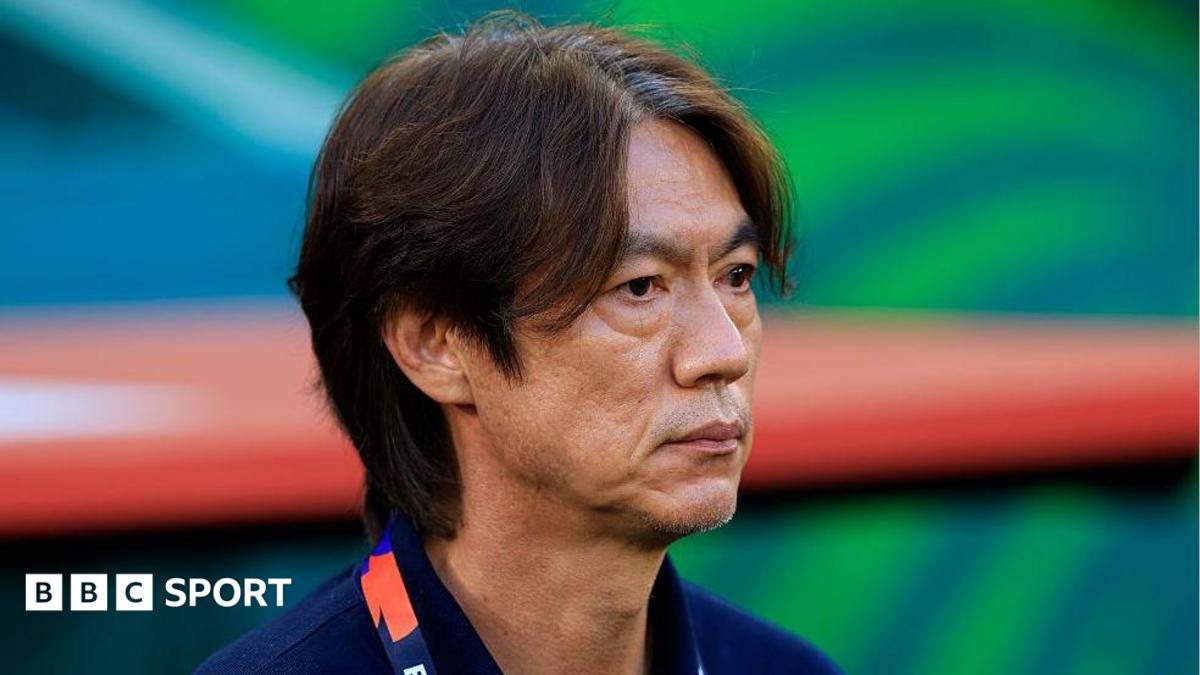
Hong, who also led the team to a group-stage exit at the 2014 World Cup, left captain and talisman Son on the bench and the team slumped to defeat, with former Tottenham Hotspur defender Lee Young-pyo describing it on television as “the worst match by a Korean football team in the 21st century”.
After the game, a reporter asked Hong if there had been an outbreak of food poisoning in the camp or something similar, as there could be no explanation for such a performance. To make matters worse, South Korea had to wait more than three days in their training camp to discover whether they would squeeze through into the last 32 as one of the best third-placed finishers or go home.
The camp had not been an especially happy place as earlier in June, media personnel were overheard on camera mocking Son’s military record. The former Tottenham star won exemption from the country’s 21-month mandatory military service by being part of the team that took gold at the 2018 Asian Games. In return, the players boycotted domestic media duties for a number of days.
Son turns 34 in July and it would not be a surprise if he soon calls time on his international career. There will be no public return to South Korea as the welcome ceremony planned at Incheon International Airport was cancelled. The captain and the players have, however, escaped most of the public ire with the focus on how the sport is governed in the country.
The strike in Deir el-Balah is the latest Israeli attack amid ongoing ‘ceasefire’ violations.
Published On 29 Jun 202629 Jun 2026
At least three people have been killed in an Israeli air strike in Deir el-Balah in central Gaza, health authorities say.
An eight-year-old and two men were killed in Monday’s attack, and several people were wounded, Al-Aqsa Martyrs Hospital said.
Recommended Stories
list of 3 itemsend of list
The strike occurred near Wadi Salqa Bridge on al-Baraka Street. The Palestinian news agency Wafa named those killed as Ali Fayez Isbaitan, Hassan Salman al-Hanajra and eight-year-old Malik Wael Abu Shaweesh.
Israeli military vehicles also advanced on Salah al-Din Street in the Nuseirat refugee camp, also in the central Gaza Strip, amid gunfire and shelling, Turkiye’s Anadolu news agency reported. Two people were reported injured by shelling in Beit Lahiya in northern Gaza.
Despite the “ceasefire” that came into effect in October, Israeli forces continue to carry out strikes on the enclave.
Israeli attacks killed at least four Palestinians in Gaza on Sunday, including a 13-year-old girl, and wounded several.
Ongoing violations
Gaza’s Government Media Office reported that 1,045 Palestinians have been killed since the “ceasefire” took effect and 3,380 have been injured. It has documented 3,465 Israeli violations of the agreement.
“We strongly condemn the occupation’s systematic policies of targeting and destroying the Palestinian people,” it said.
It called on the mediators and parties sponsoring the “ceasefire” to compel Israel to implement all of its terms and “immediately cease its ongoing violations”.
The Palestinian Ministry of Health said on Sunday that a total of 73,054 Palestinians have been confirmed killed and 173,480 injured since Israel launched its genocidal war against Palestinians in Gaza in October 2023.
Also during the “ceasefire”, the Israeli military is continuing to expand the area it is occupying inside the Strip and to issue forced displacement orders. It says Palestinians are not allowed to approach the Israeli-occupied area beyond the “Yellow Line”, which encompassed 53 percent of Gaza’s territory at the start of the ceasefire and had increased to 64 percent by March.
Anadolu reported that Israeli military vehicles have moved the “Yellow Line” markers about 150 metres (165 yards) to the west in central Gaza.
Israeli Prime Minister Benjamin Netanyahu has called for Israeli forces to occupy 70 percent of the Strip.
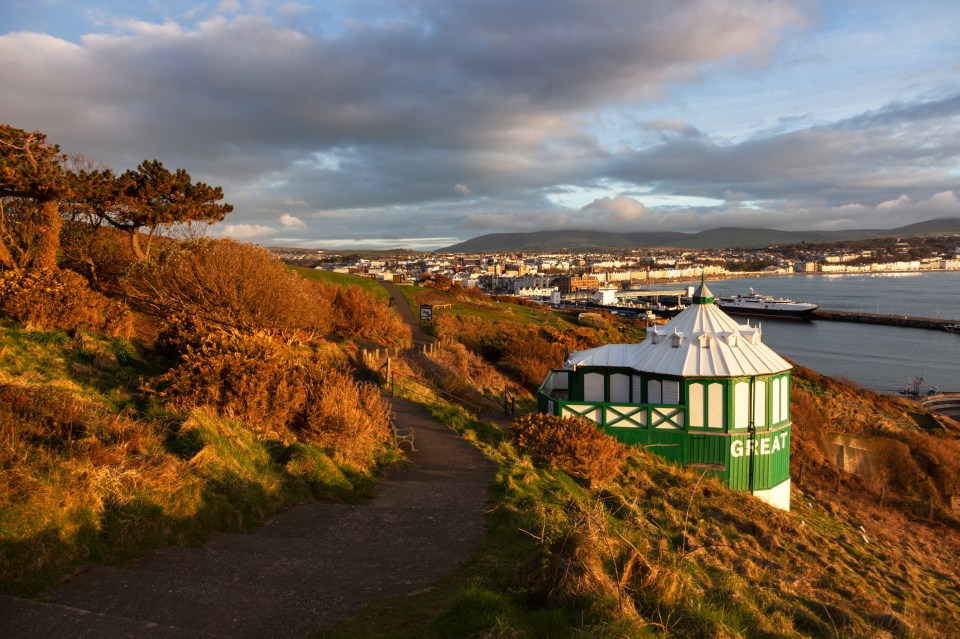
A POPULAR Victorian-era attraction used to spy on tourists will stay closed for weeks while essential maintenance work is carried out.
The “hidden gem” is a beloved tourist spot that offers 360 degree views of the area.
Sign up for the Travel newsletter
Thank you!
A popular tourist attraction will remain closed for several weeks while essential repair work is carried outCredit: Getty ImagesThe Great Union Camera Obscura offers 360 views of the coastlineCredit: Handout
The Great Union Camera Obscura will stay temporarily closed for several more weeks while a number of repairs are carried out.
The tourist attraction, located on the Isle of Man, first shut down on June 14, with a notice posted online by volunteers.
The notice read: “Please note that the Camera Obscura is currently closed while essential work is being carried out.
“The closure may last for several weeks, but we’ll keep you updated and let everyone know as soon as we’re able to reopen.”
Now, it has been revealed that the site will need to remain closed for longer as the latest condition survey unearthed a series of repairs that would need to be carried out.
Department of Education, Sport and Culture Minister Daphne Caine confirmed the repairs when responding to a written question about the work.
She said: “Since the last condition survey, issues have been found that require further repairs and maintenance, and the Department of Infrastructure is currently engaging with a contractor to address these issues.
“At the present time, these include the removal and replacement of wooden joists and decking, and the removal and replacement of corroded steelwork, fastenings and bolts located underneath the decking.”
The latest condition survey occurred in March 2025, and also identified areas of the sailcloth roof edging that had begun to fail and nails used to fix timber panels that were showing signs of decay.
According to Mrs Caine, the Camera Obscura underwent extensive repairs in 2017-18.
The Great Union Camera Obscura was first built in 1892, offering visitors a 360 degree view of the surrounding area, including the Douglas harbour and lighthouse.
According to the Isle of Man tourist website, the optical effect of the camera works through a series of mirrors and lenses located around the roof line above a darkened room with views of the surrounding area then projected onto a circular table.
The “unique” Camera Obscura boasts eleven lenses to create its views, whereas most only have one.
The “hidden gem” tourist attraction offers visitors a look into how Victorians first saw moving pictures and according to reviews is “well worth visiting to see how things were”.
Visitors have praised the “knowledgeable volunteers” at the attraction and the “stunning” views.
“You have to go to understand it,” wrote one visitor. “Like watching an old movie with movement.”
British American Tobacco (BAT) is to cut nearly a fifth of its global workforce as part of a major cost-cutting drive.
The company, which makes Lucky Strike and Dunhill cigarettes, is cutting 5,500 roles and outsourcing 3,500 more.
BAT did not say where the jobs being cut were located, but added that the US was not affected.
The cost-cutting programme is expected to save about £600m a year by 2028, it added.
The tobacco giant, which currently employs 47,000 people globally, had previously announced a savings drive that would involve making it “more digital and AI-focused”.
Traditional cigarette sales are shrinking as smokers increasingly switch to vapes and nicotine pouches.
BAT is shifting its focus to smoking alternatives such as its Vuse vapes and Velo nicotine pouches to drive growth, but its sales and profit margins have been sluggish in recent years.
Sales in the US — its biggest market — have also been hit by the cost of living, as smokers swap for cheaper brands.
Additionally, the company is battling rising duties and stricter regulations in some markets.
BAT said the job cuts, which have already started, are set to be completed by the end of this year.
Chief executive Tadeu Marroco said the cuts would make the company “more agile, cost disciplined and technology enabled”.
“These changes affect many of our colleagues, and we are focused on supporting them through this transition with care and respect, as we position the business for the future.”
Isa Guha returned to host the early morning BBC coverage on Monday (June 29), where she was joined by Tim Henman and Anne Keothavong. Sadly, one BBC legend won’t be joining them as part of the broadcaster’s coverage this year.
Carol Kirkwood, who usually covers the weather throughout the Championships, will not be on screen this year, after she stepped down from her role at BBC Breakfast back in April.
After an impressive 28-year career, Carol announced her retirement to focus on her marriage and travelling the world.
Isa paid tribute to Carol just minutes into Wimbledon’s coverage on Monday, saying: “Now, this is normally the time in the show that we head across to Carol Kirkwood for a British weather update, especially here in the sunshine.
“It would have been great to see her, but after 28 years on BBC Breakfast, Carol has moved on. So, we wish you all the best, Carol. Hopefully you’ve got your feet up on the sofa with a cup of tea to enjoy the tennis this week.”
Confirming Carol’s replacements, Isa continued: “Of course, there isn’t one presenter who could replace Carol, so we’re going to have a selection of BBC weather’s finest over the two weeks, including today with Matt Taylor.
“Welcome along, Matt. How is it looking today, and for the rest of the fortnight?”
Matt, who was stationed outside the training courts, then said: “Morning Isa. Absolute pleasure to be here, even if we are missing Carol. But I suspect eagle-eyed viewers may be able to spot her in the crowd somewhere today indulging in a love of tennis right here at Wimbledon itself.
“For her, for the crowds, also those warming up behind me, almost perfect conditions – certainly compared to the heat and humidity last week.”
As Carol enjoys the tennis, she will be replaced by a rotating roster of BBC weather stars, which is likely to include Sarah Keith-Lucas, Elizabeth Rizzini, Tomasz Schafernaker, and Helen Willetts.
There’s lots to look forward to at Wimbledon this year, as US icon Serena Williams is set to make a blockbuster singles comeback after four years away from the sport. She will also resume her iconic doubles pairing with her older sister, Venus.
British legend Andy Murray is also back at the scene of one of his greatest triumphs as part of Jack Draper’s coaching team.
Novak Djokovic is still chasing his elusive record 25th Grand Slam title, where he will face stiff competition from current World Number One Jannik Sinner.
Coverage of Wimbledon will air on BBC One and BBC Two, as well as being available to stream on BBC iPlayer
In its Annual Economic Report, published on Sunday, the Bank for International Settlements (BIS), known as the central bank for central banks, warned that the enormous spending on AI is accumulating financial vulnerabilities that could amplify any future shock and spread from markets into the wider economy.
ADVERTISEMENT
ADVERTISEMENT
Presenting the findings, BIS general manager Pablo Hernández de Cos said the message was one of “urgency”, with policymakers urged to act before any reversal makes the eventual adjustment more painful.
At the core of the warning is the scale of the spending, despite massive investment having supported global growth over the past year.
The five largest “hyperscalers”, the technology giants racing to build AI infrastructure, are on track to commit more than $1 trillion (€878bn) to AI-related investment across 2025 and 2026, a pace that is outstripping their earnings and free cash flow and pushing some to borrow heavily to keep up.
The BIS suggests this race is fuelled by a belief that only a handful of dominant players will ultimately prevail, encouraging firms to pour money into projects whose returns remain deeply uncertain.
Echoes of past manias
The report sets today’s AI boom against a long historical lineage, from the canal mania of the 1830s and Britain’s railway mania of the 1840s to the electrification of the 1920s and the dotcom bubble.
Each began with a genuine technological breakthrough that attracted more capital than commercial returns could justify, the BIS notes, with each episode ending “with an eventual reversal in investment, inducing economy-wide recessions”.
Compounding the danger are stretched share prices and opaque financing.
The BIS highlights the spread of “circular financing”, in which chipmakers and cloud giants take equity stakes in AI labs that then commit to buying their chips and computing power, effectively recycling money back to the original investors as revenue.
Much of the funding now flows through hedge funds and private credit vehicles that face lighter scrutiny than banks.
According to Zhang Tao, the BIS chief representative for Asia and the Pacific, that reliance on non-bank channels means an AI downturn could unwind into a sharper, faster crash than a traditional banking crisis.
The hidden costs of data centres
Beyond financial markets, critics argue the true cost of the AI build-out is being obscured in plain sight.
A central concern, examined by the Wall Street Journal, is how the technology giants account for their data centres.
By assuming the expensive equipment inside them will stay useful for longer, firms can spread its cost over more years, lowering the depreciation charged against profits in any given period and making earnings look healthier than the underlying cash burn implies.
However, the specialist chips at the heart of these facilities may become obsolete far faster than those extended schedules assume, leaving a gap between reported profits and economic reality, as well as a balance sheet more exposed than it appears should demand disappoint or a sizable need to replace hardware arise.
The physical scale is staggering.
Columbia University economist Stijn Van Nieuwerburgh estimates the build-out could cost in the region of $8 trillion (€7tn) over the next six years, financed in part through the kind of off-balance-sheet arrangements the BIS flagged.
The costs are also no longer confined to corporate accounts.
Some economists now warn of a so-called “third wave” of inflation, after the pandemic and tariffs, driven this time by the AI build-out. As chip manufacturers prioritise high-margin parts for AI servers, the resulting squeeze on memory and storage has rippled out to consumer electronics.
For example, Apple raised prices on its MacBooks, iPads and other devices last week, citing an “extraordinary surge in demand for memory and storage” and saying it had “never seen a component price increase this much, this quickly”.
The company’s shares fell around 6%, their worst day in over a year, as Microsoft, Nintendo and Sony have also made similar moves.
Beyond hidden costs and inflationary pressures, where the strain may spread furthest is raw power.
Goldman Sachs expects data centres to account for nearly half of the growth in US electricity demand by 2030, with consumer power prices forecast to rise around 6% a year through 2026 and 2027.
The BIS itself notes that the build-out’s hunger for electricity is already pressuring prices and input costs, with potential spillovers to inflation, though it stresses, as do many economists, that AI could yet prove disinflationary if its promised productivity gains eventually arrive.
WASHINGTON — Holiday gatherings and major life events have come with an empty seat. Certain dates on the calendar meant time at a cemetery, standing before granite stones.
They are a relatively small group of people, scattered across different states, but they share a common bond that stretches decades: Each had a family member die violently in the struggle for voting and civil rights, victims on a long and difficult path marked by blood that ended when the country seemed to mature into the nation of its creed.
But 61 years later, and as the country approaches its 250th anniversary this weekend, those sacrifices are in question. In a series of decisions over the last dozen years, including one in April, the Supreme Court has essentially dismantled the law that their family members died to see enacted, the Voting Rights Act of 1965.
“My mother’s blood is on that bill. We were always proud of that, and now it’s gone,” said Anthony Liuzzo, whose mother, Viola Liuzzo, died on an Alabama highway between Selma and Montgomery while driving marchers in 1965.
Critics of the law contend that times have changed, an argument Chief Justice John G. Roberts Jr. made in a 2013 decision that was the first major step in rolling back the law.
Survivors of lost loved ones disagree, pointing to the speed with which Republican-led state legislatures eliminated majority-Black congressional districts after the court’s April ruling, which severely weakened a section of the law that had protected voting rights for minority communities. They feel anger and sadness that a milestone political victory decades ago has been reversed, but they are committed to keep fighting.
A church bombing and a chunk of concrete
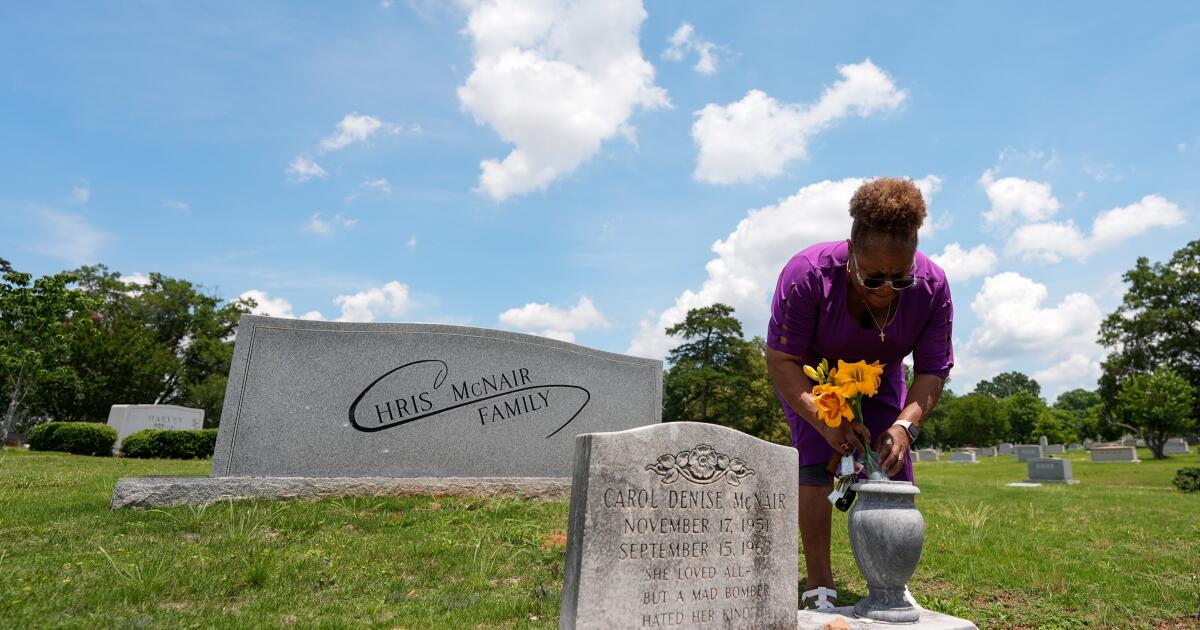
Lisa McNair was born Sept. 19, 1964. Her older sister, Denise, died in the Sept 15, 1963, bombing of the 16th Street Baptist Church in Birmingham, Ala. The church had been a central organizing point for civil rights protest.
The explosion killed Denise McNair, 11, and 14-year-olds Addie Mae Collins, Carole Robertson and Cynthia Morris Wesley. Nearly two dozen others were injured. Three Ku Klux Klansmen were convicted years later.
One of Lisa McNair’s early memories of her sister was of the box that their grandmother kept from the funeral home. It included Denise McNair’s shoes, a purse and a rock-sized piece of concrete that had been embedded in her skull.
The crime brought the civil rights struggle onto the national stage and outraged President Kennedy.
The times were tumultuous, McNair said, but it seemed the nation was heading in the right direction. Most of her life, “I’ve seen advances” on television, in commercials, with interracial marriages, civil rights and voting rights, “a plethora of rights that we got over the greater part of my lifetime.” But that has changed, she said.
McNair, 61, said she is “physically sick” about the Supreme Court decision and subsequent actions by lower courts and legislatures.
“I am constantly working to pray my way through it, so I can get up and go to work in the morning and do what I need to do. But I just want to ask every white person I see, ‘What more do you want?;” she said. “‘Why do you hate us so?’”
They left for Freedom Summer and never came home
Michael Schwerner, known as Mickey, came from a family in which human rights activism and challenging social norms were expected. He was in Mississippi in 1964 as part of Freedom Summer when he, Andrew Goodman and James Chaney vanished one day in June while investigating a bombing at a Black church.
Their bodies were found weeks later, buried in an earthen dam in a rural area of Neshoba County. Schwerner, 24, and Goodman, 20, were white; Chaney, 21, was Black.
Stephen Schwerner, who died earlier this year and was a social activist in his own right, told the Associated Press in a 2023 interview that as soon as the family heard his younger brother and the other men were missing, they knew they were dead.
“Our family was very out front in the media that the only reason there was international attention was two of the young men were white,” said Stephen’s daughter, Cassie Schwerner. “Had all three of those young men been Black, they would have ended up absent from our history and our narrative.”
The executive director of Morningside Center for Teaching Social Responsibility, Cassie Schwerner, said her family has followed voting rights through their ups and downs. That includes the 2013 Supreme Court decision that allowed states and counties with a history of discriminatory voting rules to make changes without prior approval from the Department of Justice.
The court’s April decision, she said, brought rage “and a good deal of sadness — not for me and my family, but for this country.” There is, she said, work to be done on multiple fronts.
Rights paid for in blood turned out to be fragile
Tamara Orange said among her many thoughts when she heard of the Supreme Court decision in this year’s Voting Rights Act case, there was relief — “relief that my dad is not here to see that; that Jimmie Lee Jackson is not here to see it; that Viola Liuzzo is not here to see it,” she said. “I’m relieved for them because to me, it’s as though the sacrifices that were made were done in vain.”
Her father, James Orange, was working with the Southern Christian Leadership Conference to organize voting rights protests in Marion and Perry County, Ala., in 1965. When juveniles joined the effort, he was arrested for contributing to the delinquency of minors. Concern arose that Orange was going to be taken out of the jail and lynched.
A protest to intervene ended with Jackson, a 26-year-old Black church deacon, being shot in the stomach by a state trooper while Jackson tried to shield his mother and grandfather.
His death was the catalyst for what became the Selma-to-Montgomery march and “Bloody Sunday.”
Orange stayed in the movement all his life and died in 2008, Tamara Orange said. But even after the Voting Rights Act passed, “he would say, ‘Be careful or we’re going to lose it.’”
‘We got bad news for you’
Anthony Liuzzo had just turned 10 when his mother, 39, left their middle-class neighborhood in Michigan and headed for Selma. She had cried as she watched scenes from “Bloody Sunday” on television.
Viola Liuzzo participated in a portion of the second march and then helped drive other civil rights protesters around the Black Belt region of the state. On March 25, 1965, she was driving one protester between Selma and Montgomery when a vehicle pulled alongside and fired into the car.
The phone call came around midnight. Anthony Liuzzo remembers the caller asking his dad, “Is your wife Viola? We got bad news for you. She’s been shot.” When his father asked whether she was all right, the caller said, “No, she’s dead,” and then hung up.
An informant for the FBI quickly identified members of the Ku Klux Klan as her killers. The three men charged would escape conviction on state charges but be convicted in federal court.
Anthony Liuzzo and his siblings lived with the lost birthdays and other missed milestones. His comfort was that the voting rights she had died for had become a reality. But the April ruling by the Supreme Court and the subsequent rush by Republican-led legislatures in several Southern states to eliminate congressional districts represented by Black lawmakers left him angry and distraught.
Even so, he said he is still proud his mother had the courage to go to Selma “when others sat in their pretty little houses.”
One morning, the Klan returned
The inscription at the bottom of Vernon Dahmer Sr.’s tombstone reads simply: “If you don’t vote, you don’t count.”
It is a message that embodies his life’s work and the story behind his death.
Even after President Johnson signed the Voting Rights Act, not every state was eager to implement the new law. In Mississippi, it came with a poll tax. The amount was $2, but in a world where a farmworker’s wages might only be $5 a day, that was substantial, said Dahmer’s son, Dennis Dahmer Sr.
The elder Dahmer, 57 at the time of his death, was a successful businessman who owned a store, sawmill and farm near Hattiesburg. He also was a civil rights leader and NAACP president in Ford County. He offered to pay the $2 for Black residents who wanted to register to vote.
He had already been under scrutiny by the local Ku Klux Klan. There was harassment and there were threatening phone calls. The windows were shot out of his store, but no one challenged him directly because his sons were always present and armed.
That seemed to tail off after Johnson signed the law.
“The Klan quit calling,” Dennis Dahmer said. “They quit shooting out the windows, so my family thought that all of this was behind us.”
That changed in the early hours of Jan. 10, 1966, when two carloads of Klansmen showed up. They firebombed the house and adjacent grocery store and began shooting at the house. The elder Dahmer shot back, using his ample arsenal to fight off the attack.
His wife and the three children who were home survived, but he suffered severe injuries from inhaling the smoke and fumes from the flames. He died later that day.
Dennis Dahmer was 12 as he stood next to his dad’s hospital bed. He wondered why some people wanted his father dead just for trying to help Black people vote.
A former Imperial Wizard of the Ku Klux Klan, Sam Bowers, was convicted in 1998 for the attack and sentenced to life in prison.
Like the families of other survivors, Dennis Dahmer’s family has witnessed the methodical dismantling of the Voting Rights Act.
“Finally, they basically turned it into a relic,” he said.
His plan now is activism, to speak out and promote the need for a massive voter turnout. He also wants to remind people of the price that certain families paid for everyone to have the right to vote and be represented by someone of their choosing.
“We’re living in a time when America has a lot of the same characteristics of the 1960s that I grew up in,” he said. “People say, ‘Are we going back?’ Hell, we’re already there.”
Josh Lowe‘s first career grand slam was all the offense the Angels needed Sunday in a 4-1 victory over the Athletics at Anaheim Stadium.
Lowe was 10 for 33 with 27 RBIs with the bases loaded during his six-year career, but had managed only two extra-base hits in those situations prior to going deep off starter Aaron Civale in the second inning.
The center fielder fouled off a pair of 1-2 pitches before sending a high cutter 403 feet to the right-field corner for his first homer since May 20.
Angels starter Sam Aldegheri (3-3) allowed one run and five hits in five innings, striking out four. José Fermin threw two scoreless innings and Samy Natera Jr. got four outs for his first major league save.
Joey Meneses drove in Jeff McNeil with a sacrifice fly in the fifth for the A’s, who finished with six hits. They went 0 for 8 with runners in scoring position and left eight on base overall.
The A’s threatened to cut into the lead after two straight walks to open the eighth, but Ryan Zeferjahn struck out the next two batters before giving way to Natera, who retired Nick Kurtz on a fly ball.
Civale (5-5) permitted seven hits in five innings, striking out two. José Suarez tossed two scoreless innings in relief.
Up next: Angels RHP Ryan Johnson (1-2, 8.84 ERA) starts Monday night in Seattle against RHP George Kirby (6-7, 3.94) to begin a three-game set.
Industry Minister Kim Jung-kwan announces semiconductor investment projects during an investment briefing meeting chaired by President Lee Jae Myung at Cheong Wa Dae in Seoul on Monday. Pool photo by Yonhap
South Korea plans to develop a new semiconductor production base in the country’s southwestern region through 800 trillion won (US$517.9 billion) in corporate investments that will create four memory chip fabrication plants, Industry Minister Kim Jung-kwan said Monday.
Kim unveiled the investment plan to transform the Gwangju and Jeolla regions into the nation’s second major semiconductor cluster, alongside the existing hub in the Seoul metropolitan area, during a national investment briefing chaired by President Lee Jae Myung at Cheong Wa Dae.
“Relying on a single production base in the Seoul metropolitan area is no longer sufficient to meet surging semiconductor demand,” Kim said, noting that constraints on power and water resources limit further expansion under existing plans.
The semiconductor investment is part of the government’s “three mega projects” initiative, which calls for large-scale investments by chip giants Samsung Electronics Co. and SK hynix Inc., as well as other companies, in semiconductors, physical artificial intelligence (AI) and AI data centers.
Kim said the Chungcheong region will be developed into an advanced semiconductor packaging hub through 81 trillion won in investment to meet growing packaging demand as chip production expands, while the Daegu and North Gyeongsang regions will be fostered as innovation hubs for semiconductor materials, components and equipment.
He added that the government will help companies accelerate semiconductor investment by bringing forward the construction schedule for new fabrication plants by as much as 12 years, from the mid-to-late 2040s to the mid-2030s.
To support the expansion, the government vowed to streamline permits and construction procedures while investing in critical infrastructure, including electricity and industrial water supplies.
At the meeting, attended by Samsung Electronics Chairman Lee Jae-yong and SK Group Chairman Chey Tae-won, Kim outlined a government-industry plan to invest 30 trillion won over the next 15 years to support the entire semiconductor value chain, from research and development and chip design to testing and manufacturing.
The ambitious industrial blueprint is aimed at transforming the country from a global manufacturing powerhouse into a leader in the artificial intelligence era, anchoring its strategy on semiconductors, AI infrastructure and physical AI.
For the robotics sector, Kim said the government will foster an AI-powered robotics industry to strengthen South Korea’s manufacturing competitiveness in the intensifying global competition.
Kim warned that China has already begun mass-producing humanoid robots through regional manufacturing hubs, underscoring the need for South Korea to accelerate the commercialization and mass production of its own humanoid robots.
“We must accelerate the foundation for mass production,” Kim said, adding that the government plans to create early domestic demand by procuring humanoid robots for education, defense and disaster response.
The initiative aims to raise South Korea’s share of the global humanoid robot market from just 1 percent last year to 20 percent over the long term.
As the third pillar of the strategy, Minister of Science and ICT Bae Kyung-hoon outlined a plan to expand the nation’s AI data center infrastructure, emphasizing that ample data is important for South Korea to secure a leading position in the global physical AI race.
“The next three years will be the golden time to become No. 1 in the area of physical AI,” Bae said. “The government will lead the physical AI sector, by designating it as a national strategic industry.”
Under the plan, an initial investment of 550 trillion won will be spent to build 8.4 gigawatts (GW) of AI data centers by 2029. The ministry will gradually expand the infrastructure by 10 GW until 2035, Bae said.
To support the initiative, the government pledged to ensure adequate supplies of electricity and industrial water, and strengthen power infrastructure around existing semiconductor clusters.
Once the data infrastructure is in place, the science ministry plans to develop a general-purpose foundation model for physical AI in the next three years, based on a world model, or AI tools that understand the dynamics of the real world.
Copyright (c) Yonhap News Agency prohibits its content from being redistributed or reprinted without consent, and forbids the content from being learned and used by artificial intelligence systems.
Travel expert Simon Calder has explained the rights of British Airways and easyJet passengers after numerous flights were cancelled
11:52, 29 Jun 2026Updated 12:01, 29 Jun 2026
British Airways was one of the airlines to be badly affected(Image: 2026 Kevin Carter)
Travel expert Simon Calder has issued a stark warning to British Airways (BA) and easyJet passengers, telling them they ‘will not be getting any cash’ after thousands found their flights axed over the weekend. Hundreds of services were thrown into chaos following a bout of thunderstorms, with Heathrow and Gatwick bearing the brunt of the disruption.
On Saturday alone, more than 900 inbound and outbound flights were delayed — some by as much as 11 hours — with dozens cancelled outright. South-East England and North-West Europe were among the worst-hit regions.
Travel expert Mr Calder said the chaos had left approximately 40,000 passengers ‘stranded’. He broke down exactly what passengers are entitled to when flights are delayed or cancelled, and precisely what obligations airlines have towards them, reports the Express.
Content cannot be displayed without consent
What are your rights?
Mr Calder said: “It has been a miserable Saturday for 30,000 or more passengers on British Airways to and from London Heathrow and EasyJet in and out of Gatwick. The reason? Thunderstorms in the London area have caused air traffic control restrictions, and as those airports are operating at full stretch, especially on Saturdays in summer, unfortunately there’s no slack in the system, and the biggest airlines at those airports have no option but to cancel flights.”
“BA’s cancelled around 100, including an Airbus superjumbo going to and from Los Angeles. EasyJet has cancelled 82, including some really long ones to Hurghada in Egypt and also Antalya in Turkey.
“Under air passenger rights rules, the airline must get you to your destination as soon as possible, including booking a flight on another airline if necessary. Meanwhile, they have to provide you with hotel accommodation and meals as necessary until they can get you where you need to be. You will not, though, be getting any cash compensation. Good luck, everybody.”
What happened?
Mr Calder continued: “200+ flights cancelled today on British Airways to/from Heathrow and on easyJet to/from Gatwick, with 35,000 passengers stranded.
“Under air passengers’ rights rules, they are entitled to be flown to their destination as soon as possible on any airline, plus meals/hotels as appropriate.
“Dozens more flights cancelled on Sunday to and from Heathrow and Gatwick airports by British Airways and easyJet due to poor weather”.
“(It) follows more than 200 grounded flights on Saturday (and) brings the number of passengers whose flights have been cancelled this weekend to around 40,000.”
In an updated statement on Saturday afternoon, NATS said: “Severe thunderstorms across the south east of England and Europe continue to impact flights, and this is expected to continue for the remainder of today and overnight.
“To ensure the safety of the travelling public, aircraft need to avoid affected areas and be spaced further apart, which limits the number of flights that can operate safely.
“We understand disruption is frustrating, but we’re working closely with airlines and airports to reduce disruption as much as possible.
“Passengers should continue to contact their airline for the latest information on their flight.”
The consumer experts shared a money-saving hack for holidaymakers this summer
11:45, 29 Jun 2026Updated 12:45, 29 Jun 2026
Martin Lewis founded MoneySavingExpert (stock photo)(Image: ITV)
MoneySavingExpert (MSE) has issued an alert for holidaymakers who still need to book their hotel or rental car. The consumer advice website, founded by journalist and broadcaster Martin Lewis, regularly shares tips for Brits.
In a recent social media post, the experts shared advice for people making travel bookings. Posting on X, MSE advised consumers to choose bookings that offer free cancellation if possible. The experts explained that travellers can use this tactic to get the best deal on their booking, as they can simply cancel and rebook if prices go down.
MSE wrote: “Top travel tip: Try to book a hotel or car hire with free cancellation. Why? Because if the price drops, you can simply cancel and rebook at this cheaper rate!” The post asked social media user to share their experiences in the comments.
The post asked: “Have you ever done this successfully? How much did you save?” In response, several MSE fans shared their own success stories.
For example, a commenter named Kathryn replied: “I’ve done this with a hotel. Got a much better grade room and saved about £50 on the price the original room would have cost! I usually try to do this now. I book the new room first though before cancelling the existing one… Just in case!”
Another social media user said: “I’ve done this for a hotel booking. Made a great saving on original booking price but found my room was at the furthest point away from the reception / dining areas. A good trade off in that situation.”
Someone else said they managed to find their £160 car hire reduced to just £80 using a similar tactic when they visited Portugal last year. Similarly, a commenter with another car story said they had booked their rental car three times, starting with an initial price of almost £300 and getting it down to £121, despite using the same rental company to book the same car.
They explained: “Pre-Christmas price over £300. 1st booking March £285. 2nd booking £185 early May. 3rd time mid-May £121.” Praising the method, the social media user added: “Refunded each time within four days. Result!”
Content cannot be displayed without consent
Sharing another success story, a holidaymaker claimed to save £400 on a trip to New York. The comment read: “£400 saved on a trip to NYC. Free cancellation costs more but the flexibility makes it worth it.”
Woman in tears after ‘lucky’ item banned from flight as ‘dangerous weapon’
A woman was left ‘in tears’ when her ‘lucky’ padel racket was confiscated before her flight home due to one simple error. Henrietta Jones-Chapman brought the racket ‘worth more than £100’ to Bali so she could play the sport during a work trip.
But the 27-year-old says that before her flight home, security staff at Bali Denpasar Airport, Indonesia, confiscated the orange racket. ‘Heartbroken’ Henrietta says she was left in tears and could only think workers were worried she’d start ‘hitting someone round the head’ with it’.
She filmed a TikTok video moments after the incident and captioned it ‘don’t bring your padel racket in your hand luggage coming home from Bali’. The clip, which now has more than 230,000 views, includes footage of Henrietta admitting ‘I’m actually crying, it’s so pathetic’.
She explains she brought the racket into the country in the same handbag so is confused why it’s been taken from her. Henrietta says she had to ‘kick up a fuss’ to convince staff to put the racket in the hold for free so she could keep it.
In Indonesian law padel rackets are not allowed in the cabin because they are classified as ‘dangerous devices’ so she should have checked it into the hold. UK Government guidelines allow tennis rackets to be taken as hand luggage but prohibit ‘heavy bats and sticks’ including ‘baseball, softball and cricket bats’.
The list doesn’t appear to contain a rule on padel rackets, which take a tennis shape but are stringless and more solid. However passengers should check with specific airlines regarding equipment restrictions as some allow them on board and others don’t.
Padel is booming in the UK, with an estimated 1,000,000 people now playing the sport. Player participation has surged by over 2,500% making it the fastest growing sport in the country.
Henrietta, from Harlow, Essex, said: “I was heartbroken. I know it’s a bit dramatic but it’s an item that was important to me. I was gutted. It was not just your average racket, it was more than £100 and personalised by my brother so it was sentimental.
“I took it there [Bali] and it was fine to take there so it was still in my hand luggage on the way out like normal and I had no issues at all. It was in my handbag and I didn’t even take it out at security or put it in the tray, I just left it in the bag.
“Then a lady came over with a sign with a padel racket saying it’s a new law that they’re not allowed to bring it in your hand luggage essentially. The lady said ‘no you can’t bring it through’ and I cried. I don’t know if it was because I was leaving Bali as well. I was panicked.
“She took it off me but she was apologetic because she could see I was crying. It was my lucky racket. I don’t see what the danger is unless I start hitting someone round the head with it on the plane but that could be anything, your laptop.
“Because I wasn’t expecting this I was kicking off a bit of a fuss and getting upset and saying ‘I think there should’ve been a warning before we got to that point’. If I hadn’t kicked off it would’ve just been in the bin and gone. I was really relieved.”
Airlines have their own rules on sports rackets such as Ryanair who prohibit them as ‘blunt instruments capable of causing serious injury’. However, British Airways allows passengers to pack padel rackets as long as they’re in a slim protective case.
Henrietta, who had been working in Bali as a girls-only holiday host, says staff told her about the Indonesian law surrounding rackets being banned from hand luggage. They reportedly added that in future they wouldn’t let her go back to check the racket into the hold.
She’s now warning holidaymakers the should always put their rackets in hold luggage to avoid making the same mistake she did. Henrietta said: “Make sure rackets are in your check-in bag if you’re traveling to Bali. Maybe if you’re worried about it getting broken get a proper case or padel bag.
“Make sure it’s checked in with all your rest of your stuff and not have it in your hand luggage because if I was any later my bag might’ve already gone through. There could’ve been extra costs but I was lucky they didn’t charge me but there would’ve been going forwards.
“Now you know it’s one of those things you can easily do. At least now people know it can be safely kept in the hold. I do think there’ll be a lot of people that travel back from Bali with their racket because it’s cheaper to get one over there and it’s played a lot.”
Bali Denpasar Airport has been contacted for comment.
The international order is falling apart, happening visibly, rapidly, and in ways that no longer surprise even the most committed defenders of the post-1945 liberal framework. The United Nations Security Council has not been able to do anything about the problems in Gaza and Ukraine. The group of countries known as BRICS is getting bigger. Now has nine members. Some countries in the Gulf are thinking about using a currency to price oil instead of using the US dollar. All of these things are putting a lot of pressure on the system that the United States has been in charge of.
Many people in the Global South think this is a thing. They do not think the United States has been fair in the way it has enforced the rules. They think the United States has only looked out for its interests and the interests of its friends. This is not a thing to say. The United States has been inconsistent in the way it has applied the rules about weapons, sanctions, and international crime.
The problem is that just because the old system is falling apart, it does not mean that something better will take its place. The question is not whether the United States is losing its power because it is clear that this is happening. The question is what will happen next. Will the new system be fair, more stable, and better at dealing with global problems?
The Architecture of Decline
Stay ahead of the geopolitical week.
MD Briefing delivers expert analysis across five global fronts — the Indo-Pacific, energy, geoeconomics, European security, and the Middle East — every Monday morning. Free.
The truth is that the United States has been losing its power for a time, but this has happened much faster since 2022. When Russia invaded Ukraine, it showed that big countries can still go to war with each other. It also showed that the United States and its friends cannot stop this from happening. The war in Ukraine has led to the use of financial sanctions in history, with over $300 billion in Russian assets being frozen.
This has made other countries want to reduce their dependence on the US dollar. They are afraid that if they rely much on the United States, they will be vulnerable to its power. According to International Monetary Fund estimates, the group of countries known as BRICS has expanded to include Saudi Arabia, the United Arab Emirates, Iran, Ethiopia, and Egypt. This group now accounts for over 40 percent of the economy. The Shanghai Cooperation Organisation has also gotten bigger. Now includes Pakistan, India, and Iran in addition to Russia and China. This organization is now the regional security group in the world. These changes are not just symbolic; they show a shift in where power is concentrated in the world.
New Poles, Old Problems
The problem with a world is that it does not necessarily mean that things will be more fair or more stable. In the century Europe had a multipolar system, but it still had many wars. The same thing happened in the 20th century. Just because there are powerful countries does not mean that they will behave in a certain way.
The problem with a world is that it does not necessarily mean that things will be more fair or more stable. In the century Europe had a multipolar system, but it still had many wars. The same thing happened in the 20th century. Just because there are powerful countries does not mean that they will behave in a certain way.
The Institutional Vacuum
The biggest risk of the situation is that the international institutions that we have will become useless. The United Nations Security Council has not been able to do anything about the security crises of the past few years. The World Trade Organization is also not working properly.
When powerful countries use these institutions for their purposes, it undermines their legitimacy. This is a problem because it means that smaller countries will suffer the most. The rules of law are only useful if they are applied equally to everyone.
The Global South’s Strategic Dilemma
For countries in the Global South, the transition to a world is a double-edged sword. On the one hand, it gives them space to maneuver and more access to financing for infrastructure projects. On the other hand, it also means that they will have to navigate a more complex and uncertain world.
The best way forward is to try to shape the transition to a world in a way that preserves the international institutions that we have. This means reforming the United Nations Security Council to make it more representative of the world. It also means strengthening the courts and the World Trade Organization.
Towards a Legitimate Multipolarity
This will not be easy. It is necessary. If we do not do this, we risk creating a world where might makes right. There is no shared set of rules to govern the behavior of states. This would be a disaster for everyone, for the smallest and weakest countries.
The multipolar world may signal the end of the order, but it does not have to mean the end of order itself. We have to work to create a system that is fairer, more stable, and more just.