SANTORINI’S latest move to limit numbers of cruise-ship visitors descending on the Greek isle is into its second week – and looks to be easing congestion.
The local authorities have said no more than 8,000 trippers – equivalent to the passengers of two or three ships – can disembark daily over summer.
Sign up for the Travel newsletter
Thank you!
Santorini has moved to limit the number of cruise-ship visitors to try and ease congestionCredit: GettyNigel Thompson and his wife reported a much more pleasant visit to Santorini compared to more crowded previous visitsCredit: Supplied
Previously, as many as 17,000, from seven or eight vessels, had choked the streets of Santorini hotspots Fira and Oia during peak season.
It comes as the island also introduces a controversial 20-euro port tax per passenger, which has led to some cruise lines cancelling visits in protest.
Other new changes, first announced last year, mean a maximum of 30 per cent of a ship’s passengers can now arrive at the island’s Athinios ferry port, which has road access.
The rest must use island capital Fira’s Old Port and head up to the town by cable car (which has long queues on busy days). Or sweat their way up 588 steps.
The island has also introduced a controversial 20-euro port tax per passengerCredit: GettyThe changes mean visitors can stroll the pretty streets easily and stop for photos with no jostlingCredit: Getty
The latest change, which came into force on June 1, means tender operations – where passengers are ferried ashore in small boats from ships parked in the 1,200ft- deep waters of the island’s caldera – are now carried out by vessels of the Santorini Boatmen’s Association (SBA) rather than cruise ships’ lifeboats.
The Greeks have also set a 500-passenger limit on numbers waiting for the cable car or a tender at the Old Port – and to keep to that figure, tendering schedules will be controlled by SBA vessels rather by than the ships’ crews.
I visited gorgeous Santorini earlier this week – aboard Tui’s Marella Voyager, one of three ships in the caldera – and was pleasantly surprised by how well things are working, having faced horrendous overcrowding on previous trips.
The SBA tender to Athinos, to catch a tour bus to the south of the island, was on time, the boat was lovely and modern and the crew were friendly.
When I later stopped at Fira for lunch, it was busy but not overcrowded and I could stroll the pretty streets easily and stop for photos with no jostling.
There was no queue for the cable car down, though there was one at the bottom waiting to head up.
My tender back to Voyager was also very easy, with a short queue and swift boarding.
Only time will tell how things pan out this summer, and no doubt the island authorities can make further changes if required, but my visit this week was seamless and Fira was fun, not frightful.
More than 360 people abducted by Boko Haram have been rescued in northeastern Nigeria. Former captives recount months of hardship, while families of those still missing say they are running out of answers for children waiting for their parents to return.
The European Union will begin accession talks with Ukraine and Moldova after Hungary’s new government withdrew its veto, paving the way for negotiations. Both countries believe EU membership would provide them with greater security against Russian aggression.
AS a travel expert at one of the UK’s biggest travel companies, I spend a ridiculous amount of time staring at holiday prices.
Not because I have a weird fetish for spreadsheets (trust me, I don’t), because if you dig deep enough into the data, you can spot exactly when everyone is about to pile into a destination. And, more importantly, where the cheap holidays are hiding before the rest of Britain catches on.
Nour Palace Resort in Tunisia is a family-friendly spot with waterslides and a giant outdoor poolCredit: On The BeachYou can stay at Sun Club El Dorado in Majorca for five nights from £325ppCredit: On The Beach
For summer 2026, a few spots keep flashing up on my radar for one massive reason: they’re offering proper, old-school all-inclusive value.
Some are old favourites, others are probably completely off your map.
Majorca isn’t exactly a secret, but Cabo Blanco is about as close as you’ll get to an undiscovered value goldmine.
While the masses fight for sunbeds in the bigger resorts, this quieter stretch of coast serves up rugged cliffs, proper crystal-clear water, and the kind of sea views that justify doing absolutely nothing from your balcony for a week straight.
You get all the perks of Majorca in the short flight and guaranteed sun, but skip the eye-watering price tag of the flashier spots.
I found a five-night all-inclusive stay at Sun Club El Dorado for £325pp in August.
It’s perched right on the edge of the coast, has more pools than you’ll know what to do with, and is basically built for elite-level lounging.
Marrakech, Morocco
The Marrakech Ryads Parc & Spa is a quiet retreat away from the bustle of the city centreCredit: On The Beach
Marrakech probably isn’t the first place you think of when someone says “all-inclusive,” which is exactly why it’s a brilliant shout: it breaks the monotony of the standard fly-and-flop.
You can be haggling in a centuries-old souk in the afternoon, and back at the resort by dark, nursing a drink by the pool with the Atlas Mountains in the background. It beats swapping one European beach for another.
Case in point: a five-night all-inclusive stint at Marrakech Ryads Parc & Spa is coming in at £373pp this summer.
It’s one of my top picks because it nails the balance – you can dive headfirst into the chaos of the city by day, then retreat to a massive, quiet resort to completely switch off.
Sidari, Corfu, Greece
You could go swimming in Sidari’s Canal d’Amour in Corfu, GreeceCredit: Getty
Corfu has quietly morphed into one of the best-value Greek islands, and Sidari is where the real bargains are hiding.
It’s a bit of an all-rounder – it handles families, couples, and groups without feeling like a chaotic free-for-all.
Plus, you’ve got the Canal d’Amour right there to give it a bit of natural character.
Looking at the peak summer hols, I found a deal for a five-night all-inclusive stay at Panorama Sidari Village from £398pp this August.
The selling point here is definitely the location: it’s perched on a hillside overlooking the coast, so you get the top-tier views without being stranded miles away from the resort centre.
Gumusluk, Bodrum, Turkey
Bodrum is a stylish hotspot on Turkey’s Turquoise Coast – stay in Gumusluk for cheaper ratesCredit: On The Beach
Turkey’s reputation for budget-friendly all-inclusives is well established, but for me, Gumusluk is still criminally underrated.
Unlike the mega-resorts down the road, this place has a proper slow pace.
The waterfront is lined with seafood restaurants, the sunsets are top-tier, and the vibe here is completely relaxed.
I found five nights all-inclusive at Golden Age Crystal Bodrum for £395pp right in the school holidays.
The hotel is a cracking little base because it puts you near the side of Bodrum most tourists miss – laid-back beach clubs and evening strolls – without forcing you to pay the premium rates of the flashier hotels nearby.
Mahdia, Tunisia
Nour Palace Resort in Mahdia, Tunisia, offers five night all-inclusive stays from £388pp in AugustCredit: On the Beach
If you want the absolute maximum amount of sunshine per pound spent, Tunisia should always be on your radar.
Mahdia is easily one of the country’s best-kept secrets, pairing massive white beaches with a calm, old fishing port vibe. It feels authentic, rather than a purpose-built tourist bubble.
I did some digging and found five nights all-inclusive at the Nour Palace Resort for £388pp this August.
It sits right on the sand and boasts one of the biggest pool setups on this entire list. If you just want to park yourself by the water and forget reality, this is the one.
Agadir, Morocco
El Pueblo Tamlelt in Agadir, Morocco, is the cheapest on the list at £288pp for five nightsCredit: supplied
Agadir has been quietly banking reliable, budget sun holidays for years.
The weather is a safe bet, the beach goes on forever, and the whole place is set up to make your life easy.
It’s one of those rare spots where you can do absolutely nothing for a week and actually feel like you’ve escaped.
The price on this one is borderline ridiculous too: a five-night all-inclusive stay at El Pueblo Tamlelt for £228pp.
It’s exactly what a budget all-inclusive should be – huge pools, loads going on, and a price tag that makes you double-check you didn’t accidentally miss a zero off the end.
Ovacik, Turkey
The Sunshine Holiday Resort Hotel in Ovacik sits just above the Blue Lagoon of OludenizCredit: On the Beach
If you want the full package – beaches, nightlife, mountain backdrops, and change left over from a grand – Ovacik is tough to beat.
It sits just above the famous Blue Lagoon at Oludeniz, giving you easy access to Turkey’s best coastline while being a cheap taxi ride away from the bars in Hisaronu.
Because it’s up in the hills, it stays a touch cooler and greener than the coastal strip, which is a massive win in August.
It perfectly highlights why this area works so well for families: you get a waterpark, proper mountain views, and more than enough entertainment to keep kids quiet without ever needing to leave the complex. Job done.
When CBS announced that it planned to outsource the hallowed “Late Show” slot occupied by Stephen Colbert and David Letterman before him to “Comics Unleashed,” the syndicated, low-budget talk show with stand-ups riffing on their routines, many saw politics at play.
But the show’s host and producer, comic-turned-mogul Byron Allen, saw the math. Once a cultural touchstone, late-night television has seen its prominence erode greatly over the years with viewers and advertising dollars shifting away from broadcast TV to streaming.
“I said, ‘Look guys, you’re spending a small fortune on late night,’” recalled Allen, who estimated that the programming was costing the network more than $200 million. He offered it a solution.
His company, the Los Angeles-based Allen Media Group, would pay $15 million for the airtime to run “Comics Unleashed,” which previously aired after “The Late Show,” while keeping most of the advertising time on the program to sell. It was the same time-buy model that propelled his fledgling media empire and made him wealthy many times over.
“Comics Unleashed” drew 1.1 million viewers in its debut in the new time slot last month, down substantially from the 2.7 million Colbert’s show averaged in its final season. Critics chimed in, with one outlet even calling it a “ratings disaster.”
But Allen, typically, was not fazed, saying his show bested the competition in key markets and was more comparable with the same time period last May before Colbert’s post-cancellation victory lap.
“CBS has won big-time because they have zero production costs and now they are saving $55 million a year,” he said in an interview.
Media mogul Byron Allen at his studio on the set of “Comics Unleashed” in Culver City.
(Jason Armond/Los Angeles Times)
A relentlessly driven, shrewd dealmaker and entrepreneur, Allen is used to defying skeptics and seeing opportunity in assets overlooked by others. He was one of the first entertainers to recognize that there was more money to be made in owning your content, rather than just performing it.
Over the last three decades, he has built a multibillion-dollar business, Allen Media Group, which now has 2,000 employees across various media properties.
In addition to creating a trove of accessible, family-friendly programs, he’s taken a number of big, bold swings, buying up distressed assets that now span broadcast, cable, streaming and film distribution.
At times, he appears like a minnow trying to swallow a whale. Although many deals have landed, others, such as his bids for ABC, BET, Paramount Global and Tegna, have not.
“He’s had misses, but that doesn’t stop him from going to bat,” said Lloyd Greif, president and chief executive of Greif & Co., a Los Angeles-based investment bank.
After a major restructuring that began two years ago during which the company laid off staffers and sold off properties, Allen is back with a slew of ambitious acquisitions. In addition to owning CBS’ late-night block, he also took over the 12:35 a.m. slot with his comic game show, “Funny You Should Ask.” He declined to reveal how much he paid for that airtime.
Allen recently snapped up controlling interest in the digital media company BuzzFeed (including HuffPost) for $120 million and bought a 10.7% stake in cable channel Starz for $25 million.
Although Allen’s programming has been dismissed as low-budget, apolitical comedy, and his finances have been questioned by some, he remains undaunted by doubters.
“I like to say I’m a 65-year-old overnight success.” And he remains focused on his mission, even proclaiming he is “building the world’s biggest media company.”
An entrepreneurial streak
Allen was born in Detroit, where his grandparents owned a roller rink where he worked as a floor guard. Being surrounded by a family of factory workers and the legacy of 20th century American industry set the stage for his entrepreneurship. “I didn’t play sports; I played office,” he said.
At age 7, after his parents’ divorce, Allen moved to Los Angeles with his mother, Carolyn Folks. It was the summer of 1968 and they planned a two-week vacation. But Detroit was in flames following the assassination of the Rev. Martin Luther King Jr., and they stayed.
Folks put herself through UCLA and eventually worked her way up at NBC from an intern to a publicist, a move Allen credits with changing the trajectory of their lives. His mother couldn’t afford child care, so Allen often accompanied her at the studio, where he soaked up tapings of “Sanford and Son” and “The Tonight Show.” After Johnny Carson finished filming and the studio was empty, Allen would sit at his desk, mimicking the legendary late-night host.
At 14, he convinced his mother to let him do stand-up at the Comedy Store on Sunset Boulevard.
“There were literally four people and 200 chairs. And I said, ‘I have to figure out how to make these chairs laugh.’”
A writer for Jimmie “J.J.” Walker, who was starring on the groundbreaking Norman Lear hit comedy “Good Times,” caught his act. He hired Allen to write jokes for Walker along with a pair of yet-to-be discovered comics: Jay Leno and David Letterman. Allen earned $25 a joke.
Howie Mandel met Byron Allen when they were both starting out at The Comedy Store.
(Allen Media Group)
“Most people in my business wait for other people to give you an opportunity,” said Howie Mandel, the actor and comic who met Allen when they were starting out at the Comedy Store during this period. “Byron and his mom constantly made their own opportunities.”
In 1979, when Allen was 18, he became the youngest comic to appear on “The Tonight Show.” Like a shot out of a cannon, the performance catapulted his career.
While various offers poured in, Allen chose the NBC prime-time series “Real People” as a host and correspondent. It was an embryonic version of reality TV. Allen traveled around the country showcasing quirky, heartwarming stories. The hit show brought Allen to every pocket of America. It also made him a star, delivering him to the country’s living rooms each week.
He continued to tour, doing stand-up and serving as the opening act for such musicians as Lionel Richie and Dolly Parton, and starred in TV movies.
Allen became a hero to young, Black entertainers who were just starting out. Among them was Eddie Murphy, who has called Allen “one of my first inspirations.”
“He just loves comedians,” said Whitney Cummings, co-creator and executive producer of the hit CBS sitcom “2 Broke Girls.” She recalled crucial career and financial advice Allen gave her after she first appeared as a young comic on “Comics Unleashed.” “It gave me like a true north. It changed my life.”
Whitney Cummings says Allen helped her early in her career.
(Troy Conrad)
As Allen’s success swelled, he said, he realized the industry was what he calls “business show, not show business.”
“You need to know the business side and learn the business side and then you can do as many shows as you want. And I knew that I didn’t want to work for anybody,” he said.
While on “Real People,” he sat in on sales meetings and went to the National Assn. of Television Programming Executives, where he introduced himself to Al Masini, the syndication trailblazer who produced “Entertainment Tonight” and “Star Search.”
“I understand you’re the best. I’m here to learn from you,” Allen said.
In 1989 he began hosting the syndicated “The Byron Allen Show.” Two years later, he created BYCA Television Distribution to take over his talk show’s distribution and syndicate other shows.
But Allen and his new company were soon facing legal and financial issues. A group of former employees and an investor sued, claiming they had not been paid. The dispute forced the company into Chapter 7 bankruptcy.
Allen pressed on. He had absorbed another key lesson.
Learning from Richard Pryor
When he was still hanging out at the Comedy Store, he watched Richard Pryor trying out new material.
Iconic comedian Richard Pryor.
(Bettmann / Bettmann Archive)
“He would bomb night after night for almost three months,” Allen said. “I’ll never forget, he told me, ‘Byron, you’re only as good as you dare to be bad.’ I learned, OK, take risks. It’s about growing and taking chances.”
In 1993, Allen launched CF Entertainment on his dining room table in Los Angeles. The production company, later Entertainment Studios, became the foundation of his media empire. He focused on producing low-cost, syndicated programming, including interview series and court shows. Allen produced and often served as host.
His first show, “Entertainers With Byron Allen,” packaged the five-minute celebrity interviews during hotel press junkets, a conveyor belt of actors promoting their latest projects set up by the studios into an hourlong talk show.
Allen bartered the show for free to TV stations in exchange for a split of the revenues from selling commercials to advertisers. Success was not immediate. He said he received countless rejections at first.
“My house went in and out of foreclosure probably 14 times,” he said. At one point, he said, his telephone service was turned off, forcing him use a pay phone for calls.
But the format established the template for what became Allen’s highly successful business. Forbes has estimated his net worth in the billions. Allen declined to discuss his personal or business finances.
The mogul now owns multiple homes, including a $91.3-million mansion in Aspen, Colo., that was recently featured in the Wall Street Journal.
“A lot of people didn’t take him seriously and saw him as a comedian,” said Joan Robbins, Allen’s first employee, who has stayed on for 32 years as president of talent relations. “I don’t think anybody realized the extraordinary business sense he had.”
Byron Allen gets final touches at his studio on the set of “Comics Unleashed.”
(Jason Armond/Los Angeles Times)
As Allen’s media ambitions have expanded beyond comedy and syndicated talk shows, so has his company. It produces, distributes and sells advertising for 74 television programs (“Mathis Court With Judge Mathis” and “Career Day” among them) as well as owns 13 broadcast stations affiliated with the major networks in 11 markets and several dot-TV cable and digital networks including Cars.TV, Automotive.TV and Comedy.TV.
In 2016, he acquired the Black entertainment platform TheGrio and later purchased the assets of the Black News Channel out of bankruptcy for a reported $11 million, merging its TV assets and carriage deals into TheGrio’s network.
A year earlier, Allen made waves by filing the first of several multibillion-dollar racial discrimination lawsuits to tackle what he called the “trade deficit between Black America and white corporate America.” His case against Comcast for not carrying Allen-owned stations and networks reached the Supreme Court before being settled.
“I feel good about starting that conversation … because we were going in circles and we were definitely suffering from economic genocide,” he said.
In 2018, Allen’s company bought the Weather Channel and the streaming service Local Now for $300 million. His firm also announced it had raised $500 million in credit facilities organized by Deutsche Bank Securities, Jefferies Financial Group, Brightwood Capital Advisors and Comerica Bank to finance production and other acquisitions.
What unites these disparate assets? “We’re directed at where the viewers are,” he said. “That’s where we’ll be.”
But in his tireless push to expand his sprawling company, Allen has made several failed bids for high-profile assets.
In 2023, he offered Disney a reported $10 billion for ABC and some of its cable networks, and the following year bid $30 billion for Paramount Global. He also made plays for Tegna and BET.
None of his offers succeeded, prompting skepticism about his ability to finance such deals. Allen Media Group is wholly owned by the entrepreneur.
Allen dismissed such concerns. “I raised the money to buy the Weather Channel in one day,” he said. “There’s trillions of dollars looking for really good executives and really good deals. I have no problem raising capital.”
The Times viewed multiple letters from private equity firms and banks. Several indicated that Allen had financial backing on the deal to buy BET, and another showed he had $4 billion in funds to back the purchase of Paramount assets.
Over the years, former employees have criticized some of Allen’s employment practices. In 2012 he faced a class-action suit from performers and staffers on “Comics Unleashed” who alleged they were not paid residuals or reimbursed for travel and other expenses. The suit was settled in 2023.
Allen called the suits “frivolous,” saying, “I couldn’t be in business if I actually conducted myself that way.”
Last year, Allen came under fire after announcing sweeping cuts at about two dozen local affiliates that included laying off meteorologists, part of a reorganization to centralize forecasts at the Weather Channel in Atlanta. The move sparked viewer outrage and the plans were reversed.
The controversy came as Allen’s company was retrenching. He sold off about a third of the TV station portfolio for $171 million.
Allen said this was a case of “rightsizing,” paying down debt and investing more in digital. “I sold 10 of my ABC, NBC, CBS and Fox affiliates to Gray [Media] at a great price for us and a great price for them.”
Allen confirmed he is negotiating with lenders over substantial debt payments coming due in the next year, but said he is “highly confident they will get refinanced or extended.”
Shortly after he bought a stake in Starz, Allen announced his intentions to own the cable channel. Starz responded by adopting a poison pill.
“Good luck,” he said. “I still plan to take over Starz, and I will eventually get control of Starz.”
LONDON isn’t necessarily known for its gardens – but it does have some spectacular green spaces.
In fact Syon Park in Hounslow has just been named the ‘best public garden in London‘.
Sign up for the Travel newsletter
Thank you!
The gardens at Syon Park have been declared the ‘best public gardens in London’Credit: Alamy
The gardens at Syon Park were named the best in London by White Stores, experts of outdoor living.
They looked at 240 gardens in total, totting up the best from factors like on-site attractions to Google ratings, reviews – even average amount of rainfall and sunshine.
Topping the table was Syon Park in Hounslow, West London.
The entire estate is one of the Duke of Northumberland‘s homes – its been owned by the family for over 400 years.
While it is still a family home, the house, along with the award-winning gardens are open to the public on certain days during the week.
Of course the Bath stone manor is impressive, but it’s the grounds that you have to check out this summer.
There’s 100 acres of parkland on the estate with trees, grassland, wildflower meadows and an ornamental lake.
One called it a “hidden gem” which “exceeded expectations.”
While you’re having a stroll around the gardens, it will be hard to miss the enormous glasshouse.
Syon House is a private home but parts are open to the public on certain daysCredit: AlamyOn the grounds are wildflower meadows, trees and an ornamental lakeCredit: Alamy
The conservatory has an enormous dome-shaped roof and was once used to grow exotic plants from countries like South Africa and Australia.
The building was neglected during World War One, but was restored in the late 1980s.
Fans of Netflix‘s Bridgerton might recognise Syon Park; the glasshouse conservatory was used as a venue for Lady Danbury’s ball in series two.
The U.S. men’s soccer team isn’t only trying to win games in this World Cup. It is trying to win hearts and minds as well.
“We want the game to grow,” star midfielder Christian Pulisic said. “We want to get Americans excited to watch this game, to watch our team. That’s obviously a big goal of ours. And being successful would give that the best boost.”
The Americans certainly got a great start Friday, opening the second World Cup played on U.S. soil with a dominant 4-1 win over Paraguay. It was one of the most complete performances the American men have had on the sport’s biggest stage, with Folarin Balogun scoring twice, Pulisic setting up two goals, and just one momentary lapse on defense separating goalkeeper Matt Freese from a shutout.
The U.S. passed well, defended well and, most important, was clinical and dangerous in front of the net, finishing well.
U.S. midfielder Giovanni celebrates with Antonee Robinson and Sebastian Berhalter after scoring against Paraguay.
(Robert Gauthier/Los Angeles Times)
“It was a real statement,” Balogun said. “And that’s what we wanted. I’m very delighted with the overall performance.”
The effort was warmly received by a sold-out crowd of 70,492 at SoFi Stadium, with record-setting crowds watching on TV throughout the country.
Fox Sports announced 15.99 million watched the win, making it the most-viewed U.S. World Cup match on English-language television.
And the Spanish-language broadcast drew a total audience of 8.9 million across Telemundo, Peacock and Telemundo’s streaming platforms. It was the most-watched U.S. World Cup match on Spanish-language television network platforms, harking back to the 1994 World Cup, the first played in the U.S. that also attracted record TV audiences.
At 38, captain Tim Ream is the only member of the team who was alive in 1994, but he and his younger teammates repeatedly have been reminded of the impact that tournament had on soccer in the U.S. That 1994 team won just one game, though, scored just two goals and didn’t make it past the round of 16.
This team is convinced it can do better — on and off the field.
Fans cheer after U.S. beat Paraguay to open the World Cup Friday at SoFi Stadium.
(Kelvin Kuo/Los Angeles Times)
“It’s trying to be an inspiration for the next generation and grow the game,” midfielder Tyler Adams said. “I think we have the opportunity to do that.”
Part of that is kick-starting the kind of interest in soccer that briefly swept the country during the first U.S. World Cup 32 years ago. And this team certainly energized fans Friday.
“Having this crowd around us, seeing the red, white and blue, it’s awesome,” Pulisic said. “It’s really pushing us forward. We just hope it continues like that.”
It will if Pulisic and Co. continue playing like that.
The U.S. controlled the ball for nearly an hour of the 90 minutes, completed more than twice as many passes as Paraguay and took almost twice as many shots. It was a game that was as attractive and inviting as it was one-sided, one that might turn the most skeptical viewer into a fan.
It was, midfielder Weston McKennie said, the kind of game that could push the U.S. closer to becoming a proper soccer nation.
American midfielder Weston McKennie outruns two Paraguay defenders.
(Kelvin Kuo/Los Angeles Times)
“Because it’s a World Cup and it’s in America, people came out,” McKennie said. “We’re OK with that. There’s a lot of people that maybe have never come out to support us. But hopefully today, with this performance, they can connect with us.
“You feel this electricity in the stadium and the passion. That’s one thing that’s going to change soccer here.”
Pulisic and McKennie helped put the U.S. in front to stay in the seventh minute, although the goal was credited to Paraguayan midfielder Damián Bobadilla, who got his right foot in front of a McKennie pass intended for Balogun and deflected it into the net for an own goal. Pulisic made the whole sequence happen, however, pushing the ball between a pair of defenders before poking it on to McKennie in the center of the box.
Balogun scored twice in the final 20 minutes of the first half, one-timing a perfect pass from Pulisic in from the penalty spot in the 31st minute, then running on to a perfectly weighted through ball from Malik Tillman and avoiding two defenders to line a left-footed shot into the top left corner five minutes into stoppage time.
The brace was the first of Balogun’s international career and came in his World Cup debut before a crowd of family and friends, a cheering section he saluted from behind the goal line after scoring.
“I had to sort through a lot of ticket [requests.] It’s a dream night, you know? I’ve not been able to take it all in,” said Balogun, whose brace marked the first multigoal game by an American in the World Cup since 1930.
And that wasn’t the only history the U.S. made Friday. Defender Chris Richards, whose status for the opener was in doubt after he tore two ligaments in his left ankle a month ago, completed all 83 of his passes, the most without a miss in a World Cup game since 1966.
Mauricio pulled one of those goals back for Paraguay in the 73rd minute, before Gio Reyna closed the scoring with his first World Cup goal deep in stoppage time.
Pulisic, who said he took a kick to his left calf in the first half, was replaced by Sebastian Berhalter to start the second. Pulisic showed no signs of injury while talking with reporters after the match, and coach Mauricio Pochettino is hopeful the injury will not limit Pulisic during the next match Friday against Australia.
For the U.S., the commanding win over Paraguay was just the start. The best, the players promise, is yet to come.
Fans fill SoFi Stadium during the U.S. World Cup win over Paraguay on Friday.
(Kelvin Kuo/Los Angeles Times)
“Today was a great starting point for us,” McKennie said. “But we know that’s just a start and this is something we don’t want to over-celebrate. Because we want this to be the normal for us.
“We have two more games to go in the group. Hopefully we improve.”
Added Pulisic: “There’s so much more we want to accomplish.”
A judge on Friday permanently blocked President Donald Trump’s “anti-weaponization” fund because, despite administration officials’ statements that the fund will not be enacted, she does not believe them. Photo by Samuel Corum/UPI | License Photo
June 12 (UPI) — A federal judge on Friday extended an order to indefinitely block President Donald Trump‘s $1.776 billion “anti-weaponization” fund because she does not trust the administration’s word that it will not attempt to enact it.
The fund was announced last month and meant to compensate people the Trump administration alleged were targeted by the Biden administration, including people who were convicted for their actions during the Jan. 6, 2021, riots at the Capitol Building in Washington, D.C.
Judge Leonie Brinkema of the Eastern District of Virginia in her ruling blocked Acting Attorney General Todd Blanche, Associate Attorney General Stanley Woodward, Jr., and Treasury Secretary Scott Bessent from taking “any action to create or operate” the fund and that they not proceed with the concept “in any manner, or under any name.”
Brinkema’s ruling builds atop one from Washington, D.C., Judge Richard Leon that they do not believe the administration will not attempt to distribute money in the scheme.
Both judges indicated that they do not believe that the Department of Justice will back off from the plan because no officials from the agency have said they would do so while sworn in and under penalty of perjury.
“When the President of the United States says” that he wants something, referring to Trump, Brinkema said “that’s a pretty good indicator there will be an incentive and motive to make it happen,” CNN reported.
Even with the fund having been on hold for the last week, at least one person already has attempted to file a claim, to which the federal court responded that it is “not accepting applications”
President Donald Trump speaks to reporters about restoring commercial fishing access to areas of the Pacific during a signing ceremony in the Oval Office of the White House on Thursday. Photo by Jim Lo Scalzo/UPI | License Photo
Al Jazeera’s Basel Ghazoghli traces the documented record from 1948 to the present. Sexual violence against Palestinians in Israeli custody is often framed as a post-October 7 issue. But historical records, academic research, and legal testimony suggest a much longer history.
Summer, and all the vacation days and potential travel that implies, is upon us. And whether flying internationally or taking time off at home, you can’t beat a good British crime drama as the ultimate self-soother (especially in summer when the U.K.’s inevitable drizzly city streets and windswept moors can provide at least visual relief from the heat). The genre is varied, the casts inevitably fine and justice almost always prevails. So here are 15 shows, new and old, to watch. (And if that’s not enough, you can find 15 more here.)
‘Young Sherlock’ (Prime Video)
Will we ever tire of reimagining Sherlock Holmes? Not anytime soon, apparently. Created by Matthew Parkhill and developed by Guy Ritchie (who directed two episodes), this version gives us a college-aged Sherlock (Hero Fiennes Tiffin) banished to the role of Oxford University porter by his fed-up older brother, Mycroft (Max Irons), who hopes to put the arrogant young rip on a steadier path. Alas, before you can say “Sir Bucephalus Hodge” (the Oxford bigwig played by Colin Firth), young Sherlock is up to his flat cap in murder and mystery, which he is determined to solve with the aid of his new best bud — wait for it — James Moriarty (Dónal Finn). An over-the-top romp that proves, if nothing else, the near-miraculous elasticity of Arthur Conan Doyle’s iconic creation.
Mark Gatiss stars as Gabriel Book in “Bookish.”
(PBS)
‘Bookish’ (PBS)
Speaking of Holmes, “Sherlock” co-creator and co-star Mark Gatiss is up to it again, this time in the leading role. In post-World War II London, Gabriel Book (Gatiss) runs a secondhand bookshop, above which he and his beloved wife, Trottie (Polly Walker), live. But all is not what it seems, as Jack (Connor Finch), the young orphan ex-con they take under their wing, soon discovers. Gabriel apparently did something so important during the war that he is now the neighborhood’s go-to crime solver (with a letter from Winston Churchill to ensure VIP access). He also has a personal stake in Jack’s reclamation, which gives the series a fascinating and pathos-filled LGBTQ-history subtext.
Rishi Nair as Alphy Kottaram, left, and Robson Green as Geordie Keating in the 11th and final season of “Grantchester.”
(PBS)
‘Grantchester’ (PBS)
The sacred meets the secular in this long-running pairing of a young vicar with a worldly police detective in the titular idyllic Cambridgeshire village during the 1950s and ‘60s. In Seasons 1-4, that vicar is Sidney Chambers (James Norton), a jazz enthusiast plagued by memories of WWII who offers unsolicited insights to gruff and initially ungrateful Det. Inspector Geordie Keating (Robson Green). Friendship inevitably blooms, and when Sidney leaves the scene (and Norton the series) at the end of Season 4, many hearts (including Geordie’s) are broken. But subsequent replacement vicars — Will Davenport (Tom Brittney) in Seasons 5-9 and Alphy Kotteram (Rishi Nair) in Seasons 9-11 — each find their way to Geordie’s side, bringing their own charms, detectival insights and personal woes. The final season premieres June 14.
‘Touching Evil’ (BritBox)
DI Dave Creegan (a young Robson Green) is brought in to help DI Susan Taylor (an even younger Nicola Walker) of the Organized and Serial Crime Unit solve a series of abductions that Creegan comes to believe have been committed by a serial killer. The relationship sticks and the pair goes on to track down all manner of nasty killers with a combination of unconventional techniques and good police work. Green’s Creegan gets top billing, and a deeply resonant personal story, but seeing Walker (who would go on to star in so many fine series, including the terrific crime dramas “River” and “Unforgotten”) play a finely tuned second fiddle is great fun too.
‘Karen Pirie’ (BritBox)
For fans of Scottish crime drama (see also “Case Histories,” “Shetland” and “Dept. Q”), Det. Inspector Karen Pirie (“Outlander’s” Lauren Lyle) is a refreshing historic cases hero. Smart, ambitious and dogged, she is not burdened by a dark past or traumatic pain or the generally dour outlook that plague so many of her peers. Based on the books of Val McDermid, the series is set on the Scottish peninsula of Fife (the first season involves the picturesque town of St. Andrews) and all the gloriously broody scenery that implies. Murder mystery plus vicarious international mini-break.
‘Sister Boniface Mysteries’ (BritBox)
This cheeky spinoff of the iconic “Father Brown” puts a sweet-faced Catholic nun (Lorna Watson) at the center of all manner of murder in the fictional 1960s Cotswolds town of Great Slaughter. Sister Boniface is, of course, not just any nun. Having served as a codebreaker at Bletchley Park during WWII before entering the convent, she holds a PhD in chemistry, which makes her the perfect, if most unlikely, forensic specialist. (She also rides a red Vespa and serves as the convent’s vintner.) Unflappably brilliant and sincere in her vocation, she proves that faith in action can be both serious and great fun to watch.
‘The Bletchley Circle’ (BritBox)
Like Sister Boniface, Susan Grey (Anna Maxwell Martin) served her country as a codebreaker, but she is finding post-WWII life a bit more, well, boring. Forced back into the traditional roles of wife and mother, Susan tries to make do until a series of murders suggests to her a pattern unnoticed by the police. Gathering her former and still formidable colleagues who are also languishing in a sexist world, she creates, for two marvelous seasons, her own private crime unit. (See also, the one-season spinoff, “The Bletchley Circle: San Francisco.”)
‘Sherwood’ (BritBox)
When truculent Gary Jackson (Alun Armstrong) is murdered by an arrow outside his home in Nottinghamshire, near Sherwood Forest, Det. Chief Supt. Ian St. Clair (David Morrissey) is quick to put down any Robin Hood references and look instead at the town’s 30-year-old but still roiling divisions over the U.K.’s 1984-85 miners’ strike. Based on real events, “Sherwood” is both a murder mystery and a contemplation of the damage done by class-based strife and longheld grudges, often based on misinformation. With an incredible cast, including Lesley Manville, Kevin Doyle and Lorraine Ashbourne, it is deeply moving drama that illuminates the personal price of social divisions. Season 3 premieres this year.
Lesley Manville as Susan Ryeland and Timothy McMullan as Atticus Pund in “Magpie Murders.”
(Nick Wall / Eleventh Hour Films / PBS)
‘Magpie Murders’ (PBS)
Season 3 of “Magpie Murders” — titled ”Marble Hall Murders” — is also set to bow this year, so now is a good time to catch up on the previous adaptations of Anthony Horowitz’s Susan Ryeland novels, which both satirize and honor the murder-mystery genre. Ryeland (Lesley Manville) is a book editor whose most famous — and tiresome — author, Alan Conway (Conleth Hill), has just turned in his final murder mystery called “Magpie Murders.” Only the last chapter is missing and Conway has just been found dead at his country home. So it’s up to Ryeland, working with Conway’s literary detective Atticus Pünd (Tim McMullan), to figure out what happened, both in real life and in the book. This mystery-within-a-mystery launches two vivid characters, Ryeland and Pünd, working separately and together to solve crimes, sometimes in two different timelines.
Bill Nighy as headmaster Alan Lockwood, from left, Sharon Small as Det.Sgt. Barbara Havers and Nathaniel Parker as Det. Inspector Thomas Lynley in “The Inspector Lynley Mysteries.”
(Alex Bailey / BBC)
‘The Inspector Lynley Mysteries’ (BritBox)
The many, and voluminous, novels of Elizabeth George are being adapted in “Lynley,” a new series that has its charms. Still, I’m sticking with the older version, which ran from 2001 to 2008. Over six seasons, the unlikely partnership of Det. Inspector Thomas Lynley, eighth earl of Asherton and generally natty guy played by Nathaniel Parker, and his distinctly working-class and perpetually disheveled sergeant, Barbara Havers (Sharon Small), creates a classic odd-couple mix that allows some actual insight into issues of class and gender. But mostly, they make a great detective team, often using their differences to their advantage. The mysteries range far and wide over the U.K., from gritty streets to posh country homes, and 24 90-minute episodes are enough to keep you going all summer long.
Derek Jacobi in the title role of “Cadfael” in 1995.
(ITV)
‘Cadfael’ (BritBox)
Though the oldest series on this list (1994-1998), “Cadfael,” based on the books of Ellis Peters, remains a classic and constant recommendation. The great Derek Jacobi plays the titular 12th century monk who was once a soldier of the Crusades. Now a botanist and apothecary, Cadfael aids the local sheriff in solving all manner of crimes committed in and near Shrewsbury Abbey during England’s 15-year civil war known now as the Anarchy. Though the series does not delve as deeply into the politics of the time as the novels do, it creates an uncertain world in which violence runs rampant. Mercifully, there is a monk who knows his stuff, and if Jacobi isn’t enough reason to watch, the costumes and landscape are pretty great too.
‘No Offence’ (BritBox)
Joanna Scanlan was punk rock long before her turn in “Riot Women,” especially as the wildly frank, slightly raunchy, take-no-prisoners DI Viv Deering in this blackly funny depiction of the wayward Friday Street division of the Manchester Police. They are not misfits exactly — Deering knows what she’s doing as does her team, including the ambitious Det. Constable Dinah Kowalski (Elaine Cassidy), the self-doubting Det. Sgt. Joy Freers (Alexandra Roach) and Paul Ritter’s wise-cracking Randolph Miller (OK, maybe he is a misfit) — but they are much more recognizably human than most TV coppers. We know they’ll get their man, but it will take some time, and more than a few hilarious and heartbreaking misfires.
‘Inspector George Gently’ (Acorn TV)
After the murder of his wife, Inspector George Gently (Martin Shaw) leaves London’s Metropolitan police force in search of a more peaceful life in 1960s Northumberland. But as anyone who has seen “Vera” could tell him, Newcastle Upon Tyne is far from peaceful. Still brokenhearted, Gently finds himself solving crimes, and trying to teach his sergeant John Bacchus (Lee Ingleby) to be an honorable man in a time of shifting social mores and political upset.
‘Whitechapel’ (Hulu)
Come for the Jack the Ripper overtones, stay for the always great character actor Phil Davis (“Trying,” “Vera Drake”). He plays old-school Det. Sgt. Ray Miles, a member of an East End squad that is less than thrilled by their new guy, opposite the smooth and ambitious Det. Inspector Joseph Chandler (Rupert Penry-Jones), who shows up to his first crime scene in a tux and doesn’t appear to understand that this is the East End. But with what seems like a Ripper copycat on the loose, everyone needs to put aside their preconceived notions and figure out what’s going on. The series is wildly atmospheric with plenty of gallows humor and more than a few truly loopy plotlines, but great fun with Davis managing, as ever, to sell even the most preposterous scene.
James Norton as Henry Alveston, from left, Matthew Rhys as Darcy and Matthew Goode as Wickham in “Death Comes to Pemberley.”
(Robert Viglasky / PBS)
Death Comes to Pemberley (PBS)
This adaptation of P.D. James’ sequel to “Pride and Prejudice” is a miniseries, and just three episodes long, so this might be a bit of a cheat. But if you haven’t seen it, you should. Elizabeth Darcy (nee Bennet) (Anna Maxwell Martin) and Fitzwilliam Darcy (Matthew Rhys) are happily married and planning a ball. Sure, a couple of servants see a ghost in the woods (where Elizabeth encounters a suspicious woman), and Col. Fitzwilliam (Tom Ward) clearly wants to marry Georgiana (Eleanor Tomlinson), who doesn’t seem too keen, but what of it? Then Elizabeth’s sister Lydia (Jenna Coleman) shows up uninvited and hysterical; her still-caddish husband, George Wickham (Matthew Goode), had an argument with his friend Capt. Denny (Tom Canton), and the two vanished into the woods where shots were subsequently heard. Once again, Mr. Darcy must do what he can to protect the dreaded Wickham, and in doing so all manner of secrets are revealed. Jane Austen meets Agatha Christie with a cast either writer would kill for.
TONOPAH, Nev. — Some years ago, Harry Chahal and his wife were on a trip to Las Vegas when, like countless motorists before and since, they passed through this high desert speck of a town.
Tonopah, built by the mining industry around 1900 and depleted as the gold, silver, lead and mercury waned, is a remote way station about halfway between Reno and Las Vegas. Signs on either side warn — ominously, given the unforgiving expanse ahead — that once you’ve left, the nearest gas station is not for another 100 miles or so.
Harry Chahal opened hometown pizza in 2015 after driving through town and seeing there was no pizza place.
(Mark Z. Barabak / Los Angeles Times)
As he passed through town, Chahal noticed something missing: a pizza parlor.
Pizza is not generally associated with Punjab, India, where Chahal — given name Harvarinderjit — is originally from. But he learned how to make pizza, and how much customers loved gobbling it up, while working at different gas station mini-marts around rural Nevada.
In that absence, Chahal saw opportunity.
He and his wife, Ravinder, moved to Tonopah and in 2015 opened Hometown Pizza in a vacant building on U.S. Route 95, which runs through the heart of town. Ten years later, they bought the Dream Inn Motel, a 39-room operation just up the road.
Views of the 47th president, from the ground up
Lately, Chahal has been sprucing up the motor inn: new cabinets, new furniture, fresh paint every few months. The reason is President Trump.
Tonopah and the surrounding desert, stretching farther than the eye can reckon, is verging on a boom, owing to vast reserves of lithium, boron and other sought-after materials and a Trump administration promise to turn the U.S., in the words of Interior Secretary Doug Burgum, into “a mineral powerhouse once again.”
Chahal, 40, is a repeat Trump voter and even though he has issues with some of what the president has done — he’s not happy about the war with Iran and inflation has taken a decent-sized bite out of his pizza business — he feels his faith in Republicans in general and Trump in particular have paid off.
A registered nonpartisan, Chahal is fairly apolitical. “I vote for Republicans because they’re better for business,” he said as a lunch-time crowd of locals and folks passing through tucked into the $11.99 pizza-and-salad buffet. Here’s proof: In the last year, Chahal said, he’s seen motel occupancy increase significantly, from around 15 rooms rented each night to 25 or more.
Those fresh touches to the Dream Inn are Chahal’s investment in the future and a belief that, with Trump in office, even better times lie ahead.
Tonopah was built as a mining town around 1900. It’s fortunes have waxed and mostly waned.
(Mel Melcon / Los Angeles Times)
::
For much of its being, Tonopah relied on metal, minerals and other valuables scooped from the earth. Today, government is the largest employer.
But mining continues to hold fast to the town’s imagination.
A headframe — that’s the tower built directly over an underground mine shaft — is part of Tonopah’s logo. Mining-related sculptures, including statues of Jim and Belle Butler, who staked the first claim in the 20th century silver rush, dot the main thoroughfare. The high school’s athletes are called the “Muckers,” after those who shovel ore into underground rail cars.
The Tonopah Historic Mining Park is a big tourist attraction, along with the Clown Motel and other lodging establishments supposedly haunted by the ghosts of dead miners and other paranormal phenomena. (Chahal says there are no apparitions at the Dream Inn.)
The Clown Motel, which draws visitors from around the world, is said to be haunted by the ghosts of dead miners.
(Christopher Reynolds / Los Angeles Times)
Lately, however, mining is becoming more than just a part of nostalgic lore. It’s poised to again be a major boon to the local economy and the town’s 3,000 residents.
Plans are underway for a new lithium and boron mine at Rhyolite Ridge, approximately 30 miles southwest of Tonopah, in Nevada’s Silver Peak Range. (Lithium, most of which is now imported, is a vital ingredient in the batteries that store solar energy and power electric vehicles; boron is used, among other things, for bulletproof armor and vests.)
About 27 miles to the south of Tonopah, near the town of Goldfield, a new gold mine is set to open in 2028.
Joe Westerlund, Tonopah’s town manager, said fresh development and the prospect of hundreds of new, good-paying jobs are much welcomed. The median income here is about $37,000 annually, less than half the state average. The hospital in town closed in 2015. Venture off U.S. 95 and the rolling hills are flecked with weathered miner’s cottages and tumbledown homes no longer fit for habitation.
(A three-bedroom, two-bath home in a comfy subdivision on the north end of town can be had for around $250,000, but don’t hurry over to buy; inventory is low and could grow even leaner if demand for housing increases.)
The Tonopah Historic Mining Park is a big local tourist attraction.
“As soon as he got into office, things started loosening up. We had 15 drill rigs,” said Westerlund, who has lived in Tonopah since 1972. “I had never seen that before in my life.”
There are, of course, environmental concerns — about pollution, water supply, native habitat — but those worries haven’t gained much of a toehold. Nye County, which is home to Tonopah, isn’t exactly tree-hugger country — and not just because most of the land is scrub-filled desert. Trump carried Nye County all three times he ran, with landslide support ranging from 68% to 70%.
“This is a pro-Trump town,” Westerlund said, “and I feel like his policies are doing good for the town.”
Chahal stands ready to cash in, knowing firsthand what economic good times feel like.
The Mizpah hotel, opened in 1908, offers the plushest accommodations in town.
(Chris Erskine / Los Angeles Times)
When he moved here in 2014, he and his wife were forced to stay in a motel for six months because workers finishing up a $1 billion solar energy project were taking up most of the living space. That’s the kind of extended-stay guest he’s after, not the tourists bedding at the Mizpah Hotel, the plushest resort in town, with its cut-glass chandeliers, Victorian furnishings and photo gallery of celebrities who’ve stayed the night.
“If I can rent 25 rooms a night, maybe 15 can be for the long term” of several weeks at a time, Chahal said. He’s done the math — $82 a night for a queen bed, single occupancy; $89 for a king — and likes how it pencils out.
::
Chahal came to the U.S. in 2006, after marrying Ravinder, who grew up in the Sacramento area. She had family in Punjab and was a regular visitor to India. The two met when they were 10 years old. Chahal became an American citizen in 2020.
Politically, Indian Americans lean heavily toward the Democratic Party. But in the tiny Nevada communities where the couple lived — Lovelock, Battle Mountain and Ely before Tonopah — there was little or no Indian American presence. So Chahal wasn’t acculturated into the party the way many others have been. Rather, he embraced the GOP gospel of lower taxes and less regulation.
Working seven days a week, Chahal has little time these days for politics, beyond voting. He isn’t particularly ideological or, for that matter, worshipful of Trump.
“Every coin has a head and a tail,” he said, flipping his wrist as though tossing a quarter in the air. He sees two sides to the president. “Maybe you’re angry for some things,” Chahal said. “Maybe you agree with some things.”
He supports the notion of tariffs as a way of bringing manufacturing jobs back to the U.S. He also laments that the pizza boxes he uses, which are made in China, once cost him 30 cents and now run almost 67 cents apiece.
He backs Trump’s promise to round up and deport violent criminals who are in the country illegally. But he’s also mindful of the important role immigrants play, especially in areas like farming and construction, in sustaining the U.S. economy.
Living in a town greatly shaped by outside forces — the fluctuation of commodity prices, the changing of presidential administrations, the shifting priorities emanating from Washington — Chahal is familiar with vicissitudes and the business cycles of boom and bust.
Not everything Trump has done has helped the mining industry.
But based on the talk around town, Chahal believes a more prosperous future is in the offing. He certainly hopes so, and he’s counting on the president to deliver.
ALL homeworkers are completing their allotted tasks and attending meetings entirely naked, they have confirmed.
Across the country, anyone working from home is typing with their laptop mere inches from their exposed, perspiring genitalia and will not mention it if you do not ask.
Jordan, not his real name, said: “In a heatwave you should open windows at night and keep curtains closed by day. And with all the curtains closed only a fool’s wearing underpants.
“If you’re in an office? You’ve got air-con as reward for your sweaty frottering commute. I don’t have that luxury. I’m forced to use more primal methods.
“No, I will not be turning my camera on for the meeting. I think we both know why, and I urge you not to press the issue. It wouldn’t just be the background that needed blurring.
“I’m clocking in, I’m doing my job, there will be no complaints about the quality of my work. What does it matter to you I’m doing it as naked and unashamed as Adam and Eve before the serpent? ROIs are ROIs.”
Office manager Joanna, not her real name, said: “So you mean in the call with Sally this morning, she was nude? I’m not sure how I feel about that. She’s got massive tits.”
Though he’s “not praying for hat-tricks”, many would have been asking the man above for a favour or two as Scotland eyed up their first World Cup win in 36 years.
It was evident early doors against Haiti that if anything was going to happen, Gannon-Doak would be at the heart of it.
Keeping it simple, when he received the ball down the right, he looked to attack. A sight that makes Scotland supporters rejoice, such has been its rarity in recent times.
When McTominay skelped a post, it was on the end of another dazzling Gannon-Doak burst. He set up Che Adams shortly after for a shot that would be parried right in the path of McGinn, who was wheeling away in ecstasy seconds later as Scotland scored their first World Cup goal since 1998.
For 83 minutes, Gannon-Doak was the youngest man to appear at a World Cup for Scotland. That’s until his 19-year-old pal Findlay Curtis came on.
The pair play in a care-free manner. They don’t carry the years of missed qualifications or even the recent disappointments at the Euros. And it shows.
Gannon-Doak departed with 15 minutes to go against the Haitians. A collective gulp was inhaled.
“He had a cracker tonight,” former Scotland winger Pat Nevin said on BBC Sportsound.
“He’s what you want a Scotland player to be,” added ex-captain Scott Brown on BBC One.
Like few others, Gannon-Doak gets the faithful going. Believing. Hoping.
Like the rest of his generation, we’ve grown up believing ‘it’s the hope that kills you’, but with this 20-year-old driving the team, it’s difficult not to.
June 12 (Asia Today) — The 2026 FIFA World Cup opened with K-pop voices and performances woven into the tournament’s first major stages.
The tournament is the first World Cup jointly hosted by Mexico, the United States and Canada. With three host countries, opening events were held across North America, placing global pop, Latin music, hip-hop, Afrobeats and K-pop at the center of the celebration.
The first opening ceremony took place at Estadio Azteca in Mexico City before the match between Mexico and South Africa. Korean-American singer and songwriter EJAE performed “DNA,” the official FIFA World Cup 2026 anthem, with Italian tenor Andrea Bocelli.
The anthem also features David Guetta and Megan Thee Stallion. EJAE performed Korean lyrics during the ceremony, including a line that translates as, “Even if I fall again, I rise again.” Video of the moment spread quickly online after the performance.
The sound of Korean lyrics on an official World Cup stage carried symbolic weight for EJAE, who has drawn global attention for her work connected to the soundtrack of “KPop Demon Hunters.”
The U.S. opening ceremony was scheduled for SoFi Stadium in Inglewood, Calif., near Los Angeles. The event was designed as a large-scale entertainment show reflecting American pop culture and the country’s diverse immigrant communities.
BLACKPINK member Lisa was among the performers, joining a lineup that included Katy Perry, Anitta and Rema. Her appearance highlighted K-pop’s continued expansion into major global sports and entertainment events.
One of the most closely watched K-pop-linked songs of the tournament is Lisa’s “Goals,” released May 21. The track combines Latin pop, K-pop and Afrobeats and features multilingual lyrics and percussion influenced by African rhythms. Brazilian singer Anitta and Nigerian singer Rema also joined the project.
Lisa’s role places her not only among the opening ceremony performers but also among the artists attached to the World Cup’s official music program.
K-pop’s presence is also expected to continue through the end of the tournament. BTS is scheduled to appear as a co-headliner at the final halftime show on July 19 at MetLife Stadium in East Rutherford, N.J., alongside Madonna and Shakira.
It will be the first halftime show held during a World Cup final, giving the tournament a Super Bowl-style entertainment moment.
For K-pop, the 2026 World Cup is not limited to one performance. EJAE brought Korean lyrics to the Mexico opening ceremony. Lisa helped anchor the U.S. opening stage. BTS is set to appear during the final.
From the opening match to the championship stage, K-pop has been placed at key moments in the world’s largest soccer event.
The lineup reflects how global sports organizers increasingly view K-pop not as a regional trend but as a mainstream force in international entertainment. At the 2026 World Cup, K-pop is helping shape the sound and image of the tournament itself.
Pre-tournament favourites Spain open their Group H campaign with a match against World Cup debutants Cape Verde.
Published On 14 Jun 202614 Jun 2026
The 2026 World Cup will have 13 different kickoff times. You can use the Al Jazeera Sport widget to find out exactly when your team is playing in your local time.
Who: Spain vs Cape Verde What: FIFA World Cup 2026 Group H match Where: Mercedes-Benz Stadium, Atlanta, United States When: Monday, 12pm local time (16:00 GMT) How to follow: Catch all live updates on Al Jazeera Sport
Recommended Stories
list of 4 itemsend of list
Spain, the reigning European champions and strong favourites for the 2026 World Cup, begin their title bid on Monday by facing minnows Cape Verde in Atlanta.
Since winning their maiden world title in 2010, Spain have endured a dismal run in the following three campaigns, bowing out in the group stage in 2014 and exiting in the round of 16 in 2018 and 2022.
But their Euro 2024 success and a new golden generation of Lamine Yamal, Pedri, Gavi, Ferran Torres and others have prompted bookmakers to keep Spain at the top of the potential winners‘ list.
La Roja – known for playing entertaining, attacking football – have become unshakeable over the last four years, going 30 matches unbeaten since a 1-0 friendly loss to Colombia at Wembley in March 2024.
Spain will arguably be the team to beat in North America, with Opta’s supercomputer handing them a 15.94 percent probability to lift the title, and France a close second at 13.62 percent odds.
Spain’s Lamine Yamal, Ferran Torres and Gavi during training [Brett Davis/Imagn Images via Reuters]
Will Yamal play in Spain vs Cape Verde?
Yamal single-handedly stole the show in Germany two years ago en route to their Euro title, and will hope to repeat that form at the June 11 – July 19 tournament.
But the teen sensation may have to wait a little longer to make his World Cup debut.
Spain could take a cautious approach for the Cape Verde opener with winger Yamal and young forward Nico Williams in the final stages of recovery from hamstring injuries sustained in April.
Both returned to training with their teammates on Thursday, but De la Fuente could opt to name them on the bench or keep them out of the matchday squad until they reach full fitness.
Lamine Yamal will make his World Cup debut at the 2026 tournament [Florencia Tan Jun/Getty Images]
Cape Verde to break new ground in North America
Known for its crystal-clear waters and sandy white beaches, Cape Verde will make noise for different reasons this North American summer.
The archipelago of 10 islands in the Atlantic Ocean will make its World Cup debut on Monday, arriving at the global showpiece as one of 10 African representatives.
After their fairytale qualification, which coincided with its 50th anniversary of independence from Portugal, Cape Verde – with fewer than 600,000 inhabitants – became the third smallest country by population to reach the tournament after Iceland in 2018 and Curacao, also in 2026.
The team has slowly built credibility in recent years. Their international breakthrough came in 2013 when they qualified for their first Africa Cup of Nations (AFCON) and reached the quarterfinal stage.
Cape Verde has spread the national team net wide with starters based in several countries, including Portugal, the Netherlands, and the United States.
Cape Verde beat record African World Cup qualifiers Cameroon to seal their spot in the finals [File: Cristiano Barbosa/AP]
Spain vs Cape Verde prediction
Spain are strong favourites to win this match, having an 87.2 percent probability of walking away with three points. Cape Verde have a slim 4.8 percent chance of victory, while a draw has an 8.15 percent chance.
Overall, Spain have a 76.53 percent probability to win Group H, which also includes Saudi Arabia and Uruguay.
How to watch Spain vs Cape Verde?
The following is the list of broadcasters and platforms to watch the game in these countries:
Spain: LA 1, DAZN Mundial, RTVE Play
Cape Verde: New World TV, SuperSport
United Kingdom: ITVX, ITV1, STV Player, STV
USA: FOX, FOX One, Telemundo App, Telemundo Network, Peacock
A frequent flyer has shared her top three carry-on essentials she never travels without — and they could be a lifesaver if your checked luggage goes missing for a few days
13:19, 14 Jun 2026Updated 13:19, 14 Jun 2026
She shared things you need to take in your hand luggage (stock image)(Image: Kathrin Ziegler via Getty Images)
A seasoned traveller has revealed the three essential items you should never forget to pack in your hand luggage when flying, as there’s a strong chance you’ll need them either mid-flight or immediately upon arrival.
Hopping from one country to another can be pretty straightforward, but only when everything runs smoothly. To help ensure your journey goes without a hitch, Jacqui, who travels frequently, and often alone, has outlined the items she’d urge you to keep in your carry-on bag — particularly in case your checked luggage goes astray (though fingers crossed it won’t!).
She emphasised that these are likely things you haven’t previously considered including in your hand luggage.
Money
Jacqui explained that carrying physical currency for your destination is absolutely crucial.
She said: “Not money from your country. Something that I’ve seen people doing videos about travel on TikTok is getting to the place they’re going to and being surprised that in another country, people don’t take your money.
“Take the money of the place you’re going, because just having a bit of cash, especially on you, is always really helpful, especially if your hold luggage were to get lost.”
Power banks
Jacqui stated that a power bank in her hand luggage is something she simply couldn’t do without. However, it’s absolutely crucial to remember these mustn’t be used during the actual flight, with most airlines now taking a firm stance on this.
According to the Civil Aviation Authority, power banks must always be kept in your hand luggage and are strictly prohibited from checked bags and suitcases. If security find one in your checked bag, it will be confiscated, and you risk serious flight delays, or even costly diversions.
You are not permitted to charge them during the flight, nor can you use them while in the air. However, they come in extremely handy once you touch down in a new destination.
“I cannot leave home if I’m travelling without a power bank,” Jacqui said. “You can get a cheap one on Amazon; they don’t have to be super expensive, but just being able to charge your phone everywhere is so useful.
Content cannot be displayed without consent
She went on: “And if your hold luggage gets lost or you end up just with your carry-on, you become super reliant on your telephone – we’re all super reliant on our telephones when we travel these days. I can’t believe I used to travel without a mobile phone. But being able to just plug it in and charge it is just so so so useful, so make sure that you always have that in your hand luggage.”
Pants
Jacqui noted that packing a spare set of underwear — or several — in your hand luggage can prove incredibly useful.
She added that on long-haul flights, she would pack a complete outfit, reasoning that, should her hold luggage fail to arrive, it could “maybe be a few days,” and she’d want a fresh change of clothes.
“Or at least something that can get me through the day until I can get to the shop and sort myself out,” she added.
Other items that could prove useful to pack in your carry-on luggage…
Medication
An empty water bottle to fill after security
Electronics, including iPads and Kindles
Valuables
Travel documents, including a passport and a boarding pass
A pen
Earplugs, sleep mask, travel pillow
What do you pack in your hand luggage? Tell us in the comments…
It was made public as Fury walked to the ring to fight Hall.
The name comes from the Greek legend King Midas of Phrygia, with the story leading to the phrase “midas touch”, which refers to someone with a knack of being successful or profitable.
What do you think of Molly-Mae and Tommy’s name choice? Have your say in our exclusive poll.
AN Interrail adventure around Europe was once a rite of passage for many a British teen in the days before low-cost flights.
Now, a growing number of mid-lifers are taking to the rails to repeat the journeys of their youth, or even experience it for the first time.
Sign up for the Travel newsletter
Thank you!
An Interrail adventure around Europe was once a rite of passage for many a British teen in the days before low-cost flights.Credit: GettyThe beauty of a rail pass is that you can destination-hop for little or no extra costCredit: Getty
But with age comes the need for a little comfort — picking a hotel instead of a hostel and a wheelie case over a rucksack.
The principle the same, though. Buy a rail pass, plot your route — and adios.
With the kids grown up, my husband and I joined the rail revolution to have our very own Interrail fun.
The beauty of a rail pass is that you can destination-hop for little or no extra cost, so we created a 12-day itinerary visiting several places we had never been to. First-class, too, as it’s only £90 more.
We start with a ten-hour train journey from London to Milan, rattling towards the French Alps and Italy in plush, extra legroom seats.
An overnight stay is followed by a whizz round Milan’s hotspots — including its impressive Duomo and glitzy shopping gallerias — then we’re back on the rails, snaking through the valleys and vineyards of northern Italy’s Trentino region towards the town of Riva on Lake Garda.
Framed by Alpine foothills, this 32 mile- long lake (Italy’s biggest) is idyllic — as is our base, the family-run Garda Suite Hotel, where every room comes with a balcony. Ours overlooks the hotel’s heated swimming pool as well as the lake.
The next 72 hours are spent admiring Lake Garda from in it, on it and above it.
We created a 12-day itinerary visiting several places we had never been toMilan’s mighty Duomo is one of the majestic sites you can visitCredit: Getty
From the Ponale Path, a trail carved high into the mountainside, there’s a sheer drop to the water which shimmers below, a magical turquoise.
Less knee-trembling are the vistas from the colourful town of Riva’s Apponale Tower (mind your head as you climb its 165 steps) and Bastione funicular.
Entry to both, as well as local transport, is included in the Garda Guest Pass, free to hotel residents.
Other highlights include saffron risotto at La Capannina Pizza and Grill, wine-tasting at the local Comai vineyards (their Merlot’s superb) and a sunset sail-boat excursion.
Skipper Alesso explains how Lake Garda is 350m deep and home to freshwater sardines and giant pike.
“Any monsters?” I ask. “Yes, Bennie.”
He shows me a picture. Not a patch on our Nessie.
Then, we’re back on the rails and watching four countries roll past the window — Italy, Germany, Austria and then our next destination: Slovenia’s Lake Bled.
Strasbourg’s Notre Dame Cathedral was once the tallest building in EuropeCredit: GettyVisitors can get closer Lake Bled’s island and church by hiring a boatCredit: Getty
Alpine Lake Bled differs from Garda. It’s much smaller and circled by a four-mile walking trail. There’s a fairytale island at its heart with a church.
You can hire a boat to explore (£26 for 90 minutes) although the rowing is tough on arms. Happily, the hot tub at our Bled Rose spa hotel (no hostels for us) eases aching limbs.
While Bled is prominent on the tourist and Interrail trail, Slovenians have been keeping neighbouring Lake Bohinj (11 miles away) to themselves.
Surrounded by the Julian Alps and Triglav National Park, signposts keep leading us — slightly alarmingly — towards a “slap”. But it’s a relief to learn that this word is Slovenian for waterfall.
We follow a two-hour trail toward thunderous Slap Mostnice before lazing on one of the lake’s empty beaches.
The real taste of Slovenia, however, comes when we move on to capital Ljubljana and try strukli — cottage-cheese filled steamed dumplings. They’re served warm, sweet or savoury and the sugary ones are delicious.
Afterward, we climb to the castle on a hill for a panorama over the city’s jumble of steeples and turrets.
Our trip includes three ten-hour journeys, seven travel days, 14 trains and one missed connection. No matter, we take the next one. Some trains require seat reservations costing extra, but most don’t.
Working out how to get around is part of the Interrail experienceCredit: SuppliedJo said her only complaint about hopping from place to place is that time passes far too quicklyCredit: Supplied
Working it out is part of the Interrail experience. Free wifi is the norm and everything’s done on the Interrailing app — no physical tickets. My only complaint is that time passes far too quickly.
Soon, we’re circling back toward France and our penultimate destination of Strasbourg, whose location close to Germany’s border lends it a Germanic feel.
The street signs are bilingual and Riesling’s the local wine. We enjoy a glass over dinner at our boutique Leonor Hotel — an 18th-century former police station which has a grandiose internal courtyard.
A lung-busting 350 steps lead up to its viewing platform, from where we enjoy grandstand views over the city’s half- timbered Alsatian houses on backstreets criss-crossed by waterways.
Our biggest high, however, comes in Paris, where our trip ends. The new 4H hotel (built for the 2024 Olympics) towers over the city and is close to the Stade de France stadium where footie fans can enjoy tours.
Our room on the 35th floor affords a jaw-dropping view of the River Seine and Eiffel Tower. And on floor 40 is the highest swimming pool in Paris.
On the Eurostar back to London we toast an Interrailing trip which covered 2,509 miles, averaged 20,000 steps a day and crossed six borders.
Every moment felt fresh, exciting and youthful. Best lesson learned? To roll back the years, you must head for the rails.
GO: INTERRAILING
GETTING THERE: A “Travel 7 Days In One Month” Eurail Global Pass costs £334 (second-class) and £424 (first-class) with reduced fares for over-60s.
As soon as enough votes were counted to officially knock Tom Steyer out of the California governor’s race, the anti-billionaire schadenfreude kicked in.
Social media and legacy media, conservative and liberal, all seemed to have a rare melding of the minds, delivering endless variations of, “How dare he try to buy elected office! We showed him.”
“I hope you received the message from California that a power-hungry communist billionaire cannot buy the state!” wrote one detractor on social media. “How much money did you waste spamming Californians? Do you know how many hundreds of millions of dollars you wasted?”
“What a waste,” screamed a New York Times headline, slamming Steyer for not donating that money directly to building houses or funding Planned Parenthood — one-off actions that prop up broken systems instead of changing them.
I get it.
In an age when income inequality is reaching serf-lord levels, hating the rich seems easy and reasonable. You could take several zeros off the $200 million Steyer spent on his campaign and it would still be more than most of us make in a lifetime. That’s a rage-inducing reality for many, if not most of us, for whom pairing a full tank of gas with a restaurant dinner seems like careless luxury these days.
I’m not here to defend the nine-zeroes class. But maybe we should take a beat and make sure our outrage is working for us, not against us. While Steyer has spent the last few months advocating for universal healthcare, better pay and protections for workers, and putting curbs on out-of-control corporations from the energy sector to AI, other billionaires have spent that time actively undermining democracy and our financial system. Heck, some even seem to be undermining humanity. Why aren’t we raging at them?
Take, for example, a certain billionaire who seemingly would prefer to be a trillionaire: Elon Musk.
Last week, his SpaceX held an IPO in which somehow the rules of Wall Street meant to protect small investors and pension plans were set aside to his benefit. Like it or not, if you hold a public pension or a 401(k) in America that uses index funds (which most do) you will likely be an investor in his unproven and possibly risky business. I’m sure that will work out fine.
Or consider the hundreds of millions of dollars right-wing AI and surveillance-company billionaires, some Californians, are dumping into political races across the country right now to ensure that their dangerous and unpredictable technologies are not regulated, or regulated in largely meaningless ways. It’s a situation so dire that one wealthy insider last week warned in his own op-ed that if his former colleagues are successful, “It could concentrate economic power in ways that would make the Gilded Age look quaint.”
Then there’s our president, king of self-enrichment, whose wealth has skyrocketed to more than $6 billion during his time in office. Much of that moola is in opaque cryptocurrency holdings, an industry he has championed as his fortunes in it have increased.
But don’t think Trump is in it only for himself: He’s enriching his family, too.
But sure, hate the goofy guy in the vintage Nikes pointing all this out.
“I’m proud of the enemies we made,” Steyer said in his concession. “In this race, those corporations revealed that they see a government that puts working people first as an existential threat — even when proposed by a billionaire. By spending $55 million — the most ever against a single candidate in a California primary — they showed the lengths they would go to in order to protect a status quo that only serves them and their profits.”
I don’t like the amount of money in our political system either, but the truth is, it’s there. And worse, the majority of those who have it seem intent on diminishing the political and economic power of those who don’t.
We are increasingly moving toward a country where the well-being of the majority of people will depend on the largesse of the few — Silicon Valley’s tech industry now talks about a universal basic income as a great boon for the coming mass unemployment they are creating.
But is existence off a charity-pittance really what we want for ourselves and our children? Do we really want these ultra-wealthy overlords to use their money unchecked to make decisions that will shape our future, diminish our rights and ultimately leave us without the power to fight back?
If Steyer wants to use his money to join this battle to keep power by the people and for the people, then the enemy of my enemy is my friend.
Like it or not, us average worker bees need money to fight money. In this age when animus eats discernment like the rich eat caviar, the luxury we really can’t afford is hating the good guys just because it’s easy — even if they’re billionaires.
Ariel Atkins’ head whipped back. After taking an elbow from Indiana’s Monique Billings on May 13, the Sparks’ team doctors spotted the potential for a head injury and sent her to the locker room.
It was the second concussion of her career, but she didn’t know that at the time. All she knew was that her head hurt.
“You just don’t feel like yourself,” Atkins said. “It’s hard to even be a part of society. Luckily, this wasn’t a serious one.”
There have been eight diagnosed concussions in the WNBA already this year after just a quarter of the season. There were eight total in 2025, four in 2024 and six in 2023.
The “why” could be bad luck, better awareness in diagnosing concussions or something else. Atkins thought the lack of game flow because of new officiating standards might be making things harder.
“You would think it should be down,” Atkins said. “Maybe there is no rhythm when there are stoppages.”
Atkins got hit in the nose against the Wings three weeks after returning from her concussion. She stayed in the game after a quick check on the bench.
She didn’t have a concussion that time, but players do seem to be getting hit in the head at a higher rate. Minnesota-based sports scientist Lucas Seehafer thinks it’s too early to make a definitive declaration of why that is happening.
“Some players and coaches in the past have talked about the physicality of the play,” he said. “I know some people have talked about how the rules are kind of lax, or you’re maybe not as rigorous as what they could be in terms of like punishing blows above the shoulders and that kind of stuff. But it’s tough to say with any certainty until we get more data.”
On opening night in Seattle, Golden State forward Cecilia Zandalasini suffered her first concussion when elbowed by the Storm’s Zia Cooke.
She called the process to return a “nightmare.”
“It was so weird with the feeling of always having a headache,” she said. “I had to wait until it was gone, I couldn’t move.”
Valkyries forward Cecilia Zandalasini called working through concussion protocal a “nightmare” earlier this season.
(Ellen Schmidt / Getty Images)
Seehafer said that when it comes to women’s sports, hockey and soccer have a reputation for having higher concussion rates, but basketball can be just as physical.
“Compared to the rest of the [pro sports] leagues, the WNBA is pretty much doing exactly what the other leagues are doing, but again, is that enough?” he said. “It’s tough to say. I would say they’re not, but I don’t think they’re egregiously leaving athletes open to even more severe injuries, necessarily. My bias is just that everything can be safer.”
The WNBA follows the same concussion protocol as the NBA, by which a player must undergo a locker room evaluation after getting hit in the head. If the player is cleared by medical staff, they can return to the game.
Any player showing concussion-related symptoms, such as a headache or dizziness, must be monitored for 24 hours by the team’s medical staff. Once they are symptom-free, they go through a range of activities from light physical activity to full-contact practice. They must stay symptom-free throughout that entire process to be allowed back into games.
“Back when I played, I didn’t know what concussion meant,” said Sparks coach Lynne Roberts. “I think now we understand the science of how serious it is, and we don’t rush them back. Once they’re back, there’s really nothing you can do. It’s a contact sport, and the players just kind of play through that, but obviously we’re very cautious with not letting a player play until the doctor’s fully certain that she’s symptom-free and at no risk.”
The hardest part with concussions can be the initial diagnosis. Oftentimes, symptoms show up hours or even days later. For Zandalasini, she was originally diagnosed with a jaw injury before dealing with a headache the next day.
Atkins knew a little bit about what concussions felt like, and even this time was different. Why concussions are up this year is still a mystery, and perhaps it will even out as the season goes on.
But for now, players and medical staff are on alert.
“It’s the thing with athletes, right?” Atkins said. “We’re trying to figure out pain versus injury, like, is it something serious? Is it not? I don’t want to hurt myself further. So, yeah, it can be hard to decipher that with a head injury.”
Israel has bombed the southern suburbs of Beirut, saying it targeted Hezbollah ‘infrastructure’ in response to cross-border fire. The strikes come as Israel continues to violate a supposed ceasefire with incursions and daily bombardment in southern Lebanon. Trump has said a deal to end the war on Iran will be signed on Sunday.
Vinicius Junior scored a brilliant goal to dig Brazil out of trouble after Ismael Saibari had put Morocco ahead.
A moment of magic from Vinicius Junior salvaged Brazil a point against Morocco in New Jersey, as the five-time World Champions made a shaky start to the tournament.
Ismael Saibari ran through to give Morocco a 21st-minute lead with a clever scoop in the Group C opener on Saturday, but a solo effort from Vinicius ensured the points were shared in this much-anticipated group match.
Recommended Stories
list of 4 itemsend of list
Here are the biggest takeaways from the 1-1 draw at New York New Jersey Stadium.
Brazil coach Carlo Ancelotti at half time [Jeenah Moon/Reuters]
Brazil make a slow start
Brazil are chasing a record sixth World Cup title, 24 years after last lifting the trophy, but this performance suggests there is a lot of work to be done by Carlo Ancelotti’s side.
They showed signs of nerves during the early stages of the game and struggled to cope with a lively Morocco attack.
A fifth-placed finish in South American qualifying underlined the scale of the challenge facing Ancelotti, and this performance has done little to ease concerns about the quality of the Brazil squad.
A number of their players struggled to cope with the intensity of the Moroccan team, with midfielder Casemiro subbed off at half-time after a difficult opening 45 minutes in the heat.
The World Cup final is a long way off in New Jersey, but Brazil will have to vastly improve if they are to have any hope of making it.
Morocco look like the real deal
The Atlas Lions stunned the world of football in 2022 as they made it all the way to the semifinals in Qatar.
Four years later, Morocco have the chance to show that it was not a one-off run to the last four and they are the real deal.
Judging by their performance in New Jersey on Saturday, the North African nation are truly a force to be reckoned with.
They arrived in North America as African Cup of Nations champions, after being retrospectively awarded the title following a controversial final defeat to Senegal, and they continued their strong form with a commanding performance against Brazil, playing with a high level of confidence and plenty of attacking threat.
Morocco appear set for another strong tournament showing.
Vinicius Junior showed his importance to Brazil with a brilliant solo goal in the first half [Jewel Samad/AFP]
Vinicius shows his top quality
If Brazil are to make it to the latter stages of this tournament, they will rely heavily on Vinicius to provide goals and assists in North America.
The Real Madrid man has consistently scored for his club this season, including 16 goals in La Liga and five in the Champions League, and it now appears that he is bringing this form to the world stage.
With Brazil struggling in the first half, Vinicius received the ball from Bruno Guimaraes on the left side of the area before cutting back onto his right foot and hammering into the far corner past Yassine Bounou.
It was the kind of magic moment that he regularly produces for Real Madrid, and the Selecao will be looking for more individual brilliance in their coming games.
Neymar injury hangs over Brazil
The Neymar soap opera is set to dominate another tournament for Brazil, with the 34-year-old on the sidelines for yet another major tournament match.
Brazil’s all-time record goalscorer is still recovering from a calf injury, having not played for his country since 2023.
He was dramatically recalled to the national squad, despite not featuring in Ancelotti’s plans during the Italian’s year in charge, but he remains under scrutiny over his fitness and form following years of injury trouble and an underwhelming spell back at Santos.
It is unclear exactly when Neymar will be fit enough to return to first-team action, but judging by the media’s focus on him during Saturday’s match, this saga is set to dominate discussion around Brazil.
Brazil’s Neymar Jr reacts after the match in New Jersey [Caean Couto/Reuters]
Draw leaves Group C wide open
Brazil and Morocco are the clear heavyweights in their group, but Saturday’s draw in New Jersey has left Group C somewhat in the balance.
Scotland currently sit top of the table after a 1-0 victory over Haiti in Boston, and they will now be eyeing the chance to reach the knockout stages for the first time in their history.
Morocco and Brazil remain heavy favourites to finish in the top two automatic qualification spots, but Scotland know that any points in their final two group games will almost certainly book their spot in the round of 32.




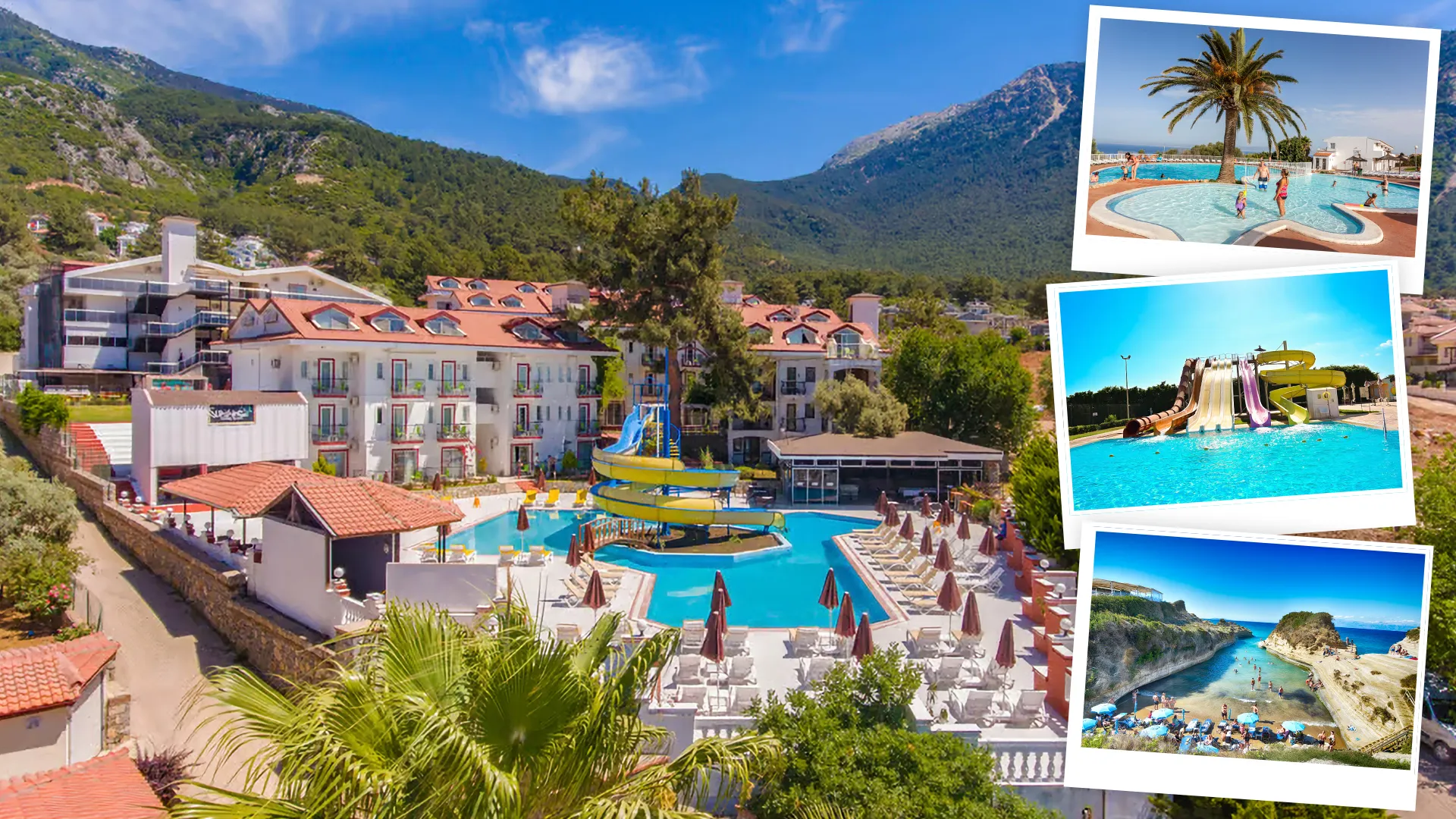












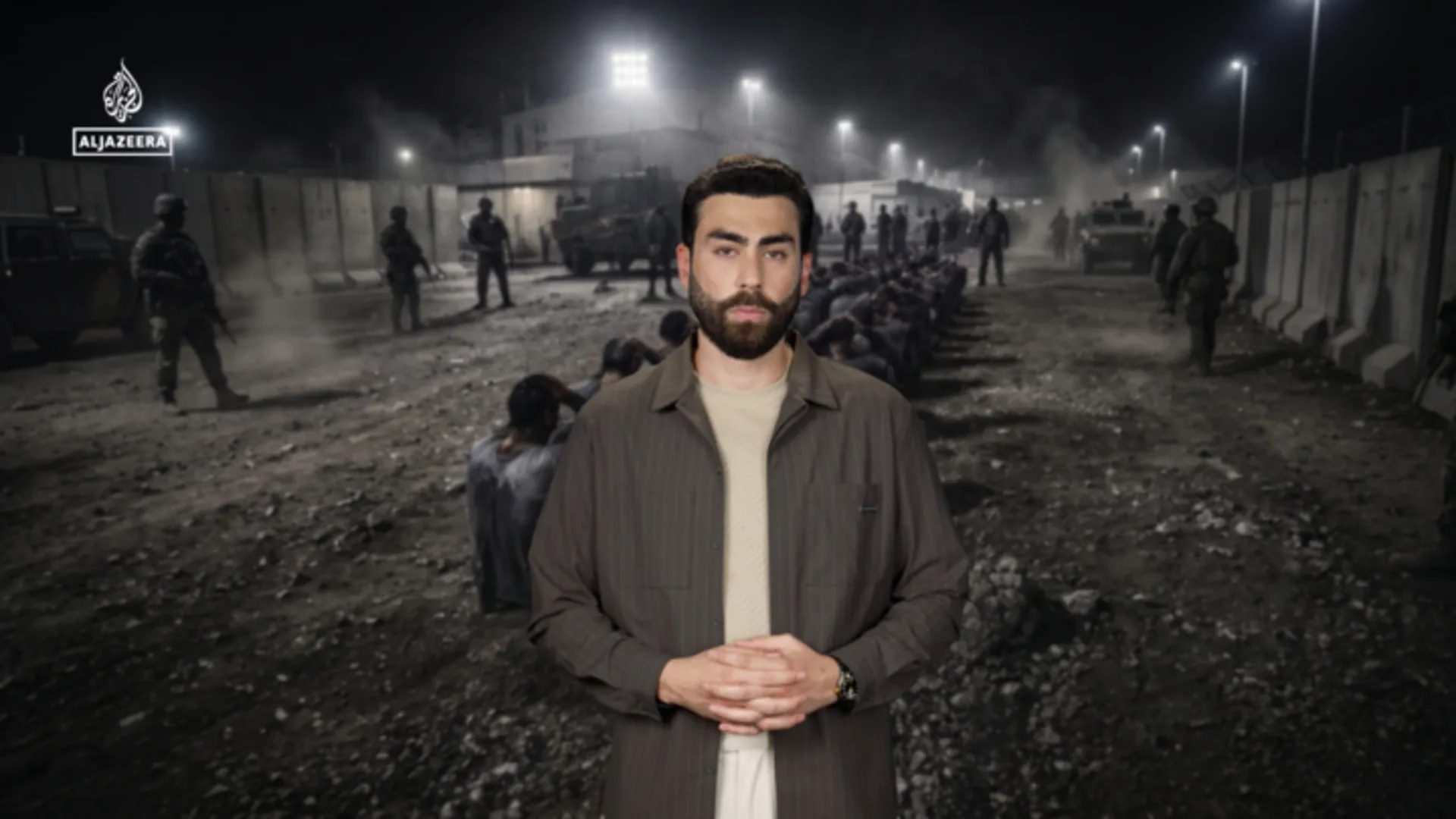













![Cape Verde beat record African World Cup qualifiers Cameroon to seal their spot in the finals [File: Cristiano Barbosa/AP]](https://i0.wp.com/www.aljazeera.com/wp-content/uploads/2026/03/AP25286764425321-1774510671.jpg?w=640&ssl=1)