Month: June 2026

Why England turned to Joe Root to replace Ben Stokes as interim England Test captain

England have described the arrangement for the second Test as “interim”, and its impermanence seems important.

On Monday, when it first emerged that Stokes and Gus Atkinson were in hot water, there was an immediate feeling it would spell the end of Stokes’ captaincy.

It still may. There is an ongoing investigation. Stokes could decide to walk.

But, with every passing hour, the temperature is cooling. Stokes could return for the third Test at Trent Bridge or, more likely, the series against Pakistan later in the summer.

Still, Stokes has given a window into what England’s life might be without him. For the first time in his career, Stokes the cricketer is not indispensable. Earlier this week, head coach Brendon McCullum had to defend his batting, and back Stokes to return to form.

If Brook had been put in charge, England may have seen something they like. Brook and McCullum seemed more aligned during the T20 World Cup than Stokes and McCullum did during the Ashes.

Brook would have been captaining his peers, whereas Stokes leads a group of younger men, many of whom grew up idolising him. Maybe England would have found a Stokesless formation that makes them stronger: the leg-spin of Rehan Ahmed as the all-rounder, followed by four specialist seamers.

None of this becomes an issue with Root in charge. He will be all too happy to hand over the reins when the time comes.

These roles were once reversed. In the Covid summer of 2021, Stokes stepped in for one Test while Root was on paternity leave. Root left a note on Stokes’ peg in the dressing room which said: “Do it your way”.

Now, Root will do it his way. Clapping his hands from first slip, long sprints to talk to his bowlers. A smile on his face, maybe a classic Rootian century. Not the puffed-out chest of an alpha like Stokes, just the calm reassurance of English cricket’s most dependable presence.

Once again, it is Joe Root riding to England’s rescue.

Source link

Trump signs $70B bill to fund Homeland Security Dept. through 2028

June 10 (UPI) — President Donald Trump signed a bill to fund the Department of Homeland Security’s immigration enforcement agencies through 2028 after months of battles to prevent it from happening.

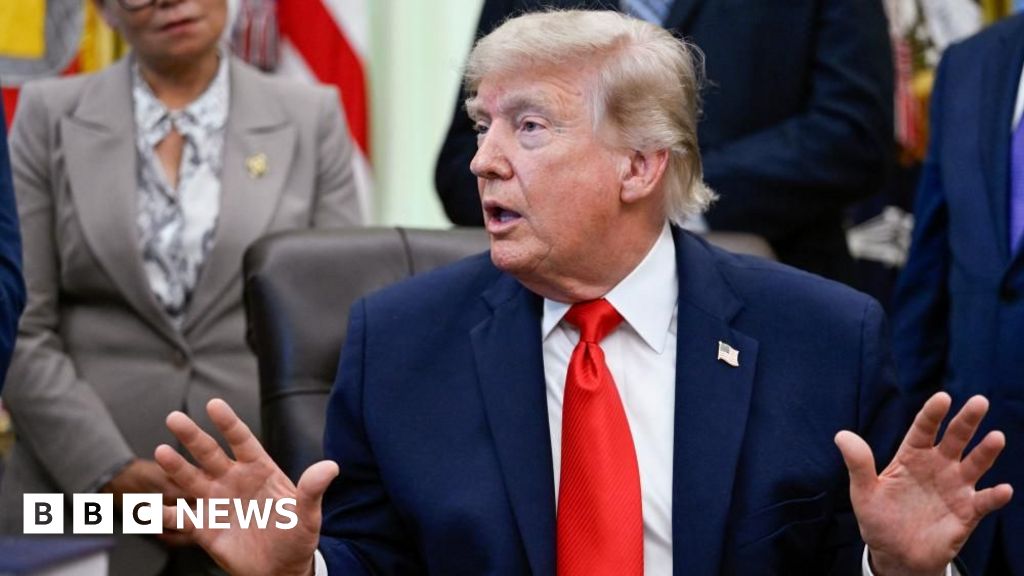
“This morning I’m thrilled to sign the Secure America Act to immediately and fully fund the Department of Homeland Security through the end of my term, so we won’t have to be talking about it anymore,” the president said in the Oval Office.

The Senate passed the $70 billion funding package on Friday, and the House approved it on Tuesday.

Democrats fought the funding for months, refusing to agree to the bill unless there were reforms to the organization after two American citizens — Renee Good and Alex Pretti — were killed by federal agents in Minneapolis earlier this year. But the measure was passed via reconciliation, which only requires a majority vote instead of 60 votes needed to overcome a filibuster.

“We’ll give the heroes of ICE and Border Patrol — and that’s what they are, they’re heroes, what they have to go through to keep us safe — the support and resources they need to defend our borders, protect our homeland and to keep America safe,” the president added He also gave House Speaker Mike Johnson, R-La., credit for passing the bill with a slim majority in the House.

“Despite Democrat efforts to shut down ICE and Border Patrol, Republicans have now fully funded these agencies through President Trump’s entire second term to the tune of nearly $70 billion,” Sen. Lindsey Graham, R-S.C., in a statement. “Thanks to President Trump, our border has gone from its weakest point to its most secure point in less than two years.”

Source link

New L.A. Times feature: Save our expert recs for your next adventure

Whether you’re looking for the best restaurants L.A. has to offer, a fun and affordable way to spend your day or a new adventure in one of our city’s iconic neighborhoods, the Los Angeles Times has you covered.

You can now make our guides your own by saving individual recommendations for later — mixing and matching from food to fun and everything in between — with the confidence that your choices are backed by L.A. Times experts.

screenshot from latimes.com showing a button to save a recommendation for swan boats at Echo Park Lake

Saving is simple. Visit any of our local guides, find something that interests you and look for the “Save” button. From there, you can choose a category in which to save your item, such as Food & Drink or Things to Do.

Not an L.A. Times subscriber? Don’t worry. You can register for a free account to get saving on many of our guides. Once you’ve saved a few items, check out your personalized save dashboard at latimes.com/saved/guides. You can also find it in the site account dropdown menu.

Call it a wish list, bucket list or checklist — the dashboard is all yours. Revisit your saves, remove ones you don’t want and even see your items on a personal map.

We hope this makes it easier to explore L.A. and beyond.

Source link

A Place in the Sun guest in tears after opening up about late brother

A Welsh couple appeared on A Place in the Sun and broke down in tears after buying a Costa del Sol holiday home to honour their late family member.

A Place in the Sun presenter was moved to tears while discussing a heartbreaking family loss.

During a repeat episode broadcast on Wednesday, June 10, a Welsh couple were searching for a holiday home on the Costa del Sol, enlisting the assistance of host Jean Johansson.

Former body builder Darren and his wife Joanne, had a particularly poignant motivation behind their decision to purchase a property in Spain, wanting somewhere perfect for their three children and wider family.

They also decided to find somewhere following the sad death of Joanne’s brother Matt, with one of their final conversations being him encouraging them to “live the dream”.

Joanne emotionally told Jean: “My brother sadly passed away ten years ago and one of our last conversations was that I had to make sure that we have as much fun as possible and live the dream with our children,” reports Wales Online.

“Because he loved the beach and being abroad so much we thought this would be the perfect way to honour his memory.”

After viewing several properties, with a budget of £205,000, the couple submitted an offer of £170,000 on one apartment they were keen to add to.

At that moment, Joanne shared: “I do feel emotional, I just know this is what my brother would want and I am sure he is just looking down now with a big smile on his face.”

While their initial offer was turned down, their second bid of £178,000 was accepted, leaving Joanne overcome with emotion.

Breaking down, she shared: “This is for you, Matt!”

Expressing her gratitude to Jean, she continued: “We can now live the dream in my brother’s memory.

“The family can come here and think about him, my mum and dad just feel so close to Matt when we are at the beach and they can come here anytime they want now!”

Visibly moved, Jean responded: “I am so happy, I’ve never been happier for a couple.”

Raising a toast, Joanne said: “To Matthew and the family, and to living the dream!”

Jean added to the camera: “That was an emotional end to an exciting search, Darren and Joanne have the dream property for them and the whole family, and I know they are going to have loads of amazing holidays here in Malaga.”

Speaking after the episode originally aired in May 2024, Joanne told A Place In The Sun that they were “definitely living the dream”.

She said they get very emotional when they walk through the door, as the home is so linked to her brother, who loved the beach, but tragically died of cancer at the age of 27.

“We’ve taken out all the children and showed them the places we visited on the TV show, such as Lake Vinuela,” Joanne said.

“It already feels like home and I’d say we are definitely living the dream.”

A Place in The Sun is available to watch on Channel 4.

Source link

Nevada GOP voters choose Trump-backed U.S. House candidate in one of state’s high-profile races

Retired Air Force Lt. Col. David Flippo has won the Republican primary in Nevada’s 2nd Congressional District after securing President Trump’s endorsement in the closing weeks of the campaign.

The race, which was called Wednesday, put Trump opposite Republican Nevada Gov. Joe Lombardo and retiring Rep. Mark Amodei, who both backed former state Sen. James Settelmeyer. Amodei announced he was retiring after 15 years, opening up a competitive primary for Nevada’s only Republican-held House seat.

Flippo said he will fight “relentlessly” for secure borders, American energy, tax cuts, national defense and “the America First agenda our country needs.”

“Nevada deserves a fighter, and that’s exactly what I will deliver,” he said in a statement.

Democrats had hoped for a Flippo victory, thinking it would make it easier for them to win over less partisan voters in November in the conservative-leaning district. They nominated the chief of staff to state Atty. Gen. Aaron Ford, former majority floor leader Teresa Benitez-Thompson.

“I will ensure that Nevada families have an authentic Nevadan voice fighting for their needs in Washington DC,” Benitez-Thompson said in a Wednesday morning statement.

The 2nd District race is one of several Nevada contests that will be watched closely this year. In southern Nevada’s 3rd Congressional District, Democratic Rep. Susie Lee will face Marty O’Donnell, a composer known for writing the soundtrack to the video game “Halo.”

Trump won the 3rd district in 2024 and backed O’Donnell, who thanked Trump in his victory statement.

Tuesday’s primary also set the general election contest for governor, with Ford defeating a progressive candidate in the Democratic primary and moving on to face Gov. Lombardo. The incumbent, a former Clark County sheriff, is running on his record of public safety and job creation while pledging to work on housing affordability in a second term.

Ford is tying Lombardo to Trump in placing blame for soaring prices across the state and has pledged to lower costs for families. He would be the state’s first Black governor if elected in November.

In other races for statewide offices, Republican primaries for attorney general and secretary of state included several candidates who had pushed election conspiracy theories or been skeptical of election operations. Adriana Guzmán Fralick, who has expressed concerns about voting security, won the GOP nomination for attorney general and will face Democratic state Senate Majority Leader Nicole Cannizzaro.

The Republican primary for secretary of state, the office that oversees elections, included Jim Marchant, a former state lawmaker who has said the 2020 election “ was probably stolen,” and Sharron Angle, a former state lawmaker who was part of an effort to block the certification of Nevada’s 2020 election results. Another candidate who was competitive in the race, Shirley Folkins-Roberts, is an attorney who has denied that there is widespread voting fraud in Nevada.

In the 2nd District race, Flippo said he understands issues important to the region, including mining, water rights and fuel prices. He sought to turn Settelmeyer’s long political record into a liability, pointing to votes he said did not match conservative values.

He moved to the district this election cycle after losing a race in southern Nevada in 2024. The 2nd District covers all northern Nevada. It mostly rural but includes the major battleground county of Washoe, home to Reno.

Hill writes for the Associated Press.

Source link

Mass shooting with at least 10 attackers in Johannesburg | Gun Violence

NewsFeed

A manhunt is underway for at least 10 suspects in a mass shooting that left 12 people dead near Johannesburg, South Africa. The motive for the attack is not known but Al Jazeera’s Fahmida Miller reports that recent shootings have been linked to turf wars or gang violence.

Source link

EU Fiscal Board Criticizes Relaxed Energy Rules

The European Fiscal Board (EFB) criticized the European Commission for allowing some of the defence spending leeway from last year to be used for transitioning to clean energy. Last year, the Commission allowed EU governments to spend an extra 1.5% of GDP annually for four years on defense against potential attacks from Russia, using a national escape clause due to uncontrollable events.

Italy, facing high fuel prices from the U. S.-Israeli war on Iran, sought more fiscal flexibility from the EU to help manage costs ahead of elections. The Commission agreed to permit 0.3% of that 1.5% for the clean energy transition. EFB Chairman Pieter Hasekamp stated that the energy crisis should drive transformation rather than increased spending, urging that fiscal credibility is critical to minimize borrowing costs.

The EFB emphasized the importance of adhering to previously agreed spending paths to reduce debt, noting that many EU countries still need to cut back post-pandemic stimulus. They expressed concern that extending escape clauses for energy could lead to excessive and untargeted financial support. The board also advised that if oil prices remain high, governments should prioritize public investment over efforts to sustain consumer demand.

With information from Reuters

Source link

Director’s Guild reaches tentative deal with studios

The Director’s Guild of America has struck a tentative deal with the Alliance of Motion Picture and Television Producers, completing the negotiation cycle for Hollywood’s major unions.

SAG-AFTRA ratified its contract last week, the Writers Guild approved its deal back in April, and the DGA has similarly landed on a new contract, after nearly a month of negotiations. The latest deal with major film and TV studios was announced on Tuesday, but its terms have not yet been disclosed.

The Directors Guild, led by its president Christopher Nolan, reportedly entered negotiations in hopes of improving conditions to create new jobs, bulk up its health fund, and increase protections against generative AI.

“The tentative agreement will be presented to the DGA National Board for approval,” the DGA said in a statement. “Consistent with the Guild’s longstanding practice, terms of the agreement will not be released publicly until the National Board has completed its review.”

Negotiations started on May 11, and the current contract is set to expire on June 30. Once the DGA National Board approves the new contract, it will be sent to its members for a ratification vote. The union represents nearly 20,000 helmers, assistant directors, associate directors, unit production managers and stage managers.

The studios said they were pleased to have reached this latest tentative agreement with DGA.

“We appreciate the hard work and commitment of our guild partners in achieving a fair deal that helps advance a stable and successful entertainment industry,” AMPTP said in a statement.

The DGA’s tentative contract marks the last few steps of the current Hollywood union negotiation cycle. The previous one in 2023 was marked by the industry-stopping strikes from SAG-AFTRA and WGA, and the industry is still feeling the impact from them. But this year’s bargaining season was much quieter and uncontroversial. SAG-AFTRA and WGA will reconvene with the studios for bargaining in 2030, as they all signed four-year contracts.

Source link

‘Partners and friends’: Trade and defence top of agenda at EU-South Korea summit

European Commission President Ursula von der Leyen, European Council President Antonio Costa and with South Korean President Lee Jae-myung celebrated the signing of new a digital trade agreement at a ceremony in Brussels on Wednesday.


ADVERTISEMENT


ADVERTISEMENT

The event marked the EU and South Korea’s 11th summit, with everything from security and defence to trade on the agenda.

“Korea is one of Europe’s closest partners in the Indo-Pacific region and on the global stage,” von der Leyen said. “In today’s uncertain world, stable and trusted partnerships like ours are more precious than ever.”

The trio released a joint statement extolling the value of the talks and committing the two sides to a firm and friendly relationship.

“We reaffirm our shared commitment to effective multilateralism, and to a stable and predictable rules-based free and fair economic order,” the statement reads.

The semiconductor factor

Both sides have an interest in diversifying their trade relationships at a time of growing tensions with both China and the US, and the EU-South Korea digital trade agreement comes more than a decade after a landmark free trade deal.

Since 2015, trade between the EU and South Korea has doubled, with goods trade reaching approximately €124.25 billion in 2025, according to figures from the European Commission.

“The European Union-Korea Free Trade Agreement remains one of the European Union’s most successful trade agreements since its entry into enforcement in 2011,” European Council António Costa said on Wednesday.

South Korea is becoming an increasingly important investor in Europe, particularly in strategic sectors such as batteries, electric vehicles and semiconductors.

For the EU, a key objective is to secure semiconductor supply chains while attracting further investment from Korean companies into Europe.

“Korea has a global leadership position in semiconductors,” an EU official said. “This is clearly an area with significant potential for cooperation that would benefit both sides.”

The digital trade agreement concluded on Wednesday is expected to complement the broader trade partnership by reducing “unnecessary barriers to digital trade” and providing greater “legal certainty” for businesses operating across the two markets, according to another EU official. It will facilitate cross-border data flows while prohibiting the mandatory transfer of source code.

The deal is also designed to establish robust online consumer protection rules, though both partners intend to maintain their respective levels of protection for personal data and privacy.

Economic security was also high on the summit agenda, with the two sides agreeing to establish a high-level dialogue on supply chain resilience.

Supply chains came under pressure last year following China’s restrictions on exports of strategic materials, including rare earths – essential for green technologies and the defence sector – as well as products linked to the chip industry, which are critical to automotive manufacturing.

Security and defence

One thing that did not get over the line was a security of information agreement, which had been touted by EU officials prior to the summit as a means of strengthening the flow of classified information between Brussels and Seoul.

“I hope that the security of information agreement will be adopted soon, so that Korea and the EU can share confidential information safely, which will allow the two sides to engage in industrial and research cooperation actively through information exchange exchange,” President Lee said on Wednesday.

The agreement would build on the Security and Defence Partnership agreement that South Korea and the EU signed in 2024. That deal was designed to facilitate cooperation in areas spanning maritime security, countering hybrid threats, fighting foreign information manipulation and interference, and more besides.

In the run-up to this week’s talks, a senior EU official said a key topic of the discussions will be nuclear non-proliferation, as North Korea continues to hold a small but concerning stockpile of nuclear-armed warheads.

North Korea (the DPRK) and Russia were considered “big questions” at the summit, the source said, with Brussels ready to share information on its support for Ukraine with Seoul.

The joint statement from the summit reiterates this, with words of condemnation directed at North Korea and other nations who enable Russia to sustain its war of aggression against Ukraine.

“We urge Russia and the DPRK to immediately cease all such activities and abide by the UN Charter and all relevant United Nations Security Council resolutions,” the statement reads.

Source link

Mum in tears after being barred from £2.5k Jet2 holiday over ‘insane’ passport rule

A woman who was unable to board her flight because of a little known EU rule has said she was left in tears by the incident that happened last month at Gatwick Airport

A 29-year-old mother of one was left in tears after she was prevented from going on a Jet2 flight she’d paid £2,500 because of an EU rule.

Jansen Porter, a property maintenance apprentice from Milton Keynes in Buckinghamshire, was attempting to fly out to Kefalonia, Greece, with her partner and daughter Lulu Smith on May 11 when the incident happened.

She claims that as their bags were being checked in at Gatwick Airport, that she was unable to get through because Jet2 staff told her passport wasn’t within the European Union’s 10 years limit. She has since claimed that the little known post Brexit rule “ruined” her family holiday.

Although her passport expires in December 2026, because it was issued in March 2016, it meant that under the rule it actually expired in March 2026 instead.

Jansen said that Jet2 staff explained to her that as passports no longer had a nine month carry over that she was unable to get on-board the plane.

The situation was made doubly tragic as the trip was to celebrate her daughter’s fourth birthday and it had been one she and her partner had been saving up to since Christmas.

Speaking about the holiday and why she had chosen Kefalonia in the first place Jansen said: “I was absolutely devastated and heartbroken. This was our first holiday. I booked Kefalonia because it’s actually where my mum took me for our first holiday when I was young.

“My daughter was really looking forward to it, we had this planned for a good couple of months and we saved for it. It ruined it for us. How is that legal? You pay for a passport, it gives you an expiry date, why does nothing tell you.

“Clearly the expiry date doesn’t count for anything, it’s all about the issue date. That’s insane, why is there nothing to tell you about this?”

Jansen went onto add that she was even more surprised at not being able to board the flight because she had no issues checking into the flight, and that it wasn’t flagged until she was actually at the airport.

She said: “They looked at mine, because mine was a burgundy one, and they were like ‘yeah yours is not within the EU 10 years’. I said ‘it’s not expired’ and they were like ‘but the EU doesn’t care’.

“We [had] Brexit. Why has this not been sorted? It should’ve been an automatic thing sent to everyone saying if you have a passport you need to go and get it renewed.”

The impact of the sudden blow had an immediate impact on Jansen who admitted to bursting into tears at losing a holiday she had saved so hard for. She said: “I was in tears in the airport, I just had a complete breakdown.

“You’re having to go against the tide of people walking in, you kind of hit hysterical a bit. I’d seen nothing about this on travel [news], there were no warning signs when you go through check in.”

Although, her original holiday timings were scuppered, Jansen was able to reorganise the holiday, albeit by spending another £800. She has since encouraged people to check their passports so they don’t get caught out like she did.

She added: “Make sure that your issue date is 10 years. think it needs to be more well known, I think companies need to make it mandatory to make sure they’re saying this.

“Expiry means expiry. Nobody else on this planet looks at an expiry date and goes ‘oh the expiry date is January, I should change it now in March’, it doesn’t work. Just check your passport. It’s not well known enough.”

Jet2 have been approached for comment.

Source link

Five of the best ‘untrendy’ seaside towns that still feel like old school Britain 

THERE are few seaside towns in the UK that have managed to maintain their classic charm.

But if you look hard enough, there are a few old-school gems dotted around the country – and these are five of our favourites.

Lllandudno has a classic promenade with pastel-coloured hotels Credit: Alamy

Broadstairs, Kent

Kent boasts so many impressive seaside towns, but Broadstairs is the one that really feels like old school England.

It has rustic fisherman’s cottages, the pretty Victoria Gardens and historic Bleak House where Charles Dickens famously wrote David Copperfield.

Unlike some of its neighbours, Broadstairs has managed to avoid big developments and has got lots of independent shops on its high street.

Morelli’s, the ice cream parlour, on The Parade, dates back to 1932.

CHEAP DATE

Our fave cheap European destinations with flights under £20 & hotels from £24pp


IT’S A WASHOUT

UK indoor waterparks with VIP spas, mega slides and 30C tropical climates

A spot called The Old Curiosity Shop on Harbour Street has history going back to 1588.

The building was connected to smuggling, but now is a cosy café and tea room.

When it comes to its beaches, Broadstairs has seven sandy bays in total – which generally makes it quieter as visitors are unable to descend on a single beach.

Deputy Travel Editor Kara Godfrey who is a Kent local said: “The town’s pretty high street is also a step back in time, with a quaint mix of old-school butchers and gift shops alongside modern coffee places.

Llandudno, North Wales

One visitor said Llandudno is a ‘step back in time’ Credit: Alamy

Llandudno, also dubbed the ‘Queen of Welsh Resorts‘ is a destination that definitely takes visitors back in time.

One holidaymaker wrote on Tripadvisor: “I’ve been coming here almost 60 years now to this unspoilt town. The promenade is a step back in time as it never changes.”

The town in the north of Wales has managed to keep its Victorian and Edwardian buildings, especially on the promenade.

The hotels along the front are painted in traditional pastel shades to keep its old-school look.

One thing that might throw off visitors is that it’s lined with palm trees.

It’s not just the style of Llandudno that makes it timeless, it’s the case for attractions too.

There’s vintage Punch and Judy shows and of course the 2,000ft long pier that first opened in 1877.

Llandudno also has a historic tramway that takes visitors up to Great Orme, a steep coastal cliff.

There are also the Llandudno Cable Car which takes passengers on a one-mile journey between Happy Valley and the Great Orme Summit.

Saltburn-by-the-Sea, North Yorkshire

Saltburn-by-the-Sea has an attraction that’s over 142 years old Credit: Alamy

Saltburn-by-the-Sea in North Yorkshire has a traditional seaside feature dating back in the 1880s that makes it feel like a time capsule.

Its water-balance cliff funicular railway is 142 years old – and the oldest in the country.

It’s right on the beach and offers rides with views of the sea up to the town.

Saltburn-by-the-Sea has an impressive Victorian iron pier extending out into the North Sea for 200 metres and opened in May 1869.

It has absolutely no arcades, it’s simply a place for quiet and great views.

Airbnb described Saltburn-by-the-Sea as a ‘coastal gem’ for anyone “craving a quiet and scenic escape.”

It said: “Saltburn-by-the-sea offers the perfect blend of serenity and intrigue with Saltburn Pier, a friendly surf school, and a unique working cliff tramway connecting the promenade to the beach.”

Another popular attraction in Saltburn-by-the-Sea is Valley Gardens which were set up in 1860.

The colourful Italian Gardens have colourful flower displays and walks through the woodlands.

Scarborough, North Yorkshire

Scarborough is considered Britain’s first and oldest seaside resort Credit: Alamy

As Scarborough is Britain’s first and oldest seaside resort – it’s a relief that it still maintained its traditional feel.

The beach promenade on the North Bay are lined with brightly-coloured and historic beach chalets, with sweeping views across South Bay.

Of the 35 chalets, two of the rows date from Edwardian times which makes them Britain’s oldest surviving beach huts.

The town is also home to Britain’s very first funicular railway which opened in 1875.

South Cliff Lift connects the Cleveland Way beside the beach to the Esplanade at the top of the cliffs.

One Sun Writer discovered that while it doesn’t quite have Old Britain prices, you can still get some bargains in Scarborough.

She said: “If you head to The Fishpan chippie that has been open since 1960, you can get takeaway kids’ portion for £2.25 and massive chip butties for £3.45 each.

Brightlingsea, Essex

Brightlingsea has been called unspoilt and like ‘the 50s’ Credit: Alamy

It might not be the first place you think of when looking for seaside towns with a classic feel, but Brightlingsea in Essex has some classic charm to it.

Visitors have described it having an “old-fashioned seaside promenade with plenty to enjoy” and a “lovely old fashioned beach“.

Another said that it’s a “very unspoilt, family oriented, beautiful beach. Traditional town back in the 50’s.”

The high street on Brightlingsea is considered one of the ‘best kept traditional high streets’ in the East of England.

Rather than chains, it’s got lots of independent shops selling records and plants like Roots & Grooves; others like Toggs is where you can pick up women’s clothes and handbags.

There’s also the Olde Swan, which is a pub as well as a bed and breakfast, and is one of the oldest buildings in the town.

Brightlingsea also has one of the last remaining lidos in the area which dates back to the 1930s,

It has an Olympic-size outdoor pool, a heated toddler pool, sun loungers, changing rooms, and a cafe.


Source link

Wizz Air launches new direct £45 flights to ‘pink city’ that’s ditched visas for Brits

The UK’s only direct flight to a destination known as the ‘pink city’ has been launched by Wizz Air, and flights start from £45.99 with no visa required for Brits

Wizz Air has launched the UK’s only direct flight to a walkable destination dubbed the ‘pink city’, which has ditched visa requirements for Brits.

In an exciting addition for the budget airline, holidaymakers can now jet off from London Luton Airport to Yerevan, with flights starting from just £45.99. The Wizz Air route launched on Tuesday, 9 June and is the only direct flight available from the UK to Armenia.

Flights will operate from London Luton to Yerevan, Armenia, twice a week on Mondays and Fridays throughout the year. The direct route takes just over five hours, and after that time, travellers will be rewarded with the dramatic landscapes of mountains and historic architecture in a destination known as the ‘Pink City’.

The city earned its moniker due to the rose-hued stone that characterises its buildings, in addition to its tree-lined boulevards and lively public squares. There are historic monasteries, museums, galleries and markets, along with a thriving café culture.

On the UK’s first direct route to Armenia, Wizz Air pilot, Tom Copestake, exclusively told the Mirror: “I’m really excited about landing in Yerevan, Armenia. It’s a new destination for us, but it’s surrounded by big mountains, and it’ll be an interesting experience to fly around there.”

Adding to the appeal of a trip to Armenia in Asia, British holidaymakers can visit without a visa for up to 180 days a year. Whereas a list of Asian countries still requires Brits to obtain a visa at an additional cost.

Following the new flights, Yvonne Moynihan, Managing Director of Wizz Air UK, said: “Today [9 June] marks an exciting moment for Wizz Air as we launch the UK’s only direct route to Armenia, opening up a destination that remains largely undiscovered by British travellers. At Wizz Air, we’re committed to making travel more accessible and helping our customers explore beyond the obvious. Yerevan is a city rich in history, culture and character, offering an incredible experience for travellers looking for something different, all at an affordable price.

“The response to our Let’s Get Lost campaign showed there is real appetite among travellers to step outside their comfort zones and discover destinations they may never have previously considered. We’re proud to be making Armenia more accessible than ever before and can’t wait to welcome more passengers on board as they experience everything this remarkable country has to offer.”

Alberto Martin, Chief Executive Officer at London Luton Airport, said: “We are delighted to welcome Wizz Air’s new service to Yerevan, marking the UK’s first direct link to Armenia and further strengthening London Luton Airport’s increasingly diverse route network. This exciting new destination in the South Caucasus is a unique city that offers a fascinating cultural scene of contrasts to suit all tastes.

“As well as reinforcing our long-standing partnership with Wizz Air, the addition of Yerevan to our departure boards signals our commitment to offer even greater choice as part of our simple and friendly passenger experience.”

Do you have a travel story to share? Email webtravel@reachplc.com

Source link

Scottish Rugby issue one-year ban for Alloa president’s ‘racist, homophobic and sexist’ speech

Scottish Rugby has imposed a 12-month ban on Alloa RFC president Alan Stewart attending matches following an after-dinner speech, described as “racist, homophobic and sexist” by some present.

Stewart has also been suspended from holding any role within the game over the same time period.

Multiple objections were made following remarks by Stewart during Musselburgh RFC’s annual dinner on 18 April and an independent disciplinary panel has upheld a misconduct complaint.

Stewart, who can appeal against the decision, has also been instructed to undergo equality, diversity and inclusion training.

Charges against Musselburgh RFC and their president were not upheld.

In April, the board of Musselburgh RFC issued an apology to those who attended, saying: “We particularly wish to recognise and acknowledge the hurt caused to our women’s team, who we are extremely proud of and to whom we are committed to providing a safe and nurturing environment.”

The club criticised the “very poor judgement of the speaker” and said he had sent a written apology.

In a statement issued at the same time, Scottish Rugby said it is “committed to equality, diversity and inclusion at every level of the game”, adding: “There is no place for discriminatory behaviour in our sport, or in wider society.”

BBC Scotland has approached Stewart and Alloa RFC for comment.

Source link

Platner wins Maine primary; Mace loses S.C. governor’s race

1 of 2 | Rep. Nancy Mace, R-S.C., failed to advance in the Republican primary for South Carolina governor on Tuesday, falling out of the top two vote-getters to state Attorney General Alan Wilson and President Donald Trump’s choice Lt. Gov. Pamela Evette. File Photo by Bonnie Cash/UPI | License Photo

June 10 (UPI) — Maine Democrat Graham Platner secured his party’s nomination to challenge Sen. Susan Collins in November and Rep. Nancy Mace, R-S.C., failed to advance in her gubernatorial bid.

Primaries in Maine, Nevada, South Carolina and North Dakota shed some light on where voters stand heading into November’s midterms. Platner’s victory in Maine, running on a progressive platform seeking to shake up the establishment, came in spite of a series of controversies during his campaign.

Platner received nearly 75% of votes in his primary as of Tuesday. Among his main challengers was Maine Gov. Janet Mills, who suspended her campaign when pre-primary polls showed Platner with a commanding lead.

“Over the last nine months I have seen Mainers come together behind a vision to take back our power from corporations and billionaires,” Platner said Tuesday.

Democrats have targeted Collins’ seat as a key to earning a majority in the Senate.

“Over the past year, we have created a path to win a Democratic Senate majority and put a stop to the chaos and damage of the Trump administration by defeating the Republicans who enable his harmful agenda,” Senate Minority Leader Chuck Schumer and Sen. Kirsten Gillibrand, chair of the Democratic Senatorial Campaign Committee, wrote Tuesday. “In November, Maine voters will elect Graham Platner, and we will win a Senate majority.”

Trump’s endorsement in South Carolina’s gubernatorial race advanced to a June 23 runoff. State Lt. Gov. Pamela Evette and Attorney General Alan Wilson were the top two vote-getters on Tuesday but neither surpassed the 50% threshold. Trump endorsed Evette over Mace, who has often aligned with Trump throughout her career.

Mace was one of the few Republicans to criticize Trump and his administration over the release of files related to the investigation into convicted sex trafficker Jeffrey Epstein.

“I chose to expose the abusers of children. And apparently, I chose wrong if the goal was winning an election,” Mace posted on social media on Tuesday. “I’m at peace with that. Because when a candidate is OK with corruption and cover-ups — something is broken. That’s not a political opinion. That’s a moral emergency.”

The race for Republican Sen. Lindsey Graham‘s Senate seat in South Carolina has been set as the incumbent earned more than 50% of the vote to avoid a runoff election later this month. Graham will be challenged by Annie Andrews, a pediatrician who ran for Congress in 2022.

President Donald Trump discusses renovations to the Lincoln Reflecting Pool and makes an announcement on coal in the Oval Office at the White House on Thursday. Photo by Samuel Corum/UPI | License Photo

Source link

ISWAP Used Theology to Absorb the Shock of Its Deadliest Week

For the Islamic State (IS) and its West Africa Province (ISWAP), the third week of May 2026 began with a compound disaster and ended with a theology lesson. The group faced one of its most shocking moments, at least in West Africa or, more specifically, Nigeria. 

With its headquarters in Nigeria, ISWAP has been the most active wing of the Islamic State globally, claiming more attacks than any other IS province since its central operations in Iraq and Syria were largely overpowered. Following the call for its members to migrate to Africa, ISWAP has, in the past two years, temporarily overran Nigerian military installations, including at least one super camp. The group was enjoying relative success when a turning point came: one of its most important first-generation commanders was killed. 

The operation that killed Abu Bilal Al-Minuki between midnight and 4 a.m. on May 16 was described by the Nigerian military as “meticulously planned and highly complex”. It not only left the terrorist dead, but it also caused a crisis of morale that ISWAP’s propaganda machine would spend the following days trying to contain through a theological message. 

Ahmad Salkida, a leading conflict analyst who has been observing the situation since it emerged, described the killing of Al-Minuki as a “serious disruption” to the activities of ISWAP in the Lake Chad region.

Airstrikes and special forces raids followed. More people were killed, and confusion reportedly descended. The operations, according to some reports, may also have killed the likely successor to Al-Minuki, another terrorist commonly known as Ba Shuwa, opening a new and, perhaps, unplanned chapter in the insurgency.

By May 19, Nigeria’s Defence Headquarters reported that 175 ISWAP and Boko Haram militants had been killed since the joint offensive began. According to the report, at least 20 died in a single engagement. By the time Nigerian authorities stopped counting, the joint operation had become the most lethal week the group had faced in years.

The theology of a bloody week

Within that catastrophic week, the Islamic State released its Al-Naba newsletter with a pointed editorial. Although it did not mention Al-Minuki or the numerous fighters killed, the editorial retold a story of a battle that happened 14 centuries ago to boost the morale of a group in disarray.

Reports suggest there was internal suspicion, even before the death of Al-Minuki, that some fighters may have leaked information leading to his death, driven by internal discontent over the unequal treatment between foreign fighters who migrated to the ISWAP and the local fighters in Nigeria. However, the editorial tried to shift away from that and present the losses as a normal sacrifice. 

A group of masked soldiers holding flags marches in a desert landscape, with Arabic text and articles overlaying the scene.
Screenshot from the IS weekly Al-Naba released after the death of Al-Minuki 

Everything in the editorial is deliberate. The piece opens on Talha ibn Ubaydullah, a companion of the Prophet Muhammad, at the Battle of Uhud. The selection is pointed in ways that any reader with a classical Islamic education would immediately recognise. 

Uhud was a near-disaster for early Muslims because of an internal division. It was a battle in which archers abandoned their positions, turning a momentary advantage into a rout that left dozens of companions dead and the Prophet himself wounded. 

What Islamic tradition preserved, and what the Al-Naba propaganda wanted to convey from that valley, however, was not only the memory of tactical failure but of individual men who placed their bodies between the Prophet and death – an important sacrifice for the existence of Islam. 

The editorial tells ISWAP fighters who have fallen into fear, confusion, or doubt after the loss of Al-Minuki and other fighters that a similar situation occurred during the Battle of Uhud. However, because the Prophet’s companions believed they were fighting for Islam, they did not see it as a problem.

In essence, the message is that they may ultimately be killed, suffer injuries, or even think they have already achieved victory and begin collecting spoils of war, only for circumstances to turn against them. Yet, regardless of whatever hardships or setbacks they face, they should not regard themselves as having lost, because they are fighting for their religion.

“Your role, O my mujahid brother, is to make your chest a sanctuary for the religion of Islam and guard it with your body,” the editorial reads. 

This is a recognisable pattern in IS editorial strategy. After senior commanders are killed, Al-Naba invokes early Islamic battles such as Badr, Uhud, and Khandaq as mirrors, casting present losses as the preconditions for eventual triumph. The rhetorical architecture is consistent and has appeared after every major command-level strike against the organisation. What changes each time is only the particular story pulled from the tradition.

In 2019, when Abubakar Al-Baghdadi, the former leader of Islamic State, died, Al-Naba compared the situation with that of early Muslims after the death of Prophet Muhammad, in which many of his companions fell into disbelief until they were calmed by the first caliph Abu Bakr As-Siddiq. Al-Naba issue 207 argued that if Islam could survive the death of the Prophet Muhammad, the Islamic State could also survive the death of Al-Baghdadi. 

The choice of Talha in the recent issue of Al-Naba, specifically after the death of Al-Minuki, adds a layer to the editorial. Talha survived Uhud and fought many more campaigns. The editorial addresses not only those who died but also those who lived through the week. The message to fighters still alive in the Lake Chad Basin, still holding ground, is legible between every sentence. 

“It is the duty of my mujahid brother to walk those same paths in defence of the religion of Islam, its honour, and its sovereignty,” the editorial says. 

The crisis of succession 

The theology in the Al-Naba editorial could steady nerves or explain deaths. It could also transform defeat into sacrifice. However, it could not answer the practical question now hanging over the movement: who would lead after Al-Minuki?

For years, ISWAP’s resilience has rested on its ability to survive leadership decapitation. Commanders and factional leaders have died, been assassinated, or removed. Yet the organisation endured because a pool of experienced first-generation figures remained available to absorb the shock. However, this time may be different.

A HumAngle analysis observed that Al-Minuki’s most likely successor was Ba Shuwa. However, he too may have been killed in the subsequent strikes; if confirmed, the movement would lose not only its most influential commander but also the man widely expected to replace him.

Al-Minuki belonged to a shrinking class of terrorists who entered the movement before the 2009 uprising transformed Boko Haram from a fringe extremist religious organisation into a regional insurgency. He embodied institutional memory, battlefield experience, and personal relationships that spanned multiple generations of fighters. 

Ba Shuwa, although younger in status within the movement, still belonged to that older ecosystem. Their simultaneous deaths would accelerate a transition that many inside ISWAP had anticipated but few expected to happen so suddenly. The names now circulating inside insurgent circles to replace Al-Minuki and Ba Shuwa show the scale of that transition.

Among the strongest contenders, as HumAngle gathered, is Abu Salem, a commander who grew up entirely within the insurgency’s wartime environment.  He reportedly combines military authority with religious credentials, a combination that carries considerable weight inside ISWAP’s hierarchy.

Another frequently mentioned figure is Bana Chingori, long regarded as a close associate of Ba Shuwa and an influential commander in his own right.

However, beneath the movement’s ideological claims lies a complex web of battalion loyalties, personal networks, ethnic affiliations, and historical rivalries. Fighters speak the language of the caliphate, but leadership legitimacy is often negotiated through social structures that long predate the insurgency itself. The question is not merely who is capable of leading, but who can command obedience across the various factions that make up the movement.

This is where the editorial in Al-Naba becomes more interesting. The Islamic State understands that leaders can be replaced. What is more difficult to replace is cohesion.

The editorial’s invocation of Uhud was not simply a sermon about perseverance. It was also an attempt to create continuity at a moment when continuity is under threat. By reminding fighters that early Muslims endured confusion after battlefield losses yet remained united, the editorial implicitly addresses the danger of fragmentation.

For nearly a decade, ISWAP distinguished itself from rival jihadist factions partly through its ability to maintain organisational discipline. While Boko Haram under Abubakar Shekau frequently splintered under pressure, ISWAP developed bureaucratic structures capable of surviving individual losses. The current transition will test those structures more severely than any succession crisis since the death of Abu Musab al-Barnawi and the removal of other senior figures from the Muhammad Yusuf generation. 

The paused migration 

Beyond the succession question lies another bigger development. ISWAP has announced that the flow of fighters migrating from Iraq and Syria to Nigeria has been effectively paused.

For years, the Islamic State’s call for migration to Africa was one of ISWAP’s most reliable sources of experienced foreign fighters. Foreign fighters who had trained and fought in the central theatre arrived in Lake Chad with tactical knowledge, ideological authority, and direct personal connections to IS central command. 

Al-Minuki himself was a product of that ecosystem. The suspension reflects the bigger issue that ISWAP is facing, in which local ISWAP members feel foreigners are given more priority in the insurgency, and they’re being relegated. This, according to some sources, was one of the reasons that opened a loophole that led to the intelligence leading to the killing of Al-Minuki. 

Al-Naba issue 550 addressed the question of migration indirectly. The editorial, titled “Africa Between Yesterday and Today”, spoke in the past tense about those who had already made the journey. “Those who came before you from Iraq walked this path,” the editorial told terrorists currently in Africa, “and they carried the weight of this religion on their shoulders.”

Silhouette of a person with a rifle and document against a sunset. Arabic text with the headline "Africa: Between Yesterday and Today."
Screenshot from Al-Naba 550th issue. 

The joint US-Nigeria strike that killed Al-Minuki demonstrated a targeting capability that ISWAP had not previously faced at this intensity in the Lake Chad theatre. The use of American intelligence assets alongside Nigerian special forces created a surveillance environment that makes the movement of senior figures, especially those arriving from abroad,  significantly more dangerous than before. 

For IS central, sending experienced insurgents into a degraded environment risks losing irreplaceable assets to an adversary that has now demonstrated it can find and kill the most protected figures in the organisation. The pause in migration is both a strategic retreat and a rational response to changed targeting conditions.

The commanders now being discussed as replacements for Al-Minuki are men who grew up entirely inside the Nigerian insurgency. Whatever their capabilities, they appear to lack the cross-theatre experience and IS central relationships that figures as Al-Minuki carried. The migration pause has narrowed the field of who can credibly lead it.

Source link

Highlights from our June 9 and 11 issues

Tomorrow marks the start of Emmy nominations voting, and we’re marking the occasion with with not one but two issues this week.which means twices as many series, and stories, to catch up with. So let’s get to it!

Cover stories

The Envelope June 9, 2026 cover featuring the Drama Roundtable actors

(Christina House / Los Angeles Times)

It’s rare for an awards roundtable to spark a real debate, but the thoughtful group of actors to appear on our 2026 Emmy Drama Roundtable — Katherine LaNasa (The Pitt”), Billy Magnussen (“The Audacity”), Zahn McClarnon (“Dark Winds”), Tom Pelphrey (“Task”), Michelle Pfeiffer (“The Madison”) and Karolina Wydra (“Pluribus”) — captured my attention with their layered conversation about runaway production.

Considering the economic boon Hollywood has brought to popular shooting locales like Atlanta and New Mexico, the dire consequences for the L.A. film industry and the increasing threat from production zones overseas, the group didn’t agree on one diagnosis, much less solution, to the problem. But in their conversation, these top names in the industry all showed deep concern about what such changes mean for showbiz’s shrinking middle class. “Our crew doesn’t get to go — the people that we know that we need, that we work with, that we make these things with,” as Pelphrey acknowledged. “We get to go wherever the f— we want, actors, directors, but the crew doesn’t.”

The Envelope June 11, 2026 issue featuring The Limited Series/TV Movie Roundtable actors

(Christina House / Los Angeles Times)

For the guests on our 2026 Emmy Limited Series/TV Movie Roundtable — which included Jamie Bell (“Half Man”), Linda Cardellini (“DTF St. Louis”), Camila Morrone (“Something Very Bad Is Going to Happen”), Michael Peña (“All Her Fault”), Andrew Rannells (“Miss You, Love You”) and Constance Zimmer (“Love Story”) — there’s no predicting which performances will resonate with viewers — or when.

The 2002 live-action adaptation of “Scooby-Doo,” in which Cardellini starred as Velma, has taken on cult status since its premiere, and enjoyed a revival of interest as a new Netflix version announced the cast. Rannells (“Girls”) and Zimmer (“Entourage”) have each seen their roles in epochal HBO comedies revisited by younger generations, who are often viewing the series through a very different lens. Peña, whose comedic flatulence on an “Eastbound & Down” blooper reel is now a viral meme, even wonders if he’ll be remembered for that over more serious fare like “Crash” and “World Trade Center.”

“Is that going to be your In Memoriam thing?” Rannells jokes.

At least Peña, laughing, takes it in stride: “Can you imagine?”

Digital cover: ‘The Boys’

The Envelope digital cover featuring 'The Boys'

(Bexx Francois / For The Times)

There’s plenty to chew on in contributor Max Gao’s digital cover story on Prime Video’s twisted superhero satire after the conclusion of five gloriously gory seasons, but my personal favorite feature may be the sidebar of memorable from key cast members. Chace Crawford’s on-set snacks of choice? Check. Jack Quaid’s surprising craftiness? Also check. Karen Fukuhara’s struggles with nausea? Ditto. If you are already missing “The Boys” and want to re-live it vicariously through some of its central figures, be sure to read the full piece, which already includes creator Eric Kripke and actors Laz Alonso and Erin Moriarty.

The mayor is in

Welsh actor Matthew Rhys.

(Ebru Yildiz/For The Times)

Speaking of double duty, Welsh actor Matthew Rhys showcases his range this season in two very different performances, last fall as a real estate scion suspected of killing his wife in Netflix’s “The Beast in Me” and right now as the put-upon mayor of a possibly cursed island town in Apple TV’s “Widow’s Bay.” One man is menacing, the other faintly absurd, but Rhys embraces the challenges of each role with aplomb — in particular, his physical comedy in the latter has gotten several big laughs out of me.

As contributor Emma Fraser reveals in her interview with Rhys, though, there is one stage direction capable of sending a chill up his spine: dance. “That still makes me shudder,” he says of a line-dancing scene in “The Americans” from 8 years ago. Let’s hope Widow’s Bay doesn’t have an underground swing dancing club.

Source link

Closed UK airport to launch summer music festival with fairground, VIP areas and camping right by the runway

An aerial view of Manston Airport with a large white airplane parked on a runway.

EVER looked at an airport runway and thought how cool it would be to walk it?

Well, now you can as later this summer an abandoned airport in the UK will be hosting a huge music festival, that you can even camp at.

Illustration of a poster for the "Love on the Runway" music festival at Manston Airport, featuring the lineup, dates, and ticket information.
A music festival is coming to Manston Airport which has been abandoned since 2014 Credit: Facebook/Source of Sounds

Love on the Runway music festival will take place across two days between August 29 and 31 at Manston Airport in Ramsgate, Kent.

There will be house, techno and DnB music across two stages for guests to enjoy.

The festival will also have food and drink stalls, for when you need a bite to eat or drink between dancing.

To add some fun, there will also be a fairground ideal for families.

Read more on travel inspo

LUXE FOR LESS

Our experts’ favourite holidays that feel 5 star – but for half the price


CHEAP BREAKS

UK’s best 100 cheap stays – our pick of the top hotels, holiday parks and pubs

Other features of the festival include chill out zones and a number of VIP areas.

Little other details have been revealed about the festival yet.

An aerial view of Manston Airport with a large white airplane parked on a runway.
Visitors can even camp right near the runway Credit: Wikipedia

Visitors can book camping passes for £103, which allow for a pitch with up to 10 people (so £10.30 per person) or a camper van.

And with each camping pass, one weekend festival pass is included (so other guests camping at the pitch will need to purchase their own festival ticket).

A regular weekend pass costs from £37 per person or you can get four for £112.50.

If you fancy heading to the festival for just one day, you can do so for £22 and kids go free.

And the festival will have a cheap shuttle bus from Thanet Parkway Station if travelling to the festival via train.

Manston Airport closed back in 2014 and was used as a former RAF base and a regional hub, flying Brits abroad from the 1960s.

Airlines that used the airport included Monarch Airlines, KLM and Flybe.

However, there are current talks to see if the airport could reopen, with the return of flights scheduled for 2029 – however this will be for cargo aircraft only.

Initially, the airport planned to reopen in 2025, but this has been pushed back.


Source link

Iconic Victorian pier in UK’s ‘sunniest’ seaside town could be forced to SHUT as owner collapses into liquidation

AN iconic UK pier could be forced to close after its owner collapsed into liquidation.

The future of historic landmark, which dates back to 1866, remains uncertain.

NINTCHDBPICT001087381144
The future of Eastbourne Pier remains uncertain after its operator recently collapsed into liquidation Credit: Alamy
NINTCHDBPICT001087381146
The iconic pier dates back to the Victorian era and features cafes, gift shops, and a live music venue Credit: Alamy

Lions Pier Limited, which operates Eastbourne Pier, was issued a compulsory winding-up order last month.

Local hotelier Abid Gulzar, who is listed as the firm’s sole director on Companies House, was handed the order on May 12, 2026 following a petition filed on March 25, 2026.

As a result, Lions Pier Limited and the future of the pier is now in the hands of the Official Receiver.

Compulsory liquidation is typically triggered by an unpaid creditor, with the court appointing the Official Receiver to take complete control of the process.

PIER OUT

Victorian seaside pier to get £9.6million upgrade this year and it’s free to visit


PIER IN

Victorian pier in one of England’s best seaside towns to get £2.4m upgrade

The Official Receiver is responsible for investigating the reasons behind the company’s failure and assessing the director’s conduct, which could lead to a director disqualification order and further sanctions.

Gulzar purchased Eastbourne Pier in October 2015, before going on to acquire nearby Hastings Pier, which he entered into voluntary liquidation in 2023.

Two of the businessman’s hotel firms, Chatsworth Hotels Ltd and Lion Hotels Ltd, were also put into voluntary liquidation in 2017.

The hotelier carried out extensive renovation works at Eastbourne Pier, including the construction of four new replacement buildings.

Now, the collapse of Lions Pier Limited has resurfaced questions over the ownershop of the pier’s physical structure.

If Lions Pier Limited is deemed the owner, the Official Receiver could move to sell the pier as part of the liquidation process.

However, if Gulzar holds the freehold separately, as was the case with Hastings, he may retain control of the asset despite the company’s collapse.

A spokesperson for Eastbourne Borough Council told The Argus: “We are monitoring the situation at Eastbourne Pier very closely.

“It is an iconic and much-loved seafront attraction, and we hope the Official Receiver can secure an outcome that ensures it remains open and restored for residents, visitors and businesses based on the pier.

“While the pier has always been in private ownership, council officers routinely check its general condition and these checks will continue.”

Eastbourne Pier was transformed into a defensive stronghold during World War II in the event of invasion, with part of the decking removed to deter enemy landings and machine guns installed in the theatre.

Nowadays, the pier proves a popular tourist attraction for those visiting the UK’s sunniest town, offering cafes, gift shops, arcades, and a live music venue.

The Sun has reached out to Abid Gulzar via the Official Receiver for comment.

Source link

LA28 releases details on second Olympics ticket sales drop

LA28 reserved the first Olympic tickets for locals. To kick off the second round of ticket sales, it’s a sponsorship connection that could help fans get to the front of the line.

Before the second Olympic ticket drop officially begins Aug. 10, LA28 announced Wednesday there will be a presale for Visa cardholders that will run from July 29-31.

Visa has sponsored the Olympics for 40 years and is the only credit card accepted for payment in Olympic zones. For a chance to be selected for the presale, fans need to first confirm their status as a Visa cardholder. Fans who have already registered can log into their existing LA28 ticket account, check the “Visa presale box” and save changes. New registrants must select the Visa cardholder option during the registration process. All ticket sales during the presale must be completed with a Visa credit card.

Fans can register for the second ticket drop at tickets.la28.org until July 22. Those who already registered for Drop 1 but weren’t selected or didn’t purchase their full 12-ticket allotment do not have to sign up again and are automatically entered into the lottery for Drop 2, which will run from Aug. 10-20.

Fans who are randomly selected for the Visa presale will be notified of their time slot on July 27. Those who aren’t selected for the presale remain eligible for a time slot in Drop 2. Email notifications for Drop 2 time slots will go out from Aug. 6-7.

The second ticket drop will offer tickets across all Olympic sports at a range of price points, LA28 said in a statement, subject to inventory availability. Prices start at $28 for individual tickets, but of the total 1 million $28 Olympic tickets, half were scooped up during the Drop 1 presale that was reserved for locals living near venue cities in Southern California and Oklahoma City.

April’s ticketing debut frustrated fans who were surprised by high prices, a 24% service fee on every ticket and limited inventory for key events. Still, LA28 sold 4 million tickets across 85 countries, a historic number that had International Olympic Committee officials giddy for the potential of the 2028 Games.

“What we thought we were going to sell, and what we thought we were going to get for people who registered for interest, we exceeded those by magnitudes,” LA28 Chief Executive Officer Reynold Hoover told The Times on June 4 after IOC members visited L.A. “We were able to set Olympic records in terms of sale, but I think the broader picture about all of that is people want to be a part of something really big and be part of something here in L.A., a part of history.”

LA28, the organizing committee behind L.A.’s first Olympics in 40 years, expects to generate $2.5 billion in ticketing and hospitality to support what has been advertised as a privately funded Games. The estimated $7.1-billion operations budget is also buoyed by $2.5 billion in expected sponsorship revenue. LA28 already has $2 billion in domestic partnership money.

Source link

US bombs Iran’s water facilities: Why that’s so significant | US-Israel war on Iran News

The United States and Iran engaged in some of the most intense fighting overnight since all-out hostilities in the ongoing US‑Israeli war on Iran were halted with a Pakistan‑mediated temporary ceasefire on April 8.

A comprehensive peace agreement remains elusive as Iran and the US have exchanged a series of proposals and counterproposals in the weeks since that pause. After a string of smaller escalations, however, the US struck targets in Iran following the downing of a US Apache helicopter close to the Strait of Hormuz on Tuesday, and Iran retaliated by hitting US military bases in the Gulf.

The US military said it targeted communications and radar facilities. Iranian officials, however, said civilian infrastructure was also damaged, including two water reservoirs.

If correct, this is the first reported strike on civilian infrastructure in Iran in several weeks, but it comes at a time when Iran is facing a severe water shortage.

Which targets have been hit in Iran?

The US launched waves of attacks starting late on Tuesday following the downing of the helicopter in the Strait of Hormuz. The US described the attacks as “self-defence strikes” and a “proportional response to unjustified Iranian aggression”.

While an official US inquiry into what caused the helicopter to crash has yet to conclude, US President Donald Trump quickly blamed Iran, which he said had deliberately shot it down.

“I have just been informed by our Great Military that last night the Iranians shot down one of our highly sophisticated Apache Helicopters while patrolling over the Strait of Hormuz. There were two pilots involved, both are safe and uninjured,” Trump wrote on social media.

“Nevertheless, the United States must, of necessity, respond to this attack.”

Iran’s Islamic Revolutionary Guard Corps (IRGC) said US strikes, which hit targets including Sirik, Jask, Minab, Qeshm Island and the port of Bandar Abbas, had caused major damage to a telecommunications tower in the town of Sirik and destroyed two water reservoirs there.

Iran’s West Asia News Agency (WANA) news outlet reported on Wednesday, citing “available reports”, that two concrete water storage reservoirs in the Bamani district in the Sirik County of Hormozgan Province, in southern Iran, 1,012km (629 miles) from the capital, Tehran, had been hit in the US attacks.

The IRGC claimed attacks on US military bases in Bahrain, Kuwait and Jordan in retaliation.

Has the US hit Iran’s water infrastructure before?

Yes. On March 7, while missiles were flying across the region in an all-out war between Iran and the US-Israel, Iranian Foreign Minister Abbas Araghchi accused the US of striking a desalination plant on Qeshm Island off the coast of Iran in the Strait of Hormuz. The strike reportedly cut off the water supply to 30 villages.

“Water supply in 30 villages has been impacted. Attacking Iran’s infrastructure is a dangerous move with grave consequences. The US set this precedent, not Iran,” Araghchi wrote in an X post.

A desalination plant converts seawater into water suitable for drinking, irrigation and industrial use. These facilities are particularly critical in areas such as the Gulf, where freshwater is scarce.

INTERACTIVE - How seawater is turned into drinking water-1773312051
[Al Jazeera]

Why is this significant?

The reservoirs that were struck provide drinking water to more than 20,000 residents in the city of Kouhestak and 10 surrounding villages. WANA reported initial estimates for damages amounting to $780,000 to $830,000.

Iran was already facing a multiyear drought and decline in precipitation before the US-Israeli war on Iran started. After years of poor agricultural practices and mismanagement, Iran’s main water supplies, including its reservoirs, rivers and groundwater reserves, continued to run dry.

According to Aqueduct data from the World Resources Institute, which tracks global water risk, Iran’s baseline water stress is classified as “extremely high” – meaning the country uses more than 80 percent of its renewable water resources in a typical year.

Last year marked Iran’s fifth consecutive year of drought. In November 2025, the water crisis was so dire that Tehran’s Amir Kabir Dam only held 8 percent of its capacity, while across the country, 19 major dams had run dry.

INTERACTIVE-Iran water deficit-1780980357
[Al Jazeera]

Is this a war crime?

Isa Bozorgzadeh, spokesman for Iran’s water industry, claimed the US strike on the water reservoirs is a war crime, WANA reported.

International humanitarian law classifies water infrastructure, including drinking water installations, treatment plants and pipelines, as civilian property which is not deemed a legitimate target during war.

The Berlin Rules on Water Resources, drafted by the International Law Association (ILA) and adopted in 2004, are a set of non‑binding international legal principles about how countries should use, share and protect water.

The Berlin Rules prohibit countries at war from destroying water installations “if such actions would cause disproportionate suffering to civilians”.

Source link