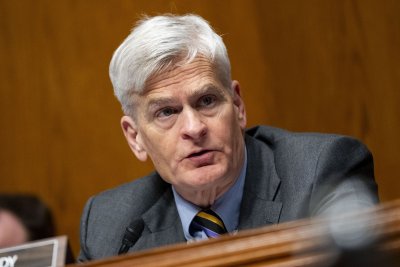
Sen. Bill Cassidy, R-La., speaks during a hearing with NIH Director Jay Bhattacharya at the Dirksen Senate Office Building near the U.S. Capitol in Washington, D.C., on February 3. He lost the Republican primary on Saturday. File Photo by Bonnie Cash/UPI | License Photo
May 17 (UPI) — Sen. Bill Cassidy, a 15-year veteran of the U.S. Congress, lost Louisiana’s Republican primary this weekend and appeared to take aim at President Donald Trump in his concession speech.
Cassidy, who has represented Louisiana in the U.S. Senate since 2015, said that though the election didn’t turn out the way he wanted, “you don’t pout, you don’t whine, you don’t claim the election was stolen.”
“Let me just set the record straight: Our country is not about one individual,” he said, NBC reported. “It is about the welfare of all Americans, and it is about our Constitution. And it is the welfare of my people and my state and my country and our Constitution, to which I am loyal.
“And if someone doesn’t understand that, and attempts to control others through using the levers of power, they are about serving themselves. They’re not about serving us. And that person is not qualified to be a leader.”
Saturday’s election results showed that U.S. Rep. Julia Letlow received the most votes in the Republican primary for the U.S. Senate seat, with 44.84% of the vote. Louisiana State Treasurer John Fleming narrowly took second place with 28.28% of the vote and Cassidy came in third with 24.8%. The results mean Letlow, who has Trump’s backing, will face Fleming in a runoff on June 27, NOLA.com reported.
Trump was less veiled in his attacks on Cassidy in a post on Truth Social on Saturday night. He described the senator’s loss as “unprecedented.”
“That’s what you get by voting to Impeach an innocent man, especially one who made it possible for Cassidy’s Senate win,” Trump wrote.
Cassidy was one of six Republicans in the Senate to vote in favor of proceeding with an impeachment trial for Trump. He ultimately voted to acquit Trump in the president’s second impeachment trial in 2021.
Cassidy represented Louisiana’s 6th Congressional District from 2009 to 2015, when he was first elected to the U.S. Senate.
Weekly insights and analysis on the latest developments in military technology, strategy, and foreign policy.
The Islamic Revolutionary Guard Corps (IRGC) Navy claims it has greatly expanded how it defines the Strait of Hormuz, which it has closed to most shipping since the start of the now-paused war. The move comes as that closure has wide-ranging impacts on the global economy and with U.S. President Donald Trump mulling new military actions against Tehran amid deadlocked peace negotiations and a tenuous ceasefire barely holding.
Under its new definition, the IRGC claimed a tenfold expansion “forming a complete crescent” of “about 20 to 30 miles to one now over 200 to 300 miles,” Political Deputy of IRGC Navy Mohammad Akbarzadeh said in a TV interview, according to the official Iranian FARS news agency.
“The Strait is no longer viewed as a narrow stretch around a handful of islands but instead has been greatly enlarged in scope and military significance,” Akbarzadeh noted. “In the past, the Strait of Hormuz was defined as a limited area around islands such as Hormuz and Hengam, but today this view has changed. The Strait is now defined as a strategic zone stretching from the city of Jask in the east to Siri Island in the west.”
🇮🇷 IRGC NAVY says the area it considers the ‘Strait of Hormuz’ has expanded further:
“In the past we defined it as a limited area around islands like Hormuz or Hengam. But now, it has significantly expanded – from the coasts of Jask and Siri to beyond the major islands.”
— Nader Itayim | نادر ایتیّم (@ncitayim) May 12, 2026
We asked the White House and CENTCOM for reactions to the IRGC Navy announcement. The White House dismissed it.
“During Operation Epic Fury, Iran was crushed militarily – their ballistic missiles are destroyed, their production facilities are dismantled, their navy is sunk, and their proxies are weakened. Now, they are being strangled economically by Operation Economic Fury and losing $500 million per day thanks to the United States military’s successful blockade of Iranian ports,” White House Deputy Press Secretary Anna Kelly told us. “The Iranian regime knows full well their current reality is not sustainable, and President Trump holds all the cards as negotiators work to make a deal.”
CENTCOM has not responded to our query.
The reported expansion is the second announced by Iran since the start of its conflict with the U.S. and Israel.
Both U.S. Central Command (CENTCOM) and Iran say the IRGC launched strikes against U.S. Navy warships and commercial vessels they were helping to protect during the short-lived Project Freedom on May 4. That was an effort, created by Trump, to help guide ships through the Strait that was paused after about 36 hours. CENTCOM forces responded with strikes on attacking ships. Days later, another exchange of fire took place, with CENTCOM saying it bombed Iranian targets after destroyers came under fire transiting the Strait to the Gulf of Oman.
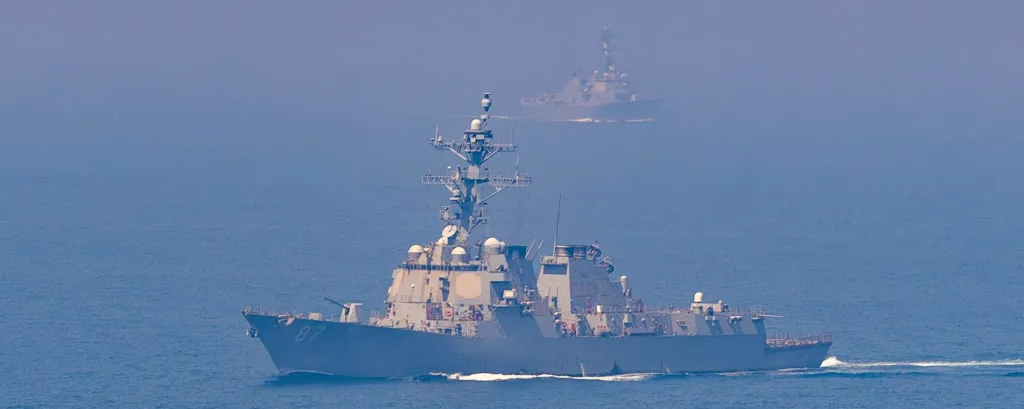
The Arleigh Burke class guided missile destroyer USS Mason was one of three destroyers, along with the USS Truxtun USS Rafael Peralta that CENTCOM said were attacked by Iran as they transited the Strait. (CENTCOM)
The IRGC said the new definition was created in response to yesterday’s statements by President Donald Trump repeating that Iran’s Navy has been destroyed by U.S. attacks during the now-paused Operation Epic Fury.
“This very design and implementation of the new plan shows that this force is present on the scene with authority,” Akbarzadeh proffered.
As we noted yesterday, frustrated by the pace of negotiations, Trump threatened new military action against Iran ranging from resuming Project Freedom to new airstrikes against Iranian targets and perhaps even a ground incursion to retrieve Iran’s highly enriched uranium.
NEW: US President Trump says he is considering renewing “Project Freedom,” but this time around the US guiding ships through the Strait of Hormuz would be just one small piece of a larger military operation. pic.twitter.com/woM2r5zE84
The closure of the Strait is having a direct impact in the U.S., spurring Trump to consider pausing the federal gas tax as a form of relief for American consumers as energy prices soar, The Washington Post noted. The move — which requires congressional approval to pass — would mark the latest in a string of government interventions to address fallout from the war.
“Since the war began in late February, the price of a barrel of Brent crude oil, an international benchmark, has skyrocketed from about $70 to more than $107. U.S. gas prices — now an average of $4.50 a gallon — have reached levels not seen since 2022 and contributed to Trump’s falling approval ratings ahead of the November midterms,” the Post stated.
President Trump said he would reduce the 18-cent federal gas tax for a yet to be determined period as U.S. fuel prices shoot higher due to the Iran war. pic.twitter.com/gvByq7ZsHs
The impacts of the closure are even greater in Asia, which relies more heavily on oil that normally transits the Strait. For instance, Indian Prime Minister Narendra Modi asked his nation’s 1.4 billion people to spend less on fuel, fertilizer, and travel, The New York Times reported.
Modi “made these sweeping recommendations in a national address on Sunday after securing a big win for his party in recent state elections,” the newspaper added. “With that victory in hand, he no longer has to worry that voters might punish his candidates for higher prices of fuel, food and transport, which are tightly controlled by India’s government. Instead of subsidizing the losses and running huge budget deficits, India’s leader appears emboldened to ask its people to bear the burden.”
The situation is so dire that the International Energy Agency has recommended a range of measures for governments and businesses to reduce demand and mitigate the “oil shock,” CTech reported.
“Among the proposals: encouraging remote work and reducing commuting, which accounts for between 5% and 30% of vehicle use,” according to the publication. “Road transport alone represents about 45% of global oil demand. According to the agency, if the average employee worked from home three days a week, personal oil consumption could fall by as much as 20%.”
Several countries have already adopted such policies, CTech noted.
“Indonesia now requires public-sector employees to work remotely on Fridays, while Myanmar mandates remote work on Wednesdays. Pakistan and the Philippines have introduced four-day work weeks for government employees, while Sri Lanka, Peru, and Bangladesh have shortened school weeks or expanded distance learning.”
Meanwhile, the longer the Strait remains closed, the greater the impact on the global economy. Though Trump continues to insist his bottom line on ending the conflict is ensuring that Iran never gets a nuclear weapon, the Strait of Hormuz remains the most urgent flashpoint.
UPDATE: 3:50 PM EDT-
The U.S. military is considering officially re-naming the war with Iran “Operation Sledgehammer” if the current ceasefire collapses and President Donald Trump decides to re-start major combat operations, NBC News reported, citing two U.S. officials.
“The discussions about possibly replacing ‘Operation Epic Fury’ with ‘Operation Sledgehammer’ underscore how seriously the administration is considering resuming the war started on Feb. 28, and could allow Trump to argue that it restarts the 60-day clock that requires congressional authorization for war,” the network added.
Saudi Arabia “launched numerous, unpublicized strikes on Iran in retaliation for attacks carried out in the kingdom during the Middle East war,” Reuters reported, citing two Western officials briefed on the matter and two Iranian officials.
“The Saudi attacks, not previously reported, mark the first time that the kingdom is known to have directly carried out military action on Iranian soil and show it is becoming much bolder in defending itself against its main regional rival,” the outlet added.
The news about Saudi Arabian strikes on Iran comes a day after it was reported that the UAE attacked Iran as well.
Reuters reports that in addition to UAE, #SaudiArabia launched numerous, unpublicized strikes on #Iran in retaliation for attacks carried out in the kingdom during the Middle East war, two Western officials briefed on the matter and two Iranian officials said.…
During his testimony at the Senate Appropriations Committee, Joint Chiefs of Staff Chairman Gen. Dan Caine was asked how – despite the vast investment in national defense and the U.S. military – Iran can still close the Strait.
“It’s complicated,” Caine responded.
DURBIN: Could you explain to the American people why with the vast investment we’ve made in national defense and military, how Iran after they are attacked by us is still capable of stopping the traffic in the Strait of Hormuz?
Speaking to reporters before leaving for China, Trump was queried by reporters about the future of negotiations with Iran.
“We’re going to see what happens,” the president responded. “We’re only making a good deal… I believe that one way or the other, it’s going to be very good for the American people—and I think actually, very good for the Iranian people.”
.@POTUS on Iran negotiations: “We’re going to see what happens. We’re only making a good deal… I believe that one way or the other, it’s going to be very good for the American people—and I think actually, very good for the Iranian people.” pic.twitter.com/t6y8bCjpk5
— Rapid Response 47 (@RapidResponse47) May 12, 2026
Trump gave some insights into his message to his Chinese counterpart, President Xi.
“I think number one, we’re going to have a long talk about it,” the U.S. leader posited. “I think he’s been relatively good, to be honest with you. Look at the blockade. No problem. They get a lot of their oil from that area. We’ve had no problem. And he’s been a friend of mine. He’s been somebody that we get along with. And I think you’re going to see that good things are going to happen. This is going to be a very exciting trip. A lot of good things are going to happen.”
Asked the extent the average American’s finances are motivating him to make a deal with Iran, Trump dismissed the notion.
“The only thing that matters when I’m talking about Iran, they can’t have a nuclear weapon. I don’t think about Americans’ financial situation. I don’t think about anybody. I think about one thing, we cannot let Iran have a nuclear weapon. That’s all.”
Trump on Iran War:
Reporter: What extent are Americans’ financial situation motivating you to make a deal?
Trump: Not even a little bit. I don’t think about Americans’ financial situation pic.twitter.com/bimWMDg30Z
— Rohitash Mahur ( Lodhi ) (@MahurRohitash) May 12, 2026
UPDATES
The war has cost U.S. taxpayers $29 billion so far, Jay Hurst, Pentagon comptroller, told lawmakers this morning. That’s up from the $25 billion estimate he provided Congress on April 30. These estimates mostly take into account the amount of munitions the U.S. has expended during Epic Fury. They do not include the cost to repair damage to U.S. military installations across the Middle East, Hurst again noted today.
That means the price tag for Epic Fury will be far higher than what Hurst told Congress.
In addition to 14 troops who have been killed so far, several media reports have pointed out that the damage to U.S. assets has been far more extensive than officially reported. Last week, for instance, a Washington Post analysis “found 217 structures and 11 pieces of equipment that were damaged or destroyed at 15 U.S. military sites in the region.”
Hurst previously said that DOD doesn’t have an estimate yet for repair costs to the extensive damage to US bases overseas, and has appeared to leave the door open to force posture changes.
Today he said: “We don’t know what our future posture is going to be, we don’t know how… https://t.co/9ATXDmn2Se
A new attack on Iran could spur the country to pursue weapons-grade enrichment of its uranium, an official in Tehran threatened on Tuesday.
“One of Iran’s options in the event of another attack could be 90% enrichment,” Ebrahim Rezaei, a member of the Iranian parliament and the spokesperson for the body’s National Security and Foreign Policy Commission, stated on X. “We will review it in the parliament.”
The 60% enrichment level is well above what is required for civilian power generation (typically between 3% and 5%), but also below the level for it to be considered highly enriched or weapons-grade (90%). At the same time, it is understood to be a relatively short step, technically speaking, to get uranium from 60% to 90% purity. As a standard metric, the IAEA says that 92.5 pounds of 60% uranium is sufficient for further enrichment into enough weapons-grade material for one nuclear bomb.
However, it is one thing to threaten to boost enrichment and another thing to actually do it. Sites that would have traditionally been used to do this are now largely destroyed. What’s left of them is heavily surveilled by the U.S. and any strong indication that such a move was taking place would likely result in a new wave of strikes from the U.S. and especially Israel.
یکی از گزینههای ایران در صورت حمله مجدد میتواند غنیسازی ۹۰ درصد باشد. در مجلس بررسی میکنیم.
“Can I say a word of appreciation, deep appreciation and admiration for the United Arab Emirates?” Huckabee said during an event in Tel Aviv on Tuesday. “I think that the UAE is an example. They were the first Abraham Accord member, but look at the benefits that they have had as a result. Israel just sent them Iron Dome batteries and personnel to help operate them. How come? Because there’s an extraordinary relationship between the UAE and Israel.”
Huckabee added that in the days after the Oct. 7, 2023 Hamas surprise attack on Israel, the UAE was the only nation maintaining flights to Israel while U.S. and European carriers stopped.
🚨 WATCH: US Ambassador to Israel Mike Huckabee officially confirms: Israel sent the United Arab Emirates an Iron Dome system and a team to operate it. This happened because there are exceptional relations between Israel and the United Arab Emirates, based on the Abraham Accords. pic.twitter.com/BgCkESt4Yl
Iran’s ambassador to the United Kingdom and permanent representative to the International Maritime Organization (IMO), Ali Mousavi, issued a formal complaint about the U.S. interdictions of Iranian oil tankers M/T Tifani and Majestic X, Iran’s official IRNA news outlet reported.
“In a letter to IMO chief Arsenio Dominguez on Monday, Mousavi referred to the dire conditions of the crew members of the two seized tankers, warning that Washington is responsible for the lives and health of the sailors caught in the situation,” the outlet claimed.
In the letter, “Mousavi stated that about 60 crew members of the two tankers, including 20 Iranian nationals, are being held on a tugboat in unsafe and unhealthy conditions, reportedly without adequate food and water to those on board.”
Mousavi called the situation “intolerable and a clear violation of the relevant rules and regulations of the IMO, stressing that any unilateral US claim has no legal justification for exposing civilian seafarers to starvation, deprivation and danger on the high seas,” IRNA noted. “He described the US behavior as illegal, reckless, inhumane and completely inconsistent with the basic standards governing the treatment of persons employed in commercial shipping.”
TWZ cannot independently verify that claim. CENTCOM declined comment.
In the wake of French Tiger attack helicopters shooting down Iranian drones attacking the UAE in March, France is now considering embarking these aircraft aboard frigates for any potential Strait of Hormuz security effort.
“The French Army’s Tiger helicopter was tested last March in the United Arab Emirates; equipped with its 30mm cannon and two pods carrying 22 rockets, it proved to be truly effective—and a powerful deterrent—against Iranian drones,” French Navy Admiral Thibault de Possesse, commander of the Charles de Gaulle carrier strike group now in the Red Sea, told the RFI media outlet.
“Recently—thanks to the efforts of the DGA [Directorate General of Armaments], as well as those of the Navy and the Army—we have certified the deployment of Tiger helicopters aboard French Navy frigates,” de Possesse explained. “Consequently, we are now capable of launching and recovering these combat helicopters—which are armed and specifically adapted for drone interception—directly from Navy frigates. They have already demonstrated their effectiveness against this type of threat in the United Arab Emirates.”
🇫🇷 NEW: France is preparing to deploy Tiger attack helicopters aboard naval frigates near the Strait of Hormuz after the aircraft proved highly effective against Iranian drones during tests in the UAE.
The Israeli Air Force intercepted a drone “launched from the east,” for the first time since the ceasefire with Iran took effect, the IDF said.
It remains unclear whether the drone was launched from Yemen or Iraq, as launches from both countries have been described in the past by the IDF as “from the east,” noted I24 reporter Ariel Oseran.
The Israeli Air Force intercepted a drone “launched from the east,” for the first time since the ceasefire with Iran took effect, the IDF said.
It remains unclear whether the drone was launched from Yemen or Iraq, as launches from both countries have been described in the past…
— Ariel Oseran أريئل أوسيران (@ariel_oseran) May 12, 2026
Soar Atlas has released new high-resolution imagery it claims shows a clear view of a clandestine airstrip Israel built in western Iraq. The existence of the airstrip was first reported by The Wall Street Journal, which stated it was set up to aid Israel’s air war on Iran in the now-paused war. The facility housed special forces and served as a logistical hub for the Israeli air force, the newspaper noted. Built with the knowledge of the U.S. just before the start of the war, it also included search-and-rescue teams positioned to assist any downed Israeli pilots.
The Soar Atlas images were taken March 8 and appear to show the airstrip constructed on a dry lake bed near al-Nukhayb in Iraq’s Anbar Desert during the opening days of the Iran war.
“The improvised runway, measuring approximately 850 meters in length, was reportedly built overnight between March 1–2, 2026,” according to Soar Atlas.
As we noted yesterday, the Iraqi military said the facility no longer exists and that investigations are underway to determine how it came to be built. We have also reported that Israel likely created similar facilities in Iraq during the 12-Day War last year and TWZ has noted that it would likely happen again in the future.
🚨Soar Atlas has made available new high-res imagery from Mar 8 to explore, with a clearer view of the secret Israeli Airstrip in Western Iraq.
CALL Her Daddy host Alex Cooper is pregnant and expecting her first child.
The podcast host revealed that she and husband Matt Kaplan were about to become parents in a new social media upload.
Sign up for the Showbiz newsletter
Thank you!
Call Her Daddy star Alex is pregnant and expecting her first babyCredit: instagram/alexandracooperIt will be the first child for the pairCredit: Getty
Alex flashed her bare baby bump as she sweetly looked into Matt’s eyes in the new snaps.
She could also be seen laughing as she gently placed a hand underneath her bump.
Alex added the caption: “Our family.”
She then took to her stories to re-post the announcement along with the additional caption: “Daddy Gang, there is something I’ve been waiting to share with you…”
Alex has become famous thanks to her runaway podcastCredit: Call Her Daddy on SpotifyThe star was met with plenty of congratulations following the newsCredit: Instagram/callherdaddy
In another snap, Alex could be seen sat on Matt’s lap as she showed off her baby bump once more.
Her fans and celebrity pals were quick to react with congratulations over the baby announcement.
One person said: “I’m screaming!!!!!! I’m so happy for you guys!!!!!!!!”
Love IslandUSA star Huda Mustafa added: “IM GONNA CRY OMGGGG IM SO HAPPY FOR UUUUU!!!!!”
Another penned: “Call her MOMMY!”
With a fourth then stating: “Missed opportunity for the caption to be call him daddy.”
Alex has become the leading female talent in the podcast space thanks to her successful show.
Alex Saab was once presented by the Venezuelan state as a symbol of national sovereignty. Today, the same state refers to him simply as “the Colombian citizen Alex Naim Saab Morán.”
That contradiction is not a side detail in the Saab saga. It is the story.
For years, chavismo invested extraordinary political and symbolic capital into transforming Saab from a relatively obscure businessman into something much larger: diplomat, political prisoner, sanctions-era patriot, and eventually minister of commerce. When he was detained in Cape Verde in 2020 on U.S. money laundering charges, the Maduro government reacted as though a senior state official had been kidnapped by a hostile empire. State media launched nonstop campaigns demanding his release. Venezuelan diplomats lobbied internationally on his behalf. Officials presented copies of his Venezuelan passport in foreign courts. Delcy Rodríguez herself described him as an innocent Venezuelan diplomat persecuted by Washington.
The regime did not merely defend Saab. It fused his fate with the idea of Venezuelan sovereignty itself.
And yet today, after reports that Saab was quietly detained inside Venezuela for months before being surrendered to the United States, the same state apparatus appears eager to emphasize something entirely different: his Colombian nationality.
The legal logic is obvious enough. Venezuelan law generally prohibits the extradition of Venezuelan nationals. Saab’s status as a naturalized citizen may have provided the government with the legal flexibility needed to facilitate his transfer while preserving a veneer of constitutional procedure.
But politically, the reversal is extraordinary.
Until recently, Saab was not treated as a foreign intermediary operating on behalf of Venezuela. He was treated as Venezuela. Attacks on Saab were framed as attacks on the republic itself. His return from Cape Verde during the Biden-era prisoner exchange was celebrated as a geopolitical victory. In January, Delcy Rodríguez publicly thanked him for his “dedication and commitment to the homeland” while announcing he would assume “new responsibilities.”
Only months later, he became deportable.
The Saab affair exposes how late chavismo governed through mutable political realities rather than stable institutional principles.
What changed was not merely the regime’s opinion of Saab. The operative meaning of Saab himself changed according to political necessity. He was successively businessman, envoy, diplomat, patriot, minister, revolutionary symbol, and now effectively a legally manageable Colombian citizen. The categories surrounding him (citizenship, sovereignty, legality, loyalty) were treated less as fixed institutional realities than as flexible political instruments.
This is what gives the entire saga its distinctly Orwellian quality.
The issue is not simply propaganda. All political systems engage in propaganda. The issue is the degree to which political reality itself became fluid. Yesterday’s indispensable patriot becomes today’s silent liability. Yesterday’s sovereign diplomat becomes today’s extraditable foreign national. The contradiction is not resolved so much as administratively absorbed.
For Venezuelans, this dynamic has become painfully familiar. Years of institutional improvisation, overlapping authorities, constitutional contortions, and contradictory official narratives have gradually normalized incoherence as a governing method. People learn not to ask whether political narratives are internally consistent, but whether they remain operationally useful.
The Saab saga condenses that evolution into a single character arc.
And yet this is not merely a story about narrative manipulation. It is also a story about how chavismo itself changed under the pressure of sanctions, isolation, and survival.
During the years of maximum international pressure, Saab’s networks reportedly became central to the regime’s economic adaptation. Food imports, opaque oil transactions, offshore procurement systems, sanctions workarounds, and parallel financial structures increasingly blurred the distinction between state policy and survival improvisation. Saab occupied a hybrid role inside that world: part businessman, part diplomat, part financial operator, part sovereign representative.
That ambiguity was not accidental. It reflected the logic of a state learning to survive siege conditions.
But survival systems often produce figures who become simultaneously indispensable and dangerous. The very people who help preserve a regime during periods of extreme pressure can later become liabilities once strategic priorities shift. As Venezuela moved from total isolation toward tentative normalization, figures associated with the sanctions-era architecture increasingly carried diplomatic, financial, and political costs.
The fall of Tareck El Aissami and the PDVSA crypto scandal had already hinted at this transition. Entire internal networks once tied to the regime’s survival mechanisms suddenly became objects of public investigation and selective purge. Saab’s extradition pushes that logic much further. Unlike the internal anti-corruption campaigns of previous years, this was not simply the revolution disciplining itself. It was the state externally relinquishing one of its own.
And perhaps that is why the Saab affair feels so psychologically significant inside chavismo itself.
For years, the movement functioned through implicit assumptions about loyalty and protection. Certain figures appeared untouchable because they embodied too much of the system’s operational history and symbolic legitimacy. Saab seemed to belong to that category. His sudden transformation from protected patriot to expendable liability suggests that the category itself may be disappearing.
That does not necessarily mean the regime is collapsing. Authoritarian systems can survive long after ideological coherence erodes. But it does suggest a deeper transformation underway: the gradual evolution of chavismo from revolutionary movement into survival-oriented governing apparatus.
Revolutionary systems rely on myths that are supposed to remain stable over time. Survival systems prioritize flexibility instead.
The Saab affair reveals what happens when that flexibility extends not only to policy, but to reality itself.
Israeli air strikes across southern Lebanon have caused destruction and casualties, within a day of a ceasefire extension being agreed upon by the two countries for another 45 days.
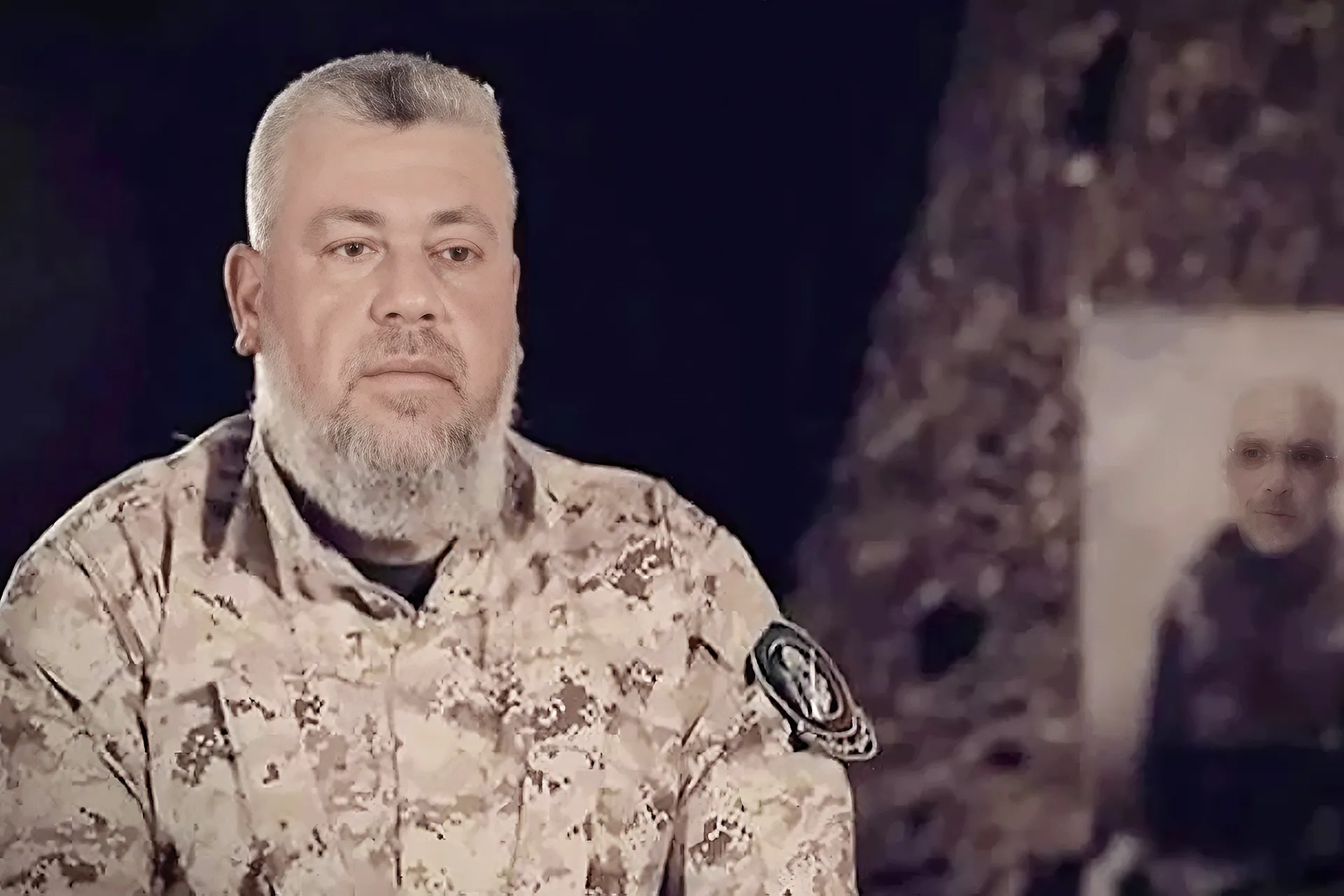
The killing of Izz al-Din al-Haddad, the recently appointed head of Qassam Brigades, the armed wing of Hamas, has dealt a symbolic blow to the Palestinian group in Gaza, but the impact on its military operations is far from certain.
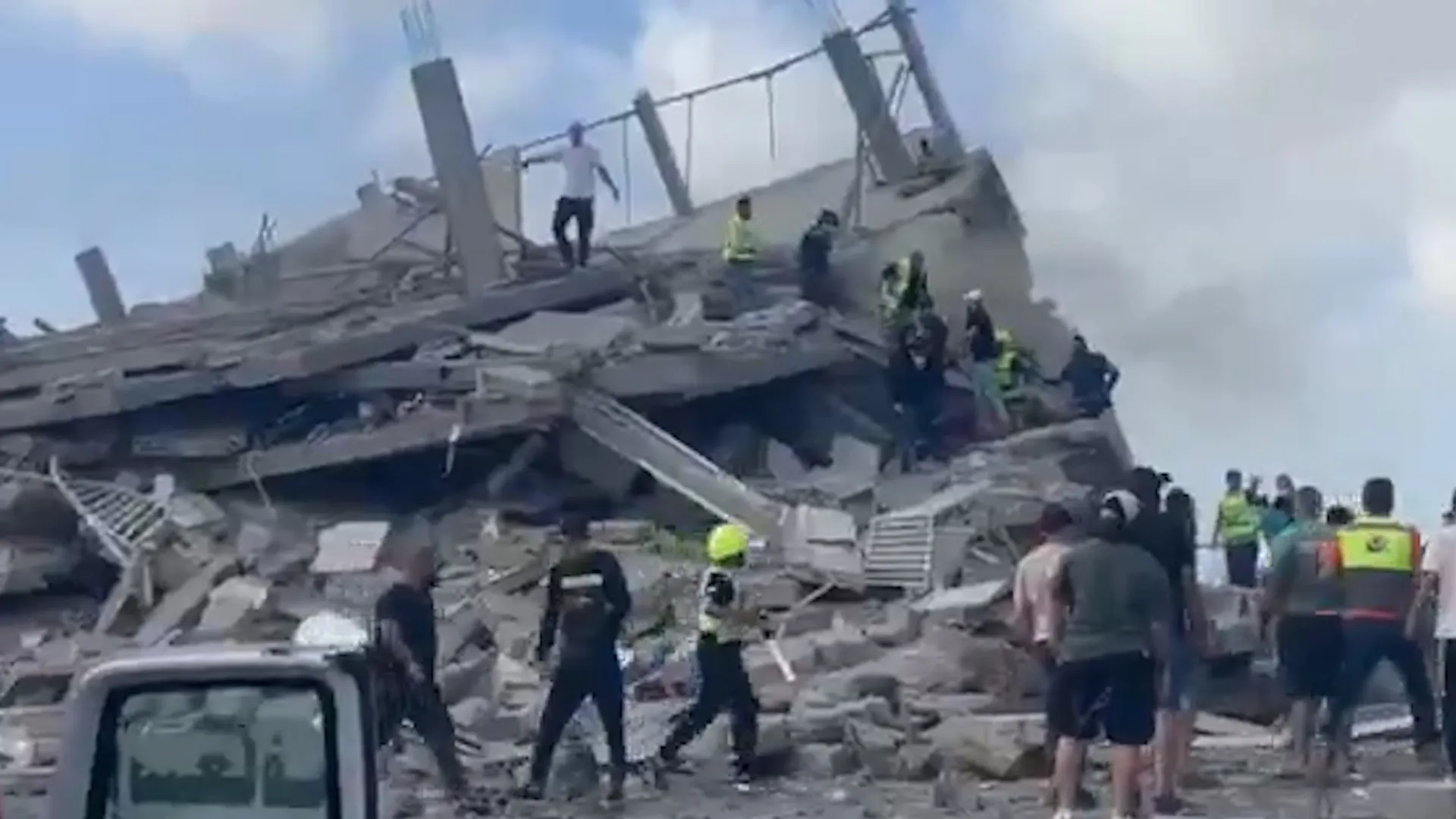
Al-Haddad was killed on Friday in a sophisticated dual-strike on a residential apartment in Gaza City’s Remal neighbourhood and a vehicle attempting to flee the scene. The delivery of heavy munitions into a densely populated area, packed with displaced civilians, killed seven other Palestinians, including women and children, and wounded 50 people.
Yet, despite Israeli claims that the killing will cripple the group’s operational capacity, analysts argue that its decentralised nature is built to absorb such shocks. As the region watches to see how the resistance faction will respond, al-Haddad’s death raises critical questions about the future of the fragile “ceasefire” and who remains to lead the Qassam Brigades.
Operational impact: Will the Qassam Brigades collapse?
The killings of Qassam Brigades commanders, including Mohammed Deif, Marwan Issa, and Yahya Sinwar’s brother Mohammed, left al-Haddad as the key military figure managing the fight against Israel.
Saeed Ziad, a Palestinian political analyst, told Al Jazeera that while the loss is a “massive symbolic and moral blow” to Palestinians, the immediate operational impact on Hamas’s armed wing will be limited.
“The Qassam Brigades are not built on a hierarchical, sequential structure, but a parallel one,” Ziad explained. “Over the past two decades, Hamas has transitioned into a decentralised guerrilla force. Units operate as isolated, self-sufficient groups with their own logistical supply lines and combat doctrines.”
“If a brigade or battalion loses its commander, the group already knows its mission and has the resources to execute it independently,” he said. Reorganising the Qassam Brigades’ central command to cope with the loss will likely take mere days, not months.
Furthermore, al-Haddad had successfully utilised the October ceasefire with Israel to rebuild the group’s infrastructure. “Over the past 200 days, he reconstructed the resistance’s capabilities – its tunnels, weaponry and combat formations – making it capable of defending itself once again,” Ziad noted.
Who is left in the Hamas military leadership?
Israeli officials have boasted that they are close to dismantling Hamas’s central command, claiming that only two members of the military council before the pre-October 2023 attacks on Israel – Mohammed Awad and Imad Aqel – are alive.
However, analysts point out that Hamas’s military wing, which boasted roughly 50,000 fighters before the war, possesses a deep bench of cadres and a strict protocol for leadership succession that enables it to quickly recover when commanders are killed.
“The resistance typically appoints a first, second, and third deputy for every active commander, from the general commander down to the platoon leaders,” Ziad said. “Filling these voids happens rapidly.”
Hamas immediately confirmed Haddad’s death, with spokesperson Hazem Qassem officially mourning him as the “General Commander” of the Qassam Brigades. He stressed that despite his death being a “massive loss”, the group’s “long journey of resistance continues”.
The ‘Ghost’ of the Qassam Brigades
Born in the early 1970s, al-Haddad joined Hamas upon its inception in 1987. He rose through the ranks from an infantry soldier to commander of the group’s Gaza City Brigade, overseeing six battalions – each consisting of 1,000 fighters plus 4,000 support personnel.
He played a foundational role in establishing al-Majd – Hamas’s internal security apparatus designed to track down Israeli intelligence collaborators. But it was his ability to survive multiple assassination attempts – including bombings of his home in 2009, 2012, 2021, and three separate times during the current genocidal war on Gaza – that earned him the moniker “Ghost”.
Al-Haddad left an indelible strategic mark on the movement as a primary architect of the October 7, 2023 attacks. He personally oversaw the breach of the eastern fence, directed elite units that stormed the Re’im military base and the Fajja outpost. According to intelligence reports, it was al-Haddad who handed localised commanders a paper hours before the attack detailing the operation and ordering the capture of Israeli soldiers.
In January 2025, an Israeli air raid killed his son, Suhaib, but al-Haddad survived and continued to command operations and oversee the detention of Israeli captives until a deal was reached.
A fragile ‘ceasefire’ on the brink
Shortly after Friday’s strike, Israeli Prime Minister Benjamin Netanyahu and Defence Minister Israel Katz issued a rare joint statement, boasting that the killing was carried out under their direct orders.
Mohannad Mustafa, an analyst of Israeli affairs, said al-Haddad’s killing shows that Israel is attempting to “normalise” blatant violations of the “ceasefire” agreement, while the Netanyahu-Katz statement was an appeal to Washington to allow it to continue the killing campaign. At least 871 Palestinians have been killed since the “ceasefire” was announced on October 10, 2025, most of them civilians.
“Netanyahu is pitching this to the US administration as a necessary step to ‘disarm Hamas’ under the Trump plan,” Mustafa told Al Jazeera. “But the reality is that Israel never wanted this ceasefire. It was imposed on them.”
By systematically killing civilians, police, and military figures without offering immediate justifications for “ceasefire” breaches, Israel aims to provoke a response. “The ultimate goal is to force Hamas to retaliate, leading to the collapse of the agreement and giving Israel the green light to launch ‘Gideon 2’ – a military operation to occupy the entirety of the Gaza Strip,” Mustafa added.
With Netanyahu lacking a definitive strategic victory, such as the total surrender of Hamas, Ziad said the Israeli leadership is now leaning heavily on a “philosophy of assassinations” to project a “picture of victory” to its domestic base.
But history has shown that killings of leading military figures, such as al-Haddad, rarely have a significant long-term impact on armed Palestinian movements like Hamas.
“For the fighters and the society in Gaza, these killings create a blood covenant,” Ziad said. “It hardens their resolve. Retreating after the loss of leaders like Deif, Sinwar, or Haddad is viewed as a betrayal of that blood.”
Will Ferrell has done the Will Ferrell thing for so long — playing embarrassingly self-absorbed doofuses, both fictional and based on real people — that it’s easy to forget that when it counts, he can still serve as the glue on “Saturday Night Live.”
For his sixth time hosting the show since leaving the cast in 2002, Ferrell had plenty of those doofuses to portray, including a “Nudeman” dad whose underwear are exposed in the rear when he meets his daughter’s boyfriend. But in sketch after sketch on the show, he showed his usual 100% commitment to every character, even when he was playing himself in the monologue doing a bit about an identity mix-up with Red Hot Chili Peppers drummer Chad Smith. (Smith stuck around for the whole show, sitting in with the “SNL” band and playing drums for Paul McCartney.)
Ferrell was an ideal closer for Season 51, which has largely been about developing relatively new talent in the cast, including rising stars Ashley Padilla, Jeremy Culhane and Marcello Hernández. Ferrell gelled with each of them and everybody else, doing the Will Ferrell thing, which still works tremendously well after all these years.
Musical guest Paul McCartney appeared in Ferrell’s monologue and in the mechanic sketch, and performed a new song, “Days We Left Behind,” as well as “Band on the Run” and “Coming Up” at the end of the show while the credits were shown.
After an absence of a few weeks, President Trump (James Austin Johnson) returned, sleepy from his trip to China. After a non-apology for not bringing Vice President J.D. Vance (Culhane) with him, Trump fell asleep on a gold bar from Switzerland before being visited by Epstein (Ferrell), who makes a series of jokes and insinuations about his association with Trump. When Trump bemoans his low approval rating in the 30s, Epstein responds, “The 30s? Gross, call me when it hits 17.” But Epstein, who claims Hell is “really, really hot” and includes Joseph Stalin and John Wayne Gacy, is there to show Trump the future, one in which former Secretary of Homeland Security Kristi Noem (Padilla) is selling vacuum cleaners on the Home Shopping Network and Secretary of Defense Pete Hegseth (Colin Jost) and FBI Director Kash Patel (a returning Aziz Ansari) are co-hosting a bro podcast while sharing a giant beer bong. Trump believes the podcast is a signal that by then, the war in Iran will be over. “We came in second,” Epstein assures him. The two then launched into a version of “Just the Two of Us” before almost kissing ahead of launching into “Live from New York… It’s ‘Saturday Night!’”
Even eagle-eyed viewers might have needed a full minute or so to realize that the person on stage delivering the monologue was not actually Will Ferrell but Red Hot Chili Peppers drummer Chad Smith, who has been doing an extended gag for more than a decade about their uncanny resemblance. Ferrell followed, wearing the same gray suit, claiming, “He pushed me down backstage. And I fell hard. Lorne (Michaels) had to give me mouth to mouth.” Ferrell tried to do a hard reset of the monologue but couldn’t get the vibe back. He turned to the audience for questions, but only found McCartney there, who still couldn’t tell the difference between the host and the drummer. Ferrell listed many of the songs that McCartney has written (which weren’t performed on the show this time out), but pointed out that there are a few great songs he didn’t write, including “Timber” featuring Pitbull.
Best sketch of the night: Did you at least check the sprog box on your Rav4?
In a piece that calls itself, “What It Feels Like Talking to a Mechanic,” Ferrell plays an auto expert telling a clueless couple (Day and Padilla) that their vehicle needs a lot of work. But he uses completely foreign terms including “dong rod gasket” and a “camber” that’s out of whack and rotting to describe what’s wrong. Another specialist (Hernández) arrives, who describes the car’s ailments in funny noises and partly in Spanish. “You need a new trans person,” he declares. He also expects them to return every six days and come to his private party. A third mechanic (McCartney) found the steering wheel is on the wrong side and that their “tipsy wispy” is all “dangly goodly.” The absurdity level keeps rising, but it will feel familiar to anyone who’s ever felt like their mechanic is speaking in an entirely different language. The only false step in the sketch is the ending, which goes on on a cheap joke.
Also good: That white flag he was carrying around should have been a tip-off
It’s been a bit shocking how good some of the pre-filmed pieces this season have looked, including this one, a “Lord of the Rings” Midnight Matinee sketch called “Bobbin’s Sacrifice.” It features, with quite good special effects and costumes, a full cast of orcs, elves and dwarves during a castle siege, as well as Ferrell as a little Hobbit-looking halfling named Bobbin who bravely volunteers to destroy a bridge that separates the heroes from the monsters. However, once outside the castle gates, Bobbin proudly declares in song that he’s switching sides. And not just switching, but offering the orcs blueprints of the castle and giving them magic items he stole from his friends. Things don’t end so well for Bobbin, but at least he goes out memorably and with a song in his heart.
‘Weekend Update’ winner: How does one apply to be a Blast Boy?
“Update” traditionally does a joke-off between co-hosts Jost and Michael Che in which each writes jokes the other has to read. This edition wasn’t too surprising: Jost was made to spew racist jokes about black vampires (in reference to “Sinners”) and using his Staten Island Ferry to ship Black people “back to the motherland.” Che was made to make light of molestation claims against Michael Jackson. The segment ended up being one of the weaker joke-offs, ending with the threat of Jost getting his hair cut off by a barber on live television (it didn’t happen). Surprisingly, the joke-off was not as funny as Culhane’s return as Mr. On Blast, a guy with takes that are far from hot. Example: “AI? More like P.U.” “Metaverse? Why don’t you go read a Bible verse?” Mr. On Blast punctuates his weak jokes with very entertaining dance moves punctuated with sound effects. This time out, the character deployed a new catch phrase, “Devout!” in reference to being both Christian and Jewish, and he brought out bearded backup dancers called Blast Boys. Culhane was on point and is a lock to return next season for more fun like this.
OFF the coast of Northumberland is a remote, tidal island that you’ll have to time right to visit – as it is cut off from the mainland twice a day.
Called Lindisfarne, or by its other name, Holy Island, it might be familiar to fans of horror movies.
Sign up for the Travel newsletter
Thank you!
The tidal island of Lindisfarne is cut off from the mainland twice a dayCredit: GettyThe island was used a backdrop for the movie 28 Years LaterCredit: Shutterstock Editorial
Follow The Sun’s award-winning travel team on Instagram and Tiktok for top holiday tips and inspiration @thesuntravel.
The island off the coast of Northumberland was used to film post-apocalyptic film, 28 Years Later, which came out just last year.
The 2025 movie was about a group of survivors of the rage virus living on a small island starring actors like Jodie Comer, Aaron Taylor-Johnson and Ralph Fiennes.
Filming spots included the tidal causeway and Lindisfarne Castle which attracts thousands of visitors every year.
The National Trust took over the property in 1944 and it has been open to the public ever since.
Inside the castle, visitors can explore the different rooms, including a dining room, a kitchen, and bedrooms, as well as the upper battery, which has panoramic sea views.
The island has been the backdrop for ITV’s Vera tooCredit: Alamy
In addition to exploring the interior of the castle, there are plenty of other things to see.
Entry to the castle is £14.30 for adults and £7.20 for children (between 5-17).
The island is also referred to as Holy Island, and it got its nickname after becoming the centre of Anglo-Saxon Christianity in the 7th century.
It was home to saints and it’s considered a very religious place.
But for those who want to move away from its history, there’s plenty to do on the island, like visit its coffee roastery, Pilgrims Coffee.
The business first set up in a yurt, but now even has a cosy cafe on the island too serving up caffeine hits and homemade cakes.
St Aidan’s Winery is where locals can try locally made Lindisfarne MeadCredit: Alamy
Another spot to visit is St Aidan’s Winery, where Lindisfarne Mead is made, and visitors to the island can pop in for tastings and browse the shop that sells its wine and beer.
The island has around 160 permanent residents, but it does have places for visitors to stay from hotels to holiday lets.
For seal spotting, head to the harbour or the sand flats around Lindisfarne National Nature Reserve where there are thousands of grey seals especially between February and October.
To get to Lindisfarne, you have to cross the causeway from the mainland which is only accessible at low tide from the town of Beal.
While the tides can be predicted, holidaymakers will need to check the crossings on the day on the Northumberland County Council website.
ANIMATION movie favourites Wallace and Gromit needn’t have hopped on that rocket to the moon in search of cheese.
The chocolate-box Somerset village of Cheddar is closer – and no prizes for guessing what the star of every quaint cafe’s menu might be.
Sign up for the Travel newsletter
Thank you!
Somerset’s ancient and majestic Cheddar GorgeCredit: SuppliedWallace and Gromit art in the gorgeCredit: Supplied
In fact, Cheddar cheeese can be enjoyed in any and every way imaginable here – piled into a sandwich with chutney, blended into a savoury scone . . . or even in ice-cream form.
These cafes sit alongside cheesy souvenir shops, clothing boutiques and attractions all dedicated to the well-known dairy delight.
The duo are at Gough’s Cave in Cheddar Gorge until May 31, starring in a new illuminated trail that celebrates 50 years of their creators, animation firm Aardman.
Dotted throughout the ancient, cavernous structure are sculptures of Wallace and Gromit, and franchise characters Feathers McGraw and Shaun the Sheep, for kids to gawp at, while adults can uncover facts about the gorge itself.
It’s pretty much the only local attraction that’s not dedicated solely to cheese, although if you keep your eyes peeled, you’ll still spot some of the yellow stuff (more on that below).
Labelled as a Site of Special Scientific Interest, Gough’s Cave began forming over half a million years ago and shows how incredible nature can be.
Most of the stalagmites have been developing for hundreds of thousands of years and there are areas of the cave that resemble the remnants of a giant candle with a waxy exterior that has melted into a puddle on the rocky floor.
Pick up some of the local stuff from the Cheddar Gorge Cheese Co, including the cave-aged Cheddar – rich and complex in flavourCredit: SuppliedTuck into a hearty ploughman’s platter, with big hunks of white bread accompanied by dollops of piccalilli and generous wedges of Cheddar at Cafe GorgeCredit: Supplied
As I wandered the damp tunnels, my audio guide kicked in, like my personal geographical expert, highlighting how the minerals have transformed the colour of calcites into shades of rusty red and yellow over many years.
About a third of the way in, hidden in a cool, damp area, you’ll find huge wheels of cave cheese, placed carefully on shelving units.
Cave-ageing is one of the traditional methods for maturing cheese, in cool and dark conditions.
Although much of the UK’s Cheddar production sadly no longer occurs in these parts, you can still pick up some local stuff from the Cheddar Gorge Cheese Co, including the cave-aged Cheddar – rich and complex in flavour.
Anyone who buys a ticket to the caves can climb Jacob’s ladder, an historic set of 274 steps that leads to the peak of the gorge, with a lookout tower offering spectacular views.
The village itself is also a great place for a stroll.
Or meander past the shops, following the river and visit quaint cafes featuring walls decorated with flower-filled pots.
Cafe Gorge is one of the best spots for lunch. Its ploughman’s platters are properly hearty, with big hunks of white bread accompanied by dollops of piccalilli and generous wedges of Cheddar.
If you’re a wildlife lover, keep your eyes peeled for furry mountain goats grazing on the craggy hillside.
The whole experience is rather cheesy, but that’s what makes it so Gouda!
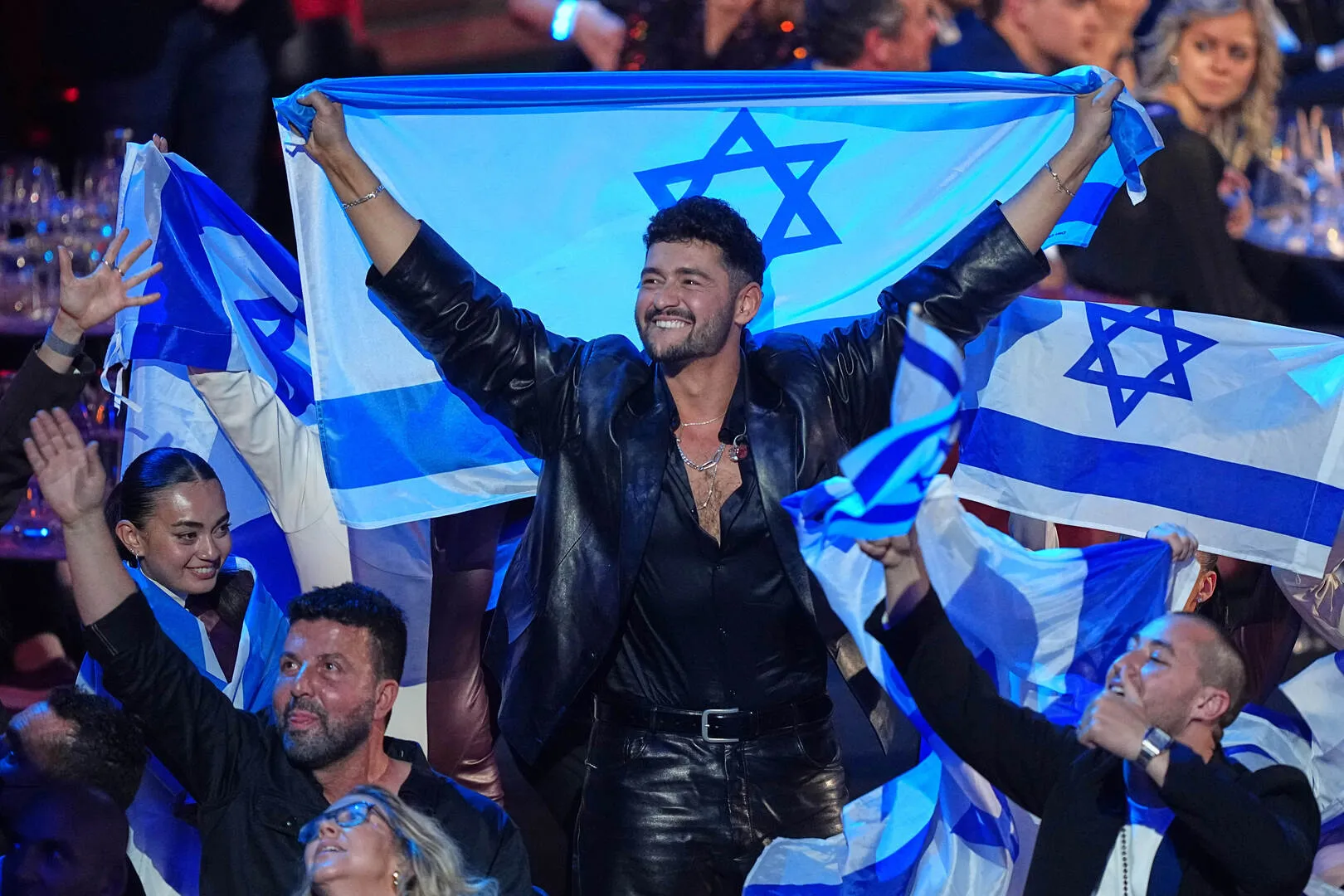
Bulgaria has won Eurovision for the first time, pushing Israel into second place amid boycotts and protests over Israel’s wars in Gaza, Lebanon and Iran. The result reignited debate over the apparent double standard with Russia banned for invading Ukraine.
An Ebola outbreak caused by the rare Bundibugyo strain has killed dozens in Democratic Republic of the Congo and is spreading into Uganda, raising fears of regional transmission. Health officials say instability and shared borders are complicating containment efforts as the World Health Organization declares a global health emergency.
Frances Tophill, one of the leading presenters on Gardeners’ World, has been heavily tipped to replace Monty Don at the head of the BBC series when he steps down
The Gardeners’ World presenting team(Image: BBC Gardeners’ World Magazine/Ja)
One of the stars of Gardeners’ World has spoken about whether she would like to replace Monty Don when he eventually decides to leave the show.
Monty, still very much a feature of the BBC programme, has been a key part of it for decades. However, following his milestone 70th birthday, questions have recently turned to who might replace him should he decided to put down his televisual trowel.
One of the people often highlighted as a potential successor is Frances Tophill, currently designing a garden for the Chelsea Flower Show alongside Alan Titchmarsh, Sir David Beckham, and King Charles III.
Frances, 36, has been on Gardeners’ World for over a decade, but has now made clear she doesn’t see herself replacing Monty.
She told The Sunday Times: “I have a huge respect for Monty – it is such a generous thing to give your garden space to the nation and he does it so well. I hope he never leaves….Broadcasting is not my day job, my day job is being a gardener.”
This isn’t the first time Frances has pushed back against the suggestion she could replace Monty. In a previous interview with the Telegraph, she said that after covering for Monty in a 2023 episode of the show, she got a glimpse of what fame might be like for him.
After she covered for him, she went to help a friend sell plants, but was shocked to see people flood towards them, not because of the plants, but because they recognised her from the show. She said: “That’s when I got a glimpse of what being Monty must be like… I don’t want that.”
Frances’ comments on the future of Gardeners’ World come as the RHS Chelsea Flower Show gets underway.
Frances has been busy working with the King, Sir David Beckham, and Alan Titchmarsh. Given the high profile nature of her royal clientele, Frances was asked, also by the Telegraph, whether she had been told anything about the monarch before she started work.
She said: “Everyone keeps saying that he’s so detail focused that he’ll notice all the tiny things.” Frances added that she had been searching the internet for the right gnome, as she was adding it in tribute to the King’s Highgrove garden. She said: “He hides it in the stumpery for the gardeners to find.”
Meanwhile, in an official statement on the King’s Foundation website about the garden, Frances went into more detail about what the experience had been like.
She said: “I’m so excited to share my first garden for RHS Chelsea Flower Show. With input from His Majesty The King, Alan Titchmarsh and Sir David Beckham, I’ve had a lot of fun incorporating elements both celebrating their involvement and ideas they have contributed.
“With sustainability front and central for His Majesty, there are no man-made materials being used in the garden, and it will be a concrete free construction.”
INSTEAD of being dragged from slumber with a grudge against the world, does your partner leap peppily and unbearably from the bed? Here’s how to handle it:
Leave the f**ker to it
Remain undisturbed. Allow the upbeat, popping-candy monstrosity humming cheerfully and monologuing about what a lovely day it is to fade into the background. She’ll piss off to brightly bushy-tail around the kitchen shortly and you can sink back into the swamp of sleep leaving this as nothing more than a dystopian Disney nightmare.
Block any interaction with the prick
Little questions like ‘Want a coffee?’ or ‘Mind if I open the curtains a crack?’ are aggressive attacks on your sleeping self. Respond accordingly: shut down your senses by wrapping a pillow around your head or mimicking the opossum, which over millennia has evolved to fake death in the presence of spritzy, woohoo humans.
Engage as minimally as bloody possible
As faking death will only work once, communication with your party-popper of a partner may be unavoidable. Restrict your replies to questions like ‘What shall we have for dinner?’ and ‘Do you think fish feel love?’ to grunts laced with the weary contempt the dead hold for the living. Any more and the door to wakefulness will be flung open.
Delegate a task to the wanker
Distraction can be useful for getting rid of your confetti-shooting unicorn of positivity. Dispatch your boyfriend to another town to collect a parcel or mention an injured hedgehog in the garden. Morally dubious, but could get you another hour’s blissful unconsciousness so definitely worth it.
Mess with the twat’s circadian rhythms
Tarnishing your partner’s glitterball morning spirit by bring them into your world. Keep your wife awake late into the night by plying her with expresso martinis and vodka Red Bull while telling her you’re having an affair and leaving her, then revealing at 2am it was all a prank. She’ll sleep like she’s been coshed, and most likely in another room.
Get the f**k out
Set an alarm. Because you can’t function in the morning, you should be able to turn it off, roll out of bed, stump blearily through the house and snuggle into a filthy nest you’ve created under the stairs or in a forgotten wardrobe. Return to sleep and with luck, your boyfriend will assume you’re dead and move on leaving you to rest.
Situated in the south west of Germany, on the border of the iconic Black Forest mountain range, the city has jointly been designated a UNESCO World Heritage Site
13:19, 17 May 2026Updated 13:19, 17 May 2026
Baden-Baden has been described as “one of Europe’s most elegant hidden gems” (stock image)(Image: Getty Images/iStockphoto)
If you’re thinking about a trip to Europe, but want something a bit off the beaten track, one “hidden gem” with historic spas, Roman ruins, and incredible museums could be just the ticket. Situated in the south west of Germany, on the border of the iconic Black Forest mountain range, the city has, along with Bath in Somerset and nine other locations, jointly been designated a UNESCO World Heritage Site as one of ‘The Great Spa Towns of Europe’.
Travel influencer Katherine McQueen, who has 685,000 followers on Instagram, where she is known as vineyardsandvoyages, posted a look into everything the city has to offer. She said: “This is one of Europe’s most elegant hidden gems… and most people skip it.”
Describing the city as “polished, romantic, and completely different from the bigger stops most travellers add to their itineraries”, she hailed its “pastel streets, grand architecture, thermal baths, elegant cafés, beautiful gardens, and old-world glamour around every corner”. But it was the history which she hailed as its most important element.
“People have been coming here for the thermal waters since Roman times, and wellness is still one of the biggest reasons to visit today,” she said. “You can soak in mineral-rich baths, wander through historic spa buildings, and experience a side of Germany that feels slow, refined, and deeply relaxing.”
Katherine also praised the city’s glittering casino, food – including, of course, the iconic Black Forest gateau – and location, calling it “one of the most unexpectedly charming places I’ve visited in Germany”.
The city in question is Baden-Baden, located around 15 miles east of the French border, and 42 miles west of Stuttgart.
In the post Katherine explained more about what the city has to offer. “Some of the bathhouses here feel more like palaces than spas, with mineral pools, grand domes, and centuries of wellness history,” she said. “But it’s not just a spa town. It’s also filled with elegant architecture, gardens, colonnades, and beautiful places to wander.”
She added: “The whole city has this refined, romantic atmosphere. Long covered walkways, grand buildings, art, gardens, and peaceful corners everywhere.”
Concluding, she said: “It has that rare mix of history, wellness, food, architecture, and nature, all in one very walkable little city. Everywhere you look, there are details that make it feel grand without feeling overwhelming. This town rewards slow wandering. Hidden side streets, stairways, dreamy corners, and beautiful views around every turn.”
The city’s official tourism website says: “Baden-Baden was founded 2,000 years ago to do people good. Thermal water at temperatures of up to 68 degrees gushes out of the earth from 12 thermal springs in Baden-Baden. Even today, our spa town at the foot of the Black Forest is the perfect place to enjoy spa tradition – whether in the Caracalla Spa or in the historic Friedrichsbad Spa.”
Content cannot be displayed without consent
How can I get to Baden-Baden?
By air: Direct flights to Baden-Baden are available from London Stansted Airport. Indirect flights are also available from most other UK airports.
By train: You can take the Eurostar to Paris or Brussels, with various connecting routes available.
By car: You can drive by taking the Eurostar and then heading south east through France, or east into Belgium before crossing, into Germany. Once arriving in France, the route is between 400 and 450 miles, taking between six and seven hours.
London City Lionesses are an ambitious club under owner Michele Kang and had a steady debut campaign in the WSL, finishing sixth after eight wins from 22 matches.
Sources at the club say an agreement with Earps has not yet been made, but they remain optimistic about their summer business.
Eder Maestre’s side have been linked with several players including Barcelona defender Mapi Leon and England winger Beth Mead, who announced her departure from Arsenal this week amid additional interest from Manchester City.
Earps is one of a number of big-name players potentially available on a free deal this summer, with Arsenal’s Mead and Katie McCabe leaving, Barcelona’s Alexia Putellas yet to sign a new contract, Sam Kerr departing Chelsea and Manchester City top scorer Khadija Shaw rejecting contract renewal proposals.
During her time in England, Earps became one of the country’s most recognised and influential players, though her book – released in November – caused controversy and dominated headlines in the media for several weeks.
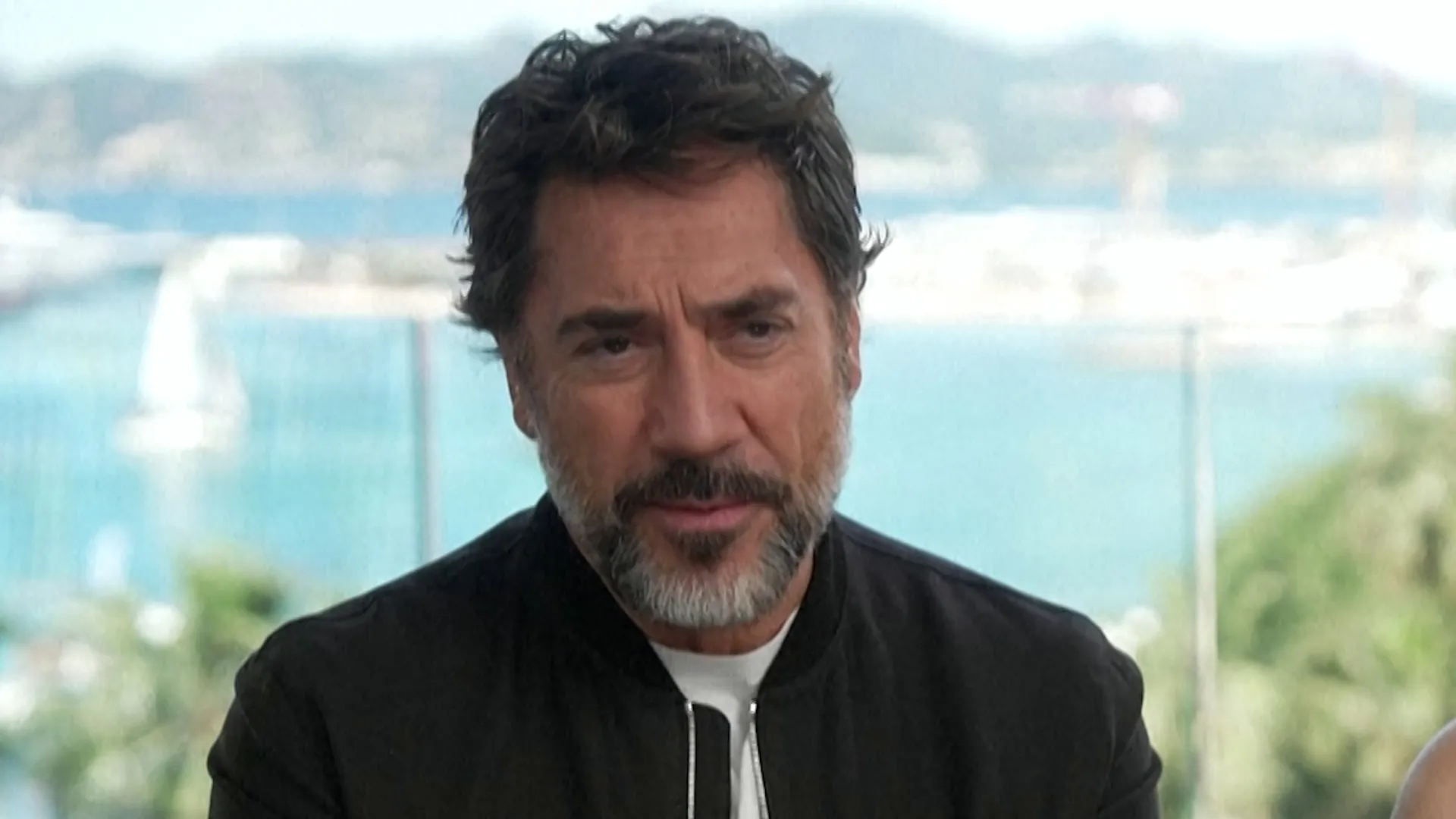
Spanish actor Javier Bardem says speaking out against Israel’s genocide on Gaza has actually landed him more offers for work. Speaking at the Cannes Film Festival, he said he believes the global narrative about Gaza has changed.
By the time the announcement that Abu Bilal Al-Minuki was killed reached the outside world, the strike itself was already hours old. In the early hours of Saturday, May 16, somewhere in Metele, in Borno State, northeastern Nigeria, a compound had been hit.
First, US President Donald Trump posted a statement on Truth Social. Another came from Bayo Onanuga, Special Advisor to Nigeria’s president on Information and Strategy, on Facebook and X. Al-Minuki, described as one of the most senior figures inside Islamic State West Africa Province (ISWAP), was dead, both statements claimed.
“Tonight, at my direction, brave American forces and the Armed Forces of Nigeria flawlessly executed a meticulously planned and very complex mission to eliminate the most active terrorist in the world from the battlefield. Abu-Bilal al-Minuki, second in command of ISIS globally,” Trump said in the post.
The Nigerian military said special forces were deployed to block escape routes while air components executed precision strikes against what was described as a “concealed and fortified terrorist enclave.” The mission was completed, the military added, “without casualties or equipment loss on the part of friendly forces.”
During a televised interview, the Director of Nigeria’s Defence Media Operations, Major Gen. Michael Onoja, explained that the US military provided intelligence and surveillance support, while Nigeria deployed boots on the ground for the operation.
“There were no foreign boots on the ground during this operation. What we received were intelligence, surveillance, reconnaissance support and other force enablers,” he said.
There was only one problem: according to the Nigerian military itself, Al-Minuki had already been killed once before – in 2024.
For nearly two years, Al-Minuki’s name – also known as Abubakar Mainok or simply Abu-Mainok – had existed in the strange afterlife of Nigeria’s counterterrorism war; a conflict where terrorist commanders are frequently declared dead only to reappear later through propaganda videos, from Abubakar Shekau to Abu Mus’ab Al-Barnawy.
“Our determined Nigerian Armed Forces, working closely with the Armed Forces of the United States, conducted a daring joint operation that dealt a heavy blow to the ranks of the Islamic State,” President Bola Ahmed Tinubu said in a statement issued from Aso Villa on Saturday. “Early assessments confirm the elimination of the wanted IS senior leader, Abu-Bilal Al-Manuki, also known as Abu-Mainok, along with several of his lieutenants, during a strike on his compound in the Lake Chad Basin.”
However, in the counterinsurgency operations in northeastern Nigeria, where insurgency and information warfare have become deeply intertwined, certainty is always expensive.
Strategic realignment
Saturday’s strike was the first major public success to emerge from the military partnership between Nigeria and the US. The operation, designated under Nigeria’s existing counterterrorism framework as falling under Operation Hadin Kai, commenced at 12:01 a.m. and ended at 4:00 a.m. on May 16, according to a statement from the Joint Task Force North-East spokesperson, Lt.-Col. Sani Uba.
The operation reflects a rebuilding of the partnership after it had been almost damaged after a single catastrophic night on Christmas Day 2025, when Donald Trump ordered missile strikes into Sokoto State. Trump framed the strikes as retaliation against militants killing “innocent Christians”—a language that resonated with parts of his domestic base but landed badly across northern Nigeria, where the conflict is far more complicated than the religious framing imposed on it from abroad.
Several of the missiles reportedly malfunctioned. One strike landed near a civilian settlement with no known militant presence. Nigerian officials found themselves balancing two competing realities: the military needed American intelligence and surveillance capabilities, but the Nigerian government could not afford to appear subordinate to the US narrative of the war.
The months that followed produced a quieter arrangement. American military personnel arrived in northeastern Nigeria – eventually around 200 troops – under a structure designed carefully around optics as much as operations. Nigerian authorities retained formal command. The Americans supported intelligence gathering, aerial coordination, and technical operations around the A-29 Super Tucano fleet already deployed against insurgent groups in the Lake Chad Basin.
The choreography surrounding the recent announcement of Al-Minuki’s death was as deliberate as the operation itself. Donald Trump spoke first. Tinubu issued his statement a few hours after Trump posted on Truth Social. Major Gen. Samaila Uba, Director of Defence Information, released a detailed press statement under the Armed Forces of Nigeria letterhead, complete with Al-Minuki’s full array of aliases — Abu Bakr ibn Muhammad ibn Ali al-Minuki, Abor Mainok, Abubakar Mainok, Abakar Mainok — and a comprehensive accounting of his alleged roles.
Everyone involved in the recent communication appeared determined not to repeat the Sokoto embarrassment on Christmas Day, when Washington’s messaging had almost completely overshadowed Abuja’s.
“Nigeria appreciates this partnership with the United States in advancing our shared security objectives,” Tinubu said. “I extend my sincere gratitude to President Trump for his leadership and unwavering support in this effort. I look forward to more decisive strikes against all terrorist enclaves across the nation.”
The statement was noted for its tone and content. Tinubu’s public gratitude to Trump marks a significant shift from the friction that defined the relationship only five months ago, when parts of Nigeria’s political and diplomatic establishment, along with some ordinary Nigerians, were quietly furious over both the Christmas strikes and the framing of responding to the claims of Christian genocide that accompanied them.
So who exactly was Al-Minuki?
Trump described him as “the second in command of ISIS globally.” AFRICOM called him “the director of global operations for ISIS”. The Nigerian Defence Headquarters offered the most specific claim: that as recently as February 2026, Al-Minuki “may have been elevated to the position of Head of the General Directorate of States, placing him as the second most senior leader within the ISIS global hierarchy.”
A screenshot of the explosion that allegedly killed Abakar Mainok and several other ISIS fighters in northeastern Nigeria at dawn on Saturday, released by the US AFRICOM.
The same statement linked him to the 2018 Dapchi kidnapping of more than 100 schoolgirls, to the facilitation of fighters into Libya between 2015 and 2016, to weapons manufacturing and drone development, and to “economic warfare” coordination across the Sahel.
Get our in-depth, creative coverage of conflict and development delivered to you every weekend.
Subscribe now to our newsletter!
“His death removes a critical node through which ISIS coordinated and directed operations across different regions of the world,” the Defence Headquarters’ (DHQ) statement said.
Al-Minuki was a product of the insurgency itself. Born in 1982 in Mainok, a town along the Benisheikh axis of Borno State, he took his nom de guerre (pseudonym) from his hometown. Those who knew him in his early years, during the rise of Mohammed Yusuf, the founder of Boko Haram, told HumAngle that he was a young man who ran a small barbing salon in Mainok village, about 58 kilometres west of Maiduguri in northeastern Nigeria. Long before his name became associated with violence and insurgency, he was known simply as a village barber.
Before pledging allegiance to the Islamic State in 2015, he was a senior Boko Haram commander with a documented antagonism toward Abubakar Shekau. His split with Shekau was a result of competing visions of insurgency: Shekau operated through spectacle, brutality, and deliberate isolation from the Islamic State central command. The faction that became ISWAP sought structure, territorial governance, and integration with the IS international hierarchy. When IS reportedly requested fighters for Libya during the height of the Syrian conflict, Shekau refused. Al-Minuki, then commanding ISWAP’s Lake Chad division, complied — one reason, analysts say, he rose within IS’s provincial bureaucracy while Shekau remained suspect in its eyes.
The DHQ’s assertion that Al-Minuki served as “Nigeria-based al-Furqan GDP Office Emir” from 2023 onward is consistent with what analysts had been tracking for several years: his role as the connective tissue between ISWAP’s local operations and the IS’s transnational administrative architecture. His designation as a Specially Designated Global Terrorist by the US in June 2023 under Executive Order 13224, cited in Saturday’s military statement, reflected assessments that he had become central to ISWAP’s financial networks, weapons procurement, drone acquisition, and communications between the Lake Chad insurgency and IS-linked structures across West Africa and the Sahel.
The “second in command of ISIS globally” framing is a political claim, pitched to an American domestic audience that requires a recognisable villain. Still, it doesn’t situate Al-Minuki well within ISIS’s formal hierarchy.
Al-Minuki had long occupied a powerful position within the ranks of ISWAP, but his influence deepened after the deaths of Abu Musab al-Barnawi and, later, the death of Abu Rumaisa or Abba, both sons of Boko Haram founder Mohammed Yusuf in 2023, as reported by HumAngle. Their deaths created a vacuum at the centre of the ISWAP leadership structure and how it interacts with the Islamic State global networks, thrusting Mainok into a more strategic role in coordinating operations of the terror group across the Lake Chad region.
Al-Minuki was the man most responsible for keeping ISWAP wired into the Islamic State’s international infrastructure. His death is a meaningful disruption, but not the decapitation of a global terrorist hierarchy.
ISWAP has repeatedly demonstrated that it can regenerate leadership after losses. It replaced leaders and survived the loss of top commanders. Its resilience has never derived primarily from any single commander; rather, it has stemmed from the political and economic conditions within Borno and across the Lake Chad Basin that continue to enable recruitment, taxation, and territorial control. The DHQ acknowledged as much, noting that “Battle Damage Assessment is ongoing, while follow-up exploitation operations are being conducted to clear remaining terrorist elements in the area.”
“Mistaken identity”
The official statement from the Army said it was common for numerous terrorists to use the same names or aliases, suggesting that both the individual killed in 2024 and the commander killed in this strike shared the same name. It did not acknowledge any mistakes.
“This time around, this individual [we killed] is the original owner of that name,” the Director of the Defence Media Operation said.
Meanwhile, Bayo Onanuga, President Tinubu’s spokesperson, in a Facebook post on Saturday, claimed the discrepancy between the person killed in 2024 and the one killed now was due to a case of mistaken identity. He also warned that sceptics had “rushed to question the authenticity of the Nigerian-American joint military operation” and said the criticism was “premature and not grounded in the realities of modern counterterrorism operations.” He noted that Nigeria’s Armed Forces were “operating in one of the world’s most complex insurgency environments where targets often move across borders and use multiple identities.”
Nigeria has lived through this before. Shekau was declared dead multiple times across more than a decade until soldiers grew to distrust the announcements and civilians in Borno learned to reserve judgment until they saw real change on the ground.
The Presidency’s warning that “premature dismissal of military claims can inadvertently undermine operational morale and strategic messaging” is a legitimate concern. But it is also an argument for public deference rather than public accountability.
For now, Trump has another example to point to as evidence that American military engagement abroad delivers results. Tinubu also has a successful joint operation that projects competence and international partnership without appearing commanded from outside.
The Armed Forces of Nigeria, in Major Gen. Uba’s words, have demonstrated “unwavering resolve to confront terrorism and deny extremist groups the ability to threaten national, regional and international security.”
But in the displacement camps and farming communities scattered across Borno State, the significance of Saturday’s strike will be measured differently.
For Ross Stripling, baseball was something of an accidental career.
He walked onto the team at Texas A&M, majoring in business finance, planning to stick around campus long enough to earn a master’s degree. After his junior year, he turned down a six-figure bonus offered by the Colorado Rockies. After his senior year, he accepted a six-figure bonus to sign with the Dodgers, only to blow out his elbow after one season in the minor leagues.
He was 24. He was at peace. He called home.
“I think the right thing to do is to say I did this baseball thing and go start my life,” he told his father.
If you’re a Dodgers fan, you know the rest of his baseball story: In his major league debut, Stripling was five outs from a no-hitter when Dodgers manager Dave Roberts yanked him. In his nine years in the major leagues, including five with the Dodgers, he pitched in the All-Star Game and the World Series, and he once pitched with his “Chicken Strip” nickname on the back of his game jersey.
His father knew best. Instead of giving up on baseball when he needed Tommy John surgery, his father encouraged Stripling to use the yearlong rehabilitation process as a way to explore what a future without baseball might look like. His grandfather set him up with an internship at an investment firm.
Five years ago, Stripling and his mentor from that firm founded their own financial services company, called Skyward Financial. Now, 21 months after Stripling threw his last pitch in the major leagues, he is throwing a new one: Hey, young athletes coming into a lot of money, I’ve lived in that world, and I’ll show you how to protect your money and build toward generational wealth.
“It’s not me trying to become the next Wolf of Wall Street,” Stripling said. “This is genuine. I want to help kids and their families out in a space that has gotten out of hand in a hurry.”
Matthew Houston, the mentor, said Stripling blew away the brokers when he interviewed for that internship.
“He brings with him, like, a two-inch folder stuffed with handwritten stock reports he had written on minor league bus trips,” Houston said. “He handed us a couple of them, and they were legit Wall Street reports, him doing analysis of stocks. We were falling out of our chair.”
Stripling soon earned his broker’s license. Over the past decade, Houston estimated, he and Stripling might have traded messages about markets and clients “25 to 50 times a day.” One night, Houston watched Stripling pitch on television. Not long after the game ended, he heard the ping of a text message.
“I had just seen him on TV, and it’s like, ‘What do you think about Celgene and Gilead in the biotech sector?’” Houston said. “My mind was blown.”
You don’t need to have played in the major leagues to realize how much money athletes make. Major brokerages want a piece of that money. Some even use former athletes to recruit current ones.
Marc Isenberg, the former director of financial education for Morgan Stanley’s sports and entertainment group and author of the “Money Players” guide for young athletes, wished Stripling well but said he would face significant competition from firms with bigger names and greater resources.
“It’s oversaturated,” Isenberg said. “Almost every single Wall Street firm, to compete for athletes and entertainers, has a sports and entertainment group.”
And it’s not just the behemoths. Stripling checked with a basketball agent, who said he represents 24 college players that each have a different money manager.
There is nothing revolutionary about Stripling’s message: limit the flashy spending now in favor of prudent savings and investment, so you can grow your money through and beyond your career.
Stripling believes he can win by concentrating on young athletes, the ones suddenly showered in six- or seven-figure payments from draft bonuses, college revenue sharing payments, and name, image and likeness deals.
“I’ve seen the first-rounders come in and blow money on cars and houses and gambling,” Stripling said, “and I’ve seen the first-rounders like (former Dodgers shortstop Corey) Seager, who probably hasn’t spent a dime of his signing bonus.”
In a presentation for young athletes — and for the pro teams and college athletic departments that might invite him to speak — Stripling’s firm uses his story of a baseball prospect that got a $900,000 up-front payment and spent the $500,000 after taxes on a red Lamborghini. If the prospect had invested that $500,000 over 30 years into a fund that tracked the S&P 500, he would have made $8.6 million.
“That was the dumbest decision I’ve ever seen anyone make,” Stripling said.
“I have these stories from being in the locker room. I hope that, as a player, my story resonates more than a guy from Goldman Sachs saying, ‘Yeah, we’ve got a couple good ETFs.’”
Stripling would love the chance to speak at one of the Dodgers’ morning meetings in spring training, where players hear briefings about everything from safety and security to social media.
“I’d like to learn more about it, but I’d be open to putting him in front of the guys,” Roberts said. “I definitely trust him.”
In the meantime, Stripling has a federal record. All brokers do. One form requires brokers to list their employers and job descriptions over the last 10 years. Among all the wealth strategists and financial advisors and registered representatives, Stripling’s form is the one with the job history that starts with this line: “LA Dodgers, Pitcher.”
REMOTE, rugged, and refreshingly underrated, Montenegro doesn’t scream and shout for your attention.
Everyone goes wild for Croatia’s polished reputation when planning their summer travels, but that comes with a conveyor belt of tourists pottering through various old towns and restaurants lining the Adriatic Sea.
Sign up for the Travel newsletter
Thank you!
Boats moored in Kotor harbourCredit: GettyThe pool at the Hyatt Regency Kotor BayCredit: Supplied
An understated alternative, Montenegro is every bit as beautiful, but far less busy.
Explore further and you’ll find an abundance of great food and adventure without needing to reserve any sun loungers or doing serious damage to your bank balance.
On the way through various towns, you won’t find any attempts to cater for mass tourism, a testament to their “Polako, Polako” approach to life, which translates as “slowly, slowly”.
Nothing reflects that more than McDonald’s attempt to crack the market in the country.
The fast-food giants opened a restaurant that was so unsuccessful they quickly closed it — the people here prefer to eat locally.
Surprisingly, while the culture and people are beautiful, warm and welcoming, they’re far from the standout feature of this stunning country.
Variety is perhaps the word that describes it better than any other.
Take in the stunning views over KotorCredit: GettyThe scenic Lake Skadar National ParkCredit: Getty
In a matter of hours, you can go from ski slopes to beach sun lounger — and that’s without considering its stunning lakes.
Montenegro is not somewhere you go to sit still for a week, although you could. It’s somewhere you must explore.
For me, the best way to ease into the “Polako Polako” way of life was on a boat trip through Lake Skadar.
Getting there is an experience in itself. Winding along one-track roads, we arrive in the village of Rijeka Crnojevica.
Clambering aboard a local’s traditional wooden boat, we glide silently along narrow channels lined with towering reeds.
As we emerge into the open water, the lake reveals its true scale, a shimmering body of water framed by the dramatic, jagged peaks of the Albanian Alps on one side and the rolling green hills of Montenegro on the other.
Keeping our eyes peeled — it’s a sanctuary for more than 280 species of birds — we attempt to spot the rare Dalmatian pelican, known to perch on the ruins of the 19th-century Lesendro Fortress.
The rare bird evades us, although we do spot a lone heron and plenty of other birds chirp overhead.
Looking at the almost turquoise waters, you see colours you would expect in the Maldives or Australia — not somewhere less than a three-hour Jet2 flight from Stansted.
The lake tour is around two and a half hours.
Try to spot the rare Dalmatian pelican, known to perch on the ruins of the 19th-century Lesendro FortressCredit: GettyThe Church of Our Lady of Remedy, perched on the slope of St. John MountainCredit: Getty
For couples, it’s an easy win: Relaxed, scenic, and just enough activity to feel like you’ve done something with your day.
After the cruise, a simple lunch of freshly prepared local fish rounds things off, and every bite tastes as fresh as the water we’ve been floating through.
That sense of authenticity carries through to the food more broadly, and nowhere is that clearer than at one of the country’s traditional olive farms.
Moric Olive Farm on the Lustica Peninsula is a perfect example and the journey there takes us past wild pomegranate trees, dry stone walls and into the silver-green olive groves.
We are welcomed by Ilija Moric, whose family has tended the trees for eight generations.
His passion is obvious as he takes us through the farm’s history, showing us the contrast between the ancient stone mill where donkeys once turned the heavy wheels to the shiny, modern organic production they use today.
If Lake Skadar is about slowing down, Montenegro’s vast black mountains are where the country comes to life.
Paved roads give way to rugged tracks, and the scenery becomes more dramatic with every turn, revealing sweeping viewpoints, scattered churches perched in improbable locations, and a sense of isolation that feels both exciting and grounding.
Exploring this landscape on foot, stopping to take in the silence or to light a candle and say a prayer in a small, weathered church, adds a layer of depth to the experience.
Rarely does a destination manage to balance contrast so well, moving seamlessly between rustic and refined, active and relaxed, without ever feeling disjointed, and it’s that consistency of variety that makes Montenegro so worth visiting.
Our base was the 4H Hyatt Regency Kotor Bay Resort, set right on the edge of the bay.
There’s an underground tunnel connecting the hotel with its private shingle beach, and the hotel itself features two pools including a vast, heated infinity pool overlooking the bay.
There’s three restaurants on site but it is just a 15-minute drive to the medieval maze of Kotor’s Old Town.
For couples searching for a summer escape that delivers on scenery, activity and atmosphere without the crowds or price tag of more established hotspots, Montenegro makes a strong case as the quieter, more affordable alternative to Croatia.
GO: MONTENEGRO
GETTING/STAYING THERE: Seven nights’ B&B at the 4* Hyatt Regency Kotor Bay is from £1,389pp including flights from Stansted in September, 22kg baggage and return transfers.