‘I know this bear. He knows me. We’ve met several times.” Our guide for the day points to a damaged sign in Sutjeska national park, at the beginning of the trail that descends to the forest of Perućica in south-east Bosnia. The wooden post is covered in scratches from large claws. “Bears are the sharks of the land, because they have the keenest sense of smell on the mountain. They are highly intelligent. I’m deeply persuaded that they know who is a friend and who is a foe. I come often to the forest, so this guy knows my smell. But there was one incident, a hunter who came here to kill, and a bear peeled off his face like an orange.”
With that image, Dejan Elez commands our full attention. A Bosnian Serb law graduate turned ranger and now mountain guide, he is a born storyteller and raconteur. My travel companion, Chris, and I are rapt as he describes the famous battle that was fought near here, when Yugoslav partisans broke through a German encirclement in 1943, taking the Wehrmacht by surprise under cover of a violent storm – “the wind was rising and the lightning was like a strobe” – but after that, Dejan’s narrative leads much further back in time, into the depths of one of Europe’s most ancient forests.
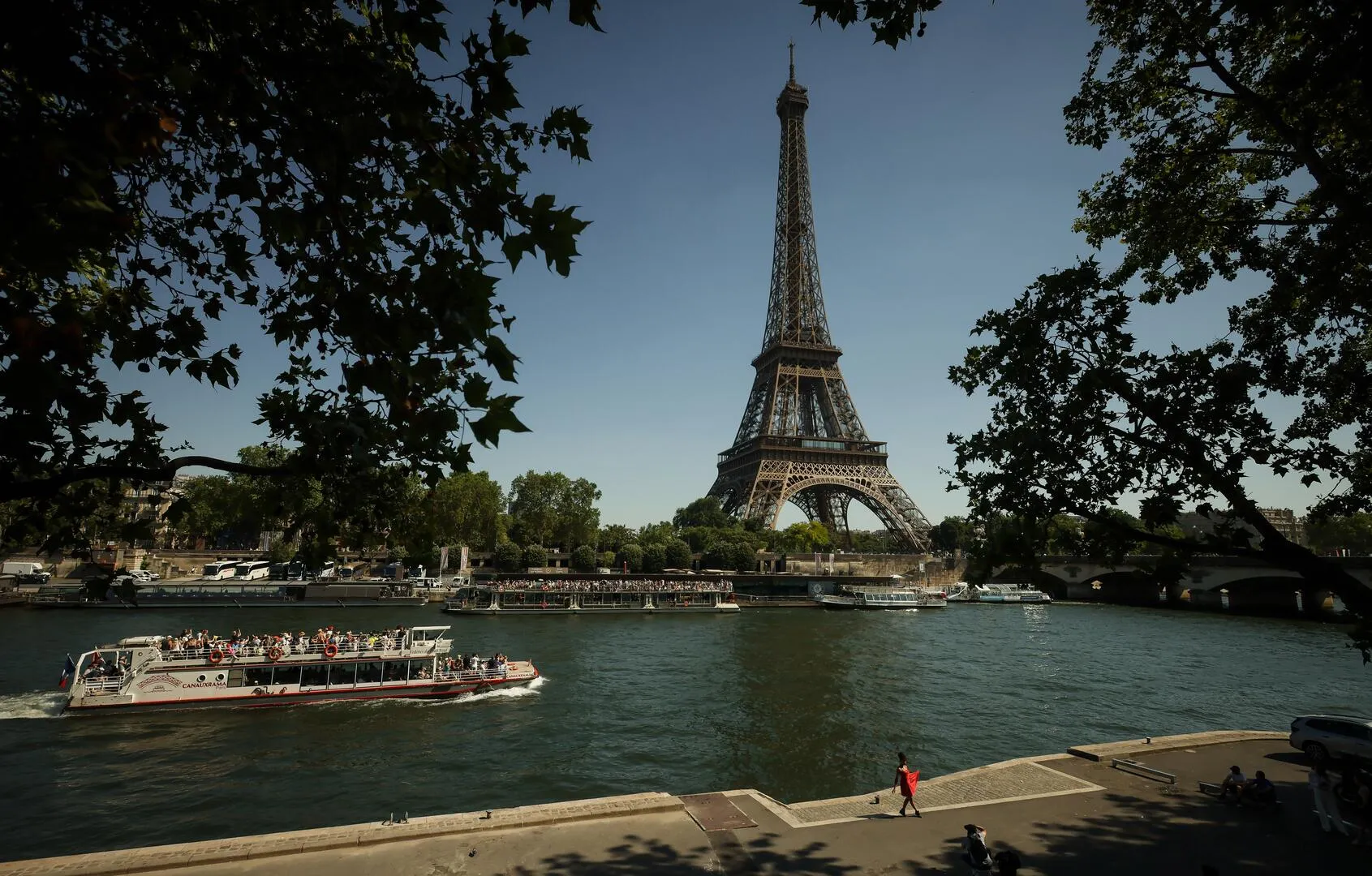
Bear sightings are more likely in spring, when they emerge from hibernation to gorge on wild garlic. Photograph: Vince Burton/Alamy
Scientists estimate Perućica – which spreads across the slopes of a canyon in Republika Srpska, the autonomous Serb-majority region of Bosnia and Herzegovina – has grown without human interference for 20,000 years. Along with Białowieża, which straddles Poland and Belarus, it is considered the last true remnant of the primeval wildwood that once covered the continent. But Perućica, says Dejan, is much better preserved. It has never been inhabited, and rough terrain and precipitous slopes have saved its trees from logging. Its 1,434 hectares (3,543 acres) are now under strict protection – no one can enter without a guide – and the site’s importance is recognised by Unesco.
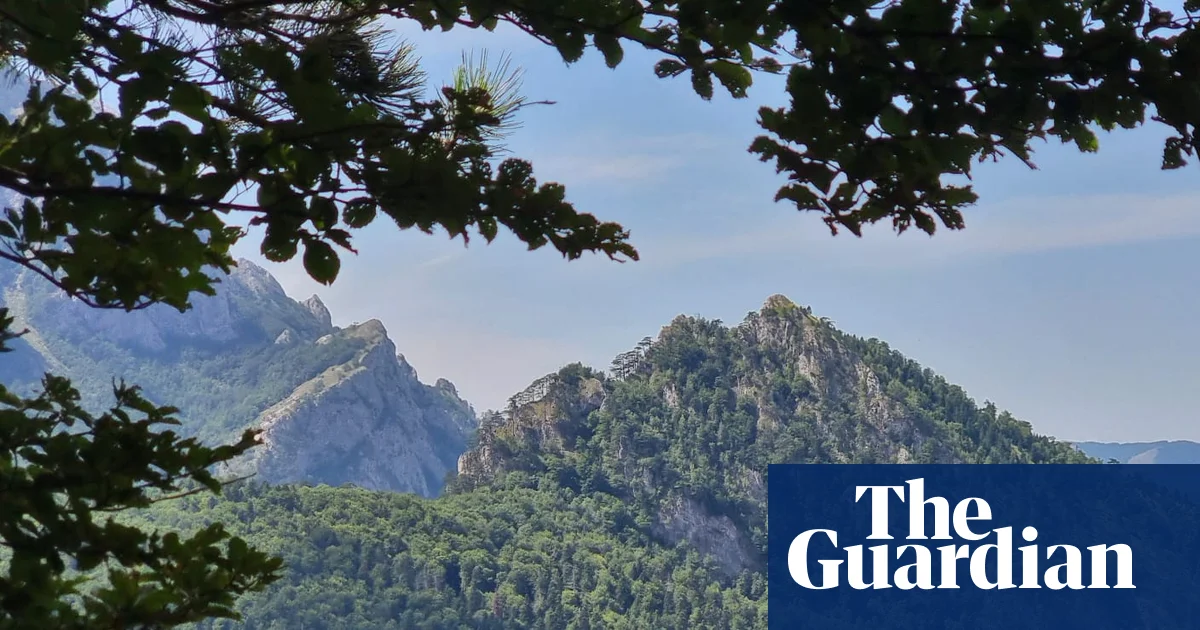
From a viewpoint on a rocky ridge, dense greenery spreads below, clinging to the sheer canyon walls above a river. The river is fed by Skakavac, a 75-metre waterfall thundering into a mist of spray, and far above shines the white summit of a mountain. Originally, Chris and I had hoped to climb Maglić – at 2,386 metres, the highest peak in Bosnia – but it snowed a couple of weeks ago and we have been warned that conditions in early spring are perilous. We’ll save going up for another time. Today we are going down.
The forest has about 170 species of tree and shrub and more than 1,000 plants. Photograph: Riding Hood/Alamy
Dejan leads the way along the winding trail through groves of mixed beech, fir, spruce, pine and maple. He admits he does not know the names of all the trees, but what he does know, intimately, are the tracks of animals. The forest, he says, is “legible”, and he reads it like a book. Circular patches where the humus has been grubbed away are made by chamois foraging nutritious roots. Roe deer do the same, but their holes are precise and deep. “Look” – Dejan points to a wet log – “those scratch marks were made by a canine, either fox or wolf. But there, on the same log, something even more exciting.” The wider, deeper scratches were made by a passing brown bear. Nearby is a larger hole where a bear has raided a honeybee hive. Of course, sightings are never guaranteed, but they are always possible at this time of year, when bears emerge from hibernation to gorge on wild garlic – known in many Balkan languages as “bear’s garlic”. “If I stop, you stop! Now we are in stealth mode.”
Every few minutes of descent seems to bring us to a different realm as the temperate rainforest grows taller and more tangled. Deadwood lies everywhere – paradoxically a sign of health. Lichen, moss and fungus drip from the branches. The astonishing biodiversity protects Perućica from epidemics such as spruce bark beetle infestation, which has devastated old-growth forests elsewhere. With about 170 species of tree and shrub and more than 1,000 plants, it’s little wonder that our guide doesn’t know them all.
During the last ice age, Perućica escaped the freeze, acting as a refugium, an isolated region in which many species were preserved. From here, the trees expanded their range northwards when it thawed. The forest’s name, Dejan believes, is connected with Perun, the pre-Christian and pre-Islamic Slavic god of lightning. Certainly, it feels as if we are wandering in a temple.
The 75-metre waterfall, Skakavac. Photograph: Outdoor Bosnia
He has packed sandwiches – cheese and ham in thick white buns – which we eat on a grassy ledge overlooking the waterfall. Chamois clearly dine here too, as their droppings are everywhere. We don’t see the herd – neither do we see the wildcats, lynx or wolves that also call the forest their home – but the knowledge that they are here, perhaps even very close to us, brings a sensation I can only describe as reverence. Each of us goes quiet with awe. Maglić and the other mountains disappear behind white cloud and it begins to rain. The wetness doesn’t matter.
With his legal background, Dejan is clear-eyed about the threats. The ancient forest may be safe, but hunters come to the wider national park and the rangers are sometimes bribed to look the other way. Most visitors to Sutjeska stay in the village of Tjentište, a scattering of guesthouses and modest restaurants along the main road, but increasingly there is encroachment at the borders of the park. Even our cosy timber-frame cabin near the entrance gate is, in his opinion, too close.
For Dejan, the guide, the vast forest is ‘legible’.
It’s not that people shouldn’t come here, he tells us as we walk back up. What matters is how they come, as respectful guests. We are not the owners of the forest, not even the owners of this trail, which is walked by and shared with many other feet. He stoops to brush aside some leaves and identifies flecks of bone that have passed through a wolf’s digestive tract, and further on, wolf excrement filled with chamois hair. “This was left on the trail deliberately to tell us it’s their territory. They don’t do anything by accident. Everything has a meaning.”
After almost five hours, we emerge on the gravel road that leads towards Tjentište. The absence of so much tangled life is vaguely shocking. Both of us feel changed by our glimpse into Europe’s wild past – and perhaps we have been subtly changed on a biological level, too. Dejan announces when we part: “You two gentlemen have been exposed to a universe of micro-organisms you will never find in England. This forest gets inside you.” Perućica clings to us as we leave the national park and return to Sarajevo, a two and a half hour drive, going north as the trees once did when the ice age ended.
The first flight carrying around 300 Ghanaians evacuated from South Africa following anti-immigrant tensions and reported attacks on foreign nationals has arrived in Accra. Authorities welcomed returnees with reintegration support and transport assistance.
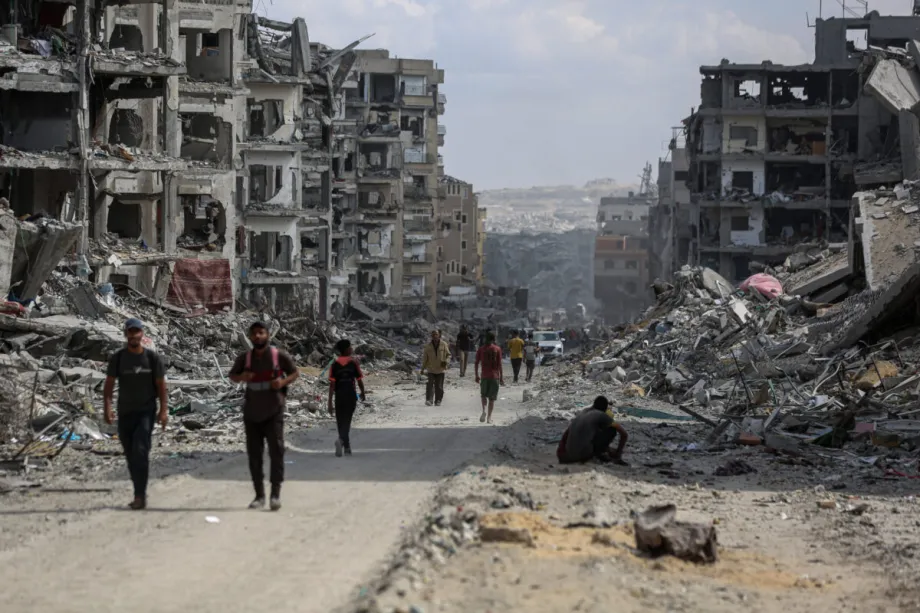
The suffocating smoke still hangs over her ruins, thick with the acrid stench of explosives powder and dust carrying the scent of betrayal and the mark of courage. Her streets, once filled with children’s laughter, became Israeli fields of slaughter. Now they echo with the names and memories of martyrs.
The mass graves, the broken concrete, and the twisted steel are not just evidence of Zionist hatred. They are witnesses to those who stood with her, and to those who failed her. Today, Gaza’s rubble holds more memories than all the nation’s libraries.
Palestine will remember
She will remember the selfless sacrifices of doctors and healthcare workers who refused to abandon their sick patients as bombs rained on their hospitals; the journalists who became the news, targeted for daring to expose the truth; the mothers who wrapped their children in the red, black, green, and white flag of a nation Israel is desperate to erase.
These are not tales of despair, but of defiance, insisting on its right to breathe life amid death.
Gaza will not forget
She will not forget the silence of Western democracies. In a tragic inversion, most European nations, shackled by the ghosts of their past, traded morality for absolution. The self-proclaimed champions of human rights offered Palestinians on the altar of yesterday’s victims to atone for Europe’s sins.
Gaza will not forget the Biden administration, which vetoed every U.N. Security Council resolution calling to end the genocide. Nor Donald Trump, who poured fuel on the fire, then demanded recognition for dousing his own flames.
This week, Arab, Muslim, and world leaders gather like moths around the American arsonist-turned-firefighter, “celebrating” the ashes of Gaza.
Palestine will remember
She will remember the people who rose for Gaza, from Yemen to Dublin, from Cape Town to London and Madrid, while Arab capitals from Cairo to Riyadh slept. Ireland and Spain led the boycott, while Arab countries from the Gulf to Jordan opened their ports and highways to provide alternative routes for Israeli goods, even as Yemen imposed a sea blockade in the Red Sea.
Gaza will not forget — nor forgive — the Arab governments that opened their ports when shipyard workers in Italy refused, delivering American weapons used to annihilate her children and destroy her hospitals.
Palestine will remember
She will remember South Africa — not an Arab or Muslim nation — that led her case before the International Court of Justice, charging Israel with genocide. A country once scarred by apartheid became the moral conscience of a world too timid to speak. In that act of solidarity, South Africa rekindled the universal truth that justice knows no borders.
Palestine will remember the Lebanese resistance that gave its leaders for Gaza’s defense; Yemen, poor in wealth but rich in dignity, whose solidarity never wavered; and Iran, steadfast against Israeli hubris. She will remember Ireland and Spain, who did not turn away when Arabs did, proving that true solidarity transcends borders, faith, and kinship, resting only on shared humanity.
She will remember the heroes of the flotillas who braved waves of hatred and siege to carry messages of compassion; the nameless volunteers who left the safety of their countries to heal the wounded and feed the hungry; the American students who turned campuses into encampments of resistance; the artists, actors, and musicians who risked careers for justice; the employees who lost their jobs protesting the complicity of Google, Microsoft, and other tech giants in Israel’s crimes.
Gaza will not forget those who betrayed her
Palestine will forever be grateful to those who dared to speak the truth when it was dangerous, who marched when it was forbidden, who grieved when it was unfashionable.
Palestine will remember. History will remember. Justice will remember.
For nearly two years, Gaza has endured a genocide so relentless it defies descriptive language. Israel’s war machine has turned hospitals into morgues, UN schools into mass graves, and refugee camps into craters. Yet Gaza refuses to die.
Each time she is bombed “back to the Stone Age,” she rises — like the phoenix — to rebuild, not only her structures but her indomitable will. In that defiance lies the occupier’s greatest fear: memory.
Israel can destroy buildings but not erase remembrance. The siege may starve Gaza’s body, but it nourishes Palestine’s collective soul.
Gaza’s children will grow up with memories no child should bear. But they will also inherit something indestructible: dignity. In every demolished home and every shattered family lives a story that refuses burial.
Gaza’s memory will not fade. For the mind, unlike stone, cannot be occupied. It is the eternal archive of a people’s resilience, passed from one generation to the next, weaving the indelible tapestry of Palestine today.
The ruins of Gaza stand not only as testimony to Israel’s genocide but to the moral collapse of those who enabled it.
Gaza will rise again, brick by brick.
But what will never be resurrected is the Israeli lie, which, for eight decades, cloaked the Zionist project in the guise of victimhood, occupying Western narratives and manufacturing consent.
Gaza will rise — and the Israeli myth will remain buried beneath her rubble, forever.
The views expressed in this article belong to the author and do not necessarily reflect the editorial policy of Middle East Monitor.
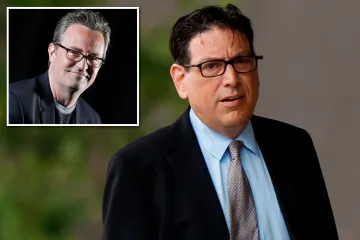
MATTHEW Perry’s live-in assistant has been jailed for three years and five months after injecting the actor with ketamine and leaving him alone to die.
Kenneth Iwamasa, 60, learned his fate as he appeared in federal court in Los Angeles on Wednesday.
Sign up for the Showbiz newsletter
Thank you!
Actor Matthew Perry was open about his years-long battle with drugs and focused heavily on his addition problems in his autobiographyCredit: GettyKenneth Iwamasa, left, stands next to his attorney, Alan Eisner, during a news conference after his sentencing in Los AngelesCredit: APKenneth Iwamasa refused to answer any questions outside of court and had his lawyer speak on his behalfCredit: APMatthew Perry’s mother, Suzanne Morrison, center left, and stepdad, Keith Morrison, arrive at federal court for the sentencing of Kenneth IwamasaCredit: AP
He was the fifth and final defendant to be sentenced for playing a role in the actor’s 2023 overdose death.
Iwamasa, who was previously out on bail, avoided photographs by turning up to court at 7am when the doors opened, two hours ahead of the hearing, a source told The U.S. Sun.
He was then granted a delayed surrender date of July 17.
Los Angeles Judge Sherilyn Peace Garnett also ordered him to pay fines of $10,000 and $100 and be on supervised released for two years.
Iwamasa wore a grey suit and matching tie with a white shirt for the hearing.
“Kenny wishes he would have had the strength to push back and say no and for that he will forever be remorseful,” his lawyer, Alan Eisner, said as he stood beside him outside of the court.
“Kenny is not the only person here who partook in this tragic event.”
He said Perry had agency, and his family should have also been there for him during his relapse.
Most read in Entertainment
“Mr Perry’s family could have said no along the way,” he bizarrely stated.
His loved ones previously insisted they had no idea he had fallen back into addiction.
The attorney said the blame shouldn’t all fall on his client, a man who is at the “low end of the totem pole” and wasn’t benefiting financially like those who sold him the drugs.
Asked why he left him alone to die after injecting him with the drug, the lawyer called the comments “vindictive” and said it was an unfair narrative.
Perry’s stepfather, Keith Morrison, who arrived with the actor’s mother, Suzanne, gave an emotional impact statement, along with estate manager, according to the New York Post.
Iwamasa was reportedly on the verge of tears as Morrison addressed him in court but he did not speak to reporters outside.
Matthew Perry is seen leaving E Baldi restaurant in Beverly Hills with his assistant Kenneth Iwamasa in August 2024Credit: BackGridMatthew Perry’s publicist, Lisa Calio, slammed Iwamasa in a letter to the judge before the sentencing hearingCredit: Alamy
Although he pleaded guilty, his counsel argued that he was trapped in a toxic employer-employee dynamic and felt unable to refuse Perry’s requests.
The actor’s publicist, Lisa Calio, who was close to him for 30 years and is now the CEO of The Matthew Perry Foundation, wrote a heartbreaking letter to the judge and slammed Iwamasa.
She claimed he hatched a delusional plan to get rid of those tasked with keeping Perry safe so he could run the show and live a lavish lifestyle, before sourcing drugs for him.
She wrote, “His narcissistic, outrageous, irresponsible behavior, his psychotic plan, caused him to heat up the jacuzzi, give Matthew the giant shot he requested and leave him alone to die.”
Referencing the day Perry was found dead, she recalled, “I received a text from Kenny at 4 a.m. as he was driving one of Matthew’s cars from the house in the Hollywood Hills to the house in the Palisades. And he was loving it.”
She claimed, “Kenny convinced Matthew that there were too many people around and that he didn’t need to spend the money on them anymore. And that battle, Kenny won. I was not aware.”
Calio claimed that it was “the beginning of the end.”
She added, “Whatever sentence he receives, it won’t be long enough.
“He will always be known as the man who killed Matthew Perry, I suppose there should be some comfort in that.”
Before he was Perry’s live-in assistant, the star had other staff members and a sober companion who saved his life.
Iwamasa had been working for Perry’s manager, Doug Chapin, since the 1990s and took a more hands-on role as the actor’s live-in assistant around 2022, according to reports.
Court documents showed he was paid around $150,000 a year to assist Perry around the clock and was tasked with helping to manage his sobriety.
They lived together at a Beverly Hills rental after Perry sold his “mansion in the sky” in Century City and was waiting for renovation work to be completed on his new home in the Pacific Palisades.
As Perry relapsed, Iwamasa obtained ketamine from suppliers and was taught how to administer it, according to court documents.
Iwamasa admitted to injecting Perry with the drug three times on the day he died, including twice in 40 minutes.
Iwamasa was accused of repeatedly lying to investigators, including allegedly hiding the fact that heinjected Perry with several ketamine shotson the day of his death,court documents also show.
He later admitted he “cleaned up the scene” during a phone call with middleman Erik Fleming, officials claimed.
The assistant reportedly said he got rid of syringes and bottles, changed passwords on Perry’s devices and “deleted everything.”
The five responsible for Matthew Perry’s death
Here are the five individuals allegedly behind Perry’s ketamine overdose.
“Ketamine Queen of Los Angeles” Jasveen Sangha – Sangha, 42, pleaded guilty in September 2025 to federal charges for supplying the ketamine that caused Matthew Perry’s fatal overdose. Prosecutors say that after Perry’s death, she reportedly searched online, “can ketamine be listed as a cause of death.” She has now been jailed for 15 years.
“Dr. P” Dr. Salvador Plasencia – Plasencia, 44, was one of the physicians who illegally supplied ketamine to Perry before his death. He pleaded guilty in mid‑2025 to several federal counts of ketamine distribution. In December 2025, he was sentenced to 30 months in federal prison and fined; he was remanded immediately to begin serving his term.
Dr. Mark Chavez – Chavez, 55, pleaded guilty to conspiracy to distribute ketamine in connection with Perry’s death. In December 2025, he was sentenced to eight months of home confinement, ordered to complete community service, and placed on supervised release.
Kenneth Iwamasa – Iwamasa, 60, Perry’s live‑in assistant, admitted he obtained and administered ketamine to Perry as part of the scheme. He pleaded guilty to conspiracy to distribute ketamine causing death and is set to be sentenced in May.
Erik Fleming – Fleming, 56, an intermediary dealer who helped coordinate the flow of ketamine from suppliers to Perry’s assistant, pleaded guilty to conspiracy and distribution charges. He was sentenced to two years in prison.
It was several months before it was revealed that Iwamasa played a part in Perry’s death, shocking not only his family and friends but thousands of fans worldwide.
He pleaded guilty in August 2024 to one count of conspiracy to distribute ketamine resulting in death and initially faced 15 years behind bars.
But prosecutors said in court documents that he provided significant cooperation in the government’s investigation, leading to a reduced sentencing recommendation of three years and four months.
Perry’s mum, Suzanne Morrison, also described Iwamasa in a victim impact statement ahead of sentencing as a “man without conscience” and said the family felt betrayed by him.
In the statement, Morrison said Iwamasa not only delivered the fatal dose but also painted himself as someone who was trying to help Perry, and even went as far as begging to speak at his funeral.
She said in court filings, “He clung to me and the family as if he was somehow the good guy who tried to save Matthew.”
She added: “We trusted a man without a conscience, and my son paid the price.”
Four others were convicted in recent months after being involved in Perry’s death.
Erik Fleming, a middleman and former drug counsellor, was sentenced to two years in prison, while Jasveen Sangha, also known as “The Ketamine Queen”, was handed 15 years.
Dr. Salvador Plasencia, who was involved in supplying and administering ketamine linked to Perry, received two and a half years.
He obtained the drug from a fellow doctor, Mark Chavez, who received eight months of home detention after pleading guilty.
Perry rose to fame as Chandler Bing on the hit 90s sitcom Friends.
Ross G. Brown is a television and screenwriter who lives in Westlake Village
Everything I need to know about the current presidential election, I learned in fourth grade. Back then, I was the smartest kid in my class. I knew it, and I wanted everyone else to know it too. Math, science, history–I had all the answers. The minute the teacher asked a question, my hand flew up and I panted, “Oooh, oooh, I know, I know.”
I was not very popular with my classmates. In fact, I got beat up a lot after school. I suspect Al Gore did too.
As I watched Gore during the debates, I saw a bright, hard-working, dedicated guy with an impressive command of the pertinent information and an astounding ability to synthesize this knowledge into concrete proposals on domestic and foreign affairs. Unfortunately, I also saw myself in grade school–too smart for my own good.
Gore studied hard and was thoroughly prepared for the televised civics and government quizzes each debate provided. A teacher might have given him an A. But much of the rest of the class just wanted to punch Mr. Smarty Pants in the nose.
The rap on George W. Bush is that he doesn’t know what he’s talking about, that he offers only vague generalities and sound-bite platitudes. This may be so, but I learned an important life lesson at the hands of several of my beefier, if intellectually less gifted, fourth-grade classmates: People may poke fun at a Know-Nothing, but they can’t stand a Know-It-All.
I’m a liberal Democrat and I’m voting for Gore. I thought Gore “won” the debates, meaning I found his arguments far more detailed and persuasive.
But the vast majority of people who vote based on issues, such as taxes, education and abortion, chose sides long ago. The election is now in the hands of others, those who put off doing their homework until the last minute. These folks don’t evaluate candidates in a purely analytical fashion. They don’t grade on a point system. It’s strictly pass/fail, based on gut reaction, and the plain truth is Gore fails with too many of these voters. For them, his superior intellect isn’t an asset, it’s an irritant. He just rubs them the wrong way. They may not beat him up, but they surely won’t vote for him, and that means trouble for Gore when the final exam comes on Nov. 7.
The intellectual part of me cries out, “This isn’t fair.” I want the principal to step in and acknowledge that Al Gore is far more qualified than George W. Bush. But this is a democracy, not a meritocracy. The best and brightest student doesn’t always get to be class president. The most popular one does.
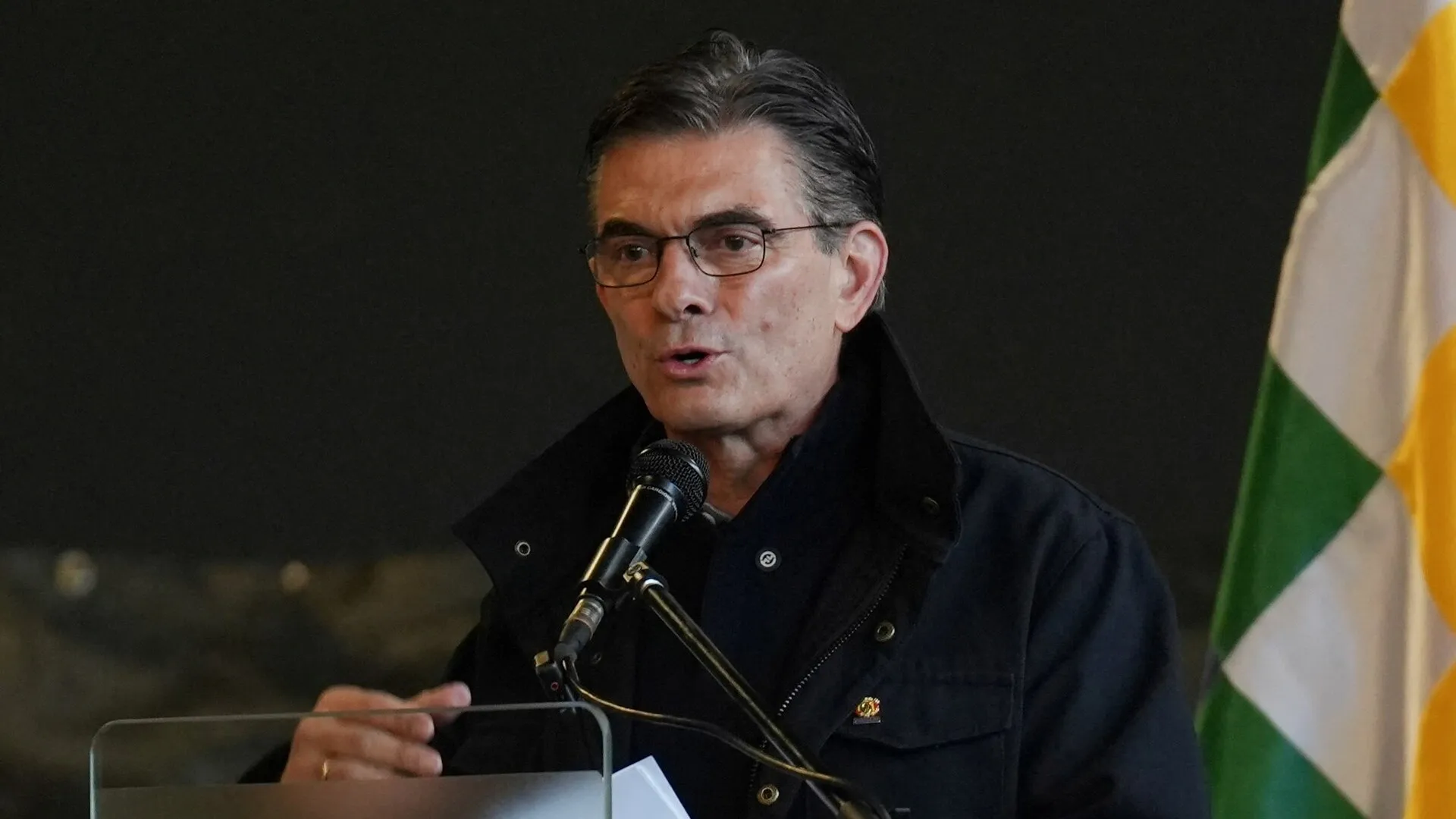
Bolivia’s president has warned protesters “time is running out” amid a weeks-long standoff over the country’s economic and political crisis. President Rodrigo Paz has secured powers to declare a State of Emergency, but protesters remain unmoved.
Harare, Zimbabwe – Precious Mvundura woke up with joint pain, a high fever and a pounding headache on a chilly autumn morning in eastern Zimbabwe.
The 37-year-old initially thought it was just the flu. But when the headache persisted for three days, she became worried.
Her five-year-old son had also fallen ill and was sweating heavily.
In early May, the pair sought help from a village health worker in Chishakwe, a rural farming community outside Zimbabwe’s third-largest city, Mutare. Both tested positive for malaria.
“I felt relieved,” Mvundura told Al Jazeera.
“From the moment I took that medication, I started getting better.”
Her son has also recovered and is back in school.
Their ordeal comes as malaria cases and deaths surge across Zimbabwe after US funding cuts disrupted key malaria control programmes.
Shortly after returning to office for a second term in 2025, US President Donald Trump slashed foreign aid funding, including programmes backed by the United States Agency for International Development (USAID). In Zimbabwe, the cuts disrupted tuberculosis, HIV/AIDS and malaria research, prevention and treatment programmes.
Among the affected initiatives were the Zimbabwe Entomological Support Programme in Malaria (ZENTO) at Africa University in Mutare, which provided scientific research to support the country’s National Malaria Control Programme, and the Zimbabwe Assistance Programme in Malaria II (ZAPIM II), which helped strengthen malaria diagnosis, treatment and prevention in high-burden districts.
USAID had disbursed $270m for health and agriculture programmes in Zimbabwe in 2024.
Malaria cases jumped to 65,399 between January and April 2026, up from 36,000 recorded during the same period in 2025 and 17,000 in 2024, according to Zimbabwe’s Ministry of Health National Malaria Control Programme weekly surveillance report.
Deaths have also risen sharply, reaching 174 between January and April 2026, compared with 85 during the same period last year and 34 in 2024.
Mvundura and her son survived because they sought treatment early. In many other cases, the disease has been fatal.
Shortages of mosquito nets, test kits
Thomas Chuchu, the health programme lead at Save the Children Zimbabwe, said several malaria elimination activities previously supported by ZAPIM II had been disrupted.
“In practice, elimination has continued through government and other partners, but with weaker operational capacity and slower implementation,” Chuchu told Al Jazeera.
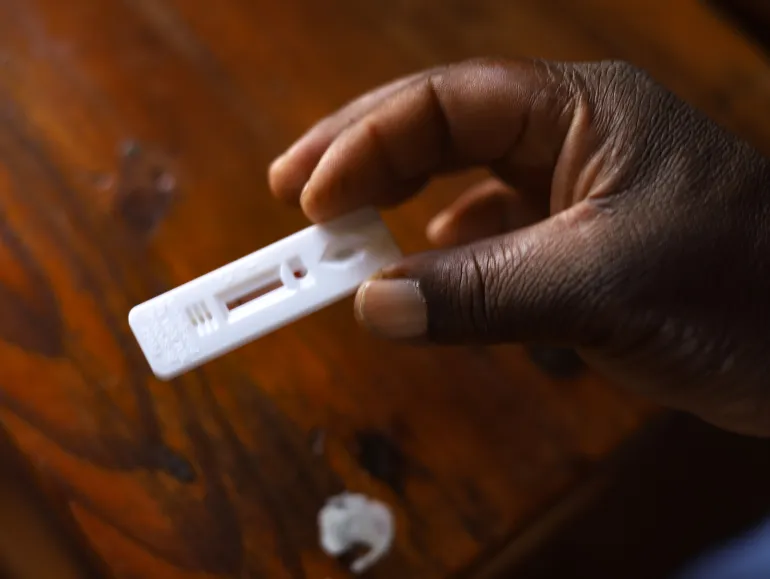
Zimbabwe’s dependence on donor funding for essential medicines, diagnostic kits and mosquito-control supplies has left the country vulnerable [Farai Shawn Matiashe/Al Jazeera]
The ZAPIM II programme ran through Zimbabwe’s Ministry of Health system in 11 districts across the provinces of Central and East Mashonaland and the province of Matabeleland North.
Before falling ill, Mvundura said she had not been using mosquito nets or repellents.
“I only started using a mosquito net a friend shared when I fell sick,” she said.
In December 2025, Caroline Mawombedzi was diagnosed with malaria while living in Burma Valley, a farming community about an hour’s drive from Mutare.
She had last contracted the disease in the late 2000s while still a child.
In mid-May, her five-year-old daughter was also diagnosed with malaria by a village health worker in Chishakwe after suffering severe headaches and stomach problems.
Although her daughter received treatment, Mawombedzi said she could not afford preventive measures such as mosquito nets.
“I am unemployed. I cannot afford to buy a mosquito net. We have not been sleeping under a mosquito net for years,” she said.
Virginia Chakandinakira, a village health worker serving Chishakwe, said malaria diagnostic kits and drugs are now in short supply.
“I used to get plenty of malaria test kits and drugs. But in 2025, they did not give me. I referred everyone showing malaria to a nearby Chitakatira clinic,” she said. Chitakatira is a rural settlement about an hour’s drive from Chishakwe.
“I only received test kits and drugs in February. However, the supplies are limited. The authorities told us they were only distributing them to hotspot communities.”
Research programmes crippled
Professor Sungano Mharakurwa, the director of Africa University’s Malaria Institute, said the abrupt withdrawal of US support had worsened the malaria outbreak by affecting the programme.
ZENTO was contributing data from the surveillance of malaria-carrying mosquitoes, which guided strategies employed by the National Malaria Control Programme to control malaria transmission, he said.
The Trump administration’s funding cuts have also effectively put a stop to the US President’s Malaria Initiative (PMI), launched in 2005 by former President George W Bush to control and eliminate malaria worldwide. Mharakurwa said the PMI had played a major role in funding malaria medications, and communities had been left exposed without it.
He said the Malaria Institute later secured funding from the United Methodist Church General Board of Global Ministry, but it fell far short of previous US assistance.
Zimbabwe’s dependence on donor funding for essential medicines, diagnostic kits and mosquito-control supplies has left the country vulnerable.
Itai Rusike, the director of Zimbabwe’s Community Working Group on Health, said the government needed to strengthen domestic health financing to reduce dependence on foreign donors.
“It is risky for a country to depend substantially on external partners, as donors can withdraw financial support anytime should their interests shift,” he said.
Climate change fuels spread
Experts say climate change is also driving the spread of malaria and other vector-borne diseases across Africa.
Rising temperatures are allowing malaria to spread into higher-altitude areas, which were once less vulnerable to outbreaks.
Zimbabwe experienced El Niño between 2023 and 2024, a climate phenomenon marked by unusually warm temperatures in the Pacific Ocean, which typically disrupts rainfall patterns across Southern Africa.
Heavy rainfall followed in 2025 and 2026, creating ideal breeding conditions for mosquitoes.
Chuchu, from Save the Children Zimbabwe, said that the current spike in malaria cases was closely linked to the heavy rains during the 2025–2026 season.
“The rains created favourable breeding conditions for mosquitoes, particularly in already endemic provinces such as Mashonaland Central, Manicaland, Mashonaland East and Mashonaland West,” he said.
Health workers say malaria diagnostic kits and medicines are now in short supply in rural Zimbabwe [Farai Shawn Matiashe/Al Jazeera]
“The effect of heavy rains is likely being amplified by weakened prevention systems, including reduced mosquito-net coverage, delayed vector-control activities, reduced community surveillance, and challenges with timely testing and treatment following the discontinuation of ZAPIM,” he added.
Professor Mharakurwa, meanwhile, said that above-normal rainfall required equally strong preparation and resources to contain malaria transmission.
Government efforts
Zimbabwe aims to eliminate malaria by 2030, in line with the target set by the African Union.
Over the years, the government, working with international donors and aid organisations, has relied on indoor residual spraying, mosquito-net distribution, mass testing and public awareness campaigns to contain outbreaks, particularly in rural communities.
Health workers continue to carry out indoor spraying campaigns in malaria-prone areas, while village health educators use community meetings and radio programmes to encourage early testing and treatment. Authorities have also expanded surveillance and rapid-response systems in high-risk districts.
But some of these efforts have weakened following the disruption of donor-funded programmes. Key malaria elimination activities previously supported by ZAPIM II included active case tracking, targeted distribution of long-lasting insecticidal nets and district rapid-response systems.
For years, the government and aid organisations distributed mosquito nets annually to vulnerable communities, such as Chishakwe. But since the US funding cuts, shortages have become increasingly common.
Village health workers say malaria diagnostic kits and treatment drugs are also running low in some rural areas, forcing suspected malaria patients to travel long distances to clinics for testing and treatment.
Health experts warn that unless funding gaps are urgently addressed, Zimbabwe risks losing years of progress made in reducing malaria infections and deaths.
For Mvundura and her son, surviving malaria still feels like escaping death.
This “gripping” missing child thriller is brought to life by Slow Horses and Murders At White House Farm creators.
Hayley Anderson Screen Time TV Reporter
21:43, 27 May 2026
Actress Maxine Peake stars in Apple TV’s Last Seen(Image: APPLE TV)
Crime thriller fans shouldn’t miss out on this “addictive” drama with an all-star cast.
Apple TV has given fans a first-look at its upcoming six-part drama Last Seen, based on Ryan David Jahn’s best-selling 2011 novel The Dispatcher.
The series follows Detective Ian Ridley (played by Patrick Brammall) whose life is turned upside down when his young daughter Maggie disappears.
Fast forward to the present day and Detective Ridley answers a call from a distressed teenage girl and becomes convinced it’s his daughter.
The official synopsis goes on to add that “he will stop at nothing to find her and reunite his broken family, whatever the cost.”
The Last Seen cast will be headed up by Glitch and Devil Wears Prada 2 star Patrick Brammall as Detective Ridley.
He will be joined by Shameless, The Village and Three Girls star Maxine Peake, as well as Dune: Prophecy actor Brendan Cowell, Mickey 17 Daniel Henshall and Mr Inbetween Jessica Wren.
Thankfully, the wait isn’t too long before Last Seen premieres with the six-part series coming out on Wednesday, September 9.
Only the first two episodes are going to be released on this initial release date with the remaining episodes coming out weekly until Wednesday, October 7.
It isn’t just about the cast that fans should be excited about either as Last Seen was written by The Murders at White House Farm creator Kris Mrksa.
He’s also backed by executive producers from Slow Horses and Down Cemetery Road.
Given that Last Seen is based on Jahn’s best-selling book The Dispatcher, the drama already has a fanbase ahead of its release.
Describing the series on Good Reads, someone called the novel an “adrenalin rush” as another shared: “When I sat down to start reading this book which has closer to 400 pages than 300, it was early in the morning and little did I know I would be in the same spot that evening tapping to the final pages of this addictive read.”
Meanwhile, a third commented: “This book is right up my alley- gritty, violent, brutal, psychologically thrilling and fast paced.”
Last Seen premieres on Wednesday, September 9, on Apple TV
As a candidate, Barack Obama passionately defended the importance of religion in his life and in the nation’s politics. As president, Obama on Friday called for a renewal of religious tolerance and a cooling of tempers against Muslims as he tried to defuse the furor over plans to build an Islamic prayer center and mosque in New York and threats to burn copies of the Koran in Florida.
Obama, a Christian whose Muslim name inflames some of his fringe opponents, didn’t have to get involved in either dispute. But because of his responsibilities as president and commander-in-chief, Obama said he did.
“This country stands for the proposition that all men and women are created equal; that they have certain inalienable rights — one of those inalienable rights is to practice their religion freely,” Obama said.
“And what that means is that if you could build a church on a site, you could build a synagogue on a site, if you could build a Hindu temple on a site, then you should be able to build a mosque on the site.
Obama said he was aware that some of the 9/11 families were still in pain over the attacks, making a mosque nearby so sensitive.
“Tomorrow we as Americans are going to be joining them in prayer and remembrance,” the president said. “But I go back to what I said earlier: We are not at war against Islam. We are at war against terrorist organizations that have distorted Islam or falsely used the banner of Islam to engage in their destructive acts.
The Islamic prayer center and mosque would be built blocks from the World Trade Center, which was brought down two jetliners seized by Islamist terrorists. A third plane was intentionally crashed into the Pentagon, and another plane crashed in a field in Pennsylvania.
Obama began the news conference by saying that the ninth anniversary of the Sept. 11, 2001, terrorist attacks should be a day of remembrance and service. The mosque controversy has become linked to the furor over a Florida pastor’s decision to burn copies of the Koran to protest the 9/11 attacks.
“The idea that we would burn the sacred text of somebody else’s religion is contrary” to American principles, said Obama, who earlier this week called it a “stunt.” “My hope is that this individual prays on it and refrains from doing it,” he said.
Obama spoke of his duty as commander-in-chief to protect troops and U.S. interests around the world from Muslim anger over the planned Koran burning. Demonstrations have increased in Muslim countries, especially Afghanistan, where thousands have taken to the streets.
“This is a way of endangering our troops, our sons and daughters,” Obama said. “You don’t play games with that.”
How the threatened book burning by Pastor Terry Jones of the Dove World Outreach Center in Gainesville, Fla., took on world-class dimensions is subject to debate. Many, including some in the Obama administration, have blamed the media’s coverage for helping to elevate what is a small church with perhaps 50 members, into a global player.
“It is in the age of the Internet that something can cause us profound damage around the world, so we have to take it seriously,” Obama said.
In televised interviews, Jones has gone back and forth, saying he would suspend the burning so he can meet on Saturday in New York with Muslim leaders seeking to build the controversial mosque.
Imam Feisal Abdul Rauf, in charge of the New York effort, said he has no plans for any such meeting.
DETROIT — Spencer Torkelson homered, doubled twice and drove in three runs, and five Detroit pitchers combined for a two-hitter as the Tigers snapped a season-worst seven-game home skid with a 4-0 win over the Angels on Wednesday night.
Despite winning two of their last three games, the struggling Tigers have lost nine of their last 11, 12 of 15 and 17 of their last 21. Detroit has lost six consecutive series for its longest such drought since 2021 and dropped eight of its last nine.
Drew Anderson (2-1) relieved Casey Mize to start the fifth and pitched three perfect innings with three strikeouts. Mize had six strikeouts, gave up two hits and walked one in four scoreless innings before leaving due to an undisclosed injury.
Kyle Finnegan pitched a 1-2-3 eighth before Kenley Jansen threw two-thirds of an inning before leaving the game with a trainer and Brenan Hanifee recorded the final out.
Colt Keith, Kevin McGonigle and Dillon Dingler each had two hits for the Tigers.
José Soriano (6-4) gave up three runs and seven hits in five innings for the Angels, who had their season-best four-game winning streak halted.
Jorge Soler and Donovan Walton accounted for the Angels hits with singles.
Keith, McGonigle and Dingler hit consecutive singles to leadoff the first inning. Dingler’s hit drove in Keith, giving the Tigers a 1-0 lead.
Torkelson hit a solo homer to lead off the second.
Vaughn Grissom, who hit his first career grand slam and drove in a career-high six runs in LA’s 10-6 win Tuesday in the series opener, went 0 for 3 with a strikeout and walk.
OpenAI Chief Strategy Officer Jason Kwon speaks during a press conference on the Korea Cyber Action Plan in Seoul on Wednesday. Photo by Asia Today
May 27 (Asia Today) — OpenAI said Wednesday it will expand artificial intelligence-based cyber defense cooperation with the South Korean government, public agencies and companies in key industries.
The company announced its Korea Cyber Action Plan during a press conference at the JW Marriott Hotel in Seoul’s Seocho District. The plan is designed to give government agencies, public institutions and companies broader access to OpenAI’s advanced AI cyber models.
Jason Kwon, OpenAI’s chief strategy officer, said AI has entered a third stage as an “intelligence utility,” becoming core infrastructure for the economy and society after earlier phases focused on capability breakthroughs and broader access.
Kwon said South Korea is well positioned to adopt AI because it is a digital-first society that quickly embraces new technologies and has a “full-stack economy” with global semiconductor companies including Samsung Electronics and SK hynix.
“Advanced cyber AI capabilities should not remain in the hands of only a few,” Kwon said. “Korea’s key defenders should be able to use them to strengthen collective security and public safety.”
“Korea is a very important country for OpenAI,” he said. “We hope to become an important partner in Korea’s AI transformation and in strengthening national resilience.”
The Korea Cyber Action Plan is part of Daybreak, OpenAI’s global cybersecurity initiative that aims to build security into systems from the earliest stages of development. OpenAI says Daybreak is designed to help cyber defenders identify threats, generate patches and verify fixes across code and systems.
A key part of the plan is expanding Trusted Access for Cyber, a program that gives verified defensive users access to specialized cyber AI models. OpenAI said in April it was scaling the program to thousands of verified individual defenders and hundreds of teams responsible for protecting critical software.
Kwon said access for the South Korean government to the government version of the program is in its final stage. He said OpenAI is also discussing adoption of the private-sector program with several Korean companies.
Asked about potential misuse of cyber models and data leakage risks, Kwon said OpenAI is controlling risk by granting access only to “trusted defenders” who go through strict verification.
He also said OpenAI supports data residency in South Korea, allowing data to be processed on domestic servers. Public agencies and companies may also choose an option in which data is not stored at all, he said.
Kwon said OpenAI has begun talks with the Korea AI Safety Institute under the Ministry of Science and ICT. He said the company will draw on its experience working with AI safety institutes in the United States and Britain to help South Korea build its own model evaluation capabilities.
Before Wednesday’s announcement, OpenAI had been deepening cooperation with South Korea’s public sector. On May 18, Sasha Baker, OpenAI’s head of national security policy, visited South Korea and demonstrated the company’s latest cyber-focused models to major agencies including the science ministry, the Foreign Ministry, the Interior Ministry, the Financial Services Commission and the National AI Strategy Committee.
On Tuesday, Kwon met with Ryu Je-myung, second vice minister of science and ICT, to discuss AI security cooperation. OpenAI also signed memorandums of understanding with Korea Water Resources Corp. and Korea Technology Finance Corp.
Kwon emphasized the company’s expectations for the Korean market.
“Korea is a country with very favorable conditions to turn AI into national competitiveness,” he said. “Based on ChatGPT, Korea is already one of the top 10 markets globally, and the speed of AI adoption is very fast.”
OpenAI said use of Codex in South Korea is also growing quickly. Weekly active users of ChatGPT Codex in the country have increased tenfold since the beginning of the year, placing South Korea among the top five countries by usage.
More than half of the requests come from non-development work such as document writing, analysis, research and operations, showing the potential for wider enterprise use, the company said.
Kwon said changes in OpenAI’s partnership with Microsoft have made it possible to provide OpenAI API services through a wider range of cloud providers, including Amazon Web Services, and that enterprise growth is expected to accelerate.
On pricing for enterprise services, Kwon said consumer subscriptions and corporate services are different, and that business customers already use contract-based pricing. Over the long term, he said OpenAI aims to provide stronger AI performance at the same cost or lower unit prices so more users can benefit.
Michele Spagnuolo allegedly used insider information to profit from bets on people on Google’s most-searched list.
Published On 28 May 202628 May 2026
A Google software engineer has been charged with fraud by US authorities after allegedly using insider information to win more than $1.2m in bets on the prediction market platform Polymarket.
Michele Spagnuolo, an Italian citizen residing in Switzerland, is accused of using confidential information to wager on the results of Google’s annual most-searched list, according to a criminal complaint unsealed on Wednesday.
Recommended Stories
list of 3 itemsend of list
US prosecutors accuse Spagnuolo of using an account named “AlphaRaccoon” to make trades on various markets linked to the results of Google’s 2025 Year in Search.
The total sum of the bets was approximately $2.75m, according to the complaint, filed in federal court in New York.
Among the bets, Spagnuolo successfully predicted that indie pop musician d4vd would top the list for the most-searched for person last year, hours after accessing confidential data at Google, according to prosecutors.
Spagnuolo, 36, faces charges of commodities fraud, wire fraud and money laundering.
“Today’s charges reinforce a decades-old message: corporate insiders cannot use confidential business information to turn a profit in our markets,” US Attorney for the Southern District of New York Jay Clayton said in a statement.
“Insider trading compromises the integrity of our markets, and the American people want this greed-driven conduct investigated and prosecuted,” Clayton added.
Bets on Maduro’s capture
Google said in a statement that it is working with law enforcement and that using confidential information to place bets is a serious breach of company policy.
Spagnuolo has been placed on leave, according to a Google spokesperson.
A Polymarket spokesperson said the company had worked closely with the US Attorney’s Office on the investigation and that the firm “is the only prediction platform to date whose cooperation has led to insider trading charges in the United States”.
“We are committed to maintaining accurate, fair, and transparent markets as well as enforcing our rules and working with our regulators and law enforcement,” the spokesperson added.
Last month, a US soldier was charged with using classified military information to place bets on Polymarket regarding the abduction of Venezuelan President Nicolas Maduro.
Prosecutors accuse Gannon Ken Van Dyke, 38, of cashing in on the US operation against Maduro, to the tune of more than $400,000.
Married at First Sight viewers said they ‘feel bad’ for one star after recent revelations
It appears Josh was still messaging an ex partner(Image: CHannel 4)
Married At First Sight viewers shared their concern after one of the brides accused her husband of being dishonest about a former partner.
The American version of the beloved reality programme is currently broadcasting on E4. Brand new episodes from its 19th series air weekdays at 8pm on the channel, and are also available to stream on Channel 4.
In a subtle departure from other iterations of the show, viewers follow just five couples from Austin, who have committed themselves to complete strangers. While some pairings are moving forward steadily, others are proving considerably more turbulent.
Wednesday’s (May 27) episode saw the couples mark a significant milestone. A full month had passed since they all walked down the aisle, meaning it was also one month since they first laid eyes on one another.
The couples organised a diverse array of activities to commemorate the occasion, with Pat and Rhonda rising early to watch a live space launch on their laptop. Meanwhile, Josh arranged to go skydiving with his wife Jalyn, reports OK!
Later, Josh struggled to rewrite his vows, revealing it had taken him four days to compose his original speech. The pair eventually made up, however tensions were soon to reach boiling point following an incident that occurred off camera.
As the episode drew to a close and the credits began rolling, a heated row between the two was broadcast. Jalyn revealed they had been socialising with some of Josh’s friends when the topic of ex-partners somehow arose.
Footage from a camera positioned within their apartment shows them arriving home in the middle of a heated debate. Josh tells her: “And it’s just like no. He didn’t say that Jayln and my ex are similar, he said that I similarly jumped into this like I jumped into it with my ex.
And then the way I explained it was like ‘Duh I jumped into this, I got married.’ So that’s where Peter said the similarities are. And that’s what brought up the whole ex thing. And I’m sure that’s what prompted the conversation between you and David. “
Josh and I were hanging out with his friends and we had a situation happen where we had a lot of talk Abou social media and what does it look like if your partner still has exes and what does that look like. And he was like I unfollowed her on Instagram and then I could feel something was off and it became evident that he didn’t
It is then revealed that Josh’s ex has seemingly DM’d him since getting married, prompting Jalyn to state: “I just don’t like that.” He insists that he is not hiding anything but she shares to the camera: “An unnecessary little lie, All I think of is turning into bigger lies. It definitely feels like a breach of trust or a lack of respect.”
She continues: “What is a mistake that you can work through and what is a red flag that you should leave for?” It didn’t take long for those watching along at home to share what they feel about the situation.
One fan said: “I hate the whole American ‘can’t ever speak to your ex again’ thing, ugh. And Josh shouldn’t have offered to cut contact with his ex, then not done it. I hope Josh gets the post nup, I don’t trust Jalyn.”
Another claimed: “Josh shouldn’t have said that he stopped following the ex when he didn’t and she shouldn’t have asked him to in the first place.”
While someone else noted: “Oh the ending where Josh still didn’t block his ex and seems like he’s still having conversations with her but then tells Jalyn that he doesn’t want a relationship with his ex, then why are you talking to her? I feel so bad for her.”
Married At First Sight USA continues tomorrow at 8pm on E4 and streaming on Channel 4
Isabelle R. Gunning is a professor of law at Southwestern University of Law
One year and four months ago, Jeremy Strohmeyer followed little 7-year-old Sherrice Iverson into a casino ladies’ room. His friend, David Cash, followed after them. There, Strohmeyer kidnapped, sexually assaulted and strangled Sherrice to death while Cash, according to his own testimony, watched the assault begin and then left without notifying authorities. Strohmeyer pleaded guilty to all the crimes, facing a lifetime in prison, and Cash remains at UC Berkeley. The disparate legal treatment of two young men who both appear so morally culpable has raised a lot passions, causing even a noted criminal defense attorney, Strohmeyer’s own Leslie Abramson, to call angrily for some retribution against Cash.
So why hasn’t Cash been charged? Many in the African American community believe that the whole case is about race. South-Central activists were highly critical of the Nevada district attorney’s willingness to accept a plea offer from Strohmeyer, wondering if the prosecution wouldn’t have been more eager to seek the death penalty through a trial if the victim were white and wealthy. Maybe. As a former public defender, it seems to me that the deal was typical when a defendant faces a real possibility of the death penalty. Moreover, as an opponent of the death penalty, I agree with Sherrice’s father when he said, “Killing that boy won’t bring my baby back.”
But when it comes to Cash, I wonder. This is not Mississippi in 1963. There is no great racist plot. Indeed, the public unease and outrage against Cash is a multiracial affair with blacks and browns, whites and reds, yellows and “mixeds” all horrified by his actions and indifference. But is there a subtle, perhaps unconscious combination of racial and class privilege causing the authorities to balk at charging a young middle-class white man with a bright future at an elite public university? Would they be so hesitant if he were darker hued, had no high school degree and had the uncertain economic future that too many young, poor black and brown men face?
It is said that neither Nevada nor California can charge Cash because neither state has a “good Samaritan” law–and they should.
I disagree with the pundits who oppose such laws with concerns that range from the infrequency with which Vermont uses its law to the suggestion that these laws turn “us into informants on each other.” It doesn’t matter if the new law is rarely used. Ideally, we hope that all criminal laws will rarely need to be used. What matters is that we believe that the moral obligation to help under certain circumstances is important. If so, then we should have a law for whenever it is needed. And these laws have less to do with us becoming informants on each other and everything to do with what we should already be doing for each other: helping each other out in times of need, regardless of our differences, because we are all part of a community.
But what about the laws we already have? Both states have laws that make accessories to a crime guilty of a crime. An accessory is the crime of knowing a felony offense has been committed and helping the perpetrator avoid arrest or trial. Several Nevada attorneys have suggested that Cash could be charged as an accessory for two reasons: If Cash saw the sexual assault and lied about it, that would be interference with the state’s ability to prosecute, or if Cash told friends, as he did, to keep quiet when they recognized Strohmeyer and Cash in the televised casino surveillance tape that, too, would hinder Strohmeyer’s arrest and prosecution. These attorneys are right. And their examples are bolstered by the fact that when Cash’s father told Cash that the two of them would have to go to the police, Cash’s first move was to call Strohmeyer and tell him, “Do whatever you’re going to do, but do it now.” It was a warning designed to help Strohmeyer avoid arrest or trial.
Frankly, as new information is revealed, the case against Cash grows stronger. While Cash swore under oath that he only witnessed the young girl struggling with Strohmeyer, Cash consistently told friends that he watched Strohmeyer molest the half-naked, terrified Sherrice. It was then, according to Cash’s former roommate, that Cash asked Strohmeyer that stomach-turning question “Was she aroused?” not after Strohmeyer left the bathroom and said that he’d killed Sherrice as Cash claims now.
If instead of ineffectually trying to stop his friend and leaving while “fear[ing] the worst,” Cash, in fact, encouraged his friend’s sick, deadly assault, Cash sounds more like an aider and abettor–beyond an accessory and as guilty as the principal. Surely, Sherrice’s hopes must have died when, in the last moments of her life, she saw her sole avenue of escape blocked by the head of the man in the next stall chatting with her assailant while she was tortured. One wonders whether Cash didn’t wait outside the bathroom door to act as a lookout for Strohmeyer. Moreover, this uglier version of Cash’s acts is evidence that he may have lied. The fact that he lied is more than perjury or inhibiting a police investigation or even protecting Strohmeyer. The lies are also about the specifics of what Cash himself saw and did and reflect his own consciousness of guilt.
If the Nevada authorities can look at all this and find no crime, it’s important to note that the California authorities could also charge Cash. Although the main crime, Sherrice’s murder, occurred in Nevada, many of the accessory acts–intimidating witnesses, lying to authorities, warning Strohmeyer–occurred in California. So the Nevada and the California authorities can do what justice demands.
Many of Cash’s fellow students are morally outraged and have taken action accordingly; the student council wanted to throw him out of school. Both the Nevada and California authorities ought to reexamine Cash’s immoral and illegal behavior and also act accordingly.
There was certainly some surprise when England boss Tuchel opted to leave Wharton out of his 26-man squad heading to the World Cup.
Palace may have not had a great domestic season given they finished 15th in the Premier League and went out of the FA Cup against non-League Macclesfield – but they have now won a European trophy and Wharton was hugely influential in that.
This Conference League final performance was another reason to be wondering why Wharton is not on the plane.
The decision to pick Brentford midfielder Henderson at the age of 35 over the 22-year-old Wharton may be the most eye-catching and surprising selection.
Henderson has obviously been picked for his experience but Wharton would probably have more to give on the pitch if you compare not only their performances this season but also last term.
“I understand why the manager has taken Henderson but for me if he is going to do that kind of job, take him as a coach,” said Hoddle. “Take him as a player-coach if you like but I think there was a spot there for Wharton.”
The re-emergence of Mainoo at Manchester United has also not helped Wharton given the Palace midfielder was in Tuchel’s squads for the last two international breaks and featured in qualifiers against Serbia and Albania before a friendly appearance against Uruguay in March.
Mainoo, given he was being frozen out at Old Trafford by Ruben Amorim for the first half of the season, was not involved under Tuchel until the March friendlies and now has won his way into favour.
Both were at Euro 2024 but Wharton never got on the pitch while Mainoo started all four knockout games, including the final.
Arsenal‘s Declan Rice is surely one of the first names on the team-sheet and Elliot Anderson is expected to partner him while Tuchel also has Bellingham, Eze and Rogers as midfield options.
It certainly feels a very harsh decision to leave someone like Wharton at home, even if Tuchel has many choices in the position.
A Liberian man walk pass an ebola awareness painting on a wall in downtown Monrovia, Liberia, in 2015. The United States wants to build a quarantine facility for exposed Americans in Kenya. File Photo by Ahmed Jallanzo/EPA
May 27 (UPI) — The United States and Kenya are in talks to create a quarantine facility in Kenya for Americans exposed to Ebola, unnamed officials told multiple media outlets Wednesday.
The U.S. Public Health Service would staff the planned field hospital and isolate and monitor Americans exposed to or at risk of the ongoing outbreak of Ebola in the Democratic Republic of Congo, Uganda and South Sudan.
The plan is to have the facility built with 50 beds within a week, with the potential to expand to 250 beds later, The Washington Post reported.
The staff at the Public Health Service has begun training at Joint Base Andrews in Maryland to staff the Kenya facility, two people familiar with the response told The Post. But one person said they were concerned that the training was only three days.
The plan could keep U.S. citizens from re-entering the United States, a former official from the Centers for Disease Control and Prevention who has worked on the Ebola response told CBS News.
“It would be unbelievably unethical and irresponsible to maroon Americans, given Kenya doesn’t have a proper Level 4 containment facility or much experience” in dealing with Ebola.
Nahid Bhadelia, director of Boston University’s Center on Emerging Infectious Diseases who has cared for Ebola patients in multiple outbreaks, told The Post that creating a makeshift quarantine hospital overseas brings risks.
“My biggest concern would be that you cannot re-create the same quality of care or training among healthcare staff at an ad hoc center that you would at any of the well-trained and established hospitals that the U.S. has set up since 2014 to take care of these types of patients,” Bhadelia said. “I’m also concerned what this does is effectively discourage Americans and American organizations from working in the area if they know it will be difficult for them to come back in case of an emergency.”
Bhadelia added that if quarantined people contract the disease, staff “would need to be able to provide ICU-level care.”
Meanwhile, the American Foreign Service Association is calling on the State Department to send affected Foreign Services workers and their families home, saying they can be repatriated and monitored at the same U.S. facilities where Americans exposed during previous outbreaks were admitted.
“Those facilities still exist, and the government has the ability to transport people safely and without endangering other travelers,” the AFSA said in a statement.
“Foreign Service employees are there because the U.S. government sent them. They are entitled to the same standard of care that has always applied, including the right to come home.”
More than 220 people have died in the DRC in the latest outbreak of the rare Bundibugyo strain of Ebola. The World Health Organization has declared it a public health emergency of international concern. WHO and partner agencies have reported more than 900 suspected cases in Congo and Uganda as of Tuesday.
The WHO reported Wednesday that fighting in Congo is also making it difficult for aid workers to respond to the outbreak.
Parisians cooled off in the city’s Saint-Martin canal as an unprecedented heatwave pushed temperatures across Europe far above seasonal norms. Swimmers ignored long-standing bans, swimming outside designated bathing sites.
Strictly Come Dancing finalist Amber Davies, who shot to fame when she won Love Island, has hit back at claims that she only went on the ITV2 dating show to try to make it to the West End stage
22:31, 27 May 2026Updated 22:31, 27 May 2026
Amber Davies has hit back at claims she used Love Island to try to make it to the West End (Image: Getty Images)
Amber Davies insisted that she didn’t go on Love Island just to further her stage career. The actress, 29, competed on the ITV2 reality dating show in 2017 and went on to win it alongside then-boyfriend Kem Cetinay.
However, Amber has now insisted she only went on Love Island because she couldn’t find employment elsewhere as she spoke with fellow West End star Jacob Fowler, who got his big break when he won Little Mix: The Search on the BBC in 2019.
Speaking on her Call To Stage podcast, she said: “A lot of people ask me, ‘Oh, did you do that just to get on the West End?’ No, I did it because I couldn’t get a bloody job! I didn’t want to work at a bar and Love Island were giving me a free holiday for six weeks. Luckily [it worked out]!”
Amber can currently be seen starring as Elle Woods in a UK tour of Legally Blonde: The Musical, but the production got off to something of a bumpy start amid various cast illnesses, and the TV star herself was forced to take time away from the part earlier this year.
While she was away, TikTok star Hannah Lowther took over the part but rumours of a “feud” between the two began to emerge, which both actresses quickly quashed, although comparisons of how each of them portrayed Reese Witherspoon’s signature role of a sorority-girl-turned-lawyer role continued to dominate social media.
Following her return to the show after fighting off a chest infection, Amber admitted that while she did sign up to be “in the spotlight” with her TV career, she never expected to receive the amount of online hate she has done over her stage work.
She said: “I know that going on Love Island put me in the spotlight. I didn’t know how much it was going to and I feel so grateful that 10 years on, I was on Strictly, and there’s so many amazing things that have happened to me. I definitely am used to it but I do have to prepare myself.”
“The last thing I do want to speak out about – this has broke my heart in ways that I can’t even possibly imagine. When I was doing Strictly I’d had a meeting with my team and they prepared me for the trolling and the opinions.
“Sometimes the opinions aren’t trolling but the opinions are mean, so it counts as trolling. I think sometimes when people leave mean comments, they forget that they are talking about an actual human being who is just working hard.
“What I wasn’t prepared for was the trolling that was going to come with Elle. I have worked…I am trying to find the words to explain this…I’ve been in this industry, I’ve done lots of jobs and I’ve never experienced trolling within the musical theatre industry as much as I have during this time.”
WASHINGTON — Ethnic war in Kosovo is provoking a kind of civil war inside the Republican Party.
In rapid fashion, the conflict in the Balkans is widening a fissure in the GOP over America’s role in the world. While Democrats mostly have supported President Clinton’s course, Republicans are being torn in diametrical directions as Yugoslav President Slobodan Milosevic’s forces systematically expel hundreds of thousands of ethnic Albanians from Kosovo.
On one side, a band of traditional GOP internationalists–led by Sen. John McCain of Arizona–is urging Clinton to escalate the campaign against Milosevic, even to the point of sending ground troops to drive the Serbian forces from Kosovo.
On the other side, an assertive group of conservative nationalists–led by presidential hopeful Patrick J. Buchanan, but extending into Congress–is arguing that the United States should bring its forces home now and leave the problem to the Europeans. “I think . . . we should tell our partners, ‘Look, we’ve expended, almost exhausted our resources. . . . Now on May 1st, we’re going to be out of there and then you take over from there,”’ Sen. James M. Inhofe (R-Okla.) argued Sunday.
This dispute marks the first real division in the Republican presidential campaign and, more importantly, a continued shift in the GOP’s center of gravity away from the internationalism that defined it through the Cold War.
Many in the GOP now appear increasingly drawn to an updated version of the old “fortress America” doctrine in which the United States increases its spending on defense but reduces its commitments abroad. Supporters describe this impulse as hard-headed nationalism. Critics, in both parties, deride it as isolationism.
“Republican foreign policy is now mired in pathetic incoherence,” the conservative Weekly Standard magazine said in an editorial last week.
In the first half of the century, the GOP was closely divided between internationalists and isolationists. When the Cold War dawned after World War II, that balance of power tilted toward the internationalists–whose victory was sealed by Dwight D. Eisenhower’s triumph over isolationist Sen. Robert A. Taft of Ohio for the GOP presidential nomination in 1952.
For nearly the next four decades, internationalists dedicated to containment of the Soviet Union held the upper hand in the GOP–even while isolationist sentiment in the Democratic Party grew after the Vietnam War.
A Role Reversal for Democrats, GOP
But the collapse of the Soviet Union eliminated the central rationale for engagement abroad among conservatives and has precipitated something of a role reversal between the parties during Clinton’s presidency. That process has reached a peak in the last few weeks with Republicans leading the opposition to U.S. involvement in Kosovo and Democrats (including many who opposed Vietnam) insisting on America’s obligation to ensure stability abroad.
When the Senate voted last month to authorize airstrikes in Kosovo, 70% of Senate Republicans voted no. Earlier, three-quarters of House Republicans voted against the use of American troops as part of an eventual North Atlantic Treaty Organization peace-keeping force in Kosovo. Virtually all Democrats in both chambers backed Clinton.
Those figures partly reflect Republican skepticism about Clinton’s ability to manage a military conflict and their sheer distrust of the president. But most analysts also see larger forces at work.
“It’s a complex fabric that’s giving us this situation here, from congressional feelings toward this president to the post Cold War fault lines,” said Marshall Wittmann, director of congressional relations at the conservative Heritage Foundation.
It is possible that tensions could sharpen among Democrats, too, if Clinton eventually asks for ground troops. But so far Democrats have offered little dissent from the president’s course.
On the other hand, the outbreak of fighting has widened the disagreement among Republicans. Overshadowed during congressional debates on Kosovo last month, internationalist Republicans have raised their voices since the bombings began.
Most ubiquitous has been McCain. Last week, McCain put off the formal announcement of his bid for the GOP presidential nomination in 2000, saying that it was inappropriate while NATO was at war in Kosovo. But he has been inescapable on television arguing for an escalation against Milosevic, including the use of ground troops if necessary.
“For us to rule out any capability we have to bring this war to a successful conclusion is a mistake,” McCain said.
Others in this camp include Republican Sens. Richard G. Lugar of Indiana and Charles Hagel of Nebraska, 1996 GOP presidential nominee Bob Dole and–more gingerly–Elizabeth Hanford Dole, who has not explicitly backed ground troops but said last week that “no options should be taken off the table.”
In a slightly different place are Republicans–led by former Secretary of State Henry A. Kissinger–who opposed the original decision to intervene in Kosovo but now say that NATO must do whatever it takes to defeat Milosevic to maintain its credibility.
Yet it remains unclear how much support these internationalists still command in the GOP.
Apart from McCain and Elizabeth Dole, the only other Republican contender who has accepted the possible use of ground troops is Texas Gov. George W. Bush–though his comments have been so tangled and conditional that the conservative Wall Street Journal editorial page labeled them “Clintonian.”
Half of the GOP contenders–including former Vice President Dan Quayle and Ohio Rep. John R. Kasich–have opposed the bombing mission from the outset.
On Sunday, Inhofe and Buchanan raised the ante by calling for Clinton to cut off the military action already underway. Jack Kemp, the GOP’s 1996 vice presidential nominee, last week also urged Clinton to call off the attack and reopen negotiations. Rep. Tom Campbell (R-San Jose), who has criticized the mission, plans to introduce a resolution shortly that would require an up or down vote in Congress on whether to end American involvement.
Republicans opposed to the Kosovo mission extend beyond isolationist figures like Buchanan toward leaders with previously unquestioned credentials as internationalists–like Kemp and Quayle. But the GOP case against involvement is resurfacing arguments that echo earlier generations of isolationist thinking on the right.
One line of thought revives pre-Cold War conservative skepticism about excessive U.S. involvement in Europe. Quayle and Sen. Kay Bailey Hutchison (R-Texas) have argued over the last week that, if troops are required in Kosovo, European nations alone should provide them.
Most foreign policy analysts consider that an impractical prescription since the European governments have made clear that they will not commit troops unless the United States does.
Concerns About U.S. Military Deployments
A related line of Republican thinking on Kosovo echoes earlier “fortress America” thinking. This argument holds that Clinton has invested U.S. forces in too many conflicts–from Bosnia to Haiti to Kosovo–that do not truly threaten America’s vital interests.
By making so many deployments, these conservatives insist, Clinton is depleting the U.S. ability to respond to a true crisis–especially because they believe he has not provided enough funds for defense. As Kasich put it recently: “The United States has to maintain its strength and power so it can preserve stability in the world.”
Much like Clinton, the GOP internationalists think that argument is almost exactly backward. They argue that the United States cannot hold its position of world leadership if it walks away from a crisis of this magnitude.
The test of strength for these competing arguments could come in the weeks ahead if Clinton decides to seek congressional support for ground troops.
Dodgers utility man Kiké Hernández’s said he was hoping for “somewhat good news tomorrow” after leaving Tuesday’s game with an oblique injury.
But on Wednesday, an MRI exam showed a “significant tear” in his left oblique, Dodgers manager Dave Roberts said. Hernández is expected to be out six to eight weeks, but recovery timelines for oblique strains vary, depending on how long it takes the player to become symptom-free.
“You don’t really know what the timeline is, but it’s certainly warranting an IL stint,” Roberts said.
In a corresponding move, infielder Alex Freeland was called up from triple-A Oklahoma City.
After returning from a offseason surgery on his left elbow, the 34-year-old Hernández went four for four, including a home run and two RBIs.
However, Hernández said he tweaked his oblique during batting practice Monday, though he felt fine enough to play. The pain returned after his third-inning home run swing, and he was pulled in the top of the fifth Tuesday.
In his absence, the Dodgers will be splitting time between Freeland and Hyeseong Kim, with Freeland getting the majority of the reps. The Dodgers are also navigating third baseman Max Muncy’s return.
“Right now, he’s earned the opportunity to get some looks consistently, and it’s a credit to him to go back down and play well,” Roberts said of Freeland.
In 33 games with the Dodgers, Freeland collected 23 hits and 2 home runs, walking 11 times.
But his time in the minor leagues was productive, as he hit .265 with four home runs and 16 RBIs in 11 games with the Comets.
“It was great, that’s what we talked about doing is going down there and knocking the door down and taking that frustration out on those pitchers,” Roberts said. “And that’s what he did.”
Share via
Freeland’s next step is to show he can make those improvements against Major League pitching. His first chance will be against the Colorado Rockies’ Tomoyuki Sugano as Freeland was inserted into the starting lineup at second base.
“You know you’re in a big room, and you’re trying to find your way, not make mistakes,” Roberts said of Freeland. “[He has to] give himself some grace and go out there and play hard and be a tough out. Go out there and play defense, and then good things happen.
With Freeland playing, Kim will take a backseat. In the 27-year-old’s 42 games with the Dodgers, Kim hasn’t reached his previous successes from last season. Currently, he is batting .254 with 29 hits and 11 RBIs.
When asked about how the Dodgers plan to balance also getting Kim some at-bats, Roberts replied: “Hyeseong’s gotten a lot of runway, certainly versus right-handed pitching, and I think that right now it’s skewing towards Alex getting more of the opportunities.”





![Zimbabwe’s dependence on donor funding for essential medicines, diagnostic kits and mosquito-control supplies has left the country vulnerable. [Farai Shawn Matiashe/Al Jazeera]](https://i0.wp.com/www.aljazeera.com/wp-content/uploads/2026/05/A-village-health-worker-holding-a-malaria-test-kit-in-Chishakwe-Village-Mutare.-Farai-Shawn-Matiashe_Aljazeera-1779883034.jpg?w=640&ssl=1)
![Virginia Chakandinakira, a village health worker serving Chishakwe, said malaria diagnostic kits and drugs are now in short supply.. [Farai Shawn Matiashe/Al Jazeera]](https://i0.wp.com/www.aljazeera.com/wp-content/uploads/2026/05/A-villager-holding-malaria-drugs-in-MUtare.-Farai-Shawn-Matiashe_Farai-Shawn-Matiashe-1779883004.jpg?w=640&ssl=1)