Holders PSG, who beat Arsenal in the semifinals last year, have a 5-4 lead ahead of the second leg in Munich on Wednesday.
It was a cathartic night for Arsenal, who are back in the Champions League final for the first time since losing 2-1 to Barcelona in their only previous appearance in the showpiece in 2006.
Arsenal have never won the Champions League, with their two major European trophies coming in the 1994 Cup Winners’ Cup and the 1970 Inter-Cities Fairs Cup.
Their last continental final ended in a 4-1 defeat against Chelsea in the 2019 Europa League.
It is shaping up to be Arsenal’s greatest ever season as they chase a Premier League and Champions League double.
Even Arsene Wenger’s “Invincibles”, who won the club’s last English title in an unbeaten top-flight campaign in 2004, might have to bow to the current generation if they finish the job.
Fittingly, it was Saka, the homegrown symbol of the Arteta era, who proved Arsenal’s match-winner.
Now just four games from immortality, Premier League leaders Arsenal were given a huge boost in the title race when second-placed Manchester City drew at Everton on Monday.
The Gunners will be crowned champions if they win their last three games against West Ham United, Burnley and Crystal Palace.
Once the title is decided, Arsenal will head to Hungary with a maiden Champions League crown in their sights.
Arsenal endured jibes about their perceived lack of mental strength after a run of four defeats in six games, in all competitions, sparked painful memories of previous failures to end their six-year wait for silverware.
But the “nearly-men” and “serial choker” labels applied only weeks ago are on the verge of being banished forever.
Thousands of Arsenal supporters massed outside the stadium before kickoff to greet their team with flares and flags, a vociferous display of affection underlining Arsenal’s desperation to make history.
It was the kind of evening in north London when nothing was beyond the realm of possibility as Arsenal moved closer to casting off the shackles of two decades of underachievement.
After some tense performances during the Premier League run-in, Saturday’s 3-0 rout of Fulham showed Arsenal at their flowing best, a riposte to the critics who claim they only win ugly.
This was a more prosaic display, but no one with an affinity for Arsenal was bothered in the slightest.
Arsenal were nearly caught on the counter in a frenetic start when Julian Alvarez shot just wide before Giuliano Simeone’s close-range effort deflected past the post.
But Arsenal recovered from those anxious moments to deliver a dominant spell, which brought their 44th-minute goal.
Viktor Gyokeres’s clever run unhinged the Atletico defence, and his cross reached Leandro Trossard inside the area.
Trossard wriggled into just enough space for a low drive that Jan Oblak weakly pushed out to Saka, who reacted quicker than his flat-footed markers to slot home from 4 yards (3.7 metres).
Arteta jubilantly punched the air as the Emirates erupted into a roiling red sea of celebration.
Atletico tried to ruin the party in the second half, but Gabriel Magalhaes made a last-ditch tackle on Simeone to avert a certain goal before David Raya repelled Antoine Griezmann’s blast.
Arteta recently revealed that he had visualised Arsenal conquering the Champions League, even in the difficult early days of his reign.
The Spaniard is now just one win away from seeing the daydream become a glorious reality.
In an Al Jazeera exclusive interview, US Central Command spokesman Tim Hawkins says the main priorities in the Strait of Hormuz are securing safe routes for merchant vessels and blockading Iran.
Chris Clarke had gone the traditional route, pitching for three years at USC after starring at Newbury Park High, then toiling for six more seasons in the Chicago Cubs’ minor league system after being a fourth-round draft pick in 2019.
But his big-league dream abruptly became a wake-up call last August when the Cubs released him a week before his wife gave birth to their first child. No more paychecks. No more health insurance.
“It was surreal,” Clarke said. “In fact, it was so incredible, I didn’t feel anything. My body went numb. There was a moment in the third inning when everybody was screaming. I couldn’t hear myself talk.”
It was the most people ever crammed into Kyle Field, the nation’s fourth-largest college stadium, trailing only Michigan (107,601), Oregon (106,572) and Ohio State (102,780).
Clarke pitched for the opposing team, the Texas Tailgaters, one of five squads created by Bananas founders Jesse and Emily Cole that serve as touring partners to face the yellow-clad star attraction. All six teams practice at a complex in Savannah, Ga.
The game in College Station attracted the largest crowd in the Bananas’ six-year history, and Clarke shined, striking out five in four innings. He also entertained, as all players in the Banana Ball Championship League are cheerfully required to do.
“The amount of joy it brings to fans and even people online, it’s really something,” Clarke said. “There definitely is a winner and a loser — which holds some weight — but for the most part, fans are there because it’s a really good show.”
Clarke, a 6-foot-7 right-hander, was the third overall pick in the inaugural Banana Ball draft held in November. Tailgater coaches contacted him beforehand to gauge his interest and he told them, “Pick me.”
March 2019 photo of former USC pitcher Chris Clarke during the 2019 Dodger Stadium Classic.
(John McGillen/USC Athletics)
That level of bold fits right in. Banana Ball is fast-paced, hilarious and maximizes fan engagement. It features innovative rules: Fouls caught by fans count as outs, for example, and batters who walk get to run the bases until all nine defensive players have touched the ball. Choreographed dances, acrobatic tricks, a pitcher on stilts and other antics keep the entertainment flowing.
“I like to think of every game as a stepping stone to the next show,” Clarke said. “Whether it goes well or is terrible, we will make it better for next time. Banana Ball is a relaxed culture, so when it comes to the entertainment stuff, there is no fear of failure. We are seeing what works and what doesn’t.”
Guest stars are frequent and on Saturday, the Bananas sent Texas-grown YouTube sensation Tyler Toney, a member of the sports comedy troupe Dude Perfect, to the plate as a pinch-hitter. Clarke struck him out on four pitches: a called strike, a swinging strike, a ball Clarke purposely launched high into the stands for laughs, then strike three swinging on a cut fastball.
It was a rare humbling moment for Toney, who, with fellow Dude Perfect members Cody Jones, Garrett Hilbert, and twins Cory and Coby Cotton, generates more than $20 million annually from YouTube, merchandise and tours.
Clarke had watched Dude Perfect videos religiously when he was at USC and was starstruck to meet them in person.
“Dude Perfect is the reason I failed econ twice,” he said. “I watched every single Dude Perfect video. To meet them and shake their hands was fun. It was the only moment in my life where I was a fanboy.”
He’s also a breadwinner again for his family. The burgeoning popularity of Banana Ball has made the gig more lucrative than playing in the minor leagues.
“I’m making five times as much and playing half the time,” Clarke said. “My contract is also for 12 months of the year. In affiliated baseball, it’s only six months. So, there’s that. I’ve never met anyone in baseball who has had the luxury to spend time with a newborn child. To come to Banana Ball and actually feel like there is respect, a culture and guidelines, that was something I hadn’t experienced.”
It is also giving him notoriety. Twenty-five Banana Ball games this year are being streamed on the ESPN app and Disney+, with select games airing across ESPN networks and ABC. The first Bananas broadcast on ABC will take place at Autzen Stadium in Eugene, Ore., June 27 and 28. The games have been sold out since October.
Highlights from Saturday’s game flooded social media and traditional outlets alike. Family friends and former teammates reached out to Clarke. What was it like pitching in front of 100,000 people? Are you improving your dance moves?
“The entertainment side of it takes pressure off performance,” he said. “Performing well is still very much there, but there is a level of relaxation that makes it easier.”
Clarke admits he thinks back to USC and the 2019 season, when he posted a stellar earned-run average of 1.03. He also occasionally misses the heightened competition and quest to make the major leagues of affiliated baseball.
He pitched two seasons in triple A and is only 27. Would he leave Banana Ball next year if an MLB team offered him an invite to spring training?
“I’m not in a situation to close any doors,” he said. “That’s the mindset that got me here. I wanted to investigate Banana Ball and I told them I’d give them a full year for us both to evaluate it. Either way, I think it’s a win. Just comes down to what’s best for my family.”
Meanwhile, more games in packed stadiums await. In addition to a handful in football stadiums against the Bananas, the Tailgaters will play three games a week against other Banana Ball League teams throughout the summer, mostly in minor league baseball stadiums from Tulsa, Okla., to El Paso, Texas, to Nashville, Tenn., to Charlotte, N.C.
Exponentially larger crowds than those venues are accustomed to are a given.
Amid Spirit Airlines’ bankruptcy, airlines that were once confident in their financial resilience are now navigating a volatile geopolitical landscape.
The collapse of Spirit Airlines, the scrappy low-cost carrier, underscores the fragile economics of air travel amid $4-per-gallon jet fuel and high crude prices.
From Atlanta-based Delta Air Lines to Hong Kong-based Cathay Pacific, carriers are reassessing routes and fares as soaring fuel costs threaten profits, while the Iran war disrupts shipping through the Strait of Hormuz.
Airlines and investors had anticipated stable fuel costs in the second quarter, but analysts have had to adjust their outlooks. Forward-looking projections indicate fuel prices will remain above previous forecasts, a development that could continue to pressure airline profit margins and ticket pricing strategies.
“Fuel forward expectations for the second quarter haven’t changed, but what has changed are expectations for the rest of the year,” Matt Woodruff, head of aerospace and defense/transports at CreditSights, told Global Finance. “[Fuel prices] will be higher for longer than we were thinking a month or two ago.”
‘Good Aircraft’ Grounded
On April 23, former President Donald Trump publicly mused about rescuing Spirit Airlines, calling the carrier “virtually debt-free” and noting its “good aircraft, good assets.” He suggested buying the airline and potentially profiting when oil prices decline, adding, “I’d love to be able to save those jobs … I like having a lot of airlines, so it’s competitive.”
The plan never materialized, and Spirit shut down on May 3. Travelers remained stranded as jet fuel prices hit unprecedented highs amid the Iran war, now more than two months old.
“We regret to inform you that all Spirit Airlines flights have been canceled, effective immediately,” read a notice when opening the carrier’s app.
The ripple effects were felt beyond Dania Beach, Florida, where the airline is based. Spirit operated international flights throughout Latin America, the Caribbean, and Central America, including Colombia, Mexico, the Dominican Republic, Jamaica, Peru, Costa Rica, and Aruba. Its sudden closure left 17,000 direct and indirect employees without work.
The Trump administration and Treasury Secretary Scott Bessent quickly blamed Biden-era opposition to the much-debated Spirit/JetBlue Airways Corp. merger. The two carriers had a $3.8 billion deal in the works, which Bessent argued “would have given them much more resiliency.” Spirit filed for bankruptcy protection in November 2024, saddled with more than $2.5 billion in losses since 2020.
But no airline, not even one with low-cost appeal, is immune to the whims of the global oil market.
At the time of Spirit’s first bankruptcy under Biden, U.S. airlines were paying an average of $2.31 per gallon for jet fuel. Under Trump, that figure has nearly doubled, with the Argus US Jet Fuel Index reporting $4.26 per gallon as of May 4.
Consider the Warnings
Brent crude prices are hovering above $100 per barrel, while regional conflicts near the Strait of Hormuz—through which a significant share of the world’s oil passes—continue to heighten supply concerns.
Fuel is often the largest single operating expense for airlines. Delta Air Lines, for example, disclosed in a March filing that its 2025 fuel costs accounted for 31.3% of its operating expenses. The company noted that a one-cent increase in jet fuel adds about $40 million to its fuel tab for the year.
Delta paid $2.7 billion for fuel in the first quarter of 2026.
The airline produces some of its own jet fuel, which means it avoids paying full market prices for fuel conversion, shielding it from the worst of the “crack spread” costs, Woodruff said. “They’re getting a benefit relative to everyone else, but they’re still feeling it.”
Cuts are underway. Starting May 19, the company will no longer offer food or drinks on flights under 349 miles.
Other carriers are responding to the latest volatility by raising fares, canceling routes, rerouting aircraft to avoid restricted airspace, and reconsidering expansion plans. Airfares have increased five times since the war in Iran began, with a sixth hike underway late last month, according to the Wall Street Journal.
“The routes that aren’t doing well, those are going first,” Woodruff said. “Regional jets, for example, often don’t make much money — those are, for sure, a target.”
What’s Next
Spirit isn’t the only airline feeling the effects of this new norm. Its former suitor, JetBlue, is reevaluating routes that may no longer cover rising fuel, airport, and maintenance costs. Delta is canceling hundreds of flights, while international carriers — including Paris-based Air France, Cologne-based Lufthansa, and Cathay Pacific — are trimming routes to protect margins.
This shift stands in stark contrast to late 2024, when Delta CEO Ed Bastian welcomed the incoming Trump administration as a “breath of fresh air.” Through much of 2025, that optimism seemed justified, as major U.S. carriers forecast continued profitability into 2026.
And that might still be the case despite the war in Iran rattling global energy markets and upending long-held assumptions about fuel stability and travel demand.
Each airline is now telling a two-sided story about how robust demand is while also raising fares. United Airlines’ fare numbers, for example, will be 15% to 20% higher than last year.
Whether consumers will tolerate such a price hike remains to be seen. “Ultimately, consumers are going to decide what they are willing to pay and what they aren’t, not a formula,” Southwest CEO Bob Jordan told reporters in April.
Even the forward fuel curves today indicate that, even if the war ended today, costs wouldn’t normalize until well into next year, Woodruff said.
By 2027, airlines expect to offset most, if not all, of the recent fuel cost increases through higher fares, he added. But that outlook assumes forward fuel prices in the first quarter of 2027 will be lower than they are today. If they’re not, carriers could continue to face significant financial pressure.
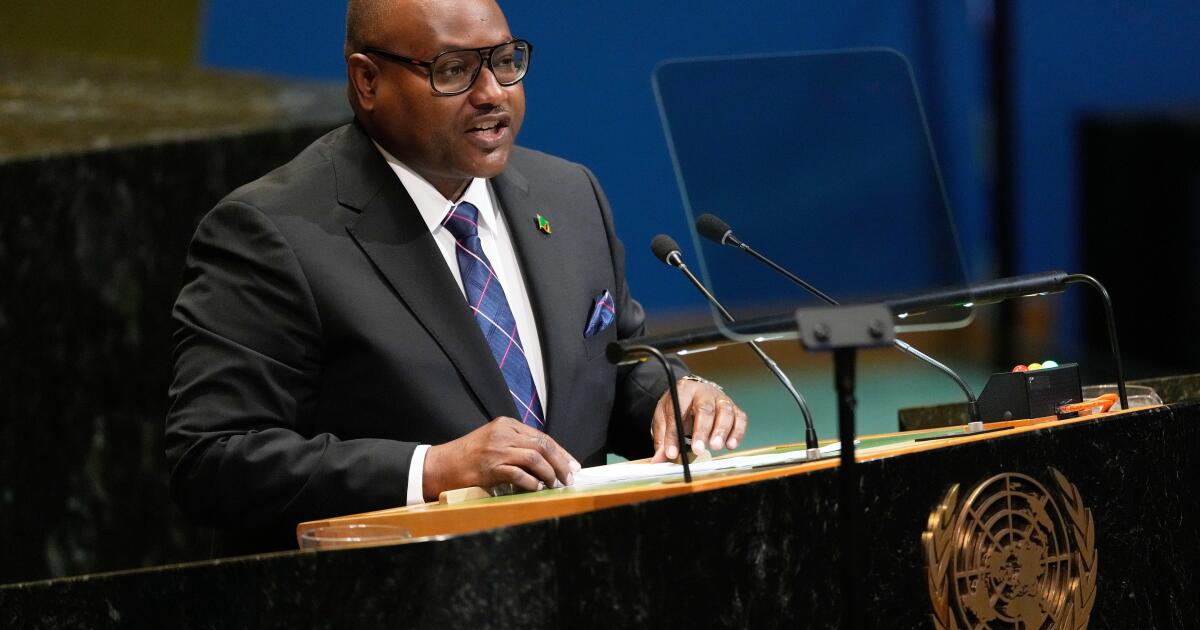
HARARE, Zimbabwe — Zambia is accusing the United States of tying a $2-billion deal for critical health assistance to access to the southern African nation’s rich mineral assets, and calling the outgoing U.S. ambassador’s allegations of corruption “mischievous” and “undiplomatic.”
The comments by Zambia’s foreign affairs minister, Mulambo Haimbe, on Monday brought into the open simmering tensions over President Trump’s “America First” strategy, which is reshaping aid to Africa into transactional agreements.
Some African leaders and health experts have criticized the new U.S. stance and its demands for sensitive health data in exchange for badly needed support for health systems strained by the Trump administration’s dismantling of foreign aid. Some say they would not receive access to health innovations like vaccines in return.
The U.S. is also seeking to challenge China, a dominant player in Zambia and much of Africa, whose minerals are critical to the green energy transition, including inputs for solar panels, electric vehicle batteries and energy storage systems.
Zambia says talks stalled over data-sharing demands
In a statement, Haimbe described the accusations of Zambian graft and negotiation inertia by outgoing U.S. ambassador Michael Gonzales as “mischievous” and “deeply regrettable, undiplomatic and inconsistent with the spirit of mutual respect.”
Haimbe also accused the U.S. of tying access to critical minerals to the conclusion of the health deal, which Gonzales earlier dismissed as “alarmist allegations” that he called “disgusting” and “absolutely and patently false.”
Negotiations have continued for months to conclude the deal, one of dozens the Trump administration is pursuing in some of the world’s most aid-dependent countries.
Gonzales in late April said Zambian leaders had “abdicated their responsibilities, letting the United States pay for healthcare while officials diverted government funds to their own pockets.” He said Zambian authorities had “ignored” U.S. overtures to conclude a new deal.
But Haimbe said negotiations had stalled over “unacceptable” data-sharing demands “in violation of our citizens’ right to privacy” and “the insistence on preferential treatment of U.S companies over Zambia’s critical minerals.”
Zambia “takes the view, first and foremost, that Zambians must have a say on how her critical minerals are used, and second that no one strategic partner is to be treated preferentially to others,” he said.
The U.S. Embassy did not immediately respond to a request for comment.
U.S. says its approach aims to reduce donor dependency
In their place, U.S. officials are negotiating country-by-country agreements that recast aid as a transaction, tying funding to conditions including commercial provisions, domestic financing commitments, disease surveillance, pathogen sharing and even religion.
Since late last year, the U.S. has signed agreements with about 30 countries, many in Africa. Washington says the approach is meant to reduce donor dependency, promote local ownership and safeguard American interests, including against an aggressive China that dominates trade in Africa but contributes less aid.
There has been pushback.
Ghana last week said it had rejected a proposed deal over provisions granting broad access to sensitive health data without safeguards. Zimbabwe walked away from a $367-million package over similar concerns. In Kenya, a $2.5- billion agreement signed in December has been put on hold after a court challenge arguing it violates data protection laws.
In Lesotho, draft U.S. proposals sought 25 years of access to health data and biological samples before local officials secured a shorter five-year deal.
Health experts say data would largely flow one way
Critics say the data-sharing demands tilt toward U.S. interests and warn the information-sharing would largely go in just one direction: toward Washington.
The new agreements aim to ensure the flow of disease surveillance data and biological samples, but through bilateral channels, after the U.S withdrew from the World Health Organization in January, said Asia Russell, executive director of advocacy group Health GAP.
Countries currently report disease outbreaks primarily through the WHO, which coordinates responses and is negotiating new frameworks on pathogen-sharing and equitable access to vaccines.
The U.S., now outside those talks, is pursuing direct access instead.
“[The U.S. wants] to understand what’s actually happening,” said Jen Kates, a senior vice president at the Washington-based nonprofit KFF. “But they are trying to do it in a very different way.”
Health advocates say this risks creating a parallel global health system. In Zimbabwe, a government spokesperson in February said the government terminated negotiations because the U.S. was not offering a “corresponding guarantee of access to any medical innovations — such as vaccines, diagnostics or treatments — that might result from that shared data.”
“That raises serious concerns about who benefits,” said Atilla Kisla of the Southern Africa Litigation Center.
Advocates point to the harsh experience of the COVID-19 pandemic, when African countries contributed data and samples but were largely last in line for vaccines.
Experts warn against health as a ‘bargaining chip’
The agreements with the U.S. are drawing criticism for closed-door negotiations and limited public scrutiny.
“Secrecy is at the center of this. That puts accountability for results at risk,” said Health GAP’s Russell. “It’s impossible to evaluate these deals properly without seeing the full terms. Part of what made PEPFAR successful was transparency. Now that’s been taken away.”
The deals also come with tighter financial conditions. Many include reduced funding compared to previous levels of U.S. assistance, while requiring countries to increase domestic health spending, with aid at risk if targets are not met.
“These are going to be very heavy lifts,” said KFF’s Kates. “Countries are already under strain.”
Critics say some agreements also advance U.S. commercial and political interests, blurring the line between aid and transactional diplomacy.
“When health becomes a bargaining chip, everyone becomes less safe,” Russell warned.
Mutsaka and Imray write for the Associated Press. Keketso Phakela in Maseru, Lesotho, contributed to this report.
Iran has attacked a UAE petroleum site in Fujairah, just days after the United Arab Emirates announced it was leaving OPEC. As the Strait of Hormuz crisis deepens and oil prices keep rising, could this accelerate the shift to renewables, or are we heading into an era of energy volatility?
In this episode:
Jim Krane (@jimkrane), Co-director of the Middle East Energy Roundtable, Rice University’s Baker Institute for Public Policy
Episode credits:
This episode was produced by David Enders and Sarí el-Khalili with Chloe K. Li, Catherine Nouhan, Tuleen Barakat, and our guest host, Kevin Hirten. It was edited by Tamara Khandaker.
Our sound designer is Alex Roldan. Our video editors are Hisham Abu Salah and Mohannad al-Melhem. Alexandra Locke is The Take’s executive producer.
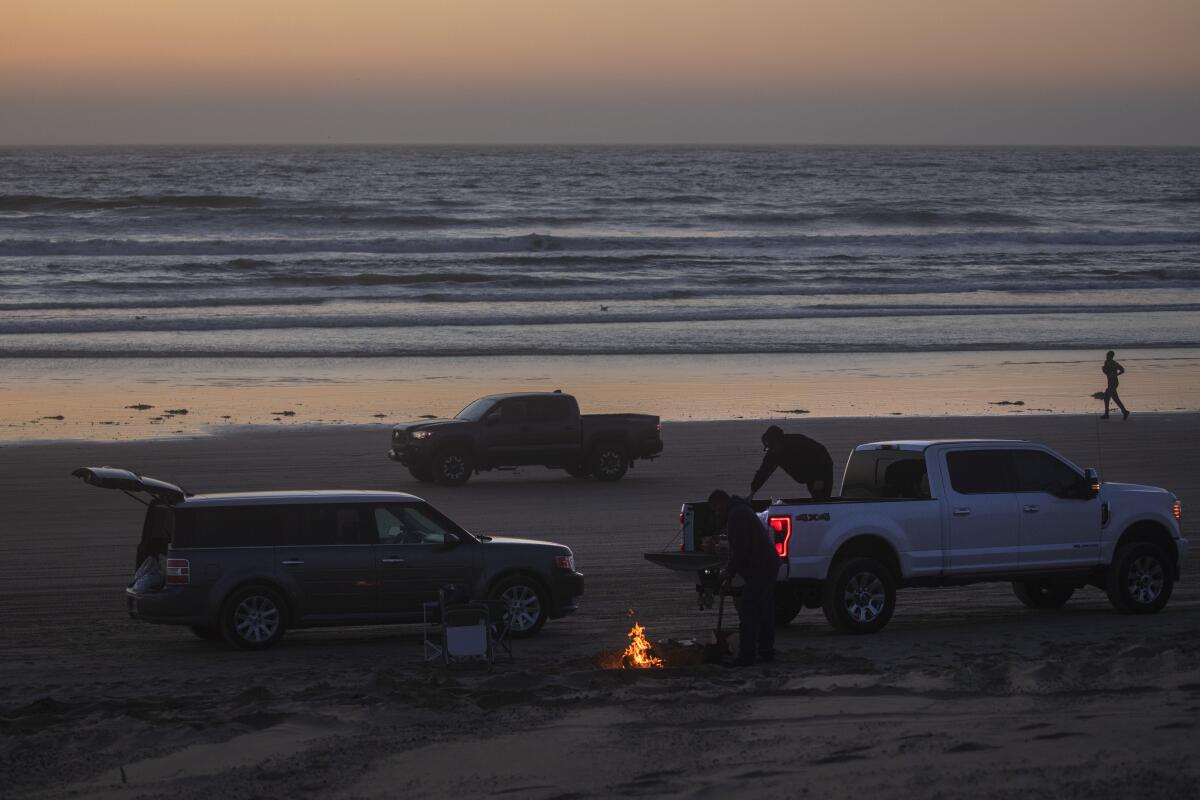
The sands of Oceano Dunes — the only state park where visitors are usually allowed to drive on the beach — are unusually quiet right now.
Too quiet, many locals say, because off-road vehicles and beach camping have been temporarily banished from San Luis Obispo County’s Oceano Dunes State Vehicular Recreation Area since April 14.
Many others, however, are happy about the pause, saying it will be good for the western snowy plover, a threatened sea bird species.
This discord is part of a long-running battle between environmentalists and recreation advocates along this stretch of coastline a few miles south of Pismo Beach. The environmentalists won the most recent round when a federal judge ordered the dunes closed until state parks officials obtain a permit from U.S. Fish and Wildlife Service that allows occasional bird casualties.
State parks officials, who have canceled all camping reservations in the area through May 22, said they hope to reopen it by May 23. But that timetable depends on permit approval by the U.S. Fish and Wildlife Service, which did not immediately respond to a request for comment.
Camping reservations for May 23 and beyond are still active, according to Jon O’Brien, superintendent of the state parks system’s Oceano district.
(Myung J. Chun/Los Angeles Times)
Meanwhile, along Pier Street in Oceano, business is slow.
At Sun Buggy Fun Rentals, which has been catering to visiting families for more than 20 years, “we’ve had to lay a majority of our folks off,” said owner Randy Jordan. He said he’s counting on state parks officials “doing everything they can” to reopen the area on May 23.
At the Pier Street Deli y Mas, “It’s been really slow,” manager Chelsea Nava said. “Our employees are losing hours.”
In normal times, Nava said, 80% or more of her customers are from out of town, including “a lot of people from Bakersfield and Fresno, [who] come in for the dunes.”
“We aren’t quite sure” what to expect next, Nava said, noting that her family took over the deli in late 2024. “We were doing really great right before the closing,” she said.
The closure was ordered by U.S. District Court Judge Anne Hwang, who ruled April 9 that the state needs to do more to protect the western snowy plover, which is classified as threatened under the federal Endangered Species Act.
Under Hwang’s order, the closed area can reopen when the state files a long-awaited habitat conservation plan and gets an “incidental take” permit from U.S. Fish and Wildlife Service that allows some snowy plover deaths and injuries. Jon O’Brien, superintendent of the state parks system’s Oceano district, said he was confident that the state would obtain the approval and reopen the area almost immediately after May 22.
Camping reservations for May 23 and beyond “are still active,” O’Brien said. “So if you’ve got a camping reservation for May 24, you’re still got a reservation.”
Jim Suty, president of the Friends of Oceano Dunes, which favors recreational use of the area, said he’s hopeful that parks officials can open the area as promised. But even if they do, Suty said, plenty of damage has been done.
“People really need to appreciate that closing the park at this time did nothing to help the endangered species, and did everything to hurt the people,” Suty said, referring to visitors and local businesses that depend on them. “It’s very important to the vitality of the local community.”
“It’s maddening,” said David Hamilton, who lives in nearby Arroyo Grande and said he has been driving the dunes and watching sunsets with his wife for years. “There’s so much coastline and they can’t leave this small stretch open.”
The recreation area’s status has long been crucial to Oceano, an unincorporated community of about 7,000, located just to its north.
Though there are several neighboring small cities along the nearby coast, Oceano merchants say they don’t get much business from Grover Beach, Arroyo Grande or Pismo Beach, which includes more upscale hotels and restaurants with clifftop ocean views.
Oceano Dunes State Vehicular Recreation Area remains the only California State Park where vehicles may be driven on the beach.
(Myung J. Chun / Los Angeles Times)
The judge’s order covers roughly 800 acres of off-highway vehicle area south of Arroyo Grande Creek. Until April 14, O’Brien said, up to 350 campers per night (at $10 per vehicle) were allowed in the area, along with up to 1,720 off-highway and 1,800 street-legal vehicles per day, at $5 per vehicle.
The most recent court case was initiated in 2020 by the Tucson-based Center for Biological Diversity. Zeynep Graves, a senior attorney at the center, said in a statement that state officials “have let off-road vehicles tear through protected habitat at Oceano Dunes, injuring and killing snowy plovers, harassing roosting flocks, and degrading their habitat.”
However, state parks statistics show that the western snowy plover breeding population has grown from at least 32 breeding adults in 2002 to at least 281 in 2024, exceeding state targets since 2013.
In her ruling, Hwang found that California state parks had violated the federal Endangered Species Act by permitting too much activity near the birds without having obtained an “incidental take” permit.
State parks officials responded by saying the closure “will result in thousands of families losing their camping reservations and coastal recreational access, while cutting operational revenue that funds environmental conservation.”
During the closure, Pismo State Beach — which is just north of the off-highway recreation area and Arroyo Grande Creek — will allow a maximum of 1,000 street-legal vehicles per day (and no off-highway vehicles). Pismo State Beach’s two campgrounds (near the beach but not on it) remain open.
Oceano Dunes is the state’s only oceanfront off-highway vehicle recreation area. Drivers have been driving on the beach and dunes there since the early 20th century. The state acquired the land in 1974 and created the Oceano Dunes State Vehicular Recreation Area in 1982.
Through the years, state parks officials have gradually reduced acreage open to off-highway vehicles as recreation advocates and environmentalists have debated how much protection the birds need. Often, the battle has pitted the California Coastal Commission (seeking to curtail vehicle access) against leaders of California State Parks (seeking to continue vehicle access).
Apart from closures, Oceano Dunes recently faced another challenge. Because of CoVID-19 safety measures, the area locked its gates in 2020-21. During that time, rare shorebirds started nesting in areas usually reserved for off-roaders and their beach-riding vehicles. In 2021, the California Coastal Commission sought to permanently end off-road driving in the dunes but was later overruled by court rulings that the agency had overstepped its authority.
Throughout the debate, the area has remained popular. In 2022-23, the most recent fiscal year for which statistics are available, the area drew more than 908,000 visitors, including about 126,000 campers.
Tesla is encountering growing resistance in Europe as it seeks approval for its advanced driver assistance system known as Full Self Driving. While chief executive Elon Musk has expressed strong confidence that the technology will soon gain approval across the bloc, internal communications among regulators reveal a far more cautious and skeptical stance.
The system, currently marketed as Full Self Driving Supervised, allows vehicles to operate autonomously under certain conditions but still requires full driver attention. Approval in Europe is critical for Tesla as it attempts to recover market share lost over the past two years and expand its subscription based revenue model.
Early Approval and Wider Ambitions
The Dutch vehicle authority RDW granted initial approval for the system earlier this year. This decision has now been forwarded to the European Union for broader consideration, with discussions underway among member state representatives.
Tesla is aiming not only for approval of its current system but also for future deployment of fully autonomous robotaxis in Europe. Such ambitions depend heavily on regulatory trust in the safety and reliability of its technology.
Regulatory Concerns Across Europe
Despite the Dutch endorsement, regulators from several European countries including Sweden, Finland, Denmark, and Norway have raised serious concerns. These include the system’s tendency to exceed speed limits, its performance in icy and hazardous conditions, and the possibility that drivers may bypass safeguards designed to ensure attentiveness.
Officials have also questioned whether the branding of Full Self Driving could mislead consumers into overestimating the system’s capabilities. This concern reflects a broader issue in the automated driving industry, where terminology can blur the line between assistance and autonomy.
Safety, Environment, and Real World Challenges
European regulators are particularly focused on how the system performs under conditions that differ significantly from those in the United States. Winter driving, for instance, presents unique challenges such as icy roads, reduced visibility, and unpredictable obstacles.
Questions have also been raised about how the system would respond to unexpected hazards, including wildlife on roads. These concerns highlight the difficulty of deploying standardized automated driving technology across diverse geographic and environmental contexts.
Pressure, Perception, and Public Influence
Adding to regulatory unease is Tesla’s approach to public engagement. Officials have expressed frustration with the company’s encouragement of Tesla owners to lobby regulators for approval. In several cases, authorities reported being inundated with emails from supporters advocating for the technology.
While some regulators acknowledged that the system performed well in complex urban environments, others warned that public pressure could complicate an already rigorous evaluation process.
High Stakes Approval Process
For the system to gain EU wide approval, it must secure support from a qualified majority of member states representing a significant portion of the bloc’s population. No immediate vote is scheduled, but further discussions are expected in the coming months.
Approval is seen as a key factor in Tesla’s strategy to boost sales and profitability in Europe, especially as competition intensifies from other global and regional automakers.
Analysis
Tesla’s push for automated driving approval in Europe reveals a fundamental tension between technological ambition and regulatory caution. While the company frames its system as a breakthrough in safety and convenience, European authorities are prioritizing risk mitigation and consumer protection.
The skepticism is not merely bureaucratic hesitation but reflects deeper structural differences in regulatory philosophy. European institutions tend to adopt a precautionary approach, particularly in areas involving public safety and emerging technologies.
For Tesla, the challenge lies in bridging this gap. Securing approval will require not only technical validation but also greater transparency and alignment with regional expectations. For regulators, the task is to balance innovation with responsibility in a rapidly evolving sector.
Ultimately, the outcome of this process will shape not only Tesla’s future in Europe but also the broader trajectory of autonomous driving adoption across the continent.
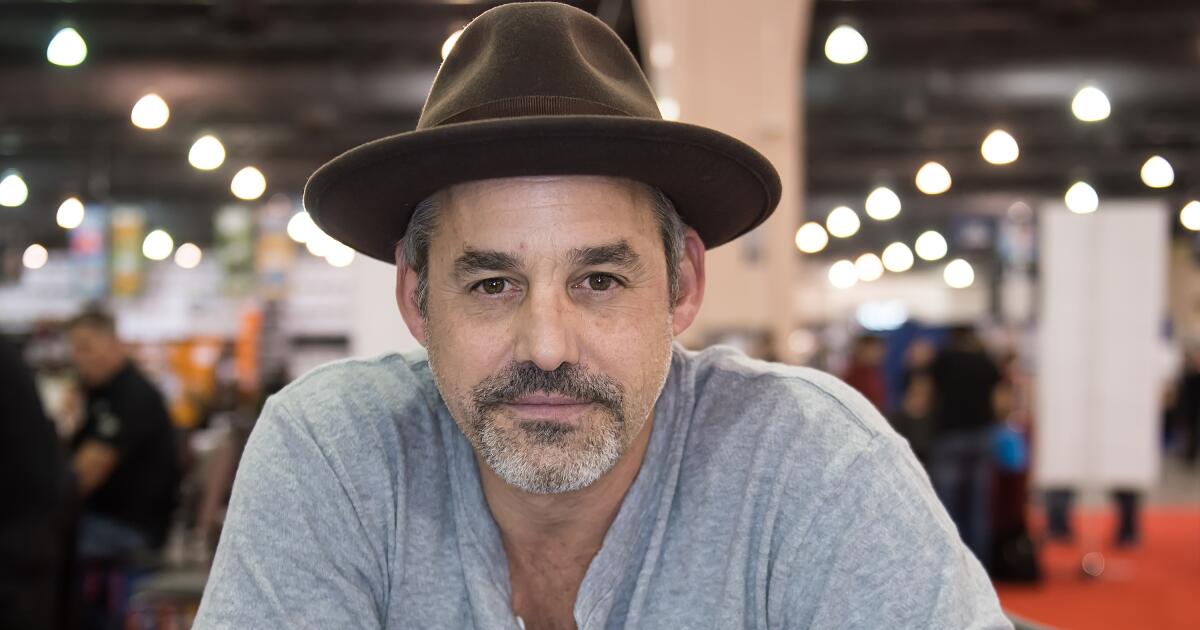
Indiana officials have disclosed the official cause of death for “Buffy the Vampire Slayer” star Nicholas Brendon, who died in March.
The Putnam County Coroner confirmed in a report shared with The Times on Tuesday that the actor, best known for portraying the loyal and wisecracking Xander Harris, died of atherosclerotic and hypertensive cardiovascular disease. Acute pneumonia and a previous myocardial infarction — a heart attack — were listed as contributing factors in his death.
Brendon died March 20, his family announced in a statement on his social media pages. The family said he died of natural causes, which was also confirmed by the coroner’s report. The report also noted that Brendon had “90% blockage” in his right coronary artery. He was 54.
“He was passionate, sensitive, and endlessly driven to create,” his family said on Instagram in March. “Those who truly knew him understood that his art was one of the purest reflections of who he was.”
Prior to his death, Brendon experienced multiple health issues. He was hospitalized in 2022 after he was diagnosed with a congenital heart defect and after suffering a cardiac incident. The “Criminal Minds” star also underwent multiple spinal surgeries to manage cauda equina syndrome, a rare condition in which nerve bundle in the lumbar or sacral spine are compressed or not functioning properly. His serious spinal injury was triggered by a fall in 2021 that required emergency surgery to prevent paralysis, his manager Theresa Fortier said in a statement at the time.
The coroner’s report described the scene of Brendon’s death, noting that because of the actor’s “declining health” Fortier had spent more time with him and notified authorities of his passing. The report confirmed there were no “obvious signs” of foul play and that “nothing seemed out of place or disturbed” in Brendon’s home, which appeared to be under renovation. Fortier told officials that the actor — a longtime smoker — was dealing with a “persistent” cough, complaining about chest pain and “self-medicating” with over-the-counter drugs prior to his death, according to the report. Brendon also declined further medical treatment.
According to the report, Brendon also had a “markedly enlarged heart,” “moderate” blockage in some of his left arteries and small bowel inflammation.
In addition to “Buffy” and “Criminal Minds,” Brendon was known for roles in the TV series “Without a Trace,” “Private Practice” and “Kitchen Confidential.”
Times staff writer Clara Harter contributed to this report.
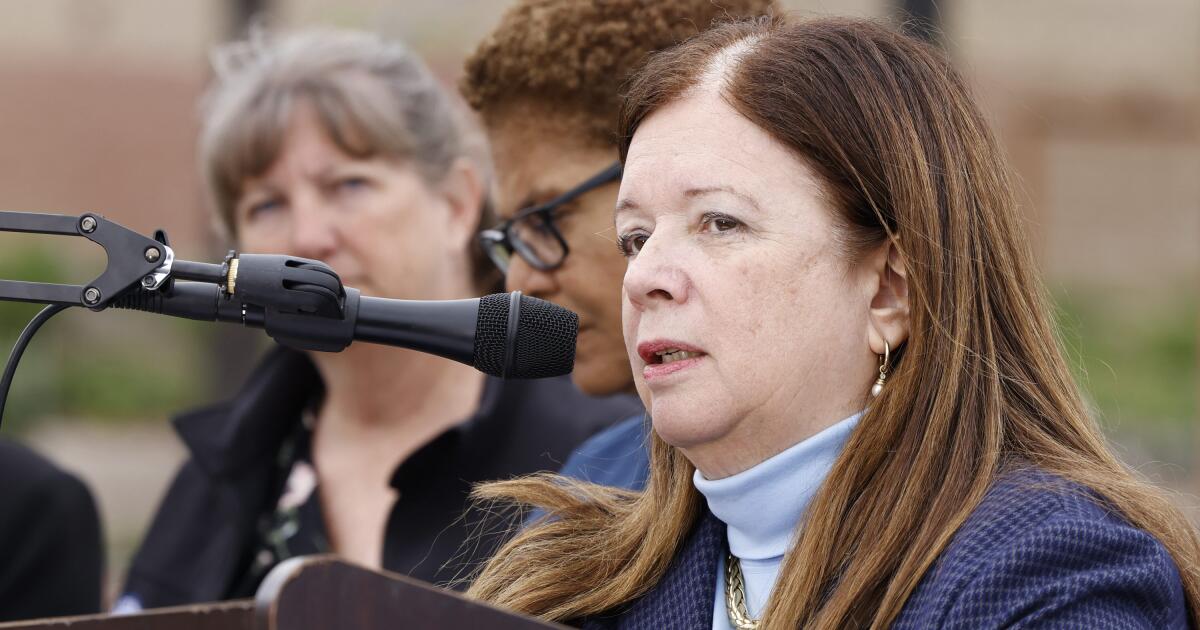
Los Angeles County Dist. Atty. Nathan Hochman and the union that represents rank-and-file police officers offered a stinging rebuke of embattled City Atty. Hydee Feldstein Soto on Tuesday morning while endorsing one of her challengers in the upcoming election, county prosecutor John McKinney.
Hochman said he analyzed the field and decided the city attorney’s office “desperately needed” an experienced litigator like McKinney, who has been a prosecutor for 28 years and handled some of the city’s highest-profile trials.
“What we need in the L.A. city attorney’s office is someone who actually has courtroom experience, someone who understands how to win a trial,” Hochman said. “Someone who has actually not only talked the talk, but walked the walk.”
Hochman and leaders from the Los Angeles Police Protective League, the union which represents the majority of LAPD officers, stood shoulder to shoulder in endorsing McKinney. The league recently rescinded its endorsement of Feldstein Soto.
Feldstein Soto has been under fire for weeks, with her office accused of failing to properly inform other city officials about a hack of confidential files that saw 337,000 documents, videos and photographs leaked online. The documents amount to millions of pages, and appear to mostly come from civil lawsuits against the city that have been resolved in court. The files were not secured by a password, according to sources who spoke previously with The Times and requested anonymity because they were not authorized to discuss the ongoing investigation.
The city attorney’s office previously responded to questions from The Times by referring to a public report issued April 17, which said a preliminary investigation indicated that “the incident was contained to that third-party environment, and that no other City applications, systems, or department records were accessed or affected.”
While many of the documents dealt with relatively minor issues, others contained sensitive information about police officers. The Times used the leaked documents last month to reveal how the LAPD disciplined the officers who blew up a city block when they misjudged the weight of seized fireworks in South L.A. in 2021.
Sgt. Chris Wecker, vice president of the police union, said officers’ frustration with Feldstein Soto goes beyond the data breach. Wecker noted the city had paid out gargantuan sums in civil cases under Feldstein Soto’s administration, some of which the union believes she misplayed.
“Los Angeles has seen a dramatic rise in lawsuits, settlements and verdicts against the city costing taxpayers hundreds of millions of dollars,” he said. “The city attorney should not simply react to lawsuits after they’ve been filed. He must work proactively with city departments to identify legal risks before they turn into costly litigation.”
Feldstein Soto has also been accused of mismanaging her office and using the city’s prosecutorial powers for personal vendettas in multiple lawsuits, allegations she has repeatedly denied.
McKinney said he believes the city attorney’s office can do more work to reduce homelessness and criticized Feldstein Soto for her handling of an array of misdemeanor crimes including animal cruelty and trespassing. He said he is a proponent of “Broken Windows” policing — the idea that enforcing lesser laws will reduce felonies and deter criminals from committing worse crimes — and took a shot at Feldstein Soto’s handling of the data breach.
If such an incident happened under his watch, he said his “first call would be to the [Los Angeles Police] Department, the second to the FBI and the third to the people impacted.”
Feldstein Soto’s office has said senior LAPD officials and the city’s IT department were alerted as soon as the leak was discovered, and the FBI is investigating the matter.
Although it’s rare for the county district attorney to weigh in on the race for their city level counterpart — ex-Dist. Atty. George Gascón did not offer an endorsement in the 2022 contest which Feldstein Soto won — Hochman and McKinney are political allies who have aided each other before.
When Hochman emerged from a crowded 2024 primary field to challenge Gascón, McKinney endorsed him and functioned as a campaign surrogate.
Marissa Roy, a deputy attorney general with the California Department of Justice, is running to the left of the field and has the backing of the county’s Democratic party, the Democratic Socialists of America and her boss, California Atty. Gen. Rob Bonta. Roy has said she wants to turn the office into “the largest public interest law firm in the city,” targeting wage theft, tenant harassment and other issues impacting working-class Angelenos.
A call to Roy’s campaign was not immediately returned Tuesday.
Los Feliz attorney Aida Ashouri is also running.
The announcement from Hochman and the LAPD union could jump-start McKinney’s flagging campaign. He’s raised only $78,000 since entering the field, far less than either Roy or Feldstein Soto.
McKinney is relying on some of Hochman’s past campaign resources, hiring both the man who managed Hochman’s victory in the 2024 district attorney’s race and fundraiser Trey Kozacik, who operates the Pluvious Group.
McKinney, a registered Democrat, previously told The Times he would protect the city’s residents in court, “regardless of who’s in the White House.”
“I have been very, very disturbed by the activities of some federal law enforcement agencies that have come into Los Angeles and intentionally attempted to terrorize our people,” he said.
Times Staff Writers David Zahniser and Libor Jany contributed to this report.
Napoli will turn Manchester United striker Rasmus Hojlund’s loan into a permanent move, West Ham winger Crysencio Summerville is being monitored by a number of clubs and Chelsea consider appointing Xavi Hernandez as their next manager.
Napoli say they will sign on-loan Manchester United striker Rasmus Hojlund, 23, on a permanent deal. The Serie A side are close to securing a Champions League spot which would trigger a £38m fee for the Denmark forward. (Mirror), external
West Ham attacker Crysencio Summerville, 24, is being monitored by a number of clubs across Europe, with the Dutch winger’s asking price set to drop if the Hammers are relegated. (Telegraph – subscription required), external
Former Barcelona boss Xavi Hernandez is under consideration by Chelsea to be their next manager. (Independent), external
Liverpoolboss Arne Slot is set to stay at the club, despite Ajax being interested in the Dutchman. (Mirror), external
Liverpool are weighing up a move for 28-year-old Bournemouth and Argentina defender Marco Senesi, who has verbally agreed to join Tottenham if they avoid relegation from the Premier League. (Talksport), external
Barcelona are interested inBournemouth‘s 19-year-old forward Junior Kroupi but will face competition from Manchester City and several other Premier League clubs for the France Under-21 international. (Sky Sports), external
Newcastle United boss Eddie Howe will get the chance to lead the club’s biggest rebuild since the 2021 takeover, with significant change expected at St James’ Park this summer. (i sport), external
Major League Soccer sides LA Galaxy and Inter Miami lead the race to sign Manchester United‘s Brazil midfielder Casemiro, 34, when his Old Trafford contract expires, despite interest from clubs in Saudi Arabia and Turkey. (Talksport), external
Casemiro’s desire to play with Lionel Messi means the 34-year-old is willing to reduce his salary demands to join the 38-year-old Argentina forward at Inter Miami. (Sky Sports), external
Real Madrid and Brazil forward Vinicius Jr, 25, wants some things to change at the Bernabeu – not just his salary – before he signs a new contract with the club. (Radio Marca – in Spanish), external
Bayern Munich’s honorary president Uli Hoeness says Austria midfielder Konrad Laimer, 28, is “not Maradona” as the two parties struggle to agree a contract extension. (Sky Sport Germany – in German), external
US President Donald Trump said Iran should ‘wave the white flag of surrender’ in the war, and accused Iran’s leaders of playing games in negotiations. He also said higher oil prices are a ‘small price to pay’ to keep Iran from having a nuclear weapon.
Sudan has recalled its ambassador to Addis Ababa, accusing Ethiopia of being behind attacks on Khartoum’s airport. International Crisis Group’s Alan Boswell says the escalation risks making the countries’ internal challenges worse.
“Tracker,” one of TV’s most-watched shows, is uprooting its Canadian production and moving to Los Angeles.
The action drama, produced by Disney’s 20th Television, is among a slate of new and recurring series benefiting from California’s improved $750 million tax incentive program. The show’s fourth season, set to begin shooting this summer, will receive the state’s largest tax credit , at $48 million, according to the California Film Commission.
The production will film for 176 days in California, with 250 crew members and 275 actors on board. The tax credit is based on the show’s projected spending of over $129 million. Deadline first reported the news of the show’s relocation.
The show stars actor Justin Hartley and follows his character as he tracks down people for reward money. Ever since its 2024 premiere, the show has resonated with audiences. Its third season is currently airing and was the fourth most-watched program on linear TV as of late April, according to Nielsen.
“Tracker” is primarily set in the wilderness, making the move to California a fresh opportunity for the production to explore diverse landscapes as its backdrop. Due to the rural setting, the show is also eligible to earn an extra 5% tax credit bonus, in addition to the 35% base credit, on qualified expenditures incurred outside the designated 30-mile zone of the Greater Los Angeles area.
Before “Tracker” secured the highest TV show tax credit, season 3 of Amazon’s “Fallout,” which relocated from New York to Los Angeles, received a $42M incentive. Dan Fogelman’s new NFL drama “The Land” received $42.8M. Other productions that have benefited from the tax program include medical drama “The Pitt,” Disney’s new animated movie “Phineas and Ferb” and Netflix’s upcoming reboot of “13 Going on 30.”
More than 100 productions have received tax credits since the program was expanded last year in response to the continued migration of productions to other countries like Ireland, U.K. and Canada.
But film industry advocates say these efforts aren’t enough to fully revitalize U.S.-based productions and local film economies.
To that end, , U.S. Sen. Adam Schiff (D-Calif.) announced in March he is working on a bipartisan federal film incentive proposal that would be globally competitive.
“State programs cannot simply substitute for the kind of global, federal and competitive tax incentives that are needed to bring production back to American soil and stop its offshoring,” Schiff said.
ATLANTA — The Department of Justice is seeking the names of every person who worked in the 2020 election in Georgia’s Fulton County, a Democratic stronghold that Donald Trump has long accused of widespread voter fraud he falsely says cost him victory against Joe Biden in the state that year.
Lawyers for the county filed a motion on Monday night to quash a grand jury subpoena that asks for the names and personal contact information of county employees and volunteer poll workers. This latest action comes after the FBI in January went to a Fulton County elections warehouse and seized ballots and other documents from the 2020 election, which Georgia’s certified totals showed Trump lost in the state to Biden by 11,779 votes out of nearly 5 million cast. Trump, a Republican, still insists the election was stolen from him even though judges and his own attorney general concluded otherwise.
Monday’s court filing says the subpoena is meant to “target, harass and punish the President’s perceived political opponents.” The request is “grossly overbroad and untethered to any reasonable need,” the county’s lawyers argue. It “cannot yield any evidence that could result in a criminal prosecution,” they wrote, arguing that the statute of limitations on any federal crime related to the 2020 election has already expired.
The Justice Department did not immediately respond to an email seeking comment Tuesday.
County Board of Commissioners Chairman Robb Pitts, in an emailed statement, called the subpoena “yet another act of outrageous federal overreach designed to intimidate and chill participation in elections.”
“Let me be crystal clear. Fulton County will not be intimidated,” said Pitts, a Democrat who’s running for reelection.
Since the 2020 election, Trump “has obsessively propagated the debunked conspiracy theory that Fulton County ‘stole’ the 2020 election from him,” the county’s lawyers wrote. “And he has made it clear that he seeks retribution against those who refuse to indulge his baseless claims.”
Trump has already targeted individual poll workers like Ruby Freeman, who was attacked by him and his supporters after the election. Freeman, who’s Black, has said she was forced to flee her home after false claims of election fraud against her led to racist threats and strangers showing up at her home.
The grand jury subpoena, dated April 17, was served on the county’s director of elections on April 20, the county’s court filing says. It seeks the “name, position/function, residential and email addresses, and personal telephone number(s)” for thousands of election workers “ranging from county employees who assisted on election day, to bus drivers who operated a mobile voting location, to volunteers and temporary poll workers,” the filing says.
The subpoena “is a chilling escalation in the campaign to terrorize Fulton County election workers,” the county’s lawyers wrote, adding that threats arising from the current political environment have caused election workers to “fear for their physical safety.” That and other stresses “including the likelihood of being scapegoated by public officials” are causing election workers to leave their jobs “in unprecedented numbers,” they wrote.
The county’s lawyers note that the subpoena directs the county to provide the records not to the grand jury but to an out-of-state Justice Department lawyer or to the FBI agent who wrote the affidavit used for the seizure of the county’s 2020 ballots in January.
The January seizure of the ballots and other records from Fulton County was one in a string of moves by Trump’s administration to obtain past election records from critical swing states. The FBI in March used a subpoena to get records related to an audit of the 2020 presidential election in Maricopa County in Arizona. And the Justice Department in April demanded that Michigan’s Wayne County turn over its ballots from the 2024 election, which Trump won against Biden’s vice president, Kamala Harris.
The Justice Department is also fighting numerous states in court for access to voter data that includes sensitive personal information. Election officials, including some Republicans, have said handing over the information would violate state and federal privacy laws.
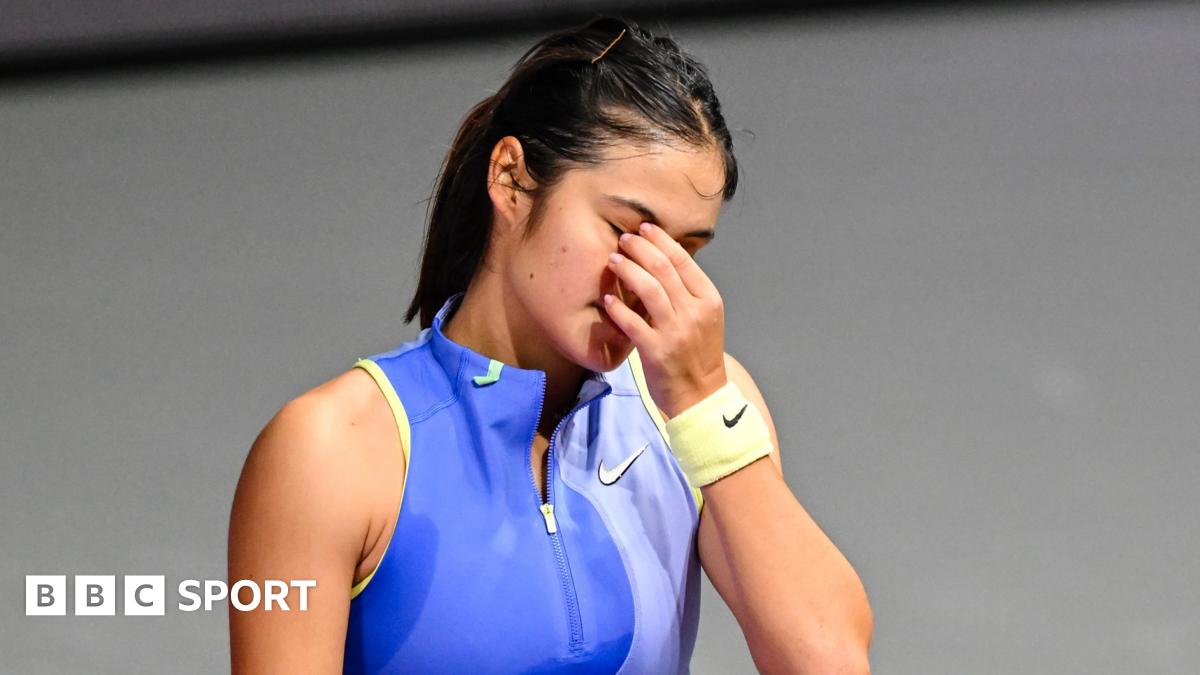
Raducanu last played a match in Indian Wells on 8 March, and has since missed the Miami Open and clay-court events in Linz and Madrid because of her post-viral symptoms.
However, the 23-year-old has been practising in recent weeks at the National Tennis Centre in London and at the Ferrer Academy near Benidorm.
She had been accompanied in Rome by Jane O’Donoghue, a friend and former LTA national coach, and physio Emma Stewart, who perhaps tellingly was with Raducanu during her interviews.
“Coming on to the clay courts is much more physically demanding than potentially other surfaces but I want to come back 100% ready,” Raducanu said.
“I have been building my way up slowly and looking forward to when I get out there.”
We now know she will not be getting out there in Rome this week.
Raducanu has one last chance to play a WTA event before the French Open in either Strasbourg or Rabat in two weeks’ time.
But if she misses the entire clay swing, then Raducanu will have been absent for three months by the time the grass-court season begins.
Even if Raducanu is fit to compete at Roland Garros, which begins on 24 May, she will do so as an unseeded player.
The 2021 US Open champion is currently 30 in the world rankings but only 32 players are seeded – and she will drop several places now she is no longer able to defend the points she earned from a fourth-round run in Rome last year.
May 5 (UPI) — The Center for AI Standards and Innovation, part of a U.S.government agency, announced Tuesday that it will test artificial intelligence models from some top firms before release to vet them for security risks.
CAISI has deals with Microsoft, xAI and Google DeepMind for this testing and targeted research “to better assess frontier AI capabilities and advance the state of AI security,” it said in a release. The center is part of the U.S. Department of Commerce’s National Institute of Standards and Technology.
This follows similar deals in 2024, under the Biden administration, with prominent AI leaders OpenAI and Anthropic, which have been “renegotiated” to fit Trump administration directives, Politico reported.
The government has increasingly shown interest in matters of AI technology and security. CNBC also reported Tuesday that the Trump administration is considering an executive order to create a process for AI oversight by the White House.
Some of this interest has been heightened by the announcement last month of Anthropic’s new Mythos AI model. The company described the model as excelling “at identifying weaknesses and security flaws within software” and limited its initial use to certain companies. These companies, including Amazon and Microsoft, will use it as part of defensive security work and as part of Project Glasswing, a cybersecurity initiative, Anthropic said.
The announcement Tuesday from CAISI said that the center has completed more than 40 evaluations of AI models so far.
“Independent, vigorous measurement science is essential to understanding frontier AI and its national security implications,” CAISI director Chris Fell said in a statement. “These expanded industry collaborations help us scale our work in the public interest in a critical moment.”
Today, US Defence Secretary Pete Hegseth says the US-Iran ceasefire “is not over”, despite attacks in the Strait of Hormuz on Monday.
Donald Trump’s “Project Freedom” aims to use the US military to guide stranded cargo ships out of the Strait of Hormuz. But, Iran insists that it controls the strait – and yesterday fired missiles and drones at military and commercial ships, according to the US. Adam is joined by chief presenter Caitriona Perry and business editor Simon Jack.
And, Prime Minister Sir Keir Starmer has said “every part of society” has a responsibility to tackle antisemitism in the UK at a summit in Downing Street. It comes after the stabbing of two Jewish men in Golders Green and a string of attacks at synagogues and other Jewish sites in recent months. Adam and Alex speak with special correspondent Lucy Manning.
You can now listen to Newscast on a smart speaker. If you want to listen, just say “Ask BBC Sounds to play Newscast”. It works on most smart speakers.
You can join our Newscast online community here: https://bbc.in/newscastdiscord
Get in touch with Newscast by emailing newscast@bbc.co.uk or send us a WhatsApp on +44 0330 123 9480.
New episodes released every day. If you’re in the UK, for more News and Current Affairs podcasts from the BBC, listen on BBC Sounds: https://bbc.in/4guXgXd
Newscast brings you daily analysis of the latest political news stories from the BBC. The presenter was Adam Fleming. It was made by Jack Maclaren with Anna Harris. The social producer was Gabriel Purcell-Davis. The technical producer was Ben Andrews. The assistant editor is Chris Gray. The senior news editor is Sam Bonham.
The trailer for Kylie Minogue’s new Netflix documentary has finally launched, leaving fans emotional over the singer’s journey
Kylie official trailer for inspiring documentary
Fans have reacted with delight to a trailer for the new Netflix series about Kylie Minogue, in which she shares her own home movies and personal photographs for the first time. She is also seen close to tears talking about her cancer battle saying: “I was so scared of what was ahead of me.”
The actress and singer, 57, who allowed the cameras to follow her for a three-part documentary, teases at the start of the trailer: “They’re convincing me to let you in.”
One fan gushed: “She is everything that is right with the world, an inspiration, an icon.” While another agreed: “I’ve been a fan since she was in Neighbours and followed her ever since. This will be an emotional journey for all her true fans, can’t wait!”
The “intimate” films, released on May 20, will show how she has successfully reinvented herself many times, selling 80 million records along the way. There are clips of the Aussie soap star turned pop princess winning a Grammy and being chased down the street by fans shouting, “I love you Kylie.”
Talking about being photographed and filmed, she says: “I love the feeling around the shot. That feeling of freedom. I hate being boxed in.” And of her long and recording career, she declares: “Life makes sense to me on stage.” Hinting that she is a long way from hanging up her microphone, she adds: “I don’t know where we’re going. There’s certainly no end.”
In other clips she is seen laughing in black and white snaps with her former lover Michael Hutchence and also hanging out with Jason Donovan, her co-star in Neighbours.
In one clip from British TV, former daytime favourite Anne Diamond is seen asking her, in a slightly snippy tone: “When you started out, did you mean to be an actor or a singer?”
She admits to feeling “frustrated” by headlines labelling her the “singing budgie” and calling her “awful”, “mechanistic”, “talentless” and “terrible”. One scene shows her with her head in her hands on the edge of the stage as someone enquires” “How are you feeling? But in other moment, looking very happy, she declares: “I can’t actually speak just yet.”
Of her battle with breast cancer 21 years ago in 2005, when she was 36, Kylie admits: “I was so scared of what was ahead of me… f***!” Younger sister Dannii battles tears as she says: “We didn’t know if she was ever going to be well again. But I just wanted to be with my sister. Music kept us going.” One shocked fan reacted: “Almost 40 years in and the first time I’ve heard her swear! She is pure perfection.”
The pals that share their thoughts include Donovan, singer Nick Cave and hit-maker Pete Waterman, who put her on the path to superstardom all those years ago. Cave, her close friend with whom she recorded Where the Wild Roses Grow in 1995, explains: “Kylie is this force. It’s all outward. Giving.”
The films, from BAFTA Award-winner Michael Harte, will attempt to show viewers the woman behind the hits, focusing on “how she has faced public scrutiny, personal loss and illness with grit and grace”.
WASHINGTON — Senate Republicans have added $1 billion in White House security upgrades to legislation that would fund immigration enforcement agencies, a proposed boost for President Trump’s ballroom project after a man was charged with trying to assassinate him at the White House Correspondents’ Assn. dinner last week.
The GOP bill released late Monday would designate the money for the U.S. Secret Service for “security adjustments and upgrades” related to the ballroom project, which Trump and Republicans have been pushing since Cole Tomas Allen allegedly stormed the April 25 media dinner at the Washington Hilton with guns and knives. The legislation says the money would support enhancements to the ballroom project, “including above-ground and below-ground security features,” but also specifies that the money may not be used for non-security elements.
White House spokesperson Davis Ingle praised Republicans for including the money for the “long overdue” project, saying it would “provide the United States Secret Service with the resources they need to fully and completely harden the White House complex, in addition to the many other critical missions for the USSS.”
The money is part of a larger bill to pay for Immigration and Customs Enforcement and Border Patrol, as Democrats have been blocking funds for both agencies since mid-February. Congress passed bipartisan legislation to fund the rest of the Homeland Security Department on April 30 after a record-long shutdown, but Republicans are using a partisan budget maneuver to push through the ICE and Border Patrol dollars on their own. The House has not released its bill yet, but the Senate is expected to start voting on its version of the legislation next week.
It is unclear exactly how the $1 billion would be used, and the amount far exceeds the proposed $400 million for construction of the ballroom. The White House has said in court documents that the East Wing project would be “heavily fortified,” including bomb shelters, military installations and a medical facility underneath the ballroom. Trump has said it should include bulletproof glass and be able to repel drone attacks.
The National Trust for Historic Preservation has sued to block construction of the project, but a federal appeals court said last month that it can continue in the meantime.
The White House has said that private money would pay for the construction but public money would be used for security measures. Some Republicans have suggested that public money pay for all of it, arguing the security breach at the dinner shows the president needs a secure place to host events.
“It would be insane” to hold the dinner at a hotel again, said Republican Sen. Lindsey Graham of South Carolina, who introduced a bill to pay for the ballroom’s construction with Sen. Katie Britt, R-Ala.
Democrats have said they will oppose any efforts to pay for the ballroom.
“While Americans are struggling to make ends meet as a result of President Trump’s failed policies, Republicans are focused on providing tens of billions of dollars for the President’s vanity ballroom project and cruel mass deportation campaign,” said Illinois Sen. Dick Durbin, the top Democrat on the Senate Judiciary Committee, which oversees the U.S. Secret Service.
Jalonick writes for the Associated Press. AP writer Darlene Superville contributed to this report.
Halfpenny was originally a member of the Ospreys academy who let him go because of concerns about his size.
He signed for Cardiff Blues ahead of the 2007-08 season and played for Cardiff RFC and the then Cardiff Blues between 2007 and 2014.
“I’ll be forever grateful to Cardiff for giving me the opportunity to join the academy and start my professional career,” said Halfpenny.
“I instantly felt at home and will always look back at my time at Cardiff as some of the most memorable years of my life.”
During that seven-year stint, Halfpenny made 87 appearances and scored 568 points, winning the Amlin [now European] Challenge Cup and [now defunct] Anglo-Welsh Cup.
He signed for Toulon in 2014, winning the 2015 European Champions Cup with the French side before returning to Wales with Scarlets in 2017, spending six seasons in Llanelli.
Halfpenny travelled to New Zealand to join Crusaders in 2024 before linking up with Harlequins the following year.
After being involved as a kicking coach for Wales’ summer tour of Japan in 2025, Halfpenny returned to Cardiff with a short-term contract in September 2025 as a kicking coach and player and that deal was extended until the end of the season.
He played his first game for the Blue and Blacks in 4,347 days when he faced Ulster in the win in December 2025 and also featured against the same opposition the following month.
That appearance off the bench in Belfast during the 21-14 defeat could be his final professional match, if Halfpenny is not involved in Cardiff’s two remaining United Rugby Championship (URC) matches against Glasgow and Stormers or any further play-off games.
“It’s a special club and to be able to finish my playing career where I started means so much,” said Halfpenny.
“I have given everything to rugby, and in return, it’s given me more than I could ever have dreamed of.
“It’s never going to be easy to say goodbye but I’m finishing with an immense sense of pride and gratitude.”