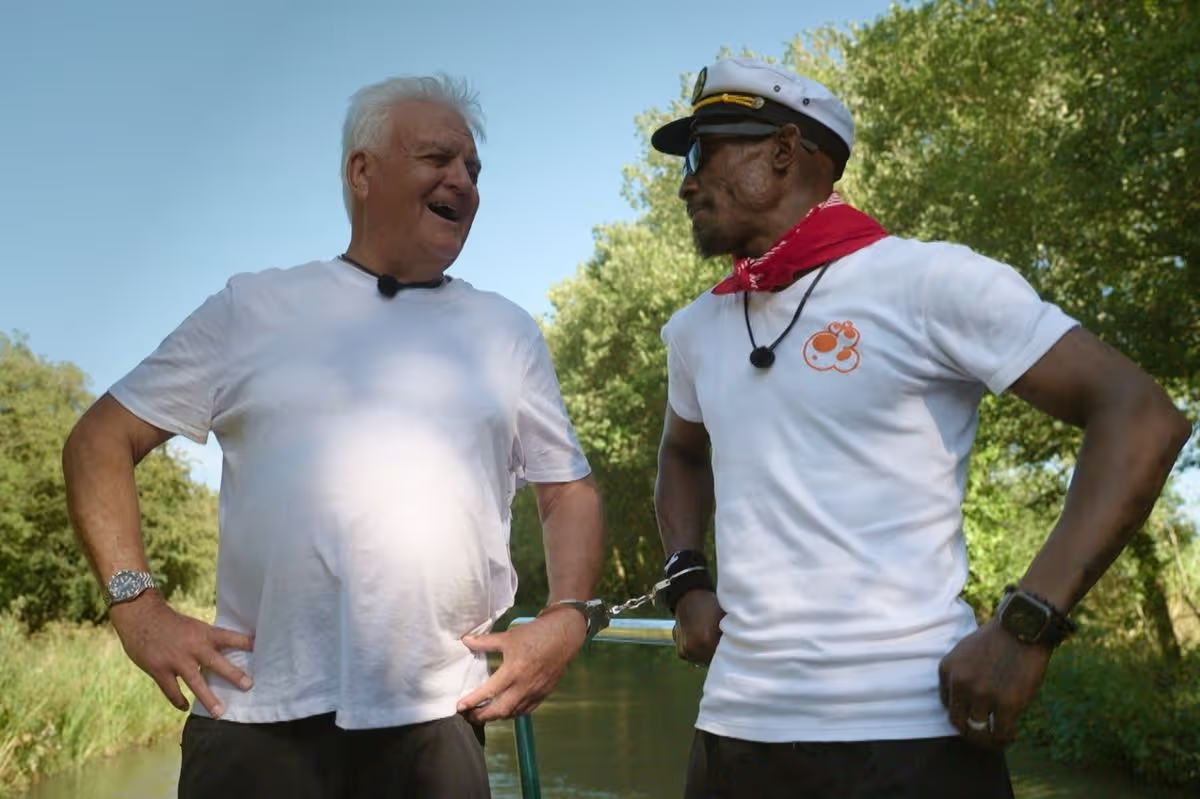
It’s taken 18 months, but Bob Lomas has been shown the error of his ways and has said sorry to all those he offended
12:41, 13 Mar 2026Updated 12:56, 13 Mar 2026
Bob realises how misguided his remarks are once he spends time with youth worker Chris(Image: 72 Films)
Sacked Reform candidate Bob Lomas has apologised for the racist comment that saw him disowned by party leader Nigel Farage 18 months ago, after being chained to a Black youth worker on Channel 4’s Handcuffed.
The former soldier, 70, has posted his apology on Instagram, after he was persuaded by Chris Preddie that his views were offensive and racist. In the video post the ex-Reform member, from Yorkshire, said: “My name is Bob Lomas and 18 months ago I said that Black people should get off their lazy arses, go and get a job and stop acting like savages.
“I can’t change what I said, I can only apologise for saying it. I vehemently apologise for using those words. I made a bloody big mistake and I am bloody sorry that I did and I want to apologise to anybody that is affected.”
Content cannot be displayed without consent
Handcuffed, hosted by Jonathan Ross, sees people with opposing viewers shackled together for a shot at the £100,000 prize. In Monday’s episode viewers will see Chris Googling Bob to find out who he is actually chained to.
Bob admits having made the shocking comment that ended his political career, on Facebook, but starts off defending himself, arguing: “Everything’s racist if you want it to be. I witnessed a riot in London and was appalled by what was happening in my capital city. I could have worded it better but it gets to the point where you can’t say anything about anything.”
But Londoner Chris, who was awarded the OBE 13 years ago at the age of 25 for his inspirational youth work, said that the terminology had left him feeling “quite disgusted”. And once he has explained his own background, Bob backs down and admits that his views were wrong.
In the programme, Chris tells him that his father had died after being caught up in gangs and he was quickly groomed for a life of crime. himself. “I didn’t have a role model,” he explains. “I didn’t want to sell drugs but, if I didn’t, then I’m not eating. Not surviving.”
He credits the youth worker who helped him to break out with having “saved my life” because Chris feels certain he’d be “dead or in prison” without that support. Getting the OBE from the late Queen Elizabeth had been a huge honour. “I was so proud,” he confesses. “People started to see me as a normal citizen – I was told my whole life that I’d amount to nothing.”
Looking moved by what he’s learned, Bob admits that Chris’s story is “very, very shocking” and tells the camera that he’s impressed by how he not only got out, but went on to help others do the same. “He used that experience to help bring other young men and women out of that mindset. What he does for his community is unbelievable. I salute him.”
Bob was standing as the Reform candidate for Barnsley North when he was dropped by party leader Farage, along with two others, in June 2024 over remarks made by all three on social media. Speaking on Question Time afterwards, Farage claimed: “I wouldn’t want anything to do with them”. The racism within Reform was widely condemned by other political leaders, with Farage told to “get a grip” on his party.
– Handcuffed – Last Pair Standing continues on Monday, Channel 4, 9pm
EU lawmakers in Brussels are worried that the bloc is drifting into the crosshairs of US domestic politics, as the White House launched new trade investigations into EU goods accusing the European Union is “implementing close to zero” of trade commitments.
ADVERTISEMENT
ADVERTISEMENT
Next week could prove decisive for the EU–US trade deal struck last summer.
Washington has stepped up pressure on the EU in recent days to implement the agreement cut last summer cut between the head of the European Commission Ursula von der Leyen and President Donald Trump, tripling tariffs on the EU.
Still, MEPs have kept the implementation process, which also includes investment pledges from the Europeans in the US, frozen, seeking clarity after the Supreme Court of the United States ruled in February that US tariffs imposed in 2025 were illegal.
The fate of the deal remains uncertain after the White House launched new investigations into EU products this week that could lead to tariffs exceeding the 15% ceiling agreed under the pact.
“It is domestic politics and the worst-case scenario has happened: we got involved,” Croatian MEP Željana Zovko, lead negotiator for the European People’s Party, told Euronews.
She added: “We were waiting for the Supreme Court’s decision but now of course this administration will do its utmost to do it its own way.”
In the days following the court’s ruling, the US administration has looked for new legal grounds for tariffs and invoked Section 122 to impose fresh duties of 10% on EU goods, on top of the 4.8% tariffs already in place under most-favored nation regime.
The provision allows temporary duties for a maximum of 150 days, after which the US Congress would need to agree an extension. The Supreme Court suggested in its initial ruling that the President had exceeded his powers under emergency grounds.
As Washington looks for a way to make the tariff salvo permanent, it is also increasing the pressure on allies by opening new investigations into trading partners including the EU over alleged unfair trade practices. China and India were also targeted.
The probes could pave the way for tariffs above the 15% ceiling agreed in the deal struck in July 2025 by Ursula von der Leyen and Donald Trump in Turnberry, Scotland.
Next week will be pivotal for the EU-US deal
“Now uncertainty is increasing even more for our businesses,” Zovko said.
Since the court ruling, the EU has sought clarity from Washington on whether the Turnberry agreement signed last year still stands or has been broken.
US officials assured EU trade chief Maroš Šefčovič they would stick to the deal, though they have not detailed how the 10% tariffs after the court ruling will be replaced in the long-term. In return, the US expects the EU to implement the agreement fully and quickly.
US Trade Representative Jamieson Greer raised the temperature on Wednesday, lashing at the Europeans on the basis that “the EU has done approximately zero percent of what they were supposed to do for their trade deal with us.”
This week’s investigations should be taken seriously, German MEP Bernd Lange (S&D) told Euronews, despite the erratic moves by the US administration since the court ruling.
“Section 301 will allow the US to differentiate between countries and therefore add pressure to each of them,” he said.
Next week could be pivotal for the EU–US trade deal.
Italian MEP Brando Benifei (S&D) will travel to Washington hoping to meet Greer. He may be joined by Lange, the chair of the EU trade committee, on Monday although a decision has not been made yet.
The trip comes as negotiators in the European Parliament must decide whether to resume work on the agreement or postpone the vote once more. A vote is required to cut EU duties on US goods to zero, as foreseen in the Turnberry deal.
But political groups remain divided.
“When I read what the socialists are saying, I’m losing hope that we will have a vote, despite reassurance given by Iratxe García Pérez [Spanish MEP, chair of the S&D] and Bernd Lange,” a source at the EPP told Euronews.
Benifei said the EU needs a clear political signal from Washington that it will stick to the deal, otherwise “there is no way we can vote on the file.”
A FUTURISTIC theme park has just been named one of the best in Europe and you can fly there for just £13.
Futuroscope in France is a theme park dedicated to “multimedia, cinematography and emerging technologies”.
Sign up for the Travel newsletter
Thank you!
Futuroscope is a futuristic theme park in FranceCredit: AlamyAt the theme park, there are over 40 rides and attractionsIt has even been dubbed as the “equivalent to Universal Studios in Europe”
Named 15th on Blooloop’s best theme parks in Europe list, the theme park appeals to both adults and children.
The attraction originally opened back in 1987 and can be found just outside the city of Poitiers.
Speaking to Blooloop in 2024, Rodolphe Bouin, Futuroscope’s CEO, said: “Futuroscope is unique because it aims to develop visitors’ curiosity, not just entertain them.”
The park has even been dubbed as the “equivalent to Universal Studios in Europe”, by theme park content creator That’s So Mid on TikTok.
The park features several attractions including an astronaut training programme-themed rollercoaster and the Mission Bermudes boat ride.
For adrenaline junkies, there’s Tornado Chasers, where you get to ride into a tornado on a rotating platform, with the world’s largest indoor LED screen.
Toddlers haven’t been forgotten either, with little electric cars, a small floating log ride and Waterworks play area.
There’s also a number of playgrounds including an airport theme one with a plane climbing frame.
In fact there are over 40 attractions at the park and three shows.
New for this year is the Greenhouse of Worlds, which is an immersive greenhouse that comes to life as you walk through it.
Another new attraction for this year is T.Rex – a 6K laser projection show that follows the true story of three children who discover a Tyrannosaurus fossil with a team of palaeontologists.
Opening on April 4, there will be Pulse! The Electric Odyssey as well.
The new attraction explores all the forces of nature, with interactive activities for children of all ages.
Parents can enjoy the experience too by heading to Bar Lab to try futuristic cocktails.
There are a couple new attractions this year, including and immersive greenhouse
And more recently, in 2024, the theme park opened its second park called Aquascope – an immersive indoor waterpark.
Inside visitors can expect eight “XXL size” slides and four themed universes.
The indoor water park is also home to Les Abysses de lumière, which is Europe’s first aquatic cinema.
One interactive part of the aquatic cinema is The Eauculus, where visitors can dive under the water and discover a seabed of strange creatures.
There’s a lazy river as well that takes you on a journey through Aquascope.
Smaller children can make a splash in the Aquatic Maze or head to the Musical Cave to come up with a melody.
One visitor said: “Aquascope is a kind of aquatic nightclub crossed with a James Cameronfilm.
There’s then also Aquascope, which is an immersive indoor waterparkSome visitors have even compared it to like being in Avatar
“Between the digital projections on the walls and the 29°C water, you no longer know if you’re there to swim or to attend a contemporary art performance.
“The ‘Luminous Abyss’ zone is the highlight of the show – swimming amidst interactive projections that react to your movements is the ultimate experience for anyone who has ever wanted to live in Avatar.”
Another person said: “The scenery is magnificent; it’s like being in Avatar!”
On sunny days, there is an outdoor pool and terrace too, with The Aquadynamic – a river course with effects throughout.
When it comes to having a bite to eat, head to the Space Loop restaurant – the only rollercoaster restaurant in France.
Inside, guests will be served their food via a small rollercoaster where dishes spiral down to where you are sat.
As this is an experience as well as a restaurant you do have to book and it does cost an extra €27.50 (£23.76) for adults and €16 (£13.82) for children.
Food then includes burgers, risotto and pork tenderloin costing around €16 (£13.82) each.
Even the hotels onsite are themed too
If you want to extend your stay, you can do at the Hotel Station Cosmos which is themed to be a space station, with themed rooms.
The hotel costs from €196 (£169.35) per night and includes a show, breakfast and access to Futuroscope park.
Other hotel options at the theme park include Hôtel Ecolodgee Futuroscope which features nature-themed lodges from €166.50 (£143.86) per night or the Hôtel du Futuroscope, with basic family rooms from €126 (£108.89) per night.
A day ticket to Futuroscope and Aquascope costs from €68.80 (£59.49) per adult or child aged over 13-years-old and from €56.80 (£49.11) per child between five and 12-years-old.
Children between zero and four-years-old go free.
The closest airport to the park is Poitiers Airport, which is about 17 minutes away by driving or just under an hour on public transport.
Flights from London Stansted cost as little as £13 one-way in April and the flight only takes an hour and a half.
A MAN is feeling increasingly nostalgic for his twenties despite having spent the entire decade wishing they would end.
43-year-old Martin, not his real name, has decided that his early adulthood, which was defined by existential dread, financial anxiety and relationship turmoil, was actually the prime of his life in retrospect.
He said: “At the time I was impatiently waiting for everything to fall into place so I could feel like a real adult. God I wish I could go back to those glory days.
“My job was terrible. My prospects were even worse. And I was already lagging far behind my friends when it came to falling in love and buying a house. But compared to now, where things are broadly the same, at least I had hope for the future.
“My twenties really weren’t as terrible as I thought they were. My legs didn’t ache every time I stood up, and my hairline was still on point. Pair that with a complete lack of responsibility and you can see why I miss them so much.
“So what if every day was a battle with my low self-esteem and terrible circumstances? Those are nitpicks. If I zoom way, way out, and only focus on the handful of good memories from that time, they look much better.”
Booker’s friend Anthony, not his real name, said: “Give it 20 years and Martin will be all wistful about his current situation. Which is ridiculous because his life is utter shit.”
Twenty-three years ago, the Oscars were in turmoil. President George W. Bush had just begun an invasion of Iraq after the Sept. 11 attacks, and as the nation’s TV screens filled with the “shock and awe” campaign, many did not know quite how to proceed with Hollywood’s biggest night.
ABC wanted to postpone, presenters begged off, Jack Nicholson urged his fellow actor nominees to boycott (animated feature winner Hayao Miyazaki did), documentary winner Michael Moore attempted to directly shame Bush from the stage (to loud boos) and many of the acceptance speeches acknowledged the war and included pleas for peace.
President Trump’s recent decision to attack Iran is not precisely the same — American troops have thus far not invaded and the Bush administration’s media blitz of rockets lighting up the sky is absent. No one expected the Oscars to be canceled or delayed and there has been no talk of boycotts; whether the war and (if polls are to be believed) its general unpopularity are noted, either by host Conan O’Brien (who has already said he will not be mentioning Trump) or the winners, remains to be seen.
But if recent history is any indication, it could go unmentioned. Which would be something of a political statement in itself: It would be terrible if the false notion that awards shows have become too political had a chilling effect on anyone who wanted to use their platform to speak about something important they care about.
Thus far, film and television awards winners have stayed away from the issues that have prompted widespread public outrage and protests this year — including the often brutal methods of Immigration and Customs Enforcement, the ongoing concern over the war in Gaza and the endless revelations of the Epstein files.
Despite complaints from certain quarters, awards shows, particularly the Oscars, rarely have more than one or two truly political moments. But this year, the absence has been notable.
Compared with the Grammy Awards, where Trevor Noah, in his final stint as host, roasted Trump and anti-ICE sentiment reigned in speeches and on pins, this year’s Golden Globes (which aired three weeks before the Grammys) appeared to exist in another world. A few stars wore similar pins and spoke on the red carpet, but aside from a few digs about Epstein and CBS News from host Nikki Glaser, there was no mention of the many issues roiling the nation. (As he was beginning to make late-in-speech remarks about this being an important time to make films, Kleber Mendonça Filho, Brazilian director of the non-English language film winner “The Secret Agent,” ran over time and was played off.)
Has Hollywood lost its spine? Or, having been beset for years by grievances that the Oscars have become “too political” and “too woke,” are filmmakers and actors saving their outrage and passion for social media and bowing to pressure to keep their acceptance speeches grateful and celebratory?
“I know that there are people who find it annoying when actors take opportunities like this to talk about social and political things,” said Jean Smart on the Golden Globes red carpet, adding, when she won for actress in a TV comedy: “There’s just a lot that could be said tonight. I said my rant on the red carpet, so I won’t do it here.”
It was an echo of Jane Fonda’s famous 1972 Oscar speech: “There’s a great deal to say, and I’m not going to say it tonight.” And, perhaps, a response to more recent “shut up and dribble” criticism, as distilled by 2020 Golden Globes host Ricky Gervais, who cautioned the audience: “If you do win an award tonight, don’t use it as a platform to make a political speech. You’re in no position to lecture the public about anything. You know nothing about the real world.”
Indeed, as Oscars ratings have plummeted over the last 20 years, some have suggested that political speechifying is to blame. This is patently absurd. Viewership for just about everything except the Super Bowl has dropped dramatically, and the Oscars ratings do not take into account the millions who watch portions of the show on social media. (We’ll see what happens when the Oscars move to YouTube in 2029.)
And the Oscars have never been particularly political.
Speeches that deviate from the ubiquitous laundry list of thank yous always get more attention, whether they’re political or not, for the simple reason that they’re so dang unusual. But taken as a whole, either by decade or particular telecast, the Oscars is mostly, and consistently, apolitical. As in, almost every minute of a three-hour-plus show, year after year after year.
Unless, of course, you consider thanking God to be political. Which I do not. Nor do I categorize as such any speech that underlines the fact of a historic win (as Halle Berry did in 2002), encourages Hollywood to tell more diverse stories (as Cate Blanchett did in 2014) or reminds audiences in a general way that systemic oppression and war are bad (as Adrian Brody did amid his ramblings in 2025).
Many of the speeches that have been branded as “political” are simply underscoring the themes of the films being honored — in 2009, both Dustin Lance Black and Sean Penn advocated for gay rights when accepting Oscars for “Milk,” which chronicled the life of assassinated gay rights activist Harvey Milk. Likewise, John Irving supporting abortion rights and Planned Parenthood after winning for “The Cider House Rules” in 2000 and John Legend and Common speaking passionately about civil rights, past and present, after winning for “Glory,” a song from the civil rights drama “Selma,” in 2015 was only natural.
Sacheen Littlefeather refuses the lead actor Academy Award on behalf of Marlon Brando in 1973.
(Bettmann Archive)
A purely political speech, to my mind, directly calls out specific leaders, policies or crises, which may or may not have anything to do with the film being awarded. The most famous are, of course, Marlon Brando’s decision to send Sacheen Littlefeather to accept his Oscar for “The Godfather” and protest the treatment of Native Americans, and Vanessa Redgrave’s 1978 denunciation of “Zionist hoodlums” who were demonstrating against her involvement in a pro-Palestinian documentary even as she accepted for supporting actress in “Julia.”
In 1993, while many Oscars attendees wore red ribbons to honor those living with HIV/AIDS and call for government assistance, then-couple Susan Sarandon and Tim Robbins took it further, using their time as presenters to ask the U.S. government to allow HIV-positive Haitians being held at Guantanamo Bay to be let into the country. That same year, presenter Richard Gere used the fact that “1 billion people” were watching to send “sanity” to Chinese leader Deng Xiaoping in the hopes that he would allow the people of Tibet to “live free.” (Then-Oscars producer Gil Cates quickly denounced the three presenters; Gere did not return to the Oscars until 2013.)
A year after Moore blasted Bush over Iraq, Errol Morris, winning for “The Fog of War,” briefly compared the war in Iraq to the “rabbit hole” of Vietnam (which was the subject of his film). In 2015, “Boyhood” star Patricia Arquette used most of her supporting actress speech to demand equal wages for women. That same year, “Birdman” director Alejandro G. Iñárritu dedicated his award to his fellow Mexicans, with the hope that they would be treated by Americans “with dignity and respect” so that together, they could build a “great immigrant nation.” (Which frankly plays more purely political now than it did at the time.) A year later, Leonardo DiCaprio spoke about climate change after winning for “The Revenant.”
In 2019, Spike Lee, accepting for adapted screenplay (“BlacKkKlansman”), called on voters in the upcoming election to mobilize and “be on the right side of history” and in 2024, “Zone of Interest” director Jonathan Glazer, accepting for international film, riled many by comparing the dehumanization required for the Holocaust to occur with events in Gaza.
Even now, the most notable examples of political speeches, the ones that are always mentioned, are from the freaking‘70s. Which certainly obliterates the idea that the Oscars have grown more political and undermines the argument that it is a Big Problem.
Put these relatively few moments next to the endless hours of acceptance speeches that, with varying degrees of emotion, honor the art of movie-making and the legions that support those who are doing it (including God, parents, spouses, children, some random but heaven-sent teacher) and it’s difficult to see much “wokeness.”
The people who gather at the Oscars are storytellers, and many of the stories they tell deal with uncomfortable truths about our collective past, present and future (including best picture front-runners “One Battle After Another” and “Sinners”). Of course nominees and winners have opinions about politics, science, social issues, international conflict and those suffering without recourse or voice — that’s why they make movies. So if a few of them decide to skip thanking their manager or the studio head and say a few words about climate change or whatever current law/policy/presidential action they believe is making lives worse for a lot of people, that’s their choice. They just won an Oscar!
For those uncomfortable watching it, just use the 45 seconds to grab a snack and by the time you’re back, the host will be moaning about how long the show is and the next five winners will inevitably cry and smile; praise their fellow nominees; thank the producers; say something sweet about their cast, crew and mamas; before telling their kids they love them and it’s time to go to bed.
A signboard at a gas station in Seoul shows gasoline and diesel prices in Seoul, South Korea, File. Photo by YONHAP / EPA
March 12 (Asia Today) — South Korea will impose a temporary price cap on petroleum products starting Friday, setting the first ceiling for gasoline at 1,724 won ($1.29) per liter as the government moves to curb surging fuel prices.
The Ministry of Trade, Industry and Energy said Thursday the “petroleum product maximum price system” will take effect at midnight and apply to fuel prices supplied by refiners to gas stations and distributors.
The first price caps are set at 1,724 won ($1.29) per liter for gasoline, 1,713 won ($1.28) for automotive diesel and 1,320 won ($0.99) for kerosene.
The measure will remain in place for two weeks through March 26 and will be reviewed every two weeks based on fluctuations in global petroleum product prices.
The government said the caps are significantly lower than the average supply prices submitted by refiners on Tuesday. At that time gasoline averaged 1,833 won ($1.37) per liter, diesel 1,931 won ($1.45) and kerosene 1,728 won ($1.30).
Compared with those levels the new caps are lower by 109 won for gasoline, 218 won for diesel and 408 won for kerosene.
Officials said the policy aims to quickly slow the recent surge in oil prices and ease instability in the fuel market.
The price cap will apply only to wholesale supply prices set by refiners rather than the retail prices at individual gas stations. Officials expect pump prices to gradually decline as stations adjust prices once lower-cost fuel enters inventories.
Price changes typically appear two to three days after new supply prices take effect, depending on station inventories, the ministry said.
If refiners incur losses because of the price caps the government plans to compensate them through a post-settlement system. Refiners will submit loss estimates which will be verified through accounting reviews before quarterly compensation payments are made.
Minister of Trade, Industry and Energy Kim Jeong-gwan said the policy would allow limited price adjustments in line with international fuel price trends while preventing excessive increases that diverge from global markets.
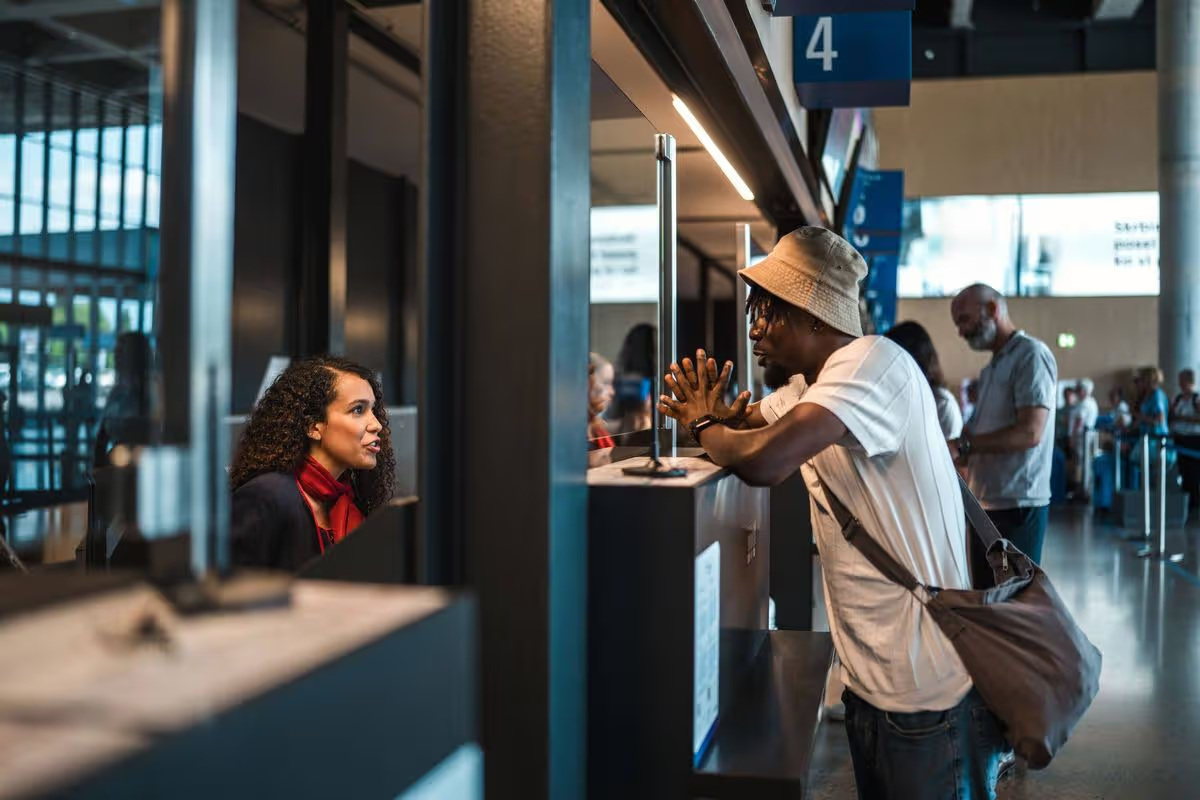
Travel expert Mark Wolters warns holidaymakers against saying certain phrases at passport control that could land them in hot water with immigration officers
Travellers are being urged not to say one ‘fun’ phrase at passport control(Image: Getty)
Mark Wolters, from Wolter’s World, has visited more than 80 countries throughout his travels. He now shares his expert advice for people who find themselves venturing across the globe.
He explained: “‘I’m going to stay here forever, I love your country’. That sounds like a fun thing to say to the passport control officer when you come into a country, but I want to tell you, that is something you don’t ever want to say when you come across a border.”
He emphasised that you shouldn’t “joke around” when at passport control. He encourages travellers to respond to them “politely”, reports the Express. He continued: “Don’t add in the dad jokes.
“I know for me, my go-to when they’re like, ‘What are you going to do here?’ I’m like, I’m going to help the British economy by spending lots of money.
“Yes, it’s a good dad joke but it’s best to be like, ‘I’m here for tourism with my family’. That’s one of those things, you have to realise those passport and those border officers aren’t allowed to have humour, they’re there doing their job.”
Mark explains that border force officers are stationed there to ensure the “wrong people aren’t coming in”, which means it’s unwise to mess about. He suggests you can make your “life easier” by staying composed and courteous.
Mark cautions there are certain phrases you should “never” utter at security. He continued: “You don’t ever say the word bomb, you don’t say human trafficking, you do not joke about drugs, you do not joke about overstaying, like, ‘I want to stay here forever’.
“You do not say any of those things because those are the trigger words where they go, ‘Oh wait, we need to do something’. Even if they know you’re joking, they don’t have a choice.”
The specialist also recommends people keep their passport out until they’ve cleared security. He mentions he’s frequently witnessed travellers packing away their documents and wandering off, only to be summoned back by passport control.
He stated: “If you’re putting your documents away before they feel it’s right, they could think, ‘Oh this person’s nervous, they’re trying to get away quicker’. That can lead to other questions, so just wait until they dismiss you.”
Holidaymakers are also advised to ensure they’ve got their accommodation sorted. He notes that arriving without lodgings arranged can frequently trigger “more questions” and raise concerns about trafficking.
“I sent my itinerary to myself, so we can say, ‘Oh we’re staying at the Marriott Amsterdam on this street here’,” Mark elaborates. “That makes it a lot easier because that’s one of those typical questions they might ask, so it’s good not to be vague.”
This digital news source highlights the cultural significance and history of the Chapchar Kutfestival in Mizoram, India. Originating in the 15th century, the event serves as a period of rest and celebration for farmers following the completion of grueling jungle clearing for the new planting season. Although the festival experienced a decline during the region’s transition to Christianity, it was successfully reinvigorated in the mid-20th century as a major community event. Currently recognized as the largest Mizo festival, it features thousands of participants engaging in traditional music and dancing. The article emphasizes that while modern iterations have adapted to l …
A POPULAR ride at Thorpe Park has closed after nearly 40 years.
The Chertsey-based theme park’s Rumba Rapids was a river rapids ride where passengers would board a boat able to carry up to eight people at a time.
Sign up for the Travel newsletter
Thank you!
The Rumba Rapids ride is closing permanently at Thorpe Park theme parkCredit: Alamy
The ride originally opened back in 1987 as ‘Thunder River’ and was Thorpe Park’s first thrill ride, but has not been running since the end of the 2025 season.
Jack Silkstone, a theme park vlogger, posted a reel on Instagram announcing the news.
The post states: “After 39 years of soaking thrill seekers, Rumba Rapids at @thorpeparkofficial has now permanently closed.
“Join me as I take a trip down memory lane to look back at the history, rethemes and memories of one of Thorpe Park’s longest-running attractions.”
Thorpe Park has shared the video to its Instagram story, as well as commenting on the video: “Thank you for helping us pay tribute to such an iconic ride!”
In an official statement, a Thorpe Park spokesperson told Sun Travel: “After nearly four decades of making a splash, Rumba Rapids at Thorpe Park has permanently closed.
“First opening as Thunder River in 1987, the iconic water raft ride has been soaking generations of thrillseekers ever since.
“While we don’t have plans to share just yet on what’s next, we’re always reviewing our line-up of world-class rides and attractions to make sure Thorpe Park remains the UK’s most thrilling theme park.”
Riders would begin at the highest point of the ride on a turntable belt before turning sharply and heading down a curve to make the boat spin.
The boat would then head into a tunnel with a waterfall effect, before exiting the tunnel and entering the wave section of the ride.
The riders would then pass under a bridge and pass a photo opportunity.
The Rumba Rapids was the park’s second-oldest ride at the time of its closure.
Taking to social media, several fans have expressed their sadness at the news.
One person commented: “Sad times. I always enjoyed going on this to have a break and a chill from all the coasters.”
Another person said: “End of an era, the soundtrack alone was ICONIC.”
Over the years the park has been rebranded a few times, including in 2002 becoming Ribena Rumba Rapids with the colour theming changing from yellow to purple and the ride got its own soundtrack.
The ride was Thorpe Park’s first thrill rideCredit: AlamyThe ride originally opened in 1987 at ‘Thunder River’ with yellow boatsCredit: Alamy
In 2007, the partnership with Ribena ended and the ride became Rumba Rapids.
A decade later the ride was re-themed to fit in with the design of the Jungle area of Thorpe Park.
Thorpe Park also recently announced that they would be closing the waterpark after more than 35 years.
Instead, Amity Beach pool will be replaced with a new attraction called The Launchpad, which will be a recharge zone.
If David Nihill was a philosopher, his credo might be “I digress, therefore I am.”
Instead, Nihill is a comedian. Kind of. “I don’t know if I think of myself in those terms,” says Nihill, whose “Cultural Appreciation” special has 2.5 million views on YouTube. “I wouldn’t even call mine comedy specials.”
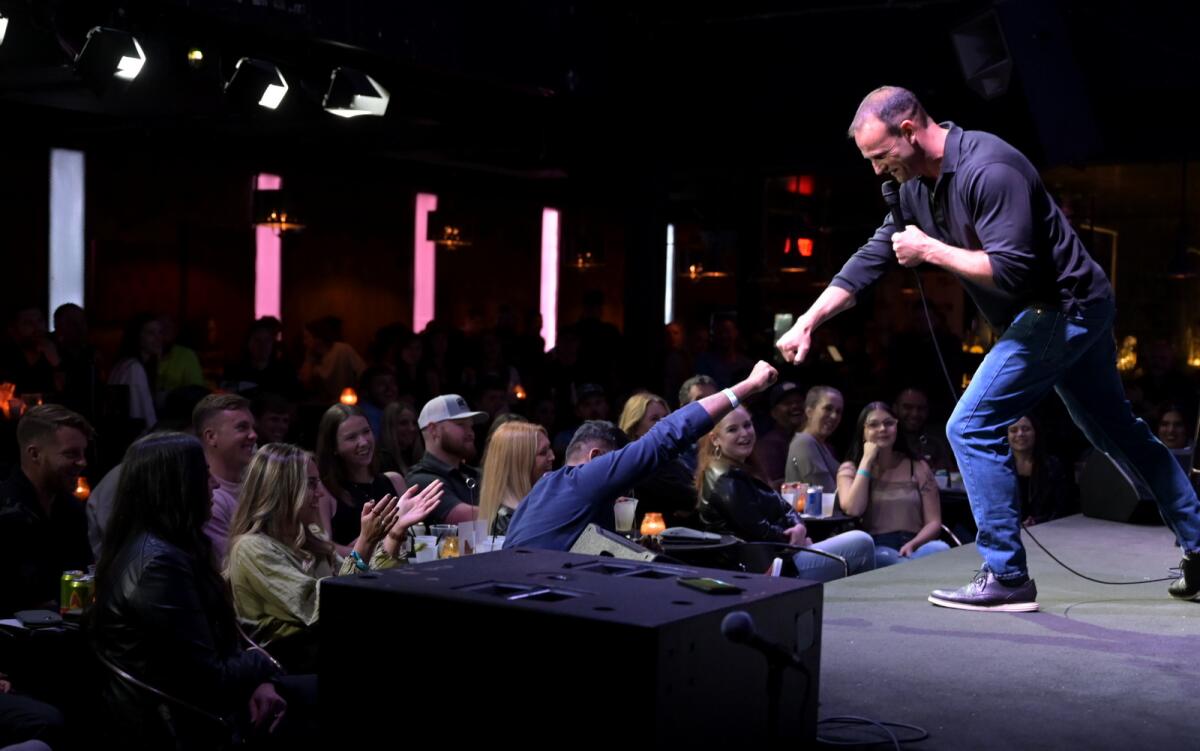
Nihill is a conversational storyteller who rarely even moves on stage. “I don’t know how to do performance,” he says, “but I do know how to talk.”
His current show, “Taking Tangents,” which takes him to Irvine, Pasadena and Los Angeles from March 13 to 17, is a wide-ranging collection of tales, with some material shifting from show to show. We’ll come back to it, but first, a few tangents.
Growing up in Ireland, Nihill, 47, struggled to learn, hampered by dyslexia — “I came in the lowest five percentile in the whole country of Ireland for spelling, and I didn’t even spell my name right on the test” — and an aversion to math. He was made to feel inferior because of his difficulties. “I was 100% in the ‘I am a moron’ category,” he says.
Nihill was shoved into a vocational program and most of his friends dropped out of school. He stayed in, but even when his father offered to buy him a Super Nintendo for certain math scores, Nihill fell short. His father bought it for him anyway, he says, “but I sold it and bought myself a motorcycle even though I was 15 and not legally old enough to drive.”
He finished high school and became a poorly paid, overworked apprentice electrician. That was enough to motivate him to go to college; there, he figured out how his brain worked and how to learn. He even developed a passion for reading: His last show, “Shelf Life,” wove in dozens of book recommendations.
During our conversation via video after a New York show, I’d ask one question, then follow Nihill as he ambled through his personal history. He started with a story about jumping off a cliff in Greece and shattering his leg — a part of “Tangents” — then going to Australia, before he stumbled into a master’s degree studying business back in Ireland (despite botching his application). A new friend there took him to his first-ever comedy show in Glasgow — there are even tangents within his digressions — before getting him a job with Enterprise Ireland, the government’s investment fund to boost Irish business overseas. That landed him in San Francisco, part of the “Cultural Appreciation” special. He left to pursue business opportunities in Mexico but, due to a hurricane, somehow ended up in Chile, spent a year wandering north toward America, and then scored an internship in Colombia.
Nihill is a conversational storyteller who rarely even moves on stage. “I don’t know how to do performance,” he says, “but I do know how to talk.”
(Jim McCambridge)
Eventually, Nihill’s story works its way to his current career, which began by accident. “It was never a dream or a goal,” he says. A friend in San Francisco had suffered a spinal cord injury and Nihill wanted to run a fundraiser, but dreaded public speaking.
That leads to a minor diversion, back to a college public speaking course in which Nihill was so terrified that he got drunk before his presentation and introduced himself “as an exchange student from Southern Yemen.”
In San Francisco, he started doing live comedy to overcome that fear. Meanwhile, his business background led him to see an opportunity and he created FunnyBizz, a company and conference where comedians help teach business leaders, like Kevin Harrington of “As Seen on TV,” how to use humor to communicate. The business bankrolled Nihill’s early days in comedy.
While Nihill has lived in America for years, most recently in Los Angeles, he remains passionately Irish, which shapes his shows in several ways.
In Ireland, “your nature is to just default to funny stories.”
He says American stand-up is about taking a topic and making it funny, aspiring for a five-minute joke-filled late night TV spot. Irish comedians say, “This thing happened to me and I think that’s funny. Let me just repeat it.”
The new show is named after “tangents” so that Nihill can go down different rabbit holes each night if he wants. “My head is always doing 60 different things,” he says, and he loves keeping his storytelling “free form and unfiltered,” whether he’s in a pub or on stage (or, apparently, in an interview).
The new show’s subjects will be familiar to Nihill’s fans: his parents, his foolish behavior (there are drunken college-age antics in a story that somehow eventually weaves in White House press secretary Karoline Leavitt) and Irish culture. “There are few countries that punch above their weight in social justice and social impact,” he says, and he always looks to draw connections with other cultures around the world. But the observations and connections he draws are new.
In New York, he added a bit about how 35% of Jamaicans have some Irish roots, quipping “imagine how fast they’d be without that” (in a nod to legendary sprinters like Usain Bolt). But for Nihill, that joke only works if it’s couched within the larger context of the cross-cultural connections, including the fact that Jamaican-born political activist Marcus Garvey drew upon the Irish independence movement for inspiration.
“There has to be some social value to doing it,” he says, although he’s quick to add his comedy isn’t overtly political. “My dad’s a teacher and that lives inside of me. Humor can be the ultimate tool for social activism. I am deliberately getting people to expand their minds in understanding these connections. I want comedy that makes everyone feel good and maybe learn something.”
Nihill on stage at Hollywood Improv.
(Jim McCambridge)
That “feel good” part is central: While he discusses his mother’s death from cancer last year, he leaves out a beautiful but poignant part of their final days together. “I’m deliberately avoiding that,” he says, because he wants to maintain an upbeat mood.
He digresses to tell me the story, however, and it’s literally longer than this entire article’s word count. “A very long answer to a very short question,” he admits, before swerving into a tale about back when his father had overstayed his visa in New York — it involves his dad being interviewed on CNN, getting into a bar fight and avoiding deportation because the immigration officer hailed from County Cork and Nihill’s dad burst into a song from there, earning him a six-month visa extension. The humanity of that scene “in contrast to a 5-year-old being dragged off to a detention center” may end up in a future Nihill show.
Nihill loves sharing the stories that come from observing and listening to people but says he doesn’t love the spotlight, which, he admits, makes comedy an odd career choice. He says he prefers telling stories to just a few people.
“With comedy, the best part for me is that before a show I eat half a chocolate bar and I leave the other half in the hotel room,” he says. “After the show, I get to finish it. That’s true happiness.”
Six days after the commencement of Operation Epic Fury, President Trump took to Truth Social to announce, in the context of the ongoing joint American-Israeli military campaign against the Islamic Republic of Iran: “There will be no deal with Iran except UNCONDITIONAL SURRENDER!” In the same post, the president seemed to equate such “unconditional surrender” with “the selection of a GREAT & ACCEPTABLE Leader” to lead Iran, which would enable the country to come back from the “brink of destruction” and emerge “stronger than ever.”
Just three days after announcing “unconditional surrender” as his goal, Trump, speaking on March 9 in Doral, Fla., proclaimed that the end of the war will happen “very soon.” One might be forgiven for experiencing some whiplash — especially because earlier that same day, Trump told Fox News he was “not happy” with Iran’s naming of a new supreme leader, Mojtaba Khamenei. In fact, around the same time he was demanding “unconditional surrender” the prior week, Trump had already called Khamenei the younger “unacceptable.”
What exactly is going on here?
Trump is a conservative nationalist, which means his general approach to foreign policy and his specific foreign policy “excursions” are guided by his view of how best to secure the American national interest. Accordingly, since Operation Epic Fury started, Pentagon press briefings featuring Secretary of War Pete Hegseth and Chairman of the Joint Chiefs of Staff Dan Caine have repeatedly emphasized empirical metrics for measuring success, such as Iranian naval vessels sunk, Iranian air force planes shot down, Iranian ballistic missile silos and launch sites destroyed and so forth.
Trump hasn’t said it explicitly, but the Trump administration’s goal — and thereby, definition of victory — in Operation Epic Fury seems clear enough: the neutralization of Iran as an active, ongoing threat to the United States and our interests. If nothing else, at least, that is how victory in the current campaign should be defined.
That does still raise at least one pressing question, though, especially in the context of exiled Crown Prince Reza Pahlavi’s call to the Iranian people to prepare for “the decisive stage of our final struggle”: Where does that most controversial of foreign policy goals, “regime change,” fit into the puzzle?
At this point, it is undeniable that wholesale regime change is the most desirable outcome for the conflict in Iran. The pursuit of regime change as a goal unto itself is often now disparaged, coming in the aftermath of the failed neoconservative boondoggles earlier this century. But it ought to be axiomatic that there are some foreign regimes that behave in a manner that redounds to the American national interest, and there are some foreign regimes that behave in a manner that is contrary to the American national interest. It is natural and logical that we would wish for the latter types of regime to be heavily reformed or outright replaced — especially with the local populace leading the way.
Perhaps even more to the point: One does not take out a 37-year-ruling despot like Ali Khamenei, as the American and Israeli militaries did in the opening hours of the present operation, and not hope for full-scale regime change. All people of goodwill should be hoping for that outcome — for the Iranian people to rise up like lions and throw the yoke of tyranny off their necks once and for all, delivering a long-sought victory for the American national interest in the process.
But it’s entirely possible full-scale regime change won’t happen. The people of Iran just witnessed tens of thousands of their countrymen brutally gunned down during the anti-regime uprisings of late December and early January. They are an unarmed populace facing Nazi-esque regime jackboots, in the form of the Islamic Revolutionary Guard Corps and the Basij paramilitary.
All of that, then, raises one final question: Is it possible for there to be victory in Operation Epic Fury, and for the Iranian regime to be neutralized as a threat to the United States and our interests, if there isn’t full-scale regime change in Tehran?
In theory, the answer is yes. Venezuela provides a model.
Delcy Rodríguez, the current leader, is a hardened Marxist-Leninist in the mold of her predecessors Hugo Chávez and Nicolás Maduro. But Rodriguez has been fully cooperative with the United States since the astonishing January operation to extract Maduro for the simple reason that she has no real choice in the matter: She remains in power, yes, but only on the condition of an “offer” presented by Trump and Secretary of State Marco Rubio that, to borrow from Vito Corleone in “The Godfather,” Rodríguez “can’t refuse.” Rodríguez has thus been fully cooperative in areas such as American oil extraction and the reestablishment of diplomatic relations with the United States.
In theory, a similar arrangement is possible with a decimated, chastened regime in Tehran. And some experts predict that such an arrangement will characterize the regime in Iran a year or two from now. In practice, however, there is the ever-thorny problem that has frustrated and perplexed Westerners for decades when they attempt to reason with zealous Islamists: They do not fear death. A socialist like Delcy Rodríguez can, ultimately, be reasoned with; an Islamist like Mojtaba Khamenei (or his successor), perhaps not.
The cleanest solution to the Iran quagmire at this particular juncture — and the one that most clearly fulfills Trump’s “unconditional surrender” victory criterion — is indeed full-scale regime change. That is certainly the outcome that would be best for the neutralization of the Iranian threat and the corresponding advancement of the American national interest. I’m far from certain it will happen. But like many, I pray that it will posthaste.
Josh Hammer’s latest book is “Israel and Civilization: The Fate of the Jewish Nation and the Destiny of the West.” This article was produced in collaboration with Creators Syndicate. X: @josh_hammer
Head coach Danny Rohl has been the subject of criticism from fans of the Ibrox club after his players failed to capitalise on total domination during their Old Firm cup exit last weekend.
And with the German’s side six points off top spot – a margin that could be extended by the time they start against managerless St Mirren on Sunday (12:00) – there is increased pressure and little room for error.
Craig McLeish, Jamie Langfield and Allan McManus will lead an interim team for the League Cup holders and Scottish Cup semi-finalists, who are scrapping for their top-flight status, following Stephen Robinson’s departure to Aberdeen.
The Paisley club have won just one of their past 13 Premiership matches – which came against leaders Hearts – but Rangers’ recent form is not too clever either.
Rohl and his players are now facing questions about mentality – an all too familiar story at Ibrox – despite the 36-year-old saying a month ago that he was heartened by a mindset shift in his players.
A defeat at Tynecastle in December was followed by a run of seven wins and a draw in eight league matches, but Rangers have since won one of their past four league games – a 4-2 victory against Hearts.
That form stretches to one win in five when you include Sunday’s cup game. In fact, they have won just three of their past nine in all competitions.
If this alarming drop-off is not addressed urgently, it will prove terminal for Rangers’ title hopes and intensify the pressure on Rohl from a demanding support.
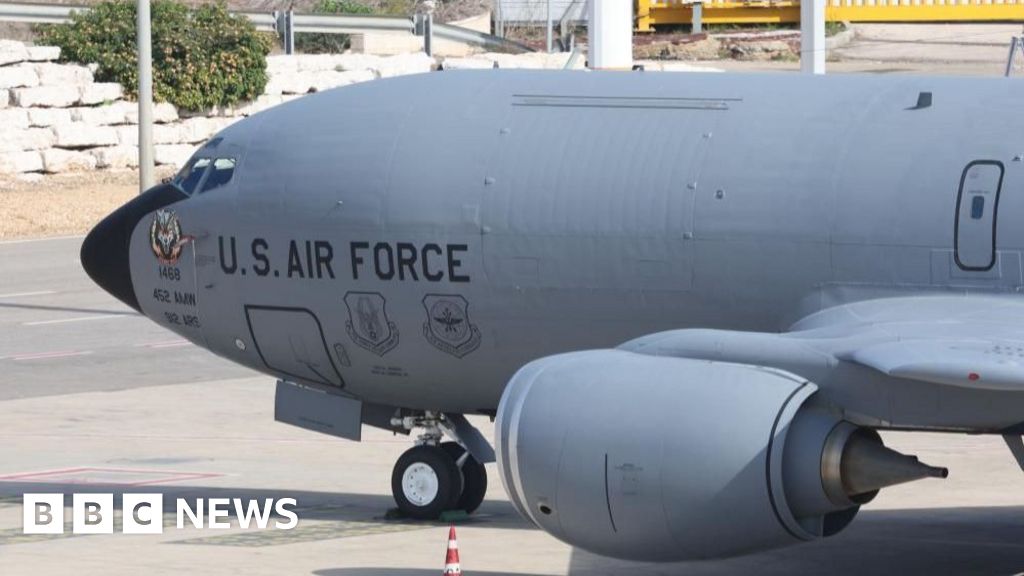
March 13 (UPI) — The U.S. military confirmed Friday that four of six crew members of a refueling jet on combat operations in the Iran war were killed when it went down over western Iraq in an incident with another U.S. military aircraft.
A rescue operation mounted following the crash on Thursday night was ongoing. The second aircraft landed safely following the incident, which involved neither enemy or friendly fire, U.S. Central Command said in a news release.
“The circumstances of the incident are under investigation. The incident occurred in friendly airspace during Operation Epic Fury, and rescue efforts are ongoing. More information will be made available as the situation develops,” CENTCOM said
The identities of the service members were being withheld until 24 hours after their next of kin had been notified, it added.
CBS News said that the second aircraft, also a Boeing Stratotanker, declared an emergency before landing in Tel Aviv.
The BBC reported that there were six crew on board — a pilot, co-pilot, a boom operator responsible for operating the refueling arm and three others.
An Iraqi intelligence source told CBS the aircraft crashed on the border with Jordan, near the town of Turaibil.
The Iranian military claimed responsibility, saying that an allied militia group in Iraq had downed the aircraft with a missile.
Thursday’s crash came 10 days after three U.S. F-15E Strike Eagles crashed in Kuwait in a friendly-fire incident in which Kuwaiti air defenses “mistakenly shot down” the fighter jets. All six aircrew were rescued after safely ejecting.
The U.S. military’s Stratotanker fleet is a critical asset in its in-flight refueling capability, enabling aircraft to remain airborne for extended periods during missions without having to land to take on more fuel.
The crash in Iraq brings to 11 the number of U.S. military personnel killed since the United States and Israel launched their airborne offensive against Iran on Feb. 28.
Iranians attend a funeral for a person killed in recent U.S.-Israel airstrikes at Behesht-e Zahra cemetery on the southern outskirts of Tehran in Iran on March 9, 2026. Photo by Hossein Esmaeili/UPI | License Photo
WORK is set to restart on a disused lido in Cumbria – two years after it was originally set to reopen.
The Grade-II listed lido in Grange-over-Sands has been closed since 1993, but could welcome back locals as soon as this summer.
Sign up for the Travel newsletter
Thank you!
The lido sits on the promenade Grange-over-Sands in CumbriaCredit: The TimesThe pool closed in 1993 and work to reopen it started back in 2023Credit: Alamy
The pool on the promenade in Grange-over-Sands first opened in 1932 and is the only surviving seaside lido in the north of England.
In 1993 the lido closed because of low usage and rising repair costs.
Work then began in 2023 with £6.8million worth of funding to restore the site with an initial opening timeframe of just 14 months.
The opening date was delayed but work continued – during this time there was an upgrade to the pavilion building and an accessible entrance from the promenade was created.
The changing rooms have been upgraded, and work to the roof and terraces has been completed, so have security upgrades, cleaning, and decoration.
A new play area on-site has already been built and work to the diving board has been completed.
However, work was paused in May 2025 after problems with concrete at the site were discovered.
Now, it’s set to restart in April 2026, with Westmorland and Furness Council saying it hopes the site will be open at the end of this summer.
In its initial opening, it won’t be used as a lido.
There is a temporary infill of the pool and the site will be used as a public space before phase two of the restoration begins.
Plans include a new pavilion and an accessible entrance from the promenadeCredit: West Morland and Furness Council
On the Save Grange Lido website, it explains: “There’s to be a 25m 6 lane pool with a depth of 1.35m which can be used for County Level competition and training, a smaller, shallower 13m pool (0.9m deep) and a paddling pool or splash pad.”
Locals have been vocal in wanting the outdoor lido to reopen for swimming.
In 2011, the lido was granted Grade-II listed status and in the same year, the Save Grange Lido group was formed.
18,000 people signed a petition calling on the council to include the reopening of the pool in any plans to restore the lido site.
One upon a time blokes couldn’t wait to cut the apron strings and jet off with their mates, but now mums are right up there as favourites among holiday companions
Mum’s the word when it comes to holiday’s nowadays(Image: Getty Images)
But Brits are increasingly swapping group getaways for time away with the person who took them on their first ever holiday: their mum. New research from Heathrow Express reveals that 30% of adults have been away with their mum, parent or carer in the last three years.
Meanwhile 16% are planning a holiday with their mum in the next year, fuelling the rise of bonding trips based on connection. The research shows a growing desire for spending quality time with the people you love – nearly 60% worry they’re not making enough time for their mum, parent or carer as they get older.
Those who do travel with parents believe there are real benefits, with 38% saying it’s a more relaxing experience than going away with friends. There are also long term advantages including creating lasting memories (37%) strengthening relationships (29%) and helping with reconnection (28%).
Aoife Considine, business lead at Heathrow Express, said: “Travel has a wonderful way of pressing pause on everyday life. When you’re away together, there’s space for conversations you don’t normally have and moments you don’t always make time for at home.
“For many adults, a trip with their mum or parent figure isn’t just another holiday – it’s a chance to reconnect, laugh about old stories and create new ones. Those are the kinds of memories people carry with them long after they’ve returned home.”
As families celebrate Mother’s Day, Heathrow Express is giving travellers 20% off from March 14 to 21 by using the discount code HEXMARCH.
Those jetting off over the Mother’s Day weekend itself can also get a complimentary dessert with any main course bought at Gordon Ramsay’s Plane Food Market at Heathrow Terminal 5.
Becki Jones has made a cryptic comment about ‘not being honest’ with fans amid swirling rumours about fat jabs and weight loss surgeryCredit: Tiktok/@tvyoutubeclips2Becki rose to fame on TikTok and was known for her showing fans what she ate each day – which often included sweet treats and takeawaysCredit: Instagram/@beckijonesxxLast year, she took a break from the platform and returned significantly smaller – denying she had used jabs or undergone surgery
Becki replied: “I have been honest about everything that needs to be said.
“The only thing I haven’t told you about is what I’ve been through and what I’m currently battling with as well. It’s nothing that will benefit anybody knowing, so, yeah.”
Later on in the stream, she said: “I did not come back to TikTok in September to be like, ‘Guys! I’ve lost weight’.
“That was not my intention, it was not my goal. Like I’ve said, my page was never gonna be ‘Becki Jones for fitness’ or ‘Becki Jones for how to lose weight’.
“That’s never been my goal for my journey on TikTok or as a content creator.”
Becki added: “I’ve come back and to be fair, most of my weight I’ve lost has been since September.”
Fans in the comment section still weren’t convinced by her comments, as one wrote: “People just want honesty… period!”
“Just give people a straight answer, especially your loyal followers,” echoed another.
However, others defended that it was “nobody’s business” what Becki has done.
Last year, a source told The Sun why Becki really left social media, and why she returned.
They explained: “Everyone knows Becki took six months offline because she felt the trolling had become too much.
“It was a real chance to reflect on her life and the main cause of issues – her weight. She’s also a secret smoker, so really did start to feel like her lifestyle wasn’t doing her any favours.
“Once she started losing some weight, she felt a new wave of confidence and when she returned online and saw the reaction to the way she looked, it really spurred her on.”
They added: “It’s the same when she was larger and the more she ate, the more people watched her videos. At the end of the day, it’s all about engagement and making money. It’s addictive.”
Becki first rose to fame in 2020 and boasts 1.3 million followers on TikTokThe star has insisted that she has ‘been honest’ about everything that ‘needs to be said’ in a cryptic remarkCredit: Tiktok/@tvyoutubeclips2
If you’re looking for the most elegant way to wrap up our “little excursion” in Iran, it’s this: President Trump should follow what might politely be called the “declare victory and head for the airport” strategy.
You know the drill: Announce that we’ve set back Iran’s nuclear programs a decade, pounded their navy into submission, and turned the ayatollah into a fine mist. Mission accomplished! Thank you for flying the friendly skies, and please return your seat backs to their full upright and locked position.
Don’t get me wrong. This “cut and run” routine is less than ideal. Trump will have signaled to the world he (we) can’t endure any insurgent resistance, empowered the Islamic Revolutionary Guard Corps to run the country and likely angered Israel in the process.
But his domestic political base will believe he won, and fan service has always been his top political priority.
Besides, once you’ve entered a war without a coherent justification, clearly defined goals or a credible exit strategy, you’re lucky to get out at all. A salutary outcome no longer exists; that ship has already sailed.
Speaking of which, as I write this, we are drifting toward what feels like a point of no return. Mining the Strait of Hormuz, which Iran is now attempting to do, is the ultimate trump card.
Using mines to shut down this narrow shipping lane — which contributes about 20% of the world’s oil supply, not to mention natural gas and fertilizer — could result in a crippled global economy, mass casualties and a situation in which the president can no longer save face while cutting and running.
As retired U.S. Navy Adm. James Stavridis writes, “Iran has been planning a Strait of Hormuz closure operation for decades and probably has more than 5,000 mines; just one hit can severely damage a thin-skinned tanker.”
Yes, once laid, minefields can be cleared. But Stavridis predicts it would take “weeks, if not a month or two” to clear thousands of mines. He warns: “The global economy needs to be prepared for a month or two shutdown.” (Complicating matters is the fact that our dedicated minesweepers were recently decommissioned.)
The Iranians are not idiots. They watch American politics. They understand that Trump’s pressure point isn’t Tehran — it’s the S&P 500. A bad week on Wall Street makes him jumpier than a long-tailed cat in a room full of rocking chairs.
Trump, whatever else you say about him, is a transactional materialist who approaches geopolitics the way a real estate developer approaches zoning disputes: What’s the angle, where’s the leverage, and can everybody just settle already?
Unfortunately, the fellows running Iran are religious zealots who believe — deeply, sincerely and somewhat alarmingly — in something larger than quarterly economic indicators. Their strategic plan appears to consist of two options: survive (which they see as tantamount to victory), or die gloriously while insisting they meant to do that all along.
Which makes their current behavior grimly logical.
The Iranian regime, such as it is, doesn’t have much to lose. But they know exactly what Trump has to lose: His popularity and political legacy are now tied to the price of oil.
Releasing U.S. strategic oil reserves will help to some extent, but this is not a long-term solution. And Iran is betting that when the price at the pump for U.S. consumers starts looking like a luxury car payment, Trump will do what critics like to summarize as TACO — “Trump Always Chickens Out.”
Lots of American political observers agree. And it’s not just moderates or RINOs who are teasing this.
Referring to the U.S. military, former Speaker of the House Newt Gingrich told Larry Kudlow on Fox Business: “They have to keep the Strait of Hormuz open. I don’t care what it costs.”
“If they can’t keep it open,” Gingrich continued, “this war will, in fact, be an American defeat before very long, because the entire world, including the American people, will react to the price of oil if the strait stays closed very long.”
Perhaps the U.S. military can pull off a delicate trick: keep our “armada” in the region, keep the Strait of Hormuz open, clear any mines that are laid and prevent some unlucky tanker from being hit by a mine — or, for that matter, by a drone or missile fired from the Iranian coast. That final risk is why some military analysts believe reopening the strait would require a ground operation.
Imagine that the U.S. manages to thread these needles. Then what?
Total and complete surrender? Regime change? Boots on the ground?
Absent a swift exit (like, tomorrow), we’re left with the two classic options of power politics: a delayed and more ignominious retreat or increased escalation.
And, historically speaking, American presidents are more likely to double down — with tragic results.
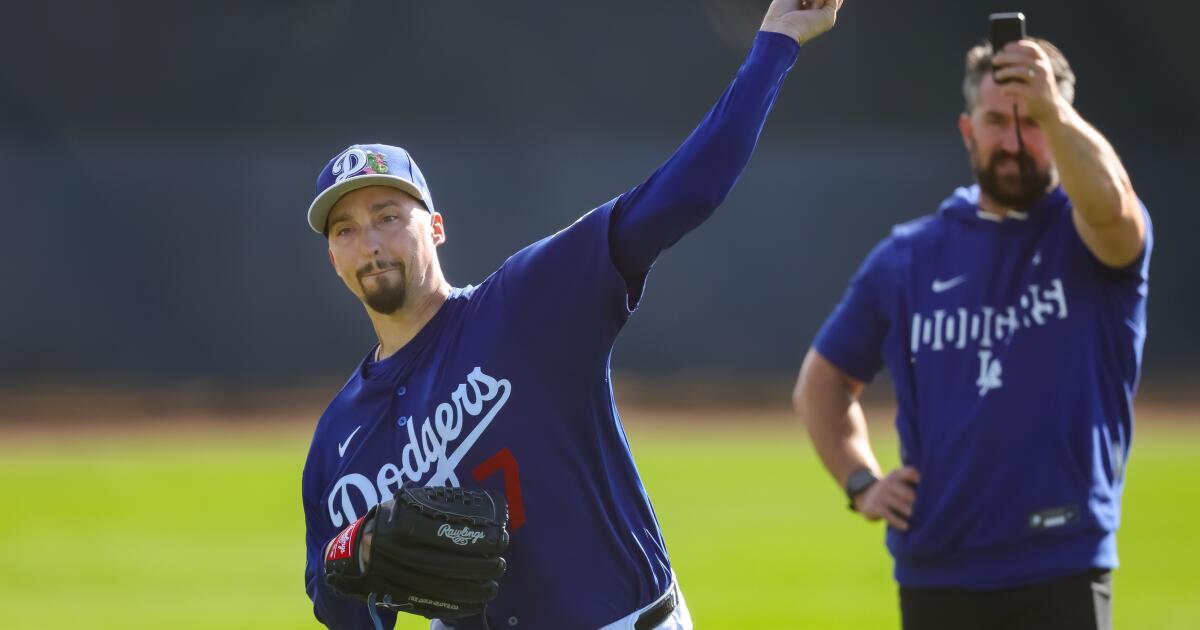
PHOENIX — Unable to ramp up through the first month of spring training because of lingering shoulder soreness, Dodgers left-hander Blake Snell took a step toward readiness Thursday, throwing his first bullpen session.
Two hours before Thursday night’s Cactus League game, Snell threw off the mound in front of a group of reporters and fans at Camelback Ranch. Snell threw 15 pitches — all fastballs — sitting between 87 to 89 mph.
“I feel good,” Snell said after his bullpen. “I was very excited to throw off the mound again and pitch. I’ve been looking forward to this for a while. This being like the first one where I actually could have the catcher down. I was still limited to what I could throw. I was throwing 87 to 89 [mph]. It felt effortless, easy, could command the ball, so [I’m] happy with that. [I’m] just happy to continue to grow and get better.”
The two-time Cy Young Award winner says he’s targeting an April return, and that he’s hoping to get back faster than initially expected.
“I want to pitch in April,” Snell said. “That’s my goal. So, I’ve kind of been the one pushing it, and they’re being more cautious. I think we’re just talking a little back and forth, but I think them seeing me throw a pen today, hopefully that just gives them more confidence to keep it going. I think we won’t really know until I throw a live [batting practice], I think that’s when we’ll really know. How do I recover from that? How do I feel? And then that will be like, ‘OK, let’s get him into games.’ That’s what I would envision. I’m not the front office or Dave, but that’s what I would think.”
Dodgers manager Dave Roberts, however, isn’t ready to give a timetable for Snell’s return.
“I think honestly, to think about when he’s going to come back, we’re just a ways away from even really having that conversation,” Roberts said, noting that six weeks is “the floor” when you also account for a potential rehab assignment.
Thanks to the depth of their pitching staff, the Dodgers can afford to be patient with building up Snell. Right-handers Emmet Sheehan and River Ryan, along with left-hander Justin Wrobleski, are all possibilities for starting assignments early in the season.
“We still need him to pitch, and I know he understands that,” Roberts said of Snell. “But we do have the luxury of trying to err on the side of caution. … We are certainly better when he’s pitching for us, when he’s active.”
Snell, for his part, is thankful to be throwing again without shoulder pain.
“The whole offseason, I mean, every throw kind of hurt,” Snell said. “It was just every throw, I could feel my shoulder. It was just cranky and I couldn’t get it going. And I thought I was doing everything I needed to, and I believe I was, and ultimately, I’m feeling better.”
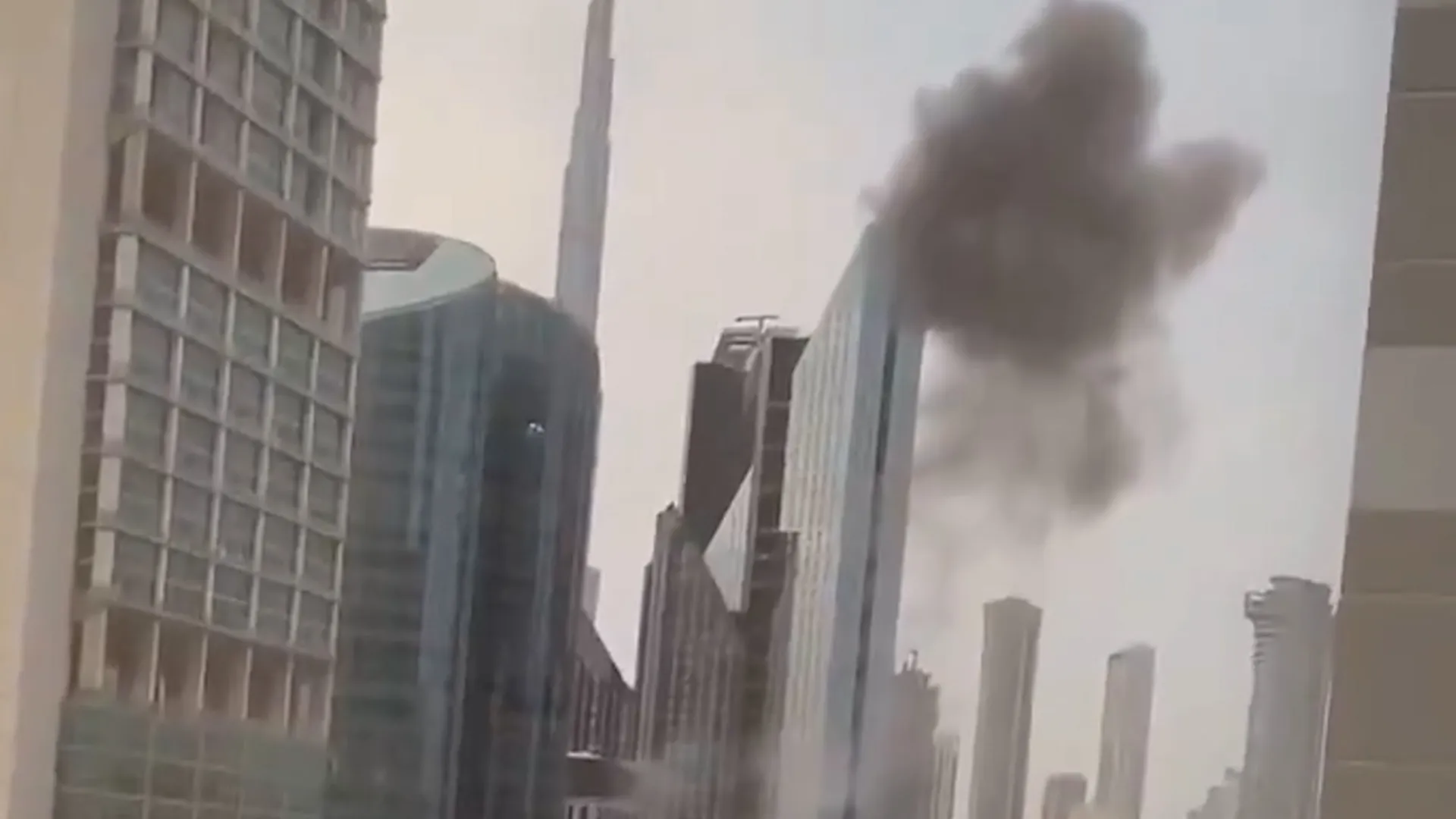
Black smoke could be seen in Dubai’s financial district where witnesses reported hearing explosions on Friday morning. Authorities there said a building was hit by debris from an intercepted missile.