To rebel is to defy. It is to understand that the world as it is can and should be better.
So it’s no surprise rebels were everywhere on our movie screens in 2025. Filmmakers in the U.S. and abroad depicted the lengths to which people will go to stand up against the bland (and at times violent) vision of conformity they see around them. It’s a theme that comes through most organically in these films’ costume designs.
In “Wicked: For Good,” for instance, Cynthia Erivo’s Elphaba Thropp stands apart from the glossy superficiality of the Emerald City. Paul Tazewell, an Oscar winner earlier this year for the first “Wicked,” once again wrapped Elphaba’s defiant spirit in the very fabric of her costumes. As she fights for animal rights and defies the authority of that fraud of a Wizard, the titular witch dons dresses and capes (and, yes, even a knitted cardigan that had the internet abuzz) that ground her in that land “made of dirt and rock and loam” she sings about.
Cynthia Erivo as Elphaba in “Wicked: For Good.”
(Giles Keyte / Universal Pictures)
Not that all rebels choose to stand out. In Paul Thomas Anderson’s politically urgent thriller “One Battle After Another” — costumed by four-time Oscar winner Colleen Atwood — members of the French 75 revolutionary group know better than to draw attention to themselves.
“Take Deandra [played by Regina Hall], for instance, who’s always lived off the grid,” Atwood tells The Envelope. “They have lives, but they are still somewhere on the wanted list, and some weirdo can suddenly know who they are. So they really have to blend in. They have to be not noticeable. That was a big goal with everybody’s costume in the movie, all the French 75 costumes — and Leo as well.”
That’s why DiCaprio spends much of the film in a red bathrobe, making him both incredibly hard to miss and also decidedly ordinary-looking. “Would you wear it the whole time?” Atwood remembers asking herself: “Would he get rid of it? And Paul goes, ‘Why would you take off your clothes if you’re running?’”
Leonardo DiCaprio, left, and Benicio Del Toro in “One Battle After Another.”
(Warner Bros. Pictures)
Atwood’s choice to put Benicio Del Toro in a gi and a turtleneck was similarly driven by this approach: These are all people who move through the world wanting to disrupt the system without making such disruption all that conspicuous. Here we may also add the off-the-rack suits Teddy and Don (Jesse Plemons and Aiden Delbis) wear in “Bugonia” to face their kidnapped CEO; the beret-and-turtleneck-wearing revolutionary (Richard Ayoade) in “The Phoenician Scheme”; and the stylish, delightfully unbuttoned shirts Wagner Moura wears throughout “The Secret Agent.”
Not all instances of rebellion are so obviously political. Take Harry Lighton’s deliciously kinky dom-com “Pillion,” which finds shy young Colin (Harry Melling) entering into a BDSM relationship with an enigmatic biker called Ray (Alexander Skarsgård).
“Ray’s an anomaly; he’s the rebel, you can’t place him,” costume designer Grace Snell says. When we first meet him, he is wearing a striking white leather biking outfit: “I wanted him to be like a light at night on this bike and a shiny toy for Colin.”
Harry Melling, left, and Alexander Skarsgård in “Pillion.”
(Festival de Cannes)
The leather and kink gear that Skarsgård, Melling and the rest of the “Pillion” cast wear allowed Snell to give audiences the Tom of Finland fantasy Lighton’s film clearly demands. Yet the film is about a quieter rebellion.
“Colin’s kind of testing his boundaries and understanding who he is as a gay man, and exploring what that means for him,” Snell says. It’s why he spends much of the film in uniform, as a traffic warden, as a member of a barbershop quartet, and later as the new member of Ray’s biker gang.
“Pillion” is about self-fashioning at its most elemental: how gear and uniforms, roles and positions, can help you bloom into yourself; how in losing yourself in another you can find who you want to be.
Blending such a lesson in ways political and personal is Bill Condon’s “Kiss of the Spider Woman,” also costumed by Atwood. The musical is framed by the tension between Valentin (Diego Luna), a righteous revolutionary, and Molina (Tonatiuh), a gay hairdresser, who share a prison cell under Argentina’s military regime.
Diego Luna and Jennifer Lopez in “Kiss of the Spider Woman.”
(Roadside Attractions)
Along with designer Christine L. Cantella, Atwood aimed to honor the history the film was depicting and the message it embodies. “Not only is it set in a revolutionary time, but it’s also about two people opening each other’s eyes to the world,” Atwood says, “in a way that is such a great message for today.”
Atwood and Cantella had to balance the dingy reality of the prison — where Molina finds modest beauty in his silk robes — and the movie musical he loses himself in — where Jennifer Lopez’s Aurora is dressed like a silver-screen siren throughout. Lopez’s big number, where she dons an ode to the all-white ensemble Chita Rivera wore in the original Broadway show, including a fedora to match, is all about the lure of escapist Hollywood fantasy: “Turn off the lights and turn on your mind,” she sings.
As the ending of the musical attests, there may be a way to do both, to be politically engaged and still enjoy the beauty of the world around you. For, as these varied films attest, a rebel doesn’t just voice their discontent at the status quo. They wear it proudly.
As a child, Clara Spars, who grew up in Charles M. Schulz’s adoptive hometown of Santa Rosa, assumed that every city had life-size “Peanuts” statues dotting its streets.
After all, Spars saw the sculptures everywhere she went — in the Santa Rosa Plaza, at Montgomery Village, outside downtown’s Empire Cleaners. When she and her family inevitably left town and didn’t stumble upon Charlie Brown and his motley crew, she was perplexed.
Whatever void she felt then is long gone, since the beagle has become a pop culture darling, adorning all manner of merchandise — from pimple patches to luxury handbags. Spars herself is the proud owner of a Baggu x Peanuts earbuds case and is regularly gifted Snoopy apparel and accessories.
“It’s so funny to see him everywhere because I’m like, ‘Oh, finally!’” Spars said.
The spike in Snoopy products has been especially pronounced this year with the 75th anniversary of “Peanuts,” a.k.a. Snoopy’s 75th birthday. But the grip Snoopy currently has on pop culture and the retail industry runs deeper than anniversary buzz. According to Sony, which last week acquired majority ownership of the “Peanuts” franchise, the IP is worth half a billion dollars.
To be clear, Snoopy has always been popular. Despite his owner being the “Peanuts” strip’s main character and the namesake for most of the franchise’s adaptations, Snoopy was inarguably its breakout star. He was the winner of a 2001 New York Times poll about readers’ favorite “Peanuts” characters, with 35% of the vote.
This year, the Charles M. Schulz Museum celebrated the 75th anniversary of the “Peanuts” comic strip’s debut.
(Brennan Spark / Charles M. Schulz Museum)
But the veritable Snoopymania possessing today’s consumers really exploded with the social media boom of the early 2010s, said Melissa Menta, senior vice president of global brand and communications for Peanuts Worldwide.
That’s also when the company saw the first signs of uncharacteristically high brand engagement, Menta said. She largely attributed the success of “Peanuts” on social media to the comic strip’s suitability to visual platforms like Instagram.
“No one reads the comic strips in newspapers anymore,” Menta said, “but if you think about it, a four-panel comic strip, it’s actually an Instagram carousel.”
Then, in 2023, Peanuts Worldwide launched the campaign that made Snoopy truly viral.
That year, the brand partnered with the American Red Cross to create a graphic tee as a gift for blood donors. The shirt, which featured Snoopy’s alter ego Joe Cool and the message “Be Cool. Give Blood,” unexpectedly became internet-famous. In the first week of the collaboration, the Red Cross saw a 40% increase in donation appointments, with 75% of donors under the age of 34.
“People went crazy over it,” Menta said, and journalists started asking her, “Why?”
Her answer? “Snoopy is cute and cool. He’s everything you want to be.”
“Charles Schulz said the only goal he had in all that he created was to make people laugh, and I think he’s still doing that 75 years later,” Schulz Museum director Gina Huntsinger said.
(Brennan Spark / Charles M. Schulz Museum)
The Red Cross collaboration was so popular that Peanuts Worldwide brought it back this year, releasing four new shirt designs. Again, the Snoopy fandom — plus some Woodstock enthusiasts — responded, with 250,000 blood donation appointments made nationwide in the month after the collection’s launch.
In addition to the Red Cross partnership, Peanuts Worldwide this year has rolled out collaborations with all kinds of retailers, from luxury brands like Coach and Kith to mass-market powerhouses like Krispy Kreme and Starbucks. Menta said licensed product volume is greater than ever, estimating that the brand currently has more than 1,200 licensees in “almost every territory around the world,” which is approximately four times the number it had 40 years ago.
Then again, at that time, Schulz enjoyed and regularly executed veto power when it came to product proposals, and licensing rules were laid out in what former Times staff writer Carla Lazzareschi called the “Bible.”
“The five-pound, 12-inch-by-18-inch binder given every new licensee establishes accepted poses for each character and painstakingly details their personalities,” Lazzareschi wrote in a 1987 Times story. “Snoopy, for example, is said to be an ‘extrovert beagle with a Walter Mitty complex.’ The guidelines cover even such matters as Snoopy’s grip on a tennis racquet.”
Although licensing has expanded greatly since then, Menta said she and her retail development associates “try hard not to just slap a character onto a T-shirt.” Their goal is to honor Schulz’s storytelling, she added, and with 18,000 “Peanuts” strips in the archive, licensees have plenty of material to pull from.
Rick Vargas, the senior vice president of merchandising and marketing at specialty retailer BoxLunch, said his team regularly returns to the Schulz archives to mine material that could resonate with customers.
“As long as you have a fresh look at what that IP has to offer, there’s always something to find. There’s always a new product to build,” Vargas said.
Indeed, this has been one of BoxLunch’s strongest years in terms of sales of “Peanuts” products, and Snoopy merchandise specifically, the executive said.
BaubleBar co-founder Daniella Yacobovsky said the brand’s “Peanuts” collaboration was one of its most beloved yet.
(BaubleBar)
Daniella Yacobovsky, co-founder of the celebrity-favorite accessory retailer BaubleBar, reported similar high sales for the brand’s recent “Peanuts” collection.
“Especially for people who are consistent BaubleBar fans, every time we introduce new character IP, there is this huge excitement from that fandom that we are bringing their favorite characters to life,” Yacobovsky said.
The bestselling item in the collection, the Peanuts Friends Forever Charm Bracelet, sold out in one day. Plus, customers have reached out with new ideas for products linked to specific “Peanuts” storylines.
More recently, Peanuts Worldwide has focused on marketing to younger costumers in response to unprecedented brand engagement from Gen Z. In November, it launched a collaboration with Starface, whose cult-favorite pimple patches are a staple for teens and young adults. The Snoopy stickers have already sold out on Ulta.com, Starface founder Julie Schott said in an emailed statement, adding that the brand is fielding requests for restocks.
“We know it’s a certified hit when resale on Depop and EBay starts to spike,” Schott said.
The same thing happened in 2023, when a CVS plush of Snoopy in a puffer jacket (possibly the dog’s most internet-famous iteration to date) sold out in-store and started cropping up on EBay — for more than triple the original price.
The culprits were Gen-Zers fawning over how cute cozy Snoopy was, often on social media.
“People who love Snoopy adore Snoopy, whether you grew up with ‘Peanuts’ or connect with Snoopy as a meme and cultural icon today,” said Starface founder Julie Schott.
(Starface World Inc.)
Hannah Guy Casey, senior director of brand and marketing at Peanuts Worldwide, said in 2024, the official Snoopy TikTok account gained 1.1 million followers, and attracted 85.4 million video views and 17.6 million engagements. This year, the account has gained another 1.2 million followers, and racked up 106.5 million video views and 23.2 million engagements.
Guy Casey noted that TikTok is where the brand experiences much of its engagement among Gen Z fans.
Indeed, the platform is a hot spot for fan-created Snoopy content, from memes featuring the puffer jacket to compilations of his most relatable moments. Several Snoopy fan accounts, including one dedicated to a music-loving Snoopy plushie, boast well over half a million followers.
Caryn Iwakiri, a speech and language pathologist at Sunnyvale’s Lakewood Tech EQ Elementary School whose classroom is Snoopy-themed, recently took an impromptu trip to the Charles M. Schulz Museum in Santa Rosa after seeing its welcome center decked out with Snoopy decor on TikTok. Once she arrived, she realized the museum was celebrating the “Peanuts” 75th anniversary.
Last year, the Schulz Museum saw its highest-ever attendance, driven in large part by its increased visibility on social media.
(Brennan Spark / Charles M. Schulz Museum)
It’s a familiar story for Schulz Museum director Gina Huntsinger.
“Last December, we were packed, and I was at the front talking to people, and I just randomly asked this group, ‘Why are you here?’”
It turned out that the friends had traveled from Washington, D.C., and Las Vegas to meet in Santa Rosa and visit the museum after seeing it on TikTok.
According to Stephanie King, marketing director at the Schulz Museum, the establishment is experiencing its highest-ever admissions since opening in 2002. In the 2024–2025 season, the museum increased its attendance by nearly 45% from the previous year.
Huntsinger said she’s enjoyed watching young visitors experience the museum in new ways.
In the museum’s education room, where visitors typically trace characters from the original Schulz comics or fill out “Peanuts” coloring pages, Gen Z museumgoers are sketching pop culture renditions of Snoopy — Snoopy as rock band Pierce the Veil, Snoopy as pop star Charli XCX.
“When our social media team puts them up [online], there’s these comments among this generation that gets this, and they’re having conversations about it,” Huntsinger said. “It’s dynamic, it’s fun, it’s creative. It makes me feel like there’s hope in the world.”
The Schulz Museum’s “Passport to Peanuts” exhibition emphasizes the comic’s global reach.
(Brennan Spark / Charles M. Schulz Museum)
Laurel Roxas felt similarly when they first discovered “Peanuts” as a kid while playing the “Snoopy vs. the Red Baron” video game on their PlayStation Portable. For Roxas, who is Filipino, it was Snoopy and not the “Peanuts” children who resonated most.
“Nobody was Asian. I was like, ‘Oh, I’m not even in the story,’” they said.
Because Snoopy was so simply drawn, Roxas added, he was easy to project onto. They felt similarly about Hello Kitty; with little identifying features or dialogue of their own, the characters were blank canvases for their own personification.
Roxas visited Snoopy Museum Tokyo with their brother last year. They purchased so much Snoopy merchandise — “everything I could get my hands on” — that they had to buy additional luggage to bring it home.
For some Snoopy enthusiasts, the high volume of Snoopy products borders on oversaturation, threatening to cheapen the spirit of the character.
Growing up, Bella Shingledecker loved the holiday season because it meant that the “Peanuts” animated specials would be back on the air. It was that sense of impermanence, she believes, that made the films special.
Now, when she sees stacks of Snoopy cookie jars or other trend-driven products at big-box stores like T.J. Maxx, it strikes her as a bit sad.
“It just feels very unwanted,” she said. For those who buy such objects, she said she can’t help but wonder, “Will this pass your aesthetic test next year?”
Lina Jeong, for one, isn’t worried that Snoopy’s star will fade.
“[Snoopy is] always able to show what he feels, but it’s never through words, and I think there’s something really poetic in that,” said Lina Jeong.
(Brennan Spark / Charles M. Schulz Museum)
Jeong’s affinity for the whimsical beagle was passed down to her from her parents, who furnished their home with commemorative “Peanuts” coffee table books. But she fell in love with Snoopy the first time she saw “Be My Valentine, Charlie Brown,” which she rewatches every Valentine’s Day.
This past year, she was fresh out of a relationship when the holiday rolled around and she found herself tearing up during scenes of Snoopy making Valentine’s crafts for his friends.
“Maybe I was hyper-emotional from everything that had happened, but I remember being so struck,” that the special celebrated platonic love over romantic love, Jeong said.
It was a great comfort to her at the time, she said, and she knows many others have felt that same solace from “Peanuts” media — especially from its dear dog.
“Snoopy is such a cultural pillar that I feel like fads can’t just wash it off,” she said.
Soon, she added, she plans to move those “Peanuts” coffee table books into her own apartment in L.A.
Istanbul officials on Thursday announced they detained 115 suspected members of ISIS who were planning terror attacks in Turkey aimed at mostly non-Muslim people at Christmas and New Year events, such as the Christmas mass at Saint Antuan Church pictured in 2022. File Photo by Erdem Sahin/EPA
Dec. 25 (UPI) — Police in Turkey detained 115 people on Thursday suspected of planning to stage terror attacks at Christmas and New Year’s Day celebrations in the country.
The Istanbul Provincial Police Department, on instruction from the city’s Chief Public Prosecutor’s Office, carried out 124 raids targeting 137 suspected members of ISIS, officials said in a press release.
“These suspects were identified as being in contact with conflict zones within the scope of terrorist organization activities,” the prosecutor’s office said in a press release posted to X.
The suspects, prosecutors said, were “planning attacks and issuing calls for action targeting our country — specifically aimed at non-Muslim individuals — within the context of upcoming Christmas and New Year events.”
Officials apprehended 115 of the 137 suspects and seized pistols, cartridges and “numerous organization documents” during the raids.
The Turkish National Intelligence Organization had earlier captured what it said is a senior ISIS figure who is suspected of being sent to carry out a suicide attack in Turkey, the Daily Sabah reported.
Other ISIS operators had as a result been investigated in Turkey after spending time in the Afghanistan-Pakistan border region where they trained and planned for potential security attacks, according to Turkish intelligence figures.
Turkey, which shares a border with Syria, where ISIS continues to operate, has worked with Syria’s new president, as well as officials in the United States and Europe, to investigate and root what is left of the terrorist group, the BBC reported.
A young girl sits in front of a nativity scene in Manger Square, outside the Church of Nativity, in the biblical town of Bethlehem, West Bank, on December 23, 2025. Photo by Debbie Hill/UPI | License Photo
Growing up just outside Melbourne, Australia, Scotty James was more likely to spot the Loch Ness Monster or Big Foot as he was to spot snow. For him, the Winter Olympics seemed about as accessible as Mars.
“It is very unique, being an Australian in winter sports,” he said. “We’re very few and far between.”
Unique, but not impossible. Because if he qualifies for February’s Milano-Cortina Olympics, as expected, James will become the first Australian man to represent the country in five separate Winter Olympics. If he reaches the podium in the men’s halfpipe, his specialty, he will become the most decorated winter Olympian in Australian history with three medals.
Yet it almost didn’t happen. If his father Phil, a passionate snowboarder, hadn’t talked a Vancouver ski-shop worker into selling 3-year-old Scotty a miniature display board during a family vacation to Canada decades ago, James still might be watching the Winter Olympics on TV.
“My parents were always making sure that I realized how fortunate I was to be doing what I was doing,” said the 31-year-old James, a four-time world champion and the most successful halfpipe rider in history. “And incredibly supportive through all of it, through the challenges and through the most recent great moments.”
But James, whose fortunate if still unfolding life story is told in the film “Scotty James: Pipe Dream,” which will be available on Netflix beginning Friday, won’t be the only accidental Olympian in competing in Italy. The Summer Games feature running, jumping, swimming and throwing, activities that can be done mostly anywhere, but many of the disciplines in the Winter Games — skiing, figure skating, luge and snowboarding, for example — require ice and snow, which are unavailable to about two-thirds of the world’s population.
That’s why more than 10,000 athletes from more than 200 countries competed in the 2024 Summer Games in Paris and fewer than 3,000 representing about 90 nations will participate in Italy.
“Africa, big parts of southeast Asia, South America, many of those countries don’t have a heritage of winter sports,” said Gene Sykes, president and chair of the U.S. Olympic and Paralympic Committee. “Given that there’s a limitation that all the sports have to conducted on snow or ice, we have to be creative.”
Among the creative ideas that have been discussed is adding events such as cross-country running, cycling and indoor sports that could be practiced anywhere to the Winter Olympics calendar, which would make the Games more universal.
In the meantime, athletes such as alpine skier Richardson Viano of Haiti and figure skater Donovan Carrillo of Mexico will be curiosities in Milan, having followed paths that were arduous, complicated and completely out of the ordinary.
James fits that description as well, having lived much of his life abroad, traveling to the U.S., Canada and the Nordic countries in search of mountains, snow and competition. That’s a hardship unknown to Winter Olympic athletes from Europe and North American.
“You know, 80% of the time I wasn’t really in Australia,” said James, who started competing in snowboard at the age of 6 and began traveling to events at 10. “I was always overseas. My mom would organize some tutors in different countries and then I would do some online stuff with my school back in Australia.”
There is snow in parts of Australia, but since the country is in the southern hemisphere, the winters there are short and they come during what is summer in the northern climes. So to stay fit and to compete in major events, James had to live on a Northern Hemisphere calendar, meaning he was overseas from October to May almost every year.
“It was a real task,” he said, “to get it all done.”
It was expensive, too, though it proved a wise investment since he progressed quickly, turning pro at 14 and making the Australian Olympic team at 15, becoming the country’s youngest male Olympian in 50 years and the youngest male competitor in the Vancouver Games in 2010.
Yet on the eve of those Games, James was ready to pass all that up.
“I didn’t love it anymore,” he said. “I would go home and cry to my mom all the time. I wanted to quit. I ended up in this spiral that made me want to go home and just have a normal life and go to school and be with my friends.”
It didn’t help that James broke his right wrist in practice before the Olympics. But he recovered from the injury and the lack of confidence to place 21st; four years later, while still a teenager, he won the first of four World Cup titles in the halfpipe and ranked No. 1 in the world.
At 23 he was chosen to carry the Australian flag in the opening ceremony of the 2018 Winter Olympics in South Korea, where he won a bronze medal.
Scotty James carried the flag of Australia’s team during the opening ceremony of the 2018 Winter Olympics in Pyeongchang, South Korea.
(Julie Jacobson / Associated Press)
“It’s one of the biggest honors, being an Olympic athlete, to walk your team into the opening ceremony,” he said. “The first time I ever watched the Olympics, I remember watching the opening ceremony and I believe one of the basketballers walked the team in. And I just remember being like ‘wow, that must be just a special thing to do.’
“Little did I know it was potentially on the radar for me. That’s a moment that lives rent-free in my head, that’s for sure.”
But if James had to leave Australia to become an Olympian, back home his exploits have made enough of a celebrity that he’s often recognized on the streets of Melbourne or Sydney.
“They remember for sure, which is really cool,” said the still-boyish James. “I always am chuffed when people come up and recognize me or have followed my career. It never gets old.”
Neither, it seems, does James, who turns 32 in July but isn’t ready to call his fifth Olympics his final one just yet.
“I don’t have a timeline. I don’t give myself an end date,” he said. “Every day when I wake up I think about how I can be better at snowboarding and what I can do to make myself better. So I really haven’t thought about that at all.”
But James, who is raising 14-month-old son Leo with his wife, Chloe Stroll, a Canadian singer-songwriter and daughter of Aston Martin chairman Lawrence Stroll, has begun preparing for a life beyond the slopes. In the last two years he’s released two illustrated children’s books featuring MOOKi, James alter-ego who has adopted the snowboarder’s childhood nickname and his insistence on always dreaming big.
He’s also an investor and brand advisor for MSP Sports Capital, which purchased the X Games — James is a seven-time X Games gold medalist — in 2022, kicking off his move from snow moguls to business mogul. There’s also the Netflix film, directed by Emmy-winning filmmaker Patrick Dimon, which will spread his legend and legacy even further.
“Typically athletes kind of close the door on their athletic journey and then they start to invest in their sport. But I want to do it right now,” he said. “I can really add value to a business like X Games because I’m still competing. I can speak to the athletes and I can give really good feedback about where it can get better.”
However, the contribution he’d really like to leave involves creating an environment that would allow the next generation of Australian Winter Olympians to learn and grow in their sports without having to leave their homes. James did that by building Australia’s only 13-foot mini halfpipe for kids in the Snowy Mountains of New South Wales, where he trains when he’s in Australia. That’s a project he’d like to expand.
“I would love to leave a mark in some sense of hopefully opening up the door and creating some access [for] freestyle sport in Australia,” James said. “Specifically in the winter, to see if we can produce some really great talent in the future.”
RAIL passengers can expect travel chaos as the UK’s busiest train station closes until the new year.
Commuters will have to take alternative routes as a number of services are impacted by the closure.
Sign up for the Travel newsletter
Thank you!
Liverpool Street Station in London will close until the new year as major engineering works get underway (stock image)Credit: Alamy
With less people commuting to and from work, the festive period has become a popular time for rail companies planning major engineering works.
However, closures at this time of year still cause a fair amount of bother for those that are still forced to rely on these services.
From those working through the festivities to people planning a visit to friends and family, there are still a lot of passengers hoping to take their train as normal.
However, anyone planning to travel through Liverpool Street Station between now and the new year will want to rethink their route.
Network Rail has revealed Liverpool Street will remain closed until Friday, January 2.
The closure will impact services like the Weaver line and Stansted Express, as well as routes operated by Greater Anglia and c2c.
Liverpool Street previously shut for eight days between Christmas and the New Year in 2024.
According to London transport expert IanVisits, the engineering works being carried out at the UK’s busiest train station will strengthen the Bishopsgate tunnel.
The station itself will see panelling replaced above the concourse over platforms 1-10.
And the drainage system at Liverpool Street will also be improved as part of the works.
Greater Anglia lines, including the Stansted Express as well as Great Eastern and West Anglia mainline services will be rerouted as a result of the closure.
From now until January 2, the routes will run from Stratford.
Meanwhile, c2c services will run from London Fenchurch Street via West Ham.
And Weaver line trains will run from London Fields to Chingford, Enfield Town, and Cheshunt.
London Underground impact
Underground services operating from Liverpool Street will also be affected by the closure.
Liverpool Street closure dates 2025
December 25 2025 (Christmas Day)
December 26 2025 (Boxing Day)
December 27 2025
December 28 2025
December 29 2025
December 30 2025
December 31 2025 (New Year’s Eve)
January 1 2026 (New Year’s Day)
The Elizabeth Line will have no service between Liverpool Street and Stratford from December 27 to January 1.
Meanwhile, the Central Line will still run between Liverpool Street and Stratford, but a ticket acceptance arrangement will be in place.
This means you can use your ticket on the Central Line to get between the two stations.
And other parts of the Tube network, including the Circle, Hammersmith & City, and Victoria lines, will operate normally with some closures.
Tube passengers are advised to check the TfL Journey Planner for specific details.
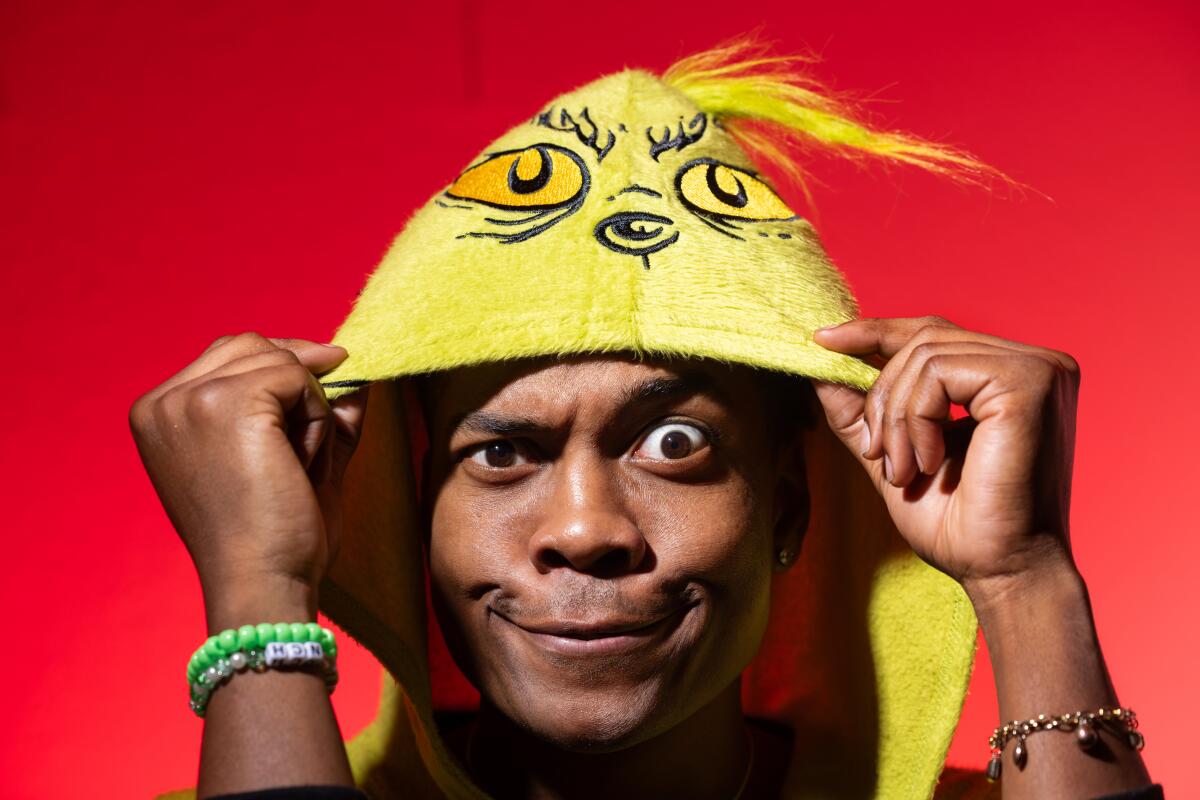
It takes a lot for sweet-tempered 28-year-old Nick Darnell to transform himself into Christmas’ most sought-after sourpuss.
There’s colored contacts and facial prosthetics, a protruding belly and at least an hour of makeup. But for the devout Christian and preternaturally cheerful young actor, the real metamorphosis is psychological.
“People today love to connect with the villain,” said the viral Grinch impersonator. “The world is just a darker world now.”
Darnell called the chartreuse baddie he portrays “the modern-day Santa.”
Dr. Seuss’ holiday parable “How the Grinch Stole Christmas!” has been a seasonal favorite since it was published in 1957, ranking among the most popular and profitable of the author’s iconic rhyming picture books.
The story’s sassy, brassy antihero has likewise adorned Christmas trees and school library shelves for generations. His hornlike fur forelocks and pathological refusal to assimilate have led some critics to call the Grinch ambiguouslyantisemitic, but those concerns have largely been glossed over by years of nostalgia.
Experts say 2025 heralds the Grinch’s ascent from Yuletide bit player to Christmas A-lister. He now crowds out Kris Kringle in store displays, social media feeds and holiday meet-and-greets.
Unlike Santa, who ho-ho-hos his way through the holiday season, Grinches twerk and pout and scream in kids’ faces. Compilations of their antics on YouTube and TikTok routinely rack up millions of views.
“I do the things that people think,” Darnell said of the role. “I’m not restrained.”
Despite the Grinch’s anti-consumerist zeal, the market for his visage has exploded in recent years.
Target touts its “Grinchmas,” while Walmart has “WhoKnewVille.” McDonald’s sells Grinch fries, Starbucks features a “secret menu” frappuccino. Hanna Andersson, a popular purveyor of holiday pajamas, boasts roughly a dozen different Grinch patterns, compared to three Hanukkah options and just one Santa design in two colorways.
“I’m not restrained,” Grinch impersonator Nick Darnell, 28, says of his role.
(Christina House/Los Angeles Times)
Ownership of the Grinch’s likeness is guarded as jealously as the villain protects his lair: Dr. Seuss Enterprises holds the rights to the children’s book, Warner Bros. Discovery the 1966 animated TV special, and Universal Studios the 2000 live-action Jim Carrey film, which ranks among the highest-grossing Christmas movies of all time.
But impersonators, academics and even working Santas agree: Americans’ embrace of the Grinch in 2025 goes far beyond consumerism.
“It’s definitely more popular,” said ‘Santa’ Ed Taylor, the famed Los Angeles Santa behind the Worldwide Santa Claus Network, a training camp for the art of Christmas cheer. “It’s a little yin and yang. Maybe we need a little bit of both.”
Costume companies across Los Angeles say they’ve seen a deluge of demand for the Grinch this year. At Etoile Costume & Party Center in Tarzana, nearly half of Christmas costume rentals are now furry green villains.
“It’s about equal to Santa,” one employee said. “Maybe 40% Grinch and the rest Santa.”
Ryan Ortiz, dressed in a Grinch costume, stands next to his 1969 Volkswagen Bus in San Diego on Dec. 21.
(K.C. Alfred / The San Diego Union-Tribune via Getty Images)
Fans of the hirsute sourpuss seek him out for his in-your-face edge — the opposite of Santa’s remote joviality. Santa enforces his regime of goodness through lists and surveillance. The Grinch will get in your face and yell at you to shut up.
“[Santa]’s supposed to be mysterious and unknown,” said Darnell’s fiancee JadaPaige. “He’s supposed to just come in the night and you’re never supposed to see him.”
“I grew up obsessed with Santa Claus — I did not grow up obsessed with the Grinch,” Darnell said. “I was the kid waiting up in the middle of the night, peeking, wondering if Santa’s down there. A lot of modern day kids aren’t having that journey.”
Instead, many Gen Alpha youths look to the Grinch for his views on “corruption or poverty or the oversaturation of commercialism,” Darnell said.
“Santa is looked at more like a godly figure, while the Grinch is a more everyday man,” the actor explained. “The world is so sinister and negative. [The Grinch] tells you how it is, rather than telling you everything is going to be fine.”
TikTok turbocharged that trend, with the infamous green meanie matching or beating his red rival in holiday clout.
Grinch impersonator Nick Darnell said the character he plays has become popular because, “He has aura.”
(Christina House/Los Angeles Times)
Today’s professional Santas are often retirees with a bit of a belly and some time on their hands. Grinches, by contrast, are more likely to be working actors like Darnell, who look reverently to Carrey’s performance as a blueprint for the character’s slapstick antics and snarky reads.
Still, experts say the Grinch’s 2025 glow-up likely owes as much to holiday exhaustion and broad consumer pessimism as it does vertical video virility.
“The Grinch is the opposite side of Christmas,” said Oscar Tellez, who owns Magic Dream Costumes and Party Rentals in East Los Angeles and says he’s seen a spike in Grinch requests even as overall holiday rentals have sagged.
“Especially with the Latino community, I don’t think they feel the enthusiasm to celebrate,” Tellez said. “They are more worried about what’s gonna happen next.”
Pop culture experts agreed.
“The economy is in big trouble, our political situation is chaotic, there’s a lot of hate — it’s no wonder that we would seek to express that through the embodiment of a monster like the Grinch,” said Michael M. Chemers, director of the Center for Monster Studies at UC Santa Cruz.
“You’ve seen these nativity displays popping up all over the country that have the Jesus figures removed and it says ‘ICE was here,’ ” he added. “I think there’s just a lot of Grinchy feeling right now in the world.”
Chemers and other scholars say the emergence of the Grinch as a foil to Santa is less a departure than a return to form: the Grinch is a “PG version” of the mythical Krampus, a shaggy, fork-tongued Germanic goat man who beats and even abducts naughty children, working as an enforcer for Father Christmas.
An “organillero,” or traditional street musician, dressed as the anti-Christmas character known as the Grinch plays on a central street in Mexico City on Dec. 9.
(Yuri Cortez/AFP via Getty Images)
“He’s been called the Christmas devil,” said Jeff Belanger, author of “The Fright Before Christmas,” a compendium of so-called “Yuletide monsters.”
“[Krampus] represented the consequence of bad behavior, while St. Nick rewards good behavior,” he said.
Krampus likely evolved from older, pre-Christian deities, just as Christmas absorbed solstice and midwinter customs, the author explained. The Christmas most Americans grew up with only emerged as a national holiday in the wake of the Civil War, he said, about a decade after the formal introduction of Thanksgiving in 1863. It was around this time that Christmas trees became popular in the United States.
“In 1867, Charles Dickens came over to Boston and that’s when he read his ‘Christmas Carol’ for the first time in America,” spurring President Ulysses S. Grant to declare Christmas a federal holiday, Belanger said. “It was truly on the back of that story.”
The holiday’s corpulent, white-bearded dandy arrived even later, his schmaltzy persona skimmed from bony St. Nicholas between Reconstruction and 1931, when Coca-Cola debuted its iconic, brandy-flushed Santa Claus.
“That’s when Christmas turned purely commercial, and there was no room for consequences anymore,” Belanger said.
Seuss’ Grinch sits somewhere in the middle — cuddlier than Krampus and pricklier than Santa — making him the perfect avatar for a moody, uncertain age.
Workers check Grinch inflatables ready for export at a factory in Suixi County in central China’s Anhui Province on March 19.
(Wan SC/Future Publishing via Getty Images)
Grinch boosters point out that the villain repents and reforms at the end of the story, shedding his pathological hatred of Christmas.
“I always tell people, ‘Don’t you just love how his heart grew three sizes?’ ” Taylor, the famous Santa, said of his increasingly popular crossover events.
Others note that it’s never the repentant Grinch who marauds through schools and holiday parades or blows up on social media.
“Once he’s rehabilitated, he’s no fun anymore,” Chemers said.
That makes it hard for the holiday villain to visit sick kids in the hospital, as legions of Santas do every year, or comfort children who confide in him about bullying.
“The message is one of encouragement and positivity and acknowledgment of accomplishments and encouragement to strive harder,” Taylor said. “It’s these beautiful personal development messages that Santa gets to be the conduit for.”
The Grinch, by contrast, can affirm where you are, without ever asking you to be better.
“He can hear you and know what you’re thinking, because he has the same thoughts,” Darnell said of his beloved version of the character. “People want to know his heart and his mind, and that’s something they wouldn’t be able to ask Santa.”
People place bets at Santa Anita Park, where purses have declined along with the number of horses racing and lack of money coming from off-site betting.
(Getty Images)
Figuring out the purse for 34 of the 35 graded stakes races at Santa Anita is, for horsemen anyway, maddeningly simple: Just look up the minimum purse required in North America.
For a Grade 1 race, that’s $300,000. It drops to $200,000 for Grade 2 races and $100,000 for Grade 3s.
Even the one local exception, the Santa Anita Derby, pays “only” $500,000 after offering $750,000 from 2021-24. The current amount is half the purse on offer for the top 3-year-old races at Gulfstream Park (Florida Derby) and Fair Grounds (Louisiana Derby), and just one-third what Oaklawn Park pays for the Arkansas Derby.
Last year the Santa Anita Derby attracted only five entries, which reduced the number of Kentucky Derby qualifying points available in the race. That almost kept Baeza, who finished second to Journalism in the Arcadia race, from qualifying for the Derby (he made it in the field only after another horse was scratched and wound up placing third).
It’s the same story for older horses, where Gulfstream offers the $3-million Pegasus World Cup next month plus turf races for $1 million and $500,000. Oaklawn Park has a half-dozen races worth at least $500,000 (two at $1.25 million), and Fair Grounds has three between $250,000 and $500,000. No Grade 3 race at any of those tracks offers less than $150,000.
All of that makes it harder for Santa Anita to attract top horses from those states, which increase purses with money from slot machines or casinos, something not available to California tracks. Santa Anita, however, has hiked its purses this meeting for maiden and allowance races.
Many reporters at HumAngle wondered what 2025 would bring. But as the year ran fast, the foot soldiers ran even faster, creating a monumental investigative reporting archive across multiple platforms. In this newsroom, everyone is an investigative journalist — from editors, interns, reporters and the Editor-in-Chief/Chief Executive Officer.
We told raw stories and terror tales, and conducted human-centred investigations that uncovered what would otherwise have been covered up. Most of our 2025 investigations tackled insecurity, exposed social injustices, unravelled the vulnerability of communities to terrorists, and set the record straight amid disinformation wildfires.
Illustration by Akila Jibrin/HumAngle.
In 2025, we redefined our journalism models, focusing on impact-driven investigations and stories that really matter. Here are our best investigations for the year.
1. The Making and Unmaking of Abubakar Shekau
Illustration by Akila Jibrin/HumAngle.
When the notorious terrorist Abubakar Shekau died in 2021, tons of stories and narratives were pushed around the circumstances leading to his death. One question many failed to ask: How did Shekau emerge from nowhere to command an army of villains, inflicting lifelong pain and anguish on many? Only a few terrorism experts could answer that question with details and rigour. One such person is Ahmad Salkida, the CEO and Editor-in-Chief at HumAngle.
Four years after Shekau’s death, his investigative piece appeared on the internet’s fringes: The Making and Unmaking of Abubakar Shekau. Ahmad Salkida has studied Boko Haram for over a decade, from its inception to the point of vile insurgency and massive attacks against unarmed civilians.
HumAngle probed and profiled how Shekau rose from humble beginnings in Yobe State to become one of Africa’s most notorious insurgent leaders, transforming Boko Haram into a movement defined by mass abductions, suicide bombings, and indiscriminate killings. Initially a perfume seller and Qur’anic student, his life changed after meeting radical cleric Muhammad Yusuf, whose death in 2009 propelled Shekau into leadership.
2. What Happened to Gallari’s 42 Men After 12 Years in Military Detention?
That story on Shekau’s legacy of terror went viral. But before then, we had investigated the illegal incarceration of 42 village men of Gallari, a community in Borno, northeastern Nigeria, by men of the Nigerian military. They were arrested in 2011 during military raids targeting Boko Haram suspects, with little or no evidence against them.
HumAngle’s investigation exposed how the villagers were held in Giwa Barracks and other facilities under harsh conditions, enduring torture, starvation, and disease. Their families faced stigma, poverty, and displacement, with wives forced into single parenthood and children growing up without fathers. Upon release, some of the men returned to find their homes destroyed, loved ones lost, and communities fractured. The story highlights the broader consequences of Nigeria’s counterinsurgency strategy, where mass arrests and indefinite detentions have left deep scars on civilian populations.
For many months, Usman Zanna, a HumAngle reporter, documented this story after speaking with victims locked in military confinement for over 12 years. One of them came out blind from detention, another had lost one of his ears, and another had torture scars all over his body. During an advocacy meeting facilitated by HumAngle and Amnesty International in Borno State, however, civic leaders and media practitioners took a step to spotlight the investigation that opened a can of worms on the military’s gross violation of human rights in the arrest of the 42 Gallari men.
3. From Elephants to Warthogs: The Shadow Wildlife Trade Financing Boko Haram in Nigeria
Photo: HumAngle.
As Boko Haram entrenched and spread across Borno’s forested areas, terrorists invested heavily in the ivory trade to sustain their operations. They poached elephants for years until the dynamics of the ivory trade shifted dramatically. Armed groups occupied critical elephant habitats like Sambisa, transforming them into fortified strongholds. The conflict, coupled with indiscriminate hunting, led to a drastic reduction in elephant sightings.
When elephants vanished from the region’s forests, however, Boko Haram terrorists turned to warthogs, an overlooked species with tusks just as valuable. With little regulation and growing global demand, warthog ivory is now fuelling a new black market. At the heart of it lies a deadly trade financing terror and deepening regional instability.
HumAngle exposed how local and international black markets helped patronise the terrorists’ ivory exploits, especially warthog trading, to fund their operations. We used OSINT and human intelligence.
4. Surrendered Terrorists Evade Official Rehabilitation Programme, Reinfiltrate Nigerian Communities
One interesting investigation we published in 2025 was an in-depth report on the complex lives of individuals who were once affiliated with Boko Haram. The story sheds light on their recruitment processes, experiences within the group, and efforts to reintegrate into society. It reveals personal stories, such as those of Abubakar Adam and Rawa Ali, who voluntarily distanced themselves from the insurgency but faced significant obstacles upon returning, often lacking sufficient government support.
Other accounts, including those of Falmata Abba and Aisha Mohammed, reveal a spectrum of emotions from regret to relief about leaving the militant group, while Rukayya’s story focuses on her health struggles. The piece also discusses the varied reactions from communities toward these returnees and critiques the shortcomings of Nigeria’s efforts in deradicalisation and rehabilitation.
The investigation raises concerns about trust and security in communities where former insurgents reappear without completing official reintegration programs, underscoring the need for comprehensive, transparent approaches to facilitate effective societal reintegration and maintain stability.
5. The Boys Lured into Boko Haram’s Enclave with Food Rations
Illustration by Akila Jibrin/HumAngle.
Amid the escalation of insurgency in North Central Nigeria, terrorists devised a new way of recruiting children into their ranks. Boko Haram fighters lure children with food rations, handing guns to them after feeding them. Ibrahim Adeyemi, HumAngle’s investigations editor, followed the story in Niger state, speaking to survivors and parents of children caught in terrorists’ enclaves.
The insurgents exploit hunger as a recruitment tool, deliberately destroying farms and food supplies to create scarcity, then luring vulnerable children into their camps with food rations. Once inside, boys are trained as fighters or spies. At the same time, girls are forced into marriages and servitude, all under the command of leaders like Mallam Sadiqu, who manipulate desperation to sustain the group’s ranks.
HumAngle’s investigation, which took several months, focused on identifying underage boys and girls who were deceived into entering the terrorists’ territory.
In 2025, HumAngle conducted a series of impactful investigations focusing on human rights and terrorism. Their detailed reporting highlighted social injustices, such as the illegal detention of 42 village men in Borno by the Nigerian military, and the subsequent human rights violations exposed during their time in confinement.
Another investigation shed light on the shadow wildlife trade financing Boko Haram, revealing how local and international markets for warthog ivory funded the group’s operations.
HumAngle also explored how Boko Haram recruits children by exploiting hunger, using food as a lure. Moreover, they reported on the complexities faced by former Boko Haram insurgents trying to reintegrate into society, illustrating the inadequacies of Nigeria’s rehabilitation efforts.
Each investigation was driven by a commitment to uncovering the truth and crafting narratives that address critical issues in society.
This year alone, Hallmark has 80 hours of original holiday-themed programming, including two unscripted series, two scripted series, a holiday special and 24 movies with titles such as “The Snow Must Go On” and “Christmas at the Catnip Cafe” that run from mid-October to Christmas.
The company also has branched out into the experiences business with a Hallmark Christmas Cruise and the Hallmark Christmas Experience festival in Kansas City, Mo., where the company is based.
“I think that’s one of the most brilliant business decisions they’ve made, and they’re expanding there because they have to,” Anjali Bal, associate professor of marketing at Babson College, said of Hallmark’s experiences business. “It allows a connection between the consumer and the brand on a direct level in a way a movie can’t provide.”
It may seem like a far cry from Hallmark’s roots as a greeting card purveyor, but company executives say the holiday feelings evoked by its cards, ornaments and gift wrap translate into the type of content they produce.
And that plethora of content has turned Hallmark into a Christmas juggernaut, fueling competitors such as Lifetime and Netflix, which also produce holiday romantic comedies in the vein of Hallmark movies.
But Darren Abbott, Hallmark’s chief brand officer, doesn’t seem overly concerned.
“There’s a reason everyone else is trying to do this, and it’s because consumers are looking for this,” he said.
Hallmark’s legacy is rooted in celebrating holidays and Christmas, he said, “and no other business or brand has that.”
Countdown to Christmas
Founded in 1910 by an 18-year-old entrepreneur hawking postcards, Hallmark built its brand over the years through cards, holiday ornaments and retail stores.
The family-owned business ventured into entertainment in 1951 with the television presentation Hallmark Hall of Fame. Today, Studio City-based Hallmark Media operates three cable networks, including the Hallmark Channel, which debuted in 2001, as well as a subscription streaming service.
Though Hallmark had aired holiday movies practically since the inception of its cable channel, the company doubled down on the season in 2009, rolling out “Countdown to Christmas,” a 24-hour-a-day programming block focused solely on holiday content, a tradition that has lasted for 16 years.
Hallmark produces about 100 movies a year, both holiday and non-holiday films.
As a privately-held company, Hallmark did not disclose its finances, though executives acknowledge the holiday season is a key driver of entertainment revenue.
The expansion into entertainment is a way for Hallmark to stay in the zeitgeist over multiple generations and to diversify its business beyond just cards and retail products, analysts said.
“Their television stations and experiences business allows them to stay culturally relevant while staying true to their origin,” said Bal, the marketing professor.
Holiday programming — and the breezy, romantic fare Hallmark has become known for — has become increasingly popular with audiences.
Holiday features, both old movies and new, typically make up more than a third of total movie viewing time in December, according to U.S. television data from Nielsen. That percentage has remained fairly consistent for the last three years, though it reached 42% in December 2021.
Hallmark’s television viewership also edges up in the months leading into the holidays. In October, Hallmark commanded 1% of total viewership across linear TV and streaming, ticking up to 1.2% in November, according to Nielsen data. During that same time, competitor A&E, which owns Lifetime, remained constant at 0.9%.
Hallmark’s feel-good movies typically resonate with audiences across the country. They invariably conclude with happy endings (and at least one kiss), where romantic misunderstandings, financial difficulties and family drama all get resolved. After years of criticism, the movies’ casts and plot lines are diversifying, though experts say there is still room for improvement.
“These films are designed to be highly appealing to broad audiences,” said Kit Hughes, associate professor of film and media studies at Colorado State University, who watched every single Hallmark film released in 2022 for research on the portrayal of small business owners. “They’re good consensus movies.”
To grow its audience and the types of stories it tells, Hallmark has increasingly turned to brand partnerships, including with the NFL.
Last year, the company released a movie centered around a Kansas City Chiefs romance; this year, it released one about Buffalo Bills fans. Hallmark also has a partnership with Walt Disney Co. to release a holiday movie next year set at Walt Disney World. The film stars Lacey Chabert, who Abbott describes as Hallmark’s “Queen of Christmas.”
Meeting Hallmark stars on cruise ships
Hallmark’s foray into the cruise business might seem odd, but it follows a long tradition of entertainment companies creating real-world experiences with their fans, whether that’s on a ship, in a theme park or on a stage. As part of its massive tourism business, Disney operates its own line of cruise ships that promote the company’s classic characters.
Hallmark launched its first “Hallmark Christmas Cruise” last year on Norwegian Cruise Lines. The inaugural cruise from Miami to the Bahamas sold out even before a planned TV marketing campaign. After racking up a wait list of 70,000 people, Hallmark had to add a second cruise, Abbott said.
For this year’s cruise, from Miami to Cozumel, Mexico, Hallmark had to book a bigger ship to accommodate demand. During the November cruise, attendees participated in various Christmas festivities, such as ornament-making workshops and cookie-decorating, and mingled with Hallmark stars in various on-stage games.
The cruises even spawned an unscripted Hallmark show focused on the experiences of several attendees and their interactions with Hallmark actors.
Many are not exactly household names, but they’ve starred in dozens of Hallmark holiday movies over the years and have loyal fan bases.
Abbott joined the cruise last year, and while he’s not a “cruise person,” he said he was fascinated to see how guests interacted with the stars.
“We’re a bit of a respite from what’s going on in the world right now,” he said, “and these experiences sort of hit on that at the right time and the right place.”
Why this column stuck with me: I chose “I’m Fighting Parkinson’s One Punch At A Time” because it was a story that took four years to write but one that has resonated immediately and endlessly.
When I was diagnosed with Parkinson’s disease in the winter of 2021, I decided to keep the diagnosis a secret. Initially I didn’t even tell my own three children. I didn’t want people feeling sorry for me, or looking at me differently or, worse, treating me differently. I wanted to continue with my normal life while fighting the disease in private.
As part of this fight, I attended a boxing class for Parkinson’s patients. The class was filled with 80-year-old women pounding on a heavy bag, 75-year-old men dancing across the floor, elderly and trembling people working hard to stave off the effects of PD. They quickly became my heroes, and deserved to be illuminated as inspirations to others. I finally realized that I could tell their story and maybe push others to come out of the PD shadows and seek the same therapy.
And, well, if I was going to write about others with Parkinson’s disease, I would have to come clean about myself. So, with help from boxing instructor Jody Hould and sports editor Iliana Limón Romero, I did. And I’m glad I did. I’ve since heard from countless people that the story moved them to admit their illness and begin boxing therapy or other types of PD workouts. My diagnosis was a punch in the gut. But thanks in part to the encouragement that came from this story, I’m fighting back.
John Slusher shouldn’t admit this. When the former Nike executive signed on to oversee LA28’s commercial operations last year, he looked at the private organizing committee’s lofty financial goals with some concern. Sales were “incredibly slow.” There was momentum around the first Olympics in L.A. in more than 40 years, but not many results.
Yet.
Weeks after celebrating his one-year anniversary with the group responsible for organizing and delivering the 2028 Games, Slusher and his team delivered a $2-billion present.
After announcing 15 partnerships in 2025, LA28 met its goal of reaching $2 billion in corporate sponsorship by this year, which Slusher said puts the group well on track to meet or exceed its $2.52-billion goal for domestic partnerships that serves as the largest line item funding the 2028 Games.
“Each avenue of commercial, whether it’s sponsorship, licensing, ticketing, hospitality, they’re all just kind of smoking hot, if you will, right now,” Slusher said in a recent interview with The Times. “I think there’s a lot of momentum and a lot of excitement around driving the business. And I think we’re all super focused on delivering an amazing, financially responsible Games.”
Since its bid for the Games began in 2016, LA28 has promised to deliver and operate the event with private funds. The estimated budget is $7.15 billion for L.A.’s first Olympics since 1984. After last year’s Paris Olympics, focus has shifted to the United States as the country begins a major decade of major sports events, including the 2026 FIFA World Cup, the 2028 Olympics and the 2034 Winter Olympics held in Salt Lake City.
“There is still much work to do and I can assure you the team is not resting,” U.S. Olympic and Paralympic Committee Chief Executive Officer Sarah Hirshland said during a media conference call. “But the reality is that this success puts the LA28 Games on track to be very successful while building significant commercial value for Team USA for many years to come. We couldn’t be more pleased with where we sit.”
Slusher, the chief executive officer responsible for revenue for LA28 and U.S. Olympic and Paralympic Properties, said the group is still selling for major sponsorship categories, including quick service restaurant, retail, tech and finance. Ticket registration begins on Jan. 14 with 14 million tickets available for the Olympics and Paralympics, which would break the record for Games tickets sold. Volunteering opportunities connected to LA28 in the community have already begun and volunteer applications for the Games open in the summer of 2026.
From record commercial growth to launching volunteer and community ticketing programs earlier than ever, our north star continues to be delivering a fiscally responsible Games with meaningful impact for L.A. and beyond,” LA28 CEO Reynold Hoover said in a statement. “We’re working day in and day out to make the Games more accessible than ever to the millions of people who want to get involved in a meaningful way.”
LA28 announced a ticket donation program with hopes of making tickets accessible to local fans through community groups. The Rams were the first participants, donating $5 million. Tickets will begin at $28 and LA28 plans to have one-third of tickets under $100.
Ticketing and hospitality is supposed to cover $2.5 billion of LA28’s total budget, the second-largest source of revenue for the Games.
A study done by the Southern California Assn. of Governments estimated the Games will generate between $13.6 billion and $17.6 billion in additional gross domestic product across a six-county region between 2024-2029. The study considered LA28’s $7.15-billion budget, estimated visitor spending and a portion of Games-related transportation infrastructure investments.
While only four of the Olympic venues are outside of L.A. County, the study estimates that five other Southern California counties — Orange, Riverside, San Bernardino, Ventura and Imperial — could still enjoy roughly 33% of the economic benefit because of visitor spending and work provided elsewhere in the region. Orange County, which will host the volleyball competition at Honda Center and surfing at nearby Trestles, could draw between $2.88 billion and $2.44 billion in gross domestic product from the Games, the second-most behind L.A.’s range of $8.96 billion and $11.97 billion.
The study was limited to only short-term gains up to five years after the Games, which does not take into account any “legacy effects.” The 2028 Games will have no permanent venue construction, but the planning agency notes that transportation infrastructure built to support the Games could benefit the region for decades in the future.
Transportation updates are largely the responsibility of the city, which is relying on federal grants to expand the Metro rail system and add more buses for the Games. Improvements to Los Angeles International Airport have been plodding: The People Mover train’s opening date has been delayed again to June 2026.
Outside of money used for infrastructure improvements, L.A. is also at risk to foot the first $270 million in potential overruns from LA28. If the private organizing committee’s debt goes further, the next $270 million would go to the state and anything remaining would return back to the city.
A report revealed: “The directors believe that the gross core income from royalties, sponsorship and endorsement income will continue to be generated in the immediate future at a satisfactory level.
“The directors use many key performance indicators to monitor the performance of the company. They regard the following as the key financial indicators of performance, all of which can be observed in the attached financial statements.
“The directors’ expect the performance of the company to be comparable in the following year as a result of similar activity within artist sponsorships and royalty distributions.”
Dua Lipa maintains lucrative multi-million dollar deals as a global ambassador for YSL Beauty, along with partnerships with Porsche, Versace, and Puma.
Her media platform Service95, which includes a newsletter, podcast, and book club, has become a core part of her business empire.
Dua, who lives in London, said that her parents’ struggle as immigrants to the UK from Kosovo influence her work ethic.
She said previously: “What’s maybe the immigrant mentality…this thing I have in my head where I know that, if I don’t work hard enough, the rug could just be pulled from under my feet.”
Part of that work ethic is keeping immaculate records and schedules to maintain her sanity.
Dua added: “I don’t even want to show you my phone [calendar], because I’m embarrassed about it, but it’s really down to the minute: where I’m going, what I’m doing: ‘Wake up, glam, prep for podcast.
“I have to watch Succession, so I’ve got to schedule that.”
The couple, who got engaged last Christmas, ranked in the under 40 rich list, which included Louis Tomlinson and Zara McDermott.
They’re on the lookout for a place in the sun – after spending the summer months soaking up the rays in Ibiza.
The star is thought to be worth £130mCredit: Getty
They called on a property expert to tap up a series of very posh holiday homes in Andalusia in southern Spain, with a source telling The Sun: “Dua and Callum are looking for a sunny bolthole to enjoy with their families.
“Their preference has been pretty clear: nice weather and properties that have space.
“They have a man scouting for homes in Portugal and Andalusia, which have amazing weather all-year round.
“The house has to be able to comfortably fit Dua and Callum, as well as their family and friends.
“They also want peace and tranquility, that has been made very clear.
“Dua and Callum have a healthy budget too. They’ve been sent details on properties priced between £3million and £9million and are weighing them up.
“They’ve been shown massive mansions overlooking the sea, as well as a huge retreat in the hills of Marbella.
“Dua and Callum have been spending time looking through all the properties and are expected to put an offer in soon.
They’re really excited about getting a secret bolthole in the sun.”
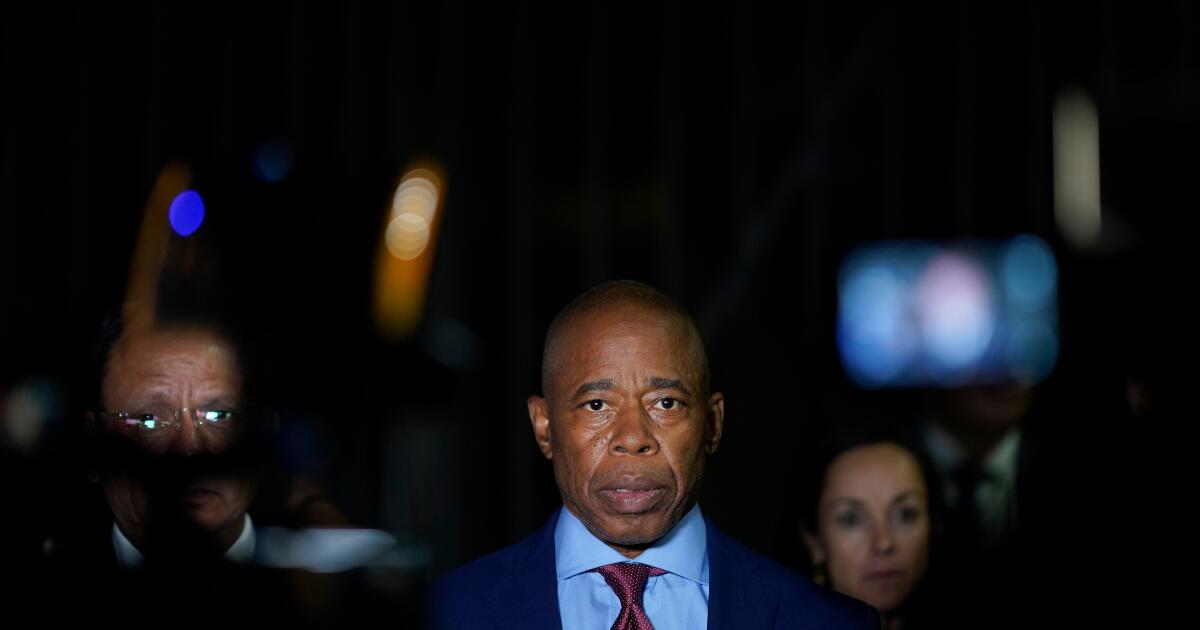
NEW YORK — Four years ago, New York City Mayor Eric Adams swept into office with swaggering confidence, pledging to lead a government unlike any other in history and declaring himself the “future of the Democratic Party.”
On the first promise, the mayor more than delivered. But as his tumultuous term comes to an end, Adams, 65, finds himself in the political wilderness, his onetime aspirations as a party leader now a distant memory.
Instead, he has spent his final weeks in power wandering the globe, publicly mulling his next private sector job and lashing out at the “haters” and “naysayers” whom he accuses of overlooking his accomplishments.
For many of his supporters, the Adams era will be looked back on as a missed opportunity. Only the second Black mayor in city history, he helped steer New York out of the throes of the COVID-19 pandemic, often linking the city’s comeback to his own rise from humble roots in working-class Queens.
At a moment when many Democrats were struggling to address voter concerns about public safety, he drew national attention for a “radically practical” agenda focused on slashing crime and reactivating the economy.
But while most categories of crime returned to pre-pandemic levels, Adams will probably be remembered for another superlative: He is the only New York City mayor of the modern era to be indicted while in office.
“That’s a disappointment for voters, especially for Black voters, who had high expectations and aspirations,” said Basil Smikle, a political strategist who served as executive director of the state’s Democratic Party. “He entered with a lot of political capital, and that was squandered, in part because of his own hubris.”
Equally memorable, perhaps, were the strange subplots along the way: his hatred of rats and fear of ghosts; the mysteries about his home, his diet, his childhood; and his endless supply of catchphrases, gestures and head-scratching stories that could instantly transform a mundane bureaucratic event into a widely shared meme.
“So many mayors want to be filtered, they want to pretend who they are and act like they are perfect,” Adams said during a recent speech at City Hall, a freewheeling affair that ended with the mayor burying a time capsule of his achievements beneath a Manhattan sidewalk. “I am not.”
Swagger versus seriousness
Adams took over from Mayor Bill de Blasio in January 2022, amid a COVID-19 spike that was killing hundreds of New Yorkers every day, along with a worrisome uptick in both violent crime and unemployment.
Adams, a former police captain, Brooklyn borough president and state senator, increased patrols on streets and subways, brought back a controversial anti-crime unit and appointed the department’s first female police commissioner. He also raised eyebrows for installing many of his former Police Department allies, including some ex-officials with histories of alleged misconduct.
As he encouraged New Yorkers to return to their pre-pandemic lives, Adams made an effort to lead by example, frequenting private clubs and upscale restaurants in order to “test the product” and “bring swagger back” to the city, he said.
But if New Yorkers initially tolerated Adams’ passion for late-night partying, there seemed to be a growing sense that the mayor was distracted, or even slacking off, according to Hank Sheinkopf, a longtime Democratic consultant and supporter of Adams.
“There was a tension between swagger and seriousness,” Sheinkopf said. “New Yorkers wanted to see more seriousness. They didn’t want to see him out partying at some club they couldn’t afford to go into.”
It didn’t help that Adams often declined to say who was footing the bills for his meals, his entry into private clubs or his flights out of the city. When reporters staked out his nighttime activities, they found that Adams, who long professed to be a vegan, regularly ordered the branzino.
Asked about his diet, the mayor acknowledged that he ate fish and occasionally “nibbled” on chicken, describing himself, as he often would in the coming years, as “perfectly imperfect.”
City Hall in crisis
The corruption investigation into Adams’ campaign, launched quietly in the early stages of his mayoralty, first spilled into public view in the fall of 2023, as federal agents seized the mayor’s phones as he was leaving an event. It loomed for nearly a year, as Adams faced new struggles, including a surge of migrants arriving in the city by bus.
Then, on Sept. 26, 2024, federal prosecutors brought fraud and bribery charges against Adams, accusing him of allowing Turkish officials and other businesspeople to buy his influence with illegal campaign contributions and steep discounts on overseas trips.
Investigators also seized phones from the mayor’s police commissioner, schools chancellor and multiple deputy mayors. Each denied wrongdoing, but a mass exodus of leadership followed, along with questions about the mayor’s ability to govern.
Adams insisted, without evidence, that he had been politically targeted by the Biden administration for his criticism of its immigration policy. But his frequently invoked mantra — “stay focused, no distractions, and grind” — seemed to lose potency with each new scandal.
Among them: a chief adviser indicted by state prosecutors in a separate alleged bribery scheme involving a bike lane and minor TV role; another longtime adviser forced to resign after handing a chip bag filled with cash to a reporter; and a string of abuse and corruption allegations within the Police Department, many of them linked to longtime friends Adams had installed in high-ranking positions.
Looking back at what went wrong, both supporters and critics of the mayor tend to agree on at least one point: Adams could be loyal to a fault, refusing to distance himself from long-serving allies even after they appeared to cross ethical lines.
“There was one City Hall made up of dedicated and competent leaders focused on executing his priorities,” said Sheena Wright, Adams’ former first deputy mayor. “There was another City Hall made up of people who knew the mayor for a long time, and who were allowed to operate outside the norms of government.”
‘A nuclear bomb’
Facing a plummeting approval rating and the prospect of years in prison, Adams began aligning himself with President Trump, going to great lengths to avoid criticizing the Republican and even leaving open the possibility of switching parties.
That seemed to work: Weeks after Trump took office, the Justice Department dismissed the corruption case, writing in a two-page memo that it had interfered with Adams’ ability to help with the president’s immigration agenda.
But in the view of Evan Thies, one of Adams’ closest advisers at the time, that was the moment that sealed Adams’ fate as a one-term mayor.
“The memo hit like a nuclear bomb,” Thies said.
The damage worsened a few days later, when Adams appeared on “Fox & Friends” alongside Trump’s border director Tom Homan, who threatened to “be up his butt” if the mayor didn’t comply with Trump’s agenda.
“It seemed to confirm the belief that he had traded his duty to New Yorkers for his personal freedom,” Thies recalled. “It wasn’t true, but that was perception.”
Adams adamantly denied striking a deal with the Trump administration. He has continued to suggest a broad conspiracy against him, at times blaming bureaucrats in the “deep state.”
Even with his case behind him, Adams struggled to build a reelection campaign. Earlier this year, his approval rating sank to a record low. In September, he abandoned his efforts, throwing his support behind former Gov. Andrew Cuomo, a onetime rival he’d recently referred to as a “snake and a liar.”
As of late December, Adams’ plans for life after he leaves office remain uncertain.
“I did what I had to do, I left everything I had on the ice, and I’m looking forward to the next step of my journey,” he said during a farewell speech at City Hall.
Then, for the third time in as many months, Adams took off on an international trip. This time, the destination was Mexico.
NEW YORK — A planned Christmas Eve jazz concert at the Kennedy Center, a holiday tradition dating back more than 20 years, has been canceled. The show’s host, musician Chuck Redd, says that he called off the performance in the wake of the White House announcing last week that President Trump’s name would be added to the facility.
As of Friday, the building’s facade reads The Donald J. Trump and The John F. Kennedy Memorial Center for the Performing Arts. According to the White House, the president’s handpicked board approved the decision, which scholars have said violates the law. Trump had been suggesting for months he was open to changing the center’s name.
“When I saw the name change on the Kennedy Center website and then hours later on the building, I chose to cancel our concert,” Redd told the Associated Press in an email Wednesday. Redd, a drummer and vibraphone player who has toured with everyone from Dizzy Gillespie to Ray Brown, has been presiding over holiday “Jazz Jams” at the Kennedy Center since 2006, succeeding bassist William “Keter” Betts.
The Kennedy Center did not immediately respond to email seeking comment. The center’s website lists the show as canceled.
President Kennedy was assassinated in 1963, and Congress passed a law the following year naming the center as a living memorial to him. Kennedy niece Kerry Kennedy has vowed to remove Trump’s name from the building once he leaves office and former House historian Ray Smock is among those who say any changes would have to be approved by Congress.
The law explicitly prohibits the board of trustees from making the center into a memorial to anyone else, and from putting another person’s name on the building’s exterior.
Trump, a Republican, has been deeply involved with the center named for an iconic Democrat after mostly ignoring it during his first term. He has forced out its leadership, overhauled the board while arranging for himself to head it and hosted this year’s Kennedy Center honors, breaking a long tradition of presidents mostly serving as spectators. The changes at the Kennedy Center are part of the president’s larger mission to fight “woke” culture at federal cultural institutions.
Numerous artists have called off Kennedy Center performances since Trump returned to office, including Issa Rae and Peter Wolf. Lin-Manuel Miranda canceled a planned production of “Hamilton.”
My Christmas shopping is done. My annual rewatch of “The Family Stone” is queued up. And our last issue of 2025 is out in the world. Which means it’s time to sign off and start food prep. (I’m doing beef Wellington this year.)
But before I do, I wanted to share stories from this week’s edition of The Envelope, and my thanks to all of you out there for reading. Have a very happy holiday!
The Envelope Directors Roundtable
(Jason Armond / For The Times)
As Rian Johnson said while taping this year’s Envelope Directors Roundtable, filmmakers don’t get many chances to hang out and talk shop — so when they do, it’s always an engaging and illuminating conversation.
Led by moderator Mark Olsen, participants Johnson (“Wake Up Dead Man: A Knives Out Mystery”), Jon M. Chu (“Wicked: For Good”), Nia DaCosta (“Hedda”), Guillermo del Toro (“Frankenstein”), Mona Fastvold (“The Testament of Ann Lee”) and Benny Safdie (“The Smashing Machine”) shared their unvarnished views on theatrical moviegoing, budgets and artificial intelligence. It’s absolutely worth your time.
And by the by: I’m not sure what The Times’ standard is on the, uh, pungent phrase Del Toro used to describe A.I. during the conversation, so I’ll just say that you can and should see it in all its glory on our Instagram.
‘Roofman’ Is a Christmas Movie
(The Tyler Twins / For The Times)
If you’re looking for a new Christmas movie to watch before Santa squeezes down the chimney tonight, “Roofman” is just the ticket. Like “The Holdovers” last year, Derek Cianfrance’s charming fable about a fugitive (Channing Tatum) who falls for a single mom (Kirsten Dunst) while hiding out in a Toys R Us channels Old Hollywood in a way that can seem sadly out of fashion.
“As we were selling this movie, trying to get it financed, I was pitching it to everyone as a Capra movie and what I kept hearing is, ‘We don’t make those movies anymore,’” as Cianfrance told Kristen Lopez.
Perhaps they should reconsider. Unfairly written off after its $8 million opening weekend in October, “Roofman” went on to gross $34 million worldwide from a slim $19 million budget. Not exactly “Home Alone,” to be sure, but a respectable showing nonetheless — and that’s before its streaming afterlife. And those of us who dearly miss the mid-budget studio movie will take any data we can to show they can still thrive at the right price.
Imax’s banner year
(Robert Alexander / Getty Images)
Speaking of box office, one big bright spot in 2025 was the performance of Imax and other premium formats, which are attracting cinephiles to see movies theatrically, often multiple times, and at a higher price point than the standard movie ticket.
With an estimated $1.2 billion take this year, and a raft of highly anticipated films like Christopher Nolan’s “The Odyssey” slated for 2026, Imax has forged an alliance between our most committed moviegoers and some of our most exciting filmmakers that bodes well for the future of cinemas, writes Daron James.
“Imax superfan Shane Short, who saw ‘Oppenheimer’ 132 times and once sat next to [cinematographer Autumn Durald] Arkapaw during a screening of ‘Sinners,’ says it’s a good thing. ‘What really pulls me into movies is the emotional aspect when connecting with something. For me, it’s hard to get that in a normal theater. Imax is truly the ultimate immersive experience that draws me in.’”
Masashi “Jumbo” Ozaki, whose 113 worldwide victories were the most of any player from Japan, died Wednesday in his home country after a battle with colon cancer, the Japan Golf Tour said. He was 78.
Ozaki was revered in Japan, a big hitter with a sense of style who won 94 times over 29 years on the Japan Golf Tour, the last one coming at the 2002 ANA Open when he was 55.
He rose to No. 5 in the world ranking in 1996 at age 49. Ozaki often got overlooked for never winning outside Japan except for the New Zealand PGA Championship. He was inducted into the World Golf Hall of Fame in 2011.
“He is an indispensable, one-of-a-kind figure in discussing men’s golf, both now and in the future,” the tour said in a social media post.
Ozaki competed in 49 majors, his best finish coming in the 1989 U.S. Open at Oak Hill when he finished three shots behind Curtis Strange. He played the Masters for the 19th and final time in 2000 when he was 53 and tied for 28th.
Isao Aoki was the first Japanese player in the World Golf Hall of Fame, and Hideki Matsuyama became the first to win a major at the 2021 Masters. Both were inspired in some fashion by Ozaki, the pioneer in a nation now obsessed with golf.
Ozaki won the Japan Open five times and the Japan PGA Championship six times. He led the Japan Golf Tour money list a record 12 times, including five in a row from 1994 through 1998. He won his final money title in 2002, when he was 55.
When he was inducted into the Hall of Fame, Ozaki said his one regret was not playing more outside of Japan.
“But I dedicated my life to Japanese golf and am extremely grateful the voters thought I was worthy of this honor,” he said upon his election. He received 50% of the vote on the International ballot.
Ozaki was looked upon as the Arnold Palmer of golf in Japan with his powerful swing, charisma and sense of style, often wearing silk shirts and baggy pants. And his skill was not limited to just golf. He played the guitar and had three songs reach the pop charts in Japan, according to the Hall of Fame.
His first love was baseball, and he spent three years pitching professionally before turning to golf. That was evident when Ryo Ishikawa, who won his first Japan Golf Tour title at age 15, spoke of Ozaki’s influence. Ishikawa said he would visit Ozaki about 10 times a year to get advice.
“Jumbo used to be a baseball player, so he always tried to teach me the link from pitching or hitting to golf,” Ishikawa said in 2010 interview with the Associated Press. “Jumbo wanted me to hit the ball far.”
Ozaki traveled with an entourage when he did play outside Japan in the majors, usually renting a house and bringing a sushi chef so his people would feel at home.
He has two younger brothers who also played on tour, Naomichi (Joe) and Tateo (Jet).
Ozaki played in the 1996 Presidents Cup, partnering with Vijay Singh to beat the American duo of Fred Couples and Davis Love III. He qualified for the 1998 team but decided against the trip to Australia, and his brother, Joe, played instead.
If it began to sound a lot like Christmas earlier than usual this year, it wasn’t your imagination.
Halloween wasn’t even over before Spotify users began curating songs about mistletoe, snow and presents under the tree.
Holiday playlists created on Spotify in the U.S. jumped 60% in October over last year, the Swedish audio company said. Some Spotify users started crafting holiday playlists as early as summer.
“It’s a combination of wanting to feel good and nostalgia, and these are testing times,” said Talia Kraines, editorial lead for pop at Spotify. “Somehow Christmas music brings comfort and I think that’s a real part of it.”
Indeed, eight of the top 10 songs on Billboard’s Hot 100 chart for the week that ended Saturday were Christmas songs, with the top five being familiar holiday classics, including Mariah Carey’s 1994 hit “All I Want for Christmas Is You,” Brenda Lee’s 1958 recording of “Rockin’ Around the Christmas Tree” and Wham!’s “Last Christmas,” released in 1984.
On-demand streams for holiday music in the U.S. increased 27% to 8.3 billion this year, compared to a year ago, according to L.A.-based data firm Luminate.
The popularity of music streaming has helped to fuel a surge in users seeking out more holiday music, and earlier in the year.
The change has been driven by technology. In the pre-streaming era, consumers would play Christmas music through CDs and, records or catch tunes on the radio during the winter months.
But the rise of Spotify, Apple Music and other streaming services opened the floodgates by offering large libraries of songs on demand.
The new platforms created and marketed holiday playlists, making it easier for consumers to discover seasonal songs and add new ones to their own song collections.
“You used to have a bunch of Christmas albums around and rotate them through as you’re decorating the house or wrapping the presents,” said Dave Bakula, vice president of analytics and data insights at Iconic Artists Group. “The availability of all the music, all the time is such an incredible gift that streaming services have given us.”
For musicians and record labels, holiday music also has taken on growing importance.
Vince Szydlowski, executive vice president of commerce at Universal Music Enterprises, the centralized global catalog division of Universal Music Group, said he starts planning the year’s campaign for holiday music in January.
“For UMG and many of the artists that you associate with holiday music, it will be the most important time of the year, without a doubt,” Szydlowski said. “In some cases, especially with certain legendary artists, it could make or break their year.”
Artist Brenda Lee performs at the “Rockin’ Around the Christmas Tree” concert at the Country Music Hall of Fame and Museum in Nashville in 2015.
(Laura Roberts / Invision / AP)
One campaign Universal Music Enterprises worked on was promoting Elton John’s 1973 holiday song “Step into Christmas.” The song was featured in Amazon Prime Video’s holiday movie “Oh. What. Fun,” starring Michelle Pfeiffer.
John posted viral social media videos with the song playing in the background that drew more than 100 million views.
Those efforts helped boost the track’s consumption by 44% this year compared to last year, according to Universal Music Group, citing data from Luminate.
“It’s a very comprehensive campaign in which to continue to boost that track visibility among the holiday perennials,” Szydlowski said.
Many of the popular Christmas songs in the U.S. date back decades, making it challenging for new, original holiday songs to break through.
The holidays are an important time for older artists like Brenda Lee, whose rendition of “Rockin’ Around the Christmas Tree” remains a winter hit.
In November 2023, Lee’s version of the song topped Billboard’s Hot 100 chart for the first time, 65 years after the song’s debut, making Lee, then 79, the oldest woman to top the Hot 100, according to UMG.
Then there are artists like the late Nat King Cole, known for hits like the holiday classic “The Christmas Song,” and Dean Martin, who died in 1995 and whose rendition of “Let It Snow! Let It Snow! Let It Snow!” is especially popular during winter months.
Nat King Cole in 1963. “The Christmas Song” became one of his enduring hits.
(Capitol Records Archives)
Another source of appeal for Christmas music is that it‘s timeless.
It isn’t really affected by trends and the songs highlight themes like love, hope, joy and family that remind us of our friends, family and past Christmases, said Jimmy Edwards, president of Iconic Artists Group.
“It’s the one music that you can share it together from any age. As Nat would say, from one to 92, right?” Edwards said, referencing a lyric from Cole’s “The Christmas Song.” “Those emotional bonds you have with that music stay with you forever … It promotes the best of us and all the good things. That’s why people love it so much.”
“I enjoyed editing several stories this year, but this one stayed with me because of how Sabiqah narrated it with an intimate voice that draws you directly into the woman’s inner world: the dreams, the dread, the relentless memory of her child.
The writing does more than tell a personal story; it brings the national crisis of missing persons in Nigeria into sharp, human focus. The storytelling lets the reader feel the ache without forcing it, turning one woman’s sorrow into something universally recognisable and impossible to look away from.”
– Johnstone Kpilaakaa, Sub-editor and head of standards.
Widowed by Boko Haram, Swept by Floods, but She Refused to Sink
“It was written by Abdulkareem Haruna; therefore, there was almost no serious work from my side. It’s best for me because it tells a story of resilience. The story of a woman who could have abandoned everything and buried herself in despair, but she refused to be drowned in the abyss of two big tragedies: the Boko Haram war and a natural disaster.”
– Aliyu Dahiru, Head of the Extremism and Radicalism desk
From Elephants to Warthogs: The Shadow Wildlife Trade Financing Boko Haram in Nigeria
“One thing I love about this story is the adrenaline of promptness and emergency it gave while editing it. We were working on a tight deadline, and it needed to be delivered excellently. The reporter, Al-amin Umar, made this a lot easier because he understood his role and did it to the best of his ability. He followed guidelines religiously and ensured the story came out well. The subject matter was also crazy to probe within limited time and resources. But we pulled it through regardless. It’s a story worth celebrating.”
– Ibrahim Adeyemi, Investigations Editor
Displaced People with Disabilities Face Severe Struggles in Borno Camps
“Disabled people’s stories are usually underreported, especially those in IDP camps. This story, by Abubakar Mukhtar Abba, is very in-depth and takes us on a journey into what it means to be displaced and disabled in an unaccommodating environment. It pointed out their struggles with accessibility and how that impacts their health and the community generally, highlighting why accessibility is a fundamental right and benefits society in general. It also shows how a lack of inclusion pushes disabled people away from camps, causing social, environmental and health problems due to how they are excluded from society.
This story brings those at the fringes of society into the spotlight while maintaining their full humanity and dignity.”
– Hauwa Abubakar Saleh, Assistant Editor, Features Desk
The Intersection Between Healthcare and Loyalty to Terror Groups
“We are still finding out the ways lives have been affected following the USAID suspension. I find this story particularly enlightening because it shows us how everything affects everything, you do not readily think loyalty to a terror group intersects with healthcare.”
— Shade Mary-Ann Olaoye, Audience Growth and Engagement Editor
This newsletter highlights stories on resilience, loss, and survival, bringing attention to overlooked issues in Nigeria, with a focus on personal narratives.
Key features include Sabiqah’s touching piece on a mother’s dreams of her missing son, reflecting the widespread issue of missing persons. It shares a widow’s courage in overcoming tragedies brought by Boko Haram and natural disasters as narrated by Abdulkareem Haruna.
The issue of the shadow wildlife trade, financing terrorism, is explored with urgency by Al-amin Umar, showcasing investigative prowess under pressure. Additionally, Abubakar Mukhtar Abba sheds light on the struggles faced by disabled individuals in Borno camps, emphasizing the dire need for inclusion to ensure their rights and wellbeing.
Lastly, it examines the relationship between healthcare access and alliances with terror groups, revealing the complex interplay impacting communities due to national and international policies.
“South Park” creators Matt Stone and Trey Parker, who this summer landed one of the richest TV deals ever, are being called Scrooges by performers at their Casa Bonita restaurant near Denver.
In late October, the performers, including the famed cliff divers, went on a three-day strike, citing unsafe working conditions and stalled negotiations over their first contract. The performers voted unanimously to unionize with Actors’ Equity Assn. a year ago.
The strike ended when the restaurant’s management agreed to bring in a mediator to assist in the negotiations.
But the standoff has continued, prompting Actors’ Equity to take out an ad in the Denver Post this week that depicts a “South Park” cartoon-like Parker and Stone awash in hundred-dollar bills while their staff, including a gorilla and a person clad in a swimsuit, shivers outside in the Colorado cold.
The union said its goal is to prod the star producers to resolve the labor tensions by giving about 60 Casa Bonita performers, including magicians and puppeteers, a pay increase and other benefits along with their first contract.
A full page ad is running in the Denver Post on Dec 24.
(Actors’ Equity Association)
Other Casa Bonita workers voted earlier this month to join the International Alliance of Theatrical Stage Employees Local 7.
“At Casa Bonita, we value all of our team members and their well being,” the restaurant management said in a statement. “We are negotiating in good faith with our unionized team members in the hopes of concluding fair collective bargaining agreements.”
Parker and Stone declined to comment through a spokesperson.
The pair, who also created the hit Broadway play “The Book of Mormon,” rescued the kitschy, bright-pink Mexican-themed eatery in Lakewood, Colo., from bankruptcy in 2021 and have since plowed more than $40 million into the restaurant to upgrade and correct unsafe electrical, plumbing and structural issues after the facility had fallen into disrepair.
For “South Park” super-fans, the venue has become something of a mecca since first being featured in the seventh season of the long-running Comedy Central cartoon.
In that episode, Cartman flips out when Kyle invites Stan, Kenny and Butters Stotch to his birthday party at Casa Bonita (not Cartman), where they are serenaded by the restaurant’s ubiquitous mariachi bands.
Along with legions of other kids who grew up in Colorado, Parker and Stone fondly remember making the trek to the Casa Bonita of their 1980s youth. Restoring the restaurant has become a passion project for the writers, a journey that became grist for a documentary, “¡Casa Bonita Mi Amor!,” which streams on Paramount+.
In July, Paramount managers were eager to tie up loose ends to facilitate the company’s sale to David Ellison’s Skydance Media and RedBird Capital Partners. The incoming management team also became involved in the protracted negotiations to strike a new deal with Parker and Stone’s production company, Park County, to avoid having the situation unravel, possibly tripping up their corporate takeover.
Paramount ultimately agreed to extend the overall deal for Park County as well as lock up the show’s exclusive global streaming rights for $300 million a year over five years. Until this year, the show streamed exclusively on HBO Max.
The overall deal is slated to bring Parker and Stone’s firm $1.25 billion through 2030.
As part of the pact, the team agreed to create 50 new “South Park” episodes for Paramount. The series has enjoyed a ratings bounce and increased cultural resonance this year as it routinely roasts President Trump.
Actors’ Equity, which also represents Broadway performers, is seeking pay raises for its members at Casa Bonita. Union representatives said performers’ wages there average $21 to $26 an hour.
“Matt and Trey have become fabulously wealthy by pointing out the hypocrisy of rich and powerful people,” said David Levy, communications director for Actors’ Equity. “And now they are behaving exactly like the people they like to take down.”
Dec. 23 (UPI) — The U.S. Department of Education has signaled that next year it will resume garnishing wages of people who’ve defaulted on their student loans.
The change, reported by multiple news outlets, comes after a years-long respite on garnishment that began as a pandemic-era economic relief measure. The resumption follows other Trump administration efforts to recoup past-due student loan debt.
The department intends to notify about 1,000 borrowers who have defaulted on their debt that it will begin seizing parts of their paychecks, The Washington Post reported Monday. The initial notices will go out the week of Jan. 7, with more going out to borrowers each month, according to the paper.
Roughly 5.3 million borrowers have not made student loan payments, with many having fallen behind before the federal government stopped collecting on defaulted loans nearly six years ago, the Post reported.
A borrower is considered to be in default on their loan when they have not made a payment for more than 270 days. Up to 15% of their pay can be garnished as a result.
After returning to power earlier this year, the Trump administration has sought to undo Biden-era policies meant to ease the burden of student loans on borrowers. The department announced in April that it would again require defaulted borrowers to make payments on their loans and has sought to tighten rules for the Public Service Loan Forgiveness program.
The Trump administration has defended its approach, saying it’s holding irresponsible borrowers accountable for loans that have cost taxpayers billions.
However, the Student Borrower Protection Center criticized the department for resuming garnishments, saying the measure is used without oversight and has been used to unjustifiably seize wages from hundreds of millions during the pandemic.
“At a time when families across the country are struggling with stagnant wages and an affordability crisis, this administration’s decision to garnish wages from defaulted student loan borrowers is cruel, unnecessary, and irresponsible,” Persis Yu, the group’s deputy executive director and managing counsel, said in a statement. “As millions of borrowers sit on the precipice of default, this administration is using its self-inflicted limited resources to seize borrowers’ wages instead of defending borrowers’ right to affordable payments.”
Clouds turn shades of red and orange when the sun sets behind One World Trade Center and the Manhattan skyline in New York City on November 5, 2025. Photo by John Angelillo/UPI | License Photo
The oldest baby boomers — once the vanguard of an American youth that revolutionized U.S. culture and politics — turn 80 in 2026.
The generation that twirled the first plastic hula hoops and dressed up the first Barbie dolls, embraced the TV age, blissed out at Woodstock and protested and fought in the Vietnam War — the cohort that didn’t trust anyone over age 30 — now is contributing to the overall aging of America.
Boomers becoming octogenarians in 2026 include actor Henry Winkler and baseball Hall of Famer Reggie Jackson, singers Cher and Dolly Parton and presidents Donald Trump, George W. Bush and Bill Clinton.
The aging and shrinking youth of America
America’s population swelled with around 76 million births from 1946 to 1964, a spike magnified by couples reuniting after World War II and enjoying postwar prosperity.
Boomers were better educated and richer than previous generations, and they helped grow a consumer-driven economy. In their youth, they pushed for social change through the Civil Rights Movement, the women’s rights movement and efforts to end the Vietnam War.
“We had rock ‘n’ roll. We were the first generation to get out and demonstrate in the streets. We were the first generation, that was, you know, a socially conscious generation,” said Diane West, a metro Atlanta resident who turns 80 in January. “Our parents played by the rules. We didn’t necessarily play by the rules, and there were lots of us.”
As they got older they became known as the “me” generation, a pejorative term coined by writer Tom Wolfe to reflect what some regarded as their self-absorption and consumerism.
“The thing about baby boomers is they’ve always had a spotlight on them, no matter what age they were,” Brookings demographer William Frey said. “They were a big generation, but they also did important things.”
By the end of this decade, all baby boomers will be 65 and older, and the number of people 80 and over will double in 20 years, Frey said.
The share of senior citizens in the U.S. population is projected to grow from 18.7% in 2025 to nearly 23% by 2050, while children under 18 decline from almost 21% to a projected 18.4%.
Without any immigration, the U.S. population will start shrinking in five years. That’s when deaths will surpass births, according to projections from the Congressional Budget Office that were revised in September to account for the Trump administration’s immigration crackdown. Population growth comes from immigration as well as births outpacing deaths.
The aging of America is being compounded by longer lives due to better healthcare and lower birth rates.
The projected average U.S. life expectancy at birth rises from 78.9 years in 2025 to 82.2 years in 2055, according to the CBO. And since the Great Recession in 2008, when the fertility rate was 2.08, around the 2.1 rate needed for children to numerically replace their parents, it has been on a steady decline, hitting 1.6 in 2025.
Younger generations miss boomer milestones
Women are having fewer children because they are better educated, they’re delaying marriage to focus on careers and they’re having their first child at a later age. Unaffordable housing, poor access to child care and the growing expenses of child-rearing also add up to fewer kids.
University of New Hampshire senior demographer Kenneth Johnson estimates that the result has been 11.8 million fewer births, compared to what might have been had the fertility rate stayed at Great Recession levels.
“I was young when I had kids. I mean that’s what we did — we got out of college, we got married and we had babies,” said West, who has two daughters, a stepdaughter and six grandchildren. “My kids got married in their 30s, so it’s very different.”
A recent Census Bureau study showed that 21st-century young adults in the U.S. haven’t been adulting like baby boomers did. In 1975, almost half of 25-to-34-year-olds had moved out of their parents’ home, landed jobs, gotten married and had kids. By the early 2020s, less than a quarter of U.S. adults had hit these milestones.
West, whose 21-year-old grandson lives with her, understands why: They lack the prospects her generation enjoyed. Her grandson, Paul Quirk, said it comes down to financial instability.
“They were able to buy a lot of things, a lot cheaper,” Quirk said.
All of her grandchildren are frustrated by the economy, West added.
“You have to get three roommates in order to afford a place,” she said. “When we got out of college, we had a job waiting for us. And now, people who have master’s degrees are going to work fast food while they look for a real job.”
Implications for the economy
The aging of America could constrain economic growth. With fewer workers paying taxes, Social Security and Medicare will be under more pressure. About 34 seniors have been supported by every 100 workers in 2025, but that ratio grows to 50 seniors per 100 working-age people in about 30 years, according to estimates released last year by the White House.
When West launched her career in employee benefits and retirement planning in 1973, each 100 workers supported 20 or fewer retirees, by some calculations.
Vice President JD Vance and Tesla Chief Executive Elon Musk are among those pushing for an increase in fertility. Vance has suggested giving parents more voting power, according to their numbers of children, or following the example of Hungary’s Viktor Orbán in giving low-interest loans to married parents and tax exemptions to women who have four children or more.
Frey said programs that incentivize fertility among U.S. women hardly ever work, so funding should support pre-kindergarten and paid family leave.
“I think the best you can do for people who do want to have kids is to make it easier and less expensive to have them and raise them,” he said. “Those things may not bring up the fertility rate as much as people would like, but at least the kids who are being born will have a better chance of succeeding.”
Schneider writes for the Associated Press. AP writer Emilie Megnien in Atlanta contributed to this report.
It’s been one surprise after another lately from Lindsey Vonn. And the announcement that the 41-year-old slopes queen has qualified for the Milano Cortina Olympics in February isn’t the last of it.
It might have been her post on Instagram that stated unequivocally that this will be the end.
“I am honored to be able to represent my country one more time, in my 5th and final Olympics!” Vonn said.
Vonn’s remarkable and inspiring comeback from injuries and a seven-year hiatus from top-level competitive skiing has injected the U.S. team narrative with an irresistible story line. That her quest will culminate in the mountains of northern Italy just two months from now will make it must-watch television and social media video.
The last two weeks have thrust Vonn back onto the international stage as well as the podium, which she climbed in four of her first five races this season. That includes a spectacular win in the downhill in St. Moritz, Switzerland, on Dec. 12.
That marked her first World Cup victory since 2018. And now it’s official that Vonn will compete in her fifth Olympics where she won gold in the downhill and bronze in the super-G at the 2010 Games in Vancouver and bronze in the downhill in the 2018 Games in PyeongChang.
Much of the astonishment circles back to her age. Vonn’s win in St. Moritz made her the oldest woman to win a World Cup race — by seven years. Federica Brignone of Italy set a record a year ago when she won 10 races at age 34.
She also is the first World Cup winner with titanium implants in her right knee. And she’ll become the first quadragenerian to lead the U.S. Alpine skiiing squad seven years after she had all but retired.
In a moving column on Feb. 10, 2019, at the World Championships, The Times’ Helene Elliott wrote what essentially was a sendoff for Vonn: “She went all out to the very end, because that’s the only way Lindsey Vonn knew how to ski. She was bruised and battered as she went to the start gate on Sunday for the final race of her career, sore all over and her right eye blackened by the impact of a crash she suffered during a super-giant slalom race earlier in the week at the World Championships. Her ligaments tore and her bones sometimes broke but her competitiveness was never dimmed, never dented, never compromised.”
Well, 2026 is around the bend and Vonn is back and intact, her competitiveness never compromised still. She has not officially qualified for the Olympics in the super-G, but she’s the fastest American and No. 3 in the world, so count on that as her next headline.
“Lindsey qualifying for the 2026 Olympic team is a testament to her resilience and dedication, and the remarkable results she’s delivered on the World Cup this season,” Sophie Goldschmidt, U.S. Ski & Snowboard’s president and CEO, said in a statement. “She’s proven once again that elite performance isn’t just about past success, it’s about rising to the moment, race after race.