THE award-winning Sun Travel team have stayed in hundreds, if not thousands of hotels.
So when it comes to recognising what makes a hotel great, we may just know a thing or two.
Sign up for the Travel newsletter
Thank you!
We’ve shared out top hotels to visit this yearCredit: tewinbury farm hotelAt Tewinbury Farm Hotel, the interior is luxurious yet cosyCredit: Tewinbury farm hotel
We’ve revealed 12 of our UK must-visit hotels for 2026 – and there’s something for everyone.
Whether you’re looking for brand new trendy spots, or themed rooms to wow the kids – we’ve got you covered.
Tewinbury Farm Hotel, Hertfordshire
I’m a sucker for a rustic countryside property where welly boots are essential – and Tewinbury Farm, buried in rural Hertfordshire, is one of the best out there.
Comprising renovated barns and cosy lakeside shepherd’s huts spread across a sprawling family-run farm estate, this hotel has an air of members club about it thanks to the endless list of monthly activities and country-chic decor.
Huts feature copper bath tubs and private decking areas that jut out over a wildlife-rich lake.
Rooms in the main building house fancy four-poster beds sat beneath dark timber beams.
What really makes this place shine is its strong connection to the farm’s heritage.
Make sure to book onto the summertime Roots Dining Experience, where visitors dine outdoors in the hotel’s allotment.
Guests can tuck into a sharing menu of freshly-plucked vegetables from the surrounding beds and meat from the farm – all of which is rustled up in an outdoor kitchen right in front of you.
There’s a farm shop on site and maps that encourage guests to stroll the surrounding farmland, with some of Hertfordshire’s most scenic walking trails on the doorstep.
Chessington has one of the biggest openings among UK theme parks in 2026, with the launch of their new Paw Patrol Land.
As the mother of a primary school kid who only just graduated from Paw Patrol mania a couple of years ago, I’m aware that this is BIG news to hundreds of thousands of families across the country.
While certain areas of the hotel haven’t had an upgrade in several years, props have to go to Chessington for constantly adding new themed rooms to their repertoire – and they also make a massive effort with each one.
Being able to flop on the bed with a G&T post-theme park, while your child plays on the Pup Squad Patroller bunk bed is 15 minutes of well-earned relaxation.
Paw Patrol fans will go nuts for this themed roomCredit: Chessington World of AdventuresThe aptly named Safari Hotel has a variety of themed roomsCredit: Chessington World of Adventures
Smith’s Townhouse, Broadstairs
One of my new favourite seaside town hotels is Smith’s Townhouse, in Broadstairs.
Previously just a coffee shop, they reopened just around the corner as a boutique hotel.
Despite just six rooms, each one feels like a trendy London hotel with mid century interiors, dark painted walls and stylish blankets and cushions.
The furniture is certainly unique – some of it was even said to have been owned by Elton John previously
Expect freshly baked slices of cake and fresh tea in your room when you arrive too.
Make sure to stay for breakfast, with their downstairs cafe serving their own coffee as well as amazing baked goods.
They even recently opened their bar, as well as plans for a Pilates studio and DJ nights.
Even better? It’s a short walk to the beautiful beach.
With its cool tones and sleek exterior, this is a trendy option in BroadstairsCredit: smith’s townhouse
The Copthorne, Newcastle
This homely hotel sits on Newcastle’s Quayside overlooking the River Tyne.
It’s the ideal spot for a peaceful stay just a short stroll from the city centre’s pubs, shops and nightlife.
There’s no frills here – just large, comfy beds, a warm Geordie welcome, and a friendly quayside bar showing all the live sport – so you won’t miss a match during your stay.
Most of the Copthorne’s 156 rooms come with a Quayside view of calm river waters, glowing city lights and the impressive High Level Bridge.
All rooms, from standard doubles to suites, are incredibly spacious – often with extra seating by the window to watch the world go by.
Beds are so huge they’re near impossible to roll out of. Rooms here feel less stuffy hotel room, and more cosy getaway where you can seriously relax.
The hotel’s Quay 7 restaurant serves up traditional pub classics alongside a few surprises.
Take your pick from curry, scampi, steak – or the “Mexican cheeseburger burrito”, an unusual fusion that somehow works.
End your meal with a treacle tart and a cocktail shaken by the cheerful bar team to round off the night perfectly.
Staff here welcome you in like an old friend. Nothing is too much trouble, even crafting off-menu cocktails from a keen mixologist who loves a challenge.
Rooms here are generously sizedCredit: The Copthorne NewcastleThe High Level Bridge can be seen to the left from quayside view roomsCredit: the copthorne newcastle
The University Arms Hotel, Cambridge
When it comes to taking a city break, I always think the closer the hotel is to the hustle and bustle, the better.
The University Arms Hotel in Cambridge is in the perfect spot, being within walking distance to bars, shops and tourist hotspots like the famous colleges and Parker’s Piece.
But don’t worry, you won’t hear any noise from them within the hotel walls.
The University Arms Hotel itself couldn’t be prettier with huge stained glass windows and grand chandeliers.
I was a big fan of the colour scheme too. There’s nothing worse than going into the hotel room for a relaxing weekend and being blinded by garish designs or bright yellow walls.
The University Arms Hotel keeps it simple with calming tones of blue and a splash of burnt orange.
Not to mention the beds are super comfy, and you won’t be able to resist taking a dip in the enormous clawfoot bath tubs.
This hotel is a popular option in CambridgeCredit: the university arms hotelThe Parker’s Tavern restaurant serves up a twist on British classicsCredit: the university arms hotel
Margate House, Kent
I love a home-away-from-home retreat and Margate House ticks all the boxes.
This stylish boutique hotel is set across a seaside townhouse, just a short walk from some of Margate’s coolest bars and restaurants.
The beautifully converted townhouse is on a residential road along from the beach, in the ever-trendy Cliftonville area.
The vibrant interiors manage to be effortlessly hip, yet also homely and comfortable.
Decked out with plush velvet sofas, candles flickering in the corner and striking independent art, stepping inside is like a warm welcome home.
The nine rooms are stunning, especially the ones that give you a glimpse of the sea.
Every room has a supremely comfortable king size bed, in which you can request a picnic breakfast each morning.
A short walk will take you along the seafront to the Turner Contemporary, Dreamland and Margate’s golden sandy beach.
Rooms start from £120 per night, including breakfast (margatehouse.co.uk).
Margate House follows a stylish pink and red colour schemeCredit: Margate House HotelMargate House has an intimate setting with quirky decorCredit: Margate House Hotel
The Alan, Manchester
Even from the outside, The Alan looks extremely grand, being built into a beautiful Grade II listed building.
Spread across six floors, with 137 rooms, each one looks like a fancy design magazine.
From the concrete coffee tables to the pink plastered walls, the industrial-inspired designs perfectly replicate the history of the city.
The mod cons are just as exciting – gone are the dated telephones and instead with a personal assistant tablet where you can do everything from contact reception to get local tips and guides.
Even the bathroom was an inspiration, with copper fixtures and Haeckels toiletries hailing from Margate.
Make sure to pop into the downstairs restaurant as well.
Along with a co-working space (which for £20 includes lunch and unlimited tea and coffee) but it also houses a fantastic restaurant.
I recommend the cheesy garlic pinsa, a Roman-style flatbread, before heading into town for a night out.
The exterior of this Grade ll listed building is impressiveCredit: The Alan hotel manchesterRooms are warm and invitingCredit: The Alan hotel manchesterThere are plenty of spots for food, coffee and chilling outCredit: The Alan hotel manchester
Z Hotels Gloucester Place, London
Finding an affordable hotel in the capital can often feel like looking for a needle in a haystack.
But what if I told you that there is a super central spot that costs just £55 per person, per night?
Z Hotels Gloucester Place is a real gem amongst the £200+ per night hotels in London.
Located a short walk from Oxford Street and the city’s main attractions, its ideal location is just part of the fab deal you get when staying at the hotel.
But it is the all-inclusive element of this hotel that is its real selling point.
I stayed for just one night, but had endless glasses of wine, afternoon tea, cups and cups of hot drinks, a sandwich, cans of pop, a delicious cheese board and an extensive breakfast with pastries, fresh fruit and flatbread.
Honestly, if you need somewhere to stay in the Big Smoke on a budget, then this is the place.
Rooms start from £55 per person, per night (thezhotels.com).
It’s rare to find an affordable all-inclusive hotel in LondonCredit: Z Hotels Gloucester PlaceRooms are simple, but have all that you’d needCredit: Z Hotels Gloucester PlaceThe best part of this hotel is its free-flowing food and drinksCredit: Z Hotels Gloucester Place
The Queen at Chester Hotel
This grand old dame of a hotel has had a sparkling £5 million refurbishment that has breathed new life into a historic building.
The brick and stucco Italianate edifice sits right opposite the train station in Chester and was originally built to serve first class rail passengers.
Built in 1860, the building was said to be the first skyscraper of its time.
It has welcomed the likes of Charles Dickens and Lillie Langtry through its doors.
The recent refurbishment has resulted in stunning new interiors with some fabulous modern art and furniture sitting seamlessly alongside the grand period features.
Rooms feature warm, earthy tones and richly patterned carpets with super soft bed linen and premium toiletries in the bathroom.
Go for a superior room for extra goodies including bathrobes and snack boxes.
And with prices from just £68 a night, it’s the perfect place to lay your head after a day at the Chester racecourse or zoo.
A £5million refurbishment has refreshed the beautiful buildingCredit: The queen at chester hotelThe interior is impressive with its modern art and grand staircaseCredit: The queen at chester hotel
The Zetter, Bloomsbury
The Zetter Townhouse in Clerkenwell is my favourite hotel in London.
The hotel bar feels so chic and homely, it’s like you’ve been invited to a drinks party at the home of some eccentric millionaire.
So the news that Zetter is opening a new hotel in Bloomsbury – my favourite area of central London – is very welcome.
The 68-bedroom townhouse hotel will span six interconnecting Georgian buildings on Montague Street, opposite the British Museum.
Bloomsbury is unique in that, despite being so close to the likes of Covent Garden and Oxford Street, it still retains plenty of character from ye olden days.
Plus, you can walk to the West End‘s theatres and restaurants, as well as the achingly cool Kings Cross.
The Zetter is known for its stylish interiorsCredit: The Zetter, BloomsburyThe restaurant at The Zetter is the perfect place to dine under candlelightCredit: The Zetter, Bloomsbury
The Grand Central, Belfast
Belfast’s city centre is home to one hotel that always makes passers-by stop in their tracks to peek inside – and that’s the Grand Central.
This glamorous high-rise hotel lives true to its name, sitting smack-bang in the middle of the city.
After a warm greeting from hotel porters, guests step inside to glossy marble interiors in the lobby – and elevators with a whole load of buttons.
Rooms are modestly sized yet pristine, with bouncy cloud beds and roomy walk-in showers.
They also come with panoramic views of the glittering skyline and iconic city hall – as does the hotel’s rooftop bar and restaurant, The Observatory.
The Seahorse Restaurant serves everything from a delicious Irish breakfast through to quirky evening cocktails, whilst The Observatory’s Afternoon Tea beats any I’ve had in England.
At £45 per person for cakes that look like works of art, 360° rooftop city views, and plenty of generously-stuffed sandwiches, the experience is well worth looking into for special occasions.
If you’re looking to treat yourself to a fancy weekend away in the UK, you’ll feel extremely well taken care of at this swanky city hotel.
The city views from these rooms are astonishingCredit: grand central hotel belfastThe Seahorse Bar and Restaurant serves up fancy cocktails and excellent local dishesCredit: grand central hotel belfastThe location of this hotel is unbeatable when in BelfastCredit: grand central hotel belfast
Artist Residence, Bristol
The Artist Residence hotels lives up to its name, feeling like you’ve stepped into a bohemian home of an art curator.
I’ve been to their London hotel although it’s their own in Bristol that I adore.
Built into a Georgian townhouse, the hotel was once an old boot factory.
I love the options of rooms, such as their Crash Pad which is cosy and compact if you just need a base to explore the city.
Otherwise I love the Boot Room, still with a king size bed and Smeg fridge, or splash out on the massive Artist Suite, with views over Portland Square, a living area bigger than my first flat and a roll top bath.
You’ll be bumping into locals at the restaurant downstairs too, from families visiting for a hearty breakfast to groups of mates having a big night out for dinner.
I’m still dreaming of some of the small plates, from the salty hispi cabbage to the rich harissa roast chicken.
Don’t forget to grab a picture in the downstairs photobooth too.
This quirky hotel truly lives up to its nameCredit: Artist residence, bristolThis hotel balances homely and quirky perfectlyCredit: Artist residence, bristol
This article contains spoilers from the series finale of “Stranger Things.”
At this moment, somewhere on the internet, “Stranger Things” fans are rabidly and rapidly giving their feedback on how the series resolved the years-long plight of horrors faced by their favorite ragtag troop from Hawkins. But for Noah Schnapp, it didn’t matter how the story concluded. When filming on the final season wrapped last December, it was a bleak ending. At least initially.
The Netflix drama, to this point, had taken up half of Schnapp’s life. When he was 11, he began portraying Will Byers, the baby-faced boy who was abducted while biking home at night from a friend’s house and pulled into an alternate dimension known as the Upside Down. It was the catalyst that linked Will to its powerful creatures that tormented him and his inner circle for years. All the while, Schnapp and his fictional alter ego became increasingly intertwined. Like Will, he was a boy coming of age in his own upside down dimension — fame — while stepping into his true self.
“I will never forget that last day and how that last scene felt — it was just so surreal,” he said. “The goodbye was hard. I grappled with this feeling like my life is over and I’m in a crisis, this is my whole identity and all I’ve ever known, and now it’s ending.”
But for Will, “Stranger Things,” created by Matt and Ross Duffer, concluded on more hopeful terms. He began the two-hour series finale — released in the closing hours of 2025, both on the platform and in select movie theaters nationwide — knowing he had no secrets that could be weaponized against him, making him better positioned to help put an end to the Upside Down — and its otherwordly creatures.
Over two separate interviews from New York — a video call and, later, a phone call 20 minutes after I viewed the final episode — Schnapp discussed the complexity of amassing fame as a child actor, the parallel sexual identity journeys he and his character took, and life after “Stranger Things.”
Lucas (Caleb McLaughlin), Nancy (Natalia Dyer), Dustin (Gaten Matarazzo), Steve (Joe Keery), Jonathan (Charlie Heaton), Mike (Finn Wolfhard), Will (Noah Schnapp) and Robin (Maya Hawke) in “Stranger Things.”
(Netflix)
How does it feel to have it finally be out there?
Oh, man, it’s such a relief, honestly. No more worrying. It’s a happy, happy relief.
How did you spend the past two hours? I know you saw the finale with the cast already. Did you watch it again with the public?
Absolutely not. I’m celebrating the New Year, trying not to over stress about what people are saying and stay distracted.
So you’re not going to look at fan reaction tonight?
Probably not. My friends are texting me already, like, “Oh my God, I loved it,” or “Oh my god, I’m sobbing right now.” But no, I haven’t checked anything online.
We get a glimpse of Will’s fate. This idea that he finds his place, deep happiness and acceptance … and maybe love. What did you think of Will’s ending?
I think it was perfect. It felt really hopeful to see what the future can hold for a character like that, that I also kind of relate to, at least in terms of sexual identity. It was nice to see him get his happy ending and learn that it was it was never about Mike. It was about finding the person that was right for him, and in the meantime, kind of just loving himself. I’m just happy he got his happy ending. That’s that’s what he deserved.
Do you think he’ll remain good friends with Mike, Dustin, Caleb, Max — everyone?
Of course. They are forever tied together. Their books stand on the shelf, all next to each other, and especially Mike. They have that conversation which was actually written — now I can say it. It was not originally in the script, but I had the Duffers include it.
Oh, tell me about that. Why did you think it was important for them to have that conversation?
That scene on the tower, it’s a short little moment, but I felt like, with the coming out scene, there wasn’t enough closure between Will and Mike. So they included that moment, just so you get to see that Mike loves him as a best friend, and they will always be friends, which was nice. This relationship has been a slow burn for so many years, and so many people have an attachment and hopes for how it would come to a close. The coming out scene was so focused on on Will’s feelings that there wasn’t time for them to have a separate conversation, so I just felt like it was necessary for them to close out their specific chapter together. It feels very real to many situations I’ve had in my life where I’ve had a best friend that I’ve fallen for, and they ended up being straight and they love me still, just the same. It doesn’t make things weird. It felt very authentic to many experiences I’ve had in my life, and I’m glad it ended positively for him.
Series finales leave viewers to fill in the blanks beyond the chapters they close. We don’t have a real sense of how these characters are going to process the aftermath of what they’ve experienced, or how they’ll handle the trauma. Is that something you think about?
Of course. The story leads the audience to hope that these characters come to acceptance and peace after all these years of suffering. We end together as a group, this show started together as a group in Mike’s basement, and it’s right back to that core lesson of the show — believing in the magic of childhood and friendship and nurturing that and keeping that alive. And when they all say, “I believe that Eleven still exists,” I think it’s a metaphor that they’re saying they believe that the magic of childhood will exist forever and they hold on to that and take that with them into their lives.
I want to talk more about Eleven. Before we get to the theory that Mike has, what do you remember about shooting the scene where Eleven decides to stay back? Each one of you were so emotional in that moment.
I think of Millie as my own sister, so I tried to just make it feel as real as possible for me and imagine what that would feel like to see my own sister be taken from me. And it was so easy to access the emotions for that, because Millie does feel like family to me. I personally believe that she [Eleven] is still alive. I am hopeful about it. What I think is interesting is so many people expected so many people to die, a big massacre —
Did you think that it would go that way, at any point?
Our show has never been a show that’s killing off main characters left and right. I think, too, the big part of this season was tying it back into Season 1 and bringing things full circle. Eleven’s goodbye scene with Mike felt really perfectly full-circle and not traumatic and left the viewers with a question, but still hopeful and satisfied. I’m sure everyone’s going to have lots to say, positive and negative as they always do — that’s OK — but I personally loved how the Duffers closed it.
Earlier in the episode, there’s the exchange between Will and Henry, where Will is in his mind, and he sees what happened to Henry in that cave and is trying to appeal to his humanity. What did that unlock for you about the journey of these two young men and how they navigated their respective traumas?
It was satisfying for me as a viewer to understand these two characters, though, they are so polar opposite in their places in the story, are really inherently the same and come from the same emotions and sensitivity. The only difference is that the villain gives into this evil and Will fights it. It was just really cool as an actor to play those parallels and shooting it, we had to move in the same physical ways when his hand goes back in the same way — and watching how he [Jamie Campbell Bower] did a scene and matching it perfectly was really fun.
There were quite the needle drops in this episode from Prince — “When Doves Cry” and “Purple Rain.” Also “Heroes” from David Bowie. Were these songs played a lot on the set while filming this last episode?
“Heroes” by David Bowie, they were playing over and over on those last takes. “Purple Rain,” they were playing out loud. Usually we don’t get to actually listen to songs while we’re filming, but just to get a vibe, they were playing it on the speakers while we were in the truck. It was a fun episode to film, and also so difficult because they didn’t give us the freaking script for Episode 8 for so long. They were so lock and key about it. And you’re reading it in parts. We didn’t get a screener for it, so I only got to watch it once recently. It felt like watching a brand new episode when I watched it. When those credits hit … man.
1
2
1.Will Byers (Schnapp) “comes out” to his inner circle in Episode 7.(Netflix)2.Will (Schnapp) is embraced by his brother and friends — Eleven (Millie Bobby Brown), Jonathan (Charlie Heaton) and Mike (Finn Wolfhard).(Netflix)
Will had a big moment in Episode 7. Fans have long felt that the undercurrent of Will’s journey was his sexuality. How was it to face that moment as Will?
I knew this scene and this moment was coming for years, and I’d just been anxiously awaiting it, to see how it would be written, how I would perform in it. I’d been building it up in my head for years. I remember reading it alone in my room for the first time and I just cried. Then in the performance, I was so nervous because I always thought it would be a one-on-one with Joyce, but it was the full cast. It also came at a time close to when I came out personally and I never had that moment to come out to the whole cast in my own life. It almost felt like this extra pressure of, “Oh, it’s this personal thing too that I’m now having to share with them” and “are they gonna judge me personally for …” I don’t know, there’s all these layers of pressure for the performance, and the personal part of it and making sure it’s good.
We were filming the scene on the stages at like 3 a.m. and I was so tired and worried that I would mess it up, but it was cathartic as hell. I totally felt a stronger bond with everyone in the cast. Regardless of the critics and the excitement of the show, this is actually going to touch so many kids out there. If I was sitting there watching that at 12 years old with my parents and saw how all the characters hug him after it and embrace him and cheer him on and say, “We love you,” I might have come out right there and then too. I think this will have a real positive impact on so many young little boys and girls out there like me.
How would you say your relationship to your identity has changed as you’ve gotten older? How did Will help you? And how do you think you helped Will?
When I was younger, I always felt this pressure — like interviewers would ask me, “Do you feel a personal connection? Anything personally close to the character?” I would always kind of deflect. And I would say, “Well, no, he’s [Will] not queer. He’s just growing up slower, and he’s suffering from his trauma.” I felt defensive over Will, to almost make sure that he wasn’t gay because I felt it personally, and I was kind of like compensating for it. Our stories there were intertwined and, eventually, as I got older, I noticed how people, they really dive deeper into that sexual identity for him. And I saw people with such positive reactions to it. It definitely had an impact on me, like, “Oh, people don’t care as much as I used to think they did.” It helped me in my own journey. I think having accepted it publicly before having done this scene, changed everything for me. It allowed me to to fully be vulnerable and feel all the real emotions as much as possible in that scene, which was my goal, to make it feel just like I was living it. If I was still hiding, I wouldn’t have been able to really authentically show that.
Noah Schnapp on connecting with his character’s coming out journey: “I think having accepted it publicly before having done this scene, changed everything for me. It allowed me to to fully be vulnerable and feel all the real emotions as much as possible in that scene, which was my goal, to make it feel just like I was living it.”
(Evelyn Freja / For The Times)
You said you knew about Will’s sexuality for years — was it since the start of the show or did that conversation come later?
To be honest, we never sat down and had an explicit conversation of “Look, your character is gay.” It was more just hinted at from the beginning. I always thought about it, but pushed it down because of my own internal things. I think by Season 3 and 4, it became so obvious that it didn’t have to be said. It was just clear. I think once we got to Season 5, there was this unspoken, agreed upon thing that it was coming. It’s been building to this moment of acceptance so it’s going to be this season. It wasn’t in the first six after the table read, so then I started needling them, like, “Is it in [Episode] 7? Is it in 8? How are you going to write it? I need to see, I need to see, I need to see.” And they’re like, “just let us write it.” They were nervous. I could tell they were scared to have others see it because I’m sure it’s hard to write something like that and not make it corny or inauthentic.
Because most people don’t have a big coming out moment like that.
That’s also the thing. What I struggled with in the scene was I wanted to make sure I’m not coming out as Noah in 2023 on TikTok. This is Will coming out in 1987, or whatever year it is — it’s a totally different landscape, and you really have to separate the two as much as it was part of my own journey.
Your character is coming out at a time when he would be considered, for lack of a better term, the monster.
Totally. It’s such a good queer character. It’s so well-written, with the monster and Vecna as the parallel of his own identity; to harness these powers, he has to accept his own inner struggles.
How does your experience of coming out as a young adult under the spotlight parallel the fears Will feels in this fictional world populated by monsters?
It was different. It’s the pressures of the job and the career. I was like, “Why do I have to talk to my agents and my publicists about my sexual identity, who I want to be with in bed?” But they’re like, “No, this is something you have to consider because it affects the roles you get and how people perceive you. This is a conversation we have to have if you tell the public or if you just keep it personal.”
With Will, in the ‘80s, he’s suffering from this whole AIDS epidemic that was going on during the Reagan administration, where the president wouldn’t even acknowledge that gay people existed. If you were, if you did come out, people thought that you were contagious and had a disease and would get other people sick. It was a totally different landscape. I really made sure to educate myself on that difference. But I’d be lying if I said I wasn’t trying to take some personal anecdote into it. Right before the scene, I reread all the “coming out” texts I sent and tried to listen to the songs that I would listen to when I was trying to build up the courage to come out to my mom. I did try to bring in myself to [that scene], but also understand that it’s not exactly the same.
Is it too personal to ask you to share the name of one of the songs?
This is so embarrassing, but I listened to “Brave” by Sarah Bareilles because she’s like, “Say what you want to say, and let the words fall out …” It would always just give me the confidence. Every time. Every person I came out to, I listened to that before and was like, “OK, I can do it now.”
In Vol. 1 of the final season of “Stranger Things,” Will Byers (Schnapp) develops significant powers that allow him to control Demogorgons and fight Vecna by channeling the Upside Down’s hive mind.
(Netflix)
I want to return to that other moment this season, which had the fandom on the edge of their seat: Will coming into his powers. Have you seen the TikToks of people recording themselves as they watched that reveal?
Yeah. I’m fully on TikTok, but I’ve made sure to have my friends keep me up to date and send me the edits and what people are saying. My friends were sending me TikToks to be, like, “Noah, people are saying Will is hot.” I’m like, [bashfully hides his face with his hands] “What?” I knew people would freak out at the reveal, it’s such an exciting moment. But I did not at all expect people would be calling Will Byers hot. That’s funny, but it’s cool. As a kid, I always wanted to be the Spider-Man, and this was kind of my Spider-Man-superhero “Save the Day” moment. And it’s so fun doing that stuff because there are no rules. And the Duffers definitely put a lot of trust into me with that this year.
It was a demanding sequence — you popped your blood vessels.
I look back at some of those scenes and I was giving too much for what it was, these little moments. You never know how they cut it together and what ends up being important and what ends up being a tiny little moment. A lot of this stuff is very physical that they have me do, and it was me screaming all night, at the top of my lungs. Even the way my neck tensed up — I couldn’t, move my neck after some of these days because you’re straining.
The show is, in part, about kids coming of age. Tell me about your upbringing and life in Scarsdale, N.Y., before “Stranger Things.”
I had a very normal childhood. All the guys were into sports; I tried doing that growing up, and I just hated it and never felt like I was good at it or fit into those boys and what they were doing. I remember my dad being like, “He’s gonna do sports.” And my mom was like, “No, stop putting him in sports. He’s picking the flowers at the outside of the baseball field. That’s not for him. Let’s put him in the arts.” They put me in this class where you do acting, singing, dancing. And I just thrived. I did that for a few years and the teacher saw that I loved it so much and recommended that I audition in front of an agent. I started doing real auditions. By fifth grade, sixth grade, I got my first films. It was a great place to grow up and having that normal childhood and not growing up too fast was always very important to me. And still now, that’s why I’m in college and didn’t just rush into adult life.
You say that, but your first big on screen role was as Tom Hanks’ son in ”Bridge of Spies,” which was directed by Steven Spielberg. What stands out from that experience?
I just look back and think like, how crazy that my first thing was with these legends of Hollywood. I remember Tom Hanks never sticking to a script; he always just made it work for what was right for the scene, right for the character. They’re just so down to earth, such great people. And what a place to start.
Would you say you were ambitious as a child? How did you view the acting thing?
I looked back at a video the other day — I was 9 or 10. I went to a pond with my mom, and I was like, “One day, I’m gonna be a huge actor. And following my dreams.” It made me realize, when I was younger, I did have that passion and hope to do this long term.
“I went to a pond with my mom, and I was like, ‘One day, I’m gonna be a huge actor. And following my dreams,’” Schnapp recalls. “It made me realize, when I was younger, I did have that passion and hope to do this long term.”(Evelyn Freja / For The Times)
I will never know what it’s like to be a young person thrust into the global spotlight. I want you to pretend like I am an alien or a Demogorgon with no concept of this world, and tell me what it has been like growing up in the spotlight.
My problem was I’m so unapologetically myself, and I’ve always been like that, so I never learned to be properly media trained and curated into a certain way. I always just existed and did what I wanted to do. I learned over time, it’s good to create some privacy and distance for your own mental health. When the show came out, I was 10 years old. I was at camp and I didn’t have any contact with the outside world and my mom would send me emails that I was getting fan pages and blue check marks, and people started recognizing me, and I loved it. I love my fans so much. I would get their phone numbers and meet up with them, and my parents would be like, “Noah, this is not normal. You need to create boundaries with them.” Now I look back, and more of my life has been this than not now, so it’s all I’ve ever known was being famous and it just feels normal.
Coming of age on its own is so hard. You’re leaving one stage of your life and going into another. But to do that and have everything you say, your mistakes magnified, seems overwhelming.
It’s the worst; the fact that it’s all public, every weird look I’ve worn, every bad thing I’ve said. I hate that, but it is what it is. That’s what it is growing up in the spotlight, everything has its pros and cons.
Has there a moment where it felt too overwhelming? How do you protect yourself?
Every few weeks I’m like, “Oh, this is too overwhelming. I can’t do this anymore.” When I put my phone away, it all becomes OK. I learned that social media and all that is not real life. It just feels like so much pressure when you live so deep in your phone and what everyone’s saying and having to live up to these standards and feel like your life is over if you don’t do this, or this person doesn’t like whatever. Trying to please everyone in this industry is impossible and the only way to accept that is to detach from the online world and just live in the real world. I remember how much I love it and how many real, loving fans support me, and how I actually make a difference in a lot people’s lives, genuinely, and that actually matters.
Noah Schnapp says Winona Ryder, who played his mother Joyce on “Stranger Things,” was a motherly figure in real life, too. “I adore her truly.”
(Netflix)
Winona Ryder plays your mom, and she knows what it’s like navigating fame at a young age. Did she give you any advice or was she protective of you on set?
So protective. She always says, she never had kids, so we were her secondary children. I look back at our texts from 2017, when the show was first starting, and I had to do my first crying scene or all these “first” things I was so nervous for, and she would send these paragraphs being like, “Oh, sweetie, you’re nervous. Don’t worry a second. Come meet me before the scene. I’ll sit down with you and we’ll run through it. I’ll make sure you’re OK.” I remember I sent her a picture and I had this rope burn from Season 2 because I was screaming in a chair and my wrists were all scabbed and I was crying because it hurt, and she ran me to the set medic and stayed with me all night and made sure I was OK. She was such a mother figure to me, and I adore her truly. Even now, it’s nice to see our relationship has grown from her being protective over me to me feeling protective over her.
We see Nancy, Jonathan, Steve and Robin up on the rooftop talking about not losing touch, making a point of staying in contact. There’s also Dustin’s valedictorian speech. Each had moments that felt like they paralleled the ending of this unique experience you’ve all gone through together. Did you all make a similar pact?
Oh, absolutely. That day of graduation, we felt like we were really graduating. I loved the coda part of the episode. That last day of shooting was hard, when I was putting my book on the shelf, that was when they told me, “OK, Noah, this is your last shot.” I broke down. I couldn’t do the freaking take, every time, it was just so emotional. Luckily, there’s one that I’m little less emotional, but that day was just so sad. I remember when they said “Cut!”, and that was it, and we — me, Caleb, Gaten, Finn and Sadie — standing in that little set, arms around each other, huddled up, not saying any words, just crying. It was complete silence outside. There were hundreds of people waiting [outside on the set] for us to cheer and celebrate, and we were waiting in there, like, “We go out when we’re ready.” We all agreed, gathered ourselves and walked out of that set to 100 people cheering, screaming, there was confetti dropping, clapping and we gave speeches. It didn’t feel real. You’re so in it for so many years, and then it’s just over.
What do you remember about the day after wrapping?
We ended up sleeping on the set. We made a little fort in the D&D basement. It was so cute, so wholesome — a perfect way to end it. I remember driving back with Caleb [McLaughlin, who plays Lucas] the next morning and he dropped me off. It was really foggy that day, really gloomy, and just so somber and tense. And we said goodbye so quietly. It felt like we left a funeral, like grieving something. The next day, I had to fly to L.A. for a call back, and I was just sitting alone in a hotel room — I felt so empty. This is all I’ve this all I’ve ever been attached to, this is my whole identity, my whole life. But then, the next day, I was like, “Oh, life keeps going. And it’s OK.” It was really just that one day after that was tough.
To your point, this isn’t your first professional on screen role, but it is your longest. How do you feel you’ve grown as an actor across these 10 years, these five seasons?
This show has taught me so much. When I was younger, I felt like scared to have any kind of opinion or perspective or speak up on what I felt was right for the character; now, I’m like, “No, I played this character for 10 years. I have a right to say, ‘No, he would wear this’ or ‘he would say this’ or ‘this scene doesn’t work or represent the story well.’” Just learning to not be bound to the script; it’s OK to play and explore and try different things. That’s what makes it feel authentic when you have those spontaneous little moments that aren’t written. I’m excited to continue to learn and grow in different ways in film and theater.
So it feels like the right time for you to say goodbye to Will?
Totally. It’s kind of crazy how right of a time it is. I’m graduating in a few months at the same time as this show is ending. I’m an adult now. It all happened at the right time, and this season came at the perfect time with my sexual identity journey. Everything was timed really well.
Are you thinking about what you want next? The kind of projects you want to do or the way you want to move through your career?
Oh my God, absolutely, the second I wrapped last year, I was like, “What’s next?” I’d love to do theater. I loved doing that as a kid and want to explore that. And do other films. But no set path, I’m just excited for what’s next.
The Duffer Brothers call you in 10 years and say we have an idea for how to revisit Will Byers, are you in?
I think my work is done with that character. The story for him has been told. So if that ever happened, I would honestly probably stray away from that. But of course, I would love to work with the Duffers again on another project. But this story is done.
SACRAMENTO — Gov. Gavin Newsom’s office this week described 2025 as “the year that would not end.” But it has, and in its aftermath comes a slew of new laws passed that year that will affect the lives of almost every Californian.
The governor signed nearly 800 bills last year, including legislation that caps the cost of insulin, streamlines California State University admissions and temporarily allows sexual assault claims that are past the statute of limitations. He also approved legislation banning law enforcement officers from wearing masks to hide their identities during operations — a law that’s already being challenged in court by the Trump administration.
Some of the new state laws were passed years ago and are just now taking effect.
“These new laws reflect who we are: a state that protects workers, respects students, puts people before politics, and isn’t afraid to hold powerful interests accountable,” Newsom said in a Tuesday statement.
Most of the laws listed below take effect on New Year’s Day. As in years past, the list mostly reflects the interests of the Democrats who hold a supermajority in both the state Senate and Assembly and hold every statewide office in California, including the governorship.
Here are a few notable laws going into effect:
Health
(Francine Orr / Los Angeles Times)
Fertility treatments: Large employer health plans will be required to cover infertility treatments, including in vitro fertilization, for everyone, regardless of marital status, gender identity or sexual orientation. “California is a proud reproductive freedom state — and that includes increasing access to fertility services that help those who want to start a family,” Newsom said after signing the bill in 2024. The governor later pushed to delay implementation of state Senate Bill 729 until 2026. IVF costs Californians an average of $24,000 out of pocket, according to the U.S. Department of Health and Human Services.
Newsom delivers a major announcement to lower prescription treatment costs at Cedars-Sinai Medical Center in October.
(Jonathan Alcorn / For The Times)
Cheaper insulin: Large group health plans must cap the out-of-pocket costs for insulin at $35 for a 30-day supply under SB 40. Roughly 3.5 million adults have diagnosed diabetes in California, according to the American Diabetes Assn. “Many Americans with diabetes have made the difficult decision to ration this lifesaving medication to pay for other necessities, such as groceries or rent,” said Christine Fallabel, the association’s state government affairs director, in a news release. “This legislation will provide much-needed financial relief.” California will also start selling $11 insulin pens through the state’s prescription program, CalRx, on Jan. 1.
Privacy for providers: Healthcare providers and employees affiliated with gender-affirming services can have their residential addresses withheld from certain public record requests. Assembly Bill 82 allows these providers to submit applications for increased privacy to the California secretary of state if they are experiencing harassment or violent threats due to the nature of their work. California already allows those working in reproductive healthcare to apply.
Protection for immigrants: Healthcare officials are prohibited from disclosing a patient’s immigration status or birthplace and from giving immigration authorities access to nonpublic spaces in hospitals and clinics without a search warrant or court order. The protections under SB 81 are among new laws to protect immigrants in California, Newsom said, from the “secret police” of President Trump and Stephen Miller, the White House advisor who has driven the second Trump administration’s surge of immigration enforcement in Democratic-led cities.
Law enforcement and legal rights
(Carlin Stiehl / Los Angeles Times)
Mask ban: Law enforcement officers must visibly display their name or badge number during operations and are also banned from wearing masks that conceal their identities while on duty, with some exceptions. SB 805 and SB 627 were introduced in response to the Trump administration’s aggressive immigration raids in Southern California, which in many cases were conducted by masked agents in unmarked cars. Newsom has said it’s unacceptable for “secret police” to grab people off the streets. The U.S. Department of Justice is suing California over the new laws, arguing both are unconstitutional and could put officers in danger.
Sexual assault reporting: A two-year window is opening to report sexual assault claims — cases that previously would have been barred because of the statute of limitations — against private employers or institutions that engaged in a “cover-up.” The time frame starts Jan. 1 and expires Dec. 31, 2027. AB 250 applies to those who were assaulted after age 18. The state already created an extension for child sexual assault victims in 2020. “AB 250 gives those who’ve been silenced by intimidation, shame, or institutional cover-ups another shot at justice, because survivors deserve to be heard, believed, and supported,” Assembly Majority Leader Cecilia M. Aguiar-Curry (D-Winters) said in October.
Amicable divorce: California couples seeking an amicable dissolution of their marriage will now have an easier, less costly way to go their separate ways. Under SB 1427, which passed in 2024, couples will be allowed to file a joint petition for dissolution of their marriage or legal separation. Until now, filing a joint petition was permitted only in limited circumstances, including when the couple had been married for fewer than five years and where their community property assets were worth less than $25,000. In all other cases, the couple had to navigate a more onerous legal process.
Consumer protections and laws
Buh-bye plastic bags: Plastic bags at grocery store checkout stands are banned under a law that was passed in 2024. Stores can offer recycled paper bags or customers can bring in their own bags. The change under SB 1053 comes almost a decade after California voters passed a statewide ballot measure that banned single-use plastic bags at grocery store checkouts. At many stores, those were replaced with thicker plastic carryout bags that were considered reusable and could be recycled. But in reality, many customers used them just once and tossed them.
Stanley Tang, co-founder and head of DoorDash Labs, during an unveiling event at the company’s headquarters in San Francisco on Sept. 29.
(David Paul Morris / Bloomberg via Getty Images)
Food delivery: Food delivery services including Uber Eats, DoorDash and Postmates will be required to provide a full refund to customers if their order is not delivered, or if the wrong order is delivered. Under AB 578, food delivery services also must provide customer service support, staffed by actual people, to help resolve requests for refunds.
Rental car estimates: Rental car companies will be required to provide customers with a good-faith estimate of the total charges, including taxes and fees, when providing a price quote for a reservation. Under AB 1374, the companies also must disclose whether the vehicles are gas-powered or electric or use another fuel source.
Volume control: Video streaming services under SB 576 will be prohibited from airing advertisements that are louder than the shows or other video content they are providing. Federal law already bans that practice on broadcast stations and cable channels.
Overdraft fees: State-chartered credit unions are prohibited from charging overdraft fees exceeding $14 or the amount set by the federal Consumer Financial Protection Bureau, whichever is lower. SB 1075 was passed and signed into law in 2024.
Business, workers and technology
(Dania Maxwell / Los Angeles Times)
Minimum wage increase: The state minimum wage increases from $16.50 to $16.90 on Jan. 1. Some counties and cities, including Los Angeles, already have higher local minimum wage requirements. Workers paid less than minimum wage can file a wage theft claim with the California labor commissioner’s office. The state’s labor laws apply to workers regardless of immigration status.
New state holiday: Diwali, also known as the “Festival of Lights,” has been added to California’s official list of statewide holidays. This means public schools can close and state employees can elect to take the day off. Diwali typically occurs in late October or early November and is celebrated by members of the Hindu, Sikh and Jain faiths. It symbolizes the victory of light over darkness. AB 268 makes California the third state to recognize the holiday, following Pennsylvania and Connecticut.
Deleting social media: Major social media platforms are required to provide users with a button in the account settings that allows them to delete their account — and make that button accessible on any format used to access the platform, including cellphones, computers and tablets. AB 656, passed in 2025, also requires social media platforms to delete the personal information in a user’s account when they cancel.
Protecting kids from AI: Artificial intelligence companies are required to notify users younger than 18 at least every three hours to take a break and that the chatbot is not human. They are also required to implement “reasonable measures” to prevent companion chatbots from generating sexually explicit content. SB 243 was enacted to prevent the production of suicide or self-harm content and put in protections, such as referring users to a suicide hotline or crisis text line.
AI and public safety: Large artificial intelligence companies will be required to publicly disclose their security protocols and reports of critical safety incidents. SB 53 will require companies to disclose their safety and security protocols and risk evaluations. It mandates reporting of critical incidents — such as cyberattacks or unsafe behavior by autonomous AI systems — to the state’s Office of Emergency Services. Violations of the new law can bring civil penalties of up to $1 million against companies.
Less red tape for restaurants: The approval process for independent restaurants that want to retrofit spaces is being streamlined under AB 671. “For too long, opening a restaurant in California has meant endless hurdles and frustrating delays,” said the bill’s author, Assemblymember Buffy Wicks (D-Oakland), in October. “We’re making it easier for small restaurateurs to turn their ideas into reality.”
Lyft and Uber drivers can unionize: Hundreds of thousands of ride-hail drivers can unionize and bargain collectively while still being classified as independent contractors. Wicks, who co-authored AB 1340 with Assemblymember Marc Berman (D-Menlo Park), previously said this will allow drivers to ”bargain for better pay and protections, and help build a future where the gig economy works for the people behind the wheel.” The law was a compromise between labor groups and Silicon Valley gig economy companies.
More oil: Oil production can ramp up in Central California. SB 237 will allow up to 2,000 new wells annually in Kern County, effective through 2036. The law, which drew ire from environmentalists, is intended to prevent a spike in gas prices amid refinery closures.
Education
Cal State Fullerton in 2023.
(Wesley Lapointe / Los Angeles Times)
Direct admissions: Public high school students who meet the California State University’s minimum eligibility requirements will be automatically admitted and able to enroll at one of 16 CSU campuses. SB 640 is intended to encourage students who are unsure about college to attend. “Being able to get that message that says, ‘Hey, you’re admitted, and you just need to submit some paperwork,’ I think it’s going to be a big boost for a lot of students,” Adrian Huerta, an associate professor and college access scholar at the USC Rossier School of Education, has said.
Gender-neutral bathrooms: All public schools in California will be required to provide at least one all-gender bathroom starting July 1. The legislation expands a decade-old law that requires K-12 schools to allow students to use the bathroom that aligns with their gender identity. SB 760 was passed in 2023. “These measures will help protect vulnerable youth, promote acceptance and create more supportive environments in our schools and communities,” Newsom said in a statement when he signed the bill.
Cellphones in classrooms: Public schools are required to adopt a policy by July 1 to prohibit or limit the use of smartphones by students when they are on campus. AB 3216 leaves it up to local K-12 schools whether students should be banned from using cellphones altogether. But the law requires public schools to restrict phone use in order to “support pupil learning and well-being.”
Immigration raids: Federal immigration agents are barred from nonpublic areas of public schools unless they have a judicial warrant or court order. Under AB 49, school districts also are prohibited from providing information about pupils, their families, teachers and school employees to immigration authorities without a warrant. SB 98 also requires school administrators to notify families and students if federal agents conduct immigration operations on a K-12 or college campus.
Antisemitism: A state Office for Civil Rights will be created to combat antisemitism and other forms of discrimination in California schools.AB 715 was among the most hotly contested education-related measures, spawning from dissatisfaction, largely among a coalition of Jewish groups, with the way ethnic studies have been taught in some California classrooms. On Wednesday, a federal judge in San José rejected a lawsuit filed by the American-Arab Anti-Discrimination Committee on behalf of a group of educators and students, who challenged the law, clearing AB 715 to take effect.
Animals
(Genaro Molina / Los Angeles Times)
Official snake: The giant garter snake is recognized as the official snake of California. Advocates hope this recognition from SB 765 will raise awareness about the threatened species, which is found in the Central Valley and has experienced large-scale habitat destruction due to urban and agricultural development.
Paws need claws: Declawing a cat in California is now illegal unless the surgery is medically necessary. AB 867 bans the procedure, which entails amputating the first bone in each of a feline’s toes or severing the tendons. Assemblymember Alex Lee (D-San José), the bill’s author, previously called the practice “barbaric” and inhumane.
Housing
(Mel Melcon / Los Angeles Times)
Faster construction: Various infrastructure projects are now exempt from the California Environmental Quality Act’s lengthy review process. This reversal from AB 130 and SB 131 has outraged environmentalists, who say it removes crucial protections for the state’s most vulnerable wildlife and communities. Proponents of the legislation argue construction must be faster and cheaper to address the state’s housing crisis.
Renter rights: Landlords must provide working stoves and refrigerators for tenants as part of new lease agreements. AB 628 also requires landlords to replace these items within 30 days if the manufacturers issue a recall. This expands on a previous law requiring buildings with dwelling units to maintain adequate heating and hot water.
1 of 2 | Key findings from South Korea’s 2024 broadcasting industry survey. Graphic by Asia Today and translated by UPI
Dec. 31 (Asia Today) — South Korea’s broadcasting industry remained in a slump last year, with total revenue declining for a second consecutive year as terrestrial broadcasters posted steep drops in advertising income, regulators said Wednesday.
The Korea Communications Commission said total broadcasting industry revenue in 2024 fell 0.7% from 2023 to 18.832 trillion won (about $14.5 billion) in its “2024 Survey on the Status of the Domestic Broadcasting Industry.” The market first turned negative in 2023 after expanding every year since 2003, the commission said.
Terrestrial broadcasters, including digital multimedia broadcasting, recorded the largest decline by category, with revenue falling 5.4% to 3.5337 trillion won (about $2.7 billion), the commission said. The drop was driven by weaker advertising, historically the biggest income source for terrestrial channels.
Terrestrial advertising revenue declined 9.9% to 835.7 billion won (about $640 million) in 2024 after plunging 23.3% in 2023, according to the survey. Advertising accounted for 23.7% of terrestrial broadcast revenue in 2024, down from 47.4% in 2014, it said.
Cable television operators and satellite broadcasters also posted declines, with revenue down 2.9% and 3.6%, respectively, as subscription fees and home shopping carriage fees weakened, the commission said.
Total revenue for pay-TV operators, including cable and internet protocol television, edged up to 7.2361 trillion won (about $5.6 billion), but growth remained near flat, the survey said. IPTV was the main driver, with revenue rising 1.4% to 5.0783 trillion won (about $3.9 billion), the commission said, citing steady increases in subscription fees and home shopping transmission fees.
Home shopping program providers posted revenue of 3.4168 trillion won (about $2.6 billion), down 2.1% from the previous year, the commission said. TV home shopping sales continued to slide, while data-based home shopping sales rose 1.6% to 774.3 billion won (about $595 million), reversing a decline the year before.
Employment in the broadcasting industry also fell, the survey said, with the number of workers declining to 37,427 in 2024 from 38,299 in 2023. Terrestrial broadcasters recorded the sharpest employment drop, down 4.5%.
The most potent attack ad of Donald Trump’s comeback campaign seemingly ran on a loop during the final weeks before the 2024 election. Assailing rights for transgender people, its punch line indeed delivered a punch: “Kamala Harris is for they/them. President Trump is for you.”
2025: Promise broken. Back in office, the president has shown that the only pronouns he really recognizes are the first-person kind: me, myself and I.
A year into Trump 2.0, those self-regarding pronouns are now firmly affixed as the bywords of his presidency, on matters major and mundane. They might as well be mounted in gold in the Oval Office, in fonts so large as to not get lost amid all the bling he’s installed there. Asked in October just who was to be honored by Trump’s planned Arc de Triomph-like monument near Arlington Cemetery, the president was quick: “Me.”
To an extent that’s shocked even critics long convinced of his sociopathic narcissism, Trump has fashioned a government that’s of Trump, by Trump and for Trump. “I run the country and the world,” he boasted in April. Trump thinks “there’s nothing he can’t do. Nothing, zero, nothing,” his White House chief of staff, Susie Wiles, told Vanity Fair, as reported in twoarticles last month that signaled her own unease with Trump’s ongoing vengeance against his political enemies; his clemency for even the most violent rioters of Jan. 6, 2021; the pain of his erratic tariffs, too-cruel migrant roundups and tragic shutdown of USAID’s humanitarian aid; his stonewalling of the Jeffrey Epstein files that candidate Trump promised to release; and the foibles of his slavish Cabinet.
If Trump strutted as the center of the universe in 2025 — unchecked by advisors like Wiles or by a cowed Republican-controlled Congress, the Supreme Court and corporate chieftains — buckle up for 2026. It marks the 250th birthday of America’s independence, and our self-appointed master of ceremonies is focused on the festivities that he’ll star in not only on July 4th but all year long. One of his first acts as president was to create a White House task force with himself as chair, of course, to plan semiquincentennial events, ignoring an eight-year-old commission created by Congress for that purpose. Coming soon: A (possibly illegal) commemorative $1 coin with Trump’s image from the U.S. Mint.
Never mind that 2026 starts with a big spike in health insurance costs for tens of millions of Americans, including many Trump voters. The president who campaigned on bringing down the costs of living has stood in the way of a legislative remedy to the Dec. 31 expiration of healthcare premium subsidies, repeatedly mouthing his years-old promise that he’ll propose a cheaper alternative within weeks.
But here’s how 2026 will end: with midterm elections in November that loom as a referendum on whether the Trump Republican Party should keep control of Congress. The early betting is that no, it won’t. Especially after another year of Trump grandstanding, and his party’s genuflecting.
In good times, Trump’s garish self-regard might be tolerable to voters, even comical. But these aren’t good times, hardly the “golden age” Trump announced in his inaugural address last January — except for him and the wealthy hangers-on at his seemingly endless round of parties in the White House and at Mar-a-Lago. The Gatsby-themed Halloween party at Trump’s Florida resort was especially rich, pun intended, coming as it did hours before federal food aid for 42 million Americans expired amid a government shutdown he’d done nothing to avert.
Days later, voters gave a shellacking to Republicans in various states’ 2025 off-year elections, which is a good omen for the same result nationwide in 2026. There are other signs. On Tuesday, a new Gallup poll showed three out of four Americans were dissatisfied with “the way things are going in the United States.” Trump’s approval rating was just 36% in Gallup’s poll in early December, his lowest reading of the past year, and nearly equal to his all-time low after the Jan. 6 insurrection. Averages of various polls show Trump with negative ratings on his handling of immigration, the economy, trade and tariffs, and inflation — all issues that helped get him reelected.
But go ahead, Mr. President. Keep talking about how great you are. You’re a legend in your own time and mind.
Trump’s tone-deafness has become the great mystery of U.S. politics, for both parties, especially considering that he slammed President Biden for bragging about the economy’s post-pandemic recovery when Americans weren’t feeling it.
As Americans struggle to buy a home or to afford its upkeep, Trump has gilded the People’s House (see the New York Times’ recent 3-D recreation of the Oval Office for full, nauseating effect) and transformed the bathroom adjoining the Lincoln Bedroom in marble and gold. Having demolished the East Wing to make way for a gargantuan ballroom where Marie Antoinette would be at home, financed by favor-seeking billionaires and corporations, Trump told reporters on Tuesday that it would have to be bigger than he’d first planned because “we’re gonna do the inauguration” there.
What? The man who’s supposed to be leaving office on Jan. 20, 2029, is picking the new location for the next presidential inauguration? Hmmm.
Even before he’s been in office a year, Trump has put his brand on two Washington buildings, including the nation’s 60-year-old cultural center named by law as a memorial to an assassinated president. The Kennedy Center (no, I will not call it by Trump’s name) will have marble armrests; Trump took to social media on the day after Christmas to show off samples. Meanwhile, he’s refurbishing a royal jet from Qatar, a “palace in the sky.”
Trading on his power in unprecedented ways, Trump was a “crypto billionaire” by May, the Wall Street Journal reported, and in August the New Yorker estimated that he’d profited in office by at least $3.4 billion through crypto and licensing deals.
Stormzy has been through a difficult yearCredit: GettyHe bruised his cornea and had to attend the BRIT Awards wearing sunglassesCredit: GettyStormzy shared a lengthy end-of-year post to InstagramCredit: Instagram
But now over 10 years on, he’s reflecting on what a tough year he had, and how since the end of 2024 he’s felt like he’s been “dying a slow death”.
In a heartfelt Instagram post, Stormzy shared a statement about how it feels to gradually lose your sense of childhood wonder to reality and its twists and turns.
“Ok, I’m ready,” the star began before launching into a poetic statement.
“There’s poetry in all this chaos so lemme embrace it.
“Towards the end of 2024, my life took a few unexpected twists and turns and I was forced to pivot.
“These same events also robbed me of the wide-eyed innocence I once navigated the world with.
“Kinda like how you used to believe that Disneyland was powered by rainbows and fairy dust, and then one day you see a headless Mickey Mouse arguing on the phone and smoking a cigarette.
“This made me more resilient and put the final nail in the coffin of my desire to be understood – a part of me that, tbf, was already dying a slow death.”
The lengthy post continued on for eleven images in a carousel, detailing how Stormzy just wanted to get things “off [his]chest before [he] enters the New Year”.
He also shared how he is “eternally grateful” to the people in his life, whether they still work together or not.
He tied the statement off with the same words he scrawled at the start: “Ok, I’m ready.”
Stormzy opted to turn comments off on the simple text post, captioned with a repeat of “Ok, I’m ready.”
These same three words are the only ones in colour among the black and white statement, standing out in red.
It’s unclear exactly what “events” Stormzy is referring to when discussing the difficulty of 2025, but a couple of notable things happened to the star that did become public.
Back in March at the BRIT Awards, he took to the stage wearing a pair of sunglasses to scoop up an award for best British Hop Hop/Grime/Rap Act.
Clarifying to a confused audience why he was wearing shades inside the venue, he explained he had “bruised his cornea” during a game of padel.
“Sorry I’m wearing shade as well because I’ve mashed up my eye playingpadel.
“I’ve got a very sore eye. I’ve got a bruised cornea.
“My eye’s sore under here, I’m not being a mad man with shades on inside.”
Then later on in the year in November, Stormzy shared a devastated post to Instagram sharing that the Rottweiler he owned with ex Maya Jamasadly passed away.
He said: “RIP my no.1 boy. Don’t have much to say, just gutted and heartbroken. I love you so so so much my boy.
“If you know me then you know how much Enzo meant to me, gonna miss you my guy.”
He spoke of having a tough year and how he had to “rebuild” his lifeCredit: InstagramHe mentioned his faith many times and how it helped guide himCredit: InstagramHis beloved dog Enzo also passed awayCredit: Instagram
Listening to the usual legacy media suspects, one might think 2025 was an apocalyptic wasteland of sorts — an authoritarian fever dream brought on by the return of Donald J. Trump to the Oval Office. The reality looked very different. This past year was, in many ways, a pretty great and clarifying one. Let’s take stock of what happened when our government remembered whom it serves, as well as what unfinished business remains as we flip the calendar.
First, the obvious: Political sanity was restored to the nation’s capital. After years of leftist elite-driven chaos — wide-open borders, hyper-vindictive lawfare, fecklessness on the world stage and more — the nation has begun to revert back to first principles: national sovereignty, law and order, and strong leadership abroad. Under Trump, the United States has once again acted like a real nation-state that pursues its real interests — not a nongovernmental organization with a nagging guilt complex.
That reorientation has paid huge dividends. On immigration, the Biden-era invasion at the southern border has tapered by more than 90%. On energy, a renewed embrace of domestic production has led to the lowest average national gas prices in nearly five years. Violent crime, thanks to Trump’s law enforcement operations and innovative use of the National Guard, has dramatically fallen: Murders decreased by nearly 20% from 2024, and robbery and burglary also saw double-digit percentage decreases. Abroad, allies and adversaries alike recalibrated to the reality that the White House once again means what it says.
Still, work always remains. Here, then, is my 2026 wish list.
Peace in Eastern Europe
The Russia-Ukraine war has gone on far, far too long. The Trump administration has exerted tremendous diplomatic effort trying to orchestrate a peace deal, which remains elusive. A durable peace — one that halts the senseless slaughter on both sides, respects Ukrainian sovereignty and accommodates legitimate Russian concerns, and avoids a wider great-power conflagration — should be a paramount Trump administration foreign policy goal in 2026. Russia is the invader and Vladimir Putin is the greater obstacle to a lasting peace, but both sides need to make painful — if, frustratingly, also painfully obvious — concessions.
Victory on birthright citizenship
Back home, a consequential legal battle now sits before the U.S. Supreme Court: the Trump administration’s righteous challenge to the erroneous practice of constitutionally “required” birthright citizenship for the U.S.-born children of noncitizens. The notion that the 14th Amendment, ratified in 1868 in the aftermath of the Civil War, was meant to constitutionalize a global human trafficking magnet — granting automatic citizenship to all children born here, including those whose parents entered the country illegally — is indefensible as a matter of plain constitutional text, the congressional history in the House and Senate Judiciary Committees, and basic common sense. Indeed, birthright citizenship has been nothing short of ruinous for the United States. A Trump administration victory would restore Congress’s rightful authority over circumscribing citizenship and remove a longstanding incentive for illegal immigration.
Improved affordability and housing costs
Legal victories mean relatively little if ordinary Americans continue to feel like they are getting squeezed. Improved affordability must be front and center in 2026 — from the federal level down to states and localities. The cost of living is not an economic abstraction; it affects rent, groceries, child care and the difficulty of buying a first home. Housing, in particular, demands attention. Housing policy should reward supply, not suffocate it — cutting red tape and burdensome construction fees, reforming zoning incentives, and curtailing the inflationary spending that puts upward pressure on mortgage rates. A nation where young families cannot afford to put down roots is a nation courting decline — the very antithesis of Trumpian restoration.
Justice for Minnesota fraud scandal
The burgeoning fraud scandal over state and federal funds for child care in Minnesota, including at businesses run by Somali Americans — astonishing in scale — has become a test case for whether the rule of law still applies when politics get uncomfortable. Justice means following the facts wherever they lead: recovering stolen taxpayer dollars and holding wrongdoers and abettors legally accountable without fear or favor. To wit, on the subject of abettors: What did Gov. Tim Walz (D-Minn.), Atty. Gen. Keith Ellison (D-Minn.), Rep. Ilhan Omar (D-Minn.) and other prominent Minnesota politicians know, and when did they know it? Moreover, what did Kamala Harris — who picked Walz as her 2024 presidential running mate — know, and when did she know it? The Biden administration and the Walz administration began investigating these fraud allegations years ago, and the American people deserve answers to all these questions.
Tamed Communist China
Finally, no wish list can be complete without confronting the central geopolitical challenge of our age: that of Communist China. Simply put, Xi Jinping and the Chinese Communist Party, who just presided over their largest live-fire military exercises around Taiwan, must be meaningfully deterred in the Indo-Pacific. That means maintaining a combative tariff posture, implementing as much economic decoupling as is feasible and emboldening key regional allies — such as Japan — who share America’s interest in freedom of maritime navigation and diminished Chinese hegemony. Decades from now, Trump’s presidential legacy will be partially defined by how he handled the China challenge. Now is not the time to take the foot off the gas pedal.
This past year showed what is possible when Washington rejects the politics of managed decline and reembraces the best of the American tradition and way of life. Let us hope we will see more — a lot more — of that same success in this new year.
Josh Hammer’s latest book is “Israel and Civilization: The Fate of the Jewish Nation and the Destiny of the West.” This article was produced in collaboration with Creators Syndicate. X: @josh_hammer
Adam Peaty shared a cryptic post as he marked the end of 2025Credit: SplashThe Olympic swimmer uninvited his parents to his weddingCredit: InstagramAdam said he was grateful for ‘everything this year’ – despite falling out with his familyCredit: Instagram
But the nuptials had been overshadowed byAdam’songoing feud with his family, including his parents who were uninvited from the wedding.
Instead of holding out an olive branch, Adam appeared to take a final dig at his family in a new post.
The sport star appeared grateful for how things had panned out this year – even if it meant falling out with his family.
He shared a quote, which read: “It’s the last day of 2025. Thank you Jesus for everything this year.”
The lead up to their nuptials was fraught with drama, after Adam, 31, uninvited his mum Caroline when a feud erupted over her failing to be invited to Holly’s hen do.
It was then revealed that Adam had said his dad Mark could attend the wedding – but he would have to sit at the back of the church.
Unsurprisingly, Mark chose not to attend, as did Adam’s brothers James and Richard.
Now, The Sun can reveal that his great aunt Janet, 73, and uncle Eddie were uninvited in a very brutal way just four days before the ceremony.
A source said: “They got an automated message basically saying they were off the guest list and to respect Adam and Holly’s decision.
“It was so impersonal, and just four days before the big day.”
The brutal text came despite the fact the couple had already shelled out hundreds of pounds on accommodation, outfits and gifts.
Adam’s older sister Beth was the only family member to be invited to the big day – and along with Holly’s sisters Tilly, 24 and Megan, 27, she was one of the three bridesmaids.
His words left Caroline “outraged and hurt” with an insider telling the Daily Mail: “Caroline can’t believe Gordon brought their family troubles up his speech. It is outrageous and very hurtful.
“By him saying Tana will be a good mum to them both makes Caroline sound like a bad mum. It was a cruel dig at her.
“She has always done her best for all her children. She is a very good mum.”
However, the newlyweds brushed off any further drama as they were pictured leaving Gordon’s London home on Monday to jet off on honeymoon.
Eiri Munroe – who shares five-year-old son George with Adam – told friends she thought it was “hypocritical”.
A friend of his artist ex – who he split from in 2021 – says she wanted George to take her surname plus Adam’s, but claims he refused.
Eiri’s pal told The Sun: “It feels a bit rich to Eiri that Adam has been quick to change his name but didn’t allow her the same right for their son.”
The nuptials had been overshadowed by Adam’s ongoing feud with his familyCredit: SplashAdam’s sister Beth (right) was the only family member to be invited to the weddingCredit: Getty
AS the Sun’s Deputy Travel Editor, I have racked up the air miles – hopping on a plane at least once a month.
And I know the best times to visit cheap destinations all over the world, as well as how to find those £15 flights and the best free attractions to visit.
The Sun’s Kara Godfrey travels to over 10 countries a year
Choosing the best month to visit a place can be tricky when it comes to balancing the best weather and affordable flights.
So I’ve broken it down month by month, explaining which destination to visit and when – ranging from short haul city breaks to longer haul winter sun.
I’ve even thrown in some of the best free things to do there if you’d like to keep to a budget.
And with some flights from as little as £15 each way – it’s hard to say no, isn’t it?
January – Senegal
Let’s face it, January is a hard month for us all. We’re tired, we’ve overeaten and we are counting down the days until our next paycheck.
But one of the best places to escape the misery in is beautiful Senegal.
Not only is there no risk of jet lag due to us being in the same time zone, but you can guarantee 30C weather when the rest of the UK is freezing.
It is one of the more affordable mid-haul destinations with good weather, where you can nab an all-inclusive package with TUI for £690 each – and that’s with your flights, hotels and drinks.
TUI also have some £0 deposit schemes if you needed time pre-Christmas to save.
One of the best day trips is from Dakar to Goree Island, a former slave trading post now home to a museum and street markets.
Otherwise see it as fly and flop destination, and make the most of that heat from your hotel sunlounger.
TUI has seven-night all-inclusive packages with flights from £689pp.
Free things to do:
African Renaissance Monument
The Mosque Of The Divinity
Dakar Railway Station
Senegal is a great ‘fly and flop’ destinationCredit: AlamyGoree Island is a must visit when in Senegal with boats from DakarCredit: AlamyTUI has some super cheap package dealsCredit: COLLECT
February – Marrakech
The Moroccan city of Marrakech starts to hit highs of 20C from February onwards.
The main draw is the iconic souks, where you can pick up homeware and clothing bargains.
Be prepared to haggle – locals say you should get items for 30 per cent of the starting price. But if that feels a bit mean, try and knock off at least 20 per cent.
If you need a break from the chaos, head to Le Jardin Secret for some peaceful respite.
Or take to the roof for some amazing views of the plaza, a popular one being on top of the El Fenn hotel.
EasyJet has flights from London Stansted, LondonLuton and Liverpool to Marrakech from £14.99.
Free things to do
Walking tour
Dar Si Said, Museum of Moroccan Arts (free tickets on fridays for students and teachers)
Moroccan Culinary Art Museum (MCAM)
Jemma el Fna Square
Koutoubia Mosque
Marrakech is already hitting 20C in FebruaryCredit: AlamyJust walking through the souks and to the mosques is a wonderful day outCredit: AlamyMarrakech is busy but worth exploring
March – Seville
As one of Spain‘s hottest cities, you can expect some warm weather in Seville, even in March.
Squeeze into Bar Alfafa with the locals for a cheap breakfast of coffee and pan con tomate for a few euros, before heading over to El Rinconcillo, Seville’s oldest bar, for a cheap glass of wine.
Time your visit to catch the Sunday art market outside the gallery too, where you can pick up some beautiful paintings.
Otherwise, if you want to find the best local food spots, book the Secret Food Tour which takes you to some of the city’s finest restaurants and cafes.
Ryanair has flights to Seville from both LondonLuton and London Stansted from £16.99.
Free things to do
Royal Alcazar Palace (free tickets for last hour)
Seville Cathedral (free tickets for the last hour)
Salsa shows at Jardines de Murill
The beautiful Plaza de Espana in SevilleCredit: Alamy
April – Tokyo
One of the most popular times to visit Tokyo is during cherry blossom season.
But if you head there just after, so late April, you can see much cheaper hotels and flights while still enjoying some of the world famous Sakura trees in some of the parks.
Face the hustle and bustle of the iconic Shibuya Crossing, before a some peace and quiet at the Meiji Shrine.
Try your luck at Akihabara Street which is lined with games and arcades, although one of the most fun things to do is the go karts through the city.
My favourite spot? Harajuku Gyoza-Ro for the crispiest dumplings, followed by Aoyama Flower Market, a tea shop-come-garden-centre.
British Airways has four-night holidays with return flights from £1,066pp.
Free things to do:
Ueno Park
Sensoji Temple
Tokyo Metropolitan Government Building Observation Room
Toyosu Fish Market
Sumo Museum
The Ad Museum
Tokyo has lots of free things to do – to justify the priceCredit: GettyVisit in April to catch some cherry blossoms before the busy season
May – Singapore
The month of May is just after the popular February-April season, so you can still expect good weather but cheaper flights for Singapore.
The city is the perfect stopover destination, but there is more than enough to do here to make a full trip out of it.
One of the best ways to get around the city is a side car tour, with stops along the way at some of the top attractions.
Visit speakeasy-like Jigger + Pony, named one of the world’s best bars, or Long Bar for the famous Singapore Sling.
For a breakfast with the locals, stop at Joo Chiat, for a ‘prata’ (crispy pancake) with fish curry for about £1, or get chilli crab-cracking at Keng Eng Kee (free bibs are necessary).
British Airways has four-night holidays with return flights from £791pp.
Free things to do:
Henderson Wave Bridge
The Merlion
Garden by the Bay
Singapore in May is a perfect combination of good weather and more affordable flightsCredit: AlamyA side car tour is the best way to travel around
June – Puerto Rico
A destination that unexpectedly blew me away was Puerto Rico.
One of the most fun times to visit is on June 23, to celebrate La Noche de San Juan.
Expect big street parties, fireworks and people running into the sea at midnight for ‘good luck’.
Outside of this, the food scene is a must, with a mix of Caribbean and American influences (try the Mallorca, a sweet bread with ham and cheese, followed by a ‘beermosa’).
And of course, being the home of Bacardi, a trip to the museum is a must for your fix of pina coladas.
Or head over to Flamenco Beach, often named one of the best beaches in the world.
JetBlue has flights to Puerto Rico via New York from £486pp.
Free things to do:
Flamenco Beach
El Yunque National Forest
Puerto Rico Museum (free from 5pm to 8pm on Thursdays)
Herminio Torres Grillo Tobacco Museum
Museo de Arte de Puerto Rico
A food tour of San Juan is a must in Puerto RicoCredit: AlamyOld San Juan is one of the most colourful areas
July – El Gouna
Families visiting Egypt will be heading straight to Hurghada in the summer months if they want good weather and affordable resorts.
But travel in the first few weeks and head to El Gouna and you can skip the prices and the crowds.
Just 30 minutes from Hurghada, the man-made, gated lagoon island is extremely safe.
It’s also where you can find some very affordable five star resorts, spa treatments and some laidback luxury on a budget.
Loveholidays has seven nights all inclusive with return flights from £399pp.
Free things to do:
Abu Tig Marina
Zeytuna Beach
Fanadir Marina
El Gouna is a safer option for visiting Egypt, being a gated communityCredit: AlamyThe lagoon island is a great spot if you want to explore other day trips around Egypt
August – Gothenburg
One of the best alternative city breaks to visit in the height of summer, in my opinion, is Gothenburg.
In August, it hosts the Way Out West music festival, and is a great alternative to some of the busier European alternatives.
It’s also not a camping festival so you can head straight to your hotel after.
One of the quaintest places to explore outside of the festival is Haga district, lined with cosy cafes and pretty shops.
Ryanair has return flights from London Stansted to Gothenburg from £15.
Free things to do:
Museum of World Culture (free tickets for under 19)
Natural History Museum (free tickets for under 19)
Museum of Art (free tickets for under 25)
Slottsskogen city park
Frihamnen Public Sauna
Gothenburg Opera (free concerns in foyer on some Saturdays)
Music fans will visit Gothenburg in August but it is still a quieter festival town than others in EuropeCredit: Alamy
September – Milan
Milan gears up for its Fashion Week in September, but if you can avoid the expensive week (normally the last of the month) then it makes for a great post-summer city break.
Head straight out of town to Navigli, the trendy canal lined with bars and restaurants.
Ignore the tourist crowd and head down one of the side streets to Iter, a cosy bar where you can sample local wines alongside a big bowl of olives.
They also own Bar43, named one of the world’s best and more an immersive experience than a bar (although you’ll need to book a few weeks in advance).
Visit on the last Sunday of the month, for the huge flea market Mercatone dell’Antiquariato.
EasyJet has flights from Birmingham to Milan Linate from £16.99 while Wizz Air has flights from LondonLuton to Milan Malpensa from £18.
Free things to do:
Galleria Vittorio Emanuele II
Parco Sempione
Brera Botanical Garden
Hangar Bicocca
Galleria d’Arte Moderna (free first Sunday of the month)
Museum of Natural History (free first Sunday of the month)
The fashion capital of Milan is a great post-summer city destinationCredit: Alamy
October – Madrid
Madrid is great any time of year but you can also expect good weather in October without the summer crowds.
Visit on a Sunday to shop for hours at El Rastro, one of Europe‘s biggest street markets.
It’s bustling and busy but a great place for some bargain clothes and jewellery.
One of my favourite ways to spend a few hours is to relax at Sala Equis, a former adult cinema now home to a bar and live music.
Don’t forget to grab some Spanish omelette at Pez Tortilla with a glass of vino tinto (red wine) too – you’ll be dining with the locals so make sure to brush up on your Spanish.
Ryanair has flights from Bristol to Madrid from £14.99 while easyJet has flight from London Gatwick from £18.99.
Free things to do:
Atocha Train Station’s Tropical Garden
Museo de Prado (Free tickets from 6pm to 8pm all week or 5pm to 7pm on Sundays)
Changing of the Guard at the Royal Palace (free to watch on Wednesday and Saturday at 11am)
Río Park
Museo Reina Sofía (free tickets for under 18, over 65 or students)
Madrid has some amazing cheap eats if you want to dine on a budgetCredit: AlamyBar hop in Madrid for some fantastic wine and cocktails
November – Lille
Lille is the perfect autumn/winter escape without much effort needed, being the first stop in Europe on the Eurostar.
The manageable city has it all – from pretty Sunday markets to delicious waffles (try the famous chestnut filled ones at Meert).
Hop in a Citroën 2CV for a very fun vintage car tour of the city, before ending at NU rooftop for views over the train station.
Eurostar has tickets from London St Pancras to Lille from £39.
Free thing to do:
Palais des Beaux-Art (free on the first Sunday of the month)
Grand Place
Lille-Saint-Sauveur Station
Porte de Paris
Lille is the first stop in Europe on the EurostarCredit: Alamy
December – Copenhagen
Copenhagen is one of the best places to get in the festive mood.
Wrap up warm and get ready to cafe hop, from the porridge specialists Grod to the Scandi brunch Atelier September.
Tivoli Garden is great for fairytale fans who want to feel the Disney magic without the price, with twinkly lights, rides and stalls.
Make sure to stay at Hotel SP34, which has a free wine and cheese hour every evening.
Ryanair has flights from Bristol to Copenhagen from £14.99 while easyJet has London Gatwick flights from £18.99.
Free things to do:
Bakke theme park
Explore the district of Christiania
Frederiksberg park
The National Museum of Denmark
The Marble Church
Tivoli Chrstmas market is a must in Copenhagen in DecemberCredit: Alamy
Deir el-Balah and Nuseirat, Gaza Strip – In her tent made of fabric sheets with a roof covered in white plastic tarp, Sanaa Issa tries to steal a quiet moment with her daughters.
Sanaa spoke to Al Jazeera as the new year approached, and with a ceasefire officially in place in Gaza. But, lying on a wet blanket in a tent with rain pouring down, Sanaa doesn’t have a huge amount to be positive about.
Recommended Stories
list of 3 itemsend of list
“We didn’t know whether to blame the war, the cold, or the hunger. We’re moving from one crisis to another,” Sanaa told Al Jazeera, describing a harsh year she, and other displaced Palestinians like her, have faced in the Gaza Strip.
Amid worsening humanitarian conditions, the once-ambitious hopes of Palestinians in Gaza, dreams of a better future, prosperity, and reconstruction, are gone. In their place are basic human needs: securing flour, food and water, obtaining tents to shield them from the cold, accessing medical care, and simply surviving bombardments.
For Palestinians like Sanaa, hope for the new year has been reduced to a daily struggle for survival.
Sanaa is a 41-year-old mother of seven, who has been solely responsible for raising her children after her husband was killed in an Israeli strike in November 2024, at the end of the first year of Israel’s genocidal war on Gaza.
“Responsibility for the children, displacement, securing food and drink, making tough decisions here and there. Everything was required of me at once,” Sanaa, who fled with her family from al-Bureij to Deir el-Balah, both in central Gaza, said.
Sanaa’s biggest challenge in 2025 was securing “a loaf of bread” and getting her hands on even a kilogram of flour every day for her family.
“During the famine, I slept and woke up with one wish: to get enough bread for the day. I felt I was dying while my children were starving before me, and I could do nothing,” she said bitterly.
The search for flour eventually saw Sanaa decide to go to the US-backed GHF aid distribution points that opened at the end of May across Gaza.
“At first, I was scared and hesitant, but the hunger we live through can force you to do things you never imagined,” Sanaa said, describing her weekly visits to the aid points.
Visiting the sites, which the US and Israel supported as alternatives to long-established aid organisations, was inherently dangerous. More than 2,000 Palestinians were killed in and around GHF sites, according to the United Nations, before the GHF officially ended its mission in late November.
But going to the sites wasn’t just a risk to Sanaa’s life, it was a path that “took away her dignity”, leaving lasting scars.
On one occasion, Sanaa was hit by shrapnel in her arm while waiting for aid at the Netzarim distribution point in central Gaza, and her 17-year-old daughter was injured in the chest at the Morag point east of Rafah.
But her injuries didn’t stop her from trying again, although she began to go alone, leaving her children behind in relative safety.
During the famine in Gaza, Sana’a’s greatest wish was to provide a loaf of bread for her seven children, amid a six-month-long Israeli blockade that prevented food and goods from entering [Abdelhakim Abu Riash/Al Jazeera]
Desperation
The war in Gaza led to severe interruptions in food and humanitarian aid, the last of which began in late March 2025, eventually leading to the declaration of a famine. It continued until October 2025, gradually easing after the ceasefire announcement.
During this period, the United Nations officially declared a state of famine, confirming that parts of Gaza had entered catastrophic hunger stages, with acute shortages in food, water, and medicine, and high rates of malnutrition among children and pregnant women.
Thousands of residents had to search for food using dangerous methods, including by waiting for long hours at the GHF sites.
“Hunger lasted a long time; it wasn’t a day or two, so I had to find a solution,” Sanaa said. “Each time, people crowded in their hundreds of thousands. Some would spend the night there, hundreds of thousands of displaced people – men, women, children, old and young.”
“The scenes were utterly humiliating. Bombing and heavy gunfire on everyone, not to mention the pushing and fighting among people over aid.”
The crowds meant that Sanaa often returned to her tent empty-handed, but the rare times she brought back a few kilos of flour felt like “a festival”, she recalled.
“One time, I got five kilos [11 pounds] of flour. I cried with joy returning to my children, who hadn’t tasted bread for days,” she added.
Sanaa sits with her children inside their tent, holding on to the hope that living conditions will improve in the coming year [Abdelhakim Abu Riash/Al Jazeera]
Sanaa divided the five kilos over two weeks, sometimes mixing it with ground lentils or pasta dough. “We wanted to recite a spell over the flour so it would multiply,” she said with dark humour.
A heavy silence followed as Sanaa adjusted the plastic tarp over her tent against the strong wind, then said:
“We witnessed humiliation beyond measure? All this for what? For a loaf of bread!” she added with tearful eyes. “If we were animals, perhaps they would have felt more pity for us.”
Despite the hardships she has endured and continues to face, Sanaa has not lost hope or her prayers for Gaza’s future.
“Two years are enough. Each year has been harder than the previous one, and we are still in this spiral,” she added. “We want proper tents to shelter us in winter, a gas cylinder to cook instead of burning wood, we want life and reconstruction.”
“Our basic rights have become distant wishes at year’s end.”
Batoul Abu Shawish, 20, lost her entire family in an Israeli strike that targeted their home in Nuseirat during the ceasefire in November 2025 [Abdelhakim Abu Riash/Al Jazeera]
The only survivor
Sanaa’s husband was one of the more than 71,250 Palestinians killed by Israel during the war.
Twenty-year-old Batoul Abu Shawish can count her father, mother, two brothers and two sisters – her whole immediate family – among that number.
Batoul comes into the new year wishing for only one thing: to be with her family.
Her heartbreaking loss came just a month before the end of the year, on November 22.
Despite the ceasefire, an Israeli bomb struck the home her family had fled to in central Gaza’s Nuseirat refugee camp.
“I was sitting with my two sisters. My brothers were in their room, my father had just returned from outside, and my mother was preparing food in the kitchen,” she recalled, eyes vacant, describing the day.
“In an instant, everything turned to darkness and thick dust. I didn’t realise what was happening around me, not even that it was bombing, due to the shock,” Batoul added, as she stood next to the ruins of her destroyed home.
She was trapped under the debris of the destroyed home for about an hour, unable to move, calling for help from anyone nearby.
“I couldn’t believe what was happening. I wished I were dead, unaware, trying to escape the thought of what had happened to my family,” Batoul said.
“I called for them one by one, and there was no sound. My mother, father, siblings, no one.”
After being rescued, she was found to have severe injuries to her hand and was immediately transferred to hospital.
“I was placed on a stretcher above extracted bodies, covered in sheets. I panicked and asked my uncle who was with me: ‘Who are these people?’ He said they were from the house next to ours,” she recalled.
As soon as Batoul arrived at the hospital, she was rushed into emergency surgery on her hand before she could learn about what had happened to her family.
“I kept asking everyone, ‘Where is my mom? Where is my dad?’ They told me they were fine, just injured in other departments.”
“I didn’t believe them,” Batoul added, “but I was also afraid to call them liars.”
The following day, her uncles broke the news to Batoul that she had lost her mother and siblings. Her father, they told her, was still in critical condition in the intensive care unit.
“They gathered around me, and they were all crying. I understood on my own,” she said.
“I broke down, crying in disbelief, then said goodbye to them one by one before the funeral.”
Batoul’s father later succumbed to his injuries three days after the incident, leaving her alone to face her grief.
“I used to go to the ICU every day and whisper in my father’s ear, asking him to wake up again, for me and for himself, but he was completely unconscious,” Batoul said as she scrolled through photos of her father on her mobile phone.
“When he died, it felt as if the world had gone completely dark before my eyes.”
Batoul al-Shawish holds a photo on her phone showing her with her family, including her father, mother, and siblings Muhammad, Youssef, Tayma, and Habiba [Abdelhakim Abu Riash/Al Jazeera]
‘Where is the ceasefire?’
Israel said that it conducted the strikes in Nuseirat in response to an alleged gunman crossing into Israel-held territory in Gaza, although it is unclear why civilian homes in Nuseirat were therefore targeted.
According to Gaza’s Government Media Office and the Ministry of Health, around 2,613 Palestinian families were completely wiped out during the war on the Gaza Strip up until the announcement of the ceasefire in October 2025.
Those families had all of their members killed, and their names erased from the civil registry.
The same figures indicate that approximately 5,943 families were left with only a single surviving member after the rest were killed, an agonising reflection of the scale of social and human loss caused by the war.
These figures may change as documentation continues and bodies are recovered from beneath the rubble.
For Batoul, her family was anything but ordinary; they were known for their deep bond and love for one another.
“My father was deeply attached to my mother and never hid his love for her in front of anyone, and that reflected on all of us.”
“My mother was my closest friend, and my siblings loved each other beyond words. Our home was full of pleasant surprises and warmth,” she added.
“Even during the war, we used to sit together, hold family gatherings, and help one another endure so much of what we were going through.”
The understandable grief that has overtaken Batoul leaves no room for wishes for a new year or talk of a near future, at least for now.
One question, however, weighs heavily on her: why was her peaceful family targeted, especially during a ceasefire?
“Where is the ceasefire they talk about? It’s just a lie,” she said.
“My family and I survived bombardment, two years of war. An apartment next to our home in eastern Nuseirat was hit, and we fled together to here. We lived through hunger, food shortages, and fear together. Then we thought we had survived, that the war was over.”
“But sadly, they’re gone, and they left me alone.”
Batoul holds onto one wish from the depths of her heart: to join her family as soon as possible.
At the same time, she carries an inner resignation that perhaps it is her fate to live this way, like so many others in Gaza who have lost their families.
“If life is written for me, I will try to fulfil my mother’s dream that I be outstanding in my field and generous to others,” said Batoul, a second-year university student studying multimedia, who is currently living with her uncle and his family.
“Life without family,” she said, “is living with an amputated heart, in darkness for the rest of your life, and there are so many like that now in Gaza.”
Batoul al-Shawish stands in front of the rubble of her destroyed home, where she was trapped for about an hour before being rescued [Abdelhakim Abu Riash/Al Jazeera]
NEW YORK — By nearly any measure, 2025 has been a rough year for anyone concerned about freedom of the press.
It’s likely to be the deadliest year on record for journalists and media workers. The number of assaults on reporters in the U.S. nearly equals the last three years combined. The president of the United States berates many who ask him questions, calling one woman “piggy.” And the ranks of those doing the job continues to thin.
It’s hard to think of a darker time for journalists. So say many, including Timothy Richardson, a former Washington Post reporter and now program director for journalism and disinformation at PEN America. “It’s safe to say this assault on the press over the past year has probably been the most aggressive that we’ve seen in modern times.”
Tracking killings and assaults against journalists
Worldwide, the 126 media industry people killed in 2025 by early December matched the number of deaths in all of 2024, according to the Committee to Protect Journalists, and last year was a record-setter. Israel’s bombing of Gaza accounted for 85 of those deaths, 82 of them Palestinians.
“It’s extremely concerning,” said Jodie Ginsberg, chief executive of the Committee to Protect Journalists. “Unfortunately, it’s not just, of course, about the sheer numbers of journalists and media workers killed, it’s also about the failure to obtain justice or get accountability for those killings.
“What we know from decades of doing this work is that impunity breeds impunity,” she said. “So a failure to tackle journalists’ killings creates an environment where those killings continue.”
The committee estimates there are at least 323 journalists imprisoned worldwide.
None of those killed this year were from the United States. But the work on American soil has still been dangerous. There have been 170 reports of assaults on journalists in the United States this year, 160 of them at the hands of law enforcement, according to the U.S. Press Freedom Tracker. Many of those reports came from coverage of immigration enforcement efforts.
It’s impossible to look past the influence of Trump, who frequently seethes with anger at the press while simultaneously interacting with journalists more than any president in memory — frequently answering their cell phone calls.
“Trump has always attacked the press,” Richardson said. “But during the second term, he’s turned that into government action to restrict and punish and intimidate journalists.”
Journalists learn quickly they have a fight on their hands
The Associated Press learned that quickly, when Trump limited the outlet’s access to cover him after it refused to follow his lead to rename the Gulf of Mexico. It launched a court fight that has remained unresolved. Trump has also extracted settlements from ABC and CBS News in lawsuits over stories that displeased him, and is suing the New York Times and Wall Street Journal.
Long angry about a perceived bias against conservatives on PBS and NPR newscasts, Trump and his allies in Congress successfully cut funding for public broadcasting as a whole. The president has also moved to shut down government-run organizations that beam news to all parts of the world.
“The U.S. is a major investor in media development, in independent media outlets in countries that have little or no independent media, or as a source of information for people in countries where there is no free media,” Ginsberg said. “The evisceration of Radio Free Europe, Radio Free Asia and the Voice of America is another blow to press freedom globally.”
Others in his administration take Trump’s lead, like when his press office chose the day after Thanksgiving to launch a web portal to complain about outlets or journalists being unfair.
“It’s part of this overall strategy that we’re seeing from certain governments, notably the United States, to paint all journalists who don’t simply [repeat] the narrative put out by the government as fake news, as dubious, as dodgy, as criminal,” Ginsberg said.
Trump’s defense secretary, Pete Hegseth, has portrayed journalists as dark figures skulking around Pentagon halls to uncover classified secrets as his rationale for enacting restrictive rules for coverage.
That’s led to the most notable example of journalists fighting back: most mainstream news outlets gave up their credentials to work in the Pentagon rather than agree to these rules, and are still breaking stories while working off-site. The New York Times has sued to overturn the rules. The newspaper also publicly defends itself when attacked by the president, such as when he complained about its coverage of his health.
Despite the more organized effort against the press, the public has taken little notice. The Pew Research Center said that 36% of Americans reported earlier this year hearing a lot about the Trump administration’s relationship with the press, compared to 72% who said that at the same point in his first term.
Pew’s polling shows that trust in news organizations has declined over the last decade, and journalists are likely to elicit little sympathy when their work becomes harder.
“Really, the harm falls on the public with so much of this because the public depends on this independent reporting to understand and scrutinize the decisions that are being made by the most powerful office in the world,” Richardson said.
Some reasons for optimism
The news industry as a whole is more than two decades in to a retrenchment caused largely by a collapse in the advertising market, and every year brings more reports of journalists laid off as a result. One of the year’s most sobering statistics came in a report by the organizations Muck Rack and Rebuild Local News: in 2002, there were 40 journalists for every 100,000 people in the United States; by this year, it was down to a little more than eight.
Asked if they could find reasons for optimism, both Ginsberg and Richardson pointed to the rise of some independent local news organizations, shoots of growth in a barren landscape, such as the Baltimore Banner, Charlottesville Tomorrow in Virginia and Outlier Media in Michigan.
As much as they are derided in Trump’s America, reporters at mainstream media outlets are still working hard and able to set the nation’s agenda with their reporting, noted influential Axios CEO Jim VandeHei in a recent column.
As he told the AP: “Over time, people will hopefully come to their senses and say, ‘Hey, the media like anything else is imperfect but, man, it’s a nice thing to have a free press.’”
Kicker Harrison Mevis aims to get back on track when the Rams play the Atlanta Falcons on Monday night at Mercedes-Benz Stadium in Atlanta.
Mevis, signed by the Rams in November, made all eight of his field-goal attempts before missing from 48 yards late in the fourth quarter of the Rams’ 38-37 overtime defeat by the Seattle Seahawks on Dec. 18 in Seattle.
“Just continuing to keep firing away,” Mevis said. “I’m not going to be perfect in my career — nobody is. And it’s all about how you respond and bounce back and make the next kick.”
Share via
Gary Klein breaks down everything you need to know heading into Monday night’s matchup between the Rams and the Atlanta Falcons.
Three of the Rams’ four losses have resulted from major kicking-game miscues, and Blackburn’s firing was just the latest change made to solve the issues.
When the Rams signed Mevis to replace Joshua Karty — who last week was signed by the Arizona Cardinals off the Rams practice squad — they also brought in veteran snapper Jake McQuaide to replace Alex Ward.
The game against the Falcons will serve as Ben Kotwica’s debut as interim special teams coordinator.
Kotwica has worked in the NFL for most of the last 18 years, and he coached with McVay on Washington’s staff. Kotwica was the Denver Broncos special teams coordinator in 2023 and 2024 before joining the Rams staff as a special teams assistant.
“We’ve had a couple of plays that have cost us during the course of the year, but I love the way that our guys are going about the business,” Kotwica said. “They understand the urgency. We’re part of a championship football team and we’re just ready to contribute to holding up that Lombardi [Trophy] early next year.”
Key injuries
Rams: OL Kevin Dotson (ankle, out); DB Josh Wallace (ankle, out); WR Davante Adams (hamstring, doubtful); OL Alaric Jackson (knee, questionable); DL Braden Fiske (ankle, questionable but expected to play); CB Roger McCreary (hip, expected to be activated to roster from injured reserve).
Falcons: CB Mike Hughes (ankle, out); CB Clark Phillips III (triceps/illness, out); DL Sam Roberts (knee/ankle, out); WR Drake London (knee, questionable).
How to watch and listen to Rams vs. Falcons
The Rams (11-4) and the Atlanta Falcons (6-9) will play at 5:15 p.m. PST Monday. The game will be shown on ABC in the Los Angeles area and nationally on ESPN and ESPN Deportes. In Southern California, fans can listen to the game on 710 AM, 93.1 FM and 1330 AM (Español).
Betting odds and lines for Rams vs. Falcons
Who will win Rams vs. Falcons?
Gary Klein’s pick: A few weeks ago, this looked like a potential easy victory for the Rams. Now it could be more difficult. Still, Rams quarterback Matthew Stafford will outduel Kirk Cousins. Rams 30, Falcons 24
WASHINGTON — President Trump is not the first president to want more room at the White House for entertaining, says the longest-serving top aide in the executive residence, offering some backup for the reason Trump has cited for his ballroom construction project.
Gary Walters spent more than two decades as White House chief usher to presidents Reagan, George H.W. Bush, Clinton and George W. Bush — a role that is akin to being the general manager of the residence.
“All the presidents that I had an opportunity to serve always talked about some possibility of an enlarged area” for entertaining, Walters said in an interview with the Associated Press about his recently published memoir.
Trump has been talking about building a White House ballroom for years, even before he entered the political arena. In July, the White House announced a 90,000-square-foot space would be built on the east side of the complex to accommodate 650 seated guests at a then-estimated cost of $200 million. Trump has said it will be paid for with private donations, including from him.
The Republican president later upped the proposed ballroom’s capacity to 999 people and, by October, had demolished the two-story East Wing of the White House to build it there. In December, he updated the price tag to $400 million — double the original estimate.
Images of the East Wing being demolished shocked historians, preservationists and others, but Walters said there is a long history of projects on the campus, ranging from conservatories, greenhouses and stables being torn down to build the West Wing in 1902, to the expansion of the residence with a third floor, to the addition of the East Wing itself during World War II to provide workspace for the first lady, her staff and other White House offices.
“So there’s always been construction going on around the White House,” Walters said.
Other presidents bemoaned the lack of space for entertaining
When Walters was on the job, the capacity of the largest public rooms in the White House was among the first topics he discussed with the incoming president, first lady and their social secretary, he said. The presidents he served all talked about the limited number of people the White House could handle.
When set up for a state dinner, the State Dining Room can hold about 130 people: 13 round tables each with seating for 10, Walters said. The East Room can accommodate about 300 chairs — fewer if space is needed for television cameras.
Trump complains often that both rooms are too small. He also has complained about the use of large tents on the south grounds, the main workaround for big events such as ritzy state dinners for foreign leaders. Walters said the tents had issues.
“When it rained, the water flows downhill and the grass became soggy, no matter what we tried to do,” Walters said. “We dug culverts around the outside of the tent to try and get the water.” Tents damaged the grass, requiring more work to reseed it, he said.
Walters admitted it was a bit jarring to see the East Wing torn down, and said he had fond personal memories of the space. “I met my wife at the White House and she worked in the East Wing, so that was a joy for me,” said Walters, 79.
His wife, Barbara, was a receptionist in the visitors office during the administrations of Richard Nixon and Gerald Ford. The couple recently celebrated 48 years of marriage.
Broken bones alter usher’s career trajectory
Walters owes his place in history as the longest-serving White House chief usher to the misfortune of a broken ankle.
He was 23 in early 1970, honorably discharged from the Army and looking for a job that would allow him to finish college at night. The Executive Protective Service, a precursor to the U.S. Secret Service, was hiring and accepted him.
But shortly before the graduation ceremony, Walters broke an ankle playing football. He could not patrol out of uniform, wearing a cast and hobbling around on crutches, so he was given a temporary assignment in the White House Police Control and Appointments Center. He stayed for five years.
“This injury also changed the course of my career,” Walters wrote in his memoir, “White House Memories: 1970-2007: Recollections of the Longest-Serving Chief Usher.” He gained an ”in-depth knowledge of the ways and security systems of the White House that would ultimately greatly benefit me in my future role in the Usher’s Office.”
A few months after being promoted to sergeant in 1975, he learned of an opening in the Usher’s Office. He applied and joined as an assistant in early 1976.
A decade later, he was elevated to chief usher by Reagan, who gave Walters the top job in the residence overseeing maintenance, construction and renovation projects, and food service, along with administrative, financial and personnel functions. He managed a staff of about 90 butlers, housekeepers, cooks, florists, electricians, engineers, plumbers and others.
Walters retired in 2007 after 37 years at the White House, including a record 21 years as chief usher. He served under seven presidents, from Nixon to George W. Bush.
In that time, Walters saw a broad swath of presidential history: the only president who ever resigned, an appointed vice president become the only unelected president, a president be impeached and stay in office, a father and son become president and the Supreme Court decide the most closely contested presidential election in U.S. history.
He’s often asked what he liked most about his work and “without hesitation I say it is getting to know and interact directly with the president, first lady, and other members of their family. It was an honor to get to know them with my own eyes and ears,” Walters wrote.
Sir Keir Starmer will attempt to fix relationships with voters and “woo MPs” with a push to cut cost of living in 2026, the Guardian reports, ahead of a speech by the prime minister in the coming days. His reported plans are accompanied by Sydney’s dazzling fireworks display “as the world rings in the new year”.
Another message from Sir Keir that “2026 will be better” leads the Daily Mirror, as the PM promises to deliver change after a “tough year”. Above, Queen Camilla meets with the Hunt family, whose family members were murdered in 2024. The paper reports that their story inspired Camilla to open up about her experience of an indecent assault as a teenager.
The Daily Mail enters the new year by leading on “Digital IDs for babies” that it says are a “sinister new plan” ministers have been privately discussing. Newborns could be allocated digital IDs “along with the ‘red book’ of health records given to parents”, the paper writes, as part of an expansion of the digital ID scheme introduced by Sir Keir.
The Independent features Sydney’s world-famous fireworks in its top slot while mentioning that “images of a menorah were projected on the Harbour Bridge” to pay tribute to Bondi Beach attack victims. The lead story focuses on the HS2 project being accused of spending “£37m of taxpayers’ money buying up homes” on an axed part of the line.
Smiles and sunshine feature on the front page of the Daily Telegraph as British national Molly Taylor-South enters the New Year early in Sydney. Elsewhere, the home secretary vows to “fight European judges” over Shamima Begum. The European Court of Human Rights has reportedly formally challenged Britain’s decision to strip Begum of her citizenship in 2019, the paper writes, after she “ran off to Syria” to join the Islamic State group.
Parents could lose support for their children living with “moderate mental health and development needs” due to cost-cutting plans, the Times reports.
The “big freeze begins” across the UK in the new year, as the i Paper informs readers of health and travel alerts. Yellow weather warnings have been issued for Scotland, England, Wales and Northern Ireland, the paper reports, while the Health and Security Agency reminds people to “check on vulnerable friends”.
Dame Esther Rantzen asks the public to write to peers who oppose the assisted dying bill to “stop millions more suffering”, the Daily Express reports. Last year, MPs narrowly backed proposed legislation which would introduce assisted dying in England and Wales, in an historic House of Commons vote.
The Kennedy Center is ending the year with a new round of artists saying they are canceling scheduled performances after President Donald Trump’s name was added to the facility, prompting the institution’s president to accuse the performers of making their decisions because of politics.
The Cookers, a jazz supergroup that has performed together for nearly two decades, announced their withdrawal from “A Jazz New Year’s Eve” on their website, saying the “decision has come together very quickly” and acknowledging frustration from those who may have planned to attend.
Doug Varone and Dancers, a dance group based in New York, said in an Instagram post late Monday they would pull out of a performance slated for April, saying they “can no longer permit ourselves nor ask our audiences to step inside this once great institution.”
Those moves come after musician Chuck Redd canceled a Christmas Eve performance last week. They also come amid declining sales for tickets to the venue, as well as news that viewership for the Dec. 23 broadcast of the Kennedy Center Honors — which Trump had predicted would soar — was down by about 35% compared to the 2024 show.
The announcements amount to a volatile calendar for one of the most prominent performing arts venues in the U.S. and cap a year of tension in which Trump ousted the Kennedy Center board and named himself the institution’s chairman. That led to an earlier round of artist pushback, with performer Issa Rae and the producers of “Hamilton” canceling scheduled engagements while musicians Ben Folds and Renee Fleming stepped down from advisory roles.
The Cookers didn’t mention the building’s renaming or the Trump administration but did say that, when they return to performing, they wanted to ensure that “the room is able to celebrate the full presence of the music and everyone in it,” reiterating a commitment “to playing music that reaches across divisions rather than deepening them.”
The group may not have addressed the Kennedy Center situation directly, but one of its members has. On Saturday, saxophone player Billy Harper said in comments posted on the Jazz Stage Facebook page that he “would never even consider performing in a venue bearing a name (and being controlled by the kind of board) that represents overt racism and deliberate destruction of African American music and culture. The same music I devoted my life to creating and advancing.”
According to the White House, Trump’s handpicked board approved the renaming. Harper said both the board “as well as the name displayed on the building itself represents a mentality and practices I always stood against. And still do, today more than ever.”
Richard Grenell, a Trump ally whom the president chose to head the Kennedy Center after he forced out the previous leadership, posted Monday night on X, “The artists who are now canceling shows were booked by the previous far left leadership,” intimating the bookings were made under the Biden administration.
In a statement Tuesday to The Associated Press, Grenell said the ”last minute cancellations prove that they were always unwilling to perform for everyone — even those they disagree with politically,” adding that the Kennedy Center had been “flooded with inquiries from real artists willing to perform for everyone and who reject political statements in their artistry.”
There was no immediate word from Kennedy Center officials about whether the entity would pursue legal action against the latest round of artists to cancel performances. Following Redd’s cancellation last week, Grenell said he would seek $1 million in damages for what he called a “political stunt.”
Not all artists are calling off their shows. Bluegrass banjoist Randy Barrett, scheduled to perform at the Kennedy Center next month, told the AP he was “deeply troubled by the politicization” of the venue and respected those who had canceled but feels that “our tribalized country needs more music and art, not less. It’s one of the few things that can bring us together.”
President John F. Kennedy was assassinated in 1963, and Congress passed a law the following year naming the center as a living memorial to him. Scholars have said any changes to the building’s name would need congressional approval; the law explicitly prohibits the board of trustees from making the center into a memorial to anyone else, and from putting another person’s name on the building’s exterior.
Weekly insights and analysis on the latest developments in military technology, strategy, and foreign policy.
Happy New Year to all our readers!
Welcome to Bunker Talk. This is a weekend open discussion post for the best commenting crew on the net, in which we can chat about all the stuff that went on this week that we didn’t cover. We can also talk about the stuff we did or whatever else grabs your interest. In other words, it’s an off-topic thread.
This week’s second caption reads:
The Diefenbunker is a decommissioned military bunker (now a museum) built as an emergency shelter for the government of Canada. The facility, located in Carp (near Ottawa, Ontario), was built at the height of the Cold War and opened in 1961 by the Canadian Forces.
Also, a reminder:
Prime Directives!
If you want to talk politics, do so respectfully and know that there’s always somebody that isn’t going to agree with you.
If you have political differences, hash it out respectfully, stick to the facts, and no childish name-calling or personal attacks of any kind. If you can’t handle yourself in that manner, then please, discuss virtually anything else.
No drive-by garbage political memes. No conspiracy theory rants. Links to crackpot sites will be axed, too. Trolling and shitposting will not be tolerated. No obsessive behavior about other users. Just don’t interact with folks you don’t like.
Do not be a sucker and feed trolls! That’s as much on you as on them. Use the mute button if you don’t like what you see.
So unless you have something of quality to say, know how to treat people with respect, understand that everyone isn’t going to subscribe to your exact same worldview, and have come to terms with the reality that there is no perfect solution when it comes to moderation of a community like this, it’s probably best to just move on.
Finally, as always, report offenders, please. This doesn’t mean reporting people who don’t share your political views, but we really need your help in this regard.
WASHINGTON — Chief Justice John Roberts said Wednesday that the Constitution remains a sturdy pillar for the country, a message that comes after a tumultuous year in the nation’s judicial system with pivotal Supreme Court decisions on the horizon.
Roberts said the nation’s founding documents remain “firm and unshaken,” a reference to a century-old quote from President Coolidge. “True then; true now,” Roberts wrote in his annual letter to the judiciary.
The letter comes after a year in which legal scholars and Democrats raised fears of a possible constitutional crisis as President Trump’s supporters pushed back against rulings that slowed his far-reaching conservative agenda.
Roberts weighed in at one point, issuing a rare rebuke after Trump called for the impeachment of a judge who had ruled against him in a case over the deportation of Venezuelan migrants accused of being gang members.
The chief justice’s Wednesday letter was largely focused on the nation’s history, including an early 19th-century case establishing the principle that Congress shouldn’t remove judges over contentious rulings.
While the Trump administration faced pushback in the lower courts, it has scored a series of some two dozen wins on the Supreme Court’s emergency docket. The court’s conservative majority has allowed Trump to move ahead for now with banning transgender people from the military, clawing back billions of dollars of congressionally approved federal spending, moving aggressively on immigration and firing the Senate-confirmed leaders of independent federal agencies.
The court also handed Trump a few defeats over the last year, including in his push to deploy the National Guard to U.S. cities.
Other pivotal issues are ahead for the high court in 2026, including arguments over Trump’s push to end birthright citizenship and a ruling on whether he can unilaterally impose tariffs on hundreds of countries.
Roberts’ letter contained few references to those issues. It opened with a history of the seminal 1776 pamphlet “Common Sense,” written by Thomas Paine, a “recent immigrant to Britain’s North American colonies,” and closed with Coolidge’s encouragement to “turn for solace” to the Constitution and Declaration of Independence “amid all the welter of partisan politics.”
Tired from hosting family for the holidays and planning on rising early for a workout, the 2004 Heisman Trophy winner and star USC quarterback did not stay up to catch the end of his alma mater’s game against Texas Christian in the Alamo Bowl on Tuesday night.
He likely does not regret that decision.
After allowing a 10-point lead to slip away in the final minutes of regulation, the Trojans eventually lost 30-27 in overtime after TCU running back Jeremy Payne caught a check-down pass on third-and-20 and broke multiple tackles on his way to the end zone for a 35-yard, game-winning touchdown.
It was a exasperating finish to a 9-4 season already considered a disappointment by many Trojan fans after the team failed to make the College Football Playoff for the fourth time in as many seasons under coach Lincoln Riley.
A number of former USC players took to social media during and after the game to express their frustrations. Leinart initially wasn’t one of them, even though some people thought he was commenting on the Alamo Bowl when he wrote, “Nobody cares…. I promise!” Tuesday night on X.
Later, the verified TCU Football account reposted Leinart’s post and wrote “cry on,” a play on the USC rallying cry, “Fight on!”
USC coach Lincoln Riley, right, shakes hands with Texas Christian coach Sonny Dykes after the Alamo Bowl
(Kenneth Richmond / Getty Images)
On Wednesday morning, Leinart wrote that his comment actually “had nothing to with USC game lol.” In a video posted about an hour later, the two-time NCAA national champion said he missed the last three drives because of his early bedtime. He did, however, offer brief thoughts on the previous night’s result and the state of Trojan football.
“Not a good way to end the season,” the Fox Sports analyst said. “It is what it is at this point. Big offseason.”
Su’a Cravens, a USC standout at safety/linebacker from 2013-15, also pointed to the next year as make-or-break for the Riley-coached Trojans.
“Another year goes by and yet we’re marching in the same ole place of above avg football!” Cravens wrote on X. “I pray to God this recruiting class and offseason squeezes every ounce of talent and work ethic out of this team next year. Because in my book, you either make the playoff next year or this was a failed experiment. Plain & simple!”
Cravens, who hosts Rams coverage on ESPN LA, added some constructive advice in a separate, and lengthy, post.
“Get more former players in the building coaching and showing these guys what it really means to be a Trojan!!!!” he wrote. “Let practices be open again and allow every single media camera on the sideline and create that Pete Carol [sic] environment of competition! Pressure makes diamonds !!! …
“ACTUALLY HOLD PLAYERS ACCOUNTABLE IN THE FILM ROOM AND BENCH THEM WHEN THEY REPEAT THE SAME MISTAKES!!!! Let’s get down the core of the issues.”
LenDale White, who won two national titles with the Trojans during the Carroll years, offered to be one of those former players to return as a coach.
“@uscfb i’m ready to be on the staff it’s time,” the former running back wrote on X. “What are we gonna do???”
White also vented about the Trojans’ Alamo Bowl performance — writing “Do y’all ever practice tackling ever or is it always about offense?” — and having to endure more than two decades without a national title.
“I truly don’t even know why I’m mad. I knew better lol. My fault!!!” White wrote. “Maybe one day I can see them in the playoffs maybe one day don’t look like no time soon!! and I hope I can eat my words.”
Former USC longsnapper Jake Olson was asked on X for his thoughts on Riley and the Trojans after Tuesday night’s collapse.
“I’ve made my thoughts on [Riley] pretty clear over the course of the season. Tonight’s game, although reminiscent of the season, probably isn’t the best measuring stick in all fairness,” Olson wrote. “But clearly there’s problems—problems that are still here from 4 years ago. Simply put, hes not it.”
Olson continued in the comments: “Except I will add this. It’s alarming to see how clueless Riley looks at times. He has regressed so much, especially in play calling. For 11 mil a year, and for offense to be his ‘forte,’ it’s become very sad.”
Fireworks lit up the midnight sky over Sydney Harbour Bridge and Sydney Opera House during New Year’s Day celebrations in Australia
Countries around the world are welcoming the New Year as midnight strikes from time zone to time zone.
The island of Kiritimati – an atoll in the remote Pacific nation of Kiribati – became the first place to enter 2026. One tourist there told us he marked it “on a beach with no satellites, no signs of human life, complete darkness and countless crabs”.
Spectators in the UK have enjoyed thousands of fireworks light up London skies, while in Edinburgh crowds gathered in true Hogmanay fashion despite weather warnings.
EPA
The UK rings in the new year with a spectacular fireworks display over London’s Big Ben
PA Media
The London Eye is illuminated by the fireworks display in central London
PA Media
Scotland welcomes 2026 with world-renowned fireworks over Edinburgh Castle
EPA
Fireworks light up the sky over the Brandenburg Gate during celebrations in Berlin
EPA
Crowds on Champs-Elysees avenue in Paris, France enjoy a light show and fireworks on the Arc de Triomphe
Shutterstock
A firework display from the top of Auckland’s Sky Tower welcomed in the New Year
Shutterstock
Then Australia lit up the sky over the Sydney Opera House and Sydney Harbour Bridge.
AFP via Getty Images
AFP via Getty Images
Getty Images
In Sydney, celebrations were tempered by sadness as the nation reflected on the Bondi Beach attack on 14 December in which 15 people were killed.
At 23:00 local time, Sydney Harbour fell silent for a minute, with crowds holding lights to remember the victims of Bondi. A Jewish menorah was projected on to the pylons of the Harbour Bridge.
AFP via Getty Images
A message reading “Peace, Unity” was projected on the pylon of the Sydney Harbour Bridge, as the city waited for the midnight countdown
EPA
In Sydney, New Year’s Eve spectators shone the lights from their mobile phones during a tribute to the victims of the Bondi terror attack
Getty Images
Elsewhere, there were more fireworks at Marina Bay Waterfront in Singapore.
Getty Images
Fireworks matched the brilliance of skyscraper lights in Makati, Metro Manila, Philippines.
Getty Images
Thousands lined the Chao Phraya river in Bangkok as Thailand welcomed the New Year.
Getty Images
In Dubai, people watched fireworks from the world’s tallest building, the Burj Khalifa, following a performance with light displays, music and water jets.
Reuters
In Hong Kong, spectators enjoyed live performances with fetching headwear.
AFP via Getty Images
The Juyongguan Great Wall was lit up in Beijing.
Getty Images
Laser lights dominated the night sky over the Lotte World Tower, South Korea’s tallest building in Seoul.
AFP via Getty Images
At the Bosingak pavilion in Seoul, artists performed during the New Year countdown.
EPA
A street performer showed off her fiery skills as part of the Procession of Light in Dublin before heading to the Matinee Countdown Concert in Dublin Castle.
PA Media
In other parts of the world, nations marked the coming New Year with their own traditions.
On a nudist beach in Le Cap d’Agde, southern France, clothed and unclothed revellers took part in a traditional sea dip to mark the New Year’s celebrations.
AFP via Getty Images
Swimmers at Islands Brygge Harbour Bath in Copenhagen, Denmark, also braved the cold waters for a traditional splash, known as Nytaarsbad.
Getty Images
In Ommen, the Netherlands, local residents watched the annual carbide shooting – a New Year’s Eve tradition of turning milk cans into cannons.
Shutterstock
Shutterstock
In Osaka, Japan, young women dressed in traditional kimono took part in a Shinto ritual procession to mark the end of the year at Sumiyoshi Taisha, one of Japan’s oldest Shinto shrines.
AFP via Getty Images
Colourful runners braved the December air in Krakow, Poland, for the traditional Krakow New Year’s Run in the Old Town.
Getty Images
Getty Images
Adults and children performed a traditional dance to release the sun of 2025, and to welcome the sun of 2026, in in Denpasar, Bali, Indonesia.
Through tears, Indiana quarterback Fernando Mendoza thanked every member of his family after becoming the first Hoosier to ever win the Heisman Trophy. The Cuban American quarterback recognized his family for believing in him throughout his career.
He was a two-star high school recruit who drew little attention before finally landing an opportunity to play at California. After three years with the Golden Bears, including a redshirt year, he transferred to Indiana. On Thursday, the No. 1 Hoosiers will take the field at the Rose Bowl, where they will face college football traditional power Alabama in the College Football Playoff quarterfinals.
Pressure is familiar for Mendoza. He’s faced challenges throughout his career — from proving himself as an overlooked high school athlete to earning his starting role at Cal.
Anytime Mendoza has met a hurdle, he considers how to help those around him shine.
Indiana quarterback Fernando Mendoza holds back tears while accepting the Heisman Trophy on Dec. 13 in New York.
(Todd Van Emst / Associated Press)
“I know that’s my responsibility to my coaches, to my teammates and to the entire team, to be able to be sharp mentally and not have outside influences, pressures and noise able to impact my game,” Mendoza said. “I think one thing is just keeping the process on how I got here, how the entire team got to this place, which is keeping the process that I’ve kept for every single game.”
The Hoosiers finished the season undefeated. They will play for their first Rose Bowl victory in 57 years and it’ll be the second year in a row Indiana has reached the College Football Playoff.
“His leadership has increased in those crucial moments and I think that’s what makes him such a special player — because when the stakes are the highest, he steps up and gets the team going,” Indiana linebacker Isaiah Jones said. “He’s a guy that people want to get behind and run a play for.”
Mendoza became the third player with Latino heritage to win the Heisman Trophy. His grandparents on both sides of the family were born in Cuba and during his acceptance speech, he made sure to thank them in Spanish.
In the NFL, Latino players have become a growing demographic. From 2021-25, representation jumped from 12 to 47 players who identify as Latino, with 32 on 53-man rosters at the start of the season. Mendoza is not in the league, but his elevated presence in the college football world has come with extra pressure of representing a culture and proving Latinos can succeed in football.
“To be able to play in this atmosphere in the Rose Bowl, it’s a special moment for myself, for my family, and I would say just being able to play in front of a Hispanic and Latino crowd, it’s what I do,” Mendoza said. “I want to inspire young Latino kids and I want to always represent my culture to the highest.”
On Thursday, Mendoza will take the field for the first time as a Heisman winner, adding another layer of intensity to his game. The award winner is expected to do many national media interviews and Mendoza recently was a prominent voice during a “60 Minutes” segment about Indiana.
“What you see on camera is who he is,” Jones said. “Whether it’s in the locker room or out to eat with some of my teammates, he is one of the more genuine people on the team.”
Indiana coach Curt Cignetti hopes the expectations that come with the Heisman Trophy don’t change the quarterback’s style.
“It’s really critical now that he develops a sharp edge in his preparation and doesn’t play like, ‘Oh, I’m the Heisman Trophy winner and I’ve got to do this or do that,’ because we’ve all been following this game long enough to know we’ve seen some of those performances,” he said.
Cignetti understands the difficulty of the opponent standing in front of Mendoza. The Alabama defense works to throw the quarterback off balance. The Tide have great players who play hard and fast. In order to win, Mendoza and his teammates need to play the way they have all season.
“At the end of the day, it’s all about execution, left tackle doing his job, running back, receiver, and Fernando being on point,” Cignetti said.
Mendoza said he is up to the challenge. When he takes the first snap in Pasadena, he won’t be thinking of personal statistics or awards, he’ll be thinking about the national championship.
“Now we have to get the ultimate team award,” he said.
1 of 2 | A menorah is projected onto the pylon of the Sydney Harbour Bridge in Sydney, Australia, during a New Years Eve tribute to the victims of the Bondi Beach mass shooting on Dec. 14. Photo by Dan Himbrechts/EPA
Dec. 31 (UPI) — Australia rang in 2026 with fireworks, solidarity, words of encouragement and heavily armed police officers on New Year’s Eve in the wake of the Bondi Beach shooting.
“Peace” and “unity” were projected onto the Sydney Harbor Bridge, and fireworks exploded to celebrate the new year. The bridge was lit by a white light to symbolize peace, and a menorah was projected onto the bridge pylons as a show of solidarity.
At 11 p.m. AEDT, the festivities paused for a minute of silence for victims of the attack.
New South Wales Police said there were more than 2,500 police officers patrolling the streets of Sydney on Wednesday evening.
The heightened security is in response to the Dec. 14 attack on a Hanukkah celebration at Bondi Beach in Sydney. Two gunmen shot and killed 14 people. One of the gunmen was also killed. There were 42 people injured in the attack.
Chris Minns, premier of NSW, noted that some might find the heavy police presence with guns “confronting.”
“But I make no apology for that,” Minns said. “We want people to be safe in our community.”
Before the event, the New York Times reported Sydney Mayor Clover Moore said, “I invite people at home and around the harbor to join with us by shining their phone torch in solidarity to show the Jewish community that we stand with them, and that we reject violence, fear and antisemitism.”
Joe and Lucy, British tourists, told the BBC that the boost of police presence reassured them. They were in Melbourne when the shooting happened.
“We had our worries about coming for New Year’s Eve,” Joe told the BBC. “But we were reading more recently in the news … how more police were going to be here, it would be a bit safer.”
“The Princess Bride” star Cary Elwes says he will remain in mourning long after the shocking deaths of beloved friend Rob Reiner and his wife, Michele Singer Reiner, earlier this month.
“Because my heart still aches every time I think of you, I know the grief of losing you too soon will likely never go away,” Elwes wrote Tuesday in an Instagram tribute to his longtime friends.
Elwes published his heartfelt remembrance of the Reiners more than two weeks after they were found dead in their Brentwood home on Dec. 14. “Enough time has passed that I can finally put my grief into words,” Elwes began his post.
The actor, 63, looked back on his time working with Reiner on 1987’s “The Princess Bride” and their relationship over the years since then, sharing behind-the-scenes footage from filming and a charming snippet from a reunion celebrating the 25th anniversary. He recalled meeting Reiner nearly 40 years ago when he was cast as Westley, the farmboy-turned-hero of the beloved fantasy film.
Elwes, who had been a Reiner fan before working with the filmmaker, wrote that “from that very first meeting I fell in love with him.”
The “When Harry Met Sally…” and “Stand By Me” director was “someone I wanted in my life,” Elwes continued, recalling the filmmaker’s authenticity and efforts to find the best in people. Looking back on his time with Reiner on “The Princess Bride,” Elwes wrote, “I can’t remember a single day without laughter.”
The actor’s social media post also paid tribute to the Reiners’ relationship and their longtime devotion to progressive political causes. “In a town where many talk the talk, they truly walked it,” Elwes wrote.
Elwes celebrated Reiner’s effortless comedy and dedication to “finding the joy.” He also compared making Reiner laugh to winning the lottery.
“His laugh was one of the greatest sounds I’ve ever known,” Elwes wrote, “so heartfelt it still rings in my ears.”
Elwes and Reiner maintained a bond long after “The Princess Bride” and collaborated again in 2015 on “Being Charlie.” Nick Reiner, the filmmaker’s second son, co-wrote the movie about a successful actor with political ambitions and a son addicted to drugs. The younger Reiner, 32, has been charged with murdering his parents after years of struggling with addiction and other issues.
Elwes, the latest Hollywood figure to salute the Reiners, concluded his post channeling a memorable line from his “Princess Bride” character.
“Sure, death cannot stop true love,” he wrote, “but life is pain without you.”


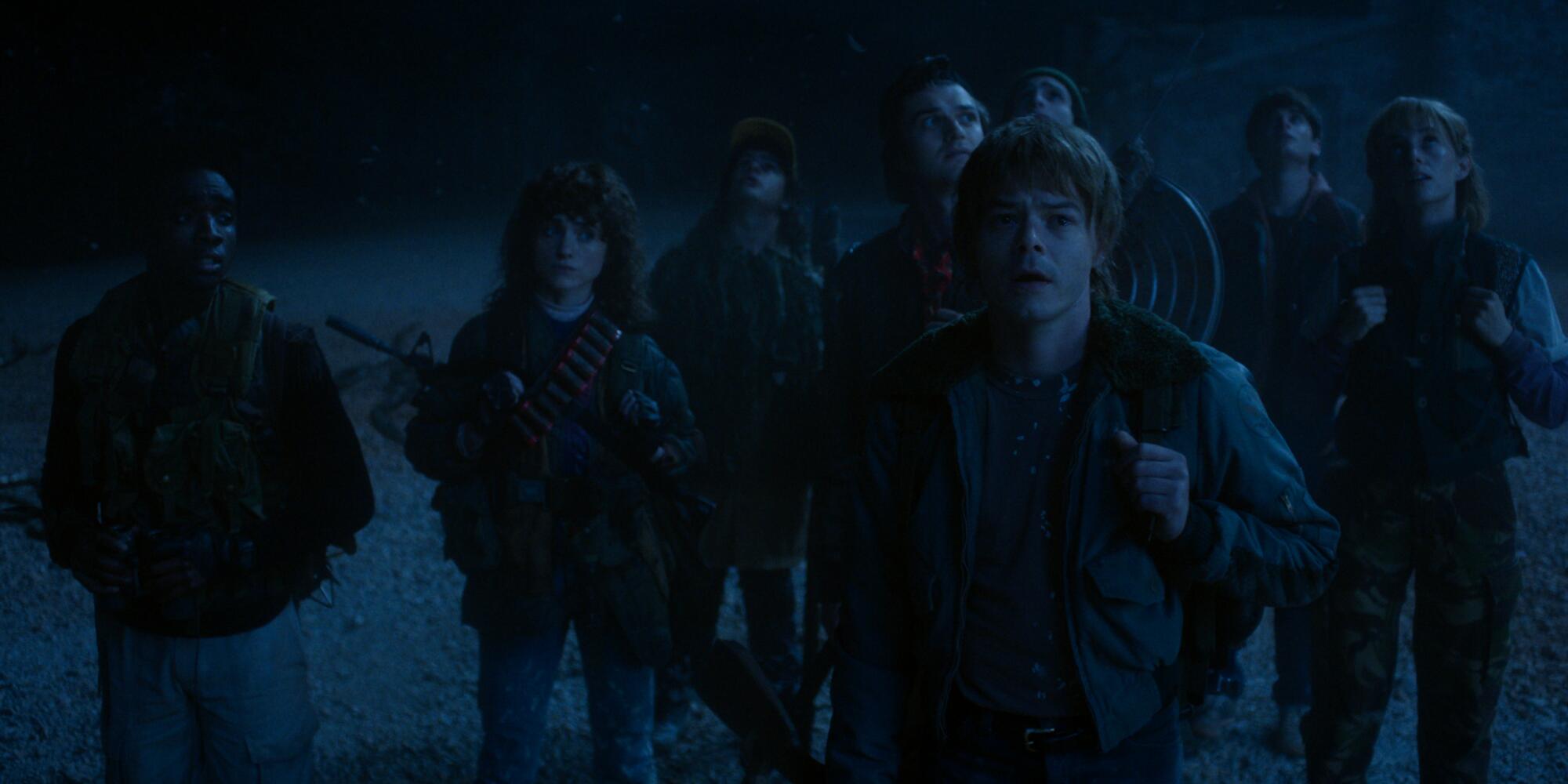


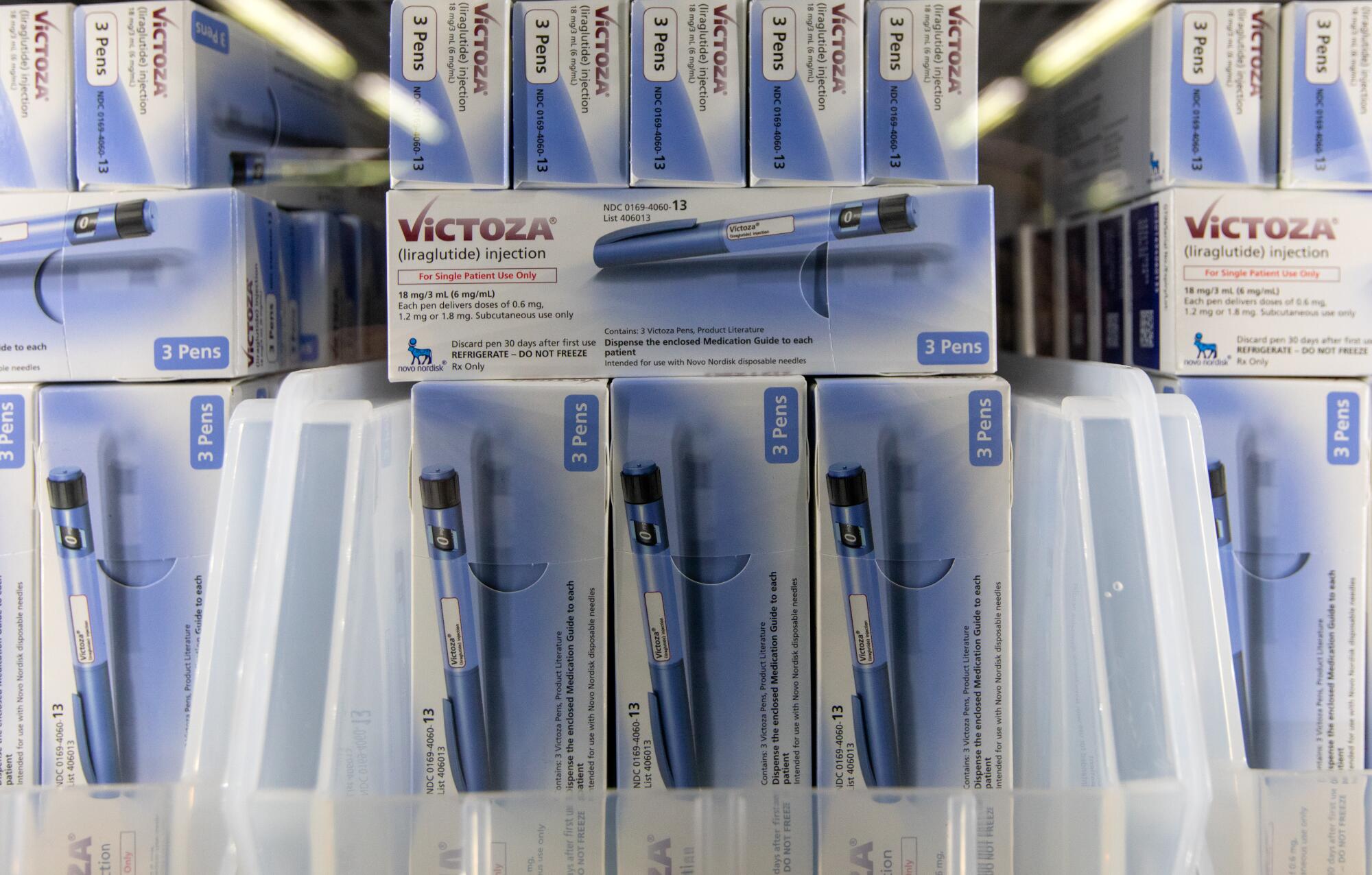













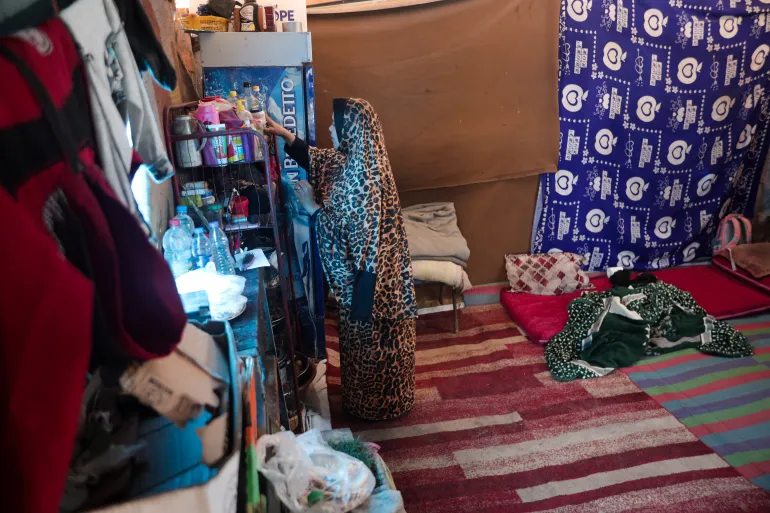
![During the famine, Sana’a’s greatest wish was to provide a loaf of bread for her seven children, amid a six-month-long blockade that prevented food and goods from entering [Abdelhakim Abu Riash/Al Jazeera]](https://i0.wp.com/www.aljazeera.com/wp-content/uploads/2025/12/873A1745-1767205773.jpg?w=640&ssl=1)
![Sana’a sits with her children inside their tent, holding on to hope that living conditions will improve in the coming year [Abdelhakim Abu Riash/ Al Jazeera]](https://i0.wp.com/www.aljazeera.com/wp-content/uploads/2025/12/873A1784-1767206217.jpg?w=640&ssl=1)
![Batoul Abu Shawish, 20, lost her entire family in an Israeli strike that targeted their home in Nuseirat during the ceasefire in November 2025 [Abdelhakim Abu Riash/ Al Jazeera]](https://i0.wp.com/www.aljazeera.com/wp-content/uploads/2025/12/873A1950-1767206334.jpg?w=640&ssl=1)
![Batoul holds a photo on her phone showing her with her family, including her father, mother, and siblings Muhammad, Youssef, Tayma, and Habiba [Abdelhakim Abu Riash/Al Jazeera]](https://i0.wp.com/www.aljazeera.com/wp-content/uploads/2025/12/873A2057-1767206534.jpg?w=640&ssl=1)
![Batoul stands in front of the rubble of her destroyed home, where she was trapped for about an hour before being rescued when it was hit [Abdelhakim Abu Riash/ Al Jazeera]](https://i0.wp.com/www.aljazeera.com/wp-content/uploads/2025/12/873A1970-1767206634.jpg?w=640&ssl=1)