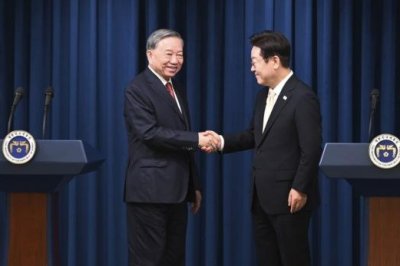
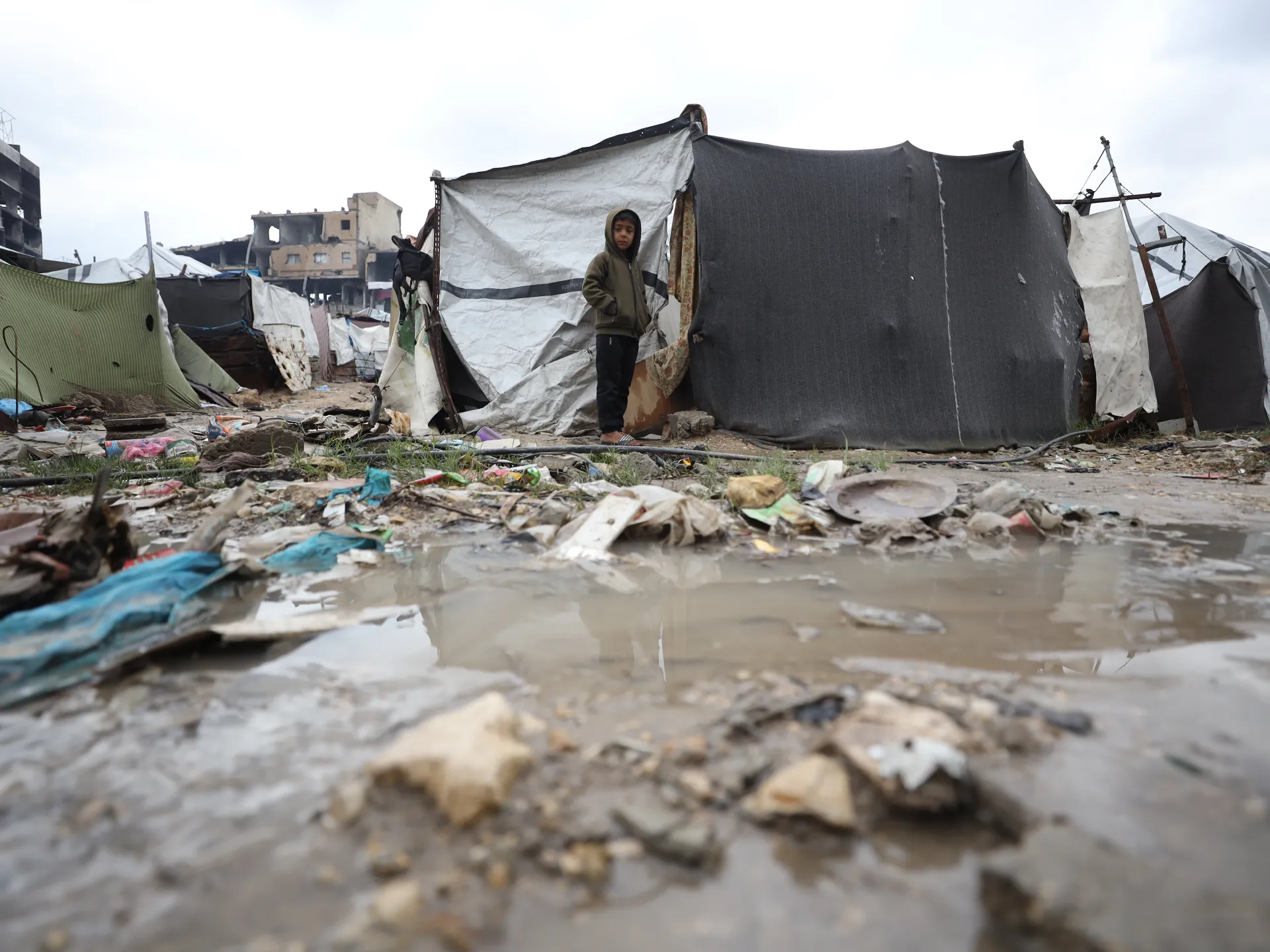
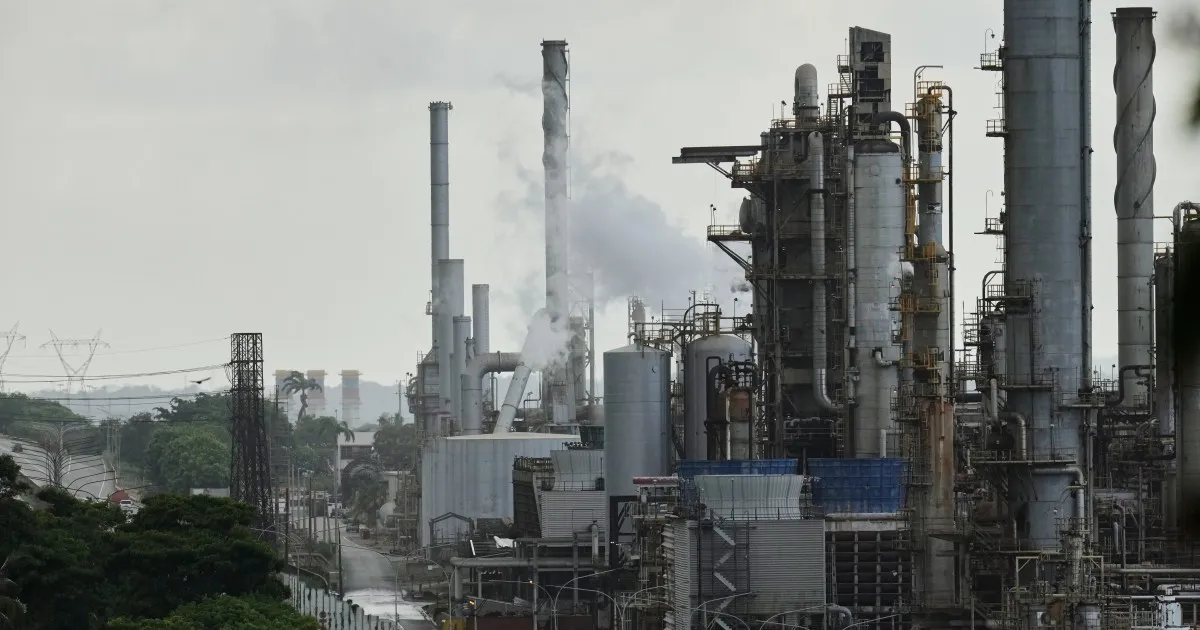
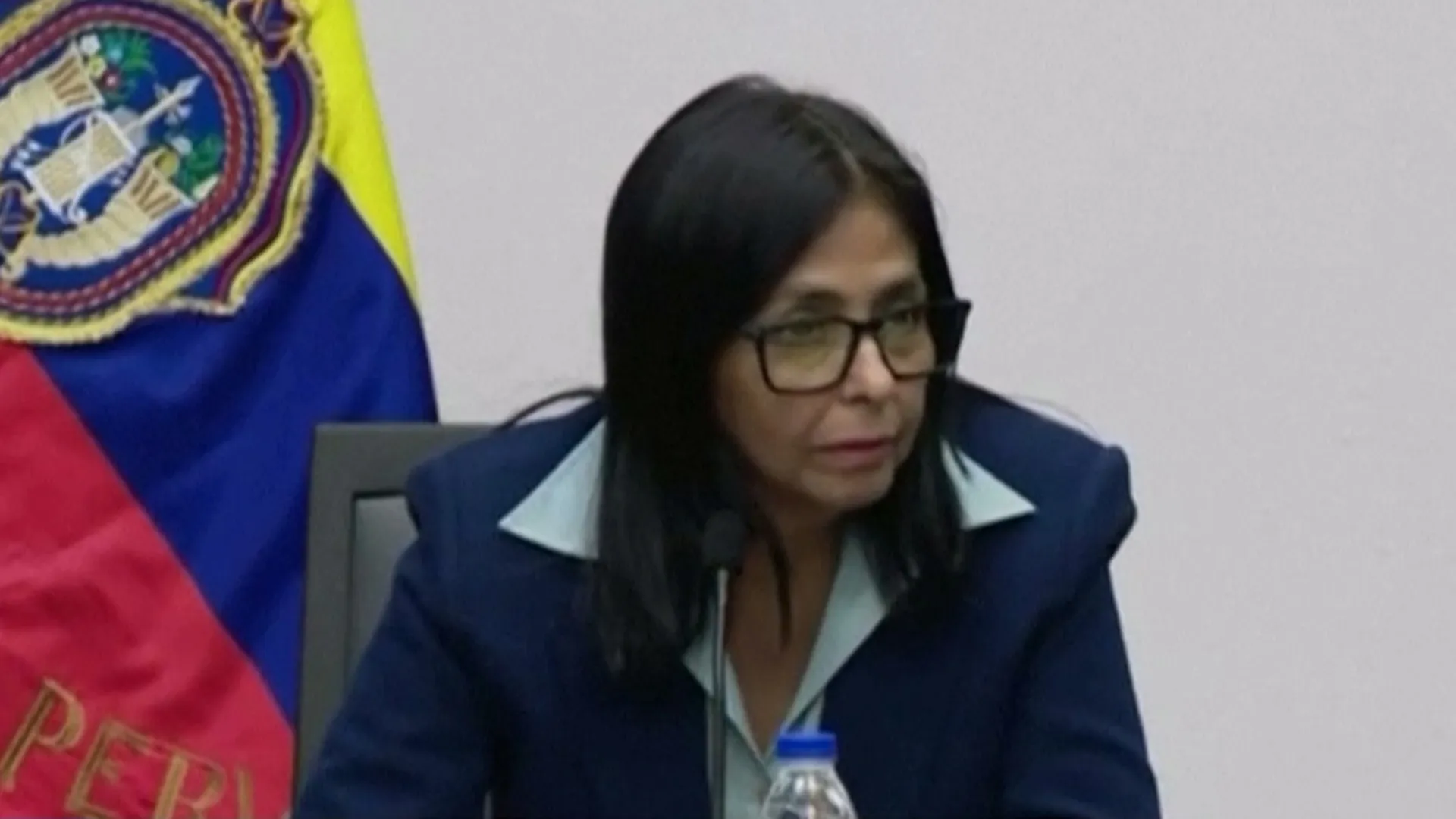
The presidential candidate of the Chilean Republican Party presidential candidate Jose Antonio Kast, pictured at an election event in 2021, was leading in polls as Chile conducted its presidential election on Sunday. Photo by Elvis Gonzalez/EPA-EFE
Dec. 14 (UPI) — Chileans head to the polls Sunday in a presidential runoff election in which the son of a Nazi party member, who has pledged to build a border wall to keep migrants out of the country, is the leading candidate.
Far right former congressman Jose Antonio Kast, 59, built his campaign on a promise to remove tens of thousands of undocumented migrants from the country. He faces Jeannette Jara, 51, a former labor minister in the administration of center-left president Gabriel Boric.
Jara, the leading candidate of the left-wing coalition, finished the first round of polling with 27%, but right-wing candidates, including Kast, secured more than half of the votes.
Kast is a known admirer of Chilean military strongman Augusto Pinochet, and a staunch opponent of abortion rights and same sex marriage.
The campaign has featured a bitter fight between Jara and Kast, with each attacking the other’s ability to address crime, migration problems and a lagging economy.
Jara has pledged to attract more investment in the country and to secure the border while also addressing health care needs. Kast has campaigned on corporate tax cuts, deregulation and departing undocumented migrants.
Both are using the approval rating of the outgoing Boric’s approval rating, hovering at 30%, as a platform for their campaigns, pledging to improve on the job he has done.
Chile has seen a sharp upturn in murder and other violent crime in recent years as international criminal groups have stepped into a country that has long been considered relatively docile.
The feat has spread to other Latin American countries, including Costa Rica and Ecuador.
Boric is considered to have failed to fulfill most of his stated agenda to strengthen public services. He also failed to address problems brought on by organized crime, election watchers have said.
Voters have called for more migration reform, tighter security and for the country to distance itself from Boric’s failed policies.
Media mogul Lai was arrested in 2020 under a national security law imposed by China.
Published On 14 Dec 202514 Dec 2025
Share
Supporters of Hong Kong democracy activist and media mogul Jimmy Lai have begun queuing overnight outside a Hong Kong court ahead of a verdict in his lengthy trial.
The verdict will be delivered by a three-judge panel in a hearing that begins at 10am local time (02:00 GMT) on Monday and comes amid international calls to release Lai, who has already spent five years in jail.
Recommended Stories
list of 3 itemsend of list
On Sunday night, Lai’s supporters formed a queue more than a block long outside the courthouse. Some even had camping gear as they tried to secure a spot among the 507 tickets to the courthouse — 58 tickets are for Lai’s courtroom and the rest are for viewing in a separate overflow room by video link.
Dozens of police officers have been deployed around the area in preparation for Monday’s verdict.
Pro-democracy activists, including Jimmy Lai , centre, arrive at a court in Hong Kong [File: Kin Cheung/AP]
Lai, 78, the multi-millionaire founder of the now-shuttered Apple Daily newspaper, was arrested in 2020 under a national security law imposed by Chinese authorities to quell anti-government protests that rocked Hong Kong in 2019.
Lai’s family says his health has worsened after more than 1,800 days in solitary confinement, and that he suffers from diabetes, high blood pressure and heart palpitations.
Earlier this month, his daughter Claire Lai told the AFP news agency in Washington, DC that her father has lost “a very significant amount of weight” and noted that he has become “a lot weaker than he was before.”
“His nails turn almost purple, grey and greenish before they fall off, and his teeth are getting rotten,” she added.
Countries including the United States and the United Kingdom, as well as rights groups, have said Lai’s 156-day trial is politically motivated and have called for his immediate release.
US President Donald Trump also raised Lai’s case with Chinese President Xi Jinping in a meeting in South Korea in October and has said he would do his utmost to “save” Lai.
But Beijing has called Lai “an agent and pawn of anti-China foreign forces”, describing him as the main planner behind disruptive activities in the city.
The Chinese and Hong Kong governments have also said the tycoon is receiving a fair trial and that the national security law treats all equally. They say no freedoms are absolute when it comes to safeguarding national security.
“Jimmy Lai has endured five years in prison under appalling conditions simply for doing his job as a founder of one of the most renowned and independent media outlets in Hong Kong,” the media advocacy group Reporters Without Borders said in a statement.
“The trial can only be described as a sham and has nothing to do with the rule of law.”
After Monday’s verdict, if Lai is convicted, he could be sentenced in the near future. He can, however, appeal the outcome.
Historian Alan McPherson tells Marc Lamont Hill how the US is carrying out a regime change campaign in Venezuela.
Is the United States orchestrating regime change in Venezuela? Could this spark an all-out war?
This week on UpFront, Marc Lamont Hill speaks to Alan McPherson, an author and history professor at Temple University who specialises in US-Latin American relations.
The US is continuing the largest military build-up in Latin America in decades and has seized an oil tanker off the coast of Venezuela. US President Donald Trump has also threatened to attack Venezuela by land “very soon”, while the Pentagon continues to strike alleged drug boats in the Caribbean and Pacific. At least 87 people have been killed in what human rights groups have called extrajudicial killings and murder.
The Trump administration has made clear that it wants Venezuelan President Nicolas Maduro out of power, and has thrown its support behind opposition figure and Nobel Peace Prize laureate Maria Corina Machado. She supports foreign intervention and wants to privatise Venezuelan oil, leaving many to question how much the ideologies of US politicians and the interests of oil companies are driving the push for regime change inside Venezuela.
The Ukrainian president says Kyiv could drop its long-held ambition of joining NATO in exchange for Western security guarantees.
Ukraine has indicated it is prepared to drop its long-held ambition of joining NATO in exchange for Western security guarantees, President Volodymyr Zelenskyy has said ahead of meetings with US envoys and European allies in Berlin.
Zelenskyy described the proposal on Sunday as a concession by Kyiv, after years of pressing for NATO membership as the strongest deterrent against future Russian attacks. He said the United States, European partners and other allies could instead provide legally binding security guarantees.
Recommended Stories
list of 3 itemsend of list
“From the very beginning, Ukraine’s desire was to join NATO; these are real security guarantees. Some partners from the US and Europe did not support this direction,” Zelenskyy said in response to questions from reporters in a WhatsApp chat.
“Thus, today, bilateral security guarantees between Ukraine and the US, Article 5-like guarantees for us from the US, and security guarantees from European colleagues, as well as other countries – Canada, Japan – are an opportunity to prevent another Russian invasion,” he said.
“And it is already a compromise from our part,” Zelenskyy added, stressing that such guarantees must be legally binding.
The shift would mark a significant change for Ukraine, which has long sought NATO membership despite Moscow viewing the alliance’s expansion as a threat.
While the move aligns with one of Russia’s stated war objectives, Kyiv has continued to reject demands to cede territory.
Zelenskyy said he was seeking a “dignified” peace and firm assurances that Russia would not launch another attack, as diplomats gathered to discuss what could become Europe’s deadliest conflict since World War II. He also accused Moscow of prolonging the war through sustained attacks on Ukrainian cities and critical infrastructure.
Pressure to reach a settlement
The talks come amid pressure from US President Donald Trump to reach a settlement. Trump’s envoy Steve Witkoff and his son-in-law Jared Kushner on Sunday arrived in the German capital city of Berlin for discussions involving Ukrainian and European representatives.
The decision to send Witkoff, who has previously led negotiations with both Kyiv and Moscow, suggested Washington saw scope for progress.
Zelenskyy said Ukraine, Europe and the US were reviewing a 20-point plan that could culminate in a ceasefire, though he reiterated that Kyiv was not holding direct talks with Russia. He said a truce along current front lines could be considered fair, while noting that Russia continues to demand a Ukrainian withdrawal from parts of Donetsk and Luhansk still under Kyiv’s control.
Despite diplomatic efforts, Russian attacks have continued, leaving thousands without electricity in recent strikes. Ukrainian officials say Moscow is deliberately targeting the power grid to deprive civilians of heat and water during winter.
Fighting has also intensified in the Black Sea. Russian forces recently struck Ukrainian ports, damaging Turkish-owned vessels, including a ship carrying food supplies. An attack on Odesa set grain silos ablaze, according to Deputy Prime Minister Oleksii Kuleba. Zelenskyy said the strikes “had no … military purpose whatsoever”.
Turkish President Recep Tayyip Erdogan warned against further escalation, saying the Black Sea should not become an “area of confrontation”.
“Everyone needs safe navigation in the Black Sea,” Erdogan said, calling for a “limited ceasefire” covering ports and energy facilities. Turkiye controls the Bosphorus Strait, a vital route for Ukrainian grain and Russian oil exports.
Police are not looking for anyone else over the shooting that wounded nine people at the Ivy League school in the northeastern US.
Published On 14 Dec 202514 Dec 2025
Share
Police in Providence, Rhode Island, have detained a “person of interest” after a manhunt for a gunman who killed two people at Brown University, officials say.
At a news conference on Sunday, Police Colonel Oscar Perez said the individual had been detained that morning and officers were not currently looking for anyone else in relation to the shooting at the Ivy League university in the northeastern United States.
Recommended Stories
list of 4 itemsend of list
Officials have not released the identity of the person of interest.
Nine people were wounded on Saturday, seven of them critically, when a suspect with a firearm entered a building where students were taking exams and opened fire.
The shooting sparked a manhunt involving more than 400 law enforcement personnel, including agents from the Federal Bureau of Investigation and the Bureau of Alcohol, Tobacco, Firearms and Explosives, while the campus was placed under lockdown as the search took place.
Students hid under desks for hours after warnings of an active shooter were released.
Brown said in an advisory on Sunday that police had lifted a shelter-in-place order for the campus although police remained at the location and still considered it an active crime scene.
Access to parts of the campus remained restricted on Sunday as police maintained a security perimeter around Minden Hall and nearby apartment buildings, the university said.
Officials had earlier released a video of the suspect, a male, possibly in his 30s, who was dressed in black.
Providence Deputy Police Chief Timothy O’Hara said on Saturday that the gunman may have worn a mask and investigators had retrieved shell casings from the scene.
Police are deployed in Providence on December 13, 2025, during the hunt for the shooter [Mark Stockwell/AP]
Detectives were looking into why the location was targeted, Perez told reporters. The incident was the second deadly gun attack at a US university in recent days after a shooting at Kentucky State University on Tuesday.
The Gun Violence Archive, which defines mass shootings as any incident in which four or more people are shot, has documented 389 such incidents in the US so far this year, including at least six at schools.
Last year, more than 500 mass shootings were recorded in the US.
An Al Jazeera crew at the Thai border with Cambodia was forced to take shelter in a bunker as Cambodia shelled the village of Ban Nong Mek, in Thailand’s Sisaket province.
Australian Prime Minister Anthony Albanese has declared the shooting at Sydney’s Bondi Beach a ‘terrorist’ attack targeting a Jewish community event. New South Wales police say at least a dozen people were killed by two gunmen at the scene.
Some define time as linear, some see it as a block. Others refer to it as something spent, in the present, or the future. Meanwhile, others consider it to be supernatural or holy, or something to twist, tame or traverse.
As someone who has been sentenced to a lifetime behind bars, time is both abstract and defined. When you have so much time, it is all you have, yet, inside, you have almost no control over how to spend it.
Every day, I can hear it: tick, tick, tick. It’s torturous, like that dripping faucet in my cell.
So to quiet the sound, I study. I learn. I try to build something meaningful from the minutes.
At the time of my arrest in 2002, I was a 25-year-old entrepreneur who had started a successful business. I was enrolled in college, working towards my degree in Information Technology, when my world collapsed. Once in New Jersey State Prison (NJSP) in Trenton, I had a simple choice: either give up on all of my dreams, or fight for them alongside my efforts to prove my innocence. So, I decided to use my time to complete my education.
My father had brought our family to the United States from Pakistan so his two sons could have access to higher education. He passed away this past January, and it is because of him I keep studying, to fulfil the dream he carried across an ocean.
Yet on the inside, that dream has been hard to chase.
‘You guys aren’t going anywhere’
Prison life is an insidious thing. The environment is conducive to vice and illicit activities. Drugs and gambling are easy to find; doing something constructive, like education, well, that can be a monumental task.
The NJSP’s education department only offers GED-level (high-school level) education. Prisoners can also enrol in outside correspondence courses, also known as independent study. These include certifications, like in paralegal studies, costing about $750 to $1,000.
For-profit “correspondence schools” advertise mail-order college degrees, but most, costing anywhere from $500 to $1,000, are unaccredited – selling paper, not knowledge. Some men collect a bachelor’s, master’s, and even a doctorate in a single year. I could not bring myself to do that. For me, an accredited degree is something that cannot be dismissed, and would make me feel on par with those in the free world.
But the options for college degrees from reputable accredited universities can run into the thousands – a non-starter for most of those imprisoned. So I began with a prison paralegal training course taught by fellow prisoners helping others with their legal battles.
Later on, I watched a PBS documentary about the Bard Prison Initiative in New York, a real college programme, accredited and rigorous, for men and women in the state’s prisons. Inspired, I decided to write dozens of letters to reputable universities across the country, asking them to take me as a test case to do a degree. None replied.
Then I learned about NJ-STEP, a programme offering college courses to prisoners at East Jersey State Prison. But when I asked to enrol, the NJSP’s education supervisor replied that it was not offered at our prison. When I appealed to the administration, a security major told me, “Why should I bring the NJ-STEP here? You guys aren’t going anywhere.”
His words echoed, as if a sentence within a sentence.
[Illustration by Martin Robles]
The myth of higher education
Thomas Koskovich, 47, has spent nearly three decades in NJSP, where he is serving a life sentence.
When I asked him about the opportunities for higher education in the prison, he scoffed.
“What college programme?” he blurted.
“The only thing they let us do is something called independent study, and by the way, you pay for everything yourself. The prison doesn’t help you. They just proctor [meaning they provide someone to administer] the tests.”
Thomas works as a teacher’s aide, a prison job detail, in the Donald Bourne School, named after a policeman who was killed by a prison inmate in 1972. The teachers come from the outside, while aides like Thomas assist them and also tutor students requiring extra support. He helps men earn their GEDs while knowing there is no path offered beyond that to further higher education.
“I’ve seen guys stuck in GED classes for 15 years,” he said.
Prisoners get stuck for different reasons: classes get cancelled because of emergencies, or sometimes the men have little education to begin with and require years to learn to read and write. Students also get paid $70 a month to attend, so some consider it a job – particularly as prison jobs are scarce – and deliberately fail so they can stay at the school for longer.
Of the two dozen or so students, “the school averages maybe five to 10 graduates a year”, Thomas explained.
He earns about $1,500 a year, far less than the $20,000 he would need to afford an accredited correspondence degree. But he chooses to help others in the same school where he got his GED because, as he put it, “Most people in here aren’t career criminals. They just got caught in bad situations.”
He added, “If given half a chance, they’d choose a legal, meaningful life.”
Thomas sees education as key to self-betterment. It was a book, Pedagogy of the Oppressed by Paulo Freire, a Brazilian Marxist educator, given to him by an activist friend that showed him the power of education, he says.
Education equips us to “better handle stressful situations” and nurture creativity and “artistic expression”, he reflected. “But most importantly, we can develop skills that will allow us to earn a living legally and contribute to society in a positive way.”
The Department of Corrections may store bodies, but it does not nurture minds, though many will eventually be freed back into society after serving their terms, while others could win their freedom in court or through clemency.
And education can only help with transitioning into life on the outside. According to the Prison Policy Initiative, a research and advocacy nonprofit, limited access to education in prisons remains a major barrier to rehabilitation and reentry into society. Decades of studies support the idea that education in prison reduces recidivism – a RAND meta-analysis found a 43 percent lower likelihood of reoffending among inmates who pursued studies.
Kashif Hassan, 40, from Brooklyn in New York City, has been imprisoned for 15 years. Serving a life-plus-10-year sentence, he has earned multiple degrees, including two PhDs, one in business administration and one in criminal justice, through university distance education.
Unlike other prisoners, Kashif was fortunate in that his family could afford the tens of thousands in accredited college tuition fees.
“I have two sons,” he told me, “and I want to show them that no matter the circumstances, even here, you can keep learning.”
He laughed when I asked about support from the NJSP’s education department. “None,” he said. “They even cancelled the college correspondence roster [a list that allowed students enrolled in long-distance education to access the prison law library and school computers to type and print]. They say it’s for security, but really, it’s about control.”
Kashif has also been on the waiting list for a paralegal course for 10 years.
“Education is a powerful tool,” he said. “It helps you understand your rights, navigate the system, and articulate yourself better. Especially in here, it’s the difference between feeling powerless and feeling empowered.”
A door where there was a wall
In 2023, I learned of a glimmer of progress. The Thomas Edison State University (TESU) in Trenton – ranked among the state’s top 20 public institutions – launched a new programme enabling men in NJSP to pursue accredited college degrees.
In 2024, I began taking TESU courses for a liberal arts degree. My tuition is paid for by grants and scholarships. The programme runs independently from the NJSP’s education department, which only proctors exams. For those of us long shut out of higher learning, it felt revolutionary. As if a door opened where there had only been a wall. It has made me feel free and given me purpose.
For Michael Doce, 44, another student in the programme who is serving a 30-year sentence, the door is narrow but precious. “I want to stick it to the NJDOC, to say, ‘Look what I did all on my own.’”
Michael studied engineering at Rutgers University before he was imprisoned. Now he is earning a communications degree.
“My family buys used textbooks,” he said. These are mailed to the prison, but security checks mean they can take weeks to reach him.
“But the prison just banned used books,” he added. “Depending on how much new ones cost, I might not be able to continue.”
Al Jazeera requested clarification from the New Jersey Department of Corrections about the cancellation of the roster and the banning of used books, but did not receive a response.
Michael shrugged and gave a wry smile. “If too many guys signed up, they’d probably cancel the whole thing. I’m being funny, but not really.”
He maintains top grades and dreams of becoming a journalist. “A criminal conviction closes a lot of doors,” he told me. “I’m just trying to open new ones.”
‘Doing his own time’
There is a couplet from the 18th-century Urdu poet Mir Taqi Mir that goes:
Yaarān-e deyr o Ka‘bah, donon bulā rahe hain
Ab dekhen Mir, apnā jānā kidhar bane hai
My heart is torn between two calls – the world of love and the house of God.
Now it is a test to see which way my soul will turn.
Perhaps that captures the prisoner’s daily dilemma: between despair and determination; between giving up and growing. In the absence of rehabilitation, every man must choose his own path – “doing his own time,” as the popular prison phrase goes – towards light or darkness.
Men like Thomas, Kashif, Michael, and many others choose light. They choose education.
The Department of Corrections may store bodies, but it cannot own the will to grow. Education here is not charity. It is resistance. It is the one realm where we can still choose, and in choosing, we stay human and free.
Because in the end, freedom does not begin with release. It begins with the decision to grow. It begins with the mind.
And in this place, where time is both enemy and companion, every page turned, every lesson learned, is a way to quiet the endless ticking, a way to remind ourselves that even behind bars, time can still belong to us.
Tick. Tick. Tick.
This is the final story in a three-part series on how prisoners are taking on the US justice system through law, prison hustles and hard-won education.
Tariq MaQbool is a prisoner at New Jersey State Prison (NJSP), where he has been held since 2005. He is a contributor to various publications, including Al Jazeera English, where he has written about the trauma of solitary confinement (he has spent a total of more than two years in isolation) and what it means to be a Muslim prisoner inside a US prison.
Martin Robles is also a prisoner at NJSP. These illustrations were made using lead and coloured pencils. As he has limited art supplies, Robles used folded squares of toilet paper to blend the pigments into different shades and colours.
Video shared on X shows the dramatic moment a bystander disarms a gunman during a mass shooting at Sydney’s Bondi Beach that has left a dozen people dead and injured. The suspect gets away then joins another shooter who continues firing from a bridge.
Myles Caggins, former US military spokesman for the Global Coalition to Defeat ISIS, talks about the attack in Syria that resulted in the killings of three Americans.
Police in Australia say they are responding to a developing incident at Sydney’s Bondi Beach after media outlets reported a shooting incident.
The Sydney Morning Herald reported shots at the beach on Sunday, saying multiple people had been injured. Television networks Sky and ABC aired footage showing people lying on the ground.
The New South Wales (NSW) police said two people were in custody, adding that the operation was ongoing.
“Anyone at the scene should take shelter,” they posted on X, calling on the public to avoid the area.
A spokesperson for Prime Minister Anthony Albanese said the government was aware “of an active security situation in Bondi”.
“We urge people in the vicinity to follow information from NSW Police,” said the spokesperson.
From the cleanup efforts in Sri Lanka in the wake of Cyclone Ditwah’s destruction to the devastating Myanmar military air attack on a hospital that killed 30 people, here is a look at the week in photos.
Raphinha’s brace helped Barcelona overcome Osasuna and open up a seven-point lead on Real Madrid at top of the ladder.
Published On 14 Dec 202514 Dec 2025
Share
Raphinha struck twice late in the second half as Barcelona secured a hard-fought 2-0 victory over a resolute Osasuna side on Saturday, extending their lead at the top of the La Liga standings to seven points.
Hansi Flick’s men now sit on 43 points, comfortably clear of second-placed Real Madrid, who have a game in hand and are set to play at Alaves on Sunday.
Recommended Stories
list of 4 itemsend of list
Barcelona dominated from the outset, enjoying an eye-watering 80% possession and firing 24 shots compared to just three from Osasuna.
However, the visitors’ disciplined five-man defensive line, combined with several outstanding saves from goalkeeper Sergio Herrera, frustrated the home side for much of the match.
The Catalans thought they had broken the deadlock in the 23rd minute when Ferran Torres nodded home a looping header from Marcus Rashford’s cross after a short corner routine.
However, a lengthy VAR review ruled the goal out for a marginal offside in the build-up.
The best chance of the first half came in the 40th minute, as teenager Lamine Yamal darted down the right flank before delivering a pinpoint cross to Torres. The striker unleashed an audacious overhead kick but sent the ball wide of the far post.
Osasuna’s resilient back five held firm as Barcelona swarmed forward in the second half, with Rashford testing Herrera’s acrobatics from a free kick early after the interval.
Yamal remained a constant menace down the right, tirelessly driving at defenders, but the visitors absorbed wave after wave of pressure.
Barcelona finally broke down Osasuna’s deep defensive block in the 70th minute when Pedri’s incisive pass cut through the visitors’ defence, finding Raphinha in his stride.
The Brazilian forward took a controlled touch before unleashing a thunderous strike from the edge of the area, the ball arrowing inside the left post.
Raphinha sealed the win in the 86th minute. A deflected cross from Jules Kounde on the right found the Brazilian unmarked at the far post, and he calmly volleyed the ball into an empty net, giving the scoreline a more comfortable look.
“It’s very commendable (what Osasuna did) because they were very compact and we struggled to break them down,” Barca defender Gerard Martin told Movistar Plus. “But with patience and a lot of ball possession, we know that goals always come and we finally found them.”
Raphinha, centre, scores Barcelona’s first goal in the 70th minute [Albert Gea/Reuters]
Israel and Costa Rica have signed a free trade agreement, but it must be ratified by Costa Rica’s Legislative Assembly in the face of opposition by pro-Palestinian groups. File Photo by Abir Sultan/EPA
Dec. 12 (UPI) — Costa Rica and Israel finalized a free trade agreement this week that eliminates more than 90% of tariffs between the two countries, mainly on agricultural and industrial products. The deal also is expected to improve prospects for trade in services, technology and specialized investment.
Costa Rica’s Ministry of Foreign Trade said the pact with Israel — which it described as a leader in innovation, cybersecurity, clean technologies, agrotechnology, digital services and semiconductors — creates a favorable framework for expanding trade, attracting capital and strengthening bilateral production chains.
The agreement must be ratified by Costa Rica’s Legislative Assembly, a process expected to be contentious due to criticism from pro-Palestinian groups calling for a freeze on ties with Israel.
Activist groups collected about 12,000 signatures from Costa Ricans and delivered them to the government in November, urging it to halt the agreement on the grounds that Costa Rica would become “complicit” in genocide, local outlet Semanario Universidad reported.
Although current trade between the two countries — estimated at about $60 million — represents only a small share of each nation’s total exports, Costa Rican business groups welcomed the agreement, saying it will allow the country to strengthen specific niches where it has a competitive advantage or needs key inputs.
“In the current context, it is very important to diversify the sources of investment and the destinations of our products, particularly in a high-potential market such as the Middle East,” Ronald Lachner, president of the Association of Free Zone Companies of Costa Rica, told El Observador.
Costa Rican Foreign Trade Minister Manuel Tovar said the agreement “represents a strategic opportunity to position Costa Rica as a competitive supplier in high-technology sectors, quality agribusiness and specialized services.”
“The free trade agreement is expected to strengthen the growth trend in Israeli exports, deepen business cooperation and help reduce the cost of living in Israel by lowering import prices,” he said. “The agreement reflects the policy we are pursuing: opening new markets, diversifying trade destinations and strengthening the engines of growth of the Israeli economy.”
With the agreement’s entry into force, Costa Rican exports are expected to reach between $50 million and $60 million in 2026, driven by products such as green coffee, pineapple, honey, kosher and halal meat, medical devices, advanced manufacturing and digital services.
Beyond the exchange of goods, the free trade agreement aligns with Costa Rica’s national strategy to attract investment in high-technology sectors. Israeli investment in Costa Rica has shown a sharp increase, rising from $1 million in 2023 to nearly $20 million in 2024.
The scope of the agreement goes beyond tariff reductions. It includes plans to open a Trade and Innovation Office in Jerusalem in early 2026. The office is intended to facilitate joint projects in semiconductors, medical technologies, advanced agriculture and specialized tourism.
Israel’s ambassador to Costa Rica, Michal Gur-Aryeh, said the two economies are complementary.
“Israeli technology will contribute to Costa Rican productivity, making it more profitable and competitive, while Israel will gain access to Costa Rica’s wide range of products,” she said.
The Philippines has accused Chinese coastguard ships of firing water cannon at Filipino fishermen near a disputed South China Sea shoal, injuring three people and causing “significant damage” to two fishing vessels.
On Saturday, the Philippine coastguard (PCG) said that nearly two dozen Filipino fishing boats were attacked a day earlier, near an atoll called the Sabina Shoal that falls within the country’s 200km (124-mile) Exclusive Economic Zone (EEZ).
Recommended Stories
list of 3 itemsend of list
The fishermen faced high-pressure spray from Chinese water cannon, and Chinese vessels attempted aggressive blocking manoeuvres, according to Manila.
It was the latest in a series of confrontations between Chinese and Philippine ships in the contested waters of the South China Sea, which Beijing claims nearly in its entirety despite an international ruling against the claim.
Friday’s incident took place in a fish-rich area about 150km (93 miles) from the Philippine island of Palawan.
“As a result of these aggressive actions, three Filipino fishermen sustained physical injuries, including bruises and open wounds,” Commodore Jay Tarriela, a spokesman for the Philippine coastguard, said in a statement posted on Facebook.
“Two [Filipino fishing boats] also suffered significant damage from high-pressure water cannon blasts.”
During the incident, a Chinese boat also cut the anchor lines of several Filipino vessels, endangering their crews, according to the Philippine coastguard.
“The PCG calls on the Chinese coastguard to adhere to internationally recognised standards of conduct, prioritising the preservation of life at sea over pretensions of law enforcement that jeopardise the lives of innocent fishermen,” it said in a separate statement.
PCG Successfully Renders Assistance to Harassed Filipino Fishermen at Escoda Shoal Amid Aggressive Actions by Chinese Vessels
The Philippine Coast Guard (PCG) today announced the successful deployment of its multi-role response vessels, MRRV-4403 and MRRV-4411, to the vicinity… https://t.co/DW4eXgtjG3pic.twitter.com/P2QOwRDjbB
China, however, defended its actions on Friday as necessary to maintain its “territorial sovereignty” over the Sabina Shoal, which it referred to by the Chinese name Xianbin Jiao.
In a statement, Chinese coastguard spokesperson Liu Dejun said the military’s vessels had taken “necessary control measures, including issuing verbal warnings and expelling by external means, in accordance with laws and regulations”.
Dejun accused the Philippine vessels of having “deliberately intruded” on the shoal “under the pretext of fishing”.
Tarriela told the Reuters news agency that the Chinese coastguard’s statement amounted to an admission of wrongdoing.
In Saturday’s statement, the Philippine coastguard added that the vessels it deployed to aid the injured fishermen were repeatedly blocked from reaching the Sabina Shoal.
“Despite these unprofessional and unlawful interferences, the PCG successfully reached the fishermen this morning and provided immediate medical attention to the injured, along with essential supplies,” the statement said.
There has been a history of clashes between Chinese and Philippine vessels in the South China Sea, as each side seeks to assert its territorial claims.
A separate incident on Friday took place at the Beijing-controlled Scarborough Shoal, known in China as Huangyan Dao.
There, the Chinese military said that it had also “warned and expelled” several small aircraft from the Philippines that flew through what it considers its airspace.
In October, the Philippines also accused a Chinese ship of deliberately ramming one of its government vessels in the Spratly Islands, where Beijing has sought to assert its sovereignty claims for years. Beijing blamed Manila for the incident.
A month earlier, one person was injured when a water cannon from a Chinese coastguard vessel shattered a window on the bridge of a fisheries bureau vessel near the Scarborough Shoal.
China claims an area in the South China Sea that cuts into the exclusive economic zones of Brunei, Indonesia, Malaysia, the Philippines and Vietnam, which all have competing claims.
In 2016, an international tribunal sided with the Philippines, finding that China’s claims exceeded lawful limits under the United Nations Convention on the Law of the Sea.
But China denounced the ruling and has refused to abide by it.
A Lululemon store pictured Dec. 2019 in Lynnfield, Mass. On Friday, the Canada-based company’s sock value spiked more than 9% in premarket trading following its announcement CEO Calvin McDonald will step down next month. Photo Provided by CJ Gunther/EPA
Dec. 12 (UPI) — Shares of Lululemon stock surged Friday after CEO Calvin McDonald announced his retirement.
The Canada-based company’s stock value spiked more than 9% in premarket trading following its announcement that McDonald was resigning from his role.
“The timing is right for a change,” McDonald said on a call. “I’ve described being CEO of Lululemon as my dream job. It truly has lived up to every expectation and given me the opportunity of a lifetime.”
McDonald expects a Jan. 31 departure from the athleisure company and will cap more than a year of lackluster performance.
Lululemon’s NYSE shares climbed 9.35% to $204.50 in recent trading, following a roughly 10% surge the day prior.
The company disclosed McDonald’s exit alongside fiscal third-quarter earnings and another batch of disappointing guidance.
According to the company, Lululemon’s board has engaged an unnamed “leading” executive search firm to replace McDonald.
The outgoing CEO will remain as senior adviser until March 31.
Lululemon named CFO Meghan Frank and Chief Commercial Officer Andre Maestrini as interim co-CEOs while it hunts for a permanent leader.
Meanwhile, Board chair Marti Morfitt will assume an expanded role as executive chair.
“As we look to the future, the board is focused on identifying a leader with a track record of driving companies through periods of growth and transformation to guide the company’s next chapter of success,” said Morfitt.
Lululemon reported quarterly revenue of $2.57 billion, up from $2.40 billion the same period last year.
McDonald pointed to a robust Thanksgiving weekend demand that helped the company clear outdated inventory through discounts.
He said early holiday results were “encouraging” as it looked ahead to the current quarter.
“I also want to acknowledge we’ve seen trends slow a bit since Thanksgiving, which we’ve taken into account in our Q4 guidance,” McDonald continued.
But he added it projected revenue of $3.50 billion to $3.59 billion, which was slightly under Wall Street forecasts.
Lululemon has grappled with mounting pressures over the past year, including competition and tariffs imposed by U.S. President Donald Trump.
The United States has ended temporary legal protections for thousands of Ethiopian nationals, ordering them to leave the country within 60 days or face arrest and deportation.
Homeland Security Secretary Kristi Noem announced the decision on Friday, determining that conditions in Ethiopia “no longer pose a serious threat” to returning nationals despite ongoing violence in parts of the country.
Recommended Stories
list of 3 itemsend of list
The move affects approximately 5,000 refugees who fled armed conflict and is the latest action in the administration’s hardline crackdown to remove legal protections from at least one million people across multiple countries.
The termination of Temporary Protected Status (TPS) for Ethiopia takes effect in early February 2026, giving current beneficiaries two months to either leave voluntarily or find another legal basis to remain in the United States. Those who force authorities to arrest them “may never be allowed to return,” according to a Department of Homeland Security statement.
The decision comes despite the State Department’s own travel advisory for Ethiopia, which urges Americans to “reconsider” travel to the country due to “sporadic violent conflict, civil unrest, crime, communications disruptions, terrorism and kidnapping”.
The advisory, still in effect, warns that multiple regions remain off-limits and that the US embassy is “unlikely to be able to assist with departure from the country if the security situation deteriorates”.
Federal authorities justified the termination by citing peace agreements signed in recent years, including a 2022 ceasefire in Tigray and a December 2024 deal in Oromia. Analysts have also warned of the risk of renewed fighting between Ethiopia and Eritrea.
The Federal Register notice acknowledged that “some sporadic and episodic violence occurs” but claimed improvements in healthcare, food security and internal displacement figures demonstrated the country’s recovery.
However, the notice also cited national interest concerns, including Ethiopian visa overstay rates that exceed the global average by more than 250 percent and unspecified national security investigations involving some TPS holders.
The Ethiopian termination is part of a broader pattern under President Donald Trump, whose administration has moved to end protections for nationals from Haiti, Venezuela, Somalia, South Sudan and other countries since returning to office.
His administration has dismissed many nations as “Third World” countries, a term largely no longer used given its pejorative impetus for developing nations.
Over the past two weeks, Trump has escalated inflammatory racist attacks on Minnesota’s large Somali community in particular, including calling Somali immigrants “garbage” and directing a surge of ICE agents into the state, alarming residents and drawing criticism.
As of March 2025, approximately 1.3 million people held TPS in the United States, according to the American Immigration Council, a Washington-based research and advocacy organisation.
Trump has identified immigration control as central to his national security strategy, with the document published this month describing migration policies in Europe and elsewhere as contributing to what they term “civilizational erasure,” a far-right theory which is has been comprehensively debunked.
The approach has drawn sharp criticism for its racial selectivity. While terminating protections for Ethiopians who fled documented armed conflict, the administration simultaneously opened a refugee resettlement programme for white South Africans of Afrikaner ethnicity, claiming “race-based discrimination”. That discrimination has been rejected by the South African government and by numbers of Afrikaners themselves.
Scott Lucas, a professor of US and international politics at University College Dublin’s Clinton Institute, told Al Jazeera the contrast revealed a “perverse honesty” about the administration’s priorities.
“If you’re white and you’ve got connections you get in,” he said. “If you’re not white, forget about it.”
Legal challenges have mounted against several TPS terminations, with courts temporarily blocking some decisions.
Ethiopian TPS beneficiaries can continue working during the 60-day transition period, but after the deadline, anyone without an alternative legal status becomes subject to immediate arrest and removal.
The administration has offered what it calls a “complimentary plane ticket” and “$1,000 exit bonus” to those who depart voluntarily using a mobile app to report their departure.
Belarusian President Alexander Lukashenko, pictured at a press conference in January, agreed to release 123 political prisoners on Saturday in exchange for the United States dropping its crippling sanctions against the potash industry in Belarus. File Photo by Belarus President Press Service/EPA-EFE
Dec. 13 (UPI) — President Donald Trump on Saturday ended U.S. sanctions on potash fertilizers from Belarus in exchange for Belarusian President Alexander Lukashenko releasing 123 political prisoners.
Lukashenko freed the prisoners, who include Nobel Peace Prize laureate Ales Bialiatski and political opposition figure Maria Kolesnikova, in an effort to improve the Russia-allied nation’s relations with the United States, Bloomberg and the Los Angeles Times reported.
“In accordance with President Trump’s instructions, the United States is lifting sanctions on potash,” U.S. Special Envoy John Coale told Belta, Belarus’ official news agency.
“I believe this is a very good step by the United States for Belarus,” Coale said. “We are lifting them now.”
Belarus has been sanctioned by the U.S. and other Western nations since 2021 because of Lukashenko’s authoritarian rule and decades of political repression.
Sanctions have ramped up since 2022 because Lukashenko also allowed Russian President Vladimir Putin to launch his invasion of Ukraine from Belarus.
In 2024, Lukashenko started releasing prisoners in order to appease Western leaders, including Trump, and get sanctions lifted that have crippled the Belarusian potash industry.
Since July 2024, before Saturday’s prisoner release, Belarus has freed more than 430 political prisoners.
According to Coale, the United States is “constantly talking” to Belarus and lifting the U.S. sanctions on potash — European sanctions, which have been called more consequential than the U.S. sanctions, remain in place — is a step toward reaching a point where all sanctions against the country have been removed.
“As relations between the two countries normalize, more sanctions will be lifted,” Coale said.
A ceasefire deal appears distant as energy facilities are hit in Ukraine and Russia says a drone has killed two people.
Russian attacks have left thousands without power in Ukraine, while a drone attack killed two people in Russia, as United States-led peace talks on ending the war, deep in its fourth year, press on.
Ukrainian President Volodymyr Zelenskyy said Saturday that Russian night-time attacks damaged more than a dozen civilian facilities, disrupting power in seven regions.
Recommended Stories
list of 3 itemsend of list
“It is important that everyone now sees what Russia is doing… for this is clearly not about ending the war,” Zelenskyy said on social media. “They still aim to destroy our state and inflict maximum pain on our people.”
Kyiv and its Western allies have repeatedly said Russia is trying to cripple the Ukrainian power grid and deny civilians access to heat, light and running water for a fourth consecutive winter, in what Ukrainian officials call “weaponising” the cold.
Russian attacks left parts of the Kherson region, including the regional capital, Kherson, without power, according to regional head Oleksandr Prokudin.
Drone on Russia’s Saratov region
Russian authorities in the southwestern Saratov region, home to an important Russian army base, said a drone killed two people and damaged a residential building. Several windows were also blown out at a kindergarten and clinic.
Russia’s Ministry of Defence said it had shot down 41 Ukrainian drones over Russian territory overnight.
The latest round of attacks came after Kremlin adviser Yury Ushakov said on Friday that Russian police and National Guard will stay on in eastern Ukraine’s Donbas, which comprises the fiercely contested Donetsk and Luhansk regions, and oversee the industry-rich region, even if a peace settlement ends Russia’s nearly four-year war in Ukraine.
Ukraine has rejected Moscow’s demands to maintain its presence in Donbas post-war as US-led negotiations drag on.
Germany is set to host Zelenskyy on Monday for talks as peace efforts gain momentum and European leaders seek to steer negotiations. US negotiators have for months tried to navigate the demands of each side as US President Donald Trump presses for a swift end to Russia’s war.
The search for possible compromises has run into a major obstacle over who keeps Ukrainian territory currently occupied by Russian forces. Ukraine, the US and European powers are also still trying to outline the contours of security guarantees for Kyiv that could be accepted by Moscow.
In the absence of a breakthrough in negotiations to end the conflict, hostilities recently intensified in the Black Sea, with Russian forces attacking two Ukrainian ports and damaging three Turkish-owned vessels, including a ship carrying food supplies.
An attack on the city of Odesa on Friday caused grain silos to catch fire at the port, according to Ukrainian deputy prime minister and reconstruction minister, Oleksii Kuleba. Posting video footage on social media of firefighters tackling a blaze on board what he described as a “civilian vessel” in Chornomorsk, Zelenskyy said the Russian attacks “had no … military purpose whatsoever”.
Turkish President Recep Tayyip Erdogan on Saturday warned that the Black Sea should not turn into an “area of confrontation”.
“Everyone needs safe navigation in the Black Sea,” Erdogan said, calling for a “limited ceasefire” in attacks on ports and energy facilities. Turkiye controls the Bosphorus Strait, a key passage for transporting Ukrainian grain and Russian oil towards the Mediterranean.
United States President Donald Trump has pledged to pursue “serious retaliation” against the armed group ISIL (ISIS) after an ambush in central Syria killed two US service members and one civilian interpreter, also from the US.
The attack on US forces on Saturday was the first to inflict casualties since the fall of Syrian President Bashar al-Assad a year ago.
Recommended Stories
list of 4 itemsend of list
Three additional US military members were injured in the attack, as well as at least two Syrian troops, according to government and media reports.
In a social media post, Trump said he had received confirmation that the injured US soldiers were “doing well”.
He, however, warned that there would be serious consequences for what he described as an ISIL (ISIS) attack.
“This was an ISIS attack against the U.S., and Syria, in a very dangerous part of Syria, that is not fully controlled by them,” Trump wrote. “The President of Syria, Ahmed al-Sharaa, is extremely angry and disturbed by this attack. There will be very serious retaliation.”
His remarks echoed those of Secretary of Defense Pete Hegseth, who likewise promised to take severe action against anyone who attacked US service members.
“Let it be known, if you target Americans — anywhere in the world — you will spend the rest of your brief, anxious life knowing the United States will hunt you, find you, and ruthlessly kill you,” Hegseth wrote on social media.
Conducting ‘counter-terrorism operations’
Saturday’s attack was first announced by US Central Command, also known as CENTCOM.
It characterised the attack as an “ambush” carried out by a lone ISIL gunman, who was subsequently “engaged and killed”. Hegseth later confirmed that the perpetrator “was killed by partner forces”.
The attack took place near Palmyra in Syria’s central Homs region, according to Pentagon spokesperson Sean Parnell.
“The attack occurred as the soldiers were conducting a key leader engagement,” he wrote in a statement. “Their mission was in support of on-going counter-ISIS/counter-terrorism operations in the region.”
Tom Barrack, the US ambassador to Turkiye, meanwhile, described the incident as a “cowardly terrorist ambush targeting a joint U.S.–Syrian government patrol”. He noted there were “Syrian troops wounded in the attack” and wished them a “speedy recovery”.
But the details about the attack and the individuals involved remain unclear.
CENTCOM indicated the US government would withhold identifying information about the late US soldiers and their units “until 24 hours after their next of kin have been notified”.
The incident remains under “active investigation”, according to the US Department of Defense.
Who was the suspect?
The identity of the suspect has also not been released to the public.
But three local officials told the Reuters news agency that the assailant was a member of the Syrian security forces.
A spokesperson for the Syrian Interior Ministry also told the television channel Al-Ikhbariah TV that the attacker did not have a leadership role in the country’s security forces. He did not say whether the man was a junior member.
“On December 10, an evaluation was issued indicating that this attacker might hold extremist ideas, and a decision regarding him was due to be issued tomorrow, on Sunday,” the spokesperson, Noureddine el-Baba, said.
The official Syrian Arab News Agency (SANA) state news agency reported earlier that Syrian security forces and US troops came under fire during a joint patrol.
The news agency AFP, meanwhile, cited an anonymous Syrian military official as saying shots were fired “during a meeting between Syrian and American officers” at a Syrian base in Palmyra.
A witness in the city, who also asked to remain anonymous, told the agency that he heard the shots coming from inside the base.
Traffic on the Deir Az Zor–Damascus highway was temporarily halted as military aircraft conducted overflights in the area, the agency said.
A security source told SANA that US helicopters evacuated those who were wounded to the al-Tanf base near the Iraqi border.
A long-term US presence
In the aftermath of the attack, US officials pledged to double down on their efforts to combat ISIL (ISIS) in Syria.
“We will not waver in this mission until ISIS is utterly destroyed, and any attack on Americans will be met with swift and unrelenting justice,” Ambassador Barrack wrote on social media.
“Alongside the Syrian Government, we will relentlessly pursue every individual, facilitator, financier, and enabler involved in this heinous act. They will be identified and held accountable swiftly and decisively.”
The US has troops stationed in northeastern Syria as part of a decade-long effort to help a Kurdish-led force there combat ISIL (ISIS).
ISIL captured Palmyra in 2015, at the height of its military ascendancy in Syria, before losing the city 10 months later. During that time, it destroyed several ancient sites and artefacts while using others to stage mass executions.
ISIL (ISIS) was vanquished in Syria in 2018 but still carries out sporadic attacks without controlling any territory inside Syria.
As of December 2024, there were approximately 2,000 US troops stationed in Syria to continue the fight against ISIL (ISIS).
In late November, CENTCOM announced the destruction of “more than 15 sites containing ISIS weapons caches”, as the US continues its campaign against the armed group.
This month, Syria marked one year since the ouster of longtime leader Bashar al-Assad, but the war-ravaged nation continues to face stiff security and economic challenges as it seeks to rebuild and recover after 14 years of ruinous civil war.
Two Thai F-16 fighter jets dropped seven bombs in Pursat Province, Cambodia, and damaged a bridge amid escalating tensions that caused Cambodian officials to close border crossings on Saturday. Photo by Agence Kampuchea Presse/EPA
Dec. 13 (UPI) — Cambodian officials closed all border crossings from Thailand as fighting continues between the two nations despite a claimed cease-fire.
The Cambodian Defense Ministry said Thai forces had not stopped bombing targets in Cambodia on Saturday, the Wall Street Journal reported.
The border crossings with Thailand will remain closed until further notice, ministry officials said.
President Donald Trump on Friday night announced a cease-fire agreement had been reached between Thai and Cambodian officials after he spoke with them.
They agreed to “cease shooting effective this evening” and resume an agreement signed in October, Trump said in a social media post, adding that “both countries are ready for peace,” as reported by the BBC.
Leaders from the respective nations did not say they reached a cease-fire, though.
“Thailand will continue to perform military actions until we feel no more harm and threats to our land and people,” Thai Prime Minister Anutin Charnivirakul said, as reported by The New York Times.
Cambodian Prime Minister Hun Manet confirmed speaking with Trump regarding a cease-fire but did not say an agreement had been reached.
Officials in both nations reported that bombing and artillery fire continued on Saturday, and Thai officials told media that four of the nation’s soldiers had been killed.
Thai officials said a rocket attack launched from Cambodia injured several civilians, while the four military deaths raised the total since Monday to 15, along with 270 wounded and six civilians injured.
Cambodian officials have not updated that nation’s casualty reports for Saturday after reporting Thai fighter-bombers struck hotels and a bridge. They said 11 civilians had been killed and 59 injured as of Friday.
The fighting forced the evacuation of an estimated 700,000 civilians on both sides of the Thai-Cambodia border, which extends about 500 miles from Laos in the East to the Gulf of Thailand in the west.