DUBAI: Hezbollah must prioritize Lebanon’s interests over those of Iran for progress to be made on disarming the group and advancing negotiations with Israel, deputy speaker in the Lebanese Parliament, Elias Bou Saab, said on Wednesday, as negotiations remain frozen amid the wider US war on Iran.
Lebanon’s government cannot secure a lasting agreement with Israel without Hezbollah’s backing for the transfer of weapons to state control Bou Saab said at the Arab Media Summit in Dubai, in a session titled “Lebanon at a Crossroads.”
But a key aspect of moving negotiations further is getting on the same page with Hezbollah, said Bou Saab.
“If the Lebanese state does not have Hezbollah’s approval, it is negotiating over something that it cannot deliver.
“That’s why Hezbollah needs to be convinced that we need to reach a solution to the issue of handing over weapons and ensuring that weapons are exclusively in the hands of the Lebanese state,” he said.
Bou Saab emphasized the need to disarm Hezbollah and ensure that the Lebanese army is the only armed force in Lebanon.
But he said that disarmament was not enough.
“The issue is not simply about handing over weapons. There need to be guarantees, including the liberation of Lebanese territory and prisoners, and guarantees that Israel will not attack Lebanon,” he said.
“The negotiations are directly linked to what is happening between the US and Iran. We have to wait and see what happens between the US and Iran to know what will happen in Lebanon and when the war in Lebanon will end,” said Bou Saab.
The MP said Lebanon was, at this stage, trying to prevent trying a further escalation and expansion of the war.
The US has been sponsoring talks between Israel and Lebanon aimed at putting an end to hostilities, with Beirut seeking Israel’s phased withdrawal from the south.
In June, Israel and Lebanon agreed to a framework deal that involves the disarmament of Hezbollah, a gradual withdrawal of Israeli forces from Lebanon’s south and the deployment of the Lebanese army to the region, starting in test areas known as “pilot zones.”
But elections in Israel and the US are putting the negotiations on hold, explained Bou Saab.
“Perhaps after the Israeli and American elections, we will enter a new phase, and that is when the serious discussions about Lebanon’s future will begin.”
He added: “I expect that after the elections perhaps during the period before Christmas, or extending into the period after Christmas will be the most serious period for discussions about Lebanon’s future and where we are heading.”
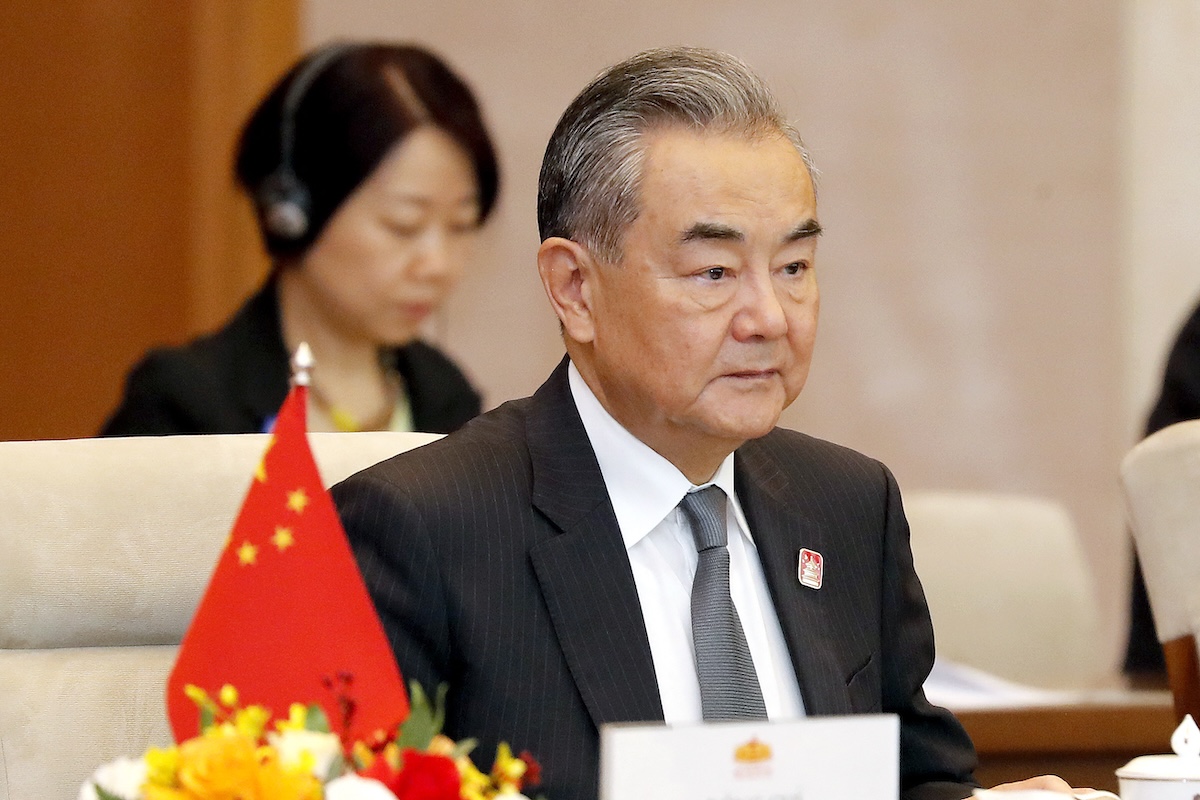
Beijing: China’s Foreign Minister Wang Yi said Beijing was willing to “safeguard” Iran’s rights during talks with his counterpart Abbas Araghchi on Wednesday, as Beijing seeks to mediate in Tehran’s war with the United States.
China is “willing to strengthen dialogue and cooperation with Iran, and safeguard Iran’s legitimate rights and interests”, Wang told Araghchi as they met in the Chinese capital.
“We encourage Iran and the US to stay rational and restrained,” he added.
The talks come one week before an expected trip by Chinese President Xi Jinping to Washington, where he will meet US President Donald Trump.
China, a top economic partner of Iran, has long sought a detente in the months-long conflict in the Middle East, which has at times spilled over into neighbouring countries.
“We do not wish to see regional tensions spilling over into Yemen and the Red Sea,” Wang said.
Recent fighting that flared up in Yemen between government forces and the Iran-backed Houthis has displaced more than 100,000 people inside the country while thousands have fled abroad, according to the United Nations.
The war in Iran will be a closely watched topic at Xi’s meeting with Trump, among other thorny issues ranging from trade to competition over artificial intelligence.
Beijing refuted this week US media reports that Chinese entities supplied Tehran with satellite images of a military base housing US troops in Jordan, before and after an Iranian strike killed three American soldiers.
Trump has warned Beijing not to sell weapons to Iran, and Washington sanctioned three China-based satellite companies in May for enabling Iran’s military operations.
Prosecutors said that the group worked on behalf of Russian intelligence services to carry out attacks and murders around the world.
Published On 16 Sep 202616 Sep 2026
Five people have been charged over alleged Russian intelligence-linked plots involving surveillance, recruitment and planned killings, according to an indictment unsealed by the United States Department of Justice.
Prosecutors said on Tuesday that the group worked on behalf of Russian intelligence services to carry out attacks and murders internationally, including within the US, and that all five remain at large.
Recommended Stories
list of 3 itemsend of list
The defendants were identified as Russian national Yuri Khrameev, 63, his son Kirill Khrameev, 27, Cubans Oemis Romagoza Durruthy and Yaidel Delgado Suarez, both 35, and 22-year-old Venezuelan Angel Eduardo Castro.
All five were charged with conspiring to finance terrorism, while Khrameev, Suarez and Castro face additional charges of conspiring to commit murder for hire.
At a news conference, Attorney General Todd Blanche said the plots included attempts to kill a Russian dissident believed to be living in the Washington, DC area.
Justice Department officials said the network had recruited several people in the US to carry out surveillance on Russian dissidents, targeting individuals both domestically and in Lithuania.
In one instance, a recruit was reportedly promised $40,000 to make a US-based target “disappear”. A separate recruit was allegedly offered $25,000 the previous year to kill someone in Lithuania.
Russia’s embassy in the US has not commented on the case. Moscow has consistently rejected accusations that it has orchestrated assassination operations on foreign soil, including in the US.
Howard Webb says the referees’ body is disappointed with the decision to allow Haaland’s goal against Manchester United.
Published On 16 Sep 202616 Sep 2026
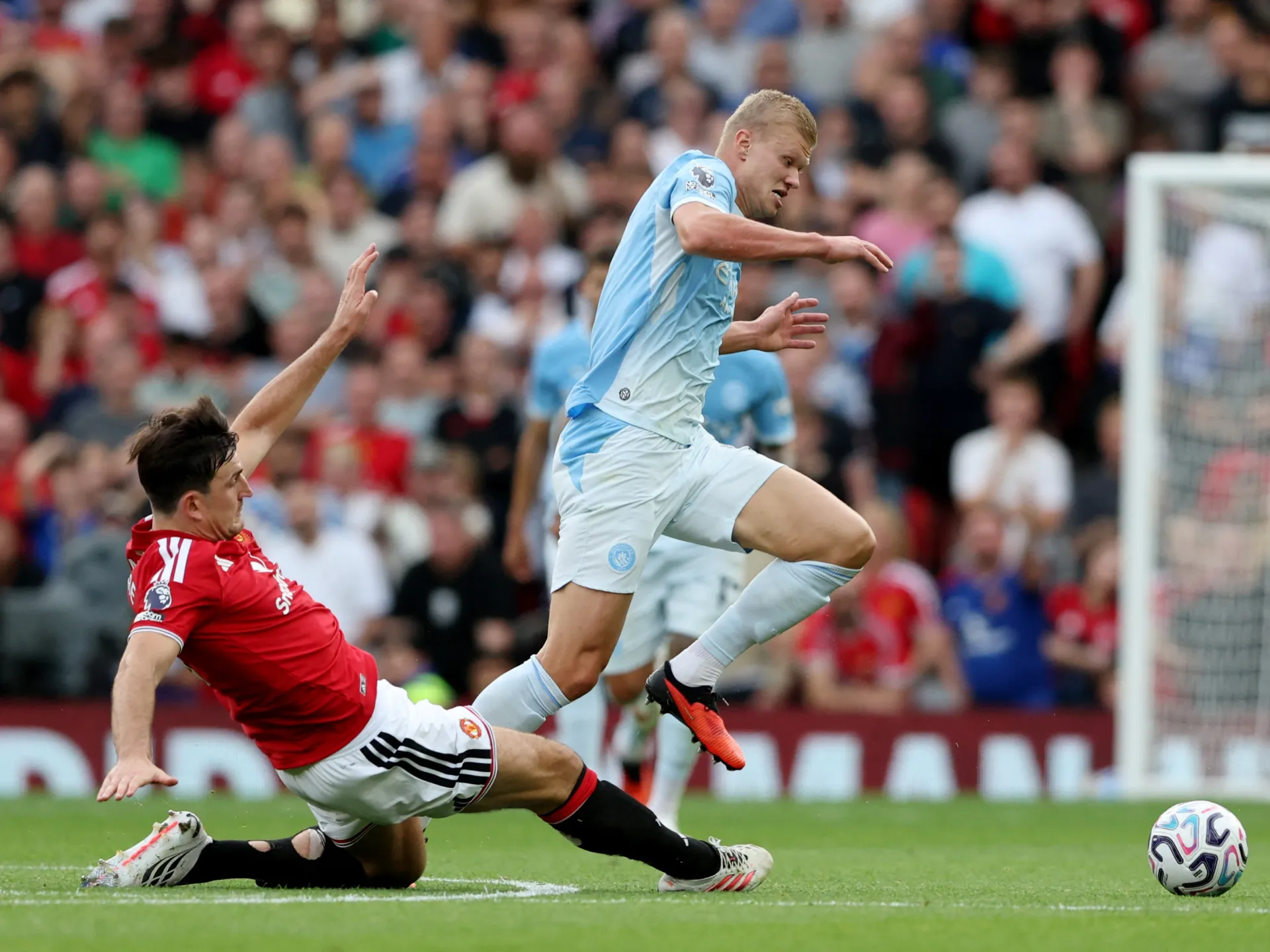
Pro Ref chief Howard Webb said “tunnel vision” led video assistant referee (VAR) officials to wrongly award Erling Haaland’s goal in Sunday’s Manchester derby at Old Trafford.
Haaland’s second-half strike was initially ruled out for offside before being allowed to stand following a VAR review that concluded the Manchester City forward was onside.
Recommended Stories
list of 4 itemsend of list
Pro Ref, the body responsible for refereeing in English professional football, later acknowledged the goal should not have been awarded because VAR failed to properly assess the involvement of teammate Enzo Fernandez, who attempted to play the ball from an offside position.
“I was really disappointed with this outcome. We all are. None more so than the officials themselves,” Webb, Pro Ref’s chief refereeing officer, said on Match Officials Mic’d Up on Sky Sports and TNT Sports.
“They take a lot of personal pride in what they do, and they’re obviously hurting now having fallen short in this situation.”
VAR is a refereeing support tool designed to enable the checking, reviewing and correction of clear and obvious errors during a match, according to FIFA. It was intended to be a combination of human expertise and technological accuracy, but has instead become a sour topic in football circles.
Current and former United players, including club legend Wayne Rooney, labelled the use of VAR “horrendous”, while football experts told Al Jazeera the technology has become “far too dominant” in decision-making.
Webb confirmed that VAR officials Matt Donohue and assistant VAR Blake Antrobus would not officiate again until after the international break.
“We’ve reached out to Manchester United and acknowledged the error, as we do when these things happen,” Webb said.
Explaining the decision-making process, Webb said the semi-automated offside system quickly established that Haaland was onside, but the VAR became overly focused on the striker’s position and failed to fully consider Fernandez’s influence on the play.
“But of course, when he then runs it back through the full APP, he doesn’t truly evaluate the full impact of Fernandez’s position,” Webb said.
“He has a look to see if he touches the ball, because then that relates to potentially knocking it to Haaland, who goes on to score. He doesn’t touch the ball, but he doesn’t truly evaluate other elements of offside. In that moment, he gets tunnel vision.”
Manchester United manager Michael Carrick criticised the decision after his side’s 1-0 home defeat, their second loss in four Premier League matches this season.
United next host Brighton in the League Cup on Wednesday before travelling to Fulham in the Premier League on Sunday.
For a third time, the US House approved a war powers resolution, halting Trump’s ability to continue military action.
For a third time, the US House has voted to end the war in Iran, approving a war powers resolution that would halt President Donald Trump’s ability to continue military action without congressional approval.
The roll call late Tuesday, 220-204, was similar to earlier efforts this summer, with a few more Republicans joining all Democrats voting to bring an end to the conflict.
Seven House Republicans backed the resolution, including three voting in favour for the first time.
Iowa congressman Zach Nunn, a Republican, explained his vote saying that “with the negotiating window closed, sustained combat operations now require congressional authorization.”
“I will not support another open-ended war,” Nunn said.
None of the resolutions has made it to the president’s desk, where Trump would almost certainly veto the measure.
Republican Representative Brian Mast of Florida, the chairman of the House Foreign Affairs Committee, questioned which military resources Democrats would want to remove from the region where he said Iran remains a threat.
Mast said Trump is against “forever wars, and that is what he is ending” – the decades of hostilities from Iran.
“They are a continuous ongoing threat to the United States,” Mast said. “Enough is enough.”
The run-up to the midterms
The action is likely to be the last House vote on the Iran war ahead of the midterm elections, where the conflict overseas is playing a substantial role in the political campaigns. The war that Trump launched on February 28 has dragged on, with on-again, off-again deadly missile strikes being exchanged and causing havoc in the region for nearly seven months.
Lawmakers are heading home at the end of the week to campaign nearly full-time, with fewer than 50 days to go before the elections that will determine control of Congress as Democrats try to wrest power from Republicans.
US war on Iran
The US war on Iran is worsening inflation and straining the country’s munitions stockpiles, a report from the nonpartisan Congressional Budget Office (CBO) has found.
The report, released on Tuesday, found that the cost of the six-month war has reached $38bn and is expected to rise by $3bn per month. The war is projected to increase inflation by 0.5 percentage points in the first three months of 2027.
Trump himself had promised not to involve the US in foreign wars when he won a second term in the White House, and his actions against Iran are weighing on the Republican Party that controls the House and Senate.
Most Americans say the war in Iran has not been worth fighting, according to an AP-NORC poll in July.
Previous war resolutions
Congress has tried repeatedly to alter the trajectory of the war against Iran, but efforts to limit the Trump administration’s military action remain a long shot so long as the president can fend off or veto the measures.
The House first approved a war powers resolution in June, and followed up with another one in July, both seeking to halt US action in Iran. The Senate on its 10th try also approved a war powers resolution to end the conflict, but Republican senators quickly reversed course the next day after Trump berated them during a closed-door lunch.
While the Constitution gives Congress the authority to declare war, it also gives the president authority as the commander-in-chief to engage in some military actions. The War Powers Act, created after the Vietnam conflict, sought to impose a more specific time limit on the president’s power, requiring congressional approval for sustained military actions after 60 or 90 days.
Fog Walk is a seasonal outdoor entertainment destination that combines nature and relaxation. Runs until Feb. 28, 2027. For more details, visit abha.platinumlist.net .
Join Tarek Al-Arabi and his children for an unforgettable evening and relive “Spacetoon” songs on Sept. 18 at Bakr Al-Sheddi Theater. Tickets are available on riyadh.platinmulist.net .
LONDON: Liverpool piled on the misery for troubled Tottenham with a 3-1 win in the League Cup third round, while teenage star Max Dowman dazzled for Arsenal in their 4-2 rout of Ipswich on Tuesday.
After a woeful start to the Premier League season, Tottenham’s hopes of a morale-boosting cup run came to a dispiriting end at rain-lashed Anfield.
They were swatted aside by Liverpool, with Alexis Mac Allister, Cody Gakpo and Dominik Szoboszlai scoring for the Reds.
Roberto De Zerbi’s fourth-bottom team are without a win or even a goal in their first four league matches, losing twice and drawing twice.
Tottenham’s only win this season has come in the League Cup against second-tier Charlton.
After successive 17th place finishes — including avoiding relegation on the final day of last season — the north London club spent over £300 million ($404 million) on 10 new signings since the end of last term.
But the return on that eye-watering investment has not been immediate, sparking fears of another relegation battle.
Adding to De Zerbi’s problems, unsettled striker Richarlison took to social media to lament the Italian’s decision to leave him out of the squad to face Liverpool.
Richarlison wants to leave but moves to Everton and Vasco Da Gama have fallen through recently.
Tottenham host Aston Villa on Saturday in a game that De Zerbi desperately needs to win to ease the pressure on him going into the international break.
Liverpool remain unbeaten at the start of the Andoni Iraola era, although they have won just once in four league matches.
Iraola made 10 changes but Liverpool went ahead after 21 minutes with a flowing move.
Gakpo picked out Rio Ngumoha and he teed up Mac Allister to blast a first-time finish past Martin Dubravka into the roof of the net.
Gakpo doubled Liverpool’s advantage in the 54th minute, whipping a fine strike into the far corner.
Tottenham finally scored a goal against top-flight opposition this season — albeit in a different competition — when Conor Gallagher punished poor marking to net from a corner in the 69th minute.
But Szoboszlai rubbed salt into Tottenham’s wounds in stoppage-time with a 25-yard rocket.
Arsenal’s Max Dowman celebrates scoring their third goal with Martin Zubimendi and Noni Madueke. (Reuters)
Dowman makes his mark
At Portman Road, Dowman took center stage to remember Arsenal manager Mikel Arteta of his burgeoning talent.
Arsenal, who lost the League Cup final against Manchester City last season, have won their six games in all competitions this term.
Arteta made nine changes from the side that won at Sunderland on Saturday, with 16-year-old Dowman given his first appearance this season.
Dowman has been ear-marked as a future star since bursting onto the scene as a 15-year-old last season.
But Arteta is treating the midfielder with kid gloves, bringing him on slowly while the Premier League champions are thriving.
Dowman showed Arteta what he can add to the party in the seventh minute, flashing quick feet to skip past Cedric Kipre before slotting home with a composed finish.
It was Dowman’s second goal for Arsenal after his strike against Everton in March.
Noni Madueke increased Arsenal’s lead in the 16th minute, lashing a low shot past Christian Walton from just inside the penalty area.
Dowman struck again in the 47th minute, running onto Martin Zubimendi’s pass and finishing with aplomb.
Mikel Merino grabbed Arsenal’s fourth, curling home from Dowman’s pass in the 58th minute.
Anis Mehmeti’s 62nd minute reply and Chuba Akpom’s stoppage-time strike were little consolation for out-classed Ipswich.
Fulham made nine changes but still won 3-2 at Championship leaders West Ham, with goals from Rodrigo Muniz, Cesar Palacios and Oscar Bobb, who bagged the 78th minute winner.
Brentford won 2-1 at third tier Reading thanks to goals from Callum Wilson and Fabio Carvalho.
On Wednesday, Manchester United host Brighton, Aston Villa travel to Coventry and Everton face Wolves.
Holders Manchester City are at home to Norwich on Thursday.
Dozens injured as 2,000 farmers – backed by far-right groups – protest the extension of a livestock export ban.
Published On 15 Sep 202615 Sep 2026
Riot police have clashed with Romanian shepherds and farmers as they rioted during a protest against a ban on livestock exports due to disease.
About 2,000 people gathered to demonstrate in the capital, Bucharest, on Tuesday against the extension of a live sheep export ban, imposed by the European Union due to the highly contagious small ruminant plague. As in other protests by farmers across Europe in recent years, the rally was encouraged and supported by far-right forces.
Recommended Stories
list of 1 itemend of list
Violence broke out in front of the Romanian government building in Bucharest when some protesters demanding the reversal of the ban began throwing rocks, metal barriers and other objects at law enforcement.
Police responded with tear gas in a bid to disperse them. Twenty-six people were detained, riot police said in a press release.
Twenty-four demonstrators and police officers required medical attention – some for broken bones, others for the effects of the tear gas. Four were hospitalised.
The government and the opposition called on the demonstrators to refrain from violence.
A Romanian protester argues with riot police officers during a protest held outside the Romanian government headquarters in Bucharest, Romania, September 15, 2026 [Robert Ghement/EPA]
The demonstration was called by farmers and shepherd groups. Protesters held banners calling on the country’s president and prime minister to resign.
Some chanted the name of far-right politician Calin Georgescu, a former presidential candidate who is standing trial for acts against the constitutional order following the annulment of the presidential elections in 2024.
Supporters of Georgescu had shared messages on social media ahead of the protest, asking people to join.
George Simion, the leader of the main far-right group in the country, the Alliance for the Union of Romanians (AUR), wrote on Facebook that “AUR stands with the farmers and all working Romanians”, but called on protesters to demonstrate peacefully.
‘Legitimate protest to street fighting’
The Romanian government said in a press release that the protest had “degenerated into regrettable acts of violence” and called for “calm”.
President Nicusor Dan condemned the “extremely serious” violence and “any attempt to turn a legitimate protest into street fighting” in a social media post.
Romanian shepherds had protested outside the government building at the end of July over the EU ban on live sheep exports, which expires at the end of 2026.
The country of 19 million people has been struggling for months with the highest inflation in the EU and a political crisis with no end in sight.
The pro-European government, which adopted austerity measures to rein in a high budget deficit, was brought down in a no-confidence motion in May, and a divided parliament has failed to confirm a successor.
NEW YORK: Three supporting acts have quit Ed Sheeran’s tour after Macklemore was removed for his pro-Palestinian comments onstage.
Hours after Sheeran said he refused to be drawn into a discussion about the war in Gaza, Aaron Rowe, the band Beoga and Finneas all posted Tuesday on Instagram that they would withdraw from Sheeran’s tour.
Rowe was one of Macklemore’s replacements for Sheeran’s remaining U.S. dates, while Beoga was serving as Sheeran’s touring band. Finneas was due to tour with Sheeran in South America later this year.
Emails seeking comment were sent to Sheeran and Macklemore’s other replacement, the Danish band Lukas Graham.
Ed Sheeran has weighed in on Macklemore
Ed Sheeran has weighed in on Macklemore being dropped as his opening act after the rapper made pro-Palestinian comments onstage during their tour, saying the decision was made by the promoters alone. The British singer also said he refused to be drawn into a public discussion about the war in Gaza.
“Macklemore coming off tour was the promoter’s decision, it was not mine,” Sheeran wrote on Instagram on Tuesday. “I would never let down the fans who had made plans, nor would I abandon the touring crew and the other support acts and musicians who rely on me for work and to make a living.”
The tour’s promoter, the Messina Touring Group, did not immediately respond to emailed requests for comment Tuesday. Macklemore’s publicist also did not immediately respond.
Sheeran’s statement came a day after Macklemore said he was kicked off the Loop Tour after exclaiming “Free Palestine!” during the Sept. 5 date at New Jersey’s MetLife Stadium while introducing his protest song “Hind’s Hall.”
“To all of my Jewish brothers and sisters, criticism of Israel, criticism of apartheid, being against genocide, it in no way is criticism of you,” he said during the concert.
Macklemore said Monday on Instagram that several U.S. venues told the promoter they would prohibit him from performing as Sheeran’s opening act, rallied by Robert Kraft, owner of NFL’s New England Patriots. His Kraft Group also owns Gillette Stadium, where the Patriots play.
In statement Monday, Kraft said the decision to cancel Macklemore was a result of his recent comments “and a broader history of antisemitic rhetoric and imagery that we believe has been deeply offensive and hurtful to the Jewish community.”
Sheeran said in his latest post that he “spoke with the venues at length all week to try to build a bridge,” but that “the venue’s and promoter’s decision was final.”
A growing chorus of organizations and experts say Israel’s wartime actions in Gaza amount to genocide — an accusation Israel vehemently rejects.
Macklemore was scheduled to perform at eight of the 10 shows Sheeran has remaining on his stadium tour, which will resume Saturday in Philadelphia, with Lukas Graham and Aaron Rowe now on the bill. Ahead are stops at Gillette Stadium, Atlanta’s Mercedes-Benz Stadium and Indianapolis’ Lucas Oil Stadium.
Sheeran said he tries to use his music to “bring people from all backgrounds and cultures together” and that while he has personal views about “this devastating conflict,” he chooses not to speak publicly because people who come to his shows “do not expect a political forum.” He added: “I am not complicit.”
“I respect Macklemore’s strength of purpose to stand up and shout for what he believes,” Sheeran added. “However, there is room for multiple approaches to the same end: peace. I choose to use my fame and platform to be a place of safety and sanctuary, to maintain diplomacy and keep conversations open, not closed.”
WASHINGTON: The six-month-old US war against Iran has cost $38 billion so far and that amount is projected to rise by $3 billion a month, Congress’ nonpartisan bookkeeper reported on Tuesday, as the Trump administration searches for ways to end the conflict and reopen the vital Strait of Hormuz.
The war is expected to increase inflation by 0.5 percent in the first three months of 2027, according to the Congressional Budget Office accounting, which totaled expenses through August 1.
The mounting costs have strained US munitions stockpiles and driven up energy prices, raising concerns about the country’s ability to respond to other potential conflicts and adding pressure on an already stretched federal budget.
The cost was close to the $37.5 billion that Defense Secretary Pete Hegseth reported at a Senate hearing on July 21.
The budget office said the majority of the costs stem from the rapid drawdown of munitions, estimating that it could take five years to replenish US stockpiles. Reuters reported in August that the US had used “virtually all” of its long-range precision missiles during the war.
The Department of Defense did not cooperate with congressional financial auditors, CBO reported.
Representatives from the White House and Department of Defense did not immediately respond to requests for comment.
The inquiry was conducted at the request of the top Democrat on the US House of Representatives Budget Committee, Brendan Boyle of Pennsylvania.
“Donald Trump’s disastrous war in Iran has already taken the lives of brave American servicemembers and left others wounded,” Boyle said in a statement.
“Beyond that human toll, this nonpartisan CBO report makes clear that the war has also cost American taxpayers tens of billions of dollars and counting, while continuing to drive up costs.”
Eighteen US military service members have died in the Iran war.
The report did not include costs of recent strikes on commercial vessels in the Strait of Hormuz and attacks on US military installations in the region. It also did not factor in the borrowing expenses associated with financing the war, which could add tens of billions of dollars to the total cost.
IMPACT ON US READINESS
The CBO accounting found the war could have sprawling consequences for the US defense posture and the domestic economy.
The deficit in critical munitions, including missile interceptors, risks hampering the Pentagon’s response in the event of another major conflict, such as potential hostilities involving China and Taiwan, CBO said.
At the July hearing in the Senate, Hegseth pleaded for nearly $90 billion emergency funding legislation to restock munitions supplies.
“Without these funds, we face critical shortfalls,” Hegseth said.
Energy shocks caused by attacks in the Strait of Hormuz — the narrow waterway through which roughly 20 percent of the world’s oil traveled before the war — and on energy facilities in neighboring Gulf countries have sharply increased prices for consumers and global producers.
The rising cost of the war also threatens to weigh on deteriorating US fiscal health. The nation’s total public debt surpassed $40 trillion in August.
Trump regularly contrasts the Iran war with the US invasions of Iraq and Afghanistan that followed the September 11, 2001, attacks.
The eight-year US war in Iraq, which involved more than 100,000 ground troops at its peak, cost $2 trillion, Reuters reported. The two-decade-long US conflict in Afghanistan, which also involved more than 100,000 troops at its most intense, cost $2.3 trillion, according to Brown University’s Costs of War project.
TRIPOLI: Operations were suspended at two oilfields and a pumping station after members of the security force charged with protecting Libya’s oil sector closed a valve on the main Hamada-Zawiya crude-loading pipeline, the National Oil Corporation said on Tuesday.
The NOC said it may declare force majeure if the valve remains closed or if other fields are subjected to similar forced shutdowns.
The company said production had completely halted at the Hamada and Tahara fields and at a pumping station. Libyan oil output has been subject to repeated closures for political and technical reasons since the 2011 uprising against Muammar Qaddafi.
In a statement obtained by Reuters, the Petroleum Facilities Guard, which provides security for Libya’s oil fields, pipelines and terminals, demanded that their agency be transferred “financially and administratively under the National Oil Corporation”.
They called on the prime ministry and the NOC to take urgent measures to complete the administrative and financial arrangements for this, and set a clear implementation timeline.
The agency currently operates under the defense ministry. The Guard said it would implement a partial production cut for one week as of Tuesday at several fields including Wafa, Al-Khamsa and El Feel, adding that a complete shutdown would follow if their demands were not met.
Oil production is Libya’s main economic source, representing approximately 90 percent of the economy of the entire country. “Shutting down oil fields and halting production operations at this critical juncture — as the world witnesses a rise in crude oil prices — constitutes a devastating blow to the national economy,” the NOC said in a statement.
Moscow and Copenhagen trade blame for the incident as Denmark says it will not invoke NATO treaty.
Published On 15 Sep 202615 Sep 2026
Moscow has warned Denmark to avoid “reckless” action after a Russian frigate fired two flares that narrowly missed a Danish military helicopter.
Moscow’s ambassador in Copenhagen, Vladimir Barbin, on Tuesday insisted that “dangerous manoeuvres” taken by the Danish aircraft were to blame for the Baltic Sea incident.
Recommended Stories
list of 3 itemsend of list
The Russian diplomat told state news agency RIA Novosti that he had delivered a formal note demanding steps to prevent a repeat of the episode.
He said that the helicopter’s actions were provocative and condemned Danish attempts to call them routine, saying they raised “serious concern about the possible consequences of such recklessness”.
The Fennec helicopter was on a routine mission to photograph the frigate as it sailed in international waters off Denmark, the Danish defence command said. Ships typically use such flares as warning signals.
Denmark’s Defence Minister Jeppe Bruus told TV 2 News that one flare passed within a “matter of metres” of the aircraft, and accused Russia of “deeply unprofessional seamanship”.
When asked if Denmark would seek Article 5 consultations over the incident – invoking the NATO measure that considers an attack against one member of the bloc to be an attack against all of them – Bruus said the incident was being taken seriously, but “we are not there”.
Barbin said he had complained last year about what he called dangerous fly-bys and low hovering by a Danish helicopter over the Russian warship Vice-Admiral Kulakov.
Kremlin spokesman Dmitry Peskov declined to comment, saying he lacked details.
The Danish Straits – where most Danish incidents with Russia have taken place – are the Baltic’s main shipping gateway and a key oil route, including for Russian oil tankers.
Danish Prime Minister Mette Frederiksen called the incident serious but not surprising, describing it as part of a pattern of intensifying Russian hybrid warfare against Europe and testing NATO.
‘Fear and discord’
“Russia wants to sow fear and discord,” Frederiksen said, calling for closer unity and stronger defences for Denmark and Europe.
Russia denies carrying out hybrid attacks in Europe. However, the potential for the war in Ukraine to escalate and entangle Europe’s NATO member states is rising.
A spokeswoman for Russia’s Foreign Ministry later on Tuesday warned Western politicians and diplomats to “soberly” assess the risks of travelling to Ukraine, following a Russian drone strike on a rail line on which a train carrying former British Prime Minister Boris Johnson and former Swedish Prime Minister Carl Bildt had passed minutes earlier.
Rail hubs and transport infrastructure serving Ukraine’s military are legitimate targets, she said, and Russia warned foreign diplomats in May to leave Kyiv because of strikes on Ukraine’s military-industrial complex.
The United States has acknowledged deploying space weapons in orbit of the Earth.
US Air Force Secretary Troy Meink confirmed on Monday that the so-called “space control weapons” would be used to defend US forces on the planet, marking a significant new chapter in the militarisation of space – or at least the transparency of it.
The announcement, which Meink framed as a message to US rivals China and Russia, could turn Earth’s orbit into an increasingly contested military domain, experts warn. Warfare could include countries targeting each other’s satellites, which provide critical services such as GPS, communications and intelligence to military forces on the ground, as well as civilian infrastructure.
“Space Force doctrine describes ‘space control’ as having the outcome of space superiority, which they define as the ability to operate at the time and place of their choosing, while denying the same to an adversary,” Victoria Samson, chief director of Space Security and Stability for Secure World Foundation, a private non-profit focused on military space and security issues, told Al Jazeera.
So, what do we know about the US-deployed weapons in space? And do some countries already have them?
NASA’s Lucy spacecraft, atop a United Launch Alliance Atlas V rocket for a mission to study the Trojan asteroids in the outer solar system, launches from Pad-41 at Cape Canaveral Space Force Station in Cape Canaveral, Florida, the US, October 16, 2021 [Steve Nesius/Reuters]
What do we know about these space weapons?
Not a lot. Air Force Secretary Meink said the US has stationed “weapons” in Earth’s orbit, but did not specify when they were placed there, how many there are, or what they are designed to do.
“Today, we continue to ensure we remain ready to meet the challenges of evolving threats wherever they exist,” Meink said at the Air, Space and Cyber Conference. “This is why the United States now has on-orbit space control weapons capable of defending the Joint Force against hostile adversary action.”
However, he did not give any details about what sort of weapons these may be, where they are positioned or what they are designed to do.
Samson said the keyword from Meink’s announcement is “weapons” in the context of “space control”. “Space control encapsulates the mission areas required to contest and control the space domain – employing kinetic and non-kinetic means to affect adversary capabilities,” Meink said, adding that “these capabilities can be employed for offensive and defensive purposes”.
“That’s the first time any official has acknowledged an actually designed weapon has been placed in space,” Samson told Al Jazeera. “It’s always been ‘systems with capabilities’ prior.”
Experts say these weapons are likely to be space-based communications jammers rather than kinetic ones that launch strikes. Kinetic weapons – for instance, a suicide satellite designed to ram into an adversary’s satellite – would likely cause fast-moving debris to be launched dangerously into space.
Bleddyn Bowen, an associate professor in astropolitics at Durham University in the United Kingdom, told the BBC’s Radio 4 Today programme: “We don’t know exactly what the mechanism of the weapon is. I would expect there to be some kind of electronic warfare or radio-jamming platform. This would be a non-destructive kind of anti-satellite weapon, and these variants already exist on Earth.
“Less likely would be a kinetic kill vehicle of some sort, so a vehicle that would release a projectile of some sort that would ram into a satellite and destroy it.”
US President Donald Trump gestures towards the US Space Force flag during a presentation of the flag in the Oval Office of the White House in Washington, DC, the US, May 15, 2020 [Kevin Lamarque/Reuters]
What is the US Space Force?
The US Space Force is the newest branch of the US military, created in December 2019 under President Donald Trump’s first term, responsible for organising and conducting US military operations in and through space.
Unlike NASA, which focuses on civilian space exploration, Space Force is part of the US Air Force and comes under US Space Command, which is headquartered at the Pentagon in Arlington, Virginia.
Its responsibilities include operating and protecting military satellites, providing satellite communications and positioning services, monitoring objects and potential threats in space, and supporting US forces on Earth.
“China and Russia are developing new space systems to enhance military effectiveness and end any reliance on US space services,” the Space Force’s website says. “China and Russia are also testing and fielding sophisticated counterspace capabilities with the intent to disrupt and degrade US space-enabled capabilities.”
US Secretary of the Air Force Troy Meink speaks during the 2026 graduation ceremony at the US Air Force Academy, in Colorado Springs, Colorado, the US, on May 28, 2026 [Matt Rourke/AFP]
Aren’t there treaties limiting weapons deployments in space?
Yes, but they do not amount to a blanket ban on weapons in space.
The key agreement is the 1967 Outer Space Treaty, which prohibits countries from placing nuclear weapons or other weapons of mass destruction in orbit or stationing them in outer space. It also bans military bases and weapons testing on the moon and other celestial bodies.
However, the treaty does not expressly prohibit conventional weapons from being placed in Earth’s orbit. That means systems such as conventional anti-satellite weapons, electronic-warfare systems, or other counterspace capabilities are not automatically prohibited.
Such gaps leave room for interpretation and are at the heart of current international efforts to enhance military activities in space.
How have Russia and China reacted to the US announcement?
China’s Foreign Ministry opposed the move, warning against the “weaponisation of outer space, turning it into a battlefield, as well as an arms race there”.
“We urge the US side to stop expanding its military capabilities and preparing for war in outer space,” ministry spokesman Guo Jiakun told a news briefing.
Russia called for space to be kept “free of any weapons”.
“We are counting on broad international consolidation to continue working towards the complete demilitarisation of space,” said Kremlin spokesman Dmitry Peskov.
Are Russia and China developing space weapons too?
Independent reports from research groups and think tanks note that both China and Russia are developing a broad range of counterspace capabilities designed to interfere with, disable, or potentially destroy satellites and other space systems.
The Center for Strategic and International Studies (CSIS), a foreign policy think tank based in Washington, DC, identified both countries as possessing or developing kinetic and non-kinetic counterspace weapons.
A 2025 CSIS report notes that both Moscow and Beijing have direct-ascent anti-satellite (ASAT) weapons, as well as capabilities involving jamming, spoofing, and cyber operations.
Samson of the Secure World Foundation (SWF) told Al Jazeera that her team has highlighted in their reports that “China and Russia have space-based jammers”. Therefore, she told Al Jazeera, “I always thought it would be strange that the US didn’t have them too.”
Bowen told the BBC: “In the last 10 years, Russia and China have been doing a lot more manoeuvres in space – rendezvous and proximity operations, as we call them – so, flying up really close to Western satellites, inspecting them, taking pictures. And on another occasion, the Chinese have demonstrated a ‘space tug’ capability. So, a vehicle that goes up to a satellite can grapple it and then move it into a different orbit.”
China has executed such a manoeuvre only with one of its own old satellites, which needed to be moved away from its location, he added.
What about other countries?
The emerging space-weapons race is not limited to the US, Russia and China: India has also demonstrated an ASAT capability and is developing technologies that could allow spacecraft to operate alongside other satellites.
France is also reported to be developing co-orbital capabilities, while the UK has conducted on-orbit cooperative operations with the US.
A 2026 report by SWF also notes how Iran, for instance, illustrates the less visible side of space warfare, relying increasingly on jamming and spoofing satellite-based services. Israel, meanwhile, has developed significant military space and electronic-warfare capabilities, although there is no public record of it conducting a debris-generating ASAT test.
Countries like North Korea and South Korea are also racing to develop more sophisticated space-based tech.
A view of NASA’s Orion spacecraft in the foreground, lit up by the sun as the moon and Earth are visible behind it as photographed by one of the cameras on the Orion spacecraft’s solar arrays during the Artemis II crew’s flyby of the moon on April 6, 2026 [NASA/Handout via Reuters]
Is space the next frontier of war?
Samson told Al Jazeera that the US announcement of deploying weapons in Earth’s orbit is not essentially disruptive in the context of space technology. “What this does is normalise weaponising space,” she said.
“Space has always been a domain with the potential of being a flashpoint for conflict; this just turns up the heat there,” Samson added.
A US Space Force spokesperson told ABC News that the US “capabilities can be employed for offensive and defensive purposes at the direction of combatant commands”. The spokesperson noted that Washington “has warned about Russian and Chinese weapons testing and operationalisation since 2007”.
“Due to their actions, it is no longer a question that space is a warfighting domain,” the spokesperson said. “Open communication strengthens deterrence, prevents adversary miscalculation, and normalises space operations alongside the other services.”
Samson further noted that Meink’s statement “crosses a line”, and would “either encourage China and Russia to also declare weapons in space, or will make US allies and partners want to also place weapons in space”.
“Counterspace capabilities have been proliferating already – this speeds up that trend,” she said, adding that this “is incredibly destabilising and will work against US national security goals”.
“By opening the door to weaponising space, the US loses the most,” Samson noted. “Every person on this planet uses space-based data and services in some way. Any interference with access to or use of space will affect everyone, not just space powers.”
Houthi-run TV has aired drone video of Yemen’s Mocha International Airport, empty and abandoned after the Iran-backed group took control of the city. The Houthi capture of the Red Sea coast puts a key global trade route at risk.
ZAWTAR AL GHARBIYEH: The US ambassador to Lebanon on Tuesday visited a southern village that recently came under the control of the Lebanese army as part of a framework agreement with Israel.
The US-backed June agreement states that the Israeli military will withdraw from areas of south Lebanon it occupied in parallel with the deployment of the Lebanese army, starting with “pilot zones”, under the condition that militant group Hezbollah disarms.
An AFP correspondent saw a convoy carrying the US envoy, Michel Issa, entering the village of Zawtar al-Gharbiya, where he visited a church, according to Lebanon’s official National News Agency (NNA).
The news agency said an Israeli drone surveyed the area during the visit, reporting Israeli military vehicle movements in the neighbouring town.
Israeli troops remain deployed in what it calls a “security zone”, a stretch of Lebanese territory about 10 kilometres (six miles) deep along the border.
It recently blew up a strategic Hezbollah location at the Ali al-Taher ridge in the Nabatieh region, creating a blast so powerful that a 4.1 tremor was registered.
Fresh talks between Israel and Lebanon over the implementation of the framework agreement were due to be held this month, but were postponed to October.
A source from the Lebanese presidency told AFP that during the last round of talks in August, Israel refused to discuss new “pilot zones” without ensuring that the Lebanese army had full control of the first ones.
The Israeli and Lebanese ambassadors to Washington are due to meet this week to discuss the implementation of the agreement.
Lebanese President Joseph Aoun also visited Zawtar al-Gharbiya on Saturday, where his office said he inspected army units and observed nearby Israeli military positions.
Violence declined following the June framework agreement and a wider US-Iran deal, but Israel has pressed its attacks on Lebanon.
Hezbollah, which pulled Lebanon into the war in March with strikes on Israel, rejects the negotiations with Israel and refuses to disarm, but has not claimed any recent attacks.
Israeli strikes have killed more than 4,300 people since the hostilities began in March, according to Lebanese authorities.
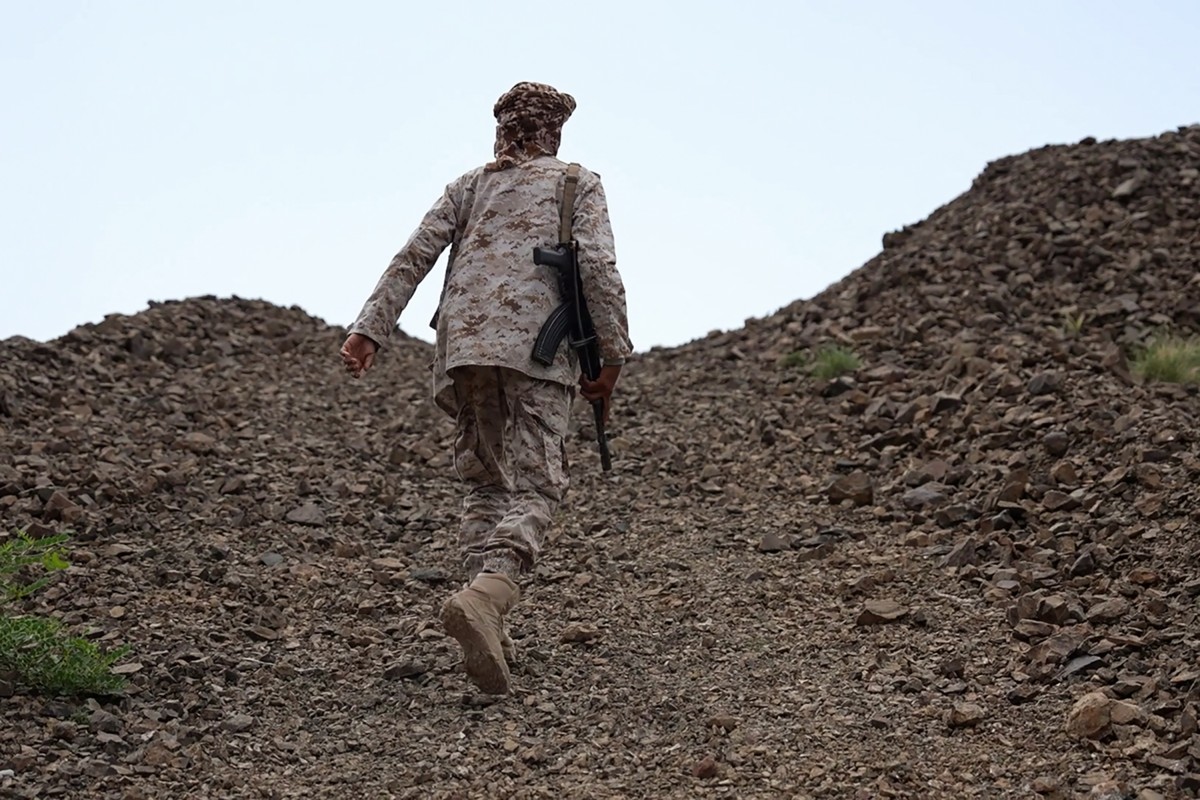
Fighting is continuing along Yemen’s western front, with government forces reporting strikes against Houthi positions in areas stretching from Taiz toward the Red Sea coast.
The government said on Monday that its forces targeted Houthi personnel, equipment and positions in Dhu Bab in Taiz governorate and Khokha in neighboring Hodeidah governorate.
The areas are strategically important because they lie along Yemen’s western coastline near the Red Sea and Bab Al-Mandab Strait, one of the world’s key maritime chokepoints connecting the Red Sea with the Gulf of Aden and wider Indian Ocean.
Dhu Bab is close to Bab Al-Mandab, while Khokha lies further north along the Red Sea coast. The fighting is taking place along territory that links the front lines around Taiz with Yemen’s strategically important western coastline.
Yemen’s armed forces spokesman, Col. Majid Al-Nazili, said government forces targeted Houthi equipment, personnel and positions in the two areas.
Military commanders also visited several front lines around Taiz, including areas near Bani Omar, Jardad and Al-Wazi’iyah, to assess combat readiness.
Maj. Gen. Abu Bakr Al-Jubouli, commander of the Tor Al-Baha axis, said government forces had inflicted heavy losses on the Houthis during recent clashes.
CAIRO: Egyptian President Abdel Fattah El-Sisi will meet Saudi Crown Prince and Prime Minister Mohammed bin Salman on Tuesday in Cairo to discuss a range of issues of mutual interest, Al Arabiya News Channel reported, citing the Egyptian presidency.
The two leaders will exchange views on regional developments amid the latest tensions and changes in the region, while also discussing ways to strengthen Egyptian-Saudi relations and expand bilateral cooperation.
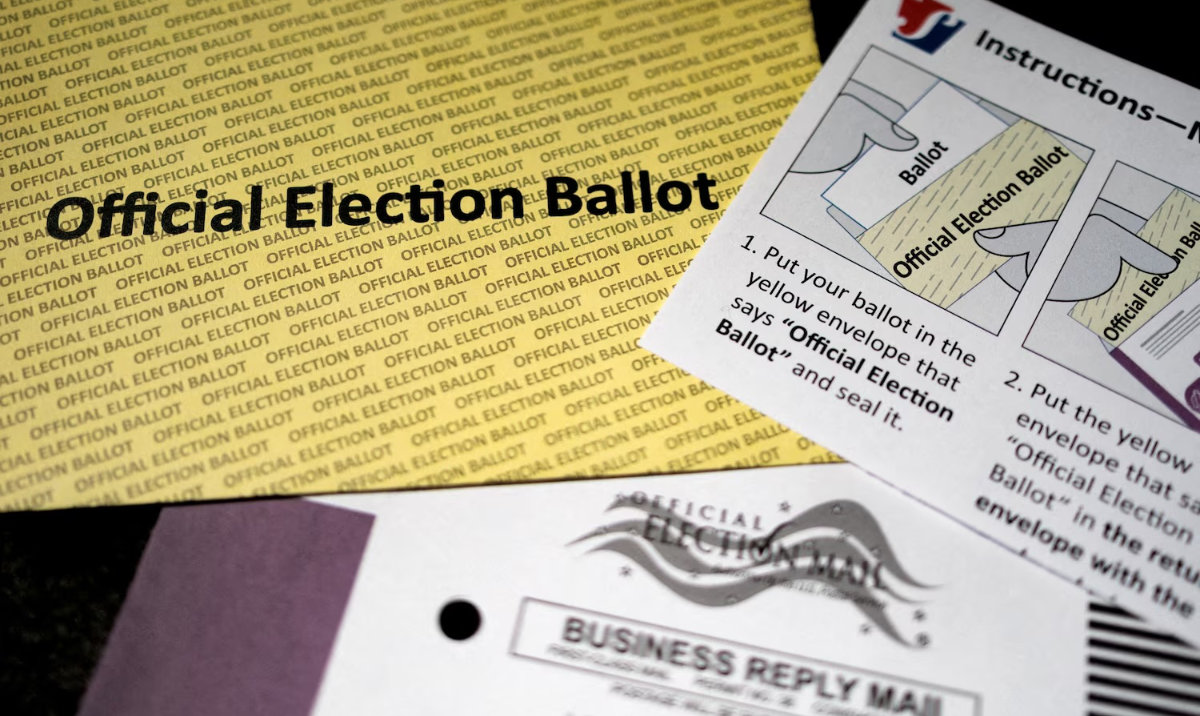
WASHINGTON, United States: The US Supreme Court dealt a major blow Monday to President Donald Trump’s attempts to restrict mail-in voting before the November midterm elections, denying his request to lift an order halting the divisive plan.
Only two of the six conservative justices on the nine-member panel offered a dissent.
Justice Brett Kavanaugh, in a concurring opinion with the majority, said Trump’s plan may ultimately be legal in the long run, but “state and local election officials do not have sufficient time to reasonably implement the rule before the elections.”
Trump signed an executive order in March seeking to restrict mail-in voting, saying without evidence that it is vulnerable to fraud. The order quickly prompted multiple legal challenges.
Democratic-led states sued the administration on grounds that under the US Constitution, states — and not the federal government — retain broad control over the administration of elections.
Trump’s executive order would require the compilation of lists of eligible voters and for the US Postal Service (USPS) to deliver ballots only to voters who are on the lists.
Officials from several states had warned that a lack of legal clarity around the plan was sowing chaos months before the November 3 vote.
Several states, including North Carolina, have already begun sending mail-in ballots to voters.
A USPS whistleblower had also warned that millions of Americans may not receive ballots because the systems being used by the postal service have been put together in a “sloppy and rushed manner.”
Trump has long been a critic of mail-in ballots but has frequently used them himself, including last month when he voted by mail in Florida’s Republican primary.
The president has for years claimed without evidence that mail-in voting is highly vulnerable to fraud, repeatedly linking it to his false assertion that the 2020 presidential election was stolen from him by Democrat Joe Biden.
Polls show that Trump’s Republican Party faces a serious threat of losing its narrow control of Congress in November, particularly the House of Representatives.
If Democrats win, they have signaled they would block Trump’s agenda and could even move to impeach him for the third time.
Opposition bloc leads in tight Swedish election with 95% counted.
Published On 15 Sep 202615 Sep 2026
Sweden’s centre-left opposition bloc has held a narrow lead as the far-right party saw its support slip, with about 95 percent of the districts counted.
The Swedish Election Authority reported on Monday that the four opposition parties were projected to hold 176 seats in the 349-seat parliament, called the Riksdag, while the remaining 173 would go to four parties that make up or support the current conservative-led government.
Recommended Stories
list of 3 itemsend of list
Results may not be clear until early votes and overseas ballots are counted on Wednesday. If the left-leaning bloc emerges victorious, it could take even longer to form a government because of ideological tensions among its parties.
Prime Minister Ulf Kristersson is seeking a second term and has been leading the country since 2022 with a centre-right coalition that relies on the Sweden Democrats, a party with neo-Nazi roots. He could remain in office if the left-wing bloc wins its thin majority but fails to form a government.
The Sweden Democrats saw an unexpected drop in support, losing three percentage points compared with the 2022 general election, slipping from 20.5 percent to 17.5 percent. This marked the first time the far-right party suffered a loss in voter backing since it entered parliament in 2010.
Magdalena Andersson’s Social Democrats held onto first place, but a 28.1 percent share registered as one of their worst performances in more than 100 years, complicating any bid to assemble a working majority.
Moderate Party leader Ulf Kristersson (C) speaks during the Moderates’ election night watch party in Stockholm, Sweden, 13 September 2026 [Christine Olsson/Sweden Out/EPA]
While the result appears somewhat out of step with recent far-right gains across parts of Europe, including Germany and Italy, the Sweden Democrats remain firmly entrenched as a dominant force in parliament.
The dip in support could be tied to changing voter priorities. In the past, many people voted for the far right, “simply because they liked their stance on refugees”, without necessarily agreeing with other policy positions, Anders Sannerstedt, a political scientist at Lund University, told AFP.
Even with a reduced vote share, the Sweden Democrats retain substantial leverage.
A closely divided legislature leaves any future government with a fragile working margin, ensuring the party remains an unavoidable force in parliament.
More broadly, the Sweden Democrats have already rewritten the boundaries of Swedish politics. Over the past decade, its once-fringe demands for strict asylum caps, easier deportations and tougher policing have been absorbed into the mainstream, with both the centre-right coalition and the Social Democrats shifting rightward to match public sentiment.
Israeli strikes across Gaza have killed at least one person and injured several. Residents say they were targeted outside tents in a Gaza City displacement camp.
WASHINGTON: Jason Eaton insisted he was acting on orders from the CIA and Mossad when he shot three Palestinian college students who were walking past his home a few days after Thanksgiving. He said the US and Israeli intelligence agencies transmitted the messages to him via FM radio and that God was commanding him to protect his Jewish neighbors.
Eaton’s claims were at the heart of his insanity defens e as he went on trial Monday on attempted murder charges in a case that shook Burlington, Vermont, and reverberated in the West Bank, where the three wounded men grew up and became friends as schoolmates in Ramallah before moving to the US for college.
Jason Eaton appears in court during his trial in Burlington, Vt., Monday, Sept. 14, 2026. (AP)
The November 2023 shooting, weeks after the start of the Israel-Hamas war, spawned calls for a hate crime investigation. But no hate crime charges were filed as questions persisted about whether anti-Palestinian animus, an altered mental state or something else had compelled Eaton to open fire on Hisham Awartani, Tahseen Aliahmad and Kinnan Abdalhamid, who were all 20 at the time.
The men testified one after another as Eaton, now 51, watched stoically from the defense table in a Burlington courtroom. He has pleaded not guilty but doesn’t dispute that he was the shooter. If convicted, he faces up to life in prison. If found not guilty by reason of insanity, he could be ordered to undergo mental health treatment.
Defense lawyer Joshua O’Hara, previewing testimony from a defense psychiatrist, told jurors in an opening statement that Eaton was suffering from a delusional, psychotic disorder after losing his job at a credit union two weeks before the shooting.
While listening to a local NPR affiliate, Eaton believed he was hearing messages that he attributed to the CIA, O’Hara said. At first, the messages were encouraging and validating, the lawyer said, but subsequent messages turned dark, insisting that Eaton “has to go out and shoot somebody.”
Prosecutor Sally Adams told jurors that a state psychiatrist who is slated to testify concluded that Eaton did not have a mental disease or defect. Evidence will show he intended to kill the men, was not legally justified in shooting them, and does not meet the test of legal insanity, Adams said.
Authorities found three shotguns in Eaton’s apartment and a Ruger .380-caliber handgun that crime lab testing concluded was the gun used in the shooting, Adams said. Eaton had purchased the gun seven months earlier from a Vermont gun store.
“If the defense tries to focus on the story that Mr. Eaton tells about why he intended to kill these three young men, that story is only part of the whole picture,” said Adams, the chief administrative deputy at the Chittenden County State’s Attorney’s Office.
Awartani, Aliahmad and Abdalhamid, all of whom are now 23, told jurors of their holiday weekend visit to Awartani’s grandmother’s house, a trip to a bowling alley to celebrate his twin cousins’ birthday, and the walk they took near the University of Vermont campus after dusk that ended in bloodshed.
Awartani, who was studying at Brown University in Rhode Island at the time, said they were smoking cigarettes and speaking a mix of English and Arabic. Two of them said they were wearing traditional Palestinian scarves known as keffiyehs. Awartani said he first noticed Eaton standing on a porch as they approached the apartment house where he lived.
Within seconds, Awartani said, Eaton was off the porch and walking toward them. His face was expressionless and he didn’t say anything. As Eaton got to about five to 10 feet (1.5 to 3 meters) away, “he pulled out a handgun and started shooting at us,” said Awartani, who was paralyzed from the waist down in the shooting and now uses a wheelchair.
Jacob Pyne, who lived in a different apartment in the same house as Eaton, testified that he heard four to six gunshots, followed by footsteps going up the stairs of the apartment house. He said he ran outside and heard two men speaking, one of whom was more vocal and yelling, “I’ve been shot, help me.” He then brought the men blankets and called 911.
Abdalhamid, a student at Haverford College near Philadelphia, said he fled and hid behind another home after seeing Aliahmad fall to the ground. He said he only realized later when he sat down that he had also been wounded. Awartani was shot in the chest and the bullet ricocheted off his scapula, causing paraplegia in his spinal cord. Aliahmad, who was a student at Trinity College in Connecticut, was struck in the collarbone, and Abdalhamid was shot in the right buttock.
O’Hara, the supervising attorney at the Chittenden County Public Defender Office, told jurors that Eaton was confused by the messages he said he was receiving, and became convinced that the CIA and Mossad were enlisting him into “overwatch duty” to protect a Jewish family living across the street.
“These were delusions,” O’Hara said. “He believed in the moment that he was doing something that was right. He had been commanded to do this. And that he did not have the ability to appreciate the wrongfulness of his conduct in the moment because he believed he’d been instructed to do this by a government agency or God.”


























![Moderate Party leader Ulf Kristersson (C) speaks during the Moderates' election night watch party in Stockholm, Sweden, 13 September 2026 [Christine Olsson/Sweden Out/EPA]](https://i0.wp.com/occasionaldigest.com/wp-content/uploads/2026/09/epa_6aa87247c6fc-1789424199.jpg?w=640&ssl=1)