top news

Tropical Storm Moke advances towards Hawaii with heavy rain, strong winds | Weather News

For the second week in a row, Hawaii Island, also known as the Big Island, faces threats from an intensifying storm.

Tropical Storm Moke is grinding towards Hawaii, bringing gusts of wind and heavy rain only a week after the islands faced similar conditions from Hurricane Lala.

On Saturday, Hawaii residents prepared for the latest storm, which is expected to pass south of Hawaii Island, the largest island in the Hawaiian archipelago, overnight and into the following morning.

Recommended Stories

list of 3 itemsend of list

As of 11am Hawaii Standard Time (21:00 GMT), Moke was located about 684 kilometres, or 425 miles, south of Hilo, a city on the eastern coast of Hawaii Island. It was moving west-northwest at 19km/h (12mph).

The National Hurricane Center (NHC) in the United States reported that the storm’s maximum sustained winds were about 85km/h (50mph).

Moke, like Lala, is forecast to spare the Big Island a potentially disastrous direct hit. But the island is still recovering from Lala, a Category 1 storm that spurred heavy flooding and power outages.

At least one person died in last weekend’s storm.

Lala came close enough to Hawaii Island to dump more than 1,000mm (39 inches) of rain in some locations, causing rivers to burst their banks.

High winds also bent tall palm trees and downed electrical lines, forcing nearly 130,000 utility customers to lose power.

Hawaii Governor Josh Green and other state officials have urged people to prepare for Moke by restocking food, medicine and other daily essentials ahead of the storm’s passage.

“It could certainly have a big impact because we’ve already been hit hard,” Green said in a video statement. “We’re pre-positioning all kinds of additional equipment and people. I’ve also authorised 100 rooms, hotel rooms, for people to go to, in case they don’t have enough services or protection, safety.”

Green added that, while power had been restored to most of Hawaii Island after Lala, some remote areas were still experiencing outages. Power is expected to be fully restored by September 8.

After passing Hawaii Island during the night, Moke is projected to continue on a westward path near the islands through early Tuesday, according to Casey Oswant, a meteorologist with the Honolulu office of the US National Weather Service.

“There will still be impacts, especially to the windward and southeast sides of the Big Island, but it will probably be a little bit more limited than what we saw with Lala,” Oswant said.

The National Hurricane Center projects that Moke will bring roughly 130mm to 250mm (5 to 10 inches) of rainfall over the next two days on the southeast and windward sides of the Big Island. Some isolated areas could see as much as 380mm (15 inches).

Eastern Maui, meanwhile, is likely to receive 76mm to 150mm (3 to 6 inches), with smaller amounts of precipitation expected across the rest of the island chain.

Governor Green warned that the heavy rain is unlikely to end with Moke.

“Everyone be very careful,” he said. “This storm will be followed by another storm front about a week later, and we continue to see the impacts of these major weather fronts that have hit Hawaii.”

Source link

Girl, 17, dead, 2 teens seriously hurt by Sweden school sword attack

People leave flowers and candles at a makeshift memorial outside a school, one day after an attack carried out by a teen with a sword in Fagersta, Sweden, Saturday. A 17-year-old girl was killed and three others were injured at the school after the attack Friday. Photo by Magnus Lejhall/EPA

Aug. 22 (UPI) — A 17-year-old girl is dead after a sword attack at a Swedish high school on Friday.

Three students were injured, two of them seriously, in the attack in Fagersta, Sweden.

The alleged attacker is an 18-year-old, male student of the school who carried out the attack while classes were in session Friday. He was arrested and the police are investigating the case as murder and attempted murder. They said they have no reason to believe there were more attackers involved.

The Brinelskolan School principal told local news Saturday that the attacker was a student there.

Vastmanland County said the two injured boys are ages 12 and 17, ABC News reported. The third person is also younger than 18 and was slightly injured. That person has been discharged from the hospital, Swedish News agency TT reported.

The teen girl’s body was found when police entered the school to secure the premises, authorities said.

Police said they fired shots at the attacker, but didn’t hit him. Sweden’s national police said they have carried out two searches of homes connected to the suspect and that they expect to interview many witnesses.

“That’s why we can’t give out too much information, because we don’t want to influence witnesses,” Police Chief Tommy Alriksson said.

No official information on the attacker’s motive has been released.

On Saturday morning, people gathered at a memorial site that the town created, carrying flowers and lighting candles, CBS News reported.

Fagersta city government said it created a crisis center in a sports hall near the school. Fagersta is a town of about 12,000 about 105 miles northwest of Stockholm.

Prime Minister Ulf Kristersson and opposition party leader Magdalena Andersson visited the memorial site to lay flowers.

“What must never happen has happened again,” Kristersson said.

Sweden’s parliamentary elections are scheduled for September, so the Swedish political parties suspended their campaigning Saturday.

School attacks have happened in Sweden several times in recent history.

In February 2025, 11 people, including the gunman, were killed in an attack on an adult education center in Orebro. It was Sweden’s worst-ever mass shooting. After the attack, the government tightened gun laws because the suspect had legally owned four rifles. He had brought three of them to the attack.

Two teachers were killed with a knife at a high school in Malmo in 2022, and an 18-year-old later confessed to the killings.

In 2015, three people were killed in a sword attack in Trollhattan, Sweden.

The Israel separation wall stands near the E1 area, between the Arab neighborhood of Al-Eizariya and the Israeli settlement of Ma’ale Adumim, in the eastern edge of the Judean Desert, West Bank, on August 20, 2026. The Israeli government plans to build Jewish housing units in the E1 area. Photo by Debbie Hill/UPI | License Photo

Source link

Trump says Strait of Hormuz is ‘an American territory’

Aug. 22 (UPI) — President Donald Trump on Friday said he now considers the Strait of Hormuz to be “an American territory.”

“We don’t even know if we won, because I view the Strait of Hormuz as an American territory right now,” he told a crowd of supporters during a campaign event in South Carolina.

Trump first floated the idea of claiming the waterway last week, saying he would wait until the conclusion of the war in Iran to declare the strait a territory of the United States.

Then on Tuesday he posted an image on Truth Social showing the strait with the label “New U.S. Territory.”

He took his threats further on Friday during a campaign rally for Sen. Darline Graham, R-S.C., as she attempts to fill her late brother Lindsey Graham‘s Senate seat.

“It’s an American territory,” he said.

Iran’s deputy foreign minister, Kazem Gharibabadi, had previously called the president’s remarks “fanciful delusions.”

“The Strait of Hormuz has been Iranian, is Iranian, and will remain Iranian,” he said.

Trump this week said he would launch “economic warfare” against Iran as efforts to end the war continue to fail.

On Saturday, Iran’s foreign minister, Abbas Araghchi, said the economic operation was “bound to fail.”

“We have seen this movie before,” Araghchi wrote in a statement on X. “Same bull. Different bullies.”

As part of his economic warfare threat, Trump said institutions or governments providing any support to Iran would face “tremendous” consequences.

Esmaeil Baqaei, a spokesman for Iran’s Ministry of Foreign Affairs, said Trump’s move “is an assertion of extraterritorial sovereignty over every independent member state of the United Nations.”

“The end result would be the complete erosion of sovereignty as the foundational basis of the UN-based inter-State system, and a recipe for an abysmal return to full-scale classic colonialism,” he added in a statement on X.

Source link

Laptop catches fire on flight, 1 person burned

Aug. 22 (UPI) — A laptop caught fire on an American Airlines flight during landing at Dallas-Fort Worth International Airport, with one passenger getting treatment for burns after landing.

The flight, American Airlines Flight 2398, left Hartsfield-Jackson Atlanta International Airport Friday, People reported.

“American Airlines Flight 2398 landed safely at DFW after reports of smoke from a customer’s device during landing,” the airline said in a statement to the media. “We thank our crew for their professionalism and swift response to quickly contain the device.”

One passenger was treated on site and was later released, the airline said.

“After landing, the aircraft taxied to the gate under its own power. Per procedure, emergency personnel met the aircraft upon arrival to the gate,” the airline said.

The Federal Aviation Administration said in a statement: “Flight attendants contained the fire with a thermal containment bag.” It said the plane was an Airbus A321.

The FDA reported 58 lithium-ion battery incidents causing smoke or fire on passenger planes this year.

“All lithium-ion batteries are capable of overheating and undergoing a process called thermal runaway,” the FAA said on its website, along with safety tips for packing them on a plane. “Thermal runaway can occur without warning as a result of various factors, including if the battery is damaged, overheated, exposed to water, overcharged or improperly packed. Thermal runaway can also occur on its own due to manufacturing defects.”

Lithium-ion batteries must be stowed in carry-on baggage only, the FAA said.

Source link

Armed men kidnap dozens in attacks on Nigerian villages | Armed Groups News

Police say three villages and a mosque were attacked, and worshippers kidnapped in central Niger State.

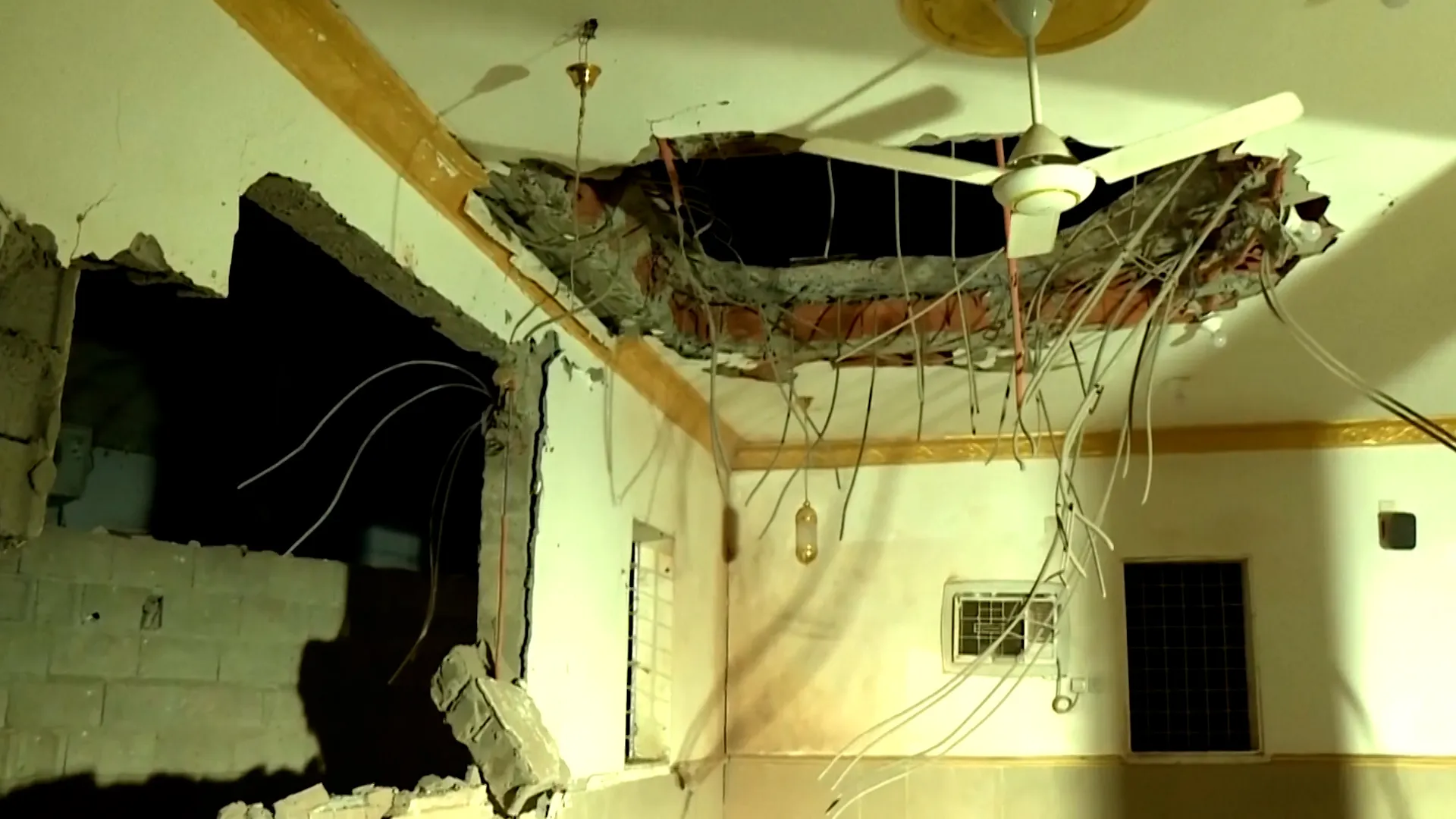
Armed men have kidnapped dozens of people during an attack on a mosque and surrounding villages in Nigeria’s central Niger State, survivors and police officials say.

The raiders stormed Kpenya Mosque in the Dekara district of Borgu Local Government Area at around 2pm (13:00 GMT) on Friday, after first attacking the villages of Gidan-Zana and Kpenya, police spokesperson Wasiu Abiodun said on Saturday.

Recommended Stories

list of 3 itemsend of list

Abiodun told the Reuters news agency that police were aware of the kidnappings but had not received reports of anyone being killed, and that a “joint security detachment has been deployed to the area for assessment and rescue operations”.

He said police could not yet confirm the number of people who were taken.

Local residents told Reuters that more than 60 worshippers were kidnapped, but the figure could not be independently verified.

Separately, residents told the AFP news agency that people were also killed, another claim that could not immediately be confirmed.

Jibril Ahmad, a survivor of the assault on Dekara, blamed members of the Lakurawa armed group.

“Soon after finishing the normal Friday prayer, the armed group of Lakurawa, in their hundreds, wielding guns, knives and machetes, began to attack us,” Ahmad told AFP, claiming that people were “slaughtered”.

During the attack, a third group, Mahmuda, intervened and clashed with the kidnappers, allowing some abductees to escape, he said.

Federal lawmaker Jafaru Mohammed told AFP that several nearby villages were also struck.

“Some members of the Mahmuda group were against the doctrine of the Lakurawa, and when they heard of what the Lakurawa were doing, they fought them,” Mohammed said.

The attack unfolded in a region near Nigeria’s western border with Benin that has seen growing activity from local armed groups and fighters from the neighbouring region, even as the country’s 17-year armed rebellion remains concentrated in the northeast.

The violence in Niger State continued into Saturday. Resident Abdullahi Ahmad said the group returned to the area to seize more people as a “bargaining chip” in advance of an expected troop deployment, and planted landmines on the road out of Dekara.

“A man and his family who were fleeing the town yesterday were killed when their car hit a landmine planted by the terrorists. Everyone is living in fear,” he said.

Mass abductions have been a hallmark tactic of the country’s armed groups and have evolved into a lucrative, multimillion-dollar industry involving networks of both ideological and nonideological gangs across Nigeria’s northwest and central regions.

Source link

South Korea sending first container ship through Arctic route | Shipping News

The PanStar Acro, bound for Europe via the Arctic, is testing whether a route opened by melting sea ice can be commercially viable.

A South ‌Korean container ship is sailing to Europe via the Arctic, ⁠in the nation’s first commercial voyage on the route to test its viability as the war in the Middle East rattles global shipping.

The PanStar Acro set sail from Busan New Port on Saturday. “We would like to inform you that the vessel for the Arctic route trial voyage departed” at 9:30pm (12:30 GMT), Seoul’s Ministry of Oceans and Fisheries said in a statement to the AFP news agency.

Recommended Stories

list of 4 itemsend of list

The PanStar Acro will sail north, the Reuters news agency reported, hugging eastern Russia’s Kamchatka Peninsula, then cross the Bering Sea, and ⁠take the Northern Sea Route, stopping in Felixstowe in the UK, Rotterdam in the Netherlands, and Poland’s Gdansk before returning.

The 2,758 TEU (twenty-foot equivalent unit) container ship operated by South Korea’s PanStar ‌has secured 837 TEU of cargo, including car parts, chemical products and about 100 empty containers on the government-backed voyage.

The journey is expected to take 40 to 45 days, according to the Oceans Ministry.

President Lee Jae Myung has made Arctic shipping ‌a priority for South Korea, with the hope of turning the southeastern ⁠port of Busan into a global maritime hub and position the Arctic as a regular trade route by 2030.

But this new route has been criticised for several different reasons. Environmental groups have warned the route could accelerate polar ice melt, meaning the increase in shipping could worsen global warming.

INTERACTIVE-GREENLAND - Arctic shipping routes - JAN 21, 2026-1768987630

The project also risks increasing friction with Western allies hoping to keep Russia isolated in its war with Ukraine. Seoul has consulted with Moscow about the journey, Reuters reported, including whether the ship needed ⁠help to tackle any problems, such as ⁠getting stuck in ice.

Last year, 103 transits through the route were made by 88 vessels, up from ⁠97 in 2024 and 43 in 2022, chiefly from nations such as Russia and China, according ⁠to Norway’s Centre for High North Logistics.

But with the Iran war affecting global shipping, governments and shipping firms are scrambling to seek different routes, with the Arctic route increasingly viewed as a viable alternative due to technological advances and environmental degradation.

South Korea’s Vice Oceans Minister Nam Jae-hon said the Arctic route was “bound to become an alternative” to Middle Eastern shipping lanes.

The usual maritime route between Asia and Europe runs through the Suez Canal, but travelling through the Arctic can cut the journey by approximately 7,000 kilometres (4,300 miles) and about 10 days, according to the Korea Institute for International Economic Policy.

However, major carriers including CMA CGM, MSC and Hapag-Lloyd have pledged to avoid Arctic shipping routes due to pressure from environmental groups. The Arctic sea route is believed to be accessible only during the time of year when the ice is melted enough to allow transits without icebreakers.

“The Northern Sea Route has become increasingly viable as the Arctic warms about four times faster than the global average, leading to a sharp decline in sea ice,” South Korean environmental group Paran Ocean Citizen Science Center said in a statement last year. “But making the route commercially viable would require further warming, putting the policy at odds with efforts to combat climate change.”

Source link

Prince Harry, Daily Mail accusers ordered to pay publisher $13 million

Aug. 21 (UPI) — Prince Harry, Sir Elton John, Liz Hurley and four others who accused the Daily Mail of improper reporting tactics and privacy violations have been ordered by the court to pay the publisher $13 million in legal costs by Aug. 28.

Judge Justice Nicklin ruled on Friday that the claims made by the claimants were “unreasonable to a high degree” and they should have to pay more than what was agreed upon previously. They have until Oct. 2 to file an appeal.

Nicklin dismissed the claims against Associated Newspapers Limited, the publisher of the Daily Mail, last month.

The claimants were insured to cover up to $22.1 million of ANL’s legal costs. ANL says it incurred about $47 million in legal costs.

Nicklin’s ruling on Friday means that ANL does not need to show that the costs it incurred were reasonable and proportionate.

“The claims, and the manner in which they were brought, pleaded, pursued, maintained and publicly advanced, involved a combination of circumstances and conduct which took the litigation outside the ordinary and reasonable conduct of civil proceedings,” Nicklin said in his ruling.

Nicklin did not put a limit on the costs that the claimants may have to pay to ANL, though this does not mean that ANL can recover all of its costs. Nicklin did say the costs reported to the court are “excessive,” “striking” and “largely unexplained.”

He explained that he came to this ruling, in part because of the “speculative and substantially inferential character of the claims at their origin,” the “exceptional breadth” of the cases and the “public presentation of allegations of serious criminality and impropriety which were not ultimately established.”

Nicklin added that the claimants did not reassess their allegations when evidence required them to do so.

“The truth is that these outrageous claims should never have been brought,” ANL said in a statement. “That they were pursued raises disturbing questions about the conduct of elements of the legal profession.”

Martin Luther King Jr. delivers his famed “I Have a Dream” speech from the steps of the Lincoln Memorial in Washington on August 28, 1963. The speech galvanized the nation’s civil rights movements and led to the passage of the 1964 Civil Rights Act, the 1965 Voting Rights Act and the 1968 Fair Housing Act. File photo by UPI | License Photo

Source link

U.S.-Canada talks collapse, 50% tariffs begin

Aug. 22 (UPI) — A 50% tariff on Canadian goods went into effect early Saturday after talks between the two countries collapsed.

Canadian Prime Minister Mark Carney walked away from the negotiations and said Canada would retaliate against the tariffs.

Negotiators had been in Washington, D.C., working with U.S. Trade Representative Jamieson Greer to try to come to an agreement. But just before the midnight deadline Friday, Carney released a statement on X announcing that there would be no deal.

“In recent weeks, we made important progress toward improving Canada’s position as having the best deal in the world with the U.S. However, that progress has not been enough to meet our objectives for Canadians. As a result this evening I have decided to suspend trade negotiations with the U.S. and have directed Canada’s negotiators to return to Ottawa,” Carney said in the statement.

“At midnight tonight, the U.S. intends to impose a 50% tariff on roughly $28 billion of Canadian goods. Canada will match those tariffs dollar for dollar to protect our workers and businesses,” Carney added.

Greer posted a statement on X saying, “Despite the U.S. offer to Canada to receive the best treatment of any major exporter to our market, new demands and walk-backs of other commitments by Canada have upended the careful balance reached in the past days.”

“This is a missed opportunity for Canada to partner with the United States, which is the fastest growing economy in the G7,” Greer said.

President Donald Trump signed orders in July to add the new tariffs on goods, including cement, hockey sticks, beer, cheese and other items that would make up about 2% of the entire trade between the two countries.

They were set to take effect at 12:01 a.m. Wednesday, but Trump extended the deadline to Friday night. He announced on Truth Social about 90 minutes before the deadline, saying the two countries “have a DEAL!”

Carney responded on X: “Substantial progress has been made, although there is important work still to be done.”

Analysts have said this is bad news for the United States and Canada.

“Economically, [the new tariffs are] not that important – except that the relationship itself is extremely important,” said Mary Lovely, a senior fellow at the Peterson Institute for International Economics, a nonpartisan research organization, The Washington Post reported.

Candace Laing, CEO of the Canadian Chamber of Commerce, said it will hurt both countries economically.

“This will be a body blow to North American competitiveness in this self-defeating trade saga,” Laing said in a statement. “Americans will see their costs go up, and Canadians will see customers, investment and small businesses disappear.”

NTT IndyCar Series Drivers Scott Dixon (R) and Graham Rahal (L) pose with first lady Melania Trump during an event in the Rose Garden of the White House on Thursday. The first lady announced that a $2 million donation from IndyCar and Fox Corporation will fund Fostering the Future scholarships at Indiana University and Purdue University to expand academic opportunities for individuals transitioning from foster care. Photo by Bonnie Cash/UPI | License Photo

Source link

What did war with the US reveal about Iran’s weapons capabilities? | Islamic Revolutionary Guard Corps News

Tehran, Iran – The Iranian military is looking at how to respond to the United States’s planned implementation of economic measures that are designed to “collapse” the government in Tehran.

It comes as US President Donald Trump announced this week the “most crushing economic operation” against Iran, saying Tehran would face “economic warfare and isolation on an unprecedented scale”.

Iranian commanders are reviewing new military strategies to counteract the new US threats.

“The only intelligent and effective solution to navigate difficult historical junctures and neutralise the enemy’s plots today and in the future,” Ahmad Vahdi, commander-in-chief of the Islamic Revolutionary Guard Corps (IRGC), warned on Friday.

Marking National Day of Defence Industry in Iran on Saturday, Ali Abdollahi, chief of staff of Iran’s armed forces, hailed a “deterrent defensive industrial revolution” in the domestic production of weaponry.

But as happened last year, authorities opted not to exhibit new arms.

“We have limited unveilings of weapons and equipment in order to surprise the enemy and safeguard the country’s defensive information and secrets,” Ministry of Defence spokesman Reza Talaei-Nik told state media on Saturday.

However, he claimed that in the 12 months after the 12-day war with Israel and the US in June 2025, Iran doubled its production of weapons and defensive equipment.

Since the start of the current war with the US and Israel on February 28, manufacturing of some “strategic and prioritised products” has more than tripled, he claimed.

Talaei-Nik also said more than 9,300 companies in Iran are involved in producing weapons, which means US and Israeli strikes would not be able to destroy this sector.

Acting Defence Minister Majid Ebn-e Reza said on Friday that compared to last year’s war with Israel and the US, the Iranian armed forces were able to achieve deeper penetration of enemy bases, greater strike accuracy, and more successful air defence interceptions.

In another future war, the IRGC will deploy new generations of warheads for its ballistic and cruise missiles, as production and development never stopped, IRGC spokesman Hossein Mohebbi said on Thursday.

The truce between the US and Iran, which took hold on April 8, followed nearly 40 days of intense bombing and involved thousands of flight sorties.

The White House claimed that more than 85 percent of Iran’s defence-industrial base had been destroyed, including the majority of its ballistic missiles, mobile launchers and long-range drones.

It also said that more than 150 Iranian warships were destroyed, every submarine sunk, and 97 percent of Iran’s naval-mine inventory eliminated.

But a confidential US intelligence assessment reported by media in May found that Iran retained approximately 75 percent of its mobile launchers and 70 percent of its pre-war missile inventory.

Even after an additional two weeks of intense bombardment by the US in July, the IRGC and the Iranian army continued to launch missiles and drones at US bases and international shipping in the Strait of Hormuz – although at a slower pace compared with the start of the war.

Two youth sit on the shoreline as ships are seen anchored in the Strait of Hormuz on August 10, 2026 off the coast of Bandar Abbas, Iran
Two youth sit on the shoreline as ships are seen anchored in the Strait of Hormuz on August 10, 2026 off the coast of Bandar Abbas, Iran [Ali Saeedi/Getty Images]

Iranian commanders have said the July strikes by the US signalled potential planning for ground operations in southern Iran, and the military was ready to counter any such efforts by Washington.

Experts have said Iran has continued to produce weapons in geographically dispersed underground bases that have stayed out of reach of US bombs, even as many overground manufacturing lines were decimated.

In addition to the more complex and costly ballistic missiles, cheaper and easier-to-make explosive drones have helped Iran consume a large number of US interceptors, reveal radar positions, force airports or energy sites to suspend operations, and create disruptions in the Strait of Hormuz.

Iran’s air defences and ageing air force largely failed to prevent US, Israeli and Arab breaches of its airspace during bombing runs.

But smaller electro-optical, heat-seeking and man-portable systems have managed some interceptions, including the downing of an F-15 fighter jet.

At least 45 advanced MQ-9 Reaper drones of the US military, about a quarter of the entire fleet at the cost of more than $1.3bn, were either shot down by Iran or were lost through data-link or operational failures, according to US media reports.

In the Strait of Hormuz, which US President Donald Trump declared US territory this week, Washington and its allies have managed to increase discrete oil and energy transfers over recent weeks.

But despite significant damage inflicted on Iran’s naval capabilities, missile, drone and fast boat attacks mean oil flows via the Hormuz are still considerably lower than their pre-war levels.

Disruptions to sea traffic are also happening in the Red Sea and Bab al-Mandeb strait, where Iran-aligned Houthis in Yemen have intermittently clashed with Saudi Arabia and its interests.

Iran and the US are not engaged in any meaningful dialogue, so a diplomatic way out of the war is currently not in sight.

Source link

Guatemala has received 2,284 Mexicans deported from the U.S. in 2026

People walk toward the Returnees Reception Center upon arrival on the third flight of citizens deported from the United States at the Guatemalan Air Force base in Guatemala City, Guatemala on January 6. File Photo by Mariano Macz/EPA

Aug. 21 (UPI) — Guatemalan President Bernardo Arévalo said Guatemala has received 2,284 Mexican nationals deported from the United States this year.

Arévalo confirmed the figure after international media outlets, including CBS News, reported details about the repatriation operations carried out under the U.S. administration.

“What we have done is admit them in transit so that, in coordination with Mexican immigration authorities, they can return and enter Mexican territory less than 24 hours after arriving in the country,” Arévalo said at a news conference Wednesday night.

Arévalo also rejected the suggestion that the procedure could constitute a safe third-country arrangement because the Mexican nationals remain in Guatemala only temporarily before continuing to their home country, local newspaper Prensa Libre reported.

Until recently, Mexican nationals deported from the United States mostly were sent directly back to Mexico, with only a small number routed through other countries.

The Trump administration has used third-country deportations to remove migrants from the United States, signing bilateral agreements with several countries, including Mexico, to receive migrants from other nations.

Arévalo said expenses associated with the Mexican nationals arriving in Guatemala are covered by the Mexican government or, in some cases, by the U.S. government.

The president said the procedure has been carried out more consistently in 2026, with Guatemalan authorities coordinating with the Mexican government to return the deportees to their country.

Arévalo, however, did not explain whether a specific agreement with the United States provides the basis for the arrangement, despite being asked by a journalist what agreement established the procedure and when it was negotiated. He focused his response on the migrants’ transit status and coordination with Mexican authorities.

Mexico’s Foreign Relations Ministry objected Thursday to the U.S. practice and said it was coordinating with the countries involved to ensure the safe repatriation of Mexican nationals, DW reported.

“The Mexican government has expressed its opposition to this practice to U.S. authorities and has reiterated that every Mexican citizen has the right to enter the country,” the ministry said.

The ministry did not provide details on the number of cases or the costs involved.

Source link

Germany seeks extradition of suspect tied to Russian arms stash

Interior Minister Alexander Dobrindt described the suspect tied to a hidden weapons cache in a forest near Berlin as a “low-level agent” of Russian intelligence and added that several more agents have been detained this year. File Photo by Christoph Soeder/EPA-EFE

Aug. 21 (UPI) — Authorities in Germany discovered an underground weapons cache in a forest near Berlin and are seeking to extradite a suspect from Romania.

Interior Minister Alexander Dobrindt described the suspect as a “low-level agent” and added that several more agents have been detained this year. The call for extradition is part of a monthslong investigation after authorities discovered two firearms and ammunition stowed away in the forest.

The weapons cache is suspected to be linked to Russian intelligence. Investigators left the weapons in place after determining they were rendered useless in hopes of observing someone coming back for them. After months of surveillance, no one had come to the site to retrieve them, leaving investigators to believe that the operation had been abandoned.

Dobrindt said authorities are investigating whether the weapons were meant for a violent threat to national security.

“This case demonstrates that we are operating under a high threat level,” Dobrindt told reporters.

German intelligence has been on elevated alert since Director General of the German Federal Domestic Intelligence Service Sinan Selen said two months ago that Russia may be preparing to carry out assassinations on supporters of Ukraine, members of the defense industry and political opponents.

The Russian embassy in Germany has not commented on the allegations.

Germany’s Leipzig/Halle international airport was the site of an incident two weeks ago in which a drone armed with explosives was discovered. Authorities suspect that the Russian government is involved in the incident.

On the same day, a DHL cargo plane had to abort its landing at Leipzig and divert to another airport after colliding midair with an unknown object. The plane suffered minor damage to its nose.

Martin Luther King Jr. delivers his famed “I Have a Dream” speech from the steps of the Lincoln Memorial in Washington on August 28, 1963. The speech galvanized the nation’s civil rights movements and led to the passage of the 1964 Civil Rights Act, the 1965 Voting Rights Act and the 1968 Fair Housing Act. File photo by UPI | License Photo

Source link

U.S., Ecuador conduct operations against drug cartels

Members of the Ecuadorian Army began to deploy in Guayaquil in June to four of Ecuador’s most violent provinces to bolster operations against organized crime after President Daniel Noboa declared a new state of emergency in nearly half the country, File Photo by Jonathan Miranda/EPA

Aug. 21 (UPI) — Ecuador’s Defense Ministry said it is conducting joint military operations with the U.S. Southern Command against drug cartels near the border with Colombia.

The operations are concentrated primarily in the coastal province of Esmeraldas, which has been plagued by killings, kidnappings and extortion by drug trafficking groups that use Pacific ports to ship drugs to the United States and Europe.

Ecuadorian Defense Minister Gian Carlo Loffredo confirmed the arrival of three Black Hawk helicopters and two U.S. warships at the port of Manta as part of an effort to triple maritime patrol capabilities against drug-running boats.

“We are going to triple our interdiction capabilities in the maritime zone,” Loffredo said in a video posted on X with military-style music playing in the background.

The operations come after the Ecuadorian government issued a decree this week allowing U.S. military personnel to remain in Ecuador for up to 180 days without visas and granting them exemptions from immigration requirements, local broadcaster Teleamazonas reported.

The operations are part of the “Shield of the Americas” alliance, a U.S.-led coalition of about 20 Latin American and Caribbean countries aimed at combating drug trafficking.

U.S. Southern Command personnel have been operating in Esmeraldas for some time, provincial Gov. Juan Jaramillo told local reporters.

Jaramillo did not say when U.S. personnel were deployed, how many are participating in the operations or how long they will remain in the province.

The governor said U.S. military personnel have conducted intelligence operations alongside the Ecuadorian Navy and will focus primarily on San Lorenzo and Eloy Alfaro, areas affected by drug trafficking and illegal mining, La FM reported.

Jaramillo also highlighted Colombia’s participation in the security operations, saying police and armed forces from both countries are sharing intelligence, information and operational targets.

The governor linked the cooperation to Colombia’s new political landscape after Abelardo de la Espriella’s inauguration as president of the neighboring country.

Washington and Quito have conducted joint operations for months targeting criminal groups in Ecuador as the country struggles with a wave of violence.

Ecuadorian President Daniel Noboa has pursued a tough-on-crime strategy since taking office in 2023. However, the country’s homicide rate has remained high, reaching a record 52 killings per 100,000 people last year.


Source link

Iran says new US sanctions violate sovereignty of other states | US-Israel war on Iran News

Foreign Ministry spokesman Esmaeil Baghaei slams Trump’s latest threat as a return to ‘full-scale classic colonialism’.

Iran has decried impending United States sanctions as a “complete erosion of sovereignty” following US President Donald Trump’s threat to punish any country doing business with Tehran.

In a post on X on Saturday, Iran’s Foreign Ministry spokesman Esmaeil Baghaei said the US announcement was “an assertion of extraterritorial sovereignty” against the United Nations’ member states.

Recommended Stories

list of 4 itemsend of list

No state can compel foreign banks, enterprises or airports to renounce commerce with Iran, he said.

“The end result would be the complete erosion of sovereignty as the foundational basis of the UN-based inter-State system, and a recipe for an abysmal return to full-scale classic colonialism,” Baghaei said.

Trump announced on Wednesday the “most crushing economic operation” yet against Iran and said any country whose institutions interface with Tehran would face “tremendous economic consequences”.

US Treasury Secretary Scott Bessent doubled down on the president’s words on Thursday, saying the new sanctions regime would “collapse” Iran and that other countries are “either with us or against us”.

Iranian state media was quick to point out that Tehran has faced US sanctions for decades. Iranian Foreign Minister Abbas Araghchi said the new measures were “bound to fail”.

“We have seen this movie before,” Araghchi wrote on X, alongside a screenshot of a tweet from former President Barack Obama referencing earlier sanctions in 2012. “Same bull. Different bullies.”

The latest rhetorical back-and-forth comes as peace talks with Tehran have sputtered out. The US Navy has maintained its blockade against Iran’s ports, while oil shipment traffic through the Strait of Hormuz has virtually ceased.

Trump told reporters Friday that his government is “seeing what happens” in the conflict.

“They would love to make a deal, but they’re not ready to make the right deal in my opinion,” the president said.

While the US has blockaded Iranian vessels in their ports, the Strait of Hormuz remained bottled up with thousands of seafarers stranded on hundreds of vessels.

Only four commodity ships sailed along the strait on Thursday, none of them large crude carriers or liquefied natural gas tankers, ship-tracking data showed.

However, Iran has granted permission for several Iraqi oil tankers to pass through the strait following repeated requests from Baghdad, Iran’s state news agency IRNA ⁠reported on Saturday.

IRNA said obtaining special permission for Iraqi tankers was one of Baghdad’s main requests during Iranian parliament speaker Mohammad Bagher ⁠Ghalibaf’s visit to Iraq.

Source link

Nakashima pounds Fritz, Bejlek beats Keys in Cincinnati upsets | Tennis News

Frances Tiafoe and Brandon Nakashima set up one all-American men’s semifinal, Coco Gauff and Jessica Pegula also win.

Brandon Nakashima continued his red-hot pace, knocking out sixth-seeded Taylor Fritz 7-6 (11/9), 4-6, 6-3 to reach the ATP-WTA Cincinnati Masters semifinals.

Unseeded Czech Sara Bejlek also advanced late Friday, backing up her stunning victory over world number one Aryna Sabalenka with a 3-6, 6-4, 7-6 (7/5) quarterfinal win over Madison Keys.

Recommended Stories

list of 4 itemsend of list

Bejlek, 20, booked a semifinal showdown with fourth-seeded American Coco Gauff, who powered to a 6-2, 6-2 victory over 10th-seeded Ukrainian Marta Kostyuk.

Nakashima lined up an all-American men’s semi against Frances Tiafoe, who out-lasted Italian Lorenzo Musetti 7-6 (7/2) 7-5.

Nakashima began his post-Wimbledon hard court run with a Washington semifinal – which he lost to Fritz – a run to the final in the Montreal Masters and now his best showing at Cincinnati, all with the US Open start barely more than a week away.

Nakashima withstood 22 aces from Fritz – who also bashed 31 unforced errors.

Nakashima trailed by a break in the third set but broke back to knot it at 3-3 and broke again for a 5-3 lead, out-hitting the powerful Fritz and converting his first match point with a forehand winner.

“I’ve gotten a lot of confidence over the summer,” Nakashima said. “In the final set I trusted my game, I’m proud with how I ended the match.”

Tiafoe needed four match points to get past Musetti in a match played at a slow but intense pace.

“He’s a hell of a player; he makes you beat him – and that’s what I did,” said Tiafoe, who was broken the first time he served for the match but won the next two games. “Each match is its own story. I just go out and compete as hard as I can.”

Bejlek got off to a slow start against big-hitting Keys, a former Australian Open champion and the 2019 winner in Cincinnati.

Bejlek trailed 0-3 on the way to dropping the first set but rode a wave of momentum shifts into the final four.

The Czech broke first in the third set only for Keys to battle back and force the tiebreaker, in which Bejlek rallied from 4-2 down on the way to a victory capped by a stinging winner down the line on match point.

“I just kept believing in the match no matter what,” said Bejlek, who won her first WTA title in Abu Dhabi in February as a qualifier.

“I believed much more than ever; it was always in my head.”

After a solid first set, the 24th-ranked Keys broke in the third game of the second, but Bejlek, ranked 35th, broke back in the sixth and held for a 4-3 lead.

Keys answered with a love game, but Bejlek turned the tables two games later to force the third.

Two-time Grand Slam winner Gauff was dialled in from the start against Kostyuk, breaking the 10th seed six times on the way to victory in 70 minutes.

Kostyuk, who had been 5-0 in quarterfinals this year, managed one break in each set, but they were minor hiccups for Gauff, who lost just five points behind her first serve.

“Every match is getting better for me,” Gauff said. “I’m being more decisive, my serve is improving and it is getting more and more rare for me to be broken.”

She was expecting a challenge from the rising Bejlek.

“Sara is a great player,” Gauff said. “I watched her win the title in Abu Dhabi. She’s so athletic and fast, but she makes you earn every point.”

Source link

Man with sword attacks Swedish high school; 3 injured

Police and rescue services on site at Brinellskolan high school after a man with a sword injured several people in Fagersta, Sweden, Friday. Photo by Fredrik Sandberg/EPA

Aug. 21 (UPI) — A man wielding a sword entered a Swedish high school and injured three people Friday before being shot and arrested by police.

Police were called at 2 p.m. local time at Brinelskolan School in Fagersta, Sweden. The students had just returned from summer break this week.

Two of the three people were seriously injured. Local media reported that the attacker was shot in the leg by police, the BBC reported.

Eight other area schools were put on lockdown, but that has since been lifted. A state of high alert was declared for the Vastmanland region. Fagersta, a town of about 12,000 residents, is about 105 miles northwest of Stockholm.

Swedish Prime Minister Ulf Kristersson posted on X that a “serious incident” happened in Fagersta.

“There are reports of injured people. We do not yet know what lies behind the act, but we know that the police are working very intensively. I want to ask everyone to let the police and emergency services work undisturbed. Our thoughts are with all those affected,” the post said.

School attacks have happened in Sweden several times in recent years.

In February 2025, 11 people, including the gunman, were killed in an attack on an adult education center in Orebro. It was Sweden’s worst-ever mass shooting. After the attack, the government tightened gun laws because the suspect had legally owned four rifles. He had brought three of them to the attack.

Two teachers were killed with a knife at a high school in Malmo in 2022, and an 18-year-old later confessed to the killings.

In 2015, three people were killed in a sword attack in Trollhattan, Sweden.

NTT IndyCar Series Drivers Scott Dixon (R) and Graham Rahal (L) pose with first lady Melania Trump during an event in the Rose Garden of the White House on Thursday. The first lady announced that a $2 million donation from IndyCar and Fox Corporation will fund Fostering the Future scholarships at Indiana University and Purdue University to expand academic opportunities for individuals transitioning from foster care. Photo by Bonnie Cash/UPI | License Photo

Source link

Ariz., Calif., Nevada face reductions in Colo. River water deliveries

Declining water levels due to climate change and 20 years of ongoing drought have reshaped Lake Mead’s shorelines as seen in this file photo from Nov. 16, 2022. The Department of the Interior on Friday published a new framework under which three Lower Basin states will face reduced water deliveries. File Photo by Jim Ruymen/UPI | License Photo

Aug. 21 (UPI) — Arizona, Colorado and Nevada will see reductions in their water deliveries from the Colorado River by a combined 1.25 million acre-feet per year under a new framework finalized by federal officials on Friday.

Under the new 10-year “Decision Framework” governing the operations of the drought-afflicted Lake Mead and Lake Powell reservoirs along the Colorado River Basin, Arizona implements the largest reduction in deliveries of river water — some 760,000-acre-feet in each of the next two years.

Meanwhile, California will be hit with yearly reductions of 440,000 acre-feet and Nevada would see 50,000 acre-foot declines as state and federal officials grapple with a prolonged drought during which the two reservoirs have reached their lowest-ever recorded levels.

One acre-foot is enough water for as many as four households to use for a whole year.

The cuts represent the largest ever proposed for the three “Lower Basin” states.

The combined contents of Lake Powell and Lake Mead have not been this low since before Lake Powell began filling following the closure of the gates at Glen Canyon Dam in 1963, Interior Secretary Doug Burgum noted in announcing the new framework.

“We are grateful for the seven basin states, the thirty basin tribes, Mexico, and many other basin stakeholders who have provided the feedback and voluntary arrangements necessary for the development of the 2027-2028 operating guidelines.” he said.

“Forty million people, millions of acres of farmland and ranchland, industries that power the American West, and some of our nation’s fastest growing metropolitan areas depend on the Colorado River.”

In addition to the reduction in water deliveries, the framework allows for the three Lower Basin States to voluntarily conserve and store at least 700,000 acre-feet of water over the two-year period to protect the system.

The Colorado River Basin has been experiencing what federal officials have called an “unprecedented multidecadal drought,” resulting in historically low runoff and reservoir levels.

Conditions worsened during 2026, driven in part by the lowest observed snowpack on record during the winter of 2025-2026.

Source link

China’s new moon mission could unlock secret of lunar ice: Why that matters | Space News

China is set to launch its Chang’e-7 unmanned, robotic space mission, possibly as early as Monday morning, to look for ice water in the permanently shadowed craters of the moon’s south pole.

This marks China’s seventh and most ambitious moon mission so far. Here is what we know about it.

What do we know about Chang’e-7?

The Chang’e‑7 launch window runs from Monday, August 24 to Monday, August 31, according to launch observers. That means the mission could lift off on any day in that period.

The Chang’e-7 comprises an orbiter, a lander, a rover and a hopper.

  • The orbiter is the main spacecraft which will remain in the moon’s orbit, mapping the surface and taking images while the mission is under way. It will also relay data and communications between the other Chang’e‑7 components and Earth.
  • The lander is the vessel that will touch down on the lunar surface, loaded with the necessary scientific instruments for lunar exploration, near the edge of the Shackleton Crater, a 21km-wide (13-mile-wide) pit close to the moon’s south pole. Lunar missions before this have never come this close to the pole.
  • The rover is a small robotic vehicle which can drive around the landing site and which carries equipment to analyse the local environment, including rocks and soil.
  • The hopper is a small robotic craft powered by solar energy, designed to “hop” – or fly – short distances from the surface of the moon and land again. It will be used to explore the Shackleton Crater.

How do we know there is water on the moon?

Over the past two decades, several space missions have established that there is water on the moon.

Since the 1960s, even before the first Apollo landing in 1969, scientists speculated that water could exist on the moon. However, when Apollo crews returned samples for testing in the late 1960s and early 1970s, they appeared to be dry.

Finally, in 2009, NASA deliberately crashed a rocket segment and its probe into a shadowed lunar crater to analyse the dust plume it kicked up. This provided one of the clearest direct confirmations that significant ice water does exist on the moon, building on earlier detections of water and hydrogen by probes.

In October 2020, NASA scientists announced that water on the moon is more widespread than previously known. They said water molecules had been found to be encapsulated within mineral grains on the lunar surface and speculated that more water is hidden in ice patches which are in permanent shadows.

NASA describes these permanent shadows as dark areas inside deep craters near the north and south poles of the moon where sunlight has not reached for millions or even billions of years. In 2018, prior to confirming it in 2020, NASA had detected water ice in shadowed parts of the moon through mapping.

Why is it important to find out more about the water on the moon?

Expanding knowledge about water on the moon is vital because ancient polar ice may have preserved a record of lunar volcanic activity and of water delivered by comets and asteroids to the Earth-moon system, offering clues to how our own oceans originally formed.

Additionally, if there is enough water on the moon that is realistically accessible, it could serve as a source of drinking water for crewed lunar missions, and could also help to keep equipment cool.

Hydrogen could also be extracted from moon water to provide fuel, while oxygen could be extracted to breathe, supporting onward missions to Mars or lunar mining.

Could anyone ‘own’ the water on the moon?

The 1967 United Nations Outer Space Treaty bans any nation from claiming sovereignty over the moon or owning it as territory. It does not explicitly prohibit commercial operations, but it requires private activities in space to be authorised and supervised by states and leaves key questions about resource ownership unresolved.

Which recent space missions have searched for frozen water on the moon?

In 2023, Russia’s lunar spacecraft, Luna-25, was launched to look for frozen water in the moon’s south pole. However, the Luna-25 spun out of control and crashed. The crash prevented any scientific data collection or water discovery.

Racing against the Luna-25 mission was India’s Chandrayaan-3, which also aimed to expand knowledge of lunar water ice. Chandrayaan-3 successfully landed in August 2023 and found critical new evidence of water on the surface of the moon’s south pole through soil temperature readings.

Why is exploring the moon’s south pole a challenge?

Attempted landings at the moon’s south pole have failed before because of its challenging terrain, which is full of craters and deep trenches.

The south pole is far from the equatorial region targeted by previous missions, including the crewed Apollo landings.

What is different about the Chang’e-7 mission?

The upcoming Chang’e-7 is aiming to expand knowledge about where, exactly, water is located in the craters of the moon, how deep it is, what form it is in and whether it is indeed possible to access it.

The Chang’e-7’s six-legged hopper has been designed to jump into and out of the deep, shadowed craters near the south pole that are hard for traditional rovers to reach, to look for water ice and other resources.

No previous space mission has used a dedicated hopper to jump in and out of lunar craters in this way.

Source link

World Bank projects 6.4% contraction for Lebanon’s economy

Bank customers, largely locked out of their foreign-currency accounts ater the financial crisis of 2019, gather at Martyrs’ Square in late July before marching toward the Sin el-Fil suburb east of Beirut, where several bank facades were vandalized. Photo by Abbas Salman/EPA

BEIRUT, Lebanon, Aug. 21 (UPI) — The World Bank said Friday that the recent Israel-Hezbollah conflict has severely disrupted Lebanon’s fragile recovery, predicting a 6.4% contraction in the crisis-ridden economy this year and a rise in inflation to 17.5%.

The international financial institution said in a report that Lebanon entered 2026 “on firmer footing,” after an estimated 4.2% expansion in real gross domestic product in 2025.

It was the country’s fastest growth since the onset of the 2019 financial crisis, driven by stronger consumption, investment and tourism, as well as improved high-frequency indicators, according to the report.

It noted that the rebound was sharply interrupted by the military escalation between Hezbollah and Israel on March 2, causing further damage to housing and infrastructure, displacing some 1.2 million people, disrupting supply chains, and severely affecting tourism and domestic demand.

Dahlia Khalifa, World Bank Middle East director, said Lebanon’s recovery has been “sharply set back by the renewed conflict,” adding to an already severe social and economic crisis.

The report projects that Lebanon’s economy will contract by 6.4% in 2026, while inflation is expected to rise to 17.5%, driven by supply disruptions, higher shipping costs and rising oil prices, further eroding purchasing power.

According to the latest casualty count released by the Lebanese Health Ministry, some 4,348 people have been killed and 12,703 others injured since March 2. Israel’s intensive military campaign has caused massive destruction to property and infrastructure, with some 70 border villages in southern Lebanon reduced to rubble and rendered uninhabitable.

Lebanese Finance Minister Yassine Jaber has estimated that the combined direct and indirect losses resulting from the conflict in Lebanon since 2023, including the 2024 and 2026 escalations, could reach $20 billion.

Lebanon was still struggling to recover from a protracted financial crisis — described by the World Bank as a “deliberate depression” and the worst globally since 1850 that limited access to bank deposits, caused prices to soar, unemployment to soar and public services to deteriorate.

Moreover, the population faced eroded purchasing power after the Lebanese pound lost more than 95% of its value against the U.S. dollar,

The World Bank report said the government recorded an overall surplus of 3.9% of GDP in 2025. However, rising humanitarian and reconstruction needs after the recent war, pressure to increase public sector wages and slower revenue growth are expected to place additional strain on public finances in the second half of this year.

The report noted that continued progress on reforms remains essential to restoring confidence, reviving growth and supporting a durable economic recovery.

“Advancing reforms — particularly on banking sector restructuring and fiscal management –will be critical to restoring confidence, protecting stability and mobilizing the financing needed for reconstruction and recovery,” the World Bank’s Khalifa said.

The report noted that the banking sector remains deeply weakened despite some progress in advancing its restructuring agenda and warned that the exchange rate could come under pressure “if foreign inflows decline or conflict-related shocks persist.”

Source link

Supreme Court allows Trump’s ballroom construction to continue

Aug. 21 (UPI) — The Supreme Court on Friday temporarily allowed construction on President Donald Trump‘s White House ballroom to continue, staying a lower court injunction demanding that it stop.

In a one-page order signed by Chief Justice John Roberts, the high court for now blocked an injunction issued in April by U.S. District Judge Richard Leon ruling that only that security-related, underground components of the $400 million project could move go ahead without congressional approval.

Leon’s ruling found that construction at the White House requires authorization from Congress and ordered the construction to halt while a legal challenge brought by the National Trust for Historic Preservation plays out.

He carved out an exception for the government to continue underground work deemed necessary for the White House’s safety and security.

The administration quickly appealed that order, citing a shooting incident at the White House Correspondents’ Dinner as evidence that the 90,000-square-foot ballroom is a security necessity.

Trump, meanwhile, harshly criticized Leon, calling him an “out of control Trump hating” judge whose ruling “severely jeopardizes the lives and welfare of the people who work, and will be working, at the White House.”

The administration said in Supreme Court filings last week that construction on the ballroom is already 65% complete as a 250-person crew is working on it nearly 24 hours per day.

Leon’s ruling would “halt the ongoing construction of the integrated military complex, including a totally secure ballroom space, at the East Wing of the White House, which is vitally required by national security,” U.S. Solicitor General D. John Sauer argued, while also claiming the group does not have standing to sue.

The National Trust, meanwhile, contended the administration is illegally trying to complete construction as soon as possible in a bid to “outrun judicial review” and push the project “beyond the point of no return.”

But its efforts “to foil judicial review and arrogate Congress’s exclusive powers should not be rewarded with a stay that allows [it] to complete a ballroom [it] lacked any authority to commence in the first place,” the Trust argued.

Demolition equipment continues to break up the East Wing of the White House in Washington on October 22, 2025. Photo by Pat Benic/UPI | License Photo

Source link

Pentagon fires Stars and Stripes editor-in-chief, publisher, reporter

Stars and Stripes, the U.S. military newspaper founded in 1861, lost its editor-in-chief, publisher and Middle East reporter to firings Friday for what the Pentagon described as insubordination. File Photo by Sgt. Brendan Mackie/U.S. Army National Guard

Aug. 21 (UPI) — The Pentagon has fired the publisher, editor-in-chief and Middle East reporter of the venerable military newspaper Stars and Stripes, the publication reported Friday.

Editor-in-chief Erik Slavin, publisher Max Lederer Jr. and civilian reporter Lara Korte, who covers the Middle East, have all received termination notices, a Pentagon source confirmed to the newspaper.

Despite being part of the Department of Defense, Stars and Stripes has long maintained editorial independence from the top leaders but it has faced pressure under the administration of President Donald Trump, whose defense secretary, Pete Hegseth, has repeatedly clashed with media covering the Pentagon.

Slavin said he was fired for insubordination after telling CBS News last month that he would regard any attempt by the Pentagon to interfere with Stars and Stripes’ editorial independence as a “red line.”

Asked in an interview if he had any “red lines” in his mind when it came to censorship, Slavin answered, “Yes, I do,” and gave as an example, “Well, don’t run a perfectly accurate story. Run this instead. Here it is.”

On Friday, Slavin issued a statement to the newspaper saying, “I stand by the principle that Stars and Stripes must remain editorially independent, as required by law and by the department’s own policies.”

During the same interview, Korte said, “I’m working for Stars and Stripes, not for the Pentagon, not for any administration, not for any policy maker. I’m here to cover the military community.”

Korte said Friday she was informed that she, too, had been fired for insubordination due to her remarks in the interview.

“I consider it a great privilege to live alongside members of the military and share their stories. It’s a shame for the institution and service members, who swore to defend the Constitution and deserve the right to a free and independent press,” she said.

Lederer, who announced his retirement on Tuesday, was fired after more than 30 years of working for the paper.

Capt. William Urban, the military deputy to Lederer, didn’t directly address the terminations in an “open letter to stakeholders” published in Stars and Stripes on Friday, but rather spoke of increasing its readership through digital strategies.

“We may never be able to have the same impact for our service members digitally that our paper had during World War II in a vastly different media environment, but I also believe that we can do better — that we must do better for our most important constituency, the men and women who make up the U.S. Armed Forces,” he wrote.

“My vision for the future of Stars and Stripes is simple: More eyeballs on our content and more impact on our service members while maintaining the highest standard of professional journalism with the credibility that comes with editorial independence.”

Stars and Stripes’ independence first appeared to come into the administration’s crosshairs in January when Sean Parnell, chief Pentagon spokesman and a senior advisor to Hegseth, said the department was aiming to bring it “into the 21st century.

“We will modernize its operations, refocus its content away from woke distractions that syphon morale, and adapt it to serve a new generation of service members.”

The firing of its leadership elicited alarm from journalists.

National Press Club President Mark Schoeff Jr. called the moves “another brazen attempt by the Pentagon to dictate coverage of the military and should be immediately reversed.”

He cited the April firing of the the newspaper’s ombudsman, a role “established and charged by Congress to provide independent oversight and protect the paper’s editorial integrity,” and a March memo that imposed content restrictions and tightened the Pentagon’s oversight of the newsroom.

“Firing a newspaper editor after he publicly defended his newsroom’s editorial independence is deeply troubling, and it should concern every journalist and every member of the U.S. military who depends on independent reporting,” Schoeff added.

“This is an assault on the fundamental principle that journalists must be free to report the news without fear of retaliation from the government officials they cover,” he said. “The Pentagon must reaffirm that principle and make clear that Stars and Stripes journalists will not be punished for doing their jobs.”

Source link

US Vice President JD Vance holds midterm election rally in Ohio hometown | Donald Trump News

For the first time since becoming vice president of the United States, JD Vance has returned to his hometown of Middletown, Ohio, with a goal of rallying Republican voters ahead of November’s pivotal midterm elections.

Vance delivered Friday’s speech at a symbolic location: the steel plant where his late grandfather once worked.

Recommended Stories

list of 3 itemsend of list

He used the appearance to tout a $1bn investment from the steel manufacturer Cleveland-Cliffs that was supported by $500m in government awards.

That funding, he said, illustrated his party’s commitment to the manufacturing sector and reinvigorating the US economy overall.

“I’m not saying it’s going to be easy – or it’s all going to happen overnight – but in just 18 months, we have seen an explosion of rebuilding in the American heartland,” Vance said, crediting the growth to policies under President Donald Trump.

Vance’s speech comes at a critical time for the Republican Party and Trump in particular.

November’s midterm races will decide whether Republicans are able to maintain control over both chambers of Congress. Should their hold on the legislature slip, Democrats could stymie Trump’s policy priorities for the last two years of his presidency — or even impeach him, as Trump himself has suggested.

Polls have shown that the state of the economy remains the top issue ahead of the midterms.

But how voters perceive each party’s ability to address economic strain has shifted. Before the start of Trump’s second term, the Pew Research Center found that voters were more likely to favour Republican policies on the economy.

In July, however, the dynamic had switched: Thirty-seven percent of those surveyed backed the Democratic approach to the economy, compared with 36 percent for Republicans.

Another poll this month from the news agency Reuters and the firm Ipsos likewise found slightly more respondents siding with the Democrats on economic policy than Republicans, upending a longtime trend that stretched back to 2017.

Trump, for his part, has publicly appeared to dismiss cost-of-living issues as a partisan invention, calling questions of affordability a “hoax” and a “con job” engineered by Democrats.

At Friday’s speech, Vance took a different approach, trying to assuage concerns about the administration’s handling of the economy.

“We got a lot of work to do, but we’re making progress on all the things that matter the most,” Vance said, citing efforts to make homeownership more affordable.

The speech is part of an intensifying campaign under Trump to boost the prospects of Republican candidates ahead of the midterms, with the president and other top officials holding rallies for their party’s candidates.

Ohio, part of a historic manufacturing region known as the Rust Belt, has become increasingly conservative since Trump’s first White House victory in 2016.

But amid rising dissatisfaction with Republican leadership, Democrats see a chance to win back the state’s governor’s office, as well as the US Senate seat left vacant when Vance became vice president.

Whoever wins the special election in November will serve the remainder of Vance’s Senate term, which would have ended in January 2029.

The Republican nominee in the race, Senator Jon Husted, joined Vance on stage at the Middletown rally on Friday. Husted was appointed to fill Vance’s Senate seat until a special election could be held.

Vance, for his part, dedicated part of his speech to attacking Husted’s Democratic rival, former Senator Sherrod Brown, who lost his re-election race to Republican Bernie Moreno two years ago.

He accused Brown of being among the politicians “who pretend to be friends of the workers in this facility”, while instead advancing their own priorities.

“It’s hard to understand what these modern Democrats actually stand for,” Vance said, characterising the party as having strayed from its ideals.

He pointed to Brown’s record of siding with the policies of former Democratic President Joe Biden, who defeated Trump in the 2020 presidential race.

“[Brown] was a man who claimed to represent this state but never once raised his voice against Joe Biden’s border crisis or against the inflation that was brought on by Joe Biden underinvesting and trying to destroy American industry,” Vance said.

The vice president also singled out Michigan’s Abdul El-Sayed, repeating a false claim that the Democratic Senate candidate called for “Sharia law” in the US.

“I’d love to go back in time and tell my papaw that there’s a man who claims to stand for working people, who says not only should we have Sharia law, but if you criticise it, you are a white supremacist,” Vance said about El-Sayed.

Trump’s approval rating currently sits at 33 percent, according to Reuters-Ipsos polling from this month.

Source link

Expert cites ‘postpartum psychosis’ as defense rests in Clancy trial

Aug. 21 (UPI) — Defense lawyers representing Massachusetts mother Lindsay Clancy, on trial for the murders of her three children, rested their case Friday after testimony from a doctor who claimed she is innocent due to mental illness.

Attorney Kevin Reddington told the presiding judge in Plymouth, Mass., Superior Court that the defense had concluded its case following the testimony of Dr. Phillip Resnick, a forensic psychiatrist with expertise in postpartum disorders.

He told jurors Clancy was “frankly psychotic” on Jan. 24, 2023, when she killed her children.

A series of defense witnesses this week sought to show Clancy, 36, is not guilty of murdering her children — 5-year-old Cora, 3-year-old Dawson and 8-month-old Callan — at their Duxbury, Mass., home.

Clancy cut herself and jumped from a second-story window in a failed suicide attempt following the slayings, after which she became paralyzed from the waist down.

While not denying she killed the children by strangulation, they contend she is not criminally responsible because she was suffering from bipolar disorder and postpartum psychosis.

She faces a possible sentence of mandatory life imprisonment without the chance of parole.

When questioned by Reddington, Resnick stated in his video testimony that based on his diagnosis Clancy suffered from a “postpartum psychosis” following the birth of Callum, noting that she heard voices commanding her kill her children and herself.

This, he said, triggered a “delusion of influence” in which a victim feels their body is overtaken by an “external force,” and thus Clancy should not be held criminally responsible for her actions, the Boston Globe reported.

“She felt that she had to obey the instructions,” he said. “It was a matter where she was just following the command, rather than being able to make any decision to do this or not.”

After the defense rested, prosecutors called several rebuttal witnesses including Dr. Avram Mack, a psychiatrist, who agreed with prosecutors that Clancy was able to understand that her actions were wrong when she killed her children, thus making her guilty of murder under state law.

He testified that Clancy had interacted normally with other people in the hours before the killings.

“There was the ability to act normally,” he said, adding that Clancy had said “Go to God” while committing the slayings, which he took to mean she knew her children were innocent as they died.

Source link