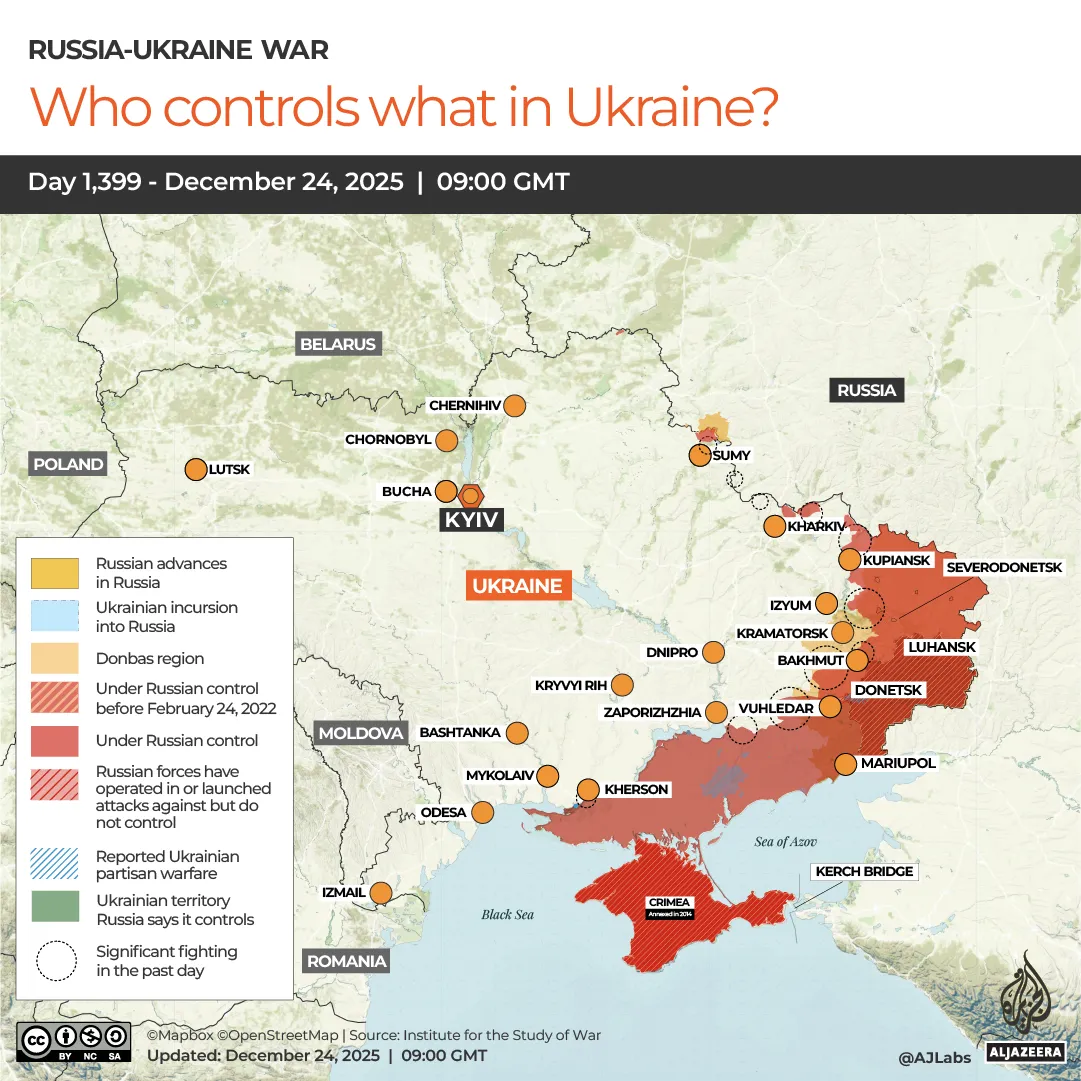
These are the key developments from day 1,406 of Russia’s war on Ukraine.
Published On 31 Dec 202531 Dec 2025
Share
Here is where things stand on Wednesday, December 31:
Fighting
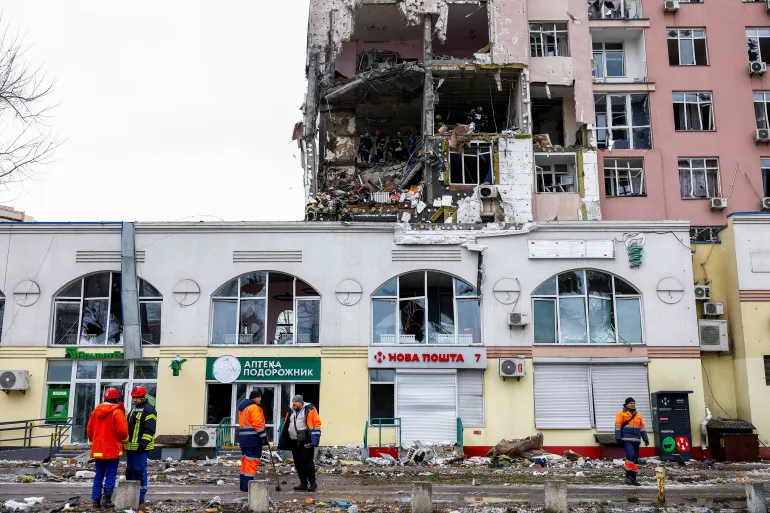
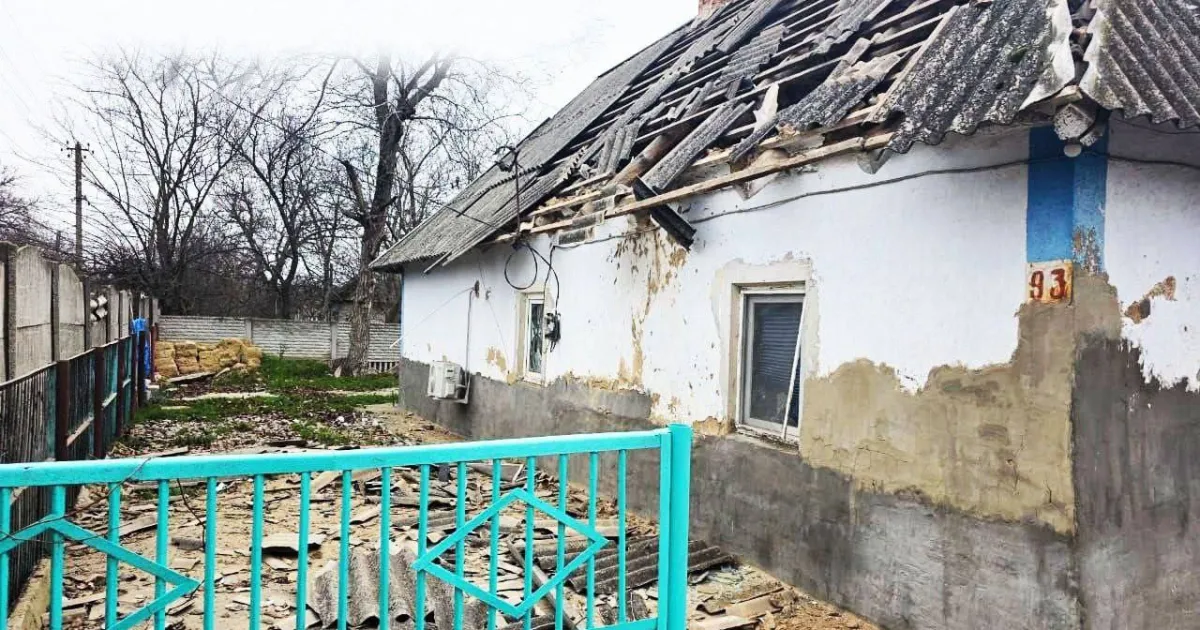
Russian forces shelled the town of Kostiantynivka in Ukraine’s Donetsk region, killing one person, an official said. The deadly attack came a day after an attack in Druzhkivka killed another person and wounded four, according to the Ukrinform news agency.
Russian forces also launched waves of attacks on the Black Sea ports of Pivdennyi and Chornomorsk in Ukraine’s Odesa region, hitting two Panama-flagged civilian vessels – Emmakris III and Captain Karam – as they approached to load wheat, the Ukrainian navy said.
Ukrainian Deputy Prime Minister Oleksii Kuleba said that oil storage tanks were also hit in the port attacks.
Authorities in Ukraine’s northern Chernihiv region introduced a mandatory evacuation order for the residents of 14 border villages in four districts. The order will affect some 300 people who still live in the Novhorod-Siverskyi, Semenivka, Snovsk, and Horodnya communities, which have been experiencing daily shelling, an official said.
Ukrainian Deputy Minister of Energy Olha Yukhymchuk said that 75,000 households in Chernihiv remain without electricity following Russian attacks on energy infrastructure in the region. There were also settlements in the Kharkiv and Sumy regions that were fully or partially without electricity, she said.
Yukhymchuk also said that repair work had been completed on transmission lines near the Zaporizhzhia nuclear power plant to ensure “stable and reliable power supply to the station in the event of damage or shutdown of the Dniprovska overhead line due to” Russian shelling.
Russia’s Ministry of Defence said it had taken control of two more settlements in eastern Ukraine. It identified them as the village of Lukianivske in the Zaporizhia region and the settlement of Bohuslavka in the Kharkiv region.
Russian authorities said that a Ukrainian drone attack on the Russian Black Sea port of Tuapse damaged port infrastructure and a gas pipeline in a residential area there. The regional administration said no injuries were reported.
Other Ukrainian drone attacks on Russia’s Belgorod region killed a woman and wounded four other people, local authorities said.
Alleged attack on Putin’s residence
Kremlin spokesman Dmitry Peskov said that Russia will “toughen” its negotiating position in talks on a deal to end the war in Ukraine as a “diplomatic consequence” of an alleged attempted drone attack on Russian President Vladimir Putin’s residence in northwestern Russia’s Novgorod on Sunday.
Peskov said the attack, which Ukraine denies, was aimed at collapsing the peace talks and accused Western media of playing along with Kyiv’s denial.
Ukraine has dismissed the Russian claim as lies aimed at justifying additional attacks against Kyiv and prolonging the war.
Ukrainian Minister of Foreign Affairs Andrii Sybiha said Russia had not provided any plausible evidence of its accusations. “And they won’t. Because there’s none. No such attack happened,” Sybiha said on X.
Ukrainian President Volodymyr Zelenskyy slammed countries, including India and the United Arab Emirates, that have condemned the alleged attack, which he said “didn’t even happen”. He called the moves “confusing and unpleasant”.
China said “dialogue and negotiation” remain the only “viable way out of the Ukraine crisis”, when asked for a comment on the alleged attack on Putin’s residence.
Lin Jian, a spokesperson for China’s Ministry of Foreign Affairs, also called on “relevant parties to follow the principles of no expansion of the battlefield, no escalation of fighting and no provocation by any party”, to work towards the de-escalation of the situation, and to “accumulate conditions for the political settlement of the crisis”.
The Institute for the Study of War, a Washington, DC-based think tank, said that its analysts found that the “circumstances” of the alleged attack did not fit the “pattern of observed evidence” usually seen “when Ukrainian forces conduct strikes into Russia”.
The US ambassador to NATO, Matthew Whitaker, cast doubt on Russia’s accusation, saying he wants to see US intelligence on the incident. “It is unclear whether it actually happened,” Whitaker told Fox Business’s Varney & Co.
The German government also said it shares Ukraine’s concern that Russian allegations of the attack could be used as a pretext for further escalation of Moscow’s war.
Diplomacy
Zelenskyy said that Ukraine and the Coalition of the Willing group of nations backing Kyiv plan to hold their next meetings at the start of January. Zelenskyy said that the countries’ national security advisers would meet in Ukraine on January 3, and with the leaders in France on January 6.
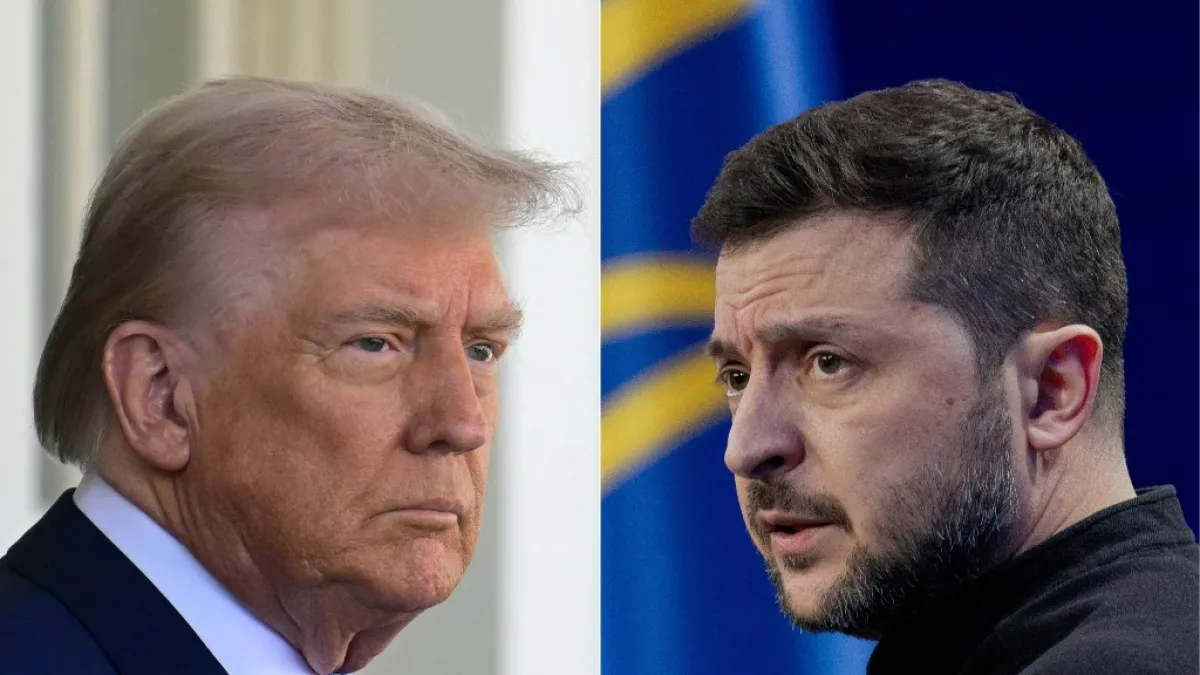
He also told reporters that Kyiv was discussing with US President Donald Trump the possible presence of US troops in Ukraine as part of security guarantees.
“Of course, we are discussing this with President Trump and with representatives of the [Western] coalition [supporting Kyiv]. We want this. We would like this. This would be a strong position of the security guarantees,” the Ukrainian president said.
Polish Prime Minister Donald Tusk told officials that there is reason to hope for peace in Ukraine quite soon. “Peace is on the horizon; there is no doubt that things have happened that give grounds for hope that this war can end, and quite quickly, but it is still a hope, far from 100 percent certain,” he said.
Tusk said security guarantees offered to Kyiv by the US were a reason to hope the conflict could end soon, but that Kyiv would need to compromise on territorial issues.
The US removed sanctions on Alexandra Buriko, the former chief financial officer of Russia’s state-owned Sberbank, according to the US Treasury Department.
Buriko was among a group of senior executives and board members who resigned from Western-sanctioned Sberbank shortly after Russia’s full-scale invasion of Ukraine in 2022. She sued the Treasury Department in a Washington federal court in December 2024, arguing she had severed ties with Sberbank days after it was sanctioned and that her continued inclusion on the sanctioned list was unlawful.
Weapons
Romania’s Ministry of Foreign Affairs announced that the country would spend 50 million euros ($58m) to support a European initiative to buy weapons made by US companies for Ukraine, known as the Priority Ukraine Requirements List (PURL).
Belarus released a video of what it said was the deployment on its territory of the Russian nuclear-capable hypersonic Oreshnik missile system, a development meant to bolster Moscow’s ability to strike targets across Europe in the event of a war.
Weekly insights and analysis on the latest developments in military technology, strategy, and foreign policy.
Belarus has announced the deployment on its territory of Russia’s still-shadowy Oreshnik intermediate-range ballistic missile. The development comes soon after the appearance of satellite imagery that suggests that Moscow is likely stationing the nuclear-capable missiles in Belarus. However, there remain questions about the status of the Oreshnik, as well as its overall capabilities.
Official video declaring Oreshnik IRBM deployment in Belarus by the Russian Strategic Rocket Forces.
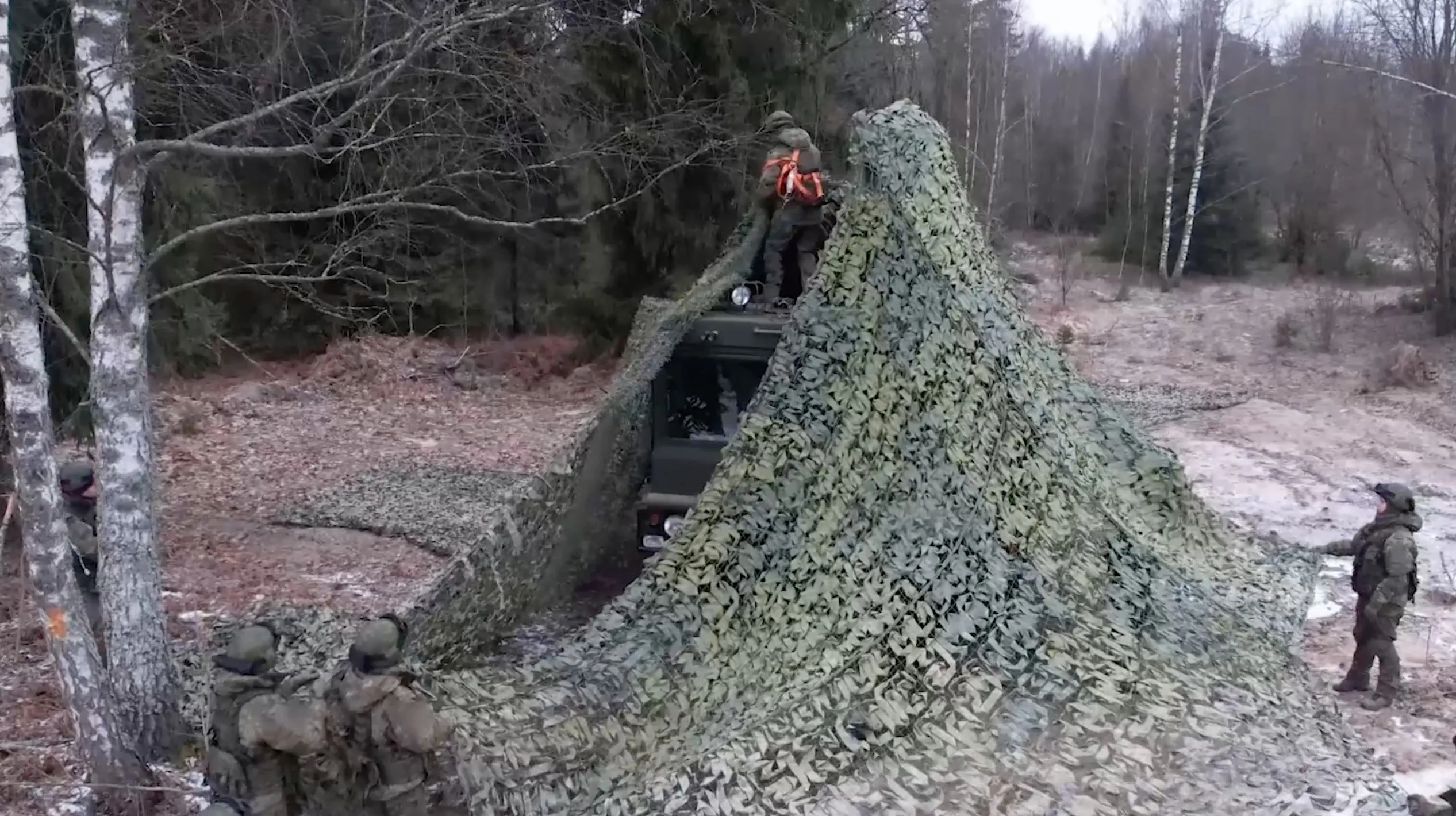
The Belarusian Ministry of Defense today released a video that it says shows the deployment of the Oreshnik system on its territory. The footage shows a flag-raising ceremony involving Russian troops in Belarus as well as a column of vehicles moving out into a firing position in the field, where they are then covered in camouflage netting.
A screen grab from a video shows elements of the Oreshnik missile system being covered by camouflage netting on December 30, 2025, in Belarus. Photo by Russian Defense Ministry/Anadolu via Getty Images
It’s notable that the vehicles shown appear to all be associated with support roles, rather than being transporter-erector launchers (TEL) for the missile itself. It could be the case that the TELs (and missiles) have yet to arrive in Belarus, or that they were deliberately omitted from the footage. It may also be that the missiles themselves are based elsewhere.
A thought about Krichev-6 – it’s possible that it’s not where the missiles (and support vehicles) are based. A secure railhead etc. are signs of a technical base, which may be (and probably is) different from missile bases (as it’s the case with Vypolzovo and other ICBM bases) https://t.co/RpoXcgdDVy
A senior officer is seen telling troops that the systems have officially been placed on combat duty and talks about the missile crews’ regular training and reconnaissance drills.
The location of the missile systems and the date of the video were not disclosed.
The release of the video follows Belarusian President Alexander Lukashenko’s announcement earlier this month that the Oreshnik would be deployed in his country, part of his extensive military support for his staunch ally, Russian President Vladimir Putin.
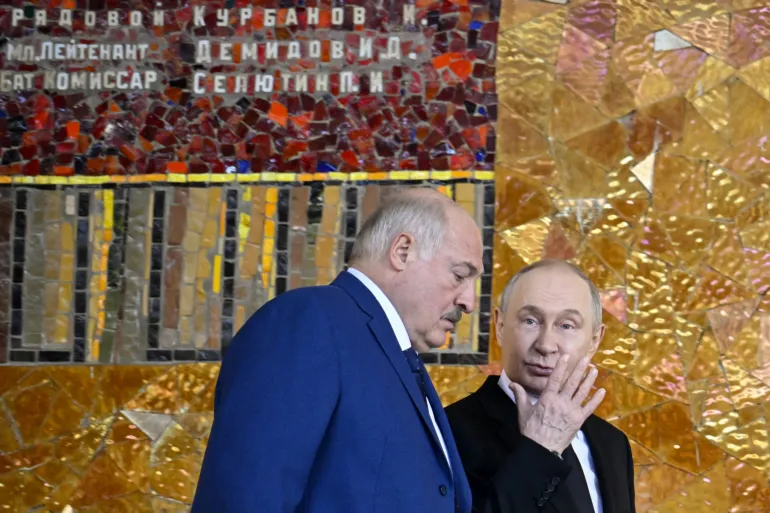
Russian President Vladimir Putin (right) shakes hands with Belarusian President Alexander Lukashenko during their meeting on the sidelines of the informal summit of Commonwealth of Independent States (CIS) leaders in Saint Petersburg on December 21, 2025. Photo by Alexander KAZAKOV / POOL / AFP
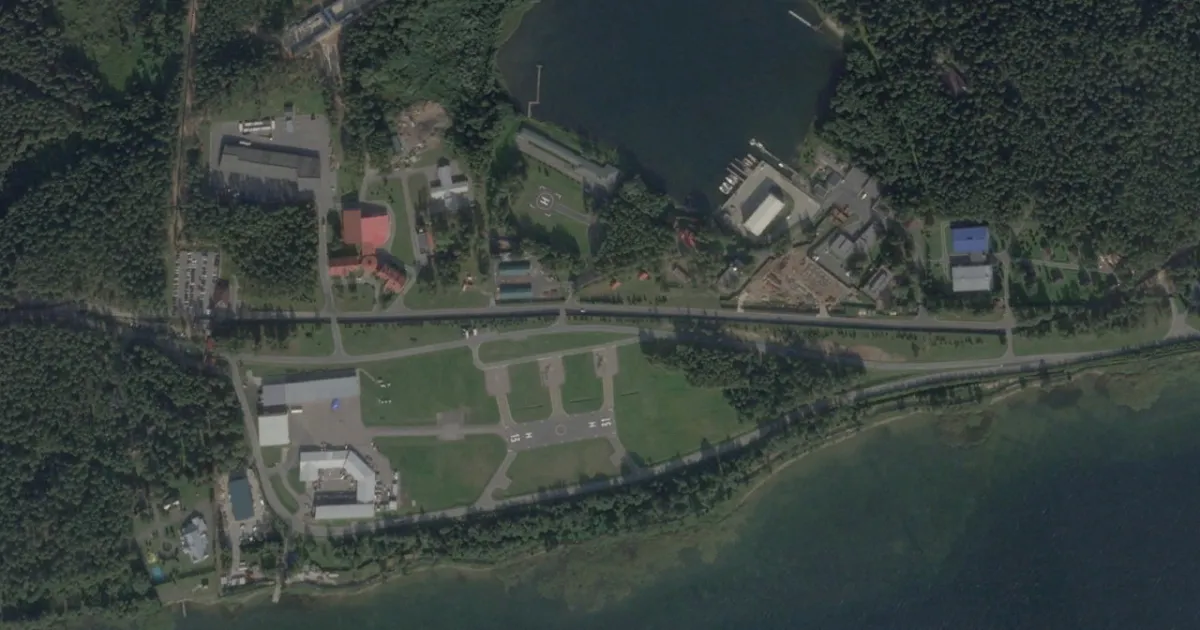
Only last week, evidence emerged pointing to the likely stationing of the Oreshnik at a former airbase near Krichev (also known as Krichev-6) in eastern Belarus, around 190 miles east of the capital of Minsk, and 300 miles southwest of Moscow.
A satellite image of Krichev (also known as Krichev-6) in 2019, when the airbase was still abandoned. Google Earth
After assessing available satellite imagery, researchers Jeffrey Lewis of the Middlebury Institute of International Studies, in California, and Decker Eveleth of the CNA research and analysis organization in Virginia, said they were “90 percent certain” that mobile Oreshnik launchers would be stationed there, if they weren’t already.
Lewis and Eveleth highlighted a hurried construction project that began at the site between August 4-12, which was consistent with a Russian strategic missile base. By November of this year, key evidence included a “military-grade rail transfer point” surrounded by a security fence, from where TELs and other components could be unloaded. There were also signs of a concrete pad being constructed at the end of the former runway, “consistent with a camouflaged launch point.”
According to Lewis and Eveleth, the site near Krichev is large enough to accommodate three launchers. Previously, Lukashenko said up to 10 Oreshniks would be based in Belarus, suggesting that more might yet be fielded at other locations.
The researchers’ assessment “broadly aligns with U.S. intelligence findings,” Reutersreported, citing a person familiar with the matter who spoke to the news agency on the condition of anonymity.
A screen grab from a video shows a vehicle associated with the Oreshnik missile system on December 30, 2025, in Belarus. Photo by Russian Defense Ministry/Anadolu via Getty Images
After a December 2024 meeting with Lukashenko, Putin had made clear his plan to station Oreshnik missiles in Belarus, but the exact location had not previously been reported. The Russian leader had said the deployment would occur in the second half of 2025.
As for the Oreshnik (Russian for hazel tree) system itself, U.S. officials have said this is an intermediate-range design derived from the RS-26 Rubezh intercontinental ballistic missile (ICBM). The new missile first emerged in public after it was used in an unprecedented attack on Ukraine in November 2024. Ukrainian authorities said that the missile that was fired at them carried six warheads, each containing six more sub-payloads, but that these contained no explosives.
Ok, two reasons why I think Russia probably used a variant of the long-gestating RS-26 Rubezh IRBM: (1) Russia hinted that it resumed development of the RS-26 this summer and (2) that’s what the Ukrainians predicated a day ago, down to the launch site. https://t.co/eUIPx7eqVt
Otherwise, details about the Oreshnik remain limited. After its use against Ukraine, Putin described it as a “medium-range missile system” and “a ballistic missile equipped with non-nuclear hypersonic technology” capable of reaching a peak speed of Mach 10. “The kinetic impact is powerful, like a meteorite falling,” the Russian president also said.
Overall, Russian claims of hypersonic performance for the Oreshnik are questionable. There is no evidence of true hypersonic boost-glide vehicles, for example, but larger ballistic missiles, even ones with traditional designs, do reach hypersonic speeds, typically defined as anything above Mach 5, in the terminal stage of their flight.
The Ukrainian Air Force confirmed that Russia struck the Ukrainian city of Dnipro with a conventionally armed ICBM this morning, marking the first combat use of an ICBM in history.
Footage from Dnipro showed glowing reentry vehicles hitting the ground around 5 AM local time. pic.twitter.com/PWTGajH9bT
Western estimates suggest the missile has a range of up to 3,400 miles.
While positioning the Oreshnik marginally farther west does extend its reach further into Europe, the difference is less significant, bearing in mind its already considerable maximum range is enough to hit every NATO capital city in Europe from within Russian territory. With that in mind, stationing these missiles in Belarus does little to practically enhance Moscow’s ability to deliver these kinds of weapons across Europe.
In fact, the missile’s likely minimum range, forward deploying the Oreshnik to Belarus might actually limit the ability to employ it against certain targets, such as those in Ukraine. For example, Ukraine’s capital Kyiv lies less than 60 miles from the border with Belarus.
The approximate location of Krichev (also known as Krichev-6) in relation to the wider region. Google Earth
Another option might be to use a very high lofted trajectory that would allow the missile to hit targets at shorter ranges, but there would still be a limit to what could be achieved in this way. At the same time, we don’t know for sure what kinds of trajectories the Oreshnik can actually be fired on.
Russia really wants West to see they’re doing a tac nuke exercise. After several exercise videos they put the head of the 12 GUMO in front of a Belarusian Su-25 (possibly at Lida air base) loaded with what is said to be “training nuclear ammunition.” https://t.co/h9rHp2qvGvpic.twitter.com/sTzAqSNd9f
— Hans Kristensen (also on Bluesky) (@nukestrat) June 13, 2024
Placing these missiles (and air-dropped nuclear bombs) in Belarus is indicative of the Kremlin’s new nuclear strategy, which includes basing these kinds of weapons outside its territory for the first time since the Cold War.
The apparent deployment also comes only weeks before the expiration of the 2010 New START pact, the last U.S.-Russia treaty that puts limits on the deployments of strategic nuclear weapons by these two powers.
For NATO, it’s very much arguable whether Russia’s placing of the Oreshnik in neighboring Belarus, rather than on Russian territory, will really be seen as a more direct threat.
“The military implications of this missile being in Belarus are not all that different from the missile being in Russia — the technical support site is already very close to the Russian border,” Eveleth wrote on X last week.
A screen grab from a video shows elements of the Oreshnik missile system on December 30, 2025, in Belarus. Photo by Russian Defense Ministry/Anadolu via Getty Images
For Belarus, the situation is different. For a country in the international wilderness, the deployment does underscore Russia’s guarantee of providing Belarus with (nuclear) protection.
Russia’s revised nuclear stance also relies increasingly on these kinds of weapons to deter NATO members from supplying Kyiv with weapons that can strike deep inside Russia, although it’s questionable whether placing the Oreshnik in Belarus will have a significant, if any, effect in this regard.
A U.S. Army briefing slide providing an overview of the components of the Typhon weapon system. U.S. Army
While these U.S. long-range strike systems are all conventionally armed, it’s worth recalling that the Oreshnik, too, can be utilized in a non-nuclear version, as demonstrated in Ukraine. The missile, therefore, presents a longer-range strategic-level threat that can be employed without crossing the nuclear threshold.
Provided that the Oreshnik is indeed now deployed on Belarusian territory, we still don’t know how many missiles might be involved, or what kinds of warheads they might carry. While we may learn more in due course, for now, the missile’s greatest significance is in the political domain.
Russia has threatened to retaliate against Ukraine after alleging that nearly 100 drones had targeted one of Russian President Vladimir Putin’s residences.
The threat on Monday was made as United States President Donald Trump tries to broker a peace agreement to end the war in Ukraine, which will enter its fifth year in February.
Recommended Stories
list of 4 itemsend of list
What has Russia claimed?
On Monday, Russian Foreign Minister Sergey Lavrov alleged that Ukraine had launched the attack on the Valdai residence, one of Putin’s residences in the Novgorod region in northwestern Russia. The property is 360km (225 miles) north of Moscow.
Lavrov told reporters that Ukraine had launched 91 drones towards the residence. He added that air defence systems shot down the drones and no one was injured.
The Russian Ministry of Defence said 49 of the drones were shot down over the Bryansk region, one was shot down over the Smolensk region and 41 were shot down over the Novgorod region while en route.
“Such reckless actions will not go unanswered,” Lavrov said. “The targets for retaliatory strikes and the timing of their implementation by the Russian armed forces have been determined.”
Russian officials accused Ukraine and its president, Volodymyr Zelenskyy, of carrying out the strike to derail the prospects of a peace agreement.
In an apparent reference to Zelenskyy, Russian Security Council Deputy Chairman Dmitry Medvedev wrote on X: “The stinking Kiev b**tard is trying to derail the settlement of the conflict. He wants war. Well, now at least he’ll have to stay in hiding for the rest of his worthless life.”
Kremlin foreign policy aide Yury Ushakov said the strike took place on Sunday “practically immediately after” talks were held in Florida between Trump and Zelenskyy on ending Russia’s war on Ukraine.
After that meeting, Trump and Zelenskyy had voiced optimism, saying a peace deal between Russia and Ukraine was “close”.
Putin has not publicly commented on the attack yet. It is unclear where Putin was at the time of the attack, but he was holding meetings in the Kremlin on Saturday and Monday.
How has Ukraine responded?
Zelenskyy has strongly denied Russia’s allegation that Ukraine attacked one of Putin’s residences.
“Russia is at it again, using dangerous statements to undermine all achievements of our shared diplomatic efforts with President Trump’s team,” Zelenskyy wrote in an X post on Monday.
“This alleged ‘residence strike’ story is a complete fabrication intended to justify additional attacks against Ukraine, including Kyiv, as well as Russia’s own refusal to take necessary steps to end the war.”
Ukrainian Foreign Minister Andrii Sybiha also condemned Moscow’s claims, saying they were designed to undermine the negotiations.
In a post on X, Sybiha said the claim was intended “to create a pretext and false justification for Russia’s further attacks against Ukraine, as well as to undermine and impede the peace process”.
In another post on Tuesday, Sybiha wrote: “Almost a day passed and Russia still hasn’t provided any plausible evidence to its accusations of Ukraine’s alleged ‘attack on Putin’s residence.’ And they won’t. Because there’s none. No such attack happened.”
How has Trump reacted?
Trump appeared to accept the Russian version of events on Monday when he told reporters: “It’s one thing to be offensive. It’s another thing to attack his house. It’s not the right time to do any of that. And I learned about it from President Putin today. I was very angry about it.”
But when reporters asked Trump if US intelligence agencies had evidence of the alleged attack, Trump said: “We’ll find out.”
Congressman Don Bacon, a member of Trump’s Republican Party, criticised the president for accepting the Russian account of events without assessing the facts.
“President Trump and his team should get the facts first before assuming blame. Putin is a well known boldface liar,” Bacon wrote in an X post.
How have other world leaders reacted?
Like Trump, other leaders appeared to accept the Russian allegations.
In a statement released on Monday, the United Arab Emirates Ministry of Foreign Affairs wrote: “The United Arab Emirates has strongly condemned the attempt to target the residence of His Excellency Vladimir Putin, President of the Russian Federation, and denounced this deplorable attack and the threat it poses to security and stability.”
Indian Prime Minister Narendra Modi wrote in an X post on Tuesday: “Deeply concerned by reports of the targeting of the residence of the President of the Russian Federation.”
Modi added that the ongoing diplomatic engagement being led by the US is the “most viable path” towards achieving peace. “We urge all concerned to remain focused on these efforts and to avoid any actions that could undermine them.”
Pakistani Prime Minister Shehbaz Sharif also condemned the alleged attack.
“Pakistan condemns the reported targeting of the residence of His Excellency Vladimir Putin, President of the Russian Federation. Such a heinous act constitutes a grave threat to peace, security, and stability, particularly at a time when efforts aimed at peace are underway,” Sharif wrote on X.
“Pakistan expresses its solidarity with the President of the Russian Federation, and with the government and people of Russia.”
Have Putin’s residences previously been attacked?
Russia has made previous claims of Ukrainian attacks on Putin’s residences, including on the Kremlin, Putin’s official residence and main workplace.
In May 2023, Moscow alleged that Ukraine had deployed two drones to attack Putin’s residence in the Kremlin citadel but said its forces had disabled the drones. Kyiv denied any involvement.
On December 25, 2024, Russia alleged that it had intercepted and destroyed a Ukrainian drone also targeting the Kremlin. Kyiv again denied responsibility.
Conversely, Ukraine has alleged that Russia has attacked Kyiv and other government buildings in Ukraine.
In September, the Ukrainian military said a Russian drone attack damaged a government building in Kyiv that is home to Ukraine’s cabinet. Plumes of smoke were seen emerging from the building. Russia said it had targeted Ukrainian military infrastructure only.
What has Russia now threatened to do?
While Russia has not outright threatened to end the peace talks, Moscow said it would realign its position in the talks.
“The diplomatic consequence will be to toughen the negotiating position of the Russian Federation,” Kremlin spokesman Dmitry Peskov told reporters on Tuesday.
Russian Ministry of Foreign Affairs spokesperson Maria Zakharova warned that Moscow’s response “would not be diplomatic”. Indeed, it has warned that it plans to hit back militarily but has given no details of how or when it might do this.
Will this derail the US-led peace talks?
Speaking to reporters after his “terrific” meeting with Zelenskyy on Sunday at his Mar-a-Lago residence in Palm Beach, Florida, Trump told reporters that Moscow and Kyiv were “closer than ever” to a peace deal.
But Trump has made this claim several times before. In April, Trump said Russia and Ukraine were “very close to a deal” after Trump’s envoy Steve Witkoff met with Putin in Moscow.
On December 15, Trump also said Russia and Ukraine were “closer than ever” to a deal after talks in Berlin involving Zelenskyy and the leaders of France, Germany, the United Kingdom and NATO.
However, observers and analysts said the issue of territorial concessions remains a major sticking point. Trump’s 28-point peace plan for Ukraine, which he unveiled in November, involved Ukraine ceding large amounts of land that Russia has occupied during nearly four years of war. Zelenskyy has stated on numerous occasions that this is a line Ukraine will not cross.
Most analysts are sceptical that any progress has been made on this point and said the latest accusations against Ukraine will probably have little effect. “I don’t think there is anything to derail at this point,” said Marina Miron, an analyst at King’s College London.
The peace process “is not going well due to disagreements on key issues between Ukraine and Russia”, she told Al Jazeera.
“Trump has repeatedly claimed that a peace deal is close without sustainable agreement,” Keir Giles, a Russian military expert at the London think tank Chatham House, told Al Jazeera this month.
Russia has occupied nearly 20 percent of eastern Ukraine and has been slowly gaining territory as Ukraine’s military has been weakened by desertions, casualties and dwindling military aid. Moscow annexed Ukraine’s Crimean Peninsula in 2014.
(Al Jazeera)
“It’s probably impossible that Ukrainians will voluntarily withdraw from these territories unless we will also see a withdrawal of Russian forces on the other side,” Nathalie Tocci, director at the Rome-based think tank Istituto Affari Internazionali (Institute of International Affairs), told Al Jazeera.
Giles said there are still parallel negotiation tracks, however – one involving the US and Ukraine and another between Ukraine and European nations. He added, however, that there is no clear evidence that these efforts are fully coordinated or aligned in terms of strategy.
Russia says it will take a more hardline stance in negotiations on ending the war in Ukraine after claiming Kyiv tried to attack a Russian presidential residence – allegations Ukraine says Moscow has fabricated to justify further aggression.
Kremlin spokesperson Dmitry Peskov told reporters on Tuesday that the alleged drone attack on one of President Vladimir Putin’s residences in Novgorod, a region in northwestern Russia, had been intended to derail recent diplomatic efforts to negotiate an end to the conflict.
“This terrorist action is aimed at collapsing the negotiation process,” Peskov said, adding that Russia’s military knows when and how it will respond.
“The diplomatic consequence will be to toughen the negotiating position of the Russian Federation.”
Russia said on Monday that Putin’s residence had been targeted by Ukraine with 91 long-range drones that had been shot down by air defence systems with no one injured.
‘No such attack happened’
Ukraine has denied that the attack took place, calling the Russian allegations “false claims” intended to undermine the peace process.
In a post on X, Ukrainian Minister of Foreign Affairs Andrii Sybiha said Moscow had not provided any plausible evidence to back up its accusations.
“And they won’t. Because there’s none. No such attack happened,” he said on Tuesday.
Sybiha said Russia has “a long record of false claims”, calling them its “signature tactic”.
“They also often accuse others of what they themselves plan to do,” he said. “Their words should never be taken at face value.”
He added that Ukraine was ”disappointed and concerned“ by statements by the United Arab Emirates, India and Pakistan expressing concern over what he said was an attack that never happened.
Asked by reporters whether Russia could provide evidence of the drone attack, Peskov said air defences shot the drones down but the question of wreckage was for the Ministry of Defence.
He said attempts by Ukraine and Western media to deny the incident were “insane”.
No evidence has been provided by Russia. The Defence Ministry has issued only a statement that said 91 drones had been shot down while they were heading to Putin’s Novgorod residence, which is about 360km (225 miles) north of Moscow.
Speaking on Monday, United States President Donald Trump, who has spearheaded the push to broker peace in Ukraine, said he had been informed of the alleged attack in a phone call with Putin.
“I was very angry about it,” he said, adding that he would find out whether there was evidence to support the allegation.
European leaders hold talks
The dispute over the attack played out as key leaders from Europe and Canada held discussions on advancing the peace process.
After the talks, German Chancellor Friedrich Merz posted on social media that the group was “moving the peace process forward”.
“Transparency and honesty are now required from everyone – including Russia,” he wrote.
In the wake of the meeting, Polish Prime Minister Donald Tusk said at a government meeting that he believed peace could be achieved in Ukraine in a matter of weeks.
“Peace is on the horizon. There is no doubt that things have happened that give grounds for hope that this war can end, and quite quickly, but it is still a hope, far from 100 percent certain,” Tusk said.
“When I say peace is on the horizon, I’m talking about the coming weeks, not the coming months or years. By January, we’ll all have to come together … to make decisions about the future of Ukraine, the future of this part of the world.”
He said security guarantees offered by Washington to Kyiv gave a reason to believe the conflict could end soon but Ukraine would need to compromise on territorial issues.
Russia wants Kyiv to withdraw its troops from the parts of the Donbas region in eastern Ukraine that Moscow has failed to occupy in almost four years of war.
It remains the key sticking point in the talks, ceding territory or not.
Kyiv wants fighting halted along the current front lines, and Washington has proposed a free economic zone if Ukraine pulls its forces back.
Zelenskyy has insisted Kyiv won’t give up land and the nation’s constitution also forbids it.
Black Sea ports attacked
As leaders met for talks, Kyiv said Russia had attacked infrastructure in the Odesa region, damaging a civilian ship and facilities in the Black Sea ports of Pivdennyi and Chornomorsk, which are crucial for Ukraine’s foreign trade and integral to its wartime economy.
In a post on Telegram, Deputy Prime Minister Oleksii Kuleba said a Panama-flagged civilian ship loaded with grain was damaged and oil storage tanks hit with one person wounded.
“This is yet another targeted attack by Russia on civilian port infrastructure. The enemy is trying to disrupt logistics and complicate shipping,” Kuleba said.
Despite the attacks, both ports continued to operate, he said.
Meanwhile, Ukraine ordered the evacuation of several hundred people from 14 settlements in the northern region of Chernihiv, which borders Moscow-allied Belarus and which, Ukraine said, has been the target of daily Russian shelling.
WASHINGTON — Standing alongside President Trump at his Palm Beach estate, Volodymyr Zelensky could only smirk and grimace without overtly offending his host. “Russia wants to see Ukraine succeed,” Trump told reporters, shocking the Ukrainian president before claiming that Vladimir Putin is genuine in his desire for peace.
It was just the latest example of the American president sympathizing with Moscow in its war of conquest in Europe. Yet Zelensky emerged from the meeting Sunday ensuring once again that Ukraine may fight another day, maintaining critical if uneasy support from Washington.
Few signs of progress toward a peace agreement materialized from the meeting at Mar-a-Lago, where Zelensky traveled with significant compromises — including a plan to put territorial concessions to Russia before the Ukrainian people for a vote — in order to appease the U.S. president.
But Zelensky won concessions of his own from Trump, who had for weeks been pushing for a ceasefire by Christmas, or else threatening to cut off Ukraine from U.S. intelligence that would leave Kyiv blind on the battlefield. “I don’t have deadlines,” Trump said Sunday.
Over the course of Trump’s first year in office, Zelensky and other European leaders have repeatedly worked to convince Trump that Russia’s President Putin is, in fact, an aggressor opposed to peace, responsible for an unprovoked invasion that launched the deadliest conflict in Europe since the Second World War.
Each time, Trump has come around, even going as far over the summer as to question whether Ukraine could win back the territories it has lost on the battlefield to Russia — and vowing to North Atlantic Treaty Organization allies, “we’re with them all they way.”
Yet, each time, Trump has changed course within a matter of days or weeks, reverting to an embrace of Putin and Russia’s worldview, including a proposal that Ukraine preemptively cede sovereign territories that Russia has sought but failed to occupy by force.
Zelensky’s willingness to offer concessions in his latest meeting with Trump has, at least temporarily, “managed to keep President Trump from tilting further towards the Russian position,” said Kyle Balzer, a scholar at the conservative American Enterprise Institute. “But Trump’s position — his repeated insistence that a deal is necessary now because time is not on Ukraine’s side — continues to favor Putin’s line and negotiating tactics.”
U.S. intelligence agencies have assessed that Putin’s revanchist war aims — to conquer all of Ukraine and, beyond, to reclaim parts of Europe that once were part of the Soviet empire — remain unchanged.
Yet Trump’s director of national intelligence, Tulsi Gabbard, whose own sympathies toward Russia have been scrutinized for years, recently dismissed the assessments as products of “deep state” “warmongers” within the intelligence community.
On Monday, hours after speaking with Trump, Putin ordered the Russian military to push toward Zaporizhzhia, a city of 700,000 before the war began. The city lies far outside the Donbas region that Moscow claims would satisfy its war aims in a negotiated settlement.
“Trump’s instincts are to favor Putin and Russia,” said Brian Taylor, director of the Moynihan Institute of Global Affairs at Syracuse University. “Ukraine and its European partners still hope to convince Trump of the obvious fact that Putin is not interested in a deal that doesn’t amount to a Ukrainian surrender.
“If Trump was convinced of Putin’s intransigence, he might further tighten sanctions on Russia and provide more assistance to Ukraine to try to pressure Putin into a deal,” Taylor added. “It’s an uphill battle, one might even say Sisyphean, but Zelensky and European leaders have to keep trying. So far, nearly a year into Trump’s second term, it’s been worth it.”
On Monday, Moscow claims that Ukraine orchestrated a massive drone attack targeting Putin’s residence that would force it to reconsider its stance in negotiations. Kyiv denied an attack took place.
“Given the final degeneration of the criminal Kyiv regime, which has switched to a policy of state terrorism, Russia’s negotiating position will be revised,” Sergei Lavrov, Russia’s foreign minister since 2004, said in a Telegram post.
Another senior Russian official said the reported attack shocked and infuriated Trump. But Zelensky, responding on social media, said that Russia was “at it again, using dangerous statements to undermine all achievements of our shared diplomatic efforts with President Trump’s team.”
“We keep working together to bring peace closer,” Zelensky said. “This alleged ‘residence strike’ story is a complete fabrication intended to justify additional attacks against Ukraine, including Kyiv, as well as Russia’s own refusal to take necessary steps to end the war.”
“Ukraine does not take steps that can undermine diplomacy. To the contrary, Russia always takes such steps,” he added. “It is critical that the world doesn’t stay silent now. We cannot allow Russia to undermine the work on achieving a lasting peace.”
Frederick Kagan, director of the Critical Threats Project, which collaborates with the Institute for the Study of War to produce daily battlefield assessments on the conflict, said that the meeting did not appear to fundamentally shift Trump’s position on the conflict — a potential win for Kyiv in and of itself, he said.
“U.S.-Ukraine negotiations appear to be continuing as before, which is positive, since those negotiations seem to be getting into the real details of what would be required for a meaningful set of security guarantees and long-term agreements to ensure that any peace settlement will be enduring,” Kagan said.
Gaps still remain between Kyiv and the Trump administration in negotiations over security guarantees. While Trump has offered a 15-year agreement, Ukraine is seeking guarantees for 50 years, Zelensky said Monday.
“As Trump continues to say, there’s no deal until there’s a deal,” Kagan added. “We’ll have to see how things go.”
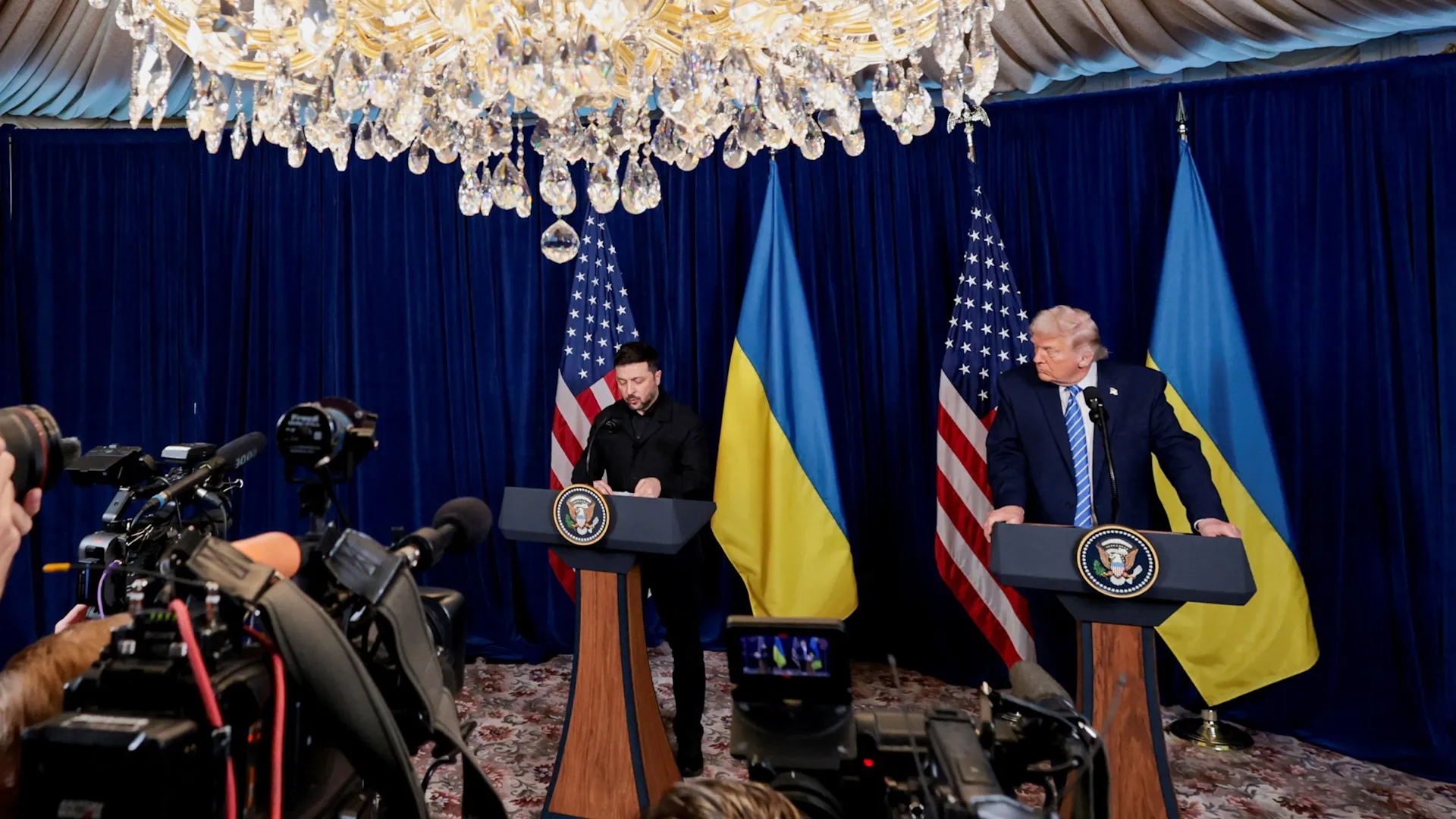
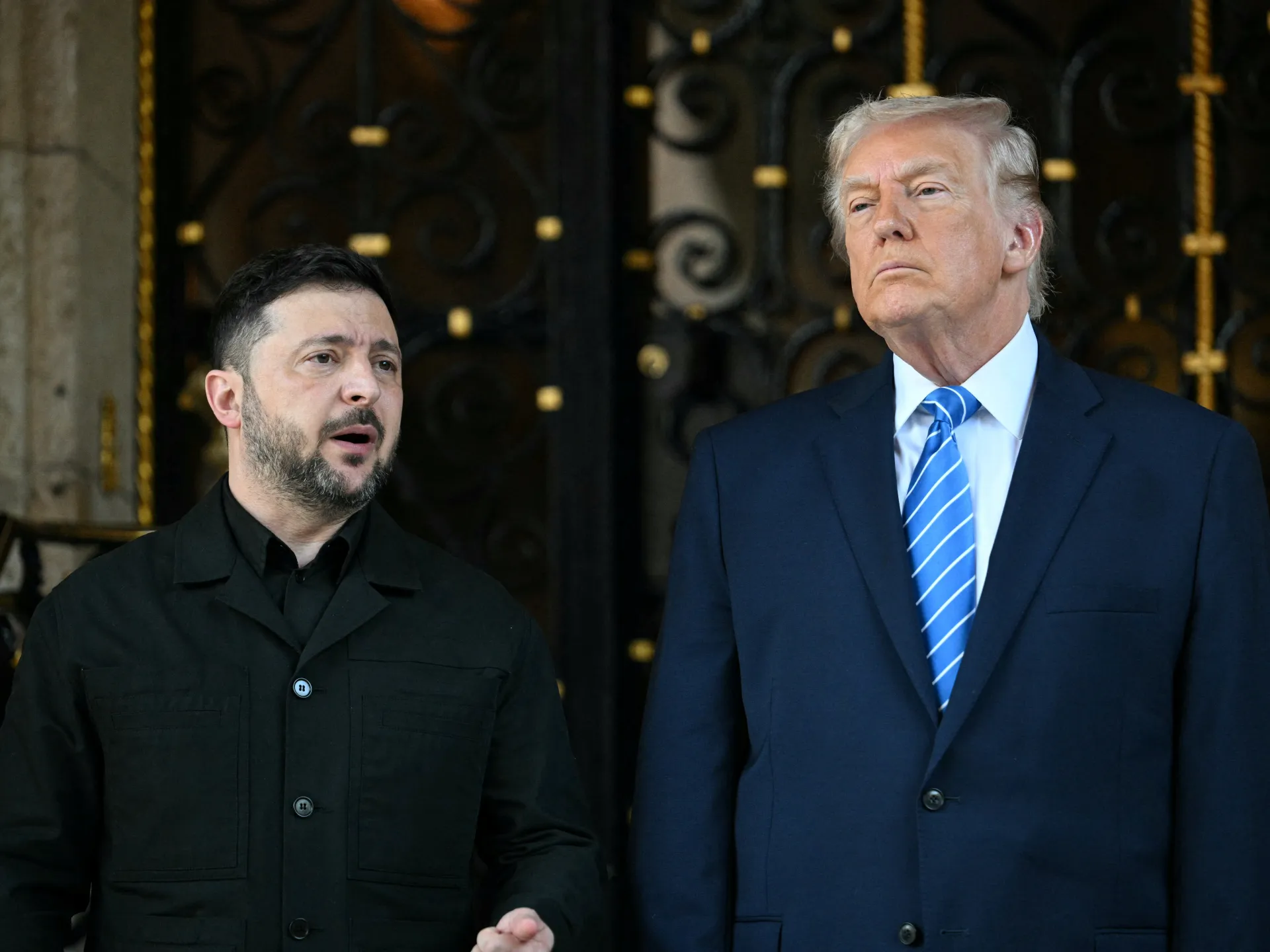
US President Donald Trump and Ukrainian leader Volodymyr Zelenskyy are talking up prospects of ending the war with Russia, after meeting in Florida. But they admitted there are ‘thorny issues’ to resolve about the status of the Donbas region which has been annexed by Russia.
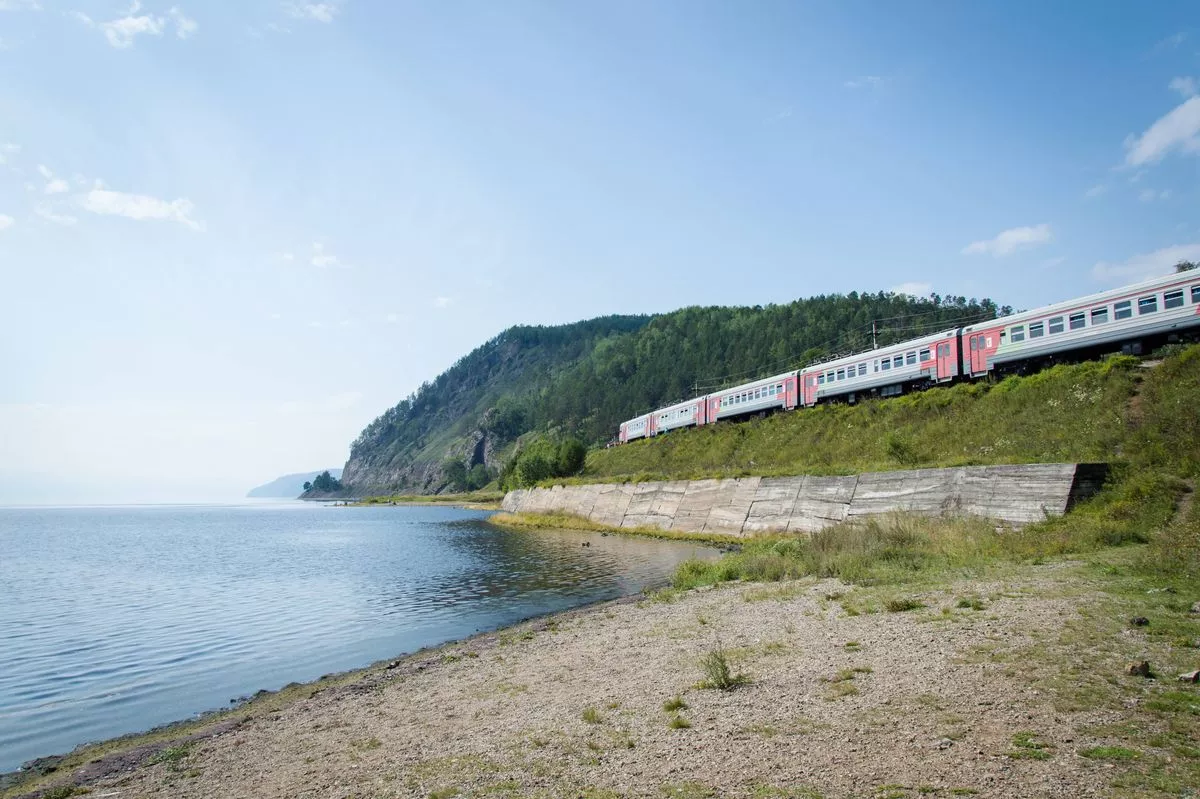
The Trans-Siberian Railway is a series of train routes in Russia, Mongolia and China that connect remote parts of the world and offer holidaymakers ‘absolutely incomparable landscapes’
The world’s longest train route crosses 8 time zones to connect 3 countries(Image: unikatdesign via Getty Images)
The Trans-Siberian Railway in Russia is the longest railway journey, traversing three countries and two continents, taking holidaymakers to some of the world’s most secluded spots. The train links Russia, Mongolia and China on a continuous journey across eight time zones.
The classic Trans-Siberian journey takes seven days, connecting Moscow to Vladivostok over a distance of 9,258km (6,152 miles).
Other routes include the six-day Trans-Manchurian trip from Moscow to Beijing, a five-day journey to Ulan-Bator, and the shortest route, the Trans-Mongolian, which runs from Moscow to Beijing via Mongolia.
Ticket prices range from roughly $120 (£88) for a standard ticket to $1,000 (£740) for first class travel.
Russian Train stated: “As soon as it was built at the beginning of the 19th century, the Trans-Siberian Railway was proclaimed the finest of the diamonds on the crown of the Russian Empire and became famous to the whole world.
“Since then, it has been attracting many travellers striving to see the miracle of engineering and to experience the peculiar way of journey.
“At the same time, the Trans-Siberian regular trains are mostly used by locals for their commuting needs, so it is an excellent way to meet the real people and feel the pure soul of the country.”
The Trans-Siberian Railway presents holidaymakers with “absolutely incomparable landscapes”, making the journey a truly unique adventure.
One traveller reviewed the train trip on Tripadvisor as a “unique, unforgettable journey”, while another described it as a “fascinating experience”.
“My wife and I crossed off our list one of these ‘must-do in our lifetime’ items, which was the Trans Siberian Railway. Time flies on the train, I barely read one book in four days, the rest of the time stared out of the window; Russia by train is fascinating!”
These are the key developments from day 1,404 of Russia’s war on Ukraine.
Published On 29 Dec 202529 Dec 2025
Share
Here is where things stand on Monday, December 29:
Diplomacy
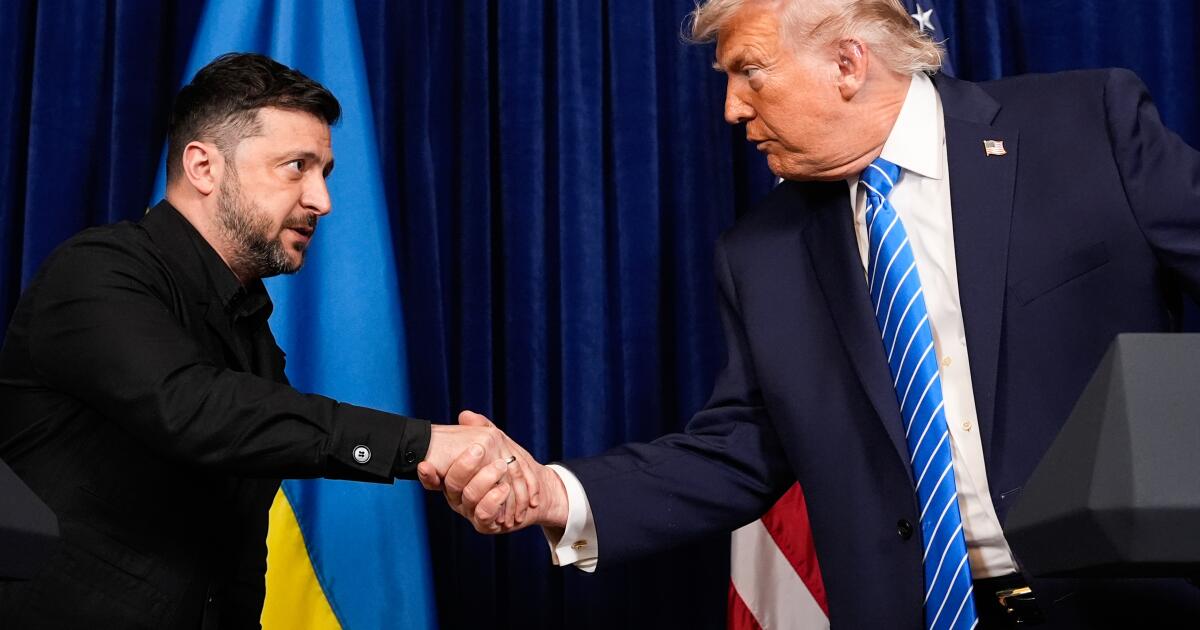
United States President Donald Trump hosted Ukrainian President Volodymyr Zelenskyy for talks at his Mar-a-Lago resort in Florida and said the two leaders were “getting a lot closer, maybe very close” to a deal to end the war in Ukraine.
Trump and Zelenskyy reported progress on two of the most contentious issues in the peace talks: security guarantees for Ukraine and the division of eastern Ukraine’s Donbas region that Russia has sought to capture.
On security guarantees, Zelenskyy said that a deal had been reached, while Trump said they were 95 percent of the way to such an agreement.
Both Trump and Zelenskyy said that the future of the mostly Russian-occupied Donbas had not been settled, though the US president said discussions were “moving in the right direction”. “It’s unresolved, but it’s getting a lot closer. That’s a very tough issue,” Trump said.
The two leaders did not offer further details or a deadline for completing the deal, but Zelenskyy said any peace agreement would have to be approved by Ukraine’s parliament or by a referendum.
Shortly after the Trump-Zelenskyy meeting, Russian President Vladimir Putin’s special envoy, Kirill Dmitriev, wrote on X that the “whole world appreciates” Trump and his team’s peace efforts.
Ahead of the meeting with Zelenskyy, Trump and Putin spoke for more than two hours on the telephone. The US president described the call as “excellent” and “productive”.
Trump said he would call Putin again after the meeting with Zelenskyy.
Kremlin foreign policy aide Yury Ushakov said the initial call was “friendly” and that Putin had told Trump that a 60-day ceasefire, proposed by the European Union and Ukraine, would simply prolong the war.
Ushakov said that a “bold, responsible, political decision is needed from Kyiv” on the Donbas region and other disputed matters for there to be a “complete cessation” of hostilities.
European leaders, including those from Finland, France, Germany, Poland and the United Kingdom, joined at least part of the Trump-Zelenskyy meeting by phone.
European Commission President Ursula von der Leyen said in a statement that Europe was ready to keep working with Ukraine and the US, and that having ironclad security guarantees would be of “paramount” importance.
French President Emmanuel Macron said that progress had been made on security guarantees at the meeting. Macron said that countries in the so-called “Coalition of the Willing” would meet in Paris in early January to finalise their “concrete contributions”.
Zelenskyy said that Trump had agreed to host European leaders again, possibly at the White House, sometime in January. Trump said the meeting could be in Washington, DC, or “someplace”.
Earlier on Sunday, Russian Minister of Foreign Affairs Sergey Lavrov warned that any European troop contingents deployed to Ukraine would become legitimate targets for Russia’s forces. Lavrov also accused European politicians of being driven by “ambitions” in their relations with Kyiv, and disregarding the people of Ukraine and of their own nations.
Fighting
Russian forces attacked a heating plant in the southern Ukrainian city of Kherson, wounding one person and causing “significant damage” to the facility, state oil and gas firm Naftogaz said.
Ukraine’s leading private energy provider, DTEK, said it had restored power to more than a million households in and around Kyiv a day after a massive Russian air attack had forced emergency outages.
Ukraine’s military said it had struck the Syzran oil refinery in Russia’s Samara region in a drone attack. The strike caused a fire, and damages were still being assessed, the army said in a statement.
The military also said that only part of the southeastern town of Huliaipole was under Russian control, contradicting an earlier claim by Moscow that it had been captured. It added that fighting was also still under way for Stepnohirsk, another town in the southeastern Zaporizhia region that Russia claimed it had captured.
Meanwhile, Russia’s Ministry of Defence said in a statement that its troops had taken control of four other settlements in the Donetsk region. It identified them as Myrnohrad, Artemivka, Rodynske and Vilne.
Diplomacy over the Russia-Ukraine war is in its “final stages”, said US President Donald Trump as he welcomed Ukraine’s leader Volodymyr Zelenskyy to his Florida estate.
The two leaders stood outside the Mar-a-Lago resort on Sunday and addressed reporters as they prepared to discuss a new proposal to end the bloody conflict.
Recommended Stories
list of 4 itemsend of list
The US president has been working hard to end the nearly four-year war in Ukraine for much of his first year back in office, showing irritation with both Zelenskyy and Russian President Vladimir Putin while publicly acknowledging the difficulty of ending the fighting.
“I think we’re … in final stages of talking and we’re going to see. Otherwise, it’s going to go on for a long time, and millions of additional people will be killed,” said Trump, adding he did not have a deadline for the process.
“I do believe that we have the makings of a deal that’s good for Ukraine, good for everybody.”
He added there would be “a strong agreement” to guarantee Ukraine’s security, one that would involve European countries.
“We have two willing parties. We have two willing countries … The people of Ukraine want [the war] to end, and the people of Russia want it to end, and the two leaders want it to end,” Trump said.
Zelenskyy, by Trump’s side, said he and the US president would discuss issues of territorial concessions, which have so far been a red line for his country. He said his negotiators and Trump’s advisers “have discussed how to move step by step and bring peace closer” and would continue to do so in Sunday’s meeting.
During recent talks, the US agreed to offer certain security guarantees to Ukraine similar to those offered to other members of NATO.
The proposal came as Zelenskyy said he was prepared to drop his country’s bid to join the security alliance if Ukraine received NATO-like protection designed to safeguard it against future Russian attacks.
Oleksandr Kraiev, an analyst with the think-tank Ukrainian Prism, said the people of Ukraine are “quite cynical” about the talks brokered by the United States.
“We tried this in 2015, 2016, 2017, and unfortunately each time the Russians broke even the ceasefire regime, not even talking about the peace process,” he told Al Jazeera.
“So we have little faith that a proper peace process will take place. As of now we’re striving for a ceasefire as a precondition for any kind of talks… We cannot trust the Russians with a peace deal, but a ceasefire is something we’re working on.”
‘Blindsided yet again’
Trump’s upbeat tone comes despite widespread scepticism in Europe about Putin’s intentions after Russia carried out another massive bombardment of the Ukrainian capital just as Zelenskyy headed to Florida.
Before Zelenskyy arrived, Trump spoke with Putin by phone for more than an hour and said he planned to speak again after the Zelenskyy meeting – catching Ukrainian leaders off guard, reported Al Jazeera’s Shihab Rattansi.
“From what we’re hearing, the Zelenskyy delegation here have been blindsided yet again by Donald Trump. And according to the Russians, it was at the Americans’ insistence there should be a call with Vladimir Putin the hour before Zelenskyy arrived,” said Rattansi, speaking from Palm Beach, Florida.
Meanwhile, while there is talk about land concessions from Ukraine’s side, they are outside the framework Zelenskyy is hoping for.
The Kremlin gave a more pointed readout of Trump’s talks with Putin, saying the US leader agreed a mere ceasefire “would only prolong the conflict” as it demanded Ukraine compromise on territory.
Zelenskyy said last week that he would be willing to withdraw troops from Ukraine’s eastern industrial heartland as part of a plan to end the war, if Russia also pulls back and the area becomes a demilitarised zone monitored by international forces.
Putin has publicly said he wants all the areas in four key regions captured by his forces, as well as the Crimean Peninsula, illegally annexed in 2014, to be recognised as Russian territory. He also insisted that Ukraine withdraw from some areas in eastern Ukraine that Moscow’s forces have not captured.
Kyiv has publicly rejected all those demands.
Trump has been somewhat receptive to Putin’s conditions, making the case that the Russian president can be persuaded to end the war if Kyiv agrees to cede Ukrainian land in the Donbas region, and if Western powers offer economic incentives to bring Russia back into the global economy.
Russia has carried out drone and missile attacks on Ukraine’s capital, Kyiv, on the eve of a key meeting between the United States and Ukrainian leaders, killing at least two people and leaving a third of the city without heat, according to authorities.
Russian ballistic missiles and drones rocked Kyiv from the early hours of Saturday morning, when an air alert was in place for nearly 10 hours.
Recommended Stories
list of 4 itemsend of list
The attacks killed a 71-year-old man in Kyiv’s Dniprovskyi district and another person in the nearby town of Bila Tserka, according to officials. At least 32 others were wounded in Kyiv, including two children, police in Kyiv said.
Ukrainian President Volodymyr Zelenskyy said that during the attack, some 500 drones and 40 missiles targeted “energy facilities and civilian infrastructure”.
The Russian strikes cut power to more than a million homes in and around Kyiv, energy company DTEK said in a social media post late on Saturday.
Ukrainian Foreign Minister Andrii Sybiha said there was no heat in one-third of the capital, where temperatures hovered around freezing (0 degrees Celsius or 32 degrees Fahrenheit).
Russian forces are “trying to cut off all Ukrainians from our critical resources just to freeze us”, Kyiv-based journalist Kristina Zelenyuk told Al Jazeera.
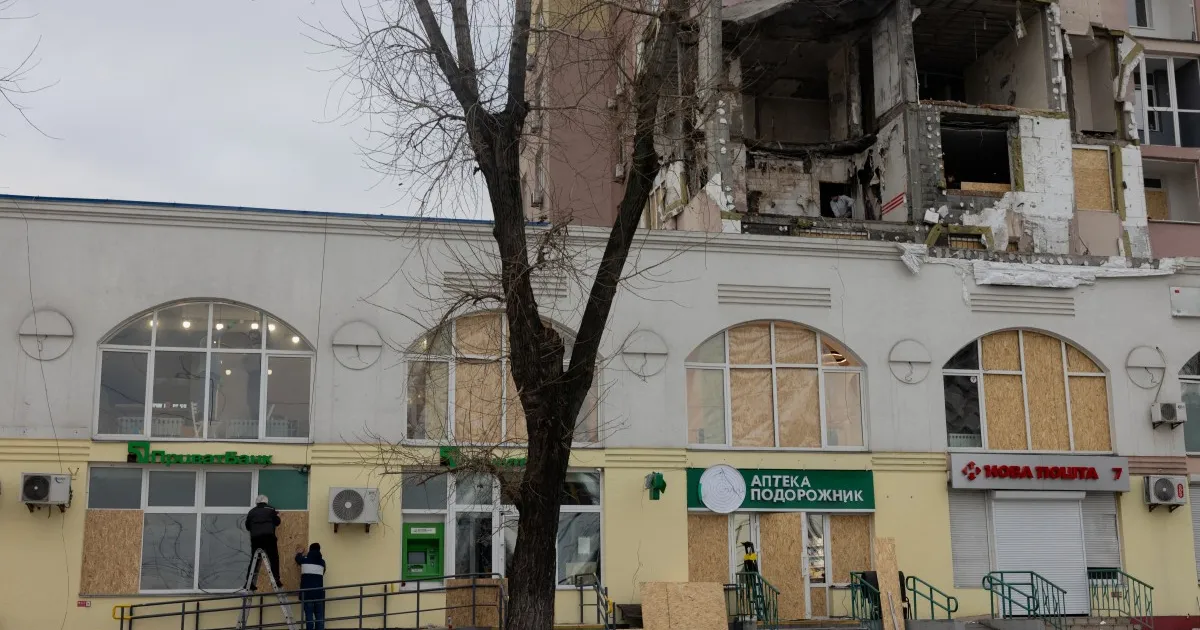
City employees and firefighters work at the site of an apartment building hit during Russian missile and drone attacks in Kyiv, Ukraine [Valentyn Ogirenko/Reuters]
Upcoming peace talks
The Russian attack came as Zelenskyy prepares to meet with US President Donald Trump in Florida on Sunday for further talks on how to end Moscow’s nearly four-year war.
Zelenskyy said they planned to discuss security guarantees and questions over future territorial control, the main sticking points in the negotiations.
Analysts say the Russian strikes on Kyiv were aimed at sending a clear message ahead of the Trump-Zelenskyy meeting.
“It’s kind of traditional in the negotiations, since before the invasion, since 2014, whenever we have these kind of meetings, there is an escalated attack. And the point is to put pressure on the meeting,” said Ben Aris, the founder and editor-in-chief of BNE Intelli-News.
“And Putin here is underlining the fact that he has the ability to take out power stations just as temperatures fall below zero,” said Aris. The message Putin aimed to send is that if Zelenskyy “doesn’t succumb to my demands, then I have the ability to black out all of the large cities in Ukraine with these high precision and powerful missiles,” said Aris.
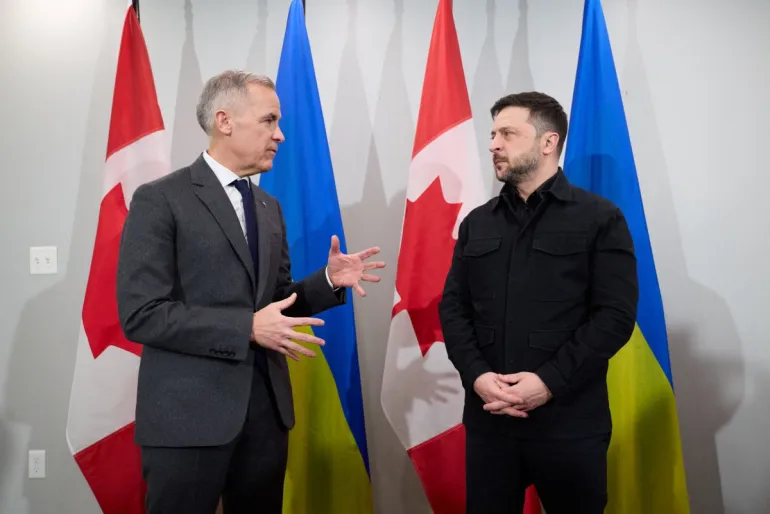
Before the talks with Trump, Zelenskyy met Canadian Prime Minister Mark Carney in Halifax on Saturday. The two held a bilateral meeting before attending a joint telephone conversation with European leaders.
Speaking beside the Ukrainian leader, Carney announced an additional 2.5 billion Canadian dollars ($1.82bn) of economic aid for Ukraine, and said that peace depends on a “willing Russia”.
Later, German Chancellor Friedrich Merz issued a statement saying that Zelenskyy had “the full support” of European leaders and of Canada, before his talks with Trump. They and the leaders of NATO and the European Union said they would work “in close coordination with the US for a just and lasting peace in Ukraine”, Merz added.
EU chiefs Ursula von der Leyen and Antonio Costa also reaffirmed the bloc’s support for Ukraine.
“We welcome all efforts leading to our shared objective – a just and lasting peace that preserves Ukraine’s sovereignty and territorial integrity,” European Commission President von der Leyen said on X after the call with Zelenskyy and Carney.
Costa, the president of the European Council, which represents the EU’s 27 member states, echoed her promise to continue backing Ukraine, saying on X: “The EU’s support for Ukraine will not falter. In war, in peace, in reconstruction.”
Ukraine ‘suffering’
Moscow demands that Ukraine withdraw from the parts of the eastern Donetsk region that Russian troops have failed to occupy during almost four years of war, as it seeks full control of the Donbas, comprising the Donetsk and Luhansk regions.
Kyiv wants the fighting to be halted at the current lines.
The US, seeking a compromise, has proposed a free economic zone if Ukraine leaves parts of the Donetsk region. Zelenskyy told US news site Axios on Friday that he would seek a stronger position for Ukraine, but could put the US-backed plan to a referendum if necessary.
Both Zelenskyy and Trump have expressed optimism about the meeting, with the Ukrainian leader saying that most components of a US-Ukraine agreement had been ironed out and that he hopes to finalise a framework on Sunday.
“A lot can be decided before the New Year,” Zelenskyy posted on social media on Friday.
But the attack on Saturday appeared to alter Zelenskyy’s tone. In a post following the aerial barrage, he said that Russia’s leadership “does not want to end the war”, and that their drones and missiles speak louder than any “lengthy talks” they engaged in.
Russia’s leadership aims “to use every opportunity to cause Ukraine even greater suffering and increase their pressure on others around the world”, said Zelenskyy.
The Russian president levied similar criticism.
According to the Interfax and TASS news agencies, Putin said Russia could see Kyiv was in no hurry to end the conflict by peaceful means. He also threatened Russia would accomplish all goals of its “special military operation” in Ukraine by force.
Separately on Saturday, Russian forces reported that they had captured the town of Myrnohrad in Ukraine’s Donetsk region, as well as Huliaipole in Ukraine’s Zaporizhia region, the Kremlin said on its Telegram channel.
Ukraine’s military, however, said in its daily battlefield update that its forces had beaten back Russian attempts to advance in the vicinity of Myrnohrad and Huliaipole
These are the key developments from day 1,403 of Russia’s war on Ukraine.
Published On 28 Dec 202528 Dec 2025
Share
Here is where things stand on Sunday, December 28:
Fighting
At least two people were killed in Ukraine’s capital, Kyiv, and the surrounding region, after Russian forces launched a massive attack with hundreds of missiles and drones, ahead of Ukrainian President Volodymyr Zelenskyy’s meeting with United States President Donald Trump to work out a plan to end nearly four years of war.
The attack also wounded at least 46 people, including two children, according to Ukrainian officials.
Zelenskyy, who was on his way to meet Trump in Florida, said that Russia had launched nearly 500 drones and 40 missiles, targeting energy and civilian infrastructure.
Ukraine’s state grid operator, Ukrenergo, said that energy facilities across Ukraine were struck, and emergency power cuts had been implemented across the capital. DTEK, Ukraine’s largest private energy company, said the attack had left more than a million households in and around Kyiv without power.
Ukrainian Deputy Prime Minister Oleksii Kuleba said that more than 40 percent of residential buildings in Kyiv were left without heat, as temperatures hovered around 0 degrees Celsius (32 degrees Fahrenheit) following the attack.
Poland’s Air Navigation Services Agency said in a statement on X that the Rzeszow and Lublin airports in the country’s southeastern region were temporarily shut following Russia’s strikes on Ukraine. The Operational Command of the Polish Armed Forces said that Polish and allied jets were deployed during the attack, but no violations of Polish airspace were reported.
In Russia, air defence forces shot down 11 drones headed for the capital, Moscow, according to the city’s mayor, Sergei Sobyanin.
Russia’s aviation watchdog, Rosaviatsia, said that Moscow’s Vnukovo and Sheremetyevo airports imposed temporary restrictions on airspace due to security reasons.
Russia’s Ministry of Defence also said that its air defence systems had intercepted and destroyed more than 100 Ukrainian drones in three hours over six other Russian regions.
Russian commanders told President Vladimir Putin that Moscow’s forces had captured the Ukrainian towns of Myrnohrad, Rodynske and Artemivka in Ukraine’s Donetsk region, as well as Huliaipole and Stepnohirsk in the Zaporizhia region, the Kremlin and Russian news agencies said on Telegram.
But Ukraine’s military said in its daily battlefield update that its forces had beaten back Russian attempts to advance in the vicinity of Myrnohrad and Huliaipole.
Politics and diplomacy
Zelenskyy announced in a Telegram message that he would hold talks with European leaders after his meeting with Trump on Sunday, as Kyiv pushes for a stronger position in the ongoing ceasefire negotiations to prevent Russia from prolonging the war in Ukraine.
Zelenskyy said he wants to discuss with Trump territorial issues, the main stumbling block in talks to end the war, as a 20-point peace framework and a security guarantee deal near completion.
On the way to the meeting in Florida, Zelenskyy stopped in Canada’s Halifax to meet Mark Carney, the Canadian prime minister said in a statement after the meeting.
Carney denounced the latest Russian attack as “barbarism”, stressing that it is important for allies to “stand with Ukraine in this difficult time”. He also announced $1.83bn in additional economic aid to Ukraine.
Zelenskyy spoke to European leaders following the meeting with Carney. In a statement posted on X, European Commission President Ursula von der Leyen said: “We welcome all efforts leading to our shared objective – a just and lasting peace that preserves Ukraine’s sovereignty and territorial integrity. And that strengthens the country’s security and defence capabilities.”
Antonio Costa, the president of the European Council, which represents the bloc’s 27 member states, echoed von der Leyen’s promise to continue backing Ukraine, saying on X: “The EU’s support for Ukraine will not falter. In war, in peace, in reconstruction.”
German Chancellor Friedrich Merz said that Zelenskyy had “the full support” of European leaders ahead of his talks with Trump. The leaders of NATO and the European Union said they would work “in close coordination” with the US “for a just and lasting peace in Ukraine”, Merz added in a statement.
French President Emmanuel Macron said in a call with Zelenskyy that the latest Russian strikes on Kyiv showed that Moscow was not interested in ending the war, the AFP news agency reported, citing officials from Macron’s office. During the call, Macron highlighted what he called the “contrast” between “the willingness of Ukraine to build a lasting peace and Russia’s determination to prolong the war that it started”, the report said.
Russian President Vladimir Putin said that Russia could see Kyiv was in no hurry to end the war by peaceful means, according to the Interfax news agency. Putin said that if Ukraine did not want to resolve the conflict peacefully, then Russia would accomplish all goals of its “special military operation” by force, Russian state news agency TASS reported.
Ukrainian President Volodymyr Zelenskyy (right) and Canadian Prime Minister Mark Carney (left) speak to the media as they meet in Halifax, Nova Scotia, Canada, ahead of the former’s meeting with US President Donald Trump on Sunday [Ukrainian Presidential Office/Handout Photo via AFP]
Ukrainian President Volodymyr Zelenskyy has accused Russia of using ordinary apartment blocks on the territory of its ally Belarus to attack Ukrainian targets and circumvent Kyiv’s defences.
Zelenskyy made the allegations on Friday amid revelations by intelligence experts that Moscow has likely stationed its new nuclear-capable hypersonic ballistic missiles at a former airbase in eastern Belarus – a move seen as bolstering Russia’s ability to strike targets in Europe.
Recommended Stories
list of 3 itemsend of list
“We note that the Russians are trying to bypass our defensive interceptor positions through the territory of neighbouring Belarus. This is risky for Belarus,” Zelenskyy wrote on the Telegram messaging app on Friday after a military staff meeting.
“It is unfortunate that Belarus is surrendering its sovereignty in favour of Russia’s aggressive ambitions,” the Ukrainian leader said.
Zelenskyy said Ukrainian intelligence had observed that Belarus was deploying equipment “in Belarusian settlements near the border, including on residential buildings” to assist Russian forces in carrying out their attacks.
“Antennae and other equipment are located on the roofs of ordinary five-storey apartment buildings, which help guide ‘Shaheds’ [Russian drones] to targets in our western regions,” he said.
“This is an absolute disregard for human lives, and it is important that Minsk stops playing with this,” he added.
The Russian and Belarusian defence ministries did not immediately respond to requests for comment.
Russia had previously used Belarusian territory to launch its February 2022 invasion of Ukraine, and Belarus remains a steadfast ally, though President Alexander Lukashenko has pledged to commit no troops to the conflict.
Russian President Vladimir Putin and Belarusian President Alexander Lukashenko attend a wreath-laying ceremony at the Eternal Flame in the Hall of Military Glory at the Mamayev Kurgan World War II memorial complex in Russia’s southern city of Volgograd in April 2025 [File: Alexander Nemenov/AFP]
Belarus defence minister: ‘Our response’ to the West’s ‘aggressive actions’
Amid reports of closer Russian and Belarusian coordination in the war on Ukraine, satellite imagery analysed by two US researchers appears to show that Moscow is stationing Oreshnik hypersonic ballistic missiles in eastern Belarus, according to an exclusive Reuters news agency report.
Oreshnik had been described by Russian President Vladimir Putin as impossible to intercept, and he previously made clear his intention to deploy the missiles – which have an estimated range of up to 5,500km (3,400 miles) – in Belarus.
Researchers Jeffrey Lewis of the Middlebury Institute of International Studies, in California, and Decker Eveleth of the CNA research and analysis organisation in Virginia, said they were 90 percent certain that mobile Oreshnik launchers would be stationed at the former Russian airbase near Krichev, some 307km (190 miles) east of the Belarus capital of Minsk.
The United States researchers said reviews of satellite imagery revealed a hurried construction project in Belarus that began between August 4 and 12, and contained features consistent with those of a Russian strategic missile base.
One “dead giveaway” in a November 19 satellite image was a “military-grade rail transfer point” enclosed by a security fence to which missiles, their mobile launchers and other components could be delivered by train to the site, Eveleth told Reuters.
Another feature, said Lewis, was the construction of a concrete pad that was then covered with earth, and which he called “consistent” with a camouflaged missile launch point.
The researchers’ assessment broadly aligns with US intelligence findings, according to the report.
Russia and Belarus have yet to comment on the Reuters report.
But, earlier this month, President Lukashenko acknowledged the deployment of such weapons in his country, although he did not say to which part of the country the Russian missiles have been deployed. He added that up to 10 Oreshniks would be deployed within the country.
State-run BelTA news agency quoted Belarusian Defence Minister Viktor Khrenin as saying this week that the Oreshnik’s deployment would not alter the balance of power in Europe and was “our response” to the West’s “aggressive actions”.
The White House did not immediately respond to a request for comment on the reported Russian missile deployment to Belarus.
Ukraine’s capital came under a new “massive” Russian attack early on Saturday, with explosions reported in the city, air defences in operation and the Ukrainian military saying cruise and ballistic missiles were being deployed.
On Sunday, President Zelenskyy is scheduled to meet with US President Donald Trump to finalise a possible ceasefire deal between Moscow and Kyiv.
In advance of the meeting, Zelenskyy told the Axios news site that he was open to putting the Washington-led “20-point” peace plan to a referendum – as long as Russia agreed to a 60-day ceasefire to allow Ukraine to prepare for and hold such a vote.
Ukrainian president highlights ‘significant progress’ in talks, but Moscow says Kyiv is working to ‘torpedo’ deal.
Published On 26 Dec 202526 Dec 2025
Share
Ukrainian President Volodymyr Zelenskyy is to meet with his United States counterpart, Donald Trump, in Florida on Sunday to discuss territorial disputes that continue to block progress towards ending Russia’s war on Ukraine.
Announcing the meeting on Friday, Zelenskyy said the talks could be decisive as Washington intensifies its efforts to broker an end to Europe’s deadliest conflict since World War II. “A lot can be decided before the New Year,” Zelenskyy said.
Recommended Stories
list of 3 itemsend of list
Territory remains the most contentious issue in the negotiations. Zelenskyy confirmed he would raise the status of eastern Ukraine and the Zaporizhzhia Nuclear Power Plant, which has been under Russian control since the early months of Russia’s invasion.
“As for the sensitive issues, we will discuss both Donbas and the Zaporizhzhia Nuclear Power Plant. We will certainly discuss other issues as well,” he told reporters in a WhatsApp chat.
Moscow has demanded that Kyiv withdraw from parts of the Donetsk region still under Ukrainian control as it pushes for full authority over the wider Donbas area, which includes Donetsk and Luhansk. Ukraine has rejected that demand, instead calling for an immediate halt to hostilities along the existing front lines.
Territorial concessions
In an attempt to bridge the divide, the US has floated the idea of establishing a free economic zone should Ukraine relinquish control of the contested area although details of how such a plan would operate remain unclear.
Zelenskyy reiterated that any territorial concessions would require public approval. He said decisions on land must be made by Ukrainians themselves, potentially through a referendum.
Beyond territory, Zelenskyy said his meeting with Trump would focus on refining draft agreements, including economic arrangements and security guarantees. He said a security pact with Washington was nearly finalised while a 20-point peace framework was close to completion.
Ukraine has sought binding guarantees after previous international commitments failed to prevent Russia’s invasion, which began in February 2022.
Trump has previously voiced impatience with the pace of negotiations, but he has indicated he would engage directly if talks reached a meaningful stage.
Last week, US Secretary of State Marco Rubio said his country is the only mediator that can speak to both sides to secure a peace agreement. At the same time, he downplayed the importance of the conflict for Washington.
“It’s not our war. It’s a war on another continent,” he said.
Zelenskyy said European leaders could join Sunday’s discussions remotely and confirmed he had already briefed Finnish President Alexander Stubb on what he described as “significant progress”.
Despite Zelenskyy’s assertion, Russian Deputy Foreign Minister Sergey Ryabkov accused Ukraine of working to “torpedo” the peace talks, saying a revised version of the US peace plan promoted by Kyiv was “radically different” from an earlier version negotiated with Washington.
“Our ability to make the final push and reach an agreement will depend on our own work and the political will of the other party,” he said during a television interview on Friday.
Ryabkov said any agreement must remain within the parameters set out between Trump and Russian President Vladimir Putin during a summit in August, which Ukraine and European partners have criticised as overly conciliatory towards Russia’s war aims.
On the ground, Moscow has intensified strikes on Ukraine’s energy infrastructure and the southern port city of Odesa while an attack on Kharkiv on Friday killed two people.
These are the key developments from day 1,401 of Russia’s war on Ukraine.
Published On 26 Dec 202526 Dec 2025
Share
Here is where things stand on Friday, December 26:
Fighting
Officials in Russia’s Krasnodar region reported a huge fire following a Ukrainian drone strike on two storage tanks holding oil products in the southern Russian port of Temryuk. The blaze spread across roughly 2,000 square metres (some 21,500 square feet).
Long-range Ukrainian drones targeted oil storage facilities at Temryuk port, as well as a gas processing plant in Russia’s Orenburg region, Ukraine’s SBU security service said.
Ukraine’s General Staff said its military also struck the Novoshakhtinsk oil refinery in Russia’s Rostov region using Storm Shadow missiles, triggering several explosions.
The General Staff described the Russian refinery as a major supplier of oil products in southern Russia that supports Moscow’s military operations in Ukraine.
Russia’s Ministry of Defence announced that its forces had taken control of the settlement of Sviato-Pokrovske in eastern Ukraine’s Donetsk region, according to reports from Russian state news agencies.
Regional security
Poland sent fighter jets to intercept a Russian reconnaissance aircraft flying near its airspace over the Baltic Sea and said dozens of objects entered Polish airspace from Belarus overnight, warning the incidents during the holiday season may signal a provocation.
Russia’s Ministry of Foreign Affairs accused the United States of encouraging what it called “piracy” in the Caribbean and Pacific Ocean by blockading Venezuela, while expressing hope that US President Donald Trump’s pragmatism could prevent further escalation.
Moscow also reiterated its support for Venezuelan President Nicolas Maduro’s government and its efforts to safeguard national sovereignty amid threats by the US to remove Maduro from power.
Peace talks
Ukrainian President Volodymyr Zelenskyy said he spoke with Donald Trump’s special envoy Steve Witkoff and son-in-law, Jared Kushner, for about an hour on how to end the war with Russia and “how to bring the real peace closer”.
“Of course, there is still work to be done on sensitive issues,” the Ukrainian leader said. “But together with the American team, we understand how to put all of this in place. The weeks ahead may also be intensive. Thank you, America!”
Russia believes negotiations with the US to end the war in Ukraine are making gradual progress, Russian Foreign Ministry spokeswoman Maria Zakharova said. She described the talks as slow-moving but advancing steadily.
Politics and diplomacy
Kremlin spokesman Dmitry Peskov said President Vladimir Putin had sent the US president a Christmas greeting along with a congratulatory message.
Russia said it had put forward a proposal to France concerning Laurent Vinatier, a French researcher imprisoned under Russia’s foreign agent laws, adding that the next steps in the Frenchman’s case now rest with Paris.
Sanctions
Russia’s target of producing 100 million tonnes of liquefied natural gas annually has been pushed back by several years due to international sanctions, the country’s Deputy Prime Minister Alexander Novak said in comments aired on state television.
‘Main reason for optimism’ is a belief that war in Ukraine will end in 2026 with Moscow’s ‘objectives’ achieved,’ pollster says.
Published On 25 Dec 202525 Dec 2025
Share
A majority of Russians expect the war in Ukraine to end in 2026, a state-owned research centre said, as Russian forces make advances on the battlefield and efforts intensify to reach a ceasefire deal between Kyiv and Moscow.
VTsIOM, Russia’s leading public opinion research centre, said on Wednesday that its annual survey of sentiment around the outgoing year and expectations for the coming year found Russians are viewing 2026 with “growing optimism”.
Recommended Stories
list of 4 itemsend of list
“Expectations for next year traditionally look much more optimistic … In other words, while the negative perception of the current situation persists, Russians have become more likely to accept (or believe, hope?) future improvements this year, but they still do so with caution,” the organisation said in a review of its survey findings released online.
In a year-end presentation, VTsIOM deputy head Mikhail Mamonov said 70 percent of 1,600 people surveyed viewed 2026 as being a more “successful” year for Russia than this year, with 55 percent of respondents linking hope for a better year to a possible end to what Russia officially calls its “special military operation” in Ukraine.
“The main reason for optimism is the possible completion of the special military operation and the achievement of the stated objectives, in line with the national interests outlined by the president,” Mamonov said at the presentation.
Mamonov pointed to the Russian military’s ongoing offensive in Ukraine, Washington’s reluctance to finance the Ukraine war and the European Union’s inability to fully replace the United States’ role in Ukraine – financially and militarily – as key factors behind the prospects for an eventual deal to end the fighting.
At the conclusion of the conflict, reintegration of Russian military veterans into society and the reconstruction of Russian-controlled regions of Ukraine, as well as Russian border areas, will be the main priorities, Mamonov added.
While the actual level of Russian public fatigue with the war is difficult to measure due to strict state controls on the media, expressions of public dissent as well as the prosecution of those who criticise Moscow’s war on its neighbour, approximately two-thirds of Russians support peace talks, according to independent pollster Levada, the highest number since the start of the war in 2022.
Ukrainian President Volodymyr Zelenskyy said in comments released on Wednesday that he would be willing to withdraw troops from Ukraine’s eastern industrial heartland as part of a plan to end the war, if Moscow reciprocated by also pulling back its forces and allowed the area to become a demilitarised zone monitored by international forces.
In comments to reporters about an overarching 20-point plan that negotiators from Ukraine and the US had hammered out in Florida in recent days, Zelenskyy also said that a similar arrangement could be possible for the area around the Zaporizhzhia nuclear power plant, which is currently under Russian control.
Russia has given no indication that it will agree to any kind of withdrawal from land it has seized in Ukraine and has long insisted that Kyiv must give up the remaining territory it still holds in the Donbas industrial area before any discussions on the cessation of fighting.
Russia has captured most of Luhansk and about 70 percent of Donetsk – the two regions that make up the Donbas.
Zelenskyy also said that figuring out the future control of the Donbas as part of the plan was “the most difficult point”, and creating a demilitarised economic zone in the region would require difficult discussions on how far troops would be required to move back and where international forces would be stationed.
Such discussions should be held at the leaders’ level, he said.
These are the key developments from day 1,400 of Russia’s war on Ukraine.
Published On 25 Dec 202525 Dec 2025
Share
Here is where things stand on Thursday, December 25:
Fighting
An explosion in Moscow killed three people, including two police officers, just days after a car bomb killed a high-ranking Russian general in the same area of the capital.
An official from Ukraine’s military intelligence, known as GUR, told The Associated Press news agency that the attack had been carried out as part of a Ukrainian operation and the two police officers were targeted for taking part in Russia’s war in Ukraine.
Russian air defence units downed 16 Ukrainian drones en route to Moscow throughout Wednesday, the capital’s Mayor Sergei Sobyanin said.
Sobyanin said the drones were repelled over a period of about 17 hours, and emergency crews were examining fragments where the drones hit the ground, but no damage was reported.
Two of four major airports servicing Moscow were forced to limit operations for a time due to the drone attacks, Russia’s civil aviation authority said on Telegram.
Russia’s Ministry of Defence said its aerial defence units destroyed 172 Ukrainian drones overnight, nearly half of them over regions bordering Ukraine.
Ukraine said its drones had struck the Yefremov synthetic rubber plant in Russia’s Tula region, south of Moscow, and a storage facility for marine drones in Russian-occupied Crimea.
Tula regional governor, Dmitry Milyaev, said debris from a downed Ukrainian drone ignited a fire at an industrial site, and Russian air defence units destroyed 12 Ukrainian drones over the region.
A sunflower oil spill, caused by Russian aerial bombardments, has contaminated the shoreline around the southern Ukrainian city of Odesa, killing wildlife and triggering warnings from conservationists, the AFP news agency reports.
“The cause was damage to sunflower oil tanks as a result of massive enemy attacks on port infrastructure, causing some of the oil to spill,” Odesa Governor Oleh Kiper said in a statement. The Pivdenny port in the region was temporarily closed on Wednesday to help with the cleanup.
A Russian-backed court in occupied Ukraine sentenced a Colombian man to 19 years in prison for fighting for Kyiv’s army.
Russia’s Prosecutor General said the Supreme Court in the Russian-controlled area of Ukraine’s Donetsk region sentenced Oscar Mauricio Blanco Lopez, 42, to 19 years in jail. The Colombian arrived in Ukraine in May 2024 to sign up with the Ukrainian army and had been “taken prisoner by Russian servicemen” in December 2025.
Ceasefire talks
Ukrainian President Volodymyr Zelenskyy revealed for the first time details of an agreement between the United States and Ukrainian negotiators on ending the war with Russia. The 20-point plan, agreed on by US and Ukrainian negotiators after marathon talks, is now being reviewed by Moscow.
As part of the plan, President Zelenskyy said Ukraine would be willing to withdraw troops from the country’s eastern industrial heartland if Moscow also pulled back and the area becomes a demilitarised zone monitored by international forces.
A similar arrangement could be possible for the area around the Zaporizhzhia nuclear power plant, which is currently under Russian control, Zelenskyy said. The Ukrainian leader said that any peace plan would need to be put to a referendum in Ukraine.
Asked about the latest development in ceasefire talks, Kremlin spokesperson Dmitry Peskov said Moscow would decide its position based on information received by Russian presidential envoy Kirill Dmitriev, who met with US envoys in Florida over the weekend.
Russia has given no indication that it will agree to any kind of withdrawal from land it has seized in Ukraine. Moscow has also insisted that Ukraine relinquish the remaining territory it still holds in the Donbas. Russia has captured most of Luhansk and about 70 percent of Donetsk – the two areas that make up the Donbas.
Politics and diplomacy
A majority of Russians expect the war in Ukraine to end in 2026, Russia’s state pollster VTsIOM said, in a sign that the Kremlin could be testing public reaction to a possible peace settlement as diplomatic efforts to end the conflict intensify.
During the pollster’s year-end presentation, VTsIOM Deputy Head Mikhail Mamonov said 70 percent of the 1,600 respondents saw 2026 as a more “successful” year for Russia than 2025, while for 55 percent that hope was linked to a possible end to Russia’s war in Ukraine.
A Russian court has scheduled the first public hearing in a criminal case against German sculptor Jacques Tilly, who is accused of discrediting the Russian military through his satirical Carnival floats depicting Russia’s President Vladimir Putin.
The court in Moscow said the trial will begin on December 30 and proceedings will be held in absentia, as Tilly – who faces up to 10 years in jail or a fine – is not in Russia.
Zelenskyy said in his Christmas address on Wednesday that despite marking the holiday at a “difficult” time, the nation’s unity remains intact. “Ukrainians are together tonight,” Zelenskyy said, adding the country had “without a doubt” been changed by the war. “It hardly matters what dishes are on the table – what matters is who is at the table,” he said.
Artillerymen of the 44th Separate Artillery Brigade fire a M777 Howitzer towards Russian troops, amid Russia’s attack on Ukraine, in Dnipropetrovsk region, Ukraine, on December 24, 2025 [Reuters]
Regional security
France’s President Emmanuel Macron said he spoke with NATO chief Mark Rutte to discuss the situation in Ukraine and the work undertaken by the “coalition of the willing”. “Starting in January in Paris, we will continue the work begun within this framework to provide Ukraine with solid security guarantees, a prerequisite for a robust and lasting peace,” Macron said on social media.
Democratic senators in the US have urged President Donald Trump to reverse a recall of nearly 30 career ambassadors, warning the move leaves a dangerous leadership vacuum that allows adversaries like Russia and China to expand their influence. The Trump administration in recent days has ordered career diplomats serving across Europe, Asia, Africa and Latin America back to Washington to ensure US missions abroad reflect its “America First” priorities.
Economics
Kazakhstan’s exports of its flagship CPC Blend of oil will be their lowest in 14 months in December, as bad weather delays efforts to repair Russian loading infrastructure after Ukrainian drone strikes last month, two sources told the Reuters news agency.
On November 29, Ukrainian drones hit the Caspian Pipeline Consortium terminal located near Russia’s Black Sea port of Novorossiysk, leaving just one out of three jetties operational and prolonging export delays. Poor weather has added to the difficulty of carrying out maintenance work necessary to allow exports to recover.
Ukraine’s Ministry of Finance said it completed the settlement of a deal to restructure $2.6bn of growth-linked debt.
The Ukrainian military says its forces have withdrawn from the battle-scarred town of Siversk in the eastern Donetsk region after heavy fighting with Russian forces.
In a statement on Telegram on Tuesday, Ukraine’s General Staff said that Russian troops had a “significant advantage” in manpower and equipment and had exerted constant pressure on the defending Ukrainian troops by staging small-unit assaults in difficult weather conditions.
Recommended Stories
list of 4 itemsend of list
Ukraine’s decision to withdraw its forces was made to “preserve the lives of our soldiers and the combat capability of the units”, the General Staff said.
Heavy losses were inflicted on Russian forces before the order to retreat was given, and Siversk remains “under the fire control of our troops”, and “enemy units are being blocked to prevent their further advance,” the General Staff added.
Ukraine’s DeepState military monitoring site reported late on Tuesday that Russian forces had occupied Siversk as well as Hrabovske, a village in Ukraine’s Sumy region close to the border with Russia.
Russian Lieutenant General Sergei Medvedev had told Russian President Vladimir Putin on December 11 that troops had taken Siversk, where fighting has been fierce in recent months, but Ukrainian officials denied the Russian reports at the time.
Ukraine’s military said at the time that Russian troops were “taking advantage of unfavourable weather conditions” to launch attacks, but were mostly being “destroyed on the approaches”.
The Kyiv Independent news site said that, despite Siversk’s modest size – it had a pre-war population of 10,000, and now, just a few hundred civilians remain – the town was key to the defence of northern Donetsk.
The town had helped shield the larger Sloviansk and Kramatorsk areas, “the main bastions of Ukraine’s so-called ‘fortress belt’”, which Russia has been unable to conquer since the start of fighting, the Kyiv Independent said.
Donetsk is one of three Ukrainian regions at the centre of Russia’s territorial demands, which are the stumbling blocks to reaching an agreement on a ceasefire. Ukraine’s leaders have said they will not concede their country’s territory taken during Moscow’s invasion.
Russian forces had already seized an estimated 19 percent of Ukrainian territory as of early December, including Crimea, which Moscow annexed in 2014, all of the Luhansk region, and more than 80 percent of Donetsk, according to the Reuters news agency.
Russian forces also control about 75 percent of the Kherson and Zaporizhia regions, and small parts of the Kharkiv, Sumy, Mykolaiv and Dnipropetrovsk regions, according to Reuters.
A 28-point peace plan first put forward by the administration of US President Donald Trump last month says that a negotiated settlement would see Crimea, Luhansk and Donetsk “recognised as de facto Russian, including by the US”.
Ukrainian President Volodymyr Zelenskyy recently said that the United States is pushing for Ukraine to withdraw its forces from the Donetsk region to establish a “free economic zone” in the area, which he said the Russian side is referring to as a “demilitarised zone”.
People visit the graves of fallen Ukrainian soldiers, decorated with Christmas trees and New Year’s decorations, at the Lychakiv Military Cemetery, in Lviv, Ukraine on Tuesday [Yuriy Dyachyshyn/AFP]
Pope saddened as fighting continues over Christmas
The latest setback for Kyiv on the battlefield came as Zelenskyy said on Tuesday that Russian forces had launched another “massive attack” on Ukraine on Monday night, killing at least three people, including a four-year-old girl, across 13 regions targeted with drones and missiles.
In Russia, Ukrainian drone attacks killed four people in the Belgorod region over the past two days, local officials said.
Pope Leo expressed disappointment on Tuesday that Russia had apparently refused to agree to a ceasefire on December 25, the date many Christians celebrate Christmas.
“I will make an appeal one more time to people of goodwill to respect at least Christmas Day as a day of peace,” Leo said, speaking to reporters outside his residence in Castel Gandolfo, Italy.
“Maybe they will listen to us, and there will be at least 24 hours, a day of peace, across the world,” he said.
While most people in Ukraine and Russia are Christians, many are Orthodox, meaning they observe Christmas on January 7.
Russian President Vladimir Putin announced an unexpected 30-hour unilateral truce a day before Easter this year, a rare pause in Russia’s war on Ukraine, which has now continued for close to three years, after Russia’s full-scale invasion in February 2022.
These are the key developments from day 1,399 of Russia’s war on Ukraine.
Published On 24 Dec 202524 Dec 2025
Share
Here is where things stand on Wednesday, December 24:
Fighting
Russian forces began a “massive attack” on Ukraine on Monday night, killing three people and targeting 13 regions with 650 drones and 30 missiles, Ukrainian President Volodymyr Zelenskyy said in a post on X.
Those killed in the overnight attack included a four-year-old girl in the central Zhytomyr region, Governor Vitalii Bunechko said on Telegram. “Doctors struggled to save the child’s life, but in the end, they were unable to save her,” Bunechko said, adding that five people were also injured in the attack.
Russian forces also launched drones and missiles at the Vyshhorod district of Ukraine’s Kyiv region, killing a woman and injuring three people, Governor Mykola Kalashnyk said.
In Ukraine’s western Khmelnytskyi region, one person was killed by Russian shelling, Governor Serhii Tiurin said.
Russian drone attacks on Kyiv’s Sviatoshynskyi district left five people injured, said Tymur Tkachenko, the head of the Kyiv City Military Administration.
An injured elderly woman looks out of her broken window after an apartment building was hit by a Russian drone during an aerial attack in Kyiv, Ukraine, on Tuesday [Efrem Lukatsky/AP Photo]
Ukraine’s Ministry of Energy said that “emergency power outages” were introduced in several regions across the country due to Russian forces targeting energy infrastructure. The ministry said that it was working to restore electricity to the Rivne, Ternopil and Odesa regions. The ministry said that the situation was “most difficult” in the border regions, “as restoring electricity is complicated by continuous fighting”.
Ukraine’s General Staff said Ukrainian troops have withdrawn from the Donetsk region’s Siversk area after heavy fighting, noting that Moscow’s forces had a “significant advantage” there.
Ukraine’s Ministry of Foreign Affairs said that Ukrainian F-16 fighter pilots shot down 621 of 673 Russian “aerial targets” on Tuesday night, including 34 of 35 cruise missiles.
In Russia, a Ukrainian drone strike on a car killed three men in the Belgorod region on Monday, the region’s emergency response team reported.
Another Ukrainian drone attack in Belgorod on Tuesday killed one person and injured three, the region’s operational headquarters said on Telegram.
Russian forces shot down 56 Ukrainian drones in a day, as well as a guided bomb, Russia’s Ministry of Defence said, according to the state news agency TASS.
Ceasefire
Zelenskyy said in his nightly address, “We sense that America wants to reach a final agreement” to end the war in Ukraine, and that “there is full cooperation” from the Ukrainian side.
In an earlier post on X, Zelenskyy said that “several draft documents have now been prepared”, following talks in Miami. “In particular, these include documents on security guarantees for Ukraine, on recovery, and on a basic framework for ending this war,” he said.
Pope Leo said that Russia’s apparent refusal to agree to a ceasefire on December 25 is “among the things that cause me much sadness”.
“I will make an appeal one more time to people of goodwill to respect at least Christmas Day as a day of peace,” Leo told reporters outside his residence in Castel Gandolfo, Italy.
Talks held between Foreign Minister Asaad Hassan Al-Shaibani, Defence Minister Murhaf Abu Qasra and the Russian president.
Syria’s foreign and defence ministers met Russian President Vladimir Putin in Moscow and held discussions on expanding “strategic cooperation in the military industries sector”, Syrian state media has reported.
The Syrian Arab News Agency (SANA) said that Putin’s meeting on Tuesday with Syrian Minister of Foreign Affairs Asaad Hassan Al-Shaibani and Minister of Defence Murhaf Abu Qasra focused on political, economic and military issues of “mutual interest”, but that “particular emphasis” was on defence.
Recommended Stories
list of 4 itemsend of list
According to SANA, Putin and the Syrian ministers discussed a range of defence-related matters, including developing military cooperation to strengthen the Syrian army’s capabilities and modernising its equipment, transferring expertise and cooperation in research and development.
“During the meeting, both sides reviewed ways to advance military and technical partnership in a manner that strengthens the defensive capabilities of the Syrian Arab Army and keeps pace with modern developments in military industries,” SANA reported.
The two sides also discussed political and economic issues, including the “importance of continued political and diplomatic coordination between Damascus and Moscow in international forums”, according to the news agency.
On the economic front, the talks addressed expanding Syrian-Russian cooperation, including in reconstruction projects, infrastructure development and investment in Syria.
Putin also reaffirmed Russian “steadfast support” for Syria and its territorial integrity, while renewing “Moscow’s condemnation of repeated Israeli violations of Syrian territory, describing them as a direct threat to regional security and stability”.
The ministers’ visit to Moscow is the latest by Syria’s new authorities since the removal from power last December of the country’s longtime ruler and Moscow’s former ally in Damascus, Bashar al-Assad.
Russia was a key supporter of al-Assad during Syria’s nearly 14-year civil war, providing vital military aid that kept the Assad regime in power, including Russian air support that rained air strikes on rebel-held areas.
Despite al-Assad and his family fleeing to Russia after the toppling of his regime, Moscow is eager to build good relations with the new government in Damascus.
Moscow, in particular, is hoping to secure agreements to continue operating the Khmeimim airbase and the Tartous naval base on Syria’s Mediterranean coast, where Russian forces continue to be present.
In October, Syria’s new president, Ahmed al-Sharaa, visited Russia, where he said his government would honour all the past deals struck between Damascus and Moscow, a pledge that suggested that the two Russian military bases were secure in the post-Assad period.
Putin said at the time of al-Sharaa’s visit that Moscow was ready to do all it could to act on what he called the “many interesting and useful beginnings” discussed by the two sides on renewing relations.
Russian state media on Tuesday quoted the country’s Ministry of Foreign Affairs spokeswoman, Maria Zakharova, as saying that Russian Foreign Minister Sergey Lavrov would also hold talks with his Syrian counterpart, Al-Shaibani, during the Syrian delegation’s visit.
During a visit to Moscow in July, Al-Shaibani said his country wanted Russia “by our side”.
“The current period is full of various challenges and threats, but it is also an opportunity to build a united and strong Syria. And, of course, we are interested in having Russia by our side on this path,” Al-Shaibani told Lavrov at the time.
Syrian President Ahmed al-Sharaa speaks during a meeting with Russian President Vladimir Putin at the Kremlin in Moscow, Russia, on October 15, 2025 [Pool: Alexander Zemlianichenko via Reuters]
We live in an interdependent world where no country or region is exempt from the effects of developments elsewhere. The transition into autocracies in other countries is not the exception. Autocratisation has escalated into a global wave. According to the latest V-Dem report, 45 countries are currently moving towards autocracy, up from just 16 in 2009, while only 19 are democratising. By 2024, 40% of the world’s population lived in autocratising countries.
Autocratic expansion represents a threat to liberal democracies in Europe and beyond, as political science’s only near-lawlike finding holds: democracies do not wage war against each other. In contrast, an autocratic Russia invades Ukraine and might quite possibly very soon attack the rest of Europe, as NATO’s General Secretary Mark Rutte alerted in Berlin on December 12: “We are Russia’s next target, and we are already in harm’s way… we must act to defend our way of life now”.
The link between democracy and peace was also at the centre of this year’s Nobel Peace Prize ceremony. In his address, Jørgen Watne Frydnes, Chair of the Norwegian Nobel Committee, emphasised that democracy is not only essential for peace within national borders, but also for peace beyond them. The award to Venezuelan opposition leader María Corina Machado, who insisted that the prize belongs to all Venezuelans, underscored that message.
Russia illustrates this connection with unusual clarity, and the Maduro regime is a close ally of the regime directly threatening Europe. Since Chávez, under whose rule Venezuelan democracy collapsed no later than between 2002 and 2007 (according to V-Dem), the Venezuelan regime has deepened its ties with China and Russia. The latter, particularly, became an important partner in the military and security realms. By providing weapons, equipment and intelligence support, Russia secured a geopolitically strategic foothold in South America. This allows Putin to project power into the Western hemisphere and to undermine US and European strategic interests.
Venezuela’s partnership with Russia follows a foreign policy logic of influence projection within the United States’ regional sphere, much as Washington has done in Eastern Europe. This relationship has taken the form of military cooperation, with Venezuela—alongside Nicaragua—becoming one of Russia’s main partners in Latin America.
A democratic Venezuela could reintegrate into Mercosur, opening an additional market under the forthcoming EU-Mercosur agreement—one of the EU’s tools for diversifying trade partners and reducing excessive economic dependencies.
While earlier cooperation included a visit of nuclear-capable Russian bombers to Venezuela in 2018, more recent ties have focused on military diplomacy: high-level defence meetings, training exchanges, and joint participation in initiatives such as the International Army Games. But despite Russia’s growing resource constraints following its invasion of Ukraine, reports of the construction of a new ammunition factory in Maracay (Aragua) and the presence of Russian “Wagner” mercenaries in Venezuela exemplify the possibility of going back to further military cooperation. The ammunition factory would specifically produce a version of the AK-130 assault rifle (developed in the Soviet Union) and a “steady supply” of 7.62mm ordnance under Russian license in spite of sanctions to avoid Russian ammunition exports.
Beyond the military sphere, Venezuela currently cooperates with Russia to mitigate the effects of Western sanctions. Together with Iran, both countries share shadow shipping networks that allow sanctioned oil exports to continue flowing, primarily towards China (surprise! Another autocratic country).
Thus, from a European Security perspective, Venezuela isn’t really a distant or marginal case. A Russia-aligned autocracy in South America strengthens Moscow’s global reach at a time when Europe is already struggling to contain Russian aggression on its own continent. Supporting democratic survival or democratisation abroad is not only a normative commitment, but a strategic interest: Europe’s democratic stability—and its own way of life—are reinforced when democracies elsewhere endure.
Democratisation in Venezuela could bring concrete benefits. It would weaken Russia’s standing among authoritarian partners that depend on its support and reduce diplomatic alignment against European priorities in multilateral forums. Such alignment was evident, for example, in the 2014 UN resolution condemning Russia’s annexation of Crimea, where several Latin American governments sided with Moscow. Moreover, a democratic Venezuela could reduce the US’ attention diversion from the Russia war on Ukraine, and it could weaken Russia’s potential leverage when looking for US-concessions, in exchange for their own concessions in Venezuela.
But this is also about not missing opportunities. A democratic Venezuela could reintegrate into Mercosur, opening an additional market under the forthcoming EU-Mercosur agreement—one of the EU’s tools for diversifying trade partners and reducing excessive economic dependencies.At a time when economic strength has become an existential priority for Europe amid rising geopolitical tensions, this matters. Before Mercosur, and in the more immediate period following a transition, Venezuela would require substantial investment to rebuild its economy. Historical economic and social ties already exist, shaped in large part by post–Second World War European migration to the country.
Repression is not confined to Venezuelan citizens. More than 80 foreign political prisoners have been reported, including Europeans from Italy, Spain, Poland, Portugal, Hungary, Ukraine and the Czech Republic.
In the path towards the stabilisation of Venezuela as a partner to democracies—instead of being a source of autocratic threat—the democratic mandate expressed by Venezuelans on 28 July 2024, when we elected Edmundo González Urrutia as president, is a crucial element to consider. González has since identified María Corina Machado as his intended vice-president in a potential transition.
In regards to the question about how to get there, the equation toward a democratic Venezuela does not only include measures to weaken the Maduro regime’s repressive capacity, but also strengthening democratic actors inside and outside the country. Many of these active citizens often move within resource-limited bounds—juggling work, precarious living situations and scarce resources for essential tools such as websites, digital security, travel for advocacy, and organisational infrastructure. Migrants in early integration phases do not necessarily count with abundant financial resources, yet they invest what they have into their democratic efforts.
At the same time, the regime’s repressive reach extends beyond Venezuela’s borders. Recent transnational attacks like the murder attempt against Luis Alejandro Peche and Yendri Velásquez in Colombia, the attempted attack on Vente Venezuela’s Alexander Maita, and the assassination of Ronald Ojeda in Chile highlight efforts to intimidate political mobilization even outside the country.
But repression is not confined to Venezuelan citizens. More than 80 foreign political prisoners have been reported until this month, including Europeans from Italy, Spain, Poland, Portugal, Hungary, Ukraine and the Czech Republic. Thus, limiting the regime’s repressive capacity is vital to incentivize crucial pro-democracy mobilization.In summary, Europe faces a choice. Supporting Venezuelan democratisation is not only a matter of global democratic solidarity, human rights, or European soft power in Latin America. It is a matter of self-preservation. The collapse of Venezuela’s once-stable 40-year democracy and Russia’s war on Ukraine both serve as reminders that democracy—and the peace it sustains—is not a given. It must be embodied, defended, and actively built when necessary.