Middle East

Netanyahu’s Mar-a-Lago win that wasn’t | Israel-Palestine conflict

Yesterday, Israeli Prime Minister Benjamin Netanyahu paid his fifth visit to the United States since President Donald Trump took office in January. Before the meeting between the two, the Israeli press described the prime minister as fully engaged in an attempt to placate his domestic political partners by achieving “concessions” from Trump. What were these concessions? They were predominantly related to denying Turkiye any presence in the Gaza stabilisation force and to US approval for an Israeli strike on Iran.

Netanyahu failed on both counts. Trump specifically referred to his good relationship with Turkish President Recep Tayyip Erdogan, and spoke of “Bibi’s” respect for him, too. With regard to Iran, Trump mentioned Iran’s willingness to “make a deal” and provided clear guidelines for American involvement while saying nothing about authorising a solo Israeli operation. Israeli media suggests that Trump provided Israel with a “green light” for a strike on Iran. That is not reflected in Trump’s official statement in any way.

Trump talked about the reconstruction of Gaza beginning “soon”. When he spoke of the disarmament of Hamas, he said that it must happen or nearly 60 states will make it happen. Hamas has already agreed to disarm if the process is carried out by a Palestinian-led force. Trump said nothing to suggest that he does not agree with Hamas’s logic, especially when one considers the refusal of most participating countries to carry out a violent disarmament of the group. Trump also made no mention of the last hostage body held in Gaza as a necessary condition for moving to “Stage II” of the deal.

Nothing is more significant in Trump’s world than the use of language and symbolic gestures. When Trump referred to Netanyahu as a “great wartime prime minister” as he was discussing his blueprint for “peace”, he made it clear that his guest was running out of time. This was also clearly apparent when Trump said he had spoken with Israel’s official head of state, President Isaac Herzog, about a pardon for Netanyahu and was assured such a pardon was imminent. President Herzog, by the way, categorically denied that such a conversation had taken place.

What may be the best reflection of the Trump-Netanyahu meeting at Mar-a-Lago has to do with a brief conversation over the phone between Trump and Israeli Minister of Education Yoav Kish. The purpose of the call was for Kish to inform Trump that he will be awarded the Israel Prize on Israel’s Independence Day in 2026.

The award is given out by the minister of education in a televised ceremony attended by Israel’s leaders. It marks the official end of Independence Day celebrations. Its recipients are most frequently career academics at a late stage of their careers. The prize reflects a lifetime’s devotion to the expansion of human knowledge. Sometimes, special prizes are awarded in civic categories, most often for what is called a “life’s work”, such as fostering coexistence between Jews and Palestinians, promoting social equality, etc.

The prize, as understood by its name, is nearly always awarded to Israeli citizens but can be awarded to Jews living abroad and even to non-Jews who have made a “special contribution to the Jewish people”.

In other words, the Trump-Netanyahu meeting involved Trump instructing Netanyahu with regard to upcoming measures and Netanyahu snapping to attention and signalling his acceptance by heaping yet another semi-fictitious honour on Trump’s already crowded head.

Yet, despite these clear displays of the unequal nature of their relationships, there have been persistent voices suggesting that Trump and Netanyahu are operating in cahoots. According to such analyses, the United States fully supports the Israeli attempt to “change the Middle East” – Netanyahu’s favourite phrase – as the Americans make a pivot to Asia and the global race for dominance with China.

Israel will “take care” of the “Iranian threat” as the Arabs languish in their own irresolvable internal tensions and competitions. The mobilisation of Arab states after the Israeli strike on Doha is all but ignored.

These voices also point to the fact that Israel continues to completely ignore the “ceasefire” enacted by “Stage I” of the Trump plan, and does so with the full support of the United States. In fact, Trump said that Israel has “lived up” to the ceasefire “100 percent”, and that he has no problems with Israel’s actions in Gaza. These include bombing, destruction of buildings and infrastructure, the blocking of life-saving aid amid harsh weather and many other steps that ensure and expand the ongoing Israeli genocide.

It is indeed extremely difficult to reconcile this with the notion that Israel has run out of options for delaying Stage II and an internationally-brokered solution to Palestinian statehood. After all, one hears repeatedly from Israeli media about initiatives to “settle Gaza”, “relocate” 1.5 million Palestinians to Somaliland and dismantle the Oslo Accords, one ethnically cleansed Palestinian community at a time.

The US and other countries, like Germany and the UK, continue to buy Israeli arms at a massive rate and to equip Israel with arms of their own. How is it possible to reach a conclusion that the Israeli genocide is reaching its endgame?

The short answer is that it is not. Israel continues to kill, destroy, subvert and expand its efforts to destabilise any semblance of regional order. For example, Israel recognised the statehood of Somaliland in order to have a “dumping ground” for ethnically cleansed Palestinians, but also to pit the United Arab Emirates against Saudi Arabia, as both have conflicting interests in Somalia, and, by doing so, ensure that the Palestinian question is not addressed and that everyone remains frozen by fear of Israeli weapons.

The longer answer recognises the effects of this genocide on Israel itself: Genocide consumes genocidaires.

That is not to suggest that justice is assured by cosmic forces; far from it. Justice should be pursued at the most grounded and realistic level, as should the dignity and preservation of Palestinian lives.

However, the genocide has shaped Israel in its image on a daily, immediate level. Violence is rising as quickly as the prices of the staples, democracy is backsliding, and there is no end in sight to the “forever war”. This is not an abstract, “strategic” matter.

While Israel has been actively seeking to delete Palestinian identity for nearly 80 years, it has not succeeded in doing so. Israel’s internal contradictions have surfaced with paralysing force over the past two years.

Israel will not “die” or “recede”, but the gap between Israeli perceptions of the world and global perceptions of Israel has never been wider.

Trump and his vision of America do not appreciate “losers”. Israel no longer has any “wins” in the offing. It can and does kill and burn, procrastinate and obfuscate.

Even Trump recognises that this power has no lasting effects following its own immediate application. Israel has no options. There is no greater loss.

The views expressed in this article are the author’s own and do not necessarily reflect Al Jazeera’s editorial stance.
Source link

Iran warns of ‘severe’ response in wake of Trump’s new strikes threat | Israel-Iran conflict News

US president says he would back attacks if Tehran rebuilds nuclear or missile programmes.

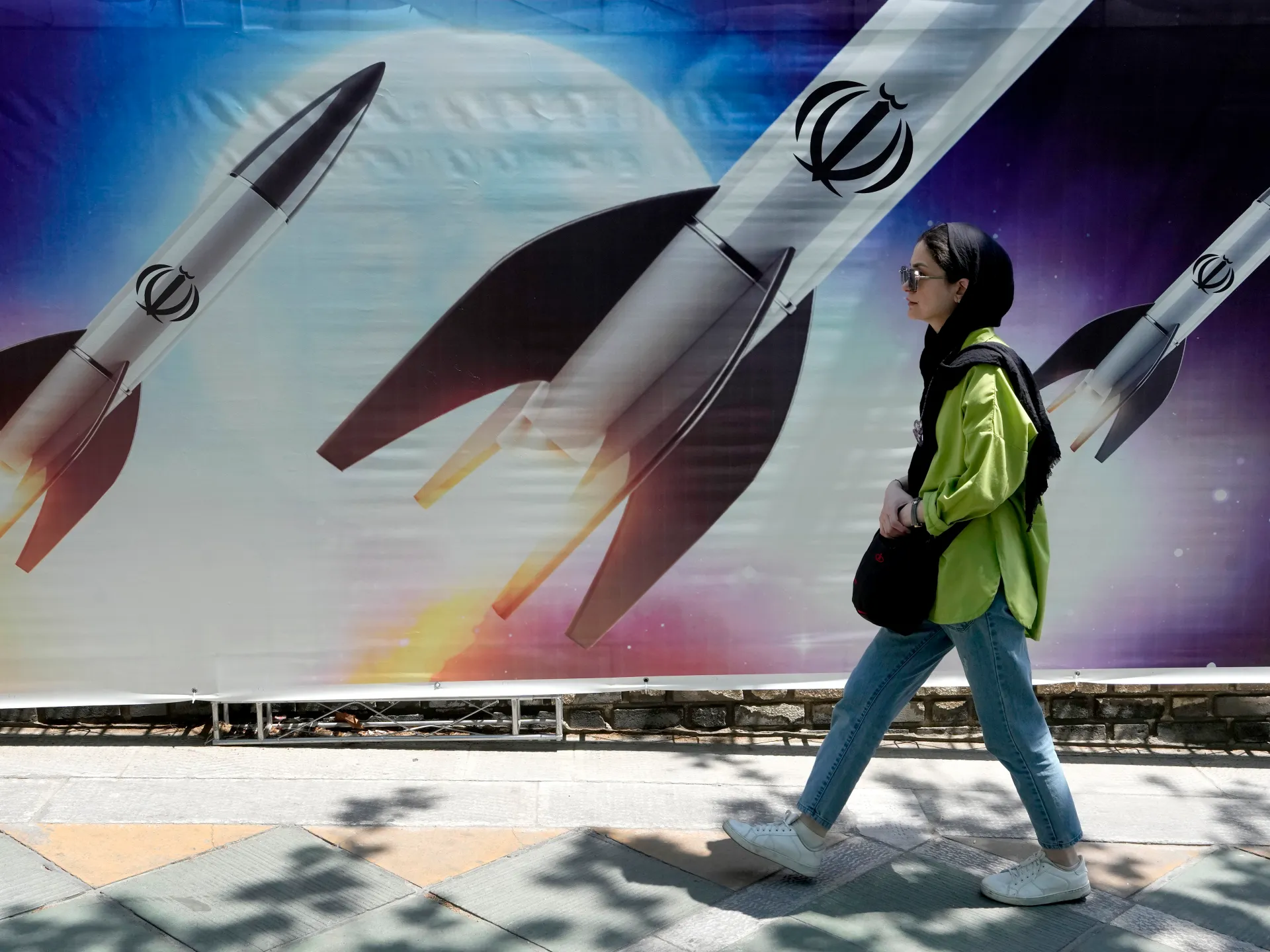
Iran has promised to respond harshly to any aggression after United States President Donald Trump threatened further military action, should Tehran attempt to rebuild its nuclear programme or missile capabilities.

President Masoud Pezeshkian issued the warning on X on Tuesday, a day after Trump met Prime Minister Benjamin Netanyahu at his Florida estate, where he firmly leaned into the Israeli regional narrative yet again.

The US had not previously said it would target Iran’s missile capabilities, which has long been an Israeli aspiration, focusing instead on Tehran’s nuclear programme. Iran has repeatedly said its nuclear activities are for civilian purposes only, and neither US intelligence nor the UN’s nuclear watchdog found any evidence of atomic weapons production before the June attacks by the US and Israel.

Iran has ruled out negotiating over its missile programme.

The leaders’ comments raise the spectre of renewed conflict just months after a devastating 12-day war in June that killed more than 1,100 Iranians and left 28 in Israel dead.

Pezeshkian said the response of Iran to any aggression would be “severe and regret-inducing”. His defiant message came hours after Trump told reporters at his Mar-a-Lago resort that Washington could carry out another major assault on Iran.

“Now I hear that Iran is trying to build up again, and if they are, we’re going to have to knock them down,” Trump said, standing alongside Netanyahu. “We’ll knock the hell out of them.”

The US president said he would support strikes on Iran’s nuclear programme “immediately” and on its missile facilities if Tehran continues developing long-range weapons.

Israeli officials have expressed concern in recent weeks that Iran is quietly rebuilding its ballistic missile stockpile, which was significantly depleted during the June conflict.

“If the Americans do not reach an agreement with the Iranians that halts their ballistic missile program, it may be necessary to confront Tehran,” an Israeli official told Ynet this week.

Pezeshkian recently described the standoff as a “full-scale war” with the US, Israel and Europe that is “more complicated and more difficult” than Iran’s bloody conflict with Iraq in the 1980s, which left more than one million dead.

The June war saw Israel launch nearly 360 strikes across 27 Iranian provinces over 12 days, according to conflict monitoring group ACLED, targeting military installations, nuclear facilities and government buildings.

The assault destroyed an estimated 1,000 Iranian ballistic missiles and killed more than 30 senior military commanders and at least 11 nuclear scientists.

Iran fired more than 500 missiles at Israel during the conflict, with approximately 36 landing in populated areas. While Trump claimed Iranian nuclear capabilities were “completely obliterated” by the strikes, experts disputed that, saying Tehran may have hidden stockpiles of enriched uranium and could resume production within months.

Despite the losses, Iranian officials insist the country is now better prepared for confrontation. In a recent interview, Pezeshkian said Iran’s military forces are “stronger in terms of equipment and manpower” than before the ceasefire.

The war failed to trigger the internal unrest it is suspected that Netanyahu had hoped for. No significant protests materialised, and daily life in Tehran largely continued despite the bombardment.

Source link

Alaa Abdelfattah and Britain’s selective outrage | Human Rights

The intensity of the current backlash against Alaa Abdelfattah in Britain is striking – not because it reflects a renewed concern for justice, but because it exposes how selectively outrage is deployed.

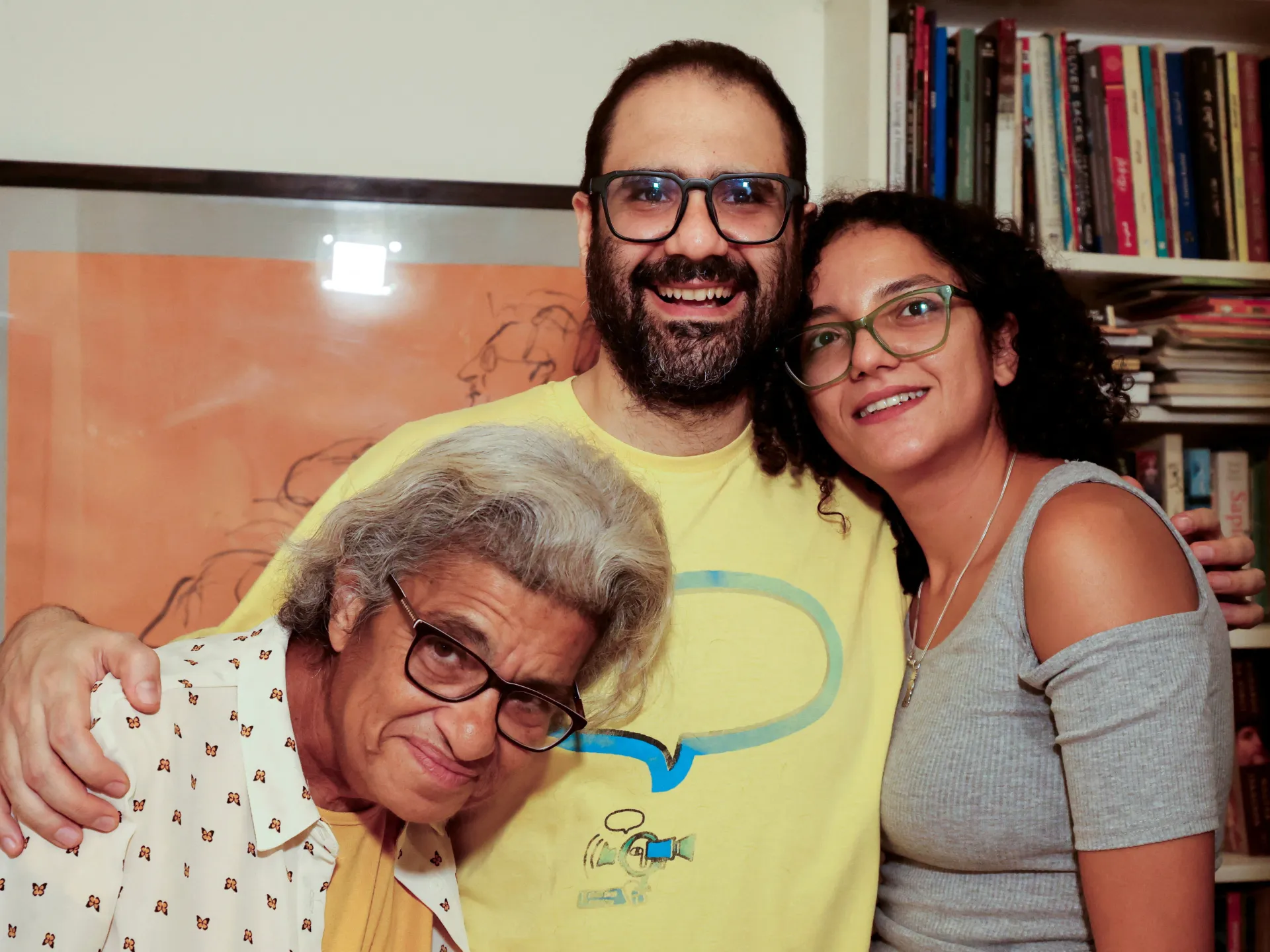
Alaa, an Egyptian-British writer and activist, spent more than a decade in and out of Egyptian prisons following the 2011 uprising that toppled President Hosni Mubarak. His detention was marked by prolonged hunger strikes, denial of basic rights and treatment that human rights organisations described as cruel and degrading. He was released on September 23 after a years-long campaign by his mother, sister and close friends. A travel ban on him was lifted only this month, and he was able to join his family in the UK on December 26.

Alaa left behind a decade of repression in Cairo only to be welcomed in London with public attacks and a call for the revocation of his British citizenship and his deportation. Public hostility was whipped up by the uncovering of a social media post from 2010 in which Alaa said he considered “killing any colonialists … heroic”, including Zionists.

The tweet has been widely condemned, referred to the counter-terrorism police for review, and seized upon by politicians calling for punitive measures.

The speed and intensity of this reaction stand in stark contrast to the silence surrounding far more consequential statements and actions that the UK not only tolerates but actively enables.

This is what selective outrage looks like.

While Alaa’s words are dissected and framed as a moral emergency, the UK continues to host and collaborate with senior Israeli officials who have been accused of participating in and inciting genocide.

In July, for example, Israel’s air force chief Tomer Bar – the man who has overseen the carpet bombing of Gaza, destruction of hospitals, schools and homes and the extermination of entire families – was granted special legal immunity to visit the UK. Reporting by Declassified UK showed that this immunity shielded him from arrest for war crimes while on British soil.

There has been no comparable outcry over this.

Israeli President Isaac Herzog was also able to pay a visit to the UK in September and hold high-level meetings. This is the same man who, at the start of the genocide, suggested that the “entire [Palestinian] nation” is responsible and that “This rhetoric about civilians not aware, not involved – it’s not true.” This and other statements by Herzog have been collected in a large database that currently supports the genocide case against Israel at the International Court of Justice (ICJ).

Yet, despite being accused of incitement to genocide, the Israeli president entered the UK without a problem and was welcomed by Prime Minister Keir Starmer. Those quarters concerned about Alaa’s tweet displayed no outrage over the visit of a potential war criminal.

They have also been silent about British citizens who have travelled to serve in the Israeli military, including during Israel’s offensives in Gaza and the ongoing genocide. These operations, documented by the United Nations, Amnesty International and Human Rights Watch, have resulted in tens of thousands of civilian deaths, the destruction of hospitals and universities, and the devastation of entire neighbourhoods.

Despite extensive documentation of war crimes and crimes against humanity, and the ICJ’s warning of a serious risk of genocide, there has been no systematic investigation into whether British nationals may have been involved in violations of international law.

Again, there is little sustained outrage.

At the same time, the UK continues to license arms exports to Israel and to engage in political, military and intelligence cooperation. These policies have persisted even as international bodies have warned of grave humanitarian consequences and potential violations of international law. All of this unfolds with relatively little political cost.

And yet it is a decade-old tweet – not mass killing, not siege, not the destruction of civilian life on a vast scale, not incitement to genocide – that triggers political panic in the UK.

This contrast is not incidental. It reveals a hierarchy of outrage in which dissenting voices are policed and punished, and state violence is not, and in which public hostility is directed downward at individuals rather than upward at power. Alaa’s case shows how moral language is deployed selectively – not to restrain impunity, but to manage discomfort.

This asymmetry corrodes the credibility of the principles the UK claims to uphold. When human rights are defended selectively, they become tools of convenience rather than universal norms. When outrage is loud but inconsistent, it becomes performative. And when accountability is withheld from powerful allies, impunity hardens into policy.

Those who defend this approach often invoke “quiet diplomacy”, arguing that restraint is more effective than confrontation. Yet there is little evidence that silence has delivered accountability – either for Alaa or for civilians subjected to mass violence in Gaza. In both cases, discretion has functioned less as a strategy than as permission.

The UK has the tools to act differently: Suspending arms exports, investigating potential crimes by its nationals, conditioning cooperation on respect for international law, restricting visits by officials implicated in serious abuses. That these tools remain largely unused is itself revealing.

Until that changes, outrage will remain selective, accountability conditional, and impunity intact – widening the gap between the values the UK professes and the violence it continues to enable.

The views expressed in this article are the author’s own and do not necessarily reflect Al Jazeera’s editorial stance.
Source link

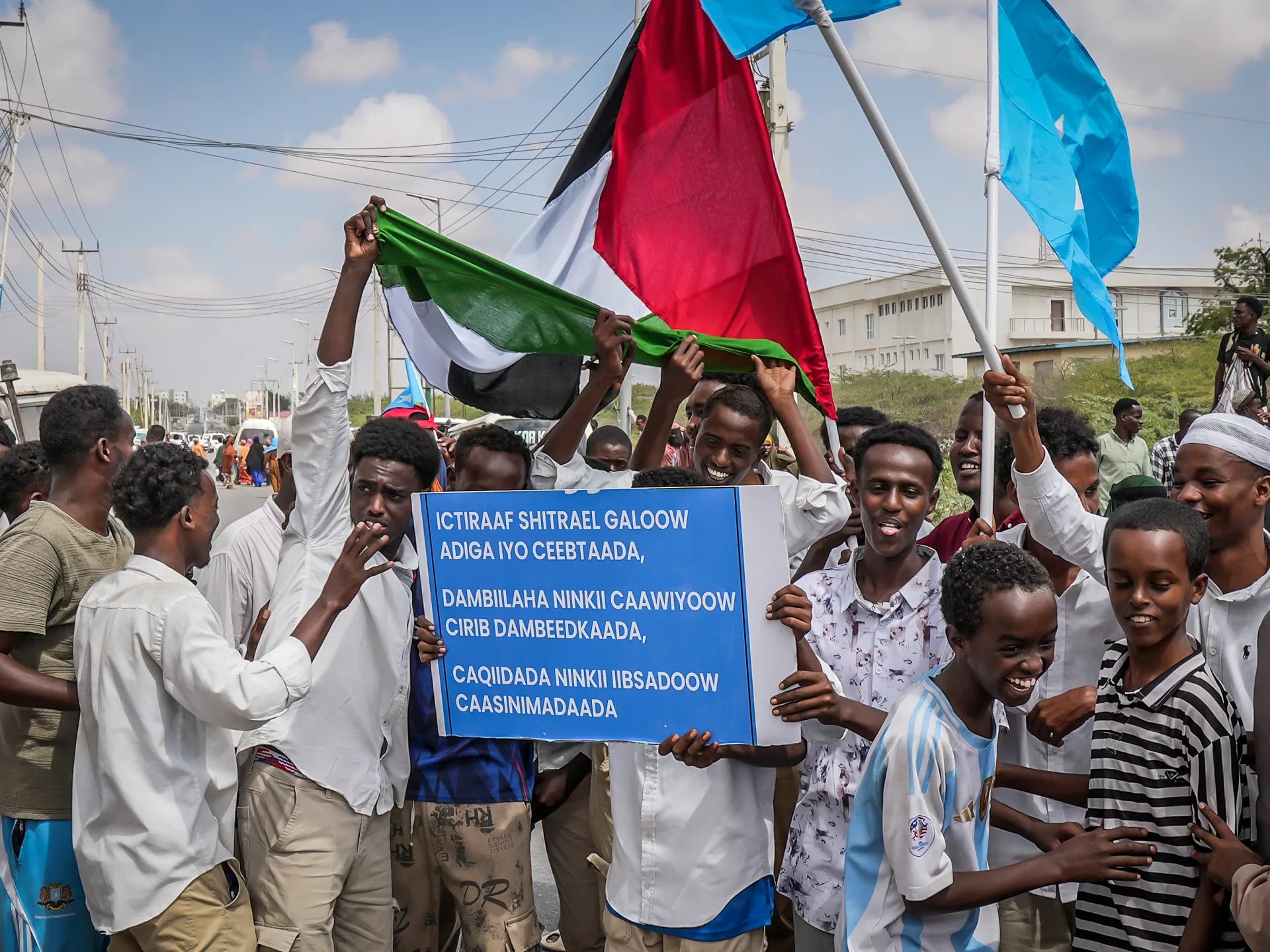
Somalis rally against Israel’s world-first recognition of Somaliland | Protests News

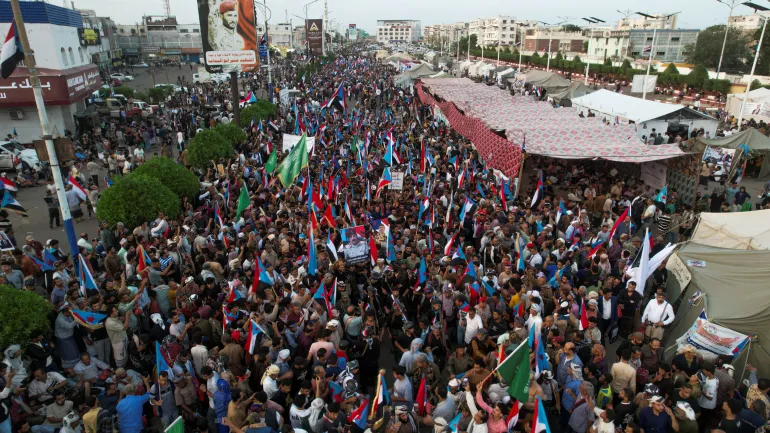
Protests have erupted across Somalia following Israel’s formal world-first recognition of the breakaway region of Somaliland, with demonstrators taking to the streets in multiple cities, including the capital, Mogadishu.

On Tuesday morning, large crowds gathered at locations including Mogadishu’s main football stadium and around the city’s airport, where protesters waved Somali flags and chanted slogans calling for national unity.

Recommended Stories

list of 3 itemsend of list

The demonstrations, which also took place in Baidoa, Dhusamareb, Las Anod, Hobyo and Somalia’s northeastern regions, came as President Hassan Sheikh Mohamud travelled to Istanbul for talks with his Turkish counterpart Recep Tayyip Erdogan following a stop in neighbouring Djibouti.

Somalia and Turkiye have close political and security ties, with Ankara emerging as a regional rival to Israel in recent months.

Small gatherings also took place in Borama, a city in western Somaliland, where the population has appeared more ambivalent about separation from Somalia, to express opposition.

Somaliland unilaterally declared independence in 1991 following a civil war, but has failed to gain international recognition despite maintaining its own currency, passport and army.

Somaliland’s leaders say the state is the successor to the former British protectorate, which voluntarily merged with Italian Somaliland and has now reclaimed its independence. Somalia continues to claim Somaliland as part of its territory and does not recognise its independence.

Israel became the first and only country to formally recognise it as a sovereign state last Friday, describing the move as being in the spirit of the Abraham Accords that normalised ties between Israel and several Arab nations.

President Mohamud urged Somaliland’s leadership over the weekend to reverse the decision, warning that its territory, overlooking the strategic gateway to the Red Sea, must not be used as a base for targeting other nations.

Yemen’s Houthi rebels have said any Israeli presence in Somaliland would be considered “a military target for our armed forces”.

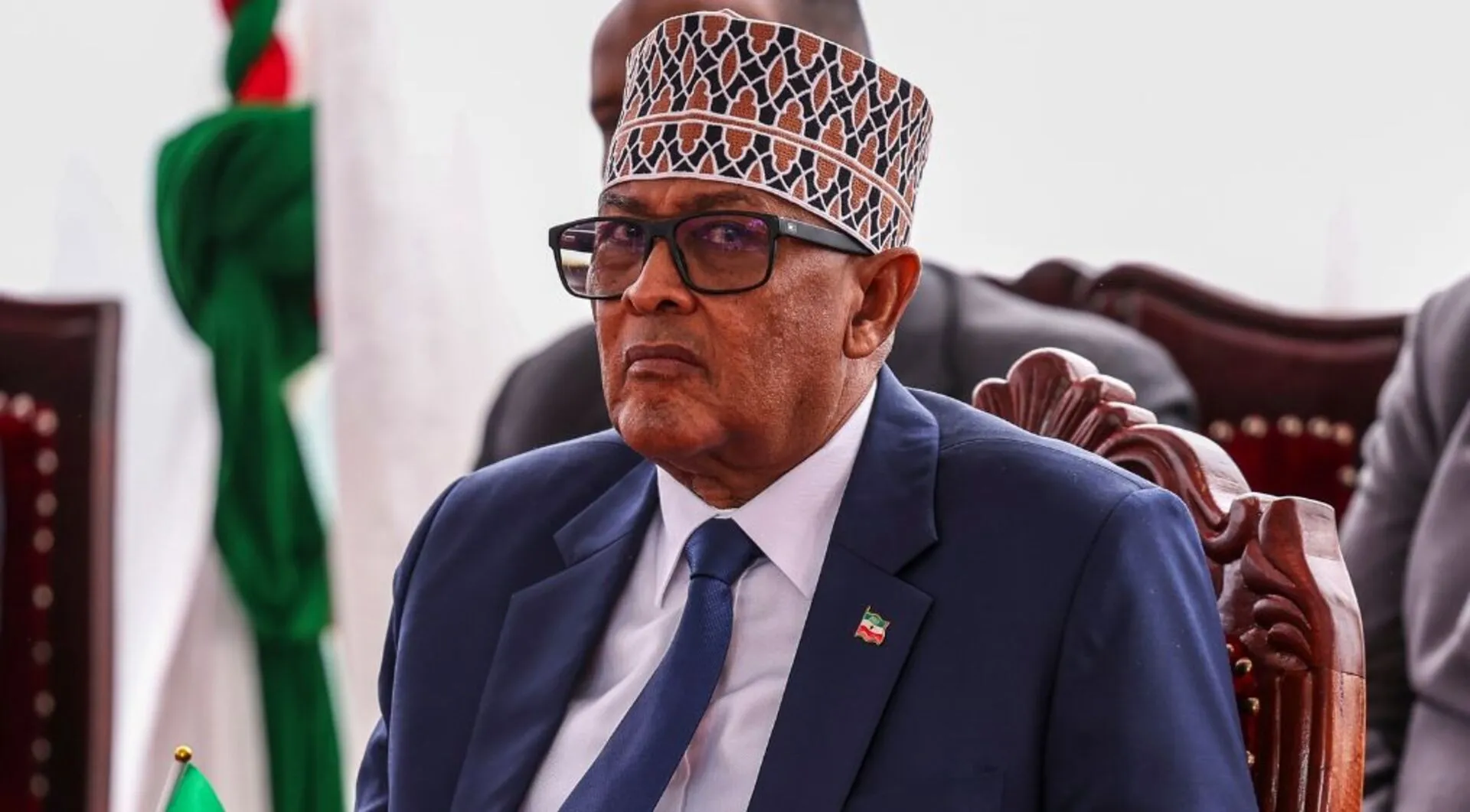
Shortly after Somaliland announced mutual recognition with Israel on Friday, President Abdirahman Mohamed Abdullahi said the move “is not a threat, not an act of hostility” towards any state, and warned that Somalia’s insistence on unified institutions risks “prolonging divisions rather than healing” them.

The widespread public anger in Somalia reflects a rare show of political unity, where leaders across the spectrum have condemned Israel’s decision.

On Monday, the National Consultative Council — chaired by Mohamud and including the prime minister, federal state presidents and regional governors — rejected the recognition as an “illegal step” that threatens regional security stretching from the Red Sea to the Gulf of Aden.

Four federal member states issued coordinated statements over the weekend denouncing the move. However, Puntland and Jubbaland — both of which recently announced their withdrawal from Somalia’s federal system over electoral and constitutional disputes — have remained silent.

Most United Nations Security Council (UNSC) members slammed Israel’s recognition of Somaliland at a meeting convened on Monday in response to the move, which several countries said may also have serious implications for Palestinians in Gaza.

The United States was the only member of the 15-member body not to condemn Israel’s formal recognition at the emergency meeting in New York on Monday, although it said its own position on Somaliland had not changed.

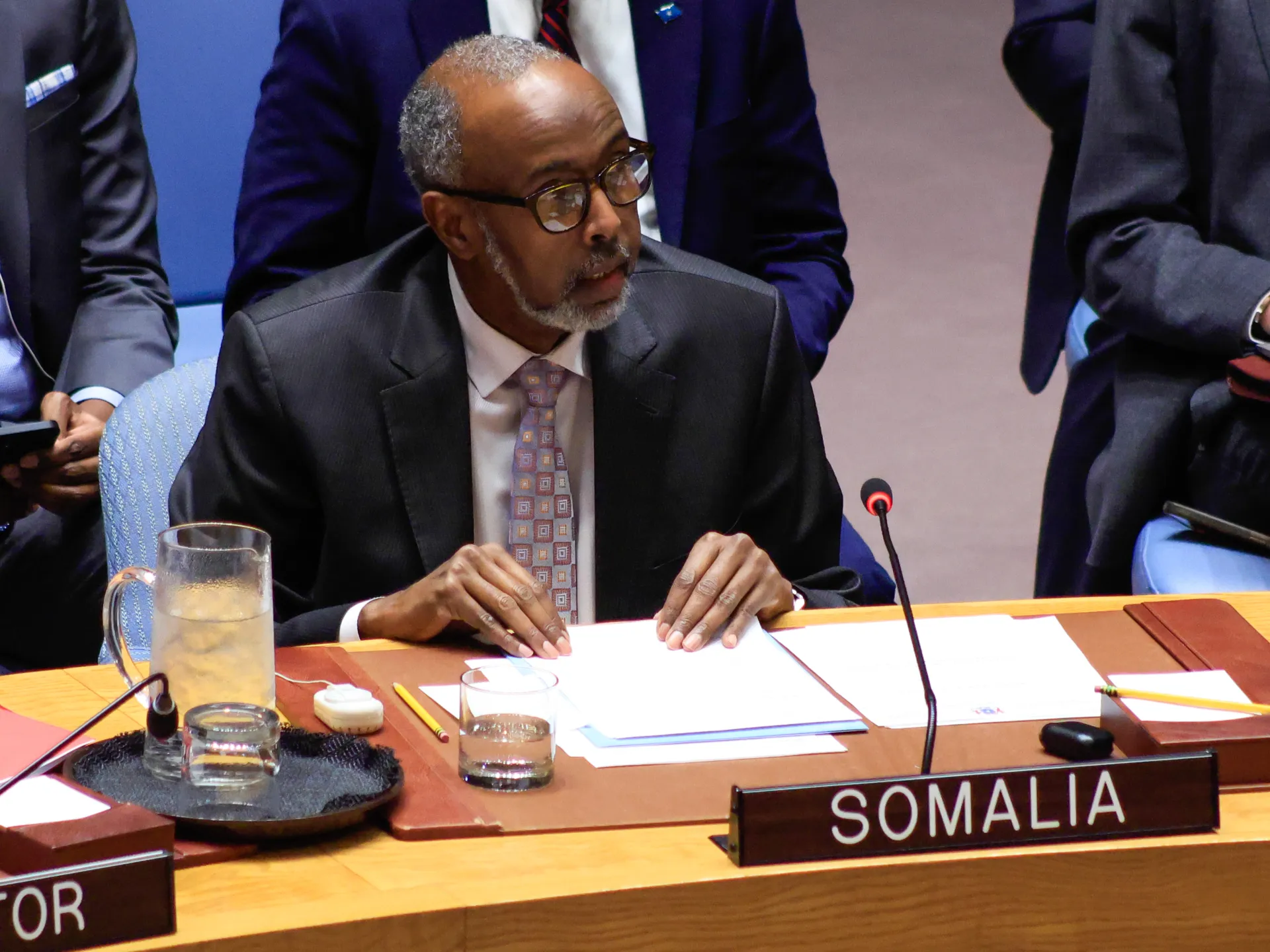
Somalia’s UN ambassador, Abu Bakr Dahir Osman, warned that the recognition “aims to promote the fragmentation of Somalia” and raised concerns it could facilitate the forced relocation of Palestinians from Gaza to northwestern Somalia, a fear echoed by several other nations.

“This utter disdain for law and morality must be stopped now,” he said.

US deputy representative Tammy Bruce told the council that “Israel has the same right to establish diplomatic relations as any other sovereign state”, though she added Washington had made “no announcement” regarding its own recognition of Somaliland.

Israel’s deputy UN ambassador, Jonathan Miller, defended the decision as “not a hostile step toward Somalia” and made the case to the UNSC for other countries to follow its lead.

Somalia’s state minister for foreign affairs, Ali Omar, thanked UNSC members for their “clear and principled” stance on the issue in a post on X.

Source link

Israeli strikes on Gaza are relentless as displaced endure flooded camps | Israel-Palestine conflict News

Israeli attacks, violating a ceasefire agreement, are reported across Gaza, as Palestinian misery compounded by rains.

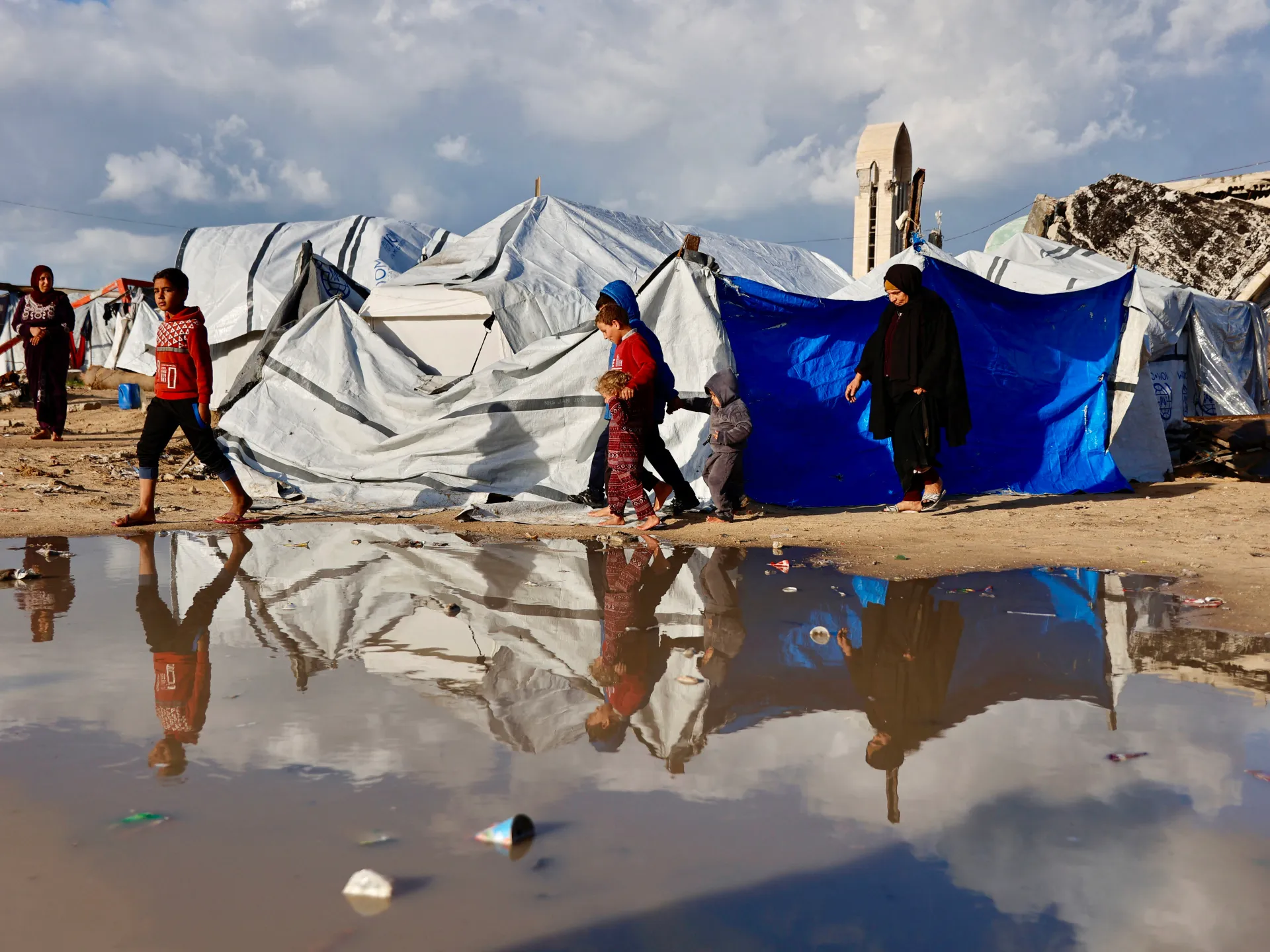
Israeli forces have carried out strikes across the Gaza Strip as they continue with their near-daily violations of the ceasefire agreement, with Israel’s genocidal war on the besieged enclave continuing apace and displaced Palestinians enduring the destruction of their few remaining possessions in flooding brought about by heavy winter rains.

Israeli air strikes on Tuesday targeted locations north of Rafah and east of Khan Younis, the Maghazi camp in central Gaza and Beit Lahiya in the north of the Strip, Al Jazeera’s Hind Khoudary reported.

Recommended Stories

list of 4 itemsend of list

Reporting from Gaza City, Khoudary said artillery shelling had been reported in the territory’s southern and central regions, while there had also been an attack in the Gaza City neighbourhood of Shujayea, striking close to the tent of a displaced family.

She said the latest attacks, in violation of the United States-brokered ceasefire that came into force in October, numbering nearly 1,000 now, were coming at a time of immense hardship for hundreds of thousands of displaced Palestinians, as heavy rains and strong winds had ravaged their makeshift camps, destroying the few possessions they had left.

Gaza’s Government Media Office said on Sunday that Israel had committed 969 ceasefire violations since it came into effect on October 10, resulting in the deaths of 418 civilians and injuries to more than 1,100.

“Palestinians are still very traumatised and anxious,” Khoudary said. “The situation on the ground continues to deteriorate as the rain continues.”

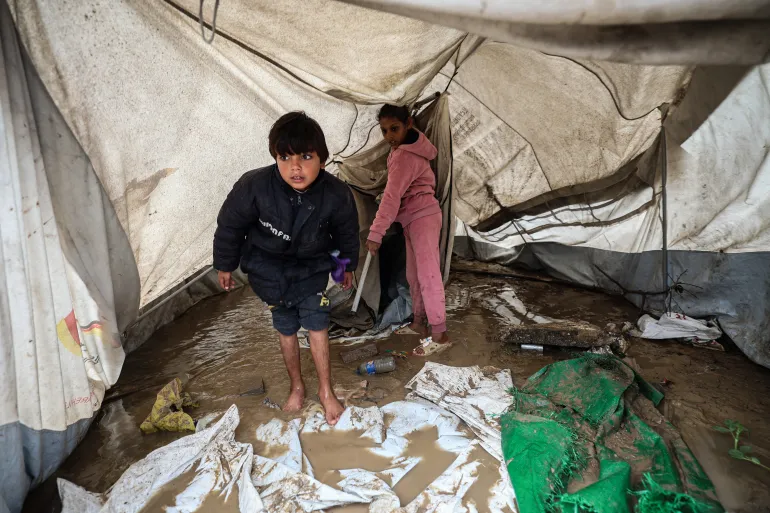
Young displaced Palestinians stand inside a tent flooded with rainwater in the Bureij refugee camp
Displaced Palestinian children shelter inside a flooded tent in the Bureij refugee camp in the central Gaza Strip on December 29, 2025 [Eyad Baba/AFP]

Calls to allow supplies in

Aid groups have repeatedly called for Israeli authorities to lift restrictions to allow more supplies, including shelter equipment, into the territory, where displaced families have been trying to stay dry in flimsy, battered tents that offer scant protection from the elements after months of use.

“Families here are helpless while the Israeli authorities continue to restrict all kinds of shelter into the Gaza Strip,” Khoudary said.

Officials have warned that the severe conditions also bring new dangers, with the threat of disease and illness as overwhelmed and damaged sewage systems contaminate floodwaters, as well as the risk that buildings could collapse amid heavy rain and wind.

At least two people have been killed by damaged structures falling amid the severe weather in recent days.

‘We are still suffering’

In a displacement camp east of Deir el-Balah in central Gaza, heavy rain in recent days has left tents submerged in muddy water, destroying the few possessions that the families had taken with them from their homes.

Inside the tents, an Al Jazeera team found essential items like pillows, mattresses and bedcovers soaked in muddy water.

“The tent has been flooded,” said Mohammed al-Louh, a resident.

“I took my family out, but I couldn’t even get a blanket, a mattress or a bag of flour. I have no way to sleep with my children or keep them warm.”

Another man, Haitham Arafat, said he had lost his son and daughter as well as his home to Israel’s genocidal war, and was still suffering amid the severe conditions.

“I fled to this place. Does this mean the war is over?” he said.

“No, we are still suffering. We haven’t slept for two days because of the heavy rain.”

Reporting from the camp, Al Jazeera’s Ibrahim al-Khalili said the winter storms had brought a new “chapter of suffering” for Palestinians who had been plunged into a humanitarian crisis by Israel’s war.

“What was meant to be a temporary shelter for them has turned into a flooded trap,” he said.

Source link

Saudi-led coalition strikes Yemeni port over unauthorised weapons shipment | Conflict News

The Saudi-led coalition carried out a targeted strike at Yemen’s Mukalla port, accusing foreign-backed vessels of delivering weapons to southern separatists.

The Saudi-led coalition in Yemen has carried out a “limited military operation” targeting what it described as foreign military support at Mukalla port, days after warning the separatist Southern Transitional Council (STC) group against taking military action in Hadramout province.

Coalition air forces carried out the military operation early on Tuesday, targeting unloaded weapons and vehicles, the official Saudi Press Agency (SPA) reported.

Recommended Stories

list of 4 itemsend of list

Coalition spokesperson Turki al-Malki said two ships entered Mukalla port on Saturday and Sunday without coalition authorisation, disabled their tracking systems, and unloaded large quantities of weapons and combat vehicles “to support” the STC.

The ‍Saudi-backed head of Yemen’s presidential council, Rashad ⁠al Alimi, ​said on ‍Tuesday after the air strike that all forces of the United ‍Arab ⁠Emirates must leave Yemen within 24 hours.

yemen
People attend a rally organised by the Southern Transitional Council in Aden, Yemen [File: Fawaz Salman/Reuters]

“Given the danger and escalation posed by these weapons … the coalition air forces carried out a limited military operation this morning targeting weapons and combat vehicles that had been unloaded from the two ships at the port of al-Mukalla,” SPA reported.

Two sources told Reuters news agency that the strike specifically targeted the dock where the cargo had been unloaded. The coalition said there were no casualties or collateral damage and emphasised that the operation was conducted in accordance with international humanitarian law.

The strike comes amid heightened tensions following an offensive earlier this month by the STC against Yemeni government troops backed by the coalition.

Saudi Defence Minister Khalid bin Salman Al Saud posted on X that the STC troops should “peacefully hand over” two regional governorates to the government. Meanwhile, United States Secretary of State Marco Rubio called for “restraint and continued diplomacy, with a view to reaching a lasting solution”.

A divided Yemen

The STC was initially part of the Saudi-led coalition that intervened in Yemen in 2015 against the Houthis, but the group later pursued self-rule in southern Yemen. Since 2022, the STC, which has previously received assistance from the United Arab Emirates, has controlled southern territories outside Houthi areas under a Saudi-backed power-sharing arrangement.

In recent weeks, however, the STC has swept through swaths of the country, expelling other government forces and their allies.

Source link

UN Security Council members condemn Israel’s recognition of Somaliland | United Nations News

Most United Nations Security Council (UNSC) members have slammed Israel’s recognition of Somaliland at a meeting convened in response to the move, which several countries said may also have serious implications for Palestinians in Gaza.

The United States was the only member of the 15-member body not to condemn Israel’s formal recognition of the breakaway region of Somalia at the emergency meeting in New York City on Monday, although it said its own position on Somaliland had not changed.

Recommended Stories

list of 4 itemsend of list

Addressing the UNSC, Somalia’s UN ambassador, Abu Bakr Dahir Osman, implored members to firmly reject Israel’s “act of aggression”, which he said not only threatened to fragment Somalia but also to destabilise the wider Horn of Africa and the Red Sea regions.

In particular, Osman said that Somalia was concerned the move could be aimed at advancing Israel’s plans to forcibly “relocate the Palestinian population from Gaza to the northwestern region of Somalia”.

“This utter disdain for law and morality must be stopped now,” he said.

The emergency meeting was called after Israel last week became the first and only country to recognise the self-declared Republic of Somaliland as an independent and sovereign state.

Al Jazeera’s Gabriel Elizondo, reporting from UN headquarters in New York, said that “14 of the 15 council members condemned Israel’s recognition of Somaliland”, while the US “defended Israel’s action but stopped short of following Israel’s lead”.

Tammy Bruce, the US deputy representative to the UN, told the council that “Israel has the same right to establish diplomatic relations as any other sovereign state”.

However, Bruce added, the US had “no announcement to make regarding US recognition of Somaliland, and there has been no change in American policy”.

Israel’s deputy ambassador to the UN, Jonathan Miller, told the council that Israel’s decision was “not a hostile step toward Somalia, nor does it preclude future dialogue between the parties”.

“Recognition is not an act of defiance. It is an opportunity,” Miller claimed.

Many other countries expressed concerns about Israel’s recognition of Somaliland, including the implications for Palestinians, in statements presented to the UNSC.

Speaking on behalf of the 22-member Arab League, its UN envoy, Maged Abdelfattah Abdelaziz, said the group rejected “any measures arising from this illegitimate recognition aimed at facilitating forced displacement of the Palestinian people, or exploiting northern Somali ports to establish military bases”.

Pakistan’s deputy UN ambassador, Muhammad Usman Iqbal Jadoon, said at the meeting that Israel’s “unlawful recognition of [the] Somaliland region of Somalia is deeply troubling”, considering it was made “against the backdrop of Israel’s previous references to Somaliland of the Federal Republic of Somalia as a destination for the deportation of Palestinian people, especially from Gaza”.

China and the United Kingdom were among the permanent UNSC members to reject the move, with China’s UN envoy, Sun Lei, saying his country “opposes any act to split” Somalia’s territory.

“No country should aid and abet separatist forces in other countries to further their own geopolitical interests,” Sun Lei said.

Some non-members of the UNSC also requested to speak, including South Africa, whose UN envoy, Mathu Joyini, said that her country “reaffirmed” Somalia’s “sovereignty and territorial integrity” in line with international law, the UN Charter and the constitutive act of the African Union.

Comparison with Palestinian recognition

In addition to defending Israel’s decision, US envoy Bruce compared the move to recognise Somaliland with Palestine, which has been recognised by more than 150 of the UN’s member states.

“Several countries, including members of this council, have unilaterally recognised a non-existent Palestinian state, yet no emergency meeting has been convened,” Bruce said, criticising what she described as the UNSC’s “double standards”.

However, Slovenia’s UN ambassador, Samuel Zbogar, rejected the comparison, saying, “Palestine is not part of any state. It is illegally occupied territory… Palestine is also an observer state in this organisation [the UN].”

“Somaliland, on the other hand, is a part of a UN member state, and recognising it goes against… the UN Charter,” Zbogar added.

The self-declared Republic of Somaliland broke away from Somalia in 1991, after a civil war under military leader Siad Barre.

Source link

Five key takeaways from Trump-Netanyahu meeting in Florida | Israel-Palestine conflict News

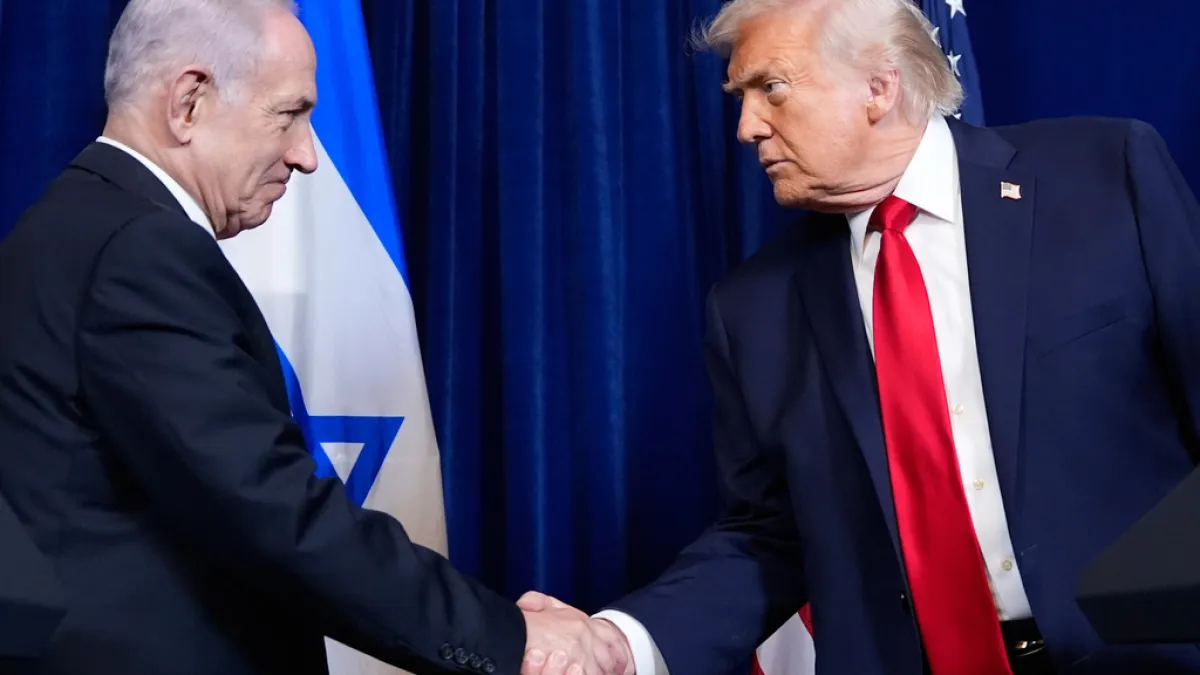
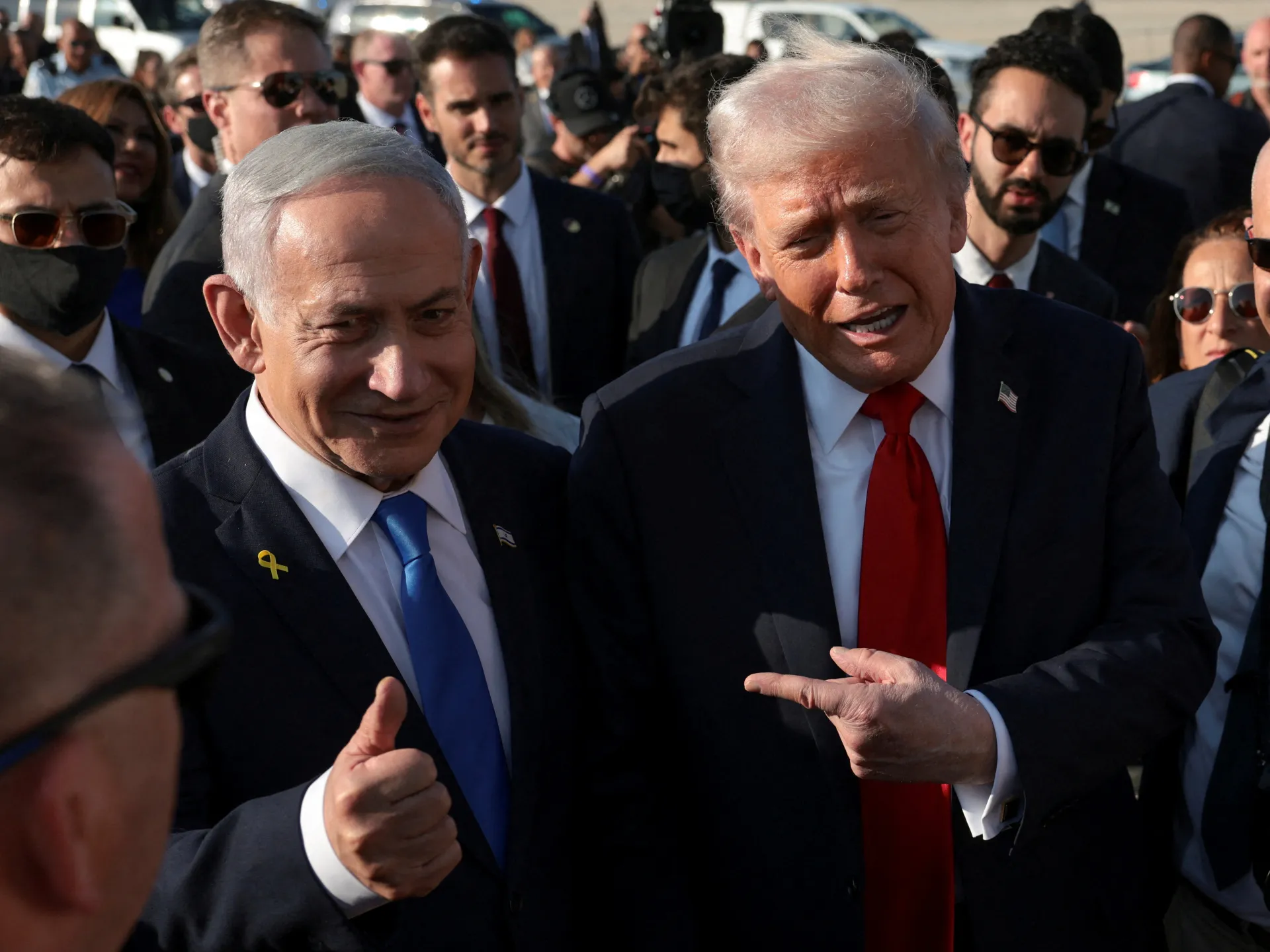
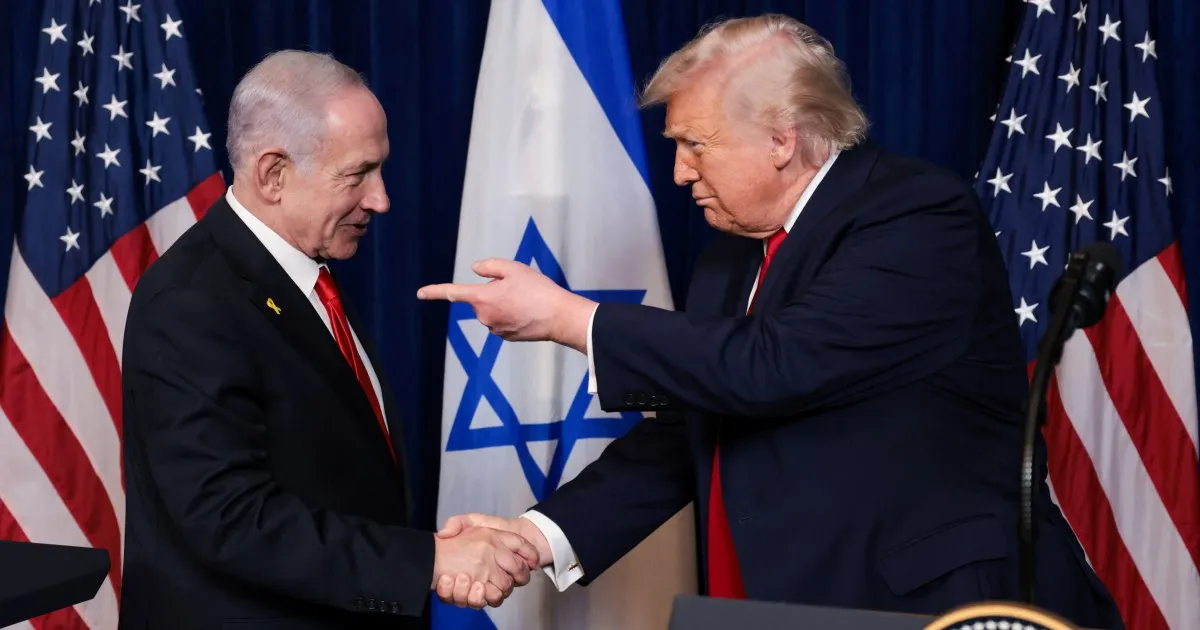
Israeli Prime Minister Benjamin Netanyahu and US President Donald Trump have presented a united front and heaped praise on each other as they held another meeting to discuss the tensions in the Middle East.

On Monday, Netanyahu paid his fifth visit to the United States since Trump’s inauguration in January, meeting the president at his Mar-a-Lago resort in Florida.

Recommended Stories

list of 3 itemsend of list

Their mutual flattery turned into geopolitical alignment as the two leaders addressed the most pressing issues in the Middle East: Gaza and Iran.

Trump claimed that Israel is helping the people of Gaza and dismissed the near-daily Israeli ceasefire violations.

Here are the key takeaways from Monday’s meeting.

Trump stresses Hamas must disarm

Before and after his meeting with Netanyahu, Trump stressed that Hamas must disarm, issuing a stern threat to the Palestinian group.

Asked what would happen if Hamas refused to give up its weapons, Trump said: “It would be horrible for them, horrible. It’s going to be really, really bad for them.”

Last week, US Secretary of State Marco Rubio said that Washington’s top priority was to move to the second phase of the ceasefire, which would see the establishment of a technocratic Palestinian administration and the deployment of an international police force.

But on Monday, Trump kept the focus on Hamas, reiterating the claim that other countries have offered to “wipe them out” if the group refuses to give up its weapons.

Israel has killed 414 Palestinians in Gaza since the start of the ceasefire in October, and it continues to restrict the flow of international aid into the territory, including temporary shelter provisions, despite people suffering deadly weather conditions in makeshift tents.

Trump, however, said that Israel is fully living up to its commitments under the deal – “100 percent”.

“I’m not concerned about anything that Israel is doing,” he told reporters.

US threatens Iran

Trump suggested that Washington would carry out further military action against Iran if Tehran rebuilds its nuclear programme or missile capacity.

The president kept returning to the oft-cited argument that the US air strikes against Iranian nuclear facilities in June are what paved the way for the ceasefire in Gaza.

“Now I hear that Iran is trying to build up again, and if they are, we’re going to have to knock them down,” Trump said.

“We’ll knock them down. We’ll knock the hell out of them. But, hopefully, that’s not happening.”

In recent weeks, Israeli officials and their US allies have shifted the focus to Iran’s missile programme, arguing it should be dealt with before it poses a threat to Israel.

When asked whether the US would back an Israeli attack targeting Iran’s missile programme, Trump said, “If they will continue with the missiles, yes. The nuclear? Fast. OK? One will be: Yes, absolutely. The other is: We’ll do it immediately.”

Iran has ruled out negotiating over its missile programme, and it has denied seeking to build a nuclear weapon.

Israel, meanwhile, is widely believed to have an undeclared nuclear arsenal.

Bromance festival

Since the early days of Israel’s genocidal war on Gaza, US media reports have suggested that the US president, first Joe Biden, then Trump, was angry or frustrated at Netanyahu.

But the US military and diplomatic support for Israel has never been interrupted.

Ahead of Netanyahu’s visit, similar reports emerged about a potential rift between him and Trump.

Nonetheless, the two leaders put on a show of brotherly romance on Monday.

Trump called Netanyahu a “hero”, stressing that Israel may not have existed without his wartime leadership.

“We’re with you, and we’ll continue to be with you, and a lot of good things are happening in the Middle East,” Trump told Netanyahu.

“We have peace in the Middle East, and we’re going to try and keep it that way. I think we will be very successful in keeping it that way. And you’ve been a great friend.”

The US president also highlighted his efforts to secure a presidential pardon for Netanyahu, who is facing corruption charges in Israel.

The Israeli prime minister announced that the US president will be awarded the Israel Prize, which is normally given to Israeli citizens.

“I have to say that this reflects the overwhelming sentiment of Israelis across the spectrum,” Netanyahu said.

“They appreciate what you’ve done to help Israel, and to help our common battle against the terrorists and those who would destroy our civilisation.”

Netanyahu has notably not been pardoned.

Trump calls for Israel-Syria rapprochement

One area where Trump appeared to press Netanyahu was Syria.

Trump said Netanyahu is “going to get along” with Syria, lauding Syrian President Ahmed al-Sharaa.

Since the fall of former President Bashar al-Assad last year, Israel has expanded its occupation of southern Syria beyond the Golan Heights, seizing large areas in Jabal al-Sheikh. The Israeli military has also been carrying out raids, reportedly abducting and disappearing people in the country.

The new Syrian authorities have stressed that they do not seek conflict with Israel, but talks to reach a security agreement between the two countries have stalled.

“We do have an understanding regarding Syria,” Trump said. “Now, with Syria, you have a new president. I respect him. He’s a very strong guy, and that’s what you need in Syria.”

Netanyahu was non-committal on Israel’s approach to Syria.

“Our interest is to have a peaceful border with Syria,” he said. “We want to make sure that the border area right next to our border is safe — we don’t have terrorists, we don’t have attacks.”

On renewed war in Lebanon: ‘We’ll see about it.’

Since the start of the truce in Gaza, Israel has intensified its attacks in Lebanon, leading to fears that it may re-launch its full-scale war against the country.

Earlier this year, the Lebanese government issued a decree to disarm Hezbollah, but the group pledged to hold onto its weapons to defend the country against Israel.

On Monday, Trump did not rule out renewing the conflict in Lebanon.

“We’ll see about it,” the president said when asked whether he would support more Israeli strikes in Lebanon.

“The Lebanese government is at a little bit of a disadvantage, if you think of it, with Hezbollah. But Hezbollah has been behaving badly, so we’ll see what happens.”

Source link

At UN, Somalia slams Israel’s Somaliland recognition as ‘threat’ to peace | Politics News

Somalia says it is concerned the recognition serves as a pretext for the forced relocation of Palestinians.

Israel’s recognition of Somaliland, a breakaway region of Somalia, is a “direct and grave threat to international peace and security”, Somalia has said.

In a letter penned to the United Nations Security Council (UNSC) on Monday, Somalia rejected the move as a violation of its sovereignty, calling it “morally indefensible”.

Recommended Stories

list of 4 itemsend of list

Last week, Israel became the first country to formally recognise the self-declared Republic of Somaliland as an independent and sovereign state. Israel described the move as being in the spirit of the United States-brokered Abraham Accords, which normalised ties between Israel and several Arab countries.

“We further note with deep concern reports that this recognition may serve as a pretext for the forced relocation of Palestinians to Northwestern Somalia,” Somalia’s letter to the UNSC stated.

“Israel’s actions not only set a dangerous precedent and risk destabilising the Horn of Africa and the Red Sea region but also undermine collective efforts and pose a serious threat to regional and international peace and security,” Somalia also stated in the letter, urging UNSC members to uphold its sovereignty.

Abu Bakr Dahir Osman, Somalia’s representative to the UNSC, echoed the letter’s sentiments,

“This region [Somaliland] is not legally entitled to enter into any agreement or arrangement, nor to receive recognition from any other state,” Osman said.

“This act of aggression aims to promote the fragmentation of Somalia and must be rejected and condemned unequivocally by all Member States,” he added.

Recognition rejected

The United Kingdom on Monday said that it does not recognise the independence of Somaliland, and reaffirmed its support for Somalia’s sovereignty and territorial integrity.

It urged efforts between the Federal Government of Somalia and the Somaliland authorities to “address differences and work together to face common threats”, stating that armed groups benefited from internal divisions in the country.

Other countries have also declined to recognise Somaliland, including China earlier on Monday.

“No country should encourage or support other countries’ internal separatist forces for its own selfish interests,” Chinese Ministry of Foreign Affairs spokesperson Lin Jian told reporters at a regular news conference.

South Africa’s Foreign Ministry, the Department of International Relations and Cooperation, on Monday urged the international community to “reject this external interference and support a united, stable Somalia”.

However, Tammy Bruce, the US deputy representative to the UN, said that “Israel has the same right to establish diplomatic relations as any other sovereign state”.

“Several countries, including members of this Council, have unilaterally recognised a non-existent Palestinian state, yet no emergency meeting has been convened,” Bruce added, chiding what she said were the UNSC’s “double standards”.

“We have no announcement to make regarding the recognition of Somaliland, and there has been no change in US policy,” Bruce added.

Somaliland broke away from Somalia in 1991, after a civil war under military leader Siad Barre. The self-declared republic controls part of northwestern Somalia and has its own constitution, currency and flag.

It claims the territory of the former British Somaliland protectorate, but its eastern regions remain under the control of rival administrations loyal to Somalia. It has sought international acceptance for more than three decades without success.

Source link

How serious are the sectarian tensions facing Syria? | Syria’s War

Alawite protesters confront government supporters in coastal cities.

Syria’s new leader has been trying to stabilise his country and reintegrate it globally since he took office in January.

But outbreaks of sectarian violence are threatening President Ahmed al-Sharaa’s efforts to rebuild the country after 14 years of civil war.

Recommended Stories

list of 4 itemsend of list

The latest flare-up on Sunday saw protesters from the Alawite minority group come face to face with supporters of the government in the coastal cities of Latakia and Tartous. Government troops sent to stop the violence were attacked. The once-powerful community says it is being marginalised.

How big a security threat are the protests and violence?

How can President al-Sharaa calm tensions?

Presenter: Adrian Finighan

Guests:

Fadel Abdulghany – Founder and executive director of the Syrian Network for Human Rights.

Gamal Mansour – Specialist in comparative politics and international relations

Labib Nahhas – Director of the Syrian Association for Citizens’ Dignity

Source link

Protests, strikes after Iran’s economic situation rapidly deteriorates | Israel-Iran conflict News

Iranians are further squeezed every day amid a tanking economy, an energy crisis, water bankruptcy and lethal pollution.

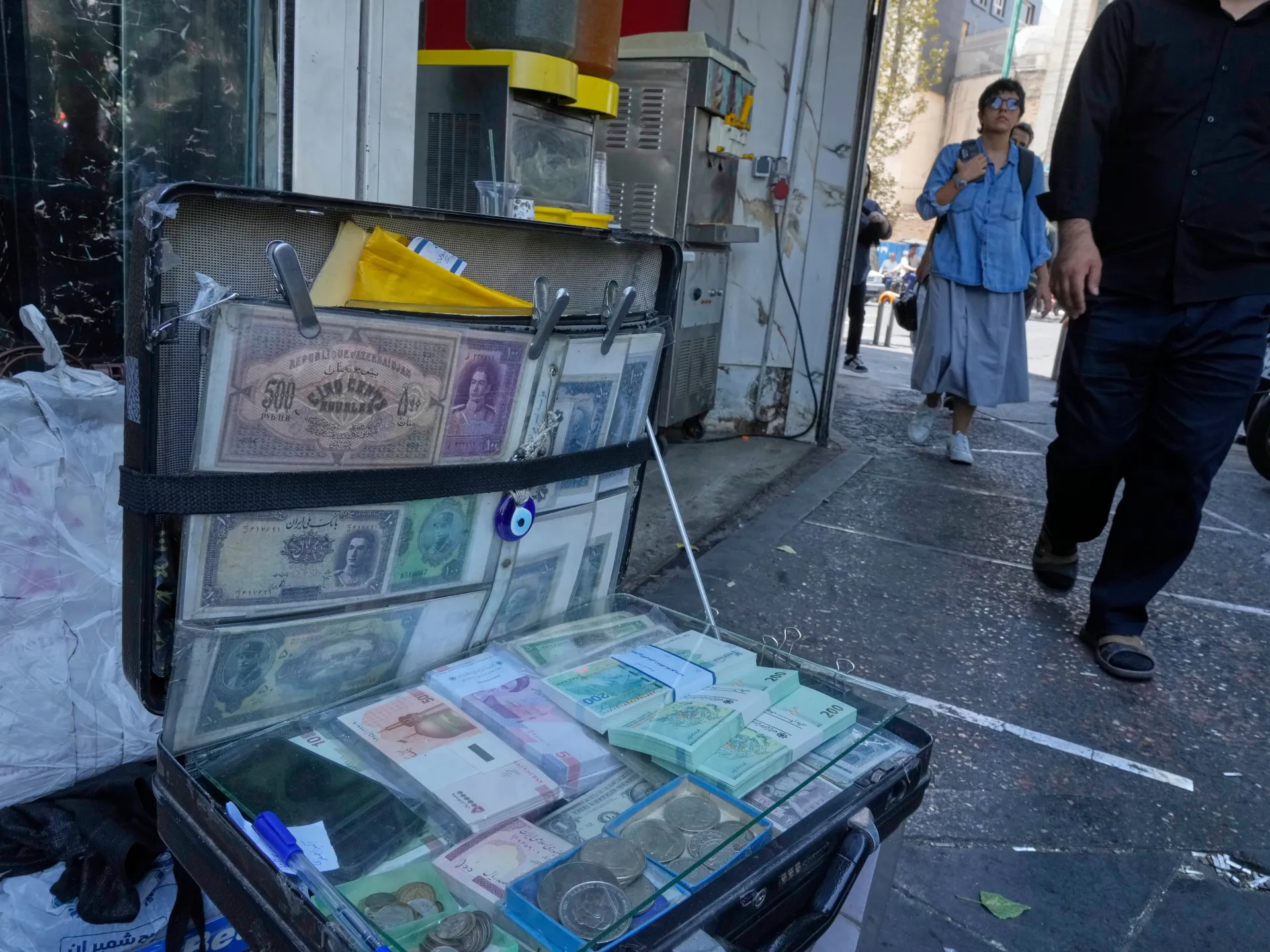
Several protests have erupted in downtown Tehran after business owners closed down their shops in reaction to a free-falling national currency, and no improvement appears in sight amid multiple ongoing crises.

Shopkeepers near two major tech and mobile phone shopping centres in the capital’s Jomhouri area closed their businesses and chanted slogans on Sunday, before more incidents were recorded on Monday afternoon, this time with other people appearing to participate.

Recommended Stories

list of 3 itemsend of list

Videos circulating on social media showed that there were more gatherings in the same area, as well as other nearby neighbourhoods in downtown Tehran. “Don’t be afraid, we are together,” demonstrators chanted.

There was a heavy deployment of anti-riot personnel in full gear on the streets, with multiple videos showing that tear gas was deployed and people were forced to disperse.

Many shops were closed down by owners in and around Tehran’s Grand Bazaar as well, with some footage showing business owners asking others to do the same.

State media outlets also acknowledged the protests, but quickly reacted to emphasise that the shopkeepers are only concerned about economic conditions and have no qualms with the theocratic establishment that has been ruling the country since a 1979 revolution that ousted the United States-backed shah of Iran.

The government’s IRNA news agency claimed that vendors selling mobile phones were disgruntled after their businesses were threatened by the unchecked depreciation of the Iranian currency, the rial.

The rial registered yet another all-time record low of over 1.42 million per US dollar on Monday before regaining some ground.

But the currency is not the only problem. For years, Iran has also been dealing with an exacerbating energy crisis, which has periodically contributed to deadly air pollution that claims tens of thousands of lives each year.

Most dams feeding Tehran and a large number of major cities across Iran continue to remain at near-empty levels amid a water crisis. Iran also has one of the most closed-off internet landscapes in the world.

The continuing decline of purchasing power for 90 million Iranians comes amid increasing pressure from the US, Israel and their European allies over Iran’s nuclear programme.

Israel and the US attacked Iran in June during a 12-day war that killed more than 1,000 people, including civilians, dozens of top-ranking military and intelligence commanders, and nuclear scientists.

The attacks also significantly damaged or destroyed most of Iran’s nuclear facilities, which were under the supervision of the International Atomic Energy Agency (IAEA). The watchdog has since been denied entry to the bombed sites, with no diplomatic breakthrough in sight as the West applies more pressure.

Iran last saw nationwide protests in 2022 and 2023, with many thousands pouring into streets across the country after the death in police custody of 22-year-old Mahsa Amini for alleged non-compliance with strict Islamic laws regarding headscarves.

Hundreds of people were killed, over 20,000 people were arrested, and several people were executed in connection with the protests before they subsided. Authorities blamed foreign influence and “rioters” trying to destabilise the country, as they did with previous rounds of protests.

In parliament on Sunday to defend the controversial budget bill his administration has presented, President Masoud Pezeshkian painted a grim picture of the situation.

His highly contractionary budget bill proposes a 20 percent increase in wages while inflation stands at around 50 percent, consistently one of the highest in the world over the past several years. Taxes are slated to increase by 62 percent.

“They tell me you’re taxing too much, and they’re saying you must increase wages,” Pezeshkian told lawmakers. “Well, somebody tell me, where do I get the money from?”

Source link

Tents flooded by heavy rains in Gaza amid calls for Israel to let in aid | Israel-Palestine conflict News

Severe weather conditions are bringing further misery to displaced Palestinians in Gaza, who have already suffered relentless bombardment, siege and loss in Israel’s genocidal war for more than two years, as Israel continues to block critical shelter and aid supplies into the territory.

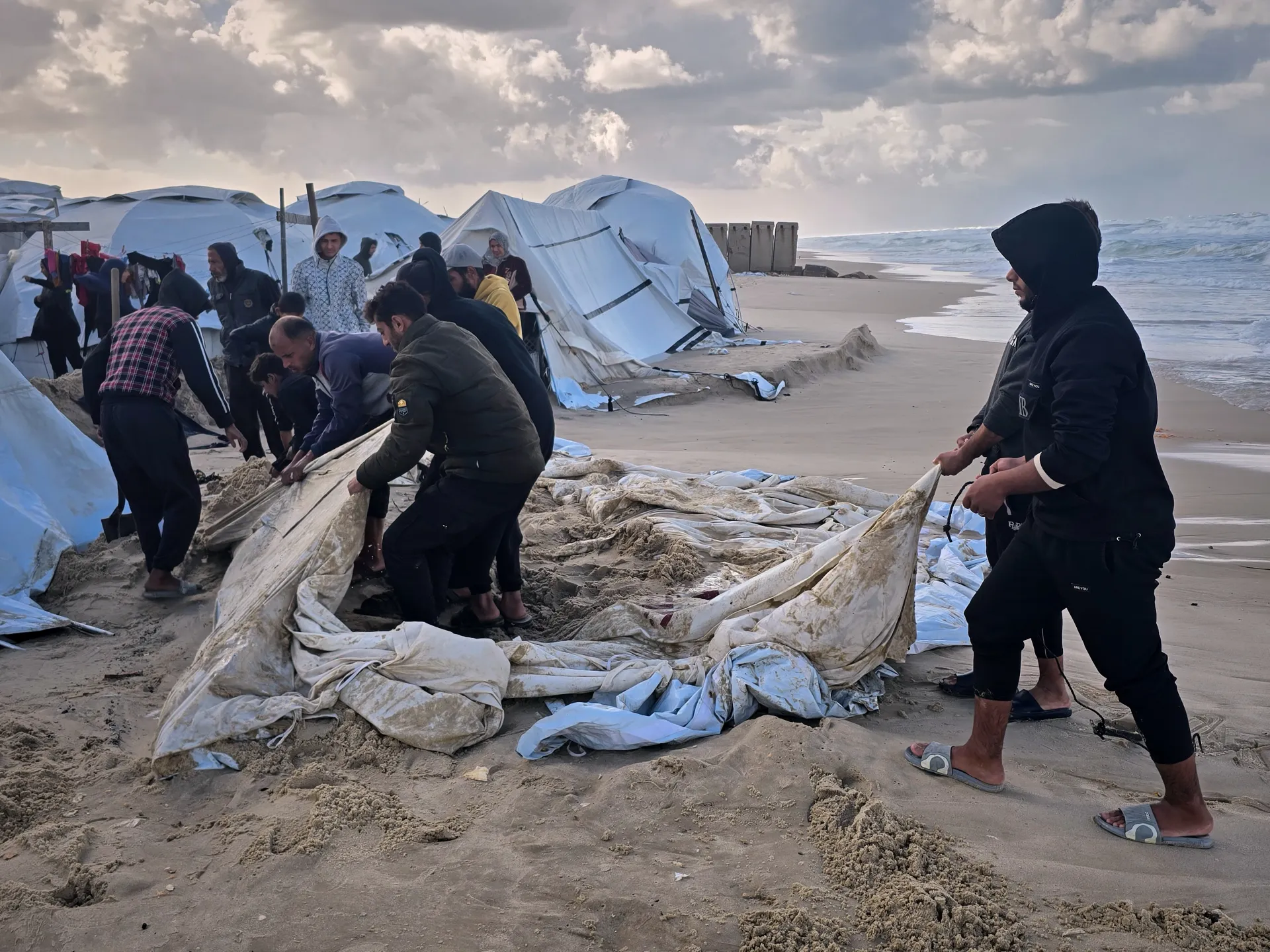
Flimsy tents were flooded and makeshift camps engulfed in mud on Monday following heavy winter rains lashing the enclave in recent days.

Recommended Stories

list of 4 itemsend of list

The harsh conditions have added to the suffering of Palestinians in Gaza, most of whom are reduced to sheltering in tents and other makeshift structures since Israel’s war destroyed an estimated 80 percent of the buildings there.

Officials are warning that severe conditions also bring new dangers, with the threat of disease and illness as overwhelmed and damaged sewage systems contaminate floodwaters, and the risk that damaged buildings could collapse amid heavy rainfall.

On Sunday, a 30-year-old woman was killed when a partially destroyed wall collapsed onto her tent in the Remal neighbourhood to the west of Gaza City amid fierce winds, Al Jazeera Arabic reported.

Officials have warned people not to shelter in damaged buildings, but the tents offer limited protection from the heavy rain and no real protection against flooding.

At least 15 people, including three babies, have died this month from hypothermia following the rains and plunging temperatures, according to the authorities in Gaza.

Two-month-old baby Arkan Firas Musleh was the latest infant to die as a result of the extreme cold.

Contaminated floodwater

Reporting from Gaza City’s Zeitoun neighbourhood, where most of the buildings have been reduced to rubble by Israeli attacks, Al Jazeera’s Hind Khoudary said the heavy rains had created deep puddles and thick mud that was difficult to pass in places.

“People are struggling to walk in those mud puddles,” she said. “These are not only water, but it’s also sewage, rubbish.”

A team of municipal workers were trying to pump sewage from the overwhelmed network, amid reports of flooded tents from residents.

“Families are saying that sewage water has been coming into their tents,” she said.

Calls for aid deliveries

Aid groups have called for the international community to pressure Israel to lift restrictions on life-saving aid deliveries into the territory, which they say are falling far short of the amount called for under the US-brokered ceasefire.

“More rain. More human misery, despair and death,” Philippe Lazzarini, commissioner-general of UNRWA, the top United Nations group overseeing aid in Gaza, wrote on social media on Sunday.

“Harsh winter weather is compounding more than two years of suffering. People in Gaza are surviving in flimsy, waterlogged tents and among ruins.”

There was “nothing inevitable about this”, he added. “Aid supplies are not being allowed in at the scale required.”

More Israeli attacks

Meanwhile, despite the ceasefire that came into effect on October 10, Israeli attacks on Palestinians have continued in Gaza.

Three Palestinians were injured on Monday when Israeli forces targeted the Jabalia camp in northern Gaza, a medical source told Al Jazeera Arabic.

Witnesses said the attack happened in an area from which Israeli forces had withdrawn under the ceasefire agreement.

Witnesses also reported an Israeli air raid on the eastern areas of the Bureij camp in central Gaza, artillery shelling east of Rafah and further Israeli attacks east of Gaza City, Al Jazeera Arabic reported.

A 20-point plan proposed by United States President Donald Trump in September called for an initial truce followed by steps towards a wider peace. So far, as part of the first phase, there has been the exchange of captives held in Gaza and prisoners in Israeli jails, and a partial withdrawal of Israeli forces from the enclave. However, it still occupies almost half of the territory.

However, Israeli attacks have not stopped, while humanitarian aid flows into the territory have not been what was promised.

Since the truce went into effect, more than 414 Palestinians have been killed and more than 1,100 wounded in ceasefire violations, according to Gaza’s Ministry of Health.

Source link

Winter floods wreak havoc on Gaza displacement camps as Israel blocks aid | Gaza News

Winter rain has lashed the Gaza Strip over the weekend, flooding displacement camps with ankle-deep water as Palestinians struggled to stay dry in flimsy, worn-out tents. These Palestinians have been displaced after more than two years of Israel’s genocidal war, which has destroyed much of the besieged enclave.

In Khan Younis, soaked blankets and swamped clay cooking ovens added to the misery. Children in flip-flops navigated through puddles while adults desperately used shovels and tin cans to remove water from tents or extracted collapsed shelters from mud.

“Puddles formed, and there was a bad smell,” said Majdoleen Tarabein, displaced from Rafah in southern Gaza. “The tent flew away. We don’t know what to do or where to go.”

She and her family attempted to wring sodden blankets dry by hand.

“When we woke up in the morning, we found that the water had entered the tent,” said Eman Abu Riziq, also displaced in Khan Younis. “These are the mattresses. They are all completely soaked.”

She added that her family is still grieving her husband’s death less than two weeks ago.

“Where are the mediators? We don’t want food. We don’t want anything. We are exhausted. We just want mattresses and covers,” pleaded Fatima Abu Omar while trying to stabilise a collapsing shelter.

At least 15 people, including three babies, have died this month from hypothermia following the rains and plunging temperatures, according to the authorities in Gaza.

Emergency workers have warned against staying in damaged buildings due to collapse risks, yet with most of the territory in rubble after relentless and ongoing Israeli bombardment, shelter options are scarce. United Nations estimates from July indicate nearly 80 percent of Gaza’s buildings have been destroyed or damaged.

Since the ceasefire between Israel and Hamas began, 414 people have been killed and 1,142 wounded, with the overall Palestinian death toll reaching at least 71,266, according to the Health Ministry.

Aid deliveries to Gaza fall significantly short of ceasefire-mandated amounts, humanitarian organisations report. The Israeli military authority overseeing humanitarian aid stated that 4,200 aid trucks entered Gaza in the past week, along with sanitation equipment and winter supplies, but refused to specify the quantity of tents provided. Aid groups emphasise that current supplies cannot meet overwhelming needs.

Since the ceasefire, approximately 72,000 tents and 403,000 tarps have entered Gaza, according to Shelter Cluster, an international aid coalition led by the Norwegian Refugee Council.

“People in Gaza are surviving in flimsy, waterlogged tents and among ruins,” Philippe Lazzarini, commissioner-general of the UN refugee aid organisation in Gaza, said on social media. “There is nothing inevitable about this. Aid supplies are not being allowed in at the scale required.”

Source link

How will Israel’s recognition of Somaliland impact the Middle East? | Politics

A diplomatic breakthrough after more than 30 years of international isolation, following its break-up from Somalia.

But Israel’s recognition of Somaliland as an independent state is drawing widespread condemnation.

Somaliland is strategically located near the Bab al Mandeb, through which a third of the world’s shipping crosses into the Red sea.

That makes it vital for maritime security and intelligence operations in a volatile region.

Will more countries follow Israel and recognise Somaliland?

Presenter: Adrian Finighan

Guests: Adam Matan, Independent Horn of Africa Consultant.

Alon Pinkas, Former Ambassador and Consul General of Israel in New York.

Xavier Abu Eid, Political Scientist specialising in Palestine and Israel.

Source link

Syrian gov’t troops deployed to Latakia, Tartous after deadly clashes | Syria’s War News

The deployment comes after deadly unrest amid protests by the Alawite minority in the coastal cities.

Syrian government troops have been deployed to the coastal cities of Latakia and Tartous after demonstrations led to deadly clashes in which at least three people were killed and 60 were injured.

It’s the latest turmoil to challenge President Ahmed al-Sharaa’s fledgling government, which has been pushing to stabilise the nation and reintegrate internationally after 14 years of ruinous civil war.

Syria’s Ministry of Defence announced on Sunday that army units with tanks and armoured vehicles had entered the centre of the cities in the country’s west in response to attacks by “outlaw groups” against civilians and security forces, with a mission to restore stability.

Syria’s state news agency SANA, quoting officials, reported that the attacks were carried out by “remnants of the defunct regime” of former President Bashar al-Assad during protests in Latakia.

SANA said 60 people were wounded by “stabbings, blows from stones, and gunfire targeting both security personnel and civilians”.

Clashes reportedly broke out as the protesters were confronted by pro-government demonstrators, and masked gunmen opened fire on security personnel.

The Ministry of Interior said in a statement that a police officer had been among those killed. An Al Jazeera team confirmed that gunfire was directed at Syrian security forces at the Azhari roundabout in Latakia, while two security personnel were also wounded in Tartous after unknown assailants threw a hand grenade at the al-Anaza police station in Baniyas.

Alawite protests

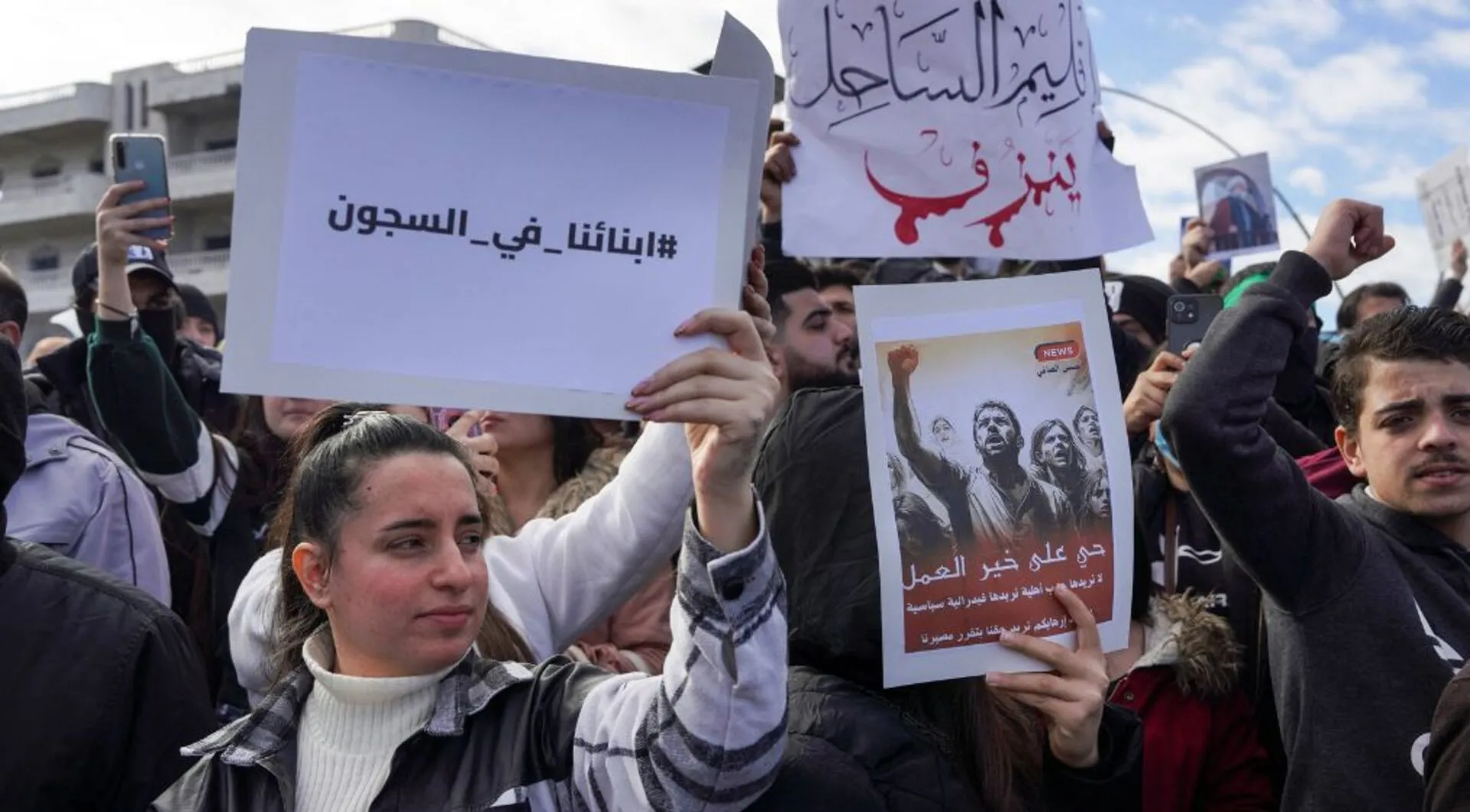
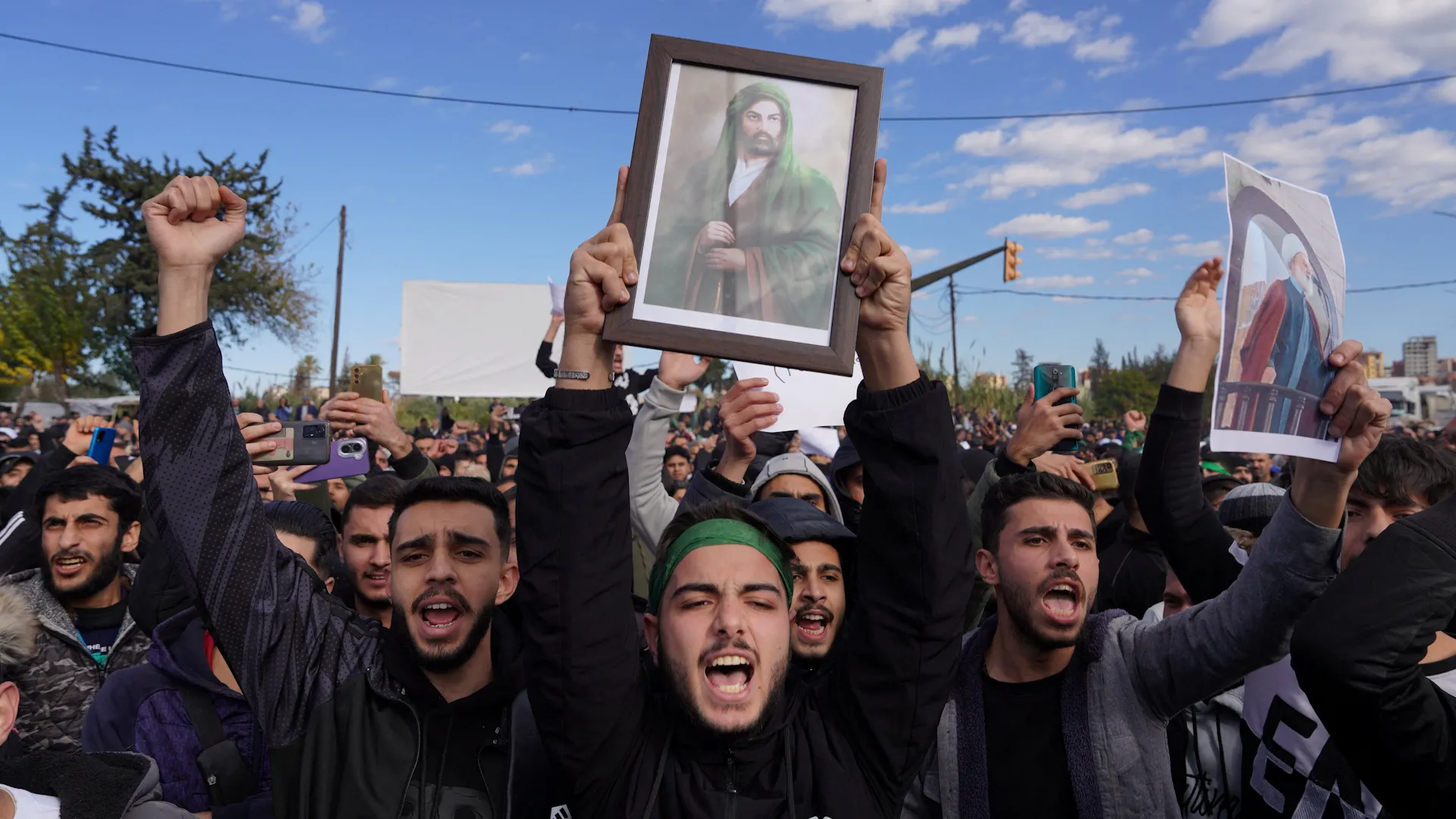
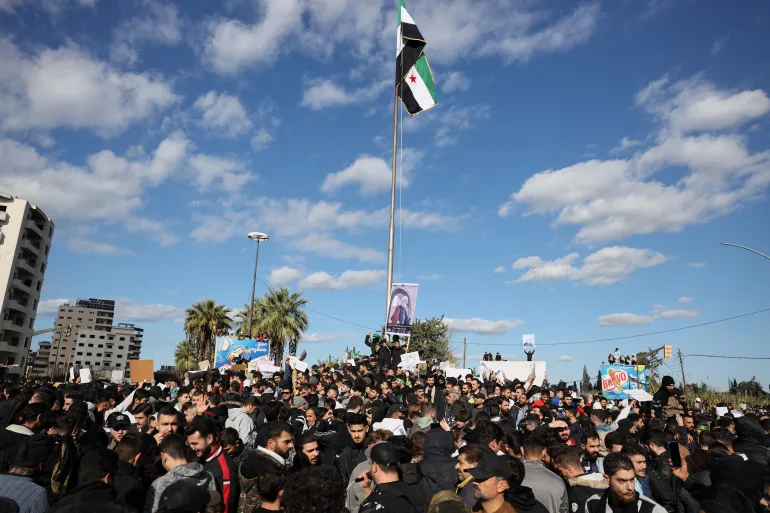
The violence has flared as thousands of Alawite Syrians took to the streets across the religious minority’s heartland in central and coastal parts of Syria on Sunday to protest against violence and discrimination.

The protests were called for by Ghazal Ghazal, an Alawite spiritual leader living outside the country, who had issued a call to “show the world that the Alawite community cannot be humiliated or marginalised” after the deadly bombing of a mosque in Homs on Friday.

The bombing, which killed eight people and was claimed by a Sunni group known as Saraya Ansar al-Sunna, was the latest act of violence against the religious minority, to which the ousted former President al-Assad also belongs and which had huge prominence under his rule.

The protesters also demanded that the government implement federalism – a system that would see power decentralised from Damascus in favour of greater autonomy for minorities – and the release of Alawite prisoners.

“We do not want a civil war, we want political federalism. We do not want your terrorism. We want to determine our own destiny,” Ghazal, head of the Islamic Alawite Council in Syria and abroad, said in a video message on Facebook.

Syrian Alawites protest
Protesters from the Alawite religious minority demonstrate in Latakia on Sunday, days after a bomb in an Alawite mosque in Homs killed eight people and wounded 18 [Omar Albam/AP]

‘We want federalism’

One of the antigovernment protesters on Sunday, Ali Hassan, said the demonstrators sought an end to the ongoing violence against the Alawite community.

“We just want to sleep in peace and work in peace, and we want federalism,” he said. “If this situation continues like this, then we want federalism. Why is it that every day or every other day, 10 of us are killed?”

A counterprotester, Mohammad Bakkour, said he had turned out to show his support for the government.

“We are here to support our new government, which from the very first day of liberation called for peace and for granting amnesty to criminals,” he said, accusing the antigovernment protesters of seeking to “sabotage the new path toward rebuilding the nation”.

“The entire people are calling for one people and one homeland, but they do not want one people or one homeland – they want sectarianism, chaos, problems, and federalism for their personal interests.”

Source link

Seven Turkish police officers wounded in clash with ISIL fighters: Report | ISIL/ISIS News

A shootout ensues after police raid a home in northwestern Yalova province, local media reports say.

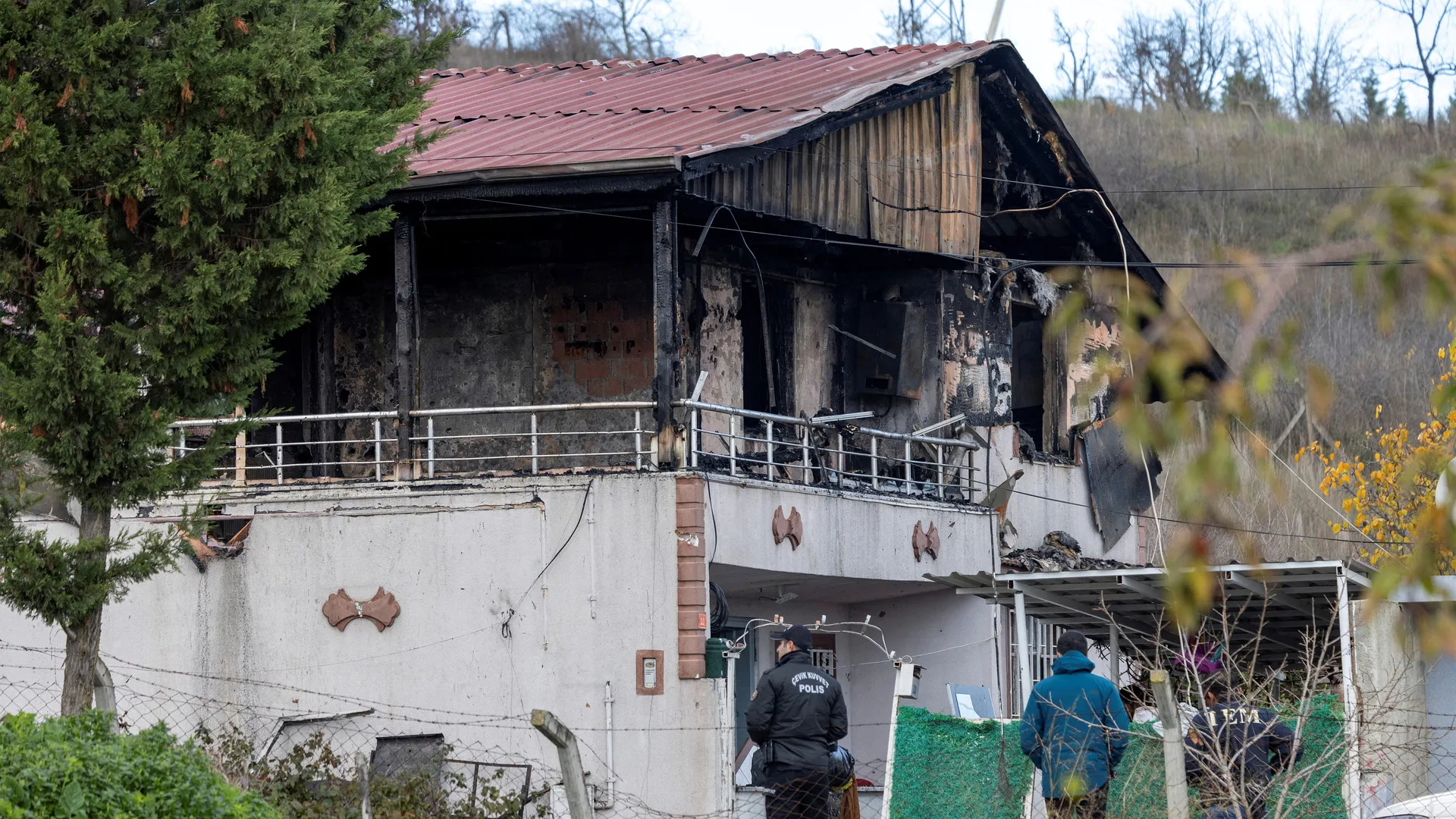
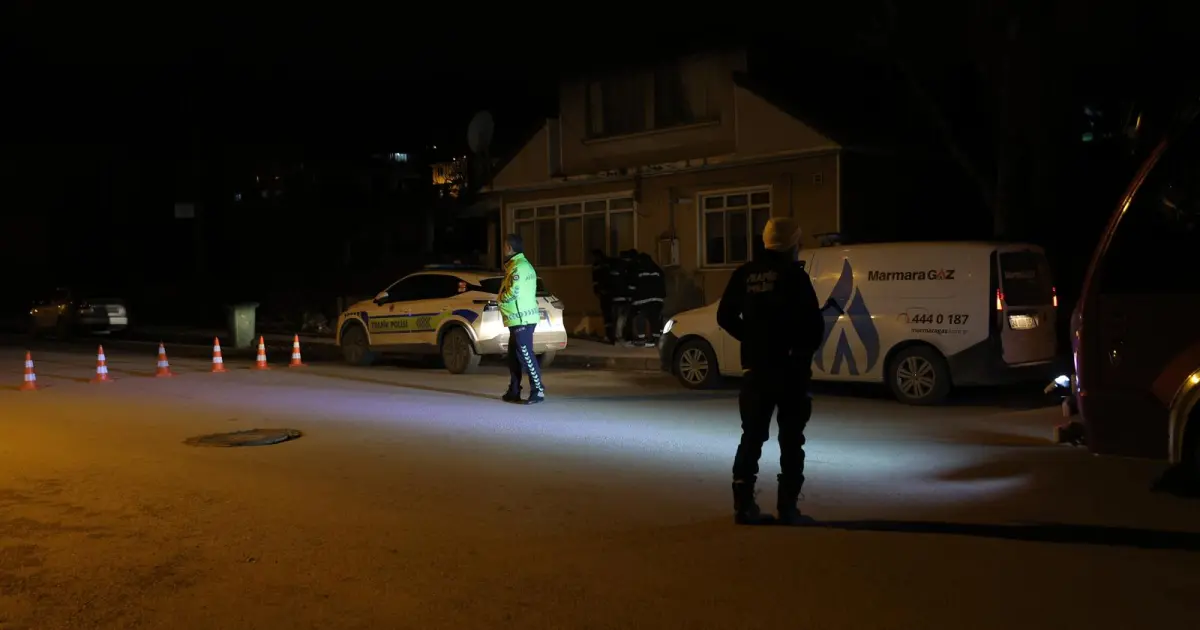
Seven Turkish police officers have been wounded in a shootout during an operation against alleged ISIL (ISIS) fighters, local media report.

Broadcaster TRT Haber reported that police carried out a raid at a home in Yalova province’s Elmalik village, located south of Istanbul, when fire was exchanged on Sunday.

Recommended Stories

list of 4 itemsend of list

The officers were not seriously injured, the broadcaster reported. It was not immediately clear whether any suspects were wounded or arrested.

Special forces from nearby Bursa province joined the operation to provide support, including enacting ongoing security measures in the area.

Locals and vehicles were not allowed into the area surrounding the targeted home, the broadcaster said, while the Yalova governorate also suspended classes at five nearby schools.

On Thursday, Turkish authorities said they had conducted raids on 124 locations and apprehended 115 ISIL suspects.

Police had received intelligence that operatives were “planning attacks in Turkiye against non-Muslims in particular” during the holiday period, the Istanbul chief prosecutor’s office said.

The United States military also carried out extensive strikes against ISIL in neighbouring central and northeastern Syria earlier this month, hitting more than 70 targets. The strikes came a week after two US soldiers and an interpreter were killed in an attack in the Syrian city of Palmyra.

Turkiye, which shares a border with Syria, has expanded its efforts against ISIL in recent years. Turkish authorities say some ISIL operatives relocated to the country in 2019 after the group was vanquished in the parts of Iraq and Syria it then controlled.

Previous raids in March had led to the capture of nearly 300 suspected ISIL members across 47 provinces over two weeks.

Between 2013 and 2023, authorities arrested more than 19,000 people for suspected affiliations with the group, according to the Turkish presidency.

Source link