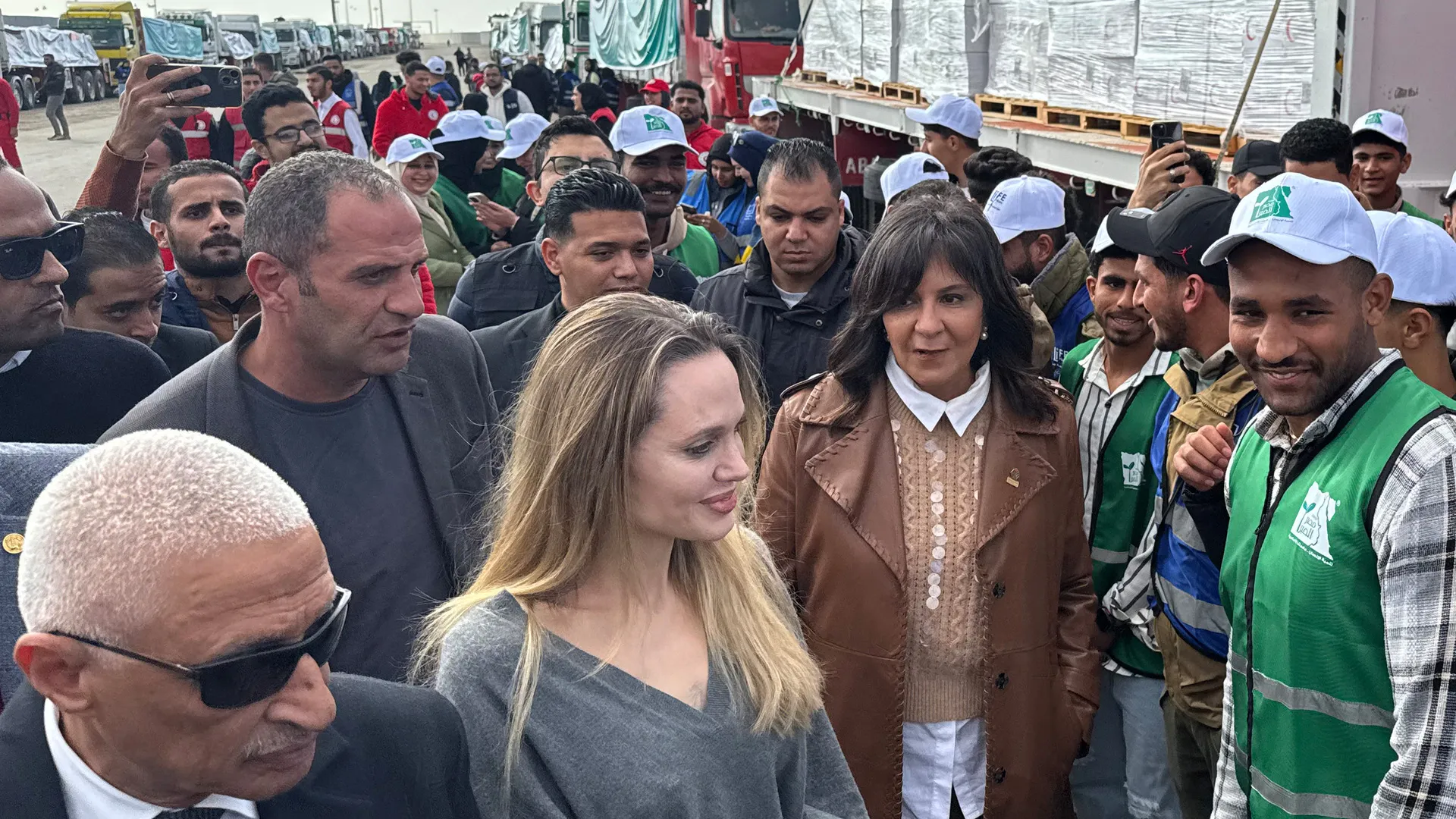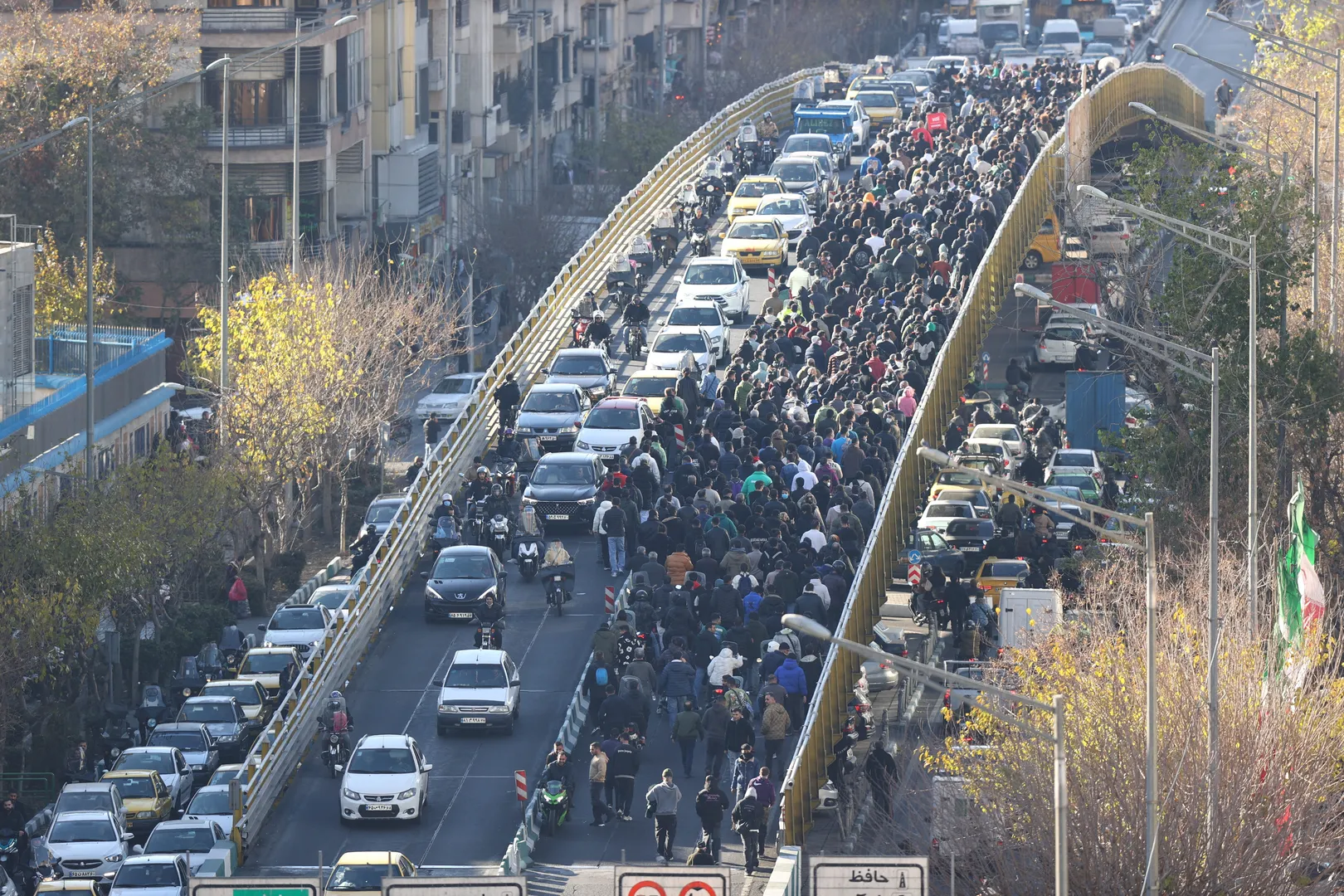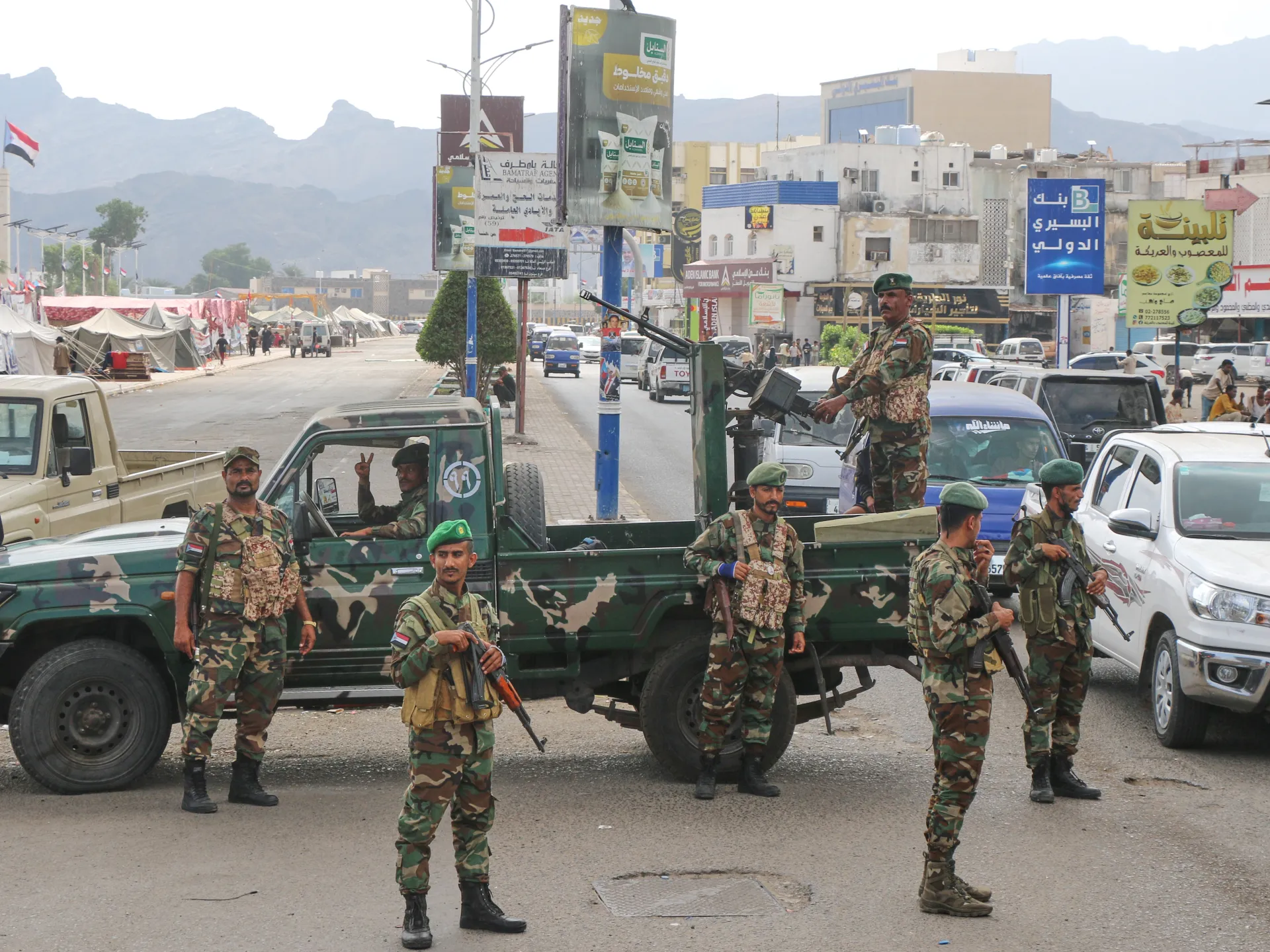
Myles Caggins, former US military spokesman for the Global Coalition to Defeat ISIS, talks about the attack in Syria that resulted in the killings of three Americans.
From the cleanup efforts in Sri Lanka in the wake of Cyclone Ditwah’s destruction to the devastating Myanmar military air attack on a hospital that killed 30 people, here is a look at the week in photos.
Dublin, Ireland – When I was accepted to Trinity College Dublin, I imagined a fresh start, new lectures, late-night study sessions and a campus alive with possibility.
The plan was clear: begin my studies in September 2024 and finally step into the future I had worked so hard for.
Recommended Stories
list of 3 itemsend of list
But when September came, the borders of Gaza were shut tight, my neighbourhood was being bombed almost every day, and the dream of university collapsed with the buildings around me. Trinity sent me a deferral letter, and I remember holding it in my hands and feeling torn in two.
I didn’t know whether to feel relieved or heartbroken. That letter became a strange symbol of hope, a reminder that maybe, someday, my life could continue. But everything else was falling apart so quickly that it was hard to believe in anything.
My family and I were displaced five times as the war intensified. Each time, we left something behind: books, clothes, memories, safety.
After the first temporary truce, we went home for a short time. But it no longer felt like the place we had built our lives. The walls were cracked, windows shattered, and floors coated in dust and debris.
It felt haunted by what had happened.
I knew I had to go
I’m the middle child among three siblings. My older sister, Razan, is 25, and my younger brother, Fadel, is 23.
You might think being a middle child spares you, but during the war, I felt responsible for them. On nights when bombings shook the building and fear crept into every corner, I tried to be the steady one. I tried to comfort them as I trembled inside.
Then, in April 2025, my name appeared on a small, restricted list of people allowed to leave Gaza. About 130 people could cross at that time, dual-nationality holders, family reunification cases and a handful of others. My name on that list felt unreal.
The morning I approached the crossing, I remember the long, tense line of people waiting, gripping documents, holding bags, clutching their children’s hands. No one talked.
When two IDF officers questioned me, I answered as steadily as I could, afraid that something, anything, might go wrong and they’d send me back.
When they finally waved me through, I felt relief and guilt at the same time.
I didn’t call home until I got to Jordan. When my mother heard my voice, she cried. I did, too. I told her I was safe, but it felt like I had left a part of my heart behind with them.
Alagha had to leave her mobile phone behind in Gaza; this is one of the few photos she still has, of her mother embracing her on her graduation day in Gaza [Courtesy of Rawand Alagha]
My family is now in Khan Younis, still living through the chaos.
I arrived in Amman on April 18, my heart heavy with the weight of what I had escaped. The next morning, I boarded a flight to Istanbul, with nothing around me feeling real.
The sounds of normalcy, laughter, announcements, and the rustle of bags were jarring after the constant bombardment. I had been living in a world where every sound could signal danger, where the air was thick with fear and uncertainty.
I felt like a ghost, wandering through a world that no longer belonged to me.
Finally, after hours of flying, waiting, being screened and watching departure boards, I landed in Dublin. The Irish air felt clean, the sky impossibly open. I should’ve been happy, but I was engulfed by crushing guilt, the joy overshadowed by the pain of separation.
I wasn’t completely alone. A Palestinian colleague from Gaza had arrived in April 2024, and two friends were also in Ireland. There was an unspoken understanding between us.
“You recognise the trauma in each other without saying a word,” I often tell people now. “It’s in the way we listen, the way we sit, the way we carry ourselves.”
Back in Gaza, my daily life had shrunk to pure survival: running, hiding, rationing water, checking who was alive. Bombings hit every day, and nighttime was the worst. Darkness makes every sound feel closer, sharper.
You don’t sleep during war. You wait.
Those nights, the silence was deafening, punctuated by the distant echoes of explosions. I would lie awake, straining to hear danger.
The darkness wrapped me like a suffocating blanket, amplifying every creak of the building, every whisper of the wind.
During the day, people on the street moved quickly, eyes darting, alert.
Water was a precious commodity; we would line up for hours at distribution points, often only to receive a fraction of what we needed. It was never enough.
No human should live like that
Five times, we fled in search of safety, packed in minutes, hearts racing with fear.
In one building where dozens of displaced families stayed, people slept on thin mattresses, shoulder to shoulder. Children cried quietly, adults whispered, trying to comfort one another, but every explosion outside sent ripples of panic through the rooms.
No human being should have to live like that, but millions of us did.
As I sit in Dublin, I carry the weight of my family’s struggles with me, a constant reminder of the life I left behind.
The guilt of survival is a heavy burden, but I hold onto hope that one day, I can return and help rebuild what has been lost.
Even now, far from Gaza, I feel it. You don’t leave war behind; you carry it with you like a second heartbeat.
A workshop at the University of Dublin welcoming the Palestinian students [Courtesy of Rawand Alagha]
Watching a world I’m not part of yet
I often stop in the campus courtyards. Not just because they’re beautiful, though they are, but because I need those moments to remind myself that I survived.
The laughter of children here feels foreign, a reminder of joy that has been stolen from so many.
Walking through Trinity College today feels surreal. Students laugh over coffee, rush to lectures and complain about assignments. Life moves so seamlessly here.
I message my family every day. Some days, they reply quickly. Other days, hours pass with no response. Those silent days feel like torture.
But I’m determined. Being here is about rebuilding a life, about honouring the people I left behind.
Survival comes with weight.
I carry the dreams of those who couldn’t leave. That responsibility shapes the way I move through the world; quieter, more grateful, more aware.
I hope someday I can bring my family to safety. I hope to finish my studies, rebuild my life and use my voice for people still trapped in war.
I want people to know what it takes to stand in that line at the border, to leave everything behind, to walk into a future alone.
United States President Donald Trump has pledged to pursue “serious retaliation” against the armed group ISIL (ISIS) after an ambush in central Syria killed two US service members and one civilian interpreter, also from the US.
The attack on US forces on Saturday was the first to inflict casualties since the fall of Syrian President Bashar al-Assad a year ago.
Recommended Stories
list of 4 itemsend of list
Three additional US military members were injured in the attack, as well as at least two Syrian troops, according to government and media reports.
In a social media post, Trump said he had received confirmation that the injured US soldiers were “doing well”.
He, however, warned that there would be serious consequences for what he described as an ISIL (ISIS) attack.
“This was an ISIS attack against the U.S., and Syria, in a very dangerous part of Syria, that is not fully controlled by them,” Trump wrote. “The President of Syria, Ahmed al-Sharaa, is extremely angry and disturbed by this attack. There will be very serious retaliation.”
His remarks echoed those of Secretary of Defense Pete Hegseth, who likewise promised to take severe action against anyone who attacked US service members.
“Let it be known, if you target Americans — anywhere in the world — you will spend the rest of your brief, anxious life knowing the United States will hunt you, find you, and ruthlessly kill you,” Hegseth wrote on social media.
Conducting ‘counter-terrorism operations’
Saturday’s attack was first announced by US Central Command, also known as CENTCOM.
It characterised the attack as an “ambush” carried out by a lone ISIL gunman, who was subsequently “engaged and killed”. Hegseth later confirmed that the perpetrator “was killed by partner forces”.
The attack took place near Palmyra in Syria’s central Homs region, according to Pentagon spokesperson Sean Parnell.
“The attack occurred as the soldiers were conducting a key leader engagement,” he wrote in a statement. “Their mission was in support of on-going counter-ISIS/counter-terrorism operations in the region.”
Tom Barrack, the US ambassador to Turkiye, meanwhile, described the incident as a “cowardly terrorist ambush targeting a joint U.S.–Syrian government patrol”. He noted there were “Syrian troops wounded in the attack” and wished them a “speedy recovery”.
But the details about the attack and the individuals involved remain unclear.
CENTCOM indicated the US government would withhold identifying information about the late US soldiers and their units “until 24 hours after their next of kin have been notified”.
The incident remains under “active investigation”, according to the US Department of Defense.
Who was the suspect?
The identity of the suspect has also not been released to the public.
But three local officials told the Reuters news agency that the assailant was a member of the Syrian security forces.
A spokesperson for the Syrian Interior Ministry also told the television channel Al-Ikhbariah TV that the attacker did not have a leadership role in the country’s security forces. He did not say whether the man was a junior member.
“On December 10, an evaluation was issued indicating that this attacker might hold extremist ideas, and a decision regarding him was due to be issued tomorrow, on Sunday,” the spokesperson, Noureddine el-Baba, said.
The official Syrian Arab News Agency (SANA) state news agency reported earlier that Syrian security forces and US troops came under fire during a joint patrol.
The news agency AFP, meanwhile, cited an anonymous Syrian military official as saying shots were fired “during a meeting between Syrian and American officers” at a Syrian base in Palmyra.
A witness in the city, who also asked to remain anonymous, told the agency that he heard the shots coming from inside the base.
Traffic on the Deir Az Zor–Damascus highway was temporarily halted as military aircraft conducted overflights in the area, the agency said.
A security source told SANA that US helicopters evacuated those who were wounded to the al-Tanf base near the Iraqi border.
A long-term US presence
In the aftermath of the attack, US officials pledged to double down on their efforts to combat ISIL (ISIS) in Syria.
“We will not waver in this mission until ISIS is utterly destroyed, and any attack on Americans will be met with swift and unrelenting justice,” Ambassador Barrack wrote on social media.
“Alongside the Syrian Government, we will relentlessly pursue every individual, facilitator, financier, and enabler involved in this heinous act. They will be identified and held accountable swiftly and decisively.”
The US has troops stationed in northeastern Syria as part of a decade-long effort to help a Kurdish-led force there combat ISIL (ISIS).
ISIL captured Palmyra in 2015, at the height of its military ascendancy in Syria, before losing the city 10 months later. During that time, it destroyed several ancient sites and artefacts while using others to stage mass executions.
ISIL (ISIS) was vanquished in Syria in 2018 but still carries out sporadic attacks without controlling any territory inside Syria.
As of December 2024, there were approximately 2,000 US troops stationed in Syria to continue the fight against ISIL (ISIS).
In late November, CENTCOM announced the destruction of “more than 15 sites containing ISIS weapons caches”, as the US continues its campaign against the armed group.
This month, Syria marked one year since the ouster of longtime leader Bashar al-Assad, but the war-ravaged nation continues to face stiff security and economic challenges as it seeks to rebuild and recover after 14 years of ruinous civil war.
Eight people also injured in fighting with ‘terrorists’ in disputed region between Sudan and South Sudan.
Published On 13 Dec 202513 Dec 2025
Share
At least six Bangladeshi peacekeepers were killed in a “terrorist” attack on a United Nations base in Abyei, a disputed region between Sudan and South Sudan, the Bangladesh army said.
The attack on Saturday also injured another eight people, the army stated.
Recommended Stories
list of 3 itemsend of list
“The situation in the area is still unstable and clashes with terrorists are ongoing,” the army said in a statement, adding that the authorities were working to provide medical treatment and rescue operations for those injured.
There was no immediate comment from the UN mission.
The attack comes just a month after the United Nations Security Council voted to renew a UN Interim Security Force for Abyei (UNISFA), the peacekeeping mission in the oil-rich disputed region between Sudan and South Sudan, for another year.
Bangladesh is one of the largest contributors to UN peacekeeping missions, and its troops have long been deployed in Abyei, a volatile region disputed between Sudan and South Sudan.
UNISFA’s peacekeeping mission was first deployed in 2011.
The 4,000 police and soldiers of UNISFA are tasked with protecting civilians in the region plagued by frequent armed clashes.
The Abyei region is split between two different groups with different loyalties.
The Ngok Dinka tribe have strong ethnic, cultural and linguistic ties to the Dinka of South Sudan, while the Misseriya are a nomadic Arab tribe with links to Sudan.
Abyei’s future was a critical feature of the 2005 peace deal that was signed between the Sudanese government and rebels that ended the civil war then and led the way to South Sudan’s independence.
However, unrest in the disputed area with South Sudan also continues at a time when Sudan is devastated by a more recent civil war that erupted in April 2023, when two generals started fighting over control of the country.
Sudan’s paramilitary Rapid Support Forces (RSF), which have been committing atrocities in Darfur and other regions, have also been active in Abyei.
Paramilitary force intensifies offensive in Kordofan region after seizing control of Darfur in October.
Published On 13 Dec 202513 Dec 2025
Share
At least three people have been killed and nine others wounded, when the paramilitary Rapid Support Forces (RSF) launched a drone attack on a central Sudanese city, as fighting intensifies across the vast strategic region of Kordofan that could determine the war’s outcome.
The strike hit a square near a police station in the Tayba neighbourhood of el-Obeid on Saturday afternoon, military sources told Al Jazeera. Several of the wounded are in critical condition, they said.
Recommended Stories
list of 2 itemsend of list
The attack underscores the RSF’s expanding use of air power as it shifts its offensive from Darfur to the sprawling Kordofan region, home to critical oil infrastructure that has generated revenue for both Sudan and neighbouring South Sudan.
Military sources reported that the Sudanese Armed Forces (SAF) had earlier struck RSF positions in the town of Um Adara in South Kordofan, while RSF forces shelled the city of Um Rawaba in the north, causing civilian casualties.
An RSF drone also targeted army positions in Kosti city in White Nile state, in southeastern Sudan, destroying a military vehicle and injuring its crew, the sources added.
The three Kordofan states have witnessed fierce clashes in recent weeks, forcing tens of thousands to flee their homes and compounding what aid agencies describe as one of the world’s worst humanitarian emergencies.
The United Nations’ World Food Programme warned it will be forced to slash food rations by up to 70 percent for communities facing starvation starting in January due to critical funding shortages.
Ross Smith, the agency’s emergency preparedness director, said the cuts would affect those already “on the brink of famine” as well as vulnerable communities at risk of sliding into hunger.
The WFP said 20 million Sudanese are suffering from malnutrition, with six million facing famine-like conditions. Smith warned that funding could “collapse” by April, threatening the programme’s ability to continue operations.
Sudan’s war between the army and RSF has killed tens of thousands and displaced nearly 13 million people since fighting erupted in April 2023, according to international organisations.
The army claims the member was working to re-establish Hamas’s capabilities in the Strip.
Published On 13 Dec 202513 Dec 2025
Share
The Israeli military has said it struck a “key” Hamas member in the area of Gaza City, without elaborating on who they may be.
In a post on Telegram, the army alleged that the member had been operating to re-establish Hamas’s capabilities, which have been severely depleted by more than two years of Israel’s genocidal war on Gaza.
Recommended Stories
list of 3 itemsend of list
There was no immediate comment from the Palestinian group.
The Wafa news agency reported that an Israeli drone hit a vehicle at the Nabulsi junction in the west of Gaza City, resulting in casualties.
The agency did not report on specific numbers, and it was not clear if the attack was the one that allegedly killed the Hamas member.
Since the ceasefire started in October, Israel has continued to attack Gaza daily – reaching nearly 800 times – in a clear breach of the agreement, according to authorities in Gaza.
Israel also continues to block the majority of aid trucks from entering the enclave. The United Nations General Assembly on Friday overwhelmingly backed a resolution demanding that Israel open unrestricted humanitarian access to the Gaza Strip, stop attacking UN facilities, and comply with international law, in line with its obligations as an occupying power.
Last month, I was waiting for a shared taxi at the Nuseirat roundabout when I witnessed a heartbreaking scene. As I stood by the side of the road, I felt a small hand tugging at my clothes.
I looked down and saw a little girl, no older than eight. She was barefoot, her shirt was torn, and her hair was messy and unwashed. Her eyes were beautiful, and her face showed innocence, yet exhaustion and despair clouded it.
She pleaded: “Please, please, give me just one shekel, God bless you.”
Before I gave her the money, I decided to speak with her. I knelt down and asked, “What is your name, my dear?”
She replied in a frightened voice, “My name is Nour, and I am from the north.” Her name, which means “light” in Arabic, stood in stark contrast to the darkness surrounding her.
I asked her, “Why are you asking for money, Nour?”
She looked at me hesitantly, then whispered, “I want to buy an apple… I crave one.”
In Gaza, a single apple now costs $7; before the war, a kilogramme of apples was less than a dollar.
I tried to ignore the pain rising in my chest. I thought about the circumstances we now face, where young children are forced to beg in the street just to buy an apple.
I gave Nour one shekel ($0.30), but as soon as I did, the situation worsened. A large group of children, all Nour’s age or younger, gathered around me, repeating the same request. I felt immense distress.
For more than two years, we have faced genocide. We have witnessed countless tragedies and horrors. But for me, the sight of children begging in the streets is particularly unbearable.
Before the war, Gaza was still a poor place. We used to see child beggars, but they were few, mostly roaming in a few areas. Now, they are everywhere, from the north to the south.
The genocidal war has destroyed families and livelihoods across Gaza. The carnage has orphaned more than 39,000 children, and the enormous destruction has deprived more than 80 percent of the workforce of their jobs, driving countless children into extreme poverty and forcing them to beg for survival.
But child begging is not just a result of poverty; it is a sign of a deep disintegration affecting the family, the education system, and the community. No parent sends their child to beg because they want to. The war has left many families in Gaza without options, and in many cases, there are no surviving parents to keep the children away from the streets.
Child beggars do not just lose their childhood; they also face exploitation, harsh labour, illiteracy and psychological trauma that leaves a lasting effect.
The more begging children increase in number, the more the hope for this generation diminishes. Houses can be rebuilt, infrastructure can be restored, but a young generation that is deprived of education and hope for the future cannot be rehabilitated.
The strength Gaza possessed before the war was not just about military power; it was about human power, the main pillar of which was education. We had one of the highest levels of literacy in the world. The enrolment rate for primary education stood at 95 percent; for higher education, it reached 44 percent.
Education stood as a counterforce to the debilitating siege that dispossessed the people of Gaza and crippled the economy. It nourished skills and ingenuity within the young generations to help them cope with an increasingly harsh economic reality. More importantly, education gave children a sense of direction, security and pride.
The systematic attack on Gaza’s education system – the destruction of schools, universities, libraries and the killing of teachers and professors – has pushed what used to be a remarkably resilient and effective educational system to the brink. The pillar that protected children and guaranteed them a clear future is now falling apart.
After I left the Nuseirat roundabout, Nour’s eyes stayed with me. It was not just because of the pain of seeing an innocent child being forced to beg. It was also because of the realisation that this encounter brought about: That the capacity of the next generation to rebuild Gaza one day is being taken away.
The world allowed Israel to carry out genocide in Gaza for two years. It knew what was going on, and yet it chose complicity and silence. Today, it cannot erase its guilt, but it can choose to redeem itself. It can take all necessary action to save the children of Gaza and to grant them the rights they are inherently given by the Convention on the Rights of Children: The right to food, water, healthcare, a safe environment, education, and protection from violence and abuse.
Anything short of that would mean continuing support for the slow genocide of Gaza.
The views expressed in this article are the author’s own and do not necessarily reflect Al Jazeera’s editorial stance.
VR headsets are offering injured, traumatised Palestinian children some respite from hardship in war-torn Gaza.
Published On 13 Dec 202513 Dec 2025
Share
Inside a makeshift tent in the heart of the besieged Gaza Strip, Israel’s genocidal war, which has destroyed neighbourhoods, schools and hospitals, decimated families and shattered lives for more than two years, no longer exists.
Virtual reality technology is taking Palestinian children struggling with physical and psychological wounds to a world away, where they can feel safe again.
Recommended Stories
list of 3 itemsend of list
“After I was injured in the head, I try to forget the pain,” Salah Abu Rukba, a Palestinian child taking part in the sessions, told Al Jazeera at the VR Tent in az-Zawayda, central Gaza.
“When I put on the headset, I forget the injury. I feel comfort as I forget the destruction, the war, and even the sound of the drones disappears.”
Salah Abu Rukba sustained an injury to his head during Israel’s genocidal war on Gaza [Screen grab/ Al Jazeera]
Lama Abu Dalal, communication officer at Gaza MedTech – the technology initiative spearheading the project – said Abu Rukba and the others have constant reminders of the war etched in their bodies.
But the VR headset makes them forget their life-changing wounds and simply be children again, if only for a few moments.
Gaza MedTech was launched by Palestinian innovator Mosab Ali, who used VR to comfort his injured son. Ali was later killed in an Israeli attack.
Studies have confirmed that VR can have beneficial effects in the treatment of mental disorders, including post-traumatic stress disorder (PTSD). Offering this service in Gaza is hard to sustain, as spare parts of the equipment are barred from entry into Gaza by Israel’s ongoing punishing blockade.
Gaza MedTech was launched by Palestinian innovator Mosab Ali, who used VR to comfort his injured son [Screen grab/Al Jazeera]
Since a ceasefire formally went into effect on October 10, Israel has allowed slightly more aid in, although far less than Gaza’s needs and what the agreement clearly stipulated. Israel continues to restrict the free flow of humanitarian aid and medical supplies.
Authorities in Gaza say the truce has been violated by Israel at least 738 times since taking effect.
The United Nations estimates that more than 90 percent of children in Gaza are showing signs of severe stress driven by the loss of safety and stability, and will require long-term support to heal from the psychological effect of the conflict.
Multiple UN bodies, including the World Health Organization (WHO), the UN humanitarian office OCHA, and independent UN experts, have called for immediate and unimpeded access to Gaza for essential medical equipment and psychological support.
Ukrainian President Volodymyr Zelenskyy said the Russian attacks ‘had no … military purpose whatsoever’.
Russian forces have attacked two Ukrainian ports, damaging three Turkish-owned vessels, including a ship carrying food supplies, according to Ukrainian officials and a shipowner.
Friday’s attacks by Russian forces targeted Chornomorsk and Odesa ports in Ukraine’s southwestern Odesa region on the Black Sea. A Ukrainian navy spokesperson told the Reuters news agency that three Turkish-owned vessels were damaged in total, but did not provide additional details.
Recommended Stories
list of 3 itemsend of list
Posting video footage on social media of firefighters tackling a blaze on board what he described as a “civilian vessel” in Chornomorsk, Ukrainian President Volodymyr Zelenskyy said the Russian attacks “had no … military purpose whatsoever”.
“This proves once again that Russians not only fail to take the current opportunity for diplomacy seriously enough, but also continue the war precisely to destroy normal life in Ukraine,” Zelenskyy said.
“It is crucial that … the world maintains the proper moral compass: who is dragging out this war and who is working to end it with peace, who is using ballistic missiles against civilian life, and who is striking the targets that influence the functioning of Russia’s war machine,” he said.
Today, the Russian army carried out a missile strike on our Odesa region, and last night there was also a Russian attack on Odesa’s energy infrastructure. At one point we talked about the situation in this city and the people of Odesa with President Trump.
— Volodymyr Zelenskyy / Володимир Зеленський (@ZelenskyyUa) December 12, 2025
Zelenskyy did not name the vessel, but it was identified as the Panama-flagged and Turkish-owned Cenk T by Reuters, which matched cranes and buildings to satellite imagery of Chornomorsk port.
The ship’s owners, Cenk Shipping, confirmed it was attacked at about 4pm local time (14:00 GMT). There were no casualties among the crew, and damage to the ship was limited, it added.
An employee of a private company was also injured in a separate attack on Odesa port, where a cargo loader was also damaged, Ukraine’s Deputy Prime Minister Oleksii Kuleba confirmed.
He added that Russia had used drones and ballistic missiles in the port strikes, which were “aimed at civilian logistics and commercial shipping”.
Ukraine’s three large Black Sea ports in the Odesa region are a key economic artery for Kyiv.
Late on Friday, Turkiye’s Ministry of Foreign Affairs confirmed the vessel had been attacked in Chornomorsk port. It added that there were no reports of injured Turkish citizens.
The ministry said in a statement that the attack “validates our previously stated concerns regarding the spread of the ongoing war in the region to the Black Sea, and its impact on maritime security and freedom of navigation”.
“We reiterate the need for an arrangement whereby, in order to prevent escalation in the Black Sea, attacks targeting navigational safety as well as the parties’ energy and port infrastructure are suspended,” it added.
Hours earlier, in talks with Russian President Vladimir Putin in Turkmenistan’s capital of Ashgabat, Turkish President Recep Tayyip Erdogan called for calm in the Black Sea and suggested that a limited ceasefire for energy facilities and ports could be beneficial for regional security.
Turkiye, which has the longest Black Sea coastline at approximately 1,329km (826 miles), has grown increasingly alarmed at the escalating attacks in its back yard and has offered to mediate between Kyiv and Moscow.
The attacks come just days after Putin promised retaliation and threatened to cut “Ukraine off from the sea” for Kyiv’s maritime drone attacks on Moscow’s “shadow fleet” – unmarked tankers thought to be used to circumvent oil sanctions – in the Black Sea.
Kyiv says the tankers are Moscow’s main source of funding for its almost four-year-old war. It has also tried to squeeze Russian revenues by expanding attacks to the Caspian Sea, where it struck a major oil rig this week.
Incident in November latest reported instance of Trump administration’s increasingly aggressive maritime tactics.
Published On 12 Dec 202512 Dec 2025
Share
United States forces raided a cargo ship travelling from China to Iran last month, according to the Wall Street Journal, in the latest reported instance of increasingly aggressive maritime tactics by the administration of US President Donald Trump.
Unnamed officials told the newspaper that US military personnel boarded the ship several hundred miles from Sri Lanka, according to the report on Friday. It was the first time in several years US forces had intercepted cargo travelling from China to Iran, according to the newspaper.
Recommended Stories
list of 3 itemsend of list
The operation took place in November, weeks before US forces seized an oil tanker off the coast of Venezuela earlier this week, citing sanctions violations. It was another action Washington has not taken in years.
US Indo-Pacific Command did not immediately confirm the report. An official told the newspaper that they seized material “potentially useful for Iran’s conventional weapons”. However, the official noted the seized items were dual-use, and could have both military and civilian applications.
Officials said the ship was allowed to proceed following the interdiction, which involved special operation forces.
Iran remains under heavy US sanctions. Neither Iran nor China immediately responded to the report, although Beijing, a key trading partner with Tehran, has regularly called the US sanctions illegal.
Earlier in the day, Chinese Foreign Ministry spokesperson Guo Jiakun condemned the seizure of the oil tanker off the coast of Venezuela, which was brought to a port in Texas on Friday.
The action came amid a wider military pressure campaign against Venezuela, which Caracas has charged is aimed at toppling the government of leader Nicolas Maduro.
Beijing “opposes unilateral illicit sanctions and long-arm jurisdiction that have no basis in international law or authorisation of the UN Security Council, and the abuse of sanctions”, Guo said.
White House spokesperson Karoline Leavitt told reporters on Thursday the Trump administration would not rule out future seizures of vessels near Venezuela.
We look at the sectarianism that persists in Lebanon, undermining the country’s unity.
Lebanese social media pages were filled recently with heated exchanges and views, with people commenting on developments that reflect the deep sectarianism in the country. From a Christmas decoration to stand-up comedy material to the right to citizenship, people in Lebanon are not holding back.
Presenter: Stefanie Dekker
Guests: Jean Marc Boulos – Content creator Rodrigue Ghosn – Actor and standup comedian Ramzi Kaiss – Lebanon researcher at Human Rights Watch
Singer’s statement follows walkout by five countries after organisers cleared Israel to participate in next year’s contest.
Published On 12 Dec 202512 Dec 2025
Share
Swiss Eurovision winner Nemo said they will return their 2024 victory trophy because Israel is being allowed to compete in the pop music competition.
The singer, who won the 2024 edition with operatic pop track, The Code, posted a video on Instagram showing them placing the trophy in a box to be sent back to the Geneva headquarters of the European Broadcasting Union (EBU).
Recommended Stories
list of 3 itemsend of list
“Eurovision says it stands for unity, for inclusion and dignity for all people,” Nemo said, adding that Israel’s participation amid its ongoing genocidal war on Gaza showed those ideals were at odds with organisers’ decisions.
The EBU, which organises Eurovision, cleared Israel last week to take part in next year’s event in Austria, prompting Spain, the Netherlands, Ireland, Slovenia and Iceland to announce they would be boycotting the contest.
“When entire countries withdraw, it should be clear that something is deeply wrong,” Nemo said on Thursday.
On Friday, contest director Martin Green said in a statement sent to The Associated Press that organisers were “saddened that Nemo wishes to return their trophy which they deservedly won in 2024”.
“We respect the deeply held views Nemo has expressed and they will always remain a valued part of the Eurovision Song Contest family,” he added.
Next year’s Eurovision is scheduled to take place in Austria’s capital, Vienna, after Austrian singer JJ won the 2025 contest in Basel, Switzerland. Traditionally, the winning country hosts the following year.
“This is not about individuals or artists. It’s about the fact that the contest was repeatedly used to soften the image of a state accused of severe wrongdoing, all while the EBU insists that this contest is non-political,” said Nemo.
“Live what you claim. If the values we celebrate on stage aren’t lived off stage, then even the most beautiful songs become meaningless,” they added.
Israel’s genocidal war on Gaza has killed at least 70,369 Palestinians, according to the territory’s health authorities.
The country’s military has continued to attack the enclave despite a ceasefire with Palestinian group Hamas reached back in October.
Rescuers pulled bodies from under the rubble of a collapsed house in Gaza’s Beit Lahiya after heavy rain and winds brought the heavily damaged building crumbling to the ground. At least 12 people have died over the last 24 hours as Storm Byron inflicts further damage on the remnants of Israel’s genocide war.
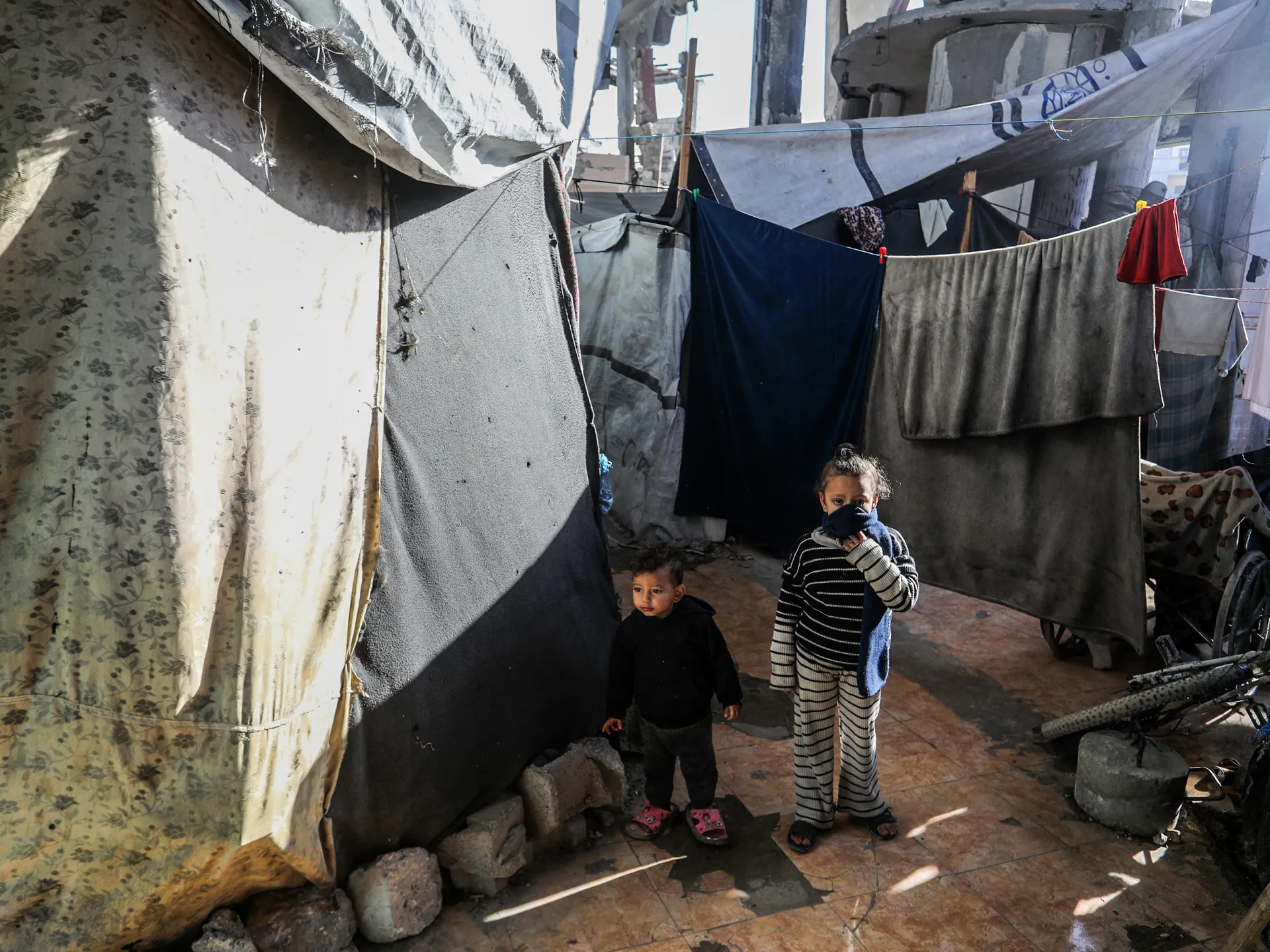
In the large displacement camps of Gaza, rows upon rows of makeshift tents blanket debris, empty lots and what remains of flattened neighbourhoods. With Storm Byron descending upon the enclave, a sense of terror has seized a population already exhausted from two years of Israel’s genocidal war with its unrelenting bombardment, starvation and chaos.
For the 1.5 million Palestinians living under plastic sheets and tattered tarps, the storm means something more than just bad weather. It’s another danger piled on top of the current battle for survival.
Recommended Stories
list of 4 itemsend of list
For several days, meteorologists have warned that heavy rainfall and strong winds could hit the strip today, tomorrow and over the weekend, risking flash flooding and significant wind damage. What is certain, though, is that Gaza is not facing this storm with ready infrastructure, stocked shelters or functioning drainage systems.
It faces it with tents propped up with pieces of scrap metal, paths that become mud rivers after only one night of rain and families who have nothing left to protect.
Solidarity a survival strategy
In the camps of Gaza City, the scenes of vulnerability are everywhere. Most tents are constructed from aid tarpaulins, pieces of plastic salvaged from rubble and blankets tied to recycled wooden poles. Many sag visibly in the middle; others are erected inadequately, so much so that they quiver and flap violently under the slightest breeze.
“When the wind starts, we all hold the poles to keep the tent from falling,” said Hani Ziara, a father sheltering in western Gaza City after his home was destroyed months ago.
His tent was flooded last night in the heavy rain, and his children had to stay outside in the cold. Hani wonders painfully what else he can do to protect his children from the rain and strong winds.
Hani Zaira, a Palestinian father taking shelter in a destroyed building in Gaza City [Hani Mahmoud/Al Jazeera]
In many camps, the ground was already soft from previous rainfall. Wet sand and mud stick to shoes, blankets and cooking pots as people shuffle through. Trenches dug by volunteers to divert water often collapse within hours. With nowhere else to go, families who live in low-lying areas are preparing for the worst: that floodwaters will be pushed directly into their tents.
Stocking up on food, storing clean water and securing shelter are the most basic steps when people prepare for a storm, but that is considered a luxury for the displaced of Gaza.
Most families receive scant water deliveries, going sometimes days without enough to cook or wash. Food supplies are equally strained, and while irregular aid distributions provide basics like rice or canned beans, the quantities seldom last more than a few days. Preparing for a storm by cooking ahead, gathering dry goods or storing fuel is simply not possible.
Mervit, a mother of five children displaced near the Gaza port [Hani Mahmoud/Al Jazeera]
“We could not sleep last night. Our tent was flooded with rainwater. Everything we had was flushed out by water. We want to prepare, but how?” asked Mervit, a mother of five children displaced near the Gaza port. She added, “We barely have enough food for tonight. We can’t save what we don’t have.”
Despite poverty, solidarity has become Gaza’s strongest survival strategy. Neighbours, with whatever they have, help secure the tents. Young men go through the rubble and scavenge for metal and wood remains to serve as temporary posts. The women organise collective cooking so that hot meals can be distributed to families in need, particularly those with young children or elderly family members, whenever possible.
These unofficial networks become more active the closer a storm gets. Volunteers trudge from tent to tent, helping families raise sleeping areas off the ground, patch holes in canopies with plastic sheets, and dig drainage channels. Crowds try to move those who are in precarious, extremely exposed areas to other locations, sharing information about safer places.
‘We are exhausted’
Beyond physical danger, the psychological impact is deep. After months of displacement, loss and deprivation, another crisis – this time, not war, but forces of nature – feels overwhelming.
“Our tents were destroyed. We are exhausted,” said Wissam Naser. “We have no strength left. Every day there is a new fear: hunger, cold, disease, now the storm.”
Wissam Naser, a displaced Palestinian sheltering in a tent in Gaza City [Hani Mahmoud/Al Jazeera]
Many residents describe the feeling of being sandwiched between the sky and the ground, exposed on both ends and unable to protect their families from either.
As clouds mass along Gaza’s shore, families prepare to take a hit. Some weigh down tent walls against the wind with rocks and sandbags. Others push children’s blankets to the driest corner, hoping a roof will last. Most don’t have a plan. They just wait.
The storm will not be another single-night affair for the displaced in Gaza. It would be a further reminder of how fragile life has become, how survival depends not on preparedness but rather on endurance.
They wait because they have no alternative. They prepare with what little they have. They pray that this time, the winds will be merciful.
Displaced Palestinians in dire need of tents, blankets, warm clothing in harsh winter climate.
A baby girl whose family was displaced by Israel’s genocidal war against the Palestinian people in Gaza has died of exposure to the winter cold as Storm Byron lashed the enclave amid Israel’s continued restrictions on essential winter supplies.
Eight-month-old Rahaf Abu Jazar was reported dead on Thursday after her family’s tent in Khan Younis took in water as heavy rainfall flooded tent camps across the enclave overnight, according to the Reuters news agency.
Recommended Stories
list of 3 itemsend of list
Her mother, Hejar Abu Jazar, fed the baby before they went to sleep. “When we woke up, we found the rain over her and the wind on her, and the girl died of cold suddenly,” she told Reuters.
With hundreds of thousands of Palestinian families now sheltering in flimsy tents, Gaza’s civil defence agency struggled to cope, receiving more than 2,500 phone calls over a 24-hour period.
The agency reported that three buildings collapsed in Gaza City due to the storm.
Meanwhile, tents and other winter supplies remain blocked at the border as Israel continues to restrict the flow of aid into the enclave.
The Norwegian Refugee Council (NRC) said only 15,600 tents had been brought into Gaza since the ceasefire came into effect in October.
Those tents have gone to help approximately 88,000 Palestinians, according to NRC. This is in a territory where 1.29 million people are in need of shelter.
Israeli rights group B’Tselem said more than 6,500 trucks are currently waiting to be allowed by Israel into Gaza with essential winter supplies, including tents, blankets, warm clothing and hygiene materials.
Jonathan Crickx, chief of communication at UNICEF Palestine, said the scale of the disaster was “huge”, warning of a looming health disaster as children wandered the camps barefoot.
“What we’re scared of is that there is very poor hygiene, and all that pouring rain could enable the appearance of waterborne diseases like acute diarrhoea,” he said.
Reporting from Gaza City, Al Jazeera’s Hani Mahmoud said many families were leaving the seaport area as the winds picked up on Thursday. “They’re trying to get deeper inside Gaza City, to shelter in any of the remaining intact buildings – at least for the night,” he said.
As twilight descended, Mahmoud said many families faced a difficult night ahead. “Along with every other struggle that people have been going through for the past two years, there’s another battle now with the forces of nature,” he said.
Farhan Haq, spokesperson for United Nations chief Antonio Guterres, warned that more children could die of hypothermia. “That’s why we need to make sure that we can get warm clothing, tents and tarps and shelters [into Gaza],” he said.
The UN’s humanitarian office processed more than 160 flooding alerts since Thursday morning as Storm Byron barrelled through the enclave, said Haq.
Storm Byron is set to hit Gaza as nearly 1.5 million Palestinians shelter in flood-prone camps with little protection. Aid groups say Israel’s restrictions on vital shelter materials — including timber and tent poles — have left families exposed to severe winds, rain, and disease.
Washington, DC – American journalist Dylan Collins wants to know “who pulled the trigger” in the 2023 Israeli double-tap strike in south Lebanon that injured him and killed Reuters video reporter Issam Abdallah.
Collins and his supporters are also seeking information about the military orders that led to the deadly attack. But more than two years later, Israel has not provided adequate answers on why it targeted the clearly identifiable reporters.
Recommended Stories
list of 3 itemsend of list
Press freedom advocates and three United States legislators joined Collins, an AFP and former Al Jazeera journalist, outside the US Capitol on Thursday to renew calls for accountability in this case and for the more than 250 other killings of journalists by Israel.
“I want to know who pulled the trigger; I want to know what command structure approved it, and I want to know why it’s gone unaddressed until today – on our strike and all the others targeted,” Collins said.
Senator Peter Welch and Congresswoman Becca Balint, who represent Collins’s home state of Vermont, and Senator Chris Van Hollen stressed on Thursday that they will continue to push for accountability in the strike, which wounded six journalists.
“We’re not letting it go. It doesn’t matter how long they stonewall us. We’re not letting it go,” Balint told reporters.
The attack
Welch said he was sending his seventh letter to the US Department of State demanding answers, accusing Israel of obfuscation.
Israeli authorities, he said, claim they investigated the attack and ruled the shooting unintentional, but they provided no evidence that they questioned soldiers. Israel also never contacted the key witnesses – namely, Colins and other survivors of the strike.
Slain Reuters journalist Issam Abdallah on assignment in Zaporizhia, Ukraine, April 17, 2022 [File: Ueslei Marcelino/Reuters]
In October, the Israeli army told the AFP news agency that the attack was still “under review” in an apparent contradiction of what Welch had been told.
“The investigation, non-investigation – there’s nothing there,” Welch said. “You’re basically getting the run-around, and you’re getting stonewalled. That’s the bottom line.”
Israel received more than $21bn in US military aid during the two years of its genocidal war on Gaza.
Throughout the war, Israel has stepped up its attacks on the press. But the country has a long history of killing journalists without accountability.
The October 13, 2023, strike, which wounded Al Jazeera’s Carmen Joukhadar and Elie Brakhia and left AFP’s Christina Assi with life-altering injuries, was well-documented in part because the journalists were livestreaming their reporting.
The correspondents, who had set up their equipment on a hilltop near the Lebanese-Israeli border to cover the escalation on the front, were in clearly marked press gear and vehicles.
Israeli drones had also circled above the journalists before the attack.
“We thought the fact that we could be seen was a good thing, that it would protect us. But after a little less than an hour at the site, we were hit twice by tank fire, two shells on the same target, 37 seconds apart,” Collins said at a news conference on Thursday.
“The first strike killed Issam instantly and nearly blew Christina’s legs off her body. As I rushed to put a tourniquet on her, we were hit the second time, and I sustained multiple shrapnel wounds.”
The AFP journalist added that the attack seemed “unfathomable in its brutality” at that time, but “we have since seen the same type of attack repeated dozens of times.”
Israel has been regularly employing such double-tap attacks, including in other strikes on journalists in Gaza.
“This is not an incident in the fog of war. It was a war crime carried out in broad daylight and broadcast on live television,” Collins said.
Earlier this year, UN rapporteur Morris Tidball-Binz called the 2023 strike “a premeditated, targeted and double-tapped attack from the Israeli forces, a clear violation, in my opinion, of IHL (international humanitarian law), a war crime”.
US response
Despite the wounding of a US citizen in the strike, the administration of then-President Joe Biden – which claimed to champion freedom of the press and the “rules-based order” – did next to nothing to hold Israel to account.
Biden’s successor, Donald Trump, also pushed on with unconditional US support for Israel.
On Thursday, Collins decried the lack of action from the US government, saying that he reached out to officials in Washington, DC, and showed them footage of the strike.
“I thought that when an American citizen is wounded in an attack carried out by the US’s greatest ally in the Middle East that we would be able to get some answers. But for two years, I’ve been met by deafening silence,” he told reporters.
“In fact, neither the Biden nor the Trump administrations have ever publicly acknowledged that a US citizen was wounded in this attack.”
Israeli soldiers and settlers have killed at least 10 US citizens, including Al Jazeera correspondent Shireen Abu Akleh, over the past decade.
Senator Van Hollen said accountability in the October 13, 2023, attack is important for journalists and US citizens across the world.
“We have not seen accountability or justice in this case, and the State Department – our own government – has not done much of anything really to pursue justice in this case,” Van Hollen told reporters.
“It is part of a broader pattern of impunity for attacks on Americans and on journalists by the government of Israel.”
He called the US approach a “dereliction of duty” by the Trump and Biden administrations.
Israeli ‘investigation’
Amelia Evans, advocacy director at the Committee to Protect Journalists (CPJ), said Senator Welch’s description of the Israeli probe shows that the country’s “purported investigative bodies are not functioning to deliver justice but to shield Israeli forces from accountability”.
Evans urged the Trump administration to “take action” and demand the completion of probes into the killing of Abu Akleh in 2022 and the 2023 attack on journalists in Lebanon.
“It must demand Israel name all the military officials throughout the command chain who were involved in both cases,” she said.
“But as Israel’s key strategic ally, the United States must do much more than that. It must publicly recognise Israel’s failure to properly investigate the war crimes committed by its military.”
Israel often uses claims of investigation in response to abuses.
Former State Department spokesperson Matthew Miller, who spent almost two years defending Israeli war crimes and justifying Washington’s unflinching support for its Middle East ally, acknowledged that tactic recently.
“We do know that Israel has opened investigations,” Miller, who incessantly invoked alleged Israeli probes from the State Department podium, said in June.
“But, look, we are many months into those investigations. And we’re not seeing Israeli soldiers held accountable.”
‘Chilling effect’
Amid the push for justice, Collins paid tribute to his colleague Abdallah, who was killed in the 2023 Israeli attack.
“Losing Issam was tough on everyone,” he told Al Jazeera. “He was like the dynamo of the press scene in Lebanon. He knew everyone. He was always the first person to help you out if you’re in a jam. He had a larger-than-life personality.”
The killing of Abdullah, Collins added, had a “chilling effect” on the coverage of that conflict, which escalated into a full-blown war between Israel and Hezbollah in September 2024.
The violence saw Israel all but wipe out nearly all the border towns in Lebanon.
Even after a ceasefire was reached in November of last year, the Israeli military continues to prevent reconstruction in the devastated villages as it carries out near-daily attacks across the country.
“If the intention was to stop people from covering the war, then it has worked to some degree,” said Collins.
In this episode of On the Record, Al Jazeera’s Ali Hashem is joined by Iran’s former foreign minister, Mohammad Javad Zarif. They discuss Iran’s political and military involvement in the Middle East and beyond. Zarif reflects on Iran’s involvement with resistance groups in Syria, Gaza and Lebanon and why Iran’s nuclear ambitions have not been obliterated by either the US or Israel.
Crowds celebrated in the Syrian city of Latakia after the US House of Representatives approved a bill that will lift sanctions imposed on Syria six years ago. The legislation will now go to the US Senate where it’s expected to pass.
New Delhi is deepening economic ties with Moscow, despite pressure from Washington.
India is hedging between energy security and strategic partnerships.
Despite pressure from the United States, it has continued buying cheap Russian oil and has recently strengthened economic ties with Russia — from trade to weapons and critical minerals.
But this is a delicate balancing act for Prime Minister Narendra Modi: he wants to cut deals with Moscow, while staying friends with Washington, his biggest trading partner.
For President Vladimir Putin, it shows Russia still has powerful partners and is not completely isolated despite Western sanctions.
And Syria’s economy one year after the fall of Bashar al-Assad.