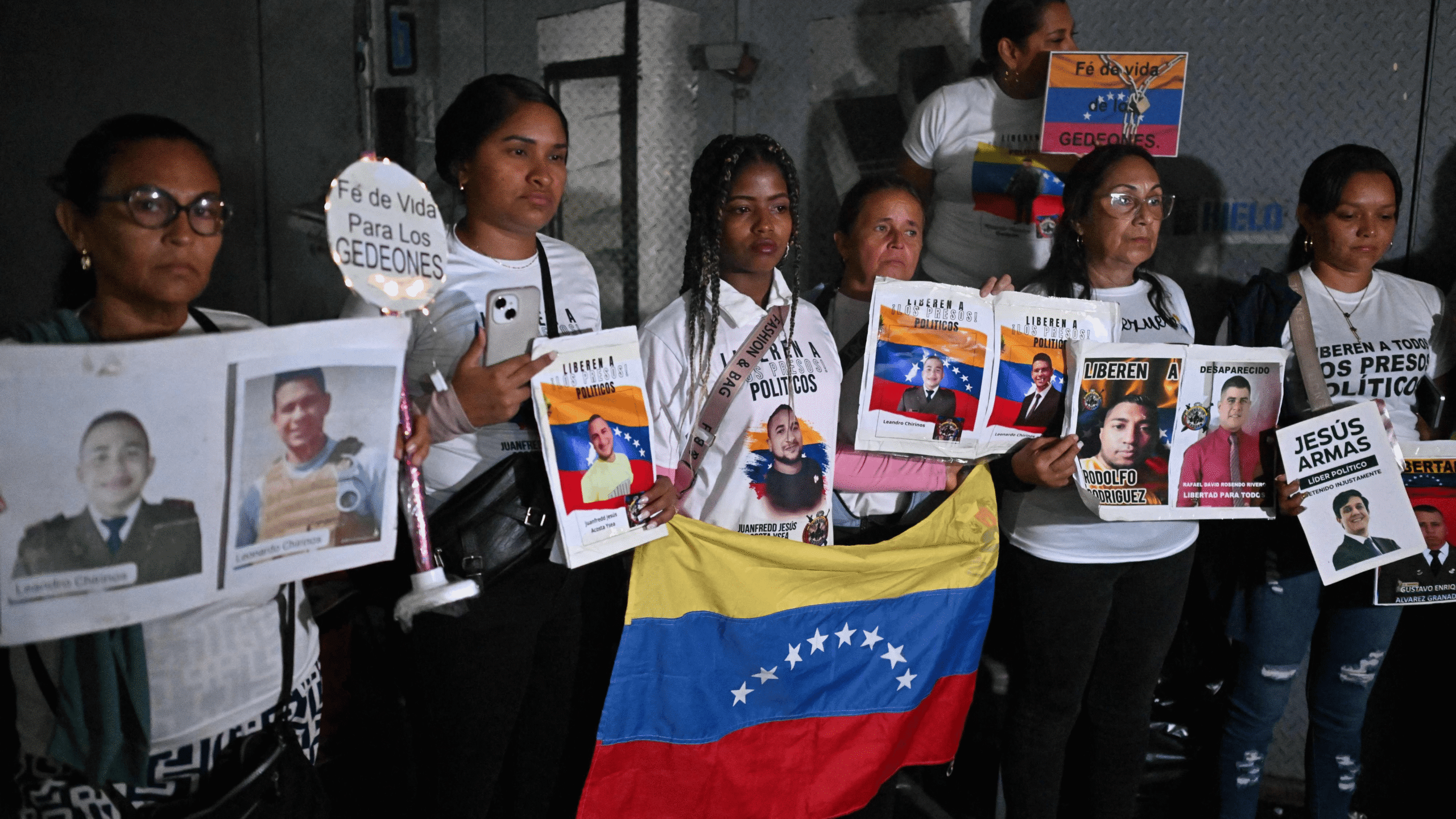
In contexts of war, pacification means a ceasefire achieved through agreements. In its most literal sense, pacification refers to the act of becoming peaceful. In Venezuela, however, pacification cannot be reduced to simply “returning to peace.” The concept acquires a political meaning because violence is neither symmetrical nor bilateral. Pacification in Venezuela means dismantling state violence and opening the political system to all actors.
In this sense, amnesty laws are conceived as a form of special justice for contexts in which pacification is necessary. They are legal instruments that States use exceptionally to close cycles of conflict. Amnesty is not about pardoning isolated acts, but about ending the criminal consequences derived from conflicts in which justice operated selectively and became a tool of political persecution.
In transitional contexts, amnesty has been used repeatedly. Spain, Chile, and Colombia are among the closest examples for Venezuela, and in all of them amnesty served as a bridge between a past of persecution and a future of democratic political competition.
Amnesty must pursue a single goal: preventing the repetition of abuses. For this reason, although amnesties may be decreed, they are not limitless instruments. On the contrary, they must exclude human rights violations and prevent impunity. From this perspective, the draft bill approved in first discussion by the National Assembly is insufficient for the moment the country is facing and for dismantling the regime’s repressive apparatus.
Article 6 does not mention events from 2015, 2016, 2018, 2020, 2021, 2022, 2023, and part of 2024. As a result, it excludes cases involving military personnel unjustly imprisoned.
Let us begin with one of the basic principles of the legislative process: transparency. The way the bill was introduced failed to inspire confidence among political actors and civil society. At the time of the debate in the chamber, the text of the bill was not publicly available. Only unofficial versions circulated on social media. It was not until 24 hours later that the approved draft was informally released via X, undermining the principle of publicity that should govern lawmaking.
Deliberate vagueness
Setting aside procedural flaws, we must examine the substance of the law. To begin with, Delcy Rodríguez and the National Assembly do not need an amnesty law to release the more than 600 political prisoners who, as of the morning of February 9, remained detained in Venezuela. An amnesty law should aim to correct structural failures in the justice system, address abuses, and guarantee non-repetition.
Reducing the acts covered by amnesty to “acts of violence for political motives” (Article 1) is overly simplistic for the Venezuelan context. More than twenty years of systematic repression and persecution for dissent require precise typologies. Enumerating historical events does not clearly define what constitutes a “political or related offense.” This lack of specificity grants excessive discretionary power to judges—who, in a country without judicial independence, may reproduce the very arbitrariness the law seeks to correct.
This vagueness also excludes many situations that have been used by the repressive apparatus, since not all unjustly imprisoned individuals were detained for “acts of violence.” The law further establishes the exclusion of “offenses against public property” (Article 7.4), which is particularly dangerous. It places corruption crimes and the use of administrative sanctions as political punishment in the same category. As a result, the bill leaves unprotected those subjected to political disqualifications or public officials persecuted and harassed for ideological reasons. This is not accidental: it prevents the creation of precedents that could support amnesty for figures such as María Corina Machado and other politically disqualified actors.
The bodies authorized to execute it are the courts and the Public Prosecutor’s Office, the same institutions responsible for the abuses the law seeks to remedy.
Beyond typification, the bill also omits important events that deserve amnesty. Although the introductory provisions establish a period “from January 1, 1999 to January 30, 2026,” Article 6 does not mention events from 2015, 2016, 2018, 2020, 2021, 2022, 2023, and part of 2024. As a result, it excludes cases involving military personnel unjustly imprisoned, such as Operación Gedeón or the 2018 drone attack against Maduro. The law’s temporal scope remains unclear due to its own internal contradictions.
Another troubling aspect is the interpretative principle set out in Article 5, which states that in case of doubt, the interpretation favoring the protection of human rights shall prevail, leaving out a basic criminal law principle: in dubio pro reo, meaning that doubt must be resolved in favor of the accused.
Paying oneself and giving change back
The procedure for implementing the amnesty is not verifiable. The bodies authorized to execute it are the courts and the Public Prosecutor’s Office, the same institutions responsible for the abuses the law seeks to remedy. A clear example of the dangers of this arrangement is the revocation of Juan Pablo Guanipa’s release order, announced by the Public Prosecutor’s Office through social media. Allowing the execution of the law to be controlled solely by those who committed the injustice is akin to cheating oneself.
Moreover, the procedure requires the initiative to come from the Public Prosecutor’s Office or from the person prosecuted or convicted, leaving a gap for those physically unable to file requests themselves, including detainees and people in exile. To remedy this, legal representation in the amnesty process must be explicitly authorized.
The legislative process must be further opened to include citizens, families of those still unjustly detained, and especially those recently released. Their testimonies are essential.
Recognizing these deficiencies, our duty as jurists and as Venezuelans is also to propose solutions. The first recommendation is to guarantee publicity and transparency throughout the legislative process. The National Assembly could turn the process that began on Thursday into a genuine national consultation. Recent invitations extended to law school deans from UCAB, UNIMET, and UCV, as well as to human rights groups such as Provea, Foro Penal, and Acceso a la Justicia, are encouraging signs—provided these voices are genuinely heard and reflected in substantive changes.
Beware of forgetting by design
Still, this effort is not enough. An amnesty law should be the framework for reconciliation and peacebuilding. The legislative process must be further opened to include citizens, families of those still unjustly detained, and especially those recently released. Their testimonies are essential to understanding past abuses and designing guarantees of non-repetition.
The second recommendation concerns the substance of the law. Amnesty cannot be treated as a communications tool of “clemency.” Its purpose must be non-repetition. As Juan Miguel Matheus (2019) aptly put it, reconciliation requires “forgetting enough so that there is no room for revenge or historical resentment, and remembering enough to prevent atrocities from happening again.”
In this regard, the bill’s provision mandating the elimination of files and records related to amnesty beneficiaries is deeply problematic. Rather than promoting truth, it risks enabling impunity for officials who committed human rights violations. Documentation must be preserved to ensure accountability and non-repetition.
Article 12 further establishes that oversight of the law’s implementation would fall to the Executive, through the Ministry of Interior, Justice, and Peace—headed by Diosdado Cabello, who has led repression and state violence for years. This makes genuine oversight impossible. A third recommendation, therefore, is the creation of a Special Commission within the National Assembly, composed of lawmakers and civil society representatives, to monitor compliance.
The bill also lacks transitional provisions and does not repeal existing repressive laws. A fourth recommendation is the repeal of legislation such as the anti-hate law, the so-called anti-NGO, and the asset forfeiture law, as well as the reversal of unjust political bans imposed by the Comptroller General and the reinstatement of officials removed for ideological reasons.
Finally, a call to lawmakers and those invited to participate in this process, from universities, civil society and other sectors. The amnesty bill is not a gift from the regime to the opposition. It is an opportunity to pacify the country and find real pathways toward a transition. This responsibility demands that we act with everyone in mind: those inside and outside the country, and all those who could be covered by the law.
In moments of confusion, we must focus on what matters. An amnesty law is being debated and will be approved. Perfect solutions are difficult to produce in the current circumstances, but the recommendations of civil society and experts must be translated into substantive changes. Reconciliation in Venezuela means healing after years of injustice in order to rebuild a society battered by conflict.
The new law must serve to ensure that the regime acknowledges that, for years, it implemented a policy of repression and persecution. From there, it must enable the reconstruction of the rule of law, the restoration of trust in institutions, and the transition toward a country where all people have real opportunities to live with dignity.
As citizens, we have the task of demanding (even through informal channels, the only ones available to us in the absence of functioning institutions) that institutional norms be respected and that justice and peace be guaranteed. This is a law still under construction. It is not a symbolic gesture by the regime. We must turn it into the starting point for genuine reconciliation.