Reform U.K. leader Nigel Farage (L) and his Home Affairs spokesman Zia Yusuf (R) at the launch Monday of the party’s “Operation Fortress” policy to stop the influx of migrants to the country arriving on small boats by deploying the Royal Navy. Photo by Tolga Akmen/EPA
Aug. 3 (UPI) — Britain’s Reform U.K. party vowed Monday that if elected it would use the Royal Navy to turn back small boats bringing migrants across from France and Belgium, in what it said would be the largest military operation in the English Channel since World War II.
The policy launched at a news conference in London calls for the military to “intercept” the boats and return them to France or Belgium, with the party claiming “Operation Fortress” had the backing of former senior military brass and that it was in line with international law because its purpose was humanitarian.
Reform U.K. Home Affairs spokesman Zia Yusuf told the BBC that it would be possible for Britain to return the migrants without agreement from France, arguing that international law required they dealt with migrants on their territory and not let them continue onto Britain.
States are permitted to pull people from the sea but can only bring them to another country with the agreement of that country.
Yusuf acknowledged the move could spark a “diplomatic argument” between Paris and London.
Under agreements with the United Kingdom, authorities on the continent prevent thousands of migrants from setting sail for England, but those that do manage it are met by U.K. Border Force and Coast Guard vessels which take the migrants aboard and bring them ashore to ports in the south of England.
The announcement came hours after new Labour Prime Minister Andy Burnham vowed he would be “relentless” in combatting small boat crossings after some 60,000 migrants overwhelmed the border of the Spanish territory of Ceuta on the north African coast on Thursday and Friday.
Britain is separated from Ceuta by the channel, several European countries and more than a thousand miles, but Burnham said his concern was with “the broader issue of the Schengen [free travel] Area and our relationship with it,” saying he would seek regular dialogue with the European Union on the matter.
The Schengen Convention of 1990 abolished border controls across 29 mostly EU member European countries. Migrants arriving in Europe are supposed to be processed in the first safe country they reach but in practice they’re often allowed to move on, via several countries, to their desired destination. Migrants wanting to get to Britain end up in northern France, or the Belgian coast.
Burnham stressed that in order to defeat people trafficking gangs organizing the boat crossings refugees needed “safe routes” of reaching Britain. Currently, people must get to Britain before they can claim asylum, an almost impossible hurdle for nationals of countries from which most migrants hail without resorting to traffickers.
The number of people crossing the English Channel in small boats fell 43% in the first seven months of this year, compared with the same period in 2025, according to Home Office data. However, numbers have fallen in all of the past four years after peaking in 2022.
The anthemic thesis of “La La Land” — the Ryan Gosling/Emma Stone movie musical celebrating its 10th anniversary — became a moment of musical reality in May when a 21-year-old student in Sydney, Australia, was plucked from the crowd at a live concert of the film during intermission. Sterling Nasa proceeded to stun composer-conductor Justin Hurwitz and the 2,000-person audience with his flawless, impromptu performance.
“Jumping into that concert in Sydney, and having an earpiece and seeing all this, was a little bit crazy,” says Nasa with well-mannered modesty, “but we somehow got through it.”
Conductor Justin Hurwitz with pianist Sterling Nasa performing the soundtrack of “La La Land” at the Greek Theatre.
(Ariana Drehsler / For The Times)
Nasa is sitting backstage at the Greek Theatre between rehearsals, preparing to make his Los Angeles debut. After that remarkable incident, an international feel-good news story, Hurwitz invited Nasa to fly out and play the entire concert at the anniversary screening here, in Griffith Park, where many of the film’s iconic scenes were shot.
“He’s playing better than most of the professional pianists I’ve worked with,” says Hurwitz, who regularly conducts “La La Land in Concert.”
“He’s nailing it,” Hurwitz explains during a break. “Those Sebastian solos, the ones that Ryan Gosling plays in the movie, he’s playing those as perfectly and cleanly as I’ve heard them in a very long time. Very few of the pianists I work with around the world — and they’re all great professionals — but very few of them play it this well in sync with the picture.”
Saturday’s rehearsals took place under a scorching sun. Half of the assembled musicians played on the film’s original soundtrack; star trumpet soloist Bijon Watson can even be seen wailing in the Lighthouse jazz scenes. Sitting in the midst of these veteran L.A. sessions players, Nasa looked focused but confident, his youthful face belying his easy, fleet-fingered playing.
Pianist Sterling Nasa heads to the stage Saturday after intermission during the 10th anniversary show featuring a full orchestra and jazz band performing the “La La Land” soundtrack at the Greek Theatre.
(Ariana Drehsler / For The Times)
He flew in from Sydney on Thursday, leaving a rainy Australian winter for a California heat wave. The initial jet leg was rough, he says, but he had mostly adjusted by Saturday. Hurwitz took some one-on-one practice time with him before the orchestra arrived, and Nasa had also been practicing his part for six weeks.
Nasa (an Anglicized Lebanese name) has been playing piano since he was 3. His parents encouraged his musical education, and he’s performed enough in bands and local musical theater not to suffer from stage fright. He also plays the bagpipes, and has played with 300 bagpipers for 10,000 people at the Royal Edinburgh Military Tattoo at Edinburgh Castle.
“I’ve always had a bit of an inkling that I’d love to be a musician,” Nasa says, “or if I can find some opportunity in the artistic world, or in musical theater or in music, that I would love too. But I did sort of get the ‘real’ degree.”
He was finishing his studies in international relations at the University of Sydney when the cosmic moment happened in May. His friend Scarlett was the one who enthusiastically pushed Nasa’s hand up when Hurwitz, panicking, asked if anyone in the audience was an “amazing sight reader.”
“I owe so much of this to her,” Nasa says. “I really probably would not have done it.”
The 10th anniversary show of “La La Land” featured a full orchestra and jazz band.
(Ariana Drehsler / For The Times)
He played the entire second half of the concert that night. (The hired pianist fell ill and had to leave.) Nasa says he thinks Australians were inclined to root for an underdog — “the audience that night really just wanted it to work” — but for this big L.A. moment, “I think now there’s obviously a bit more of an expectation.”
As the twilight concert began, Hurwitz addressed the sold-out Greek Theatre — a lively crowd filled with yellow dresses — and surprised them by announcing that the “kid from Sydney” was here to play the entire show. Nasa absorbed his ovation, then took his bench in the middle of the orchestra with a little monitor displaying the movie on his piano.
He played the melancholy strains of “Mia and Sebastian’s Theme,” a solo piano motif that Gosling’s character plays throughout the film; he accompanied their flirty “City of Stars” duet, and he performed all of Sebastian’s acrobatic jazz solos — many of them meticulously synced to corresponding shots of fingers on a keyboard.
“La La Land” plays on the screen at the Greek Theatre while an orchestra and jazz band accompany the film.
(Ariana Drehsler / For The Times)
The film itself was projected over the stage, but monitors on either side showed Nasa and the other live musicians. A young woman in front of me watched his hands, perfectly aligned with Gosling’s, with her jaw dropped. Nasa never missed a note, and he received another outsized ovation after the rousing end credits.
“I’ve thought a lot about opportunity, and how there’s so much talent in the world,” says Hurwitz, reflecting on the moment in Sydney. “And there’s also so much lost talent in the world, talent that just isn’t realized. And I just love that there was this talented guy, who’s a great musician, but he was in school studying something else — because he didn’t know if he could or should go into music. And then there was this opportunity, and he took it, and he showed everybody — and he showed himself — that he can do it.”
Nasa says he’s not sure what he’ll do now that he’s graduated, but one thing he’s interested in is composing for musical theater — or possibly scoring films.
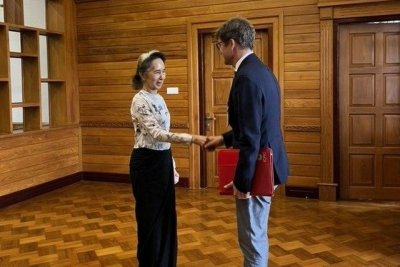
Aug. 3 (UPI) — Myanmar’s detained and ousted democratically elected leader Daw Aung San Suu Kyi met with the International Committee of the Red Cross resident representative in Myanmar on Monday morning, the junta-controlled President’s Office said.
Myanmar’s Presidential Press and Information Bureau published four photos of Aung San Suu Kyi, two showing her with Arnaud de Baecque. In one, she is seen shaking his hand. In a second, they are sitting around a coffee table.
A third photo published by the President’s Office is of a birthday cake with the words “Happy Birthday Aunty Suu, 19.6.2026” written in icing on top of the cake. The fourth photo is of Aung San Suu Kyi cutting the pink-and-white cake with a spatula.
The one-sentence statement accompanying the photographs did not provide context for the meeting or say what Aung San Suu Kyi and de Baecque discussed.
Little information and visual evidence of Aung San Suu Kyi have been made public by the junta government since it detained her and seized control of Myanmar on Feb. 1, 2021. It also appears to be the first confirmed meeting with a foreign representative since her detention.
Aung San Suu Kyi is currently serving an 18-year sentence sentence on multiple charges, including corruption and election-related offenses.
In late April, she was moved from prison to house arrest.
A warehouse east of Moscow belonging to Russia’s largest online retailer, Wildberries, was set ablaze after being struck by Ukrainian drones overnight, the second such attack in two days. File photo by Stringer/EPA
Aug. 3 (UPI) — A warehouse east of Moscow belonging to Russia’s largest online retailer, Wildberries, was set ablaze after being struck by Ukrainian drones overnight, the second such attack in two days.
The company confirmed via its Telegram press service early Monday that the logistics center in the town of Khryastovo in Vladimir province, 12 miles southwest of Vladimir, the regional capital, was on fire and had been evacuated.
“Fire crews are working at the scene. Preliminary reports indicate there are no casualties. Logistics operations have been rerouted; the acceptance of deliveries and the dispatch of orders are being handled at other facilities,” the company said.
However, around three hours later the state-run TASS news agency reported three people had been injured in the Wildberries attack, saying it was part of a wider, deadly, airborne assault targeting 10 Russian regions, Crimea and the Black Sea with hundreds of drones.
Sergey Aksyonov, the governor of occupied Crimea in an online update condemned what he called another “barbaric attack by the enemy” overnight that killed three people and injured two others, all civilians.
The Russian Defense Ministry said air defenses downed 131 Ukrainian fixed-wing unmanned aerial vehicles over the Belgorod, Bryansk, Voronezh, Kaluga, Kursk, Lipetsk, Oryol, Smolensk, Tula and Krasnodar Regions between 8:00 p.m. on Sunday and 7:00 a.m. on Monday, Moscow time.
The strike on the Wildberries facility came a day after a blaze at one of the company’s fulfilment centers in Novosemeykino in Samara province, 600 miles southeast of Moscow, after it was hit amid large-scale drone strikes the Ukraine General Staff claimed its forces carried out overnight Saturday and into Sunday.
The attacks caused fires at Engels air base, on the left bank of the Volga River in Saratov province, where Tu-95MS and Tu-160 strategic bombers are stationed, and an oil refinery in the Saratov city. The governor of the region said two people were killed.
The Lyudinovskaya oil depot in Kaluga province to the southwest of Moscow, was also struck, according to the general staff.
Over the past two weeks, Ukrainian forces have repeatedly struck Wildberries’ logistics operations across western and southern Russia.
On July 18, eight employees were killed and more than 60 were injured after warehouse complexes in the Tambov and Moscow regions were attacked.
At least 15 workers at two of the firm’s facilities in the southwest of the country were injured in drone strikes on July 22, according to the company’s CEO and regional officials, and a fulfilment center in Kolyedino was hit and warehouses in Belye Stolby near Moscow were destroyed on July 21.
Kyiv alleges the company forms part of the Russian military’s supply chain, providing it with dual-use products such as two-way radios, body armor and components for drones.
Candidates for the ruling Democratic Party’s leadership race, (L-R) Kim Min-seok, Chung Cheong-rae and Song Young-gil, hold their hands up together to greet the crowd at a joint speech for the preliminary elections for party leader and Supreme Council members at CJB Media Center in Cheongju, North Chungcheong Province, South Korea, 01 August 2026. Photo by YONHAP / EPA
Aug. 2 (Asia Today) — Chung Cheong-rae rebounded in the South Korean ruling Democratic Party’s leadership race Sunday, defeating Kim Min-seok in the southeastern region after narrowly losing the opening contest in central South Korea.
Chung and Kim have each won one of the first two regional rounds ahead of the party’s Aug. 17 national convention, leaving the race for party leader virtually even.
Chung received 25,189 votes, or 46.65%, from eligible party members in Busan, Ulsan and South Gyeongsang Province.
Kim finished second with 23,675 votes, or 43.84%, leaving Chung ahead by 1,514 votes, or 2.81 percentage points.
Former party leader Song Young-gil received 5,129 votes, or 9.49%. The officially reported percentages were rounded to 46.65% for Chung, 43.85% for Kim and 9.5% for Song.
Kim had narrowly won Saturday’s opening round in the Chungcheong region, which includes Daejeon, Sejong and North and South Chungcheong provinces.
Kim received 45.05%, compared with Chung’s 44.61%, a margin of 303 votes, or 0.44 percentage points. Song received 10.34%.
After the first two rounds, Chung held a narrow cumulative lead with about 45.5%, compared with Kim’s 44.5%.
The results announced during the regional contests represent only the first-choice votes of eligible party members. Delegate votes and the results of a public opinion survey will be announced at the national convention in Daejeon.
One-person, one-vote system raises importance of members
The Democratic Party finalized an electoral roll last week containing 17,667 delegates and more than 1.52 million dues-paying party members.
The leadership election is the first to apply a one-person, one-vote principle equally to delegates and eligible members, replacing a system in which individual delegate votes carried substantially more weight.
Combined votes from delegates and eligible party members will account for 70% of the final result, while a public opinion survey will make up the remaining 30%.
The large number of party members means their preferences are expected to play a decisive role.
The Chungcheong and southeastern electorates together represent less than 20% of the total party electorate, however, making it too early to predict the final outcome.
Chung told reporters after Sunday’s results that he had regained the lead.
“I have come from behind,” Chung said.
He compared his campaign with former President Roh Moo-hyun’s victory over Lee In-je during the 2002 presidential nomination race.
Chung said Roh defeated an opponent supported by an established political organization and numerous lawmakers despite having little comparable institutional backing.
“Just as Roh Moo-hyun defeated Lee In-je, who lined up organizations and lawmakers behind him, Chung Cheong-rae will defeat Kim Min-seok,” he said.
Chung also told party members during a speech at the BEXCO convention center in Busan that “organization cannot defeat a political wind.”
Candidates exchange accusations of factional betrayal
The close race has intensified a broader conflict over factions within the ruling party.
During a joint campaign speech in Ulsan, Kim called for an end to what he described as a damaging confrontation between factions aligned with President Lee Jae-myung and Chung.
“We must end the vicious cycle of the Lee-Chung conflict,” Kim said.
He said he would refer people responsible for improper factional activity during the campaign to the party’s ethics committee.
Chung responded by invoking Kim’s conduct during the 2002 presidential election.
Kim left Roh’s then-ruling party after joining lawmakers who pushed for Roh to form a unified presidential ticket with independent candidate Chung Mong-joon.
The group was widely criticized by Roh’s supporters as having abandoned the party’s presidential nominee.
“A person who betrays once will betray again,” Chung said, directing the remark at Kim.
The renewed dispute over the episode reflects the extent to which events from the 2002 presidential campaign continue to influence relationships and perceptions inside South Korea’s progressive political camp.
Song also criticized Chung’s attempt to return as party leader.
“The Democratic Party does not permit consecutive terms,” Song said. “Is there really a need to seek another term?”
Ranked-choice votes could determine winner
The Democratic Party is using a preferential voting system in the three-candidate leadership contest.
Voters rank the candidates by preference. Should no candidate receive a majority of first-choice votes, the candidate finishing last will be eliminated and that candidate’s second-choice votes will be redistributed to the remaining two contenders.
The redistribution process will continue until one candidate secures a majority.
The regional percentages released so far include only first-choice votes and do not show how Song’s supporters ranked Chung and Kim as their second choices.
With Chung and Kim each receiving less than 50%, Song’s redistributed votes could determine the winner if the close three-way pattern continues through the remaining regional contests.
The regional campaign will continue Saturday in Jeju and Incheon, followed by Gangwon Province, Daegu and North Gyeongsang Province on Aug. 9.
Voting in the Honam region, covering Gwangju and North and South Jeolla provinces, is scheduled for Aug. 15. The final regional events will take place in Gyeonggi Province and Seoul on Aug. 16.
A 5% strategic-region bonus will apply in the traditionally conservative Yeongnam and Gangwon regions.
The party leader candidates are also scheduled to participate in televised debates on KBS on Wednesday and SBS on Aug. 12.
The final result will be announced at the Democratic Party’s national convention in Daejeon on Aug. 17.
Aug. 2 (UPI) — Greek police announced Sunday they have arrested a man in connection with the grisly discovery of a British woman whose body had been stuffed into a suitcase and abandoned in an Athens neighborhood.
The Hellenic Police said a 26-year-old foreign man was identified as a suspect in the case and that he has been charged with manslaughter, robbery and violation of weapons laws.
The victim was identified by police as a 38-year-old British woman whose body was discovered stuffed into a suitcase left in an abandoned building in the neighborhood of Kypseli at on July 18.
Multiple media reports named the victim as Elisabeth-Jane Ross, a resident of Scotland.
Authorities determined she had been dead for eight days before her body was discovered.
They said the suspect confessed to his actions after being interrogated on Thursday, confirming to authorities he placed Ross’ body in a suitcase and transported it to the abandoned site.
The man later used victim’s bank cards to withdraw money from he accounts, police said.
During searches carried out at his home, a replica pistol and a knife were found and seized, accounting for the weapons charge.
Hellenic Police said they worked closely with British and Scottish counterparts in investigating the case.
A family trip to Walt Disney World Resort in Florida can be notoriously expensive, but a travel expert who’s visited almost 50 times in the last six years has a money-saving hack
A trip to Disney can be expensive, but there are some nifty ways to significantly cut back costs (Image: Getty Images)
An avid Disney World Resort fan has been to the popular park a whopping 48 times, and during that time, he’s uncovered nifty travel hacks that can help families save hundreds.
Those who have been to Walt Disney World Resort in Florida will know how expensive a holiday can be, and those who haven’t will have heard about its hefty price tag. From flights, hotels, theme park passes, restaurants, and all the additional extras, it can quickly add up, with trips to ‘The Most Magical Place on Earth’ costing anything from £1,500 to £4,000 per person.
For a family of four, that could amount to anything from £4,000 to more than £10,000 for a 10-night trip. It certainly doesn’t come cheap, but for many, it’s a bucketlist holiday that’s well worth forking out for, and there are ample ways to help keep the costs down.
One of the best-known ways to save some serious cash is to book the cheapest available flights and opt for budget-friendly hotels outside the resort but close enough to travel back and forth each day. Yet, there’s another nifty money-saving tip that Disney expert Mark Patterson highly recommends to anyone planning a trip.
Matt, who has been to Florida’s Disney World Resort a whopping 48 times in the last six years for work and pleasure, told the Mirror: “All the restaurants at Disney are expensive, so the hotels I like have a kitchenette with a stove and a full-size fridge, so you can buy food and cook it.
“You can then take it into the park with you, and that can save a lot of money. Even if you just take two meals in for the family, that can save you easily $100 (£74.71) to $200 (£149.42) per day.”
Booking a hotel room or resort with a kitchenette to make meals for the day isn’t the only way to save some extra cash. The travel expert who lives in Southern California advised holidaymakers to book a hotel that offers free breakfast to help avoid hidden costs that can quickly add up to hundreds.
And there’s one area he recommends for that budget-friendly hotel with a free breakfast. “The Flamingo Crossings area is my favourite, it’s newer, and the hotels are all new, and they all have free breakfast. They offer good, reasonable prices there.”
However, he noted that, due to its location, visitors have to drive, get a lift, or take a shuttle bus to the park each day. Yet, with free breakfast included, it might be well worth travelling a little further to help cut costs.
Matt certainly knows what he’s talking about, having stayed at 36 different hotels during his trips to Disney World. He also aims for an average hotel price of around $100 (£74.71) to $200 (£149.42) per night to make it more affordable, while looking out for any hidden fees.
Another area he recommends is Disney Springs. He said: “The Disney Springs area has a range of hotels, right there within walking distance to the shopping area, and it’s where pretty much everybody goes to eat at night. It gets very busy and popular, so being able to walk to that is very handy.
“However, the bad thing about that, or something you have to trade off, is that only one of the hotels offers a free breakfast; all the others you have to pay for. So I might get a hotel for around $100 (£74.71) per night, but will then have to pay for breakfast, which is $28 (£20.92), along with paying for parking, which can be around $25 (£18.68) and a resort fee of around $40 (£29.88).
“So it can literally double the price of what I thought I was going to pay. Disney Springs area is great, but you’ve got those little hidden fees.”
Mark documents his many trips to Walt Disney World Resort on his website, DDadBudget, with various pieces of advice to fellow fans.
Do you have a travel story to share? Email webtravel@reachplc.com
Thick smoke was seen billowing from the ferry KMP Mutiara Sentosa 2, which was carrying 271 passengers and crew when it caught fire off the coast of Indonesia’s Madura Island on Sunday. Photo by Stringer/EPA
Aug. 2 (UPI) — At least five people were killed and 41 remain missing after a ferry carrying hundreds of people caught fire off the coast of Indonesia’s Madura Island on Sunday, officials said.
Thick smoke was seen billowing from the passenger vessel KMP Mutiara Sentosa 2, which was carrying 271 passengers and crew.
The ferry’s captain reported the fire as the vessel traveled from Surabaya to Makassar about 6 a.m. local time.
Indonesia’s National Search and Rescue Agency said survivors were rescued by a number of vessels that had been in the area, the Jakarta Globe reported.
Search and rescue efforts continued throughout the day. The ferry was still smoking by mid-afternoon, the Globe reported.
Victims were taken to three area hospitals for medical evaluation.
“Our main focus is on rescuing the victims and ensuring they receive the best possible care upon their arrival on land,” Sumenepe Police Chief Ariek Indra Sentanu told iNews. “The TNI, Polri, and district government are working together in the field.”
The cause of the fire remains under investigation, officials said.
British-Nepalese mountaineer Nirmal Purja, 42, was among 10 climbers who were swept away by a deadly avalanche on Pakistan’s Broad Peak. File Photo by Narendra Shrestha/EPA-EFE
Aug. 1 (UPI) — World-renowned mountaineer Nirmal Purja and nine others were killed during an avalanche on Pakistan’s Broad Peak, it was confirmed Saturday.
Purja, 42, was among 10 climbers who were swept away by the deadly avalanche on Thursday, leading rescuers on a frantic search for survivors.
“Today, it is with profound sadness and immense heartbreak that we confirm that Nirmal ‘Nimsdal’ Purja tragically lost his life following the avalanche on Broad Peak,” his company said in a statement on Instagram.
“We have also received confirmation that other members of the expedition sadly did not survive,” the statement added.
The expedition included Nadhira Ahmed Abdullah Al Harthy of Oman, Sohail Sakhi of Pakistan, Wang Zhong of China, Mallory Geis of the United States, as well as Pur “Yukta” Bahadur Gurung, Kili “Kilu” Pemba Sherpa, Nima Sherpa and Nawang Thindu Sherpa.
Purja, known as Nims Dai, reached the peak of his sport in 2019, when he climbed all of the world’s 14 tallest peaks in just six months, beating the previous record by nearly eight years.
“The world has lost one of mountaineering’s greatest climbers; a leader who inspired millions through his courage, humility and unwavering belief that human potential is far greater than we often imagine,” his company said.
“More than his extraordinary achievements, he wanted to show the world what was possible when you dared to dream bigger, believed in yourself and refused to accept limitations,” the statement continued. “Through his actions, he inspired millions of people to believe that they, too, could achieve more than they ever thought possible.”
Purja, who was Nepali and British, served in the U.K. military for 16 years and was awarded an MBE by the queen in 2016 for his outstanding achievement in mountaineering.
“Nims served with distinction in the British Armed Forces before becoming one of the world’s greatest mountaineers, putting Nepalese climbers on the map,” Prince Williams of Wales said in a statement on X.
“His relentless pursuit of what seemed impossible, combined with his humility and selflessness, made him truly unique.”
Jeong Jeom-sig (2L), floor leader of the main opposition People Power Party, speaks to reporters at the National Assembly in Seoul, South Kore, 31 July 2026, shortly after the parliament passed a bill, introduced by the ruling Democratic Party, during a plenary session to revise the Criminal Procedure Act to strip the prosecution of its direct investigative powers. Lawmakers of the opposition party left the session in protest, abstaining from a vote on the bill. Photo by YONHAP / EPA
July 31 (Asia Today) — People Power Party floor leader Chung Jeom-sik on Friday accused South Korea’s governing party of seeking to abolish prosecutors’ supplementary investigative authority to help President Lee Jae-myung avoid his criminal trials.
Chung called the proposed revision to the Criminal Procedure Act “an unprecedentedly harmful law” that would remain a disgrace in the country’s constitutional history.
He also demanded the withdrawal of a separate bill that would shorten the review period for legislation designated for fast-track consideration, calling it a measure that would turn the National Assembly into a rubber stamp.
“In a few hours, the filibuster will be forcibly ended through collusion by the broader governing bloc and this unprecedentedly harmful law will pass,” Chung said at a People Power Party floor strategy meeting.
He claimed that more than half of the public opposed eliminating prosecutors’ supplementary investigative authority but that the Democratic Party was disregarding public opinion.
The bill would bar prosecutors from conducting additional investigations after police transfer a case to them. Prosecutors would instead be able to request that police conduct further investigative work.
Supporters say the measure would complete the separation of investigative and prosecutorial authority and strengthen defendants’ rights. Opponents say it could delay investigations and weaken protections for crime victims.
Chung focused particularly on a provision governing when courts may dismiss criminal indictments.
He accused the Democratic Party of quietly adding language during a meeting of the National Assembly’s Legislation and Judiciary Committee that could make it easier to terminate the president’s pending trials.
“Is the ‘working National Assembly’ advocated by the Democratic Party merely a legislature creating an escape route to erase President Lee Jae-myung’s trials?” Chung said.
The claim that the provision was designed to end Lee’s cases represents the opposition party’s interpretation of the legislation.
Chung said ordinary citizens could suffer from inadequate or delayed investigations if prosecutors lost their supplementary investigative authority while powerful figures could escape legal scrutiny.
He described the bill as “the end of the rule of law.”
Opposition plans second filibuster
Chung also criticized a revision to the National Assembly Act scheduled to follow the criminal procedure bill.
The legislation would reduce the maximum review period for fast-track bills from 330 days to 90 days.
“This is an authoritarian law intended to turn the National Assembly more quickly into a machine that raises its hand and follows orders,” Chung said.
The fast-track system was introduced to prevent legislation from being blocked indefinitely while preserving time for negotiations among political parties.
Chung said the Democratic Party’s proposal would destroy that balance and encourage the hasty passage of legislation.
“There is a saying that trying to arrive 10 minutes earlier can send you 10 years too soon,” he said. “If legislation is rushed, the country could suffer lasting consequences.”
He called the proposal a “rubber-stamp National Assembly law” and said it should be withdrawn.
The People Power Party planned to begin a second filibuster immediately after debate ended on the Criminal Procedure Act revision.
Choi Eun-seok, the party’s senior floor spokesperson, said the filibuster against the National Assembly Act revision was expected to begin at about 5 p.m.
Chung also rejected a demand from Democratic Party members of the Science, ICT, Broadcasting and Communications Committee that People Power Party lawmaker Lee Jin-sook be removed from the committee.
He called the demand an improper attempt to interfere with the opposition party’s committee assignments.
“The Democratic Party must abandon its authoritarian belief that the National Assembly is its property or its plaything,” Chung said.
Election commission investigation
The People Power Party said it would move quickly to establish a recommendation committee for a special counsel investigation of the National Election Commission.
The National Assembly approved the investigation bill Thursday through an agreement between the governing and opposition parties.
The investigation is expected to examine a ballot shortage during the June 3 local elections and other allegations involving the election commission.
Choi said the party was reviewing potential candidates from several perspectives.
“We will work to establish the recommendation committee and launch the investigation as quickly as possible,” he said.
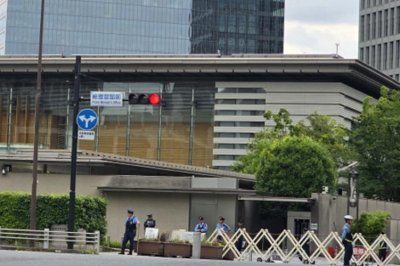
The photo shows the Prime Minister’s Office (Kantei) in Japan. The Japanese government launched the National Intelligence Bureau on Friday as an organization reporting directly to Prime Minister Sanae Takaichi. Photo by Asia Today
July 31 (Asia Today) — Japan launched its National Intelligence Bureau on Friday, creating a central command to collect government intelligence, coordinate analysis and determine national intelligence priorities.
The bureau reports directly to Prime Minister Sanae Takaichi and was created by upgrading the Cabinet Intelligence and Research Office.
It has about 730 personnel and is headed by Kazuya Hara, a former National Police Agency official who served as director of Cabinet intelligence.
Hara’s career has included assignments at Japanese embassies in Russia and the United States as well as positions in the Defense Intelligence Headquarters and the National Police Agency’s foreign affairs division.
Japan also launched a National Intelligence Council chaired by Takaichi. Its members include Chief Cabinet Secretary Minoru Kihara, the foreign and defense ministers, the chair of the National Public Safety Commission and other relevant Cabinet members.
The National Intelligence Bureau will serve as the council’s secretariat.
The government is expected to begin drafting Japan’s first national intelligence strategy, setting basic principles and priorities for intelligence activities. It is also considering legislation intended to counter foreign espionage.
The council will deliberate on foreign intelligence operations and information considered important to national security.
A coordinator, not an overseas spy agency
Despite its name, the National Intelligence Bureau is not designed to operate like the U.S. Central Intelligence Agency.
Its central function is to ensure that ministries and agencies provide information in a timely manner and to integrate that material into assessments for policymakers.
The bureau will coordinate the government’s intelligence activities and provide analysis to the prime minister. It has not been granted new authority to establish independent overseas stations, recruit and manage foreign agents or conduct covert operations.
Japan already possesses extensive intelligence capabilities, but they remain divided among several government organizations.
The Foreign Ministry gathers diplomatic intelligence through Japanese missions overseas. The Defense Intelligence Headquarters handles signals, satellite and imagery intelligence.
The Public Security Intelligence Agency and the National Police Agency monitor international terrorism, foreign intelligence services and counterintelligence threats.
The new bureau will bring information collected by those organizations together, but it will not operate its own overseas human intelligence network.
Its role is therefore closer to that of the U.S. Office of the Director of National Intelligence than the CIA.
The U.S. intelligence director’s office coordinates multiple intelligence agencies and provides national intelligence assessments to the president. The CIA collects foreign human intelligence, conducts analysis and may carry out covert operations under presidential authorization.
Separate foreign intelligence service planned
The governing Liberal Democratic Party and the Japan Innovation Party have proposed establishing a separate foreign intelligence agency by the end of fiscal 2027.
That proposal underscores the operational limitations of the National Intelligence Bureau.
A second agency would not be necessary if the new bureau already possessed capabilities comparable to those of the CIA or Britain’s Secret Intelligence Service, commonly known as MI6.
What Japan established Friday was essentially an intelligence command center.
Combining diplomatic reports, satellite and signals intelligence, information supplied by allies and publicly available material could improve the speed and accuracy of government assessments.
However, detecting changes in the intentions of foreign leaders before they become visible often requires human sources inside foreign governments and institutions.
Japan’s existing ministries and agencies will continue to supply most of the information analyzed by the bureau until the government creates an organization capable of independently collecting intelligence overseas.
Oversight remains a concern
The bureau’s expanded authority has also raised questions about oversight.
During legislative deliberations, lawmakers raised concerns about privacy, political neutrality and mechanisms allowing the Diet or independent institutions to review intelligence activities after they occur.
Those questions will become more significant if Japan adopts anti-espionage legislation or establishes a foreign intelligence service.
The government would need to define who may be monitored, what information may be collected and how citizens’ rights will be protected.
The launch of the National Intelligence Bureau strengthens the central leadership of Japan’s intelligence system.
Its effectiveness, however, will still depend largely on information collected by existing ministries, agencies and allied countries.
Japan has created a larger brain for its intelligence system, but it has not yet given that system independent arms and legs capable of gathering secrets overseas.
Backlash to FIFA’s private investment plan for World Cups and events was huge; now football reacts to the U-turn’s fallout.
Published On 1 Aug 20261 Aug 2026
FIFA President Gianni Infantino has said that world football’s governing body had scrapped plans to sell a stake in the World Cup and other events to private investors after widespread backlash.
The response to the plan, which was announced on Tuesday by Infantino, was overwhelming.
Recommended Stories
list of 4 itemsend of list
The wording of the outcry from around the globe was damning of the proposal, but stopped short of directly criticising Infantino.
The reaction to Infantino’s decision late on Friday to scrap the investment scheme, which would have sold minority stakes in World Cups and other FIFA events, ranges from overt votes of no confidence in the FIFA president to more subtle, but equally notable, condemnation of the week’s events.
“UEFA welcomes FIFA’s decision to withdraw its plan to sell a stake in its competitions – including the World Cup – into private hands,” European football’s governing body said.
“The current FIFA leadership has not only lost UEFA’s confidence but also that of many other members of the football family.”
“UEFA will begin work immediately with partners and stakeholders all over the world and right across the game to propose a new way of distributing resources through the existing FIFA Forward programme.”
“This is a victory for the whole game. But it must not be the end of the story. The proposal has gone. The task of rebuilding trust in FIFA has only just begun.”
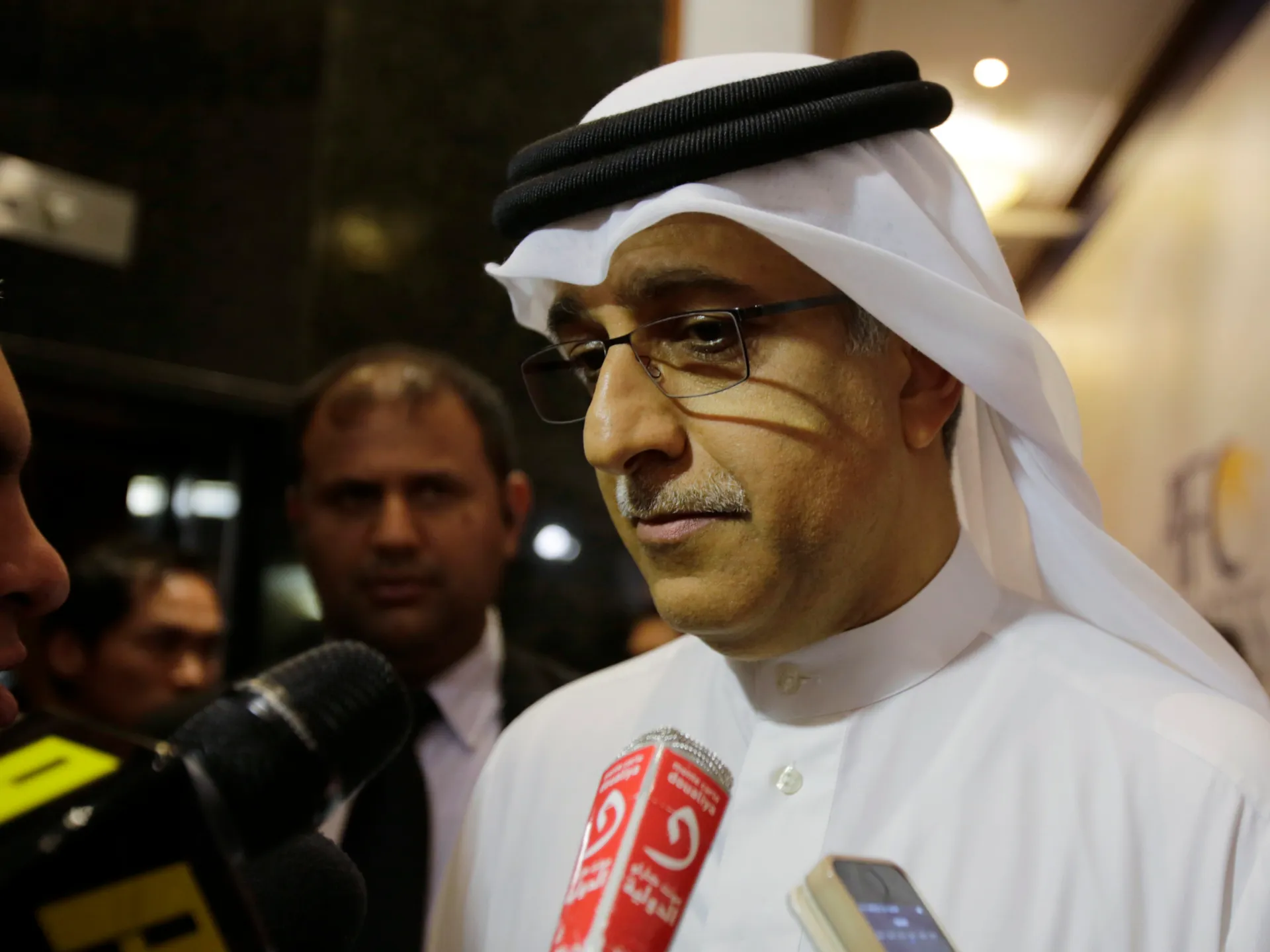
AFC’s president, Sheikh Salman bin Ebrahim Al Khalifa
“The future of global football must always be shaped through proper consultation, collective dialogue and respect for the established governance structures of our game,” said Sheikh Salman, president of the Asian Football Confederation.
“The AFC stands ready to support any initiative that strengthens the unity of the football family, contributes to the continued growth of the game globally and delivers meaningful benefits to all stakeholders.”
“We stand shoulder to shoulder with our European colleagues and fully support the collective view,” an FA spokesperson wrote on its website.
“We oppose FIFA’s plans – the FIFA World Cup belongs to football and always will.”
Dutch FA statement
“With the withdrawal of the proposal, the matter is not settled for the KNVB,” the Dutch statement read.
“The way this process has unfolded has led to a fundamental breach of trust in the leadership of FIFA President Gianni Infantino. The KNVB no longer has confidence in his leadership.”
“We welcome FIFA’s decision not to proceed with the proposal. It is in line with our expectations in light of the flawed process and the reactions the proposal has provoked,” Astrom said.
“At the same time, we are still concerned about deficiencies in transparency and governance, and want to emphasize the importance of continued discussion and dialogue about how football should be governed and developed.”
“As a founding member of FIFA and a representative on the FIFA Council, the RBFA remains committed to a strong, independent and sustainable model for international football,” Van Damme said.
“Football has never stood still, nor should it,” Isaac said.
“Throughout its history, our game has evolved through innovation, investment and new ideas that have strengthened football, created greater opportunities for players, coaches and referees, and enhanced the experience of supporters around the world. That spirit of progress must continue.
“Some principles, however, should never change. Integrity. Independence. Good governance. Transparency. Meaningful consultation. Due process. These are not constraints on progress. They are what make lasting progress possible.”
Hip Hop International, which turns 25 this year, brought some of the world’s best dance crews and choreographers to mainstream attention. Groups including Jabbawockeez and Quest Crew, and choreographers such as Parris Goebel (Lady Gaga, Rihanna, Justin Bieber) and Sienna Lalau (BTS, Blackpink, Ciara) all got their start through the group’s annual dance competition, which connected dance cultures in a pre-YouTube era through global shared artistry when breaking was a mostly underground activity.
This year’s weeklong contest concludes Saturday in Phoenix, when a new world champion will be crowned. Involving 3,000 dancers from 55 countries, the competition has grown to be among the largest in the world due to the efforts of founders Howard and Karen Schwartz, whose globetrotting history led to HHI’s current prominence in the dance world.
In the late 1980s, the Schwartzes were known as “the mother and father of aerobics.” The duo were pioneers of the aerobics craze that gripped the nation and helped create the National Aerobic Championship. ESPN followed the Schwartzes’ competitions, as did the Soviet Union, which was in the midst of the massive social, economic and cultural upheaval that culminated with the fall of the Berlin Wall in 1989.
B-Boy Vico from France was the winner of Hip Hop International’s World Battles in 2023.
(Steven Lam)
Soon after, the Soviet Union asked the Schwartzes to bring their aerobic champions to teach fitness and aerobics there, Karen said. So they did.
“We grew that,” Howard said, adding that the aerobics championship became “almost as big as what HHI is now. We were all over the world with it.”
The pair later transitioned out of aerobics but still had the desire to create communal experiences. While traveling, the Schwartzes went to Paris and saw kids breaking on the street. The seed of an idea was planted. It blossomed later on a trip to Tokyo, as they emerged from a subway.
“We were walking and we saw a group of dancers that were practicing in the streets, but utilizing a storefront window reflection where it became a mirror,” said Karen, who was struck by the creativity of the art form.
When the Schwartzes first began to establish HHI, they reached out to people who would lend credibility, including Don Campbell, creator of the street dance style Locking; Ken Swift, a longtime b-boy and member of the Rock Steady Crew; and Toni Basil, a member of the 1970s dance crew the Lockers (with Campbell) and singer of the ’80s hit “Mickey.”
Basil has since received HHI’s Icon Award and is often a judge during championship weeks and worldwide competitions. She is a stalwart ambassador of dance worldwide. The Lockers were the first group of dancers to travel outside of the “Soul Train” sphere to be seen on television as a singular act. They appeared on “The Tonight Show” and “The Carol Burnett Show,” and were among the first crews to legitimize the art form by making a living from it.
“I don’t know how Karen and Howard organize it,” Basil said of the HHI competitions, noting that so many “kids get to come to America. It’s a big deal. It’s their life. It’s incredible. And to be dancing morning, noon and night, that’s a serotonin-raising life. I mean, everybody’s high on dance.”
Basil touts the international expansion of hip-hop dance and says that “there’s no more important crew battles in the world than HHI. Period.” She also said that HHI’s penchant for group choreography in the U.S. has translated worldwide. Dancers like Goebel and Lalau have graduated from the HHI community to stand on global stages as choreographers and artistic directors with music’s biggest artists.
Goebel operates out of Auckland, New Zealand, in a dance studio she created called the Palace. Her large dance crew, the Royal Family, helped establish the mold of choreographer-dancer-musician after unprecedented success at the HHI competition.
“Definitely the Royal Family competing at HHI and winning three gold medals in a row gave us international recognition for the dance crew and in turn made the Palace well known as I had many crews coming of out my studio,” Goebel wrote in an email.
Lalau‘s classes during the competition week at the HHI championships are coveted events, and she has led numerous classes and groups for the Lab, a Los Angeles-based hip-hop dance crew and studio.
“As my career evolved, I realized HHI is about so much more than competition,” Lalau wrote in an email. “It’s a place where culture, community, and creativity come together. That mindset has stayed with me throughout my career. Whether I’m creating for an artist, building a cast, or teaching a class, I always come back to the idea that the strongest work comes from collaboration.”
In 2008 the Schwartzes’ success led to them serve as producers for the Emmy Award-winning “America’s Best Dance Crew,” an MTV dance competition series that ran for eight seasons. Success stories from the show include crews such as the Jabbawockeez, which has been a fixture in Las Vegas since its first-season win, Quest Crew, Snoop Dogg and Far East Movement.
“ABDC” shone a spotlight on background performers and treated its participants with respect. JC Chasez, a member of N*Sync who also served as a judge on the show and was a talent competition participant himself, wrote in an email that he was excited to be in the mix.
“I know a lot of shows are about the judges, but I thought ‘ABDC’ did a really good job at making sure the audience at home knew that the stars of the show were the dancers,” Chasez wrote.
Chasez, now a producer on the Broadway musical “Titanique,” also noted that “ABDC” alumni are everywhere.
“I’ve really been enjoying seeing crew members succeed … on different projects,” he said. “I was in New York for the Tonys, and some of the people in ‘Jellicle Ball,’ … had competed on ‘Dance Crew.’”
Now that it’s hit the 25-year mark, supporters believe HHI will continue to evolve along with hip-hop dance itself. Always looking forward while reaching back to keep the past alive.
Reinvention is necessary, Chasez said, because hip-hop music today no longer sounds like it did in the ’80s.
“And so as the sonics change and as the rhythms evolve, I think that’s where interpretations will continue to evolve as well because they are visualizing the rhythms that you’re hearing and telling a story in a unique way.”
Lalau said she expects the next 25 years will bring even more authentic creativity, but that she hopes “that we still prioritize the human side of dance [over tech advancements]. Hip-hop has always been rooted in community, connection and self-expression.”
“We really are so proud of a number of the things that we have been able to accomplish, because it’s made a difference,” Karen Schwartz said of herself and her husband, adding that it’s hard to stop and think about those things because they’re so busy thinking about the future.
“That’s the problem, actually,” Howard said. “We’re constantly, ‘What can we do next? What can make the experience better for everyone?’
“Our ultimate goal is of course to bring ‘ABDC’ back,” he said, “and we haven’t stopped trying.”
Until then, a new world champion will be crowned Saturday night, continuing a tradition that has become much more than a trend.
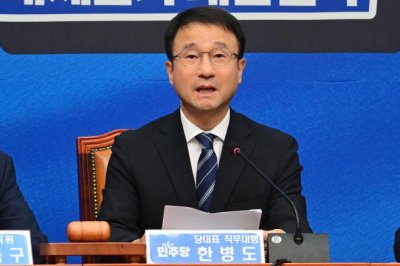
Han Byung-do, acting leader and floor leader of South Korea’s Democratic Party, speaks Friday during a Supreme Council meeting at the National Assembly in Seoul. Photo by Asia Today
July 31 (Asia Today) — South Korea’s National Assembly passed legislation Friday eliminating prosecutors’ authority to conduct direct and supplementary investigations, advancing a major restructuring of the country’s criminal justice system.
Han Byung-do, acting leader and floor leader of the governing Democratic Party, said before the vote that the revision to the Criminal Procedure Act would mark the beginning of a new system rather than the end of prosecution reform.
“Today’s revision of the Criminal Procedure Act is not the end of prosecution reform but the beginning of a new criminal justice system,” Han said during a party Supreme Council meeting.
He said the government and governing party must prevent investigative gaps and ensure that crime victims and other citizens remain protected during the transition.
The legislation passed later Friday after lawmakers ended a filibuster by the opposition People Power Party.
Under the revised law, prosecutors will no longer be allowed to conduct their own investigations, including additional investigative work after receiving cases from police.
Prosecutors will instead be permitted to request supplementary investigations from judicial police officers.
Police generally must complete the requested work within one month and report the results to prosecutors. The period may be extended for up to one additional month when necessary.
The legislation also requires investigative information to be recorded in South Korea’s criminal justice information system.
Han said the Democratic Party would take responsibility for completing the regulations and institutional arrangements needed to launch the Public Prosecution Office and the Serious Crimes Investigation Agency on Oct. 2.
The new Public Prosecution Office will be responsible primarily for indictments and maintaining prosecutions in court. The Serious Crimes Investigation Agency will investigate major offenses formerly handled directly by prosecutors.
“We will take responsibility until the end so that the two agencies can begin operating in a stable manner,” Han said.
Opposition lawmakers and some legal professionals have warned that eliminating prosecutors’ supplementary investigative authority could create delays, weaken oversight of police investigations and leave victims with fewer avenues for redress.
The Democratic Party says the legislation includes safeguards intended to prevent cases from being ignored or delayed and to preserve the rights of victims and complainants.
Governing party promises further legislation
Han said the governing party would continue pursuing legislation dealing with public welfare and political reform.
“We will respond to people’s livelihoods with speed and to reform with results,” he said.
Han cited legislation authorizing a special counsel investigation of the National Election Commission and a proposal to shorten the review period for bills designated for fast-track consideration.
The fast-track proposal would reduce the maximum review period from 330 days to 90 days, including 60 days for consideration by the relevant standing committee and 30 days for review by the Legislation and Judiciary Committee.
The People Power Party opposes the change, saying it would weaken opportunities for negotiation and allow the parliamentary majority to rush controversial bills through the legislature.
Han said the Democratic Party would work to create a more productive National Assembly in which legislation affecting people’s livelihoods is reviewed and passed without unnecessary delays.
“We will not avoid the responsibility entrusted to us by the public,” he said.
Party vows to address stock market volatility
Han also said the Democratic Party and the government would work together to reduce uncertainty in South Korea’s capital markets.
The comments followed heightened volatility linked in part to leveraged investment products tied to individual stocks.
Han said officials would examine whether adequate investor protections were in place when the products were introduced.
“We recognize the current market conditions and investors’ concerns with the utmost seriousness,” he said. “We will calmly and transparently review the introduction process and whether investor protection measures were sufficient.”
Han urged the People Power Party not to use investors’ concerns as political ammunition.
“Using investor anxiety for political attacks and increasing market uncertainty through unverified claims can undermine confidence in the South Korean stock market and cause serious harm to investors,” he said.
He said lawmakers should instead identify the causes of instability and develop effective measures to address them.
The Democratic Party’s special committee on South Korea’s capital markets will communicate with financial regulators and industry officials to evaluate policy measures and market reactions, Han said.
The party will also continue efforts to improve corporate value and governance at publicly traded companies, he said.
Asian Football Confederation says FIFA future must be ‘shaped through proper consultation’ after World Cup plan fallout.
Published On 1 Aug 20261 Aug 2026
Asian Football Confederation (AFC) President Sheikh Salman bin Ebrahim Al Khalifa has welcomed FIFA’s decision to walk back plans to sell a stake in the World Cup and stressed the need to discuss all such moves with transparency in the future.
FIFA’s plan was to raise up to $4.2bn by selling about a 20 percent stake to private investors in a new unit that would run FIFA events, including the World Cup.
Recommended Stories
list of 4 itemsend of list
The proposal, first announced on Tuesday, had faced a storm of opposition from regional confederations, including the AFC, which said they were blindsided by the announcement.
Following the backlash, FIFA President Gianni Infantino said world football’s governing body had scrapped the plans after listening “carefully to all the views”.
In a letter posted on the AFC’s website on Saturday, Sheikh Salman said he expects “any initiative that has the potential to impact global football will be presented and discussed with the Confederations, the FIFA Council, Member Associations and other stakeholders in a timely, transparent and meaningful manner”.
“The future of global football must always be shaped through proper consultation, collective dialogue and respect for the established governance structures of our game,” he said.
On Thursday, Sheikh Salman, in a letter to member associations, had said the way the FIFA proposal had been made was “totally unacceptable“.
The Kuala Lumpur-based AFC is one of FIFA’s six confederations and is responsible for running regional club and national team competitions across continental Asia, the Middle East and Australia.
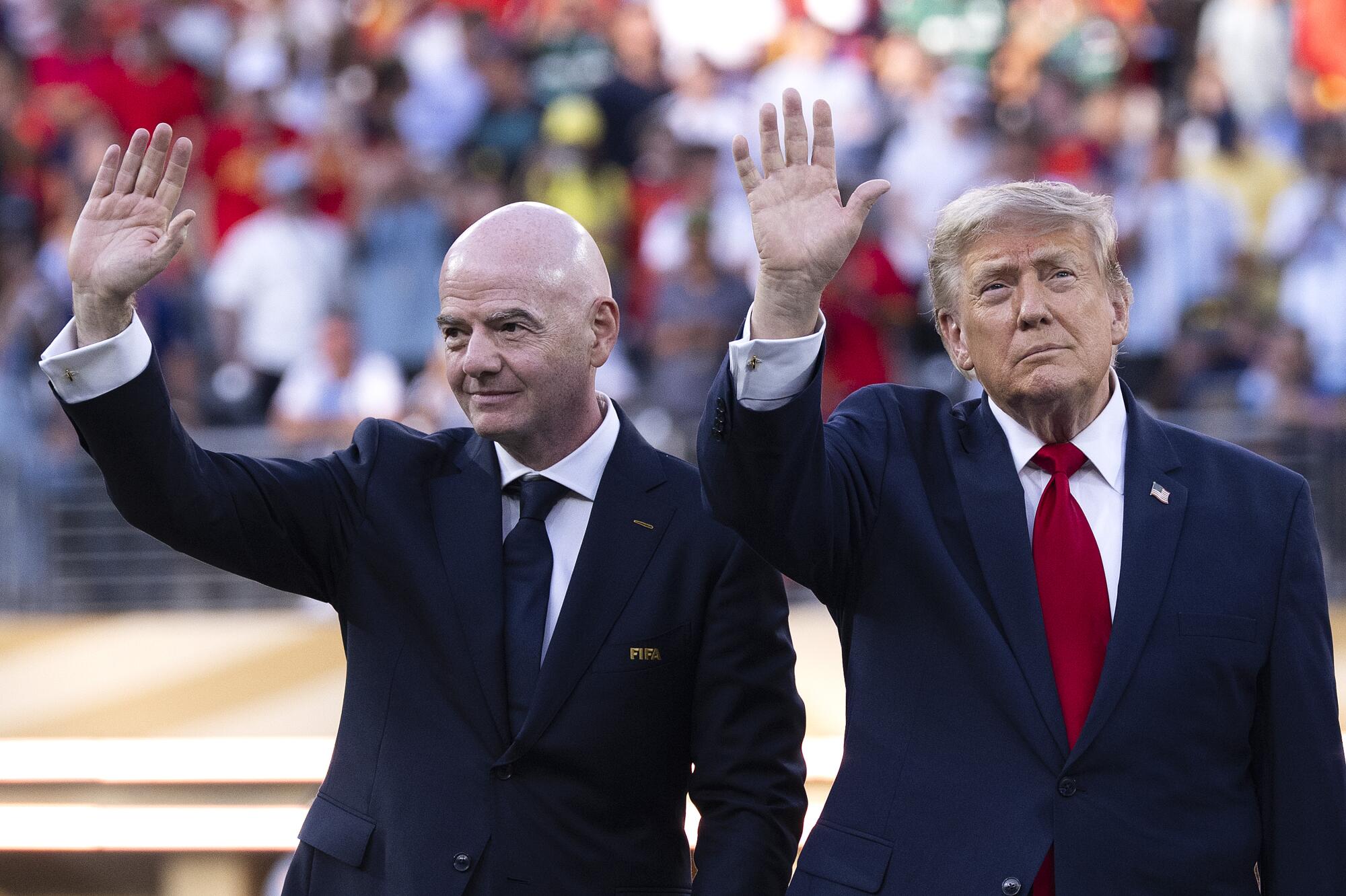
Gianni Infantino looked every bit the “King of Football”, as US President Donald Trump likes to call him, when the two allies sat together watching the World Cup final less than two weeks ago.
Sure, there were some boos inside MetLife Stadium near New York when the two men walked across the turf to present the trophy and medals to Spain and Argentina players on July 19.
Recommended Stories
list of 4 itemsend of list
Still, that 104th and final game capped the biggest-ever tournament seen as a vindication for the FIFA president – a consensus success on the field and a financial bonanza for global football. Infantino could look ahead to his likely re-election coronation next March.
The sunny scene must now feel an age ago since Infantino caused a seismic rift in global football.
The intensifying fallout has threatened the 56-year-old Infantino’s job after he seemed untouchable until this week.
Did Infantino have any choice but to abandon FIFA World Cup investment plan?
Infantino’s misstep was inviting private investors, led by Joshua Kushner, to buy a stake in future profits from World Cups and all FIFA events. The ensuing backlash – which included pledges by European nations to boycott FIFA events and claims from senior staff that Infantino deceived everyone – led Infantino to announce Friday that he was abandoning the plan.
“Having listened carefully to all the views, it has become clear that the project has created divisions of a nature that, regardless of the level of support, are no longer in the interest of the objective set out in the first place,” he said in a statement.
Infantino left New York City last week with letters pledging election support from about 200 of FIFA’s 211 national member federations who vote for their leader every four years.
Now, even after scrapping his divisive investment project, his support remains unclear at best.
What would the private investment plan have done to for FIFA?
Infantino’s proposal would have created a subsidiary – known as FIFA Forward Enterprise (FFE) – for the money-making parts of the not-for-profit football body’s work: running tournaments like the World Cup, selling broadcasting and sponsorship, tickets and hospitality.
Private equity and petrostate sovereign wealth money has been normalised in European club football, yet it still seems unthinkable to many observers in the context of the World Cup. Football’s ultimate prize is seen as being about glory, not money, and fans have long believed it belongs to them.
FIFA proposed raising $4.2bn from investors buying a stake of about 20 percent in FFE, based on an equity valuation of $20bn. The “anchor investor” would have been Thrive Eternal, launched by Joshua Kushner, whose brother Jared Kushner is a son-in-law of Trump.
FIFA’s 211 member federations – already effectively the owners of the governing body as a nonprofit association under Swiss law – were offered $20m each. The deadline to accept was September 19.
The members already are due $10m each from FIFA over the next four years, funded largely by its record $15bn revenue over 2023-26 tied to the World Cup that just ended.
FIFA says under FFE, that would have doubled to $20m each, then rise to $22m each through 2034, and $24m to 2038.
That’s a huge sum for tiny football federations in places like Andorra, Montserrat and Papua New Guinea. Deep-pocketed football powers like England, Spain or France have other priorities.
Who were the main opponents of Infantino’s plan for FIFA and World Cups?
Some FIFA vice presidents, some of its top executives, all the European football federations, the football bodies of Asia and North America, Britain’s prime minister, the global group of national leagues, a lot of fans worldwide.
Essentially, everyone.
Infantino was looking increasingly friendless on Friday. His senior adviser, former Goldman Sachs banker Carlos Cordeiro, resigned and called it a bad deal. FIFA chief operating officer, Kevin Lamour, gave a stinging statement to The Associated Press news agency in defence of colleagues that all but invited his boss to fire him.
Europe’s teams routinely dominate and win FIFA trophies like the men’s World Cup and Club World Cup, which are its biggest revenue earners.
They collectively feared that private investors would seek – and demand – value from more games and bigger competitions that threaten the balance of global football.
That could jeopardise attention and revenues for club football, including the UEFA Champions League.
Fixture calendars are already congested, elite players are at their limits, broadcast and sponsor money is not unlimited.
All are angry that Infantino seems not to have consulted anyone while planning the project over the last year, when he was so focused on spending time in Trump’s orbit. Even Trump said Friday he had not spoken with the FIFA chief on his plan to sell stakes in the tournament.
US President Donald J Trump and FIFA President Gianni Infantino applaud to welcome the players during the presentation ceremony after the 2026 World Cup final [Frank Franklin II/AP Photo]
Did Infantino have any support for his plans for FIFA and World Cups?
Infantino’s traditional support base in Africa, which has 54 of the 211 voting members, had been neutral about the offers of game-changing money for many of them.
The 10-nation South American group CONMEBOL said on Friday it had received the proposal and would evaluate the issue “with the rigour it demands”. CONMEBOL is led by FIFA’s vice president, Alejandro Dominguez of Paraguay, who is relying on Infantino expanding the 2030 World Cup to 64 teams.
That would give more games to minority cohosts Argentina, Paraguay and inaugural 1930 World Cup host Uruguay, who currently are set to get just one game each of the 104. The rest are in Spain, Portugal and Morocco.
What happens now for Infantino in his role as FIFA president?
The UEFA-led resistance succeeded in stopping the sell-off plan. Will that satisfy Infantino’s opponents to allow him to remain in office?
Does Infantino have the credibility to stay in office after interventions Friday by Lamour and Cordeiro that surely would make most presidencies untenable?
November 18 is the deadline for candidates to enter the next presidential contest, exactly four months ahead of the March 19 vote in Rabat, Morocco, where FIFA has its African headquarters.
Infantino was re-elected unopposed in 2019 in Paris and 2023 in Kigali, Rwanda. FIFA statutes allow him one more four-year term in office.
The FFE spinoff seemed a way to create a commissioner-like role for Infantino beyond 2031, likely paying much more than his current annual salary and bonus deal of more than $6m.
It would take 106 votes to ensure a majority in a contested election. Continents surely do not vote uniformly en bloc, but most of Europe’s 55, plus CONCACAF’s 35 and Asia’s 46 would be a solid base.
Speculation on a likely direct challenger typically lands on Paris Saint-Germain’s Qatari president Nasser Al-Khelaifi and the Canadian FIFA vice president, Victor Montagliani.
Sheikh Salman bin Ebrahim Al Khalifa, the AFC’s longtime president from Bahrain, narrowly lost the FIFA presidential election to Infantino in 2016, so may decide to run again.
All such talk seemed fanciful until this week, despite long-term unease with Infantino’s style and previous attempts to force through unpopular projects.
The talk has never seemed more likely to become action.
A front-view rendering of the KDDX next-generation destroyer. Photo courtesy of Hanwha Ocean
July 31 (Asia Today) — South Korea’s arms procurement agency signed a contract with Hanwha Ocean on Friday for the detailed design and construction of the first KDDX next-generation destroyer.
The agreement moves the long-delayed naval program into its full design and construction stage after nearly three years of disputes over the selection of a shipbuilder.
The lead ship is scheduled to be delivered to the South Korean Navy by the end of 2032.
The Defense Acquisition Program Administration said KDDX will be South Korea’s first large destroyer built with a domestically developed hull, combat management system, multifunction radar and other core weapons systems.
Although the vessel is sometimes described in South Korea as a Korean-style Aegis destroyer or a mini-Aegis ship, it is not expected to use the U.S.-developed Aegis Combat System.
Instead, the destroyer will combine a South Korean integrated combat system with an indigenous phased-array radar to detect, track and engage aircraft, missiles, ships and other threats.
The contract for the detailed design and lead ship is valued at about 882.1 billion won, or about $617 million.
The entire program, including five additional destroyers, is expected to cost about 7.8 trillion won, or $5.46 billion.
The government has not determined which companies will build the five follow-on ships or how those contracts will be awarded.
Contract ends prolonged shipbuilder dispute
Hanwha Ocean, formerly Daewoo Shipbuilding and Marine Engineering, completed the KDDX conceptual design.
HD Hyundai Heavy Industries later conducted the basic design, leading to expectations that it would receive a negotiated contract for the detailed design and lead ship.
Hanwha Ocean instead called for a competitive bidding process, citing a military-secrets case involving HD Hyundai Heavy Industries employees.
The acquisition agency accepted that request and held a competition.
Hanwha Ocean and HD Hyundai Heavy Industries were reportedly separated by less than 0.6 point in the final evaluation.
A 1.2-point security penalty imposed on HD Hyundai Heavy Industries was considered decisive.
Employees of the company had been convicted of photographing or improperly handling military secrets related to the KDDX program.
Hanwha Ocean was selected as the preferred bidder June 11. The company’s selection had previously been reported as part of a six-ship program valued at approximately 7.8 trillion won or $5.46 billion.
HD Hyundai Heavy Industries challenged the evaluation but its objection was rejected in early July. Negotiations between the acquisition agency and Hanwha Ocean then led to Friday’s final agreement.
The contract was signed before all cost data were finalized. The final value may therefore be adjusted to reflect verified construction expenses.
South Korean systems to replace foreign equipment
The KDDX is expected to displace about 7,000 tons when lightly loaded and will be larger than South Korea’s Chungmugong Yi Sun-sin-class destroyers.
It will be smaller than the Navy’s Sejong the Great and Jeongjo the Great-class destroyers equipped with the American Aegis system.
The ship will feature a low-observable design and an integrated mast intended to reduce its radar signature.
Planned armament includes a 5-inch naval gun and South Korean vertical launch systems capable of carrying surface-to-air, anti-ship, land-attack and anti-submarine weapons.
The exact number of vertical launch cells has not been officially confirmed.
The acquisition agency said major systems, including the combat management system, sonar, multifunction phased-array radar and ship-launched surface-to-air missiles, will be developed domestically.
South Korea plans to apply technologies developed since the basic design was completed, including digital-twin construction, layered counter-drone defenses and a communications environment using 5G and integrated wired and wireless networks.
A digital twin is a computerized replica of the ship that can be used to test design changes, construction procedures and equipment performance before work is carried out on the physical vessel.
The Navy is also considering integrated electric propulsion to reduce noise and improve anti-submarine survivability.
Automation is expected to reduce the number of sailors required to operate the ship compared with older destroyer classes.
Schedule remains a challenge
The KDDX basic design was completed in December 2023 and the detailed design and lead ship construction were originally expected to begin soon afterward.
Disputes between Hanwha Ocean and HD Hyundai Heavy Industries delayed the program by about two years.
The acquisition agency and Hanwha Ocean will now need to shorten portions of the development and construction schedule to meet the 2032 delivery target.
Jung Jae-jun, head of the acquisition agency’s force resources division, described KDDX as a national project bringing together South Korea’s shipbuilding and defense capabilities.
Jung said the government would examine several options for the construction of the follow-on vessels while seeking to deploy the new destroyers on schedule.
He said the program could also strengthen the international competitiveness of South Korean naval vessels.
Hanwha Ocean previously said it felt a significant responsibility after being selected as the preferred bidder and would work with the government to normalize the delayed program.
Competition between Hanwha Ocean and HD Hyundai Heavy Industries is expected to continue as the government determines how to award contracts for the five remaining destroyers.
The first book I read willingly was Bridget Jones’s Diary. I was 19. Up to that point, I hadn’t been much of a reader. I’d been more into football, or Baywatch, or Robin Budd in the year above – anything really. Given the choice between reading a book and staring at a wall, I would have plumped for the latter.
After finishing my A-levels, I worked in a barbecue restaurant in Portsmouth – which is where I found Bridget Jones. The book was lying around in the staffroom. I picked it up and read a few pages, and then a few more, and then a few more. It felt exciting. Like I’d met someone. Like I was suddenly in a relationship. Over the next few days, I remember cancelling nights out so I could go to bed and read. My mum thought I was depressed.
Illustration: Guardian Graphics
It hardly matters what book gets you going. For Jeanette Winterson, it was the Book of Deuteronomy. For David Nicholls, it was Tales from Moominvalley. What matters is that a book gets you going. Throughout my 20s, I worked as a carer, but I was always reading and scribbling on the side. I became a published author seven years ago. It’s not an overstatement to say that Bridget Jones changed my life. That books did.
So when I learned that 2026 was National Year of Reading (a UK-wide campaign intended to promote the importance and joy of reading) and that Rabat was to be this year’s Unesco World Book Capital (a rotating designation intended to promote the importance and joy of reading), I packed a few volumes and set off for Morocco’s capital. I was hoping for a cultural adventure, and perhaps a tagine, in this ancient seaside city perched scenically between Casablanca and Tangier.
Ben Aitken in Rabat, Morocco.
Rabat was made the capital of Morocco in 1912, at the beginning of the turbulent 44-year period when the country found itself under the thumb of the French. The first thing I saw of the city was the New Town, or Ville Nouvelle, which was laid out in the 1920s à la française, meaning it looks nothing like the huge medieval medina that’s just up the road.
From the central train station, I proceeded to the solar-powered Mohammed VI Museum of Modern and Contemporary Art, where the permanent exhibition – Shifting Horizon(s) – does exactly what it says on the tin. Highlights include the abstract paintings of Mohamed Melehi and a provocative photograph by Lalla Essaydi. Part of a series called Bullet Revisited, the latter shows a woman covered head to toe in gold bullets, and is a powerful indictment of the violence women suffer.
I walked north to the medina, an irregular network of narrow streets lined with small shops flogging mint, slippers, strawberries and sabon beldi, a black soap made from the flesh and oil of olives. The medina was busy but calm. Not once was I asked to consider a carpet or sample a sardine. Indeed, I felt rather invisible. In this respect, the customer service was uncannily French.
I followed my nose to the Kasbah of the Oudayas, an enchanting district of low whitewashed houses. Built on high ground in view of the ocean, this former royal citadel was ideally placed to spot visitors on the horizon, and greet them appropriately.
After checking into a riad on Rue Bazou, I descended a flight of stone steps to the beach, a modest curve of sand where scores of people were playing football and volleyball. I crossed the cooling sand and climbed on to the breakwater to better observe a neon sun sink slowly seaward, as a lone surfer, way out in the offing, sought inch-perfect swell.
Enticing streets in the Kasbah of the Oudayas. Photograph: Adam Smigielski/Getty Images/iStockphoto
I took a pew at the beachside Relais Marin restaurant. I didn’t deliberate over the menu. Like casserole and paella, tagine is a dish in two senses; both the cooking vessel and the meal, on this occasion a confusion of lamb, almonds and prunes in a delicious gravy that, with time, had reduced to a bold, flavourful pesto, which I mopped up with chunks of khobz (Moroccan flatbread). I could have eaten another.
The next morning I went to the Cafe des Oudayas. Situated next to the Andalusian Gardens – a wonderful place full of orange and pomegranate trees – this alfresco cafe offers three things: mint tea, biscuits and an excellent vantage point.
As I eked out the tea, I watched a boy poised on the edge of a towering rock, 30 metres above the Bou Regreg river. Goaded by his friends, he meant to jump, but he hesitated for minutes in the intensifying sun. His dive, when it finally came, was a thing of beauty – a wide and graceful arc, shapely, immaculate, somewhat divine, almost unreal. The gallery held its breath until he re-emerged – to be met with disingenuous disdain. “La poule a attendu une éternité!” (The chicken waited for ever!) Lads, eh?
A bookseller presides over his stock. Photograph: Nur Photo/Getty Images
On a whim, I boarded an electric tuk-tuk, one of 60 in the city. I asked the driver to take me directly to the Chellah, a medieval necropolis that also houses what’s left of the Roman city of Sala Colonia, but, knowing best, the driver instead went out of his way to show off his home town, swinging by St Peter’s cathedral and a nightclub called Amnesia, where Morocco’s king is said to have boogied back when merely a prince.
The Chellah – when I finally got there – did not disappoint. After doing a round of the picturesque ruins, I climbed to a gorgeous onsite cafe and ordered the couscous. Befitting tradition, the dish comprised a pyramid of seven vegetables, a moat of couscous, a jug of broth and some meaty treasure hidden within the veg. It was unmistakably bon.
If one requires beer in Rabat, one heads to Le Dhow, a bar and restaurant on a boat moored in the shadow of the kasbah. Sitting on the upper deck, I savoured an ice-cold pint while chatting with a British undergraduate studying at the Université Internationale de Rabat. I asked if she felt comfortable in the city. “It’s been fine,” she said. “Some men have said hello. One asked for a photo. To be honest, I’ve experienced a lot worse in Worcester.”
I’m just going to come out and say this – don’t go to Rabat because it’s this year’s World Book Capital. Despite my best efforts, the exact nature of the 300-plus events the city is purportedly going to run during its year as WBC remain a mystery to me. Instead, go to Rabat because it’s an excellent city. C’est simple.
On my final evening, I chanced on a humble bookshop in the medina – Bouquiniste El Azizi. Of the hundreds of preloved books assembled in the diminutive space, a dozen or so were in English. Among them was Bridget Jones’s Diary. I picked it up and read a few pages – and then left it for someone else to stumble on, and perhaps break their duck with.
On leaving the shop, I noticed a sign: Les livres prennent soin de nous. Books take care of us. The sentiment strikes me as the right note to finish on.
Ben Aitken is the author of Shitty Breaks: A Celebration of Unsung Cities, £9.99. To support the Guardian, order your copy at guardianbookshop.com. Delivery charges may apply
South Korean Finance Minister Koo Yun-cheol, who serves concurrently as the deputy prime minister for economic affairs, attends a task force meeting of economy-related ministers over price controls related to people’s livelihoods at the government complex in Seoul, South Korea, 31 July 2026. Photo by YONHAP / EPA
July 31 (Asia Today) — South Korea will launch a strategic investment fund worth more than 20 trillion won, or about $13.6 billion, next year to provide long-term capital to artificial intelligence, semiconductor and other industries considered vital to national security and economic growth.
The government said Friday that it would establish a separate strategic investment account within the Korea Investment Corporation rather than create an independent sovereign wealth fund.
Deputy Prime Minister and Finance and Economy Minister Koo Yun-cheol announced the plan during an emergency economic meeting and a meeting of economic ministers at the Government Complex Seoul.
The new account will use KIC’s international investment network and asset-management expertise while expanding the corporation’s mandate beyond its traditional role of investing public foreign-exchange assets overseas.
The government plans to submit a revision to the Korea Investment Corporation Act to the National Assembly in August and complete the legislation before the end of the year.
The fund is expected to begin operating in 2027.
Government shares to provide initial capital
The fund will begin with more than 20 trillion won in assets.
The government plans to contribute more than 16 trillion won, or about $10.9 billion, in shares it holds in public financial institutions, including the Korea Development Bank and the Export-Import Bank of Korea.
It will also contribute about 4 trillion won, or $2.7 billion, in private-company shares received as payment for inheritance and gift taxes.
The government is considering accepting private donations intended to increase national wealth as another source of capital.
The fund will target artificial intelligence, semiconductors and other advanced strategic industries as well as data centers, critical infrastructure and overseas companies important to South Korea’s supply chains.
Unlike conventional policy financing, which often relies on loans, guarantees or subsidized credit, the fund will primarily make direct equity investments.
The government said the approach would allow it to remain invested in promising companies for longer periods and share in their growth.
The fund will also be able to exercise shareholder voting rights to promote corporate value, protect critical technologies and help companies defend themselves against hostile takeovers.
Fund to serve as an anchor investor
The government wants the strategic account to serve as an anchor investor capable of attracting global institutional investors to South Korean projects.
By committing public capital first, the fund could reduce perceived risk and encourage foreign sovereign funds, pension funds and private investors to participate.
The government also plans to connect the new account with existing policy funds.
Venture and growth funds usually must sell their holdings and return capital to investors within four to eight years.
Under a proposed relay-investment system, the strategic fund could purchase stakes in promising companies when those shorter-term policy funds reach maturity or begin liquidation.
The arrangement is intended to prevent companies with long development cycles from losing financial support before they become commercially established.
The model could be particularly important for semiconductor fabrication, artificial intelligence infrastructure, biotechnology and other sectors requiring large investments over many years.
Separate governance structure planned
The government said it would create governance safeguards intended to protect the fund’s investment independence.
KIC’s board structure would be divided between its existing foreign-reserve investment account and the new strategic account.
A dedicated investment committee and advisory committee would be established for strategic investments.
An operating committee would set broad policy and investment priorities but would not intervene in individual investment decisions, the government said.
The separation is intended to prevent short-term political considerations from determining which companies receive investments.
The plan also represents a change from an earlier proposal to establish a completely separate sovereign wealth fund.
The government instead decided to expand KIC’s mandate and use its existing personnel, investment systems and global relationships.
Long-term capital for industrial strategy
South Korea has introduced several public financing programs to support advanced industries, including funds targeting chips, artificial intelligence, batteries and biotechnology.
The new strategic account differs because it is designed to hold equity investments for extended periods rather than provide loans or exit investments according to fixed fund schedules.
The government expects the fund to support major national projects involving semiconductors, physical artificial intelligence and data centers while helping South Korean companies secure critical overseas supply chains.
It also hopes investment returns will gradually expand the fund’s assets and reduce its dependence on additional government contributions.
The success of the plan will depend on whether the government can maintain commercial investment discipline while pursuing broader industrial and national-security objectives.
It will also require clear rules governing voting rights, corporate intervention, investment losses and potential conflicts between financial returns and government policy.
Earth is displaced during an explosion on the first day of dismantling at North Korea’s Punggye-ri nuclear test site in Punggye-ri, North Korea, 24 May 2018. On 24 May North Korea started to demolish its Punggye-ri nuclear test facility, in the country’s northeast. Photo by NEWS 1 KOREA / EPA
July 31 (Asia Today) — Nearly half of the North Korean defectors tested last year after living near the Punggye-ri nuclear test site showed chromosomal changes above a minimum detection threshold, South Korea’s Unification Ministry said Friday.
The ministry cautioned, however, that the findings did not establish a connection between the individuals’ radiation exposure and North Korea’s nuclear tests.
The Korea Institute of Radiological and Medical Sciences conducted biological radiation tests on 59 defectors from eight cities and counties near Punggye-ri in North Hamgyong Province.
The group included former residents of Kilju, Hwadae, Kimchaek, Myonggan, Myongchon, Orang, Tanchon and Paekam.
Tests found stable chromosomal abnormalities above the minimum detection level in 26 people, or 44.1% of those examined.
Stable chromosomal abnormalities can reflect radiation accumulated from birth until the date of testing. The measurement can include exposure from natural sources, medical procedures and work environments.
The institute said the test cannot determine when the exposure occurred or identify its source.
Age, smoking, alcohol use, heavy metals and other factors can also affect the results, it said.
Researchers conducted an additional test for unstable chromosomal abnormalities among the 26 people whose initial readings exceeded the detection threshold.
That second test, which is more useful for identifying relatively recent radiation exposure, produced above-threshold results in six people.
Older age complicates findings
The average age of the 26 people with elevated results was 52.8, or 13.2 years older than the average age of the 33 participants whose results remained within the normal range.
The group with elevated readings had also spent less time near Punggye-ri than the group with normal results.
Researchers found differences in drinking-water sources as well. Piped water was more common among participants with elevated readings, while a greater share of the normal group reported using water from mountain streams.
The findings did not demonstrate that the 26 participants were exposed to radiation from underground nuclear explosions, the institute said.
“There are limitations to interpreting the stable chromosome-aberration test results as exposure caused by past nuclear tests,” the institute said.
It said the participants with elevated readings were older on average and had several possible contributing factors, including medical radiation exposure.
The institute recommended continued health examinations and long-term monitoring for participants whose biological dose assessments exceeded the minimum detection level.
It said the results should be interpreted carefully because of possible confounding variables.
More environmental information would be needed to conduct a reliable assessment, including radiation measurements around former residential areas, drinking-water tests and radioactivity measurements from local food, the institute said.
No cancer cases identified
The Unification Ministry also provided detailed medical examinations to five defectors whose radiation tests conducted from 2017 through 2024 had produced readings above the detection threshold.
The ministry said no confirmed or suspected cancer cases were identified among the people examined during the latest program.
South Korea conducted similar examinations of defectors from areas near Punggye-ri in 2017, 2018, 2023 and 2024 after concerns were raised about possible radiation leakage from the test site.
Across tests conducted since 2017, researchers have identified chromosomal abnormalities in some former residents of the region, but they have not established that North Korea’s nuclear tests caused them.
North Korea carried out six underground nuclear tests at Punggye-ri between 2006 and 2017.
The country has not allowed international nuclear inspectors to conduct an independent environmental assessment at the site.
North Korea has maintained that its nuclear tests were conducted safely and did not release radioactive material into surrounding communities.
Heading into the final weekend of this summer’s World Cup, The Guardian reported that support for FIFA president Gianni Infantino had climbed to record levels. More than 200 of FIFA’s 211 member associations formally endorsed Infantino’s bid for a fourth term as head of world soccer’s governing body, the paper reported, making next March’s vote more of a coronation than an election.
Two weeks later, that support disappeared. Not only is Infantino’s reelection campaign in tatters, but there’s a chance he won’t survive until the spring, with British Prime Minister Andy Burnham and Javier Tebas, president of Spain’s soccer association, calling for his resignation and close confidants such as Carlos Cordeiro, the former president of U.S. Soccer, and Kevin Lamour, FIFA’s chief operating officer, publicly breaking with their boss.
At the center of that reversal was a closely guarded scheme to raise $4.2 billion by selling a 20% stake in the World Cup to private investors, who would be given influence in planning and executing future events, including broadcasting and commercial deals tied to the tournament.
In short, Infantino was planning, in secret, to sell shares in the World Cup. And once details began leaking in the media, he was forced Friday to scrap the whole thing, an embarrassing retreat that has left him vulnerable just two weeks after he had seemingly reached the heights of his third term as FIFA president.
Infantino’s idea, called the FIFA Forward Enterprise, was intended to turn the World Cup, FIFA’s milk cow, into a golden calf. But to do so, he needed the approval of at least 106 of FIFA’s 211 member countries, so he promised countries that backed him that they would receive $20 million each by mid-September. Those who declined would get just a fraction of that.
Infantino was certain the piles of cash would buy the acquiescence — or at least the silence — of enough members for the plan to go through. Instead, the bribe blew up in his face and FIFA issued a statement late Friday, under Infantino’s name, that basically said “never mind.”
“Having listened carefully to all the views, it has become clear that the project has created divisions of a nature that, regardless of the level of support, are no longer in the interest of the objective set out in the first place,” the statement read.
The question now becomes whether Infantino’s presidency will proceed.
He wouldn’t be the first FIFA president to be grievously wounded by unbridled ambition, but the speed and depth of his fall is staggering. The 2026 World Cup was, by nearly every measure, wildly successful. The largest and most complex sporting event in history the tournament, hosted by the U.S., Mexico and Canada, exceeded expectations, drawing more than 6.8 million live fans and a global TV audience of more than six billion. The four-year World Cup cycle brought FIFA revenues of about $15 billion, making it the first sporting event in history to earn more than $10 billion.
Infantino has never been shy about pushing boundaries despite heading a Swiss-based organization that, its wealth notwithstanding, is officially a nonprofit. Nor was this the first time he tried to bring private equity into the World Cup: In 2018, two years into his first term as FIFA president, he considered a plan to raise $25 billion to fund tournaments, only to cave in the face of massive opposition.
He didn’t give up the idea of squeezing more money out of the World Cup, though.
This summer, he introduced three-minute hydration breaks in the middle of each half — ostentatiously a nod to the heat and humidity, but in reality a ruse that allowed broadcasters to generate millions in additional revenue through TV commercials. FIFA also staged a halftime show for the first time ever during the final, sold VIP tickets priced at more than $1 million each and introduced dynamic pricing for the tournament’s 104 games, driving prices for some seats to four times what fans paid four years ago in Qatar.
That pushed the tournament beyond the reach of many of the sport’s most loyal supporters — and soccer, more than any other sport, belongs to the fans. It’s why teams are called clubs and fans are called supporters.
The World Cup, then, wasn’t Infantino’s to sell. So the pushback to his latest idea was immediate and unsparing.
“Football does not belong to investors,” Burnham said in an Instagram post. “Once you have sold a piece, you have sold out. Football belongs to the fans. It always has, and it always will.”
What really angered stakeholders, however, was Infantino’s brazen move to develop the FFE in secret, only to have its details leak out.
Bernd Neuendorf, president of the German soccer association and a member of the FIFA Council, the group’s most influential body, said he first learned of the FFE by reading about it.
“I was very surprised, and also annoyed, that we had to find out about something like this from the press,” he told a German news outlet last week.
Another self-inflicted wound was Infantino’s decision to launch the project with Thrive Eternal, a venture capital firm founded by Joshua Kushner, the 41-year-old brother of Jared Kushner, President Trump’s son-in-law and a kind of all-purpose White House advisor and negotiator. Thrive Eternal focuses on long-term investments in scarce cultural institutions that technology cannot replace, but it has little relevant experience in managing something as large and complicated as a World Cup.
FIFA president Gianni Infantino, left, and President Trump wave during an award ceremony following Spain’s win over Argentina in the World Cup final July 19.
(David Ramos / Getty Images)
Moreover, the partnership would draw Infantino further into the orbit of Trump, whom the FIFA president has openly courted for years. Infantino, who has been a frequent visitor to the Oval Office and Trump’s Mar-a-Lago estate in Florida, attended the president’s inauguration and accompanied him on visits around the world.
Trump’s relationship to Infantino was questioned when Infantino presented him with the first FIFA Peace Prize last December, then became even more controversial when Trump phoned Infantino three times to lobby to have the red-card suspension of U.S. forward Folarin Balogun overturned ahead of a World Cup elimination game last month.
FIFA eventually cleared Balogun to play, marking just the second time in tournament history a red card ban has been lifted. For some, Infantino’s decision to partner with someone close to Trump on his latest venture was a bridge too far.
“It’s a really bad look for Infantino given the concerns about political interference that were already there after Balogun,” said Steven A. Bank, a professor of business law at UCLA who has written and lectured extensively on the economics of soccer. “Especially with the fund led by Jared Kushner’s brother.”
Once details of Infantino’s secret plan began to leak, UEFA, the confederation that governs European soccer, held an emergency meeting during which all 55 members — including Spain, the reigning men’s and women’s World Cup champion — voted to boycott all FIFA competitions.
“Some things are simply too important to sell. The FIFA World Cup belongs to football. It always will,” UEFA, the largest and most powerful of FIFA’s six continental confederations, said in a statement.
CONCACAF, which oversees soccer in North America, Central America and the Caribbean, said its 41 countries also rejected the plan, an opinion the U.S. Soccer Federation backed in a sparse post on X.
“U.S. Soccer stands with CONCACAF and its members,” it wrote.
The Asian Football Confederation joined in, saying in a statement its 47 members stand “in solidarity with UEFA and CONCACAF in expressing serious concerns over FIFA’s proposal to introduce private investment into FIFA’s flagship competitions.”
When it became obvious Infantino would not get the votes he needed to go forward, he pulled the plug on his plan. But it may not have been so much that the idea was bad as it was the execution.
Soccer is awash with private investors. The biggest clubs are owned by billionaires or sovereign wealth funds and many leagues — including Spain’s La Liga, which Tebas oversees — have sold commercial stakes to private equity firms in much the same way FIFA proposed.
Alan Rothenberg, a former U.S. Soccer president and the driving force behind the 1994 men’s World Cup and 1999 women’s World Cup, among the most successful tournaments in history, said the idea of selling a private equity stake in the World Cup isn’t a bad idea. But the way Infantino tried to implement his plan led it to failure.
“What is proposed is not that revolutionary,” Rothenberg said. “There have been private equity investors in MLS, in one of the subsidiaries of the NFL, in F1.
“But I think the combination of everything has doomed it. It does raise the possibility that Infantino, he’s finally become Icarus and gotten too close to the sun. It actually may doom him politically.”
Others including Cordeiro, a former vice chairman at Goldman Sachs, questioned the need to bring in outside investors.
“FIFA already has access to extraordinary financial resources. The organization sits on billions of dollars in reserves and no debt,” Cordeiro pointed out in his resignation letter. “If member associations believe additional investment is needed to develop the game, FIFA already has the financial capacity to provide that support from its existing resources.”
Infantino has flaunted consensus before without significant consequence, cozying up to autocrats while overseeing the 2018 World Cup in Vladimir Putin’s Russia and the 2022 tournament in Qatar before being accused of awarding the 2034 tournament to Saudi Arabia in a rigged vote.
This time, however, the stakeholders within FIFA were pushed too far by Infantino’s penchant for wielding unilateral power, so they pushed back and the president blinked. Hours before he backed down, an ally of Infantino’s told the Financial Times that he would not bend, seeing the standoff as “a fight to the death.”
Infantino’s presidency might not be dead, but it is surely in critical condition.
Acting Prosecutor General Koo Ja-hyun delivers a joint police-prosecution statement on combating artificial intelligence-generated disinformation at the Government Complex Seoul on Feb. 26. Photo by Asia Today
July 31 (Asia Today) — South Korea’s acting prosecutor general submitted his resignation Friday after the National Assembly passed legislation eliminating prosecutors’ authority to conduct supplementary investigations.
Koo Ja-hyun said he felt responsible for the overhaul of the country’s criminal justice system and had submitted his resignation.
“The revision to the Criminal Procedure Act, centered on abolishing prosecutors’ supplementary investigative authority, passed the National Assembly today,” Koo said at the Supreme Prosecutors’ Office in southern Seoul.
“I also feel a strong sense of responsibility that the law was revised while concerns raised by legal experts, other professionals and the public remain unresolved,” he said.
The National Assembly passed the bill Friday under the leadership of the governing Democratic Party.
The legislation bars prosecutors from conducting additional investigative work after receiving cases from police. Prosecutors will instead be required to ask police to perform supplementary investigations.
The Democratic Party says the change completes the separation of investigative and prosecutorial powers and prevents prosecutors from exercising excessive authority.
Opposition lawmakers, prosecutors and some legal experts have warned that the system could delay cases and weaken protection for crime victims.
Koo warns of investigative gaps
Koo said prosecutors needed to reflect deeply on their failure to earn public trust.
He said, however, that institutional reform should not undermine the prosecution’s responsibility to uncover the truth and protect victims and other people involved in criminal cases.
“Even when institutional reform is carried out for those reasons, the essential purpose of the prosecution system – discovering the substantive truth and protecting victims and other parties – must not be damaged,” Koo said.
Koo said he had repeatedly considered how the system could be changed while protecting citizens’ rights and safeguarding society from crime.
He said prosecutors had warned lawmakers that the revision could force them to make indictment decisions based only on written investigative records.
Under that structure, prosecutors could have difficulty independently checking disputed facts, identifying gaps in police investigations or responding directly to victims’ concerns, he said.
Koo also warned that repeatedly returning cases to police could create a more costly and inefficient process.
“Those concerns were not accepted and the amendment passed without change,” he said. “It is difficult to conceal my disappointment and sense of helplessness.”
Koo urged the government to conduct another review of possible gaps in the system after the legislation is formally transferred from the National Assembly.
“I sincerely hope our criminal justice system will develop in a direction that ensures every citizen is protected fairly under the law,” he said.
Prosecution faces another leadership vacancy
South Korea’s prosecution service has already been operating without a formally appointed prosecutor general.
Koo has led the organization in an acting capacity while serving as deputy prosecutor general.
His departure would leave the service under what South Korean media described as an “acting acting chief.”
If Koo’s resignation is accepted, Park Kyu-hyung, head of the Supreme Prosecutors’ Office’s planning and coordination department, is expected to assume the duties of acting prosecutor general.
The leadership vacancy comes as the government prepares to replace the existing prosecution service with a new Public Prosecution Office and establish a separate Serious Crimes Investigation Agency.
The Public Prosecution Office will focus on indictments and courtroom prosecutions, while the new investigative agency will handle major crimes previously investigated directly by prosecutors.
The two agencies are scheduled to launch Oct. 2.
The transition will require the government to determine how pending cases, personnel, records and investigative responsibilities will be transferred.