World

Nicaragua-flagged ‘ghost tanker’ runs aground off India

A Nicaragua-flagged oil tanker — possibly part of the “shadow fleet” — that ran aground off India is bringing attention to the government of Nicaraguan President Daniel Ortega.

July 8 (UPI) — A Nicaragua-flagged oil tanker under investigation for allegedly transporting fuel subject to U.S. sanctions ran aground off India’s western coast after breaking free from its anchor during severe weather.

India’s Directorate of Revenue Intelligence said the vessel was unmanned when it ran aground, according to Nicaraguan news outlet 100% Noticias.

Indian authorities have identified the 597-foot MT Al Jafzia as part of a suspected “shadow fleet” used for clandestine maritime operations.

According to the investigation, the tanker allegedly switched off its tracking system to conduct ship-to-ship fuel transfers at sea, a practice commonly used to conceal the origin of oil cargoes.

The vessel ran aground near Manori Beach, north of Mumbai, drawing renewed attention to the government of Nicaraguan President Daniel Ortega.

Nicaraguan economist and opposition figure Juan Sebastián Chamorro wrote on X that the Al Jafzia’s use of the Nicaraguan flag showed Ortega’s government had joined what he described as a “shadow fleet” transporting Russian and Iranian oil to evade sanctions imposed by the United States and other countries.

“Ortega is now selling the Nicaraguan flag and joining the shadow oil fleet,” Chamorro wrote. He added that the case “demonstrates Ortega’s ties with Putin to evade sanctions.”

Press reports said the MT Al Jafzia was one of three vessels detained by Indian authorities after investigators detected suspected fuel smuggling, fuel theft and illegal ship-to-ship transfers at sea.

Such operations are commonly associated with networks that help sanctioned countries, including Iran and Russia, sell energy exports through illicit channels by using flags of convenience to avoid international scrutiny.

The incident prompted criticism from Nicaraguan opposition leaders and political analysts in exile, who said the case exposed what they described as the Nicaraguan government’s involvement in illicit international activities.

Political scientist José Antonio Peraza told 100% Noticias that the operation appeared to be an illegal transaction intended to evade sanctions or obtain favorable transport terms for the fuel.

“Nicaragua does not have a long tradition of merchant ships sailing under its flag around the world. Therefore, it is very difficult to believe this could happen without the involvement of the Nicaraguan authorities or the Ortega dictatorship,” Peraza said.

Economic analysts warned that the incident could increase the risk of additional international financial and commercial sanctions against Nicaragua if foreign governments conclude the country’s flag is being used to facilitate shipments of sanctioned Iranian oil.

Nicaraguan newspaper La Prensa reported that Ortega’s government had not commented publicly on the incident.

Nicaragua maintains close ties with Russia and Iran. Nicaraguan Vice Foreign Minister Valdrack Jaentschke was in Iran this week to attend the funeral of Ayatollah Ali Khamenei. Ortega has previously described Nicaragua’s revolution as the “twin” of Iran’s revolution.
Source link

European NATO states team up to develop new long-range ballistic missile

July 8 (UPI) — NATO countries in Europe, plus Canada, agreed Wednesday to jointly spend $50 billion over the coming decade on developing new ground-based “deep precision strike capabilities,” including an advanced missile with a 1,250 mile range to defend the continent and beyond.

Launched by British Prime Minister Keir Starmer at the NATO Summit in Ankara, the project brings together Britain, France, Italy, Denmark, Sweden, Norway, Finland, Greece, Czechia, Slovakia, Turkey and Canada, Downing Street said in a news release.

The initiative was, Britain said, proof that allies were taking action to strengthen Europe’s ability to defend by “radically boosting NATO’s defense and deterrence capabilities” and ensuring a “more European NATO.”

“We must step up to deliver a stronger, more European NATO. The U.K.is already working with partners to develop exquisite capability that will give our Armed Forces the ability to defend and deter thousands of kilometres from the front line, but this U.K.-led initiative will allow us to step up our cooperation, bringing European Allies together to ensure NATO remains safe and secure for years to come,” said Starmer.

NATO said in a statement that the breakthrough came after NATO allies “made progress on providing innovative and cost-effective solutions for munitions and deep strike systems, delivering them faster and at greater scale.”

The costs and complexity involved in developing and making advanced strike capabilities, together with recurring compatibility and interchangeability problems and the rapidly evolving threat of long-range strikes requiring a nimble response, meant it made sense for allies to work together, NATO said.

Leveraging multinational projects and shared defense purchasing would spread the cost, realize economies of scale and deliver field capabilities much faster than working individually, it added.

Britain, France, Italy, Denmark, Norway and Turkey will work together on developing the proposed long-range missile deterrent and other “novel deep precision strike capabilities,” including new missiles and launchers.

The remainder of the countries — plus Denmark, Norway and Turkey — agreed to work together to address issues created by the array of different weapons systems used by NATO member states by developing a prototype generic NATO artillery round, aimed at establishing standards for a “future fully interchangeable, interoperable NATO 155mm munition.”

Speaking in Ankara, British Foreign Secretary Yvette Cooper said the new deep precision strike capability would deter would-be aggressors by enabling NATO to target high-value military assets and “the logistical engines that drive armies.

“At Ankara we are sending a clear message to President Putin; NATO is stronger, more European and ready to defend our citizens against the long-term threat posed by him and the Russian state,” said Cooper.

Britain is already working on a multi-billion-dollar project to jointly develop long-range stealth and hypersonic missiles with Germany as part of an enhanced defense cooperation pact between the countries signed in summer 2024.

It is also working with France and Italy on Stratus, a new family of long-range cruise and anti-ship weapon, to replace the Storm Shadow cruise missile and Harpoon and Exocet anti-ship weapons used by the militaries of the three countries.

Stratus is being developed by the pan-European defense contractor MBDA Missile Systems.

Wednesday’s developments came amid a summit at which the administration of U.S. President Donald Trump has been doubling down on its burden-sharing message that Europe must shoulder more responsibility for its own defense and for member states to meet pledges made in The Hague in 2025 to up core military spending to 3.5% of GDP, or 5% total defense and security-related spending.

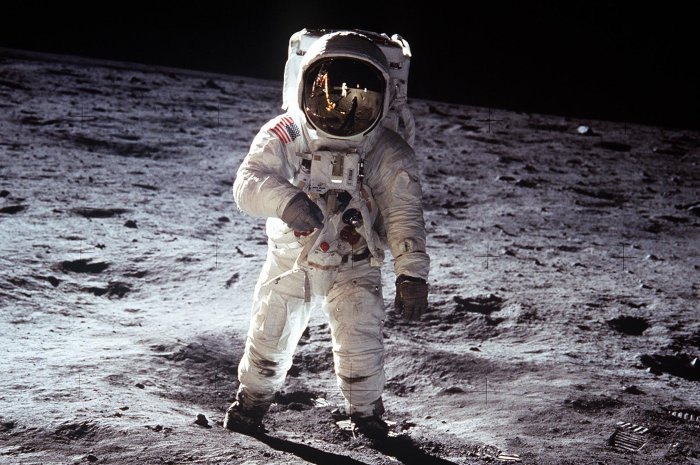
Astronaut Buzz Aldrin walks on the surface of the Moon during the Apollo 11 mission on July 20, 1969. Photo by NASA/UPI | License Photo

Source link

World Cup Golden Boot: Messi leads Mbappe, Haaland before quarterfinals | World Cup 2026 News

Messi is the top goal scorer after tallying his eighth against Egypt, with Erling Haaland and Kylian Mbappe next best.

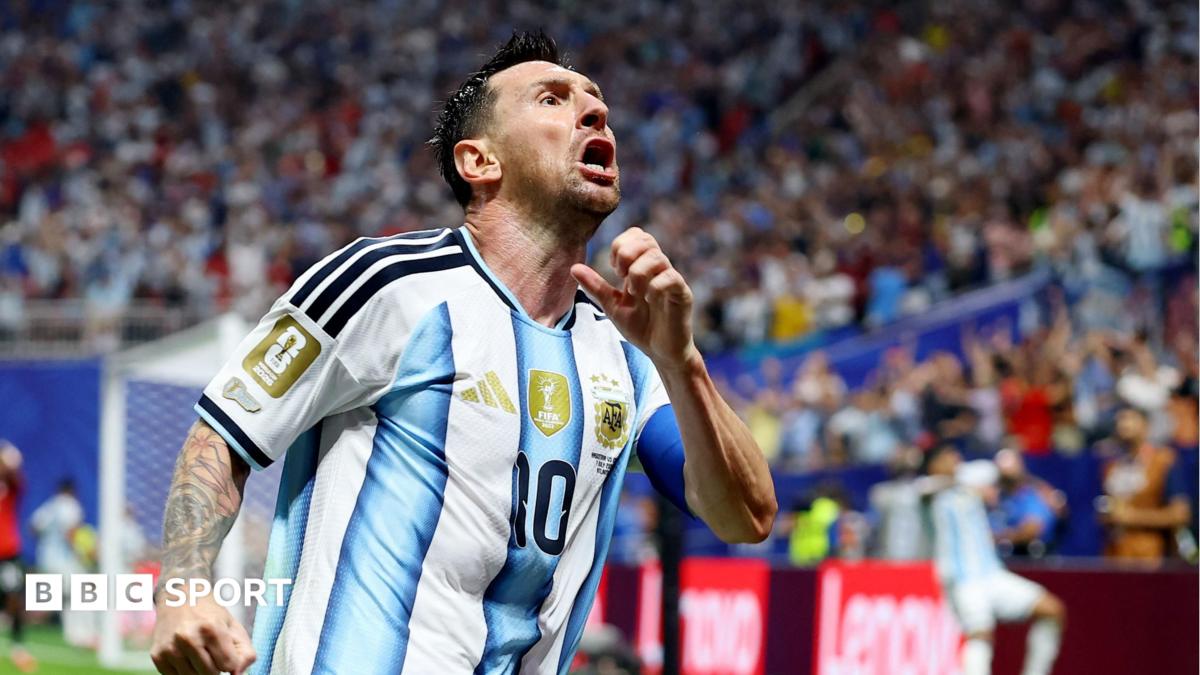
Argentina superstar Lionel Messi has, once again, taken the lead in the race for the World Cup’s Golden Boot award after scoring his eighth goal in his country’s thrilling 3-2 win over Egypt in the round of 16 on Tuesday.

Messi’s goal brought Argentina back on level terms after they were 2-0 down in the match in Atlanta, and also helped him break away from the rest of the pack.

Recommended Stories

list of 4 itemsend of list

For three days, French talisman Kylian Mbappe and Argentinian great Lionel Messi rubbed shoulders as the joint leaders – with seven goals apiece – in the race to be the tournament’s top goal scorer, but Haaland’s double in Norway’s round of 16 win against Brazil put him level with both on Sunday.

When the World Cup’s knockout stage began, Messi became the first to reach seven goals when Argentina beat Cape Verde on Friday, and Mbappe matched him a day later as France beat Paraguay.

England’s Harry Kane took his tally to six goals after scoring in England’s thrilling 3-2 win over Mexico late on Sunday.

Spain’s Mikel Oyarzabal and Mbappe’s teammate Ousmane Dembele are hot on their heels with four goals each.

Here’s everything you need to know about FIFA’s Golden Boot award:

Lionel Messi in action.
Messi shoots at goal during the Argentina-Egypt last-16 tie at Atlanta Stadium [Nathan Ray Seebeck/Imagn Images via Reuters]

What’s the FIFA Golden Boot award and how is it decided?

FIFA’s Golden Boot is awarded to the player with the most goals at the end of the tournament.

France’s Mbappe is the current holder after scoring eight goals in Qatar at the 2022 World Cup.

If two players are tied on the same number of goals at the end of the tournament, then the player with the most assists will win the award.

If those tiebreakers cannot split two players, then the Golden Boot is handed to the player who achieved their goals and assists in the least number of minutes.

Haaland celebrates
Erling Haaland celebrates after the match as Norway qualify for the round of 16 [Issei Kato/Reuters]

Which players are the top goal scorers at World Cup 2026?

  1. Lionel Messi (Argentina) – 8 goals, 1 assist
  2. Kylian Mbappe (France) – 7 goals, 2 assists
  3. Erling Haaland (Norway) – 7 goals, 0 assists
  4. Harry Kane (England) – 6 goals, 1 assist
  5. Ousmane Dembele (France) – 4 goals, 2 assists
  6. Mikel Oyarzabal (Spain) – 4 goals, 1 assist

How many Golden Boot awards have current World Cup players won?

Mbappe, Kane and James Rodriguez are all looking to bag the top goal-scorer prize for a second time.

England’s Kane won the award in 2018 in Russia, while Colombia’s Rodriguez was the top scorer in 2014 in Brazil.

No player has ever won the award more than once.

Entering the quarterfinals, Mbappe gets his chance first to increase his goal tally when France plays Morocco on Thursday.

Which player has scored the most goals in a single World Cup?

French forward Just Fontaine holds the record after scoring an incredible 13 goals at the 1958 tournament in Sweden.

Sandor Kocsis scored 11 at the 1954 tournament in Switzerland, while West Germany’s Gerd Muller bagged 10 at the World Cup 1970 in Mexico.

Kylian Mbappe in action.
France’s forward Kylian Mbappe practices ahead of his nation’s quarterfinal tie against Morocco on Thursday in Boston [Franck Fife/AFP]

Who has scored the most goals in FIFA World Cup history?

  1. Lionel Messi (Argentina) – 21
  2. Kylian Mbappe (France) – 19
  3. Miroslav Klose (Germany) – 16
  4. Ronaldo (Brazil) – 15
  5. Harry Kane (England) and Gerd Muller (West Germany) – 14

Source link

S. Korea’s Lee, Norway PM Store discuss deepening cooperation in security, technology

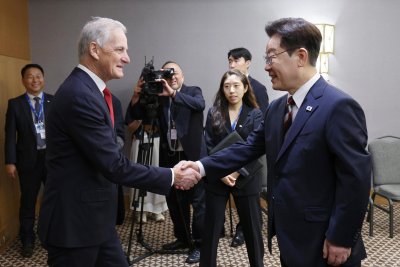
South Korean President Lee Jae Myung (R) and Norwegian Prime Minister Jonas Gahr Store shake hands during their talks in Ankara, Turkey, on Wednesday. Photo by Yonhap

South Korean President Lee Jae Myung and Norwegian Prime Minister Jonas Gahr Store held talks Wednesday on ways to deepen cooperation between their countries in areas such as security and technology.

The two leaders met on the sidelines of the North Atlantic Treaty Organization summit in Ankara, Turkey, where Lee is participating as the leader of one of the alliance’s partner countries.

In his opening remarks, Lee stressed the importance of cooperation and exchanges between the two countries at a time of growing instability in the global security environment.

The South Korean president noted that against such a backdrop, South Korea and Norway are deepening their ties into a mutually beneficial relationship in the areas of the economy, industry, culture and defense.

“During today’s bilateral talks, I would like to discuss in depth how and in what areas we can further deepen our relations,” Lee said.

The Norwegian prime minister noted that the two countries have made progress in bilateral ties since last year, referring to what he described as important decisions in the defense industry that he said would help elevate bilateral ties into a strategic partnership.

In January, South Korea’s Hanwha Aerospace Co. secured a large-scale deal to supply Norway with Chunmoo artillery systems and guided missiles.

The Norwegian prime minister noted the two countries have witnessed progress in cooperation on security, trade and technology, and said he hoped to use Wednesday’s meeting to discuss ways to further deepen their ties.

Lee expressed hope that the two countries would further strengthen cooperation in advanced defense technologies and the broader defense industry, building on Norway’s trust in South Korean weapons systems, presidential spokesperson Kang Yu-jung said later.

The president cited new renewable energy, shipbuilding and maritime affairs as areas in which he hopes South Korea and Norway could achieve tangible cooperation, according to Kang.

Lee also called for the Norwegian government’s cooperation with a South Korean delegation currently visiting Norway to secure additional supplies of Norwegian mackerel, a staple food in South Korea.

Kang said the Norwegian prime minister also voiced hope for stronger cooperation in the maritime and energy sectors, as well as for elevating bilateral ties to a higher level by strengthening cooperation in key areas.

In addition, the two leaders agreed to exchange visits at mutually convenient times while pledging to continue close communication on ensuring peace and stability in the international community, Kang added.

Copyright (c) Yonhap News Agency prohibits its content from being redistributed or reprinted without consent, and forbids the content from being learned and used by artificial intelligence systems.

Source link

World Cup 2026: England & Norway’s football rivalry

England and Norway renew a rivalry better known for one famous piece of commentary rather than football when they meet in the World Cup quarter-finals in Miami on Saturday.

It was 45 years before Jude Bellingham and Erling Haaland were illuminating the current tournament that a Norwegian by the name of Bjorge Lillelien delivered the speech that has assumed legendary status.

Norway, nowhere near the dangerous force they are now in September 1981, had just beaten an England side boasting players of the class of Bryan Robson, Glenn Hoddle, Kevin Keegan and Trevor Francis 2-1 in a World Cup qualifier.

The win was a seismic shock, regarded as a national embarrassment for England and Norway’s greatest triumph at Ullevaal Stadium in Oslo.

Lillelien was not going to let the opportunity to pile on the agony for England pass him by as he directed a message aimed at the country’s political and sporting figures – especially then Prime Minister Margaret Thatcher.

A reserved man in private, he warmed up by accusing Polish referee Jerzy Kacprzak of being “close to receiving English citizenship” by playing what he felt was too much added time as Norway protected their lead.

When Kacprzak finally blew the whistle, Lillelien was ready to let rip on the airwaves as the main radio commentator for the Norwegian Broadcasting Corporation, known as NRK.

A slightly edited version of his wonderfully excitable commentary is: “Lord Nelson. Lord Beaverbrook. Sir Winston Churchill. Sir Anthony Eden. Clement Atlee. Henry Cooper. Lady Diana. We have beaten all of them.”

And then came Lillelien’s most famous words.

“Maggie Thatcher. Can you hear me? We have a message for you. We have knocked your boys out of the World Cup. Maggie Thatcher. As they say in your language, in the boxing bars around Madison Square Garden New York, your boys took a hell of a beating.”

He then repeated for good measure: “Your boys took a hell of a beating.”

The last line, in particular, has been repeated – and altered to suit the occasion – ever since Lillelien delivered it.

England did, contrary to Lillellen’s claim, qualify for the 1982 World Cup in Spain, but no matter.

Social media did not exist in 1981. The impact and traction of his commentary, had it happened now, would be mind-boggling.

Lillelien, who was a hugely popular figure, died six years later aged 60, but has been immortalised by those words, which he always insisted were spontaneous, not prepared.

The emotional speech has been preserved forever by the wonders of YouTube, helped by Lillelien, fluent in English, switching from his native tongue when he said: “Maggie Thatcher. Can you hear me?” and “your boys took one hell of a beating.”

England’s defeat was one of the biggest shocks in their history, having won the first qualifier 4-0 at Wembley a year previously.

In Norway’s moment of triumph, Lillelien’s colourful commentary meant those who represented England in that defeat will never be allowed to forget it.

Every time England meet Norway, Lillelien will be remembered with affection by everyone except those who still have to suffer those painful recollections.

Source link

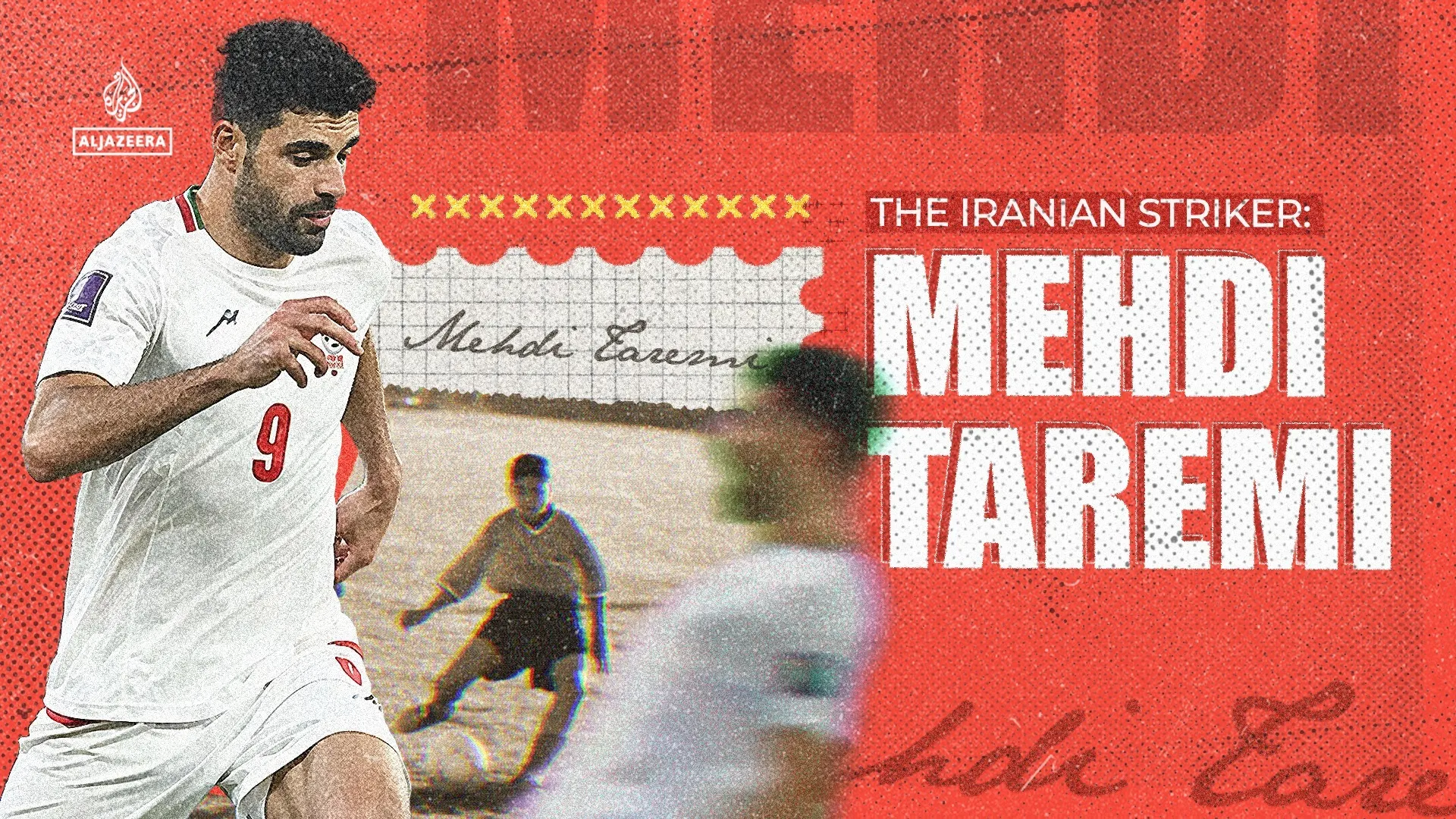
The Iranian Striker: The journey of Mehdi Taremi | Al Jazeera Originals | World Cup 2026

The Iranian Striker: Mehdi Taremi offers a rare personal portrait of one of Iran’s most celebrated footballers during the 2026 FIFA World Cup.

Iranian team striker Mehdi Taremi reflects on the journey that shaped him – from growing up in Bushehr, to representing millions of Iranians at the World Cup.

In this Al Jazeera Originals short documentary, Taremi speaks about childhood, compulsory military service, sacrifice, criticism, national identity and why football means far more than the game itself. He also shares what it means to represent Iran before a global audience, and why he hopes football can help people better understand his country.

Source link

Egypt coach condemns silence on killing of Palestinian children | World Cup 2026

NewsFeed

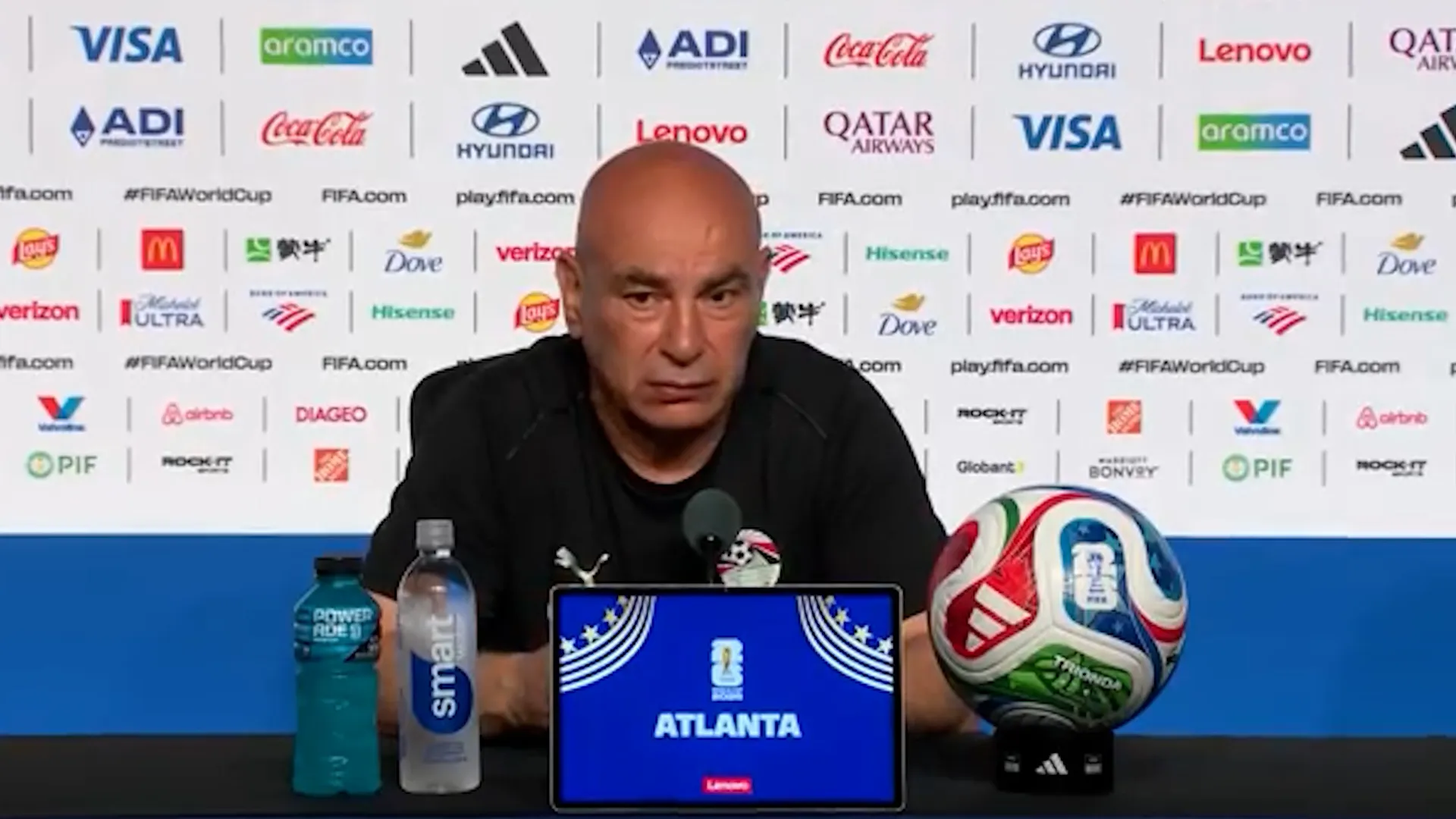
Egypt head coach Hossam Hassan has called for players and reporters at the World Cup to speak out about the killing of children in Gaza and Palestine. Hassan made the comments after his team’s controversial 3-2 defeat to Argentina in the last 16.

Source link

Iran attacks Bahrain, Kuwait after U.S. strikes

July 8 (UPI) — Iran’s military said Wednesday it conducted retaliatory strikes against the United States, targeting dozens of U.S. assets in Bahrain and Kuwait, as the fight over control of the Strait of Hormuz threatened to escalate the war.

In a statement carried by state-run Islamic Republic of Iran Broadcasting, Iran’s Armed Forces said they had attacked 85 “key U.S. military installations” at Salman Port and the 5th Fleet, both in Bahrain, and Ali Al Salem Air Base in Kuwait.

The statement was followed by a second one announcing a “new wave” of missiles targeting U.S. bases in Bahrain.

The extent of the damage, if any, was not immediately clear, but the Kuwait Army confirmed in a statement that its air defenses were confronting “hostile missile and drone attacks.”

“We will not allow U.S. interference in the affairs of the Strait of Hormuz,” Khatam al-Anbiya Central Headquarters, Iran’s top military command body, said in a statement. “Transit through the SoH is only permitted via the routes designated by Iran.”

The strikes came hours after the U.S. military announced late Tuesday the completion of its attacks in Iran, a response to three commercial vessels being struck while transiting the Strait of Hormuz.

The maritime chokepoint has become a dangerous fault line in the war between the United States and Iran.

Washington is seeking to re-establish navigational freedom within the strait, while Iran is attempting to exert and maintain control of the waterway it has sought to exercise since the war began. Neither side appears to be budging, threatening the end of cease-fire negotiations and a return to all-out war.

Both sides accuse the other of violating conditions of the memorandum of understanding they agreed to implement last month to halt the fighting. Indirect negotiations held early this month in Doha produced little to no progress and the renewed fighting may upend the process altogether.

After three commercial vessels were recently struck while transiting the Strait of Hormuz, the U.S. military said it hit more than 80 targets inside Iran.

Before launching its retaliatory attacks early Wednesday, Khatam al-Anbiya Central Headquarters vowed in a statement carried by state-run Fars News Agency that it would “give a crushing response to America’s aggression and terrorist action.”

It said that “under no circumstances” would it allow U.S. interference in the affairs or management of the Strait of Hormuz.

Source link

Egypt fans react to emotional World Cup exit after unforgettable campaign | World Cup 2026

NewsFeed

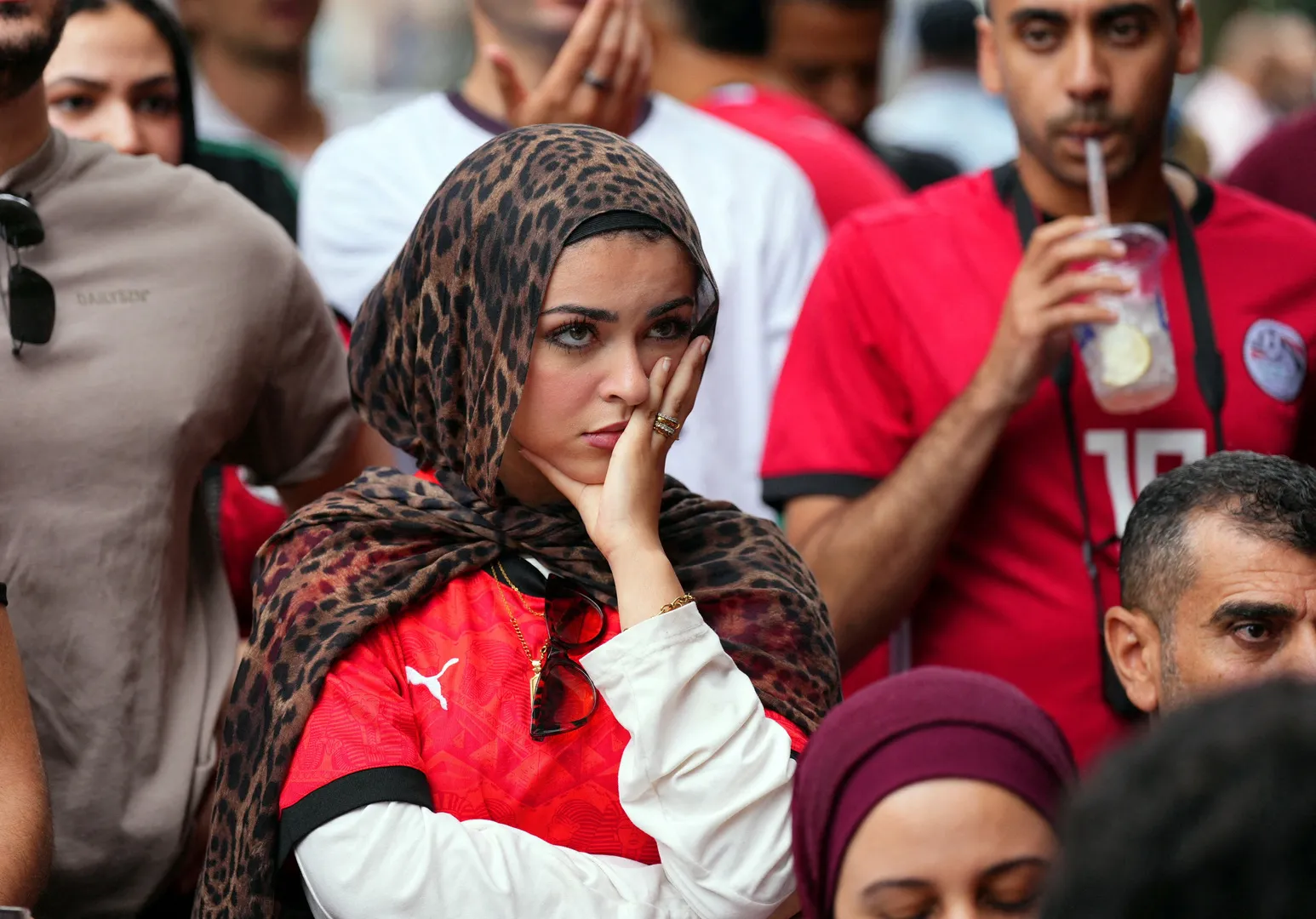
Al Jazeera spoke with Egypt fans at the Obour City Youth Center, where an estimated 15,000 members gathered to watch the FIFA World Cup Round of 16 match against Argentina. Supporters shared their heartbreak after the emotional exit while praising the team’s unforgettable tournament run.

Source link

BBC Sport quiz: Who am I? Guess World Cup star footballer No 31

Welcome to our Who am I? game.

The rules are simple. Each day there’s a new footballer and the challenge is to guess who they are in as few attempts as possible.

After each wrong guess you unlock a new clue. Guess the answer after as few clues as possible to score more points.

Three is a good score, four or five points is exceptional.

So take part and return for more tomorrow.

Today’s player and clues set by BBC Sport’s Adam Millington.

After more quizzes? Go to our dedicated Football Quizzes and Sports Quizzes pages and sign up for notifications to get the latest quizzes sent straight to your device.

Source link

Britain summons Iranian diplomat over journalist attack sentencing

July 8 (UPI) — Britain has summoned Iran’s charge d’affairs after a judge last week sentenced two Romanian men to prison for stabbing an Iranian journalist in London in 2024, an attack the court found was carried out on behalf of the iranian state.

“We take threats posed by Iran and those who do its bidding extremely seriously,” a spokesperson for Britain’s Foreign, Commonwealth and Development Office said in a statement.

“Iran’s actions attempt to undermine UK sovereignty and security, and are completely unacceptable — it must cease in these activities immediately.”

Ali Nasimfar, charge d’affairs of the Iranian Embassy in London, was summoned by Middle East Minister Hamish Falconer on Tuesday, after a British judge sentenced Nandito Badea, 21, and George Stana, 25, to prison over the March 29, 2024, attack.

According to prosecutors, the two men attacked Pouria Zeraati, a reporter with the Britain-based Persian-language broadcaster Iran International, as he was leaving his Wimbledon home.

One of the men asked Zeraati for money before the other grabbed him. Zeraati suffered multiple stab wounds to his leg before both men fled on foot and entered a blue Mazda car that was waiting nearby and driven by a third accomplice.

Prosecutors accused Badea of having been involved in the attack, while Stana drove the getaway car, which had been bought through Facebook. The third suspect has been identified as David Andrei.

The three suspects were arrested by Romanian police in December 2024. Badea and Stana were extradited to Britain that same month, while Andrei remains in Romania, where he is subject to domestic criminal proceedings.

During the trial, the judge agreed with the prosecution that the crime was a state-sponsored attack, as evidence “overwhelmingly” supported the finding that it was carried out on behalf of Iran.

Stana was sentenced to 12 years in prison, as the judge ruled that the Foreign Power Condition under the National Security Act was met in his case. The judge said the extensive planning and involvement in the plot indicated that he knew — or at the very least ought to have known — of the connection to Iran.

Badea was sentenced to eight years behind bars.

“Protecting national security, upholding media freedom and freedom of expression, remain our top priorities,” Britain’s Foreign, Commonwealth and Development Office said.

“This government will take all measures necessary to protect the British people, and those living and working in the UK.”

British officials and allies have accused Iran of a longstanding pattern of targeting critics, journalists and dissidents abroad with assassination plots.

In the United States, authorities have several times thwarted Iran-backed attempts to assassinate and kidnap Masih Alinejad.

In 2024, the United States and Britain issued coordinated sanctions targeting those they accused of being behind threats to assassinate Iranian dissidents abroad.

Source link

Argentina fan waves Israeli flag at World Cup match with Egypt | World Cup 2026

NewsFeed

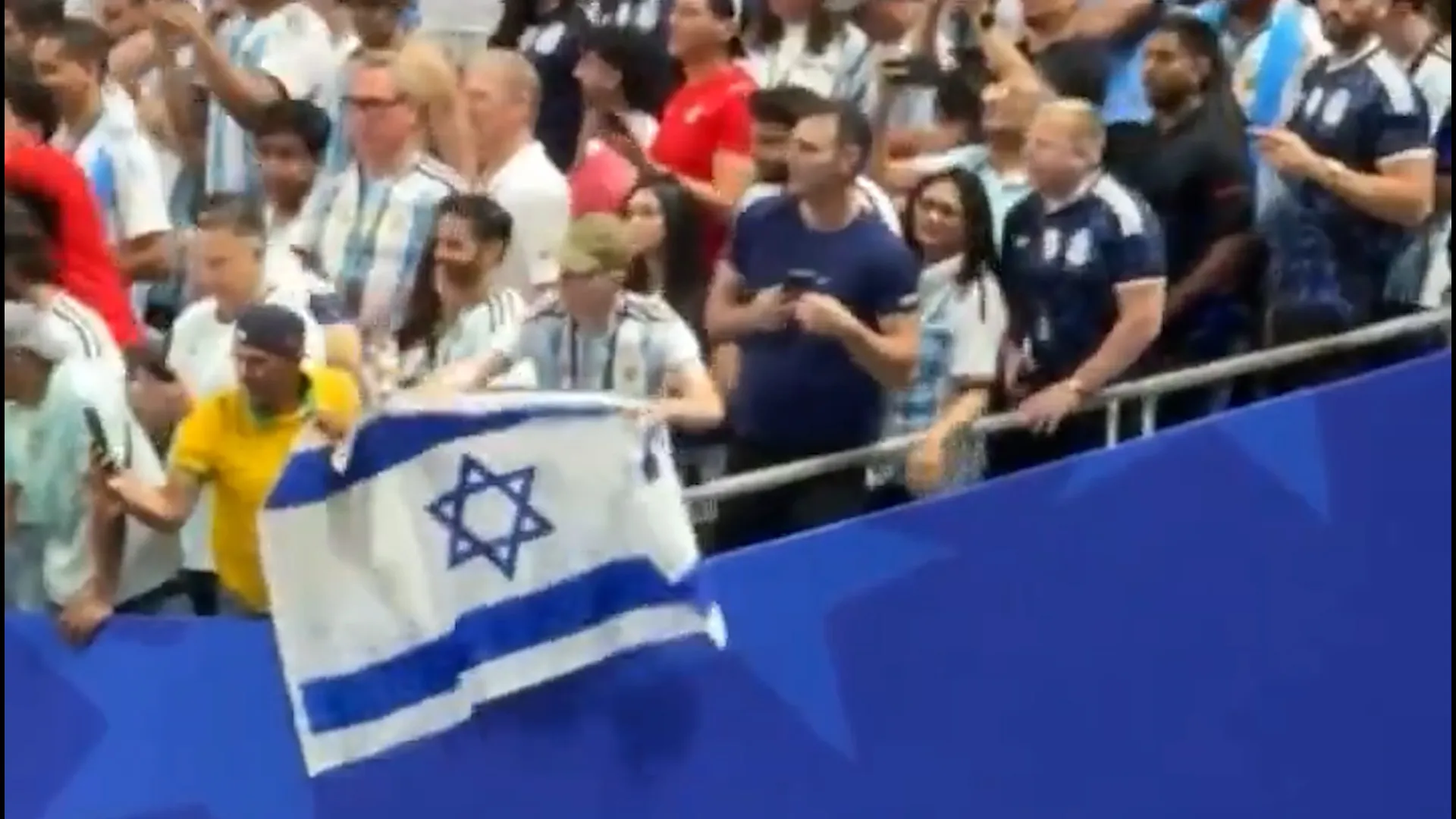
An Argentina fan waves the Israeli flag during his team’s Round of 16 match against Egypt. Some viewed it as a provocation towards Egypt’s coach, Hossam Hassan, who dedicated Egypt’s first-ever World Cup knockout victory to the people of Gaza.

Source link

United States launches new strikes against Iran, reimposes sanctions

July 7 (UPI) — The U.S. military said late Tuesday that it struck dozens of targets in Iran in response to Iran attacking three ships in the Strait of Hormuz.

The attacks were “to impose heavy costs for targeting and attacking commercial shipping crewed by innocent civilians in an international waterway,” U.S. Central Command said in a social media post. “Iran’s demonstrated aggression was unwarranted, dangerous and a clear violation of the cease-fire.”

It announced the end of the offensive hours later, saying more than 80 targets were hit with precision munitions, including air defense systems, command-and-control networks, coastal radar sites and more than 60 small boats of the Islamic Revolutionary Guard Corps used to attack commercial vessels transiting the strait.

“The unwarranted aggression by Iranian forces is a clear and dangerous violation of the cease-fire and undermines freedom of navigation,” CENTCOM said in a statement.

“CENTCOM forces remain postured and prepared to hold Iran accountable when the agreement is not adhered to or obeyed by.”

The attack comes amid seemingly stalled negotiations between Iran and the United States on implementing a previously agreed to memorandum of understanding that could pave the way to ending the war.

The Strait of Hormuz, however, has been a sticking point. Washington is seeking freedom of navigation, while Iran is attempting to hold onto control of the important energy shipping route that it seized in late February with a military blockade in response to the U.S.-Israel attack that started the war.

After the three commercial vessels were struck in the Strait of Hormuz, the United States also reimposed sanctions on Iranian oil sales in retaliation for the attacks. The Treasury Department revoked waivers allowing Iran to sell oil and petrochemicals, CBS News reported.

Iran said the sanctions were “in clear violation” of the memorandum of understanding to end the conflict between Iran and the United States that was signed in June. Iran’s Foreign Ministry said it “holds the U.S. government responsible for this breach of commitment,” CNN reported.

The ministry said the United States “has repeatedly committed both minor and major violations of various provisions of the” agreement over the past 20 days.

Following the completion of the U.S. strikes, Iranian Parliament Speaker Mohammad Bagher Ghalibaf accused the Trump administration of committing “major MOU violations,” including its adjustments in the strait, making threats, reinstating sanctions and attacking Iran.

“The era of bullying and extortion is over,” he said in an online statement.

“It leads nowhere. We don’t fold.”

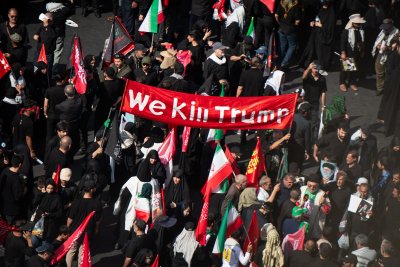
Iranian state media earlier reported explosions in Bandar Abbas and Sirik. Iran had previously warned the United States and Israel not to launch any strikes during the funeral for Ayatollah Ali Khamenei, who was killed by U.S. attacks in February. The funeral is expected to last throughout this week.

The earlier strikes by Iran were on tankers that were allegedly trying to travel the strait by a route Iran has warned against, CBS News reported. While Iran did not claim the attacks, state media said at least one ship ignored warnings.

U.S. President Donald Trump is in Ankara, Turkey, for a NATO summit, during which attendees were expected to discuss the Strait of Hormuz.

Source link

VAR call, Argentina win over Egypt raise questions of legitimacy at World Cup | World Cup 2026

The clamour surrounding the World Cup’s controversy involving US President Donald Trump and FIFA chief Gianni Infantino had barely died down when another arose in the aftermath of Argentina’s controversial 3-2 win over Egypt in the round-of-16 match in Atlanta.

As the defending champions staged a stunning comeback against the Pharaohs in the knockout match on Tuesday, questions were raised about an unusually late VAR call that saw Egypt’s second goal rescinded, followed by a chain of events that led to Argentina’s victory.

Recommended Stories

list of 4 itemsend of list

A day earlier, Trump had revealed that he had asked FIFA to review, and overturn, USA striker Folarin Balogun’s one-game suspension for a red card, and the governing body controversially obliged. The matter was dusted off by Belgium as they dumped the hosts out of the tournament with a 4-1 win in the match Balogun was initially suspended from but ended up playing – to no avail.

Trump watch on the World Cup

While the anger surrounding FIFA’s red-card decision was directed at both the football governing body and Trump, Egypt’s outburst was solely aimed at the organisation, which, according to Egypt’s manager, had “wanted to keep the world champions in the competition”.

Head coach Hossam Hassan speculated that match officials had been put under pressure to ensure that one of the biggest names, Argentina’s Lionel Messi, stayed in the tournament.

“Perhaps they wanted Messi to stay in the running,” Hassan told beIN Sports after the match.

“In football, there are sometimes external factors that go beyond the technical aspects. The world champions received support at every level.”

While the tournament has been no stranger to the political spotlight of questionable integrity, experts say the lines between sport and politics have been blurred even further.

“After the Balogun affair, who knows which decisions are legitimate and can be trusted, and which can’t?” Simon Chadwick, professor of Afro-Eurasian sport at the Emlyon Business School in Shanghai, told Al Jazeera.

“If the Trump administration is maintaining a watching brief over the tournament, it’s worth remembering: Argentina’s president, Javier Milei, is a staunch Trump supporter.”

Trump and his Argentinian counterpart share a close relationship. Milei is a regular feature at pro-Trump political gatherings in the United States, and Trump has described Argentina’s far-right populist leader as his “favourite president”.

Chadwick also opined that Hassan’s vociferous support for Palestine at the World Cup could have prompted some officials to “have built-in biases when making decisions”.

Hassan dedicated part of his pre-match news conference on Monday to making an impassioned plea for the people of Palestine, especially those in the besieged Gaza Strip.

Advantage, Argentina

Circling back to the VAR call that sliced Egypt’s lead in half and was followed by decisions that conveniently favoured Argentina, Chadwick said the period of play was “unusual”.

He wondered why the referee had not called a foul in real-time that VAR picked up several moments later and only once Egypt scored their second goal.

“There was something distinctly unusual about the goal and VAR decision, something that was amplified when Argentina scored one of its goals,” Chadwick said, questioning refereeing standards in the match.

“In the build-up, an infringement was perpetrated by an Argentina player, which could have been interpreted as a similar offence to that supposedly committed earlier by the Egyptian player. At the very least, refereeing standards during the game were somewhat inconsistent, although critics are clearly making much more serious claims.”

But while many social media commentators and football experts were outraged at the decisions – Portuguese football icon Jose Mourinho reportedly termed the match “daylight robbery” – some football experts said it was a closer call.

“Robbed might be a strong word,” football analyst Ali El Garni said.

“I’d say decisions made by both the referee and VAR could have gone either way, and Argentina benefitted from all the 50/50 incidents.

“The incident leading to the Egyptian disallowed goal was an indisputable foul. The question is how far VAR should go back to check the legitimacy of a goal,” said El Garni, who has extensively reported on European and North African football.

However, he did wonder if VAR would have been involved had the scoreline been 2-0 in Argentina’s favour instead.

“Would the goal have been disallowed had it been scored by Argentina? It’s unlikely,” he said.

“What’s making it worse for Egypt is the fact that a similar incident involving what appeared to be a foul on [Mohamed] Salah took place before Argentina’s third goal, and VAR didn’t intervene,” he said.

Meanwhile, Chadwick questioned why VAR officials had raised the issue if the on-field officials did not call a foul when Egypt‘s Marwan Attia lightly tugged the shirt and stepped on the foot of Lisandro Martinez.

A logical solution to the VAR issue, Chadwick proposed, would be “for fans and viewers to listen to an assessment of the alleged offence, hear the various arguments, and have a clear insight into the basis for a decision”.

Chadwick admitted that although Egyptian players should not have become overwhelmed with emotion, “a sense of injustice was induced by the VAR decision”.

“This technology was supposed to minimise doubt and bring consistency. Instead, its use during this match had significant cognitive and behavioural effects,” he said.

“Indeed, rather than brandishing cards and inflaming the situation even further, the referee should have used his discretion and judgement to defuse the situation.”

While Chadwick dismissed rumours of match-rigging in favour of Messi and Argentina, he acknowledged the pull of the iconic footballer’s star power.

“There is no doubt that Messi is a box office attraction the tournament really can’t afford to be without.”

Source link

China says countries should not overread Pacific SLBM test

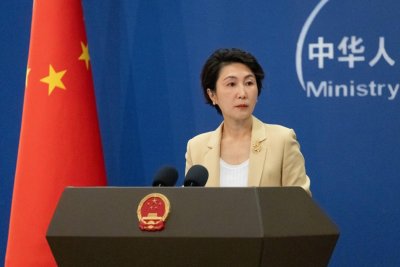
Chinese Foreign Ministry spokesperson Mao Ning speaks during a press conference at the Foreign Ministry in Beijing, China. Photo by JESSICA LEE/ EPA

July 7 (Asia Today) — China said countries should not overinterpret its test launch of a submarine-launched ballistic missile into the Pacific, after the firing drew criticism from Japan, Australia, New Zealand and Pacific island nations.

Chinese Foreign Ministry spokesperson Mao Ning said during a regular briefing Tuesday that the launch was part of regular military training by the Chinese military and was not aimed at any country or target.

Mao said China had notified Solomon Islands and other South Pacific and related countries in advance, adding that the launch complied with international law and international practice.

“China follows the path of peaceful development and a nuclear strategy of self-defense,” Mao said. She said China keeps its nuclear forces at the minimum level required for national security and that “relevant countries do not need to overinterpret this.”

China’s state-run Global Times also defended the launch in a commentary Tuesday, saying it demonstrated China’s determination and capability to firmly safeguard national sovereignty, security and territorial integrity.

The newspaper said China’s nuclear capability had reached another milestone and that the country would continue to strengthen its strategic deterrence system, including its nuclear triad.

A nuclear triad refers to a country’s ability to deliver nuclear weapons through three systems: intercontinental ballistic missiles, submarine-launched ballistic missiles and strategic bombers. Such a structure is intended to preserve the ability to retaliate after a nuclear first strike.

Chinese diplomatic sources in Beijing said China announced Monday that one of its nuclear-powered strategic submarines had successfully launched an SLBM carrying a dummy warhead into international waters in the Pacific.

China has not officially identified the missile. Experts believe it may have been the Julang-3, or JL-3, which was displayed during a military parade last year marking the 80th anniversary of victory in the War of Resistance Against Japanese Aggression.

The JL-3 is believed to have a range of up to 12,000 kilometers, or about 7,456 miles, placing much of the Pacific, including the U.S. mainland, within reach. Analysts say the missile strengthens China’s nuclear triad strategy.

Japanese Chief Cabinet Secretary Minoru Kihara said China’s military activities, combined with a lack of transparency, are a serious concern for Japan and the international community.

Australian Foreign Minister Penny Wong criticized the launch as destabilizing to the region. New Zealand Foreign Minister Winston Peters said it was not consistent with regional stability.

NATO Secretary-General Mark Rutte also expressed caution, saying, “We cannot be naive.”

Solomon Islands Prime Minister Matthew Wale, who chairs the Pacific Islands Forum, said he had delivered a strong protest to China’s ambassador in that capacity. Wale said the Solomon Islands government also submitted an official protest letter to China.

— Reported by Asia Today; translated by UPI

© Asia Today. Unauthorized reproduction or redistribution prohibited.

Original Korean report: https://www.asiatoday.co.kr/kn/view.php?key=20260707010002704

Source link

South Korea’s Naver, KAI to develop defense AI platform

Naver CEO Choi Soo-yeon, Korea Aerospace Industries CEO Kim Jong-chul and Naver Cloud CEO Kim Yoo-won attend a signing ceremony for an aerospace and defense AI partnership in Sacheon, South Korea. Photo courtesy of Naver

July 7 (Asia Today) — South Korea’s Naver is teaming with Korea Aerospace Industries to develop artificial intelligence models tailored for defense and future combat systems based on physical AI.

Naver said Tuesday that Naver, Naver Cloud and Korea Aerospace Industries signed a memorandum of understanding Monday at the aircraft maker’s headquarters in Sacheon, South Korea.

Naver CEO Choi Soo-yeon, Naver Cloud CEO Kim Yoo-won and Korea Aerospace Industries CEO Kim Jong-chul attended the signing ceremony.

The agreement brings together one of South Korea’s leading artificial intelligence companies and one of its main aerospace and defense companies as Seoul seeks greater technological self-reliance in national security.

The three companies said advanced AI has become a key factor in future defense competition. They plan to develop sovereign AI optimized for South Korea’s defense and security environment, reducing reliance on foreign technology and lowering security risks.

Sovereign AI generally refers to artificial intelligence systems developed and operated domestically to reflect a country’s language, data, laws and security requirements.

The companies will first work on a defense-specific AI foundation model. They also plan to jointly participate in government-led research and development projects and block-funding programs.

The partnership is expected to create a cooperation framework among industry, government and the military, linking core physical AI technologies for next-generation defense systems with future commercialization.

The scope of cooperation will extend across future combat systems. Korea Aerospace Industries plans to apply AI to unmanned aircraft platforms and AI pilot development for future battlefield environments, including its next-generation air combat system.

The companies also plan to raise the level of autonomy in future aerospace platforms, including manned-unmanned teaming systems.

Naver and Korea Aerospace Industries said they will also expand an AI cooperation ecosystem with defense and aviation suppliers to strengthen South Korea’s domestic AI industry.

“Technological self-reliance in national defense and security is directly connected to national sovereignty, making it essential to secure independent sovereign AI infrastructure,” Choi said. “By combining Team Naver’s advanced AI capabilities with Korea Aerospace Industries’ defense infrastructure, we will do our best to strengthen South Korea’s defense technology sovereignty and create new global competitiveness for the future defense industry.”

Kim said global competition in defense AI is intensifying.

“The three companies need to respond jointly by combining their core capabilities,” Kim said. “By bringing together Korea Aerospace Industries’ aerospace and defense expertise with Team Naver’s AI and cloud technology, South Korea can establish defense AI technology sovereignty and improve global competitiveness in unmanned aircraft and future combat systems based on physical AI.”

— Reported by Asia Today; translated by UPI

© Asia Today. Unauthorized reproduction or redistribution prohibited.

Original Korean report: https://www.asiatoday.co.kr/kn/view.php?key=20260707010002305

Source link

Egypt were ‘cheated’ in World Cup loss to Argentina, coach Hassan says | World Cup 2026 News

‘Perhaps they wanted to keep the world champions in the competition,’ Hassan said after his team was knocked out.

Egypt coach Hossam Hassan claims his side was “cheated” out of a place in the World Cup quarterfinals after Argentina staged a stunning late comeback from 2-0 down to win 3-2 in a gripping last-16 match in Atlanta.

The Pharaohs started as underdogs but took the lead against the world champions within 15 minutes, which was doubled in the second half before Argentina walked away with the win on Tuesday.

“I do not want to put it nicely and talk about hard luck. We have been cheated unfairly today; we have suffered injustice,” Hassan said in an explosive post-match news conference.

Egypt had a Mostafa Zico goal ruled out when they were leading 1-0 as the Video Assistant Referee (VAR) intervened to spot a foul on Lisandro Martinez much earlier in the move.

Zico did then put Egypt on the brink of a place in the last eight for the first time by doubling their lead.

However, the defending champions hit back as Cristian Romero reduced the arrears before Lionel Messi, who had a first-half penalty saved, smashed in the equaliser with his eighth goal of the tournament.

The controversy did not end there, though, as in the buildup to Argentina’s winner scored by Enzo Fernandez, Egypt believe they should have instead been awarded a penalty for a pull by Alexis Mac Allister on Hamdy Fathy.

“We haven’t seen respect or fair play. There has not been respect or fair play,” Hassan said.

“A penalty was ruled out, was not even checked by VAR. A second goal was remarkably disallowed. There has not even been a VAR check when we have all seen the image of the [shirt] being pulled back.”

Hassan said he would not watch any more matches of the tournament, such was the injustice he felt.

“I am not going to continue following the matches of this World Cup,” he added.

“This is my own way of speaking up.”

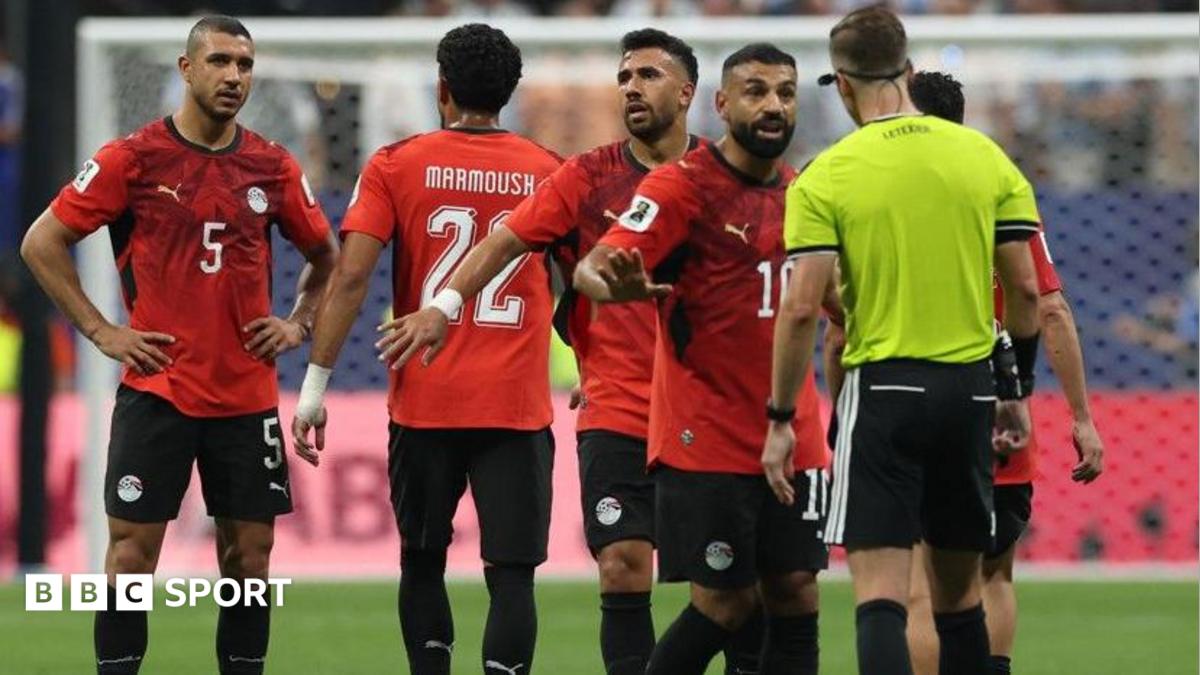
Egypt's head coach Hossam Hassan speaks with French referee Francois Letexier during the 2026 World Cup round of 16 football match between Argentina and Egypt at Atlanta Stadium in Atlanta on July 7, 2026. (Photo by ROBERTO SCHMIDT / AFP)
Hassan speaks with referee Francois Letexier [Roberto Schmidt/AFP]

‘They wanted Messi to stay’

After Yasser Ibrahim’s header put Egypt in front, Argentina were awarded a penalty for a trip on Nicolas Tagliafico.

Messi’s problems with World Cup penalties continued as his effort was saved by Mostafa Shobeir.

The eight-time Ballon d’Or winner has now failed to score four of his eight non-shootout spot-kicks at the World Cup, including two misses at this tournament.

Hassan speculated that the officials had been put under pressure to keep one of the biggest names in the competition.

“Perhaps they wanted to keep the world champions in the competition. Perhaps they wanted Messi to stay in the running,” he told BeIN Sports.

“In football, there are sometimes external factors that go beyond the technical aspects. The world champions received support at every level.”

Egypt had been surprisingly attacking early on in the game, a departure from Hassan’s usual tactic of playing with a tight defence and looking for counterattack opportunities.

It helped them take an early lead, but it was the heroics of goalkeeper Mostafa Shobeir that ensured they remained in front by half-time.

“I’m very, very satisfied with the effort they put in. Most of our players come from the Egyptian domestic league, while many players in other national teams are based in Europe and live in that professional environment,” Hassan added.

“Yet with predominantly local players – besides Mohamed Salah and Omar Marmoush – we were able to compete with anyone.”

Hassan also complained about the scheduling of the match for a noon kick-off (16:00 GMT), just four days after both sides had won their round of 32 matches.

“Whoever schedules those matches has never played football. You never schedule a game for 12pm. At noon you go for a walk or to eat brunch; you do not go to play football.

“When are the players supposed to eat? At 7:30am?

“There have been a lot of things to be questioned on and off the pitch.”

Source link

World Cup 2026: The fury and heartbreak of Egypt’s stunning World Cup collapse

With 12 minutes of normal time remaining Egypt stood on the cusp of their greatest ever World Cup result.

The Pharaohs led Argentina, the reigning world champions, 2-0 in Atlanta Stadium.

A quarter-final spot – their first – beckoned for the football-mad African country.

Then it went wrong. Horribly wrong.

When Cristian Romero reduced the deficit in the 79th minute, it was a case of Egypt digging in. But they looked panic-stricken when captain Lionel Messi – who else? – made it 2-2 four minutes later.

Enzo Fernandez then completed a remarkable turnaround with a header in the second minute of stoppage-time.

Egypt were down and out – and downright furious after the video assistant referee (VAR) ruled out a second goal by Mostafa Zico for a foul after midfielder Marwan Attia was penalised for slightly stepping on Lisandro Martinez at the start of the move, when they were leading 1-0.

They were also adamant Mohamed Salah was fouled in Argentina’s penalty area, seconds before the reigning champions broke for the winner.

“There is so much inconsistency at the moment with VAR and decisions and how far you go back to pull a decision,” Egyptian football expert Ahmad Yousef told BBC Radio 5 Live.

“There was such a long distance that had gone by and the foul was so minimal so I completely understand why the Egyptian coaching staff and squad are so disappointed.”

When French referee Francois Letexier signalled full-time, many of Egypt’s players slumped to the floor in disbelief at what had just happened.

Salah swapped shirts with his former Liverpool team-mate Alexis MacAllister before walking off the pitch with his head bowed, while other players stood shaking their heads.

“There were so many subplots and stories to this game,” said former England goalkeeper Paul Robinson, who was in the ground working for BBC Radio 5 Live.

This match had everything – a penalty save, a disallowed goal, a red card as well as a thrilling comeback.

BBC Sport unpicks a game that will go down in World Cup history for featuring a team who were two goals down so late on, but who went on to win without needing extra time.

Source link

World Cup 2026: Lionel Messi’s tears of relief after Argentina comeback

Would Messi have been lost to the World Cup forever had Argentina lost?

He would be 43 – the oldest outfield player to play at a World Cup – if he carried on to the next, though the lure of games being played in his home country may have sustained him.

Instead, Messi can look forward to a quarter-final here against either Switzerland or Colombia.

Former England goalkeeper Paul Robinson, watching in Atlanta for BBC Radio 5 Live, said: “That was incredible. Spectacular. Argentina were down and out. They were out of the tournament at one point.

“Egypt are so frustrated with the refereeing decisions that have gone against them. They had a second goal disallowed before they got their second goal for an infringement that was almost on their own touchline.

“Then Lionel Messi just stepped in and took over. Beautiful assist, great finish for his goal, and then the substitutions worked for Argentina.”

Argentina’s recovery, and this was not simply the Messi show it should be said, also had implications for England who, when Egypt led, might just have believed it was a ‘now or never’ moment for reaching their first men’s World Cup final since 1966.

England’s path to the final was shaping up as Norway in the quarter-finals, then Egypt, Switzerland or Colombia in the last four if they got through.

Instead, there remains the shadow of Messi and Argentina as the potential obstacle should they overcome the dangerous Norwegians.

And Messi, even in advancing years, casts a giant shadow over any opponents, as Egypt found to their cost.

Messi became the first player in World Cup history to score in six consecutive knockout-phase games and now has eight goals in this one. It is the most by a player in the opening five games since West Germany’s Gerd Muller scored 10 in Mexico in 1970.

He has also contributed to 16 goals in his past nine World Cup games, with 13 goals and three assists.

England’s concern will be he still has the power to add more. And looks in the mood to do so.

Source link

BTS ARMY puts Chilean government under pressure

A sign welcoming ARMY, the fandom of K-pop superstars BTS, hangs outside a convenience store near Gwanghwamun Square in central Seoul in Maech The band returned for “BTS The Comeback Live: Arirang,” its first concert in nearly four years after going on hiatus in 2022 to complete mandatory military service. File Photo by Thomas Maresca/UPI | License Photo

SANTIAGO, Chile, July 7 (UPI) — Chile’s government is facing an unexpected political controversy after the suspension of three BTS concerts scheduled for October prompted coordinated protests by the K-pop group’s fans across the country.

President José Antonio Kast’s administration has been forced to reconsider its decision to bar the concerts from the National Stadium after ARMY, BTS’ global fan community, organized simultaneous demonstrations in 11 Chilean cities.

About 5,000 fans marched Sunday to protest cancellation of the performances at Chile’s main sports venue, where all tickets had already sold out. Authorities cited technical concerns over the impact the concerts could have on the stadium’s playing field.

BTS, one of the world’s most successful K-pop groups, uses a 360-degree stage that weigh about 600 tons. The structure would be installed in the center of the field, directly above the stadium’s irrigation system.

Sports Minister Natalia Duco said the production could damage “the country’s most important sports asset” and declined to authorize the venue for the concerts. About 200,000 people were expected to attend the three shows.

“It is impossible to cancel something that was never confirmed,” Duco said after criticism of the decision began.

The move prompted an immediate backlash from BTS fans. ARMY Chile, which has more than 130,000 followers on Instagram alone, organized through social media to pressure the government and called for demonstrations in the streets and outside La Moneda presidential palace.

Supporters also flooded the social media accounts of the Sports Ministry, Duco and concert promoter DG Medios with messages demanding that the shows be held at the National Stadium. “BTS at the National Stadium” became the movement’s main slogan.

“All our support to our Chilean sisters. We sincerely hope this situation can be resolved in the best possible way and that you will receive good news very soon,” ARMY Peru wrote on social media.

The dispute has also spilled into politics. Opposition lawmakers criticized the government and demanded an explanation for the decision, while other public officials and even soccer clubs have offered their stadiums as alternative venues.

Facing mounting pressure, the government said it is willing to reconsider its decision if the concert promoter can meet the conditions required to protect the playing surface. Meanwhile, thousands of fans continue campaigning on social media as they await a final decision.

Source link