Bafana Bafana’s departure was delayed due to non-issuance of visas for several players and support staff.
Published On 2 Jun 20262 Jun 2026
The South African national team members have left for their World Cup training base in Pachuca, Mexico, in advance of their opening game against the tournament cohosts on June 11.
The delegation that left on Monday did not include assistant coach Helman Mkhalele, who has yet to obtain a United States visa.
Recommended Stories
list of 4 itemsend of list
The charter flight departed Johannesburg following a frantic 24 hours after the squad was originally scheduled to leave on Sunday, but was held back by a delay in obtaining visas in what was described as an administrative bungle by the South African Football Association (SAFA).
Mkhalele, a former international winger who played 66 times for Bafana Bafana, including at their World Cup debut in France in 1998, will have to travel later after his visa application was initially denied.
Blaming the US Consulate General in Johannesburg for the delay, SAFA president Danny Jordaan told the South African Broadcasting Corporation, “They refused the visa, but gave no reasons. It is very difficult to deal with the process where you get no information.”
“We don’t know [why it was denied], we are clutching in the dark, but we hope the matter will be resolved [soon]. All of the players are [on the flight] and 99 percent of the technical staff.”
South Africa are due to play Jamaica in a friendly on Friday before taking on Mexico in the showpiece opening match in Mexico City.
“Now we are very happy that we can go to Mexico,” South Africa coach Hugo Broos said. “The past days have been a little bit stressful with all the problems we had, but those problems are behind us now, and we can focus on what’s coming.”
“These 10 days go very fast. Once we get there, we will start working, focusing on the first game against Mexico, so time will pass very quickly. I think everybody is looking forward to starting the World Cup.”
South Africa are in Group A and will face Czechia in Atlanta on June 18 and South Korea in Monterrey, Mexico, six days later.
They are appearing in their fourth World Cup and looking to advance from the group stage for the first time.
Zee will broadcast the 2026 and 2030 World Cups and the 2027 Women’s World Cup among 39 FIFA tournaments until 2034.
Published On 2 Jun 20262 Jun 2026
FIFA has struck a deal with India’s Zee Entertainment to broadcast the World Cup in the country, ending a months-long standoff over the tournament’s availability in one of the last major markets where rights remained unsold.
While the financial terms of the package – signed on Monday – were not disclosed, FIFA reportedly sought about $100m for the 2026 and 2030 tournaments before slashing its asking price to $60m.
The deal gives Zee a toehold in India’s sports broadcast market, where the Reliance-Disney joint venture JioStar holds rights ranging from the Indian Premier League (IPL) cricket tournament to the English Premier League football.
It covers 39 FIFA events over eight years through 2034, including the Women’s World Cup in 2027, according to a joint statement from FIFA and Zee.
Shares of Zee were about 7 percent higher on the day after the announcement.
The agreement came just 10 days before the tournament kicks off on June 11 across the United States, Canada and Mexico.
Last month, experts told Al Jazeera that the kickoff times for the majority of the matches are the biggest concern for Indian broadcasters since many games will be played at odd hours for the Indian audience, with a 10-12 hour time difference between the host cities and the South Asian nation.
Only 14 out of the total 104 World Cup games will begin before midnight for fans in India.
The final will be held in New Jersey on July 19, beginning at 19:00 GMT, which will be 12:30am on July 20 in India. By comparison, 98.4 percent of matches at the 2018 World Cup started before midnight, and 82.5 percent at the following edition in Qatar.
Karan Taurani, executive vice president at investment firm Elara Capital, sees TV as a “struggling” medium in India.
“When you have these kinds of sporting events, effectively it is mostly digital that is monetising and raising big money,” Taurani told Al Jazeera. “That is a big reason why no one’s showing interest in the FIFA World Cup.”
Taurani explained that cricket leads the sports economy market in India.
“Only a small fraction of people who watch the Indian Premier League will watch the FIFA World Cup,” he said, adding that an even smaller fraction tune in past midnight to watch a match.
Viacom18 paid about $60m for rights to the 2022 World Cup, which was hosted in Qatar in time zones far more favourable for Indian audiences. Most of this year’s matches will be screened late at night in India due to the time difference, something that dampened broadcaster appetite and complicated FIFA’s sales efforts.
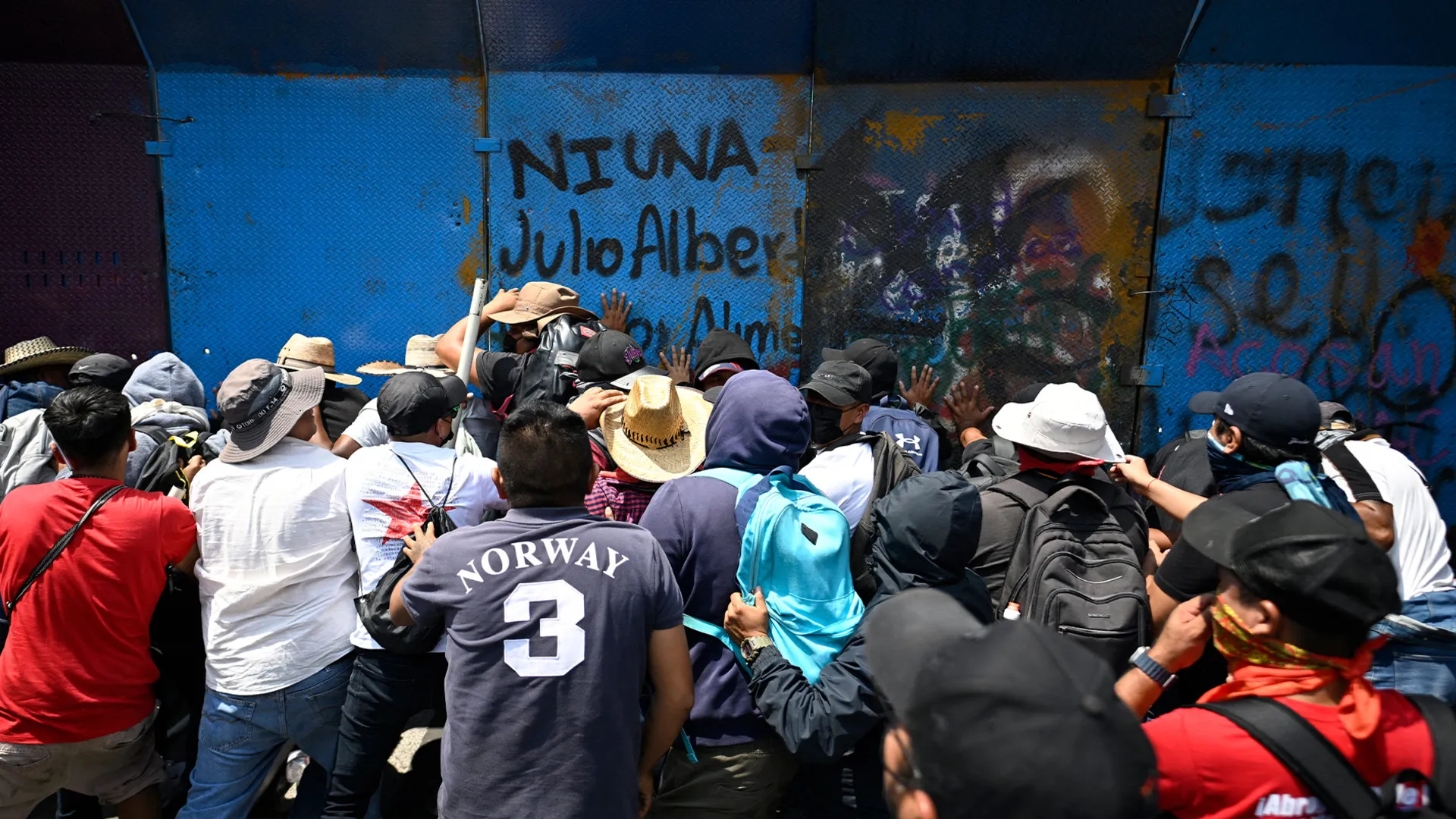
Teachers marched in Mexico City demanding better pay and pensions, warning of further protests ahead of the 2026 FIFA World Cup. Al Jazeera’s Julia Galiano reports police fired tear gas after some demonstrators pushed through barricades near a FIFA fan zone.
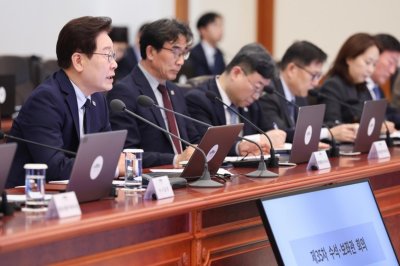
President Lee Jae Myung (L) attends a meeting with his senior secretaries at the presidential office Cheong Wa Dae in Seoul, South Korea, 28 May 2026. Photo by YONHAP / EPA
June 1 (Asia Today) — South Korea is expected to begin procedures to appoint a special inspector general after Wednesday’s local elections, potentially reviving a presidential watchdog post that has been vacant for nearly a decade.
The special inspector general is tasked with inspecting possible misconduct involving the president, the president’s relatives and senior presidential office officials.
The system was introduced in 2014 under then President Park Geun-hye, but the post has remained vacant since 2016. Neither the Moon Jae-in administration nor the Yoon Suk Yeol administration appointed a special inspector general.
Political sources said Sunday that the ruling Democratic Party is preparing to begin the recommendation process shortly after the June 3 local elections.
The main opposition People Power Party has already selected Kang Ji-sik, a former prosecutor and lawyer at Baeksong Law Firm, as its candidate for the opposition’s share of the nomination process. Kang graduated from the Judicial Research and Training Institute in its 27th class.
The Democratic Party formally said it would begin the recommendation process after Presidential Chief of Staff Kang Hoon-sik publicly asked the National Assembly in April to move forward. But the process appears to have been delayed by the party’s floor leader election and the local elections.
Han Byeong-do, floor leader of the Democratic Party, said the party would proceed under the rules and procedures, though he did not specify a date.
A presidential official said the Blue House had asked that the appointment process move as quickly as possible.
“With the new party leadership in place and the election nearing completion, the process appears likely to begin immediately after the election,” the official said.
Under the law, the National Assembly recommends three candidates and the president selects one. The ruling and opposition parties each recommend one candidate, while the Korean Bar Association selects the third, who is jointly recommended by both parties.
The president’s nominee must then go through a parliamentary confirmation hearing before final appointment. The special inspector general serves a three-year term.
Lee said at a news conference marking his first 30 days in office last July that power should be subject to checks.
“Power should be checked,” Lee said at the time. “Even for the safety of those who hold power, it is better to be checked. I have already ordered the appointment of a special inspector general.”
After the National Assembly showed little movement, Kang Hoon-sik again urged lawmakers in December to quickly recommend candidates.
Lee renewed the request on April 19 before leaving for visits to India and Vietnam.
“President Lee believes the appointment of a special inspector general is essential under the principles of democracy and popular sovereignty, which require all power to be subject to institutional oversight,” Kang Hoon-sik said at the time.
“As the president has expressed his firm will, we ask the National Assembly to begin the relevant procedures as soon as possible,” he said.
Health workers wearing full personal protective equipment prepare May 23 to transport the body of an Ebola victim for a safe burial at Sofepadi Hospital in Bunia, Democratic Republic of the Congo. On Monday, hundreds of people in Kenya protested plans for a nearby field hospital to quarantine and treat Americans exposed to Ebola. Kenya has no Ebola cases thus far. Photo by Stringer/EPA
June 1 (UPI) — Hundreds of residents in central Kenya marched Monday in protest of plans for a U.S.-run field hospital in which Americans exposed to Ebola would be treated and quarantined.
Officers from the U.S. Public Health Service would run the facility at Laikipia Air Base near Nanyuki, Kenya. The hospital was supposed to open last Friday. However, a Kenyan court blocked that opening, with another hearing set for Tuesday, The Washington Post reported.
Kenya has had no cases of Ebola in this outbreak thus far, but there have been about 1,000 cases worldwide, with about 200 suspected deaths, mostly in the Democratic Republic of Congo. Kenya has increased screening and security measures to lessen the risk of the disease spreading to the country.
Nanyuki residents said the hospital facility would endanger the lives of those living nearby.
“If it is not good for America, why is it good for us? Why does the U.S. only care about itself?” Gibson Maina, 25, said to The Washington Post. “The moment we get sick people here, how sure are we that we will be able to contain the disease and that we will be able to survive it?”
The protests were largely peaceful with “localized disruptions,” Capital News in Kenya reported. The Post, however, said some demonstrators set fires and “clashed with the police.”
Officials have said the hospital would keep U.S. citizens with Ebola from returning to the United States for treatment. Katiba Institute, a constitutional rights advocacy group in Kenya, filed the lawsuit that blocked the facility from opening.
The Law Society of Kenya has also opposed the hospital, Capital News reported. Charles Kanjama, leader of the society, said that Ebola treatment centers should be closed to the outbreaks and not in countries with no cases.
“We owe patients human solidarity, but public health requires facilities to be placed near outbreak epicenters,” Kanjama said.
Sarah Korere, a local leader, also said such a hospital should be closer to the problem areas.
“As residents of Nanyuki, we have said we do not want the Ebola rescue center in Nanyuki,” she said to Capital News. “And it’s not just Nanyuki; we’ve said we do not want it in Laikipia, and not yet Laikipia, we don’t want it in Kenya.”
Kenyan Health Cabinet Secretary Aden Duale said any international agreement for Ebola treatment facilities must comply with Kenyan laws and public health protocols. The United States said in a statement last week that it was in talks with Kenyan officials after the lawsuit.
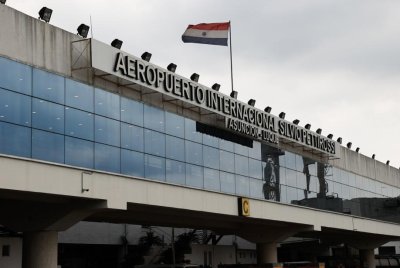
Authorities said they found 577 pounds of hashish Saturday aboard a Bombardier Challenger 604 that arrived at Silvio Pettirossi International Airport in Luque, Paraguay, after a flight from from Panama. File Photo by Juan Pablo/EPA
ASUNCION, Paraguay, June 1 (UPI) — Paraguayan authorities are investigating a suspected international drug-trafficking operation after discovering 577 pounds of hashish and cannabis aboard a private jet whose pilot left the country before the drugs were found.
The drugs were valued at approximately $3.6 million, making the case one of Paraguay’s largest recent air-related drug seizures.
The tale began at 9:12 p.m. Friday, when a Bombardier Challenger 604 arrived at Silvio Pettirossi International Airport from Panama carrying Estonian pilot Keith Siilats, American co-pilot Jabari Stephen Brown and three American passengers.
The aircraft landed without incident and all occupants left the airport terminal, authorities said.
About 10:30 a.m. Saturday, one of the passengers returned to retrieve luggage that had been left behind. Airport police said the man was reluctant to undergo a routine inspection and claimed the suitcase contained musical instruments.
His behavior raised suspicions among officers, who notified the Public Prosecutor’s Office, the National Anti-Drug Secretariat and the National Directorate of Civil Aeronautics.
Minutes later, authorities detected hashish in one of the inspected pieces of luggage. The discovery led to a broader inspection of the aircraft and its cargo.
Authorities ultimately found the 577 pounds of hashish and premium cannabis varieties concealed in bags inside the jet.
Jalil Rachid, minister of Paraguay’s National Anti-Drug Secretariat, said the operation represents one of the most significant air-related drug seizures carried out by Paraguay.
Authorities later determined that Siilats left Paraguay on a commercial flight Saturday morning, hours before the drugs were discovered and the investigation began.
Anti-drug prosecutor Ingrid Cubilla told Paraguayan media that Siilats remains under an arrest warrant.
CASO ‘AERONAVE CON 261 KG. DE MARIHUANA PREMIUM” |⚖️✈️
️La fiscal antidrogas Ingrid Cubilla aclaró que, el piloto estonio Keith Siilats no fue liberado por el Ministerio Público y continúa con orden de detención.
Investigators have identified Siilats, 47, as one of the central figures in the case. He is known in the United States as co-founder and former chief technology officer of Bolt Mobility, an electric scooter and micromobility company that ceased operations in 2022.
Brown, a 21-year-old American who gained attention on social media after winning a competition organized by content creator MrBeast and receiving a multimillion-dollar business jet as a prize, was released by order of prosecutors.
The three American passengers who remain in custody were identified as Troy Anthony Vasquez, 42, whom investigators said rented the aircraft; David Thomas Wise, 57; and Marisol Rivas, 39.
Anti-drug prosecutor Cubilla charged all three with international drug trafficking and unauthorized possession of narcotic substances. All remain in pretrial detention.
Rachid said Paraguayan authorities are sharing information with international agencies and working with Panama and other countries to determine the route of those involved and possible regional connections.
According to Rachid, authorities believe Paraguay was only a transit pointm and that the final destination of the shipment was Brazil.
“We are certain that the final market for this type of drug, especially given the quantity, is Brazil,” he said.
“There is not very high consumption here precisely because of the cost of this type of drug.”
June 1 (UPI) — French President Emmanuel Macron said the country’s navy intercepted a sanctioned crude oil tanker that departed from a Russian port.
Macron wrote on X that a ship called the Tagor was seized Sunday by the French navy “in international waters, with the support of several partners including the United Kingdom, in strict compliance with the law of the sea.”
The Tagor, registered in Madagascar, departed from the Russian port of Umba and appeared on ship tracking sites in the North Atlantic last week, CNN reported.
The European Union, Britain and the United States have all sanctioned the Tagor.
“It is unacceptable for ships to circumvent international sanctions, violate the law of the sea, and fund the war that Russia has been waging against Ukraine for more than four years,” Macron wrote. “These vessels, which fail to adhere to the most basic rules of maritime navigation, also pose a threat to the environment and to everyone’s safety.”
The Tagor is the third ship to be seized on suspicion of being part of a Russian shadow fleet. An oil tanker was intercepted by France between the southern coast of Spain and the northern coast of Morocco in Morocco. Another was intercepted by Belgium with French assistance in March.
Kremlin spokesman Dmitry Peskov released a statement that Sunday’s seizure was “illegal, bordering on international piracy.”
“We absolutely disagree that they are being carried out in full compliance with international law,” Peskov said of the seizures.
The Russian embassy in Paris told Russian state-run news agency TASS that the captain of the Tagor is believed to be a Russian citizen, and the embassy has requested information from French officials about whether other Russian citizens were present on the vessel.
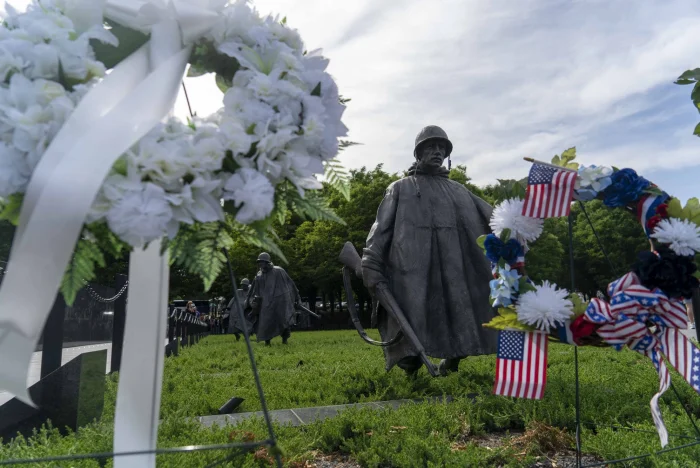
Wreathes are seen amongst the statues at the Korean War Veterans Memorial during Memorial Day weekend in Washington on May 27, 2023. Memorial Day, which honors U.S. military personnel who died while in service, is held on the last Monday of May. Photo by Bonnie Cash/UPI | License Photo
THERE’S a landmark right by one of the UK’s biggest airports and we bet you don’t know about it.
Think about the last time you flew from Gatwick Airport in London – you would have been right next to a huge part of the UK’s aviation history.
Sign up for the Travel newsletter
Thank you!
Near Gatwick Airport, the original terminal still standsCredit: AlamyThe terminal was the first in the world to be circularCredit: Alamy
Gatwick’s original terminal still stands today but it isn’t like any other terminal you will have seen before.
Instead, the terminal was Art Deco and the first circular airport terminal in the world, leading it to be nicknamed The Beehive.
The circular terminal was four floors in total with the main floor having three layers.
The outer part was home to customs as well as storage and toilets, and in the centre of the circle, was the main concourse along with three shops and a post office.
Between these two layers was another layer that was mainly used as office space, but did include a bar and lounge.
The terminal had a control tower in the centre as well, with 360-degree views.
Inside some of the original features remain including the check in desksCredit: Work There
Outside of the terminal, there were four grass landing strips.
Morris Jackaman bought the site back in 1933 for £13,500 – which is around £1.25million now.
According to the BBC, the circular design came about by accident after Morris’ father warned him if he wasn’t careful, “he’d be thinking around in circles” about the design.
The terminal was built between 1935 and 1936 and operated its first flight – which was to Paris – in 1936.
It was also the first airport to link train and air travel into one place – before, travellers would usually have to head to the closest town and then hop on a bus or in a taxi to the airport.
The airport linked the two via underground tunnels and pull-out canopies which meant passengers could walk direct from the train to their plane completely undercover, even if it rained.
The airport was later used as an RAF base during World War IICredit: Alamy
Today, the 130metre tunnel still stands but is sectioned off and mainly used as storage.
When you emerged from the tunnel, you would be in the atrium of the terminal, with three check-in desks in front of you – all of which still stand today.
What are now the fire exit doors, used to be where passengers would step out of the terminal and head to their plane.
When World War II broke out in 1939, operations at the airport stopped as it was then used as a base for the Royal Air Force.
And by the time the war was over, commercial flights had increased in popularity and so the terminal was retired.
It wasn’t until 1958 when it was decided that Gatwick would be London’s second airport, with a much larger building replacing the former terminal, nearby.
Today the terminal is used as officesCredit: horleyhistory.org
In 1996, The Beehive was then Grade II listed and today is used as office spaces – and is sadly closed to the general public.
However, inside the modern terminal you will find The Beehive Wetherspoons pub named after the terminal.
Decor in the pub nods to the old terminal with honeycomb patterns and a curved bar.
A handout photo made available by Metta Tham Kalasin Rescue shows a Laotian survivor rescued from a flooded cave in a mountainous area in Xaisomboun province, Laos, on Friday. Photo by Metta Tham Kalasin Rescue/EPA
June 1 (UPI) — Rescue workers in Laos said they heard a knocking sound while searching flooded caves for villagers who went missing on May 19.
The search continues in the Xaisomboun province for two of seven villagers who descended into the caves searching for gold last month. The rescue workers said Monday they knocked on the cave walls and heard a “knocking response” from deep inside the cave system within the last 24 hours.
An eighth villager went into the cave with the group but was able to escape and alert of the seven others who were trapped.
“Yesterday, when we knocked, there was a signal responding back,” Kengkaj Bongkawong, head of Metta Tham Rescue Kalasin, a Thai rescue team, wrote on Facebook. “It was a knocking sound meant to be heard. Based on our initial assessment, this is considered not to be a reflection or an echo of the sound.”
The sound was discovered after the rescue team rappelled down a vertical shaft they had discovered. They report hearing a knocking response twice in the last 24 hours.
Flash flooding after the villagers went into the cave caused them to be trapped. Five of the villagers were rescued last week when a rescue team pumped water out of the cave to help them get out.
One of the villagers was trained to scuba dive and was able to swim out of the cave.
“Moving forward, it won’t just be a matter of sitting around waiting for water to be pumped out,” Bongkawong wrote.
Wreathes are seen amongst the statues at the Korean War Veterans Memorial during Memorial Day weekend in Washington on May 27, 2023. Memorial Day, which honors U.S. military personnel who died while in service, is held on the last Monday of May. Photo by Bonnie Cash/UPI | License Photo
ONE of the UK’s prettiest islands has been forced to ban people travelling there once a week.
Ulva is home to just 16 people but after it starred on a TV show, has experienced ‘unprecedented interest’ by tourists.
Sign up for the Travel newsletter
Thank you!
Ulva has been described as ‘another world’ but will close on certain days to monitor touristsCredit: AlamyA TV series about the opening a new hotel has thrust Ulva into the spotlightCredit: BBC
In a bid to control the number of people visiting the small Scottish island, the local and only ferry service has announced it will not run on Sundays.
Ulva is an island in the Inner Hebrides of Scotland found off the west coast of the Isle of Mull.
The island receives an influx of visitors during the spring and summertime – but this year has had more than ever.
Banjo and Ro who hail from Australia appeared on the series renovating Ulva House – a Regency home that will open as a hotel.
Since the show aired, the island has become much busier – so much so that the ferry operator has decided to close on certain days.
The ferry is the only way to get to Ulva as it crosses the strait from Mull in around 5-minutes.
The foot passenger ferry operates on weekdays from 9am to 5.30pm and does not operate on Saturdays.
In recent news, the ferry announced it will no longer carry passengers across on Sundays either.
In a recent post, it said: “None of us could have predicted how significant the increase in the numbers of visitors would be, so to give ourselves, the Boathouse [restaurant] and fellow islanders the chance to recharge and prepare for the week ahead, we have made the difficult decision not to open Sundays this summer.”
For those who have already pre-booked a trip to the island in June, July or August, the ferry operator has said that it will still help visitors across.
The ferry operator from the Isle of Mull to Ulva will no longer operate on SundaysCredit: Alamy
Banjo and Ro already run The Boathouse on Ulva, a restaurant where visitors can pick up a coffee or local fish dishes.
The island is car-free island with cliffs, moorlands, woodland as well as quiet beaches and bays.
Banjo said: “We’ve got otters, dolphins and seals swimming by, and one ferry you can take from Ulva is called Turus Mara which goes to the Treshnish Isles, it’s home to puffins.
“Often we go there for a puffin picnic just to sit with them, that’s one of our favourite things to do.
“There are more cows than people too so you’re likely to see a lot of them. And you’ve got a great chance of seeing the Northern Lights when the sun goes down.”
The Boathouse is a restaurant on the island run by Banjo and RoCredit: Alamy
When it comes to activities on the island, of course Banjo suggests stopping at The Boathouse for a “pre-walk coffee” then a walk to Ormaig.
Here is where there are ruins of the island’s villages.
Another attraction is Livingston’s Cave, and nearby you’ll see “gorgeous view of Inch Kenneth where the Mitford sisters used to live”.
Then Banjo said: “Head back to The Boathouse for lunch – we serve fresh langoustines, crab and lobster which you can enjoy with a fresh bottle of wine.”
Previous World Cup appearances: 16 Best performance: Winners (1966) First appearance: 1950 (Brazil) Top goal scorer: Gary Lineker (10) Most appearances: Peter Shilton (18) Player to watch: Harry Kane FIFA world ranking: 4 Fixtures: Croatia (June 17, Dallas), Ghana (June 23, Boston), Panama (June 27, New York)
It has now been 60 years of hurt for England, who lifted their only World Cup title in 1966. But while the Three Lions are certainly genuine contenders this time around, they come into the 2026 edition in a rather unsettled mood.
Recommended Stories
list of 4 itemsend of list
The Three Lions strolled through their group, becoming the first European team to qualify for the 2026 World Cup as they booked their place with two games to spare.
However, it’s fair to say that it was not the toughest group, and their performances in recent friendlies have drawn boos from fairly unenthused Wembley crowds, not least the defeats to Senegal and Japan.
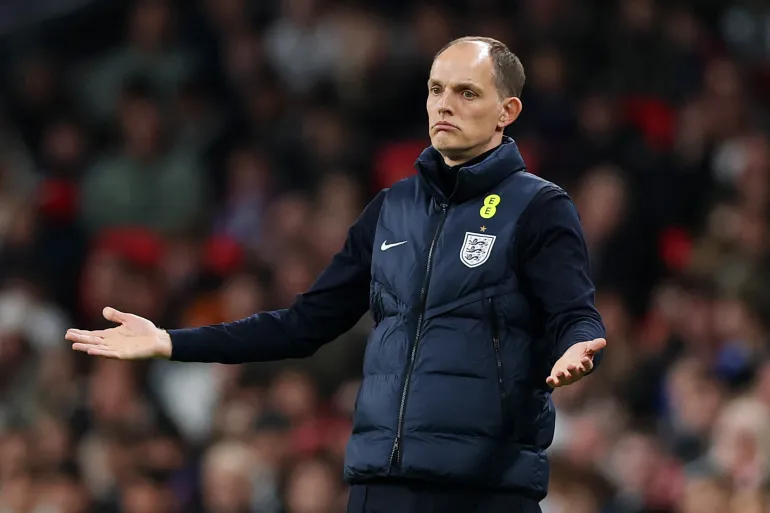
Can England get a tune out of the likes of Jude Bellingham and Harry Kane? Can the Three Lions find a way back to playing entertaining football? And does coach Thomas Tuchel actually know his best team?
Tuchel gambles on ‘chemistry’
The German manager’s squad selection raised a few eyebrows as several key names were left out amid a few surprise inclusions.
Chelsea’s Cole Palmer and Man City’s Phil Foden, two of England’s most creative players, did not make the cut after disappointing seasons, while Real Madrid’s Trent Alexander-Arnold and Man United’s Harry Maguire also missed out.
Meanwhile, striker Ivan Toney – who plays for Saudi Arabia for Al-Ahli and has barely featured for England under Tuchel – has made the squad, along with some other debatable choices in Tottenham’s Djed Spence, Brentford’s 35-year-old midfielder Jordan Henderson, and Bayer Leverkusen defender Jarell Quansah.
Nine members of the 26-man squad have no previous tournament experience.
Tuchel defended his selections by stressing the importance of unity.
“From day one, we were clear that we are trying to select and build the best possible team, which is not necessarily to select and collect the 26 most talented players,” Tuchel told reporters.
“Teams win championships. It’s as simple as that. Everything I know and hear about international football is that it is about the team and the chemistry.”
Unimpressed fans
England’s previous boss Gareth Southgate had his detractors, namely over in-game decisions and for presiding over some pretty stodgy, risk-averse football at times. But he did take England to the finals of two European Championships, as well as a World Cup semifinal in 2018.
In addition to contending with this record, the former Chelsea and PSG boss Tuchel has also faced criticism over the failure to improve England’s style of play, which is still often marred by slow, sideways passes.
And while it’s logical to experiment, it’s also not clear he really knows his best team, and attempts to play a false nine or two number 10s have not come off.
Nevertheless, there’s no doubt that Tuchel is an elite manager and his solid, well-organised England side won their group with a 100 percent record (eight wins from eight), including tough wins away at Serbia and Albania, and conceded zero goals in the process.
Amid some consternation among the tabloid press over appointing a German to the role, Tuchel would delight in confounding the naysayers by leading the England men’s side to a first major trophy since 1966.
Head coach Thomas Tuchel wants to deliver England their first World Cup trophy in 60 years [File: Justin Setterfield/Getty Images]
The Kane conundrum
Despite winning the golden boot at the 2018 World Cup, England have often failed to get the best out of their captain and record goalscorer at major tournaments.
By the end of a long season, Kane is frequently struggling for fitness and contending with knocks, and often comes into major tournaments looking off the pace.
However, if England can field a relatively fresh Kane in North America, the 33-year-old should be high on confidence following his best-ever season in front of goal.
Kane has averaged more than a goal a game on his way to scoring 61 times in 51 appearances across all competitions for Bayern Munich, who were crowned Bundesliga champions in April but were defeated by PSG in the Champions League semifinal.
England’s captain also has his country’s World Cup scoring record in sight as he needs just two more strikes to equal Gary Lineker’s record of 10 goals in the tournament.
The battle for number 10
Bellingham is perhaps the most effective out of several talented England number 10s, but the 22-year-old has had a frustrating club season as he has contended with injuries and his side’s frequently poor form, and accordingly, his England appearances have also been sporadic recently.
Aston Villa’s Morgan Rogers may have staked a strong claim to start ahead of him based on appearances under Tuchel and his sparkling club form.
Bellingham can also play further back in midfield, but assuming that Declan Rice and Eliot Anderson are fairly nailed on as holding midfielders, there may not be a space for him there either. So the Real Madrid player may have to initially look to make an impact from the bench.
England’s chances at the World Cup may rest on the performance of star Real Madrid midfielder Jude Bellingham [Stu Forster/Getty Images]
Have England finally solved their perennial left-back weakness?
England have probably not had a truly world-class left-back since Ashley Cole. However, that may be about to change with the rapid rise of Nico O’Reilly.
The 21-year-old Manchester City player also offers an attacking threat as he has grabbed seven goals and three assists in the Premier League this season, and scored a brace as City won the League Cup final.
While some of these goals have come from midfield, O’Reilly looks to have the defensive skills and positional nous to become a world-class full back – although he’s still a work in progress.
How does their group look?
Group L contains some tricky opponents, and England face a particularly tough opener against 11th-ranked Croatia, who beat England in the 2018 semifinal.
Panama are ranked a perhaps surprisingly high 33rd and beat the United States en route to becoming CONCACAF Nations League runners-up last year.
And while 74th-ranked Ghana are the four-seeded underdogs, they could also pose a stiff test as they boast the likes of Antoine Semenyo and Mohammed Kudus.
England’s group stage match dates and kickoff times:
⚽ June 17: England vs. Croatia (Arlington, Texas, US), 4pm (20:00 GMT) ⚽ June 23: England vs. Ghana (Foxborough, Massachusetts, US), 4pm (20:00 GMT) ⚽ June 27: Panama vs. England (East Rutherford, New Jersey, US), 5pm (21:00 GMT)
Al Jazeera’s prediction
Quarterfinals.
Is it coming home? Probably not, but England still expects.
Full squad
Goalkeepers: Jordan Pickford (Everton), Dean Henderson (Crystal Palace), James Trafford (Man City)
Midfielders: Declan Rice (Arsenal), Elliot Anderson (Nottingham Forest), Kobbie Mainoo (Man Utd), Jordan Henderson (Brentford), Morgan Rogers (Aston Villa), Jude Bellingham (Real Madrid), Eberechi Eze (Arsenal)
Forwards: Harry Kane (Bayern Munich), Ivan Toney (Al-Ahli), Ollie Watkins (Aston Villa), Bukayo Saka (Arsenal), Marcus Rashford (Barcelona), Anthony Gordon (Newcastle), Noni Madueke (Arsenal)
AN English busway, hailed as the longest in the world, is on track to get a £150million upgrade.
Building work on the busway is set to begin in January 2027, with construction hoping to improve travel times and reliability for commuters.
Sign up for the Travel newsletter
Thank you!
A connection between Cambourne and Cambridge is set to join the buswayCredit: AlamyThe busway currently spans 25km, making it the longest in the worldCredit: Alamy
Cambourne and Cambridge are set to become connected by the busway, as Cambridgeshire County Council announces they are searching for contractors.
Named the Cambourne to Cambridge busway, or the C2C, the service will span the 13.6km distance between the locations.
The journey becomes part of the Cambridgeshire Guided Busway, a rapid transit service that connects Cambridge, Huntingdon and St Ives.
It is currently the longest busway in the world at 25km long, beating the O-Bahn Busway in Adelaide, South Australia.
Commuters will also get access to a new park and ride schemeCredit: AlamyThose interested have until the beginning of July to submit participation requestsCredit: Alamy
Plans will see a segregated guided busway with adjoining emergency and maintenance access tracks, including public transport stops between Cambourne and Cambridge.
A brand new Travel Hub, with a park and ride service, will also be constructed, providing spaces 2,000 spaces for cars, bikes, and coaches as part of the “turn up and go” scheme.
Constructing this busway aims to improve journey times and reliability of public transport, also creating jobs and more housing in the area.
The council estimates work to complete this upgrade will cost around £180million including VAT, and £150million without.
Now, interested contractors have until noon on July 2, 2026, to submit requests to participate in the construction, with the award decision date set for December.
It is hoped that construction will begin as early as January 4, 2027, and be completed in December 2030.
Former President Yoon Suk Yeol had prepared to declare martial law since late 2023, special prosecutors said Monday. In this March 2025 file photo, Yoon arrives at his official residence. File Photo by Yonhap/EPA-EFE
A special counsel team has determined former President Yoon Suk Yeol had prepared to declare martial law since late 2023, about a year before his failed bid in December 2024, officials said Monday.
Assistant special counsel Kim Ji-mi said in a briefing that the team has determined that Yoon had made preparations for martial law since November 2023 after questioning former Joint Chiefs of Staff Chairman Kim Myung-soo.
The now-retired admiral is said to have told the team last month that Yoon asked him whether he would do anything he would order when they met on Nov. 29, 2023.
Yoon allegedly flew into a rage when he said he would follow them if they were just orders.
The team, led by special counsel Kwon Chang-young, has left open the possibility that Yoon’s alleged remarks may have been part of preliminary efforts to recruit top military officials for his martial law bid.
Kwon’s team earlier said Yoon appeared to be preparing for martial law since the first half of 2024, citing the outcome of its questioning of a military counterintelligence official.
Meanwhile, a separate special counsel team that ended its mandate late last year after a probe into Yoon had determined that martial law preparations took place before October 2023. The team cited a notebook belonging to a retired general convicted in connection with Yoon’s martial law bid.
A Seoul court, however, did not recognize the notebook as evidence during Yoon’s insurrection trial, where he was sentenced to life imprisonment over his failed martial law bid.
Copyright (c) Yonhap News Agency prohibits its content from being redistributed or reprinted without consent, and forbids the content from being learned and used by artificial intelligence systems.
A fire truck exits the Hanwha Aerospace facility in Daejeon on Monday, following an explosion at the company’s factory that killed five and injured two. Photo by Yonhap
SEOUL, June 1 (UPI) — Five workers were killed and two others injured Monday after an explosion and fire at a Hanwha Aerospace defense facility in the central South Korean city of Daejeon, officials said.
The blast occurred around 10:59 a.m. at Hanwha’s plant in Yuseong District, fire authorities told reporters. Some 100 personnel were dispatched and extinguished the blaze shortly after 1 p.m.
All five fatalities were found inside the work area, while two injured workers were rescued and taken to nearby hospitals, officials said. One suffered burns over his entire body and remained in critical condition, while the other sustained relatively minor burns to the neck.
Authorities said the bodies of the victims were severely damaged, making identification difficult.
Hanwha officials said the explosion occurred during a cleaning operation involving tools and equipment used in the rocket-propellant manufacturing process. The company said the exact cause of the blast remains under investigation.
A company official said the cleaning process had not previously been regarded as particularly hazardous because it involved washing equipment with water. The seven people involved in the accident were site workers rather than researchers, he added.
South Korean President Lee Jae Myung ordered authorities to mobilize all available resources for emergency response efforts and conduct a thorough investigation into the cause of the accident, according to his office.
Prime Minister Kim Min-seok issued similar instructions, calling for all available personnel and equipment to be deployed for firefighting and rescue operations and to prevent additional casualties.
Hanwha Aerospace Chief Executive Officer Son Jae-il apologized to the victims and their families following the deadly incident.
“We failed to protect the lives of those who were working at what should have been a safe workplace,” Son said. “As the company’s chief executive, I feel a heavy responsibility for this accident.”
Son pledged full cooperation with authorities investigating the cause of the explosion and said the company would conduct a comprehensive review of its safety systems to prevent a recurrence.
The company said it had established an emergency response headquarters at the site and was working with fire, police and other authorities on response and recovery efforts.
The Daejeon facility is one of Hanwha Aerospace’s key defense production sites and develops propulsion systems and tactical weapon technologies.
The accident was the latest in a series of deadly incidents at the complex. Explosions at the facility killed five workers in 2018 and three more in 2019.
Laurie Pinto works on some of the biggest deals across the sports landscape, and the investor strategies he encounters are game-changing.
With the 2026 World Cup around the corner, the sports finance sector is heating up — and few advisers are at the center of more high-stakes talks than Laurie Pinto.
From cross-border M&A and private equity-style ownership structures to discreet football club deals, Pinto has spent decades navigating the intersection of finance and sport.
Through his eponymous firm, Pinto Capital LLP, he has advised everyone from Premier League clubs to emerging teams seeking new capital and international growth opportunities.
Pinto took part in this month’s Global Salon series, where he discussed the surging influence of American investors in European football and why sports franchises are increasingly viewed as scalable global assets.
He also weighs in on the future of cricket, the limits of SPAC-driven sports deals, and how geopolitical instability — from capital scrutiny to regional conflict — is reshaping the economics of today’s athletic events.
Global Finance: Set the stage for us. We’re just weeks away from the World Cup, and the atmosphere feels volatile. Fans are frustrated by skyrocketing ticket prices and logistical hurdles, and U.S. Soccer’s sporting director recently resigned. Is this one of the more chaotic build-ups you’ve seen in modern sports finance?
Laurie Pinto: It’s fast-moving, and tickets are incredibly expensive—the cheapest for the final is $5,000. Are things chaotic? Yes, fans are coming from 42 countries with vastly different expectations. Big football events always face skepticism. Qatar’s alcohol and LGBTQ restrictions sparked fears, but the tournament ran smoothly. Russia and Germany had logistical challenges, too. So I see this as part of the normal practice from naysayers. What’s different here is scale for the U.S.: This is a pivotal moment for soccer, especially for kids. Prices for tickets, flights, and hotels are eye-wateringly high, but that’s normal for major events.
GF: Has “Welcome to Wrexham” changed investor behavior?
Pinto: Ryan Reynolds has had a huge impact on English football, but American investors were already noticing the documentary “Sunderland ’Til I Die,” which drew 66 million viewers and I think was the second most-watched sports documentary on Netflix, after “The Last Dance” [about Michael Jordan and the Bulls]. That opened the eyes of American investors to the fact that these clubs have 100 years of history, amazingly sticky fan bases, great pedigree, and are affordable. If you want to buy into an American sport, name any franchise you can buy for under $8 billion. It’s hard, and there aren’t that many people who can stroke checks for $8 billion.
Americans also understand marketing and the creator economy. They say, “We can help manage these businesses better, both on the pitch and off the pitch.” American sports are an asset class and are incredibly professionally managed compared to the UK and Europe. And if you can transplant some of that expertise, you can take some of these loss-making clubs and make them profitable, and then the valuation goes up dramatically.
GF: With your cross-border experience, how do geopolitical factors like regulation and capital controls affect sports deals?
Pinto: What they do is, there’s an immense amount of KYC (Know Your Customer) and AML (Anti-Money Laundering). It’s not just a matter of “who is the buyer?” It’s more about “what is your source of funds?” and “who is the ultimate beneficial owner or UBO?” You see deals for clubs where their GP/LP structures are like private equity, and the LPs are the ultimate beneficial owners.
Private equity guys structure their investments that way, and they take a carry on the performance. They help manage the investment. And that’s a very commonplace thing in American sport and is becoming increasingly common in the UK and Europe. There’s no capital control, but there is a deep sense to make sure there isn’t money laundering going on. And can the people really afford it? And is it really their money? Because if people don’t disclose where their money comes from, generally, it’s not for a good reason.
Laurie Pinto, Pinto Capital
GF: Have you seen a major shift in how clubs are valued in recent years? Is there a pre- and post-Ryan Reynolds era?
Pinto: About 10 years ago, there was no valuation methodology. Now, clubs are valued at multiples of revenue, even if they are loss-making. Intangible assets are better monetized through apps, second-screen connectivity, surge pricing, AI—more personalized user experiences, scalable and multilingual, enhancing valuation.
The lifetime value (LTV) of a fan is important. Consulting groups estimate £100–£2,000 per fan. Manchester United has a billion fans, worth roughly $10 billion. At smaller clubs, the value of a fan is even higher; in Sunderland, stadiums are always full, rain or shine. Loyalty is much higher, affecting valuation metrics. Swansea City AFC, pre-Luka Modric and Snoop Dog, had 500,000 fans; now they claim connections to over 100 million.
GF: Do you expect U.S. entities buying into top UK divisions to change the product, and if so, how?
Pinto: It’s already changing. The off-pitch professionalism is increasing—how clubs monetize non-match days, preseason tours, overseas fans, etc. Americanization brings deeper expertise. Big clubs benefit, and even smaller clubs in League One or League Two can become profitable quickly. Private equity investing in sport isn’t an issue; U.S. investors are comfortable with leverage, more so than Europeans.
GF: In recent years, we’ve seen several sports teams list on stock exchanges, often with mixed results and significant volatility. At the same time, SPACs emerged in the U.S. with ambitions to buy football clubs, including lower-tier European teams. What’s your take?
Pinto: A SPAC will pursue any deal that makes economic sense for its sponsors, but it’s very difficult for a SPAC to buy a UK or European soccer club because it takes so long for them to get to the vote, and the vote might not even happen, and the soccer club will give away all the optionality. John Textor’s Eagle Football would’ve been the best SPAC, with holdings including Lyon, Botafogo and Crystal Palace. They looked at it with James Dinan of the NBA’s Milwaukee Bucks and York Capital, but that didn’t get over the line. SPACs just take so long to get done.
GF: What new sports investing trends are you noticing?
Pinto: What we are starting to see are new platforms that try to create exposure without traditional ownership. Some firms are building instruments that resemble CFDs or synthetic shares in clubs, and I’ve been working with a platform called Vestible, which is exploring sports investment access in a different way.
The idea is to give investors economic exposure to performance without requiring full ownership obligations—things like governance, operational responsibilities, or capital calls. There’s also growing interest in fractional ownership and tokenized models, often linked to fan engagement or loyalty programs. These concepts are interesting, and they have a place, but they haven’t yet broken into mainstream investor behavior.
GF: Cricket is hugely popular in countries like India but hasn’t really taken off here. Given its unique global footprint, how easy is it for a sport like that to expand in the U.S.?
Pinto: I am super positive on cricket, which is the second-biggest sport on Earth. It’s the fastest-growing women’s sport on Earth. It’s also the most in-game bet on sport on Earth. When they had the World Cup in New York in 2024, I believe it was a big success. Winning a game meant it went from the back pages to the front page of the Wall Street Journal. Suddenly, one’s looking at the economics of cricket. We’ve been very active in cricket. It has largely been an Indian subcontinent game, but it’s exciting, it’s fun, and I see cricket growing in the States.
Major League cricket has few full storms, but I think it’s coming. San Francisco Unicorns, the guys you want to watch in terms of how to get it right, but you’re seeing a lot of money going into cricket right now from NFL owners. Two of the richest guys in America tried, but failed, to buy into Indian cricket less than a month ago—the Walton family and the Ford family, the owners of the Denver Broncos and Detroit Lions. The Glazers, who own Tampa Bay, have been buying into cricket, and I can assure you other owners have been talking to us about it, too.
GF: Do you know why?
Pinto: Because they see exactly the same demographics you see in the NFL. It’s a very big domestic fan base, with very few games. But each game is a huge occasion, with massive television deals and a huge moat around it, which means it can’t get challenged. Go to any park in New York on a weekend, and you will see people playing some version of either 20/20 or over 50. The challenge is for a game to really catch on; it needs to start with the kids, and this is why the NBA is so successful: you don’t need any equipment to play basketball. You just need a ball. And you can play it at any level and still enjoy it. Culturally, at the moment, cricket is nowhere near that in America.
GF: We have a lot of basketball talent here, with college programs, NIL deals, and players going overseas. When will European basketball reach the same competitive level as the NBA—or U.S. soccer could match European clubs in popularity?
Pinto: Will NBA Europe be successful? They just finished the first round of franchise bidding, but it’s been slow. Timing was terrible—the war in Iran disrupted three of the major bidders, all Middle Eastern sovereign wealth funds. It’s hard to spend aggressively overseas when people back home are in bomb shelters. Give me the war’s end date, and I’ll tell you when that money comes back.
That said, European basketball is bigger than many realize. Many European players are thriving in the NBA. I went to the Paris Games last year—amazing, electric atmosphere. There are lots of talented French and Australian players making an impact. Do I think Europe will ever match the NBA in scale? No. Soccer dominates there. NBA Europe is growing, but it still has a long way to go.
President Lee Jae-myung prepares to cast his early vote at a community center near Cheong Wa Dae in Seoul, South Korea, 29 May 2026, ahead of the 03 June local elections. Photo by YONHAP / EPA
May 31 (Asia Today) — South Korea’s main opposition People Power Party has filed a police complaint against President Lee Jae-myung, accusing him of violating election law by exposing a marked ballot during early voting for the June 3 local elections.
People Power Party Chairman Jang Dong-hyeok and other party officials visited the Seoul Metropolitan Police Agency on Saturday to file the complaint against Lee and officials from the National Election Commission who were present at the polling station. Yonhap reported the complaint alleged violations of the Public Official Election Act.
The controversy began Friday when Lee stepped out of a voting booth during early voting and asked an election official whether a partially stamped ballot would still be valid. The opposition party said Lee’s handling of the marked ballot violated the principle of secret voting and the election law provision barring disclosure of a marked ballot.
Jang said Lee’s action could not be dismissed as a simple procedural mistake.
“This is not about one person,” Jang said. “It is about protecting the law and the principles of elections.”
The People Power Party also raised concerns about Lee’s public appearances ahead of the local elections, including visits to traditional markets, arguing they could violate restrictions on election involvement by public officials.
The party also accused election officials at the polling station of failing to take proper action after the ballot was allegedly exposed, saying they should face allegations under election law and possible dereliction of duty.
The National Election Commission previously said Lee did not leave the polling station and did not intentionally expose the ballot, meaning the incident did not constitute a legal violation. The commission also said Lee returned to the booth and completed voting after receiving guidance from officials.
The ruling Democratic Party rejected the opposition’s claims, saying Lee had merely asked an election official to confirm whether the stamp mark was valid.
The party said Lee did not reveal support for any candidate and accused the People Power Party of turning a minor incident into a political offensive before election day.
The dispute has added to the political tension surrounding South Korea’s local elections, which are being closely watched as an early test of public support for Lee’s government.
Netflix’s latest worldwide wager is a menu of programming designed to feed the building fútbol frenzy that will explode in mid-June, when the FIFA World Cup begins. They might even win some Stateside converts ahead of the platform’s presentation of the CONCACAF Gold Cup and Nations League finals in 2027 and 2029.
“We say our goal is to entertain the world; in order to [do that], we need to entertain every single country” where Netflix has a presence, says Francisco Ramos, the streamer’s vice president of original content, Latin America. “Our superpower is that we’re so deeply rooted into local storytelling, then that becomes global.
“Netflix is uniquely qualified at building global audiences” for international sports content, he says. “We are very conscious and deliberate about it.”
Not that original sports content is anything new for the streamer; its first-ever original international series, “Club de Cuervos,” was a Mexican dramedy about a soccer club. But this salvo is precision-guided to hit as about 5 billion viewers get hyped for the global tournament.
“Four years ago, during the World Cup, we launched [an Argentine] documentary called ‘Sean eternos: Campeones de América’ [‘Captains of the World’], and it was massive, and then Argentina ended up winning a few months later,” says Ramos. “Right now, as the World Cup arrives, it’s very passionate.”
It’s not just Latin America that’s being targeted with new programming: There’s a trio of documentaries about Jamie Vardy, Liverpool’s 2005 Champions League-winning team and footballer-turned-actor Vinnie Jones under the “Untold UK” banner; “Poldi,” on German superstar Lukas Podolski; and “The Bus: A French Football Mutiny,” about the national team’s rocky 2010 World Cup journey.
A scene from “USA ’94: Brazil’s Return to Glory.”
(Netflix)
The World Cup-contending squad
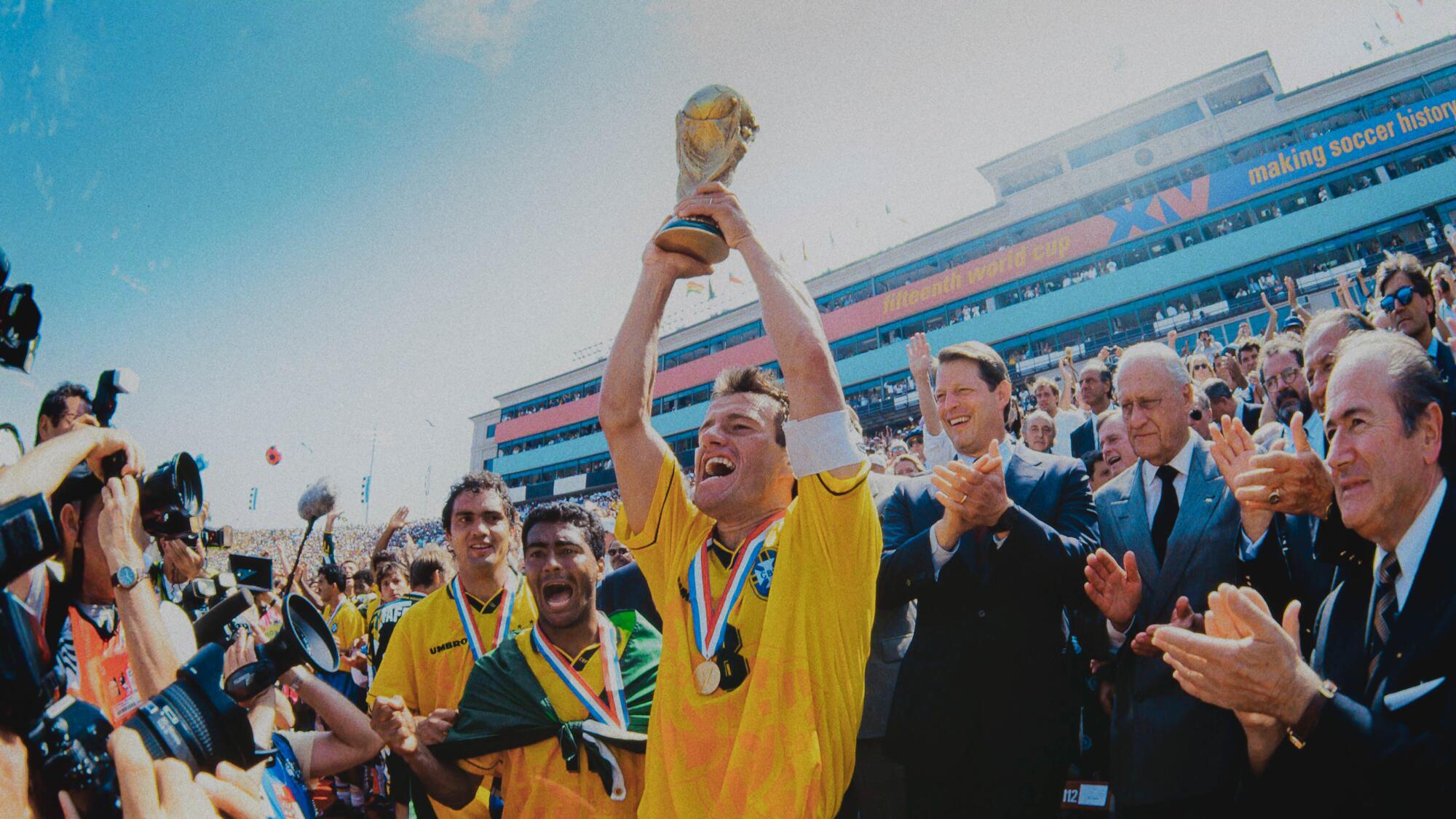
For fans, the slate offers documentaries on landmark moments in Cup history (“USA ’94: Brazil’s Return to Glory”), superstar players (“Emi Martínez: The Kid Who Stops Time” and “James”) and even up-and-comers in a prestigious amateur tournament in Brazil (“The Root of the Game”).
But for the uninitiated, apart from the streamer’s FIFA soccer simulation game coming this summer, the gateway drug may be “Ronaldinho: The One and Only.” The doc spotlights one of the most improvisational and dynamic players ever, soccer’s Magic Johnson. The legendary attacking midfielder was a wizard on the pitch and a charisma machine off it.
“Ronaldinho retired from soccer [in 2018], and he’s still in the mainstream. He has 80 million followers on Instagram,” says Luis Ara, director of “Ronaldinho” and “USA ‘94.” “You have [superstars Lionel] Messi and Neymar [da Silva Santos Júnior] talking about him like he’s God.
“He was always so cool … for him, it was not only about winning a game; it was also about entertaining the people.”
Scripted offerings include the feature “Mexico ’86,” starring a wildly hustling Diego Luna. It’s a nasty comedy about the wheeling and dealing (and outright bribery) that landed Mexico the right to host its second World Cup. Non-soccer fans might enjoy the snarky dialogue and bare-knuckled machinations — it plays like a Spanish-language, soccer-themed “Succession” or “Marty Supreme.”
“Brazil ’70: The Third Star” is a miniseries about that country’s campaign to win a third World Cup, led by a name even non-fans know: Pelé. Rodrigo Santoro stars as Coach João Saldanha.
“Brazil was in the midst of the dictatorship; they had to somehow generate some sort of national pride,” says Ramos. “The only thing that unites Brazilians 100% is their team. It becomes this compelling thing about how society is so intertwined with sports, and how sports are so intertwined with politics in Latin America.”
Soccer superstar Ronaldinho Gaúcho is interviewed in the new Netflix documentary “Ronaldinho.”
(Netflix)
Is converting new American fans a realistic goal?
When soccer is the No. 1 sport in so many nations, why isn’t it bigger here?
It might have to do with the U.S. not having been a major player on the world stage, at least on the men’s side. The men’s team’s highest World Cup finish in the modern era is the quarterfinals in 2002, while U.S. women’s teams have won a record four World Cups. But the men have qualified for the tournament this year — which will be played partially in the States — and analysts say the team has improved, though they’re no one’s favorites to win it all.
Ramos says if American audiences stop seeing it as a competition between football and fútbol, they might come to appreciate soccer’s nuances.
“Take a look at the last 20 minutes of the World Cup four years ago, between France and Argentina. It’s the most extraordinary, beautiful art of people moving, and moving in extraordinary coordination. It’s like, the most-watched online thing ever.”
Beyond Netflix’s big bet on the World Cup slate, it’s not hard to get Ramos and Ara to make further wagers on this year’s tournament.
“Four teams have huge chances to win: Spain, France, Argentina and Brazil,” says Ara. “My heart is with Uruguay, but I don’t know if we’re gonna have a chance. Because of my bond with Brazil nowadays, I wish they could win again. A player once said to me, ‘Brazil is the second national team for any fútbol supporter.’ ”
“Oh my God, I will get in trouble,” says Ramos. “I’m Mexican, and it takes place in Mexico [and the U.S. and Canada], but … I’m gonna go with Argentina. My No. 2 would be Brazil.”
Livingston striker Tete Yengi and former Italy Under-21 winger Cristian Volpato have been named in Australia’s 26-man squad for the World Cup despite the uncapped duo being late additions to Tony Popovic’s pre-tournament training squad.
But 41-times capped Hibernian forward Martin Boyle is one of those who misses out.
Yengi had been loaned out by Livingston to Japanese club Machida Zelvia in January despite his parent club struggling to avoid relegation from the Scottish Premiership.
But the 25-year-old caught Popovic’s eye after scoring six goals in 22 appearances as his new side finished third in Japan’s East Region – and reached the final of the Asian Champions League.
Former Brighton & Hove Albion goalkeeper Mat Ryan, now of Levante, and Melbourne City striker Mathew Leckie are poised to equal the national record by being selected for a fourth World Cup.
Former Dundee United left-back Aziz Behich, now of Melbourne, and former Hull City midfielder Jackson Irvine, now at St Pauli are on track to feature at their third.
Meanwhile, Heart of Midlothian midfielder Cammy Devlin and Aberdeen-born Leicester City centre-half Harry Souttar, whose brother John is in the Scotland squad, are among those chosen for their second.
Also included are Swansea City centre-half Cameron Burgess, Watford winger Nestory Irankunda, Norwich City striker Mohamed Toure
Popovic said: “Some difficult decisions had to be made – that’s the nature of major tournaments.
“But it’s also a credit to all the players involved over the past few weeks who worked extremely hard during an extended and challenging pre-camp.”
Former Hearts defender Kye Rowles, now with DC United, had also been added late to the training squad but did not make the final selection.
Australia face Switzerland in their final pre-tournament friendly on Saturday before opening their finals campaign against Turkey on 14 June.
A military vehicle patrols on the road in Yangon, Myanmar, in February 2022. An accidental explosion in a rebel-held part of the country on Sunday killed 55 people and injured many more, rebel leaders said. File photo by Stringer/EPA-EFE
May 31 (UPI) — Fifty-five people were killed, including six children, in an accidental detonation of mining explosives in a rebel-held area of Myanmar, the armed group said Sunday.
The Palaung Self Liberation Front/Ta’ang National Liberation Army, also known as the PSLF/TNLA, said in a statement that many others were also hurt in the blast, which happened Sunday afternoon local time in northern Shan State.
Rescuers told the Shwe Phee Myay News Agency the entire village of Kaung Tat in Namkham Township had been virtually destroyed and that “dozens” had been injured in the disaster.
Local officials have sent out an urgent call for blood donations as emergency workers tried to free victims trapped in rubble.
The PSLF/TNLA confirmed that many homes in the village were damaged when soft gunpowder stored for mining operations accidentally exploded at around 12:30 p.m.
The fatalities included 25 females and 30 males, they said, adding that the cause of the explosion will be investigated in detail.
Authorities, they said, “will take action in accordance with the law.”
The Ta’ang National Liberation Army is one of the main ethnic rebel groups in Myanmar fighting for independence from the central government, which along with its ally the Palaung Self Liberation Front comprise a front of resistance to the country’s military government.
Collina asked for protocol to be updated so the VAR could step in if a foul occurred before the ball was in play.
There have been several examples, such as a goal scored by England in their 1-1 draw against Uruguay at Wembley in March.
Cole Palmer delivered a corner into the area, but before the ball was kicked Adam Wharton blocked the run of Jose Maria Gimenez.
That allowed the ball to run through to Harvey Barnes, who saw his effort saved by Fernando Muslera, and Ben White tapped in from close range.
VAR protocol did not previously allow a review for a foul before a corner has been taken, but the Italian asked Ifab for permission to change this.
The Ifab has now accepted the request, and says that any foul before the ball is in play that has a direct impact can be reviewed.
This will apply to a goal, penalty kick or disciplinary sanction which happens on a corner or free-kick
The measure will be applied for the World Cup and reassessed after the tournament.
It means that for the England goal, the VAR would be able to suggest a retake of the corner because of the foul by Wharton on Gimenez.
“We think this is very unfair, that the goal is given when the defender is prevented from being able to defend,” Collina said.
“A clear, illegal block made by an attacker. The only objective was to prevent the defender from being able to defend on his opponent.
“We are very confident to receive a clarification from the Ifab before the World Cup, saying that the VAR can intervene just before the ball is in play. We are convinced that nobody can object.”
This will only apply to attacking fouls, and not to defensive fouls for holding or pulling.
Collina also explained the new rule for players who cover their mouth with a hand, arm or shirt in confrontation with an opponent.
This will now be a red card after the controversial incident involving Benfica winger Gianluca Prestianni and Real Madrid’s Vinicius Jr in a Champions League game in February.
“If the conversation is friendly, they can continue to do it without any problem,” Collina said.
“When the conversation is confrontational, covering the mouth means that you are doing something very wrong, potentially, and the sanction is the red card.”
Collina also said his referees would be ready to monitor grappling inside the area, with officials provided with data on the tactical approach of teams.
Brooke Mayo was just 4 when she started playing soccer. She was about 4½ when she started fantasizing about participating in the World Cup.
“I just fell in love with the game,” she said. “Like any soccer player, you dream about the World Cup, you know?”
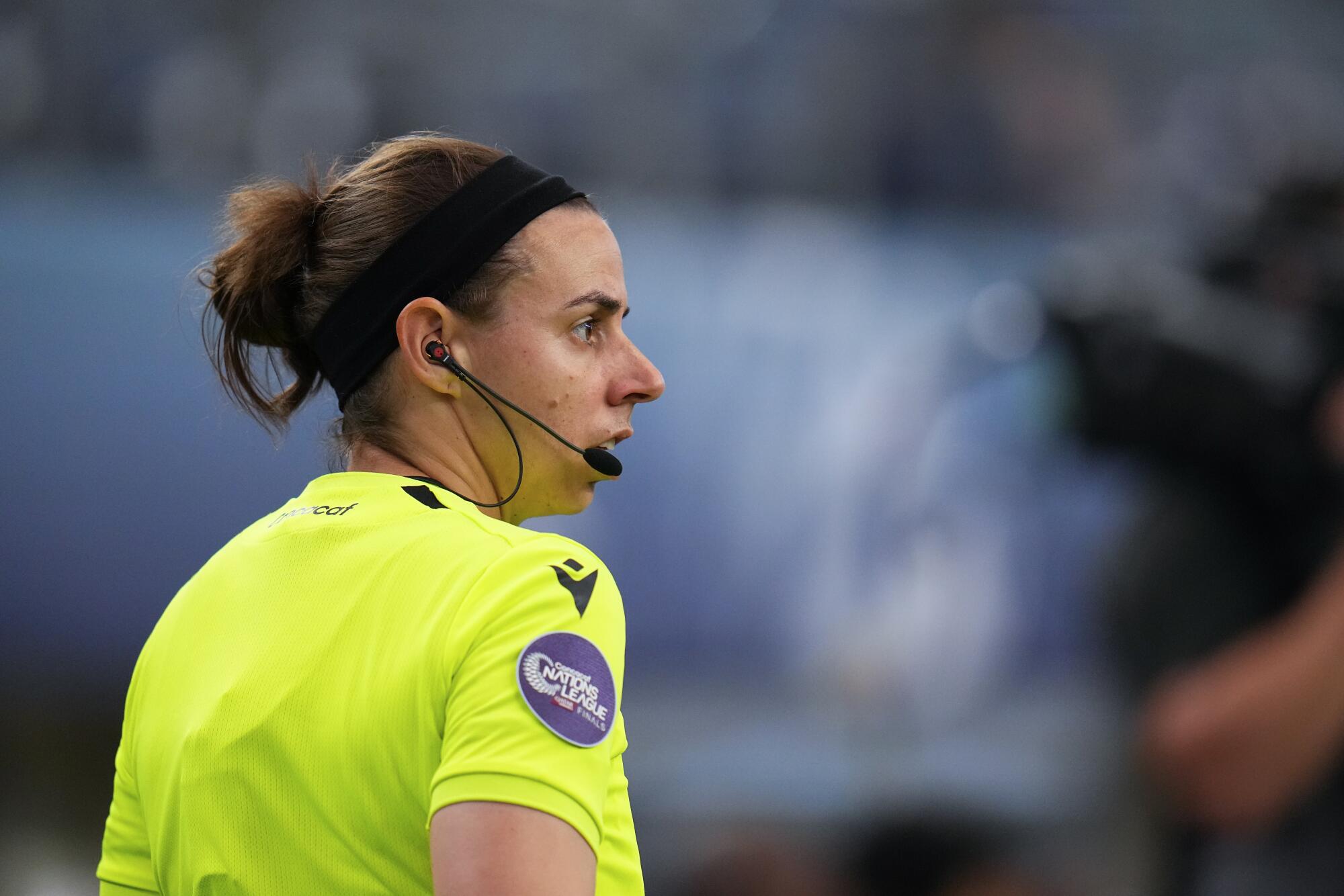
That dream came true three years ago, though not quite in the way Mayo had imagined. Although she took part in four matches at the 2023 Women’s World Cup, she did so as an assistant referee, not a player, running up and down the field with a flag in her hand, not a ball at her feet.
Yet Mayo made history just the same, joining Tori Penso and Kathryn Nesbitt as the first American officials to work a World Cup final as a trio. More importantly, they performed so well they have been invited to officiate in the men’s World Cup this summer, where they will make more history as just the second all-female crew to work a game in the men’s tournament.
And while Mayo appreciates the barrier breaking, for the three women it’s just another day at the office.
“For us, it’s just business as usual,” she said. “I think there’s still a lot of places in the world that need to see this and that’s why it’s still important. But our colleagues are used to seeing women around.”
Mark Geiger, a two-time World Cup referee who is now general manager of the Professional Referee Organization (PRO), which manages officials for MLS, agrees. After decades of seeing U.S. and Canadian referees given little respect by FIFA — nor by international soccer in general — Geiger says the biggest takeaway from this summer’s tournament isn’t the gender of the domestic officials selected, but rather the number, 11, making it the largest contingent to work a World Cup.
In addition to Mayo, Penso and Nesbitt, the list includes Ismail Elfath, Armando Villarreal, Kyle Atkins, Corey Parker and Drew Fischer, who took part in the 2022 men’s tournament. Nesbitt, Elfath, Parker and Atkins all worked the final of that World Cup four years ago, Elfath as the fourth official, Nesbitt as the reserve assistant referee and Parker and Atkins as video assistant referees.
With Mayo’s team working the 2023 women’s final — alongside Villarreal, who was in the video booth — seven MLS officials have worked the last two World Cup finals and at least one PRO official has been assigned to 19 of the 32 knockout games in the most recent men’s and women’s tournaments.
No other league or country in the world is even close to that.
“Over the past few years I think we’ve shown that the quality of football and the quality of the officiating in the United States and Canada is at a really high level,” said Geiger, who made history of his own in 2014 when he became the first American center referee to work a Round-of-16 match in the men’s World Cup.
“We are in the normal conversation of knockout-stage games, we’re in the normal conversation for Tori to do the final. It’s not out of the realm of possibility.”
Another thing that makes this World Cup special for the PRO officials is that with the U.S., Mexico and Canada sharing host duties, the tournament will be played at home. The only other time the men’s World Cup was played in the U.S., in 1994, Arturo Angeles, a Mexican-born naturalized citizen, was the only American referee selected and he supervised just one group-play game.
“Any World Cup game anywhere is going to be special on some level,” said Fischer, a 45-year-old Canadian who has been a FIFA referee for 11 years. “It’s definitely a special feeling when you get to play host. It’s a little bit of welcoming the world into your backyard.
“There’s a certain hometown pride. So I’m definitely looking forward to that aspect of it.”
Joe Dickerson, U.S. Soccer’s reigning male referee of the year, received the FIFA international badge he needed to work major competitions just three years ago. Yet he will be a replay official in this World Cup, the first one he was eligible to work.
“This kind of happened so fast in the last couple of years,” said Dickerson, who became a professional referee in 2013, then began targeting the World Cup when it was awarded to the U.S., Mexico and Canada in 2018. “To work the biggest sporting event in the world in front of friends and family is really cool. And being a part of the celebration of culture happening in your own country and, as much as we can, celebrate our own culture, is really cool.”
It also makes things much easier on family and friends. When Mayo officiated her first group-stage game in the 2023 tournament in New Zealand, her wife, Falon Catalano, flew in for the match.
Referee Brooke Mayo looks on during a CONCACAF Nations League third place match between Jamaica and Panama in March 2024.
(Julio Cortez / Associated Press)
“I told her like hey, it’s our first World Cup. So she came to that and then went home,” said Mayo, 37, who wasn’t sure she’d get another game.
When she was assigned the England-Australia semifinal in Sydney, she called Catalano back.
“I said ‘this might be the biggest appointment in my entire career, in Australia in front of 75,000 fans. You’ve got to come to this,’” she pleaded.
So Catalano came then went before Mayo found out she would be doing the final. That led to another call. “I said, ‘well, you’ve gotta come back.’”
An exhausted and broke Catalano said no to the expense and fatigue of another 38-hour round trip, but after a group of MLS officials passed the hat to buy the ticket, Catalano surprised Mayo by making the match after all.
Making it to the semifinals — much less the final — was far from guaranteed since the World Cup is a meritocracy for officials as well as for the players. In fact, it’s harder to make the final as an official: There will be 170 officials from 50 countries taking part in this summer’s tournament as opposed to 1,248 players — or one referee for every 13 players.
“A lot of people underestimate how difficult it is for us to get there,” said Dickerson.
Referees are graded after every game and those who don’t measure up in their first match don’t work another one. Those who excel, however, continue to advance — as Mayo did in 2023.
“Just like teams try to kind of hit their stride in a tournament setting, that was similar with us. We just went in there focused on only one game in front of us,” she Mayo, who got her FIFA badge in 2018. “Our goal was to earn another game after that, do everything we can to clean up our communication. We’re like micro-managing ‘how could we have done this better?’
“You are just operating in sync. You’re spending every minute together. You’re together at breakfast. You’re together at training. You’re together at lunch. You’re traveling together. By the end, if they even sigh on the field, I know what that means.”
Mayo, like most officials, came to the game as a player — one good enough to play four years at Tennessee Tech. As a teenager she was moonlighting as a referee, raising enough money to fund a trip to South Africa to watch the 2010 World Cup as a fan.
“But I didn’t take reffing seriously,” she said. “Once I finished playing, I missed that competitive edge. When I realized I could do it in reffing, I was like, ‘Oh, this scratches that itch that I miss.”
Taking part in a World Cup remained a dream, however, and she got to scratch that itch three years ago. Now she’s working the tournament at home, where her family, who live in Colorado, will be just a few hours away should there be any frantic last-minute flights to catch.
Having already worked one World Cup final, anything short of the final this summer could feel like a failure.
“It’s a lot of skill, but it’s also a lot of luck. You have to be in the right place at the right time,” Mayo said. “There’s not that much that separates people at the top.
“We’re up against amazing referees. We’re going to fight for every game, one game at a time, knock it out of the park and hope for the best.”
Paris Saint-Germain fans react in Parc des Princes stadium after the team defeated Arsenal in Paris on Saturday. Photo by Valentina Camu/EPA
May 31 (UPI) — Police in France arrested hundreds of people late Saturday after celebrations for the Paris Saint-Germain soccer team turned violent, local authorities said.
Interior Minister Laurent Nuñez said the riots injured 57 police officers in Paris and other cities across the country, The Guardian reported. Some of the soccer fans also set fires, vandalized businesses and attempted to storm a Paris police station.
Police arrested 780 people and deployed tear gas to break up the riots, Politico reported.
“Most of the celebrations took place peacefully, Nuñez said, adding that most of the violent clashes took place near the Parc des Princes stadium where fans had gathered to watch the match between Paris Saint-Germain and Arsenal for the Champions League title.
French leaders took to social media to criticize the rioters and call for peace.
“Only in France does a football club’s victory spark riots,” far-right leader Marine Le Pen wrote in a post on X. “Only in France does everyone feel compelled to lock themselves in their homes on the evening of a victory to avoid being confronted with violence.”
Valérie Pécresse, the head of the Île-de-France region, said those involved in the riots should be punished.
“The brainless thugs who think they can smash everything are tarnishing the image of Paris and France!” Pécresse said in a post on X. “We must be able to celebrate on victory nights peacefully in Paris and the Île-de-France Region!”