Snooker world turns out to remember John Virgo
Snooker stars and fans gathered at Sheffield Cathedral to pay tribute to the voice of the sport.
Source link
Snooker stars and fans gathered at Sheffield Cathedral to pay tribute to the voice of the sport.
Source link
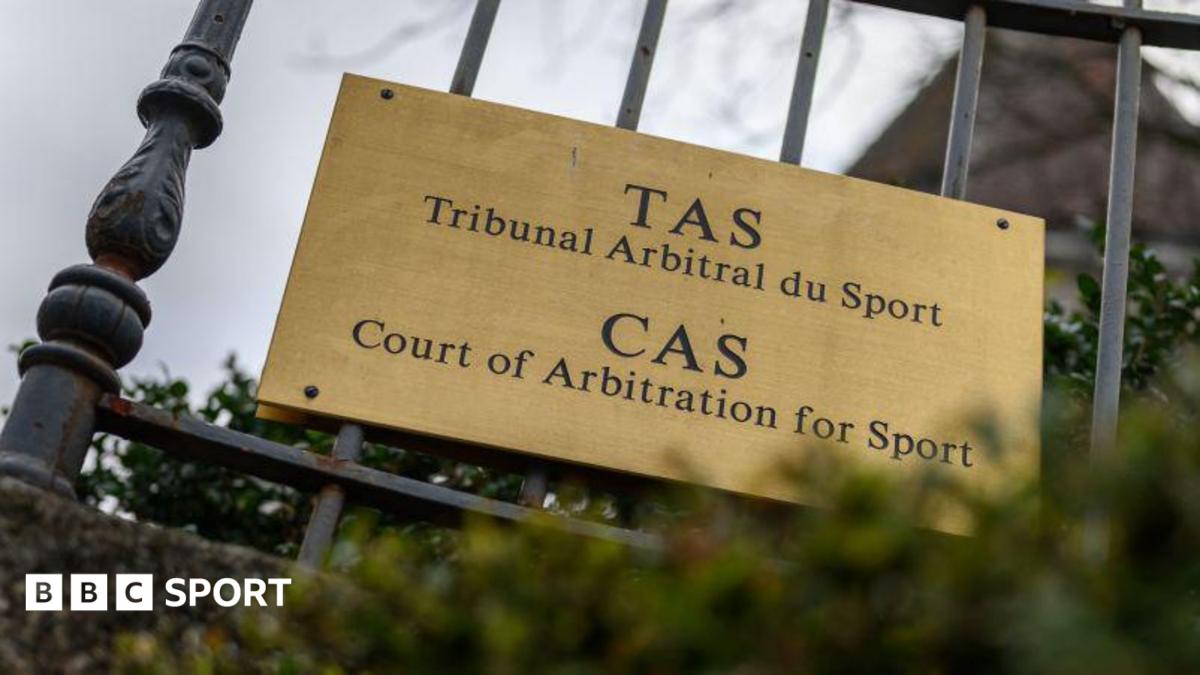
Additionally, it said the applications, “through a wholly-owned and financed government club”, were part of an “aim of facilitating transfers of allegiance and enabling those athletes to represent Turkey at future international competitions, including the Los Angeles 2028 Olympic Games”.
It added: “Given the common features across the applications, the panel assessed them together and determined that such an approach is inconsistent with the core principles of the regulations.
“As a result of the decisions, the athletes are not eligible to represent Turkey in national representative competitions or other relevant international events.”
The other athletes were Catherine Relin Amanang’ole, Brian Kibor, Ronald Kwemoi and Nelvin Jepkemboi from Kenya, Jamaica’s Rajindra Campbell, Jaydon Hibbert and Wayne Pinnock plus Nigeria’s Favour Ofili and Russian Sophia Yakushina.
Europe, Middle East and Africa President of Snap, Ronan Harris (L), and Wifredo Fernandez, director of global government affairs at X, leave No. 10 Downing Street in London on Thursday morning after meeting Prime Minister Keir Starmer to discuss ways to protect children safe when they are on social media . Photo by Neil Hall/EPA
April 16 (UPI) — British Prime Minister Keir Starmer put the big five social media firms on notice Thursday that he was considering state intervention, including the nuclear option of a ban, if they did not do more to protect children from being harmed by their products.
Starmer warned executives from Meta, Snap, Google, TikTok and X at a meeting in Downing Street that something had to give, saying a ban on children accessing their platforms would be “preferable to a world where harm is the price” for social media use.
“Things can’t go on like this, they must change because right now social media is putting our children at risk. In a world in which children are protected, even if that means access is restricted, that is preferable to a world where harm is the price of participation,” said Starmer.
“I am determined we will build a better future for our children, and look forward to working with you on this. I do think this can be done. I think the question is not whether it is done, the question is how it is done,” he added.
Executives attending the meeting included Google U.K. managing director Kate Alessi, Markus Reinisch, a public policy principal at Meta, and X’s global government affairs director Wifredo Fernandez.
TikTok was represented by Alistair Law, director of public policy for northern Europe, while Snap was represented by Europe president Ronan Harris.
Starmer put to the firms the negative impacts of social media use on children’s ability to concentrate, their sleep, relationships and the way they view the world that have been flagged by parents and child experts.
“It’s clear to me that parents aren’t asking us for tweaks at the edges, they’re asking us whether a system that clearly isn’t working for children should be allowed to continue at all. Companies have to grip this and work with us to do better by British children,” he said.
No. 10 had earlier acknowledged that some of the tech firms had “stepped up” by disabling autoplay of videos for children by default and providing better tools to parents to limit the amount of time their children spend looking at screens, but took a much tougher line at Thursday’s meeting.
Starmer’s Labour administration has previously pushed back on pressure from parents, educators and child safety advocates for an Australia-style ban for children younger than 16 on fears it could drive them onto the dark web and make them more vulnerable when they eventually begin using the apps by hindering development of their digital skills.
Most social media sites operating in Britain do not permit children younger than 13 to use their products.
However, in the past three months, Starmer’s administration has twice been forced to use its House of Commons majority to override two efforts by the House of Lords, the upper chamber of Parliament, to amend a government bill to include a ban for children younger than 16.
The most recent of these was on Wednesday in which the government defeated the Lords’ latest attempt to force through a ban, but with a reduced majority from the previous vote on March 10. More than 240 of 650 MPs either failed to show or abstained.
In January, 60 Labour Party backbenchers signed a letter urging Starmer to bring forward a ban.
The government managed to fend off the first challenge in March by launching a three-month public consultation on how to proceed with anticipation inside his administration growing that Starmer will yield to pressure for a ban when the findings are published in the summer.

France striker Hugo Ekitike will miss the World Cup after suffering a rupture of the Achilles tendon during Liverpool‘s Champions League defeat by Paris St-Germain on Tuesday.
Ekitike left the pitch at Anfield on a stretcher after slipping in the first half and Liverpool fear a long absence for the 23-year-old, which could also rule him out of the start of next season.
He went for scans on Wednesday, which confirmed the extent of the damage.
In a statement on Thursday, Liverpool did not give a timeline for the recovery.
“Scans on the issue have subsequently confirmed a rupture of the Achilles tendon,” the club said.
“Ekitike will therefore be sidelined for the remaining weeks of the club season and unable to participate at this summer’s World Cup with France.
“Further updates will be provided at the appropriate time.”
On Wednesday night, France manager Didier Deschamps said in a statement published by the French Football Federation that Ekitike was out of this summer’s tournament in the US, Mexico and Canada.
He said: “Hugo is one of the dozen young players who have made their debuts with the national team in recent months. He had perfectly integrated into the group, both on the pitch and off it. This injury is a huge blow for him, of course, but also for the France team.
“His disappointment is immense. Hugo will regain his top form, I’m convinced of it. But I wanted to express all my support to him, as well as that of the entire staff. We know he’ll be fully behind the France team, and we’re all thinking of him very strongly.”
Seven-time winner Ronnie O’Sullivan will begin his bid for a record-breaking eighth World Snooker Championship title with a match against China’s debutant He Guoqiang at the Crucible.
O’Sullivan, 50, will start his first-round tie at the Sheffield theatre on Tuesday and conclude the match on Wednesday.
Sixteen players came through qualifying this week at the English Institute of Sport and will join the world’s top 16 ranked players at the tournament.
He, ranked 47th in the world, qualified for the Crucible for the first time with a win over England’s Jack Lisowski on Wednesday.
Zhao Xintong became the first Chinese player to clinch the world title when he won the 2025 event and will be involved in the first session of the tournament on Saturday (10:00 BST).
He will face England’s Liam Highfield, who advanced through four qualifying rounds.
The draw was made on BBC Radio 5 Live Breakfast on Thursday.
Elsewhere, world number one Judd Trump will take on Gary Wilson and Masters champion Kyren Wilson will be up against 19-year-old debutant Stan Moody.
Four-time champion John Higgins will take on two-time runner-up Ali Carter, while Mark Selby, also with four Crucible titles, faces 2024 runner-up Jak Jones.
O’Sullivan and Stephen Hendry both have the most world titles in the modern era with seven apiece, with O’Sullivan winning his first one 25 years ago, in 2001.
The 17-day competition begins on Saturday, with the final starting on Sunday, 3 May and concluding the next day – with full coverage of the tournament live on the BBC.
The Crucible has staged the World Championship yearly since 1977 and last month it was announced it would remain there until 2045, with the venue set to be redeveloped to add up to 500 additional seats.

SEOUL, April 16 (UPI) — Two U.S. nationals were sentenced to federal prison for helping North Korean operatives obtain remote IT jobs with American companies in a scheme that generated millions of dollars for Pyongyang’s weapons programs, the Justice Department said Wednesday.
New Jersey residents Kejia “Tony” Wang, 42, and Zhenxing “Danny” Wang, 39, operated so-called “laptop farms” that made it appear as though overseas workers were based in the United States, allowing North Korean IT personnel to secure jobs using stolen American identities.
The scheme used identities from at least 80 individuals and generated more than $5 million in revenue for the North Korean government, the department said in a press release.
Kejia Wang was sentenced to nine years in prison by U.S. Senior District Judge Nathaniel M. Gorton in federal court in Boston, followed by three years of supervised release, after pleading guilty to conspiracy charges including wire fraud, money laundering and identity theft.
Zhenxing Wang was sentenced to seven years and eight months in prison by the same court, followed by three years of supervised release, after pleading guilty to conspiracy to commit fraud and money laundering. He was also ordered to pay $200,000 in restitution.
The two were additionally ordered to forfeit $600,000 in proceeds tied to the operation.
“This case exposes a sophisticated scheme that exploited stolen American identities and U.S. companies to generate millions of dollars for a hostile foreign regime,” U.S. Attorney for Massachusetts Leah B. Foley said. “By operating so-called ‘laptop farms,’ these defendants enabled overseas actors to infiltrate U.S. businesses, access sensitive data and undermine our economic and national security.”
Prosecutors said the scheme ran from about 2021 through October 2024, with the defendants and their co-conspirators using stolen identities to obtain remote jobs at more than 100 U.S. companies, including several Fortune 500 firms and a defense contractor.
Companies incurred at least $3 million in losses from legal fees, network remediation and other damages, the Justice Department said.
The operation also exposed sensitive data, including export-controlled information governed by International Traffic in Arms Regulations, after an overseas co-conspirator accessed systems belonging to a California-based defense contractor, according to court documents.
Kejia Wang acted as the U.S.-based manager for the operation, overseeing multiple facilitators who hosted hundreds of company-issued laptops at their residences. He also traveled to China in 2023 to meet overseas co-conspirators, including a North Korean national, according to court filings.
Zhenxing Wang was among the facilitators who hosted company laptops and enabled remote access by connecting them to specialized hardware devices.
The two were charged in June 2025 alongside eight foreign nationals who remain at large and are wanted by the FBI.
In a related move, the U.S. State Department on Wednesday offered a reward of up to $5 million for information on the eight co-conspirators, as well as one suspected North Korean IT worker, leading to the disruption of the scheme’s financial networks.
The case comes as North Korea, under heavy international sanctions, has increasingly turned to cybercrime and illicit IT work to generate revenue for its nuclear and ballistic missile programs.
An October report by the 11-country Multilateral Sanctions Monitoring Team described North Korea’s cyber operations as “a full-spectrum national program operating at a sophistication approaching the cyber programs of China and Russia.”
The report said nearly all of the country’s cyber activity, illicit IT work and financial operations are carried out under the direction of entities sanctioned by the United Nations over Pyongyang’s weapons programs.
The U.S. Treasury Department said in November that North Korea had stolen more than $3 billion over the previous three years through cyberattacks on financial institutions and cryptocurrency platforms.
A 2022 Treasury advisory estimated that North Korean IT workers generate hundreds of millions of dollars annually, with some individuals earning more than $300,000 a year.
The Justice Department has stepped up enforcement as part of an inter-agency effort in recent years, announcing multiple related prosecutions, including the sentencing of three Americans in March and a Ukrainian national in February.

Rafael Grossi, director general of the International Atomic Energy Agency, speaks at a press briefing at the Four Seasons Hotel in Seoul on April 15. Photo by Asia Today
April 15 (Asia Today) — Rafael Grossi said Tuesday that North Korea has built a new uranium enrichment facility in the Yongbyon area, signaling a significant expansion of its nuclear capabilities.
Speaking at a press briefing in Seoul, Grossi said assessments by the International Atomic Energy Agency show North Korea’s nuclear activities have expanded across multiple facilities, including a 5-megawatt reactor, reprocessing plants and a light-water reactor.
He said the newly identified building appears similar in scale and infrastructure to the Kangson enrichment facility, indicating a substantial increase in uranium enrichment capacity.
“While it is difficult to calculate exact production levels without on-site access, the external features suggest a significant expansion,” Grossi said. “This points to a serious increase in the ability to produce dozens of nuclear warheads.”
The agency had previously monitored the construction of the facility, noting similarities in cooling and supply systems to existing enrichment sites.
Grossi also warned that nuclear weapons development fuels proliferation and accelerates arms competition, adding that such capabilities do not necessarily improve national security.
On South Korea’s potential pursuit of nuclear-powered submarines, Grossi stressed the need for strict safeguards under the Nuclear Non-Proliferation Treaty.
He raised concerns that nuclear material used in submarines could fall outside routine inspection regimes due to extended underwater operations, particularly if highly enriched uranium is used.
Grossi said South Korea would need to establish special procedures and coordination mechanisms with the agency to ensure transparency and prevent diversion of nuclear material.
He added that discussions with the government, navy and industry would follow if the project proceeds, noting that the development process would take years and involve multiple stages.
— Reported by Asia Today; translated by UPI
© Asia Today. Unauthorized reproduction or redistribution prohibited.
Original Korean report: https://www.asiatoday.co.kr/kn/view.php?key=20260416010004885

A chart shows the number of pet insurance policies in South Korea rising sharply from 51,727 in 2021 to 251,961 in 2025. Graphic by Asia Today and translated by UPI
April 15 (Asia Today) — South Korea’s pet insurance market has expanded more than threefold in the past three years, but low enrollment rates continue to limit its growth, prompting insurers to step up marketing efforts.
According to industry data, the number of pet insurance policies in force reached 251,961 last year, up 55.4% from a year earlier. The figure has increased about 3.5 times from 71,896 in 2022.
New policy subscriptions have also risen steadily, while total premiums surpassed 100 billion won (about $75 million) for the first time, jumping from 28.8 billion won (about $21 million) in 2022 to 129.1 billion won (about $97 million) last year.
Despite the rapid growth, the market penetration rate remains low. Data from the KB Financial Research Institute show that only about 2-3% of pets are insured.
As of late 2024, about 15.46 million people in South Korea owned pets, with an estimated 7.63 million dogs and cats nationwide.
The low adoption rate contrasts with more mature markets such as Japan, where the pet insurance sector is valued at around 1 trillion won (about $750 million).
Industry officials say the market still has strong growth potential, driven by rising pet ownership and increasing veterinary costs. Government data show the average monthly veterinary expense per pet is about 37,000 won (about $28), though costs vary widely by clinic.
To raise awareness, insurers are expanding promotional efforts. Companies are launching supporter programs, hosting offline events and collaborating with influencers and pet trainers to reach potential customers.
For example, a pet-focused insurer recently launched a supporter program in which participants share their experiences using insurance products. Other companies have held in-person promotional events and partnered with well-known dog trainers to produce online content.
Analysts say high premiums and limited coverage remain key barriers. Calls are also growing for standardized veterinary pricing to reduce uncertainty in medical costs.
“As pets are increasingly seen as family members, interest in their health care is rising,” an industry official said. “Insurers are working to tap into latent demand by expanding coverage and improving price competitiveness.”
— Reported by Asia Today; translated by UPI
© Asia Today. Unauthorized reproduction or redistribution prohibited.
Original Korean report: https://www.asiatoday.co.kr/kn/view.php?key=20260416010004872

Roberto Sanchez, presidential candidate for the Juntos por el Peru party, speaks during a press conference in Lima, Peru, on Monday. Sanchez has moved into second place in the voting, which continues and will lead to a runoff June 7. Photo by John Reyes Mejia/EPA
April 15 (UPI) — Leftist candidate Roberto Sánchez has moved into second place in Peru’s presidential vote count, positioning himself for the runoff election as officials continue to tally ballots from the general election.
With about 90% of ballots counted, official results from Peru’s National Office of Electoral Processes show Keiko Fujimori leading with 16.9% of the vote, securing her place in the runoff. The race for second place remains extremely close.
After three days of slow vote counting, Sánchez climbed to second place with 12,05% of the vote, edging far-right candidate Rafael López Aliaga, who has 11.94%.
Ballots in Peru are processed in the order they arrive, favoring candidates with stronger support in major cities during the early stages of the count. That has kept the country in suspense, as the remaining rural vote could solidify Sánchez’s lead, La República reported.
Sánchez, a congressman and head of the leftist Juntos por el Perú party, ran as the political heir to former President Pedro Castillo, under whom he served as trade minister. During the campaign, he adopted Castillo’s signature wide-brimmed hat in public appearances.
His platform calls for sweeping state reforms through a constituent assembly, Peru’s entry into the BRICS bloc and greater state control over strategic resources without expropriation, seeking support in the Andean south and rural regions.
If Sánchez advances to the June 7 runoff, the result would echo Peru’s 2021 presidential election, when Castillo, then a little-known union leader, unexpectedly reached the second round against Keiko Fujimori with 18.9% of the vote.
As Sánchez gained ground, López Aliaga called the election a “systematic fraud” and demanded the vote be annulled, alleging manipulation in the electoral authority’s data transmission system and logistical chaos, El Comercio reported.
Election observation missions Tuesday backed the integrity of the process, describing the vote as credible and transparent despite logistical problems that caused delays and forced some polling stations to remain open longer, according to France 24.
Peru’s comptroller general also warned of serious problems in the distribution of tally sheets and election materials during the 2026 vote, which reportedly delayed polling station openings in parts of the country, Latina TV reported.
Election authorities said the prolonged count is largely due to the technical complexity of processing ballots that combined five simultaneous elections: president, national senators, regional senators, lower house lawmakers and Andean Parliament representatives.
Voters were asked to choose among 35 presidential candidates and nearly 10,000 candidates for Congress and the Andean Parliament.
Facing criticism and legal complaints over the delay, the electoral office director, Piero Corvetto, defended the process and urged calm as officials continue counting ballots from Peru’s most remote rural areas.
With the global attention fixated on the diplomatic efforts to end the war on Iran, Israel has systematically escalated its attacks on Gaza and choked off vital aid, plunging the besieged enclave into what economic experts are now calling an “engineered, compounded famine”.
The number of aid trucks entering Gaza has dropped drastically in violation of the October 2025 ceasefire with Hamas. Since then, the Government Media Office in Gaza has recorded 2,400 military violations by Israeli forces, resulting in the killing of more than 700 Palestinians.
list of 4 itemsend of list
On Tuesday, Israel’s military killed at least 11 Palestinians, including two children, in separate attacks across the war-torn Strip.
The intensity of these attacks spiked during peak regional tensions. Between February 28 and April 8, while Israel and the US were engaged in a bombing campaign against Iran, Israeli forces bombed Gaza on 36 out of those 40 days.
In the last five weeks alone, more than 100 people have been killed, including Al Jazeera journalist Mohammed Wishah. Israel has killed more than 72,336 people since launching the brutal military offensive on October 7, 2023.

While Israel frequently claims it is allowing hundreds of aid trucks into Gaza, Palestinian officials and economic experts argue these figures are a deliberate mathematical deception.
According to the Government Media Office, only 41,714 aid and commercial trucks have entered Gaza over the past six months. This represents a mere 37 percent of the 110,400 trucks stipulated under the ceasefire agreement. The fuel situation is even more critical, with only 1,366 fuel trucks entering out of a promised 9,200 – an abysmal 14 percent compliance rate.
Recent daily logs highlight the severity of the bottleneck. On April 13, a total of only 102 aid trucks and 7 fuel trucks were allowed into the entire Strip, alongside 216 commercial trucks – a fraction of the more than 600 total trucks required daily under the “ceasefire” deal. By April 14, the numbers remained critically low with 122 aid trucks and 12 fuel trucks entering.
Crucially, Israeli authorities entirely shut down additional entry points like the Zikim and Kissufim crossings, which had processed dozens of commercial and aid trucks just a day prior, bottlenecking all limited traffic exclusively through Karem Abu Salem.
Mohammed Abu Jayyab, a Palestinian economic expert based in Gaza, told Al Jazeera that Israel utilises a “technical and commercial deception” to inflate these numbers.
“An Israeli truck carries up to 32 or 34 pallets… which are then unloaded into two or three smaller, dilapidated Palestinian trucks on the Gaza side,” Abu Jayyab explained. “Consequently, the UN and Israel count double or triple the actual number of Israeli trucks entering.” One pallet holds roughly 1 tonne of goods or food items.
Furthermore, Israel recently banned mixed-load shipments. If a merchant brings in 20 pallets of sugar, the remaining 12 pallet spaces on the truck must remain empty, yet it is still registered as a full commercial truck.
“The political agreement stipulated a ‘truck’ but did not specify quantities, weights, or the number of pallets,” Abu Jayyab noted, allowing Israel to weaponise logistics to restrict aid while appearing compliant.
This logistical strangulation is part of a broader strategy. Hassan Abu Riyala, undersecretary of the Ministry of National Economy in Gaza, stated in a meeting published on the ministry’s official Telegram channel that Israel is “engineering a policy of starvation”.
To ensure chaos in the local markets and sky-high prices, Israel has deliberately dismantled civil regulatory bodies. “The occupation targeted the majority of the crews that monitored prices, and assassinated the [former] undersecretary of the Ministry of Economy and five directors general during the war,” Abu Riyala said.
The results have been devastating, basic commodities have become scarce, and bread production has plummeted to 200 tonnes daily, far below the 450 tonnes required to feed the population.
“We manage this structural deficit under exceptional and coercive conditions,” Ismail Al-Thawabteh, director general of the Government Media Office, told Al Jazeera.
He described the ongoing reduction of supplies despite the truce as a “systematic restriction of basic supplies” that pushes the population towards dangerous levels of food insecurity. Fresh produce has skyrocketed, with 1kg (2.2lb) of tomatoes jumping from $1.50 to nearly $4 in a matter of weeks.
Moreover, the humanitarian catastrophe is being accelerated by the withdrawal of major aid groups. Al-Thawabteh noted that the scaling back or suspension of operations by key international institutions, most notably the World Food Programme (WFP), due to Israeli restrictions, represents a “highly dangerous development” that threatens the complete collapse of Gaza’s relief system.
“We issue an urgent appeal to the international community and the guarantors of the agreement to immediately pressure Israel to open the crossings… before reaching a point of no return and an imminent human explosion,” he said.
The crisis has evolved beyond a simple lack of food; it is now a complete collapse of the Palestinian economy.
Abu Jayyab described the current situation as a “compounded famine”. With unemployment soaring to 80 percent and the destruction of more than 160,000 jobs across industrial, agricultural, and commercial sectors, the population has entirely lost its purchasing power.
“It has become illogical to link the entry of food supplies from the crossings to their availability to Palestinian citizens,” Abu Jayyab told Al Jazeera. Even when goods reach the market, between 70 to 80 percent of families simply cannot afford to buy them due to the total absence of income.
This extreme deprivation is forcing civilians into life-threatening alternatives. “The return of long queues for bakeries, and citizens resorting to burning plastic and waste in the absence of cooking gas, are dangerous field indicators of an unprecedented deterioration,” Al-Thawabteh warned, noting that government health facilities are currently struggling to treat respiratory and skin diseases resulting from this toxic pollution.
Meanwhile, the stranglehold extends to Gaza’s most vulnerable patients. While the ceasefire agreement mandated the opening of the Rafah crossing for medical evacuations, Israel has kept the borders tightly restricted.
Over the past six months, only 2,703 people have been allowed to cross through Rafah out of an expected 36,800 – a compliance rate of just 7 percent. Consequently, only 8 percent of the severely wounded and chronically ill patients slated for urgent medical evacuation have been permitted to leave. According to the World Health Organization, roughly 18,000 people are still trapped in Gaza waiting for life-saving treatment abroad.

April 15 (UPI) — U.S. President Donald Trump said peace talks with Iran “could be happening in the next two days,” with American negotiators most likely to return to Islamabad where the first round of talks at the weekend ended without a breakthrough.
In an interview with the New York Post on Tuesday, Trump said talks between the sides were “happening, but, you know, a little bit slow,” saying a new round of direct negotiations would probably be hosted by a country in Europe.
However, around 30 minutes after the interview had concluded, Trump called back to tell the Post that it should keep its reporter covering the talks in Islamabad in place and not bring them home.
“You should stay there, really, because something could be happening over the next two days, and we’re more inclined to go there [Islamabad]. It’s more likely, you know why? Because the field marshal is doing a great job,” Trump said, referencing Pakistan’s Field Marshal Gen. Asim Munir who has a direct line of communication with the regime in Tehran and a strong relationship with Trump.
“He’s fantastic, and therefore it’s more likely that we go back there. Why should we go to some country that has nothing to do with it?” added Trump.
The Washington D.C.,-headquartered Institute for the Study of War also said a fresh round of negotiations was likely this week but said it believed Iran’s approach would be to try to buy time by spinning out the talks
“Iran likely aims to protract negotiations as long as possible in order to prepare for a potential resumption of conflict,” ISW said in a post on X.
The developments, which came as a fragile cease-fire that took effect April 7 entered its second week, followed earlier reports in which unnamed White House officials told CNBC, CNN and NBC News that in-person negotiations could restart before the truce expires on Tuesday.
Vice President JD Vance said round one of the talks in Islamabad, which ran for more than 20 hours, foundered on differences over Iran’s nuclear program — which the United States wants it to give up completely to ensure it can never develop a nuclear weapon — and control of the Strait of Hormuz.
Reports later emerged that more progress had been made than initially suggested, with the sides getting close to agreement on nuclear enrichment after Iran countered U.S. demands for a 20-year suspension with an offer to halt all enrichment for 5 years.
Trump told the Post he was unhappy with the thinking that a moratorium on enrichment, instead of terminating the program, would make the regime in Tehran more amenable to a lasting peace agreement by providing them a face-saving “success” to sell to the Iranian people.
“I’ve been saying they can’t have nuclear weapons. So I don’t like the 20 years. I don’t want them [Iran] to feel like they have a win.”
Experts concurred with Trump’s analysis, saying the only way to guarantee Iran would not be able to pursue a nuclear weapon in the future was to make sure the entire program was put beyond use, in a verifiable way, and that it needed to happen while Trump was still in office.
Under the Joint Comprehensive Plan of Action, a 2025 deal between Iran and the United States, Britain, France, Germany, Russia and China, enrichment by Tehran of its 300 Kg stockpile of uranium was capped at 3.67%, in exchange for sanctions relief.
However, that deal lapsed in October, although in practice it was long dead after Trump pulled the United States out of the agreement in May 2018, during his first term, with Iran subsequently proceeding to enrich an expanded 441 kg uranium stockpile to around 60%, not far short of weapons grade.


South Korean Chief of Naval Operations Adm. Kim Kyung-ryul (L) and U.S. Pacific Fleet Commander Adm. Stephen Koehler (R) hold talks in Seoul on Wednesday. The two were also set to meet with Japan’s top naval commander for trilateral talks on strengthening maritime cooperation. Photo courtesy of South Korea Navy
Top naval commanders of South Korea, the United States and Japan gathered in Seoul on Wednesday to hold a series of talks aimed at strengthening their trilateral maritime security cooperation, the South’s Navy said.
The gathering brought together Chief of Naval Operations Adm. Kim Kyung-ryul, U.S. Pacific Fleet Commander Adm. Stephen Koehler and Adm. Akira Saito, chief of staff of the Japan Maritime Self-Defense Force, for bilateral talks and a trilateral dinner meeting, according to the armed service.
The meetings came amid heightened tensions in the Middle East, raising speculation over whether their talks would address the ongoing U.S. blockade of Iranian ports.
U.S. President Donald Trump earlier called on South Korea, Japan and others to send warships to the Strait of Hormuz to help secure shipping lanes.
In the bilateral talks between Kim and Koehler held earlier in the day, both sides exchanged opinions on the robust South Korea-U.S. combined defense posture as well as cooperation in the area of naval maintenance, repair and operations, the Navy said.
Kim and Saito, meanwhile, held in-depth discussions on expanding personnel exchange and resuming joint maritime search and rescue exercises (SAREX) as discussed in a ministerial meeting between their defense chiefs earlier this year, it added.
In January, Defense Minister Ahn Gyu-back and his Japanese counterpart, Shinjiro Koizumi, met in Japan and agreed to resume joint SAREX drills for the first time in nine years as part of efforts to strengthen bilateral defense cooperation.
The top admirals of the three countries were set to attend a dinner meeting later Wednesday to likely discuss trilateral coordination measures to respond to and deter North Korea‘s advancing nuclear and missile threats.
Copyright (c) Yonhap News Agency prohibits its content from being redistributed or reprinted without consent, and forbids the content from being learned and used by artificial intelligence systems.

The U.S Central Command said late Tuesday that its forces have halted all maritime traffic to and from Iran. File Photo by Ali Haider/EPA-EFE
April 15 (UPI) — The U.S. military’s maritime blockade of Iran has “completely halted” sea-based trade with the Middle Eastern country, U.S. Central Command said late Tuesday.
President Donald Trump announced the blockade on Sunday after negotiations to end the U.S.-Israeli war with Iran collapsed.
The blockade of 12 U.S. warships, more than 100 fighter and surveillance aircraft and more than 10,000 soldiers began at 10 a.m. EDT Monday, an effort to prohibit maritime traffic to and from all Iranian ports.
According to U.S. military officials, it covers the entire southern coastline of Iran, including ports on the Arabian Gulf and Gulf of Oman, between which lies the Strait of Hormuz.
“A blockade of Iranian ports has been fully implemented as U.S. forces maintain maritime superiority in the Middle East,” Adm. Brad Cooper, Central Command commander, said in a statement.
“In less than 36 hours since the blockade was implemented, U.S. forces have completely halted economic trade going into and out of Iran by sea.”
Central Command said earlier Tuesday that no ships had made it through during the blockade’s first 24 hours and that six vessels had complied with U.S. forces’ direction to return to an Iranian port on the Gulf of Oman.
“The blockade is being enforced impartially against vessels of all nations entering or departing Iranian ports and coastal areas,” Central Command said.
The blockade comes amid a two-week cease-fire between the United States and Iran that Trump announced on April 8. During the fragile truce negotiations on a permanent end to the war were to be conducted.
However, negotiations with Iran collapsed in Pakistan on Sunday, seemingly over disagreements on Iran’s nuclear program and control of the Strait of Hormuz.
Not long after the war began with the United States and Israel attacking Iran on Feb. 28, Iran sharply restricted vessel traffic to the Strait of Hormuz, an important trade route through which flows roughly 27% of the world’s maritime trade in crude oil and petroleum products as well as 20% of global liquefied natural gas trade, according to the U.S. Congressional Research Service.
Iran’s control of trade through the strait has caused gas prices to spike, threatening countries with energy crises.
The U.S. blockade appears aimed at financially squeezing Iran by cutting it off from maritime trade revenue.
According to Maid Maleki, senior fellow of the Foundation for Defense of Democracies, a nonpartisan Washington, D.C., research institute, the blockade could cost Iran about $435 million a day.
“The blockade makes continued resistance economically impossible,” he said in a statement.
Javokhir Sindarov wins the Candidates Tournament with a round to spare and will face India’s Gukesh next.
Published On 15 Apr 202615 Apr 2026
Uzbek grandmaster Javokhir Sindarov has clinched victory in the chess Candidates Tournament with a round to spare, drawing with Dutchman Anish Giri to set up a World Championship match against India’s Gukesh Dommaraju.
The 20-year-old stormed through the event in Cyprus on Tuesday, winning six of his 13 games and losing none in a dominant performance never seen at the Candidates.
list of 3 itemsend of list
Sindarov moved to 9.5 points, two clear of second-placed Giri on 7.5, after the Dutchman failed to convert a winning position against China’s Wei Yi in the previous round.
“It was the hardest week in my life. I even slept really bad the last few days. I am very happy to finish this tournament with a win,” Sindarov said after his win.
The tournament had been seen as a possible last opportunity for the old guard to mount another challenge for the world title, but Americans Fabiano Caruana and Hikaru Nakamura never seriously threatened.
Gukesh won the title in 2024, defeating China’s Ding Liren in the 14th and final game of their match. Ding had himself become champion by beating Ian Nepomniachtchi after Magnus Carlsen, the five-times champion who remains world number one, relinquished the crown, citing a lack of motivation.
“I do not want to think a lot about the upcoming World Championship match right now. I know it will be a very hard match,” Sindarov said.
“Gukesh has an experience of playing at this level. But I have a very good team. I have a lot to work on, and I will work a lot for this and take my chances.”
While Sindarov’s breakthrough and the broader rise of a younger generation are likely to prompt new speculation about a Carlsen comeback, the Norwegian has said he has no intention of returning to the classical World Championship cycle.
A precise date and a venue for the World Championship match have yet to be announced.

American YouTuber Johnny Somali answers questions from reporters before attending his sentencing trial at the Seoul Western District Court in the capital on Wednesday. Photo by Yonhap
American YouTuber Johnny Somali, who sparked outrage in South Korea two years ago after kissing a statue symbolizing Korean victims of Japan’s wartime sexual slavery, was sentenced by a court Wednesday to six months in prison and remanded in custody.
Somali was indicted by South Korean authorities on multiple charges, including obstruction of business and violations of minor public order laws.
He is accused of uploading a video of himself kissing a “Statue of Peace” that commemorates the former sex slaves in Seoul and performing a lewd dance in front of it in October 2024. He also provoked public outrage by causing disturbances on buses, subways and an amusement park, vandalizing a convenience store in Seoul’s Mapo district and playing obscene videos in public.
The Seoul Western District Court sentenced Somali to six months in prison and 20 days of detention and barred him from employment at institutions related to children and adolescents for five years.
The court then ordered him to be taken into custody immediately.
Copyright (c) Yonhap News Agency prohibits its content from being redistributed or reprinted without consent, and forbids the content from being learned and used by artificial intelligence systems.
Reaching his father’s time will be hugely challenging – some might say impossible.
“Most people who know swimming will be like, ‘he has no chance’,” Adam says. “But I want to try.”
But Adam says the 12 months ahead are about more than strokes, leg kicks, minutes and seconds.
Having not swam seriously since he was 18, he only got back into the sport after his father’s death to “feel connected to him” as he grieved.
Adam hopes to travel to some of the pools his father swam in, including in Sri Lanka – where David was born to Scottish parents, in Scotland itself, Miami and even Montreal.
He will also raise money for Sports Aid, who help support youngsters with the expense that come with chasing sporting dreams, and take advice from his dad’s former team-mates.
“Doing this challenge has allowed me to go back through his life,” Adam says.
“My dad retired at 22, long before I came along, so it’s a part of his life that I didn’t necessarily know that much about.
“I’m hoping I’ve got a lot of his swimming genes, so we’ll see as the year unfolds.
“I want this story to demonstrate how amazing swimmers are, how hard this sport is and how much effort, time and work these guys and girls put in to get to where they are.
“And I want to demonstrate how good my dad was.”

Pope Francis (3-R, 1936-2025) talks with Han
Yang-Won (2-L, 1924-2016), chairman of the Association of Korean Native
Religion, as he meets with South Korea’s religious leaders at Myeongdong
Cathedral in Seoul, South Korea. File. Photo by JUNG YEON-JE / EPA
April 14 (Asia Today) — More than 2,000 people took part in a marathon in southwestern South Korea to honor the legacy of Han Yang-won, a spiritual figure known for promoting coexistence and peace.
The third Haepyeong Marathon was held Saturday in Namwon, North Jeolla Province, the hometown of Han, who died in 2016. The event was organized by the Association for Coexistence and Peace and supported by the Ministry of Culture, Sports and Tourism.
The marathon commemorates Han’s lifelong efforts to promote interfaith harmony and shared national values. The event name comes from his pen name “Haepyeong,” reflecting his core philosophy of coexistence and peace.
Organizers said this year’s event also aimed to express solidarity with people affected by ongoing conflicts around the world and to call for an end to war.
Participants ran 5-kilometer and 10-kilometer courses, with ages ranging from 5 to 78, highlighting a cross-generational turnout.
“The message of coexistence and peace is more urgent than ever in a world marked by conflict,” said Kim Dong-gyu, secretary-general of the organizing group. “We hope this event can help inspire a future where people live together in peace.”
Han was a leader of a Korean indigenous religious tradition that incorporates elements of Confucianism, Buddhism and Taoism. He also founded a national council of Korean religions in 1985 and led it for more than three decades.
He was posthumously awarded one of South Korea’s highest civilian honors in 2017 in recognition of his contributions to religious harmony.
— Reported by Asia Today; translated by UPI
© Asia Today. Unauthorized reproduction or redistribution prohibited.
Original Korean report: https://www.asiatoday.co.kr/kn/view.php?key=20260414010004375

Comparison of stablecoin market share in South Korea shows Tether dominating domestic trading, while USD Coin leads in global on-chain payment volume. Data from Bank of Korea and CoinDesk. Graphic by Asia Today and translated by UPI
April 14 (Asia Today) — Circle is stepping up efforts to expand its stablecoin footprint in South Korea, aiming to challenge the dominance of Tether through a dual strategy focused on trading and payments.
Tether currently accounts for more than 80% of stablecoin transactions in South Korea and over 60% globally, according to industry data. Circle’s USD Coin, or USD Coin, holds a much smaller share in Korea, at around 10%.
Industry officials said Circle recently met with major South Korean exchanges, including Upbit, Bithumb and Coinone, to expand USDC trading and improve accessibility. The move is aimed at securing liquidity in one of the world’s largest cryptocurrency markets.
Circle CEO Jeremy Allaire visited South Korea this week and signed agreements with local exchanges and fintech firms to promote stablecoin adoption.
With Dunamu, the operator of Upbit, Circle is working on initiatives focused on regulatory compliance, transparency and user education. With Bithumb, the companies agreed to explore integration of multi-chain digital asset infrastructure and stablecoin technologies. Promotions such as fee discounts and airdrops are also being used to boost USDC trading on platforms like Coinone.
Beyond exchange trading, Circle is also expanding its payment infrastructure. The company is promoting its proprietary network to support real-world payments and cross-border transfers, including partnerships with South Korean fintech firm Hecto Financial.
Analysts say this reflects a broader strategy to compete with Tether not only in trading volume but also in real-world financial use cases.
USDC is backed by cash and U.S. Treasury assets and publishes regular disclosures, a structure that has made it attractive to financial institutions. It also operates across multiple blockchain networks, offering flexibility in transaction speed and fees.
Data suggests USDC has gained traction in payments and transfers. According to industry estimates, its on-chain transaction volume reached about $17 trillion last year, exceeding Tether’s roughly $12.9 trillion, indicating stronger usage in real-world transactions rather than exchange trading.
Experts say competition between the two stablecoins is shifting from market share to function.
“Stablecoin competition is no longer about issuance volume but about use cases,” said Gautam Chughani of CoinShares, adding that USDC is expanding rapidly in payments and institutional finance.
Analysts say Tether is likely to maintain its strength in trading liquidity, while USDC could gain ground through integration with the broader financial system.
Circle said it does not plan to issue a Korean won-pegged stablecoin directly, signaling instead that it may participate as a technology provider in a future bank-led consortium structure.
— Reported by Asia Today; translated by UPI
© Asia Today. Unauthorized reproduction or redistribution prohibited.
Original Korean report: https://www.asiatoday.co.kr/kn/view.php?key=20260415010004432

Data from Stanford University Human-Centered AI Institute’s “2026 AI Index Report.” Graphic by Asia Today and translated by UPI
April 14 (Asia Today) — South Korea ranked first in the world for artificial intelligence patent filings per capita in 2024, underscoring the country’s high concentration of AI innovation even as the broader global market remains dominated by the United States and China, according to Stanford University’s 2026 AI Index Report.
The report said South Korea recorded 14.31 AI patent filings per 100,000 people, the highest among countries surveyed. Luxembourg followed with 12.25, while China posted 6.95, the United States 4.68 and Japan 4.3.
South Korea also posted the largest increase in AI use among 30 countries surveyed. Its usage rate rose to 30.7% in the second half of 2024 from 25.9% in the first half, an increase of 4.8 percentage points.
The United Arab Emirates ranked first in overall AI adoption at 64%, followed by Singapore at 60.9%, Norway at 46.4% and Ireland at 44.6%. South Korea ranked 18th in overall usage despite recording the sharpest increase.
China accounted for 74.24% of AI patents worldwide, far ahead of the United States at 12.06%, the report said. Stanford researchers said China has nearly closed the performance gap with the United States in AI, while Washington continues to hold advantages in capital, infrastructure and AI semiconductors.
The report said China has shown particular strength in physical AI fields such as patents, research papers and autonomous robotics, while countries such as South Korea are competing by building on their own specialized advantages.
It also said the number of countries with government-backed supercomputing clusters rose to 44 after major AI infrastructure investment in Europe and Central Asia last year. Stanford’s AI Index, now in its ninth year, is widely used as a data-based benchmark for tracking the global AI industry.
— Reported by Asia Today; translated by UPI
© Asia Today. Unauthorized reproduction or redistribution prohibited.
Original Korean report: https://www.asiatoday.co.kr/kn/view.php?key=20260414010004200

Minister of Electricity and Renewable Energy Carlos Perez (C) visits the Coca Codo Sinclair hydroelectric power plant during a tour for journalists in El Chaco, Ecuador, in June 2018. The government at the time was preparing to hire a specialized company check the plant for safety issues, File Photo by Jose Jacome/EPA
April 14 (UPI) — Ecuador’s government will formally accept the Coca Codo Sinclair hydroelectric plant this week, nearly a decade after technical disputes first delayed final delivery of the Chinese-built facility.
The handover follows resolution of an international arbitration dispute with Sinohydro, a subsidiary of PowerChina, over structural defects at the plant.
Ecuadorian Environment and Energy Minister Ines Manzano said the transfer will proceed under guaranteed conditions, allowing immediate operation and maintenance of the infrastructure.
Since the plant began partial operations in 2016, Ecuador and the Chinese contractor remained locked in a legal dispute over major structural flaws that prevented final acceptance of the project.
A 2018 report by Ecuador’s comptroller identified more than 7,600 cracks in the plant’s eight water distributors — key components that channel water to the turbines, local newspaper La Hora reported.
Subsequent technical reports and audits raised that figure to more than 17,000 cracks, fueling concerns over material quality, welding processes and possible design flaws.
The comptroller’s office warned the defects pose serious risks, including possible flooding of the powerhouse, total shutdown of the plant and danger to workers.
After Sinohydro declined to undertake permanent repairs, Ecuador took the dispute to the International Chamber of Commerce’s arbitration court.
The dispute was resolved through a financial and operational agreement under which Ecuador will receive $400 million in compensation. The government will next sign an operation and maintenance contract with PowerChina requiring the company to repair damage and replace defective water distributors, local newspaper El Comercio reported.
Separate from the structural issues, the facility also faces a broader environmental threat from regressive erosion of the Coca River, a geological process that has altered the surrounding area since the plant entered service.
The erosion has advanced toward the plant’s water intake structures, prompting the government to carry out emergency work that includes construction of permeable dams to slow the river’s force and retain sediment at a cost of $19 million.
The Coca Codo Sinclair plant is Ecuador’s largest and most strategic power generation facility.
With installed capacity of 1,500 megawatts, it supplies about 30% of Ecuador’s electricity demand on average and can account for more than half of the country’s hydropower generation during peak operations.
According to Infobae, the Coca Codo Sinclair case has become a symbol for analysts citing problems in Chinese-financed infrastructure projects across Latin America.
The plant was built with loans from the Export-Import Bank of China during the administration of Rafael Correa and has been at the center of investigations into alleged corruption tied to its contracting.

The LS Electric chairman, Koo Ja-kyun and at the
firm’s U.S. unit in Utah celebrate the new contract. Photo by LS Electric
SEOUL, April 14 (UPI) — South Korea’s LS Electric said it secured a contract worth $115 million to supply power infrastructure for a large-scale data center in the United States.
Under the deal, the Seoul-based power solutions provider will deliver switchgear and distribution transformers.LS Electric did not disclose the identity of its customer.
The agreement, announced Monday, came as demand for data center infrastructure accelerates alongside the growing adoption of artificial intelligence services, which are driving a sharp increase in electricity consumption.
Power consumption at the global data centers surpassed 400 terawatt-hours in 2024, a level comparable to that of a sizable country, according to the International Energy Agency. The figure is projected to more than double by the end of the decade.
LS Electric forecasts that the North American infrastructure market for data centers will grow at a compound annual growth rate of 6.7%, expanding to $23.5 billion in 2031 from $15.8 billion last year.
To target the market, LS Electric operates two production hubs in the United States, MCM Engineering II in Utah and a campus in Texas.
“In line with the rapid expansion of hyperscale data centers, demand for power infrastructure is surging, and our technological capabilities are being recognized in the global market,” LS Electric said in a statement.
“We will strategically expand our data center power business in North America as a base to strengthen our market leadership,” it said.
The share price of LS Electric soared 13.71% on the Seoul bourse on Monday. It rose 3.57% on Tuesday.
April 14 (UPI) — The Liberal Party of Canada won three of three byelections on Monday to give Prime Minister Mark Carney a majority in the House of Commons.
Liberal candidates needed just one election win out of the three races, two in Ontario and a third in Quebec, to gain a majority. The sweep gives the Liberals 174 out of 343 seats in the House of Commons.
Doly Begum in Scarborough-Southwest, Danielle Martin in University-Rosedale and Tatiana Auguste in Terrebonne won seats in the House of Commons for the Liberal Party.
The victories will allow Carney to pass legislation without needing votes from opposition parties.
“Tonight, voters have placed their trust in our new government’s plan,” Carney said in a statement on social media. “We accept that support with humility, determination and a clear understanding of what this moment demands.
Conservative candidates drew smaller vote shares on Monday than they did in the last general election. The candidate in the Scarborough-Southwest riding, a district that has previously favored liberal candidates, received about 18% of votes. The Conservative Party of Canada received about 30% of the votes in the district last year.
Another conservative candidate, Adrienne Charles, received 3% of the vote in the Terrebonne riding in the Montreal area. She received more than 18% of the vote in last year’s federal election.
Defections from opposition parties have also bolstered the liberal majority. Four conservatives and a member of the New Democratic Party have left their parties to join the Liberal Party in the past five months.
“The Carney Liberals did not win a majority government through a general election or today’s byelections,” opposition leader Pierre Poilievre said on social media. “Instead, it was won through backroom deals with politicians who betrayed the people who voted for them.”