World

Amid backlash over World Cup parking, LA Metro offers a solution

Ticket prices are just the start of the soaring expenses many fans will face while trying to watch World Cup games this summer.

NJ Transit is charging $150 for round-trip tickets from Manhattan to the Meadowlands (the regular price is $12.60) for the World Cup final, while host committee shuttle buses will cost $80.

The Massachusetts Bay Transportation Authority is demanding $80 to ride one of the 14 express trains on the 30-mile trip from downtown Boston to Foxborough for games at Gillette Stadium. That’s more than three times the normal price.

Parking in Kansas City, meanwhile, will set you back by as much as $900, depending on the game and lot.

In Southern California, however, it will cost $1.75 to get to SoFi Stadium on a combination of buses or trains from as far away as Claremont and Simi Valley. That’s also what it costs to get to the Inglewood venue on any other day of the year; only two of the 11 World Cup cities in the U.S. are offering less expensive public transportation.

“We’re trying to make things convenient,” said Conan Cheung, the chief operations officer for the Los Angeles County Metropolitan Transportation Authority, or LA Metro, the second-largest transit agency in the country, servicing more than 305 million riders in 2025.

That’s a marked departure from the experience fans have reported ahead of this summer’s World Cup, which was marked by complaints over difficulty getting access to buy tickets, high ticket prices, shifts in seat locations after they were purchased, high fees and expensive game-day transportation.

“There’s no standardized fare set across the board,” Cheung said of World Cup transportation. “We’ve made a commitment to keep our system accessible. The way we’re planning the entire program is to ensure that we support people from the minute they decide to come to L.A. for the World Cup.

Workers are getting SoFi Stadium ready to host World Cup matches this summer.

Workers are getting SoFi Stadium ready to host World Cup matches this summer.

(Eduard Cauich / Los Angeles Times )

“We also want to make sure that your excitement and your experience for the World Cup starts and ends on Metro.”

LA Metro has been able to hold costs down in part because it received $9.6 million in funding from the $100 million Congress gave the Federal Transit Administration to support transportation to and from World Cup stadiums. LA Metro is adding about 300 buses to its regular fleet to handle the additional demand, with shuttles servicing nine direct routes to SoFi and various fan zones.

Roughly 200 of those buses will lent to LA Metro from 11 regional transit agencies. Additional security officers also will be added.

“I feel prepared,” Cheung said, “but you never know what’s going to happen. We’ve done enough major special events to know that you can do all the planning in the world, but you need to make sure that you have contingencies in place and you’re prepared to pivot at a moment’s notice.”

A case in point: when Game 3 of last fall’s World Series went into extra innings, LA Metro immediately extended the operating hours for Metro buses and trains, ensuring people had rides home when the game ended just shy of midnight.

“Part of our preparedness is going through tabletop exercises,” he said. “The point is to ensure that the flow from the parking, from the transit connection and walking up made sense and was intuitive and easy to follow.”

Since Metro trains don’t run directly to SoFi, Cheung has added shuttle buses to take fans from the stations to the stadium. Portable restrooms and hydration stations will be available. And nine park-and-ride sites will be set up around L.A. and Orange counties. Reserve and pay for a parking space and everyone in your car can ride to the stadium for free. (Be sure to bring a lot of friends since the parking fees range from $59 to $102 for the June 12 opening match.)

A pair of visitors from Japan rush to catch a Metro bus, one of them under the shield of an umbrella.

A pair of visitors from Japan rush to catch a Metro bus in March.

(Genaro Molina / Los Angeles Times)

Cheung said LA Metro has been preparing for the World Cup almost as long as some of the players. When Taylor Swift brought her Eras tour to SoFi in the summer of 2023, LA Metro used that as something of a dress rehearsal for the World Cup, expanding late service and adding free shuttles from nearby train stations.

That increased ridership by 25%, which meant less traffic on the roads and freeways leading to the stadium. A repeat of that could be crucial during the World Cup since five of the eight games played at SoFi are scheduled to start at noon local time.

And just as the Taylor Swift concerts prepared LA Metro for the World Cup, now the World Cup will help inform preparations for the 2028 Olympics.

“A lot of the strategies that we’re doing now — the process for working with not only local jurisdictions, state and federal agencies, as well as the other transit agencies in the regions — we’re setting up ways that are going to help not only for the Olympics and Paralympics, but anytime we need to pull together to support our communities for special events [or] natural disasters.”

For more information on LA Metro services in and around the World Cup, go to www.metro.net/riding/world-cup

You have read the latest installment of On Soccer with Kevin Baxter. The weekly column takes you behind the scenes and shines a spotlight on unique stories. Listen to Baxter on this week’s episode of the “Corner of the Galaxy” podcast.

Source link

‘Act of piracy’: World reacts to Israeli interception of Gaza aid flotilla | Israel-Palestine conflict News

World leaders condemn the interception of the boats bound for Gaza as violating international law.

Israel has intercepted 22 out of the 58 aid ships travelling through international waters and bound for the besieged Gaza Strip.

The ships make up part of a second Global Sumud Flotilla to try in recent months to break an Israeli blockade by carrying humanitarian aid to Palestinians in Gaza. They sailed from the Spanish port of Barcelona on April 12.

Recommended Stories

list of 3 itemsend of list

The vessels were seized by Israel late on Wednesday in international waters off Greece’s Peloponnese peninsula, hundreds of miles from Gaza, the flotilla’s organisers said on Thursday.

Israel “kidnapped” 211 of the 400 activists taking part in the flotilla, including a Paris city councillor, according to the flotilla’s organisers. Israel’s Foreign Ministry had earlier put the number of those detained at 175.

Here’s how world leaders have reacted to the news:

Italy

Italy called for the immediate release of Italian nationals on board the flotilla.

Italy “condemns the seizure of the Global Sumud Flotilla vessels… and calls on Israel to immediately release all the unlawfully detained Italians”, the government said in a statement.

Italy’s ANSA news agency cited sources among the organisers saying 24 Italians had been detained.

In its statement, the government also called for the “full respect of international law and guarantees on the physical safety of the people on board”.

It said it was “committed to continue supplying humanitarian aid to Gaza in the framework of our cooperation and in respect of international law”.

Germany

In a joint statement with Italy, Germany said it was following developments regarding the flotilla with “great concern” and called for international law to be respected and for “restraint from irresponsible actions.”

Spain

Spain’s Foreign Ministry said it “energetically condemns” Israel’s seizure of the flotilla, which is carrying Spanish nationals.

Madrid has summoned Israel’s charge d’affaires to convey its protest over the detention of the vessels, the ministry added in a statement.

Turkiye

Turkiye’s Foreign Ministry condemned Israel’s seizure of the boats in the flotilla as “an act of piracy.”

“By targeting the Global Sumud Flotilla, whose mission is to draw attention to the humanitarian catastrophe faced by the innocent people of Gaza, Israel has also violated humanitarian principles and international law,” the ministry said in a statement.

Hamas

In a post on Telegram, the Palestinian group Hamas condemned the interception, accusing Israel of committing a crime without accountability and calling for the release of those detained.

Global Sumud Flotilla organisers

The flotilla’s organisers condemned Israel’s seizure of its vessels.

“This is piracy,” they said in a statement. “This is the unlawful seizure of human beings on the open sea near Crete, an assertion that Israel can operate with total impunity, far beyond its own borders, with no consequences.”

“No state has the right to claim, police, or occupy international waters, but Israel has done that, extending its control outward to occupy the Mediterranean Sea off the coast of Europe,” the statement said.

Israel

Israel’s Foreign Ministry called the flotilla organisers “professional provocateurs” and said that its forces acted lawfully.

“Due to the large numbers of vessels participating in the flotilla and the risk of escalation, and the need to prevent the breach of a lawful blockade, an early action was required in accordance with international law,” the ministry said in a statement.

Source link

Oil hits 4-year high on Hormuz Strait, fresh U.S. military action fears

A gas station in Berlin, Germany, displays the latest per liter prices for petrol, diesel and LPG on Thursday after oil prices on global markets surged to their highest level since 2022. Photo by Filip Singer/EPA

April 30 (UPI) — Oil prices briefly topped $126 a barrel in Asian trade overnight as markets reacted to news the United States might resume its military offensive against Iran and fears the Hormuz Strait might remain closed for much longer than anticipated.

Brent crude, the global benchmark, surged to $126.31, its highest level since Russia invaded Ukraine in 2022, after a report that U.S. military commanders were pitching a campaign of “short and powerful” strikes to U.S. President Donald Trump, to force Iran back to the negotiating table.

The price retreated to around $120 by the time markets in Europe opened on Thursday and continued to fall through the morning. The Brent contract for June delivery was trading at $113.91 a barrel in mid-afternoon trade in London, while American crude for June delivery was changing hands at $104.82.

Oil prices have already elevated since the war began on Feb. 28 and began climbing further on Wednesday after Trump met with executives of U.S. oil companies the previous day about how to deal with supply disruption from the closure of the Strait of Hormuz by Iran, which has vowed it will continue until the United States’ blockade of its ports is lifted.

The group discussed “steps we could take to continue the current blockade for months if needed and minimize impact on American consumers,” a White House official said.

Around 25% of the world’s oil supply passes through the strait and the prospect of it remaining effectively closed for months has set alarm bells ringing in markets as traders’ faith in an early resolution fades and “the reality of the supply situation” sets in.

“The breakdown of talks between the U.S. and Iran, along with President Trump reportedly rejecting Iran’s proposal for a reopening of the Strait of Hormuz, has the market losing hope for any quick resumption in oil flows,” said William Patterson, ING’s Singapore-based head of commodities strategy.

Trump has said he believes the regime in Tehran will blink first, saying they were less afraid of the bombing than the blockade, with U.S. officials banking it will force Iran to shutter oil production because the oil has nowhere to go and the country lacks sufficient storage facilities.

Artemis II pilot Victor Glover (L) and mission specialist Christina Koch meet with President Trump in the Oval Office of the White House on Wednesday. Photo by Graeme Sloan/UPI | License Photo

Source link

Trump unveils plans to cut U.S. forces in Germany amid spat over Iran

An U.S. Army helicopter is unloaded from an C-5M Galaxy at Ramstein Air Base, southwest of Frankfurt, amid NATO’s Operation Atlantic Resolve in 2017. Home to around 27,000 troops and their families, “Little America” has been the headquarters for U.S. Air Forces in Europe and a critical NATO facility since 1952. File Photo courtesy U.S. Air Force/Staff Sgt. Timothy Moore

April 30 (UPI) — U.S. President Donald Trump announced plans that could see cuts to the tens of thousands of U.S. forces stationed across 20 bases in Germany.

Writing on his Truth Social platform Wednesday night, Trump said the process of scaling back the United States’ eight-decade-long military presence was already underway.

“The United States is studying and reviewing the possible reduction of troops in Germany, with a determination to be made over the next short period of time,” Trump wrote.

The announcement came two days after German Chancellor Friedrich Merz said Iran was running circles around the United States in ongoing peace negotiations to end the military conflict, saying “the Americans clearly have no strategy.”

Lack of support for the war from European NATO allies has seen Trump and other senior U.S. officials repeatedly threaten to pull out of the 32-country defensive alliance, complaining that Europe was “freeriding” and never there for the United States when it needed it.

On Friday, a Pentagon leak suggested that Spain could face being suspended from NATO in retaliation for not supporting the United States in its war with Iran.

U.S. troop strength in Germany stood at 36,436, mainly army and air force personnel, stationed at 20 bases across the country in December, the latest month for which U.S. Department of Defense data is available.

That compares with around 28,000 across the rest of Europe, with the bulk of those deployed in Italy, Britain and Spain.

Active-duty personnel numbers in Germany were cut from more than 50,000 from 2013 to 2017 during President Barack Obama‘s second term, in line with a strategic shift in the United States’ defense priorities involving pivoting to the Asia-Pacific and reducing the focus on Europe.

Before that, numbers had fallen to 94,000 in the first half of the 1990s following the collapse of the Soviet Union in 1991, and then down to 71,000.

The United States currently has more than 54,000 troops in Japan, another 23,500 in South Korea and 7,000 in Guam.

There has been a continuous significant U.S. military presence in Germany since the end of World War II, initially as an army of occupation and then as the front-line of NATO deterrence during the Cold War and more recently as a bulwark against a resurgent threat to Europe from Russia.

Artemis II pilot Victor Glover (L) and mission specialist Christina Koch meet with President Trump in the Oval Office of the White House on Wednesday. Photo by Graeme Sloan/UPI | License Photo

Source link

New World Cup attractions coming to the UK capital with huge indoor screens and laser raves

WE ARE just six weeks away from the start of the World Cup and the UK’s capital is getting THREE fan attractions for watching the matches.

Launching across three London venues, Kick Off Club will open three new World Cup fanzones.

People socializing on a two-story outdoor patio at "Colour Factory," with "Food Traders" and "Pitta Goras" signs visible.
Kick Off Club will have three fanzones across London Credit: Kick off club

Follow The Sun’s award-winning travel team on Instagram and Tiktok for top holiday tips and inspiration @thesuntravel.

One will be at the Outernet on Tottenham Court Road, another will be at Electric Brixton in South London and the third will be at Colour Factory in Hackney Wick.

Each fanzone won’t have food for sale, but you will be able to get drinks, including drinks packages.

Outernet fanzone

At the Outernet fanzone, fans will find London’s largest indoor screen.

Read more on travel inspo

HOLLA

Never pay full price for hols again… 25 apps, sites & clubs for huge discounts


SUN SPOT

Travel experts’ guide to lesser-known holiday spots that are quieter AND cheaper

But the experience won’t just be your standard football screening, as there will be a surround sound system fully immersing visitors in each match.

Matches being shown at the Outernet include:

  • June 16: France v Senegal – 8pm Kick off (access from 6.30pm)
  • June 17: England v Croatia – 9pm Kick off (access from 7pm)
  • June 19: USA v Australia – 8pm Kick off (access from 6.30pm)
  • June 23: England v Ghana – 9pm Kick off (access from 7pm)
  • June 24: Scotland v Brazil – 11pm Kick off (access from 9pm)
  • June 27: England v Panama – 10pm (access from 8.30pm)

Electric Brixton

At the Electric Brixton fanzone, guests can expect Britpop-inspired football screenings with Indie music and a 90s theme.

Expect music by Oasis, Blur and Pulp booming through the speakers.

Matches being shown at Electric Brixton include:

  • June 17: England v Croatia – 9pm Kick off (access from 7pm)
  • June 19: USA v Australia – 8pm Kick off (access from 6.30pm)
  • June 19: Scotland v Morocco – 11pm Kick off (access from 9pm)
  • June 23: England v Ghana – 9pm Kick off (access from 7pm)
  • June 24: Scotland v Brazil – 11pm Kick off (access from 9pm)
  • June 27: England v Panama – 10pm (access from 8.30pm)
A large crowd of people facing a stage with three large screens showing concentric circles and cross patterns.
Each fanzone will have its own theme including one with a 90s vibe Credit: Kick off club

Colour Factory

As for Colour Factory, there will be a ‘Rave Energy‘ theme with lasers, smoke and a underground vibe.

There will be club lighting and DJ sets too, making it feel like the ultimate 90s laser rave.

Matches being shown at Colour Factory include:

  • June 17: England v Croatia – 9pm Kick off (access from 7pm)
  • June 23: England v Ghana – 9pm Kick off (access from 7pm)
  • June 24: Scotland v Brazil – 11pm Kick off (access from 9pm)
  • June 27: England v Panama – 10pm (access from 8.30pm)

All fanzones will then show the following:

  • July 1: England (potential knock-out date) – 5pm Kick off (access from 4pm)
  • July 5: England (potential knock-out date) – 9pm Kick off (access from 7pm)
  • July 11: England (potential quarter-final date) – 9pm Kick off (access from 8pm)
  • July 15: England (potential semi-final date) – 8pm Kick off (access from 6pm)
  • July 9: (quarter final date, team tbc) – 9pm Kick off (access from 7pm)
  • July 10: (quarter final date, team tbc) – 8pm Kick off (access from 6pm)
  • July 14: (semi final date, team tbc) – 8pm Kick off (access from 6pm)
  • July 19: (final date, team tbc) – 8pm Kick off (access from 6pm)

Tickets will be between £5 and £20 for groups.

Fans can pre-register for tickets, which then go on sale on May 5.


Source link

BBC Race Across the World star lets slip hidden struggle fans didn’t see

Race Across the World stars Jo and Kush appeared on BBC’s Morning Live on Thursday

One Race Across the World star has made an unexpected admission.

The hit travel competition sees five intrepid teams embarking on the journey of a lifetime, spanning more than 12,000km across southern Europe and Central Asia. They will navigate seven checkpoints on their way to Hatgal in remote northern Mongolia.

Cousins Puja and Roshni were the first pair to be eliminated earlier this month, with more dramatic twists in store.

Sibling duo Katie and Harrison lost their lengthy lead last week, dropping all the way down to last place. In-laws Mark and Margo have charged into the lead for the first time, followed by childhood best friends Jo and Kush, and father-and-daughter pair Molly and Andrew.

Ahead of a new instalment airing on Thursday (April 30), Jo and Kush appeared on BBC’s Morning Live, where they spoke to hosts Holly Hamilton and Rav Wilding about their experience on the show.

During the interview, Kush revealed a hidden struggle he faced during the race, which viewers wouldn’t have known about.

“I think the hardest part is the fact that you sacrifice everything. You’ve got no home life, no reminders of home, no [home] comforts. Everything is to do with the race, and I think that started to get a bit consuming at times,” he said.

“You’re going to sleep and thinking about the race. Every day, every action and decision you make is to advance your race, and I really struggled with that at times. I couldn’t sleep, couldn’t function.”

Holly then discussed a show “controversy” after Jo and Kush notably decided against giving money to their competitors Molly and Andrew.

The presenter said: “There was one point, as well, where you had to make a decision about whether or not to give money to one of the other teams. There was a bit of controversy around that.”

Kush replied: “People come up to us and they’re so 50/50. I had one person come up to me a few days ago at work, saying, ‘Oh, you should have given them [the money]. Why didn’t you give them the euros?'”

Jo added: “At the end of the day, it is a competition. The game’s a game. Obviously, we love Andrew and Molly. We actually gave them the €10 back the other day, and they gave us £10 back, so we made a little transaction there!”

Tonight’s episode will see the teams face the longest leg of the race so far. They will travel through the world’s largest landlocked country, Kazakhstan, and into Uzbekistan, navigating the vast Kazakh steppe with its endless horizons and limited English speakers.

One racer soon becomes overwhelmed after a string of missed connections and fraught taxi negotiations, while another pair take part in an authentic Kazakh coming-of-age celebration.

Race Across the World is available to stream on BBC iPlayer

Source link

Britain expels Russian diplomat after Moscow ousts British official

Britain on Wednesday summoned the Russian ambassador and revoked the accreditation of a Russian diploma. Seen here is the Consular Section of the Russian Embassy in Central London, Britain, in January 2017. File Photo by Will Oliver/EPA

April 30 (UPI) — Britain has expelled a Russian diplomat in retaliation for Moscow doing the same last month to a British official it accused of spying.

The tit-for-tat expulsions come as tensions rise between the two countries, with Britain accusing Russian submarines and undersea naval units in recent weeks of operating in and around British waters.

Britain’s Foreign, Commonwealth and Development Office announced the unidentified Russian diplomat’s expulsion Wednesday in a statement, saying it had summoned Russian Ambassador to Britain Andrei Kelin to inform him of the “reciprocal action.”

“Russia’s repeated unprovoked and unjustified actions are designed to disrupt our diplomatic work and form part of a wider campaign of aggressive behavior toward the U.K.,” the office said.

“Any further action by Russia will be treated as an escalation and met with a firm and proportionate response.”

UPI has contacted the Russian Embassy in London for comment.

The expulsion is in response to Russia expelling a British diplomat late last month who the Federal Security Service accused of being a British intelligence agent involved in “intelligence and subversive activities on Russian territory.”

The FSB identified the diplomat as Albertus Gerardus Janse van Rensburg, second secretary of the British Embassy in Moscow, stating he attempted to “obtain sensitive information during informal meetings with Russian economic experts.”

Britain’s foreign office on Wednesday condemned Russia’s “unjustified decision” to expel Janse van Rensburg and “the malicious public smear campaign that followed.”

“This behavior is wholly unacceptable, and we will not tolerate harassment or intimidation of our diplomatic staff,” it said.

The expulsion comes two weeks after Britain announced on April 9 that it had detected a Russian attack submarine entering international waters in the High North to distract from undersea naval units conducting “nefarious activity over critical undersea infrastructure elsewhere.”

The operation occurred several weeks before the announcement. Britain said the activity targeted subsea fiber-optic cables, which carry more than 99% of international data traffic, including voice calls and Internet data.

British and allied military assets were deployed, forcing the Russian GUGI units and Akula-class submarine to retreat, the Ministry of Defense said.

Source link

South Korea eyes manure as fertilizer crunch worsens

Employees tend rice seedlings at a nursery operated by the state-run National Institute of Crop Science in Suwon, South Korea, 16 April 2026, ahead of the rice planting season. Photo by YONHAP / EPA

April 29 (Asia Today) — Instability in South Korea’s fertilizer supply is growing in the aftermath of the war involving Iran, as the prolonged closure of the Strait of Hormuz disrupts routes for importing raw materials used in fertilizer production.

The Korea Pork Producers Association said Wednesday the price of urea, the largest component among chemical fertilizers, has surpassed $700 per ton, the highest level since October 2022.

“South Korea has a structural limitation because it depends heavily on imports for fertilizer raw materials,” an association official said. “Rising chemical fertilizer prices and supply instability caused by uncertainty in international affairs are directly increasing the burden on crop farmers.”

Amid the pressure, compost and liquid fertilizer made from livestock manure are emerging as alternatives.

The association said resource recycling of livestock manure into compost and liquid fertilizer could gradually reduce dependence on chemical fertilizers while helping stabilize food security.

According to an association survey, the potential fertilizer value of livestock manure is high enough to meet 46% of the nitrogen needs and 100% of the phosphate needs of farmland.

The Ministry of Agriculture, Food and Rural Affairs has pursued measures to improve the quality of compost and liquid fertilizer and change perceptions among crop farmers since the Cabinet decided in 2006 to ban ocean dumping of livestock manure. A key measure was the July 2006 plan to promote natural circulation agriculture using livestock manure compost and liquid fertilizer.

A decade after the plan was implemented, production facilities and technology for livestock manure recycling have improved significantly. Liquid fertilizer made from livestock manure is now being used as a substitute for chemical fertilizer at greenhouse farms.

Compost quality has also steadily improved, leading to a sharp increase in exports to Southeast Asian countries.

Livestock manure compost and liquid fertilizer have shown strong effects in reducing fertilizer costs and greenhouse gas emissions. In an experiment by Sangji University, the use of filtered liquid fertilizer instead of chemical fertilizer at a greenhouse farm reduced fertilizer costs by 600,000 won ($406) per hectare and cut greenhouse gas emissions by 382.6 kilograms of carbon dioxide.

Most greenhouse farms using the fertilizer also showed major improvements in soil electrical conductivity, indicating the role of livestock manure compost and liquid fertilizer in soil improvement.

The alternatives also contributed to higher crop output and income. A spinach greenhouse farm using liquid fertilizer produced by the Pocheon Livestock Cooperative’s natural circulation agriculture team saw early harvest output rise 53%, while income per 10 ares reached 7.56 million won ($5,118), up 247% from an average year.

Despite those benefits, livestock manure compost and liquid fertilizer remain less convenient than chemical fertilizer in terms of labor and usability. Experts say policies are needed to develop products that crop farmers can use more easily.

“To promote the recycling and use of livestock manure, we will prepare and pursue policies to remove institutional and structural barriers, including restrictions on spreading and the burden of transport costs,” said Park Jung-hoon, head of the ministry’s food policy office.

Livestock farmers also plan to work with crop farmers to help establish a circular farming system linking livestock and crop production.

— Reported by Asia Today; translated by UPI

© Asia Today. Unauthorized reproduction or redistribution prohibited.

Original Korean report: https://www.asiatoday.co.kr/kn/view.php?key=20260429010009418

Source link

China warns Japan over Indo-Pacific strategy

Chinese Foreign Ministry spokesperson Lin Jian speaks at a press conference in Beijing, China. File. Photo by JESSICA LEE / EPA

April 29 (Asia Today) — China expressed opposition Wednesday to Japanese Prime Minister Sanae Takaichi’s “free and open Indo-Pacific” initiative, calling it an attempt to promote bloc confrontation.

Chinese Foreign Ministry spokesman Lin Jian made the remarks at a regular briefing in response to reports that Takaichi may present a revised Indo-Pacific strategy during a visit to Vietnam this weekend.

“Exchanges between countries should not target a third party or harm the interests of a third party,” Lin said. “Japan uses the slogan of being ‘free and open,’ but in reality it is stirring up confrontation between camps and creating a small, exclusive group.”

Lin said such actions run counter to the shared desire of regional countries and the international community for peace, development and cooperation.

“They will be difficult to win support,” he said.

According to Japan’s Foreign Ministry, Takaichi is scheduled to visit Hanoi on Friday and meet with To Lam, general secretary of the Communist Party of Vietnam, and Prime Minister Le Minh Hung.

Diplomatic sources in Beijing said the talks are expected to focus on strengthening the two countries’ comprehensive strategic partnership, including in economic security fields such as energy, critical minerals and science and technology.

Takaichi is also expected to deliver a speech outlining Japan’s foreign policy direction, including its Indo-Pacific strategy, around the time of the meetings.

— Reported by Asia Today; translated by UPI

© Asia Today. Unauthorized reproduction or redistribution prohibited.

Original Korean report: https://www.asiatoday.co.kr/kn/view.php?key=20260429010009593

Source link

Two dead in small plane crash in Adelaide, Australia

April 29 (UPI) — Two people are dead and 10 are injured after a small plane crashed into a hangar Wednesday at an airport in Adelaide, South Australia.

News.com.au reported that the two people killed were in a Diamond DA42 two-engine plane, while one person who’d been in the hangar sustained life-threatening injuries, two were in serious condition, six others had smoke inhalation and one sustained minor injuries.

The plane burst into flames after it crashed at Parafield Airport, the BBC reported. Photos of the scene showed a large plume of black smoke rising from the area, and other witnesses reported seeing the plane struggling overhead before the crash.

The Australian Transport Safety Bureau has started an investigation into the incident.

South Australian Premier Peter Malinauskas said on social media that the fire had been extinguished and the airfield was closed.

He said his “thoughts are with the families and loved ones of those who have passed away, and with everyone affected by this devastating event,” the BBC said. He also thanked first responders for their response.

The airport has several flight training schools and has a large amount of aircraft traffic. News.com.au said the plane involved was used for student training, but Chief Inspector Andrew McCracken could not say if the pilot Wednesday was a student.

In January, a student pilot crashed during takeoff at the airport, but although the plane caught fire, the pilot escaped unharmed.

Source link

A 48-team World Cup is Panini sticker collectors’ biggest challenge yet | World Cup 2026 News

The decades-old football book craze will comprise 980 unique stickers, including 68 ‘special’ ones in a 112-page ​album.

For generations of ‌football fans, no World Cup would be complete without the thrill of opening ⁠a packet of ⁠Panini stickers and discovering Zico, Franz Beckenbauer, Diego Maradona or Lionel Messi staring back.

Since Italian company Panini’s first sticker collection at the 1970 World Cup ⁠in Mexico, trying, and usually failing, to complete the set has been an obsession for young fans around the globe, with playground swapping mandatory.

This year’s World Cup in ⁠the United States, Canada and Mexico will present the biggest challenge yet, though, and will require a considerable amount of pocket money.

With 48 nations heading for the tournament in June and July – the largest edition ever – 980 unique stickers, including 68 “special” ones, will be required to ‌fill the 112-page album that will be available from Thursday.

Individual packets of seven stickers retail at 1.25 pounds ($1.69) in the United Kingdom, meaning that even with impossibly perfect luck and no duplicates, 140 packets would be required, costing 175 pounds.

Statistically, however, more than 1,000 packets may be required to acquire every player in the album, meaning an outlay in the region of 1,000 pounds ($1,351).

Panini’s biggest-ever collection was launched at a ⁠special event at Wembley Stadium on Tuesday, with former England players ⁠David James, John Barnes and Gary Cahill reliving their sticker-hunting days.

“As someone who grew up collecting Panini stickers, swapping with friends in the playground and trying to complete the album every tournament, the album has always ⁠marked the real start of a World Cup for me!” former Chelsea defender Cahill said.

“Seeing myself in the collection during my ⁠playing days was a surreal and proud moment, and ⁠a reminder of how these stickers become part of the story of every World Cup.”

Panini say they will be hosting a live “swap shop” in May around the UK, giving collectors the chance to find their must-have players while a “Sticker ‌Box” will travel up and down the country, giving away sticker packets and albums.

When the dust has settled on the World Cup, it might also be prudent to store ‌duplicates ‌in the loft as there is a burgeoning market in vintage stickers.

In 2021, a 1979 Panini sticker of Maradona, then aged 19, sold for 470,000 pounds (about $556,000 at the time) at auction.

Source link

Korea Zinc seeks to replicate its competitive edge in United States

An autonomous forklift operates at Korea Zinc’s smelter in Ulsan, about 250 miles southeast of Seoul, on Wednesday. Photo by Tae-gyu Kim/UPI

ULSAN, South Korea, April 29 (UPI) — Founded in 1974, Korea Zinc began to churn out 50,000 tons of zinc in 1978 at its Onsan smelter about 250 miles southeast of Seoul. Over the next five decades, it expanded annual zinc capacity by more than 11-fold to 560,000 tons.

In addition, Korea Zinc added lead and copper into its production portfolio, a diversified smelting model it says underpins the competitive edge of the world’s largest non-ferrous metal manufacturer.

“In other smelters making just one substance, they have to deal with waste. But we take advantage of them to retrieve other materials,” Korea Zinc engineer Kang Ki-tae said. “That’s why our Onsan smelter is both competitive and environmentally friendly.”

That approach is evident on-site. Korea Zinc is reclaiming a former byproduct storage pond for the construction of a germanium plant targeted for operation in 2028, showing its reduced need for such storage facilities.

As a result, the company’s product portfolio extends beyond the three base metals of zinc, lead,and copper to include such precious and critical metals as gold, silver, indium, bismuth, antimony, gallium and germanium.

Among its customers are Hyundai Motor, Posco, Samsung Electronics, SK hynix and Lockheed Martin. In August, Korea Zinc signed a memorandum of understanding with Lockheed Martin to supply germanium.

Kang said the company aims to replicate those competitive strengths in its U.S. facility to support the efforts of Washington in securing a stable supply chain of critical minerals.

Late last year, Korea Zinc laid out plans to develop an integrated smelter in Clarksville, Tenn., in cooperation with the U.S. government. Called Project Crucible, it will cost up to $7.4 billion.

Groundbreaking is scheduled for next year at a 160-acre site, with the plant targeted to come online in 2029. The complex is slated to produce 13 materials, including 11 designated as critical minerals.

At full ramp-up, Korea Zinc expects the facility to generate about 300,000 metric tons of zinc annually, in addition to 200,000 tons of lead and 35,000 tons of copper, as well as such strategic metals as antimony, indium, bismuth, tellurium and gallium.

China holds a dominant position in the production of rare earths and other critical minerals, often facing criticism for using export controls as leverage in trade tensions, including with the United States.

Amid those concerns, the Trump administration has pushed to develop alternative supply chains for rare earths and other critical minerals beyond China’s influence.

Korea Zinc engineer Lee Sung-jung said that the company also has focused heavily on the environment and automation.

“Autonomous forklifts have already been deployed, and last week we introduced a dozen of fuel-cell forklifts at our facilities,” he said.

Win-win initiative

Korea Zinc Executive Vice President Jimmy Kim said the U.S. investment could also help improve the Onsan smelter.

“We plan to incorporate more advanced technologies, including AI automation and digital twin systems developed by our core engineers, to build an even more sophisticated facility in the United States,” said Kim, who oversees the Onsan plant.

“If AI transformation proves successful there, it could also accelerate AI transformation at our factory here. We believe this could become a win-win opportunity for both countries while helping upgrade Onsan, as well,” he said.

Kim also welcomed the initiative’s selection last week for FAST-41, a federal fast‑track program that accelerates environmental reviews and permitting for major infrastructure projects.

“It shows the project is being highly valued by the U.S. government. We hope that by 2029, this will become an opportunity to further contribute to Korea-U.S. cooperation in technology security and mineral security,” he said.

According to the U.S. Permitting Council, FAST-41 participants have secured federal approvals about 18 months faster on average than comparable developments not covered by the program.

Source link

World Championship 2026: Mark Allen moves into semis with victory over Barry Hawkins

Mark Allen’s bid to become the oldest first-time world champion in the modern era gathered momentum as he reached the semi-finals with a 13-11 victory over Barry Hawkins at the Crucible Theatre in Sheffield.

The 40-year-old Northern Irishman is aiming to complete snooker’s Triple Crown having previously triumphed in the UK Championship and Masters.

However, snooker’s biggest prize has so far eluded him in 19 previous attempts with his win over Hawkins earning him a place in the last four for only the third time.

Having resumed at 8-8, Allen took the opening two frames of Wednesday morning’s session only to be pegged back by the 2013 finalist, who knocked in breaks of 70 and 83 in response.

The players traded frames before Allen constructed his third century of a high-quality affair to move 12-11 ahead.

In a dramatic final frame Allen took control with a break of 59 and sealed his passage to the single-table stage after the Englishman underhit an attempted snooker on the pink just seconds after fluking a red to give himself the chance to force a decider.

Allen will now face either Wu Yize or Hossein Vafaei in a best-of-33 encounter that begins on Thursday at 19:00 BST.

Should Allen win the world title he will become the oldest first-time winner in the modern era, eclipsing Stuart Bingham, who claimed the world title in 2015, aged 38 years and 343 days.

More to follow

Source link

Iranian officials absent from pre-World Cup football events in Canada | World Cup 2026 News

It is unclear whether football officials from Iran were issued Canadian visas to attend AFC and FIFA congresses.

Representatives from Iran’s football federation were not present at the largest formal meeting of Asia’s football leaders before the World Cup.

In the presence of FIFA President Gianni Infantino, there was no discussion at the Asian Football Confederation (AFC) Congress about Iran’s participation in the tournament or whether the team’s games should be moved out of the United States because of the US-Israeli war on Iran.

Concerns were raised that visa issues could affect the Iranian delegation’s ability to travel to both the confederation meeting in Vancouver and the overall FIFA Congress on Thursday, as well as the World Cup starting on June 11.

The 48-team tournament is being hosted by the US, Canada and Mexico.

It was not clear if visa issues prevented Iranian representatives from attending the AFC Congress. However, as the nine AFC teams that qualified for the World Cup were presented with commemorative gifts, it was announced that Iran would receive their token “once they arrive”.

An Iranian government spokesperson said last week that the national team was preparing for “proud and successful participation” in its World Cup games in the United States.

FIFA, football’s international governing body, has consistently said Iran will stick to the World Cup game schedule decided last December, before the US and Israel launched military attacks on Iran on February 28, and has refused to entertain suggestions that the team’s games be moved to Mexico.

“Now even more, now that the world is going through a very, very delicate, difficult, dangerous time with many conflicts, and many of you are directly affected and involved in these conflicts,” Infantino told the AFC leaders.

“Now even more, we need to find ways to build these famous bridges, or maybe to build football fields instead. And to build competitions where people can join and come together.”

Iran are placed in Group G with Belgium, New Zealand and Egypt.

Team Melli’s planned training camp would be in Tucson, Arizona, and they are scheduled to open their World Cup campaign on June 15 against New Zealand in Inglewood, California, near Los Angeles.

Iran will play Belgium in Inglewood on June 21 before facing Egypt in the final group match in Seattle on June 26.

Source link

DeepMind chief reunites with baduk champion 10 yrs after historic match

Demis Hassabis, the co-founder and chief executive officer of Google DeepMind (L), shakes hands with South Korea’s legendary Go player Lee Sedol at an event held in Seoul on Wednesday. Photo by Yonhap

Demis Hassabis, the co-founder of Google DeepMind, reunited Wednesday with South Korea’s legendary baduk player Lee Sedol, who went up against the company’s AlphaGo AI in a legendary human-versus-machine match 10 years ago.

“It’s great to be back here kind of the center of where it all started” Hassabis said at the event held by Google in central Seoul, saying that the historic five-game match “signaled the beginning of these incredible advances that happened in the last decade.”

When asked about the Lee-AlphaGo match in 2016, the Google executive pointed to the AI’s move 37 as the “most incredible moment” that demonstrated that AI can show creativity.

During game two of the 2016 match, AlphaGo made an unconventional shoulder hit on the fifth line for its 37th move, widely considered a pivotal move that secured its victory against Lee.

Such AI creativity can usher in a new “renaissance” of humans flourishing in science, he said, as it did in helping him solve the 50-year-old “protein folding problem,” which led to a Nobel prize in 2024.

“I think we could maybe even like solve all diseases in the next 10 to 20 years. We can use these technologies to help the environment and new energy sources,” he said.

The father of AlphaGo also mentioned South Korea’s potential to become one of the leaders in the AI sector.

“It’s amazing at manufacturing from chips to robotics, incredible strength in industry, fantastic universities and research institutes,” he said. “So I think it has all of the ingredients to be one of the world leaders in this technology.”

Hassabis, who has been in Seoul since Monday, has met with President Lee Jae Myung and signed a memorandum of understanding with the science ministry technology partnerships program.

The executive is also said to have held separate meetings with chiefs of local conglomerates, including LG Group and Hyundai Motor Group.

Copyright (c) Yonhap News Agency prohibits its content from being redistributed or reprinted without consent, and forbids the content from being learned and used by artificial intelligence systems.

Source link

World Championship 2026: Defending champion Zhao Xintong fights back against Shaun Murphy

Neil Robertson established a narrow 5-3 lead over John Higgins in a fiercely contested opening to their quarter-final.

Higgins compiled breaks of 61 and 56 to take the first frame and the fourth to draw level at 2-2.

However, the emotional and physical toll of defeating Ronnie O’Sullivan 13-12 in an all-time Crucible classic on Monday appeared to weigh on the 50-year-old Scot at times.

The four-time champion made six unforced errors before reaching the mid-session interval and was far from his best in a scrappy affair.

Australia’s Robertson, who won the world title in 2010, also failed to hit the heights despite enjoying runs of 77 and 70 and, at one point, he even had to have his chair repaired, adding to the protracted nature of their contest.

While he took the final two frames of the session, his pragmatic approach and an unfortunate run of the balls contributed to a drawn-out eighth frame that lasted almost 52 minutes and delayed the start of the evening session.

Robertson and Higgins get back under way on Wednesday at 10:00 BST.

In contrast, Hossein Vafaei and Wu Yize are level at 4-4 after an entertaining start to their best-of-25 encounter.

With both players seemingly focused on attacking snooker, Iran’s Vafaei knocked in a break of 66 to lead 2-1 before Wu underlined his status as one of the game’s burgeoning talents with runs of 90, 56 and 56 to pull 4-2 ahead.

Vafaei, who had to win two qualifiers before advancing past Si Jiahui and then world number one Judd Trump in a final-frame thriller, responded with a break of 71.

And he drew level when Wu failed to knock in a presentable long black to the top left corner, clearing the table up to, and including, the pink.

They return for the second session of their best-of-25 encounter on Wednesday at 14:30 BST.

Source link

South Korea deploys 5 spy satellites, advances ‘kill chain’

April 28 (Asia Today) — South Korea has completed deployment of a five-satellite reconnaissance system designed to strengthen its preemptive strike capabilities against North Korea, marking a major milestone in its defense space program.

The project, known as the “425 program,” gives Seoul an independent ability to monitor North Korea with high-resolution imagery at roughly two-hour intervals, officials said.

The system combines one electro-optical and infrared satellite with four synthetic aperture radar satellites, allowing surveillance regardless of weather or time of day. Military officials say the network can track mobile missile launchers and other high-value targets, enhancing the country’s “kill chain” capability – a core element of its three-axis defense system.

The satellites were launched between late 2023 and late 2025, with the final unit successfully placed into orbit in November. U.S. space company SpaceX supported the launches, providing real-time global broadcasts that demonstrated the reliability of South Korea’s space assets.

The deployment marks a shift away from reliance on U.S. intelligence toward what officials describe as “independent surveillance,” enabling South Korea to observe targets at times of its choosing.

Despite the progress, military officials and analysts warn of a critical challenge: delays in real-time intelligence sharing with the United States.

Sources said that during the satellite deployment process, some U.S. intelligence inputs were delayed or limited, raising concerns about coordination between South Korea’s independent assets and allied systems.

The issue has implications for the effectiveness of the kill chain, which relies on rapid detection, identification and strike decisions within a narrow time window.

To address coordination gaps, U.S. Forces Korea has established a new unit known as J10, or Integrated Strategy Division, to support nuclear-conventional integration between the allies.

The unit is intended to act as a control hub linking U.S. nuclear deterrence capabilities with South Korea’s precision strike assets, enabling real-time operational coordination under the bilateral Nuclear Consultative Group framework.

Defense experts say the effort reflects growing complexity in integrating allied systems, particularly as both sides seek to align security protocols and data standards.

“The challenge is not just hardware, but digital synchronization,” one analyst said. “If delays persist, the kill chain could miss its critical response window.”

Another limitation is the system’s revisit rate. With North Korea believed to be able to prepare missile launches within 30 to 40 minutes, a two-hour surveillance cycle leaves potential gaps.

To address this, South Korea is accelerating plans to deploy constellations of small satellites in low Earth orbit, aiming to reduce revisit times to under 30 minutes.

Officials also emphasized the need for artificial intelligence-based analysis platforms capable of processing large volumes of satellite data in seconds to detect early warning signs.

Experts say the long-term success of the program will depend on software capabilities as much as hardware.

“When South Korea can produce intelligence as quickly and accurately as its allies, real-time data sharing will naturally deepen,” a defense expert said.

— Reported by Asia Today; translated by UPI

© Asia Today. Unauthorized reproduction or redistribution prohibited.

Original Korean report: https://www.asiatoday.co.kr/kn/view.php?key=20260428010008986

Source link

The English seaside theme park named one of the best in the world on Tripadvisor

THE world’s best theme parks have been revealed by Tripadvisor – and one on the English coastline made the cut.

Blackpool Pleasure Beach, which dates back to 1898, just squeezed into 10th place.
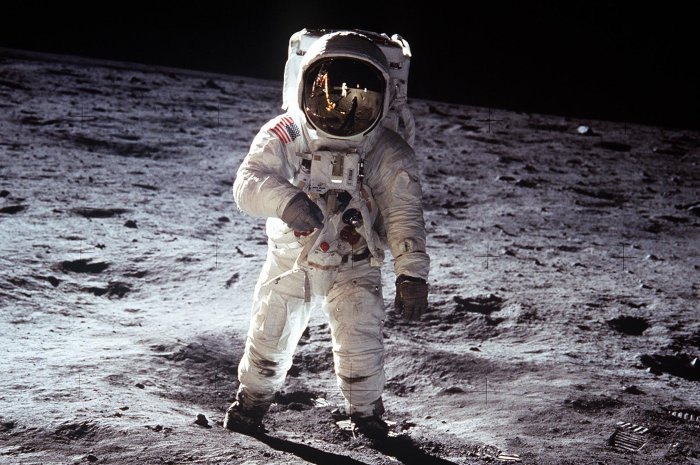
The 2026 Travelers’ Choice Awards look at both the quality and quantity of reviews, from February 1, 2025 to January 31, 2026.

Laurel Greatrix, chief communications officer at TripAdvisor Group, said: “There’s a clear theme in this year’s winners: they bring out what makes a destination unique.”

It has won a number of awards, with theme park website Blooloop also praising it: “What makes the Pleasure Beach of today unique among British parks is its surviving collection of vintage rides. Some of these are the last remaining types of their kind worldwide.”

The Blackpool theme park is even set to open an exciting new £8million ride, a gyro-swing called Aviktas which will be the tallest of its kind in the UK.

COSTA LITTLE

I take my son on day trips to Europe – it’s so much cheaper than the UK


STAY IN

Inside the world’s largest hotel with over 7,000 rooms & 2 theme parks next door

There is also the Valhalla ride which was named best water ride by the European Star Awards last year.

And it wasn’t just Blackpool Pleasure Beach named one of the UK’s best theme parks.

Other UK entries include Paulton’s Park (14th), Camel Creek Family Adventure Park (16th), The Milky Way Adventure Park (17th) and Twinlakes Family Theme Park (20th).

In first place, however, was Futuroscope in Francehere’s what we thought when we went down.

Other UK winners in the Tripadvisor Awards include:

  • The Chocolatarium Chocolate Tour Experience in Edinburgh (20th in food and drink)
  • Wizard Walk in York (4th in things to do)
  • The Best Harry Potter Guided tour (10th in things to do)
  • Beatles Magical Mystery tour in Liverpool (2nd in culture)
  • London Small Group Tour of Historical Pubs (4th culture)
  • Loch Ness, Glencoe, and the Highlands tour (10th in culture)

Source link

Women’s T20 World Cup: England name Tilly Corteen-Coleman, 19, in squad

Uncapped left-arm spinner Tilly Corteen-Coleman has been included in England’s squad for the Women’s T20 World Cup this summer.

The 18-year-old impressed in England’s intra-squad matches in South Africa this year.

She is one of three left-arm spinners in England’s squad alongside Sophie Ecclestone and Linsey Smith, while off-spinner Charlie Dean is named as vice-captain to Nat Sciver-Brunt.

There is no place for 19-year-old Davina Perrin, who scored a century in last year’s Hundred Eliminator, while veteran batter Tammy Beaumont also misses out.

Leg-spinner Sarah Glenn, a recent mainstay of England’s T20 squads, was not considered for selection as she is recovering from a broken finger and has not played this season.

England start their T20 World Cup campaign against Sri Lanka on 12 June at Edgbaston.

Source link

Tailgating to be allowed at Boston World Cup matches as FIFA changes stance | World Cup 2026 News

Boston World Cup host committee says fans will be allowed to tailgate for all seven matches at the Gillette Stadium.

In a reversal of an earlier decision, FIFA will allow tailgating at World Cup games at Gillette Stadium in Foxborough, Massachusetts, the Boston World Cup host committee announced.

The committee said on Monday that the shift conforms with local policies that allow tailgating “like any other event hosted at the stadium as there are no venue restrictions or local public safety restrictions in place that would prohibit it”.

Recommended Stories

list of 4 itemsend of list

FIFA originally stated that tailgating would ⁠⁠not be allowed at any of the 104 matches, of which the United States is hosting 78, causing an uproar among football fans in the country.

The US is cohosting the 2026 tournament with Canada and Mexico from June 11 to July 19.

The Gillette Stadium – rebranded as the Boston Stadium during the World Cup to comply with FIFA’s policy prohibiting corporate-sponsored names for tournament venues – will host five group-stage matches, one round-of-32 match and a quarterfinal match at the home of the National Football League’s (NFL) New England Patriots.

ARCHIVO - Panorámica del Gillette Stadium iluminado previo a un partido de la NFL, el 1 de diciembre de 2025, en Foxborough, Massachusetts. (AP Foto/Steven Senne, Archivo)
The Gillette Stadium will host seven World Cup games [File: Steven Senne/AP]

Patriots games, New England Revolution ‌‌games and concerts allow tailgating at the stadium.

Space will be severely reduced from what is normally available. There are about 20,000 parking spots available for Patriots games, but only about 5,000 will be available for public use during the World Cup.

The Massachusetts Bay Transportation Authority has set train prices at $80 for a round trip from Boston to Foxborough for tournament games, four times what it charges for NFL and MLS games. There is also an express bus option that will depart from various Boston-area locations, which will cost $95 for a round trip.

New York City announced on Monday that a fan fest for each of the city’s five boroughs will be ‌‌held in conjunction with World Cup matches at the MetLife Stadium – to be known as New York New Jersey Stadium – in East Rutherford, New Jersey.

INTERACTIVE-Football FIFA Teams that have qualified for the World Cup 2026-1776671102
[Al Jazeera]

What is tailgating in the US?

In the context of US sports, tailgating is a pre-game social event that sees fans of a team park their cars outside the stadium hosting the game. The supporters then gather around these parked cars to socialise by drinking, eating, and often cooking on site while they soak in the match-day atmosphere despite not being inside the venue.

It can often begin several hours before the start of the action inside the stadium. The culture is most common during NFL matches and is especially popular among fans of US football.

Which other US stadiums are hosting the World Cup?

The USA will open their World Cup campaign against Paraguay on June 12 at the SoFi Stadium, to be renamed the Los Angeles Stadium, in Inglewood, California.

The MetLife Stadium will host the final on July 19.

The other World Cup stadiums in the US are:

  • Philadelphia (Lincoln Financial Field)
  • Dallas (AT&T Stadium)
  • Seattle (Lumen Field)
  • Kansas City (Arrowhead Stadium)
  • Miami (Hard Rock Stadium)
  • Atlanta (Mercedes-Benz Stadium)
  • Houston (NRG Stadium)
  • San Francisco Bay Area (Levi’s Stadium)
INTERACTIVE-Football FIFA World Cup 2026 group stage schedule-1776670775
[Al Jazeera]

Source link

2026 World Snooker Championship: Neil Robertson calls for ban on Ronnie O’Sullivan’s Triangle Chalk

Former world champion Neil Robertson has called for a controversial chalk used by Ronnie O’Sullivan to be banned, saying most other players “hate it” and that it “makes an absolute mess of the table”.

O’Sullivan, 50, is one of only a handful of players on the World Snooker Tour (WST) to still use the traditional Triangle Chalk.

Critics say it causes more poor contacts, leading to ‘kicks’ when the cue ball hits the object ball, often resulting in players running out of position or missing pots.

Almost all players use Taom Chalk, which reduces kicks and leaves no marks on the table.

There are currently no restrictions in place on what chalks can be used in WST events so O’Sullivan, who lost a thrilling last-16 tie 13-12 to John Higgins earlier on Monday, has not done anything against the sport’s rules.

However, there was a noticeable kick in the deciding frame when the Scot was taking a shot on a red.

He could be heard saying “oh my god” when the cue ball did not run through as expected. That red was potted, but, out of position, Higgins then missed the following black, although it did not prove crucial as he sealed an incredible victory, having trailed 8-3 and 9-4.

Robertson won 13-7 in his last-16 match against Chris Wakelin to set up a meeting with Higgins, with the Australian pleased to avoid O’Sullivan – and his chalk.

“I would prefer to play John so I don’t have to contend with the chalk that Ronnie uses, which should be banned from the game,” Robertson told BBC Four.

“I don’t know how you are allowed to even use it.”

Source link