World

Latin America unites to cheer against Argentina in FIFA World Cup final | World Cup 2026 News

While Latin Americans have traditionally rallied behind football teams from the region who advance deep into the FIFA World Cup, a flood of memes, jokes and criticism has made it clear there is one exception: Argentina.

In one photoshopped image that went viral, Lamine Yamal — who stars for Argentina’s final opponents Spain — is wearing a Brazilian jersey. The snarky caption? “The hope of the Brazilian people.”

The fervour goes beyond the historic rivalry between Pele’s Brazil and Diego Maradona’s Argentina: Mexico, Colombia, Chile, and others are all hoping Lionel Messi’s Albiceleste bite the dust on Sunday.

A similar phenomenon occurred before Argentina won their third World Cup title in Qatar in 2022.

Colombian sociologist German Gomez believes the “dynamic of solidarity … has been broken” with Argentina.

He said the digital era and social networks have fuelled “narratives” that the team is a darling of FIFA and Gianni Infantino, president of football’s world governing body.

“Argentina has had help from referees,” said Francisco Santos, a Brazilian fan trading World Cup stickers at a shopping centre in Sao Paulo, where cheers rang out when England scored first against Argentina in the semifinal.

If Brazil could not become six-time champions, “I would rather see Spain become two-time champions than Argentina become four-time champions,” the 42-year-old said.

Critics say Argentina have received more favourable calls such as penalties and yellow or red cards against opponents, even when such decisions have been backed by FIFA and experts.

“We’re going to cheer for Spain,” said Juan Camilo Abusaid, a 28-year-old finance worker in Bogota, Colombia’s capital.

‘Very political’

Antonio Lopez, 51, a police officer in Mexico City, described Messi as a “legend”.

But he added: “If you’re going to sweat and break your back on the pitch to become champions twice, I accept that. If referees are going to help you, I don’t”.

At a media conference, Mexican President Claudia Sheinbaum jokingly asked journalists which team they were supporting in the final.

“Spain! Spain!” they replied.

For Mexican anthropology professor Jorge Negroe, a specialist in social studies of sport, “this World Cup has proven to be very political”.

Colombian sociologist Gomez added that while Maradona was seen as a revolutionary who confronted FIFA’s power, current narratives perceive Messi as FIFA’s “golden boy”.

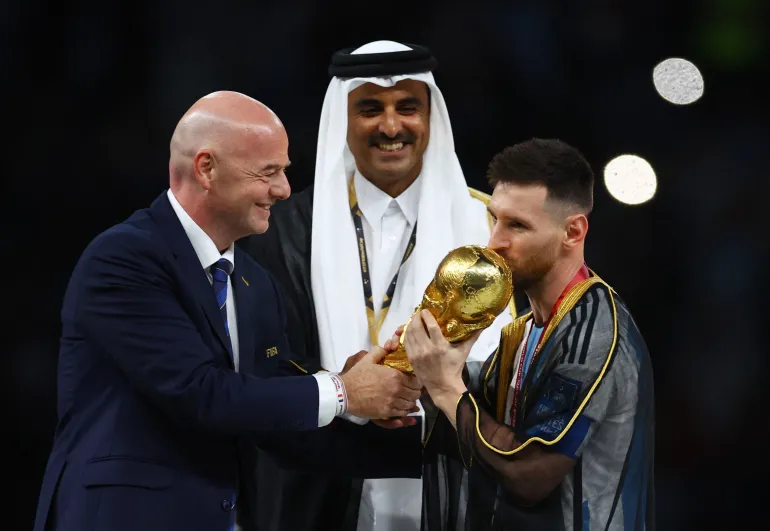
Soccer Football - FIFA World Cup Qatar 2022 - Final - Argentina v France - Lusail Stadium, Lusail, Qatar - December 18, 2022 Argentina's Lionel Messi kisses the trophy as he is presented it by FIFA president Gianni Infantino alongside Emir of Qatar Sheikh Tamim bin Hamad Al Thani REUTERS/Kai Pfaffenbach
Argentina’s Lionel Messi receives the World Cup in Qatar in 2022 [Kai Pfaffenbach/Reuters]

National politics has also created resentment.

“I really don’t like Javier Milei (Argentina’s president) at all!” said Rachid Sjoberg, a 29-year-old agricultural laboratory operator in Santiago.

“The idea that he would then boast about having won the World Cup if they win does not sit well with me.”

Argentine fans and some players have also faced accusations of racism — such as a chant sung by the team in the past mocking the black players in the French team as not being really French.

There is also a long history of club-level fans throwing bananas on the field or making monkey gestures at Brazilian fans or black players.

During this World Cup, FIFA condemned racism in a statement after an Argentinian supporter told a black US influencer known as IShowSpeed to go “cry at the zoo” during a livestream.

‘We are unbearable’

Messi himself has acknowledged the strong feelings surrounding whether the team wins or loses.

“Four years ago, we achieved what we wanted: to play the final and be the best for four years. Once again, we have shown that nobody gives us anything for free, and we have put ourselves among the two best again,” he said.

“Let it hurt whoever it hurts.”

A brand of fernet, an alcoholic drink which is hugely popular in Argentina, has taken advantage of the anti-Argentine sentiment with humour.

Under the slogan “We are unbearable,” it launched an advert showing fans from different teams sitting in a therapy circle complaining about Argentina’s unbridled passion for football.

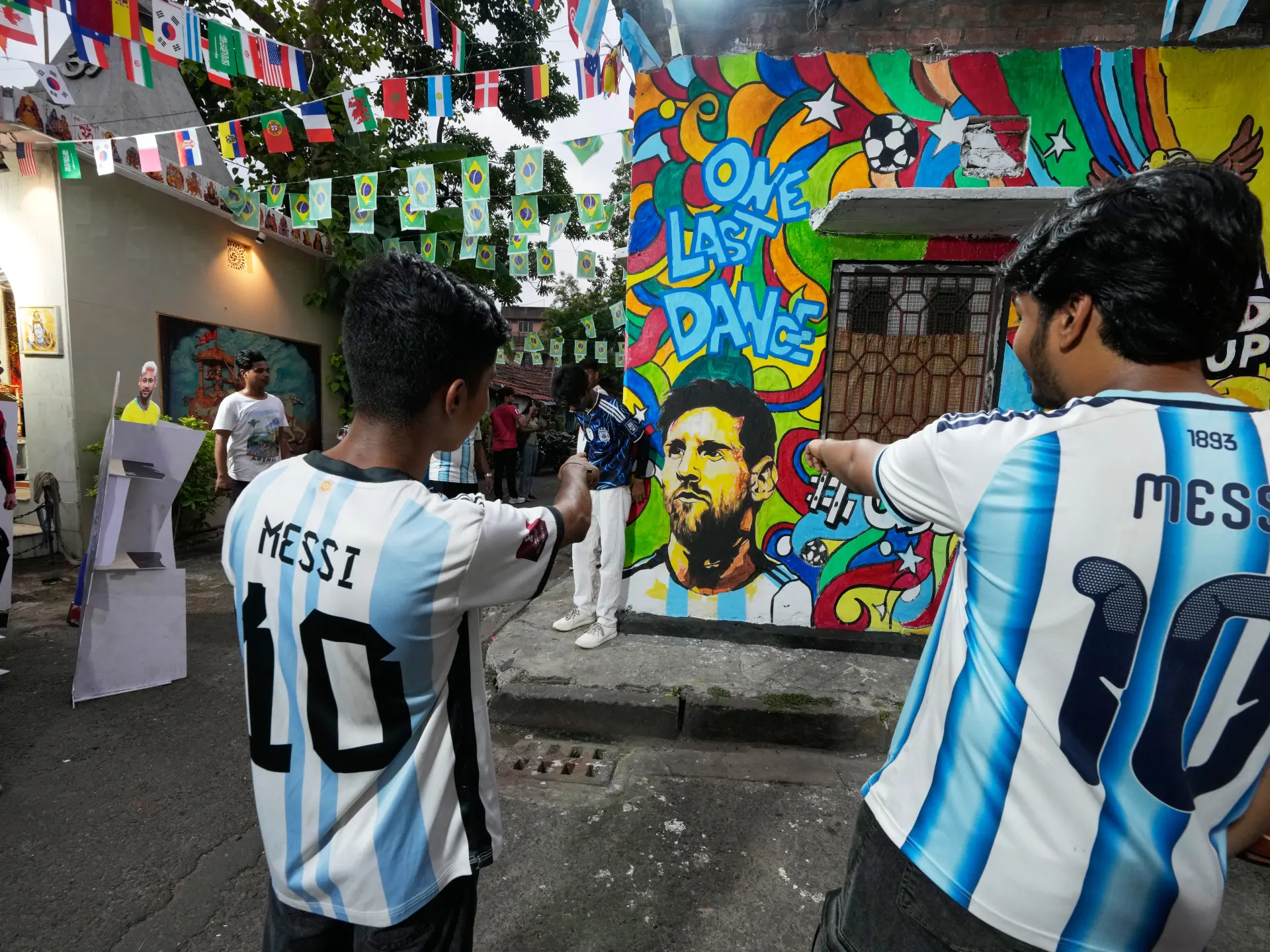
While many in Latin America are rooting against Argentina, the team has received a rapturous response at training camps in the US, with fans chanting “Messi! Messi!”

But some still embrace regional solidarity.

“I’m going to support Argentina because it’s a South American country,” said Valentino Tocto, a 20-year-old student in Lima.
Source link

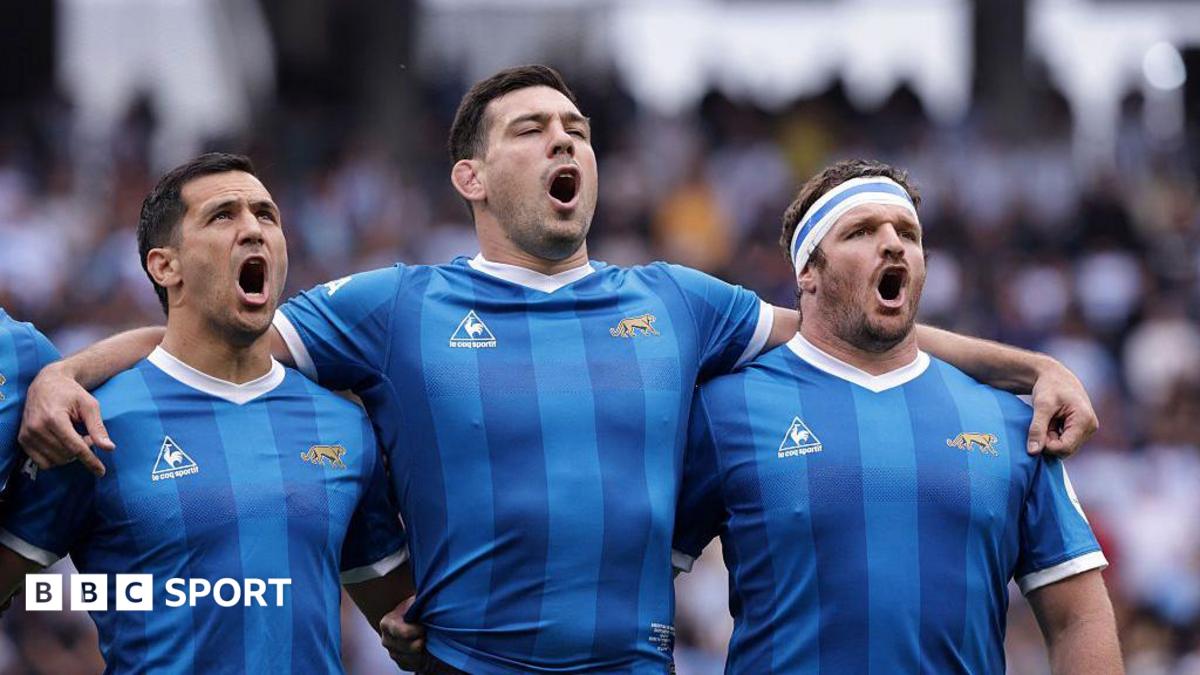
Nations Championship: Argentina wear 1986 World Cup kit replica against England

Argentina wore replicas of the country’s 1986 Fifa World Cup kit for their match against England at rugby union’s Nations Championship.

Argentina wore the dark blue kit during their 2-1 quarter-final victory over England at the tournament – which they later won – in a match made famous by Diego Maradona’s ‘Hand of God’ goal, before he scored a brilliant second.

Argentina’s rugby side, known as the Pumas, usually wear the country’s traditional white and light blue striped sporting kit.

“Memories that span generations and remain alive in the collective memory. Today that legacy dresses up again,” Los Pumas posted on X.

The sporting rivalry between the two countries was fuelled last week as Argentina came from behind in dramatic fashion to beat the Three Lions 2-1 and reach the 2026 World Cup final.

Following the match, Argentina players held up a banner reading ‘Las Malvinas son Argentinas’, which translates as ‘The Falklands are Argentine’.

Fifa is deciding whether to punish Argentina for the banner that references the Falkland Islands – a British overseas territory in the south west Atlantic Ocean that remains the subject of a sovereignty dispute between the UK and Argentina.

Before the Nations Championship match against Argentina, England switched hotels in Buenos Aires to avoid their return home being wrecked by World Cup celebrations should Argentina’s football team beat Spain in Sunday’s final.
The Nations Championship match is taking place at the Estadio Unico Madre de Ciudades in Santiago del Estero, with Steve Borthwick’s side aiming for their sixth successive win over Argentina.

Last weekend, England thrashed Fiji 73-8 to end a five-match losing run while Argentina beat Wales 35-21 last weekend after losing 47-38 to Scotland in their Nations opener.

Source link

All to know about Canadian wildfire smoke, air quality and World Cup final | World Cup 2026 News

With the World Cup final less than 24 hours away, an unlikely factor is grabbing the attention of organisers, fans and players alike.

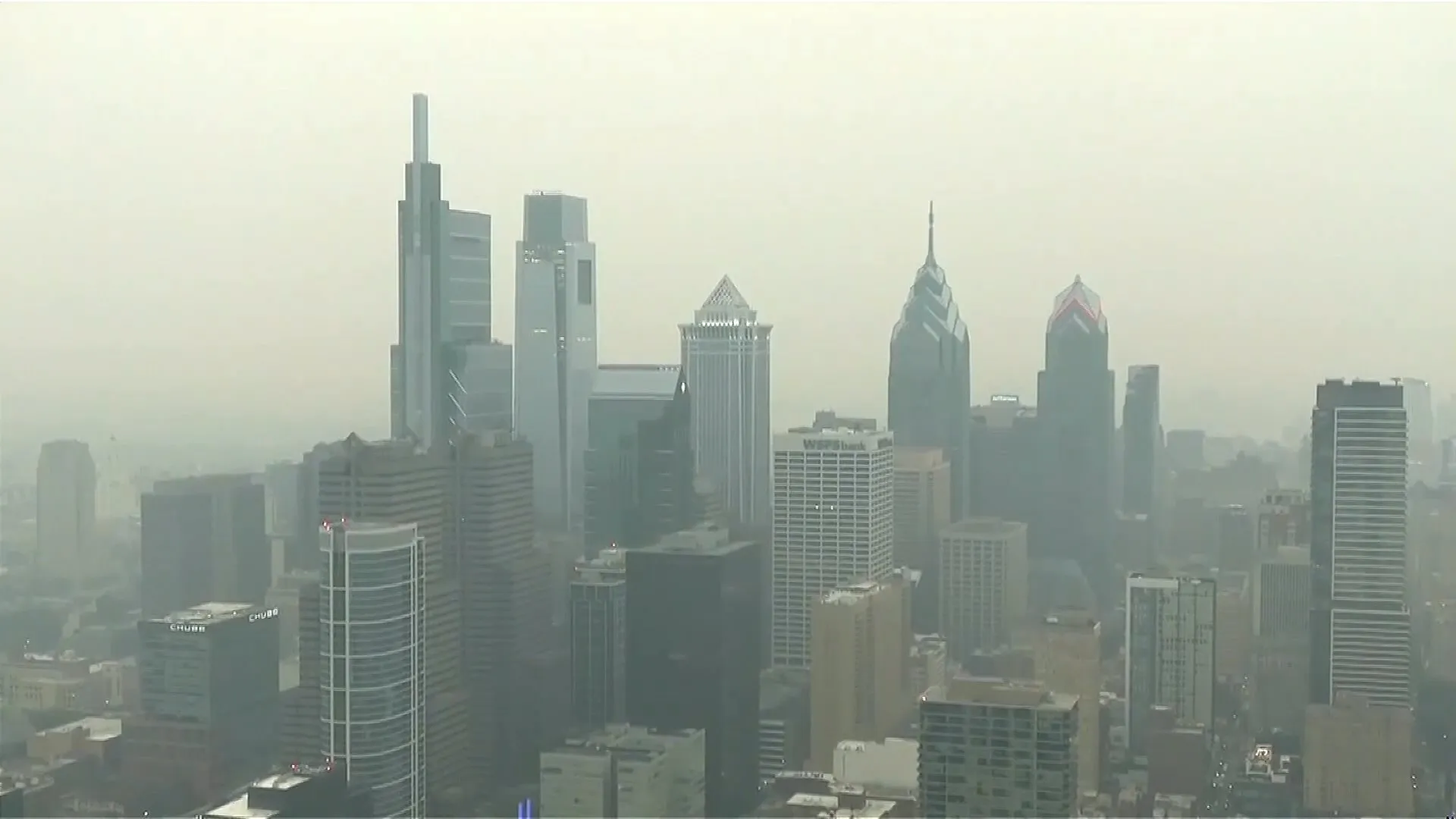
The lingering smoke from the Canadian wildfires sparked earlier this week has engulfed the northeastern region of the United States, raising questions about its impact on the Spain vs Argentina final in New Jersey on Sunday.

A visible haze hung over the twin World Cup host states of New York and New Jersey on Saturday, with inclement weather causing disruptions.

At one point on Friday, New York rated as the city with the worst air quality in the world.

The World Cup final between the European champions and current title holders kicks off at 3pm local time (19:00 GMT) on Sunday in East Rutherford, New Jersey.

Here’s what we know about the smoke, weather and World Cup final:

Is there a haze in New York and New Jersey before the World Cup final?

Smoke from the Canadian wildfires is hanging over the region, reducing visibility and affecting air quality in most northeastern US states.

Warnings of unhealthy air quality remained in effect across a wide area of the US east coast on Saturday.

However, experts predict conditions will improve for the big showdown in New Jersey tomorrow.

The air quality index forecast shows an improvement from unhealthy air to “moderate” air quality for sensitive groups from Saturday to Sunday in East Rutherford, which means little to no health risk for the general public on the day of the final.

How is the weather and what’s the forecast in New Jersey before the Spain vs Argentina final?

A thunderstorm passed through the area on Saturday afternoon, causing heavy rain and loud thunder at the New York New Jersey Stadium, renamed from MetLife Stadium.

State police urged people to leave the stadium seating bowl and field and take shelter. Volunteers and staff dashed inside for cover as ponchos were handed out. The sky was the same thick, soupy grey it had been for days.

New Jersey Governor Mikie Sherrill warned residents about the potential for damaging winds, tornadoes, flash flooding and large hailstones.

FIFA said it was in close contact with local authorities as it continues to monitor the impacts from the wildfire smoke and the storms on the stadium conditions for the final.

Have the weather and smoke disrupted preparations for Spain or Argentina?

Spain’s last training session ahead of the final at a nearby Melanie Lane Training Ground was suspended because of storms and lightning in the area.

The Spanish football federation (RFEF) said that was in accordance with US storm safety protocol.

“The players are currently taking part in a warm-up session indoors,” RFEF added.

FIFA said that there would not be another time slot for the team to train.

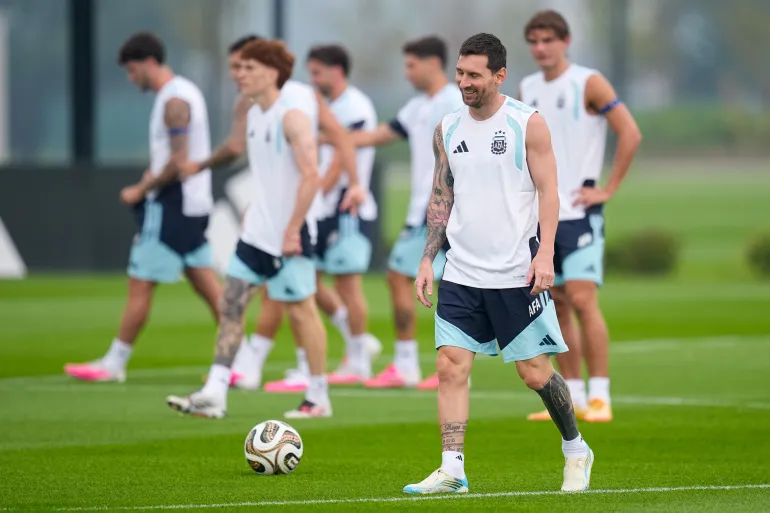
Argentina had an outdoor training session at their scheduled time of 1:30pm (17:30 GMT), with players showing no concerns about air quality or the weather.

Argentina's Lionel Messi works out during a training session on the eve of the World Cup final soccer match in Morristown, N.J., Saturday, July 18, 2026. (AP Photo/Ashley Landis)
Lionel Messi and the Argentina squad unaffected by the weather on the eve of the World Cup final, July 18, 2026. (AP Photo/Ashley Landis)

Will the wildfire smoke affect the World Cup final?

The haze will mostly clear from New Jersey just in time for the final, thanks to thunderstorms passing through the area, meteorologists say.

“This storm front will largely move the smoke out of the northeast before the final between Spain and Argentina,” said Tyler Roys, a senior meteorologist at online weather service AccuWeather.

“There could be some lingering smoke that would make things hazy, but very faint,” Roys said. “In terms of the thickest smoke, the smoke that has really been eye-popping and leads to poor air quality, that is not expected across New York City or much of the northeast.”

Jeff Berardelli, chief meteorologist and climate specialist at WFLA-TV, echoed the forecast, saying the storm front would “sweep the atmosphere clean”, leaving only a thin smoke that World Cup spectators may still smell in the air.

“It won’t be dangerous anymore,” Berardelli said. “It’s going to be dramatically better.”

Temperatures are forecast to be around 27C (80F) with light breezes and low humidity for kick off.

“You couldn’t have asked for much better weather for the World Cup,” Berardelli added.

Both experts expect the heavier smoke on Sunday to be concentrated closer to the fires, hanging over parts of the Midwest and Great Lakes region.

Berardelli said they are burning longer and faster because of climate change.

Source link

World Cup final: Argentina, Spain set to take soccer’s biggest stage

The list of men who have won a World Cup final is less than 500 names long, making it among the most exclusive in sports.

Jurgen Klinsmann’s name is on that list. And if he had known what a special club he would join when he stepped on the pitch for the 1990 final, he might have taken more time to enjoy it.

“How big that actually was, you only realize when when you start traveling the world and you get basically approached everywhere in the world about those moments,” Klinsmann said Friday. “It’s pretty crazy.”

Several new names will be added to that list Sunday, when Spain and Argentina meet at MetLife Stadium to decide the winner of the largest, most complex World Cup in history. A record 48 teams started the tournament 39 days and 103 games ago. Now just two remain: Spain, the reigning European champion, a team that hasn’t lost in 37 games and 27 months, and top-ranked Argentina, the reigning World Cup champion seeking to become the first team to repeat in 64 years.

Argentina leads the tournament in goals with 19, 12 of them coming in the 75th minute or later. In all four of Argentina’s wins in the knockout stages, the go-ahead goal came in stoppage time or extra time. Its captain, Lionel Messi, finished the semifinals leading the tournament with contributions on 12 goals — eight goals and four assists. He‘s also the all-time World Cup leader in goals, assists and games played and seems a shoo-in for a third Golden Ball, which goes to the tournament’s best player. No one else has won that award more than once.

But if Argentina is the unstoppable force, Spain is the immovable object. It has given up just one goal in the tournament with its goalie, Unai Simón, pitching shutouts in seven of his last eight World Cup games, dating to 2022. Slowing Messi won’t be up to Simón alone, however. Midfielder Rodri, Spain’s captain and the 2024 Ballon d’Or winner as the best player in the world, is the team’s defensive anchor. He said the best way to try to control Messi is to keep him out of the box — although Messi’s two decisive assists in Argentina’s semifinal comeback against England came from outside the penalty area.

And while Klinsmann’s one-and-done experience in a World Cup final is typical of most players, Messi, 39, is the exception: When the whistle blows Sunday, he’ll become just the second player, after Brazil’s Cafu, to play in three World Cup finals. When he made his World Cup debut in 2006, two starters on Spain’s team — center back Pau Cubarsí and winger Lamine Yamal — had yet to be born.

East Rutherford was hit with heavy thunderstorms Saturday, which helped knock down the hazardous smoke from Canadian wildfires that had blanketed the tri-state area for days. The poor air quality, which is dangerous for both players and fans, led FIFA and the White House to hold informal discussions over moving the World Cup final.

So while the air won’t be clear Sunday, the greatest risk appears to have passed and the threat of rain or lightning interrupting the game has also decreased, with the forecast calling for temperatures in the mid- 80s and 55% humidity at kickoff.

President Trump is expected to attend the game, after which he will present the World Cup trophy to the victor. And Klinsmann’s advice to the players who will walk across that stage to get their winners’ medals is to savor every moment because they might not come again.

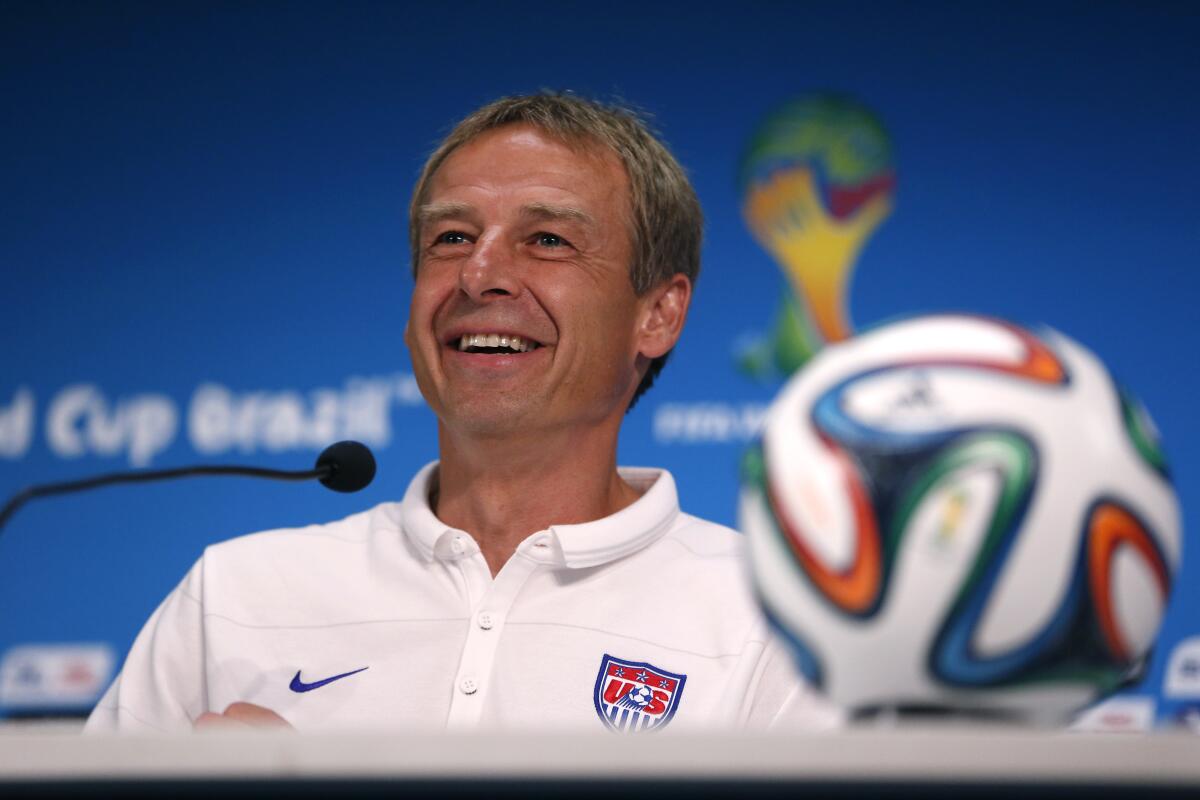
Jurgen Klinsmann addresses the media during a news conference before the U.S. played Portugal in World Cup group game in 2014

Jurgen Klinsmann, a World Cup champion with West Germany and the former U.S. men’s national team coach, understands players often forget to savor the moment of playing in soccer’s biggest game.

(Julio Cortez / Associated Press)

“Take it all in to and really enjoy every second of it,” he said. “Make it special. Don’t miss out on anything.”

Klinsmann was 25 and less than three years into his international career when he helped West Germany win the World Cup in 1990. So naturally he figured there would be more to come.

“I said, ‘Well, if this is so cool to win a title, then I want to win more titles,” he said. “The magnitude of it, I did not understand.”

In two more tournaments as a player, he never got past the quarterfinals and in two World Cups as a manager he made the semifinals once. Never again would he hold the most cherished trophy in sports, though his 11 World Cup goals are tied for ninth all-time, tied with Cristiano Ronaldo and one behind Pelé.

Mario Gotze scored only two goals in his World Cup career but the last one will never be forgotten. In the 88th minute of the 2014 final against Argentina, just before sending Gotze on as a sub, German manager Joachim Löw called Gotze over and said, “Show the world you are better than Messi and can decide the World Cup.”

With seven minutes left in extra time he did just that, chesting down a cross, then lobbing a volley into the net for the game’s only score, giving Germany its first title since Klinsmann’s team in 1990. It was a moment Gotze, then 22, had long dreamed of and one he had rehearsed as a kid.

France's Kylian Mbappe (left) and Spain goalkeeper Unai Simon shake hands after the World Cup semifinal game Tuesday.

Spain goalkeeper Unai Simon, shaking hands with France’s Kylian Mbappe after the World Cup semifinal, has given up only one goal in the tournament.

(Julio Cortez / Associated Press)

Yet it was also one he was not prepared for.

“That was a dream come true. But you can’t prepare for these kind of moments,” he said. “I get reminded about that goal and even speaking nowadays with people in Germany, and they say, ‘I still remember where I [was] in that moment.’ That’s very special. You have that connection to a lot of different people. I’m very happy about that.

“When I look back now, OK, I was there. I played 30 minutes of football in a World Cup final and I scored one goal. That impact is huge and to even be in that moment is rare.”

So rare Gotze never held the World Cup trophy again either. As a result he, like Klinsmann, would urge the players in Sunday’s game to drink in the memories, because win or lose, if your name isn’t Messi the odds are great you’ll never be back.

“You can’t describe the feelings because everything happens so fast,” he said. “You’re in the zone, you do a lot of things out of instinct, especially on the pitch. And then, at least with me, I had that relief after the final whistle.

“You get to understand over the years how special that moment was. Because in the end you only can play every four years. And then to be in the final and score a goal? That, of course, was very special.”

Source link

Ukraine kills at least 8 in Russian warehouses, hits oil facility

A handout photo shows a building damaged during a Ukrainian drone attack in Elektrostal, Moscow region, Russia, Saturday. The building caught fire but was quickly extinguished. Photo by Moscow Regional Governor Andrey Vorobiev’s Telegram Channel/EPA

July 18 (UPI) — Ukrainian drones hit two Russian warehouses, one near Moscow, and killed at least 8 people Saturday.

President Volodymyr Zelinsky said on X that, “two major logistics facilities were hit — in the Moscow and Tambov regions, more than [311 miles] and nearly [435 miles] from the front line. The aggressor used them to supply sanctioned components for drone production and navigation equipment. An oil facility was also struck. In addition, Ukrainian mid-range strikes engaged targets in the waters of the Sea of Azov and the Black Sea, and in our temporarily occupied Crimea.”

Of those killed, seven were working at a distribution center at Kotovsk in the Tambov region and another was at a similar facility in Elektrostal in the Moscow region, CNN reported. Both facilities were owned by Russian retail company Wildberries. But Ukraine alleges that the warehouses were used in the manufacturing of drones.

Wildberries has been described as the Russian version of Amazon, the BBC reported.

There were 25 people injured, and seven of them were in critical condition in Tambov, said Yevgeniy Pervyshov, governor of the region. He said 28 of the drones were shot down. At Elektrostal, 37 people were injured with eight suffering serious injuries, said Andrey Vorbiev, governor of the Moscow region.

A Ukrainian drone also hit an oil depot in the city of Noginsk, just north of Elektrostal in the Moscow region, setting a fire and wounding two people.

A nearby maternity hospital and residential building were forced to evacuate, Vorobiev said. Drone debris also hit a kindergarten building. The building caught fire, but it has been extinguished, he said.

A drone hit a residential building, which caught fire, in the city of Vladimir, about 110 miles east of Moscow, Vladimir Gov. Alexander Avdeyev said. There were no casualties.

Serhii Kuzan, chair of the Ukrainian Security and Cooperation Center, told the BBC that Wildberries is a “vital component” of Russian logistics. He said Russian volunteers use the site to buy military equipment such as walkie-talkies, body armor and drone parts.

“The primary rationale for striking Wildberries’ warehouses is to disrupt Russian logistics and the supply of dual-use goods, critical electronics, sanctioned goods and the like to the Russian army and Russian arms manufacturers,” he said.

“The collateral damage from such strikes could also have a serious impact on the Russian economy, as well as a psychological effect on Russian society and, likely, on continued support for the war,” Kuzan said.

President Donald Trump delivers a prime-time address to the nation from the East Room of the White House on Thursday. Pool photo by Saul Loeb/UPI | License Photo

Source link

LAFC star Son Heung-Min proves life after World Cup can offer hope

The Son, as they say, will come out tomorrow.

Bet your bottom dollar that Son Heung-min, LAFC’s $26 million man — the record MLS fee for an incoming player — would peel himself off the mat and clear away the cobwebs and sorrows of the past few weeks and months.

He did it with a sizzling, right-footed goal in the 57th minute of LAFC’s 3-0 victory Friday over the Galaxy in the 27th rendition of El Tráfico and the first this year. Also, the first crosstown showdown of Son’s so-far, so-so tenure in L.A.

His arrival last August from Tottenham Hotspur in England’s Premier League was met with uncommon fanfare. Here came another global soccer icon to Major League Soccer — and to L.A., where the South Korean sensation was welcomed enthusiastically by a Korean diaspora that’s about 250,000 strong.

LAFC forward Son Heung-Min holds his fingers to his lips while celebrating after scoring a goal against the Galaxy.

LAFC forward Son Heung-Min celebrates after scoring a goal against the Galaxy at Dignity Health Sports Park in Carson on Friday.

(Ronaldo Bolanos/Los Angeles Times)

The first Asian player to win the Premier League Golden Boot, Mayor Karen Bass spoke at Son’s introductory news conference. The Dodgers invited him to throw out the first pitch on Shohei Ohtani’s bobblehead night (and turned around this season and produced a bobblehead of Son throwing that pitch).

His first LAFC goal — a free kick over the wall in a 1-1 draw with FC Dallas — was named the MLS’s goal of the year. After notching 173 goals across all competitions with Tottenham Hotspur, he finished with nine goals in his first 10 regular-season appearances for LAFC.

Then the scoring stopped. As if someone turned off the spigot.

Before Friday, Son recorded nine assists but no goals over 13 unlucky matches this season. He went 44 shots without striking a goal. And 237 days between goals, according to The Chosun Daily’s tally.

Yeah, just a bit of what his LAFC teammate Mark Delgado described as “a drought.”

Most painfully, Son also was shut out in South Korea’s disastrously short World Cup stay.

South Korea entered the tournament with the expectation that its “golden generation” – led by Son – would reach the knockout stage. But after it opened Group A with a 2-1 win over Czechia, the Koreans lost 1-0 to Mexico and 1-0 to South Africa and failed to qualify for the round of 32 as one of the eight best third-placed teams.

The uproar in South Korea that followed included the country’s president demanding an investigation.

Mexico's Julián Quiñones and South Korea's Son Heung-min vie for the ball during a World Cup match on June 18.

Mexico’s Julián Quiñones and South Korea’s Son Heung-min vie for the ball during a World Cup match on June 18 in Guadalajara, Mexico.

(Ricardo Mazalan / Ap Photo/ricardo Mazalan)

For his part, a heartbroken Son shared a statement on Instagram: “I don’t dare to convey the disappointment and hurt of the fans with a single word ‘sorry.’ So even saying those words feels insufficient.”

It was impossible not to wonder: What the heck?

Where was the version of Son that everyone was celebrating a year ago?

How did the 34-year-old’s game decline so suddenly?

Was this a classic case of overpromising and underdelivering?

It still might be. LAFC — now 8-5-3 and third in MLS’s Western Conference — is going to face tougher competition in the days ahead than the work-in-progress Galaxy.

But on Friday, the center-forward was aggressive and in control. He took two shots in the first seven minutes, both blocked by defenders. He toyed with the Galaxy just before halftime, lining up to take a penalty before turning it over to Denis Bouanga, who scored to make it 2-0.

Then he and Delgado exchanged passes in the second half to set up Son’s first goal in darn near forever.

LAFC coach Marc Dos Santos gave Son 10 days off after the World Cup, but Son said he was eager to return to L.A., because he so enjoys the camaraderie of this club.

Those good vibes were on display when Son’s shot whizzed between two defenders and the outstretched arms of Galaxy goalkeeper Novak Micovic.

Son put his finger to his lips in the universal “shhh” sign and then did his patented camera celebration — click! — miming a snapshot. Because every goal is precious, and let’s be real, you never know when another will come.

LAFC forward Son Heung-Min uses his fingers to form a camera shape while celebrating scoring a goal.

LAFC’s Son Heung-Min celebrates after scoring what could be a breakthough goal against the rival Galaxy at Dignity Health Sports Park in Carson on Friday.

(Ronaldo Bolanos/Los Angeles Times)

Around him, the crowd and his colleagues went wild.

Dos Santos did some vein-popping flexing on the sideline. Mathieu Choinière pumped his fists as though he were operating a handcrank. Jacob Shaffelburg and Ryan Hollingshead flanked him on either side as though posing for a family photo. Son’s hair got tousled and nobody wearing black and gold could stop smiling.

“He deserves it, coming back from an emotional World Cup, and joining us right away,” Dos Santos said.

“He’s a great guy,” Delgado said. “He’s been in a bit of a goal drought, and, you know, we all want him to score. We all, he’s always smiling, and in training, he’s always scoring.

“And we’re like, ‘yeah, we need that, we need that!’ Trying to give him confidence,” Delgado continued. “And in games, he finally is getting that confidence back. So to see him score and put the ball in the net and just see his face light up with a smile is awesome. We all want to see him succeed here. We all want him to lead this club like we know he can.”

Now the goal is to keep the goals coming.

“Scoring the first goal of this season, I think it [will] help me,” Son said. “I think, definitely, going forward through the second part of the season. So, let’s keep going, and hope Wednesday [against Salt Lake] I can score another goal.”


Source link

Samsung Electronics unions deepen split over worker bonuses

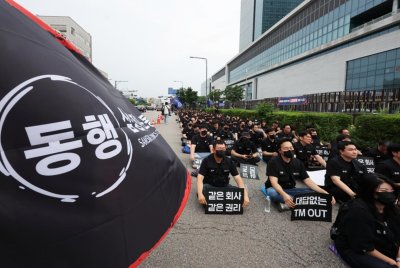
Union members of Samsung Electronics Co. hold a rally protesting against gaps in bonuses in front of its branch in Suwon, south of Seoul, South Korea, 16 July 2026. Photo by YONHAP / EPA

July 16 (Asia Today) — Divisions among Samsung Electronics labor unions are widening as unions representing different business units pursue separate compensation demands and bargaining strategies.

The Samsung Electronics Donghaeng Union, which primarily represents employees in the Device eXperience division, staged a rally Thursday demanding compensation equivalent to about 1,000 company shares per employee.

Meanwhile, the Samsung Electronics branch of the Samsung Group Super-Enterprise Union, whose membership is concentrated in the Device Solutions division, held its first policy committee meeting for the semiconductor business.

The divisions developed from a dispute over performance bonuses and have continued despite the conclusion of companywide wage negotiations.

The Donghaeng union held its rally near the main entrance of Samsung Electronics’ Suwon campus in Gyeonggi Province.

“We strongly condemn management for unilaterally excluding the DX division and reaching a closed-door agreement without transparency,” the union said.

More than 7,000 people were reported to have attended, more than twice the approximately 3,000 participants initially expected by organizers.

Participants wore black and carried signs reading “Same company, same rights,” “Rest in peace, DX” and “Discrimination off, fairness on.”

“Behind the company’s remarkable achievements are the dedication and hard work of DX employees,” the union said. “However, management created an extreme compensation gap between business divisions during the latest negotiations, leaving DX employees feeling excluded and relatively deprived.”

The union called on Samsung Electronics to immediately offer each DX employee compensation equivalent to about 1,000 company shares.

It also demanded that the company secure funding in advance for companywide employee compensation in 2027 and disclose the amount transparently.

The Donghaeng union said it would hold another rally in Seoul’s Seocho District unless the company takes additional action.

Lee Ho-seok, head of the Suwon branch of the National Samsung Electronics Union, attended Thursday’s rally and suggested his union could join forces with Donghaeng over what union leaders described as management’s exclusion of DX employees.

“To create one Samsung Electronics, rights, respect and compensation must be provided equally,” Lee said. “Management must answer our questions.”

The Super-Enterprise Union, meanwhile, held the kickoff meeting of its DS Division Policy Committee on Thursday.

The committee discussed its operating rules, plans for the 2027 wage and collective bargaining negotiations and its response to the company’s Mega Project initiative.

The union said the committee would meet monthly and hold regular consultations with management.

The union is also preparing to request separate bargaining units that would allow employees in the DS and DX divisions to negotiate independently with management.

Choi Seung-ho, chairman of the Super-Enterprise Union’s Samsung Electronics branch, said he intends to secure the change this year.

“The Super-Enterprise Union will responsibly lead the 2027 wage and collective bargaining negotiations rather than participate in joint negotiations,” Choi said. “With about four months remaining before negotiations begin in early December, we will use the policy committee to develop a thorough set of demands.”

The unions began moving separately after Samsung Electronics introduced a special performance bonus for the DS division in May.

As unions increasingly organized along business-unit lines, disputes among them intensified.

As of Thursday, the Super-Enterprise Union had 54,286 members, the Donghaeng union had 28,877 and the National Samsung Electronics Union had 22,826.

The Super-Enterprise Union previously represented a majority of Samsung Electronics’ unionized workforce. Its membership declined after large numbers of DX employees left, while membership in the Donghaeng union and the National Samsung Electronics Union increased.

— Reported by Asia Today; translated by UPI

© Asia Today. Unauthorized reproduction or redistribution prohibited.

Original Korean report: https://www.asiatoday.co.kr/kn/view.php?key=20260716010006332

Source link

South Korean court rejects warrant for ex-prosecutor general

Former Prosecutor General Shim Woo-jung appears at the office of special counsel Kwon Chang-young’s team in Gwacheon, South Korea, 10 July 2026. He is being questioned as a suspect on allegations of abuse of power for ordering his subordinates not to indict former President Yoon Suk Yeol’s wife, Kim Keon Hee, over corruption allegations she faced while her husband was in office. Photo by YONHAP / EPA

July 17 (Asia Today) — A South Korean court Thursday rejected an arrest warrant for former Prosecutor General Shim Woo-jung over allegations that he participated in former President Yoon Suk Yeol’s failed declaration of martial law.

The Seoul Central District Court said prosecutors had not sufficiently demonstrated that Shim was likely to destroy evidence.

The court also said the progress of the investigation and related court proceedings made it difficult to conclude that he posed a flight risk.

The court separately rejected an arrest warrant for Jeon Moo-gon, a former head of the policy planning division at the Supreme Prosecutors’ Office.

The court said Jeon’s arguments, the progress of the investigation and the evidence collected did not indicate that he was likely to flee or destroy evidence.

Shim and Jeon are accused of reviewing plans to dispatch prosecutors to a joint martial law investigation headquarters under instructions from then-Justice Minister Park Sung-jae on Dec. 3, 2024.

Investigators also suspect they discussed how to handle crimes that would fall under military court jurisdiction after the martial law declaration.

They are further accused of participating in the preparation of a document concerning court jurisdiction under martial law.

The second special counsel team led by Kwon Chang-young requested arrest warrants for Shim and Jeon on Tuesday on allegations of participating in an insurrection and abusing their authority to obstruct the exercise of rights.

The special counsel team’s failure to secure their detention could complicate its investigation into allegations that senior prosecution officials participated in the martial law attempt.

— Reported by Asia Today; translated by UPI

© Asia Today. Unauthorized reproduction or redistribution prohibited.

Original Korean report: https://www.asiatoday.co.kr/kn/view.php?key=20260716010006339

Source link

Letters: Planned White House visit causing a stir among Dodger fans

p]:text-cms-story-body-color-text”>

It is difficult to find words to express my disgust for the coming White House visit. Like the man they are going to see, the Dodgers are without honor.

Rico Gardiner
San Diego


Sports do not transcend or evade association with politics, especially in the current period of America’s decline under President Trump. It’s disgraceful that the Dodgers would again honor a rank authoritarian, a brazenly corrupt kleptocrat, criminal, malignant narcissist and wrecker of our democracy and rule of law.

Trump is not honoring the Dodgers; he’s using their presence to honor him and give him a bit more gaslight glory. The organization has smeared itself with the dishonor, serving the PR agenda of our vainglorious tyrant. If they cared about the optics, their civic duty and the good of the country, they would decline.

T.R. Jahns
Hemet


Dodgers, you are out. Out of our house. In normal times, a White House visit is a grand honor for a championship club. I get that. These are NOT normal times. For you to pretend they are and honor this man with your presence is unforgivable. Spineless. A statement that makes the wrong statement. We will not be watching or rooting for you this season. You are out at home. Our home.

William Lewis
Burbank


Ever since the Dodgers accepted their World Series visit to the White House, they’ve been error-prone on the field, and losing most games. In the All-Star Game, the players were hitless and the pitcher served up the only home run. To add more insult, their former player received the MVP award! Most importantly, is the disappointment and loss of respect from the fans. Karma has a way to haunt.

Robert Torres
Torrance


Your letters to the editor section regarding the Dodgers’ planned visit to the White House continues the left bias of the L.A. Times. Four letters were published praising the article and one was published critical of the article. I doubt that the 4-to-1 ratio reflects the opinions of the L.A. population, but it may reflect the opinions of readers that your left-leaning paper attracts. I read the paper only to see what the lefties are up to.

Larry Hart
Tarzana

Source link

United States caps foreign student stays at four years

July 17 (Asia Today) — The U.S. Department of Homeland Security announced a final rule Thursday limiting stays by international students and exchange visitors to no more than four years and requiring them to undergo federal review when seeking extensions.

The rule replaces the open-ended “duration of status” system for holders of F student visas and J exchange visitor visas with fixed admission periods tied to their programs and capped at four years.

About 1.5 million current F- and J-visa holders will automatically be transferred to the new system.

The change, combined with a shorter post-graduation grace period and mandatory extension reviews for students seeking Optional Practical Training, could disrupt the fall semester and reduce demand for study in the United States.

Exchange visitors will also be limited to four-year stays. Foreign journalists holding I visas will generally have to renew their status every 240 days.

Federal review required for extensions

F- and J-visa holders who need to remain in the United States beyond their authorized period will have to apply to U.S. Citizenship and Immigration Services for an extension of stay.

Applicants will be required to submit biometric information and undergo security, identity and fraud screening. They must also demonstrate satisfactory academic progress and financial stability, The Wall Street Journal reported.

The change ends a system in place since 1978 that allowed students to remain in the country as long as they maintained the required course load and complied with the conditions of their immigration status.

Homeland Security officials said more than 2,100 F-1 students who entered the United States between 2000 and 2010 were still maintaining F-1 status in 2025.

The department said the rule was intended to prevent people from repeatedly enrolling in classes to avoid leaving the country, a practice officials described as creating “forever students.”

“For nearly half a century, the outdated duration-of-status system has undermined national security and created an environment where immigration fraud could flourish,” Homeland Security Secretary Markwayne Mullin said.

“By enforcing clear and finite periods, the United States is restoring its ability to properly screen and manage those who remain in our country,” he said.

Nearly 24,400 Koreans and family members affected

The roughly 1.5 million F- and J-visa holders currently staying in the United States under the duration-of-status system will receive fixed admission periods of up to four years beginning on the rule’s effective date, Bloomberg reported.

Foreign journalists entering on I visas will generally be admitted for 240 days and must apply for additional 240-day periods. Chinese journalists will be limited to 90-day extensions.

More than 1.8 million entries were recorded on student visas in 2024, an increase of more than 11% from the previous year, according to the Department of Homeland Security.

The United States also hosted about 500,000 J-visa exchange visitors and 37,000 foreign journalists holding I visas.

Students from India, China and South Korea are expected to be among those most affected by the rule, Bloomberg reported.

According to the South Korean Embassy in Washington, 11,861 South Korean students held F-1 visas in 2025 and 1,347 family members held F-2 visas.

Another 7,985 South Koreans held J-1 exchange visitor visas and 3,180 family members held J-2 visas, bringing the total number of South Korean F- and J-visa holders and their dependents to 24,373.

An additional 349 South Koreans held I visas.

The rule is scheduled to be published in the Federal Register on Friday and take effect 60 days later, in mid-September.

Its implementation during the fall semester could create confusion involving visa extensions and student enrollment records, Bloomberg reported.

Shorter grace period could disrupt employment pathway

The rule cuts the grace period after graduation from 60 days to 30 days for students preparing to leave the United States, transfer schools or change immigration status.

It also bars graduate students from changing their educational objectives and requires government approval before they transfer to another institution, Reuters reported.

Doctoral students, whose programs commonly take about six years, may have to apply for extensions before completing their studies and face the possibility of denial, The Wall Street Journal reported.

Doctors participating in long-term training programs will also have to seek extensions after four years, according to Bloomberg.

Nearly all students using Optional Practical Training, which permits eligible graduates to work in the United States for up to three years, will effectively be required to apply to U.S. Citizenship and Immigration Services for extensions for the first time.

Visa holders who remain beyond their authorized periods could face three- or 10-year bans on re-entering the United States, depending on the length of the overstay.

Technology and financial companies frequently hire international graduates through Optional Practical Training before sponsoring them for H-1B specialty occupation visas.

More restrictive access to practical training could narrow that employment pathway, The Wall Street Journal reported.

David Bier, director of immigration studies at the Cato Institute, said the restrictions on changing educational objectives and transferring schools lacked a legal basis.

He said graduates who fail to find an employer sponsor within 30 days could “immediately become unlawfully present.”

Education groups consider challenge

Fanta Aw, president and chief executive officer of the Association of International Educators, called the rule a misguided and unnecessary policy change.

She said it would inject “uncertainty, bureaucracy and fear” into a system that had operated effectively for decades and said the association was considering all available options to challenge it.

Todd Lyons, a former acting director of U.S. Immigration and Customs Enforcement, said in May that the agency had launched an investigation into fraud involving Optional Practical Training.

Lyons said investigators had identified 10,000 international students employed by companies suspected of fraud and described the program as a “magnet for fraud,” Bloomberg reported.

The number of international students in the United States fell 1.4% during the previous fall semester, while new international student enrollment declined 17%.

Student visa issuance fell 36% during the previous summer, and the new rule could accelerate the decline as it takes effect during the fall semester, Bloomberg reported.

The regulation will also be subject to congressional review before its implementation, Reuters reported.

Doug Rand, a former Homeland Security official, said most Americans understand both the value of welcoming international students and the need to eliminate unnecessary regulation.

“This rule will achieve precisely the opposite result,” he said.

International education expert Rajika Bhandari said students would consider not only whether they could obtain visas and enter the United States but also whether they had viable long-term options after completing their studies.

She said Asian students and graduate students in science, technology, engineering and mathematics fields would be particularly affected.

“The implications of this change are not yet fully understood by students, but they will be profound,” Bhandari said.

— Reported by Asia Today; translated by UPI

© Asia Today. Unauthorized reproduction or redistribution prohibited.

Original Korean report: https://www.asiatoday.co.kr/kn/view.php?key=20260717010006341

Source link

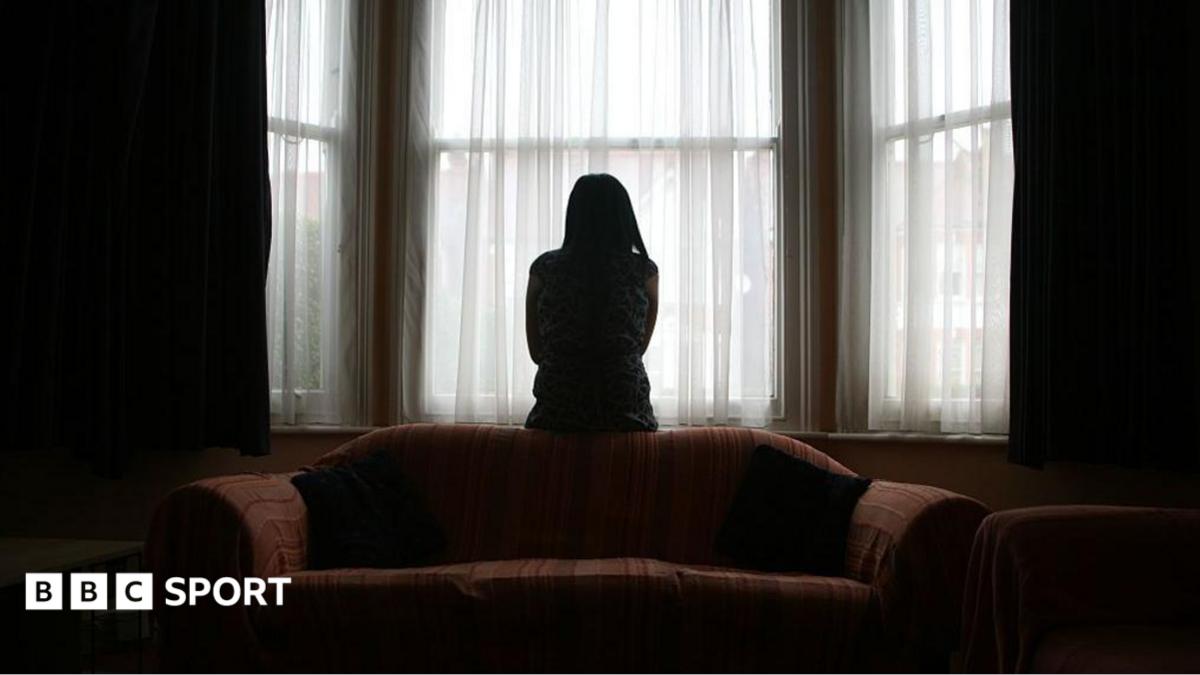
Domestic abuse: The harrowing dark side of England’s World Cup exit

The Crown Prosecution Service sees first-hand the impact that domestic abuse has on victims.

It says that of every five cases the police refers to it, four result in charges being brought.

Olivia Rose, the CPS’s National Stalking Lead, says it does not just see physical abuse. There is coercive and controlling abuse too.

“It’s crucial for victims to spot the signs early,” Rose said. “What our prosecutors see can include monitoring of victims’ phones and social media, often inundating them with dozens of messages.

“There’s also emotional blackmail, such as threatening to kill themselves if their partner leaves.

“It’s incredibly important that we get the message out to say that behaviour like this is not just unacceptable: it’s illegal.”

The CPS, the government department responsible for prosecuting criminal cases, say it works closely with the police and women’s charities to ensure that action is taken to stop such behaviour and to help victims to get away.

It says it needs help from communities too. And it is urging people to look out for friends, family and neighbours who could be vulnerable during the World Cup.

“If you can step in to help, you could be making a life-changing difference,” Rose said.

She also wants to get the message to victims that they will be supported if they speak out.

“We understand how difficult it can be to report domestic abuse,” she added. “But if you come forward, you will be taken seriously, and we will bring offenders to justice.

“The World Cup should bring communities together, and it should never be an excuse to fuel abusive behaviour.”

Anyone experiencing domestic abuse who is in immediate danger should always call 999. Victims can also report abuse to the police on 101.

Confidential support services are available. Anyone affected can contact the National Domestic Abuse Helpline on 0808 2000 247 in England, or the Live Fear Free helpline on 0808 80 10 800 in Wales.

Solace’s Advice line is: 0808 802 5565.

Source link

U.S. lawmaker proposes building most Navy ships in South Korea

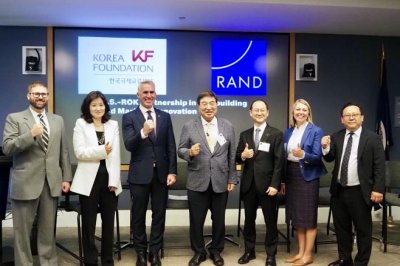
1 of 4 | Korea Foundation and shipbuilding industry representatives attend a South Korea-U.S. shipbuilding and maritime innovation forum Thursday at RAND in Arlington, Va. Photo by Asia Today

July 17 (Asia Today) — A senior U.S. lawmaker proposed building as much as 80% of some American naval vessels in South Korea while reserving sensitive technology and final assembly for the United States.

Rep. Ami Bera of California, the top Democrat on the House Foreign Affairs subcommittee overseeing East Asia and the Pacific, said Thursday that relying exclusively on domestic shipyards was unrealistic because the United States lacks sufficient workers and production capacity.

Bera spoke at a South Korea-U.S. shipbuilding and maritime innovation forum hosted by the Korea Foundation and the RAND research organization in Arlington, Va.

“To say we are going to build everything in the United States is wrong,” Bera said, urging Washington to make greater use of allied manufacturing capacity.

He suggested that South Korean shipyards could produce hulls and other components accounting for 75% to 80% of a vessel, while highly sensitive systems could be manufactured and installed in the United States.

Bera also proposed a distributed construction model under which components would be produced at different locations before being brought to the United States for final assembly.

“If we do not have the workers or construction capacity in the United States, we have to build where ships can be built,” he said.

Bera said combining the capabilities of the United States and its allies would strengthen deterrence and help prevent a military conflict with China.

Technology controls and visas remain obstacles

Bera said President Donald Trump had discussed nuclear-powered submarine construction with South Korea.

Such cooperation would require the two countries to address technology sharing and export control restrictions, he said.

Bera cited the security partnership among the United States, Britain and Australia as a possible model for resolving issues related to joint naval construction.

The partnership, commonly known as AUKUS, includes plans for Australia to acquire nuclear-powered submarines with American and British assistance.

Bera also called on the United States to facilitate the entry of South Korean engineers and technicians needed to support investments by Korean shipbuilding companies.

He described the detention of more than 300 South Korean workers in Georgia in September as an “embarrassing fiasco” and said the visa problem must be resolved.

The United States has encouraged South Korean companies to invest in American manufacturing while immigration restrictions have complicated the deployment of specialized Korean personnel to construction sites and shipyards.

Expert says U.S. rebuilding could take decades

Shin Jong-gye, a professor emeritus of naval architecture and ocean engineering at Seoul National University, said China’s overall shipbuilding capacity by gross tonnage was more than 230 times that of the United States.

He said China had more than 50 dry docks large enough to accommodate aircraft carriers.

Newport News Shipbuilding in Virginia is the only U.S. shipyard capable of designing and building nuclear-powered aircraft carriers.

Shin said the United States must expand both its physical shipyard capacity and its ability to build vessels quickly and efficiently.

South Korea, Japan and China benefit from building commercial and naval vessels within the same industrial ecosystems, allowing them to share technology, workers and supply chains, he said.

The United States lacks a comparable commercial shipbuilding base and therefore cannot obtain the same economies of scale, Shin said.

South Korea, Japan and China together account for more than 95% of global commercial shipbuilding.

Shin said rebuilding an industry requires accumulated experience, technology and repeated construction cycles.

He estimated that rebuilding the U.S. shipbuilding sector independently could take 20 to 30 years, while cooperation with South Korea could significantly shorten the process.

Shin proposed initially building complete ships in South Korea while developing supply chains in the United States. American production could then be expanded gradually.

He said protecting South Korean intellectual property, providing appropriate compensation and resolving visa restrictions for Korean specialists would be essential.

Hanwha, HD Hyundai respond to Navy request

Michael Coulter, president and chief executive officer of Hanwha Defense USA, said protectionism was one of the largest obstacles to industrial cooperation.

He said South Korea and the United States often viewed each other primarily as export markets rather than partners sharing a common industrial base.

Coulter said the U.S. Navy had issued a request for information after consulting the South Korean government and Korean shipbuilders.

The request examined the possible use of a vessel construction manager who would help finalize a ship’s design before construction begins.

South Korean shipyards generally complete designs before starting construction, while U.S. Navy projects often undergo design changes after work has begun, increasing costs and delaying delivery, Coulter said.

The U.S. government has asked Hanwha about options ranging from building combat vessels and supplying motors to constructing hulls in South Korea before installing American technology, he said.

Coulter said, however, that the administration and Congress had not reached a unified position.

He called on the two countries to integrate portions of their industrial bases rather than treat each investment or contract as a conventional export transaction.

Hong Suk-hwan, president and chief executive officer of HD Hyundai USA, proposed a two-track strategy involving investment in U.S. shipyards and partnerships with existing American companies.

Hong said HD Hyundai had built about 5,000 vessels during the past 50 years and could apply its skilled workforce, manufacturing experience and supply network to the United States.

He also proposed a “bridge strategy” in which American workers would train at South Korean shipyards for about three years while ships were being constructed there.

The trained workers could then return to the United States as supervisors and production managers at American shipyards.

U.S. law limits overseas warship construction

Brittany Clayton, a senior operations researcher at RAND, said complicated U.S. defense procurement procedures, unpredictable orders and design changes during construction remained major barriers to cooperation.

The Navy, Defense Department and Congress all play roles in funding and policy decisions, making rapid action difficult, she said.

Clayton said companies needed consistent and predictable demand from the U.S. government before making long-term investments.

She also cited proposed legislation restricting the overseas construction of American combat vessels.

Rep. Jared Golden of Maine, whose district includes the Bath Iron Works shipyard, introduced an amendment to the fiscal 2027 defense authorization bill that would restrict foreign construction of combat ships.

Clayton said distributed construction could provide an alternative, with components built at multiple locations before being integrated and tested in the United States.

She also suggested beginning cooperation with strategic sealift vessels, which contain fewer sensitive military technologies than combat ships.

The Senate Armed Services Committee included language in its fiscal 2027 defense authorization legislation that would permit the acquisition of up to two noncombat vessels from allied shipyards, including bulk fuel carriers and strategic sealift ships.

Trump said Wednesday that his administration was examining shipbuilders in South Korea and other countries and could purchase some vessels built outside the United States.

Kristin Gunness of San Diego State University said the university had signed an agreement with Samsung Heavy Industries to establish a marine engineering and shipbuilding center.

She said the university was also developing exchange programs with Seoul National University and other South Korean institutions.

Shin proposed short-term educational programs involving retired South Korean professors and American universities to train ship designers and production managers.

— Reported by Asia Today; translated by UPI

© Asia Today. Unauthorized reproduction or redistribution prohibited.

Original Korean report: https://www.asiatoday.co.kr/kn/view.php?key=20260717010006342

Source link

Argentina’s New York fans share hopes before 2026 World Cup final | World Cup 2026 News

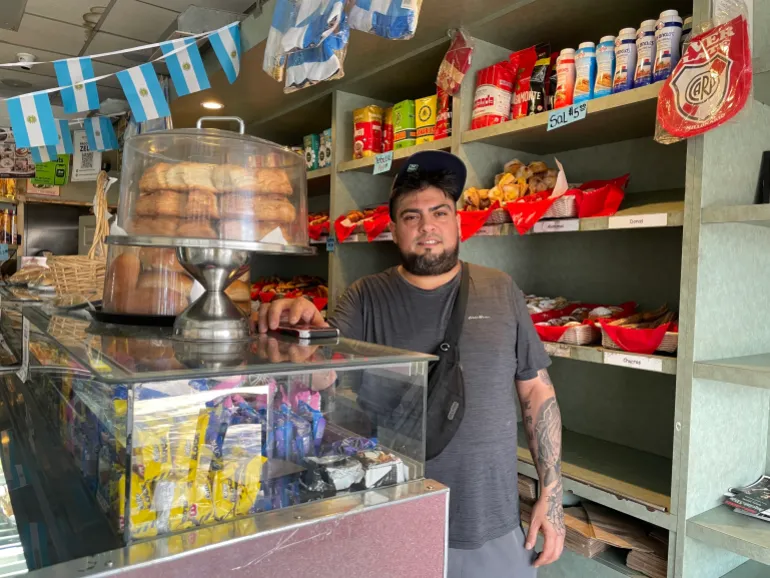
New York City – It’s dubbed “Little Argentina”, but lifelong resident Christian Gimenez says much has changed in the neighbourhood he grew up in.

Once an epicentre of the Argentinian diaspora that settled in New York City, most relocating during the so-called “dirty war” of the 1970s, only a handful of Argentinian restaurants and bakeries remain as a foothold of what once was in the Elmhurst, Queens neighbourhood.

Recommended Stories

list of 3 itemsend of list

But when the FIFA World Cup comes around, the block swells with revellers, clad in white and sky blue. With Argentina heading to the final against Spain on Sunday in East Rutherford, New Jersey, just a few kilometres (miles) away, everything on the block – from the asphalt, to the benches, to the store fronts, and even the fire plugs – bears the iconic colours.

As a child, “everywhere you would go, it was Argentinian,” Gimenez, who owns Rio de la Plata Bakery and is among those who spearheaded the decorations, told Al Jazeera. “So what I do is try to keep it alive.”

Christian Gimenez in the Little Argentina area of Queens, NY
Christian Gimenez in the Little Argentina area of Queens, NY [Joseph Stepansky/Al Jazeera]

To be sure, the 40-year-old is clear that the commitment to Argentina’s national team goes far beyond the monthlong tournament. The World Cup may come only once every four years, but the vaunting mural of Lionel Messi and Diego Maradona on the side of his bakery is a mainstay.

To many, it is a reminder of the generational significance of the country’s football tradition, one that has for decades been a glue for Argentinians in New York City, even as the community has dispersed.

Seventy-four-year-old Beatriz Jaime recounted watching Argentina’s 1978 routing of the Netherlands in a broadcast at Madison Square Garden, and returning to the neighbourhood soon after to find it “loaded with people” celebrating into the night.

“The thing is that the roots are here, and they’re in Argentina,” said Jaime, who grew up in Queens but now lives on Long Island.

“You never forget that. I get goosebumps.”

A shop sells Argentina gear in Little Argentina
A shop sells Argentina gear in Little Argentina [Joseph Stepansky/Al Jazeera]

For Henry Pachaco, 45, who is also from Queens, fandom is a family affair. He stood clad in the national team jersey, his mother wearing a blue shirt with a single phrase, “Hand of God”, a reference to the infamous hand-ball goal scored by Maradona in the 1986 quarterfinal match against England.

Pachaco called the block “the centre” for Argentinian fans in the city, offering a stadium atmosphere on game day – complete with a closed street, music, an outdoor television, and street food – without the price tag.

For Argentina to be in the final, for Messi to possibly be playing in his last national team match, and for all of it to be happening on New York’s doorstep, he said, represents a convergence of worlds.

“It’s like bringing Argentina to New York … wherever you go, anywhere in the world, when Argentinians get together. That that same passion is equal, no matter what.

A crosswalk is painted in the colours of Argentina in Queens, NY
A crosswalk is painted in the colours of Argentina in Queens, NY [Joseph Stepansky/Al Jazeera]

“You’re always gonna be accepted here and have the best time of your life,” he said.

Gimenez echoed the sentiment, while addressing several racist incidents from Argentinian fans that have tarnished La Albiceleste’s run in this World Cup and the last. He said that was not representative of the fan base.

“Whatever your race or whatever your ethnic background is, we don’t look into that,” he said.

“If you’re supporting us, we love you. Straight up, just like that.”

A new fandom grows in Brooklyn

It is a message that is likely to be well received a borough away, in the Kensington neighbourhood of Brooklyn, home to an rapid-growing Bangladeshi community that has earned the area the title “Little Bangladesh”.

NYC data shows the diaspora population has tripled in the last two decades, one of the fastest-growing groups in an ever-changing city. Last year, the community elected the first-ever Bangladeshi American to the NYC Council.

Shafiqul Alam, 66, who has lived in the neighbourhood for 36 years, said the area has transformed, bringing with it a passionate new base of support for Argentina’s national team.

On match days, large-screen televisions have been set up in pedestrian squares in the neighbourhood. If the weather turns, he said, it is not uncommon for people to crowd inside his shop to watch on his own television.

“Bangladeshi people love Argentina,” he said, “and Argentina loves Bangladesh.”

Shafiqul Alam says his shop in Brooklyn becomes an impromptu watch party for Bangladeshi fans of Argentina
Shafiqul Alam says his shop in Brooklyn becomes an impromptu watch party for Bangladeshi fans of Argentina [Joseph Stepansky/Al Jazeera]

Many factors have coalesced to fuel support for Argentina within South Asia, and particularly Bangladesh, notably a newfound access to televisions in the 1980s, which aligned with the Maradona-led national team’s 1986 defeat of England.

The match held potent political significance for countries still grappling with the legacy of British colonialism. But for many younger fans, support comes down to one man: Messi.

“Knowing this could be Messi’s last match, everyone will want to watch,” said Sajid Bhuyan, 31, a resident of the neighbourhood.

He had trouble imagining that any less than 90 percent of the local Bangladeshi community in Kensington backed Argentina.

Argentina fan Sajid Bhuyan sits on an NYPD barrier in Kensington
Argentina fan Sajid Bhuyan sits on an NYPD barrier in Kensington [Joseph Stepansky/Al Jazeera]

While the origin stories of their fandom may be different, Bhuyan felt the passion from Little Bangladesh to Little Argentina was the same.

He recounted a tournament that has repeatedly seen Argentina come back from the brink of defeat, most recently in a stunning turnaround in the semifinal against England.

“I almost died when Argentina scored the two goals in just minutes,” Bhuyan said. “I couldn’t breathe, I couldn’t talk, I had to take five or six minutes to calm down.

“So if it happens again,” he said, “we will enjoy!”

Source link

Palestine football fans honour Egyptian coach Hossam Hassan | World Cup

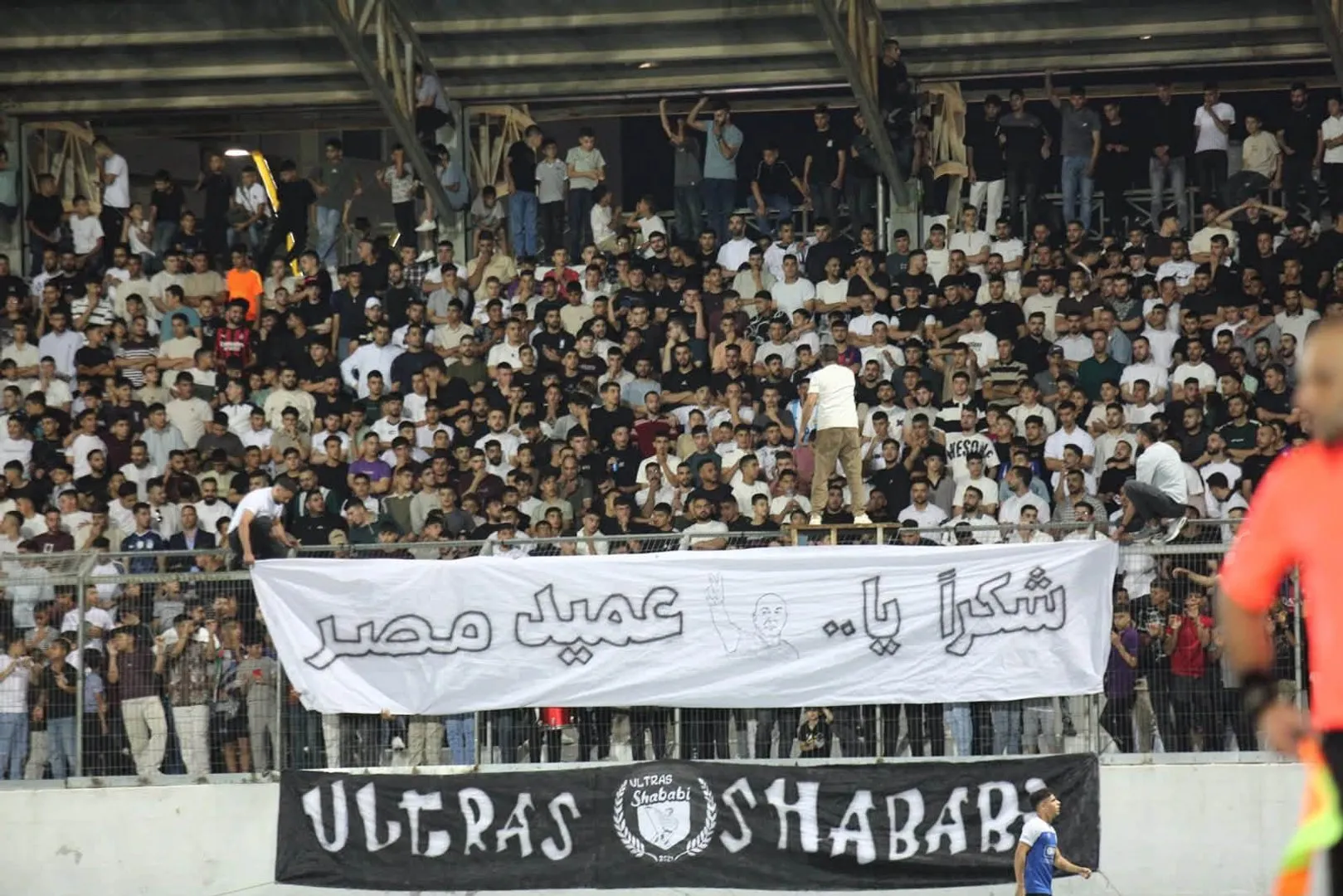
During a match, fans of Palestinian club Shabab Al-Khaleel raised a banner thanking Egypt coach Hossam Hassan for his support for the Palestinian cause. Hassan raised the Palestinian flag after Egypt’s national team defeated Australia in the World Cup round of 16.

Source link

World Cup final: Spain vs Argentina – Which team has best chance to win? | World Cup 2026 News

The 48-team FIFA World Cup 2026 tournament now comes down to one game: Spain against Argentina.

It is hard to argue that the European champions and world number one team taking on the South American champions and World Cup holders is not a fitting finale.

Recommended Stories

list of 4 itemsend of list

France had stormed into the pole position as favourites during the tournament, while England seemed to have their best chance since their only win 60 years ago.

Nevertheless, there is plenty to pick through when it comes to the finalists, so Al Jazeera does exactly that:

Argentina – World Cup holders and South American champions

Previous World Cup appearances: 18
Best performance: Winners (1978, 1986, 2022)
First appearance: 1930 (Uruguay)
Overall World Cup record: P94 W53 D17 L24 F171 A103
FIFA world ranking: 3

Overview: If their 2022 challenge in Qatar got off to a shocking start, with defeat by Saudi Arabia, then the 2026 campaign for Argentina could be seen as a flyer in comparison.

The truth, however, is that this has been far from a vintage Argentina, especially with Lionel Messi still the pivot of the team. The 39-year-old is, nevertheless, the reason that the title defence is ongoing.

The last side to win back-to-back World Cups was Brazil in 1958 and 1962. Italy have also retained a title, so it is a very short list that Argentina are seeking to join.

Strengths: Look no further than Messi for Argentina’s clear and unmatched – at least at this tournament – strength. The Inter Miami forward is set to win the Golden Boot with eight goals. The midfield trio holding in front of the back line: Enzo Fernandes, Alexis Mac Allister and Paredes, have been seen as the enforcers of the tournament, protecting Messi as much as the back line; they have even been compared to personal bodyguards for the Argentina legend.

Weaknesses: Due to the weight of reliance on Messi, Argentina’s weakness has to be their ability to replace their main man. Should Messi sustain an injury, Argentina’s odds – already wide – would stretch further. They have pace and guile in Giuliano Simeone and Julian Alvarez, and goals in Lautaro Martinez; they also have power in their defence and holding midfielders, but do they have a spark without Messi? Arguably, no team at World Cup 2026 has been more reliant on one player.

Form guide: Argentina have not lost a match since they were beaten 1-0 in Ecuador in a FIFA World Cup qualifying match. Since then, the South American champions have gone on a 14-game winning streak.

The Argentinians rattled in eight goals as they swept the group stage of the World Cup, conceding only once – in their final game against Jordan when already qualified for the round of 32.

The knockouts have proved far trickier, with 3-2 wins recorded in the last 32 and last 16, against Cape Verde and Egypt, respectively.

Their progress from the quarterfinals was secured by a 3-1 win against Switzerland, but that game – much like the Cape Verde win – required extra time.

The 2-1 semifinal win against England saw a second great turnaround at the tournament, having trailed the Egyptians 2-0 with 11 minutes of the 90 remaining.

Players to watch: Argentina not only threw the kitchen sink at England, but they also threw the extent of their attacking talent that started on the bench.

Along with Lautaro Martinez, coach Lionel Scaloni threw on Rodrigo De Paul and Nicolas Gonzalez. Although Messi is irreplaceable, the Argentinians are likely to need the full extent of the resources around him if they are to claim the win.

At the other end, Lisandro Martinez remains the main man at the heart of the defence.

Spain – European champions and world’s number one team

Previous World Cup appearances: 17
Best finish: Winners (2010)
Overall World Cup record: P74 W37 D18 L19 F121 A76
FIFA ranking: 1

Overview: Spain 

Spain have recovered from two terrible World Cup campaigns – having not reached the quarterfinals at the last two editions – to have the chance of becoming the reigning European and World champions for the second time.

The Spanish lifted the global title for the only time in their history in 2014, two years after their first continental crown.

Their number one ranking by FIFA on entering the tournament is in large part based on the victory at Euro 2024.

Strengths: Lamine Yamal and Nico Williams, now 19 and 24, respectively, were the rising stars of Spain’s continental win in 2024, but neither has fired at the World Cup.

Yamal’s fitness entering the tournament was a concern, given he missed the end of the domestic Spanish season with a hamstring injury, while Williams has mostly been restricted to cameos from the bench in North America.

As lauded as Argentina’s defence has been, Spain have only conceded one goal at the tournament so far. Their organisation as a nation, be it at club or international level, is rarely anything other than immaculate.

The rapid, short passing game “Tiki-taki” started in Spain during Pep Guardiola’s time with Barcelona – ironically, when Messi was leading the line for the Catalan club and was the main reason for its success.

The Spaniards will once again look for their heavy possession-based game to win the day, with Rodri and Fabian Ruiz acting as the fulcrums in midfield.

Weaknesses: As in most walks of life, a strength can also be a weakness. Where question marks have been raised about Spain at this edition, it has mostly surrounded a pedestrian pace.

The short passing game remains, but it has not been as swift and effective this time around, especially against the low block – something they are likely to face against Argentina.

Most of the sides have set up that way against the Spanish so far, with Cape Verde, Uruguay, Portugal and Belgium all making life exceptionally difficult. The neutral will be hoping very much for an early Spain goal, therefore bringing the Argentinians out to play.

Form guide: The opening match of the tournament was against Cape Verde, and the 0-0 draw that the debutants from Africa secured was regarded as one of the great World Cup shocks in the group stage.

A much-needed win against Saudi Arabia followed, also with a more than useful 4-0 margin, before a narrow 1-0 win against Uruguay saw Spain through as group winners.

Austria were dismissed 3-0 in the last 32, but then came the big tests against Portugal and Belgium. Neither was shaken off easily, with one-goal winning margins, but they were victories nonetheless.

The ultimate test at this edition, for all teams hopeful of lifting the trophy, was France – it was a challenge that Spain passed with flying colours.

Spain have not tasted defeat in 37 matches, dating back to a 1-0 reverse in an international friendly against Colombia in March 2024.

Their last defeat in a competitive match came against Scotland in a Euro 2024 qualifier in March 2023.

Players to watch: Yamal has only netted once at this edition, in the trouncing of Saudi Arabia, while their other starlet, Williams, has yet to score.

It feels as though something special must come from one of them, even if it is in a late moment of desperation, as per Messi’s two late shows to save Argentina already.

A large factor of the final is whether at least one of the megastars on show will shine, and in doing so leave their indelible impression.

It is hard to imagine the tournament will pass without Yamal producing something to remember. The winger secured a second successive La Liga title with Barcelona this season and was named Player of the Season.

Both sides will happily take a dull 1-0 win, if that is what it takes. The expecting global audience will hope for anything but.

Source link

World Cup 2026: How do Spain and Argentina compare before the final?

Sunday’s World Cup final pits holders Argentina against Spain. The South American champions against the European champions. How do they compare? This is the story of the numbers.

Since two of their games went to extra time, Argentina have played an hour of football more than Spain at this tournament – so we have taken that into account by including the ‘per 90 minutes’ version of each statistic.

With 19 goals, Argentina side have scored the most at the tournament, thanks mainly to some clinical finishing. They have now scored at least two goals in each of their past 13 World Cup games, since losing 2-1 to Saudi Arabia in their opening fixture four years ago.

Despite taking more shots, Spain have scored six goals fewer – as they have been average finishers so far, simply scoring as many goals as expected given the number and quality of their chances (13 scored, against an xG rating of 13.3).

Argentina have actually only scored one more goal from inside the box but have been far more dangerous outside it, scoring five times while Spain are yet to score from distance.

Source link

Canadian wildfire smoke shrouds US, potential risk for World Cup final | Climate Crisis

NewsFeed

Plumes of smoke from wildfires in Canada are pouring into major US cities across the Midwest, Northeast and mid-Atlantic. Polluted air is affecting more than 100 million people and is creating concern ahead of Sunday’s World Cup final.

Source link

World Cup final weekend: France vs England prediction, schedule, news | World Cup 2026 News

Only two games remain at the FIFA World Cup, with France and England battling for third place before Sunday’s final.

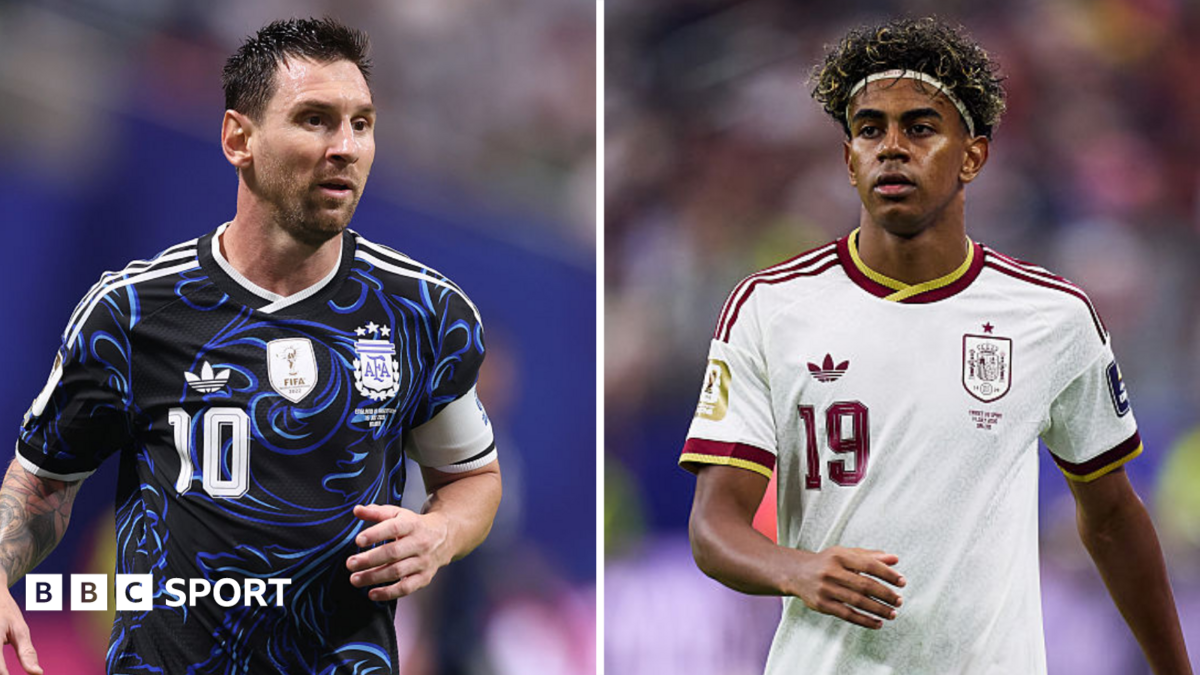
France and England meet in the third-place playoff, while attention is also turning to Argentina against Spain, where Lionel Messi and Lamine Yamal are set for a generational showdown.

Recommended Stories

list of 4 itemsend of list

Here is what to know:

What’s the schedule for the third-place game?

What are the predictions?

France and England have met three times at the FIFA World Cup. England won the first two encounters, beating France 2-0 in the 1966 group stage and 3-1 in the 1982 first group phase. France claimed the most recent meeting, defeating England 2-1 in the quarterfinals of the 2022 World Cup in Qatar.

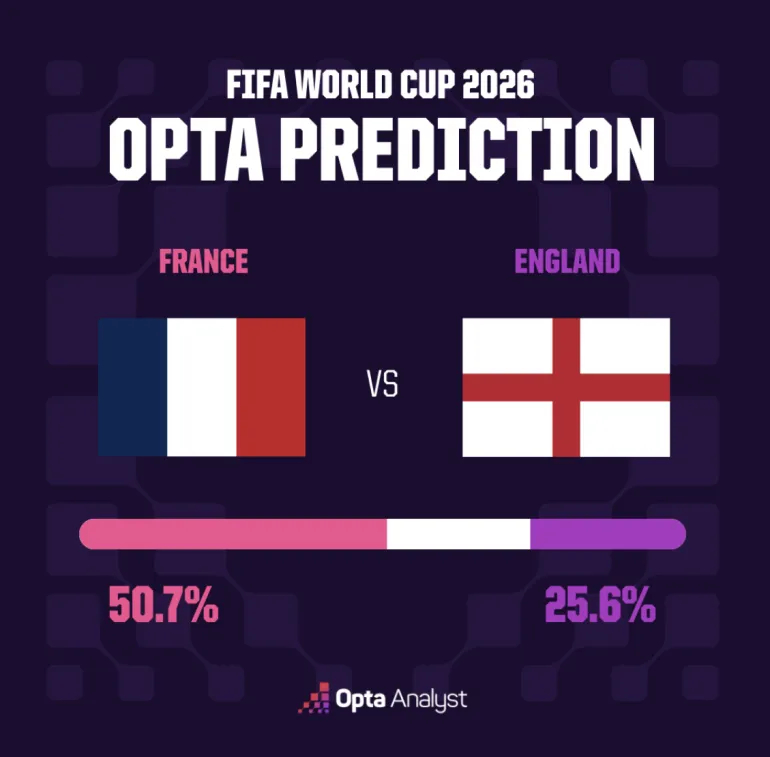
According to the Opta supercomputer, France are favourites to win the third-place playoff. After running 25,000 pre-match simulations, the model gave Les Bleus a 50.7 percent chance of winning in 90 minutes. England were assigned a 25.6 percent chance of victory, while 23.7 percent of the simulations ended in a draw after regulation.

France vs England

What do we know about the final?

Spain and Argentina will face off in the final on Sunday, July 19, at New York-New Jersey Stadium in East Rutherford, with kickoff scheduled for 19:00 GMT.

Spain are chasing a second World Cup crown, while defending champions Argentina are looking to secure a fourth title. Their most recent meeting came in a 2018 international friendly in Madrid, where Spain recorded a 6-1 victory.

US President Donald Trump is expected to attend the final and present the World Cup trophy to the winners.

The winners will also receive something new alongside the trophy and gold medals. For the first time, FIFA will award championship rings, a tradition borrowed from North American sports. Thirty customised rings will be produced for the winning squad, while another 1,996 collector’s editions will be sold to fans.

The rings will then be customised to reflect the identity of the winning team and individually fitted before being presented at a later date. One side will feature the World Cup trophy, while the other will carry details specific to the champions.

Organisers are also monitoring air quality after smoke from Canadian wildfires triggered health advisories across parts of the New York metropolitan area. So far, there is no indication Sunday’s final will be affected.

What other things are happening?

Tuchel’s tactics trigger backlash

England’s World Cup semifinal defeat to Argentina has triggered fierce criticism of Thomas Tuchel, with many accusing the German coach of repeating the mistakes that have haunted England for decades.

After England squandered a 1-0 lead to lose 2-1, British media questioned Tuchel’s tactical decisions, particularly his defensive substitutions. Headlines described it as the “same old story”, while critics argued the coach “just shrank” in the biggest moment.

Former England captain Gary Lineker also questioned whether Tuchel is the right man to lead the team, saying he was hired specifically to deliver a major trophy after years of near misses under Gareth Southgate. Like his predecessor, Tuchel has been accused of becoming too cautious after taking the lead, with many arguing his changes invited pressure and ultimately cost England a place in the World Cup final.

From bathtub to World Cup final

Nearly two decades ago, photographer Joan Monfort thought little of a charity photo shoot showing a 20-year-old Lionel Messi bathing a baby in a plastic tub. Years later, that baby was revealed to be Lamine Yamal, creating one of football’s most remarkable coincidences.

The images, taken in 2007 for a charity calendar produced by Sport newspaper and UNICEF, have resurfaced ahead of Sunday’s World Cup final, where Messi’s Argentina will face Yamal’s Spain. In the photos, Messi gently washes the infant, whose family had been randomly selected through a raffle in the Catalan city of Mataro.

Monfort, who captured the pictures while working on assignment, said the coincidence still amazes him. “I never believed things were destined to happen, but I’m starting to have my doubts,” he told The Associated Press.

The story has become even more extraordinary given what followed. Messi went on to establish himself as one of the greatest players in football history before leaving Barcelona in 2021, while Yamal emerged as the club’s next superstar just two years later. Now, the pair meet on opposite sides in the World Cup final, completing a journey that began with a chance photo shoot nearly 20 years ago.

Wildfire smoke disrupts World Cup final preparations

Spain’s preparations for the World Cup final have been affected by hazardous air quality caused by smoke from Canadian wildfires, with players training outdoors in northern New Jersey on Thursday under hazy skies.

Media were only allowed to watch the opening 15 minutes of the hour-long session, making it unclear how intense the workout was. Meanwhile, Argentina remained at its training base near Atlanta after Wednesday’s semifinal win over England, avoiding the worst of the smoke because of its more southerly location.

The smoke, driven south from wildfires in northern Ontario, has prompted air quality warnings across parts of the US Midwest and Northeast. Health officials urged people to stay indoors or wear masks outdoors as pollution levels reached unhealthy to hazardous levels.

Medical experts questioned the decision to hold outdoor training in such conditions. Dr Courtney Howard, an emergency physician and Global Climate and Health Alliance official, said elite athletes should avoid exercising outside when wildfire smoke reaches hazardous levels, recommending indoor, air-conditioned facilities instead.

Source link

South Korea to designate Dec. 3 as People’s Sovereignty Day

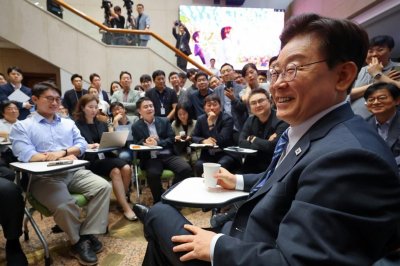
South Korean President Lee Jae Myung (R, front) attends a press conference with reporters covering him and the presidential office at Cheong Wa Dae in Seoul, South Korea, 15 July 2026. Photo by YONHAP / EPA

July 17 (Asia Today) — South Korean President Lee Jae Myung said Friday that the government will designate Dec. 3 as People’s Sovereignty Day to commemorate citizens who resisted the 2024 martial law declaration and preserve the country’s democratic values.

Lee made the announcement during a citizen event marking the launch of the presidential Light Committee at Cheong Wa Dae on Constitution Day.

“The government of popular sovereignty will firmly uphold the most basic and fundamental principle that the people are the owners of the country,” Lee said.

He said South Korea must ensure that democracy and popular sovereignty are never threatened again.

“No one should attempt to stand above the Constitution,” Lee said.

The presidential Light Committee was established in March to promote projects preserving the spirit of citizens who opposed the Dec. 3, 2024, martial law declaration. The committee officially launched Monday.

Park Mi-kyung, chairwoman of the Gwangju Federation for Environmental Movement, was appointed to lead the committee.

Lee recalled the citizens who rushed to the National Assembly after martial law was declared, remained outside the legislature for several nights over concerns that martial law could be imposed again and participated in outdoor demonstrations calling for the president’s impeachment during the winter.

“The great people of our country chose solidarity over division, peace over violence and action over silence,” Lee said.

“They clearly demonstrated that South Korean democracy may be shaken, but it will never collapse.”

Lee said the committee will preserve and document what his administration calls the “Revolution of Light,” referring to the public movement opposing martial law.

“Through the Light Committee launched Monday, we will remember and record this great history for generations,” Lee said.

He said the government will designate Dec. 3 as People’s Sovereignty Day so citizens can remember the events together each year.

“This will allow the values of democracy to be fully passed down to future generations forever,” Lee said.

The president also announced plans to systematically collect and preserve records related to the public opposition to martial law.

The government will develop a digital archive to document citizen participation and promote South Korea’s democratic experience internationally, he said.

Lee described the country’s model of citizen-led democracy as “K-democracy.”

“I hope the brilliant lights of many colors that our citizens raised in the streets and public squares will become a bright beacon illuminating democracy around the world, beyond South Korea,” Lee said.

— Reported by Asia Today; translated by UPI

© Asia Today. Unauthorized reproduction or redistribution prohibited.

Original Korean report: https://www.asiatoday.co.kr/kn/view.php?key=20260717010006351

Source link

Kolkata sings for Messi as World Cup fever takes hold | World Cup 2026

“Us vs them”

Kolkata football has, over the past century, come to revolve — much like in Madrid, Merseyside and Manchester —  around intense local derbies. In this case, the rivalry between Mohun Bagan and East Bengal draws crowds of more than 50,000 and dominates football conversation in the city.

“There is a great passion for football in other parts of India too – Goa in the west, Kerala in the south and Sikkim and Manipur in the northeast,” said Kolkata-based football analyst Debanjan Banerjee.

“But the longstanding rivalry between two great clubs in Kolkata has created not just a binary structure for fandom, but an intellectual capacity for football that is of a different order to the rest of India. It means that football is discussed seriously all year long in Kolkata. Football is often the thread connecting the generations. The middle-aged East Bengal or Mohun Bagan supporter of today was one even at the age of ten.”

Had Mohun Bagan or East Bengal existed in isolation, Banerjee explained, neither club would have become as big as it is today. He noted that football in Kolkata shapes how fans think far beyond the pitch.

“It influences how they see politics, art and even history,” he added.

Unusually for a Kolkata fan, Banerjee saw himself more as a student of football fandom – its tribal nature, its irrationality, its love-at-first-sight origins, its feeling for the underdog – than of football itself. He even contributed a video essay on the rivalry between Mohun Bagan and East Bengal to the popular YouTube chronicle of football fan culture COPA90.

Last December, Messi made a much-anticipated visit to a few Indian cities. His appearance in Kolkata turned chaotic when he left early, prompting angry fans to breach barricades and rush onto the field.

Banerjee said the chaos reflected a deeper emotional pull around football icons in Kolkata.

“The city administration was blamed for not organising the event properly,” he observed. “But the minister, the policeman, the volunteer at the stadium … they all had the same identity as the fan who paid big money for a ticket. When you have larger-than-life idols, you cannot draw boundaries.”

Yet even Messi is not wholly responsible for Kolkata becoming a suburb of Buenos Aires every four years. Some veteran Argentina fans, such as the voluble novelist and football journalist Indrajit Hazra, 55, can remember a time in the 1980s when supporting Argentina was not the default position in Kolkata, as it is today, but was actually unusual.

If anything, Messi represents the high point of a long era in Bengal-Argentina relations. (Not just in Indian West Bengal, but also across the border in Bangladesh, which is similarly pro-Argentina). That era began in 1986 – the first World Cup tournament to be widely seen on television in India, and therefore a landmark year in the lives of most over 50-year-old Indian football fans. That year, Kolkata pulsed to the magic of another Argentine midfield virtuoso: Diego Maradona.

Before 1986, Hazra explained, Brazilian football was the gold standard for Kolkata for over three decades.

“Pele, who came to Kolkata in 1977 with the New York Cosmos to play an exhibition match against Mohun Bagan, was thought the greatest player of all time. Maradona changed all that with his remarkable feats in 1986. We didn’t read about him; we saw him with our own eyes on TV.”

“To this day, those images are imprinted on my mind and those of millions of my generation.” he added.

Asked whether he thought Messi was the greatest player of all time, he replied with a laugh, “Yes, Messi is great, but Maradona …”

He didn’t need to say more.

Source link

Pacific Ocean earthquake is felt from Mexico to El Salvador

Members of the Mexican National Guard in the city of Tapachula remove debris caused by the 7.3-magnitude earthquake that struck the southern Mexican Pacific coast, on the border with Guatemala. Photo by Juan Manuel Blanco/EPA

July 17 (UPI) — A 7.3-magnitude earthquake struck off the Mexico-Guatemala coast in the Pacific Ocean on Friday, being felt as far as El Salvador.

Authorities said there were no casualties or major damage from the quake.

The epicenter was located some 36 miles off the coast of the Mexican state of Chiapas, according to the U.S. Geological Survey.

Four people were injured in Chiapas, and authorities have also responded to reports of minor structural damage, CNN reported.

President Claudia Sheinbaum said emergency protocols were activated in several Mexican states.

“Authorities from all three levels of government are conducting inspections on the ground to assess any possible structural damage and coordinate preventive measures,” Sheinbaum said on X.

In Guatemala, President Bernardo Arevalo said the quake caused landslides in the city of San Pedro La Laguna, but no major incidents were reported.

“We are already clearing the affected section and taking steps to ensure public safety,” Arevalo said on X.

Officials in El Salvador, where the tremor triggered evacuations, said no major damage was reported.

Gov. Salomon Jara Cruz, of the Mexican state of Oaxaca, said the quake was felt “with moderate intensity.”

Source link