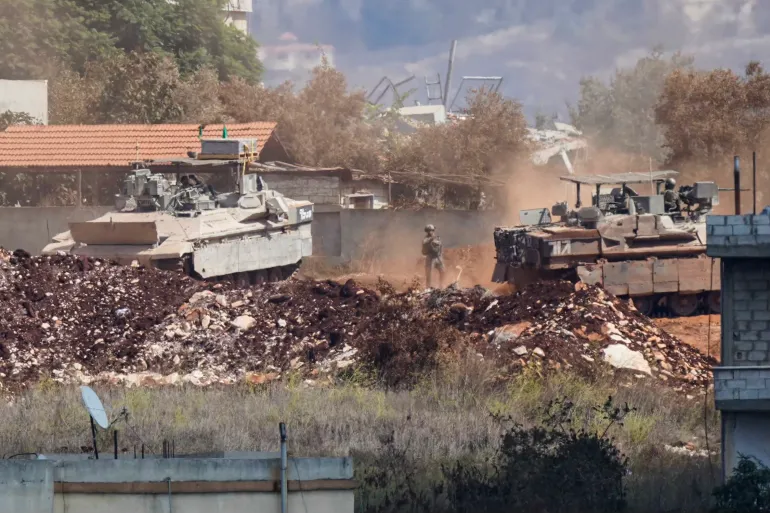
withdrawal

Board of Peace says no Israeli withdrawal from Gaza before Hamas disarms | Israel-Palestine conflict News

Netanyahu and board director Maldenov meet amid tensions over Gaza disarmament roadmap and recent Israeli attacks.

The US-led Board of Peace has said that an Israeli withdrawal from Gaza will only take place after the disarmament of Hamas is complete, following a meeting between the body’s director, Nickolay Mladenov, and Israeli Prime Minister Benjamin Netanyahu.

The meeting on Monday in West Jerusalem came as Israeli politicians signalled their displeasure with the deal, announced by US President Donald Trump last Thursday.

Recommended Stories

list of 3 itemsend of list

“Contrary to inaccurate reports, we note that the withdrawal of the [Israeli military] beyond the Yellow Line will take place only once decommissioning is complete, as Hamas committed to the mediators,” the Board of Peace, established by Trump in January to oversee the administration of Gaza after Israel’s genocidal war, said. “This applies to light weapons, heavy weapons, and the tunnels alike.”

The “Yellow Line” is the term used to refer to the demarcation line behind which Israeli forces continue to base themselves in Gaza.

“The goal is clear and is not in question: the complete decommissioning of weapons in the Strip and the transition away from rule by the gun to civilian governance,” the Board of Peace added in a social media post after the meeting.

For its part, Hamas has insisted that the deal will not be implemented unless Israel implements its part of the agreement.

During the talks, Mladenov urged Netanyahu to stop attacks on Gaza, two people familiar with the meeting told The Associated Press news agency. Israel has steadfastly refused to do so, despite an October 2025 “ceasefire”, since which it has killed more than 1,200 Palestinians, including more than 36 after the disarmament deal was announced.

Israel has killed more than 73,000 Palestinians in Gaza since its genocidal war began in October 2023.

Palestinians inspect the site of an overnight Israeli strike on a medicine warehouse, according to medics, next to tents sheltering displaced Palestinians, in Deir al-Balah, in the central Gaza Strip, August 1, 2026, residents had been pre-warned by the Israeli military to evacuate. REUTERS/Mahmoud Issa REFILE - ADDS INFORMATION
Palestinians inspect the site of an overnight Israeli strike on a medicine warehouse, August 1, 2026 [Mahmoud Issa/Reuters]

Before the meeting, Netanyahu’s office said that the version of the agreement made public “does not reflect Israel’s positions”, and that its concerns had been shared with the US.

Members of the Israeli prime minister’s far-right government have already signalled that they want to backtrack on the deal.

Finance Minister Bezalel Smotrich said the agreement was “completely different” to the one the Israeli government had approved, and demanded a new vote “immediately”.

Israel has repeatedly flouted agreements and has been accused of being unwilling to make concessions during negotiations. The latest reversal comes despite a push from Trump to secure a deal, but months ahead of an Israeli election in which the government is under pressure from its base to demonstrate it has achieved total victory in Gaza.

Mladenov criticised the strikes over the weekend, without directly naming Israel. “Achieving a lasting peace is hard but achievable if everyone makes their best efforts,” he wrote.

Egypt, Qatar, and Turkiye, which mediated the disarmament deal, issued a joint statement condemning Israel’s targeting of civilians and healthcare facilities as a “flagrant violation of international law”.

Hamas said it and other Palestinian factions remained committed to the completion of the second phase of the ceasefire, and were awaiting a clear, official response from Mladenov and the mediators.

Source link

Chad announces withdrawal from International Criminal Court

An exterior view of the International Criminal Court (ICC) in The Hague, The Netherlands, on March 11, 2025. Chad on Monday announced its formal withdrawal from The Hague. File Photo Robin Utrecht/EPA-EFE

July 28 (UPI) — Chad has announced it is withdrawing from the International Criminal Court, days after a U.S. official urged the central African nation to consider doing so and amid a concerted U.S. campaign seeking to dismantle the court.

In an official communique made public Monday, Chad’s Ministry of Foreign Affairs said it notified United Nations Secretary-General Antonio Guterres of its decision to withdraw from the Rome Statute, the treaty establishing the court, following what it described as an “in-depth examination” of its operations.

The ministry said the court’s effectiveness “has remained limited and uneven in light of the expectations that led to its creation,” alleging an anti-African bias and noting that its first nine investigations concerned situations in Africa. The ICC currently lists 17 situations under investigation.

Chad also highlighted that six of the seven people in the court’s custody are being prosecuted in connection with situations in Africa.

“Taken together, these objective factors explain the perception, widely shared among numerous states and their populations, that the court’s judicial activity has remained durably concentrated on the Global South in general and on the African continent in particular, which have consistently been victims of a form of political instrumentalization of the ICC,” the ministry said.

It called on the African Union and member stats to reconsider the future of what it called an “apparently biased system” and to strengthen the African judicial mechanisms instead.

The decision, which is to take effect in one year, comes amid an intensified U.S. campaign against the ICC following the court’s issuance of arrest warrants for Israeli Prime Minister Benjamin Netanyahu and former Defense Minister Yoav Gallant over alleged war crimes and crimes against humanity in Gaza.

Earlier this month, U.S. Secretary of State Marco Rubio announced a campaign seeking to “dismantle the threat posed by the International Criminal Court to U.S. sovereignty.”

The United States is not a member of the ICC, and although the Trump administration has taken a more aggressive stance toward the court, the United States has long rejected the cour’s assertion of jurisdiction of U.S. nationals without Washington’s consent.

Four days before Chad announced its decision to withdraw from the ICC, Foreign Minister Abdoulaye Sabre Fadoul spoke with U.S. Under Assistant Secretary of State for African Affairs Frank Garcia Jr..

A statement from Chad said the call was made at the request of the United States. During the call, Garcia expressed the United States’ concerns about the ICC’s operation and requested that Chad review its membership, which Fadoul said Chad would.

“The United States welcomes Chad’s decision to withdraw from the ICC and join the growing number of nations reclaiming their sovereignty from this flawed institution,” the State Department’s Bureau of African Affairs said in a statement.

“The United States will never surrender its sovereignty to an unaccountable global tribunal, and we are launching a comprehensive, whole-of-government campaign to end the ICC’s illegitimate overreach. We call on all other ICC members to withdraw from the Rome Statute.”

The announcement comes days after Venezuela announced it was withdrawing from the ICC.

Burkina Faso, Mali and Niger all announced their withdrawals from the court in June 2026.

Source link

Trump vows to help Lebanon but offers no timeline for Israeli withdrawal | Israel attacks Lebanon News

President Donald Trump has promised that the United States will “help” Lebanon as he met with his Lebanese counterpart Joseph Aoun amid continued occupation of the south of the country by Israeli forces.

The US president did not announce any concrete policies towards Lebanon as he spoke to reporters alongside Aoun at the White House on Tuesday.

Recommended Stories

list of 3 itemsend of list

Asked whether there will be a timeline for Israel’s withdrawal from the country, Trump said: “They’re in the process of doing that. They’re in the process of redeploying [to] other sections.”

In reality, Israel has not pulled back from any area it has occupied since March. On Monday, the US State Department announced the establishment of the first “pilot zone” under a Lebanon-Israel framework.

Such areas are supposed to see the Lebanese army deploy to previously occupied towns and ensure that there is no Hezbollah military presence, so reconstruction can begin and residents can return. But the three towns announced in the first pilot zone were not under Israeli control, so Israel did not withdraw from them.

Israel has been systemically razing entire villages in south Lebanon, with Israeli officials openly declaring the objective of erasing Lebanese border towns out of existence.

On Tuesday, Aoun did not mention Israeli abuses in his comments next to Trump. Instead, he heaped praise on the US leader and hailed the US-brokered framework agreement between Lebanon and Israel, which conditions Israeli withdrawal on disarming Hezbollah.

“I would like to thank President Trump, really, and his team for the historic visit and for the historic achievement that we did together by signing the framework with the ultimate objective of ending the state of hostility between Lebanon and Israel forever,” the Lebanese president said.

‘We’re going to help it a lot’

Israel has killed more than 4,000 people in Lebanon since the all-out regional war broke out earlier this year, targeting hundreds of medics and journalists as it invaded the country.

In his opening remarks, Trump said that Lebanon had been “badly treated” for decades without elaborating on the source of the mistreatment.

“We’re going to help it. We’re going to help it a lot,” the US president said. “So it’s an honour to have the president and your representatives here.”

Trump also renewed his suggestion that neighbouring Syria should intervene militarily in Lebanon to help disarm Hezbollah – a proposal that has been repeatedly rejected by Syrian authorities.

Hezbollah and the current government in Damascus – led by President Ahmed al-Sharaa – fought on opposite sides of the Syrian civil war.

The Lebanese group backed the government of President Bashar al-Assad, and al-Sharaa was a rebel commander who, early in the war, led the al-Qaeda branch in the country.

Trump took the opportunity on Tuesday to express his admiration of al-Sharaa once again.

“He’s pulled Syria together. He would like to come in and do something with Hezbollah. You know, they’ve been fighting. He’s been fighting Hezbollah for a long time. I think it’d be very effective. So it’s something I think about,” he said.

A Lebanese reporter asked Trump what concrete support he may offer Aoun during the visit. The US president said, “You’ll find out.”

‘I would speak to Hezbollah,’ Trump says

Trump also said he is open to speaking directly with Hezbollah.

“I would speak to Hezbollah. I speak to everybody,” he told reporters.

“I would say this: If the president wanted me to speak to Hezbollah – you know, he’s lived with Hezbollah for a long time – and if the president wanted me to speak to Hezbollah, I would,” Trump added, referring to Aoun, who previously served as Lebanon’s top general.

Aoun had called for assistance to the Lebanese Armed Forces (LAF), saying that the military remains the “backbone of security and stability”.

Hezbollah has been highly critical of Aoun’s decision to engage in direct talks with Israel, as well as the framework in which Lebanon agreed not to pursue accountability for Israeli abuses in international courts and at the United Nations.

For his part, Aoun has accused Hezbollah of dragging Lebanon to war on behalf of Iran, stressing that the Lebanese military must be the sole armed force in the country.

Source link

Iran Demands Reparations and United States Troop Withdrawal in New Peace Proposal

Iran has publicly outlined key elements of its latest peace proposal to the United States, demanding reparations for war damage, the withdrawal of United States forces from areas near Iran, and the lifting of economic sanctions as part of any broader agreement.

According to comments from Iranian Deputy Foreign Minister Kazem Gharibabadi, the proposal also calls for the release of frozen Iranian assets, an end to restrictions affecting Iranian trade and shipping, and a halt to hostilities across regional conflict zones including Lebanon.

The proposal emerged after United States President Donald Trump announced that he had paused a planned military strike against Iran to allow additional time for negotiations regarding Tehran’s nuclear programme and regional security issues.

Iran Pushes for Broader Regional Settlement

Tehran’s proposal reflects an effort to expand negotiations beyond nuclear issues into wider geopolitical and security concerns across the Middle East.

Iran appears to be seeking a comprehensive arrangement that addresses not only sanctions and military pressure but also the broader regional balance of power involving Lebanon, the Gulf region, and United States military deployments.

The demand for reparations is particularly significant because it frames the recent conflict as an act requiring compensation for damage caused by joint United States and Israeli military operations.

Iranian officials also continue insisting that economic sanctions and frozen overseas assets remain central obstacles to any sustainable agreement.

United States Signals Openness but Maintains Pressure

Trump stated that there was a strong possibility of reaching a deal that would prevent Iran from obtaining nuclear weapons while avoiding renewed military escalation.

However, Washington has not publicly confirmed any major concessions in negotiations. Reports suggesting the United States may release a portion of frozen Iranian funds or allow limited peaceful nuclear activity under international supervision remain unverified by American officials.

At the same time, United States officials continue denying claims that sanctions on Iranian oil exports would be fully waived during negotiations.

The situation reflects a complex diplomatic balancing act in which Washington seeks to maintain leverage while preventing a wider regional conflict that could destabilise global energy markets and military alliances.

Regional Powers Push for De Escalation

Regional governments including Qatar, Saudi Arabia, and United Arab Emirates reportedly urged Trump to delay military action in hopes that negotiations could succeed.

The involvement of regional mediators highlights growing concern across the Gulf about the economic and security consequences of another large scale conflict involving Iran.

The Strait of Hormuz remains especially important because it serves as one of the world’s most critical shipping routes for oil and energy exports. Any escalation threatening maritime trade could have severe consequences for global energy prices and economic stability.

Meanwhile, Pakistan has reportedly continued acting as a communication channel between Tehran and Washington after previously hosting peace talks between the two sides.

Ongoing Tensions Despite Ceasefire

Although a ceasefire has largely held since the suspension of major hostilities earlier this year, tensions remain extremely high across the region.

Iran and its regional allies continue facing accusations of supporting drone activity and proxy operations targeting Gulf states and Israeli interests. At the same time, Iran maintains that it has survived military pressure without abandoning its nuclear capabilities, missile programmes, or regional alliances.

Israeli Prime Minister Benjamin Netanyahu and Trump previously justified military operations as necessary to weaken Iran’s nuclear programme and reduce its influence through allied militias across the Middle East.

However, analysts note that Iran still retains significant strategic capabilities despite extensive military strikes and economic sanctions.

Analysis

Iran’s latest proposal demonstrates that Tehran is attempting to negotiate from a position of resilience rather than surrender.

By demanding reparations, sanctions relief, and troop withdrawals, Iran is signalling that it expects recognition of its regional influence and strategic endurance despite months of conflict and economic pressure. The proposal also reflects Tehran’s broader objective of reducing the long term military presence of the United States near its borders.

For Washington, the negotiations present a difficult challenge. The United States wants to prevent Iran from advancing toward nuclear weapons capability while avoiding another prolonged regional war that could damage global markets, strain military resources, and increase political pressure at home.

The talks are also shaped by wider geopolitical realities. Gulf states increasingly prioritise regional stability and economic security, making them more supportive of diplomacy than direct military confrontation. Rising energy prices and fears of shipping disruptions further increase international pressure for a negotiated outcome.

At the same time, deep mistrust continues to define relations between both sides. The United States remains sceptical of Iran’s regional ambitions, while Tehran sees sanctions and military deployments as tools of long term containment.

Ultimately, the negotiations reveal a broader struggle over the future balance of power in the Middle East. Even if temporary agreements are reached, the underlying strategic rivalry between Iran, the United States, and Israel is unlikely to disappear in the near future.

With information from Reuters.

Source link

Armed Forces Retake Strategic DR Congo Town After M23 Withdrawal 

The armed forces of the Democratic Republic of Congo (DRC) have taken over the town of Luvungi in the Rusizi Plain of Uvira territory in South Kivu after M23 fighters vacated the area. Following the fierce battle for control among the warring parties, the Rwandan troops and their M23 allies retreated, succumbing to military and diplomatic pressure.

The Congolese army officially retook control of the town on Monday, May 12, restoring the blurry hope of civilians trapped under the violent rule of the rebels.

“We do not know yet whether this withdrawal by the Rwandan army and their M23 surrogates is in respect of various UN resolutions and international demands for the Rwandan army to withdraw from zones they occupy in the DR Congo, or it is just a tactical military withdrawal,” a senior official of the armed forces declared in Kinshasa, the country’s capital city.

Some members of the M23 group and Rwandan fighters are reportedly still present in Katogota, a neighbouring town to Luvungi. The Congolese army has stated that rebel reinforcements have arrived in Kamanyola, which is a strategic border town in South Kivu.

Reagan Mbuyi Kalonji, the spokesperson for Operations Sukola 2, a military campaign aimed at neutralising rebel groups in South Kivu, has revealed that Rwandan forces have deployed heavy weapons on the Bugarama hills. This positioning is intended to maintain their military and strategic control over Kamanyola and its surrounding areas.

The entry of Congolese troops into Luvungi signifies the culmination of troop movements observed in the Rusizi Plain and the upper plateau of South Kivu. Since Saturday, May 9, the Congolese army has been systematically occupying positions left vacant by the M23 fighters, moving from Sange to Mutarule and finally to Luvungi.

The army attributes the withdrawal of Rwandan troops and their M23 allies to “intense military and diplomatic pressure,” while the M23/AFC describes their withdrawal as a “repositioning and a gesture of goodwill” towards the peace process. 

The armed forces of the Democratic Republic of Congo (DRC) have regained control of the town of Luvungi in South Kivu from M23 fighters after a prolonged battle, resulting in the retreat of Rwandan troops and their allies.

This takeover on May 12 brings hope to civilians who were previously under the rebels’ rule. However, there is uncertainty over whether the retreat aligns with UN resolutions for troop withdrawal or if it is a tactical move.

Despite this victory, M23 and Rwandan fighters remain in nearby Katogota, with reinforcements reportedly reaching the strategic border town of Kamanyola. The spokesperson for Operations Sukola 2 reported that Rwandan forces have stationed heavy weaponry on the Bugarama hills to maintain their strategic hold.

The Congolese army’s advance into Luvungi marks a systematic occupation of areas vacated by M23, attributed to intense military and diplomatic pressure, while M23 claims it as goodwill for peace efforts.

Source link