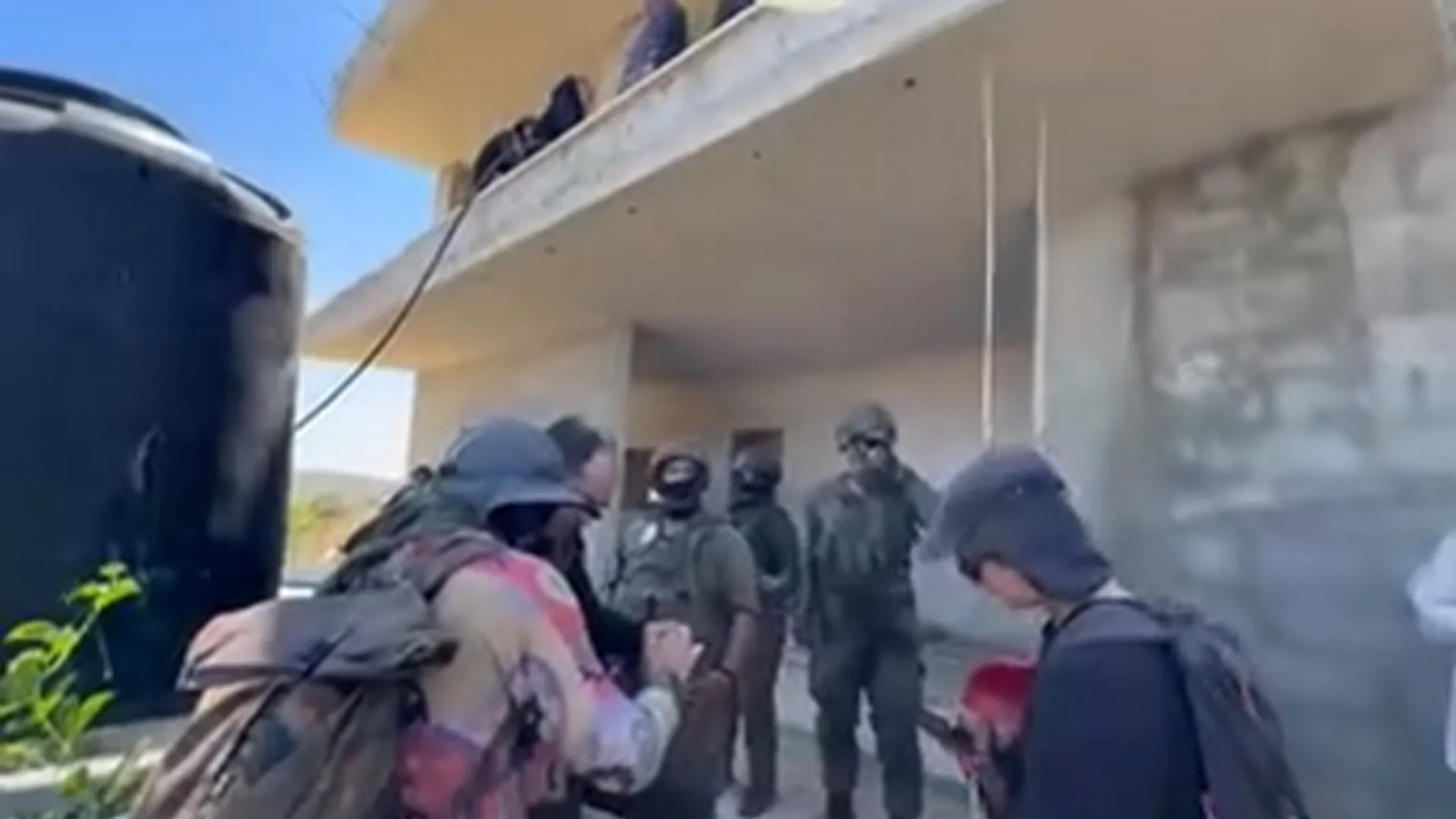
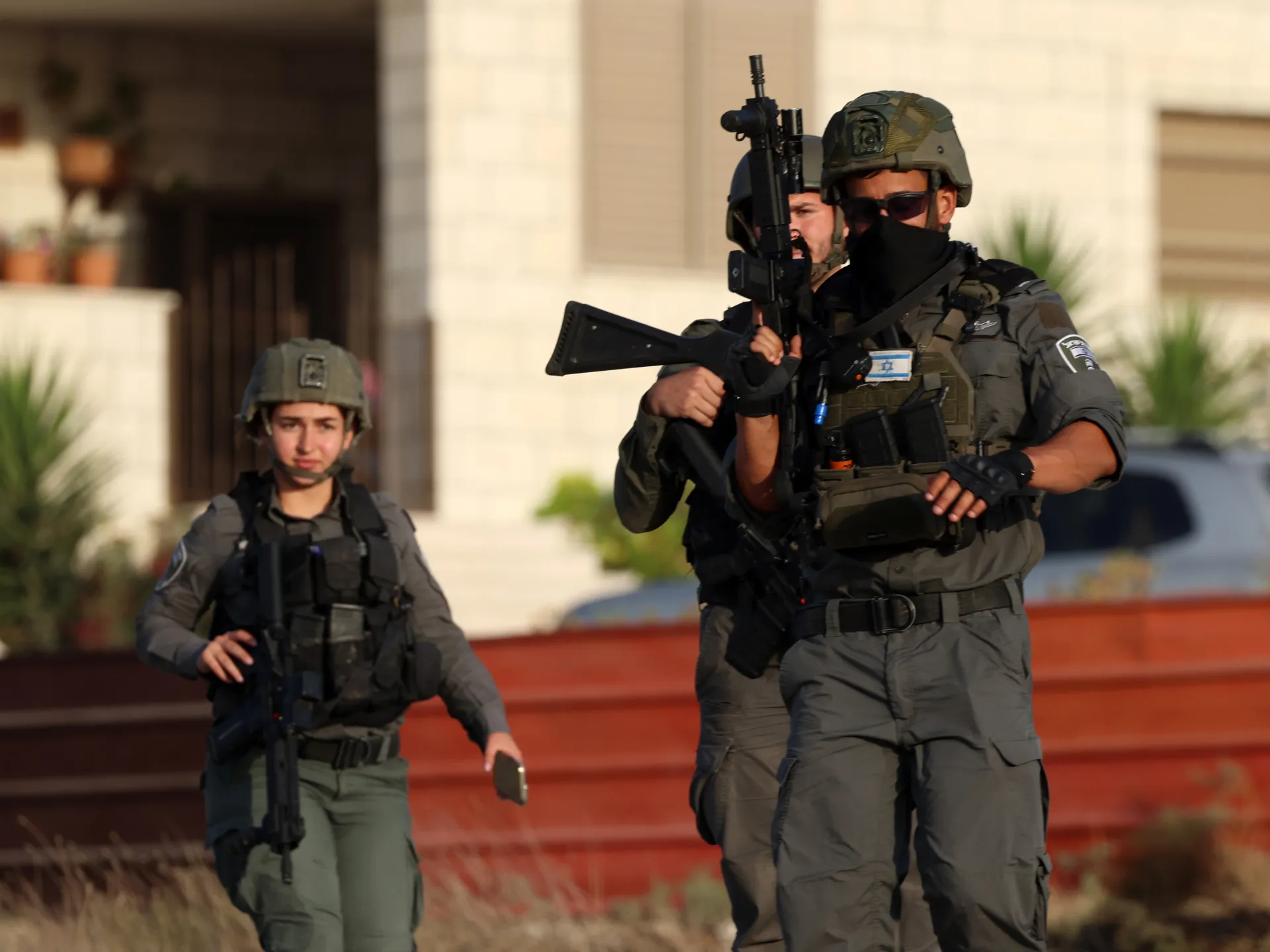
Israeli soldiers have intensified their offensive in the occupied West Bank and East Jerusalem, raiding at least 20 towns and villages, demolishing homes and arresting dozens of Palestinians, as Arab states and the Arab League condemn escalating settler attacks against Palestinians and their property.
Al Jazeera reporters in the occupied West Bank reported on Monday that Israeli forces had stormed the Jabal Salman area in the town of Beita, south of Nablus, and carried out demolition operations in the town of Nilin, west of Ramallah.
Recommended Stories
list of 3 itemsend of list
In a separate incursion, forces stormed the town of Arrabeh in Jenin, accompanied by military bulldozers.
Raids and arrests were also reported in Deir al-Ghusun, north of Tulkarem, where five Palestinians were detained.
Four young men were arrested during raids on the Balata camp and Asira al-Shamaliya in Nablus, Quds News reported.
Soldiers raided homes and made arrests in several other villages and towns, including Deir Jarir, Jalbon, Kafr Qaddum, Tal, Burqa, Beit Furik, Anabta, the Aktaba suburb, Qalqilya, Arroub camp and Beit Ummar.
Quds News reported that Israeli soldiers halted an ambulance trying to transport a pregnant woman from the town of Qaryut to a Nablus hospital for treatment for a medical emergency. Her condition deteriorated, leading to a miscarriage.
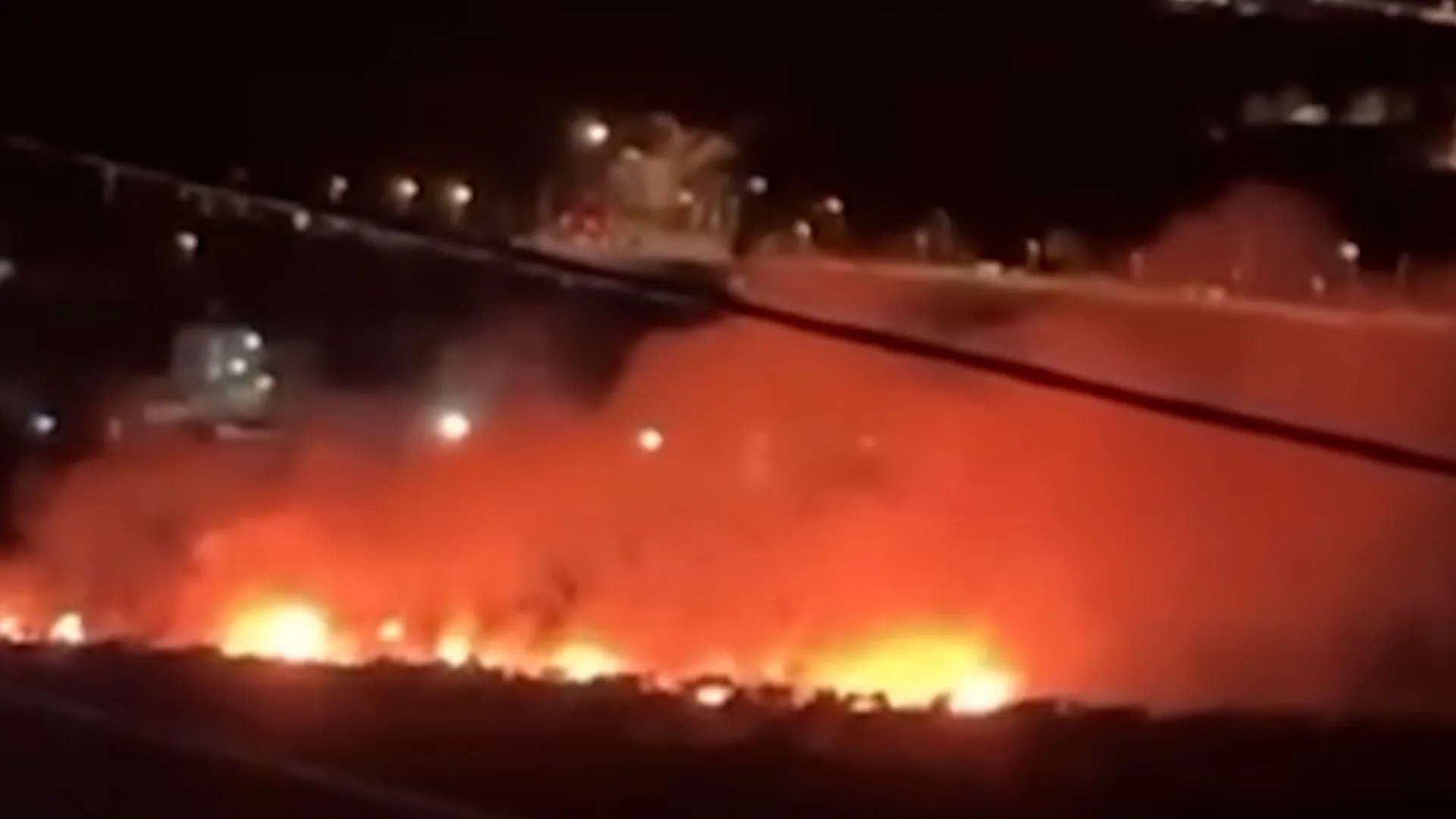
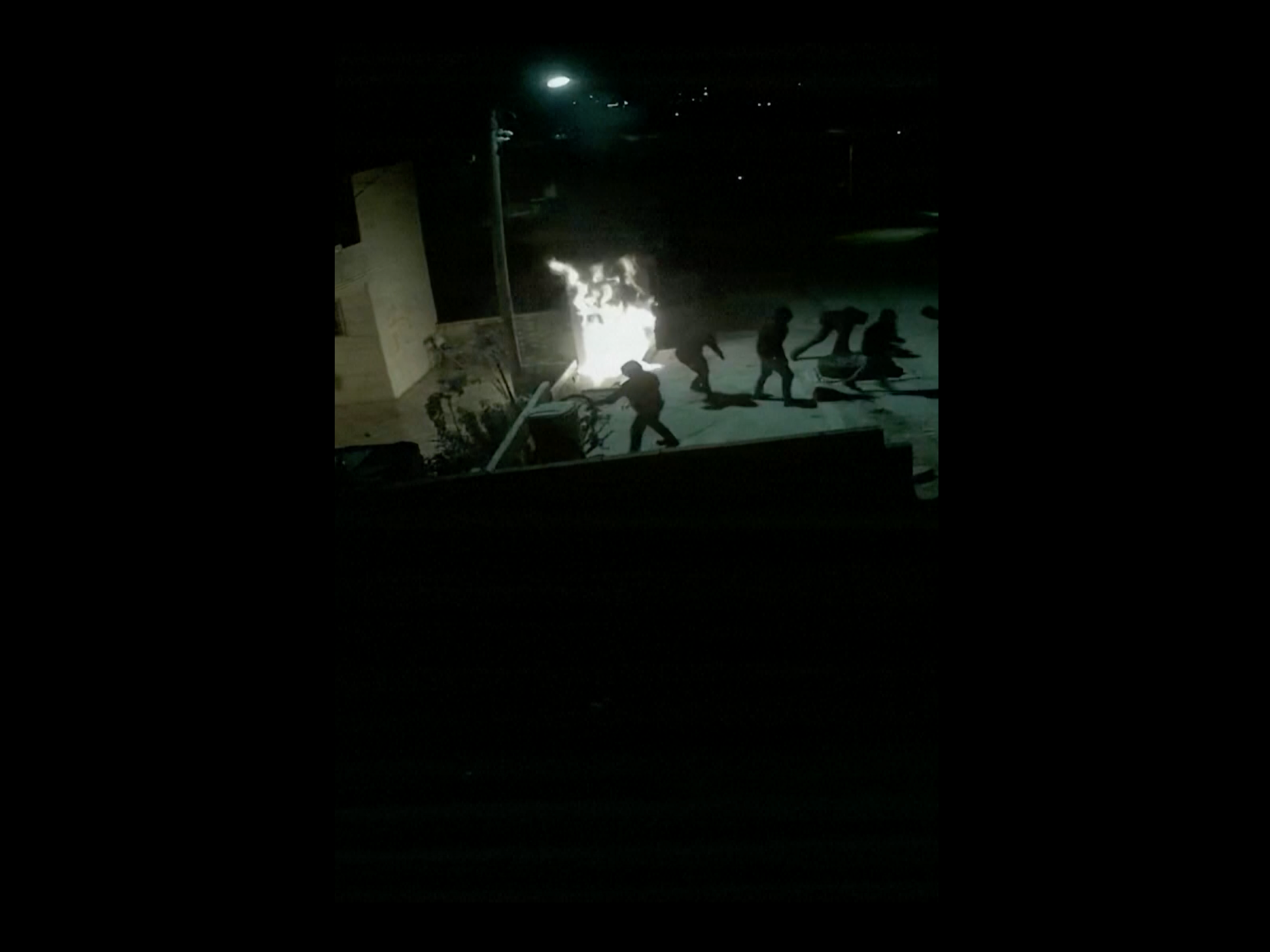
As the Israeli military continues its crackdown, emboldened settlers have intensified their harassment and violent attacks. Palestinians in the Abu Fuzaa encampment near Taybeh village east of Ramallah were attacked on Monday, and in Al-Burj village, south of Hebron, settlers released cattle among olive trees, damaging agricultural land.
“Israeli settlers continue their attacks against Palestinians, mostly in their homes, at night, intimidating them,” Al Jazeera’s Nida Ibrahim reported. “And what happens is that usually Israeli forces would come in and instead of curbing these settlers, they would conduct arrests in the occupied West Bank among Palestinians.”
Palestinians felt trapped and defenceless, with “no one to protect them”, she said, “while the Israeli settlers have the support of the Israeli army and have the impunity to continue attacking Palestinians without any accountability”.
International condemnation
Palestinian President Mahmoud Abbas has sent letters to several world leaders, the European Union, the Arab League and the president of the United Nations Security Council, calling for urgent action to stop Israeli aggression and settler violence against Palestinians.
Francesca Albanese, the UN’s Special Rapporteur on the occupied Palestinian Territories, wrote in a post on X on Saturday that settler attacks were “pogroms against defenceless civilians”.
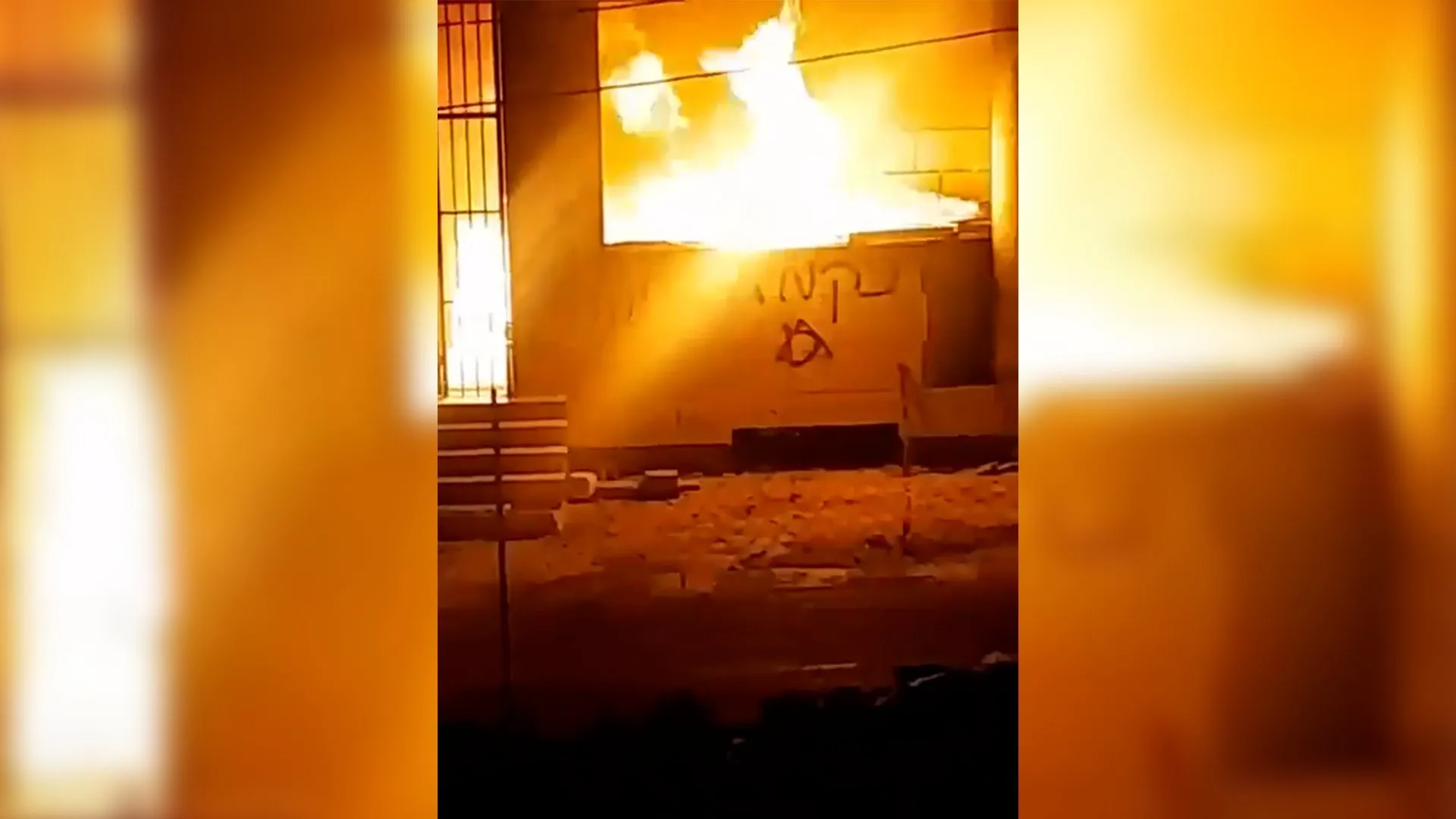
The UAE, Jordan, Egypt, Saudi Arabia, Qatar, Algeria, Morocco, Tunisia, Oman, Kuwait and Bahrain issued statements condemning the attacks, including a mosque in Tulkarem being set ablaze.
The Arab League issued a collective condemnation, warning that the situation was approaching a “moment of explosion” and calling on the international community to intervene.
The Spanish government said in a statement on Saturday that Israel “must reverse its policies of settlement expansion and of shielding settler violence against the Palestinian civilian population”.
Hamas official Mahmoud Mardawi described settler attacks on mosques as “systematic fascist crimes”.
Haaretz quoted Israeli military officials describing the situation in the West Bank as “extremely dangerous and volatile”. An editorial in the Israeli newspaper said senior army officers had warned that the government was giving “tailwind” to settler violence, with one reservist officer saying his unit lacked sufficient troops and could only “stand by and watch”.
“We have to remember that this time is very sensitive, because we’re getting closer to Israeli elections, and Netanyahu wants to stay in power. He wants to appease his far-right members and coalition by showing the voters that he will be cracking down more and more on Palestinians,” Al Jazeera’s Ibrahim said.
“He’s trying to get some sort of credit for the attacks against Palestinians and the raids in general.”
Since October 2023, the Israeli military has killed nearly 1,200 Palestinians in the occupied West Bank, according to Arab League figures, in addition to more than 73,000 killed in Gaza during Israel’s genocidal war there.
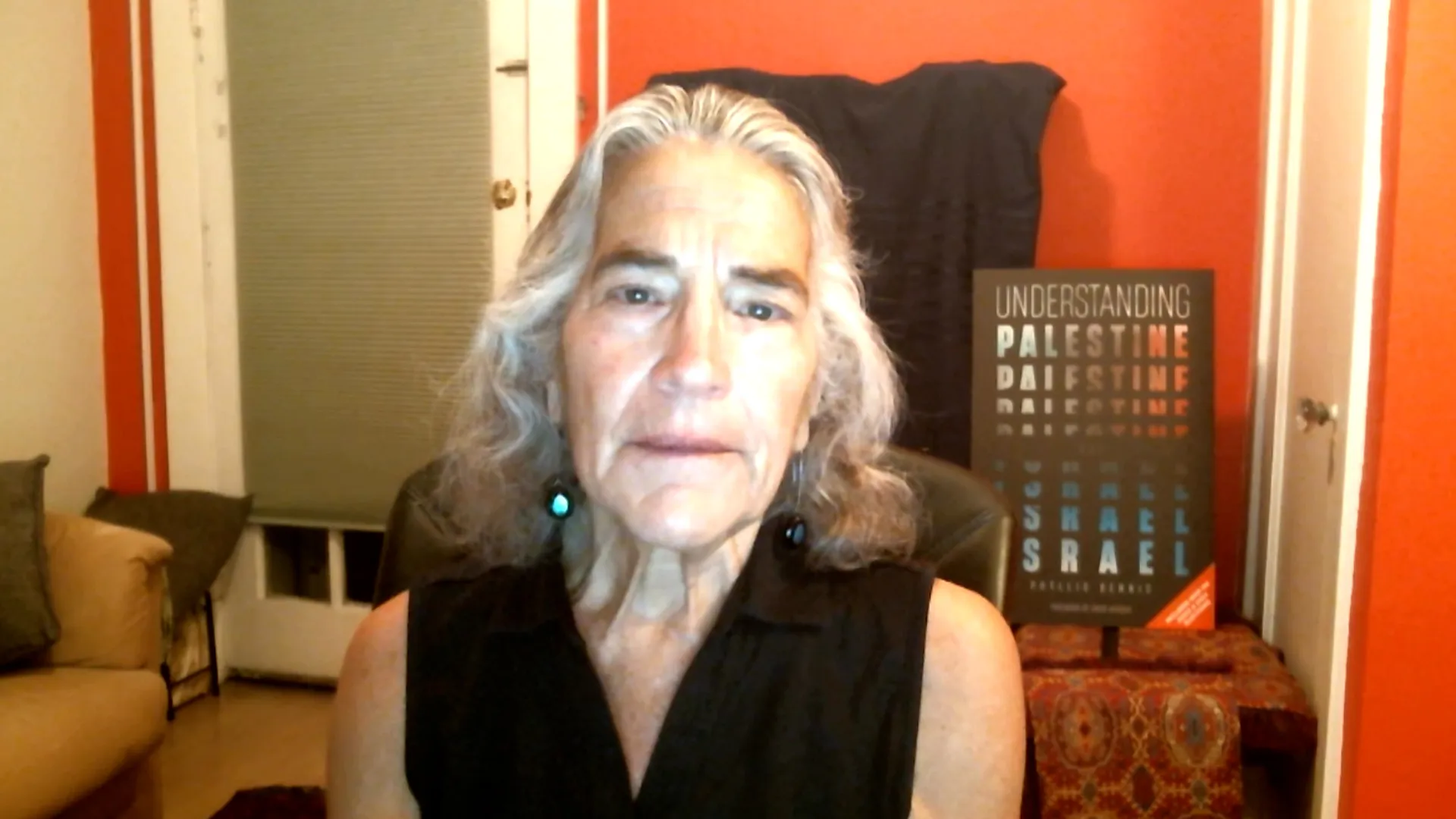
Israel is intensifying its crackdown on Palestinians in the occupied West Bank after an attack by Israeli settlers resulted in the deaths of six people. Author and activist Phyllis Bennis says we’re seeing an ‘increase in direct war crimes’ with no accountability.
Israeli settlers set fire to Al-Rahma Mosque in Qusra, near Nablus, as Israeli forces arrested dozens of Palestinians across the occupied West Bank. Israeli PM Benjamin Netanyahu ordered a military crackdown following a shooting in Tal that killed four Palestinians and two Israelis on Friday.
At one point in the documentary, House of Hope, the protagonist, Manar Wahhab, breaks down in a classroom corner in the school she founded with her husband in the occupied West Bank. The cameras keep rolling.
“To step into someone’s life with a camera at the moment when they’re really down, it feels a little bit uncomfortable, but we made the choice together to keep filming during these moments. I wanted the audience to be there with them,” director Marjolein Busstra told Al Jazeera.
Recommended Stories
list of 4 itemsend of list
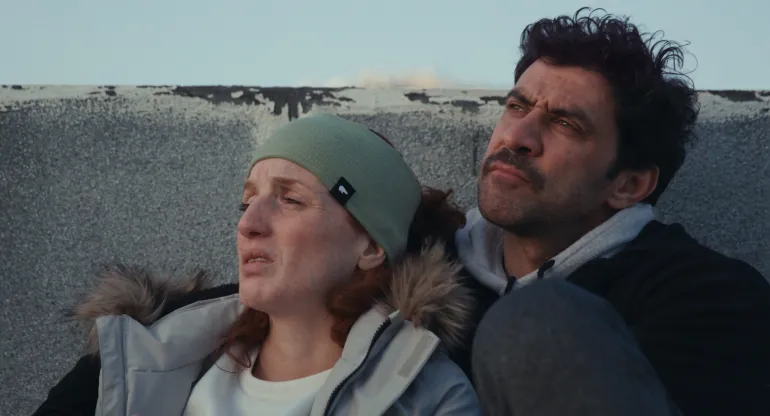
The film follows Wahhab, a Palestinian woman who established a Waldorf school with her husband, Milad Vosgueritchian, in al-Eizariya in the occupied West Bank.
House of Hope Vision Kindergarten & School teaches the Waldorf philosophy of non-violent resistance and offers children a space to express their emotions and cope with the trauma and difficulty of living under occupation.
“The school protects the children’s dignity in the present moment. It’s more about refusing to let occupation shape their inner world, so that they can actually be children and have agency,” Busstra said. “It’s in Waldorf philosophy that they make space to express the feelings.”
Working with a Palestinian crew, Busstra spent three years with Wahhab, travelling to the occupied West Bank nine times throughout the course of the documentary. She first met Wahhab 18 years ago during a film workshop in the West Bank.
Although the documentary centres around the elementary school, Wahhab is the story’s driving force. The story follows Wahhab and Vosgueritchian, both at the school and at home with their children.
“I started filming the school, but right away, I knew I wanted to do it about Manar’s inner life,” Busstra said. “I think hope is a difficult word at the moment, but I have a deep awe for Manar, who keeps creating and teaching even while carrying so much herself.”
For Wahhab, her respect for Busstra and their existing friendship helped her trust the film crew during vulnerable moments.
“We both believe deeply in education, in children’s creativity and freedom and in seeing the human being as something whole and beautiful in mind, soul and spirit. Those shared values created openness and trust between us and helped shape a film that is not only about events but also about humanity,” Wahhab told Al Jazeera.
The film was produced by Think-Film, the company behind The Voice of Hind Rajab, which tells the story of the five-year-old Hind killed by Israeli forces in 2024. Soldiers fired 335 bullets into the car carrying the girl and six of her family members – a story that became a symbol for the system failure to protect children in Gaza.
Manar Wahhab and her husband, Milad Vosgueritchian, run the House of Hope Vision Kindergarten & School, which follows the Waldorf philosophy [Courtesy of First Hand Films]
Although sometimes difficult, Wahhab said she made an effort to let the crew document multiple facets of her life.
“Over those three years, the crew met many versions of Manar. Sometimes they arrived, and I was fresh, energetic and cooperative. Other times, they found me exhausted, angry, overwhelmed, or ill,” she said. “I understood that I had to be as authentic as possible, because I was representing not only myself, but also my community, hope, peace and the voice of Palestinians.”
Wahhab and Vosgueritchian founded the school out of a desire to offer a different kind of education to Palestinian children and to provide a place where they felt safe and could share their emotions.
“The school was born many years ago when we saw the hardships surrounding our community and wanted to create something different, a space of love, safety, creativity and healing,” Wahhab said. “House of Hope is an idea, a mission and an energy that we carry wherever we go.”
In an increasingly violent Israeli occupation, Wahhab considers the Waldorf philosophy essential.
“I do not see nonviolence as weakness. Actually, I believe the opposite. Violence is easy. Nonviolence requires courage, awareness, patience and inner work. It asks us to see beyond our own pain and ego and to hold on to our humility even when circumstances are trying to pull us away from it,” she said.
“The world absorbs the energy that we create, and right now, there is so much fear, anger and violence in our world. I think we need more peace within ourselves, peace with one another and peace with nature,” Wahhab added.
After Hamas’s incursion into southern Israel on October 7, 2023, came Israel’s brutal military response. Life became increasingly difficult for Wahhab, Vosgueritchian and the children at House of Hope, but the crew continued to document their realities.
“The story I wanted to create with Manar stayed the same, but after October 7, everything became heavier. They were so down for a while. They were like different people, like they lost all hope,” Busstra said. “The school built this safe haven, but the occupation is always rattling at the door.”
Israel’s intensified military actions in the West Bank, including the shooting and killing of children, are a constant spectre. In another scene, Wahhab watches her son leave for school and checks to see if he has a phone charger and spare clothes in case he is held at a checkpoint for hours.
“The energy is so heavy now. I hope people understand that we are not asking for something extraordinary. We are asking for basic human rights, the right to live with dignity and freedom, the right to safety and the right to be fully human beings,” Manar said.
Children at the House of Hope, when asked to draw freely, depict the brutal realities of Israeli occupation [Courtesy of First Hand Films]
Busstra, who closely followed Wahhab for three years, said she wants audiences to go “beyond the framing of us vs them”.
“I hope that this stays with people, not as something distant that happens to others, but something they can locate within their own understanding of what it means to love someone in an unsafe world.”
Wahhab believes the film offers a more nuanced perspective of Palestinians.
“I think that in the West, many people see a very limited picture of Palestine and the Middle East. Sometimes they see us through stereotypes as terrorists, as people who are undeveloped or somehow less than themselves,” she said. “I hope this film helps people look beyond those images. The news does not tell the full reality. It often shows only violence and people killing one another. It doesn’t show the essence of people’s lives. It shows negativity,” she said.
Wahhab encouraged people to consider the documentary through a lens of shared humanity.
House of Hope won the best international feature documentary prize at the Hot Docs Canadian International Documentary Festival in May 2026 and was recently screened at UNESCO in Paris. It will soon be screened at the Jerusalem Arab Film Festival.
“Even though our story is deeply rooted in the West Bank, its message is universal. Our hope is that people everywhere can see our story and take something meaningful from it.”
Protest group says at least 200 demonstrated in Israeli capital a day after major escalation of West Bank violence.
Published On 26 Jul 202626 Jul 2026
Israeli police have arrested nine people at a Tel Aviv demonstration decrying settler violence in the occupied West Bank, according to media reports and protest organisers.
Hundreds of people gathered on Kaplan Street on Saturday to demonstrate against the settler violence and Israeli military rule in the occupied Palestinian territory, according to Israeli media. The protest was organised by the left-wing Hadash party and its allies.
Recommended Stories
list of 3 itemsend of list
The Mothers Against Violence protest group said more than 200 people took part in the demonstration, and accused police of using force against demonstrators, including the nine they confirmed were arrested.
Israeli police said demonstrations had gone ahead without authorisation and had begun to “disrupt public order and block the roadway”, according to local media.
The protest came a day after Israeli forces shot dead four Palestinians in the town of Tal, near Nablus, during a settler incursion on their land. Two Israelis were also killed in the confrontation.
On Friday, about 30 settlers entered Tal, next to the illegal Israeli settlement of Havat Gilad, and tried to break into two houses on Friday, said Essam Saifi, a local Fatah official. Residents confronted them, and the settlers opened fire.
A video shows a Palestinian man seizing a rifle from a settler and shooting him before soldiers shot him dead. Three others were killed and four wounded.
Ubai al-Aboudi, a rights activist in Ramallah, told Al Jazeera that one week prior, settlers set fire to a home in Tal with the family still inside. “It was a miracle that the residents of Tal were able to get that family out of the house before they were burned alive,” he said.
In retaliation for Friday’s shooting incident, the government of Prime Minister Benjamin Netanyahu ordered a wide-scale military operation across the West Bank, and Israeli forces arrested nearly 50 Palestinians in Tal while raiding about 70 homes.
The Palestinian Prisoner’s Society said at least 80 Palestinians were held across the West Bank the day after the incident, calling it “collective punishment”.
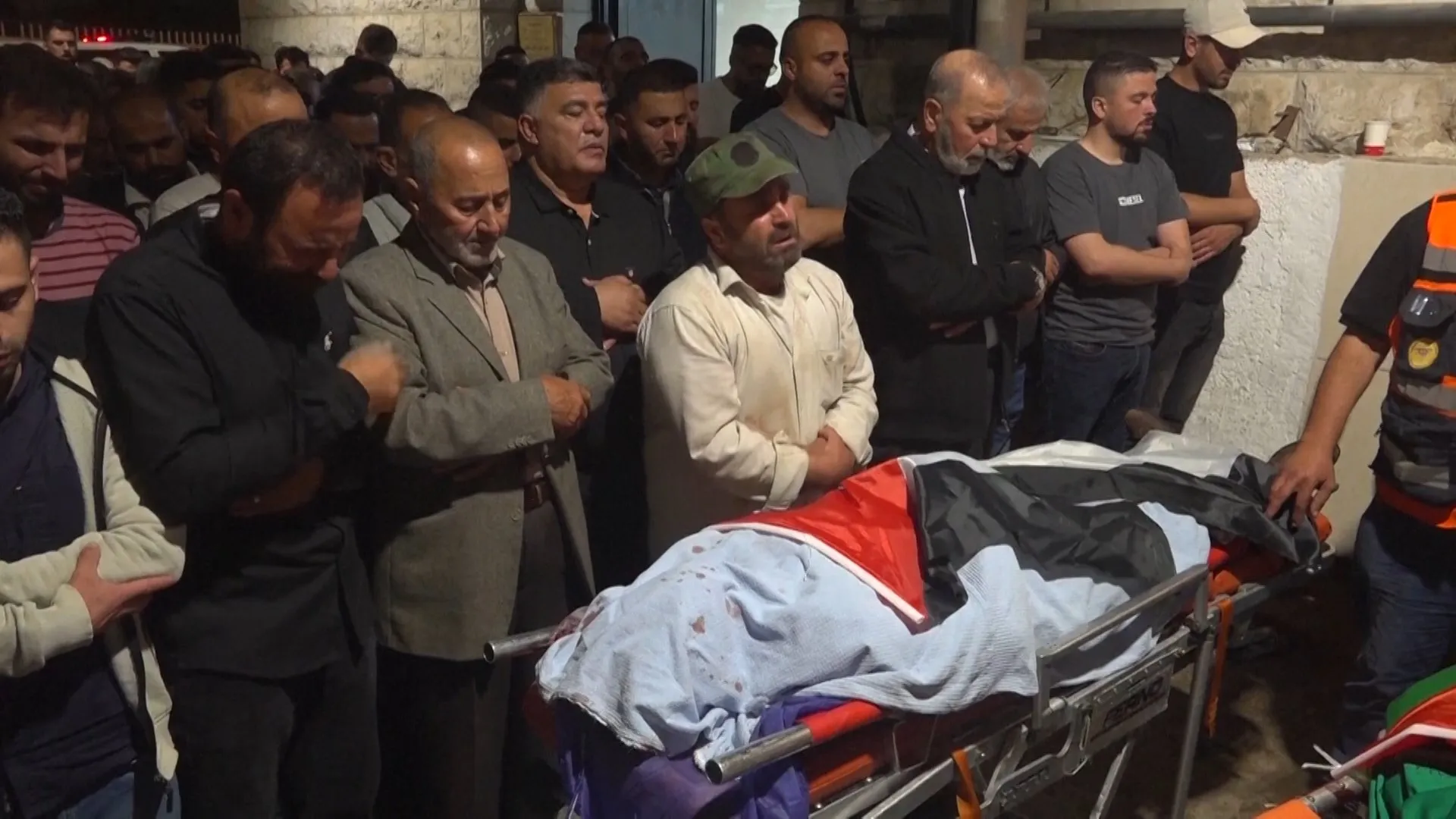
Funerals for the four killed were held before dawn under restrictions on attendance.
Political analyst Ori Goldberg said video of the attack on Tal had made denial impossible for the Israeli public.
“They saw the Jewish terrorist come into the villages and they saw the response … I’m not expecting the public to rise in protest in response, but I do expect this might revivify the last dregs of liberal Zionism in protest,” he told Al Jazeera.
“This may be a threshold moment in what Israelis have previously termed as ‘settler violence’ in an attempt to distance it from themselves,” Goldberg added.
At least 1,182 Palestinians have been killed, 13,000 wounded and nearly 24,000 arrested in the occupied West Bank since Israel’s genocidal war on Gaza began in October 2023, according to official Palestinian figures.
Overnight funerals were held for four Palestinians killed near Nablus. Palestinian officials blame Israeli settlers and soldiers for attacking areas in the occupied West Bank, while Israel said the violence began after an attack on Israeli civilians.
Relatives of Palestinians killed during clashes with Israeli settlers mourn at Nablus hospital in the West Bank. Photo by Alaa Badarneh/EPA
July 24 (UPI) — The Israeli military is launching a major operation in the occupied West Bank after a clash between settlers and Palestinians left six people dead on Friday.
Four Palestinian residents of the village of Tell and two Israeli soldiers were killed in the incident, after a group of settlers entered the village claiming to be on a hike.
Israeli officials said violence broke out when a Palestinian man stole a weapon from local security personnel, firing at the Israelis. Palestinian officials said the men were provoked while defending their village from armed trespassers.
The incident sparked a series of settler rampages in more than a dozen villages on Friday, the Times of Israel reported.
Hundreds of Israelis torched homes and hurled stones at Palestinians, the Times reported.
Following the Friday killings, Israeli officials said they were preparing a major “counterterrorism” operation in the West Bank, Al-Jazeera reported.
Bezalel Smotrich, the far-right Israeli finance minister, called for the demolition of Palestinian villages following the Friday killings.
“The population must be evacuated for its own protection, and these villages must be cleared of terrorist infrastructure and terrorists in order to restore deterrence and security to the area,” he told CNN.
Following the funeral for one of the Israeli soldiers killed, settlers torched buildings, homes and farms belonging to Palestinians, the Times reported.
Israeli Prime Minister Benjamin Netanyahu said he instructed Israel Defense Forces to take a “series of forceful steps against terror.”
In a statement, Netanyahu said his military would “act forcefully in villages that serve as terror hotspots” as well as “accelerate the regularization of farms and the establishment of new ones.”
Israeli settlements in the West Bank are illegal under international law.
“The Israeli government is pushing the West Bank towards explosion,” said Ayman Safadi, Jordan’s foreign minister, in a statement. “Its blatant violations of the historical and legal status quo at Jerusalem’s Holy Sites are illegal and dangerous provocations. They are pushing the region towards another disastrous conflict that will reverberate beyond the occupied Palestinian territories.”
Guarino, who led Juventus to four successive Serie A titles, took over from Rehanne Skinner at West Ham midway through last season.
She stated in January that “step by step” they would improve their style of play, but it was clear that organisation and a focus on defensive stability was the priority.
But that could change this season.
“Honestly, I think that we’re going to see a West Ham that the fans will be proud of, and that’s the main thing for me,” said Codina.
“It will be a recognisable West Ham – a team that can play football, and that will try to have the ball as much as possible.
“With Rita, you could see their main characteristic was to defend, but I think that this season we’re going to try to improve on the ball.”
Codina says she already feels at home, having begun pre-season training this week, but it helps that she is still living in London.
The centre-back moved to England in 2023 after nine years at Barcelona, where she progressed from the club’s academy and into the first team.
Now she wants to give back to the community and is already giving up her time to help West Ham’s foundation work with young children in east London.
“I’m enjoying the life here. I love to learn new cultures. London has something special. I’m trying to enjoy it as much as possible,” said Codina.
“Football gives me this opportunity and I’m going to try to use it as good as possible.
“I tell [the children] that it’s not only about winning. It’s not only about going to WSL. It’s not only playing for the national team. It’s all the other things.”
A large-scale settler attack targeted the Palestinian town of Turmus Ayya and Jalud, with properties set on fire and live ammunition reportedly fired toward homes.
Earnings Call Insights: East West Bancorp (EWBC) Q2 2026
Management View
“I’m pleased to report that East West earned record total revenue, net interest income and non-interest income in the second quarter. These results were driven by new record levels of loans
Seeking Alpha’s Disclaimer:This article was automatically generated by an AI tool based on content available on the Seeking Alpha website, and has not been curated or reviewed by humans. Due to inherent limitations in using AI-based tools, the accuracy, completeness, or timeliness of such articles cannot be guaranteed. This article is intended for informational purposes only. Seeking Alpha does not take account of your objectives or your financial situation and does not offer any personalized investment advice. Seeking Alpha is not a licensed securities dealer, broker or US investment adviser or investment bank.
Videos show Israeli settlers attacking the Palestinian village of al Tuwani in Masafer Yatta, south of Hebron, setting homes, vehicles and a mosque on fire. According to Palestinian media, Israeli forces provided protection for the settlers during the assault.
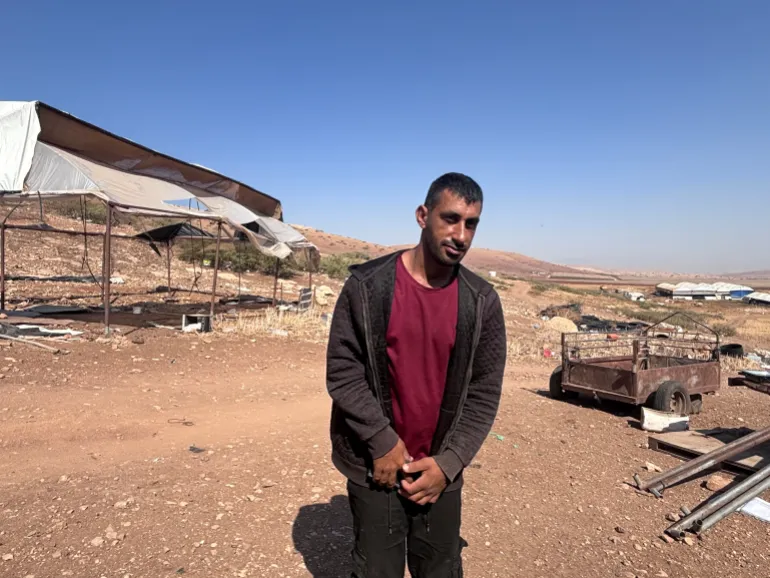
Ras al-Ahmar, occupied West Bank – The drive to Thaer Bisharat’s home should take less than 10 minutes from the main road. Instead, it took three hours.
Every gate leading into Ras al-Ahmar, in the northern Jordan Valley, is shut these days. Such road closures have become the norm rather than the exception, patrolled in shifts by Israeli soldiers and settlers whose roles on the ground have become increasingly difficult to tell apart. The sole access point that remained was a single, winding dirt road, passable only by four-wheel drive vehicles and requiring drivers to evade the roving Israeli patrols.
Recommended Stories
list of 3 itemsend of list
During the drive to Thaer’s house, Israeli forces had the area under an even greater lockdown than normal as they were nearby in the al-Buqaia plain, destroying three wells belonging to local Palestinians – including one owned by a relative of Thaer’s.
This is some of the most fertile land in the occupied West Bank, where farmers normally tend rows of banana trees alongside crops such as grapes, olives and potatoes. But along the dirt road leading to Thaer’s isolated home, the farms stand half-abandoned, with plastic greenhouse doors open and flapping in the breeze, as crops go thirsty after water was cut off in the area weeks ago by Israeli authorities.
“I can’t even run an errand,” said Thaer. “From Tamun, the village, it used to take me ten minutes. Now, with the current [dirt] road… it takes an hour, at best.”
He was spending the afternoon alone – his brother and sister-in-law had gone into town that morning for basic necessities. Left by himself, it was easy to feel like a sitting duck.
“Just this morning, there was a car – two people in it, dressed in military gear, army-backed,” he said. “They went to the people living near the banana houses. They took down ID photos, names, phone numbers. And they tell them, ‘You’ve got 24 hours to leave. Otherwise we’re coming to confiscate everything you’ve got’.”
In recent weeks, that pressure has escalated from long-standing “closed military zone” orders issued by the military into outright seizures of private land, alongside the destruction of irrigation pipes, water wells and greenhouses in the barrier’s path – the sharpest expression yet of an advancing takeover in which settler-outpost expansion and land seizure now work in tandem to squeeze out the Palestinians who remain.
“They cage us in and suffocate us,” Thaer said.
Thaer Bisharat is always fearful of attack by Israeli settlers or soldiers [Al Jazeera]
A trench, an outpost and a series of seizure orders
That tightening isolation is the result of one of Israel’s newest infrastructure projects in the occupied West Bank: the ‘Crimson Thread’ barrier. Announced in 2025, the first part of the project combines a trench and military road running roughly 22km between the Ein Shibli and Tayasir checkpoints – severing the northern Jordan Valley from Tubas to the north and Nablus to the south. Israel says it is intended to prevent weapons smuggling from Jordan, but the route runs several kilometres inside the occupied West Bank rather than along the already-fenced Jordanian border.
The plan is for the barrier to eventually run for 500km, splitting Palestinians from thousands of hectares of land and creating a barrier that – in its consequences – mirrors the separation wall on the other side of the West Bank.
On March 8, Israeli military commander Gilad Shriki visited several Palestinian communities, and, in their words, warned residents they should leave in preparation for a complete Israeli takeover of the area.
Then, last month, an Israeli Supreme Court ruling cleared the way for construction of the ‘Crimson Thread’ barrier to proceed. Since then, the Israeli Civil Administration has moved aggressively. Roughly three kilometres of trenches have already been dug, destroying Palestinian infrastructure in its path – including irrigation pipes, farmland and greenhouses, all while severing farmers from land on the other side.
The route of the ‘Crimson Thread’ project was stitched together with nine land seizure orders – a “clear escalation” of a decades-long effort by Israeli authorities to remove Palestinians in the area, according to Dror Etkes, who tracks Israeli land policy for Israeli NGO Kerem Navot. What started as checkpoints, settlement building and the designation of Palestinian lands as military firing zones “have in recent years become much more aggressive – through settler attacks, military raids, confiscation of property and denial of access to firing zones”.
Now, such military land seizure orders allow Israeli authorities to “seize whatever land it deems necessary” for security purposes, says Etkes.
According to the Colonisation and Wall Resistance Commission, Israeli authorities issued 49 military land-seizure orders in the first half of this year – already exceeding the 47 issued in all of 2025.
Thaer scoffs at the official rationale. “It’s not a military road,” he said. “You don’t dig a trench two and a half, three metres deep for that.”
Israel’s ‘Crimson Thread’ barrier has broken irrigation pipes and damaged wells that are vital to local Palestinian populations [Courtesy of Thaer Bisharat]
‘Effectively in a prison’
Etkes said the barrier accomplishes two things at once: “blocking Palestinians’ ability to enter everything east of the barrier” – where most of their farmland is – while linking existing illegal settlements to a new outpost being built along the route, on Jabal Tamun, that he expects to further impact 8-9,000 dunams (8 to 9sq km) of Palestinian agricultural land, most of it in Area B.
“The majority of communities aren’t there anymore – they’ve been forced to leave, which convinced [Israeli authorities] that the time was right for the next move,” said Etkes, listing emptied communities such as Khirbet Samra and Khirbet Yarza.
A Kerem Navot map shows the ‘Crimson Thread’ barrier route curling around Khirbet Yarza – but by the time construction reached it, Khirbet Yarza was already gone, with its residents displaced by settlers months earlier.
Mahdi Daraghmeh, who heads the al-Maleh village council, has watched the same pattern unfold throughout the hamlets he oversees. “Settler terror and fear have pushed many families to leave,” he said. “In the communities here, 130 families have been displaced – they’ve abandoned their structures, their homes, their land. And now they’ve lost their livelihoods – they have nothing left to live on.”
Since the June Supreme Court ruling, Israeli authorities have carried out near-daily operations in the area, cutting water supplies, destroying tanks and confiscating tractors and other farming equipment.
“They confiscated the tractors and water tanks from us here,” said Thaer. “So they claim these tractors and tanks are a threat to their security. A threat to your security, how?”
At the same time, settlers brought caravans into the area east of Ras al-Ahmar, positioning themselves inside territory expected to be cut off from Palestinian communities.
On June 16, bulldozers demolished livestock infrastructure at the home of Bilal Bani Oudeh, a friend of Thaer’s, and warned him to leave within 24 hours. He refused, so that night, settlers returned and brutally assaulted him.
“He nearly died,” Thaer said. “After they attacked him, they talked about tying him to a rope behind a vehicle. They took everything he owned.”
With authorities working assiduously to keep observers from documenting or photographing the ‘Crimson Thread’ operation, excavation has uprooted hundreds of olive and grape trees while repeatedly severing irrigation pipelines serving tens of thousands of dunams. On the morning of July 14 alone, Israeli authorities destroyed three wells in al-Buqaia – including one belonging to Bisharat’s relative – and confiscated pumps and equipment.
The Atuf village council – one of those affected by the new barrier – put that single day’s damage at more than four million shekels ($1.3m).
Already, this destruction has decimated the local economy in weeks, wiping out the summer harvest. “There’s no agricultural season to speak of,” Daraghmeh said. “Most of the land hasn’t been cultivated and what has been cultivated is for the settlers’ benefit.”
When the trench is finished, cutting communities off from each other and their farmland, residents fear it will mark the end of a Palestinian presence here. “Our communities will have no services, no infrastructure whatsoever,” said Daraghmeh. “No hospital, no emergency centre, no schools; for all of that, people have to go to the neighbouring town and that will be impossible.”
“Once this trench cuts people off,” he said, “the people here will effectively be in a prison.”
A long-established illegal Israeli settler outpost located right above a Palestinian village in the Jordan Valley [Al Jazeera]
‘Give us the rights of the animals’
With Israeli authorities having shut off water into the area for weeks, one tank now costs Thaer more than 300 shekels ($100), more than triple the previous price. But even transporting water is a perilous pursuit; his brother was recently beaten and held at gunpoint by marauding settlers, who he said stole his phone and robbed him of his money.
Thaer estimates that agricultural production in the area has collapsed by as much as 90 percent, while many families have already lost half their livestock because they can no longer reach grazing land.
But among neighbouring communities now erased, Thaer has seen this playbook before: once Palestinians are removed, he says, the settlers take over their lands. “Then suddenly there’s no more ‘firing zone,’” Thaer said. “A road appears, water arrives, sheep arrive. Life comes back to the place, thank God!
“So why do I get told it’s all a military zone?”
Thaer looked out at the Israeli settlement farms, lush and green in the distance. Around his own property, the ground was parched, littered with half-abandoned equipment. “Under their ‘law’, we are treated like animals,” he remarked.
Thaer paused. “Israel always talks about ‘rights’, ‘rights’, ‘rights’,” he said. “When someone hits a dog, suddenly, there’s animal rights advocates everywhere.”
“So actually, we don’t even want human rights,” he said. “Just give us the animal rights they talk so much about. At this point, we’d settle for living under that.”
Pressure is growing on the EU to sanction Israel for its expansion of illegal settlements and violence against Palestinians in the Occupied West Bank.
Published On 17 Jul 202617 Jul 2026
The European Union has renewed its call on Israel to halt the expansion of settlements in the occupied West Bank, warning that continued construction and other unilateral measures threaten the viability of a future Palestinian state.
An EU spokesperson on Friday urged Israel to stop the legalisation of settlement outposts, land appropriation, demolitions, forced evictions of Palestinians, and other actions that “undermine the viability of the two-state solution”.
Recommended Stories
list of 3 itemsend of list
The statement came days after Israel’s security cabinet approved the allocation of 1.3 billion shekels ($427.8m) to establish 34 new settlements in the occupied West Bank.
The funding package marks one of Israel’s largest recent investments in settlement expansion and has drawn criticism from Palestinian officials and international partners.
The United Nations, the International Court of Justice and most countries consider Israeli settlements in territory occupied by Israel since 1967 to be illegal under international law. Israel rejects that interpretation.
The EU has long maintained that it does not recognise Israel’s sovereignty over the territories it occupied in 1967. However, the 27-member bloc remains divided over whether to take stronger measures against Israel’s settlement policy.
EU foreign ministers this week failed to reach a consensus on proposals that could restrict trade with settlements in the occupied West Bank, despite growing calls from several member states for tougher action.
The renewed diplomatic pressure comes amid continuing violence in the occupied West Bank, where Palestinians, including children, have been injured in separate incidents involving Israeli settlers and Israeli forces.
On Friday, two Palestinian children were taken to hospital after suffering head and facial injuries when Israeli settlers allegedly hurled stones at their family’s vehicle in the Wadi al-Sha’er area, according to the Palestinian news agency Wafa.
In another incident, a 16-year-old Palestinian boy was shot by Israeli forces in the occupied West Bank. He remains in hospital.
“Everybody agrees that the situation in the West Bank is really intolerable,” the EU’s foreign policy chief, Kaja Kallas, said ahead of talks among EU foreign ministers in Brussels on Monday.
“What is happening in the West Bank is actually making it more and more impossible that the two-state solution ever can come into effect,” she added.
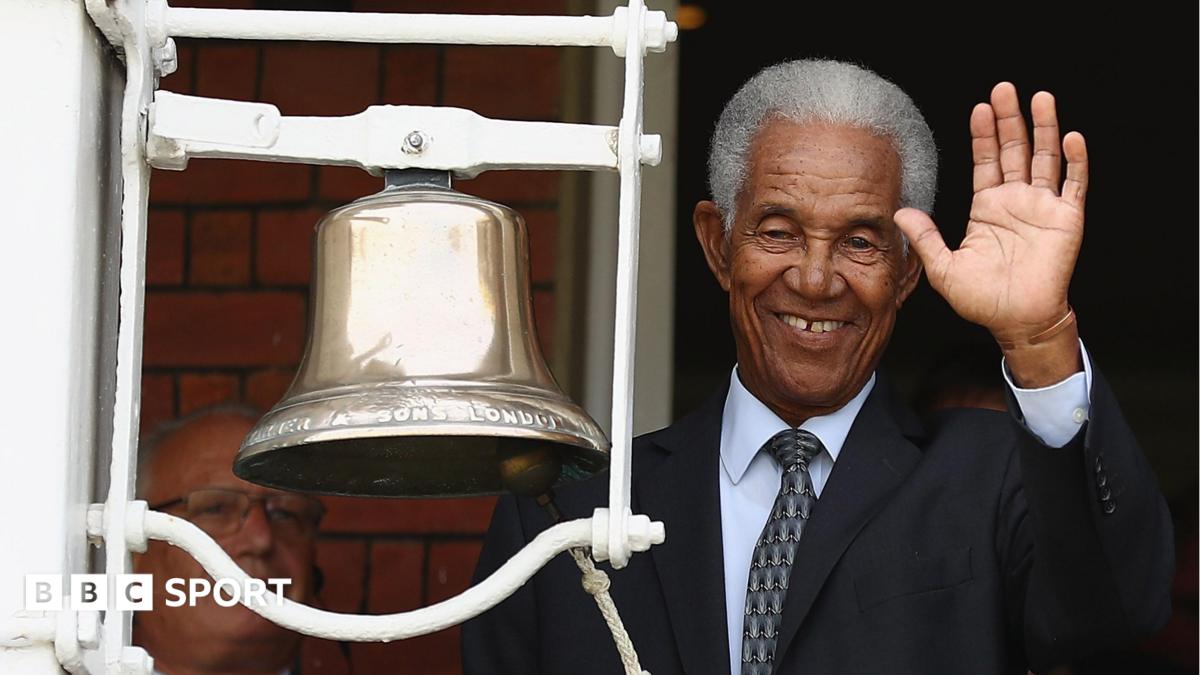
Garfield St Aubrun Sobers was born in Bridgetown on 28 July 1936, but was only five when his merchant seaman father was killed in World War Two, leaving his mother Thelma to raise half-a-dozen children. Young Garry was born with an extra finger on each hand, which were removed during childhood.
Having excelled at several sports as a schoolboy, he was recruited to local club cricket in his early teens and made his first-class debut at the age of 16 against the Indian tourists at his home town’s Kensington Oval – the ground whose pavilion would one day bear his name.
Sobers was selected to bat at number nine and bowl spin for a star-studded Barbados line-up – he was one of eight current or future Test players, of which no fewer than four would be knighted. He took four wickets in the first innings and three in the second.
And with only one other first-class appearance under his belt, his Test debut came 14 months later as a 17-year-old chosen to take on England in the final Test in Jamaica in early 1954 after the Windies’ regular left-arm spinner Alf Valentine fell ill. Again, he captured four wickets on debut.
Although the famous ‘Three W’s’ – Clyde Walcott, Everton Weekes and Frank Worrell – were the established middle order, Sobers was elevated to number six on his next Test appearance when Australia toured in 1955, and soon showed signs of his all-round quality.
Having made 47 in the second Test, he found himself as an emergency opener in the fourth, where he hit the first three balls he received – from legendary Aussie all-rounder Keith Miller – for four.
Sobers toured England for the first time in 1957, and despite only recording one half-century in five Tests, he lit up Trent Bridge – a ground where he would later shine – with an unbeaten 219 against his future county side Nottinghamshire.
John L Esposito, a prominent scholar of religion and international affairs at Georgetown University, passed away on July 15, 2026, due to complications from heart surgery.
He was a towering intellectual who published more than 55 books, mainly with Oxford University Press, which have been translated into dozens of languages. He uniquely shaped the modern study of Islam and Muslim societies during the late 20th and early 21st century, particularly in the area of Islam-West relations during key moments of friction following the 1979 Iranian revolution and 9/11.
John was born into a working-class Italian-American family in Brooklyn, New York, in 1940. His worldview was shaped by his devout Catholic mother and his father’s commitment to social justice. He aspired to become a Catholic priest and, at a young age, joined the strict Capuchin Franciscan Order. John left the seminary before ordination and opted for graduate school instead. He earned a doctorate in religious studies at Temple University under the supervision of Ismail al-Faruqi, the late Palestinian-American scholar of religion.
John’s family and friends questioned his career choice because they feared for his employability. When he entered the job market in 1974, there was only one advertised position in Islamic studies. The study of religion, particularly Islam, was absent in many institutions of higher learning, and international relations programmes at universities ignored the role of religion in global affairs.
Telling stories was one of Professor Esposito’s many passions. Reflecting on his career, he frequently joked that he owed his livelihood to two famous “radical” Muslims, one Shia and the other Sunni: Ayatollah Khomeini and Osama bin Laden.
After the 1979 Islamic revolution in Iran, interest in the relationship between Islam and politics skyrocketed in the West. The same happened after 9/11. John’s expertise was suddenly in high demand. He responded by publishing several groundbreaking books on the relationship between Islam and politics, Islam’s normative ideals, Islam-West relations, and the diverse political and social structures of Muslim societies. He was frequently quoted in the media, and governments now sought his counsel.
This story about John’s career, however, has a steep downside.
The Western interest in Islam and Muslims emerged due to threats to United States national security. This meant the ability to understand this topic in a free, unbiased and independent way was absent for most Westerners. The enveloping context that shaped the policy and public debate on Islam and Muslims was themes of political revolution, mass violence and perceived threats to global order.
John’s educational efforts were always an uphill battle. Establishment academics dominated the intellectual, policy and media debates. Bernard Lewis wrote about the alleged “Roots of Muslim Rage” at modernity that purportedly explained turmoil in the Middle East. Around the same time, Samuel Huntington advanced a popular thesis on the “Clash of Civilizations”. These views had a wide following, in part because they reinforced pre-existing Western biases about Islam and Muslims. They were further enhanced by US and Israeli national security narratives about an alleged Islamic threat in the aftermath of the Cold War.
John was an early and courageous scholar who challenged Orientalist misrepresentations of Islam and Muslims in an era of deep polarisation. His scholarship created room for understanding in lieu of prejudice, and his intellectual insights allowed a younger generation of scholars to build on and expand upon his pioneering research.
Professor Esposito advanced a new understanding of religion by criticising the dominant social science theories about political development. He astutely drew attention to a “secular bias” that informed mainstream intellectual debates in the West on the relationship between religion and politics. These modernisation theories purported to be universally applicable based on the assumption that religion was a relic of the past that no longer mattered in the modern world. In truth, these claims were ideologically biased, based on a set of specifically Western experiences.
By contrast, John interpreted the politics of the Muslim world not from a Western normative framework but rather from the Muslim world’s own experience. In other words, not from the outside in, but rather from the bottom up, from the perspective of the masses, many of whom held onto a religious identity. In doing so, he advanced a historically grounded and sociologically compelling analysis of religious politics in the Islamic world. Critiques of the legacy of colonialism, authoritarianism and US foreign policy were central to his intellectual work.
Professor Esposito’s work on political Islam was pioneering. He wrote about the social conditions and collective aspirations that rendered political Islam appealing to diverse constituencies across the Middle East and the broader Muslim world. While most mainstream Western scholars and liberal intellectuals focused on the Islamist desire to implement “Sharia”, Esposito focused on the core aspirations that animated political Islam: dignity, justice, self-determination, and opposition to external domination. These same aspirations made political Islam a resilient and enduring force.
In reflecting on John Esposito’s legacy, I’m reminded of an observation by Edmund Burke III. Commenting on the work of the late Marshall GS Hodgson, author of The Venture of Islam: Conscience and History of a World Civilization, Burke noted that Hodgson, like Esposito, refused to view Islam as the “other”. Instead, he understood the Islamic tradition as “a venture alongside others that marked human efforts to bring about a just and moral world”.
We are unlikely to see a scholar in our lifetime again who can match John Esposito’s moral and intellectual caliber. His impact on our collective education and understanding of Islam-West relations is unique and immeasurable. Those who care about universal values rooted in international law, human rights, democracy, and cross-cultural understanding are deeply in his debt.
John Esposito is survived by his wife of 61 years, Jean Esposito, his partner and primary supporter in all his endeavours, and the enduring love of John’s life.
The views expressed in this article are the author’s own and do not necessarily reflect Al Jazeera’s editorial policy.
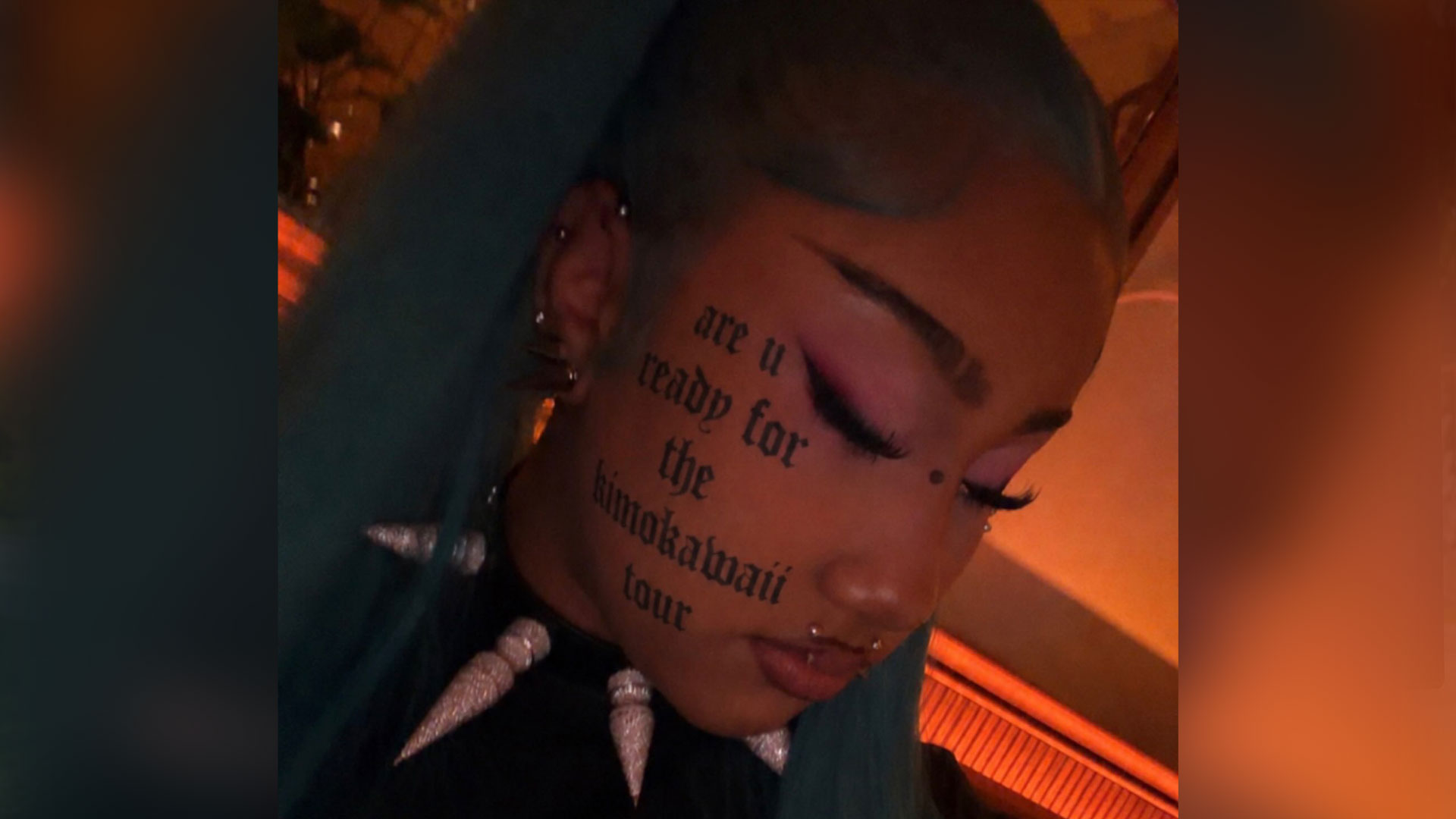
NORTH West has flashed a massive new face tattoo and lip rings ahead of her tour across the US.
Kim Kardashian and Kanye West’s eldest daughter, who recently showcased two fresh body piercings, debuted her dramatic look on Instagram.
North West, 13, has showed off a massive new face tattoo and lip ringsCredit: Instagram/lillarpsuchan5It comes ahead of the teen’s 14 gig tour across the USCredit: Instagram/northwest
She pulled up her striking blue hair into an up-do so her face art could be showcased to full effect.
After applying pink eyeshadow and black false lashes, North finished off her look with the writing on her right cheek which read: “Are you ready for the Kimokawaii tour?”
Sign up for the Showbiz newsletter
Thank you!
The tour – which spans 14 dates across the US – sees the budding songstress team up with Molly Santana for the shows.
The gigs come after North penned a huge deal with Mariah Carey’s record label and was confirmed to be “recording music”.
The eldest daughter of Kim Kardashian and Kanye West is known for her striking lookCredit: TikTok/kimandnorthShe has previously showcased her quadruple finger piercingsCredit: Instagram/Northwest
While her face tatt – which is likely to be fake or temporary – took centre stage, North made sure her lip and ear bling was on point for the sassy snap.
In her caption, she put two question marks, but fans were quick to reply to the question posed by her body art.
One wrote: “Ohhh yesssss”.
Another confirmed: “Yess can’t wait”.
Most read in Entertainment
She recently signed to Mariah Carey’s record labelCredit: TikTok/kimandnorthPreviously, her mom Kim was slammed for allowing her to get more dangerous piercingsCredit: TikTok/kimandnorth
A third then put: “So pretty omg”.
North is no stranger to vamping up her look.
In another Instagram snap she showcased two piercings on her pointer and middle fingers, whichshe debuted in November.
Over the last few months, North has flaunted numerous body andface piercings, tattoos, heavy makeup, and drastic hair transformations.
Her followers expect to see even more shocking makeovers now that she’s branched out from posting on a joint-TikTok account with her mother to her own Instagram page.
North shared her first post on the platform on December 19th, sending social media into a frenzy.
Many fans have criticized her mom Kim for allowing her daughter to “grow up fast” and not act her age.
Kanye, 48, has shared the same thoughts, publicly calling out his ex-wife numerous times in the past for letting North be on social media and to dress in a mature way.
The former couple is also parents to a daughter, Chicago, 7, and sons, Saint, 10, and Psalm, 6.
All of their children are primarily in Kim’s care, despite their 2022 divorce settlement granting them joint legal and physical custody.
PHILADELPHIA — If the Dodgers picked up Tarik Skubal, would that be overkill?
Logan Webb, the longtime ace of the San Francisco Giants, laughed.
“I don’t think they need him,” Webb said, “but you never count those guys out on getting anybody in the league.”
The Dodgers could make a mockery of the National League West by trading for Skubal, who won the last two American League Cy Young awards for the Detroit Tigers.
Then again, you could argue the Dodgers already are making a mockery of the NL West. They lead the division by 11½ games, more than double the lead in any other division.
So, on the day before the All-Star Game, I posed the overkill question to the stars from the other teams in the NL West.
“Would I consider it overkill? It’s a crazy game,” said outfielder Corbin Carroll of the Arizona Diamondbacks, the team that swept the Dodgers over the weekend at Dodger Stadium.
“I don’t think, going into the weekend, that too many people would have expected that. The nature of this game is about you can never be good enough, and you always have to look to keep improving. I think I would just view it in that same light.”
The Dodgers are not about winning the NL West this season. From owner Mark Walter to president of baseball operations Andrew Friedman, from manager Dave Roberts to franchise icon Shohei Ohtani, the Dodgers last fall loudly and proudly declared their intent to three-peat, to become the first NL team ever to win three consecutive World Series championships.
Their postseason rotation could be so overloaded that All-Star Justin Wrobleski, whose 2.69 ERA compares favorably to NL All-Star starter Cristopher Sanchez (2.62), could find himself in the bullpen behind starters Yoshinobu Yamamoto, Ohtani, Blake Snell and Tyler Glasnow.
On the other hand, Ohtani missed his last start for treatment of a troublesome left knee, and neither Snell nor Glasnow has pitched since May. The Dodgers might not be entirely sure of projecting their October health and effectiveness by the Aug. 3 trade deadline, and the chance to three-peat might never come again.
The Dodgers have the prospects and the money to acquire Skubal, should the Tigers trade him. The Dodgers might or might not have the need, but they have the motivation.
“I wouldn’t blame them,” Colorado Rockies catcher Hunter Goodman said. “They’re trying to win another World Series.”
Said San Diego Padres closer Mason Miller: “He’d help any team he went to. They’ve got a strong rotation, a lot of guys that are going to get healthy and help them out, but I don’t necessarily consider it overkill. Anybody, on any given night.”
If the Dodgers acquired Skubal, the fans of those rival NL West teams would explode in frustration, perhaps even in rage, at the back-to-back champions. Ohtani for $700 million, Kyle Tucker for $60 million per year, and now the rich kids would get Skubal, too?
The owners are trying to channel that level of fan frustration and anger in their push for a salary cap. They say they’re trying to help teams like, say, the Rockies and Pittsburgh Pirates compete more effectively against the Dodgers.
The Pirates have not posted a winning record in eight years and have not appeared in the playoffs 11 years. Surely, a salary cap would help them, right?
“I don’t think there’s any need for a salary cap,” Pirates ace Paul Skenes said. “I don’t know if there’s a perfect answer, but I do know the salary cap would not be a fix-all for parity.”
Parity is in the eye of the beholder, or more accurately in the definition of the beholder. The owners like to note that no small-market team has won the World Series since the Kansas City Royals in 2015.
However, in a league that owners insist demands immediate reform, 23 of the 30 teams are within four games of a playoff spot.
As one of eight players on the executive committee of the players’ union, Skenes is involved in the current collective bargaining negotiations. Salary cap or none, would it be overkill if the Dodgers picked up Skubal?
“They’re trying to win, aren’t they?” Skenes said. “You can’t ever blame a team for going out and doing everything possible to win.”
July 12 (UPI) — A major heat dome expanded from the interior West into the Upper Midwest on Sunday on its way to smothering the East later this week, forecasters said.
The heat in the East is expected to be shorter and less intense than the early July heat wave, but parts of the West are coming within a few degrees of all-time record highs.
Dangerous heat is also gripping even the Desert Southwest, where communities are used to extreme temperatures. The pattern will raise the risk of heat exhaustion, heatstroke and heat-related deaths.
Motorists are urged to carry plenty of water with them in the event of a breakdown.
Temperatures climbed well above 100 degrees Fahrenheit across much of the Great Basin, the Cascades and Sierras east to the western Rockies, eastern Washington, eastern Oregon, Nevada, Idaho, Utah, western Colorado and northern Arizona this weekend.
The building heat dome has already pushed season-high temperatures into the 110s in Phoenix, Las Vegas and Palm Springs, Calif.
The heat expanded north this weekend, bringing highs of 106 in Salt Lake City, 107 in Bismarck, N.D., and 110 in Billings, Mont. Those temperatures are 10-25 degrees above historical averages during what is typically the hottest part of the year.
As the heat shifts east into the north-central United States early this week, some daily record highs will be challenged. As the hot air spreads east of the Rockies into more humid air, AccuWeather RealFeel Temperatures will run as much as 10-15 degrees higher than the actual air temperature.
While the North American monsoon will begin to temper the heat across parts of the West with increasing clouds and thunderstorms, multiple days of 90-degree heat are forecast across the Midwest, including Minneapolis, Chicago, Detroit and Cleveland.
Minneapolis and Chicago can expect at least four consecutive days with highs at or above 90.
“Temperatures will peak in the mid- to upper 90s in the Interstate 95 cities of the mid-Atlantic and New England during the heat surge this week,” AccuWeather Vice President of Forecast Operations Dan DePodwin said. “While high temperatures will still create dangerous conditions, the heat will be somewhat less intense and shorter-lived than the early July heat wave.”
Humidity levels with the heat in the Midwest and Northeast this week will be significantly lower when compared to the week of Independence Day.
The US and Israel have signed a deal allocating land for a permanent US embassy in West Jerusalem, years after a temporary one was established during Trump’s first term in office. The move is yet another blow to the hopes of a future Palestinian capital.
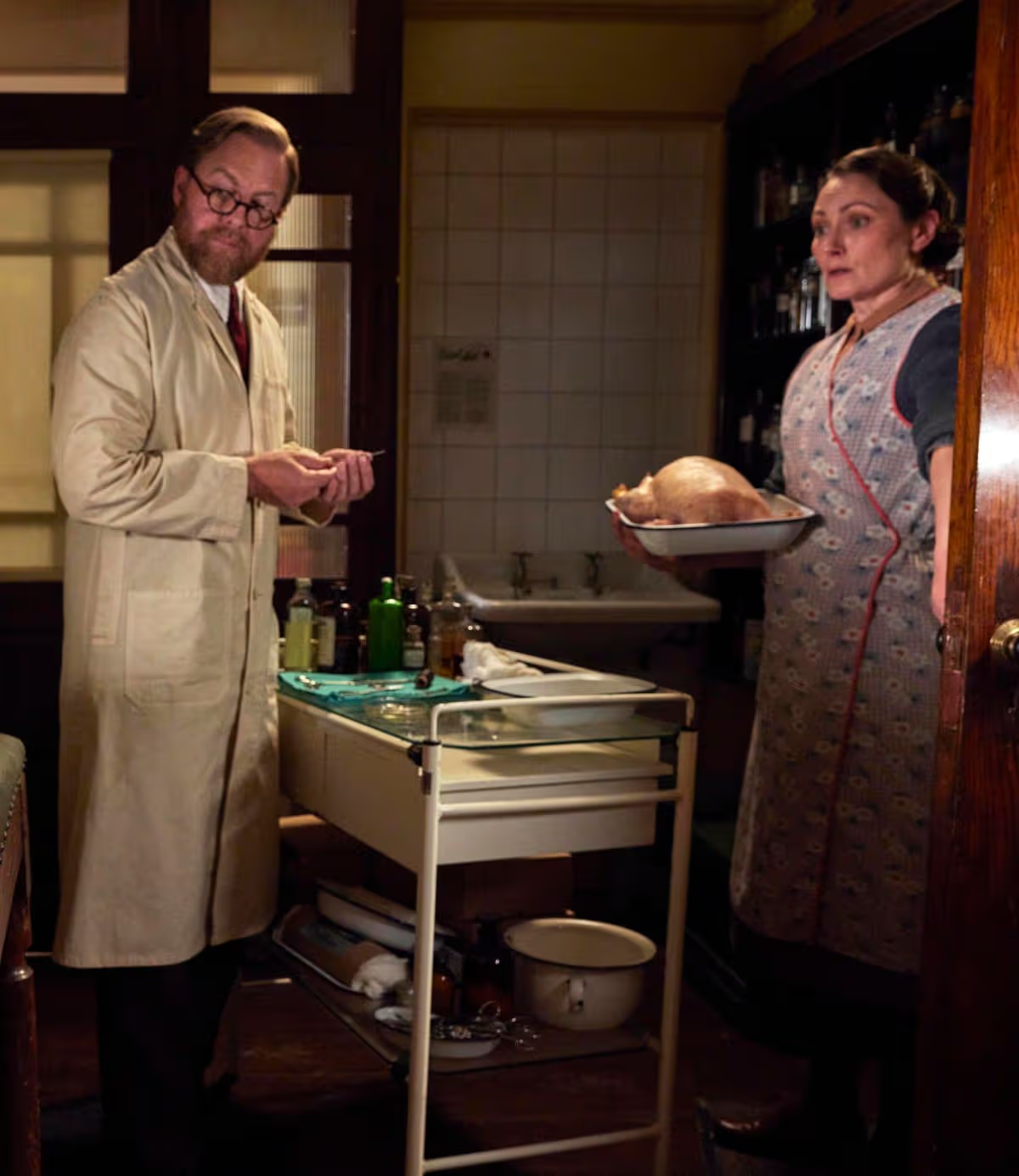
On Thursday (June 25), Siegfried Farnon star Samuel West confirmed that filming for the newest Christmas instalment had finished on what was the hottest day of the year.
Taking to X, formerly known as Twitter, Samuel shared two photos of the cast and crew, including Nicholas Ralph and Rachel Shenton, who play James and Helen Herriot.
He captioned the post: “We wrapped today on the Christmas episode, on the hottest June day in this country’s history, and as far away from December 25 as it is possible to be.
“Here’s Chanel with the final slate, and the Herriot/Alderson family with all of them.”
Fans have wasted no time in sharing their excitement for new episodes, with one person writing: “I’m so looking forward to series 7. I also can’t wait for series 2 of Sam and Ade go birding.”
A second added, “We are very, very grateful for the hard work in these extreme temperatures to bring us a wonderful series and another Christmas special!”
A third chimed in: “Thank you all, absolutely love ACGAS!!! We do appreciate you all working in hot conditions.”
When will Season 7 be released?
With a fresh series of the drama arriving every year since 2020, with Season 5 debuting in September and Season 1 in October, new episodes could well arrive in autumn.
While Channel 5 is currently keeping the plot details of All Creatures Great and Small Season 7 firmly under wraps, Greg Barnett, Commissioning Editor at 5, has teased that there are “many new stories still to tell and more unforgettable adventures ahead”.
Barnett said: “All Creatures Great and Small is a jewel in 5’s drama crown and continues to delight viewers year after year. Its warmth, humour and heart, set against the beauty of Yorkshire, have made it a firm audience favourite.
“We’re thrilled to extend its future with two more series, with many new stories still to tell and more unforgettable adventures ahead for our Skeldale family.”
All Creatures Great and Small is available to stream on Channel 5.
Videos show Israeli settlers, protected by Israeli soldiers, trying to seize a house under construction on the outskirts of the town of Qabalan, just south of Nablus, in the occupied West Bank.
Bethlehem, occupied West Bank – In the narrow alleyways of the Dheisheh refugee camp, three children debate which of their encounters with the Israeli military is worth telling, and who gets to tell it.
Yanal, 14, wins the opening round on language skills alone. He speaks three languages: Arabic, English and Spanish, and insists on telling his story in English.
Recommended Stories
list of 3 itemsend of list
“Life in the camp is complex,” he says, because, as he explains, there is nowhere to run away to when the army comes.
Yanal keeps returning to one memory: a football match, soldiers entering the field, and there being no way out.
Mustafa Abu Aliyah, 13, counters with a raid that he ran into as he was on his way to his grandfather’s house. The Israeli army fired live rounds and tear gas, he says. “We were in the middle of the fire.”
He can’t remember his first encounter with soldiers, “but I definitely saw them when I was little, because they are always coming here”.
His sister Diyar, 12, was mid-piano lesson the last time the army came through.
“Whenever the army comes, there will be tear gas,” she says. “People will be beaten. There’s usually someone injured or killed.”
She compares it to life elsewhere. “I see children in other countries, in other worlds, living in safety, but we can’t even leave our front door without suffering.”
The raids happen so often that the children often can’t remember the dates of specific incidents. But what they do remember is the fear they experienced and the aggression displayed by the Israeli soldiers.
In the first nine months of 2025 alone, Israeli forces carried out nearly 7,500 raids across the occupied West Bank, or about 27 a day, and a 37 percent increase compared with the same period in 2024.
‘Essence of childhood destroyed’
The children in the Dheisheh refugee camp reflect a wider pattern of childhood experiences under Israeli occupation, set out in a report the UN’s Independent International Commission of Inquiry on the Occupied Palestinian Territory released on Tuesday.
It examines Israel’s treatment of Palestinian children in Gaza and the occupied West Bank since October 2023.
Titled, “The essence of childhood has been destroyed”, it found that Israeli forces have killed at least 20,179 Palestinian children and wounded more than 44,000 across the occupied territory, most of them in Gaza – where it said that the deliberate targeting of children constituted part of the genocide in the Palestinian territory.
The report also documents a pattern of killings, mass arrests, torture, sexual violence and attacks on schools and hospitals.
In the West Bank, it records a sharp rise in settler violence against children and killings by Israeli forces, among them a two-year-old girl shot dead in January 2025. Children, the report notes, are held in Israeli detention, with no lawyer and no word sent to their parents, a separation it says can amount to enforced disappearance. Schools, too, are targets: 85 across the West Bank are under demolition or stop-work orders, and others have been closed or attacked by soldiers and settlers.
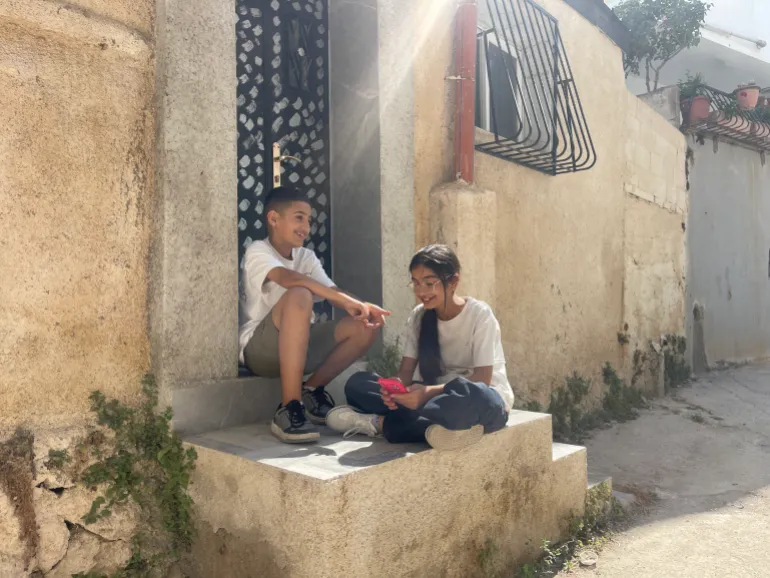
Mustafa Abu Aliyah, 13, and his sister Diyar, 12, sit in the alleyways of Dheisheh refugee camp in the occupied West Bank [Leila Warah/Al Jazeera].
Beyond the casualty count
The UN commission argues that Israel has created conditions in which Palestinians live in a constant state of “diffused, ambient terror, that does not require constant bombing to remain effective”.
“We are talking about repeated shocks, about continuous events that never end,” says Lemis Farraj, a psychologist and the project coordinator at Shorouq in Dheisheh, emphasising that a child’s physical and mental health cannot be separated from each other.
The report calls this continuous traumatic stress, distinct from Post-Traumatic Stress Disorder (PTSD), because there is no single event to recover from. The danger does not just come from experiencing one raid, but from the fear that comes with waiting for the expected raids that will likely come in the future.
Diyar explains that when the army enters her neighbourhood, she has to stay home and wait, no matter what her plans were. “Our life stops,” she says.
Her brother, Mustafa, says that the repetition has worn the fear flat.
“When I see the army, I [am] used to it and I stop being afraid.”
Farraj sees the same in the young children she treats: a startle at an ordinary sound, certainty that a raid has begun, and regression – skills already learned suddenly lost again.
Five-year-old Khour Hammad, who lives a few alleys away from the older children, has experienced the same raids.
She explains that both of her parents are in prison. Israeli forces arrested her father in July 2023 and her mother last March, according to the family.
Khour remembers the night the army came for her mother. Half-asleep, she heard a man’s voice and thought her father had finally come home. She climbed out of bed expecting him. Instead, she found soldiers inside the house.
The soldiers tried to question Khour. She says that she “felt like I was going to throw up”.
Handed an old family photo, she brightens at once, pointing out her mother, Islam Amarna, and her father, Osama Hammad, and rattling off memories in bursts.
Khour Hammad, 5, stands on a rooftop overlooking Dheisheh refugee camp in Bethlehem, in the occupied West Bank. Both of her parents have been arrested by Israeli forces [Leila Warah/Al Jazeera].
Generational trauma
While Palestinian children in Gaza and the West Bank face different lived experiences, the UN finds the same cause behind the harm: a military occupation described as a “long-term mechanism of domination, subjugation and oppression”.
Farraj adds that children are affected not only by their own experiences of trauma, but also by what is passed down from parents and grandparents.
“The first generation of the Nakba lived in shock and passed it on to their children,” she says, referring to the ethnic cleansing of at least 750,000 Palestinians following the formation of the state of Israel in 1948.
The report similarly notes that Palestinian refugees, now in their fifth generation, have internalised a sense of “dispossession from the Nakba” alongside present-day experiences of occupation.
In the West Bank, roughly one in four Palestinians are refugees; in Gaza, it is about 70 percent.
Israeli violence and forcible displacement have been carried through generations of Palestinians, compounding as the cycle repeats. Farraj says trauma recovery depends on stability: family support, schooling, safe spaces and a predictable routine, all of which remain precarious under Israel’s occupation.
For Khour, that stability begins with her parents.
“I want the whole world to listen and see my picture,” Khour says, “and get my mom and dad out of prison.”
![Manar Wahhab and her husband, Milad Vosgueritchian, run the House of Hope Vision Kindergarten & School, which follows the Waldorf philosophy [Courtesy of First Hand Films]](https://i0.wp.com/www.aljazeera.com/wp-content/uploads/2026/07/House-of-Hope-5-1784125142.jpg?w=640&ssl=1)
![Children at the House of Hope, when asked to draw freely, depict the brutal realities of Israeli occupation [Courtesy of First Hand Films]](https://i0.wp.com/www.aljazeera.com/wp-content/uploads/2026/07/House-of-Hope-7-1-1784125144.jpg?w=640&ssl=1)




![Thaer Bisharat is always fearful of attack by Israeli settlers or soldiers [Al Jazeera]](https://i0.wp.com/www.aljazeera.com/wp-content/uploads/2026/07/Thaer-Bisharat-beside-his-home-1784311543.jpg?w=640&ssl=1)
![Israel’s ‘Crimson Thread’ barrier has broken irrigation pipes and damaged wells that are vital to local Palestinian populations [Courtesy of Thaer Bisharat]](https://i0.wp.com/www.aljazeera.com/wp-content/uploads/2026/07/Locals-observe-leaking-irrigation-pipes-due-to-crimson-thread-pic-courtesy-of-thaer-1784311720.jpg?w=640&ssl=1)
![A long-established illegal Israeli settler outpost located right above a Palestinian village in the Jordan Valley [Al Jazeera]](https://i0.wp.com/www.aljazeera.com/wp-content/uploads/2026/07/Long-established-settler-outpost-located-right-above-another-Palestinian-in-the-area-1784311895.jpg?w=640&ssl=1)