

wear

ICE rejects suggestion that its officers wear body cameras that automatically activate

Federal immigration officials need to ensure that body cameras worn by officers are uniformly activated when needed, a government report released Wednesday said, following a series of contentious shootings and aggressive arrests by ICE officers.

The agency rejected the recommendation, saying that using cameras that automatically activate when an officer pulls their weapon or activates a car siren could risk privacy concerns.

ICE has come under intense scrutiny after numerous incidents where officers have opened fire during enforcement operations and the agency has claimed they were under threat but officers weren’t wearing body cameras. Critics say the cameras could help hold officers accountable and promote transparency at a time when the agency is operating at a high tempo across the country and increasingly accused of excessive use of force. The report by the Government Accountability Office covers the period from February 2025 until September of this year. The report, conducted at the request of Democratic members of Congress, delves into policies governing the use of body-worn cameras by ICE and U.S. Customs and Border Protection and details improvements both agencies can make to improve their programs. But it did not go into any of the high-profile ICE-involved shootings that have focused attention on the agency’s body-worn camera usage, such as the shooting deaths of Renee Good in Minneapolis or Lorenzo Salgado Araujo in Houston.

A fatal shooting exposed gaps in ICE’s camera rollout

Former Homeland Security Secretary Kristi Noem announced in February that every Homeland Security officer on the ground in Minneapolis would be issued body-worn cameras. Noem, who was later fired by Trump, said officers across the country would receive them as funds became available.

The department later received $20 million from Congress to finish the ICE body-camera rollout plan. But then came a shooting in July of Salgado Araujo, when Immigration and Customs Enforcement officers shot and killed the Mexican man who lived in the U.S. for more than 35 years. Those officers were not wearing body cameras, raising questions about why the agency still hadn’t gotten the cameras out to officers in the field. Homeland Security said after Salgado Araujo’s death that body cameras had been deployed to more than half of ICE field offices and that the remainder would get them in the next 60 days. In the GAO report, DHS said all ICE offices had received the body-worn cameras as of Aug. 5 and that officers were being trained on their use.

In a statement Wednesday, DHS said that while they’d purchased devices for all ICE officers across the country, the required training was still ongoing and that they expected to be finished “soon.”

DHS rejects automatic recording, citing privacy concerns

The report recommended ICE take additional steps such as “automated camera activation” that it said would be particularly helpful in situations where “unexpected and unplanned incidents, unrelated to sensitive operations, result in use of force by or against personnel.” The report said this would improve transparency and public trust. But DHS disagreed, saying that cameras that automatically activate could result in “the unauthorized recording of sensitive interactions with informants or victims.” The agency said the body-worn cameras are required to be turned on at the beginning of pre-planned enforcement activities.

Confusion over camera rules kept one ICE office from using them

The report also said some of the officers they talked to at both ICE and CBP were confused as to when they should activate the cameras. For example, some officers told the GAO they didn’t know whether to activate the cameras during vehicle searches or when transporting detainees. The report noted that at one ICE office, staff was so uncertain about when they were supposed to use the cameras that they hadn’t begun using them even after they’d been trained.

The report also found that neither agency had updated the plans that oversee their body-worn camera programs even as their staff had grown significantly.

Santana writes for the Associated Press.

Source link

Energy costs: ‘Wear more clothes if it’s cold’, pupils and staff told

Rising energy costs are already affecting households across Northern Ireland.

The impact of the US-Israel war with Iran is one of the factors behind the increase.

The letter from the EA to head teachers said that “recent geopolitical events are expected to have a substantial impact on energy costs across the Education Authority (EA) during the 2026/27 financial year”.

It said that total school gas bills were expected to go up by 60% from £10.7m to £17m by March 2027.

Meanwhile, total school electricity bills are expected to rise by 5% from £23.8m to £25.1m by March 2027.

“Given the scale of the anticipated cost increases, we are asking all schools to review their energy usage and identify opportunities to reduce consumption wherever possible,” the EA said.

Among the measures the authority has suggested to schools are cutting heating use by an hour a day and switching off classroom lights to use natural daylight instead.

Staff and pupils have also been advised to “wear more clothes” rather than turn the heating thermostat up if it is cold.

But principals have told BBC News NI that it is not straightforward for schools to cut heating costs.

The principal of Tullygally Primary School in Craigavon, Kirsty Logan-Hall, said that the school was “committed to promoting responsible energy consumption and regularly reinforce good practice with staff and pupils”.

“However, our ability to achieve significant reductions in energy usage is constrained by the nature of our estate,” she said.

“The school operates from an older building which presents inherent energy efficiency challenges.

“In addition, our site is particularly spread out due to the accommodation and operational requirements associated with our specialist provision.

“This necessitates the heating, lighting and ongoing use of multiple areas across the site throughout the school day to ensure appropriate learning environments, accessibility and pupil welfare.

“It is important to recognise that there is limited scope for reducing energy consumption without adversely impacting the quality of provision, staff working conditions or the wellbeing of pupils, including those with additional needs.”

Emma Quinn from Rathcoole Primary told BBC Good Morning Ulster that the “lack of maintenance” has an impact on schools, adding that pupils have a right to come into a warm school after being outside.

“Putting this pressure onto us at the minute is ridiculous, when we are eco schools, we are doing all of these, we are turning off lights, but yet this lands in on our doorstep and we’re suddenly expected to jump and to fix a problem that is so systemic, it’s just not good enough.”

Source link

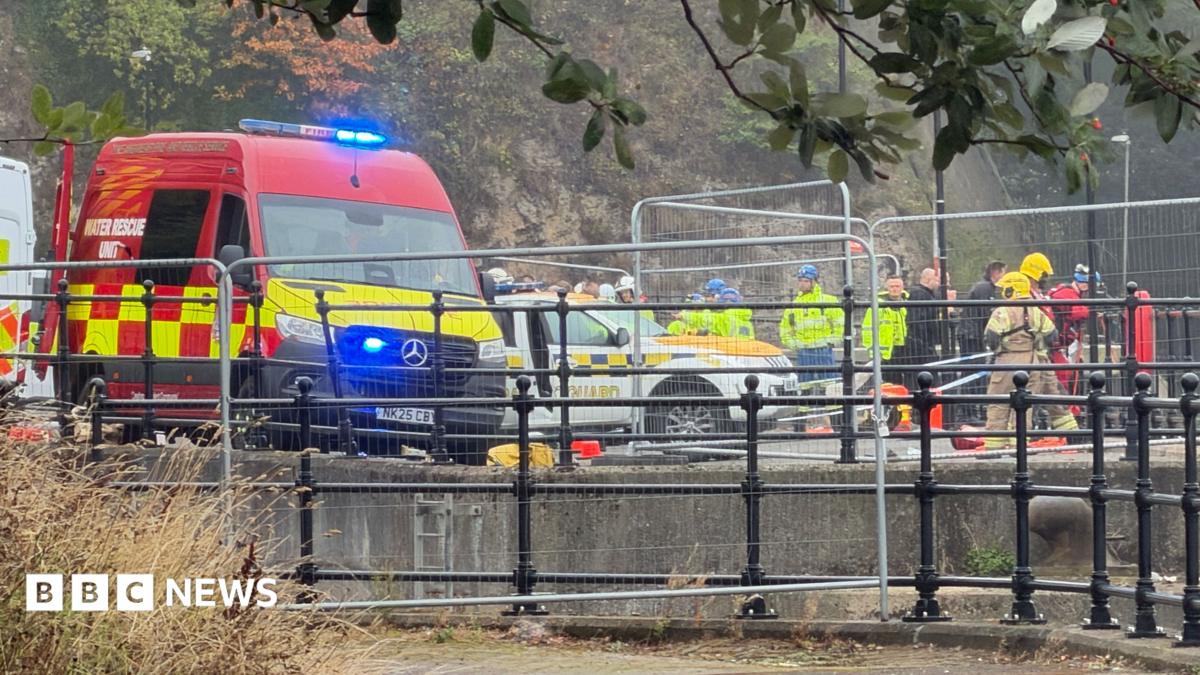
Three teenagers die after car enters River Wear in Sunderland

Three teenagers have died after a car entered the River Wear.

Northumbria Police said just before 13:30 BST a black Audi A3 came off the road at Panns Bank near Wearmouth Bridge, in Sunderland, and entered the water.

Four people were in the car at the time and a 17-year-old boy managed to reach safety. He is currently in hospital with non-serious injuries, and has subsequently been arrested in connection with the incident, the force said.

The bodies of two teenage boys and a teenage girl have been recovered from the water.

No other vehicles are believed to have been involved.

Ch Supt Scott Cowie, area commander for Sunderland, said it was “a truly tragic incident”.

“Our thoughts are with their families, friends and all those impacted by what has happened,” he said.

He added the investigation was at an early stage and the force was working to establish the circumstances.

Source link

Passengers who go barefoot on planes hit back – ‘I don’t want to wear shoes’

Against the tidal wave of public opposition to those who go barefoot on a plane, there is a countercultural force of people determined to get up in the sky, unencumbered by socks

They may be the most maligned group in modern society – the barefoot passenger.

There is something about a naked, sock-free foot at 30,000 feet that unifies the public in its fury and disgust in a way rarely seen in the 21st-century world of social media polarisation. And every now and again, there’s a particularly egregious case that captures the attention.

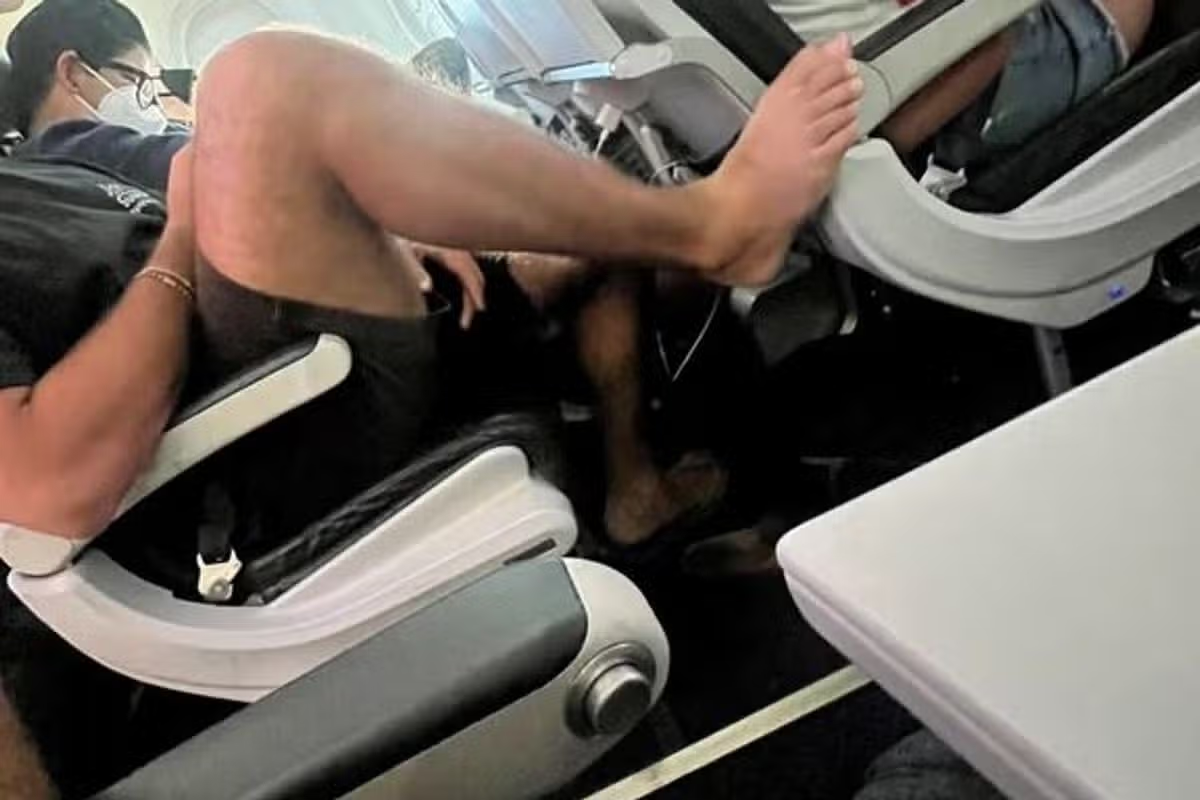
Back in October last year, Boston-based artist Ashley Eisenman filmed a man behind her propping his bare foot into the gap beside her seat for the entire hour-long flight, leaving them mere centimeters from her defenseless arm. “He 1000% should be on the no-fly list ASAP,” she wrote after the traumatic incident.

If a one-hour flight from Reno to San Francisco is bad, then a nine-hour journey from Zurich to New York is the stuff of flakey-skinned, wiggly-toed nightmares. That is what happened to Reddit user u/sarahfayejay, who posted an alarming photo with the caption: “I have a 9-hour flight ahead of me.”

And it’s not an issue that inflicts only those in economy. The alarming Instagram page Passenger Shaming shared a video of a woman lying on her back in first class, with both her bare feet resting against the plane’s wall.

Content cannot be displayed without consent
I visited 'world's most walkable city' but it's actually a nightmare for pedestrians

While you might assume that the dislike of this practice was universal and a given, Expedia decided to check. In a 2018 survey of 18,000 travellers it found that more than 90% said it’s never okay to go barefoot on a plane, while a later 2023 Kayak-led piece of peer reviewing found that 76% of travellers “prefer their vision free of toes” on a flight.

Against this tidal wave of public opposition, there is a countercultural force of people determined to get up in the sky, unencumbered by socks.

“I think the trick, generally, is not ask for consent. Idk (I don’t know) why you would anyway, but I’ve seen it done, and the answer was a negative. So don’t ask, just go… Hopefully you won’t get a Karen next to you who does the whole anti-barefeet on the plane shtick that is still doing the rounds…” one Reddit user wrote in response to a member of the r/barefoot community asking how flying with your feet in their birthday suit typically went down.

Another explained their method for getting on board without attracting attention. “I wear a pair of flip-flops or light sandals that I put on when I enter the airport. I go through security in them and take them off while I’m in the terminal. When they announce my flight, I put them back on to go to the gate, board the plane with them on, and once I’m seated, I take them off until the end of my trip,” they explained.

Content cannot be displayed without consent

A third wrote: “I flew back home from Florida in January barefoot without incident. Except a young female TSA agent insistently asked two or three times ‘Where are your shoes?’ I told her that ‘the government does not require me to wear shoes.’ She let me pass.”

While the US government may not require its citizens to wear shoes, American, Delta, and United all explicitly reserve the right to refuse or remove barefoot passengers, though enforcement in practice appears inconsistent based on these accounts. In the UK, none of the major airlines such as Ryanair, easyJet and Jet2 have rules specifically banning passengers from taking off their shoes.

While the majority of people may take issue with seeing a bare foot in a public place, there is a subset of people who sincerely believe in going without shoes, whether that be for foot health or spiritual reasons.

Kriss Sands is a no-shoes advocate whose blog, Born to Live Barefoot, details the ups and downs of living without shoes on. It is something he takes seriously. “In general, as a full-time 24/7 barefooter, the only reason I would ever put on shoes would be when there is imminent danger of my feet being damaged or injured otherwise, such as extreme weather conditions, caustic chemicals, fire, or similar conditions,” Kriss writes.

In one post, Kriss argues that a “passenger who chooses to travel barefoot on a plane is harming no one and should never be of anyone else’s concern.”

According to Kriss, it’s only the US airlines that specify that being barefoot is against their terms of carriage. “I have not seen all foreign based airlines’ contracts of carriage, but I have reviewed the ones from Aeroflot, Air Canada, Air France, Air New Zealand, British Airways, China Southern Airlines, Lufthansa, and Qantas. With the exception of Air Canada, none of these make any mention at all of bare feet or someone who is barefoot,” Kriss writes.

However, he says airports and planes are no places to argue with staff, given how seriously security is taken. From Kriss’s experience, most staff will allow you to board and fly barefoot, so long as you’re polite. Over a 20-year period, he took 114 flights without shoes on and was only asked to cover his feet eight times.

Source link