European airlines and airports call for flexibility to suspend digital border system amid severe delays.
Published On 2 Jul 20262 Jul 2026
The European Union’s new digital border check system is causing severe disruption to travel, with passengers facing five-hour queues and departure gates closing with planes only half-full, industry representatives have warned.
In an open letter published online on Wednesday, the top representative bodies for Europe’s airports and airlines said that delays caused by the bloc’s recently-implemented Entry/Exit System (EES) had reached a “critical point”.
Recommended Stories
list of 4 itemsend of list
“The current implementation of the EES is creating severe operational consequences, disrupting passengers and putting border authorities, airports and airlines under unsustainable pressure,” Airports Council International Europe, Airlines for Europe, and the International Air Transport Association said in a joint letter addressed to European Commission President Ursula von der Leyen.
“We therefore urge your immediate intervention before the situation deteriorates further during the peak summer travel season.”
With European airports expected to handle 40 million more passengers in July and August than the previous two months, EU leaders “must take stock of the reality of the current situation and of what our air transport system will face over the coming weeks”, the lobby groups said.
“Without additional flexibility, existing challenges will inevitably intensify,” they said.
“As representatives of Europe’s aviation sector, we have a responsibility to warn that this would result in a significant worsening of an already very difficult situation for passengers.”
Warning that the travel disruption was undermining the reputation of the EU and European tourism, the industry groups said it was crucial that the continent continued to be an “efficient, welcoming and competitive” destination.
“Reports already suggest that some international travellers are reconsidering trips to Europe because of the prospect of excessive border delays,” they said.
A police officer scans a passport during a presentation of an automated terminal for registration to the Entry/Exit System (EES) at the Vaclav Havel airport in Prague, Czech Republic, on October 14, 2025 [David W Cerny/Reuters]
Until the stability of the EES is ensured and adequate staffing levels are in place, EU member states should be immediately granted the flexibility to “completely suspend” the new system whenever passenger numbers exceed the “operational capacity” of border facilities, the lobby groups said.
The World Travel and Tourism Council, the world’s largest representative body for tourism-related businesses, said on Wednesday that it endorsed the letter’s calls, warning that the delays could put up to 41 million arrivals and $45.4bn in visitor spending at risk.
“If lengthy delays become accepted practice, travellers will look elsewhere,” WTTC President and CEO Gloria Guevara said in a statement.
“Europe cannot afford to compromise its competitiveness or the experience it offers millions of visitors.”
The European Commission did not immediately respond to a request for comment sent by Al Jazeera outside of regular business hours.
The EU began rolling out the EES in October as a replacement for passport stamping.
The system records each traveller’s name, passport information, fingerprints and facial images, and his or her date and place of entry and exit.
The European Commission announced that the ESS was “fully operational” across the Schengen Area in April, but the system has been blamed for lengthy delays since its introduction, including cases of flights leaving before many of their passengers were able to board.
A wildfire that started in Beaver, Utah, has prompted the National Weather Service to issue warnings about its potential spread. Photo by Google Maps
June 26 (UPI) — The National Weather Service on Friday evening issued its first Dangerous Situation Red Flag Warning in the history of Salt Lake City, Utah, based on concerns about rapid growth of wildfires in the state.
NWS issued warnings for an area in southwest Utah that it considers to be in significant danger based on ongoing wildfires and weather conditions, the agency said in a series of posts on X.
NWS has predicted low humidity levels — less than 10% — and wind gusts of at least 50 miles per hour, which could help to grow the Cottonwood Fire, which has already burned nearly 72,000 acres, KSL-TV reported.
The fire started Monday near Beaver, Utah, before spreading to cover more than 70,000 acres as gusty winds and dry conditions helped the flames to spread, NBC News reported.
“This is the first formal PDS Red Flag Warning we’ve issued since it was formalized by NWS,” the agency said in a post on X.
“This is the first time we’ve reached the Weather Risk Outlook level of ‘Extreme,'” NWS said of the language it has not used in a notification since 2021. “In short, this combinaton of high winds, low humidity, very dry fuels and a large fire is a rare and dangerous situation!”
Utah this year experienced its lowest-ever snowpack and a heatwave that started in March prompted Utah Gov. Spencer Cox to sign an executive order limiting fireworks celebrations throughout the state through July 5.
Utah meteorologist Jason Stroud told The Washington Post that the warning, which has been in place for the last few days, that the danger from fires in the area could be devastating and potentially life-threatening.
“This shows that the combination of weather effects that are coming in the next 48 hours are extremely concerning,” Stroud said, reiterating that the fact that Salt Lake City’s NWS office has never issued the type of warning that is currently in effect.
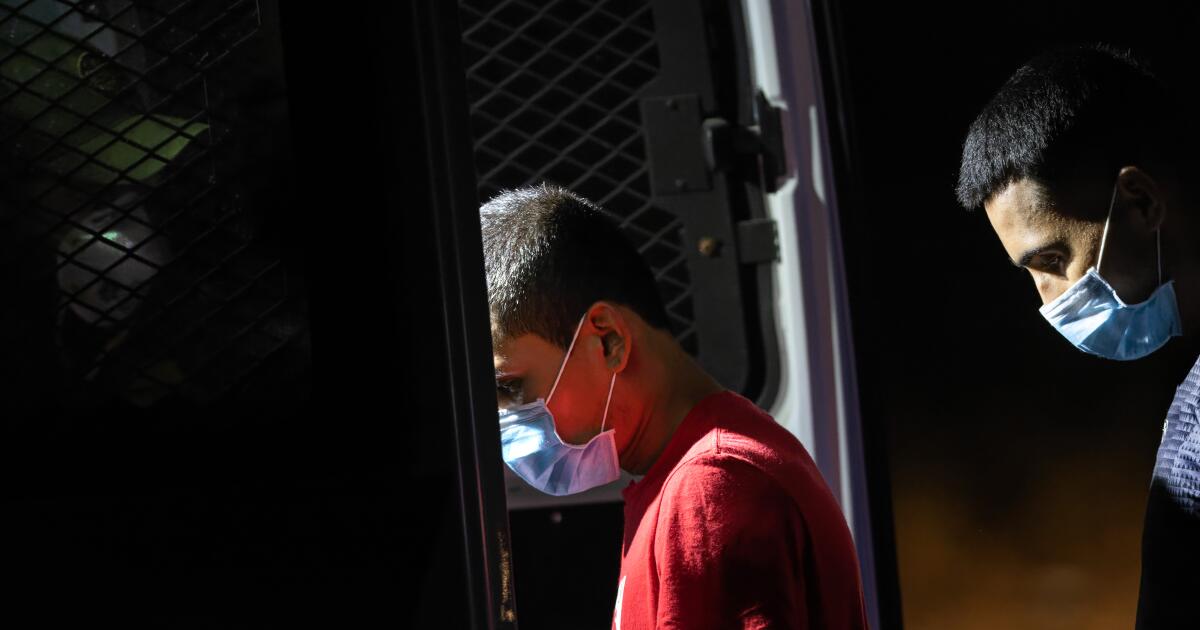
WASHINGTON — A Democratic U.S. senator warns the Trump administration is getting ready to round up 500 immigrant children in a hasty effort to remove them from the country, bypassing legal protections. It would be their second attempt after a federal court intervened last year in an overnight plan to fly out hundreds of children on Labor Day weekend.
Sen. Ron Wyden of Oregon wrote in a letter Wednesday to U.S. Health Secretary Robert F. Kennedy Jr., which oversees the Office of Refugee Resettlement caring for unaccompanied migrant children, that he had “credible information” that the Trump administration had a list of more than 500 migrant children it was targeting for a fast-track removal process and that the department was racing to act in days. He warned that the administration was abdicating “core humanitarian and child welfare mandates” and demanded an immediate halt to any plans to remove the children.
Wyden, who is the ranking member and senior Democrat of the Senate Finance Committee, which has jurisdiction over ORR, did not detail how he came by his information. His office declined to provide further details. ORR falls under the Department of Health and Human Services.
An HHS spokesperson denied any such plans.
“The new information I obtained leads me to believe that the Department is laying the groundwork for another lawless deportation effort, this time on a greater scale, across more countries of origin,” Wyden wrote.
“You have been entrusted with the care and safety of the children placed within the ORR network. Proceeding with this plan knowingly endangers their lives and violates your duty to these vulnerable children.”
Wyden also issued an early warning last August ahead of what eventually became a chaotic weekend of efforts by the Trump administration to remove Guatemalan children in its care and send them home.
HHS spokesperson Emily Hilliard said in “there are no plans to target these children,” calling Wyden’s claims ”irresponsible fearmongering.”
“The Trump Administration is working to identify the parents or legal guardians of unaccompanied alien children in our care because ensuring every child is placed with a properly vetted sponsor is our top priority,” she said.
Over the Labor Day weekend, dozens of migrant children either staying in government-supervised shelters or with foster families were taken from their homes and bused to airfields in Texas bound for Guatemala. A federal judge woken up in the middle of the night eventually stopped the planes. Lawyers for the children — many who had fled violence at home to come to the U.S. — later described how traumatic the middle-of-the-night removal effort was for them.
The administration insisted it was reuniting the Guatemalan children — at the Central American nation’s request — with parents or guardians who sought their return. Lawyers for at least some of the children said that wasn’t true and argued that in any event, authorities still would have to follow a legal process that they did not.
Migrant children traveling alone are usually entrusted to U.S. government care, and there are various legal protections designed to protect them once they’re in the U.S. and navigating the immigration system.
The Trafficking Victims Protection Reauthorization Act of 2008 is one of the key pieces of legislation designed to protect them. With some limited exceptions, it requires that children be placed in the “least restrictive setting possible,” which generally means that they can be released to a sponsor such as a relative in the U.S. while their immigration proceedings play out.
The children can apply for a specially protected status if they can’t return to their home country because of abuse or neglect and they can also apply for asylum.
The Trump administration has made it increasingly difficult for those children to be released to sponsors though. The administration says that they are doing due diligence to make sure that sponsors are thoroughly vetted and that in the past, children were released into dangerous situations.
But advocates say that the result has been children lingering for months in government shelters.
This time, Wyden said the children at risk of being removed come from various countries, potentially including Guatemala, Honduras, El Salvador, and Afghanistan, and have been in U.S. custody — mainly in foster care — for at least 180 days. He said they were described as not having any “viable sponsor” who could come forward and take care of them in the U.S.
Not having an identified sponsor could mean the child’s parents are in their home countries, are deceased or are too afraid to claim their children after ICE started arresting some parents who are not in the country legally during their reunification efforts.
Gonzalez and Santana write for the Associated Press.
Iran’s Islamic Revolutionary Guard Corps (IRGC) has warned commercial vessels to only use routes through the Strait of Hormuz approved by Tehran, reopening a point of friction in fragile negotiations between the United States and Iran over the future of the strategic waterway.
The warning came after Oman announced a new shipping transit route through the strait on Wednesday, saying it had coordinated the route with the International Maritime Organization (IMO) as maritime traffic slowly resumes following weeks of disruption.
Recommended Stories
list of 4 itemsend of list
The dispute remains one of the unresolved issues after a memorandum of understanding (MoU) was signed by the United States and Iran last week, which largely halted hostilities in the four-month US-Israel war on Iran and which launched a 60-day negotiation process aimed at reaching a broader peace agreement.
The MoU, which includes the reopening of the strait, followed months of severe disruption to shipping after Iran effectively closed it, and the US imposed a corresponding naval blockade on Iranian ports.
Both Washington and Tehran have declared the strait open to commercial shipping, but questions remain over whether Iran will seek greater control over vessel movements, whether it will impose transit or service fees on ships using the strait following the 60-day negotiating period, and whether disagreements over the waterway could derail efforts to reach a permanent agreement altogether.
Why is the Strait of Hormuz so important?
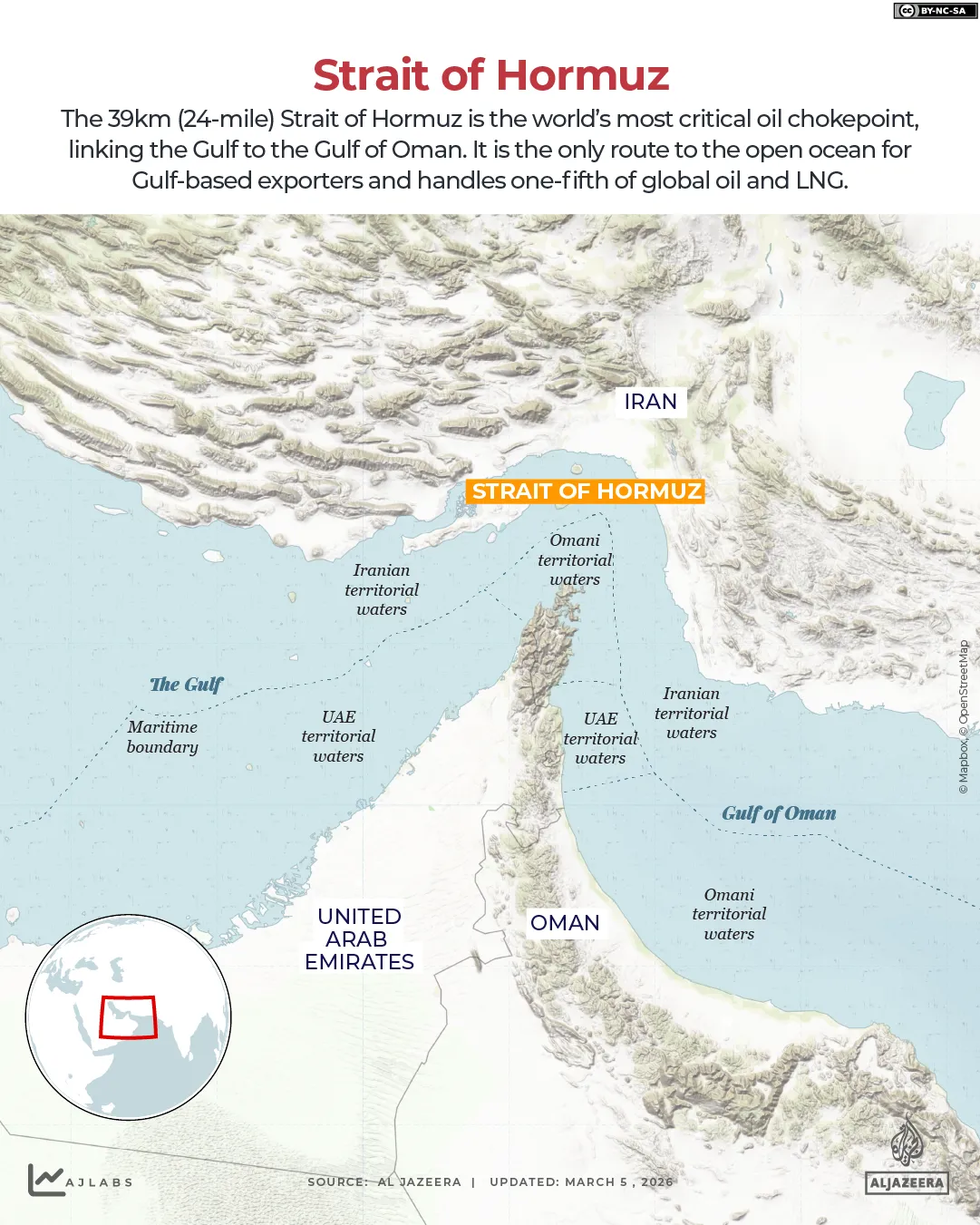
The Strait of Hormuz is one of the world’s most strategically significant waterways, with around one-fifth of global oil and liquefied natural gas (LNG) supplies normally being shipped through the narrow passage linking the Gulf to the Arabian Sea.
Bordered by Iran to the north and Oman and the United Arab Emirates (UAE) to the south, the strait is only about 50km (31 miles) wide at its entrance and exit, narrowing to about 33km (21 miles) at its tightest point. Despite its width, it is deep enough to accommodate the world’s largest oil tankers.
According to the US Energy Information Administration, about 20 million barrels of oil and petroleum products transited the strait each day in 2025, representing hundreds of billions of dollars in annual energy trade.
The route is used not only by Iran but also by Iraq, Kuwait, Qatar, Saudi Arabia and the UAE. It is also vital for global fertiliser exports, with roughly one-third of international fertiliser trade normally passing through the strait.
Because disruptions to shipping there rapidly push up global energy prices and destabilise US markets, control of the waterway has become one of Iran’s strongest sources of strategic leverage in its conflict with the US.
(Al Jazeera)
Why is Iran objecting to Oman’s new route?
The IRGC says Oman and the IMO announced the new shipping corridor without consulting Tehran. “Certain authorities have announced a new shipping route through the Strait of Hormuz without prior notification to or coordination with the Islamic Republic of Iran. The proposed route is unacceptable and poses serious safety risks,” the force said.
“The only authorised transit routes through the Strait of Hormuz are those designated by the Islamic Republic of Iran,” it said, adding that ships must maintain contact with the IRGC Navy while transiting the waterway.
Iran first issued its own map of acceptable routes through the strait in April, showing that ships should pass much closer to the Iranian coast than they had previously.
(Al Jazeera)
The IRGC’s warning came after a Liberian oil tanker passed through the strait on Thursday using a route much closer to Oman’s coastline.
Al Jazeera’s Resul Serdar, reporting from Tehran, said the IRGC appeared frustrated because the Omani route partially bypasses Iran’s direct control over shipping.
“The control of the Strait of Hormuz has been a huge leverage for Iran to put pressure on its adversaries and the global economy since the beginning of the war,” Serdar said.
Oman defended the corridor route it had announced, saying it was intended to restore safe navigation while complying with international law. Foreign Minister Badr Albusaidi said Oman remained committed to ensuring freedom of navigation through the waterway and stressed that “future arrangements related to the strait do not involve imposing any transit fees”.
What does the US-Iran agreement say about the strait?
In the MoU signed last week, Iran agreed that it would “make arrangements using its best efforts for the safe passage of commercial vessels with no charge, for 60 days only, from the Persian Gulf to the Sea of Oman and vice versa”.
While the agreement states that “the traffic of commercial vessels will immediately start”, it also acknowledges that demining operations will be required before normal shipping routes can fully resume, stating that “demining by the Islamic Republic of Iran will be instated within 30 days”. It also provides for discussions between Iran, Oman and other Gulf states on future arrangements for managing the waterway.
However, the memorandum does not specify what will happen after the initial 60-day period. Ali Vaez, Iran project director at the International Crisis Group, said the temporary rerouting of vessels had always been expected because of the mine-clearing operations outlined in the agreement.
“We always knew that if there was a deal, there would be several weeks of mine-clearing operations in the international shipping lane running through the middle of the Strait of Hormuz,” he said.
“During that period, vessels would have to transit through Iranian and Omani territorial waters instead.”
However, Vaez said the latest announcement by Iran was unexpected. “The important thing now is that the Iranians do not start taking fees or other tolls,” he said, “because that is not provided for in the memorandum of understanding.”
Asked whether the IRGC’s position differed from that of Iran’s government, Vaez said: “There is no distinction between the IRGC and the state. They are effectively one and the same. The IRGC is calling the shots.”
Can Iran charge ships fees?
International law generally protects the right of transit through international straits, including Hormuz, making it difficult for coastal states to impose unilateral transit fees on vessels simply passing through international shipping lanes, even where they are within territorial waters.
Last week, Iran announced it would waive planned fees through the strait for 60 days while talks with the US continue in Switzerland, suggesting charges may be introduced once the negotiating period expires.
Iran’s chief negotiator, Mohammad Bagher Ghalibaf, has signalled that Tehran views the post-war arrangement as fundamentally different from the status quo that existed before the conflict.
“Hormuz will never return” to its prewar status, Ghalibaf said.
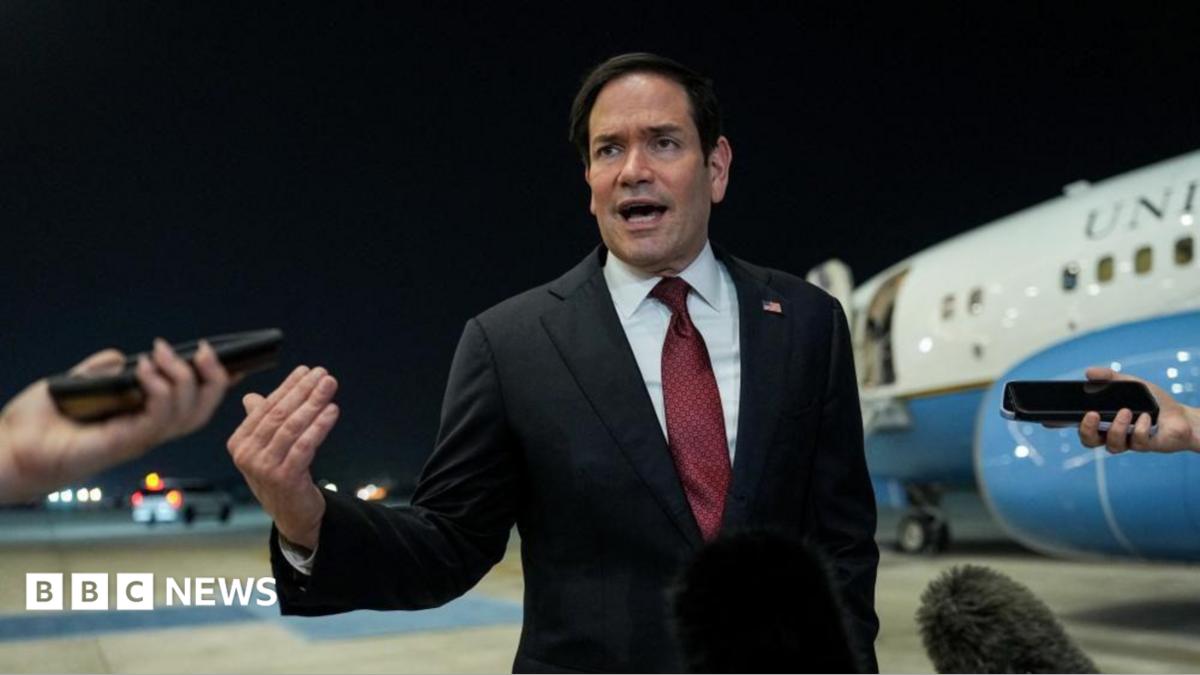
The suggestion that Iran could charge fees was dismissed by US Secretary of State Marco Rubio this week. Speaking at the start of a regional tour in the United Arab Emirates, he said: “It’s an international waterway. No country is allowed to charge tolls or fees on an international waterway.”
Rubio added that he believed “all the countries in this region would agree”.
Speaking in Manama, Bahrain, after meeting with the Gulf Cooperation Council (GCC) – a bloc comprising Bahrain, Kuwait, Oman, Qatar, Saudi Arabia and the UAE – on Thursday, Rubio also told reporters: “Iranians are saying one thing, but then something else is actually happening.
“It’s now obvious to us that … the Iranian system is going to produce all sorts of maximalist rhetoric. What we’re interested in is not their press conferences. What we’re interested in is whether or not ships are moving. If ships are moving as they should be moving, then that’s what we’re going to judge.
“If, on the other hand, this rhetoric is backed up by actual ships being threatened and ships are not moving, then that’s a violation of the agreement, and we’re going to have a problem with it.”
Rubio claimed there is no regional support for Iranian transit fees, saying, “There is zero support among Gulf countries for any sort of toll or fees charged for the use of international waters … that isn’t going to happen.”
His comments came after UAE presidential adviser Anwar Gargash said that new “geopolitical facts” could not be imposed on the Arab Gulf states as a result of what he described as the “treacherous aggression against them”.
Are ships returning – and which route are they taking?
Some commercial shipping through the strait has resumed, although traffic remains well below normal levels. Before the conflict, between 120 and 140 vessels typically transited the strait each day.
According to shipping analytics company Kpler, confirmed crossings rose to 70 vessels on Wednesday as demining progressed and more operators began using the Omani route.
“The US-Iran MoU framework and apparent lifting of the US blockade appear to have supported a short-term confidence boost, although IRGC warnings against use of the Omani route could create a new source of contention,” Kpler reported.
The company added that incomplete demining, continued “dark” routing by some vessels – when ships limit or switch off their tracking transponders – and unresolved questions over inspections, sanctions and future governance meant shipping had not yet returned to prewar conditions.
This comes as oil prices drop to the lowest level since before the Iran war, with Brent crude, the global benchmark, falling to a low of $72.24 a barrel on Thursday. This remains above the prewar price of $66, however.
The chart below shows how shipping through the strait before the war compares to its status in recent weeks:
Is a peace deal achievable?
The future administration of the Strait of Hormuz is only one of several issues still to be resolved before negotiators hope to reach a comprehensive agreement within 60 days, with another major sticking point being Iran’s nuclear programme.
International Atomic Energy Agency (IAEA) Director-General Rafael Grossi has said the agreement explicitly provides for international monitoring of Iran’s nuclear activities.
However, Kazem Gharibabadi, Iran’s deputy foreign minister for legal and international affairs, has said inspectors’ access to nuclear sites damaged during the conflict will only be considered as part of a final agreement.
Questions also remain over the fate of Iran’s enriched uranium stockpile, the sequencing of sanctions relief and the release of frozen Iranian assets, while regional tensions continue to pose additional risks.
Israeli forces remain deployed in parts of southern Lebanon occupied during the conflict, according to a Lebanese military source, while Israeli strikes have continued, despite the MoU explicitly calling for “a permanent end to the war on all fronts, including Lebanon”.
Vaez said visible progress would be essential if negotiations are to survive, noting, “Both sides have to see progress, whether that’s greater access for UN nuclear inspectors, sanctions relief, or resolving the issue of Iran’s uranium stockpile.”
He cautioned against viewing the interim agreement as a series of smaller deals. “Nothing is agreed until everything is agreed,” Vaez said.
“They [the Iranians] are determined to reach a comprehensive agreement within 60 days. That’s a very ambitious timetable, but there has to be visible momentum or the process risks falling apart.”
However, Vaez said both Washington and Tehran have strong economic incentives to bring about a lasting peace. “The situation in the Strait had become one of mutually assured economic destruction,” he said.
“The United States was facing rising energy and oil prices ahead of the midterm elections … At the same time, Iran was already in a deep economic hole before this conflict began. The war only made that worse.
“It became a lose-lose dynamic, and both sides needed a way out.”
In contrast to heat pumps, continuing record sales of electric cars indicate they are all but set to replace their petrol and diesel counterparts in the coming years on UK roads.
Emma Pinchbeck, CEO of the Climate Change Committee, praised the improvement in greener transport.
“We’ve made big progress on things like electric vehicles, where one in four cars being bought in the UK today is now an EV.”
She said the growth had been accelerated by the Iran fuel crisis, which has seen significant increases in petrol and diesel prices at the pump pushing people to seek out other options.
“We can see in the numbers what people want – cheap cars and cars that will save them money, particularly as fossil fuels are volatile,” she said.
But the industry body, Society of Motor Manufacturers (SMMT), said most of this demand had been brought about by huge discounts offered by car manufacturers.
“This has cost the industry more than £10 billion since 2024 – an unsustainable amount when that money should be going into R&D, manufacturing and the workforce,” said Mike Hawes, CEO of SMMT.
It supported the government’s plan to weaken its Zero Emission Vehicles (ZEV) mandate – which sets a target for number of EVs manufacturers produce and a penalty for failing to meet that target.
The UKCCC disagreed and urged the government to keep the policy.
The UN’s International Maritime Organization (IMO) is set to evacuate more than 11,000 sailors who have been stranded in the Gulf because of the US-Israel war against Iran.
IMO secretary-general Arsenio Dominguez said the “large-scale operation” would be carried out in cooperation with Iran, Oman, the US, other coastal states in the region and the maritime industry.
“We have secured the necessary safety guarantees and have thoroughly verified the conditions for safe navigation to support these operations,” he added.
An interim deal was signed last week to end the conflict, but both the US and Iran continue to clash on details of the Memorandum of Understanding (MoU).
The US has said the MoU includes guarantees that Iran’s nuclear weapons programme will come under inspections by the International Atomic Energy Agency (IAEA).
US President Donald Trump posted on social media on Tuesday: “Iran has fully and completely agreed to highest level Nuclear inspections long into the future (Infinity!!!). This will insure ‘Nuclear Honesty.'”
Shortly before Trump’s post, Iran said the UN watchdog would not be able to inspect nuclear sites bombed by the US and Israel last year.
In response, a US official said: “the Iranians have agreed to robust IAEA inspections of the remains of their nuclear weapons programme. The Iranian regime will say what they have to say for their domestic audience.”
Iran’s President Masoud Pezeshkian said during a visit to Pakistan on Tuesday that Iran “will never negotiate with anyone, under any circumstances, ever, about our defensive capabilities”.
US Secretary of State Marco Rubio began a tour of the Gulf on Tuesday in the United Arab Emirates (UAE), and will also visit Kuwait and Bahrain – which both host US military bases – to discuss the deal with Tehran.
The secretary of state warned on Tuesday that no country is allowed to impose tolls on the Strait of Hormuz, where Iran has been pushing to charge ships passing through.
“It’s an international waterway. No country is allowed to charge tolls or fees on an international waterway. That’s existing international law,” he said as he arrived in the UAE.
“I don’t think we have anybody to convince around here in that regard. I think all the countries in this region would agree with us.”
Football fever is sweeping the nation, but one TV vet says the excitement of World Cup matches could be having an unexpected impact on pets
Dr Scott Miller during an appearance on ITV’s This Morning(Image: This Morning)
As football fans soak up every goal, near miss and dramatic result, many may be overlooking one beloved member of the household. According to one TV vet, the noise and excitement surrounding World Cup matches could be causing hidden stress for dogs.
Dr Scott Miller issued the warning during an appearance on ITV’s This Morning over the weekend. He explained that while humans may enjoy the thrills and spills of tournament football, dogs can find the experience far more overwhelming.
“It’s so exciting having the World Cup and people get excited, overexcited, and there’s a lot of high-pitched shrill noises that emanate from our beings,” he said. “They’re the sounds that our dogs are particularly sensitive to.”
The vet explained that dogs have far more sensitive hearing than humans. According to Dr Miller, a dog can hear sounds from around four times further away than a person.
“So if you can hear something from 20 metres away, they can hear it from 80 metres away,” he said. “You can imagine when you have your family, who are normally calm and lovely, suddenly screaming away beside them.”
Content cannot be displayed without consent
Dr Miller compared the sudden outbursts during matches to the effect fireworks can have on pets. He said unexpected cheers, shouting and celebrations can be frightening because animals receive no warning before the noise occurs.
“It’s just these high-pitched sounds that happen out of nowhere,” he explained. “They don’t get any warning for them.”
The warning comes as millions of football fans prepare to watch matches throughout the tournament. Research from Dogs Trust suggests many dogs can experience anxiety when exposed to loud or unfamiliar noises, with fireworks, thunderstorms and shouting among the most common triggers.
Animal welfare charity Blue Cross claims signs of stress in dogs can include trembling, panting, pacing, hiding, excessive barking and attempts to escape from noisy environments. Some dogs may also become withdrawn or unusually clingy when feeling anxious.
Fortunately, Dr Miller says there are several steps owners can take to help. One of the most important is ensuring pets have access to a quiet space away from the excitement.
“Have somewhere that your dog can slink away to, or your cat as well, away from the noise and the hubbub of the game,” he advised. He also suggested tiring pets out before kick-off. A walk, interactive play session or mentally stimulating activity can help encourage relaxation later in the day.
“Making sure they’re nicely tuckered out, maybe play an interactive game with them, stimulate their minds as well as their body, and then feed them as well,” he said. “So they’ve got that sort of Sunday afternoon feeling. They are a bit sleepy and a little bit relaxed.”
For households expecting particularly loud celebrations, Dr Miller recommended drawing the curtains and playing low-level background music. These measures can help mask sudden noises from both inside and outside the home.
While football fans may be focused on the action on screen, experts say it’s worth keeping an eye on pets too. A little preparation could help ensure that both owners and their dogs enjoy a more comfortable tournament.
President Volodymyr Zelenskiy warned that Russian forces are preparing for a large-scale attack on Ukraine, urging residents to be cautious and pay attention to air raid alerts. In his nightly address, he noted that recent Russian strikes have resulted in at least six deaths across various regions. There has been a pattern of heavy attacks on Kyiv and other major cities, with ten fatalities reported last Monday. The historic Pechersk Lavra monastery was also significantly damaged during these strikes.
Zelenskiy confirmed that Ukrainian military efforts would continue, targeting the oil sector. Recently, Ukrainian drones struck an oil refinery in Tyumen, western Siberia, and an oil facility in Moscow twice. On Saturday, Russian forces used glide bombs to attack the city of Zaporizhzhia, resulting in five deaths and ten injuries. Other attacks included a bombing near Sumy that killed one person, as well as drone strikes in the Kherson region and shelling in Poltava that injured three children.
Iran has said it remains committed to implementing the MoU signed with the United States. However, Tehran warned that it would take reciprocal measures if Washington fails to honour its obligations under the agreement.
The number of confirmed cases in the country has increased to 837, including 196 deaths.
Published On 16 Jun 202616 Jun 2026
The current Ebola outbreak in the Democratic Republic of Congo (DRC) could become deadlier than the worst outbreak on record, which killed more than 11,000 people, says the head of Africa’s Centres for Disease Control and Prevention (Africa CDC).
The number of confirmed cases in the country has increased to 837, including 196 deaths, government data showed on Tuesday.
Recommended Stories
list of 3 itemsend of list
“If we don’t stop the outbreak very soon, it will be worse than what we had in West Africa and eastern DRC,” Africa CDC Director-General Jean Kaseya said during a virtual meeting of African leaders and international donors in Burundi on Tuesday.
Speaking to Al Jazeera, Kaseya said tens of thousands of people who may have been exposed to Ebola had not yet been traced or contacted.
“The contact tracing is a major indicator and a major issue. We are missing more than 26,000 people, and we don’t know where they are, and we don’t know if they are contaminating other people.”
A Red Cross official said that the epidemic had not yet peaked in the country.
“We are afraid that this could last one year to end this disease,” Bruno Michon, operations manager for the International Federation of Red Cross and Red Crescent Societies, said.
The response has been hampered by a lack of treatment centres and by community resistance to stringent hygiene measures. Health officials said that, more than a month since the outbreak was declared, the true scale was still unknown.
The bodies of Ebola victims are highly infectious after death, and unsafe traditional burials – in which family members handle the body without proper protective equipment – are a leading driver of transmission.
So far, the continent has raised less than a fifth of the $518 million it is seeking to bolster measures to contain the outbreak, according to Burundi’s President Evariste Ndayishimiye, who also chairs the African Union.
The shortfall has raised concern among authorities, who fear the consequences could be devastating if the virus is not brought under control quickly.
There is no approved treatment or vaccine for this strain of Ebola. The World Health Organization (WHO) says it could take up to nine months for a vaccine to be ready.
Neighbouring Uganda has recorded 19 cases, 14 of them among people who had travelled from the DRC. The country has also reported two deaths.
The personal finance guru said whatever happens ‘don’t wait till you get to your destination’
12:45, 15 Jun 2026Updated 12:55, 15 Jun 2026
Martin Lewis said people could be costing themselves a fortune if they make two mistakes with money on holiday(Image: ITV)
Personal finance expert Martin Lewis has issued a warning to anyone using an airport this summer. People going on holiday have been told they will be making a big mistake if they make a key decision when they are ‘captive custom’.
People travelling this year are already concerned about potential cost rises and delays caused by the situation in the Middle East. Mr Lewis, appearing on ITV’s This Morning, explained that making any effort to get cash while at the airport is a mistake.
He told hosts Ben Shephard and Cat Deeley that people like to take cash for things like tips – and also some prefer to use it to budget more effectively. He said: “The worst place to get your cash is at the airport or at the ferry port or anywhere like that because they have your captive custom and the rates are horrendous.
“The best thing to do is to use a couple of travel exchange comparison sites online. Now, the thing is, you have to be careful. It’s a combination of the exchange rate and the fee. So what exchange rate are they giving you? What fee are they giving you? You want that all combined. And that’s what the comparison sites will do.
“You’ll just say, ‘I want £600 worth of dollars. Who’s going to give me the most dollars for my £600?’ And that’s the way that they will work. So, that’s by far the simplest way to do it. Just get yourself on a comparison. But don’t wait till you get to your destination.”
He said that comparison sites will look at perhaps 50 or 60 outlets, whereas if you go abroad before looking it’s unlikely those available will be able to compete. He said “If you go regularly to the same price abroad and you know there’s a little fella and you know and he gives you great rates and they’re much better than the ones at home then it’s fine.
“But if you don’t have that specialist knowledge, do the comparison, take the cash before you go. I mean also if you really do want cash, if you got a specialist overseas card, you know you got a Chase card or something just put it in the cash machine abroad. There’s no fees and you get the near-perfect exchange rate. So that’s another way to get cash.”
Mr Lewis also explained that anyone spending money in European destinations such as Spain, Greece or France should always make one decision when it comes to paying or getting money out. He explained that if people have gone to the trouble of lining up a card to work overseas, then they’re actually adding lots of money onto their bills by making the wrong choice when asked if it’s euros or pounds.
He said: “If you spend, if you go to a machine abroad or you go to an ATM and you’re in Europe, let’s say, or if it says, do you want euros or pounds? What it’s actually saying is if it’s euros, do you want your card to do the conversion? Your card company. If it’s pounds, we will do the conversion. for you and then charge your card. So, that’s the decision. Now, we’ve just talked about getting a specialist overseas card that gives you a near-perfect rate.
“Well, you want them to do the conversion. That’s why you got the specialist overseas card. And actually, even if you haven’t got a specialist card, even the bog standard pretty pants cards here tend to be better than the shop abroad doing it where they put a massive we can be six or 7% on the exchange rate.
“The same with overseas cash machines, which can also add a fee on top, but what happens is basically you put, let’s say, you’re in a cash machine abroad and it’s saying pounds or euros, and you say, as I will absolutely do. I go, I want euros, please, and it says are you sure you’re sure we won’t do the conversion are you actually? Yes, I want euros. Are you sure? What are you doing?
“They are desperate to persuade you to let them do the conversion because they make a lot of money from it it’s the opposite of what they’re trying to push you to do is what you want to do so very simply if you’re in Europe and you paying on a card, paying euros if you’re in America, pay in dollars if you’re in Vietnam.”
Migration has been a central theme throughout Pope Leo’s weeklong tour of Spain.
Published On 12 Jun 202612 Jun 2026
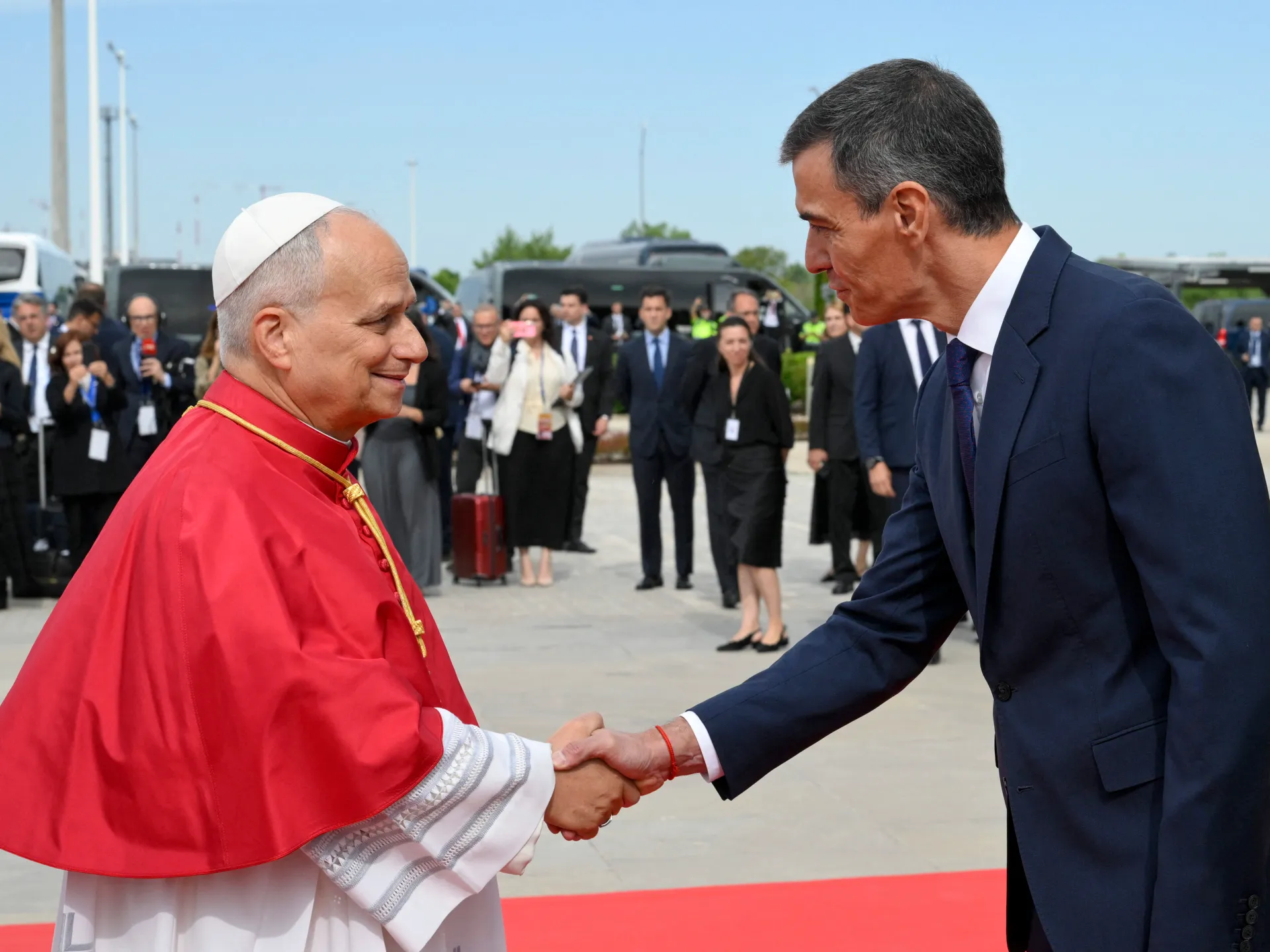
Pope Leo has warned human traffickers that they will face God’s wrath if they continue to exploit desperate African people trying to reach Europe via Spain’s Canary Islands.
On Friday, his second day in the Canary Islands, the pontiff said that he wanted to directly address those who “take advantage of people’s desperation [or] organise death routes”.
Recommended Stories
list of 3 itemsend of list
Throughout his weeklong tour of Spain, the American pope has insisted on the inherent dignity and rights of migrants, urging global leaders to welcome and integrate them into society.
“Stop. Repent,” said Pope Leo. “For every life lost, every family deceived … you will have to appear before divine justice.”
“Repent while there is still time,” he said, invoking the Catholic belief that someone who committed evil acts in life can confess their sins and make amends or be sent to hell upon their death.
Leo was visiting the Canary Islands, a Spanish archipelago off the western coast of Africa, as the culmination of a three-stop tour of Spain.
The islands are one of the main gateways into Europe for migrants, who risk a deadly journey across the waters of the Atlantic Ocean, often in improvised and overcrowded small craft.
Earlier, the first man from the United States to lead the Roman Catholic Church, warned world leaders that history would condemn those who allowed people fleeing war or poverty to suffer.
Located more than 1,000km (620 miles) from mainland Spain, the Canaries saw migration peak in 2024, when the islands received 46,843 migrants, compared with fewer than 1,000 in 2015, according to official data.
More than 3,000 people died last year trying to reach the islands, according to the NGO Caminando Fronteras.
The pope also visited an interim housing centre in Tenerife, the largest of the Canary Islands, to hear testimonies from migrants. The facility has received some 70,000 people since it opened in 2021.
One woman, Bousso Diouf, told Pope Leo that migrants did not want special privileges but “respect, humanity and the opportunity to live with dignity.”
Watch out for blue, red or dark patches on your skin
A doctor has explained the red flag warning signs that should never be ignored after a flight. Millions of people will jet off on their summer holidays in the coming months and a vascular consultant says holidaymakers should be aware of tell-tale signs before they become a medical emergency.
Dr Mark Regi, Consultant Interventional Radiologist at VeinCentre, said: “Air travel, particularly long-haul flights, can put extra strain on your circulatory system as most people will have limited movement for a long period of time. People with poor circulation or varicose veins can be at greater risk of deep vein thrombosis (DVT), a blood clot usually found in the leg.
“For most people, a walk around the cabin and some compression socks will do the trick, but it’s always worth knowing the signs to look out for that something potentially serious could be happening.”
Last year influencer Molly-Mae Hague told how she feared she had suffered a blood clot after experiencing severe pain in her leg following a flight home from Dubai. After rushing to hospital doctors gave the former Love Island star the all clear. She told fans: “It needs to be taken so much more seriously because it can happen to anyone at any age.”
Symptoms of DVT include a throbbing pain in the calf or thigh, swelling in one leg, swollen veins and the skin around the leg becoming red, blue or darkened. Dr Regi said: “If any swelling doesn’t ease after a flight and you experience a dull ache or heavy cramping then it’s always worth speaking to a doctor.
“DVT can be serious so keep a close eye on any changes that don’t settle down. If you experience shortness of breath or chest pain, together with these symptoms, seek medical advice straight away as this could be a sign a clot has travelled to the lung.”
Dr Regi continued: “People who already know they have poor circulation, for example if they have varicose veins, should try and move around as much as is practical during any long-haul flights. That’s because twisted or bulging veins can struggle to circulate blood effectively during extended periods of immobility.
“I always recommend investing in medical-grade compression stockings if you have varicose veins. You should also keep hydrated and keep alcohol and caffeinated drinks to a minimum. Exercises such as calf raises and ankle pumps can also keep blood pumping around your legs when you can’t get up for a wander.”
Dr Regi says varicose veins are often seen as purely a cosmetic issue, but they should be taken seriously and treatment is available. He said: “Varicose veins mean they are not working as they should. Treatments are available which focus on the underlying venous insufficiency to alleviate symptoms and prevent complications. Endovenous Laser Ablation (EVLA) is a minimally invasive procedure that uses laser energy to close off affected veins, treating the root cause of varicose veins.”
Bank of Korea Gov. Shin Hyun-song delivers a speech during an international conference at the central bank in Seoul, South Korea, 01 June 2026. Photo by YONHAP / EPA
June 11 (Asia Today) — South Korea is facing widening gaps in both wealth and income, with young people and those without homes losing ground economically, Bank of Korea researchers said Wednesday.
The central bank’s research department made the assessment in a report titled “Household Polarization in the Korean Economy and Its Spillover Effects.” The report said South Korea is confronting a form of dual polarization as asset and income inequality expand at the same time.
According to the report, South Korea’s net wealth Gini coefficient fell to 0.584 in 2017 but has since risen, reaching 0.625 last year. A Gini coefficient closer to zero indicates greater equality, while a figure closer to one indicates greater inequality.
The report identified rising real estate prices as a key factor behind the widening asset gap. It said higher property prices have played a central role in explaining movements in wealth inequality.
The Bank of Korea researchers also said real estate assets are concentrated among older generations, making wealth inequality between generations more structural.
The conditions for young people to build assets have deteriorated, the report said. An increasing number of young people earn relatively high incomes but cannot enter the upper wealth bracket because they do not own real estate.
The report said the mobility that once allowed people with middle- to upper-level incomes to move into the top wealth group has weakened, undercutting the asset-building ladder for younger households.
Income inequality also shows signs of widening again. The disposable income Gini coefficient fell from 0.353 in 2016 to 0.323 in 2023 but rose slightly to 0.325 in 2024.
The report said income inequality, which had improved through redistribution policies, could widen again because of K-shaped growth across industries.
Researchers identified the gap between the information technology sector and non-IT industries as a driver of income polarization. In the IT sector, wages have risen sharply, led in part by bonuses, while wage growth has been limited in other industries.
The spread of artificial intelligence could further deepen income gaps, the report said. Researchers said AI technology, combined with advances in robotics, could replace jobs held by low-income workers and young people in the early stages of their careers.
A Bank of Korea survey on AI also found that people in lower income brackets were more likely to believe their jobs could be replaced by AI.
The impact of dual polarization is especially visible among young people. The share of people in their 20s and 30s among households in the bottom quintile for both net wealth and income rose from 7.9% in 2020 to 15.2% in 2025.
The report said this suggests young people without homes are increasingly being pushed into lower economic groups.
The Bank of Korea researchers warned that dual polarization could weaken productivity and consumer vitality across the economy.
An analysis using data from 120 countries found that when the share of wealth held by the top 10% rises by 1 percentage point, total factor productivity falls by 0.16% two years later.
In South Korea, the share of net wealth held by the top 10% increased from 43.0% in 2022 to 46.1% in 2025, up 3.1 percentage points. Researchers said widening wealth inequality could become a constraint on economic growth and productivity improvement.
The social costs could also increase. The report said widening wealth and income gaps may lower expectations for upward mobility, weaken work incentives and reduce social trust.
It also warned that high housing costs for young people could become a barrier to marriage and childbirth.
The researchers said redistribution policies focused mainly on income support are not enough to respond to dual polarization. They said South Korea needs to guide household assets, which are heavily concentrated in real estate, toward more productive sectors and expand opportunities to build productive assets.
The report also called for a more stable tax base in response to economic changes driven by technological development. It said institutions should be reviewed to ensure that the path from labor income to asset formation does not deteriorate further.
Researchers also said South Korea must strengthen new growth industries so the benefits of economic growth can spread more widely across the economy.
ILLUSTRATION – A person sits in front of a computer screen. South Korea’s spy agency says North Korea’s AI-assisted cyberattacks could generate tens of thousands of malicious actions per second. SASCHA STEINBACH / EPA
June 10 (Asia Today) — Artificial intelligence is reshaping the cybersecurity battlefield, South Korea’s spy agency warned, saying North Korean hacking groups are moving toward autonomous attacks that can identify vulnerabilities, break into systems and monetize stolen data with limited human involvement.
The National Cyber Security Center, operated under the National Intelligence Service, issued the warning in its 2026 National Information Security White Paper, released Sunday.
The agency said the rapid development of AI has sharply increased the capabilities of attackers, while the spread of cloud infrastructure and the neglect of aging systems have exposed structural weaknesses in South Korea’s cyber defenses.
The agency focused in particular on the rise of agentic AI, a form of autonomous artificial intelligence that can set goals, analyze data and manipulate external systems without constant human direction.
When used by hackers, the technology can generate large volumes of phishing messages and other social engineering content, develop hacking tools such as ransomware and carry out large-scale operations with fewer people, less time and lower costs.
Concerns over the misuse of agentic AI grew recently after Anthropic’s AI model Mythos was reported to have produced Windows attack code in 31 minutes.
The shift is especially visible among North Korean hacking organizations. Global cybersecurity companies including Kaspersky and Google Threat Intelligence Group have identified signs that the North Korea-linked group Kimsuky used large language models to help write code.
Another North Korea-linked hacking group, APT45, repeatedly entered prompts at scale to search for software vulnerabilities and test whether attack code could be executed.
Analysts increasingly believe North Korea began designing and testing AI-automated attacks last year and has now largely adopted the technology. The change is seen as allowing North Korean hackers to overcome personnel limitations and launch larger attacks on a regular basis.
North Korea stole a record 2.2 trillion won, or about $1.46 billion, in virtual assets last year.
While North Korea’s cyber capabilities are advancing rapidly, many South Korean public and private systems remain vulnerable because of aging infrastructure. The risk is growing as organizations adopt AI across more areas of work without fully updating their defenses.
The agency said agentic AI is particularly suited to manipulating AI systems used by target organizations, meaning South Korea could be expanding potential attack routes unless it strengthens its security systems.
“Starting this year, agentic AI will autonomously carry out the full attack life cycle and generate tens of thousands of malicious actions per second,” the agency said. “Defense systems also must immediately shift to autonomous security operations that minimize human intervention and identify and isolate threats at machine speed.”
Experts said isolated responses are no longer enough and called for a national-level control tower capable of continuous cyber response.
“The only current method is to use AI to find security problems, patch them as quickly as possible and prevent attacks,” said Choi Byung-ho, a research professor at Korea University’s Human-Inspired AI Research Institute. “A governance system capable of responding to hacking within 24 hours is needed, but it is difficult because of issues such as delegated authority.”
United States President Donald Trump has warned Israeli Prime Minister Benjamin Netanyahu that he might find himself fighting on his own if Israel returns to war with Iran.
The warning on Monday came as Israel and Iran said they would pause attacks following their most serious escalation since a ceasefire took effect in April.
Recommended Stories
list of 3 itemsend of list
Trump, who has reportedly grown increasingly exasperated with Netanyahu, demanded that both sides stop “shooting” in a post on his Truth Social platform and said that “final negotiations” towards peace would proceed “subject to ignorance or stupidity getting in its way”.
He also called Netanyahu and told him to stop the strikes, according to media reports.
In an interview with Axios, Trump said he had warned Netanyahu about the consequences of continuing the war.
“I said, ‘Bibi, you better be careful, or you will be on your own very soon’,” Trump said.
The flare-up began on Sunday, triggered by Israel’s deadly bombardment of Lebanon’s capital, Beirut. Iran – which has long said any peace deal with the US depends in part on an end to the fighting in Lebanon – responded with a wave of missiles at northern Israel.
Trump reportedly called Netanyahu on Sunday evening and asked him not to retaliate, but Israel launched attacks on Iran early on Monday.
Israeli forces struck Iranian air defence systems and a petrochemical plant, while Iran retaliated by hitting a similar facility in Haifa and targeting two Israeli airbases. Many of the missiles were intercepted over the occupied West Bank.
No deaths were reported on either side.
Israel plays down tensions
The exchanges complicated Trump’s push to end a war that the US and Israel launched on February 28. A ceasefire announced on April 8 paused all-out warfare. But flare-ups in the Gulf have continued.
For his part, Netanyahu said in a televised statement that he had told Trump that “Israel has a full right to self-defence, and we are exercising it as required”.
“Right now, the fire at the front is contained, because after we hit the terrorist regime in Tehran, it stopped attacking us,” he said.
Netanyahu also warned that should Iran “make the mistake of resuming attacks against us, we will respond with full force”.
Israel’s ambassador to Washington, Yechiel Leiter, downplayed reports of tension between the US and Israeli leaders, telling Fox News that “sometimes, lovers have a spat”.
He said that while Netanyahu had “decided” to “lower the temperature” at Trump’s request, the US president understands “full well” that Israel cannot “absorb ballistic missiles into our country without responding.”
Iran’s Ministry of Foreign Affairs spokesperson, Esmaeil Baghaei, blamed Washington for the escalation.
“The US is directly responsible,” he said. “They are party to the ceasefire negotiations. Therefore, any act in violation of the ceasefire, be it through the interception of vessels [in the Strait of Hormuz], the targeting of southern Lebanon by Israel, or any other event, will cause the United States to be directly responsible for the escalation in the region.”
Iran’s First Vice President Mohammad Reza Aref said the operation against Israel, dubbed “Nasr” or victory, showcased “a new level of deterrence from mighty Iran” and that Israel had been “forced to beg once again” for a ceasefire.
Behind the scenes, diplomatic efforts continue.
Iranian President Masoud Pezeshkian posted on X that Tehran was still “at the negotiating table”, while Iran’s ambassador to the United Nations, Amir Saeid Iravani, said that Washington and Tehran, through Pakistan as an intermediary, are “presenting and exchanging views” towards an agreement.
Iravani told The Associated Press news agency he was hopeful that “very soon” the two sides would reach “a conclusion”.
Pakistan’s Prime Minister Shehbaz Sharif said efforts for a peaceful diplomatic solution was ongoing “earnestly and painstakingly” and called for restraint, “especially when the final objective is just about to be achieved”.
He also said Israel and Iran’s exchange of fire was a “reminder of the dangers associated with a tenuous ceasefire and the unbearable consequences it may lead to”.
Attacks on Lebanon continue
The escalation on Monday also drew in Yemen’s Houthi rebels.
The group fired missiles at Israel early in the morning and declared a complete ban on Israeli maritime navigation in the Red Sea, warning that all Israeli movements would be considered “legitimate military targets”.
Later on Monday, air raid sirens sounded in the Israeli port city of Eilat, with the military saying a suspected aerial target was launched from Yemen.
An Israeli strike killed five people in the city of Tyre, while another, in the Nabatieh district, left seven dead. A third strike in Marwanieh killed two people, the Lebanese Ministry of Health said.
Phyllis Bennis, a fellow at the Institute for Policy Studies, said Trump was trying to give an impression that he was tougher on Israel than he actually is.
“The words could be significant if they were matched by actions,” she told Al Jazeera.
“As long as they’re sending billions of dollars directly to the Israeli military, and as long as they’re protecting Israel from being held accountable in the International Court of Justice or the International Criminal Court, as long as those actions don’t change, the words just don’t mean very much,” she added.
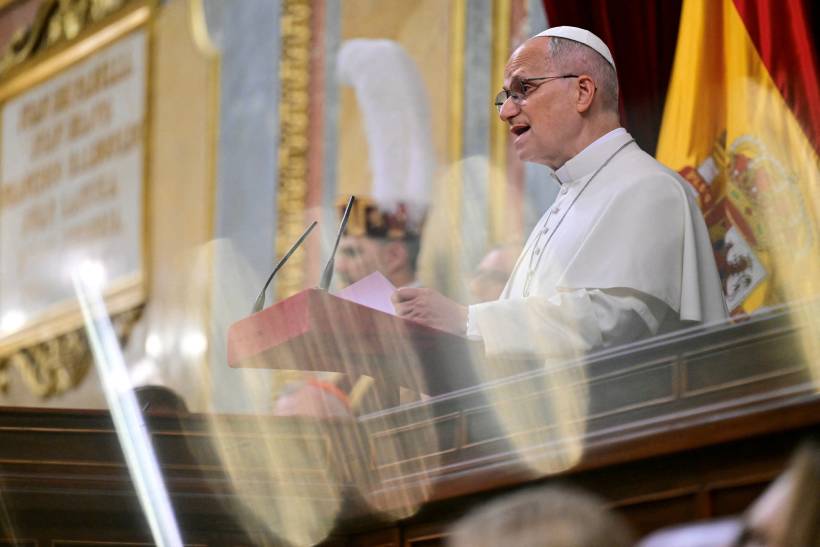
Pope Leo delivered a landmark address to Spain’s parliament, warning that the world is facing a profound spiritual, cultural, and political crisis marked by escalating conflicts, deepening polarization, and growing disregard for human rights.
The speech, the first by a pope before the Spanish legislature, formed a central part of his week long visit to Spain. Coming amid renewed hostilities between Israel and Iran and ongoing debates over migration and European security, the address reflected the Vatican’s increasing engagement with major geopolitical and humanitarian issues.
Leo used the occasion to reiterate long standing Catholic concerns regarding war, social fragmentation, migration, and the ethical implications of technological development. He also addressed the relationship between religion and public life, defending religious freedom and the confidentiality of confession.
Key Themes
Peace Over Militarisation
A central theme of the pope’s address was opposition to the growing militarisation of international politics. He argued that military force may suppress conflict temporarily but cannot create lasting peace.
His remarks came as European governments continue increasing defence expenditures in response to heightened security concerns following Russia’s invasion of Ukraine and broader geopolitical instability. The pope warned that excessive reliance on military solutions risks deepening rather than resolving global tensions.
Migration and Human Dignity
Leo devoted significant attention to migration, describing inadequate responses to displaced populations as a challenge to the ethical foundations of the international order.
He urged governments to move beyond border management policies and address the underlying drivers of migration, including conflict, poverty, and climate change. His comments coincided with plans to meet migrants in Spain’s Canary Islands, a major entry point for migrants attempting to reach Europe from Africa.
The pontiff framed migration as both a humanitarian and moral issue, arguing that the treatment of vulnerable populations serves as a measure of a nation’s moral character.
Artificial Intelligence and Ethics
The pope also expanded on concerns he has raised previously regarding artificial intelligence. He called for stronger ethical oversight of emerging technologies, particularly their application in military contexts.
As governments and defence industries increasingly integrate AI into weapons systems and military planning, Leo argued that technological progress must remain subject to moral and humanitarian considerations.
Religion in Public Life
Another notable aspect of the speech was the pope’s defence of religious participation in public affairs. He argued that faith should not be excluded from public discourse and stressed the importance of protecting religious freedoms.
Leo also defended the confidentiality of confession, a topic that has generated debate in several countries considering legal requirements for clergy to report abuse disclosed during confessions.
Why It Matters
The speech signals a more assertive Vatican engagement with global political debates at a time of mounting international instability.
Unlike purely theological addresses, Leo’s remarks directly addressed issues shaping contemporary international relations, including war, migration, technological governance, and democratic cohesion. His intervention places the Catholic Church within broader discussions regarding the future direction of global governance and international cooperation.
The address also highlights the Vatican’s growing concern that rising geopolitical competition, nationalism, and social polarization are weakening international institutions and undermining collective approaches to global challenges.
Stakeholders
The Vatican
Seeking to shape global debates on peace, migration, ethics, and human rights.
European Governments
Balancing security concerns with humanitarian responsibilities and social cohesion.
Migrants and Refugees
Directly affected by immigration policies and international responses to displacement.
Technology Sector
Facing increasing scrutiny over the ethical implications of artificial intelligence.
Religious Communities
Monitoring debates surrounding religious freedom and the role of faith in public life.
Human Rights Organisations
Engaged in discussions regarding migration, conflict resolution, and protections for vulnerable populations.
Strategic Implications
The address reflects the Vatican’s effort to position itself as a moral counterweight to rising geopolitical competition and militarisation. By linking war, migration, technology, and social division within a single framework, the pope presented these issues as interconnected symptoms of a broader crisis affecting the international order.
His criticism of increased military spending places the Vatican at odds with many Western governments currently prioritising defence expansion. At the same time, his focus on migration challenges increasingly restrictive immigration policies adopted across Europe.
The pope’s intervention on artificial intelligence also signals that ethical governance of emerging technologies may become a more prominent area of Vatican diplomacy in the coming years.
Analysis
Pope Leo’s address represents one of the clearest articulations yet of his vision for the Church’s role in contemporary global affairs. Rather than limiting his remarks to spiritual concerns, he framed international conflict, migration pressures, technological change, and democratic fragmentation as interconnected challenges requiring moral as well as political responses.
The speech suggests a papacy willing to engage directly with policy debates at a time when many governments are prioritising security, strategic competition, and economic interests. While the Vatican lacks conventional political power, its ability to shape public discourse and influence ethical debates remains significant.
By positioning peace, human dignity, and ethical governance at the centre of his message, Leo is seeking to reassert the relevance of moral leadership in an increasingly fragmented international environment. Whether governments embrace those arguments remains uncertain, but the address signals that the Vatican intends to remain an active participant in debates over the future of the global order.
June 5 (UPI) — Artificial intelligence company Anthropic issued a warning about systems that can improve themselves and said that humans need a way to intervene when necessary.
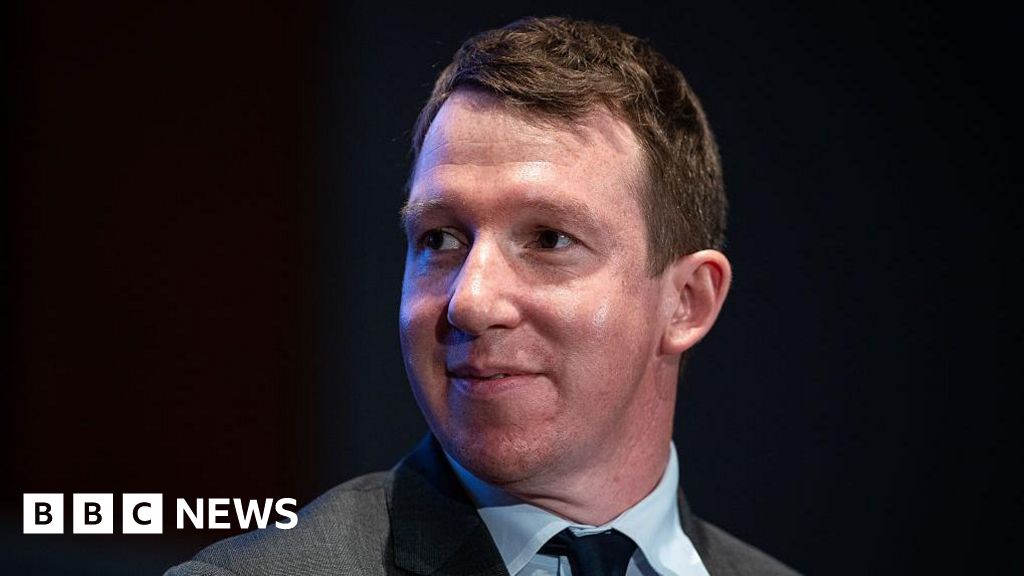
AI systems will soon be able to better themselves — known as “full-recursive self-improvement” — and that has a lot of benefits, like for health care and science. But just like science fiction movies warn, it could cause serious risks to people, said Anthropic co-founder Jack Clark and leader of the Anthropic Institute Marina Favaro in a recent blog post.
“Full recursive self-improvement also might increase the risks of humans losing control over AI systems,” the blog said. “If systems are capable of fully building their own successors, the ways we secure them, monitor them, and shape their behavior all grow much more important.”
Clark called for the industry to give itself a “brake pedal” on CNN Thursday.
“When I look down at the car we’re driving, all I have is a gas pedal. I don’t have a brake pedal, and surely at some point in the future we might want that option,” he said. The inability to validate, verify and trust AI’s behavior is risky, he added.
Clark told CNN that countries have made similar changes in the past.
“We’ve done this before. In the height of the Cold War, under highly tense situations between rivalrous countries, they found ways to stabilize aspects of the nuclear arms race,” he said “All of this has been done before in other domains, and it may need to be something we do in the domain of AI.”
But critics say this talk of curbing AI is nothing new, even from Anthropic, which battled the Pentagon when it wanted full access to use its AI product.
In July 2025, Anthropic signed a $200 million contract with the U.S. Department of Defense. But CEO Dario Amodei said that Anthropic’s AI model Claude could not be used for mass surveillance in the United States or for autonomous weapons without human approval.
On Feb. 27, the Pentagon gave Anthropic a 5 p.m. deadline to comply with its demands that the government be able to use the service as it sees fit. Before the deadline, President Donald Trump announced that no government workers would be allowed to use Anthropic.
Then, Secretary of Defense Pete Hegseth labeled the company a supply-chain risk, which blocked it from any government contracts, but a judge struck it down in March.
“Anthropic might give the impression of being warm and fuzzy, but their definition of AI safety is narrow,” Steven Murdoch, a professor at University College London, told The Guardian. “Supporting U.S. authorities in the development of offensive capabilities has never been something they have spoken against.”
Murdoch said Anthropic’s blog left out evidence that AI is close to self-improvement.
“It is true that there’s some evidence that AI capabilities have increased and continue to increase with no limits becoming immediately clear,” he said. But, “I don’t think anything has fundamentally changed today that has caused Anthropic to publish this article.”
Murdoch pointed out that Athropic’s call for a pause on AI was similar to other proposals it has made in the past.
“It’s a reminder of what they are concerned about and have been concerned about for many years. I’m sure the attention is welcome, but again this isn’t a new thing,” Murdoch said. “Anthropic have been trying to get the attention of policymakers since they were founded.”
Anthropic is proposing that the world’s top artificial intelligence companies come up with a coordinated way to pause development of advanced AI systems, warning that the technology is improving so quickly that there’s a risk humans would lose control.
The company behind the Claude chatbot said in a blog post on Thursday that, as cutting-edge AI gets increasingly faster at carrying out tasks, “it would be good for the world to have the option to slow or temporarily pause” its development.
Anthropic said its internal research institute plans to explore the issue in collaboration with others and “take actions” to help build the systems for a credible slowdown or pause, without being more specific.
Anthropic rival OpenAI argued for a different approach in a report published on Wednesday, saying that “democratic governments — not private companies acting alone — must ultimately determine the rules, safeguards, and accountability mechanisms”.
“Our view is that decisions about the pace of AI innovation should not be left to any one lab, company, or special interest group,” it said.
AI models are getting faster, with rapid increases in how quickly they can carry out software tasks like coding on their own, Anthropic said in its post. Based on current trends and given enough computing power, an AI system could be able to design and develop its own successor, in what is known as “recursive self-improvement”.
Self-building AI would be a major technological milestone that would bring benefits in science, healthcare and other areas, Anthropic said, but it “also might increase the risks of humans losing control over AI systems”.
Some tech industry figures have long warned of such a scenario.
Anthropic’s post comes after a different warning this week from a team of researchers at the University of Toronto who showed how AI tools could be used to create a new kind of AI “worm” that adapts its hacking strategy as it spreads from device to device and takes over a vast computing network.
“I think it’s really important that people understand that it’s not just the biggest, most powerful language models that pose the security concerns,” lead researcher Nicolas Papernot said in an interview.
The authors of the Anthropic post, company cofounder Jack Clark and Marina Favaro, head of its research institute, said the pause would be used to enable “societal structures and alignment research” to keep up with AI advances. Alignment is industry shorthand for making sure the technology matches human values and intentions.
The proposed coordination would let advanced AI labs verify that global rivals have actually stopped or slowed their work, “and that a bad actor could not use the auspices of a coordinated slowdown to jump ahead in secret”.
The company said a coordinated global mechanism is needed because, without it, a slowdown in AI development could let the “least cautious” players catch up and add to pressure on companies and governments as they make tough choices about AI safety.
Fears that advanced AI systems may get out of human control and cause societal harm have risen as the technology becomes increasingly capable. Anthropic’s own Mythos model sent shockwaves through industries, including banking and software, earlier this year with its ability to find vulnerabilities in existing code.
But regulation has been slow, especially in the US, where most leading AI labs are based. A Trump administration executive order earlier this week put the onus on the labs themselves, asking them to voluntarily submit their most capable models for government cybersecurity testing before public release.
Safety focus
AI researchers have also urged a pause before, but have had little success. Elon Musk, who owns AI lab xAI, was among the backers of a 2023 push by the non-profit Future of Life Institute to halt AI development for six months to allow time for safety guardrails.
Anthropic has long positioned itself as a safety-focused AI lab. Earlier this year, it refused to let the US military use its models for domestic surveillance and fully autonomous weapons, prompting backlash from the government, which put it on a national security blacklist, set to take effect later in 2026.
Anthropic’s post comes as the company and ChatGPT-maker OpenAI race to sell shares on the stock market, in an IPO that could value Anthropic at nearly a trillion dollars.
Papernot notified Canadian cybersecurity authorities prior to releasing his report, which shows how researchers developed the worm in a laboratory by using an “open-source” AI tool that is easy for software developers to cheaply access and modify.
“In the past, cyber attackers would focus on targets that are very high value,” he said. “Banking systems, hospitals, electricity grids, water treatment systems, schools.”
Papernot agreed that there should be more collaboration between companies, government agencies and academic researchers to develop countermeasures as AI-powered hacking tools supercharge the search for computer vulnerabilities.
“That old laptop you have in your basement that you don’t check on regularly doesn’t seem like a very high-value target, but it can be used as a launch pad to attack these higher-value targets,” he said. “Anything connected to the internet is now at risk because of how low the cost has become to mount these cyberattacks.”
“Society’s response was to come up with a sensible policy and regulatory framework that gave people confidence in oil and the benefits that oil could provide to the world, and meant that you didn’t have to worry about the personalities of the people leading the companies”, Clark said. “That’s clearly where we end up here.”
Wu’er Kaixi, a former student leader of the 1989 Tiananmen pro-democracy movement, speaks at a news conference at the Foreign Correspondents’ Club of Japan in Tokyo on Wednesday. Photo by Asia Today
June 3 (Asia Today) — Wu’er Kaixi, a former student leader of China’s 1989 Tiananmen pro-democracy movement, warned South Koreans on Wednesday not to view North Korea only as a country of the same ethnic people.
“North Koreans are certainly Koreans. They speak the same language and eat the same food,” Wu’er said at a news conference at the Foreign Correspondents’ Club of Japan in Tokyo, one day before the anniversary of the June 4 Tiananmen crackdown. “But they have been affected by the disease of communism, and that influence has seeped into their bones and DNA.”
Wu’er, also known as Uerkesh Davlet, was listed by the club as a former student leader of the 1989 Tiananmen movement for its Wednesday news conference, titled “Tiananmen 37 Years Later.”
Asia Today asked Wu’er about the future of China and what it could mean for the Korean Peninsula, noting China’s influence on the Korean War, the division of the peninsula and North Korea’s nuclear issue.
Wu’er responded by directly addressing North Korea.
“I understand that Koreans dream of unification,” he said. “But that is not simply a matter of meeting lost brothers and sisters again. It is the process of rebuilding half of a country that has been affected by communism.”
Wu’er expressed concern about what he described as a nationalist approach within parts of South Korean society.
“When I talk with friends in Seoul, I often sense conservative and nationalist sentiment,” he said. “I fully understand such feelings because South Korea has faced North Korea’s military threat directly.”
“But South Koreans who enjoy liberal democracy should have a mindset of using that freedom for the freedom of North Koreans,” he said.
Wu’er also warned against accepting North Korean propaganda at face value.
“North Korea’s military threats are calculated actions,” he said. “You should not be misled by the nationalist slogans they put forward.”
He said propaganda is used to control hungry citizens.
“North Koreans are still hungry, but they are ruled by regime propaganda,” Wu’er said.
“North Korea is no longer the North Korea we think of,” he said. “If one day South Koreans have the chance to embrace North Koreans, they will realize they are no longer the brothers and sisters they remember from the past.”
“They may be closer to Russians or Chinese,” he said. “You have to understand how a communist system changes human beings and society.”
Wu’er said South Korea’s government and people should understand the nature of the Chinese Communist Party system when considering North Korea.
During the news conference, Wu’er sharply criticized the Chinese Communist Party, saying many people mistakenly view China as a state driven by nationalism or communist ideology.
“The Chinese Communist Party is simply a criminal group,” he said. “They are not pursuing the interests of the state or the rejuvenation of the Chinese nation. They are only interested in maintaining their own power and wealth.”
He dismissed Chinese President Xi Jinping’s slogan of “the great rejuvenation of the Chinese nation” as propaganda meant to deceive the Chinese people.
“The Chinese Communist Party is driven more by interests than ideology,” Wu’er said. “Like a criminal organization seeking more profits, it endlessly tries to expand power and control.”
“To understand China, ask a criminologist rather than an international politics scholar,” he said. “If you approach it through the behavior of a criminal group, you can understand China’s foreign policy much more accurately.”
Wu’er said the Chinese Communist Party “is never satisfied” and urged liberal democracies to respond firmly as Beijing seeks to expand its control and influence.