warning

My horrendous 3-hour wait at Spanish airport is a warning shot for all Brit holidaymakers this summer

SPANISH sun and a sense of calm was what I was expecting to greet me at Lanzarote Airport – instead I spend the first three hours of my holiday queuing to get out of the arrivals hall.

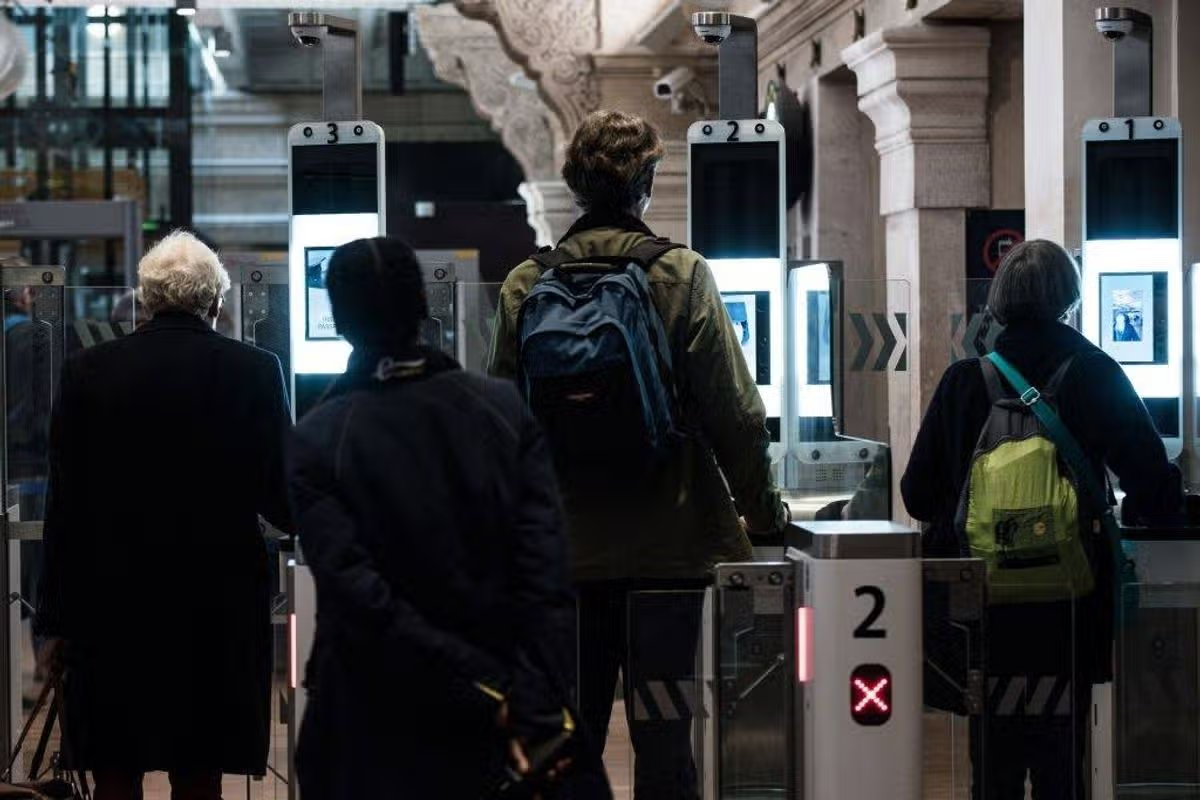
Because thousands of travellers like myself were stuck in huge queues, thanks to the new EES system – and with Easter and summer season on the way, I can see it getting worse.

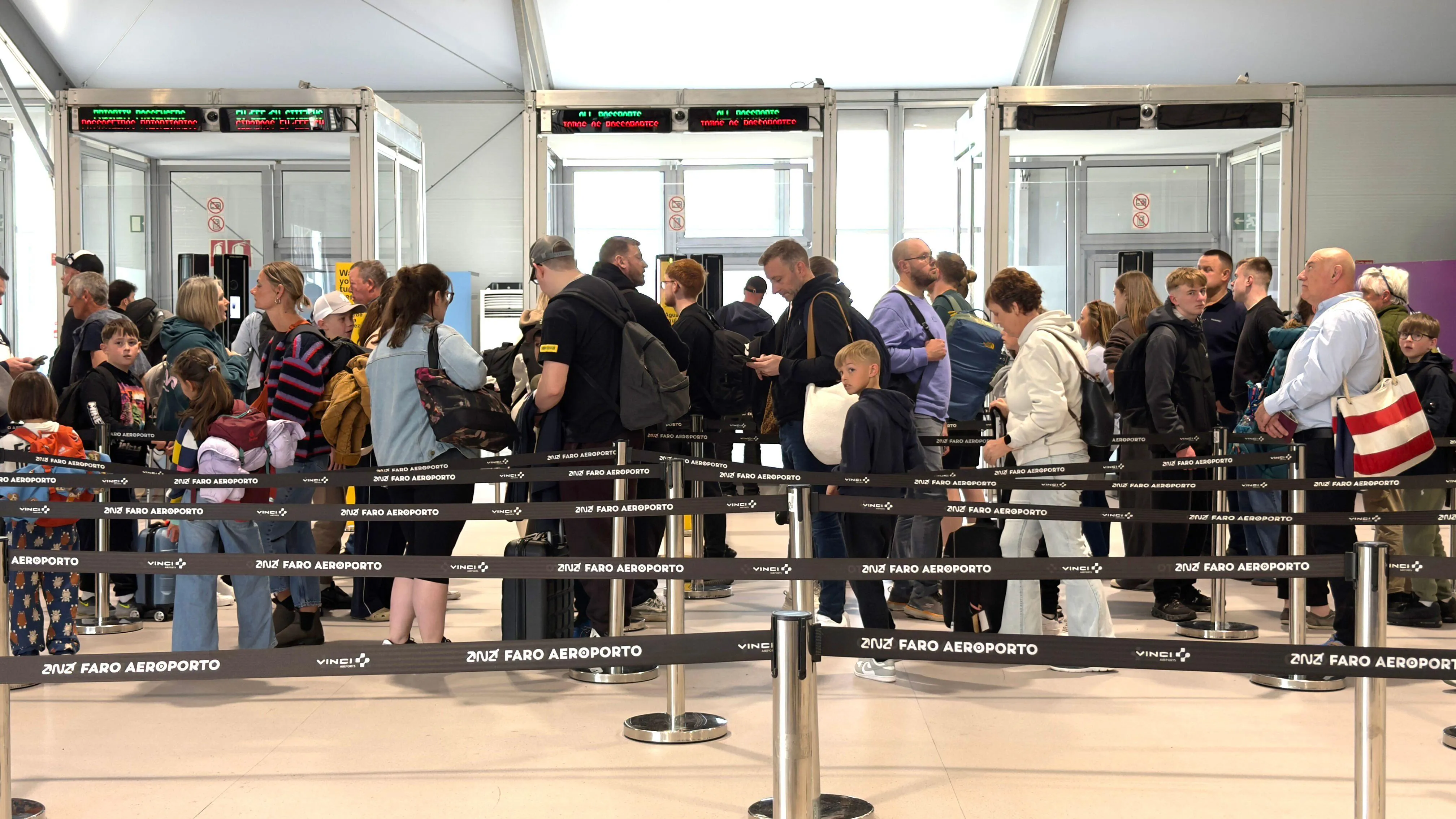
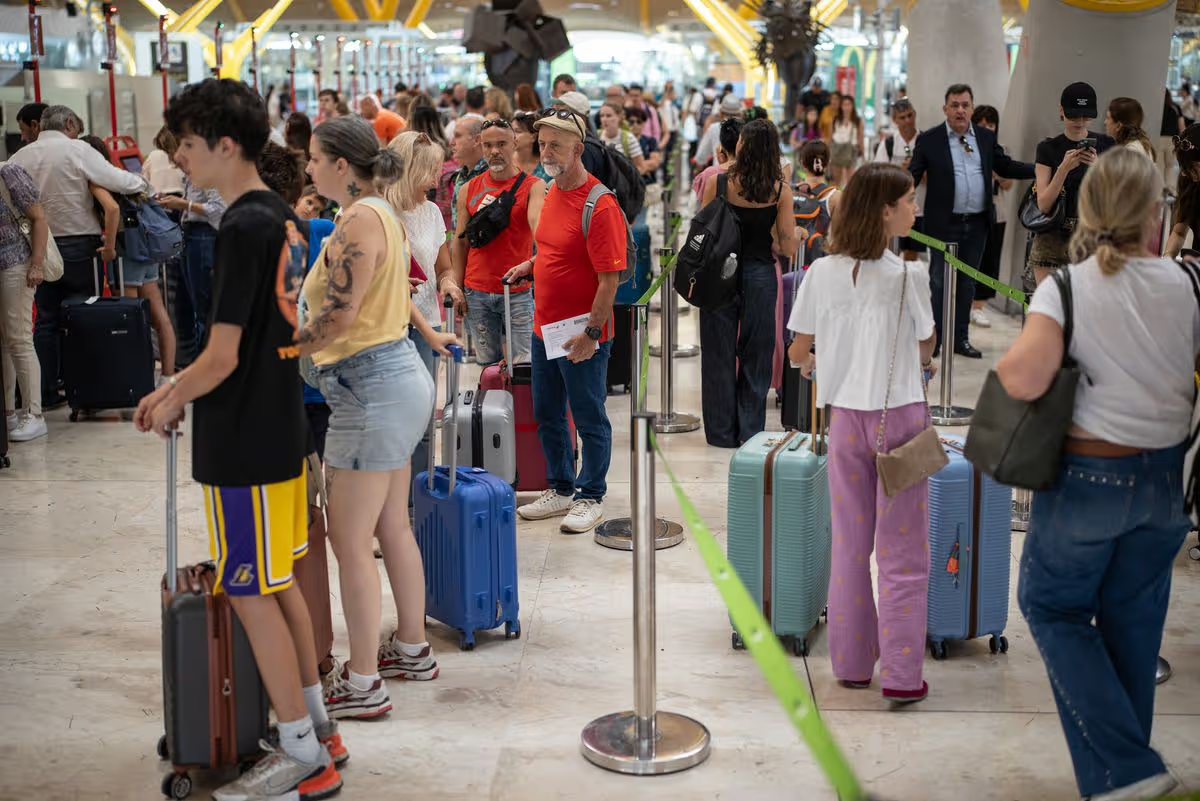
I had to queue in the arrivals hall at Lanzarote Airport for three hours
The huge queue led to the EES registration point

My Jet2 flight landed at half past one on a Thursday afternoon in early March and I didn’t get out until just after half past four.

The queues stretched along the corridor and zigzagged all the way through the arrivals hall that took passengers to EES registration.

I’d already signed up to EES, having visited Lithuania a few months ago – but that was no use at all.

There was no separate queue for – or any staff for that matter – advising those who have registered to head straight to the passport e-gates.

ALL IN

The CHEAPEST all-inclusive holidays in May half term – from £259pp and kids go free


HOP TO IT

The best UK family days out from £10 to completely FREE in the Easter holidays

While this was frustrating, what was even more so was that only half of the EES machines were actually working.

When I finally made it to my bus transfer, even the Jet2Holidays rep said she’d ‘never seen delays this bad’.

While Lanzarote has had a bad rep for lengthy queues in recent weeks, they are by no means the only ones.

The Sun travel team has been to various airports across Europe since the start of 2026 and many of them have had much longer queues than usual.

Like in Lanzarote, in some places only half the EES machines are working.

In other destinations, all of the machines are switched off until around midday. So it’ s pure luck as to whether you’ll even get to sign up.

Thanks to its winter sun offering, Lanzarote is one of the first airports to really show what an issue the new system could be for Brits this summer – when millions of visitors arrive for their annual holidays across Europe.

Lanzarote Airport has been subject to ‘bottlenecking’ which is a term used when there are too many flights at once and it causes congestion in the airport.

It’s no surprise really, Lanzarote is a small island with a small airport.

Around 100 planes land at the airport each day and over one million British tourists visit Lanzarote each year, with more heading there over the Easter and summer holidays.

Looking at planned flights on flightradar24 for Thursday 19 March 2026, there are almost 40 from the UK alone, with just under 100 flights in total scheduled for the day.

Between 2pm and 3pm there are 10 flights due from the UK.

Two from Glasgow arrive at the same time, and others are within five and ten-minute intervals.

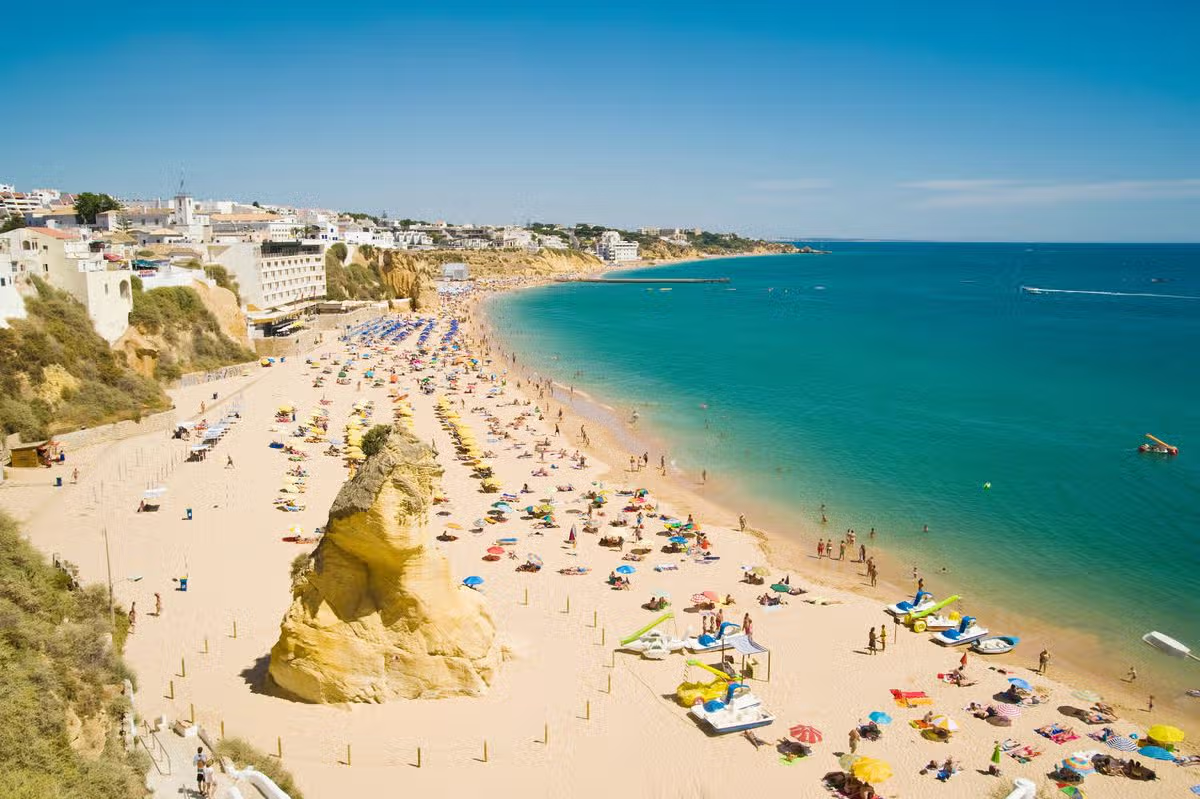
Delays in the airport in the Canary Islands will be worse during peak summer holidaysCredit: Alamy
Scheduled Lanzarote flights for Thursday 19 March see 10 arriving within one hourCredit: Flightradar24

With the queues in Lanzarote reportedly reaching four hours, I’ve seen parents fearing travel chaos for their upcoming holiday.

One mum even started a forum on Mumsnet with the subject ‘Lanzarote airport actual chaos or exaggerated drama’.

In the comments, one recent visitor described the airport as a ‘madhouse’.

Another, who went on holiday around the same time as me, described it as an “absolute nightmare” and has even cancelled their booking in April as a result.

The lengthy wait times are likely to crop up at other European destinations too because of the new EES requirement.

Delays have been reported at airports like Brussels, Lisbon and Prague, and officials have even called for the EES to be delayed until after the summer holidays.

Other airports are looking for solutions.

At some operated by Aena, like Ibiza, Menorca, Malaga and Palma, Majorca – there could be a Brit only lane at border control to ease congestion.

As for Lanzarote, if you want to make the most of your arrival on the island, then I’d suggest booking an earlier flight so you’ll still have the afternoon to explore.

Otherwise all there is to do is line up and wait patiently.

Head of Sun Travel Lisa Minot reveals how EES will impact travellers during school holidays…

The impending deadline requiring all EU countries to be processing all passengers using the new Entry Exit System (EES) is looming and as Easter approaches we could see chaos across the continent.

We’ve seen significant disruption already as UK holidaymakers are caught up in hours-long queues to provide their details and unless the right staffing is in place, things could get much worse.

Speaking to the former boss of easyJet last year, he warned me airports could become overwhelmed and airlines may be forced to keep passengers on planes on arrival – throwing tight flight schedules into chaos.

The issue as far as I am concerned is the lack of joined up thinking and common systems. Every airport in every country I have travelled through since the system was launched has a different way of channelling passengers through the passport checking process.

At Rome last week, the kiosk I was directed to successfully took my biometric picture but seemed incapable of processing my fingerprints and I was directed to a customs agent for a traditional stamp.

Returning from Barcelona, no kiosks were in operation at all and we simply went through an e-Gate with no fingerprints checked and again, were directed to an agent for a stamp.

Bigger airports with the resources to invest in the costly equipment are probably going to be easy to travel through.

Whether that will be the same for smaller, regional airports that already struggle to cope with large crowds in busy periods remains to be seen.

Airlines and airports are lobbying the EU to allow the rules to be relaxed should large crowds start to build.

That seems imminently sensible to me as from may recent experiences, the system is not yet up and running efficiently – Head of Sun Travel, Lisa Minot

For more about the new travel requirements this summer – here’s everything you need to know about EES.

And for more travel inspiration, here are the bucket list 2026 holidays you should go on for every month of the year.

Lanzarote Airport has reported queues of up to four hoursCredit: Alamy

Source link

Travel expert issues cost-of-fligying ‘rise’ warning as jet fuel price surges 70 per cent

Tourism consultant David Evans has warned that the cost of flying is likely to rise sharply

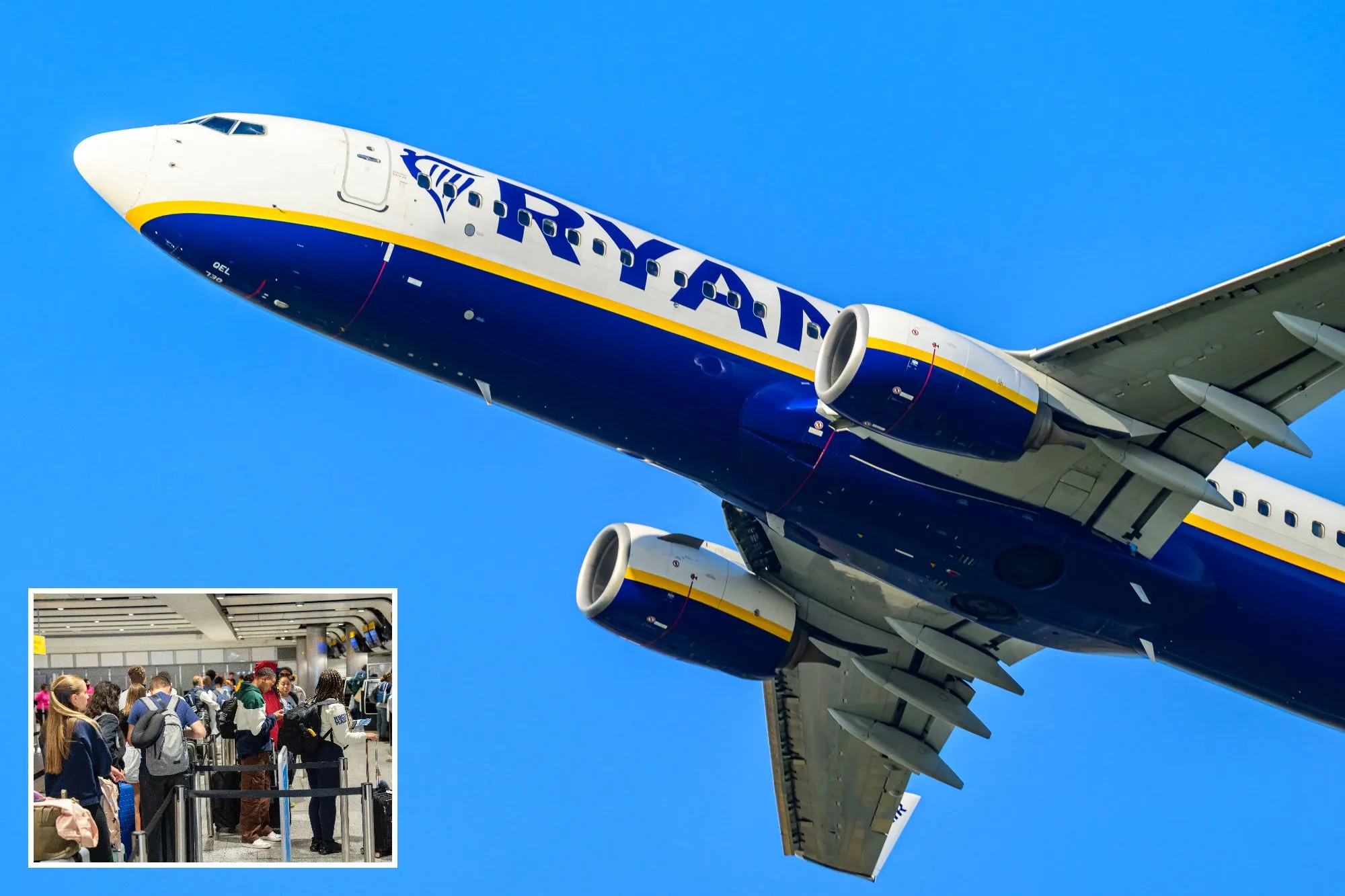
A travel expert has advised folks to snap up flights now in anticipation of a predicted ‘surge’ in airfare costs. Tourism consultant David Evans revealed that aviation fuel prices have rocketed by 70 per cent in the wake of the US-Israeli strikes on Iran.

Speaking on BBC Radio 5 Live, he suggested that this could soon make flying considerably pricier. This situation is likely to be compounded by the financial strain many airlines are under due to the cancellation of numerous flights amid the unrest in the Middle East.

When asked by host Rachel Burden whether people should book now before flight prices soar, Mr Evans responded: “If you can get a flight that you feel is offering you a really good value-for-money price and it is via somewhere like Singapore (then yes).

“It’s also worth bearing in mind that, once all this blows over, which hopefully won’t be too far off, the Middle Eastern airlines will undoubtedly be introducing some attractive fares into the market to try and recoup the demand they’ve lost over the past few weeks.

“According to the data we’ve seen, the cost of jet fuel has risen by about 70 per cent. Fuel accounts for roughly a quarter of an airline’s operating cost, so the maths are pretty straightforward – if the fuel price is climbing that much, it won’t be long before air fares start to rise. If this carries on for many more weeks, travelling is likely to become more expensive.”

READ MORE: Simon Calder issues update for anyone flying with Emirates, Etihad or Qatar AirwaysREAD MORE: Foreign Office issues fresh travel guidance for anyone heading to the US

Mr Evans’ remarks follow revelations that holiday-goers are eschewing Easter trips to traditionally favoured destinations such as Cyprus, Turkey, and Dubai, opting instead for western locations like Spain, Italy, and Portugal, as well as the Caribbean and Mauritius. According to Thomas Cook, bookings to Portugal saw a 42 per cent surge in the fortnight leading up to 13 March.

British Airways has axed some Middle East flight routes until June due to ‘airspace instability’, whilst the UAE and Dubai have been compelled to repeatedly shut down both airports and airspace following retaliatory Iranian strikes. Iraqi officials reported that Iranian strikes over the country on Monday (March 16) were the most intense they had seen throughout the entire war.

Content cannot be displayed without consent

“I think the announcement from BA is probably good news in that it gives those people who would otherwise have been in complete limbo thinking, ‘crikey, is this situation going to improve or not over the next few months’ – now they know their flight is cancelled, they can either rebook on a different route or they can get a refund and use the money to either holiday domestically or to go to a different destination, so at least it provides certainty,” Mr Evans added.

“I guess we could say that the 2020s have been a bingo card of doom and this is the square for 2026, but it is also worth saying that the tourism industry and indeed tourists are incredibly resilient.

“Yes, clearly many people are being disrupted if they had either to or from the UK to or via the Middle East, but there are lots of other destinations that are still open for business and lots of other visitors able to get to the UK very easily.”

Source link

Urgent warning as Brit holiday hotspot Malta faces ‘major ecological disaster’

The 900ft Arctic Metagaz, a charred Russian ghost tanker, has drifted dangerously close to Malta, an archipelago in the central Mediterranean known for its history and culture

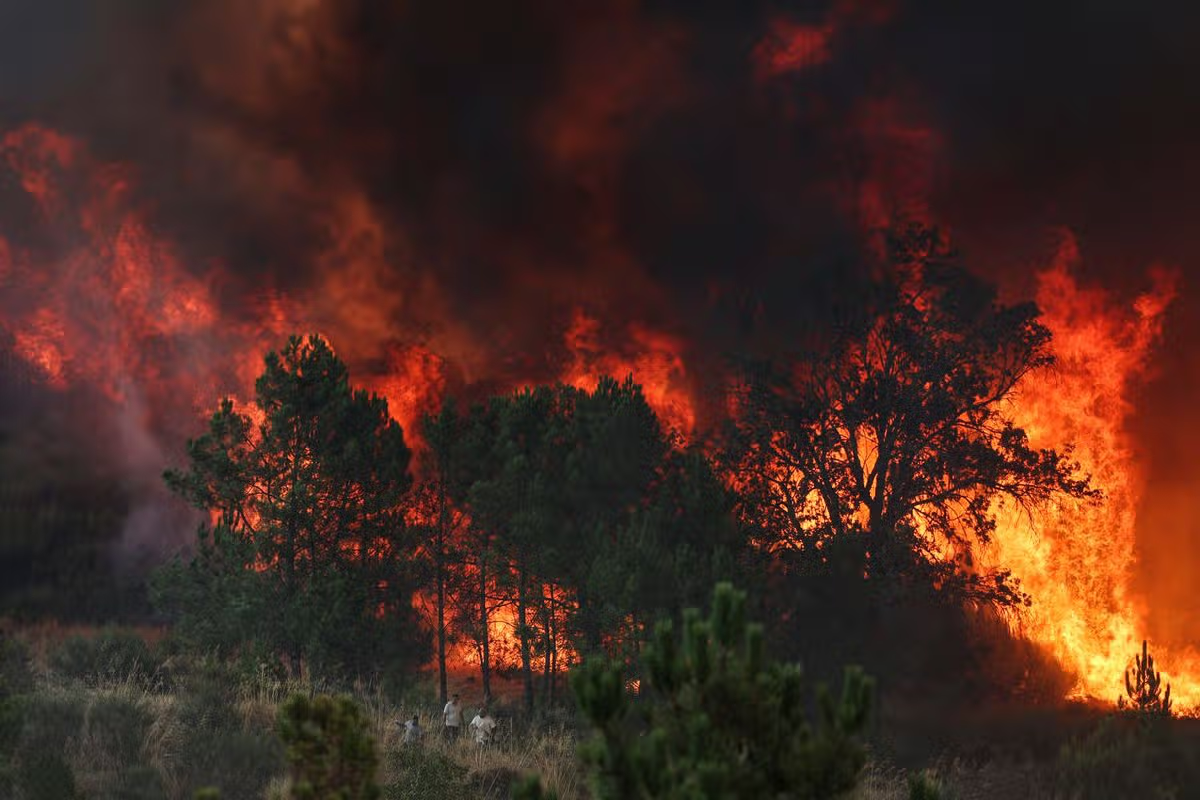
Malta — a popular holiday hotspot — is said to be under threat of a “major ecological disaster”.

A charred Russian ghost tanker is believed to be around 50 nautical miles southwest of the island, and is drifting crewless towards the archipelago. The vessel was blitzed two weeks ago by Ukranian drones and has since, the hole-ridden 900ft Arctic Metagaz has moved towards Malta.

And now multiple European countries have warned an ecological threat is imminent. In a letter to the European Commission, seven nations said the “precarious condition of the vessel, combined with the nature of its specialised cargo” posed a “serious risk”. These countries have described the situation as a “dual challenge” – upholding maritime safety and preventing an ecological disaster against the background of EU sanctions imposed on.

READ MORE: Keir Starmer gives defiant message on Iran after ‘Trumpflation’ cost of living warningREAD MORE: Ryanair flight in mid-air emergency as fire crews scrambled for ‘maximum alert’

Russia claimed that Ukraine used “uncrewed sea drones” to target the Metagaz in the Mediterranean Sea between Libya and Malta. The Security Service of Ukraine has not responded to the accusation.

According to Russia, the attack took place on March 4 and was launched from the Libyan coast. The vessel had previously been sanctioned by the United States and the European Union for being part of Moscow’s so-called “shadow fleet.”

Composed largely of ageing tankers, the fleet moves Russian oil and gas worldwide while bypassing Western restrictions. Authorities in Malta and Italy have been closely monitoring the wreck amid concerns about potential pollution. Rome said the vessel was carrying “significant quantities of gas, heavy oil, and diesel fuel.”

READ MORE: What war would actually look like for Brits from conscription incentives to cyber attacks

WWF Italy warned in a statement: “A potential spill could cause fires, cryogenic clouds lethal to marine life, and widespread and long-lasting pollution of water and the atmosphere.”

It added: “The affected area is of exceptional ecological value, with fragile deep-sea ecosystems and some of the highest biodiversity in the Mediterranean basin.”

Salvage experts are already in Malta in preparation for the ship’s arrival in Maltese waters, while a specialist vessel is on its way, a maritime source told AFP on Sunday.

Initial reports indicated that the ship sank after explosions sparked a fire on board. Libyan authorities said the tanker went down about 130 nautical miles north of the port of Sirte. Around 30 Russians were on board the Arctic Metagaz, according to Russia’s transport ministry. They were all found “safe and sound in a lifeboat” by Malta’s armed forces, Maltese Home Affairs Minister Byron Camilleri said.

However, Malta’s transport authority said last week that the wreck was still afloat. Ministry of Foreign Affairs of the Russian Federation acknowledged that the vessel was drifting in the Mediterranean and said Russia’s further involvement in resolving the situation would depend on “concrete circumstances”. It added that efforts to address the situation — including surveillance, monitoring and other technical support — could risk “undermining the integrity, effectiveness and the deterrent value of the EU sanctions regime”.

Russian foreign ministry spokeswoman Maria Zakharova said the ship had no crew and was carrying 700 metric tons of various types of fuel along with “a substantial amount of natural gas”.

“The international legal norms applicable to the current situation imply the responsibility of coastal countries … for resolving the situation with the drifting vessel and preventing an environmental disaster,” Zakharova wrote.

“Further involvement by the shipowner and Russia as the flag state will depend on the specific circumstances.”

Source link

HM Passport Office warning for Brits – 3 key checks to do now ahead of summer

The HM Passport Office has issued a warning to Brits about passport checks they must carry out well in advance of any impending holidays over spring and summer

HM Passport Office has issued a warning to Brits ahead of the peak travel season.

With the Easter half-term just weeks away and plans already made for a summer getaway, thousands of holidaymakers will be jetting off abroad during one of the busiest travel periods. To ensure their journey gets off to a flying start, Brits are being urged to check their passports; otherwise, they risk being turned away at the airport.

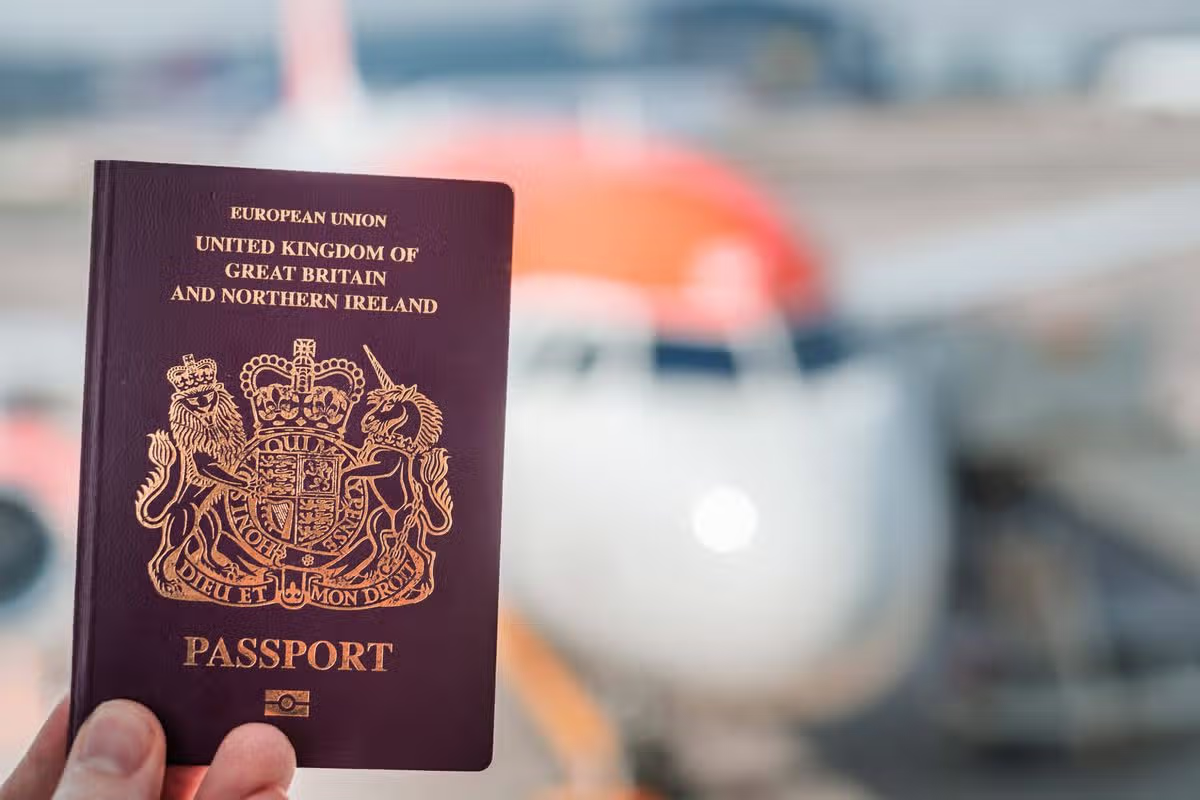
In a stark reminder, the HM Passport Office advised Brits to “check your passport now” in a post shared on X, ahead of any spring or summer trips. A link in the post directed travellers to the government website, where they can apply online to renew, replace, or update their passports.

READ MORE: UK Foreign Office updates Egypt travel advice amid Middle East tensionsREAD MORE: Easter passport warning for Brits as common mistake could see you turned away at the airport

There are two key dates you should check on your document; the expiry date, and the issue date, especially if you’re planning to head to a European hotspot such as France, Spain or Greece. This is because of a post-Brexit regulation on travel to the European Union or Schengen countries, which stipulates that UK passports must have been issued less than 10 years before your departure and must be valid for at least 3 months after your return.

Meanwhile countries such as Australia, China, Thailand, the United Arab Emirates, Indonesia, and India require at least 6 months of passport validity from the date of arrival. It’s vital to check any entry requirements and passport validity before making any travel plans.

You must also ensure your passport has not been physically damaged, as this may render it invalid. This could include ripped pages, water damage, separated covers, or anything else that might make the personal information difficult to read.

Travel expert Jamie Fraser at Wild Packs warned that the general wear and tear of a passport can also be problematic when passing through automated scanners or at airport border control points. So it’s vital to check that your passport is in good condition, or if you need to apply for a replacement.

There must also be a blank page at the back of the passport for any necessary stamps or visas. If the passport is crammed with stamps from past trips, it could create problems at the border if there aren’t enough blank pages, leaving you unable to travel.

If your passport has expired or needs to be replaced, you can apply for a new one through the government website. However, it’s crucial to do it well in advance, as it can take around three weeks and sometimes longer.

There are fast-track passport services available, but Jamie cautioned that these are not “always guaranteed and appointments can be limited during peak travel periods”. HM Passport Office also advised: “Do not book travel until you have a valid passport – your new passport will not have the same number as your old one.”

To renew or replace your standard passport online, it will cost £94.50, or £107 if you opt for a paper application. Meanwhile, a child’s passport will cost £61.50 online or £74 by post.

Do you have a travel story to share? Email webtravel@reachplc.com

Source link