voter

L.A. County’s proposed healthcare sales tax election voter guide

p]:text-cms-story-body-color-text clearfix”>

Supervisor Kathryn Barger was the only supervisor against it. She pointed to the fact that the tax was a “general” tax, meaning the money won’t be earmarked for healthcare costs. That means politicians have final say over how the money gets spent rather than voters, she said.

Some cities within L.A. County say they’re also rattled over the tax, unleashing a stream of opposition letters against the tax. The California Contract Cities Assn. argues a sales tax hike would “disproportionately burden the very residents the County seeks to protect.” Shoppers near the county line, they warn, likely would start crossing it to shop.

Some of these cities say they have the trust issues when it comes to county ballot measures. When voters approved Measure B in 2002 to fund the county’s trauma center network, an audit years later found the county couldn’t account for whether the money actually had been spent on emergency medical services. And some cities feel they never got their fair share of funds from Measure H, the homelessness services tax measure passed in 2017.

Source link

California state schools superintendent election voter guide

p]:text-cms-story-body-color-text clearfix”>

Every Democrat on this list could be expected to work in general harmony with a Democratic governor and in opposition to key Trump administration policies.

There are differences in their backgrounds, but only minor policy divergences, including on the participation of trans athletes in women’s and girls’ sports.

Listed in alphabetical order, with an excerpt from their survey responses:

Richard Barrera, 59, is a longtime school board member in San Diego Unified, the state’s second-largest school system, a senior advisor to Thurmond and before that was a local labor union executive.

“The three experiences that best qualify me for this office are the ones that required me to govern a public school system, execute policy inside the state agency, and understand workforce realities in practice,” Barrera said.

Wendy Castañeda-Leal, 42, has pursued a career in more rural areas, currently serving as superintendent for the Semitropic Elementary School District, which has one TK-8 school with about 140 students off Highway 46 in Kern County. She’s also been director of whole child education for Roseland School District and a secondary alternative school principal.

“I lead districtwide efforts aligned with California’s priorities by advancing equity, strengthening academic achievement, and expanding supports for the whole child, including multilingual learners and underserved student populations,” Castañeda-Leal said. “I also bring extensive site leadership experience as a principal at the elementary, middle and high school levels, where I improved student outcomes.”

Nichelle Henderson

Nichelle Henderson

(Courtesy of Nichelle Henderson.)

Nichelle Henderson, 57, is an elected trustee of the Los Angeles Community College District. Her education career began as a teaching assistant. She later taught sixth grade math and science in Compton Unified. She’s currently a faculty advisor and clinical field supervisor in a Cal State teacher preparation program.

“What it is clear among Democratic candidates is that there are candidates that are seeking this position because they want a safe place to land after having termed out,” Henderson said. “My goal is to build the capacity of our TK-12 public schools to prepare students for higher education and to participate in the local and global workforce.”

Ainye Long, 41, a San Francisco Unified middle school math department chair, ran four years ago with no significant resources and came within less than 1 percentage point of making the runoff. It helped then that no Democrat ran against Thurmond and that Republican challengers divided the Republican vote. Long also had then — and still has — the ballot designation: “public school teacher.” She also is a past senior administrator at a charter-school group.

“One job of the [state superintendent] is to measure the effectiveness [in practice — what actually happens] of our laws, and help to find better ways to educate our body,” Long said. “The people closest to the work are closest to the problems of practice, so they’re the first to see the solution.”

Al Muratsuchi

Al Muratsuchi

(Photo courtesy of Al Muratsuchi)

Al Muratsuchi, 61, represents the 66th Assembly District, encompassing parts of the South Bay, and has been the chair of the state Assembly education committee. He taught briefly at the college level and served as an elected board member of the Torrance Unified School District.

“I am the only candidate running for State Superintendent of Public Instruction with the combined experience of statewide education policy leadership, … local school district governance as a former Torrance Unified School District board trustee, and classroom educator,” Muratsuchi said, adding that he authored 23 education-related bills that were signed into law.

Josh Newman

Josh Newman

(Josh Newman)

Josh Newman, 61, has been a state senator, including chairing the education committee, and a technology company executive. He served in the Army and taught briefly both at the college and middle school levels.

“Among the Democrats in this race, the most significant distinction is between candidates whose approach to this office is primarily organized around labor relationships and funding advocacy, and my own, which emphasizes accountability, outcomes, and the full range of students’ needs alongside continued investment,” Newman said.

Anthony Rendon

Anthony Rendon

(Photo courtesy of Rendon campaign)

Anthony Rendon, 58, was state Assembly Speaker from 2016-23, previously directed Plaza de la Raza Child Development Services and served as chief operating officer for Mexican American Opportunity Foundation.

He spoke of “the role that technology is playing in the degradation of youth mental health and happiness. The next superintendent needs to properly implement California’s ban on phones in classrooms, be ahead of the curve in establishing policies on generative AI use, and make sure teachers have the training and support they need to make sure the classroom is about learning.”

No candidate received enough votes to win the Democratic Party endorsement. The tally was as follows: Henderson: 24.75%; Muratsuchi 21.97%; Rendon 17.43%; Newman 16.82%; Barrera 12.77%.

Source link

L.A. Measure CB voter guide: taxing illegal cannabis businesses

p]:text-cms-story-body-color-text clearfix”>

A nonprofit advocacy group, Social Equity LA, organized with local cannabis business owners to oppose the measure in letters to Mayor Karen Bass.

Luis Rivera, executive director of the nonprofit, said Measure CB risks legitimizing the illegal cannabis industry while linking city finances to the tax revenue the businesses would generate. The measure also would undermine Proposition 64, the state law that requires cannabis businesses to be licensed, he said. And amid the city’s struggles to track and close illegal cannabis businesses, Rivera said it will be difficult to force them to pay up.

“There’s no guarantee or mechanism to assure that illegal operators will pay the taxes or fulfill their obligations,” Rivera said.

Even if they pay taxes, illegal operators could undercut legal businesses by selling unregulated products and avoiding requirements, such as code inspections and safety tests for merchandise, that legal businesses must fulfill to keep their licenses, he said. For an already struggling industry, the answer isn’t taxing more businesses, he said — it’s lowering taxes.

Source link

L.A. County District 3 supervisor’s election voter guide

p]:text-cms-story-body-color-text clearfix”>

Lindsey Horvath was a West Hollywood city councilmember in 2022 when she ran for L.A. County supervisor in a six-person primary that featured a pair of state senators, Bob Hertzberg (D-Van Nuys) and Henry Stern (D-Malibu).

Hertzberg and Horvath advanced to the general election, where she won by 29,000 votes.

As a supervisor, Horvath helped lead a historic push to remake county government. Measure G, passed by voters in 2024, will nearly double the size of the Board of Supervisors and create an elected chief executive position as well as an independent ethics commission. But the passage of Measure G had the unintended effect of wiping out Measure J, which funds anti-incarceration programs, leaving county officials scrambling for solutions.

Tonia Arey is a real estate agent who said she decided to “enter public service out of concern for the direction of Los Angeles County and a desire to bring stronger accountability to local government.”

She calls herself a “Jewish woman challenging the incumbent” and is centering her campaign on public safety, including law enforcement, fire and probation, emergency preparedness and confronting antisemitism.

Tomás Sidenfaden is a software developer and startup founder who has lived in Los Angeles for nearly three decades.

“Three generations of my family have called this region our home, and I’m tired of waiting around for other people to fix it,” he said.

Carmenlina Minasova is a San Fernando Valley reform advocate who did not respond to requests for comment.

Source link

California Congressional District 27 primary election voter guide

p]:text-cms-story-body-color-text clearfix”>

  • Jason Gibbs: Republican, Santa Clarita City Council member, mechanical engineer

Gibbs has been a member of the Santa Clarita City Council since 2020 and was chosen by his peers to serve as the city’s mayor in 2023. He earned his bachelor’s and master’s degrees in mechanical engineering at Cal Poly and went on to work in the aerospace industry, according to his campaign website. He has lived in Santa Clarita for nearly a decade while raising two young children, his bio says, and has served on the local boards of the Boys and Girls Club, the Valley Industry Assn. and the Salvation Army.

  • George Whitesides: Democrat, incumbent

Whitesides defeated Republican incumbent Mike Garcia to represent the 27th Congressional District in 2024. Whitesides worked on President Obama’s transition team in 2008 and served as NASA chief of staff during the Obama administration, according to his campaign bio. He was the first chief executive of Virgin Galactic, co-founded Megafire Action, a nonprofit that advocates for legislation to address the growing problem of massive wildfires, and was a board member for the Antelope Valley Economic Development and Growth Enterprise, his bio says.

Others:

  • Roberto Ramos: Democrat, Marine veteran, UCLA master’s student
  • Caleb Norwood: Democrat, college student

A representative for David Neidhart, a Republican candidate, said he has withdrawn from the race. His name still will appear on the ballot.

Source link

California secretary of state election voter guide

p]:text-cms-story-body-color-text clearfix”>

Across the country, debates over voter identification laws have become a flash point in broader fights about election security and voting access.

Supporters of voter ID laws say they are needed to prevent election fraud and ensure only eligible voters cast ballots. Critics argue there is little evidence of noncitizens voting and say the requirements instead would reduce voter participation in elections.

Under California law, voters in the state are not required to show or provide identification when casting a ballot in person or by mail. The state does require ID when registering to vote, and residents must swear under penalty of perjury that they are eligible to vote and they are a U.S. citizen.

Weber has opposed proposals that would require voters to show identification in order to cast a ballot. She and many Democratic leaders argue that voter ID laws can create barriers for eligible voters, particularly those who may not have easy access to government-issued identification.

Weber believes Voter ID efforts are meant to sow doubt in the integrity of the elections system.

“When you really get to it, Voter ID is a smoke screen for trying to create the idea that this is a corrupt system,” she said.

Weber instead supports policies aimed at expanding participation among eligible voters, including vote-by-mail ballots and automatic registration.

Conversely, Wagner wants the state to require voters to show ID at the polls. He argues that requiring identification would strengthen public trust in election results and align California with practices used in many other states. He said it’s patronizing to minorities when critics argue it’s hard for them to get identification.

“You need an ID to drive,” he said. “You need an ID to fly in a plane. You need one to buy alcohol. You need it to buy tobacco.”

Wagner has been working with proponents of the Voter ID ballot measure to raise money and helped gather signatures. That statewide ballot measure would require state or local elections officials to verify that Californians registering to vote are U.S. citizens by “using government data,” which according to supporters could include information in the federal Social Security Administration database, jury summons information and other government records.

“What I’m pledging the people of California is that if they pass voter ID, I will protect it. I will sue if I have to,” Wagner said. “If I am secretary of state, I will implement it and hold the registrars accountable and hold my office and myself accountable for doing the will of the people.”

Source link

How to vote in California’s June 2026 primary election

p]:text-cms-story-body-color-text clearfix”>

Vote-by-mail ballots will not be forwarded to a new address, so your ballot will be returned to your local county election office if you haven’t updated your voter registration.

The Los Angeles Registrar-Recorder/County Clerk recommends voters who have been impacted or displaced by wildfires update their mailing address or request a replacement ballot be sent to their temporary address or new permanent address. Los Angeles County residents can follow a guide created for Pacific Palisades and Altadena fire survivors online. Residents can also make updates by phone by calling the Registrar-Recorder/County Clerk’s office at (800) 815-2666, Option 2.

You also can update your mailing address by re-registering to vote online. In the “residential address” section, enter your former place of residence and in the “mailing address” section, check the box that says your mailing address is different from your home address and then enter your temporary mailing address.

Source link

‘Earthquake’: Supreme Court limits Voting Rights Act in setback for Black Democrats, boost for GOP

The Supreme Court’s conservative majority on Wednesday sharply limited a part of the Voting Rights Act that has forced states to draw voting districts to help elect Black or Latino representatives to Congress as well as state and local boards.

In a 6-3 decision in Louisiana vs. Callais, the court ruled that creating these majority-minority districts may amount to racial discrimination that violates the 14th Amendment.

When weighing what the Voting Rights Act requires, “we start with the general rule that the Constitution almost never permits the federal government or a state to discriminate on the basis of race,” Justice Samuel A. Alito Jr. wrote for the court.

Alito said states may draw election districts for partisan advantage but may not use race as a basis for redistricting.

The ruling in a Louisiana case appears to clear the way for Republican-led states across the South to redraw their election maps and eliminate voting districts that favor Black or Latino candidates for Congress, state legislatures and county boards.

UCLA law professor Rick Hasen said, “It is hard to overstate what an earthquake this will be for American politics,” adding that the decision makes the Voting Rights Act a “much weaker, and potentially toothless law.”

Hasen said it’s unclear how the decision will affect the November election because in many states early voting has already started and primaries have already taken place.

But the ruling’s long-term consequences for minority representation in Congress, state legislatures and local government are almost “certainly” going to be felt in 2028, Hasen said.

Republican leaders in states across the South have already signaled they intend to move quickly to redraw congressional maps in the wake of the ruling.

Alabama Atty. Gen. Steve Marshall said the state will “act as quickly as possible” to ensure its congressional maps “reflect the will of the people, not a racial quota system the Constitution forbids.” Marshall called the decision a recognition of how much the South has changed since the civil rights era.

“The court rightly acknowledged that the South has made extraordinary progress, and that laws designed for a different era do not reflect the present reality,” he said in a statement.

Florida was already in motion before the ruling came down. But Gov. Ron DeSantis celebrated the decision and said it was all the more reason for state lawmakers to redraw its congressional maps, in a manner that could give Republicans up to four more seats in Congress.

The proposed congressional maps, drawn by DeSantis’ office, were first unveiled to Fox News on Monday. On Wednesday, both chambers approved the maps, and readied them for DeSantis’ final approval.

In Mississippi, Gov. Tate Reeves had already called lawmakers into a special session at the end of May in anticipation of a court ruling on the Voting Rights Act. In a post on X, Reeves underscored the ideological underpinnings to the ruling’s potential implications.

“First Dobbs. Now Callais. Just Mississippi and Louisiana down here saving our country!” Reeves wrote.

Sen. Raphael Warnock of Georgia speaks outside the Capitol.

Sen. Raphael Warnock (D-Ga.) speaks at a news conference outside the U.S. Capitol after the Supreme Court ruling.

(Tom Williams / CQ-Roll Call / Getty Images)

At issue was how to ensure equal representation for Black and Latino citizens.

About one-third of Louisiana’s voters are Black, but the state seeks an election map that will elect white Republicans to five of its six seats in the House of Representatives.

Lower courts said that map violated the Voting Rights Act because it denied fair representation to Black residents.

The state had one Black-majority district, in New Orleans.

Two years ago, judges upheld the creation of a second Black-majority district that stretched from Shreveport to Baton Rouge on the grounds that it was required under the law.

The state’s Republican leaders appealed and argued that race was the motivating factor in drawing the second district.

Alito and the conservatives agreed and called that district an “unconstitutional racial gerrymander.”

The three liberals dissented. The consequences of the ruling “are likely to be far-reaching and grave,” said Justice Elena Kagan, adding that it will allow “racial vote dilution in its most classic form.”

She said the decision means “a state can, without legal consequence, systematically dilute minority citizens’ voting power. Of course, the majority does not announce today’s holding that way. Its opinion is understated, even antiseptic.”

But she said states across the South may draw electoral districts that deprive Black voters of equal representation. Justices Sonia Sotomayor and Ketanji Brown Jackson agreed.

The decision was the latest example of a partisan political dispute in which the court’s six Republican appointees vote in favor of the Republican state plan, while the three Democratic appointees dissent.

The ruling is likely to have its greatest impact in the Southern states, where white Republicans are in control and Black Democrats are in the minority.

The court’s divide over redistricting is similar to the long dispute over affirmative action.

For decades, university officials said they needed to consider the race of applicants to achieve diversity and equal representation.

But in 2023, the court by a 6-3 vote struck down college affirmative action policies at Harvard and the University of North Carolina and ruled race may not be used to judge applicants.

The historic Voting Rights Act of 1965 succeeded in clearing the way for Black citizens to register and vote across the South, but it took longer for Black candidates to win elections.

The dispute was highlighted in a 1980 case from Mobile, Ala. Its three commissioners were elected to six-year terms, and each of them ran countywide.

Even though one-third of the county’s voters were Black, white candidates always won.

The Supreme Court upheld this arrangement as legal and constitutional. In dissent, Justice Thurgood Marshall said Black residents were left with the right to cast meaningless ballots.

In response, Congress amended the Voting Rights Act in 1982 to say states must give minorities an opportunity to elect representatives of their choice.

Four years later, the Supreme Court interpreted that to mean that states had a duty to draw voting districts that would elect a Black or Latino candidate if these minorities had a sufficiently large number of voters in a particular area.

In recent years, the court’s conservatives, led by Justice Clarence Thomas, have chafed at the rule on the grounds it sometimes required states to use race as a factor for drawing election districts.

Alito’s opinion adopted that view and said states are not required or permitted to use race as a basis for drawing districts.

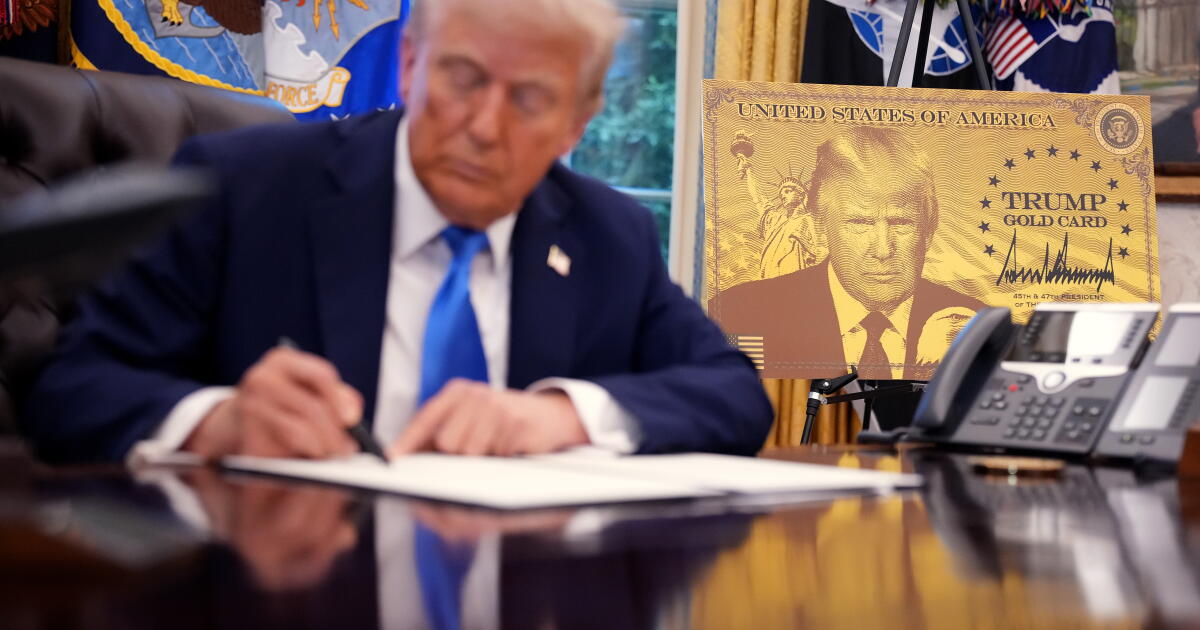
Hours after the ruling came out, President Trump met with reporters in the Oval Office and said he had not yet seen the decision. He was visibly excited, however, when a reporter explained the decision favored Republicans.

“I love it!” he said. “This is very good.”

Former President Obama said in a statement that the court’s decision “effectively guts a key pillar of the Voting Rights Act, freeing state legislatures to gerrymander legislative districts to systematically dilute and weaken the voting power of racial minorities — so long as they do it under the guise of ‘partisanship’ rather than explicit racial bias.”

The Mexican American Legal Defense and Educational Fund, in Los Angeles, also denounced the decision.

“The Supreme Court’s decision blesses racially discriminatory gerrymandering, and dismantles the legal protections for minority voters,” said Nina Perales, the group’s vice president for litigation. It “openly invites states to dilute minority voting strength, and undermines our democracy.”

Source link

Here’s what to watch for in Tuesday’s California governor debate

Contenders in the race to be California’s next governor will meet on stage Tuesday night for the second of three planned debates before the June 2 primary.

Last week’s meet-up in San Francisco didn’t provide the fireworks or memorable moments the candidates, and many voters, were hoping for — but it did manage to remind us all that ballots will hit mailboxes in coming days and decisions must be made.

Ahead of the forum at Pomona College in Claremont, a trio of our Times columnists — Gustavo Arellano, Mark Z. Barabak and Anita Chabria — weigh in with a cheat sheet on what to look for, what to expect and why it matters.

Chabria: I’ll start us off with the obvious — let’s hope Tuesday gives us at least one breakout candidate who comes with some fire and vision.

After last week’s debate, there was lots of social media posturing about who won and who trolled whom the best. But as one of the six people who actually watched, I can tell you it was mostly bland with no clear winner.

That’s in large part because many of the Democrats have only slivers of daylight between their policies, and ditto for the two Republicans.

So my hope is that at least a single candidate ups their game and comes to voters with not just attacks, but something that inspires, something that sets them apart. This far into the race, that hope is slim, but I’m keeping it alive.

What are your hopes and dreams — and maybe fears — going into this?

Barabak: I know I sound like a broken record. (Google it, kids.) Anita, you and I, in particular, have gone round and round on this one. But I don’t feel a particular need for inspiration from the guys and gal that are running for governor. If I want inspiration, I’ll go back and reread the Rev. Martin Luther King Jr.’s “Letter From Birmingham Jail.” Or listen to a Grateful Dead show from May of ’77.

Give me someone who can work with the Legislature, and as difficult as it may be, President Trump, to get stuff done.

Pursue a “California First” agenda, to borrow a phrase. Put voters and their interests ahead of ego, careerism and personal ambition. Start by pledging, if elected, to serve a full four-year term and not run for president so long as they’re serving as governor.

Of course, that kind of promise can be broken. (See then-Gov. Pete Wilson, who made that vow when he sought reelection in 1994, then turned around and — unsuccessfully — sought the White House in 1995.)

At least we’d have them on the record.

Arellano: I’m all for this morass of democracy. A small part of me wants two Republicans to make it into the general election because the California Democratic Party deserves a meteor-like extinction event. No GOP statewide elected official since Schwarzenegger. Supermajority in Sacramento for most of a decade.

And what do they have to show for their one-party rule? This.

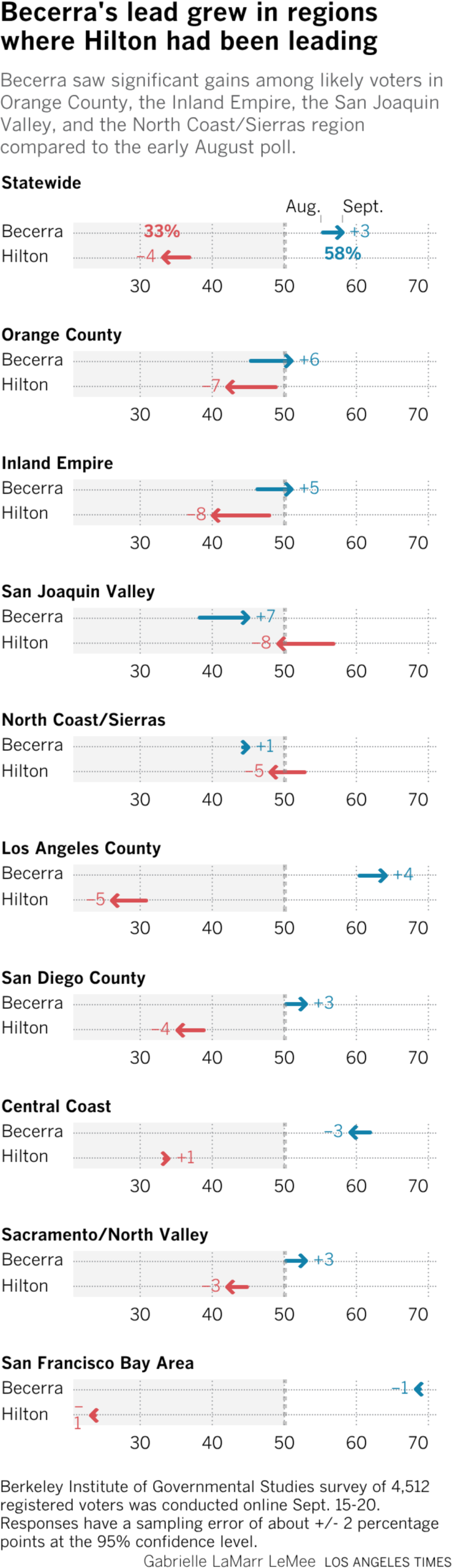
But then I hear Chad Bianco and Steve Hilton mewl, and I’m suddenly hoping alongside Anita that someone vanquishes their foes with an unassailable vision. Problem is, I think all the candidates have reached their ceiling. The only one who has any chance of showing us something new is Xavier Becerra, who needs to drop his Dudley Do-Right shtick for a second and channel the inner cholo we all know is in him.

Instead, he was at a fundraiser in Fullerton over the weekend with professional Latinos — you should’ve been kicking it with my cousins in Anaheim who were watching their Dodgers slaughter the Cubs, loco, because they’re the ones who’ll make or break you.

Chabria: How the first potential Latino governor is failing to excite Latino voters is exactly what I’m talking about. If you don’t give voters something to be excited about, they don’t vote, and our fragile democracy needs every voter it can get.

But if we are forced to vote on nuance, let’s do it informed. Here are some questions I hope these candidates have to answer:

For San José Mayor Matt Mahan, funded in the mega-millions by tech bros, it’s not enough to promise to regulate artificial intelligence, or billionaire influence, for that matter. Tell us what those regulations look like and tell us how you reconcile your own politics with those of big donors such as Joe Lonsdale, co-founder of Palantir, who has called Gen Z the “loser generation.”

For billionaire investor Tom Steyer, who has said he will reform Proposition 13 (which limits property taxes) for corporate land owners: What assurances do homeowners have that they won’t be next?

For former Rep. Katie Porter, polling third among Democrats, the clock is ticking — is there a point where you will drop out and endorse a fellow candidate if you can’t break through? Same-ies for state schools superintendent Tony Thurmond and former L.A. Mayor Antonio Villaraigosa, who are included in this debate but polling in the single digits.

And I agree with you, Gustavo, Becerra is coming across as resolutely bland, but to Mark’s point, he’s using that to position himself as drama-free and experienced. So in an era when fraud and abuse are the words of the day, how does Becerra explain not catching fraud in his own office?

Mark and Gustavo, what are the topics you hope candidates will be grilled on?

Arellano: Slight correction, Anita — California already had a Latino governor: Romualdo Pacheco, the lieutenant governor who replaced Newton Booth in 1875 when the latter became a U.S. senator. Pacheco — a Latino Republican! — served all of 10 months before becoming a Congress member.

See, Californians? Political musical chairs is as much a part of our state as free-spending oligarchs — but enough about Steyer.

Issues? Immigration, of course. I want each one to address the state’s undocumented immigrants for 90 seconds in whatever matter they choose. Water: Believe in climate change or not, but our supply is shrinking faster than the gubernatorial chances of Thurmond. And since I believe that the more random the question, the more you learn about who a candidate truly is: What’s the best song about California, and why? Anyone who says “California Girls” or “California Gurls” deserves disqualification, even if both songs rock.

Barabak: Not an issue, per se. What I’d like to see is a bit of backbone.

The next governor is going to have to make some tough decisions, especially around spending priorities and/or cuts to the state budget. Inevitably, the next governor is going to make some people unhappy. And I’m not talking about just those members of the opposite party, or folks who didn’t vote for them.

So I’d like each of them to name an issue where, for the good of the state, they’re willing to take on their friends and allies, knowing they’ll be displeased. If you’re a Democrat, name something you would do that would, say, tick off organized labor. And for Republicans Bianco and Hilton, what’s an area where you’re willing to say to Trump, “Sir” — the president imagines everyone bowing and calling him sir — “you’re dead wrong about this and California needs to go its own way, whether you like it or not.”

Arellano: Good luck seeing any candidate buck their masters. I think we need to lower our expectations way, way, well, lower. So a simple question to conclude: Who needs to do the most tonight besides Mahan’s beard? I think it’s my fellow Orange Countian, Katie Porter. She’s now to the right of Steyer and left of Becerra, which means she needs to peel off supporters from both of them and grab undecideds if she wants to advance. Not sure how she can pull that off — but if anyone can bring necessary fire, it’s her.

Chabria: Porter definitely has a lot on the line.

One standout moment for her, Steyer or Becerra — good or bad — could tilt this very-much-undecided race — not so much because people will be watching, but because it will fuel the social media and advertising sure to follow. These next two debates are high-stakes, not just to avoid a Biden performance, but to do something, anything, that fires up momentum.

Politics ain’t beanbag, as the old saying goes, and it’s time to bring the heat. So in the spirit of Gustavo’s song request, I’ll leave it with these lyrics from the Rivieras (or the Ramones, if you prefer): We’re out there having fun, in the warm California sun.

Barabak: Not to be the pooper at the party but I think we shouldn’t overstate the import of tonight’s debate. For one thing, as Anita suggested, the audience will be exceedingly small — minuscule, even, relative to the state’s 23 million registered voters.

We know, from experience, that most folks will take away what they do based not on the debate itself but rather the coverage of it and whatever soundbites, memes, chatter and advertising it produces — and that’s only to the extent people are paying attention.

So, yes, what’s said and done in Pomona, will matter some. But we’re still five weeks away from election day, and I suspect many folks will be waiting at least another week or three to start focusing on the race and finally make up their minds.

I’ll end with something that Jerry Garcia sang: All good things in all good time.

Source link

Virginia Supreme Court considers whether to block voter-approved U.S. House map favoring Democrats

Virginia Supreme Court justices on Monday questioned whether the state’s Democrat-led legislature complied with constitutional requirements when it sent a congressional redistricting plan to voters, in a case that could help decide the balance of power in the U.S. House.

The new districts, which could net Democrats four additional seats, won narrow voter approval last week. But a Republican legal challenge contends the General Assembly violated procedural rules by placing the constitutional amendment before voters to authorize the mid-decade redistricting. If the court agrees that lawmakers broke the rules, it could invalidate the amendment and render last week’s statewide vote meaningless.

The Virginia court proceedings mark the latest twist in a national redistricting battle between Republicans and Democrats seeking an advantage in a November midterm election that will determine whether Republicans maintain their narrow majority in the U.S. House.

President Trump kicked off a tit-for-tat round of gerrymandering last summer when he urged Texas Republicans to redraw districts to their favor in an attempt to win several additional House seats. That set off a chain reaction of similar moves in other states, leading to the voter approval last week of Virginia’s new map.

Next up is Florida, where Republican Gov. Ron DeSantis has included congressional redistricting on the agenda for a special session of the GOP-controlled Legislature beginning Tuesday.

Virginia arguments focus on what counts as an `election’

During Monday’s arguments, the Virginia Supreme Court focused on whether the new congressional districts should be invalidated because of the process used by lawmakers. The justices issued no immediate ruling.

Because the state’s redistricting commission was established by a voter-approved constitutional amendment, lawmakers had to propose an amendment to redraw the districts. That required approval of a resolution in separate legislative sessions, with a state election sandwiched in between, to place the amendment on the ballot.

The legislature’s first vote occurred in October — while early voting was underway but before it concluded on the day of the general election. Judicial questioning focused on whether that was too late, because early voting already had begun.

Attorney Matthew Seligman, who defended the legislature, argued that the “election” should be defined narrowly to mean the Tuesday of the general election. In that case, the legislature’s first vote on the redistricting amendment occurred before the election and was constitutional, he told judges.

But an attorney arguing for the plaintiffs, Thomas McCarthy, said “election” means the entire period during which people can cast ballots, which lasts several weeks in Virginia. If that’s the case, then the legislature’s initial endorsement of the redistricting amendment came too late to comply with the state constitution, he said.

Attorneys argue over the rights of voters

The purpose of Virginia’s two-step amendment process, with an intervening election, is so voters can know whether legislative candidates support or oppose a proposed constitutional amendment, McCarthy said.

He pointed to the case of Democratic voter Camilla Simon, one of the plaintiffs in the lawsuit alongside Republican state lawmakers, who cast an early vote last fall for Democratic Del. Rodney Willett. After she voted, Willett sponsored the Democratic redistricting amendment, and Simon wished she could have undone her vote, McCarthy said.

“None of these voters had any idea this was coming, and that’s not how this process is supposed to work,” McCarthy told the justices.

Those defending the Democratic redistricting plan also contend that the voters’ will should be respected.

The people voted to ratify the constitutional amendment, “and the challengers are asking to overturn that democratic result,” Seligman told reporters after the arguments.

Nationwide redistricting battle has no clear winner so far

So far, the two major parties have battled to a near draw in the states that have redrawn their congressional maps for this year’s midterms.

Republicans think they could win up to nine more seats under revised districts in Texas, Missouri, North Carolina and Ohio. Democrats think they could win as many as 10 additional seats under new districts in California, Utah and Virginia. But legal challenges remain in both Virginia and Missouri.

Virginia currently is represented in the U.S. House by six Democrats and five Republicans who were elected from districts imposed by a court after a bipartisan redistricting commission failed to agree on a map after the 2020 census. The new districts, which narrowly won voter approval on April 21, could give Democrats an improved chance to win 10 districts.

Some candidates already have begun campaigning based on the new districts in advance of the state’s Aug. 4 primary election.

More court battles could remain in Virginia

In January, a judge in rural Tazewell County, in southwestern Virginia, ruled that lawmakers failed to follow their own rules for adding the redistricting amendment to a special session last fall. Circuit Judge Jack Hurley Jr. also ruled that lawmakers failed to initially approve the amendment before the public began voting in last year’s general election and that the state had failed to publish the amendment three months before the election, as required by law. As a result, he said, the amendment is invalid and void.

The Virginia Supreme Court placed Hurley’s order on hold and allowed the redistricting vote to proceed before hearing arguments on the case.

During Monday’s arguments, justices also raised questions about the ability of lawmakers to expand the agenda for their special session and whether the three-month public notice requirement was important enough to thwart a voter-approved amendment.

Republicans have filed at least two additional legal challenges, which also are winding their way through the courts.

Robertson and Lieb write for the Associated Press. Lieb reported from Jefferson City, Mo. AP writers Allen G. Breed in Richmond and Nicholas Riccardi in Denver contributed to this report.

Source link

Google co-founder Sergey Brin confronted Gavin Newsom — then launched a political war

In a treehouse nestled in redwoods north of San Francisco, Gov. Newsom stood cold and hungry as Sergey Brin, the world’s fourth-richest man, and his wellness-influencer girlfriend told him they were leaving the state.

It was late in the evening at a Christmas party hosted by crypto titan Chris Larsen — featuring singer Janelle Monáe and a towering abominable snowman with glowing red eyes — when Brin and his partner, Gerelyn Gilbert-Soto, confronted Newsom about a new proposal to tax billionaires in California, according to people who’ve spoken with the governor. Such a levy could hit Brin’s stake in Alphabet Inc. and his $272.6 billion fortune.

Newsom, who opposes the wealth tax, was still telling people about the lengthy exchange at the party months later, complaining of a lingering cold the pair had given him, according to the people, who asked not to be named discussing private conversations with the governor.

Brin, meanwhile, followed through. He left the state, bought a lakeside mansion in Nevada, and started bankrolling a billionaire political uprising in California.

Newsom, through a spokesperson, declined to comment on the interaction. “The governor has been very clear with everyone, no matter who they are, that this effort will do serious damage to the state, including for public safety workers and schools, at the expense of one special interest group,” Izzy Gardon, a spokesperson, said.

A representative for Brin didn’t respond to requests for comment.

Brin’s political push reflects a broader awakening among California’s ultrawealthy. Over the past six months, the proposed billionaire tax and a heated governor’s race have drawn tech titans and business leaders more directly into the state’s affairs — a space many of them have traditionally kept at arm’s length.

Prior to this year, Brin’s last contribution in a California election cycle was 2010 when Arnold Schwarzenegger was governor and the Google co-founder largely backed climate causes. He’s now spent more than $58 million in the last four months, including an extra $9 million disclosed late Friday, but more importantly has helped mobilize a network of fellow tech titans in a push to sway state issues.

“The wealth tax was a wake up call, it was a fire that just lit up Silicon Valley literally in a matter of weeks,” said Steven Maviglio, a veteran Democratic strategist. “I’ve never seen anything like it.”

Altogether, ultrawealthy donors have injected more than $270 million into California’s political scene in this election cycle. Outside of the wealth tax, billionaire Tom Steyer is emerging as a top Democratic candidate for governor after the downfall of former Representative Eric Swalwell following allegations of sexual assault. Steyer, a former hedge fund manager, has spent more than $140 million in his election bid, crowding TV airwaves with ads and labeling himself a “class traitor” with a campaign modeled after Vermont Senator Bernie Sanders.

Ballots for the June 2 primary election start going out next week. Brin and a cohort of the ultrawealthy including Coinbase CEO Brian Armstrong and venture capitalists Vinod Khosla and John Doerr have plowed millions into supporting Matt Mahan, a Silicon Valley mayor, with a back-to-basics agenda and a penchant for taking on the state’s Democratic establishment.

That money has helped Mahan buy airtime and attracted controversy, but his polling numbers remain stuck in the single digits while Steyer’s well-funded progressive campaign is gaining favor with voters. Brin has also backed Republican Steve Hilton, who’s currently leading polls.

“You have two polar opposites going on. You have a billionaire running who has actually fully adopted an agenda that the vast majority of voters agree with: Taxing billionaires, funding healthcare, fighting back against ICE,” said Lorena Gonzalez, head of the state’s largest union group, the California Federation of Labor Unions. “And then you have billionaires pushing a candidate whose talking points are apologetic to the tech industry.”

The billionaire political activism in California mirrors larger shifts in Silicon Valley and the nation. President Donald Trump has given tech billionaires broad access to the White House, inviting Brin and other industry captains over for dinner and to join advisory boards.

Back in September, Trump singled out Gilbert-Soto as Brin’s “really wonderful MAGA girlfriend” at a White House dinner also attended by Mark Zuckerberg, Tim Cook and Sam Altman. She has publicly supported Republican Steve Hilton for California governor, a candidate Trump endorsed and Brin has also donated to.

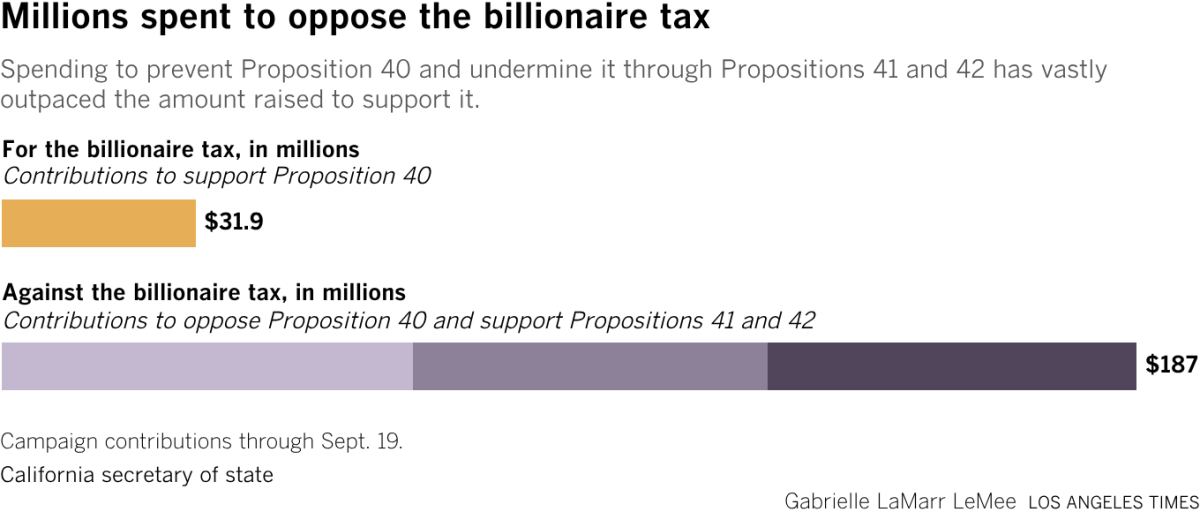
In California, Brin’s newfound political action was catalyzed by the wealth tax proposal, which would levy a one-time 5% tax on billionaires to help offset federal healthcare cuts. In a Signal group chat earlier this year with other Silicon Valley elite, Brin floated the idea of raising hundreds of millions of dollars to influence California politics, according to a person who saw the message.

Brin left California for Nevada ahead of a Jan. 1 residency deadline for the proposed wealth tax. He moved to a $42 million mansion on the Nevada side of Lake Tahoe, featuring two glass-walled funiculars.

Shortly after leaving California, Brin contributed $20 million to a new group dedicated to fighting the tax while also pushing pro-business and housing affordability policies, Building a Better California, making him the single largest contributor. He added $37 million over the spring, as the group quickly started supporting a trio of anti-wealth tax measures that could nullify a billionaire tax if it gets passed in an election. One of the measures, the so-called Transparency Act, has enough signatures to qualify for the November ballot, its backers claimed on Monday.

Building a Better California “remains fixed on long-term reforms supported by most Californians: housing affordability, stable funding for education, infrastructure investments, and government accountability,” a spokesperson said.

Joining Brin in the effort were other billionaires, including former Google CEO Eric Schmidt, Stripe CEO Patrick Collison and venture capitalist Michael Moritz. Peter Thiel, who also left California ahead of the New Year’s Day deadline, gave $3 million to a separate committee opposing the wealth tax.

“They don’t trust California anymore,” said David Lesperance, a tax attorney who specializes in relocations and has helped move five families out of the state because of the wealth tax threat.

Brin and his fellow billionaires helped push up the costs to gather the more than 870,000 signatures required to qualify a ballot measure. This forced the union behind the wealth tax, SEIU-UHW, to spend more on their efforts.

Now, the union says it has succeeded in getting the signatures it needed, which will likely force the business leaders opposing it into further spending.

“A very small group of the most controversial billionaires on the planet tried to stop Californians from being able to save their local emergency rooms and hospitals — but our current signature tally proves frontline healthcare workers will prevail in bringing this commonsense proposal to voters,” said Suzanne Jimenez, SEIU-UHW’s chief of staff. “When our growing coalition files these signatures, David will have won the first round against Goliath.”

Other billionaires have bankrolled their own political initiatives, including Larsen, who set up his own network of influence groups with names like Grow California and Golden State Promise.

Many in Sacramento are skeptical that Brin and his fellow ultra-rich will succeed in swaying California state politics. They point to the failed candidacy of former eBay executive Meg Whitman, who spent around $144 million of her own fortune to become governor, or even venture capitalist Tim Draper’s longshot initiative to split California into six separate states.

“They’re trying to extrapolate from their own industry, which might have been fabulously successful, that they know something about political advertising, when they don’t,” said Garry South, a veteran Democratic strategist. “They think, ‘Hey, I’ve got money I can throw it around,’ and they don’t really do their homework.”

Political consultants describe their frustration with some wealthy tech donors, who often view their political giving through an investment lens, promising big checks and not following through if they don’t see momentum. That’s led to questions about whether the California billionaire activism would continue if Mahan’s governor bid fails and the wealth tax passes.

Even Larsen, who’s worth around $13 billion, has expressed anxiety that not enough business leaders are stepping into politics. “It’s a lot of talk, and they’re happy, but we don’t see the firepower we need to take on the SEIUs,” he said, referring to the state’s largest union.

Newsom, for his part, acknowledges that many of the state’s wealthiest residents are willing to donate significant sums of money, but want to do it on their own terms and not through a tax.

“Some will never give a penny away,” he said at a Bloomberg News event in January, not long after his encounter with Brin in the treehouse. “Some I respect. Some I don’t.”

Kamisher and Carson write for Bloomberg.

Source link

Billionaire-tax backers say they have enough signatures — times two — to qualify for ballot

Supporters of a billionaire tax said Sunday that they had gathered nearly twice as many signatures as necessary to qualify the controversial proposal for the November ballot.

Opponents of the proposal argue that it already has driven wealthy Californians — crucial to funding the state’s volatile budget — to other parts of the nation. Advocates, however, say the proposed tax is critical to compensate for federal healthcare funding cuts that will harm the state’s most vulnerable residents.

“Most Californians and most billionaires recognize how reasonable and necessary this proposal is — both to keep emergency rooms open and to save California businesses from closing,” said Suzanne Jimenez, the chief of staff of the Service Employees International Union-United Healthcare Workers West, the chief proponent of the effort. “A very small group of the most controversial billionaires on the planet tried to stop” this effort, she added, but when “our growing coalition files these signatures, David will have won the first round against Goliath.”

The union, which represents more than 120,000 healthcare workers, patients and consumers, launched the effort to counter massive healthcare funding cuts that President Trump signed last year. The California Budget & Policy Center estimated that as many as 3.4 million Californians could lose Medi-Cal coverage, rural hospitals could shutter, and other healthcare services would be slashed unless new funding was found.

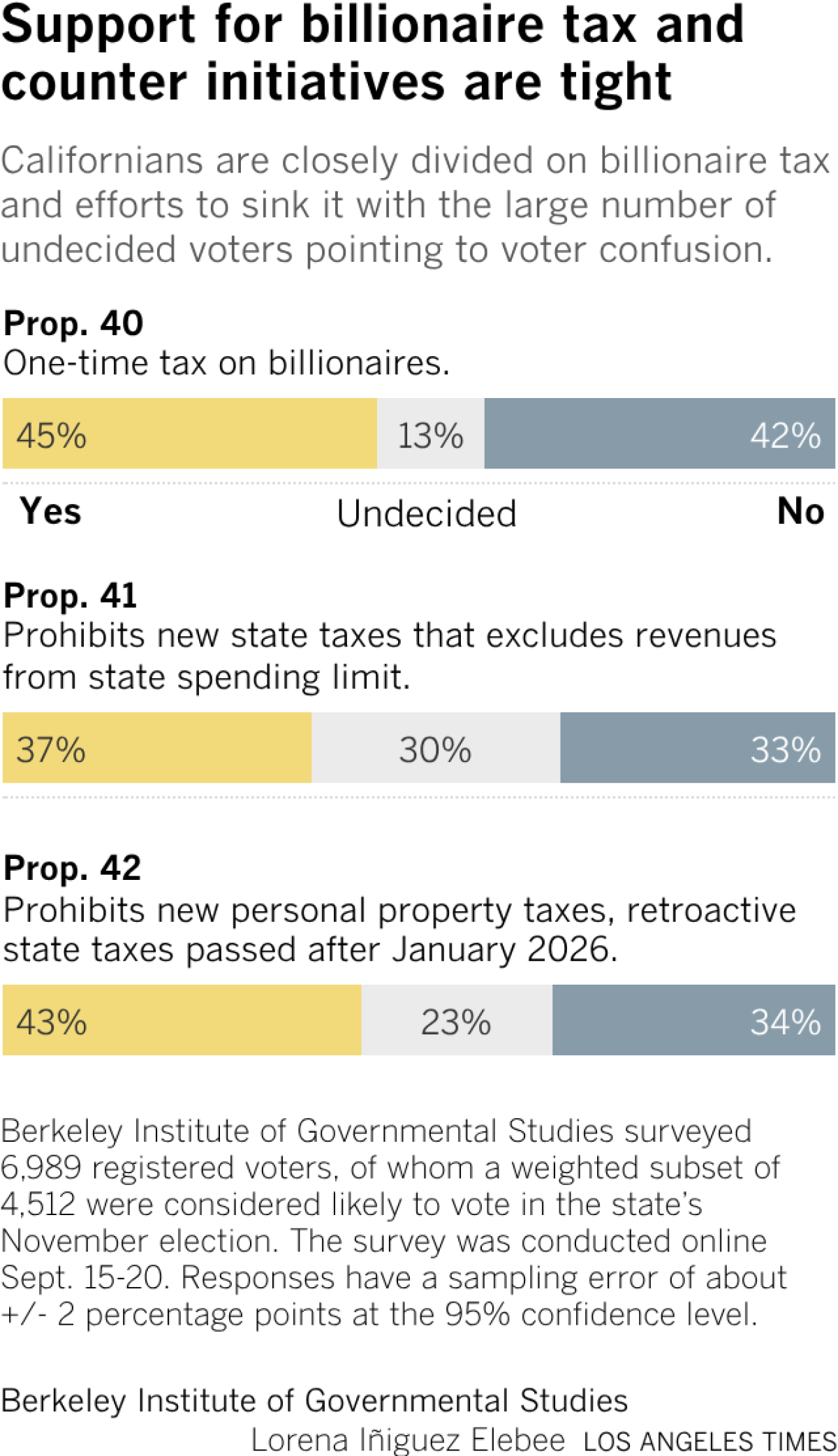
The proposal would impose a one-time tax of up to 5% on taxpayers and trusts with assets valued at more than $1 billion, with some exclusions, such as property. The levy could be paid over five years. Ninety percent of the revenue would fund healthcare programs, and the remaining funds would be spent on food assistance and education programs. The proposal would cost the state’s richest residents about $100 billion if a majority of voters support it.

Supporters need to submit the signatures of nearly 875,000 registered voters to county elections officials by June 24. They say they have gathered nearly 1.6 million signatures.

Opponents of the measure, which has divided liberals — Sen. Bernie Sanders (I-Vt) supports it while Democratic California Gov. Gavin Newsom opposes it — said the proposal would destroy California’s economy and budget, while doing nothing to address the state’s underlying financial issues.

“This wealth tax would have a devastating impact on our economy, state budget, and the cost of living for all Californians,” said Rob Lapsley, president of the bipartisan California Business Roundtable. “The measure doesn’t do anything to reduce the state’s $35-billion-plus budget deficit and does nothing to address the decade of overspending that led to the structural deficit. In fact, because the state relies so heavily on high-income-earner tax revenue, this measure could lead to reduced budget revenue in the long term as highly mobile wealthy individuals leave the state to avoid this new tax.”

He also argued that the proposal could result in higher taxes for all Californians.

“This is an everyone tax that is called a billionaire tax,” Lapsley said, “and we will ensure Californians understand the truth on the devastating consequences this initiative will have.”

Source link

Assemblymember Carl DeMaio’s ballot measure will be considered by voters in November

A ballot measure that would require Californians to show identification every time they vote in person, or use a special pin number when submitting mail-in ballots, has qualified for the November ballot, elections officials announced Friday.

The measure also would require election officials to verify registered voters are U.S. citizens, aligning with a Republican-led push for new restrictions on voters in the wake of President Trump’s baseless claims that the 2020 election was stolen from him, and that undocumented immigrants are swaying elections by voting illegally.

Republican Assemblymember Carl DeMaio from San Diego has been pushing the measure for several years, while Trump and Republicans also are seeking a similar initiative at the federal level.

If passed, the California ballot measure would require a voter to present government-issued identification, such as a state driver’s license, every time they vote. Voters mailing ballots would be required to write a four-digit number, essentially a pin number, on their ballots matching the one generated when they registered to vote.

The pin would come from ID such as a driver’s license, or could be generated from the county. The vast majority of Californians mail in their ballots in elections.

Under the measure, election officials also must ensure that registered voters are U.S. citizens by using information from government records, which could include information in the federal Social Security Administration database, and maintain accurate voter registration lists.

DeMaio said the measure is different than a federal proposal, known as the SAVE Act, which stalled out in the U.S. Senate this week.

DeMaio said the state ballot measure “does not do away with mail in ballots, because voters of all political backgrounds like the convenience of mail in ballots. So we want to keep that convenience.”

The ballot measure needs a simple majority to pass.

Under current law, Californians are not required to show or provide identification when casting a ballot in person or by mail. They are required to provide identification when registering to vote, and must swear under penalty of perjury, a felony, that they are eligible to vote and a U.S. citizen.

Jenny Farrell, executive director of the League of Women Voters of California, told the Times that her group is committed to fighting the measure, arguing it would make it harder for people in the state to vote.

She said that people may forget to use a pin on their mail-in ballot, leading to their vote being disqualified. Similar changes in Texas, she said, led to a rise in rejected ballots due to technical errors.

“It doesn’t really weed out illegal voting,” which doesn’t actually exist, she said, “but it does cause more ballots to be incorrectly flagged and ultimately rejected.”

ACLU of Northern and Southern California, Common Cause, Disability Rights California also oppose the measure.

DeMaio filed for the ballot initiative in 2021 and 2023, but did not move forward with the signature collection process in order to fine-tune the ballot language.

He said his ballot measure wasn’t focused primarily about making sure that undocumented people don’t vote.

“That’s one element of concern that we’ve heard from some groups, but it really is making sure that, number one, we properly maintain our voter rolls,” he said.

Source link

Democrats win in Virginia but it won’t be the final say in a national redistricting competition

Democrats on Wednesday celebrated an election win in Virginia that could put them slightly ahead in the national redistricting competition that President Trump triggered in an attempt to preserve his party’s House majority in this year’s midterms, but it will not be the final round.

Now that it’s been approved by voters, the new Virginia map will have to clear additional legal hurdles. On Wednesday, the state attorney general’s office said it would immediately appeal a ruling earlier in the day from a judge in rural southern Virginia who ordered that the results of Tuesday’s vote not be certified.

Ultimately, the Virginia Supreme Court will decide whether Democratic lawmakers violated procedural rules when they referred a constitutional amendment to the ballot authorizing the new U.S. House districts that could help Democrats win as many as four additional seats in the state. If so, that could invalidate the map voters narrowly approved Tuesday.

What happens next in Florida also will matter.

The state’s Republican-controlled Legislature is to meet in a special session next week that GOP Gov. Ron DeSantis called in part to draw a new map to expand the party’s congressional majority there. The U.S. Supreme Court is scheduled to issue an opinion by the end of June in a Louisiana case that could overturn a key provision of the Voting Rights Act and lead to redrawn political maps across the South, though almost all of those could not happen until 2028.

After voters passed the Virginia amendment, Democrats could tentatively claim that they netted 10 seats nationally from the mid-decade redistricting, compared with the nine that Republicans claim. Even if things swing again in the GOP’s favor, the net result of Trump’s campaign would be at best an incremental increase in the number of GOP-leaning House seats at a time when his approval rating is dropping and Republican anxiety over losing control of Congress in November is rising.

“We have successfully blunted Trump’s attempt to completely hijack the midterms,” said John Bisognano, president of the National Democratic Redistricting Committee.

Many Republicans agreed.

“The GOP will now lose net seats across the country. If you’re going to pick a fight, at least win it,” Ari Fleischer, who was a spokesman for President George W. Bush, posted on the social media site X after the Virginia vote. “All this was foreseeable and avoidable. We should not have started this fight.”

Adam Kincaid, executive director of the National Republican Redistricting Trust, argued that it is too soon to declare one party a victor.

“It’s an ongoing process with many legal challenges pending, and it’s far too early for sweeping statements on the final outcome,” he said.

Trump on Wednesday tried to undermine the Virginia result by leveling groundless accusations of fraud similar to ones he made after losing the 2020 presidential election. He called the Virginia vote “RIGGED” and “Crooked” in a post on his social media site and added, “Let’s see if the Courts will fix this travesty of ‘Justice.’”

Redistricting spread from Texas to other states

Redistricting is typically done every 10 years after each census, unless ordered by a court. But last summer, Trump pushed a redrawing in Texas, prodding the state’s Republican-controlled Legislature to add up to five winnable House seats for his party. Trump then began pressuring other Republican-run states to follow. Missouri, North Carolina and Ohio have since created more GOP-leaning seats in addition to Texas.

Democrats began to fight back, even though they were more constrained because several Democratic-controlled states had maps drawn by independent commissions rather than lawmakers and governors.

To counter Texas, California’s Democratic governor, Gavin Newsom, pushed the Democratic-controlled Legislature to place a redistricting initiative on last fall’s ballot. After voters overwhelmingly approved it, the measure will replace a commission-approved map with one that could gain Democrats five seats.

Democrats reclaimed the Legislature and governor’s office in November in Virginia and swiftly moved to replicate California’s move with an even more aggressive redistricting plan. It replaces a congressional map imposed by a court after the last census that had resulted in a 6-5 edge for Democrats with one that could allow Democrats to win as many as 10 seats.

“We are not going to let anyone tilt the system without a response,” state Senate President L. Louise Lucas said at a news conference Wednesday.

Courts could still have a say on redistricting

In Washington, U.S. House Democratic leader Hakeem Jeffries of New York warned Florida Republicans, who have been openly nervous about redrawing their district boundaries and potentially spreading their core voters too thin before an election that appears to be trending against them.

“Our message to Florida Republicans right now is, ‘F around and find out,’” Jeffries said.

House Majority Forward, the nonprofit arm of the super political action committee aligned with House Democrats, has spent nearly $60 million to push back against Republicans’ redistricting efforts. Some $40 million of that was on the Virginia campaign.

Another obstacle in Florida is an anti-gerrymandering constitutional amendment that was approved by state voters in 2010. It is likely that any new Florida map would trigger significant litigation, although six of the state Supreme Court’s seven justices were appointed by Republicans.

Nicholas Stephanopolous, a Harvard law professor, said a challenge for DeSantis is that the Florida amendment forbids drawing lines for purely partisan purposes, so he has to find some other excuse for revising the map. “Even with that sort of acquiescent state supreme court, I don’t think it’s a done deal,” Stephanopolous said.

The Virginia move comes with its own legal issues. Republicans have challenged the process that Democrats used to place the measure on the ballot and the state Supreme Court opted to wait for the vote before even scheduling arguments in the case. It is unclear when a ruling could come.

Wednesday’s ruling stopping certification came from a separate case that Republicans filed with the same lower court judge, whose initial ruling against the initiative was put on hold by the state supreme court.

“The ballot box was never the final word here,” Terry Kilgore, the Virginia House Republican leader, said in a statement after Tuesday’s vote. “Serious legal questions remain about both the wording of this referendum and the process used to put it before voters.”

The biggest legal wild card is held by the U.S. Supreme Court. Its conservative majority could throw out a requirement under the Voting Rights Act that in areas with a large minority population, mapmakers draw districts that are more favorable to the election of minority candidates.

That provision has led to the creation of several majority-minority congressional seats, especially in the South. Without it, Republicans in conservative states could shrink the number of U.S. House seats winnable by Democrats even further.

But it’s unlikely that any state other than Louisiana, which brought the lawsuit the high court will rule on, would be able to adjust its congressional lines in time for November even if the court eliminates that provision, known as Section Two. That’s because the November election is already officially underway in most states and candidate filing deadlines — and, in some cases, primary elections — have already passed.

Riccardi and Lieb write for the Associated Press. AP writers Lisa Mascaro and Leah Askarinam in Washington contributed to this report.

Source link

Former state Controller Betty Yee drops out of the governor’s race

Former state Controller Betty Yee dropped out of the 2026 governor’s race on Monday, citing low levels of support from voters and donors.

Yee, a Democrat, was part of a sprawling field of politicians vying to replace termed-out Gov. Gavin Newsom. But despite the bevy of prominent candidates running to lead the nation’s most populous state and the world’s fourth-largest economy, this year’s governor’s race has long lacked a clear front-runner well known by the electorate.

“The whole notion that voters are looking for experience and competence is not a top priority, and that’s been really my wheelhouse in terms of how we grounded this campaign was based on my experience,” she said in a virtual press conference Monday morning. “The donors have felt the chill of the polling … and it really just came down to where I’m not going to have sufficient resources to get us to the finish line.”

The former two-term state controller did not immediately endorse another candidate and said she would take a few days to assess the field before making an announcement.

The race was upended earlier this month when then-Rep. Eric Swalwell, among the leading Democrats in the race, was accused of sexual assault and other misconduct. The East Bay Democrat, who is facing multiple criminal investigations, promptly ended his gubernatorial bid and resigned from Congress.

Yee, 68, was well regarded by Democrats during her tenure in Sacramento. And she highlighted her no-drama persona on Thursday.

“California — had enough chaos, fear and horrendous political scandals? Ready for calm, cool, collected change? Some may consider that boring. But that’s the point. We need Boring Betty,” Yee posted on the social media site X. “No crisis. No circus. Just competent, drama-free leadership you can trust. #BoringisBetter”

But she never had the financial resources to aggressively compete in a state with many of the most expensive media markets in the nation.

Yee reported raising nearly $583,000 for her gubernatorial bid in 2025, according to campaign fundraising reports filed with the California secretary of state’s office. Yee’s announcement that she is dropping out of the race came days before the latest financial disclosures will be publicly reported.

Despite being elected to the state Board of Equalization twice and as state controller twice, Yee was not widely known by most Californians. She never cracked double digits in gubernatorial polls.

Her name will still appear on the ballot. She was among the candidates who rebuffed state Democratic Party leaders’ request earlier this year to reconsider their viability amid fears that the party could be shut out of the November general election because of the state’s unique primary system. The top two vote-getters in the June primary will move on to to the November general election, regardless of party affiliation.

Though California’s electorate is overwhelmingly Democratic, the makeup of the gubernatorial field makes it statistically possible for Republicans to win the top two spots if Democratic voters splinter among their party’s candidates. Yee said fear of that scenario playing out “kind of took over” the gubernatorial race.

“Was it possible? Yes. Was it plausible? No, we’re in California. That was not going to happen,” she said, adding that the top-two primary system should be done away with.

Still, Yee was beloved by Democratic Party activists, and previously served as the party’s vice chair.

No Democratic candidate reached the necessary threshold to win the party’s official endorsement at its February convention, but Yee came in second with support from 17% of delegates despite calls for her to drop out of the race.

“Every poll shows that this race is wide open, and I know this party,” she said in an interview at the convention. “Frankly, I’ve been in positions where it’s been a crowded field, and we work hard and candidates emerge.”

The gubernatorial primary will take place June 2, though voters will start receiving mail ballots in about two weeks.

Source link

Angels great Garrett Anderson was a Hall of Fame teammate

Garret Anderson was a Hall of Fame-caliber major league baseball player who never made the Hall of Fame. Baseball is a numbers game, and GA didn’t have enough of them.

When he finished his career and was eligible for the vote in 2016, he got just one vote. That represented 0.2% of the total. It also meant that he wasn’t even on the ballot the next year.

So, when he died Friday, way too soon at age 53, it presented an interesting twist. Had he lived into his 80s or 90s, there would have been few still around to remember anything about him but statistics. Now, the memory of his underrated greatness remains. What he did and how he did it is still in the frontal lobe of those who watched and those who wrote and broadcast about him.

He was the quiet man who played for various versions of the Angels for 15 seasons — the California Angels, the Anaheim Angels and the Los Angeles Angels. Right there, you have a Hall of Fame problem. A team struggling so hard to find its own identity does not attract the deep and passionate interest of the bulk of the writers/voters who live in time zones whose bed time is the same as game time in Anaheim.

It should have mattered that GA delivered the most important hit in Angels’ history, the game-winner in the 2002 World Series. It was Game 7, it was at Angel Stadium and the opponent was the San Francisco Giants, who had superstar slugger Barry Bonds and his line drives that created dents in outfield fences, except when they flew over them, which was often.

Anderson came to the plate in the third inning. The bases were loaded and Anderson took a shoulder-high fastball, slapped it down the right-field line and three runs came home. The Angels won 4-1 and haven’t come close to a World Series title, much less a World Series, since then. That at least got Anderson into the Angels Hall of Fame in 2016.

Mike Scioscia was the manager then and the most effective the team has had. He is the one who, Saturday, called Anderson’s Game 7 hit the greatest in team history.

“I remember looking out there when he went to the plate with the bases loaded,” Scioscia said, “and thinking he is exactly the guy I want there right now.”

Scioscia called Anderson’s death “a punch in the gut.” He said the player everybody called GA, didn’t have to be managed. “He was a resource for me,” Scioscia said. “He had an incredible inner drive. He was one of the most talented players I have been around. I’d call him a superstar.”

Scioscia, reminded that his “superstar” didn’t make baseball’s Hall of Fame, said, “Sometimes, great players slip through the cracks.”

Anderson’s not-quite-Hall-of-Fame performances included three All-Star game appearances. He was the game’s MVP in 2003 and also won the home run derby that year. He beat out Albert Pujols, then of the Cardinals. His career batting average was .293, he hit 287 home runs and had 1,365 runs batted in. He went to the plate to hit, not to watch. He never drew more than 38 walks in a season and never struck out more than 100 times.

Yet the statistic he felt gave him the best chance for the Hall of Fame was number of hits. Getting 3,000 hits would make him almost an automatic choice. He ended with 2,529, and near the end of his career with the Angels, he sat down with a reporter to discuss just that, plus one other thing.

Garret Anderson, left, talks with Jackie Autry, widow of Angels team owner Gene Autry.

Garret Anderson, left, talks with Jackie Autry, widow of Angels team owner Gene Autry, as he is inducted into the Angels Hall of Fame on Aug. 20, 2016.

(Reed Saxon / Associated Press)

It was uncharacteristic for Anderson to have this sort of conversation with anybody outside of his teammates, or maybe his family. It was lunch at Zov’s in Tustin and the question was how this voting system works and could maybe 200 more hits get him in. Could 2,750 do it? He wasn’t a big ego guy by any stretch of the imagination, but the Hall of Fame seemed to be dangling there and any baseball player who could see that for himself in the distance had to be intrigued.

There was no discussion of the intangibles, no consideration of the Angels being the Angels and what effect that will always have. Do voters even look much at other stats, such as his 24 walks and 35 home runs in the same season? The reporter wasn’t a great help. He wasn’t even a voter. Anderson wasn’t really stressed out over the Hall of Fame premise, just kind of fascinated. The reporter was probably more encouraging than realistic. Zov’s food was good, the company great.

Eventually, Anderson got to the second issue that had prompted the lunch: How to deal with Times columnist TJ Simers. He asked because the reporter was once Simers’ boss. Simers tended to probe and kid and seek to stir up things, but Anderson also recognized that he could be highly accurate, perceptive and even fun. Anderson, as a team star, was bracing for frequent visits. How should he handle it?

The answer was simple: Don’t lie to him. Don’t hide from him. If he is being a jerk, tell him so. He will accept that. If he is wrong, tell him that and tell him how. If he insults you, insult him back. He loves that.

Tim Mead, former director of public relations, when asked for his thoughts on Anderson, said that his perspective or quotes would not be as telling or as meaningful as simply watching the tape of Anderson’s three-run double that won the 2002 World Series for the Angels.

“Just watch it, just watch his reaction when he gets to second base,” Mead said Saturday.

And so we did. Anderson slaps his hit down the right field line, just fair. Angel Stadium goes crazy. Anderson stops at second base, claps his hands four times, then stands there quietly. Little emotion. Little hoopla. No contortions for “SportsCenter.” He has done his job. He has done what was expected of him. There are six more innings left. Let’s celebrate when it is truly over.

That was Garret Anderson, GA to his friends, a Hall of Fame player in all the ways that numbers don’t show.

Source link

Judge sides with Arizona election official in ruling that has implications for midterm voting

The top election official in Arizona’s most populous county will get more authority in running elections after a judge sided with his office in a prolonged legal fight with the local board that shares responsibility for overseeing the vote.

The decision could have broad implications in one of the nation’s most prominent battleground states, which will have several high-profile races this fall. Maricopa County, which includes Phoenix, has been roiled by election conspiracy theorists ever since President Trump lost the state to Democrat Joe Biden during his bid for reelection in 2020.

Justin Heap, the Republican recorder in Maricopa County, sued the predominantly Republican county board of supervisors last summer, alleging it had illegally taken control of certain aspects of election administration. Heap claimed the board transferred funding, IT staff and some key functions — including management of ballot drop boxes and establishing early voting sites — away from his office through an agreement negotiated with his predecessor, whom he had recently defeated in a GOP primary.

Maricopa County Superior Court Judge Scott Blaney mostly sided with Heap’s office in his ruling, which was filed Thursday but appeared on the public docket Friday. The board of supervisors “acted unlawfully and exceeded its statutory authority by seizing the Recorder’s personnel, systems and equipment and refusing to return them” to the recorder, he wrote.

Blaney also ruled that the recorder’s office is responsible for overseeing in-person early voting, among other duties, while the board is responsible for other operations, such as selecting election day voting locations, supplying polling locations and hiring poll workers.

“The Board’s assertion of plenary authority over election administration through its general supervisory powers is inconsistent with Arizona law,” the judge wrote.

Board Chairwoman Kate Brophy McGee said the board will consider an appeal.

“I disagree with other portions of the ruling, and I will explore all options with the Board of Supervisors, including an expeditious appeal,” McGee, a Republican, said in a statement. “From day one, the Board of Supervisors has provided Recorder Heap the resources and staffing needed to fulfill his statutory duties. We will continue to do so because voters always come first.”

In a statement, Heap praised the ruling as a “clear and decisive victory for the rule of law and for the voters of Maricopa County.”

“The court confirmed that the Board cannot override state law, use funding as leverage, or take control of election duties assigned to the Recorder,” Heap said. “This ruling restores both the authority and the resources necessary for my office to do its job.”

Heap, a former Republican state lawmaker, was elected in 2024 after unseating incumbent Stephen Richer in the GOP primary and defeating a Democratic candidate in the general election. In the past, Heap has stopped short of repeating false claims that the 2020 and 2022 elections were stolen but has said voters don’t trust the state’s voting system and that it’s poorly run.

False claims of fraud since the 2020 presidential election led to threats of violence against Richer and others in the Maricopa County elections office. Richer blamed Heap for contributing to an atmosphere of distrust and vitriol directed toward the office.

“He catered to the really ugly stuff that the people in that office had to live through,” Richer said of Heap, in an interview last month. “And he allied with people who were very much in the eye of the storm in terms of creating it.”

Once he took office, Heap terminated a previous agreement that was reached between Richer and the board that had revised how election operations were divided between the two offices. Heap filed his lawsuit with the backing of America First Legal, a conservative public interest group founded by Stephen Miller, now deputy chief of staff in the White House.

Kelety writes for the Associated Press.

Source link

US judge blocks Justice Department bid to seize voter data in Rhode Island | Donald Trump News

Ruling is latest loss for Trump administration, which has sought access to state voter data ahead of the US midterms.

A federal judge in the United States has dismissed a Department of Justice lawsuit seeking to access voter data from Rhode Island.

The decision on Friday was the latest loss for the administration of President Donald Trump, which has sought to access voter data in dozens of states across the country.

Recommended Stories

list of 3 itemsend of list

In the ruling, US District Court Judge Mary McElroy sided with election officials and civil rights groups, writing that the Justice Department does not have the authority “to conduct the kind of fishing expedition it seeks here”.

Rhode Island Secretary of State Gregg Amore praised the ruling in a statement afterwards.

“The executive branch seems to have no problem taking actions that are clear Constitutional overreaches, regularly meddling in responsibilities that are the rights of the states,” Amore wrote.

“But the power of our democratic republic, built on three, coequal branches of government, is clearer than ever before.”

The Justice Department has sued at least 30 states for their voter information, maintaining it needs the information to secure election security. State officials have said that turning over the data raises an array of privacy concerns.

Under the US Constitution, state officials administer elections. Only Congress can pass laws related to how states oversee voting.

But Trump has sought to transform election administration, claiming that voting has been marred by widespread fraud.

In particular, Trump has continued to maintain that the 2020 election, in which he lost to former President Joe Biden, was “stolen”.

No evidence has ever been put forward to support the claims.

Federal judges have rejected attempts in California, Massachusetts, Michigan and Oregon to force the states to hand over voter files to the federal government. At least 12 states, however, have willingly provided or pledged to provide voter information to the Trump administration.

The push for voter information is one of several actions that have raised concerns over how the Trump administration will approach the midterm elections in November, which will decide the makeup of the US Congress.

He is currently calling on Republicans to pass the so-called SAVE America Act, a bill that would create higher documentation standards for voters to prove their citizenship when registering to vote and casting ballots.

The majority of Republican lawmakers have embraced Trump’s claim that the law is needed to prevent non-citizens from registering to vote, despite studies showing that instances of voter fraud are glancingly rare.

Critics say the measure would risk disenfranchising millions of voters, particularly those who have legally changed their names, which is a common practice in US marriages.

Source link

Trump draws Marie Antoinette comparisons as he leans into the gilded trappings of the presidency

President Trump had something urgent to address while flying back to Washington from his Mar-a-Lago estate on a recent Sunday.

It wasn’t the Iran war, nor the partial government shutdown over Department of Homeland Security funding. He was focused on a monumental issue of a different kind, hoisting artist renderings of the $400-million White House ballroom he’s building, complete with hand-carved “top-of-the-line” Corinthian columns.

“I’m so busy that I don’t have time to do this. I’m fighting wars and other things,” Trump said before extensively detailing plans for “the greatest ballroom anywhere in the world.”

His divided attention has become a Democratic point of attack and a concern for some Republicans who worry he’s not spending enough time on issues that voters care most about ahead of November’s midterm races.

The contrast was on full display Thursday, when, as Trump flew to Las Vegas to discuss tax cuts for Americans earning tips, his administration was pushing ahead with another of his splashy projects: Plans to build a 250-foot Triumphal Arch near the Lincoln Memorial replete with a Lady Liberty-like statue and a pair of golden eagles.

The president’s ability to speak to the concerns of working people has always seemed incongruous with his biography as a billionaire real estate developer. Yet his populist policies and emphasis on the economy during his 2024 campaign helped catapult him back to the White House.

Republican strategist Rick Tyler noted that, when Trump first ran for president in 2016, his wealth was a selling point.

“While other people, like Mitt Romney, played down how rich he was, Trump was giving free helicopter rides at the Iowa State Fair,” Tyler said. “People loved it.”

Still, Trump’s preoccupation with some of the gilded trappings of the presidency, as more Americans worry about bills, has drawn accusations that he’s a modern-day Marie Antoinette.

“ ‘Fighting wars’ and surging gas prices, yet Trump has time to brag about his billionaire backed ballroom,” Sen. Andy Kim (D-N.J.) responded on X to Trump’s Air Force One presentation.

Democratic California Gov. Gavin Newsom, a potential 2028 presidential hopeful, has been more direct in comparing Trump to the last queen before the French Revolution, who has come to embody extravagant opulence — even posting an AI-generated image of Trump’s face on her body on social media.

“TRUMP ‘MARIE ANTOINETTE’ SAYS, ‘NO HEALTH CARE FOR YOU PEASANTS, BUT A BALLROOM FOR THE QUEEN!’” Newsom wrote in October 2025, at the start of last fall’s 43-day government shutdown.

White House says Trump’s success benefits all Americans

Asked about opponents invoking Marie Antoinette, White House spokesman Davis Ingle said Trump “is going to go down in history as the most successful and consequential president in our lifetime.”

“His successes on behalf of the American people will be imprinted upon the fabric of America and will be felt by every other White House that comes after him,” Ingle said in a statement.

The president faced similar critiques during his first term. But lately he’s been unabashed about accusations he’s disconnected from Americans’ worries about high costs, which could leave Republicans with an uphill battle to retain control of Congress.

Republicans have been loath to question Trump, though notably there has been little criticism of a federal judge’s ruling that work on the project must stop until it has congressional approval. The GOP-controlled House and Senate also haven’t prioritized legislation to move the ballroom project forward.

“I’m not much into architecture,” Republican Sen. John Kennedy of Louisiana said last fall.

About two-thirds of Americans said Trump is “out of touch” with the concerns of most people in the United States today, according to an ABC News/Washington Post/Ipsos poll from February, though the same percentage said the same about the Democratic Party.

Presidents are usually removed from voters, separated by layers of security and surrounded by adoring subordinates. In her book “Why Presidents Fail and How They Can Succeed Again,” Elaine Kamarck argues that presidents get too focused on their own political narratives rather than the public’s concerns. Yet, when it comes to Trump, “All of this stuff is frankly unique to him.”

She pointed to the ballroom as well as Trump’s other White House renovations, soon adding his signature to paper currency and renaming the Kennedy Center after himself.

“It’s a reflection, I think, of his own background as a businessman and somebody who made his fortune selling his name,” said Kamarck, who worked in Bill Clinton’s White House.

While Trump focuses on the ballroom and other Washington projects, some public work projects in other parts of the country have languished.

Joe Meyer, the former mayor of Covington, Ky., spent years pushing for critical improvements to the Brent Spence Bridge connecting his town with Cincinnati, a project listed as a top federal priority dating back to Trump’s first administration.

Federal funds for improvements were approved under President Biden but held up by a Trump-ordered review. Work is finally set to begin later this year, though delays will likely limit design options and slow the project, Meyer said.

“The ballroom is Washington inside-baseball,” Meyer said. “The bridge is just a wreck. It’s frustration that we’ve been dealing with forever.”

A $100 tip and a golden tractor

Trumpeting new tax deductions for tips, Trump staged ordering McDonald’s to the Oval Office — which he has adorned with gold flourishes — and tipped the grandmother making the delivery $100. When she described large medical bills from her husband’s cancer treatments, Trump said she should bring him to an upcoming UFC fight on the White House lawn.

When hundreds of farmers were invited to the White House for an agricultural policy speech, they stood on the South Lawn beside a tractor that had been painted gold. It drizzled, but Trump stayed dry, addressing them from a covered second-floor balcony.

“You don’t mind rain,” the president told the farmers below.

He then flew to Miami for a conference of Saudi investors who, the president noted, were too rich to be impressed by U.S. families scrounging to save up $5,000.

“I know they’re looking like, ‘What the hell is $5,000?’ ” Trump joked. “Their shoes cost them more than $5,000.”

When asked in February, meanwhile, for his message to young people wanting to buy a home, Trump replied: “Save a little longer. Wait a little longer.”

Members of the Cabinet have also fed the perception that Trump’s promised “Golden Age” may not be arriving for everyone. Health Secretary Robert Kennedy Jr. advised Americans to buy liver instead of beef.

“If you go and buy a steak, it’s still pretty expensive. But if you buy the cheaper cuts, it’s great meat. And it is very, very affordable. Or liver, or, you know, all these alternatives,” he told podcast host Joe Rogan.

Agriculture Secretary Brooke Rollins said people could still afford meals consisting of “a piece of chicken, a piece of broccoli, corn tortilla and one other thing.”

Texas-based Republican consultant Brendan Steinhauser said he thinks that Trump “can kind of get away with” building a ballroom because voters have come to expect that from him as a brash dealmaker and businessman.

But Steinhauser said he worries that dramatic increases in gas prices and a potentially weakening economy could resonate with voters. Ahead of the midterms, Steinhauser said, Democrats could score points “trying to make it more about Trump and his oligarch friends.”

Price and Weissert write for the Associated Press. AP writers Linley Sanders in Washington and Ali Swenson in New York contributed to this report.

Source link