Voted

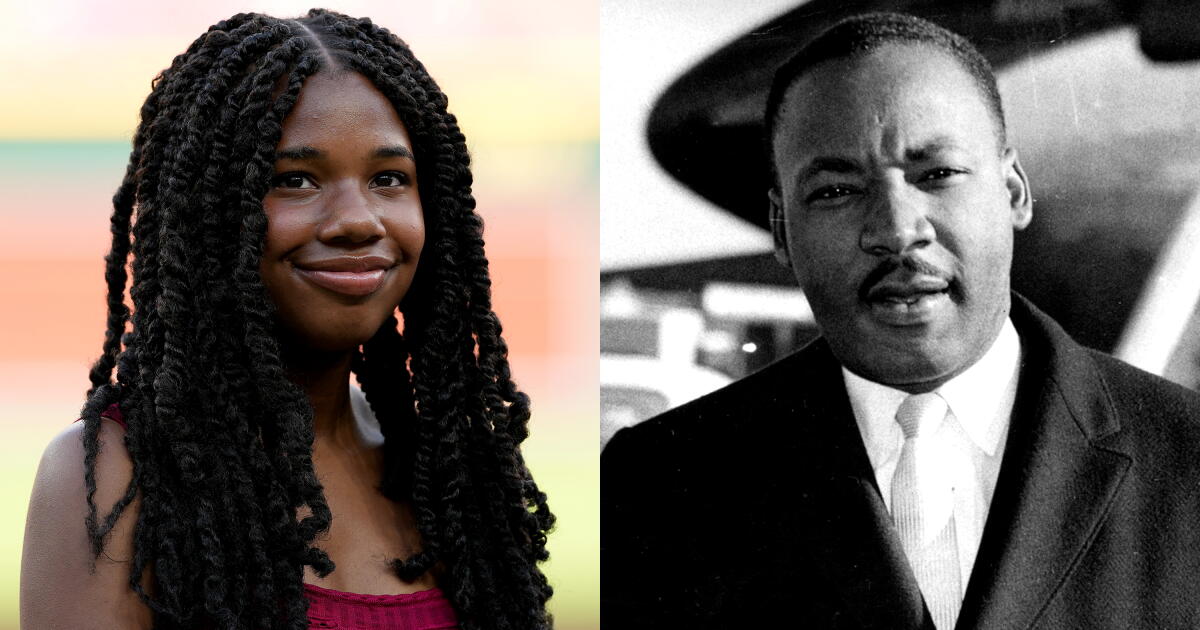
Martin Luther King Jr.’s only grandchild voted for the first time

The only grandchild of celebrated civil rights leaders Martin Luther King Jr. and Coretta Scott King just voted for the first time, and she says she wants to lead the way her grandparents did.

Yolanda Renee King took a break from her social justice studies at Columbia University in New York City to return to her hometown of Atlanta to vote in the 2026 midterm elections alongside her parents, Martin Luther King III and Arndrea Waters King. The occasion was a momentous one for Yolanda, who turned 18 in May. “It’s such a full-circle moment,” she told ABC. “Finally, I can actually go.

“For such a long time, I would always tell people the importance of voting, but I could never participate myself as a voter firsthand,” she said. “But now I think it’s so special that I have a say.”

Yolanda King, who penned the children’s book “We Dream a World: Carrying the Light From My Grandparents” back in 2024, has been especially busy this year, putting out calls to action for fellow teens who are now eligible to vote — in the media, on Instagram, and even at the Lincoln Memorial in August, for the 63rd anniversary of the March on Washington, where she spoke during the “Defend the Vote” rally.

According to the Center for Information & Research on Civic Learning and Engagement, close to 50 million youth ages 18 to 29 are eligible to cast ballots, including more than 8 million newly eligible voters since the 2024 election. Although data are still being collected, at the time this article was published, 66% of that group of voters cast their ballot for a Democratic candidate for the U.S. House of Representatives, compared with 31% for a Republican candidate. And 11% of all votes in the 2026 midterms were cast by young voters.

In an op-ed published by Teen Vogue on Monday, King wrote of the unique challenges she sees her generation facing including inflation, immigration enforcement, climate change, the rising cost of education paired with dwindling hopes for homeownership, restrictive voting policies and more. “The cost of living is reaching a breaking point, as a war in Iran continues with seemingly no solution in sight,” she wrote. “And the rise of AI brings a kind of uncertainty to jobs and the environment that no one has known before.

“This doesn’t take anything away from what came before us,” she continued. “My grandparents’ generation faced segregation, violence, and jail cells, and their challenges were staggering. But our time is ours, and so is what we feel living through it.”

King said that she felt the weight of those challenges in August, when she spoke at the same place, on the same day, where Martin Luther King Jr. gave his “I Have a Dream” speech in 1963. “It wasn’t just about using my voice; it was about my first vote,” she wrote. “And it felt like my grandparents were right there with me, whispering: ‘It’s your turn.’

“I want to lead the way they did. But know I am still learning.”

King’s mother posted CNN coverage of her daughter’s first vote on Instagram, writing alongside the clip that the election day was a personal one for the family. “The little girl whose hand we held is stepping into a responsibility her grandparents — and so many others — sacrificed so much to secure. … There is something deeply moving about watching your child take her place in a story that began long before her.”

King’s father commented on the post as well, sharing words from his own dad: “My father said, ‘A voteless people is a powerless people.’ When [Yolanda] was little, we took her to the polls with us, and she’d wear our ‘I voted’ stickers and pretend she’d voted too. This morning on CNN, she shared why she’s finally ready to use her own voice, especially now that the Voting Rights Act has been hollowed out. There is nothing more powerful than our vote.”


Source link

Israel voted for Israel: Why Gaza wasn’t on the ballot | Israel Election 2026 News

Israel’s parliament remains in deadlock.

After one of the highest voter turnouts in decades, neither Prime Minister Benjamin Netanyahu’s coalition nor the self-styled Zionist opposition alliance secured the 61 seats required for a parliamentary majority in the October 27 polls.

Recommended Stories

list of 4 itemsend of list

Netanyahu’s camp came first, with 53 seats, five more than the main opposition bloc. The Arab parties surged to a record 19 seats but have been relegated to merely observing coalition negotiations.

Viewed from a distance, the results could appear startling.

The judicial reforms ushered in at the start of Netanyahu’s government term in 2022 provoked the largest street protests in Israel’s history, while the prime minister himself is still embroiled in a corruption trial dating back to 2019. Alleged failures ahead of the Hamas-led attacks on October 7, 2023, that triggered Israel’s genocidal war against Palestinians in the Gaza Strip have still to be reckoned with, despite overwhelming public pressure to do so. Moreover, the genocide has led to growing international isolation, while also providing the pretext for multiple attacks on countries across the region – the latest of which, undertaken with the United States on Iran in February, continues to roil energy markets around the world.

Nevertheless, roughly 2.38 million Israelis on Tuesday made the journey to the polls to back Netanyahu’s coalition, led by his Likud party, while some 2.21 million cast their ballots for the opposition alliance.

Between the two, little space was given to examine the multiple war crimes Israel stands accused of having carried out in Gaza, where Israeli attacks have killed more than 74,500 people and left much of it in ruins, or government complicity in the surging violence and pogroms in the occupied West Bank, where a United Nations commission of inquiry said on Monday that Israel had been committing crimes against humanity, including extermination, torture and rape.

Gaza did not make the ballot

Analysts said the fact that neither Gaza nor the West Bank were a deciding factor in how Israelis voted on Tuesday was largely because they already represented an area of broad agreement across both alliances.

Instead, the election was fought on largely internal issues: the power of Israel’s courts, whether members of the ultra-Orthodox minority should be exempted from military service, and whether the government’s alleged culpability in missing the warnings of the October 2023 attack should be examined.

Leading Israeli sociologist Yehouda Shenhav-Shahrabani said the issues were pitched to the Israeli public along broadly similar lines to those used by the politicians enacting the policies.

“I don’t think the problem is simply that people are uninformed or disengaged,” he told Al Jazeera.

“Many Israelis know that Gaza has been devastated, even though they are exposed to a very selective representation of that devastation. But knowing something and recognising its moral and political implications are different things,” Shenhav-Shahrabani added, providing one explanation for the absence of empathy displayed by many Israelis in the face of the widely reported suffering of Palestinians in Gaza.

“Ordinary people, who love their families, care for their friends, and consider themselves decent human beings, can participate in or acquiesce to a political order that produces immense suffering for others,” he said.

For Shenhav-Shahrabani, there has been “a powerful mechanism of denial” at work. “Not necessarily denial of the facts, but denial of their meaning,” he said.

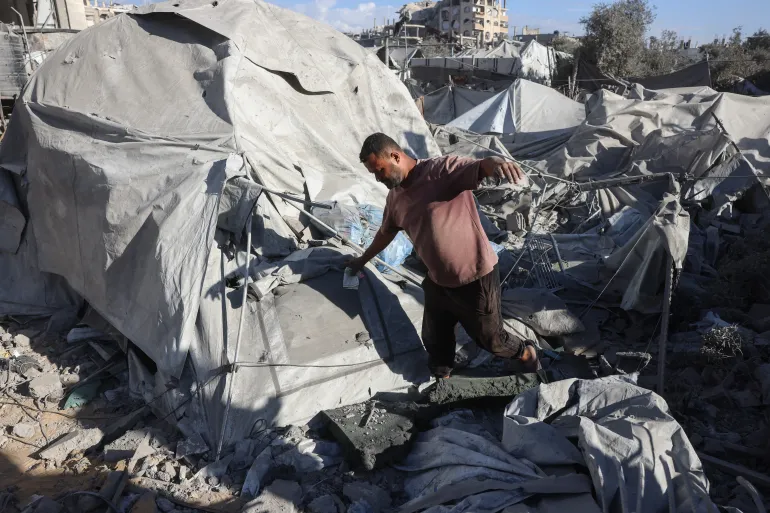
A Palestinian man walks through damaged makeshift shelters after an Israeli strike hit a nearby building the previous night, west of Jabalia in the northern Gaza Strip, on October 30, 2026 [AFP]

Security on the agenda

For Netanyahu’s supporters, however, this denial could be traced to something more personal.

“The Likud is a tribe, or perhaps a cult and, as far as they are concerned, Dear Leader is always right,” Israeli analyst Ahron Bregman said of the prime minister’s base, which has sustained his rule for a cumulative 19 years – roughly a quarter of Israel’s entire existence.

“For them, the enemy, straight after the Arabs, is the left, and they would vote for Netanyahu regardless of his faults,” added Bregman, a senior teaching fellow at King’s College London.

For much of this electorate, the vote was less a judgement on the government’s conduct than a choice between competing claims to political legitimacy – or as Israeli academic Roi Zur put it, a contest over “the heart and soul of democracy” and the future of Jewish and Israeli identity.

“The most important thing, I think, for turnout among Netanyahu’s supporters is the understanding, or the belief, that the alternative coalition would be weaker on security,” said Zur, an expert on voter behaviour who teaches at Essex University.

What Netanyahu had been particularly successful in doing, he continued, was creating “this campaign of fear and the belief that he is the only one who can deal with this situation, that he is the only strong enough prime minister”.

“The idea that Netanyahu is the only and the strongest leader that can lead Israel through these recent times and the post-October 7 war.”

War and occupation, according to Shenhav-Shahrabani, were not choices to be made on the ballot paper.

Instead, they had become the prism through which, over decades, Israelis had come to view “security, citizenship, and the very meaning of democracy”.

“That is why replacing Netanyahu, important as it may be, would not by itself resolve the deeper problem.”

Israel's Prime Minister Benjamin Netanyahu addresses his supporters at the election night rally after the first exit polls were announced, in Jerusalem on early October 28, 2026, during Israel's legislative elections.
Israel’s Prime Minister Benjamin Netanyahu addresses supporters on October 28 [AFP]

Source link

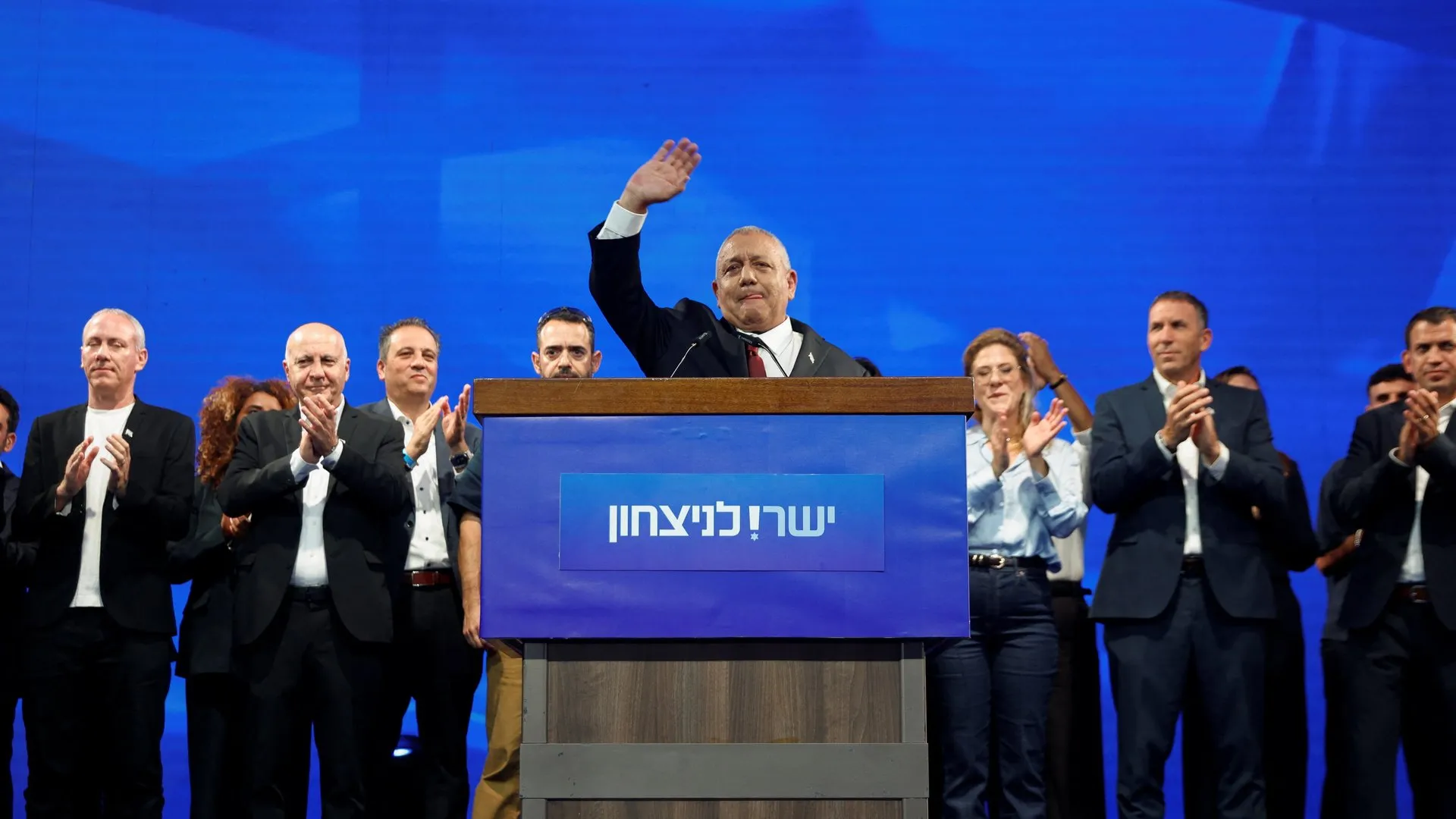
Israel’s Eisenkot says country voted for change | Israel Election 2026

Israeli opposition leader Gadi Eisenkot says millions of Israelis voted for change, tired of Benjamin Netanyahu’s ‘lies’. In his first public comment after polls closed, Eisenkot warned rival Netanyahu not to use Israel’s security to ‘serve his political interests’.

Source link

She voted for Trump every time. Then came cancer and the bills

The Ford Expedition rumbled to a stop and Cindy Banda’s bedazzled flip-flops landed on the asphalt of the Houston cancer center’s vast parking lot. She threaded through the rows of cars, a tally of patients who gather here to sit with chemotherapy needles or lie on radiation machines.

The elevator dinged open. A year ago in this building, surgeons removed Banda’s right breast, and she still didn’t know whether treatment had expunged the cancer from her body. Doctors had told her it would be tough to beat.

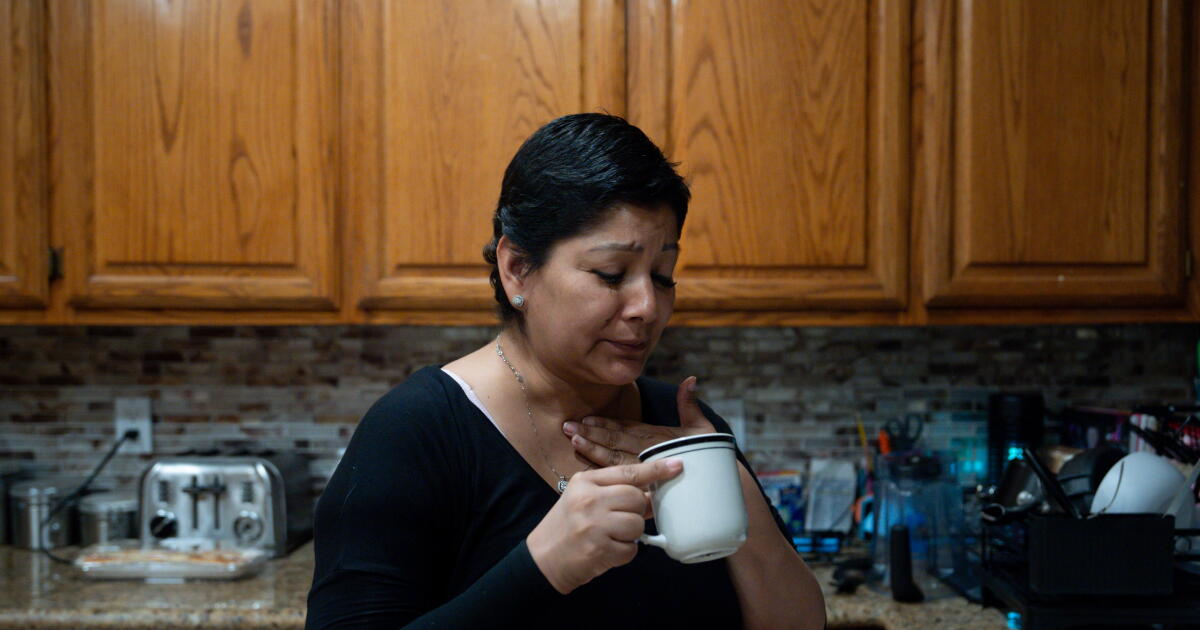
“I’m more of a positive person myself,” Banda said, now sitting with a white wristband in a dim waiting room. But the bills are harder to dismiss, and the single mother with six children in her care repeated something like a mantra. “Keep the house. Keep the cars. And just keep the kids stable.”

That’s true for many Americans, as rising healthcare costs leave more families with a sinking feeling after seeing the bill for surgery or medication. Heading into the Nov. 3 midterm elections, about half of registered voters said healthcare costs are a major problem for them and their families, up from a little more than one-third four years ago, according to a Fox News poll from September.

With party control of Congress at stake, registered voters are nearly twice as likely to say they trust Democrats over Republicans to handle healthcare, according to an Associated Press-NORC Center for Public Affairs Research poll from the same month. Those frustrations, combined with broader concerns over rising prices, have sapped support for President Trump and his Republican Party.

Banda knows how that feels. She backed Trump in each of his three campaigns, motivated by her opposition to abortion. But when cancer came, the ensuing scramble to make ends meet was painful enough to rearrange her priorities, and she started to think about voting Democratic for the first time.

The 46-year-old was ushered into a sterile room for her appointment, her phone lighted up with a text. “Please contact TD Auto Finance.”

“This one’s $1,300,” she said of the car payment bill. “I have to go back to work.”

She had been on sick leave for a year from her job selling internet service, and she needed the income to support her three children and three more she had taken in after her sister’s death.

The doctor said her reconstruction surgery could be scheduled early next year. “I was hoping for maybe December,” Banda said, “only because I’ve met my deductibles.” Come January, she would have to pay down the $7,500 again. Earlier may be possible, the doctor replied, if the skin around her surgical scar loosens.

The evening had cooled slightly by the time she walked back through the rows of parked cars, their ebb and flow marking the tide of sickness, survival and death in a small corner of a colossal healthcare industry that saves lives while taking in over $5 trillion every year.

Banda paid $8 for parking as she left.

Confronting death and debt

Two weeks later, Banda was back at work, making door-to-door rounds to sell Spectrum’s Wi-Fi in McAllen, her city along the U.S.-Mexico border in the Rio Grande Valley. Banda, holding blue fliers, walked along a row of storefronts, some that closed since she last was in the area.

She hadn’t had a sale and commission since October of last year, after the biopsy and diagnosis.

The doctor who gave her the news had hugged Banda, and she sobbed even though, she says, she never really sobs in front of other people. During chemo, her children took turns buzzing off her wispy hair. When her 9-year-old daughter’s hand quivered, a teenage cousin helped guide the clipper over her mother’s scalp.

Banda’s first impulse was to maintain normality, stability, for the children.

But that requires roughly $7,000 a month for utilities, mortgage, car payments and groceries, along with the two water leaks. Then, even with insurance through her job, the surgeries, chemo and radiation added up to over $25,000 that she’s been paying off, making Banda one of tens of millions of other people in the United States in medical debt.

Banda tries not to dwell on death and debt.

“It’ll consume you,” she says. She smothers those thoughts beneath her bubbly demeanor and avoids being alone. But that truce, between her insistence on positivity and the fears that it covers, is brittle.

Certain thoughts still arrive uninvited. Banda’s late sister, Melissa, didn’t have life insurance. Banda makes sure it’s a payment she never misses.

“Sometimes I think, and I shouldn’t think like this, but I’m worth more gone than here,” she said one day. “Obviously, the goal is not that, the goal is to beat it,” she continued, “to keep the house and keep the cars.”

So far she has, with the help of others.

On top of child support, the father of Banda’s 9-year-old often pays $400 a week for a nanny to help with the kids. Banda’s own father sent her $700 before for her recent Houston appointment, one of his many cash infusions. Her high school classmates, whom she hadn’t been in close touch with in decades, fundraised by selling grilled chicken, rice and beans from a roadside tent. Two GoFundMe fundraisers collected nearly $30,000, and Banda rented her late sister’s house while putting her own in forbearance.

But months of insecurity takes its own, sleepless toll. She needed to sell some internet services to catch up.

After sticking the Spectrum Wi-Fi fliers onto empty storefronts, she drove to pick up her kids from school. The following day she had a morning meeting at a barbershop for what would be her first sale back at work.

Turning on Trump

A lifelong Christian, Banda had voted her antiabortion stance in past elections. When her sister was kidnapped and murdered by her ex-husband in 2020, Banda retreated from religion. The cancer brought her back to church with an apology to God, but it also made her rethink her politics.

She voted for Trump in 2016, and his first four years seemed steady, she said, so she voted for him again in 2020. President Biden’s tenure, including a global pandemic and related inflation, felt like bedlam, so she voted for Trump to return to the White House in 2024.

But two years later and fighting an expensive disease, she had found no respite from high prices.

So when James Talarico, a Presbyterian seminary student running for U.S. Senate as a Democrat, visited one of Banda’s fundraisers — speaking about his diabetes and his work in the Texas Statehouse to lower the price of insulin — it moved her. “Imagine if he can do that for the cancer,” she said.

Talarico and his Republican opponent, state Atty. Gen. Ken Paxton, have different approaches to healthcare. Talarico wants all Americans to be able to join Medicare; Paxton proposed a $25,000 tax deduction for out-of-pocket medical expenses.

Talarico also supports a law guaranteeing abortion access nationwide, which Banda has voted against for years. But after she slid into debt to stay alive, after her grocery bills mounted and the high school had to comp the kids’ soccer gear she couldn’t afford, Banda’s antiabortion concerns have been superseded by worry about costs.

“Because it’s what I’m living,” she said. “I’m living it.”

Banda cast an early ballot for Talarico. “Never voted Democrat before today!!” she wrote in a text with blue heart emoji.

Awaiting news

Banda had just started a new cancer-targeting medication that cost $16,000 a month, reduced to $500 by insurance. By the afternoon, she was nauseated and fatigued, unable to eat. The malaise would keep her home the next day. She would miss the meeting with the barbershop to close her first deal since getting sick, though she felt confident it was in the bag.

But Banda pushed through the discomfort one evening to join her family as they replaced the flowers at her sister’s tomb.

She drove past the headstones and oak trees in the evening’s slanting light, and the family gathered around Melissa Banda’s tomb in an open-air mausoleum. There was no speech. Their eulogy was her father, Fidel Banda, methodically clipping and arranging the flowers for his daughter.

Banda walked along the wall of tombs. She will find out on election day whether the cancer is in remission or whether it’s spread to her organs.

“This one’s for me,” she said, pointing to a blank tomb next to her sister’s.

“Mom!” said her daughter with the huffiness of a 9-year-old. “Why would you say that?”

Banda smiled and added, “in a hundred years.”

Bedayn writes for the Associated Press.
Source link