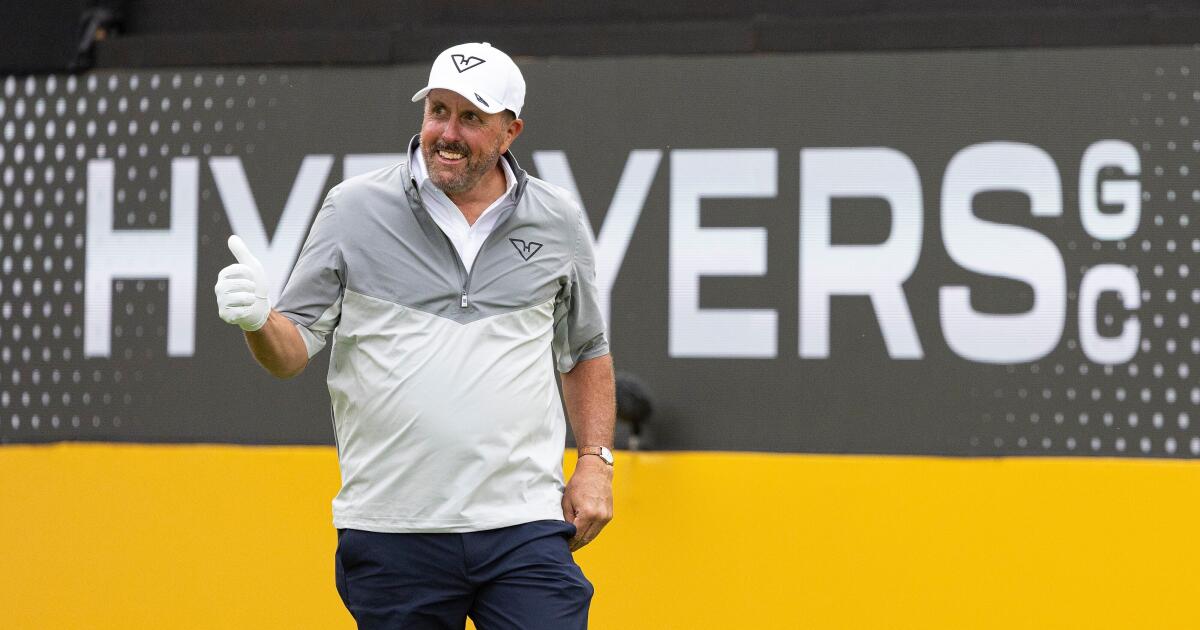
Golf legend Phil Mickelson is refuting an accusation that he inappropriately touched a female employee at a prestigious golf club in Southern California a few months ago.
According to Golf Digest, Mickelson allegedly approached the worker at Farms Golf Club in Rancho Santa Fe and made “nonconsensual and inappropriate physical contact.” After she rejected him, she reported to her supervisors and accused him of sexual misconduct.
Mickelson hired Tom Clare, a top defamation attorney, who said video evidence contradicted the allegations.
“There is a great deal of misinformation circulating and, while Phil’s full attention is devoted to a private family health matter, he has retained defamation counsel and is determined to hold accountable any publication or individual trafficking in speculation or false rumors,” Clare said in a statement to Golf Digest.
Clare did not immediately respond to The Times’ request for comment.
The San Diego County Sheriff’s Office said it investigated but found no evidence of an assault. However, the allegation resulted in the immediate removal of Mickelson from the golf grounds and revocation of his longtime membership at the club.
Farms Golf Club said in a statement to the golf magazine that it conducted a thorough investigation before confronting Mickelson and stood by its decision to end his membership. Farms also said no video cameras were in the area where the alleged misconduct occurred.
“Following a staff member report of member misconduct, the club provided immediate and ongoing support to the staff member, conducted a thorough independent investigation of the incident and took decisive action,” the statement read. “This individual is no longer a member of The Farms Golf Club.
“To protect the safety and privacy of our staff and member, we are unable to speak further on the matter.”
Mickelson, who turns 56 next week, withdrew from professional golf this year because of family health reasons, last playing at the LIV Golf South Africa in March. A married father of three, Mickelson won six major tournaments on the PGA Tour — three Masters, two PGA Championships and one British Open — before he left the tour in 2022 for the upstart LIV Golf League, which will lose the financial backing of Saudi Arabia’s Public Investment Fund this fall.
His estimated career earnings exceed $1 billion, including $97 million in PGA Tour prize money, a reported $200 million signing bonus to join LIV Golf and an estimated $800 million from endorsements and business ventures.
Mickelson was one of the most popular players on the PGA Tour before his controversial move to LIV and comments about his Saudi backers, and his career survived some unsavory headlines, several of which pertained to gambling.
The Detroit News obtained federal court records that claimed a mob-connected bookie handled bets for Mickelson and was accused of cheating the golfer out of $500,000 in 2007.
Mickelson was accused by the U.S. Securities and Exchange Commission in 2016 of getting an insider trading tip and buying $931,000 of stock from sports gambler Billy Walters. Mickelson was not charged and agreed to pay back the amount.
Ariana Grande was crystal clear in the White House’s comments section on TikTok.
The “We Can’t Be Friends” hitmaker didn’t mince words on Thursday when she commented on a White House TikTok: “Please do not ever use my music in relation to this barbaric, inhumane, heinous nonsense. F— ice,” she wrote in her comment.
The TikTok in question, posted by the White House on Tuesday, promoted the administration’s crackdown on immigration and featured Immigration and Customs Enforcement officers handcuffing various people to the tune of the Grammy-winner’s song “Bye.”
“Bye-bye 👋 President Trump has delivered the most secure border in history,” the caption on the video read. Grande’s comment has since been deleted or hidden from the video’s replies, and the sound on the TikTok has been disabled.
White House spokeswoman Abigail Jackson responded to Grande’s comment in an emailed statement to The Times, writing, “We’ll say this one last time: what’s actually barbaric, inhumane, and heinous are the criminal illegal aliens who have injured and murdered innocent American citizens.”
Grande joins a slew of prominent musicians and artists who have told the Trump administration to cease using their tunes to promote his agenda.
On the 2024 presidential campaign trail, Beyoncé endorsed former Vice President Kamala Harris, who used Queen Bey’s song “Freedom” as a rally anthem. When a spokesman for Trump used the same song in a social media post, the mega star’s team responded swiftly with a cease-and-desist.
During a 2024 Montana rally, Trump’s team played a video clip using “My Heart Will Go On,” the theme song from the 1997 film “Titanic.” Celine Dion’s management team and record label responded with a statement shooting down the song’s use: “In no way is this use authorized, and Celine Dion does not endorse this or any similar use. … And really, THAT song?”
And then, of course, when Trump used Bruce Springsteen’s “Born in the U.S.A.” on the 2016 campaign trail without the artist’s permission, the American rocker responded by endorsing Hillary Clinton and calling Trump a “moron.”
Add to the list Nancy Sinatra, who posted that Trump’s nod to Frank Sinatra’s song “My Way” was “sacrilege”; the Smiths’ former guitarist Johnny Marr, who said, “Consider this s— shut right down right now,” when the band’s song was used at a 2023 Trump rally; Sabrina Carpenter, who slammed the use of her song in a video, calling it “evil”; and many, many, many more.
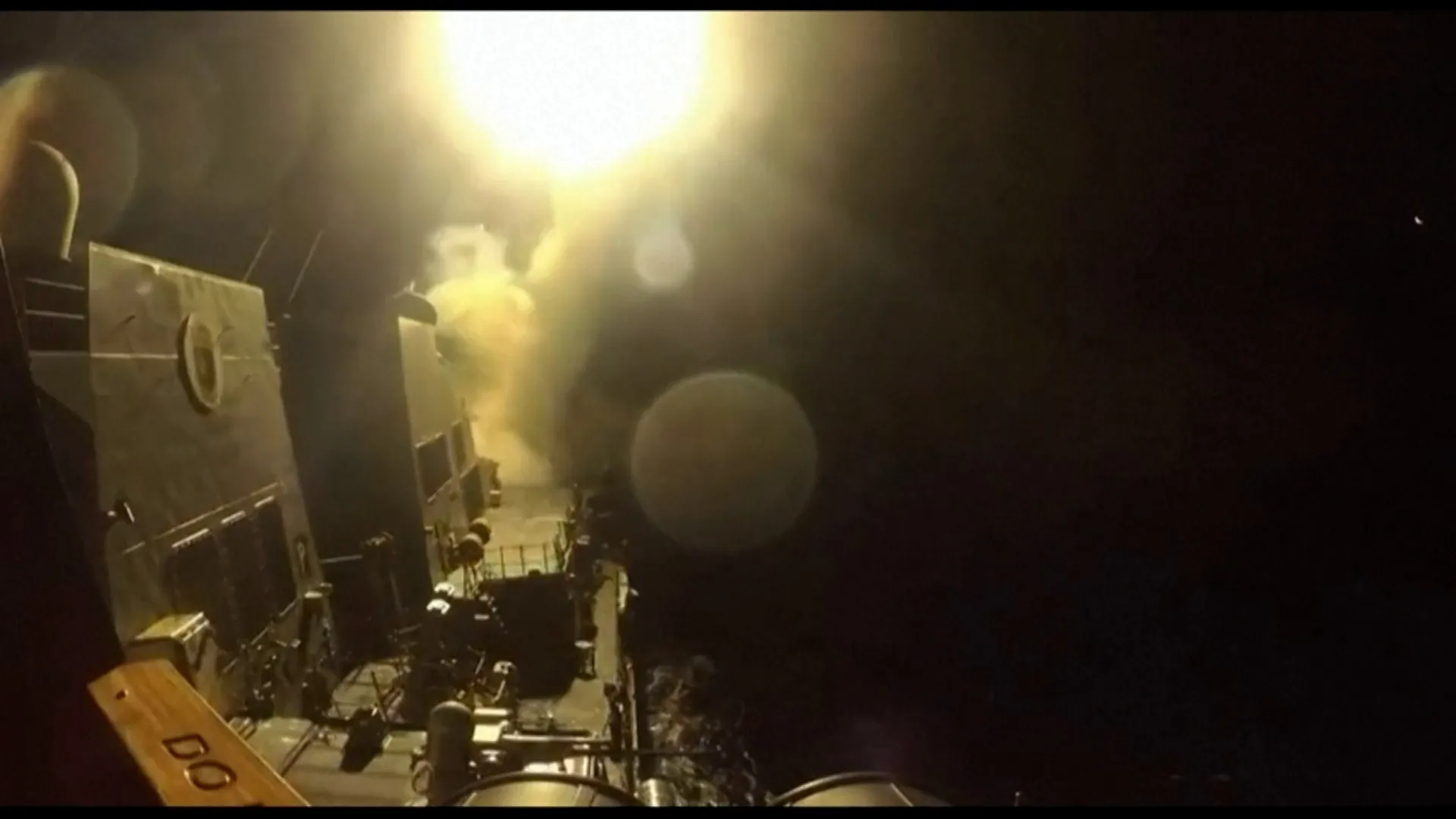
Video released by US Central Command shows what the military says are ‘self-defence’ strikes on Iranian military surveillance capabilities, communications systems and air defence sites. The footage accompanied a statement that US forces had completed the latest wave of attacks.
Madonna has landed a host of A-listers to feature in cameos on her new music filmCredit: YouTubeKate Moss in the 13-minute Confessions IICredit: YouTube
The film features six songs from her upcoming album.
During the one unreleased track, Danceteria, the singer slinks through a bathroom where Chelsea football aces Cole Palmer and Joao Pedro are at the urinal, while Richard E. Grant, Gwendoline Christie, Shygirl, Kate and Benedict rave in the toilet disco.
Sabrina Carpenter, who teamed up with Madge on the record’s lead single, the recently released Bring Your Love, also has a starring role.
The superstar’s daughter, Lourdes Leon, is in there too.
Other new tracks in the film are I Feel So Free, Good For The Soul, One Step Away and Read My Lips.
I first told in March how the superstar had enlisted her showbiz pals to be part of a four-day shoot at a West London studio for the video — and now she has proved it was worth the wait.
Her Confessions II collection is set to be released on July 3 — 21 years after her original Confessions On A Dancefloor album came out.
Madonna and Benedict Cumberbatch rave in the toilet discoCredit: YouTubeSabrina Carpenter, who teamed up with Madge on the record’s lead single, the recently released Bring Your Love, also has a starring roleCredit: YouTubeFootballers Cole Palmer and Joao Pedro are in the videoCredit: YouTubeCole and Joao at the urinalsCredit: YouTube
I revealed at the weekend that she is now eyeing up plans for potential concerts to celebrate the record’s release — but you are unlikely to see her follow in other stars’ footsteps with a Las Vegas residency.
Name-checking a state-of-the-art 20,000-capacity arena in Paradise,
Nevada, she said, during a Q&A: “Sphere seems cool, but I don’t want to wake up and look at Vegas every day.”
And she’s ready for fans to ditch their phones at any future gigs. She added: “Put your phones down, go out, and connect with people.
Gwendoline Christie taking a peak in the toiletsCredit: YouTubeJulia Garner, who was cast as Madonna in a yet-to-be-filmed biopic, appears in a scene where Madge flies over the crowdCredit: YouTubeRichard E. Grant makes an appearanceCredit: YouTubeThe superstar’s daughter, Lourdes Leon, is in there tooCredit: YouTube
ABBA have hatched a scheme to take Mamma Mia! The Party to Manchester after it proved a hit in Stockholm and London.
Plans for a new entertainment venue next to the city’s Etihad Stadium have been recommended for approval by council planners.
The three-storey venue, set to be built beside Man City’s new North Stand and close to the Co-op Live, would offer a theatrical dining experience for up to 600 guests.
City have teamed up with entertainment giant Pophouse – founded by Abba’s Bjorn Ulvaeus – for the project, with bosses saying the city’s rich music heritage made it the perfect home for the production.
Pophouse chief executive Jessica Koravos said: “Manchester is known for its innovation in music and entertainment and we cannot think of anywhere better to bring one of the world’s most popular and ground breaking theatrical productions.”
TRAITOR STEPHEN’S MUSICAL
Stephen Libby has penned a musical that he hopes to bring to the West End in the not-too-distant futureCredit: Getty
TRAITORS winner Stephen Libby fancies himself as the next Andrew Lloyd Webber.
I can reveal the Scottish fashionista has penned a musical that he hopes to bring to the West End in the not-too-distant future.
A source said: “Stephen has the musical all written and ready to go.
“He has always dreamed of his work making it to the West End.
“With The Traitors opening so many doors – both financially and in terms of connections – he feels like the time could be now.
“He’s been having various meetings and things are looking promising.”
Stephen and fellow Traitors winner Rachel Duffy split the hit BBC show’s £95,750 prize money earlier this year.
Since then he has been a regular on the showbiz circuit in London and even landed an ad hoc hosting job on ITV’s This Morning.
The Irish singer released Dinner Party on Friday and it is currently in the lead to top the charts, after Sir Paul McCartney claimed pole position last week with The Boys Of Dungeon Lane.
ACE THEO TACKLES TOXICITY
Theo Walcott is getting into the World Cup spirit despite hanging up his footie bootsCredit: PA
FORMER England ace Theo Walcott is getting into the World Cup spirit despite hanging up his footie boots.
The Arsenal legend has teamed up with EE to front its new Yes Boys campaign.
The initiative aims to shine a light on the negative online influences shaping boys’ attitudes both on and off the pitch.
It comes as new data reveals 42 per cent of boys aged 11 to 16 encounter outdated phrases like “men shouldn’t show emotion” and “boys need to toughen up” every week.
Progress has been made over the years, but clearly there is still a long way to go.
DOLLS ASH: MY DANCE TRAUMA
Ashley Roberts has admitted she was so burned out when the group split in 2010 that even seeing people dance would make her cryCredit: Instagram
PUSSYCAT DOLLS star Ashley Roberts has admitted she was so burned out when the group split in 2010 that even seeing people dance would make her cry.
The girls were known for their intense, choreographed routines but Ashley couldn’t bear to bust any moves after the break-up because of the trauma wrapped up in the group’s original run.
She said: “It was absolutely heartbreaking. I couldn’t even actually watch dancing because I would just be bursting into tears.
“When it first became my job, I was like, ‘Well, this is epic’.
“But then it got wrapped up in this bubble of a major pop group that was a global success.
“I got a bit on the other side and I was like, ‘Well, who am I actually outside of this, right?’
“I just felt very lost, very disconnected to the one thing that actually made me feel like it was like the essence of life to me.
“I just didn’t really recognise myself.
“And it was a really, really tough time.”
Thankfully Ashley has since healed herself, as well as her relationship with performing, and has reunited with Nicole Scherzinger and Kimberly Wyatt for a tour here this autumn.
On how she feels to be back, she told Fearne Cotton on her Happy Place podcast: “Everybody’s like, ‘No, you’re in shape – you got this’.
“I’m like, ‘No, this is a whole other beast’.
“It’s like running a marathon in heels.
“We’re like, ‘Screw it’. You never know when we’re going to be able to do this again.
“We’ve got to just do it – we’ve got to say yes and just go for it.”
SAM SMITH mixed business with glamour by pairing a shirt and tie with an eye-catching gold corset.
The Stay With Me singer’s snap has been released for the first time as part of a book called The Elegance Of Time, celebrating the 60th edition of Switzerland’s Montreux Jazz Festival.
Sam played at the event – held annually near Lake Geneva – in 2023, and this photo, along with 150 other intimate portraits of artists including Raye, Lionel Richie, Benson Boone and Pulp, will be included in the book, which is out tomorrow.
BBC bosses splashed out on therapy for UK Eurovision act Look Mum No Computer after he came last in the contest and was ridiculed online.
The performer, whose real name is Sam Battle, said the fallout from his quirky entry Eins, Zwei, Drei is ongoing, so he is still seeing a counsellor.
Sam told The Euro Trip podcast: “There was some sort of therapy stuff. The BBC got me a therapist, which is amazing.
“I’ve never really had one before. They were very accommodating. In fact, I’ve still got the therapist because obviously the fallout is another thing. They don’t just leave you.”
Now Sam reckons the only way forward for the UK at Eurovision is to send a hard rock band.
He said: “We went for ‘very good sensible pop songs’ and then for something ‘a little bit left field’. Still didn’t quite work.
Weekly insights and analysis on the latest developments in military technology, strategy, and foreign policy.
Footage has emerged showing the destruction of a drone by a French Rafale fighter over Latvia earlier today. The engagement underscores how the drone war unleashed by the Russian invasion of Ukraine is increasingly spilling over borders, as well as the growing reality of the drone threat to NATO.
The French Air and Space Force confirmed that its Rafales, currently deployed in neighboring Lithuania, were scrambled in response to the drone incursion. The drone was identified before one of the fighters shot it down over an uninhabited area. The incident was a “demonstration of the French Armed Forces’ commitment to contributing to the security of Europe’s eastern flank,” the service said in a statement on X.
📍Lettonie | Destruction d’un drone par les Rafale 🇫🇷💥
➡️ Survol d’un drone au dessus du territoire letton 🇱🇻 ➡️ Décollage sur alerte des chasseurs 🇫🇷 engagés dans la mission de l’OTAN Baltic Air Policing depuis la base aérienne de Šiauliai 🇱🇹 ➡️ Identification et destruction… pic.twitter.com/NFIMSP7Ibl
— Armée française – Opérations militaires (@EtatMajorFR) June 8, 2026
A detachment of French Air and Space Force Rafale jets is currently engaged in the NATO Baltic Air Policing mission from Šiauliai Air Base, Lithuania.
This morning, French fighter jets deployed to NATO Air Policing at Šiauliai Air Base shot down a drone that entered Latvian airspace.
Lithuania thanks our French allies for their swift and professional action in safeguarding the security of our region.
— Lithuanian MOD 🇱🇹 (@Lithuanian_MoD) June 8, 2026
This is not the first time that a NATO fighter has shot down a drone in the Baltic region as part of the Baltic Air Policing mission. On May 19 of this year, a Romanian F-16 shot down a Ukrainian drone over Estonia after it strayed into NATO airspace, reportedly due to Russian electronic warfare interference. Last September, NATO fighters shot down at least three, and likely four, Russian drones, after 19 reported violations of Polish airspace. Polish authorities assessed that the drones “did not veer off course but were deliberately targeted.”
However, this is the first time that an incident of this kind has been captured on camera.
At least two videos are now circulating on social media showing the engagement playing out.
One shows the moment that a Rafale launches an air-to-air missile, leaving a prominent trail of smoke, before detonating seconds later.
Another video, from a different angle, shows the immediate aftermath of the shootdown. Another trail is seen in the background of both videos, but it’s unclear if this is evidence of a previous missile launch, or a contrail from another aircraft that previously transited the airspace at a different altitude.
In a typical Baltic Air Policing configuration, the Rafale is armed with MICA air-to-air missiles. These beyond-visual-range weapons can be fitted with either an active radar seeker or an infrared seeker head, with a mix normally being loaded. The MICA uses a thrust-vectoring motor for improved agility and has a reported maximum range of around 37 miles.
📍 Lituanie | Le succès des vols conjoints commence au sol 🇫🇷🤝🇷🇴
➡️ Préparation d’un vol d’entraînement avec des avions de chasse 🇫🇷 et 🇷🇴 :
🔧 Montage d’armements entre mécaniciens des deux pays alliés
— Armée française – Opérations militaires (@EtatMajorFR) June 6, 2026
The Latvian Armed Forces provided more details of the shootdown, noting that a yellow alert was originally issued for the Ludza, Balvi, and Aluksne districts this morning at 9:20 a.m. local time. This led to NATO fighters being launched.
At 9:40 a.m., this alert level was increased to orange for the Ludza and Rēzekne districts. At this point, it was confirmed that some kind of drone was entering Latvian airspace. A military spokesperson told the Reuters news agency that the drone entered Latvian airspace from Russia.
🟠 Izsludināts gaisa telpas apdraudējums Krāslavas un Ludzas novados, informē Nacionālie bruņotie spēki.
Brīdinājums par iespējamu gaisa telpas apdraudējumu izsludināts Rēzeknes un Balvu novados. pic.twitter.com/PFcMZmhhga
The Latvian Armed Forces warned residents in these areas to “Seek shelter indoors, close windows and doors — follow the two-wall principle.” It added: “If you notice a low-flying, suspicious, or dangerous object, do not approach it and call 112.”
At 10:05 a.m., the Latvian Armed Forces confirmed that NATO fighters were over the Rēzekne district, and a “foreign” drone was shot down over the Berzgale parish.
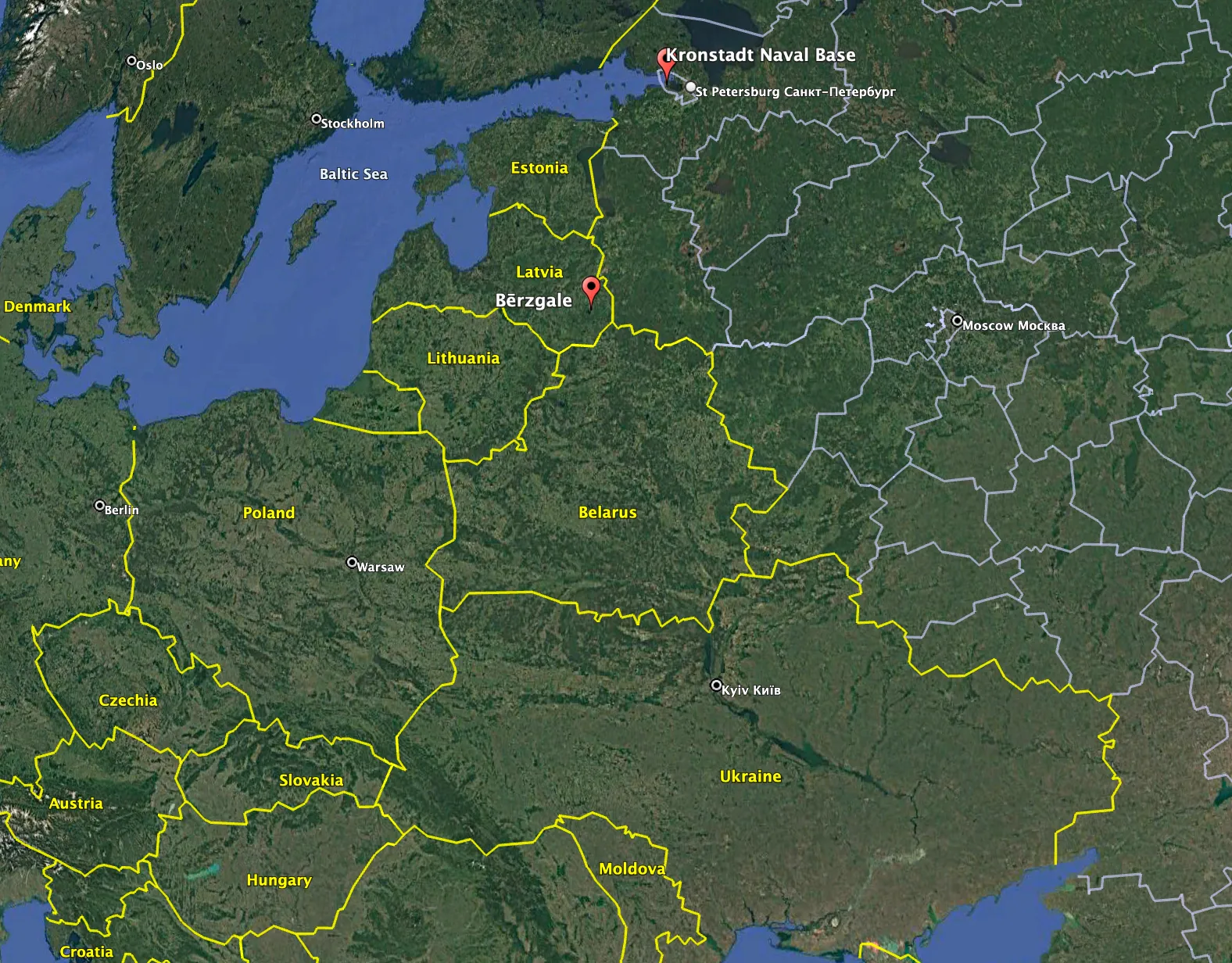
Berzgale is less than 20 miles from the nearest Russian border, and around 340 miles from the closest Ukrainian border, with Belarus, a close Moscow ally, separating Latvia and Ukraine.
A map showing the approximate location of the drone shootdown in Berzgale, Latvia. Also marked is the Russian naval base at Kronstadt that came under Ukrainian drone attack last week. Google Earth
NATO’s Baltic Air Policing mission has safeguarded the airspace of Estonia, Latvia and Lithuania since the three countries joined the alliance in 2004. Because the Baltic states do not maintain fighter fleets capable of continuous air-defense duties, allied nations rotate detachments of combat aircraft to bases in Lithuania and Estonia, where they remain on quick-reaction alert around the clock.
The mission routinely scrambles fighters to identify and intercept Russian military aircraft operating near NATO airspace, particularly flights to and from Russia’s heavily militarized Kaliningrad exclave that often occur without flight plans, radio contact, or active transponders.
French Rafales recently encountered this Russian Navy Su-24M carrying free-fall bombs during a flight over the Baltic. French Armed ForcesOne of two Russian Navy Su-30SMs intercepted over the Baltic by French Rafales during the current Baltic Air Policing detachment. This example carries a Kh-31 series anti-ship or anti-radiation missile. French Armed Forces
Following Russia’s annexation of Crimea in 2014, NATO expanded the mission with additional aircraft and operating locations, making Baltic Air Policing one of the alliance’s most visible peacetime deterrence operations on its eastern flank.
Since Russia’s full-scale invasion of Ukraine, the expanding drone war between the two countries has provided another layer of responsibility to the Baltic Air Policing mission.
A Rafale B is ready for takeoff as part of an earlier Baltic Air Policing mission in Lithuania, in the Baltic States, December 2024. Photo by PETRAS MALUKAS / AFP PETRAS MALUKAS
For most of its history, Baltic Air Policing centered on scrambling fighters to identify Russian bombers, fighters, reconnaissance aircraft, and transports flying near NATO airspace. The war in Ukraine has seen the increasing proliferation of drones that can travel hundreds or even thousands of miles, creating a new challenge for NATO air defenses.
Since 2022, there have been several incidents, including drones and missile debris entering or crashing in NATO territory, including in Poland and Romania. Late last month, a Russian kamikaze drone strayed into Romanian airspace before striking a residential building, injuring civilians, in what appears to have been the first incident of its kind.
A russian drone carrying explosives, involved in the bombing of infrastructure in Ukraine crashed in Galați, Romania, causing a fire on the roof of a residential apartment building.
Two persons sustained minor injuries and several residents required medical attention, the… pic.twitter.com/P8jzYFrEEp
We asked NATO for more details of today’s incident, including whether it could confirm reports citing the Latvian military that the drone had entered its airspace as a result of Russian electronic warfare. This is a threat that is by now commonplace in the Baltic region.
“While the circumstances surrounding this incident are still under review, jamming is known to occur in this region, and can pose serious safety risks, including to civil aviation,” a spokesperson for the alliance told us.
In recent days, Ukraine has carried out a number of high-profile drone attacks against Russian targets in and around the Baltic region.
In the last week, Ukrainian drones appear to have hit the St. Petersburg oil terminal, the Baltic Fleet base at Kronstadt, and a weapons factory in the Tambov region.
As we observed in our previous reporting, there have been very few confirmed Ukrainian attacks of any kind against the Baltic Fleet. However, satellite and other imagery that emerged in the wake of the recent drone strike reveals extensive damage inflicted on the Steregushchiy class corvette Boikiy.
Footage of the Russian Navy Baltic Sea Fleet corvette Boikiy burning in its Kronstadt drydock after a Ukrainian drone strike yesterday. pic.twitter.com/9CHz4aLdY8
Another satellite image of the Russian corvette Boikiy following yesterday’s Ukrainian strike. What is interesting here is that the active fire was captured before firefighting crews managed to extinguish it. @planet image taken on June 3 at 16:30 local time. It burned for hours. pic.twitter.com/PzcHxoSxGk
Today’s incident provides visual evidence of advanced NATO fighters used to shoot down drones over alliance territory. While effective on this occasion, this kind of interception can be inefficient due to the mismatch in cost between the drone and missile. It is notable that the French Ministry of Defense has plans to introduce a lower-cost counter-drone capability on the Rafale by the summer. Trials of a pod loaded with 68mm laser-guided rockets have already begun.
Un Rafale équipé de roquettes guidées laser aperçu à Istres. Les essais ont donc enfin démarré. Ici une nacelle Thalès JF12, donc 24 roquettes 68mm au total. Une corde de plus à l’arc du Rafale, la chasse au Shahed est OUVERTE ! pic.twitter.com/6v0xSMkUJ1
As a result, NATO has accelerated work on layered defenses that include short-range ground-based air defenses, electronic warfare, and other counter-drone technologies.
Fighters, however, will always remain a critical last-resort option, especially when a drone poses an immediate threat or when a visual identification is required.
Today’s video not only illustrates the changing face of the Baltic Air Policing mission due to the Russian war in Ukraine, but highlights the growing threat posed by drones and cruise missiles that can cross borders with little warning, whether deliberately or not.
TWILIGHT star Taylor Lautner has revealed the gender of his unborn baby in a sweet video with his wife Taylor.
The couple, who are expecting their first child together, took to Instagram to share the exciting news with their fans.
Sign up for the Showbiz newsletter
Thank you!
Taylor Lautner and his wife have revealed the gender of their unborn childCredit: instagram/@taylautnerThe pair found out they’re having a girlCredit: instagram/@taylautner
In the video, the pair are seen covering their eyes while finding out the gender on a laptop in front of them.
They scream in excitement as the word ‘Girl’ flashes on screen in pink.
She begins crying as he puts his arms around her to console her.
He looks at her and says: “We did it,” as they both wipe away tears from their faces.
They captioned it: “Our little secret is now yours,” with pink and blue heart emojis.
Their fans flocked to the comments section to share their well-wishes for the soon-to-be-parents.
One person gushed: “I will forever be watching this on repeat. It’s a girl! I guessed right! I’m so excited for you guys!”
Another social media user commented: “I love how intimate this moment was for you both.”
Somebody else enthused: “Congratulations to a beautiful couple that will be the best parents in the world.”
Yet another wrote: “It’s so nice and wholesome to see a man so excited to have a girl!
The couple announced they were expecting in MarchCredit: Instagram/taydomeHe’s best known for starring in the Twilight movie seriesCredit: Handout
“Congratulations guys, this beautiful angel is lucky to have such wonderful humans as her parents.”
While a fifth added: “My kids are obsessed with Shark Boy and Lava Girl and watch it about five times a week and now shark boy is having a baby?! Congratulations!”
A surveillance camera caught a brutal assault by an Israeli soldier and settlers on two young Palestinians in the occupied West Bank. Video shows them slamming the victims onto the ground and repeatedly beating them, including with a plank of wood, leaving them motionless on the ground.
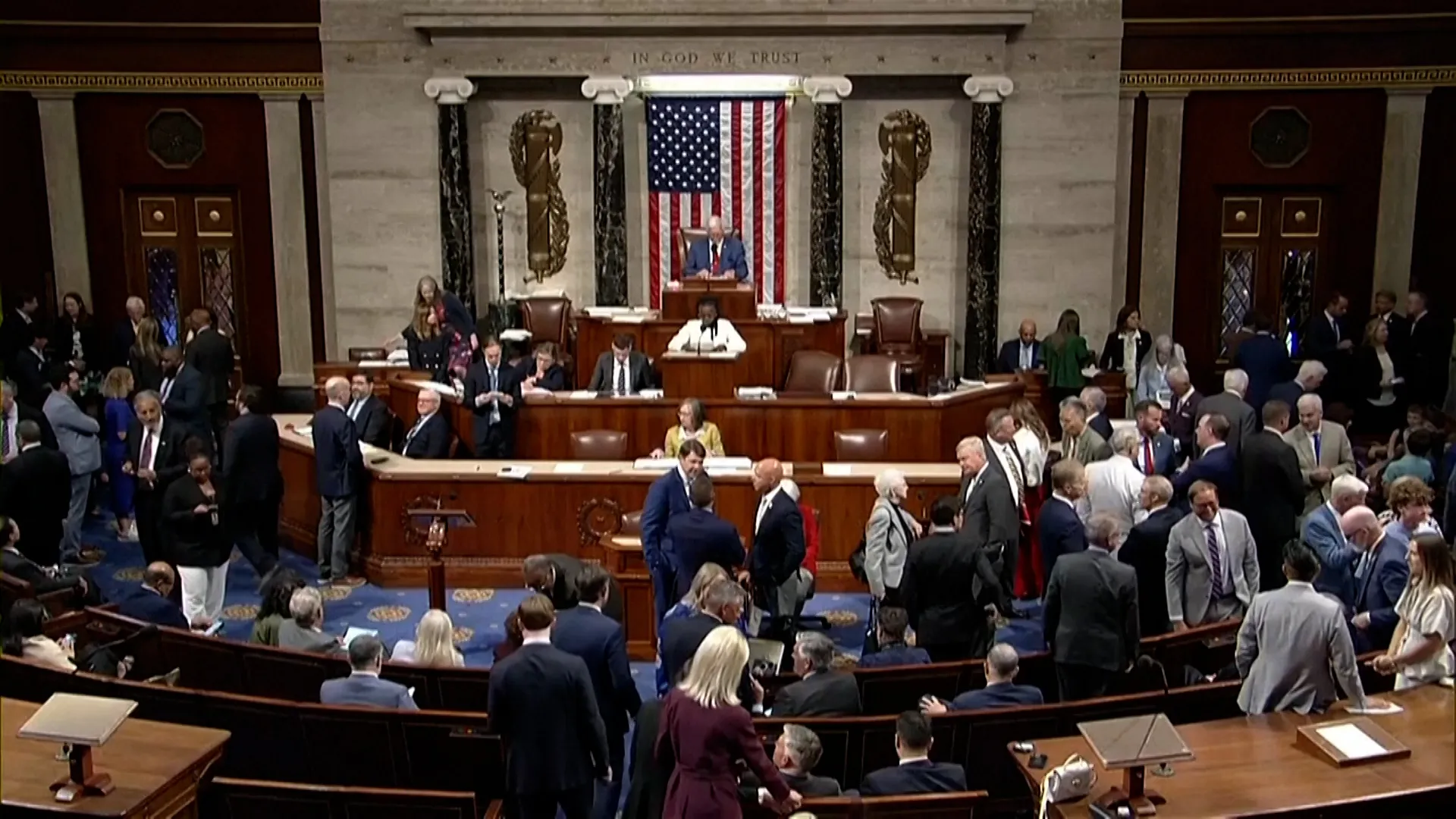
This is the moment the Republican-led US House of Representatives passed a resolution to reign in President Donald Trump’s ability to keep attacking Iran, unless Congress declares war or approves the use of military force. But it’s unlikely to become law as Trump can veto it even if it passes the Senate.
Born in Rosario, Argentina, Bielsa hails from a family of educated minds, with his brother having worked in politics and his sister a renowned architect.
Both of those professions require analytical thinking – a gift Bielsa also possessed from childhood. However, he was drawn to football, not necessarily playing it but absorbing the tactics.
Every day he would send his mother to the local newsagent to buy football magazines and newspapers, spending hours reading up as much as he could about how teams played and how different managers worked.
Bielsa was still a capable but limited footballer. A defender but lacking in pace, he came through the youth system at his boyhood club Newell’s Old Boys before frustrating spells in the lower leagues of Argentinian football meant he decided to call time on his playing career at the age of 25 to focus on coaching.
His post-playing career started with the Buenos Aires university football team and, after two years there, he secured a position back at Newell’s as a coach of the reserve team.
Bielsa’s frustration with his limitations as a player played a significant part in his coaching philosophy, as he focused on ensuring that any player he coached was able to get the maximum out of their ability.
His training sessions were intense, with lots of focus on repetition – if a player did not have the talent to make something happen naturally then he would be sure to drill the processes into their minds.
Bielsa was appointed Newell’s manager in 1990 and his methods brought instant success as they won the Argentinian championship.
A spell in Mexico followed before Bielsa returned to Argentina in 1997 to manage Velez Sarsfield. There he would be labelled ‘loco’ (crazy) as he insisted on fielding two teenage centre-backs. He would have the last laugh, however, as he immediately helped them to win the league title.
Bielsa, who has said his nickname of ‘El Loco’ actually predates his time at Velez Sarsfield, very briefly became manager of Spanish side Espanyol but left them when he was offered his first international post in 1998 – as Argentina boss.
Teachers in north-eastern Nigeria held protests, demanding stronger protection for learning institutions.
The outcry comes after the abduction of dozens of school children in Borno State last month. Al Jazeera’s Felix Niwara explains.
Far-right outsider Abelardo de la Espriella will face left-wing Senator Ivan Cepeda in the run-off for Colombia’s presidential election next month. Al Jazeera’s Teresa Bo explains what this means for Colombians.
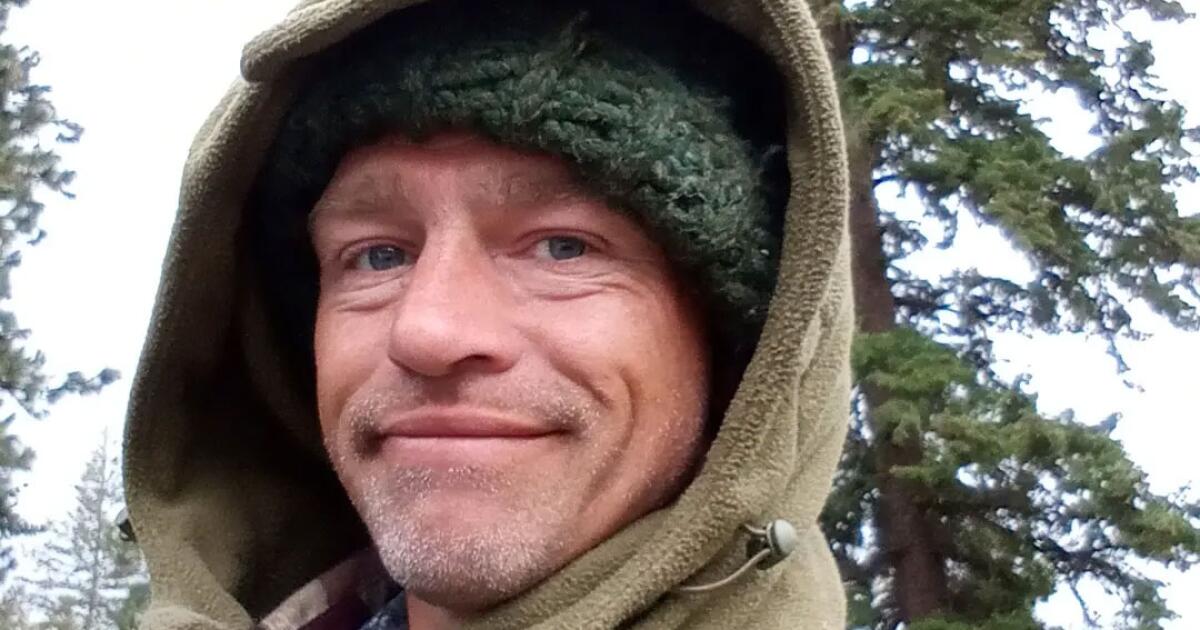
Matt Brown, who starred with his family in the Discovery reality television show “Alaskan Bush People,” was found dead in the Okanogan River in Washington state, law enforcement officials said Sunday.
Brown’s body was discovered Saturday by a group of private citizens who were conducting a search, the Okanogan County Sheriff’s Office said in a statement.
Brown’s brother, Bear Brown, said in a video posted Saturday on social media that fellow brother Noah had been with the search team, helped pull the body out of the river and identified him.
The official cause and manner of death is still to be determined by the coroner, the sheriff’s office said. But the Brown family believes Matt Brown died by suicide, Bear Brown said in the video.
Witnesses said they saw Matt Brown in or near the river and that he “took his own life,” Bear Brown said on social media.
“I would have never suspected he would hurt himself, honestly,” Bear Brown said in the emotional video. “He struggled for a long time.”
Bear Brown said his brother had battled with alcohol and drugs and that Matt Brown told him in their last conversation that he had “fallen off the wagon.”
The Brown family and their life in the Alaskan wilderness were the subject of the reality TV show “Alaskan Bush People,” which ran on the Discovery Channel from 2014 to 2022.
Suicide prevention and crisis counseling resources
If you or someone you know is struggling with suicidal thoughts, seek help from a professional or call 988. The nationwide three-digit mental health crisis hotline will connect callers with trained mental health counselors. Or text “HOME” to 741741 in the U.S. and Canada to reach the Crisis Text Line.
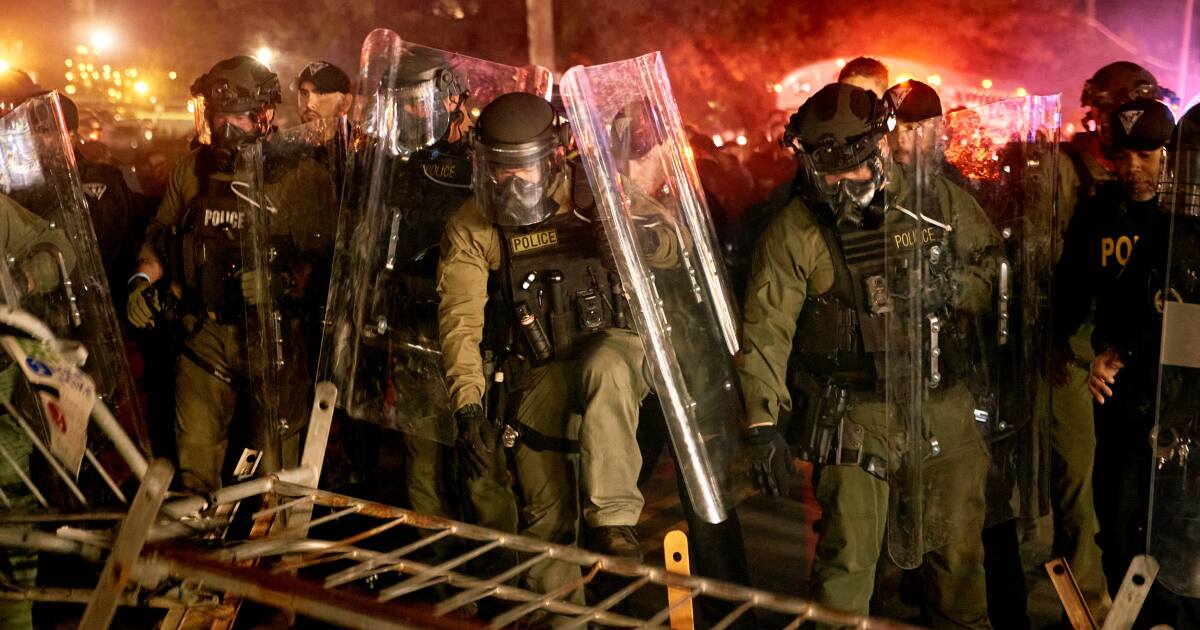
NEWARK, N.J. — The mayor of Newark imposed a curfew early Sunday around an immigration detention center in New Jersey after a series of intense clashes between protesters and police.
The curfew around Delaney Hall will be in place between 9 p.m. and 6 a.m. until further notice, Mayor Ras Baraka said in a statement.
The move came after another night of standoffs between law enforcement and demonstrators at the facility, as protesters could be seen in photographs and videos fighting over barricades as police used riot shields to push them back. A video posted on social media showed police on horseback marching into crowds, attempting to break up groups of demonstrators.
The high-profile demonstrations at Delaney Hall began this month after advocates said detainees launched a hunger strike over poor living conditions at the 1,000-bed facility, the latest focus of opposition over the federal government’s immigration crackdown.
The private company GEO Group operates the lockup under the supervision of U.S. Immigration and Customs Enforcement. The shuttered facility reopened for immigration detainees in February 2025.
New Jersey state police on Friday replaced federal immigration enforcement agents who had been facing off against protesters at the facility for days.
In a statement Sunday morning, New Jersey Gov. Mikie Sherrill said masked people attacked a barrier in a designated protest area set up by state police and were “throwing projectiles, utilizing the barriers as weapons, and lighting tires on fire in the street.”
“These actions put both peaceful protesters and law enforcement in danger,” Sherrill said, urging calm to focus on advocating for “better conditions for the detainees, for their families, and ultimately, for the closure of Delaney Hall.”
Sherrill also said that the federal government has reopened family visits at Delaney Hall starting Sunday.
Asked about visitations resuming, the U.S. Department of Homeland Security said in a statement, “To be clear: Visitation was only suspended because of violent riots. Now that we have a secure perimeter, visitation can resume.”
MADE In Chelsea stars Jamie Laing and his wife Sophie Habboo have come under fire for not having their baby properly secured while riding in a car.
The couple earned the wrath of fans for a clip in a video montage tribute Jamie made of Sophie which showed her holding their son Ziggy, six months, in the back of a car while it drove at speed down a motorway.
Sign up for the Showbiz newsletter
Thank you!
Jamie Laing and Sophie Habboo have been slammed for riding in a car without a seatbeltCredit: InstagramSophie was also seen cuddling baby son Ziggy while in the carCredit: Instagram
It also appeared that while Ziggy was not restrained in his infant seat, Sophie was also not wearing a seatbelt.
If the footage was filmed while they travelled on a motorway in the UK, then they would have been in violation road safety rules.
Children must be “in the correct car seat for their height or weight until they reach 135 centimetres tall or their 12th birthday, whichever is first,” according to road rules.
A violation of the above rule could result in a £500 fine, though the rule does not apply if the infant is travelling in a licensed taxi.
It is not known if Sophie has an exception to travel without a seat beltCredit: InstagramJamie and Sophie got married in 2023Credit: Getty
There are some exemptions for wearing a seatbelt for adults, including some medical exemptions, but it is not known if these apply to Sophie.
A representative for Jamie declined to comment when approached by The Sun Online.
Jamie had posted the montage celebrating their son’s six month birthday, but to mainly pay tribute to Sophie and her achievements as a new mum.
However, their fans were not pleased about the baby not being in his car seat and let them know in the comments.
“Oh my goodness, you’re on a motorway, you’re not wearing a seatbelt and Ziggy is not in a car seat?!! Guys?!!! This is not good at all!!!” wrote one person.
Another added: “No seat belt with a baby are you for real.”
But some others stepped in to defend the couple and argued people should not judge them without knowing their circumstances.
“Everyone jumping on the carseat. What sad people you are, of all of the things you could get from this beautiful post you chose to judge her on that? Cos they aren’t allowed to have a misstep or a valid reason for not having it.”
A second person agreed: “Right, could also have been a taxi which makes it legal. Not everyone carries a car seat around with them.
VENEZUELA Fury fumed at new husband Noah and ranted “I’m trying to talk” after he made a noisy interruption during her latest TikTok.
The Netflix star and newlywed, 16, was talking to her social media fans about how her glowing tan had started to fade when her spouse chipped in.
Sign up for the Showbiz newsletter
Thank you!
Venezuela Fury shouted at husband Noah and fumed ‘I’m trying to talk’ after he strummed a guitar while she filmed her new TikTok videoCredit: TiktokHe played a tune on the instrument as the 16-year-old spoke direct to the cameraCredit: Tiktok
Venezuela, 16, then abandoned talking about her tan as she told how she struggled to hear her voiceCredit: TiktokThe pair are making their home after returning from HoneymoonCredit: TikTok/@parisvenezuela
She flaunted her glittering diamond ring and glam nail extensions for her clip, clearly eager to make some strong TikTok content.
The TV star told one of her online followers: “I know how pale I am, but you don’t understand how hard I work to get that colour”.
Noah can be heard in the background and he asked: “Who is that?” to which she replied: “I am making a video”.
Attempting to continue her clip, she said: “And the magazine made me look so pale”.
They have been sharing sweet snippets of married life on social mediaCredit: tiktok/@parisvenezuelaVenezuela looked a vision in her wedding dress earlier this monthCredit: SplashTheir blossoming relationship was featured on At Home With The Fury’sCredit: SplashThe teen TV star has been busy showing off her glam wardrobeCredit: TikTok/@parisvenezuela
Noah then sat on the sofa and began to strum his guitar, prompting her to squeal: “I am trying to talk!”
She added: “Does anyone else get driven insane by a guitar?
“Go, sing!”
Noah then interjected: “Don’t delete it,” referring to the clip, and she retorted: “I’m not deleting it, I haven’t deleted it.
“Anyway I give up!
“Noah’s a great guitar player because I can’t talk,” before urging him to “sing then sing with confidence”.
Noah, mid flow, could then be heard in the background as he said: “Whose ringing my phone this time of day oh my God,” during an interruption to his performance.
Fans were quick to comment on the light-hearted lovers’ tiff.
One wrote: “Stop they obviously adore each other”.
A second posted: “You two are so cute he adores and loves you and ya picked a go one x” as a third joked: “Welcome to married life”.
A fan wrote: “That was the most chaotic video I understand with the random guitar noise tho,” as another noted: “I can see who is the boss in that house”.
A source previously revealed to us: “Tyson and Paris gave Venezuela and Noah a wedding present of £5million to kick-start their life, obviously, they were over the moon.
“Some family members thought it was a lot of money for a young couple so there were some mixed feelings – but it’s up to Tyson and Paris.
“Tyson also paid for the honeymoon and got them a traditional gypsy wagon as a sentimental gift. Tyson’s got one in his front yard.
Look, up in the stands — it’s J.K. Simmons and your friendly neighborhood Spider-Man!
The Academy Award-winning actor, who portrayed Daily Bugle chief J. Jonah Jameson in director Sam Raimi’s “Spider-Man” trilogy, was reunited with his onscreen nemesis at the New York Mets game Tuesday.
After a clip from “Spider-Man” was shown on the stadium screen at Citi Field during the Mets game against the Cincinnati Reds, the camera cut to Simmons in the stands. In the row behind him was Jameson’s favorite masked menace, reading a copy of the Daily Bugle.
The “Whiplash” actor played along with the bit, turning around to face Spider-Man and waving his arms to express his displeasure. Channeling his inner Jameson, a spirited Simmons then motioned for Spider-Man to get tossed from the game. Photos and videos of the moment have been shared across social media.
(A devoted Detroit Tigers fan, Simmons repped his favorite team under the Mets jersey he wore at the game.)
The next installment of the webslinging superhero’s adventures is “Spider-Man: Brand New Day,” which hits theaters July 31. Simmons’ involvement has not officially been confirmed.
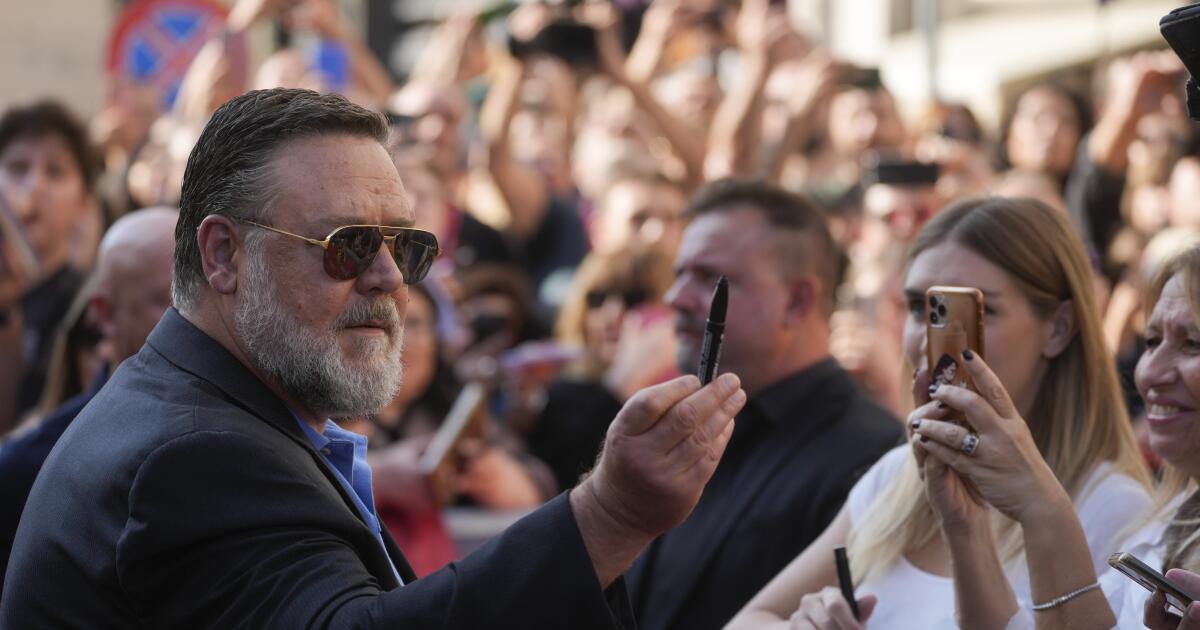
Russell Crowe has pushed back against TMZ’s coverage of his recent interactions with a crowd of autograph seekers.
“Clickbait,” the “Gladiator” actor wrote in a Monday post on X. “Everybody got their autograph and selfie, the passage to the hotel was kept free for guests, and I still got to the airport on time. One man, no security. Handled. What’s your problem ?”
Earlier that day, the outlet had posted a video of Crowe addressing a crowd of fans and autograph seekers outside of a Paris hotel before making his way to them to sign various memorabilia.
“If you needed a reminder that fans are not always priority No. 1 — turn to Russell Crowe — cause the guy was absolutely not having it outside of his Paris hotel,” TMZ wrote in its since-deleted X post sharing the video. The outlet also framed the video as Crowe “explod[ing] on Pushy Autograph Seekers” in its news story.
In the video, the Academy Award winner is shown giving clear directions to those gathered for his autograph or to snap a photo with him.
“Stay where you are, don’t f— push in on me, I’ll come to you,” Crowe says. “Give everybody space. As soon as somebody’s a d—, I’m gone.”
The actor then approaches the crowd to sign various items held out in front of him. The short clip ends soon after Crowe declines a request to also write “Maximus” — the name of his “Gladiator” character — next to his signature as he continues to sign other things.
Crowe’s temperament, blunt demeanor and distaste for certain aspects of “celebrity” have long been fodder for news coverage. In 2005, the actor made headlines for throwing a phone that hit a Manhattan hotel concierge.
“If I ever was going to torture somebody, I’d put them in a room where they can’t leave and have someone new come in every three minutes and ask the same question over a number of days and then weeks,” Crowe said in a 2010 interview with The Times, describing what happens at a movie press junket on the eve of embarking on one.
“Some people believe celebrity is a power that should be used. Ultimately, your dollars are more powerful,” Crowe said in that interview. “I’m famous for making movies. Celebrity just happens to be an unfortunate byproduct of what I do.”
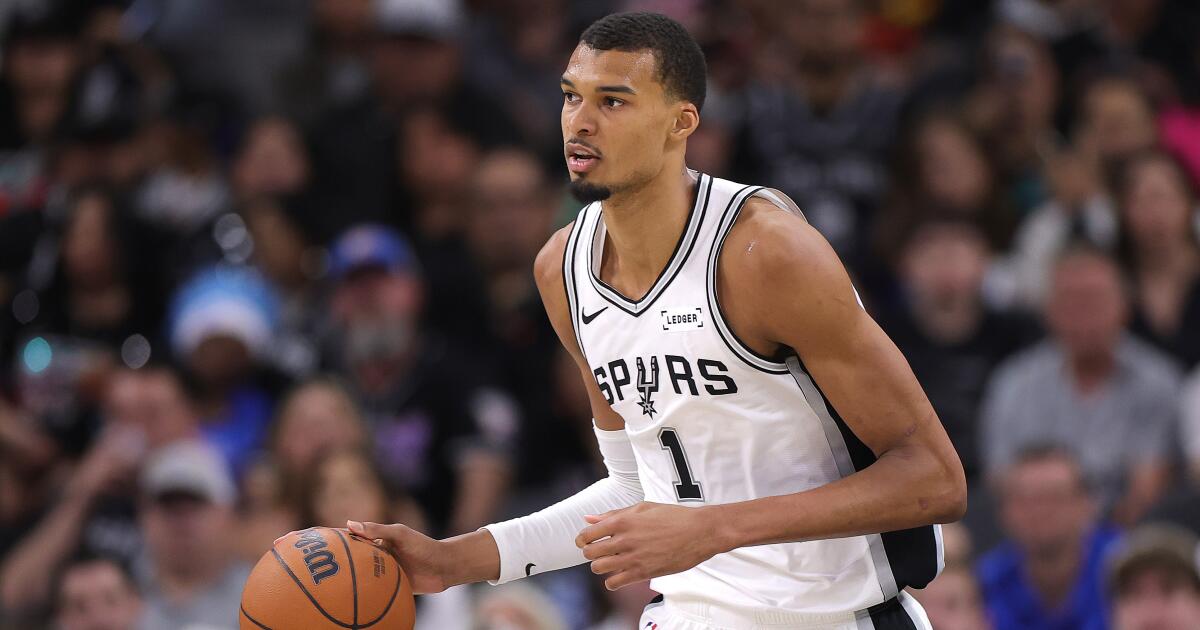
Victor Wembanyama is making news these days as a third-year player who has led the San Antonio Spurs to a 2-2 series tie with the defending NBA champion Oklahoma City Thunder in the Western Conference finals.
A sports card from the 7-foot-4 French star’s rookie season has also made headlines. Wembanyama’s 2023-24 Panini Prizm one-of-one Black parallel card recently sold for $5.11 million in a private deal brokered by Fanatics Collect.
It’s the highest known price paid for a non-autographed NBA card and the fourth-highest for any NBA card, according to price guide website Card Ladder. The buyer told the Athletic that he believes it will remain the best card for a player whose superstar potential is practically unlimited.
“There’s a sort of obvious ceiling for him, just as an athlete, that I think is higher than most people that are like the ordained superstars, like the next guy that we anticipate them being pantheon people,” said the buyer, who spoke on the condition of anonymity. “… If you take all these players and you say, ‘What’s their ceiling?’ I think Victor Wembanyama’s [ceiling] is substantially higher.”
Professional Sports Authenticator graded the card a Gem Mint 10, which the PSA site says is reserved for “virtually perfect” cards.
The previous record amount spent on a Wembanyama card was $860,100 paid for his rookie Panini Prism Nebula Choice one-of-one card in early 2025, according to Fanatics Collect. That card had a PSA 9 grade.
The grade for the recently purchased card came with controversy. Collector Cavelle McDonald pulled the card from a pack he purchased at NorCal Sports Cards in Roseville, Calif. A video posted to the store’s YouTube account in 2024 shows McDonald and NorCal Sports Cards owner Thomas Lindenthal getting the card graded.
After learning the card’s grade, Lindenthal gave “a huge shout-out” to Kurt’s Card Care. “Your product is phenomenal,” he said.
According to its website, Kurt’s Card Care makes “100% handmade Cleaning sprays and polishes free of artificial colors and scents. Perfect for cleaning and restoring your card collection.” PSA says on its website that it “will not grade cards that bear evidence of trimming, re-coloring, restoration, or any other forms of tampering” and lists “evidence of cleaning” as a factor in the company returning a card without a numeric grade.
Some people in the video’s comment section speculated that Lindenthal’s shout-out may have indicated that the Wemby card had been tampered with in a way that should have disqualified it from being graded. NorCal Sports Cards did not immediately respond to a request for comment from The Times.
McDonald told the Athletic that “Kurt’s Card Care has nothing to do with me or the card.” The new buyer told the publication that he was unaware of the situation before purchasing the card, but said it wouldn’t have made any difference if he had known.
Wembanyama had 41 points and 24 rebounds in the Spurs’ double-overtime victory against the Thunder in Game 1 of the conference finals and 33 points, eight rebounds, five assists and three blocked shots in San Antonio’s Game 4 victory on Sunday. Game 5 is Tuesday in Oklahoma City, with the winner of the best-of-seven series advancing to play the New York Knicks in the NBA Finals.
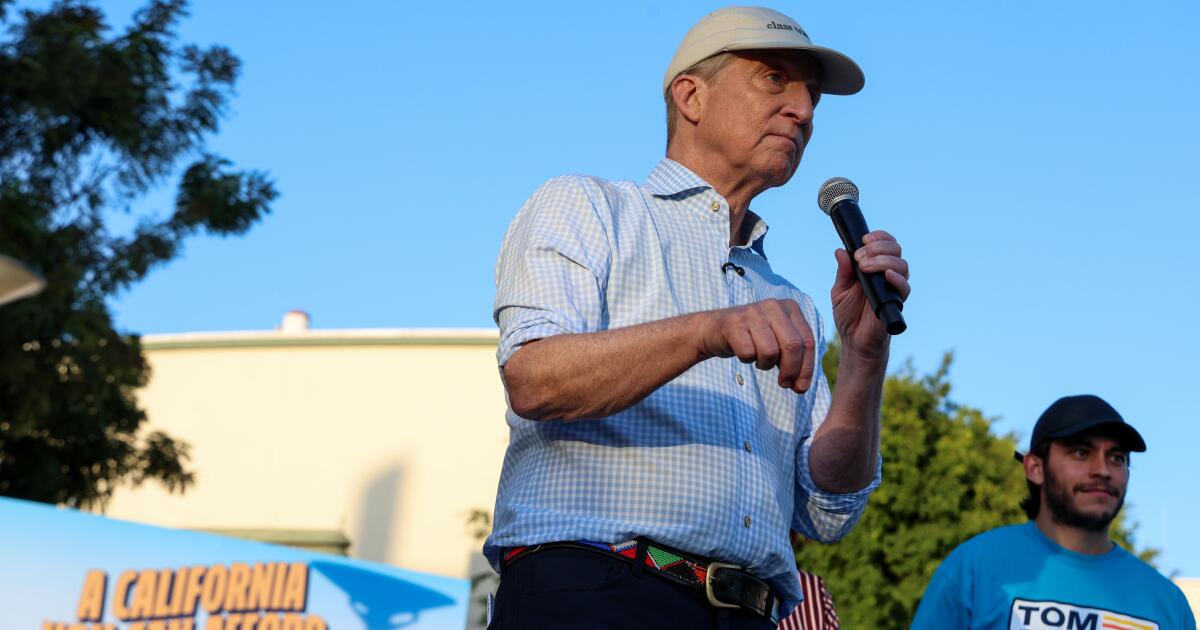
WASHINGTON — A political influencer has filed a complaint against Tom Steyer’s campaign for governor, saying the committee failed to notify her of disclosure requirements, as required by law, when she was paid to meet with Steyer in March and later produced social media content from the meeting.
What’s more, she said the Steyer campaign falsely accused her of posting paid content in support of Steyer’s chief Democratic rival, Xavier Becerra, and failing to disclose it in a complaint filed by the billionaire’s campaign this week.
Maggie Reed, who regularly posts satirical takes on politics to roughly half a million followers on Instagram and TiKTok under the username mermaidmamamaggie, said she was actually paid by Steyer’s campaign and signed an agreement that barred her from disclosing the payment.
She posted, and later deleted, a video from her meeting with Steyer in March.
“In plain terms: the Committee paid for political content, structured it to look like an ordinary creator’s organic opinion, and used a non-disclosure agreement to keep the public from learning the truth,” says the complaint, filed Thursday with California’s Fair Political Practices Commission.
Steyer’s campaign disclosed in a campaign filing that it had paid the agency that represents Reed $5,000 for digital advertising, but didn’t indicate that the payment was connected to Reed’s meeting with Steyer or her production of content.
The Steyer campaign said that while it did pay to meet with Reed, it left the decision of whether to create content entirely up to her.
Since then, Reed has produced several videos expressing support for Becerra, the former California congressman and U.S. Secretary of Health and Human Services, but she said that she was not paid to produce those videos and that they reflected her genuine support for Becerra’s campaign.
Becerra has been the top Democrat in recent polling in the race, maintaining a narrow edge over Steyer and a firm grip on one of the top two spots in the June 2 primary that would send him to the general election in November.
Reed’s complaint is the latest volley in a back and forth involving the use of paid influencers in the gubernatorial race.
Two influencers who support Becerra — but were not paid by his campaign — filed a complaint last week saying that a number of influencers had created paid content in support of Steyer, but failed to disclose so in their posts.
Steyer’s campaign then filed a complaint earlier this week in which it leveled accusations against Reed and another influencer named Jay Gonzalez, who is now a paid staffer on the Becerra campaign. The complaint alleges that Gonzalez made several pro-Becerra posts after joining the campaign and belatedly amended them to include disclosure that they were sponsored.
The Becerra campaign has maintained that it does not otherwise pay influencers to produce content on its behalf.
Steyer’s complaint included screenshots of an email sent to Reed’s talent agency by a gubernatorial campaign gauging her interest in producing paid content.
While the screenshots produced in Steyer’s complaint did not disclose who had sent the inquiry, Reed said in her complaint that the request had come from a staffer for the gubernatorial campaign of former Los Angeles Mayor and California State Assembly Speaker Antonio Villaraigosa.
Disclosure of paid political content by social media creators is required in California thanks to a law passed in 2023.
Influencers themselves are required to disclose that a post they created was sponsored, but campaigns are required to notify them of the requirement.
Violation of the law doesn’t trigger civil, criminal or administrative penalties, but the FPPC has the right to take violators to court and request that a judge force compliance with the law.
The agreement Reed signed with Steyer’s campaign, which was attached to her complaint, indicated that she needed to follow all applicable state, federal and local laws, but made no specific mention of her requirement to disclose that content she produced was sponsored.
The agreement did specify that Steyer’s campaign might need to disclose the payment.
When Meow Wolf’s Los Angeles location opens later this year, one of its biggest residents will be a 20-foot-tall, 1,000-pound amoeba-like creature named WoWoW.
Created by the L.A.-based multimedia collective Everything Is Terrible, WoWoW is alternately described as a “cosmic entity” and a “cartoony, root vegetable floating alien god.” The multi-eyed organism will serve as the centerpiece of “the N.E.S.T.,” an EIT-designed section of Meow Wolf’s new 26,000-square-foot immersive exhibition space.
In-progress detail of Everything Is Terrible’s WoWoW sculpture for the forthcoming Meow Wolf Los Angeles, shown with multi-color eye lighting.
(Photo by Allyson Lupovich / Meow Wolf)
That acronym has yet to be explained, and is cloaked in Meow Wolf’s intentionally mysterious messaging about its latest incarnation, which is set in an old Cinemark movie theater in West L.A. and will tackle the ephemeral joys and hardships of Hollywood’s dream factory. The L.A. location will be the Santa Fe, N.M.-based immersive art and entertainment company’s fifth outpost after Denver, Las Vegas, Houston and the Dallas suburbs.
The L.A. space boasts 45 local collaborating artists including Gabriela Ruiz, David Altmejd and more. Each is building their own unique installation featuring a variety of sculptures, dioramas and new media.
Everything Is Terrible is one of Meow Wolf’s most prolific partners, creating a variety of psychedelic characters for various installations over the years. The collective dreamed up the N.E.S.T. about two years ago as a way of paying tribute to maximalist roadside attractions like Wisconsin’s House on the Rock or New Mexico’s Tinkertown Museum. It also tells the story of the Noothies, a made-up community of former below-the-line film workers who stumbled upon a god — and a hidden truth about the nature of reality.
The installation presents a paradox by being a Hollywood idea that is completely un-Hollywood. It may wink at the industry’s unseen heroes, but who can afford to make art for art’s sake in the entertainment industry anymore? That seeming contradiction makes it a very Everything Is Terrible idea.
Founded nearly 20 years ago by a group of friends who met at Ohio University, Everything Is Terrible was launched as a found-footage website that created wild and singular art pieces using thrifted VHS tapes. It found viral success with videos about cat massage, and a dancing dinosaur who warns kids about the dangers of pedophilia, as well as its lauded quest to amass as many VHS copies of “Jerry Maguire” as humanly possible. (The group has about 45,000 at the moment, all stuffed in boxes and waiting to be unleashed on the world — perhaps as a pyramid in the desert or maybe featured in some sort of coffee table book.)
“I think our outlook on life has become, ‘look at the worlds that these people created,’” says EIT co-founder Dimitri Simakis. “No one asked them to do this. Someone just wanted to do a kids puppet show in some garage in North Carolina and now they’ve created a simulacra.”
That’s also what the collective is doing with its Meow Wolf exhibit, adds Nic Maier, another EIT member. “It’s what we’ve done for the last 20 years, really. We’re just a bunch of kooks who got together to obsessively make things in celebration of life and in appreciation of each other’s time.”
The marriage of Everything Is Terrible and Meow Wolf is a match made in heaven. The groups first met in 2009, bonded by a shared commitment to interactive art experiences that twist reality using an ornate handmade aesthetic.
A few years later, Maier was hired to work on what would become Meow Wolf’s first large-scale installation, Santa Fe’s “House of Eternal Return.” As he spent hours sculpting large, foam trees for the group, he says he fell in love.
A mystical, neon-colored forest in Meow Wolf’s Santa Fe, N.M., exhibition, “The House of Eternal Return.”
(Meow Wolf)
“We always joke that ever since then, EIT has been a barnacle on the side of the Meow Wolf ship, just hanging on but also occasionally hopping in to contribute,” Maier says.
When Meow Wolf announced it was opening two new spaces, in Las Vegas and Denver, it called on EIT for ideas. Simakis and Maier threw out a few pitches for Denver and one landed: a McDonald’s-like retro freak-out known as Pizza Pals Play Zone, which went on to become one of the attraction’s most talked about, photographed and beloved spaces.
“Pizza Pals Play Zone is super character dense,” says Han Sayles, Meow Wolf’s director of artist collaboration. “It’s just one of those spaces that feels like Meow Wolf. There’s hundreds of different pieces of media framed all around, featuring all of these different characters they created. They even made a bible … that had the narrative backstory of every single character and every deliverable they wanted for that room.”
Pizza Pals Playzone, created by Everything Is Terrible, at Meow Wolf’s Convergence Station in Denver.
(Jess Gallo / Meow Wolf)
When Meow Wolf’s Los Angeles project became a possibility, Sayles says Everything Is Terrible was one of the first groups she pitched as a potential contributor. EIT ended up being offered a custom project, in which the group used Meow Wolf’s extensive production facilities and resources to create their vision for the space, weighing in on everything from the shape of their room to the merch it might inspire in the Meow Wolf gift shop.
“We had a super trusting relationship with them,” Sayles says. “We recruited them as partners and negotiated a deal without knowing what they were going to put in the room. Both Nic and Dimitri have such a beautiful, strong sense of the exact genre of whimsy that we go for and they always deliver super deeply, so we knew it would be amazing.”
Sayles says she also thought the group’s experience of Los Angeles would lend itself well to the overall theme of the venue. Shakti Howeth, a creative director at Meow Wolf, agrees, saying that while Meow Wolf attractions are typically pretty otherworldly, they’re always built around an overarching story.
At Meow Wolf’s “Omega Mart,” in Las Vegas, guests first enter a satiric take on a grocery store, where portals lead to otherworldly art exhibitions.
(Christopher DeVargas / Meow Wolf)
The N.E.S.T., Howeth teases, will relate to some of the L.A. attraction’s character groups and themes, as well as its overall story. How audiences first encounter WoWoW and the N.E.S.T. will depend on which door they use to enter the room. From there, the points of visual interest will compound upon each other.
“We’re just incorporating all the things we love,” says Maier, noting that includes roadside attractions, folk art and anything “outsider.”
“It involves everything from the importance of dirt and worms to video games to experimental film to worker uprisings to entering literal other dimensions where you can meet what might be God, all within a [553]-square-foot space,” Simakis adds. “There have been times when we’ve been in the N.E.S.T. and thought we crammed in too much … but then you realize it has to be like that, because we’re trying to tell the whole story of the universe in just that room.”
For example, Maier spent much of the last two years building 45 beautifully weird costumes for the attraction, only two of which will be physically in the N.E.S.T. The other 43, he explains, are there for “world-building” and to make the story feel lived in. Everything in the space will have been created by Everything Is Terrible and Meow Wolf, including what seems like real found footage.
Simakis calls the group’s vision for the space “unrelenting joy mixed with benevolent chaos,” as well as “a beautiful folk art museum that’s also a space rave.” He likens what the group is doing to “building a puzzle out of thousands of other puzzles, gluing it together to make a new thing.”
“It’s like we’re making a movie that’s not a movie,” Simakis adds. “It’s a video game. It’s a living space. It’s all of these things, but you get to walk around in it.”
If that’s confusing, it’s because it’s meant to be — at least a little. How each visitor absorbs or receives the space will be entirely up to them. And while that could be a bit terrifying for some artists, to pour everything into a piece only to have the public possibly misinterpret or even ignore it, Maier and Simakis say they’re open to whatever comes.
“Millions of people are going to potentially walk through our space, so it has to be really special,” Simakis says. “We’ve also thought about all the different ways people could enjoy it, whether they’re a baby or a stoner or someone who’s just really into immersive entertainment or escape rooms. Even if you just go to take selfies, great. We’re pro-that. But also, if you want to keep going back or you want to spend hours there, I promise we’ve made it worth your while.”
An investigation into the incident has been launched
A Croatia Airlines 9A-CTH Airbus A319-112 (stock image)
A plane reportedly containing more than 130 people veered off the runway during take-off before skidding across grass and crashing through airport signs. Shocking footage shows the Croatia Airlines Airbus A220-300 swerving to the left before eventually grinding to a halt.
The drama unfolded at Split Airport in Croatia on Saturday, May 16 at 1.35pm local time. An investigation has been launched, with no injuries reported among the 130 passengers and five crew members.
Passengers and crew were evacuated from the plane, which reportedly sustained damage to the front landing gear and left-hand engine.
Darko Petrin, chief investigator at Croatia’s Air, Maritime and Railway Accident Investigation Agency, said the investigation is still in its early stages.
Content cannot be displayed without consent
“It is known that the aircraft, for reasons still undetermined, drifted to the left during takeoff, left the asphalt part of the runway and ended up on the grassy surface next to the runway,” Mr Petrin said.
It is understood that the black boxes on the plane have been taken for analysis. It is thought the investigation into events could take months. The plane – which was flying to Frankfurt – was thought to be travelling at around 130knots (150mph) when pilots aborted the take-off for reasons which are still not yet clear.
The jet itself was delivered less than a year ago to Croatia Airlines. Split Airport was closed for a number of hours after the incident.