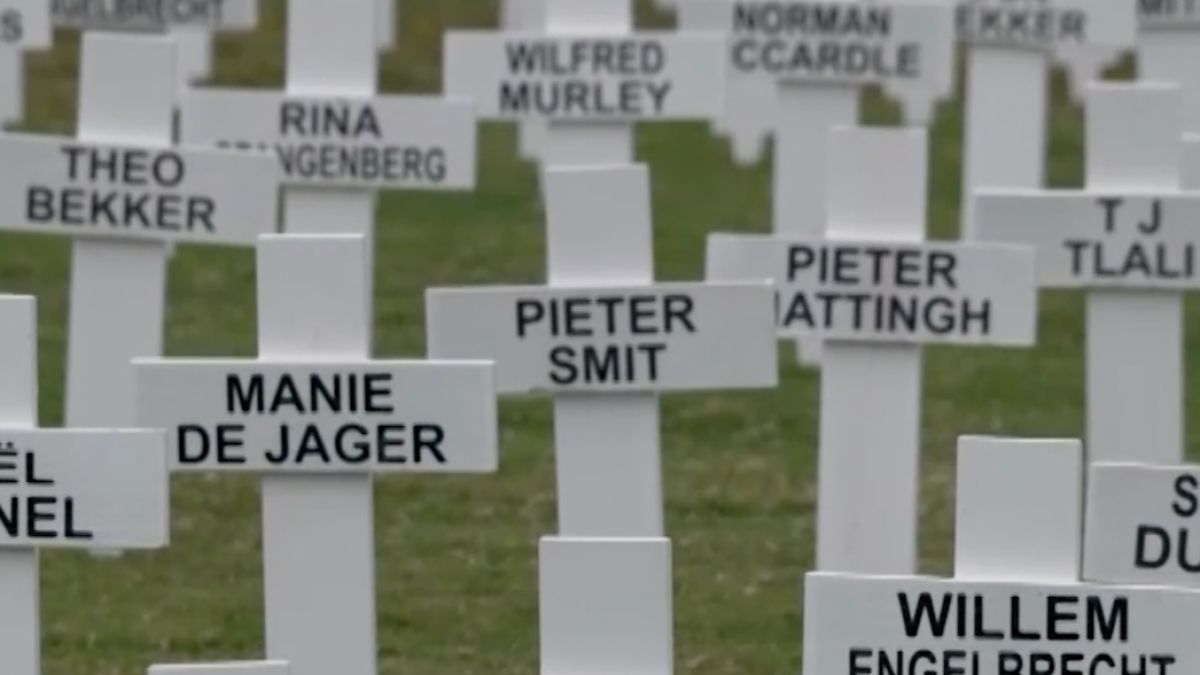
victims

Iranian team wears #168 pins for airstrike victims ahead of World Cup

The shuttle of the Iran World Cup team between Mexico and the United States took root Sunday in Tijuana with an accessory.

The players arrived in Tijuana wearing gold-colored lapel pins on their jackets acknowledging victims of a missile strike on an elementary school that took place Feb. 28 at the outset of the war in their country.

The pins simply read “#168” — replicating the hashtag of the number of people killed in the daytime strike in Minab in southern Iran. Most of the victims were girls attending Shajareh Tayyebeh Elementary School.

The Iran delegation flew on a private jet from Turkey to Tijuana. Mehdi Taj, president of the Iran Football Federation, said two weeks ago that the training base would be in Mexico instead of Tucson.

FIFA has not given a reason for the change, although delays have occurred in processing U.S. visas for some Iranian players and other members of the delegation that allegedly have ties to the Revolutionary Guard.

Iran is preparing to play its three group-stage games in the United States, with the first scheduled June 15 against New Zealand at SoFi Stadium (called Los Angeles Stadium during the World Cup). Its second game, June 21 against Belgium, is also scheduled in L.A. and the third game will take place June 26 in Seattle against Egypt.

It is unclear whether FIFA — the governing body of the World Cup — would allow the pins to be worn by anyone on the sidelines during matches. That would include coaches and other team personnel in addition to players.

FIFA took no action in response to earlier displays of remembrance by the Iran players and has not commented on the legality of wearing the pins. FIFA regulations state that “equipment must not have any political, religious or personal slogans, statements or images.” The rule applies to players, coaches and officials on the sidelines during matches.

The Iran team twice acknowledged victims of the airstrike during the Iran national anthem before warmup matches in March. In the first, players held purple school backpacks decorated with bows. In the second, players held images of those who had died.

Before more recent warmup games, the Iran team stood with their right hands across their chests during the anthem. And earlier in March, some members of the Iran women’s soccer team remained quiet during the national anthem at an Asian Cup match, leading Iranian state TV to call them “wartime traitors.”

Video footage analyzed by investigative group Bellingcat appears to show a U.S. Tomahawk missile striking the school, which was adjacent to a compound associated with the Iranian Revolutionary Guard and barracks for its naval brigade. The United States has not accepted responsibility for the attack, although the military is investigating.

Upon arriving in Tijuana, Iran team captain Ehsan Hajsafi criticized FIFA about the delay in obtaining visas.

“First of all, we’re very happy that the team has finally arrived, and we’re delighted about that,” Hajsafi told reporters. “Thank God, the team’s condition is very good.

“With everything that happened, visas were eventually issued. Personally, however, I do have a complaint about FIFA. Why did it take so long? As far as I understand, visas were issued only to the players and a few members of the coaching staff.”

Ahead of the 2022 World Cup in Qatar, Hajsafi spoke boldly about the government crackdown on mass demonstrations in Iran.

“Before anything else, I would like to express my condolences to all of the bereaved families in Iran,” Hajsafi said. “They should know that we are with them, we support them and we sympathize with them. “We cannot deny the conditions — the conditions in my country are not good and the players know it also.”

The Associated Press contributed to this story.

Source link

Freed 360 Victims of Ngoshe Abduction Awaiting Family Reunion

Nigerian troops say they have rescued 360 people abducted during a deadly terrorist attack on Ngoshe, a resettled community in Gwoza Local Government Area of Borno State, northeastern Nigeria, more than three months after terrorists overran the town, killing residents and forcing thousands to flee.

Solomon Ali Talake, a primary school teacher and survivor of the March 3 attack, said community members had received information about the rescue.

“I was told they have been rescued,” Solomon told HumAngle on Sunday. “Families have been informed, but they have not allowed us to see them yet. They said they are assessing them and will release them to their families afterwards.”

The March 3 attack on Ngoshe was one of the deadliest assaults on a resettled community in southern Borno in recent months. Residents said the attackers first struck a military formation in the town before moving into the community. Homes were set ablaze, civilians were killed, and hundreds of residents were reportedly abducted.

Solomon survived by hiding in a tree throughout the night while the attack unfolded beneath him. From his hiding place, he watched as gunmen moved through the community, burning houses and pursuing fleeing residents.

The attack displaced thousands of people, many of whom fled to Pulka, a neighbouring community about 12 kilometres away. Others sought refuge in Maiduguri, Cameroon, and other locations. The exact number of people killed or abducted remains disputed. While some media reports estimated that about 100 people were killed and more than 300 abducted, residents told HumAngle that the scale of the attack made precise figures difficult to establish. Victims were later buried in a mass grave, according to survivors.

Among those abducted were two of Solomon’s nephews, aged 14 and 11. On Sunday, he said he had not yet been able to confirm whether they were among those rescued.

Asabe Ali Talake, Solomon’s sister and the children’s mother, also said she had received reports of the rescue but remained uncertain about the fate of her children.

Asabe said she was still waiting for confirmation from authorities. Relatives of the freed victims say communication with them remains restricted while security agencies conduct assessments.

Military authorities typically screen and profile people freed from insurgent-controlled territories before reuniting them with their families. The process is intended to establish identities, assess physical and psychological conditions, and determine whether further investigation or rehabilitation may be required.

This comes amid a broader wave of insecurity affecting communities across Borno State. In recent months, terrorists have launched repeated attacks on military formations, reconstruction projects, and resettled communities, raising concerns about the sustainability of government resettlement efforts in conflict-affected areas.

Part of a broader rescue effort

A politician from Gwoza, who spoke to HumAngle on the condition of anonymity because he was not authorised to discuss the matter publicly and who was involved in advocacy efforts for the victims’ release, claimed a ransom was demanded for the release of the victims. HumAngle could not independently verify the claim, and the military has not publicly indicated that any negotiations took place. 

This development is the latest in a series of operations by troops of Operation Hadin Kai targeting terrorist enclaves in the Mandara Mountains and surrounding areas.

Three days earlier, troops rescued a woman and her infant child after killing several terrorists. On May 1, troops rescued six abductees during an operation around the Mandara Mountains. Six more victims were rescued on May 14. In April, 12 victims, including men, women, and children, escaped during a military operation targeting a terrorist camp.

The latest operation, however, represents the largest reported release linked to the March 3 attack on Ngoshe, offering renewed hope to families who have spent months waiting for news of their relatives.

While military authorities described the operation as a rescue, questions remain about how the victims regained their freedom.

Nigerian troops have rescued 360 people abducted during a terrorist attack on the resettled community of Ngoshe in Gwoza, Borno State, over three months after the attack.

The March 3 assault was one of the deadliest, with homes destroyed, civilians killed, and hundreds taken hostage, displacing thousands to nearby areas.

Survivors like Solomon Ali Talake reported receiving news of the rescue, though they have yet to reunite with the freed individuals, including his nephews. Authorities are evaluating the rescued individuals before reuniting them with their families to ensure proper identification and assess any need for rehabilitation.

The rescue is part of broader operations by Operation Hadin Kai aimed at dismantling terrorist strongholds in the region.

A local politician suggested a ransom was involved, though this remains unverified. This largest reported rescue related to the Ngoshe attack provides hope to families anxiously awaiting news of their loved ones.

Source link

Shimon Peres: Israeli war criminal whose victims the West ignored – Middle East Monitor

Shimon Peres, who passed away Wednesday aged 93 after suffering a stroke on 13 September, epitomised the disparity between Israel’s image in the West and the reality of its bloody, colonial policies in Palestine and the wider region.

Peres was born in modern day Belarus in 1923, and his family moved to Palestine in the 1930s. As a young man, Peres joined the Haganah, the militia primarily responsible for the ethnic cleansing of Palestinian villages in 1947-49, during the Nakba.

Shimon Peres (1923-2016)

  • Best known in the West for role in Oslo Accords
  • Family moved to Palestine in the 1930s
  • Fought with the Haganah during the Nakba
  • Described as the architect of Israel’s clandestine nuclear programme
  • Saw Palestinian citizens as a ‘demographic threat’
  • Played key role in early days of West Bank settlements
  • Responsible for Qana massacre in Lebanon in 1996
  • Defended Gaza blockade and recent Israeli offensives

Despite the violent displacement of the Palestinians being a matter of historical record, Peres has always insisted that Zionist forces “upheld the purity of arms” during the establishment of the State of Israel. Indeed, he even claimed that before Israel existed, “there was nothing here”.

Over seven decades, Peres served as prime minister (twice) and president, though he never actually won a national election outright. He was a member of 12 cabinets and had stints as defence, foreign and finance minister.

He is perhaps best known in the West for his role in the negotiations that led to the 1993 Oslo Accords which won him, along with Yitzhak Rabin and Yasser Arafat, the Nobel Peace Prize.

Yet for Palestinians and their neighbours in the Middle East, Peres’ track record is very different from his reputation in the West as a tireless “dove”. The following is by no means a comprehensive summary of Peres’ record in the service of colonialism and apartheid.

Nuclear weapons

Between 1953 and 1965, Peres served first as director general of Israel’s defence ministry and then as deputy defence minister. On account of his responsibilities at the time, Peres has been described as “an architect of Israel’s nuclear weapons programme” which, to this day, “remains outside the scrutiny of the International Atomic Energy Agency (IAEA).”

In 1975, as secret minutes have since revealed, Peres met with South African Defence Minister PW Botha and “offered to sell nuclear warheads to the apartheid regime.” In 1986, Peres authorised the Mossad operation that saw nuclear whistle-blower Mordechai Vanunu kidnapped in Rome.

Targeting Palestinian citizens

Peres had a key role in the military regime imposed on Palestinian citizens until 1966, under which authorities carried out mass land theft and displacement.

One such tool was Article 125 which allowed Palestinian land to be declared a closed military zone. Its owners denied access, the land would then be confiscated as “uncultivated”. Peres praised Article 125 as a means to “directly continue the struggle for Jewish settlement and Jewish immigration.”

Another one of Peres’ responsibilities in his capacity as director general of the defence ministry was to “Judaise” the Galilee; that is to say, to pursue policies aimed at reducing the region’s proportion of Palestinian citizens compared to Jewish ones.

In 2005, as Vice Premier in the cabinet of Ariel Sharon, Peres renewed his attack on Palestinian citizens with plans to encourage Jewish Israelis to move to the Galilee. His “development” plan covered 104 communities – 100 of them Jewish.

In secret conversations with US officials that same year, Peres claimed Israel had “lost one million dunams [1,000 square kilometres] of Negev land to the Bedouin”, adding that the “development” of the Negev and Galilee could “relieve what [he] termed a demographic threat.”

Supporting illegal settlements in the West Bank

While Israel’s settlement project in the West Bank has come to be associated primarily with Likud and other right-wing nationalist parties, it was in fact Labor which kick-started the colonisation of the newly-conquered Palestinian territory – and Peres was an enthusiastic participant.

During Peres’ tenure as defence minister, from 1974 to 1977, the Rabin government established a number of key West Bank settlements, including Ofra, large sections of which were built on confiscated privately-owned Palestinian land.

Having played a key role in the early days of the settlement enterprise, in more recent years, Peres has intervened to undermine any sort of measures, no matter how modest, at sanctioning the illegal colonies – always, of course, in the name of protecting “peace negotiations”.

The Qana massacre

As prime minister in 1996, Peres ordered and oversaw “Operation Grapes of Wrath” when Israeli armed forces killed some 154 civilians in Lebanon and injured another 351. The operation, widely believed to have been a pre-election show of strength, saw Lebanese civilians intentionally targeted.

According to the official Israeli Air Force website (in Hebrew, not English), the operation involved “massive bombing of the Shia villages in South Lebanon in order to cause a flow of civilians north, toward Beirut, thus applying pressure on Syria and Lebanon to restrain Hezbollah.”

The campaign’s most notorious incident was the Qana massacre, when Israel shelled a United Nations compound and killed 106 sheltering civilians. A UN report stated that, contrary to Israeli denials, it was “unlikely” that the shelling “was the result of technical and/or procedural errors.”

Later, Israeli gunners told Israeli television that they had no regrets over the massacre, as the dead were “just a bunch of Arabs”. As for Peres, his conscience was also clean: “Everything was done according to clear logic and in a responsible way,” he said. “I am at peace.”

Gaza – defending blockade and brutality

Peres came into his own as one of Israel’s most important global ambassadors in the last ten years, as the Gaza Strip was subjected to a devastating blockade and three major offensives. Despite global outrage at such policies, Peres has consistently backed collective punishment and military brutality.

In January 2009, for example, despite calls by “Israeli human rights organisations…for ‘Operation Cast Lead’ to be halted”, Peres described “national solidarity behind the military operation” as “Israel’s finest hour.” According to Peres, the aim of the assault “was to provide a strong blow to the people of Gaza so that they would lose their appetite for shooting at Israel.”

During “Operation Pillar of Defence” in November 2012, Peres “took on the job of helping the Israeli public relations effort, communicating the Israeli narrative to world leaders,” in the words of Ynetnews. On the eve of Israel’s offensive, “Peres warned Hamas that if it wants normal life for the people of Gaza, then it must stop firing rockets into Israel.”

In 2014, during an unprecedented bombardment of Gaza, Peres stepped up once again to whitewash war crimes. After Israeli forces killed four small children playing on a beach, Peres knew who to blame – the Palestinians: “It was an area that we warned would be bombed,” he said. “And unfortunately they didn’t take out the children.”

The choking blockade, condemned internationally as a form of prohibited collective punishment, has also been defended by Peres – precisely on the grounds that it is a form of collective punishment. As Peres put it in 2014: “If Gaza ceases fire, there will be no need for a blockade.”

Peres’ support for collective punishment also extended to Iran. Commenting in 2012 on reports that six million Iranians suffering from cancer were unable to get treatment due to sanctions, Peres said: “If they want to return to a normal life, let them become normal.”

Unapologetic to the end

Peres was always clear about the goal of a peace deal with the Palestinians. As he said in 2014: “The first priority is preserving Israel as a Jewish state. That is our central goal, that is what we are fighting for.” Last year he reiterated these sentiments in an interview with AP, saying: “Israel should implement the two-state solution for her own sake,” so as not to “lose our [Jewish] majority.”

This, recall, was what shaped Labor’s support for the Oslo Accords. Rabin, speaking to the Knesset not long before his assassination in 1995, was clear that what Israel sought from the Oslo Accords was a Palestinian “entity” that would be “less than a state”. Jerusalem would be Israel’s undivided capital, key settlements would be annexed and Israel would remain in the Jordan Valley.

A few years ago, Peres described the Palestinians as “self-victimising.” He went on: “They victimise themselves. They are a victim of their own mistakes unnecessarily.” Such cruel condescension was characteristic of a man for whom “peace” always meant colonial pacification.

Source link

‘Milestone’: Macron opens Paris monument honouring Rwanda genocide victims | Genocide News

Macron, who has acknowledged French ‘responsibility’ in the genocide, called the memorial a reconciliation ‘milestone’.

French President Emmanuel Macron has presented a memorial in Paris dedicated to the victims of the 1994 Rwandan genocide, as France pursues closer ties with the East African country and continues to grapple with its role in the historic atrocity.

Speaking at the inauguration event alongside his Rwandan counterpart Paul Kagame on Tuesday, Macron said the monument marked “the culmination of a long and patient quest for truth”.

Recommended Stories

list of 3 itemsend of list

“An unprecedented reconciliation has emerged between Rwanda and France,” said Macron. “This monument, while it is an achievement, is not an end. It is a milestone on a path we have opened.”

Dubbed “L’Archive” (The Archive), the monument consists of two black brass steles, and it bears an engraved tribute to the estimated 800,000 men, women and children, mostly ethnic Tutsis, massacred between April and July 1994.

(From L) Rwanda's President Paul Kagame, Rwanda's First Lady Jeannette Kagame and France's President Emmanuel Macron stand after laying wreaths of flowers on a monument for honouring the victims of the Rwanda's genocide made by the Portuguese artist Grada Kilomba, during a ceremony on the Habib-Bourguiba Esplanade along the Seine River in Paris, on June 2, 2026. (Photo by Sarah Meyssonnier / POOL / AFP) / RESTRICTED TO EDITORIAL USE - MANDATORY MENTION OF THE ARTIST UPON PUBLICATION - TO ILLUSTRATE THE EVENT AS SPECIFIED IN THE CAPTION
Rwanda’s President Paul Kagame, Rwanda’s First Lady Jeannette Kagame and France’s President Emmanuel Macron view the monument, dubbed ‘The Archive’, in Paris, France on June 2 [Sarah Meyssonnier/Pool via AFP]

The memorial’s inauguration comes five years after Macron travelled to Kigali and first acknowledged France’s failure to heed warnings of impending massacres in Rwanda.

Macron has said Paris and its Western and African allies did not have the will to halt the genocide, though he has stopped short of issuing a formal apology.

‘Requires real courage’

Speaking at the ceremony, Kagame hailed France’s efforts to assume its share of responsibility, and praised Macron for his “courage and humanity”.

“France was not alone in falling short, far from it,” said Kagame, who had long accused France of “complicity”.

“Many other countries did so as well, but none has gone as far as France in setting the record straight and accepting its part in the tragedy.

“Confronting historical responsibilities requires real courage because it generates a fierce opposition by those with a case to answer,” Kagame said.

Rwanda's President Paul Kagame delivers his speech during the inauguration of a new memorial, honouring victims of the Rwanda's genocide on the Habib-Bourguiba Esplanade along the Seine River in Paris, on June 2, 2026. (Photo by Sarah Meyssonnier / POOL / AFP)
Rwanda’s President Paul Kagame delivers his speech during the inauguration of a new memorial honouring victims of the Rwandan genocide, in Paris, France, June 2 [Sarah Meyssonnier/Pool via AFP]

When the genocide against the Tutsis occurred in 1994, France had been a long-standing backer of Rwanda’s Hutu-dominated government, leading to decades of tensions between the two countries, including a break in diplomatic ties between 2006 and 2009.

A commission set up by Macron and led by historian Vincent Duclert concluded in 2021 that France had been ⁠blinded by its colonial attitude to events leading up to the genocide ⁠and bore a “serious and overwhelming” responsibility ⁠for failing to foresee the slaughter.

However, it said there was no evidence that Paris was complicit in the killings.

‘Part of France’s public history’

Duclert said the unveiling of the monument was a “powerful” step. “The genocide against the Tutsi is now fully part of France’s public history,” he said.

The French courts, acting on the principle of universal jurisdiction to try the most serious crimes committed worldwide, have convicted several Rwandans for their part in the massacre.

In May, France’s judiciary ordered the resumption of an almost two-decade investigation into accusations that the widow of late Rwandan President Juvenal Habyarimana, who has lived in France since 1998, was involved in the genocide.

Source link

Newsom to propose fund to help California wildfire victims rebuild

Gov. Gavin Newsom will propose a new $100-million fund to help wildfire victims afford loans to rebuild their homes under a revised budget plan set to be released Thursday.

The Newsom administration estimates that thousands of victims of the Los Angeles wildfires cannot afford to rebuild, blaming a lack of access to affordable loans and a gap between insurance payouts and the cost to build again.

“We have been on the ground in L.A. since Day One of recovery from these fires, and we aren’t turning our backs now,” Newsom said in a statement. “This community deserves continued support to help them get back on their feet, and rebuild their homes and their lives. “

The new fund would be designed to cover loan-loss guarantee to lenders, in which the state would commit to paying back a percentage of a loan amount if a borrower defaults, in order to lower the risk for lenders and encourage them to award construction loans to borrowers who might not otherwise qualify or only be eligible for loans at high interest rates. The money would also be available for homeowners to buy down their interest rates during the construction period, according to Newsom’s office.

The Eaton and Palisades fires killed 31 people and destroyed over 16,000 structures in January 2025.

A recent survey of the wildfire victims found that homeowners estimate they need more than $600,000 on average above their insurance payouts to rebuild their homes, according to a report from a wildfire recovery nonprofit called the Department of Angels. The gap in Altadena was about $550,000, and between $1.19 million and $1.73 million in Pacific Palisades and Malibu.

Under Newsom, California has also provided mortgage relief to more than a thousand wildfire survivors under CalAssist, a program that provides grants to eligible homeowners to cover mortgage payments for 12 months up to $100,000.

The governor’s new proposal will be included in his funding plan for the upcoming 2026-27 budget year that begins July 1.

State revenue from income tax collection is higher than initially forecast, a boon that is expected to wipe out a projected deficit in the year ahead. Analysts attribute the revenue increase to an artificial intelligence boom in the stock market.

Though likely temporary, the extra funding is expected to give Newsom enough cushion to balance the state budget without major cuts and lower a projected shortfall in 2027-28.

The proposal to create the rebuilding fund requires support from both houses of the California Legislature and would move forward as a trailer bill accompanying the state budget. The funding would be available to disaster survivors, though details on eligibility will be determined during the legislative process.

Source link

How fake AI victims are being used to provide rationale for attacking Iran | Technology

NewsFeed

In the battle of propaganda, fake videos and images of female victims of Iran’s government are going viral, with even the US president sharing them. Al Jazeera’s Soraya Lennie explains how Iranian women, real or fake, are often used to sell foreign intervention.

Source link

‘Endless grief’: Turkiye mourns victims of second school shooting in a week | Gun Violence News

Death toll rises to 10 after shooting by 14-year-old student at the Ayser Calik School in Kahramanmaras.

Mourners have gathered in Turkiye’s southern province of Kahramanmaras for the funerals of victims killed in the second of two school shootings that rocked the nation this week.

Funerals were held on Thursday for eight students and maths teacher Ayla Kara, 55, who were killed in Wednesday’s shooting, The Associated Press news agency reported.

Recommended Stories

list of 3 itemsend of list

A 10th victim died while being treated in hospital on Thursday, authorities said. Six of those wounded in the attack were in critical condition, officials said.

Isa Aras Mersinli, 14, opened fire on two classrooms in the Ayser Calik School in Kahramanmaras city on Wednesday. The attacker was later found dead.

Interior Minister Mustafa Ciftci said the attacker is believed to have used guns that belonged to his father, a former police officer.

Coffin of a victim of a school shooting in Turkiye
People carry the coffin of a victim of a school shooting during the funeral prayers at a mosque in Kahramanmaras, Turkiye, on April 16, 2026 [Ensar Ozdemir/Reuters]

At a funeral for four of the victims held near Kahramanmaras city’s main mosque on Thursday, one father sat motionless beside the coffin of his daughter, 10‑year‑old Zeynep, the AFP news agency reported.

“Our grief is endless. These children were like our own. They were all innocent,” said Vezir Yucel, father of a student named Yusuf, who lost his close friend, 10-year-old Bayram, in the shooting.

Nilgun Ruci, a 55‑year‑old homemaker, told AFP that she rushed to Ayser Calik School after hearing gunshots. When she arrived, she saw the daughter of a neighbour lying gravely wounded.

“She had been shot in the leg and the shoulder,” Ruci said. “At first, I thought she had fainted. Today I learned that she died.”

Second attack in two days

The attack was the country’s second school shooting in two days, coming after Tuesday’s attack at a high school in Sanliurfa province in the southeast, which was carried out by a former student who wounded 16 people.

As of Thursday, 20 people had been detained in connection with Tuesday’s shooting in Sanliurfa.

The interior and education ministries held a joint school security meeting in the capital, Ankara, on Thursday, which was attended by both ministers and all 81 of Turkiye’s provincial governors, as well as police chiefs and provincial education directors.

Until this week, school shootings were rare in Turkiye. But dozens of students were arrested Thursday over alleged social media posts implying they might stage similar attacks.

Justice Minister Akin Gurlek announced that 67 social media users were detained over posts targeting 54 different schools.

Source link