Venezuela

Trump likes a naval blockade. But Iran presents big differences from Venezuela and Cuba

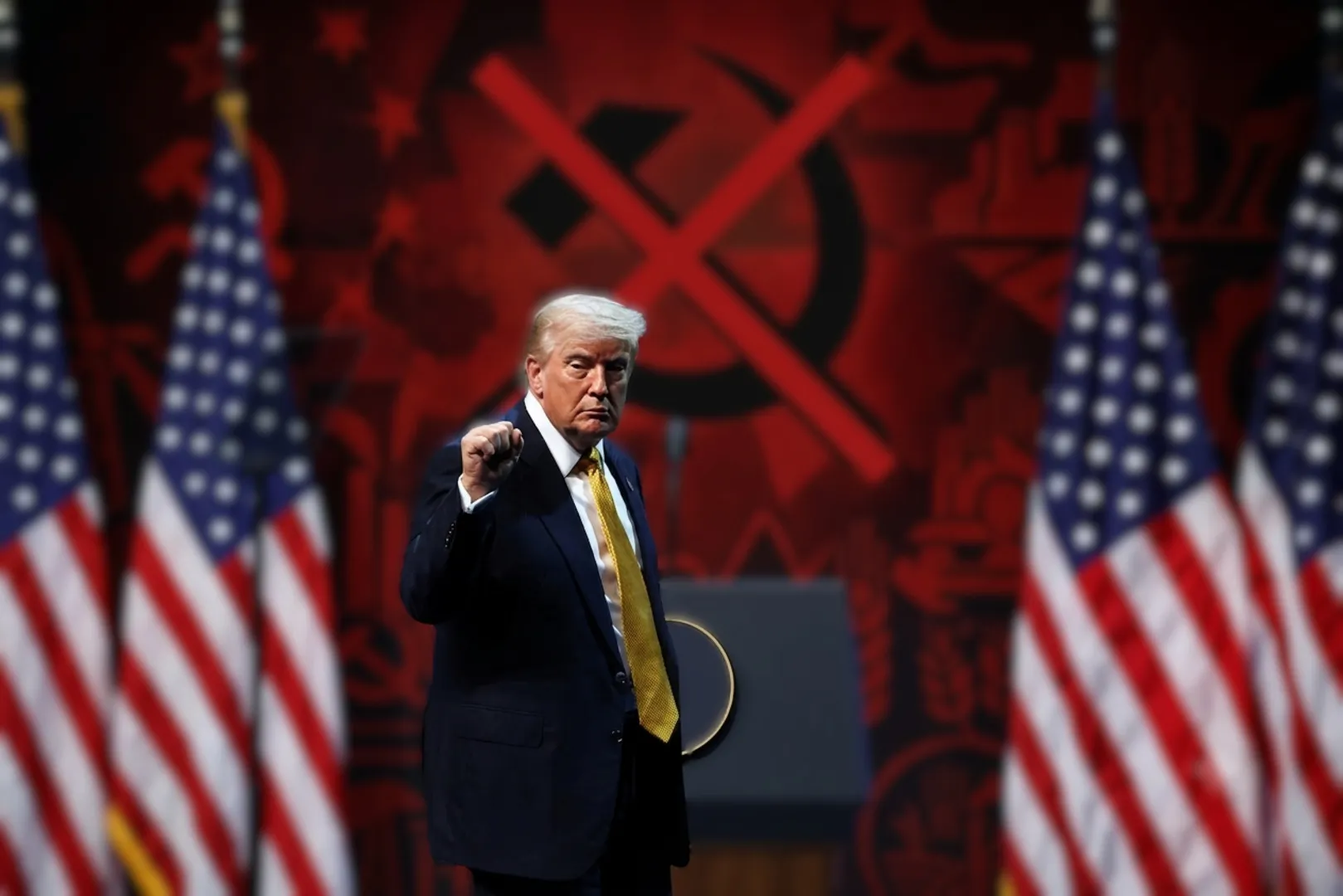
President Trump has turned to naval blockades to pressure the governments of Venezuela, Cuba and now Iran to meet his demands, but his preferred tactic is confronting a very different reality in the Middle East than in the Caribbean.

Unlike Cuba or Venezuela, Iran choked off a crucial trade route for energy shipments, meaning the longer the standoff persists, the more the global economy will suffer. Tehran also poses a greater military threat than those two adversaries in America’s own hemisphere and requires a sustained military presence far from U.S. shores.

Iran’s leverage over the Strait of Hormuz gives it power during a shaky ceasefire because the widening economic risks, especially higher U.S. gas prices in an election year, could force the Republican president to end the blockade on Iran’s ports and coastline, experts say.

“It’s really a question now of which country, the U.S. or Iran, has a greater pain tolerance,” said Max Boot, a military historian and senior fellow for national security studies at the Council on Foreign Relations.

Iran presents ‘major differences’ from other blockades

The effectiveness of Trump’s use of the world’s most powerful navy to block the trade of Iran’s sanctioned oil and other goods is very much up for debate. But it certainly appears to be intensifying as the war grinds on.

The U.S. military on Thursday announced the seizure of another tanker associated with the smuggling of Iranian oil, a day after Iran’s paramilitary Revolutionary Guards took control of two vessels in the crucial waterway.

Trump also announced he has ordered the U.S. military to “shoot and kill” Iranian small boats laying sea mines in the strait.

But the situation in Iran is not exactly analogous to what is playing out with the U.S. operations in Venezuela and Cuba.

Some experts say Trump’s success in Venezuela probably had more to do with the U.S. military raid that captured leader Nicolás Maduro than American warships seizing sanctioned oil tankers to enforce U.S. control over the South American country.

A U.S. oil embargo on Cuba, meanwhile, has caused the island’s most severe economic crisis in decades. While U.S. and Cuban officials have met recently on the island for rare talks, the financial strangulation has failed to produce the Trump administration’s stated goal of leadership change.

“I do think that the success of the Maduro mission in Venezuela has probably emboldened the president,” said Todd Huntley, director of Georgetown University’s National Security Law Program.

That does not make the situations in Venezuela and Iran similar — geographically, militarily or politically. “There are some major differences,” said Huntley, a retired Navy captain and judge advocate general.

While the blockade against Iran has delivered a severe blow to its economy, including stopping freighters from importing various supplies, the country has still been able to move some of its sanctioned oil, ship-tracking companies say.

Iran has rejected Trump’s demands to reopen the strait, where 20% of the world’s oil normally flows, and it has been firing on ships again this week. Stalled shipments through the strait have sent gasoline prices skyrocketing far beyond the region and raised the cost of food and a wide array of other products, creating a political problem for Trump before the November’s elections.

“Blockades are usually just one tool of a mechanism used in a conflict,” said Salvatore Mercogliano, a maritime history professor at Campbell University in North Carolina. “They can be important. But it’s only one element. And I don’t think it’s going to be enough to convince the Iranians.”

Effectiveness of U.S. blockade called into question

Adm. Brad Cooper, head of U.S. Central Command, claimed last week that “no ship has evaded U.S. forces.” The command overseeing the Middle East said it has directed 31 ships to turn around or return to port as of Wednesday.

Merchant shipping groups are skeptical.

Lloyd’s List Intelligence said “a steady flow of shadow fleet traffic” has passed in and out of the Persian Gulf, including 11 tankers with Iranian cargo that have left the Gulf of Oman outside the strait since April 13.

The maritime intelligence firm Windward said this week that Iranian traffic continues to flow “via deception.”

Iranian ships have several ways to sneak through the blockade, including spoofing their location tracking data or traveling through Pakistani territorial waters, Mercogliano said. He also noted that the sheer volume of shipping traffic the military needs to screen is a challenging task.

Blockades require patience to work

The last time the U.S. mounted a blockade similar to the one focused on Iranian ships was during the Kennedy administration in the early 1960s, against Cuba, Huntley said.

“And it wasn’t even called a blockade,” he said. “We called it quarantine.”

Some naval blockades over the course of history have had an impact, such as Britain’s blockade on Germany during World War I. “But they tend to be very long-term impacts, whereas Trump is looking for short-term, quick results,” according to Boot, the military historian.

He said Trump probably saw the blockade on sanctioned oil tankers tied to Venezuela as playing a large role in the success of leadership changes in that country. But Boot said it had more to do with the U.S. ousting Maduro and the subsequent cooperation from his vice president, Delcy Rodríguez, who is now the acting president.

“There is no Delcy Rodríguez in Cuba or Iran,” Boot said. “I think his success in Venezuela led him astray, thinking that this was a template that could be replicated elsewhere. He sees it as a huge success at little cost. And, in fact, it turns out to be a unique set of circumstances.”

Finley, Klepper and Toropin write for the Associated Press.

Source link

Venezuela Installs Commission to Evaluate State Assets, Mulls Possible Sell-Offs

Rodríguez announced four categories for state assets, with “non strategic” ones destined for privatization or liquidation. (Presidential Press)

Caracas, April 23, 2026 (venezuelanalysis.com) – Venezuelan Acting President Delcy Rodríguez has established a commission to assess the “strategic” value of state-owned assets and their possible transfer to the private sector.

The Commission for the Evaluation of Public Assets held its first meeting on Wednesday. In a short televised message, Rodríguez said the commission had the purpose of bringing “agility and modernity” to the Venezuelan state.

The acting president announced that Venezuelan state assets would be divided into four categories: strategic ones to remain under state control, “strategic alliances” where the state retains ownership but management is turned over to the private sector in concession-type deals, “non-strategic” assets to be fully privatized; and assets to be liquidated or reincorporated elsewhere.

“The purpose of this commission is to elevate Venezuela’s productivity levels, so that the Venezuelan state can be robust and attend to the strategic aspects of the nation,” she said.

The commission includes Economic Sector Vice President Calixto Ortega, Finance Minister Anabel Pereira, Industry Minister Luis Villegas, State Solicitor Arianny Seijo, Communes Minister Ángel Prado, as well as Luis Pisella, former president of industry guild CONINDUSTRIA, representing the private sector.

Former Venezuelan President Hugo Chávez spearheaded a nationalization campaign in the 2000s to impose state control of key economic areas such as oil, electricity, telecoms, banking, and the heavy industries.

In recent years, with the economy heavily targeted by US sanctions, the Nicolás Maduro government expanded “strategic alliances” with the private sector, particularly in the Venezuelan countryside. However, campesino organizations have denounced that the private takeover of companies that formerly supplied seeds, inputs, and tractors has significantly raised costs for small-scale producers. Strategic alliances in sugar mills have also drawn complaints of companies defrauding sugar cane growers.

The Cisneros Group, one of Venezuela’s largest private sector conglomerates, has recently announced plans to raise over $1 billion in funds ahead of potential sell-offs of state assets.

Elias Ferrer Breda, financial analyst and director of Orinoco Research, told Venezuelanalysis that he foresees privatizations in basic industries such as steel and cement.

“In my view, we will see virtually all the industries that are running at low capacity and without turning profits privatized,” he predicted. “We are talking about industries like steel and cement, but also other sectors like hotels or agricultural land.”

Ferrer affirmed that state companies currently under strategic alliances, such as sugar mills or Ferrominera Orinoco, an iron-ore complex presently managed by India’s Jindal Steel, could continue under similar deals as opposed to being sold outright.

“Where investors have mostly expressed an interest is in extractive industries: oil and mining,” he added. Ferrer additionally claimed that US “strategic and business interests” are likely to pursue control over Venezuelan critical mineral reserves, which are not presently certified.

Rodríguez had unveiled the commission to evaluate state assets in an April 9 presidential address. The acting leader also set in motion efforts to reform Venezuela’s labor, tax, and pension legislation. The Venezuelan National Assembly has recently approved pro-business overhauls of the country’s hydrocarbon and mining laws.

Caracas reestablished dealings with the International Monetary Fund (IMF) and the World Bank on April 16. On Wednesday, Rodríguez disclosed a conversation with IMF Managing Director Kristalina Georgieva and stated Caracas’ priority in unblocking around US $5 billion worth of Special Drawing Rights to improve public services such as electricity and water supply.

For her part, Georgieva acknowledged a “very valuable and productive call” and that the next steps include IMF “policy advice and capacity development.”

Venezuelan leaders have vowed that there are no plans to incur IMF debt. However, the Caribbean nation could soon face pressure from creditors looking to collect on a massive external debt, with unpaid loans, defaulted bonds, and international arbitration awards totaling as much as $170 billion with accrued interest.

On April 16, the so-called Venezuelan Creditor Committee held talks with US officials amid efforts to secure a license to engage in debt negotiations with Caracas. The committee includes Fidelity Management & Research Company LLC, Morgan Stanley Investment Management, Greylock Capital Management, and others.

Since the January 3 US military strikes and kidnapping of Venezuelan President Nicolás Maduro, the Trump administration has seized control of Venezuelan oil revenues while issuing licenses to grant Western corporations favorable access to the Caribbean nation’s energy and mining sectors.

Edited by Lucas Koerner in Fusagasugá, Colombia.

Source link

Venezuela Begins ‘National Pilgrimage’ to Demand End to Sanctions

Rally outside a Catholic basilica in Zulia state. (Prensa Presidencial)

Mérida, April 20, 2026 (venezuelanalysis.com) – The Venezuelan government launched a “Great National Pilgrimage” to oppose economic sanctions on Sunday, April 19, coinciding with the 216th anniversary of the country’s declaration of independence.

The nationwide mobilization seeks to channel popular opposition to the US-led economic blockade into a sustained, nationwide movement. 

The pilgrimage was inaugurated in three Venezuelan regions, with a calendar of marches, assemblies, and cultural activities covering the remaining 21 states before a closing event in Caracas on April 30. 

In western Zulia state, Acting President Delcy Rodríguez led a rally through the streets of Maracaibo. Addressing a crowd, Rodríguez linked the historical struggle for independence to the modern-day resistance against Washington’s unilateral coercive measures.

“It is a date that marks the first cry for independence from a united people, and so, beginning with that historic date, I feel compelled to embark on this pilgrimage,” she declared to the crowd.

Venezuelan leaders have sought to highlight the impact of unilateral coercive measures on living standards and public services to push for their withdrawal.

“We want Venezuela to be free of sanctions, so that it can grow without restrictions,” Rodríguez affirmed at the Zulia rally. “I am speaking to the people of the United States, Europe, and the governments of those countries. Please stop levying sanctions against the Venezuelan people.”

In Puerto Ayacucho, Amazonas, National Assembly President Jorge Rodríguez led a parallel mobilization on Sunday. He emphasized that the pilgrimage is not merely a political event but a “spiritual and national defense” of the country’s right to self-determination. The campaign’s launch in border states highlighted the disruptions to public services that are generally more acute away from the capital and surrounding areas.

The government’s initiative was also backed by sectors of the moderate opposition. Timoteo Zambrano, deputy from the Democratic Alliance, vowed that his political faction would participate in the pilgrimage.

“[Pilgrimage] is a deeply religious term that unites the world’s religions. We are witnessing a new moment to fight together against sanctions and the blockade,” he said in a press conference in Caracas on Saturday.

For his part, Acción Democrática Secretary-General Bernabé Gutiérrez claimed that Caracas must ask the Trump administration to release proceeds from oil exports “so they reach the state coffers and allow for the solution of our problems.” 

Since January, the White House has imposed control over Venezuelan crude sales, with Venezuela-owed royalties, taxes, and dividends mandated to be deposited in US Treasury-run accounts before being returned to Caracas at US officials’ discretion.

The “Great National Pilgrimage” takes place against a backdrop of nearly a decade of economic pressure from Washington. The first Trump administration launched a “maximum pressure” campaign in 2017 with the goal of triggering regime change.

US Treasury sanctions targeted multiple economic sectors, from mining to banking, and particularly targeted the oil industry, causing an estimated US $25 billion in yearly revenue losses. The blockade also effectively gridlocked Venezuela from international credit markets and saw Venezuelan foreign assets frozen and seized. 

Since the January 3 US military attacks and kidnapping of President Nicolás Maduro, Caracas and Washington have fast-tracked a diplomatic rapprochement. Acting President Rodríguez has struck a conciliatory tone toward the US, recently thanking Trump and US officials for their efforts in reestablishing “cooperation.”

The US Treasury Department has maintained wide-reaching sanctions in place but issued a series of general licenses in the hydrocarbon, mining, and banking sectors, allowing Western entities to deal with Venezuelan counterparts under restricted conditions.

Edited by Ricardo Vaz in Caracas.

Source link

Cuba confirms talks with US officials, wants end to Trump’s energy blockade | Donald Trump News

A Cuban Foreign Ministry official said the exchange with Washington was ‘respectful and professional’ and devoid of threats.

The Cuban government has confirmed that it held recent talks in Havana with officials from the United States, as tensions remain high between the two countries over Washington’s energy blockade of the Caribbean country.

Alejandro Garcia del Toro, deputy director general in charge of US affairs at the Cuban Ministry of Foreign Affairs, said on Monday that the US delegation included assistant secretaries of state, and the Cuban delegation included representatives at the level of deputy foreign minister.

Recommended Stories

list of 4 itemsend of list

Garcia de Toro said that the US delegation did not issue any threats or deadlines as had been reported by some US media outlets.

“The entire exchange was conducted with respect and professionalism,” he said.

In comments reported by Cuba’s Communist Party newspaper Granma, Garcia del Toro emphasised that ending the three-month-old US oil blockade was “a top priority” for the Cuban government in the talks, and accused Washington of “blackmail” for threatening countries that export oil to Cuba with tariffs.

“This act of economic coercion is an unjustified punishment for the entire Cuban population,” he said.

“It is also a form of global blackmail against sovereign states, which have every right to export fuel to Cuba, in accordance with the principles of free trade,” he added.

US news outlet Axios reported on Friday that officials from US President Donald Trump’s administration held multiple meetings in Havana on April 10, including with Raul Guillermo Rodriguez Castro, grandson of former President Raul Castro. The meetings marked the first time that American diplomats had flown into Cuba since 2016 in a new diplomatic push.

According to reports, US officials laid out several conditions for negotiations with Cuba to continue, including the release of prominent political prisoners, an end to political repression, and liberalising the island’s ailing economy.

The Reuters news agency said that US proposals for Cuba also include allowing Elon Musk’s Starlink internet terminals into the country and providing compensation for Americans and US corporations for assets confiscated by Cuba after the 1959 revolution. Washington is also concerned about the influence of foreign powers on the island, a US official told the news agency.

Trump has hinted at military intervention in Cuba and warned of tariffs on any country that sells or supplies oil to Cuba. The fuel blockade has aggravated Cuba’s economic and energy crisis, leading to warnings of a humanitarian disaster.

Cubans have also braced for a possible attack following Trump’s repeated warnings that the country will be “next” after his war on Iran and the US military’s abduction of Venezuela’s President Nicolas Maduro in January.

Last week, Cuban President Miguel Diaz-Canel said that his country was prepared to fight if the US carried through on its threats.

The leaders of Mexico, Spain and Brazil on Saturday voiced concern over the “dramatic situation” in Cuba and urged “sincere and respectful dialogue”.

German Chancellor Friedrich Merz said on Monday there was no evident justification for the US to attack Cuba.

“The ability to defend oneself does not mean the right to intervene militarily in other states when their political systems do not match what others might have in mind,” he said.

Source link

Venezuela in talks with Siemens, GE over power crisis

Avilio Troconiz (C), regional president of the Primero Justicia party in Zulia, speaks at a press conference in front of the Las Tarabas electrical substation in Maracaibo, Zulia state, Venezuela, on March 26. The party denounced the the electricity crisis, which has worsened in recent months. Photo by Henry Chirinos/EPA

April 20 (UPI) — Venezuela’s interim president, Delcy Rodríguez, said her government is talking with two major companies to address the country’s power crisis, citing recent diplomatic engagement with the United States.

“Thanks to that diplomatic dialogue, I can say we are now in direct contact with Siemens and General Electric to resolve the electricity problem in Zulia state,” Rodríguez said Sunday during a public event broadcast by state television.

She said the government decided to “open a new chapter in national political life” and in Venezuela’s international relations following a Jan. 3 U>S> military operation that captured President Nicolás Maduro and his wife, Cilia Flores.

Analysts say Zulia, a key oil-producing region in western Venezuela, is critical to the country’s hydrocarbons industry. Persistent electricity shortages have limited efforts to boost crude production, making restoration of the power system a strategic priority for economic recovery.

Situated at the western edge of the national grid, Zulia is the last region to receive electricity transmitted from the south. Failures in the transmission network often leave it disconnected. The system in the region operates at less than 40% of installed capacity.

According to local outlet El Tequeño, both companies conducted technical missions in March to assess Venezuela’s electrical infrastructure and present rehabilitation proposals.

The inspections included hydroelectric facilities in the Bajo Caroní complex in Bolívar state, following a February visit to Caracas by U.S. Energy Secretary Chris Wright.

Rodríguez made the remarks at the launch of a 13-day pilgrimage she called to demand the full lifting of economic sanctions imposed on Venezuela.

“Enough sanctions against the noble Venezuelan people,” she said, addressing the governments of the United States and Europe, according to Globovisión. She added that economic freedom is a sovereign right, not a concession from foreign powers.

The mobilizations began in Zulia, Amazonas and Táchira states and were led by Rodríguez, National Assembly President Jorge Rodríguez and ruling party leader Diosdado Cabello.

International sanctions have worsened Venezuela’s electricity crisis by limiting access to financing and technology needed to maintain and upgrade infrastructure.

A partial easing of U.S. sanctions on the oil and mining sectors has opened the door to talks with companies such as Siemens and General Electric to address those gaps.

Source link

A match made in opposition: Venezuela’s Machado courts Spain’s right wing | News

Madrid, Spain – Venezuela’s opposition leader Maria Corina Machado is aligned with Spain’s main right-wing party on its economic visions, but they are divided by social issues such as abortion, analysts say.

On a visit to Spain this weekend, Machado chose to snub an invitation to meet Socialist Prime Minister Pedro Sanchez and the left-wing coalition government officials.

Recommended Stories

list of 2 itemsend of list

The Nobel Peace Prize winner said she had chosen not to meet Sanchez because he was hosting a summit of left-wing leaders from Latin America in Barcelona.

“What has transpired in the past few hours at the meeting held in Barcelona with various political leaders from different countries is proof that such a meeting was not advisable,” Machado told a meeting in Madrid on Saturday.

Instead, she held a series of meetings with leaders from the opposition conservative People’s Party (PP) and the far-right Vox party.

Machado received a rapturous welcome from Alberto Nunez Feijoo, the PP party leader and Venezuelan emigres in Madrid, on Friday.

On Saturday, the Venezuelan opposition leader met Isabel Diaz Ayuso, the populist conservative Madrid regional leader, one of Sanchez’s fiercest critics and a possible rival to Feijoo.

Ayuso presented Madrid’s gold medal to Machado, while Madrid’s Mayor Jose Luis Martinez-Almeida – also of the PP – handed her the keys to the city before a rally with Venezuelan supporters.

Machado also met Santiago Abascal, the leader of Vox, in the Spanish capital.

Feijoo praised how Machado had championed freedom even at the cost of going into hiding in Venezuela away from her family.

“Spain knows well the value of freedom; it cost us dearly to obtain it. The generations of our parents and grandparents know what it is to live without freedom. That is why we cannot look the other way,” Feijoo said.

What divides Venezuela and Spain’s opposition?

Despite the cordial welcome, there are significant differences between Machado and Feijoo, commentators said.

A liberal conservative, who has said she is an admirer of Margaret Thatcher, Machado has been dubbed Venezuela’s “Iron Lady”.

She moved from the right politically to the centre-ground during the 2024 presidential campaign to attract voters in the middle ground.

As a conservative, Machado heads a Venezuelan opposition that is split and which also contains more liberal factions.

In contrast, Feijoo heads a well-organised conservative political party, which has only recently suffered divisions after the formation of the hard-right Vox party in 2013, analysts said.

Carlos Malamud, an expert on Latin America at the Real Elcano Institute, a think tank in Madrid, said the structure of both opposition groups was different.

“Machado is the leader of a small, disorganised opposition, while Feijoo is the head of the PP, which is a well-organised national political party,” he told Al Jazeera.

Malamud said Machado did not demonstrate the traits of a would-be Venezuelan president by refusing to see Sanchez.

“If Machado wants to be the president of Venezuela next year, she needs to be prepared to meet the head of the Spanish government, whoever that may be,” he explained.

“Perhaps the Venezuelan opposition sees the Spanish Socialist Party as being allied to (former Spanish prime minister) Jose Rodriguez Zapatero.”

Zapatero has played a controversial role in acting as a mediator between Spain and the government of former Venezuelan President Nicolas Maduro, who was abducted by the United States in January.

Maduro faces charges of narcoterrorism, conspiracy to commit narcoterrorism, drug trafficking, money laundering and corruption, which he denies.

Machado ‘more conservative’ on social issues

Malamud said one factor which unites Machado and Feijoo is that they came from political systems which suffered from polarisation.

“Venezuelan politics is the same as Cuban politics, or like Spanish. They all suffer from the same degree of polarisation,” he added.

Ana Ayuso, an investigator in Latin American affairs at the Barcelona Centre for International Affairs, said Machado shared the liberal economic theories of Feijoo, but they differed on social issues.

“She is in favour of freedom of trade and a small state, so she is quite liberal on economic affairs like Feijoo,” Ayuso told Al Jazeera.

“She is also closer to Isabel Diaz Ayuso in terms of economics, in terms of free trade and the participation of the state.”

“However, she is more conservative when it comes to social issues. Machado is against abortion, and religious affairs are important to her. She is close to the [Roman] Catholic Church. Feijoo supports the right to abortion.”

In an interview in 2024 with Spanish newspaper El Pais, Machado said she was against abortion but in favour of changing the law in Venezuela to allow abortion in cases of rape.

At present, the law in Venezuela allows abortion only when there is a risk to the life of the mother or child. Otherwise, it is illegal and can carry a jail sentence of up to two years.

“Machado does not have any similarities with Vox. Venezuela does not have a problem with immigration. Emigration is the problem,” added Ayuso.

She said the Venezuelan opposition leader had initially been a staunch supporter of US President Donald Trump, but he had shunned her in support of Delcy Rodriguez, the acting Venezuelan president.

Machado was now closer to Marco Rubio, the US secretary of state, who supported her cause within the MAGA movement, she added.

Source link

Sunday 19 April Independence Declaration Day in Venezuela

As one of the first countries to take steps along the long revolutionary road to the end of European rule of Latin America, Venezuela can be excused for effectively having two independence days. 

In 1806, there had been a failed attempt to start a revolution in Venezuela by Francsico de Miranda. Despite the failure, the attempt had sowed the seed of insurrection and a few years later, events in Europe would gave the independence movement further impetuous.

In 1808, Napoleon Bonaparte invaded Spain and put his brother Joseph on the throne. Many of the Spanish colonies in Latin America remained loyal to the deposed King Ferdinand. On 17 April 1810, news that Ferdinand had been finally defeated by Napoleon reached Caracas, where the people decided independence was better than French rule.

On 19 April 1810 (Maundy Thursday, the day before Good Friday) Vicente Emparan, the Captain General of Venezuela, was dismissed, giving way to the formation of the Supreme Junta of Caracas, one of the first to form an autonomous government in Latin America.

The Junta governed until 2 March 1811, when the First National Congress was installed, which appointed a triumvirate composed of Cristóbal Mendoza, Juan Escalona and Baltasar Padrón. 

Francsico de Miranda returned from exile, and pushed further for independence. A few months later, on 5 July 1811, the Declaration of Independence was finally signed, creating the First Republic of Venezuela. The Spanish resisted this movement for independence and the revolution and republic was quashed in 1812. 

However, this first declaration of independence meant that full independence was only a matter of time indeed nine years later Venezuela became independent under the leadership of Simon Bolivar in 1821.

‘No regrets’: Venezuela’s Machado defends giving Nobel medal to Trump | Donald Trump News

Maria Corina Machado gave Trump her Nobel Peace Prize after the US leader captured Nicolas Maduro.

Venezuela’s main opposition leader Maria Corina Machado says she has “no regrets” about giving US President Donald Trump her Nobel Peace Prize medal.

Machado, the 2025 recipient of the prestigious prize, presented the medal that accompanies the prize to Trump when she met him at the White House in January, two weeks after he ordered US special forces to seize Venezuelan President Nicolas Maduro from Caracas.

Recommended Stories

list of 4 itemsend of list

Trump’s military operation to remove Maduro, who is currently detained in the US facing drug trafficking charges, is “something we Venezuelans will never forget”, she was quoted by AFP news agency as saying at a conference in Madrid on Saturday.

“There is a leader in the world, a head of state in the world, who risked the lives of his country’s citizens for Venezuela’s freedom,” she said.

Trump, who has long publicly coveted the Nobel Peace Prize, called Machado’s presentation of the medal at the time a “wonderful gesture of mutual respect”.

The Norwegian Nobel Committee, which honoured Machado for her tireless campaign to restore democratic rights in Venezuela and her struggle to achieve a peaceful transition from authoritarian rule, made clear after the handover that the prize is nontransferable and cannot be revoked, shared or transferred to others.

Machado, who had been living in hiding before leaving Venezuela in December to collect her prize in Oslo, said she was coordinating her return to the country with Washington.

US key to ‘democratic transition’

“I am speaking with the US government, and we are working in coordination, with mutual respect and understanding,” she said, adding that she believed Washington was “key to advancing a democratic transition” in Venezuela.

Trump has, however, publicly questioned Machado’s standing, calling her a “very nice woman” but saying she lacks “respect” within Venezuela. He has instead backed Maduro’s former vice president, Delcy Rodriguez, as the country’s interim leader.

Venezuela’s opposition last week called for presidential elections. Machado, who was banned from running in the disputed 2024 vote that returned Maduro to power, has not yet said whether she would stand in a future poll.

While in Spain, Machado declined a meeting with Prime Minister Pedro Sanchez, citing his hosting of a progressive leaders’ summit in Barcelona as proof the meeting was “not advisable”. Sanchez had said he was willing to meet her at any time.

This snub comes in contrast to her frequent encounters with Sanchez’s right-wing opponents.

Source link

Venezuela: Trump Administration Issues Banking Licenses as Rodríguez Eyes ‘Long-Term’ US Energy Ties

Rodríguez hosted US Energy Assistant Secretary Kyle Haustveit at Miraflores Palace. (Presidential Press)

Caracas, April 15, 2026 (venezuelanalysis.com) – The US Treasury Department’s Office of Foreign Assets Control (OFAC) issued two new general licenses on Tuesday facilitating transactions with Venezuelan state institutions.

 for Venezuela on Tuesday: a commercial license (No. 56) and a financial license (No. 57), signaling a partial easing of restrictions while maintaining key controls.

General License 56 (GL56) authorizes US entities to negotiate and sign “contingent contracts” for future commercial operations in Venezuela. This allows firms to move forward with agreements, investments, or projects, though their final execution remains subject to separate OFAC approval.

The waiver maintains important restrictions, including a ban on payments in gold or cryptocurrencies, as well as prohibitions on transactions involving China, Russia, Iran, North Korea, and Cuba. It likewise forbids transactions involving Venezuelan debt and does not unblock currently frozen Venezuelan assets.

For its part, General License 57 (GL57) permits a broad range of financial operations with the Venezuelan Central Bank (BCV), as well as Venezuela’s public banks: Banco de Venezuela, Banco Digital de los Trabajadores, Banco del Tesoro, and entities in which these institutions hold a 50 percent or greater stake.

The allowed transactions include opening and managing accounts, conducting US dollar transfers, issuing loans, and providing banking services. The BCV was sanctioned in April 2019, effectively isolating Venezuela from international financial circuits and increasing costs for basic transactions.

The latest sanctions waivers are expected to facilitate financial flows to the Venezuelan economy, including the transfer of Venezuelan oil revenues that are currently controlled by the Trump administration. US authorities have returned a confirmed US $500 million out of an initial deal estimated at $2 billion, while US and Venezuelan officials have confirmed the purchase of US-manufactured medicines and hospital equipment using Venezuelan funds.

Analyst Hermes Pérez warned that reincorporation into the SWIFT system and establishment of US-based accounts could take several months due to security and technological requirements. Other economists argued that GL57 could allow the Central Bank to stabilize the Venezuelan foreign exchange system.

For several years, a parallel exchange rate between the US dollar and the Venezuelan bolívar has coexisted with the official one set by the Central Bank, often with a gap above 50 percent that fueled distortions in retail activities and currency speculation.

Since the January 3 military strikes and kidnapping of Venezuelan President Nicolás Maduro, the Trump administration has issued several licenses to expand US influence in the Caribbean nation, particularly in key economic sectors such as hydrocarbons and mining.

In parallel, Venezuelan authorities have promoted several pro-business reforms, while multiple Trump officials and corporate executives have come the South American country and held meetings with the acting government led by Delcy Rodríguez.

The latest waivers coincided with the visit to Caracas of a US Department of Energy delegation led by Assistant Secretary Kyle Haustveit. Rodríguez hosted the official on Wednesday in a work meeting at the presidential palace.

During a short, televised intervention, Rodríguez argued that OFAC licenses do not provide sufficient “legal certainty” and reiterated calls for Trump to lift unilateral coercive measures against the country.

“An investor requires greater legal certainty. A license does not provide long-term legal guarantees because it is subject to temporality,” she argued. Rodríguez claimed Washington and Caracas have “enough maturity” to establish “long-term” energy cooperation ties.

“We are working very hard on changes that can attract investment, and which can build an energy cooperation agenda with the United States,” she said.

Rodríguez additionally disclosed recent meetings with representatives from ExxonMobil and ConocoPhillips, stating that authorities have “taken into account recommendations” from oil majors in recent legislative overhauls. Both ExxonMobil and ConocoPhillips refused to accept hydrocarbon reforms under former President Hugo Chávez in the 2000s, later securing multi-billion-dollar arbitration awards against the Caracas as compensation for the nationalization of their assets.

Haustveit and the Energy Department delegation were also present on Monday during the signing of agreements with Chevron that granted the Texas-based conglomerate an increased stake in the Petroindependencia joint venture and awarded an additional extra-heavy crude bloc for exploration to the Petropiar mixed company. Chevron owns minority stakes in both joint enterprises with Venezuelan state oil company PDVSA.

Shell, Eni and Repsol are among the other energy giants to have recently advanced in deals with the Venezuelan government under the improved conditions of the new Hydrocarbon Law.

US Chargé d’Affaires in Venezuela Laura Dogu was also present at the Chevron deal-signing ceremony and the meeting with Haustveit’s delegation. However, the White House announced Wednesday that her post will be taken over by veteran diplomat John Barrett.

Barrett, who previously served as chargé d’affaires at the US Embassy in Guatemala since January 21, 2026, was recently accused by Guatemalan President Bernardo Arévalo of interference during judicial elections for the Constitutional Court held in March.

Edited by Ricardo Vaz in Caracas.

Source link