Venezuela

Venezuela to Restructure Debt with Western Creditors

Venezuela’s liabilities include defaulted bonds and loans as well as international arbitration awards. (Archive)

Caracas, May 14, 2026 (venezuelanalysis.com) – The Venezuelan acting government announced the formal launch of a restructuring process of the country’s sizable foreign debt.

In a statement published on Wednesday, Caracas promised “comprehensive and orderly” proceedings to renegotiate liabilities owed by the country and state oil company PDVSA.

“This decision has the goal of putting the economy at the service of the Venezuelan people and freeing the country of the burden of accumulated debt,” the communique read. “This is a responsible, nationalist, and social decision.”

Venezuelan authorities added that the country’s resources should prioritize the people’s well-being over “unsustainable financial obligations” and that they seek a “substantial reduction” of the total debt.

Venezuela defaulted on a range of bonds and loans beginning in 2017 as US sanctions severely exacerbated the country’s economic crisis and shut it out of financial markets, making payments impossible. The Nicolás Maduro government had prioritized debt service in previous years as the country’s economy entered a tailspin in hopes of retaining access to international credit.

The sum total of defaulted debts and loans, on top of international arbitration awards, is estimated to be as high as US $170 billion with accrued interest. Liabilities likewise include unpaid loans to China. The restructuring process may be one of the largest in history, surpassing Russia (1998) and Argentina (2001).

According to Business Wire, the government led by Acting President Delcy Rodríguez plans to present its “macroeconomic framework and public debt sustainability analysis” to the international financial community in June. Caracas has reportedly hired Centerview Partners as a financial advisor.

On May 5, the US Treasury Department issued a license allowing the provision of financial and advisory services related to Venezuelan debt restructuring. The sanctions waiver does not allow creditors to transfer or settle debt, nor directly engage with Venezuelan authorities. 

Market analyst S&P Global argued that Venezuela’s debt renegotiation process could face obstacles if some creditors hold out and reject restructuring proposals.

Financial analyst Elías Ferrer Breda called Wednesday’s announcement an expected “formality” and added that the next step will be assessing the actual size of Venezuela’s foreign debt. For his part, political commentator Luis Vicente León argued that the restructuring process will be drawn out but may “restore credibility” before financial markets.

Pramol Dhawan, head of Pacific Investment Management Company LLC (PIMCO) emerging markets team, welcomed Caracas’ “willingness to engage with bondholders.”

“Any durable resolution ​will need to be ​comprehensive and anchored by ⁠a credible macroeconomic framework to give creditors confidence in Venezuela’s capacity to service restructured obligations,” he told Reuters

Venezuelan bonds rose again following the latest announcement, continuing a recent upward trend as investors eye windfall returns. Creditors have also met with Trump officials in recent weeks.

Since the January 3 US military strikes and kidnapping of President Nicolás Maduro, the acting authorities led by Delcy Rodríguez have fast-tracked a rapprochement with Washington. The Venezuelan National Assembly has approved pro-business reforms to its energy and mining sectors while the government has struck agreements with multiple Western multinational corporations.

Following the White House’s recognition of Rodríguez as the South American country’s “sole leader,” Caracas reestablished ties with the World Bank and the International Monetary Fund. Venezuelan officials have expressed hopes of accessing around $5 billion in Special Drawing Rights and stated that there are “no plans” to contract IMF loans.

For her part, IMF Managing Director Kristalina Georgieva stated that the Washington-based institution is willing to support a loan program for Venezuela but requires clarity on economic data and external debt.

In April, Rodríguez established a commission tasked with assessing the “strategic” value of Venezuelan state assets and their possible privatization, with private sector conglomerates already raising funds ahead of potential sell-offs.

Edited by Lucas Koerner in Caracas.
Source link

Students in Caracas to demand release of political prisoners | Newsfeed

NewsFeed

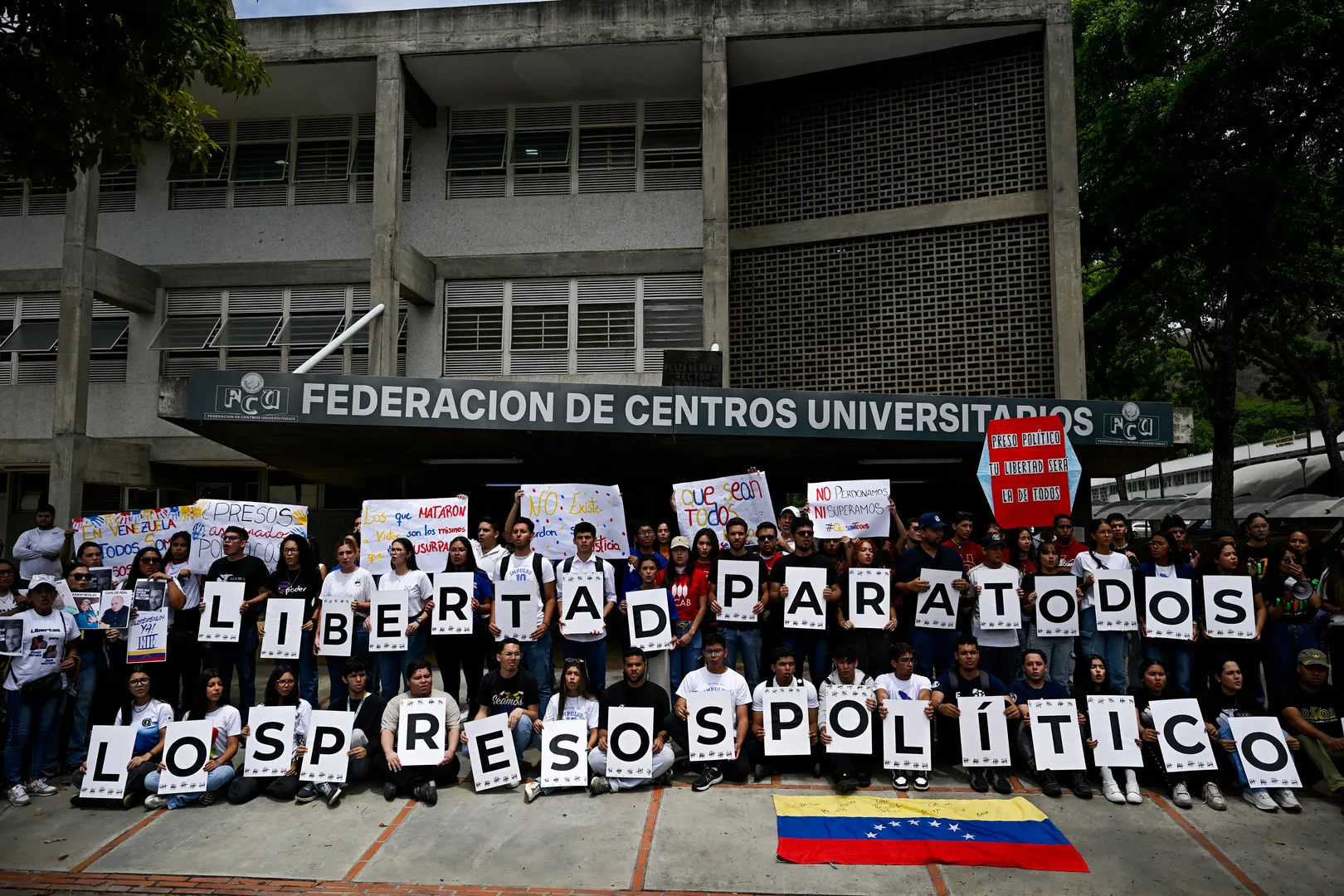
Students from Venezuela’s leading universities blocked the main highway in Caracas to demand the immediate release of political prisoners. Demonstrators said more than 450 people remain imprisoned despite government promises of amnesty and reconciliation.

Source link

Venezuela: US Removes Enriched Uranium from Obsolete Nuclear Reactor

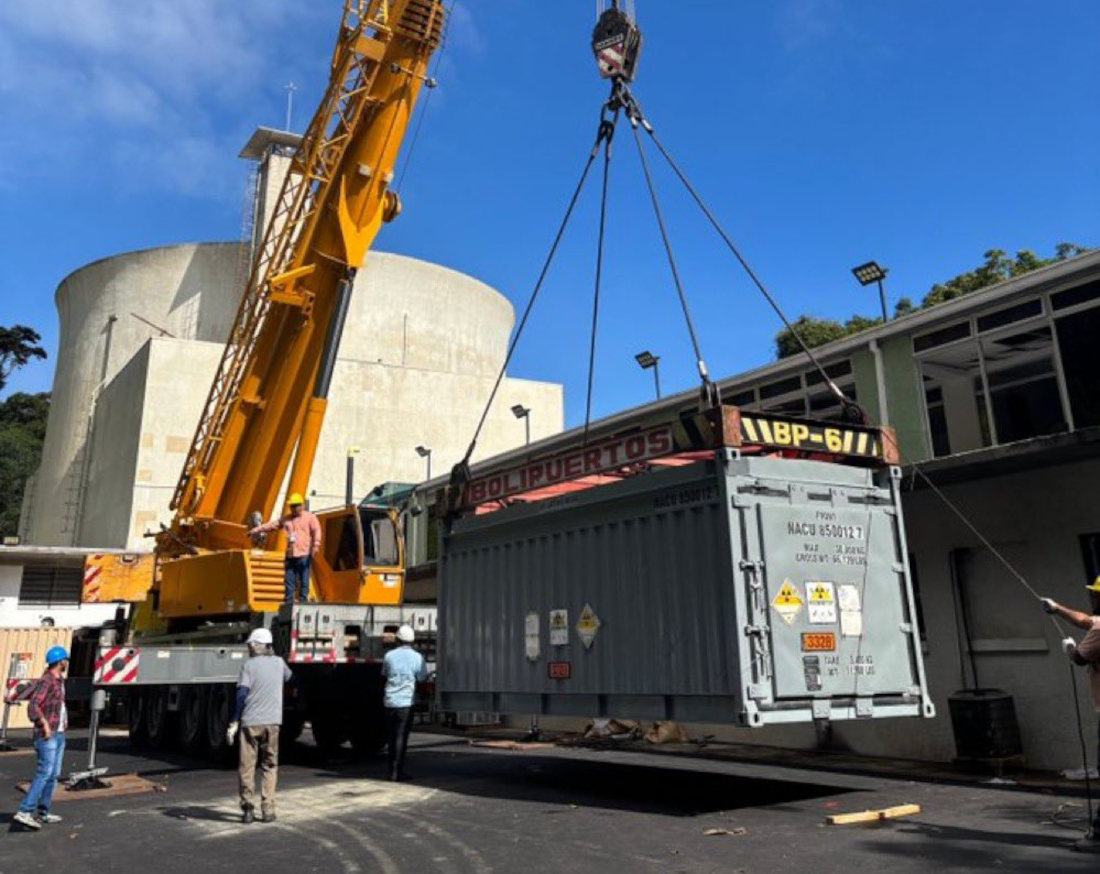
Removal of enriched uranium from Venezuela to be transported to the United States. (@usembassyve/X)

Mérida, May 12, 2026 (venezuelanalysis.com) – The US and Venezuelan governments, in coordination with the United Kingdom and the International Atomic Energy Agency (IAEA), completed the extraction and secure transfer of 13.5 kilograms of enriched uranium. 

This radioactive material had been stored since 1991 following the decommissioning of a nuclear research reactor of the Venezuelan Institute for Scientific Research (IVIC) in Miranda state.

The operation to remove the uranium, enriched over 20 percent, was carried out in late April under strict security and IAEA oversight. The shipment was transported by land to the port of Puerto Cabello, and then by sea on a British vessel to the US Department of Energy’s Savannah River Site in South Carolina.

The Venezuelan government, led by Acting President Delcy Rodríguez, released a statement on Thursday, May 7, explaining that it had “repeatedly communicated to the IAEA the need to remove the disused sources and materials that remained in the country.”

The official statement emphasized that the January 3 US military attack, in which two US missiles struck approximately 50 meters from the reactor, had “objectively increased the risk level and urgency” of extracting the radioactive material. Caracas emphasized that the transfer was carried out in accordance with safety standards and international nuclear non-proliferation treaties.

The US Embassy in Venezuela described the operation as “a victory for the United States, Venezuela, and the world.” In a statement released on Friday, the diplomatic mission praised the “decisive leadership of President Donald Trump” and the work of US on-the-ground teams that “completed in months what would have normally taken years.”

According to the official US note, the recovered material will be used for research and the development of new technologies as part of what the Trump administration calls a “nuclear renaissance.”

While the statement did not detail specific uses, the dilution and processing of highly enriched uranium can provide inputs for medical isotope production, experimentation with next-generation reactors, and fuel development for small modular reactors (SMRs), which operate at enrichment levels up to 20%.

The State Department, through Assistant Secretary for Arms Control and Nonproliferation Christopher T. Yeaw, has stated that “working alongside our DOE/NNSA, UK, IAEA, and Venezuelan counterparts, we’ve demonstrated how effective partnerships can eliminate nuclear proliferation risks and enhance global nuclear security.”

For its part, the International Atomic Energy Agency confirmed that it provided “nuclear safety and security guidance, training, and technical expertise.” In a statement, the IAEA highlighted the risk of radioactive material “falling into the wrong hands,” while Director General Rafael Grossi praised “the professionalism of all the parties involved.”

The IAEA has provided details of the transfer of uranium enriched to just above 20 percent of the fissile isotope uranium-235 from the RV-1 reactor at IVIC, located 15 km southwest of Caracas. This level is regarded as the threshold for “highly enriched uranium” (HEU), though it is significantly below the 80 percent required for a nuclear weapon.

The RV-1 was Venezuela’s first nuclear research reactor and a pioneer project in Latin America. The initiative was established in 1960 under the vision of scientist Humberto Fernández-Morán. Its primary function was the production of radioisotopes for medical purposes, as well as for experiments in the fields of physics and biology. Following the decision to close the facility permanently in 1991, the site was converted for use as a Gamma Ray Sterilization Plant (Pegamma).

The old reactor drew renewed attention during the US January 3 bombings, which included strikes that hit IVIC facilities and also saw special forces kidnap President Nicolás Maduro.

The uranium removal marks the conclusion of Venezuela’s nuclear history, which began in the 1950s under the “Atoms for Peace” program.

Edited by Ricardo Vaz in Caracas.


Source link