Venezuela

The Venezuelanalysis Podcast Episode 43: Venezuela in a New Stage of US Imperialism

The Venezuelanalysis Podcast is back. In our new season premiere, we tackle the fallout of the January 3rd military escalation against Caracas, an event that marks a volatile new chapter in the long history of US intervention in the region.

Join Venezuelanalysis Lead Editor Ricardo Vaz, Associate Editor Lucas Koerner, and VA Founder Greg Wilpert as they break down the geopolitical shift from “maximum pressure” to direct confrontation. This episode goes beyond the headlines to analyze the underlying causes and the global consequences of Washington’s renewed focus on “its” hemisphere.

Powered by RedCircle

Source link

Venezuela Reclaims US Diplomatic Venues as Rodríguez Promotes ‘Faith Diplomacy’

Caracas and Washington have fast-tracked a diplomatic rapprochement following the January 3 bombings and kidnapping of President Nicolás Maduro. (VTV)

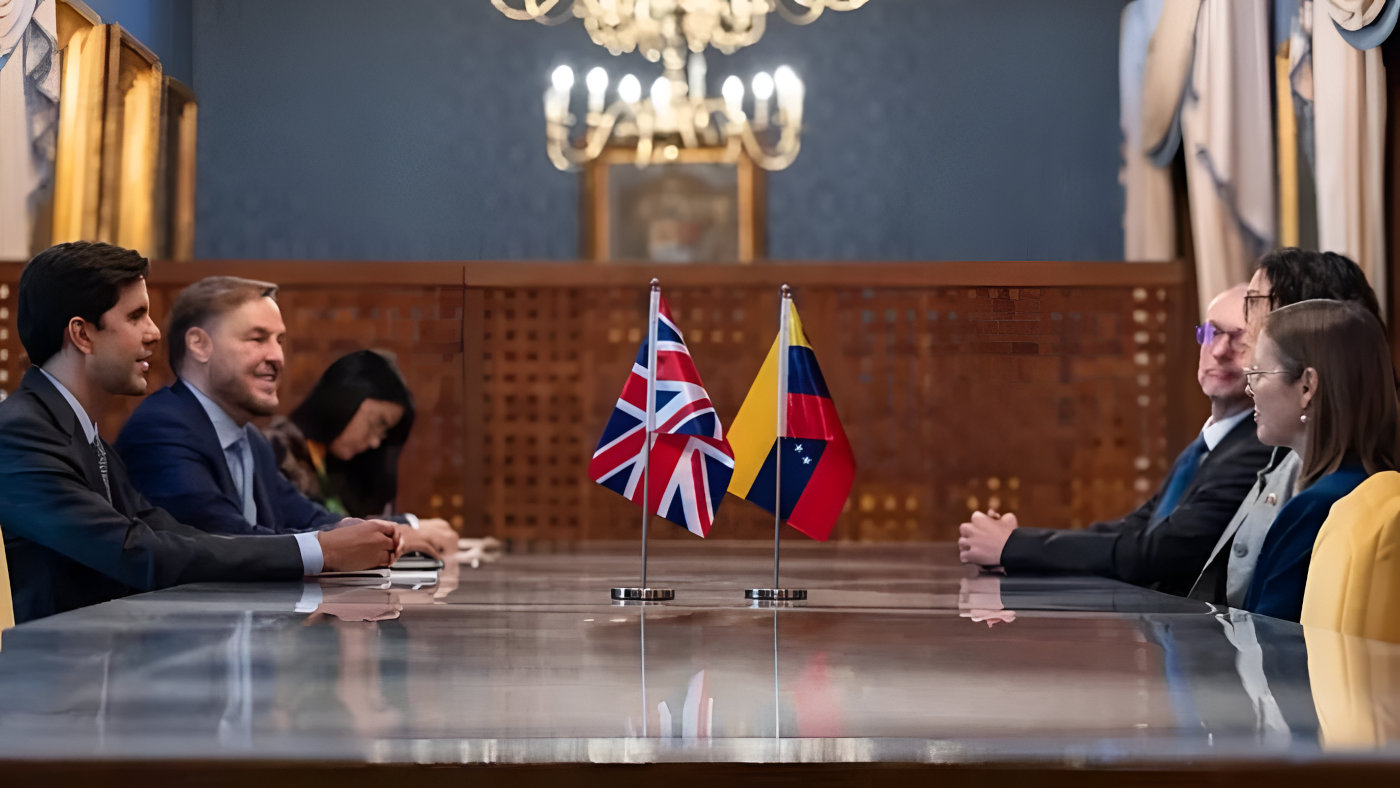
Mérida, March 31, 2026 (venezuelanalysis.com) – The Venezuelan government has officially retaken control of its diplomatic headquarters in Washington, DC, as part of the two countries’ diplomatic rapprochement.

The move followed days of high-level activity in the US capital by a Venezuelan delegation with the aim of rehabilitating consular services for hundreds of thousands of nationals residing in the United States.

On Thursday, Venezuelan officials re-hoisted the national flag at the diplomatic mission buildings, which had been under the “temporary control” of the US State Department since 2023.

The properties, including the embassy in Georgetown and the ambassador’s residence, were previously handed over to the self-proclaimed “interim government” led by Juan Guaidó after the first Trump administration recognized it as Venezuela’s legitimate authority in 2019. The Venezuelan embassy was forcefully taken over by security forces after a group of solidarity activists attempted to defend it from the US-backed hardline opposition.

Caracas’ delegation, sent by Acting President Delcy Rodríguez, was led by Félix Plasencia, Venezuela’s Chargé d’Affaires to the US, and Oliver Blanco, Vice-Minister for Europe and North America. The group inspected the facilities, and Plasencia confirmed that the buildings would undergo an immediate “rehabilitation process” to resume institutional functions.

“This is a significant achievement in the protection of our national assets,” Plasencia stated via social media, sharing images of the Venezuelan flag outside diplomatic venues.

“We are working to reinstate these spaces as a service to all Venezuelan citizens, to support them in their consular needs, the authentication of their identity documents, and the protection of their rights abroad,” he added.

According to Blanco, the delegation held meetings with several State Department officials last week with the purpose of “exploring opportunities to strengthen the bond between both nations” and establishing a permanent presence to address bilateral interests, specifically in trade, migration, and energy.

Venezuela’s retaking of its diplomatic facilities on US soil was made possible by the US Treasury Department’s Office of Foreign Assets Control (OFAC) issuing General License 53.

The sanctions waiver allows the provision of goods and services to Venezuela’s diplomatic missions, allowing them to engage in financial transactions to ensure the normal functioning of consular activities.

Since 2019, Venezuelans residing in the US have faced hurdles to access official channels for passport renewal and birth certificate issuance, and have been forced to seek alternative solutions through third-country consulates or by utilizing expired documentation. 

Venezuelan migrants have also been heavily targeted by the Trump administration’s anti-migration crackdown, with hundreds of thousands placed at risk of deportation with the suspension of Temporary Protected Status (TPS) and the CHNV parole program. US and Venezuelan authorities presently coordinate three weekly deportation flights.

Caracas and Washington fast-tracked a diplomatic re-engagement in the wake of the January 3 military attack that saw US special forces kidnap Venezuelan President Nicolás Maduro and First Lady Cilia Flores. The pair is currently facing charges including drug trafficking conspiracy.

The two countries formalized the reestablishment of diplomatic ties on March 5 following a seven-year hiatus. Days later, the Trump administration recognized Rodríguez as Venezuela’s “sole” authority. On Monday, the US State Department announced the reopening of the US embassy in Caracas.

Since January, the acting president has hosted multiple White House officials who have praised her government’s pro-business reforms in the energy and mining sectors. For her part, Rodríguez has defended diplomacy and the prospect of “mutually beneficial” relations with the US.

“Faith diplomacy” gathering

The Rodríguez administration’s outreach to the US recently included a high-profile “faith diplomacy” gathering with evangelical pastors. Venezuelan authorities stated that the meeting aimed to promote “peace and spiritual union.”

The Friday event in the Poliedro in Caracas featured prominent international religious figures alongside Venezuelan cabinet members and the national evangelical community. The guest of honor was Pastor Ramiro Abel Peña Jr., a key figure in the “Office of Faith-Based and Neighborhood Partnerships” during Trump’s first term and a current spiritual advisor to the US President.

Peña, a pastor from the “Christ the King” Baptist Church in Waco, Texas, has cultivated close ties with the Trump family and has been a vocal advocate for hardline evangelical and zionist causes. During the event, Peña led the central prayer for the “restoration” and “blessing” of Venezuela.

He was joined by other international religious leaders such as Pastor Roosevelt Fonseca of the “Christian Life Mission” (Colombia-USA), who participated in “revival prayers” intended to foster social cohesion during the 2026 Holy Week.

For her part, Rodríguez called for “an end to hatred” and reaffirmed the government’s commitment to a national amnesty law that has seen thousands released from prison or have their judicial cases dropped. She urged a prayer for an end to US sanctions and advocated for Venezuelans to look to “the words of Jesus” as a guide to overcoming the country’s struggles.

Edited by Ricardo Vaz in Caracas.


Source link

Venezuela’s ‘Chavismo’ movement faces a crossroads after US attack | US-Venezuela Tensions News

A new economic partner?

Libertad Velasco, a Chavista who grew up in the 23 de Enero neighbourhood, was only a teenager when Chavez came to power.

She went on to become one of the founding members of the youth wing of Chavez’s party, the United Socialist Party of Venezuela (PSUV). Eventually, she became the head of a government agency to expand access to higher education to members of vulnerable communities.

Still, Velasco described the period after Maduro’s abduction as a sort of awakening.

“It’s like we’re looking at ourselves without makeup,” Velasco said. “Now, everything is laid bare, revealed in its purest state, and we are beginning to recognise ourselves again.”

Since the US attack and Maduro’s removal, Velasco has thought deeply about her “red lines”: the ideals she feels should not be violated under the new government.

Standing up against invasive foreign powers remains one of her top priorities.

“I refuse to be colonised,” Velasco said. “For me, we shouldn’t have relations with Israel, and abandoning anti-imperialism is non-negotiable.”

Yet Velasco does not believe that the Venezuelan government has crossed that line yet. Rather, she is open to the prospect of the US as a trading partner to Venezuela, paying for access to its natural resources.

“It is a customer who should pay market price for the product they need. If Venezuela must act as a market player to lift people out of suffering, I can go along with that,” Velasco said.

Delia Braches in her home in Caricuao, Venezuela
Delia Bracho of Caricuao, Venezuela, says she has grown disillusioned with the Chavismo movement [Catherine Ellis/Al Jazeera]

But it is unclear whether that is happening. Critics point out that the Trump administration has demanded greater control over Venezuela’s natural resources. It has even claimed that Chavez stole Venezuelan oil from US hands.

Already, Venezuela has surrendered nearly 50 million barrels of oil to the US, with the Trump administration splitting the proceeds between the two countries.

Rodriguez, Venezuela’s interim president, has also agreed to submit a monthly budget to the US for approval.

Among Chavistas, there remains debate about whether the relationship with the US is beneficial or exploitative.

But economic recovery is an overwhelming priority for many Venezuelans of all political leanings. Under Maduro, Venezuela entered one of its worst economic crises in history. Inflation is currently at 600 percent, and living standards remain low.

Many Chavista loyalists blame US sanctions for their economic woes. Yet, analysts credit a combination of factors, including declining oil prices, economic mismanagement and pervasive corruption.

Delia Bracho, 68, lives in a district of Caracas called Caricuao, where water is delivered just once a week. Once a committed Chavista, she said her faith in the movement has faded.

Today’s movement, she explained, has been “ruined”, and she no longer wants anything to do with it.

“It’s like when you put on a pair of shoes,” she said. “They break, and you throw them away. Are you going to pick them up again, knowing they are no longer useful?”

Despite her initial fear after the US intervention, Bracho said she now feels cautiously optimistic that Venezuela might change for the better.

“It’s not that everything is fixed, but there is a different atmosphere — one of hope.”

Source link

Like in Ethiopia? A Failed Transition’s Lessons for Venezuela

In 2012, I participated in a United Nations mission in Ethiopia for a technical cooperation event on international trade, which at the time was my area of expertise. Since then, every major development in Venezuela brings me back to that trip, which proved far more revealing than I could have imagined. More than once, I have found myself thinking: this is just like in Ethiopia.

I witnessed firsthand, before it unfolded in Venezuela, that totalitarian systems do not just collapse. They transform in order to survive and advance, as Hannah Arendt argued. Over time, I also came to understand that while authoritarian regimes may promise reform and a democratic transition, without sustained external and domestic commitments those promises tend to dissolve sooner rather than later. This insight is particularly relevant in the current Venezuelan process.

On my way from Addis Ababa airport to the hotel, I noticed large portraits of a politician displayed throughout the city. Thinking of the strongman politics I knew from home, I asked the official accompanying me whether he was the president. “No,” he replied, “the prime minister. He died.” Surprised, I asked why his images were still everywhere. “Don’t these images bother the new one?” “No, because he chose his successor,” came the answer. When I pressed further and asked whether people had voted for him, the response was matter-of-fact: they belonged to the same party, and parliament had selected him.

In those few days, I caught a glimpse of what Venezuela would later experience between 2013 and 2019, after Chávez died and his handpicked successor Maduro came to power. I saw a country marked by hunger, where people wandered with a vacant, distant gaze. A look that would later become painfully familiar during Venezuela’s humanitarian crisis. That image contrasted sharply with the ruling elite, visibly prosperous, gathering in luxury hotels and indulging in imported comforts. I saw women collecting firewood to cook because two decades of socialist mismanagement and corruption had destroyed the electrical system. I saw the haze produced by environmental degradation, similar to what would later hang over Caracas. I also observed a strong Chinese presence, already a dominant economic partner and creditor.

During that mission, I came to understand how the ruling system had entrenched poverty, controlled resources, and normalized corruption, not merely as governance failures but as mechanisms of social control. Years later, working from a human rights perspective, I would recognize these patterns as instruments of ideology, repression, and economic, and ethnic exclusion.

His profile seemed ideal: a system-man, with military and security credentials, Western education, and a discourse centered on reform and reconciliation.

I also witnessed the regime’s hostility toward international actors, imposing strict conditions on United Nations operations and limiting the work of officials on the ground. Hearing the likes of Jorge Rodríguez and other Venezuelan representatives threaten Volker Turk this year, the High Commissioner for Human Rights, did not surprise me. I had seen that before, years earlier, in the Horn of Africa.

Now, I return to the phrase like in Ethiopia because, following the US operation to capture Maduro, the proposed plan for stabilization, recovery, and democratization echoes a trajectory that Ethiopia followed over the past decade. 

The Ethiopian Delcy

Let’s go back to 2018. A figure from within the ruling coalition, Abiy Ahmed, rose to power after three years of widespread protests and political unrest that led to the resignation of Hailemariam Desaleng. Although it is not clear how much the US and the EU were involved in his rise, he was not directly imposed from outside as has been the case with Delcy Rodríguez, but he was “unequivocally embraced” by the United States and the European Union. Abiy became the media’s darling, who placed their bets on him and promoted the new leader as a reformist capable of modernizing the country.

His profile seemed ideal: a system-man, with military and security credentials, Western education, and a discourse centered on reform and reconciliation. Between 2018 and 2020, Ethiopia experienced a period of remarkable transformation on three fronts: recovering the economy, stabilizing the region and strengthening the rule of law.

The economy grew at an annual rate of around 7 percent, key sectors were opened to foreign investment, and political reforms were introduced, including the release of political prisoners, the return of those in exile, the legalization of opposition parties, and greater press freedom. Women were incorporated into government at unprecedented levels. On the international stage, Ethiopia expanded its diplomatic engagement, signed trade agreements, and most notably reached a peace agreement with Eritrea, which earned Abiy the Nobel Peace Prize.

Political attention from foreign actors is limited, international agendas evolve rapidly, and what might begin as a priority can quickly be overtaken by other crises.

Yet this period of optimism proved fragile. Tensions in 2020 with the Tigray People’s Liberation Front, once part of the ruling coalition, escalated into a full-scale internal conflict. Abiy’s government shifted course and relapsed. The reform process gave way to a reassertion of authoritarian power, along with widespread human rights violations, restrictions on the press, and accusations of war crimes.

The response from the United States and the European Union included targeted sanctions, visa restrictions, suspension of trade benefits, and partial freezes on aid. Abiy’s international image deteriorated significantly, and Ethiopia began to diversify its alliances, strengthening ties with China, engaging with Russia, and expanding cooperation with actors such as Turkey, the United Arab Emirates, and Iran, eventually becoming members of the anti-West BRICS alliance.

Careful with the honeymoon phase

The Ethiopian case offers at least one revealing lesson. External support can facilitate an initial opening and even generate strong economic momentum, but it does not guarantee a democratic transition. 

When international commitment weakens before new institutional rules are consolidated, the outcome is often not transformation but reconfiguration. The system adapts to the new reality, but is not replaced or merely revamped. This dynamic reflects a broader pattern in contemporary international politics. Particularly since the costly experiences of Iraq and Afghanistan, external actors have tended to favour reform processes led by internal figures rather than imposing leadership from outside. However, the central challenge lies not in how these processes begin, but in what happens when external support diminishes, which often occurs during the crucial consolidation phase.

Both the United States and Europe tend to operate within relatively short time horizons when supporting political transitions, often between two and four years, three if I revert to an American security and communications expert whom I worked with yet in another career chapter. These timelines are shaped by electoral cycles, budgetary constraints, shifting strategic priorities, and, in the European case, the difficulty of sustaining consensus among multiple states with divergent interests. Political attention is limited, international agendas evolve rapidly, and what might begin as a priority can quickly be overtaken by other crises. The result is a form of strategic fatigue that has been evident in multiple contexts over the past decades.

By contrast, the transitions most often cited as successful (such as those in Chile, South Africa, and Eastern Europe) were characterized by sustained external engagement over much longer periods, often a decade or more, combined with favourable internal conditions. These cases demonstrate that democratic consolidation is not the product of a short window of opportunity, but of a prolonged commitment.

For Venezuela, the implications are clear. The current process may well generate an initial opening, attract investment, and produce early signs of stabilization. But without sustained international engagement beyond the initial phase, there is a risk that the system will stabilize without fundamentally democratizing. The lesson from Ethiopia is not that transition is impossible, but that it is incomplete if the conditions for its consolidation are not maintained.

The real challenge, therefore, is not how the transition begins, but whether it is sustained long enough to transform the underlying structures of power. Otherwise, we may once again find ourselves looking at a familiar outcome and thinking, once again, like in Ethiopia.

Source link

Trump Administration Issues New Licenses Opening Venezuela Mining to Western Firms

Venezuela contains extensive gold reserves in the east of the country. (AP)

Caracas, March 30, 2026 (venezuelanalysis.com) – The US Treasury Department has published three sanctions waivers related to the Venezuelan mining sector.

On Friday, the Treasury’s Office of Foreign Assets Control issued general licenses 51A (GL51A), 54 (GL54) and 55 (GL55) to authorize Western conglomerates’ dealings with Venezuelan minerals.

GL51A allows US entities to engage in operations to purchase, transport, and sell “Venezuelan-origin minerals, including gold.” However, it does not permit extraction or refining activities. The waiver replaced General License 51, which established conditions only for gold-related operations.

GL54 allows US entities to provide “goods, technology, software, or services” connected to mining activities in Venezuela. Finally, GL55 grants corporations permission to engage with Venezuelan state entities to negotiate contracts, but requires them to apply for a specific license before the contracts are enacted.

The latest US Treasury sanctions exemptions mirror recent licenses related to the Venezuelan energy industry, blocking transactions with entities from Cuba, China, Iran, North Korea, and Russia. They likewise mandate that all Venezuela-bound payments be made to a US Treasury-run account. Since January, the Trump administration has imposed control over Venezuelan oil exports, collecting revenues before disbursing a portion at its discretion to Caracas. 

On Friday, Canadian conglomerate Roland Mineral Enterprises announced plans to “aggressively seek out and acquire interests in Venezuelan mineral properties.”

“Recent material events in Venezuela, including the new Draft Mining Law, make Venezuelan gold, silver and copper deposits and resources especially attractive for pioneering, transformative and rapidly adaptable resource companies like Roland Mineral Enterprises,” a press statement read.

Roland went on to disclose deals to access information on Venezuelan natural resource deposits and declare interest in gold projects such as Las Cristinas, estimated to contain over 14 million ounces of gold.

Western interest in Venezuelan minerals was boosted by a recent visit from US Interior Secretary Doug Burgum, who holds the natural resource portfolio. Burgum, accompanied by over 20 US and Canadian mining executives, held a meeting with Venezuelan Acting President Delcy Rodríguez and trumpeted the lucrative opportunities in the sector.

Burgum’s visit also saw US $100 million worth of gold bars shipped to the US in a deal involving Trafigura.

The negotiation of mining contracts remains contingent on an ongoing process to introduce new legislation. On March 9, the Venezuelan National Assembly preliminarily approved a new Organic Mining Law establishing favorable conditions and incentives for foreign capital.

Legislators have advanced in debating a second and updated version of the law, approving the first 55 of its 130 articles on Thursday. A final session is expected in early April. According to a draft of the latest version of the law seen by Venezuelanalysis, the bill establishes a new regulatory framework for mining at different scales, while also allowing private companies to take disputes to international arbitration.

The law expands conditions for private mining concessions, which can last up to twenty years and be renewed for two additional ten-year periods, and do not require National Assembly approval. Additionally, the executive can lower fiscal responsibilities for mining firms at its discretion. The law establishes 13 and 6 percent caps for royalties and a mining tax.

The law’s approval will repeal the current mining law, approved by the Hugo Chávez government in 1999, as well as a 2015 decree imposing state control over mining activities. Since 2015, the Nicolás Maduro administration looked to mining as a potential revenue source, particularly in the 112,000 square-kilometer Orinoco Mining Arc. Nevertheless, the sector was targeted by US sanctions, while the proliferation of irregular mining groups has generated environmental and human rights concerns.

Venezuela possesses vast proven reserves of gold, iron, and bauxite, as well as lesser quantities of copper and nickel. Analysts have also drawn attention to Venezuela’s significant reserves of coltan.

Venezuela’s mining reform follows a pro-business overhaul of the country’s Hydrocarbon Law. In recent weeks, Western energy giants Chevron, Eni, Repsol, and Shell have signed agreements for oil and gas exploration under the improved conditions of the new law. Acting President Rodríguez has touted the country’s reforms in lobbying foreign investors.

In parallel to oil and mining, Venezuelan authorities are also preparing to open the state-run electric sector to private capital. Acting President Rodríguez announced legislative reform plans, while a spokesman for the FEDECÁMARAS business lobby reported that Siemens and General Electric recently sent delegations to evaluate Venezuela’s electrical infrastructure.

Edited by Lucas Koerner in Fusagasugá, Colombia.

Source link

U.S. resumes embassy operations in Venezuela after 7 years

In a statement released Monday, the U.S. representative in Venezuela, Laura Dogu, confirmed that Washington “formally resumed operations” in Caracas, File Photo by Gustavo Amador/EPA

March 30 (UPI) — The United States has reopened its embassy in Caracas, Venezuela, after seven years, marking a concrete step toward restoring diplomatic relations between the two countries, according to an official statement released by the U.S. mission.

In that statement released Monday, the U.S. representative in Venezuela, Laura Dogu, confirmed that Washington “formally resumed operations” in Caracas, signaling the return of permanent diplomatic staff and the beginning of a new phase in bilateral relations.

The announcement comes weeks after a key symbolic gesture: the raising of the U.S. flag at the diplomatic compound on March 14, exactly seven years after it was lowered in 2019, when both countries broke relations.

Venezuelan media reported that the ceremony was led by Dogu, who said the act marked “a new era” in bilateral ties.

According to members of the diplomatic mission, the reactivation will allow resumption of key functions, such as engagement with political actors and civil society, outreach to the business sector and rebuilding facilities, with the aim of restoring consular services in the future.

The United States closed its embassy in Caracas in March 2019 amid Venezuela’s political crisis. Since then, diplomatic management had been handled through the United States External Office for Venezuela based in Bogotá.

Although the embassy has resumed operations, the full restoration of consular services and the appointment of an ambassador have not yet been announced, indicating the process remains in an initial phase.

The resumption of operations takes place in a context of gradual rapprochement between both governments after recent political changes in Venezuela and could have implications in areas such as energy, migration and trade relations.

Source link

Russian oil tanker skips Cuba, docks in Venezuela; 2nd tanker in limbo

People walk past rubbish accumulating in the streets of Havana on Wednesday. The Caribbean nation has been experiencing a severe energy crisis with the island nation virtually out of fuel. Photo by Ernesto Mastrascusa/EPA

March 27 (UPI) — A tanker carrying Russian fuel initially headed to Cuba ended up docking in Venezuela after weeks of deviations, while a second oil-carrying vessel remains without a clear destination in the Caribbean amid the island nation’s energy crisis.

The vessel Sea Horse, sailing under the Hong Kong flag, had been closely tracked by maritime analysts since it departed from the eastern Mediterranean carrying between 190,000 and 200,000 barrels of Russian diesel initially destined for Cuba.

During its voyage, the tanker repeatedly changed its declared destination. It went from being listed as en route to Havana to indicating “Caribbean Sea” and later Trinidad and Tobago in a pattern that reflected growing uncertainty about its final destination.

Ultimately, the Sea Horse arrived at Puerto Cabello, in Venezuela, on Wednesday morning after nearly 50 days in transit.

The diversion occurred in a context of increasing pressure from the United States to restrict fuel supplies to Cuba, which is facing a severe energy crisis with recurring blackouts and oil shortages.

The case of the Sea Horse is not isolated. Maritime tracking data show that other vessels have altered their routes or avoided declaring final destinations in recent weeks, amid sanctions that explicitly exclude Cuba from relaxed sanctions for Russian oil trade.

The second vessel, the Russian tanker Anatoly Kolodkin, maintains its uncertainty.

The ship, which is carrying roughly 730,000 barrels of crude, continues in the Caribbean Atlantic without a publicly confirmed final destination.

The maritime tracking website VesselFinder shows the destination of the Anatoly Kolodkin as “Atlantic for order,” a designation used in the industry to indicate that the vessel is sailing without a publicly confirmed final destination.

On Tuesday, maritime intelligence analyst Michelle Wiese Bockmann told Politico that the vessel could arrive in Cuba in “two or three days,” although its trajectory remains without clear confirmation.

The most recent AIS tracking data indicate that the vessel is about 487 miles from Turks and Caicos, with an estimated arrival Monday. However, its current vectors do not point directly toward Cuba, reinforcing uncertainty about true destination.

The behavior of the Kolodkin raises questions in a highly monitored environment.

“There are details that just don’t add up,” said Evan Ellis, a professor at the U.S. Army War College Strategic Studies Institute.

“Given the U.S. naval and air assets in the area, the Russian tanker has to know it won’t get in undetected. The question is whether this is some kind of cat-and-mouse game, or if shifting expectations, possibly tied to developments in Cuba, have changed whether it believes it can enter unopposed,” he said.

“Maybe the deliberate attempt was meant to apply pressure, and then once it got a reaction, it was backing off,” he added.

For Ellis, the key point remains outside the public radar.

“The biggest story is what’s going on behind the scenes that we don’t know about,” he said.

The eventual arrival of the Kolodkin also could force a decision from Washington. Analysts cited by the Miami Herald say the options range from diplomatic pressure to a possible interception by the U.S. Navy or U.S. Coast Guard.

“At the end of the day, what we really have to watch for is what actually happens,” said Jorge Piñón, a senior research collaborator at the University of Texas Energy Institute.

Cuba imports about 60% of its energy and depends on external supplies to sustain its electrical system, making each shipment a critical factor within a scenario of growing geopolitical tension.


Source link

Venezuela: Judge Refuses to Dismiss Maduro Case, Challenges US Blocking of Defense Funding

Solidarity activists gathered outside the courthouse and demanded the release of Maduro and Flores. (Katrina Kozarek / Venezuelanalysis)

Caracas, March 26, 2026 (venezuelanalysis.com) – US Judge Alvin Hellerstein ruled out dismissing the case against Venezuelan President Nicolás Maduro and First Lady Cilia Flores in a hearing on Thursday in Brooklyn.

The defense team for Maduro and Flores—who face charges including drug trafficking conspiracy and weapons possession—requested that the case be thrown out after the US Treasury’s Office of Foreign Assets Control (OFAC) denied them authorization to use Venezuelan state funds to pay for legal counsel. OFAC had initially granted the license on February 9 but revoked it three hours later.

New York Southern District Judge Hellerstein declined to throw out the charges due to the blockaded funds, calling it “a serious step based on hypotheticals.” However, he did not formally rule and left the door open to revisit the decision in the future. 

US Justice Department prosecutor Kyle Wirshba argued that allowing access to Venezuelan state funds would undermine existing sanctions policy, adding that if the defendants are unable to hire private attorneys, court-appointed counsel could be assigned. Maduro attorney Barry Pollack countered that such a measure would violate their Sixth Amendment right to choose their own legal representation.

During the hearing, Hellerstein challenged the prosecutors’ arguments, adding that OFAC’s personal sanctions against Maduro and Flores would also block them from using personal funds. The judge likewise disagreed with the prosecution’s claims that the blocking of funding for the defense was a matter of national security, stating that Maduro and Flores “no longer represent a threat.” 

He further remarked that “things have changed” and that the United States is already “doing business” with Venezuela.

According to observers in the courthouse, Maduro and Flores, both in beige prison uniforms and handcuffed, appeared calm throughout the hearing, using headphones for simultaneous translation. Neither spoke. Observers noted that Maduro appeared thinner. Flores’ attorney, Mark Donnelly, made an urgent request for a medical evaluation, specifically an electrocardiogram, citing a pre-existing condition. The judge approved the request.

Hellerstein will set a new court date in the coming days. Maduro and Flores have not requested bail and were returned to the Metropolitan Detention Center in Brooklyn after the hearing.

Maduro and Flores, who is also a lawmaker, were kidnapped by US special forces during a military attack against Caracas on January 3. They pleaded not guilty at their arraignment two days later. Despite recurring “narcoterrorism” accusations over the years, US officials have not presented evidence tying high-ranking Venezuelan leaders to narcotics activities. Specialized agencies have consistently found Venezuela to play a marginal role in global drug trafficking.

Trump calls for additional ‘charges’

Prior to the hearing, US President Donald Trump argued before reporters that additional charges should be brought against the Venezuelan president. 

“He emptied his prisons into our country, and I expect that at some point he will be charged for that,” he said. Trump has repeatedly raised unfounded claims that the Venezuelan government “emptied” prisons and mental institutions into US territory.

Outside the courthouse, a heavy police presence separated Venezuelan opposition supporters from solidarity activists demanding the release of Maduro and Flores and an end to US attacks against the Caribbean nation.

In Caracas, social movements gathered at Plaza Bolívar to express support for the president and first lady. The demonstration followed another mobilization earlier in the week demanding the lifting of US economic sanctions against Venezuela.

Speaking at the rally, lawmaker Nicolás Maduro Guerra—the president’s son and also facing US Justice Department charges—described his father as “a worker” who identifies “as a son of God above any political office.” Days earlier, in a social media post, Maduro Guerra had said his father would appear “in high spirits” and “in good shape” due to regular exercise.

He was joined by Caracas Mayor Carmen Meléndez, while the ruling United Socialist Party of Venezuela (PSUV) also called for Maduro’s release in a public statement

For her part, Acting President Delcy Rodríguez has yet to comment on Thursday’s hearing. Venezuelan authorities have also not publicly addressed US efforts to block the funding of Maduro and Flores’ legal expenses. 

Since January 3, the Rodríguez administration has led a diplomatic rapprochement with Washington, with several White House officials visiting Venezuela in recent weeks. A Venezuelan government delegation arrived in the US capital on Thursday, led by Vice Minister Oliver Blanco, who reported meetings with State Department officials to boost “mutually beneficial” relations.

Edited by Ricardo Vaz in Caracas.

Source link

Venezuela Fury, 16, looks amazing in gold dress and tiara as she celebrates hen do with mum Paris ahead of her wedding

BRIDE-TO-BE Venezuela Fury, 16, looked amazing in her gold dress and tiara as she celebrated her hen do with mum Paris ahead of her wedding.

The teen has enjoyed a whirlwind engagement after it was revealed her boyfriend Noah Price, 17, got down on one knee at her 16th birthday party and popped the question.

Venezuela Fury looked incredible as she arrived at her hen doCredit: Splash
The teenager was joined by her glam mum ParisCredit: Splash
Venezuela pulled out all the stops for her hen do at Morecambe Football ClubCredit: Splash

The young couple have not yet announced a date for their wedding, but as the hen do was last night, this could be a big hint their big day is getting closer.

Venezuela, who appears in the Fury family’s hit Netflix reality series At Home With The Furys, pulled out all the stops as she stepped out for her bachelorette party.

The teen was dressed in a stunning metallic dress, and matching strappy heels.

Venezuela wore her hair up on top of her head with a tiara and bridal veil.

RED FACED

Paris Fury left mortified as McDonald’s drive thru takes an unexpected turn


MUM’S CONCERN

Paris Fury rushes daughter, 4, to hospital as Venezuela ‘almost cried’

She also made sure to flash her huge engagement ring as she made her way into her hen do, which was held at Morecambe Football Club

As Venezuela walked into her party, she told The Daily Mail: “I can’t wait. I’m really looking forward to married life. I’m very happy and excited.”

The youngster was joined by her glam mum Paris, 36, who looked incredible in her white bodycon dress.

The mother-of-eight showed off her stunning figure in the skintight dress.

It has been reported that Venezuela had an estimated 300 guests at the hen party.

According to the Mail, party goers were treated to a huge buffet, Karaoke and a DJ.

Venezuela added extra glam to her outfit with a tiara which had a bridal veil attachedCredit: Splash
The youngster needed some help with her dress as she got out of the carCredit: Splash

When it was announced last September that the teenager had got engaged, there was some backlash from fans, due to her age.

Venezuela has since been forced to hit back at trolls who have said that she is too young to marry.

Earlier this month the teen’s mum Paris, who has seven other children, shared her thoughts on the upcoming wedding.

“I didn’t feel old enough for this, but Venezuela is over-the-moon happy,” she told The Mirror.

Venezuela is seen here with her famous dad Tyson and mum Paris along with her husband-to-be, Noah PriceCredit: TikTok/@parisvenezuela

“The two of them are in their own little bubble. And, look, I got married myself at 18.”

Although Paris is delighted for Venezuela and Noah, she insisted it is “too soon” for the pair to start having children – saying they want to travel first.

The mother-of-eight also admitted that she’s worried about herself when her eldest child eventually moves out.

She said: “I’ll feel like I’ve lost my arm. It’s going to hit me hard.

Paris recently opened up about her daughter Venezuela getting married at 16Credit: Instagram

“Right now, Tyson’s in training camp in Thailand, the kids are in school, and Venezuela and I… basically co‐parent!

“But I do let her have her space. The weekends are her time. I know she’ll be fine, getting on with an exciting new life. It’s me I’m worried about.”

It comes as bride-to-be Venezuela recently revealed she is already packing up items to move into a house with her fiance Noah, who is a boxer and an East Midlands belt holder.

In a Q&A with fans on Instagram, the teenager confirmed she would be staying with her parents until she is married.

Paris said she doesn’t feel ‘old enough’ for her daughter. 16, to be getting marriedCredit: Instagram

Venezuela told followers: “I’m trying to get everything booked for May/June time, but I’m not sure when it will be.

“I will be in my mam and dad’s home til I’m married.”

In order to get ready to set up her marital home, Venezuela has been buying home items ready and showed off the results from a haul.

Paris also recently opened up about her feelings surrounding Venezuela’s engagement, which has sparked controversy among fans regarding her age.

But speaking to The Sun, the matriarch insisted she’s “really pleased” for her daughter, adding: “I got engaged at 17, so even though I feel she’s young, I did it.

“I wouldn’t change a thing.

“So if that’s what she wants to do, then 100 per cent, me and her dad support her.”

Paris also dropped some hints about Venezuela’s upcoming wedding as she says the teen isn’t “rushing to plan weddings” – in sharp contrast to her daughter’s Instagram remarks.

“She’s not rushing to plan weddings or get married,” she said.

“We have very different tastes.

“She has said she wants a smaller wedding, so if that’s what she wants, I’ll go along with it.”

Paris and Tyson Fury share eight childrenCredit: Instagram/ parisfury1,

Source link

US Sanctions on Venezuela Continue: Corporate Beneficiaries and a Targeted Society

The Trump administration has issued sanctions waivers while mandating that royalty and tax payments be made to US Treasury-run accounts. (Archive)

In the wake of Washington’s January 3 military attack and then problematic détente with Caracas, corporate media suggest a meaningful shift in Venezuela policy, implying relief for a country long subjected to economic coercion. However, far from dismantling the sanctions regime, the US has merely adjusted its application through licensing mechanisms, leaving the core structure of coercive measures fully intact.

Reuters reported “US lifts some Venezuela sanctions,” followed by news of sanctions being further “eased.” Both NBC News and ABC News likewise reported sanctions “eased,” while the Financial Times wrote that Washington “relaxes sanctions.” Reuters later found that “US waives many of the sanctions,” and the Los Angeles Times noted “targeted relief from sanctions.” The Washington Office on Latin America (WOLA) described a “huge easing of sanctions.”

Not a single sanction has been rescinded

In fact, there is no evidence of any revocation of executive orders, removal of Venezuela-related sanctions authorities, and certainly no formal termination or suspension of Washington’s sanctions regime.

At a February 21 meeting I attended in Venezuela, Anti-Blockade Vice Minister William Castillo described sanctions as a “policy of extermination.” These measures, “the most cruel aggression against our people,” had been renewed the day before by Trump. To do so, he had to certify the original mistruth first fabricated by Barack Obama in 2015: that Venezuela poses an “extraordinary threat” to US national security.

Castillo cited 1,087 measures imposed by the US and another 916 by its echo, the European Union. These unilateral coercive measures have a corrosive effect on popular support for the government, which is precisely the purpose of this form of collective punishment, illegal under international law.

In 2023, Castillo described Washington’s economic aggression as a means to destroy Venezuela without having to invade. The Bolivarian Revolution’s successful resistance, including positive GDP growth while under siege, suggests why the US felt compelled to escalate with a military incursion on January 3, killing over 100 and kidnapping the country’s lawful head of state and his wife.

In Castillo’s words, the US escalated from “a war without gunpowder…against the civilian population” to an actual one. As grave as the direct US military aggression has been – including 157 fatalities since last September in alleged drug interdictions of small craft in the Caribbean and eastern Pacific – the body count from the coercive economic measures has been far higher. Former UN Special Rapporteur Alfred de Zayas estimated that sanctions have caused over 100,000 excess deaths.

There is even a literal playbook on how to apply sanctions to inflict “pain” on civilians for “maximum effectiveness.” The author of The Art of Sanctions is Richard Nephew, a former US State Department senior official in the Biden administration who was responsible for implementing such policies.

Licenses vs. sanctions

What has happened in practice is a much more limited form of relief under the sanctions regime. The Treasury’s Office of Foreign Asset Control (OFAC) has issued broad licenses allowing certain dealings primarily with Venezuela’s state oil (PDVSA) and gold (Minerven) sectors.

OFAC licenses carve out limited exceptions principally benefitting US and other foreign corporations, not necessarily the Venezuelan people. Activities are authorized that would otherwise be illegal under US law, even though such activities are lawful under international law. They come with conditions, limits, and reporting requirements and can be revoked at any time.

In practical terms, sanctions remain in place, although certain transactions are temporarily allowed under strict licensing rules. “The result is a hybrid scheme in which formal sanctions and operational licenses coexist, enabling limited flows of economic activity,” according to Misión Verdad.

This flexible arrangement of sanctions combined with licenses allows US and other foreign corporations to make a profit off of the coercive system. Under sanctions alone, the targeted people overwhelmingly suffer but, secondarily, US and other corporations are shut out. Under this hybrid system, control is maintained and money is made.

However, most foreign investors are reluctant to make important investment decisions when there is uncertainty, especially given Mr. Trump’s mercurial reputation. A temporary license does not provide the security that corporations normally require. Recuperating the Venezuelan oil industry would necessitate “a gigantic investment.” Such investments will be unlikely if Venezuela is sanctioned, the licenses notwithstanding.

Media framing and blaming

Meanwhile, Venezuelan President Nicolás Maduro and “First Combatant” Cilia Flores remain in a New York City jail, reportedly in solitary confinement.

Regarding what happened on January 3, corporate media sources overwhelmingly use relatively anodyne terms such as “downfall,” “removal,” or “ouster,” rather than the more pointed “kidnapping” or “abduction.” When the legality of this clearly illegal act of war is questioned by either the media or by the Democrats, it is mainly confined to whether President Trump required congressional approval.

Likewise, application of international law regarding the illegality of unilateral coercive measures is largely absent from media coverage. Where legal issues appear, they tend to address mechanics (e.g., the US-controlled fund arrangement), rather than whether sanctions themselves violate international law.

When media outlets express concern about Washington’s restrictions, it is often that easing them would “reward Maduro loyalists.” While the plight of the Venezuelan people may be acknowledged, the blame is mainly attributed to corruption and economic mismanagement, with little if any opprobrium for sanctions.

As former political science professor at the Universidad de Oriente Steve Ellner (pers. comm.), notes, corruption and mismanagement do exist. But the overwhelming factor has been the sanctions regime. The blockade targeted Venezuela’s oil industry – at one point accounting for 99% of foreign-exchange earnings – forcing the country out of normal dollar-denominated markets and into black markets to survive.

What Alfred de Zayas dubs the “human rights industry” similarly exhibits a convenient blind spot regarding sanctions. WOLA, for example, advocates “addressing the complex humanitarian emergency.” Yet the NGO strongly opposes sanctions relief for the people, because the coercive measures are such an effective “pressure” tool on the leadership.

Former WOLA staffer David Smilde is preoccupied with “restoring” American-style democracy by imposing pressure on the “regime.” He argues: “The democratic transition in Venezuela…requires the support of international organizations.”

In contrast, acting President Delcy Rodríguez views ending interference by foreign actors in Venezuela’s internal affairs as a precondition for credible elections. In particular, she calls for the US “blockade and sanctions against Venezuela [to] cease.” With sanctions still in place, the US remains the biggest obstacle to free and fair elections in Venezuela.

Roger D. Harris is with the Venezuela Solidarity Network, Task Force on the Americas, and the US Peace Council. He recently visited Venezuela.

The views expressed in this article are the author’s own and do not necessarily reflect those of the Venezuelanalysis editorial staff.


Source link

Venezuela’s Maduro set to appear in US court months after abduction | News

The Venezuelan leader, who is accused of plotting to traffic cocaine, denies all charges as part of an imperialist plot.

Former Venezuelan President Nicolas Maduro is set to return to a New York courtroom as he seeks to have his drug trafficking indictment dismissed.

Thursday marks the first time that Maduro and his wife, Cilia Flores, will be in court since a January arraignment at which he protested his abduction by United States military forces and pleaded not guilty to all charges against him.

Recommended Stories

list of 3 itemsend of list

Maduro, 63, and Flores, 69, remain jailed at a detention centre in Brooklyn. Neither has requested bail.

Judge Alvin Hellerstein has yet to set a trial date, though that could potentially be announced at the hearing.

Maduro, who has led Venezuela since 2013, was abducted in Caracas by US special forces on January 3.

His lawyer contends that Washington is violating the deposed leader’s constitutional rights by blocking Venezuelan government funds from being used to pay his legal costs.

The former president and Flores continue to enjoy some support in Venezuela, with murals and billboards across the capital, Caracas, demanding their return.

However, while Maduro’s ruling party remains in control, he himself has been gradually sidelined within the government led by acting President Delcy Rodriguez.

Rodriguez has removed key figures loyal to Maduro, including his longtime defence minister and attorney general. She has also reshaped state institutions, named new ambassadors, and dismantled core elements of the self-declared socialist project that has governed Venezuela for more than 20 years.

Accusations of helping Colombian rebels

US prosecutors have accused Maduro and several alleged associates of “narco-terrorism” and plotting to traffic cocaine into the United States. If convicted, the charges could carry maximum penalties of life in prison under US law.

Congress created the narcoterrorism statute 20 years ago to target drug traffickers who finance activities the US considers “terrorism”.

Since then, 83 people, including Maduro, have been charged with violating it.

According to the Reuters news agency, the 2006 statute at issue has produced four trial convictions. Two were later overturned over issues stemming from witness credibility.


Maduro is also accused of leading a conspiracy in which officials in his government helped move cocaine through Venezuela in collaboration with traffickers, including the Revolutionary Armed Forces of Colombia (FARC), which Washington labelled a terrorist organisation from 1997 to 2021.

Maduro and his fellow indicted officials have always denied wrongdoing, saying the US charges are part of an imperialist plot to harm Venezuela.

Source link

Venezuela: Between Imperial Intervention and Class Suicide

The oil reform and the stance regarding the war against Iran are key elements scrutinized. (EFE)

The early morning of January 3, 2026, marked a turning point in Venezuela’s recent history. An operation carried out by US forces combined airstrikes on Caracas and strategic military areas with a ground incursion that culminated in the abduction of President Nicolás Maduro and his wife, Cilia Flores, and their subsequent rendition to New York. The operation left more than 90 dead, including 32 members of the Cuban special forces who fought to protect Maduro, inflicting some damage on the imperialist forces before being killed.

While it is certainly strange that the United States could carry out the operation to kidnap Maduro and his wife without encountering significant resistance—beyond that offered by the innermost security ring, most of whom were of Cuban origin, like the aforementioned 32 martyrs—perhaps even more surprising are the statements made by Defense Minister Vladimir Padrino López. Weeks after Maduro’s kidnapping, Padrino asserted that it was impossible to deploy fighter jets at the time of the attack given the United States’ air superiority, with 150 aircraft. He thus acknowledged that, with the exception of the president’s personal guard and a few soldiers stationed near the residence, the Venezuelan Armed Forces did not respond to the imperialist aggression. 

We cannot speculate on military matters, since we are not experts and do not have all the necessary information on the issue. That falls outside our purview. In any case, Padrino López’s own words and the events that unfolded during the attack indicate that, for some reason or another, the decision was made not to respond militarily to the Delta Force attack in the early hours of January 3 in Caracas. 

To the surprise of many, Maduro’s abduction did not lead to an immediate or complete institutional collapse. Vice President Delcy Rodríguez assumed the interim presidency, backed by the Supreme Court and the National Assembly, headed by Jorge Rodríguez. This “two-pronged approach” allowed for a certain degree of formal stability to be maintained while the administration of the country’s strategic resources was reorganized and the implementation of policies to adapt to the new context was accelerated.

Coordination with Washington was immediate. On January 15, CIA Director John Ratcliffe – who just days earlier had overseen the aggressive operation alongside Donald Trump in Florida – visited Caracas and met with Delcy Rodríguez. A few days later, the reform of the Organic Law on Hydrocarbons was presented and approved. This timeline reveals an almost symbiotic alignment between Venezuelan authorities and the US administration aimed at ensuring that oil wealth flows under the empire’s supervision, while simultaneously safeguarding the interests of large corporations and international creditors. Whether this link is the result of betrayal or capitulation is, for now, irrelevant. However, what is becoming clearer every day is that, if this were a tactical retreat, it seems unlikely that it could be corrected without strategic direction. And the latter appears to be beyond the reach of the country’s new authorities.

The liquidation of oil sovereignty: from Chávez to Delcy Rodríguez

The recent reform of the Organic Law on Hydrocarbons (LOH) is not a minor amendment to the previous law, but rather the culmination of a process of gradual neoliberal regression that finally took shape in the substantial repeal of the 2001 law – a cornerstone of the Chavista social project and a historic achievement in the assertion of Venezuelan sovereignty.

The original 2001 law, enacted by Hugo Chávez as an Enabling Law, alongside subsequent reforms in 2006 and 2007, marked the peak of Venezuela’s oil nationalization. It established exclusive state ownership of hydrocarbons in the subsoil, PDVSA’s monopoly on international marketing, majority state control in all joint ventures, state planning of investment, and the priority allocation of revenue to social development.

Throughout the various phases of Maduro’s administration, and in the face of the economic crisis caused by brutal US-led sanctions, revenue-seeking policies were implemented in an effort to secure liquidity and foreign currency, which gradually eroded the Chavista socioeconomic structure. This laid the groundwork for the gradual privatization of national resources, even though commercial control and ownership of the oil remained formally in the hands of the state.

Furthermore, during the 2019–2024 period, Maduro granted operating licenses to Chevron and other foreign corporations that allowed for direct exploitation and marketing in certain areas, setting precedents for private control over production. These agreements, presented as “temporary exceptions” to revive output and alleviate the social burden of sanctions, established the framework of dependency that the 2026 reform ultimately consolidated legally.

The January 2026 reform promoted by the Delcy Rodríguez administration, designed in accordance with the requirements of January 9 Trump administration Executive Order 14373, completes this process of erosion and represents a substantial rollback of the economic foundations of Chavista social transformation. Many of the changes introduced reflect mechanisms imposed under the Anti-Blockade Law (2020) and the Special Economic Zones Law (2022), which loosened restrictions on the private sector’s role, primarily through broad tax exemptions and trade incentives, while the 2026 LOH eliminates any remaining obstacles to private operational control of that sector. Or, in other words: what under Maduro were exceptions designed to circumvent sanctions – particularly pressing in the context of the pandemic and post-pandemic period – are formalized in Rodríguez’s reform to institute open subordination.

First, the exclusive state ownership of hydrocarbons in the subsoil – which the 1999 Constitution reaffirmed as an inalienable principle and which even Maduro formally upheld – has been rendered meaningless. While Article 5 of the 2001 law stated that “hydrocarbons in the subsoil are the property of the Republic,” the 2026 reform establishes that foreign private operators can acquire property rights over production from the moment of extraction, allowing them to market it directly without the state involvement that characterized the original Chavista model. The qualitative difference from the Maduro era is that this direct commercialization is now generalized across the entire sector, and the geographical and temporal restrictions that maintained a prospect of state control have been eliminated.

Second, the reform permanently eliminates the state monopoly on international commercialization. The 2001 law and subsequent reforms stipulated that PDVSA was the only entity authorized to export. The 2026 reform allows Western conglomerates such as Chevron, ExxonMobil, Shell, and Repsol to directly market all or portions of production, thereby undermining the state’s sovereign authority to decide to whom to sell, under what conditions, and at what price. Private companies now determine the destination of shipments, negotiating directly with refiners and distributors, while the Venezuelan state receives only royalties and dividends subject to external control mechanisms.

This commercial subordination is further reinforced by a restrictive framework imposed by Washington: General Licenses 46, 50A, and 52 issued by the US Office of Foreign Assets Control (OFAC) strictly prohibit Venezuelan crude oil from reaching entities based in Russia, China, Iran, North Korea, or Cuba, extending the ban to any company that maintains ties of ownership or control with individuals from those countries. Far from restoring commercial autonomy, the 2026 reform institutionalizes these barriers: while transnational corporations are given carte blanche to negotiate directly with Western refiners, all transactions with Chavismo’s historical partners remain prohibited. The Venezuelan state is reduced to collecting royalties under foreign supervision, with no capacity to direct oil flows toward those markets that for years guaranteed the sustainability of the Bolivarian project. This leads to a situation as deplorable as it is surreal, where the Zionist entity has been able to receive Venezuelan crude without hindrance, while Cuba is left helpless against Washington’s strangulation.

Third, the reform abolishes state control over investment and exploitation. The 2001 law reserved for the state the right to plan investment. The 2026 reform allows private operators to unilaterally determine investment levels, the technology to be used, and reserve policy, eliminating any need for approval from Venezuelan authorities beforehand. Foreign companies acquire the right to import equipment and personnel without restrictions, operating under a regime of fiscal and legal extraterritoriality.

Fourth, the reform dismantles the framework for protecting social investments. The 2001 law stipulated that oil revenues must be allocated primarily to economic and social development. The 2026 reform includes provisions allowing for international arbitration to resolve disputes, prioritizing the protection of private investments over any social claims. Funds derived from oil production are subject to foreign control mechanisms. 

Lastly, the aforementioned OFAC licenses effectively establish an architecture of fiscal subordination that privileges foreign interests, with Venezuelan oil proceeds deposited in US Treasury-run accounts. By accepting these licenses – and with the additional stipulations of the reform – the Delcy Rodríguez administration is effectively subject to mechanisms for external validation of its budgets.

Oil reform and foreign oversight are not isolated processes: they constitute a neocolonial arrangement disguised as economic normalization, which maintains formal sovereignty while relinquishing operational control. In strategic terms, Venezuela has gone from being an actor with a relative capacity to define its energy policy— despite sanctions and threats — to a subordinate whose critical decisions are dictated by the United States. 

Condemning Iran: geopolitical alignment as submission

Structural subordination is also evident in foreign policy. In the face of the recent imperialist aggression against Iran, launched jointly by the United States and the Zionist entity on February 28, 2026, which left more than 200 dead in the first few hours (including 148 girls killed in the bombing of an elementary school in Minab), the Delcy Rodríguez government rushed to abandon its traditional alliance with Tehran. 

In an initial statement, it took a stance condemning both the imperialist aggression and the response of the attacked country, falling into a shameful and ridiculous position of neutrality. This official statement, issued on February 28 stated that the Venezuelan government “condemns and deeply regrets that the military option was taken against Iran” and expressed dismay over the civilian casualties. However, the text then went on to refer to “Iran’s inappropriate and reprehensible military reprisals against targets in various countries in the region.” In doing so, the Delcy Rodríguez administration denied the bombed country the right to self-defense, placing the aggressor and the victim on the same level.

This statement, which Foreign Minister Yván Gil ended up deleting from his social media accounts hours later, marks a definitive break with the anti-imperialist stance that Venezuela had been building for two decades. The condemnation of the response by Tehran – a historic ally of Chavismo and high-level strategic partner since 2022 – shows that alignment with imperialism is now a fait accompli.

The Venezuelan communiqué cannot be understood without considering the context: the complete opening of the oil sector to foreign capital, the aforementioned reception in Caracas of the CIA director, and the subsequent arrival of US Chargé d’Affaires Laura Dogu as a diplomatic representative, along with visits by US Secretary of Energy Chris Wright, US Interior Secretary Doug Bergum, and the head of US Southern Command, General Francis Donovan; all within a few weeks, prior to Trump’s own recognition of Delcy Rodríguez as Venezuela’s president.

The Rodríguez administration not only hands over the oil and refuses to stand up to the empire, but also politically legitimizes US hegemony, breaking with the internationalist and popular legacy that Chavismo had always fostered, defended, and pushed forward. The condemnation of the Iranian resistance – which undoubtedly amounts to a condemnation of the entire anti-Zionist Axis of Resistance and all peoples oppressed by the colonial entity – is presented as “international responsibility” and a “commitment to peace.” The new Venezuelan administration thus disguises its surrender of diplomatic sovereignty and buries the solidarity-driven, internationalist Venezuela that Chavismo led, both during Chávez’s and Maduro’s tenures.

Cabral’s Dilemma: betrayal of the Chavista project or class suicide

To fully understand what has happened in Venezuela, it is quite helpful to examine it in light of the political theory of Amílcar Cabral, the independence leader of Guinea-Bissau and Cabo Verde and one of the most incisive thinkers of African and Third World liberation. Cabral first formulated the concept of “class suicide” in his 1964 message to Guinean militiamen, later developing it in numerous speeches throughout the 1960s and 1970s, particularly in his address, “The Weapon of Theory,” delivered at the First Tricontinental Conference of the Peoples of Asia, Africa, and Latin America, held in Havana in January 1966.

In the context of Guinea-Bissau’s liberation struggle, Cabral further developed this theory by applying it to that specific reality in his work Guinea-Bissau: An African Nation Forged in Struggle, posthumously published in 1974. The Guinean petty bourgeoisie, formed under the Portuguese colonial administration, had to choose between joining the African Party for the Independence of Guinea and Cabo Verde (PAIGC) and its peasant base, renouncing their privileges as colonial officials, or remaining on the sidelines and eventually collaborating with Portugal. Cabral had no illusions about the difficulties of this choice. The historical dilemma of this petty bourgeoisie, according to Cabral, is strictly binary: “either it betrays the Revolution or it commits suicide as a class.” There is no third way, no middle ground, and no possible compromise. Any attempt to maintain a neutral stance ends, sooner or later, in subordination to imperialism and the betrayal of national interests.

Class suicide did not mean the physical disappearance of individuals, but rather the destruction of their particular class status. It entailed a radical and conscious transformation. As Cabral explained, the petty bourgeoisie had to “renounce the class position it occupies in social life” and “integrate itself with the popular forces – that is, with the workers and the peasants.” In other words: voluntarily abandon their privileges as an intermediate class, cease to be a class separate and distinct from the people, and fully identify with the popular forces as part of a project of national and social liberation. 

The betrayal of the revolution – the other option in this dilemma – occurs when the bourgeoisie preserves its class existence and its intermediary privileges through subordination to imperialism. It does not renounce its position, does not identify with the people, and does not dismantle its networks of privilege. On the contrary, it negotiates its corporate survival with the enemy, becoming a comprador bourgeoisie. This betrayal is not always explicit or conscious. It often presents itself as “realism,” “pragmatism,” or “tacticism.” But its result is always the same: the consolidation of structural dependence and the blocking of any emancipatory project aimed at true sovereign independence, an indispensable requirement for delinking from the imperialist system.

The theory of class suicide has profound methodological implications for political analysis. First, it establishes that national liberation cannot be led by the national bourgeoisie or by the petty bourgeoisie unless they have committed class suicide. Second, it demonstrates that formal independence does not equate to real liberation if the political leadership retains its character as a subordinate intermediary class. Third, it points out that the class struggle continues during the revolutionary process and that the principal contradiction is not always between the people and external colonialism, but also between the people and their own leadership that resists class suicide.

What sets the Venezuelan case apart is that the petty bourgeoisie – whether treacherous or capitulationist – is not the traditional colonial class that Cabral analyzed, but rather a bureaucratic bourgeoisie forged in the very process of revolutionary change. Over two decades of Chavismo, this class has accumulated experience in state administration, built autonomous power networks, developed a distinct corporate identity, and created a social base of support. Class suicide would mean renouncing all this historical accumulation, dissolving into the popular masses, and reconfiguring the project from the ground up by aligning with the proletariat and the communal project. Betrayal, on the other hand, allows for the preservation of bureaucratic and clientelist power structures by adapting them to the new framework of subordination. A bureaucratic bourgeoisie that controls the state and oil revenues has its own material interests that may conflict with a direct confrontation against imperialism.

In the wake of the rapid and radical changes implemented by the Delcy Rodríguez administration that we have described, we can observe with bitterness how the national bourgeoisie has ceased to administer independence – the original purpose of the Chavista project – and has instead come to manage dependence.

All of this is being presented, as one would expect, under the guise of Bolivarian continuity, the preservation of symbols, and rhetoric about historical responsibility, all of which serve to obscure the surrender of oil revenues to imperialist control, demolishing what was once the cornerstone of the Chavista social project. This is accompanied by a rupture or abandonment of historic alliances such as with Iran and Cuba, with national resources destined for the Zionist entity without question, in a shameful capitulation to US interests.

The 2026 oil reform is the key element of this submission: state ownership of oil – a pillar of the sovereign development project – is being dismantled in favor of corporate control and placed at the mercy of the US Treasury. This constitutes a sophisticated form of neocolonial domination because it hinders resistance to the brutal imperial agenda. Indeed, the masses are not facing an enemy in the form of a foreign occupation, but rather an elite that speaks their language, appropriates their symbols and folklore, and maintains a patriotic rhetoric, all while systematically dismantling the core foundations that Chavismo built over decades in its quest for a historic break with dependency.

Conclusion

The history of liberation struggles teaches us that if the revolutionary project is the lighthouse, the revolutionary class must be its operator. As such, its cause must be anchored in a historical strategy capable of guiding even the most difficult tactical retreats. But there can be no tactical retreat without strategy, nor strategy without the material foundations on which to sustain it. Economic independence is not a mere ideological ornament of the revolutionary process: it is its condition of possibility. When a nation’s sources of wealth are handed over to the empire’s management, when the revenue that fueled the social project is subjected to external control, and when the state voluntarily relinquishes the instruments that allowed it to decide on its own development, there is no room left for future strategic maneuvering. What is presented as prudence or realism is nothing more than, at best, the institutionalization of capitulation; at worst, of betrayal. 

Those same processes of national liberation have also shown that no revolution has survived without cadres willing to take on the risks demanded by the confrontation with imperial power. Revolutionary leaders are not called upon merely to manage structures, but to embody a historic will capable of sustaining the conflict to its final consequences. In the early hours of January 3, as the Venezuelan state apparatus sealed its commitment to servile negotiation, those willing to give their lives for that cause were the Venezuelan soldiers and 32 Cuban internationalists who fell defending the presidential residence. And in that event, both brutal and symbolic, lies the essence of the dilemma Cabral articulated decades ago: in the face of imperialism, there is no lasting middle ground between class suicide and betrayal. Everything else – the rhetoric, the symbols, the appeals to tactics – are merely transient ways of naming a decision that, sooner or later, history ultimately reveals.

Joan López and Alejandro Pedregal are members of the Anti-Imperialist Network (AIN), anti-imperialist.net.

The views expressed in this article are the authors’ own and do not necessarily reflect those of the Venezuelanalysis editorial staff.

Source: El Salto Diario

Note: there have been minor edits to the original version to clarify certain aspects of the oil reform.

Source link

Rubio testifies he didn’t know of allegations an ex-lawmaker was lobbying for Venezuela’s Maduro

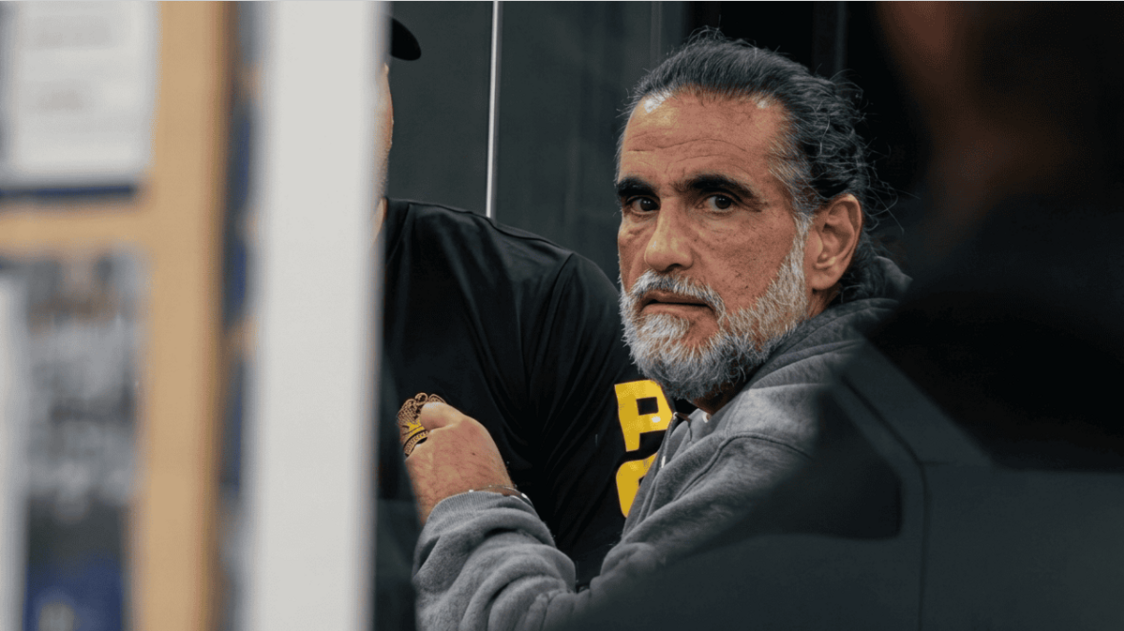
Secretary of State Marco Rubio testified in court that he had no knowledge that former Florida congressman David Rivera was lobbying on behalf of Venezuela’s government — as prosecutors later alleged — when he met with his longtime friend to discuss U.S. policy toward the South American country several times at the start of the first Trump administration.

“I would’ve been shocked” had I known, Rubio said in almost three hours of testimony Tuesday at Rivera’s federal trial in Miami.

Rivera and an associate were charged in 2022 with money laundering and failing to register as a foreign agent after being awarded a $50-million lobbying contract by Nicolás Maduro’s government.

Prosecutors allege that the goal of the lobbying effort was to persuade the White House to normalize relations with Venezuela, while Rivera’s attorneys argue that the three-month contract, which ended before Rivera met with Rubio, was focused exclusively on luring Exxon Mobil back to Venezuela — commercial work that is generally exempt from the Foreign Agents Registration Act.

As part of his work, Rivera and his co-defendant are accused of trying to arrange meetings for then-Foreign Minister Delcy Rodríguez — now Venezuela’s acting president — in Dallas, New York, Washington and Caracas, Venezuela, with White House officials, members of Congress and the chief executive of Exxon.

Rubio testifies, an unusual move

In sometimes deeply personal testimony Tuesday, Rubio discussed at length friendships that date back to the start of his political career as an aide to Bob Dole’s 1996 presidential campaign and a West Miami council member.

Testifying in a packed courtroom with heightened security, Rubio said he and Rivera became “very close” when they overlapped as members of the Florida Legislature. The two Cuban American Republicans co-owned a house in Tallahassee, celebrated family events together and ardently opposed Venezuela’s socialist government when both went to Washington at the same time — Rubio elected to the Senate, Rivera to the House.

So when Rivera texted Rubio in July 2017 that he needed to see him urgently to discuss Venezuela, they agreed to meet the next day, a Sunday, at a friend’s home in Washington where the then-senator was staying with his family, Rubio said.

At the meeting, Rivera informed Rubio that he was working with Raul Gorrín, a media magnate in Venezuela, on what he described as a plan for Maduro to step aside.

“I was skeptical,” said Rubio, adding that the Maduro government was full of “double dealers” constantly pitching unrealistic plans to unseat Maduro. “But if there was a 1% chance it was real, and I had a role to play alerting the White House, I was open to doing that.”

Rubio said he had no knowledge Rivera was himself working for Maduro, as prosecutors would later allege. Rubio said he doubted Gorrín would betray Maduro even when the former congressman opened his laptop and showed millions of dollars in a Chase bank account that he was told were payments from the businessman to Venezuela’s opposition.

“It was an impressive amount,” Rubio said. “He didn’t tell me whose account it was. He said it was to support the opposition.”

Two days later, borrowing talking points provided by Rivera, Rubio wrote and delivered a speech on the Senate floor signaling the U.S. would not retaliate against Venezuelan insiders who worked to push Maduro from power.

“He provided me with insight into some of the key phrases that regime insiders would’ve wanted to hear to know this was serious,” Rubio testified. “No vengeance, no retribution.”

Rubio also spoke to Trump, alerting the president in his first term that there may be something “brewing” with Venezuela.

‘A total waste of my time’

But the peacemaking effort collapsed almost immediately. At a second meeting at a Washington hotel, Gorrín failed to produce a promised letter from Maduro to Trump that he wanted Rubio to hand-deliver to the president.

“It was a total waste of my time,” Rubio testified.

Shortly afterward, Trump imposed heavy sanctions on Maduro and members of his inner circle for their decision to go forward with what Rubio called a “fake election” to empower a constituent assembly that undercut the opposition-controlled legislature.

By that time, the senator hewed closely to the Trump administration’s hard line. He taped a rare 10-minute address to the Venezuelan people in July 2017, a day after the divisive election, that was broadcast exclusively on Gorrín’s Globovision network.

“For Nicolás Maduro, who I am sure is watching, the current path you are on will not end well for you,” Rubio said in the televised address.

On the stand, Rubio said that had he known Rivera was working with Gorrín on behalf of Maduro, he never would have agreed to deliver the address on the network.

But Rivera said Rubio’s testimony backed his defense that as a lifelong opponent of communism he never worked to strengthen Maduro’s grip on power.

“Marco Rubio made it abundantly clear today that everything we worked on together in 2017 was meant to remove Maduro from power in Venezuela,” he said in a statement.

Throughout his testimony Rubio, a lawyer, spoke calmly and in command of granular details of U.S. policy toward Venezuela over the past decade, even as he struggled to recall the specifics of his text exchanges with Rivera on Venezuela matters.

His testimony was highly unusual. Not since Labor Secretary Raymond Donovan testified at a Mafia trial in 1983 has a sitting member of the president’s Cabinet taken the stand in a criminal trial.

As if to underscore the uniqueness of his appearance in federal court, Rivera’s attorney, Ed Shohat, asked Rubio to sign a copy of his 2012 autobiography, “An American Son,” at the conclusion of his testimony.

Rivera and his co-defendant, political consultant Esther Nuhfer, are among a small number of friends and family Rubio thanks in the acknowledgment section of his memoir.

Goodman writes for the Associated Press.

Source link

Venezuela: Rodríguez Announces Electricity Rationing Ahead of Heatwave, Drought Forecast

The Venezuelan acting president called for a rational use of electricity in the coming weeks. (EFE)

Mérida, March 23, 2026 (venezuelanalysis.com) – The Venezuelan government announced a 45-day electricity saving plan as extreme temperatures and regional outages impact Venezuela’s power grid. 

The announcement, made by Acting President Delcy Rodríguez on Saturday, comes on the heels of recurring blackouts, particularly in western states

“We are entering a period where solar radiation will impact our territory directly, intensifying heat and drought across the country,” Rodríguez stated during a televised cabinet meeting with officials responsible for the electricity and infrastructure portfolios.

She explained that the “perpendicular passage” of solar rays would significantly increase energy demand for cooling. Alongside drought forecasts, officials expect a greater strain on Venezuela’s electricity generation and transmission infrastructure.

As part of the contingency plan, the Ministry of Electric Energy is set to publish a protocol urging reduced air-conditioning use other rationing measures. In addition, the government has authorized the deployment of thermal drones to monitor high-temperature areas and prevent forest fires from compromising transmission lines.

In March 2025, the Nicolás Maduro administration implemented a similar electricity-savings plan and was compelled to reduce public sector work hours to half a day to ease demand. While the 2025 measures were temporary, the recurrence of shortages underscores the systemic vulnerabilities of the electric grid.

Last Friday, residents in Zulia, Táchira, Mérida, and Trujillo experienced widespread power outages lasting several hours. Local media outlets in the Andean region reported that some sectors are facing daily rationing of up to four hours. Nationwide electricity fluctuations were likewise registered on Monday, with parts of Caracas suffering temporary outages.

The origins of Venezuela’s electrical instability extend over a decade, culminating in the 2019 widespread nationwide blackouts that authorities blamed on “cyber-sabotage.” The alleged attacks compounded infrastructure hard-hit by years of economic sanctions, as well as underinvestment, inadequate maintenance, and the departure of skilled personnel.

Venezuela’s electric grid remains heavily dependent on the Simón Bolívar Hydroelectric Plant, also known as the Guri Dam, in southeastern Bolívar state, which provides approximately 80 percent of the nation’s power. 

However, the transmission lines stretching from the southeast to the western border are often unable to handle the load, with thermoelectric plants in the region unable to cover the additional demand. Current estimates indicate that while Venezuela has an installed generation capacity of approximately 34 gigawatts (GW), only around 12 to 14 GW are currently operational.

Sanctions and push for private investment

In her Saturday address, Rodríguez reiterated the damage caused by US-led unilateral coercive measures and called for their removal. The Venezuelan acting president argued that sanctions hampered the state’s capacity to procure essential technology and components from international suppliers.

“The blockade has impeded the full recovery of this essential service,” Rodríguez said. “Though we have recovered capacity through our own efforts, sanctions limit our response to a demand that grows alongside the economy.”

The Venezuelan government has also announced plans to scale back state control over the electricity sector in order to attract private investment. Earlier this month, authorities unveiled a “pilot plan” to promote foreign investment into the electric grid, following similar blueprints from the oil industry.

Under the proposed framework, the government aims to update the Organic Law of the Electricity System (LOSSE) to allow private companies to assume control of generation and distribution through joint ventures.

According to the Venezuelan Chamber of Construction (CVC), a preliminary investment of US $1.29 billion could lead to the reincorporation of over 6,300 MW to the grid in two phases. The CVC is specifically promoting a project with the Latin America Development Bank to stabilize 2,000 MW in the central industrial region.

The new electricity management model would allow private actors to take control of specific “industrial nodes,” ensuring a reliable supply for manufacturing while retaining a portion of the proceeds to cover maintenance costs.

However, the immediate focus for the Venezuelan executive remains on electricity rationing. Rodríguez concluded her address by calling for “national consciousness,” urging the public to see energy saving not just as a government mandate, but as a collective necessity to navigate the coming weeks of extreme heat and drought.

Edited by Ricardo Vaz in Caracas.

Source link

The Trump Corollary: Imperialist Offensive and the Assault on Venezuela

Trump gathered loyal Latin American allies for a “Shield of the Americas” summit. (Archive)

The “Trump Corollary” to the Monroe Doctrine is a central feature of U.S. strategy designed to secure hegemony and limit Chinese and Russian influence in Latin America and the Caribbean. It does not, however, represent a decisive shift in Washington’s relations with the region. Although the corollary does not make this explicit in its formal statement, in practice it makes more evident what liberal rhetoric has long sought to mask: military and covert interventions aimed at preserving U.S. domination in the Western Hemisphere, undermining progressive movements and governments, and backing right-wing regimes. In this sense, it abandons even the pretense of respect for international law and human rights. In what follows we argue that the Trump Corollary constitutes not only an ideological and imperialist offensive against decolonial and multipolar currents in Latin America, but also a strategic project whose assault on Venezuela has broader geopolitical implications.

The ideological backdrop

Although Washington’s unrestrained militarism, which enjoys bipartisan support, is indeed cause for alarm, the erosion of even the pretense of commitment to liberal-democratic values, human rights, and international law did not begin with the Trump administration. The live-streamed Israeli genocide in Gaza, enabled and backed by the Biden administration, has made this difficult to deny. Moreover, it highlights how the U.S.-European axis has normalized impunity for systematic violence against non-combatants. This erosion of even its own professed liberal values has helped consolidate a political climate in which the Trump administration could intensify its offensives against Venezuela and Cuba and pursue a war of aggression against Iran.

This normalization of necropolitics can be better understood through the ideological logic used to justify it. We can make sense of this logic by distinguishing between two different tendencies within Western Eurocentric modernity. On the one hand is the myth of European supremacy, what Enrique Dussel calls the “developmentalist fallacy,” which has been used to justify colonization, with its racial hierarchy, since the invasion of Amerindia in 1492. On the other is a rational, emancipatory current rooted in ideas of community, equality, and liberty. As critical historians have shown, these emancipatory traditions did not originate solely in Europe; they were also present among some Indigenous peoples, such as the Haudenosaunee Confederacy, whose Great Law of Peace established participatory forms of government centuries before European contact. Historically, these ideals were never extended fully to colonized peoples, nor to people of color within the metropole. This contradiction persists. Washington’s recent rhetoric justifying attacks on Venezuela, Cuba, and Iran expresses the colonial, violent side of modernity while discarding its emancipatory, humanist dimensions.

Civilizational rhetoric and the objectives of the Trump Corollary

It is this myth of European supremacy, often expressed with religious fervor even when stripped of its humanist facade, that serves as the ideological justification for the offensives launched this year. This worldview was crystallized in a speech delivered by Secretary of State Marco Rubio at the 62nd Munich Security Conference on February 14, 2026. That speech anticipated the inauguration in Miami, on March 7, of Shield of the Americas, a new U.S. partnership with right-wing allies in Latin America and the Caribbean, to be led by former Secretary of DHS Kristi Noem. Rubio, in effect, called for a rejection of historical accountability, stating:

We do not want our allies to be shackled by guilt and shame. We want allies who are proud of their culture and of their heritage, who understand that we are heirs to the same great and noble civilization, and who, together with us, are willing and able to defend it. . . . The great Western empires had entered into terminal decline, accelerated by godless communist revolutions and by anti-colonial uprisings that would transform the world and drape the red hammer and sickle across vast swaths of the map in the years to come.

This rhetoric illustrates Rubio’s disdain for anti-colonial struggles that commenced not with the Cold War and communism, but at the very start of the European invasions of Amerindia. Indeed, the “guilt and shame” surrounding the subjugation and exploitation of Indigenous peoples was expressed as early as the sixteenth century, when Bartolomé de Las Casas documented and denounced the tortures inflicted upon them in the name of a European civilizing mission. The same civilizational appeal surfaced again at the Miami summit, where Secretary of Defense Pete Hegseth called upon members of the Shield to defend their shared cultures and, in particular, “Western Christian civilization.” By casting anti-colonialism as an insidious force, Rubio’s rhetoric functions to blunt decolonial critiques of the Trump Corollary.

Despite Washington’s zeal for exporting Western ideals, decolonizing currents in Latin America’s political, economic, social, and cultural life have taken deep root. Since the 1960s, Marxism, along with liberation theology, liberation philosophy, and Indigenous struggles for self-governance, have helped articulate ethical and political critiques of colonial domination, racial hierarchy, and dependent forms of development from the perspective of the Global South. Indigenous cosmovisions and the philosophy of buen vivir have influenced constitutional and political life in the region and beyond. For example, the United Nations now recognizes the concept of the rights of nature as central to sustainable development. The recognition of the rights of Mother Earth has also been incorporated into the constitutions of both Bolivia and Ecuador, and the plurality of Indigenous and Afro-descendent nationalities is recognized in several Latin American constitutions.

The Trump Corollary emerges in direct opposition to these decolonial currents. It seeks to restore U.S. primacy over the hemisphere’s governance and resources by curtailing the region’s expanding commercial and diplomatic ties with China, Russia, and other non-Western partners. To advance this agenda, Washington has worked to destabilize or overthrow progressive governments while favoring right-wing administrations more aligned with its interests, in some cases through intimidation, electoral interference, or direct military intervention. Much like the Alliance for Progress, Operation Condor, and the invasion of Panama before it, this latest evolution of the Monroe Doctrine invokes the pretext of security to reassert Washington’s influence over hemispheric political and economic life while limiting the region’s turn toward greater autonomy. Yet that effort confronts a regional reality that Washington cannot easily reverse. Trade relations transcend political divisions in Latin America and the Caribbean. And in South America, China has become the principal trading partner for much of the subregion. This complicates Washington’s efforts to rein in Latin America’s turn toward multipolarity. China’s Third Policy Paper on Latin America and the Caribbean presents the region as an “essential force” in the move toward a multipolar world and economic globalization, and describes the bilateral relationship in terms of equality, mutual benefit, openness, and shared well-being. This stated approach stands in clear contrast to the Trump Corollary’s posture of coercion, Western supremacy, and geopolitical subordination. It is, in part, this regional turn toward multipolarity that the assault on Venezuela seeks to counter.

Venezuela: The central case

The violent reality of the Trump Corollary has been most clearly revealed in Venezuela. Washington’s campaign of deadly strikes against maritime vessels in the Caribbean, a series of extrajudicial killings that claimed the lives of more than 145 people, served as a prelude to the January 3 surprise aerial assault on Caracas, named Operation Absolute Resolve. The maritime victims included people from nations such as Colombia, Saint Lucia, Trinidad and Tobago, and Venezuela who were targeted without public evidence of narco-trafficking or due process. Operation Absolute Resolve itself claimed the lives of more than 120 people, including civilians and security forces, and culminated in the kidnapping of President Nicolás Maduro and First Lady Cilia Flores. In Venezuela, the Trump Corollary deploys military force, coercive diplomacy, and control over strategic resources. It also deals a blow to the Bolivarian cause by making an example of a state that has stood as the leading force of regional independence and integration for more than two decades.

Rather than moving, in the short term, to dismantle Chavista institutions, as many Venezuelan opposition hard-liners in Miami and Madrid expected, the Trump administration in the aftermath of Operation Absolute Resolve instead has resorted to “deal-making” with Acting President Delcy Rodríguez. The recognition of interim president Delcy Rodríguez as “the sole Head of State” of Venezuela might be part of an effort by the Trump administration to strip President Nicolás Maduro and First Lady Cilia Flores of the presidential immunity to which they are entitled. Despite Trump’s praise for a supposedly mutually beneficial relationship with the Chavista government, this is not a win-win situation. Acting President Rodríguez is attempting to balance Washington’s demands for unfettered access to the country’s natural resources with Venezuela’s own economic interests and the long-term survival of the Bolivarian Revolution. That coercive political context also affects the economic arrangements now taking shape in Venezuela.

As new economic agreements are being “negotiated,” major Venezuelan state assets previously frozen, seized, or placed beyond Caracas’s control remain unrecovered. Prior to Operation Absolute Resolve, the U.S. seized Venezuelan aircraft and targeted ships carrying Venezuelan oil that U.S. authorities said were involved in sanctions evasion. The most egregious case is that of Citgo, Venezuela’s most valuable foreign asset. Caracas has already lost real control over it, and U.S. courts are now overseeing proceedings that could permanently strip Venezuela of ownership to pay creditors.

More recently, a series of Trump administration officials have gone to Caracas to press for greater U.S. influence over Venezuela’s oil industry. They have also “negotiated” with the Chavista government to bring about legal reforms that will facilitate U.S. investment in the extraction of critical minerals and other natural resources. According to Venezuela Analysis (02/20/26), “The Trump administration is forcing all royalty, tax, and dividend payments from Venezuelan oil production [to] be paid into accounts managed by Washington.” For Venezuelan critics of U.S. intervention, these arrangements may result in a significant transfer of national wealth under pressure. Other observers argue that renewed investment could bring Venezuela badly needed revenues. In any case, there is no doubt that these economic arrangements are being carried out in a coercive context.

Regional extensions of the corollary

The offensive against Venezuela did not occur in isolation. It was soon followed by a strangling energy embargo on Cuba designed to provoke a humanitarian crisis to bring about “regime change.” After more than sixty-six years of U.S. embargo against Cuba, this latest escalation is intended not only to destabilize and isolate the island but also to shatter the morale of the forces of resistance throughout the region. At the same time, it has galvanized worldwide solidarity, despite the betrayals of governments that have succumbed to U.S. pressure to expel Cuban doctors and dismantle other forms of Cuban internationalist assistance. Meanwhile, the administration has been pressuring Mexico with the specter of unilateral military strikes against drug cartels, signaling a disregard for Mexico’s repeated insistence on its own sovereignty. In Colombia, Washington antagonized President Gustavo Petro with politically charged drug-trafficking allegations and threats of military intervention, a confrontational posture that later gave way to rapprochement after Petro met with Trump at the White House. In Honduras, the U.S. intervened to back the presidency of the right-wing candidate Nasry “Tito” Asfura who won the presidential election in December 2025 and took office on January 27.

The latest example of this interventionist regional posture was the U.S.-Ecuadorian military operation launched on March 3, which conducted bombings near the Colombian border in northeastern Ecuador, ostensibly aimed at narco-terrorists and illegal mining. In Ecuador, as in Peru, small-scale artisanal mining is often practiced within Indigenous communities living near mineral deposits and employs methods with a far lighter environmental impact than industrial-scale extraction. Whatever its stated purpose, the operation may have the effect of displacing artisanal mining and opening mineral-rich territory to large North American transnational corporations. In brief, by convening twelve compliant right-wing regional leaders in Miami, the Shield of the Americas summit serves to institutionalize Washington’s renewed drive toward regional hegemony. But the significance of this offensive is not only regional.

Geopolitical implications

The Trump Corollary has geopolitical importance because the recent offensive to consolidate U.S. hegemony in the Americas has served as a strategic prelude to the U.S.-Israeli war against Iran. The offensive in Venezuela not only stops Venezuelan crude from reaching Cuba, thereby sharpening the knife of the subsequent energy embargo, but also secures strategic leverage over the largest oil reserves in the world ahead of Iran’s restrictions on passage through the Strait of Hormuz. In this sense, Venezuela is not peripheral to the wider conflict, but central to it. This does not, however, mean that the Trump administration ever had a clear, coherent rationale for starting this war of aggression against Iran.

The ever-shifting rationale for the war was at first framed in terms of protecting demonstrators in Iran, then became an effort to overthrow the government, and has now dissolved into incoherence, with no consistent justification offered at all. In any case, the war may also carry broader geopolitical implications, insofar as prolonged disruption in Gulf oil exports would place pressure on China, whose energy needs depend heavily on Middle Eastern crude shipments. It is also beginning to generate visible political strains within NATO, as doubts about the direction of the war grow in Europe, with Spain as the clearest example. It has likewise raised concerns among some U.S. allies in the Gulf about the wisdom of continuing to host major U.S. bases.

Taken together, the shifting rationale for the war, the U.S.-Israeli callous disregard for civilian life and infrastructure, its mounting economic costs, and the danger that the conflict could spiral out of control and raise the specter of the possible deployment of nuclear weapons suggest that the decision to wage war on Iran was a profound miscalculation, one harmful not only to Iran and the wider region, but also to the people of the U.S. and the global economy. It also exhibits in stark relief the same colonial ideology that underlies the Trump Corollary. For these reasons, opposition to the war, as well as to the Trump Corollary, is growing both at home and abroad.

William Camacaro is a Venezuelan-American  National Co-Coordinator in the Alliance for Global Justice. He was a co-founder of the Bolivarian Circle of New York “Alberto Lovera” and Senior Analyst for the Council on Hemispheric Affairs (COHA). He holds a Master’s Degree of Fine Arts and a Master’s Degree in Latin American Literature from City University of New York. William has published in the Monthly Review, Counterpunch, COHA, the Afro-America Magazine, Ecology, Orinoco Tribune and other venues. He has organized delegations to Ecuador, Bolivia and Venezuela. He has been a long-time activist for social justice in the United States, such as organizing protests against police brutality in NYC, for the independence of Puerto Rico, and for the freedom of political prisoners. William has also been a leader in defense of progressive governments and social movements in Latin America.

Frederick B. Mills, Ph.D., is professor of philosophy and a member of the Philosophy of Liberation Association and the American Philosophical Association. He has received awards for excellence in teaching and international outreach from Bowie State University. Mills has published articles on philosophy of mind, ethics and public policy, Descartes, Spinoza, Kant, Sartre, Merleau-Ponty, Mario Bencastro, Enrique Dussel as well as political analysis on contemporary Latin American politics. He has contributed articles to Counterpunch, the Council on Hemispheric Affairs, and other independent media.

The views expressed in this article are the author’s own and do not necessarily reflect those of the Venezuelanalysis editorial staff.

Source: Orinoco Tribune

Source link

Latin American presidents criticise US actions | US-Israel war on Iran

NewsFeed

Latin American leaders met at the 10th Community of Latin American and Caribbean States (CELAC) Summit in Bogota on Saturday where Colombian President Gustavo Petro called for an immediate Middle East ceasefire to prevent a global economic crisis and ‘potential world war’.

Source link

Venezuela Defeats US to Win World Baseball Classic

Venezuelans took to the streets to celebrate the WBC title. (AFP)

Caracas, March 18, 2026 (venezuelanalysis.com) – Venezuela won the World Baseball Classic after defeating the United States 3–2 on Tuesday at LoanDepot Park in Miami. 

The Caribbean nation’s first major international baseball title was secured thanks to a decisive double by Eugenio Suárez that broke a tie in the top of the ninth inning.

“I have no words. Seeing Javier (Sanoja) score on my double in the ninth was the greatest moment of my life. We knew we could do it. Nobody believed in Venezuela, but now we are the champions. This is a celebration for the whole country,” Suárez told Fox Sports after the game.

The United States had tied the score at 2-2 in the eighth inning when Bryce Harper launched a two-run home run against Venezuelan reliever Andrés Machado.

Earlier in the game, a sacrifice fly from Maikel García in the third inning and a home run by Wilyer Abreu in the fifth—off rookie pitcher Nolan McLean—had given Venezuela a 2–0 lead before a crowd of 36,490 people that was heavily in favor of the South American team.

Sports journalist Jason Mackey said he had never witnessed such passionate fan support at a sporting event—not even at the Super Bowl. Venezuela’s victory also sparked spontaneous celebrations in several cities across the country, including the capital, with fireworks displays and caravans blaring horns along the main avenues.

Venezuela finished the tournament with six wins and one loss, the latter coming against the Dominican Republic during the group stage. Before reaching the championship, the Venezuelan squad defeated three-time tournament champion Japan 8–5 in the quarterfinals and Italy 4–2 in the semifinals. 

The tournament’s Most Valuable Player, Maikel García, emphasized that the team’s motivation centered on representing the country. “We didn’t play the final to represent Dominicans or Latinos. We did it for Venezuela. Maybe some people didn’t like that, but the jersey said Venezuela, not Latin America,” he said.

Meanwhile, the US team fielded the most star-studded roster in its history but fell short in its second consecutive final to extend its winless draught to nine years. The Americans had previously lost the 2023 final 3–2 to Japan.

Following the victory, Venezuela’s Acting President Delcy Rodríguez declared Wednesday a National Day of Jubilation, encouraging people to celebrate in public squares, parks, and sports fields. She also invited the public to attend a large concert titled “Venezuela Triunfa Unida” (“Venezuela Triumphs United”).

For his part, US President Donald Trump used the moment to again suggest that Venezuela could become a US state. “Statehood,” he wrote on his Truth Social account.

In the run-up to the final, Trump had posted a similar message: “Good things have been happening to Venezuela lately. I wonder what this magic is… the 51st state?”

Tuesday’s final happened in the wake of the US’ January 3 military strikes against Caracas and nearby areas that also saw special forces kidnap Venezuelan President Nicolás Maduro. In the two months since, the two countries have fast-tracked a rapprochement and reestablished diplomatic ties. Despite the strong political overtones surrounding the matchup, players and coaches largely avoided commenting on the state of relations between the two nations.

Edited by Ricardo Vaz in Caracas.

Source link

U.S. eases Venezuela oil sanctions as Trump seeks to boost world oil supply during Iran war

U.S. companies will be allowed to do business with Venezuela’s state-owned oil and gas company after the Treasury Department eased sanctions, with some limitations, on Wednesday as the Trump administration looks for ways to boost world oil supplies during the Iran war.

The Treasury issued a broad authorization allowing Petróleos de Venezuela S.A, or PDVSA, to directly sell Venezuelan oil to U.S. companies and on global markets, a massive shift after Washington for years had largely blocked dealings with Venezuela’s government and its oil sector.

Separately, the White House said President Trump would waive, for 60 days, Jones Act requirements for goods shipped between U.S. ports to be moved on U.S.-flagged vessels. The 1920s law, designed to protect the American shipbuilding sector, is often blamed for making gas more expensive.

The moves highlight the increased pressure that the Republican administration is under to ease soaring oil prices as the United States, along with Israel, wages a war with Iran without a foreseeable end date. Global oil prices have since spiked as Iran halted traffic through the narrow Strait of Hormuz, where one-fifth of the world’s oil typically passes through from the Persian Gulf to customers worldwide.

The Treasury’s license is designed to incentivize new investment in Venezuela’s energy sector and is intended to benefit both the U.S and Venezuela, while increasing the global oil supply, a Treasury official told the Associated Press. The official was not authorized to discuss the matter publicly and spoke on condition of anonymity.

Since the ouster and arrest of Nicolás Maduro as Venezuela’s president during a U.S. military operation in January, Trump has said the U.S. would effectively “run” Venezuela and sell its oil.

The U.S. license provides targeted relief from sanctions, but does not lift the penalties altogether. The license allows companies that existed before Jan. 29, 2025, to buy Venezuelan oil and engage in transactions that would normally be banned under American sanctions, reopening trade for a major oil producer to global markets.

There are some limits.

Payments cannot go directly to sanctioned Venezuelan entities such as PDVSA, but must be sent instead to a special U.S.-controlled account. In other words, the U.S. will allow the oil trade but will control the cash flow.

Additionally, deals involving Russia, Iran, North Korea, Cuba and some Chinese entities will not be allowed. Transactions involving Venezuelan debt or bonds will not be allowed.

The license is expected to give a massive boost to Venezuela’s oil-dependent economy and help encourage companies that have been apprehensive to invest. The decision is part of the Trump administration’s phased-in plan to turn around Venezuela. But critics of the acting Venezuelan government argue that the move rewards Venezuela’s leadership — all loyal to Maduro and the ruling party — while repression, corruption and human rights abuses continue.

Many public sector workers survive on roughly $160 per month, while the average private sector employee earned about $237 last year, when the annual inflation rate soared to 475%, according to Venezuela’s central bank, and sent the cost of food beyond what many can afford.

Venezuela sits atop the world’s largest oil reserves and used them to power what was once Latin America’s strongest economy. But corruption, mismanagement and U.S. economic sanctions saw production steadily decline from the 3.5 million barrels per day pumped in 1999, when Maduro’s mentor, Hugo Chávez, took power, to less than 400,000 barrels per day in 2020.

A year earlier, the Treasury Department under the first Trump administration locked Venezuela out of world oil markets when it sanctioned PDVSA as part of a policy punishing Maduro’s government for corrupt, anti-democratic and criminal activities. That forced the government to sell its remaining oil output at a discount — about 40% below market prices — to buyers such as China and in other Asian markets. Venezuela even started accepting payments in Russian rubles, bartered goods or cryptocurrency.

The new license does not allow payments in gold or cryptocurrency, including the petro, which was a crypto token issued by the Venezuelan government in 2018.

Meantime, White House press secretary Karoline Leavitt said the Jones Act waiver would help “mitigate the short-term disruptions to the oil market” during the Iran war and would “allow vital resources like oil, natural gas, fertilizer, and coal to flow freely to U.S. ports.”

Hussein and Cano write for the Associated Press. Cano reported from Caracas, Venezuela. AP writer Seung Min Kim contributed to this report.

Source link

Venezuela defeat USA, win first World Baseball Classic championship | Baseball News

Venezuela upset the star-studded host nation to win a politically charged showdown in Miami.

Venezuela scored a stunning 3-2 upset over tournament hosts United States to capture the World Baseball Classic for the first time on Tuesday in a tense final played out against a backdrop of political tensions.

Eugenio Suarez drove in the winning run in the top of the ninth inning to seal a victory for Venezuela over an American lineup that had been hyped as a baseball “dream team”.

Recommended Stories

list of 4 itemsend of list

Trailing for most of the game, the Team USA looked to have hauled themselves back into the contest when Bryce Harper blasted a game-tying two-run homer in the eighth inning.

But Harper’s salvo proved to be in vain as Venezuela regained the lead in the ninth inning, punishing a shaky performance from USA reliever Garrett Whitlock to clinch victory.

“What can I say, it’s amazing,” Venezuela hero Suarez said. “Nobody believed in Venezuela, but now we win the championship today. This is a celebration for all the Venezuelan country.”

Suarez’s winning double settled a final that had got under way in a raucous atmosphere at Miami’s LoanDepot Park, with a large contingent of Venezuela fans in a sold-out crowd of 36,190 booing the USA lineup during pre-game introductions.

US President Donald Trump, whose government captured Venezuelan President Nicolas Maduro in a military raid in January, had stoked tensions with a social media post on Monday, congratulating Venezuela for reaching the final while simultaneously suggesting the country could become the US’s “51st state”.

Trump again returned to the theme moments after Tuesday’s defeat, declaring in a post on his Truth Social platform: “STATEHOOD!!! President DJT.”

Venezuela’s interim leader, Delcy Rodriguez, who replaced the ousted Maduro, declared a “national day of jubilation” on Wednesday.

“This triumph is the victory of the passion, talent and unity that define us as Venezuelans,” Rodriguez wrote on X.

“An achievement that will remain forever in the heart of our country. ¡VIVA VENEZUELA!”

Eugenio Suarez in action.
Suarez, right, hits the championship-winning RBI double during the ninth inning [Al Bello/Getty Images via AFP]

Venezuela dominate

Venezuela, whose players had been instructed by team management to avoid commenting on politics throughout the tournament, dominated the vaunted Team USA lineup for long periods, with starting pitcher Eduardo Rodriguez stifling the American batters led by New York Yankees home run king Aaron Judge.

The South Americans took the lead in the top of the third as USA starter Nolan McLean struggled for command from the mound.

Salvador Perez singled to get on base before Atlanta Braves star Ronald Acuna Jr drew a walk.

A wild pitch from McLean left Venezuela with runners on second and third base, and on the next pitch, Kansas City Royals slugger Maikel Garcia’s sacrifice fly allowed Perez to score.

With the USA bats continuing to flail against Rodriguez, the Venezuelans doubled their lead in the top of the fifth inning.

McLean delivered a four-seam fastball into the centre of the strike zone, and Boston Red Sox left-fielder Wilyer Abreu duly pounced, crushing a 414-foot (126-metre) solo home run to centre field for a 2-0 lead.

Venezuela appeared to be closing in on victory, but were jolted by Harper’s 432-foot (132-metre) home run to centre field off reliever Andres Machado in the eighth.

But the USA rally was short-lived, and Venezuela grabbed the lead again in the ninth when Luis Arraez drew a lead-off walk from Whitlock before Suarez’s blast to left centre field gave Venezuela the winning run.

Closer Daniel Palencia removed Kyle Schwarber, Gunnar Henderson and Roman Anthony in quick succession to seal Venezuela’s triumph.

Venezuela players react.
Team Venezuela players celebrate with their gold medals after defeating Team USA [Al Bello/Getty Images via AFP]

Source link