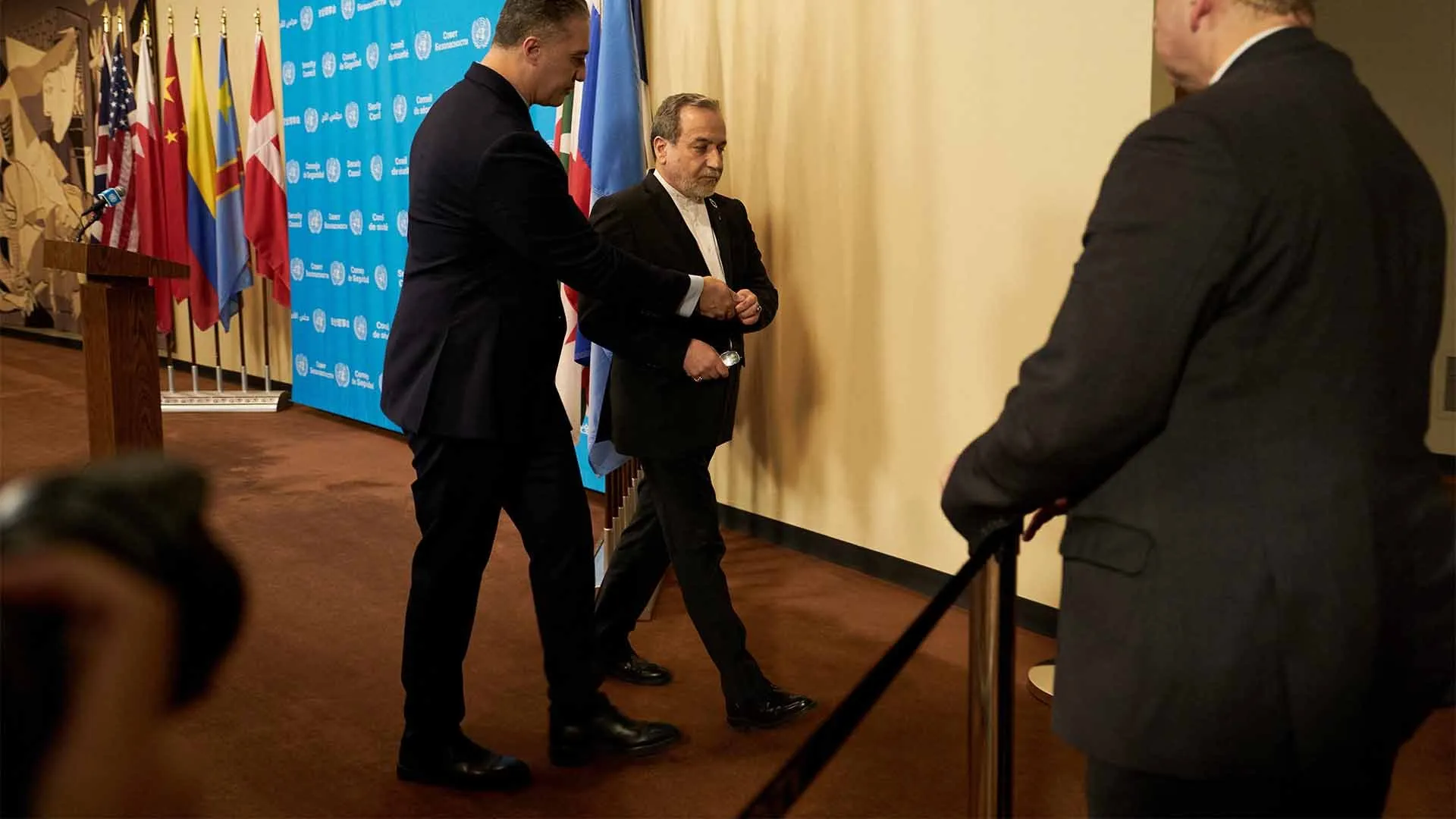
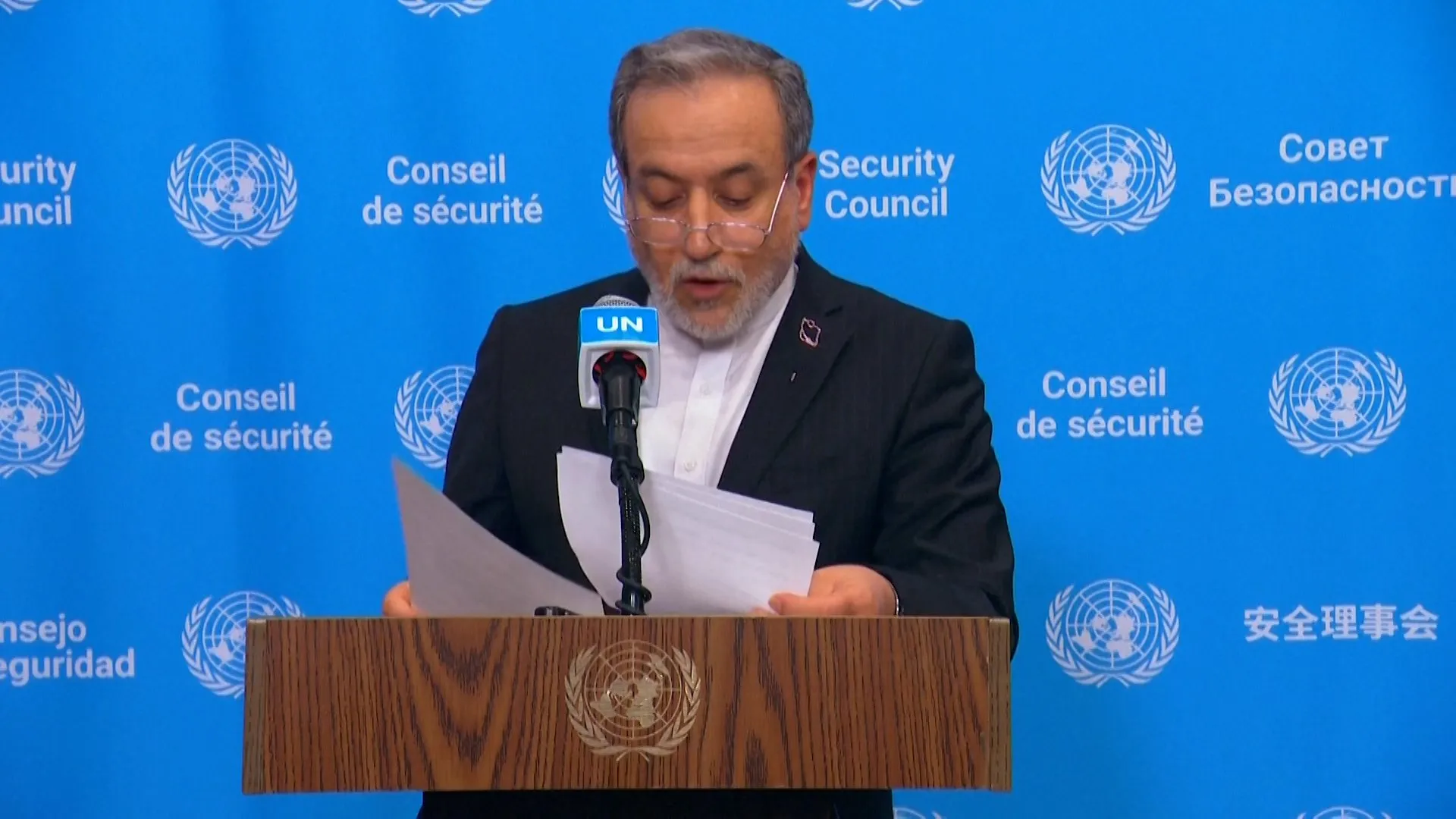
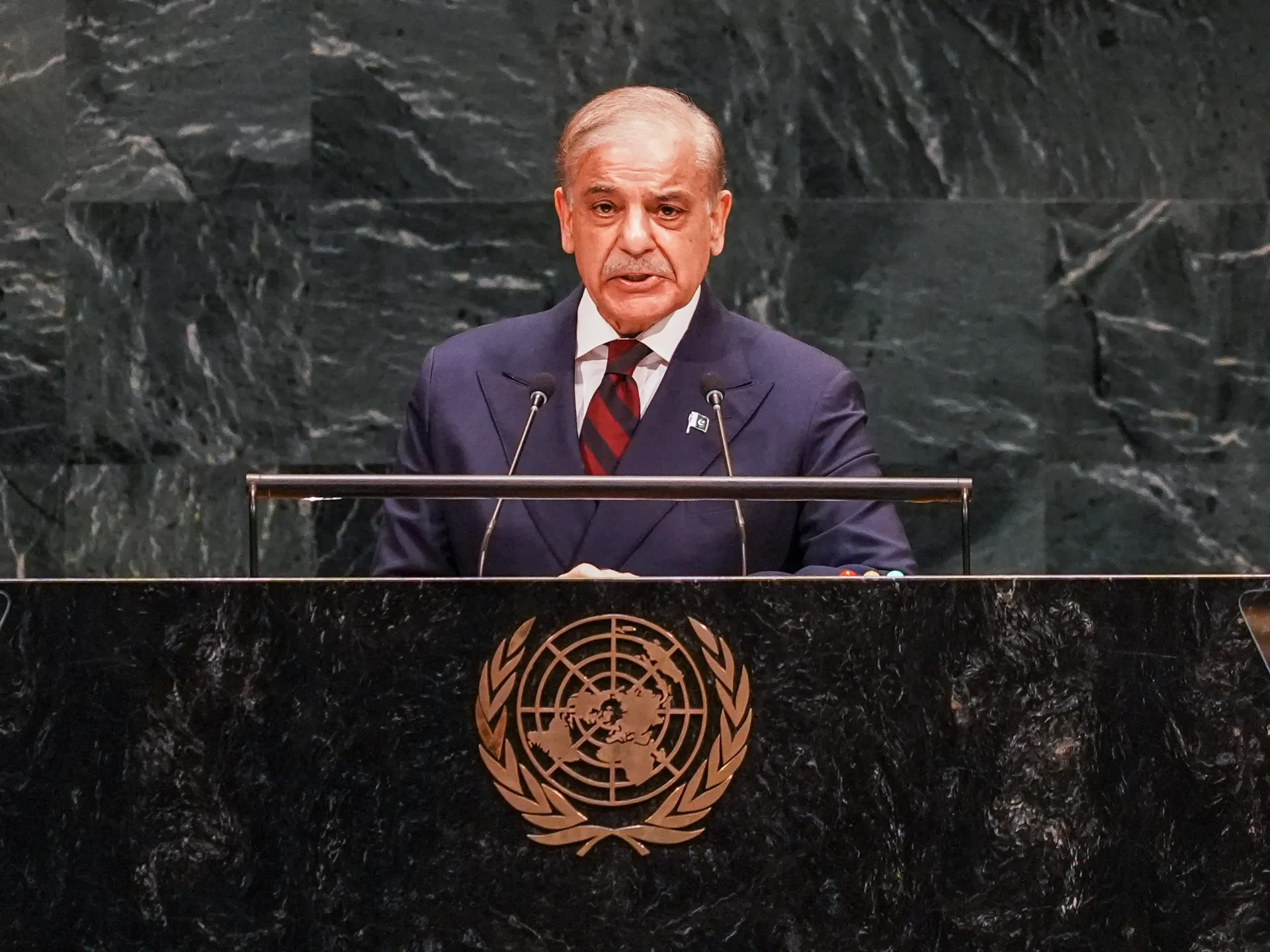
Former Pakistani diplomat to the US Maleeha Lodhi says expectations from the Islamabad talks between the US and Iran should be realistic, stressing that “we should recognise that diplomacy is not an event, it’s a process, it takes time.”
Lebanon’s Health Ministry says more than 2,000 people have been killed in Israeli attacks since March 2.
Published On 11 Apr 202611 Apr 2026
Israeli strikes have killed at least 18 people across southern Lebanon, as Lebanese authorities reported that the overall death toll from the war that began last month between Israel and Lebanese group Hezbollah has surpassed 2,000.
Israeli strikes on a village near Sidon in southern Lebanon killed at least eight people and wounded nine others, Lebanon’s Health Ministry said on Saturday.
Recommended Stories
list of 3 itemsend of list
Earlier, it said that at least 10 people, including three emergency workers, had been killed in Israeli strikes in the Nabatieh district.
In its latest tally, the Health Ministry reported that at least 2,020 people have been killed and 6,436 others wounded since Lebanon was drawn into the US-Israel war on Iran on March 2. Hezbollah launched rocket fire at Israel in support of its backer Iran, sparking massive Israeli strikes and a ground invasion.
Meanwhile, Israeli media reported that two Israeli soldiers were wounded during clashes with Hezbollah in southern Lebanon on Saturday.
Israel’s Channel 13, citing the military, said the two soldiers from the Paratroopers Brigade sustained moderate injuries from shrapnel during the confrontation.
The violence comes as Iran-backed Hezbollah renewed its rejection of direct negotiations between Israel and Lebanon aimed at ending the war.
President Joseph Aoun’s office said on Friday that officials from Lebanon, Israel and the United States would meet next week in Washington “to discuss declaring a ceasefire and the start date for negotiations between Lebanon and Israel under US auspices”.
Hundreds of people gathered on Saturday near the government headquarters in central Beirut in support of Hezbollah and to protest against the talks with Israel, some waving the group’s yellow flags or the Iranian standard.
Demonstrator Ruqaya Msheik said the protest was a message that Lebanon “will not be Israeli”.
“Whoever wants peace with Israel is not Lebanese,” she said, adding: “Those who shake hands with the enemy … are Zionists.”
Hezbollah supporters, some waving the party flag and holding up an image of slain Hezbollah leader Hassan Nasrallah, demonstrate near the Governmental Palace to protest the Lebanese authorities’ decision to engage in direct negotiations with Israel to end the ongoing war, in downtown Beirut on April 11, 2026 [Ibrahim Amro/AFP]
Hezbollah and its ally, the Amal Movement, issued a statement calling on supporters to avoid demonstrating “at this delicate stage”, citing interests of “stability, the protection of civil peace and avoiding any division that the Israeli enemy seeks”.
Earlier, Hezbollah lawmaker Hassan Fadlallah said the decision to hold direct talks with Israel was “a blatant violation of the [national] pact, the constitution and Lebanese laws”.
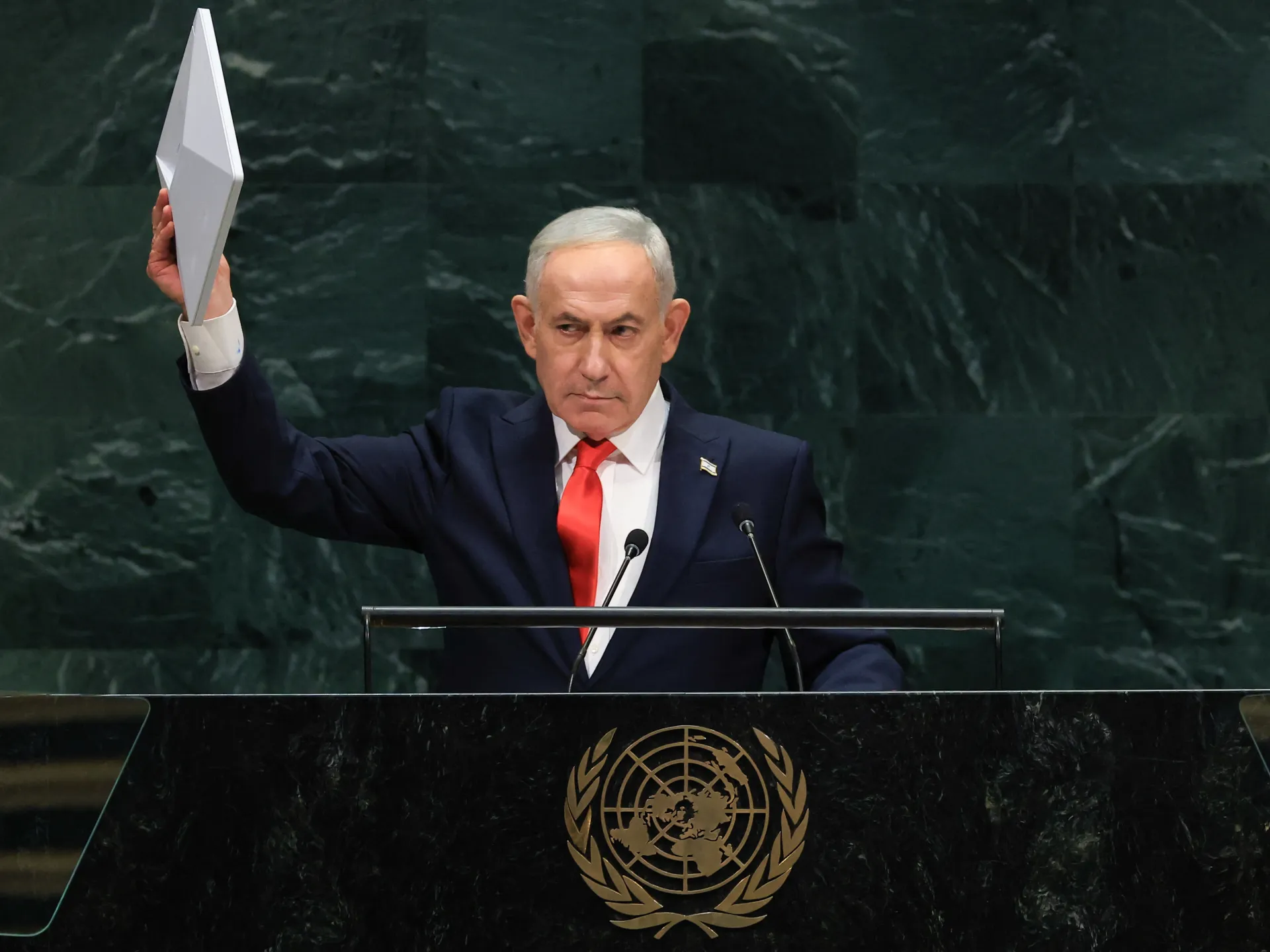
Israeli Prime Minister Benjamin Netanyahu said that any peace agreement reached with Lebanon must “last for generations” and also call for Hezbollah’s disarmament.
After a ceasefire was announced between the US and Iran this week, Washington and Tehran have been at odds over whether it also applies to Israel’s bombardment and invasion of Lebanon.
The dispute arose during the historic in-person ceasefire talks held in Pakistan’s capital, Islamabad, between the US and Iran on Saturday afternoon.
Al Jazeera’s Ali Hashem, reporting from Tehran, said that Iran was able to secure “a kind of guarantee from the US that Israel is going to decrease its attacks on Lebanon”.
However, he said that “nothing [has] been confirmed … from Israel, with respect to Lebanon.” While “there have been fewer attacks on Beirut and the southern suburbs,” nothing has been “announced with respect to a ceasefire”, he said.
US Vice President JD Vance and officials Steve Witkoff and Jared Kushner have met Pakistani PM Shehbaz Sharif in Islamabad ahead of possible direct talks with Iran. If confirmed, they would be the highest-level in-person talks between the US and Iran since the 1979 Islamic Revolution.
Pakistan’s ambassador to the US has told Al Jazeera that weeks of intense diplomatic efforts have led to a shared commitment from all sides to pursue a negotiated settlement, as US-Iran talks are set to begin in Islamabad.
Islamabad, Pakistan – With key differences in the Iranian and American positions seemingly intact, Pakistan is aiming for what officials describe as a realistic – if modest – outcome from the negotiations between the two warring nations set to commence in Islamabad on Saturday.
The aim: to get the United States and Iranian negotiators to find enough common ground to continue talks.
On Friday, US Vice President JD Vance left Washington for Islamabad, where he will lead the American team, which will also consist of President Donald Trump’s chief negotiator Steve Witkoff and son-in-law Jared Kushner. While Iran has not formally confirmed its representatives at the talks, Foreign Minister Abbas Araghchi and Parliament Speaker Mohammad Bagher Ghalibaf are expected to lead Tehran’s team.
These high-level talks follow days after the US and Iran agreed to a Pakistan-mediated two-week ceasefire, and will be held exactly six weeks after the US and Israel launched their war on Iran with the killing of Iranian Supreme Leader Ayatollah Ali Khamenei on February 28.
Experts and sources close to the mediation effort said there was little expectation that a major breakthrough would be reached on Saturday. But by setting a more realistic ceiling – an agreement in Islamabad to continue deeper negotiations aimed at finding a lasting peace deal – Pakistan is hopeful it can help build on a truce that led to a collective sigh of relief globally.
“Pakistan has succeeded in getting them together. We got them to sit at a table. Now it is for the parties to decide whether they are willing to make the sacrifices necessary to reach an eventual solution,” Zamir Akram, Pakistan’s former ambassador to the United Nations, told Al Jazeera.
Now, he added, it will aim to secure an agreement for the US and Iran to continue dialogue.
The ‘proximity format’
The US and Iranian delegations will land at the Nur Khan airbase outside Islamabad and then drive to the Serena Hotel, where they will stay, and where the talks will be held.
Though the two teams will be in the same hotel, they will not come face to face for the negotiations, officials said.
Instead, they will sit in two separate rooms, with Pakistani officials shuttling messages between them.
In diplomatic jargon, such negotiations are known as proximity talks.
Pakistan’s experience with such a dialogue is not new. In 1988, Islamabad itself participated in the Geneva Accords negotiations on the Soviet withdrawal from Afghanistan, where UN-mediated indirect talks between Pakistan and Afghanistan produced a landmark agreement.
Akram, who has represented Pakistan at the UN in Geneva from 2008 to 2015, said that history was relevant.
“Proximity talks have been used before. Pakistan itself participated in one in Geneva in 1988 on the Afghan issue,” he told Al Jazeera. “If the parties did not trust Pakistan, they would not be here. The metric of success should be an agreement to continue this process in search of a solution. It will not happen in a couple of days.”
Building diplomatic momentum
In the days between the ceasefire announcement on April 7 and the arrival of the delegations in Islamabad, world leaders moved quickly to register support.
UN Secretary-General Antonio Guterres welcomed the ceasefire and expressed appreciation for Pakistan’s role. Kazakhstan, Romania and the United Kingdom also issued statements endorsing Islamabad’s mediation.
French President Emmanuel Macron called Prime Minister Shehbaz Sharif to congratulate him, while Turkiye’s President Recep Tayyip Erdogan also spoke to the Pakistani leader.
Analysts say these calls were not only expressions of goodwill but signals of international backing, aimed at strengthening Pakistan’s hand in pushing both Washington and Tehran to deliver results.
Sharif spoke with eight world leaders, including the emir of Qatar, the presidents of France and Turkiye, the prime ministers of Italy and Lebanon, the king of Bahrain and the chancellors of Germany and Austria.
Foreign Minister Ishaq Dar, who is also deputy prime minister, engaged with more than a dozen counterparts over the past two days and held an in-person meeting with China’s ambassador in Islamabad.
In total, Pakistan’s leadership made or received more than 25 diplomatic contacts in roughly 48 hours.
Salma Malik, a professor of strategic studies at Quaid-i-Azam University, said the scale of engagement reflected confidence in Pakistan’s role.
“The two main parties showed confidence in Pakistan to act as a neutral agent, that is the first and most critical litmus test for any mediating country, and Pakistan passed it,” she told Al Jazeera.
The Lebanon problem
The most immediate threat to Saturday’s talks lies outside the negotiating room.
Iran has framed Israeli strikes on Lebanon as a direct challenge to the ceasefire. Iranian President Masoud Pezeshkian, who spoke to Sharif earlier this week, warned that continued attacks would render negotiations meaningless.
Hours after the ceasefire was announced, Israel launched its most widespread bombardment of Lebanon since the start of the conflict, killing more than 300 people across Beirut and southern Lebanon in a single day.
Rescuers stand at the site of an Israeli strike carried out on Wednesday, in El-Mazraa in Beirut, Lebanon, on April 9, 2026 [Raghed Waked/Reuters]
Foreign Minister Abbas Araghchi said Tehran could abandon the ceasefire entirely if the strikes continued.
Sharif, in a call with Lebanese Prime Minister Nawaf Salam on April 9, strongly condemned Israel’s actions.
Whether Lebanon is covered by the ceasefire remains contested. Pakistan has maintained that the truce extends across the wider region, including Lebanon, as reflected in Sharif’s statement earlier this week.
Washington has taken a different view. US Vice President JD Vance, who will lead the American delegation, said in Budapest that Lebanon falls outside the ceasefire’s terms, a position echoed by President Donald Trump and the White House.
Seema Baloch, a former Pakistani envoy, said the issue ultimately rests with Washington.
“Lebanon is key and Israel will use it to play the spoiler role,” she told Al Jazeera. “It is now the US decision whether it will allow Israel, which is not seated at the negotiating table, to play that role.”
There are, however, signs of limited de-escalation.
Israeli Prime Minister Benjamin Netanyahu said on Thursday that Israel was ready to begin direct negotiations with Lebanon “as soon as possible”, focusing on disarming Hezbollah and reaching a peace agreement.
The announcement followed US pressure. Trump told NBC he had asked Netanyahu to “low-key it” on Lebanon.
However, Netanyahu made clear there was no ceasefire in Lebanon, saying Israel would continue striking Hezbollah even as talks proceed.
Salman Bashir, a former Pakistani foreign secretary, said Lebanon remains within the ceasefire’s scope.
“Lebanon is very much part of the ceasefire, as was mentioned in the prime minister’s statement,” he told Al Jazeera. “The Israelis may be inclined to keep the pressure on Lebanon, but not for long if the US is keen on a cessation of hostilities, as it seems.”
Stumbling blocks
Beyond Lebanon, several other obstacles remain.
Washington is expected to push for verifiable restrictions on Iran’s nuclear programme, including limits on enrichment and the removal of stockpiled material.
Tehran, in turn, is demanding full sanctions relief, formal recognition of its right to enrich uranium and compensation for wartime damage.
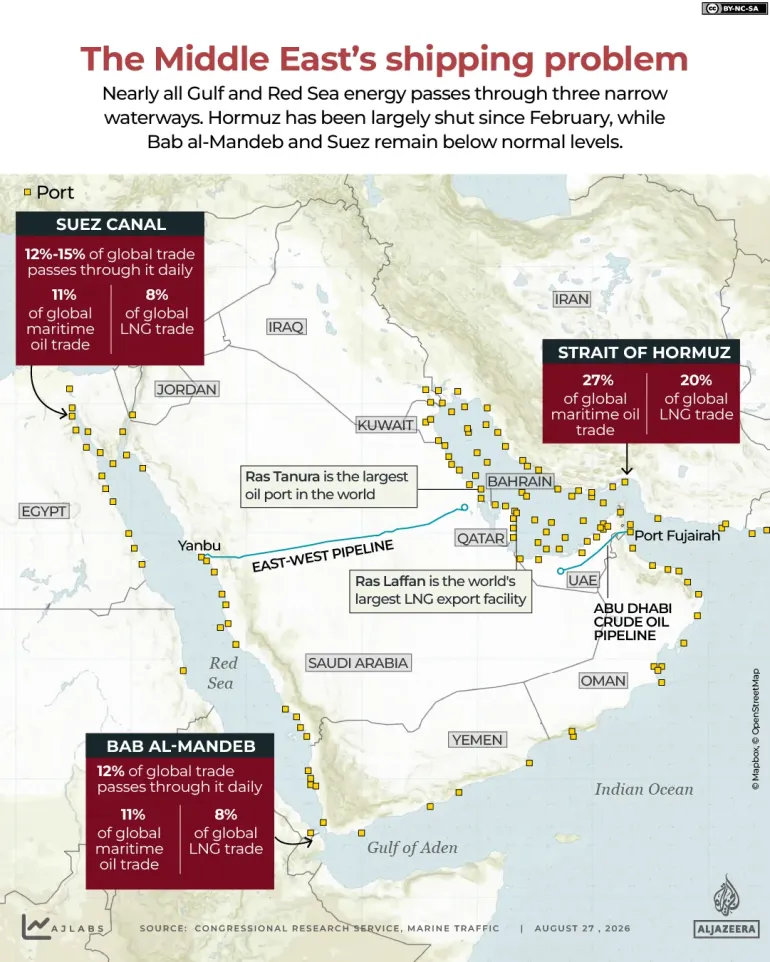
The Strait of Hormuz, through which roughly a fifth of the world’s oil and gas passes in peacetime, remains a key pressure point, with Iran retaining the ability to disrupt maritime traffic.
Bashir said there could be movement on some of these issues.
“There may be an opening on the Strait of Hormuz, under Iranian control. Iran will not give up on the right to enrichment. If nothing else, there should be an extension of the ceasefire deadline,” he told Al Jazeera.
Muhammad Shoaib, a professor of international relations in Islamabad, said progress would depend on movement on core issues.
“Both parties agreeing on the need to continue or even extend the ceasefire, while in principle agreeing on crucial points such as the Strait of Hormuz, Iran’s right to enrichment and respect for sovereignty, will suggest that the first round is meaningful and successful,” he told Al Jazeera.
The regional atmosphere has also been shaped by sharp rhetoric from some of Iran’s Gulf neighbours.
The United Arab Emirates, which faced hundreds of missile and drone attacks during the conflict, has been among the most vocal.
Its ambassador to Washington wrote in The Wall Street Journal that a ceasefire alone would not be sufficient and called for a comprehensive outcome addressing Iran’s “full range of threats”.
Bahrain, meanwhile, presented a United Nations Security Council resolution on April 7 calling for the reopening of the Strait of Hormuz. The measure received 11 votes in favour but was vetoed by Russia and China, with Pakistan and Colombia abstaining.
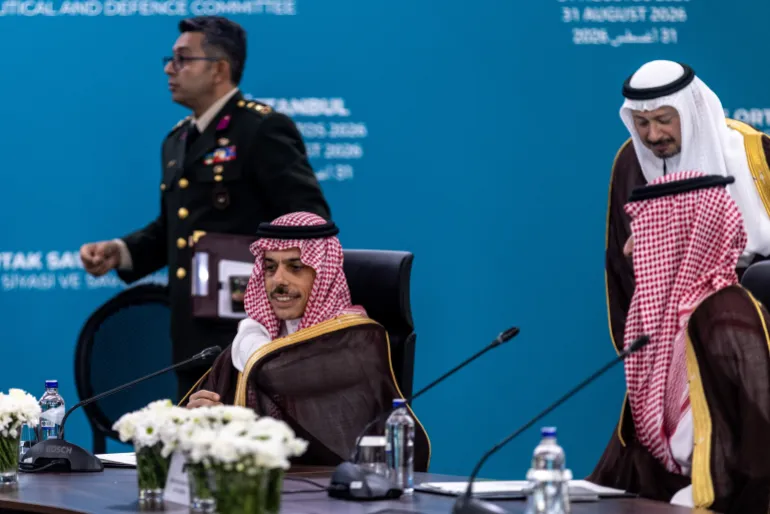
Saudi Arabia, Turkiye and Egypt are not expected to have a formal presence at the talks, despite being closely involved in pre-negotiation diplomacy. The four countries held meetings in Riyadh and later in Islamabad aimed at securing a pause in hostilities.
Israel, a party to the conflict, will also not be represented. Pakistan, like most Muslim-majority countries, does not recognise Israel and has no diplomatic relations with it.
A slight easing
There are, however, tentative signs of easing tensions ahead of Saturday’s talks.
On Friday, as he was departing from Washington, Vance said that the US team was “looking forward to the negotiations”.
“We think it’s going to be positive. We’ll, of course, see. As the president of the United States said, if the Iranians are willing to negotiate in good faith, we are certainly willing to extend an open hand,” the US vice president said. “If they try to play us, they’re going to find that the negotiating team is not that receptive. So we’ll try to have a positive negotiation.”
He also said that Trump had given the US team “some pretty clear guidelines”.
Earlier this week, Saudi Arabia’s foreign minister spoke with his Iranian counterpart for the first time since the war started.
And Iran’s Supreme National Security Council said on April 8 that discussions could continue for up to 15 days, suggesting readiness for a prolonged process.
Akram, the former envoy, said the benchmark for success was clear.
“What they need to agree is that they will find a solution, and that in itself would be a step in the right direction,” he told Al Jazeera. “Finding a long-term solution will take time. It will not happen in a couple of days.”
Malik, the academic in Islamabad, said Pakistan’s expectations remained modest.
“What Pakistan expects is breathing space, an opportunity for peace. It is not expecting anything big. It is a small wish, but realising it will be very difficult,” she told Al Jazeera.
United States President Donald Trump’s disdain for NATO allies dates back to even before he became president the first time. From anger over their relatively low defence spending to — more recently — threats to take over Greenland, the territory of fellow NATO member Denmark, the American leader has long left the alliance on edge.
But the decision of NATO allies not to join Trump’s war on Iran has deepened the fracture to unseen levels, say analysts. This week, Trump called their lack of support a stain on the alliance “that will never disappear”. Chancellor Friedrich Merz of Germany put it even more bluntly, hours later: The conflict “has become a trans-Atlantic stress test”.
Recommended Stories
list of 3 itemsend of list
That back and forth underscores a central question exposed by the Middle East crisis that experts say NATO can no longer put off: can the transatlantic alliance survive, especially if the US pulls out?
“There will be no return to business as usual in NATO, during neither this US administration nor the next one,” said Jim Townsend, adjunct senior fellow at the Center for a New American Security. “We are closer to a break than we have ever been.”
Trump can’t pull the US out of the alliance on a whim.
To formally do so, he needs a two-thirds majority in the US Senate or an act of Congress — scenarios that are unlikely to come to pass any time soon, with NATO still enjoying broad support among many legislators in both major American parties.
But there are other things Trump can do. The US has no obligation to come to the aid of allies should they come under attack. The treaty’s Article 5 states members’ collective‑defence obligation, but it does not automatically force a military response — and there is scepticism among allies over whether Washington would ever come to help.
The US can also move the about 84,000 American troops spread across Europe out of the continent. The Wall Street Journal reported on Wednesday that Trump was considering moving some US bases from countries deemed unhelpful during the Iran war and transferring them to more supportive countries. He could close down US military bases and cease military coordination with allies.
Since US security guarantees to Europe have undergirded NATO since its founding, such disengagement would do enough damage.
“He doesn’t need to leave NATO to undermine it; by just saying he might, he has already eroded its credibility as an effective alliance,” said Stefano Stefanini, former Italian ambassador to NATO from 2007 to 2010 and former senior adviser to the Italian Presidency.
Still, allies are not helpless. Russia’s invasion of Ukraine revealed the weakened state of European defence industries and their deep reliance on the US. That, coupled with the numerous diplomatic crises in the US-NATO partnership – including Trump’s threat to take control of Greenland – has pushed European allies to invest more in defence capabilities. Between 2020 and 2025, member states’ defence expenditure increased by more than 62 percent.
However, areas where Europe suffers from overdependence on the US include the ability to strike deep into enemy territory, intelligence, surveillance and reconnaissance, space-based capabilities such as satellite intelligence, logistics and integrated air and missile defence, according to a report by the International Institute for Security Studies (IISS).
These challenges remain considerable. It will take the next decade or more to fill them and about $1 trillion to replace key elements of the US conventional military capabilities. Europe’s defence industries are struggling to ramp up production quickly, and many European armies can’t hit their recruitment and retention targets, the IISS report said.
Still, some experts believe a European NATO is possible. Minna Alander, an analyst at the Stockholm Centre for Eastern European Studies of the Swedish Institute of International Affairs, says NATO has, over the years, become a structure for military cooperation between European countries.
“NATO can therefore survive the Iran war — and even a US withdrawal — as European members have an incentive to maintain it, even if in a radically different form,” Alander said.
For some, the deadline is 2029. That is when Russia may have reconstituted its forces sufficiently to attack NATO territory, according to estimates by Germany’s chief of defence, General Carsten Breuer. “But they can start testing us much sooner,” Breuer said in May last year, ordering the German military to be fully equipped with weapons and other material by then. Others estimate that Moscow could pose that threat as early as 2027.
And what about the US — would it do better without NATO?
According to Stefanelli, the former ambassador, the debate about NATO is often “twisted” to portray the alliance’s raison d’être as solely in function of protecting Europe from Russia, as a US favour to the continent.
NATO was a network of alliances born at the onset of the Cold War against the Soviet Union. For decades, the US fought to attract into the alliance as many countries as possible, treating those that refused as friends of the enemy.
Following the September 11, 2001, attacks on the US, NATO invoked for the first and only time Article 5 to rally behind Washington and sent troops to fight in Afghanistan. Thousands of servicemen died there, including nearly 500 from the United Kingdom, and dozens from France, Denmark, Italy and other countries.
And during the war in Iran, European bases were beneficial staging sites for the US military — even if many countries publicly distanced themselves from the conflict.
“NATO served US interests and Trump comfortably overlooks these aspects,” Farinelli, the former ambassador, said. “Europe has its own responsibility by not investing in defence and creating strong dependence, but thinking that NATO serves only European strategic interests is simply not true.”
Senegalese prime minister Ousmane Sonko criticised Donald Trump, accusing him of plunging the world into “chaos” by starting a war on Iran, and questioned whether the world is now less safe under Trump’s leadership.
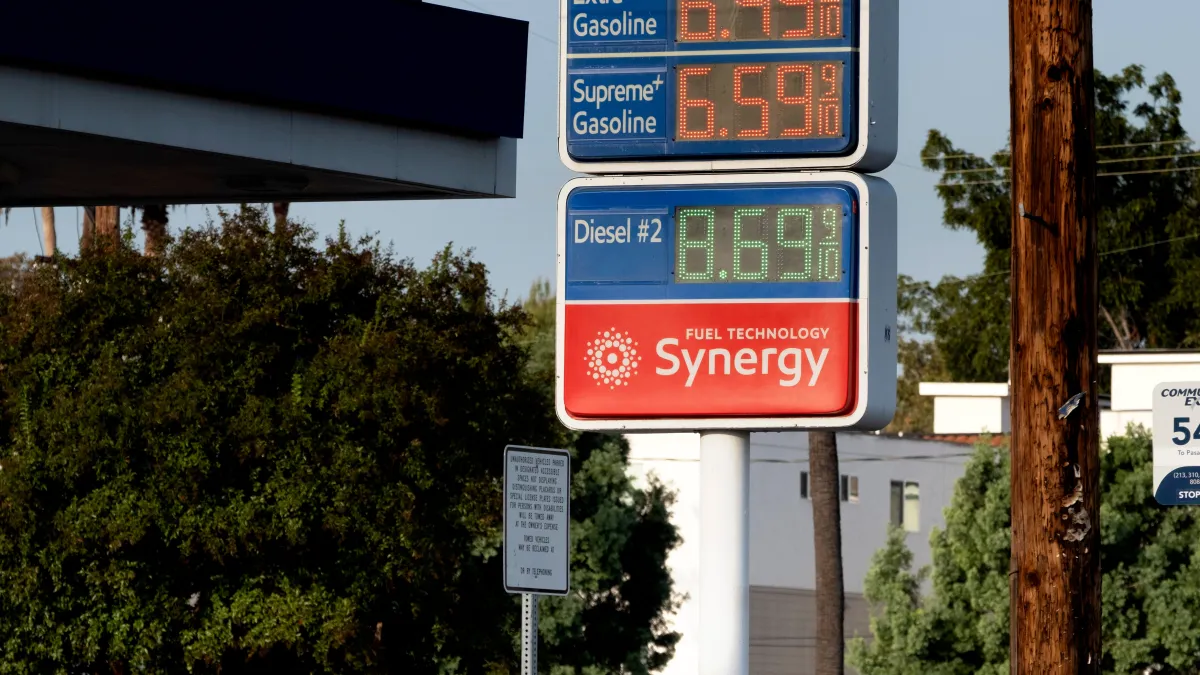
Even though a fragile ceasefire between Iran and the United States and Israel has been announced, it’s going to be a long time before prices of oil and gas come back to pre-war levels, experts say.
In response to the US-Israeli attacks, Iran choked off the Strait of Hormuz, the narrow channel linking the Gulf to the Gulf of Oman, through which roughly 20 percent of the world’s oil and gas exports pass from the Middle East, mainly to Asia and also to Europe.
Recommended Stories
list of 4 itemsend of list
It also attacked energy infrastructure in several Gulf countries, leading to soaring prices of not just energy but also of byproducts like helium, used in a range of products like tiles used in homes and semiconductor equipment. Fertilisers that rely on some of these inputs were hit too, impacting sowing seasons.
As a result, consumers the world over, but particularly in developing countries of Asia and Africa, have felt the brunt of those shortages and soaring prices. The question on many minds: Now that there is a ceasefire in place, how quickly will prices normalise?
“Anyone who tells you they know the answer to that question is lying,” said Rockford Weitz, professor of practice in maritime studies at The Fletcher School at Tufts University. “It’s too early to tell when we return to normal.”
“What we’re seeing is the biggest disruption in the history of global oil markets,” said Weitz.
Before this conflict, approximately 120-140 ships passed through the Strait of Hormuz every day. On Wednesday, only five vessels crossed the strait, while seven passed through the waterway on Thursday.
That shows why “to get back to normal is going to be a while”, Weitz told Al Jazeera. “And it’s too complicated to know at this stage when that will happen, as it requires collaboration with the great powers [US, China and Russia], but also regional powers [UAE, Saudi Arabia, India and Pakistan]. It’s hard to say when it will end, as there are so many parties who can make it not happen.”
There is also some concern that developments, like Iran charging a toll fee to allow ships to pass through and skyrocketing insurance fees, will keep oil prices high.
“There are reports that Iran is charging fees to tankers going through the Hormuz Strait,” US President Donald Trump wrote on TruthSocial Thursday.
“They better not be and, if they are, they better stop now.”
But experts agree that those fees, rumoured to be about $2m per vessel, are not enough to move the needle on oil prices.
“What is causing oil prices to rise is not insurance. It’s about getting tankers through. Tolls won’t be the cost driver,” said Weitz.
‘Signs of strain’
Some of that reality was on display with the reopening of the strait, showing “signs of strain just hours after the ceasefire was announced”, said Usha Haley, W Frank Barton Distinguished Chair in international business at Wichita State University.
Compounding that problem was the fact that some countries, including Iraq, had shut down production because of limited storage capacity, further taking oil supplies offline.
“That will take weeks and months to reopen,” Haley added.
“It’s going to be a contested reopening … LNG [liquefied natural gas] will take months to rebalance because of the hits to infrastructure, and can take three to six months to normalise if everything else remains normal. And it’s not.”
Slower growth
On Thursday, International Monetary Fund managing director Kristalina Georgieva warned that the fund will downgrade its forecast for the world economy next week from the current expectation of 3.3 percent. “Growth will be slower – even if the new peace is durable,’’ Georgieva said.
While the war has hit most economies, “it hasn’t really affected the two primary [US] targets – Russia and China. Russia, in fact, has benefitted enormously, and Chinese ships have been allowed to go through,” said Haley.
The US has hit Russia with multiple sanctions for its war on Ukraine, including capping sales of Russian oil to undercut its income stream. Similarly, the first Trump administration put tariffs on China and curbed US exports of certain high-end technology, measures that were held up under the administration of former US President Joe Biden and further ratcheted up by Trump last year with his tariffs blitz.
But amid the war on Iran and the effective closure of the Strait of Hormuz, the US temporarily eased some sanctions on Russian oil, and countries desperate for crude have since paid far higher prices to Moscow than the subsidised energy that President Vladimir Putin’s government was previously offering them.
“We [the US] really need to decide what we want to do long-term, who our targets are. There’s got to be some coherence to what we want to do.”
For now, “an overhang of greater risk premium of supplies out of the Gulf means oil prices will remain higher than what they were before the attack started”, said Rachel Ziemba, adjunct senior fellow at the Center for a New American Security.
While it’s possible that some of the blocked oil and oil products could be released soon, providing a short boost of supplies in the coming days and weeks, “that would be a temporary support” and is still conditional on the ceasefire holding and converting to a broader deal, said Ziemba.
For now, she’s keeping an eye on Iraq to see if it strikes a side deal with Iran. Iraq, long a proxy battleground between the US and Iran, can produce at least 3.5 million barrels of oil per day, production that it had shut off because of limited storage capacity, said Ziemba.
Should that come back online, it will help oil flows and, eventually, prices. But the uncertainty of the truce and the history of attacks on Iraq mean that the future of the country’s oil production remains unclear. “In that environment, who wants to invest in scaling up production?” Ziemba wondered.
Iranian state TV has read out a message from new Supreme Leader Mojtaba Khamenei which says Iran ‘does not want war’ but will ‘not renounce legitimate rights’ in the face of threats from the US and Israel.
As UK Prime Minister Keir Starmer arrived in Doha as part of a Gulf tour spanning Saudi Arabia, the UAE, Bahrain and Qatar, he discussed efforts to secure the US-Iran ceasefire and reopen the Strait of Hormuz. Starmer warned there’s more ‘work to do’, stressing the need for regional partners to restore global energy flows.
Washington and Tehran accuse each other of not honouring truce agreement.
Published On 10 Apr 202610 Apr 2026
Shipping remains at a standstill in the Strait of Hormuz despite the ceasefire agreement between the United States and Iran, dampening hopes for a resolution to one of the worst global energy disruptions in history.
Only a handful of vessels have transited the critical strait since Washington and Tehran on Tuesday announced a two-week pause in fighting, according to ship tracking data.
Recommended Stories
list of 4 itemsend of list
Five vessels crossed the strait on Wednesday, down from 11 the previous day, and seven transited on Thursday, according to data from market intelligence firm Kpler.
More than 600 vessels, including 325 tankers, are still stranded in the Gulf due to the blockage of the strait, according to Lloyd’s List Intelligence.
“While some vessel movement has resumed, traffic remains very limited, compliant shipowners are likely to stay cautious, and safe transit capacity is expected to remain constrained at maximum 10–15 passages a day if the ceasefire holds, without consideration of tolls applied,” Kpler trade risk analyst Ana Subasic said in an analysis on Thursday.
The waterway, which usually carries about one-fifth of global oil and liquefied natural gas (LNG) supplies, typically handled about 120-140 transits before the US and Israel launched their attacks on Iran on February 28.
On Thursday, US President Donald Trump accused Iran of failing to live up to its part of the ceasefire agreement, which includes a commitment to allow “safe passage” through the waterway for two weeks.
“Iran is doing a very poor job, dishonorable some would say, of allowing Oil to go through the Strait of Hormuz,” Trump said in a post on Truth Social.
“That is not the agreement we have!”
Iranian Foreign Minister Abbas Araghchi earlier accused the US of not honouring the deal, warning, in reference to Israel’s ongoing attacks on Lebanon, that it had to choose between a ceasefire or “continued war” via its ally.
“The world sees the massacres in Lebanon,” Araghchi said in a post on social media.
“The ball is in the US court, and the world is watching whether it will act on its commitments.”
After plummeting on the back of the ceasefire announcement, oil prices have begun to tick up as markets digest the reality that maritime traffic remains effectively halted despite the truce.
“This moment requires clarity. So let’s be clear: the Strait of Hormuz is not open,” Sultan Ahmed Al Jaber, the CEO of the United Arab Emirates’ state-run oil company, ADNOC, said in a social media post on Thursday.
“Access is being restricted, conditioned and controlled. Iran has made clear – through both its statements and actions – that passage is subject to permission, conditions and political leverage. That is not freedom of navigation. That is coercion.”
Brent crude, the international benchmark, stood at $96.39 as of 02:00 GMT on Friday, after falling below $95 a barrel on Wednesday.
Asia’s main stock markets opened higher on Friday, following overnight gains on Wall Street driven by hopes of a resolution to the war.
Japan’s benchmark Nikkei 225 was up 1.8 percent in early trading, while South Korea’s KOSPI and Hong Kong’s Hang Seng Index were up about 2 percent and 1 percent, respectively.
Video shows an explosion in the sky above Erbil, in the Kurdish region of northern Iraq, in a suspected drone interception following reports of an unidentified aircraft flying over the city. Earlier, Kuwait reported a drone attack. The IRGC insists Iran has not launched anything during the ceasefire.
In a statement read out on television, Mojtaba Khamenei said Tehran will ‘demand compensation’ for damages due to the war.
Published On 9 Apr 20269 Apr 2026
Iran’s supreme leader, Mojtaba Khamenei, has claimed a “final victory” in the war with Israel and the United States, as a fragile ceasefire continues to be threatened by Israel’s continuing offensive on Lebanon.
Marking 40 days since his father, Ayatollah Ali Khamenei, was killed in a US-Israeli attack on the first day of the war, Khamenei said in a statement on Thursday that, over the course of the war, Iran had “astonished the world”.
Recommended Stories
list of 3 itemsend of list
Khamenei, 58, who has not been seen or heard from since the war began, said in a statement read out on television that Tehran was not seeking war but was fighting for its legitimate rights.
“We will certainly not leave the criminal aggressors who attacked our country unpunished,” he said, adding that Iran will “demand compensation for all damages, as well as the blood of the martyrs and the wounded”.
Regarding the Strait of Hormuz, which Iran has effectively blockaded since the war broke out on February 28 and has become a key sticking point in US-Iran proposals to end the war, Khamenei said that his country will move towards a “new phase” without elaborating.
On Wednesday, the US and Iran agreed to a two-week ceasefire in a deal mediated by Pakistan to allow for negotiations to take place, after attacks on Gulf nations and the near-closure of the Strait of Hormuz had caused fears of a longer conflict whose impact would be felt long after it ended.
As part of the ceasefire, Iran agreed to allow shipping to pass through the important waterway, with reports that Tehran would impose a toll on ships transiting the strait to fund the country’s reconstruction efforts.
Yet, Khamenei warned that Iran was ready to respond if attacks were to end the pause in hostilities.
“Our hands are on the trigger,” he said.
However, a devastating wave of Israeli air strikes across Lebanon on Wednesday killed more than 300 people, threatening the US-Iran truce amid disagreement on whether Beirut was part of the agreement.
While Iran and Pakistan state that Lebanon was part of the deal, the US and Israel have said that it was not. World leaders have also called for Lebanon to be part of the agreement, urging for peace in the region.
Still, Khamenei said that while they did not start the war, they will not “renounce our legitimate rights under any circumstances, and in this respect, we consider the entire resistance front as a whole,” an apparent reference to Lebanon.
On Saturday, delegations from Iran and the US are expected in Pakistan to hold talks on ending the war.
Israeli Prime Minister Benjamin Netanyahu says his government is ready to hold direct talks with Lebanon, a day after Israeli attacks on its northern neighbour killed hundreds of people on the deadliest day of the ongoing round of fighting.
“In light of Lebanon’s repeated requests to open direct negotiations with Israel, I instructed the cabinet yesterday to start direct negotiations with Lebanon as soon as possible,” Netanyahu’s office wrote in a statement on Thursday.
Recommended Stories
list of 3 itemsend of list
“The negotiations will focus on disarming Hezbollah and establishing peaceful relations between Israel and Lebanon.”
The statement comes a day after Israeli attacks across Lebanon killed more than 300 people in a series of devastating strikes that have threatened to undermine a United States-Iran ceasefire.
Israel and the US have said Lebanon was not included in the US-Iran two-week truce, which aims to allow for negotiations on ending their more than monthlong war. Iran and mediator Pakistan have said Lebanon was included in the ceasefire, and several international leaders have called for Lebanon to be included.
Shortly before Netanyahu’s surprise announcement about potential talks, Lebanese President Joseph Aoun said he was working on a diplomatic track on this matter that was starting to be seen “positively” by international actors.
And Lebanon’s cabinet instructed security forces to restrict weapons in Beirut exclusively to state institutions, in a warning to the armed group Hezbollah.
“The army and security forces are requested to immediately begin reinforcing the full imposition of state authority over Beirut Governorate and to monopolise weapons in the hands of legitimate authorities alone,” Prime Minister Nawaf Salam said at the end of a cabinet meeting.
Attacks on Hezbollah
Hours before opening the way for talks with Lebanon, Netanyahu said Israel would continue striking Hezbollah “with force, precision and determination”.
Lebanon’s health ministry said at least 303 people were killed and more than 1,000 wounded on Wednesday in Israeli strikes in central Beirut and other areas of Lebanon, with Salam declaring Thursday a “national day of mourning”.
But Israel continued its bombardment overnight and into Thursday, saying it killed Ali Yusuf Harshi, an aide to Hezbollah leader Naim Kassem. There was no immediate comment from the Lebanese armed group.
Meanwhile, Lebanon’s National News Agency (NNA) reported on Thursday that the Israeli army targeted the centre of Bint Jbeil city with heavy artillery shelling.
At the same time, Hezbollah has announced at least 20 operations against Israel and said it had targeted Israeli vehicles on Lebanese territory.
Reporting from Beirut, Al Jazeera’s Malcolm Webb said the Israeli army had issued new forced evacuation orders for the capital’s southern suburbs in advance of an attack.
“[This is an] area where thousands of people had initially fled, so this will force people to be on the move once again, looking yet again for somewhere safe to go to avoid the kind of destruction we can see here at one of the sites in central Beirut that was hit just over 24 hours ago in that wave of bombings across the city,” Webb said.
Since the ongoing Israel-Lebanon conflict began on March 2, Israel has issued evacuation orders for about 15 percent of Lebanese territory, displacing more than 1.2 million people, according to the United Nations. Israeli attacks have killed at least 1,888 people and wounded more than 6,000 others, according to Lebanese health authorities.
A Lebanese civil defence worker looks on as an excavator operates on the rubble of a building destroyed in an Israeli air strike a day earlier in Beirut, Lebanon [Hussein Malla/AP]
Ceasefire deal
As Israel continues its attacks on Lebanon, concerns are growing about the effect it could have on the originally fragile deal.
Since Wednesday, Iran has argued that attacks in Lebanon violate the ceasefire deal, with President Masoud Pezeshkian saying on Thursday that Israeli strikes on Lebanon would render negotiations meaningless, adding that Iran would not abandon the Lebanese people.
However, the US has said Lebanon is not covered by the truce, despite Pakistan, which acted as mediator, saying it was part of the deal.
Other countries, including the United Kingdom, France, Russia and Turkiye, have said the truce should extend to Lebanon.
Delegations from the US and Iran are expected to meet in the Pakistani capital, Islamabad, on Saturday for talks on ending the war.
The Strait of Hormuz, which links the Gulf to the Gulf of Oman, has held global attention since Israel and the US began their war on Iran in February.
Until fighting began, the narrow channel, through which 20 per cent of the world’s oil and liquefied natural gas (LNG) supplies are shipped from Gulf producers in peacetime, remained toll-free and safe for vessels. The strait is shared by Iran and Oman and does not fall into the category of international waters.
Recommended Stories
list of 4 itemsend of list
After the US and Israel began strikes, Iran retaliated by attacking “enemy” merchant ships in the strait, effectively halting passage for all, stranding shipping, and creating one of the worst-ever global energy distribution crises.
Tehran continued to refuse to re-open the strait to all traffic at the start of this week, despite US President Donald Trump’s threats to bomb Iran’s power plants and bridges if it did not relent. Trump backed away from his threat on Tuesday night when a two-week ceasefire, brokered by Pakistan, was declared.
That followed a 10-point peace proposal from Iran that Trump described as a “workable” basis on which to negotiate a permanent end to hostilities.
As part of the truce, Tehran has now issued official terms it says will guide its control of the Strait going forward. The US has not directly acknowledged the terms ahead of talks set to begin in Islamabad on Friday. However, analysts say Tehran’s continued control will be unpopular with Washington, as well as other countries.
During the crisis, only a few ships from specific countries deemed friendly to Iran and those which pay a toll have been granted safe passage. At least two tolls for ships are believed to have been paid in Chinese yuan, in what appears to be a strategy to weaken the US dollar, but also to avoid US sanctions. China, which buys 80 percent of Iran’s oil, already pays Tehran in yuan.
Here’s what we know about how shipments will work from now on:
(Al Jazeera)
Who is controlling the strait now?
On Tuesday, Iran’s Foreign Minister Abbas Aragchi said Iran would grant safe passage through the strait during the ceasefire in “coordination with Iran’s Armed Forces and with due consideration of technical limitations”.
On Wednesday, the Islamic Revolutionary Guard Corps (IRGC) released a map of the strait showing a safe route for ships to follow. The map appears to direct ships further north towards the Iranian coast and away from the traditional route closer to the coast of Oman.
In a statement, the IRGC said all vessels must use the new map for navigation due to “the likelihood of the presence of various types of anti-ship mines in the main traffic zone”.
Alternative routes through the Strait of Hormuz have been announced by Iran’s Islamic Revolutionary Guard Corps (IRGC), providing new entry and exit pathways for maritime traffic [Screen grab/ Al Jazeera]
It is unclear whether Iran is collecting toll fees during the ceasefire period.
However, Trump said on Tuesday the US would be “helping with the traffic buildup” in the strait and that the US army would be “hanging around” as the negotiations go on.
The Strait will be “OPEN & SAFE” he posted on his Truth Social media site on Thursday, adding that US troops would not leave the area, and threatening to resume attacks if the talks don’t go well.
It’s not known to what extent US troops are directing what happens in the strait now.
Delhi-based maritime analyst C Uday Bhaskar told Al Jazeera that there is a lot of “uncertainty” about who can sail through the strait, and that only between three and five ships have transited since the war was paused.
How does Iran’s 10-point plan affect the Strait?
Among Tehran’s main demands listed on its 10-point plan are that the US and Israel permanently cease all attacks on Iran and its allies – particularly Lebanon – lift all sanctions, and allow Iran to retain control over Hormuz. The plan has not been fully published but is understood to be a starting point for talks.
Iranian media say Iran is considering a plan to charge up to $2m per vessel to be shared with Oman on the opposite side of the strait. Other reports suggest Iran could charge $1 per barrel of oil being shipped.
Revenues raised would be used to rebuild military and civilian infrastructure damaged by US-Israeli strikes, Tehran said.
Oman has rejected the idea. Transport minister Said Al-Maawali said on Wednesday that the Omanis previously “signed all international maritime transport agreements” which bar taking fees.
What does international law say about tolls on shipping?
Critics of Iran’s plan to charge tolls say it violates international law guiding safe maritime passage, and should not be part of a final ceasefire agreement.
The United Nations Convention on the Law of the Sea (UNCLOS) says levies cannot be charged on ships sailing through international straits or territorial seas.
The law allows coastal states to collect fees for services rendered, such as navigation assistance or port use, but not for passage itself.
Neither the US nor Iran has ratified that particular convention, however.
Even if they had, there could be ways to get around this law anyway. Analyst Bhaskar told Al Jazeera that if Iran instead charged fees to de-mine the strait and make it safe for passage again, that could be allowable under maritime laws.
There is no precedent in recent history of countries officially taxing passage through international straits or waterways.
In October 2024, a United Nations Security Council report alleged that the Iran-backed Houthis in Yemen were collecting “illegal fees” from shipping companies to allow vessels to pass through the Red Sea and the Bab-el-Mandeb strait, where it was targeting ships linked to Israel during the Gaza war.
Last week, a top adviser to Supreme Leader Mojtaba Khamenei suggested the Houthis could shut the Bab al-Mandeb shipping route again in light of the war on Iran.
(Al Jazeera)
How might countries react to a Hormuz toll?
Tolls for passage through the Strait of Hormuz would likely most affect oil and gas-producing countries in the Gulf, but ripple effects will spread to others as well, as the current supply shocks have shown.
Gulf countries, which issued statements calling for the reopening of the passage and praising the ceasefire on Wednesday, would also face a continuing degree of uncertainty, analysts say, as Iran could again disrupt flows in the future.
Before the ceasefire was announced, Bahrain had already proposed a resolution at the UN Security Council calling on member states to coordinate and jointly reopen the passage by “all necessary means”. It was backed by Qatar, the UAE, Saudi Arabia, Kuwait and Jordan. On April 7, 11 of 15 UNSC members voted in favour of that resolution.
But Russia and China vetoed the resolution, saying it was biased against Iran and did not address the initial strikes on Iran by the US and Israel.
Beyond the region, observers say the US is unlikely to accept indefinite toll demands by Iran as part of the negotiations expected to begin on Friday.
A toll to pass through the Strait of Hormuz “is not going to go down well with President Trump and his expectations that the strait should be open for everyone”, Amin Saikal, a professor at the Australian National University, said.
Other major powers have also voiced opposition. Ahead of the ceasefire, Britain had begun discussions with 40 other countries to find a way to reopen the strait.
Practical realities in the strait might see a different scenario play out with ship owners losing millions each day their vessels remain stranded seeking to get them out quickly and undamaged experts say. They are more likely to comply with Iran, at least for now.
“If I were the owner of a VLCC [very large crude carrier] which weighs about 300,000 tonnes, whose value could be a quarter billion dollars…I would believe the Iranians if they said we have laid mines,” Bhaskar said.