Prime Minister Meloni is the first EU and NATO country leader to visit the region since the war began.
Published On 4 Apr 20264 Apr 2026
Italian Prime Minister Giorgia Meloni has met Qatar’s Emir Sheikh Tamim bin Hamad Al Thani in Doha to discuss the energy crisis due to the ongoing United States and Israeli war on Iran.
Meloni met the Qatari leader on Saturday in Doha, the second stop on a regional tour that began in Saudi Arabia the previous day and continues with a visit to the United Arab Emirates.
Recommended Stories
list of 4 itemsend of list
The leaders “tackled energy issues … and discussed possible measures to mitigate the shocks suffered”, according to a statement from her office.
Meloni told the Qatari leader that Rome was ready to “contribute to the rehabilitation of Qatari energy infrastructure, which is essential to energy security on a global scale”, the statement added.
Italy is highly dependent on energy imports and is concerned about rising energy prices that have resulted from Iran’s effective blocking of the Strait of Hormuz, a key waterway through which some 20 percent of global oil and liquified natural gas transits.
The Qatari emir’s office said in a statement that both sides had “stressed the need to work towards de-escalation”.
“And prioritise political dialogue and diplomacy as the best way to contain the current crisis in the Middle East and its repercussions on energy and supply chains, and to safeguard energy security in the region,” the statement said.
“They also reviewed bilateral cooperation between the two countries and ways to support and develop it in various fields, particularly in the economy and energy,” it added.
Since the beginning of the war at the end of February, Iran has targeted US and Israeli targets in the region, in addition to targeting Gulf countries, including Qatar.
[Al Jazeera]
Iran has targeted Qatar’s energy installations, including a missile strike on Ras Laffan Industrial City, the country’s main gas facility, that caused “significant damage”. Doha says the attacks will affect its natural gas export capacity.
An Italian government source told the AFP news agency that Meloni’s trip to the Gulf aimed to “strengthen relations with these countries and repeat Italy’s support against Iranian attacks”.
The source added that the region was a “crucial source of oil and gas for Italy” and that Meloni is the first leader of a European Union or NATO country to travel to the region since the war broke out.
After meeting the Qatari emir, Meloni travelled to the United Arab Emirates, where she was received by President Mohamed bin Zayed Al Nahyan.
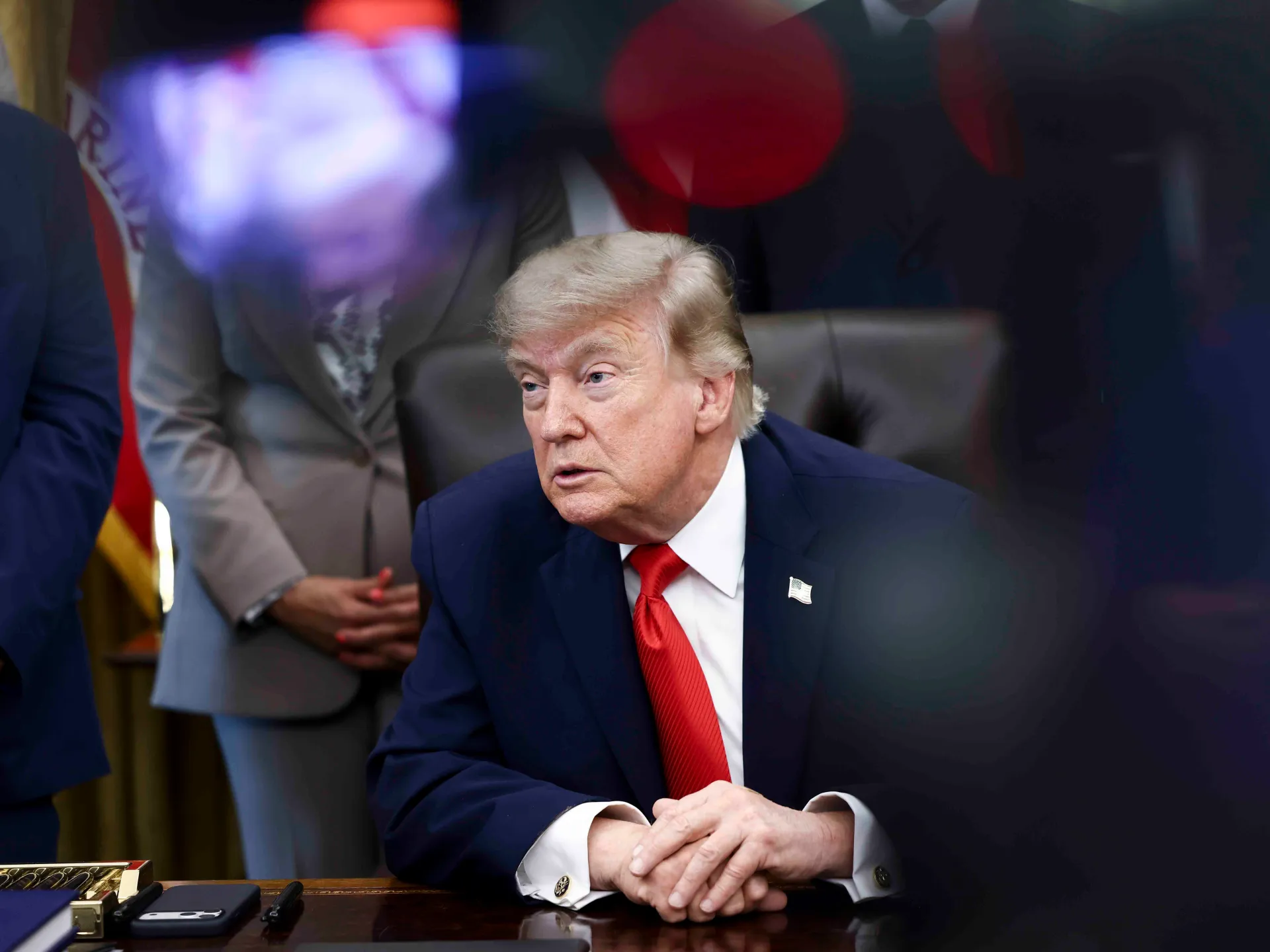
United States President Donald Trump has issued another threat to Iran, writing that it has two days to “make a deal or open up the Hormuz Strait”.
Saturday’s brief, three-sentence post on Truth Social did not reference the ongoing search for a US pilot who is believed to have ejected over Iran after an F-15 fighter jet crashed in the country. Iran has taken responsibility for the downing, the first of its kind since the US and Israeli launched attacks on Iran on February 28.
Recommended Stories
list of 3 itemsend of list
A separate incident on Friday saw Iran claim it shot down an A-10 Warthog near the Strait of Hormuz, raising questions about Trump’s earlier assertion that the US has established dominance over Iran’s airspace.
Rather than remark on the recent crashes, Trump’s post focused on a 10-day deadline he announced on March 26.
He had called on Iran to open the Strait of Hormuz to international traffic, or else face the “destruction” of its energy plants. That 10-day period is set to expire on Monday.
“Remember when I gave Iran ten days to MAKE A DEAL or OPEN UP THE HORMUZ STRAIT,” Trump wrote. “Time is running out – 48 hours before all Hell will reign down on them. Glory be to GOD!”
Stalled negotiations
While Trump did not provide further details about Saturday’s threat, in a series of posts this week, he pledged to attack Iran’s power plants, oil facilities and “possibly all desalinization plants”.
During a national address on Wednesday, he also threatened to bomb Iran “back to the Stone Ages”, and on Friday, he cheered a strike on a bridge that connects Tehran to the Caspian Sea.
Just this week, more than 100 international law experts published an open letter, warning that targeting civilian infrastructure is a violation of the Geneva Convention and could constitute war crimes.
The Trump administration has also offered shifting objectives and plans for ending the war.
Administration officials have repeatedly said that the US prefers a diplomatic solution. Trump, meanwhile, has touted “victories” even as he has hinted at more weeks of attacks.
At the same time, Iran and the US have sent contradictory messages on the progress of peace talks.
On Saturday, Iranian Foreign Minister Abbas Araghchi said Tehran remained open to diplomacy, after Iran rejected an “unreasonable” 15-point plan put forward by the Trump administration.
“What we care about are the terms of a conclusive and lasting END to the illegal war that is imposed on us,” Araghchi said in a post on X.
The US, however, has argued that Iran’s demand that it maintain “sovereignty” over the Strait of Hormuz is a non-starter.
Pakistan has indicated it will continue to try to support ceasefire negotiations despite the ongoing “obstacles”.
No mention of downed pilot
While Trump has not publicly addressed the ongoing search for the US pilot, NBC News reported on Friday that he did not believe the incident would affect any negotiations with Iran.
“No, not at all. No, it’s war,” he reportedly told the network in a phone call.
Nevertheless, experts have warned that the possible Iranian capture of the pilot could create a crisis for Washington, giving Tehran a major leverage point that could snarl any diplomatic resolution.
The incident could also undermine US claims it has a dominant position in negotiations.
Marina Miron, a researcher at King’s College London, said the shooting down of the F-15 undercuts statements from Trump and Pentagon chief Pete Hegseth that the US has established complete control over Iranian airspace.
“Now we have a visible example that Iran still has the capability to target and successfully shoot down US aircraft, making this, of course, very important for Iran to demonstrate the capability to resist,” Miron told Al Jazeera.
“Most likely, the kinds of air defences that Iran is using, such as man-portable air defences, will be much more difficult to locate.”
Any US efforts to rescue the pilot would risk US casualties, Miron added, heightening the risk of further military escalation.
“It’s a race for time, because right now we have this critical window of up to 72 hours where both sides are trying to get hold of the pilot for both military and political purposes,” she said.
“A civilised government never targets institutions of knowledge.” Iran’s minister of science said the US and Israel are the ones that belong in the Stone Age following an attack on Tehran’s Shahid Beheshti University. Al Jazeera’s Tohid Asadi visited the site to see the damage.
Tehran says it is the fourth attack near the nuclear plant amid the US-Israel war on Iran.
Published On 4 Apr 20264 Apr 2026
One person has been killed by projectile fragments after United States-Israeli strikes targeted a location close to Iran’s Bushehr nuclear plant, according to the International Atomic Energy Agency.
The agency, citing confirmation from Iranian authorities, said in a statement on X that there was “no increase in radiation levels” after Saturday’s attack.
Recommended Stories
list of 4 itemsend of list
Later on Saturday, Iran’s Foreign Minister Abbas Araghchi claimed the Bushehr facility had been “bombed” four times since the war erupted, criticising what he described as a lack of concern for its safety.
The strike comes as the US and Israel escalate their targeting of Iranian industrial sites, even as experts warn of the high risks of striking nuclear or petrochemical facilities.
IAEA Director General Rafael Grossi expressed “deep concern about the reported incident and says [nuclear] sites or nearby areas must never be attacked, noting that auxiliary site buildings may contain vital safety equipment”, the statement read.
Grossi also reiterated a “call for maximum military restraint to avoid risk of a nuclear accident,” the IAEA added.
The Atomic Energy Organization of Iran (AEOI) confirmed the incident, also in a post on X.
An “auxiliary” building on the site was damaged, but the main sections of the power plant were not affected by the strike, the government agency said, adding that the person killed was a member of security personnel.
It’s the fourth time the site has been attacked since the start of the US and Israel’s war on Iran, the AEOI noted.
The Bushehr plant is Iran’s only operational nuclear power plant. It is located in Bushehr city, home to 250,000 people, and is one of Iran’s most important industrial and military nodes.
Meanwhile, US and Israeli strikes on Saturday hit several petrochemical plants in the southern Khuzestan region, an important energy hub, according to Iranian media.
At least five people are reported injured.
Explosions were heard, and smoke was also seen rising after missiles hit several locations across the Mahshahr Petrochemical Special Economic Zone.
The state-run Bandar Imam petrochemical complex, which produces chemicals, liquefied petroleum gas (LPG), polymers and a range of other products, was struck and sustained damage, Iran’s Mehr news agency reported.
A provincial governor in Khuzestan added that the Fajr 1 and 2 petrochemical companies, as well as other nearby facilities, were also hit, according to the Fars news agency. The extent of damage is unclear.
Iran’s Islamic Revolutionary Guard Corps (IRGC) claimed it shot down an MQ-1 drone over central Isfahan province on Saturday, hours after authorities said they forced down two US warplanes.
Isfahan, which houses an underground uranium conversion and a research site, was one of three facilities bombed during US and Israeli strikes on Iran last June.
Two American crewmembers were rescued and one airman remains missing after a F-15E Strike Eagle went down over the Kohgiluyeh and Boyer-Ahmad provinces and an A-10 Warthog crashed into the Gulf, according to US media reports.
Recommended Stories
list of 1 itemend of list
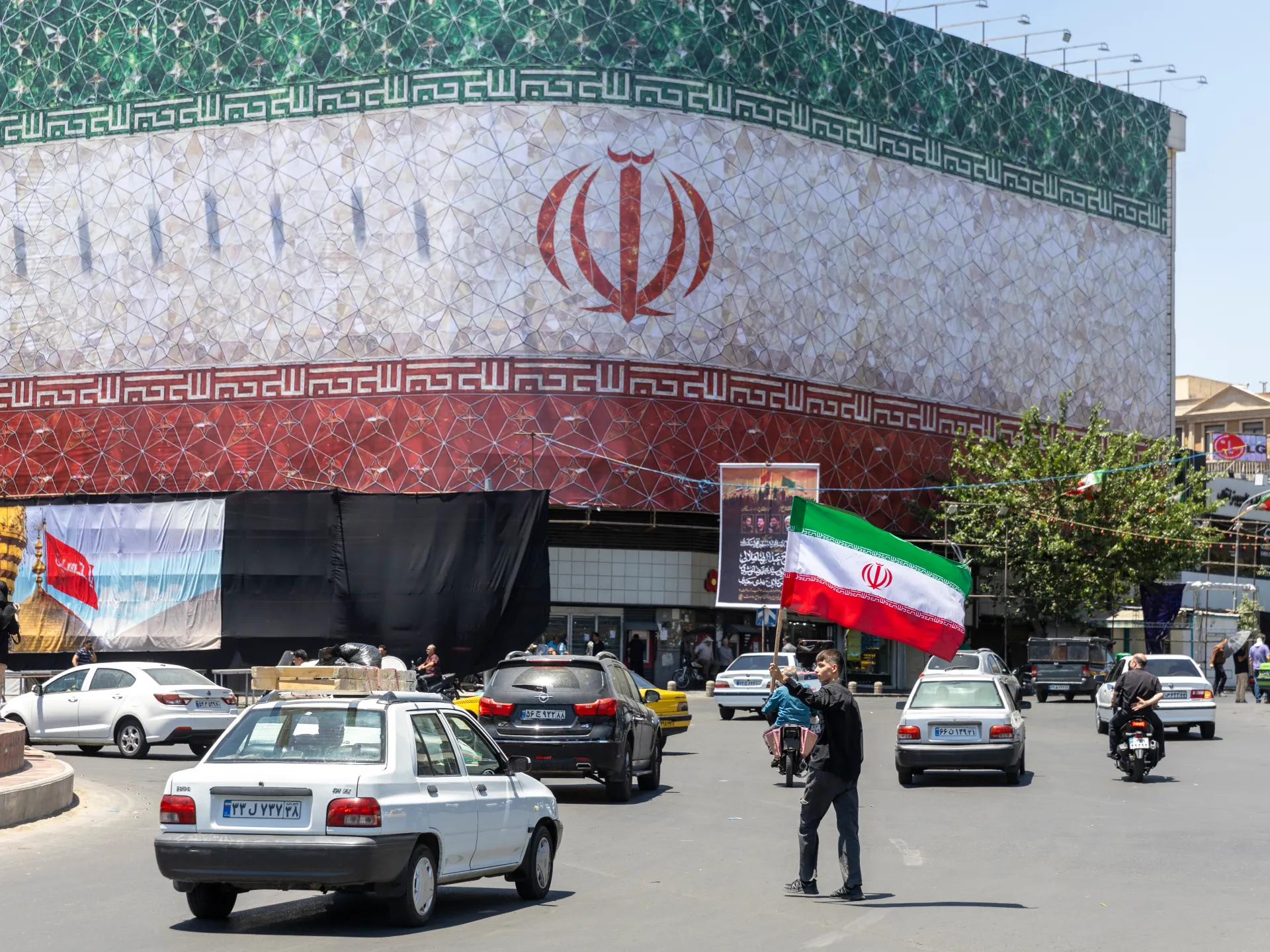
Iranians took to the streets in Tehran to celebrate what authorities described as a major military success.
Iranian officials said the downing of the aircraft demonstrates that Tehran still has the capability to confront US and Israeli forces, despite the Trump administration’s claims that the country’s military infrastructure has been severely damaged.
The incidents mark a significant escalation in the conflict, with search and rescue operations under way for the missing US crewmember.
Here is what we know about the latest developments:
In Iran
Major escalation: US forces are conducting search and rescue operations for a missing crewmember after Iran downed two American warplanes. A US Black Hawk helicopter involved in the search was also hit by Iranian fire but managed to remain airborne, according to US media reports.
Defence system: Iran said a “new advanced defence system” downed the aircraft, contradicting earlier US claims that its air defences had been destroyed.
Casualties and damage: The human toll continues to rise with at least 2,076 people killed and 26,500 wounded in Iran since the start of the war on February 28, according to Iranian authorities.
War diplomacy
Diplomacy stalls: Iran’s semi-official news agency Fars on Friday reported that Tehran had rejected a US proposal for a 48-hour ceasefire. The US did not confirm or comment on the report, which cited an unnamed source.
War of words: Iranian President Masoud Pezeshkian questioned whether the US is sincere about diplomacy, accusing Washington of hypocrisy and asking the world to judge “which side engages in dialogue and negotiation, and which in terrorism” after a recent attack that killed the wife of a senior Iranian official.
Appeal to world: Pezeshkian said he consulted Finland’s president over US President Donald Trump’s threat to bomb Iran “back to the Stone Ages”, calling the remark a clear admission of intent to commit a “massive war crime” and warning the international community against remaining neutral.
In the Gulf
One killed at UAE gas site: An Egyptian national was killed and four others wounded after a fire at a gas complex in Abu Dhabi, caused by falling debris from an intercepted attack, the Government Media Office said.
Kuwait reports strikes: Authorities said Iranian strikes hit an oil refinery and a desalination plant, though Tehran denied targeting the water facility.
Drone interception in Bahrain: In Bahrain, the Ministry of Interior reported that four people were injured and several homes were damaged in the Sitra area after shrapnel fell from an intercepted Iranian drone.
In the US
Trump briefed on downed plane, Iran hunts for pilot: Trump has been briefed about the downing of a military jet in Iran that has triggered a major search and rescue operation for a missing crewmember, the White House said. US media reported that another crewmember was rescued.
Propaganda impact: Geopolitical analyst Phyllis Bennis said the downing of a US fighter jet and search for the missing airman could make it harder for the White House to maintain public support for the war, particularly among Trump’s MAGA base. The incident “changes the propaganda equation”, even if it does not change the military balance, she told Al Jazeera.
Trump seeks $1.5 trillion defence budget: Trump asked lawmakers to approve a massive $1.5 trillion defence budget for 2027, as the US faces rising costs from its war with Iran and mounting global security commitments.
In Israel
Strikes on Israel: Iran launched missile attacks on southern Israel, sparking a fire at an industrial site in the Negev region.
Economic and societal toll: Simultaneous conflicts in Iran, Gaza and Lebanon have cost Israel an estimated $112bn, leading to significant cracks in the nation’s economy. Daily civilian life remains heavily disrupted, with schools across the country keeping their doors closed.
Political shifts and public opinion: Despite the disruption, 78 percent of Jewish Israelis still support the war against Iran, though pollsters warn this backing could eventually erode. Amidst the ongoing conflict, the Israeli government has lurched further to the right, recently passing a record $271bn budget as well as a highly controversial death penalty law targeting Palestinians.
In Lebanon and Syria
Man killed in Syria: State media in Syria said Israeli fire killed a man in the Quneitra province in the country’s south near the Israeli-occupied Golan Heights.
Lebanon Front: Israel destroyed two critical bridges in Lebanon’s Bekaa Valley, while Hezbollah claimed responsibility for multiple missile strikes against Israeli soldiers and artillery in southern Lebanon.
Oil, energy and food
Australia faces petrol shortages: Australia’s government urged motorists to fill their cars at city petrol stations ahead of any long road trips over the Easter holiday. Energy Minister Chris Bowen said hundreds of service stations in rural towns had run out of diesel nationally.
Food prices rise: The UN’s Food and Agriculture Organization (FAO) said its Food Price Index, which measures the monthly changes in international prices of a basket of food commodities, rose 2.4 percent in March.
Free bus rides in Pakistan: State-run public transport in Pakistan’s capital and most populous province will be free for the coming month, officials said Friday.
Drone footage from Israel shows damage to a factory in Petah Tikva after debris from an intercepted Iranian missile struck the site. The attack comes as Israel says it continues to intercept incoming missiles, on the 35th day of the US-Israeli war on Iran.
For decades, leaders who were responsible for war crimes tended to plead ignorance or insist it was a mistake and their hands were clean. What has changed in the Middle East is the swaggering contempt we have seen from the United States, Israel and Iran as they instead dismiss, mock or flout the international laws protecting civilians. If the international community does not urgently reassert support for those norms, it may be acquiescing to their destruction.
US President Donald Trump, who told The New York Times he doesn’t “need international law” and the only restraint on his power was his “own morality”, and Defense Secretary Pete Hegseth, who has dismissed “tepid legality” in favour of “maximum lethality”, have expressed little regard publicly for the safety of civilians affected by the US-Israeli war on Iran, which just entered its second month.
After announcing that the US had “demolished” Iran’s Kharg Island, Trump told NBC News, “We may hit it a few more times just for fun.” Hegseth has declared that “no quarter” would be given to enemies in Iran. That phrase indicates troops are free to kill those seeking to surrender rather than capture them. Such scenarios have served as a textbook example of a war crime in US military academies.
The Trump administration is not alone in this regard. In language eerily reminiscent of the war in Gaza, Israeli Defence Minister Israel Katz has threatened to demolish homes across southern Lebanon and block hundreds of thousands of civilians from returning.
Iran’s Islamic Revolutionary Guard Corps has declared US banks, investment firms and commercial ships valid targets despite their civilian status. Its spokesman warned Iranians that any street protests would be met with “an even harsher blow” than the January massacres, in which security forces killed thousands across the country. A state television presenter was more direct, saying opponents in the diaspora would face consequences that would see their “mothers sit in mourning”.
These statements are worthy of our attention not only because they telegraph a blatant disregard for civilian life but also because these leaders seem to mean it.
More than 2,000 people have been killed in Iran, more than 1,200 in Lebanon, and 17 in Israel. Altogether, several million people across the Gulf, Israel and Lebanon have been displaced or forced to flee from their homes. Based on a preliminary US military report, US forces were responsible for a deadly attack on an elementary school in Minab, Iran, in which more than 170 children and staff were killed.
The Israeli military has fired white phosphorus, which can burn to the bone, on Lebanese homes despite a clear prohibition on its use as a weapon in populated areas. Iran has launched internationally banned cluster munitions at Israeli cities and attacked commercial ships in the Strait of Hormuz.
The international legal system, designed to protect civilians during armed conflict, did not falter overnight. Unflinching US support for Israel as it carried out acts of genocide against the Palestinian population in Gaza, destroyed its hospitals and water systems, carried out countless air strikes that turned neighbourhoods into rubble and killed tens of thousands of Palestinian civilians over two and a half years contributed to a sense that some leaders would always be above the law.
Those double standards are alive and well, profoundly corroding respect for international law. When Iran struck Gulf energy infrastructure, condemnation rightly came within hours. But when Israel unlawfully dropped white phosphorus on Lebanese neighbourhoods, the same governments went quiet. Leaders need to say, with equal specificity and force, that attacks on Iranian power plants, Lebanese homes and Gulf civilian facilities are violations of the laws of war, regardless of who the perpetrator is. Otherwise, the rules are just a cudgel for punishing rivals.
The Geneva Conventions oblige every country not merely to follow the laws of war but also ensure global respect for them, including by refusing to arm forces credibly accused of violating them.
Yet arms continue to flow to belligerents on multiple sides of these conflicts with no apparent review of the likely impact. European governments that supply weapons or grant overflight and basing rights to forces unlawfully bombing civilians are not bystanders. If the actions of US and Israeli forces match the irresponsible rhetoric of their leaders, countries that arm or assist them could very well find themselves complicit in war crimes.
As during the war in the former Yugoslavia or more recently in Ukraine, the machinery of documentation and accountability needs to occur while the conflict is ongoing, not afterwards. Today, warring parties in the Middle East are working to prevent exactly that. Iran has imposed a nationwide internet shutdown and jailed people for sharing strike footage. Israel has banned live broadcasts and detained journalists. Gulf states have arrested citizens for posting images online. In the US, the Federal Communications Commission has threatened broadcasters’ licences over coverage of the war on Iran unfavourable to the Trump administration.
Governments with developed intelligence capabilities should be preserving and sharing evidence of war crimes right now: satellite imagery, communications intercepts, open-source footage. UN investigative bodies need immediate additional resources. And governments need to speak out clearly on the importance of justice for war crimes.
If this work waits until the shooting stops, the evidence may be gone, and the political will for accountability may quickly shift focus. The belligerents know it. They may even be counting on it.
The leaders repudiating the laws of war today may think they will gain from a world without rules, where brute force settles every question and all civilian harm is just written off as collateral damage. But by dismissing the principle of nonreciprocity, which makes clear that one side’s violations do not justify noncompliance by the other, they have spurred rounds of tit-for-tat strikes that put their own troops as well as their civilian populations in harm’s way.
Those who see the value of the existing system curbing the barbarity of war need to stand up for it. Otherwise, they may one day find themselves forced to explain to future generations why they did nothing while it burned.
The views expressed in this article are the author’s own and do not necessarily reflect Al Jazeera’s editorial stance.
The United States and Israel have carried out multiple attacks on medical facilities in the course of their war on Iran.
On Thursday, Iranian President Masoud Pezeshkian appealed to international health organisations to respond to attacks on medical facilities in Iran, including the Pasteur Institute in capital Tehran, a key centre that Iranian officials said had been targeted that day.
At least 2,076 people have been killed and 26,500 have been wounded in Iran since the US and Israel first launched strikes on the country on February 28.
Here is a closer look at how the US and Israel have hit healthcare facilities in Iran.
What has the Iranian president said about attacks on healthcare?
On Thursday, Pezeshkian wrote in an X post: “What message does attacking hospitals, pharmaceutical companies and the Pasteur Institute as a medical research center in Iran convey?”
The Iranian president, 71, a heart surgeon by profession, continued: “As a specialist physician, I urge WHO [the World Health Organization], the Red Cross, Doctors Without Borders and physicians worldwide to respond to this crime against humanity.”
What is the Pasteur Institute, which has been targeted?
On Thursday, Iranian Foreign Ministry spokesman Esmaeil Baghaei wrote in an X post: “The American-Israeli aggressors have attacked the Pasteur Institute of Iran – the oldest and most prestigious research and public health centre in Iran and the entire Middle East, founded in 1920 through an agreement between the Pasteur Institute of Paris and the Iranian government.”
Baghaei deemed the attack “heartbreaking, cruel, despicable, and utterly outrageous”.
He did not specify whether there were casualties from the attack.
The institute was founded more than 100 years ago in collaboration with the Institut Pasteur in Paris, an internationally renowned centre for biomedical research, which itself was founded in 1887.
The institute in Iran conducts research on infectious diseases, produces vaccines and biological products and provides advanced diagnostics.
The centre has played a central role in fighting endemic diseases such as smallpox and cholera. It also supports Iran’s national immunisation programme by developing and producing vaccines and related biologicals – including those used against diseases such as tetanus, hepatitis B and measles.
Tedros Adhanom Ghebreyesus, the director general of the WHO, wrote in an X post on Friday that two departments of the Pasteur Institute of Iran have also been working closely with the WHO.
“The conflict in Iran, and the region, is impacting the delivery of health services and the safety of health workers, patients, and civilians present at health facilities,” Ghebreyesus wrote.
Which other healthcare facilities have been hit in Iran?
“Since 1 March, WHO has verified over 20 attacks on health care in Iran, resulting in at least nine deaths, including that of an infectious diseases health worker and a member of the Iranian Red Crescent Society,” Ghebreyesus wrote in his X post.
Some of the facilities hit include:
Red Crescent warehouse
On Friday morning, a drone strike hit a Red Crescent relief warehouse in Iran’s Bushehr province.
While no casualties were reported, the attack destroyed two relief containers, two buses and emergency vehicles, Fars news agency reported.
The company was later identified as Tofigh Daru Research and Engineering Company, which is owned by the Social Security Investment Company, a state-run holding firm. On LinkedIn, Tofigh Daru states that it develops and produces active pharmaceutical ingredients “in the anticancer, narcotics, cardiovascular to immunomodulatory segments”.
No confirmed casualty numbers were reported from that strike.
Delaram Sina Psychiatric Hospital
This newly constructed hospital in Tehran was significantly damaged during an attack on the capital on March 29, according to the state-run Islamic Republic News Agency (IRNA).
About 30 patients were in the hospital at the time of the strike late on Monday, the hospital’s director told IRNA. No specific casualty figures for the hospital have been reported.
Ali Hospital
The hospital in Andimeshk in Iran’s Khuzestan province sustained damage from an explosion on March 21, according to the Mehr and Fars news agencies.
In his post on Friday, Ghebreyesus confirmed this attack and said the facility had been forced to evacuate staff and cease services.
Reports about the attack do not mention casualties at the hospital.
Gandhi Hospital
On March 2, Gandhi Hospital in Tehran was damaged during attacks on a television communications tower nearby.
No confirmed casualty figures were reported for the hospital itself.
What does international law say about attacks on healthcare?
International humanitarian law states that health establishments and units, including hospitals, should not be attacked, according to the International Committee of the Red Cross.
These protections also apply to the sick and wounded, to medical staff and to means of transport such as ambulances.
In 2016, the United Nations Security Council resolution 2286 was adopted unanimously. This condemns attacks on healthcare and calls on nations to respect international law.
However, last year record attacks on healthcare during armed conflict were recorded, according to the WHO’s Surveillance System for Attacks on Health Care (SSA).
The SSA said that in armed conflicts worldwide, 1,348 attacks on medical facilities resulted in the killing of 1,981 people. The majority of these deaths were in Sudan, where 1,620 people were killed, followed by Myanmar, where 148 people were killed.
This was a sharp uptick from 2024, when 944 patients and medical personnel were killed in armed conflict.
Where else has Israel targeted medical staff and facilities?
A month into its latest bombardment of Lebanon, Israel has killed 53 medical workers, destroyed 87 ambulances or medical centres, and forced the closure of five hospitals, according to Lebanon’s Ministry of Public Health.
“Israeli strikes and blanket evacuation orders are cutting people off from care and shrinking the space for health services to function,” Luna Hammad, the Lebanon medical coordinator for Doctors Without Borders (MSF), told Al Jazeera, adding that MSF has seen “a documented pattern of attacks affecting healthcare”.
Gaza
Throughout its genocidal war in Gaza, Israel has also attacked healthcare facilities in the Palestinian enclave.
In October 2023, hundreds of people sheltering in the car park of Gaza’s al-Ahli Hospital were killed in an Israeli attack, according to Palestinian health officials.
Israel attributed the explosion at the facility to a misfired rocket launched by the Palestinian Islamic Jihad, an allegation denied by the armed group.
In March 2024, the Israeli military said it killed 90 people in its raid on al-Shifa Hospital during a siege, as displaced Palestinians sheltering in the facility described long detentions and abuse.
In December 2024, the Israeli army arrested Dr Hussam Abu Safia, the director of Kamal Adwan Hospital, after refusing to follow orders to abandon one of the last functioning hospitals in northern Gaza. His arrest came a day after the military killed approximately 20 Palestinians and apprehended about 240 in a raid inside the hospital, which was one of the “largest operations” conducted in the territory until that time.
In March 2025, Israeli forces reportedly shot dead 15 Palestinian medics for the Palestine Red Crescent Society and inside clearly identifiable PRCS ambulances, during a rescue mission in Rafah’s Tal as-Sultan neighbourhood.
Islamabad, Pakistan – At the start of this year, Pakistan had more imported liquefied natural gas (LNG) than it could use. Demand had been falling for three straight years, from a peak of 8.2 million tonnes in 2021 to 6.1 million tonnes by late 2025, as cheap solar panels flooded the market and factories cut back.
The government quietly sold excess gas shipments to other countries and shut down domestic gas wells to prevent pipelines from bursting under the pressure of oversupply. Gas that could not be diverted would be pushed into household networks at a financial loss, adding billions to an already crippling debt pile in the energy sector.
Recommended Stories
list of 4 itemsend of list
Then the war came. On February 28, the United States and Israel launched hundreds of strikes against Iran in an operation named Epic Fury. The strikes targeted Iranian missiles, air defences, military infrastructure and leadership. Supreme Leader Ali Khamenei was killed in the opening assault.
Iran retaliated by firing hundreds of missiles and drones across the region, and as a result, traffic passing the Strait of Hormuz, the narrow waterway through which roughly a fifth of the world’s oil and gas passes, almost came to a halt.
The energy consequences were immediate. As a part of its retaliation against US-Israeli attacks, on March 2, Iranian drones hit Qatar’s gas facilities at Ras Laffan Industrial City, the world’s largest LNG export complex.
Qatar, the world’s second-largest LNG exporter after the United States, halted all production and declared force majeure, a legal term meaning it was released from delivery obligations due to circumstances beyond its control.
The conflict escalated further on March 18, when Israel struck Iran’s South Pars gas field, the largest in the world, off Iran’s southern coast.
South Pars and Qatar’s North Field sit above the same underground reservoir, meaning the attack threatened both countries’ gas production simultaneously. Iran struck Ras Laffan again in retaliation.
QatarEnergy said that the hit had forced it to cut LNG production by 17 percent, with repairs expected to take up to five years.
Brent crude, the industry benchmark, was priced at more than $109 a barrel on Thursday,
Oil prices on Thursday climbed to $109 a barrel, while European gas prices jumped 6 percent in a single trading session.
For Pakistan, which secures nearly all its imported gas from Qatar and the United Arab Emirates, and holds no emergency reserves, the shift from surplus to shortage happened almost overnight.
A system built on imports
Pakistan meets its daily gas needs from three main sources. The bulk, about 2,700 million cubic feet per day, comes from domestic gas fields that have been in slow decline for years.
The rest comes from imported LNG, supplied by Qatar under long-term contracts, adding roughly 600 million cubic feet per day when shipments flow normally.
The third source is bottled LPG, used mainly by households in rural areas not connected to the pipeline network. Pakistan gets more than 60 percent of its LPG from Iran, a supply also disrupted by the conflict.
Pakistan began importing LNG in 2015 when domestic production could no longer meet demand. Today, imported LNG powers roughly a quarter of the country’s electricity, with the power sector its largest consumer.
Qatar and the UAE together account for 99 percent of Pakistan’s LNG imports, according to energy analytics firm Kpler.
Of that, Pakistan’s LNG supply is dominated by two long-term government-to-government agreements with Qatar, one spanning 15 years and the other 10. Together, they cover nine shipments a month.
QatarEnergy’s liquefied natural gas (LNG) production facilities, amid the US-Israeli conflict with Iran, in Ras Laffan Industrial City, Qatar March 2, 2026. [Stringer/Rueters]
From glut to scarcity
Monthly cargo data from Pakistan’s energy regulator, OGRA, reflects the impact of the war. The country received between eight and 12 LNG shipments a month through 2025 and into early 2026, with 12 arriving in January alone. In March, the month the war began, only two shipments arrived.
Prices have been affected too. According to data compiled by researcher Manzoor Ahmed of the Policy Research Institute for Equitable Development (PRIED), on February 13, state-owned entities Pakistan State Oil and Pakistan LNG Limited procured eight combined cargoes at an average cost of $10.47 per MMBtu, totalling $257.1m.
MMBtu is the standard international unit used to measure and price natural gas and LNG.
By March 12, the two cargoes that did arrive cost $12.49 per MMBtu, a 19 percent increase in a month, reflecting tightening global conditions even before the war’s full impact.
Pakistan had already been consuming less gas. Its share of Asian LNG markets fell from roughly 30 percent in 2020 to about 18 percent in 2025, driven largely by the rapid expansion of solar power. Millions of Pakistanis, frustrated by high electricity costs and frequent blackouts, have installed rooftop panels in recent years.
By 2025, the country had 34 gigawatts of solar capacity, with an estimated 25 gigawatts feeding into the national grid. Overall electricity demand from the grid fell nearly 11 percent between 2022 and 2025.
Gas-fired power plants built to run on imported LNG were left underutilised, especially during daylight hours.
“Of course, solarisation helps manage daytime demand, reducing the need for running thermal power plants,” said Haneea Isaad, an energy analyst at the Institute for Energy Economics and Financial Analysis (IEEFA), who has tracked Pakistan’s gas sector for years.
But the contracts with overseas gas suppliers still needed to be adhered to — so Pakistan kept buying and paying, she told Al Jazeera.
Ahmed of PRIED pointed to two compounding challenges. First, the nature of Pakistan’s gas supply contracts were such that the government had to “buy LNG even when demand collapsed,” he told Al Jazeera.
Second, “rapid solar growth and suppressed grid demand were underestimated, and their effect on overall planning was not accounted for,” the Islamabad-based analyst added.
LNG consumption dropped by 1.21 million tonnes in 2025 alone. With no large storage capacity, surplus gas was pushed into domestic pipelines at a loss.
The resulting circular debt in the gas sector now stands at 3.3 trillion rupees, approximately $11bn. By January, Islamabad was negotiating to offload 177 unwanted gas shipments projected through 2031, a liability of $5.6bn.
Isaad of IEEFA said the surplus was predictable.
“Pakistan’s energy planning has mostly been bound by long-term contracts with very little flexibility,” she said. Once considered necessary for energy security, these rigid contracts, she added, have become a financial albatross in a market increasingly prioritising flexibility and low-cost generation.
She described the government’s pre-war response, diverting excess cargoes, as “reactive crisis management” that prioritised short-term fixes over better forecasting and procurement flexibility.
Supply shock
Qatar’s LNG shipments to Pakistan have stopped almost completely since March 2. Of the eight shipments scheduled that month, only two arrived. The six expected in April are unlikely to reach the country.
At a public hearing of the National Electric Power Regulatory Authority, Central Power Purchasing Agency chief executive Rehan Akhtar said LNG supplies were under force majeure, though coal imports from South Africa and Indonesia remained unaffected.
Officials have warned of near-zero LNG availability in the coming months, even if the war ends quickly. LNG accounts for more than 21 percent of Pakistan’s power generation.
“With Pakistan’s LNG supply completely halted after Qatar’s declaration of force majeure, LNG plants are effectively out of the running order,” Isaad said.
The government has responded by restoring domestic gas production that had been deliberately curtailed during the surplus period.
Isaad said Pakistan had been holding back roughly 350 to 400 million cubic feet per day of domestic gas to accommodate LNG imports.
“There will also be the option to rely on other power generation sources such as imported coal and hydropower,” she added. But, she warned, “even with hydropower, imported coal and restored domestic gas production covering some of the gaps left by LNG, there might still be an energy shortage.”
For now, mild weather and increased solar output have provided temporary relief.
“So far, Pakistan has somehow miraculously survived any prolonged energy shortages in the power sector through a combination of mild weather and a pre-existing reduced reliance on imported LNG,” Isaad said. “But peak summer months may be a different story.”
Men load solar panels on a rickshaw (tuk tuk) at a market, in Karachi, Pakistan March 26, 2025. [File photo: Akhtar Soomro/Reuters]
Summer pressure
With an energy crisis looming, Pakistan is bracing for a few hours of daily planned power cuts this summer, alongside other energy conservation measures and higher electricity costs.
According to the National Electric Power Regulatory Authority’s State of Industry Report 2025, peak electricity demand last summer exceeded 33,000 megawatts.
Winter demand currently stands at about 15,000 megawatts, partly because solar panels now generate between 9,000 and 10,000 megawatts daily, reducing reliance on the grid.
Furnace oil, the main backup fuel, now costs 35 rupees per unit, about $0.12, and its price has more than doubled since the Strait of Hormuz disruption.
Analysts say the burden will fall unevenly. Consumers reliant on grid electricity will face both higher bills and outages, while industries dependent on gas will see production disruptions. Those with rooftop solar and battery storage will be best insulated.
Isaad is blunt about the options before Pakistan. “Returning to the spot market might not be feasible, given the dire financial consequences,” she said. “Even if it does, competition with wealthier nations may once again price Pakistan out. Furnace oil could be another option, but that will be prohibitively expensive to run.
“The only option the government may be left with is load-shedding [planned power blackouts], probably around two to three hours daily.”
Iran says it is ready to counter any US-Israeli attacks, insisting its military capabilities remain intact despite Donald Trump’s claims they’ve been ‘decimated.’
Pope Leo washed the feet of 12 priests in a Holy Thursday ritual, using the moment to urge Catholics to stand with the oppressed. His remarks come after he criticised the Trump administration on the Iran war and called for an end to the fighting.
Staff at the Children’s Medical Center organise activities to offer a joyful experience to children in hospital amid the ongoing US-Israeli war on Iran.
Tehran, Iran – Many Iranian families picnicked outdoors during daylight hours on Thursday for Sizdah Bedar, which marks Nature Day in the Persian calendar, despite the ongoing bombardment by the United States and Israel.
Thousands gathered at Pardisan Park, a sprawling complex northwest of Tehran, to spend time with loved ones as holidays for Nowruz, the Persian New Year, came to an end with politicians and commanders ordering more strikes and threatening to escalate attacks.
Recommended Stories
list of 3 itemsend of list
A short drive away near the downtown area of the capital, a group of doctors and healthcare providers tried to offer a joyful experience to children who could not go outside with their families due to illness.
Resident doctors and interns at the Children’s Medical Center, a hospital operating under the Tehran University of Medical Sciences, have been pooling their own money with some donations to organise activities for the children suffering from underlying health conditions.
The paediatric facility, and the adjacent Imam Khomeini Hospital, have not been impacted by strikes, unlike a number of other medical facilities in Tehran and across the country, some of which have had to suspend services.
But the bombs have rung out loud numerous times after hitting nearby areas since the start of the war over a month ago.
“The children and their families have been going through a lot of pressure and anxiety because they have to be in the hospital under these stressful conditions,” Dr Samaneh Kavousi, one of the organisers, told Al Jazeera.
Iranians celebrate Iranian Nature’s Day, called ‘Sizdah Bedar’ and marking the 13th day of Nowruz (Persian New Year), in a park in Tehran, Iran on April 2, 2026 [Abedin Taherkenareh/EPA]
“We’ve been trying to do what we can to relieve some of that anxiety,” she said.
During the Nowruz holidays that started on March 20, children were encouraged to draw and paint, and the artworks were on display on Thursday when their families came to celebrate at the hospital.
The main themes were the Haft Sin table and Sizdah Bedar, or the 13th day of the first month, which symbolises doing away with ill fortune.
Most of the children were very young, a few of them babies being held by fathers, mothers and siblings who came out to support them and keep spirits alive despite the hardships of caring for a sick family member amid the war.
Some danced together to children’s music, along with hospital staff wearing costumes of Toy Story’s Buzz Lightyear and characters from PAW Patrol, the popular animation series about brave puppies who work together to safeguard their community.
Others played with balls, had their faces painted, filled colouring books, or left palm prints on paper. The children also received a fun bag filled with toys and food.
Dr Zeynab Aalihaghi, another resident organiser of the event at the hospital, said that the facility is not tasked with treating children wounded during the war, but the number of its patients has declined compared to before the war.
She told Al Jazeera that up to about 400 children were being cared for in the hospital before the war, while less than 100 are now there. The doctor added that some parents have opted to take their children to paediatric facilities in other cities, which may be perceived as being safer at the time that the child needs treatment.
“But our emergency admissions have increased over the past two days, so it could mean that we might experience a new peak after the Nowruz holidays,” Aalihaghi said.
The doctor said she believes that, at its current state, the hospital is prepared to quickly bounce back to normal activity levels when the war ends.
Kavousi, the other doctor, said the facility faces no shortage of medicine at the moment, and hopes to be able to continue helping children and their families.
“Healthcare personnel are also under a lot of mental strain,” she said. “But we will continue to do our duty to serve our people and work to take away children’s pain.”
Jassim al-Budaiwi calls on UN Security Council to guarantee ‘uninterrupted navigation through all strategic waterways’.
Published On 2 Apr 20262 Apr 2026
The head of the Gulf Cooperation Council (GCC) has called on the United Nations to act to immediately halt Iranian attacks across the region, condemning the strikes as a “flagrant violation” of international law and the United Nations Charter.
Speaking at the UN Security Council (UNSC) on Thursday, GCC Secretary-General Jassim al-Budaiwi urged the council to “take all necessary measures” to bring an end to Iran’s attacks on Gulf countries.
Recommended Stories
list of 3 itemsend of list
The UNSC must “take all necessary means” to “protect maritime corridors and guarantee the uninterrupted maritime navigation through all strategic waterways” in the region, al-Budaiwi said.
He also stressed that the six GCC states – Saudi Arabia, Qatar, Bahrain, Oman, Kuwait and the United Arab Emirates – must be included in any talks or deals with Iran “to enhance regional security and prevent further escalation or the repetition of such attacks in the future”.
“The GCC reaffirms the urgent need to immediately halt these attacks; restore security, stability and calm in the region, and ensure the safety of air and maritime navigation, the safety of international supply chains, and the protection of global energy markets,” al-Budaiwi said.
Iran has carried out daily missile and drone attacks across the Middle East, including in Arab Gulf nations, since the United States and Israel launched a war against the country on February 28.
While Iranian officials have said they are acting in self-defence and striking US and Israeli-linked targets, the attacks have struck civilian sites across the Gulf, including several of the region’s critical energy facilities.
Iran also has effectively closed the Strait of Hormuz, a key Gulf waterway through which about one-fifth of the world’s oil and liquified natural gas supplies transit, sending global energy prices skyrocketing.
Reporting from the Emirati city of Dubai on Thursday evening, Al Jazeera’s Zein Basravi said frustrations are growing across the Gulf as the US-Israeli war on Iran drags on.
“The GCC countries were from day one – months before this war even began – trying to keep it from happening. But it was like trying to stop a slow-moving car crash. And effectively, that crash has happened in their front yard,” Basravi said.
He noted that 85 percent of the projectiles fired by Iran have targeted Gulf countries, with the UAE the hardest hit.
“Their primary threats are the retaliatory attacks by Iran,” Basravi said of the GCC. “And their primary focus is bringing that to an immediate close – and that means ending the conflict as soon as possible.”
Islamabad, Pakistan – Pakistan intends to continue to nudge the United States and Iran towards negotiations aimed at ending their war, but the Ministry of Foreign Affairs acknowledges “obstacles” in its efforts.
Foreign Office spokesperson Tahir Andrabi did not specify the roadblocks on the path to peace that he was referring to. But his comments, made during a weekly media briefing in Islamabad, came hours after US President Donald Trump threatened to bomb Iran “back to the Stone Ages” if it did not accept Washington’s terms for a peace deal.
Recommended Stories
list of 4 itemsend of list
Pakistan has been leading a multination effort to facilitate negotiations between the US and Iran.
“Despite challenges and obstacles, Pakistan will continue its efforts to promote facilitation and dialogue,” Andrabi said. He added that Islamabad was working to create conditions for “meaningful negotiations among relevant stakeholders”.
He said the US and Iran had confidence in Pakistan’s role as a neutral intermediary.
In a sign of that confidence, Iran has allowed 20 Pakistani-flagged vessels to transit the Strait of Hormuz. Andrabi called it “a harbinger of peace” and a positive step for regional stability.
He did not confirm whether any Pakistani ship had so far sailed through the strait.
The Hormuz route has been largely blocked since Iran began restricting oil and gas shipments following the outbreak of the US-Israel-Iran conflict on February 28. The disruption has driven up energy prices and triggered widespread economic strain.
Andrabi also pointed to sustained high-level contact between Islamabad and Tehran. He cited a March 28 call in which Iranian President Masoud Pezeshkian spoke with Prime Minister Shehbaz Sharif, stressing the need to “build trust in order to facilitate talks and mediation” and praising Pakistan for its “supportive role for peace”.
Regional diplomacy
The briefing came just a day after Deputy Prime Minister and Foreign Minister Ishaq Dar returned from Beijing, where he met China’s Foreign Minister Wang Yi.
The foreign ministers of Pakistan, Egypt, Turkiye and Saudi Arabia in Islamabad on March 30, 2026 [Handout/Pakistan’s Ministry of Foreign Affairs via AFP]
The visit produced a joint five-point initiative calling for an immediate ceasefire, urgent diplomatic engagement to prevent further escalation, and the restoration of normal maritime traffic through the Strait of Hormuz.
Andrabi said the Chinese-Pakistani plan had since been shared with Iran, the US and other stakeholders, receiving appreciation “across the region and beyond”.
He added that the proposals were consistent with the outcome of the four-nation ministerial meeting held in Islamabad the previous weekend — the foreign ministers of Saudi Arabia, Turkiye and Egypt joined Dar for those talks.
Dar travelled to Beijing despite medical advice to rest after sustaining a hairline fracture during the Islamabad talks, a move Andrabi said reflected the importance Pakistan places on its ties with China. “The Chinese side expressed deep appreciation, conveying that China and Pakistan are strategic cooperative partners,” he said.
The Islamabad meeting between Pakistan, Saudi Arabia, Turkiye and Egypt was the second such gathering in a coordinated regional push to de-escalate tensions. The first was held in Riyadh on March 19.
Following those talks, Dar said Pakistan was prepared to host direct US-Iran negotiations “in the coming days”.
“Pakistan will be honoured to host and facilitate meaningful talks between the two sides for a comprehensive and lasting settlement,” he said on March 30.
At Thursday’s briefing, Andrabi reiterated that offer, confirming Pakistan had formally “offered to host and facilitate negotiations as part of its broader diplomatic outreach”.
He said the next phase of efforts would focus on securing “meaningful negotiations among relevant stakeholders”.
He appeared to acknowledge that Iran — which has so far denied any direct negotiations with the US and has insisted that the mediation is limited to messages being passed between Tehran and Washington by Islamabad — was not fully on board with the efforts to push the warring nations towards talks.
“Iran, as a sovereign country, determines its own policies,” Andrabi said.
Afghanistan breakthrough?
Separately, the Pakistani Foreign Ministry confirmed sending a delegation of senior officials to the northwestern Chinese city of Urumqi for talks with Afghanistan. It is the first substantive contact since Islamabad launched cross-border strikes in late February.
The Urumqi meeting on Wednesday focused on exchanging views on the current escalation, Andrabi said.
“Our participation is a reiteration of our core concerns,” he said. “The burden of real process, however, lies with Afghanistan, which must demonstrate visible and verifiable actions against terrorist groups using Afghan soil against Pakistan.”
Pakistan launched Operation Ghazab lil-Haq on the night of February 26, targeting what it described as sanctuaries of “terrorists” in Afghanistan, following what it called unprovoked fire from across the border by Afghan Taliban forces.
After a five-day pause from March 18 to 23 for Eid-ul-Fitr, partly in response to de-escalation requests from Saudi Arabia, Qatar and Turkiye, Andrabi confirmed the operation was continuing.
“There has been no change in Operation Ghazab lil-Haq, and operations are continuing,” he said.
Islamabad has repeatedly accused the Taliban administration in Kabul of enabling groups such as Pakistan Taliban, known by the acronym TTP, which have repeatedly launched deadly attacks inside Pakistan, to operate from Afghan soil. Kabul denies those allegations.
Islamabad says its concerns remain unaddressed, and violence has surged since the Taliban’s return to power in August 2021.
China has also played a role in facilitating engagement between Pakistan and Afghanistan, including meetings in Beijing in May and in Kabul in August.
Gurdaspur, Punjab, India – Ramesh Kumar, 42, is anxiously doing the calculations for his crops this year.
Standing at the edge of his wheat field in northwest Punjab’s Gurdaspur, he runs through the numbers in his head, totting up fertiliser costs, expected yield, and market prices.
Then he shifts to more personal concerns: School fees, household expenses, loan repayments and the money he has been saving for his daughter Varsha’s wedding.
“I don’t know if we can afford it this year,” he says. “Everything depends on the crop.”
The uncertainty has crept in quietly.
Fertiliser, once a fairly predictable staple in farming, has become more expensive and harder to secure in time. For Kumar, it is not so much a question of cost as it is the difference between stability and strain.
“If prices go up more, we will have to cut somewhere,” he says. “Maybe delay the wedding. If things get worse … even children’s education becomes difficult.”
School fees for his eldest son, Amit, 12, are due in the coming weeks, and Kumar has been setting aside money for his younger daughter Varsha’s future wedding.
It’s never easily affordable, even in good times. “We somehow manage,” Kumar says. “But if the harvest is weak, then we have to think about what to prioritise, what to delay.”
For farmers like him across South Asia, the United States-Israel war on Iran – unfolding thousands of kilometres away – is not just a matter of distant geopolitics.
It is shaping decisions inside their homes.
A worker pours fertiliser into a sack at a storage facility in Srinagar, Indian-administered Kashmir [Sajad Hameed/Al Jazeera]
A distant crisis with local consequences
At the centre of the unfolding crisis is the Strait of Hormuz, a narrow shipping lane more than 2,000km (1,240 miles) from India’s northern plains. It lies between Iran and Oman, linking the Gulf and its oil producers to the open ocean and, from there, to global markets.
About one-fifth of the world’s oil and liquefied natural gas (LNG) supplies pass through this body of water, which Iran closed down shortly after the first US-Israeli strikes on Tehran on February 28.
Vast volumes of LNG, essential for manufacturing nitrogen-based fertilisers, are transported from Gulf producers to Asia via this route. Any disruption can delay shipments, push up freight and insurance costs and place a stranglehold on supply.
Interruptions to the supply of fertiliser can ripple quickly, reducing crop yields, increasing costs and raising food prices.
The risks are already being felt thousands of kilometres away.
South Asia, home to nearly two billion people, relies heavily on fertiliser-intensive farming to produce staple crops such as wheat and rice. Over the past few decades, the increasing use of fertilisers – which can hugely boost crop yields – has played a key role in agricultural productivity across the region.
The agriculture sector now employs about 46 percent of the workforce in India, about 38 percent in Pakistan, nearly 40 percent in Bangladesh, and more than 60 percent in Nepal.
A farmer spreads fertiliser around apple trees in an orchard in Baramulla, Indian-administered Kashmir, March 2026 [Sajad Hameed/Al Jazeera]
The degree to which countries in the region depend on the Strait of Hormuz varies, but all rely heavily on the trade in fertilisers that this shipping route facilitates.
In India, the agriculture sector is worth $400bn, according to Indian government and World Bank data, and supports the livelihoods of more than half the population, either directly or indirectly. More than 100 million farming families are directly dependent on the sector.
The country imports a substantial share of its fertiliser requirements and other key raw materials, particularly phosphates and potash, as well as natural gas used to manufacture fertiliser, with about 30–35 percent of these supplies moving through or originating from routes that pass via the Strait of Hormuz.
In Pakistan, the agriculture sector contributes close to 20 percent of gross domestic product (GDP), according to Pakistan government estimates, and employs millions. About 20-25 percent of Pakistan’s fertiliser imports, particularly DAP (diammonium phosphate), pass through the Strait of Hormuz at some point in transit. Additionally, the sector relies on domestic natural gas for the production of urea, a key nitrogen-based fertiliser and, with Gulf natural gas supplies held up in the Strait of Hormuz, the price of natural gas everywhere – even at home – is on the rise.
In Bangladesh, where millions of smallholder farmers rely heavily on imported fertilisers, the agricultural sector accounts for about 12-13 percent of GDP, according to government data. The country’s farming industry relies heavily on imported fertilisers to sustain crops, meaning farmers are highly exposed to international supply shocks and price swings.
Furthermore, roughly 25-30 percent of Bangladesh’s imported fertiliser is shipped via routes passing through the Strait of Hormuz.
Nepal, where agriculture contributes about 24 percent of GDP, imports nearly all of its fertiliser needs, with about 25-30 percent of arriving via India, via the Gulf and the Strait of Hormuz.
A worker handles granular fertiliser at a storage facility in Punjab, northern India, March 2026 [Sajad Hameed/Al Jazeera]
Livelihoods at stake
Overall, even minor disruption in the Gulf – let alone the complete closure of the critical Strait of Hormuz – can have dire consequences for hundreds of millions of people.
The Indian government has sought to reassure farmers that supplies remain secure – for now.
Prime Minister Narendra Modi told Parliament on March 23: “Adequate arrangements have been made for fertiliser supply for the summer sowing season…The government has diversified options for oil, gas and fertiliser imports… Domestic production of urea, DAP and NPK [nitrogen, phosphorus and potassium fertilisers] has been expanded… Farmers now have access to Made in India Nano Urea and are encouraged to adopt natural farming…”
He added: “Under the PM Kusum scheme, more than 22 lakh (2.2 million) solar pumps have been provided, reducing dependence on diesel… I am confident that through joint efforts, India will manage these challenges effectively and continue to support our farmers.”
On the ground, however, confidence is low. Farmers say uncertainty is already influencing decisions.
In Pampore, in the south of Indian-administered Kashmir, 53-year-old mustard farmer Ghulam Rasool says price signals travel faster than supply disruptions.
“We hear about war, about shipping problems,” he tells Al Jazeera. “Even before shortages happen, fertiliser becomes expensive.”
Rasool says farmers often respond early by cutting down on the amount of fertiliser they are using, even before actual shortages emerge.
“If we use less, production will fall,” he says. “But sometimes we have no choice.”
In Pakistan’s South Punjab, wheat farmer Muneer Ahmad, 45, is preparing for the next sowing cycle.
“If fertiliser becomes expensive, it will affect everyone here,” he says.
Government officials have expressed confidence in Pakistan’s fertiliser supply amid the Middle East conflict, and claim the government is fully prepared to ensure adequate supplies during the region’s peak sowing period, which typically begins between April and June, depending on the crop.
According to a statement by Pakistan’s federal secretary for agriculture to Al Jazeera, Federal Minister Rana Tanveer Hussain told a meeting on March 25 that the government has started proactive monitoring, is expanding domestic urea and DAP production and taking steps to ensure fertilisers reach farmers at affordable prices.
However, urea production requires supplies of natural gas, meaning global energy price shocks can still translate into rising production costs.
A farm worker spreads fertiliser across a field as part of routine crop management during the growing season in north India [Sajad Hameed/Al Jazeera]
For farmers, even small increases matter
“We already have loans and expenses,” Ahmad says. “If costs go up, we feel it immediately.”
In Rangpur, northwestern Bangladesh, farmer Mohammad Ibrahim, 41, says fertiliser supplies are already becoming unpredictable.
“Sometimes it is available, sometimes not,” he says. “And when it comes, the price is higher.”
Meanwhile, in Nepal’s Gulmi district, farmer Meghnath Aryal, 38, worries that crops will be reduced if a major supply problem does appear.
“If fertiliser does not arrive on time, the crop suffers,” he says. “If it becomes expensive, we reduce use.”
Bangladesh’s Agriculture Secretary Rafiqul Mohammad told Al Jazeera the government is “closely monitoring the situation” and officials have tried to reassure farmers that fertiliser supplies are sufficient for the coming months.
The government has finalised plans to import about 500,000 tonnes of urea in the near term, while also exploring alternative suppliers such as China and Morocco to secure additional supplies in the longer term.
There is no immediate shortage at present, the Agriculture Ministry says.
Ram Krishna Shrestha, joint secretary at Nepal’s Ministry of Agriculture and Livestock Development, told Al Jazeera that fertiliser distribution within the country remains largely stable for now, with supplies already secured for the upcoming rainy season, particularly for paddy crops such as rice.
However, he warned that there may be delays to contracted shipments as a result of the Middle East crisis.
“We have managed fertilisers for the upcoming season, but there could be challenges in timely supply because of the current situation,” he said, pointing to global price increases and logistical disruptions, including those caused by the closure of the Strait of Hormuz.
Shrestha added that as companies report shortages and rising prices in international markets, the government has asked suppliers to expedite deliveries.
“Authorities are also advising farmers to increase the use of traditional nutrient sources such as farmyard manure, compost, green manuring and azolla [a natural fertiliser] to offset any potential shortfall in chemical fertilisers,” he said.
No immediate new fertiliser subsidies have been announced, he said, though adjustments remain under discussion as the situation evolves.
Mustard farmer Ghulam Rasool scatters fertiliser by hand in a field in Pampore, Kashmir, India [Sajad Hameed/Al Jazeera]
Rising food prices on the horizon
The implications extend beyond individual farmers.
Across South Asia, fertiliser use has been central to maintaining crop yields – and keeping large populations fed. Any reduction in availability or increase in costs can quickly lower production. That, in turn, pushes up food prices, a sensitive issue in a region where households spend a large proportion of their income on food.
For governments, the challenge is complex.
In the past, subsidies have kept fertilisers affordable for farmers, but this becomes a fragile balancing act if global prices rise, placing additional pressure on public finances.
In India, Ramesh Kumar is already making adjustments – but he is walking a tightrope.
He has decided to use less fertiliser this season, even though he knows it could reduce yields.
“It is a risk,” he says. “But what choice do we have?”
Lower production will mean less income and harder decisions at home.
“School fees have to be paid,” he says. “Household expenses cannot stop.” He looks across his field.
“And the wedding… we will see.”
Ultimately, sacrifices will have to be made in his household.
Across borders, the same uncertainty is unfolding.
In Pakistan, Ahmad is worried about rising costs. In Bangladesh, Ibrahim is mostly concerned about the availability of fertiliser and, in Nepal, Aryal fears delays in supply.
For Ramesh Kumar, the stakes are clear.
“For others, this is about war,” he says. “For us, it is about whether we can take care of our family.”
As the war enters day 34, US President Donald Trump said Washington was close to achieving its objectives.
Published On 2 Apr 20262 Apr 2026
Iran has launched a new wave of missiles at Israel after United States President Donald Trump said Washington had “destroyed the Iranian military” and was close to achieving its war objectives.
Trump’s address to the nation came hours after he said Tehran had asked for a ceasefire, a claim Iran denied.
Meanwhile, Iran’s President Masoud Pezeshkian said his country held no hostility towards the people of the United States, Europe or neighbouring countries.
Here is what we know:
In Iran
War intensifies: The US-Israel war on Iran continues to escalate, with US-Israeli bombing campaigns causing casualties and damage across the country, while Iranian forces continue missile and drone counterattacks.
Stalled diplomacy: Iranian Foreign Minister Abbas Araghchi said that while Iran has received messages from the US, trust remains “at zero” for any potential negotiations.
Appeals to Americans: Iran’s President Masoud Pezeshkian has called on the US public to question Washington’s motives for continuing the war. In an open letter shared by state broadcaster PressTV, he asked whether Trump’s “America First” policy was “truly among the priorities of the US government today”.
Iran calls US demands ‘irrational’: Iran said on Thursday that Washington’s demands were “maximalist and irrational” and denied any negotiations were under way on a ceasefire to end the war.
Senior Iranian politician wounded in strike: Former Iranian foreign minister Kamal Kharazi was seriously wounded when a strike hit his Tehran home, killing his wife, Iranian media reported. Kharazi has reportedly been involved in the back-channel communication involving Pakistan, aimed at bringing Tehran and Washington back to the negotiating table.
In the Gulf
Intercepted missiles: The United Arab Emirates said it has been intercepting incoming missiles and drones launched by Iran.
Trump thanks Gulf allies: During his speech, Trump specifically thanked the Gulf states, acknowledging that they have come under fire from Iran in retaliation for the strikes. He praised their support and pledged that the US “will not let them get hurt or fail in any way, shape or form”.
Tanker struck off Qatar: A tanker has been hit by a projectile off the coast of Qatar’s capital Doha, a British maritime security agency said, reporting damage but no casualties.
In the US
Trump’s address to the US: Trump gave a speech claiming that the core strategic objectives of the US in the war are “nearing completion” and pledged to “finish the job”.
Disputed ceasefire claims: The US president said that Iran requested a ceasefire, a statement that Tehran was quick to deny.
Trump speech shows ‘no clear plan’: Trita Parsi of the Quincy Institute for Responsible Statecraft said Trump’s primetime address offered little new and largely repeated his recent statements. “It was essentially a summary of all the tweets he has issued over the last 30 days,” Parsi said, adding that the lack of new details suggests the president does not have a clear plan.
In Israel
Israel says Iran launches more missiles: Israel’s military said early on Thursday its air defences were operating to down missiles fired from Iran. “Defensive systems are operating to intercept the threat,” the Israeli military said on its official Telegram account.
Israel medics say 14 wounded: Israel’s emergency services said 14 people, including an 11-year-old girl, were wounded near Tel Aviv during a missile attack that the military blamed on Iran.
Trump speech welcomed in Israel: According to Al Jazeera’s Rob McBride in Amman, Trump’s timeline for the war appears to align closely with Israel’s PM Benjamin Netanyahu’s own assessment of the campaign, after the US president said in a televised address that Washington was close to achieving its objectives and that the conflict could end within weeks.
In Lebanon, Iraq
Strike on Beirut: Israel killed a senior Hezbollah commander in an attack on Beirut that killed at least seven people, according to Lebanon’s Ministry of Public Health.
Air strike on Iraq base kills seven fighters: An aerial attack on a military base in Iraq’s western Anbar province killed seven fighters and wounded 13 others, according to the country’s Ministry of Defence. The strikes on Wednesday hit a military healthcare clinic at the Habbaniyah base.
World economy
World Bank raises alarm: The World Bank is “extremely concerned” about the impact the conflict will have on inflation, jobs and food security, and is in talks with member states on how to address immediate needs in the crisis, a top official told AFP on Wednesday.
Stocks rally, oil falls: Global stocks rallied on Wednesday and oil prices fell after Trump said the war could be over within weeks, despite Tehran pushing back against his comments.
Tehran, Iran – Government supporters have taken to the streets in Iran to celebrate the anniversary of a referendum nearly half a century ago that solidified the Islamic Republic’s hold on power, even as the United States and Israel continued their attacks on the country.
President Masoud Pezeshkian and Foreign Minister Abbas Araghchi were among officials who joined pro-establishment rallies on the streets of Tehran on Tuesday night to mark Islamic Republic Day, when the nascent theocratic system in 1979 announced it had garnered 98.2 percent of the popular vote shortly after an Islamic revolution.
Recommended Stories
list of 3 itemsend of list
Shortly after and in the early hours of Wednesday morning, Washington bombed the site of the former US embassy in Tehran, in an apparent move tied to the symbolism of Islamic Republic Day. Footage from state media showed destruction and debris and smoke in the area, which is guarded by the Islamic Revolutionary Guard Corps (IRGC).
On Wednesday afternoon, authorities hoisted what they said was Iran’s tallest and heaviest flag at 150 metres (492 feet) and 300kg (660 pounds) in an area of downtown Tehran.
Festivities began on Tuesday night, and more gatherings are expected on Wednesday night, as political, military and religious leaders say followers must ensure security on the streets, backed by armed forces, to fend off any local dissent and incitement towards regime change from opponents.
Araghchi, Tehran’s top diplomat, who told Al Jazeera in an interview on Tuesday that he has been exchanging messages with Washington but has not responded to requests for negotiations, told state television that he joined supporters to “gain spirit” and encouragement. The president was seen taking selfie photos with people on the streets while flanked by masked bodyguards.
Hassan Khomeini, the son of Ruhollah Khomeini, who led the 1979 revolution and became the first supreme leader before his death in 1989, said it was incumbent upon them from an Islamic standpoint to remain on the streets every night until the war is over, no matter how long it takes.
Mourners gather during a funeral procession in Tehran, Iran on April 1, 2026, for Alireza Tangsiri, head of Iran’s Islamic Revolutionary Guard Corps Navy, and others killed in Israeli strikes in late March [Vahid Salemi/AP]
“The enemy might make a thousand plots in order to cut off our communication, but our trenches are the mosques, alleys, squares and streets,” he said.
People shown by state media in various cities chanted “Death to America” and “Death to Israel” in addition to a series of religious slogans.
The authorities issued calls to action for people to participate in group marches while waving flags. Religious singers and eulogists also performed religious songs that drew on the influence of revered figures in Shia Islam.
The paramilitary Basij forces of the IRGC, as well as other armed forces, patrolled the streets and set up checkpoints and roadblocks across the city.
But they were not the only forces present.
Hamid al-Hosseini, a senior clerical and paramilitary figure affiliated with the IRGC and Iraq’s Hashd al-Shaabi, also known as the Popular Mobilisation Forces (PMF) of Iran-aligned fighters, confirmed that Iraqi nationals were widely situated on the streets of the Iranian capital.
While surrounded by those attending state-run festivities in downtown Tehran, he told the IRGC-linked Tasnim news agency that Iraqi “mokebs” or religious food and services stations are now located around “various squares” in order to “offer a little help to the Iranian people and learn resilience from them”.
This comes days after Hashd al-Shaabi fighters, while wearing military attire and in some cases, clerical turbans, proudly marched the streets of cities in southwestern Iran’s Khuzestan in dozens of pick-up trucks while delivering what they called “humanitarian assistance”. Pezeshkian later thanked them in a post online.
There were reports that they had already been spotted in Tehran, but there was no official confirmation from Iranian authorities. Opponents and human rights organisations have for years accused the Islamic Republic of systematically using fighters from Iraq and other aligned armed forces to crack down against local dissent, a claim the authorities have rejected.
‘We are waiting for you’
The Iranian state has remained defiant as Washington signals that it may soon deploy thousands of soldiers to the country.
Amid speculation that a ground fight could be aimed at occupying parts of Iran’s southern islands on the Strait of Hormuz, taking over oil and gas facilities, or even extracting highly enriched uranium from bombed nuclear facilities, Tehran says its defences are prepared.
Ahmad Reza Pourdastan, the head of the Iranian army’s research centre, said the armed forces have been drilling for the scenario of a US invasion since 2001, so any aggression will be met with “heavy casualties”.
The general staff of the Iranian armed forces and the Khatam al-Anbiya Central Headquarters of the IRGC, which manage the war, said Islamic Republic Day represents “fighting arrogance in order to realise the goals of independence, freedom and religious democracy”.
The armed forces will “make the enemies of the glorious nation of our dear country regret what they have done and be humiliated,” they said.
The police force added in a separate statement that the Islamic Republic “is on the verge of securing ultimate victory for the forces of good versus evil”.
Smoke rises after an air strike in central Tehran, Iran on April 1, 2026 [Abedin Taherkenareh/EPA]
Tasnim released a video that said, “Come close,” and “We are waiting for you,” in Farsi, English, Hebrew, and Arabic. The IRGC-linked Fars news agency showed footage of pro-state demonstrators calling for more missile strikes across the region.
The US and Israel again targeted Iran’s top steel manufacturing companies in a move that could cost thousands of jobs and deal another major blow to civilians living under economic malaise caused by a mix of local mismanagement and harsh US sanctions. Other attacks this week hit civilian nuclear sites, a university, and military installations, while also impacting a number of civilian homes.
Surviving the blackout
Iranians continue to be concerned about a highly uncertain future while battling an unprecedented near-total internet shutdown that has left them in the dark for over a month, aside from the news disseminated by state media.
“I simply cannot afford to buy VPNs [virtual private networks] any more,” said a resident of Tehran, who said they had so far spent nearly $300 for VPN access, more than two-months salary for minimum wage workers, while being squeezed by an inflation rate of more than 70 percent.
“I’ve purchased many proxies since the start of the war, and most of the connections were cut within hours or days. I’m tired of overspending money that I need for meat and eggs on something that should be available as a basic human right,” he said.
He told Al Jazeera that two of the anonymous online vendors he had paid money to for VPN access turned out to be scammers, with the lengthy digital blackout creating a profitable black market.
Some of the vendors have been apprehended and their servers taken offline by Iranian authorities, who have also said that they are actively pursuing anyone using contraband Starlink satellite internet in connection with national security charges. State television said on Wednesday that Starlink infrastructure in the region is among Tehran’s “legitimate”.
National security and espionage charges are also being levied against anyone who is found to have committed acts of dissent, including taking videos of missile impact sites. That could entail confiscation of assets and execution, the judiciary has warned.
The Fars news agency on Wednesday released footage of “confessions” from more arrested Iranians, including a young sobbing girl with a blurred-out face, who said she had cheered US President Donald Trump and Israeli Prime Minister Benjamin Netanyahu for attacking Iran in a clip released online, as she believed the war would help overthrow the Islamic Republic.
Amid the state-imposed information blackout, some Iranians have devised their own early warning systems, which include phone calls and text messages from people in the northern or western provinces.
“They hear the jets flying over first, so they warn us, and in many cases, we take cover and hear those jets completing their bombing runs over Tehran within minutes,” another resident of the capital said.